1. Introduction
Sustainable apple production increasingly depends on effective management of arthropod pests while minimizing pesticide dependence and environmental impacts. The increasing demand for high-quality apples has intensified orchard production systems, leading to greater reliance on plant protection measures to minimize yield losses caused by pests and diseases [
1,
2]. However, intensive pest management practices have also raised concerns regarding pesticide overuse, environmental contamination, biodiversity loss, and the development of resistance in target pest populations [
3,
4,
5].
Among the numerous arthropod pests affecting apple orchards, fruit mites are considered one of the most destructive and economically significant groups. Species such as the European red mite (
Panonychus ulmi Koch) and the two-spotted spider mite (
Tetranychus urticae Koch) cause severe damage through leaf feeding, resulting in chlorosis, reduced photosynthetic activity, premature defoliation, impaired fruit development, and decreased orchard productivity [
6,
7]. The economic impact of mite infestations is further exacerbated by their rapid reproductive capacity, short generation times, and strong ability to develop resistance to acaricides [
8].
For several decades, management of fruit mites has relied predominantly on chemical control. Although synthetic acaricides have provided effective short-term suppression, intensive and repeated applications have resulted in widespread resistance development, disruption of natural enemy populations, pesticide residues in agricultural products, and increasing ecological risks [
5,
9,
10]. Consequently, there is growing international interest in developing sustainable pest management strategies that reduce dependence on conventional pesticides while maintaining effective control of economically important orchard pests.
Biological control has emerged as a cornerstone of sustainable fruit production systems. Predatory mites, particularly species belonging to the family Phytoseiidae, play a crucial role in regulating phytophagous mite populations in commercial orchards [
11,
12]. In addition, habitat management, conservation biological control, ecological engineering, and selective pesticide use have been increasingly incorporated into Integrated Pest Management (IPM) programs aimed at enhancing ecosystem services and improving long-term orchard resilience [
13,
14,
15]. Recent studies have demonstrated that diversified agricultural landscapes and ecologically based management practices can significantly strengthen natural pest regulation and contribute to sustainable crop production [
16,
17].
Despite substantial advances in biological control and IPM, important challenges remain. Resistance evolution in mite populations, climate-driven shifts in pest dynamics, limited adoption of ecological management approaches, and the need for region-specific IPM programs continue to constrain sustainable fruit mite management [
8,
18]. Furthermore, while numerous reviews have examined general pest management or biological control in orchard systems, a comprehensive synthesis focusing specifically on fruit mites and integrating biological control, resistance management, and modern IPM strategies remains limited.
Particularly important is the need to evaluate sustainable fruit mite management under the environmental conditions of Central Asia, where apple production represents a strategically important agricultural sector. Southeastern Kazakhstan constitutes one of the principal apple-growing regions of the country and, as the center of origin of Malus sieversii, represents a unique agroecological region characterized by high apple biodiversity and diverse orchard systems. These characteristics provide an important setting for developing and evaluating sustainable Integrated Pest Management (IPM) strategies under locally relevant ecological conditions. Developing ecologically sound protection systems for fruit mite control is therefore essential for improving the sustainability and competitiveness of regional apple production.
The aim of this review is to critically evaluate current advances in the biological control and integrated pest management of fruit mites in apple orchards. To the best of our knowledge, this is one of the first reviews to integrate biological control, acaricide resistance management, ecologically based IPM strategies, precision agriculture, and regional evidence from Southeastern Kazakhstan into a unified framework for sustainable fruit mite management. By combining these complementary aspects, this review identifies current challenges, research gaps, and future opportunities for developing sustainable and region-specific orchard protection systems in Central Asia.
2. Literature Search Methodology
A literature search was conducted using the Scopus, Web of Science, PubMed, Google Scholar, ScienceDirect, MDPI, SpringerLink, and Wiley databases. The search strategy combined keywords related to fruit mites, biological control, acaricide resistance, and Integrated Pest Management (IPM) using Boolean operators. An example of the search string was: (“Panonychus ulmi” OR “Tetranychus urticae” OR “fruit mites” OR eriophyid mites) AND (“apple orchards” OR apple) AND (“biological control” OR “integrated pest management” OR IPM OR “acaricide resistance”). Additional searches were performed using the terms “predatory mites”, “habitat management”, and “sustainable orchard protection”.
Priority was given to peer-reviewed publications published between 2010 and 2026, while seminal earlier studies were included when relevant. A total of 312 publications were initially identified, of which 97 were selected for detailed analysis. The selected publications covered the following major topics: mite biology (20), acaricide resistance (17), biological control (24), habitat management (13), and IPM implementation (23). Regional publications from Kazakhstan and Central Asia were additionally reviewed to identify local challenges, knowledge gaps, and region-specific management perspectives.
Publications were included if they focused on fruit mites in apple orchards, biological control, acaricide resistance, Integrated Pest Management (IPM), or sustainable orchard protection. Conference abstracts, duplicate records, non-peer-reviewed publications, studies lacking sufficient scientific information, and publications unrelated to apple production systems or fruit mite management were excluded.
3. Biology, Ecology and Economic Importance of Fruit Mites in Apple Orchards
Fruit mites are among the most persistent arthropod pests affecting apple production worldwide. Their economic significance is primarily associated with rapid population growth, short generation times, high reproductive potential, and their ability to thrive in intensive orchard systems characterized by high planting density and frequent pesticide applications. Unlike many insect pests, phytophagous mites often remain unnoticed during the early stages of infestation due to their small size, allowing populations to increase rapidly before visible symptoms become apparent [
6,
19].
Among the numerous mite species reported in apple orchards, only a limited number consistently cause economically significant damage. The European red mite (
Panonychus ulmi Koch), the two-spotted spider mite (
Tetranychus urticae Koch), and the apple rust mite (
Aculus schlechtendali Nalepa) are regarded as the most important species causing direct economic damage in commercial apple production systems [
6,
9,
20]. Their distribution, biology, feeding behavior, and economic impact differ considerably, requiring species-specific management approaches.
3.1. Major Fruit Mite Species Affecting Apple Production
The European red mite (
P. ulmi) remains one of the most destructive pests of apple orchards in temperate regions. This species overwinters as eggs deposited on bark and branches, enabling rapid population establishment during spring. Feeding activity reduces chlorophyll content and photosynthetic efficiency, ultimately affecting fruit size, coloration, and yield [
21]. Due to its multiple generations per season and strong capacity for resistance development,
P. ulmi continues to be a major challenge for orchard managers despite decades of control efforts [
22,
23].
The two-spotted spider mite (
T. urticae) is characterized by an exceptionally broad host range and high ecological adaptability. Unlike
P. ulmi, outbreaks of
T. urticae are frequently associated with hot and dry environmental conditions and are often intensified following repeated applications of broad-spectrum pesticides that disrupt natural enemy communities [
24]. Consequently, the species is increasingly regarded as an indicator of ecological imbalance within orchard ecosystems.
Apple rust mite (
A. schlechtendali) has historically been considered a secondary pest. However, recent studies suggest that its role within orchard ecosystems is more complex than previously assumed. Moderate populations may serve as an alternative food source for predatory mites, thereby contributing to biological control stability. However, excessive population growth can result in leaf bronzing, reduced chlorophyll content and photosynthetic activity, ultimately leading to reduced fruit quality and productivity [
21]. This dual ecological role highlights the importance of threshold-based management rather than routine suppression. The major fruit mite species affecting apple orchards and their direct economic significance are summarized in
Table 1.
3.2. Population Dynamics and Ecological Drivers
Fruit mite population dynamics are strongly influenced by temperature, humidity, host plant condition, and orchard management practices. Climatic warming has emerged as one of the most important drivers of increasing mite pressure in many fruit-growing regions [
25]. Elevated temperatures are particularly important for tetranychid mites such as
Panonychus ulmi and
Tetranychus urticae, as they substantially shorten developmental time and increase the number of generations completed during the growing season.
T. urticae, in particular, exhibits rapid population growth under warm and dry conditions due to its high reproductive potential and short life cycle. Consequently, rising temperatures may disproportionately increase the risk of mite outbreaks compared with many other orchard pests.
However, climate alone does not fully explain fruit mite population dynamics. Orchard management practices, including pesticide use, habitat management, irrigation practices, and the conservation of natural enemies, also play a critical role in shaping mite populations in apple orchards [
9]. Intensive pesticide programs may eliminate predatory mites and other beneficial arthropods, creating conditions favorable for secondary pest outbreaks [
15]. This phenomenon has been repeatedly documented for both
P. ulmi and
T. urticae, where suppression of natural enemies results in rapid pest resurgence despite continued pesticide applications [
9,
22].
These observations challenge the traditional perception that fruit mite outbreaks are primarily a consequence of favorable weather conditions. Instead, increasing evidence suggests that many outbreaks represent ecological responses to disruptions within orchard food webs.
In addition to temperature and humidity, other environmental factors can significantly influence fruit mite population dynamics. Dust accumulation on foliage may promote mite outbreaks by reducing the effectiveness of natural enemies and altering leaf surface characteristics. Plant water status is also an important ecological driver, as drought stress and insufficient irrigation can increase host plant susceptibility and create favorable conditions for mite development and reproduction. These factors may be particularly relevant in semi-arid apple-growing regions, including southeastern Kazakhstan, where high summer temperatures, dust exposure, and periodic water deficits frequently occur.
3.3. Damage Mechanisms and Economic Impact
Fruit mites damage apple trees primarily through piercing-sucking feeding activity. Feeding causes destruction of mesophyll cells, reductions in chlorophyll concentration, impairment of photosynthetic processes, and alterations in plant physiological functions [
21]. As infestation levels increase, cumulative feeding injury results in reduced carbohydrate accumulation, premature leaf senescence, diminished fruit quality, and lower marketable yields.
Economic losses associated with fruit mites are often underestimated because damage develops gradually and may not become visible until populations have exceeded economic thresholds. Moreover, indirect economic losses associated with increased pesticide applications, resistance management, disruption of biological control programs, and additional monitoring and phytosanitary measures can substantially increase the overall economic impact of fruit mite infestations [
26].
A critical issue in modern apple production is that economic damage is no longer determined solely by pest density. Increasingly, economic outcomes depend on the stability of orchard ecosystems and the effectiveness of integrated management programs. Consequently, the economic significance of fruit mites should be evaluated not only in terms of direct crop losses but also in relation to their influence on long-term orchard sustainability.
3.4. Implications for Sustainable Pest Management
The ecological characteristics of fruit mites indicate that sustainable management cannot rely on chemical control alone. Instead, long-term suppression requires the integration of ecological monitoring, conservation of predatory mites, resistance management, and orchard-specific cultural practices. These principles provide the conceptual framework for the following sections, which discuss biological control agents, acaricide resistance, and integrated pest management strategies in greater detail.
4. Chemical Control and Resistance Development
Chemical control has historically been the cornerstone of fruit mite management in commercial apple orchards. Since the mid-twentieth century, acaricides have provided rapid and economically effective suppression of phytophagous mite populations, contributing substantially to yield protection and fruit quality maintenance [
27,
28].
Despite these benefits, the long-term sustainability of acaricide-dependent management has become increasingly questioned. Continuous reliance on chemical interventions has generated significant ecological and economic challenges, including resistance development, disruption of natural enemy populations, secondary pest outbreaks, and increasing regulatory restrictions on pesticide use [
23,
29].
4.1. Conventional Acaricide-Based Management
Modern fruit mite management relies on several acaricide groups with distinct modes of action, including mitochondrial electron transport inhibitors (METIs), lipid synthesis inhibitors, growth regulators, and neurotoxic compounds [
30]. These acaricides remain important components of commercial fruit mite management because they provide rapid suppression of phytophagous mite populations. However, repeated use of the same active ingredients or compounds sharing similar modes of action has accelerated selection pressure on mite populations. Unlike many insect pests, phytophagous mites possess biological characteristics that facilitate rapid adaptation, including short generation times, high fecundity, arrhenotokous reproduction, and substantial genetic variability [
23,
31]. The major acaricide groups used in Integrated Pest Management (IPM) of fruit mites in apple orchards, together with their representative active ingredients, modes of action, target stages, major limitations, and resistance risk, are summarized in
Table 2.
Although these compounds continue to play an important role in orchard protection, their effectiveness increasingly depends on proper rotation strategies and integration with non-chemical management approaches [
32].
4.2. Resistance Development in Fruit Mite Populations
Resistance evolution is currently regarded as one of the greatest threats to sustainable fruit mite management worldwide. Among agricultural arthropods, spider mites are frequently cited as some of the most resistance-prone pest species due to their short generation times, high reproductive potential, and remarkable adaptive capacity [
23,
33]. Acaricide resistance has been documented in association with nearly all major acaricide groups used against phytophagous mites. This widespread occurrence indicates that sustainable fruit mite management cannot rely solely on the introduction of new active ingredients. Instead, effective resistance management requires the integration of biological control, rotation of acaricides with different modes of action, resistance monitoring, and ecologically based IPM strategies. The current status of documented resistance in major fruit mite species is summarized in
Table 3.
As shown in
Table 3, documented acaricide resistance is well established in
Panonychus ulmi and
Tetranychus urticae, whereas comparable information for eriophyid mites remains very limited. This apparent difference may partly reflect the limited number of studies rather than a true absence of resistance. Nevertheless, increasing reliance on repeated acaricide applications and the limited availability of registered products may increase future resistance risks in eriophyid mite populations. Further research is therefore needed to strengthen resistance monitoring, elucidate resistance mechanisms, and develop sustainable management strategies for eriophyid mite species.
Resistance mechanisms include target-site mutations, enhanced metabolic detoxification, reduced penetration, and behavioral adaptations that decrease exposure to toxic compounds [
23,
34]. The challenge is further intensified by the extraordinary adaptive capacity of spider mites. Studies indicate that resistance can evolve within relatively short periods when strong selection pressure is maintained, particularly in intensive orchard systems where multiple treatments are applied annually [
33]. Consequently, the introduction of new active ingredients often provides only temporary solutions before resistance emerges.
Importantly, acaricide resistance should not be viewed solely as a genetic phenomenon. Increasing evidence suggests that resistance development is fundamentally linked to management decisions. Frequent acaricide applications, insufficient mode-of-action rotation, and preventive rather than threshold-based treatments significantly accelerate resistance evolution [
22,
35].
4.3. Ecological Consequences of Chemical Control
Many acaricides exhibit varying degrees of toxicity toward beneficial arthropods, particularly predatory mites belonging to the family Phytoseiidae [
22,
24]. Disruption of these natural enemies may reduce biological control efficiency and contribute to pest resurgence following pesticide applications [
22,
24]. In addition, intensive acaricide use may reduce arthropod biodiversity, increase pesticide residues, and contribute to increasingly restrictive pesticide regulations aimed at reducing environmental risks and protecting non-target organisms [
4,
36].
5. Sustainable Resistance Management
Sustainable resistance management is an essential component of modern Integrated Pest Management (IPM) programs. Historically, resistance management was often viewed as a pesticide-centered issue focused primarily on replacing ineffective products with new active ingredients. However, growing evidence indicates that resistance development is fundamentally an ecological and evolutionary process influenced by management practices, orchard biodiversity, and pest population dynamics [
29,
35]. Therefore, long-term resistance mitigation requires a systems-based approach rather than reliance on chemical innovation alone.
5.1. Mechanisms and Drivers of Resistance Evolution
Resistance in fruit mite populations arises through a combination of genetic variability and selection pressure imposed by repeated pesticide applications [
23]. Individuals possessing resistance-conferring traits survive treatment and subsequently contribute disproportionately to future generations.
Several resistance mechanisms have been identified in
Panonychus ulmi and
Tetranychus urticae, including target-site mutations, enhanced metabolic detoxification, reduced pesticide penetration, and behavioral avoidance responses [
23,
34]. Among these mechanisms, metabolic resistance mediated by detoxification enzymes such as cytochrome P450 monooxygenases, esterases, and glutathione S-transferases is particularly important because it can confer cross-resistance to multiple acaricide classes [
35].
A critical challenge is that resistance development is rarely driven by a single factor. Intensive pesticide use, limited mode-of-action diversity, frequent preventive treatments, and inadequate monitoring collectively increase selection pressure and accelerate resistance evolution [
29]. Consequently, resistance should be regarded as a management outcome rather than merely a biological characteristic of pest populations.
5.2. Resistance Monitoring and Early Detection
Traditional resistance monitoring relies primarily on laboratory bioassays that compare the responses of field populations with those of susceptible reference strains [
37,
38]. Although these methods remain valuable, they are labor-intensive and may fail to detect resistance during its early stages. Recent advances in molecular diagnostics have substantially improved resistance monitoring by enabling the identification of resistance-associated mutations and metabolic markers, thereby facilitating earlier assessment of resistance risk and supporting more precise resistance management [
39,
40]. Nevertheless, despite these technological advances, resistance monitoring remains underutilized in many commercial apple orchards. In practice, resistance is often recognized only after noticeable declines in field efficacy have occurred, by which time resistant populations may already be widespread [
38,
39]. This gap between scientific advances and their practical implementation remains one of the major challenges of sustainable resistance management.
5.3. Reducing Selection Pressure Through IPM
Modern resistance management increasingly focuses on reducing selection pressure rather than solely responding to resistance after it emerges [
32].
Economic threshold-based decision-making is particularly important because it prevents routine pesticide applications when pest populations remain below damaging levels [
14]. Such practices reduce both pesticide use and resistance selection pressure.
Furthermore, biological control contributes directly to resistance management by lowering pest populations independently of chemical interventions [
41]. Predator-mediated suppression reduces reliance on acaricides and may slow the spread of resistant genotypes within mite populations.
These findings suggest that biological control should not be viewed solely as a pest suppression tool but also as an indirect mechanism for resistance mitigation.
5.4. Acaricide Rotation and Mode-of-Action Diversity
Rotation of acaricides with different modes of action remains one of the most widely recommended strategies for resistance management [
32]. By alternating compounds that target different physiological pathways, the probability that resistant individuals survive successive treatments is reduced. Consequently, the IRAC mode-of-action classification system has become a fundamental tool for planning resistance management programs [
30]. However, practical implementation is often constrained by limited product availability, economic considerations, and regional registration restrictions, which may reduce opportunities for effective rotation [
42]. Moreover, mode-of-action rotation alone cannot fully prevent resistance development, as resistance has evolved even in production systems implementing rotational programs when overall pesticide dependence remained high [
29,
33]. Therefore, acaricide rotation should be regarded as a necessary, but not sufficient, component of sustainable resistance management.
5.5. Future Directions for Sustainable Resistance Management
Future resistance management programs are expected to increasingly integrate ecological, technological, and molecular approaches. Promising directions include molecular resistance diagnostics, predictive resistance modeling, precision pesticide application technologies, enhanced biological control programs, biodiversity-based pest suppression, and ecological engineering of orchard systems [
40,
43]. In addition, climate change is expected to further complicate resistance management by accelerating pest development, increasing the frequency of pest outbreaks, and potentially intensifying selection pressure for resistance [
25]. Consequently, adaptive management strategies capable of responding to changing environmental conditions will become increasingly important for sustaining the long-term effectiveness of resistance management programs.
Table 4 summarizes the principal components of sustainable fruit mite management within IPM programs, highlighting their primary roles, advantages, limitations, and contributions to long-term sustainability.
6. Biological Control of Fruit Mites
Biological control represents one of the most promising components of sustainable fruit mite management in modern apple production systems. Unlike conventional chemical control, biological control aims to regulate pest populations through naturally occurring ecological interactions while minimizing environmental impacts and preserving biodiversity [
11,
12]. The increasing adoption of Integrated Pest Management (IPM) programs worldwide has further strengthened the role of biological control as a cornerstone of sustainable orchard protection.
6.1. Natural Enemies of Fruit Mites in Apple Orchards
Natural enemies constitute the foundation of biological control programs targeting phytophagous mites in apple orchards. Among them, predatory mites of the family Phytoseiidae are regarded as the most effective and economically important biological control agents because of their close ecological association with spider mites and their compatibility with integrated pest management (IPM) programs [
44,
45].
Species such as
Typhlodromus pyri,
Amblyseius andersoni,
Neoseiulus fallacis, and
Phytoseiulus persimilis have demonstrated high efficacy in suppressing populations of
Panonychus ulmi,
Tetranychus urticae, and other economically important phytophagous mites under commercial orchard conditions and experimental studies [
46]. Among these species,
T. pyri is considered one of the most successful biological control agents in temperate apple-growing regions because of its broad prey range, tolerance to variable environmental conditions, and compatibility with selective pesticide programs [
47]. Furthermore, phytoseiid mites can exploit alternative food resources, particularly pollen, enabling predator populations to persist even when phytophagous mite densities remain low [
48].
Although phytoseiid mites are the principal natural enemies of spider mites, other predators also contribute to biological control. Predatory ladybird beetles of the genus
Stethorus (Coleoptera: Coccinellidae), particularly
Stethorus punctillum, are highly specialized predators of tetranychid mites and can effectively suppress spider mite outbreaks when prey populations reach high densities [
49,
50]. The effectiveness of biological control depends not only on predator abundance but also on climatic conditions, prey availability, habitat complexity, pesticide selectivity, and interactions among natural enemy species [
51]. Consequently, successful biological control in apple orchards relies on the conservation of diverse natural enemy communities rather than on a single predator species or release programs alone. Long-term ecological stability and the preservation of functional biodiversity are therefore considered essential components of sustainable fruit mite management.
6.2. Conservation Biological Control
Conservation biological control aims to enhance naturally occurring enemy populations through habitat management and ecological diversification rather than through repeated introductions of biological agents [
12,
44,
47,
52].
Increasing evidence suggests that diversified orchard ecosystems support more stable predator communities and improve natural pest suppression [
11,
16]. Floral resources, hedgerows, cover crops, and other non-crop vegetation provide shelter, alternative prey, pollen, nectar, and overwintering habitats for beneficial arthropods, thereby enhancing conservation biological control [
12,
53].
Particularly important is the maintenance of phytoseiid predator populations during periods of low pest abundance. In many orchards, predator populations may decline before phytophagous mite populations increase, creating a temporal mismatch that can reduce the effectiveness of biological control [
54,
55]. Habitat management strategies can reduce this mismatch by supporting predator populations throughout the growing season.
6.3. Biological Control Using Predatory Mite Releases
Augmentative biological control involves the deliberate release of commercially produced predatory mites to suppress pest populations [
12]. Species such as
Phytoseiulus persimilis are widely used in greenhouse production systems, whereas
Amblyseius andersoni has become an important biological control agent in apple orchards because of its compatibility with integrated pest management programs and its persistence under field conditions [
47,
56].
Field studies have demonstrated that predator releases can significantly reduce populations of
T. urticae and
P. ulmi under favorable environmental conditions [
57]. However, the effectiveness of predator releases varies considerably among production systems owing to differences in environmental conditions, orchard management practices, and pesticide regimes [
47,
51].
One of the major limitations of augmentative biological control is the difficulty of establishing persistent predator populations under open-field orchard conditions. Climatic variability, dispersal losses, pesticide exposure, and limited prey availability frequently reduce predator establishment and long-term persistence [
47,
58]. As a consequence, repeated releases are often required, increasing implementation costs and reducing their economic attractiveness for growers. These limitations have contributed to the growing emphasis on conservation biological control, which seeks to preserve naturally occurring predator populations through habitat management and selective pesticide use rather than relying on repeated augmentative releases.
6.4. Emerging Biological Control Approaches
Recent research has expanded beyond traditional predator–prey interactions and increasingly focuses on microbial-based control strategies and other emerging approaches that complement existing IPM programs [
59].
Entomopathogenic fungi, including
Beauveria bassiana,
Metarhizium anisopliae, and
Cordyceps fumosorosea, have demonstrated efficacy against several phytophagous mite species under both laboratory and field conditions [
60]. Although fungal biocontrol agents offer environmentally friendly alternatives to conventional pesticides, their performance remains highly dependent on humidity and temperature conditions.
Similarly, semiochemical-based approaches, including herbivore-induced plant volatiles (HIPVs) and predator-attracting chemical cues, are emerging as innovative tools for enhancing biological control efficiency [
61,
62]. These technologies aim to strengthen natural enemy populations without direct pest suppression interventions.
Despite promising developments, most emerging biological control technologies remain at relatively early stages of commercial adoption. Additional research is required to determine their long-term effectiveness under diverse orchard conditions.
6.5. Critical Challenges and Future Opportunities
Although biological control is widely recognized as a key component of sustainable mite management, its implementation in commercial orchards remains challenging. Compared with chemical control, biological control generally provides slower pest suppression, requires detailed ecological knowledge, and its effectiveness may vary with climatic conditions, orchard management practices, and seasonal dynamics [
47,
51].
Furthermore, many studies continue to evaluate biological control success primarily in terms of pest suppression. Such assessments may underestimate the broader ecosystem services provided by biological control, including biodiversity conservation, reduced selection for pesticide resistance, and improved long-term resilience of orchard ecosystems [
16,
63].
A common misconception in orchard pest management is that biological control should completely replace chemical control. However, contemporary evidence supports an integrated approach in which biological control complements rather than replaces chemical interventions. Within modern IPM programs, biological control is regarded as the ecological foundation that enhances long-term pest regulation while reducing reliance on chemical inputs [
16,
63].
Therefore, future research should focus not only on identifying new biological control agents but also on optimizing ecological conditions that enhance the effectiveness of existing natural enemy communities. Such an approach is likely to provide more durable and economically viable solutions for fruit mite management than continual reliance on novel chemical inputs.
7. Integrated Pest Management Strategies in Apple Orchards
Integrated Pest Management (IPM) has emerged as the most widely accepted framework for sustainable management of fruit mites in modern apple production systems. Unlike conventional pest control approaches that rely primarily on pesticide applications, IPM integrates biological, chemical, cultural, and ecological management practices to maintain pest populations below economically damaging levels while minimizing environmental impacts and preserving ecosystem services [
10,
14,
64].
The growing importance of IPM in apple orchards is driven by several interconnected challenges, including increasing acaricide resistance, stricter pesticide regulations, biodiversity conservation requirements, and the need to improve long-term sustainability of fruit production systems [
9,
15,
24]. Consequently, IPM is no longer viewed merely as a collection of pest control techniques but rather as a decision-making framework that integrates ecological knowledge into orchard management.
7.1. Monitoring and Economic Thresholds
Effective monitoring represents the foundation of successful integrated pest management (IPM) programs because fruit mite populations can increase rapidly under favorable environmental conditions, making early detection essential for preventing economically significant outbreaks [
65]. Monitoring programs typically involve the regular assessment of mite abundance on leaves, shoots, and fruiting structures throughout the growing season, and the resulting data are compared with established economic thresholds to determine whether management intervention is justified [
66].
The economic threshold concept is one of the most important distinctions between IPM and conventional pest management. Under traditional pesticide-based systems, treatments are frequently applied according to predetermined schedules regardless of actual pest density. In contrast, IPM interventions are implemented only when monitoring data indicate that economic damage is likely to occur [
14].
Despite widespread acceptance of threshold-based decision-making, considerable variation exists among regions and production systems. Most currently recommended economic thresholds are based on studies conducted in Europe and North America, and threshold values developed under one set of climatic and agronomic conditions may not be directly transferable to other regions [
67]. This limitation is particularly relevant for emerging apple-growing regions, including Central Asia, where these thresholds have not yet been comprehensively validated under local agroecological conditions and region-specific economic thresholds remain scarce.
7.2. Integration of Biological and Chemical Control
Historically, biological control and pesticide applications were frequently viewed as mutually exclusive approaches. However, extensive field experience has demonstrated that successful mite management often depends on carefully balancing these components within a unified management system [
64].
Selective acaricides with reduced toxicity toward predatory mites have improved the compatibility between chemical and biological control measures [
22]. When applied according to monitoring-based recommendations and resistance management principles, these products can effectively suppress pest outbreaks while preserving beneficial arthropod populations [
68]. Nevertheless, complete compatibility remains difficult to achieve because even selective acaricides may adversely affect predator reproduction, dispersal, and long-term population persistence [
69]. Therefore, pesticide selectivity should be evaluated not only in terms of short-term mortality but also with respect to its broader ecological effects on natural enemy communities.
Increasing evidence suggests that orchard systems maintaining stable predator populations often require fewer chemical interventions over time [
12,
46]. This observation supports the concept that biological control should serve as the ecological foundation of IPM programs, whereas chemical control should function primarily as a corrective tool when pest populations exceed economic thresholds.
7.3. Cultural and Ecological Management Practices
Cultural control strategies play an essential role in reducing pest establishment and enhancing orchard resilience. Unlike direct control measures, cultural practices influence the ecological conditions that determine pest population development [
52].
Several orchard management practices have been associated with improved suppression of fruit mites, including pruning to improve canopy aeration, optimization of irrigation regimes, balanced fertilization, and the removal of heavily infested plant material [
12,
52]. These cultural practices create less favorable conditions for phytophagous mites and contribute to more stable pest regulation while complementing monitoring, biological control, and selective chemical interventions within integrated pest management programs.
However, ecological diversification is not universally beneficial. Excessive vegetation complexity may occasionally increase competition among natural enemies or provide alternative hosts for pest species [
37]. Therefore, ecological engineering strategies must be adapted to local agroecological conditions rather than applied as universal solutions.
A common weakness of many IPM programs is the tendency to emphasize direct pest suppression while underestimating the importance of ecological processes that regulate pest populations naturally. Sustainable orchard management requires a shift from reactive pest control toward proactive ecosystem management.
7.4. Resistance-Aware IPM Programs
Effective resistance management within IPM programs relies on the rotation of acaricides with different modes of action, reduction in unnecessary pesticide applications, monitoring of resistance development, conservation of biological control agents, application of economic thresholds, and integration of non-chemical control measures [
32]. These strategies represent fundamental components of integrated pest management and collectively reduce selection pressure while maintaining the long-term effectiveness of acaricides.
A critical misconception is that resistance can be solved simply through the introduction of new active ingredients. Historical experience repeatedly demonstrates that most newly introduced pesticides eventually face resistance challenges when used intensively [
29,
33]. Therefore, sustainable resistance management depends more on reducing selection pressure than on continuously replacing older products.
7.5. Toward Ecologically Based IPM Systems
Contemporary IPM programs increasingly emphasize ecologically based management approaches that utilize natural ecosystem processes to regulate pest populations [
16,
17]. These approaches seek to enhance biodiversity, strengthen biological control, improve landscape connectivity, and reduce dependence on chemical inputs. Rather than aiming for complete pest eradication, ecologically based IPM seeks to maintain pest populations below established economic thresholds while promoting long-term ecosystem stability and resilience [
11]. Recent large-scale studies indicate that diversified agricultural systems frequently achieve more stable pest regulation and greater long-term sustainability than highly simplified production systems [
16,
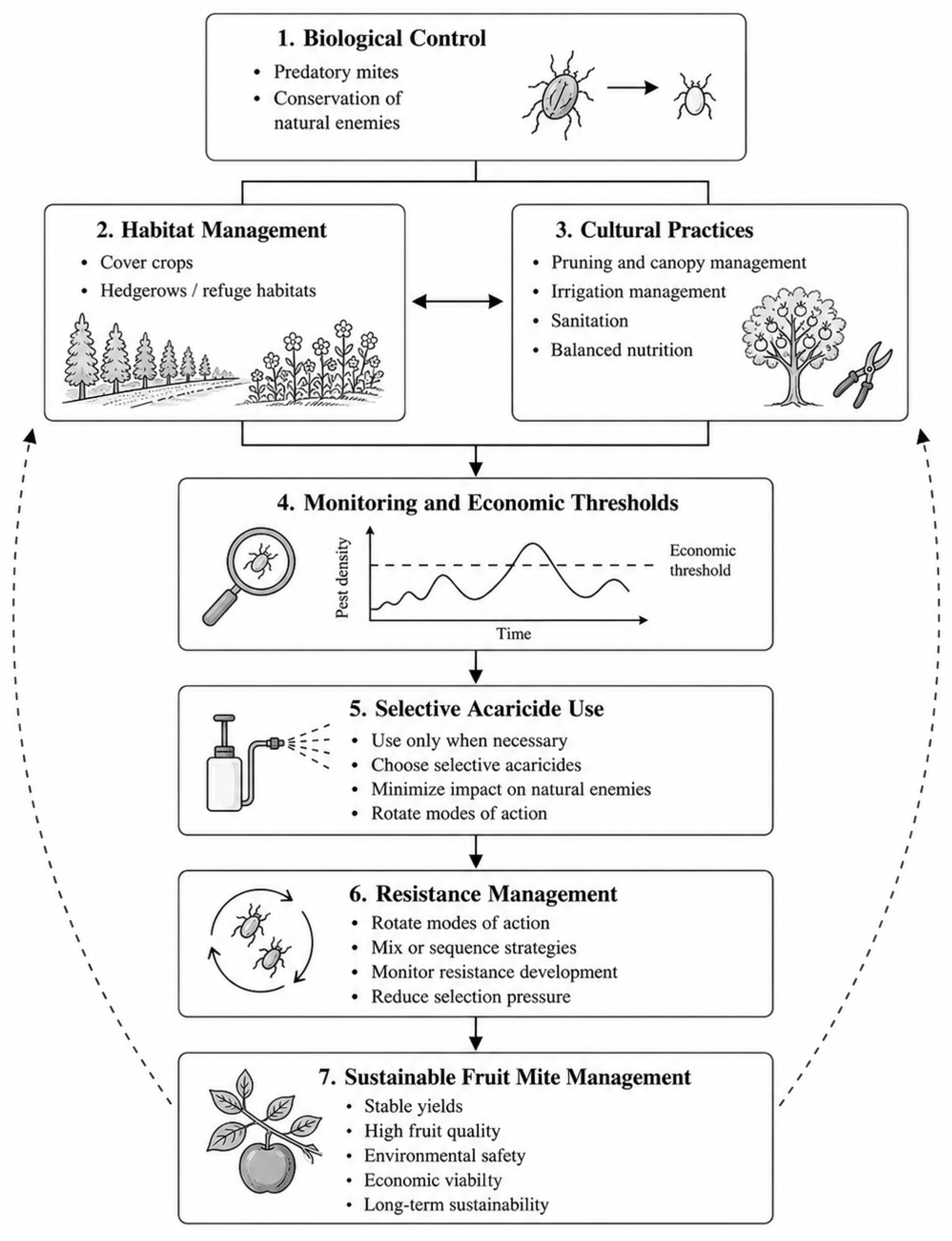
17]. Nevertheless, successful implementation remains constrained by economic considerations, regional variability, and gaps in ecological knowledge. Consequently, modern IPM increasingly relies on systems-based approaches that integrate biological control, habitat management, cultural practices, monitoring, selective acaricide use, and resistance management within a unified ecological framework.
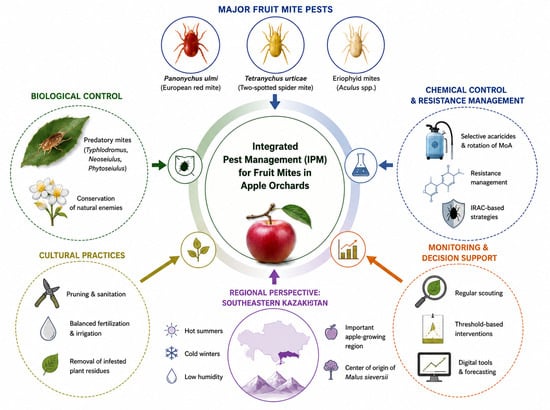
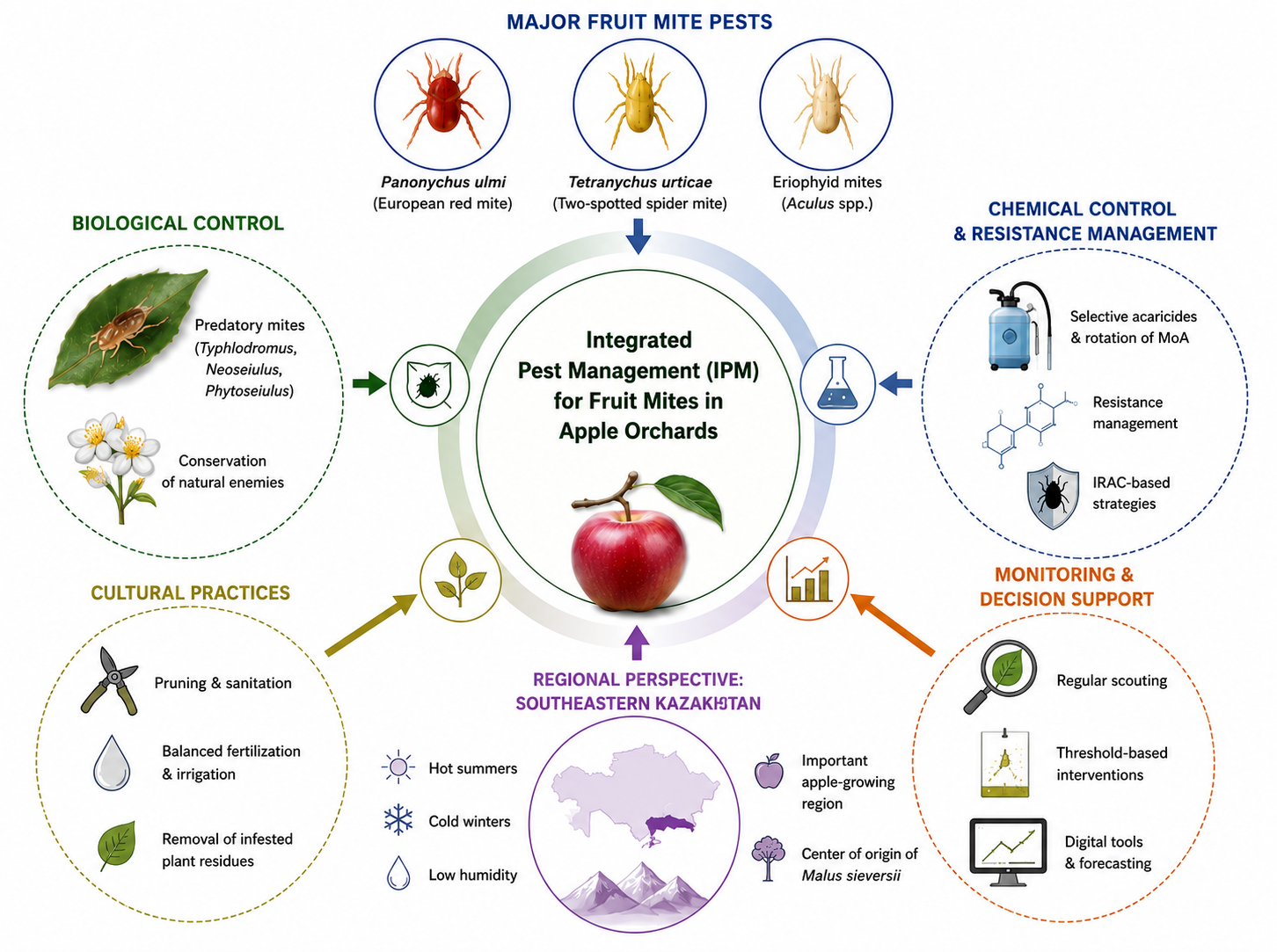
Figure 1 illustrates the interactions among these complementary components in sustainable fruit mite management in apple orchards.
8. Fruit Mite Management in Southeastern Kazakhstan
Southeastern Kazakhstan represents one of the most important apple-producing regions in Central Asia and is widely recognized as the historical center of apple diversity associated with
Malus sieversii, the wild progenitor of cultivated apple varieties [
70,
71,
72]. The region includes the Almaty, Zhetysu, and adjacent foothill zones characterized by favorable climatic conditions for apple cultivation [
70]. However, these same environmental conditions also create suitable habitats for the development of numerous arthropod pests, including economically important fruit mite species. The region is important not only for apple production but also as a model for the development of locally adapted and biodiversity-oriented orchard protection systems [
70,
71]. Because Southeastern Kazakhstan represents both a major commercial apple-producing region and part of the center of origin of domesticated apple, sustainable pest management strategies developed under its agroecological conditions may provide valuable guidance for apple production systems throughout Central Asia [
70,
71].
Apple production occupies a prominent position within Kazakhstan’s horticultural sector. The southern and southeastern regions of the country, particularly Almaty and Zhetysu, provide the most favorable climatic conditions for apple cultivation and contain a substantial proportion of Kazakhstan’s commercial orchards. Kazakhstan has approximately 35.7 thousand hectares of apple plantations, with apple production concentrated largely in the southeastern foothill regions associated with the center of origin of
Malus sieversii, the primary progenitor of the cultivated apple [
73,
74,
75,
76]. According to national agricultural statistics, these regions account for the majority of the country’s apple production and include both intensive commercial orchards and traditional production systems. The most important arthropod pests affecting apple orchards include codling moth (
Cydia pomonella), aphids, leafrollers, and phytophagous mites. Among mite pests, species belonging to the genera
Panonychus,
Tetranychus, and eriophyid mites have been reported in regional orchards and are considered important constraints to sustainable apple production. Despite their economic significance, comprehensive information on species distribution, population dynamics, resistance development, and biological control potential under local conditions remains limited, emphasizing the need for region-specific research and long-term monitoring programs. Although several recent studies have investigated beneficial arthropods in apple orchards of southeastern Kazakhstan, they have primarily focused on natural enemies of lepidopteran pests rather than on predator–prey interactions involving phytophagous mites, indicating that the biological control of fruit mites under local orchard conditions remains insufficiently studied [
77].
In recent decades, the modernization and intensification of orchard production systems have altered pest dynamics throughout the region. Increased orchard density, expansion of commercial production, and changing climatic conditions have created new challenges for sustainable pest management. Among these challenges, fruit mite infestations have become increasingly important because of their potential to reduce photosynthetic activity, impair fruit quality, and increase production costs.
8.1. Apple Production Systems and Regional Characteristics
Apple production in Southeastern Kazakhstan is concentrated primarily in irrigated orchard systems located within foothill and mountain-valley agroecosystems. These orchards experience significant seasonal temperature fluctuations, relatively low precipitation during the growing season, and increasing frequency of drought periods [
71].
Such conditions may favor the development of phytophagous mites, particularly during warm and dry summers. Similar patterns have been reported in other temperate fruit-growing regions where elevated temperatures accelerate mite development, increase reproductive rates, and contribute to more frequent outbreaks [
25]. At the same time, orchard systems in Kazakhstan remain highly heterogeneous. Commercial orchards often coexist with smallholder farms and semi-intensive production systems, resulting in considerable variation in pest management practices [
75,
76]. This heterogeneity creates both challenges and opportunities for implementing regionally adapted Integrated Pest Management (IPM) programs. Recent studies on apple rootstocks grown under Kazakhstani field conditions further demonstrate the diversity of orchard production systems and the importance of developing locally adapted management practices [
78].
8.2. Fruit Mite Species and Current Management Practices
Published surveys from southeastern Kazakhstan have documented the occurrence of
Panonychus ulmi,
Tetranychus urticae, and eriophyid mites in commercial apple orchards, although comprehensive information on their distribution and ecology remains limited [
6,
9,
20].
Current management practices remain predominantly dependent on chemical control. In many orchards, pesticide applications continue to serve as the primary response to visible pest infestations. While such approaches may provide short-term suppression, they often fail to address underlying ecological drivers of pest outbreaks. At the same time, research on Kazakhstani apple cultivars has demonstrated increasing scientific interest in the characterization of local germplasm and resistance-associated traits, providing an important foundation for the development of regionally adapted orchard protection strategies [
78].
A critical challenge is the limited availability of long-term regional datasets concerning mite population dynamics, predator–prey interactions, and resistance development. Consequently, management decisions are frequently based on generalized recommendations developed under different agroecological conditions rather than locally validated evidence. This situation highlights an important knowledge gap. Sustainable management strategies developed for Western Europe or North America cannot necessarily be transferred directly to Central Asian production systems without regional adaptation.
8.3. Knowledge Gaps in Central Asian Fruit Mite Management
Despite the economic importance of apple production in Central Asia, relatively few published studies have investigated fruit mite biodiversity, population dynamics, biological control, and acaricide resistance under regional conditions [
79]. Among the studies included in this review, only a limited number focused on Central Asian apple production systems, and none reported long-term resistance surveillance or comprehensive monitoring programs for fruit mites [
80]. In contrast, Europe, North America, and China have developed well-established IPM frameworks supported by long-term pest monitoring and resistance surveillance programs, providing a strong scientific basis for sustainable fruit mite management [
81,
82].
Consequently, the distribution, seasonal population dynamics, and economic importance of key fruit mite species in Central Asian apple orchards remain insufficiently documented [
79,
83]. Another major limitation is the lack of locally validated economic thresholds for fruit mite management. Although regional monitoring programs have been developed for some economically important apple pests in southeastern Kazakhstan, comparable threshold-based decision systems for phytophagous mites remain unavailable [
84]. Therefore, the economic thresholds currently applied for fruit mite management are largely extrapolated from studies conducted in Europe and North America under different climatic, agronomic, and production conditions and may not accurately reflect the ecological characteristics of apple orchards in southeastern Kazakhstan and other parts of Central Asia [
80,
85]. Consequently, the development and field validation of region-specific economic thresholds should be considered a priority for future research to support evidence-based IPM implementation in the region [
80,
85].
Similarly, information on predator–prey interactions, phytoseiid mite diversity, and the effectiveness of conservation biological control under local orchard conditions remains scarce [
79,
86,
87]. Resistance monitoring represents another major knowledge gap. Although acaricide resistance in
Panonychus ulmi and
Tetranychus urticae has been extensively documented worldwide, systematic surveillance programs and molecular resistance monitoring have not yet been widely implemented in Central Asia [
24,
39,
79,
88]. Consequently, resistance may remain undetected until substantial declines in field efficacy occur, increasing the risk of control failures and further selection for resistant populations [
32,
39,
88].
Addressing these knowledge gaps should be considered a priority for future research. Particular attention should be directed toward long-term monitoring of mite populations, regional resistance surveillance, biodiversity assessments of natural enemies, and the development of locally validated economic thresholds to support sustainable IPM implementation under Central Asian conditions [
89,
90,
91].
A further limitation of the present review is the limited availability of primary field-based studies from Kazakhstan and other Central Asian countries. Most regional publications provide general, taxonomic, or indirect information, whereas long-term investigations of fruit mite population dynamics, acaricide resistance monitoring, molecular resistance diagnostics, and natural enemy diversity remain scarce. Consequently, the regional conclusions presented in this review should be interpreted as a synthesis of the currently available evidence rather than a comprehensive representation of local fruit mite ecology and management. Future research should therefore prioritize coordinated field surveys, long-term population monitoring, standardized resistance surveillance, molecular diagnostics, and systematic assessments of phytoseiid mites and other natural enemies across the major apple-growing regions of Kazakhstan and Central Asia.
8.4. Climatic Change and Emerging Pest Risks
Climate change is expected to significantly influence future fruit mite management in southeastern Kazakhstan, where apple production is closely associated with the unique ecosystems of
Malus sieversii and is increasingly exposed to rising temperatures and greater climatic variability [
72,
92]. Rising temperatures, altered precipitation patterns, and more frequent drought events may affect both phytophagous mite populations and their natural enemies [
89,
90]. Several studies have demonstrated that warming conditions can accelerate the development and increase the number of annual generations of spider mites, thereby increasing the risk of more frequent and severe outbreaks [
25,
70]. Climate change may also modify predator–prey interactions because predatory mites and other beneficial arthropods often respond differently to changing environmental conditions than their prey [
89]. Consequently, future IPM strategies for southeastern Kazakhstan should integrate climate-adaptive monitoring, ecological forecasting, and conservation biological control to improve orchard resilience under changing environmental conditions [
90,
91].
8.5. Opportunities for Sustainable IPM Implementation
The transition toward sustainable fruit mite management in Kazakhstan offers considerable opportunities. Several factors favor the development of ecologically based IPM systems: relatively high orchard biodiversity in some production areas; increasing awareness of sustainable agriculture; expanding research capacity in plant protection and agroecology; growing interest in reducing pesticide dependence [
76].
Biological control represents a particularly promising direction. Predatory mites already occur naturally within many orchard ecosystems, suggesting that conservation biological control may provide a cost-effective strategy for enhancing pest suppression [
12,
46].
Habitat management, cover cropping, and selective pesticide use could further strengthen ecological regulation mechanisms while reducing selection pressure for resistance development. Moreover, integration of monitoring programs and economic thresholds would improve decision-making and reduce unnecessary pesticide applications. A major advantage for Kazakhstan is that many commercial orchards are still undergoing technological modernization and sectoral development, creating opportunities to incorporate IPM principles during system development rather than attempting to retrofit highly pesticide-dependent production systems [
75,
76].
8.6. Research Needs and Future Perspectives
Despite increasing attention to sustainable agriculture, several research gaps remain. First, comprehensive surveys of fruit mite diversity and distribution are required to establish reliable baseline information for regional pest management. Second, studies examining predator–prey interactions under local environmental conditions are needed to evaluate the potential of biological control agents. Third, resistance monitoring programs remain largely underdeveloped. Considering the global increase in acaricide resistance among phytophagous mites, early implementation of resistance surveillance would provide substantial long-term benefits. In addition, further research on local apple germplasm and resistance-associated traits may support the development of cultivars better adapted to regional biotic stresses and sustainable orchard management programs. Molecular characterization of Kazakhstani apple cultivars has already provided valuable information for breeding and resistance-oriented research [
78]. Recent assessments of fire blight introduction into wild apple forests of Kazakhstan further highlight the importance of conserving native apple genetic resources and strengthening region-specific phytosanitary and orchard management strategies [
93,
94]. Finally, future research should move beyond evaluating individual control methods and instead focus on developing integrated orchard protection systems. Such systems should combine biological control, resistance management, habitat diversification, economic threshold-based decision making, and climate adaptation strategies.
Critical Perspective
A recurring limitation of pest management programs in many developing and transition economies is the tendency to adopt technologies developed elsewhere without sufficient regional validation. In the context of Southeastern Kazakhstan, the most significant challenge is therefore not the absence of available control tools but rather the lack of locally generated ecological knowledge necessary for their optimal integration.
Consequently, the future of fruit mite management in Southeastern Kazakhstan should focus on the development of region-specific IPM systems that reflect local climatic conditions, orchard structures, biodiversity resources, and socioeconomic realities. Such an approach would contribute not only to sustainable pest suppression but also to the long-term resilience and competitiveness of Kazakhstan’s apple industry.
9. Emerging Trends and Future Perspectives
The management of fruit mites in apple orchards is undergoing a significant transition from pesticide-dependent control toward knowledge-intensive, ecologically based pest management systems. Advances in ecology, molecular biology, precision agriculture, and digital technologies are creating new opportunities to improve fruit mite monitoring, resistance management, and decision-making, thereby enhancing the sustainability and resilience of apple orchard protection [
89,
90,
91].
Future fruit mite management is expected to rely increasingly on integrated systems that combine biological regulation, resistance prevention, ecological engineering, and digital monitoring technologies. Such approaches are particularly important in the context of climate change, increasing pesticide restrictions, and growing demand for environmentally sustainable fruit production [
25,
34,
63].
9.1. Precision Agriculture and Digital Monitoring
One of the most promising developments in modern fruit mite management is the application of precision agriculture technologies to improve the early detection and monitoring of phytophagous mite infestations in apple orchards. Conventional monitoring of
Panonychus ulmi and
Tetranychus urticae relies primarily on repeated visual inspection of leaves, which is labor-intensive, time-consuming, and may fail to detect localized infestations during the early stages of population development [
95].
Recent advances in remote sensing, unmanned aerial vehicles (UAVs), wireless sensor networks, and digital decision-support systems provide new opportunities for monitoring orchard conditions and detecting plant stress associated with mite feeding before visible symptoms become widespread [
95]. High-resolution multispectral and hyperspectral imaging, together with machine-learning algorithms and artificial intelligence (AI), have demonstrated considerable potential for identifying subtle changes in leaf reflectance, chlorophyll content, canopy temperature, and photosynthetic activity that may indicate early spider mite infestations or mite-induced plant stress [
96,
97].
Although most digital monitoring technologies have been developed primarily for plant diseases and insect pests, these approaches are increasingly being adapted for the detection of arthropod pests, including phytophagous mites, and may substantially improve the precision and timeliness of Integrated Pest Management (IPM) decision-making [
95,
96,
97]. Earlier detection of localized mite outbreaks could facilitate more targeted acaricide applications, reduce unnecessary pesticide use, improve the conservation of natural enemies, and ultimately contribute to more sustainable fruit mite management [
81,
91].
Nevertheless, the implementation of precision agriculture technologies in commercial apple orchards remains limited by high equipment costs, technical complexity, insufficient validation under diverse orchard conditions, and limited availability of region-specific decision-support models. Future research should therefore focus on validating digital monitoring tools specifically for fruit mite management, integrating remote sensing with resistance surveillance and biological control programs, and developing affordable technologies suitable for both commercial and smallholder orchards [
90,
91,
95].
9.2. Climate Change and Adaptive Pest Management
Future fruit mite management will increasingly depend on the development of adaptive Integrated Pest Management (IPM) strategies capable of responding to climate-driven changes in orchard ecosystems. Rather than relying on fixed management schedules, adaptive IPM incorporates climate-informed monitoring, predictive forecasting, and flexible decision-making to optimize intervention timing under changing environmental conditions [
90].
Climate change is expected to influence not only the phenology and population dynamics of phytophagous mites but also the performance of biological control agents. Predatory mites and their prey may respond differently to increasing temperatures, altered precipitation regimes, and more frequent climatic extremes, potentially modifying predator–prey interactions and the long-term effectiveness of conservation biological control [
89,
90]. Consequently, future IPM programs should integrate climatic forecasting models, long-term ecological monitoring, and region-specific decision-support systems to improve the resilience of apple orchard protection. Such adaptive approaches will help optimize the timing of monitoring and control measures, reduce unnecessary pesticide applications, and maintain sustainable fruit mite management under increasingly variable environmental conditions [
90,
91].
9.3. Future Perspectives for Sustainable Fruit Mite Management
Future advances in fruit mite management are expected to increasingly integrate ecological, technological, and molecular approaches within adaptive Integrated Pest Management (IPM) frameworks. Conservation biological control, habitat diversification, and the enhancement of predatory mite populations are likely to play a greater role in reducing dependence on acaricides while improving the resilience of orchard ecosystems [
12,
89].
At the same time, molecular diagnostics and resistance surveillance tools offer new opportunities for the early detection of resistance-associated mutations, allowing growers to adjust management strategies before widespread control failures occur [
39,
80]. However, these technologies should complement rather than replace ecological approaches, as sustainable resistance management ultimately depends on reducing selection pressure through integrated control strategies [
32,
43].
Future IPM programs should increasingly integrate biological control, resistance management, precision agriculture, and digital technologies within a unified framework tailored to regional orchard conditions. Such integrated approaches are expected to enhance the long-term sustainability of apple production while conserving biodiversity and improving the effectiveness of fruit mite management [
89,
90,
91].
Critical Perspective
A recurring theme throughout the evolution of pest management has been the expectation that new technologies will provide definitive solutions to pest problems. Historical experience demonstrates that such expectations are rarely fulfilled. Whether chemical pesticides, biological agents, or digital technologies, individual innovations tend to lose effectiveness when implemented in isolation.
The most promising future direction is therefore not the development of a single transformative technology but the integration of multiple complementary approaches into resilient and adaptive orchard protection systems. Such systems are expected to provide more durable, environmentally sustainable, and economically viable solutions for fruit mite management than any individual control strategy alone.
Consequently, future research should prioritize interdisciplinary approaches that combine ecological knowledge, technological innovation, and region-specific adaptation. These efforts will be essential for ensuring sustainable apple production under increasingly complex environmental and agricultural conditions.
9.4. Research Priorities for Central Asia
Although substantial progress has been achieved in fruit mite management worldwide, important knowledge gaps remain in Central Asian apple-producing regions. Future research efforts should focus on developing regionally adapted pest management strategies that reflect local agroecological conditions, climatic variability, and orchard management practices.
Several research priorities can be identified for the sustainable management of fruit mites in Central Asia:
Resistance monitoring programs: Long-term surveillance of acaricide susceptibility in Panonychus ulmi, Tetranychus urticae, and eriophyid mite populations is needed to enable early detection of resistance development and support evidence-based resistance management.
Development of local economic thresholds: Existing threshold values are largely derived from studies conducted in Europe and North America. Region-specific thresholds should be established under Central Asian climatic and production conditions to improve decision-making and reduce unnecessary pesticide applications.
Biodiversity and natural enemy surveys: Comprehensive assessments of predatory mites and other beneficial arthropods are required to better understand their ecological roles and potential contributions to biological control in regional orchard ecosystems.
Climate-adaptive pest management: Future studies should investigate how increasing temperatures, altered precipitation patterns, and climatic variability influence fruit mite population dynamics, biological control efficiency, and resistance development.
Digital monitoring and precision agriculture: The integration of remote sensing, digital scouting tools, wireless sensor networks, and predictive models may improve early detection of pest outbreaks and support precision IPM implementation.
Conservation biological control and habitat management: Research should evaluate the effectiveness of cover crops, flowering strips, refuge habitats, and ecological engineering strategies for enhancing natural enemy populations and strengthening biological regulation mechanisms.
Addressing these priorities will contribute to the development of resilient, environmentally sustainable, and region-specific Integrated Pest Management programs capable of supporting long-term apple production in Central Asia under changing agricultural and climatic conditions. Collectively, these priorities provide a roadmap for the development of regionally adapted, climate-resilient, and ecologically sustainable fruit mite management programs in Central Asia.
10. Conclusions
Fruit mites remain among the most economically important arthropod pests in apple orchards due to their rapid population growth, high reproductive potential, and strong capacity to develop resistance to acaricides. Based on the literature analyzed in this review, several key conclusions can be drawn. First, biological control should be regarded as the ecological foundation of sustainable fruit mite management. Predatory mites, conservation biological control, and habitat diversification provide effective opportunities for suppressing pest populations while reducing pesticide dependence. Second, Integrated Pest Management (IPM) represents the most effective framework for long-term orchard protection. Successful IPM programs combine monitoring, economic thresholds, biological control, cultural practices, selective pesticide use, and resistance management into a coordinated decision-making system. Third, chemical control remains an important component of fruit mite management; however, its role should shift from a primary control strategy to a targeted supporting tool within broader IPM programs. Selective acaricides applied according to monitoring-based recommendations can contribute to effective pest suppression while minimizing impacts on natural enemies. Fourth, acaricide resistance has become a global challenge threatening the sustainability of fruit mite management. Long-term resistance mitigation requires reduced selection pressure, mode-of-action diversification, conservation of biological control agents, and continuous resistance monitoring. Fifth, Southeastern Kazakhstan represents a strategically important but insufficiently studied region for fruit mite management. The development of locally adapted ecological and IPM-based protection systems should be considered a priority for improving the sustainability and competitiveness of regional apple production. Finally, future research should focus on integrating ecological knowledge, biodiversity conservation, climate adaptation, precision agriculture, digital monitoring technologies, and resistance management into resilient orchard protection systems. Sustainable fruit mite management will ultimately depend on the successful integration of biological control, resistance management, ecological engineering, and monitoring-based decision-making within resilient orchard ecosystems.
Author Contributions
Conceptualization, A.A.K. and B.K.K.; methodology, G.K.Z. and A.A.K.; investigation, A.A.K., B.K.K. and N.M.D.; data curation, A.A.K. and N.M.D.; writing—original draft preparation, A.A.K., B.K.K. and R.M.K.; writing—review and editing, A.A.K., R.M.K. and N.M.D.; visualization, A.A.K. and G.K.Z.; supervision, A.A.K. and B.K.K.; project administration, A.A.K. All authors have read and agreed to the published version of the manuscript.
Funding
This research was supported by the Ministry of Science and Higher Education of the Republic of Kazakhstan under Grant No. AP25797095, “Development of an Ecologized Apple Tree Protection System against Fruit Mites in the South-East of Kazakhstan”.
Data Availability Statement
No new datasets were generated or analyzed during the current study. All information presented in this review was obtained from publicly available scientific literature cited in the reference list.
Conflicts of Interest
The authors declare no conflicts of interest.
Abbreviations
The following abbreviations are used in this manuscript:
| AI | Artificial Intelligence |
| IPM | Integrated Pest Management |
| IRAC | Insecticide Resistance Action Committee |
| METI | Mitochondrial Electron Transport Inhibitor |
| UAV | Unmanned Aerial Vehicle |
| MOA | Mode of Action |
| PCR | Polymerase Chain Reaction |
| DNA | Deoxyribonucleic Acid |
| GIS | Geographic Information System |
| FAO | Food and Agriculture Organization of the United Nations |
| UAVs | Unmanned Aerial Vehicles |
References
- FAOSTAT. Crops and Livestock Products Database. Food and Agriculture Organization of the United Nations (FAO). Available online: https://www.fao.org/faostat/en/#data/QCL (accessed on 10 June 2026).
- Liu, D.; Xu, J.; Li, X.; Zhang, F. Green Production of Apples Delivers Environmental and Economic Benefits in China. Plant Commun. 2024, 5, 101006. [Google Scholar] [CrossRef] [Scilit] [PubMed]
- Cai, J.; Xiong, J.; Hong, Y.; Hu, R. Pesticide Overuse in Apple Production and Its Socioeconomic Determinants: Evidence from Shaanxi and Shandong Provinces, China. J. Clean. Prod. 2021, 315, 128179. [Google Scholar] [CrossRef] [Scilit]
- Pathak, V.M.; Verma, V.K.; Rawat, B.S.; Kaur, B.; Babu, N.; Sharma, A.; Dewali, S.; Yadav, M.; Kumari, R.; Singh, S.; et al. Current Status of Pesticide Effects on Environment, Human Health and Its Eco-Friendly Management as Bioremediation: A Comprehensive Review. Front. Microbiol. 2022, 13, 962619. [Google Scholar] [CrossRef] [Scilit] [PubMed]
- Geiger, F.; Bengtsson, J.; Berendse, F.; Weisser, W.W.; Emmerson, M.; Morales, M.B.; Ceryngier, P.; Lyre, J.; Tscharntke, T.; Winqvist, J.; et al. Persistent Negative Effects of Pesticides on Biodiversity and Biological Control Potential on European Farmland. Basic Appl. Ecol. 2010, 11, 97–105. [Google Scholar] [CrossRef] [Scilit]
- Joshi, N.K.; Phan, N.T.; Biddinger, D.J. Management of Panonychus ulmi with Various Miticides and Insecticides and Their Toxicity to Predatory Mites Conserved for Biological Mite Control in Eastern U.S. Apple Orchards. Insects 2023, 14, 228. [Google Scholar] [CrossRef] [Scilit] [PubMed]
- Beers, E.H.; Hull, L.A. Timing of Mite Injury Affects the Bloom and Fruit Development of Apple. J. Econ. Entomol. 1990, 83, 547–551. [Google Scholar] [CrossRef] [Scilit]
- Al Naggar, Y.; Fahmy, N.M.; Alkhaibari, A.M.; Al-Akeel, R.K.; Alharbi, H.M.; Mohamed, A.; Eleftherianos, I.; El-Seedi, H.R.; Giesy, J.P.; Alharbi, H.A. Mechanisms and Genetic Drivers of Resistance of Insect Pests to Insecticides and Approaches to Its Control. Toxics 2025, 13, 681. [Google Scholar] [CrossRef] [Scilit] [PubMed]
- Shaw, B.; Nagy, C.; Fountain, M.T. Organic Control Strategies for Use in IPM of Invertebrate Pests in Apple and Pear Orchards. Insects 2021, 12, 1106. [Google Scholar] [CrossRef] [Scilit] [PubMed]
- Ryalls, J.M.W.; Garratt, M.P.D.; Spadaro, D.; Mauchline, A.L. The Benefits of Integrated Pest Management for Apple Depend on Pest Type and Production Metrics. Front. Sustain. Food Syst. 2024, 8, 1321067. [Google Scholar] [CrossRef] [Scilit]
- Dainese, M.; Martin, E.A.; Aizen, M.A.; Albrecht, M.; Bartomeus, I.; Bommarco, R.; Carvalheiro, L.G.; Chaplin-Kramer, R.; Gagic, V.; Garibaldi, L.A.; et al. A Global Synthesis Reveals Biodiversity-Mediated Benefits for Crop Production. Sci. Adv. 2019, 5, eaax0121. [Google Scholar] [CrossRef] [Scilit] [PubMed]
- Furmanczyk, E.M.; Parveaud, C.-E.; Jacquot, M.; Warlop, F.; Kienzle, J.; Kelderer, M.; Vargas, A.M.; Friedli, M.; Boutry, C.; Tartanus, M.; et al. An Overview of Pest and Disease Occurrence in Organic Pome Fruit Orchards in Europe and on the Implementation of Practices for Their Control. Agriculture 2022, 12, 2136. [Google Scholar] [CrossRef] [Scilit]
- Landis, D.A.; Wratten, S.D.; Gurr, G.M. Habitat Management to Conserve Natural Enemies of Arthropod Pests in Agriculture. Annu. Rev. Entomol. 2000, 45, 175–201. [Google Scholar] [CrossRef] [Scilit] [PubMed]
- Damos, P.; Colomar, L.-A.E.; Ioriatti, C. Integrated Fruit Production and Pest Management in Europe: The Apple Case Study and How Far We Are From the Original Concept? Insects 2015, 6, 626–657. [Google Scholar] [CrossRef] [Scilit] [PubMed]
- Bergeron, P.E.; Schmidt-Jeffris, R.A. Updating integrated mite management 50 years later: Comparing laboratory pesticide susceptibility of a “new” generalist predatory mite to a cornerstone specialist predator. Pest Manag. Sci. 2023, 79, 3451–3458. [Google Scholar] [CrossRef] [Scilit] [PubMed]
- Pandit, M.A.; Gulati, S.; Bhandari, N.; Tarkeshwar; Mehta, P.M.; Katyal, R.; Rawat, C.D.; Kaur, J. Sustainable Management Strategies and Biological Control in Apple Orchards. Plant Sci. Today 2022, 9, 443–451. [Google Scholar] [CrossRef] [Scilit]
- Rusch, A.; Chaplin-Kramer, R.; Gardiner, M.M.; Hawro, V.; Holland, J.; Landis, D.; Thies, C.; Tscharntke, T.; Weisser, W.W.; Winqvist, C.; et al. Agricultural Landscape Simplification Reduces Natural Pest Control: A Quantitative Synthesis. Agric. Ecosyst. Environ. 2016, 221, 198–204. [Google Scholar] [CrossRef] [Scilit]
- Szpyrka, E.; Migdal-Pecharroman, S.; Książek-Trela, P. Biological Strategies and Innovations in Pest Control and Fruit Storage in Apple Orchards: A Step Towards Sustainable Agriculture. Agronomy 2025, 15, 2373. [Google Scholar] [CrossRef] [Scilit]
- Van Leeuwen, T.; Tirry, L.; Yamamoto, A.; Nauen, R.; Dermauw, W. The Economic Importance of Acaricides in the Control of Phytophagous Mites and an Update on Recent Acaricide Mode of Action Research. Pestic. Biochem. Physiol. 2015, 121, 12–21. [Google Scholar] [CrossRef] [Scilit] [PubMed]
- Hoy, M.A. Agricultural Acarology: Introduction to Integrated Mite Management; CRC Press: Boca Raton, FL, USA, 2011; 430p. [Google Scholar] [CrossRef] [Scilit]
- Wurlitzer, W.B.; Labudda, M.; Silveira, J.A.G.; Matthes, R.D.; Schneider, J.R.; Ferla, N.J. From Signaling to Stress: How Does Plant Redox Homeostasis Behave under Phytophagous Mite Infestation? Int. J. Plant Biol. 2024, 15, 561–585. [Google Scholar] [CrossRef] [Scilit]
- Yaman, B.; Çevik, B.; Ay, R. Resistance Development and Mechanisms of Panonychus ulmi to Spiromesifen + Abamectin Mixture in Apple Orchard and Laboratory Populations. Syst. Appl. Acarol. 2026, 31, 923. [Google Scholar] [CrossRef] [Scilit]
- Rahmonov, A.K. Apple Orchard Panonychus ulmi Control Applying Biological Control and Different Miticides and Insecticides. Agrochem. Prot. Plant Quarant. 2026, 119. [Google Scholar] [CrossRef] [Scilit]
- Van Leeuwen, T.; Vontas, J.; Tsagkarakou, A.; Dermauw, W.; Tirry, L. Acaricide Resistance Mechanisms in the Two-Spotted 1012 Spider Mite Tetranychus urticae and Other Important Acari: A Review. Insect Biochem. Mol. Biol. 2010, 40, 563–572. [Google Scholar] [CrossRef] [Scilit]
- Deutsch, C.A.; Tewksbury, J.J.; Tigchelaar, M.; Battisti, D.S.; Merrill, S.C.; Huey, R.B.; Naylor, R.L. Increase in Crop Losses to Insect Pests in a Warming Climate. Science 2018, 361, 916–919. [Google Scholar] [CrossRef] [Scilit] [PubMed]
- Niyibizi, B.I.A.; Addison, P.; Birkhofer, K. Effect of Pest Control Strategies on Arthropod Pests of Apple in Europe: A Meta-Analysis. J. Appl. Entomol. 2025, 149, 957–987. [Google Scholar] [CrossRef] [Scilit]
- Maula, F.; Khan, I.A.; Khan, I.A. Chemical Control of Mites on Apple in Swat Valley. Asian J. Plant Sci. 2002, 1, 59–61. [Google Scholar] [CrossRef] [Scilit]
- Khajehali, J.; Shafiei Alavijeh, E.; Ghadamyari, M.; Marčić, D. Acaricide Resistance in Panonychus citri and P. ulmi (Acari: Tetranychidae): Molecular Mechanisms and Management Implications. Syst. Appl. Acarol. 2021, 26, 1526–1542. [Google Scholar] [CrossRef] [Scilit]
- Dermauw, W.; Wybouw, N.; Rombauts, S.; Menten, B.; Vontas, J.; Grbić, M.; Clark, R.M.; Feyereisen, R.; Van Leeuwen, T. A Link between Host Plant Adaptation and Pesticide Resistance in the Polyphagous Spider Mite Tetranychus urticae. Proc. Natl. Acad. Sci. USA 2013, 110, E113–E122. [Google Scholar] [CrossRef] [Scilit] [PubMed]
- IRAC (Insecticide Resistance Action Committee). Mode of Action Classification Scheme, Version 11.3; IRAC: Brussels, Belgium, 2025; Available online: https://irac-online.org/mode-of-action/classification-online/ (accessed on 11 June 2026).
- Dermauw, W.; Van Leeuwen, T. The ABC Gene Family in Arthropods: Comparative Genomics and Role in Insecticide Transport and Resistance. Insect Biochem. Mol. Biol. 2014, 45, 89–110. [Google Scholar] [CrossRef] [Scilit] [PubMed]
- Sparks, T.C.; Nauen, R. IRAC: Mode of Action Classification and Insecticide Resistance Management. Pest Biochem. Physiol. 2015, 121, 122–128. [Google Scholar] [CrossRef] [Scilit] [PubMed]
- De Rouck, S.; İnak, E.; Dermauw, W.; Van Leeuwen, T. A Review of the Molecular Mechanisms of Acaricide Resistance in Mites and Ticks. Insect Biochem. Mol. Biol. 2023, 159, 103981. [Google Scholar] [CrossRef] [Scilit] [PubMed]
- Adesanya, A.W.; Lavine, M.D.; Moural, T.W.; Lavine, L.C.; Zhu, F.; Walsh, D.B. Mechanisms and Management of Acaricide Resistance for Tetranychus urticae in Agroecosystems. J. Pest Sci. 2021, 94, 639–663. [Google Scholar] [CrossRef] [Scilit]
- Rameshgar, F.; Khajehali, J.; Nauen, R.; Dermauw, W.; Van Leeuwen, T. Characterization of Abamectin Resistance in Iranian Populations of European Red Mite, Panonychus ulmi Koch (Acari: Tetranychidae). Crop Prot. 2019, 125, 104903. [Google Scholar] [CrossRef] [Scilit]
- Mata, L.; Knapp, R.A.; McDougall, R.; Overton, K.; Hoffmann, A.A.; Umina, P.A. Acute Toxicity Effects of Pesticides on Beneficial Organisms—Dispelling Myths for a More Sustainable Use of Chemicals in Agricultural Environments. Sci. Total Environ. 2024, 930, 172521. [Google Scholar] [CrossRef] [Scilit] [PubMed]
- Whalon, M.E.; Mota-Sanchez, D.; Hollingworth, R.M. (Eds.) Global Pesticide Resistance in Arthropods; CABI: Wallingford, UK, 2008. [Google Scholar]
- IRAC (Insecticide Resistance Action Committee). IRAC Susceptibility Test Methods Series; IRAC: Brussels, Belgium; Available online: https://irac-online.org/test-methods/ (accessed on 11 June 2026).
- Sathiya Priya, S.; Sumathi, E.; Renukadevi, P.; Murugan, M.; Kumar, K.K.; Thamarai Selvi, S.P. Breaking Acaricide Resistance: Sustainable Strategies for Phytophagous Mite Control with Natural and Advanced Solutions. Pers. J. Acarol. 2025, 14, 140403. [Google Scholar] [CrossRef]
- Junqueira, C.I.C.V.F.; Birth, E.F.d.M.B.d.; Vidal, L.A.; Queiroz, E.S.L.d.; Albuquerque, E.V.S. Molecular Diagnostics for Monitoring Insecticide Resistance in Lepidopteran Pests. Agronomy 2024, 14, 2553. [Google Scholar] [CrossRef] [Scilit]
- Bajda, S.; De Clercq, P.; Van Leeuwen, T. Selectivity and Molecular Stress Responses to Classical and Botanical Acaricides in the Predatory Mite Phytoseiulus persimilis Athias-Henriot (Acari: Phytoseiidae). Pest Manag. Sci. Rev. 2022, 78, 881–895. [Google Scholar] [CrossRef] [Scilit] [PubMed]
- Ali, J.; Tonğa, A.; Khan, K.A.; Oberemok, V.; Yusuf, A.A.; Chen, R. Biochemical and Genetic Mechanisms of Resistance in Myzus persicae: A Major Challenge for Global Crop Protection. Pestic. Biochem. Physiol. 2026, 220, 107049. [Google Scholar] [CrossRef] [Scilit] [PubMed]
- Bras, A.; Roy, A.; Heckel, D.G.; Anderson, P.; Karlsson Green, K. Pesticide Resistance in Arthropods: Ecology Matters Too. Ecol. Lett. 2022, 25, 1746–1759. [Google Scholar] [CrossRef] [Scilit] [PubMed]
- McMurtry, J.A.; Moraes, G.J.; Sourassou, N.F. Revision of the Lifestyles of Phytoseiid Mites and Implications for Biological Control Strategies. Syst. Appl. Acarol. 2013, 18, 297–320. [Google Scholar] [CrossRef] [Scilit]
- McMurtry, J.A.; Croft, B.A. Life-Styles of Phytoseiid Mites and Their Roles in Biological Control. Annu. Rev. Entomol. 1997, 42, 291–321. [Google Scholar] [CrossRef] [Scilit] [PubMed]
- Schmidt-Jeffris, R.A.; Beers, E.H.; Sater, C. Meta-Analysis and Review of Pesticide Non-Target Effects on Phytoseiids, Key Biological Control Agents. Pest Manag. Sci. 2021, 77, 5381–5394. [Google Scholar] [CrossRef] [Scilit] [PubMed]
- Knapp, M.; van Houten, Y.; van Baal, E.; Groot, T. Use of Predatory Mites in Commercial Biocontrol: Current Status and Future Prospects. Acarologia 2018, 58, 72–82. [Google Scholar] [CrossRef] [Scilit]
- Malagnini, V.; Pozzebon, A.; Facchin, P.; Paganelli, A.; Duso, C. Airborne Pollen Can Affect the Abundance of Predatory Mites in Vineyards: Implications for Conservation Biological Control Strategies. Pest Manag. Sci. 2022, 78, 1963–1975. [Google Scholar] [CrossRef] [Scilit] [PubMed]
- Biddinger, D.J.; Weber, D.C.; Hull, L.A. Coccinellidae as Predators of Mites: Stethorini in Biological Control. Biol. Control 2009, 51, 268–283. [Google Scholar] [CrossRef] [Scilit]
- Wang, H.; Zhang, D.; Guo, H.; He, X.; Liu, B.; Wang, S.; Lu, Y. Preliminary Evaluation of the Biocontrol Potential of Stethorus punctillum, a Key Natural Enemy of Spider Mites in Northwest China. Agronomy 2025, 15, 1092. [Google Scholar] [CrossRef] [Scilit]
- Tixier, M.-S. Predatory Mites (Acari: Phytoseiidae) in Agro-Ecosystems and Conservation Biological Control: A Review and Explorative Approach for Forecasting Plant–Predatory Mite Interactions and Mite Dispersal. Front. Ecol. Evol. 2018, 6, 192. [Google Scholar] [CrossRef] [Scilit]
- Hyder, M.; Ullah, F.; Basit, A.; Haq, I.U.; Mustapha, T.; Nisa, Z.U.; Cai, X.; Liu, H.; Hou, Y. Mapping Conservation Biological Control and IPM Research (2000–2025): A Bibliometric Analysis of Natural Enemies and Habitat Management. Insects 2026, 17, 447. [Google Scholar] [CrossRef] [Scilit] [PubMed]
- Beaumelle, L.; Auriol, A.; Grasset, M.; Pavy, A.; Thiéry, D.; Rusch, A. Benefits of Increased Cover Crop Diversity for Predators and Biological Pest Control Depend on the Landscape Context. Ecol. Solut. Evid. 2021, 2, e12086. [Google Scholar] [CrossRef] [Scilit]
- Khan, I.A.; Fent, M. Seasonal Population Dynamics of Typhlodromus pyri Scheuten (Acari: Phytoseiidae) in Apple Orchards in the Region Meckenheim. J. Pest Sci. 2005, 78, 1–6. [Google Scholar] [CrossRef] [Scilit]
- Alabdulla, J.; Mofleh, M.; Aslan, L. Population Dynamics of Phytoseiid Mites in Apple Orchards in Southern Syria. Arab J. Plant Prot. 2020, 38, 258–265. [Google Scholar] [CrossRef] [Scilit]
- Serra, G.; Ripamonti, L.; Addanki, V.A.; Tirello, P.; Duso, C.; Pozzebon, A. Unexpected Persistence of the Predatory Mite Amblyseius andersoni Under Insecticide Exposure in Italian Apple Orchards. Insects 2026, 17, 338. [Google Scholar] [CrossRef] [Scilit] [PubMed]
- Lemaire, É.; McCune, F.; Roy, M.; Bourgeois, G.; Fournier, V. Efficacy of Releases of Phytoseiid Mites (Acari: Phytoseiidae) on Spider Mite Control on Raspberry in High Tunnel Production, and Implication on Control Strategy through a Population Model of Tetranychus mcdanieli (Acari: Tetranychidae). Biol. Control 2025, 206, 105799. [Google Scholar] [CrossRef] [Scilit]
- Duso, C.; Pozzebon, A.; Kreiter, S.; Tixier, M.-S.; Candolfi, M.P. Improving the Compatibility of Pesticides and Predatory Mites: Recent Findings on Physiological and Ecological Selectivity. Curr. Opin. Insect Sci. 2020, 39, 63–68. [Google Scholar] [CrossRef] [Scilit] [PubMed]
- Judt, C.; Korányi, D.; Zaller, J.G.; Batáry, P. Floral Resources and Ground Covers Promote Natural Enemies but Not Pest Insects in Apple Orchards: A Global Meta-Analysis. Sci. Total Environ. 2023, 903, 166139. [Google Scholar] [CrossRef] [Scilit] [PubMed]
- Dogan, Y.O.; Hazir, S.; Yildiz, A.; Butt, T.M.; Cakmak, I. Evaluation of Entomopathogenic Fungi for the Control of Tetranychus urticae (Acari: Tetranychidae) and the Effect of Metarhizium brunneum on Predatory Mites (Acari: Phytoseiidae). Biol. Control 2017, 111, 6–12. [Google Scholar] [CrossRef] [Scilit]
- Colazza, S.; Pappas, M.L.; Courtesan, A.M.; Rodriguez-Saona, C. Editorial: Chemical Ecology and Conservation Biological Control. Front. Ecol. Evol. 2022, 10, 857438. [Google Scholar] [CrossRef] [Scilit]
- Kalmosh, F.S.; Zhang, B.; Đukić, N.; Alamri, A.; Alrokayan, S.; Xu, X. Intraguild Predation and Chemical Cue Responses Between Phytoseiulus persimilis and Neoseiulus californicus in Laboratory Assays. Insects 2026, 17, 157. [Google Scholar] [CrossRef] [Scilit] [PubMed]
- Pretty, J.; Bharucha, Z.P. Integrated Pest Management for Sustainable Intensification of Agriculture in Asia and Africa. Insects 2015, 6, 152–182. [Google Scholar] [CrossRef] [Scilit] [PubMed]
- Canon, M.A.; Ataide, L.M.S.; Villamarin, P.; De Giosa, M.; Osborne, L.S.; Tabanca, N.; Lahiri, S.; Revynthi, A.M. Sustainable Management Strategies for Acarine Pests of Industrial Hemp (Cannabis sativa subsp. sativa L.). Agronomy 2025, 15, 2785. [Google Scholar] [CrossRef] [Scilit]
- Caffi, T.; Helsen, H.H.M.; Rossi, V.; Holb, I.; Strassemeyer, J.; Buurma, J.; Capowiez, Y.; Simon, S.; Alaphilippe, A. Multicriteria Evaluation of Innovative IPM Systems in Pome Fruit in Europe. Crop Prot. 2017, 97, 101–108. [Google Scholar] [CrossRef] [Scilit]
- Komáromi, K.; Zalai, M.; Kukorellyné Szénási, Á.; Dorner, Z. Seasonal and Interannual Variability in the Insect Pest Damage and Beneficial Insect Populations Across Apple Orchards of Different Ages. Insects 2026, 17, 341. [Google Scholar] [CrossRef] [Scilit] [PubMed]
- Čirjak, D.; Miklečić, I.; Lemić, D.; Kos, T.; Pajač Živković, I. Automatic Pest Monitoring Systems in Apple Production under Changing Climatic Conditions. Horticulturae 2022, 8, 520. [Google Scholar] [CrossRef] [Scilit]
- Medjo, I.; Döker, İ.; Yavaş, H.; Karaca, M.M.; Karut, K.; Kazak, C. Compatibility of Reduced-Risk Pesticides with the Non-Target Predatory Mite Euseius scutalis (Athias-Henriot) (Parasitiformes: Phytoseiidae). Acarologia 2026, 66, 263–270. [Google Scholar] [CrossRef] [Scilit]
- Desneux, N.; Decourtier, A.; Delpuech, J.M. The Sublethal Effects of Pesticides on Beneficial Arthropods. Annu. Rev. Entomol. 2007, 52, 81–106. [Google Scholar] [CrossRef] [Scilit] [PubMed]
- Dzhangaliev, A.D. The Wild Apple Tree of Kazakhstan. In Horticultural Reviews; Janick, J., Ed.; John Wiley & Sons: Hoboken, NJ, USA, 2002; Volume 29, pp. 63–303. [Google Scholar] [CrossRef] [Scilit]
- Panyushkina, I.P.; Mukhamadiev, N.S.; Lynch, A.M.; Ashikbaev, N.A.; Arizpe, A.H.; O’Connor, C.D.; Abjanbaev, D.; Mengdibayeva, G.Z.; Sagitov, A.O. Wild Apple Growth and Climate Change in Southeast Kazakhstan. Forests 2017, 8, 406. [Google Scholar] [CrossRef] [Scilit]
- Tian, Z.; Song, H.; Wang, Y.; Li, J.; Maimaiti, M.; Liu, Z.; Zhang, H.; Zhang, J. Wild Apples Are Not That Wild: Conservation Status and Potential Threats of Malus sieversii in the Mountains of Central Asia Biodiversity Hotspot. Diversity 2022, 14, 489. [Google Scholar] [CrossRef] [Scilit]
- Kairova, G.; Pozharskiy, A.; Daulet, N.; Solomadin, M.; Sandybayev, N.; Khusnitdinova, M.; Nizamdinova, G.; Sapakhova, Z.; Gritsenko, D. Evaluation of Fire Blight Resistance of Eleven Apple Rootstocks Grown in Kazakhstani Fields. Appl. Sci. 2023, 13, 11530. [Google Scholar] [CrossRef] [Scilit]
- Madenova, A.; Aitymbet, Z.; Bolat, M.; Kaldybayeva, D.; Galymbek, K.; Kuan, A.; Kabylbekova, B.; Irkitbay, A.; Yeszhanov, T.; Bakirov, S.; et al. Screening of Apple Cultivars for Scab Resistance in Kazakhstan. Horticulturee 2024, 10, 184. [Google Scholar] [CrossRef] [Scilit]
- Bolatova, Z.; Engindeniz, S. Recent Developments in Apple Production in Kazakhstan. In Proceedings of the Euro Asia 8th International Congress on Applied Sciences, Tashkent, Uzbekistan, 15–16 March 2021. [Google Scholar]
- FAO. One Country One Priority Product (OCOP): Kazakhstan; Food and Agriculture Organization of the United Nations: Rome, Italy, 2023; Available online: https://www.fao.org/one-country-one-priority-product/fao-regional-knowledge-platform-on-ocop-in-europe-and-central-asia/kazakhstan/en (accessed on 12 June 2026).
- Temreshev, I.I.; Kopzhasarov, B.K.; Beknazarova, Z.B.; Sarbassova, A.M.; Dzhanbatyrov, A.S. To the Study of Arachnids (Arachnida)—Entomophages of Lepidoptera Pests of Apple Trees in the South-East of Kazakhstan. Bull. L.N. Gumilyov Eurasian Natl. Univ. Biosci. Ser. 2023, 142, 41–56. [Google Scholar]
- Omasheva, M.Y.; Pozharskiy, A.S.; Maulenbay, A.D.; Ryabushkina, N.A.; Galiakparov, N.N. SSR Genotyping of KazakhstaniApple Varieties: Identification of Alleles Associated with Resistance to Highly Destructive Pathogens. Eurasian J. Appl. Biotechnol. 2016, 14, 1–16. [Google Scholar]
- Kamayev, I.; Mavridis, I.; Mukhamadiev, N. A Contribution to the Knowledge of the Spider Mites (Prostigmata: Tetranychidae) from Kazakhstan. Acarologia 2026, 66, 497–510. [Google Scholar] [CrossRef] [Scilit]
- Karabayeva, A.A.; Kopzhassarov, B.K.; Sarseyeva, G.B.; Ziyayeva, G.K.; Nogerbek, A.D.; Baubekova, A.K. Sustainable Mite Management in Apple Orchards Under Climatic Stress: Ecological Trade-Offs and System Challenges. Insects 2026, 17, 697. [Google Scholar] [CrossRef] [Scilit] [PubMed]
- Zhou, W.; Arcot, Y.; Medina, R.F.; Bernal, J.; Cisneros-Zevallos, L.; Akbulut, M.E.S. Integrated Pest Management: An Update on the Sustainability Approach to Crop Protection. ACS Omega 2024, 9, 43315–43336. [Google Scholar] [CrossRef] [Scilit] [PubMed]
- Angon, P.B.; Mondal, S.; Jahan, I.; Datto, M.; Antu, U.B.; Ayshi, F.J.; Islam, M.S. Integrated Pest Management (IPM) in Agriculture and Its Role in Maintaining Ecological Balance and Biodiversity. Adv. Agric. 2023, 2023, 5546373. [Google Scholar] [CrossRef] [Scilit]
- Elhalawany, A.S.; Abdel Ghani, D.M.; Gaber, W.M. Biodiversity and Population Dynamics of Mites Associated with Apple Trees at Dakahlia and Giza Governorates, Egypt. Acarines 2025, 19, 51–69. [Google Scholar] [CrossRef] [Scilit]
- Beknazarova, Z.B.; Kopzhasarov, B.K.; Isina, Z.M.; Koshmagambetova, M.Z.; Sarbassova, A.M. Pheromonitoring of the Population of Diaspidiotus perniciosus in Apple Orchards in the Conditions of the South East of Kazakhstan. Bull. Sci. S. Seifullin Kazakh Agro Tech. Res. Univ. 2023, 118, 331–339. [Google Scholar] [CrossRef] [Scilit]
- Barzman, M.; Barber, P.; Birch, A.N.E.; Boonekamp, P.; Dachbrodt-Saaydeh, S.; Graf, B.; Hommel, B.; Jensen, J.E.; Kiss, J.; Kudsk, P.; et al. Eight Principles of Integrated Pest Management. Agron. Sustain. Dev. 2015, 35, 1199–1215. [Google Scholar] [CrossRef] [Scilit]
- Temreshev, I.I.; Kopzhasarov, B.K.; Beknazarova, Z.B.; Koigeldina, A.E.; Dzhanbatyrov, A.S. Evaluation of the Effect of Various Biopesticides on the Useful Arachno Entomofauna of the Apple Orchard in the Southeast of Kazakhstan. Online J. Biol. Sci. 2023, 23, 1–16. [Google Scholar] [CrossRef] [Scilit]
- Wurlitzer, W.B.; Schneider, J.R.; Labudda, M.; Majolo, J.H.; Campos, M.L.; Silveira, J.A.G.; Paulo, D.G.S.; Oliveira, M.G.d.A.; Ferla, N.J. Can Biological Control Involving Predatory Mites Mitigate Plant Stress Caused by Phytophagous Mites? Planta 2026, 263, 143. [Google Scholar] [CrossRef] [Scilit] [PubMed]
- Mavridis, K.; Evangelou, V.; Grigoriadou, A.M.; Papachristos, D.P.; Vontas, J. Molecular Surveillance of Resistance Mutations in Invasive Populations of Spodoptera frugiperda in Europe, for Evidence-Based Pest Control. Pest Manag. Sci. 2025, 81, 4821–4830. [Google Scholar] [CrossRef] [Scilit] [PubMed]
- Alfaro-Tapia, A.; Tougeron, K.; Maldonado-Santos, E.; Lann, C.L.; Brodeur, J.; Baaren, J.V.; Lavandero, B. Challenges and Opportunities for Conservation Biological Control of Arthropods under Climate Change. In Climate Change and Biological Control; CABI: Wallingford, UK, 2025; Available online: https://hdl.handle.net/20.500.12907/53563 (accessed on 1 June 2026).
- Perrin, M.; Abram, P.; Brodeur, J.; Delattre, T.; Siegwart, M.; Moiroux, J. The Projected Effects of Climate Change on the Management of Agricultural Insect Pests. J. Pest Sci. 2025, 98, 2191–2216. [Google Scholar] [CrossRef] [Scilit]
- Cocian, C.A.; Pocol, C.B. Perceptions to Precision: Bridging the Gap Between Behavioral Drivers and Digital Tools for Sustainable Pesticide Use in Europe. Agronomy 2026, 16, 214. [Google Scholar] [CrossRef] [Scilit]
- Tegtmeier, R.; Švara, A.; Gritsenko, D.; Khan, A. Malus sieversii: A Historical, Genetic, and Conservational Perspective of the Primary Progenitor Species of Domesticated Apples. Hortic. Res. 2025, 12, uhae244. [Google Scholar] [CrossRef] [Scilit] [PubMed]
- Maltseva, E.R.; Zharmukhamedova, G.A.; Jumanova, Z.K.; Naizabayeva, D.A.; Berdygulova, Z.A.; Dmitriyeva, K.A.; Soltanbekov, S.S.; Argynbayeva, A.M.; Skiba, Y.A.; Malakhova, N.P.; et al. Assessment of Fire Blight Introduction in the Wild Apple Forests of Kazakhstan. Biodiversity 2022, 23, 123–128. [Google Scholar] [CrossRef] [Scilit]
- Djaimurzina, A.; Umiralieva, Z.; Zharmukhamedova, G.; Born, Y.; Bühlmann, A.; Rezzonico, F. Detection of the Causative Agent of Fire Blight—Erwinia amylovora (Burrill) Winslow et al.—In the Southeast of Kazakhstan. Acta Hortic. Rev. 2014, 1056, 129–132. [Google Scholar] [CrossRef] [Scilit]
- Mashori, A.S.; Li, F.; Aman, M.; Zhang, W.; Jia, S.; Ali, A.; Jabeen, N.; Hao, W.; Yan, Y. Remote Sensing through UAVs for Precision Agriculture: Applications, Technical Foundations, Current Barriers, and Future Opportunities. Smart Agric. Technol. 2026, 14, 102074. [Google Scholar] [CrossRef] [Scilit]
- Song, X.; Dang, C.; Li, R.; Wang, F.; Yao, H.; Stanley, D.W.; Ye, G. Monitoring Agricultural Arthropod Diversity by eDNA Metabarcoding from Plant Cleaning Fluid. J. Integr. Agric. 2026, 25, 1586–1596. [Google Scholar] [CrossRef] [Scilit]
- Mahlein, A.K.; Arnal Barbedo, J.G.; Chiang, K.S.; Del Ponte, E.M.; Bock, C.H. From Detection to Protection: The Role of Optical Sensors, Robots, and Artificial Intelligence in Modern Plant Disease Management. Phytopathology 2024, 114, 1733–1741. [Google Scholar] [CrossRef] [Scilit] [PubMed]
| Disclaimer/Publisher’s Note: The statements, opinions and data contained in all publications are solely those of the individual author(s) and contributor(s) and not of MDPI and/or the editor(s). MDPI and/or the editor(s) disclaim responsibility for any injury to people or property resulting from any ideas, methods, instructions or products referred to in the content. |



 ,
,