


Simple Summary
In the wild, larvae of the moth Antheraea pernyi (a silkmoth species) are harmed by insecticides from nearby farms. This study evaluated the toxicity of four insecticides on different Antheraea pernyi strains, finding that the Liaocanda9 strain had a higher tolerance to beta-cypermethrin than the Kangda strain. Exposure to beta-cypermethrin increased detoxification and antioxidant enzyme activities in both strains. Transcriptomic analysis revealed that genes related to oxidoreductase and transmembrane transporter activities were differentially expressed after exposure. Injecting dsRNA reduced the expression of P450 genes, decreasing the larvae’s tolerance to beta-cypermethrin by 25.93–55.56%. Molecular docking showed that beta-cypermethrin binds to ABCG1, ABCG5, and CYP9A22. These findings suggest that ABC transporters and P450s help Antheraea pernyi against beta-cypermethrin.
Abstract
Antheraea pernyi larvae growing in the wild suffer damage from the drift diffusion of insecticides used in surrounding farmland. In this study, we assessed the toxicity of beta-cypermethrin, chlorantraniliprole, imidacloprid, and thiamethoxam to different A. pernyi strains. It was found that the lowest LC50 value of the Liaocanda9 strain against beta-cypermethrin (0.008 mg/L) was significantly higher than that of the Kangda strain (0.0047 mg/L). Additionally, beta-cypermethrin exposure was associated with significant increases in detoxification and antioxidant enzyme activities in both strains. Transcriptomic analysis showed that differentially expressed genes (DEGs) were significantly enriched in pathways related to oxidoreductase activity and transmembrane transporter activity terms. Furthermore, these genes were differentially expressed following the beta-cypermethrin exposure. The dsRNA injection treatment effectively inhibited the expression of P450 genes, thereby reducing the tolerance of A. pernyi against beta-cypermethrin by 25.93–55.56%. Molecular docking predicted that beta-cypermethrin bound to ABCG1, ABCG5, and CYP9A22 with hydrogen bonds. These results indicate that ABC transporters and P450s contribute to the tolerance of A. pernyi against beta-cypermethrin.
1. Introduction
Chinese tussah silkworm, Antheraea pernyi Guérin-Méneville (Lepidoptera: Saturniidae), is an economically significant insect that originated in China and is traditionally reared in the wild [1]. As a component of the “green gold” industry, its cocoons yield silk, while its pupae, rich in nutrients, find applications in the food and health supplement sectors, and the adult moths can be utilized for developing tonic medicines [2,3]. This has fostered a distinctive industrial system that integrates economic, ecological, and social benefits, serving as a crucial pillar for sustaining income growth among farmers in production regions [4]. The feeding behavior of A. pernyi exhibits marked specificity, with its larvae primarily relying on the leaves of oak trees (Quercus mongolica) as their core nutritional source [5]. However, severe pest infestations necessitate the use of insecticides in oak orchards, which inadvertently causes harm to the A. pernyi larvae that feed on these leaves [6]. Raising and selecting robust A. pernyi strains with tolerance to insecticides may help mitigate yield reductions [7]. Therefore, elucidating the molecular mechanisms underlying the insecticide tolerance of A. pernyi has become a focal point of current research in the breeding of A. pernyi strains.
The insect detoxification metabolic enzyme system serves as a crucial line of defense against insecticides [8]. Recent studies showed that silkworms develop tolerance to exogenous chemicals through the enzymes of cytochrome P450 monooxidase (P450), glutathione S-transferases (GST), carboxylesterases (CarE), and ATP-binding cassette transporters (ABC) [9]. It has been reported that the delayed response of P450 enzymes may be a potential cause for the increased susceptibility of silkworms to alpha-cypermethrin [10]. Research by Liu et al. [11] indicated that feeding silkworms an artificial diet resulted in induced P450 activity in their Malpighian tubules, suggesting an adaptation to dietary changes. It has been found that thiamethoxam treatment significantly increased P450 activity in silkworms within 24 h [12]. Findings reveal that after exposure to clothianidin, CarE and GST activities in silkworms showed an initial increase, followed by a decrease, and then a subsequent rise [7]. Guo et al. [13] demonstrated that avermectin induced the upregulation of ABC transporter expression in silkworms. Additionally, antioxidant enzymes such as superoxide dismutase (SOD), peroxidase (POD), and catalase (CAT) play central roles in pesticide tolerance, and adaptation in the A. pernyi [14]. Research by Shu et al. [15] revealed that under acidic intestinal conditions, silkworms activate the Duox-ROS defense system through increased antioxidant enzyme activity and reduced reactive oxygen species (ROS) levels. Studies have shown that treatment with the plant polyphenol resveratrol activated the SIRT7-FoxO-GST signaling pathway related to antioxidation in silkworms, thereby enhancing antioxidant enzyme activity to cope with adverse environmental conditions [16]. Although both A. pernyi and Bombyx mori belong to Lepidoptera, research on insecticide tolerance in the A. pernyi remains limited.
The detoxification mechanism of insects against xenobiotics involves the synthesis of detoxifying enzymes, signal transduction, and transcriptional regulation [17]. Understanding the molecular basis of insecticide tolerance mechanisms is crucial [9]. A comprehensive analysis of gene expression changes in insects following insecticide exposure facilitates the identification of key genes and regulatory networks associated with their defense against foreign substances [18]. Chen et al. [19] found that ABCB1, ABCB3, ABCG11, ae43, and CYP6AE9 may be involved in the detoxification process of coumaphos in A. pernyi. Furthermore, CYP4G25 in A. pernyi has been cloned, confirming its role in detoxification [20]. Mon et al. [21] constructed a gene co-expression network based on the Bombyx mori ovary-derived BmN4 cell line and identified five genes whose knockdown led to abnormalities in chromosome dynamics and spindle morphology during mitosis. Research elucidated that the Bombyx mori lineage-specific gene BmTrio is positively correlated with the heterosis of silk yield traits [22]. The establishment of a gene expression model for silkworms induced by insecticides can precisely assess their tolerance to insecticides [23]. However, research on the molecular mechanisms of detoxification metabolism in A. pernyi remains limited, and the biological functions of related genes are not yet defined.
The hazards and drift diffusion of insecticides both cause loss of A. pernyi production, destroy its population structure, and affect its sustainable production [24]. It is very necessary to breed and screen the tolerance silkworm strains against pesticides. Here, the relatively tolerant Liaocanda9 strain and the susceptible Kangda strain were selected for toxicological bioassays of four commonly used insecticides. Based on the lowest LC50 value, the beta-cypermethrin was selected for further experimental analysis. The detoxification metabolic enzyme and antioxidant enzyme changes in Liaocanda9 and Kangda after beta-cypermethrin treatment were measured. Transcriptomics methods were used to screen related pathway genes, and the molecular processes in the bodies of silkworms to beta-cypermethrin treatment were further clarified by RT-qPCR, RNA interference and molecular docking. This study revealed the mechanism of silkworm tolerance against beta-cypermethrin, and provided a theoretical basis for the subsequent breeding of silkworm strain tolerance to pesticides by molecular means.
2. Materials and Methods
2.1. A. pernyi Collection
A. pernyi larvae used in this study comprised the robust Liaocanda9 strain and the Kangda strain, both of which had undergone multi-generation selective breeding. The silkworms were reared in oak groves at the Sericulture Science Research Institute of Liaoning province, China. Similarly sized silkworms on the second day of the third instar were selected. During collection, branches with silkworms were cut to avoid harming them. The collected silkworms were reared in an artificial climate laboratory at a temperature of 25 ± 2 °C and a humidity of 75 ± 5%.
2.2. Insecticides and Chemicals
We purchased 99% beta-cypermethrin {International Union of Pure and Applied Chemistry (IUPAC) name: (RS)-α-cyano-3-phenoxybenzyl (1R, 3R)-3-(2, 2-dichloroethenyl)-2, 2-dimethyl cyclopropanecarboxylate}; 97% chlorantraniliprole {IUPAC name: 3-Bromo-N-[4-chloro-2-methyl-6-[(methylamino)carbonyl]phenyl]-1-(3-chloro-2-pyridinyl)-1H-pyrazole-5-carboxamide}; 98% imidacloprid {IUPAC name: (E)-1-(6-chloro-3-pyridylmethyl)-N-nitroimidazolidin-2-ylideneamine}; and 98% thiamethoxam {IUPAC name: (EZ)-3-(2-Chloro-1, 3-thiazol-5-ylmethyl)-5-methyl-1, 3, 5-oxadiazinan-4-ylidene(nitro)amine} from Yuanye Bio-Technology Co., Ltd. (Shanghai, China).
Phosphate buffer solution (PBS), ethylene diamine tetraacetic acid (EDTA), dithiothreitol (DTT), phenyl methyl sulfonyl fluoride (PMSF), reduced glutathione (GSH) glycerol, α-naphthyl acetate (α-NA), 7-ethoxycoumarin (ECOD), and nicotinamide adenine dinucleotide phosphate (NADPH) were purchased from Solarbio Technology Co., Ltd. (Beijing, China).
2.3. Toxicological Bioassays
To determine the toxicity of different insecticides to the Liaocanda9 and Kangda strains of silkworms, a leaf-dipping bioassay method was employed [7]. The insecticides were weighed and dissolved in acetone to prepare a stock solution with a concentration of 1000 mg/L for standby use. Subsequently, the stock solution was diluted to create working solutions with five gradient concentrations (beta-cypermethrin: 0.003, 0.006, 0.009, 0.012, 0.015 mg/L; chlorantraniliprole: 5, 10, 15, 20, 25 mg/L; imidacloprid: 0.2, 0.4, 0.6, 0.8, 1 mg/L; thiamethoxam: 10, 20, 30, 40, 50 mg/L). Fresh oak leaves were then collected and immersed in the working solutions for 20 s before being removed and air-dried.
For each treatment, 20 healthy 3rd-instar silkworms of similar size, on the second day of the instar, were used for the bioassay. Before the bioassay, silkworms were subjected to a 4 h fasting period. After that, they were fed with oak leaves containing the insecticides. Oak leaves with an equivalent amount of acetone served as the control treatment. Each experimental group included three biological replicates, and the mortality rate of the silkworms was recorded 48 h after treatment.
2.4. Enzymatic Assays
To investigate the impacts of beta-cypermethrin on the activities of detoxification and metabolic enzymes (P450, CarE, and GST) and antioxidant enzymes (SOD, POD, and CAT) in Liaocanda9 and Kangda strains, the following experimental procedure was carried out. After feeding the silkworms with LC50 beta-cypermethrin (Liaocanda9: 0.008 mg/L; Kangda: 0.0047 mg/L) for 48 h, the surviving silkworms were collected and stored at −80 °C. Single silkworm was placed in a mortar with 10 mL of precooled phosphate buffer and grinded on ice. The supernatant was collected after centrifugation as the crude enzyme solution, which was stored at −80 °C. Each experiment was repeated three times.
P450 activity was measured following the method described by Rosenberg [25] with some modifications. Total reaction volume was 140 µL, comprising 80 µL of 0.5 mM ECOD and 50 µL of crude enzyme extract. The mixture was incubated with shaking at 30 °C for 30 min, followed by the addition of 10 µL of 9.6 mM NADPH. Then absorbance was measured using a multifunctional microplate reader with an excitation wavelength of 380 nm and an emission wavelength of 460 nm at 30 °C, recording data every 60 s for 15 min. GST activity was determined according to the method of Enayati [26] with some adaptations. Total reaction volume was 220 µL, consisting of 20 µL of crude enzyme extract, 180 µL of CDNB (15 mmol/L), and 20 µL of reduced glutathione GSH (30 mmol/L). The absorbance changes were recorded with a wavelength of 340 nm at 25 °C, recording data every 60 s for 20 min. CarE activity was assayed following the method of Li [27] with some modifications. Total reaction system was 210 µL, including 150 µL of substrate (0.3 mM α-naphthol; 3 µM physostigmine), 18 µL of PBS, and 2 µL of crude enzyme extract. After incubation at 30 °C for 15 min, 30 µL of a benzoylaminodimethoxyanilinediaz (0.4 mM) was added. The absorbance changes were recorded with a wavelength of 600 nm at 27 °C, recording data every 60 s for 10 min. The activities of SOD, POD, and CAT were determined according to the instructions provided in the corresponding assay kits purchased from Solarbio Technology Co., Ltd. (Beijing, China). Specifically, SOD activity was measured using the nitroblue tetrazolium method [28], POD activity was measured using the guaiacol method [29], and CAT activity was measured as decomposition of H2O2, monitored by decreasing absorbance at 240 nm [30].
2.5. RNA Sequencing
The transcriptomic changes in Liaocanda9 and Kangda strains under the induction of LC30 beta-cypermethrin were determined. Four experimental groups were included: Liaocanda9 control (0 mg/L), Liaocanda9 treatment (0.0052 mg/L), Kangda control (0 mg/L), and Kangda treatment (0.0031 mg/L). Each treatment after 48 h consisted of one third instar silkworm and was repeated 3 times; the individuals were carefully selected to be genetically homogeneous and raised under strictly controlled conditions. Total RNA was extracted from the tissue samples using QIAzol Lysis Reagent (Qiagen, Hilden, Germany). Libraries were generated using the Illumina® Stranded mRNA Prep, Ligation (Illumina, San Diego, CA, USA), and were sequenced on the DNBSEQ-T7 platform. The quality of the raw sequencing data was controlled using fastp software version 0.19.5 (https://github.com/OpenGene/fastp, accessed on 4 June 2025) [31]. Reads were aligned to the reference genome GWHABGR00000000 (https://ngdc.cncb.ac.cn/gwh, accessed on 4 June 2025) [32] using HiSat2 software version 2.1.0 (http://ccb.jhu.edu/software/hisat2/index.shtml, accessed on 4 June 2025). The expression levels of samples were analyzed using RSEM (http://deweylab.github.io/RSEM/, accessed on 4 June 2025) [33]. Differentially expressed genes (DEGs) were screened based on the criteria of FDR < 0.05 |log2FC| ≥ 1 using DESeq2 software version 1.12.3 (http://bioconductor.org/packages/stats/bioc/DESeq2/, accessed on 4 June 2025) [34]. Enrichment analysis of DEGs was performed using GO (http://geneontology.org/, accessed on 4 June 2025) [35] and KEGG (https://www.genome.jp/kegg/, accessed on 4 June 2025) [36].
2.6. RT-qPCR Validation
The third instar larvae of Liaocanda9 and Kangda strains were treated with LC50 beta-cypermethrin (Liaocanda9: 0.008 mg/L; Kangda: 0.0047 mg/L) for 48 h and then stored at −80 °C. Based on the transcriptome data, the related DEGs were screened, and the primers were designed by Primer3 (https://primer3.ut.ee/, accessed on 4 June 2025) (Table S1). Total RNA was used for cDNA synthesis with the TransScript First-Strand cDNA Synthesis kit (AiDLAB Biotech, Beijing, China). RT-qPCR was then performed using the SYBR Green QPCR Mix (Sichuan KeJin, Deyang, China). Based on the results of our pre-experiment, 18S rRNA was selected as the internal reference gene, and the relative expression levels of the genes were calculated by the 2−△△Ct method [37].
2.7. RNA Interference
Gene sequences were obtained based on the transcriptome to design primers with T7 promoters (Table S2). The dsRNA was synthesized using T7 RNAi transcription kit (Vazyme Biotech, Nanjing, China) following the manufacturer’s instructions. The concentration of dsRNA was detected by using a Micro Drop ultramicro spectrophotometer (Mapada, Shanghai, China) and dissolved to 1000 ng/μL in ddH2O [38]. Sixty healthy 3rd-instar silkworms of a similar size were selected and randomly divided into 3 groups, each group of 20 silkworms. A total of 10 μL of dsRNA was absorbed by a microsyringe, then paralleled into the membrane between the first and third thoracic segments of the larvae’s back, and slowly injected subcutaneously. The needle should not be inserted too deeply to avoid puncturing the larvae. Injection of the same amount of dsEGFP and ddH2O was used as control. The silkworms were placed on oak leaves to recover. Then, silkworms were collected at 24 h, 48 h, and 72 h after injection of dsRNA, and used for RT-qPCR detection of gene expression after being frozen by liquid nitrogen; each treatment was repeated three times. Silkworms were starved for 4 h after injection of dsRNA and then fed with the oak leaves containing LC50 beta-cypermethrin (0.008 mg/L) for bioassay. Mortality was recorded at 48 h after treatment. Each treatment used 20 silkworms and was repeated three times.
2.8. Molecular Docking of A. pernyi Proteins
To investigate the interaction between beta-cypermethrin and A. pernyi proteins, the simulated molecular docking experiment was conducted. All input files were prepared using the Autodock Vina software version 4.2 [39]. The sdf file of beta-cypermethrin was obtained from the PubChem database. Subsequently, energy minimization, hydrogen addition, and charge correction were performed on this file. The structure of the A. pernyi protein was preprocessed, which involved removing water molecules from the protein crystal structure, adding missing hydrogen atoms to protein residues, and optimizing the protein conformation. Molecular docking was then carried out, with beta-cypermethrin serving as the ligand and the A. pernyi protein as the receptor. Full-atom docking approach was selected to evaluate their binding modes. The binding affinities were classified into three levels: extremely weak or no binding (affinity > −4 kcal/mol), moderate binding (−7 kcal/mol < affinity ≤ −4 kcal/mol), and strong binding (affinity ≤ −7 kcal/mol). Molecular docking results were visualized using the Pymol software version 3.1 [40].
2.9. Data Analysis
The median lethal concentration (LC50) and corresponding 95% confidence limit (95% CL) were calculated using the PoloPlus software version 1.0 [41]. The p-values were analyzed with the GraphPad InStat 3.0 software. Statistical analysis of the mean values and standard errors of the data was conducted using SPSS 22.0 software. One-way analysis of variance (ANOVA) was performed at a significance level of p < 0.05, followed by Tukey’s post hoc test.
3. Results
3.1. Bioassays of A. pernyi
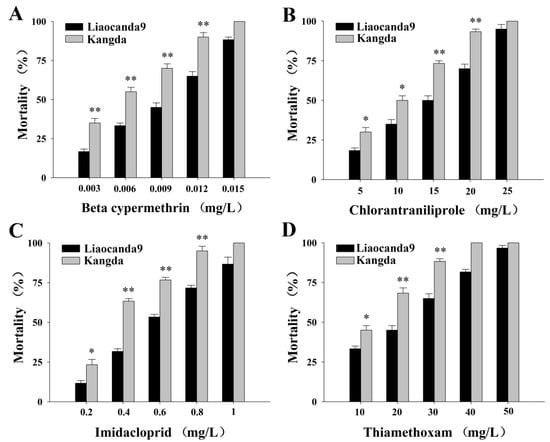
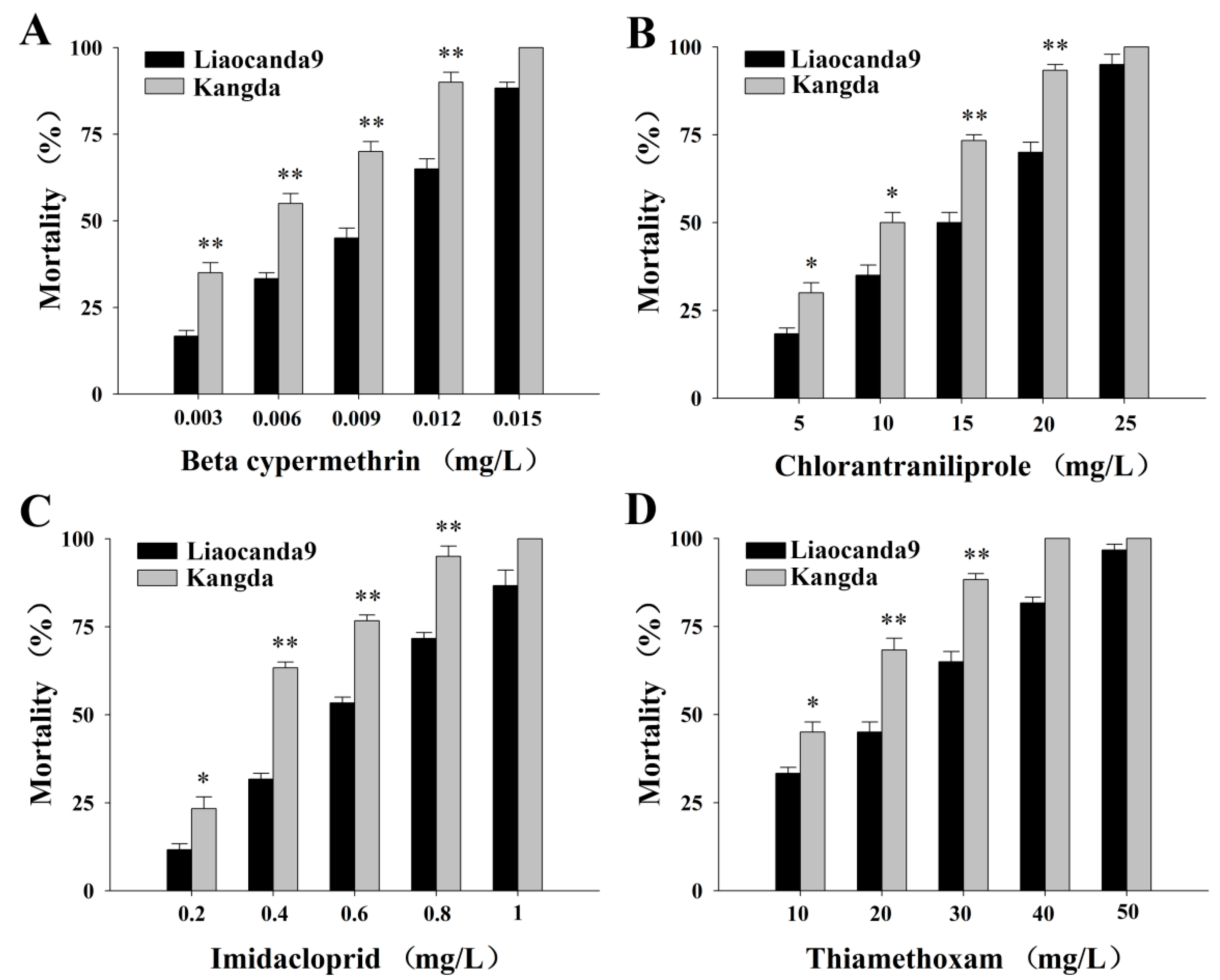
To clarify the sensitivity of A. pernyi larvae to insecticides, the toxicity of four insecticides against the Liaocanda9 and Kangda strains was determined. The results in Table 1 showed that the LC50 values of beta-cypermethrin for the Liaocanda9 and Kangda strains were 0.008 mg/L and 0.0047 mg/L, respectively, indicating higher toxicity compared to the other three insecticides. The LC50 values of insecticides for the Liaocanda9 strain were higher than those for the Kangda strain with not-overlapping 95% confidence limits. In addition, the mortality of A. pernyi larvae from insecticides exhibited a significant dose-dependent pattern (Figure 1). When treated with the same concentration of insecticides, the mortality rate of the Liaocanda9 strain was significantly lower than that of the Kangda strain. These results suggest that the Liaocanda9 strain exhibits higher tolerance against four insecticides.
Table 1.
Toxicity bioassay of A. pernyi larvae against four insecticides.
Figure 1.
The mortality of A. pernyi larvae to four insecticides. (A) Beta-cypermethrin. (B) Chloraniliprole. (C) Imidacloprid. (D) Thiamethoxam. The sample size for each group is 60. The significance thresholds are set as follows: * indicates p < 0.05 and ** indicates p < 0.01. Comparisons are made between Liaocanda9 and Kangda strain. Error bars represent the standard error of the mean (SEM).
3.2. Enzyme Activity Determination
The results in Table 2 show that after treatment with beta-cypermethrin, the activities of P450, GST, and CarE in both Liaocanda9 and Kangda strains significantly increased (p < 0.05). Moreover, the activities of P450, GST, and CarE in the Liaocanda9 strain were notably higher than those in the Kangda strain (p < 0.05). P450, GST, and CarE enzymes may play important roles in the detoxification and metabolism of A. pernyi against beta-cypermethrin.
Table 2.
P450, CarE, and GST activities of Liaocanda9 and Kangda strains after treatment with LC50 beta-cypermethrin.
The results in Table 3 also show that following beta-cypermethrin treatment, the activities of SOD, POD, and CAT in both Liaocanda9 and Kangda strains significantly increased (p < 0.05). Additionally, the activities of SOD, POD, and CAT in the Liaocanda9 strain were significantly greater than those in the Kangda strain (p < 0.05). These findings suggest that the antioxidant enzymes SOD, POD, and CAT may contribute to the tolerance of A. pernyi to beta-cypermethrin.
Table 3.
SOD, POD, and CAT activities in Liaocanda9 and Kangda strains after treatment with LC50 beta-cypermethrin.
3.3. Transcriptome Analysis
The results of transcriptome sequencing of 12 samples showed that a total of 79 b of clean data was obtained, with each sample having clean data of more than 6.21 Gb; the percentage of Q20 bases was above 99.24%, the percentage of Q30 bases was above 96.07%, and the GC content was 45.15–48.46%. The sequence alignment mapping rate was above 87.98% (Table S3).
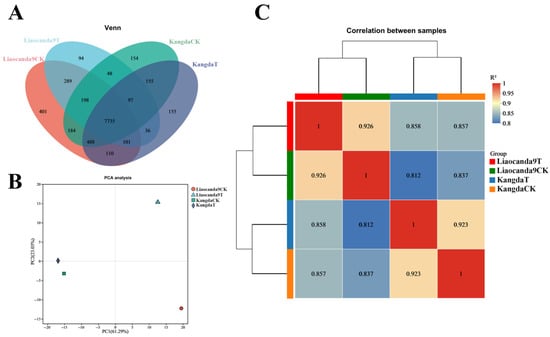
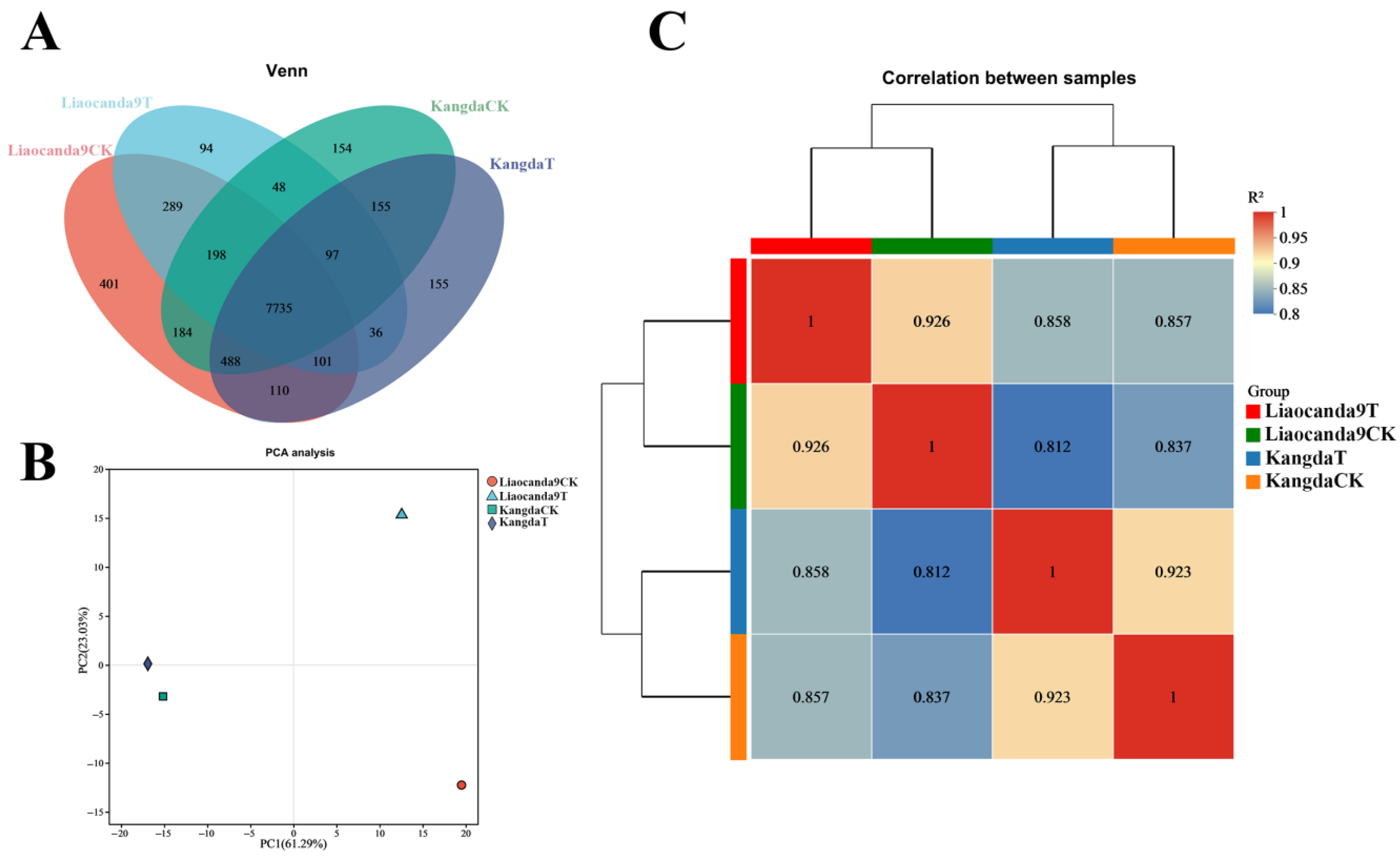
Venn analysis was conducted to illustrate the distribution of gene numbers across different sample groups (Figure 2A). It was found that 7.65% of the differentially expressed genes were unique to Liaocanda9, 4.52% were unique to Kangda, and 87.83% were shared between Liaocanda9 and Kangda. Additionally, beta-cypermethrin may induce differential expression in 2.69% and 3.92% of genes in Liaocanda9 and Kangda, respectively.
Figure 2.
Transcriptome analysis of beta-cypermethrin-induced Liaocanda9 and Kangda strains. (A) Venn analysis. (B) Principal component analysis chart. (C) Correlation clustering heat map between different samples.
Principal component analysis (PCA) was performed on the gene expression levels of each sample (Figure 2B). The results showed that the data variability accounting for PC1 principal component factor was the largest, at 61.29%, indicating the differences in gene expression levels between Liaocanda9 and Kangda groups. The data variability accounting for PC2 principal component factor was 23.03%, highlighting differences in gene expression levels between the beta-cypermethrin-treated group and the control group.
Pairwise correlation analysis of gene expression levels across samples revealed that the correlation coefficients between the treated and control groups in Liaocanda9 and Kangda were 0.926 and 0.923, respectively, indicating that beta-cypermethrin treatment had a certain impact on gene expression levels in both Liaocanda9 and Kangda (Figure 2C). The correlation coefficient between the Liaocanda9 and Kangda groups was 0.837, reflecting differences in expression levels between the strains.
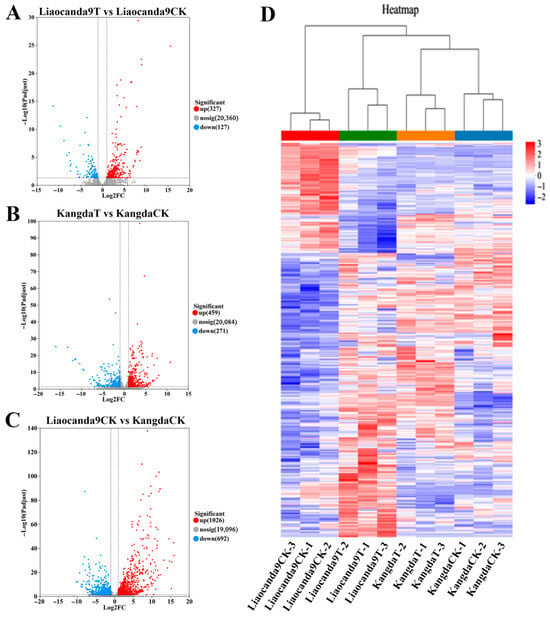
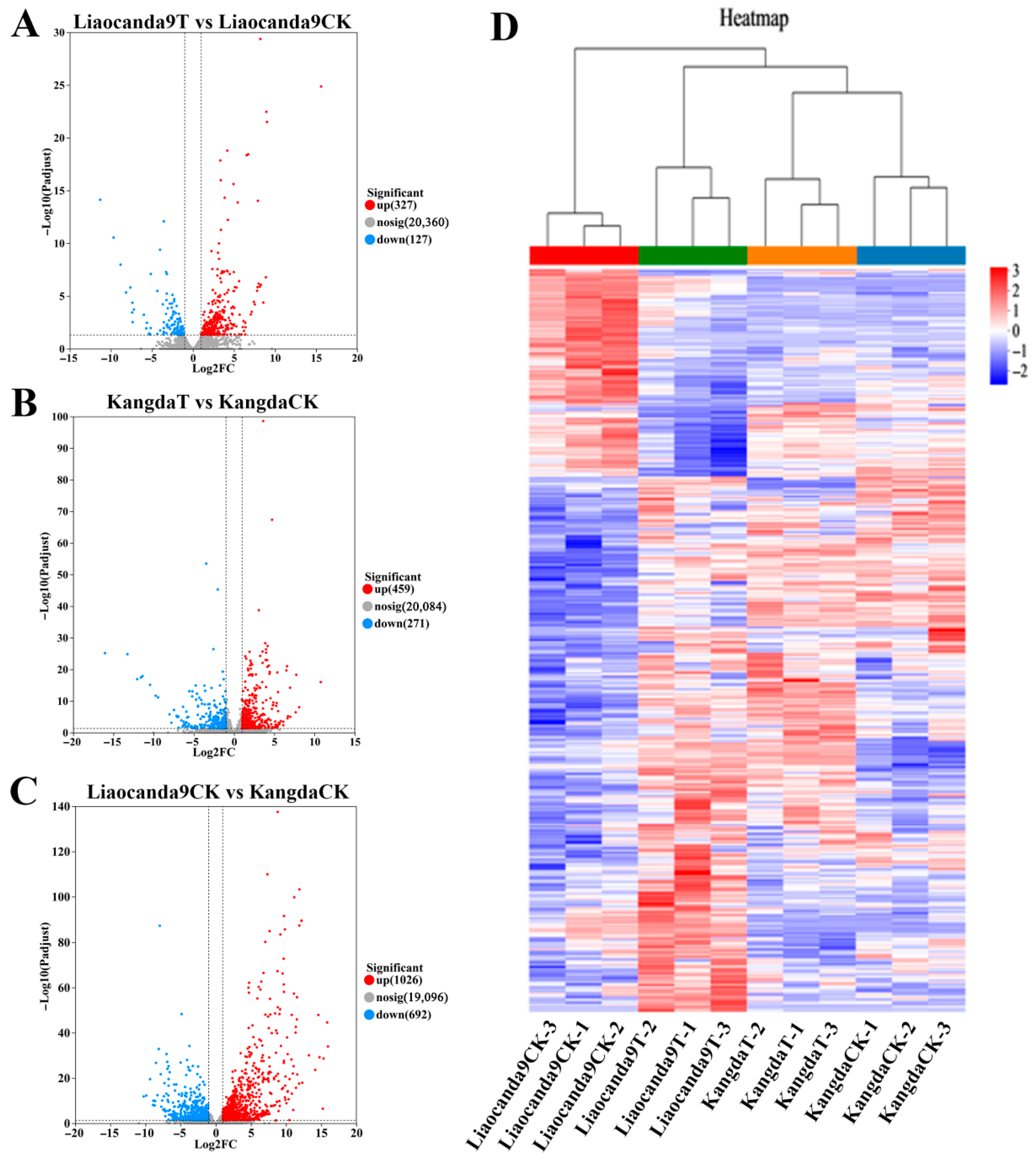
With a standard of p < 0.05, |log2FC| > 1, DEGs were screened across groups. Compared to the control group, 454 DEGs were identified in the beta-cypermethrin-treated Liaocanda9 group, with 327 genes upregulated and 127 genes downregulated (Figure 3A). In the beta-cypermethrin-treated Kangda group, 730 DEGs were identified, with 459 genes upregulated and 271 genes downregulated (Figure 3B). As shown in Figure 3C, there were 1718 DEGs identified, including 1026 upregulated genes and 692 downregulated genes between the Liaocanda9 and Kangda groups. Based on the DEGs, the three replicate samples in each group exhibited clustering relationships (Figure 3D).
Figure 3.
Analysis of beta-cypermethrin-induced Liaocanda9 and Kangda strain DEGs. (A–C) Volcano map of DEG distribution, with standard of FDR < 0.05, |log2FC| > 1 (dotted line); red: upregulation; blue: downregulation; gray: not significant. (D) Clustering heat map of DEGs; red: positive correlation; blue: negative correlation.
3.4. GO and KEGG Enrichment Analysis of DEGs
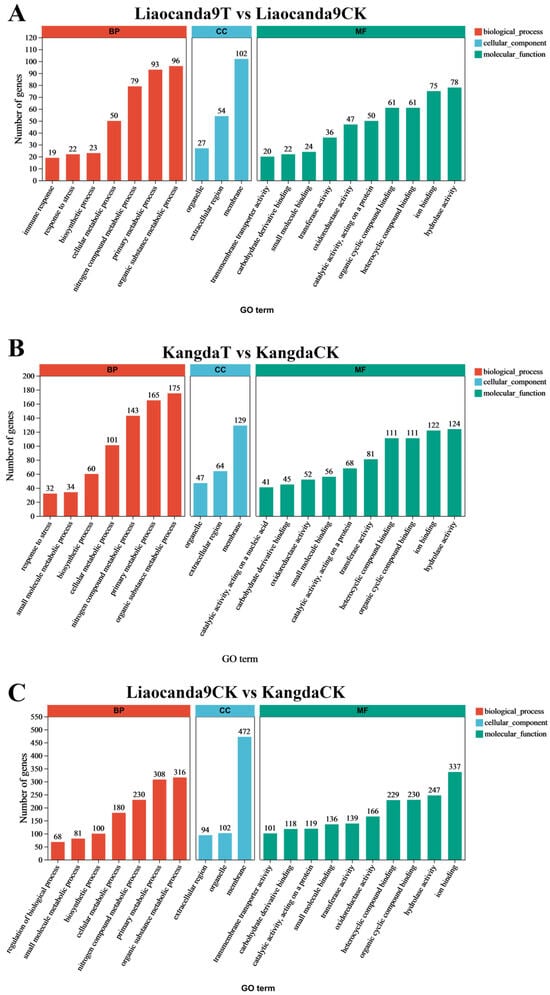
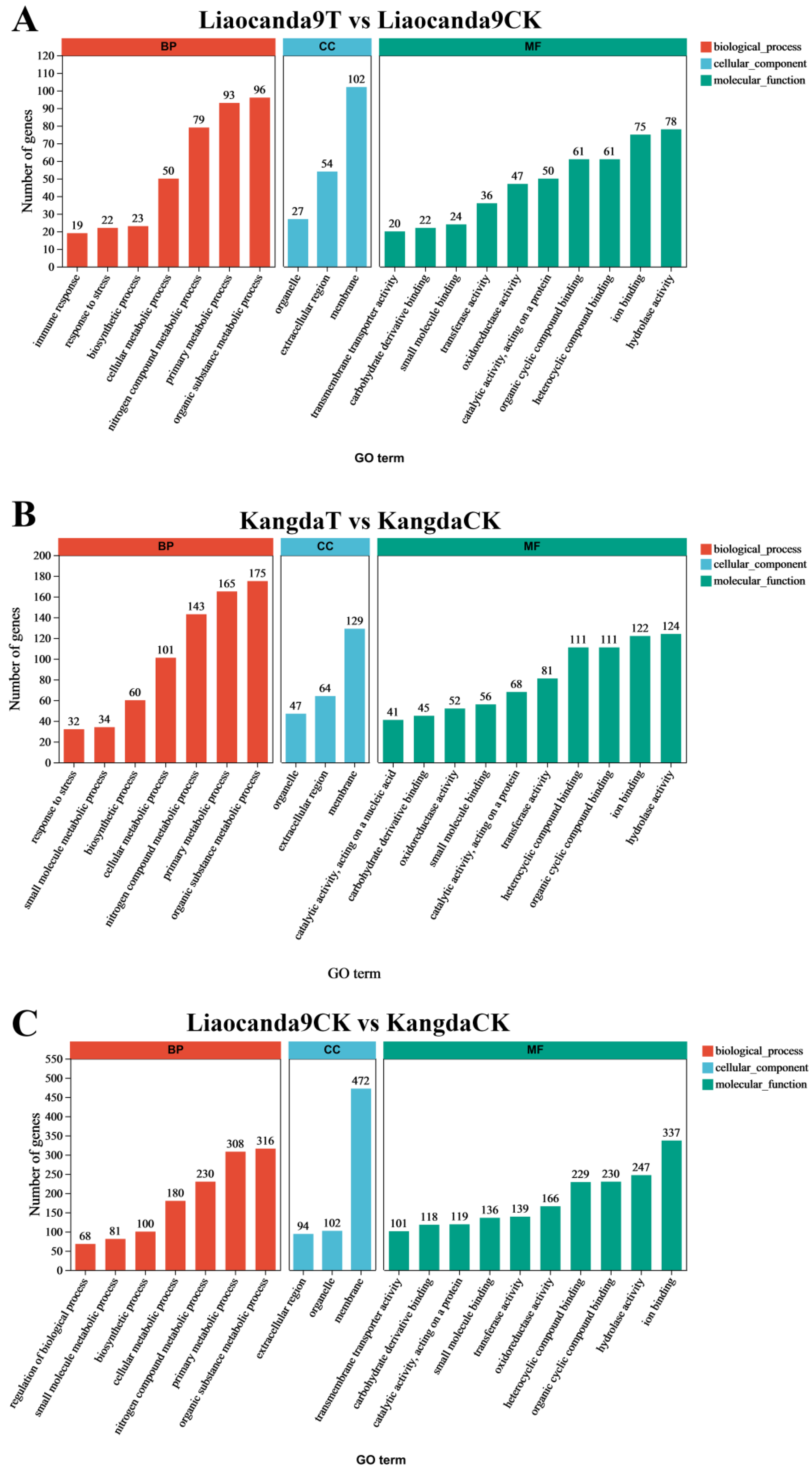
Enrichment analysis of DEGs was conducted using Gene Ontology (GO) terms (Figure 4). When comparing the beta-cypermethrin-treated group and the control group of Liaocanda9, the DEGs were primarily enriched in response to stress (GO: 0006950), immune response (GO: 0006955), oxidoreductase activity (GO: 0016491), and transmembrane transporter activity (GO: 0022857) (Figure 4A). In contrast, when comparing the beta-cypermethrin-treated group and the control group of Kangda, the DEGs were mainly enriched in response to stress and oxidoreductase activity (Figure 4B). Moreover, compared to Kangda, the DEGs in Liaocanda9 exhibited greater enrichment in oxidoreductase activity and transmembrane transporter activity (Figure 4C).
Figure 4.
GO function annotation of DEGs. (A) Liaocanda9T vs. Liaocanda9CK. (B) KangdaT vs. KangdaCK. (C) Liaocanda9CK vs. KangdaCK. Red: biological process; blue: cellular component; green: molecular function.
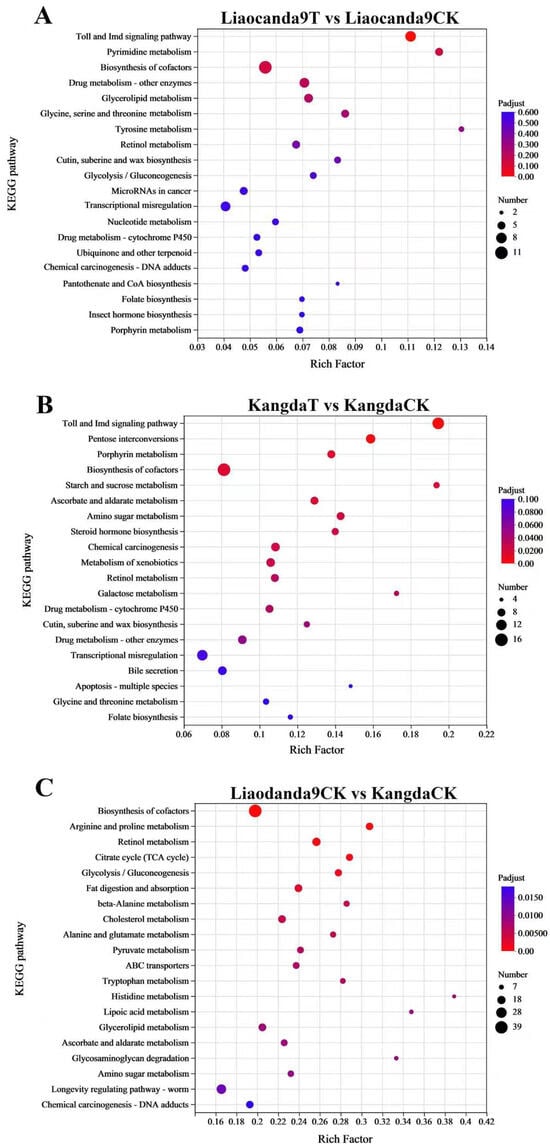
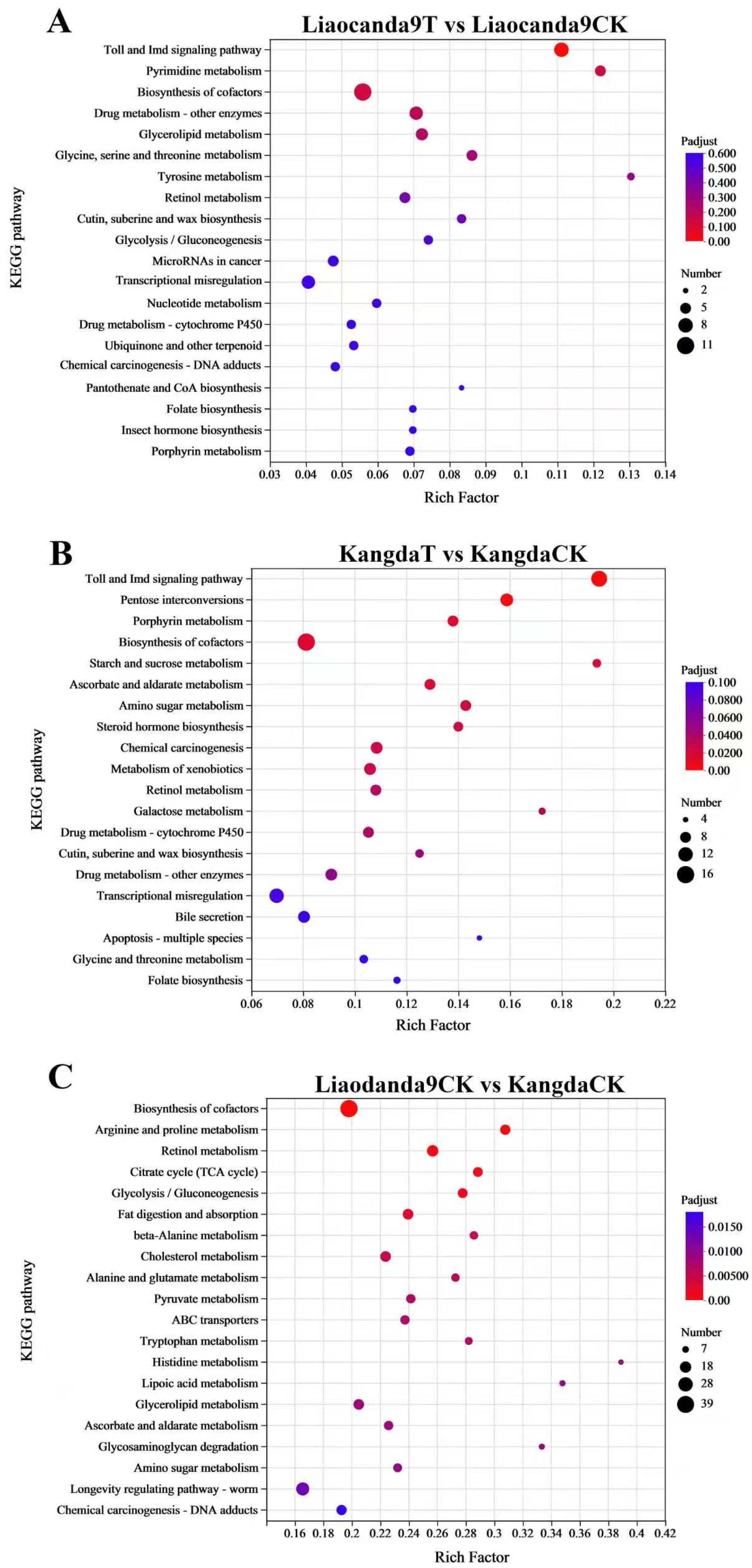
The KEGG database was employed to classify the DEGs based on their functional pathways or roles (Figure 5). Compared to the control group, in the beta-cypermethrin-treated group of Liaocanda9, DEGs were primarily enriched in the pathways of drug metabolism–other enzymes (map00983), drug metabolism–cytochrome P450 (map00982), and chemical carcinogenesis–DNA adducts (map05204) (Figure 5A). In comparison to the control group, in the beta-cypermethrin-treated group of Kangda, the DEGs were mainly enriched in the pathways of chemical carcinogenesis–DNA adducts, metabolism of xenobiotics by cytochrome P450 (map00980), drug metabolism–cytochrome P450, and drug metabolism–other enzymes (Figure 5B). Additionally, compared to the group of Kangda, the DEGs in the group of Liaocanda9 showed greater enrichment in the ABC transporters (map02010) and chemical carcinogenesis–DNA adducts pathways (Figure 5C).
Figure 5.
KEGG pathway analysis of DEGs. (A) Liaocanda9T vs. Liaocanda9CK. (B) KangdaT vs. KangdaCK. (C) Liaocanda9CK vs. KangdaCK. The significance of pathways is indicated by the q-value (color bar), the rich factor (X-axis), and the circles indicating the numbers of DEGs.
3.5. RT-qPCR Validation of DEGs Related to Tolerance
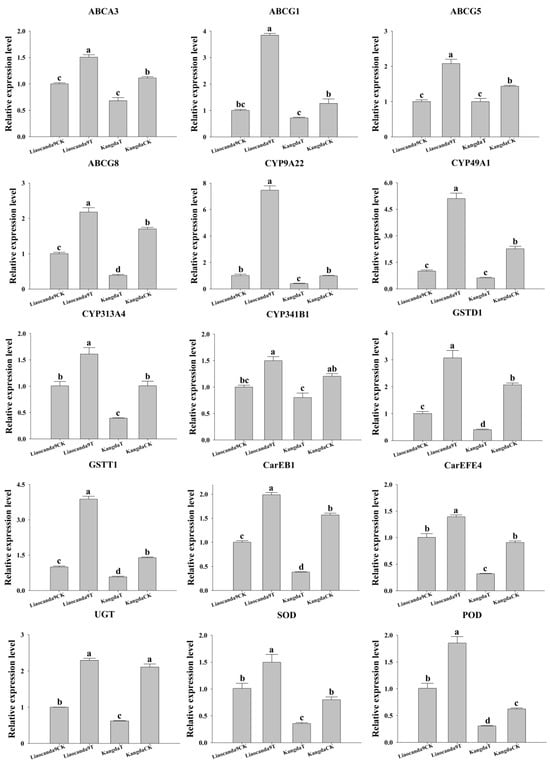
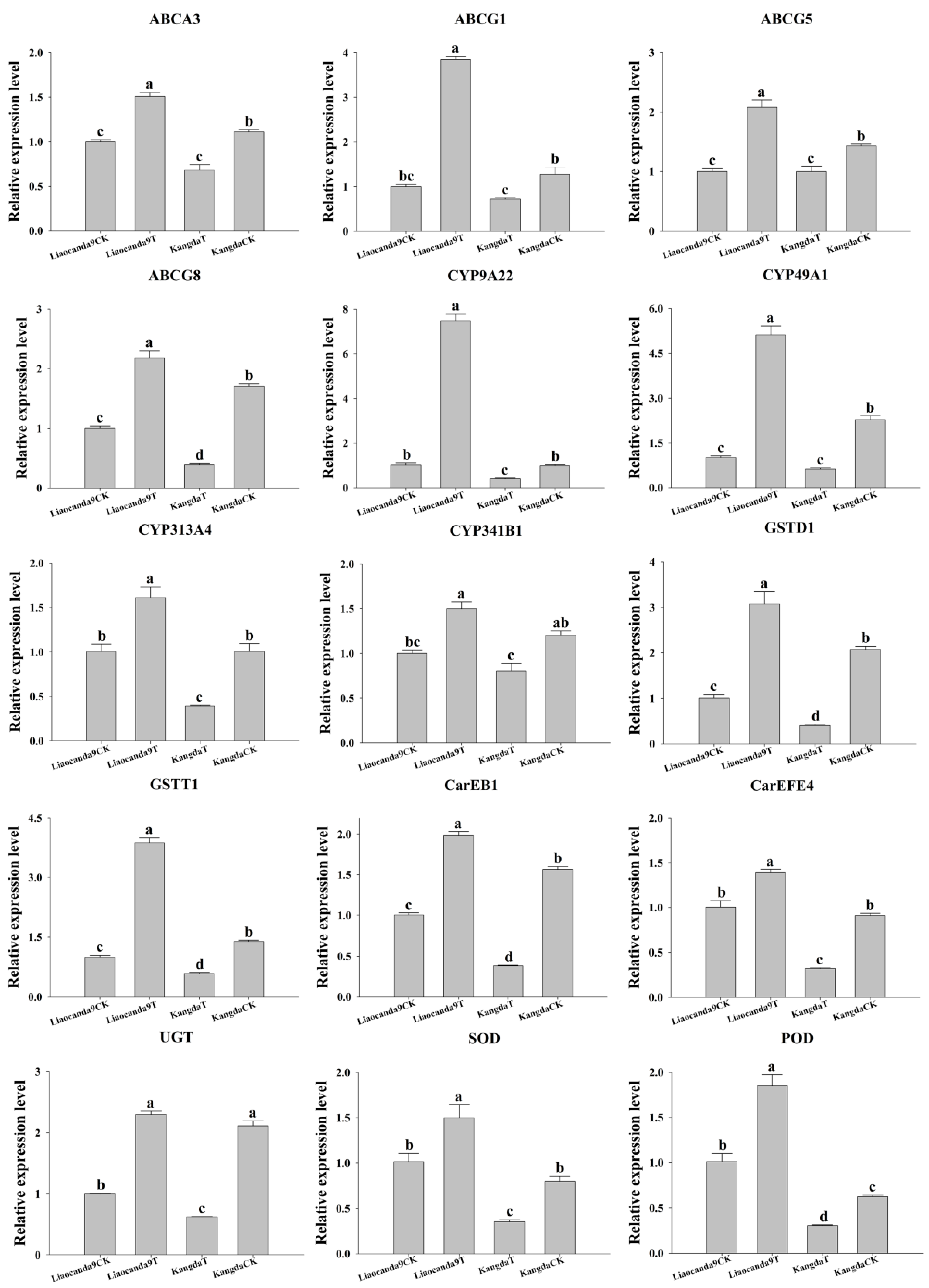
To elucidate the molecular mechanisms underlying the differential tolerance of A. pernyi against beta-cypermethrin, RT-qPCR was employed to validate DEGs identified from transcriptome sequencing data. These genes included ABC transporters, cytochrome P450s, glutathione S-transferases, carboxylesterases, UDP-glucosyltransferases, superoxide dismutases, and peroxidases (Figure 6). Compared to the control group, the relative expression levels of DEGs in Liaocanda9 and Kangda strains after beta-cypermethrin treatment were upregulated by 1.39–7.38-fold and 1.43–5.08-fold, respectively (p < 0.05). The upregulation of these genes is consistent with a potential contribution to the higher tolerance of the Liaocanda9 strain against beta-cypermethrin.
Figure 6.
RT-qPCR validation of DEGs related to detoxification metabolism in Liaocanda9 and Kangda strains. Data were normalized by using 18S rRNA. Different letters above bars indicate significant differences based on ANOVA followed by Tukey’s HSD post hoc test (p < 0.05).
3.6. RNA Interference of ABC and P450 Genes
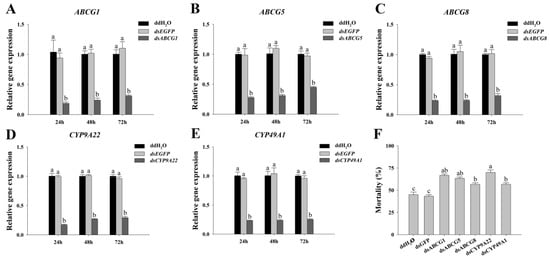
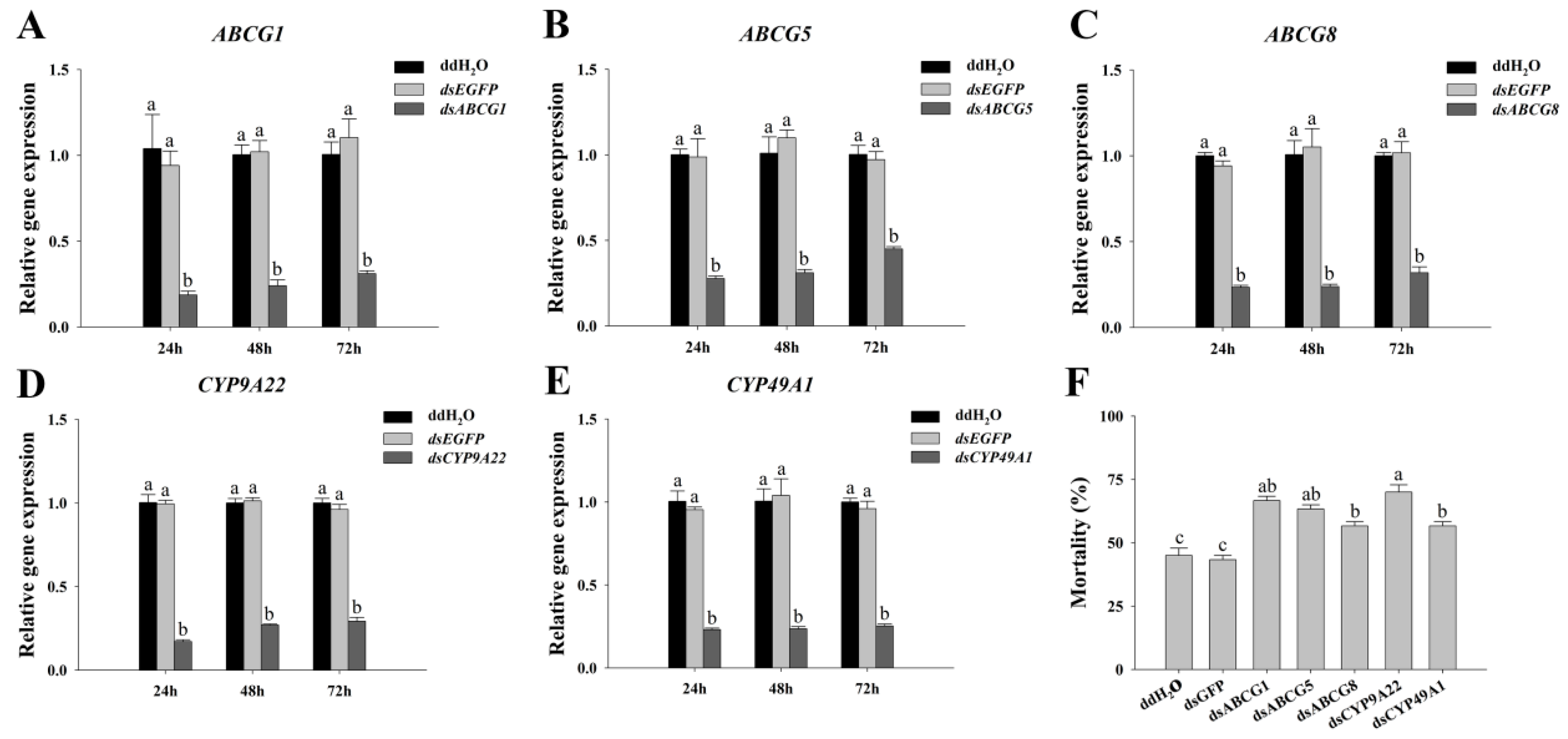
To investigate the function of ABC transporter and cytochrome P450 genes, dsRNA was synthesized and injected into the Liaocanda9 strain for RNA interference (RNAi). The RNAi efficiency results revealed that, after dsRNA injection for 24 h, the relative expression levels of ABCG1, ABCG5, ABCG8, CYP9A22, and CYP49A1 were significantly reduced by 80.12%, 71.91%, 75.11%, 82.73%, and 75.74% (p < 0.05), respectively, compared to the control group (Figure 7A–E). Even after dsRNA injection for 72 h, the expression of these genes remained significantly reduced, with relative expression levels of ABCG1, ABCG5, ABCG8, CYP9A22, and CYP49A1 decreasing by 71.76%, 53.67%, 68.70%, 69.57%, and 73.65% (p < 0.05), respectively.
Figure 7.
Interference efficiency of ABCG1 (A), ABCG5 (B), ABCG8 (C), CYP9A22 (D), and CYP49A1 (E) by RNAi. Mortality at 24 h of dsRNA injection in Liaocanda9 strain after treatment with LC50 beta-cypermethrin (F). Different letters above bars indicate significant differences based on ANOVA followed by Tukey’s HSD post hoc test (p < 0.05).
Furthermore, the mortality rate of A. pernyi in response to beta-cypermethrin was assessed at 24 h after dsRNA injection. The results indicated that, compared to the control group, the mortality rates of silkworms treated with dsABCG1, dsABCG5, dsABCG8, dsCYP9A22, and dsCYP49A1 significantly increased by 48.15%, 40.74%, 25.93%, 55.56%, and 25.93% (p < 0.05), respectively. Interference with these five genes significantly reduced the tolerance of A. pernyi against beta-cypermethrin. These findings suggest that ABCG1, ABCG5, ABCG8, CYP9A22, and CYP49A1 play important roles in the defense mechanism of A. pernyi against beta-cypermethrin.
3.7. Molecular Docking
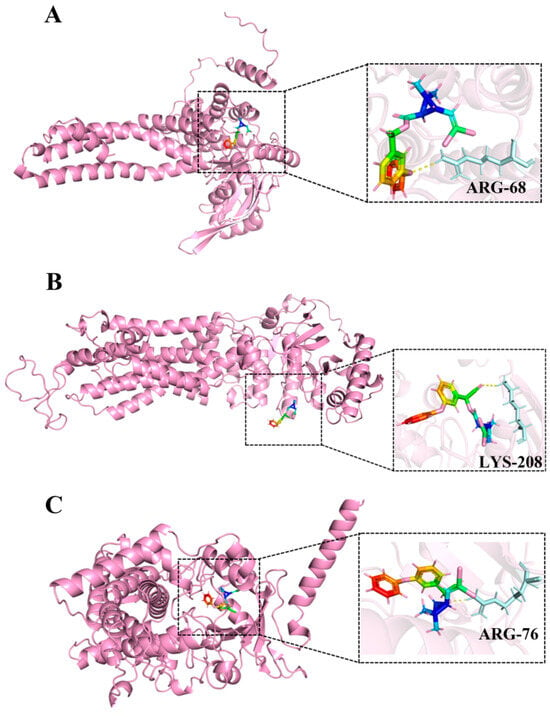
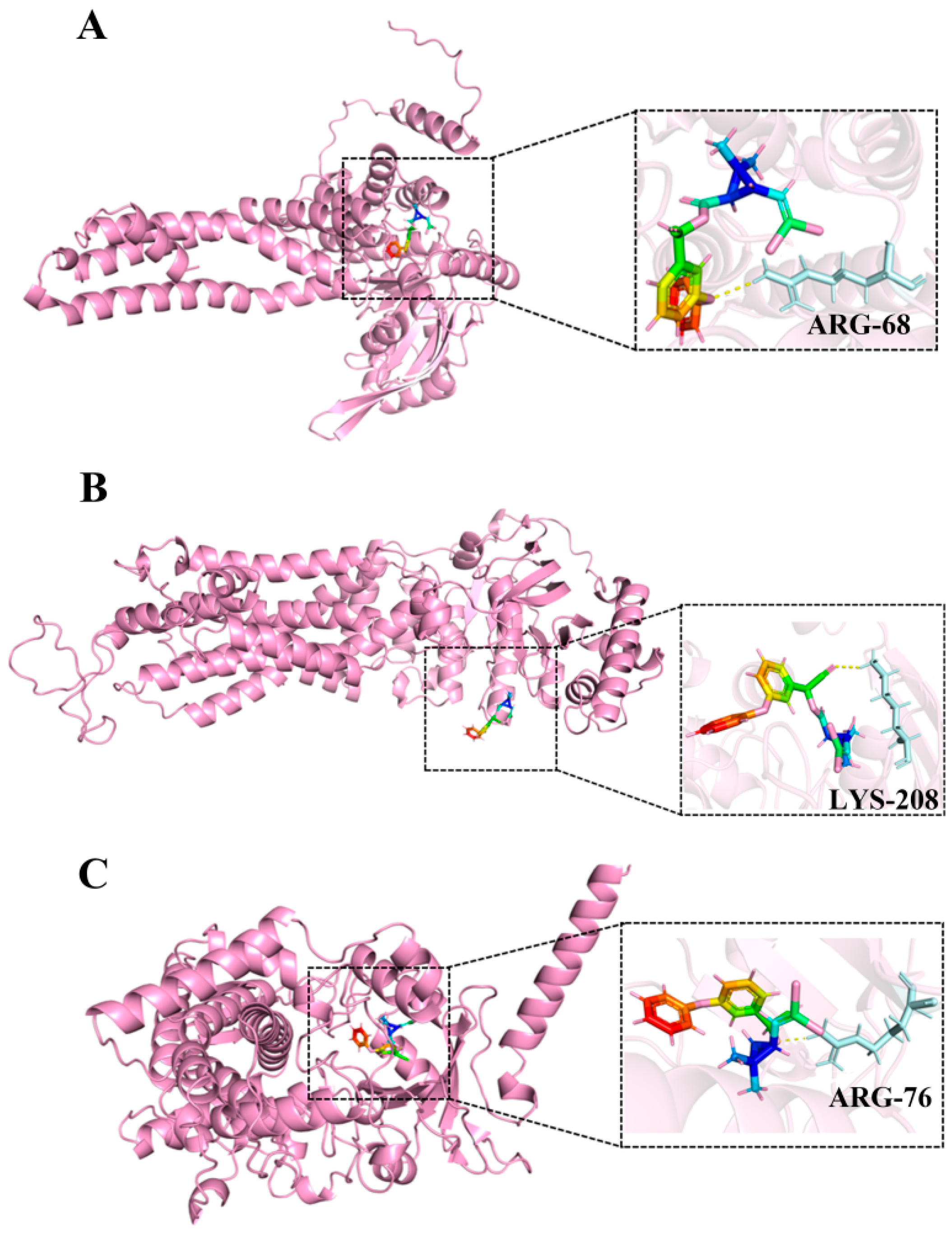
Molecular docking models were constructed to predict the interactions between beta-cypermethrin and A. pernyi proteins in silico predictions without experimental validation. The molecular docking scores for beta-cypermethrin with ABCG1, ABCG5, and CYP9A22 were −9.4 kcal/mol, −8.4 kcal/mol, and −9.1 kcal/mol, respectively, indicating strong binding capabilities between beta-cypermethrin and proteins. Figure 8A illustrates that beta-cypermethrin interacts with the amino acid residue Arg68 of ABCG1 via hydrogen bonds. Figure 8B demonstrates that beta-cypermethrin forms hydrogen bonds with the amino acid residue Lys208 of ABCG5. Figure 8C reveals that beta-cypermethrin interacts with the amino acid residue Arg76 of the CYP9A22 protein through hydrogen bonds. These results provide insights into the predicted binding modes of beta-cypermethrin with A. pernyi proteins.
Figure 8.
Molecular docking between beta-cypermethrin and A. pernyi protein in silico predictions without experimental validation. (A) ABCG1, (B) ABCG5, (C) CYP9A22.
4. Discussion
The extensive use of insecticides in agricultural production presents new challenges for the rearing of A. pernyi. Pesticide drift and residues cause phytotoxicity to A. pernyi larvae, severely impacting cocoon yield and quality [42]. Previous reports indicate that pesticide contamination from adjacent farmland can indirectly harm sericulture [43]. In this study, we evaluated the toxicity of four commonly used insecticides to A. pernyi, revealing that the larvae exhibit high sensitivity to all tested compounds. Notably, beta-cypermethrin showed the lowest LC50 value, indicating a high risk to A. pernyi. Even extremely low concentrations of insecticide exposure can be lethal to silkworms, suggesting that trace residues, nearly undetectable in the environment, are sufficient to devastate A. pernyi strains [7]. One report assessed the effects of chlorfenapyr on larval weight, cocoon weight, and silk yield in silkworms, demonstrating its threat to insect development and silk production [44].
Changes in enzymatic activity constitute a primary defense line for insects against xenobiotics and serve as a key biochemical basis for the development of insecticide tolerance [45]. It has been reported that the fat body of A. pernyi can enhance the activity of redox system enzymes by promoting the expression of SOD, CAT, GST, and glutathione peroxidase (GSH-Px), thereby improving the response of the organism to uranium-induced stress [46]. A correlation exists between insecticide tolerance in insects and the activity of their detoxification and antioxidant enzymes [47]. Qadri et al. [48] found that silkworms utilize endogenous antioxidants to scavenge reactive oxygen species generated by dimethoate treatment. Here, we observed that beta-cypermethrin treatment activated responses in both detoxification and antioxidant enzyme activities in A. pernyi. Furthermore, enzyme activities in different A. pernyi strains showed a positive correlation with their insecticide tolerance.
The evolution of insecticide tolerance in insects is influenced by the complex remodeling of gene expression and regulatory networks [45]. Insecticides act as potent selective pressures, driving genomic changes that involve adaptive adjustments ranging from the differential expression of detoxification enzyme-coding genes to signal transduction and transcriptional regulation networks [49]. Research on the model organism Bombyx mori has provided mature methodologies and profound insights [19]. Wang et al. [50] discovered that B. mori employs a midgut immune regulatory mechanism involving immune deficiency, antimicrobial peptides, and the JAK/STAT pathway to counteract broflanilide toxicity. Although genetic research on tolerance exists for A. pernyi, its molecular mechanisms remain unclear [51]. In this study, DEGs following beta-cypermethrin treatment were primarily enriched in pathways such as ABC transporters, drug metabolism–cytochrome P450, and chemical carcinogenesis–DNA adducts in A. pernyi. Additionally, DEGs were more significantly enriched in Gene Ontology terms related to oxidoreductase activity and transmembrane transporter activity in the more tolerant Liaocanda9 strain. These DEGs may represent candidate factors that contribute to insecticide tolerance in A. pernyi.
During the prolonged struggle against synthetic insecticides, insects have evolved a sophisticated, efficient, and highly coordinated molecular defense system [52]. Insect genomes often contain dozens or even hundreds of P450 genes, divided into multiple families and subfamilies [53]. This diversity enables insects to respond to various chemical challenges by expressing different combinations of P450 enzymes [54]. Enhanced P450s is a core mechanism inducing insect tolerance; upon perceiving insecticide stress, insects rapidly upregulate the transcription of relevant P450 genes through specific signaling pathways [55]. Studies have shown that O-Vanillin binds to the B. mori cytochrome P450 subfamily protein CYP9A19 to alleviate the toxicity of dinotefuran [56]. Li et al. [57] found that CYP6B5, CYP9f2, and CYP6B6 are involved in the detoxification metabolism of chlorfenapyr in B. mori. Furthermore, ABC transporters actively efflux polar products from Phase I metabolism or even partially unmodified parent toxins out of cells, effectively reducing their intracellular accumulation and preventing them from reaching toxic thresholds [58]. These transporters work in close conjunction with metabolic enzymes, as P450 metabolites are often preferred substrates for ABC transporters [59]. Research indicates that genes in the B. mori ABC-B, -C, and -G subfamilies encode homologs of P-glycoprotein, multidrug resistance protein, and breast cancer resistance protein [60]. Feng et al. [61] demonstrated that the B. mori ABC transporter BmWh2 inhibits nucleopolyhedrovirus proliferation by enhancing antithymocyte globulin expression. Studies have shown that avermectin treatment upregulated the expression of ABC transporters and detoxification metabolic genes in B. mori [13]. In this study, in vivo injection of dsRNA targeting ABCG1, ABCG5, ABCG8, CYP9A22, and CYP49A1 significantly increased the mortality of A. pernyi exposed to beta-cypermethrin, further confirming the crucial roles these five genes play in tolerance. Additionally, molecular docking results support direct binding between A. pernyi proteins and the beta-cypermethrin molecule. The strong binding of beta-cypermethrin to ABCG1, ABCG5, and CYP9A22 likely disrupts their normal functions in detoxification, transport, or metabolism, leading to an increased susceptibility of A. pernyi to the insecticide.
5. Conclusions
The development of insecticide tolerance in A. pernyi mitigates, to some extent, the impact of toxicity on larvae during wild rearing. Both detoxification metabolic enzymes and antioxidant enzymes are involved in the defense against beta-cypermethrin. Comparative transcriptome analysis of beta-cypermethrin-treated A. pernyi identified changes in related metabolic pathways, with the response of ABC transporter and P450 genes. However, this study still has certain limitations, including the RNA seq sample size being relatively small and the reliance on RNAi. This study elucidated the tolerance mechanism of A. pernyi to beta-cypermethrin, providing a theoretical basis for subsequent research on the gene functions of A. pernyi through molecular approaches.
Supplementary Materials
The following supporting information can be downloaded at: https://www.mdpi.com/article/10.3390/insects17040415/s1. Table S1. RT-qPCR primer information of differentially expressed genes. Table S2. Primer sequences for synthesis of dsRNA transcription templates. Table S3. Transcriptome data statistic.
Author Contributions
Conceptualization, T.Z., X.C., J.C., P.L., F.L., M.C., L.X., S.Z. and X.L.; Methodology, T.Z.; Formal analysis, T.Z.; Funding acquisition, M.C. and X.L. All authors have read and agreed to the published version of the manuscript.
Funding
This research was supported by National Silkworm Genetic Resource Genebank (Liaoning) (No. A2111), China Agriculture Research System of MOF and MARA, Liaoning Province Science and Technology Major Project (No. 2024021207-JH1/117-2), Liaoning Provincial Academy of Agricultural Sciences Fundamental Research Business Fee Project (2025MS1705), Finance Department and Ministry of Agriculture and Rural Affairs National Modern Agricultural Industry System Project, Ministry of Agriculture and Rural Affairs Liaoning Wild Silkworm Scientific Observation and Experiment Station Project (No. 23-S-15), National Silkworm Improvement Center Liaoning Eri Silkworm Branch Center Project (No. 2015-A2211-210682-A015-002), Liaoning Province Wild Silkworm Research Key Laboratory Project (No. 2003), Liaoning Province Silkworm Medicine Professional Technology Center Project (No. 2019-334), Eri Silkworm Breeding Discipline Construction Project (No. 2025XKJS855).
Data Availability Statement
The data has been submitted to the NCBI database, with the access ID: PRJNA1440535. The original contributions presented in this study are included in the article/Supplementary Materials. Further inquiries can be directed toward the corresponding authors.
Acknowledgments
We appreciate the comments and suggestions from anonymous reviewers and editors.
Conflicts of Interest
The authors declare no conflicts of interest.
References
- Li, Q.; Li, Y.P.; Ambühl, D.; Liu, Y.Q.; Li, M.W.; Qin, L. Nutrient composition of Chinese oak silkworm, Antheraea pernyi, a traditional edible insect in China: A review. J. Insects Food Feed 2020, 6, 355–369. [Google Scholar] [CrossRef] [Scilit]
- Long, Y.L.; Cheng, X.; Tang, Q.M.; Chen, L.L. The antigenicity of silk-based biomaterials: Sources, influential factors and applications. J. Mater. Chem. B 2021, 9, 8365–8377. [Google Scholar] [CrossRef] [Scilit]
- Zhou, Y.X.; Zhou, S.Q.; Duan, H.; Wang, J.; Yan, W.J. Silkworm pupae: A functional food with health benefits for humans. Foods 2022, 11, 1594. [Google Scholar] [CrossRef] [Scilit] [PubMed]
- Reizabal, A.; Costa, C.M.; Pérez-Alvarez, L.; Vilas-Vilela, J.L.; Lanceros-Méndez, S. Silk fibroin as sustainable advanced material: Material properties and characteristics, processing, and applications. Adv. Funct. Mater. 2023, 33, 2210764. [Google Scholar] [CrossRef] [Scilit]
- Wang, Y.; Xu, C.Y.; Wang, Q.; Jiang, Y.R.; Qin, L. Germplasm resources of oaks (Quercus L.) in China: Utilization and prospects. Biology 2023, 12, 76. [Google Scholar] [CrossRef] [Scilit]
- Sukovata, L.; Jakoniuk, H.; Jaworski, T. A novel method for assessing the threat to oak stands from geometrid defoliators. Forest Ecol. Manag. 2022, 520, 120380. [Google Scholar] [CrossRef] [Scilit]
- Chen, Q.Q.; Sun, S.M.; Yang, X.; Yan, H.H.; Wang, K.Y.; Ba, X.C.; Wang, H.Y. Sublethal effects of neonicotinoid insecticides on the development, body weight and economic characteristics of silkworm. Toxics 2023, 11, 402. [Google Scholar] [CrossRef] [Scilit] [PubMed]
- Chamani, M.; Dadpour, M.; Dehghanian, Z.; Panahirad, S.; Bouket, A.C.; Oszako, T.; Kumar, S. From digestion to detoxification: Exploring plant metabolite impacts on insect enzyme systems for enhanced pest control. Insects 2025, 16, 392. [Google Scholar] [CrossRef] [Scilit]
- Balabanidou, V.; Grigoraki, L.; Vontas, J. Insect cuticle: A critical determinant of insecticide resistance. Curr. Opin. Insect Sci. 2018, 27, 68–74. [Google Scholar] [CrossRef] [Scilit]
- Bian, D.D.; Ren, Y.Y.; Ye, W.T.; Dai, M.L.; Li, F.C.; Wei, J.; Sun, H.N.; Li, B. Evaluation of tolerance to λ-cyhalothrin and response of detoxification enzymes in silkworms reared on artificial diet. Ecotox Environ. Safe 2022, 232, 113232. [Google Scholar] [CrossRef] [Scilit]
- Liu, L.J.; Zhao, D.C.; Wang, G.H.; He, Q.X.; Song, Y.W.; Jiang, Y.L.; Xia, Q.Y.; Zhao, P. Adaptive changes in detoxification metabolism and transmembrane transport of Bombyx mori malpighian tubules to artificial diet. Int. J. Mol. Sci. 2023, 24, 9949. [Google Scholar] [CrossRef] [Scilit]
- Wang, H.; Lu, Z.T.; Li, M.X.; Fang, Y.L.; Qu, J.W.; Mao, T.T.; Chen, J.; Li, F.C.; Sun, H.N.; Li, B. Responses of detoxification enzymes in the midgut of Bombyx mori after exposure to low-dose of acetamiprid. Chemosphere 2020, 251, 126438. [Google Scholar] [CrossRef] [Scilit]
- Guo, Y.K.; Zhang, T.; Lu, W.; Liu, D.; Lao, J.J.; Zhang, N.; Sun, H.; Jia, L.; Ma, S.Y. Integrated genomic analysis reveals the impact of avermectin on chromatin structure and gene expression regulation in Bombyx mori. Insects 2025, 16, 298. [Google Scholar] [CrossRef] [Scilit]
- Tu, J.; Jin, Y.C.; Zhuo, J.; Cao, X.T.; Liu, G.H.; Du, H.J.; Liu, L.; Wang, J.; Xiao, H. Exogenous GABA improves the antioxidant and anti-aging ability of silkworm (Bombyx mori). Food Chem. 2022, 383, 132400. [Google Scholar] [CrossRef] [Scilit]
- Shu, Q.L.; Guo, X.Q.; Tian, C.; Wang, Y.F.; Zhang, X.X.; Cheng, J.L.; Li, F.C.; Li, B. Homeostatic regulation of the duox-ros defense system: Revelations based on the diversity of gut bacteria in silkworms (Bombyx mori). Int. J. Mol. Sci. 2023, 24, 12731. [Google Scholar] [CrossRef] [Scilit]
- Song, J.B.; Liu, L.; Hao, K.G.; Mao, S.; Tang, Y.X.; Tong, X.L.; Dai, F.Y. Resveratrol elongates the lifespan and improves antioxidant activity in the silkworm Bombyx mori. J. Pharm. Anal. 2021, 11, 374–382. [Google Scholar] [CrossRef] [Scilit]
- Nauen, R.; Bass, C.; Feyereisen, R.; Vontas, J. The role of cytochrome P450s in insect toxicology and resistance. Annu. Rev. Entomol. 2022, 67, 105–124. [Google Scholar] [CrossRef] [Scilit] [PubMed]
- Xu, Q.C.; Wang, M.Y.; Zeng, J.H.; Sun, H.Z.; Wei, X.Q.; Jiang, H.; Shentu, X.; Sun, D. CRISPR/Cas technology in insect insecticide resistance. Insects 2025, 16, 345. [Google Scholar] [CrossRef] [Scilit] [PubMed]
- Chen, D.B.; Xia, R.X.; Li, Q.; Li, Y.P.; Cao, H.Y.; Liu, Y.Q. Genome-wide identification of detoxification genes in wild silkworm Antheraea pernyi and transcriptional response to coumaphos. Int. J. Mol. Sci. 2023, 24, 9775. [Google Scholar] [CrossRef] [Scilit]
- Liu, Q.N.; Liu, C.L.; Zhu, B.J.; Cao, J.; Wei, G.Q.; Qian, C.; Wang, Z.G.; Sun, Q. Identification and expression analysis of CYP4G25 gene from the Chinese oak silkworm (Antheraea pernyi). Afr. J. Biotechnol. 2011, 10, 8205–8212. [Google Scholar] [CrossRef] [Scilit]
- Mon, H.; Sato, M.; Lee, J.M.; Kusakabe, T. Construction of gene co-expression networks in cultured silkworm cells and identification of previously uncharacterized Lepidopteran-specific genes required for chromosome dynamics. Insect Biochem. Mol. Biol. 2022, 151, 103875. [Google Scholar] [CrossRef] [Scilit] [PubMed]
- Lu, K.P.; Zhan, C.Y.; Shen, J.H.; Zhi, C.; Deng, J.; Lai, K.R.; Han, M.J.; Hu, H.; Tong, X.L.; Dai, F.Y. Characterization of spectrin family genes and their evolutionary roles in domestication and breeding of the silkworm Bombyx mori. Insects 2025, 16, 556. [Google Scholar] [CrossRef] [Scilit] [PubMed]
- Matsumoto, Y.; Kurakado, S.; Yamada, T.; Sugita, T. Strategy to identify virulence-related genes of the pathogenic fungus Trichosporon asahii using an efficient gene-targeting system. Microbiol. Immunol. 2025, 69, 77–84. [Google Scholar] [CrossRef] [Scilit]
- Tian, C.; Tang, J.; Zhu, Q.Y.; Guo, X.Q.; Shu, Q.L.; Gu, Z.Y.; Li, F.C.; Li, B. A novel detoxification strategy of Bombyx mori (Lepidoptera: Bombycidae) to dimethoate based on gut microbiota research. J. Econ. Entomol. 2025, 118, 858–867. [Google Scholar] [CrossRef] [Scilit]
- Rosenberg, D.W.; Roque, H.; Kappas, A. A fluorometric method for measuring ethoxycoumarin o-deethylase activity by reversed-phase high-performance liquid-chromatography. Anal. Biochem. 1990, 191, 354–358. [Google Scholar] [CrossRef] [Scilit]
- Enayati, A.A.; Lengeler, C.; Erlanger, T.; Hemingway, J. Field evaluation of a recombinant glutathione S-transferase-based pyrethroid quantification assay. Trans. R. Soc. Trop. Med. Hyg. 2005, 99, 369–378. [Google Scholar] [CrossRef] [Scilit]
- Li, S.W.; Meng, Y.P.; Chang, J.T.; Li, J.H. A comparative study of esterase isozymes in Hymenoptera. Acta Entomol. Sin. 1987, 30, 266–270. [Google Scholar]
- Nagi, M.N.; AlBekairi, A.M.; AlSawaf, H.A. Spectrophotometric assay for superoxide dismutase based on the nitroblue tetrazolium reduction by glucose-glucose oxidase. Biochem. Mol. Biol. Int. 1995, 36, 633–638. [Google Scholar] [PubMed]
- Kronfuss, G.; Wieser, G.; Havranek, W.M.; Polle, A. Effects of ozone and mild drought stress on total and apoplastic guaiacol peroxidase and lipid peroxidation in current-year needles of young Norway spruce (Picea abies L., Karst.). J. Plant Physiol. 1996, 148, 203–206. [Google Scholar] [CrossRef] [Scilit]
- Laguerre, M.; López-Giraldo, L.J.; Lecomte, J.; Baréa, B.; Cambon, E.; Tchobo, P.F.; Barouh, N.; Villeneuve, P. Conjugated autoxidizable triene (CAT) assay: A novel spectrophotometric method for determination of antioxidant capacity using triacylglycerol as ultraviolet probe. Anal. Biochem. 2008, 380, 282–290. [Google Scholar] [CrossRef] [Scilit] [PubMed]
- Chen, S.F.; Zhou, Y.Q.; Chen, Y.R.; Gu, J. Fastp: An ultra-fast all-in-one fastq preprocessor. Bioinformatics 2018, 34, 884–890. [Google Scholar] [CrossRef] [Scilit] [PubMed]
- Kim, D.; Paggi, J.M.; Park, C.; Bennett, C.; Salzberg, S.L. Graph-based genome alignment and genotyping with HISAT2 and HISAT-genotype. Nat. Biotechnol. 2019, 37, 907–915. [Google Scholar] [CrossRef] [Scilit] [PubMed]
- Li, B.; Dewey, C.N. Rsem: Accurate transcript quantification from RNA-Seq data with or without a reference genome. BMC Bioinform. 2011, 12, 323. [Google Scholar] [CrossRef] [Scilit]
- Love, M.I.; Huber, W.; Anders, S. Moderated estimation of fold change and dispersion for RNA-seq data with DESeq2. Genome Biol. 2014, 15, 550. [Google Scholar] [CrossRef] [Scilit]
- Silver, D.; Huang, A.; Maddison, C.J.; Guez, A.; Sifre, L.; van den Driessche, G.; Schrittwieser, J.; Antonoglou, I.; Panneershelvam, V.; Lanctot, M.; et al. Mastering the game of go with deep neural networks and tree search. Nature 2016, 529, 484–489. [Google Scholar] [CrossRef] [Scilit] [PubMed]
- Kanehisa, M.; Sato, Y. KEGG mapper for inferring cellular functions from protein sequences. Protein Sci. 2020, 29, 28–35. [Google Scholar] [CrossRef] [Scilit] [PubMed]
- Mitsiopoulos, N.; Baumgartner, R.N.; Heymsfield, S.B.; Lyons, W.; Gallagher, D.; Ross, R. Cadaver validation of skeletal muscle measurement by magnetic resonance imaging and computerized tomography. J. Appl. Physiol. 1998, 85, 115–122. [Google Scholar] [CrossRef] [Scilit]
- Tang, J.W.; Wang, Q.; Jiang, Y.M.; Jiang, Y.R.; Wang, Y.; Liu, W. Group V chitin deacetylases are responsible for the structure and barrier function of the gut peritrophic matrix in the Chinese oak silkworm Antheraea pernyi. Int. J. Mol. Sci. 2025, 26, 296. [Google Scholar] [CrossRef] [Scilit]
- Eberhardt, J.; Santos-Martins, D.; Tillack, A.F.; Forli, S. Autodock vina 1.2.0: New docking methods, expanded force field, and python bindings. J. Chem. Inf. Model. 2021, 61, 3891–3898. [Google Scholar] [CrossRef] [Scilit]
- Mooers, B.H.M. Shortcuts for faster image creation in pymol. Protein Sci. 2020, 29, 268–276. [Google Scholar] [CrossRef] [Scilit]
- Peng, X.W.; Lei, C.F.; Sun, X.L. Comparison of lethal doses calculated using Logit/Probit–log (dose) regressions with arbitrary slopes using R. J. Econ. Entomol. 2021, 114, 1345–1352. [Google Scholar] [CrossRef] [Scilit]
- Wang, Z.Y.; He, K.L.; Zhang, F.; Lu, X.; Babendreier, D. Mass rearing and release of trichogramma for biological control of insect pests of corn in China. Biol. Control 2014, 68, 136–144. [Google Scholar] [CrossRef] [Scilit]
- Mohamed, S.A.H.; El-Ashram, D.F.; Elyamani, E.M. Bioassay and expression alterations of acetyl cholinesterase enzyme gene to spinosad (bio-insecticides) on nontarget silkworm, Bombyx mori (Lepidoptera: Bombycidae). Egypt. Pharm. J. 2023, 22, 449–455. [Google Scholar] [CrossRef] [Scilit]
- Vasanth, V.; Senguttuvan, K.; Priyadharsini, P.; Gracy, R.G.; Ponnuvel, K.M.; Jayakanthan, M. Impact of the insecticide chlorfenapyr on rearing efficiency of silkworms, Bombyx mori. Entomol. News 2025, 132, 325–334. [Google Scholar] [CrossRef] [Scilit]
- Amezian, D.; Van Leeuwen, T. Is the CncC/Keap1 complex a major factor in conferring pesticide resistance in arthropods?—A critical review. Insect Biochem. Mol. Biol. 2025, 184, 104400. [Google Scholar] [CrossRef] [Scilit]
- Zhang, C.F.; Liu, Y.X.; He, L.F.; Shi, F.J.; Yao, W.T.; Luo, X.G. Effects of uranium on the antioxidant responses of Chinese oak silkworm, Antheraea pernyi. Pak. J. Zool. 2022, 54, 339–346. [Google Scholar] [CrossRef] [Scilit]
- Shan, Y.X.; Zhu, Y.; Li, J.J.; Wang, N.M.; Yu, Q.T.; Xue, C.B. Acute lethal and sublethal effects of four insecticides on the lacewing (Chrysoperla sinica Tjeder). Chemosphere 2020, 250, 126321. [Google Scholar] [CrossRef] [Scilit] [PubMed]
- Qadri, H.A.; Qamar, A.; Maheshwari, N. Oxidative stress, DNA damage, and histological alterations in Bombyx mori exposed orally to pesticide dimethoate. Physiol. Entomol. 2023, 48, 1–13. [Google Scholar] [CrossRef] [Scilit]
- Bavithra, C.M.L.; Murugan, M.; Pavithran, S.; Naveena, K. Enthralling genetic regulatory mechanisms meddling insecticide resistance development in insects: Role of transcriptional and post-transcriptional events. Front. Mol. Biosci. 2023, 10, 1257859. [Google Scholar] [CrossRef] [Scilit]
- Wang, F.F.; Huang, Z.Q.; Zheng, J.C.; Sun, Z.H.; Ma, S.S.; Chen, K.P.; Ju, X.L.; Wang, Q. The silkworm (Bombyx mori) alleviates the toxic effects of the novel meta-diamide insecticide broflanilide by modulating its midgut immune system. Comp. Biochem. Physiol. Part C Toxicol. Pharmacol. 2025, 297, 110304. [Google Scholar] [CrossRef] [Scilit] [PubMed]
- Vasanth, V.; Senguttuvan, K.; Gracy, R.G.; Priyadharsini, P.; Ponnuvel, K.M.; Jayakanthan, M.; Kumar, S.R.; Arasakumar, E. Genomic insights and adaptation mechanisms of silkworms (Bombyx mori) towards pesticide use. Entomol. News 2025, 132, 406–413. [Google Scholar] [CrossRef] [Scilit]
- Wang, B.J.; Yi, M.H.; Wang, M.Y.; Wang, H.J.; Tang, Z.; Zhao, H.; Wei, P.; Liao, X.L.; Xue, W.X.; Pan, L.; et al. Cuticle thickening mediates insecticide penetration resistance in Spodoptera litura. J. Adv. Res. 2025, 78, 163–178. [Google Scholar] [CrossRef] [Scilit]
- Chakraborty, P.; Biswas, A.; Dey, S.; Bhattacharjee, T.; Chakrabarty, S. Cytochrome p450 gene families: Role in plant secondary metabolites production and plant defense. J. Xenobiotics 2023, 13, 402–423. [Google Scholar] [CrossRef] [Scilit] [PubMed]
- Wu, H.X.; Li, Z.S.; Zhong, Z.C.; Guo, Y.J.; He, L.Y.; Xu, X.X.; Mao, Y.J.; Tang, D.Y.; Zhang, W.Q.; Jin, F.L.; et al. Insect cytochrome P450 database: An integrated resource of genetic diversity, evolution and function. Mol. Ecol. Resour. 2025, 25, e14070. [Google Scholar] [CrossRef] [Scilit] [PubMed]
- Ye, M.; Nayak, B.; Xiong, L.; Xie, C.; Dong, Y.; You, M.S.; Yuchi, Z.G.; You, S.J. The role of insect cytochrome P450s in mediating insecticide resistance. Agriculture 2022, 12, 53. [Google Scholar] [CrossRef] [Scilit]
- Ashraf, H.; Agrawal, P.; Singh, N.; Maheshwari, N.; Qamar, A. Ortho-vanillin ameliorates spinetoram-induced oxidative stress in the silkworm Bombyx mori: Biochemical and in silico insights. Neotrop. Entomol. 2024, 53, 1102–1118. [Google Scholar] [CrossRef] [Scilit]
- Li, T.; Hu, C.X.; Liu, Z.H.; Li, Q.Y.; Fan, Y.H.; Liao, P.F.; Liu, M.; Yang, W.K.; Li, X.X.; Dong, Z.P. Histopathological and transcriptional changes in silkworm larval gonads in response to chlorfenapyr exposure. Insects 2025, 16, 619. [Google Scholar] [CrossRef] [Scilit] [PubMed]
- Ullah, R.M.K.; Gao, F.K.; Sikandar, A.; Wu, H.Y. Insights into the effects of insecticides on aphids (Hemiptera: Aphididae): Resistance mechanisms and molecular basis. Int. J. Mol. Sci. 2023, 24, 6750. [Google Scholar] [CrossRef] [Scilit]
- Panini, M.; Manicardi, G.C.; Moores, G.D.; Mazzoni, E. An overview of the main pathways of metabolic resistance in insects. ISJ-Invert. Surviv. J. 2016, 13, 326–335. [Google Scholar] [CrossRef]
- Labbé, R.; Caveney, S.; Donly, C. Genetic analysis of the xenobiotic resistance-associated ABC gene subfamilies of the Lepidoptera. Insect Mol. Biol. 2011, 20, 243–256. [Google Scholar] [CrossRef] [Scilit]
- Feng, D.D.; Guo, H.Z.; Li, J.; Liu, J.Y.; Zhao, D.; Zhao, H.; He, X.Y.; Xia, Q.Y.; Jiang, L. ABC transporter BmWh2 enhances antiviral defense against baculovirus in silkworm via ATG upregulation. Pestic. Biochem. Physiol. 2025, 215, 106704. [Google Scholar] [CrossRef] [Scilit] [PubMed]

Disclaimer/Publisher’s Note: The statements, opinions and data contained in all publications are solely those of the individual author(s) and contributor(s) and not of MDPI and/or the editor(s). MDPI and/or the editor(s) disclaim responsibility for any injury to people or property resulting from any ideas, methods, instructions or products referred to in the content. |
© 2026 by the authors. Licensee MDPI, Basel, Switzerland. This article is an open access article distributed under the terms and conditions of the Creative Commons Attribution (CC BY) license.