


Simple Summary
The fall armyworm is one of the most damaging invasive pests of maize in China. Biological control with egg parasitoids offers a promising alternative to chemical insecticides. Two egg parasitoids, Telenomus remus and Trichogramma chilonis, are being considered for release against this pest, but using them together requires knowing how they interact. Our laboratory study shows that in double-layer egg masses, the two parasitoids divide the egg mass: Te. remus attacks the hidden lower layer, while Tr. chilonis attacks the exposed upper layer. Furthermore, interspecific discrimination assays on single-layer eggs revealed that only Te. remus can recognize eggs already parasitized by the other species. Which species does better also depends on how many individuals are used, with Te. remus producing more progeny at low density, whereas Tr. chilonis produces more at high density. In practice, this means the two parasitoids may complement rather than compete with each other, as long as parasitoid densities are chosen carefully.
Abstract
Spodoptera frugiperda (J.E. Smith) is a major invasive pest of maize in China. Telenomus remus Nixon and Trichogramma chilonis Ishii are two promising egg parasitoids, yet their interspecific discrimination and competition remain unclear. Under laboratory conditions, we compared their parasitism on single- and double-layer egg masses and tested bidirectional discrimination, with Te. remus against eggs parasitized by Tr. chilonis for 0–7 days and Tr. chilonis against eggs parasitized by Te. remus for 0–10 days, and assessed competition at five parasitoid densities on 100 single-layer host eggs. Te. remus parasitized single-layer and double-layer eggs equally, whereas Tr. chilonis parasitized single-layer eggs but was restricted to the exposed upper layer in double-layer masses. Te. remus rarely oviposited in eggs parasitized by Tr. chilonis for 0–3 days and completely avoided those parasitized for 4 days or longer, consistent with strong interspecific host discrimination. In contrast, Tr. chilonis oviposited in eggs parasitized by Te. remus for 0–6 days, indicating a lack of discrimination. Competition on single-layer eggs was density-dependent: Te. remus secured more host eggs at low density, whereas Tr. chilonis produced more progeny at high densities. These results indicate that in double-layer egg masses, the two parasitoids partition S. frugiperda eggs through niche differentiation and asymmetric discrimination, while under single-layer conditions, their relative performance changes with parasitoid density. These findings provide a basis for evaluating the combined use of these two parasitoids in biological control programs.
1. Introduction
Spodoptera frugiperda (J.E. Smith) (Lepidoptera: Noctuidae) is a major agricultural pest native to tropical and subtropical regions of the Americas. It is highly polyphagous, migratory, and prone to outbreaks [1,2], feeding on 353 plant species across 76 families, including rice, sugarcane, sorghum, and cotton [3], with maize being one of the most preferred hosts [2]. Since its invasion of Africa in 2016, S. frugiperda has rapidly spread to 47 African countries, causing economic losses amounting to billions of dollars [4]. In late 2018, it established a source population in Myanmar and migrated into Pu’er, Yunnan Province, China, where it was first detected in January 2019 [5,6]. Since then, it has spread to many provinces across China, posing a serious threat to maize production and food security [7,8,9]. Chemical control has been widely used against S. frugiperda [10], but intensive and prolonged use has led to rapid development of pesticide resistance and negative impacts on agroecosystems, human and animal health, and environmental safety [10,11]. Environmentally friendly biological control technologies are therefore urgently needed for integrated management of S. frugiperda.
Among various natural enemy resources, egg parasitoids have attracted considerable attention because they eliminate pests at the egg stage before feeding damage occurs. In China, 26 parasitoid species associated with S. frugiperda have been recorded, among which Telenomus remus Nixon (Hymenoptera: Scelionidae) and Trichogramma chilonis Ishii (Hymenoptera: Trichogrammatidae) are the two most promising for application [12]. Te. remus is an important solitary parasitoid of eggs of various noctuid species, characterized by a short reproductive cycle and high parasitic capacity [13]. This wasp parasitizes 1- to 2-day-old eggs of S. frugiperda and can penetrate egg masses to parasitize eggs in double layers, with field parasitism rates of S. frugiperda egg masses reaching up to 100% [13,14]. Tr. chilonis is a facultative gregarious parasitoid [15,16,17], with a host range covering at least 60 lepidopteran species [16]. It has been widely applied in the biological control of sugarcane borers and rice leaf rollers [18,19,20], with an average field parasitism rate of 84.1% on S. frugiperda eggs [21]. Recent studies have advanced our understanding of the individual performance of these two parasitoids. Giri et al. systematically compared their parasitism efficiency across egg densities, egg ages, and scale coverings, confirming that Te. remus outperforms Tr. chilonis on multilayered and scaly egg masses, likely due to its ability to penetrate physical barriers, whereas Tr. chilonis has a shorter ovipositor [22]. Under field conditions, Yuan et al. further demonstrated that combined release of the two species as “compound parasitoid balls” improved control efficacy compared to Tr. chilonis alone, though not compared to Te. remus alone [23]. However, these studies did not directly examine the behavioral and competitive basis of their interaction. These two parasitoid species frequently co-occur and share S. frugiperda egg resources in the field [24], making their interspecific interactions an important consideration for combined release programs.
Host discrimination, the ability of female parasitoids to distinguish parasitized from unparasitized hosts, plays a central role in parasitoid coexistence and resource partitioning [25,26]. When a parasitoid discriminates against hosts already parasitized by a heterospecific species, multiparasitism is avoided; when such discrimination is lacking, both species may oviposit in the same host, leading to intrinsic competition whose outcome is influenced by oviposition sequence and developmental rate [25,27]. The physical structure of host eggs, particularly the layering of egg masses, may further shape these interactions by altering host accessibility [28,29]. These structural and behavioral factors together determine whether heterospecific parasitoids encounter and recognize hosts already parasitized by the other species. While interspecific discrimination is most commonly documented between phylogenetically related species [30], evidence also exists for distantly related taxa; notably, Te. remus (Scelionidae) discriminates S. frugiperda eggs parasitized by Trichogramma species (Trichogrammatidae) [29]. Despite the recognized ecological and applied significance of interspecific discrimination and competition, how these interactions play out between Te. remus and Tr. chilonis remains unclear. In particular, the bidirectional temporal dynamics of interspecific discrimination between Te. remus and Tr. chilonis, and the density-dependent outcomes of their competition, remain largely unexplored. A recent molecular quantification study showed that Te. remus achieves higher parasitism rates than Trichogramma species on S. frugiperda eggs [31]. Another recent study described the parasitic behavior and intrinsic competition of these two species at different host-to-parasitoid ratios, reporting that Tr. chilonis dominated in intrinsic competition at most ratios, while in behavioral interactions Te. remus showed a non-significant tendency to continue ovipositing more frequently and leave less often [32]. However, that study focused on behavioral observations and intrinsic competition at several host densities; it did not address how discrimination ability varies with the time elapsed since prior parasitism, nor did it examine whether competitive dominance shifts across a density gradient.
Accordingly, using S. frugiperda eggs as a shared host, this study investigated: (1) the parasitic ability of Te. remus and Tr. chilonis on single-layer and double-layer egg masses; (2) bidirectional discrimination of host eggs parasitized by the other species at different time intervals (0–7 days for Te. remus, 0–10 days for Tr. chilonis); and (3) interspecific competition across five parasitoid density gradients (1:1 to 17:17). This study aims to clarify the interspecific discrimination and competitive outcomes between Te. remus and Tr. chilonis, and to provide a basis for evaluating their combined use in S. frugiperda biological control.
2. Materials and Methods
2.1. Insect Colonies
S. frugiperda, Te. remus and Tr. chilonis were originally collected from maize fields in Shoushan, Fuzhou, Fujian Province, China (119° E, 26° N) in October 2019 to establish the initial laboratory colonies; field-collected individuals were added as needed to maintain colony vitality. All colonies were maintained in an insectary at 25 ± 1 °C, 60–80% RH, a 14 L:10 D photoperiod, and had been continuously reared for more than 10 generations. S. frugiperda larvae were reared on fresh maize seedlings; both parasitoid species were continuously reared on fresh S. frugiperda eggs. All experiments were conducted in an artificial climate chamber under the same conditions, with a light intensity of 1000 lx. After emergence, Te. remus and Tr. chilonis males and females were paired at a 1:1 ratio in glass finger tubes (4 cm in length, 0.6 cm in inner diameter; Zhangjiagang Fenghuang Hongguang Science and Education Equipment Factory, Zhangjiagang, Jiangsu, China) containing a strip of filter paper soaked in 20% honey water for mating and nutritional supplementation, and were then held for use.
2.2. Experimental Apparatus
Artificial climate chamber (MRX-350B-LED, top-mounted LED, Ningbo Pulangte Instrument Co., Ltd., Ningbo, China); stereomicroscope (SMZ745, Nikon, Tokyo, Japan); and self-made dissecting needles.
2.3. Test Methods
2.3.1. Effects of Single- vs. Double-Layer S. frugiperda Egg Masses on Parasitism Rates of the Two Egg Parasitoids
Fresh S. frugiperda egg masses (within 24 h of oviposition) were collected and prepared as either single-layer or double-layer masses. Single-layer masses were standardized to 40 eggs, whereas double-layer masses comprised two layers of 20 eggs each (40 eggs in total). Based on preliminary experiments, the optimal parasitoid-to-host ratios at low host density were 1:5 for Te. remus and 1:3 for Tr. chilonis; therefore, 8 Te. remus females and 13 Tr. chilonis females were provided per host treatment, respectively. Five treatments were established: (1) single-layer eggs + 8 Te. remus; (2) double-layer eggs + 8 Te. remus; (3) single-layer eggs + 13 Tr. chilonis; (4) double-layer eggs + 13 Tr. chilonis; and (5) double-layer eggs + 8 Te. remus + 13 Tr. chilonis. Each treatment was placed in a rearing box (32 mm inner diameter, 16 mm height; Zhunya Flagship Store, Tmall, China) and maintained in an artificial climate chamber at 25 ± 1 °C, 60–80% RH, a 14 L:10 D photoperiod, and a light intensity of 1000 lx. After 24 h, the parasitoids were removed, and the host eggs were kept under the same conditions.
Emergence holes on each egg mass were counted for each treatment. For double-layer egg masses parasitized by both species, holes were assigned to species based on developmental time differences, since Tr. chilonis develops faster than Te. remus and its adults emerged earlier. Egg masses were checked daily; emerging adults and their eggshells were collected and identified to species. Species-specific parasitism rates were then calculated from hole counts. Each female was used once, with five replicates per treatment.
2.3.2. Interspecific Host Discrimination Between Te. remus and Tr. chilonis
Based on our laboratory’s preliminary experiments, the optimal parasitoid-to-host ratios at low host density were 1:5 for Te. remus and 1:3 for Tr. chilonis. S. frugiperda eggs were prepared as single-layer masses. Bidirectional host discrimination assays were conducted in two directions: (1) Discrimination by Te. remus of eggs parasitized by Tr. chilonis. Eggs were first parasitized by Tr. chilonis at a ratio of 17 females:50 eggs per rearing box. After 4 h, all Tr. chilonis females were removed. The parasitized eggs were then kept in the boxes for 0, 1, 2, 3, 4, 5, 6, or 7 days after removal. Subsequently, 10 Te. remus females were introduced into each box. (2) Discrimination by Tr. chilonis of eggs parasitized by Te. remus. Following the same procedure, eggs were first parasitized by Te. remus at a ratio of 10 females:50 eggs per rearing box. After 4 h, all Te. remus females were removed. After 0, 1, 2, 3, 4, 5, 6, 7, 8, 9, or 10 days, 17 Tr. chilonis females were introduced into each box. For both assays, the boxes were maintained at 25 ± 1 °C, 60–80% RH, a 14 L:10 D photoperiod, and a light intensity of 1000 lx. After 4 h of exposure to the second parasitoid, the females were removed. After 24 h, ten eggs were randomly sampled from each box using a five-point sampling method and dissected in 0.9% saline. The presence and number of first-instar larvae of the second parasitoid were recorded. The egg and larval morphology of the two parasitoid species follows Tang et al. [33] and Huang et al. [34], and the corresponding photographs we obtained are provided in Figure S1. In the Te. remus discrimination assay, the presence/absence of first-instar larvae was recorded per egg. In the Tr. chilonis discrimination assay, the number of first-instar larvae was counted in each of the ten eggs, and the mean number of larvae per egg was calculated. To ensure the reliability of the primary parasitism, the nearly 100% baseline parasitism rate (Section 3.1) and the distinct morphological changes during rearing (darkening of parasitized eggs vs. shriveling/hatching of unparasitized ones) were used to verify the parasitism status prior to the second exposure. The remaining eggs were reared until emergence, and the species, number, and sex ratio of the emerged progeny were recorded. Each parasitoid female was used only once, and each treatment was replicated five times.
2.3.3. Interspecific Competition Between the Two Egg Parasitoids at Different Parasitoid Densities
One hundred fresh S. frugiperda eggs (within 24 h of oviposition) were prepared as a single-layer egg mass and provided per rearing box. Five parasitoid density gradients were established: 1:1 (1 Te. remus female:1 Tr. chilonis female), 2:2 (2:2), 5:5 (5:5), 10:10 (10:10), and 17:17 (17:17). For each gradient, the corresponding numbers of Te. remus and Tr. chilonis females were introduced into the rearing box. The boxes were maintained in an artificial climate chamber at 25 ± 1 °C, 60–80% RH, a 14 L:10 D photoperiod, and a light intensity of 1000 lx. After 24 h, the parasitoids were removed, and the eggs were kept in the boxes until all Te. remus and Tr. chilonis adults had emerged. The number, sex, and total progeny of each parasitoid species were recorded. Each parasitoid female was used only once, and each treatment was replicated five times.
2.3.4. Data Analysis
Independent-samples t-tests were used to compare the parasitism rates of each parasitoid between single- and double-layer egg masses. Paired-samples t-tests were used to compare parasitism rates of Te. remus and Tr. chilonis on the same egg layer (upper or lower) within double-layer egg masses when both species were released simultaneously. Paired-samples t-tests were also applied to compare progeny numbers and female proportions between the two parasitoid species within each time interval in bidirectional host-discrimination assays. Data on interspecific host discrimination and interspecific competition at different parasitoid densities were analyzed using one-way ANOVA in SPSS 21.0 (IBM, Armonk, NY, USA), with significant differences among means separated by the Student–Newman–Keuls (S-N-K) test at α = 0.05. Data are presented as mean ± SE. Normality and homogeneity of variance were checked before analysis.
3. Results
3.1. Parasitism of Single-Layer and Double-Layer Egg Masses by the Two Parasitoids
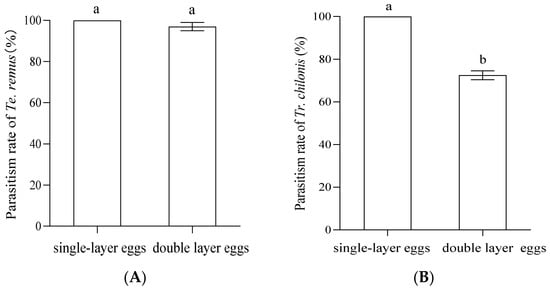
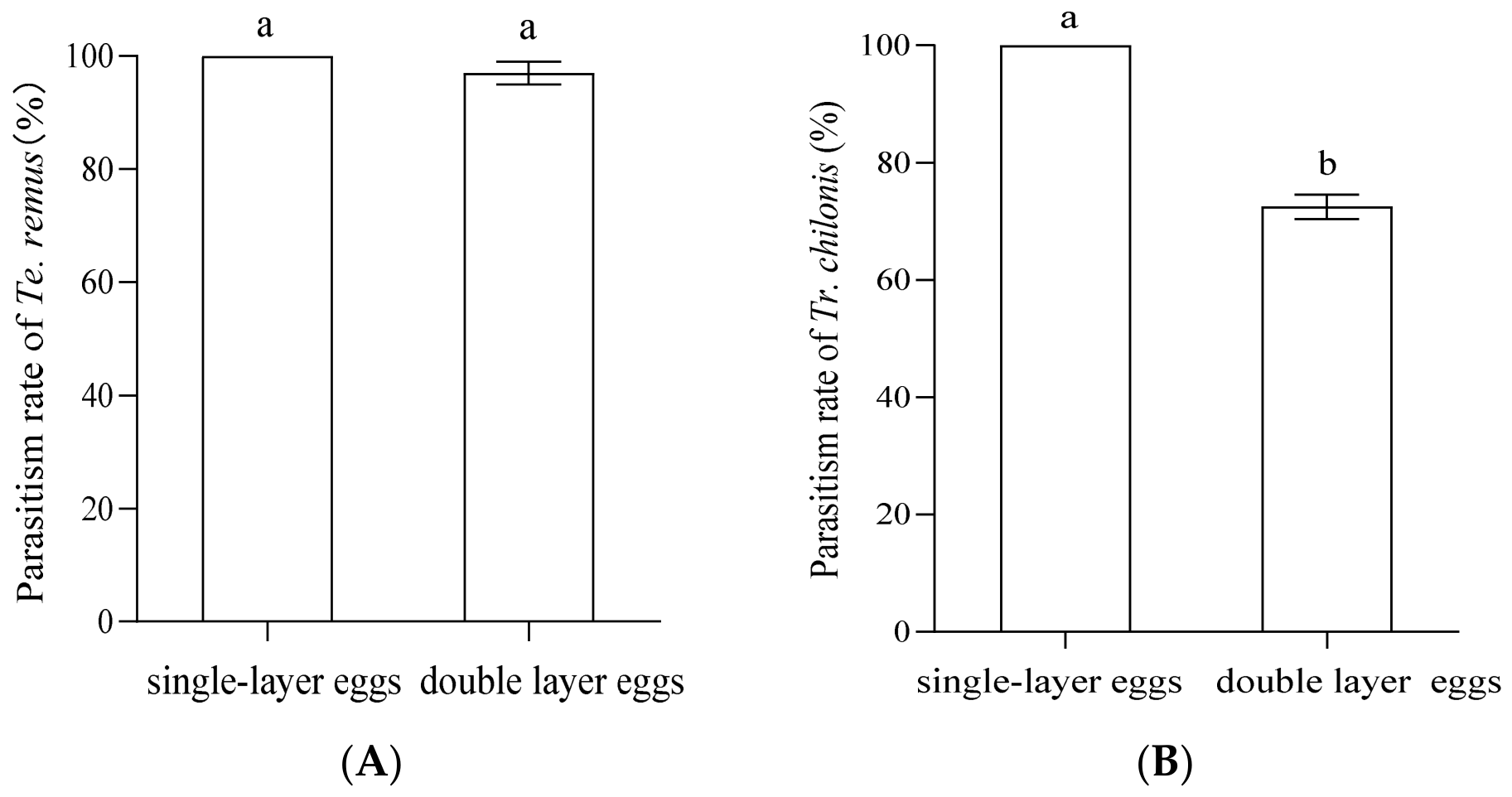
Te. remus exhibited a parasitism rate of 100.0% on single-layer S. frugiperda eggs and 97.0% on double-layer eggs, with no significant difference between the two treatments (t = 1.50, df = 8, p > 0.05) (Figure 1A). This indicates that at a parasitoid-to-egg ratio of 1:5, Te. remus parasitizes both single-layer and double-layer eggs equally effectively. In contrast, Tr. chilonis achieved a parasitism rate of 100.0% on single-layer eggs but only 72.5% on double-layer eggs, showing a significant difference (t = 13.15, df = 8, p < 0.05) (Figure 1B). This suggests that Tr. chilonis can fully parasitize single-layer eggs but can only partially parasitize double-layer egg masses.
Figure 1.
Parasitism rates of Te. remus (A) and Tr. chilonis (B) on single-layer and double-layer S. frugiperda egg masses. Data are presented as mean ± SE. Different lowercase letters above bars indicate significant differences between treatments (p < 0.05). n = 5.
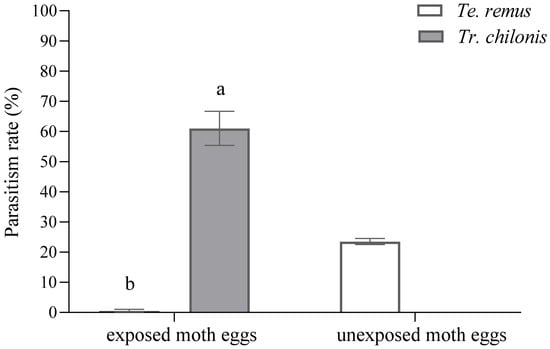
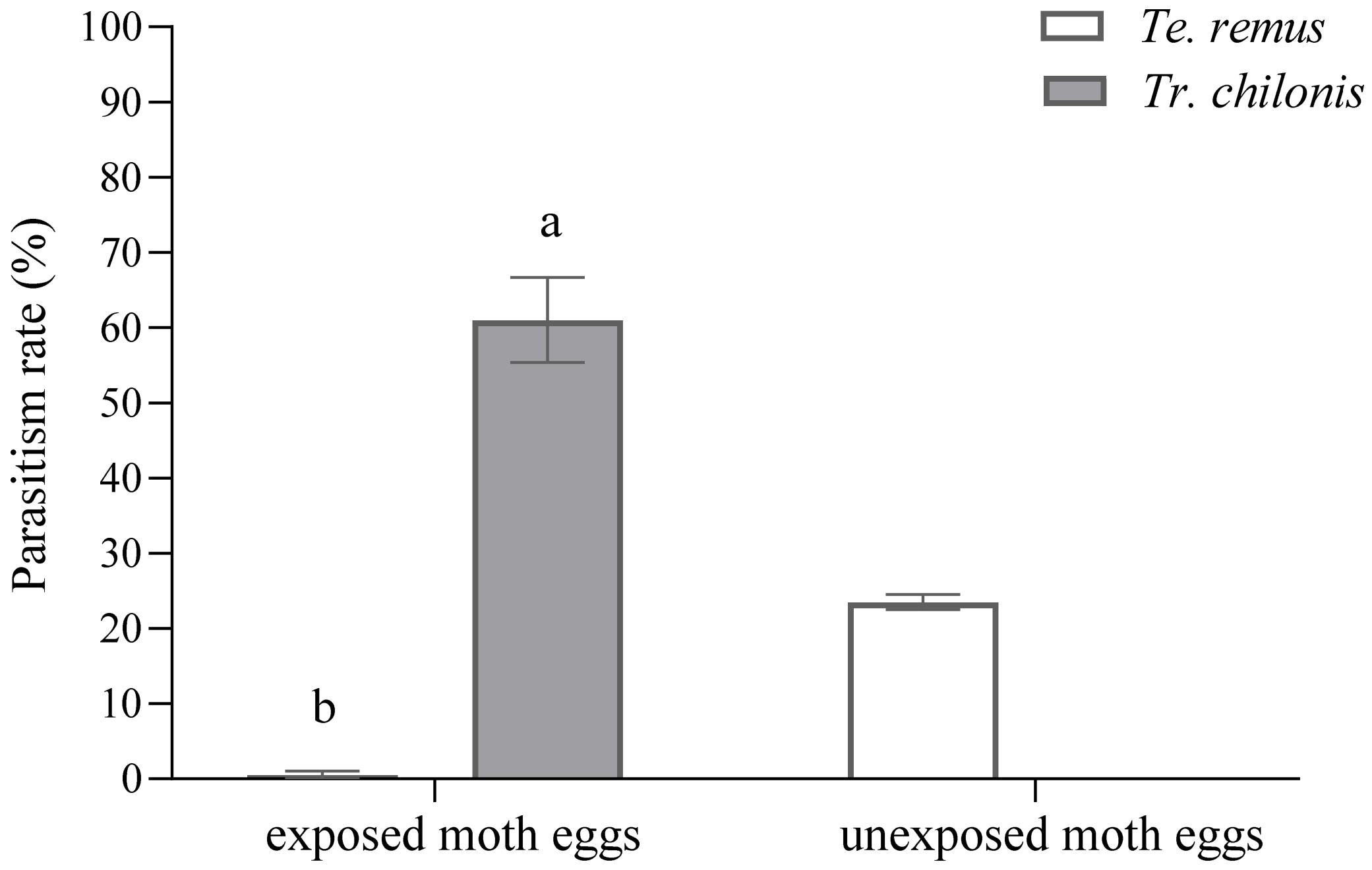
When both parasitoids were simultaneously introduced to double-layer egg masses, the parasitism of exposed (upper-layer) and unexposed (lower-layer) eggs was compared. Tr. chilonis parasitized 61.0% of the exposed eggs, significantly more than Te. remus (0.5%) (t = 10.90, df = 4, p < 0.05). Conversely, Tr. chilonis did not parasitize any unexposed eggs (0%), significantly fewer than Te. remus (23.5%) (t = 23.50, df = 4, p < 0.05) (Figure 2). These results indicate clear niche differentiation between the two parasitoid species within double-layer egg masses: Tr. chilonis parasitized only the exposed upper-layer eggs, whereas Te. remus was capable of parasitizing the unexposed lower-layer eggs.
Figure 2.
Parasitism rates of Te. remus and Tr. chilonis on exposed (upper-layer) and unexposed (lower-layer) eggs within double-layer S. frugiperda egg masses. Data are presented as mean ± SE. Different lowercase letters above bars indicate significant differences between treatments (p < 0.05). n = 5.
3.2. Interspecific Host Discrimination Between the Two Egg Parasitoids
3.2.1. Te. remus Discrimination of Eggs Parasitized by Tr. chilonis
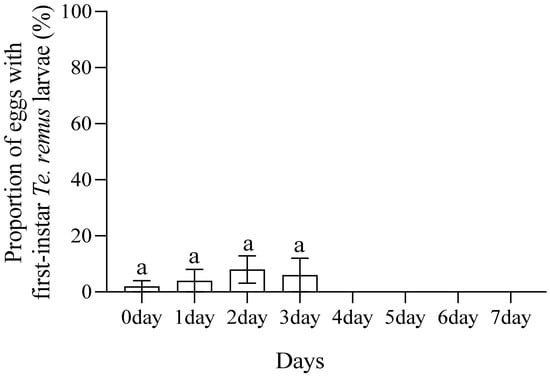
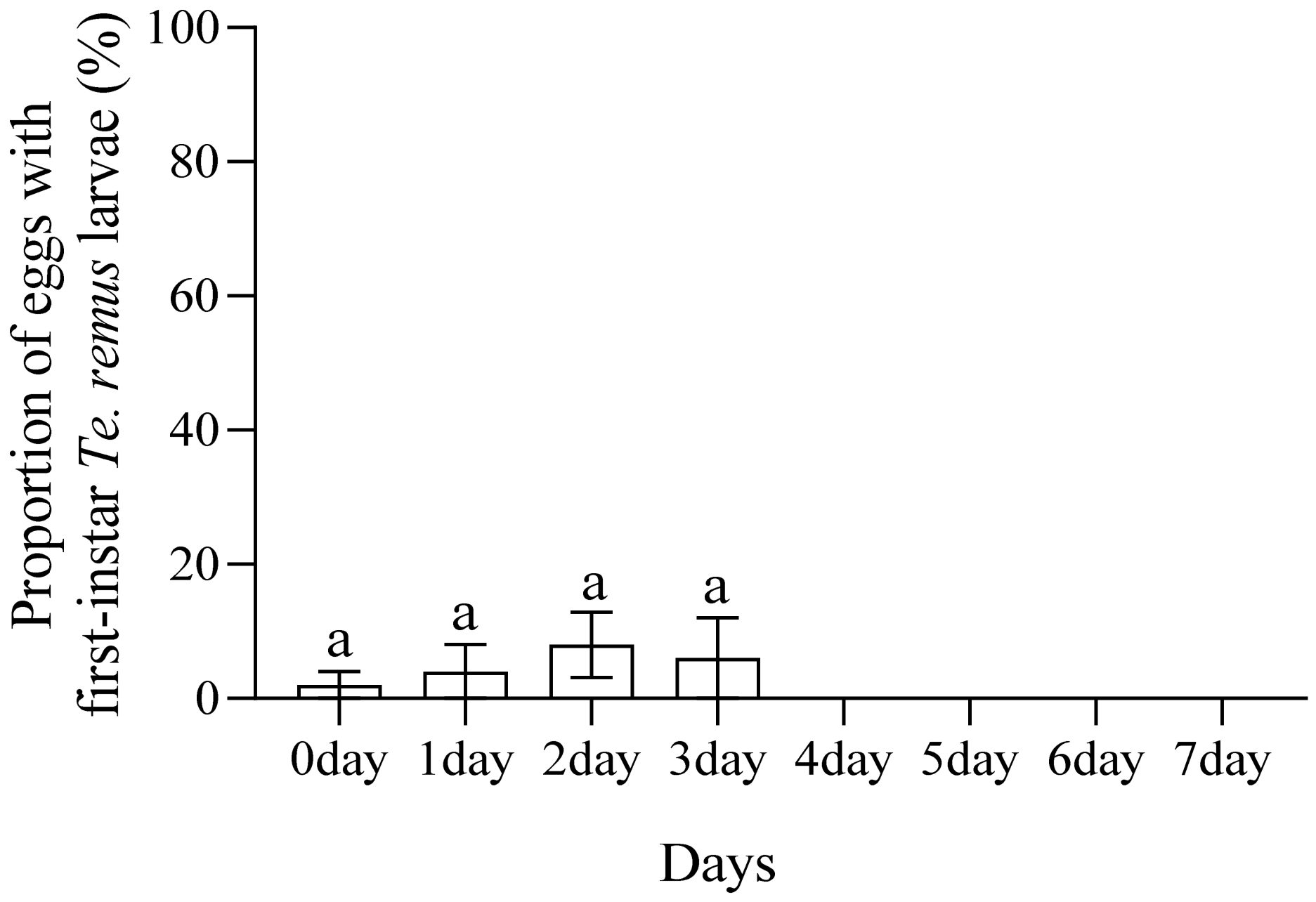
S. frugiperda eggs that had been parasitized by Tr. chilonis for 0, 1, 2, 3, 4, 5, 6, and 7 days were exposed to Te. remus for parasitism and subsequently dissected. First-instar Te. remus larvae were detected in S. frugiperda eggs parasitized by Tr. chilonis for 0, 1, 2, and 3 days, with proportions of 2.0%, 4.0%, 8.0%, and 6.0%, respectively. No first-instar Te. remus larvae were found in eggs parasitized by Tr. chilonis for 4, 5, 6, or 7 days. There were no significant differences in the proportion of first-instar Te. remus larvae among all time-interval treatments (F = 0.771, df = 7, 32, p > 0.05) (Figure 3). These results suggest that Te. remus rarely oviposits in S. frugiperda eggs previously parasitized by Tr. chilonis, indicating strong interspecific host discrimination.
Figure 3.
Proportion of first-instar Te. remus larvae detected in S. frugiperda eggs previously parasitized by Tr. chilonis for 0–7 days. Data are presented as mean ± SE. Lowercase letters above bars indicate significant differences among time intervals (p < 0.05). n = 5.
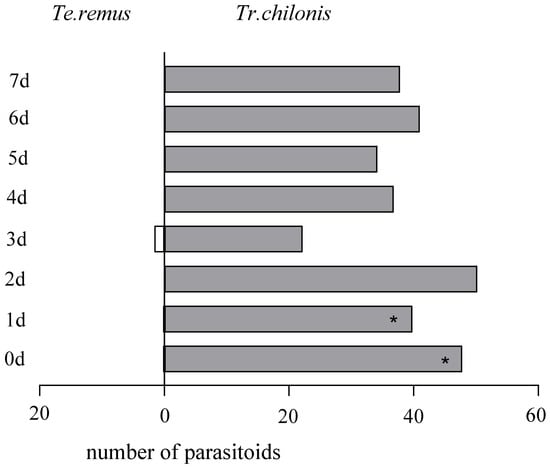
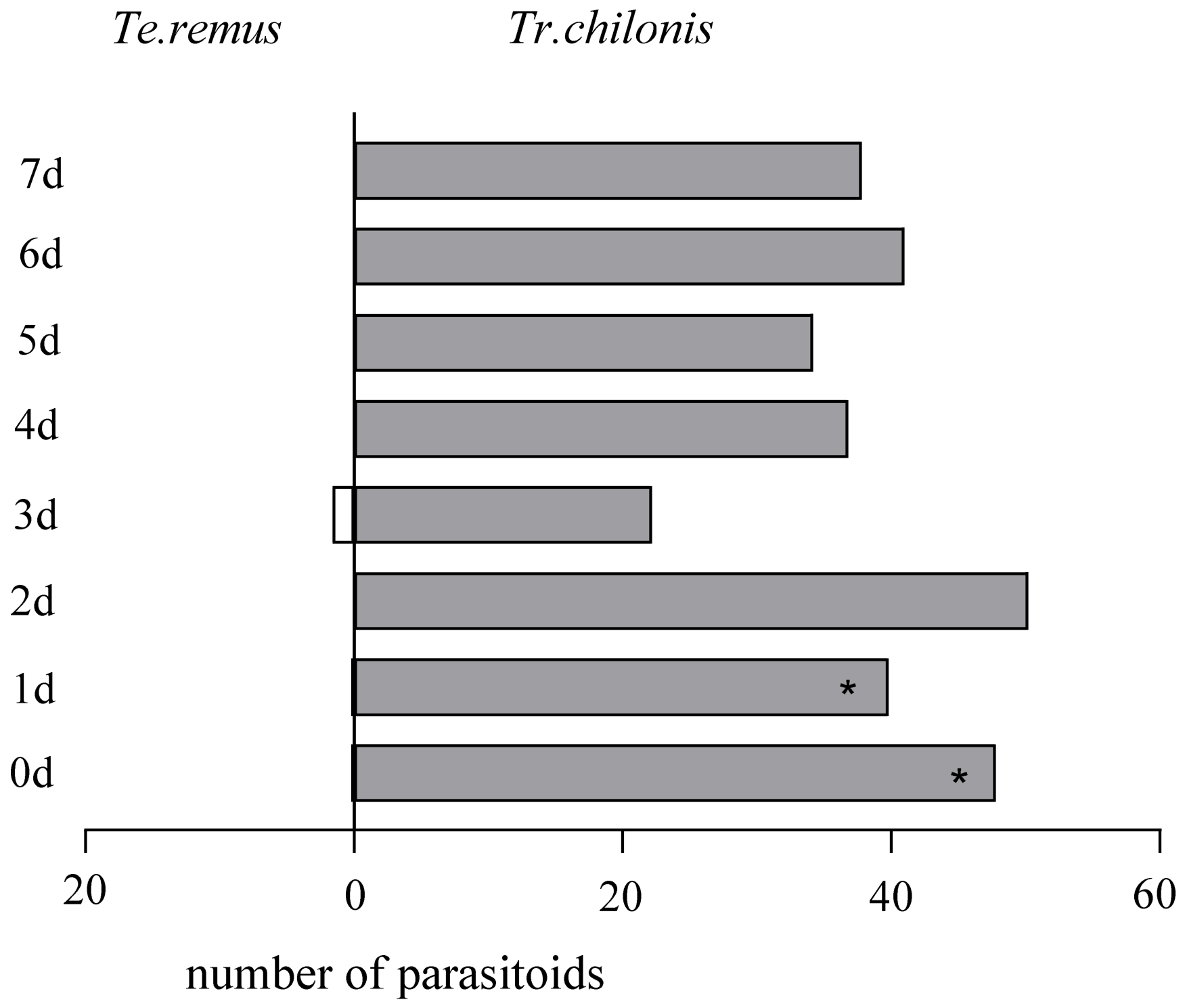
The remaining S. frugiperda eggs were reared until adult emergence, and the F1 progeny were classified and counted. When Te. remus was exposed to S. frugiperda eggs parasitized by Tr. chilonis for 0–7 days, the numbers of Tr. chilonis F1 progeny were 47.8, 39.8, 50.2, 22.2, 36.8, 34.2, 37.8, and 37.8, respectively, whereas the numbers of Te. remus F1 progeny were 0.2, 0.2, 0, 1.6, 0, 0, 0, and 0, respectively. Because Te. remus produced no progeny at 2, 4, 5, 6, and 7 days, statistical comparisons were only performed when both species produced offspring. At 0 and 1 days, the number of Tr. chilonis F1 progeny was significantly higher than that of Te. remus (t = 6.962 and 4.171, respectively, df = 4, p < 0.05). However, at 3 days, no significant difference was found between the two species (t = 1.892, df = 4, p > 0.05) (Figure 4).
Figure 4.
Number of F1 progeny of Te. remus and Tr. chilonis after Te. remus was exposed to S. frugiperda eggs previously parasitized by Tr. chilonis for 0–7 days. Data are presented as mean ± SE (n = 5). Asterisks indicate significant differences between the two species within each time interval (p < 0.05). Te. remus F1 progeny were nearly absent across all time intervals, except for a small number at 0, 1, and 3 days; therefore, statistical comparisons were only conducted at these three time points.
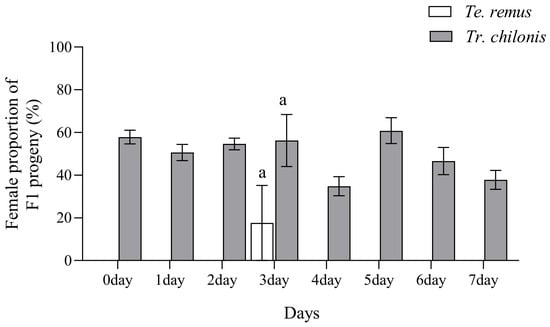
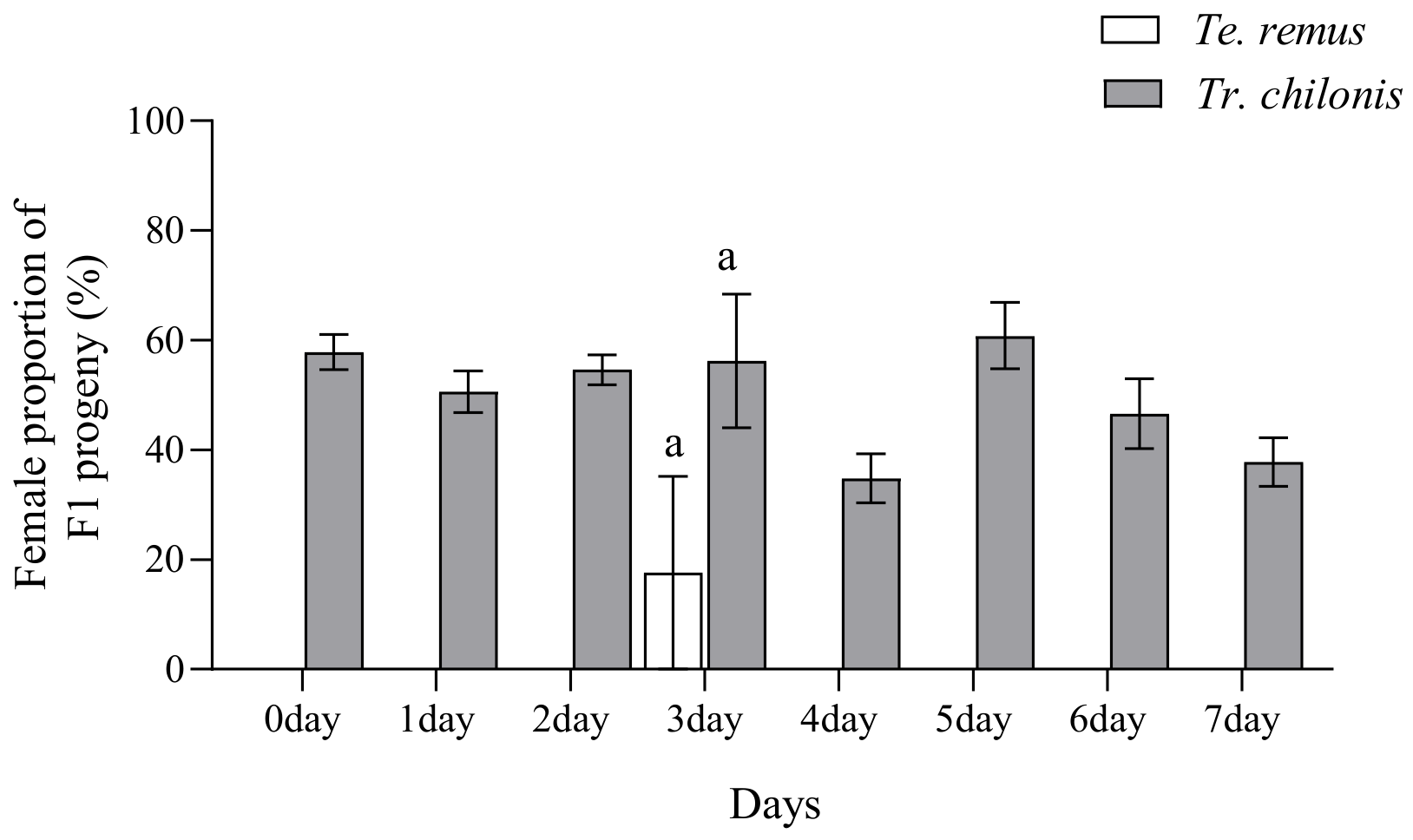
The female proportion of F1 progeny was analyzed for both parasitoid species. Due to the extremely low number of Te. remus progeny, a meaningful sex ratio for Te. remus could only be calculated at 3 days (17.6%), where it did not differ significantly from that of Tr. chilonis (56.2%) (t = 1.89, df = 4, p > 0.05). At 0 and 1 days, only a single Te. remus individual emerged (a male at 0 days and a female at 1 day), preventing a meaningful sex ratio calculation. In the remaining treatments (2, 4, 5, 6, and 7 days), no Te. remus progeny emerged. Therefore, only the female proportions of Tr. chilonis were recorded across the 0–7 day treatments, which were 57.8%, 54.6%, 34.8%, 60.8%, 46.6%, and 37.8%, respectively (Figure 5). Taken together, the dissection and emergence results indicate that Te. remus can effectively discriminate S. frugiperda eggs already parasitized by Tr. chilonis and avoid ovipositing in them.
Figure 5.
Female proportion of F1 progeny of Te. remus and Tr. chilonis after Te. remus was exposed to S. frugiperda eggs previously parasitized by Tr. chilonis for 0–7 days. Data are presented as mean ± SE. Lowercase letters above bars indicate significant differences between the two species within each time interval (p < 0.05). No Te. remus progeny emerged in the 0-, 2-, 4-, 5-, 6-, and 7-day treatments; therefore, female proportions for Te. remus are shown only for the 1- and 3-day treatments. n = 5.
3.2.2. Tr. chilonis Discrimination of S. frugiperda Eggs Parasitized by Te. remus
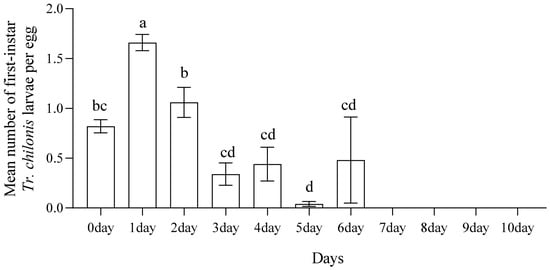
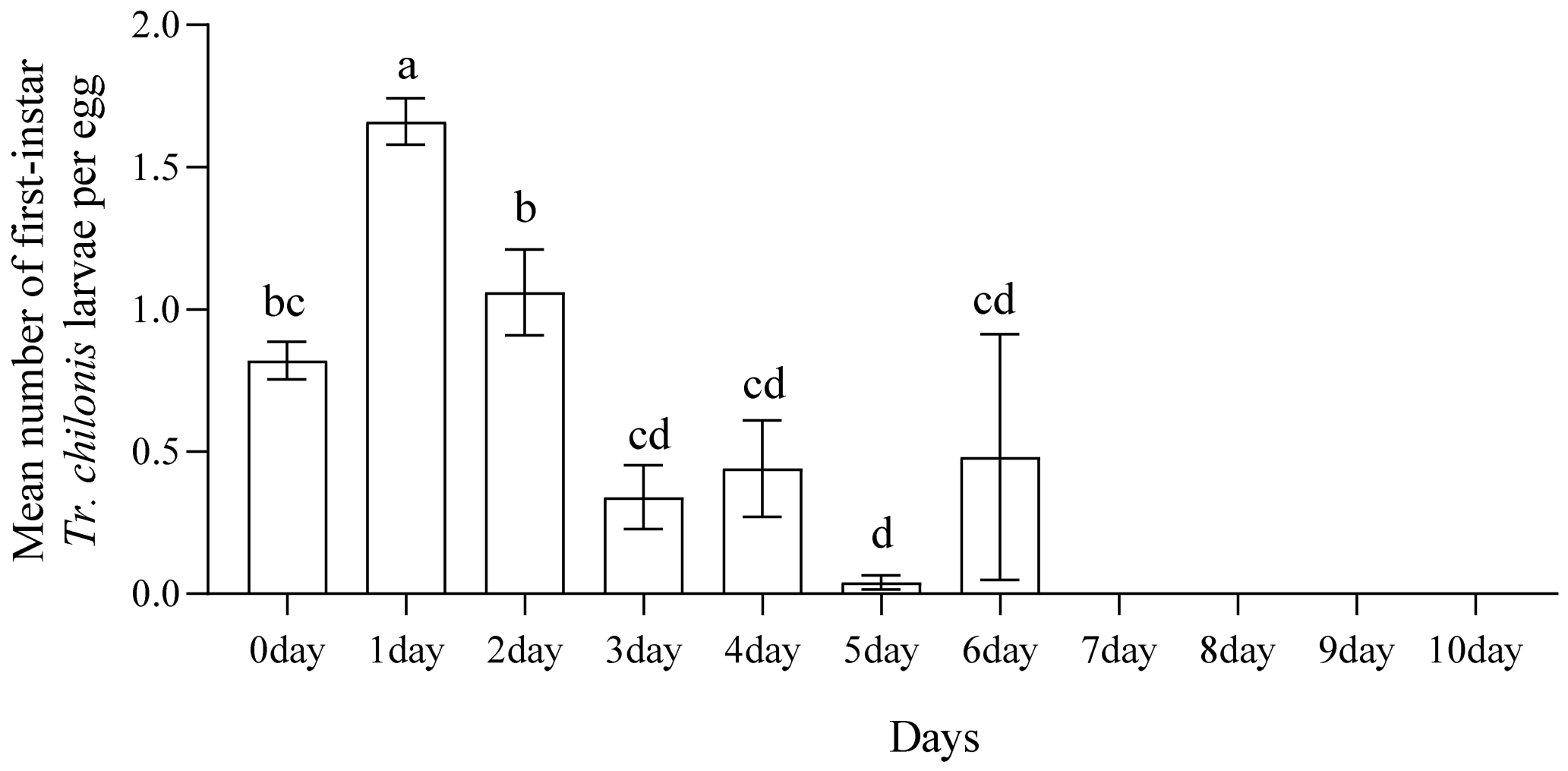
S. frugiperda eggs parasitized by Te. remus for 0–10 days were provided and exposed to Tr. chilonis for discrimination and parasitism, after which the eggs were dissected. First-instar Tr. chilonis larvae were detected in S. frugiperda eggs previously parasitized by Te. remus for 0–6 days. The mean number of first-instar Tr. chilonis larvae per dissected egg was highest on day 1 (1.66 larvae/egg), which was significantly higher than in all other treatments (F = 12.450, df = 10, 44, p < 0.05). On day 2, the mean was 1.06 larvae/egg, which did not differ significantly from the 0.82 larvae/egg recorded in the 0-day treatment (p > 0.05). The mean values on days 3, 4, and 6 were 0.34, 0.44, and 0.48 larvae/egg, respectively, none of which differed significantly from the day-0 value (p > 0.05). The lowest value (0.04 larvae/egg) was observed on day 5. No first-instar Tr. chilonis larvae were detected in eggs parasitized by Te. remus for 7–10 days (Figure 6). Because Tr. chilonis is a facultatively gregarious parasitoid, the values exceeding 1.0 larva per egg (on days 1 and 2) reflect superparasitism within a single host egg. Taken together, these results indicate that Tr. chilonis readily accepts and oviposits into S. frugiperda eggs previously parasitized by Te. remus for 0–6 days, showing no evidence of interspecific host discrimination over this interval.
Figure 6.
Mean number of first-instar Tr. chilonis larvae per dissected S. frugiperda egg, after Tr. chilonis was exposed to eggs previously parasitized by Te. remus for 0–10 days. Data are presented as mean ± SE. Different lowercase letters above bars indicate significant differences among time intervals (p < 0.05). n = 5.
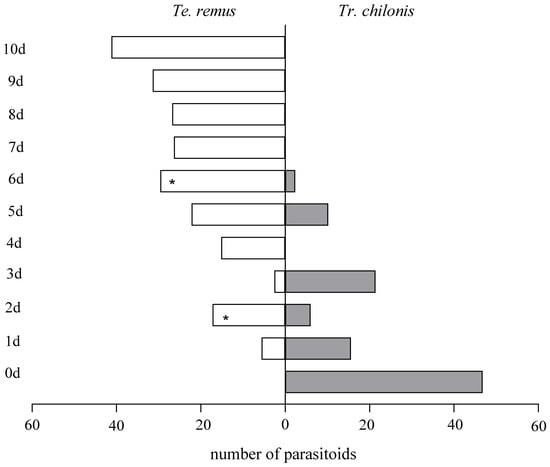
The remaining S. frugiperda eggs after dissection were reared until adult emergence, and the F1 progeny were classified and counted. For S. frugiperda eggs parasitized by Te. remus for 0 days and subsequently exposed to Tr. chilonis, only Tr. chilonis progeny emerged (46.8 individuals), whereas no Te. remus progeny were recorded. For eggs parasitized by Te. remus for 2 and 6 days, the numbers of emerging Te. remus (17.2 and 29.6 individuals, respectively) were significantly higher than those of Tr. chilonis (6.0 and 2.4 individuals, respectively) (2 days: t = 3.655, df = 4, p < 0.05; 6 days: t = 14.341, df = 4, p < 0.05). For eggs parasitized for 4 days, only Te. remus progeny emerged, whereas no Tr. chilonis progeny were recorded. For eggs parasitized for 1, 3, and 5 days, there were no significant differences in F1 progeny numbers between the two species (t < 2.64, df = 4, p > 0.05). For eggs parasitized for 7–10 days, only Te. remus progeny emerged, with numbers of 26.4, 26.8, 31.4, and 41.2 individuals, respectively (Figure 7).
Figure 7.
Number of F1 progeny of Tr. chilonis and Te. remus after Tr. chilonis was exposed to S. frugiperda eggs previously parasitized by Te. remus for 0–10 days. Data are presented as mean ± SE. Asterisks indicate significant differences between the two species within each time interval (p < 0.05). Only Tr. chilonis progeny emerged in the 0-day treatment, and only Te. remus progeny emerged in the 4-day and 7–10-day treatments. n = 5.
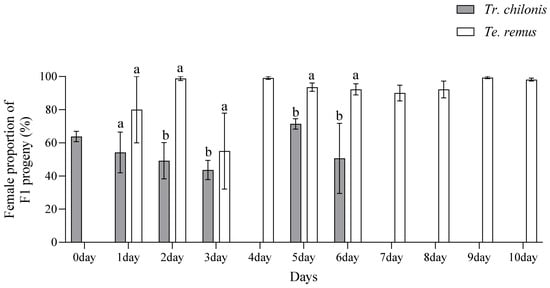
Analysis of the female proportion of F1 progeny showed that for S. frugiperda eggs parasitized by Te. remus for 0 days, only Tr. chilonis emerged, with a female proportion of 63.8%. For eggs parasitized for 1 day, the female proportions of Tr. chilonis and Te. remus were 54.2% and 80.0%, respectively, with no significant difference between the two species (t = 0.812, df = 4, p > 0.05). For eggs parasitized for 2, 3, 5, and 6 days, the female proportions of Te. remus (98.8%, 55.0%, 93.6%, and 92.3%, respectively) were significantly higher than those of Tr. chilonis (49.2%, 43.6%, 71.4%, and 50.6%, respectively) (p < 0.05). For eggs parasitized for 4 days and 7–10 days, only Te. remus emerged, with female proportions of 99.1%, 90.2%, 92.2%, 99.3%, and 98.1%, respectively (Figure 8).
Figure 8.
Female proportion of F1 progeny of Tr. chilonis and Te. remus after Tr. chilonis was exposed to S. frugiperda eggs previously parasitized by Te. remus for 0–10 days. Data are presented as mean ± SE. Different lowercase letters above bars indicate significant differences between the two species within each time interval (p < 0.05). Only Tr. chilonis progeny emerged in the 0-day treatment, and only Te. remus progeny emerged in the 4-day and 7–10-day treatments; therefore, female proportions for both species are not available for these time points. n = 5.
In summary, Tr. chilonis is unable to discriminate S. frugiperda eggs parasitized by Te. remus for 0–6 days and can oviposit in them, with successful progeny emergence. For eggs parasitized by Te. remus for 7–10 days, no Tr. chilonis progeny emerged, likely because Te. remus had developed to the pupal stage by this time and the host egg nutrients had been depleted. Our experiments cannot distinguish between host unsuitability and a change in host acceptance behavior at this advanced stage, and we do not interpret this absence as evidence that Tr. chilonis has acquired discrimination ability.
3.3. Interspecific Competition Between the Two Egg Parasitoids at Different Densities
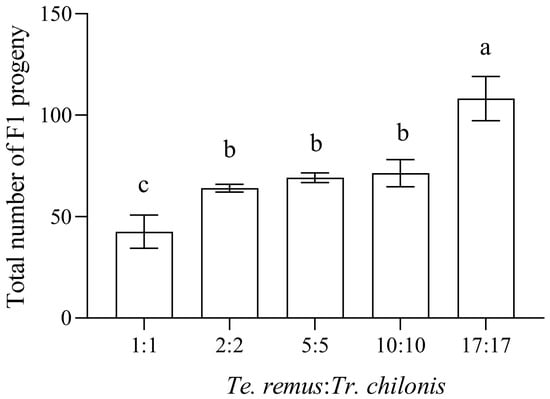
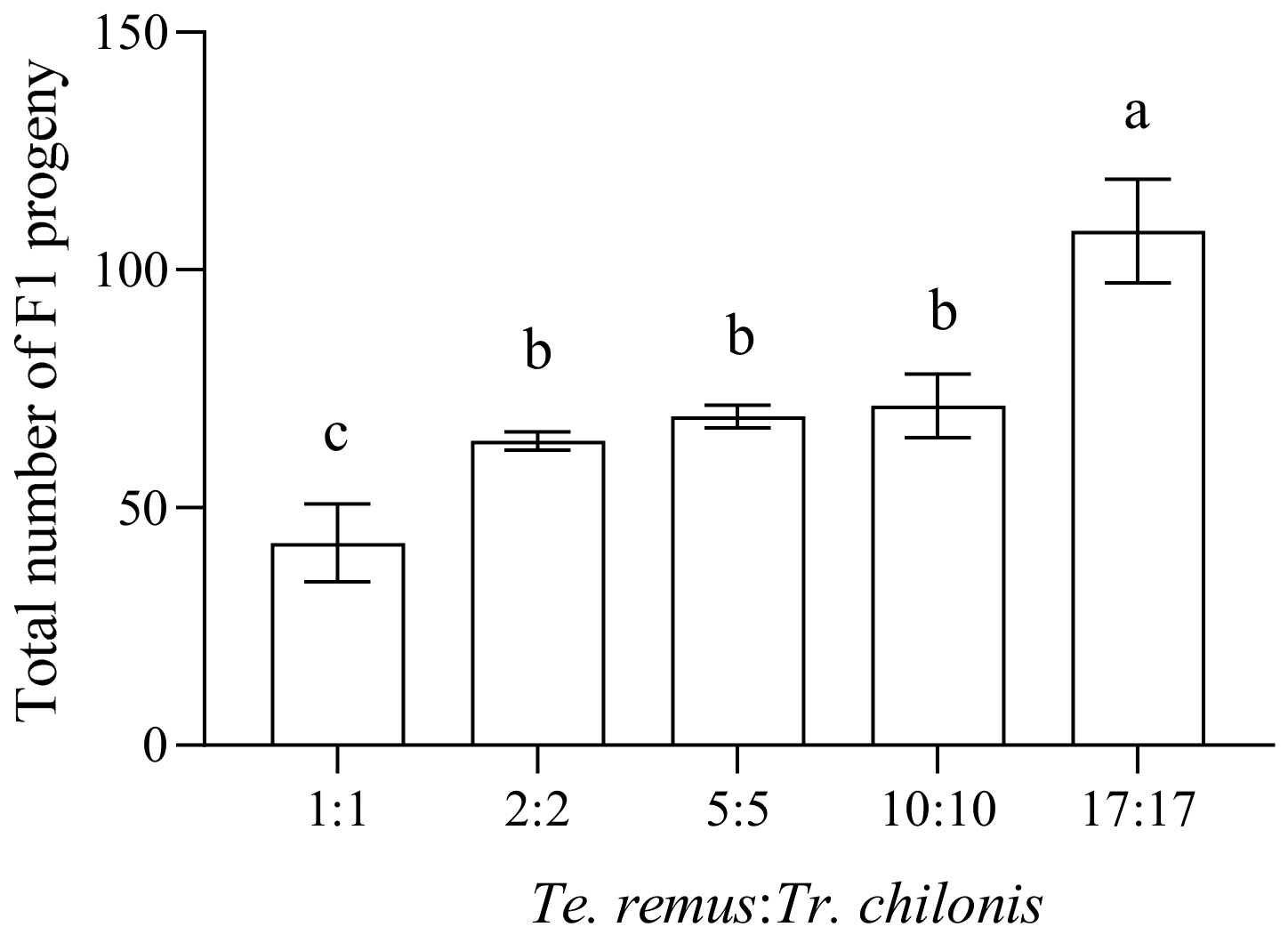
Using 100 S. frugiperda eggs as a fixed host resource, five parasitoid density gradients of Te. remus to Tr. chilonis were established: 1:1, 2:2, 5:5, 10:10, and 17:17. The total number of F1 adults increased with increasing parasitoid density (F = 11.755, df = 4, 20, p < 0.05). At the 1:1 density, the total number was 42.6, significantly lower than those at the 2:2 (64.0), 5:5 (69.2), and 10:10 (71.4) densities (p < 0.05). At the 17:17 density, the total number reached 108.2 (exceeding the initial 100 host eggs due to the gregarious nature of Tr. chilonis), significantly higher than in all other treatments (p < 0.05) (Figure 9).
Figure 9.
Total number of F1 progeny of Te. remus and Tr. chilonis combined at five parasitoid density gradients (1:1, 2:2, 5:5, 10:10, and 17:17). Data are presented as mean ± SE. Different lowercase letters above bars indicate significant differences among treatments (p < 0.05). n = 5.
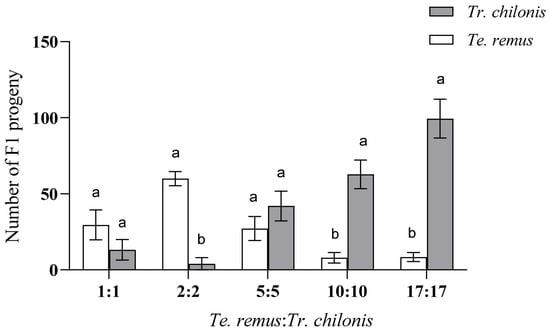
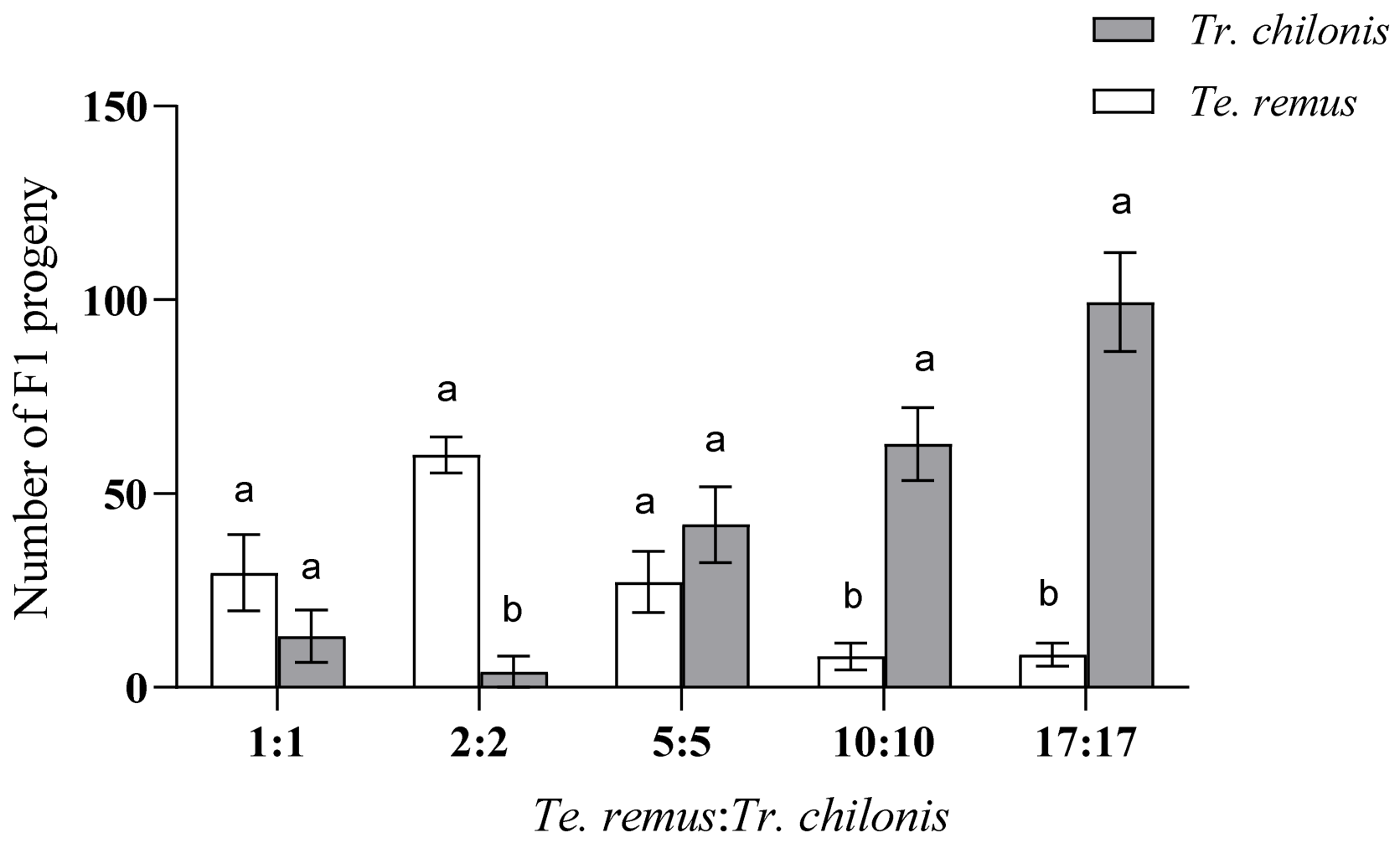
Comparison of the F1 progeny numbers of each species revealed a density-dependent shift in competitive dominance. At the 1:1 density, the numbers of Te. remus and Tr. chilonis F1 progeny were 29.6 and 13.2, respectively, with no significant difference (t = 1.378, df = 8, p > 0.05). At the 2:2 density, the number of Te. remus F1 progeny (60.0) was significantly higher than that of Tr. chilonis (4.0) (t = 9.108, df = 8, p < 0.05), with Te. remus producing significantly more progeny. At the 5:5 density, the numbers of Te. remus and Tr. chilonis F1 progeny were 27.0 and 42.0, respectively, with no significant difference (t = 1.174, df = 8, p > 0.05). At the 10:10 density, the number of Tr. chilonis F1 progeny (62.8) was significantly higher than that of Te. remus (8.0) (t = 5.468, df = 8, p < 0.05). At the 17:17 density, the number of Tr. chilonis F1 progeny (99.4) was significantly higher than that of Te. remus (8.4) (t = 6.954, df = 8, p < 0.05) (Figure 10). Because Te. remus is a solitary parasitoid, its F1 adult number directly approximates the number of host eggs it secured; this number declined from 60.0 at the 2:2 density to only 8.4 at the 17:17 density, indicating that Te. remus secured far fewer host eggs at high wasp density. These results indicate that the two species differ in their density-dependent progeny production: Te. remus produced more progeny and secured more host eggs at low parasitoid density (2:2), whereas Tr. chilonis produced more progeny at high parasitoid densities (10:10 and 17:17). We note that, because Tr. chilonis is gregarious, its adult progeny number is not directly comparable to that of the solitary Te. remus; the latter’s egg-securing pattern is therefore a more reliable indicator of competitive outcome.
Figure 10.
Number of F1 progeny of Te. remus and Tr. chilonis at five parasitoid density gradients (1:1, 2:2, 5:5, 10:10, and 17:17). Data are presented as mean ± SE. Different lowercase letters above bars indicate significant differences between the two species within each density (p < 0.05). n = 5.
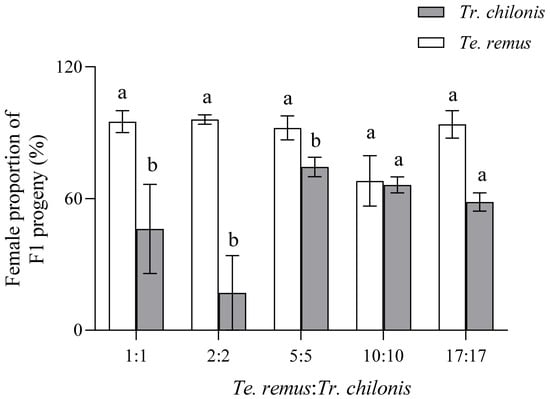
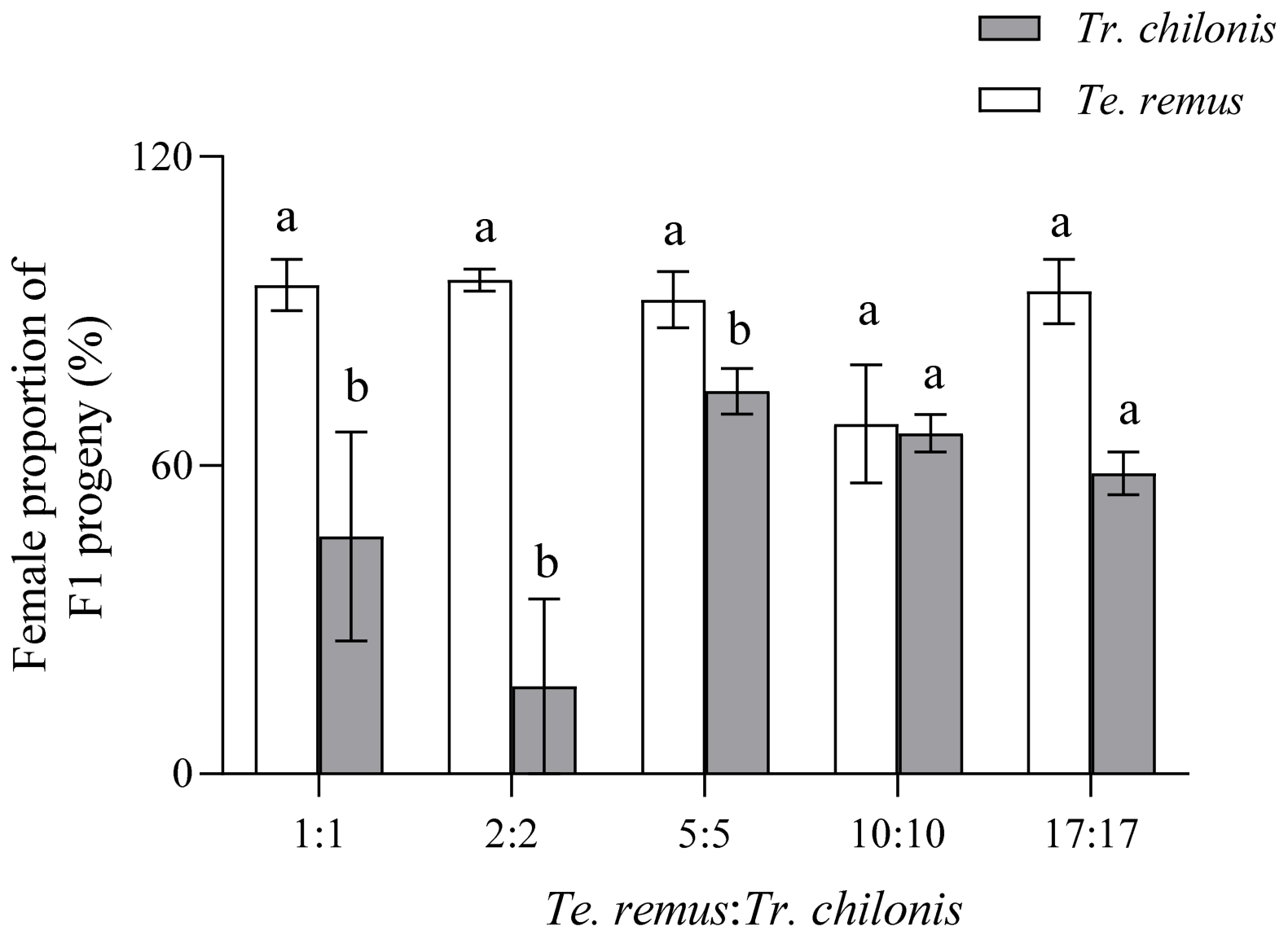
The female proportions of F1 progeny of Te. remus and Tr. chilonis were determined separately. At the 1:1, 2:2, and 5:5 densities, the female proportions of Te. remus (95.0%, 96.0%, and 92.2%, respectively) were significantly higher than those of Tr. chilonis (46.2%, 17.0%, and 74.4%, respectively) (1:1: t = 2.331, df = 8; 2:2: t = 4.612, df = 8; 5:5: t = 2.533, df = 8; p < 0.05). At the 10:10 and 17:17 densities, the female proportions of Te. remus (74.4% and 75.0%, respectively) did not differ significantly from those of Tr. chilonis (66.2% and 58.4%, respectively) (10:10: t = 0.831, df = 8; 17:17: t = 0.839, df = 8; p > 0.05) (Figure 11).
Figure 11.
Female proportion of F1 progeny of Te. remus and Tr. chilonis at five parasitoid density gradients (1:1, 2:2, 5:5, 10:10, and 17:17). Data are presented as mean ± SE. Different lowercase letters above bars indicate significant differences between the two species within each density (p < 0.05). n = 5.
4. Discussion
In nature, multiparasitism of a single host by parasitoids is common, and the resulting competition can affect the fitness and competitive success of the species involved [27]. When multiparasitism occurs, the progeny of the two species engage in intrinsic competition within the host, the outcome of which is regulated by factors including oviposition sequence, time interval between ovipositions, larval developmental rate, and host developmental stage [27]. Understanding how egg parasitoids discriminate against hosts already parasitized by heterospecifics, and how they compete for shared host resources, is therefore important for evaluating whether two parasitoid species can be used together in biological control programs.
In this study, Te. remus parasitized single-layer (100.0%) and double-layer (97.0%) eggs equally well, indicating that it can successfully parasitize eggs in the lower layer of double-layer masses. Tr. chilonis, by contrast, parasitized 72.5% of double-layer eggs and was only able to attack the exposed upper layer. When both species were introduced to double-layer egg masses at the same time, Te. remus progeny emerged mainly from the unexposed lower-layer eggs (23.5% parasitism), whereas Tr. chilonis progeny emerged mainly from the exposed upper-layer eggs (61.0% parasitism; Te. remus only 0.5%). This pattern of niche partitioning is consistent with the interspecific interaction between Te. remus and Trichogramma reported by Carneiro and Fernandes [29]. The two species thus occupy different parts of the same egg mass, and this niche differentiation may arise from the physical barrier imposed by egg layering, from differences in host discrimination ability, or from both. The role of discrimination ability was examined separately.
To test this possibility, we conducted bidirectional assays. Te. remus rarely oviposited in S. frugiperda eggs parasitized by Tr. chilonis for 0–3 days (only 2.0–8.0% of dissected eggs contained first-instar Te. remus larvae) and completely avoided eggs parasitized for 4 days or longer. This agrees with Carneiro and Fernandes [29], who reported that Te. remus can discriminate both single- and double-layer host eggs parasitized by Trichogramma pretiosum. Interspecific discrimination is not uncommon among scelionid parasitoids: Telenomus isis discriminates host eggs parasitized by Lathromeris ovicida [35]; Telenomus podisi discriminates eggs parasitized by Trissolcus teretis for intervals ranging from 4 to 192 h [36]. By contrast, some scelionids, such as Gryon sp. nr. gonikopalense and Trissolcus hyalinipennis, avoid conspecific superparasitism but do not avoid multiparasitism [37]. This discriminatory ability enables Te. remus to refrain from ovipositing in hosts already parasitized by heterospecifics, thereby lowering the risk of offspring mortality caused by intrinsic competition.
Unlike Te. remus, Tr. chilonis showed no interspecific discrimination. It readily oviposited in S. frugiperda eggs parasitized by Te. remus for 1–6 days, and its progeny emerged as adults. Eggs parasitized for 7–10 days, however, were not attacked. By this time, Te. remus had reached the pupal stage, and the hemolymph and nutrients in the host egg had been largely depleted, leaving little for Tr. chilonis to use. When Tr. chilonis attacked eggs that had been parasitized by Te. remus on the same day (0-day interval), only Tr. chilonis progeny emerged. Strand and Vinson [38] demonstrated that competitive outcomes between Tr. pretiosum and Te. heliothidis depend strongly on oviposition timing; Tr. pretiosum gains an advantage when ovipositing earlier, likely because gregarious Trichogramma consume host egg resources rapidly. This rapid resource exploitation and short developmental time may similarly explain the competitive outcome observed in our 0-day treatment. As Tr. chilonis is a primary egg parasitoid with no documented hyperparasitic habits, its successful development in eggs parasitized by Te. remus is more likely achieved through larval competition: Tr. chilonis develops as a primary parasitoid and competes with Te. remus larvae for resources within the same host egg, rather than attacking Te. remus larvae directly. This mechanism is distinct from facultative hyperparasitism, whereby a parasitoid directly attacks the larva of another parasitoid inside an already-parasitized host. The competitive success of Tr. chilonis may also reflect traits shared with other Trichogramma species, such as a short developmental time and rapid consumption of egg resources [39].
The present study revealed a density-dependent shift in progeny production: Te. remus produced more progeny and secured more host eggs at low density (2:2), whereas Tr. chilonis produced more progeny at high densities (10:10 and 17:17). At 1:1 and 5:5, neither species produced significantly more progeny than the other. This shift may be related to differences in host-searching efficiency and oviposition rate between the two species. At low density, Te. remus may locate and parasitize hosts more efficiently, whereas at high density, Tr. chilonis may gain an advantage through its faster oviposition and shorter developmental duration. He et al. [40] studied interspecific competition between Trichogramma confusum and Tr. pretiosum on Corcyra cephaloica eggs and found that Tr. pretiosum was the superior competitor, with its advantage remaining stable across host egg densities. This differs from our findings, where dominance between Te. remus and Tr. chilonis shifted with parasitoid density. Further studies are needed to determine whether this density-dependent shift is driven primarily by extrinsic competition, intrinsic competition, or both.
This study examined interspecific host discrimination and competition between Te. remus and Tr. chilonis by manipulating host egg layering and parasitoid density. However, several questions remain unresolved. For instance, adult competitive behaviors, such as host-searching efficiency and dispersal ability, were not examined, nor was the precise nature of larval interactions within a single host egg. Furthermore, the physiological or behavioral mechanisms driving the competitive advantage of Tr. chilonis require further study. While a parallel unparasitized-host control under identical conditions was not included in this study, the 100.0% baseline parasitism rate (Section 3.1) and our morphological verification during rearing ensured that unparasitized eggs were practically negligible and were excluded from the analysis. Thus, the observed oviposition patterns clearly reflect active behavioral discrimination rather than a general lack of host acceptance. Future assays incorporating naive females and healthy eggs as direct controls would help further quantify these baseline acceptance rates. Notably, we consistently observed first-instar Tr. chilonis larvae and S. frugiperda larvae coexisting within the same egg during our dissections. This is unexpected, as Tr. chilonis is an egg parasitoid, yet the host larvae remained intact alongside its parasitoid larvae. This phenomenon suggests that tritrophic interactions among Tr. chilonis, Te. remus, and S. frugiperda may be more complex than currently recognized and warrant further investigation.
Supplementary Materials
The following supporting information can be downloaded at: https://www.mdpi.com/article/10.3390/insects17111205/s1, Figure S1: Morphological comparison of the two parasitoid species. A. Telenomus remus egg; B. 24 h post-parasitization by Telenomus remus; C. Trichogramma chilonis eggs; D. 24 h post-parasitization by Trichogramma chilonis.
Author Contributions
Z.W. and T.X. conceived the study. T.X., Z.D. and X.M. collected samples. T.X. and Z.D. conducted lab work and analyzed the data. T.X. and Z.D. wrote the manuscript. Z.D., Z.W. and X.M. revised the manuscript. Z.W. and J.H. edited the manuscript. All authors have read and agreed to the published version of the manuscript.
Funding
This work was funded by the Natural Science Foundation of Fujian Province [2026J001267]. National Key R&D Program of China [2023YFE0123000].
Data Availability Statement
The original contributions presented in this study are included in the article/Supplementary Material. Further inquiries can be directed to the corresponding author.
Acknowledgments
Please add the corresponding content of this part.
Conflicts of Interest
The authors declare no conflicts of interest.
References
- Luginbill, P. The Fall Army Worm; Technical Bulletin No.34; U.S. Department of Agriculture: Washington, DC, USA, 1928; pp. 1–92.
- Sparks, A.N. A review of the biology of the fall armyworm. Fla. Entomol. 1979, 62, 82–87. [Google Scholar] [CrossRef] [Scilit]
- Montezano, D.G.; Specht, A.; Sosa-Gómez, D.R.; Roque-Specht, V.F.; Sousa-Silva, J.C.; Paula-Moraes, S.V.; Peterson, J.A.; Hunt, T.E. Host plants of Spodoptera frugiperda (Lepidoptera: Noctuidae) in the Americas. Afr. Entomol. 2018, 26, 286–300. [Google Scholar] [CrossRef] [Scilit]
- Wan, J.; Huang, C.; Li, C.Y.; Zhou, H.X.; Ren, Y.L.; Li, Z.Y.; Xing, L.S.; Zhang, B.; Qiao, X.; Liu, B.; et al. Biology, invasion and management of the agricultural invader: Fall armyworm, Spodoptera frugiperda (Lepidoptera: Noctuidae). J. Integr. Agric. 2021, 20, 646–663. [Google Scholar] [CrossRef] [Scilit]
- Sun, X.X.; Hu, C.X.; Jia, H.R.; Wu, Q.L.; Shen, X.J.; Zhao, S.Y.; Jiang, Y.Y.; Wu, K.M. Case study on the first immigration of fall armyworm, Spodoptera frugiperda invading into China. J. Integr. Agric. 2021, 20, 664–672. [Google Scholar] [CrossRef] [Scilit]
- Jing, D.P.; Guo, J.F.; Jiang, Y.Y.; Zhao, J.Z.; Sethi, A.; He, K.L.; Wang, Z.Y. Initial detections and spread of invasive Spodoptera frugiperda in China and comparisons with other noctuid larvae in cornfields using molecular techniques. Insect Sci. 2020, 27, 780–790. [Google Scholar] [CrossRef] [Scilit] [PubMed]
- Wu, K.M. Management strategies of fall armyworm (Spodoptera frugiperda) in China. Plant Prot. 2020, 46, 1–5. [Google Scholar]
- Li, X.J.; Wu, M.F.; Ma, J.; Gao, B.Y.; Wu, Q.L.; Chen, A.D.; Liu, J.; Jiang, Y.Y.; Zhai, B.P.; Early, R.; et al. Prediction of migratory routes of the invasive fall armyworm in eastern China using a trajectory analytical approach. Pest Manag. Sci. 2020, 76, 454–463. [Google Scholar] [CrossRef] [Scilit] [PubMed]
- Zhang, D.; Zhang, W.M.; Qu, L.L.; Meng, W. Occurrence and Prevention of Spodoptera frugiperda in Liaoning Province. Liaoning Agric. Sci. 2022, 75–77. [Google Scholar]
- Li, H.R.; Guo, F.C.; Wu, C.; Xiao, Y.T. Research progress and prospects on the invasion of fall armyworm (Spodoptera frugiperda) in China over the past seven years. J. Environ. Entomol. 2025, 47, 1396–1415. [Google Scholar]
- Carvalho, R.A.; Omoto, C.; Field, L.M.; Williamson, M.S.; Bass, C. Investigating the molecular mechanisms of organophosphate and pyrethroid resistance in the fall armyworm Spodoptera frugiperda. PLoS ONE 2013, 8, e62268. [Google Scholar] [CrossRef] [Scilit] [PubMed]
- Chen, X.Q.; Liu, Q.Q.; Tian, X.H.; He, Y.X.; Qiu, L.M.; Zhan, Z.X. Progress in Biological Control of Spodoptera frugiperda. Fujian J. Agric. Sci. 2021, 36, 981–988. [Google Scholar]
- Cave, R.D. Biology, ecology and use in pest management of Telenomus remus. Biocontrol News Inf. 2000, 21, 21–26. [Google Scholar]
- Zhao, X.; Zhu, K.H.; Zhang, Z.T.; He, K.L.; Zhang, L.S.; Zhou, J.C.; Dong, H. Preliminary evaluation of the control efficacy of Telenomus remus against Spodoptera frugiperda in field conditions. Plant Prot. 2020, 46, 74–77. [Google Scholar]
- Suzuki, Y.; Hiehata, K.; Tsuji, H. Sex allocation and effects of superparasitism on secondary sex ratios in the gregarious parasitoid, Trichogramma chilonis (Hymenoptera: Trichogrammatidae). Anim. Behav. 1984, 32, 478–484. [Google Scholar] [CrossRef] [Scilit]
- Zang, L.S.; Wang, S.; Zhang, F.; Desneux, N. Biological control with Trichogramma in China: History, present status, and perspectives. Annu. Rev. Entomol. 2021, 66, 463–484. [Google Scholar] [CrossRef] [Scilit] [PubMed]
- Yuan, X.; Li, D.; Deng, W. Research on the reproduction of Trichogramma chilonis based on Samia cynthia ricini eggs: Temperature, functional response and proportional effect. Insects 2024, 15, 963. [Google Scholar] [CrossRef] [Scilit] [PubMed]
- Pan, X.H.; Huang, C.H.; Huang, D.F.; Deng, Z.Y. Experiment on the Control Efficacy of Trichogramma chilonis against Chilo infuscatellus. China Plant Prot. 2011, 31, 26–28. [Google Scholar]
- Chen, L.L.; Lin, C.M.; Xie, Y.L.; Tan, B.R.; Wang, H.S. Experiment on rice leaf folder control by releasing Trichogramma chilonis. J. Guangxi Agric. 2016, 31, 15–17. [Google Scholar]
- Wei, J.F.; Li, T.H.; Shang, X.K.; Song, Y.L. Field control effect of releasing Trichogramma chilonis against sugarcane borers. China Plant Prot. 2018, 38, 55–57+77. [Google Scholar]
- Yang, J.G.; Zhao, M.; Zhu, P.; Wang, Z.H.; Li, Y.N. Field Experimental Study on the Control of Spodoptera frugiperda by Trichogramma chilonis. China Plant Prot. 2019, 39, 59–61. [Google Scholar]
- Giri, K.; Pokhrel, M.R.; Bhandari, G. Influence of egg traits on parasitism by Trichogramma chilonis Ishii, 1941 and Telenomus remus Nixon, 1937 against Spodoptera frugiperda (J.E. Smith, 1797). Front. Insect Sci. 2026, 6, 1749736. [Google Scholar] [CrossRef] [Scilit] [PubMed]
- Yuan, X.; Guo, Y.; Li, D. Field control effect of Telenomus remus Nixon and Trichogramma chilonis Ishii compound parasitoid balls against Spodoptera frugiperda (J. E. Smith). Insects 2024, 15, 28. [Google Scholar] [CrossRef] [Scilit] [PubMed]
- Liu, Q.Q.; Chen, X.Q.; Lu, X.S.; He, Y.X.; Liu, B.P.; Zhang, Y.H.; Qiu, L.M. Investigation of the parasitism of two egg parasitoid species of Spodoptera frugiperda in the fields of Fujian Province. J. South. Agric. 2025, 56, 2124–2133. [Google Scholar]
- Salt, G. Competition among insect parasitoids. Mechanisms in biological competition. Symp. Soc. Exp. Biol. 1961, 15, 96–119. [Google Scholar]
- VanLenteren, J.C. The development of host discrimination and the prevention of superparasitism in the parasite Pseudeucoila bochei Weld (Hym.: Cynipidae). Neth. J. Zool. 1975, 26, 1–83. [Google Scholar] [CrossRef] [Scilit]
- Harvey, J.A.; Poelman, E.H.; Tanaka, T. Intrinsic inter- and intraspecific competition in parasitoid wasps. Annu. Rev. Entomol. 2013, 58, 333–351. [Google Scholar] [CrossRef] [Scilit] [PubMed]
- Beserra, E.B.; Parra, J.R.P. Comportamento de parasitismo de Trichogramma atopovirilia Oatman&Platner e Trichogramma pretiosum Riley (Hymenoptera, Trichogrammatidae) emposturas de Spodoptera frugiperda (J. E. Smith) (Lepidoptera, Noctuidae). Rev. Bras. Entomol. 2003, 47, 205–209. [Google Scholar] [CrossRef] [Scilit]
- Carneiro, T.R.; Fernandes, O.A. Interspecific interaction between Telenomus remus (Hymenoptera: Platygastridae) and Trichogramma pretiosum (Hymenoptera: Trichogrammatidae) on Spodoptera frugiperda (Lepidoptera: Noctuidae) eggs. An. Acad. Bras. Ciênc. 2012, 84, 1127–1135. [Google Scholar] [CrossRef] [Scilit] [PubMed]
- Vet, L.E.M.; Meyer, M.; Bakker, K.; Van Alphen, J.J.M. Intra- and interspecific host discrimination in Asobara (Hymenoptera) larval endo-parasitoids of Drosophilidae: Comparison between closely related and less closely related species. Anim. Behav. 1984, 32, 871–874. [Google Scholar] [CrossRef] [Scilit]
- Zhan, Y.; Kong, X.; Zhang, N.; Xu, M.; Zhang, Y.; Liu, Y. Molecular quantification of parasitism reveals the competitive superiority of Telenomus remus over Trichogramma parasitoids on fall armyworm. Pest Manag. Sci. 2026, 82, 9607–9613. [Google Scholar] [CrossRef] [Scilit] [PubMed]
- He, Z.; Zeng, M.; Long, X.Z.; Gao, X.Y.; Zhang, J.M.; Song, Y.L.; Yu, Y.H. Parasitic behaviors and competition between Trichogramma chilonis Ishii and Telenomus remus Nixon on eggs of Spodoptera frugiperda Smith. J. South. Agric. 2025, 56, 2113–2123. [Google Scholar]
- Tang, Y.L.; Chen, K.W.; Xu, Z.F. Study on Ontogenesis of Telenomus remus Nixon (Hymenoptera: Scelionidae). J. Chang. Veg. 2010, 18, 1–3. [Google Scholar]
- Huang, Y.C.; Yi, D.W.; Song, Z.W.; Li, D.S.; Zhang, G.R. The Individual Development of Trichogramma chilonis on Corcyra cephalonica Eggs. J. Environ. Entomol. 2016, 38, 457–462. [Google Scholar]
- Chabi-Olaye, A.; Schulthess, F.; Poehling, H.M.; Borgemeister, C. Host location and host discrimination behavior of Telenomus isis, an egg parasitoid of the African cereal stem borer Sesamia calamistis. J. Chem. Ecol. 2001, 27, 663–678. [Google Scholar] [CrossRef] [Scilit] [PubMed]
- Queiroz, D.P.A.; Bueno, F.D.A.; Panizzi, R.A.; Favetti, M.B. Intrinsic interspecific competition between Telenomus podisi and Trissolcus teretis (Hymenoptera: Scelionidae). Neotrop. Entomol. 2021, 50, 453–461. [Google Scholar] [CrossRef] [Scilit] [PubMed]
- Hougardy, E.; Hogg, B.N. Host patch use and potential competitive interactions between two egg parasitoids from the family Scelionidae, candidate biological control agents of Bagrada hilaris (Hemiptera: Pentatomidae). J. Econ. Entomol. 2021, 114, 611–619. [Google Scholar] [CrossRef] [Scilit] [PubMed]
- Strand, M.R.; Vinson, S.B. Facultative hyperparasitism by the egg parasitoid Trichogramma pretiosum (Hymenoptera: Trichogrammatidae). Ann. Entomol. Soc. Am. 1984, 77, 679–686. [Google Scholar] [CrossRef] [Scilit]
- Jarjees, E.A.; Merritt, D.J. Development of Trichogramma australicum Girault (Hymenoptera: Trichogrammatidae) in Helicoverpa (Lepidoptera: Noctuidae) host eggs. Aust. J. Entomol. 2002, 41, 310–315. [Google Scholar] [CrossRef] [Scilit]
- He, Y.R.; Lü, L.H.; Chen, K.W. Interspecific competition between Trichogramma confusum and T. pretiosum on Corcyra cephaloica factitious eggs. Chin. J. Appl. Ecol. 2004, 15, 2401–2404. [Google Scholar]
Disclaimer/Publisher’s Note: The statements, opinions and data contained in all publications are solely those of the individual author(s) and contributor(s) and not of MDPI and/or the editor(s). MDPI and/or the editor(s) disclaim responsibility for any injury to people or property resulting from any ideas, methods, instructions or products referred to in the content. |
© 2026 by the authors. Licensee MDPI, Basel, Switzerland. This article is an open access article distributed under the terms and conditions of the Creative Commons Attribution (CC BY) license.