Direct Observation of Feeding Behavior of Adult Tabanidae (Diptera) on Beef Cattle from Khon Kaen Province in Thailand

1
Department of Entomology and Plant Pathology, Faculty of Agriculture, Khon Kaen University, Khon Kaen 40002, Thailand
2
Department of Parasitology, Faculty of Medicine, Khon Kaen University, Khon Kaen 40002, Thailand
3
Mekong Health Science Research Institute, Khon Kaen University, Khon Kaen 40002, Thailand
*
Author to whom correspondence should be addressed.
Insects 2024, 15(8), 602; https://doi.org/10.3390/insects15080602
Submission received: 27 June 2024
/
Revised: 6 August 2024
/
Accepted: 8 August 2024
/
Published: 10 August 2024
(This article belongs to the Section Medical and Livestock Entomology)
Simple Summary
An understanding of tabanid alighting and feeding behavior on vertebrate hosts may result in more effective disease management and control strategies. The purpose of this study was to determine the tabanid behavior of beef cattle. The alighting behavior, time of day, duration of tabanid feeding on beef cattle, as well as variables associated with tabanid infestation, were recorded. According to the results, the lower leg was the most tabanids infested location. The greatest number of tabanids landing on cattle occurred at midday. Temperature was the most important factor for tabanids landing on hosts. To forecast the tabanids’ reactions to environmental factors, regression analysis was carried out.
Abstract
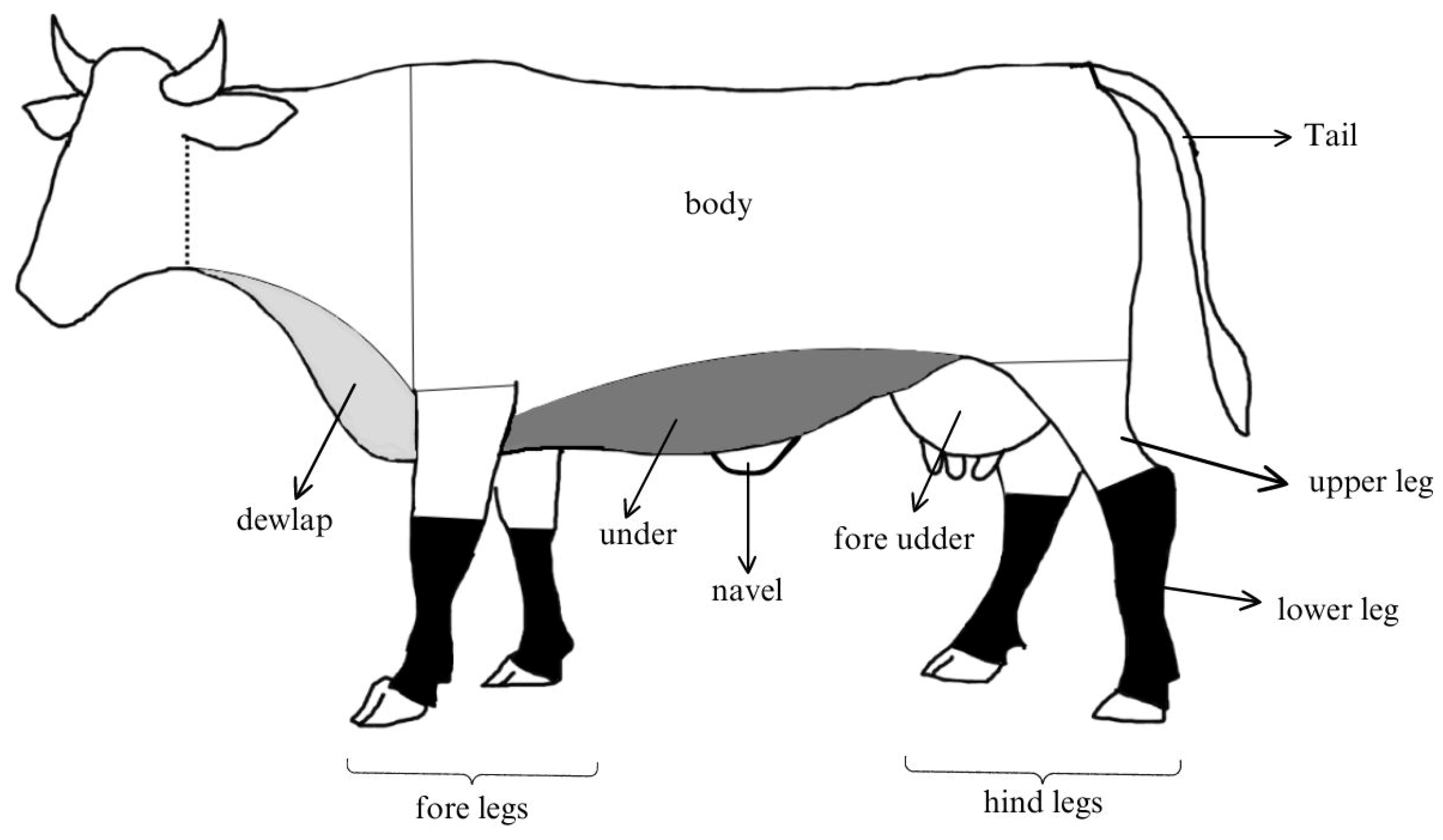
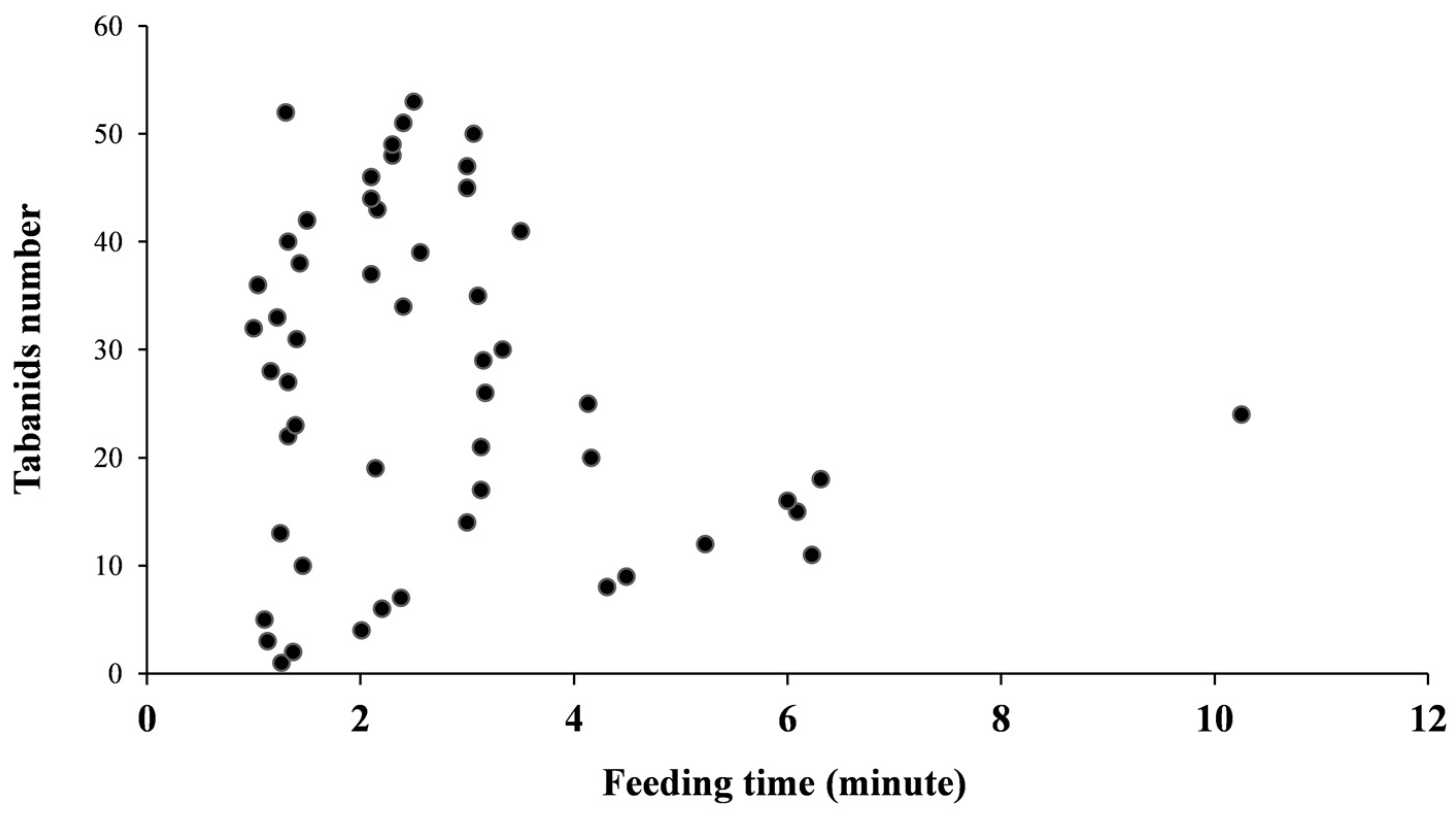
Tabanidae (horse flies and deer flies) are hematophagous insects that cause direct and indirect damage to animal production. The aims of this study were to determine the preferred site, time of day, and duration of tabanid feeding on beef cattle and identify factors related to infestation by tabanids. The population of tabanids was surveyed on certain body parts of the beef cattle (fore udder, tail, navel, leg, dewlap, body, and under) during the morning hours (9.00–10.30 a.m.), midday (12.00–13.30 a.m.), and afternoon (15.30–17.00 p.m.) every day for 10 days. The findings showed that two genera, Tabanus Linnaeus, 1758, and Chrysops Meigen, 1803, landed on the cows. The leg was statistically significantly the most frequent landing site for tabanids (15.067 ± 7.54) compared with other parts. The average feeding duration for each insect was 2.76 ± 1.77 min. The results showed that a significant number of tabanids were present during midday, as compared with the morning and afternoon. Temperature was found to be positively associated with fly abundance. A regression model was derived in this study (y = 4.23x − 116.09). This information is important for tabanid control and prevention in beef cattle.