Imidacloprid Movement into Fungal Conidia Is Lethal to Mycophagous Beetles
by
 ,
,
Robin A. Choudhury
1,† ,
,
Andrew M. Sutherland
2,*,†, 
Matt J. Hengel
3,
Michael P. Parrella
4 and
W. Douglas Gubler
5 1
School of Earth, Environmental, and Marine Sciences, University of Texas Rio Grande Valley, Edinburg, TX 78539, USA
2
University of California Cooperative Extension, Alameda County, Hayward, CA 94544, USA
3
Department of Environmental Toxicology, University of California, Davis, Davis, CA 95616, USA
4
Department of Entomology, Plant Pathology and Nematology, University of Idaho, Moscow, ID 83844, USA
5
Department of Plant Pathology, University of California, Davis, Davis, CA 95616, USA
*
Author to whom correspondence should be addressed.
†
These authors contributed equally to the writing, design and completion of this work.
Insects 2020, 11(8), 496; https://doi.org/10.3390/insects11080496
Submission received: 1 July 2020
/
Revised: 28 July 2020
/
Accepted: 30 July 2020
/
Published: 3 August 2020
Simple Summary
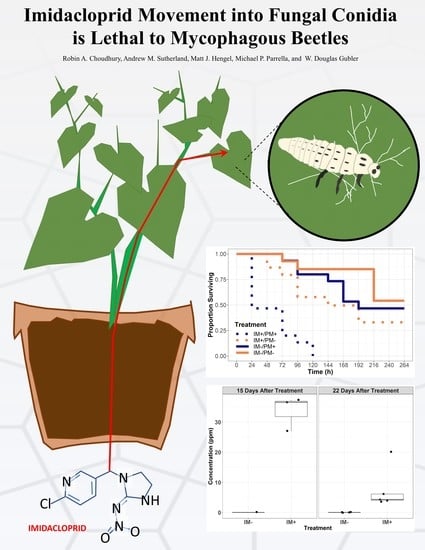
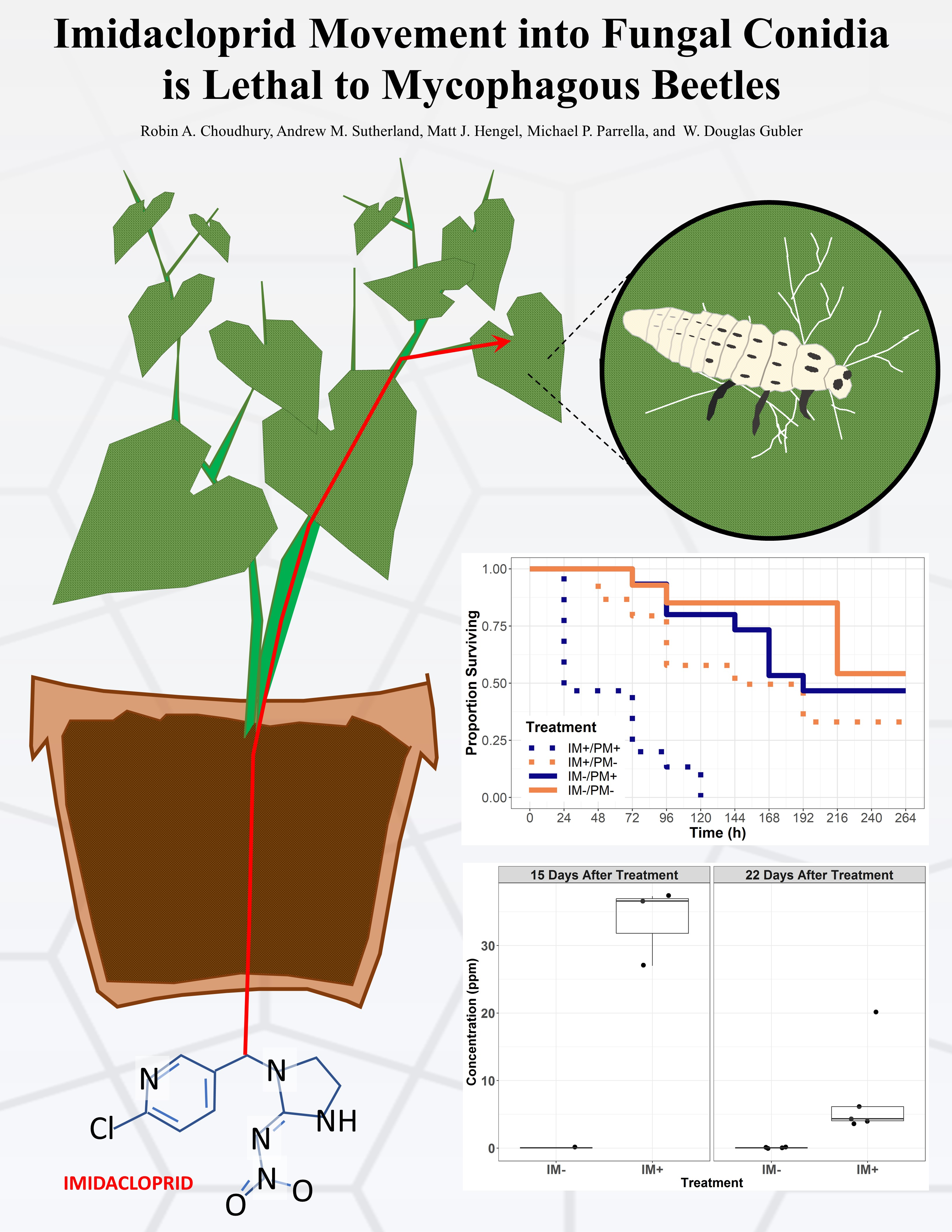
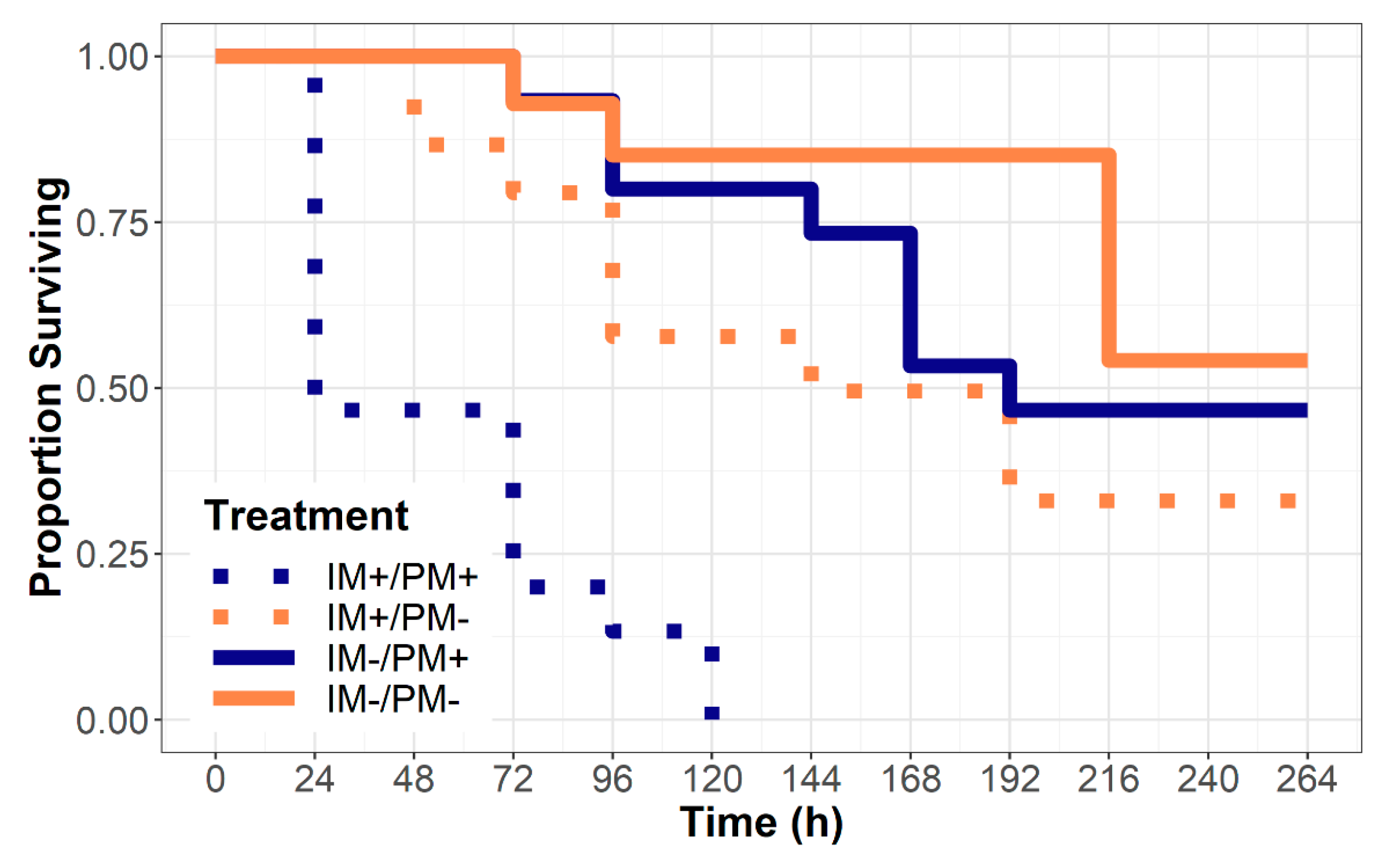
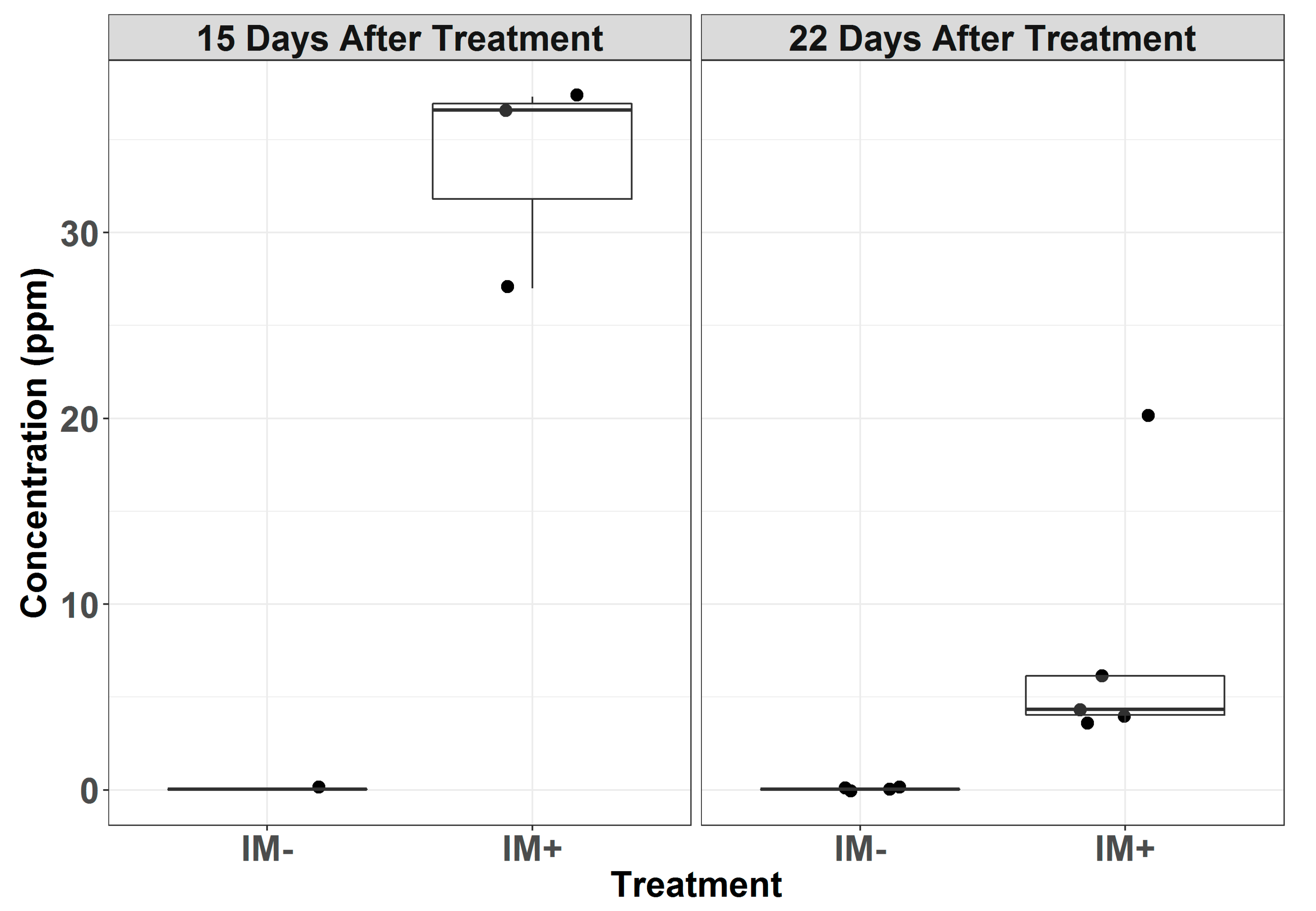
Some insects are beneficial to plants because they eat pest insects and disease-causing fungi; integrating the use of these insects into pest management can help to reduce the need for costly pesticide applications. Twenty-spotted ladybeetles eat plant pathogenic fungi, which helps to reduce disease severity for many economically important crops. In this study, we applied a systemic insecticide to the roots of pumpkin plants and monitored to see if it would be detectable in the spores of a plant pathogenic fungus and whether the insecticide-tainted fungal spores would hurt the ladybeetle larvae. We were able to chemically detect the systemic insecticide in the fungal spores up to 21 days after the plants had been treated with the fungus. We found that the ladybeetles raised on infected plants that had been treated with the systemic insecticide died more rapidly that ladybeetles that had been raised on uninfected or untreated plants. This study is the first to show that systemic insecticides can move from the roots of a plant, into a plant pathogenic fungus, and then have negative effects on a fungus-eating insect. It suggests that growers and land managers need to carefully consider the unintended consequences of insecticide applications.
Abstract
Applications of systemic pesticides can have unexpected direct and indirect effects on nontarget organisms, producing ecosystem-level impacts. We investigated whether a systemic insecticide (imidacloprid) could be absorbed by a plant pathogenic fungus infecting treated plants and whether the absorbed levels were high enough to have detrimental effects on the survival of a mycophagous beetle. Beetle larvae fed on these fungi were used to assess the survival effects of powdery mildew and imidacloprid in a factorial design. Fungal conidia were collected from treated and untreated plants and were tested for the presence and concentration of imidacloprid. The survival of beetles fed powdery mildew from imidacloprid-treated leaves was significantly lower than that of the beetles from all other treatments. Imidacloprid accumulated in fungal conidia and hyphae was detected at levels considered lethal to other insects, including coccinellid beetles. Water-soluble systemic insecticides may disrupt mycophagous insects as well as other nontarget organisms, with significant implications for biodiversity and ecosystem function.