


Abstract
To investigate the regulation mechanism of poly (alkyl methacrylate) (PMA) additives on the viscosity–temperature characteristics and tribological performance of different types of base oils, Group III mineral base oils and Group IV PAO synthetic base oils were selected as the research objects. Rheological and boundary-lubrication tests were systematically conducted at different PMA addition levels, with emphasis on comparatively analyzing the polymer conformational evolution, interfacial adsorption behavior, and lubrication-performance response induced by differences in the solvent polarity of the base oils. The results showed that the modification effect of PMA on base oils exhibited pronounced matrix dependence and non-monotonic concentration characteristics, and its lubrication-regulating behavior was dominated by the coupled trade-off among polymer solubility, molecular conformational stability, and interfacial competitive adsorption ability. In the mineral-oil system, where the base oil acts as a good solvent, the solubility parameters of PMA and the base oil are well matched, allowing the polymer molecular chains to sufficiently swell and extend and providing excellent adsorption and film-forming ability. With increasing PMA concentration, the viscous-flow activation energy of the oil continuously decreased, while the viscosity–temperature performance and boundary-lubrication stability were simultaneously improved, resulting in stable and reliable modification effects. In contrast, in the PAO synthetic-oil system, where the base oil acts as a poor solvent, the PMA molecular chains tend to adopt coiled conformations, with their conformations being highly sensitive to temperature and shear rate, while their interfacial adsorption ability is weaker than that of the base-oil molecules. An optimum critical PMA concentration of 1.0 wt% was observed in this system. Above this concentration, intramolecular friction increased, resulting in deterioration of both viscosity–temperature characteristics and friction performance. This study clarifies the differentiated modification mechanisms of PMA in base oils with different polarities and reveals the dominant role of solvent effects in polymer rheological and tribological behaviors, thereby addressing the insufficient understanding in existing studies of the non-monotonic modification behavior of PMA and its multi-factor coupled mechanism. The findings provide a theoretical basis for PMA structural selection and precise concentration formulation in lubricating oils under different operating conditions and have important engineering application value for optimizing viscosity–temperature performance over a wide temperature range, improving service stability under boundary lubrication, and balancing lubrication reliability with formulation economy.
1. Introduction
Stringent global fuel economy regulations have driven continuous optimization of vehicle and engine designs, as frictional dissipation dominates a major portion of automotive fuel consumption [1,2]. Friction and wear of mechanical components cause economic losses of approximately 6% of the gross national product in industrialized countries [2,3,4], highlighting the essential role of tribological research in energy conservation, wear suppression, and reliability improvement of mechanical systems. Lubricants, consisting of over 70% base oil and functional additives, determine the tribological performance of mechanical interfaces [5,6,7]. Base oils provide fundamental physicochemical properties, while polymeric additives are widely adopted to optimize lubrication behaviors and compensate for inherent base oil deficiencies [8].
Some researchers have proved that under the boundary lubrication condition, adding a viscosity-improvement index agent to mineral oil solution can reduce wear [9]. Okrent et al. Studied the effect of lubricating oil composition on engine friction and connecting rod bearing wear and concluded that mineral oil containing polymer has better lubricating characteristics than pure mineral oil with the same viscosity [10]. The research team continued to consider the influence of polymer type, molecular weight and concentration on engine friction and wear, and believed that the viscoelasticity and surface effect of Oil play an important role in the degree of polymer-modified oil [11]. Neudörfl also stated the same view at the SAE International Automotive Engineering Conference and Exposition in 1976. It is believed that the concentration, molecular weight and solubility of polymer affect the wear resistance of multi-stage oil [12].
Polymeric viscosity index improvers (VIIs) have been essential engine oil additives since the 1930s, regulating lubricant rheology via temperature-dependent molecular conformational changes. Despite their well-established rheological modification mechanism [13,14], the anti-wear and friction-regulating performances of VIIs under boundary lubrication remain controversial [15,16]. Early studies confirmed that polymeric oils exhibit superior lubricity compared with pure base oils, and polymer concentration, molecular weight, and viscoelasticity significantly affect tribological behaviors [17]. However, several investigations argued that viscosity modifiers exert negligible anti-wear effects under boundary lubrication, and their tribological benefits only appear under high-shear hydrodynamic conditions. Such contradictions stem from the complex physico-chemical coupling of boundary lubrication, where heterogeneous contact pressure, stochastic asperity contact, and dynamic film rupture jointly complicate tribological processes [18,19].
With the development of nanoscale tribology and in situ film characterization, recent studies have clarified polymer boundary lubrication mechanisms from molecular perspectives [20,21,22]. Polymers can form adsorbed viscous boundary films to reduce friction and wear under thin-film conditions [23,24]. As a typical comb-polymer viscosity index improver, poly (alkyl methacrylate) (PMA) is widely applied in commercial lubricants due to its temperature-dependent rheological regulation capability [15,22]. Further research indicated that effective boundary film formation relies on strong polymer adsorption on polar metal surfaces [22,23], which is highly dependent on polymer functional groups, molecular weight, and molecular conformation [24,25,26,27]. Nevertheless, most existing studies focus on polymer tribological performance in specific single base oils [28,29,30]. It remains unclear whether consistent polymer rheological and frictional regulation mechanisms exist across different oil media, and the competitive adsorption effect between base oil molecules and polymeric additives is rarely systematically discussed. This research gap leads to one-sided empirical conclusions and limits the targeted optimization of lubricant formulations.
Poly (alkyl methacrylate) (PMA), as a multifunctional lubricating-oil additive that provides both viscosity-index improvement and pour-point depression, is a key additive for regulating the viscosity–temperature characteristics of lubricating oils and enhancing interfacial lubrication stability and is widely used in high-end industrial lubricants and automotive oil systems. At present, most studies have focused on the improvement of individual oil properties by PMA and have generally assumed a positive linear relationship between additive concentration and lubrication and viscosity–temperature performance, while neglecting the differentiated effects of solvent effects, polymer conformational evolution, and interfacial competitive adsorption caused by differences in base-oil polarity. In particular, the critical optimum PMA concentration and the non-monotonic modification behavior in PAO synthetic-oil systems have not been systematically elucidated. In this study, a representative PMA additive was selected, and its concentration-dependent rheological and tribological behaviors in different base oils were systematically investigated. This study clarifies the boundary-lubrication enhancement mechanism of PMA polymers and aims to provide theoretical support for the design and optimization of high-performance lubricant formulations. Therefore, investigating the concentration-dependent rheological and tribological behaviors of PMA in different types of base oils and clarifying the multi-factor coupled trade-off mechanism are of important theoretical and engineering significance for achieving precise lubricant formulation design, overcoming limitations in additive compatibility, and improving the service stability of lubricating oils over a wide temperature range.
2. Materials and Methods
2.1. Materials
The viscosity index improver used in this study was poly (alkyl methacrylate) (PMA-T602HB), purchased from Hebei Tuofu Lubricant Additives Co., Ltd. (Jinzhou, China). Its molecular backbone consists of a polymethacrylate structure, while the side chains are alkyl ester groups of different chain lengths. It is a copolymer of mixed C12–C18 alkyl methacrylates, with an average carbon number of approximately 14 in the alkyl side chains. The molecular-weight distribution index, PDI (Mw/Mn), of the PMA is 1.7–2.3, with a number-average molecular weight (Mn) of 8000–13,000 g/mol and a weight-average molecular weight (Mw) of 18,000–26,000 g/mol. The active polymer (effective PMA) content is not less than 35%, and the remaining component is a neutral mineral base oil (150SN type). The viscosity index improver is a transparent viscous liquid with a density of approximately 0.9 g/cm3, a flash point above 150 °C, and a viscosity of approximately 2680 mPa·s at 100 °C. It has relatively low temperature sensitivity and strong shear resistance. In this study, synthetic oils (the PAO base oil, ExxonMobil Corporation, Irving, TX, USA) and Group III hydroisomerized base stocks (SK Enmove Co., Ltd., Seoul, Republic of Korea) were selected as the base oils. The base oils, as solvents, are, respectively, API-III and API-IV. The API-III oils are 150N and 250N. The API-IV oils are PAO2 and PAO10. PAO2 and PAO10 were mixed with PMA polymer fluid, and the mass fractions of PMA in PAO2 were 0.5 wt%, 1.0 wt% and 2.0 wt%, and the mass fractions in PAO10 were 0.5 wt%, 1.0 wt%, and 2.0 wt%. Then, 150N and 250N were mixed with PMA polymer fluid, and the mass fractions of PMA in 150N were 0.5 wt%, 1.0 wt%, 2.0 wt% and the mass fractions in 250N were 0.5 wt%, 1.0 wt%, 2.0 wt%. A precise balance was used for weighing, and finally, 5 min ultrasound was used to make it fully mixed.
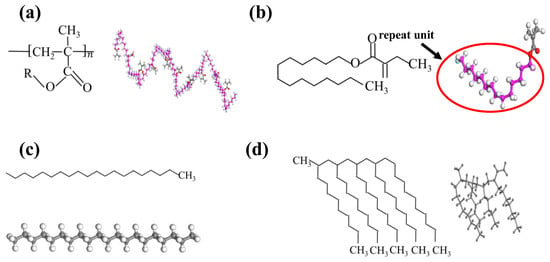
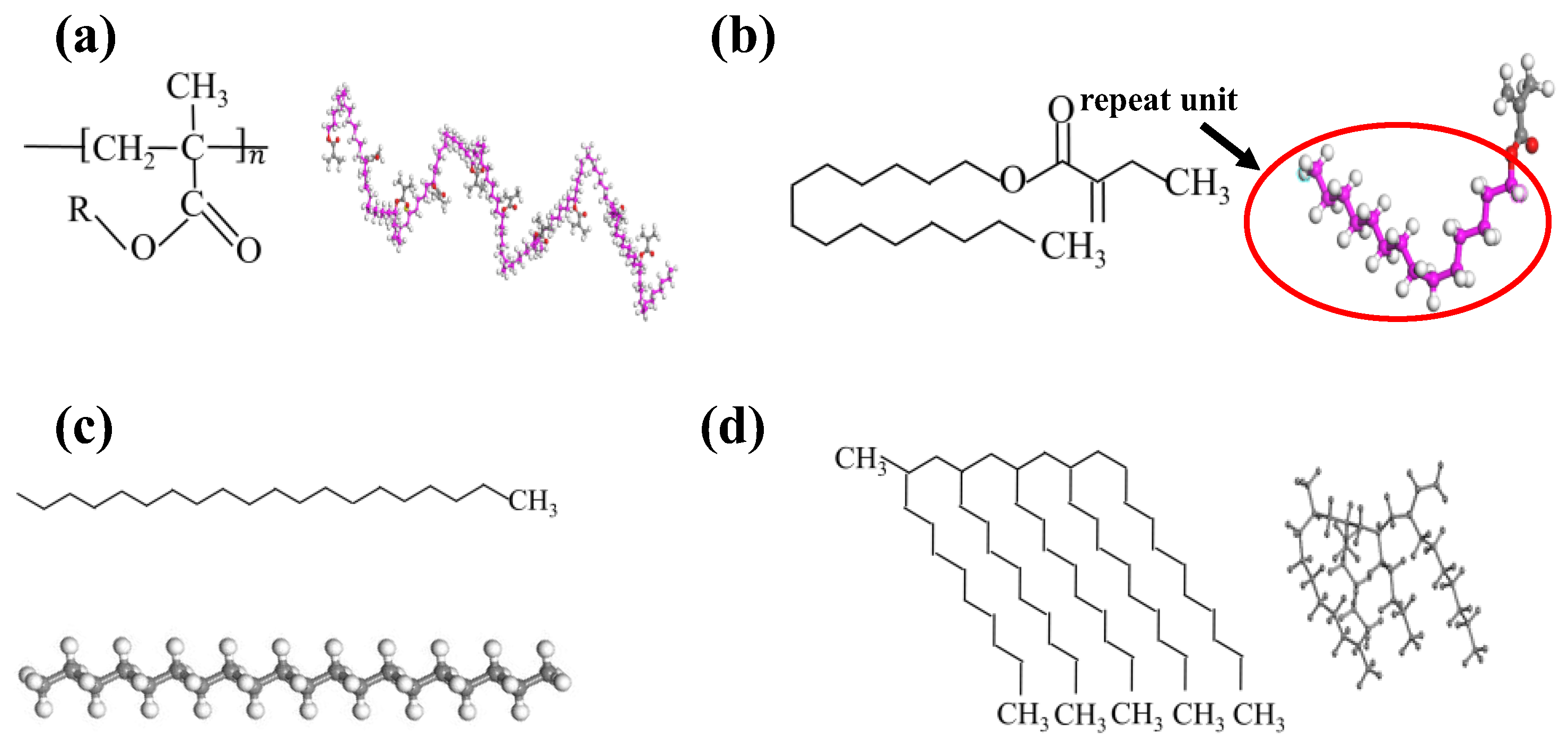
Figure 1 is the basic molecular structure of the base oil and viscosity index improver. Figure 1a shows the polymer structure of PMA. Poly (alkyl methacrylate) (PMA) is a type of polymer compound. Owing to its excellent viscosity–temperature characteristics, it is widely used as a viscosity index improver for high-grade lubricating oils. Table 1 is the Performance parameters of the oil and PMA. Figure 1b shows the Polymer monomer tetradecyl methacrylate and tej repeat unit. Figure 1c shows the molecular structure of mineral oil (Eicosane). Figure 1d shows the typical molecular structure of synthetic oil. Synthetic oils feature high purity and generally possess a network molecular structure.
Figure 1.
Basic molecular structure of base oil and viscosity index improver. (a) PMA- Polymer structure. (b) Polymer monomer tetradecyl methacrylate. (c) Molecular structure of mineral oil (Eicosane). (d) Typical molecular structure of synthetic oil.
Table 1.
Performance parameters of the oil.
Group III base oils are derived from crude oil fractions through physical separation and hydrotreating modification. Their molecules vary in chain length and contain small amounts of naphthenes and aromatics, making them susceptible to oxidation and cracking at high temperatures. By contrast, PAO base oils are chemically synthesized from chemical monomers with artificially tailored, uniform branched alkane structures free of aromatics. They possess vastly superior thermal stability and resistance to thermal cracking. PAO maintains viscosity well under high temperatures with extremely low evaporation loss, while Group III mineral oils tend to thin out and volatilize readily at elevated temperatures.
2.2. Methods
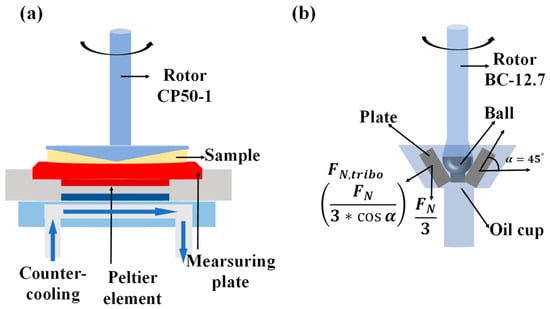
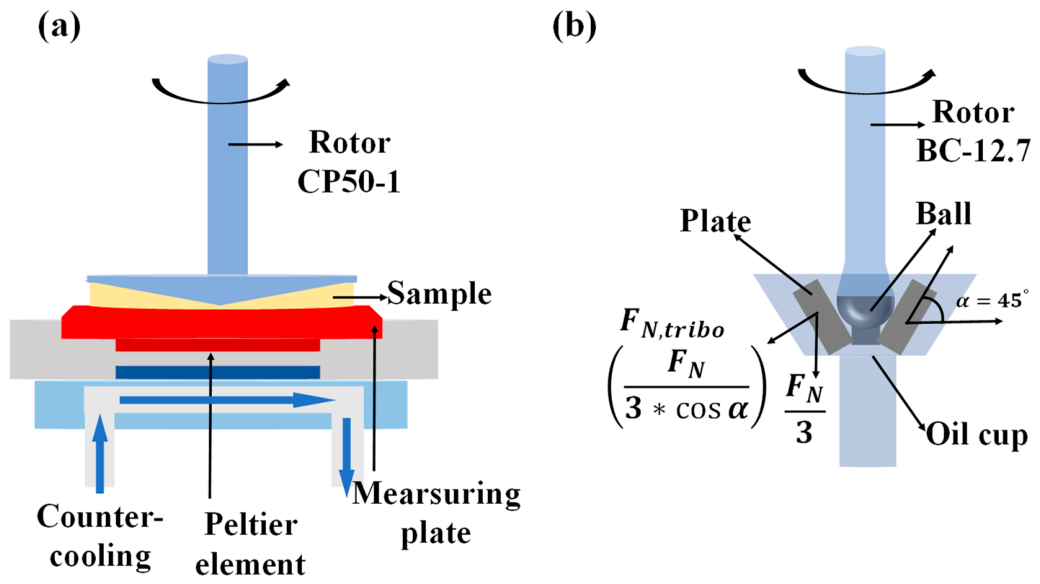
The experimental test devices were shown in Figure 2. The obtained blend liquids were tested by the rheometer of Anton Paar (Figure 2a) in a viscosity–temperature experiment. The rotor type is CP50-1. The shear rate increased from 0.1 to 1000 in logarithmic form. The temperatures are 0 °C, 20 °C, 40 °C, 75 °C, 100 °C, 120 °C and 150 °C. Each drop of sample was 0.5 mL, and the scraping method was the same. Each group of experiments was repeated three times. After each test, the rotor and test area were cleaned with ethanol and wiped with lint-free wipes; the next experiment was conducted only after thorough cleaning. The measurements were carried out gradually from low temperature to high temperature. After the temperature reached the target value and stabilized, the system was kept isothermal for 5 min before starting the test, and the same procedure was followed during cooling.
Figure 2.
The sketch of the measuring system. (a) Viscosity–temperature characteristic measuring device. (b) Ball-on-three-plates friction test rig.
The tribological tests were conducted using an MCR301 instrument, as shown in Figure 2b. A ball-on-three-plates friction test configuration (MCR301, Anton Paar GmbH, Graz, Austria) was used for the friction tests. The friction pair consisted of a GCr15 steel ball with a diameter of 12.7 mm and three GCr15 steel plates, and the specific parameters are listed in Table 2. The test temperature was 25 °C. Before the tests, the balls and plates were separately ultrasonically cleaned in alcohol three times, with each cleaning lasting 10 min. After each cleaning, the alcohol was discarded and replaced with fresh alcohol for the next cleaning cycle. After the final cleaning, the clean specimens were stored in sealed containers containing alcohol. Each group of tests was repeated three times. After each test, the friction-pair specimens (the ball and three plates) were replaced with a new ball and new plates. In addition, the rotor of the upper friction pair and the fixture holding the lower friction pair (three plates) were cleaned with petroleum ether and alcohol. Disposable gloves were worn during both cleaning and installation. After cleaning, the components were wiped clean with lint-free wipes, after which the upper friction specimen (ball) and the lower friction specimens (three plates) were installed. The next group of tests was conducted only after thorough cleaning.
Table 2.
The measurement of the ball-on-three-plates.
After each replacement of the friction pair, a running-in test was first conducted using PAO2 as the lubricant. The running-in time was 10 min, the load was 3 N, and the rotational speed was 500 rpm to ensure that the contact surface morphologies were similar for each test. After the running-in test, the rotor and test area were cleaned with ethanol and wiped with lint-free wipes. Since both the steel ball and steel plates were made of GCr15 bearing steel, the Poisson’s ratio and Young’s modulus of the two contact bodies were 0.30 and 208 GPa, respectively.
The three steel plates were inclined at an angle of 45° to the horizontal plane. Since the steel ball rotated about the vertical axis, the effective rotational radius at the ball–plate contact point was rsin45°. Therefore, the sliding velocity v at the contact point was calculated as:
where n is the rotational speed of the steel ball in rpm, and r is the radius of the steel ball in m. The GCr15 steel ball used in this study had a diameter of 12.7 mm, corresponding to r = 6.35 mm. Thus, the rotational-speed range of 0.1–3000 rpm corresponded to a sliding-velocity range of approximately 4.70 × 10⁻⁵–1.41 m/s, while the running-in speed of 500 rpm corresponded to approximately 0.235 m/s.
A syringe was used to suck out the oil after running in and the friction pairs were not replaced. Petroleum and alcohol were used to clean the friction pairs and ensure the contact point was unchanged during the next friction test. Then, the method of lubricating fluid replacement is the same as above; the friction pair is not replaced, and the contact point is the same. Change the contact load to 1 N (corresponding to a maximum pressure of 0.4 Gpa) and increase the speed logarithmically from 0.1 rpm to 3000 rpm. The speed is then reduced logarithmically from 3000 rpm to 0.1 rpm. The round trip time is 5 min. The above process does not replace the friction pair, and the cleaning method is the same as above. All sets of the experiment were repeated three times.
3. Results and Discussion
3.1. Rheological Properties of PMA Lubricant Additives and Base Oil
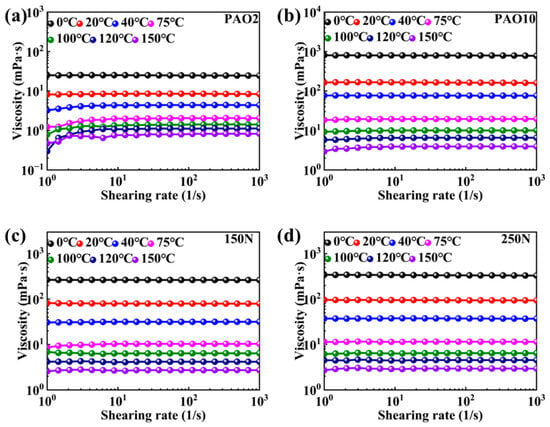
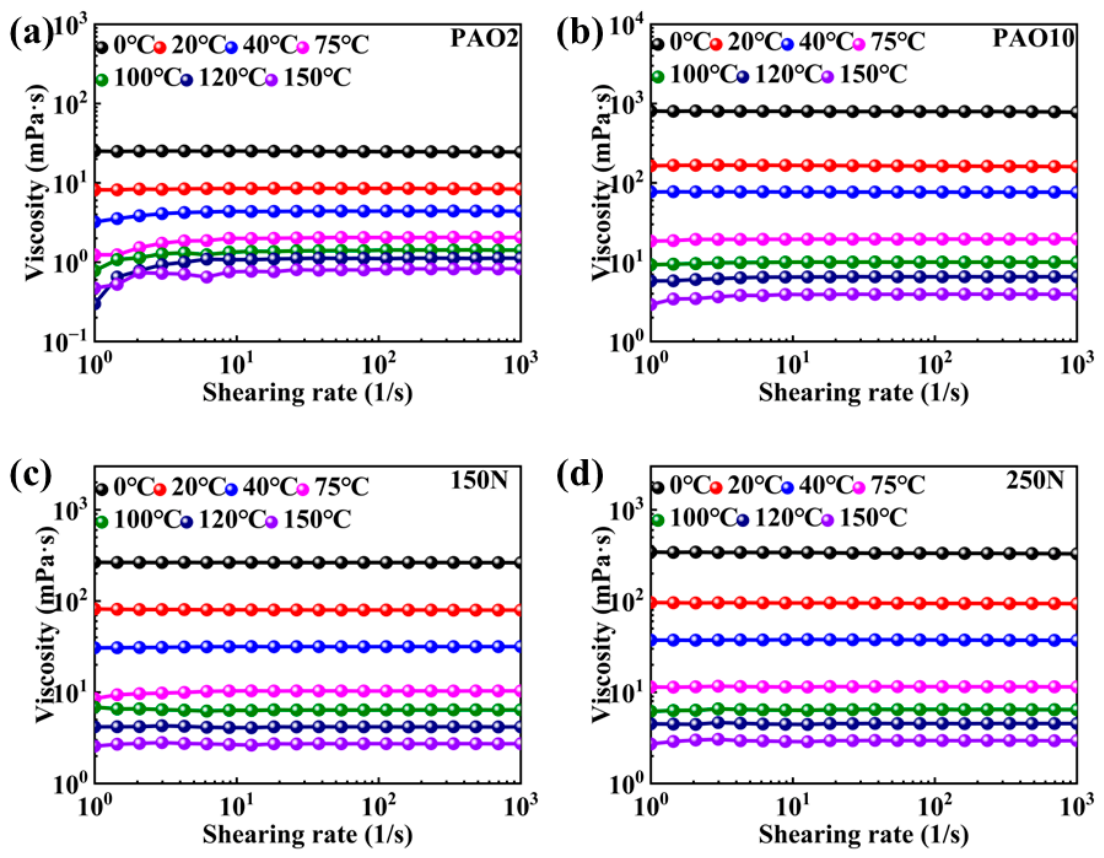
Figure 3 shows the Rheological properties of PMA lubricant additives and base oil. Figure 3a–d show the viscosity–temperature performance of two polyalphaolefin base oils (PAO2, PAO10) and two Group III hydroisomerized base stocks (150N, 250N). All four base oils exhibit Newtonian fluid behavior, with their viscosities showing no obvious variation as the shear rate increases. The viscosities decrease markedly with rising temperature. PAO2 has the lowest viscosity at room temperature and also maintains the minimum viscosity under high-temperature conditions. When the temperature exceeds 100 °C, PAO2 displays shear thickening at a shear rate of 1 s−1.
Figure 3.
Rheological properties of base oil. (a) PAO2; (b) PAO10; (c) 150N (d) 250N.
At all test temperatures, the viscosity of PAO10 was significantly higher than that of PAO2. The viscosity levels of 150N and 250N were similar; the viscosities of both decreased with increasing temperature, but neither exhibited shear-thickening behavior at low shear rates. Group III base oils have a nonuniform molecular chain-length distribution, consisting mainly of short-chain molecules and containing small amounts of naphthenes and aromatics, and are prone to oxidative cracking under high-temperature conditions. In comparison, Group IV base oils have relatively pure compositions. The shear-thickening behavior of PAO2 and PAO10 at high temperatures and low shear rates is apparent shear thickening. Under the above conditions, they would normally be expected to behave as ideal Newtonian fluids. The apparent shear-thickening behavior observed at high temperatures and low shear rates may be a measurement artifact caused by the sensitivity limit of the rheometer, i.e., the measured torque was too low under conditions of low viscosity and low shear rate. Since both PAO2 and PAO10 are short-chain, highly branched alkane oligomers with relatively pure compositions, their molecular weights are far below the critical molecular weight required for chain entanglement. Their shear-thinning behavior is caused by volume expansion with increasing temperature, but they still exhibit Newtonian-fluid behavior.
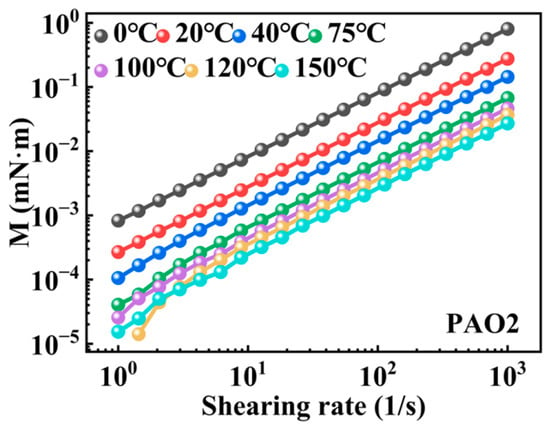
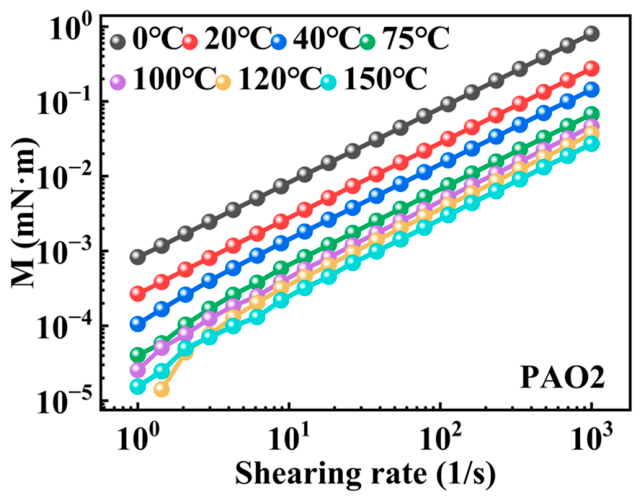
Combined with the torque data shown in Figure 4 below, fluctuations in the torque data were observed at temperatures above 100 °C and a shear rate of 1 s−1. At 120 °C, the measured torque value even became negative at a shear rate of 1 s−1. Therefore, considering that PAO2 is a low-viscosity oligomer and would normally be expected to behave as an ideal Newtonian fluid under the above conditions, the apparent shear-thickening behavior observed at high temperatures and low shear rates may be a measurement artifact caused by the sensitivity limit of the rheometer, i.e., the measured torque was too low under conditions of low viscosity and low shear rate.
Figure 4.
Variation in torque with shear rate for PAO2 at different temperatures.
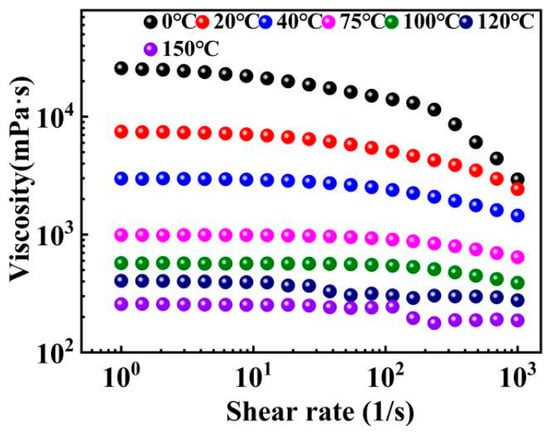
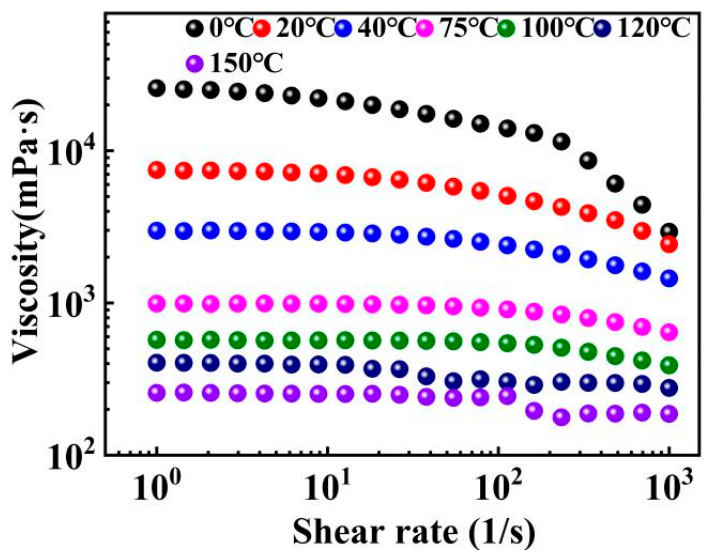
Figure 5 shows the rheological properties of the PMA lubricant additive. Compared with the two base oils, the decrease in the viscosity of PMA with increasing temperature was noticeably smaller. Compared with its sensitivity to temperature, PMA showed a more pronounced response to shear rate. Its viscosity decreased with increasing shear rate, exhibiting shear-thinning behavior; at lower temperatures, this shear-rate dependence was more pronounced, especially in the higher shear-rate region. Tetradecyl polymethacrylate (PMA-T602) is a polar organic polymer, and its molecular structure is schematically shown in Figure 1, mainly exhibiting a network-like structure. Under low-temperature conditions, it can be used as a pour point depressant for lubricating oils. As the temperature increases, its molecular conformation gradually extends in solution, thereby improving the viscosity index of the mixture at high temperatures. PMA is commonly used to improve the viscosity–temperature characteristics and rheological properties of mixtures.
Figure 5.
Rheological properties of PMA.
At different shear rates, the viscosity of PMA was overall significantly higher than that of the selected synthetic and mineral base oils. PMA mainly exhibited non-Newtonian fluid behavior, and its viscosity decreased with increasing shear rate. At lower temperatures, the PMA system had a higher viscosity, and molecular motion and structural relaxation were slower. The shear-induced orientation and conformational changes in the polymer chains could not recover rapidly; therefore, the shear-thinning behavior was more pronounced. As the temperature increased, molecular mobility increased, the viscosity of the system decreased, and the characteristic relaxation time became shorter, allowing the shear-induced structural changes to relax more rapidly. Therefore, within the same experimental shear-rate range, the dependence of PMA viscosity on shear rate was relatively weaker at high temperatures.
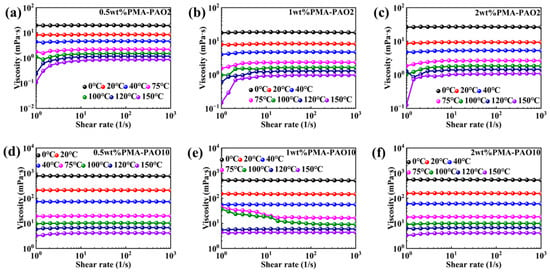
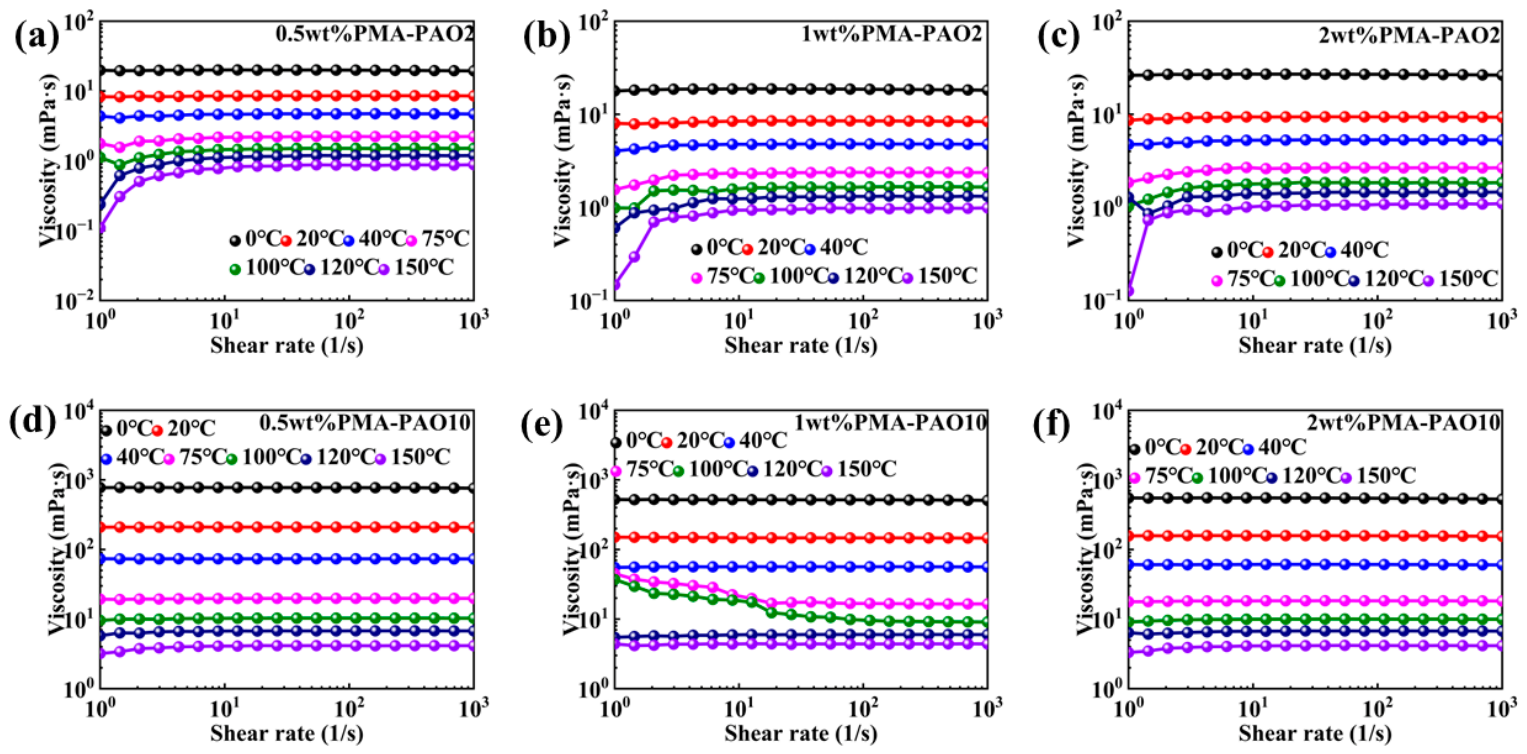
Subsequently, rheological tests were performed on the solutions prepared in this section, and the results are presented in Figure 6 and Figure 7. Figure 6 illustrates the rheological properties of the mixed solutions. Figure 6a–c depict the rheological behaviors of mixtures containing 0.5 wt%, 1.0 wt% and 2.0 wt% PMA in PAO2 as functions of temperature and shear rate. The PAO2 solutions containing PMA at three different mass fractions exhibit shear thickening at low shear rates when the temperature exceeds 100 °C, and the degree of shear thinning is markedly higher than that of pure PAO2 base oil. At high shear rates, however, their viscosities remain unchanged with increasing shear rate, demonstrating Newtonian fluid characteristics. The viscosity of PMA-blended PAO2 mixtures at high temperatures increases significantly with the mass fraction of added PMA. This indicates that the incorporation of PMA can enhance the high-temperature viscosity of the mixed solution and reduce its temperature sensitivity of viscosity.
Figure 6.
Rheological properties of mixed solution based on PAO. (a) 0.5 wt% PMA in PAO2; (b) 1.0 wt% PMA in PAO2; (c) 2.0 wt% PMA in PAO2; (d) 0.5 wt% PMA in PAO10; (e) 1.0 wt% PMA in PAO10; (f) 2.0 wt% PMA in PAO10.
Figure 7.
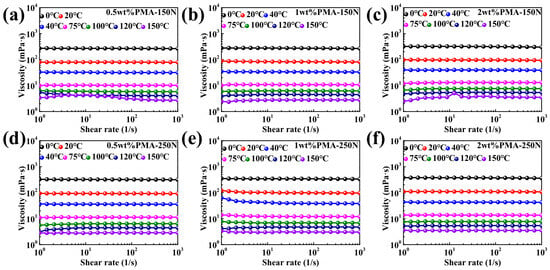
Rheological properties of mixed solution based on Group III base oils. (a) 0.5 wt% PMA in150N; (b) 1.0 wt% PMA in 150N; (c) 2.0 wt% PMA in 150N; (d) 0.5 wt% PMA in 250N; (e) 1.0 wt% PMA in 250N; (f) 2.0 wt% PMA in 250N.
Figure 6d–f depict the rheological behaviors of mixtures containing 0.5 wt%, 1.0 wt% and 2.0 wt% PMA in PAO10 as functions of temperature and shear rate. The PAO10 solutions containing PMA at three different mass fractions show constant viscosity with increasing shear rate, demonstrating Newtonian fluid characteristics. The viscosity of PMA-blended PAO10 mixtures at high temperatures increases with the mass fraction of added PMA. This indicates that the incorporation of PMA can enhance the high-temperature viscosity of the blend and reduce its viscosity dependence on temperature.
Figure 7a–c depict the rheological behaviors of mixtures containing 0.5 wt%, 1.0 wt% and 2.0 wt% PMA in 150N Group III base oils as functions of temperature and shear rate. The addition of PMA exerts a remarkable influence on viscosity at high temperatures, while the difference is insignificant at lower temperatures. All blended solutions exhibit Newtonian fluid behavior. Figure 7d,e depict the rheological behaviors of mixtures containing 0.5 wt%, 1.0 wt% and 2.0 wt% PMA in 250N Group III base oils as functions of temperature and shear rate. The viscosity of PMA-blended 205N mixtures rises with increasing PMA mass fraction, particularly under high-temperature conditions. All 250N mixtures blended with PMA exhibit Newtonian fluid behavior.
By adding PMA with different mass fractions into Group III and Group IV base oils to investigate their rheological properties, it is found that within the range of adopted mass fractions, the incorporation of PMA does not alter the viscous flow behavior of the blends, which all exhibit Newtonian fluid characteristics. PMA only raises the viscosity at high temperatures and alleviates the thinning phenomenon of base oils under high-temperature conditions. Further research is required to explore the effect of PMA on the viscosity–temperature properties of base oils.
3.2. The Influence of PMA on Viscous Flow Activation Energy of Base Oil
This section investigates the effects of the aforementioned PMA loadings with various mass fractions on the viscosity–temperature properties of base oils. The response of base oil viscosity to temperature is generally described by viscosity–temperature equations. Widely adopted equations include the Reynolds equation, Andrade-Eyring equation, Slotte equation (Equations (2)–(6)) [31], Vogel equation and Arrhenius equation. Their specific expressions are given as follows:
where T is the temperature in K; denotes the dynamic viscosity at temperature T in mPa·s; represents the dynamic viscosity at the reference temperature in mPa·s; is the viscosity–temperature coefficient; , s, and b are constants.
where T is the absolute temperature; the unit is K. R is the molar gas constant, R = 8.314 J/. is the viscous flow activation energy, and the unit is J/mol; represents the dynamic viscosity; is a fitting constant [32].
The investigation is mainly carried out from the perspective of intermolecular interactions. The Arrhenius Equation (6) is selected to study the viscosity–temperature properties of base oils. can characterize the relationship between viscosity and temperature of base oils. It describes the minimum energy required for polymer chain segments to jump from their original positions to adjacent vacant sites, namely the capacity to overcome van der Waals forces among surrounding molecules. A larger indicates that viscosity decreases more drastically with rising temperature, corresponding to higher temperature sensitivity and poorer viscosity stability against temperature. When calculating the flow activation energy, Celsius temperature is converted to Kelvin temperature. Taking the logarithm on both sides of Equation (6):
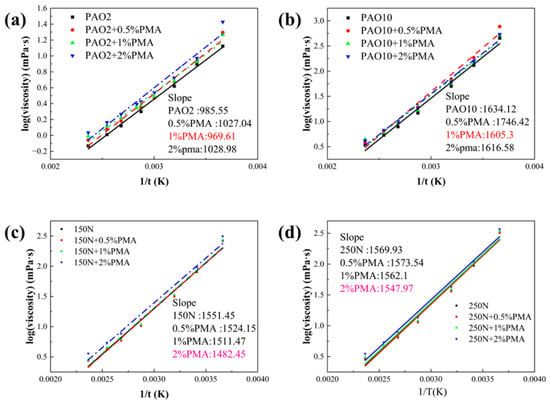
The viscous flow activation energies of mixed systems consisting of base oil and PMA with different mass fractions in Section 3.1 were calculated according to Equation (7). The viscosity–temperature characteristics of PMA and base oil, and it can be described by the Arrhenius equation. Figure 8a–d show the variation in logarithmic viscosity with the reciprocal of absolute temperature. Figure 8a shows the fitting curves and corresponding fitting parameters between logarithmic viscosity and the reciprocal of absolute temperature for PAO2 solutions with different mass fractions of PMA. When the added mass fractions of PMA are 0 wt%, 0.5 wt%, 1.0 wt% and 2.0 wt%, the slopes of the corresponding fitted straight lines are 985.55, 1027.04, 969.61 and 1028.98, respectively.
Figure 8.
Linear relationships between the natural logarithm of viscosity and the reciprocal of absolute temperature for different base-oil systems at different PMA mass fractions: (a) PAO2; (b) PAO10; (c) 150N; (d) 250N.
Figure 8b shows the fitting curves and corresponding fitting parameters between logarithmic viscosity and the reciprocal of absolute temperature for PAO10 solutions with different mass fractions of PMA. When the added mass fractions of PMA are 0 wt%, 0.5 wt%, 1.0 wt% and 2.0 wt%, the slopes of the corresponding fitted straight lines are 1634.12, 1746.42, 1605.3 and 1616.58, respectively.
Figure 8c shows the fitting curves and corresponding fitting parameters between logarithmic viscosity and the reciprocal of absolute temperature for 150N solutions with different mass fractions of PMA. When the added mass fractions of PMA are 0 wt%, 0.5 wt%, 1.0 wt% and 2.0 wt%, the slopes of the corresponding fitted straight lines are 1551.45, 1524.15, 1511.47 and 1482.15, respectively.
Figure 8d shows the fitting curves and corresponding fitting parameters between logarithmic viscosity and the reciprocal of absolute temperature for 250N solutions with different mass fractions of PMA. When the added mass fractions of PMA are 0 wt%, 0.5 wt%, 1.0 wt% and 2.0 wt%, the slopes of the corresponding fitted straight lines are 1569.93, 1573.54, 15562.10 and 1547.97, respectively.
All the above fitting curves possess . For PAO2 and PAO10, the slopes of fitted lines at PMA dosages of 0.5 wt%, 1.0 wt% and 2.0 wt% do not decline with increasing PMA content, and the minimum slope appears at 1.0 wt% PMA. For 150N and 250N, the slopes of fitted lines under PMA fractions of 0.5 wt%, 1.0 wt% and 2.0 wt% show no decreasing trend with the rise in PMA mass fraction. According to Equation (6), the viscous flow activation energy can be obtained by multiplying the slope of the fitted straight line (logarithmic viscosity versus the reciprocal of absolute temperature) by the constant R. These fitted lines correspond to base oil solutions containing different mass fractions of PMA.
According to the above experimental results, PMA can improve the viscosity–temperature characteristics of API Group III and API Group IV base oils. Nevertheless, the optimal dosage differs for the two oils, which originates from the different solubility of PMA in these base oils. A homogeneous mixture where polymers disperse in solvent at the molecular level is defined as a polymer solution. When solvent molecules mix uniformly with solute molecules via diffusion to form a molecularly dispersed homogeneous system, this process is dissolution.
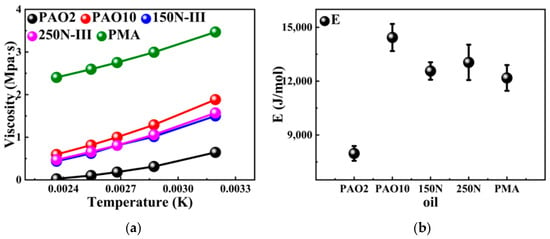
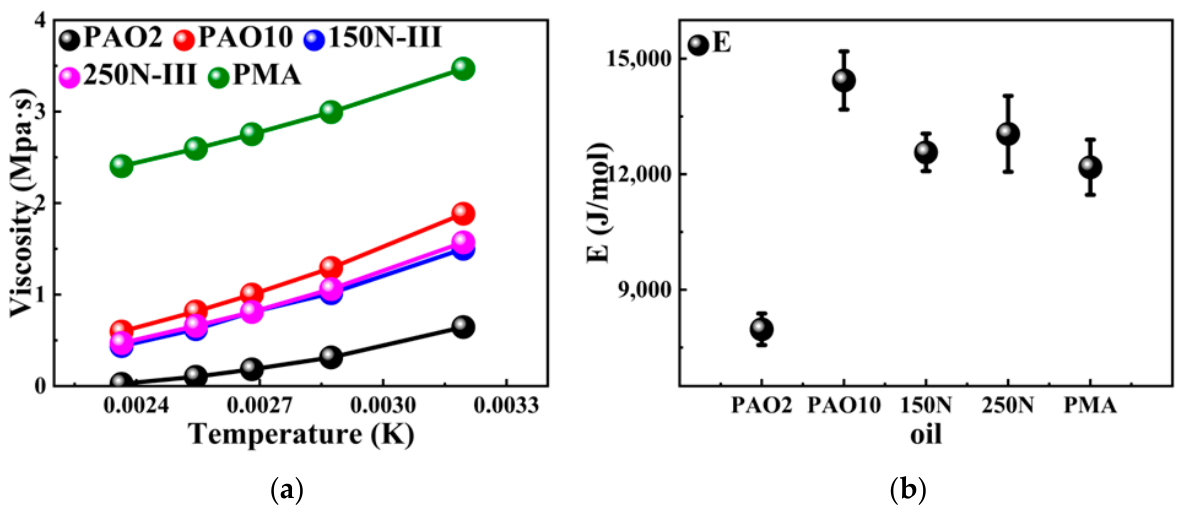
Figure 9a,b show the variation in logarithmic viscosity and viscous flow activation energy of base oils and PMA. The dynamic viscosity of all base oils decreases significantly with increasing temperature. According to the free volume theory, the flow of polymer molecules is realized through the successive jumps of each chain segment in a “reptation” mode similar to earthworms or inchworms, rather than the migration of the entire polymer chain. The plot of versus is drawn, and the product of the slope and the constant R equals the viscous flow activation energy.
Figure 9.
Viscosity–temperature characteristics and viscous flow activation energy of PMA. (a) Variation in logarithmic viscosity of PMA and base oils with the reciprocal of absolute temperature; (b) viscous flow activation energy of base oils and PMA.
For synthetic oils, the viscous flow activation energy rises with the increase in viscosity, accompanied by enhanced temperature sensitivity. PAO2 possesses the minimum viscous flow activation energy and exhibits the weakest temperature sensitivity. The viscous flow activation energy of mineral oil 150N is between those of PAO2 and PAO10, showing a moderate viscosity sensitivity to temperature. Although PAO2 has the lowest viscous flow activation energy and optimal temperature stability, its viscosity is the smallest. Viscosity index improvers are commonly adopted to adjust the viscosity–temperature properties of base oils. Therefore, it is necessary to investigate the effect of viscosity index improvers on the viscosity–temperature characteristics of base oils.
In the process of flow, the flow unit (for polymer material, chain segment) is used to overcome the potential barrier, and the minimum energy required for the transition from the original position to the nearby “hole”. is the required energy when a molecule overcomes the forces exerted on it by surrounding molecules to facilitate the change in position. RT is the kinetic energy per mole, that is, the energy of thermal motion. It can also describe the sensitivity of a polymer to temperature. The bigger the value is, the more sensitive it is. The order of sensitivity to temperature from strong to weak is PAO10, 250N, 150N, PMA, PAO2.
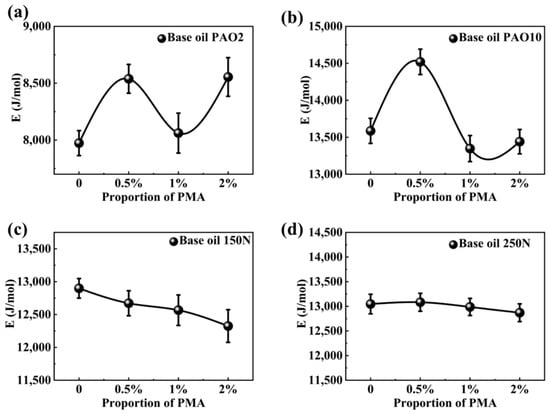
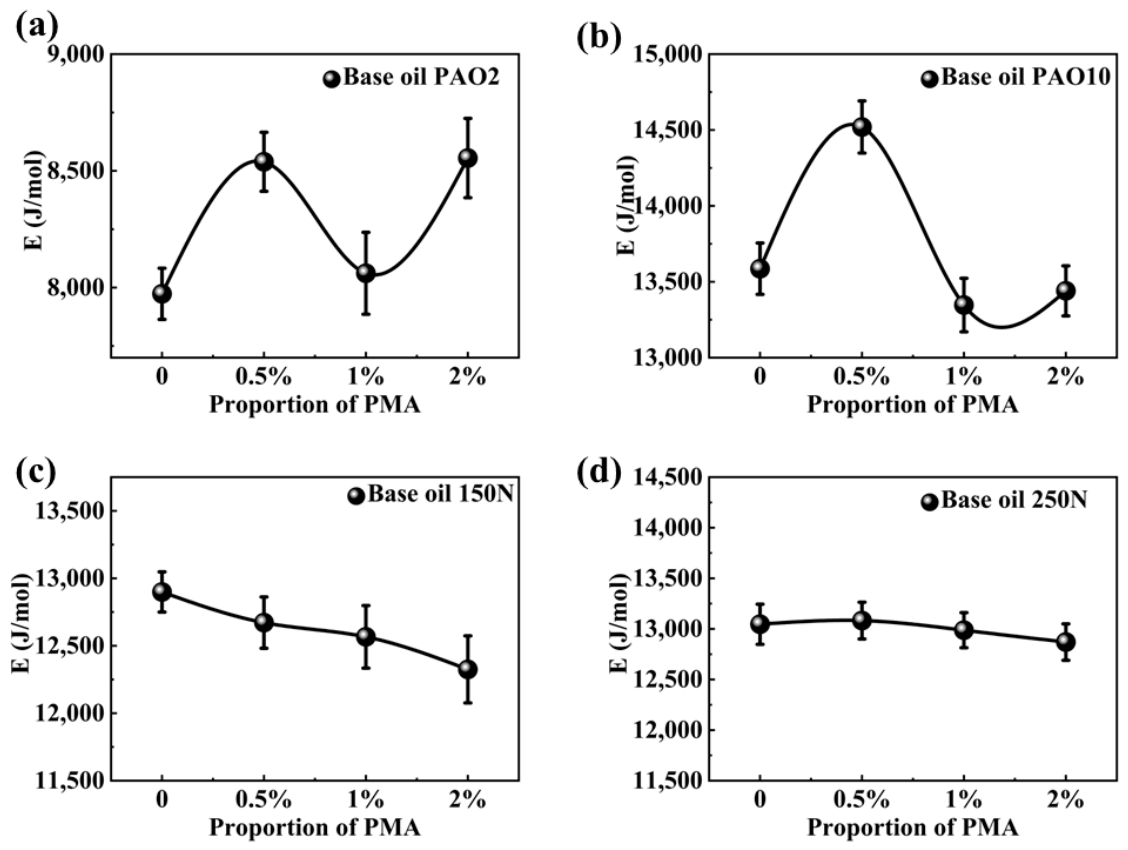
Figure 10 shows the effect of PMA on the viscous flow activation energy of base oils. As shown in Figure 10a,b, the viscous flow activation energy of blends of PMA and synthetic oils exhibits a non-monotonic relationship with the added mass fraction of PMA, and there exists a critical optimal dosage of PMA in synthetic oils. For PAO synthetic oils, the blends of PMA with PAO2 and PAO10 reach the minimum viscous flow activation energy at a PMA mass fraction of 1.0 wt%. Further increasing the PMA mass fraction leads to an increase in the viscous flow activation energy of the blends. At low PMA mass fractions (0.5 wt%), the viscous flow activation energy rises. It can be seen from Figure 10c,d that for mineral oils, the viscous flow activation energy decreases with the increase in the added mass fraction of PMA.
Figure 10.
Effect of PMA on the viscous flow activation energy of base oils. (a) of PAO2 blended with different mass fractions of PMA; (b) of PAO10 blended with different mass fractions of PMA; (c) of 150N blended with different mass fractions of PMA; (d) of 250N blended with different mass fractions of PMA.
This may be attributed to the sufficient swelling of PMA in good solvents (mineral oils), which stretches the polymer molecular chains and reduces the temperature sensitivity of the blends [9]. Meanwhile, PMA preferentially adsorbs on contact surfaces and reduces the friction coefficient under boundary lubrication conditions. The solubility of PMA differs in these two types of base oils. When added to synthetic oils and mineral oils, PMA shows a critical dosage in synthetic oils (1.0 wt% is optimal); for mineral oils, the viscous flow activation energy of the blends decreases monotonically with the rising PMA dosage.
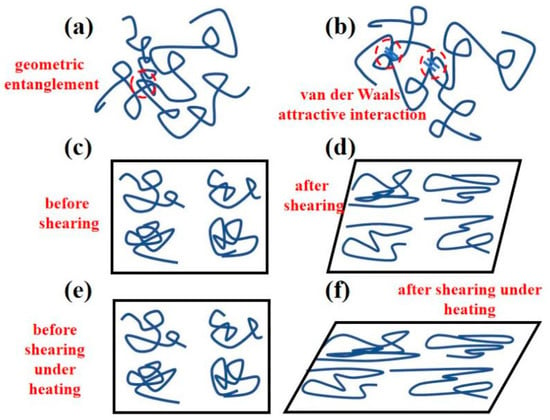
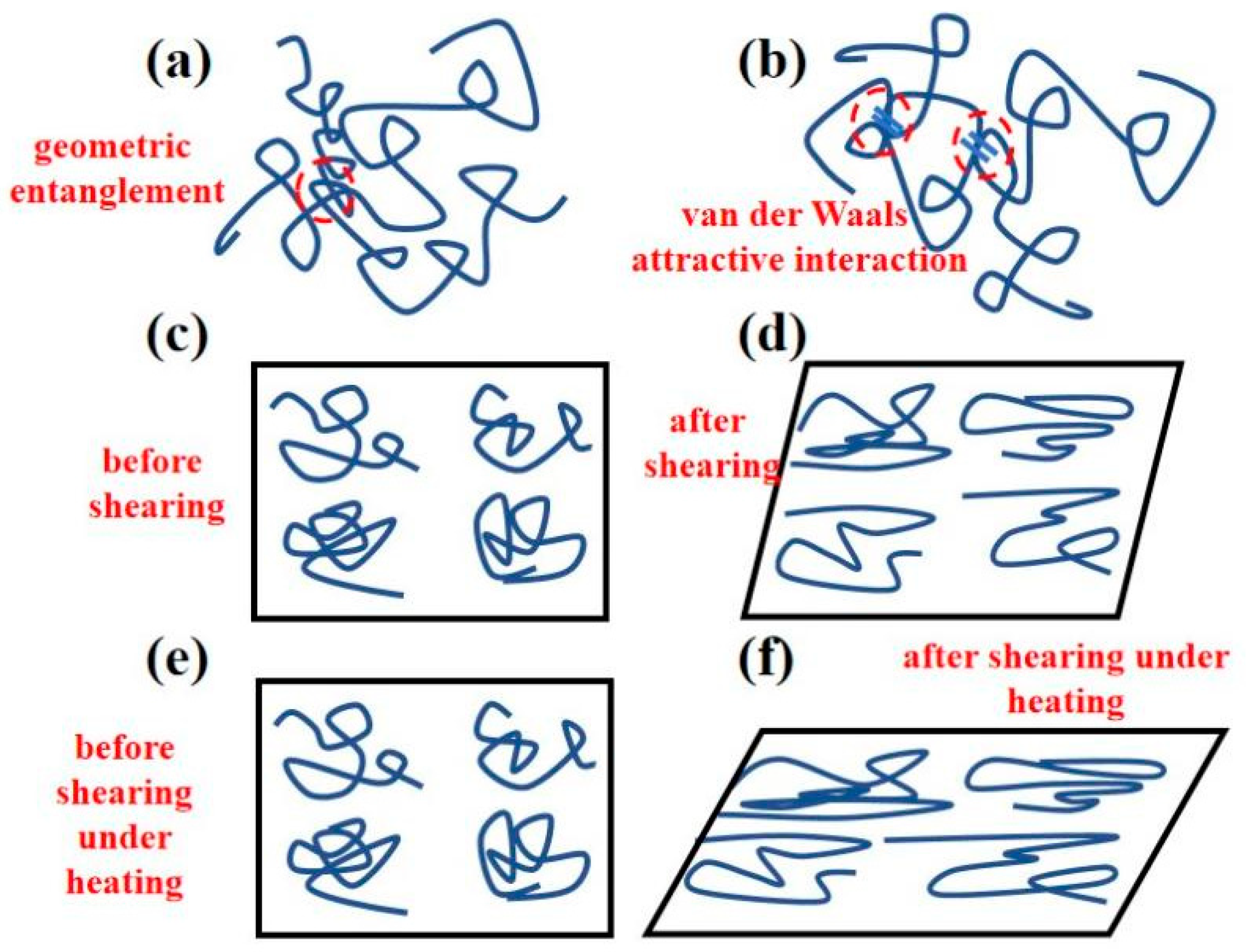
As shown in Figure 11a–e, these are schematic diagrams showing the molecular structural state of PMA in solvents after shearing under heating. This Arrhenius equation can describe the viscosity–temperature characteristics of liquids from the perspective of intermolecular motion. PAO2 exhibits the lowest viscous flow activation energy due to its smallest relative molecular mass, shorter side chains and weak intermolecular cohesion. Accordingly, PAO2 maintains the lowest viscosity across the whole tested temperature range; its viscosity varies slightly with temperature, showing excellent thermal stability and superior low-temperature flowability. This also explains why PAO10 is more sensitive to temperature. The values of 250N and 150N are comparable, yet 250N displays stronger temperature sensitivity than 150N. PMA has a high viscosity but weak temperature sensitivity. The polymer can form a transient cross-linked spatial network structure, namely a quasi-network structure. When subjected to shear, the rates of destruction and reconstruction of the quasi-network structure differ under various conditions, resulting in distinct rheological behaviors of the polymer.
Figure 11.
PMA in solvents under different temperatures and shear conditions. (a) geometric entanglement; (b) van der Waals; (c) before Shearing; (d) after shearing; (e) before shearing under heating; (f) after shearing under heating.
According to the above experimental results, PMA can improve the viscosity–temperature characteristics of base oil in API-III and API-IV oils. However, the best addition ratio of the two is different, which is caused by the different solubility of the two kinds of base oils. The homogeneous mixture of polymer dispersed in solvent in a molecular state is called a polymer solution. When solvent molecules are uniformly mixed with solute molecules through diffusion to form a homogeneous system of molecular dispersion, the process becomes a dissolution process.
There is a large difference in molecular size and mobility between PMA polymers and solvent base oil molecules. Solvent molecules can penetrate into polymers relatively quickly, whereas the diffusion of polymer chains into solvents is extremely slow. Polymer dissolution proceeds in two stages. First, solvent molecules penetrate into polymers and expand their volume, which is termed “swelling”. Afterwards, polymers disperse uniformly in solvents to form a fully dissolved homogeneous molecular dispersion system. Amorphous polymers possess relatively loose molecular stacking and weak intermolecular interactions; thus, solvent molecules easily infiltrate the polymer matrix and induce swelling and dissolution.
Solubility is related to polymer molecular weight: polymers with higher molecular weight exhibit poorer solubility, while low-molecular-weight polymers dissolve more easily. For crosslinked polymers, higher crosslinking density results in a lower swelling degree, and lower crosslinking density corresponds to a higher swelling degree.
The mechanism by which PMA affects the viscous-flow activation energy of different base oils is mainly governed by the regulation of polymer molecular conformation and interfacial behavior through the solvent compatibility of the base oil, thereby resulting in completely different temperature-response behaviors.
In Group III mineral oils (good solvents), the solubility parameters of PMA and the base oils are well matched, allowing the polymer molecular chains to sufficiently swell and extend while maintaining a stable conformation. As the PMA concentration increases, the extended polymer chains can be uniformly dispersed in the oil phase and preferentially adsorb at the friction interface, weakening the disturbance of the thermal motion of oil molecules on the viscosity of the system and continuously reducing the viscous-flow activation energy. Consequently, the temperature sensitivity of the oil steadily decreases, exhibiting an overall monotonic improvement.
In Group IV PAO synthetic oils (poor solvents), PMA has poor solubility, and the molecular chains predominantly adopt coiled conformations that are highly sensitive to temperature and shear. At low concentrations, PMA is insufficiently dispersed and its modification effect is weak. At 1.0 wt%, a balance is achieved between the polymer dispersion state and intramolecular friction, resulting in the lowest viscous-flow activation energy. Further increasing the PMA concentration intensifies polymer aggregation and intermolecular internal friction, increases the flow resistance of the system, and causes the viscous-flow activation energy to increase again, thereby exhibiting a non-monotonic critical-response mechanism.
3.3. The Influence of PMA on Lubrication Properties of Base Oils
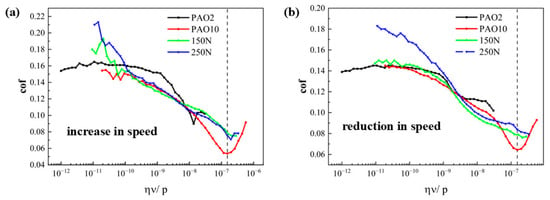
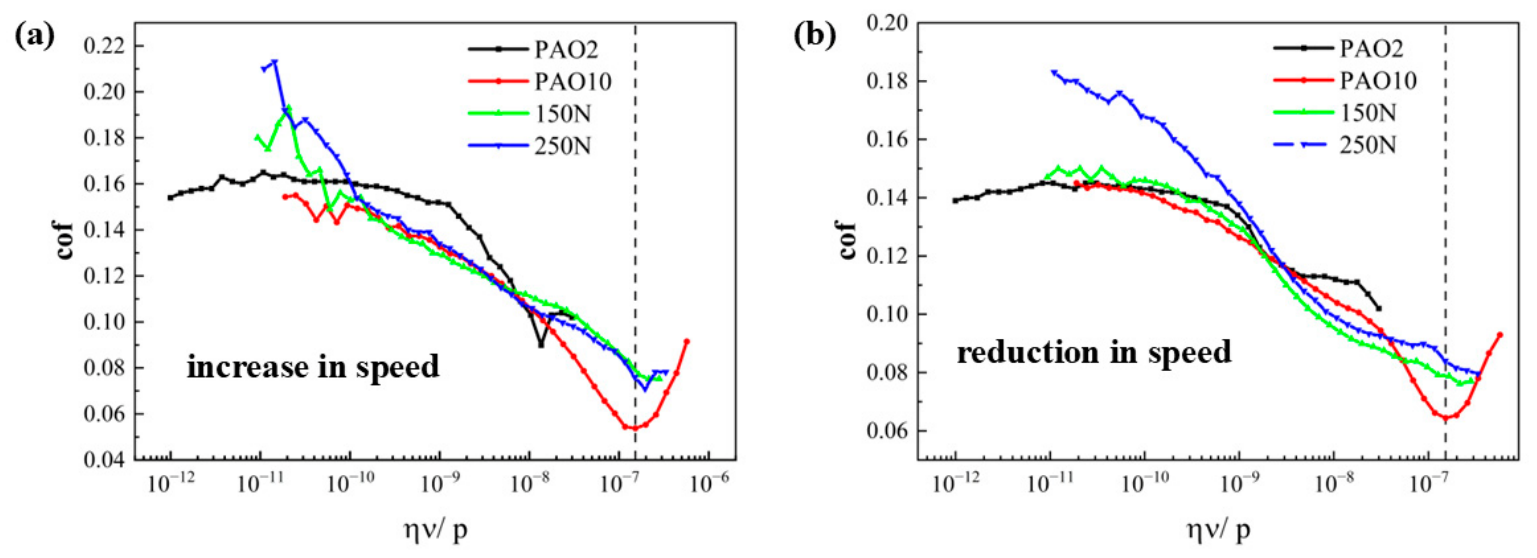
Based on the mixing heat theory of dilute polymer solutions, the influence of different PMA concentrations in various base oils on friction properties was investigated. The materials and experimental procedures are described in Section 2. Ball-on-three-plates friction tests were carried out for each base oil, and the corresponding Stribeck curves were plotted. The results are presented in Figure 12a,b. The friction coefficient of neat PAO2 is higher than that of PAO10 but lower than that of the API Group III base oil during lubrication. Under boundary lubrication conditions, API Group IV base oils exhibit more stable friction behavior and a weaker stick-slip phenomenon compared with API Group III. PAO10 achieves the optimal lubrication performance. The friction coefficients of both API Group III and Group IV base oils display an obvious speed effect.
Figure 12.
Ball-on-three-plates friction tests of the base oils. (a) Speed-up; (b) speed reduction.
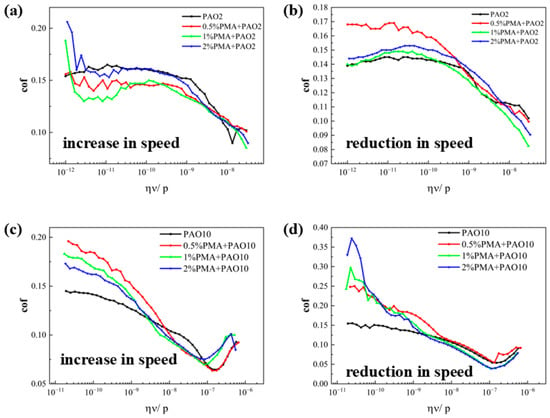
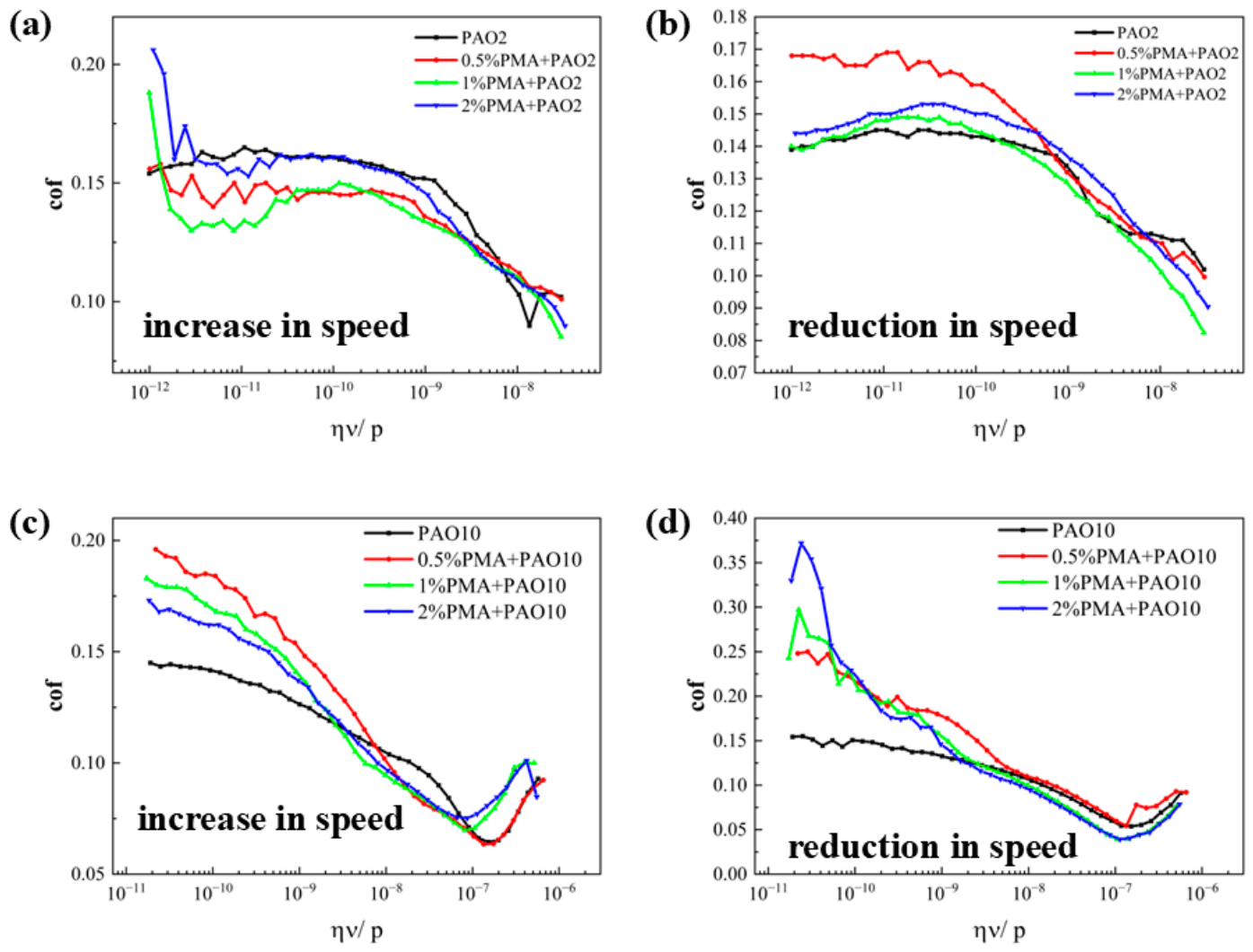
Subsequently, ball-on-three-plates friction tests were performed for different base oils blended with various concentrations of PMA. The materials and experimental procedures are described in Section 2. The results are presented in Figure 13 and Figure 14. As shown in Figure 13, adding PMA significantly improves the boundary lubrication performance of PAO2 blends. At a PMA dosage of 1.0 wt%, the friction reduction rate reaches approximately 18.75%, and the transition point toward hydrodynamic lubrication shifts to a lower speed. Despite producing higher viscosity, the 2.0 wt% PMA dosage exhibits weaker friction-reducing capability in the boundary lubrication regime compared with the 1.0 wt% dosage. At 25 °C, viscosity imposes a limited effect on both boundary and hydrodynamic lubrication. A large heat of mixing prevents sufficient stretching of PMA polymer coils, rendering the blends sensitive to sliding speed.
Figure 13.
Influence of PMA at Different Mass Fractions on Lubricating Properties of PAO Base Oils. (a) Speed-up of PAO2; (b) speed reduction in PAO2; (c) speed-up of PAO10; (d) speed reduction in PAO10.
Figure 14.
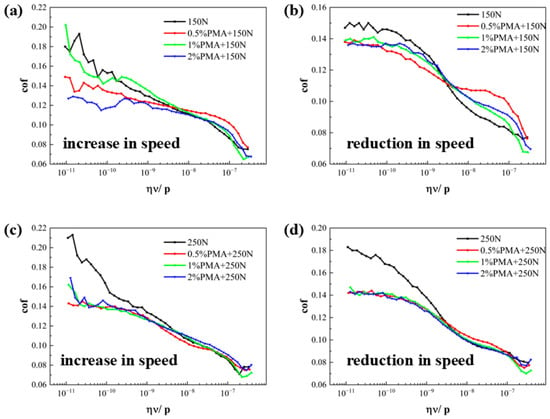
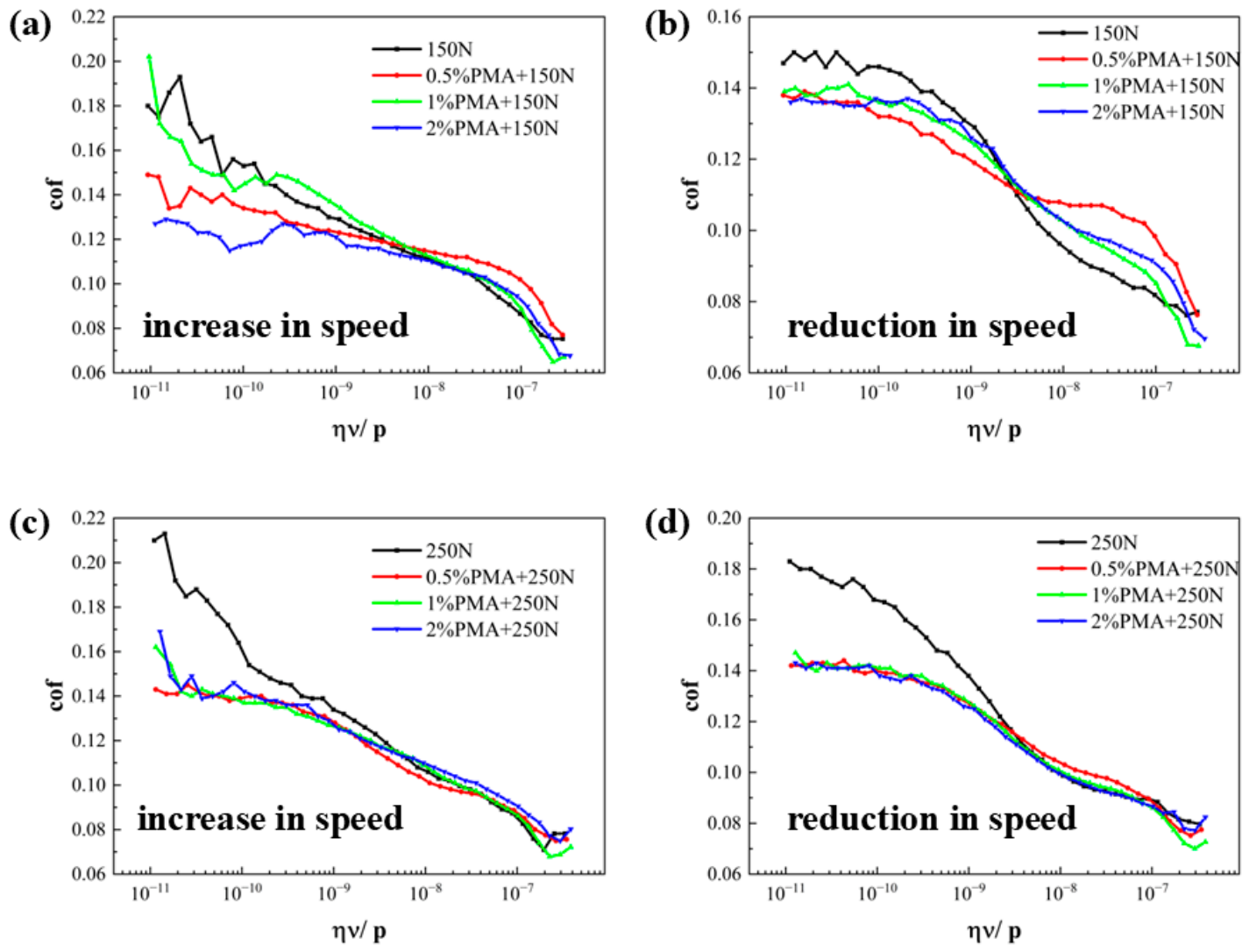
Influence of PMA at Different Mass Fractions on Lubricating Properties of API-III Base Oils. (a) Speed-up of 150N; (b) speed reduction of 150N; (c) speed-up of 250N; (d) speed reduction of 250N.
For PAO10 blends, PMA addition hardly improves boundary lubrication and even increases friction. However, PMA exerts a beneficial effect on mixed and hydrodynamic lubrication. When the PMA dosage is 0.5 wt%, the friction coefficient in the mixed lubrication region decreases, the transition point of hydrodynamic lubrication moves toward lower speed, and a stable lubrication state is achieved earlier. Similarly, viscosity has little influence on boundary and hydrodynamic lubrication at 25 °C. The considerable heat of mixing restricts the full unfolding of PMA polymer coils, leading to strong speed sensitivity of the lubricating system.
As shown in Figure 14, the boundary lubrication performance of 150N blends is remarkably improved after adding PMA. The optimal friction-reducing effect is achieved at a PMA dosage of 2.0 wt%, with a friction reduction rate of approximately 36.8%. The onset of hydrodynamic lubrication occurs earlier at the dosage of 1.0 wt%. At 25 °C, viscosity exerts a minor influence on both boundary and hydrodynamic lubrication. Nevertheless, PMA addition suppresses stick-slip behavior during lubrication and stabilizes the frictional state, and the speed effect is not prominent.
4. Discussion
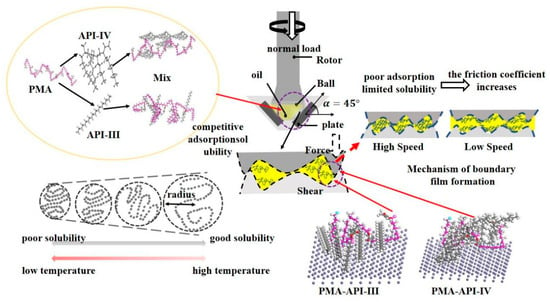
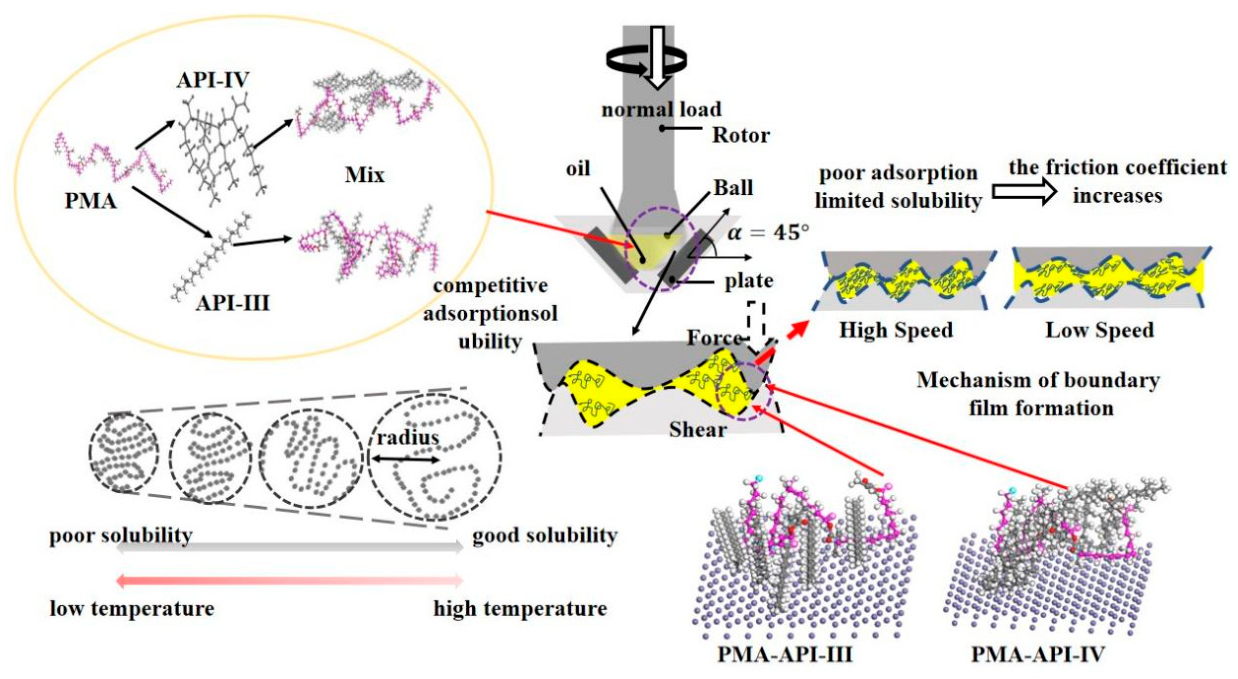
Figure 15 shows the schematic diagram of the mechanism for PMA influencing the rheological and tribological properties of base oils. For 250N blends, PMA addition significantly enhances boundary lubrication performance. The friction reduction rate reaches around 25% for all tested dosages, and the variation in PMA loading has no remarkable influence on boundary lubrication. At 25 °C, viscosity has little impact on boundary and hydrodynamic lubrication. Similarly, PMA alleviates stick-slip phenomena and yields a more stable frictional condition. The blend with 1.0 wt% PMA enters hydrodynamic lubrication earlier, with a lower transition point, presenting superior friction-reducing performance. The dependence on sliding speed is weak.
Figure 15.
Schematic diagram of the mechanism for PMA influencing the rheological and tribological properties of base oils.
The competitive adsorption capacity of PMA varies in different solvents. In good solvents (API Group III base oils), PMA exhibits stronger adsorption capacity than solvent molecules. PMA tends to form a dense boundary film, and the polymer adsorption layer possesses superior load-carrying capacity, thereby lowering the friction coefficient. In contrast, in poor solvents (API Group IV PAO10), the polymer cannot dissolve sufficiently, and the competitive adsorption capacity of PMA is weaker than that of PAO molecules. The polymer chains are difficult to interconnect, which increases intermolecular internal friction and may even lead to higher friction under certain conditions.
At 25 , increasing PMA concentration exerts limited influence on the film-forming properties in good solvents. Owing to the similar solubility parameters between PMA and Group III base oil, PMA can remain fully dissolved even with moderate concentration increments and form compact boundary films. Therefore, the swelling state of polymer coils barely affects the lubrication regime, indicating that concentration is not a dominant factor in good solvents. The viscosity variation caused by elevated PMA concentration is insignificant at room temperature, and polymers preferentially adsorb onto contact surfaces. Under identical load and temperature, the thickness of the formed adsorption film shows no obvious difference.
Nevertheless, for poor solvents, the large mismatch in solubility parameters generates high heat of mixing. The conformation of polymer coils is highly sensitive to shear rate and temperature, which results in a prominent speed effect for Group IV base oils. Consequently, the formed adsorption film is less compact, weakening the anti-wear performance. As sliding speed rises, polymer coils gradually unfold. At high speeds, this facilitates the advance of the hydrodynamic lubrication transition point and slightly reduces the friction coefficient within the mixed lubrication region. In good solvents, polymer chains are fully extended; stretched polymer coils bring strong competitive adsorption and facilitate dense film formation. This fundamentally leads to different tribological behaviors of PMA in various base oils.
At present, considerable controversy still exists in the literature regarding the mechanism by which polymeric viscosity index improvers modify boundary lubrication. Early studies showed that polymer additives can significantly improve the friction and wear performance of mineral-based lubricating oils, and that polymer concentration, molecular weight, and surface viscoelastic effects are key factors determining the lubrication modification effect, which is consistent with the views reported by Okrent [10] and Neudörfl [12]. However, some studies have proposed the opposite view. Briant et al. [17] suggested that viscosity improvers provide almost no improvement in boundary lubrication and that their effect is only manifested under hydrodynamic lubrication conditions involving extremely high shear, while no friction-reduction effect is observed under typical boundary-lubrication conditions. The inconsistency among these findings indicates that the tribological behavior of polymer-modified oils is strongly system-dependent. However, most existing studies have neglected differences in solvent compatibility between polymers and different types of base oils, resulting in incomplete and insufficient explanations of the modification mechanism.
Based on the molecular adsorption and boundary film formation mechanisms proposed in existing nanotribological studies [20,33], this study further reveals that the solvent characteristics of different base oils fundamentally determine the molecular conformational evolution, interfacial competitive adsorption ability, and ultimately the tribological performance of non-functionalized PMA additives. In API Group III mineral-oil systems, the solubility parameters of PMA and the base oil are well matched, allowing the polymer molecular chains to sufficiently swell and extend. The fully extended molecular chains possess stronger interfacial competitive adsorption ability than the base-oil molecules and can form a dense boundary-lubrication film with high load-carrying capacity at the friction interface. In this good-solvent system, the viscous-flow activation energy of the system shows a stable linear negative correlation with PMA concentration, and increasing the PMA concentration can continuously reduce the temperature sensitivity of the oil. Meanwhile, under room-temperature conditions, changes in PMA concentration have only a minor influence on lubrication-film thickness and friction performance, indicating that the boundary-lubrication performance of the mineral-oil system is mainly governed by solvent compatibility rather than additive concentration.
In contrast, API Group IV PAO synthetic oil is a poor solvent for PMA. The relatively large difference in solubility parameters between the two and the relatively high enthalpy of mixing of the system cause the PMA molecular chains to adopt coiled conformations, with their conformational state being highly sensitive to temperature and shear rate. Under these conditions, the interfacial competitive adsorption ability of PMA is weaker than that of the PAO base-oil molecules; the resulting boundary film has a relatively loose structure, and the intramolecular friction of the system increases. Unlike the monotonic modification behavior observed in the mineral-oil system, the PAO synthetic-oil system exhibits a pronounced non-monotonic modification characteristic, with an optimum critical PMA concentration of 1.0 wt%. Both excessively low and excessively high PMA concentrations increase the viscous-flow activation energy of the system and deteriorate the viscosity–temperature stability of the oil. This result reasonably explains the adverse phenomenon of increased friction under low-speed boundary-lubrication conditions reported for polymer additives in previous studies.
It is worth noting that the classical study by Müller et al. [34] suggested that polar functional groups are necessary for PMA to form an effective boundary-lubrication film. However, the present study shows that non-functionalized PMA can still effectively improve the boundary-lubrication performance of base oils through solvent-induced molecular conformational regulation and interfacial competitive adsorption. This study confirms that non-functionalized PMA can improve the boundary-lubrication performance of base oils. This result differs from the conclusion of Müller because the present study considers the competitive adsorption behavior of PMA in different base oils as well as differences in solubility parameters. At the same time, the experimental results also support the view that polymers can improve boundary-lubrication performance. This study improves and supplements the existing mechanism of polymer-induced lubrication modification and establishes a synergistic regulation mechanism of “base-oil polarity–polymer conformation–interfacial adsorption performance,” providing a theoretical basis for PMA molecular-structure selection and optimum concentration matching in different base-oil systems. It also provides guidance for optimizing the overall lubrication performance of lubricating oils and improving formulation economy and applicability.
5. Conclusions
- This study systematically investigated the concentration-dependent rheological properties and tribological behaviors of non-functionalized poly (alkyl methacrylate) (PMA) additives in Group III mineral base oils and Group IV PAO synthetic base oils. It revealed the coupled trade-off mechanism among base-oil polarity, polymer dissolution conformation, temperature sensitivity, and interfacial adsorption behavior, clarified the differentiated effects of PMA on viscosity–temperature regulation and boundary lubrication under different solvent environments, and established criteria for PMA structural selection and optimum addition suitable for different base oils.
- The improvement in the viscosity–temperature performance of lubricating oils by PMA does not increase monotonically with increasing additive concentration, and its rheological behavior is highly dependent on the solvent properties of the base oil. In Group III mineral oils, which act as good solvents, the solubility parameters of PMA and the base oils are well matched, allowing the polymer molecular chains to sufficiently swell and extend, while the conformational stability is less affected by concentration and temperature. In this system, PMA molecules exhibit stronger competitive adsorption and can form a dense boundary-lubrication film with excellent load-carrying capacity at the friction interface, thereby effectively reducing the boundary friction coefficient. Meanwhile, the viscous-flow activation energy of the system shows a stable negative correlation with the PMA addition level. As the PMA concentration increases, the temperature sensitivity of the lubricating oil continuously decreases and the viscosity–temperature performance steadily improves. In addition, under room-temperature conditions, concentration fluctuations have only a limited influence on film quality and lubrication stability, resulting in stable and reliable friction-reduction performance.
- In PAO synthetic oils, which act as poor solvents, PMA has relatively poor compatibility with the synthetic oil, and the polymer chains tend to adopt a coiled conformation. The molecular conformation is highly sensitive to temperature and shear conditions, while the competitive interfacial adsorption ability is weaker than that of the PAO base-oil molecules, making it difficult to form a stable and dense boundary film. Consequently, the lubrication performance exhibits a pronounced non-monotonic dependence on concentration. An optimum critical PMA addition level of 1.0 wt% exists in this system. At this concentration, the viscous-flow activation energy of the mixture is the lowest and the viscosity–temperature stability is the best. When the PMA concentration is lower than this value, the effective modification by PMA is insufficient; when the concentration is higher than this value, intermolecular friction is intensified, weakening the improvement in viscosity–temperature performance and even increasing the boundary friction resistance under low-speed conditions. In addition, increasing the sliding velocity can promote the extension of coiled polymer chains, facilitate the transition of the system toward hydrodynamic lubrication, and partially compensate for the insufficient dissolution compatibility of PMA.
In summary, the regulation of the overall performance of lubricating oils by PMA results from the trade-off among solubility, temperature sensitivity, and interfacial adsorption performance. In engineering applications, the PMA structure and addition level should be selected differently according to the polarity of the base oil: for mineral-oil systems, the PMA addition level can be appropriately increased to continuously optimize the viscosity–temperature characteristics; for PAO synthetic-oil systems, the optimum addition level of 1.0 wt% should be strictly controlled to avoid the negative effects caused by excessive addition. This study clarifies the differentiated lubrication mechanisms of non-functionalized PMA and provides theoretical support for optimizing viscosity-index-improver formulations in different base-oil systems while considering both lubrication performance and economic benefits.
Author Contributions
Conceptualization, Y.Z. and X.W.; methodology, C.O.; validation, Y.M., Y.Z. and C.O.; formal analysis, X.W. and J.L.; investigation, H.W.; resources, Y.M.; data curation, X.W., C.O. and J.L.; writing—original draft preparation, C.O., Y.Z. and J.L.; writing—review and editing, X.W., Y.Z.; visualization, H.W.; supervision, X.W. and J.L.; project administration, C.O.; funding acquisition, H.W. All authors have read and agreed to the published version of the manuscript.
Funding
This research was funded by the National Natural Science Foundation of China (No. 52305190).
Data Availability Statement
The original contributions presented in the study are included in the article.
Acknowledgments
We thank all editors and reviewers for their suggestions and comments.
Conflicts of Interest
The authors declare no conflicts of interest.
References
- Lizarraga-Garcia, E.; Davenport, T.; Carden, P.; de Vries, A.; Cakebread, S.; Remmert, S.; Mainwaring, R. Lubricant impact on friction by engine component: A motored friction tear down assessment of a production 3.6L engine. In Proceedings of the 2019 JSAE/SAE Powertrains, Fuels and Lubricants, Kyoto, Japan, 26–29 August 2019. [Google Scholar]
- Holmberg, K.; Erdemir, A. Influence of tribology on global energy consumption, costs and emissions. Friction 2017, 5, 263–284. [Google Scholar] [CrossRef] [Scilit]
- Wen, S.Z.; Huang, P. Principles of Tribology, 3rd ed.; Tsinghua University Press: Beijing, China, 2008. (In Chinese) [Google Scholar]
- Cheng, X.; Liu, B.; Gong, K.; Xu, F.; Zhang, G.; Bi, H.; Nan, S.; Li, B.; Wu, X. Metal-node-dependent lubrication performance and tribochemistry of mono- and bimetallic MOF-based additives. Chem. Eng. J. 2026, 535, 175609. [Google Scholar] [CrossRef] [Scilit]
- Dowson, D. History of Tribology, 2nd ed.; Professional Engineering Publishing: London, UK, 1998. [Google Scholar]
- Boehm, A.B. Lubricating-oil improvers. In Proceedings of the API 28th Annual Meeting, Chicago, IL, USA, 1949; American Petroleum Institute: New York, NY, USA, 1949; pp. 35–41. [Google Scholar]
- Su, T.; Ju, C.; Zheng, D.; Zhang, Q.; Zhao, Q.; Zhao, G.; Guo, F.; Wang, X. Ionic liquid-functionalized magnesium silicate hydroxide as an advanced lubricant additive for enhanced tribological performance and micropitting repair. Friction 2026, 14, 9441171. [Google Scholar] [CrossRef] [Scilit]
- ASTM Committee D02. The Relationship between High-Temperature Oil Rheology and Engine Operation: A Status Report; ASTM Data Series DS62; ASTM International: Philadelphia, PA, USA, 1985. [Google Scholar]
- Huang, C.; Aoki, S. Change in chemical structure of ZnDTP-derived tribofilm formed from low-viscosity engine oil by addition of PMA-series polar compounds. Tribol. Online 2024, 19, 228–236. [Google Scholar] [CrossRef] [Scilit]
- Okrent, E.H. The effect of lubricant viscosity and composition on engine friction and bearing wear. ASLE Trans. 1961, 4, 97–108. [Google Scholar] [CrossRef] [Scilit]
- Okrent, E.H. The effect of lubricant viscosity and composition on engine friction and bearing wear. II. ASLE Trans. 1961, 4, 257–262. [Google Scholar] [CrossRef] [Scilit]
- Neudörfl, P. The effect of polymers in multigrade lubricating oils on engine wear. In Proceedings of the 1976 Automotive Engineering Congress and Exposition, Detroit, MI, USA, 23 February 1976. [Google Scholar]
- Nozue, T.; Itoh, S.; Okubo, N.; Fukuzawa, K.; Zhang, H.; Azuma, N. Temperature dependence of viscoelasticity of lubricating oil with adsorptive polymer additives sheared in nanogaps. Tribol. Lett. 2024, 72, 83. [Google Scholar] [CrossRef] [Scilit]
- Boussaid, M.; Haddadine, N.; Benmounah, A.; Dahal, J.; Bouslah, N.; Benaboura, A.; El-Shall, S. Viscosity-boosting effects of polymer additives in automotive lubricants. Polym. Bull. 2024, 81, 6995–7011. [Google Scholar] [CrossRef] [Scilit]
- Ueda, M.; Yamashita, N.; Hirayama, T.; Spikes, H. Scuffing protection from PMA adsorption film. Tribol. Online 2026, 21, 1–13. [Google Scholar] [CrossRef] [Scilit]
- Li, M.; Li, J.; Gao, H.; He, Y.; Liu, X.; Zhang, Y. A synergistic lubricating additive: Diatomite@vertical graphene@MoS2 for oil-based boundary lubrication. Tribol. Int. 2026, 218, 111758. [Google Scholar] [CrossRef] [Scilit]
- Briant, J.; Denis, J.; Parc, D. Rheological Properties of Lubricants; Editions Technip: Paris, France, 1989. [Google Scholar]
- Bowden, F.P. Friction. Nature 1950, 166, 330–334. [Google Scholar] [CrossRef] [Scilit]
- Ju, C.; Liao, W.; Liu, J.; Su, H.; Zhang, S.; Zhao, Q.; Zhao, G.; Wang, X. Probing the function of polymethacrylates structure containing phosphate ester under boundary lubrication. Colloid Polym. Sci. 2026, 304, 2109–2119. [Google Scholar] [CrossRef] [Scilit]
- Bhushan, B.; Israelachvili, J.N.; Landman, U. Nanotribology: Friction, wear and lubrication at the atomic scale. Nature 1995, 374, 607–616. [Google Scholar] [CrossRef] [Scilit]
- Georges, J.M.; Millot, S.; Loubet, J.L.; Tonck, A. Drainage of thin liquid films between relatively smooth surfaces. J. Chem. Phys. 1993, 98, 7345–7360. [Google Scholar] [CrossRef] [Scilit]
- Cann, P.M.; Spikes, H.A. The behavior of polymer solutions in concentrated contacts: Immobile surface layer formation. Tribol. Trans. 1994, 37, 580–586. [Google Scholar] [CrossRef] [Scilit]
- Smeeth, M.; Spikes, H.A.; Gunsel, S. The formation of viscous surface films by polymer solutions: Boundary or elastohydrodynamic lubrication? Tribol. Trans. 1996, 39, 720–725. [Google Scholar] [CrossRef] [Scilit]
- Smeeth, M.; Spikes, H.A.; Gunsel, S. Boundary film formation by viscosity index improvers. Tribol. Trans. 1996, 39, 726–734. [Google Scholar] [CrossRef] [Scilit]
- Hsu, S.M.; Gates, R.S. Boundary lubricating films: Formation and lubrication mechanism. Tribol. Int. 2005, 38, 305–312. [Google Scholar] [CrossRef] [Scilit]
- Hardy, W.B.; Doubleday, I. Boundary lubrication—The paraffin series. Proc. R. Soc. Lond. A 1922, 100, 550–574. [Google Scholar] [CrossRef] [Scilit]
- Bowden, F.P.; Leben, L. The friction of lubricated metals. Philos. Trans. R. Soc. Lond. A 1940, 239, 1–27. [Google Scholar] [CrossRef] [Scilit]
- Opia, A.C.; Abdollah, M.F.B.; Amiruddin, H. Investigations on tribological performance of Jatropha oil enriched with polymers under different working conditions. Tribol. Online 2024, 19, 74–86. [Google Scholar] [CrossRef] [Scilit]
- Szeri, A.Z. Fluid Film Lubrication: Theory and Design; Cambridge University Press: Cambridge, UK, 1998. [Google Scholar]
- Homola, A.M.; Israelachvili, J.N.; Gee, M.L.; McGuiggan, P.M. Measurements of and relation between the adhesion and friction of two surfaces separated by molecularly thin liquid films. J. Tribol. 1989, 111, 675–682. [Google Scholar] [CrossRef] [Scilit]
- Chen, B.; Han, C.; Li, X.; Dong, Q. Infiltration mechanism of organosilicon hydrophobic material under a viscosity–temperature model and evolution of water barrier performance in subgrade soils. Road Mater. Pavement Des. 2026, 1–34. [Google Scholar] [CrossRef] [Scilit]
- Kawaguchi, M.; Takahashi, A. Ellipsometric study of the adsorption of comb-branched polystyrene onto a metal surface. J. Polym. Sci. Polym. Phys. Ed. 1980, 18, 943–950. [Google Scholar] [CrossRef] [Scilit]
- Zhang, J.; Meng, Y.G. Boundary lubrication by adsorption film. Friction 2015, 3, 115–147. [Google Scholar] [CrossRef] [Scilit]
- Müller, M.; Topolovec-Miklozic, K.; Dardin, A.; Spikes, H.A. The design of boundary film-forming PMA viscosity modifiers. Tribol. Trans. 2006, 49, 225–232. [Google Scholar] [CrossRef] [Scilit]

Disclaimer/Publisher’s Note: The statements, opinions and data contained in all publications are solely those of the individual author(s) and contributor(s) and not of MDPI and/or the editor(s). MDPI and/or the editor(s) disclaim responsibility for any injury to people or property resulting from any ideas, methods, instructions or products referred to in the content. |
© 2026 by the authors. Licensee MDPI, Basel, Switzerland. This article is an open access article distributed under the terms and conditions of the Creative Commons Attribution (CC BY) license.