Application of Al–Si Alloys in Internal Combustion Engines






Abstract
1. Introduction
2. Al–Si Alloys
- Low density (2.7 g/cm3): only one third the density of steel, allowing a significant reduction in IC engine weight.
- Non–ferromagnetic properties.
- Corrosion resistance: aluminium forms a very thin (about 5 nm) transparent oxide film that protects the surface from corrosion, thereby extending component service life.
- High thermal conductivity: facilitates efficient heat dissipation and reduces the risk of IC engine overheating.
- Non–flammability and non–toxicity.
- Good machinability and castability: enabling the production of complex shapes at lower cost.
- Alloying flexibility: the addition of elements such as Si, Cu, Mg, and Ni improves mechanical and tribological properties.
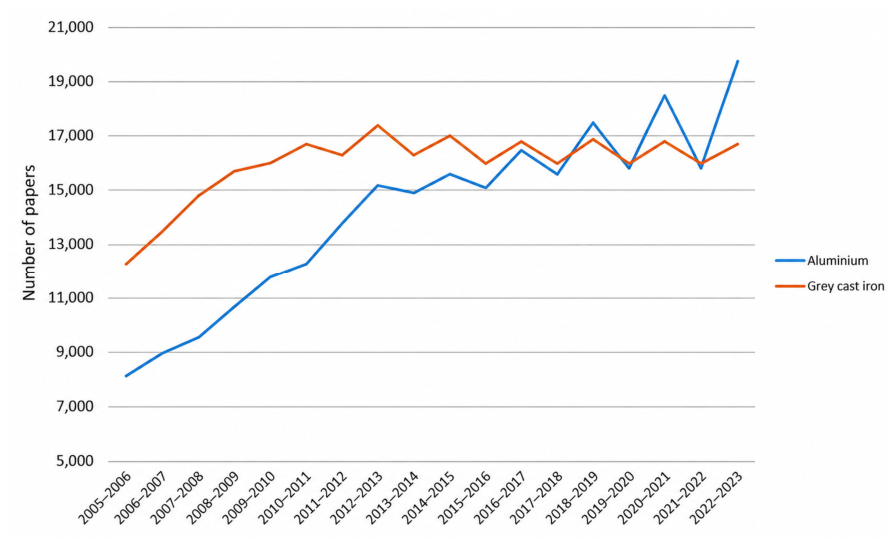
- Regulatory requirements—CO2 emission standards are pressuring manufacturers to reduce fuel consumption and vehicle weight, encouraging the use of lighter materials such as aluminium. For example, the EU set a target for average CO2 emissions from new cars of 95 g/km by 2021. These regulatory limits are a major driver behind the shift toward lightweight aluminium components [11].
- Technological developments—Advances in alloy design and manufacturing methods have enabled aluminium components to achieve improved mechanical properties, such as higher strength and wear resistance, making them increasingly suitable for demanding automotive applications.
- Cost–effectiveness—Although aluminium is more expensive than cast iron, the total cost of ownership can be reduced through lower fuel consumption and longer component life. Studies indicate that reducing vehicle weight by 10% can lead to a 3–7% reduction in fuel consumption, which directly contributes to overall vehicle economy [12].
- Hypoeutectic alloys with less than 12 wt.% Si.
- Eutectic alloys with about 12–13 wt.% Si.
- Hypereutectic alloys with more than 13 wt.% Si.
- Cu enhances wear resistance and enables aging/precipitation hardening through the formation of AlCu2 phases.
- Mg and Cu together increase strength but reduce ductility and corrosion resistance.
- Mn improves high–temperature performance and modifies the Al–Fe–Si phase morphology.

| Si Content (%) | Characteristics |
|---|---|
| <5% | Low wear resistance, suitable for structural parts. |
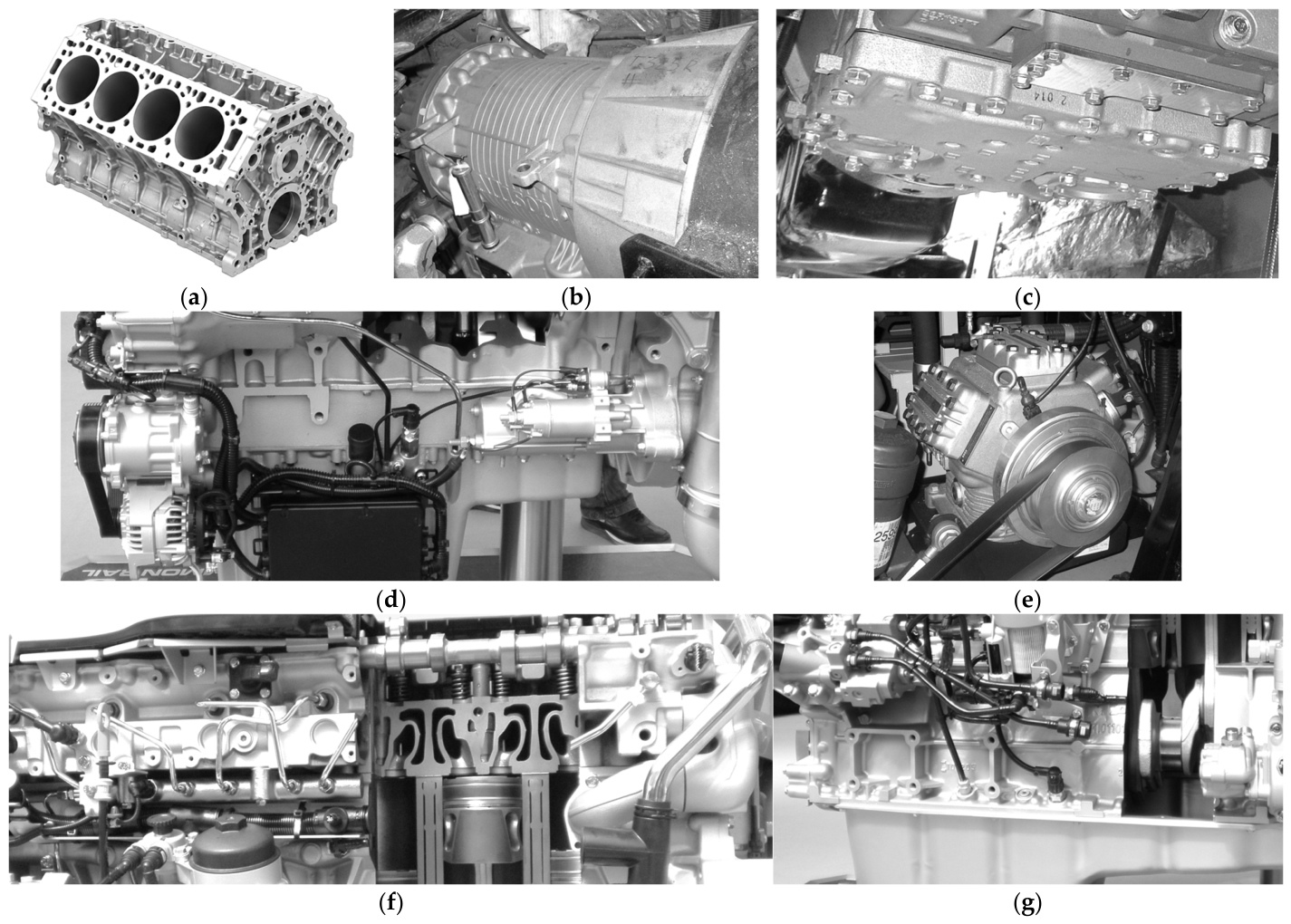
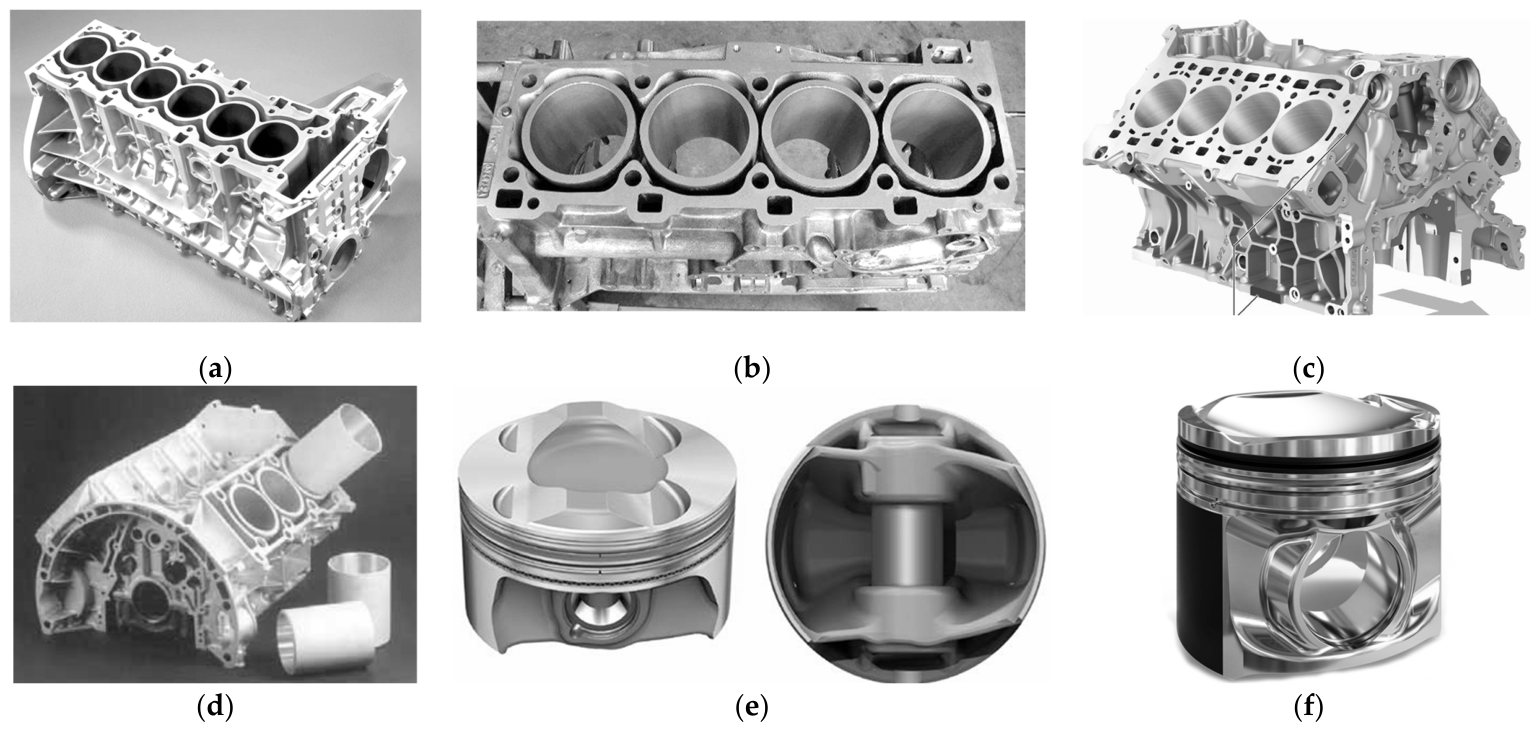
| 5–10% | Good strength, used for cylinder heads and IC engine blocks. |
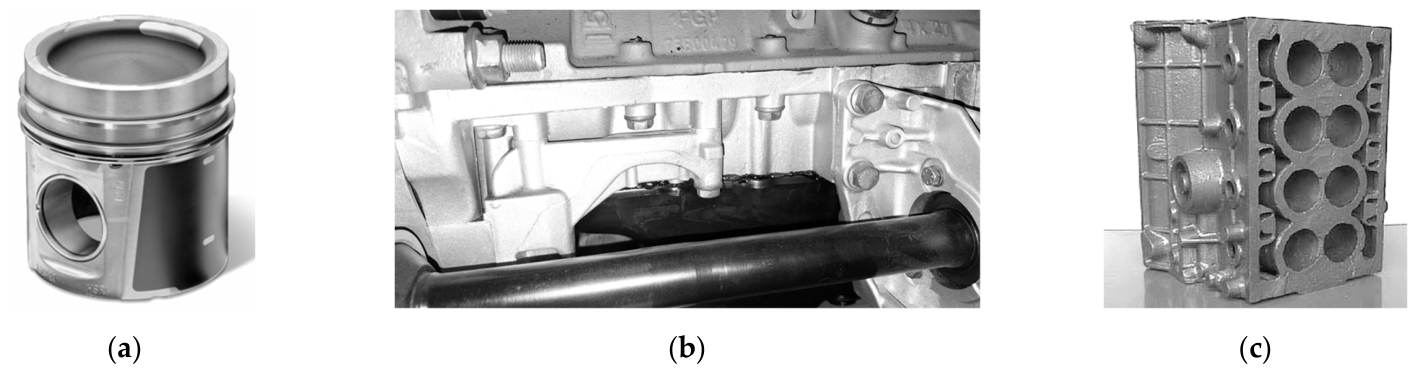
| 12–13% | Optimal balance of strength and wear, used for pistons. |
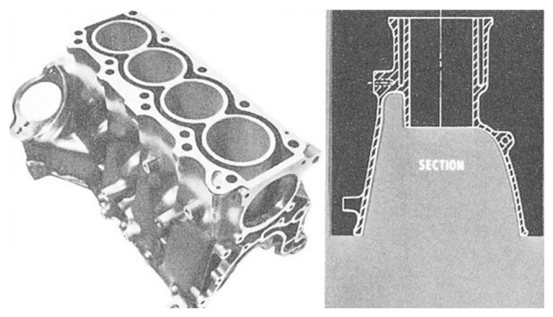
| >14% | High wear resistance, used for cylinder liners. |
2.1. Surface Modification and Coating Technologies for Al–Si Alloys
2.2. Methods for Manufacturing Cylinders and Pistons of Internal Combustion Engines and Compressors from Aluminium–Based Composite Materials
2.3. Applications of Hypoeutectic Al–Si Alloys in IC Engines and Aerospace
2.4. Applications of Eutectic Al–Si Alloys in Internal Combustion Engines
2.5. Typical Applications of Hypereutectic Al–Si Alloys in Internal Combustion Engines
3. Future Research Directions
4. Conclusions
- i.
- Al–Si alloys are essential materials in modern internal combustion engines due to their low density, high thermal conductivity, corrosion resistance, and good castability, enabling weight reduction, improved fuel efficiency, and effective thermal management.
- ii.
- Hypoeutectic Al–Si alloys remain widely used for engine components such as cylinder blocks, cylinder heads, and pistons, where good castability, machinability, and corrosion resistance are required.
- iii.
- Eutectic Al–Si alloys provide a balanced combination of mechanical properties, wear resistance, and thermal stability, making them suitable for highly loaded engine components, including cylinder blocks and thermally exposed parts.
- iv.
- Hypereutectic Al–Si alloys provide superior hardness, wear resistance, and tribological performance due to the presence of primary silicon particles and are successfully applied in linerless engine blocks, cylinder liners, pistons, and other high–load components using technologies such as Alusil, Lokasil, Silitec, and Mercosil.
- v.
- Surface engineering approaches, including atmospheric plasma spraying, electroplating, laser–based surface modification, and solid lubricant technologies, significantly enhance the tribological performance and service life of Al–Si engine components.
- vi.
- The application of Al–Si alloys contributes to improved engine efficiency, increased operating temperatures and pressures, and reduced component mass, supporting the development of more efficient and environmentally compliant powertrain systems.
- vii.
- Automotive and other demanding engineering applications demonstrate the versatility of Al–Si alloys in achieving lightweight design combined with adequate mechanical performance, reliability, and durability.
- viii.
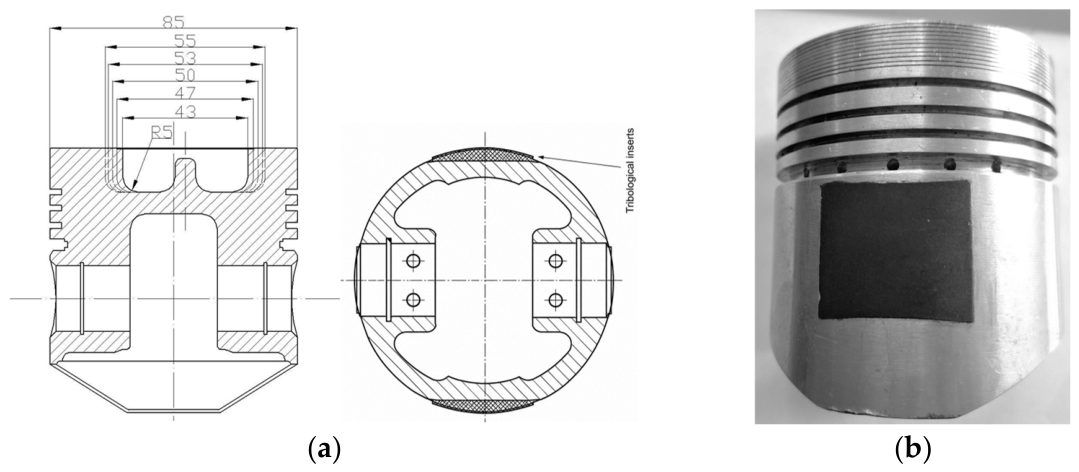
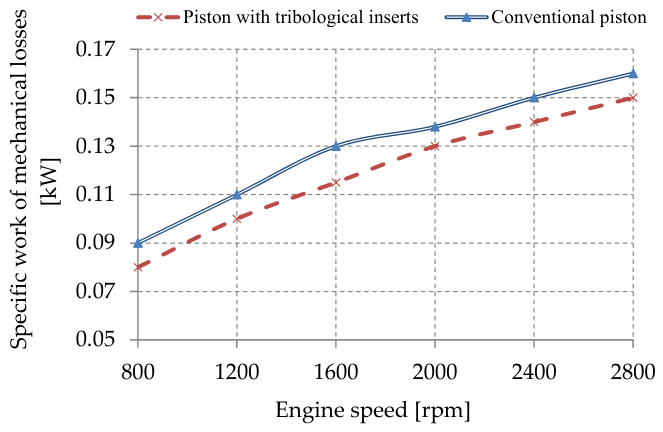
- Advanced tribological solutions, including aluminium pistons with tribological inserts and optimized surface treatments, provide additional opportunities for reducing friction and wear in piston–cylinder assemblies and extending component lifetime.
- ix.
- The high recyclability of aluminium and the implementation of circular economy principles represent important advantages of Al–Si alloys, as recycled aluminium can significantly reduce energy consumption and raw material requirements while maintaining suitable engineering properties.
- x.
- Future developments will focus on integrating recycled Al–Si alloys with advanced surface engineering technologies, optimized microstructures, and nano–enhanced lubrication systems, including CNT–based lubricants, to further reduce friction losses and improve component efficiency.
- xi.
- The combination of optimized alloy design, advanced tribological solutions, and sustainable manufacturing approaches offers significant potential for next–generation lightweight and energy–efficient internal combustion engines, hybrid powertrains, and reciprocating compressor systems.
- xii.
- Overall, Al–Si alloys remain a key material system for improving engine performance, reducing energy losses, and minimizing environmental impact in conventional and advanced powertrain applications.
- xiii.
- The tribological behavior of Al–Si alloys is strongly influenced by their microstructure, particularly the size, morphology, and distribution of silicon phases. In hypereutectic alloys, controlled refinement and uniform distribution of primary silicon particles are essential for achieving improved wear resistance, reduced friction, and long–term dimensional stability of highly loaded engine components.
- xiv.
- The development of Al–Si alloy engine components demonstrates a continuous transition from conventional cast designs toward advanced linerless cylinder systems, surface–engineered solutions, and high–performance aftermarket applications. Technologies such as Alusil, Lokasil, Silitec, Mercosil, and APS–coated cylinder surfaces provide different approaches for achieving the required balance between lightweight construction, wear resistance, and reliable operation under severe engine conditions.
- xv.
- Future implementation of Al–Si alloys requires an integrated approach combining alloy design, microstructural optimization, recycling strategies, advanced surface engineering, and improved lubrication technologies. The synergy between these approaches provides significant potential for the development of lightweight, energy–efficient, and environmentally sustainable components for internal combustion engines, hybrid powertrains, and reciprocating compressor systems.
- xvi.
- Overall, Al–Si alloys remain a key material system for advanced engine and compressor components due to their unique combination of low density, thermal conductivity, wear resistance, and recyclability. Continued progress in alloy development, tribological optimization, and sustainable manufacturing will determine their future role in lightweight and energy–efficient powertrain technologies.
Author Contributions
Funding
Data Availability Statement
Conflicts of Interest
References
- Kahn Ribeiro, S.; Kobayashi, S.; Beuthe, M.; Gasca, J.; Greene, D.; Lee, D.S.; Muromachi, Y.; Newton, P.J.; Plotkin, S.; Sperling, D.; et al. Transport and Its Infrastructure. In Climate Change 2007: Mitigation. Contribution of Working Group III to the Fourth Assessment Report of the Intergovernmental Panel on Climate Change; Cambridge University Press Cambridge: Cambridge, UK; New York, NY, USA, 2007; pp. 323–385. [Google Scholar]
- Wang, L.; Di, C.; Liu, Q.; Song, L.; Jiao, F. Energy Saving and Emission Reduction of Study on Lightening of Dump Truck Carriage. IOP Conf. Ser. Earth Environ. Sci. 2020, 512, 012003. [Google Scholar] [CrossRef] [Scilit]
- Joost, W.J. Reducing Vehicle Weight and Improving U.S. Energy Efficiency Using Integrated Computational Materials Engineering. JOM 2012, 64, 1032–1038. [Google Scholar] [CrossRef] [Scilit]
- Bangde, S.; Kini, C.; Pai, A. Reconfigurable Body Exterior Panels: A Review. J. Mech. Eng. Res. Dev. 2020, 43, 14–23. [Google Scholar]
- Hirsch, J. Aluminium in Innovative Light–Weight Car Design. Mater. Trans. 2011, 52, 818–824. [Google Scholar] [CrossRef] [Scilit]
- Dudek, P.; Zagórski, K. Cost, Resources, and Energy Efficiency of Additive Manufacturing. E3S Web Conf. 2017, 14, 01040. [Google Scholar] [CrossRef] [Scilit]
- Chirinda, G.; Matope, S. The Lighter the Better: Weight Reduction in the Automotive Industry and Its Impact on Fuel Consumption and Climate Change; IEOM Society International: Southfield, MI, USA, 2020; p. 533. [Google Scholar]
- Liu, J.; Zhang, Y.; Liao, B. A Review on Preparation Process and Tribological Performance of Coatings for Internal Combustion Engine Piston Ring. Adv. Mech. Eng. 2023, 15, 168781322311757. [Google Scholar] [CrossRef] [Scilit]
- Davis, J.R. Aluminum and Aluminum Alloys. In Alloying: Understanding the Basics; ASM International: New York, NY, USA, 2001; pp. 351–416. [Google Scholar]
- Google Scholar. Available online: https://scholar.google.com (accessed on 15 May 2026).
- Salonitis, K.; Jolly, M.; Pagone, E.; Papanikolaou, M. Life–Cycle and Energy Assessment of Automotive Component Manufacturing: The Dilemma Between Aluminum and Cast Iron. Energies 2019, 12, 2557. [Google Scholar] [CrossRef] [Scilit]
- Modaresi, R.; Pauliuk, S.; Løvik, A.N.; Müller, D.B. Global Carbon Benefits of Material Substitution in Passenger Cars Until 2050 and the Impact on the Steel and Aluminum Industries. Environ. Sci. Technol. 2014, 48, 10776–10784. [Google Scholar] [CrossRef] [Scilit] [PubMed]
- Zhou, X.; Jiang, J.; Hu, Z.; Hua, L. Lightweight Materials in Electric Vehicles. Int. J. Automot. Manuf. Mater. 2022, 1, 3. [Google Scholar] [CrossRef] [Scilit]
- Baek, S.; Park, S. Thermal Analysis of a Battery Cooling System with Aluminum Cooling Plates for Hybrid Electric Vehicles and Electric Vehicles. Trans. Korean Soc. Automot. Eng. 2014, 22, 60–67. [Google Scholar] [CrossRef] [Scilit]
- Baumeister, J.; Weise, J.; Hirtz, E.; Höhne, K.; Hohe, J. Applications of Aluminium Hybrid Foam Sandwiches in Battery Housings for Electric Vehicles: Anwendung von Aluminium-Hybridschaum-Sandwichen in Batteriegehäusen von Elektrofahrzeugen. Mater. Werkst. 2014, 45, 1099–1107. [Google Scholar] [CrossRef] [Scilit]
- Behi, H.; Karimi, D.; Kalogiannis, T.; Van Mierlo, J.; Berecibar, M. New Concept of Hybrid Cooling System for Fast Charging of Electric Vehicles. J. Energy Storage 2024, 97, 112994. [Google Scholar] [CrossRef] [Scilit]
- Naresh, G.; Praveenkumar, T.; Madheswaran, D.K.; Solomon, J.M.; Goud Kureli, S.; Kolhe, Y.K.; Lalvani, J.I.J.R. Advancing Structural Efficacy and Resonance Performance of Battery Enclosures through Multi–Objective Optimization. J. Low Freq. Noise Vib. Act. Control 2024, 43, 1895–1909. [Google Scholar] [CrossRef] [Scilit]
- Singh, R. Lightweight Metals and Alloys in Electric Vehicle Manufacturing: Enhancing Performance and Efficiency. Int. J. Sci. Res. Arch. 2024, 13, 1735–1742. [Google Scholar] [CrossRef] [Scilit]
- Yay, İ.; Demirci, E.; Özcan, A.R. Multi–Objective Optimization of Aluminum Foam–Filled Battery Boxes for Electric Vehicle Safety. Lat. Am. J. Solids Struct. 2025, 22, e8408. [Google Scholar] [CrossRef] [Scilit]
- Jorstad, J.; Apelian, D. Hypereutectic Al–Si Alloys: Practical Casting Considerations. Int. J. Met. 2009, 3, 13–36. [Google Scholar] [CrossRef] [Scilit]
- Mbuya, T.O.; Odera, B.O.; Ng’ang’a, S.P. Influence of Iron on Castability and Properties of Aluminium Silicon Alloys: Literature Review. Int. J. Cast Met. Res. 2003, 16, 451–465. [Google Scholar] [CrossRef] [Scilit]
- Ikhmayies, S. Phase Diagrams of Al–Si System: Methods and Protocols. In Energy Technology 2019: Carbon Dioxide Management and Other Technologies; Springer International Publishing: Cham, Switzerland, 2019; pp. 231–237. [Google Scholar]
- Miladinović, S.; Stojanović, B.; Gajević, S.; Vencl, A. Hypereutectic Aluminum Alloys and Composites: A Review. Silicon 2023, 15, 2507–2527. [Google Scholar] [CrossRef] [Scilit]
- Hatch, J.E. Aluminium Propertiesand Physical Metallurgy; American Society for Metals: Ohio, CO, USA, 1984. [Google Scholar]
- Campbell, J. Chapter 16––Casting. In Complete Casting Handbook, 2nd ed.; Campbell, J., Ed.; Butterworth–Heinemann: Boston, MA, USA, 2015; pp. 821–882. [Google Scholar]
- Mostafa, A.; Alshabatat, N. Microstructural, Mechanical and Wear Properties of Al–1.3%Si Alloy as Compared to Hypo/Hyper–Eutectic Compositions in Al–Si Alloy System. Crystals 2022, 12, 719. [Google Scholar] [CrossRef] [Scilit]
- Ejiofor, J.U.; Reddy, R.G. Developments in the Processing and Properties of Particulate Al–Si Composites. JOM 1997, 49, 31–37. [Google Scholar] [CrossRef] [Scilit]
- Ho, C.R.; Cantor, B. Modification of Hypoeutectic Al–Si Alloys. J. Mater. Sci. 1995, 30, 1912–1920. [Google Scholar] [CrossRef] [Scilit]
- Zellele, D.M.; Yar–Mukhamedova, G.S.; Rutkowska–Gorczyca, M. A Review on Properties of Electrodeposited Nickel Composite Coatings: Ni–Al2O3, Ni–SiC, Ni–ZrO2, Ni–TiO2 and Ni–WC. Materials 2024, 17, 5715. [Google Scholar] [CrossRef] [Scilit]
- Yan, Y.; Lu, L.; Huo, Y. Dry Sliding Tribological Behaviors of Electrodeposited Ni–GO/SiC Composite Coating on the 2218 Aluminum Alloy. Materials 2022, 15, 2834. [Google Scholar] [CrossRef] [Scilit] [PubMed]
- Eskandari, A.; Gupta, M.; Joshi, S. Hybrid Thermal Spray: A Pathway to Realize Novel Coating Microstructures and Properties. J. Therm. Spray Technol. 2025, 34, 1517–1544. [Google Scholar] [CrossRef] [Scilit]
- Vencl, A. Tribology of the Al–Si Alloy Based MMCs and Their Application in Automotive Industry. In Engineered Metal Matrix Composites: Forming Methods, Material Properties and Industrial Applications; Magagnin, L., Ed.; Nova Science Publishers: Long Island, NY, USA, 2012; pp. 127–166. [Google Scholar]
- Boulos, M.I.; Fauchais, P.L.; Henne, R.H.; Pfender, E. Plasma in the Thermal Spray Coating Industry. In Handbook of Thermal Plasmas; Boulos, M.I., Fauchais, P.L., Pfender, E., Eds.; Springer International Publishing: Cham, Switzerland, 2023; pp. 1423–1508. [Google Scholar]
- Stojanović, B.; Milojević, S. Chapter 2. Characterization, Manufacturing and Application of Metal Matrix Composites. In Advances in Materials Science Research; Wythers, M.C., Ed.; Nova Science Publishers, Inc.: New York, NY, USA, 2017; Volume 30, pp. 83–133. [Google Scholar]
- Milojević, S.; Savić, S.; Mitrović, S.; Maric, D.; Krstić, B.; Stojanović, B.; Popović, V. Solving the Problem of Friction and Wear in Auxiliary Devices of Internal Combustion Engines on the Example of Reciprocating Air Compressor for Vehicles. Teh. Vjesn.–Tech. Gaz. 2023, 30, 122–130. [Google Scholar] [CrossRef] [Scilit]
- Milojević, S.; Savić, S.; Maric, D.; Stopka, O.; Krstić, B.; Stojanovic, B. Correlation between Emission and Combustion Characteristics with the Compression Ratio and Fuel Injection Timing in Tribologically Optimized Diesel Engine. Teh. Vjesn. 2022, 29, 1210–1219. [Google Scholar] [CrossRef] [Scilit]
- Milojević, S.; Glišović, J.; Savić, S.; Bošković, G.; Bukvić, M.; Stojanović, B. Particulate Matter Emission and Air Pollution Reduction by Applying Variable Systems in Tribologically Optimized Diesel Engines for Vehicles in Road Traffic. Atmosphere 2024, 15, 184. [Google Scholar] [CrossRef] [Scilit]
- Martins, M.A.R.; Pinho, S.P.; Coutinho, J.A.P. Insights into the Nature of Eutectic and Deep Eutectic Mixtures. J. Solut. Chem. 2019, 48, 962–982. [Google Scholar] [CrossRef] [Scilit]
- Betz, J. Werkstoffe im Dieselmotor und ihre Auswahl. In Handbuch Dieselmotoren; Tschöke, H., Mollenhauer, K., Maier, R., Eds.; Springer Fachmedien Wiesbaden: Wiesbaden, Germany, 2016; pp. 1–28. [Google Scholar]
- Garcia, I.; Fransaer, J.; Celis, J.-P. Electrodeposition and Sliding Wear Resistance of Nickel Composite Coatings Containing Micron and Submicron SiC Particles. Surf. Coat. Technol. 2001, 148, 171–178. [Google Scholar] [CrossRef] [Scilit]
- Schlesinger, M.; Paunovic, M. (Eds.) Modern Electroplating, 1st ed.; Wiley: Hoboken, NJ, USA, 2010. [Google Scholar]
- MAHLE Aftermarket GmbH. All About the Cylinder–Technical Information; MAHLE Aftermarket GmbH: Stuttgart, Germany, 2021; p. 64. [Google Scholar]
- Villafuerte, J. Plasma Transferred Wire Arc Process Fortifies Aluminum Engine Blocks. AMP Tech. Artic. 2014, 172, 37–38. [Google Scholar] [CrossRef] [Scilit]
- Bobzin, K.; Ernst, F.; Zwick, J.; Schlaefer, T.; Cook, D.; Nassenstein, K.; Schwenk, A.; Schreiber, F.; Wenz, T.; Flores, G.; et al. Coating Bores of Light Metal Engine Blocks with a Nanocomposite Material Using the Plasma Transferred Wire Arc Thermal Spray Process. J. Therm. Spray Technol. 2008, 17, 344–351. [Google Scholar] [CrossRef] [Scilit]
- O’Neil, N.; Kabir, A.S. Pulsed Waterjet Roughening of Cast Iron and Aluminum Alloy for Automotive Engine Remanufacturing with Plasma Transferred Wire Arc Coating. Coatings 2020, 10, 864. [Google Scholar] [CrossRef] [Scilit]
- Gildersleeve, E.J.; Vaßen, R. Thermally Sprayed Functional Coatings and Multilayers: A Selection of Historical Applications and Potential Pathways for Future Innovation. J. Therm. Spray Technol. 2023, 32, 778–817. [Google Scholar] [CrossRef] [Scilit] [PubMed]
- Davis, J.R. (Ed.) Handbook of Thermal Spray Technology; ASTM International: Geneva, Switzerland, 2004. [Google Scholar]
- Pawlowski, L. The Science and Engineering of Thermal Spray Coatings; J. Wiley and Sons: Chichester, UK, 2008. [Google Scholar]
- European Aluminium. Applications—Power Train—Cylinder Linings; European Aluminium: Brussels, Belgium, 2022. [Google Scholar]
- Aubanel, L. Étude du Comportement Tribologique en Régime Lubrifié de Revêtements Cold Spray Composites à Base D’acier. Doctorat ès Sciences et Génie des Matériaux. Ph.D. Thesis, Université Paris Sciences et Lettres, Paris, France, 2022. [Google Scholar]
- Yin, B.; Wang, X.; Xu, B.; Huang, G.; Kuang, X. Adaptability of Piston Skirt Coatings on the Tribological Performance of Heavy–Duty Diesel Engine under Low Viscosity Lubricant. Ind. Lubr. Tribol. 2021, 73, 986–992. [Google Scholar] [CrossRef] [Scilit]
- Milojević, S.; Pešić, R.; Taranović, D. Tribological Principles of Constructing the Reciprocating Machines. Tribol. Ind. 2015, 37, 13–19. [Google Scholar]
- Milojević, S.; Pešić, R.; Taranović, D.; Davinić, A. Tribological Optimization of Reciprocating Machines according to improving Performance. Mobil. Veh. Mech. (MVM) 2016, 42, 29–44. [Google Scholar]
- Esser, J.; Gladwin, R.; Schneider, N.; Stumpf, W. Contribution fuel consumption reduction by optimizing pistons/piston rings. In Internationaler Motorenkongress 2014; Liebl, J., Ed.; Proceedings; Springer Fachmedien Wiesbaden: Wiesbaden, Germany, 2014; pp. 307–325. [Google Scholar]
- Javidani, M.; Larouche, D. Application of Cast Al–Si Alloys in Internal Combustion Engine Components. Int. Mater. Rev. 2014, 59, 132–158. [Google Scholar] [CrossRef] [Scilit]
- Liu, Y.; Xiong, S. Research Progress on Thermal Conductivity of High–Pressure Die–Cast Aluminum Alloys. Metals 2024, 14, 370. [Google Scholar] [CrossRef] [Scilit]
- Huang, C.; Liu, Z.; Li, J. Influence of Alloying Element Mg on Na and Sr Modifying Al–7Si Hypoeutectic Alloy. Materials 2022, 15, 1537. [Google Scholar] [CrossRef] [Scilit] [PubMed]
- Manani, S.; Pradhan, A.K. Effects of Melt Thermal Treatment on Cast Al–Si Alloys: A Review. Mater. Today Proc. 2022, 62, 6568–6572. [Google Scholar] [CrossRef] [Scilit]
- Razin, A.A.; Ahammed, D.S.-S.; Khan, A.A.; Kaiser, M.S. Thermophysical Properties of Hypoeutectic, Eutectic and Hypereutectic Al–Si Automotive Alloys under Ageing Treatment. J. Chem. Technol. Metall. 2024, 59, 673–682. [Google Scholar] [CrossRef] [Scilit]
- Zhang, A.; Li, Y. Thermal Conductivity of Aluminum Alloys—A Review. Materials 2023, 16, 2972. [Google Scholar] [CrossRef] [Scilit] [PubMed]
- Machado, P.A.B.; Do Vale Quaresma, J.M.; Garcia, A.; Dos Santos, C.A. Investigation on Machinability in Turning of As–Cast and T6 Heat–Treated Al–(3, 7, 12%)Si–0.6%Mg Alloys. J. Manuf. Process. 2022, 75, 514–526. [Google Scholar] [CrossRef] [Scilit]
- Timelli, G.; Fabrizi, A.; Vezzù, S.; De Mori, A. Design of Wear–Resistant Diecast AlSi9Cu3(Fe) Alloys for High–Temperature Components. Metals 2019, 10, 55. [Google Scholar] [CrossRef] [Scilit]
- Vuksanovic, D.; Asanovic, V.; Scepanovic, J.; Radonjic, D. Effect of Chemical Composition and T6 Heat Treatment on the Mechanical Properties and Fracture Behaviour of Al–Si Alloys for IC Engine Components. J. Min. Metall. Sect. B Metall. 2021, 57, 195–207. [Google Scholar] [CrossRef] [Scilit]
- Subhani, T.; Ramadan, M.; Fathy, N.; Khaliq, A.; Halim, K.S.A. Innovation in Metal Casting Processes: A Review of Metal Matrix Nanocomposites in Metal and Bimetal Castings. Crystals 2025, 15, 191. [Google Scholar] [CrossRef] [Scilit]
- Lakshmikanthan, A.; Angadi, S.; Malik, V.; Saxena, K.K.; Prakash, C.; Dixit, S.; Mohammed, K.A. Mechanical and Tribological Properties of Aluminum–Based Metal–Matrix Composites. Materials 2022, 15, 6111. [Google Scholar] [CrossRef] [Scilit]
- Grosselle, F.; Timelli, G.; Bonollo, F.; Molina, R. Correlation Between Microstructure and Mechanical Properties of Al–Si Diecast Engine Blocks. Metall. Sci. Technol. 2009, 27, 2–10. [Google Scholar]
- Li, S.; Yue, X.; Li, Q.; Peng, H.; Dong, B.; Liu, T.; Yang, H.; Fan, J.; Shu, S.; Qiu, F.; et al. Development and Applications of Aluminum Alloys for Aerospace Industry. J. Mater. Res. Technol. 2023, 27, 944–983. [Google Scholar] [CrossRef] [Scilit]
- Robles Hernandez, F.C.; Herrera Ramírez, J.M.; Mackay, R. Applications in the Automotive and Aerospace Industries. In Al–Si Alloys; Springer International Publishing: Cham, Switzerland, 2017; pp. 163–171. [Google Scholar]
- Jin, L.; Liu, K.; Chen, X.-G. Improved Elevated Temperature Properties in Al–13%Si Piston Alloys by Mo Addition. J. Mater. Eng. Perform. 2020, 29, 126–134. [Google Scholar] [CrossRef] [Scilit]
- Xue, G. Tribological Studies of Eutectic Al–Si Alloys Used for Automotive Engine Blocks Subjected to Sliding Wear Damage. Master Thesis, University of Windsor, Windsor, ON, Canada, 2009. [Google Scholar]
- Donahue, R.; Fabiyi, P. Manufacturing Feasibility of All–Aluminum Automotive Engines Via Application of High Silicon Aluminum Alloy. In Proceedings of the SAE 2000 World Congress, Detroit, MI, USA, 6 March 2000. [Google Scholar] [CrossRef] [Scilit]
- Jorstad, J.L. The hypereutectic aluminum−silicon alloy used to cast the Vega engine block. Mod. Cast. 1971, 60, 59−64. [Google Scholar]
- Kneisler, F.J.; Martens, D.A.; Midgley, R.W. The Vega 2300 Engine. SAE Trans. 1971, 80, 520–545. [Google Scholar] [CrossRef] [Scilit]
- Fuchs, H.; Wappelhorst, M. Leichtmetallwerkstoffe für hochbelastete Motorblöcke und Zylinderköpfe. MTZ Mot. Z. 2003, 64, 868–875. [Google Scholar] [CrossRef] [Scilit]
- Dienwiebel, M.; Pöhlmann, K.; Scherge, M. Origins of the wear resistance of AlSi cylinder bore surfaces studies by surface analytical tools. Tribol. Int. 2007, 40, 1597–1602. [Google Scholar] [CrossRef] [Scilit]
- Tupaj, M.; Orłowicz, A.W.; Mróz, M.; Trytek, A.; Dolata, A.J.; Dziedzic, A. A Study on Material Properties of Intermetallic Phases in a Multicomponent Hypereutectic Al–Si Alloy with the Use of Nanoindentation Testing. Materials 2020, 13, 5612. [Google Scholar] [CrossRef] [Scilit] [PubMed]
- Donahue, R.J.; Lumley, R.N. Chapter 6—New Hypoeutectic/Hypereutectic Die–Casting Alloys and New Permanent Mould Casting Alloys That Rely on Strontium for Their Die Soldering Resistance. In Fundamentals of Aluminium Metallurgy; Lumley, R.N., Ed.; Woodhead Publishing: Cambridge, UK, 2018; pp. 173–215. [Google Scholar]
- Service Training. The Audi 4.0l V8 TFSI Engine from the EA825 Series. Audi of America, LLC. Created 2/2020 Course Number 920493. Available online: https://static.nhtsa.gov/odi/tsbs/2020/MC-10172005-0001.pdf (accessed on 17 June 2026).
- Innovations for Sustainable Mobility. MAHLE International GmbH. Available online: https://newsroom.mahle.com/press_media/press/brochures/innovations-for-sustainable-mobility-2025/mahle_innovations_for_sustainable_mobiliy_en.pdf?download= (accessed on 17 June 2026).
- Performance Engine Parts and Kits. Catalog No. X–3009. 2015. Federal–Mogul Corporation. Available online: https://www.drivheavydutyparts.com/content/dam/marketing/North-America/catalogs/speed-pro/pdf/speed-pro-performance.pdf (accessed on 17 June 2026).
- UEM Pistons & Rings. Catalog Supplement 2024. United Engine and Machine Co. Available online: https://uempistons.com/sites/default/files/Supplement_Catalog.pdf?utm_source=chatgpt.com (accessed on 17 June 2026).
- Sanders, R.; Kiefer, W. Aluminum Alloys, Recycling, and the Circular Economy. In Applied Circular Economy Engineering; Araujo, J.B., Hinderer, H., Viere, T., Woidasky, J., Eds.; Wiley: Hoboken, NJ, USA, 2025; pp. 21–42. [Google Scholar]
- Bukvić, M.; Vencl, A.; Milojević, S.; Skulić, A.; Gajević, S.; Stojanović, B. The Influence of Carbon Nanotube Additives on the Efficiency and Vibrations of Worm Gears. Lubricants 2025, 13, 327. [Google Scholar] [CrossRef] [Scilit]
- Ghasemi, S.M.S.; Azizi, A. Alkaline leaching of lead and zinc by sodium hydroxide: Kinetics modeling. J. Mater. Res. Technol. 2018, 7, 118–125. [Google Scholar] [CrossRef] [Scilit]
- Aboulkhair, N.T.; Everitt, N.M.; Ashcroft, I.; Tuck, C. Reducing porosity in AlSi10Mg parts processed by selective laser melting. Addit. Manuf. 2014, 1–4, 77–86. [Google Scholar] [CrossRef] [Scilit]
- Lu, L.; Dahle, A.K. Effects of combined additions of Sr and Al–5Ti–1B grain refiner on the microstructure and properties of hypereutectic Al–Si alloys. Mater. Sci. Eng. A 2006, 435–436, 288–296. [Google Scholar] [CrossRef] [Scilit]



Disclaimer/Publisher’s Note: The statements, opinions and data contained in all publications are solely those of the individual author(s) and contributor(s) and not of MDPI and/or the editor(s). MDPI and/or the editor(s) disclaim responsibility for any injury to people or property resulting from any ideas, methods, instructions or products referred to in the content. |
© 2026 by the authors. Licensee MDPI, Basel, Switzerland. This article is an open access article distributed under the terms and conditions of the Creative Commons Attribution (CC BY) license.
Share and Cite
Milojević, S.; Miladinović, S.; Gajević, S.; Čukić, S.; Stojanović, B. Application of Al–Si Alloys in Internal Combustion Engines. Lubricants 2026, 14, 277. https://doi.org/10.3390/lubricants14070277
Milojević S, Miladinović S, Gajević S, Čukić S, Stojanović B. Application of Al–Si Alloys in Internal Combustion Engines. Lubricants. 2026; 14(7):277. https://doi.org/10.3390/lubricants14070277
Chicago/Turabian StyleMilojević, Saša, Slavica Miladinović, Sandra Gajević, Stefan Čukić, and Blaža Stojanović. 2026. "Application of Al–Si Alloys in Internal Combustion Engines" Lubricants 14, no. 7: 277. https://doi.org/10.3390/lubricants14070277
APA StyleMilojević, S., Miladinović, S., Gajević, S., Čukić, S., & Stojanović, B. (2026). Application of Al–Si Alloys in Internal Combustion Engines. Lubricants, 14(7), 277. https://doi.org/10.3390/lubricants14070277