


Abstract
To elucidate the mechanisms responsible for high friction in micro-pillared soft tribo-contacts under wet conditions, this study investigates the liquid migration behavior across elasticity interfaces featuring bionic surface textures and examines the influence of this migration on interfacial friction properties. Micro-pillar bionic surface textures were fabricated on polydimethylsiloxane (PDMS) substrates. In situ observation of liquid migration and corresponding friction tests were systematically conducted using custom-built experimental setups on soft interfaces textured with micro-pillars of varying area densities. The results demonstrate that both geometrical shape and area density of surface textures play a critical role in regulating liquid migration behavior. Surface textures with circular and hexagonal geometries exhibit optimal migration rates, attributed to their smooth structural profiles, which reduce flow resistance within the microchannels. Liquid migration efficiency is effectively improved with increasing area density of the bionic surface texture owing to strengthened capillary forces. Correspondingly, bionic surface textures exhibiting superior liquid migration characteristics show the smallest relative reduction in friction force during transitions from dry to wet frictional states. This behavior is primarily attributed to the surface’s exceptionally rapid drainage capability, which effectively mitigates the adverse effects of interfacial liquid films on friction. Specifically, rapid liquid removal increases the effective solid–solid contact area and enhances mechanical interlocking at the interface. Consequently, these surfaces maintain outstanding frictional performance even under humid or wet conditions. These findings provide important theoretical support for the rational design of surface microstructures and the optimized regulation of friction and liquid film in wet contact conditions.
1. Introduction
Bionic surface textures have emerged as a significant research focus in materials science and engineering [1,2,3]. In recent years, increasing research efforts have highlighted their significant potential for tailoring surface functionalities, including the reduction in friction [4,5], enhancement of adhesion [6,7], and mitigation of wear in mechanical components [8]. At present, surface texturing technologies have been widely applied in metallic components such as engines [9,10], bearing sliders [11,12], and sealing rings [13,14]. Furthermore, continuous advances in microfabrication techniques have enabled the precise fabrication of increasingly complex surface textures, thereby providing a solid foundation for the further development and application of bionic surface engineering [15,16].
Conversely, in humid or wet environments, the demand for soft friction contact interfaces with high friction performance continues to increase. The presence of liquid films at the interface can substantially reduce the friction force, leading to unexpected slippage and resulting in serious safety hazards and efficiency losses across multiple industries. For example, in the transportation sector, accident rates during rainy conditions are reported to be 2–3 times higher than on clear days [17]. In the medical field, excessive moisture at surgical interfaces may cause soft tissues or organs to slip from surgical instruments or the surgeon’s hands, directly compromising surgical safety [18]. In industrial manufacturing, moisture-induced slippage not only reduces the operational efficiency of conveyor systems but can also trigger equipment malfunctions, thereby severely impairing overall production performance [19]. Addressing these challenges necessitates the development of innovative strategies to enhance the frictional performance of elastomeric interfaces under wet conditions, which has become a critical research focus in contemporary interface engineering. Fortunately, the remarkable environmental adaptability of living organisms provides invaluable bionic inspiration for overcoming this technical challenge.
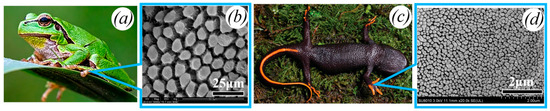
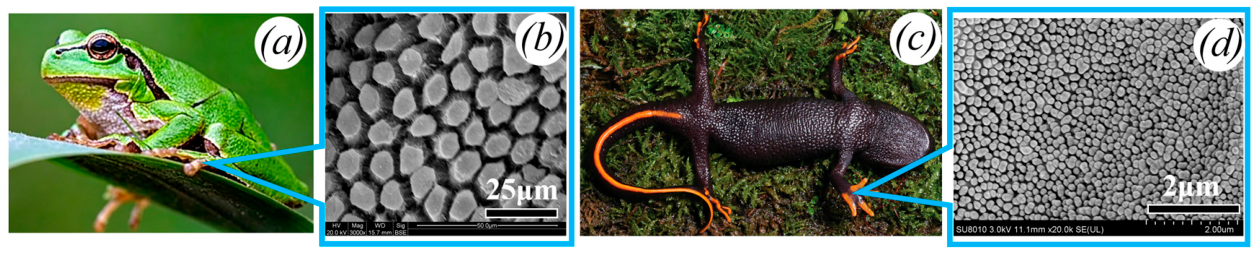
Tree frogs inhabiting tropical rainforests can move freely on slippery vegetation and water-covered rock surfaces, demonstrating excellent wet adhesion performance. Observations reveal that the epidermis of their toe pads is covered with polygonal, prism-like micro-protuberances, as shown in Figure 1a,b. These polygonal micro-protuberances have an average diameter of approximately 10 μm, with adjacent units closely interlocked [20]. The regions surrounding the polygonal prism-like structures are filled with continuous groove networks with an average width of approximately 1 μm. Similarly, the eastern salamander, also known as the “Chinese fire dragon,” is an ancient amphibian species endemic to China that typically inhabits water-rich environments such as muddy swamps, ponds, spring pools, and rice fields. This species also exhibits excellent climbing ability on slippery surfaces. Unlike tree frogs, the salamander’s footpad presents a densely packed, cross-scale hierarchical architecture, as shown in Figure 1c,d. Specifically, irregular polygonal micro-scale structural units are superimposed with nanometer-scale cylindrical micro-protuberances and interconnected grooves structures [21]. Despite the substantial differences in their surface microstructures, both species demonstrate similarly excellent adhesion and climbing performance under wet conditions. This raises important questions regarding the underlying wet friction mechanisms and whether distinct structural strategies lead to comparable functional outcomes. These questions warrant further systematic investigation.
Figure 1.
Images and microstructures of (a,b) tree frog toe pads [22] and (c,d) eastern salamander [23].
The strong adhesion exhibited by tree frogs and salamanders under wet conditions has been attributed to several mechanisms, such as vacuum adhesion, boundary friction, and wet adhesion. However, there remains an ongoing academic debate regarding which mechanism plays the dominant role. Within the vacuum adsorption framework, efficient liquid drainage is a critical prerequisite for the formation of a sealed low-pressure region, which is essential for achieving vacuum-induced adhesion. The experimental findings of Gong et al. support this theoretical model [24]. From the perspective of boundary friction, effective drainage increases the area of direct solid–solid contact, thereby significantly enhancing interfacial friction. Based on this mechanism, Zhang et al. successfully developed surgical forceps exhibiting excellent frictional adhesion performance [18]. In the case of wet adhesion, reducing the thickness of the interfacial liquid film enhances the capillary force between the textured surface and the substrate. Following this theoretical framework, Ma et al. fabricated a medical electronic skin patch with strong adhesion performance under wet conditions [25].
Regardless of the dominant adhesion mechanism, effective drainage on toe pad surfaces is widely recognized as a necessary prerequisite for achieving high friction and strong adhesion under wet conditions [7]. Rapid liquid removal during the initial contact stage is crucial for minimizing the detrimental effects of moisture on interfacial friction and adhesion performance. The squeezing-driven drainage process is generally recognized as the common foundation underlying all three theoretical mechanisms. Accordingly, determining the optimal liquid film migration rate for specific bionic surface textures is essential for synergistic regulation of friction and adhesion at material interfaces. Efficient liquid migration reduces the extent to which interfacial liquid films diminish frictional interactions. However, most existing research on liquid-guided surfaces has focused on the directed transport of static droplets, and systematic studies on the rapid evacuation of liquid films from soft contact interfaces under dynamic extrusion conditions remain limited [26]. This is precisely a core requirement for the design of soft anti-slip surfaces in wet environments.
To investigate the coupling mechanism between liquid migration behavior on bionic textured surfaces and interfacial friction properties, this study employed polydimethylsiloxane (PDMS) as the substrate to fabricate three surface textures with distinct geometric configurations. Additionally, two dedicated experimental platforms were developed: one for in situ observation of macroscopic liquid films migration and another for quantitative measurement of interfacial friction forces. By adopting a dual analytical perspective that integrates liquid film migration dynamics and frictional response, liquid film migration rate and friction force were identified as the primary characterization parameters. Systematic experiments were conducted to evaluate the specific effects of microstructure geometry and surface area ratio on liquid film migration speed and friction force. Through comparative analysis of the experimental data, the intrinsic coupling mechanism between liquid migration behavior and frictional performance was clearly elucidated. These findings provide important theoretical support for the rational design of surface microstructures and the optimization of friction regulation and liquid film control in wet contact conditions.
This study, focusing on dynamic extrusion flow scenarios at soft friction contact interfaces, is the first to systematically investigate the transient evolution of liquid films on biomimetic textured surfaces and the coupling mechanisms between these films and friction performance, thereby filling a gap in research on the influence of fluid transport on interfacial mechanics under dynamic contact conditions. The study clearly distinguishes the differences in the dominant mechanisms between dry and wet friction in soft-textured contacts. It reveals the counterintuitive finding that dry friction is primarily governed by effective contact area and mechanical interlocking (with hexagon textures being optimal), whereas wet friction is primarily governed by liquid drainage efficiency (with circular textures being optimal). This corrects the previous design misconception that textures with superior dry friction performance are equally suitable for wet environments, thereby providing a reference for surface design under variable humidity conditions.
2. Experimental Section
2.1. Test Materials and Specimen Preparation
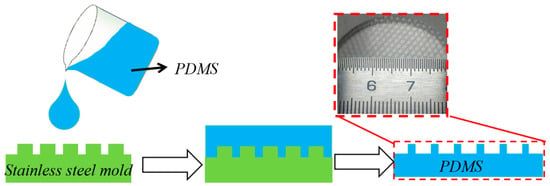
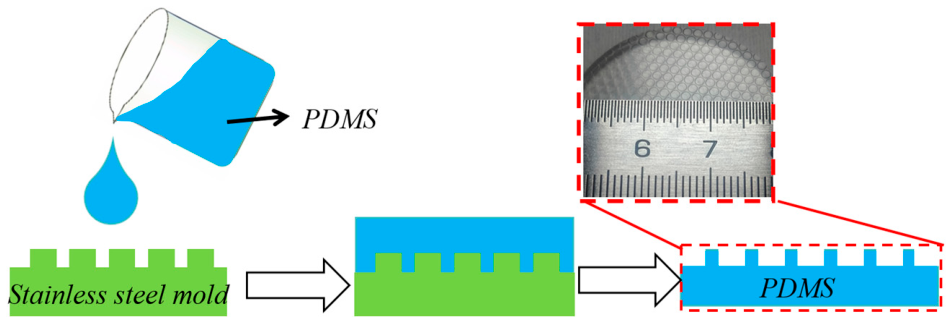
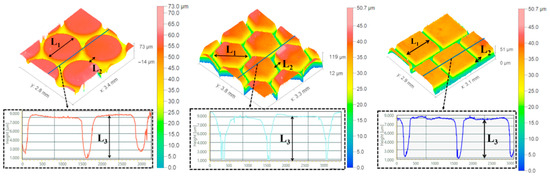
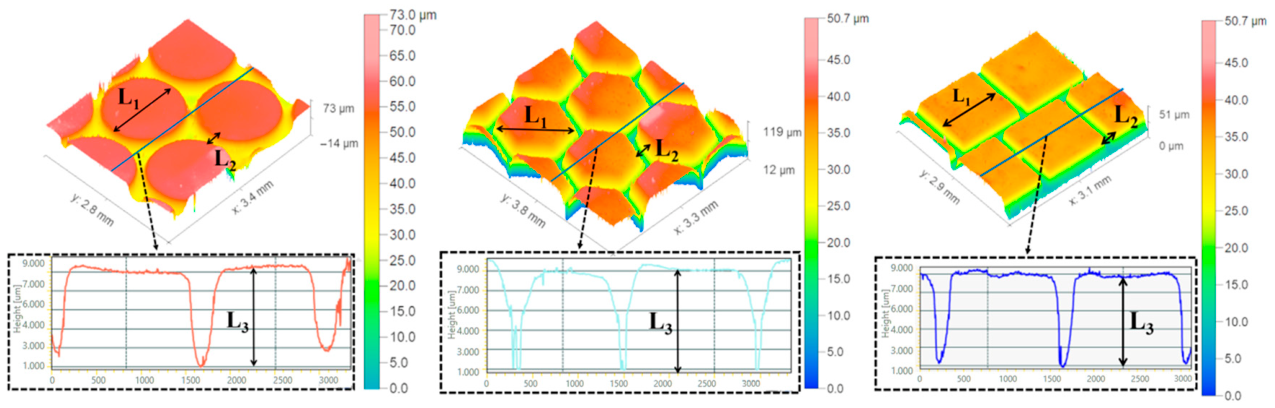
In this study, PDMS (Sylgard 184, Dow Corning Corp, Midland, Michigan 48642, USA) was selected as the material for fabricating the lower specimens. The preparation procedure for the textured specimens is shown in Figure 2. The Sylgard 184 prepolymer and curing agent were thoroughly mixed at a mass ratio of 10:1 and subsequently degassed in a vacuum drying oven until all entrapped air bubbles were removed. The mixture was then poured into a laser-cut stainless steel mold and cured for 8 h in a vacuum oven at 70 °C. After complete curing, the PDMS specimens were cooled to room temperature and demolded to obtain textured samples with “special protrusion” morphologies. Three types (hexagon, square, and circle) of textured patterns were fabricated, each with surface area ratios of 50%, 60%, 70%, and 80%, all featuring a uniform groove depth of 0.01 mm. Define the area ratio as the ratio of the total area of the microcolumn unit to the total surface area of the sample. The surface roughness and geometric dimensions were characterized using a surface mapping microscope (Rtec Instruments Inc, San Jose, California 95131, USA. As shown in Figure 3, L1 corresponds to the diameter of circular texture units, the maximum circumscribed circle diameter of hexagonal texture units, and the side length of square texture units. L2 represents the minimum spacing between adjacent texture units for all three geometries, while L3 denotes the depth of the texture grooves.
Figure 2.
Schematic of the sample preparation process.
Figure 3.
3D topography diagrams of the three surface textures used in this study.
2.2. Experimental Apparatus and Operating Methods
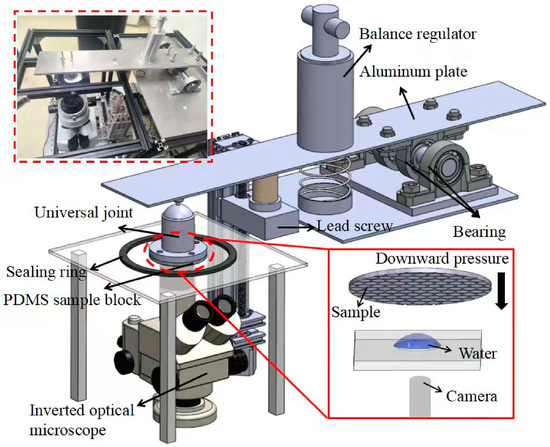
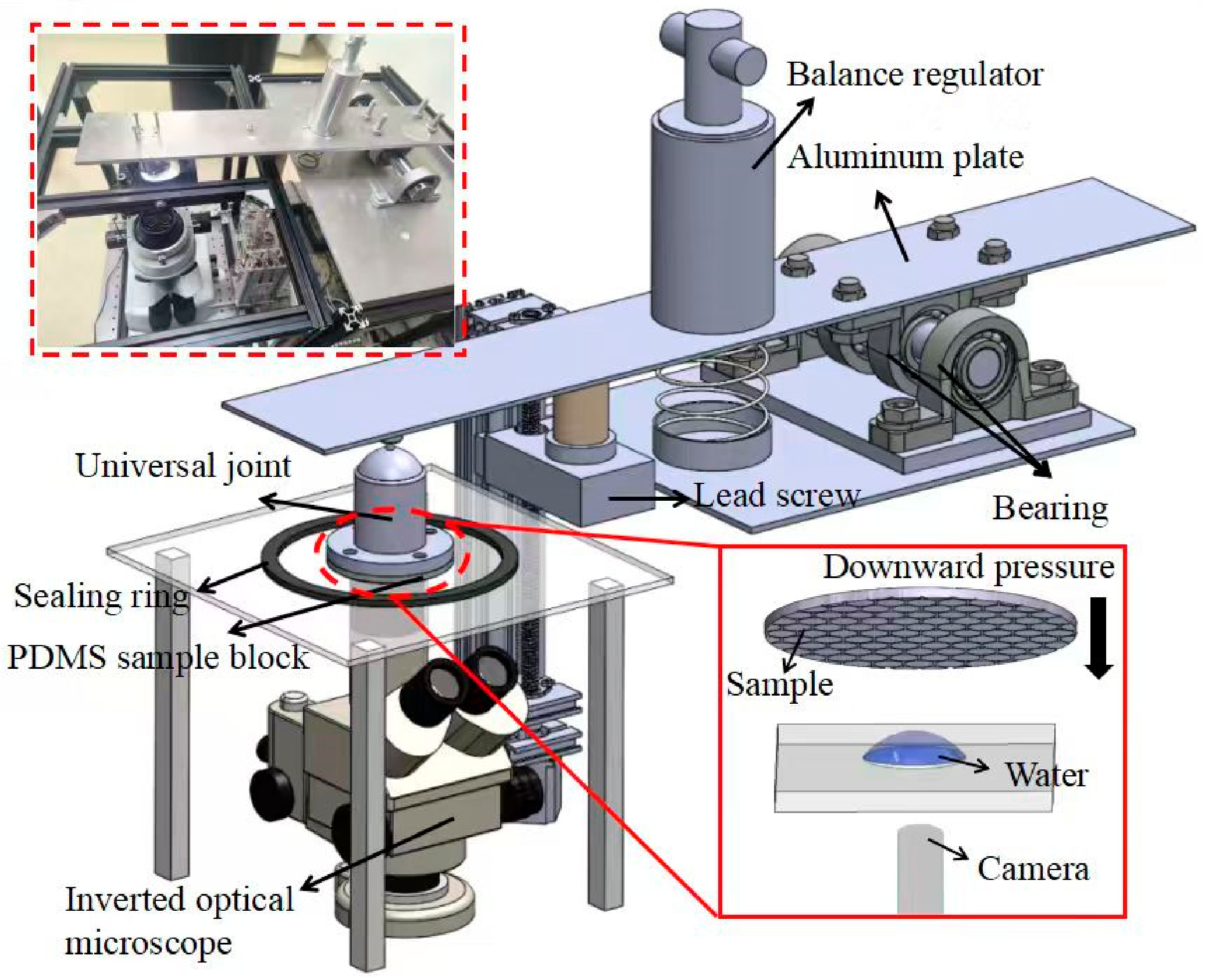
Liquid evolution behavior within soft tribo-contacts featuring bionic surface textures was observed in situ using a custom-built experimental apparatus, as shown in Figure 4. The soft contact system consisted of a textured PDMS sample and a transparent glass substrate. An inverted optical microscope positioned beneath the contact interface enabled real-time visualization and recording of liquid migration within the interface through the transparent glass substrate. At the beginning of each test, a predetermined volume of deionized water (surface tension = 0.072 N/m) was precisely dispensed onto a predefined location on the transparent glass substrate. The textured PDMS sample was then brought into contact with the transparent glass surface at a controlled approach velocity. During this process, the interfacial liquid film underwent continuous morphological evolution. Prior to testing, both the upper and lower specimens were thoroughly cleaned with alcohol and deionized water, respectively, and then dried. Each test was repeated at least three times to ensure repeatability. All tests were performed at an ambient temperature of 25 °C. Video recordings of liquid film migration and flow behavior were captured using an inverted digital microscope and subsequently processed and analyzed using Premiere.
Figure 4.
Schematic of the experimental apparatus.
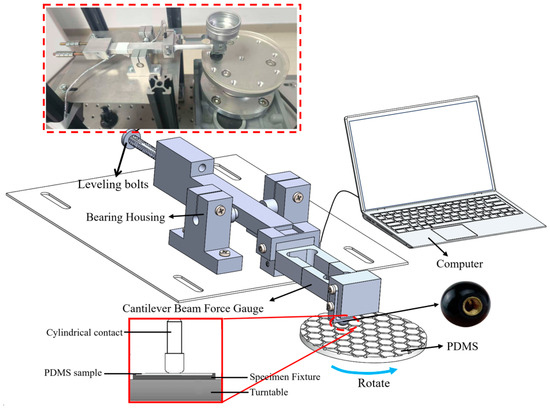
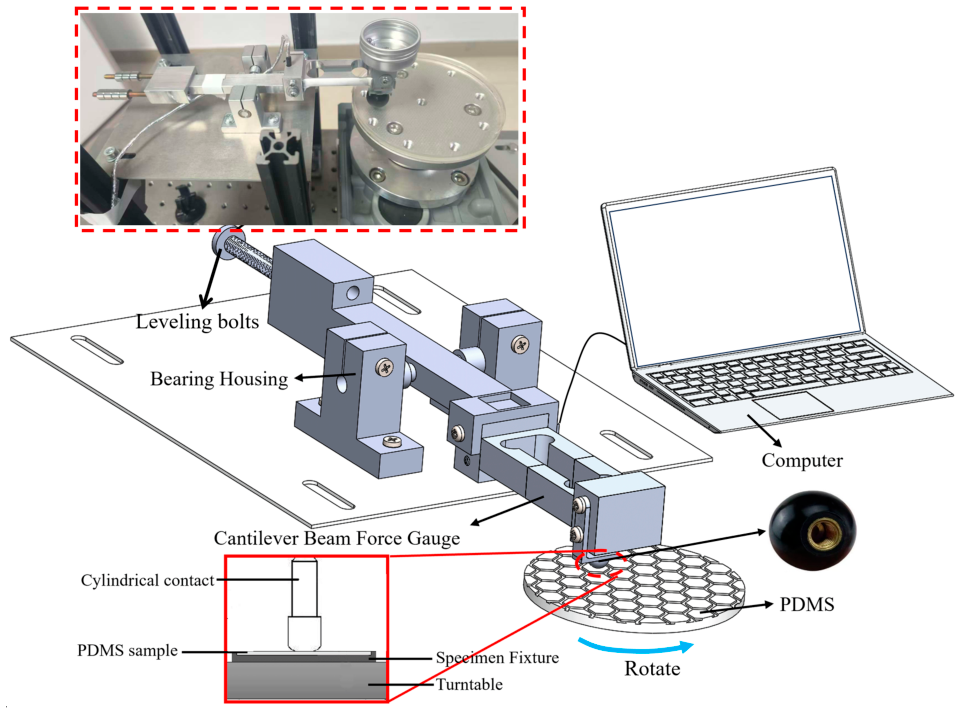
To further investigate the effect of liquid migration properties on the frictional performance of textured PDMS surfaces, friction tests were conducted on three PDMS specimens with distinct surface textures using a custom-built testing platform, as shown in Figure 5. This experimental setup employs a high-precision cantilever beam friction testing apparatus: a 6 mm-diameter cylindrical stainless steel contact tip is mounted at the free end of the cantilever beam, and a strain gauge-based force sensor is integrated onto the beam; textured PDMS samples are secured to a rotating turntable. A vertical load of 10 mN was applied to the top of the cylindrical friction contact. As the turntable rotates (with a path length of approximately 307.72 mm per revolution), the contact tip slides relative to the sample, generating friction that causes the cantilever beam to undergo slight deformation; The strain gauges convert the mechanical deformation into electrical signals, with the data acquisition frequency set to 1000 Hz.
Figure 5.
Schematic of the friction-testing apparatus with a turntable for circular motion.
The friction data were transmitted via a data cable to a computer for real-time recording and subsequent analysis. To ensure stable and reproducible wet sliding conditions, the specimens were placed in a sealed environmental chamber with a relative humidity of 80% for 15 min prior to testing, allowing a uniform liquid film to form on the PDMS surface. The specimens were then removed from the chamber and immediately placed on the friction testing platform, which was operated at a rotational speed of 12 rpm. To minimize experimental error and ensure data reliability, each test condition was repeated three times. The final reported value for each test series was calculated as the average of the friction force data obtained from these three trials.
3. Results and Discussion
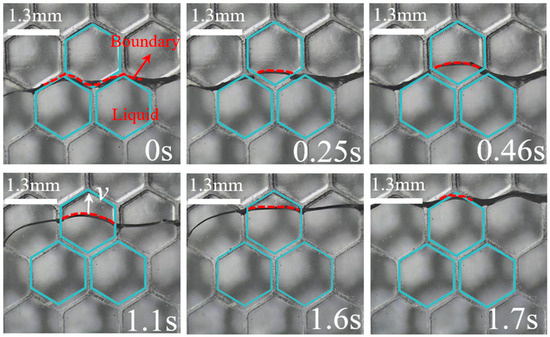
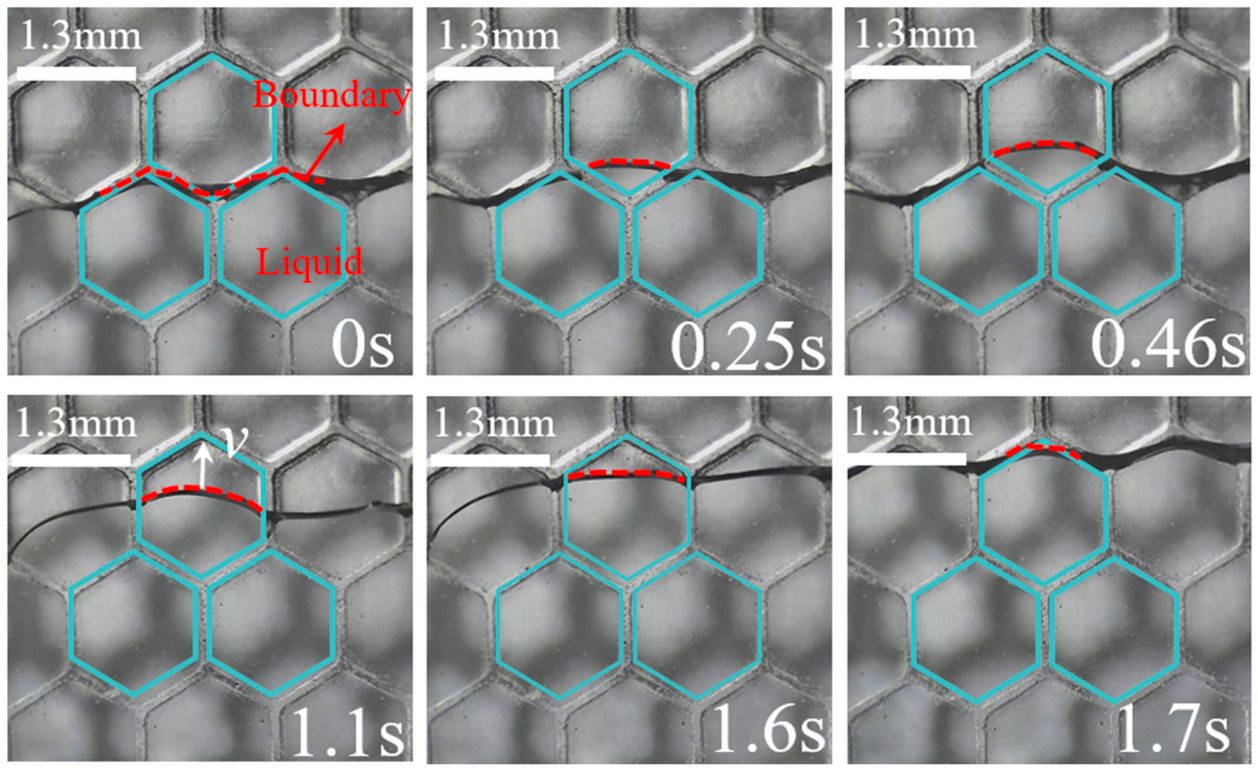
Figure 6 presents representative frames of the liquid film migration process on a contact surface textured with hexagonal micro-pillars at an area ratio of 80%. During the extrusion process, the liquid gradually spreads across individual hexagonal units and migrates along the positive x-axis at a measurable velocity. In the initial stage of migration, the combined effects of surface tension and edge confinement cause the leading front of the liquid film to adopt a concave morphology and temporarily stagnate near the texture boundaries. At the moment of stagnation (0 s), the liquid front clearly exhibits a concave profile. As migration proceeds (0–1.7 s), the liquid in the central region advances more rapidly than that near the lateral edges, resulting in a U-shaped morphology. This phenomenon, in which the liquid flow temporarily halts upon reaching the solid boundary, is mainly governed by the interplay between the surface tension of the liquid and its interaction with the solid substrate. The timing analysis commenced precisely when the liquid film reached the lowest point of the smallest hexagonal unit and concluded when the film fully covered the final endpoint. Over this interval, the liquid film traveled a total distance of 1.5 mm within approximately 1.7 s, corresponding to an average migration velocity of 0.88 mm/s.
Figure 6.
Key frames illustrating the liquid film migration process on a contact surface textured with hexagonal micro-pillars.
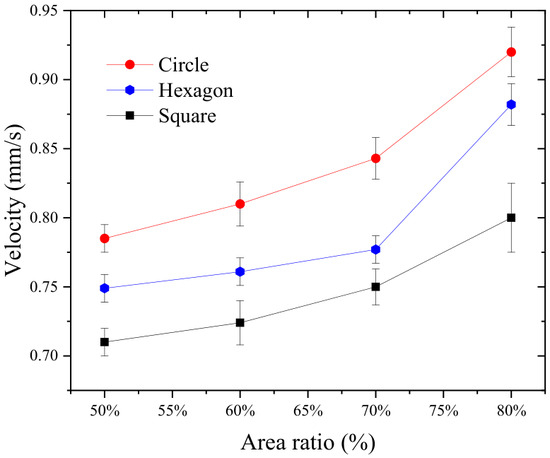
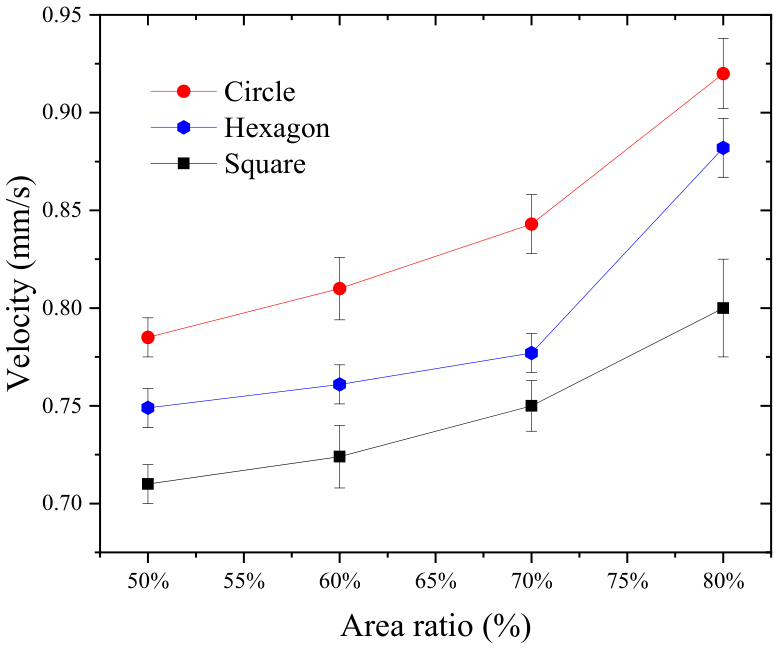
As the area fraction of the surface texture increases, the minimum spacing between microchannels decreases. Figure 7 shows a line graph of liquid film migration velocity as a function of area fraction for three types of textured surfaces. Clearly, under the same area fraction conditions, the liquid film migration velocity is always highest on the circularly textured surface, followed by the hexagonally textured surface, while the square-textured surface exhibits the lowest migration performance. Specifically, at an area ratio of 80%, the corresponding liquid film migration velocity reaches a maximum of 0.92 mm/s. When the area ratio decreases to 50%, the migration velocity drops to approximately 0.785 mm/s. This phenomenon can be attributed to the unique smooth geometric profile of the circular texture, which better conforms to the liquid film path and reduces hydrodynamic drag during migration. Previous studies [27] have confirmed that fluids exhibit superior flow characteristics in microchannels with circular raised textures, which is consistent with the observations reported in this study.
Figure 7.
Variation in liquid film migration velocity on surfaces with different microstructures as a function of area rate.
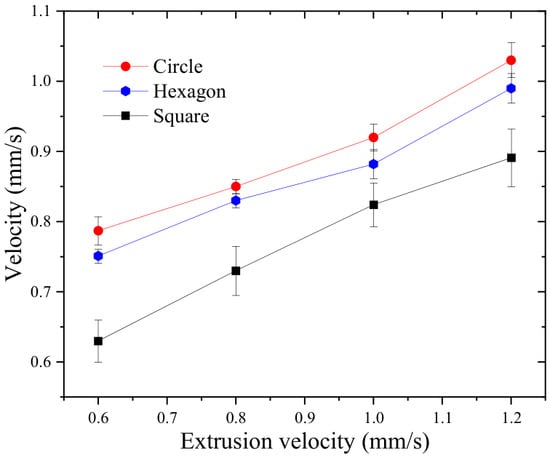
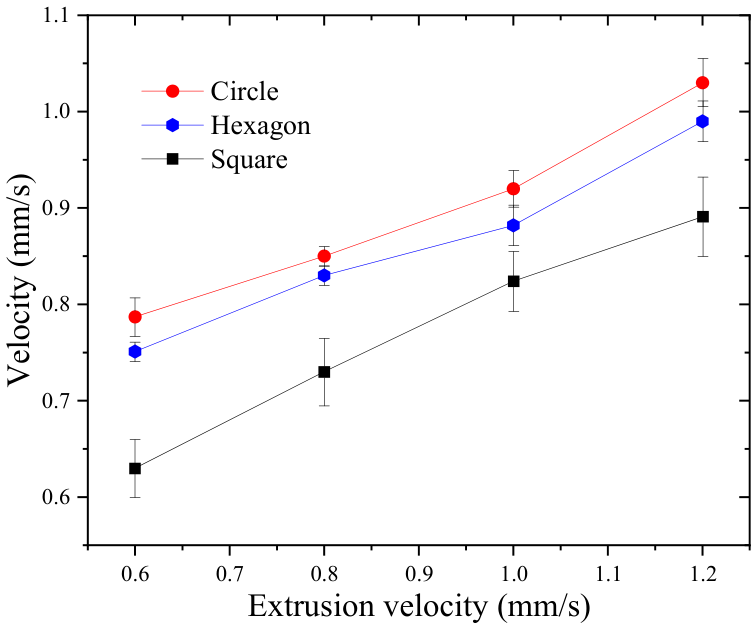
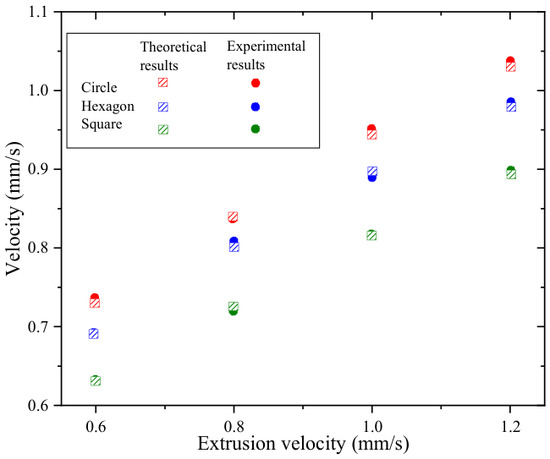
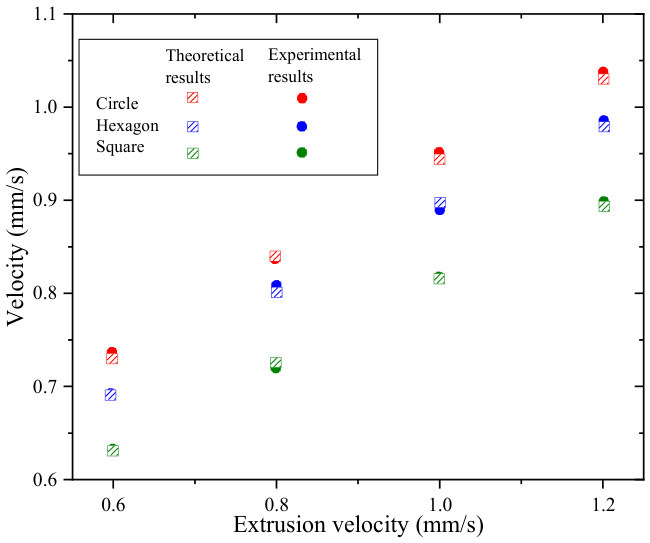
The influence of vertical squeezing speed on the horizontal migration behavior of liquid films is clearly demonstrated in Figure 8. As the vertical extrusion speed increased from 0.6 mm/s to 1.2 mm/s, the migration velocity of the liquid film on textured PDMS surfaces exhibited a continuous increase for all micro-pillar geometries, reaching a peak at 1.2 mm/s. Among the tested configurations, the circular bionic textured surface achieved the highest migration speed, reaching approximately 1.03 mm/s. Under identical experimental conditions, the ranking of liquid film migration performance remained consistent: circular bionic textured surfaces exhibited the fastest migration, followed by the hexagonal textured surface, while square textures showed the lowest migration speeds.
Figure 8.
Variation in liquid film migration rates on surfaces with different microstructures as a function of extrusion speed.
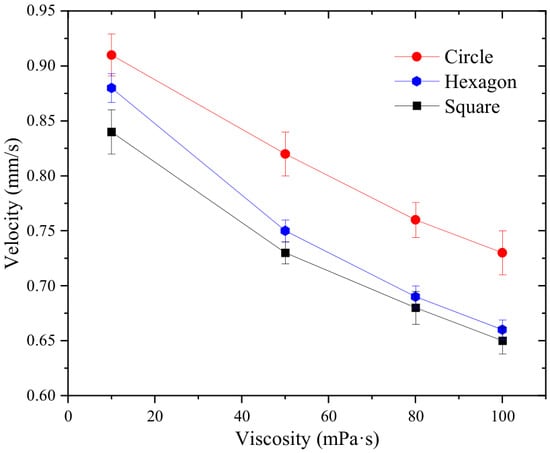
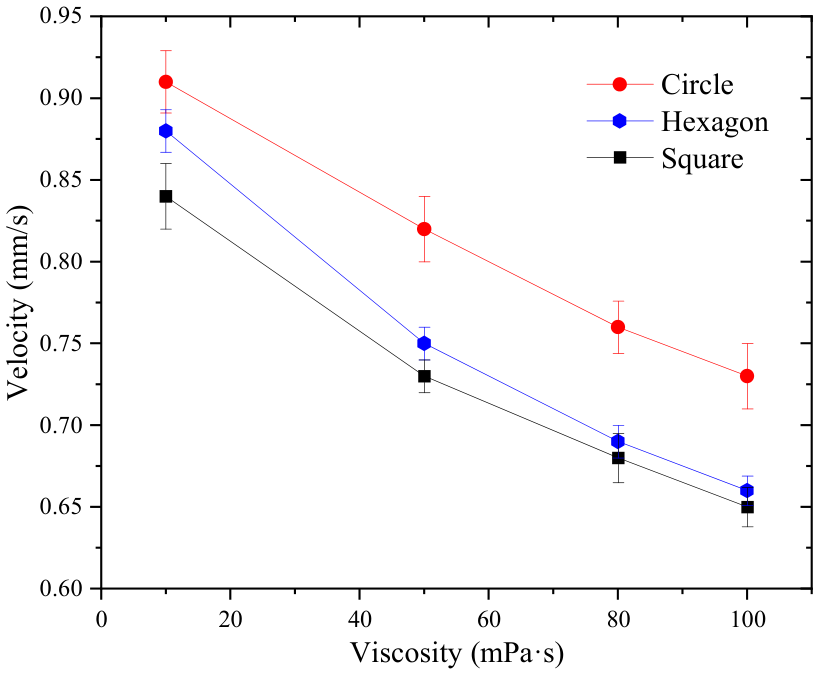
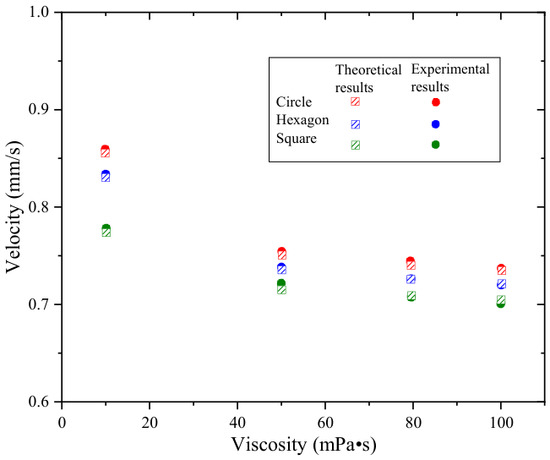
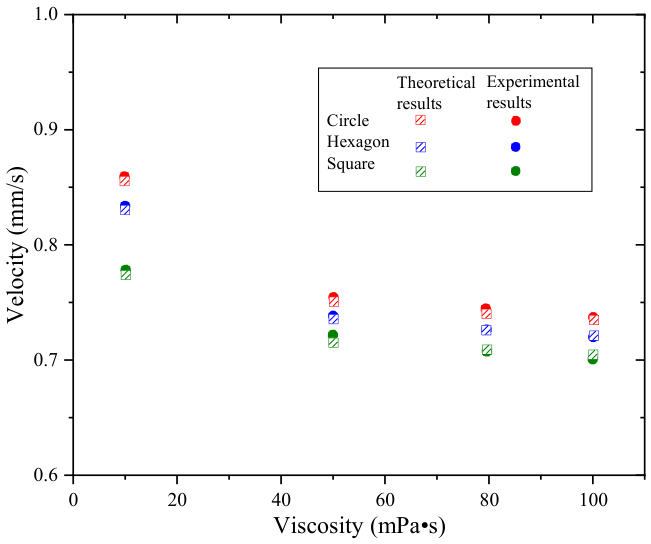
To investigate the influence of liquid viscosity on migration behavior across different textured surfaces, silicone oils with different viscosities were selected as the experimental media. As shown in Figure 9, the liquid migration velocity on textured surfaces exhibits a significant decreasing trend with increasing liquid viscosity. Under identical experimental conditions, distinct differences in migration velocity are observed among the various textured surfaces. Among them, the circular textured surface consistently exhibits the highest migration velocity, whereas the square textured surface demonstrates the poorest migration performance. Specifically, when the liquid viscosity was 10 mPa·s, the liquid migration velocity on the circular textured surface reached a maximum value of approximately 0.91 mm/s. As the viscosity increased to 100 mPa·s, the migration velocity on this surface decreased to approximately 0.73 mm/s.
Figure 9.
Variation in liquid film migration rates on surfaces with different microstructures as a function of liquid viscosity.
The experimental results presented above confirm that surface texture has a significant influence on the migration velocity of liquid film across wet interfaces. However, the underlying mechanisms governing this behavior remain insufficiently understood. To further elucidate the liquid film migration mechanism, a numerical model was developed to simulate the migration behavior of the liquid film.
4. Mathematical Model of Liquid Film Migration
In microfluidic systems or precision manufacturing applications, fluid flow between two parallel plates can be observed. When the upper plate descends at a constant speed, radial shear stress is generated in the fluid, thereby transmitting a horizontal component [28]. According to the squeeze flow theory, the flow characteristics of Newtonian fluids confined between parallel plates can be described using the lubrication approximation [29,30].
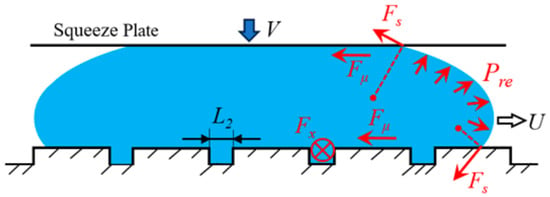
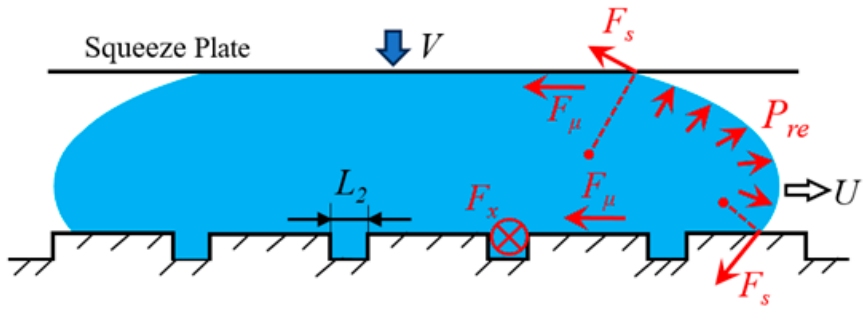
The experimental setup described in this study is as follows: the upper plate is pressed downward at a constant speed of U, while the lower plate remains stationary (as shown in Figure 10). The fluid used in the experiment is an incompressible Newtonian fluid (kinematic viscosity η = 0.0065 Pa·s).
Figure 10.
Force analysis diagram within the liquid film.
Assuming no interfacial slippage, no effects of inertia, no pressure gradient variations across the thickness of the liquid film, the liquid to be a Newtonian fluid and incompressible, and laminar flow prevailing within the contact surface, the two-dimensional simplified Reynolds equation for the local pressure in the squeezed film can be expressed as follows:
Here, h and p represent film thickness and pressure, respectively; represents the viscosity of the liquid; and represents the downward extrusion velocity. The local film thickness h can be expressed by the following formula:
Here, represents the elastic deformation of the elastomer surface, and represents the microchannel region within the contact surface. The elastic displacement can be expressed as:
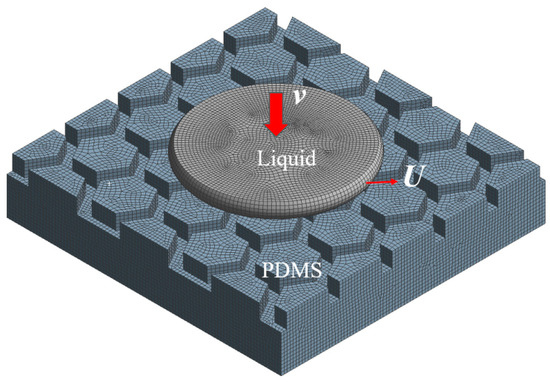
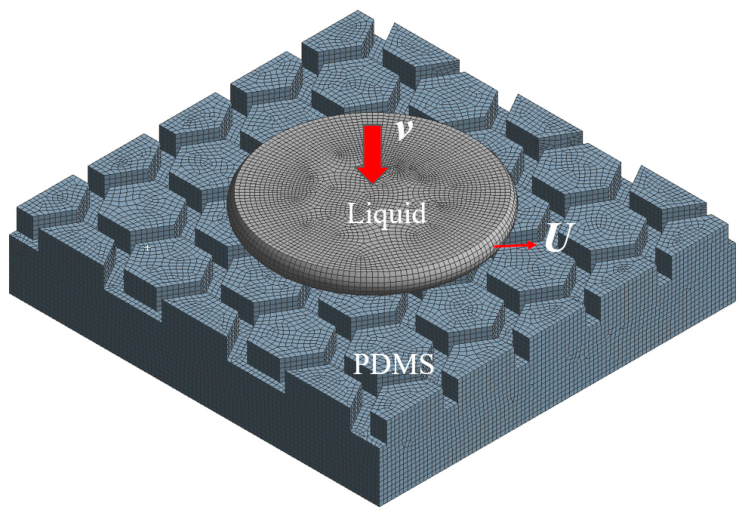
Here, E’ represents the equivalent elastic modulus, E and ν are the Young’s modulus and Poisson’s ratio of the contact surfaces, respectively, and Ω denotes the total computational domain of the extrusion contact. Based on the above mathematical model, the simulation model shown in Figure 11 was adopted to conduct numerical simulation and prediction on the experimental measured data under various working conditions.
Figure 11.
Simulation model of the migration of a squeezed liquid film.
According to the squeeze flow theory, the flow characteristics of Newtonian fluids confined between parallel plates can be described using the lubrication approximation [29,30]. Under this framework, the forces acting within the liquid film were calculated for an interplate distance of 0.5 mm. The core equations are summarized as follows:
- I.
- Continuity equation
Momentum equation (lubrication approximation, neglecting inertia):
where p denotes the fluid pressure. The boundary conditions are specified at the bottom plate (z = 0: ur = 0, uz = 0), and at the top plate (z = 0: ur = 0, uz = v), respectively.
- II.
- Derivation of analytical solutions for the velocity field
The momentum equation is solved using the method of separation of variables.
Radial velocity distribution:
Axial velocity distribution (derived from the continuity equation):
- III.
- Calculation of horizontal component forces
Horizontal component definition (Newtonian fluid):
Compute the partial derivatives:
Shear stress on the lower plate surface :
- IV.
- Integral of the horizontal component
Extrusion pressure (ring area):
Total extrusion force integral:
Capillary force
When considering the influence of capillary forces on droplet migration, the self-propulsion force acting on a droplet confined within a microchannel can be expressed as follows [31]:
where γ denotes the surface tension coefficient between water and the bottom PDMS plate, Wdp represents the interfacial width perpendicular to the droplet’s motion direction, and θR and θA are the receding and advancing contact angles, respectively.
Tension and Resistance Calculation
When a water droplet rests at the edge of a hexagonal microstructure, the additional pressure generated at the interface can be described by Laplace’s law as ΔP = 2γ/r. The droplet must overcome the resistance induced by surface tension, which can be expressed as Fs = ΔPA, where A represents the contact area between the water droplet and the edge. Assuming, for simplicity, that the contact area is a ring-shaped area with a uniform width Δx, the contact area for a hexagon unit with side length a can be approximated as A = 6aΔx, where the influence of minor variations in local edge curvature is neglected. Substituting these expressions into the force equation yields the analytical formulation for the surface tension resistance force, Fs:
Assuming that the liquid velocity at the microstructure edge decreases from ν0 (within the droplet near the edge) to 0 (at the stationary groove wall), and that the thickness of the liquid layer is h, the velocity gradient can be approximated as dv/dy ≈ ν0/h. The effective viscous interaction area Av is approximated as the same contact area A = 6aΔx at the edge, consistent with the contact area in the surface tension resistance analysis. Under these assumptions, the viscous drag force can be expressed as follows (at 25 °C):
From this formulation, the predicted fluid extrusion velocity can be readily derived as:
In the Fluent module, the primary focus is on the upper liquid film. The upper surface of the liquid film is set as a velocity inlet port; based on the corresponding extrusion speed during the experiment, it is configured as a “Velocity-inlet,” while the surrounding edges of the liquid film are set as outlets. The fluid type is set to laminar and incompressible, with “No interfacial slippage” selected and the surface tension set to 0.072 N/m. The lower solid is an elastomer made of PDMS, with its bottom surface serving as a fixed support. The solid–liquid interface is defined as an FSI (Fluid–Structure Interaction) interface to transfer pressure and displacement. The residual convergence criterion is set to 1 × 10⁻⁶, the time step is set to 1 × 10⁻⁵ s, and the total simulation time is 2 s. The mesh consists primarily of hexahedral elements, with a total of approximately 100,000 elements.
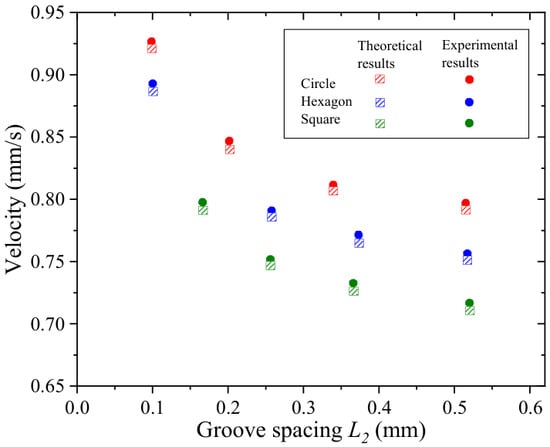
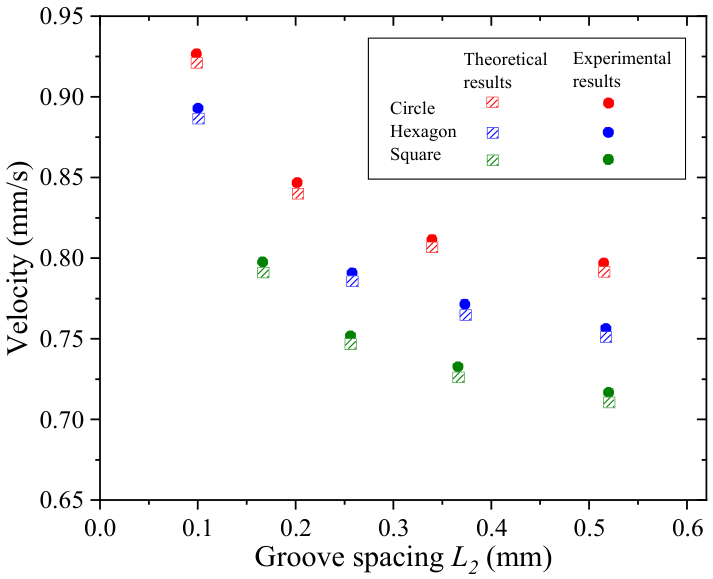
Based on the simulation results, Figure 12 shows the theoretical and predicted values for the liquid film extrusion migration rate. The horizontal axis represents the minimum spacing between adjacent trenches, which is mathematically correlated with the surface area density, while the vertical axis denotes the liquid migration velocity. Discrete data points distributed around the theoretical value correspond to experimental measurements taken at equal intervals. The theoretical values for liquid film migration rates across the three textured surfaces exhibit a clear overall downward trend, indicating that the extrusion-driven liquid migration rate is inversely proportional to the microchannel spacing. Narrower microchannel spacing enhances capillary effects, thereby promoting more efficient liquid film migration. In contrast, excessive spacing significantly weakens capillary-driven transport, resulting in a gradual saturation and flattening of the migration velocity. Among the three surface textures, the circular textured surface consistently exhibits the highest liquid migration velocity, followed by the hexagonal texture, while the square texture shows the lowest performance. Notably, when the microchannel spacing exceeds approximately 0.5 mm, the rate of decrease in migration velocity for all three textures becomes markedly less pronounced. Furthermore, comparison between the theoretical predictions and the experimental results presented in Figure 12 reveals excellent agreement, validating the accuracy and applicability of the proposed liquid migration model. All liquid migration experiments were repeated three times. The standard deviation (SD) of migration velocity was 0.025–0.042 mm/s, with relative standard deviation (RSD) < 5%, indicating good experimental reproducibility. Furthermore, comparison between the theoretical predictions and experimental results revealed excellent agreement.
Figure 12.
Comparison between theoretical predictions and experimental measurements of liquid film migration velocity as a function of microchannel spacing (surface area density).
Figure 13 shows the theoretical predictions of liquid film migration velocity under different vertical extrusion speeds, together with the corresponding experimentally measured values. The results demonstrate that the migration velocity of the squeezed liquid increases markedly with increasing extrusion speed, indicating a clear positive correlation between vertical extrusion speed and horizontal liquid migration velocity. Under identical experimental conditions, the circular textured surface consistently exhibits the highest liquid migration velocity, followed by the hexagonal texture, while the square texture shows the lowest performance. These trends are in good agreement with the experimental observations presented in Figure 8.
Figure 13.
Comparison between theoretical predictions and experimental measurements of liquid film migration velocity under different vertical extrusion speeds.
Figure 14 shows the theoretical predictions of liquid migration rates at different viscosities, along with the corresponding experimental measurements. The results indicate that the migration velocity of the extruded liquid decreases significantly as viscosity increases, demonstrating that higher liquid viscosity hinders migration within bionic surface textures. This behavior can be attributed to the positive correlation between liquid viscosity and intermolecular interactions: greater viscosity leads to stronger intermolecular forces, resulting in greater internal resistance to flow and, consequently, a pronounced inhibition of liquid migration. Furthermore, under identical experimental conditions, the liquid migration velocity is consistently highest on circular textured surfaces, followed by hexagonal textures, while square textures exhibit the lowest migration performance. These trends are in good agreement with the experimental observations shown in Figure 9.
Figure 14.
Comparison between theoretical predictions and experimental measurements of liquid film migration velocity as a function of liquid viscosity.
The comprehensive results of the liquid film migration experiments indicate that circular textured surfaces consistently exhibit the highest liquid film migration rates. This characteristic effectively minimizes interfacial friction losses caused by residual liquid films. Therefore, circular surface textures are likely to demonstrate superior synergistic performance in terms of high friction and strong adhesion under wet conditions. To verify this hypothesis, friction force experiments were subsequently carried out in this study.
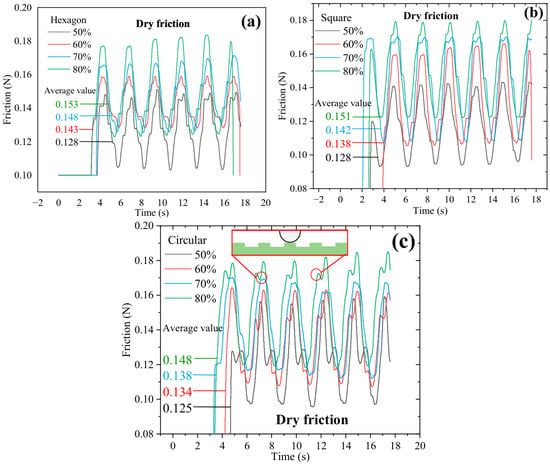
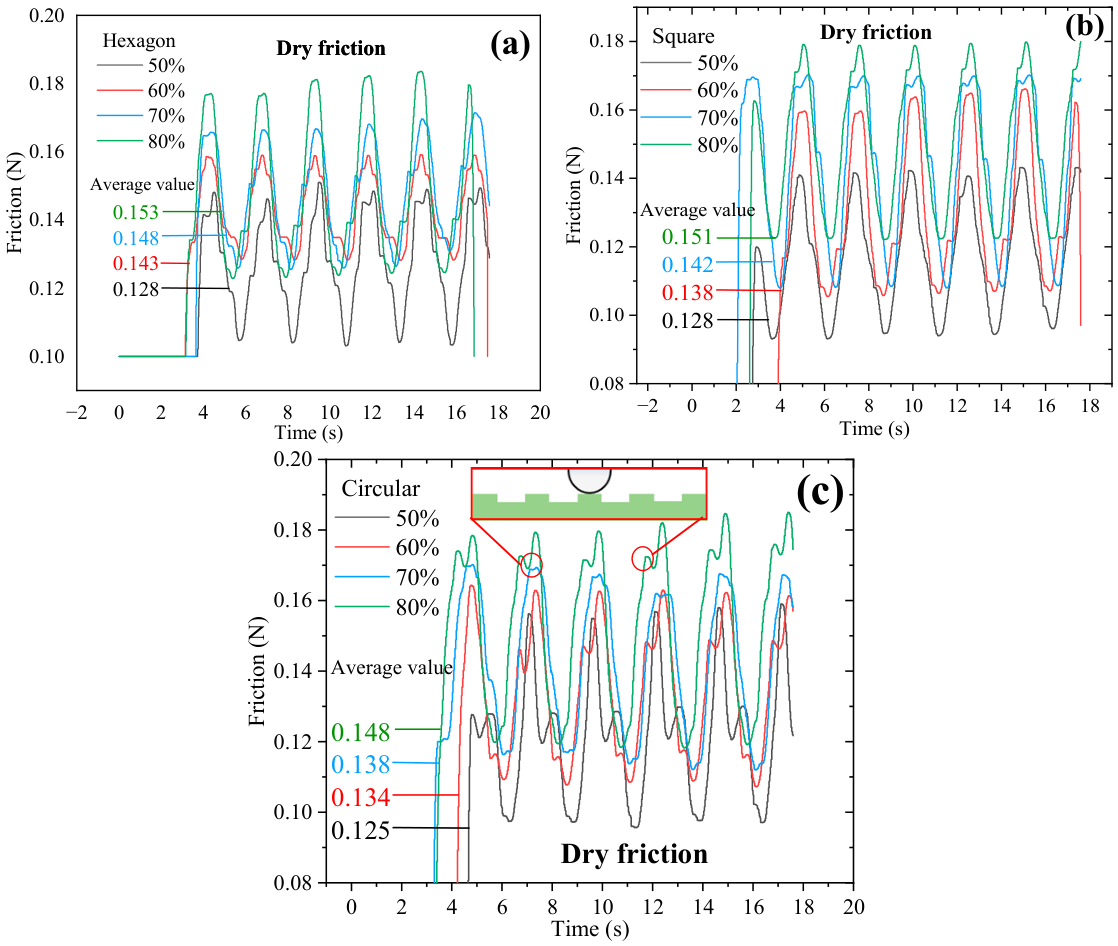
Figure 15 presents the time-dependent friction force curves for three types of biomimetic surface textures at four area ratios (50%, 60%, 70%, and 80%). To reduce experimental variability, the average friction force at each area ratio was used as the scalar for comparative analysis. As clearly shown in Figure 15a, the friction force is minimal at an area ratio of 50%, with a value of approximately 0.128 N. When the area ratio increases to 80%, the friction force increases to approximately 0.153 N, demonstrating a clear positive correlation between friction force and surface area ratio. This trend can be primarily attributed to the increase in effective contact area between the textured surface and the contact interface as the area ratio increases. The enlarged contact area enhances interfacial interactions, thereby leading to a corresponding increase in friction force.
Figure 15.
Comparison of dry friction forces for surface textures with different geometries: (a) hexagon, (b) square, (c) circle.
Similarly, Figure 15b,c exhibit consistent trends, with the friction force increasing markedly as the texture area ratio increases. At an area ratio of 80%, clear differences in friction performance are observed among the three surface textures. The square texture achieves the highest friction force (approximately 0.151 N), followed by the hexagonal texture, whereas the circular texture shows the lowest friction force, at approximately 0.148 N, representing the weakest performance among the three textures.
This disparity primarily arises from differences in contact configurations between the textured surfaces and the cylindrical contact head. For circular textures, the contact head predominantly engages in line contact with the smooth, curved edges of the texture units. This contact mode results in weaker interfacial interactions compared with the contact configurations formed between the hexagonal and square textures and the contact head, thereby leading to a slightly lower friction force for circular textures. In addition, the friction force curve exhibits localized and periodic fluctuations. This phenomenon can be attributed to the spherical contact point successively traversing the concave gaps between adjacent minimal texture units during sliding, as shown in Figure 15c. Specifically, under the 80% area coverage condition examined in this study, the standard deviations of the average friction forces for circular, hexagonal, and square textures were 0.003 N, 0.005 N, and 0.003 N, respectively. The data exhibited extremely low variability, fully demonstrating the stability and reproducibility of the dry friction test results.
Humid environments generally have a detrimental effect on surface friction forces. To elucidate the influence of humidity on the frictional performance of the three bionic textured surfaces, additional experiments were conducted. Prior to testing, each specimen was equilibrated for 5 min in a sealed chamber maintained at 80% RH, allowing a uniform water film to form on the surface. Subsequently, friction performance tests were carried out using the friction testing apparatus.
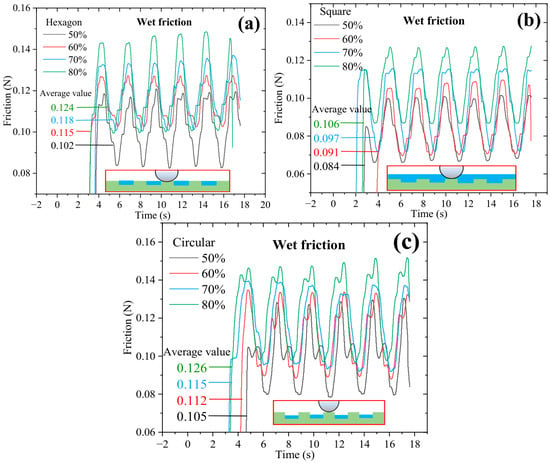
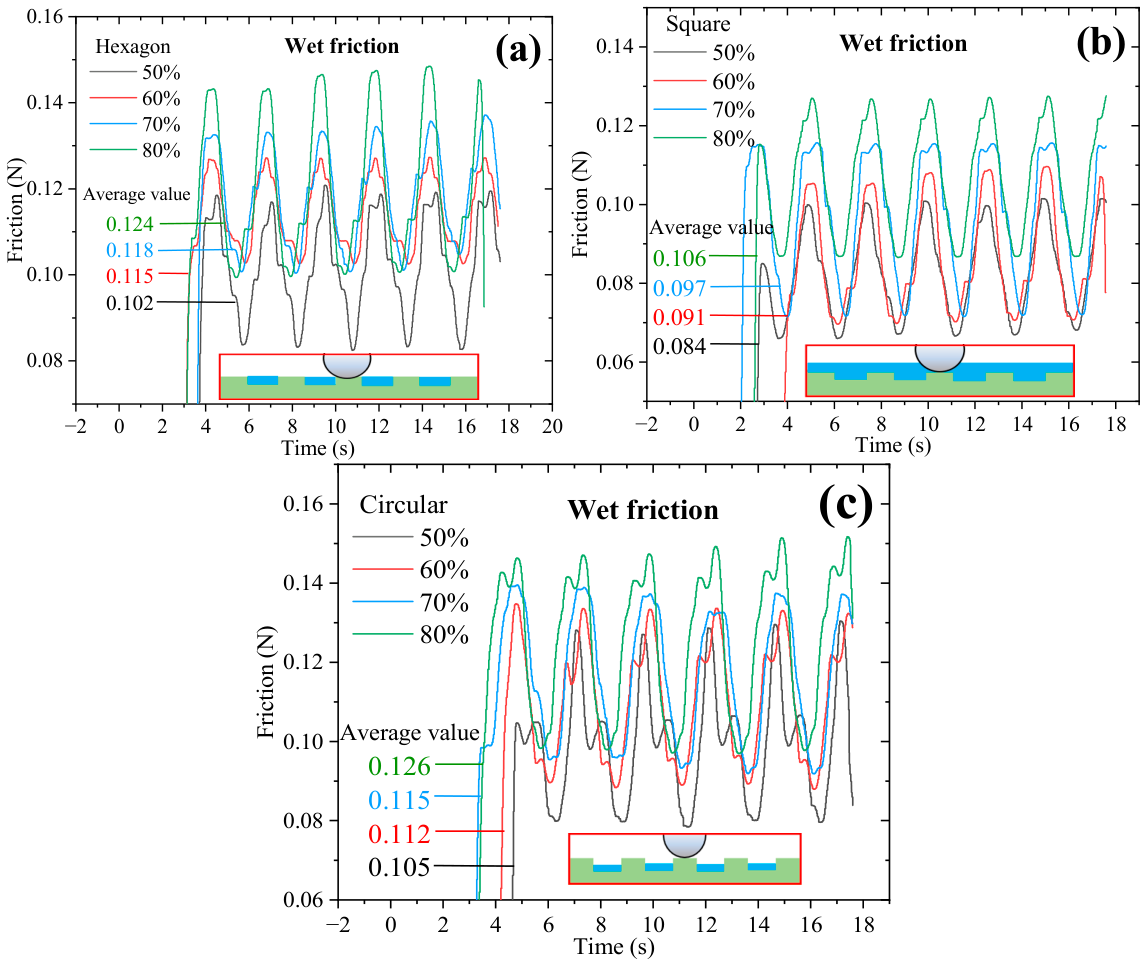
Figure 16 presents the time-dependent friction force curves for three types of biomimetic surface textures under wet friction conditions. The results indicate that, following wet conditioning, the friction forces of all three textured surfaces decrease to varying extents; however, the magnitude of reduction differs significantly among the textures. At a texture coverage ratio of 80%, the friction force of the circular textured structure decreases from 0.148 to 0.126 N, corresponding to a reduction of approximately 15%. In comparison, the hexagonal texture exhibits a reduction of approximately 19%, while the square texture shows the largest decrease, reaching approximately 30%, as shown in Figure 16a–c. Similar trends are observed at other coverage ratios, with the circular textured surface consistently exhibiting the smallest reduction in friction force while maintaining the highest absolute friction force under wet conditions.
Figure 16.
Comparison of wet friction forces for surface textures with different geometries: (a) hexagon, (b) square, (c) circle.
The core mechanism responsible for these differences lies in the textures’ ability to regulate liquid migration: Circular textures exhibit superior liquid migration characteristics, enabling more efficient transport of liquid through surface microchannels and across the contact interface. This enhanced drainage capability effectively suppresses the lubricating effect of interfacial liquid films, thereby minimizing the friction-reducing influence of moisture, which is consistent with the liquid migration results discussed earlier. In contrast, square textures demonstrate relatively poor control over liquid migration and exhibit the highest sensitivity to liquid lubrication, resulting in the greatest reduction in friction. Hexagonal textures display intermediate performance between these two extremes. Under wet friction conditions, circular textured surfaces therefore exhibit optimal frictional performance, maintaining the highest overall friction force. In particular, at an area coverage of 80%, the friction force of the circular texture reaches approximately 0.126 N. Under the same conditions, the hexagonal textures exhibit the second-highest friction force, whereas the square textures exhibit the poorest friction performance, with a friction force of approximately 0.106 N. The relative standard deviation of the average friction force was less than 4.8% under all operating conditions; specifically, under conditions where the area coverage was 80%, the standard deviations of the average friction force for circular, hexagonal, and square textures were 0.005 N, 0.006 N, and 0.005 N, respectively. These statistical results validate the reliability of the wet friction testing method and rule out the influence of random factors on the experimental conclusions.
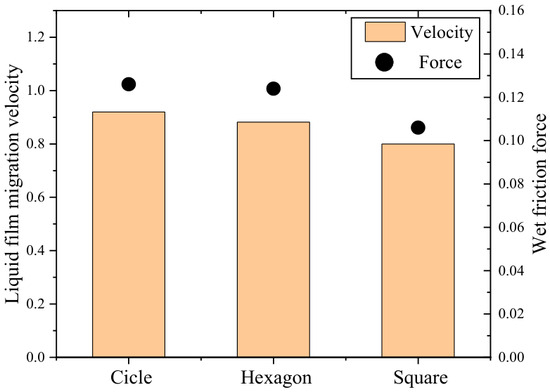
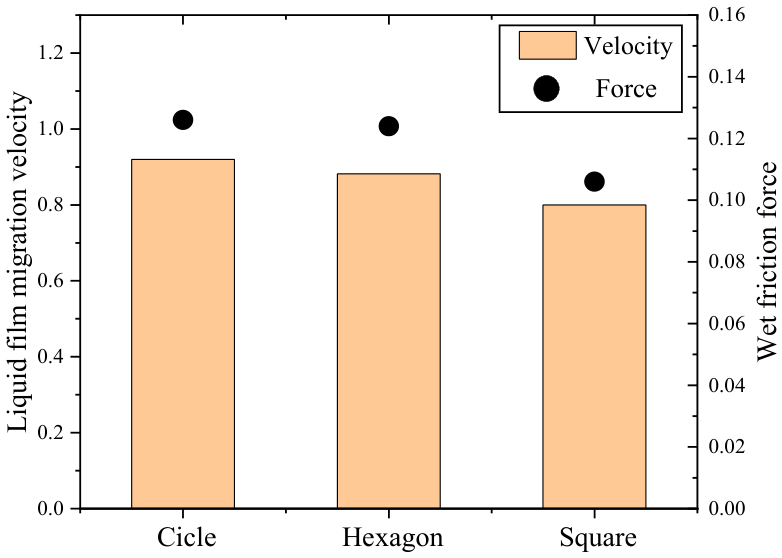
Figure 17 presents the influence of liquid film migration velocity on the wet tribological properties of three surface textures with distinct morphologies at a fixed texture area density of 80%. Notably, the circular textured surface exhibits the highest liquid film migration velocity of 0.92 mm/s, followed by the hexagonal textured surface at 0.882 mm/s, while the square textured surface shows the slowest migration velocity of merely 0.8 mm/s. Under wet friction conditions, the friction performance of the three textured surfaces demonstrates an identical variation trend to that of the liquid film migration velocity: the wet friction force is maximum on the circular textured surface, intermediate on the hexagonal textured surface, and minimum on the square textured surface. These results indicate that the superior liquid film migration capability of surface textures is more favorable for achieving a higher friction force in wet contact environments.
Figure 17.
Effect of surface texture geometry on liquid film migration behavior and wet interfacial friction performance.
5. Conclusions
This study systematically investigates the influence of liquid film migration on the friction properties of textured soft surfaces under wetting conditions. The results demonstrate that the migration velocity of squeezed liquid films across soft tribo-contacts is significantly influenced by surface texture parameters, and that liquid migration velocity directly governs the variation patterns in friction force under wet friction conditions. The main conclusions are summarized as follows:
- The geometric configuration of surface patterns significantly influences the evolution of liquid films. Under the same area fraction, circular patterns—due to their smoother topological contours—effectively reduce the viscous resistance of the liquid film within microchannels, resulting in the highest migration speed; hexagonal patterns follow, while square patterns exhibit the lowest speed. At an area fraction of 80%, the migration speeds of the three patterns were 0.92 mm/s, 0.882 mm/s, and 0.80 mm/s, respectively; at a high extrusion speed of 1.2 mm/s, the difference widened further, with the circular pattern reaching a migration speed of 1.03 mm/s—13.4% higher than that of the square pattern.
- The texture area fraction directly influences the liquid film migration efficiency by modulating the strength of capillary forces. The migration speeds of all three textures increase monotonically as the area fraction rises from 50% to 80%: the circular texture increases from 0.785 mm/s to 0.92 mm/s, an increase of approximately 17.2%. This enhancement effect exhibits a critical microchannel spacing threshold of approximately 0.5 mm; beyond this value, capillary forces decay significantly, and the rate of increase in migration speed levels off. Additionally, an increase in liquid viscosity markedly inhibits liquid film migration.
- Under dry friction conditions, the effective contact area and mechanical interlocking strength dominate friction performance; when the area fraction is 80%, the hexagonal texture exhibits the highest dry friction force (0.153 N). Under wet friction conditions, the ability of the liquid film to migrate becomes the key controlling factor: the friction force of the circular texture decreased by only 15% (0.148 N → 0.126 N), that of the hexagonal texture by 19%, and that of the square texture by as much as 30% (0.151 N → 0.106 N). Efficient liquid drainage significantly weakens the interfacial lubrication effect, maintaining a higher solid–solid contact area and mechanical interlocking. Overall, the circular micro-columnar texture with an area fraction of 80% and a groove depth of 0.01 mm exhibits the best comprehensive performance, maintaining the highest wet friction force of 0.126 N at 80% humidity—18.9% higher than the square texture—providing a clear reference for the design of high-friction biomimetic surfaces under wet conditions. These findings can guide the rational design of biomimetic surfaces for applications such as rubber tires, soft robotics, and medical devices, where surface texture designs require strong adhesion.
Based on the core findings and limitations of this study, future research will expand to include complex fluid media and dynamic operating conditions to investigate the transient evolution of liquid films and dynamic friction responses under real-world conditions. We will apply the optimal texture to typical engineering fields to conduct performance validation and parameter optimization, thereby advancing the engineering and industrial application of these research findings.
Author Contributions
Conceptualization, L.H. and B.S.; methodology, B.S.; software, Z.W.; validation, L.H., B.S. and K.Z.; formal analysis, Z.W.; investigation, Z.W. and K.Z.; resources, B.S.; data curation, Z.W.; writing—original draft preparation, Z.W. and B.S.; writing—review and editing, L.H., Z.W. and B.S.; visualization, Z.W.; supervision, L.H. and B.S.; project administration, L.H. and B.S. All authors have read and agreed to the published version of the manuscript.
Funding
This research was funded by the National Natural Science Foundation of China (Grant No. 52305310) and the Jiangxi Provincial Graduate Innovation Special Fund Project (Grant No. YC2024-S561).
Data Availability Statement
Available upon enquiry.
Acknowledgments
The authors would like to express their gratitude to Jiangxi University of Science and Technology, the National Natural Science Foundation of China, and the Jiangxi Provincial Graduate Student Special Innovation Fund Committee. The authors sincerely thank all participants for their contributions.
Conflicts of Interest
No conflict of interest exists in the submission of this manuscript, and the manuscript is approved by all authors for publication. We would like to declare on behalf of our co-authors that the work described was original research that has not been published previously, and not under consideration for publication elsewhere, in whole or in part. All the authors listed have approved the manuscript that is enclosed.
References
- Zhu, M.; Yu, H.; Li, Z.; Chen, X.; Shao, Z. Research on Drag Reduction Effect of Flexible Surface Structure. J. Mech. Eng. Technol. 2022, 11, 471–478. [Google Scholar] [CrossRef]
- Wang, J.; Wang, Z.; Wang, J.; Xu, S. Drag Reduction of Biomimetic Composite Surface Texture. Tribology 2025, 45, 288–299. [Google Scholar] [CrossRef]
- Zheng, S.; Liang, X.; Li, J.; Liu, Y.; Tang, J. Drag reduction using bionic groove surface for underwater vehicles. Front. Bioeng. Biotechnol. 2023, 11, 1223691. [Google Scholar] [CrossRef] [Scilit]
- Ji, J.; Hu, Z.; Ying, C.; Tian, P.; Chen, L.; Tian, Y.; He, Y. Numerical Analysis of Hydrodynamic Lubrication of Partially Textured Surfaces with Dimples for Journal Bearing. Surf. Technol. 2021, 50, 214–278. [Google Scholar] [CrossRef]
- Huang, Y.; Lin, Z.; Wang, G.; Wei, G.; Chao, P. Research Status and Progress of Surface Texture Lubrication and Friction Reduction. Surf. Technol. 2021, 50, 217–232. [Google Scholar] [CrossRef]
- Liu, H.; Zhou, W.; Wang, X. Characterization of the Functional Surface Structure of Natural Biological Wet. Mater. Sci. 2022, 12, 1191. [Google Scholar] [CrossRef]
- Langowski, J.K.A.; Dodou, D.; Kamperman, M.; van Leeuwen, J.L. Tree frog attachment: Mechanisms, challenges, and perspectives. Front. Zool. 2018, 15, 32. [Google Scholar] [CrossRef] [Scilit]
- Long, R.; Zhao, C.; Zhang, Y.; Wang, Y. Analysis and Experiment on Tribological Performance of Vein-Bionic Textured Cylindrical Roller Thrust Bearing. Mach. Des. Manuf. 2024, 8, 303–306. [Google Scholar] [CrossRef]
- Yin, B.; Xu, B.; Qian, Y.; Ji, J.; Fu, W. Lubrication adaptability to the variations of combustion modes by texturing cylinder liner in engines. Automob. Eng. 2017, 232, 946–957. [Google Scholar] [CrossRef] [Scilit]
- Laki, G.; Kovács, G.; Schweighardt, A.; Nagy, A. A preliminary study on laser surface texturing of passenger car engine piston rings. FME Trans. 2025, 53, 252–259. [Google Scholar] [CrossRef] [Scilit]
- Long, R.; Shang, Q.; Sun, S.; Wang, S.; Ma, C.; Zhang, J.; Marian, M. Influence of Monstera riedrichsthalii bionic textures on the tribological and vibration behavior of rolling bearings. Friction 2025, 13, 9440949. [Google Scholar] [CrossRef] [Scilit]
- Singh, S.; Kango, S. Thermohydrodynamic performance of convergent slider bearings using different placement of square micro-textures and slip boundary. Phys. Scr. 2024, 99, 025015. [Google Scholar] [CrossRef] [Scilit]
- Zhang, N.; Liu, Y.; Li, Z.; Zhan, X. Sealing performance and optimization design of squamous textured mechanical seal. Tribol. Int. 2024, 193, 109425. [Google Scholar] [CrossRef] [Scilit]
- Chen, T.; Wang, L.; Xu, J.; Gao, T.; Qin, X.; Yang, X.; Cong, Q.; Jin, J.; Liu, C. Effect of Groove Texture on Deformation and Sealing Performance of Engine Piston Ring. Machines 2022, 10, 1020. [Google Scholar] [CrossRef] [Scilit]
- Wu, M.L.; Ren, C.Z.; Xu, H.Z.; Zhou, C.L. Fabrication of a bionic microstructure on a C/SiC brake lining surface: Positive applications of surface defects for surface wetting control. Appl. Surf. Sci. 2018, 440, 669–679. [Google Scholar] [CrossRef] [Scilit]
- Wu, B.; Dong, L.; Liu, M.; Hu, J. Controllable anisotropic wettability behaviours of droplets by varying profile stripe structures. Surf. Topogr. Metrol. Prop. 2025, 13, 015007. [Google Scholar] [CrossRef] [Scilit]
- Liu, C.; Chen, G.; Liu, H.; Ma, Q.; Xu, C.; Meng, H. Tire grounding mechanical model on wet roads. J. Jilin Univ. (Eng. Technol. Ed.) 2024, 54, 1501–1511. [Google Scholar] [CrossRef]
- Zhang, L.; Chen, H.; Guo, Y.; Wang, Y.; Jiang, Y.; Zhang, D.; Ma, L.; Luo, J.; Jiang, L. Micro-Nano Hierarchical Structure Enhanced Strong Wet Friction Surface Inspired by Tree Frogs. Adv. Sci. 2020, 7, 2001125. [Google Scholar] [CrossRef] [Scilit]
- Hu, K.; Yang, J. Aging and tribological behavior of styrene butadiene rubber conveyor belts under combined seawater dry-wet conditions. Mater. Res. Express 2022, 9, 095305. [Google Scholar] [CrossRef] [Scilit]
- Barnes, W.J.P.; Baum, M.; Peisker, H.; Stanislav, N. Comparative Cryo-SEM and AFM studies of hylid and rhacophorid tree frog toe pads. J. Morphol. 2013, 274, 1384–1396. [Google Scholar] [CrossRef] [Scilit]
- Li, M.; Shi, W.; Shi, J.; Wang, T.; Shi, L.; Wang, X. Regulation and control of wet friction of soft materials using surface texturing: A review. Friction 2022, 11, 333–353. [Google Scholar] [CrossRef] [Scilit]
- Zhou, R.; Zhang, B.; Wang, Z.; Dai, Z. Effect of Substrate Compliance on the Jumping Mechanism of the Tree Frog (Polypedates dennys). Biomimetics 2025, 10, 604. [Google Scholar] [CrossRef] [Scilit]
- Li, S.; Shi, S.; Liu, J.; Luo, Z.; Wang, J.; Liao, L.; Wang, Y.; Gong, R.; Wu, J.; Wang, B. Description of a new species of the Asian newt genus Tylototriton Anderson, 1871 (Urodela, Salamandridae) from central China. Zoosystematics Evol. 2026, 102, 181–197. [Google Scholar] [CrossRef] [Scilit]
- Gong, L.; Yu, H.; Li, R.; Wang, C.; Jia, H.; Wang, X. Morphology and adhesion mechanisms of newt Cynops orientalis’ foot pads. Chin. Sci. Bull. 2016, 61, 2587–2595. [Google Scholar] [CrossRef] [Scilit]
- Ma, Z.; Liang, L.; Zhang, C.; Xiang, Y.; Yan, M.; Liu, Z.; Wang, W.; Yan, S.; Zhao, J. Bionic Wet Adhesive Surface with Micronano Hierarchical Structure for Robust Biosignal Monitoring. ACS Appl. Mater. Interfaces 2025, 17, 20471–20482. [Google Scholar] [CrossRef] [Scilit] [PubMed]
- Dai, S.; Zhang, H.; Liu, Y.; Yi, F.; Shi, K.; Dong, G. Bulk-cusp microstructure for controllable multi-directional liquid spreading. Nat. Commun. 2026, 17, 1519. [Google Scholar] [CrossRef] [Scilit]
- Alfaryjat, A.A.; Mohammed, H.A.; Adam, N.M.; Ariffin, M.K.A.; Najafabadi, M.I. Influence of geometrical parameters of hexagonal, circular, and rhombus microchannel heat sinks on the thermohydraulic characteristics. Int. Commun. Heat Mass Transf. 2014, 52, 121–131. [Google Scholar] [CrossRef] [Scilit]
- Denn, M.M.; Marrucci, G. Squeeze flow between finite plates. J. Non-Newton. Fluid Mech. 1999, 87, 175–178. [Google Scholar] [CrossRef] [Scilit]
- Engmann, J.; Servais, C.; Burbidge, A.S. Squeeze flow theory and applications to rheometry: A review. J. Non-Newton. Fluid Mech. 2005, 132, 1–27. [Google Scholar] [CrossRef] [Scilit]
- Kaushik, P.; Mondal, P.K.; Chakraborty, S. Flow dynamics of a viscoelastic fluid squeezed and extruded between two parallel plates. J. Non-Newton. Fluid Mech. 2016, 227, 56–64. [Google Scholar] [CrossRef] [Scilit]
- Yue, C.; Dai, Q.; Yang, X.; Gachot, C.; Huang, W.; Wang, X. Controllable self-transport of bouncing droplets on ultraslippery surfaces with wedge-shaped grooves. Droplet 2024, 3, 118. [Google Scholar] [CrossRef] [Scilit]
Disclaimer/Publisher’s Note: The statements, opinions and data contained in all publications are solely those of the individual author(s) and contributor(s) and not of MDPI and/or the editor(s). MDPI and/or the editor(s) disclaim responsibility for any injury to people or property resulting from any ideas, methods, instructions or products referred to in the content. |
© 2026 by the authors. Licensee MDPI, Basel, Switzerland. This article is an open access article distributed under the terms and conditions of the Creative Commons Attribution (CC BY) license.