


Abstract
Adhesion strength, toughness, and resistance to frictional heating are critical characteristics for suppressing premature coating delamination and protecting the substrate from plastic deformation. This study investigates the synergistic role of intermediate adhesion-promoting layers on the mechanical and tribological performance of diamond-like carbon (DLC) coatings deposited on tool steel substrates via high-power impulse magnetron sputtering (HiPIMS). Nanoindentation and micro-scratch testing were conducted to evaluate single-layer TiAlN, single-layer DLC, and multilayer DLC/TiAlN coating architectures. Owing to the TiAlN interlayer beneath the DLC topcoat, the multilayer DLC/TiAlN system demonstrated superior composite hardness and interfacial adhesion strength. Microstructural characterization via SEM-EDS and Raman spectroscopy confirmed that a dense, columnar TiAlN interlayer with a high aluminum concentration provided vital load-bearing capacity for the overlying DLC film. During dry CNC turning tests on aluminum and steel alloys, the multilayer DLC/TiAlN coating exhibited the lowest cutting forces, cutting temperatures, and surface roughness. The architecture effectively suppressed flank and crater wear, which reduced the chip compression ratio and mitigated plastic shear strain at the tool–chip interface. This synergistic interaction within the DLC/TiAlN coating system minimizes tribological degradation, demonstrating high potential for demanding machining applications.
1. Introduction
Hard coatings are widely employed to improve tool wear resistance and prolong their service life under high tribological contact conditions [1]. To date, titanium nitride coatings such as TiN, TiCN, and TiAlN remain among the most widely used hard coatings in the manufacturing industry due to their excellent hot hardness, wear resistance, and thermal stability [2,3]. Recently, the development of DLC coatings for manufacturing processes has demonstrated significant potential as an effective tribological system for improving tool life while minimizing the use of hazardous lubricants during production [4]. This is particularly important because conventional lubricants are harmful to both human health and the environment [5,6]. However, a major challenge in evaluating DLC coatings is determining the onset of tool wear degradation as a function of the most critical process parameters, namely contact pressure, sliding speed, and tool/workpiece interface temperature [7]. These process parameters should closely replicate industrial production conditions, as the performance of DLC coatings under varying tribological conditions has not been extensively validated in actual manufacturing environments [8]. Tool surfaces have been engineered with DLC coatings and evaluated under extreme tribological conditions, including elevated tool temperatures, dry friction, and thin film lubrication, to identify the key process parameters responsible for DLC-coated tool failure [9]. This has been further verified through long-term experimental investigations under conditions representative of industrial production to determine the risk of lubricant film breakdown and premature tool wear [10]. In addition, measurements of the workpiece surface roughness after testing confirmed the importance of evaluating the durability of DLC coatings, particularly their resistance to material transfer and the adhesion of workpiece materials to the DLC-coated tool surfaces.
The strategic application of multilayer coating architectures with optimized material combinations has significantly improved wear resistance and coating durability. Considerable attention has therefore been directed toward the development of multilayer DLC coating systems. Among these, TiAlN has been introduced as an intermediate layer between the substrate and the DLC topcoat to enhance coating performance [11]. The DLC/TiAlN system has been extensively investigated to reduce the high friction that can progressively lead to the transfer of workpiece material to the tool surface, eventually leading to coating delamination and failure of the coated tool surface [12]. A minimum quantity of mineral oil without special additives was found to dissipate the heat generated at the tool/workpiece interface [11]. This lubrication strategy is essential for limiting the interface temperature, preventing direct metal-to-metal contact, and reducing friction during sliding. Nevertheless, premature lubricant film breakdown can still accelerate tool wear and increase workpiece surface roughness due to sliding-induced tensile stresses within the DLC coating bonded to the substrate surface [12]. A stronger coating–substrate bond is therefore required to enhance the ability of the DLC coating to resist severe wear and prolong tool life [13]. A thermo-mechanical numerical simulation confirmed that the interface temperature strongly influences friction under both dry and oil-lubricated conditions. Under lubricated conditions, increasing temperature reduces lubricant viscosity, leading to a deterioration in lubrication performance. These findings suggest that an optimal balance between the multilayer coating architecture and lubrication conditions is essential for maximizing the tribological performance and durability of DLC-coated tooling systems.
The direct deposition of DLC onto tool substrates is limited by poor adhesion arising from the significant mismatch in mechanical properties, elemental composition, and coefficients of thermal expansion between the DLC film and the substrate. Furthermore, the high intrinsic residual stress generated during DLC deposition increases the susceptibility to crack initiation and coating delamination [14], particularly under severe contact loading conditions [10]. To overcome these limitations, the introduction of an intermediate hard coating layer has become an effective strategy for enhancing the tribological performance of DLC-based coating systems. Ibrahim et al. demonstrated that CrN, TiAlSiN, and TiAlN interlayers successfully bridged the mechanical and thermal incompatibilities between the substrate and the DLC top layer [15], resulting in improved coating adhesion, load-bearing capacity, and tribological performance. These nitride coatings provide mechanically robust support for the relatively thin DLC layer while simultaneously reducing stress concentration at the coating–substrate interface [16]. Among the investigated multilayer systems, DLC/TiAlN exhibited the highest wear resistance and longest tool life during machining of both soft aluminum and hard steel alloys, indicating that TiAlN provides superior thermal stability and load-bearing capability under severe contact conditions. Meanwhile, DLC/CrN and DLC/TiAlSiN also demonstrated significant improvements compared with their corresponding single-layer coatings by reducing interface temperature, workpiece surface roughness, and chip thickness by approximately 20–30% [15], highlighting the beneficial synergistic interaction between the hard nitride interlayer and the low-friction DLC surface. The enhanced performance of the DLC coating was attributed to the combined effects of improved adhesion strength, increased coating toughness, enhanced resistance to frictional heating, and suppression of premature coating failure [17]. These findings highlight that the role of intermediate nitride coatings extends beyond serving as simple adhesion-promoting layers [18]; instead, they function as load-bearing and thermally stable transition layers that effectively distribute contact stresses and protect the substrate from excessive deformation [19]. The DLC/TiAlN coating system has also been investigated in punching and blanking [20] and ironing processes [21] involving stainless steel sheet materials, where similar improvements were observed for DLC-coated tools under both oil-based and water-based lubrication conditions. Consequently, incorporating intermediate nitride coatings such as a TiAlN film prior to DLC deposition represents a critical design strategy for developing durable multilayer coating systems with superior wear resistance, reduced friction, and extended service life in demanding tribological and machining environments [22].
Building upon these insights, this study comprehensively evaluates and compares the tribological performance of multilayered DLC/TiAlN, single-layer DLC, and single-layer TiAlN coatings. Single-layer TiAlN serves as the baseline reference due to its established industrial performance in tribologically severe dry friction and lubricated manufacturing applications, driven by its high hot hardness, oxidation resistance, and mechanical strength [23,24]. Mechanical properties and load-bearing capacities, including hardness, elastic modulus, and adhesion strength, were evaluated using nanoindentation and scratch tests. Raman spectroscopy and SEM-EDS were utilized to characterize microstructural features, bonding structures, and elemental distributions across top surfaces and cross-sections. Furthermore, the tribological performance and wear mechanisms ofmultilayeredd DLC/TiAlN and single-layer TiAlN coatings were evaluated during dry friction CNC turning of both soft-ductile and hard-brittle alloys. This comparative analysis elucidates the important roles of the top DLC layer and TiAlN interlayer in determining friction, material transfer, and wear resistance under tribologically severe dry friction cutting conditions.
2. Materials and Methods
The tool surfaces were coated with hard coatings using the HiPIMS technique, with support provided by CemeCON Scandinavia A/S (Hinnerup, Denmark). The SKD11 tool steel substrates, supplied by Central Precision Engineering (Kajang, Selangor), were hardened and tempered to 60 HRC, with the surfaces polished to Ra of 0.02 µm before coating. Two coating types were applied to the SKD11 tool steel and WC-Co cutting inserts: single-layer TiAlN and double-layer DLC/TiAlN coatings, in which the DLC layer served as the outermost coating. Table 1 lists the coating properties. Nanoindentation and scratch tests were performed on the coating samples using the NanoTest MicroMaterials UK (Platform 2 version) by Micro Material Ltd (Wrexham, UK) with a diamond Berkovich indenter tip at a chamber temperature of 23.3–23.9 °C. The continuous stiffness mode was used in all experiments, allowing hardness and reduced modulus to be calculated at every data point acquired during penetration of the indenter, with a system resolution of 1 mN/s for the loading and unloading rates and a maximum load of 18.03 mN. Furthermore, Raman spectroscopy was employed to identify phase composition and evaluate peak intensity variations corresponding to the chemical distribution across the coating layers. This spectral analysis provided insights into layer formation and peak characteristics, facilitating a better understanding of tool performance under severe tribological conditions. Detailed morphological and elemental analyses were carried out using a scanning electron microscope (SEM), JEOL JSM-760F, Joel Ltd (Tokyo, Japan) equipped with energy-dispersive X-ray spectroscopy (EDS).
Table 1.
Properties of the test coatings after the HiPIMS procedure.
Lathe cutting experiments were conducted using both uncoated and coated tools on round bar workpieces made of soft aluminum (Al6061) and brittle steel (AISI 4340). All materials in this study were purchased from Central Precision Engineering, Kajang, Selangor. The machining tests were performed on a Mazak 200MY (Oguchi, Japan) computer numerical control (CNC) machine using a lathe cutting setup, as illustrated in ref. [15]. The CNC lathe has a maximum spindle speed of 5000 rpm and a power rating of 26 kW. The machine input parameters and cutting conditions are presented in Table 2. The tests were performed under dry friction cutting conditions using a cutting tool with a rake angle of 6° and a clearance angle of 95°. These parameters were selected to replicate industrial dry cutting, where the absence of lubricants makes tool–workpiece interface friction the primary driver of heat generation. Aluminum alloy Al6061 was selected as the soft and ductile workpiece material, while AISI 4340 alloy steel was chosen as the hard and relatively brittle workpiece material. The mechanical and physical properties of the materials employed in this study are summarized in Table 3. These materials were selected to investigate the influence of workpiece material characteristics, i.e., soft-ductile and hard-brittle, on machining behavior and tool wear mechanisms. Specifically, the study aimed to differentiate the predominant wear modes, such as adhesive wear and abrasive wear, generated during the machining process. This enabled a comparative analysis of how material characteristics affect tool degradation and wear progression. Cylindrical bars measuring 300 mm in length and 100 mm in external diameter were used as workpieces throughout the experiments.
Table 2.
Input parameters and setup in CNC machining.
Table 3.
Material properties of tool steel (SKD11), cutting insert (WC-Co) and workpiece (AISI4340 and Al6061) used in this study.
Cutting forces were measured using a three-component dynamometer Kistler 9129AA (Winterthur, Switzerland). The dynamometer was connected to a multichannel charge amplifier Kistler type 5070A (Winterthur, Switzerland), which interfaced with a computer for data acquisition and analysis. Surface roughness measurements were performed using a SURFTEST SJ-210 tester from Mittutoyo (Kanagawa, Japan) before and after each machining test to evaluate the quality of the machined surface. Tool wear was examined using an AM4117 digital microscope from Dino-Lite (Dpro Scientific, Petaling Jaya, Selangor) to identify wear mechanisms occurring at the cutting edge, including flank wear and crater wear. Subsequently, detailed morphological and elemental analyses were further conducted using a JEOL JSM-7800F (Tokyo, Japan) scanning electron microscope (SEM) equipped with energy-dispersive X-ray spectroscopy (EDS). These characterization techniques enabled a comprehensive assessment of tool wear, including the measurement of flank wear width (VB) and crater wear depth (KB), which served as key indicators of tool condition and degradation following machining. The analysis involved identifying the elemental composition of the tool surface and examining the intensity of characteristic peaks obtained from the EDS spectra. Variations in peak intensity were used to estimate the relative abundance of chemical elements on the coated cutting tools, thereby facilitating the assessment of coating performance, material adhesion, and wear-related phenomena during machining.
3. Results
3.1. Nanoindentation and Scratch Resistance Analysis of Coated Tools
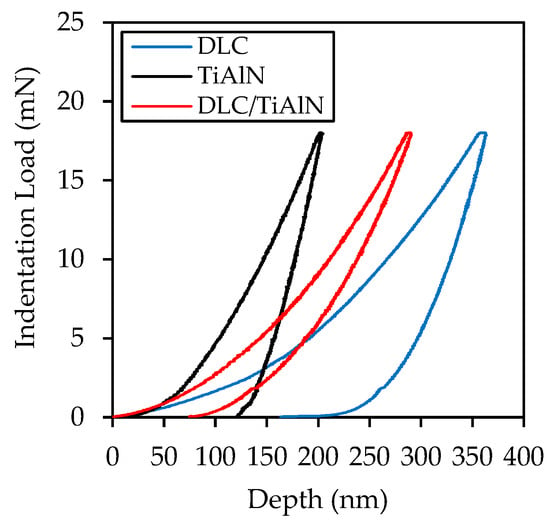
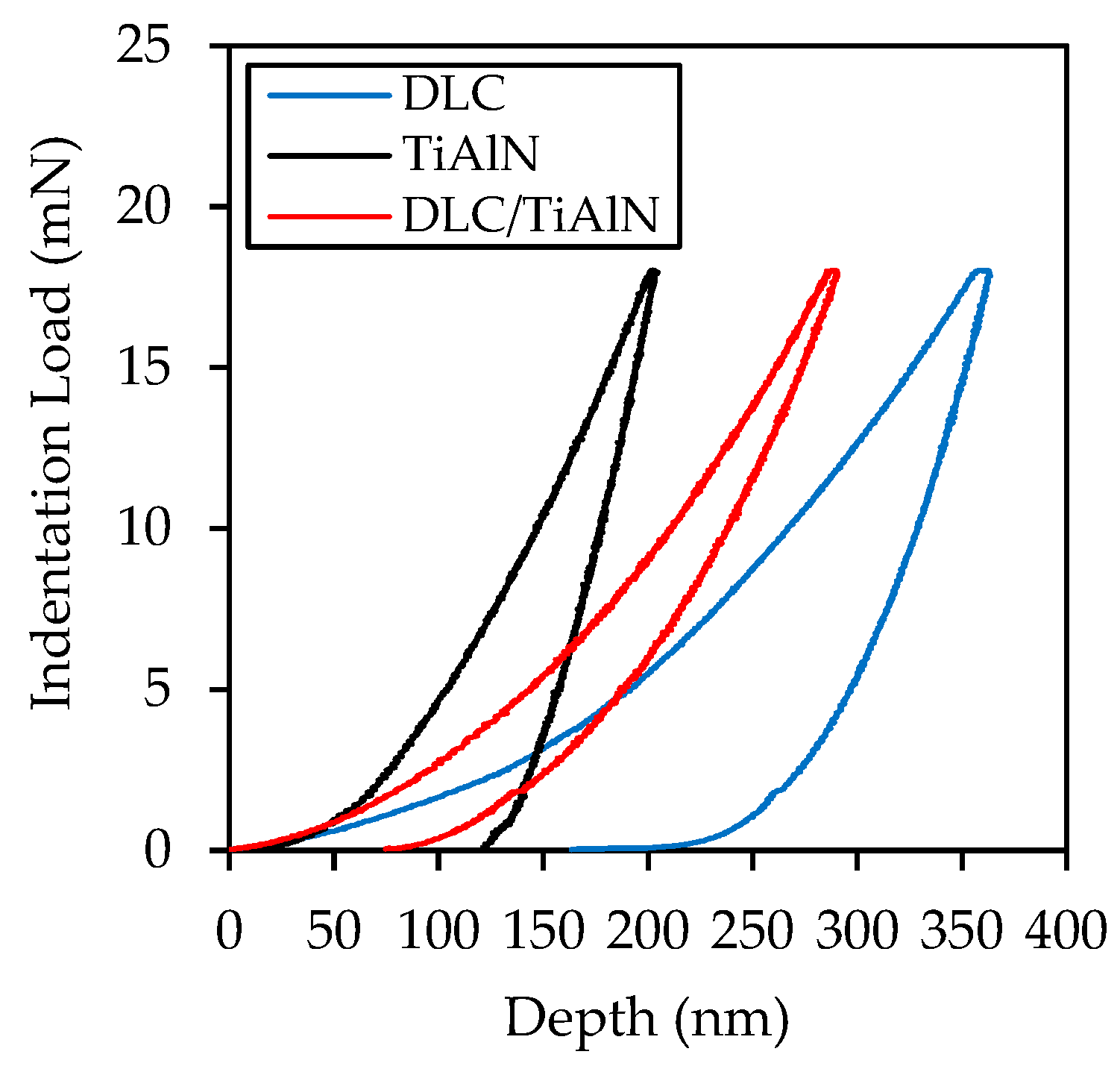
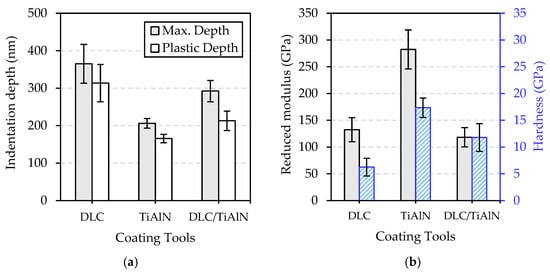
Figure 1 and Figure 2 provide a comprehensive mechanical characterization of TiAlN, DLC, and multilayered DLC/TiAlN coatings through nanoindentation, a high-precision technique that records load–displacement (P–δ) data to derive material properties [25]. As shown in Figure 1, under a peak load of 18 mN, the TiAlN coating exhibits the highest resistance to penetration with a maximum depth of approximately 205 nm, followed by the DLC/TiAlN coating at ~290 nm, and finally the DLC at ~360 nm. The P–δ curves provide a characteristic mechanical response of the material, where the loading slope indicates resistance to elastic–plastic deformation and the unloading slope is utilized to calculate the reduced elastic modulus (Er) [26]. Figure 2b confirms that TiAlN possesses the highest hardness (~17 GPa) and reduced modulus (~280 GPa) of the group, whereas the multilayered DLC/TiAlN effectively doubles the hardness of the DLC layer (~12 GPa) by utilizing the structural support of the TiAlN sub-layer. The values in Figure 2b reflect a multilayer response of the coating and the underlying tool steel, potentially underestimating the true modulus of the thin films.
Figure 1.
Nanoindentation loading-unloading curves of DLC, TiAlN and DLC/TiAlN.
Figure 2.
Nanoindentation testing: (a) The average maximum and plastic depth; (b) The average reduced modulus and hardness.
Beyond basic hardness H and elastic modulus E values, these data are used to calculate the H/E ratio (resistance to elastic deformation) and the H3/E2 ratio (resistance to plastic deformation), which are vital indicators of wear resistance in tribological applications [27,28]. Based on Figure 2b, the TiAlN coating shows a high H/E ratio, explaining its effectiveness in high-heat machining where resistance to deformation is paramount [29]. In contrast, the DLC/TiAlN coating is designed to optimize these ratios by combining the hardness of TiAlN with the extremely low friction of the DLC film. Evaluation of the curves in Figure 1 shows that the DLC/TiAlN coating has a smaller plastic depth (unloading curve ends at ~210 nm) relative to its maximum depth than the single DLC layer, indicating that the multilayered coating significantly improves the load-bearing capacity and limits permanent deformation [28]. Furthermore, the larger plastic depth of pure DLC indicates higher energy absorption through deformation, which is mitigated by the TiAlN base layer to maintain surface integrity [26,27].
The synergy of the multilayered coating is further highlighted by the surface morphology and adhesion properties evaluated in related sources. While a DLC coating can suffer from poor adhesion on crystalline TiAlN due to property mismatch, the use of substrate bias can refine the DLC structure from large clusters to a smooth, fine morphology that enhances interfacial strength [30]. This improved adhesion is critical because, as shown in Figure 2a, the larger plastic depth of DLC-based coatings indicates higher energy absorption through deformation. By pairing this with a TiAlN base layer, the coating suppresses the formation of built-up edge (BUE) and maintains a “glossy” surface finish, particularly when machining soft, ductile materials like Al6061 [26]. Ultimately, while TiAlN remains the hardest material, the DLC/TiAlN system provides a superior balance of mechanical toughness and self-lubrication for extended tool life [22,28].
The reduced modulus Er is described by the following relationship:
where Es is the Young’s modulus of the test coating specimen (s), and v is Poisson’s ratio. For a diamond indenter (i) tip, Ei is 1140 GPa, and vi is 0.07.
Equation (1) defines the relationship used to calculate the reduced elastic modulus (Er), which accounts for the elastic deformation of both the coating specimen and the diamond indenter. This value is critical for deriving the H/E ratio (resistance to elastic deformation) and the H3/E2 ratio (resistance to plastic deformation), which are superior indicators for predicting tool wear [31,32]. A high H/E ratio, characteristic of TiAlN-based systems, signifies a high capacity for elastic energy dissipation, which prevents brittle fracture during high-heat machining [33,34]. By optimizing these H/E ratios, the DLC/TiAlN coating balances the hardness of the TiAlN interlayer with the low friction of the DLC top layer. This calculation is foundational for understanding how the multilayer DLC/TiAlN structure maintains dimensional accuracy by resisting tool wear degradation under severe contact pressures [21].
Table 4 presents the quantitative results from nanoindentation tests. TiAlN recorded the highest hardness (17.345 GPa) and reduced modulus (282.423 GPa), while pure DLC showed a hardness of 6.254 GPa. Notably, the multilayer DLC/TiAlN system nearly doubles the hardness of the DLC layer to 11.798 GPa. This synergy occurs because the TiAlN sub-layer provides a rigid, load-bearing foundation that prevents the indenter from “sinking” into the relatively soft DLC film. The plastic depth for the multilayer (213.0 nm) is significantly lower than that for pure DLC (313.6 nm), indicating improved resistance to permanent deformation under a peak load of 18.03 mN. These measurements confirm that the TiAlN interlayer bridges the mechanical mismatch between the substrate and the DLC, enhancing the overall toughness of the DLC/TiAlN coating system [15,21].
Table 4.
Nanoindentation measurements of DLC, TiAlN, and DLC/TiAlN.
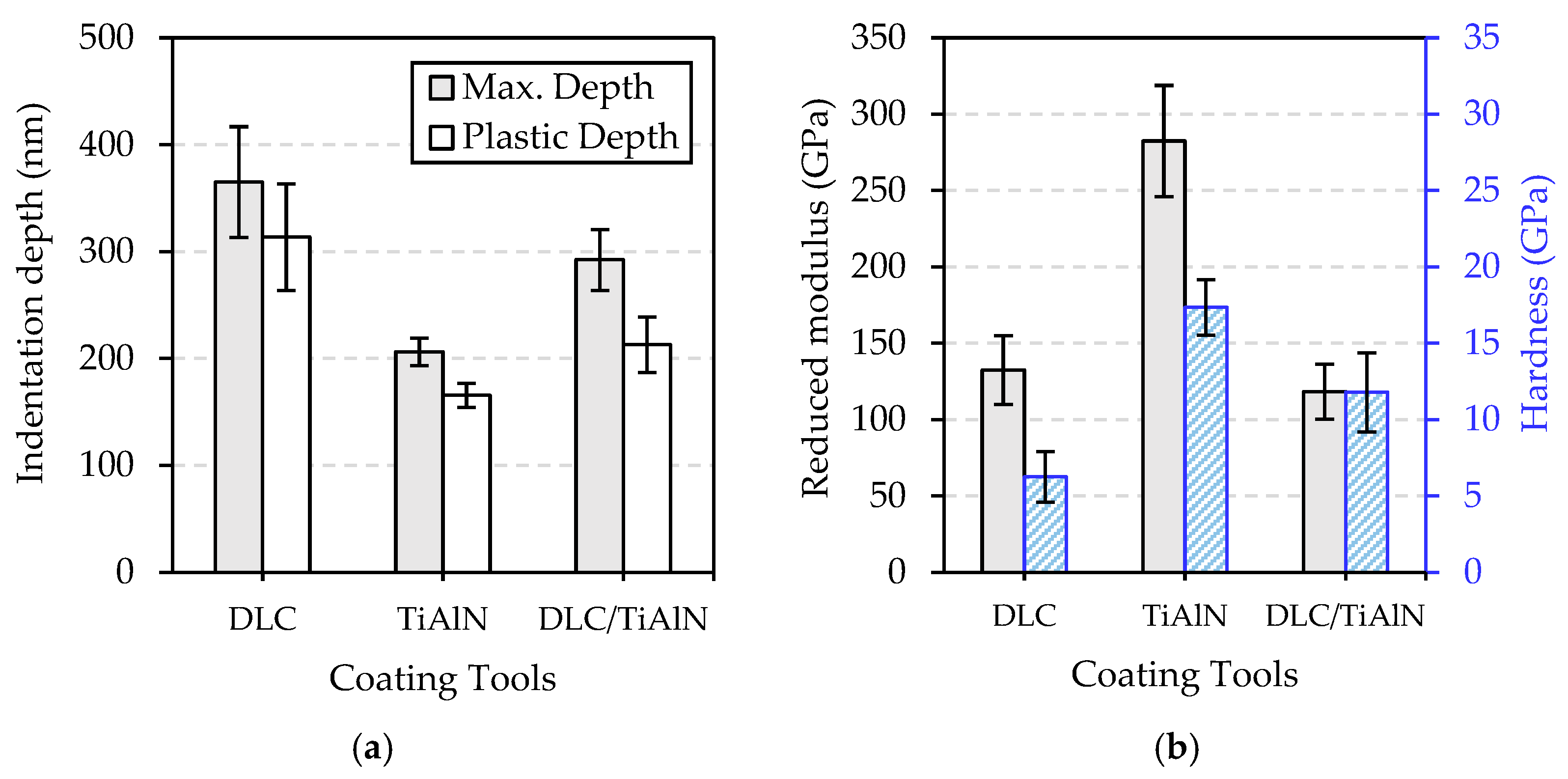
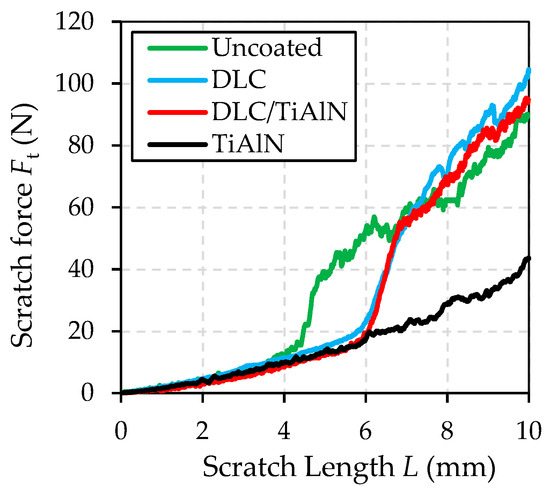
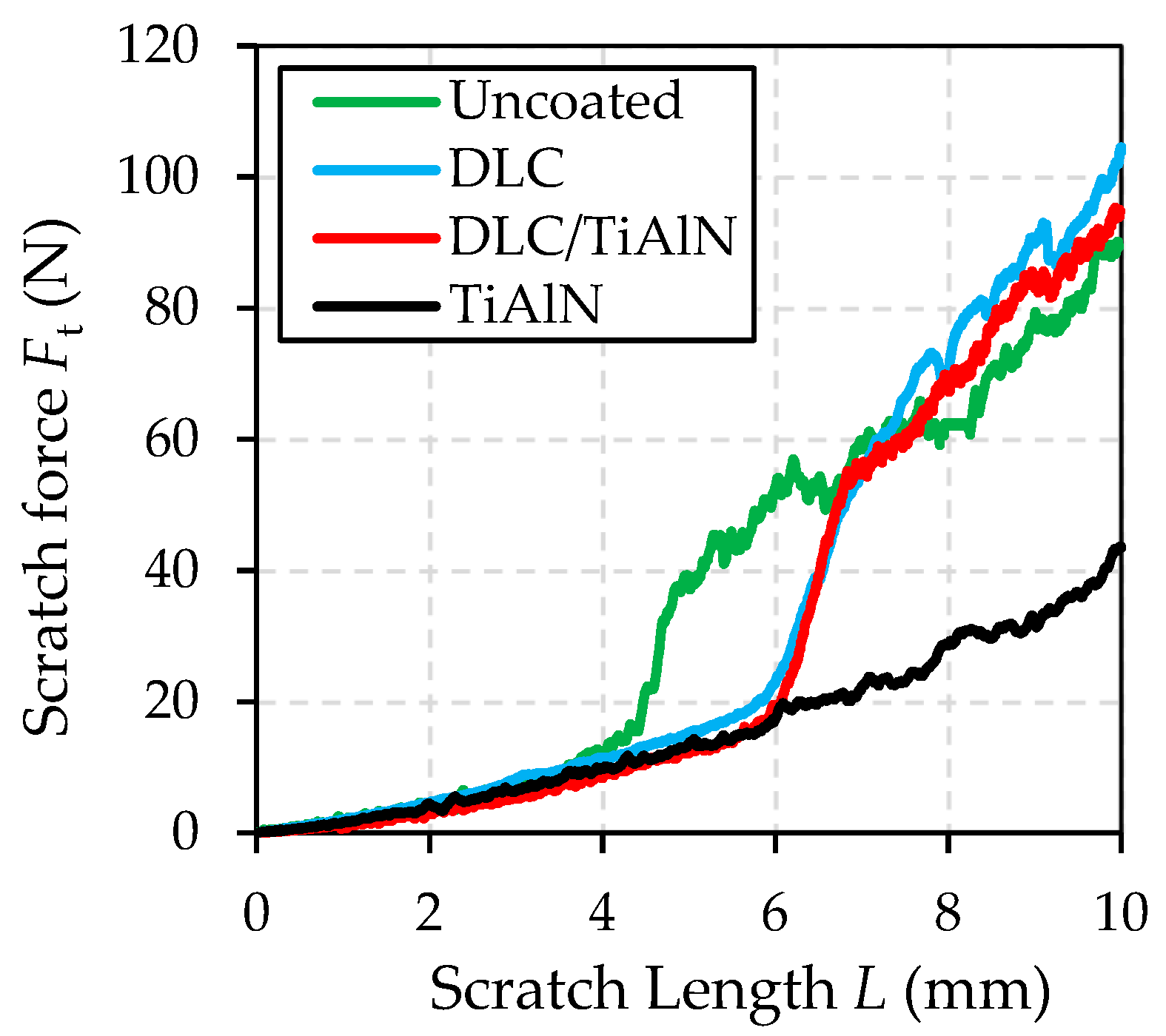
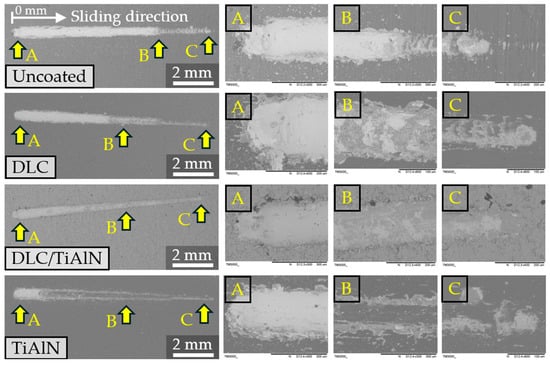
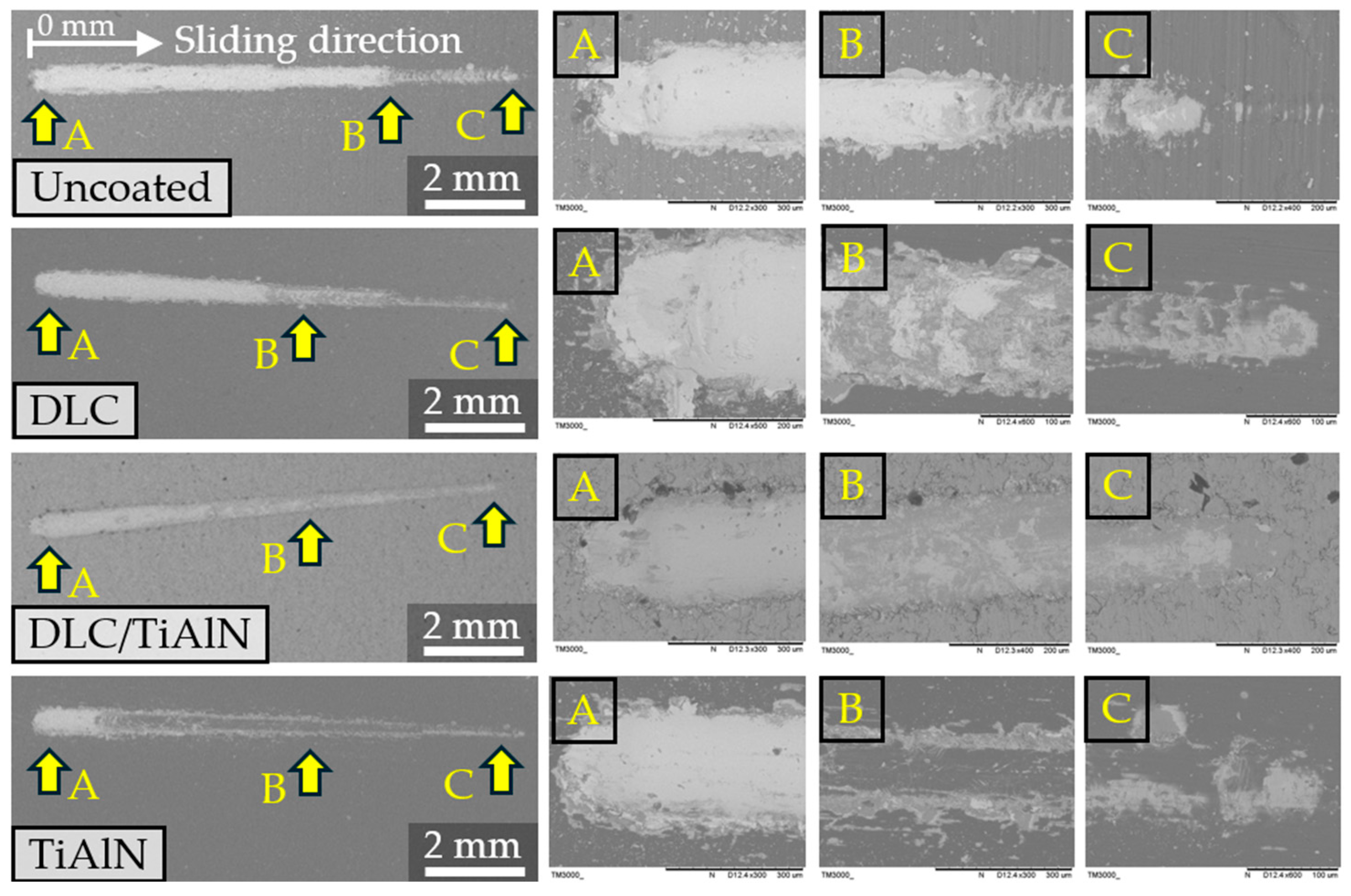
Figure 3 and Figure 4 evaluate the scratch adhesion strength and coating failure behavior across a 10 mm sliding distance under a progressively increasing normal load. As shown in Figure 3, the scratch force Ft for all samples increases monotonically with sliding length. Up to a scratch length of approximately 5.5 mm (Ft ≈ 20 N), the multilayer DLC/TiAlN coating system demonstrates a smooth and stable force curve with minimal fluctuations, indicating cohesive resistance prior to major failure. In contrast, the uncoated substrate exhibits a sharp force transition much earlier, at L ≈ 4 mm. Beyond 6 mm, both single-layer DLC and multilayer DLC/TiAlN experience a pronounced increase in scratch force up to 90–100 N, corresponding to the onset of severe substrate exposure and severe plastic deformation. This force behavior is directly confirmed by the SEM scratch track observations in Figure 4. At initial contact (Location A), the DLC/TiAlN system exhibits a smooth track with negligible debris, whereas the single-layer coatings show early micro-cracking. In the intermediate regime (Location B, near the transition at 5.5–6 mm), the TiAlN interlayer effectively delays adhesive failure by providing robust load-bearing support for the top DLC layer [30]. Under severe loading conditions (Location C), while delamination and substrate exposure occur across all coatings, the DLC/TiAlN system demonstrates a reduced spallation width and a more contained failure zone compared to single-layer DLC. The HiPIMS-deposited TiAlN interlayer, refined via substrate biasing to form a dense morphology, suppresses catastrophic interfacial peeling [35]. These scratch adhesion strength measurements and coating failure observations predict coating durability under high lateral sliding forces encountered in dry friction machining conditions [36], especially when sliding against hard, abrasive materials such as steel alloys.
Figure 3.
Measured scratch forces of DLC, TiAlN and DLC/TiAlN with respect to sliding distance.
Figure 4.
Coating delamination observations of DLC, TiAlN and DLC/TiAlN with respect to 10 mm sliding distance. The letters (A), (B), and (C) indicate the locations of the corresponding images.
3.2. Structural and Morphological Characterization of Coated Tools
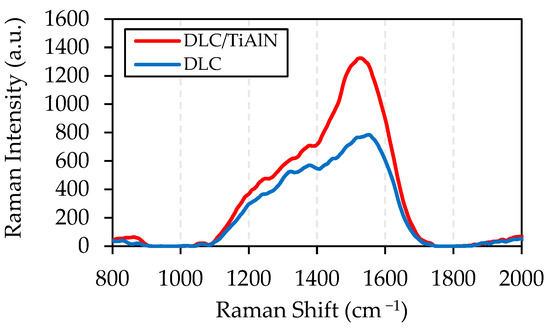
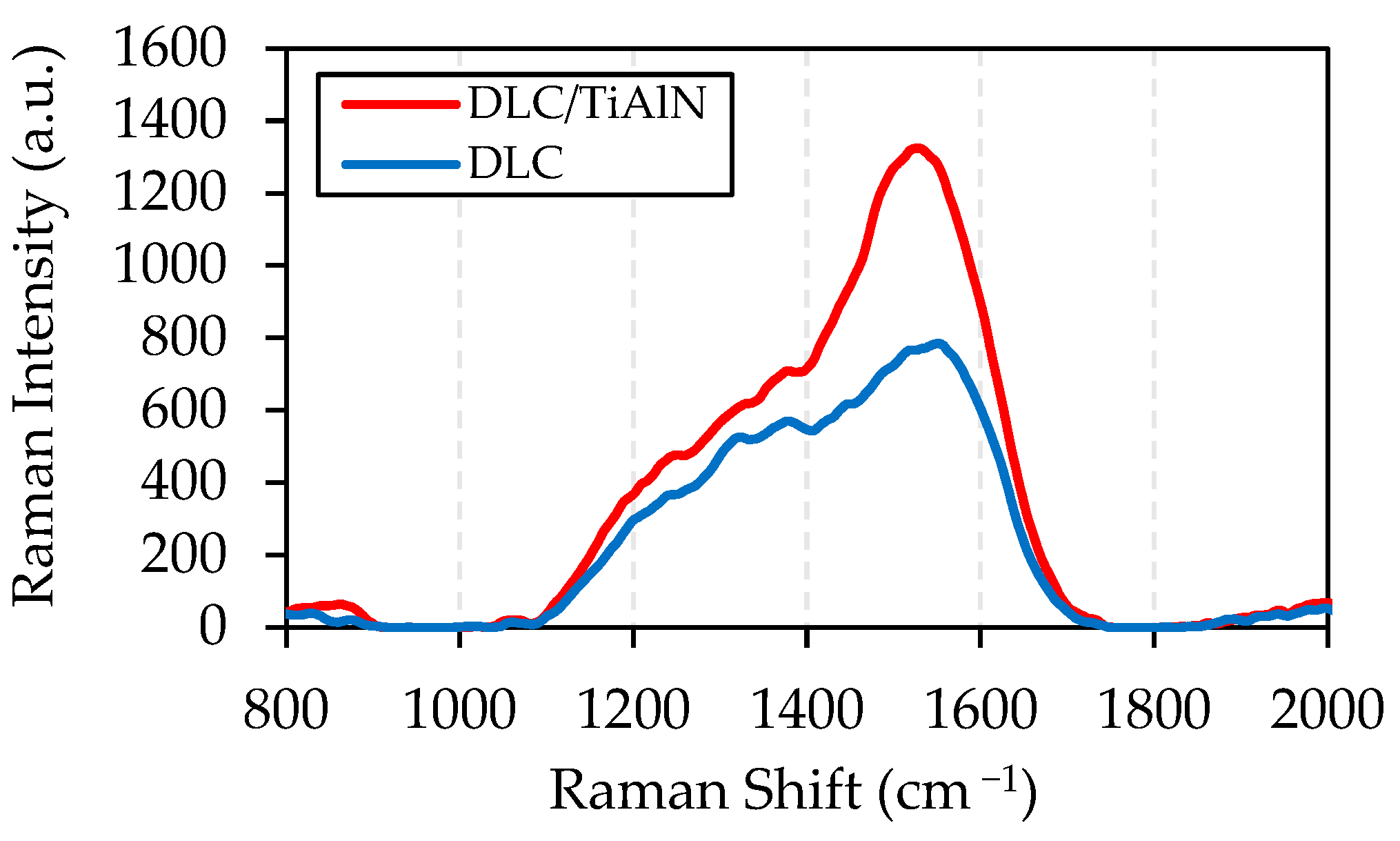
Figure 5 displays the Raman spectra for both single-layer DLC and multilayer DLC/TiAlN coatings in the range of 800–2000 cm−1. Both spectra exhibit the characteristic asymmetric broad band comprising the disordered (D band) shoulder centered around ~1350 cm−1 and the graphitic (G band) peak centered around ~1540–1560 cm−1, confirming the successful synthesis of amorphous carbon structures. The relative intensity and positioning of these bands reflect the ratio of sp3 (diamond-like) to sp2 (graphite-like) carbon hybridization. While the high concentration of sp3 bonding imparts superior mechanical hardness and wear resistance, the sp2 phase facilitates low shear strength and self-lubricating behavior during sliding contact. The prominent G-band intensity in both configurations highlights an effective solid lubrication mechanism that mitigates frictional heating and reduces cutting forces during dry friction turning operations (Figure 11). This low-friction surface prevents adhesive material transfer [37,38], significantly suppressing built-up edge (BUE) formation during the dry friction turning of brittle and soft workpiece materials such as steel and aluminum alloys (Figure 13 and Figure 14). Notably, the DLC/TiAlN multilayer system exhibits a distinctly higher overall Raman scattering intensity compared to the single-layer DLC, indicating high structural quality and minimal defect density in the top DLC layer when grown over the TiAlN interlayer. Combined with the increased total coating thickness (~6 µm), which provides critical load-bearing support and thermal barrier protection [39], the DLC/TiAlN coating system demonstrates superior synergy between top-layer lubricity and sub-layer structural integrity against severe wear degradation.
Figure 5.
Raman analysis of DLC, DLC/TiAlN, and DLC coatings.
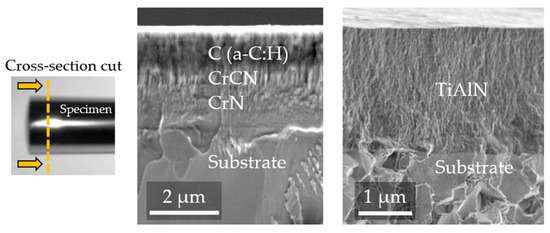
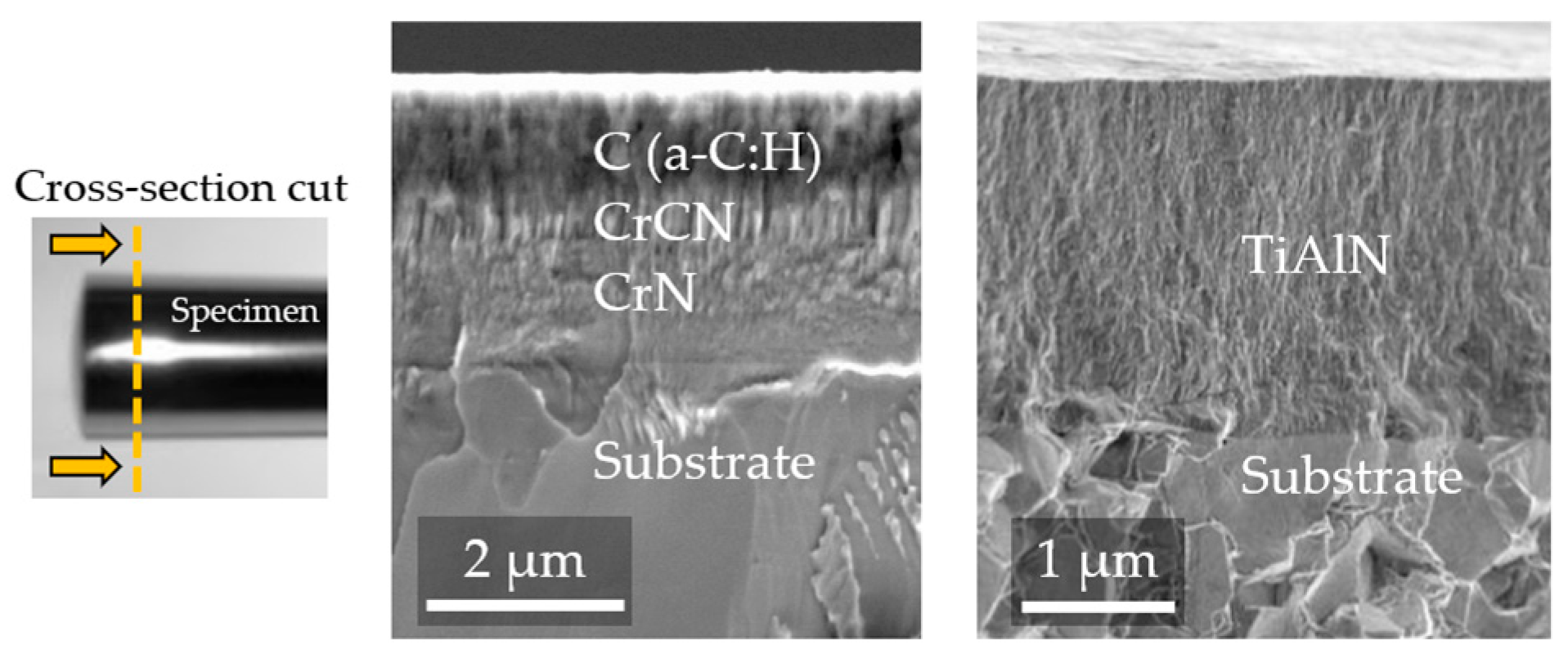
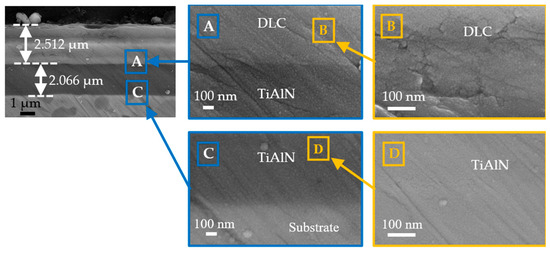
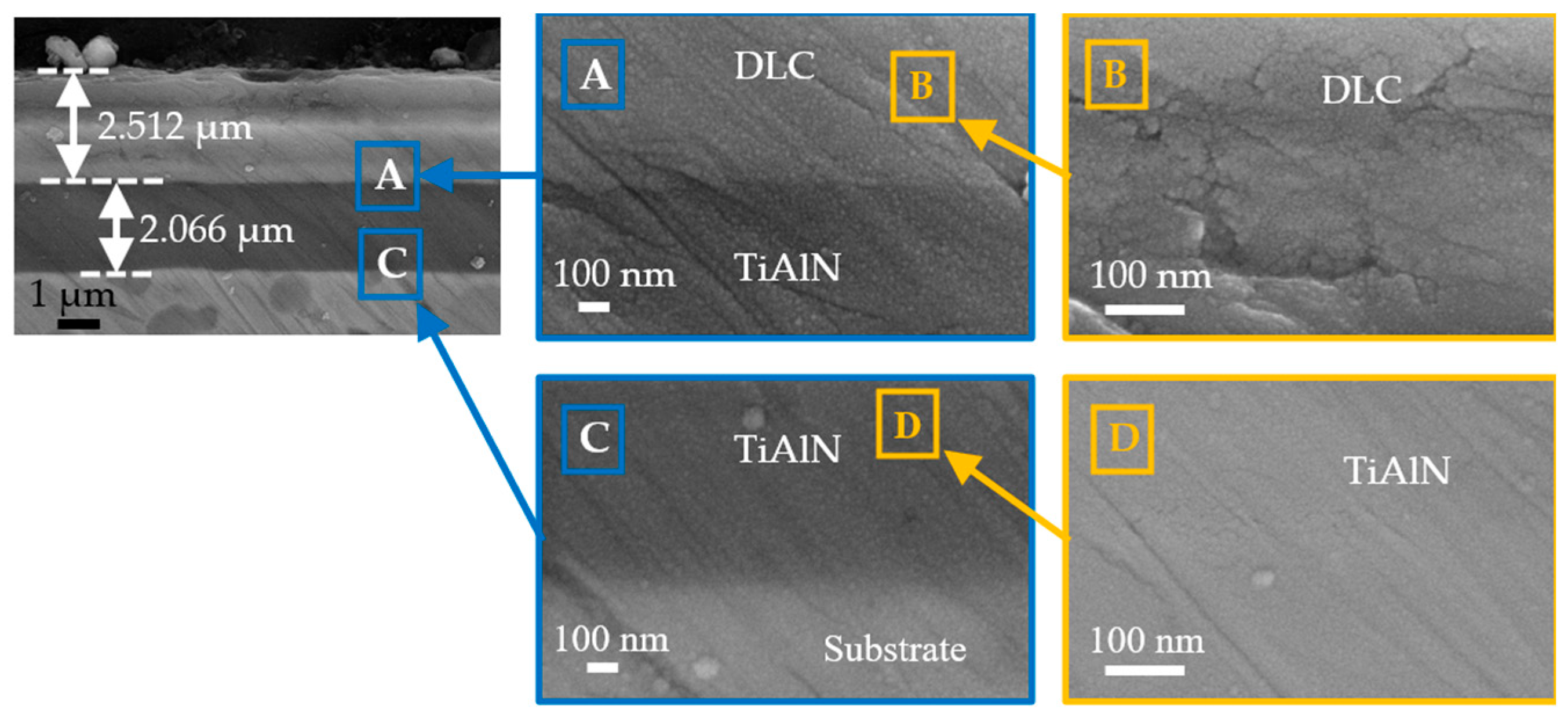
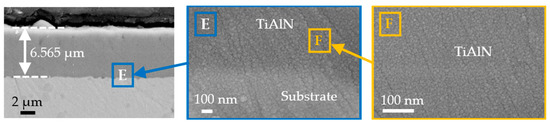
Figure 6, Figure 7 and Figure 8 display the cross-sectional views of the DLC/TiAlN and TiAlN coatings. Figure 7 shows the distinct multilayer design with a total thickness of 6 µm, while Figure 8 shows the single TiAlN reference layer with a thickness of 3 µm. The TiAlN layer has a dense, column-like grain structure. This structure gives the tool the high vertical strength and heat resistance needed to handle heavy loads during dry friction cutting operations [40]. In contrast, the DLC layer looks more disordered or clustered. This visual evidence demonstrates that the interlayer design strategy was effective: the heat-resistant TiAlN interlayer protects the underlying tool substrate while supporting the low-friction DLC outer layer [19]. Using these middle layers is very important because they prevent the tool from breaking early due to large differences in hardness and expansion between carbon films and tool steel [20]. Implementing such intermediate layers is critical for mitigating shear stresses and preventing premature delamination caused by severe property mismatches between carbon-based films and tool steel substrates [41,42].
Figure 6.
Cross-sectional images of the DLC/TiAlN and TiAlN coatings.
Figure 7.
Thickness measurement and microstructure of the DLC with interlayer TiAlN coating. The letters (A), (B), (C) and (D) indicate the locations of the corresponding images.
Figure 8.
Thickness measurement and microstructure of the TiAlN coating. The letters (E) and (F) indicate the locations of the corresponding images.
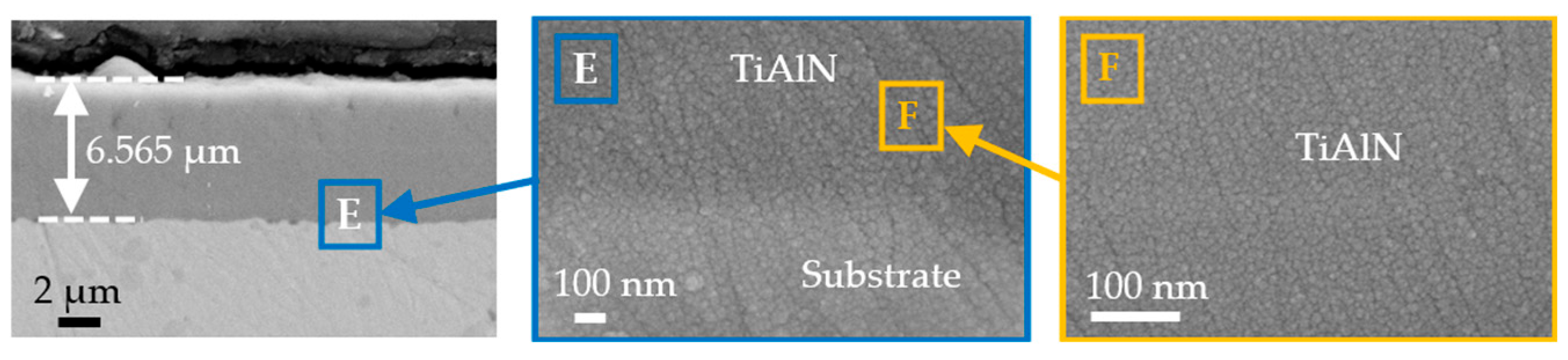
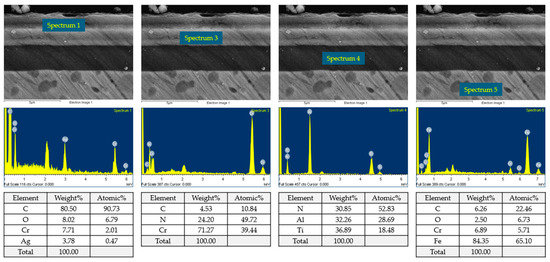
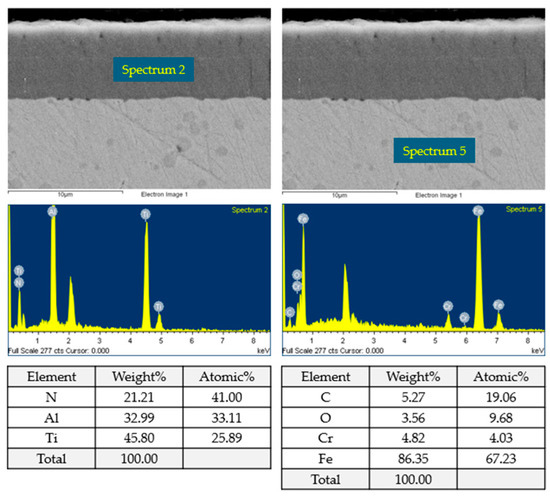
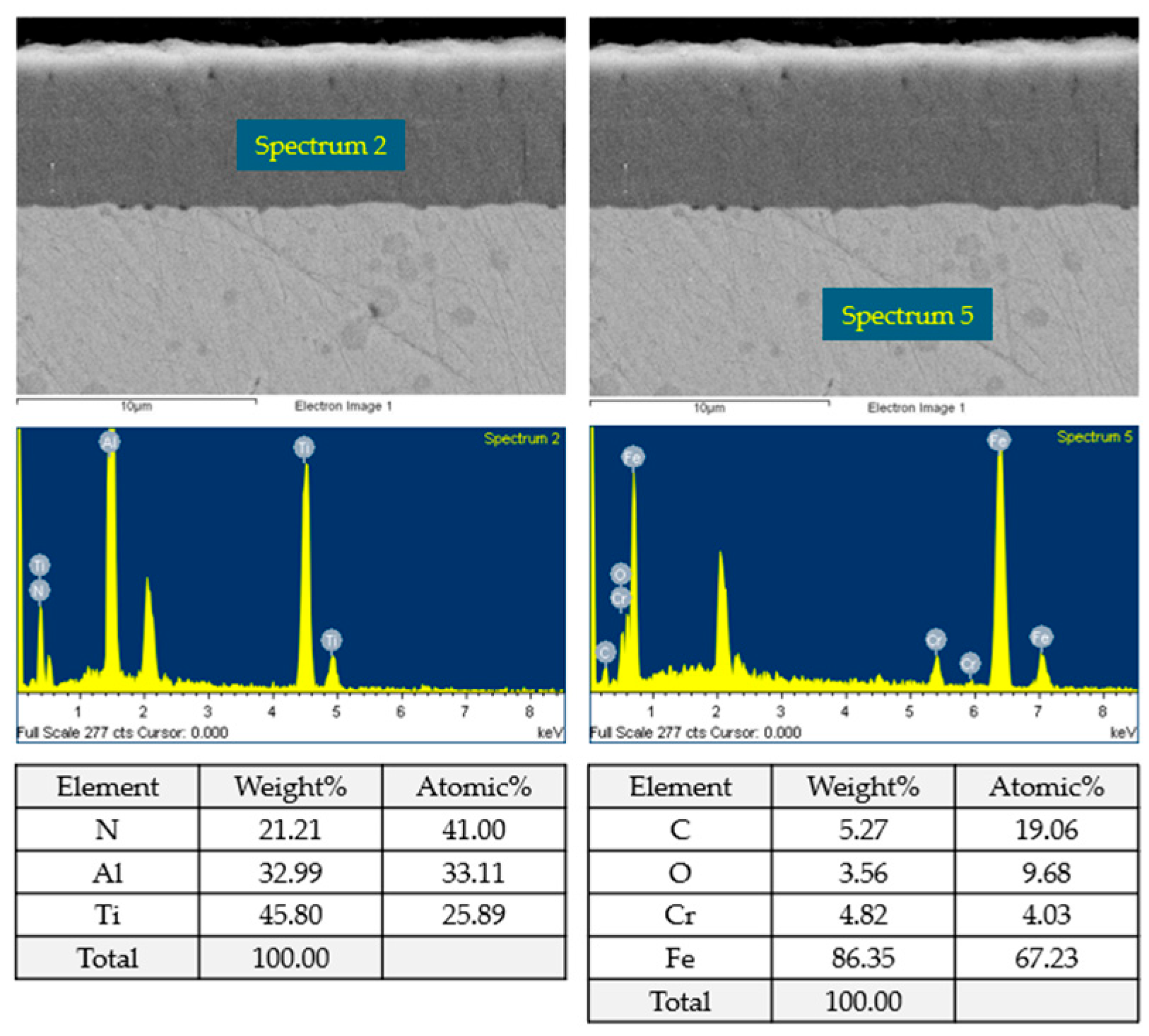
The elemental distributions across the coating cross-sections, analyzed via SEM-EDS, are illustrated in Figure 9 and Figure 10. For the DLC/TiAlN coating (Figure 9), a well-defined carbon-rich zone is clearly identified at the outermost surface, followed by a subsequent zone concentrated with titanium and aluminum. This sharp elemental transition confirms a clean interface and the absence of detrimental interdiffusion into the substrate, which could otherwise induce premature chemical degradation and weaken the tool matrix [43]. Meanwhile, the high aluminum concentration detected within the TiAlN layer (Figure 10) plays an important role during dry friction cutting. The high aluminum content in the TiAlN layer facilitates the dynamic formation of a passive protective alumina (Al2O3) scale at elevated temperatures, which significantly enhances oxidation and wear resistance [12]. Furthermore, this aluminum oxide acts as a barrier that slows chemical wear and stops heat from sinking into the tool [44]. Overall, the elemental analysis provides chemical validation for the observed mechanical and tribological performance of the test DLC coatings, proving that the multi-component architecture successfully distributes contact stresses and shields the tool substrate from excessive plastic deformation [45].
Figure 9.
SEM-EDS results for the DLC with interlayer TiAlN coating.
Figure 10.
SEM-EDS results for the TiAlN coating.
3.3. Tribological Performance and Wear Resistance of Coated Tools in CNC Machining
Figure 11 shows the analysis of machining performance for Al6061 (soft-ductile) and AISI 4340 (hard-brittle) across three performance indicators: cutting force, cutting temperature, and workpiece surface roughness. The data evaluate these materials under three distinct tool coatings (uncoated, TiAlN-coated, and DLC/TiAlN-coated tools). A consistent trend emerges in which the steel alloy, AISI 4340, represents a more challenging machining environment than the aluminum alloy, Al6061, though both benefit significantly from the multilayered DLC/TiAlN coatings. The DLC/TiAlN-coated tools achieve the lowest cutting forces (~33.5–35 N) and interface temperatures. The DLC layer acts as a solid lubricant, reducing the mechanical stress and heat generated at the tool–chip interface. Critically, the surface roughness (Ra) is minimized to ~1.25 µm for Al6061, with significantly tighter error bars compared to uncoated tools. This stabilization indicates the successful suppression of built-up edge (BUE) formation. In softer, ductile materials like Al6061, BUE occurs when chips weld to the tool and subsequently detach, creating an unstable machining process and leaving a rough finish. The anti-adhesive properties of DLC prevent this “welding” effect, ensuring a more repeatable and high-quality finish while protecting the tool from adhesive pull-out [46,47].
Figure 11.
Measurement of (a) cutting force and (b) cutting temperature during machining, and (c) surface roughness of workpiece after machining.
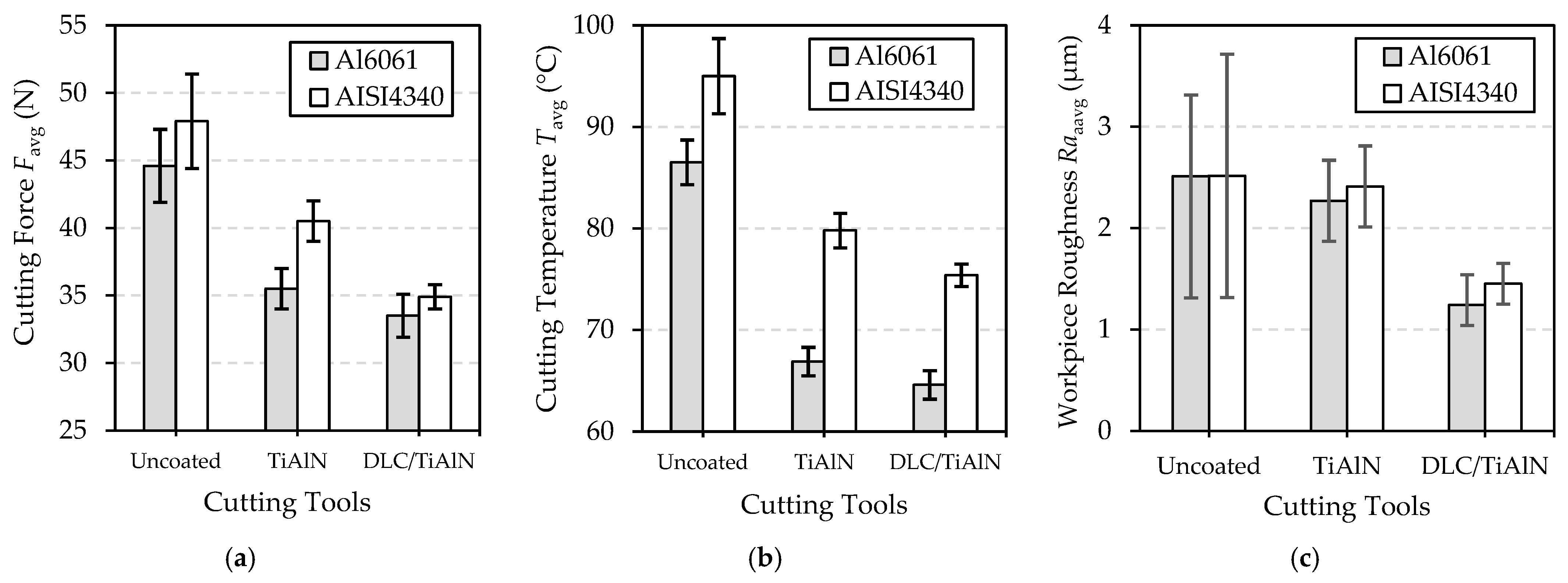
The AISI 4340 requires higher average cutting forces (Favg) than Al6061 across all tool coatings, indicating a higher inherent resistance to machining. For uncoated tools, AISI 4340 generates peak forces of approximately 48 N, compared to ~45 N for Al6061. The application of coatings successfully reduces these cutting forces by minimizing the energy lost to friction at the tool–chip interface. The DLC/TiAlN-coated tools achieve the best results, lowering forces to ~35 N for AISI 4340 and ~33.5 N for Al6061. This improvement is due to the DLC layer’s exceptionally low coefficient of friction (typically 0.05–0.2), which acts as a solid lubricant, reducing the mechanical stress on the tool [21,48,49]. This reduction in frictional forces translates to less energy required for movement, improved durability, and resistance to wear and heat generation in components like stamping, forging, or cutting tools [50,51,52]. Additionally, reduced forces can extend tool life by minimizing wear and tear, as lower forces reduce the friction and heat generated during the cutting process [53].
In terms of cutting temperature (Tavg), AISI 4340 is machined at significantly higher temperatures than Al6061, peaking at ~95 °C with uncoated tools. This elevated heat can be detrimental, as higher temperatures generally accelerate tool wear and promote thermal softening, which decreases the material’s yield stress and can lead to instability [54]. Evaluation of the data shows that Al6061 experiences a more dramatic temperature drop when moving from uncoated (~87 °C) to DLC/TiAlN-coated tools (~65 °C) compared to the steel alloy. This suggests that the “slick” properties of DLC are particularly effective at reducing heat from the interface of softer, more adhesive materials like aluminum before it can build up at the cutting tool tip [55]. According to Fukui et al. (2004), these superior anti-adhesive properties and the coefficient of friction of the DLC top layer facilitate workpiece sliding movement during the cutting process, which lowers the tool/workpiece temperature and cutting force [56]. The reduction in forces can benefit the dry friction machining of alloy materials involved [57].
The effectiveness of the coating is evident in the workpiece roughness (Raavg). While both materials yield an average roughness of ~2.5 μm with uncoated tools, the error bars for AISI 4340 are notably larger, indicating high variance and machining instability. This instability is likely caused by the formation of a built-up edge (BUE), where chips weld to the tool surface and subsequently detach, leaving holes in the machined finish. The use of DLC/TiAlN coatings reduces workpiece roughness Ra for both alloys—reaching ~1.5 μm for AISI 4340 and ~1.25 μm for Al6061, while simultaneously tightening the error bars. This demonstrates that the coating not only produces a smoother finish but also provides a more repeatable and stable machining process by suppressing adhesive interactions [56,58]. The surface roughness is affected by cutting force, with lower forces resulting in less deformation and stress on the workpiece, which helps maintain its dimensional accuracy and surface finish [44].
The DLC/TiAlN multilayered coating is the superior choice for both materials. This coating system combines the toughness and thermal stability of a TiAlN base layer with the extremely low friction of a DLC top layer. The presence of aluminum in the coating composition plays a key role in inhibiting grain growth, leading to the formation of a continuous, adherent, and thermally stable alumina layer even at high temperatures [45]. For Al6061, these TiAlN and DLC coatings are important for preventing chip welding and achieving glossy surface finishes. For AISI 4340, they are essential for mitigating the high mechanical and thermal stresses that would otherwise lead to rapid tool degradation. In summary, while AISI 4340 remains harder to machine, the DLC coating significantly bridges the performance gap, enhancing the efficiency and quality of the manufacturing process.
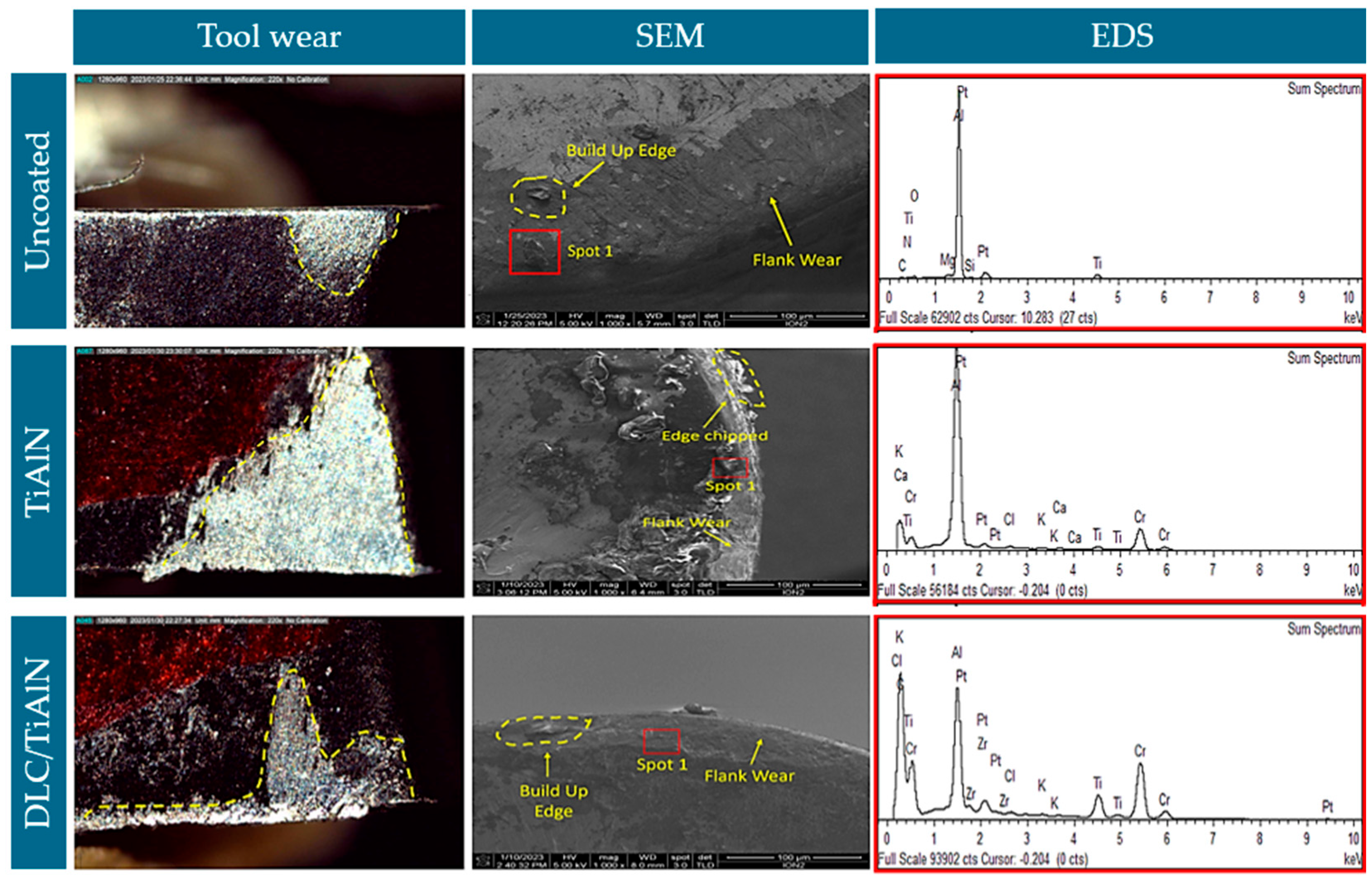
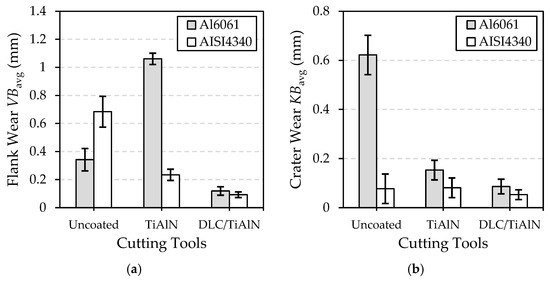
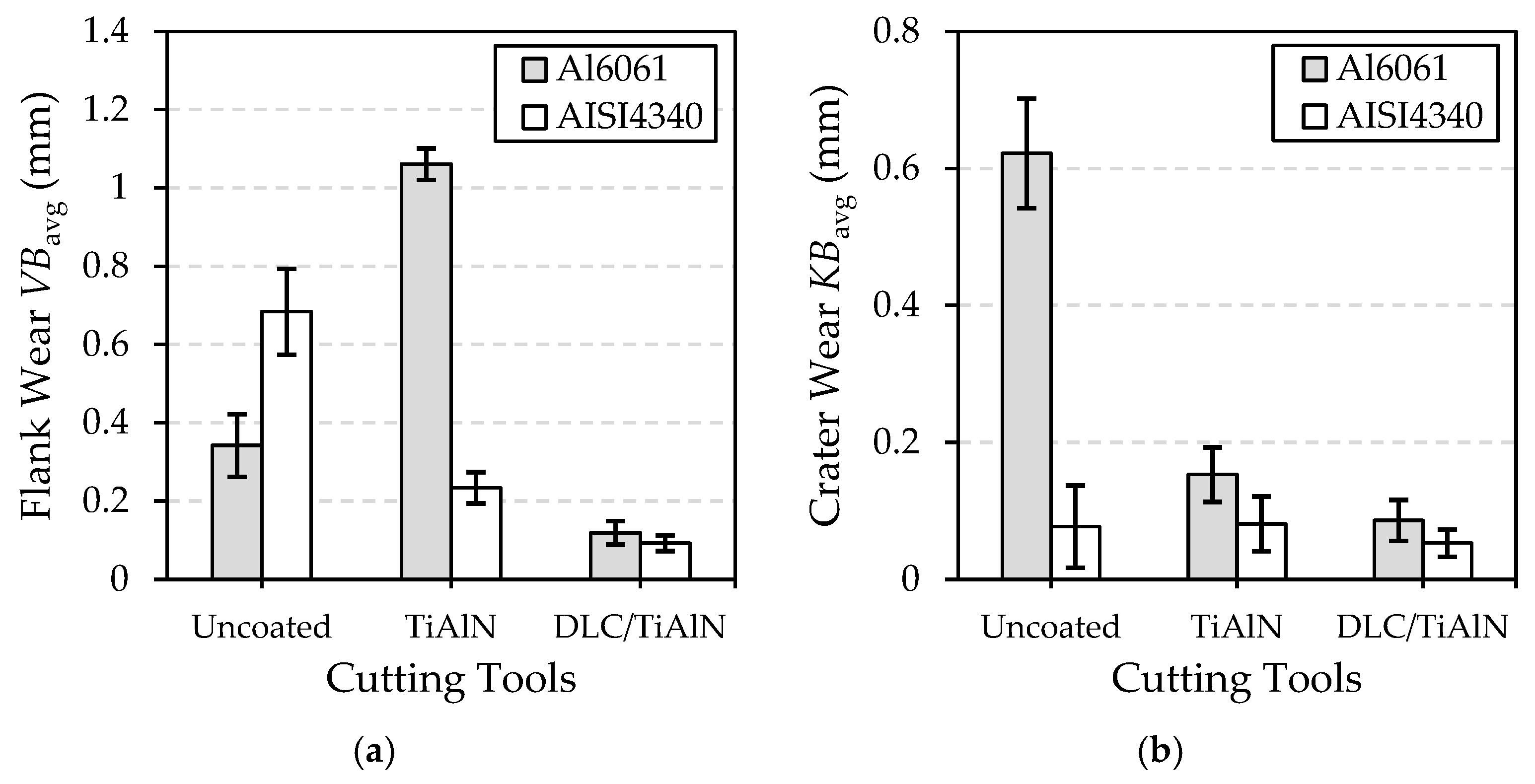
Figure 12 shows the measured flank wear and crater wear on each cutting tool, while Figure 13 and Figure 14 provide microscopic images of these measurements after lathe cutting of Al6061 and AISI4340. According to ISO 3685:1993, measurements of the average flank wear (VBavg) and average crater wear (KBavg) were carried out to classify the type of tool wear encountered after machining [59,60]. The results show that DLC/TiAlN coatings drastically reduce wear compared to uncoated and TiAlN-only tools. The reduction in crater wear is particularly pronounced because the lubricious DLC layer prevents high-speed chips from “scouring” the rake face [47]. This suggests that while TiAlN is harder, it lacks the chemical inertness of DLC, leading to higher adhesive wear when machining aluminum. The multilayer system bridges this gap, combining TiAlN’s hot hardness with DLC’s slickness to extend tool life significantly. These figures serve as primary evidence of the coating’s ability to maintain a sharp functional edge throughout the machining cycle [36,48].
Figure 12.
Measured cutting tool wear: (a) Flank wear VBavg; (b) Crater wear KBavg. Tool wear indicators according to ISO 3685:1993 [58].
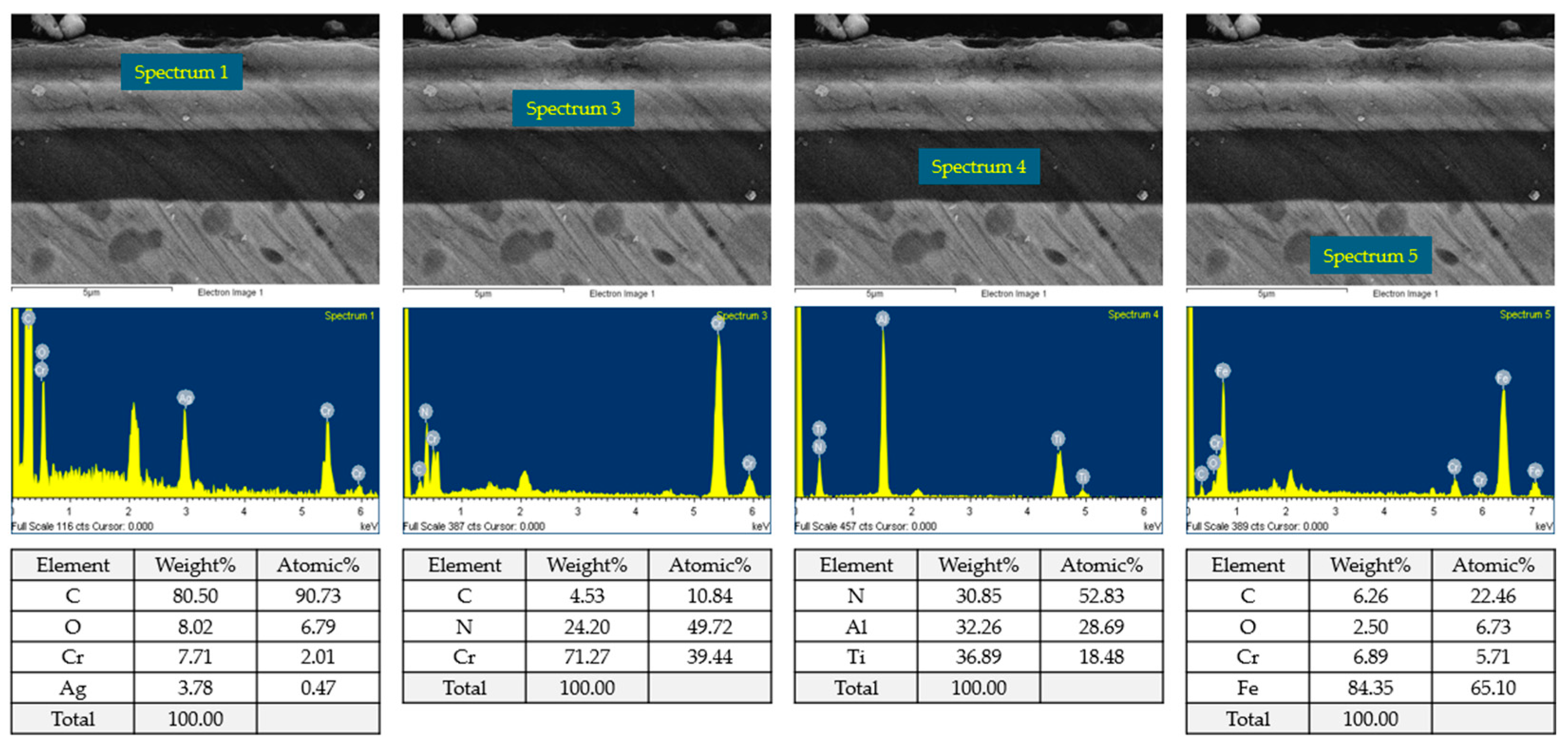
The SEM-EDS analysis shown in Figure 13 and Figure 14 displays the tool wear conditions and chemical composition of uncoated, TiAlN-coated, and multilayered DLC/TiAlN-coated cutting tools after machining two materials: AISI 4340 steel alloy and Al6061 aluminum alloy. As seen in Figure 13, when cutting AISI 4340 steel, the tools primarily exhibit flank wear, edge chipping, and built-up edge (BUE) formation. The uncoated tool displays noticeable flank wear alongside built-up edge formation near the cutting zone. The single-layer TiAlN-coated tool shows edge chipping along with flank wear. In contrast, the multilayered DLC/TiAlN tool effectively minimizes severe edge degradation, maintaining its structural integrity with reduced flank wear despite minor built-up edge accumulation. As shown in Figure 14, during the machining of Al6061 aluminum alloy, the predominant wear mechanisms shift toward crater wear, coating delamination, and tool tip fracturing [49]. The uncoated tool experiences catastrophic tip fracture and extensive crater wear on the rake face. The single-layer TiAlN coating undergoes coating delamination accompanied by severe crater wear and flank wear. The multilayered DLC/TiAlN-coated tool demonstrates superior wear resistance, showing only mild crater wear on the tool surface without catastrophic tip failure or coating peeling. These SEM-EDS findings show that choosing the right coating depends entirely on the type of metal being cut and the main reason for tool failure [50,51,52]. Higher strength materials require hard coatings with high hot hardness and heat protection, like DLC/TiAlN, to handle extreme temperatures [26]. On the other hand, soft alloys like aluminum require low friction and high chemical resistance, which the outer DLC layer provides to stop severe coating delamination and tool tip degradation [50]. By combining a strong TiAlN interlayer with a slippery DLC top layer, the tool gains both heat strength and anti-stick properties, making it highly effective for cutting different types of metal alloys [26].
Figure 13.
Measured tool wear and SEM-EDS analysis on uncoated, TiAlN and DLC/TiAlN coated tools after the lathe cutting of AISI4340 steel alloy.
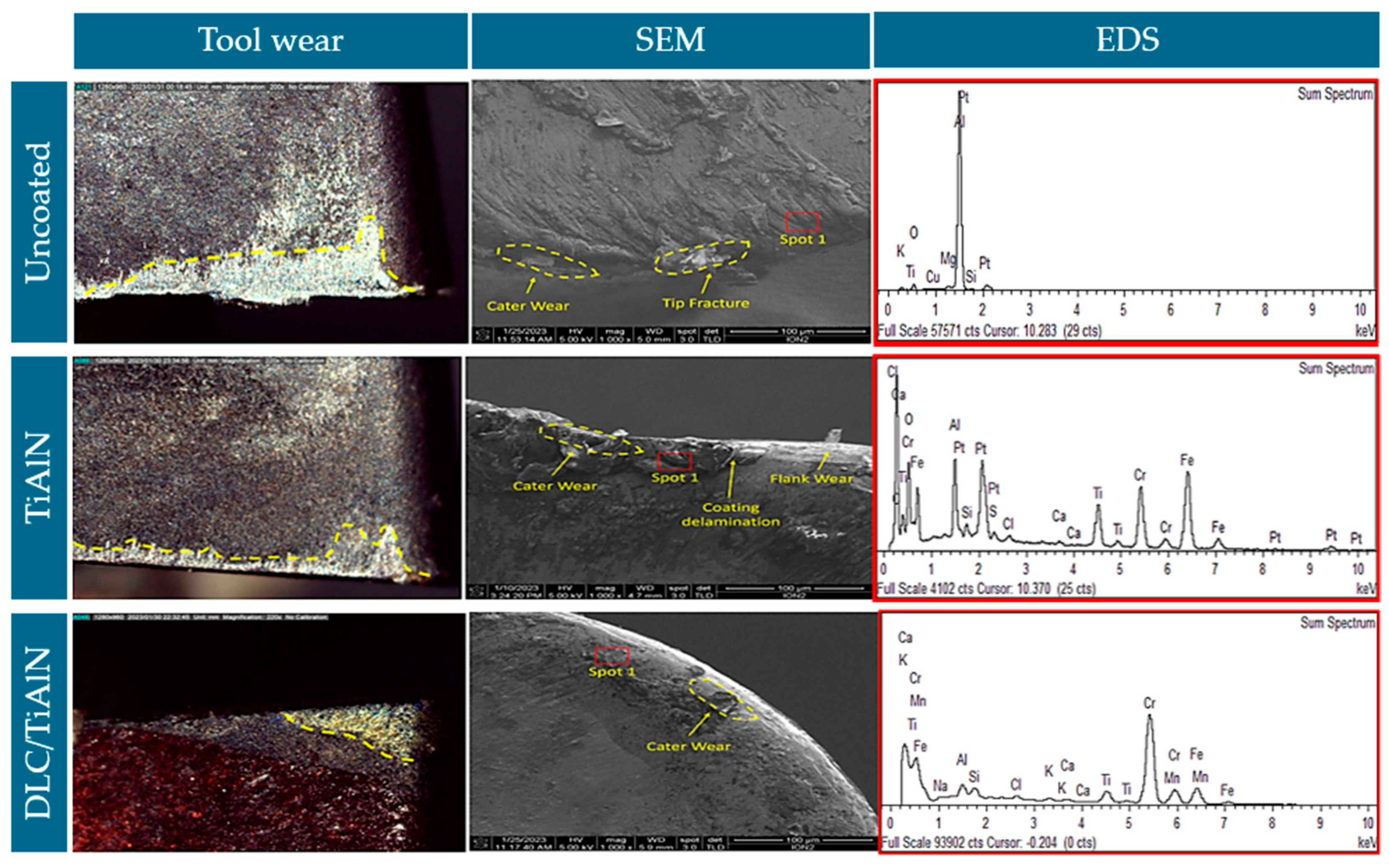
Figure 14.
Measured tool wear and SEM-EDS analysis on uncoated, TiAlN and DLC/TiAlN coated tools after the lathe cutting of Al6061 aluminum alloy.
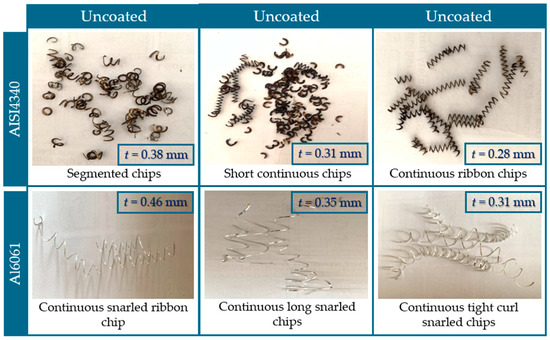
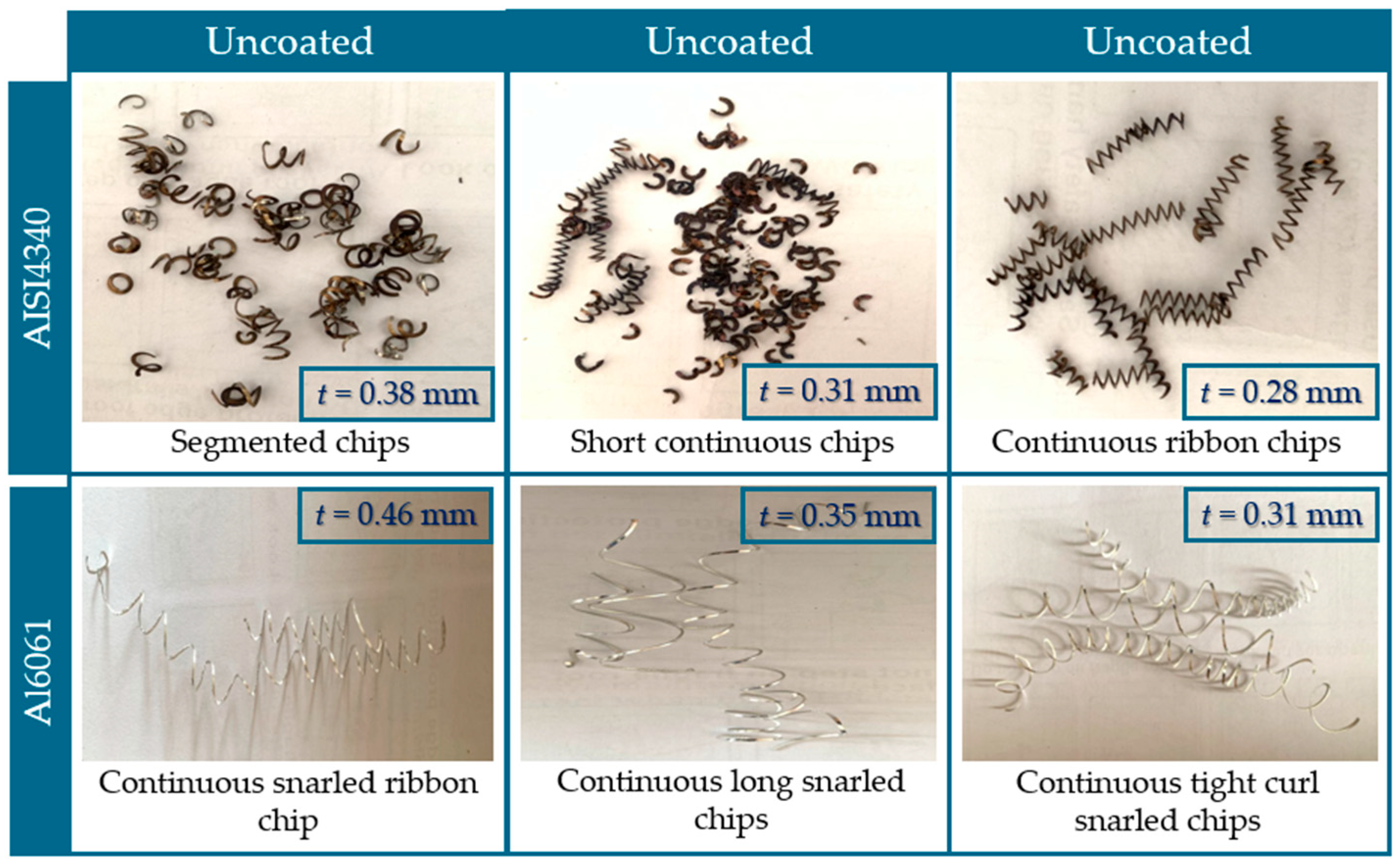
As illustrated in Figure 15, the dry friction CNC turning results demonstrate a direct structural correlation between chip morphology, chip thickness t, and the overall machining performance (cutting force, cutting temperature, workpiece surface roughness, and tool wear) across both workpieces under varying tool coating conditions. For the hard-brittle AISI 4340 steel, the machining progression transitions from segmented chips (t = 0.38 mm) with uncoated tools to short continuous chips (t = 0.31 mm) with TiAlN, and finally to thin, continuous ribbon chips (t = 0.28 mm) with the multilayered DLC/TiAlN-coated tool. Meanwhile, the soft-ductile Al6061 exhibits continuous snarled ribbon chips (t = 0.46 mm) under uncoated conditions, which are refined into tighter, less snarled curled chips (t = 0.31 mm) with the DLC/TiAlN coating [61]. A critical analysis reveals that the systematic reduction in chip thickness directly indicates a lower chip compression ratio and reduced plastic shear deformation, which inherently decreases shear energy dissipation [62]. The ultra-low coefficient of friction offered by the solid lubricating top DLC layer, combined with the high thermal stability and load-bearing capacity of the underlying TiAlN interlayer, substantially mitigates secondary shear zone friction at the tool–chip interface [63]. Consequently, the DLC/TiAlN-coated tool generates the lowest cutting forces and cutting temperatures, effectively inhibiting adhesion and built-up edge (BUE) formation on ductile Al6061 and severe abrasive and thermal cratering on hard AISI 4340 [64]. This significant reduction in thermomechanical stress directly protects the tool edge against premature flank and crater wear, thereby producing a superior workpiece surface finish with minimal surface roughness [63,65].
Figure 15.
SEM-EDS analysis of coated tools after lathe cutting of AISI4340 and Al6061.
Furthermore, the nanoindentation (Figure 3) and scratch test evaluations (Figure 4) demonstrate that the dense, columnar TiAlN interlayer effectively bridges the severe mechanical and thermal property mismatches between the top amorphous carbon film and the tool steel substrate. This microstructural optimization substantially enhances overall oxidation and wear resistance, as validated by SEM observations (Figure 7) and EDS chemical analysis (Figure 9). By providing a robust, highly adhesive foundation, the underlying TiAlN layer prevents premature coating delamination and enables the low-friction DLC surface to perform optimally under the severe, unlubricated tribological environment of dry CNC turning. Specifically, tailoring the dense TiAlN sub-layer via bias–frequency coupled arc deposition strengthens load-bearing capacity and mitigates micro-spallation under high-speed cutting forces [66]. Simultaneously, a hierarchical periodic interface design restricts micro-crack propagation while preserving high-temperature tribological stability [67]. Supported by phase pure target sputtering dynamics that establish a cohesive interfacial transition [68], this multilayered architecture reliably stabilizes the tool–chip contact zone and inhibits catastrophic tool wear across both hard-brittle AISI 4340 steel and soft-ductile Al6061 alloys.
4. Conclusions
In summary, these investigations into TiAlN, DLC, and multilayered DLC/TiAlN architectures validate this coating design as an effective engineering strategy for enhancing tool performance in tribologically severe manufacturing operations, particularly when machining both soft-ductile and hard-brittle alloys under dry friction conditions. Incorporating a dense, columnar TiAlN interlayer successfully bridges the severe mechanical and thermal mismatches between the amorphous carbon top film and the tool steel substrate. This configuration yields improved tribological performance and wear resistance. The structural TiAlN interlayer provides robust load-bearing support that doubles the hardness and scratch resistance while reducing plastic deformation compared to single-layer DLC and TiAlN, while the chemically inert DLC film operates as an effective solid lubricant, decreasing cutting forces and mitigating tool tip temperatures. When turning soft-ductile Al6061, the high anti-adhesive properties of the DLC film suppress workpiece material transfer and built-up edge (BUE) formation, ensuring better surface finishes and improved dimensional stability. Concurrently, when turning high-strength AISI 4340 steel, the elevated elasticity parameters (H/E ratio) of the TiAlN-supported matrix guarantee high resistance to aggressive abrasive wear, micro-chipping, and severe tribological contact loading. Furthermore, HiPIMS ensures better coating density and high interfacial adhesion; this multilayered DLC tool coating system presents an alternative to traditional fluid-lubricated machining operations across various manufacturing sectors.
Author Contributions
Conceptualization, M.H.S. and M.I.S.I.; formal analysis, M.S.I., M.H.S. and S.L.; writing—original draft preparation, M.S.I. and M.H.S.; validation, M.H.S., M.H.M.J. and S.L.; writing—review and editing, M.S.I. and M.H.S. All authors have read and agreed to the published version of the manuscript.
Funding
The authors gratefully acknowledge Universiti Putra Malaysia for providing the primary financial support for this research under the GP-IPM grant (UPM/GPIPM/2022/9717500). Additional financial assistance was generously provided by the Ministry of Higher Education through the Fundamental Research Grant Scheme (FRGS/1/2022/TK10/UPM/02/9).
Data Availability Statement
Data are contained within the article.
Acknowledgments
The authors gratefully acknowledge Konrad Bienk from CemeCon Scandinavia A/S, Denmark, for providing the hard coatings. Appreciation is also extended to the Department of Mechanical and Manufacturing Engineering, Faculty of Engineering, Universiti Putra Malaysia, for their technical assistance and access to research facilities throughout this study.
Conflicts of Interest
Mohd Hafis Sulaiman is employed by Universiti Putra Malaysia. The remaining authors declare that the research was conducted in the absence of any commercial or financial relationships that could be construed as a potential conflict of interest.
References
- Podgornik, B.; Hogmark, S.; Sandberg, O. Influence of surface roughness and coating type on the galling properties of coated forming tool steel. Surf. Coat. Technol. 2004, 184, 338–348. [Google Scholar] [CrossRef] [Scilit]
- Liu, A.; Deng, J.; Cui, H.; Chen, Y.; Zhao, J. Friction and wear properties of TiN, TiAlN, AlTiN and CrAlN PVD nitride coatings. Int. J. Refract. Met. Hard Mater. 2012, 31, 82–88. [Google Scholar] [CrossRef] [Scilit]
- Bay, N.; Azushima, A.; Groche, P.; Ishibashi, I.; Merklein, M.; Morishita, M.; Nakamura, T.; Schmid, S.; Yoshida, M. Environmentally benign tribo-systems for metal forming. CIRP Ann. 2010, 59, 760–780. [Google Scholar] [CrossRef] [Scilit]
- Ghiotti, A.; Bruschi, S. Tribological behaviour of DLC coatings for sheet metal forming tools. Wear 2011, 271, 2454–2458. [Google Scholar] [CrossRef] [Scilit]
- Ceron, E.; Olsson, M.; Bay, N. Lubricant film breakdown and material pick-up in sheet forming of advanced high strength steels and stainless steels when using environmental friendly lubricants. Adv. Mater. Res. 2014, 966, 219–227. [Google Scholar] [CrossRef] [Scilit]
- Tenner, J.; Zhao, R.; Tremmel, S.; Häfner, T.; Schmidt, M.; Merklein, M. Tribological behavior of carbon-based coatings adapted to lubricant-free forming conditions. Int. J. Precis. Eng. Manuf.-Green Technol. 2018, 5, 361–367. [Google Scholar] [CrossRef] [Scilit]
- Pereira, R.; Peixinho, N.; Costa, S.L. A review of sheet metal forming evaluation of advanced high-strength steels (AHSS). Metals 2024, 14, 394. [Google Scholar] [CrossRef] [Scilit]
- Bay, N. Trends and visions in metal forming tribology. Steel Res. Int. 2011, 82, 15–26. Available online: https://api.semanticscholar.org/CorpusID:136356075 (accessed on 2 February 2026).
- Barba, E.; Claver, A.; Montalà, F.; Palacio, J.F.; Luis-Pérez, C.J.; Sala, N.; García, J.A. Study of the industrial application of diamond-like carbon coatings deposited on advanced tool steels. Coatings 2024, 14, 159. [Google Scholar] [CrossRef] [Scilit]
- Sulaiman, M.H.; Christiansen, P.; Bay, N. A study of anti-seizure tool coatings of ironing of stainless steel. J. Tribol. 2018, 17, 1–14. Available online: https://jurnaltribologi.mytribos.org/v17/JT-17-1-14.pdf (accessed on 13 February 2026).
- Sulaiman, M.H.; Farahana, R.N.; Bienk, K.; Nielsen, C.V.; Bay, N. Effects of DLC/TiAlN-coated die on friction and wear in sheet-metal forming under dry and oil-lubricated conditions: Experimental and numerical studies. Wear 2019, 438–439, 203040. [Google Scholar] [CrossRef] [Scilit]
- Abraham, T.; Bräuer, G.; Flegler, F.; Groche, P.; Demmler, M. Dry sheet metal forming of aluminum by smooth DLC coatings—A capable approach for an efficient production process with reduced environmental impact. Procedia Manuf. 2020, 43, 642–649. [Google Scholar] [CrossRef] [Scilit]
- Wu, L.; Bai, Z.; Hao, Q.; Qin, J. Improving wear resistance of DLC-coated metal components during service: A review. Lubricants 2025, 13, 257. [Google Scholar] [CrossRef] [Scilit]
- Evaristo, M.; Fernandes, F.; Cavaleiro, A. Room and high temperature tribological behaviour of W-DLC coatings produced by DCMS and hybrid DCMS-HiPIMS configuration. Coatings 2020, 10, 319. [Google Scholar] [CrossRef] [Scilit]
- Staszuk, M.; Pakuła, D.; Olszowska, M.; Kloc-Ptaszna, A.; Szindler, M.; Wieczorek, A.N.; Basiaga, M. Structure and tribological properties of TiN/DLC, CrN/DLC, TiAlCN/DLC, AlTiCN/DLC and AlCrTiN/DLC hybrid coatings on tool steel. Materials 2025, 18, 4188. [Google Scholar] [CrossRef] [Scilit] [PubMed]
- Samiee, M.; Eshraghi, M.J.; Asadian, K. Tailoring the performance of DLC coatings through interlayer engineering. Sci. Rep. 2025, 15, 35663. [Google Scholar] [CrossRef] [Scilit] [PubMed]
- Lin, Q.; He, C.; Yang, J.; Wang, C.; Deng, C.; Fan, X.; Tao, G. Synergetic effects of ceramic coating and diamond-like carbon film to obtaining superior tribology performance: Multilayer transition layer design. Ceram. Int. 2025, 51, 4410–4421. [Google Scholar] [CrossRef] [Scilit]
- Wang, L.; Kong, Q.; Sun, Q.; Yao, M.; Xu, S.; Liu, Y.; Chen, H. Role of Cr/CrN multilayer architecture in the wear behavior of DLC-based composite coatings. J. Mater. Res. Technol. 2026, 35, 784–795. [Google Scholar] [CrossRef] [Scilit]
- Tao, Z.; Zhang, X.; Liu, T.; Zhang, K. Thermal stress analysis and structural optimization of DLC/TiAlN composite coatings. Surf. Eng. 2026, 42, 02670844261468413. [Google Scholar] [CrossRef] [Scilit]
- Ibrahim, M.S.; Sulaiman, M.H.; Ismail, M.I.S. Influence of oil-based and water-based lubrication on tool wear of DLC/TiAlN-coated punches in blanking of stainless steel. J. Tribol. 2025, 44, 137–149. [Google Scholar]
- Sulaiman, M.H.; Ibrahim, M.S.; Ismail, M.I.S. Investigation into synergistic effects of DLC/TiAlN-coated tool and water-based lubrication enhanced with hybrid MXene/Ionic Liquid additive using ironing of stainless steel and tribological testing. J. Tribol. 2025, 47, 40–54. Available online: https://jurnaltribologi.mytribos.org/v47/JTRIB-47-40-54.pdf (accessed on 24 March 2026).
- Sebbe, N.P.; Freitas, F.R.; Casais, R.; Silva, F.J.; Fernandes, F.D.; Pedroso, A.F.; Alexandre, R. Investigations on milling operations of AMPCO using TiAlN/DLC coatings: Tool wear and surface roughness. J. Tribol. 2026, 148, 014204. [Google Scholar] [CrossRef] [Scilit]
- Sousa, V.F.; Da Silva, F.J.G.; Pinto, G.F.; Baptista, A.; Alexandre, R. Characteristics and wear mechanisms of TiAlN-based coatings for machining applications: A comprehensive review. Metals 2021, 11, 260. [Google Scholar] [CrossRef] [Scilit]
- Khan, S.A.; Ferreira, F.; Oliveira, J.; Emami, N.; Ramalho, A. A comparative study in the tribological behaviour of different DLC coatings sliding against titanium alloys. Wear 2024, 554–555, 205468. [Google Scholar] [CrossRef] [Scilit]
- Freitas, F.R.S.; Casais, R.C.B.; Silva, F.J.G.; Sebbe, N.P.V.; Martinho, R.P.; Sousa, V.F.C.; Sales-Contini, R.C.M.; Fernandes, F. Wear behavior of TiAlN/DLC coating on tools in milling copper–beryllium alloy AMPCOLOY® 83. Coatings 2024, 14, 1354. [Google Scholar] [CrossRef] [Scilit]
- Jouini, N. Tool wear effect on machinability and surface integrity in MQL and cryogenic hard turning of AISI 4340. Materials 2025, 18, 5423. [Google Scholar] [CrossRef] [Scilit] [PubMed]
- Yang, T.S.; Chang, S.Y.; Chang, Y.Y.; Xie, Z.H. Study on the anti-wear and anti-impact property of composite CrAlTiSiN and TiAlN multilayer coatings. J. Tribol. 2025, 44, 121–136. [Google Scholar]
- Hu, B.; Liu, Z.; Wu, Y.; Wang, Q.; Shu, D. Research on coated tool life and wear in Ta-2.5W alloy turning. Materials 2024, 17, 1481. [Google Scholar] [CrossRef] [Scilit] [PubMed]
- Ahmad, A.A. Green lubrication technique for sustainable machining of AISI 4340 alloy steel. J. Tribol. 2021, 28, 1–19. [Google Scholar]
- Sowa, S.; Smolik, J.; Kacprzyńska-Gołacka, J.; Piasek, A. The analysis of different fracture toughness models for PVD coatings. In Proceedings of the 31st International Conference on Metallurgy and Materials, Brno, Czech Republic, 18–20 May 2022; pp. 555–560. [Google Scholar] [CrossRef] [Scilit]
- Yang, T.S.; Deng, J.H.; Chang, Y.Y.; Chang, S.Y.; Xie, Z.H. Mechanical and antiwear properties of single-layer TiAlN and composite CrTiSiN coatings at elevated temperatures. J. Tribol. 2025, 44, 83–106. [Google Scholar]
- Liu, L.; Wu, Z.; An, X.; Shao, T.; Xiao, S.; Cui, S.; Lin, H.; Fu, R.K.Y.; Tian, X.; Chu, P.K. Improved interfacial adhesion between TiAlN/DLC multi-layered coatings by controlling the morphology via bias. Surf. Coat. Technol. 2017, 331, 15–20. [Google Scholar] [CrossRef] [Scilit]
- Jost, H.P. Tribology—Origin and future. Wear 1990, 136, 1–17. [Google Scholar] [CrossRef] [Scilit]
- Wei, Q.; Wang, X.; Wang, Y.; Yuan, H.; Dai, X.; Xu, J.; Shen, Q. Hierarchical TiAlN/CrN coatings deposited on WC-Co with interfacial nesting structure for enhanced adhesion and wear resistance. Surf. Coat. Technol. 2026, 502, 133509. [Google Scholar] [CrossRef] [Scilit]
- Li, C.; Li, G.; Wang, K.; Wang, Q.; Sui, X.; Lü, W.; Deng, J.; Kong, Y.; Astecker, T.; Hajas, B.; et al. Formation of continuous tribofilm and wear in multilayer high entropy nitride coatings. SSRN 2026, 7237640. [Google Scholar] [CrossRef] [Scilit]
- Zhang, M.; Li, R.; Zhang, Y.; Li, Y.; Niu, Y.; Xin, L.; Zhu, S.; Wang, F. Comparison of microstructure stability and oxidation resistance of Ti/TiN, Ti/TiAlN, and Cr/TiAlN multilayer coatings on TC4 titanium alloy under thermal cycling. J. Alloys Compd. 2025, 1019, 179310. [Google Scholar] [CrossRef] [Scilit]
- Ling, Y.; He, Y.; Jiang, T.; Wang, Q.; Tang, J.; Zhu, J.; Zeng, Y. Atomistic mechanisms of dopant-regulated interfacial stress transfer and damage evolution in hydrogenated DLC coatings. Diam. Relat. Mater. 2026, 169, 114156. [Google Scholar] [CrossRef] [Scilit]
- Jean, M.-D.; Liu, C.-W.; Yang, P.-H.; Ho, W.-H. Optimization of wear behavior of DLC coatings through optimization of deposition conditions. Mater. Sci. 2020, 26, 269–280. [Google Scholar] [CrossRef] [Scilit]
- Rao, J.; Sharma, A.; Rose, T. Titanium aluminium nitride and titanium boride multilayer coatings designed to combat tool wear. Coatings 2017, 8, 12. [Google Scholar] [CrossRef] [Scilit]
- Wambua, J.; Mwema, F.; Zoppi, G.; Woo, W.L.; Akinlabi, E. Evolution of TiAlSi thin film coatings under varying target power in DC magnetron sputtering. Proc. Inst. Mech. Eng. Part L J. Mater. Des. Appl. 2025, 239, 776–786. [Google Scholar] [CrossRef] [Scilit]
- Yaqoob, S.; Ghani, J.A.; Jouini, N.; Juri, A.Z. Performance evaluation of PVD and CVD multilayer-coated tools in machining high-strength steel. Coatings 2024, 14, 865. [Google Scholar] [CrossRef] [Scilit]
- Codau, T.-C.; Ferreira, J.; Girão, A.V.; Codau, E.; Figueiredo, D.; Fernandes, C.M.; Guimarães, B.; Oliveira, F.J. Advanced ceramic multilayer coatings for increasing the tool life of cutting inserts: A hybrid CVD-PVD approach. Mater. Chem. Phys. 2026, 349, 131768. [Google Scholar] [CrossRef] [Scilit]
- Ucun, İ.; Aslantas, K.; Bedir, F. The performance of DLC-coated and uncoated ultra-fine carbide tools in micromilling of Inconel 718. Precis. Eng. 2015, 41, 135–144. [Google Scholar] [CrossRef] [Scilit]
- Ercetin, A.; Aslantaş, K.; Özgün, Ö.; Perçin, M.; Chandrashekarappa, M.P.G. Optimization of machining parameters to minimize cutting forces and surface roughness in micro-milling of Mg13Sn alloy. Micromachines 2023, 14, 1590. [Google Scholar] [CrossRef] [Scilit] [PubMed]
- PalDey, S.; Deevi, S.C. Properties of single layer and gradient (Ti, Al) N coatings. Mater. Sci. Eng. A 2003, 361, 1–8. [Google Scholar] [CrossRef] [Scilit]
- Farghali, A.; Aizawa, T.; Choi, J. Enhancing interfacial strength of DLC films on plasma-nitrided stainless steel. Surf. Coat. Technol. 2025, 507, 132106. [Google Scholar] [CrossRef] [Scilit]
- Tokoroyama, T.; Suzuki, K.; Tanigawa, A.; Zhang, R.; Li, L.; Umehara, N.; Kim, J.; Kim, J.-I.; Jang, Y.-J.; Murashima, M. The effect of group 5 metal elements addition to ta-C coating on tribological properties in dry friction. Friction 2026, 14, 9441264. [Google Scholar] [CrossRef] [Scilit]
- Kalin, M.; Velkavrh, I.; Vižintin, J.; Ožbolt, L. Review of boundary lubrication mechanisms of DLC coatings used in mechanical applications. Meccanica 2008, 43, 623–637. [Google Scholar] [CrossRef] [Scilit]
- Boing, D.; Martinez, E.N.; Norgren, S.; Hardell, J. Attrition wear in polycrystalline diamond cutting tools during interaction with aluminium. Wear 2025, 571, 205781. [Google Scholar] [CrossRef] [Scilit]
- Trzepieciński, T. Approaches for preventing tool wear in sheet metal forming processes. Machines 2023, 11, 616. [Google Scholar] [CrossRef] [Scilit]
- Groche, P.; Kramer, P.; Bay, N.; Christiansen, P.; Dubar, L.; Hayakawa, K.; Moreau, P. Friction coefficients in cold forging: A global perspective. CIRP Ann. 2018, 67, 261–264. [Google Scholar] [CrossRef] [Scilit]
- Ramírez, G.; Gonzalez Castro, J.M.; Orrit-Prat, J.; Bonet, R.; Cuadrado, N.; Vilaseca, M.; Casellas, D.; Caro, J. Super-hard DLC coatings as an alternative to polycrystalline diamond for cutting tools: Predictive analysis of aluminium alloy surface quality. Lubricants 2022, 10, 135. [Google Scholar] [CrossRef] [Scilit]
- Chenrayan, V.; Manivannan, C.; Shahapurkar, K.; Krishna, A.; Tirth, V.; Algahtani, A.; Alarifi, I.M. Machinability performance investigation of TiAlN-, DLC-, and CNT-coated tools during turning of difficult-to-cut materials. J. Nanomater. 2022, 2022, 9664365. [Google Scholar] [CrossRef] [Scilit]
- Soe, Y.H.; Tanabe, I.; Iyama, T.; Hoang, T.B. Tool technology to reduce cutting heat generation and its influences. J. Mach. Eng. 2010, 10, 74–85. [Google Scholar]
- Wang, L.; Liu, Y.; Chen, H.; Wang, M. Modification methods of diamond like carbon coating and the performance in machining applications: A review. Coatings 2022, 12, 224. [Google Scholar] [CrossRef] [Scilit]
- Fukui, H.; Okida, J.; Omori, N.; Moriguchi, H.; Tsuda, K. Cutting performance of DLC coated tools in dry machining aluminum alloys. Surf. Coat. Technol. 2004, 187, 70–76. [Google Scholar] [CrossRef] [Scilit]
- Sousa, V.F.; Silva, F.J. Recent advances in turning processes using coated tools—A comprehensive review. Metals 2020, 10, 170. [Google Scholar] [CrossRef] [Scilit]
- ISO 3685:1993; International Organization for Standardization. Tool-Life Testing with Single-Point Turning Tools. ISO: Geneva, Switzerland, 1993.
- Astakhov, V.P. The assessment of cutting tool wear. Int. J. Mach. Tools Manuf. 2004, 44, 637–647. [Google Scholar] [CrossRef] [Scilit]
- Al Awadh, M.; Kumar, R.; İynen, O.; Rafighi, M.; Özdemir, M.; Pandey, A. Machinability comparison of TiCN-Al2O3-TiN, TiAlN-TiN, and TiAlSiN coated carbide inserts in turning hardened AISI 4340 steel using Grey-Crow search hybrid optimization. Metals 2023, 13, 973. [Google Scholar] [CrossRef] [Scilit]
- Dhananchezian, M. A comparative study of dry turning performance of 4340 alloy steel with as-received and cryogenically treated coated cermet cutting tools. Int. J. Automot. Mech. Eng. 2024, 21, 11302–11315. [Google Scholar] [CrossRef] [Scilit]
- Fedai, Y. Exploring the impact of the turning of AISI 4340 steel on tool wear, surface roughness, sound intensity, and power consumption under dry, MQL, and Nano-MQL conditions. Lubricants 2023, 11, 442. [Google Scholar] [CrossRef] [Scilit]
- Jouini, N.; Yaqoob, S.; Ghani, J.A.; Mehrez, S. Evaluating the performance of newly developed PVD-AlN-coated cermet tools in hard turning of AISI 4340 steel under dry and minimum quantity lubrication. Sci. Rep. 2026, 16, 10214. [Google Scholar] [CrossRef] [Scilit] [PubMed]
- Jouini, N.; Yaqoob, S.; Ghani, J.A.; Mehrez, S. Underlying tool wear mechanisms of cermet tools in hard turning of AISI 4340 alloy steel under dry and minimum quantity lubrication (MQL) environments. Processes 2026, 14, 1378. [Google Scholar] [CrossRef] [Scilit]
- Kovalčík, J.; Mašek, P.; Malý, J.; Kožmín, P.; Syrovátka, J. The effect of coatings on cutting force in turning of C45 steel. Materials 2022, 15, 590. [Google Scholar] [CrossRef] [Scilit] [PubMed]
- Guimaraes, M.; He, Q.; DePaiva, J.M.; Fontana, L.C.; Veldhuis, S.C. Tailoring TiAlN coatings via Bias–frequency coupling in magnetically assisted cathodic arc deposition for high-speed machining. Appl. Surf. Sci. 2026, 751, 168119. [Google Scholar] [CrossRef] [Scilit]
- Chen, Y.; Liang, J.; Wang, X.; Wei, Y.; Wu, Y.; Liu, H.; Wei, J. High-temperature tribological performance of CrN/TiAlN hierarchical periodic coating. Vacuum 2026, 254, 115769. [Google Scholar] [CrossRef] [Scilit]
- Li, Y.; Zhao, G.; Qi, H.; Li, M.; Zheng, Y.; Qian, Y.; Sheng, L. Preparation of single-phase Ti2AlN coating by magnetron sputtering with cost-efficient hot-pressed Ti-Al-N targets. Ceram. Int. 2018, 44, 17530–17534. [Google Scholar] [CrossRef] [Scilit]

Disclaimer/Publisher’s Note: The statements, opinions and data contained in all publications are solely those of the individual author(s) and contributor(s) and not of MDPI and/or the editor(s). MDPI and/or the editor(s) disclaim responsibility for any injury to people or property resulting from any ideas, methods, instructions or products referred to in the content. |
© 2026 by the authors. Licensee MDPI, Basel, Switzerland. This article is an open access article distributed under the terms and conditions of the Creative Commons Attribution (CC BY) license.