


Abstract
Background: Functioning pancreatic neuroendocrine tumors (pan-NETs) cause syndromes that can be life-threatening. Current guidelines recommend syndrome-directed drugs, but the primary evidence for hormonal control has never been mapped separately from the evidence for antitumor activity. We described how much evidence exists, how it is distributed, what outcomes were measured, and how completely the studies were reported across the ten functioning pan-NET syndromes recognized by the European Neuroendocrine Tumor Society (ENETS). Methods: We followed JBI methodology and PRISMA-ScR. PubMed/MEDLINE, Embase and Cochrane CENTRAL were searched from 1970 onward. Guideline-reference reconciliation, targeted syndrome-by-drug searches, backward citation checking and a date-sliced PubMed update with a clinical-series arm supplemented database searching. Eligible studies included at least three patients with a pancreatic-primary functioning neuroendocrine tumor and an extractable outcome of medical syndrome control. Evidence was charted by syndrome, therapy, design and reporting domain; formal certainty grading and meta-analysis were not undertaken. Results: Sixty-five studies formed the primary corpus. Fifty-three were single-cohort retrospective studies or case series, seven were prospective and five were comparative or multicenter retrospective studies. The median eligible sample was 13 patients among 55 studies with an exact denominator; 25/55 enrolled ten or fewer patients. Insulinoma accounted for 33 studies, followed by VIPoma (13), gastrinoma/Zollinger–Ellison syndrome (12) and glucagonoma (11). PTHrP-mediated hypercalcemia was represented by four studies and the combined ectopic ACTH/CRH category by two, both concerning ACTH secretion; no eligible primary study was identified for calcitoninoma or pancreatic carcinoid syndrome, which indicates the absence of eligible evidence rather than evidence of absent clinical experience. Forty-five out of 80 syndrome-by-therapy cells were empty. Biochemical or physiological outcomes were reported in 58/65 studies and clinical outcomes in 44/65, but definitions varied and the outcomes were not pooled; treatment line was reported in 41/65 and tumor grade in 25/65. A separate inventory contained 321 contextual and secondary records. Conclusions: Medical management of functioning pan-NETs looks well established in daily practice, but the primary evidence behind it is uneven and incompletely reported. The amount of evidence differs sharply between syndromes, and it does not support any comparative treatment sequence. Future studies should measure hormonal control separately from antitumor activity, adopt a core outcome set and a minimum reporting dataset, and use prospective multicenter networks for the rarest syndromes and for the treatment sequences that remain unstudied.
1. Introduction
Functioning pancreatic neuroendocrine tumors (pan-NETs) are defined by the clinical effects of inappropriate hormone secretion and not by tumor burden alone [1]. ENETS recognizes ten functioning syndromes: insulinoma, gastrinoma/Zollinger–Ellison syndrome (ZES), glucagonoma, VIPoma, somatostatinoma, tumors secreting adrenocorticotropic hormone (ACTH) and corticotropin-releasing hormone (CRH), which present as ectopic Cushing’s syndrome and are treated here as a single category, GHRH-secreting tumors, PTHrP-secreting tumors, calcitonin-secreting tumors, and pancreatic tumors associated with carcinoid syndrome [1,2]. Each syndrome is uncommon on its own, but together they can cause severe hypoglycemia, acid-peptic complications, secretory diarrhea with electrolyte loss, catabolic skin disease, hypercortisolism, acromegaly, or hormonal crisis. Control of the syndrome is often needed before tumor-directed treatment starts, during that treatment, or independently of it [2].
The evidence for this aim is hard to read because two different clinical questions are usually answered together [3]. Antitumor trials measure tumor response, progression-free survival and overall survival. Syndrome-directed treatment aims to lower hormone secretion, correct the physiological disturbance it causes, relieve symptoms and prevent crisis. One therapy can achieve both aims, as peptide receptor radionuclide therapy and targeted agents sometimes do, but antitumor activity does not by itself demonstrate hormonal control [4]. Durable control of acid hypersecretion in ZES can be clinically decisive even when tumor growth is unchanged [5]. These two outcome domains must be separated if the evidence is to guide treatment sequencing and monitoring.
Five decades of changing terminology, classification and clinical practice make interpretation harder still [2]. Older reports used terms such as islet-cell tumor or apudoma, and most of them came before WHO grading, Ki-67 reporting, somatostatin-receptor imaging, and the current separation of well-differentiated NET G3 from neuroendocrine carcinoma [2]. Many cohorts mixed pancreatic primaries with duodenal, intestinal or occult primaries. Others included functioning patients inside broader antitumor series without reporting their outcomes separately. Diazoxide and proton-pump inhibition entered practice before trial registration and modern reporting standards became routine [5]. Guidance from ENETS, the North American Neuroendocrine Tumor Society (NANETS) and the American Society of Clinical Oncology (ASCO) all give practical advice on symptom and syndrome management. Guidelines, however, synthesize evidence to support a clinical decision, and they may use indirect evidence, small series and expert consensus to do so [1,6,7]. They do not show how primary evidence is spread across individual syndrome–therapy combinations, whether syndrome control was measured, or which clinically useful fields were reported for the pancreatic subgroup. The randomized evidence for antiproliferative therapy in neuroendocrine tumors does not answer these syndrome-specific questions either [3,8,9].
We therefore performed a scoping review and evidence map of medical syndrome control across all ten functioning pan-NET syndromes. Our objectives were to identify where primary evidence is concentrated, to describe how hormonal and physiological control has been measured, to characterize the design and clinical reporting of the available studies, and to define syndrome–therapy questions for which evidence is missing or uninformative [10]. As in the surgical evidence map that prompted this work, the aim was to describe the shape and limits of the evidence base, not to rank treatment effectiveness.
2. Materials and Methods
2.1. Protocol and Reporting
The review followed JBI methodology for scoping reviews [11] and the framework of Arksey and O’Malley [12] as refined by Levac et al. [13]. It is reported according to PRISMA-ScR [14]. The protocol was registered on the Open Science Framework before charting was completed [15]. The registered package contained the protocol, a database search-strategy document, a data-extraction template, and a protocol-stage PRISMA-ScR checklist.
Two protocol changes were made during charting. Eligibility was clarified to require an extractable syndrome-control outcome. The Oxford-style evidence levels specified in the protocol were not applied because those levels are question-specific and using them here would imply a formal appraisal that this scoping review did not perform. Both changes are documented in Supplementary File S1 and were posted as an amendment to the OSF registration.
2.2. Eligibility Criteria
A study was eligible if it reported the medical management of a pancreatic-primary functioning NET syndrome in at least three eligible patients and provided an extractable syndrome-control outcome in an identifiable functioning population. A syndrome-control outcome was defined as clinical resolution or improvement of hormone-related symptoms or a biochemical or physiological response to treatment such as a change in the culprit hormone, in gastric acid output, or in glycemia. All ten ENETS syndromes were eligible.
Acid suppression with proton-pump inhibitors (PPIs) or histamine H2-receptor antagonists was treated as medical management of the gastrinoma syndrome. Excluding it would have removed the best-established drug treatment of a functioning syndrome while keeping comparable syndrome-directed agents such as diazoxide.
Purely surgical cohorts and treatments delivered by endoscopy or interventional radiology were excluded, in line with the surgical companion review. Studies that combined systemic therapy with a locoregional adjunct were kept, and only the medical component was charted. We also excluded non-pancreatic primaries, mixed neuroendocrine–non-neuroendocrine neoplasms, poorly differentiated carcinoma, diagnostic or imaging-only studies, registry analyses without treatment data, preclinical work, and reports in languages the review team could not assess.
Reports of one or two patients were kept as contextual or supplementary evidence and were excluded from the quantitative primary corpus. Studies that contained functioning pancreatic patients whose treatment outcomes could not be separated from a wider mixed cohort were also classified as contextual evidence. These records are described narratively and are excluded from every count, percentage and evidence-map cell reported below.
2.3. Information Sources and Search
PubMed/MEDLINE, Embase and Cochrane CENTRAL were searched from 1970 onward, using terms for functioning pancreatic neuroendocrine tumor syndromes and medical management. The original broad NET search was supplemented by guideline-reference reconciliation, targeted syndrome-by-drug searches and backward citation checking. The final PubMed update was run on 29 August 2026. It used four date slices and a clinical-series arm that did not require a treatment term; its executable syntax, including PTHrP, calcitonin, carcinoid-syndrome, islet-cell and apudoma terminology and acid-suppression terms, is reproduced in Supplementary File S1. Five unique exports yielded 13,378 records; 12,335 remained after within-update deduplication.
2.4. Selection and Charting
Records were deduplicated and screened in Rayyan (https://www.rayyan.ai) [16]. Title and abstract screening and full-text screening were done by three reviewers (SP, CT, AP), and a fourth reviewer (IK) resolved disagreements. A study that reported more than one functioning syndrome, or more than one therapy class, contributes to each relevant category, so syndrome and therapy frequencies add up to more than the number of studies. A structured form captured study identifiers, country, design, setting, enrollment period, functioning syndrome, MEN1 status, tumor grade, disease extent, sample size, intervention and regimen, therapy line, comparator, syndrome-control outcome, and outcome domains.
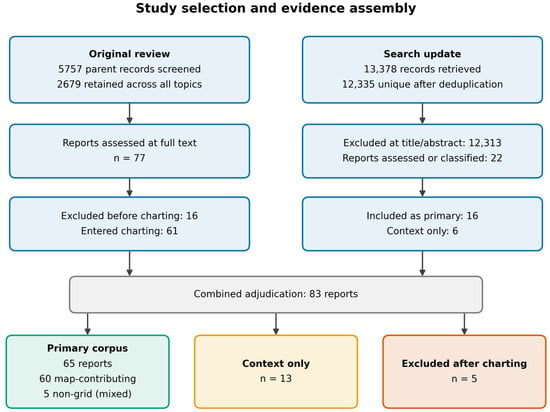
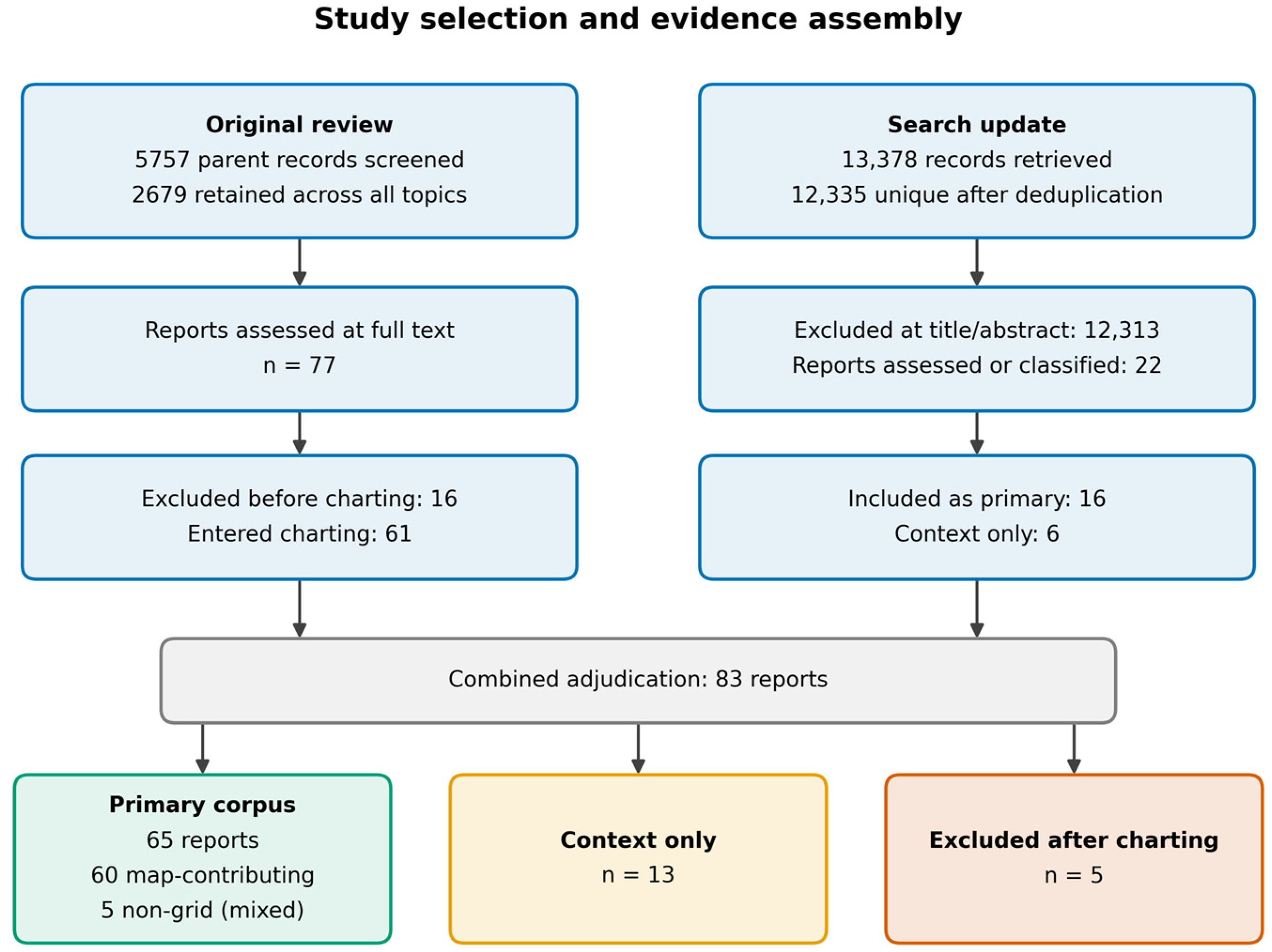
Terminology follows PRISMA-ScR. A record is a database entry retrieved by a search; a report is a document assessed for eligibility; a study is a discrete investigation that may be described in more than one report; a cohort is the group of patients within a study; and a patient is an individual within a cohort. Figure 1 and Supplementary File S1 reconcile the original and updated search streams. Of the 65 primary studies, 60 contributed at least one full-text-confirmed syndrome–therapy assignment to the evidence map. Five mixed-syndrome or mixed-therapy reports were retained in the study-level corpus but generated no map cell because no individual syndrome–therapy pairing could be attributed from the report.
Figure 1.
Adapted PRISMA-ScR flow for the original review and 2026 search update. The primary corpus contains 65 reports identified by distinct PMIDs: 60 contribute at least one confirmed syndrome–therapy assignment to the evidence map, while five mixed reports do not populate a grid cell. Distinct PMIDs are report identifiers and do not establish that all cohorts are independent. The contextual inventory (n = 321) was classified separately and overlapped with the context-only branch; it is not an additional primary-study denominator. Box colors indicate stage: blue, search and screening steps; gray, combined adjudication; green, primary corpus; orange, context-only reports; and red, reports excluded after charting.
Data were extracted in duplicate and independently by two reviewers (A.P. and S.P.P.) using the structured form, each working from the full text of the source report; the two extractions were then compared field by field, discrepancies were resolved by discussion between the two extractors, and any that remained were adjudicated by a third reviewer (I.Kat.). Searches covered PubMed/MEDLINE, Embase and Cochrane CENTRAL from 1970 onward. Records were deduplicated in Rayyan by digital object identifier and PubMed identifier, with residual duplicates removed manually on title, first author and year. Reports in languages the review team could not assess were excluded, and the affected records are listed with that reason in Supplementary File S1. Forward-citation searching was not performed, and the exact final search strings, duplicate counts and source-specific yields of the original parent search were not preserved; both limitations are stated in Section 4 and in Supplementary File S1. A complete list of reports excluded after full-text assessment, each with its reason, is provided in Supplementary File S1.
We performed a conservative sensitivity analysis that excluded 12 studies involving mixed primary sites, a pancreatic subgroup within a larger series, or possible overlap with another institutional or registry cohort. The flagged reports and the recomputation rules are provided in Supplementary File S3. MEN1-associated disease and mixed tumor grades were charted when reported and were not eligibility restrictions.
Two charting rules have a direct effect on the results and are stated here. First, biochemical response was charted strictly. A study counted as reporting it only if it stated whether hormone levels, gastric acid output or glycemia changed in response to treatment. Measurement of a hormone for diagnosis, or as a baseline prognostic marker, did not count. Second, tumor grade counted as reported only where a WHO grade, Ki-67 index or mitotic count was given for the eligible functioning pancreatic cohort or subgroup. Differentiation terms, benign or malignant descriptors, and grades reported only for a wider mixed cohort were recorded as not reported. Tumor-grade reporting was checked study by study against the available full texts and primary-source records, and discrepancies were resolved against the source.
2.5. Grading and Synthesis
Studies were described by design: prospective; comparative or multicenter retrospective; and single-cohort retrospective or case series. Formal levels of evidence were not assigned. The 2011 Oxford CEBM framework is question-specific, and multicenter conduct describes how a study is organized and not the strength of its evidence, so applying such labels to this heterogeneous and largely uncontrolled literature would imply an appraisal we did not perform.
Findings were synthesized descriptively. In keeping with scoping-review methodology, no risk-of-bias appraisal and no meta-analysis were undertaken, and this review describes the volume, design and distribution of the evidence and not the comparative effectiveness of the treatments. Results are displayed as an evidence map of functioning syndrome by therapy class. Each map assignment required a full-text-supported link between a specific syndrome and therapy; mixed cohorts were not expanded by taking the cross-product of all reported syndromes and treatments. Cell counts represent distinct PMIDs, and a cell was considered populated when at least one confirmed assignment was present. The charting dataset, record-level assignment table and recomputation rules are provided in Supplementary File S3. Sixty out of 65 primary studies contributed at least one confirmed syndrome–therapy assignment to the grid; the remaining five mixed records were retained in study-level counts but were not expanded into unsupported cross-product assignments.
3. Results
3.1. Search Results
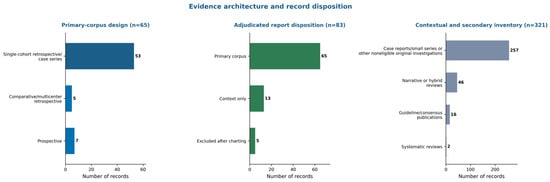
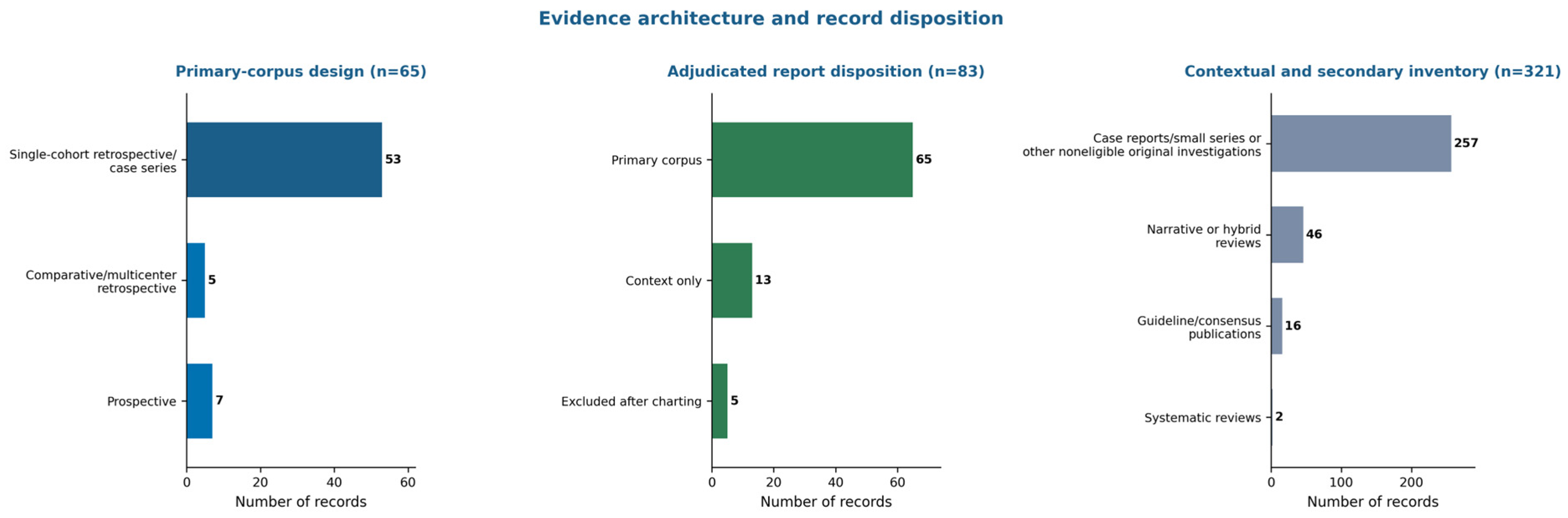
The parent NET medical-management search screened 5757 records, excluding 3078 and retaining 2679 records across all NET topics. For the original functioning-pancreatic-NET review, 77 reports were assessed: 16 were excluded before structured charting and 61 entered charting, comprising 49 primary studies, seven context-only records and five exclusions after charting. The 2026 update produced 13,378 records in five unique exports, 12,335 unique records after within-update deduplication and 22 reports for report-level adjudication; 16 were added to the primary corpus and six were retained as context-only. The combined adjudicated set therefore comprised 83 reports: 65 primary studies, 13 context-only records and five exclusions after charting. The broader contextual and secondary inventory contained 321 records and overlapped with, rather than added to, the context-only branch.
3.2. Study Design and Evidence Architecture
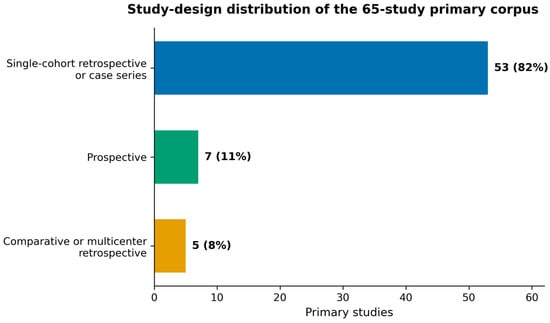
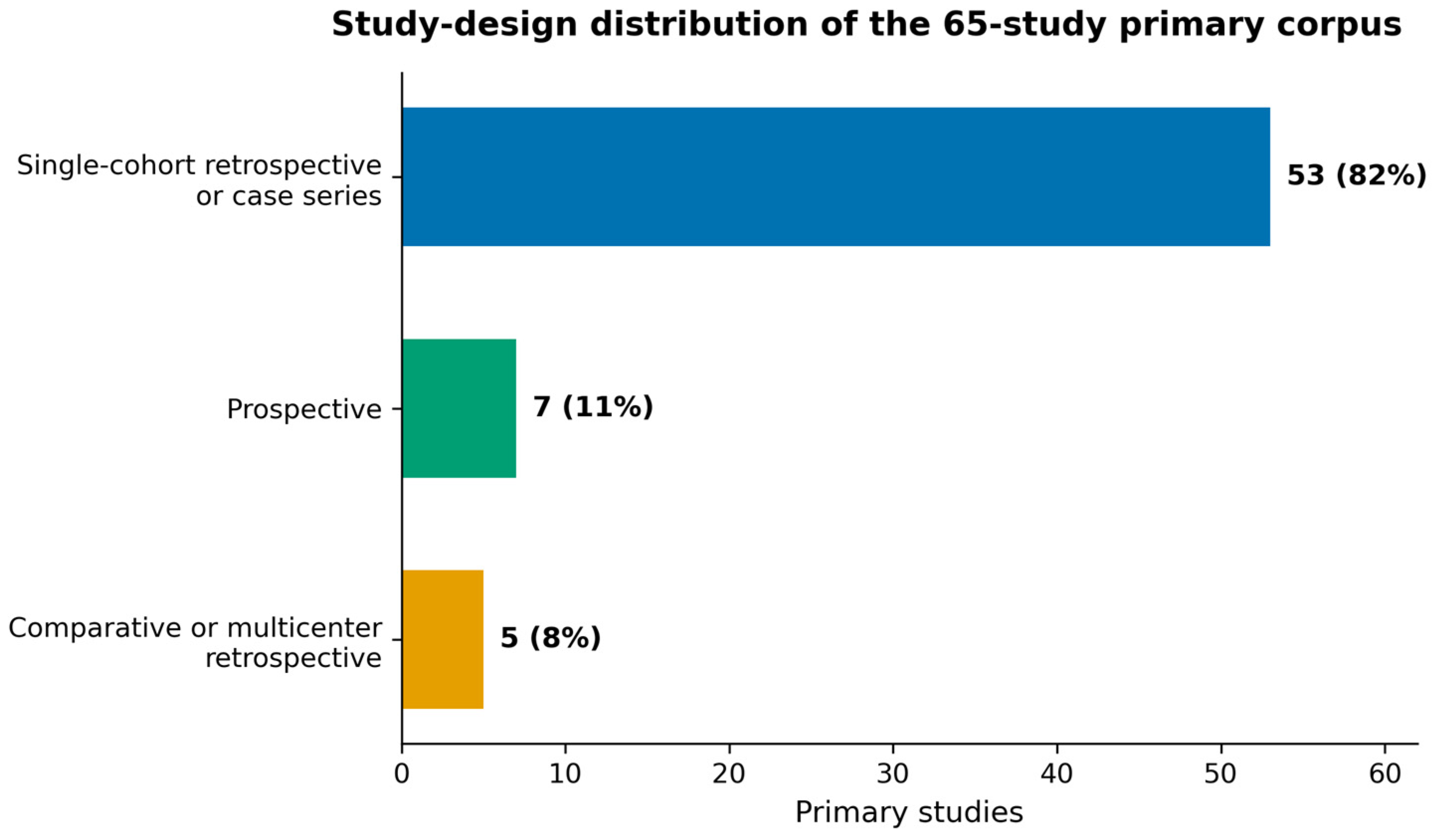
The primary corpus contained seven prospective studies, five comparative or multicenter retrospective studies and 53 single-cohort retrospective studies or case series (82%) (Table 1 and Figure 2 and Figure 3). The 65 primary studies were indexed by PMID [4,5,17,18,19,20,21,22,23,24,25,26,27,28,29,30,31,32,33,34,35,36,37,38,39,40,41,42,43,44,45,46,47,48,49,50,51,52,53,54,55,56,57,58,59,60,61,62,63,64,65,66,67,68,69,70,71,72,73,74,75,76,77,78,79].
Table 1.
Characteristics of the 65 primary syndrome-control studies.
Figure 2.
Study-design distribution of the 65-study primary corpus. Categories are mutually exclusive and sum to 65. Colors distinguish the three design categories.
Figure 3.
Evidence architecture and record disposition. The left panel shows the mutually exclusive design categories of the 65-study primary corpus; the middle panel shows the 83 adjudicated reports (65 primary, 13 context only and five excluded after charting); and the right panel shows the separately classified contextual and secondary inventory (321 records: 257 case reports, small series or otherwise noneligible original investigations; 46 narrative or hybrid reviews; 16 guideline or consensus publications; and two systematic reviews). The contextual inventory overlaps the context-only branch and is not additive to the 83 adjudicated reports. Colors distinguish the three panels.
No randomized controlled trial was designed to evaluate control of a pancreatic functioning syndrome. The median eligible sample size was 13 patients among 55 studies with an exact denominator; 25/55 (45%) included ten or fewer eligible patients. Clinical setting was reported in 61/65 studies, of which 43/61 were single center. Possible cohort overlap was recorded for a small number of historical or institutionally related series; studies were retained as distinct reports, but patient counts were not pooled.
3.3. Evidence by Syndrome and Therapy
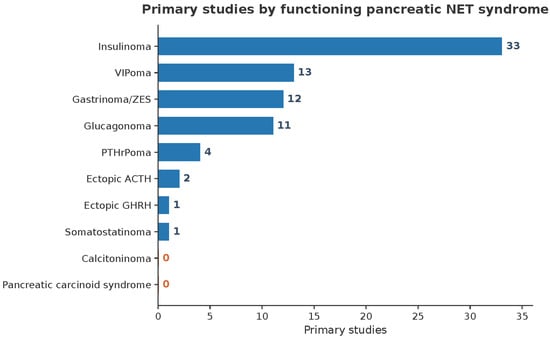
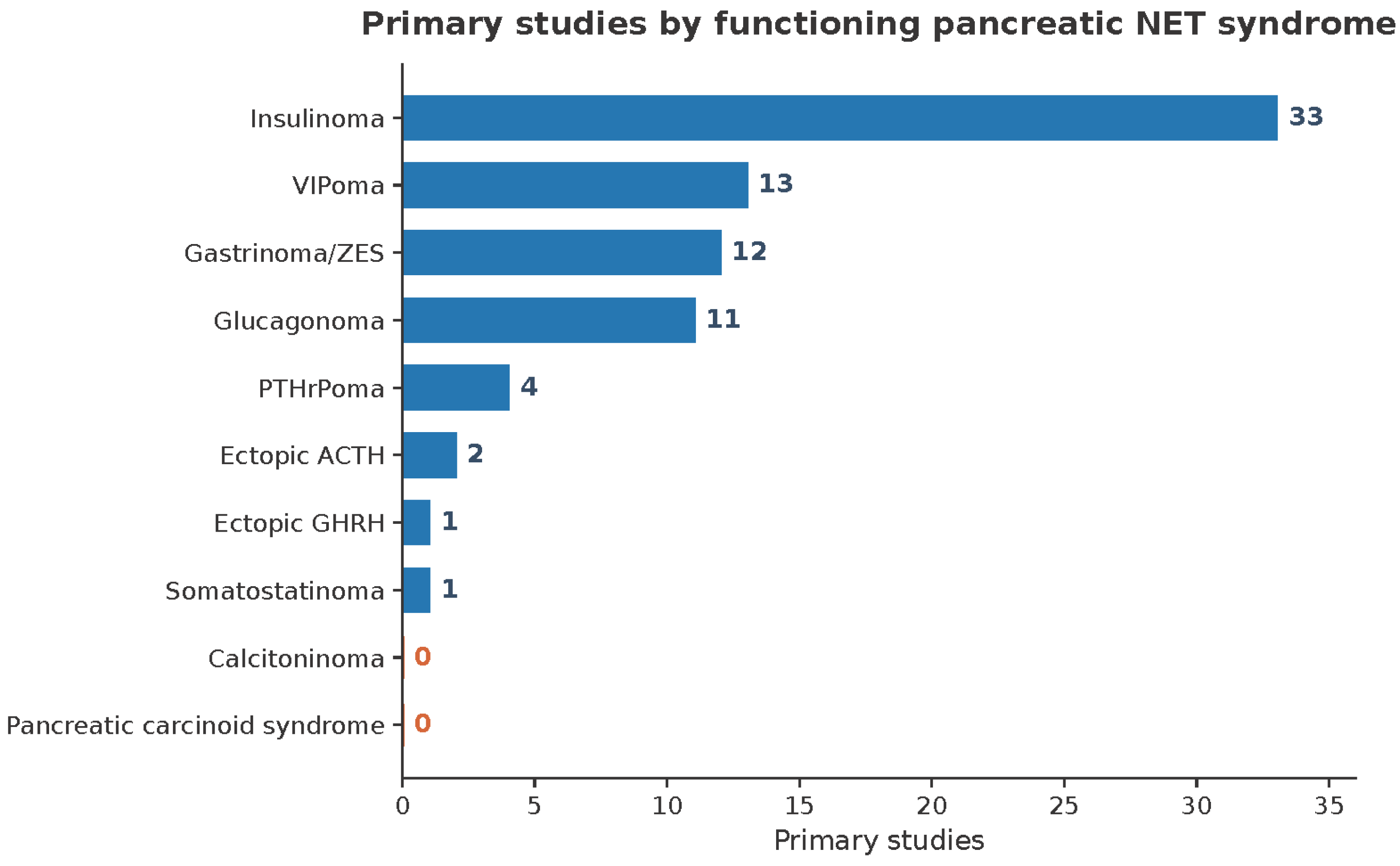
Insulinoma was the most studied syndrome (33 studies; Table 2 and Figure 4), followed by VIPoma (13), gastrinoma/Zollinger–Ellison syndrome (12) and glucagonoma (11). PTHrP-mediated hypercalcemia was represented by four studies [26,42,50,51], the combined ectopic ACTH/CRH category by two (both ACTH-secreting) [68,73], and ectopic GHRH secretion and somatostatinoma by one each. No eligible primary study was identified for calcitoninoma or pancreatic carcinoid syndrome; this denotes the absence of eligible evidence under our criteria, not evidence that these syndromes are never treated. Syndrome assignments were non-exclusive; mixed-syndrome studies could contribute to more than one row. The complete syndrome-specific PMID index is provided in Supplementary File S2.
Table 2.
Evidence by functioning pancreatic syndrome (n = 65). Syndrome assignments are non-exclusive.
Figure 4.
Primary studies by functioning pancreatic NET syndrome, with all ten ENETS categories shown. Counts are non-exclusive: multi-syndrome studies contribute to more than one category, so the bars sum to 77 across 65 studies. Counts shown in orange indicate syndromes with no eligible primary study.
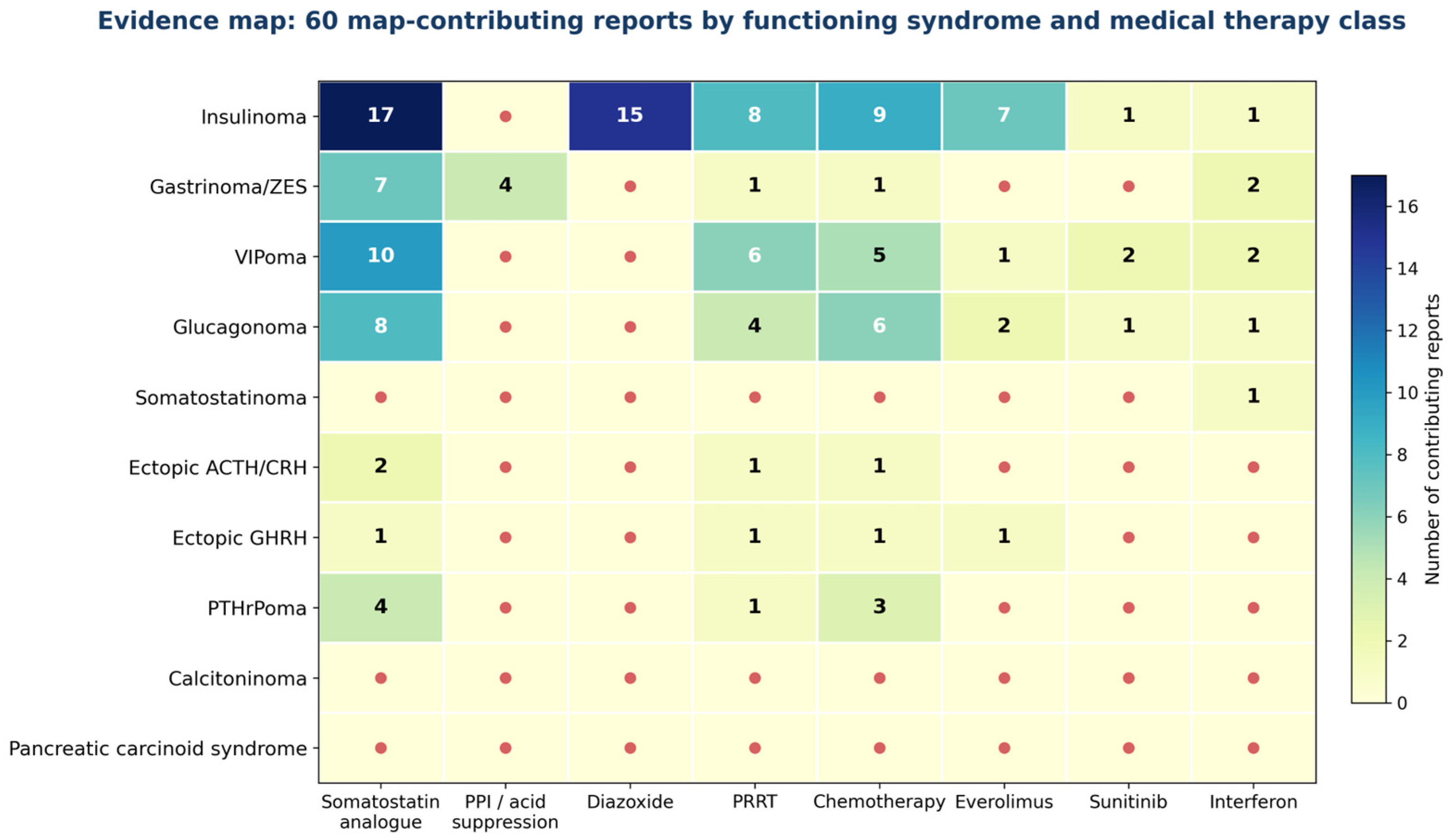
At the study level across all 65 primary studies, somatostatin analogs were the most frequently reported intervention (45 studies), followed by chemotherapy (25), peptide receptor radionuclide therapy (20), diazoxide (15), everolimus (11), interferon (6), proton-pump inhibitors or H2 antagonists (4) and sunitinib (4). Counts are non-exclusive because one study could evaluate several treatments. The evidence map uses the stricter full-text-confirmed syndrome–therapy assignments from the 60 contributing studies; corresponding map-level totals were 42, 23, 19, 15, 11, 3, 4 and 4 studies, respectively. These frequencies describe published experience and do not estimate comparative efficacy.
The two distributions describe the same evidence from different angles. Insulinoma contributed to the largest number of studies and the widest range of treatment classes, but much of that range came from small malignant-insulinoma series in which hypoglycemia control was assessed alongside tumor-directed therapy. Although gastrinoma/ZES was the third-largest syndrome group, the acid-suppression cell contained only four eligible studies, partly because many ZES cohorts combine pancreatic, duodenal and occult primaries without separable pancreatic outcomes. VIPoma and glucagonoma were represented mainly by retrospective institutional or network series. The evidence for ectopic GHRH and somatostatinoma depended on single studies.
Treatment frequency should not be read as comparative efficacy or as an established sequence of care. Somatostatin analogs appeared across the largest number of syndromes. Diazoxide was almost confined to insulinoma and acid suppression to gastrinoma/ZES. PRRT, everolimus and sunitinib occupied fewer and more recent cells and were generally reported in advanced disease, where hormonal response and tumor response were usually assessed together. The study-level index in Supplementary File S2 links each mapped category back to its contributing reports.
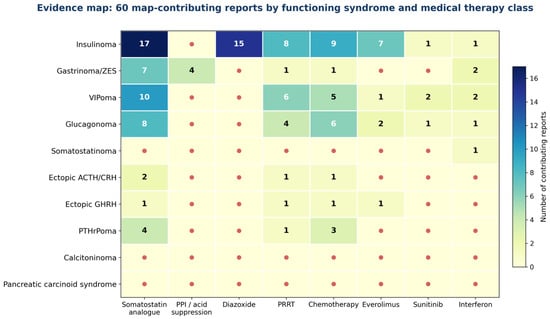
The evidence map (Figure 5 and Supplementary File S3) is the central result. Of 80 syndrome-by-therapy combinations, 45 contained no eligible primary evidence. Populated cells clustered in insulinoma and in somatostatin-analog experience. The PTHrP row gained four eligible studies after the update, whereas calcitoninoma and pancreatic carcinoid syndrome remained empty under the prespecified requirement for an attributable medical syndrome-control outcome in at least three pancreatic-primary patients.
Figure 5.
Evidence map of 60 map-contributing reports, identified by distinct PMIDs, by functioning pancreatic NET syndrome and medical therapy class. Thirty-five out of 80 cells were populated. Five additional mixed reports in the 65-report primary corpus lacked an attributable single-syndrome assignment and populated no grid cell. Because related publications may contain overlapping cohorts, report counts should not be interpreted as fully independent investigations. Cells marked with a dot contain no eligible primary evidence.
In the conservative sensitivity analysis, exclusion of all 12 studies flagged for mixed populations or possible cohort overlap reduced coverage from 35/80 to 29/80 cells. Six cells, each supported by one flagged report in the main analysis, became empty; no previously empty cell became populated. Because patient numbers were not summed across reports, no pooled patient denominator was calculated. Possible repeated representation of patients may nevertheless affect report-level study counts and map cells.
3.4. Outcome Reporting
Under the prespecified definition, 58/65 studies (89%) reported a biochemical or physiological outcome and 44/65 (68%) reported a clinical outcome. Thirty-seven reported both domains, 21 reported a biochemical or physiological outcome only, and seven reported a clinical outcome only. Radiological outcomes were recorded separately and were not counted as syndrome control.
At the report level, outcome-domain patterns among studies assigned to each syndrome were: insulinoma, 17 both/13 biochemical or physiological only/3 clinical only; VIPoma, 8/2/3; gastrinoma/ZES, 6/4/2; glucagonoma, 8/2/1; PTHrPoma, 4/0/0; ectopic ACTH/CRH, 1/1/0; ectopic GHRH, 0/1/0; somatostatinoma, 0/0/1; and multiple/mixed syndromes, 4/1/0. These are report-level counts: syndrome assignments were non-exclusive, and a multisyndrome report could contribute to more than one row.
The biochemical and physiological category was itself heterogeneous. Some reports measured a culprit hormone; others measured a proximal physiological consequence, such as gastric acid output, glycemia or glucose requirement, serum potassium, or serum calcium. A hormonal change, correction of a downstream physiological disturbance and clinical improvement were therefore charted as distinct domains and were not treated as equivalent to radiological response. Study-level outcome classifications are provided in Supplementary File S2.
3.5. Reporting of Clinically Useful Fields
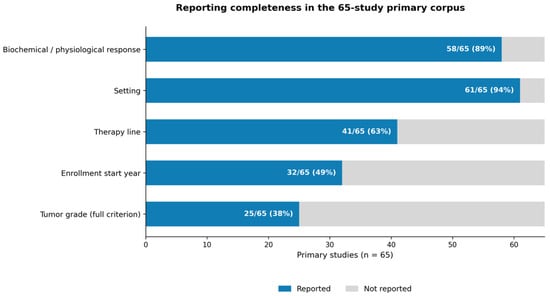
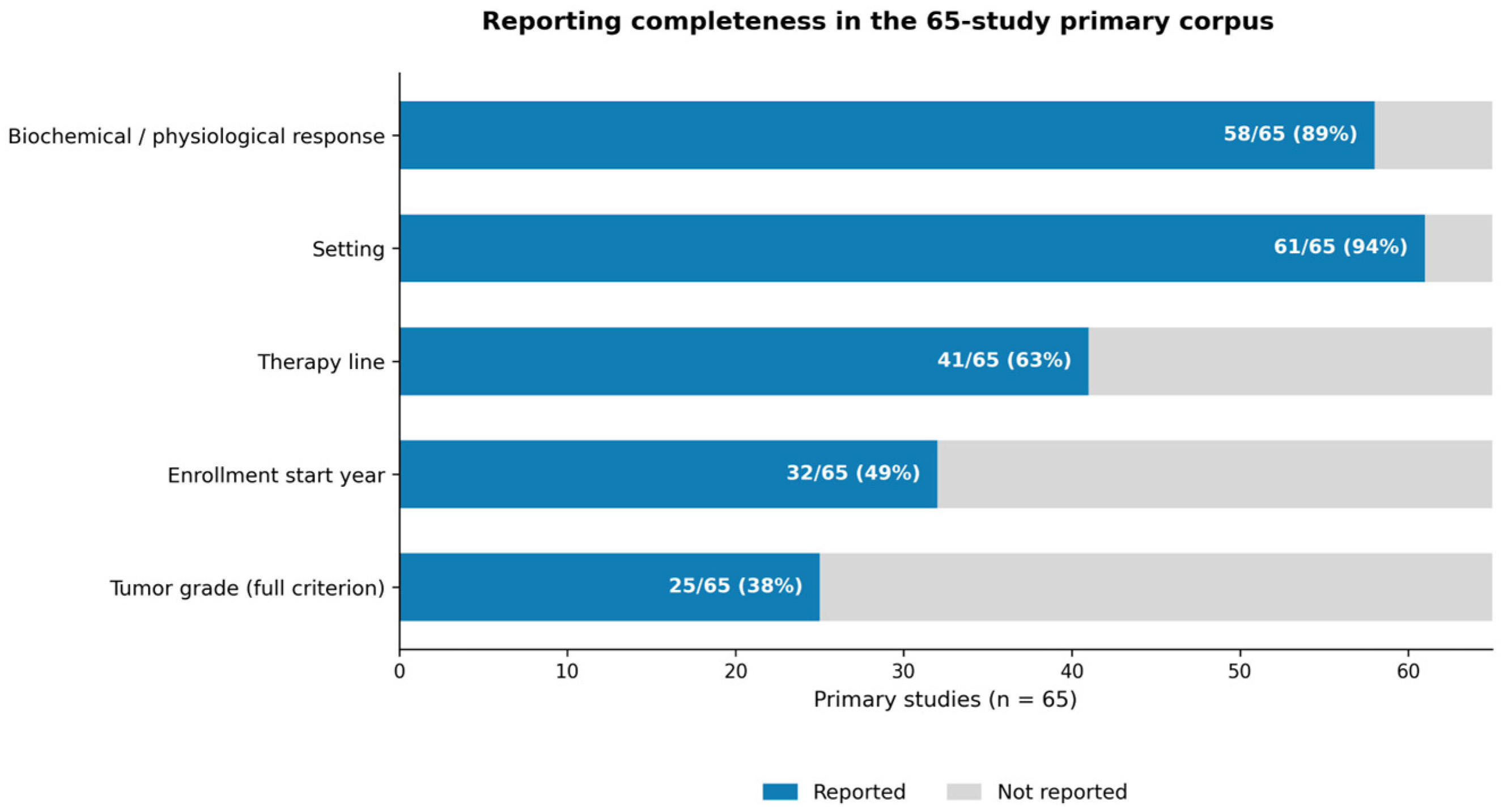
Clinically useful fields were reported less consistently than broad response outcomes (Table 3 and Figure 6). Treatment line was stated in 41/65 studies (63%). Tumor grade met the subgroup-specific reporting criterion in 25/65 (38%) and was partially reported in three more. Clinical setting was stated in 61/65 (94%). An exact enrollment start year was available for 32/65 studies (49%).
Table 3.
Reporting completeness in the 65-study primary corpus.
Figure 6.
Reporting completeness of clinically useful fields in the 65-study primary corpus. Tumor grade met the subgroup-specific criterion in 25/65; a further 3/65 reported grade for part of the eligible subgroup only.
3.6. Time Period and Geography
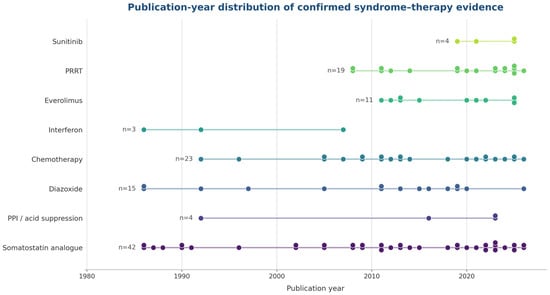
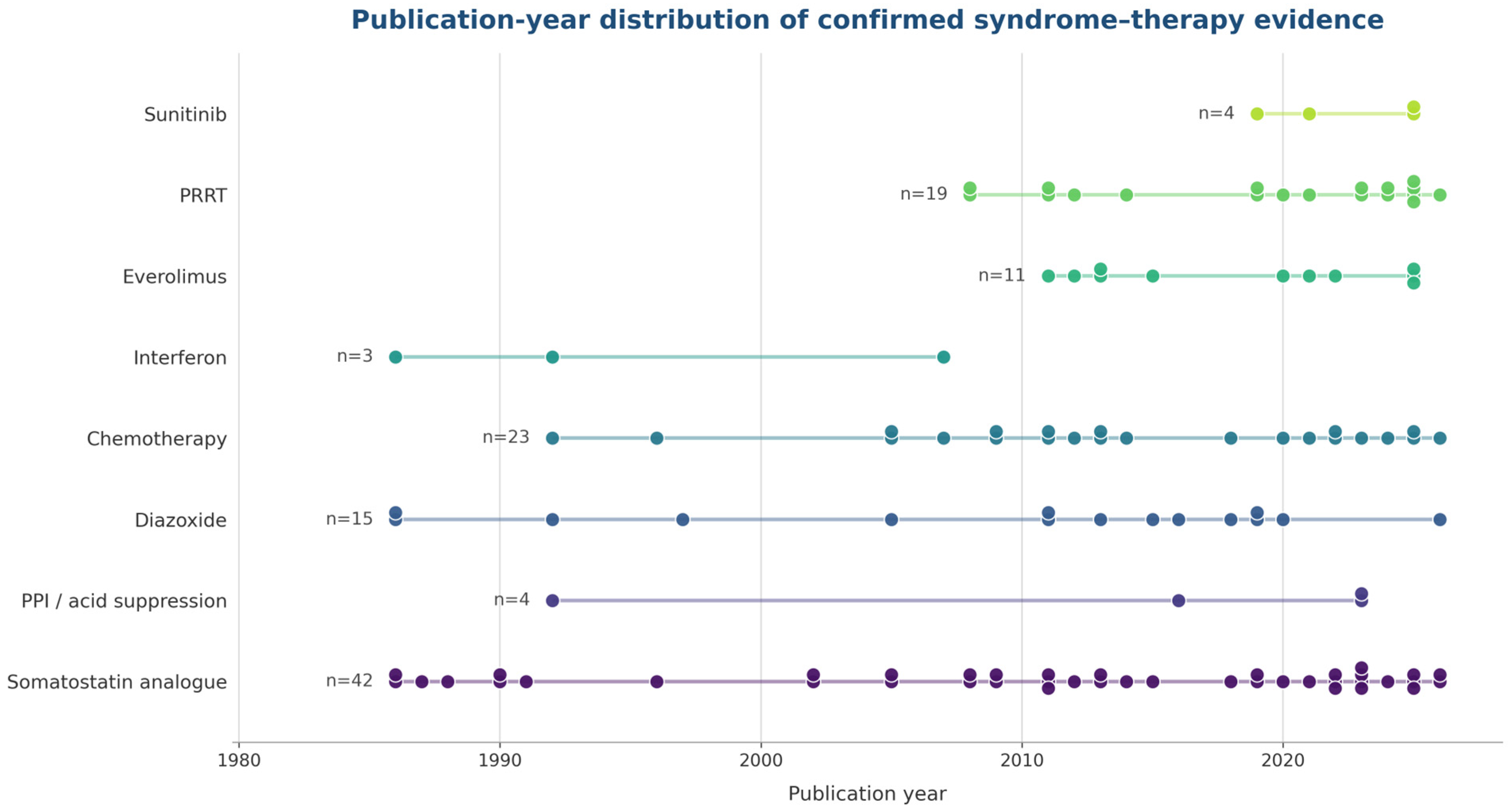
Among the 32 studies that reported an exact enrollment start date, 29 (91%) began enrollment before 2010. Much of the available clinical experience was therefore generated before current WHO terminology, routine somatostatin-receptor imaging and several modern systemic therapies. The publication-year distribution of confirmed syndrome–therapy assignments is shown in Figure 7; publication year was used consistently and should not be interpreted as the date when a therapy entered clinical practice.
Figure 7.
Publication-year distribution of primary studies contributing full-text-confirmed syndrome–therapy assignments. Each study may appear in more than one therapy row. Points represent publication year, not treatment initiation or enrollment; connecting lines show the observed publication span only. Colors distinguish the eight therapy classes.
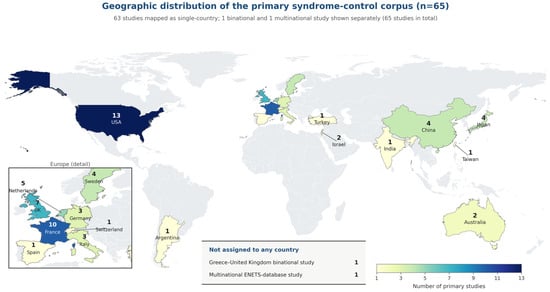
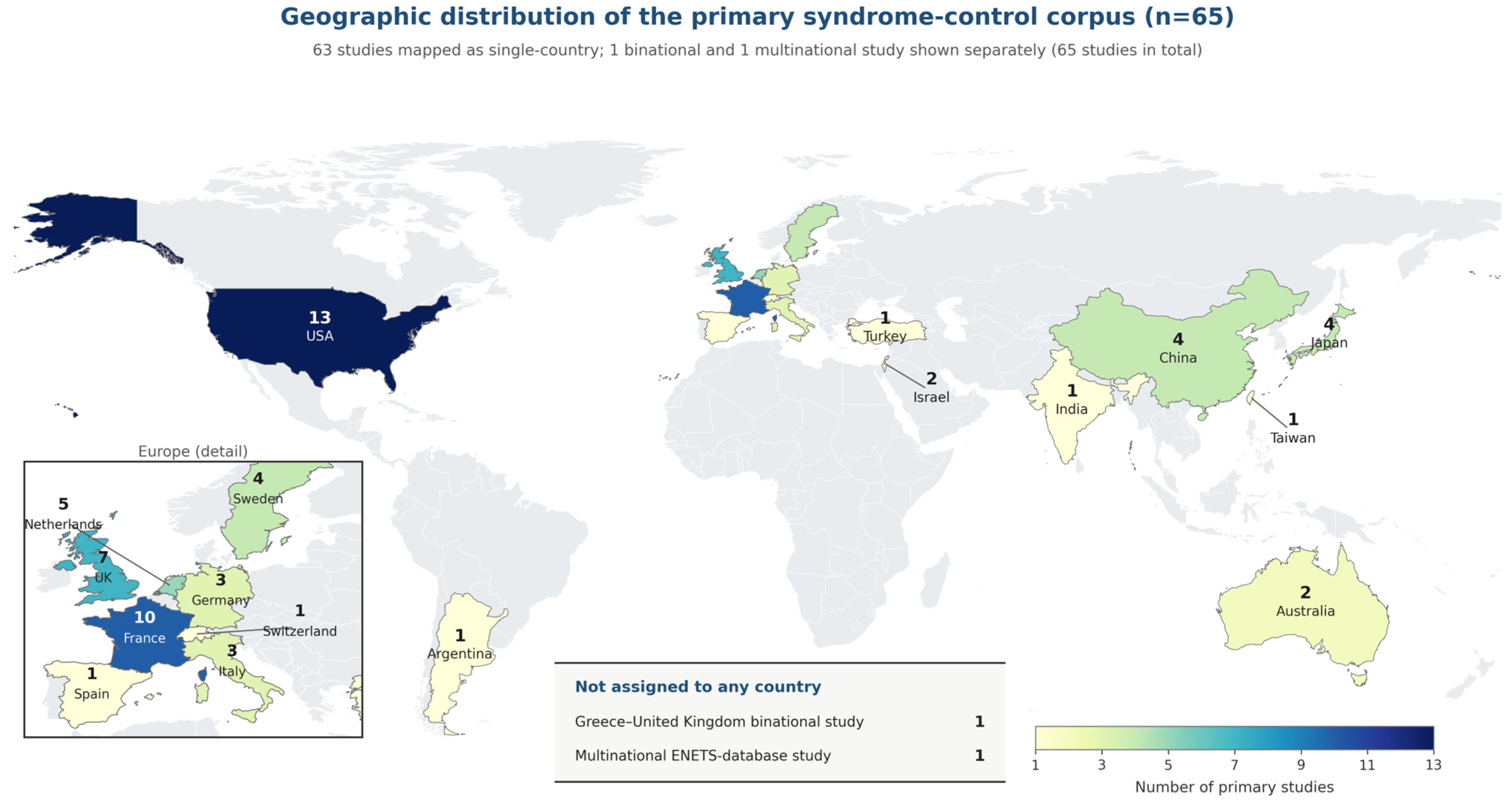
Evidence was geographically concentrated (Figure 8). The United States contributed 13 studies, France 10, the United Kingdom seven plus one binational Greece–United Kingdom study, the Netherlands five, and Japan, Sweden and China four each. The complete country-by-study index is provided in Supplementary File S2.
Figure 8.
Geographic distribution of the primary evidence base. Studies are counted, not centers, investigators or patients, and each primary study contributes exactly once. All 17 single-country categories are displayed individually. The binational Greece–United Kingdom study and the multinational ENETS-database studies are shown separately and are not assigned to any single country.
3.7. Contextual and Secondary Literature
The separately classified contextual and secondary inventory contained 321 records: 257 case reports, small series or otherwise noneligible original investigations (80.1%); 46 narrative or hybrid reviews (14.3%); 16 guideline or consensus publications relevant to syndrome management (5.0%); and two systematic reviews (0.6%). These records were counted and topic-classified, not included in primary quantitative synthesis. The six context-only reports identified in the update are included in this inventory and are not an additional denominator. The complete record-level inventory is provided in Supplementary File S3. Three known-item gap-audit records were added after the reported update flow: Albers et al. [80] as a noneligible surgical series without a separately extractable drug-specific syndrome-control response, Zhang et al. [81] as a hybrid literature review, and Maragliano et al. [82] as a clinicopathologic series/review without an extractable medical syndrome-control outcome. These records do not alter the primary corpus or PRISMA flow denominator.
This distribution adds a further dimension to the evidence map. The surgical companion map described a body of literature dominated by reviews. The medical-management literature for functioning syndromes is dominated instead by case-level experience. This explains why the field can look extensive in a routine search while still yielding few usable cohorts. Most reports document an unusual presentation or an individual treatment response, and not a reproducible estimate, a comparative sequence, or a standardized syndrome-control outcome. Guideline and consensus publications were kept within this contextual map and were not treated as primary evidence of treatment effect.
4. Discussion
To our knowledge this is the first syndrome-by-therapy evidence map focused on medical control of functioning pancreatic NET syndromes. Its main finding is the uneven distribution of primary evidence. Forty-five out of 80 prespecified syndrome-by-therapy combinations were empty, two syndromes had no eligible primary study, denoting the absence of eligible evidence rather than evidence of absence, and populated cells clustered around insulinoma, somatostatin analogs and a small number of established syndrome-specific treatments. Small retrospective cohorts and case series dominated; comparative evidence was limited and no randomized trial was designed to evaluate syndrome control.
Separating hormonal control from antitumor activity is an analytical distinction, not a judgment that tumor-directed treatment is less important. In advanced disease, systemic antitumor therapy may provide durable syndrome control by reducing or stabilizing the secretory tumor burden. This contribution is visible in the map: chemotherapy, peptide receptor radionuclide therapy and everolimus had confirmed syndrome-specific assignments in 23, 19 and 11 studies, respectively. The outcomes nevertheless remain distinct. Hormonal or symptomatic improvement may precede, occur without, or occasionally diverge from radiological response; conversely, tumor control does not by itself establish control of hormone-mediated morbidity.
A second finding concerns the mismatch between the clinical purpose of treatment and the outcomes reported. Although 58/65 studies reported a biochemical or physiological outcome and 44/65 reported a clinical outcome, the definitions varied substantially. Hormone concentrations, physiological consequences, symptom change, supportive-care requirements and radiological response represent related but distinct domains. Treatment line, tumor grade, disease extent and enrollment period were also incompletely reported. The literature can often show that a treatment was used and that an outcome followed, but it rarely establishes a comparative place in a treatment sequence.
4.1. Relationship to Guidelines and Randomized NET Trials
The map gives quantitative form to limits that clinical guidance already acknowledges. NANETS notes the absence of studies on somatostatin-analog effects in several rare hormone-secreting pan-NETs, which matches the empty cells found here [6]. The recent ASCO symptom-management guideline performs a different and complementary task. It turns the best available evidence and expert consensus into clinical recommendations, while this review examines the primary literature that sits beneath those recommendations [3]. Agreement between a guideline and an evidence map supports the view that the field is underdeveloped, but it cannot prove a true absence, since both may be affected by the same indexing and retrieval limits.
The absence of randomized syndrome-control trials should be kept separate from the randomized evidence for antiproliferative therapy in neuroendocrine tumors. CLARINET enrolled patients with nonfunctioning enteropancreatic tumors and required the absence of hormone-related symptoms, so it cannot inform hormonal-syndrome control [8]. RADIANT-3 included a minority of patients with functioning pancreatic tumors and reported cohort-level reductions in gastrin and glucagon, but those biomarker analyses could not be attributed to the functioning subgroup and gave no extractable syndrome-control estimate [9]. We treated RADIANT-3 as contextual evidence for that reason. Tumor control, biomarker change in an unselected cohort, and control of a clinically functioning syndrome answer three different questions.
4.2. Insulinoma: Wide Therapeutic Experience Without an Established Sequence
Insulinoma had the largest evidence base and the widest range of treatments, but the apparent density of this literature should not be mistaken for comparative certainty [1,31,54]. Diazoxide has been used for decades and remains a guideline-endorsed first-line supportive treatment, yet its evidence is spread across small observational series with different populations, doses and outcome definitions. Somatostatin analogs were also frequently reported, although their effect depends on tumor receptor biology and is not uniformly favorable. More recent series describe everolimus [45,48] and PRRT [46] in malignant insulinoma, often with rapid improvement in hypoglycemia, but hormonal benefit and antitumor activity were usually assessed together, and treatment choice was strongly influenced by disease stage and prior therapy.
The variable effect of somatostatin analogs in insulinoma has both biological and clinical importance. Octreotide can suppress tumor insulin secretion when the relevant somatostatin receptors are expressed, as shown by the relationship between response, receptor imaging and sst2A expression in the Vezzosi study [35]. Octreotide also inhibits glucagon and growth hormone, which weakens counter-regulatory responses. If suppression of tumor insulin secretion is insufficient, this imbalance can worsen hypoglycemia, and such deterioration was described in a two-patient report outside the quantitative corpus [83]. These observations support supervised initiation with short-acting octreotide and close glucose monitoring before a long-acting formulation is started. They do not establish where octreotide stands in relation to diazoxide, everolimus or PRRT.
4.3. Gastrinoma/Zollinger–Ellison Syndrome: Mature Practice, Selectively Sparse Evidence
Gastrinoma/ZES shows why a sparse evidence map does not imply an ineffective or clinically uncertain treatment. Potent acid suppression transformed the natural history of hormone-related morbidity and is firmly established in practice [1,84,85], yet only four eligible studies were mapped to acid suppression [5,18,53,67]. This gap comes partly from the review question, since many ZES cohorts include duodenal, pancreatic and occult primaries and seldom report pancreatic-site and syndrome-control outcomes separately [5,67]. Much of the foundational experience also predates trial registration, tumor grading and standardized outcome reporting. The map identifies the limited pancreatic-primary evidence that can be extracted, and it does not question the established ability of proton-pump inhibitors to control acid hypersecretion [1,5,84,85].
4.4. VIPoma, Glucagonoma and the Ultra-Rare Syndromes
The VIPoma and glucagonoma studies rely mainly on retrospective specialist-center or national-network series [30,40,63,66,70]. Somatostatin analogs were the most frequent syndrome-directed treatment; PRRT, chemotherapy, everolimus and sunitinib appeared chiefly in advanced disease and were often given with both antisecretory and antitumor intent [4,63,70,77]. The update materially changed the ultra-rare part of the map: four eligible studies now describe PTHrP-mediated hypercalcemia [26,42,50,51], and two describe the combined ectopic ACTH/CRH category (both ACTH-secreting) [68,73]. Ectopic GHRH secretion [47] and somatostatinoma [24] remain supported by one study each, while calcitoninoma and pancreatic carcinoid syndrome have no eligible primary study under the review definition. In the largest glucagonoma cohort (n = 38) clinically defined antisecretory responses were reported across several selected treatments, but small treatment-specific denominators do not support comparative ranking [70]. Harmonized prospective registries and prespecified functioning subgroups within collaborative studies are more plausible than conventional syndrome-specific randomized trials for these populations.
The broad therapy classes used in the main heatmap are not a complete clinical formulary. Several syndrome-specific measures were kept at record level under targeted or other syndrome-directed therapy. They include steroidogenesis inhibitors for ectopic ACTH secretion [1,68], glucocorticoids in selected refractory hypoglycemia [1,86], and pasireotide in selected insulinomas resistant to conventional somatostatin analogs [87]. They are displayed in Supplementary Files S2 and S3 and were not expanded into extra columns, which would have obscured the main syndrome-by-class map. Their appearance in guidance or in the case-level literature does not imply comparative evidence within the eligible primary corpus.
4.5. Defining Syndrome Control
The lack of a common definition of syndrome control runs through the whole corpus and is a modifiable source of research waste. Future studies should report, at minimum, the culprit hormone where this is biologically appropriate; a prespecified clinical or physiological endpoint linked to that hormone; the amount of supportive therapy required; time to response; durability; recurrence or crisis; adverse effects; and tumor response as a separate domain [1,88]. Syndrome-specific measures will still be needed, such as glucose exposure in insulinoma, acid output or validated acid-control criteria in ZES [5,84], and stool volume and electrolyte requirements in VIPoma [1,63]. A shared framework would let those measures be interpreted consistently. A core outcome set should keep biochemical, physiological, symptomatic, supportive-care and antitumor outcomes apart, and should not collapse them into a single response label [88].
4.6. Why the Evidence Remains Uneven
Several features of the field explain what we found. The syndromes are rare, referral is concentrated in a small number of centers, and biologically varied tumors are treated at different stages with combinations of syndrome-directed and tumor-directed drugs [1]. Much of the literature predates the modern WHO classification and was indexed under older disease or drug terms [89]. Successful supportive treatments may also have reduced the perceived need for comparative trials, while antitumor development programs usually treated hormonal outcomes as exploratory or did not report functioning subgroups separately [8,9]. The result is a body of literature in which accepted practice, biological plausibility and primary syndrome-control evidence do not always match.
The search process illustrates the retrieval challenge. Eligible reports were found through guideline-reference reconciliation, targeted syndrome-by-drug searches, backward citation checking and the 2026 date-sliced PubMed and clinical-series update (Supplementary File S1). The update retrieved studies whose titles or abstracts emphasized clinical characteristics rather than a named drug (Supplementary File S1, Table S1.8). In ultra-rare disease, these complementary routes help address indexing and terminology failures. Future updates should retain known-item reconciliation, use historical and current disease terminology and preserve source-specific export and deduplication counts.
These findings support a research agenda that is both realistic and clinically specific (Table 4). International NET networks should give priority to prospective syndrome registries, a minimum reporting dataset, and a core outcome set that keeps hormonal benefit separate from antitumor benefit [90]. Multicenter observational cohorts, registry-embedded studies, adaptive designs and functioning subgroups nested within basket trials are likely to be more feasible than conventional syndrome-specific randomized trials [91]. Whatever the design, studies should report pancreatic-primary outcomes separately, record treatment sequence and concurrent therapy, and describe tumor grade, disease extent, biochemical response, clinical response, durability and toxicity for the eligible functioning subgroup [1].
Table 4.
Evidence gaps, challenges and possible ways forward.
4.7. Strengths and Limitations
This review covered all ten ENETS-recognized syndromes, treated acid suppression as syndrome-directed therapy, kept syndrome control separate from tumor response and used a syndrome-by-therapy framework that makes concentration and absence visible. Eligibility and charting rules were explicit, including the minimum subgroup size, biochemical-response definition and subgroup-specific tumor-grade criterion. The 2026 update addressed the earlier broad-export truncation by date-sliced reruns and added a clinical-series arm. The frozen dataset, adjudication trail, PMID evidence index, contextual inventory and reproducibility materials allow each reported count and mapped cell to be traced to source reports.
The findings must be read within the limits of a scoping review [14]. We did not perform formal risk-of-bias or certainty assessment and cannot rank comparative effectiveness. A populated map cell shows that a syndrome–therapy combination has been reported, not that the treatment is uniformly beneficial or preferable. Classification required judgment when pancreatic patients were embedded in mixed cohorts. Possible overlap between several historical or institutionally related cohorts was recorded. Patient numbers were not summed across reports, but possible repeated representation may still affect report-level study counts and map cells; the conservative sensitivity analysis is reported in Supplementary File S3. Forward-citation searching was not performed. The exact final strings, duplicate counts and source-specific yields from the original search could not be recovered and were not imputed; the 2026 update is reported separately with complete export accounting. Reports that the team could not assess in full text or language were retained contextually or excluded with a documented reason. Publication bias and incomplete reporting remain likely, especially in ultra-rare syndromes. The final update included PTHrP, calcitonin, carcinoid-syndrome, islet-cell and apudoma terminology and a treatment-term-free clinical-series arm. Even so, absence in calcitoninoma and pancreatic carcinoid syndrome remains conditional on retrieval and on the requirement for an attributable medical syndrome-control outcome in at least three pancreatic-primary patients.
5. Conclusions
Medical control of functioning pancreatic NET syndromes rests on a clinically influential but uneven body of literature. Evidence is concentrated in insulinoma, gastrinoma/ZES and somatostatin-analog experience; 45 of 80 syndrome-by-therapy combinations remain empty, and we identified no eligible primary study for calcitoninoma or pancreatic carcinoid syndrome under the prespecified criteria; this should not be interpreted as absence of clinical experience. The update shows that targeted retrieval can materially alter the map for ultra-rare syndromes, particularly PTHrP-mediated hypercalcemia and ectopic ACTH secretion. Even where reports are numerous, variable definitions and incomplete clinical description prevent reliable comparison or sequencing. Future studies should separate hormonal, physiological, symptomatic, supportive-care and antitumor outcomes, report treatment sequence and tumor biology for the functioning pancreatic subgroup and use international prospective networks to address the remaining gaps.
Supplementary Materials
The following supporting information can be downloaded at: https://www.mdpi.com/article/10.3390/life16111823/s1, Supplementary File S1: Search and Study Selection; Supplementary File S2: Primary Study Index; Supplementary File S3: Evidence Map, Contextual Literature and Reproducibility. The registered protocol is available on the Open Science Framework (doi:10.17605/OSF.IO/JMRWE).
Author Contributions
Conceptualization, S.P.P., I.K. (Ioannis Karoumpalis), S.A.P. and D.S.; methodology, S.P.P., I.K. (Ioannis Katsaros) and C.T. (Charalampos Thanos); software, S.P.P.; validation, I.K. (Ioannis Katsaros), C.T. (Charalampos Theocharopoulos) and A.P.; formal analysis, S.P.P. and A.P.; investigation, S.P.P., C.T. (Charalampos Thanos), A.P. and I.K. (Ioannis Katsaros); data curation, S.P.P., C.T. (Charalampos Thanos) and A.P.; writing—original draft preparation, S.P.P.; writing—review and editing, I.K. (Ioannis Katsaros), C.T. (Charalampos Theocharopoulos), I.K. (Ioannis Karoumpalis), S.A.P. and D.S.; visualization, S.P.P. and C.T. (Charalampos Theocharopoulos); supervision, M.V., I.K. (Ioannis Karoumpalis), S.A.P. and D.S.; project administration, S.P.P. and D.S. All authors have read and agreed to the published version of the manuscript.
Funding
This research received no external funding.
Institutional Review Board Statement
Not applicable.
Informed Consent Statement
Not applicable.
Data Availability Statement
The data supporting the reported results are provided in Supplementary Files S1–S3. The review protocol was registered on the Open Science Framework (doi:10.17605/OSF.IO/JMRWE). The frozen charting dataset and the script used to regenerate the reported values are available from the corresponding authors upon reasonable request.
Acknowledgments
During manuscript preparation, the authors used OpenAI ChatGPT (GPT-6) and Anthropic Claude to assist with English-language editing, refinement of PubMed search strategies, data visualization and consistency checks. All outputs were critically reviewed and verified by the authors against the source literature and final datasets. The authors made all scientific decisions and take full responsibility for the content.
Conflicts of Interest
The authors declare no conflicts of interest.
References
- Hofland, J.; Falconi, M.; Christ, E.; Castaño, J.P.; Faggiano, A.; Lamarca, A.; Perren, A.; Petrucci, S.; Prasad, V.; Ruszniewski, P.; et al. European Neuroendocrine Tumor Society 2023 Guidance Paper for Functioning Pancreatic Neuroendocrine Tumour Syndromes. J. Neuroendocrinol. 2023, 35, e13318. [Google Scholar] [CrossRef] [Scilit] [PubMed]
- Rindi, G.; Mete, O.; Uccella, S.; Basturk, O.; La Rosa, S.; Brosens, L.A.A.; Ezzat, S.; de Herder, W.W.; Klimstra, D.S.; Papotti, M.; et al. Overview of the 2022 WHO Classification of Neuroendocrine Neoplasms. Endocr. Pathol. 2022, 33, 115–154. [Google Scholar] [CrossRef] [Scilit] [PubMed]
- Del Rivero, J.; Perez, K.; Kennedy, E.B.; Mittra, E.S.; Vijayvergia, N.; Arshad, J.; Basu, S.; Chauhan, A.; Dasari, A.N.; Bellizzi, A.M.; et al. Systemic Therapy for Tumor Control in Metastatic Well-Differentiated Gastroenteropancreatic Neuroendocrine Tumors: ASCO Guideline. J. Clin. Oncol. Off. J. Am. Soc. Clin. Oncol. 2023, 41, 5049–5067. [Google Scholar] [CrossRef] [Scilit] [PubMed]
- Zandee, W.T.; Brabander, T.; Blažević, A.; Kam, B.L.R.; Teunissen, J.J.M.; Feelders, R.A.; Hofland, J.; de Herder, W.W. Symptomatic and Radiological Response to 177Lu-DOTATATE for the Treatment of Functioning Pancreatic Neuroendocrine Tumors. J. Clin. Endocrinol. Metab. 2019, 104, 1336–1344. [Google Scholar] [CrossRef] [Scilit] [PubMed]
- Ito, T.; Ramos-Alvarez, I.; Jensen, R.T. Successful Lifetime/Long-Term Medical Treatment of Acid Hypersecretion in Zollinger-Ellison Syndrome (ZES): Myth or Fact? Insights from an Analysis of Results of NIH Long-Term Prospective Studies of ZES. Cancers 2023, 15, 1377. [Google Scholar] [CrossRef] [Scilit] [PubMed]
- Halfdanarson, T.R.; Strosberg, J.R.; Tang, L.; Bellizzi, A.M.; Bergsland, E.K.; O’Dorisio, T.M.; Halperin, D.M.; Fishbein, L.; Eads, J.; Hope, T.A.; et al. The North American Neuroendocrine Tumor Society Consensus Guidelines for Surveillance and Medical Management of Pancreatic Neuroendocrine Tumors. Pancreas 2020, 49, 863–881. [Google Scholar] [CrossRef] [Scilit] [PubMed]
- Perez, K.; Del Rivero, J.; Kennedy, E.B.; Basu, S.; Chauhan, A.; Connolly, H.M.; Dasari, A.N.; Gangi, A.; Clarke, C.N.; Hallet, J.; et al. Symptom Management for Well-Differentiated Gastroenteropancreatic Neuroendocrine Tumors: ASCO Guideline. JCO Oncol. Pract. 2026, 22, 19–35. [Google Scholar] [CrossRef] [Scilit] [PubMed]
- Caplin, M.E.; Pavel, M.; Ćwikła, J.B.; Phan, A.T.; Raderer, M.; Sedláčková, E.; Cadiot, G.; Wolin, E.M.; Capdevila, J.; Wall, L.; et al. Lanreotide in Metastatic Enteropancreatic Neuroendocrine Tumors. N. Engl. J. Med. 2014, 371, 224–233. [Google Scholar] [CrossRef] [Scilit] [PubMed]
- Yao, J.C.; Shah, M.H.; Ito, T.; Bohas, C.L.; Wolin, E.M.; Van Cutsem, E.; Hobday, T.J.; Okusaka, T.; Capdevila, J.; de Vries, E.G.E.; et al. Everolimus for Advanced Pancreatic Neuroendocrine Tumors. N. Engl. J. Med. 2011, 364, 514–523. [Google Scholar] [CrossRef] [Scilit] [PubMed]
- Meloche-Dumas, L.; Bleicher, J.; Soreide, K.; Nieveen van Djikum, E.; Stättner, S.; Bubis, L.; Gangi, A.; Partelli, S.; Hallet, J. CUTNETs collaborators Mapping the Evidence for Surgical Care of Gastro-Entero-Pancreatic Neuroendocrine Tumors (GEP-NETs): A Scoping Review. Ann. Surg. Oncol. 2026, 33, 7293–7301. [Google Scholar] [CrossRef] [Scilit] [PubMed]
- Peters, M.D.J.; Marnie, C.; Tricco, A.C.; Pollock, D.; Munn, Z.; Alexander, L.; McInerney, P.; Godfrey, C.M.; Khalil, H. Updated Methodological Guidance for the Conduct of Scoping Reviews. JBI Evid. Synth. 2020, 18, 2119–2126. [Google Scholar] [CrossRef] [Scilit] [PubMed]
- Arksey, H.; O’Malley, L. Scoping Studies: Towards a Methodological Framework. Int. J. Soc. Res. Methodol. 2005, 8, 19–32. [Google Scholar] [CrossRef] [Scilit]
- Levac, D.; Colquhoun, H.; O’Brien, K.K. Scoping Studies: Advancing the Methodology. Implement. Sci. IS 2010, 5, 69. [Google Scholar] [CrossRef] [Scilit] [PubMed]
- Tricco, A.C.; Lillie, E.; Zarin, W.; O’Brien, K.K.; Colquhoun, H.; Levac, D.; Moher, D.; Peters, M.D.J.; Horsley, T.; Weeks, L.; et al. PRISMA Extension for Scoping Reviews (PRISMA-ScR): Checklist and Explanation. Ann. Intern. Med. 2018, 169, 467–473. [Google Scholar] [CrossRef] [Scilit] [PubMed]
- Papadakos, S.; Thanos, C.; Pliakopanou, A. Functional Pancreatic Neuroendocrine Tumours: A Scoping Review of the Medical Management Evidence. OSF 2026. [Google Scholar] [CrossRef]
- Ouzzani, M.; Hammady, H.; Fedorowicz, Z.; Elmagarmid, A. Rayyan-a Web and Mobile App for Systematic Reviews. Syst. Rev. 2016, 5, 210. [Google Scholar] [CrossRef] [Scilit] [PubMed]
- Maiza, J.C.; Vezzosi, D.; Grunenwald, S.; Otal, P.; Guimbaud, R.; Bennet, A.; Caron, P. Treatment with Somatostatin Analogs and Chemoembolization of Liver Metastases for Severe Hypoglycemia in Malignant Insulinomas. J. Endocrinol. Investig. 2011, 34, e253–e258. [Google Scholar] [CrossRef] [Scilit] [PubMed]
- Grama, D.; Eriksson, B.; Mårtensson, H.; Cedermark, B.; Ahrén, B.; Kristoffersson, A.; Rastad, J.; Oberg, K.; Akerström, G. Clinical Characteristics, Treatment and Survival in Patients with Pancreatic Tumors Causing Hormonal Syndromes. World J. Surg. 1992, 16, 632–639. [Google Scholar] [CrossRef] [Scilit] [PubMed]
- Creutzfeldt, W.; Bartsch, H.H.; Jacubaschke, U.; Stöckmann, F. Treatment of Gastrointestinal Endocrine Tumours with Interferon-Alpha and Octreotide. Acta Oncol. 1991, 30, 529–535. [Google Scholar] [CrossRef] [Scilit] [PubMed]
- Buchanan, K.D.; Collins, J.S.; Varghese, A.; Johnston, C.F.; Shaw, C. Sandostatin and the Belfast Experience. Digestion 1990, 45, 11–14; discussion 15–16. [Google Scholar] [CrossRef] [Scilit]
- Vinik, A.I.; Lloyd, R.; Cho, K. The Use of Somatostatin Analog in Gastroenteropancreatic Tumors Other than Carcinoid. Metabolism 1990, 39, 156–162. [Google Scholar] [CrossRef] [Scilit] [PubMed][Green Version]
- Souquet, J.C.; Sassolas, G.; Forichon, J.; Champetier, P.; Partensky, C.; Chayvialle, J.A. Clinical and Hormonal Effects of a Long-Acting Somatostatin Analogue in Pancreatic Endocrine Tumors and in Carcinoid Syndrome. Cancer 1987, 59, 1654–1660. [Google Scholar] [CrossRef] [Scilit] [PubMed]
- Anderson, J.V.; Bloom, S.R. Neuroendocrine Tumours of the Gut: Long-Term Therapy with the Somatostatin Analogue SMS 201-995. Scand. J. Gastroenterol. Suppl. 1986, 119, 115–128. [Google Scholar] [CrossRef] [Scilit] [PubMed]
- Eriksson, B.; Oberg, K.; Alm, G.; Karlsson, A.; Lundqvist, G.; Andersson, T.; Wilander, E.; Wide, L. Treatment of Malignant Endocrine Pancreatic Tumours with Human Leucocyte Interferon. Lancet 1986, 2, 1307–1309. [Google Scholar] [CrossRef] [Scilit] [PubMed]
- Vinik, A.I.; Tsai, S.T.; Moattari, A.R.; Cheung, P.; Eckhauser, F.E.; Cho, K. Somatostatin Analogue (SMS 201-995) in the Management of Gastroenteropancreatic Tumors and Diarrhea Syndromes. Am. J. Med. 1986, 81, 23–40. [Google Scholar] [CrossRef] [Scilit] [PubMed][Green Version]
- Kvols, L.K.; Buck, M.; Moertel, C.G.; Schutt, A.J.; Rubin, J.; O’Connell, M.J.; Hahn, R.G. Treatment of Metastatic Islet Cell Carcinoma with a Somatostatin Analogue (SMS 201-995). Ann. Intern. Med. 1987, 107, 162–168. [Google Scholar] [CrossRef] [Scilit] [PubMed]
- Ruszniewski, P.; Laucournet, H.; Elouaer-Blanc, L.; Mignon, M.; Bonfils, S. Long-Acting Somatostatin (SMS 201-995) in the Management of Zollinger-Ellison Syndrome: Evidence for Sustained Efficacy. Pancreas 1988, 3, 145–152. [Google Scholar] [CrossRef] [Scilit] [PubMed]
- Eriksson, B.; Oberg, K.; Andersson, T.; Lundqvist, G.; Wide, L.; Wilander, E. Treatment of Malignant Endocrine Pancreatic Tumors with a New Long-Acting Somatostatin Analogue, SMS 201-995. Scand. J. Gastroenterol. 1988, 23, 508–512. [Google Scholar] [CrossRef] [Scilit] [PubMed]
- Goode, P.N.; Farndon, J.R.; Anderson, J.; Johnston, I.D.; Morte, J.A. Diazoxide in the Management of Patients with Insulinoma. World J. Surg. 1986, 10, 586–592. [Google Scholar] [CrossRef] [Scilit] [PubMed]
- Wermers, R.A.; Fatourechi, V.; Wynne, A.G.; Kvols, L.K.; Lloyd, R.V. The Glucagonoma Syndrome. Clinical and Pathologic Features in 21 Patients. Medicine 1996, 75, 53–63. [Google Scholar] [CrossRef] [Scilit] [PubMed]
- Gill, G.V.; Rauf, O.; MacFarlane, I.A. Diazoxide Treatment for Insulinoma: A National UK Survey. Postgrad. Med. J. 1997, 73, 640–641. [Google Scholar] [CrossRef] [Scilit] [PubMed]
- Frank, M.; Klose, K.J.; Wied, M.; Ishaque, N.; Schade-Brittinger, C.; Arnold, R. Combination Therapy with Octreotide and Alpha-Interferon: Effect on Tumor Growth in Metastatic Endocrine Gastroenteropancreatic Tumors. Am. J. Gastroenterol. 1999, 94, 1381–1387. [Google Scholar] [CrossRef] [Scilit] [PubMed]
- Shojamanesh, H.; Gibril, F.; Louie, A.; Ojeaburu, J.V.; Bashir, S.; Abou-Saif, A.; Jensen, R.T. Prospective Study of the Antitumor Efficacy of Long-Term Octreotide Treatment in Patients with Progressive Metastatic Gastrinoma. Cancer 2002, 94, 331–343. [Google Scholar] [CrossRef] [Scilit] [PubMed]
- Oda, Y.; Tanaka, Y.; Naruse, T.; Sasanabe, R.; Tsubamoto, M.; Funahashi, H. Expression of Somatostatin Receptor and Effects of Somatostatin Analog on Pancreatic Endocrine Tumors. Surg. Today 2002, 32, 690–694. [Google Scholar] [CrossRef] [Scilit] [PubMed]
- Vezzosi, D.; Bennet, A.; Rochaix, P.; Courbon, F.; Selves, J.; Pradere, B.; Buscail, L.; Susini, C.; Caron, P. Octreotide in Insulinoma Patients: Efficacy on Hypoglycemia, Relationships with Octreoscan Scintigraphy and Immunostaining with Anti-sst2A and Anti-Sst5 Antibodies. Eur. J. Endocrinol. 2005, 152, 757–767. [Google Scholar] [CrossRef] [Scilit] [PubMed]
- Starke, A.; Saddig, C.; Mansfeld, L.; Koester, R.; Tschahargane, C.; Czygan, P.; Goretzki, P. Malignant Metastatic Insulinoma-Postoperative Treatment and Follow-Up. World J. Surg. 2005, 29, 789–793. [Google Scholar] [CrossRef] [Scilit] [PubMed]
- Hirshberg, B.; Cochran, C.; Skarulis, M.C.; Libutti, S.K.; Alexander, H.R.; Wood, B.J.; Chang, R.; Kleiner, D.E.; Gorden, P. Malignant Insulinoma: Spectrum of Unusual Clinical Features. Cancer 2005, 104, 264–272. [Google Scholar] [CrossRef] [Scilit] [PubMed]
- Diaz, A.G.; Lucas, S.; Ferraina, P.; Ferraro, A.; Puchulu, F.; Paes De Lima, A.; Maselli, M.d.C.; Gomez, R.M.; Bruno, O.D. Clinical experience in 37 cases of insulinoma. Medicina 2006, 66, 499–504. [Google Scholar] [PubMed]
- Ghaferi, A.A.; Chojnacki, K.A.; Long, W.D.; Cameron, J.L.; Yeo, C.J. Pancreatic VIPomas: Subject Review and One Institutional Experience. J. Gastrointest. Surg. 2008, 12, 382–393. [Google Scholar] [CrossRef] [Scilit] [PubMed]
- Kindmark, H.; Sundin, A.; Granberg, D.; Dunder, K.; Skogseid, B.; Janson, E.T.; Welin, S.; Oberg, K.; Eriksson, B. Endocrine Pancreatic Tumors with Glucagon Hypersecretion: A Retrospective Study of 23 Cases during 20 Years. Med. Oncol. 2007, 24, 330–337. [Google Scholar] [CrossRef] [Scilit] [PubMed]
- de Keizer, B.; van Aken, M.O.; Feelders, R.A.; de Herder, W.W.; Kam, B.L.R.; van Essen, M.; Krenning, E.P.; Kwekkeboom, D.J. Hormonal Crises Following Receptor Radionuclide Therapy with the Radiolabeled Somatostatin Analogue [177Lu-DOTA0,Tyr3]Octreotate. Eur. J. Nucl. Med. Mol. Imaging 2008, 35, 749–755. [Google Scholar] [CrossRef] [Scilit] [PubMed]
- Srirajaskanthan, R.; McStay, M.; Toumpanakis, C.; Meyer, T.; Caplin, M.E. Parathyroid Hormone-Related Peptide-Secreting Pancreatic Neuroendocrine Tumours: Case Series and Literature Review. Neuroendocrinology 2009, 89, 48–55. [Google Scholar] [CrossRef] [Scilit] [PubMed]
- Song, S.; Shi, R.; Li, B.; Liu, Y. Diagnosis and Treatment of Pancreatic Vasoactive Intestinal Peptide Endocrine Tumors. Pancreas 2009, 38, 811–814. [Google Scholar] [CrossRef] [Scilit] [PubMed]
- Eldor, R.; Glaser, B.; Fraenkel, M.; Doviner, V.; Salmon, A.; Gross, D.J. Glucagonoma and the Glucagonoma Syndrome - Cumulative Experience with an Elusive Endocrine Tumour. Clin. Endocrinol. 2011, 74, 593–598. [Google Scholar] [CrossRef] [Scilit] [PubMed]
- Fiebrich, H.-B.; Siemerink, E.J.M.; Brouwers, A.H.; Links, T.P.; Remkes, W.S.; Hospers, G.A.P.; de Vries, E.G.E. Everolimus Induces Rapid Plasma Glucose Normalization in Insulinoma Patients by Effects on Tumor as Well as Normal Tissues. Oncologist 2011, 16, 783–787. [Google Scholar] [CrossRef] [Scilit] [PubMed][Green Version]
- van Schaik, E.; van Vliet, E.I.; Feelders, R.A.; Krenning, E.P.; Khan, S.; Kamp, K.; Valkema, R.; van Nederveen, F.H.; Teunissen, J.J.M.; Kwekkeboom, D.J.; et al. Improved Control of Severe Hypoglycemia in Patients with Malignant Insulinomas by Peptide Receptor Radionuclide Therapy. J. Clin. Endocrinol. Metab. 2011, 96, 3381–3389. [Google Scholar] [CrossRef] [Scilit] [PubMed]
- Garby, L.; Caron, P.; Claustrat, F.; Chanson, P.; Tabarin, A.; Rohmer, V.; Arnault, G.; Bonnet, F.; Chabre, O.; Christin-Maitre, S.; et al. Clinical Characteristics and Outcome of Acromegaly Induced by Ectopic Secretion of Growth Hormone-Releasing Hormone (GHRH): A French Nationwide Series of 21 Cases. J. Clin. Endocrinol. Metab. 2012, 97, 2093–2104. [Google Scholar] [CrossRef] [Scilit] [PubMed]
- Bernard, V.; Lombard-Bohas, C.; Taquet, M.-C.; Caroli-Bosc, F.-X.; Ruszniewski, P.; Niccoli, P.; Guimbaud, R.; Chougnet, C.N.; Goichot, B.; Rohmer, V.; et al. Efficacy of Everolimus in Patients with Metastatic Insulinoma and Refractory Hypoglycemia. Eur. J. Endocrinol. 2013, 168, 665–674. [Google Scholar] [CrossRef] [Scilit] [PubMed]
- Ferrer-García, J.C.; Iranzo González-Cruz, V.; Navas-DeSolís, S.; Civera-Andrés, M.; Morillas-Ariño, C.; Merchante-Alfaro, A.; Caballero-Díaz, C.; Sánchez-Juan, C.; Camps Herrero, C. Management of Malignant Insulinoma. Clin. Transl. Oncol. Off. Publ. Fed. Span. Oncol. Soc. Natl. Cancer Inst. Mex. 2013, 15, 725–731. [Google Scholar] [CrossRef] [Scilit] [PubMed]
- Milanesi, A.; Yu, R.; Wolin, E.M. Humoral Hypercalcemia of Malignancy Caused by Parathyroid Hormone-Related Peptide-Secreting Neuroendocrine Tumors. Report of Six Cases. Pancreatol. Off. J. Int. Assoc. Pancreatol. IAP Al 2013, 13, 324–326. [Google Scholar] [CrossRef] [Scilit] [PubMed]
- Kamp, K.; Feelders, R.A.; van Adrichem, R.C.S.; de Rijke, Y.B.; van Nederveen, F.H.; Kwekkeboom, D.J.; de Herder, W.W. Parathyroid Hormone-Related Peptide (PTHrP) Secretion by Gastroenteropancreatic Neuroendocrine Tumors (GEP-NETs): Clinical Features, Diagnosis, Management, and Follow-Up. J. Clin. Endocrinol. Metab. 2014, 99, 3060–3069. [Google Scholar] [CrossRef] [Scilit] [PubMed]
- Nahmias, A.; Grozinsky-Glasberg, S.; Salmon, A.; Gross, D.J. Pancreatic Neuroendocrine Tumors with Transformation to Insulinoma: An Unusual Presentation of a Rare Disease. Endocrinol. Diabetes Metab. Case Rep. 2015, 2015, 150032. [Google Scholar] [CrossRef] [Scilit] [PubMed][Green Version]
- Riff, B.P.; Leiman, D.A.; Bennett, B.; Fraker, D.L.; Metz, D.C. Weight Gain in Zollinger-Ellison Syndrome After Acid Suppression. Pancreas 2016, 45, 193–197. [Google Scholar] [CrossRef] [Scilit] [PubMed][Green Version]
- Komatsu, Y.; Nakamura, A.; Takihata, M.; Inoue, Y.; Yahagi, S.; Tajima, K.; Tsuchiya, H.; Takano, T.; Yamakawa, T.; Yoshida, M.; et al. Safety and Tolerability of Diazoxide in Japanese Patients with Hyperinsulinemic Hypoglycemia. Endocr. J. 2016, 63, 311–314. [Google Scholar] [CrossRef] [Scilit] [PubMed][Green Version]
- Kalshetty, A.; Ramaswamy, A.; Ostwal, V.; Basu, S. Resistant Functioning and/or Progressive Symptomatic Metastatic Gastroenteropancreatic Neuroendocrine Tumors: Efficacy of 177Lu-DOTATATE Peptide Receptor Radionuclide Therapy in This Setting. Nucl. Med. Commun. 2018, 39, 1143–1149. [Google Scholar] [CrossRef] [Scilit] [PubMed]
- Niitsu, Y.; Minami, I.; Izumiyama, H.; Hashimoto, K.; Yoshimoto, T.; Satou, F.; Tsujino, M.; Ota, K.; Kudo, A.; Tanabe, M.; et al. Clinical Outcomes of 20 Japanese Patients with Insulinoma Treated with Diazoxide. Endocr. J. 2019, 66, 149–155. [Google Scholar] [CrossRef] [Scilit] [PubMed]
- Yu, J.; Ping, F.; Zhang, H.; Li, W.; Yuan, T.; Fu, Y.; Feng, K.; Xia, W.; Xu, L.; Li, Y. Clinical Management of Malignant Insulinoma: A Single Institution’s Experience over Three Decades. BMC Endocr. Disord. 2018, 18, 92. [Google Scholar] [CrossRef] [Scilit] [PubMed]
- Vezzosi, D.; Guillaume, E.; Bennet, A.; Mouly, C.; Hanaire, H.; Caron, P. Medical Therapy in Patients with Endogenous Hypoglycaemia: Is Euglycaemia Achievable? Clin. Endocrinol. 2019, 90, 798–804. [Google Scholar] [CrossRef] [Scilit] [PubMed]
- Angelousi, A.; Koffas, A.; Grozinsky-Glasberg, S.; Gertner, J.; Kassi, E.; Alexandraki, K.; Caplin, M.E.; Kaltsas, G.; Toumpanakis, C. Diagnostic and Management Challenges in Vasoactive Intestinal Peptide Secreting Tumors: A Series of 15 Patients. Pancreas 2019, 48, 934–942. [Google Scholar] [CrossRef] [Scilit] [PubMed]
- Veltroni, A.; Cosaro, E.; Spada, F.; Fazio, N.; Faggiano, A.; Colao, A.; Pusceddu, S.; Zatelli, M.C.; Campana, D.; Piovesan, A.; et al. Clinico-Pathological Features, Treatments and Survival of Malignant Insulinomas: A Multicenter Study. Eur. J. Endocrinol. 2020, 182, 439–446. [Google Scholar] [CrossRef] [Scilit] [PubMed]
- Qu, Y.; Li, H.; Wang, X.; Chen, Y.; Guo, Q.; Pei, Y.; Du, J.; Dou, J.; Ba, J.; Lv, Z.; et al. Clinical Characteristics and Management of Functional Pancreatic Neuroendocrine Neoplasms: A Single Institution 20-Year Experience with 286 Patients. Int. J. Endocrinol. 2020, 2020, 1030518. [Google Scholar] [CrossRef] [Scilit] [PubMed]
- Girot, P.; Baudin, E.; Senellart, H.; Bouarioua, N.; Hentic, O.; Guimbaud, R.; Walter, T.; Ferru, A.; Roquin, G.; Cadiot, G.; et al. Oxaliplatin and 5-Fluorouracil in Advanced Well-Differentiated Digestive Neuroendocrine Tumors: A Multicenter National Retrospective Study from the French Group of Endocrine Tumors. Neuroendocrinology 2022, 112, 537–546. [Google Scholar] [CrossRef] [Scilit] [PubMed]
- Brugel, M.; Walter, T.; Goichot, B.; Smith, D.; Lepage, C.; Do Cao, C.; Hautefeuille, V.; Rebours, V.; Cadiot, G.; de Mestier, L.; et al. Efficacy of Treatments for VIPoma: A GTE Multicentric Series. Pancreatol. Off. J. Int. Assoc. Pancreatol. IAP Al 2021, 21, 1531–1539. [Google Scholar] [CrossRef] [Scilit] [PubMed]
- Massironi, S.; Cavalcoli, F.; Elvevi, A.; Quatrini, M.; Invernizzi, P. Somatostatin Analogs in Patients with Zollinger Ellison Syndrome (ZES): An Observational Study. Endocrine 2022, 75, 942–948. [Google Scholar] [CrossRef] [Scilit] [PubMed]
- Li, W.; Yang, X.; Deng, Y.; Jiang, Y.; Xu, G.; Li, E.; Wu, Y.; Ren, J.; Ma, Z.; Dong, S.; et al. Necrolytic Migratory Erythema Is an Important Visual Cutaneous Clue of Glucagonoma. Sci. Rep. 2022, 12, 9053. [Google Scholar] [CrossRef] [Scilit] [PubMed]
- Murakami, M.; Fujimori, N.; Matsumoto, K.; Ohno, A.; Teramatsu, K.; Takamatsu, Y.; Takeno, A.; Ueda, K.; Oono, T.; Ito, T.; et al. A Clinical Analysis on Functioning Pancreatic Neuroendocrine Tumors (Focusing on VIPomas): A Single-Center Experience. Endocr. J. 2022, 69, 1201–1209. [Google Scholar] [CrossRef] [Scilit] [PubMed]
- Massironi, S.; Rossi, R.E.; Laffusa, A.; Eller-Vainicher, C.; Cavalcoli, F.; Zilli, A.; Ciafardini, C.; Sciola, V.; Invernizzi, P.; Peracchi, M. Sporadic and MEN1-Related Gastrinoma and Zollinger-Ellison Syndrome: Differences in Clinical Characteristics and Survival Outcomes. J. Endocrinol. Investig. 2023, 46, 957–965. [Google Scholar] [CrossRef] [Scilit] [PubMed]
- Al-Toubah, T.; Pelle, E.; Hallanger-Johnson, J.; Haider, M.; Strosberg, J. ACTH-Secreting Pancreatic Neuroendocrine Neoplasms: A Case-Series. J. Neuroendocrinol. 2023, 35, e13336. [Google Scholar] [CrossRef] [Scilit] [PubMed]
- Sözen, M.; Cantürk, Z.; Selek, A.; Çetinarslan, B.; Eryılmaz, B.H.; Gezer, E.; Köksalan, D. Clinicopathological Features of Insulinoma: A Single Tertiary Center Experience. Indian J. Surg. Oncol. 2023, 14, 564–570. [Google Scholar] [CrossRef] [Scilit] [PubMed]
- Perrier, M.; Brugel, M.; Gérard, L.; Goichot, B.; Lièvre, A.; Lepage, C.; Hautefeuille, V.; Do Cao, C.; Smith, D.; Thuillier, P.; et al. Characteristics and Treatment Options of Glucagonomas: A National Study from the French Group of Endocrine Tumors and ENDOCAN-RENATEN Network. Eur. J. Endocrinol. 2023, 189, 575–583. [Google Scholar] [CrossRef] [Scilit] [PubMed]
- Friebe, L.; Freitag, M.T.; Braun, M.; Nicolas, G.; Bauman, A.; Bushnell, D.; Christ, E.; Wild, D. Peptide Receptor Radionuclide Therapy Is Effective for Clinical Control of Symptomatic Metastatic Insulinoma: A Long-Term Retrospective Analysis. J. Nucl. Med. Off. Publ. Soc. Nucl. Med. 2024, 65, 228–235. [Google Scholar] [CrossRef] [Scilit] [PubMed]
- Masharani, U.; Lindsay, S.; Moon, F.; Paciorek, A.; Bergsland, E. Metastatic Insulinoma-Outcomes in the Current Era. Oncologist 2025, 30, oyae275. [Google Scholar] [CrossRef] [Scilit] [PubMed]
- Boehm, E.; Hung, T.; Akhurst, T.; Alipour, R.; Chiang, C.; Hicks, R.J.; Hofman, M.S.; Ravi Kumar, A.S.; Sachithanandan, N.; Saghebi, J.; et al. Peptide Receptor Radionuclide Therapy for Ectopic Cushing’s Syndrome Caused by Metastatic Neuroendocrine Neoplasms. Endocr. Oncol. 2024, 4, e240013. [Google Scholar] [CrossRef] [Scilit] [PubMed]
- Shekhda, K.M.; Armeni, E.; Mandair, D.; Manta, A.; Parker, G.; Sarma, A.; Hayes, A.; Caplin, M.; Toumpanakis, C. Octreotide Infusion Pump in Patients with Functional Neuroendocrine Tumors and Refractory Hormonal Syndrome. Endocr. Oncol. 2025, 5, e250016. [Google Scholar] [CrossRef] [Scilit] [PubMed]
- Pattison, D.A.; Kong, G.; Akhurst, T.; Burge, M.; Chiang, C.; Hofman, M.S.; Hung, T.-J.; Love, A.; Michael, M.; Okano, S.; et al. Peptide Receptor Radionuclide Therapy in Malignant Insulinoma. Endocr. Relat. Cancer 2025, 32, e250018. [Google Scholar] [CrossRef] [Scilit] [PubMed]
- Koch, R.; McGarrah, P.W.; Vella, A.; Shah, P.; Hobday, T.J.; Sonbol, M.B.; Starr, J.; Eiring, R.; McKenzie, T.J.; Sada, A.; et al. Comparative Efficacy of Systemic Therapies in Malignant Insulinoma. Endocr. Relat. Cancer 2025, 32, e250091. [Google Scholar] [CrossRef] [Scilit] [PubMed]
- Armeni, E.; Branton, A.; Porto, J.; Mandair, D.; Hayes, A.R.; Manta, A.; Navalkissoor, S.; Gnanasegaran, G.; Quigley, A.-M.; Grossman, A.B.; et al. Diagnostic Characteristics, Treatment Outcomes, and Prognostic Factors in Glucagonomas. Endocr. Oncol. 2025, 5, e240083. [Google Scholar] [CrossRef] [Scilit] [PubMed]
- Bartsch, D.K.; Mais, L.; de Mestier, L.; Baudin, E.; Kaltsas, G.; Hofland, J.; Garcia-Carbonero, R.; Tiensuu Janson, E.; McNamara, M.G.; Andreassen, M.; et al. Characteristics, Management, and Outcomes of Patients with VIPoma-A Retrospective Analysis of the ENETS Database. J. Neuroendocrinol. 2026, 38, e70219. [Google Scholar] [CrossRef] [Scilit] [PubMed]
- Lu, J.-Y.; Chou, F.; Cheng, T.-Y.; Wen, F.-Y.; Tien, Y.-W.; Kuo, T.-C.; Chang, C.-C.; Wu, W.-C.; Chiu, W.-Y.; Shih, S.-R.; et al. Clinical Outcomes of Medical Therapy, EUS-Guided Ethanol Ablation, and Surgical Resection in Insulinoma: A Clinical Epidemiology Study. Front. Endocrinol. 2026, 17, 1848169. [Google Scholar] [CrossRef] [Scilit] [PubMed]
- Albers, M.B.; Sevcik, M.; Wiese, D.; Manoharan, J.; Rinke, A.; Jesinghaus, M.; Bartsch, D.K. Characteristics, Therapy, and Outcome of Rare Functioning Pancreatic Neuroendocrine Neoplasms. Sci. Rep. 2024, 14, 18507. [Google Scholar] [CrossRef] [Scilit] [PubMed]
- Zhang, D.; Lu, L.; Zhu, H.-J.; Xiao, Y.; Han, X.-L.; Du, S.-D.; Xue, H.-D.; Liu, Q.-X.; Zhu, Z.-H.; Hu, M.-M.; et al. Somatostatin Treatment for Ectopic ACTH Syndrome Due to Pancreatic Neuroendocrine Tumors: Review of the Literature. Int. J. Endocrinol. 2022, 2022, 6283706. [Google Scholar] [CrossRef] [Scilit] [PubMed]
- Maragliano, R.; Vanoli, A.; Albarello, L.; Milione, M.; Basturk, O.; Klimstra, D.S.; Wachtel, A.; Uccella, S.; Vicari, E.; Milesi, M.; et al. ACTH-Secreting Pancreatic Neoplasms Associated with Cushing Syndrome: Clinicopathologic Study of 11 Cases and Review of the Literature. Am. J. Surg. Pathol. 2015, 39, 374–382. [Google Scholar] [CrossRef] [Scilit] [PubMed]
- Stehouwer, C.D.; Lems, W.F.; Fischer, H.R.; Hackeng, W.H.; Naafs, M.A. Aggravation of Hypoglycemia in Insulinoma Patients by the Long-Acting Somatostatin Analogue Octreotide (Sandostatin). Acta Endocrinol. 1989, 121, 34–40. [Google Scholar] [CrossRef] [Scilit] [PubMed]
- Hirschowitz, B.I.; Mohnen, J.; Shaw, S. Long-Term Treatment with Lansoprazole for Patients with Zollinger-Ellison Syndrome. Aliment. Pharmacol. Ther. 1996, 10, 507–522. [Google Scholar] [CrossRef] [Scilit] [PubMed]
- Hirschowitz, B.I.; Simmons, J.; Mohnen, J. Clinical Outcome Using Lansoprazole in Acid Hypersecretors with and without Zollinger-Ellison Syndrome: A 13-Year Prospective Study. Clin. Gastroenterol. Hepatol. Off. Clin. Pract. J. Am. Gastroenterol. Assoc. 2005, 3, 39–48. [Google Scholar] [CrossRef] [Scilit] [PubMed]
- Novotny, J.; Janku, F.; Mares, P.; Petruzelka, L. Symptomatic Control of Hypoglycaemia with Prednisone in Refractory Metastatic Pancreatic Insulinoma. Support. Care Cancer Off. J. Multinatl. Assoc. Support. Care Cancer 2005, 13, 760–762. [Google Scholar] [CrossRef] [Scilit] [PubMed]
- Oziel-Taieb, S.; Maniry-Quellier, J.; Chanez, B.; Poizat, F.; Ewald, J.; Niccoli, P. Pasireotide for Refractory Hypoglycemia in Malignant Insulinoma- Case Report and Review of the Literature. Front. Endocrinol. 2022, 13, 860614. [Google Scholar] [CrossRef] [Scilit] [PubMed]
- Williamson, P.R.; Altman, D.G.; Bagley, H.; Barnes, K.L.; Blazeby, J.M.; Brookes, S.T.; Clarke, M.; Gargon, E.; Gorst, S.; Harman, N.; et al. The COMET Handbook: Version 1.0. Trials 2017, 18, 280. [Google Scholar] [CrossRef] [Scilit] [PubMed]
- Nagtegaal, I.D.; Odze, R.D.; Klimstra, D.; Paradis, V.; Rugge, M.; Schirmacher, P.; Washington, K.M.; Carneiro, F.; Cree, I.A.; WHO Classification of Tumours Editorial Board. The 2019 WHO Classification of Tumours of the Digestive System. Histopathology 2020, 76, 182–188. [Google Scholar] [CrossRef] [Scilit] [PubMed]
- Jansen-van der Weide, M.C.; Gaasterland, C.M.W.; Roes, K.C.B.; Pontes, C.; Vives, R.; Sancho, A.; Nikolakopoulos, S.; Vermeulen, E.; van der Lee, J.H. Rare Disease Registries: Potential Applications towards Impact on Development of New Drug Treatments. Orphanet J. Rare Dis. 2018, 13, 154. [Google Scholar] [CrossRef] [Scilit] [PubMed]
- Renfro, L.A.; Sargent, D.J. Statistical Controversies in Clinical Research: Basket Trials, Umbrella Trials, and Other Master Protocols: A Review and Examples. Ann. Oncol. Off. J. Eur. Soc. Med. Oncol. 2017, 28, 34–43. [Google Scholar] [CrossRef] [Scilit] [PubMed]

Disclaimer/Publisher’s Note: The statements, opinions and data contained in all publications are solely those of the individual author(s) and contributor(s) and not of MDPI and/or the editor(s). MDPI and/or the editor(s) disclaim responsibility for any injury to people or property resulting from any ideas, methods, instructions or products referred to in the content. |
© 2026 by the authors. Licensee MDPI, Basel, Switzerland. This article is an open access article distributed under the terms and conditions of the Creative Commons Attribution (CC BY) license.