


Abstract
This study investigated the effects of different mixed-planting regimes of Idesia polycarpa on soil microbial community structure and diversity in the source region of the Huai River. Four planting systems were examined: pure forest, I. polycarpa + Camellia oleifera, I. polycarpa + C. oleifera + peanut, and I. polycarpa + peanut, designated as TB1, TB2, TB3, and TB4, respectively. Highthroughput sequencing was used to characterize changes in soil microbial composition and diversity among planting systems. The results showed that: (1) Mixed planting significantly altered soil microbial community structure. Compared with other treatments, TB4 exhibited significantly higher soil pH than TB1, TB2, and TB3 (p < 0.05), as well as higher-available potassium, alkali-hydrolyzable nitrogen, and organic matter contents than TB1 (p < 0.05). (2) The Chao and Shannon indices of soil microbial communities in TB3 were significantly higher than those in TB1, indicating enhanced microbial richness and diversity. (3) The RDA results showed that the overall model was not statistically significant (p = 0.496), indicating that no significant relationships between the measured soil environmental factors and bacterial community variation were identified in this study. Overall, TB3 exhibited relatively higher bacterial diversity, whereas TB4 showed a more favorable soil nutrient status. These findings suggest that soil properties and microbial community characteristics may vary among planting patterns. Future studies should expand sampling across multiple sites, increase sample sizes, and employ more robust statistical approaches to further investigate the relationships between planting patterns, soil properties, and microbial community characteristics.
1. Introduction
Microorganisms constitute an essential component of ecosystems, contributing to a wide range of ecological processes and playing a key role in maintaining ecosystem functions and stability. In soil ecosystems, these factors may promote organic matter decomposition and influence soil nutrient availability, thereby enhancing plant nutrient uptake and stress resistance [1,2]. High-fertility soils generally exhibit greater bacterial diversity, with dominant groups including Proteobacteria, nitrifying bacteria, and Bacteroidetes. These soils also possess stronger functional capacities for nitrate reduction, ammonia oxidation, and the degradation of aromatic compounds, in contrast to low-fertility soils [3,4]. Tree species composition contributes to the enhanced soil fertility and ecological stability of mixed forests. Soil bacterial diversity is a key indicator of soil health and ecosystem functioning, influencing pathogen suppression, plant growth, and ecosystem stability [5]. Different mixed planting patterns regulate bacterial diversity in distinct ways by altering the soil microenvironment and resource availability, thereby contributing to an increase in bacterial diversity [6].
I. polycarpa, an important woody oil tree species, is widely distributed across Japan, southern Korea, and 17 provinces in China [7,8]. It has an elegant tree form, lush green foliage, and brightly colored fruits, giving it high ornamental value. In addition, it provides significant ecological benefits, including water conservation, soil retention, and enhancement of regional biodiversity, making it an excellent species for ecological restoration and the establishment of protective forests [9,10]. In terms of economic value, the fruits of I. polycarpa contain up to 77% unsaturated fatty acids, of which linoleic acid accounts for 62.9%. It is therefore regarded as a ‘tree-based oil reservoir’ with great development potential [11,12]. At present, I. polycarpa is predominantly cultivated in monoculture systems, which are associated with challenges such as soil microecological degradation and limited productivity. The core advantage of mixed forests of I. polycarpa lies in the complementary effects among different species, which can regulate the evolution of soil physicochemical properties by optimizing stand composition and configuration. Therefore, investigating mixed planting patterns of I. polycarpa and optimizing these systems to modulate the soil microecological environment, enhance raw material productivity, and increase overall benefits are of great significance for promoting the sustainable development of the I. polycarpa industry.
Scholars both domestically and internationally have conducted extensive studies on the regulatory effects of different planting patterns on soil microorganisms, which can be discussed from the following aspects. Huang et al. found that mixed forests can effectively regulate soil microbial communities. Compared with pure forests, they can better elucidate the relationships between microbial communities and tree species, as well as their response characteristics to species combinations. Moreover, mixed forests significantly increase soil microbial biomass and diversity while altering community composition [13]. Qiao et al. compared rhizosphere microbial communities between pure oak–pine forests and mixed forests, and found that mixed forests were associated with improved soil nutrient conditions, while bacterial communities were closely associated with soil pH, organic carbon, and available phosphorus [14]. Deng et al. found that mixed eucalyptus forests could improve soil quality through synergistic effects involving optimized soil physical structure, enhanced nutrient availability, and increased microbial activity [15]. Dai. et al. investigated soils under different land-use types in the Luohe River Basin and found that moderate human intervention can enhance the stability of soil ecosystems. Additionally, land-use types significantly influence soil physicochemical properties and microbial community structure [16]. Song et al. found that tree species richness was associated with soil microbial diversity in subtropical mixed forests, with soil pH and ammonium nitrogen identified as important environmental variables related to bacterial α-diversity [17]. At present, plant mixed cropping has been shown to exert certain regulatory effects on soil microorganisms. However, for mixed planting systems involving I. polycarpa and other oil crops, the mechanisms underlying their effects on soil physicochemical properties and microbial community diversity still require further investigation.
Previous studies have shown that tree species composition, planting patterns, and land-use types are closely associated with changes in soil microbial community structure and diversity [18]. Li et al. [19] investigated stand characteristics and soil physicochemical properties in ‘Yuji’ I. polycarpa plantations, providing a reference for understanding stand growth and soil environmental conditions. However, existing studies have primarily focused on stand characteristics and soil properties, and the changes in soil bacterial community composition and diversity under different planting combinations remain insufficiently understood. To address this knowledge gap, the present study was conducted in the source region of the Huai River and examined four planting systems: I. polycarpa monoculture, I. polycarpa–C. oleifera intercropping, I. polycarpa–C. oleifera–peanut intercropping, and I. polycarpa–peanut intercropping. By combining soil physicochemical measurements with high-throughput sequencing, we compared soil bacterial community composition and diversity among the four planting systems and examined their relationships with soil physicochemical properties. This comparative analysis of soil bacterial community characteristics and their associations with environmental factors across different I. polycarpa planting systems in a specific geographical region expands our understanding of soil microbial community responses within I. polycarpa-based planting systems. The findings may provide a reference for optimizing I. polycarpa mixed-planting systems and supporting further research in soil microbial ecology.
2. Materials and Methods
2.1. Description of the Study Area
The study site is located in the Maoji Forest Farm in Tongbai County, Nanyang City, Henan Province, at coordinates 113°41′ E, 32°49′ N, with an elevation of 124 m. The area belongs to a monsoon climate zone transitioning from the northern subtropical to the warm temperate zone, characterized by low mountains and hills. The annual precipitation of 1200 mm. The soil type is yellow–brown soil with a pH of 6.4. The experimental site was previously a nursery area. Following land preparation and site homogenization, a mixed planting experiment of I. polycarpa was established at the site. The experiment set up four different mixed planting patterns of I. polycarpa, including pure Four planting patterns of I. polycarpa were established in this study: (1) pure I. polycarpa plantation (TB1), in which I. polycarpa was planted as the sole tree species; (2) I. polycarpa–C. oleifera mixed plantation (TB2), where I. polycarpa and C. oleifera were planted in an inter-row mixed arrangement at a ratio of 1:2; (3) I. polycarpa–C. oleifera–peanut compound planting system (TB3), in which I. polycarpa and C. oleifera were configured at a planting ratio of 1:1, with peanut intercropped between the tree rows; and (4) I. polycarpa–peanut intercropping system (TB4), where peanut was intercropped within the spacing between I. polycarpa plants. The experimental materials were one-year-old seedlings, planted with a spacing of 3 m × 4 m. The experimental plots had consistent stand and site conditions, with uniform management practices such as water and fertilizer application.
2.2. Experimental Setup
Soil samples were collected in June 2025 from the understory soils of I. polycarpa stands established under different mixed-planting patterns within the same study area. Three independent plots were assigned to each planting treatment as biological replicates (n = 3), with sufficient spatial separation among plots to minimize the effects of spatial heterogeneity and environmental variation. Soil samples were obtained using a multi-point composite sampling approach. Sampling locations were selected away from forest edges, drainage channels, and other atypical microhabitats, with a minimum distance of 50 m between sampling points. After removing surface litter, soil samples were collected from the 10–20 cm layer using sterile tools and thoroughly homogenized within each plot to generate a representative composite sample. The collected soils were stored in sterile sealed bags, transported to the laboratory on dry ice, transferred into sterile cryogenic tubes, and preserved at −80 °C in darkness until subsequent microbial community sequencing and soil physicochemical analyses.
2.3. Analysis of Soil Physicochemical Parameters
Soil physicochemical parameters were analyzed using conventional methods. Soil organic matter (OM) and alkali-hydrolyzable nitrogen (AN) were determined by potassium dichromate oxidation and alkaline diffusion methods, respectively. Available phosphorus (AP) and potassium (AK) were extracted with ammonium bicarbonate and ammonium acetate, respectively, followed by quantification using molybdenum–antimony colorimetry and flame photometry. Soil pH was measured in a 1:5 soil–water suspension after shaking and equilibration, while soil moisture content was calculated after oven drying at constant temperature for 36 h. Bulk density was obtained using the core sampling method.
2.4. Soil Bacterial DNA Extraction and PCR Amplification
Soil DNA was extracted with the MagBeads FastDNA Kit for Soil (Cat. No. 116564384, MP Biomedicals, Solon, OH, USA) according to the manufacturer’s protocol. DNA quality was checked by 0.8% agarose gel electrophoresis, and concentration was measured using a NanoDrop spectrophotometer (Thermo Scientific, Wilmington, DE, USA; model NC2000). The bacterial 16S rRNA gene V3–V4 region (~480 bp) was amplified using primers 338F and 806R. PCR reactions (25 μL) contained DNA polymerase, reaction buffers, dNTPs, template DNA, primers, and nuclease-free water. Amplification was performed with an initial denaturation at 98 °C for 5 min, followed by 26 cycles of 98 °C for 30 s, 52 °C for 30 s, and 72 °C for 45 s, and a final extension at 72 °C for 5 min. PCR products were purified after agarose gel verification and quantified using the Quant-iT PicoGreen dsDNA Assay Kit with a BioTek FLx800 reader (BioTek Instruments, Inc., Winooski, VT, USA). Equal molar amounts of purified amplicons were pooled for library construction and sequencing, which was conducted by Shanghai Majorbio Bio-Pharm Technology Co., Ltd. (Shanghai, China).
2.5. Data Quality Control and Analysis
Microbial sequencing data were processed in QIIME 2 (version 2022.11). After demultiplexing and primer trimming, sequences were denoised using DADA2 to generate an ASV table, including quality filtering, paired-end merging, and chimera removal. Singleton ASVs were excluded to reduce sequencing artifacts. Taxonomic classification was assigned against the SILVA database (version 138.1). Community compositions at different taxonomic levels were visualized in R (version 3.3.5), and α-diversity indices were calculated in QIIME 2. ASV tables were normalized according to the minimum sequencing depth among samples. Differences in bacterial community composition were evaluated using PERMANOVA based on Bray–Curtis distances. ASV co-occurrence networks were constructed using SparCC, with thresholds determined by the RM Threshold package and visualized using the graph package in R. Soil physicochemical data were analyzed using SPSS 27.0. After testing variance homogeneity, one-way ANOVA followed by LSD multiple comparisons was performed to identify differences among treatments.
3. Results
3.1. Differences in Soil Physicochemical Properties Among Understory Mixed Planting Patterns
As shown in Table 1, soil physicochemical properties and nutrient availability varied significantly among the four Idesia polycarpa planting patterns. Soil pH differed significantly among treatments (p < 0.05), although all values remained near neutral. TB4 had the highest pH (7.25 ± 0.90), whereas no significant differences were observed among TB1, TB2, and TB3. Available phosphorus (AP) concentrations were significantly higher in TB2 and TB3 than in TB1 and TB4 (p < 0.05), with no significant difference between TB1 and TB4. Soil alkali-hydrolyzable nitrogen (AN) content was highest in TB4 (90.42 ± 1.36), followed by TB3 (71.65 ± 0.97), while TB1 and TB2 showed lower values and did not differ significantly from each other (p > 0.05). Soil organic matter (SOM) followed a similar pattern, reaching its highest level in TB4 (25.67 ± 1.37), with no significant difference between TB1 and TB2. Soil water content (SWC) was highest in TB2 (15.67 ± 0.57) and lowest in TB4 (10.31 ± 0.54). Available potassium (AK) showed a distinct gradient across the four planting patterns, with significant differences among all pairwise comparisons (p < 0.05); TB1 had the lowest AK content.
Table 1.
Soil Physicochemical Properties of I. polycarpa Under Different Mixed Patterns.
3.2. α-Diversity of Bacterial Communities
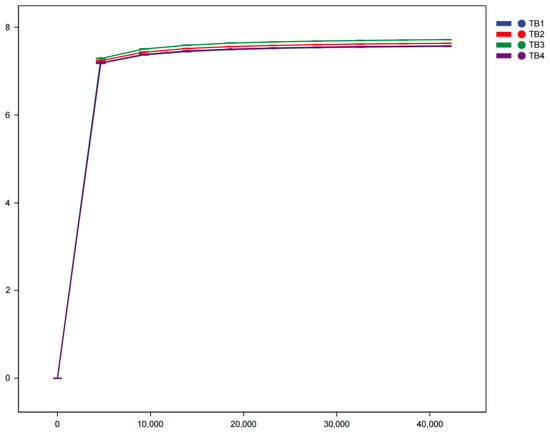
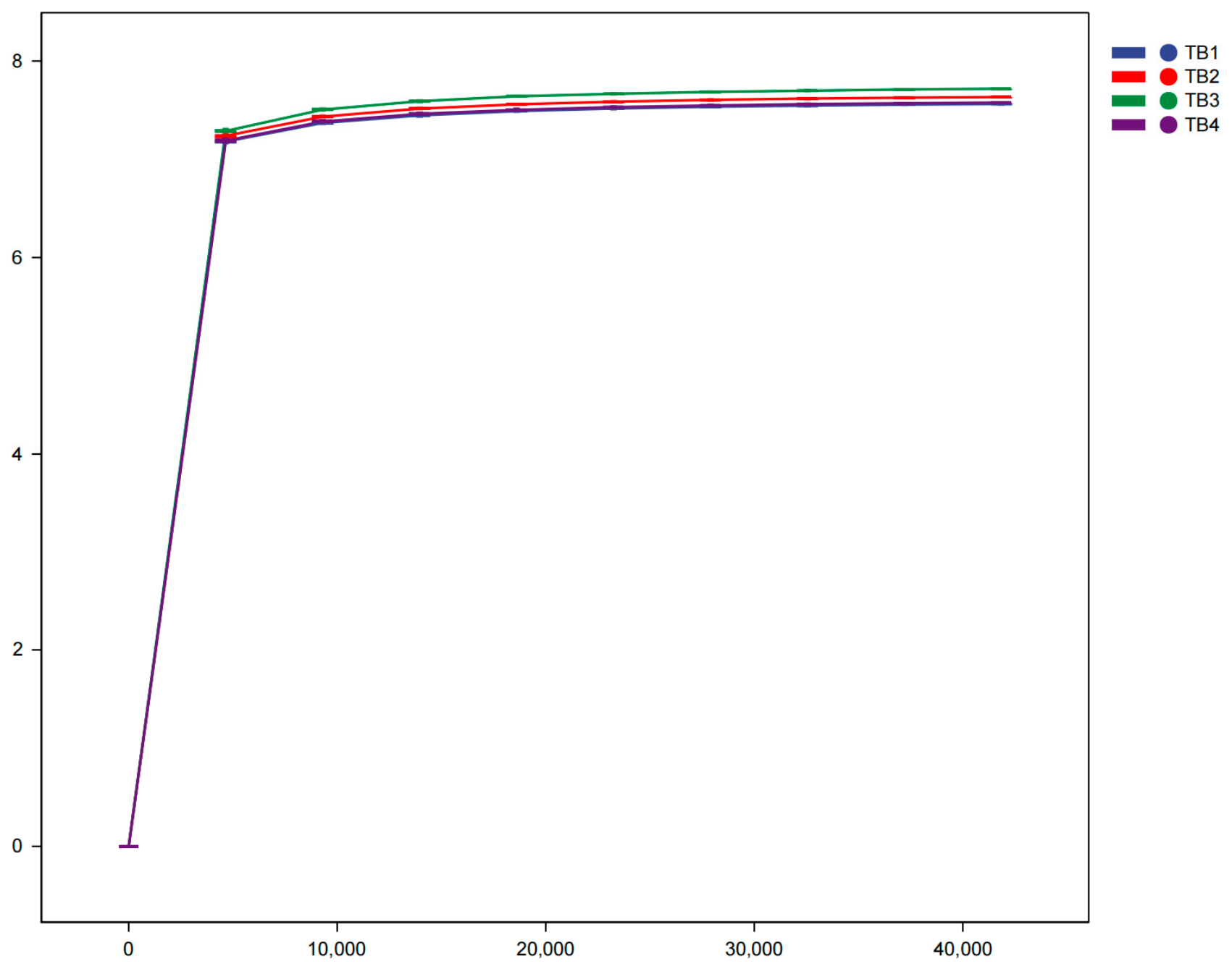
After quality control, 811,852 high-quality bacterial sequences were obtained from 1,116,340 raw reads. All samples were normalized to 44,054 sequences for subsequent analyses. Rarefaction curves indicated that ASV richness increased with sequencing depth and reached a stable plateau at approximately 10,000 reads (Figure 1), suggesting that the sequencing effort adequately covered the bacterial diversity within the samples. Sequencing of all soil samples generated a total of 1,116,340 raw reads.
Figure 1.
Rarefaction curve analysis of bacterial communities under different mixed planting patterns. Abbreviations: TB1: I. polycarpa monoculture; TB2: I. polycarpa + Camellia oleifera; TB3: I. polycarpa + Camellia oleifera + peanut; TB4: I. polycarpa + peanut.
As an important metric for evaluating within-community variation, α-diversity provides insights into microbial species richness and evenness. The Chao index reflects potential species richness, the Simpson index represents species evenness, and the Shannon index integrates both richness and evenness. As presented in Table 2, the TB3 treatment exhibited the highest Chao index (4800.19 ± 132.36), which was significantly greater than those observed in the TB1 (4303.94 ± 246.53) and TB4 (4319.71 ± 234.61) treatments (p < 0.05). However, the Chao index in the TB2 treatment (4462.42 ± 213.18) did not differ significantly from that of the other treatments (p > 0.05). The Simpson index showed no significant differences among the four mixed planting patterns, indicating similar bacterial species evenness across treatments. The Shannon index was significantly higher in TB3 (11.14 ± 0.96) than in TB1 (10.91 ± 0.85), with no significant differences compared to TB2 and TB4 (p > 0.05). Overall, the TB3 mixed planting pattern exhibited a pronounced advantage in enhancing. bacterial community richness and overall diversity. The Good’s coverage values of the four mixed planting patterns ranged from 0.987 to 0.989, all exceeding 0.98. This indicates that the sequencing depth was sufficient to capture the majority of bacterial ASVs, demonstrating the high completeness and reliability of the sequencing data and supporting subsequent analyses of bacterial community structure and diversity.
Table 2.
Analysis of α-diversity characteristics of soil bacterial communities under different mixed-planting patterns.
3.3. β-Diversity of Bacterial Communities
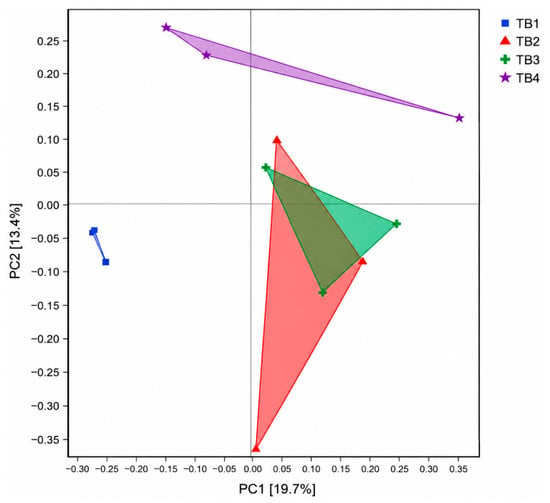
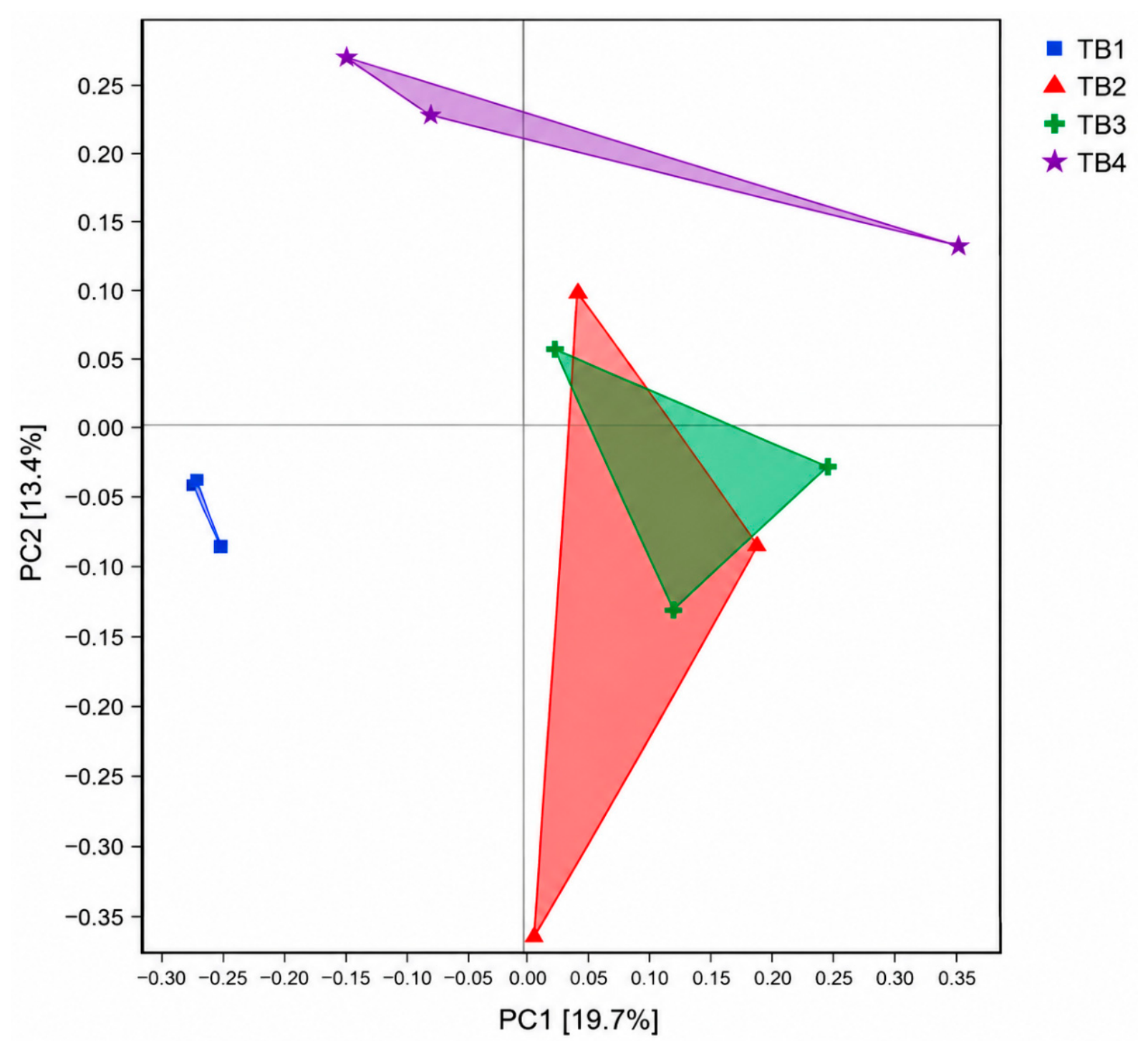
As shown in Figure 2, the first two principal coordinates explained 19.7% and 13.4% of the total variation in bacterial community composition, respectively, accounting for 33.1% cumulatively. Thus, the two-dimensional ordination captured only part of the overall variation and should be interpreted alongside complementary statistical analyses. The samples exhibited distinct distribution patterns across the four planting treatments. TB4 samples were mainly located in the upper-left quadrant and showed some separation from the other treatments, whereas TB1 samples were primarily distributed on the left side of the ordination plot. In contrast, TB2 and TB3 showed relatively similar distributions, with partial overlap. PERMANOVA based on 999 permutations revealed significant differences in bacterial community composition among planting treatments (pseudo-F = 1.4846, R2 = 0.3576, p = 0.002), with treatment differences accounting for 35.76% of the observed variation. β-dispersion analysis detected no significant differences in within-group dispersion among treatments (F = 0.3946, p = 0.774), suggesting that the significant PERMANOVA result was associated primarily with differences in community composition rather than unequal within-group dispersion. Overall, the PCoA, PERMANOVA, and β-dispersion results indicate that soil bacterial community composition differed among the four I. polycarpa planting patterns.
Figure 2.
PCoA Ordination of Soil Microbial Community β-Diversity under Different Mixed-Planting Regimes. Abbreviations: TB1: I. polycarpa monoculture; TB2: I. polycarpa + Camellia oleifera; TB3: I. polycarpa + Camellia oleifera + peanut; TB4: I. polycarpa + peanut.
3.4. Distribution of ASVs in Soil Bacterial Communities
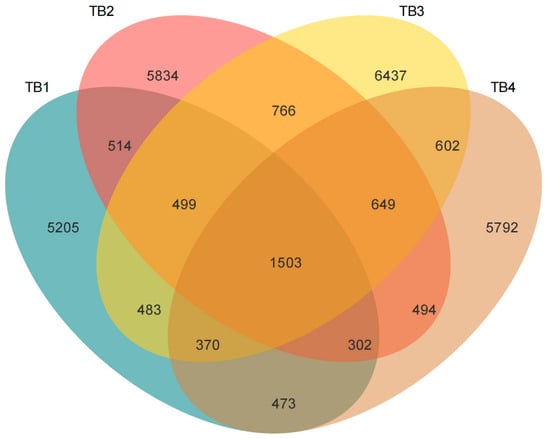
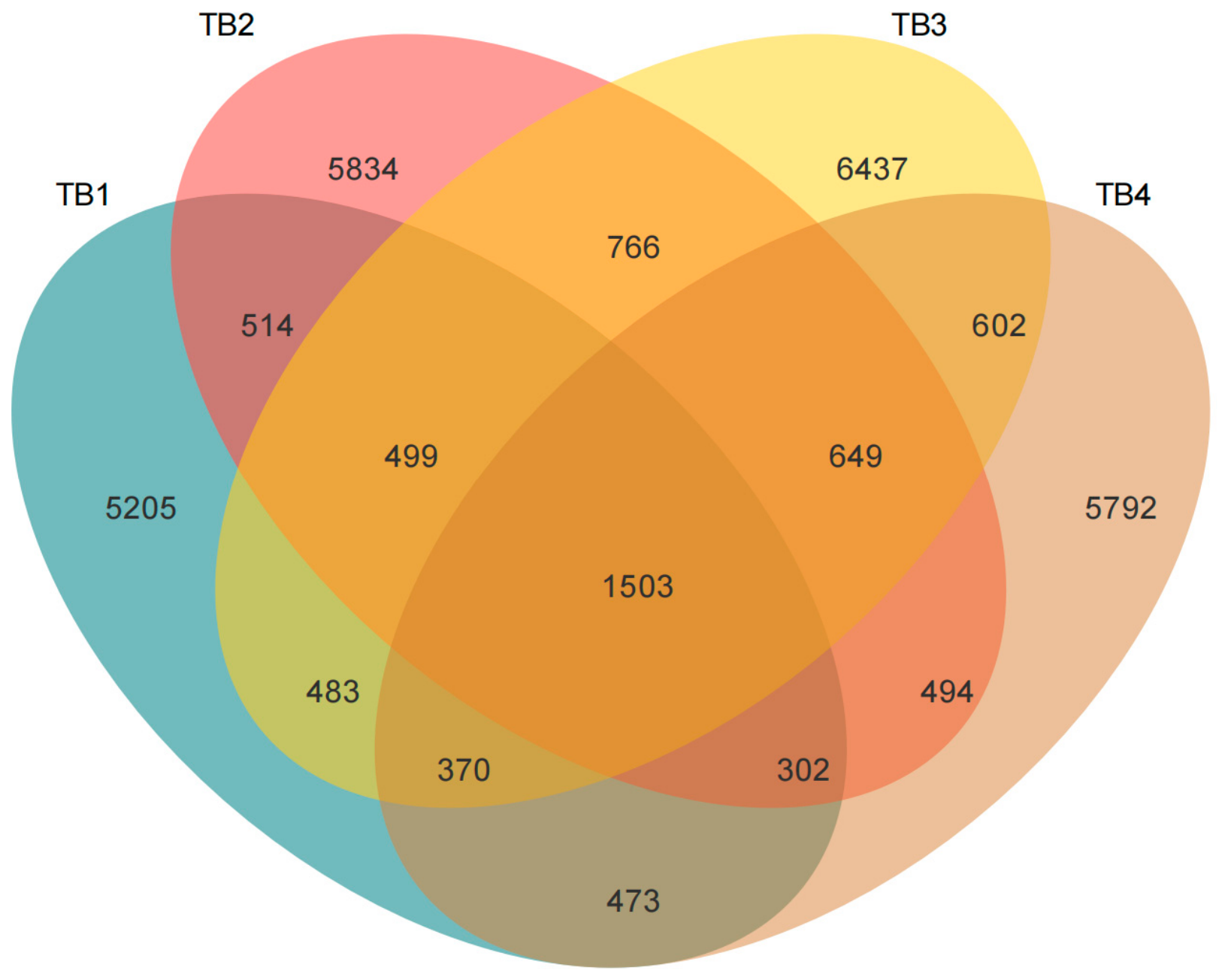
The Venn diagram (Figure 3) illustrates the shared and unique amplicon sequence variants (ASVs) in soil bacterial communities across the four I. polycarpa planting patterns. A total of 29,923 bacterial ASVs were identified, with the total ASV counts ranking as follows: TB3 > TB2 > TB4 > TB1. Among these, 1503 ASVs were shared across all four treatments, indicating a common bacterial component. TB3 had the highest number of unique ASVs (6437; 21.51% of the total), whereas TB1 had the lowest (5205; 17.69%). The numbers of unique ASVs in TB2 and TB4 were intermediate.
Figure 3.
Distribution of ASVs numbers in soil bacterial communities under different mixed planting pattern. Abbreviations: TB1: I. polycarpa monoculture; TB2: I. polycarpa + Camellia oleifera; TB3: I. polycarpa + Camellia oleifera + peanut; TB4: I. polycarpa + peanut.
3.5. Patterns of Soil Microbial Community Structural Changes
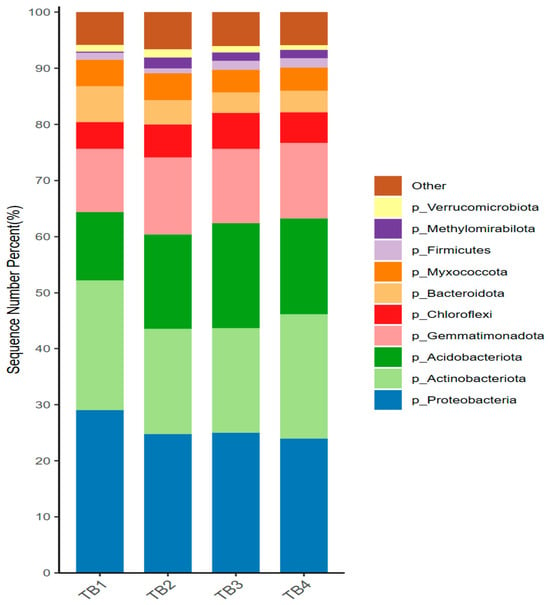
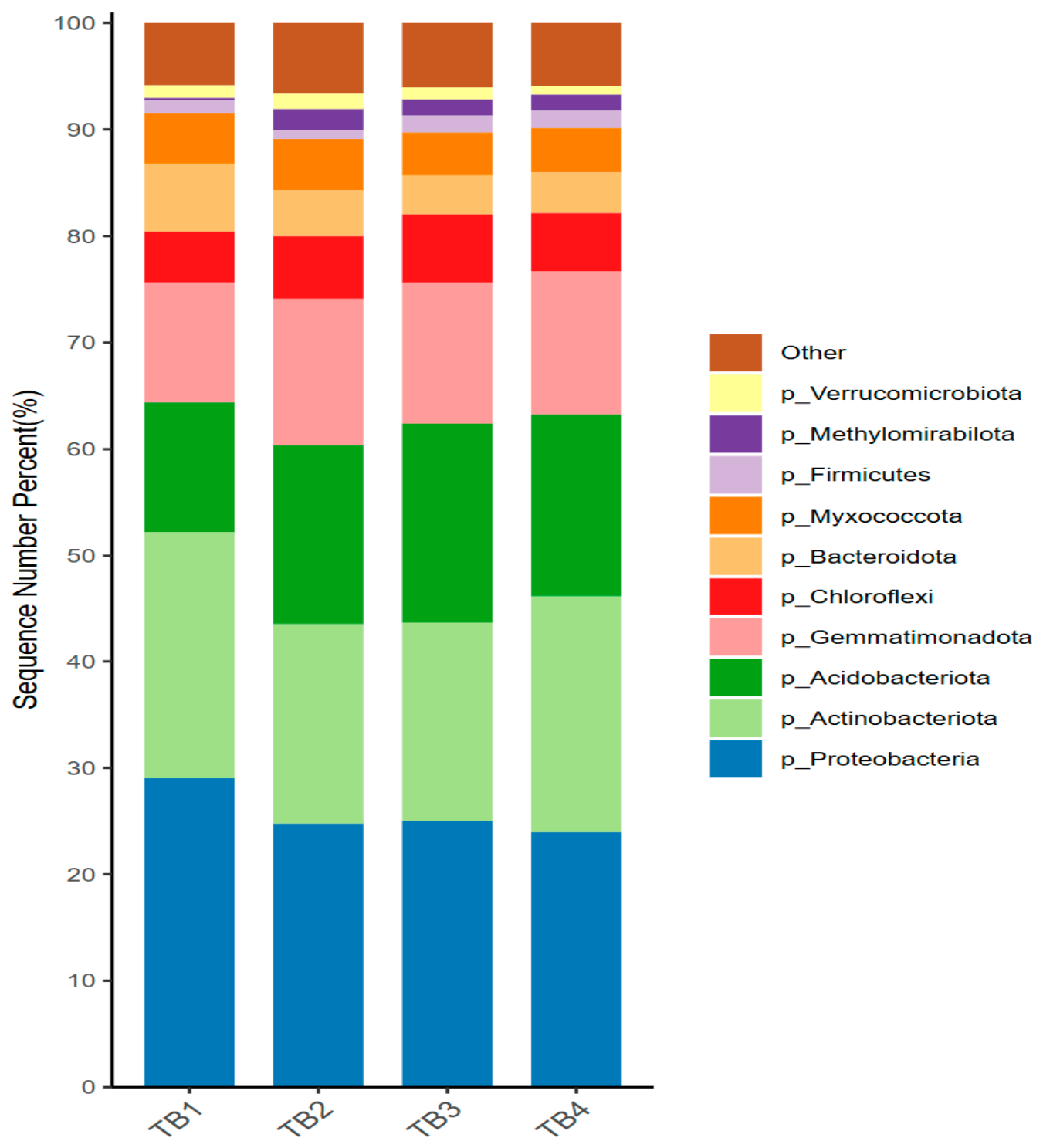
Figure 4 shows the phylum-level composition of soil bacterial communities under the four I. polycarpa planting patterns. The dominant phyla were consistent across treatments, primarily comprising Proteobacteria, Actinobacteriota, Acidobacteriota, Gemmatimonadota, and Chloroflexi. However, their relative abundances varied among planting patterns. Proteobacteria had the highest relative abundance in TB1 and a lower abundance in TB4. Actinobacteriota was relatively more abundant in TB1 but less abundant in TB2 and TB3. In contrast, Acidobacteriota showed relatively higher abundances in TB2 and TB3 and the lowest abundance in TB1. Gemmatimonadota was relatively more abundant in TB3, whereas Chloroflexi exhibited comparatively little variation among treatments. The remaining low-abundance phyla showed no clear distribution patterns across the four planting patterns.
Figure 4.
Effects of mixed planting pattern on the phylum-level composition of soil bacterial communities. Abbreviations: TB1: I. polycarpa monoculture; TB2: I. polycarpa + Camellia oleifera; TB3: I. polycarpa + Camellia oleifera + peanut; TB4: I. polycarpa + peanut.
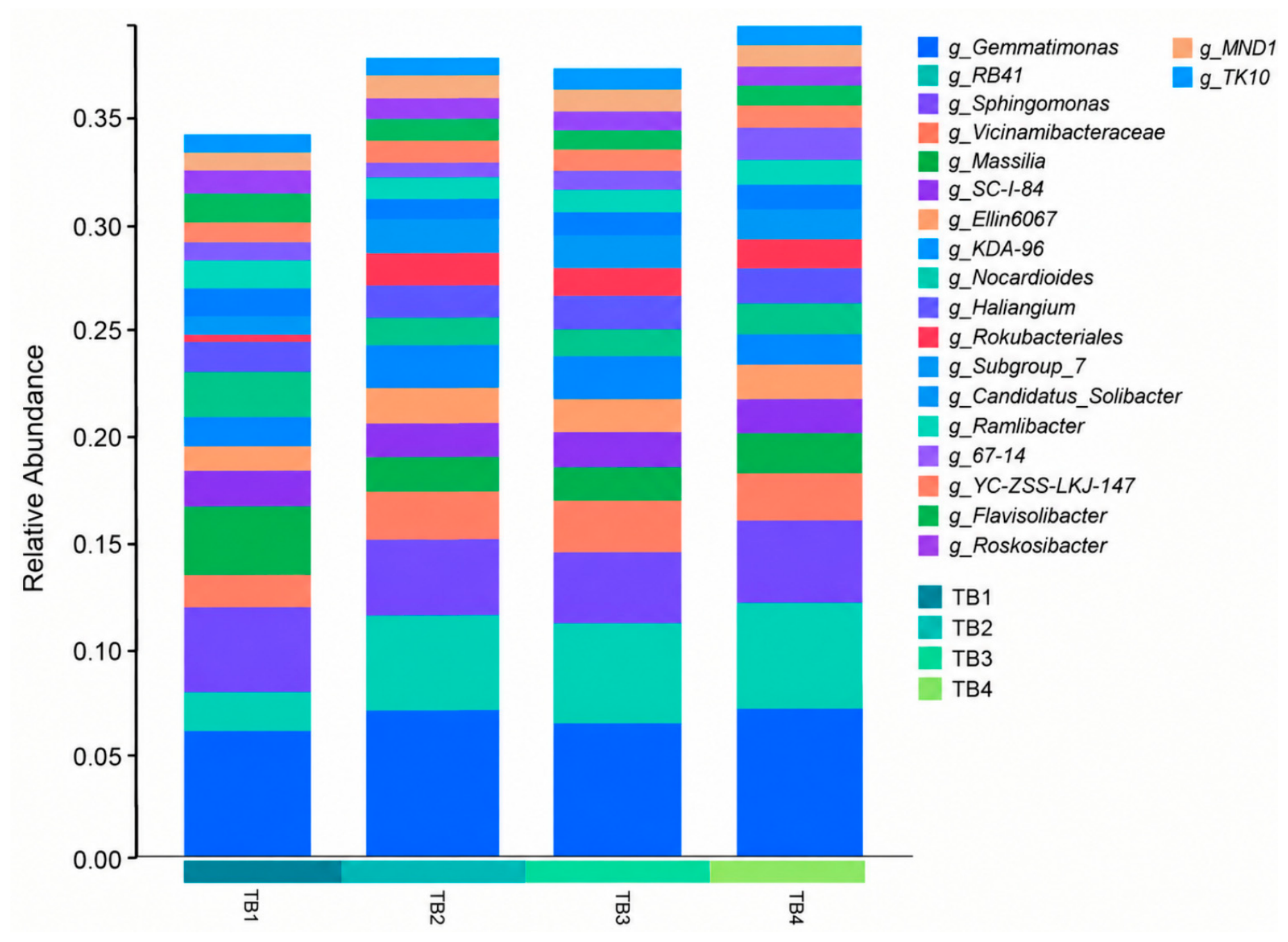
Figure 5 shows the genus-level composition of soil bacterial communities under the four I. polycarpa planting patterns. The 20 most abundant genera included several taxa shared across treatments, such as Gemmatimonas, RB41, and Sphingomonas. However, their relative abundances varied among planting patterns. Collectively, the top 20 genera accounted for approximately 35–40% of the total bacterial abundance. Among the four treatments, TB4 showed the strongest association with the abundance distribution of these dominant genera. Several taxa also exhibited distinct patterns across treatments: low-abundance taxa were more numerous in TB1, Rokubacteriales showed a relatively high abundance in TB2, Bacillus was most abundant in TB3, and Terrabacter reached its highest abundance in TB4 while remaining at comparatively low levels in the other treatments.
Figure 5.
Genus-level compositional characteristics of soil bacterial communities under different mixed-planting systems. Abbreviations: TB1: I. polycarpa monoculture; TB2: I. polycarpa + Camellia oleifera; TB3: I. polycarpa + Camellia oleifera + peanut; TB4: I. polycarpa + peanut.
3.6. Characterization of Structural Variations in Soil Microbial Communities
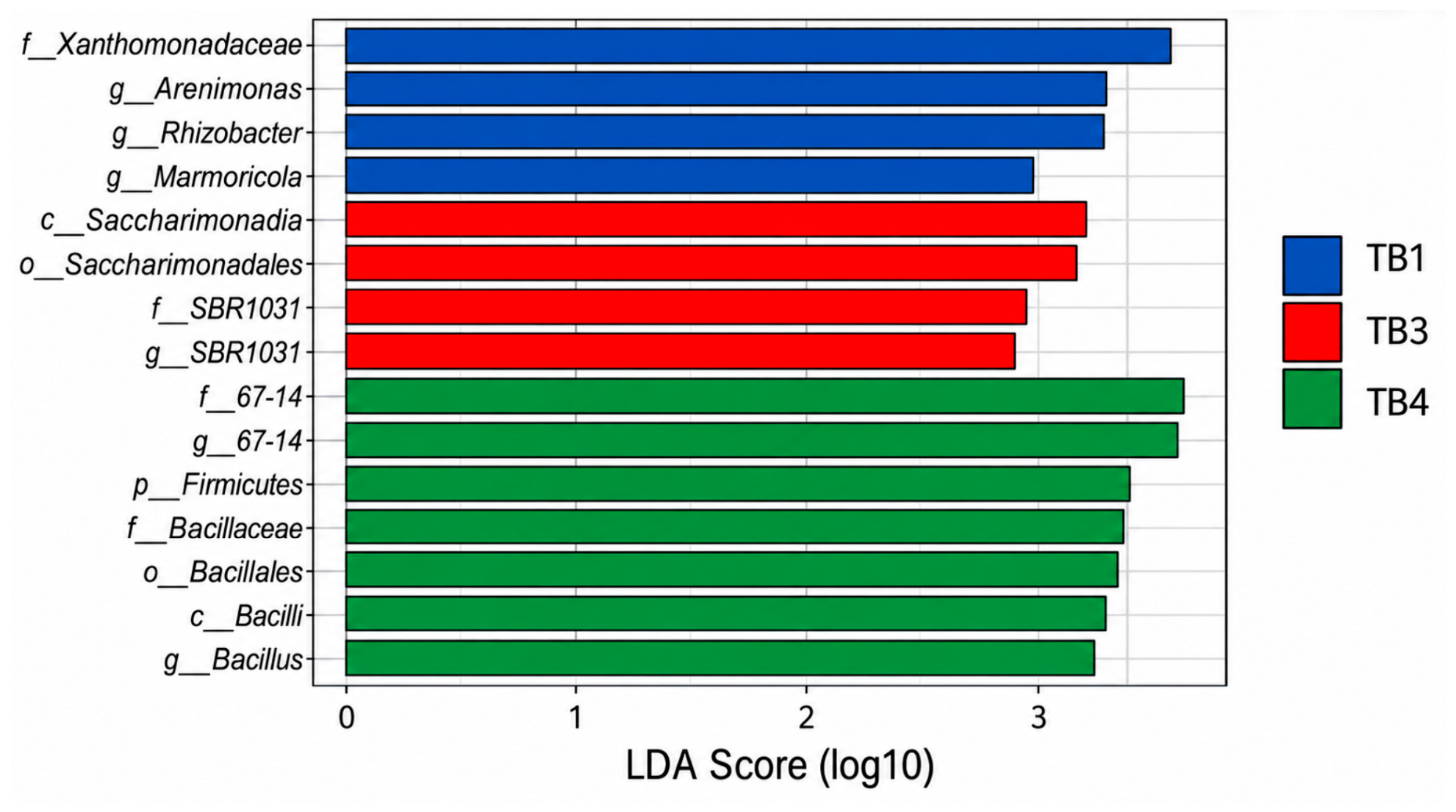
As shown in Figure 6, to identify bacterial taxa differentially enriched under the four I. polycarpa planting patterns, LEfSe analysis was performed using an LDA score threshold of 2. As shown in Figure 6, discriminative taxa meeting the predefined threshold were identified in TB1, TB3, and TB4, whereas no taxa in TB2 met the selection criteria; therefore, TB2 was not displayed in the figure. Four indicator taxa were identified in TB1, with LDA scores ranging from approximately 2.9 to 3.7. Similarly, four indicator taxa were detected in TB3, with scores ranging from approximately 3.0 to 3.3. TB4 had the largest number of indicator taxa, with seven taxa and LDA scores ranging from approximately 3.4 to 3.8. The number of indicator taxa and their LDA scores varied among planting patterns, with TB4 exhibiting the greatest number of discriminative taxa and relatively high LDA scores. These findings indicate that the distribution of bacterial indicator taxa differed among the four I. polycarpa planting patterns.
Figure 6.
Bar plot of LDA scores of bacterial taxa under different mixed planting pattern. Abbreviations: TB1: I. polycarpa monoculture; TB2: I. polycarpa + Camellia oleifera; TB3: I. polycarpa + Camellia oleifera + peanut; TB4: I. polycarpa + peanut.
3.7. Correlation Analysis Between Soil Physicochemical Properties and Microbial Community Structure
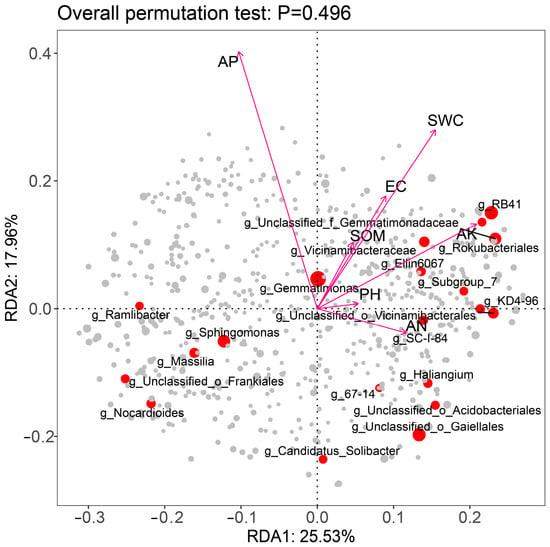
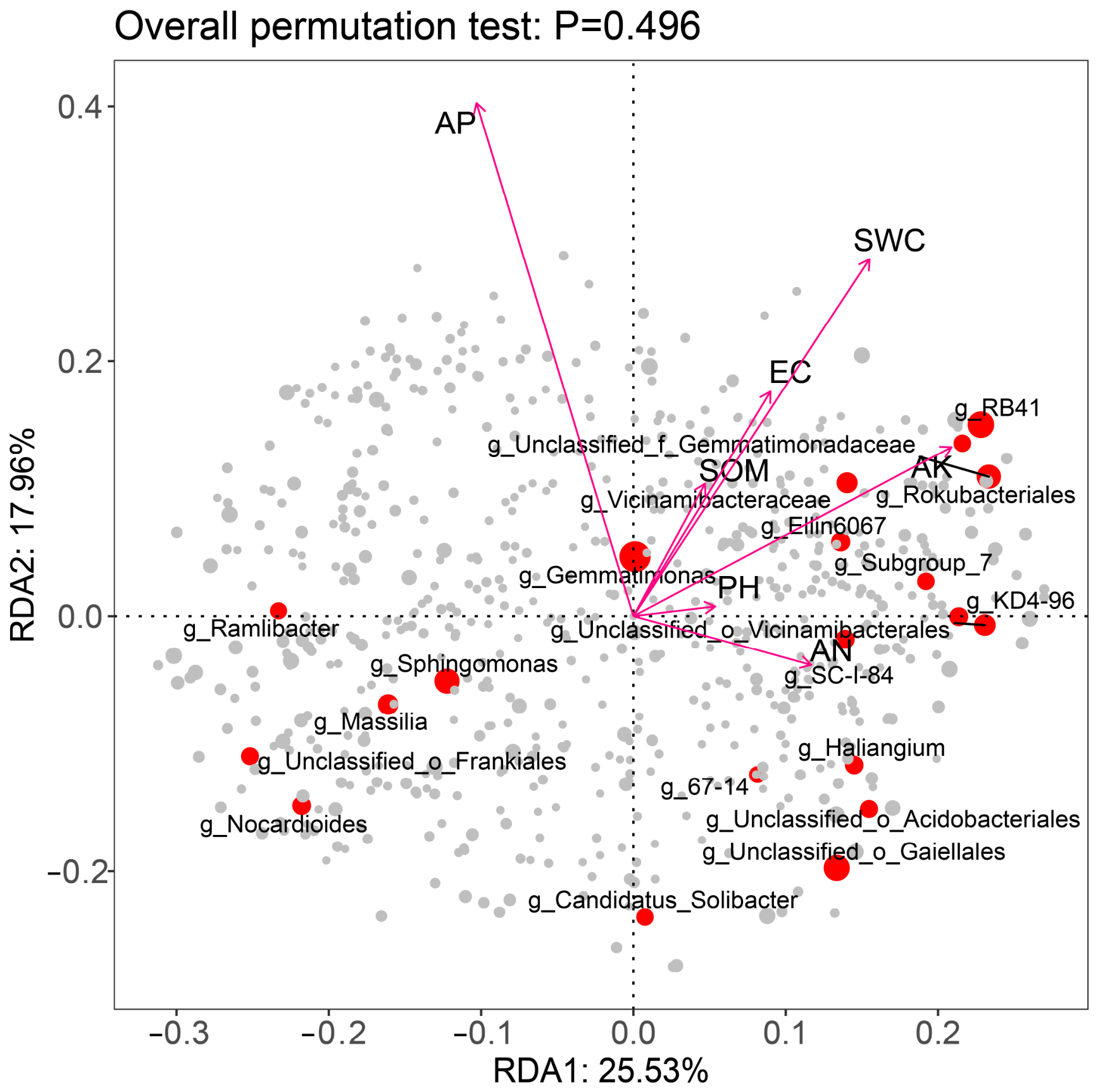
As shown in Table 3, redundancy analysis (RDA) was used to explore the associations between bacterial community composition and major soil environmental factors (pH, AP, OM, and EC). As shown in Figure 7, the first two axes explained 25.53% and 17.96% of the variation, respectively, accounting for 43.49% of the total variance. However, the overall RDA model was not significant (p = 0.496), indicating limited explanatory power of the combined environmental variables. Further studies could increase sample sizes and incorporate additional environmental variables to further investigate the relationships between soil environmental factors and bacterial community composition.
Table 3.
Association Between Soil Nutrients and Bacterial Community Variation Revealed by RDA.
Figure 7.
Associations between soil environmental factors and bacterial community composition at the genus level. Abbreviations: AP, AK, AN, SWC, SOM, and EC denote available phosphorus, available potassium, alkali-hydrolyzable nitrogen, soil water content, soil organic matter, and electrical conductivity, respectively.
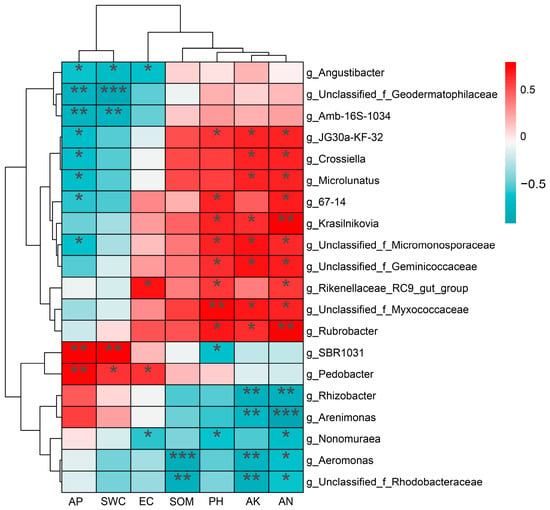
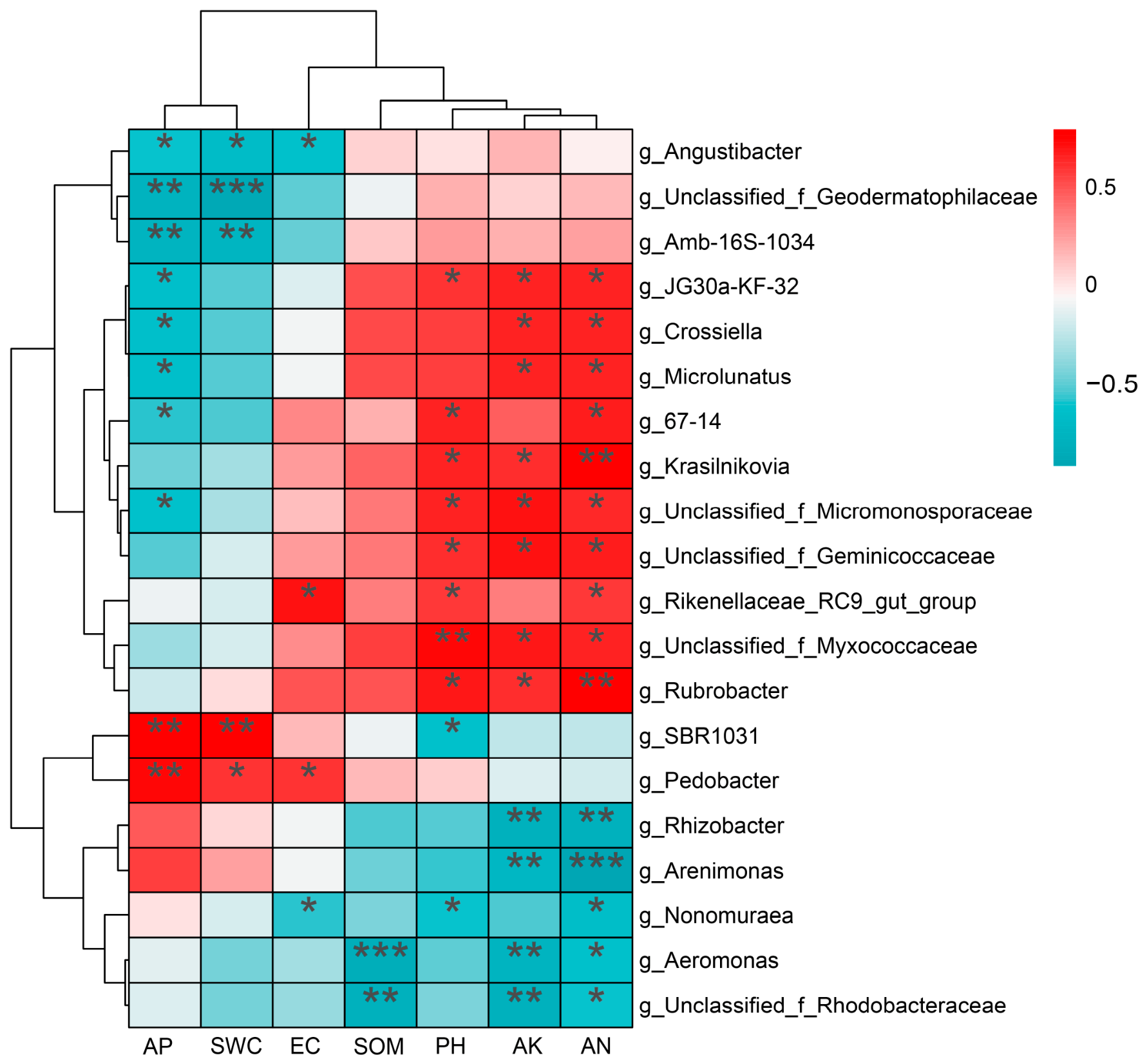
Spearman correlation analysis was conducted to assess the associations between the abundance variations in the 20 dominant bacterial genera and soil environmental characteristics (Figure 8). Some bacterial genera exhibited significant negative correlations with soil environmental factors, including SBR1031, Rubrobacter, and Pedobacter. Overall, This parameter exhibited a significant positive association with available phosphorus (AP) and soil water content (SWC), and electrical conductivity (EC), but negative correlations with available potassium (AK) and available nitrogen (AN). Among them, SBR1031 and Rubrobacter showed relatively strong responses to soil nutrient factors and exhibited significant correlations with multiple environmental variables, suggesting that their distributions may be influenced by variations in soil nutrient conditions. In contrast, some bacterial genera exhibited positive correlations with soil nutrient indicators, including JG30a-KF-32, Microlunatus, Krasilnikovia, and Unclassified_f_Micromonosporaceae. This parameter exhibited positive associations with both available potassium (AK) and available nitrogen (AN), and other soil nutrient parameters, but showed negative correlations with available phosphorus (AP), soil water content (SWC), and electrical conductivity (EC). Among them, JG30a-KF-32 and Krasilnikovia exhibited strong correlations with multiple soil environmental factors, suggesting that these genera may adopt different ecological adaptation strategies under different planting patterns. Some bacterial genera did not exhibit consistent correlation patterns with environmental factors, but rather showed complex response characteristics. For example, Rikenellaceae_RC9_gut_group was positively correlated with soil organic matter (SOM), showed positive associations with pH and available potassium (AK), whereas negative relationships were observed with available phosphorus (AP), soil water content (SWC), and electrical conductivity (EC). In addition, genera such as Unclassified_f_Geodermatophilaceae, Amb-16S-1034, and Unclassified_f_Geminicoccaceae exhibited varying degrees of associations with soil environmental factors.
Figure 8.
Clustering Patterns of Soil Nutrients and Bacterial Genera. * p < 0.05, ** p < 0.01, and *** p < 0.001. Abbreviations: AP, AK, AN, SWC, SOM, and EC denote available phosphorus, available potassium, alkali-hydrolyzable nitrogen, soil water content, soil organic matter, and electrical conductivity, respectively.
4. Discussion
4.1. Soil Physicochemical Responses and α-Diversity Under Different I. polycarpa Mixed-Planting Regimes
Soil environmental conditions play an important role in shaping rhizosphere microbial community composition and diversity [20,21]. In the present study, the TB4 planting pattern exhibited higher soil available potassium (AK), alkali-hydrolyzable nitrogen (AN), and soil organic matter (SOM) contents than the other planting patterns. These differences indicate that soil nutrient characteristics varied among planting configurations and may be associated with differences in nutrient inputs, plant uptake, and nutrient cycling. In TB4, the combination of I. polycarpa and peanut may influence these processes through differences in root distribution, resource-use strategies, and organic matter inputs. Previous studies have reported that legumes can contribute to soil nitrogen inputs through symbiotic nitrogen fixation by rhizobia [22]. However, this process alone cannot explain the higher AK and SOM contents observed in TB4. Differences in plant residue inputs and root-derived organic matter may also contribute to variation in SOM accumulation and nutrient cycling. Because root nodulation, nitrogen fixation rates, root exudates, and litter inputs were not measured in this study, these mechanisms remain tentative explanations rather than demonstrated causal relationships. Overall, the higher AK, AN, and SOM contents in TB4 suggest that planting configuration may be associated with differences in soil nutrient status, consistent with previous findings that plant composition and resource inputs can influence soil properties [23].
Regarding bacterial α-diversity, the TB3 mixed planting pattern exhibited significantly higher Chao and Shannon indices than the other mixed patterns (p < 0.05). Among the mixed tree species, the decomposition of fallen leaves and litter promotes nutrient accumulation, providing more abundant carbon and nitrogen sources for microbes, which supports the survival and proliferation of a greater number of microbial taxa and, in turn, synergistically enhances community richness and evenness. Similar effects were also documented by Zhao et al., who demonstrated that intercropping systems were more effective than monocultures in improving soil quality [24,25]. This study was limited by the use of samples collected from only one sampling period, which primarily captured the short-term responses of soil microbial communities to environmental factors under different mixed planting pattern. Future long-term and multi-seasonal observations are needed to further elucidate the impacts of seasonal variations on microbial community dynamics.
4.2. Soil Microbial Community Responses to Different I. polycarpa Mixed-Planting Regimes
Soil microbial community structure can vary among planting patterns [26,27]. Previous studies have suggested that tree species diversity may influence soil microbial communities by altering soil microhabitats, resource availability, and nutrient inputs [28]. Similarly, legume-based mixed planting has been associated with changes in soil microbial diversity and abundance [29]. In the present study, bacterial ASV richness followed the order TB3 > TB2 > TB4 > TB1, with TB3 exhibiting the highest number of ASVs and TB1 the lowest. This pattern suggests that bacterial richness may differ among the planting systems examined and is broadly consistent with trends reported in previous studies [30]. However, this study was conducted at a single experimental site, with only three biological replicates per treatment (n = 3), which limits the extent to which the robustness and generalizability of this pattern can be assessed. Furthermore, root exudates, litter decomposition, and microbial resource utilization were not directly measured, leaving the potential mechanisms underlying these differences unresolved. Therefore, the observed pattern should be interpreted as a preliminary finding specific to the conditions investigated, rather than as evidence of a general or causal effect of mixed planting on soil bacterial diversity. Further research involving more independent plots, multiple sites, and repeated sampling across seasons is needed to determine whether this pattern is consistent across different environmental conditions and to investigate the mechanisms that may contribute to the observed differences.
Regarding relative abundance, the bacterial communities under all four planting patterns were dominated by Proteobacteria, Actinobacteriota, and Acidobacteriota, consistent with the findings of Barka et al. [31]. Proteobacteria were among the dominant phyla across all treatments, with a relatively higher abundance in TB1. Actinobacteriota also exhibited a higher relative abundance in TB1, whereas their abundance was lower in TB2 and TB3. In contrast, Acidobacteriota were relatively more abundant in TB2 and TB3, with the lowest abundance observed in TB1. These dominant bacterial phyla encompass diverse metabolic capabilities and may respond differently to variations in soil environmental conditions, potentially contributing to their distribution across planting patterns [32]. Acidobacteriota have been associated with soil carbon cycling and organic matter transformation; therefore, differences in their relative abundance may reflect variation in soil conditions among treatments. Actinobacteriota can participate in the decomposition of complex organic compounds and the production of antimicrobial substances [33]. These functions may contribute to organic matter turnover and microbial interactions in soil ecosystems. Collectively, the ecological roles of these bacterial groups may be relevant to soil functioning and health [34,35]. However, their specific functional activities were not directly assessed in this study, and the proposed functional implications should therefore be interpreted with caution.
4.3. Associations Between Soil Physicochemical Factors and Microbial Community Structure Under Different I. polycarpa Mixed-Planting Patterns
Variations in soil microbial community structure have been associated with differences in soil physicochemical properties and microbial functional characteristics, consistent with previous studies [36]. In the present study, soil nutrient profiles differed among the mixed-planting patterns, accompanied by variations in bacterial community composition. Compared with the other treatments, TB4 exhibited higher soil organic matter (SOM), alkali-hydrolyzable nitrogen (AN), and available potassium (AK) contents. These differences may be associated with variations in the distribution of bacterial taxa involved in organic matter decomposition and nutrient cycling, although their specific functional activities were not directly assessed [37,38]. Correlation analysis further revealed significant associations between soil AK content and the relative abundances of 13 dominant bacterial genera, suggesting that potassium availability may be related to the distribution of specific bacterial taxa. This finding differs from previous studies highlighting the role of soil pH in shaping bacterial communities [39], potentially reflecting differences in soil conditions and plant composition among study systems. One possible explanation is that, if soil pH remained relatively close to neutral and varied only slightly among treatments, its contribution to the observed variation in bacterial communities may have been limited. In addition, differences in plant nutrient uptake and litter inputs among planting patterns may have influenced soil potassium availability and, in turn, been associated with the distribution of bacterial taxa. The inclusion of peanut in the mixed-planting system may also have influenced nutrient cycling through root activity and plant residue inputs, potentially contributing to differences in soil potassium status. These preliminary findings suggest that bacterial community variation in mixed-species I. polycarpa plantations may be associated with the combined effects of soil environmental conditions and plant community composition. Further research is needed to clarify the relative contributions of individual soil properties and determine whether the observed correlations reflect direct or indirect ecological relationships.
5. Conclusions
The results showed that soil physicochemical properties and bacterial community characteristics varied among the planting patterns. TB3 exhibited significantly higher Chao1 and Shannon indices than TB1 and had the highest number of unique ASVs, indicating greater bacterial richness and diversity. In contrast, TB4 had significantly higher soil pH, available potassium (AK), alkali-hydrolyzable nitrogen (AN), and soil organic matter (SOM) contents, suggesting a more favorable soil nutrient status. Although the dominant bacterial phyla, including Proteobacteria, Actinobacteriota, Acidobacteriota, Gemmatimonadota, and Chloroflexi, were shared across treatments, AK was significantly correlated with 13 dominant bacterial genera, suggesting potential associations with bacterial community variation rather than a confirmed regulatory effect. Overall, TB3 exhibited comparatively higher bacterial diversity, whereas TB4 showed better soil nutrient status. These findings provide preliminary insights into mixed-planting management in the Huai River source region. However, the single-site design and limited replication (n = 3 per treatment) constrain the generalizability of the results. Further studies involving more sites, additional replicates, and long-term monitoring are needed to clarify the relationships between planting patterns, soil properties, and bacterial community dynamics.
Supplementary Materials
The following supporting information can be downloaded at https://www.mdpi.com/article/10.3390/life16111820/s1.
Author Contributions
Conceptualization, Z.L. (Zhi Li); methodology, Z.L. (Zhi Li); software, D.J.; formal analysis, Y.W.; investigation, T.N. and Z.S.; resources, L.D. and J.W.; data curation, X.H. and Y.N.; Manuscript preparation—Initial drafting, T.N.; Writing—Manuscript review and revision, Z.L. (Zhen Liu) and F.L.; visualization, Y.R.; supervision, Z.L. (Zhi Li) and Q.C.; project administration, X.G.; funding acquisition, L.D.; Writing original draft preparation, Y.L. All authors have read and agreed to the published version of the manuscript.
Funding
This work was financially supported by the Key Science and Technology Research Program of Henan Province: Development of New High-yield and Stress-tolerant Germplasms and Efficient Breeding Technology for Idesia polycarpa (262102110271), the Central Finance Forestry Science and Technology Extension Program: Demonstration and Extension of Fast-growing, High-yield and High-quality Cultivation Technology for ‘Yutai’ Idesia polycarpa (GTH[2026]02), the Key Scientific Research Program of Universities in Henan Province: Collection, Conservation, Creation and Improved Variety Breeding of Idesia polycarpa Germplasm Resources (25CY017), and the Henan Province Graduate Education Reform and Quality Improvement Project: Henan Province Professional Degree Graduate Excellent Teaching Case Project, Tree Physiological Ecology (YJS2025AL63). The authors appreciate the constructive comments from the anonymous reviewers.
Institutional Review Board Statement
Not applicable.
Informed Consent Statement
Not applicable.
Data Availability Statement
Microbial sequence data obtained in this study are publicly available through the NCBI database (BioProject: PRJNA1484484). Additional datasets associated with this work can be obtained from the corresponding author upon reasonable request.
Acknowledgments
The authors sincerely thank all those who provided assistance and technical support throughout this study.
Conflicts of Interest
The authors declare no conflicts of interest.
References
- Bastida, F.; Eldridge, D.J.; García, C.; Png, G.K.; Bardgett, R.D.; Delgado-Baquerizo, M. Soil microbial diversity–biomass relationships are driven by soil carbon content across global biomes. ISME J. 2021, 15, 2081–2091. [Google Scholar] [CrossRef] [Scilit]
- An, R.; Ma, F.Y.; Cui, H.R.; Qin, G.H.; Huang, Y.L.; Tian, Q. Analysis of bacterial community structure and diversity characteristics of mixed forest of Robinia pseudoacacia and Ailanthus altissima and their pure forest in the Yellow River Delta. Acta Ecol. Sin. 2019, 39, 7960–7967. [Google Scholar] [CrossRef] [Scilit]
- Paes da Costa, D.; das Graças Espíndola da Silva, T.; Sérgio Ferreira Araujo, A.; Prudêncio de Araujo Pereira, A.; William Mendes, L.; dos Santos Borges, W.; Felix da França, R.; Fragoso de Souza, C.A.; Alves da Silva, B.; Oliveira Silva, R.; et al. Soil fertility impact on recruitment and diversity of the soil microbiome in sub-humid tropical pastures in Northeastern Brazil. Sci. Rep. 2024, 14, 3919. [Google Scholar] [CrossRef] [Scilit]
- Bastida, F.; García, C.; Fierer, N.; Eldridge, D.J.; Bowker, M.A.; Abades, S.; Alfaro, F.D.; Berhe, A.A.; Cutler, N.A.; Gallardo, A.; et al. Global ecological predictors of the soil priming effect. Nat. Commun. 2019, 10, 3481. [Google Scholar] [CrossRef] [Scilit]
- Ma, Y. Effects of Thinning and Mixing on the Stability of Soil Aggregates and Their Carbon and Nitrogen Components in Larix principis-rupprechtii Plantations. Ph.D. Thesis, Beijing Forestry University, Beijing, China, 2023. [Google Scholar] [CrossRef]
- Li, Y.; Tang, Q.; Yuan, C.; Zhu, S.; Ye, Y.; Wu, P.; Cui, Y.; Ding, F. Changes in Community Structure and Functional Characteristics of Soil Bacteria and Fungi along Karst Vegetation Succession. Forests 2023, 14, 1562. [Google Scholar] [CrossRef] [Scilit]
- Li, M.-M.; Wang, D.-Y.; Zhang, L.; Kang, M.-H.; Lu, Z.-Q.; Zhu, R.-B.; Mao, X.-X.; Xi, Z.-X.; Ma, T. Intergeneric Relationships within the Family Salicaceae s.l. Based on Plastid Phylogenomics. Int. J. Mol. Sci. 2019, 20, 3788. [Google Scholar] [CrossRef] [Scilit]
- Su, S.; Li, Z.J.; Ni, J.W.; Geng, Y.H.; Xu, X.Q. Diversity Analysis on Characters of Spikes and Fruits of Idesia polycarpa. J. Plant Resour. Environ. 2021, 30, 35–44. [Google Scholar] [CrossRef]
- Dai, L. Study on Geographic Variation of Fruit and Seed of Idesia polycarpa Maxim. Ph.D. Thesis, Henan Agricultural University, Zhengzhou, China, 2014. [Google Scholar] [CrossRef]
- Wang, Y.; Yao, B.; Liu, W.; Wang, L.; Yan, H.; Li, F.; Liu, Z. Dynamic Changes of Endogenous Hormones in Seeds Germination of Idesia polycarpa after Dormancy Release. Sci. Silvae Sin. 2018, 54, 44–52. [Google Scholar] [CrossRef]
- Zhao, M.; Xu, J.; Liu, Y.; Li, P.; Liu, Z.; Li, Z.; Geng, X.; Dai, L.; Liu, Y.; Wang, Y. Analysis of Fruit Quality of Idesia polycarpa Maxim. at Different Harvest Periods. J. Henan Agric. Univ. 2024, 58, 69–77. [Google Scholar] [CrossRef]
- Tang, Z.; Cao, Z.; Wu, L.; Zhang, R.; Li, Z. Research on the Propagation Technology of Idesia polycarpa Cuttings. Non-Wood For. Res. 2025, 43, 285–294. [Google Scholar]
- Huang, Z. Effects of Mixed Plantations of Cunninghamia lanceolata with Different Broad-Leaved Species on Stand Growth and Soil Fertility. For. Inventory Plan. 2025, 50, 10–14. [Google Scholar]
- Qiao, L.; Guan, Z.; Ren, F.; Ma, T. Comparative Analysis of Rhizosphere Microbial Communities in Monoculture and Mixed Oak–Pine Forests: Structural and Functional Insights. Front. Microbiol. 2025, 16, 1646535. [Google Scholar] [CrossRef] [Scilit]
- Deng, Y.B.; Peng, C.Y.; Wang, S.H.; Yang, M.; Xu, Y.; Pang, Z. Effect of Eucalyptus and precious tree species mixture on soil physicochemical properties and microbial biomass. Jiangxi Agric. J. 2026, 38, 49–57. [Google Scholar] [CrossRef]
- Dai, L.; Hao, X.; Niu, T.; Liu, Z.; Wang, Y.; Geng, X.; Cai, Q.; Wang, J.; Ren, Y.; Liu, F.; et al. Analysis of Microbial Community Structure and Diversity in Different Soil Use Types in the Luo River Basin. Microorganisms 2025, 13, 2173. [Google Scholar] [CrossRef] [Scilit]
- Song, Z.; Wang, H.; Liu, S.; Hu, J.; An, M.; Chen, H.; Li, Z.; Wu, J.; Shi, Z.; Lu, L.; et al. Relationship between Tree Species Richness and Soil Microbial Diversity and Community Composition in a Mixed Planted South Subtropical Forest. Acta Ecol. Sin. 2020, 40, 8265–8273. [Google Scholar]
- Kassie, A.A.; Fetene, E.M.; Tilahun, Z.A. Effect of land use types on selected soil properties in the Asabla watershed, northern highlands of Ethiopia. Soil Use Manag. 2025, 41, e70035. [Google Scholar] [CrossRef] [Scilit]
- Li, P.; Rana, S.; Zhang, M.; Jin, C.; Tian, K.; Liu, Z.; Li, Z.; Cai, Q.; Geng, X.; Wang, Y. An investigation of the growth status of 19-year-old Idesia polycarpa ‘Yuji’ plantation forest in the mountainous region of Henan, China. Heliyon 2023, 9, e19716. [Google Scholar] [CrossRef] [Scilit]
- Liu, Q.; Wang, S.; Li, K.; Qiao, J.; Guo, Y.; Liu, Z.; Guo, X. Responses of Soil Bacterial and Fungal Communities to the Long-Term Monoculture of Grapevine. Appl. Microbiol. Biotechnol. 2021, 105, 7035–7050. [Google Scholar] [CrossRef] [Scilit]
- Song, J.; Han, Y.; Bai, B.; Jin, S.; He, Q.; Ren, J. Diversity of Arbuscular Mycorrhizal Fungi in Rhizosphere Soils of the Chinese Medicinal Herb Sophora flavescens Ait. Soil Tillage Res. 2019, 195, 104423. [Google Scholar] [CrossRef] [Scilit]
- Qiao, M.; Sun, R.; Wang, Z.; Dumack, K.; Xie, X.; Dai, C.; Wang, E.; Zhou, J.; Sun, B.; Peng, X.; et al. Legume Rhizodeposition Promotes Nitrogen Fixation by Soil Microbiota under Crop Diversification. Nat. Commun. 2024, 15, 2924, Correction in Nat. Commun. 2024, 15, 3535. [Google Scholar] [CrossRef] [Scilit]
- Su, H. Effects of Bradyrhizobium on Nitrogen Uptake and Utilization in Maize–Peanut Intercropping System. Ph.D. Thesis, Shenyang Agricultural University, Shenyang, China, 2025. [Google Scholar] [CrossRef]
- Yan, H.; Gu, S.; Li, S.; Shen, W.; Zhou, X.; Yu, H.; Ma, K.; Zhao, Y.; Wang, Y.; Zheng, H.; et al. Grass–Legume Mixed Cropping Enhances Forage Production via the Bacterial Community. Agric. Ecosyst. Environ. 2022, 338, 108087. [Google Scholar] [CrossRef] [Scilit]
- Zhao, W.; Yin, Y.; Song, J.; Li, S. Mixed Sowing Improves Plant and Soil Bacterial Community Restoration in the Degraded Alpine Meadow. Plant Soil 2024, 499, 379–392. [Google Scholar] [CrossRef] [Scilit]
- Pereira, A.P.A.; Durrer, A.; Gumiere, T.; Gonçalves, J.L.M.; Robin, A.; Bouillet, J.-P.; Wang, J.; Verma, J.P.; Singh, B.K.; Cardoso, E.J.B.N. Mixed Eucalyptus Plantations Induce Changes in Microbial Communities and Increase Biological Functions in the Soil and Litter Layers. For. Ecol. Manag. 2019, 433, 332–342. [Google Scholar] [CrossRef] [Scilit]
- Li, X.; Chu, Y.; Jia, Y.; Yue, H.; Han, Z.; Wang, Y. Changes to Bacterial Communities and Soil Metabolites in an Apple Orchard as a Legacy Effect of Different Intercropping Plants and Soil Management Practices. Front. Microbiol. 2022, 13, 956840. [Google Scholar] [CrossRef] [Scilit]
- Mori, A.S.; Cornelissen, J.H.C.; Fujii, S.; Okada, K.-I.; Isbell, F. A Meta-Analysis on Decomposition Quantifies Afterlife Effects of Plant Diversity as a Global Change Driver. Nat. Commun. 2020, 11, 4547. [Google Scholar] [CrossRef] [Scilit]
- Bever, J.D. Preferential Allocation, Physio-Evolutionary Feedbacks, and the Stability and Environmental Patterns of Mutualism between Plants and Their Root Symbionts. New Phytol. 2015, 205, 1503–1514. [Google Scholar] [CrossRef] [Scilit]
- Gillespie, L.M.; Hättenschwiler, S.; Milcu, A.; Wambsganss, J.; Shihan, A.; Fromin, N. Tree Species Mixing Affects Soil Microbial Functioning Indirectly via Root and Litter Traits and Soil Parameters in European Forests. Funct. Ecol. 2021, 35, 2190–2204. [Google Scholar] [CrossRef] [Scilit]
- Barka, E.A.; Vatsa, P.; Sanchez, L.; Gaveau-Vaillant, N.; Jacquard, C.; Klenk, H.P.; Clément, C.; Ouhdouch, Y.; van Wezel, G.P. Taxonomy, Physiology, and Natural Products of Actinobacteria. Microbiol. Mol. Biol. Rev. 2016, 80, 1–43, Correction in Microbiol. Mol. Biol. Rev. 2016, 80, iii. [Google Scholar] [CrossRef] [Scilit]
- Verzeaux, J.; Hirel, B.; Dubois, F.; Lea, P.J.; Tetu, T. Cover Crops Prevent the Deleterious Effect of Nitrogen Fertilisation on Bacterial Diversity by Maintaining the Carbon Content of Ploughed Soil. Geoderma 2016, 281, 49–57. [Google Scholar] [CrossRef] [Scilit]
- Liu, Y. Soil Physicochemical Properties, Microorganisms and Metabolites of Eucalyptus Grandis × Urophylla and Cupressus funebris Forests with Different Mixing Proportions. Ph.D. Thesis, Southwest University, Chongqing, China, 2023. [Google Scholar]
- Zhu, K.; Wang, Q.; Zhang, Y.; Zarif, N.; Ma, S.; Xu, L. Variation in Soil Bacterial and Fungal Community Composition at Different Successional Stages of a Broad-Leaved Korean Pine Forest in the Lesser Hinggan Mountains. Forests 2022, 13, 625. [Google Scholar] [CrossRef] [Scilit]
- Tu, Z. Effects of Different Management Modes on Growth, Soil Characteristics and Microorganisms of Machilus pauciflorus. Ph.D. Thesis, Jiangxi Agricultural University, Nanchang, China, 2021. [Google Scholar] [CrossRef]
- Shi, L.; Zhang, H.; Liu, T.; Zhang, W.; Shao, Y.; Ha, D.; Li, Y.; Zhang, C.; Cai, X.-A.; Rao, X.; et al. Consistent Effects of Canopy vs. Understory Nitrogen Addition on the Soil Exchangeable Cations and Microbial Community in Two Contrasting Forests. Sci. Total Environ. 2016, 553, 349–357. [Google Scholar] [CrossRef] [Scilit]
- Wang, Y.; Zhu, Y.; Meng, S.; Ming, A.; Jia, H.; Qin, F.; Lu, J. The Effects of Mixed Eucalyptus Plantations with Different Mycorrhizal Tree Species on Soil Microbial Community. Bull. Bot. Res. 2025, 45, 447–459. [Google Scholar] [CrossRef]
- Wang, S.; Rana, S.; Zhang, T.; Wang, Y.; Liu, Z.; Cai, Q.; Geng, X.; Yuan, Q.; Yang, Y.; Miao, C.; et al. Influence of Varied Phosphorus Fertilizer Ratios on the Rhizosphere Soil Microbial Community in Idesia polycarpa Seedlings. Forests 2024, 15, 1686. [Google Scholar] [CrossRef] [Scilit]
- Liu, R.; Bai, Y.; He, P.; Cen, Q.; Luo, X.; Yang, L.; Ming, A.; Shu, W.; Shen, W. Effects of Even- versus Uneven-Aged Tree Species (Pinus massoniana and Castanopsis hystrix) Mixing on Microbial Communities across Bulk Soil, Rhizosphere Soil, and Fine Roots. Front. Microbiol. 2025, 16, 1640866. [Google Scholar] [CrossRef] [Scilit]

Disclaimer/Publisher’s Note: The statements, opinions and data contained in all publications are solely those of the individual author(s) and contributor(s) and not of MDPI and/or the editor(s). MDPI and/or the editor(s) disclaim responsibility for any injury to people or property resulting from any ideas, methods, instructions or products referred to in the content. |
© 2026 by the authors. Licensee MDPI, Basel, Switzerland. This article is an open access article distributed under the terms and conditions of the Creative Commons Attribution (CC BY) license.