


Abstract
The prognostic value of the BRAF V600E mutation in papillary thyroid carcinoma (PTC) remains uncertain, partly because persistent disease and true recurrence have often been combined and overlapping cohorts and effect measures have been handled inconsistently. This systematic review and meta-analysis evaluated recurrence and survival outcomes while distinguishing strict recurrence—new disease after a documented disease-free state—from broader persistent/recurrent endpoints. A systematic search through 1 June 2026 identified 34 eligible publications, of which 25 contributed to quantitative analyses. The exploratory strict-recurrence hazard ratio (HR) analysis included three studies (674 patients) and was highly imprecise (HR 1.84; 95% CI, 0.33–10.28; I2 = 53.6%). Nine cohorts (2393 patients; 152 recurrences) contributed to the strict-recurrence risk ratio (RR) analysis, showing a higher observed recurrence risk with BRAF V600E (RR 1.88; 95% CI, 1.33–2.66; I2 = 0%). Restriction to structurally confirmed recurrence yielded a less precise association (RR 1.56; 95% CI, 0.95–2.57). Broad-outcome associations were weaker and attenuated after exclusion of persistence-heavy endpoints (RR 1.03; 95% CI, 0.69–1.54). Disease-specific mortality evidence was sparse and exploratory. Thirty-two of 36 model-specific QUIPS assessments met our operational high-concern category. BRAF V600E is therefore associated with a higher observed crude risk of recurrence after documented remission, but adjusted evidence is insufficient to establish independent prognostic value. Clinically, isolated BRAF status should be interpreted as contextual molecular information rather than a management directive: the available evidence does not show sufficient incremental value beyond postoperative pathology and response-to-therapy assessment to alter surgery, radioiodine treatment, or surveillance on its own.
1. Introduction
Papillary thyroid carcinoma (PTC) is the predominant form of differentiated thyroid carcinoma and the most common endocrine malignancy. Its incidence has increased substantially worldwide over recent decades, largely because of improvements in diagnostic imaging and the increased detection of small thyroid tumors. Although PTC generally carries an excellent prognosis, a clinically important subset of patients experiences persistent disease, locoregional recurrence, distant metastasis, or thyroid cancer-specific mortality. Reliable prognostic biomarkers may therefore improve risk stratification beyond conventional clinicopathological factors [1,2,3].
Current prognostic assessment of PTC relies primarily on clinicopathological characteristics, including patient age, tumor size, extrathyroidal extension, lymph-node involvement, distant metastasis, and histological subtype. These variables form the basis of staging and risk-stratification systems such as the American Joint Committee on Cancer TNM classification and the American Thyroid Association risk-stratification framework. Although these systems provide valuable prognostic information, they do not fully explain the heterogeneity in disease behavior among patients with apparently similar clinicopathological profiles. Increasing attention has therefore been directed towards molecular markers that may improve prognostic precision and guide individualized management [1,4,5,6].
Among the molecular alterations identified in PTC, the BRAF V600E mutation is the most extensively studied. This activating point mutation results from a thymine-to-adenine transversion at nucleotide 1799, leading to substitution of valine by glutamic acid at codon 600. The mutation constitutively activates the mitogen-activated protein kinase signaling pathway, promoting cellular proliferation, tumor progression, and impaired differentiation. Its reported prevalence varies substantially according to geographic region, histological subtype, patient selection, and detection method [6,7,8,9].
Numerous investigations have examined the relationship between BRAF V600E and adverse clinicopathological features. Associations have been reported with extrathyroidal extension, lymph-node metastasis, advanced tumor stage, recurrence, radioiodine refractoriness, and thyroid cancer-specific mortality. These findings support the hypothesis that BRAF V600E may mark aggressive tumor behavior. Its clinical significance nevertheless remains controversial: some studies have demonstrated an association with recurrent or persistent disease, whereas others have found little or no independent prognostic value after adjustment for established risk factors. Evidence regarding survival outcomes is similarly inconsistent [9,10,11,12,13,14,15,16,17,18].
Several systematic reviews and meta-analyses have evaluated BRAF V600E in thyroid cancer, but many focused primarily on clinicopathological characteristics, lymph-node metastasis, staging variables, or treatment-related outcomes rather than longitudinal oncological endpoints. The subsequent literature includes large contemporary cohorts, multivariable time-to-event analyses, and geographically diverse populations. An updated synthesis focused specifically on recurrence and survival is therefore warranted [11,12,13,14,19,20].
The present systematic review and meta-analysis aimed to evaluate the association of BRAF V600E with recurrence and survival outcomes in patients with PTC. By synthesizing longitudinal evidence from observational studies, we sought to characterize both the overall prognostic association of BRAF V600E and its association after adjustment for established clinicopathological factors. In interpreting these findings, we also considered where mutation status might add clinically useful information across the PTC care pathway—before surgery, after definitive pathological staging, and during response-based follow-up.
2. Materials and Methods
2.1. Study Design and Reporting
This systematic review and meta-analysis evaluated the association between the BRAF V600E mutation and recurrence and survival outcomes in patients with papillary thyroid carcinoma. Mixed differentiated thyroid carcinoma cohorts were considered only when PTC-specific data were separately extractable. The review was prepared in accordance with the PRISMA 2020 reporting framework [21].
The review was not prospectively registered, and a separate formal protocol was not published. Eligibility criteria, outcome definitions, and the approach to overlapping cohorts were established before the final quantitative synthesis. Amendments made during full-text adjudication, particularly the separation of strict recurrence from persistent or composite disease outcomes, were documented in the study screening log.
2.2. Information Sources and Search Strategy
A systematic literature search was conducted in PubMed, Embase (Elsevier), and Web of Science Core Collection from database inception through 1 June 2026. Database-specific strategies combined controlled vocabulary terms, including Medical Subject Headings in PubMed and Emtree terms in Embase, with free-text terms searched in titles, abstracts, and keywords.
The search was structured around three concepts: (1) differentiated thyroid carcinoma, papillary thyroid carcinoma, and papillary thyroid microcarcinoma; (2) BRAF V600E; and (3) recurrence, persistent disease, prognosis, disease-free survival, recurrence-free survival, event-free survival, overall survival, disease-specific survival, and mortality. Search syntax was adapted to each database. The complete search strategies are presented in Supplementary File S1.
No filters based on study design or full-text availability were applied. Searches were restricted to English-language publications. Original full-text studies were required for final eligibility because adequate assessment of the study population, outcome definitions, quantitative data, and potential cohort overlap was not possible from abstracts alone. Conference abstracts and other abstract-only reports were therefore excluded during full-text assessment rather than through an electronic search filter.
Reference lists of eligible articles, relevant systematic reviews, and previous meta-analyses were screened manually. Backward reference screening and forward citation tracking were also performed for major institutional cohorts and multicenter studies.
Records were exported with bibliographic information, abstracts, and unique identifiers, merged into a single database, and deduplicated using DOI, PMID, title, first author, publication year, and journal information. Potential duplicate publications with minor differences in titles or online-first and final publication dates were reviewed manually.
2.3. Eligibility Criteria
Studies were eligible when they met all of the following criteria:
- -
- Included patients with histologically confirmed PTC, including conventional PTC, follicular-variant PTC, tall-cell PTC, or papillary thyroid microcarcinoma;
- -
- Determined BRAF V600E status in the primary tumor or another representative tumor specimen using a molecular method or validated mutation-specific immunohistochemistry;
- -
- Reported clinical outcomes according to BRAF V600E status;
- -
- Evaluated at least one longitudinal oncological outcome, including recurrence, recurrence-free survival, disease-free survival, disease-free interval, event-free survival, overall survival, disease-specific survival, overall mortality, or thyroid cancer-specific mortality;
- -
- Reported an effect estimate or sufficient numerical data to calculate one;
- -
- Used an observational cohort, nested case–control, case–control, or comparable longitudinal design;
- -
- Provided sufficient information to assess the outcome definition, study population, and potential overlap with other reports.
Mixed differentiated thyroid carcinoma cohorts were eligible only when PTC-specific outcome data were separately extractable. No restrictions were applied according to age, geographic region, tumor size, initial risk category, extent of surgery, radioiodine use, BRAF detection method, or follow-up duration.
Studies were excluded when they were reviews, editorials, case reports, laboratory or animal studies, or abstract-only reports without sufficient data; assessed only baseline clinicopathological characteristics; reported only persistent or residual disease without a longitudinal recurrence or survival component; did not report outcomes according to BRAF status; lacked extractable quantitative data; or duplicated an overlapping cohort without providing additional outcome information.
Studies reporting a combined persistent/recurrent endpoint were eligible only for the broad adverse-disease analyses when recurrence during longitudinal follow-up was an explicit component and quantitative results according to BRAF V600E status were available. They were excluded from strict-recurrence analyses.
2.4. Outcome Definitions and Analysis Hierarchy
Because recurrence definitions varied considerably, endpoint labels alone did not determine classification. Each endpoint was adjudicated according to its event definition, time origin, requirement for a disease-free state, handling of persistent or baseline disease, and censoring rules.
Strict recurrence was defined as newly detected structural or biochemical disease after completion of initial treatment and a documented disease-free or no-evidence-of-disease state. Disease present at diagnosis, residual after initial treatment, or continuously persistent was not counted as recurrence. When a disease-free interval could not be established, the endpoint was classified as broad rather than strict.
Broad outcomes included post-treatment recurrence without a clearly documented preceding disease-free state and composite endpoints incorporating persistent disease, non-remitting progression, or related adverse disease-status events. Persistent disease alone was not treated as recurrence. Disease-specific mortality and all-cause mortality were considered separately.
Hazard ratios, risk ratios, and odds ratios were not combined in the same model. Hazard ratios were used for time-to-event analyses, risk ratios were calculated from cohort event counts, and odds ratios from case–control or logistic-regression analyses were retained separately [22,23].
When multiple effect estimates were available from the same study, the estimate most closely matching the final adjudicated endpoint was selected. For time-to-event analyses, a clinicopathologically adjusted hazard ratio was preferred when interpretable and adequately reported. Alternative adjustment models were retained for sensitivity analyses. Unadjusted estimates were included when no adjusted estimate was available and were examined in adjusted-only sensitivity analyses where possible [24].
Strict recurrence was the primary clinical outcome. The strict-recurrence risk-ratio model provided the main quantitative synthesis because it included the largest set of independent cohorts with an explicitly documented disease-free state before recurrence. Hazard ratios were preferred for time-to-event analyses because they incorporate event timing and censoring; when adequately reported, multivariable HRs were preferred to unadjusted estimates; however, because only three independent studies provided eligible strict-recurrence HRs, this pooled analysis was considered exploratory. The broad recurrence or persistent–recurrent hazard-ratio and risk-ratio models were treated as secondary analyses because they included less specific or composite outcome definitions. The disease-specific mortality hazard-ratio model was also considered exploratory because only two independent studies were available. When a publication reported both strict recurrence and a broader composite endpoint, the relevant estimates could contribute to separate outcome-specific models, but no patient cohort was assigned more than one independent estimate within the same meta-analysis.
2.5. Study Selection and Data Extraction
Titles and abstracts were screened against the predefined eligibility criteria, and potentially relevant publications underwent full-text assessment. A structured screening log recorded bibliographic details, eligibility decisions, exclusion reasons, outcome availability, quantitative usability, and potential cohort overlap. All final study-level decisions were confirmed by the primary reviewer. Excluded full-text publications and their principal reasons for exclusion are listed in Supplementary Table S1.
Data were extracted from eligible full-text publications using a standardized form and verified against the source text before quantitative synthesis. Extracted items included study design, setting, recruitment period, tumor population, sample size, BRAF-positive and BRAF-negative groups, BRAF detection method, surgery, neck dissection, radioiodine use, follow-up, outcome definitions, event counts, effect estimates and confidence intervals, adjustment status, covariates, risk-of-bias information, cohort overlap, and the selected role of each publication. Detailed study and endpoint characteristics are presented in Supplementary Table S2. To further characterize clinical heterogeneity, reported surgical extent, lymph-node dissection, radioiodine use and administered activity when available, response-to-therapy definitions, and major clinicopathological characteristics were also reviewed descriptively. Exploratory post hoc subgroup analyses according to treatment or pathological characteristics were considered; however, they were not performed when exposure categories and BRAF-stratified outcome data were not sufficiently comparable across independent studies.
2.6. Management of Overlapping Cohorts
The independent patient cohort, rather than the publication, was treated as the unit of analysis. Potential overlap was evaluated using recruitment center, calendar period, eligibility criteria, cohort description, sample size, author group, treatment characteristics, BRAF assay, event counts, and follow-up.
Overlap was resolved separately for each endpoint and effect measure. Only one estimate from a potentially overlapping population was included in a given model. Selection favored the clearest outcome definition, the most appropriate effect measure, the largest relevant independent population, and the most informative adjustment for confounding.
The Xing multicenter consortium estimates were selected for the principal broad-outcome and disease-specific mortality analyses in place of overlapping institutional component cohorts. Enumah et al. was selected over the nested Prescott et al. cohort for strict recurrence. Lin et al. was selected over the nested Henke et al. cohort when a BRAF V600E-specific estimate was required. Fraser et al. and O’Neill et al. were not entered simultaneously in the same outcome model. Component publications were retained for narrative synthesis and cohort-replacement sensitivity analyses. The complete overlap assessment is provided in Supplementary Table S3 [15,17,18,25,26,27,28,29].
2.7. Risk-of-Bias Assessment
Risk of bias was evaluated with the Quality in Prognosis Studies (QUIPS) tool across six domains: study participation, study attrition, prognostic-factor measurement, outcome measurement, study confounding, and statistical analysis and reporting. Outcome-measurement judgements were assigned according to the endpoint for which each study was used; consequently, the same publication could receive different judgements in strict-recurrence, broad-outcome, and mortality models [30].
Two reviewers independently assessed each study for the endpoint/model in which it contributed. Study-level signaling information and supporting evidence were recorded in a structured framework, and disagreements were resolved through discussion and consensus. No study was excluded automatically from quantitative synthesis solely on the basis of QUIPS.
Because QUIPS does not prescribe a numerical total score, domain-level judgements remained the principal risk-of-bias results. An operational overall concern category was used only to prioritize interpretation and sensitivity analyses: high concern required at least two high-risk domains; moderate concern required one high-risk domain or at least two moderate-risk domains; and low concern applied otherwise. This operational category was not treated as an official QUIPS score. Confirmed assessments are provided in Supplementary Table S4.
2.8. Effect-Size Calculation
Reported hazard ratios and risk ratios were transformed to the natural logarithmic scale. Standard errors were derived from the 95% confidence limits as follows [22]:
SEln(effect) = [ln(upper 95% CI) − ln(lower 95% CI)]/3.92
For binary cohort data, risk ratios were calculated as the event proportion in the BRAF V600E-positive group divided by the event proportion in the BRAF V600E-negative group. An effect estimate greater than 1 indicated a higher risk or hazard among BRAF V600E-positive patients.
When one comparison group contained no events, 0.5 was added to every cell of the corresponding 2 × 2 table. Double-zero studies did not contribute an estimable relative effect. Data were reconstructed only when BRAF-stratified values could be derived unambiguously from reported tables, figures, totals, percentages, or internally consistent effect information; reconstructed datasets were identified explicitly and excluded in dedicated sensitivity analyses. Study-level effect estimates, logarithmic transformations, reconstructed datasets, and the corresponding derivation assumptions are provided in Supplementary Table S5 [23].
2.9. Statistical Analysis
Separate meta-analyses were conducted for strict-recurrence hazard ratios, strict-recurrence risk ratios, broad recurrence or persistent–recurrent hazard ratios, broad recurrence or persistent–recurrent risk ratios, and disease-specific mortality hazard ratios.
All effects were pooled on the logarithmic scale using inverse-variance weighting and exponentiated for presentation. Random-effects models were used because clinical and methodological heterogeneity was expected. Between-study variance was estimated using restricted maximum likelihood, and pooled confidence intervals were calculated using Hartung–Knapp inference with a t distribution and k − 1 degrees of freedom. Hartung–Knapp intervals were treated as the principal inference even when conventional normal random-effects intervals were narrower [31,32].
Because only three independent studies contributed eligible strict-recurrence HRs, the strict-recurrence time-to-event synthesis was designated exploratory and interpreted primarily in terms of direction and precision rather than as a definitive pooled estimate. For disease-specific mortality, only two independent studies were available; this pooled estimate was likewise designated exploratory. For the mortality analysis, both standard and modified Hartung–Knapp intervals were examined, and individual study estimates were emphasized.
Heterogeneity was evaluated using Cochran’s Q, τ2, and I2. I2 was interpreted descriptively rather than according to rigid thresholds. Ninety-five per cent prediction intervals were calculated for principal models containing at least four independent studies. Two-sided p values below 0.05 were considered statistically significant, but interpretation also considered effect magnitude, precision, prediction intervals, endpoint definition, risk of bias, and sensitivity analyses [33,34].
2.10. Sensitivity Analyses
Sensitivity analyses evaluated reconstructed data, continuity corrections, endpoint specificity, follow-up duration, event sparsity, overlap decisions, adjustment strategy, and influential studies. Strict-recurrence RR analyses excluded reconstructed datasets, continuity-corrected studies, nonstructural outcomes, studies with follow-up below 24 months, studies with fewer than 10 events, and the O’Neill cohort, and included leave-one-out analyses. Strict-recurrence HR analyses used alternative Xing adjustment and substituted Prescott for Enumah.
Broad-outcome HR analyses were restricted to adjusted estimates, excluded mixed event-free-survival endpoints and severely overfitted models, restricted follow-up, used alternative Xing adjustment, substituted Henke for Lin, and replaced the Xing consortium with non-overlapping component cohorts. Broad-outcome RR analyses excluded persistence-heavy composites, reconstructed datasets, mixed distant-metastasis composites, short-follow-up and sparse-event studies, replaced the consortium with component cohorts, included the Tabriz mixed endpoint, and used leave-one-out analyses. Disease-specific mortality analyses compared minimally and fully adjusted Xing estimates and substituted Henke for Lin. Full results are provided in Supplementary Table S6.
2.11. Assessment of Small-Study Effects
Formal assessment was restricted to the broad recurrence or persistent–recurrent RR analysis because it was the only quantitative model containing at least 10 independent studies. A contour-enhanced funnel plot displayed study-specific risk ratios against the standard error of the log risk ratio, with 95% pseudo-confidence limits centered on the fixed-effect estimate and contours for two-sided p values of 0.10, 0.05, and 0.01. Egger regression was performed by regressing the standardized normal deviate on precision. Funnel-plot asymmetry was not interpreted as synonymous with publication bias because asymmetry may result from heterogeneity, methodological differences, selective outcome reporting, or chance. Kendall’s rank-correlation test was performed as a secondary nonparametric assessment of the association between effect magnitude and study precision [35,36,37].
2.12. Certainty of Evidence
No formal certainty-of-evidence rating framework was applied. Interpretation considered QUIPS risk of bias, consistency, precision, directness of outcome definitions, robustness in sensitivity analyses, and potential reporting bias.
2.13. Software
Data preparation, effect-size calculation, random-effects meta-analysis, sensitivity analyses, and graphical output were performed in a Python-based computational environment using Python (version 3.13.5), NumPy (version 2.3.5), SciPy (version 1.17.0), statsmodels (version 0.14.6), and Matplotlib (version 3.10.8). Analysis-ready datasets, overlap decisions, transformations, study weights, pooled results, and sensitivity analyses were retained in auditable spreadsheets.
2.14. Ethical Considerations
This systematic review and meta-analysis used published aggregate data and did not involve direct patient contact or identifiable individual-level information. Institutional ethics committee approval and individual informed consent were therefore not required.
3. Results
3.1. Study Selection
The database searches identified 1196 records from PubMed, 1327 from Embase, and 546 from Web of Science Core Collection. An additional 94 records were identified through reference-list screening, citation tracking, and examination of previous systematic reviews and meta-analyses. After removal of 1506 duplicate records, 1657 unique titles and abstracts were screened.
Of these, 1473 records were excluded during title and abstract screening, and 184 publications were assessed in full text. Following full-text evaluation, 150 publications were excluded: 42 lacked an eligible longitudinal outcome; 28 reported persistent disease without separately extractable recurrence; 24 used a composite endpoint without a longitudinally interpretable recurrence component; 21 lacked quantitative data according to BRAF V600E status; 12 lacked an eligible BRAF comparison; 10 were ineligible publication types or abstract-only reports; and 13 represented duplicate or substantially overlapping populations without additional outcome information.
Thirty-four publications were retained in the systematic review. Twenty-five contributed directly to at least one principal quantitative synthesis, while nine were retained for narrative interpretation, sensitivity analyses, alternative cohort-selection analyses, or clarification of overlapping patient populations. Publications were excluded for cohort overlap only when they provided no additional eligible outcome or methodological information; overlapping publications that contributed distinct information were retained but were not assigned simultaneous statistical weight within the same meta-analysis. The study-selection process is shown in Figure 1.
Figure 1.
PRISMA 2020 flow diagram of study identification, screening, eligibility assessment, and inclusion. Adapted from the PRISMA 2020 flow-diagram framework [21].
3.2. Study Characteristics
The included publications were published between 2005 and 2025 and represented cohorts from North America, Europe, Asia, South America, and multinational collaborative datasets. The evidence base consisted predominantly of retrospective observational cohorts, with additional prospectively maintained databases, nested case–control designs, and secondary analyses of multicenter datasets.
Study populations varied substantially in sample size, treatment era, histological eligibility, baseline disease severity, surgical management, radioiodine use, and follow-up. Most included PTC broadly, whereas several were restricted to papillary thyroid microcarcinoma, classic PTC, follicular-variant PTC, intrathyroidal disease, older patients, or selected risk groups.
BRAF V600E was assessed using sequencing, allele-specific PCR, pyrosequencing, restriction-fragment methods, mutation-specific immunohistochemistry, or combinations of these methods. Follow-up ranged from less than two years in several recent cohorts to more than ten years in historical institutional series.
Initial management also varied substantially across cohorts. Surgical strategies ranged from lobectomy or selective thyroidectomy approaches to near-universal total or near-total thyroidectomy, while the extent of central and lateral neck dissection differed according to institution, disease extent, and treatment era. Radioiodine use ranged from selective risk-adapted treatment to near-universal postoperative administration, with substantial variation in administered activity and number of treatments where these data were reported. Response-to-therapy assessment likewise ranged from clinical or structural disease-free definitions to formal biochemical and structural response categories. In many retrospective cohorts, BRAF status was not available when initial treatment decisions were made; consequently, treatment exposure was closely linked to baseline clinicopathological risk rather than to mutation status. The available publications did not provide sufficiently standardized BRAF-stratified recurrence estimates within comparable surgical, radioiodine-dose, response-to-therapy, or pathological strata to support reliable pooled treatment-specific subgroup analyses [25,29,38,39,40].
Outcome definitions also varied. Some studies required a documented disease-free state before recurrence, whereas others reported post-treatment recurrence without establishing initial remission. Several combined recurrences with persistent biochemical or structural disease, progression of baseline metastatic disease, or distant metastasis. Principal study characteristics and detailed endpoint information are presented in Supplementary Table S2.
3.3. Outcome Classification and Overlapping Cohorts
Strict recurrence was separated from broad recurrence and persistent–recurrent composite outcomes before synthesis. Hazard ratios and risk ratios were analyzed separately, and odds ratios from case–control or logistic-regression analyses were not combined with risk ratios. Disease-specific and all-cause mortality were also considered separately.
Potential overlap was resolved separately for each outcome and effect measure. Enumah et al. was selected instead of Prescott et al. for principal strict-recurrence analyses. Lin et al. was selected instead of Henke et al. when a BRAF V600E-specific estimate was required. Fraser et al. and O’Neill et al. were not entered together. For broad outcomes and disease-specific mortality, the relevant Xing multicenter estimates replaced overlapping institutional component cohorts. The complete overlap assessment is reported in Supplementary Table S3 [15,17,18,25,26,27,28,29]. Elisei et al. provided long-term outcome and mortality information but overlapped with the Xing mortality consortium [41]. Pelttari et al. contributed to narrative assessment of strict recurrence rather than quantitative pooling [42]. Pelizzo et al. and Sykorova et al. informed cohort-overlap assessment and component-cohort replacement sensitivity analyses [43,44]. These study-specific decisions are documented in Supplementary Tables S2, S3 and S6.
3.4. Risk of Bias
Confirmed QUIPS assessments are shown in Figure 2 and Supplementary Table S4. Frequent concerns involved study participation, study attrition, control of clinicopathological confounding, and statistical analysis and reporting. Selection based on archival tissue availability, successful genotyping, referral-center testing practices, or availability of longitudinal follow-up was common.
Figure 2.
Model-specific risk-of-bias assessments using the Quality in Prognosis Studies (QUIPS) tool for studies included in quantitative analyses [16,17,18,25,27,29,38,39,40,45,46,47,48,49,50,51,52,53,54,55,56,57,58,59,60]. Circles indicate low (L), moderate (M), or high (H) concern across six domains. Outcome-measurement judgements were assigned separately for each analytical model. Detailed assessments are provided in Supplementary Table S4. HR, hazard ratio; RR, risk ratio.
Prognostic-factor measurement was generally the strongest domain because most studies used mutation-specific molecular methods or validated immunohistochemical assays. Several studies nevertheless had few outcome events relative to the number of covariates, incompletely described missing-data procedures, unstable late Kaplan–Meier estimates, or no adjusted BRAF-specific estimate.
Outcome-measurement concern depended on the model. Studies requiring documented remission and objective confirmation of new disease generally had lower concern in strict-recurrence analyses, whereas studies combining persistence, biochemical disease, progression, and recurrence had moderate or high concern in broad-outcome analyses.
Methodological concern was substantial across all quantitative models. Of the three model-specific strict-recurrence HR assessments, two were classified as high operational concern and one as moderate concern. For strict-recurrence RR, eight of nine assessments were high concern and one was moderate. Six of seven broad-outcome HR assessments and 14 of 15 broad-outcome RR assessments were high concern, whereas both disease-specific mortality assessments were high concern. Overall, 32 of 36 model-specific assessments were therefore classified as high operational concern and four as moderate concern. No study was excluded automatically because of QUIPS. These operational categories were used to structure interpretation and sensitivity analysis and were not treated as an official aggregate QUIPS score. Principal quantitative findings are summarized in Table 1.
Table 1.
Principal meta-analysis results.
3.5. Exploratory Strict-Recurrence Time-to-Event Analysis
Three independent studies comprising 674 patients contributed adjusted hazard ratios for recurrence after an initial disease-free state: Enumah et al., Ulisse et al., and Xing et al. [25,38,45].
The random-effects REML model with Hartung–Knapp inference yielded a pooled HR of 1.84 (95% CI, 0.33–10.28; Figure 3). Heterogeneity was moderate (I2 = 53.6%; τ2 = 0.243; Q = 4.31; p = 0.116). Because only three independent studies were available and the 95% confidence interval was extremely wide, this synthesis was considered exploratory and was not interpreted as definitive evidence of an independent time-to-event effect.
Figure 3.
Forest plot of the exploratory pooled analysis of adjusted hazard ratios for strict recurrence after an initial disease-free state according to BRAF V600E status. The random-effects model used restricted maximum likelihood and Hartung–Knapp inference. Values greater than 1 indicate a higher recurrence hazard among BRAF V600E-positive patients [25,38,45].
The point estimate was compatible with an increased recurrence hazard, but the confidence interval was extremely wide. Using the less-adjusted Xing estimate yielded a pooled HR of 2.00 (95% CI, 0.29–13.58), and replacing Enumah with the nested Prescott estimate yielded an HR of 1.74 (95% CI, 0.35–8.66). Neither sensitivity analysis materially improved precision [25,26,38].
3.6. Strict-Recurrence Binary Analysis
Nine independent cohort estimates comprising 2393 patients and 152 recurrence events contributed to the strict-recurrence RR analysis: Enumah et al., Kim et al., Kowalska et al., Lee et al., Nechifor-Boilă et al., O’Neill et al., Russo et al., Ulisse et al., and Xing et al. [25,29,38,39,40,45,46,47,48].
BRAF V600E positivity was associated with a higher risk of strict recurrence (random-effects RR, 1.88; 95% CI, 1.33–2.66; Figure 4). Heterogeneity was negligible (I2 = 0%; τ2 < 0.001; Q = 6.01; p = 0.646), and the 95% prediction interval was 1.25–2.83.
Figure 4.
Forest plot of risk ratios for strict recurrence after an initial disease-free state according to BRAF V600E status. The random-effects model used restricted maximum likelihood and Hartung–Knapp inference. The horizontal interval behind the pooled diamond represents the 95% prediction interval. A continuity correction of 0.5 was applied only to studies containing a zero-event cell [25,29,38,39,40,45,46,47,48].
Because structural and biochemical recurrence differ in clinical significance, a sensitivity analysis was restricted to structurally confirmed recurrence. The pooled effect remained directionally adverse but was less precise and did not exclude the null (RR, 1.56; 95% CI, 0.95–2.57). This contrasts with the overall strict-recurrence RR of 1.88 (95% CI, 1.33–2.66), showing that both the magnitude and precision of the pooled estimate changed when the analysis was restricted to structural events.
The association remained after exclusion of Russo’s reconstructed counts (RR, 1.78; 95% CI, 1.28–2.47), exclusion of both reconstructed datasets from Russo and Xing (RR, 1.57; 95% CI, 1.12–2.19), and exclusion of continuity-corrected studies (RR, 1.85; 95% CI, 1.22–2.81). Restriction to studies with at least 24 months of follow-up yielded an RR of 1.98 (95% CI, 1.35–2.88) [39,40].
Exclusion of O’Neill et al. as an overlap-conservative sensitivity analysis yielded an RR of 1.91 (95% CI, 1.27–2.86). Leave-one-out pooled RRs ranged from 1.70 to 2.15, and the direction of association was unchanged after omission of any single study.
3.7. Broad Recurrence or Persistent–Recurrent Time-to-Event Analysis
Seven independent cohorts comprising 4181 patients contributed to the broad-outcome HR analysis: Brumfield et al., Ivković et al., Lin et al., Nechifor-Boilă et al., Stanojevic et al., Xing et al., and Ye et al. Six studies reported adjusted HRs; the estimate from Lin et al. was unadjusted [18,27,48,49,50,51,52].
The pooled HR was 1.48 (95% CI, 0.90–2.43; Figure 5). Heterogeneity was moderate (I2 = 36.4%; τ2 = 0.070; Q = 9.44; p = 0.150), and the prediction interval was 0.65–3.39. The conventional normal random-effects interval was narrower and excluded the null (95% CI, 1.03–2.12), but the Hartung–Knapp interval was retained as the principal inference.
Figure 5.
Forest plot of hazard ratios for broad recurrence or persistent–recurrent outcomes according to BRAF V600E status. All estimates were adjusted except Lin et al. The 95% prediction interval is shown behind the pooled diamond [18,27,48,49,50,51,52].
Adjusted-only analysis yielded an HR of 1.50 (95% CI, 0.77–2.94). Excluding the mixed event-free-survival endpoint from Nechifor-Boilă yielded 1.55 (95% CI, 0.84–2.86), and excluding studies with the greatest overfitting concerns yielded 1.41 (95% CI, 0.76–2.63). Replacing the Xing consortium with Fraser and the Johns Hopkins component estimate yielded 1.64 (95% CI, 1.02–2.62). Restriction to studies with at least 24 months of follow-up yielded 1.41 (95% CI, 1.07–1.86) [18,28,48,61].
3.8. Broad Recurrence or Persistent–Recurrent Binary Analysis
Fifteen independent cohorts comprising 7326 patients and 707 adverse disease events contributed to the broad binary analysis. Endpoints included broadly defined recurrence, structural recurrence without a documented initial disease-free state, and persistent–recurrent composites. Contributing cohorts included those reported by Quiroa Barreno et al., Chai et al., Gan et al., Hong et al., Howell et al., Kwak et al., and Takacsova et al. [53,54,55,56,57,58,59].
The pooled RR was 1.41 (95% CI, 1.02–1.97; Figure 6). Heterogeneity was substantial (I2 = 59.2%; τ2 = 0.178; Q = 34.36; p = 0.0018), and the prediction interval was 0.54–3.73.
Figure 6.
Forest plot of risk ratios for broad recurrence or persistent–recurrent outcomes according to BRAF V600E status. Endpoints included broad recurrence, structural recurrence without a documented initial disease-free state, and persistent–recurrent composites. The 95% prediction interval is shown behind the pooled diamond [16,18,40,47,48,49,50,53,54,55,56,57,58,59,60].
The result was strongly endpoint-dependent. After exclusion of persistence-heavy composites, the pooled estimate fell to 1.03 (95% CI, 0.69–1.54), with low heterogeneity (I2 = 6.4%). Thus, the positive broad association was not reproduced when the analysis was restricted to recurrence-only broad endpoints.
Exclusion of reconstructed datasets yielded an RR of 1.38 (95% CI, 0.94–2.02), exclusion of mixed recurrence–distant-metastasis endpoints yielded 1.39 (95% CI, 0.99–1.97), and restriction to follow-up of at least 24 months yielded 1.25 (95% CI, 0.85–1.84). Replacing the Xing consortium with component cohorts yielded 1.63 (95% CI, 1.17–2.26). Inclusion of the Tabriz mixed endpoint yielded 1.38 (95% CI, 1.01–1.89). Leave-one-out RRs ranged from 1.33 to 1.52 [18,28,61,62].
3.9. Disease-Specific Mortality
Two independent cohorts comprising 2080 patients and 65 disease-specific deaths reported mortality HRs. Xing et al. reported a minimally adjusted HR of 2.66 (95% CI, 1.30–5.43), whereas Lin et al. reported an unadjusted HR of 3.48 (95% CI, 0.43–27.90) [17,27].
The exploratory random-effects estimate was HR 2.74 (standard Hartung–Knapp 95% CI, 0.96–7.79; Figure 7). The Xing consortium contributed approximately 89.5% of the weight. No heterogeneity was detected (I2 = 0%; Q = 0.06; p = 0.811), although heterogeneity estimates were not informative with only two studies.
Figure 7.
Forest plot of hazard ratios for disease-specific mortality according to BRAF V600E status. Because only two independent studies were available, the pooled estimate is exploratory and the individual study estimates should be emphasized [17,27].
A modified Hartung–Knapp safeguard produced a 95% CI of 0.03–219.27, whereas the conventional normal random-effects interval was 1.39–5.38. Given the small number of studies and dominance of the Xing consortium, individual estimates were considered more informative than the pooled result. Using the fully pathology-adjusted Xing estimate attenuated the pooled HR to 1.40 with extreme imprecision; replacing Lin with the larger but non-V600E-specific Henke cohort yielded 2.70 [15,17,27].
All-cause mortality data were sparse, were generally available only as unadjusted counts, and could not be assembled into a sufficiently comparable set of independent time-to-event estimates; they were therefore retained for narrative interpretation and were not quantitatively pooled.
3.10. Small-Study Effects
Formal assessment was restricted to the broad recurrence or persistent–recurrent RR analysis because it was the only quantitative model with at least 10 independent studies. Visual inspection of the contour-enhanced funnel plot did not show a compelling one-sided pattern of missing studies (Supplementary Figure S1).
Egger regression provided no statistical evidence of funnel-plot asymmetry (intercept, −0.33; 95% CI, −1.88 to 1.23; t = −0.45; df = 13; p = 0.659). The fixed-effect estimate (RR, 1.51) was similar to the random-effects estimate (RR, 1.41). These findings did not indicate a detectable small-study effect, although they do not exclude publication or selective-reporting bias given the substantial heterogeneity and varied endpoint definitions. Kendall’s rank-correlation test was also nonsignificant (τ = 0.238; p = 0.239).
3.11. Summary of Quantitative Findings
The exploratory adjusted strict-recurrence time-to-event analysis suggested an increased recurrence hazard but was based on only three studies and was highly imprecise. The larger strict-recurrence binary analysis showed a statistically significant association between BRAF V600E and recurrence after an initial disease-free state, with a pooled RR of 1.88 and negligible heterogeneity. Restriction to structurally confirmed recurrence remained directionally adverse but was less precise and did not exclude the null.
Broad-outcome analyses were less consistent. The broad HR analysis did not exclude the null under Hartung–Knapp inference, whereas the broad RR analysis showed an increased risk but substantial heterogeneity. The broad binary association was attenuated to the null after removal of persistence-heavy composite endpoints. Disease-specific mortality estimates were directionally adverse, but the evidence was insufficient for a stable pooled inference.
4. Discussion
4.1. Clinical Meaning of the Main Findings
The clinically relevant message of this review is not that BRAF V600E defines a uniformly high-risk group, but that its prognostic meaning changes with the disease state being measured and with the clinical information already available. Among patients who had achieved a documented disease-free state, BRAF V600E was associated with a higher crude recurrence risk (RR 1.88, 95% CI 1.33–2.66). However, the structural-only estimate was smaller and imprecise (RR 1.56, 95% CI 0.95–2.57), and the adjusted strict-recurrence time-to-event synthesis was based on only three studies (HR 1.84, 95% CI 0.33–10.28). In the broad binary model, the association disappeared after persistence-heavy endpoints were removed (RR 1.03, 95% CI 0.69–1.54). These findings are more consistent with BRAF V600E being a contextual marker of adverse tumor biology than a stand-alone determinant of recurrent disease.
This distinction matters clinically because the value of a prognostic marker depends on when it is known. Before surgery, molecular information may be available before the full pathological phenotype is established. After surgery, tumor size, nodal burden, extrathyroidal extension, histological subtype, margin status, and other pathological features become available. After initial treatment, thyroglobulin, imaging, and response-to-therapy classification further refine risk. The question therefore changes from whether BRAF is associated with adverse outcome to whether it adds enough information beyond these increasingly informative clinical variables to change management. The present evidence does not establish such incremental utility for isolated BRAF V600E. The clinical implications are summarized in Table 2.
Table 2.
Clinical interpretation of BRAF V600E across the PTC care pathway based on the present synthesis.
4.2. Preoperative and Postoperative Relevance of BRAF V600E
In the preoperative setting, BRAF V600E can be detected in cytological or molecular material and has been associated in several cohorts with an adverse pathological phenotype. Xing et al. reported associations with extrathyroidal invasion, nodal metastasis, advanced stage, and recurrence, while Lee et al. similarly found stronger associations with extrathyroidal invasion, nodal disease, and advanced stage as tumor size increased [38,47]. These observations support BRAF as a biological risk signal when the complete postoperative phenotype is not yet known.
They do not, however, establish mutation status as a surgical directive. In Xing et al. 2005, some associations between BRAF and adverse pathological characteristics lost statistical significance after histological subtype was included, and the recurrence Cox estimate attenuated from HR 3.2 (95% CI 1.3–7.7) to HR 2.4 (95% CI 0.97–5.9) after additional adjustment for extrathyroidal invasion, nodal metastasis, and advanced stage [38]. Consistent with this uncertainty, the 2025 ATA guideline notes insufficient evidence for molecular testing to stratify active surveillance in cT1a PTC and calls for further evidence before molecular profiles are used to guide the extent of surgery in clinically selected cases [1]. Accordingly, the present synthesis does not support choosing total thyroidectomy or prophylactic lymph-node dissection solely because isolated BRAF V600E is present.
After surgery, the clinically relevant question is incremental prognostic value beyond pathology. Some individual studies suggest residual information: Enumah et al. reported BRAF V600E as an independent predictor of long-term recurrence (HR 2.81, 95% CI 1.34–5.89) and reported improved discrimination when BRAF was added to established risk models, while Prescott et al. similarly reported incremental value when BRAF was added to conventional classifications [25,26]. The large Xing multicenter recurrence study also retained an association after adjustment for tumor size, extrathyroidal invasion, nodal metastasis, multifocality, and PTC subtype (HR 1.38, 95% CI 1.07–1.80), but its endpoint combined recurrent and persistent disease and therefore belongs to the broader outcome framework used in this review [18]. Taken together with the sparse and highly imprecise strict-recurrence HR synthesis, these findings suggest possible residual prognostic information in selected models, but not sufficiently validated incremental value to replace or independently modify postoperative clinicopathological risk assessment.
Adjustment itself also requires clinical interpretation. Nodal metastasis, extrathyroidal extension, and other adverse pathological features may lie partly on the biological pathway through which BRAF contributes to aggressive tumor behavior. Extensive adjustment can therefore attenuate a true biological association. From a postoperative decision-making perspective, however, these features are already known and actionable. The clinically relevant question is consequently not whether BRAF has a total biological effect, but whether knowing BRAF changes risk estimation after the pathological phenotype is available [24].
4.3. Response to Therapy, Recurrence Phenotype, and Surveillance
Response to initial treatment is a particularly important clinical transition. The strict-recurrence framework used in this review required an initial disease-free or no-evidence-of-disease state, whereas endpoints containing persistent or incomplete response were assigned to the broad outcome framework. This mirrors the clinical distinction between a patient who never achieved remission and a patient who later develops new disease after an excellent response [1,4].
Kowalska et al. provide direct evidence for this distinction. In 723 patients, BRAF V600E correlated with several unfavorable clinicopathological features but did not correlate significantly with excellent, biochemical incomplete, structural incomplete, or indeterminate response categories. Recurrence and persistent biochemical or structural disease were also not significantly associated with BRAF status [39]. Contemporary response-based risk assessment is therefore clinically important because the patient’s observed response to treatment may be more informative than a static molecular marker measured in the primary tumor [1,4,39].
The present sensitivity analyses reinforce this point. Restricting strict recurrence to structurally confirmed events reduced the pooled estimate to RR 1.56 (95% CI 0.95–2.57), while removal of persistence-heavy composites reduced the broad RR to 1.03 (95% CI 0.69–1.54). Structural recurrence is also more directly actionable than an isolated biochemical abnormality and is less dependent on assay thresholds and surveillance intensity. These results do not support intensifying surveillance solely because BRAF V600E is present. Follow-up should remain anchored in response-to-therapy category, thyroglobulin and antibody trends, imaging findings, and whether disease is biochemical or structural [1,4].
4.4. Radioiodine and Treatment Heterogeneity
There is a biological rationale for linking BRAF V600E with radioiodine response because BRAF-associated signaling can impair expression of genes involved in iodine metabolism [10]. The clinical evidence assembled here, however, cannot determine a BRAF-specific indication for radioiodine or an optimal BRAF-specific administered activity.
The included studies illustrate why. In Enumah et al., 81.5% of patients received radioiodine and RAI exposure was itself associated with recurrence in the multivariable model (HR 3.38, 95% CI 1.03–11.1); because BRAF status was unknown when treatment decisions were made and higher-risk patients were preferentially treated, this is best understood as confounding by indication rather than evidence that RAI increased recurrence [25]. Kowalska et al. used risk-adapted RAI activities of approximately 1100–3700 MBq according to TNM stage, again with BRAF status unknown at initial treatment [41]. Conversely, O’Neill et al. studied a more uniformly treated cohort in which 98% underwent total or completion thyroidectomy, 89% received RAI—usually approximately 6 GBq—and 56% underwent nodal dissection; the authors explicitly suggested that this aggressive initial treatment may have moderated the adverse prognostic influence of BRAF [29].
These are clinically different treatment strategies, not interchangeable RAI exposures. Because treatment was risk-adapted and the publications did not provide comparable BRAF-stratified recurrence estimates within harmonized treatment strata, a pooled analysis by RAI use, activity, or surgical extent would be vulnerable to ecological bias and confounding by indication. The present review therefore supports neither withholding nor escalating RAI, nor changing surgical extent, solely on the basis of isolated BRAF V600E.
4.5. Disease-Specific Mortality and Molecular Context
The mortality evidence further illustrates the difference between association with an aggressive phenotype and independent clinical prognostic value. In the Xing multicenter mortality study, BRAF V600E was associated with PTC-specific mortality after adjustment for age, sex, and center (HR 2.66, 95% CI 1.30–5.43), but the association was no longer significant after additional adjustment for lymph-node metastasis, extrathyroidal invasion, and distant metastasis (HR 1.21, 95% CI 0.53–2.76) [17]. With only two independent mortality studies in the present synthesis, isolated BRAF status should not be used to infer an individual patient’s mortality risk or to justify treatment escalation.
Molecular context may be more important than BRAF alone. Coexisting TERT promoter mutations have repeatedly been associated with more aggressive behavior, and BRAF–TERT combinations may identify a substantially higher-risk subgroup than isolated BRAF V600E [60,61,63]. These interaction studies often overlapped with larger BRAF cohorts and could not be entered as independent estimates in the principal models, so this review cannot quantify their incremental value. Nevertheless, the distinction supports a broader clinical principle: an isolated common driver mutation is unlikely to provide the same prognostic information as an integrated molecular and clinicopathological profile.
4.6. Relation to Previous Evidence and Contribution of This Review
Previous meta-analyses generally reported an adverse association between BRAF V600E and recurrent or persistent disease, but many combined endpoint definitions or effect measures that answer different clinical questions [11,12,13,14,19,20]. The present review does not negate the association of BRAF V600E with adverse tumor behavior. Rather, it shows that the clinical meaning of that association depends on what is being predicted: persistent disease after initial treatment, true recurrence after remission, structural recurrence, or mortality.
Two methodological choices were especially important to this interpretation. First, persistent disease and recurrence after remission were adjudicated separately; the broad binary association largely disappeared after persistence-heavy composites were removed. Second, overlapping institutional and multicenter cohorts were not allowed to contribute duplicate statistical weight. These choices produce a more conservative but clinically more specific conclusion: BRAF V600E is associated with adverse disease behavior, yet the evidence that isolated mutation status independently changes risk after pathology and treatment response are known remains limited.
4.7. Strengths and Limitations
The main strengths of this review are the explicit separation of recurrence after remission from persistent disease, separate synthesis of HRs and RRs, systematic management of overlapping cohorts, use of random-effects REML models with Hartung–Knapp inference, and extensive sensitivity analyses. These methodological choices are clinically relevant because they prevent patients with residual disease, patients with genuinely new disease, and duplicate cohorts from being treated as equivalent evidence [21,22,23,30,31,32,33,34,35,36,37].
The principal limitations arise from the primary literature. Most studies were retrospective, surveillance and treatment were not standardized, and the strict binary analysis relied predominantly on unadjusted event counts. Only three studies contributed adjusted strict-recurrence HRs, making the pooled time-to-event estimate highly imprecise. Surgery, lymph-node dissection, RAI indication and activity, response-to-therapy definitions, pathological staging, molecular assays, and follow-up protocols differed across cohorts. Treatment was generally risk-adapted, and comparable BRAF-stratified treatment subgroups were rarely reported, precluding reliable pooled estimates by surgery or RAI strategy.
Risk of bias was also substantial: 32 of 36 model-specific QUIPS assessments met the operational high-concern category. No formal certainty-of-evidence framework was applied, but the combination of retrospective design, residual confounding, endpoint heterogeneity, and sparse adjusted evidence limits confidence in translating the pooled association into management decisions. The current synthesis is therefore better suited to define the boundaries of BRAF’s prognostic role than to prescribe BRAF-directed treatment.
4.8. Implications for Future Research
Future studies should be designed around clinical decision points rather than mutation–outcome association alone. Preoperative studies should test whether BRAF or broader molecular profiles improve selection between surveillance, lobectomy, and total thyroidectomy beyond ultrasound, cytology, tumor size, and nodal assessment. Postoperative studies should test incremental value beyond pathological risk using prespecified multivariable models and should report discrimination, calibration, reclassification, and decision-curve measures rather than statistical significance alone [1,64,65].
After initial treatment, studies should report excellent response, biochemical incomplete response, structural incomplete response, persistent disease, and recurrence after remission separately. Structural and biochemical recurrence should not be merged, and recurrence models should state the time origin and disease-free requirement explicitly. Treatment reporting should include surgical extent, nodal dissection, RAI indication and activity, and BRAF-stratified outcomes within clinically comparable treatment groups [1,4].
Finally, molecular prognostic research should move beyond isolated BRAF V600E toward integrated models that combine clinicopathological variables, dynamic response, and higher-risk molecular combinations such as BRAF V600E with TERT promoter alterations. Such models require independent validation and demonstration that they change clinically meaningful decisions or outcomes before routine management should be altered [60,61,63,64,65].
5. Conclusions
BRAF V600E is associated with a higher observed risk of recurrence after documented remission, but the clinical interpretation is context-dependent. The strongest pooled result is derived predominantly from unadjusted binary data; adjusted strict-recurrence evidence is sparse and highly imprecise, structural-only recurrence does not exclude the null, and broad associations are strongly influenced by persistent-disease endpoints. The available evidence therefore supports BRAF V600E as a marker of adverse tumor biology more strongly than as an independently validated predictor of recurrence or mortality.
Clinically, isolated BRAF V600E should be regarded as contextual molecular information rather than a management-directing biomarker. Before surgery it may signal a phenotype more often associated with adverse pathology, but this review does not support changing surgical extent solely on mutation status. After surgery and initial therapy, established pathology and dynamic response-to-therapy assessment provide more directly actionable information, and current evidence does not establish sufficient incremental value of isolated BRAF to alter radioiodine treatment or surveillance. Future clinical utility is more likely to come from integrated models combining molecular profiles, clinicopathological risk, and treatment response than from BRAF V600E alone.
Supplementary Materials
The following supporting information can be downloaded at: https://www.mdpi.com/article/10.3390/life16111819/s1. File S1: Complete database search strategies; Table S1: Candidate studies; Table S2: Outcome Adjudication; Table S3A: Pairwise cohort-overlap assessment; Table S3B: Model-specific overlap resolution and estimate-selection decisions; Table S4A: Confirmed domain-level QUIPS assessments; Table S4B: Model-specific QUIPS assessments and operational overall concern; Table S4C: QUIPS overview and interpretation guide; Table S5A: Selected hazard-ratio estimates and logarithmic transformations; Table S5B: Selected binary recurrence data and calculated risk ratios; Table S5C: Reconstructed datasets and special calculation assumptions; Table S6A: Sensitivity and exploratory analyses; Table S6B: Leave-one-out analyses; Table S6C: Additional disease-specific mortality analyses; Table S6D: Small-study-effect assessment for the broad-outcome RR model; Figure S1: Contour Enhanced Funnel Plot FINAL. Additional source publications used in the supplementary outcome adjudications, cohort-overlap assessments, quantitative analyses, and narrative assessments are included in the main reference list [41,42,43,44,53,54,55,56,57,58,59].
Author Contributions
Conceptualization, R.H., S.P. and S.-I.S.; methodology, S.-I.S., A.D., C.P.-B. and C.D.; software, A.D.D.; validation, A.D., C.D. and S.P.; formal analysis, M.M. and F.I.F.; investigation, R.H. and C.P.-B.; resources, C.P.-B. and C.D.; data curation, M.M. and A.D.; writing—original draft preparation, R.H. and M.M.; writing—review and editing, A.D.D. and F.I.F.; visualization, S.-I.S. and A.D.; supervision, A.D., C.D. and S.P.; project administration, S.-I.S.; funding acquisition, R.H., S.P. All authors have read and agreed to the published version of the manuscript.
Funding
This research was supported by Victor Babes University of Medicine and Pharmacy Timisoara, Romania, by covering the publication costs of this research paper. No specific grant number was assigned to this funding.
Institutional Review Board Statement
Not applicable.
Informed Consent Statement
Not applicable.
Data Availability Statement
The data supporting the research paper are available from the corresponding author upon reasonable request.
Conflicts of Interest
The authors declare no conflicts of interest.
References
- Ringel, M.D.; Sosa, J.A.; Baloch, Z.; Bischoff, L.; Bloom, G.; Brent, G.A.; Brock, P.L.; Chou, R.; Flavell, R.R.; Goldner, W.; et al. 2025 American Thyroid Association Management Guidelines for Adult Patients with Differentiated Thyroid Cancer. Thyroid 2025, 35, 841–985. [Google Scholar] [CrossRef] [Scilit]
- Kitahara, C.M.; Sosa, J.A. The changing incidence of thyroid cancer. Nat. Rev. Endocrinol. 2016, 12, 646–653. [Google Scholar] [CrossRef] [Scilit]
- Vaccarella, S.; Franceschi, S.; Bray, F.; Wild, C.P.; Plummer, M.; Dal Maso, L. Worldwide Thyroid-Cancer Epidemic? The Increasing Impact of Overdiagnosis. N. Engl. J. Med. 2016, 375, 614–617. [Google Scholar] [CrossRef] [Scilit]
- Haugen, B.R.; Alexander, E.K.; Bible, K.C.; Doherty, G.M.; Mandel, S.J.; Nikiforov, Y.E.; Pacini, F.; Randolph, G.W.; Sawka, A.M.; Schlumberger, M.; et al. 2015 American Thyroid Association Management Guidelines for Adult Patients with Thyroid Nodules and Differentiated Thyroid Cancer. Thyroid 2016, 26, 1–133. [Google Scholar] [CrossRef] [Scilit]
- Tuttle, R.M.; Haugen, B.; Perrier, N.D. Updated American Joint Committee on Cancer/Tumor-Node-Metastasis Staging System for Differentiated and Anaplastic Thyroid Cancer (Eighth Edition): What Changed and Why? Thyroid 2017, 27, 751–756. [Google Scholar] [CrossRef] [Scilit]
- Cancer Genome Atlas Research Network. Integrated genomic characterization of papillary thyroid carcinoma. Cell 2014, 159, 676–690. [Google Scholar] [CrossRef] [Scilit]
- Xing, M. Molecular pathogenesis and mechanisms of thyroid cancer. Nat. Rev. Cancer 2013, 13, 184–199. [Google Scholar] [CrossRef] [Scilit]
- Xing, M. BRAF mutation in papillary thyroid cancer: Pathogenic role, molecular bases, and clinical implications. Endocr. Rev. 2007, 28, 742–762. [Google Scholar] [CrossRef] [Scilit]
- Li, C.; Lee, K.C.; Schneider, E.B.; Zeiger, M.A. BRAF V600E mutation and its association with clinicopathological features of papillary thyroid cancer: A meta-analysis. J. Clin. Endocrinol. Metab. 2012, 97, 4559–4570. [Google Scholar] [CrossRef] [Scilit]
- Durante, C.; Puxeddu, E.; Ferretti, E.; Morisi, R.; Moretti, S.; Bruno, R.; Barbi, F.; Avenia, N.; Scipioni, A.; Verrienti, A.; et al. BRAF mutations in papillary thyroid carcinomas inhibit genes involved in iodine metabolism. J. Clin. Endocrinol. Metab. 2007, 92, 2840–2843. [Google Scholar] [CrossRef] [Scilit]
- Kim, T.H.; Park, Y.J.; Lim, J.A.; Ahn, H.Y.; Lee, E.K.; Lee, Y.J.; Kim, K.W.; Hahn, S.K.; Youn, Y.K.; Kim, K.H.; et al. The association of the BRAF V600E mutation with prognostic factors and poor clinical outcome in papillary thyroid cancer: A meta-analysis. Cancer 2012, 118, 1764–1773. [Google Scholar] [CrossRef] [Scilit]
- Tufano, R.P.; Teixeira, G.V.; Bishop, J.; Carson, K.A.; Xing, M. BRAF mutation in papillary thyroid cancer and its value in tailoring initial treatment: A systematic review and meta-analysis. Medicine 2012, 91, 274–286. [Google Scholar] [CrossRef] [Scilit]
- Liu, C.; Chen, T.; Liu, Z. Associations between BRAF V600E and prognostic factors and poor outcomes in papillary thyroid carcinoma: A meta-analysis. World J. Surg. Oncol. 2016, 14, 241. [Google Scholar] [CrossRef] [Scilit]
- Wang, Z.; Chen, J.Q.; Liu, J.L.; Qin, X.G. Clinical impact of BRAF mutation on the diagnosis and prognosis of papillary thyroid carcinoma: A systematic review and meta-analysis. Eur. J. Clin. Investig. 2016, 46, 146–157. [Google Scholar] [CrossRef] [Scilit]
- Henke, L.E.; Pfeifer, J.D.; Ma, C.; Perkins, S.M.; DeWees, T.; El-Mofty, S.; Moley, J.F.; Nussenbaum, B.; Haughey, B.H.; Baranski, T.J.; et al. BRAF mutation is not predictive of long-term outcome in papillary thyroid carcinoma. Cancer Med. 2015, 4, 791–799. [Google Scholar] [CrossRef] [Scilit]
- Ito, Y.; Yoshida, H.; Maruo, R.; Morita, S.; Takano, T.; Hirokawa, M.; Yabuta, T.; Fukushima, M.; Inoue, H.; Tomoda, C.; et al. BRAF mutation in papillary thyroid carcinoma in a Japanese population: Its lack of correlation with high-risk clinicopathological features and disease-free survival of patients. Endocr. J. 2009, 56, 89–97. [Google Scholar] [CrossRef] [Scilit]
- Xing, M.; Alzahrani, A.S.; Carson, K.A.; Viola, D.; Elisei, R.; Bendlova, B.; Yip, L.; Mian, C.; Vianello, F.; Tuttle, R.M.; et al. Association between BRAF V600E mutation and mortality in patients with papillary thyroid cancer. JAMA 2013, 309, 1493–1501. [Google Scholar] [CrossRef] [Scilit]
- Xing, M.; Alzahrani, A.S.; Carson, K.A.; Shong, Y.K.; Kim, T.Y.; Viola, D.; Elisei, R.; Bendlová, B.; Yip, L.; Mian, C.; et al. Association between BRAF V600E mutation and recurrence of papillary thyroid cancer. J. Clin. Oncol. 2015, 33, 42–50. [Google Scholar] [CrossRef] [Scilit]
- Chen, Y.; Sadow, P.M.; Suh, H.; Lee, K.E.; Choi, J.Y.; Suh, Y.J.; Wang, T.S.; Lubitz, C.C. BRAF V600E is correlated with recurrence of papillary thyroid microcarcinoma: A systematic review, multi-institutional primary data analysis, and meta-analysis. Thyroid 2016, 26, 248–255. [Google Scholar] [CrossRef] [Scilit]
- Lee, J.H.; Lee, E.S.; Kim, Y.S. The impact of BRAF mutation on the recurrence of papillary thyroid carcinoma: A meta-analysis. Cancers 2020, 12, 2056. [Google Scholar] [CrossRef] [Scilit]
- Page, M.J.; McKenzie, J.E.; Bossuyt, P.M.; Boutron, I.; Hoffmann, T.C.; Mulrow, C.D.; Shamseer, L.; Tetzlaff, J.M.; Akl, E.A.; Brennan, S.E.; et al. The PRISMA 2020 statement: An updated guideline for reporting systematic reviews. BMJ 2021, 372, n71. [Google Scholar] [CrossRef] [Scilit]
- Tierney, J.F.; Stewart, L.A.; Ghersi, D.; Burdett, S.; Sydes, M.R. Practical methods for incorporating summary time-to-event data into meta-analysis. Trials 2007, 8, 16. [Google Scholar] [CrossRef] [Scilit]
- Higgins, J.P.T.; Thomas, J.; Chandler, J.; Cumpston, M.; Li, T.; Page, M.J.; Welch, V.A. (Eds.) Cochrane Handbook for Systematic Reviews of Interventions, Version 6.5; Cochrane: Oxford, UK, 2024. [Google Scholar]
- VanderWeele, T.J. Principles of confounder selection. Eur. J. Epidemiol. 2019, 34, 211–219. [Google Scholar] [CrossRef] [Scilit]
- Enumah, S.; Fingeret, A.; Parangi, S.; Dias-Santagata, D.; Sadow, P.M.; Lubitz, C.C. BRAF V600E mutation is associated with an increased risk of papillary thyroid cancer recurrence. World J. Surg. 2020, 44, 2685–2691. [Google Scholar] [CrossRef] [Scilit]
- Prescott, J.D.; Sadow, P.M.; Hodin, R.A.; Le, L.P.; Gaz, R.D.; Randolph, G.W.; Stephen, A.E.; Parangi, S.; Daniels, G.H.; Lubitz, C.C. BRAF V600E status adds incremental value to current risk classification systems in predicting papillary thyroid carcinoma recurrence. Surgery 2012, 152, 984–990. [Google Scholar] [CrossRef] [Scilit]
- Lin, A.J.; Samson, P.; DeWees, T.; Henke, L.; Baranski, T.; Schwarz, J.; Pfeifer, J.; Grigsby, P.; Markovina, S. A molecular approach combined with American Thyroid Association classification better stratifies recurrence risk of classic histology papillary thyroid cancer. Cancer Med. 2019, 8, 437–446. [Google Scholar] [CrossRef] [Scilit]
- Fraser, S.; Go, C.; Aniss, A.; Sidhu, S.; Delbridge, L.; Learoyd, D.; Clifton-Bligh, R.; Tacon, L.; Tsang, V.; Robinson, B.; et al. BRAF V600E mutation is associated with decreased disease-free survival in papillary thyroid cancer. World J. Surg. 2016, 40, 1618–1624. [Google Scholar] [CrossRef] [Scilit]
- O’Neill, C.J.; Bullock, M.; Chou, A.; Sidhu, S.B.; Delbridge, L.W.; Robinson, B.G.; Gill, A.J.; Learoyd, D.L.; Clifton-Bligh, R.; Sywak, M.S. BRAF V600E mutation is associated with an increased risk of nodal recurrence requiring reoperative surgery in patients with papillary thyroid cancer. Surgery 2010, 148, 1139–1145. [Google Scholar] [CrossRef] [Scilit]
- Hayden, J.A.; van der Windt, D.A.; Cartwright, J.L.; Cote, P.; Bombardier, C. Assessing bias in studies of prognostic factors. Ann. Intern. Med. 2013, 158, 280–286. [Google Scholar] [CrossRef] [Scilit]
- Hartung, J.; Knapp, G. On tests of the overall treatment effect in meta-analysis with normally distributed responses. Stat. Med. 2001, 20, 1771–1782. [Google Scholar] [CrossRef] [Scilit]
- IntHout, J.; Ioannidis, J.P.A.; Borm, G.F. The Hartung-Knapp-Sidik-Jonkman method for random effects meta-analysis is straightforward and considerably outperforms the standard DerSimonian-Laird method. BMC Med. Res. Methodol. 2014, 14, 25. [Google Scholar] [CrossRef] [Scilit]
- Higgins, J.P.T.; Thompson, S.G.; Deeks, J.J.; Altman, D.G. Measuring inconsistency in meta-analyses. BMJ 2003, 327, 557–560. [Google Scholar] [CrossRef] [Scilit]
- Riley, R.D.; Higgins, J.P.T.; Deeks, J.J. Interpretation of random effects meta-analyses. BMJ 2011, 342, d549. [Google Scholar] [CrossRef] [Scilit]
- Egger, M.; Davey Smith, G.; Schneider, M.; Minder, C. Bias in meta-analysis detected by a simple, graphical test. BMJ 1997, 315, 629–634. [Google Scholar] [CrossRef] [Scilit]
- Peters, J.L.; Sutton, A.J.; Jones, D.R.; Abrams, K.R.; Rushton, L. Contour-enhanced meta-analysis funnel plots help distinguish publication bias from other causes of asymmetry. J. Clin. Epidemiol. 2008, 61, 991–996. [Google Scholar] [CrossRef] [Scilit]
- Sterne, J.A.C.; Sutton, A.J.; Ioannidis, J.P.A.; Terrin, N.; Jones, D.R.; Lau, J.; Carpenter, J.; Rücker, G.; Harbord, R.M.; Schmid, C.H.; et al. Recommendations for examining and interpreting funnel plot asymmetry in meta-analyses of randomised controlled trials. BMJ 2011, 343, d4002. [Google Scholar] [CrossRef] [Scilit]
- Xing, M.; Westra, W.H.; Tufano, R.P.; Cohen, Y.; Rosenbaum, E.; Rhoden, K.J.; Carson, K.A.; Vasko, V.; Larin, A.; Tallini, G.; et al. BRAF mutation predicts a poorer clinical prognosis for papillary thyroid cancer. J. Clin. Endocrinol. Metab. 2005, 90, 6373–6379. [Google Scholar] [CrossRef] [Scilit]
- Kowalska, A.; Walczyk, A.; Kowalik, A.; Palyga, I.; Gasior-Perczak, D.; Trybek, T.; Kopczyński, J.; Kajor, M.; Mikina, E.; Szymonek, M.; et al. Response to therapy of papillary thyroid cancer of known BRAF status. Clin. Endocrinol. 2017, 87, 815–824. [Google Scholar] [CrossRef] [Scilit]
- Russo, M.; Malandrino, P.; Nicolosi, M.L.; Manusia, M.; Marturano, I.; Trovato, M.A.; Pellegriti, G.; Frasca, F.; Vigneri, R. The BRAF V600E mutation influences the short- and medium-term outcomes of classic papillary thyroid cancer, but is not an independent predictor of unfavorable outcome. Thyroid 2014, 24, 1267–1274. [Google Scholar] [CrossRef] [Scilit]
- Elisei, R.; Ugolini, C.; Viola, D.; Lupi, C.; Biagini, A.; Giannini, R.; Romei, C.; Miccoli, P.; Pinchera, A.; Basolo, F. BRAF V600E mutation and outcome of patients with papillary thyroid carcinoma: A 15-year median follow-up study. J. Clin. Endocrinol. Metab. 2008, 93, 3943–3949. [Google Scholar] [CrossRef] [Scilit]
- Pelttari, H.; Schalin-Jantti, C.; Arola, J.; Loyttyniemi, E.; Knuutila, S.; Valimaki, M.J. BRAF V600E mutation does not predict recurrence after long-term follow-up in TNM stage I or II papillary thyroid carcinoma patients. APMIS 2012, 120, 380–386. [Google Scholar] [CrossRef] [Scilit]
- Pelizzo, M.R.; Dobrinja, C.; Casal Ide, E.; Zane, M.; Lora, O.; Toniato, A.; Mian, C.; Barollo, S.; Izuzquiza, M.; Guerrini, J.; et al. The role of BRAF V600E mutation as poor prognostic factor for the outcome of patients with intrathyroid papillary thyroid carcinoma. Biomed. Pharmacother. 2014, 68, 413–417. [Google Scholar] [CrossRef] [Scilit]
- Sykorova, V.; Dvorakova, S.; Ryska, A.; Vcelak, J.; Vaclavikova, E.; Laco, J.; Kodetova, D.; Kodet, R.; Cibula, A.; Duskova, J.; et al. BRAF V600E mutation in the pathogenesis of a large series of papillary thyroid carcinoma in the Czech Republic. J. Endocrinol. Investig. 2010, 33, 318–324. [Google Scholar] [CrossRef] [Scilit]
- Ulisse, S.; Baldini, E.; Sorrenti, S.; Barollo, S.; Prinzi, N.; Catania, A.; Nesca, A.; Gnessi, L.; Pelizzo, M.R.; Mian, C.; et al. In papillary thyroid carcinoma BRAF V600E is associated with increased expression of the urokinase plasminogen activator and its cognate receptor, but not with disease-free interval. Clin. Endocrinol. 2012, 77, 780–786. [Google Scholar] [CrossRef] [Scilit]
- Kim, T.Y.; Kim, W.B.; Rhee, Y.S.; Song, J.Y.; Kim, J.M.; Gong, G.; Cho, Y.M.; Kim, S.Y.; Kim, S.C.; Hong, S.J.; et al. The BRAF mutation is not associated with poor prognostic factors in Korean patients with conventional papillary thyroid microcarcinoma. Clin. Endocrinol. 2005, 63, 588–593. [Google Scholar] [CrossRef] [Scilit]
- Lee, J.I.; Jang, H.W.; Kim, S.W.; Kim, J.W.; Oh, Y.L.; Chung, J.H. BRAF V600E mutation in fine-needle aspiration aspirates: Association with poorer prognostic factors in larger papillary thyroid carcinomas. Head Neck 2013, 35, 548–553. [Google Scholar] [CrossRef] [Scilit]
- Nechifor-Boila, A.; Zahan, A.; Banescu, C.; Moldovan, V.; Piciu, D.; Voidazan, S.; Borda, A. Impact of BRAF V600E mutation on event-free survival in patients with papillary thyroid carcinoma: A retrospective study in a Romanian population. Cancers 2023, 15, 4053. [Google Scholar] [CrossRef] [Scilit]
- Brumfield, A.; Abou Azar, S.; Nordgren, R.; Cohen, R.N.; Sarne, D.; Keutgen, X.M.; Applewhite, M.; Angelos, P.; Cipriani, N.A. Prevalence and clinical impact of BRAF p.V600E mutation in papillary thyroid carcinoma. Endocr. Pathol. 2025, 36, 13. [Google Scholar] [CrossRef] [Scilit]
- Ivkovic, I.; Limani, Z.; Jakovcevic, A.; Gajovic, S.; Seiwerth, S.; Danic Hadzibegovic, A.; Prgomet, D. Prognostic significance of BRAF V600E mutation and CPSF2 protein expression in papillary thyroid cancer. Biomedicines 2023, 11, 53. [Google Scholar] [CrossRef] [Scilit]
- Stanojevic, B.; Dzodic, R.; Saenko, V.; Milovanovic, Z.; Pupic, G.; Zivkovic, O.; Markovic, I.; Djurisic, I.; Buta, M.; Dimitrijevic, B.; et al. Mutational and clinico-pathological analysis of papillary thyroid carcinoma in Serbia. Endocr. J. 2011, 58, 381–393. [Google Scholar] [CrossRef] [Scilit]
- Ye, Z.; Xia, X.; Xu, P.; Liu, W.; Wang, S.; Fan, Y.; Guo, M. The prognostic implication of the BRAF V600E mutation in papillary thyroid cancer in a Chinese population. Int. J. Endocrinol. 2022, 2022, 6562149. [Google Scholar] [CrossRef] [Scilit]
- Quiroa Barreno, L.R.; Homem de Mello, J.B.; Barros-Filho, M.C.; Francisco, A.L.; Chulam, T.C.; Lopes Pinto, C.A.; Gonçalves-Filho, J.; Kowalski, L.P. Characterization of BRAF mutation in patients older than 45 years with well-differentiated thyroid carcinoma. Braz. J. Otorhinolaryngol. 2022, 88, 523–528. [Google Scholar] [CrossRef] [Scilit]
- Chai, Y.J.; Kim, S.J.; Kim, S.C.; Koo, D.H.; Min, H.S.; Lee, K.E.; Kim, J.; Youn, Y. BRAF mutation in follicular variant of papillary thyroid carcinoma is associated with unfavourable clinicopathological characteristics and malignant features on ultrasonography. Clin. Endocrinol. 2014, 81, 432–439. [Google Scholar] [CrossRef] [Scilit]
- Gan, X.; Shen, F.; Deng, X.; Feng, J.; Lu, J.; Cai, W.; Peng, L.; Zheng, W.; Wang, W.; Huang, P.; et al. Prognostic implications of the BRAF-V600E mutation in papillary thyroid carcinoma based on a new cut-off age stratification. Oncol. Lett. 2020, 19, 631–640. [Google Scholar] [CrossRef] [Scilit]
- Hong, A.R.; Lim, J.A.; Kim, T.H.; Choi, H.S.; Yoo, W.S.; Min, H.S.; Won, J.K.; Lee, K.E.; Jung, K.C.; Park, D.J.; et al. The frequency and clinical implications of the BRAF V600E mutation in papillary thyroid cancer patients in Korea over the past two decades. Endocrinol. Metab. 2014, 29, 505–513. [Google Scholar] [CrossRef] [Scilit]
- Howell, G.M.; Carty, S.E.; Armstrong, M.J.; LeBeau, S.O.; Hodak, S.P.; Coyne, C.; Stang, M.T.; McCoy, K.L.; Nikiforova, M.N.; Nikiforov, Y.E.; et al. Both BRAF V600E mutation and older age (at least 65 years) are associated with recurrent papillary thyroid cancer. Ann. Surg. Oncol. 2011, 18, 3566–3571. [Google Scholar] [CrossRef] [Scilit]
- Kwak, H.Y.; Chae, B.J.; Eom, Y.H.; Hong, Y.R.; Seo, J.B.; Lee, S.H.; Song, B.J.; Jung, S.S.; Bae, J.S. Does papillary thyroid carcinoma have a better prognosis with or without Hashimoto thyroiditis? Int. J. Clin. Oncol. 2015, 20, 463–473. [Google Scholar] [CrossRef] [Scilit]
- Takacsova, E.; Kralik, R.; Waczulikova, I.; Zavodna, K.; Kausitz, J. A different prognostic value of BRAF V600E mutation positivity in various age groups of patients with papillary thyroid cancer. Neoplasma 2017, 64, 156–164. [Google Scholar] [CrossRef] [Scilit]
- Nasirden, A.; Saito, T.; Fukumura, Y.; Hara, K.; Akaike, K.; Kurisaki-Arakawa, A.; Asahina, M.; Yamashita, A.; Tomomasa, R.; Hayashi, T.; et al. In Japanese patients with papillary thyroid carcinoma, TERT promoter mutation is associated with poor prognosis, in contrast to BRAF V600E mutation. Virchows Arch. 2016, 469, 687–696. [Google Scholar] [CrossRef] [Scilit]
- Xing, M.; Liu, R.; Liu, X.; Murugan, A.K.; Zhu, G.; Zeiger, M.A.; Pai, S.; Bishop, J. BRAF V600E and TERT promoter mutations cooperatively identify the most aggressive papillary thyroid cancer with highest recurrence. J. Clin. Oncol. 2014, 32, 2718–2726. [Google Scholar] [CrossRef] [Scilit]
- Tabriz, N.; Grone, J.; Uslar, V.; Tannapfel, A.; Weyhe, D. BRAF V600E mutation correlates with aggressive clinico-pathological features but does not influence tumor recurrence in papillary thyroid carcinoma: 10-year single-center results. Gland Surg. 2020, 9, 1902–1913. [Google Scholar] [CrossRef] [Scilit]
- Moon, S.; Song, Y.S.; Kim, Y.A.; Lim, J.A.; Cho, S.W.; Moon, J.H.; Hahn, S.; Park, D.J.; Park, Y.J. Effects of coexistent BRAF V600E and TERT promoter mutations on poor clinical outcomes in papillary thyroid cancer: A meta-analysis. Thyroid 2017, 27, 651–660. [Google Scholar] [CrossRef] [Scilit]
- Collins, G.S.; Reitsma, J.B.; Altman, D.G.; Moons, K.G.M. Transparent Reporting of a multivariable prediction model for Individual Prognosis Or Diagnosis (TRIPOD): The TRIPOD statement. Ann. Intern. Med. 2015, 162, 55–63. [Google Scholar] [CrossRef] [Scilit]
- Riley, R.D.; Hayden, J.A.; Steyerberg, E.W.; Moons, K.G.M.; Abrams, K.; Kyzas, P.A.; Malats, N.; Briggs, A.; Schroter, S.; Altman, D.G.; et al. Prognosis Research Strategy (PROGRESS) 2: Prognostic factor research. PLoS Med. 2013, 10, e1001380. [Google Scholar] [CrossRef] [Scilit]
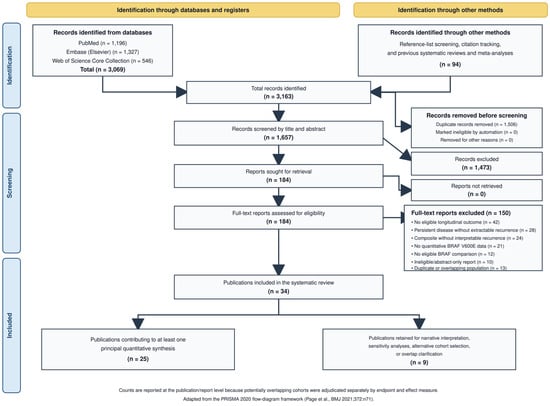
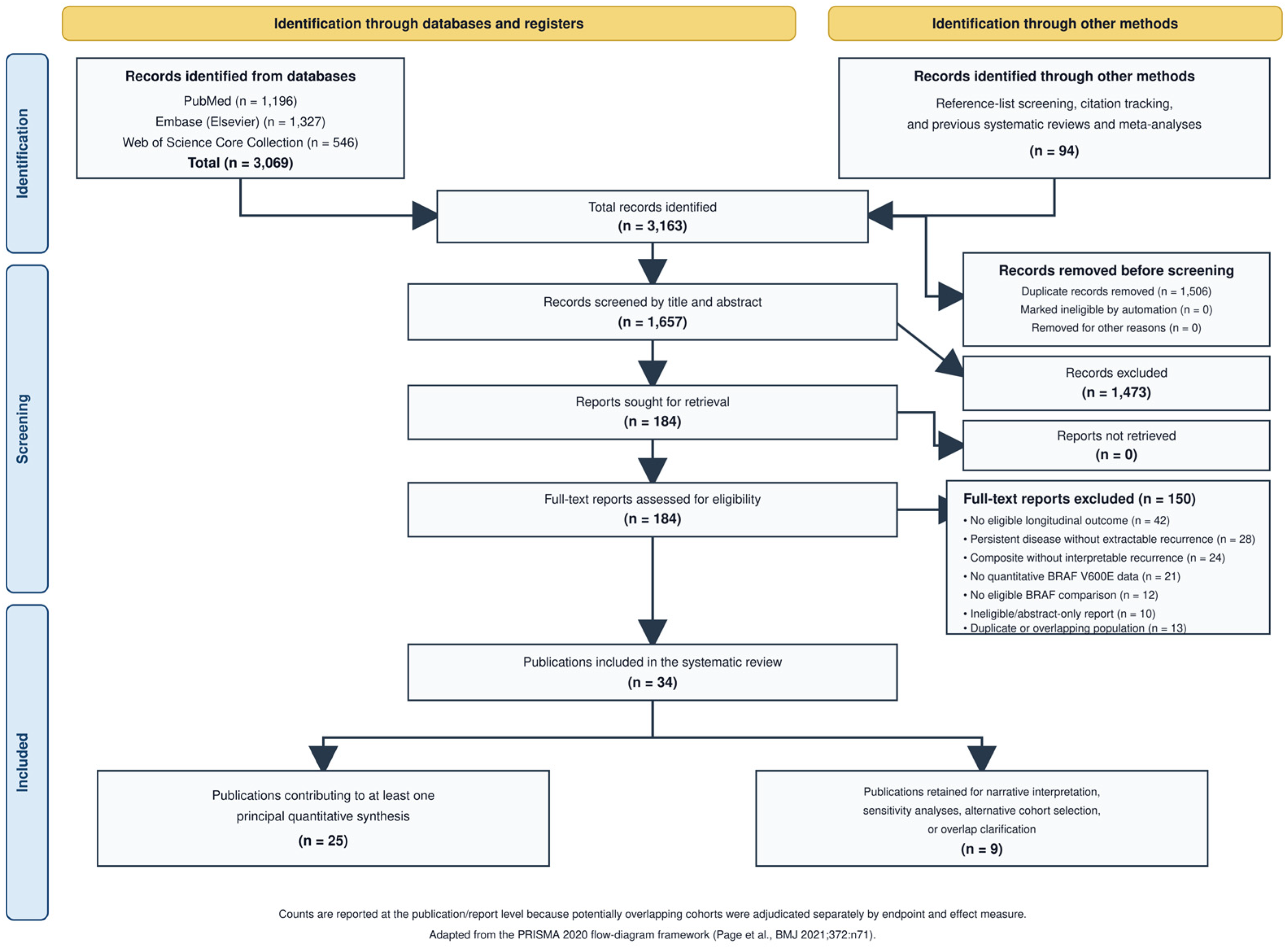
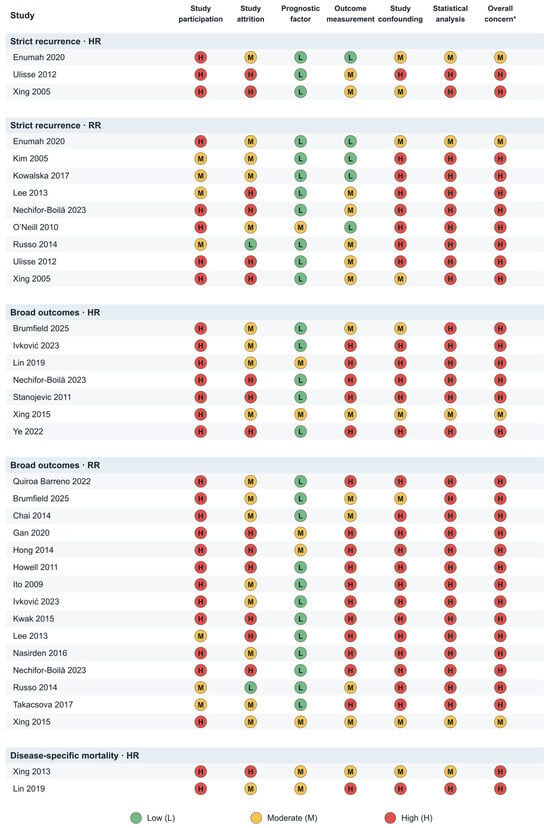
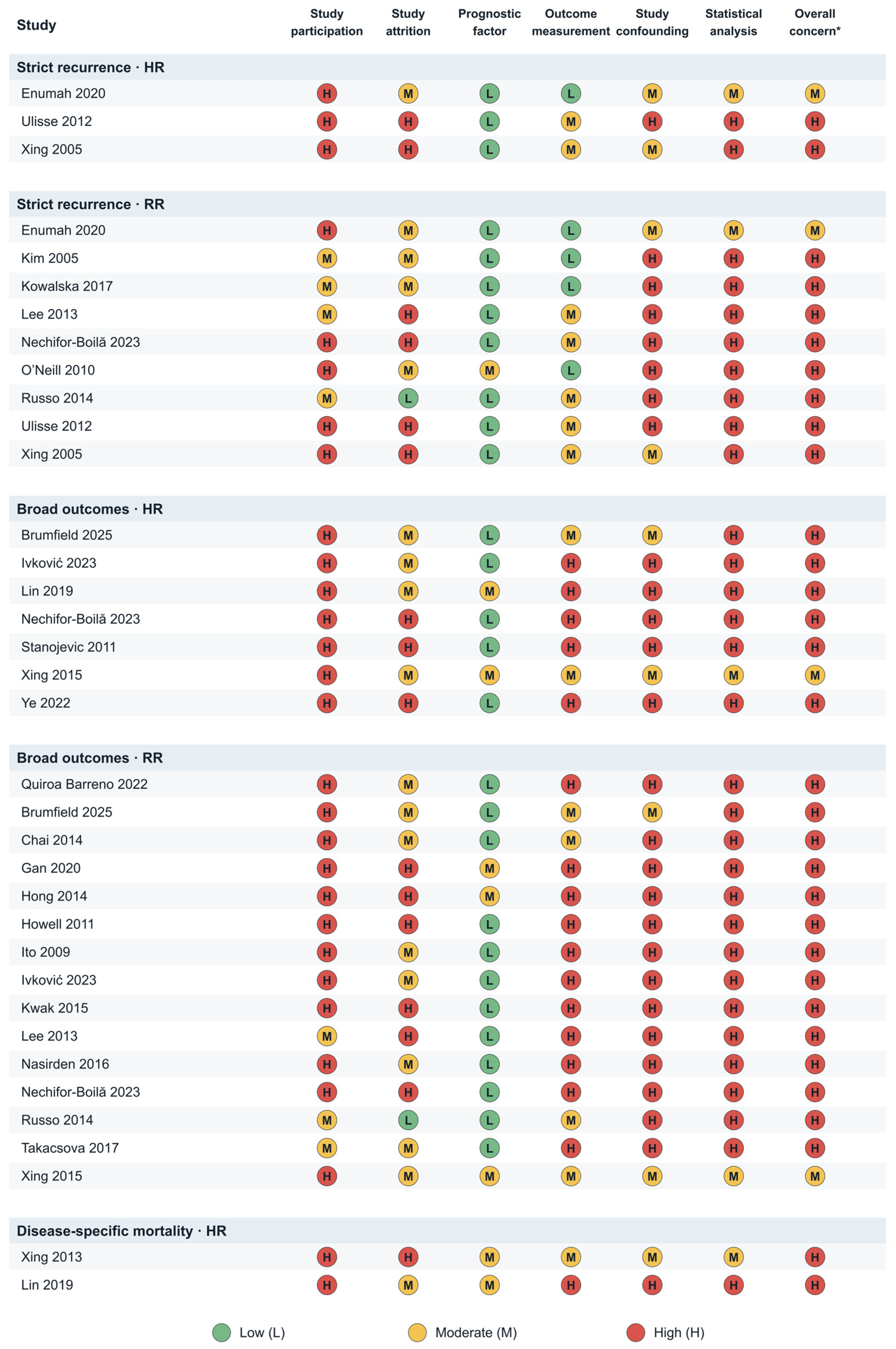
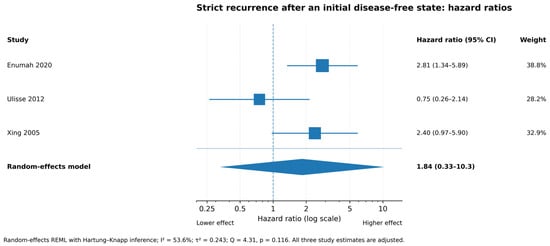
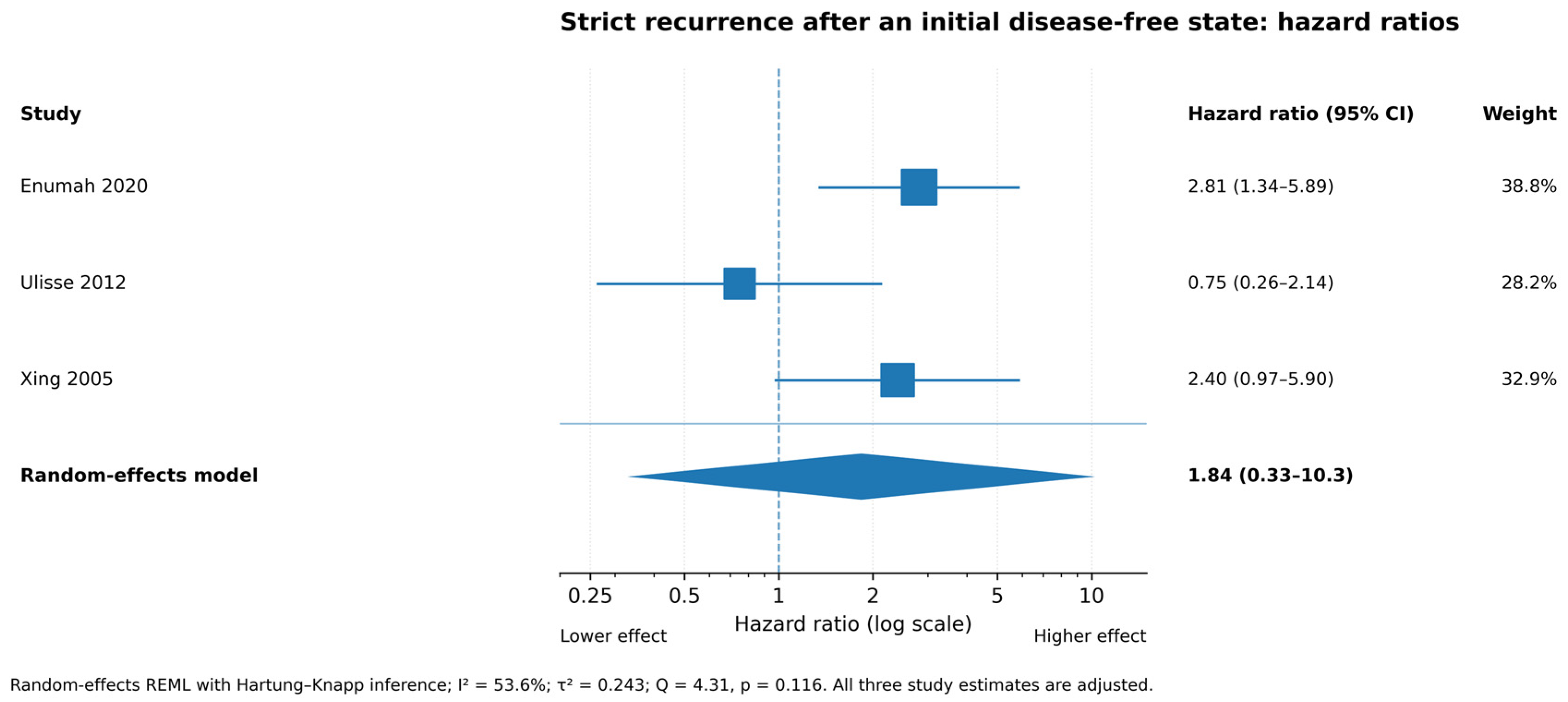
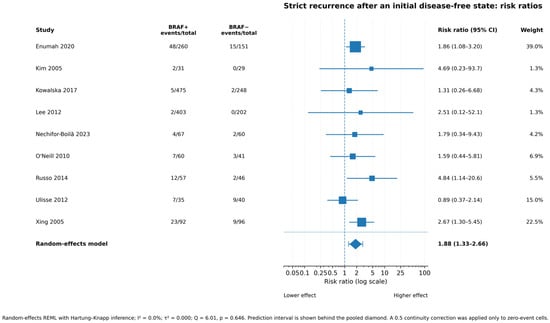
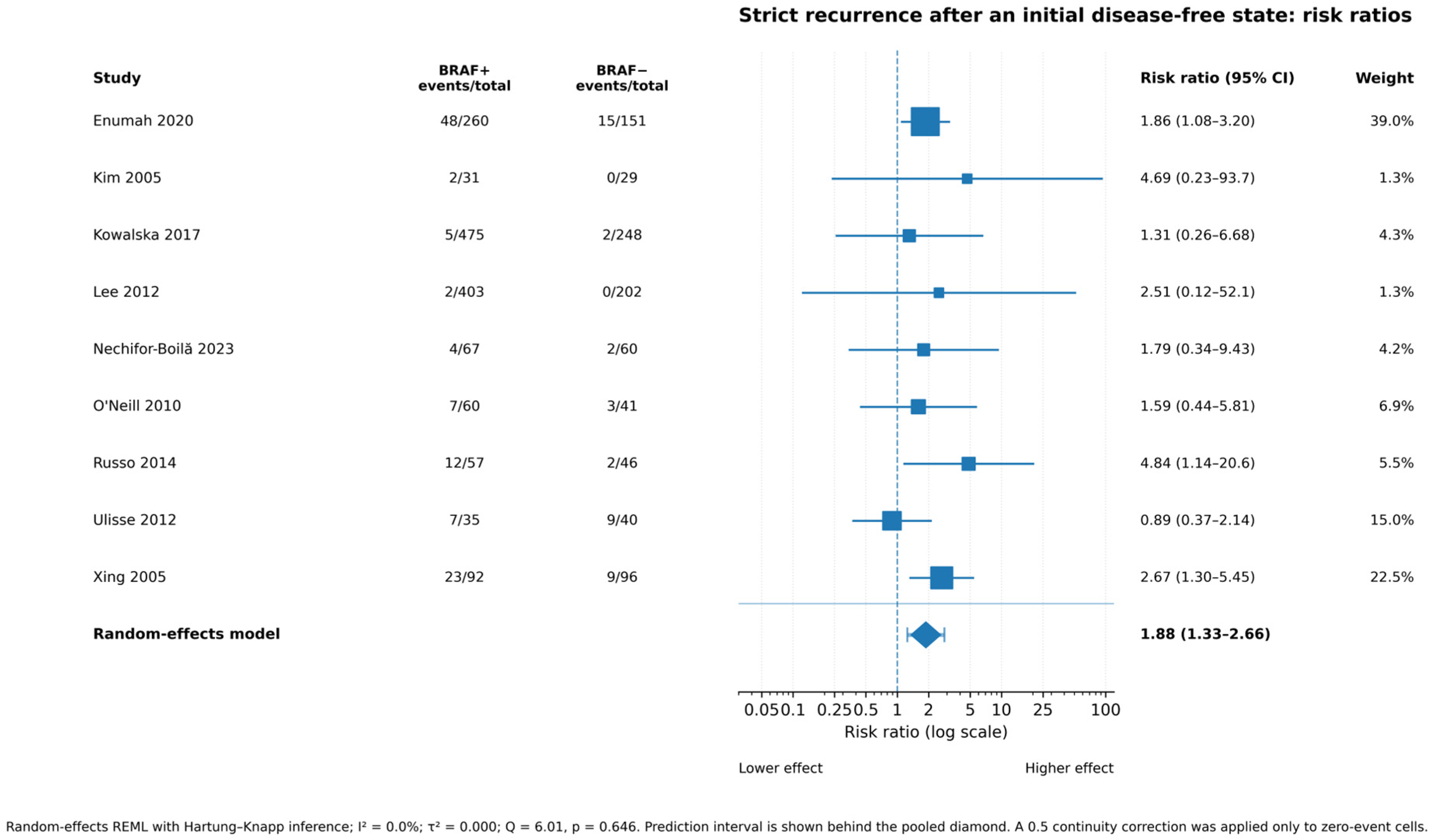
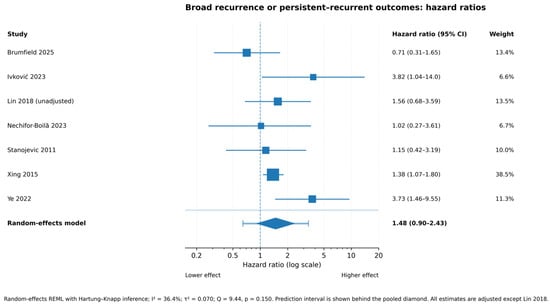
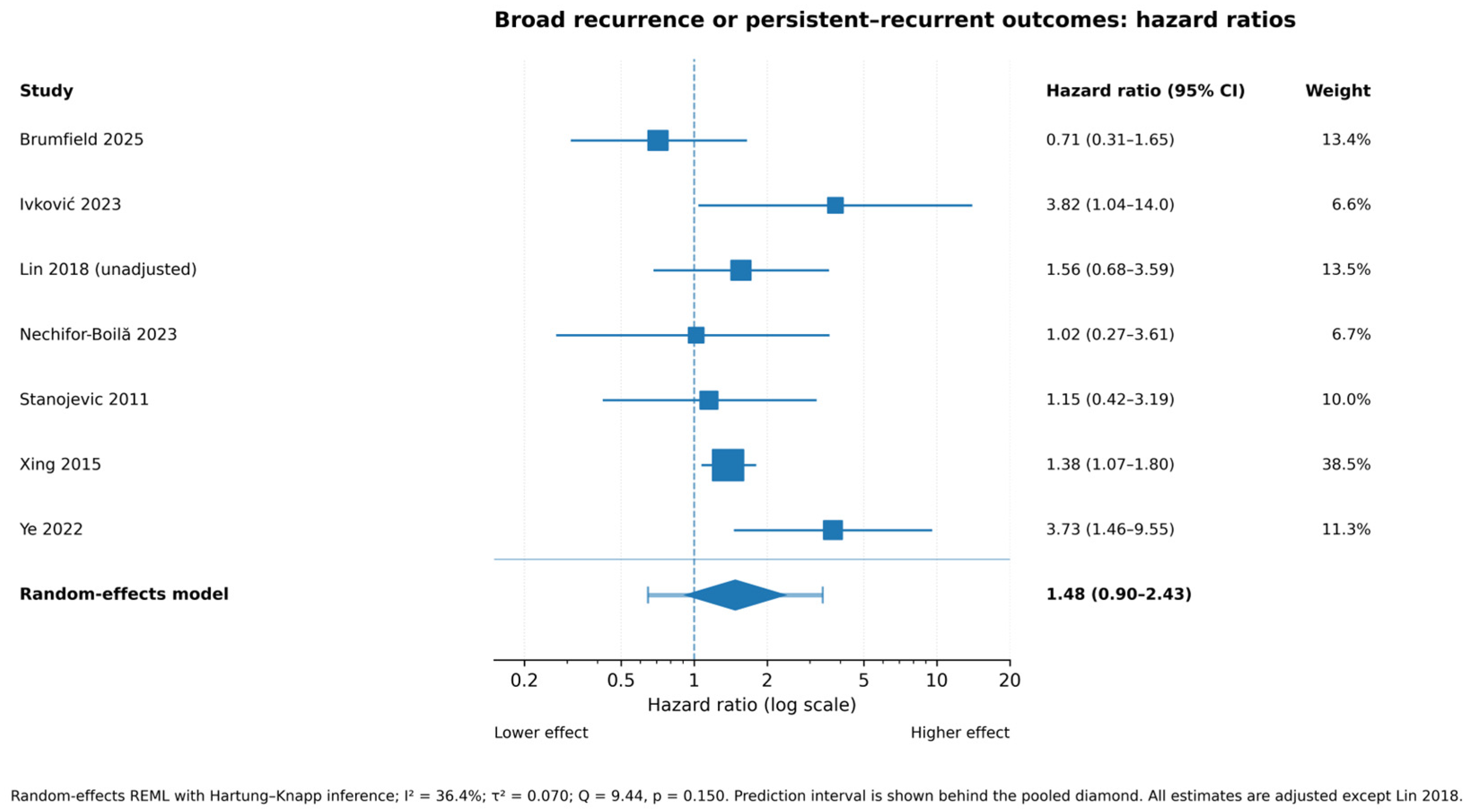
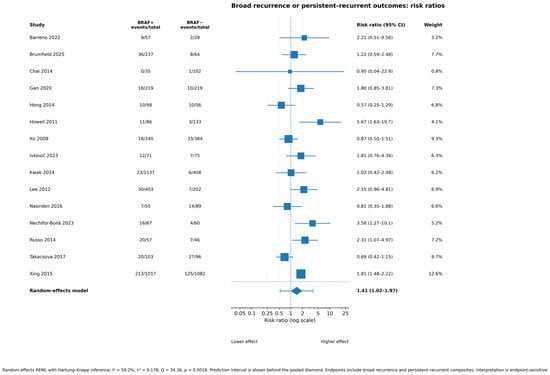
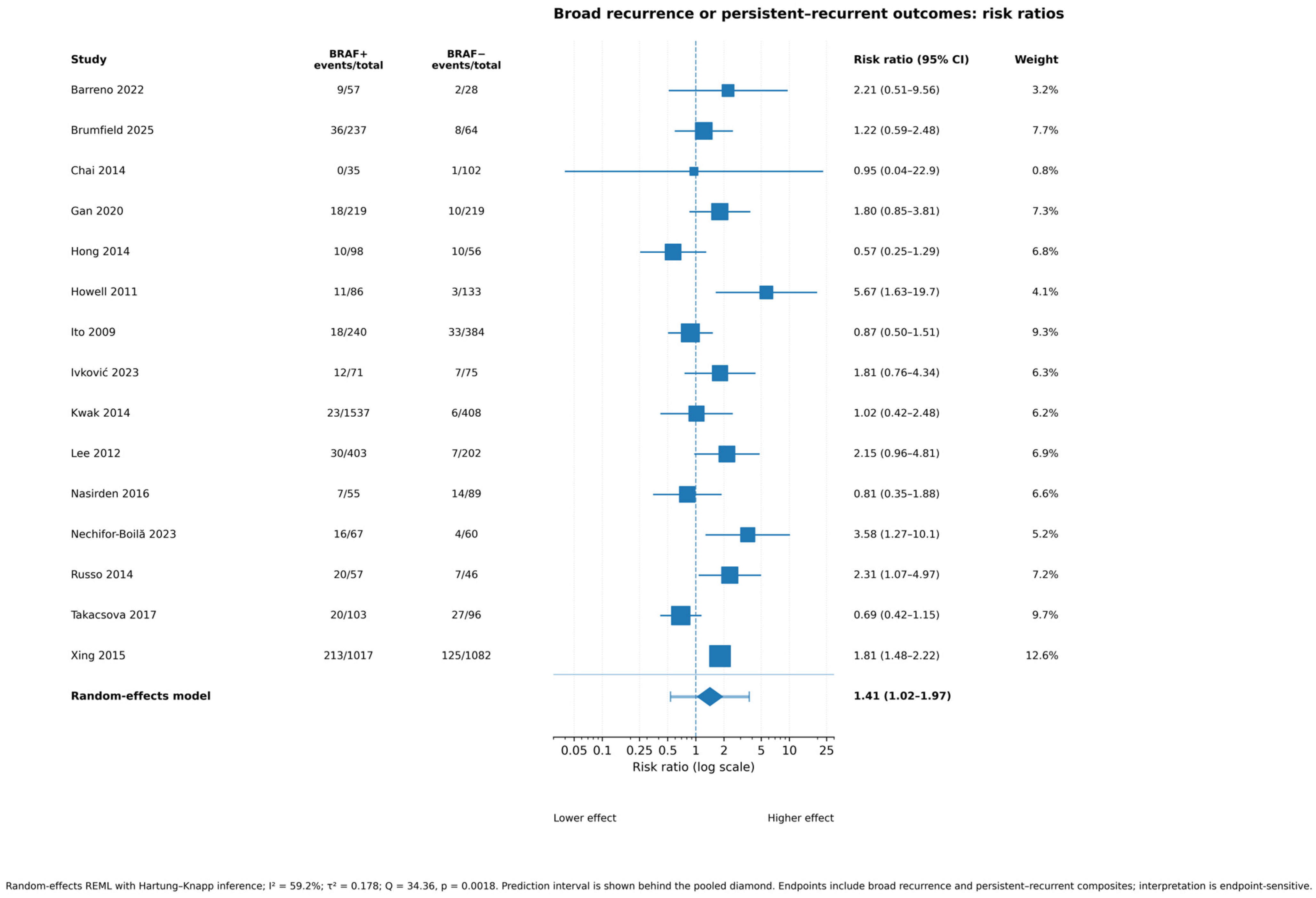
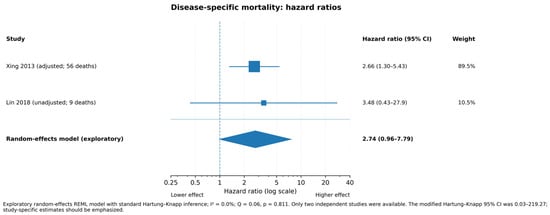

Disclaimer/Publisher’s Note: The statements, opinions and data contained in all publications are solely those of the individual author(s) and contributor(s) and not of MDPI and/or the editor(s). MDPI and/or the editor(s) disclaim responsibility for any injury to people or property resulting from any ideas, methods, instructions or products referred to in the content. |
© 2026 by the authors. Licensee MDPI, Basel, Switzerland. This article is an open access article distributed under the terms and conditions of the Creative Commons Attribution (CC BY) license.