


Abstract
Cancer activity may modify bleeding and ischemic risk after percutaneous coronary intervention (PCI), but available reports differ in cancer definitions, antiplatelet exposure and follow-up. We reassessed a PROSPERO-registered systematic review (CRD420261350515), originally comprising five observational studies, and undertook targeted verification of related primary literature. Five further potentially eligible reports were identified, providing ten source-verified reports for an expanded, non-exhaustive evidence audit. Active cancer, recent diagnosis or ongoing therapy were frequently associated with bleeding, although ischemic findings were less consistent. One large Veterans Affairs cohort examined observational associations between dual antiplatetet therapy (DAPT) discontinuation and longer-term outcomes by cancer activity; this was not a randomized strategy comparison. Definitions and follow-up precluded pooling of activity-specific bleeding risk ratios. The evidence does not establish a cancer-specific DAPT duration or preferred P2Y12 inhibitor. Prospective studies should integrate serial oncologic, hematologic, procedural and antiplatelet information.
1. Introduction
Cancer and coronary artery disease increasingly coexist in contemporary practice. Improvements in cancer survival have expanded the population of patients who require coronary angiography and revascularization during or after anticancer treatment. At the same time, malignancy itself and several cancer therapies can alter vascular biology, platelet function, coagulation, endothelial integrity, and the clinical expression of atherosclerotic disease [1,2]. The result is a population in whom the usual separation between thrombotic and bleeding risk is often blurred.
Antiplatelet therapy after percutaneous coronary intervention (PCI) is particularly challenging in this setting. Active cancer can promote thrombosis through systemic inflammation, platelet activation, and a hypercoagulable state, while simultaneously increasing the likelihood of bleeding through thrombocytopenia, anemia, mucosal disease, renal or hepatic dysfunction, treatment-related toxicity, and the need for surgery, biopsy, or other invasive procedures. Drug–drug interactions and fluctuations in platelet count during systemic therapy may further complicate treatment. Dual antiplatelet therapy (DAPT) remains central to the prevention of early thrombotic complications after stent implantation, but patients with cancer have been underrepresented in many of the randomized trials that established contemporary post-PCI antiplatelet strategies [1,3,4].
A further limitation of the literature is the frequent treatment of cancer as a single comorbidity. Active malignancy, ongoing chemotherapy or radiotherapy, recently treated disease, and a remote history of cancer are not clinically equivalent states. Their implications for platelet count, procedural planning, competing mortality, and the need to interrupt antiplatelet treatment may be very different. Observational studies and guideline documents increasingly recognize this heterogeneity, but the extent to which cancer activity modifies outcomes after PCI has not been consistently captured [5,6].
Contemporary coronary guidelines provide a default antiplatelet framework for patients without cancer: after acute coronary syndrome (ACS), 12 months of DAPT is generally recommended unless bleeding risk prompts shortening or modification, whereas after PCI for chronic coronary syndrome, 6 months is the default and a 1- to 3-month strategy can be appropriate in selected patients at high bleeding risk [7,8]. The 2022 European Society of Cardiology (ESC) cardio-oncology guideline places additional emphasis on cancer-specific variables, including thrombocytopenia, bleeding-prone tumor sites, anticancer therapy, drug interactions, and the anticipated need for procedures [9]. These recommendations are clinically sensible, but they are supported by limited cancer-specific randomized evidence. In a pooled analysis of four high-bleeding-risk stent studies, patients with cancer remained at increased risk of major bleeding and adverse clinical events despite abbreviated DAPT [4]. This observation illustrates why simply categorizing all patients with malignancy as ‘high bleeding risk’ does not fully resolve the therapeutic problem.
The present systematic review examines the prognostic association between cancer activity and clinical outcomes after PCI, particularly bleeding, ischemic events, and mortality. Eligible reports had to distinguish active/current or treatment-requiring malignancy from prior/non-active disease, with or without a separate no-cancer comparator. This is an exposure–outcome synthesis rather than a comparative evaluation of DAPT safety or efficacy; its primary purpose is to characterize evidence gaps relevant to future antiplatelet research.
2. Materials and Methods
2.1. Review Design and Registration
This systematic review was reported in accordance with PRISMA 2020 [10] and was registered in PROSPERO (CRD420261350515). Cancer-activity comparisons, clinical outcome eligibility, and the publication window were specified in the original protocol. The protocol’s risk-of-bias methods permitted ROBINS-I and/or the Newcastle–Ottawa Scale (NOS), with NOS adopted for the final observational evidence; the change and rationale are documented in the Supplementary Materials.
2.2. Search Strategy
The original review searched MEDLINE (via PubMed), Scopus and Google Scholar for English-language reports published since 2010, most recently on 3 May 2026. Requiring the exact terms “active cancer” or “history of cancer” alongside antiplatelet concepts reduced sensitivity. A targeted literature verification in October 2026 located five additional potentially eligible primary reports: Kwok, Guo, Gitto, Ohiomoba and Ueki. Supplementary Methods S2 documents the original strategy and a more sensitive, platform-specific proposed update, including Embase and citation searching; none of the proposed searches is represented as already executed.
2.3. Eligibility Criteria
Eligible studies enrolled adults undergoing PCI and provided patient outcomes according to at least one extractable cancer-activity classification (active/current/on treatment versus less-active, historical or remission cancer). This includes direct contrasts, stratified outcomes or cancer-specific multivariable activity predictors; reports with only undifferentiated cancer-versus-no-cancer outcomes are not sufficient. A no-cancer group could also be included. In-hospital-only studies such as Potts were eligible solely for peri-procedural prognosis, not post-discharge antiplatelet outcomes.
2.4. Study Selection and Data Extraction
Records were managed and deduplicated in Zotero. As documented in the original methods, two reviewers independently screened titles/abstracts and full texts, and screening disagreements were resolved with a third reviewer. Data were abstracted using a structured framework covering study characteristics, cancer-activity definitions, ACS/CCS presentation, PCI context, antiplatelet regimen when available, follow-up, outcome definitions, and effect estimates. The available audit trail does not establish whether data extraction or NOS scoring was independently duplicated; author confirmation of these roles is required. Unreported variables were designated “not reported” without imputation.
2.5. Risk of Bias and Data Synthesis
The original five observational studies were reassessed using the Newcastle–Ottawa Scale (NOS), recognizing that a summary star count does not eliminate confounding, selection bias or outcome misclassification. The reviewers’ originally proposed “low-risk” star thresholds were not validated NOS categories and are not retained. The protocol allowed ROBINS-I and/or NOS; selection of NOS is reported as a method decision.
3. Results
3.1. Study Selection
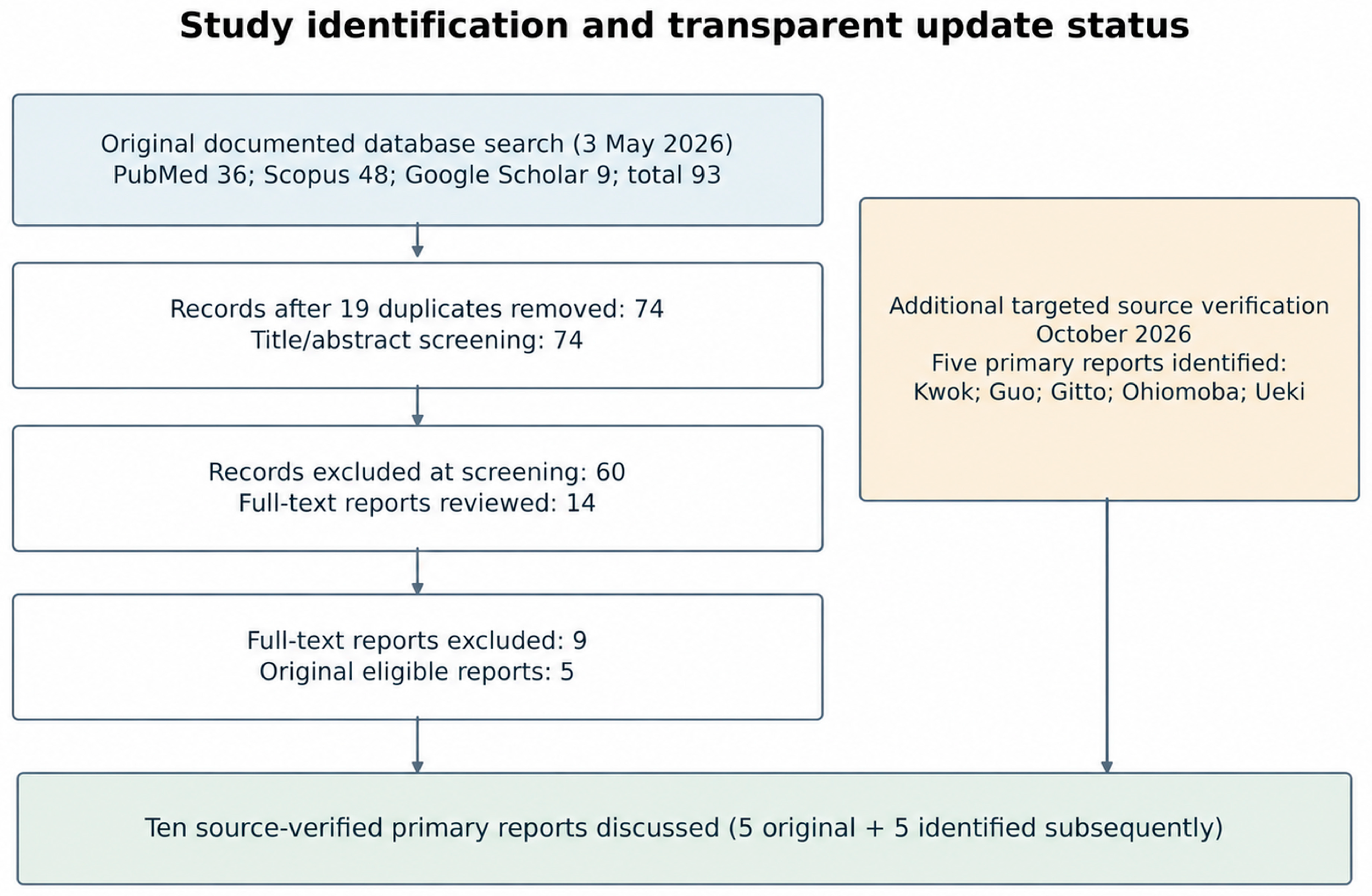
The originally documented database search identified 93 records (MEDLINE 36, Scopus 48 and Google Scholar 9); 19 duplicates were removed, 74 titles/abstracts screened, 60 excluded, 14 full texts assessed and nine excluded, yielding five original reports (Nishikawa, Matsumoto, Kanenawa, Tabata, and Potts [11,12,13,14,15]). Source verification for this revision identified four further potentially eligible primary reports: Kwok et al., Guo et al., Gitto et al. and Ohiomoba et al. [16,17,18,19]. These reports were not captured in the original flow, which demonstrates that the original search was insufficiently sensitive. The current evidence audit therefore describes ten identifiable reports but does not claim a fully updated PRISMA search. Figure 1 separates original study selection from supplemental identification.
Figure 1.
Original PRISMA 2020 study-selection counts.
3.2. Risk of Bias
The original five studies had reassessed NOS totals of 6–9 (Supplementary Table S8), with limitations including cancer-status misclassification, incomplete confounding adjustment and heterogeneous follow-up. Independent NOS appraisal of the five additional reports has not yet been completed, and no numerical scores are attributed to them. Star totals must not be equated with either absence of bias or high GRADE certainty.
3.3. Characteristics of the Included Studies
The five original reports were supplemented by five potentially eligible publications located during targeted verification, yielding ten identifiable primary reports for this evidence audit (Table 1). Kwok et al. assessed 90-day readmissions among patients with active, historical or no cancer [16]; Guo et al. evaluated cancer activity as a prognostic variable after PCI [17]; Gitto et al. reported bleeding in patients with active versus remission cancer [18]; and Ohiomoba et al. reported cancer-status-specific outcomes and observational DAPT-discontinuation analyses [19]. Additionally, Ueki et al. described a prospective Bern PCI registry in which recent cancer diagnosis (within one year) was independently associated with BARC 2–5 bleeding and cardiac mortality [20]. The ten studies vary in populations, outcome ascertainment, follow-up and exposure definitions; some US administrative datasets may overlap, and sample sizes must not be added to infer independent pooled evidence.
Table 1.
Study characteristics, definitions of cancer activity, bleeding endpoints, PCI indication, available antiplatelet exposure and principal findings across ten identified primary reports. PCI, percutaneous coronary intervention; DAPT, dual antiplatelet therapy; P2Y12, platelet P2Y12 adenosine diphosphate receptor (P2Y12 inhibitor); ACS, acute coronary syndrome; BARC, Bleeding Academic Research Consortium; SAPT, single antiplatelet therapy; MACE, major adverse cardiovascular events; AMI, acute myocardial infarction; TIMI, Thrombolysis In Myocardial Infarction; DES, drug-eluting stent; TLR, target lesion revascularization; HR, hazard ratio; US NRD, United States Nationwide Readmissions Database; HBR, high bleeding risk; KM, Kaplan–Meier; VA, Veterans Affairs; ICD, International Classification of Diseases; CCS, chronic coronary syndrome; RR, risk ratio.
3.4. Clinical Outcomes
3.4.1. Bleeding
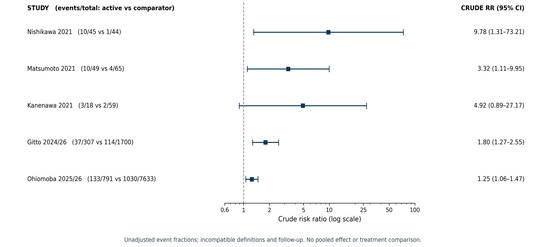
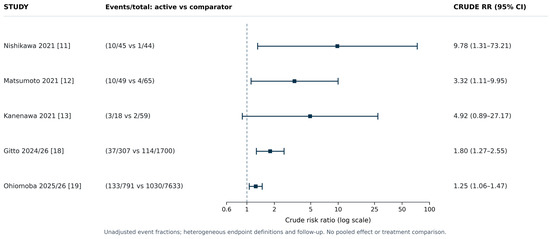
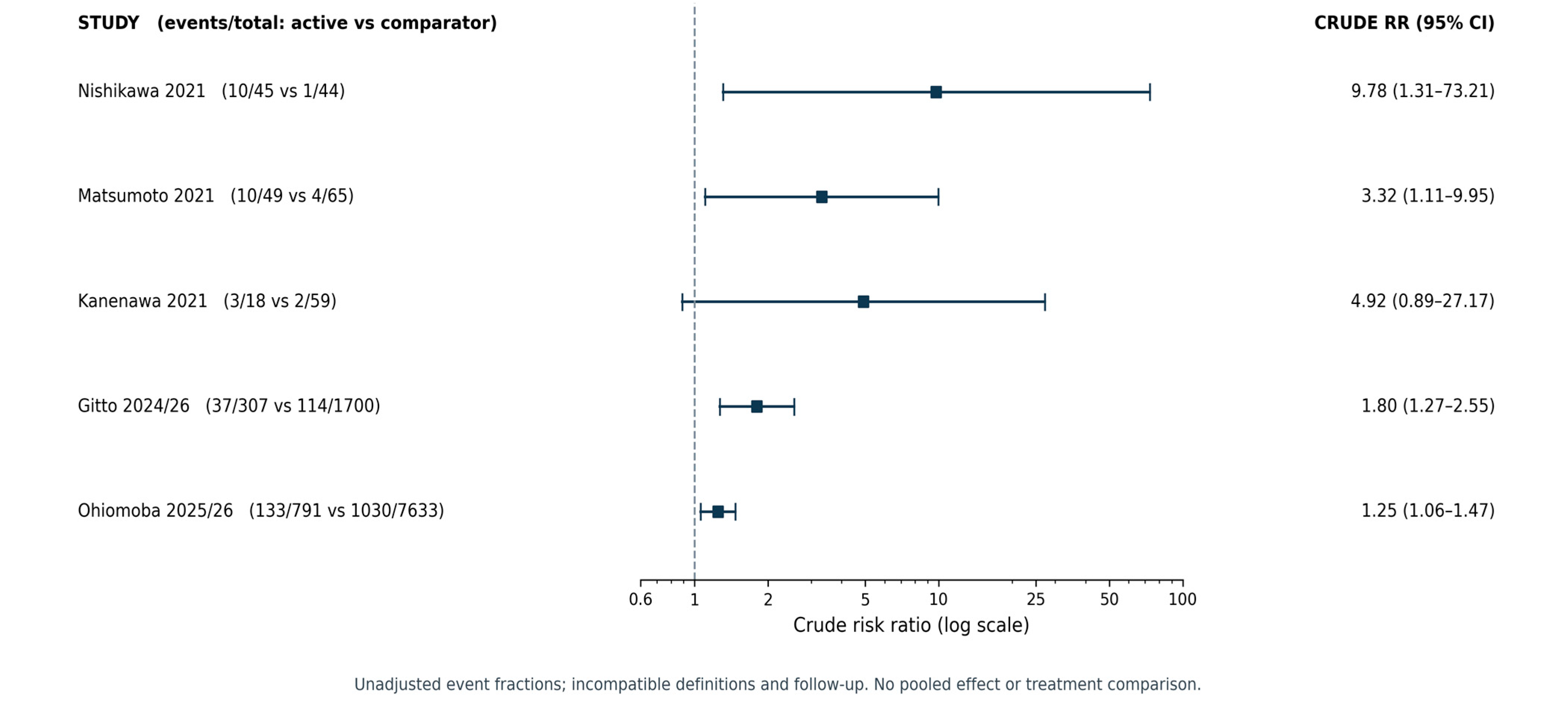
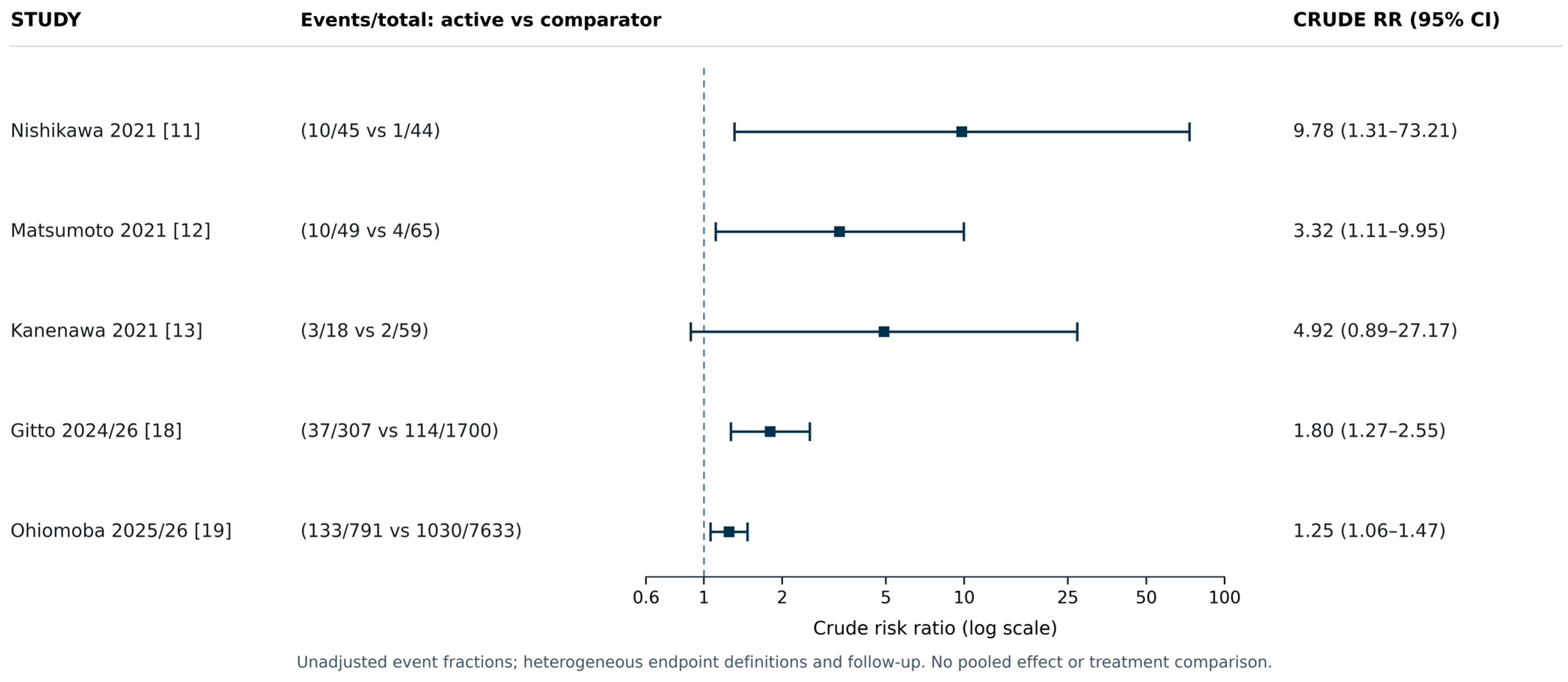
Five reports yielded recoverable active-versus-less-active cancer event counts suitable for exploratory crude bleeding contrasts (Figure 2; Supplementary Table S13). The original cohorts reported 10/45 versus 1/44 BARC 2/3/5 bleeds (Nishikawa), 10/49 versus 4/65 index-hospital major bleeds (Matsumoto), and 3/18 versus 2/59 BARC 3/5 bleeds at one year (Kanenawa) [11,12,13]. In Gitto et al., 37/307 active-cancer patients and 114/1700 remission patients had registry-defined bleeding events across high-bleeding-risk strata; the reported Kaplan–Meier percentages must not be confused with crude proportions [18]. In Ohiomoba et al., 133/791 active-cancer and 1030/7633 inactive-cancer patients experienced code-identified major bleeding over long follow-up [19]. The crude ratios are unadjusted, do not use equivalent endpoint definitions or at-risk time, and must not be interpreted as treatment effects or pooled estimates. Potts is restricted to in-hospital contextual risk [15].
Figure 2.
Exploratory, study-specific crude bleeding risk ratios (95% confidence intervals) for cancer-activity strata across five cohorts. Ratios use event counts divided by group sizes; they are not time-to-event HRs, adjusted comparisons or pooled estimates. Gitto et al. [18] reported Kaplan–Meier incidence rates that differ from these crude event fractions. Bleeding definitions and follow-up vary materially.
3.4.2. Ischemic Events, Revascularization, and Mortality
Ischemic outcomes remain difficult to compare across cancer-activity categories. The main malignancy analysis in Tabata et al. compared cancer with no cancer (TLR HR 2.28, 95% CI 1.30–4.00); time since cancer treatment was explored within cancer but was not itself an adjusted active-versus-prior treatment contrast [14]. In Guo et al., active cancer was assessed as a prognostic feature within the cancer subgroup, while the study’s published main ischemic and stent-thrombosis comparisons were cancer versus no cancer [17]. Kwok et al. reported 90-day AMI and bleeding readmissions in a national PCI cohort stratified by active/historical cancer, with the principal abstract estimates emphasizing active versus no cancer [16]. Ohiomoba et al. found increased propensity-adjusted MI risk compared with no cancer for active cancer (HR 1.18, 95% CI 1.00–1.40) and inactive cancer (HR 1.13, 95% CI 1.07–1.20), and major bleeding HRs of 1.74 and 1.30, respectively [19]. These two adjusted estimates use a common no-cancer reference and should not be misquoted as a direct active-versus-inactive adjusted contrast. Potts contributes only in-hospital data [15].
Across the identified reports, active/current cancer was often associated with greater observed bleeding than less-active cancer, but ischemic and mortality findings were less consistent and susceptible to residual confounding and competing cancer-related death. Importantly, the now-identified VA cohort reports individual drug exposure durations and longer-term events; thus it is no longer correct to claim that no included source examined DAPT discontinuation by cancer status. Nonetheless, its observational associations cannot identify an optimal P2Y12 inhibitor or causal effect of abbreviated treatment [19].
3.4.3. Reporting of Antiplatelet Therapy
Antiplatelet reporting was absent or incomplete in most of the original five studies. However, the additional Veterans Affairs analysis by Ohiomoba et al. specifically estimated associations of DAPT discontinuation windows with outcomes in patients with active, inactive or no cancer [19]. In that study, discontinuation after nine months was associated with lower major bleeding risk in both cancer groups (active HR 0.68, 95% CI 0.49–0.97; inactive HR 0.87, 95% CI 0.76–0.99), with differing MI estimates. Prescription-fill definitions, immortal-time and treatment-selection considerations, and the lack of randomization prevent interpreting this as evidence that one DAPT duration is superior for cancer patients. Drug-level comparisons remain insufficient to select a preferred P2Y12 inhibitor.
Cancer activity, evolving bleeding risk and antiplatelet exposure can change together, making confounding by indication especially important. Ohiomoba et al. materially improve reporting of longitudinal antiplatelet exposure but do not resolve confounding or randomize treatment [19]. The older cohorts do not adequately report switching, interruption and platelet counts by cancer activity. Consequently, the current evidence supports description of prognosis and uncertainty rather than a causal DAPT recommendation.
3.5. Overall Synthesis of the Evidence
The expanded audit identifies ten primary reports, including five with extractable patient-level or cohort-level bleeding counts for an active-versus-less-active cancer contrast (Figure 2) and another report that relates recent diagnosis to bleeding using adjusted models (Ueki et al. [20]). Differences in definitions, follow-up and confounding preclude a defensible pooled activity-specific risk ratio. Ohiomoba et al. [19] contribute meaningful observational DAPT data without demonstrating causality. Clinical recommendations about DAPT choice or duration remain unsupported by comparative randomized cancer-activity data.
The source populations include small Japanese cohorts, US administrative PCI and readmission datasets, a cancer-focused registry and a large VA electronic-health-record cohort. These differ in PCI indication, exposure definitions, outcome severity, era and follow-up. Potts has only index-hospitalization outcomes, whereas Ohiomoba includes long-term follow-up and an observational DAPT exposure analysis. Overlapping US calendar years and clinical events preclude simply summing participant counts. No pooled effect or formal funnel-plot asymmetry assessment is justified by the heterogeneous eligible comparisons.
4. Discussion
4.1. Main Findings
The present systematic review synthesizes evidence from ten observational studies examining the association between cancer activity and clinical outcomes following percutaneous coronary intervention (PCI). The principal finding is that active, recently diagnosed, or treatment-requiring malignancy is generally associated with an increased risk of bleeding compared with inactive or historical cancer [11,12,13,14,15,16,17,18,19,20]. This association was observed across studies encompassing different clinical settings, ranging from acute coronary syndromes and contemporary PCI registries to large administrative cohorts, suggesting that the activity and treatment status of malignancy may provide clinically relevant prognostic information beyond a history of cancer alone. In contrast, findings concerning ischemic complications, repeat revascularization, and mortality were less consistent. Although several studies identified higher rates of adverse cardiovascular events and mortality among patients with active cancer, others reported no significant differences in specific ischemic endpoints. These discrepancies may reflect variations in cancer characteristics, baseline cardiovascular risk, clinical presentation, and competing non-cardiovascular mortality. Importantly, the heterogeneity of outcome definitions and follow-up periods precludes direct comparison of event rates across studies and limits causal interpretation.
A further important finding is the limited evidence available to guide antiplatelet treatment specifically according to cancer activity. Although some studies provided information on dual antiplatelet therapy (DAPT) duration, treatment discontinuation, or antiplatelet exposure, these data were predominantly observational and insufficient to establish the comparative safety or effectiveness of specific P2Y12 inhibitors or DAPT strategies in patients with active versus prior malignancy [21]. Furthermore, substantial differences in cancer definitions, study populations, procedural characteristics, and bleeding ascertainment, together with incomplete adjustment for cancer stage, anticancer treatment, thrombocytopenia, concomitant anticoagulation, and other potential confounders, limit the certainty and generalizability of the findings. The contribution of large administrative datasets must also be interpreted cautiously because of potential population overlap, coding-related misclassification, and limited clinical granularity. Collectively, the available evidence identifies cancer activity as an important marker of post-PCI clinical risk, particularly bleeding, while highlighting the absence of sufficiently robust comparative data to inform cancer-specific antiplatelet strategies. These findings should also be interpreted in light of the incomplete expanded systematic search and the need for definitive eligibility and risk-of-bias assessment of the updated evidence base.
4.2. Interpretation in the Context of Contemporary Guidance
Guideline recommendations provide an external clinical framework, not evidence that this review has tested a DAPT intervention. The appropriate choice of DAPT intensity and duration depends on ACS versus chronic coronary syndrome, procedural complexity, bleeding risk, and the evolution of oncologic disease, none of which was captured consistently enough here for a comparative-effectiveness analysis.
The 2023 ESC ACS guideline retains 12 months of DAPT as the default after ACS but permits shortening, extension, or modification according to the balance of bleeding and ischemic risk [7]. For chronic coronary syndrome, the 2024 ESC guideline uses 6 months as the default after PCI and supports 1- to 3-month DAPT in patients at high bleeding risk when ischemic risk is not high [8]. These recommendations provide an evidence-based framework, but the trials informing them were not designed specifically around active malignancy. Their application in cancer therefore requires clinical interpretation rather than simple extrapolation.
Cancer-specific evidence remains much thinner. The ESC cardio-oncology guideline emphasizes individualized management and the need to account for thrombocytopenia, bleeding-prone malignancies, potential drug interactions, and anticipated procedures [9]. It also reflects a general preference for limiting the duration and intensity of antithrombotic treatment when bleeding risk is high, provided coronary safety is maintained. What is missing is a validated algorithm that integrates cancer activity with coronary complexity and prospectively determines DAPT duration. The studies included in this review do not fill that gap.
This gap is not merely semantic. A guideline recommendation designed for a general high-bleeding-risk population cannot automatically be assumed to have the same net clinical effect in a patient with active malignancy, because the mechanism and time course of bleeding risk may differ. Conversely, the presence of cancer alone does not prove that a patient is at low ischemic risk. Complex PCI, ACS presentation, suboptimal stent expansion, diabetes, renal dysfunction, or prior stent thrombosis may still justify greater concern about ischemic events. The balance is therefore genuinely bidirectional.
4.3. Clinical Implications
Active malignancy is a major high-bleeding-risk consideration but, by itself, should not automatically trigger abbreviated DAPT. Assessment must integrate ACS versus chronic coronary syndrome presentation; stent and procedural ischemic complexity; platelet count, anemia, and active bleeding; the cancer site and stage; anticancer treatment, pharmacologic interactions, concomitant anticoagulation, and anticipated surgery or biopsy. The DAPT plan should be reassessed as these factors change. These are general clinical considerations informed by contemporary guidance, not treatment recommendations established by the five observational studies.
The present findings also argue against assuming that bleeding risk disappears when DAPT is shortened. In the analysis of high-bleeding-risk PCI trials by Campos et al., patients with cancer had more major bleeding and adverse clinical events despite abbreviated DAPT, and much of the bleeding occurred after DAPT discontinuation [4]. This is an important observation because it suggests that the vulnerability of patients with cancer extends beyond exposure to two antiplatelet agents. Tumor-related bleeding, systemic therapy, anemia, organ dysfunction, and other comorbidities continue to influence outcome after the initial post-PCI period.
Multidisciplinary planning is particularly important when the anticipated cancer pathway is known at the time of PCI. The choice of stent strategy, attention to optimal implantation, access-site bleeding avoidance, and the expected timing of surgery or systemic therapy can influence how easily antiplatelet treatment can be maintained. Although these procedural questions were not directly tested in the included studies, they are clinically relevant because unplanned DAPT interruption may expose the patient to thrombotic risk, while unnecessary prolongation may increase bleeding. The available evidence argues for coordinated cardiology–oncology decision making rather than a fixed protocol based solely on the presence of cancer [9].
No uniform DAPT strategy follows from this evidence. In particular, cancer activity cannot replace assessment of stent thrombosis risk or the established indication for antiplatelet treatment. Multidisciplinary, patient-specific decisions are appropriate, while the questions of optimal P2Y12 inhibitor choice, duration, de-escalation, and interruption in active cancer remain unresolved.
4.4. Limitations
The initial review search was restricted and omitted additional eligible cohorts. This evidence audit identifies ten potentially relevant primary reports but has not completed reproducible updated MEDLINE/Scopus/Embase searching, citation chaining, Google Scholar depth recording, deduplication, independent eligibility screening, or independent NOS/GRADE adjudication. Clinical heterogeneity, observational treatment selection, limited oncologic covariates, overlap in national datasets, rare bleeding outcomes in some strata and mixed follow-up horizons are additional limitations.
5. Future Directions
The next generation of studies should move beyond the simple recording of ‘cancer history’ and define cancer status with sufficient precision to be clinically useful. At a minimum, prospective registries and trials should record the time from cancer diagnosis, whether disease is active or in remission, metastatic status, current systemic therapy or radiotherapy, anticipated surgery, and expected treatment-related thrombocytopenia. These variables should be assessed at the time of PCI and updated during follow-up. A time-varying approach would better reflect clinical practice than a baseline classification that assumes cancer status remains unchanged for the duration of DAPT.
Antiplatelet exposure also requires much more rigorous documentation. Future studies should report the aspirin dose, the specific P2Y12 inhibitor, planned DAPT duration, actual duration, temporary interruption, permanent discontinuation, switching or de-escalation, and the clinical reason for each change. Concomitant oral anticoagulation and gastroprotective therapy should be captured because they materially affect bleeding risk. Without these data, it is difficult to determine whether an adverse event reflects cancer biology, the antiplatelet strategy, or a treatment modification driven by the cancer pathway.
Outcome reporting should be standardized. Bleeding should be classified with a validated definition such as BARC, while ischemic outcomes should distinguish spontaneous myocardial infarction, stent thrombosis, target-lesion or target-vessel revascularization, stroke, and cardiovascular death. All-cause mortality remains important in active cancer but should not be used as a substitute for cardiovascular endpoints because competing cancer mortality can dominate the signal. Landmark analyses at 30 days, 3 months, 6 months, and 1 year would be particularly informative, as the balance between stent-related ischemic risk and cancer-related bleeding risk is likely to change over time.
Randomized trials dedicated exclusively to cancer may be difficult, but several pragmatic designs are feasible. Prospective multicenter registries with predefined cancer strata could provide higher-quality observational evidence, especially if antiplatelet exposure is treated as a time-varying variable. Embedded randomized comparisons could then evaluate abbreviated versus standard DAPT in carefully selected patients with active cancer, or compare P2Y12-monotherapy strategies after a short course of DAPT. Stratification by ACS versus chronic coronary syndrome and by procedural ischemic risk would be essential. Such studies should also incorporate patient-centered outcomes, including treatment interruption, hospitalization, transfusion, and the ability to continue planned anticancer therapy.
Table 2 consolidates the central knowledge gaps: a reproducible search and clearer selection rules; standardized activity categories; longitudinal antiplatelet exposure; prespecified bleeding and stent-related ischemic endpoints; and prospective designs capable of evaluating treatment decisions. Better evidence is required before translating a prognostic cancer-activity association into a modification of DAPT duration or drug choice.
Table 2.
Principal evidence gaps and priorities for future research in patients with cancer undergoing PCI. P2Y12, platelet P2Y12 adenosine diphosphate receptor (P2Y12 inhibitor); DAPT, dual antiplatelet therapy; ACS, acute coronary syndrome.
6. Conclusions
Across the ten observational studies, active or recently treated malignancy was associated with an increased bleeding burden following PCI compared with prior or inactive cancer, whereas associations with ischemic events and mortality were less consistent. These findings suggest that cancer activity and treatment status are important determinants of post-PCI clinical risk, although substantial heterogeneity in patient populations, cancer definitions, outcome measures, and follow-up periods limits the strength and generalizability of the evidence. Despite emerging observational data on DAPT duration and discontinuation, the available evidence remains insufficient to establish the comparative safety and efficacy of specific P2Y12 inhibitors or cancer-tailored antiplatelet strategies. Importantly, active malignancy should not independently mandate abbreviated DAPT; antiplatelet management should instead incorporate individual bleeding and ischemic risks, procedural characteristics, oncological treatment, and anticipated invasive interventions. Further prospective studies incorporating standardized cancer-activity definitions, detailed antiplatelet exposure, and adjudicated clinical outcomes are warranted to establish evidence-based antithrombotic strategies for this increasingly prevalent and clinically challenging population.
Supplementary Materials
The following supporting information can be downloaded at: https://www.mdpi.com/article/10.3390/life16111803/s1.
Author Contributions
Conceptualization, K.T. and S.N.; methodology, S.N., M.M., D.A., I.S. and L.K.; writing—original draft preparation, S.N., I.S., D.A. and L.K.; writing—review and editing, S.N., L.K., M.M., D.A., I.S. and K.T.; visualization, S.N. and L.K.; supervision, K.T. All authors have read and agreed to the published version of the manuscript.
Funding
This research received no external funding.
Institutional Review Board Statement
Not applicable.
Informed Consent Statement
Not applicable.
Data Availability Statement
All data analyzed in this systematic review are available in the published studies cited in the manuscript and in the accompanying Supplementary Materials.
Acknowledgments
During the preparation of the manuscript, the AI tool “ChatGPT” was used to perform a final linguistic and spelling check. The authors have reviewed and edited the output and take full responsibility for the content of this publication.
Conflicts of Interest
The authors declare no conflicts of interest.
Abbreviations
The following abbreviations are used in this manuscript:
| AMI | Acute myocardial infarction |
| BARC | Bleeding Academic Research Consortium |
| DAPT | Dual antiplatelet therapy |
| MACE | Major adverse cardiovascular events |
| NOS | Newcastle–Ottawa Scale |
| PCI | Percutaneous coronary intervention |
| PRISMA | Preferred Reporting Items for Systematic Reviews and Meta-Analyses |
| TLR | Target-lesion revascularization |
| PROSPERO | International Prospective Register of Systematic Reviews |
References
- Tsigkas, G.; Vakka, A.; Apostolos, A.; Bousoula, E.; Vythoulkas-Biotis, N.; Koufou, E.-E.; Vasilagkos, G.; Tsiafoutis, I.; Hamilos, M.; Aminian, A.; et al. Dual Antiplatelet Therapy and Cancer; Balancing between Ischemic and Bleeding Risk: A Narrative Review. J. Cardiovasc. Dev. Dis. 2023, 10, 135. [Google Scholar] [CrossRef] [Scilit] [PubMed]
- Iliescu, C.A.; Grines, C.L.; Herrmann, J.; Yang, E.H.; Cilingiroglu, M.; Charitakis, K.; Hakeem, A.; Toutouzas, K.P.; Leesar, M.A.; Marmagkiolis, K. SCAI Expert Consensus Statement: Evaluation, Management, and Special Considerations of Cardio-Oncology Patients in the Cardiac Catheterization Laboratory (Endorsed by the Cardiological Society of India, and Sociedad Latino Americana de Cardiologıa Intervencionista). Catheter. Cardiovasc. Interv. 2016, 87, E202–E223. [Google Scholar] [CrossRef] [Scilit] [PubMed]
- Tsigkas, G.; Apostolos, A.; Chlorogiannis, D.-D.; Bousoula, E.; Vasilagkos, G.; Tsalamandris, S.; Tsiafoutis, I.; Katsanos, K.; Toutouzas, K.; Aminian, A.; et al. Thirty-Days versus Longer Duration of Dual Antiplatelet Treatment after Percutaneous Coronary Interventions with Newer Drug-Eluting Stents: A Systematic Review and Meta-Analysis. Life 2023, 13, 666. [Google Scholar] [CrossRef] [Scilit] [PubMed]
- Campos, C.M.; Mehran, R.; Capodanno, D.; Owen, R.; Windecker, S.; Varenne, O.; Stone, G.W.; Valgimigli, M.; Hajjar, L.A.; Kalil Filho, R.; et al. Risk Burden of Cancer in Patients Treated With Abbreviated Dual Antiplatelet Therapy After PCI: Analysis of Multicenter Controlled High-Bleeding Risk Trials. Circ. Cardiovasc. Interv. 2024, 17, 4. [Google Scholar] [CrossRef] [Scilit] [PubMed]
- Lucà, F.; Parrini, I.; Abrignani, M.G.; Rao, C.M.; Piccioni, L.; Di Fusco, S.A.; Ceravolo, R.; Bisceglia, I.; Riccio, C.; Gelsomino, S.; et al. Management of Acute Coronary Syndrome in Cancer Patients: It’s High Time We Dealt with It. JCM 2022, 11, 1792. [Google Scholar] [CrossRef] [Scilit] [PubMed]
- Nobre Menezes, M.; Mamas, M.A. PCI in Cancer Patients: Adding Another Piece to a Complex and Still Very Incomplete Puzzle. Circ. Cardiovasc. Interv. 2024, 17, 4. [Google Scholar] [CrossRef] [Scilit] [PubMed]
- Byrne, R.A.; Rossello, X.; Coughlan, J.J.; Barbato, E.; Berry, C.; Chieffo, A.; Claeys, M.J.; Dan, G.A.; Dweck, M.R.; Galbraith, M.; et al. 2023 ESC Guidelines for the management of acute coronary syndromes. Eur. Heart J. 2023, 44, 3720–3826. [Google Scholar] [CrossRef] [Scilit] [PubMed]
- Vrints, C.; Andreotti, F.; Koskinas, K.C.; Rossello, X.; Adamo, M.; Ainslie, J.; Banning, A.P.; Budaj, A.; Buechel, R.R.; Chiariello, G.A.; et al. 2024 ESC Guidelines for the management of chronic coronary syndromes. Eur. Heart J. 2024, 45, 3415–3537. [Google Scholar] [CrossRef] [Scilit] [PubMed]
- Lyon, A.R.; López-Fernández, T.; Couch, L.S.; Asteggiano, R.; Aznar, M.C.; Bergler-Klein, J.; Boriani, G.; Cardinale, D.; Cordoba, R.; Cosyns, B.; et al. 2022 ESC Guidelines on cardio-oncology developed in collaboration with the European Hematology Association (EHA), the European Society for Therapeutic Radiology and Oncology (ESTRO) and the International Cardio-Oncology Society (IC-OS). Eur. Heart J. 2022, 43, 4229–4361. [Google Scholar] [CrossRef] [Scilit] [PubMed]
- Page, M.J.; McKenzie, J.E.; Bossuyt, P.M.; Boutron, I.; Hoffmann, T.C.; Mulrow, C.D.; Shamseer, L.; Tetzlaff, J.M.; Akl, E.A.; Brennan, S.E.; et al. The PRISMA 2020 Statement: An Updated Guideline for Reporting Systematic Reviews. BMJ 2021, 372, n71. [Google Scholar] [CrossRef] [Scilit] [PubMed]
- Nishikawa, T.; Morishima, T.; Fujii, Y.; Okawa, S.; Otsuka, T.; Kamada, R.; Yasui, T.; Shioyama, W.; Oka, T.; Tabuchi, T.; et al. Prognostic Impact of Cancer Activity on Clinically Relevant Bleeding Events After Percutaneous Coronary Intervention. J. Med. Investig. 2021, 68, 29–37. [Google Scholar] [CrossRef] [Scilit] [PubMed]
- Matsumoto, T.; Saito, Y.; Yamashita, D.; Sato, T.; Wakabayashi, S.; Kitahara, H.; Sano, K.; Kobayashi, Y. Impact of Active and Historical Cancer on Short- and Long-Term Outcomes in Patients With Acute Myocardial Infarction. Am. J. Cardiol. 2021, 159, 59–64. [Google Scholar] [CrossRef] [Scilit] [PubMed]
- Kanenawa, K.; Yamaji, K.; Morinaga, T.; Hiromasa, T.; Hayashi, M.; Hiramori, S.; Tomoi, Y.; Kuramitsu, S.; Domei, T.; Hyodo, M.; et al. Clinical Outcomes After Percutaneous Coronary Intervention in Patients With Cancer. Circ. J. 2021, 85, 837–846. [Google Scholar] [CrossRef] [Scilit] [PubMed]
- Tabata, N.; Sueta, D.; Yamamoto, E.; Takashio, S.; Arima, Y.; Araki, S.; Yamanaga, K.; Ishii, M.; Sakamoto, K.; Kanazawa, H.; et al. Outcome of Current and History of Cancer on the Risk of Cardiovascular Events Following Percutaneous Coronary Intervention: A Kumamoto University Malignancy and Atherosclerosis (KUMA) Study. Eur. Heart J. Qual. Care Clin. Outcomes 2018, 4, 290–300. [Google Scholar] [CrossRef] [Scilit] [PubMed]
- Potts, J.E.; Iliescu, C.A.; Lopez Mattei, J.C.; Martinez, S.C.; Holmvang, L.; Ludman, P.; De Belder, M.A.; Kwok, C.S.; Rashid, M.; Fischman, D.L.; et al. Percutaneous Coronary Intervention in Cancer Patients: A Report of the Prevalence and Outcomes in the United States. Eur. Heart J. 2019, 40, 1790–1800. [Google Scholar] [CrossRef] [Scilit] [PubMed]
- Kwok, C.S.; Wong, C.W.; Kontopantelis, E.; Barac, A.; Brown, S.A.; Velagapudi, P.; Hilliard, A.A.; Bharadwaj, A.S.; Alraies, M.C.; Mohamed, M.; et al. Percutaneous coronary intervention in patients with cancer and readmissions within 90 days for acute myocardial infarction and bleeding in the USA. Eur. Heart J. 2021, 42, 1019–1034. [Google Scholar] [CrossRef] [Scilit] [PubMed]
- Guo, W.; Fan, X.; Lewis, B.R.; Johnson, M.P.; Rihal, C.S.; Lerman, A.; Herrmann, J. Cancer Patients Have a Higher Risk of Thrombotic and Ischemic Events After Percutaneous Coronary Intervention. JACC Cardiovasc. Interv. 2021, 14, 1094–1105. [Google Scholar] [CrossRef] [Scilit] [PubMed]
- Gitto, M.; Gilhooley, S.; Smith, K.; Vogel, B.; Sartori, S.; Bay, B.; Krishnan, P.; Sweeny, J.; Oliva, A.; Moreno, P.; et al. Validation of a high bleeding risk definition in cancer patients undergoing percutaneous coronary intervention. Eur. J. Prev. Cardiol. 2026, 33, 537–545. [Google Scholar] [CrossRef] [Scilit] [PubMed]
- Ohiomoba, R.; Mandieka, E.; Young, M.M.; Gagnon, D.R.; Kinlay, S. Relationship of cancer and dual antiplatelet duration to long-term risk of ischaemic and bleeding outcomes after percutaneous coronary intervention. Eur. Heart J. Open 2026, 6, oeaf163. [Google Scholar] [CrossRef] [Scilit] [PubMed]
- Ueki, Y.; Vögeli, B.; Karagiannis, A.; Zanchin, T.; Zanchin, C.; Rhyner, D.; Otsuka, T.; Praz, F.; Siontis, G.C.M.; Moro, C.; et al. Ischemia and Bleeding in Cancer Patients Undergoing Percutaneous Coronary Intervention. JACC CardioOncol. 2019, 1, 145–155. [Google Scholar] [CrossRef] [Scilit] [PubMed]
- Vythoulkas-Biotis, N.; Chlorogiannis, D.D.; Theodoropoulou, T.; Gialamas, I.; Oikonomou, E.; Kalogeras, K.; Michalopoulou, H.; Siasos, G.; Vavuranakis, M. Short and long-term outcomes of percutaneous coronary intervention in patients with active or prior history of cancer: A systematic review and meta-analysis. IJC Heart Vasc. 2025, 61, 101806. [Google Scholar] [CrossRef] [Scilit] [PubMed]

Disclaimer/Publisher’s Note: The statements, opinions and data contained in all publications are solely those of the individual author(s) and contributor(s) and not of MDPI and/or the editor(s). MDPI and/or the editor(s) disclaim responsibility for any injury to people or property resulting from any ideas, methods, instructions or products referred to in the content. |
© 2026 by the authors. Licensee MDPI, Basel, Switzerland. This article is an open access article distributed under the terms and conditions of the Creative Commons Attribution (CC BY) license.