


Simple Summary
Yellow kiwifruit (Actinidia chinensis Planch.) is popular in the market. However, it is highly susceptible to severe weather, including as low temperatures and frost, which may affect its production in the coming year. The cold-resistant mechanism of yellow kiwifruit associated with gene regulation is poorly investigated. To better understand cold-adaptive mechanisms, we grew plants under low-temperature conditions, which was followed by transcriptome analysis to discern the genes that play an active role in growth under low temperatures. The findings and dataset obtained in this study advance our knowledge of the cold-adaptive genes in regulatory networks and helps us to understand the cold-tolerance mechanisms in the tetraploid yellow kiwifruit.
Abstract
The cold-resistant mechanism of yellow kiwifruit associated with gene regulation is poorly investigated. In this study, to provide insight into the causes of differences in low-temperature tolerance and to better understand cold-adaptive mechanisms, we treated yellow tetraploid kiwifruit ‘SWFU03’ tissue culture plantlets at low temperatures, used these plantlets for transcriptome analysis, and validated the expression levels of ten selected genes by real-time quantitative polymerase chain reaction (RT-qPCR) analysis. A number of 1630 differentially expressed genes (DEGs) were identified, of which 619 pathway genes were up-regulated, and 1011 were down-regulated in the cold treatment group. The DEGs enriched in the cold tolerance-related pathways mainly included the plant hormone signal transduction and the starch and sucrose metabolism pathway. RT-qPCR analysis confirmed the expression levels of eight up-regulated genes in these pathways in the cold-resistant mutants. In this study, cold tolerance-related pathways (the plant hormone signal transduction and starch and sucrose metabolism pathway) and genes, e.g., CEY00_Acc03316 (abscisic acid receptor PYL), CEY00_Acc13130 (bZIP transcription factor), CEY00_Acc33627 (TIFY protein), CEY00_Acc26744 (alpha-trehalose-phosphate synthase), CEY00_Acc28966 (beta-amylase), CEY00_Acc16756 (trehalose phosphatase), and CEY00_Acc08918 (beta-amylase 4) were found.
1. Introduction
Yellow kiwifruit (Actinidia Chinensis Planch.) has sweet and aromatic flesh as well as excellent nutrition and high economic value [1]. The fruit of yellow kiwifruit is popular in markets, and the output of yellow kiwifruit in New Zealand, Italy, Greece, Chile, and other countries has increased [1,2].
Cold injury is a problem affecting the growth of yellow kiwifruit [3]. The cold tolerance of yellow kiwifruit is not strong, so low temperatures and frost may result in yield reduction or plant death [4,5]. In addition to improving the cultivation techniques, breeding a cold-tolerant kiwifruit variety can fundamentally solve the problem of freezing injury.
The low temperatures in winter may cause frostbite in kiwifruit, decreasing kiwifruit production [3,6]. Freezing injuries and late frost are disasters. The low-temperature freezing injury may cause some kiwifruit leaves to wilt and/or the flowers and fruits to fall, delay fruit production, reduce fruit quality, or result in the death of the whole plant [5,6]. To prevent freezing disasters, cultivation and selection from suitable environments and regions for planting, breeding, and cultivation of cold-resistant A. chinensis is a fundamental solution [3]. Therefore, it is urgently necessary to know how the kiwifruit plants react after treating with low temperatures.
RNA-Seq has the advantages of high accuracy, low restriction, high sequencing access, and high sensitivity, and it can uncover new genes, new transcripts, and the identification of mutations and shear sites [7,8,9]. Currently, transcriptome sequencing has been used extensively in studies related to cold resistance in plants [10,11,12]. The pathways involved in low-temperature response include plant hormone signal transduction, the calcium signaling pathway, the MAPK signaling pathway, starch, and sucrose metabolism [13,14]. The functional cold-resistance-related genes identified so far are genes of antioxidant systems such as SOD, genes related to phytohormone regulation, and genes of vital enzymes for fatty acid desaturation metabolism, and so on, but the cold resistance genes differ in different plants [11,12,15].
In this study, to provide insight into the causes of differences in low-temperature tolerance and to better understand cold-adaptive mechanisms, yellow tetraploid kiwifruit ‘SWFU03’ [16] tissue culture plantlets, which are known to be more tolerant to low temperatures [17], were treated with a low temperature and subjected to transcriptome analysis and validation of the expression levels of ten selected genes by real-time quantitative polymerase chain reaction (RT-qPCR) analysis.
2. Materials and Methods
2.1. Materials
Yellow tetraploid kiwifruit ‘SWFU03’ plants were induced and identified by Li et al. [16], which were known to be more tolerant to low temperature. In vitro propagated tetraploid plants came from three mother tetraploid plants. The medium, grow chamber conditions, and photoperiod of the plantlets were described previously by Li et al. [16].
2.2. Transcriptome Analysis of Tetraploidy Yellow Kiwifruit
2.2.1. Test Materials Preparing and RNA-Sequencing
Three bottles of tetraploid plantlets regenerated from explant about two months prior with 3 cm height were treated at 0 °C for 5 h (three plantlets in each bottle) as a treatment group, and three bottles of tetraploid plants were treated at 25 °C for 5 h (three plantlets in each bottle) as a control group. In the control group (C1, C2, and C3) and cold treatment group (T1, T2, and T3), three plantlets (one plant per bottle) were packed and labeled with tin foil. After sampling, the samples were quickly frozen in cryogenic liquid nitrogen and then placed in dry ice. Samples were sent to Anhui Microanalysis Gene Technology Co. Ltd. for transcriptome analysis. RNA-Seq was performed using Illumina HiSeqTM 2500 (San Diego, CA, USA).
2.2.2. Sequence Data Filtering
After the libraries were constructed, the Illumina HiSeqTM 2500 platform was used for sequencing, and the sequence strategy was PE150. The original data (raw reads) obtained by sequencing were filtered, and the low-quality reads, connectors, and contamination, which accounted for more than 40% of the total read, were filtered out of the alkali base with a mass value of less than 15.
2.2.3. Comparison of Reads Obtained by Sequencing with the Reference Genome
After the clean reads were obtained, they were compared with the whole genome sequence of A. chinensis [18] by HISAT2 version 2.1.0 [19], and the read mapping information was obtained. The usage rate of sequence data and the genetic relationship with the genome of A. chinensis were obtained by comparison.
2.2.4. Detection of Differentially Expressed Genes (DEGs)
The screening threshold was FDR (false discovery rate) < 0.05, log2FC (fold change for a gene) > 1 or log2FC < −1. Based on the read count information, DEseq2 version 3.11 (or edgeR version 3.0.7) [20] software was used to analyze DEGs.
2.2.5. Enrichment Analysis of DEGs in the GO Category and KEGG Pathway
The DEGs were annotated on the Gene Ontology database (GO, http://www.geneontology.org/ accessed on 11 March 2019) [20], and the GO term with FDR ≤ 0.05 was selected as the significantly enriched GO entry [20]. The DEGs were annotated on the Kyoto Encyclopedia of Genes and Genomes (KEGG) Pathway database [21].
2.2.6. Screening of Differentially Expressed Genes
Differential gene data annotated to GO and KEGG were analyzed, and the cold tolerance-related genes in the kiwifruit were screened according to previous studies on cold tolerance genes and related pathways [21,22,23].
2.3. RT-qPCR Analysis
We selected three genes in the plant hormone signal transduction and seven in the starch and sucrose metabolism pathway, which were reported to be related to the low-temperature stress response [24,25,26], to check their transcriptional expression levels by RT-qPCR in low-temperature and room-temperature treated plantlets. The total RNA was extracted using the Qiagen RNeasy Mini Kit (Qiagen Inc., Valencia, CA, USA) and then reversely transcribed into cDNA by random primers. The RT-qPCR analysis was conducted according to a previous report [21]. Gene-specific primers were designed using Primer Premier 5.0 software (Premier Biosoft, Palo Alto, CA, USA), and the primers used for RT-qPCR analysis are listed in Table 1. The 2(−ΔΔCt) method [21] was employed to analyze the data. We calculated the correlation coefficient and difference significances using Microsoft Excel 2007 (Microsoft Corporation, Redmond, WA, USA) [27].
Table 1.
Primer sequences of target genes (TG) and reference genes (RG) are used in RT-qPCR.
3. Results
3.1. Effect of Cold Treatment on Tetraploid Yellow Kiwifruit
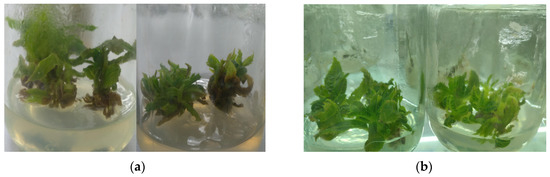
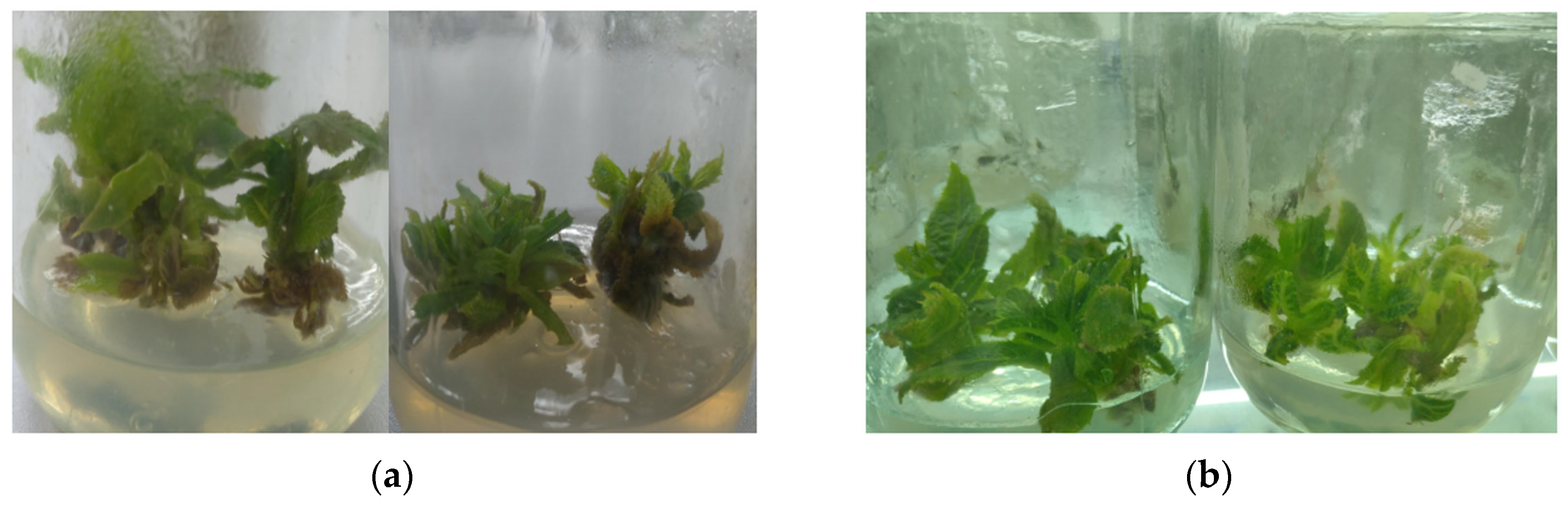
As shown in Figure 1, the freezing injury symptoms of the tetraploid plantlets were not very obvious compared to the control plants. The survival rate of tetraploid plantlets at 0 °C for 3 h was 88.89%. At 0 °C for 12 h, the survival rate of the tetraploid plantlets was 42.22%. After treatment with cold, the tetraploid plantlets were transferred to an MS medium and maintained at room temperature for observation. Fourteen days later, most of the tetraploid plantlets grew very well, and the degree of chilling injury was not very obvious.
Figure 1.
Changes in tetraploid plantlets under cold treatment. Note: (a) cold-treated plantlets; (b) control plantlets. The plantlets were kept at room temperature for 14 days after treatment at 0 °C for 12 h.
3.2. Results of Transcriptome Sequence Data Filtering
The original data of the samples are shown in Table 2. To improve the accuracy of the analysis results of the transcriptome data, the sequence data were filtered before the data analysis, and the filtered data are shown in Table 2. The sequence data of the sample transcriptome were of high quality.
Table 2.
Raw data and clean data output statistics.
3.3. Detection of DEGs
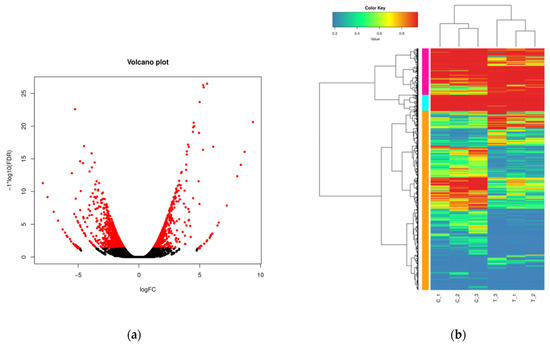
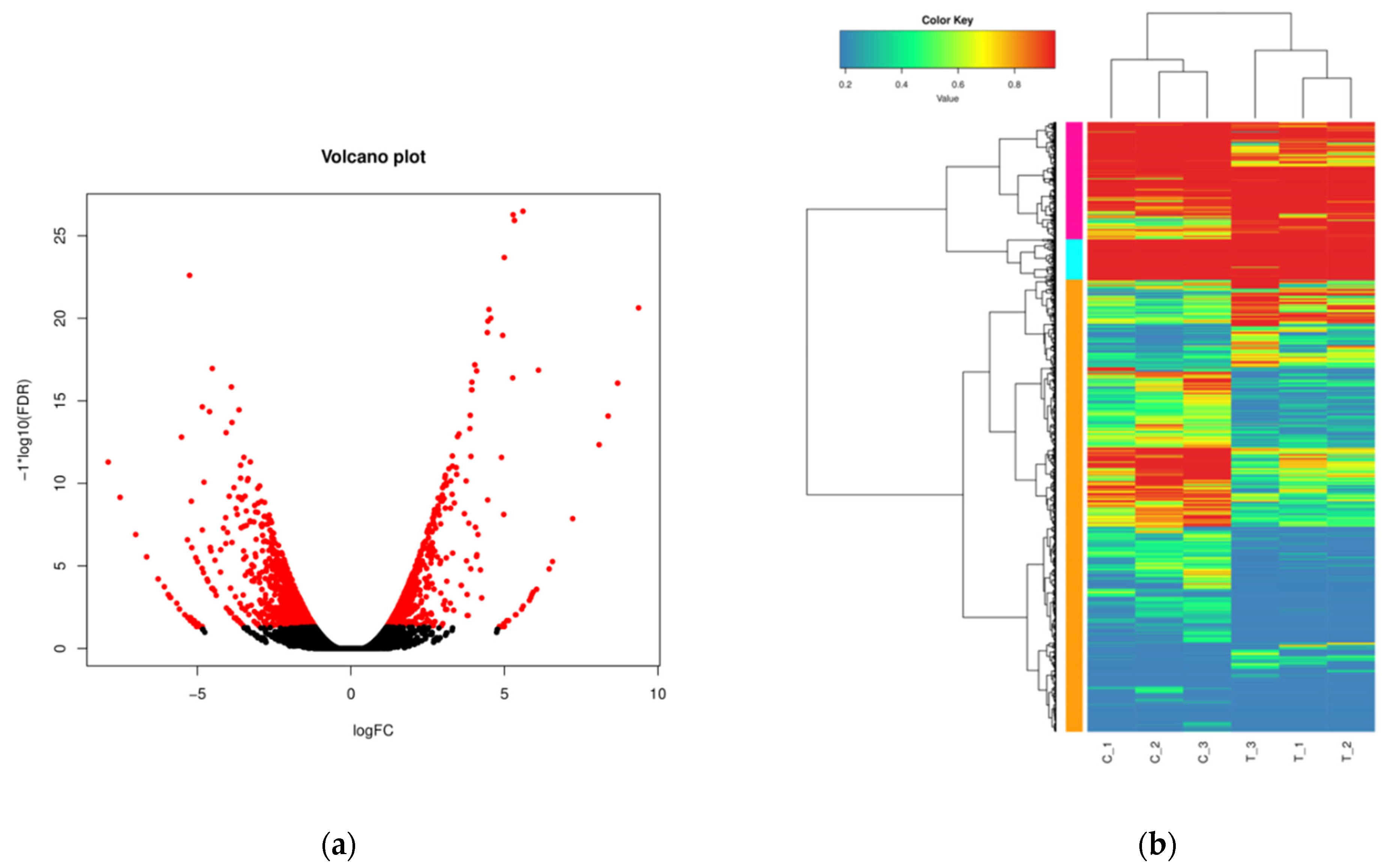
There were 1630 DEGs between the control group and the treatment group. By analyzing the DEGs between the control and treatment groups, we found that 619 DEGs were up-regulated and 1011 DEGs were down-regulated in the treatment group compared with the control group (Table 3, Figure 2).
Table 3.
Statistical groups of differentially expressed genes in all comparison groups.
Figure 2.
DEGs between cold-treated and control plantlets. Note: (a): red dot at the right side of 0, up-regulated DEGs in the cold treated plantlets compared to the control plantlets; red dot at the left side of 0, down-regulated DEGs. (b): C1, C2, and C3, control plantlets; T1, T2, and T3, cold-treated plantlets.
3.4. Functional Classification and Enrichment Analysis of DEGs
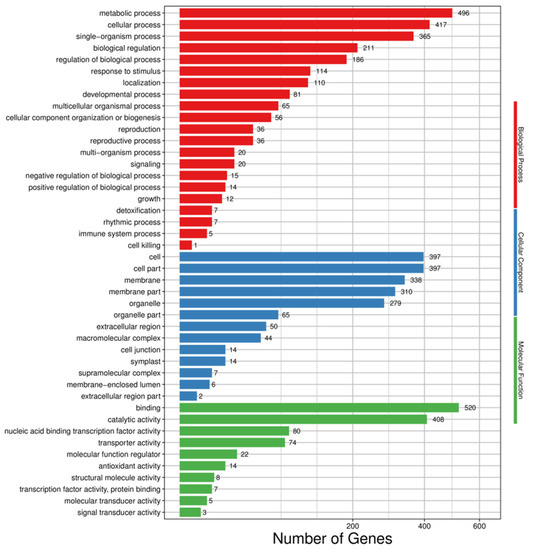
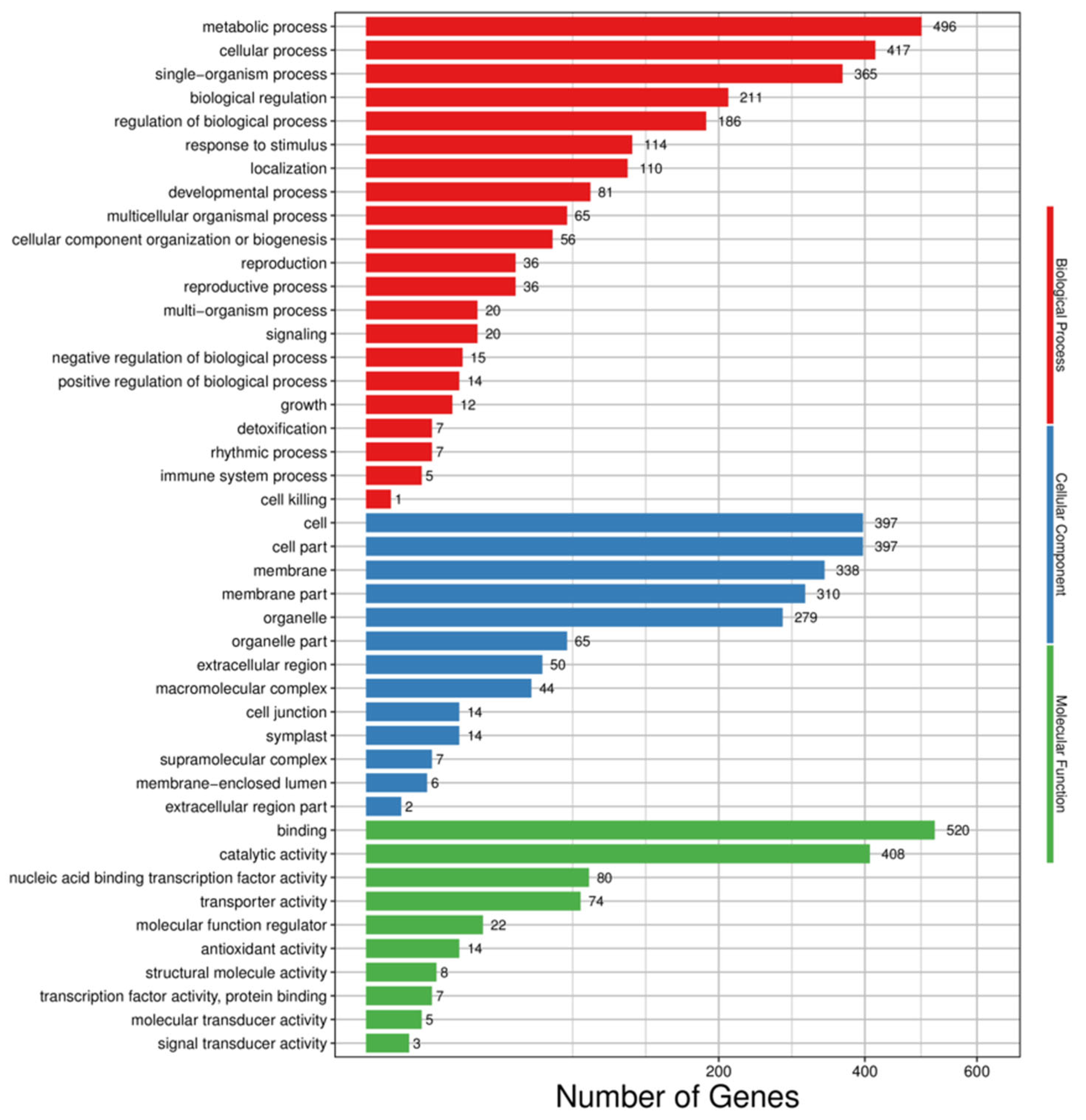
According to the results of differential gene detection, the DEGs were classified and enriched in the GO database. The results of GO enrichment analysis could be divided into three main functions, including molecular function, cellular component, and biological process. A total of 1025 DEGs were classified into 44 functional categories. There were ten functional classifications of molecular function, 13 classifications of cellular components, and 21 classifications of biological processes (Figure 3).
Figure 3.
Bar graph of differentially expressed gene GO classification. Note that red bars represent the biological process, blue bars indicate the cellular component, and green bars represent the molecular function.
3.5. Functional Classification and Enrichment Analysis of the KEGG Pathway
Four hundred and ten differentially expressed genes were involved in 89 metabolic pathways in the control and treatment groups. The top five pathways enriching DEGs were the plant hormone signal transduction (including 25 DEGs), phenylpropanoid biosynthesis (24 DEGs), plant–pathogen interaction (20 DEGs), carbon metabolism (14 DEGs), and cysteine and methionine metabolism (13 DEGs). Among these, plant hormone signal transduction was the pathway with the largest number of DEGs annotated to this pathway, which belonged to environmental information processing in five branches.
The number of up-regulated DEGs enriched by phenylpropanoid biosynthesis was 16 in the first three pathways of the KEGG metabolic pathways and 14 DEGs in plant–pathogen interaction. A total of 11 DEGs were enriched by carbon metabolism. The top three down-regulation pathways were the plant hormone signal transduction, the enrichment of 19 DEGs, phenylpropanoid biosynthesis, enrichment of eight DEGs, and six DEGs enriched in carotenoid biosynthesis.
3.6. Screening and Analysis of Cold Tolerance-Related Genes
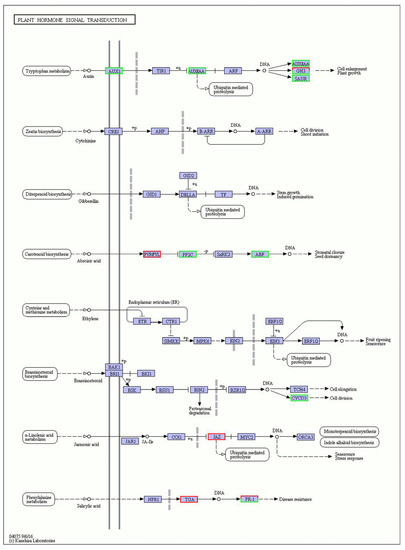
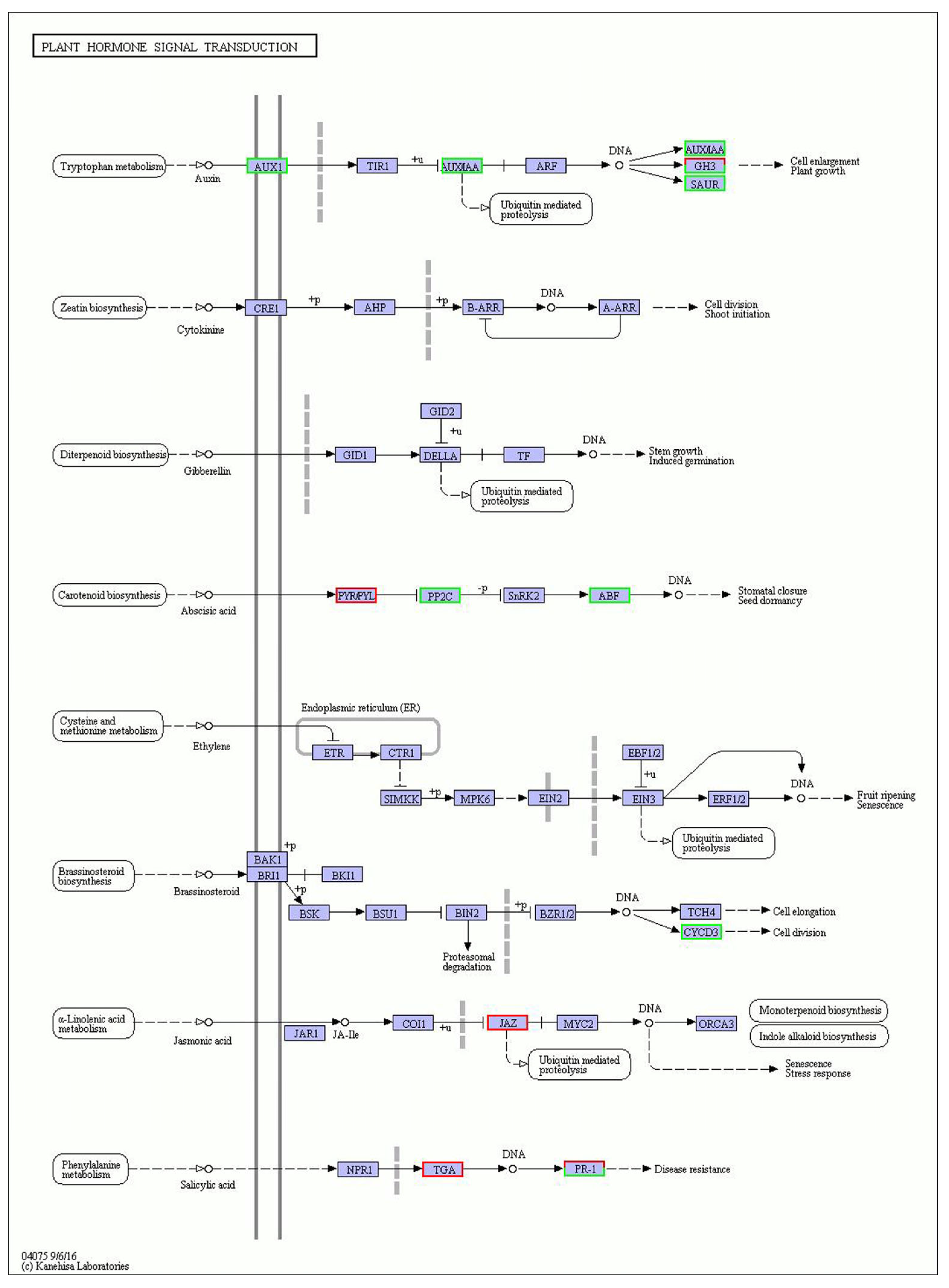
In this study, the largest number of DEGs was annotated to the plant hormone signal transduction pathway. Many cold tolerance-related studies have found that most DEGs are enriched in this pathway. The signal transduction pathway plays a vital role in the response of plants to low temperatures [28]. Therefore, the DEGs enriched in this pathway might be related to cold tolerance. The pathway map (KO04075) is shown in Figure 4.
Figure 4.
The plant hormone signal transduction pathway in A. chinensis tetraploid plants treated with cold. Note: red box, up-regulated genes; green box, down-regulated genes; blue box, both.
There were 25 DEGs in the plant hormone signal transduction pathway, of which six were up-regulated. These were: CEY00_Acc07445 (disease-related leaf protein), CEY00_Acc03316 (abscisic acid receptor PYL), CEY00_Acc10294 (indole-3-acetic acid-amide synthetase), CEY00_Acc13130 (bZIP transcription factor family protein), CEY00_Acc33627 (TIFY protein), and CEY00_Acc21162 (pathogenesis-related protein); 19 DEGs were down-regulated, including CEY00_Acc07128 (auxin-induced protein), CEY00_Acc19743 (CICLE hypothetical protein), CEY00_Acc23775 (containing Cyclin_N domain protein), and CEY00_Acc07415 (indole-3-acetic acid-amide synthase). The genes involved in this pathway are summarized in Table 4.
Table 4.
Analysis of differentially expressed genes in plant hormone signal transduction and enrichment.
Abscisic acid affects plant cold tolerance and gene expression regulation and can improve plant cold tolerance. Abscisic acid signal transduction was due to the interaction between abscisic acid receptors [29]. Abscisic acid receptor PYL was a receptor, and CEY00_Acc03316 was annotated as abscisic acid receptor PYL, so we inferred that CEY00_Acc03316 is a cold tolerance gene. The overexpression of bZIP transcription factor family proteins under stress was reported to improve the cold tolerance of plants [22,29]. Therefore, the CEY00_Acc13130 gene encodes a bZIP transcription factor family protein that may be a cold tolerance gene. The TIFY protein was induced and expressed at low temperature, and its gene family might be involved in low-temperature response and adaptation [30,31]. Therefore, we inferred that the CEY00_Acc33627 gene encoding a TIFY protein is a cold tolerance gene.
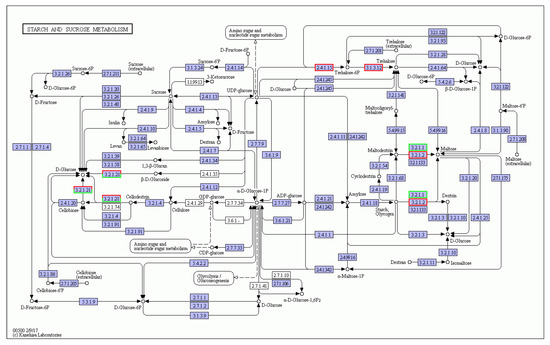
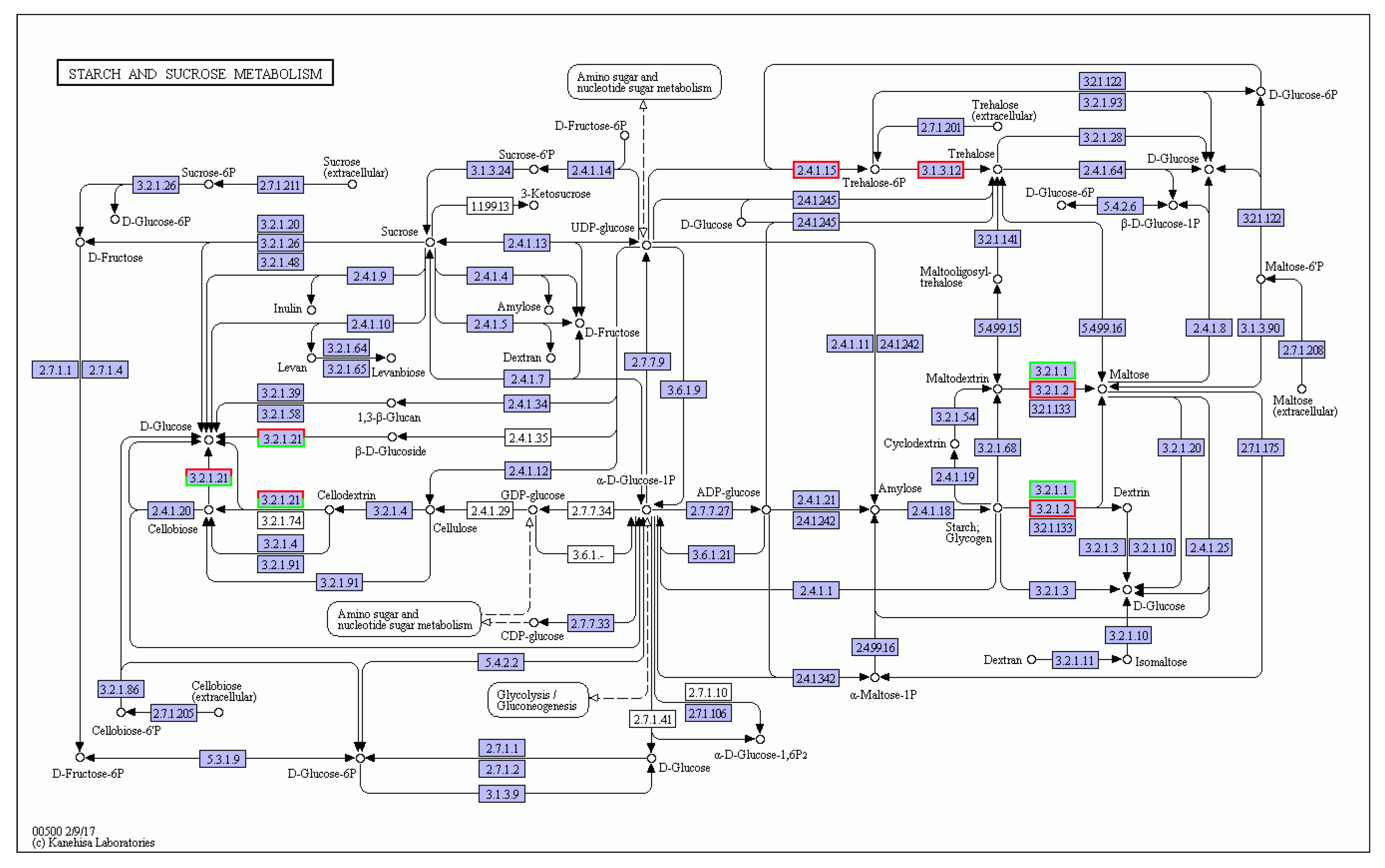
The starch and sucrose metabolic pathways are related to cold tolerance [25,26]. Therefore, the DEGs of the starch and sucrose metabolism pathway were analyzed (Figure 5). There were eight DEGs in the starch and sucrose metabolism pathway, of which six were CEY00_Acc26744 (alpha-trehalose phosphate synthase), CEY00_Acc28966 (beta-amylase), CEY00_Acc16695 (beta-amylase), CEY00_Acc14271 (beta-glucosides GH1 family), CEY00_Acc16756 (trehalose phosphatase), and CEY00_Acc08918 (beta-amylase). There were two down-regulated DEGs, namely CEY00_Acc17108 (beta-glucosidase) and CEY00_Acc04508 (alpha-amylase) (Table 5).
Figure 5.
The starch and sucrose metabolic pathway in A. chinensis tetraploid plants treated with cold. Note: red box, up-regulated genes; green box, down-regulated genes; blue box, both.
Table 5.
Analysis of DEGs in starch and sucrose metabolic pathways.
Trehalose-6-phosphate synthase can protect biological cell membranes and proteins from damage and is widely used in transgenic experiments with plants to improve their cold tolerance [22]. CEY00_Acc26744 and CEY00_Acc16756 were annotated as alpha-trehalose-phosphate synthase genes and inferred as cold-resistant genes. Maltose produced by starch decomposition catalyzed by beta-amylase may help protect the electron transport chain and protein in a stress environment. Cold tolerance of plants could be regulated by soluble sugar [32]. Beta-amylase might reduce cold stress injury by increasing the content of sugars and enhancing the cold tolerance of plants [33]. Hence, unigenes of CEY00_Acc28966 (beta-amylase), CEY00_Acc16695 (beta-amylase), and CEY00_Acc08918 (beta-amylase) were inferred as cold-resistant genes.
3.7. RT-qPCR Validation
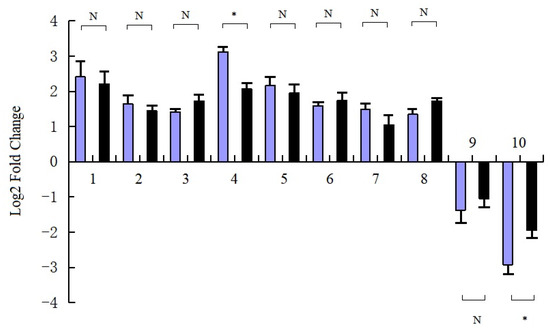
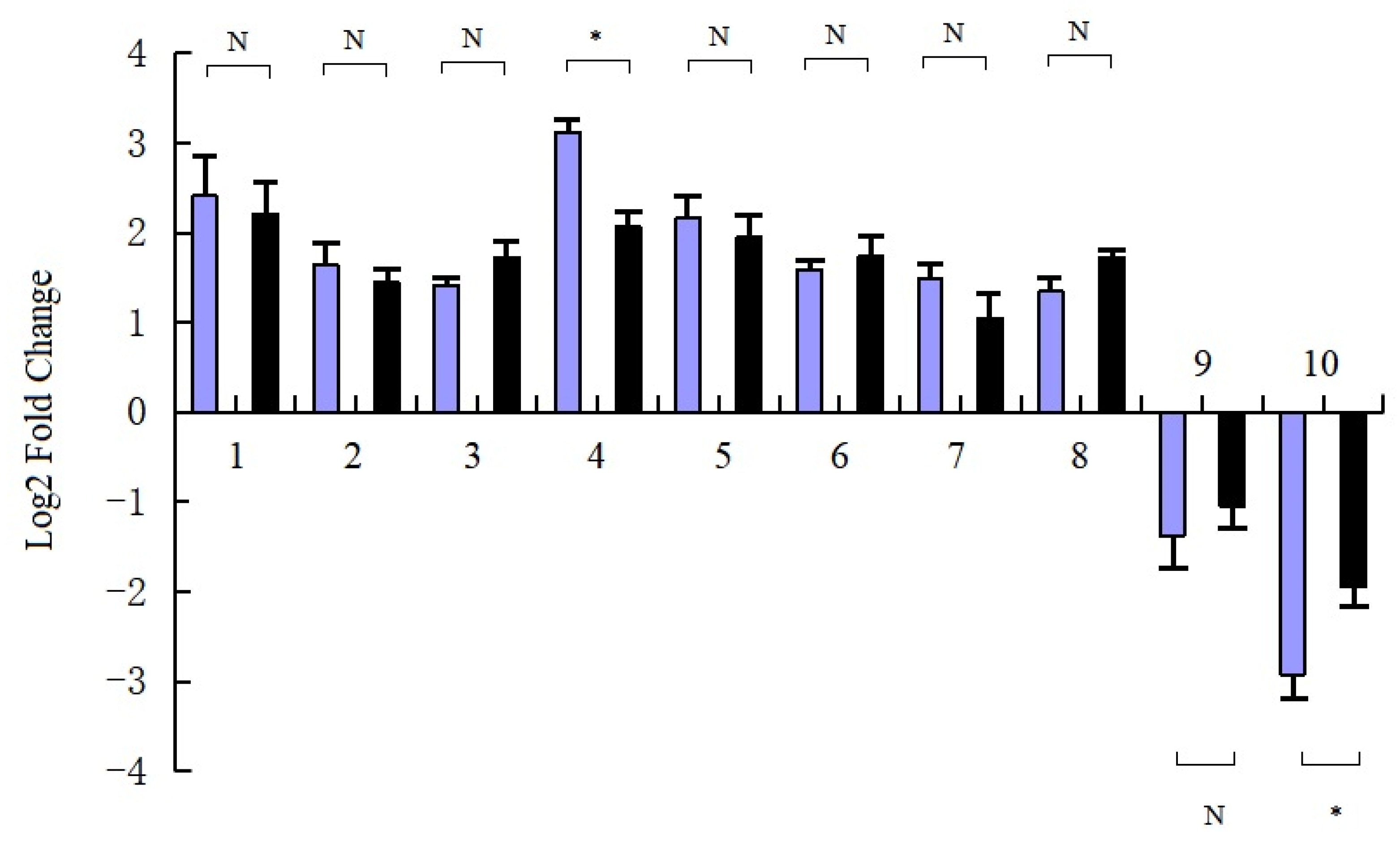
The correlation coefficient (R2) between the expression levels of ten DEGs in RNA-seq and RT-qPCR is 0.6691, and the results of the RT-qPCR analysis of selected DEGs showed that the expression levels of genes were consistent with the transcriptome results (Figure 6). The difference in the expression level of two genes was significant, but that of eight genes was not significant. These ten selected genes were in the pathways related to the low-temperature stress response [24,25,26]. These findings indicated that the gene expression data obtained from the RNA-seq data of cold-treated and control plantlets were reliable.
Figure 6.
Comparison of RNA-sequencing and RT-qPCR results of selected DEGs. Note:  , RNA-seq;
  , RT-qPCR. 1–10, genes encoding 1, abscisic acid receptor PYL; 2, bZIP transcription factor family protein; 3, protein TIFY; 4, alpha-trehalose-phosphate synthase; 5, beta-amylase; 6, beta-glucosidase 1 GH1 family; 7, trehalose-phosphate phosphatase F; 8, beta-amylase 4; 9, beta-glucosidase 12-like; 10, alpha-amylase. RT-qPCR was performed on 3 cold treated and 3 control plantlets, normalized with housekeeping gene elongation factor, and repeated 3 times. DEG, differentially expressed gene; RT-qPCR, real-time quantitative polymerase chain reaction. ∗, 0.01 < p < 0.05; N, >0.05.
, RNA-seq; , RT-qPCR. 1–10, genes encoding 1, abscisic acid receptor PYL; 2, bZIP transcription factor family protein; 3, protein TIFY; 4, alpha-trehalose-phosphate synthase; 5, beta-amylase; 6, beta-glucosidase 1 GH1 family; 7, trehalose-phosphate phosphatase F; 8, beta-amylase 4; 9, beta-glucosidase 12-like; 10, alpha-amylase. RT-qPCR was performed on 3 cold treated and 3 control plantlets, normalized with housekeeping gene elongation factor, and repeated 3 times. DEG, differentially expressed gene; RT-qPCR, real-time quantitative polymerase chain reaction. ∗, 0.01 < p < 0.05; N, >0.05.
4. Discussion
The induction of polyploidy can improve the stress resistance of plants, such as cold resistance, drought resistance, and salt and alkali resistance [4]. Although the growth of polyploid plants is slow, stress tolerance and nutrient content are high [4,34,35]. Studies on polyploidy induction of fruit trees have been conducted for a long time, and polyploid plants, such as strawberries, kiwifruit, oranges, and pears, have contributed to the tolerance and the production of fruit trees [34,35]. However, not all plant polyploids are more resistant to abiotic stress than diploids. For example, Lu et al. [11] found that the freezing tolerance in Solidago canadensis decreased with increasing ploidy. In this study, most tetraploid plantlets grew very well, and the symptoms of chilling injury alleviated more than that of the diploid plantlets (data not shown). The cold resistance of tetraploid plantlets of yellow kiwifruit was higher than that of diploid plantlets.
Janská et al. [28] found that the plant signal transduction pathway plays a key role in the response of plants to low temperatures. In this study, we found that the DEGs enriched in this pathway were related to cold tolerance, which is consistent with the results by Janská et al. [28]. The starch metabolic pathway has been reported to be closely related to the cold tolerance response of plants [26]. In this study, the genes of the plant hormone signal transduction and starch and sucrose metabolism pathway were up in the treatment group, including CEY00_Acc03316 (abscisic acid receptor PYL), CEY00_Acc13130 (bZIP transcription factor), CEY00_Acc33627 (TIFY protein), CEY00_Acc26744 (alpha-trehalose-phosphate synthase), CEY00_Acc16756 (trehalose phosphatase), CEY00_Acc28966 (beta-amylase), CEY00_Acc16695 (beta-amylase), and CEY00_Acc08918 (beta-amylase). ABA has a certain effect on improving cold tolerance in plants [16]. Therefore, the differentially expressed gene CEY00_Acc03316 (abscisic acid receptor PYL) might play an important role in cold tolerance.
The bZIP transcription factors play vital roles in regulating cold tolerance and other stresses [36]. Hence, CEY00_Acc13130 (bZIP transcription factor) might be a cold tolerance-related gene. Trehalose-6-phosphate synthase, a key enzyme in trehalose synthesis, was found to play a vital role in the cold response in different plant species [37,38]. Therefore, the alpha-trehalose-phosphate synthase (CEY00_Acc26744) in this study might be a cold-tolerance-related gene. Beta-amylase affects the cold tolerance of plants mainly by regulating the content of starch [39]. Beta-amylase-mediated starch degradation was found to play a vital role in the cold tolerance of plants [33]. In this study, DEGs encoding beta-amylase (CEY00_Acc28966, CEY00_Acc16695, and CEY00_Acc08918) might be cold tolerance genes in the kiwifruit.
Nowadays, the research on kiwifruit transcriptome analysis mainly focuses on the changes in fruit pulp color, fruit pigment, fruit development, and bacterial canker [40,41]. There are few studies on the stress tolerance of kiwifruit transcriptome analysis, particularly on cold tolerance, and there is no study on the cold-resistant genes of kiwifruit, which needs to be studied in the future. Genes related to cold tolerance identified in this study need further functional verification.
5. Conclusions
Based on the transcriptome analysis of tetraploid cold-resistant plants after cold treatment, two pathways related to cold tolerance were obtained, the plant hormone signal transduction and the starch and sucrose metabolism pathway. In these two pathways, seven DEGs related to cold tolerance, i.e., CEY00_Acc03316 (abscisic acid receptor PYL), CEY00_Acc13130 (bZIP transcription factor), CEY00_Acc33627 (TIFY protein), CEY00_Acc26744 (alpha-trehalose-phosphate synthase), CEY00_Acc28966 (beta-amylase), CEY00_Acc16756 (trehalose phosphatase), and CEY00_Acc08918 (beta-amylase 4) in kiwifruit were screened. These genes were confirmed to be up-regulated by RT-qPCR when the tetraploid plantlets were treated at low temperatures.
Author Contributions
Conceptualization, X.L. and H.Z.; methodology, Y.L.; software, Z.W.; validation, Z.Z., S.L. and W.B.; formal analysis, Y.L.; investigation, Z.Z.; resources, X.Z.; data curation, W.B.; writing—original draft preparation, X.L.; writing—review and editing, H.Z.; visualization, X.Z.; supervision, H.Z.; project administration, H.Z.; funding acquisition, H.Z. All authors have read and agreed to the published version of the manuscript.
Funding
This research was funded by the National Natural Science Foundation of China, grant number 32160556.
Institutional Review Board Statement
Not applicable.
Informed Consent Statement
Not applicable.
Data Availability Statement
All data generated or analyzed during this study are included in this published article. RNA-Seq data were presented at the short read archive (SRA) database of the National Center for Biotechnology Information (NCBI, accession number SAMN12612441).
Acknowledgments
The authors thank Research Scientist Xiuying Chen of the New Zealand Institute for Plant and Food Research for her critical reading of the manuscript.
Conflicts of Interest
The authors declare no conflict of interest. The funders had no role in the design of the study; in the collection, analyses, or interpretation of data; in the writing of the manuscript; or in the decision to publish the results.
References
- Minchin, P.E.H.; de Silva, N.; Snelgar, W.P.; Richardson, A.C. Modelling of colour development in the fruit of Actinidia chinensis ‘Hort16A’. N. Z. J. Crop Hort. 2003, 31, 3141–3153. [Google Scholar] [CrossRef] [Scilit]
- Zhang, H.Y.; Liu, H.M.; Liu, X.Z. Production of transgenic kiwifruit plants harboring the SbtCry1Ac gene. Genet. Mol. Res. 2015, 14, 8483. [Google Scholar] [CrossRef] [Scilit] [PubMed]
- Vallespir, F.; Rodríguez, Ó.; Cárcel, J.A.; Rosselló, C.; Simal, S. Ultrasound assisted low-temperature drying of kiwifruit: Effects on drying kinetics, bioactive compounds and antioxidant activity. J. Sci. Food Agr. 2019, 99, 2901–2909. [Google Scholar] [CrossRef] [Scilit]
- Wu, J.H.; Ferguson, A.R.; Murray, B.G.; Geijskes, R.J.; Lakshmanan, P.; Taji, A. In vitro induction of autotetraploid Actinidia plants and their field evaluation for crop improvement. Acta Hortic. 2009, 829, 245–250. [Google Scholar] [CrossRef] [Scilit]
- Wu, J.H. Cultivar, environment and integration of cultural practices will determine the future of the kiwifruit industry. Scr. Hortic. 2020, 20, 171–178. [Google Scholar]
- Qi, X.J.; Fang, J.B.; Zhao, X.Z. Freeze injury investigation of kiwifruit in Zhengzhou area in 2009. J. Fruit Sci. 2011, 28, 55–60. (In Chinese) [Google Scholar]
- Ke, S.W. Transcriptome Sequencing and Cloning and Functional Study of Cold Tolerance Related Genes in Fine Stemmed Columnaris; South China Agricultural University: Guangdong, China, 2016. (In Chinese) [Google Scholar]
- Xie, K.; Bai, J.; Yang, Y.Y.; Duan, N.B.; Ma, Y.M.; Guo, T.; Yao, F.Y.; Ding, H.F. The RNA-seq transcriptome analysis identified genes related to rice seed dormancy. Biol. Plant. 2019, 63, 308–313. [Google Scholar] [CrossRef] [Scilit]
- Wu, Z.T.; Xu, F.; Yu, L.-L.; Ouyang, Y.; Geng, X.-X. Transcriptome analysis of developing castor bean seeds and identification of ricinoleic acid biosynthesis genes. Biol. Plant. 2021, 65, 273–282. [Google Scholar] [CrossRef] [Scilit]
- Li, Y.; Wang, X.; Ban, Q.; Zhu, X.; Jiang, C.; Wei, C.; Bennetzen, J.L. Comparative transcriptomic analysis reveals gene expression associated with cold adaptation in the tea plant Camellia sinensis. BMC Genom. 2019, 20, 624. [Google Scholar] [CrossRef] [Scilit]
- Lu, H.; Xue, L.; Cheng, J.; Yang, X.; Xie, H.; Song, X.; Qiang, S. Polyploidization-driven differentiation of freezing tolerance in Solidago canadensis. Plant Cell Environ. 2020, 43, 1394–1403. [Google Scholar] [CrossRef] [Scilit]
- Luo, L.; Kong, X.; Gao, Z.; Zheng, Y.; Yang, Y.; Li, X.; Yang, D.; Geng, Y.; Yang, Y. Comparative transcriptome analysis reveals ecological adaption of cold tolerance in northward invasion of Alternanthera philoxeroides. BMC Genom. 2020, 21, 532. [Google Scholar] [CrossRef] [Scilit] [PubMed]
- Deng, X.; Wang, J.; Li, Y.; Wu, S.; Yang, S.; Chao, J.; Chen, Y.; Zhang, S.; Shi, M.; Tian, W. Comparative transcriptome analysis reveals phytohormone signalings, heat shock module and ROS scavenger mediate the cold-tolerance of rubber tree. Sci. Rep. 2018, 8, 4931. [Google Scholar] [CrossRef] [Scilit]
- Dong, W.; Ma, X.; Jiang, H.; Zhao, C.; Ma, H. Physiological and transcriptome analysis of Poa pratensis var. anceps cv. Qinghai in response to cold stress. BMC Plant Biol. 2020, 20, 362. [Google Scholar] [CrossRef] [Scilit] [PubMed]
- Lu, C. Transcriptome Study and Discovery of Cold Resistance Genes in Liriodendron chinensis; Chinese Academy of Forestry Science: Beijin, China, 2015. (In Chinese) [Google Scholar]
- Li, S.; Liu, X.; Liu, H.; Zhang, X.; Ye, Q.; Zhang, H. Induction, identification and genetics analysis of tetraploid Actinidia chinensis. Roy. Soc. Open Sci. 2019, 6, 191052. [Google Scholar] [CrossRef] [Scilit] [PubMed]
- Liu, X.Z.; Li, Y.P.; Zhang, H.Y.; Wei, Z.; Zhang, Z.M.; Bian, W. Cold Tolerance Gene of Yellow Flesh Kiwifruit and Its Application. CN201910669692.1, 24 July 2019. [Google Scholar]
- Yue, J.; Liu, J.; Tang, W.; Wu, Y.Q.; Tang, X.; Li, W.; Yang, Y.; Wang, L.; Huang, S.; Fang, C.; et al. Kiwifruit Genome Database (KGD): A comprehensive resource for kiwifruit genomics. Hortic. Res. 2020, 7, 117. [Google Scholar] [CrossRef] [Scilit] [PubMed]
- Kim, D.; Paggi, J.M.; Park, C.; Bennett, C.; Salzberg, S.L. Graph-based genome alignment and genotyping with HISAT2 and HISAT-genotype. Nat Biotechnol. 2019, 37, 907–915. [Google Scholar] [CrossRef] [Scilit]
- Anders, S.; Huber, W. Differential expression analysis for sequence count data. Gene Biol. 2010, 11, R106. [Google Scholar] [CrossRef] [Scilit]
- Liu, X.; Zhang, Z.; Sang, M.; Sun, X.; He, C.; Xin, P.; Zhang, H. Functional analysis of the FZF1 gene in Saccharomyces uvarum. Front. Microbiol. 2018, 9, 96. [Google Scholar] [CrossRef] [Scilit]
- Kim, Y.; Lee, D.W.; Jung, J.K. Rapid Cold-hardening of a subtropical species, Maruca vitrata (Lepidoptera: Crambidae), accompanies hypertrehalosemia by upregulating trehalose-6-phosphate synthase. Environ. Entomol. 2017, 6, 1432–1438. [Google Scholar] [CrossRef] [Scilit]
- Ma, H.; Liu, C.; Li, Z.; Ran, Q.; Xie, G.; Wang, B.; Fang, S.; Chu, J.; Zhang, J. ZmbZIP4 contributes to stress resistance in maize by regulating ABA synthesis and root development. Plant Physiol. 2018, 178, 753–770. [Google Scholar] [CrossRef] [Scilit]
- Hubbard, K.E.; Nishimura, N.; Hitomi, K.; Getzoff, E.D.; Schroeder, J.I. Early abscisic acid signal transduction mechanisms: Newly discovered components and newly emerging questions. Genes Dev. 2010, 24, 1695–1708. [Google Scholar] [CrossRef] [Scilit] [PubMed]
- Li, T.; Xu, S.L.; Oses-Prieto, J.A.; Putil, S.; Xu, P.; Wang, R.J.; Li, K.H.; Maltby, D.A.; An, L.H.; Burlingame, A.L.; et al. Proteomics analysis reveals post-translational mechanisms for cold-induced metabolic changes in Arabidopsis. Mol. Plant. 2011, 4, 361–374. [Google Scholar] [CrossRef] [Scilit] [PubMed]
- Li, S.; Yang, Y.; Zhang, Q.; Liu, N.; Xu, Q.; Hu, L. Differential physiological and metabolic response to low temperature in two zoysiagrass genotypes native to high and low latitude. PLoS ONE 2018, 13, e0198885. [Google Scholar] [CrossRef] [Scilit] [PubMed]
- Wei, Z.; Zhang, Z.; Zhao, W.; Yin, T.; Liu, X.; Zhang, H. Overexpression of MET4 leads to the ipregulation of stress-related genes and enhanced sulfite tolerance in Saccharomyces uvarum. Cells 2022, 11, 636. [Google Scholar] [CrossRef] [Scilit] [PubMed]
- Janská, A.; Marsík, P.; Zelenková, S.; Ovesná, J. Cold stress and acclimation-what is important for metabolic adjustment? Plant Biol. 2010, 12, 395–405. [Google Scholar] [CrossRef] [Scilit]
- Chang, Y.; Nguyen, B.H.; Xie, Y.; Xiao, B.; Tang, N.; Zhu, W.; Mou, T.; Xiong, L. Co-overexpression of the constitutively active form of OsbZIP46 and ABA-activated protein kinase SAPK6 improves drought and temperature stress resistance in rice. Front. Plant Sci. 2017, 8, 1102. [Google Scholar] [CrossRef] [Scilit]
- Ye, H.; Du, H.; Tang, N.; Li, X.; Xiong, L. Identification and expression profiling analysis of TIFY family genes involved in stress and phytohormone responses in rice. Plant Mol. Biol. 2009, 71, 291–305. [Google Scholar] [CrossRef] [Scilit]
- Wang, Y.; Pan, F.; Chen, D.; Chu, W.; Liu, H.; Xiang, Y. Genome-wide identification and analysis of the Populus trichocarpa TIFY gene family. Plant Physiol. Bioch. 2017, 115, 360–371. [Google Scholar] [CrossRef] [Scilit]
- Tarkowski, Ł.P.; van den Ende, W. Cold tolerance triggered by soluble sugars: A multifaceted countermeasure. Front. Plant Sci. 2015, 6, 203. [Google Scholar] [CrossRef] [Scilit]
- Lv, Y.; Yang, M.; Hu, D.; Yang, Z.; Ma, S.; Li, X.; Xiong, L. The OsMYB30 Transcription factor suppresses cold tolerance by interacting with a JAZ protein and suppressing β-Amylase expression. Plant Physiol. 2017, 173, 1475–1491. [Google Scholar] [CrossRef] [Scilit]
- Wu, J.H.; Ferguson, A.R.; Murray, B.G. Manipulation of ploidy for kiwifruit breeding: In vitro chromosome doubling in diploid Actinidia chinensis Planch. Plant Cell Tiss. Organ. Cult. 2011, 106, 503–511. [Google Scholar] [CrossRef] [Scilit]
- Wu, J.H.; Ferguson, A.R.; Murray, B.G.; Jia, Y.; Datson, P.M.; Zhang, J. Induced polyploidy dramatically increases the size & alters the shape of fruit in Actinidia chinensis. Ann. Bot. 2012, 109, 169. [Google Scholar] [PubMed]
- Banerjee, A.; Roychoudhury, A. Abscisic-acid-dependent basic leucine zipper (bZIP) transcription factors in plant abiotic stress. Protoplasma 2017, 254, 3–16. [Google Scholar] [CrossRef] [Scilit]
- Miranda, J.A.; Avonce, N.; Suárez, R.; Thevelein, J.M.; van Dijck, P.; Iturriaga, G. A bifunctional TPS-TPP enzyme from yeast confers tolerance to multiple and extreme abiotic-stress conditions in transgenic Arabidopsis. Planta 2007, 226, 1411–1421. [Google Scholar] [CrossRef] [Scilit] [PubMed]
- Ge, L.F.; Chao, D.Y.; Shi, M.; Zhu, M.Z.; Gao, J.P.; Lin, H.X. Overexpression of the trehalose-6-phosphate phosphatase gene OsTPP1 confers stress tolerance in rice and results in the activation of stress responsive genes. Planta 2008, 228, 191–201. [Google Scholar] [CrossRef] [Scilit] [PubMed]
- Peng, T.; Zhu, X.; Duan, N.; Liu, J.H. PtrBAM1, a β-amylase-coding gene of Poncirus trifoliata, is a CBF regulon member with function in cold tolerance by modulating soluble sugar levels. Plant Cell Environ. 2014, 37, 2754–2767. [Google Scholar] [CrossRef] [Scilit]
- Asiche, W.O.; Mitalo, O.W.; Kasahara, Y.; Tosa, Y.; Mworia, E.G.; Owino, W.O.; Ushijima, K.; Nakano, R.; Yano, K.; Kubo, Y. Comparative transcriptome analysis reveals distinct ethylene-independent regulation of ripening in response to low temperature in kiwifruit. BMC Plant Biol. 2018, 18, 47. [Google Scholar] [CrossRef] [Scilit]
- Song, Y.; Sun, L.; Lin, M.; Chen, J.; Qi, X.; Hu, C.; Fang, J. Comparative transcriptome analysis of resistant and susceptible kiwifruits in response to Pseudomonas syringae pv. Actinidiae during early infection. PLoS ONE 2019, 14, e0211913. [Google Scholar]

Publisher’s Note: MDPI stays neutral with regard to jurisdictional claims in published maps and institutional affiliations. |
© 2022 by the authors. Licensee MDPI, Basel, Switzerland. This article is an open access article distributed under the terms and conditions of the Creative Commons Attribution (CC BY) license (https://creativecommons.org/licenses/by/4.0/).