


Abstract
In view of the urgent need for pollination equipment for existing hybrid rice and the practical problems of traditional manual pollen-driving, such as high labor intensity, low efficiency, and easy-to-break rice stems, an automatic pollen-driving system combining traditional manual and mechanical auxiliary control was designed. According to the analysis of the driving process, the driving speed v and the rope height h are the main factors affecting the bending degree of rice stems (the cross-section angle θ of rice stems). Through shear and extrusion tests, the characteristic parameters of rice stems and the bonding parameters of the rice stem bonding model were obtained. The test results showed that when the bending angle of the rice stem was 47°, the maximum shear force of the rice stem was 5.42 N. A quadratic orthogonal rotation combination simulation test was carried out using the discrete element method (EDEM), and the optimal parameter combination of powder driving speed and rope height was determined. The angle error between the measured angle value and that obtained by the constraint solving tool of Design-Expert software was less than 5%. Furthermore, combined with field experiments, through the optimization of the pollen-driving operation parameters, the phenomenon of rice breakage was reduced in the process of pollen-driving. Therefore, the research in this paper can provide certain references for the design of hybrid rice powder-driven systems and the optimization of operating parameters.
1. Introduction
As a major grain crop in China, rice ranks first in the world in terms of cultivation area and production [1]. With the reduction in arable land in China, the development of the rice industry has been restricted [2]. To cope with the food security crisis, hybrid rice technology has been vigorously promoted and applied in China [3]. China is the first country in the world to successfully breed, popularize, and plant hybrid rice. The promotion and application of hybrid rice technology have made important contributions to ensuring global food security [4,5,6,7]. Hybrid rice seeds are the basic materials for its production, and rice is a non-strict self-pollinated crop, with an extremely low natural hybridization rate. Only through cross-breeding can seeds with a certain yield and maintained hybrid vigor be obtained, and assisted pollination is necessary to ensure the hybrid seed-setting rate and improve the seed production yield and quality. The production of hybrid rice mainly includes links such as breeding, seed production, seedling raising, transplanting, and harvesting. Among them, seed production, as an important link in the hybrid rice production process, is the key to affecting its quality [8,9,10]. Seed production is a production process in which the male sterile line (female parent) and the male sterile line restorer line (male parent) are cross-pollinated and set seeds through artificial cultivation measures [11,12,13,14,15,16]. Currently, the hybrid rice seed production process is mainly completed by manual-assisted pollination (pollen-driving). With human power as the traction, ropes or bamboo poles are used as the main tools. By colliding with the male parent panicles, the pollen is raised, and through the action of natural wind, the pollen is diffused onto the stigma of the female parent pistil to complete the pollination [17,18,19]. Under the manual pollen-driving method, the pollination uniformity of the female parent hybrid rice can basically meet the requirements. However, this method has practical problems such as high labor intensity, low efficiency, and easy breakage of rice stems. With the intensification of population aging, the migration of the rural labor force, and the continuously increasing cost of labor, the problem of labor shortage has become increasingly highlighted, and this method is no longer suitable for the development needs of current hybrid rice seed production technology.
With the development of agricultural mechanization, mechanical-assisted pollination has been applied. The existing mechanical-assisted pollination technology mainly adopts pneumatic, unmanned aerial vehicle (UAV)-wind-driven, mechanical impact, impact–blowing combined, and mechanical rope methods, using air currents to transfer the pollen of the male parent to the female parent to complete the pollination; the relevant characteristics are shown in Table 1 [20,21,22,23,24]. Pneumatic pollination uses fans to produce a directional and adjustable air current to blow the pollen from the male parent onto the pistil of the female parent to complete the pollination. Due to geographical environmental characteristics, many countries around the world use UAV-wind-driven methods to complete hybrid rice pollination. Small-scale UAV aerial plant protection has developed rapidly in Asia. Japan was the earliest country to apply UAV technology to agricultural production and is also one of the countries with the most mature development of this technology in the world. UAVs have been applied to aspects such as pesticide spraying, seeding, and hybrid rice pollination. Some scholars have explored the basic theories and methods of the UAV rotor flow field based on computational fluid dynamics (CFD). Chen et al. [25] used the Navier–Stokes equation (N-S equation) to calculate and solve the hovering flow field. Srinivasan et al. [26] numerically simulated the hovering rotor flow field by solving the N-S equation. Wake et al. [27] further verified the feasibility of this method by applying it to the rotor aerodynamic performance calculation of the UH-60A model. UAVs mainly rely on the air current generated by the rotors for pollination. However, there is a lack of research results on the motion characteristics and drift trajectories of pollen in the UAV rotor wind field, and the optimal operation parameters for unmanned helicopter pollination cannot be determined. On this basis, some Chinese scholars have optimized pneumatic and UAV-wind-driven hybrid rice pollination [28,29,30,31]. Zhou et al. [3] designed a ducted-fan-type high-clearance seed-setting pollination machine. By analyzing the flow field characteristics around the pollination machine, the preferred parameters for field operation were obtained. Li et al. [32] explored the relationship between the jet polar angle, outlet hole dynamic pressure, and pipeline parameters in the jet pipeline during pneumatic pollination. UAV-wind-driven pollination uses the wind generated by the rotors during flight to transfer the pollen of the male parent to the female parent. Wang et al. [33] applied an oil-powered UAV to assist in hybrid rice seed production pollination and measured the air flow field during the UAV’s flight, obtaining better operation parameters such as flight height and flight course. Li et al. [34] developed a single-axis single-rotor electric unmanned helicopter for assisting in hybrid rice seed production pollination and optimized parameters such as flight height, flight speed, and load mass through experiments. The existing mechanical-assisted pollination methods are easy to operate and will not break the rice stems. However, they have problems such as limited operation coverage area, high energy consumption, and high cost. When the operation parameters are not properly regulated, there are practical problems such as difficult pollen shedding and poor pollination uniformity. Therefore, there is still a lack of suitable models for mechanical pollination, and it is urgent to develop a mechanized pollination equipment suitable for the modern large-scale seed industry.
Table 1.
Mechanical-assisted pollination methods and characteristics of rice.
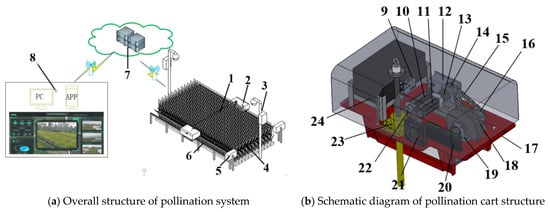
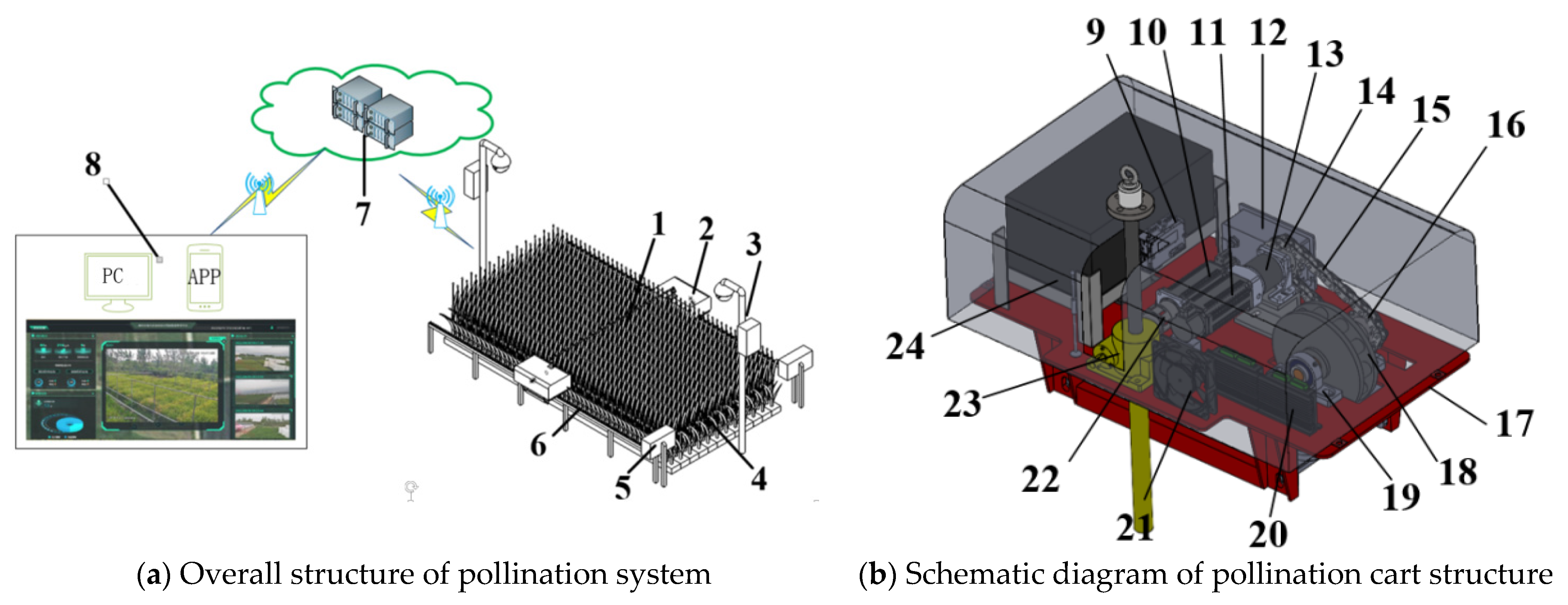
In this paper, responding to the urgent need for pollination equipment in existing hybrid rice and the deficiencies of the pollen-driving technology, considering the advantages of good pollination uniformity of the traditional manual method and easy operation of mechanical-assisted pollination, a rope-tied pollen-driving device combining traditional manual and mechanical-assisted control is developed. The overall structure of the hybrid rice pollen-driving system is shown in Figure 1a, including: track, pollen-driving trolley, rope, charging device, farmland monitoring system, cloud server, and remote control platform. The structure of the pollen-driving trolley is shown in Figure 1b, mainly composed of a frame, driving wheels, a chain drive mechanism, driving wheel drive motor, lifting mechanism, lifting drive motor, controller, lithium-ion battery, driver, and cooling fan. The main technical parameters of the pollen-driving trolley are summarized in Table 2.
Figure 1.
Overall structure of pollination system. 1. Rope, 2. Pollination trolley, 3. Monitoring system, 4. Rice, 5. Charging device, 6. Track, 7. Cloud server, 8. Remote control platform, 9. Gateway, 10. Servo motor (1), 11. Servo motor (2), 12. Controller, 13. Reducer, 14. Active sprocket, 15. Chain, 16. Passive sprocket, 17. Frame, 18. Active wheel, 19. Bearing support, 20. Driver, 21. Cooling fan, 22. Coupling, 23. Worm-gear screw lift, and 24. Lithium battery.
Table 2.
Main technical parameters of pollination cart.
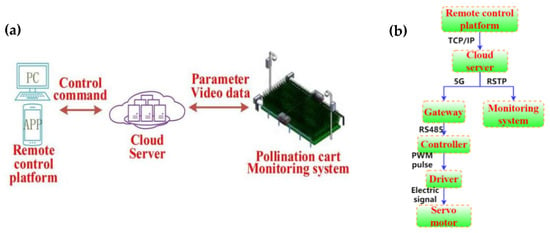
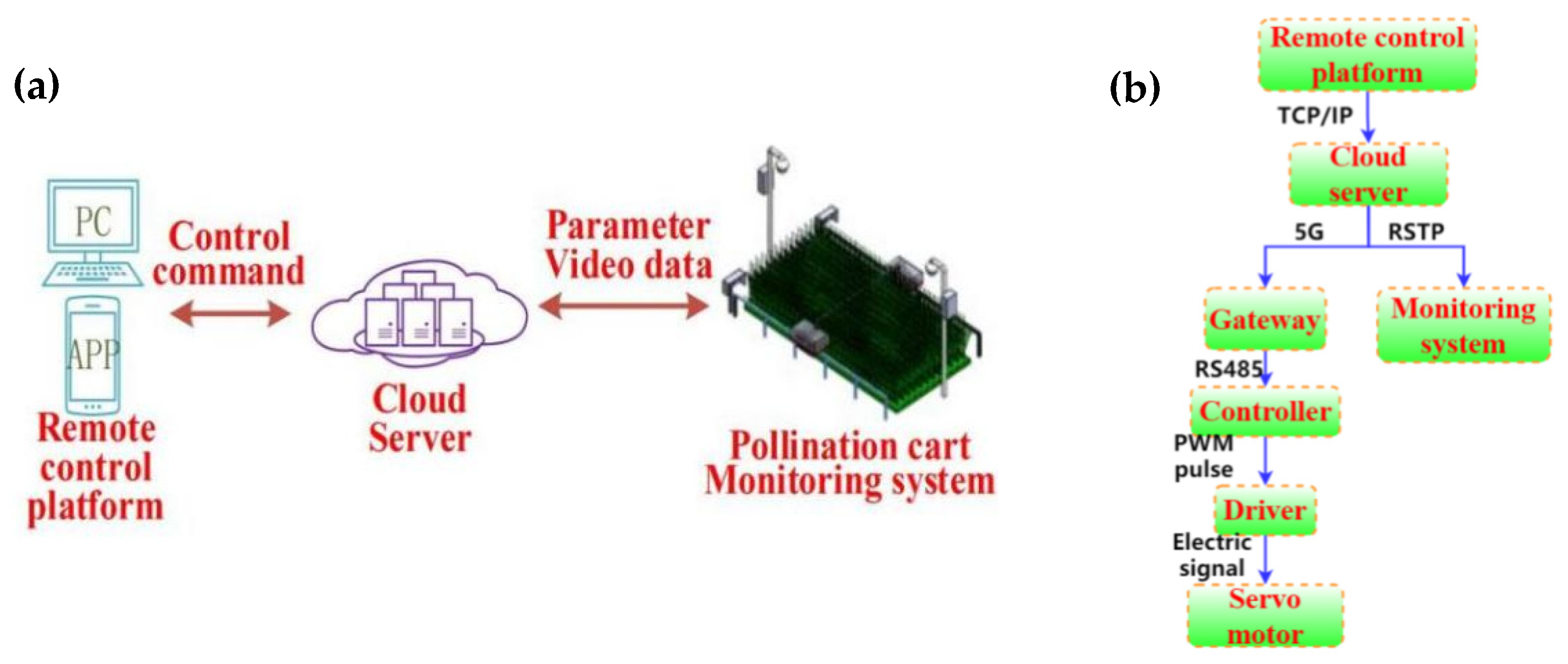
The pollen-driving trolley can be remotely controlled through a mobile app or a PC terminal, as shown in Figure 2a. The commands from the control terminal are transmitted to the cloud server via the TCP/IP protocol. The cloud server then synchronously transmits the 5G signal to the gateways of the two pollen-driving trolleys, and transfers the data commands to the controller via the RS485 protocol. The controller generates PWM pulse signals and sends them to the driver, as shown in Figure 2b, thereby controlling the operation of the servo motor to achieve the synchronous start–stop, worm-gear screw lift adjustment, and speed control of the two pollen-driving trolleys. Monitoring systems are installed on both sides of the paddy field. The cameras collect the field operation status of the pollen-driving trolleys, encapsulate the collected field image data through the RSTP streaming media protocol, and then transmit it to the cloud server. The server processes and forwards the video data, and transmits the video data to the remote control terminal through the RSTP streaming media protocol. The remote control terminal receives and decodes the video data. Through the monitoring system, the pollen-driving process can be monitored in real-time to ensure the effectiveness of the operation and the synchronization of the pollen-driving trolleys. The charging device on one side of the field can replenish the power of the pollen-driving trolleys. To determine the optimal working parameters of the pollen-driving system, based on kinematic and dynamic theories, bench-scale tests and simulation tests are carried out to analyze the pollen-driving working parameters, and field tests are conducted for verification. The aim is to obtain an optimal pollen-driving plan, providing a theoretical reference for the mechanized assisted pollination technology of hybrid rice.
Figure 2.
Remote control platform: (a) principles of system control, (b) signal transmission.
2. Analysis of Working Parameters
2.1. Analysis of Control Parameters of the Pollen-Driving Trolley
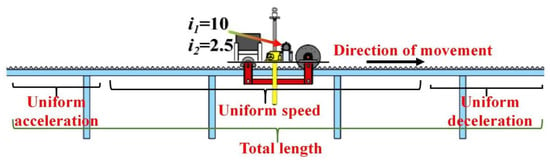
When the controller receives the control signal, it executes the driving program to control the pollen-driving trolley. The pollen-driving operation of the pollen-driving trolley will go through a uniformly accelerated stage, a constant-speed stage, and a uniformly decelerated stage. To ensure the synchronization of the pollen-driving trolley, as shown in Figure 3, it is necessary to accurately set the number of pulses in each stage of the movement. During the movement, the servo motor rotates one turn, and the driver receives 10,000 instruction pulses.
Figure 3.
Schematic diagram of the movement stage of the pollination cart.
2.2. Pollen-Driving Process Parameter Analysis
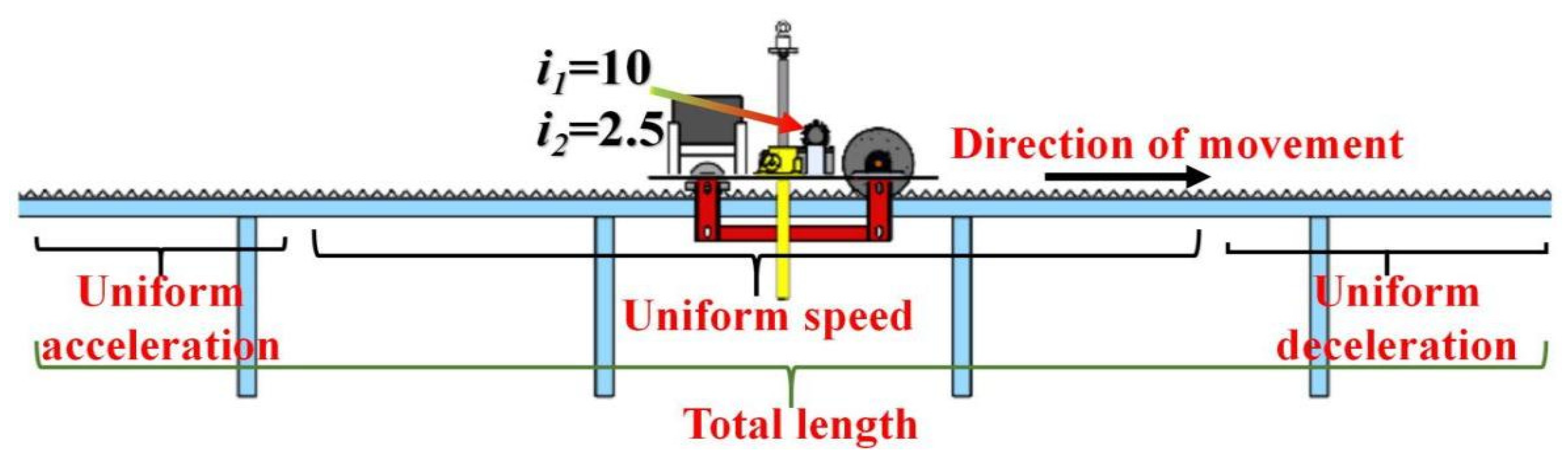
The rope is connected with the silk rod on the lifting mechanism on both sides of the pollen-driving trolley, the rope is driven by the pollen-driving trolley to contact the rice stems in the uniform speed stage, the stem swing speed increases from 0 to v, and the momentum of the rope is transformed into the impulse of the rice stems in Equation (1):
where ρl is the mass per unit length of the rope, kg/m; l is the length of the rope, m; v is the speed of the cart to catch the powder, m/s; F is the force between the rope and the rice stems, N; Fi is the force between the rope and a single rice stem, N; and t is the time of contact between the rope and the rice stems, s.
In the initial stage of the research, our main objective was to provide a practical theoretical reference for optimizing the basic parameters of the machine-pulled rope pollination equipment. Therefore, while ensuring the validity of the core momentum transfer logic, we simplified some complex variables through normalization. As a result, parameters such as contact duration, the number of rope segments in contact with the stem, rope tension, and rope sag degree were not included in the initial calculation framework. From Equation (1), it can be observed that the greater the speed of driving pollen, the shorter the contact time between the rope and the rice stems, and thus the greater the force exerted on the rice stems, the more likely to cause the rice stems to break. In order to clarify the relationship between the external force exerted on the rice stem and the bending state, a theoretical mechanical model was established as shown in Figure 4a. The rice plant is regarded as a homogeneous long thin rod with fixed end constraints, and the cross-section of the stem is a hollow circular cross-section. The stem will be bent and deformed by the transverse force of the rope, as shown in Figure 4b.
Figure 4.
Two different models of rice plants.
According to the force situation and boundary conditions of the rice stem, drawing the schematic diagram of the rice turning angle (Figure 4b) shows that the maximum turning angle occurs at the free end cross-section at x = h, and the value can be obtained as follows in Equation (2):
where h is the rope height, cm; E is the modulus of elasticity of the rice stem, Pa; and I is the moment of inertia of the cross-section of the rice stem, mm4. Substituting Equation (1) into Equation (2) yields Equation (3):
In summary, it can be concluded that the degree of bending of the rice stem due to the action of the rope (rice stem cross-section angle θ) is mainly related to the speed v of driving pollen and the height h of the rope. When θ is too large, then the rice stem will break.
3. Materials and Methods
3.1. Bench Test
The bench tests were carried out by applying the texture meter to analyze the test data to clarify the ability of rice stems to resist shear force and to ensure the accuracy of the simulation parameters of rice stems.
3.1.1. Test Materials
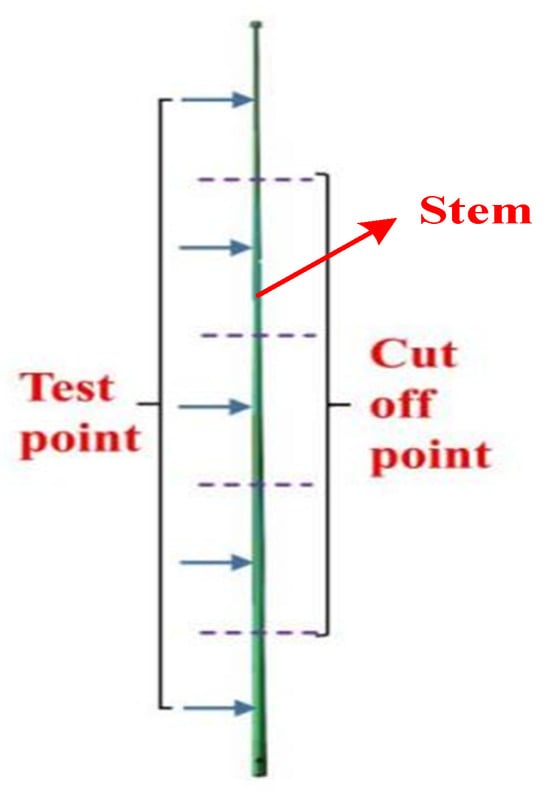
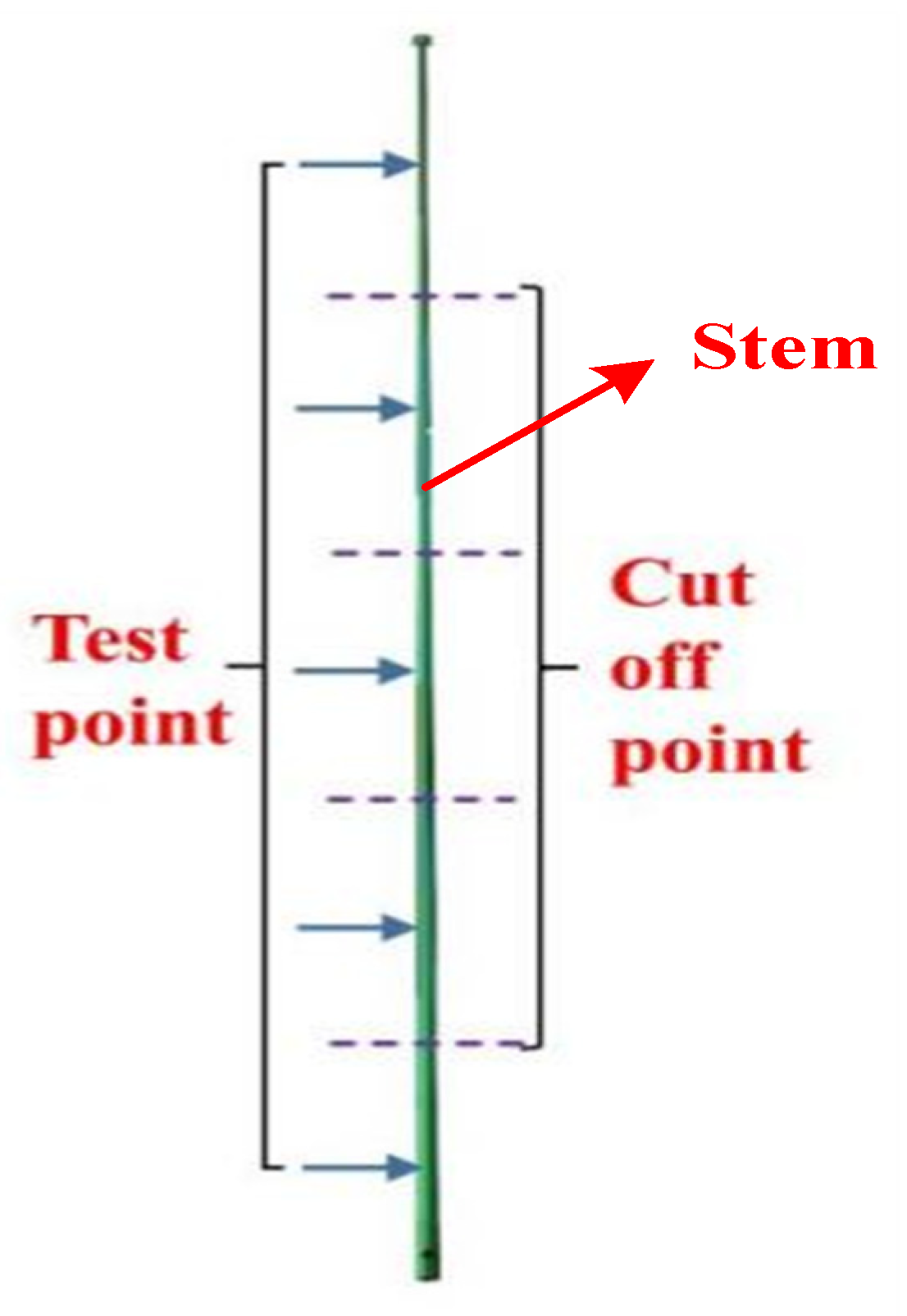
A TA.XTC-18-type texture instrument (Shanghai Baosheng Industrial Development Co., Ltd. Shanghai China) was used. A straight main stem of uniform thickness throughout the whole rice stem was selected as the test object, eliminating damage, cracking, peeling, moldy epidermis, or insect damage, and was cut into 5 equal parts as a test sample (Figure 5).
Figure 5.
Schematic diagram of rice stem equal division.
3.1.2. Test Principle
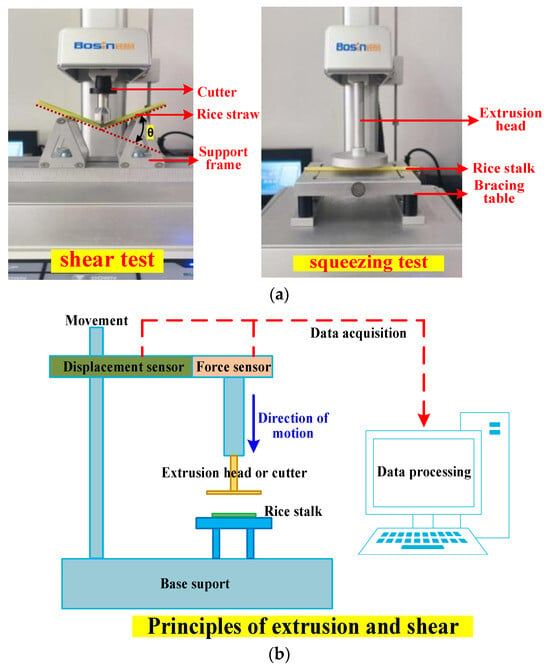
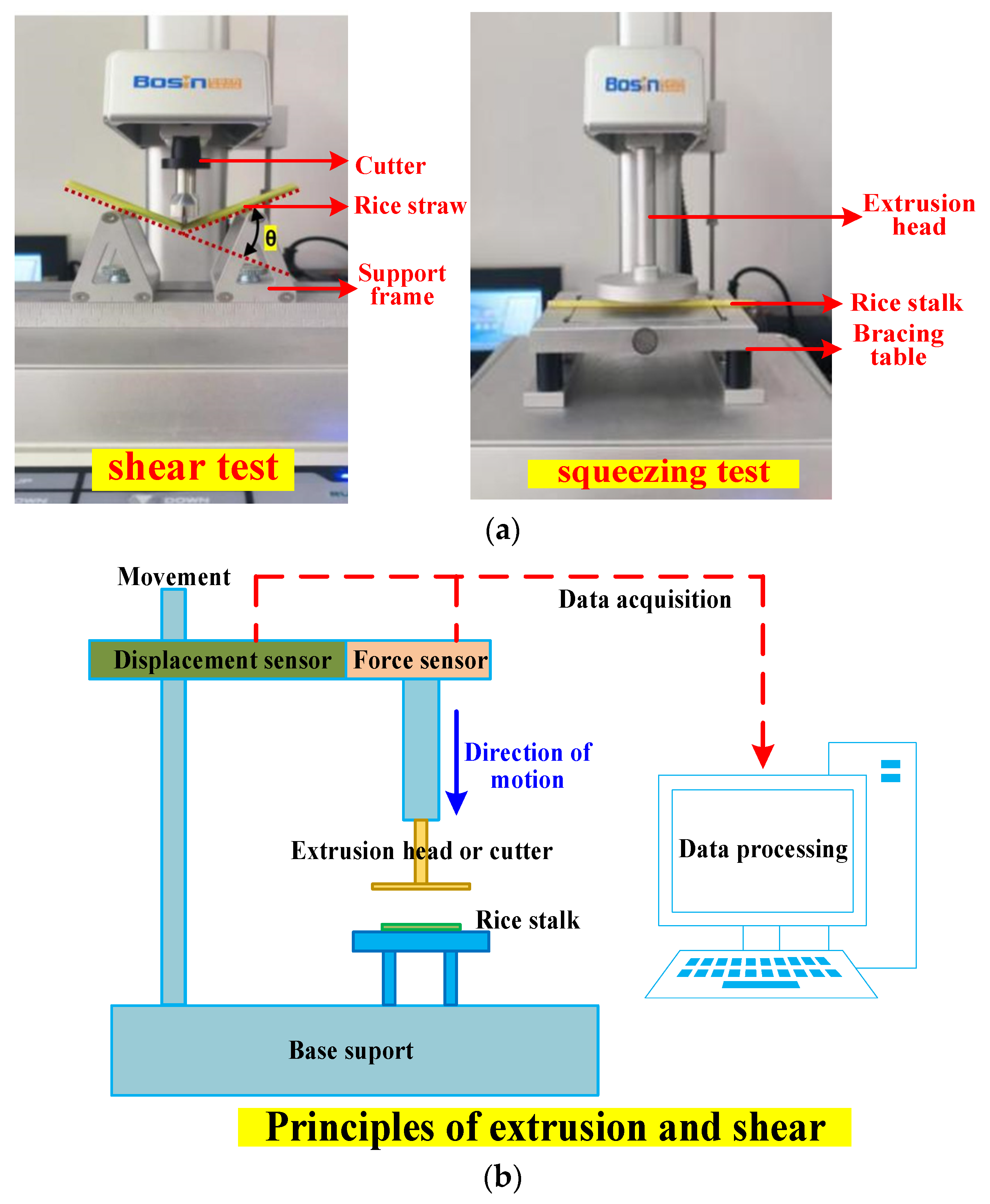
Shear and extrusion tests and their principle are as shown in Figure 6. For the shear test, according to the standard of GB/T 30364-2013 [30], the two ends of the stem samples were placed on the bracket, and the middle position of the stem was sheared using a cutter indenter (loading speed of 1 mm/s); the test was stopped when there was no obvious change in the measured shear force, and the test was repeated 10 times for each group of samples [35,36,37]. The straw samples were uniformly cut from the straight segments at the base of the mature plants without nodes, and were processed into 100 mm standard specimens. They belong to a tubular heterogeneous biological structure consisting of “outer dense fiber epidermis + middle thin-walled filling + internal hollow pith cavity”. Before the test, we carried out homogenization control on the samples: we selected samples with a cross-sectional area deviation of no more than 5%, and uniformly stabilized the wet bulk density at around 70%. All samples were subjected to shear tests at a loading speed of 1 mm/s within 24 h after sampling, and the coefficient of variation of each group of 10 repeated tests was controlled within 5%, ensuring the stability of the test data.
Figure 6.
(a) Diagrams of shear and squeezing tests; (b) principles of shear and squeezing tests.
For the extrusion test, the bottom-most stem sample of the rice was placed on a flat surface, and the middle position of the stem was extruded using a flat-plate indenter (loading speed of 2 mm/s); the loading was stopped when there was obvious deformation and a rupture sound, and the test was repeated 10 times for each group of samples.
3.2. Simulation Test
3.2.1. Test Method
According to the analysis of the external force borne by the rice stem and the change in the turning angle after bending, in order to get a reasonable combination of the speed of driving powder and the height of the rope, based on the experience of driving powder by hand (the speed is about 1 m/s, the height of the rope is about 80 cm), a two-factor, five-level quadratic orthogonal rotary combination test was carried out; the test factor level is shown in Table 3. We established a model of the rice stem in EDEM 2025 (SIEMENS, Munich, Germany), and obtained the turning angle of the deformed rice stem from the simulation test. By analyzing the influence of the speed and height of the rope on the rotary angle, the optimal parameters of the rice stems were obtained.
Table 3.
Experimental factor level table for pollination speed and pollination height.
3.2.2. Model Establishment
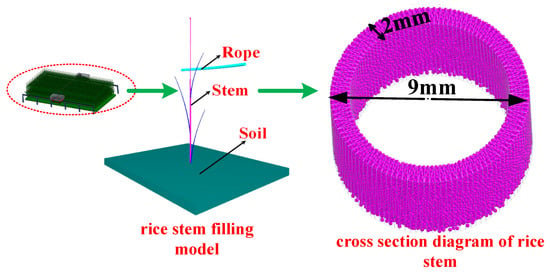
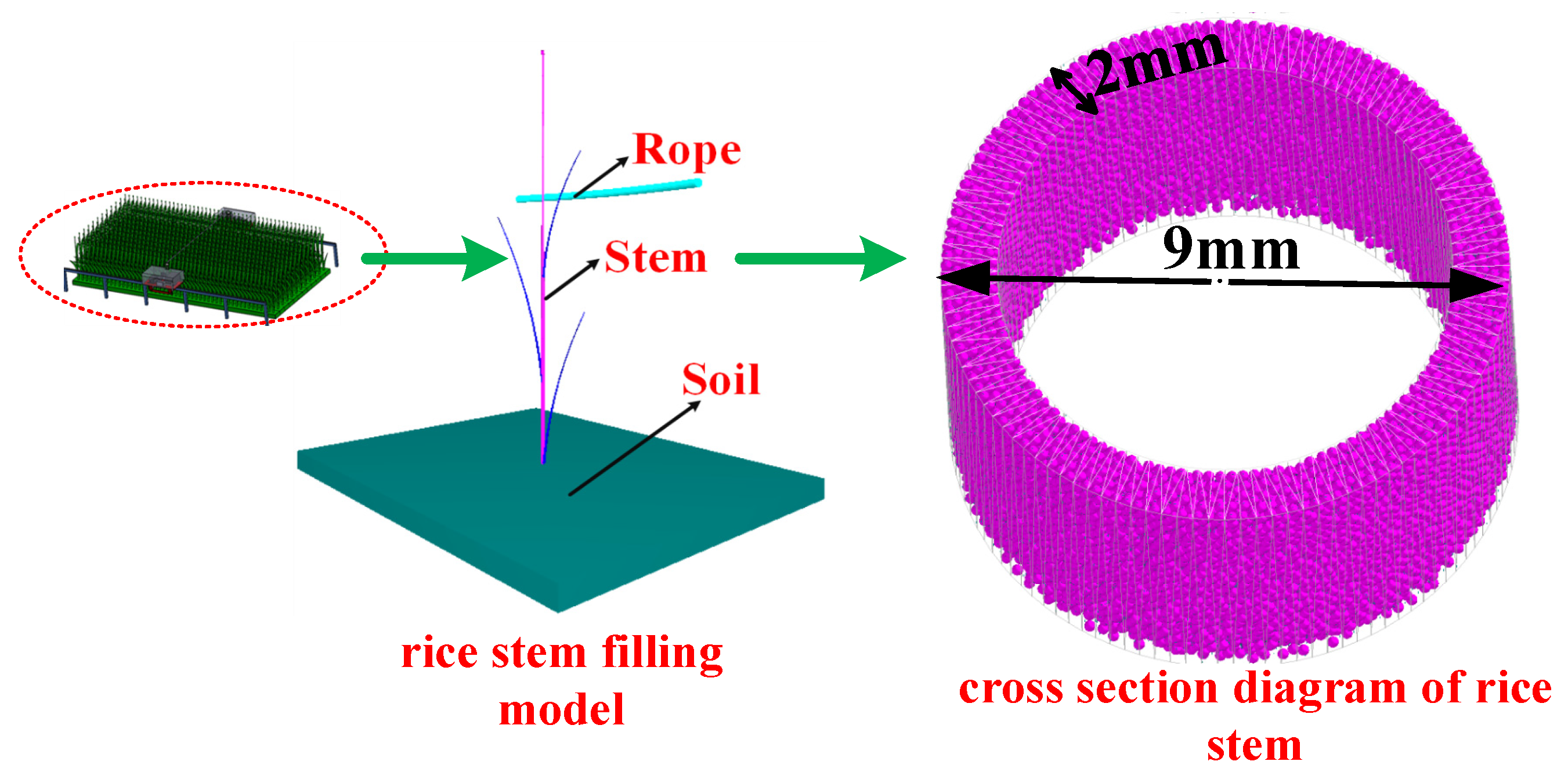
SolidWorks (2024 FD01) software was applied to establish a simplified model of rice stems, which was imported into EDEM 2018 and filled with spherical particles, and a bonding model was used for bond polymerization of the filled particles, as shown in Figure 7. The simulation parameters are shown in Table 4.
Figure 7.
A simplified model of rice stems established based on SolidWorks.
Table 4.
Simulation parameters of the rice stem.
4. Results and Discussion
4.1. Analysis of Bench Test Results
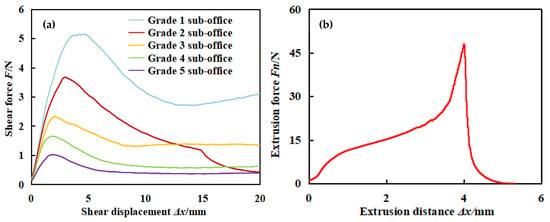
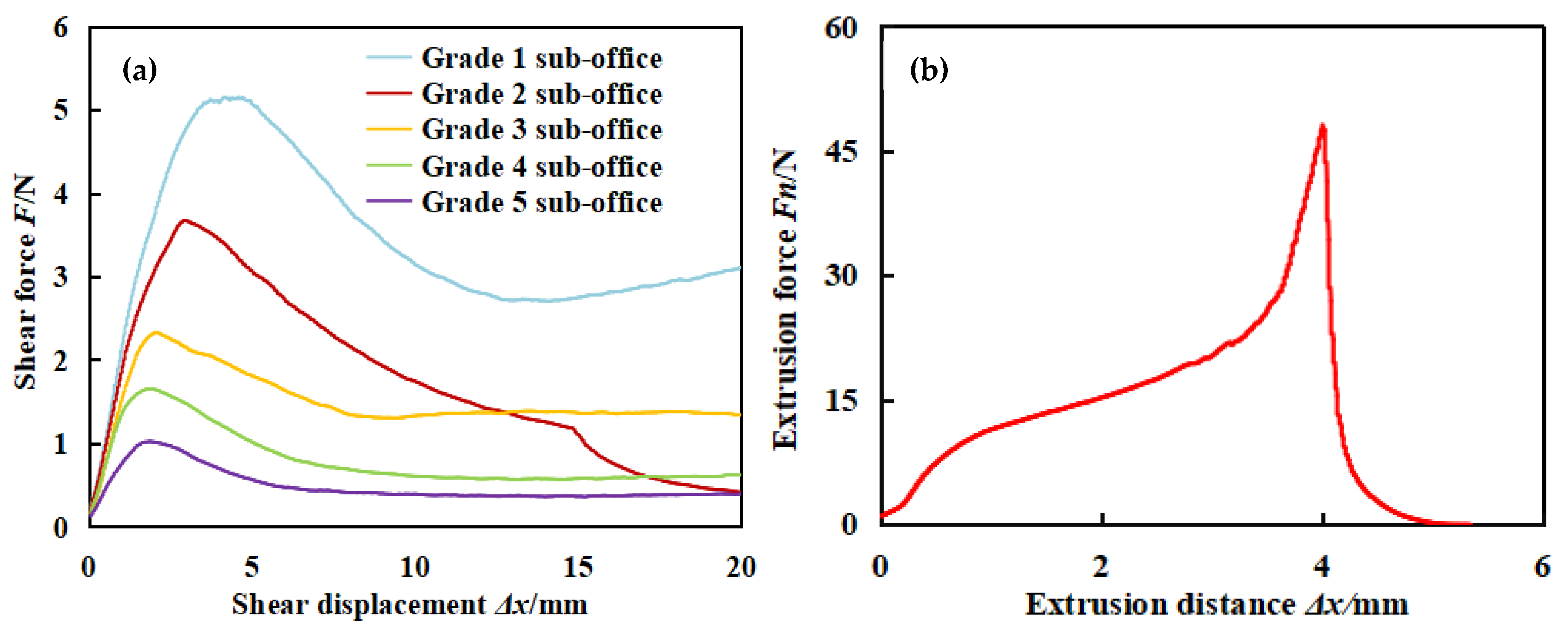
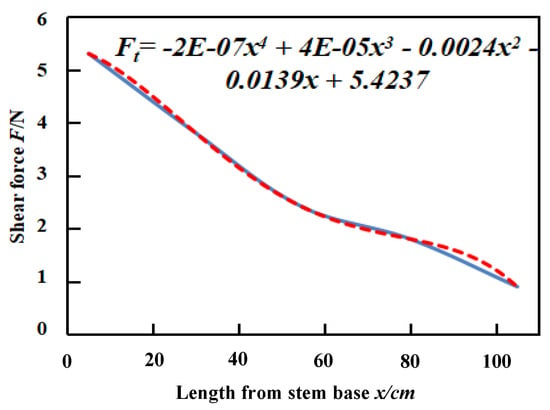
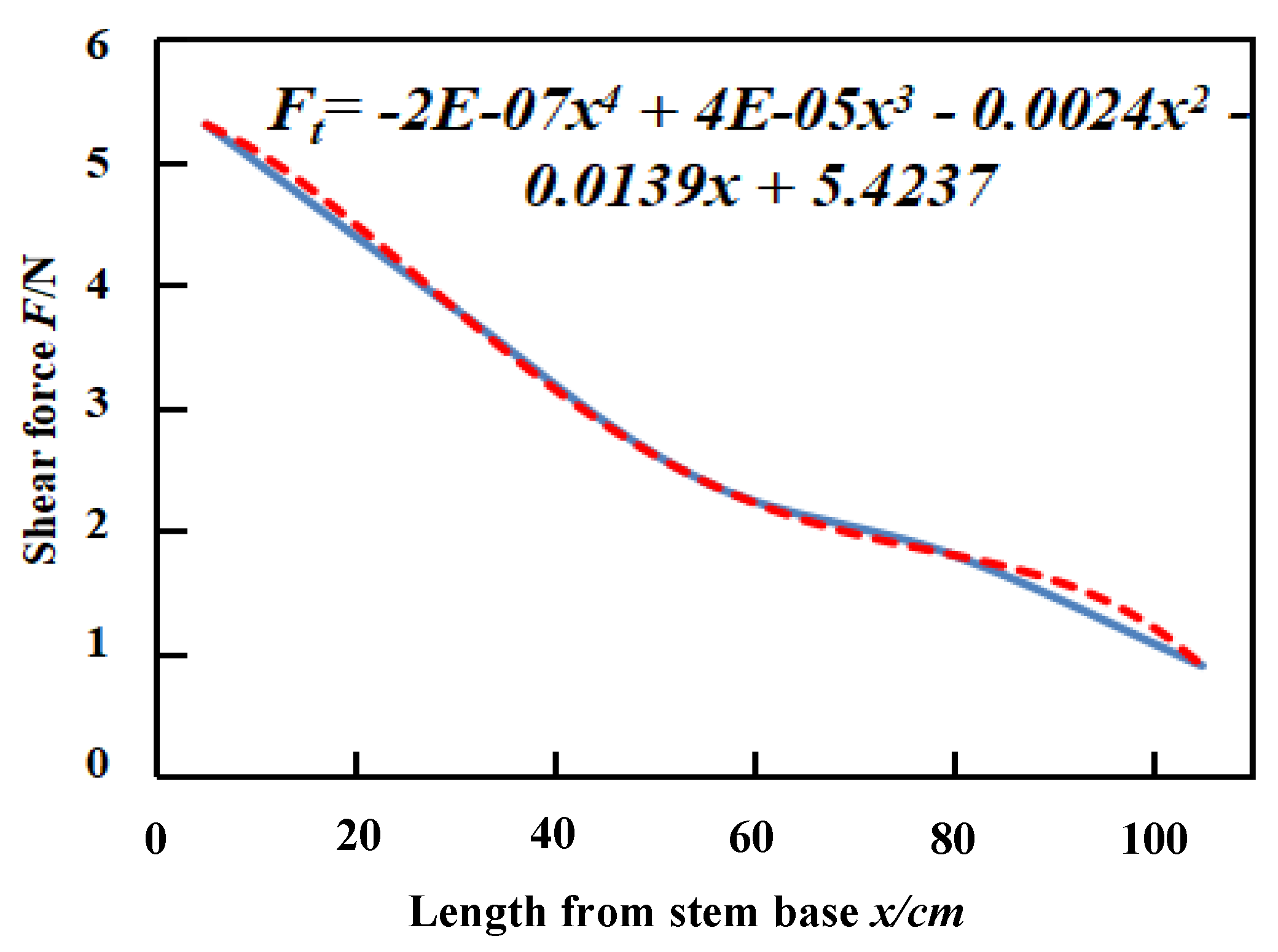
The “shear force–displacement” and “squeeze force–displacement” curves of rice stems measured in the shear and squeeze tests are shown in Figure 8, and when the shear force (squeeze force) reaches the maximum value, the rice stems start to break (rupture). The data between 0 and the maximum shear force (squeezing force) were taken as the test analysis data. From the shear test data and the measurement method of characteristic parameters of plant stems [38,39,40], the Poisson’s ratio, shear modulus, and modulus of elasticity of rice stems were calculated to be 0.47, 1.12 × 10⁶ Pa, and 3.6 × 10⁵ Pa, respectively. The obtained shear analysis of a single rice stem is shown in Figure 9, and the fitting Equation (4) is
Ft = −2 × 10−7x4 + 4 × 10−5x3 − 0.0024x2 − 0.0139x + 5.42
Figure 8.
Analysis of rice stem shear and squeezing tests: (a) shear force curves in different parts; (b) squeezing curve analysis.
Figure 9.
Shear force analysis of different parts of a single rice plant.
From the aforementioned extrusion and shear test data and references [41,42,43], the values of the bonding model parameters of rice stems were obtained. In the shear test, the maximum turning angle of the rice stem was about 47° when it was broken; the stem underwent a maximum shear force of 5.42 N. To achieve a better pollen-driving operation, the optimum pollen-driving speed and rope height required need to be further analyzed.
4.2. Analysis of Simulation Results
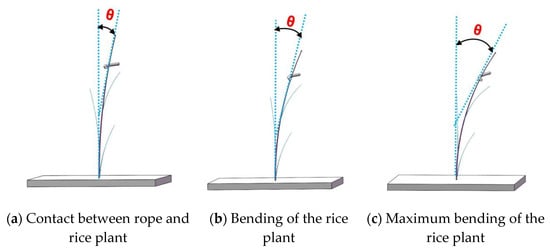
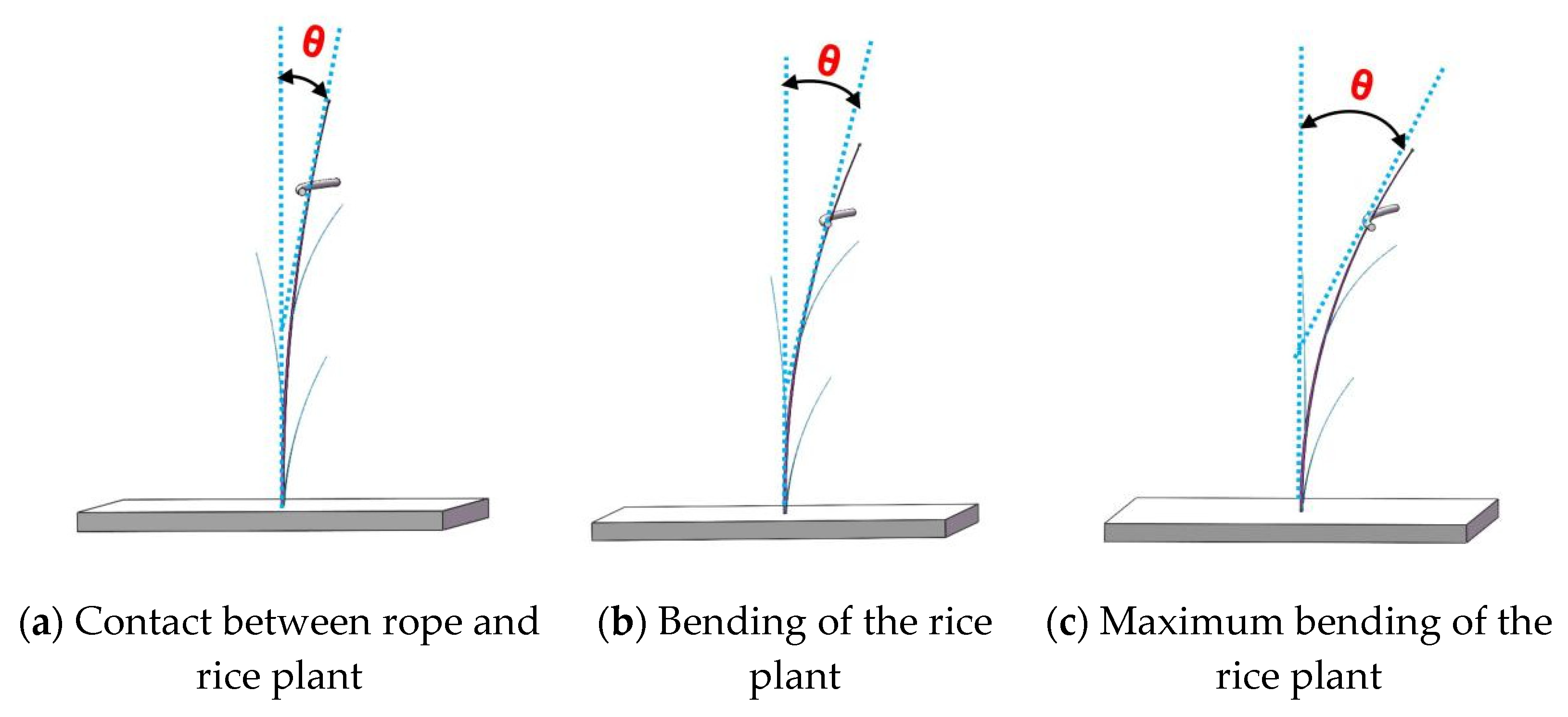
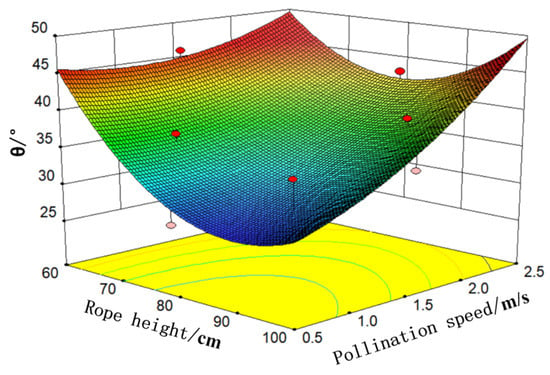
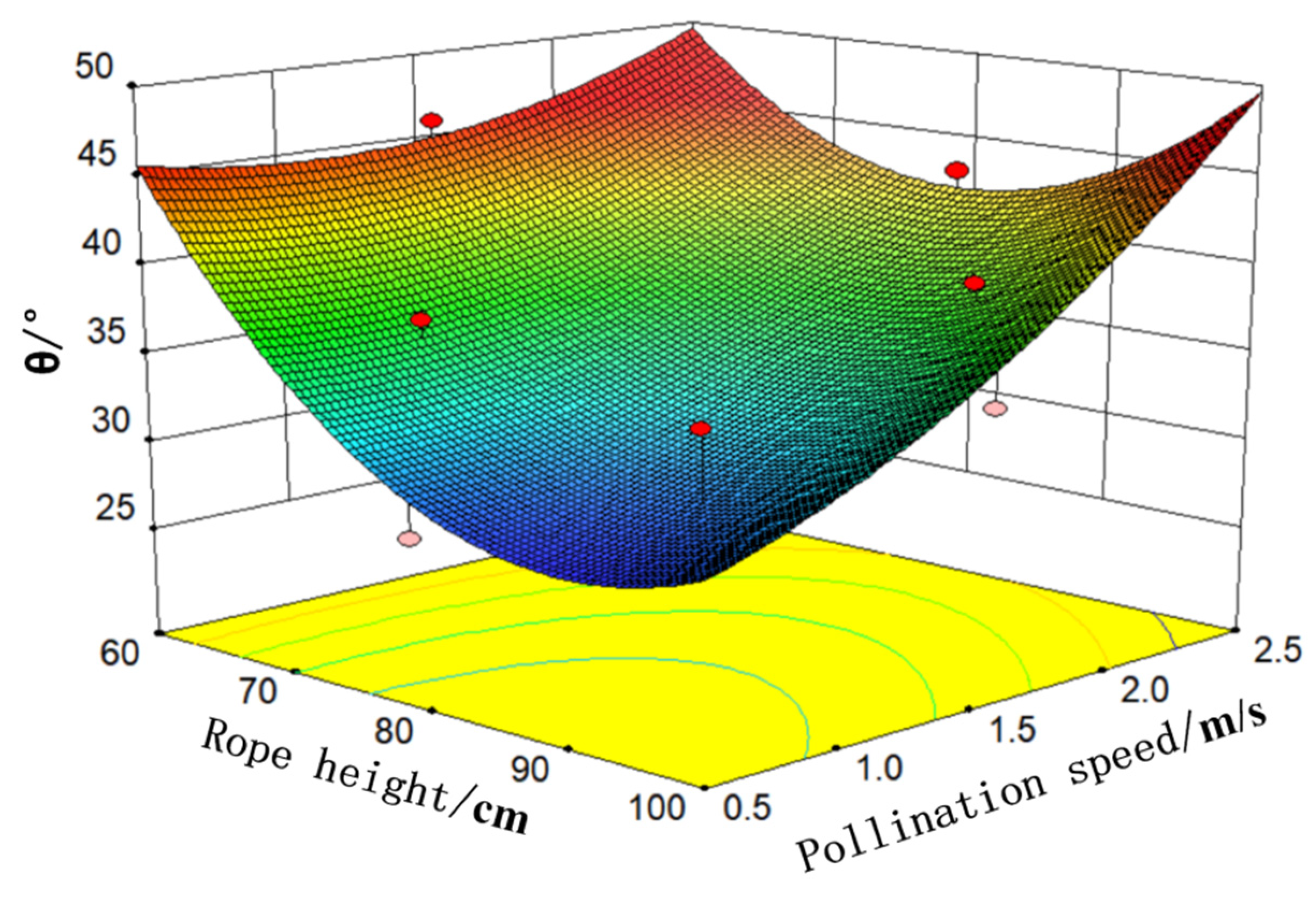
The results of the EDEM simulation test to obtain the rice bending change are shown in Figure 10; quadratic orthogonal rotational combination test results are shown in Table 5. With the help of Design-Expert 8.0.6 software, the response surface test results were subjected to a fitting analysis. A comparison of different mathematical model fitting effects showed that the quadratic full-model equations provided the best fit, with a model coefficient of determination R2 of 0.8798; ANOVA showed that the quadratic polynomial regression model P is 0.0004, as shown in Table 6, indicating that the regression model is reliable. The model response plot according to the coded value is shown in Figure 11; the corner fitting Equation (5) is
θ = 0.019h2 + 2.6v2 + 0.2vh − 3.54h − 17.81v + 191.93
Figure 10.
The bending process of rice during pollination.
Table 5.
Design and results of the quadratic orthogonal rotation combination experiment.
Table 6.
Variance analysis of rice stem bending angle.
Figure 11.
Response surface plot of regression model.
According to the experience of driving powder operation, to achieve the effect of driving powder, the turning angle of rice stems cannot be less than 30°, from which a reasonable turning angle range can be determined as θmin < θ < θmax. The combination of the turning angle range corresponding to the speed of driving powder and rope height parameters through the constraint-solving tool of Design-Expert software is shown in Table 7.
Table 7.
Parameter combinations of rope speed and pollination height.
In this work, all standard deviation calculations were performed using the sample standard deviation formula, with the denominator corrected by n − 1 to account for degrees of freedom. This calculation method provides an unbiased estimate of the true dispersion of the population and fully complies with the common academic standards in the field of discrete element simulation parameter calibration. Specifically, as shown in Equation (6),
where xi represents the measured value of the ith repeated experiment, x is the arithmetic mean of the repeated experiments, n is the number of effective repetitions for each group of experiments, and all the repeated numbers of the experiments are set to five to ensure the reliability of the statistical results.
This EDEM bonding parameter calibration for the stem particles of Jingtaiyou 534 hybrid rice adopted a closed-loop calibration system of “macroscopic physical benchmark test–microscopic parameter hierarchical iteration–multi-dimensional simulation verification”. The specific core process can be divided into four steps: (1) Benchmark measurement: Through five repeated direct shear, angle of repose, and bulk density tests, obtain the macroscopic mechanical benchmark values of the stem particles of Jingtaiyou 534 rice. (2) Initial parameters: Based on the Hertz–Mindlin with Bonding model, define the intrinsic properties of the material, and determine the initial range of values for the bonding stiffness and bonding radius. (3) Hierarchical iteration: First, calibrate the frictional non-bonding parameters to an error of less than 3% compared with the measured values, then use the direct shear strength as the benchmark target, and iteratively optimize the normal and tangential bonding critical stresses. (4) Verification and confirmation: Through single-particle tensile fracture tests for verification, the error between the simulation and the measured fracture tensile force is less than 5%, completing the parameter calibration.
4.3. Test Validation and Analysis
4.3.1. Test Methods
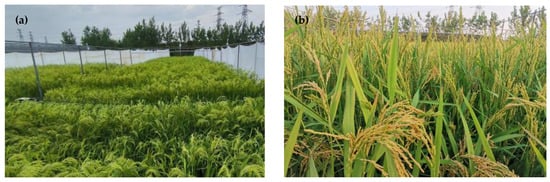
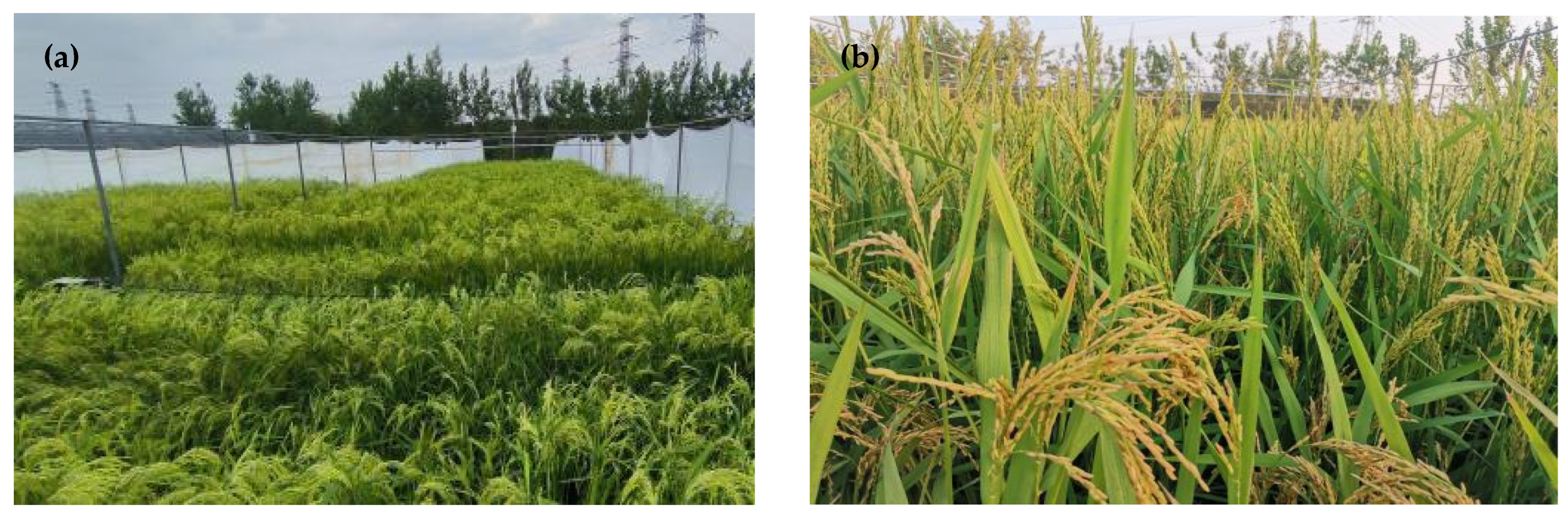
In order to verify the operational performance of the pollen-driving trolley and the operational parameters obtained from the simulation test, the pollen-driving device was installed in August, 2025, in the Modern Agricultural Science and Technology Demonstration Park of Huanggang City, Hubei Province, and a field test was conducted. The test field was 34 m long and 8.8 m wide, and the staggered planting widths of the hybrid rice parent and mother were 0.4 m and 1.5 m, respectively, with a height of about 120 cm. Some combinations of the parameters of the pollen-driving speed and the height of the rope were selected for the pollen-driving test, as shown in Figure 12a.
Figure 12.
(a) Field pollen-driving experiment; (b) growth status of rice after pollination (in the Modern Agricultural Science and Technology Demonstration Park of Huanggang City, Hubei Province).
4.3.2. Analysis of Results
In the field pollen-driving test, the angle of rice stems and the error value of its simulation test angle were measured (Table 8); substituting the operation parameters and the actual angle of rice stems into Equation (2), the maximum shear force was 4.5 N. It can be observed that the shear force generated by the force of the rope in the pollen-driving test was less than Ftmax. Through the optimization of the pollen-driving operation parameters, the phenomenon of rice breakage was reduced in the process of pollen-driving. And on September, 2025, the hybrid rice in the test field was judged by its growth, and the rice fruiting period reached the seed production expectation, as shown in Figure 12b. It is predicted as the pollination method using UAVs in the future [44].
Table 8.
Analysis of angle error.
4.4. Limitations
This study conducted experiments and simulation analyses on the operation parameters and contact mechanical characteristics of the small vehicle-type mechanical rope-pulling pollination device for hybrid rice variety Jingliangyou 534. Although the feasibility of the device’s basic operation was verified, several significant limitations still exist:
- (1)
- The current experiments only focused on the mechanical and motion characteristic tests during the pollination process, and did not cover field-tracking observations throughout the entire growth period. Long-term comparative data on final yields and maternal plant seed set rates under different pollination treatments were not obtained, making it impossible to directly establish a quantitative correlation between operation parameters and final seed production income.
- (2)
- This experiment only completed the verification of the basic operation effect of the device. We did not carry out statistical analysis of the uniformity of pollination in different regions of the field, calculation of the labor efficiency per unit area of the operation, comparison of the input costs of mechanical pollination and traditional manual rope-pulling pollination, or other multi-dimensional indicators’ systematic tests. There is still room for expansion in the engineering application support of the research conclusions.
- (3)
- Due to the limitations of the test period and field conditions, no large sample size of manual rope-pulling pollination control groups was set up. The direct comparison analysis of the device’s operation effect with the traditional mature manual pollination method still needs to be improved.
Subsequent research will focus on these deficiencies, conduct long-term field experiments throughout the entire growth period, supplement comparative tests of multiple dimensions of indicators, and further improve the application evaluation system of this mechanical pollination technology.
5. Conclusions
In this paper, a remotely controllable rope-tethered pollen-driving device was designed by mechanical auxiliary control, and the following conclusions were obtained after analyzing the working parameters of pollen-driving by carrying out shear and extrution tests, EDEM simulation, and verifying the field experiment tests:
- (1)
- Based on the theory of the pollen-driving process, the operating parameters of the pollen-driving trolley were analyzed. The results show that the degree of single bending angle of the rice stems due to the action of the rope is mainly related to the pollen-driving speed v and the rope height h.
- (2)
- The values of Poisson’s ratio, shear modulus, and modulus of elasticity parameters of rice stems were 0.47, 1.12 × 10⁶ Pa, and 3.6 × 10⁵ Pa, respectively. In the shear test, the fitting equation of the shear force of a single rice stem was obtained, and the test results showed that when the angle of turn of a rice stem after bending and deformation was 47°, the stem was subjected to a maximum shear force of 5.42 N.
- (3)
- The quadratic orthogonal rotation combination simulation test was carried out using the discrete element method (EDEM), and the optimal parameter combination of powder driving speed and rope height was determined. The angle error between the measured angle value and that obtained by the constraint solving tool of Design-Expert software was less than 5%.
- (4)
- In the field experiments, through the optimization of the pollen-driving operation parameters, the phenomenon of rice breakage was reduced in the process of pollen-driving.
Future research will mainly focus on the following aspects: exploring the shear mechanical properties of straw under various low-speed and high-speed loading conditions, and constructing a universal shear strength prediction model applicable to multiple common types of straw varieties. In addition, the future of pollination would be predicted for methods using UAVs.
Author Contributions
Conceptualization, funding acquisition, writing—original draft, Z.M.; methodology, formal analysis, validation, writing—original draft, J.Z.; investigation, data curation, project administration, writing—review and editing, supervision, resources, J.C.; data curation, formal analysis, Y.W. All authors have read and agreed to the published version of the manuscript.
Funding
This research received no external funding.
Data Availability Statement
The original contributions presented in the study are included in the article; further inquiries can be directed to the corresponding author.
Conflicts of Interest
The authors declare no conflicts of interest.
References
- Li, J.; Luo, X.; Zhou, K. Research and development of hybrid rice in China. Plant Breed. 2024, 143, 96–104. [Google Scholar]
- Chen, R.; Li, D.; Fu, J. Exploration of quality variation and stability of hybrid rice under multi-environments. Mol. Breed. 2024, 44, 4. [Google Scholar] [CrossRef] [Scilit] [PubMed]
- Zhou, Z.; Zhong, B.; Liu, A. Design of ducted-fan pollination machine based on high-clearance chassis for hybrid rice. Trans. Chin. Soc. Agric. Eng. (Trans. CSAE) 2019, 35, 1–8. [Google Scholar] [CrossRef] [Scilit]
- Li, M.; Luo, D.Q.; Jiang, X.H.; Zhou, W.J.; Ji, G.M.; Wang, X.H.; Li, S.X. Ecological adaptability of rice cultivars with different types under the low temperature and weak sunshine condition. J. Zhejiang Univ. Agric. Life Sci. 2016, 42, 47–52, (In Chinese with English abstract). [Google Scholar]
- Zhou, J.; Chen, J.; Wang, H.; Li, R.; Dadbakhsh, S.; He, L. High-temperature fatigue strength behavior of titanium alloys by laser powder bed additive manufacturing. Prog. Mater. Sci. 2027, 164, 101775. [Google Scholar] [CrossRef] [Scilit]
- Chen, J.; Chen, J.; Wang, H.; He, L.; Huang, B.; Dadbakhsh, S.; Bartolo, P. Fabrication and development of mechanical metamaterials via additive manufacturing for biomedical applications: A review. Int. J. Extrem. Manuf. 2025, 7, 012001. [Google Scholar]
- Win, A.; Tanaka, T.S.T.; Matsui, T. How panicle angle and panicle position in the canopy determine pollination and seed set in rice (Oryza sativa L.). Plant Prod. Sci. 2020, 23, 306–313. [Google Scholar] [CrossRef] [Scilit]
- Zhang, S.; Yu, B.; Xie, B. Influencing factors and countermeasures of high yield of hybrid rice seed production. Mod. Agric. Sci. Technol. 2010, 24, 88–89, (In Chinese with English abstract). [Google Scholar]
- Lu, Y.; Bai, Y.; Chao, G.; Zhao, K.; Xu, J.; Sun, M.; Zhang, H.; Niu, Y.; Li, K.; Xiong, Z.; et al. Human selection maintains karyotype integrity of highly unstable genomic cultivated autotetraploid potato (Solanum cucumeriforme) by mutation accumulation. Sci. Adv. 2025, 49, 10–12. [Google Scholar]
- Meng, Q.; Dong, M.; Zhang, Y.; Dong, B.; Song, Z.; Fu, Y.; Yang, Q. Hyperoside, a flavonoid, induces lnc187 and lnc999 to enhance pigeon pea pollen tube growth and seed production. Sci. Adv. 2025, 11, eadz3499. [Google Scholar] [CrossRef] [Scilit]
- Chen, Y.; Wu, H.; Li, R.; Jiang, S.; Zhou, S.; Cui, Z.; Tao, Y.; Zheng, X.; Zhang, Q.; Li, J.; et al. High-performance liquid metal electromagnetic actuator fabricated by femtosecond laser. Int. J. Extrem. Manuf. 2024, 6, 025503. [Google Scholar] [CrossRef] [Scilit]
- Chen, J.; Chen, J.; Yang, J.; Wu, Y. Selective laser sintering of acrylonitrile butadiene styrene polymer and post-processing enhancement: An experimental study. Iran. Polym. J. 2023, 32, 1537–1550. [Google Scholar] [CrossRef] [Scilit]
- Long, L.; Fang, P.; Lin, J.; Liu, M.; Chen, X.; Xiao, L.; Li, Y.; Zhou, Y. Field Schedule of UAV-Assisted Pollination for Hybrid Rice Based on CFD–DPM Coupled Simulation. Agriculture 2025, 151798, 14–15. [Google Scholar]
- Pang, S.M.; Wu, D.W.; Hanaor, D.A.H.; Haibel, A.; Kurreck, J.; Gurlo, A. Osteomimetic bioceramic scaffolds with high-fidelity human-bone features produced by rotational printing. Int. J. Extrem. Manuf. 2025, 7, 035005. [Google Scholar] [CrossRef] [Scilit]
- Huang, J.P. Probation on yield component and seed production technology of hybrid rice. Seed 2010, 29, 119–122, (In Chinese with English abstract). [Google Scholar]
- Tang, C.; Wang, H.; Li, M.; Li, Z.; Huang, Z.; Luo, H.; Jan, M.; Zhang, H. Study status and developmental strategies of mechanical pollination for hybrid rice breeding. Trans. Chin. Soc. Agric. Eng. (Trans. CSAE) 2012, 28, 1–7, (In Chinese with English abstract). [Google Scholar]
- Yuan, Z. Study on the basic principle and applied technology of hybrid rice seed production and pollination. Hunan Agric. Sci. 1992, 9, 23–25, (In Chinese with English abstract). [Google Scholar]
- Wu, S.; Liu, J.; Lei, X.; Zhao, S.; Lu, J.; Jiang, Y.; Xie, B.; Wang, M. Research Progress on Efficient Pollination Technology of Crops. Agronomy 2022, 12, 2872. [Google Scholar] [CrossRef] [Scilit]
- Qin, W.; Qiu, B.; Xue, X.; Chen, C.; Xu, Z.; Zhou, Q. Drop let deposition and control effect of insecticides sprayed with an unmanned aerial vehicle against plant hoppers. Crop Prot. 2016, 85, 79–88. [Google Scholar] [CrossRef] [Scilit]
- Xue, X.; Lan, Y.; Sun, Z.; Chang, C.; Hoffmann, W.C. Development an unmanned aerial vehicle based automatic aerial spraying system. Comput. Electron. Agric. 2016, 128, 58–66. [Google Scholar] [CrossRef] [Scilit]
- Chen, J.; Shi, Q.; Chen, J.; Liu, B.; Hu, M. Study on Polystyrene Powder Materials for Selective Laser Sintering. Iran. Polym. J. 2024, 33, 543–553. [Google Scholar] [CrossRef] [Scilit]
- Wang, X.; Zhou, Z.; Chen, B.; Deng, K.; Lin, J. Modeling the impact of multi-rotor UAV downwash on granular fertilizer distribution in precision agriculture. Sci. Direct Comput. Electron. Agric. 2026, 243, 111389. [Google Scholar] [CrossRef] [Scilit]
- Jiang, Q.; Wang, Y.; Chen, J.; Wang, J.; Wei, Z.; He, Z. Optimizing the working efficiency of a pollination machine for hybrid rice. Comput. Electron. Agric. 2021, 187, 106282. [Google Scholar] [CrossRef] [Scilit]
- Li, Z.; Chen, G.; Li, W.; Yang, H.; Guo, P.; Zhu, C.; Zhang, L.; Zhang, Y.; Yu, J.; Luo, X.; et al. Optimization of row-ratios in mechanized hybrid rice seed production: A study on pollen dispersal and seed-setting characteristics at two ecological sites. Front. Plant Sci. 2025, 16, 1704773. [Google Scholar] [CrossRef] [Scilit] [PubMed]
- Chen, C.L.; Croskey, W.J. Numerical simulation of helicopter multi-bladed rotor flow. AIAA J. 1988, 20, 198–202. [Google Scholar]
- Srinivasan, G.R.; Baeder, J.D. Flow field of lifting rotor in hover: A Navier Stokes simulation. AIAA J. 1992, 30, 2371–2378. [Google Scholar]
- Wake, B.E.; Baeder, J.D. Evaluation of a Navier Stokes analysis method for hover performance prediction. J. Am. Helicopter Soc. 1996, 41, 7–17. [Google Scholar] [CrossRef] [Scilit]
- Liu, A.; Zhang, H.; Liao, C.; Zhang, Q.; Xiao, C.; He, J.; Zhang, J.; He, Y.; Li, J.; Luo, X. Effects of supplementary pollination by single-rotor agricultural unmanned aerial vehicle in hybrid rice seed production. Agric. Eng. Agric. Mach. 2017, 18, 543–547. [Google Scholar]
- Yao, F.; Wang, Y. Research on kinematics of male parent panicle of hybrid rice affected by airflow. In Proceedings of the 2019 ASABE Annual International Meeting, Boston, UK, 7–10 July 2019. [Google Scholar]
- Weng, X.; Xu, J.; Zhao, J.; Huang, Y.; Bian, X.; Wang, J. Study on seed production and pollination of Indian-japonica hybrid rice assisted by multi-rotor UAV. J. Chin. Agric. Mech. 2022, 43, 24–29. [Google Scholar]
- Wang, Y.F.; Zhou, Z.Y.; Lin, Z.H.; Zhong, B.P.; Liu, A.M.; Luo, X.W.; Zhong, N.; Song, C.C. Design and experiments of panicle layer embedded pipeline-airflow auxiliary pollination machine for hybrid rice. Trans. Chin. Soc. Agric. Eng. (Trans. CSAE) 2021, 37, 1–8, (In Chinese with English abstract). [Google Scholar]
- Li, Z.Q.; Tang, C.Z.; Li, M.; Luo, H.F.; Wu, M.L.; He, J.Y.; Zhang, H.Q. Parameter optimization and validation experiment on jet pipe of pneumatic pollination. Trans. Chin. Soc. Agric. Eng. (Trans. CSAE) 2015, 31, 68–75, (In Chinese with English abstract). [Google Scholar]
- Wang, P.; Hu, L.; Zhou, Z.Y.; Yang, W.S.; Liu, A.M.; Luo, X.W.; Xue, X.Y.; He, J.; Yan, Y.A. Wind field measurement for supplementary pollination in hybrid rice breeding using unmanned gasoline engine single-rotor helicopter. Trans. Chin. Soc. Agric. Eng. (Trans. CSAE) 2013, 29, 54–61, (In Chinese with English abstract). [Google Scholar]
- Li, J.Y.; Zhou, Z.Y.; Hu, L.; Zang, Y.; Yan, M.L.; Liu, A.M.; Luo, X.W.; Zhang, T.M. Optimization of operation parameters for supplementary pollination in hybrid rice breeding using uniaxial single-rotor electric unmanned helicopter. Trans. Chin. Soc. Agric. Eng. (Trans. CSAE) 2014, 30, 10–17, (In Chinese with English abstract). [Google Scholar]
- Tang, Z.; Liang, Y.; Wang, M.; Zhang, H.; Wang, X. Effect of mechanical properties of rice stem and its fiber on the strength of straw rope. Ind. Crops Prod. 2022, 180, 114729. [Google Scholar] [CrossRef] [Scilit]
- Zhou, D.; Chen, J.; She, J.; Tong, J.; Chen, Y. Temporal dynamics of shearing force of rice stem. Biomass Bioenergy 2012, 47, 109–114. [Google Scholar] [CrossRef] [Scilit]
- Zareiforoush, H.; Mohtasebi, S.S.; Tavakoli, H.; Alizadeh, M.R. Effect of loading rate on mechanical properties of rice (Oryza sativa L.). Straw. Aust. J. Crop Sci. 2010, 4, 190–195. [Google Scholar]
- Khan, M.R.; Chen, Y.; Laguë, C.; Landry, H.; Peng, Q.; Zhong, W. Compressive properties of Hemp (Cannabis sativa L.). Stems. Bio-Syst. Eng. 2010, 106, 315–323. [Google Scholar] [CrossRef] [Scilit]
- Gong, W.; Kim, J.; Kim, C.; Chang, H.; Ahn, Y.; Schaffer, D.V.; Baek, J. Hydrogel fabrication techniques for advanced artificial sensory systems. Int. J. Extrem. Manuf. 2025, 7, 062002. [Google Scholar] [CrossRef] [Scilit]
- Shu, C.X.; Yang, J.; Wan, X.Y.; Yuan, J.C.; Liao, Y.T.; Liao, Q.X. Calibration and experiment of the discrete element simulation parameters of rape threshing mixture in combine harvester. Trans. Chin. Soc. Agric. Eng. (Trans. CSAE) 2022, 38, 34–43. [Google Scholar]
- Wang, H.Y.; Gao, F.Y.; Shi, Y.; Wang, K.; Wei, X.B.; Ma, C.Y.; Wen, X.W.; Chen, X.L.; Li, J.B. Sparse-view irradiation processing volumetric additive manufacturing. Int. J. Extrem. Manuf. 2025, 7, 065001. [Google Scholar] [CrossRef] [Scilit]
- Bae, M.; Kim, J.J.; Jang, J.; Cho, D.-W. 3D bioprinted unidirectional neural network and its application for alcoholic neurodegeneration. Int. J. Extrem. Manuf. 2025, 7, 055003. [Google Scholar] [CrossRef] [Scilit]
- Potyondy, D.O.; Cundall, P.A. A bonded-particle model for rock. Int. J. Rock Mech. Min. Sci. 2004, 41, 1329–1364. [Google Scholar] [CrossRef] [Scilit]
- Zhang, W.; Song, F.; Sun, J. A review of strategic enhancement of pollination with smart agriculture to counteract the decline of natural pollinators. Biosyst. Eng. 2026, 261, 104344. [Google Scholar] [CrossRef] [Scilit]

Disclaimer/Publisher’s Note: The statements, opinions and data contained in all publications are solely those of the individual author(s) and contributor(s) and not of MDPI and/or the editor(s). MDPI and/or the editor(s) disclaim responsibility for any injury to people or property resulting from any ideas, methods, instructions or products referred to in the content. |
© 2026 by the authors. Licensee MDPI, Basel, Switzerland. This article is an open access article distributed under the terms and conditions of the Creative Commons Attribution (CC BY) license.