


Abstract
Autonomous unmanned aerial vehicles (UAVs) must decide when to trust onboard perception, when to request edge support, and when to avoid acting under poor visual or communication conditions. This study develops a risk-aware edge-assisted UAV perception framework that combines calibrated visual confidence with next-window service-level agreement (SLA) feasibility. The local branch uses MobileNetV3-Small for fast onboard color recognition, while the edge branch uses ResNet-18 for stronger remote inference. Low-confidence samples are offloaded only when the SLA predictor estimates that the wireless link is feasible; otherwise, the system enters fallback, meaning that the current prediction is not treated as immediately actionable. The evaluation follows a hard cross-illumination split: indoor and fluorescent light samples are used for training and validation, and indoor night and sunlight samples are reserved for testing. Under this setting, the local model achieves 76.89% accuracy and 73.25% macro-F1, while the edge model achieves 81.26% accuracy and 77.58% macro-F1. The SLA predictor, trained on enhanced telemetry features while preserving the original target label, achieves 85.74% accuracy, 85.57% macro-F1, 0.9420 ROC-AUC, and 0.9585 PR-AUC on temporally held-out records. The joint policy achieves 93.23% coverage and 79.90% success over active decisions, using local inference for 82.76% of the samples, edge offloading for 10.47%, and fallback for 6.77%. These results indicate that the framework is best understood as a tunable risk management layer for UAV perception rather than a pure accuracy maximization classifier. It avoids blind offloading and reduces forced decisions when both visual confidence and communication feasibility are weak.
1. Introduction
Unmanned aerial vehicles (UAVs) are now used as mobile sensing platforms in inspection, monitoring, precision agriculture, emergency response, and surveillance. In these settings, a UAV must often make a perception decision with limited onboard computation, limited energy, and an unstable wireless link [1,2]. A simple design is to run all inference onboard. Another design is to send difficult samples to an edge server. Both designs are incomplete when they are used alone. Onboard inference can be fast but can fail under lighting shift and visual ambiguity. Edge inference can be more accurate, but it is useful only when the communication link can satisfy the required service conditions.
This paper studies this coupled problem through a confidence- and service-level agreement (SLA)-gated UAV perception framework. The visual side addresses color-based recognition under illumination shifts. Color is useful for low-cost aerial tasks such as marker recognition, landing cues, warning signs, and simple target identification, but it is also sensitive to changes in light, shadow, exposure, and background [3,4,5]. The communication side addresses whether an uncertain sample should be offloaded to the edge. For a UAV, offloading is not simply a question of whether an edge model exists; it depends on whether the wireless link is likely to support a timely and reliable return decision [6,7].
A second motivation is uncertainty-aware decision-making. Deep classifiers may produce high-confidence outputs even when they are wrong or shifted away from their training distribution [8,9]. Selective prediction responds to this problem by allowing a model to abstain when confidence is low [10]. However, a UAV connected to edge infrastructure has an additional option: if the local model is uncertain, the system may request edge support. This option is safe only when the communication state is also feasible. Therefore, perception confidence and communication feasibility should be considered together.
The main contribution of this study is a joint routing policy that links local visual confidence with next-window SLA feasibility. The policy accepts high-confidence onboard predictions, offloads low-confidence samples only when the SLA predictor indicates feasible communication, and uses a fallback state when both the visual and communication conditions are unfavorable. The fallback state means that the current prediction is not treated as immediately actionable. Depending on the mission, it may trigger a hover, a re-capture attempt, delayed action, or human/edge-level review.
This study is designed around five methodological choices that make the framework transparent and testable. First, SLA feasibility is treated as a next-window communication decision rather than a vague network-quality flag. Second, fallback is defined as a non-actionable state in which the current prediction is withheld from immediate mission use. Third, the telemetry representation includes temporal, change rate, client profile, risk-level, and network scenario features while preserving the original target label. Fourth, the experiments include model capacity comparison, feature group ablation, scenario/risk stress testing, and uncertainty score comparison. Fifth, the edge baseline is separated into standalone visual performance and communication-constrained offloading performance, which distinguishes model accuracy from operational offloading reliability.
The contributions are summarized as follows:
- We propose a lightweight risk-aware UAV perception policy that jointly uses visual confidence and SLA feasibility to route samples among local inference, edge inference, and fallback.
- We define SLA feasibility as a next-window communication decision and evaluate it with an enhanced telemetry representation that includes temporal history, change rate features, client-level profiles, network scenarios, and SLA risk levels.
- We evaluate visual perception under a hard cross-illumination split rather than an easy random split, using indoor and fluorescent light samples for training/validation and indoor night and sunlight samples for testing.
- We provide SLA model capacity comparison and feature group ablation, showing which telemetry features contribute most to next-window SLA prediction.
- We evaluate the full policy with coverage, success over all samples, success over active decisions, local/offload/fallback route shares, and scenario-level stress tables.
2. Related Work
2.1. UAV Vision Under Real-World Constraints
Vision is central to UAV autonomy because it supports inspection, landing, tracking, navigation, and target recognition. Recent original studies show that deep learning has become a dominant tool for UAV perception and that aerial platforms operate under strict computation, latency, payload, and energy constraints [11]. These constraints make lightweight models attractive, but lightweight models can be brittle when the scene changes.
Illumination is one of the most common sources of visual shift. In color-based perception, a change in light can alter the apparent distribution of object pixels even when the object itself does not change [3]. Prior work on illuminant estimation and color constancy also shows that scene content, exposure, and light source variation can strongly affect recognition [4]. In UAV tasks such as landing, marker reading, or color-coded target recognition, this problem is operationally important rather than cosmetic. A wrong color decision can lead to a wrong route, missed marker, or unsafe action.
Recent UAV and drone perception studies have also emphasized practical deployment constraints. Lightweight and low-power object detectors have been evaluated for real-time drone monitoring under resource limits [12], and low-cost UAV remote-sensing detection has been studied in transportation scenarios where inference speed and platform cost matter [13]. These studies support the need for perception systems that consider accuracy, runtime feasibility, and deployment constraints together.
Recent work also shows how broad the UAV perception problem has become. Studies on UAV target understanding, sensing reliability, active perception, visual language reasoning, and trajectory-aware autonomy describe aerial systems as mobile agents that must perceive while moving through changing scenes and constraints [14,15,16,17,18,19]. Other studies on UAV vision, lightweight recognition, and task-specific aerial perception further show that deployment quality depends not only on the backbone model but also on the operating domain, illumination, sensor limits, and mission context [20,21,22,23,24]. These findings support a focus on route-level reliability rather than image classification alone.
2.2. UAV Communication, Edge Computing, and Offloading
Edge computing can help UAVs run stronger inference models than their onboard hardware can support. However, offloading is useful only if the communication link is feasible at the time of the decision. Original studies on UAV-assisted mobile edge computing show that offloading depends on mobility, channel quality, energy, latency, and resource allocation [7,25,26]. Recent multi-agent and communication-aware offloading studies make the same point: computation offloading is a multi-factor decision, not a simple send or do not send action [27,28].
Wireless network intelligence and UAV offloading studies have also examined resource allocation, service-aware scheduling, federated or distributed learning, and adaptive optimization under changing channel conditions [23,29,30,31,32,33,34]. These studies motivate the use of measurable telemetry rather than a fixed assumption that edge connectivity is always available. They also show why SLA prediction should be evaluated with temporal splits and feature ablation, because the same model may behave differently under different load, latency, and channel regimes.
Experimental work on 5G-enabled UAV offloading shows that network degradation can reduce the benefit of remote processing, especially when latency or throughput requirements are not met [6]. For perception-driven UAV systems, this means that a low-confidence image should not be offloaded blindly. Edge assistance is useful only when the link is predicted to support the required service condition.
2.3. Uncertainty and Selective Prediction
Uncertainty estimation is an important part of safe machine learning. Maximum softmax confidence is a simple and widely used baseline for detecting errors and out-of-distribution examples [8]. Stronger uncertainty methods such as Monte Carlo dropout and deep ensembles can provide richer uncertainty estimates, although they may add runtime or memory cost [35,36]. Calibration studies further show that confidence scores must be checked and corrected before they are used as operational decision signals [9].
In autonomous and safety-sensitive recognition, uncertainty is also linked to robustness under environmental shifts and to the decision regarding whether a prediction should be acted upon, delayed, or routed elsewhere [37]. This matters for UAVs because a low-confidence sample is not only a statistical event; it can become an operational decision that affects motion, sensing, communication, and safety.
Selective prediction converts uncertainty into an action rule. A selective classifier accepts predictions only when its confidence is high enough and abstains otherwise [10]. This idea is well-matched to UAVs because forcing a decision on weak evidence can be unsafe. Still, selective prediction alone does not answer the networking question: if the UAV abstains locally, should it offload the sample to the edge? The present paper addresses this gap by coupling local confidence with communication-side SLA feasibility.
2.4. Research Gap
Existing UAV perception papers often focus on visual accuracy. Existing UAV offloading papers often focus on latency, resource allocation, or energy. Selective prediction papers focus on confidence and abstention. What remains less developed is a sample-level UAV policy that asks two questions at the same time: is the visual prediction confident enough to use locally, and if not, is the communication state strong enough to justify edge inference? This work addresses that gap with a confidence- and SLA-gated decision framework.
3. Materials and Methods
3.1. System Overview
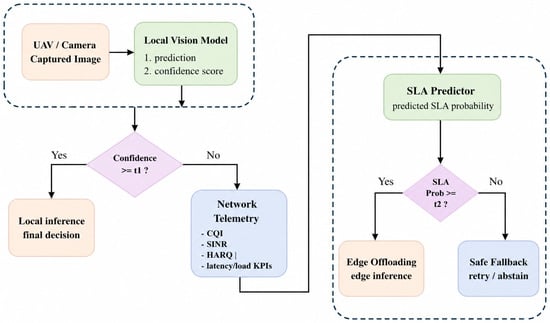
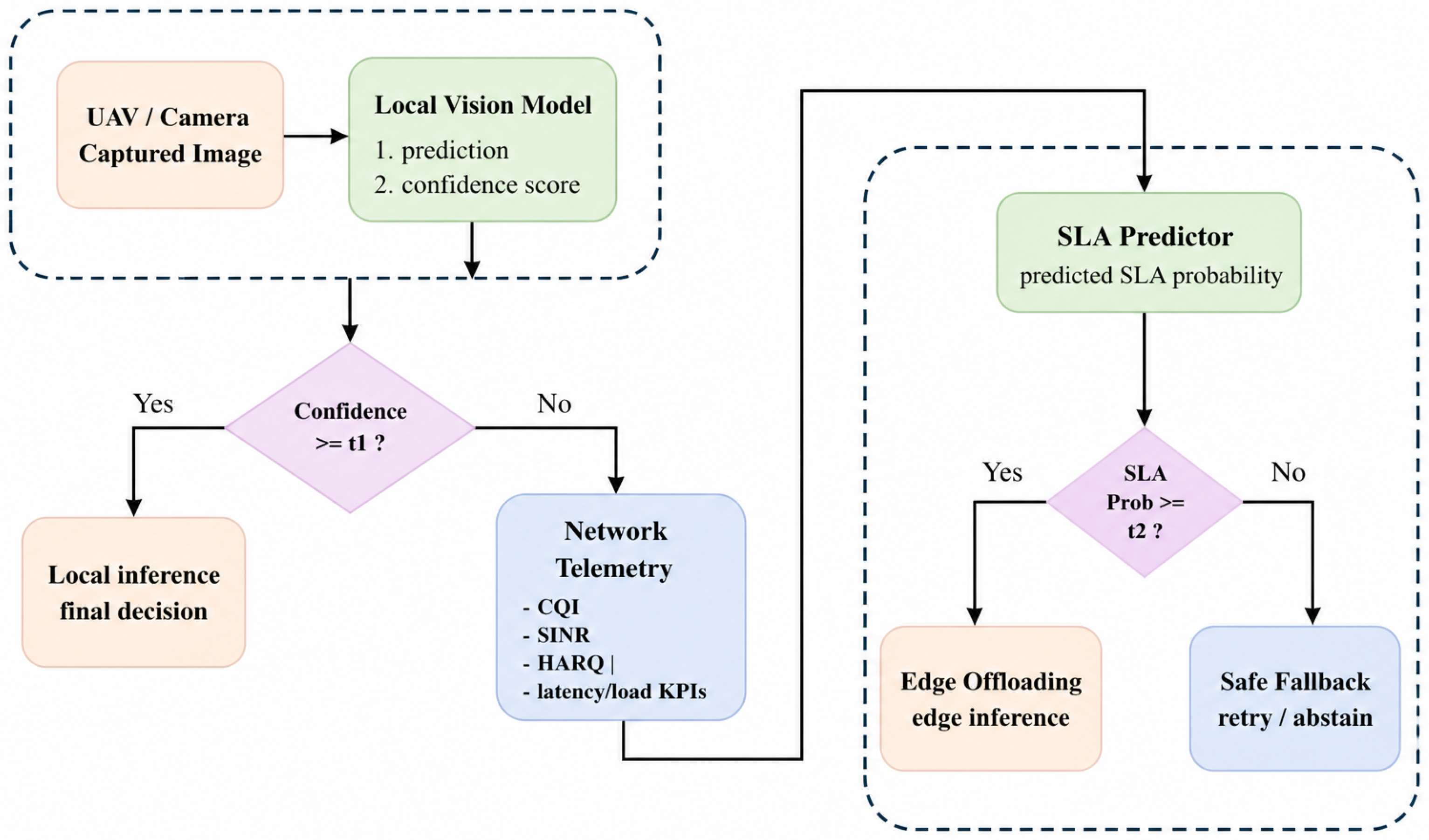
Figure 1 shows the proposed risk-aware UAV decision pipeline. A captured frame is first processed by a lightweight local model. If the calibrated local confidence is above a threshold, the UAV accepts the onboard decision. If the local confidence is low, the system checks whether the communication state is likely to satisfy the next-window SLA requirement. If the SLA probability is high enough, the sample is routed to the edge model. If both local confidence and SLA feasibility are weak, the system enters fallback.
Figure 1.
Overview of the proposed confidence- and SLA-gated UAV perception framework. The policy accepts high-confidence local predictions, offloads uncertain samples only when the next-window SLA is feasible, and uses fallback when both perception and communication conditions are unfavorable.
The experiments were implemented in Python 3.11 using PyTorch 2.6.0, torchvision 0.21.0, scikit-learn 1.6.1, NumPy 1.26.4, pandas 2.2.3, and Matplotlib 3.10.0. GPU-based training used CUDA 12.4 on the Kaggle cloud computing environment with an NVIDIA Tesla T4 GPU (NVIDIA Corporation, Santa Clara, CA, USA). No chemicals, reagents, biological samples, animals, or custom physical instruments were used; the experiments were based only on public datasets and open-source software.
3.2. Vision Dataset and Cross-Illumination Protocol
The perception branch uses the public Different Colors in Challenging Lightening v2 dataset [38]. It contains nine color classes: Black, Blue, Gray, Orange, Pink, Purple, Skyblue, White, and Yellow. The images are organized under four illumination conditions: fluorescent light, indoor, indoor night, and sunlight. To avoid an overly easy independent and identically distributed evaluation, this study used a hard cross-illumination split. Indoor and fluorescent light samples were used for training and validation, while indoor night and sunlight samples were held out for testing. The final split contained 5060 training images, 1266 validation images, and 5759 test images.
3.3. Vision Models and Confidence Calibration
The local model is MobileNetV3-Small, selected to represent a lightweight onboard inference model. The edge model is ResNet-18, selected to represent a stronger remote model that can be used when offloading is feasible. Both models use ImageNet initialization and were fine-tuned for the nine color classes. The training pipeline uses class-balanced sampling, color jitter, random crop, random rotation, autocontrast, blur, and random erasing to improve robustness under illumination shift.
After training, temperature scaling was fitted on the validation set and applied before test inference. The main confidence score was the calibrated maximum softmax probability. The analysis also included error detection performance for three uncertainty indicators: inverse maximum softmax confidence, normalized entropy, and inverse margin confidence.
3.4. SLA Dataset and Label Interpretation
The communication branch uses the public Wireless 6G Network Dataset of Resource Allocation [39]. The original target variable, sla_ok_next, was kept unchanged. In this study, it was interpreted as a next-window SLA feasibility label. A value of 1 means that the next telemetry window is suitable for edge offloading under the service conditions represented in the telemetry record. A value of 0 means that the next window is not suitable for reliable offloading.
The telemetry representation preserves the original target label while adding information needed for ablation and stress testing. The dataset used in this study contains 30,000 records from 200 clients, 147 columns, no missing values, and a positive target rate of 56.87%. In addition to the original radio and network indicators, it includes rolling temporal statistics, change rate features, client-level profiles, a network scenario label, an SLA risk label, and an SLA quality proxy. These features make the SLA task suitable for ablation and stress testing while preserving the original next-window feasibility target.
The SLA predictor was evaluated with a temporal per-client split. For each client, earlier windows are used for training, middle windows for validation, and later windows for testing. This avoids random leakage across time and better matches the prediction problem: use current and recent telemetry to estimate whether the next window can support offloading.
3.5. SLA Model Capacity and Feature Ablation Experiments
The experiment compared four SLA model capacities: logistic regression, random forest, histogram gradient boosting, and a multilayer perceptron. The purpose was not to select the most complex model but to test whether the enhanced telemetry features provide stable predictive information across model families.
Feature group ablation was also performed. The groups included delay-only, throughput-only, signal-only, reliability-only, load-only, handover-only, slice-only, temporal rolling/delta features, client profile features, base raw features, full features without sla_ok_current, and full features with sla_ok_current. This directly tested whether the SLA predictor depends only on the current SLA state or whether the telemetry features themselves carry useful information.
3.6. Joint Policy
Let c be the calibrated local confidence, and let be the predicted probability that the next communication window is SLA-feasible. The policy is defined as
where is the confidence threshold, and is the SLA threshold.
Fallback is not counted as a correct classification. It represents a safety route in which the UAV does not pass the current prediction to the action layer. In a real mission, fallback could trigger hovering, re-capturing the frame, slowing down, delaying a decision, or escalating the sample. In the present experiment, fallback was measured through coverage and route distribution rather than physical delay or energy cost.
3.7. Policy Baselines and Scenario-Aligned Evaluation
The policy was compared with six baselines. Local-only accepts every local MobileNetV3-Small prediction. Edge standalone reports the visual accuracy of ResNet-18 without communication constraints. Edge-only communication-constrained attempts to offload every sample and counts success only when the edge prediction is correct and the SLA label is feasible. Confidence-only uses local confidence and fallback but never offloads. SLA-only uses the SLA gate and edge model but ignores local confidence. Oracle upper bound uses ground truth route correctness and SLA feasibility; it is not deployable and is included only to show the best possible route selection under the available signals.
The vision and telemetry datasets are independent, not synchronized UAV flight traces. Therefore, the joint evaluation is described as a controlled scenario-aligned modular stress test. The pairing process creates combinations of visual difficulty and network feasibility, such as hard-vision/good-SLA and hard-vision/poor-SLA, to test whether the policy makes meaningful local, offload, and fallback decisions. This design does not replace synchronized flight validation, and the limitation is stated explicitly in the Discussion.
4. Results
4.1. Vision Performance Under Hard Illumination Shift
Table 1 reports the perception results on the held-out indoor night and sunlight test set. The edge-side ResNet-18 is the stronger standalone visual model, but it should not be confused with the operational edge-only baseline, which is affected by communication feasibility.
Table 1.
Vision model performance under the hard cross-illumination test split.
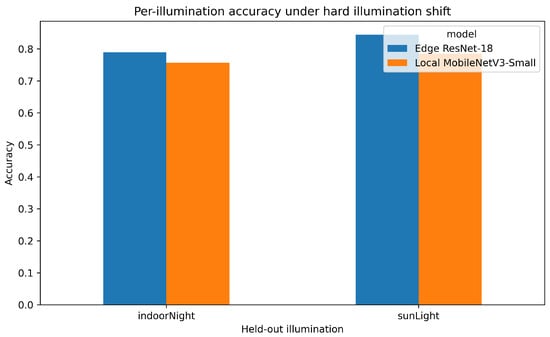
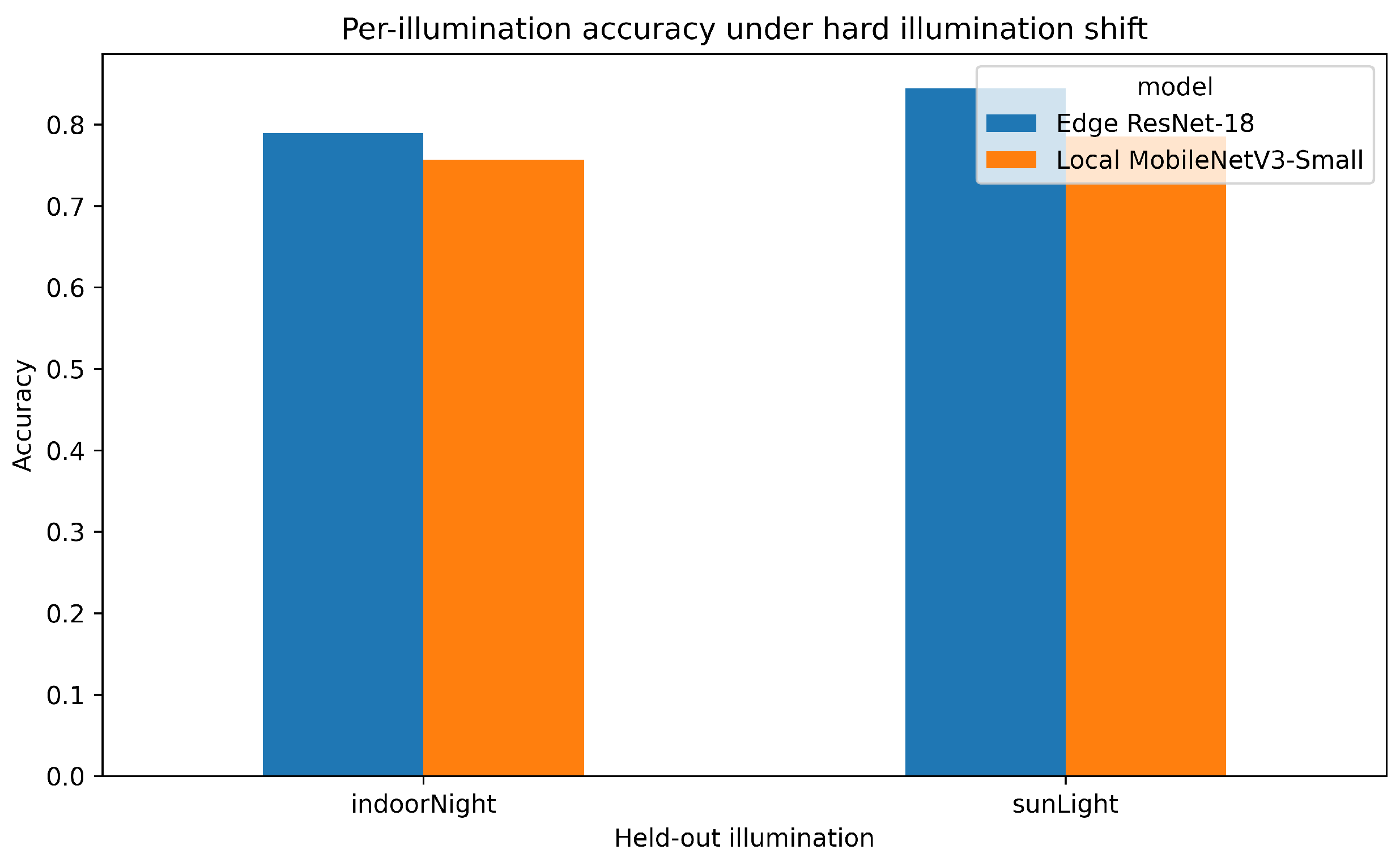
Figure 2 shows the per-illumination accuracy. This view is important because the test set contained illumination conditions that were not used for training.
Figure 2.
Per-illumination accuracy under the hard cross-illumination test protocol.
4.2. SLA Model Capacity Comparison
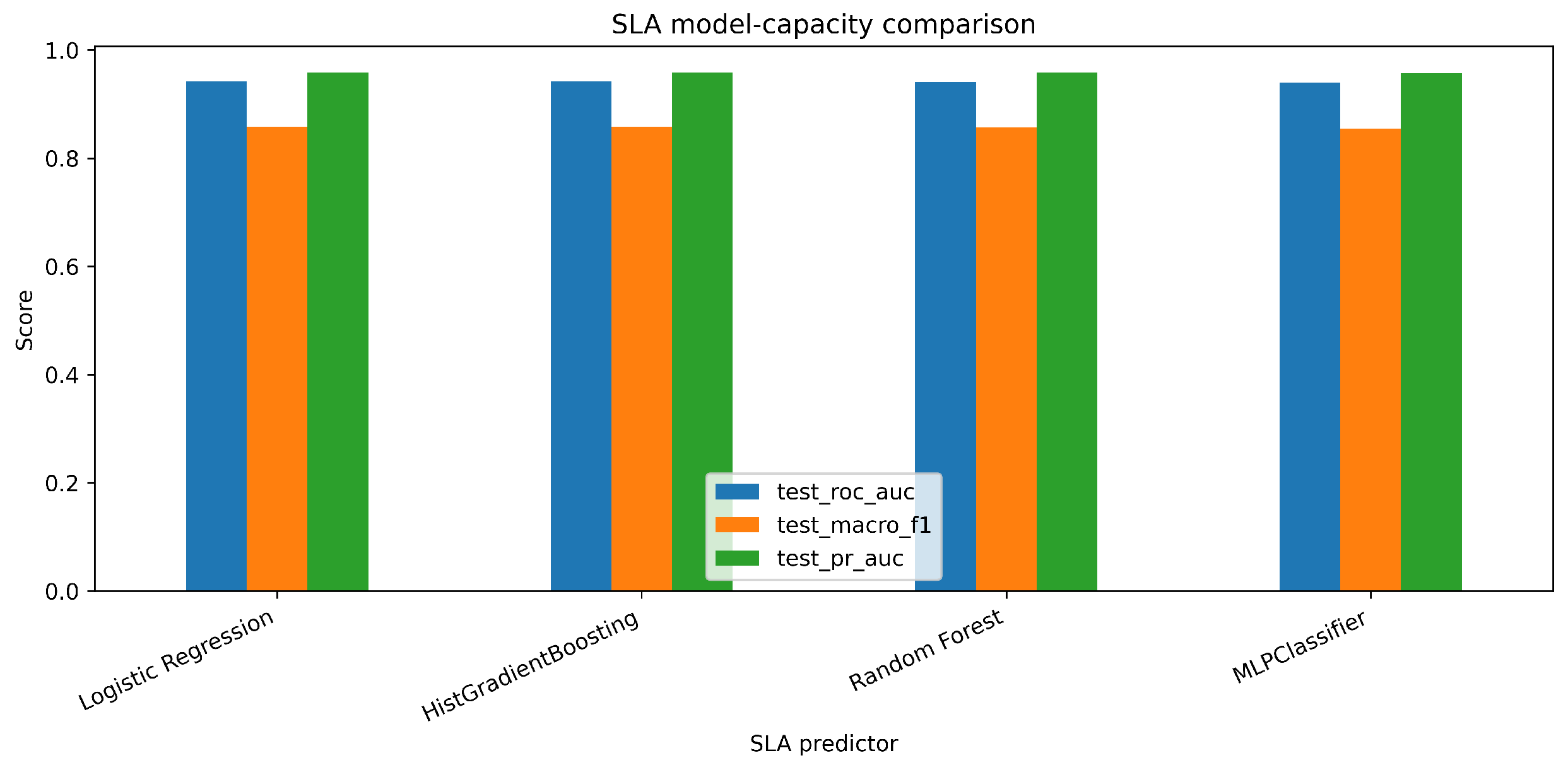
Table 2 reports the SLA model capacity comparison. Logistic regression gives the strongest validation ROC-AUC and a strong test ROC-AUC of 0.9420. The close performance of the four models suggests that the enhanced telemetry features contain a stable signal for next-window SLA feasibility and that strong performance does not depend on an unnecessarily complex predictor.
Table 2.
SLA model capacity comparison using the enhanced telemetry features without sla_ok_current.
At the selected operating threshold of 0.52, the logistic-regression SLA predictor achieved 0.8574 accuracy, 0.8557 macro-F1, 0.9420 ROC-AUC, and 0.9585 PR-AUC on the temporally held-out test windows. Figure 3 visualizes this comparison and shows that the four model families provide close predictive performance.
Figure 3.
SLA model capacity comparison across four model families.
4.3. SLA Feature Group Ablation
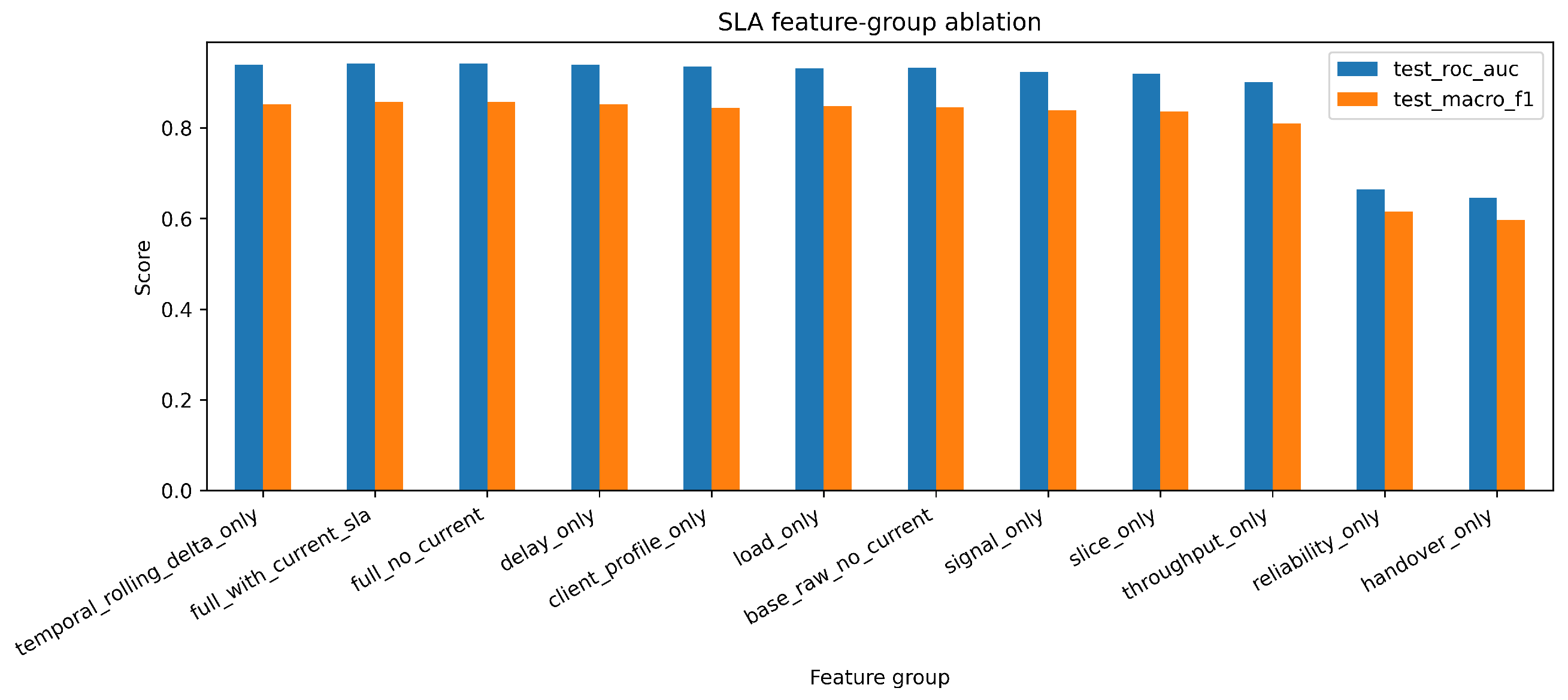
Table 3 summarizes the main feature group ablation results. Full features without sla_ok_current and full features with sla_ok_current produce nearly identical test performance. This is important because it shows that the SLA predictor is not merely copying the previous SLA state. Temporal rolling/delta features and delay-only features are also strong, confirming that recent network dynamics and latency behavior are key predictors of next-window feasibility.
Table 3.
SLA feature group ablation on the temporally held-out test set.
Figure 4 summarizes the same ablation visually and highlights the strong contribution of temporal history and delay-related telemetry features.
Figure 4.
SLA feature group ablation. Delay and temporal history features provide much of the predictive signal, while reliability-only and handover-only groups are weak when used alone.
4.4. Uncertainty Score Comparison
Table 4 reports the error detection ability of three uncertainty scores for the local model. Inverse maximum softmax confidence performs slightly better than inverse margin and normalized entropy in this run. The differences are modest, which supports the practical decision to use calibrated confidence as a lightweight routing signal while recognizing that it is imperfect.
Table 4.
Uncertainty score comparison for detecting local model errors.
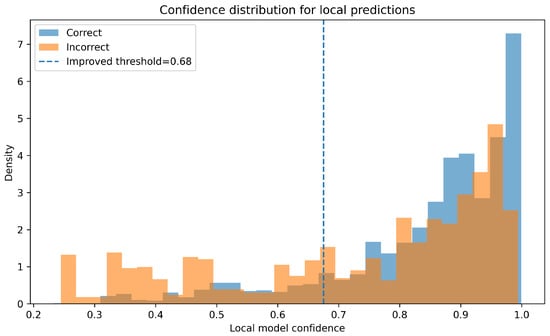
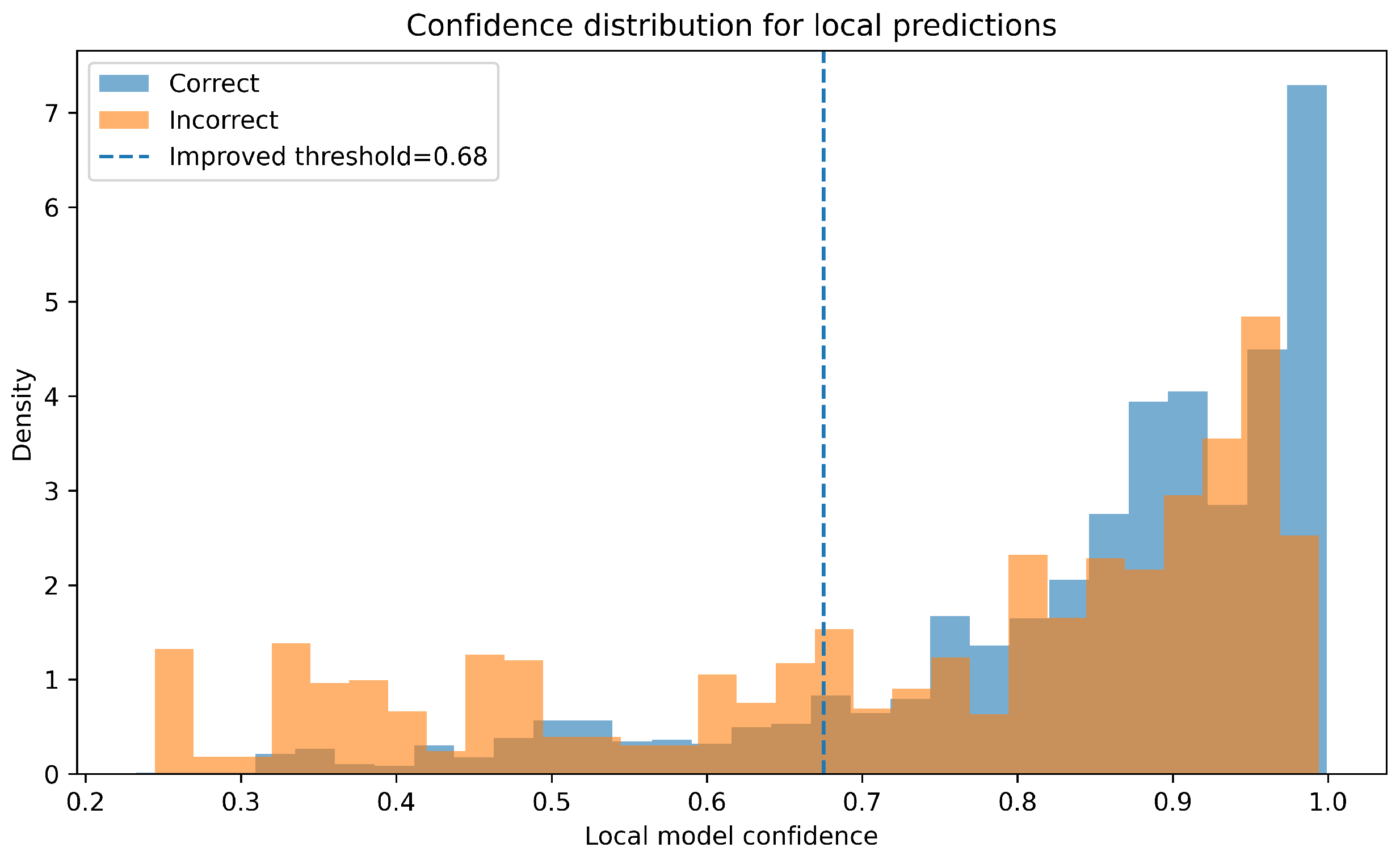
Figure 5 shows the confidence distribution for correct and incorrect local predictions. The separation is useful for routing, but it is not perfect. This supports the need for fallback and communication-aware assistance rather than blind confidence acceptance.
Figure 5.
Local confidence distribution for correct and incorrect predictions under held-out illumination conditions.
4.5. Joint Policy Results
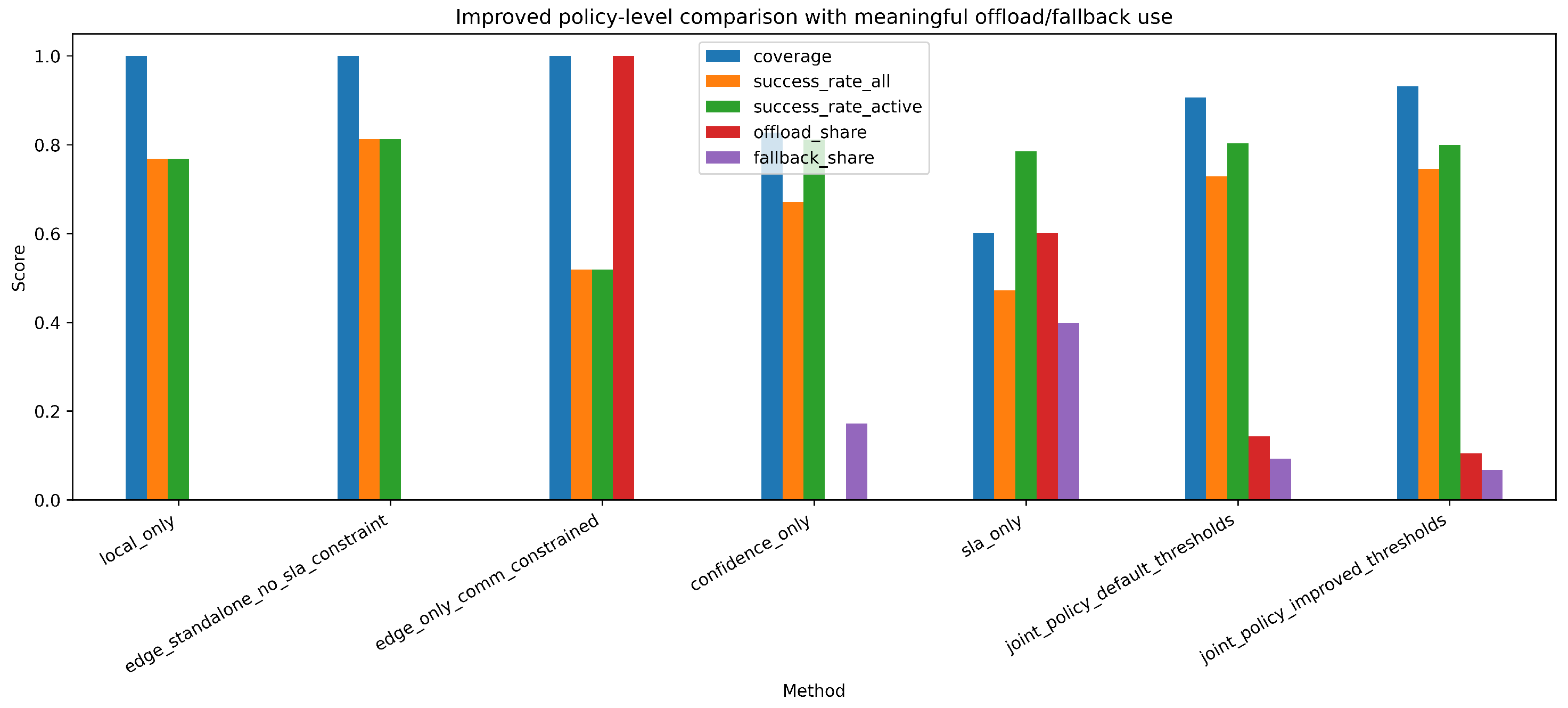
Table 5 reports the policy-level results. The edge standalone row reports visual accuracy only and ignores communication feasibility. The communication-constrained edge-only row is the operational edge baseline; it performs poorly because it assumes offloading is always attempted, even when the paired network state is not SLA-feasible. The proposed joint policy avoids this blind offloading behavior by combining confidence and SLA gating.
Table 5.
Policy-level comparison under scenario-aligned modular stress testing.
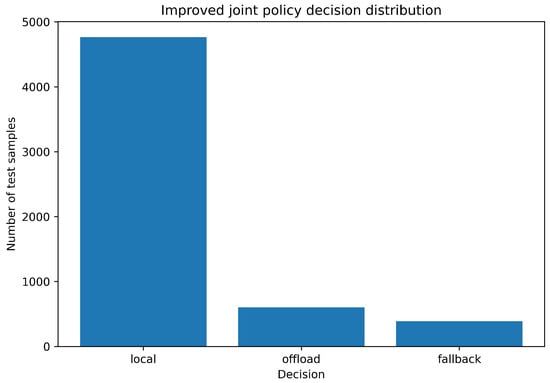
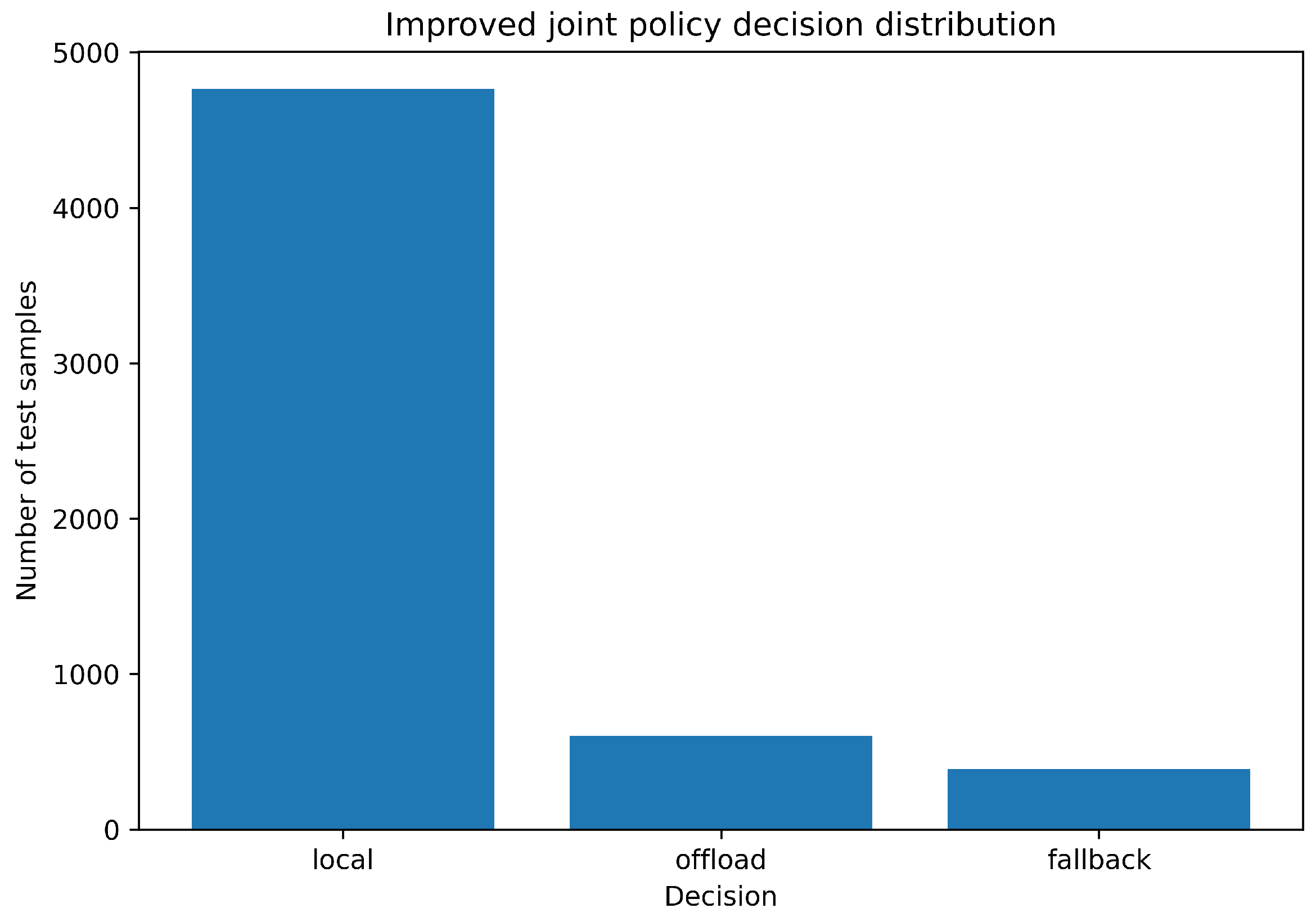
The joint policy uses confidence threshold and SLA threshold . It reaches 93.23% coverage and 79.90% success over active decisions. It also produces a meaningful route distribution: 82.76% local decisions, 10.47% offloaded decisions, and 6.77% fallback decisions. This route distribution shows that the policy does not collapse into a local-only strategy. Table 6 reports the route-level counts and success rates.
Table 6.
Decision breakdown for the joint policy.
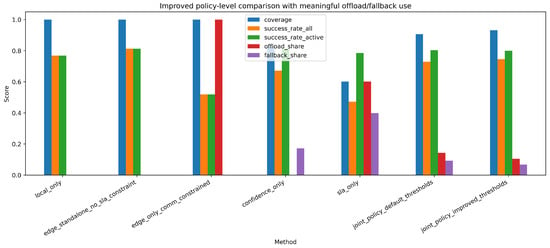
Figure 6 summarizes the policy-level comparison across baselines and the proposed joint policies.
Figure 6.
Policy-level comparison. Joint policies should be interpreted as risk-aware routing mechanisms, not as unconstrained visual classifiers.
Figure 7 shows the decision distribution of the proposed joint policy and confirms that all three branches are used.
Figure 7.
Decision distribution for the joint policy. The policy uses all three branches: local, offload, and fallback.
4.6. Threshold and Scenario Behavior
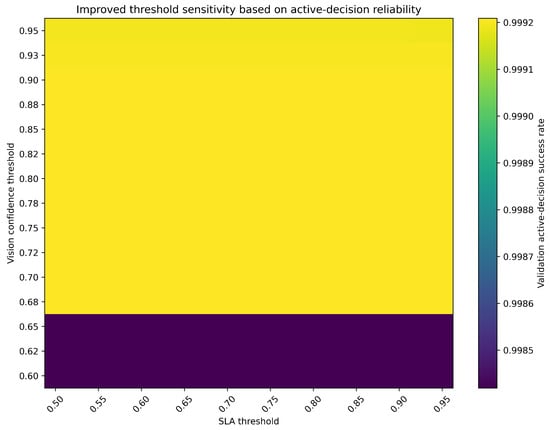
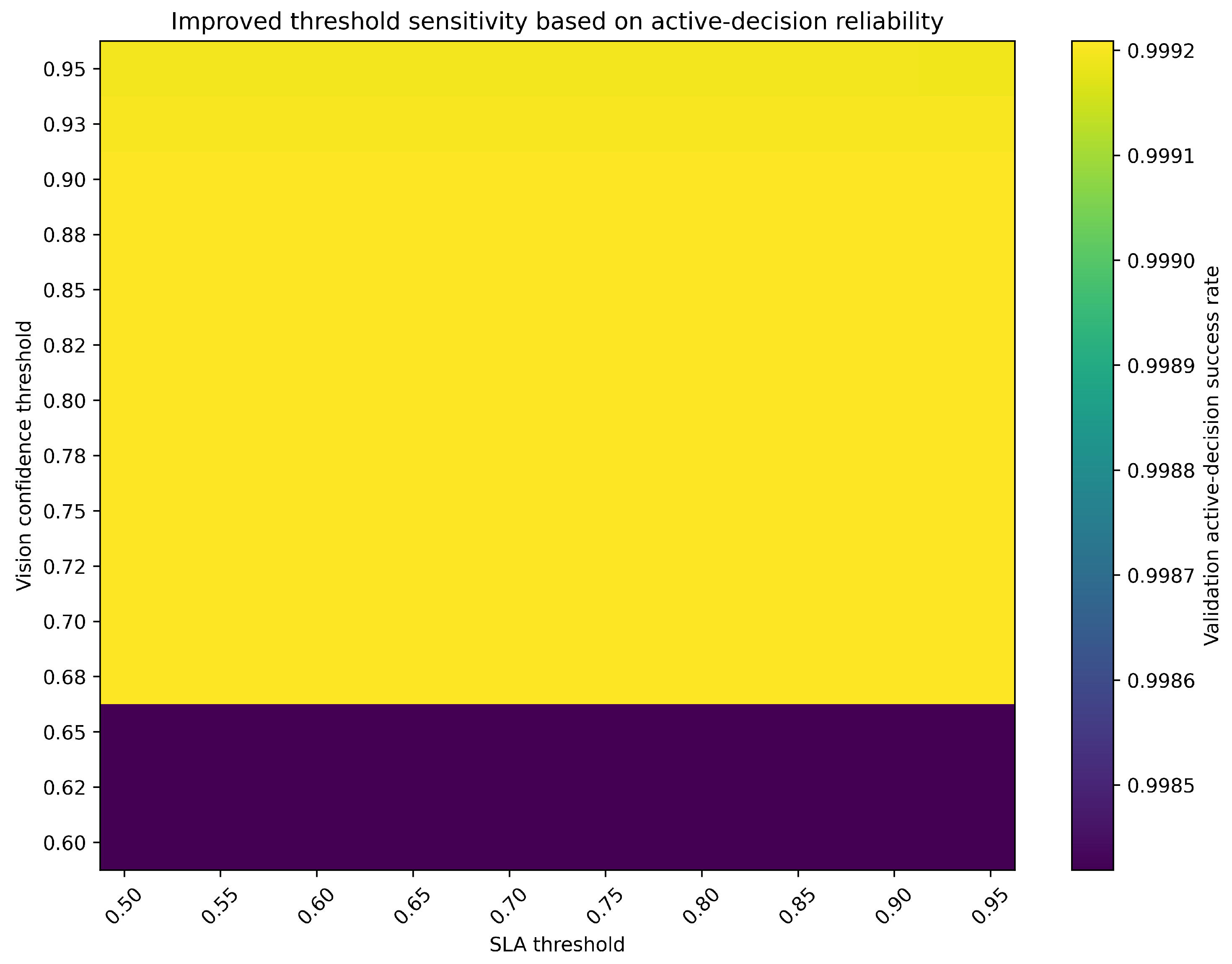
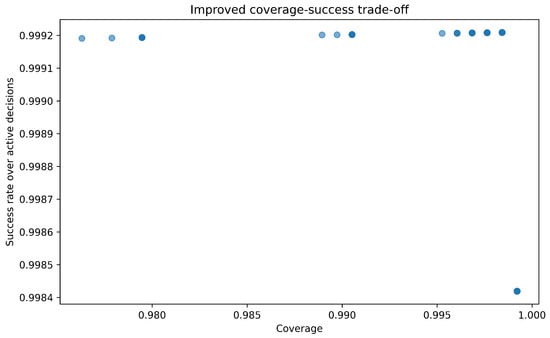
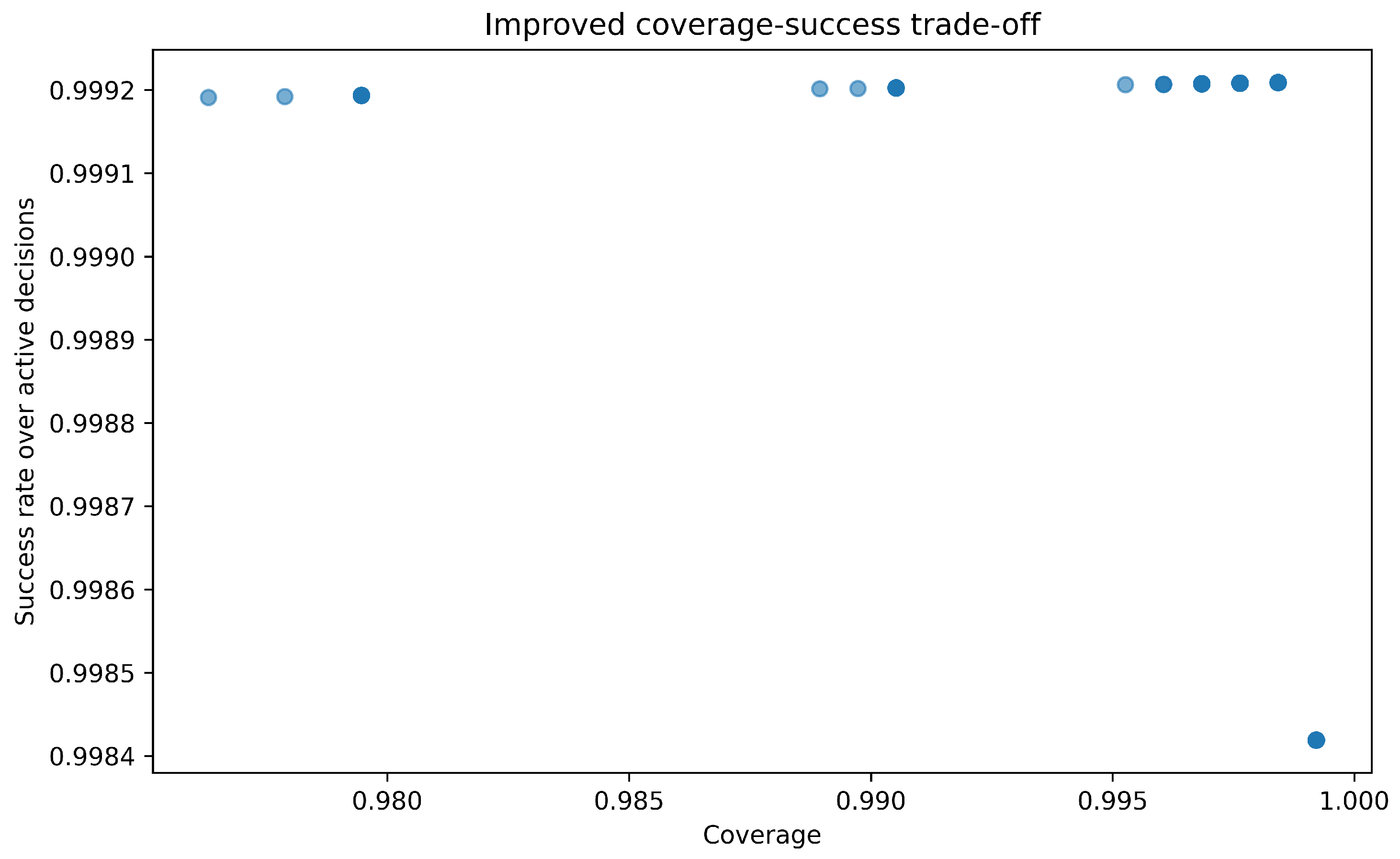
Figure 8 shows how active decision reliability changes across confidence and SLA thresholds. Figure 9 shows the coverage–reliability trade-off. These figures show that the framework is tunable. Higher selectivity can improve active reliability but reduces coverage. More relaxed thresholds increase coverage but may reduce safety.
Figure 8.
Threshold sensitivity based on active decision success.
Figure 9.
Coverage-success trade-off across threshold settings. Each dot represents one evaluated pair of confidence and SLA thresholds; the dot position shows the resulting coverage and success rate over active decisions.
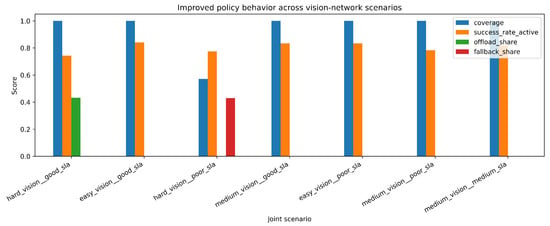
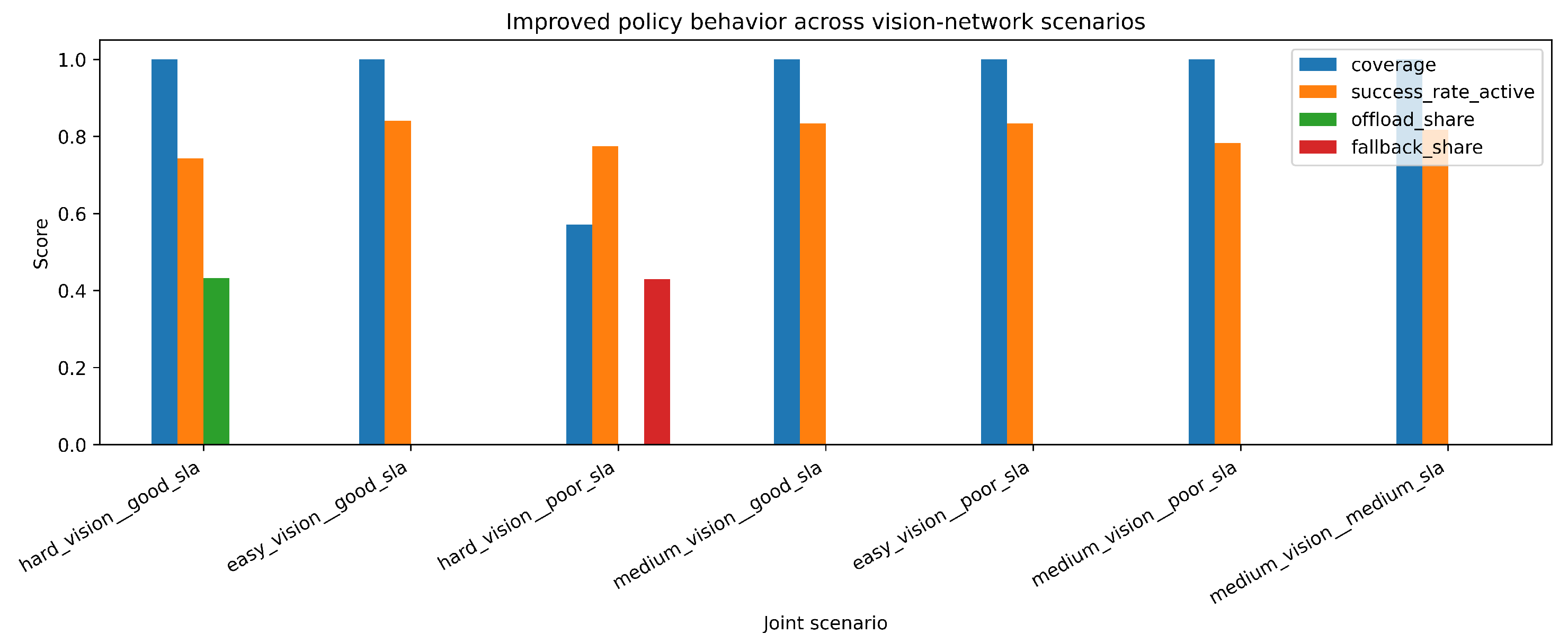
Figure 10 reports the policy behavior across scenario-aligned combinations of visual difficulty and network feasibility.
Figure 10.
Joint policy behavior across scenario-aligned combinations of visual difficulty and network feasibility.
5. Discussion
The experiments provide three main findings. First, the visual branch is evaluated under a hard illumination shift. The test conditions differ from the training conditions, which makes the evaluation more realistic than a random image split. Under this setting, the edge ResNet-18 is stronger than the local MobileNetV3-Small, as expected from a larger model. This supports the rationale for edge assistance, while also showing that edge assistance must be conditioned on communication feasibility.
Second, the SLA-side experiment provides an interpretable communication model. The label is treated as next-window communication feasibility, and the enhanced telemetry dataset provides enough information for model comparison, feature ablation, and stress testing. Logistic regression performs as well as or better than more complex alternatives, which suggests that the derived telemetry features have a strong structure. The ablation results show that temporal history and delay features are especially important. They also show that adding sla_ok_current does not materially change the result, reducing the concern that the model simply copies the previous SLA state.
Third, the policy-level evaluation now separates visual edge accuracy from operational edge offloading. The standalone edge model is the strongest visual classifier, but it ignores communication feasibility. The communication-constrained edge-only baseline performs much worse because it always attempts offloading. This distinction explains an important operational point: a strong edge model can still produce a weak edge-only policy if the network is not feasible.
The joint policy should therefore be read as a risk management layer, not as a claim that offloading always improves raw accuracy. The proposed joint policy achieves lower overall success than the unconstrained edge visual model, but it is a substantial improvement over the communication-constrained edge-only baseline and avoids blind offloading. Its value is that it makes the route choice explicit: act locally when confidence is high, offload when local confidence is weak but communication is feasible, and fallback when neither route is trustworthy.
The fallback result also needs careful interpretation. Fallback is counted as zero classification success because no label is produced. This makes the evaluation conservative. In a real UAV mission, fallback may still be useful because it can prevent an unsafe action, trigger another sensing attempt, or delay the decision until conditions improve. Thus, the benefit of fallback is not captured fully by classification accuracy; it is better reflected through coverage, active decision success, and route distribution.
Several limitations remain. The most important is that the vision and telemetry datasets are independent. The scenario-aligned joint evaluation is a controlled modular stress test, not synchronized UAV flight validation. The current work also did not measure physical round-trip latency, onboard energy, actuation delay, or safety outcome. The SLA label is binary, although real wireless service quality is continuous and multi-objective. Finally, the uncertainty signal is lightweight and based on calibrated confidence, while richer methods such as ensembles, Monte Carlo dropout, or Bayesian approximations may improve uncertainty quality at additional computational cost.
Future work should collect synchronized UAV visual and network traces, measure latency and energy on hardware, and evaluate the framework in closed-loop tasks such as landing, inspection, and target tracking. It should also test richer perception tasks and stronger edge models. Adaptive mission-aware thresholding is another important direction because different UAV missions may prefer different coverage-risk trade-offs.
6. Conclusions
This paper presented a risk-aware edge-assisted UAV perception framework that combines local confidence with SLA-gated communication feasibility. The aim is not to force every sample through the same route. Instead, the UAV accepts high-confidence local predictions, offloads uncertain samples only when the communication state is feasible, and uses fallback when both perception and communication are unfavorable.
The results show that the framework is technically and operationally meaningful. Under hard cross-illumination testing, the local MobileNetV3-Small achieved 76.89% accuracy and 73.25% macro-F1, while the edge ResNet-18 achieved 81.26% accuracy and 77.58% macro-F1. The SLA predictor achieved 85.74% accuracy, 85.57% macro-F1, 0.9420 ROC-AUC, and 0.9585 PR-AUC on temporally held-out windows. The SLA model capacity and ablation results show that the communication-side prediction is robust and interpretable.
At the system level, the joint policy achieved 93.23% coverage and 79.90% success over active decisions. It used local inference for 82.76% of the samples, edge offloading for 10.47%, and fallback for 6.77%. This route distribution is important because it shows that the policy does not collapse to local-only inference. The framework improves decision reliability in safety-critical UAV missions by avoiding unsafe offloading and overconfident local predictions.
This study also clarifies what remains unresolved. The joint evaluation uses independent vision and telemetry datasets and should be interpreted as a scenario-aligned modular stress test. Future work will focus on synchronized UAV experiments, latency and energy-aware offloading, adaptive thresholds, richer uncertainty modeling, and broader UAV perception tasks.
Author Contributions
Conceptualization, N.M.; methodology, N.M., K.A. and R.H.A.; software, N.M.; validation, N.M., K.A. and R.H.A.; formal analysis, N.M.; investigation, N.M.; data curation, N.M.; visualization, N.M.; writing—original draft preparation, N.M.; writing—review and editing, N.M., R.H.A., K.A., G.M. and N.N.; supervision, K.A. and R.H.A.; project administration, N.M., K.A. and R.H.A. All authors have read and agreed to the published version of this manuscript.
Funding
This research received no external funding. The APC was not funded by any external agency at the time of manuscript preparation.
Institutional Review Board Statement
Not applicable. This study did not involve humans or animals.
Informed Consent Statement
Not applicable. This study did not involve humans.
Data Availability Statement
The datasets used in this study are publicly available on Kaggle. The visual perception dataset, Different Colors in Challenging Lightening v2, is available at https://www.kaggle.com/datasets/nizamuddinmaitlo/different-colors-in-challenging-lightening-v2 (accessed on 2 May 2026). The SLA telemetry dataset used for the communication feasibility experiments is available at https://www.kaggle.com/datasets/nizamuddinmaitlo/sla-dataset (accessed on 2 May 2026). Derived tables, trained model outputs, and analysis files generated during the experiments are available from the corresponding author upon reasonable request.
Acknowledgments
The authors would like to acknowledge all those who provided support and encouragement during the completion of this work.
Conflicts of Interest
The authors declare no conflicts of interest.
References
- Arshid, K.; Krayani, A.; Marcenaro, L.; Gomez, D.M.; Regazzoni, C. Toward autonomous UAV swarm navigation: A review of trajectory design paradigms. Sensors 2025, 25, 5877. [Google Scholar] [CrossRef] [Scilit] [PubMed]
- Krayani, A.; Khan, K.; Marcenaro, L.; Marchese, M.; Regazzoni, C. A goal-directed trajectory planning using active inference in UAV-assisted wireless networks. Sensors 2023, 23, 6873. [Google Scholar]
- Finlayson, G. Colour and illumination in computer vision. Interface Focus 2018, 8, 20180008. [Google Scholar] [CrossRef] [Scilit]
- Xu, B.; Liu, J.; Hou, X.; Liu, B.; Qiu, G. End-to-end illuminant estimation based on deep metric learning. In Proceedings of the IEEE/CVF Conference on Computer Vision and Pattern Recognition (CVPR), Seattle, WA, USA, 13–19 June 2020; pp. 3611–3620. Available online: https://openaccess.thecvf.com/content_CVPR_2020/html/Xu_End-to-End_Illuminant_Estimation_Based_on_Deep_Metric_Learning_CVPR_2020_paper.html (accessed on 2 May 2026).
- Choi, H.H. CVCC Model: Learning-Based Computer Vision Color Constancy with RiR-DSN Architecture. Sensors 2023, 23, 5341. [Google Scholar] [CrossRef] [Scilit]
- Damigos, G.; Lindgren, T.; Sandberg, S.; Nikolakopoulos, G. Performance of sensor data process offloading on 5G-enabled UAVs. Sensors 2023, 23, 864. [Google Scholar] [CrossRef] [Scilit]
- Chen, L.; Du, J.; Zhu, X. Mobility-Aware Task Offloading and Resource Allocation in UAV-Assisted Vehicular Edge Computing Networks. Drones 2024, 8, 696. [Google Scholar] [CrossRef] [Scilit]
- Hendrycks, D.; Gimpel, K. A baseline for detecting misclassified and out-of-distribution examples in neural networks. In Proceedings of the International Conference on Learning Representations (ICLR), Toulon, France, 24–26 April 2017; Available online: https://openreview.net/forum?id=Hkg4TI9xl (accessed on 2 May 2026).
- Guo, C.; Pleiss, G.; Sun, Y.; Weinberger, K.Q. On Calibration of Modern Neural Networks. In Proceedings of the 34th International Conference on Machine Learning, Sydney, Australia, 6–11 August 2017; Volume 70, pp. 1321–1330. Available online: https://proceedings.mlr.press/v70/guo17a.html (accessed on 2 May 2026).
- Geifman, Y.; El-Yaniv, R. Selective classification for deep neural networks. In Proceedings of the Advances in Neural Information Processing Systems, Long Beach, CA, USA, 4–9 December 2017; Volume 30, pp. 4878–4887. Available online: https://proceedings.neurips.cc/paper_files/paper/2017/hash/4a8423d5e91fda00bb7e46540e2b0cf1-Abstract.html (accessed on 2 May 2026).
- Fan, Q.; Li, Y.; Deveci, M.; Zhong, K.; Kadry, S. LUD-YOLO: A novel lightweight object detection network for unmanned aerial vehicle. Inf. Sci. 2025, 686, 121366. [Google Scholar] [CrossRef] [Scilit]
- Bakirci, M. Performance evaluation of low-power and lightweight object detectors for real-time monitoring in resource-constrained drone systems. Eng. Appl. Artif. Intell. 2025, 159, 111775. [Google Scholar] [CrossRef] [Scilit]
- Liu, Z.; Chen, C.; Huang, Z.; Chang, Y.C.; Liu, L.; Pei, Q. A Low-Cost and Lightweight Real-Time Object-Detection Method Based on UAV Remote Sensing in Transportation Systems. Remote Sens. 2024, 16, 3712. [Google Scholar] [CrossRef] [Scilit]
- Abu-Khadrah, A.; Al-Qerem, A.; Hassan, M.R.; Ali, A.M.; Jarrah, M. Drone-assisted adaptive object detection and privacy-preserving surveillance in smart cities using whale-optimized deep reinforcement learning techniques. Sci. Rep. 2025, 15, 9931. [Google Scholar] [CrossRef] [Scilit] [PubMed]
- Loquercio, A.; Kaufmann, E.; Ranftl, R.; Müller, M.; Koltun, V.; Scaramuzza, D. Learning High-Speed Flight in the Wild. Sci. Robot. 2021, 6, eabg5810. [Google Scholar] [CrossRef] [Scilit]
- Krupáš, M.; Urblík, L.; Zolotová, I. Multimodal AI for UAV: Vision–language models in human–machine collaboration. Electronics 2025, 14, 3548. [Google Scholar] [CrossRef] [Scilit]
- Song, C.; Zhang, X.; She, Y.; Li, B.; Zhang, Q. Trajectory planning for UAV swarm tracking moving target based on an improved model predictive control fusion algorithm. IEEE Internet Things J. 2025, 12, 19354–19369. [Google Scholar] [CrossRef] [Scilit]
- Wu, H.; Wang, W.; Wang, T.; Suzuki, S. Model-free UAV navigation in unknown complex environments using vision-based reinforcement learning. Drones 2025, 9, 566. [Google Scholar] [CrossRef] [Scilit]
- Sarker, G.C.; Azad, A.; Rahman, S.; Hasan, M.M. VLM-Nav: Mapless UAV navigation using monocular vision driven by vision–language models. PLoS ONE 2026, 21, e0345778. [Google Scholar] [CrossRef] [Scilit] [PubMed]
- Zhang, Y.; Hu, Y.; Song, Y.; Zou, D.; Lin, W. Learning vision-based agile flight via differentiable physics. Nat. Mach. Intell. 2025, 7, 954–966. [Google Scholar] [CrossRef] [Scilit]
- Mademlis, I.; Symeonidis, C.; Tefas, A.; Pitas, I. Vision-based drone control for autonomous UAV cinematography. Multimed. Tools Appl. 2024, 83, 25055–25083. [Google Scholar] [CrossRef] [Scilit]
- Shin, W.; Kim, M.; Park, T.; Bae, G.; Kim, S.; Oh, H. Vision-based autonomous drone landing on moving platforms with uncertain motion via deep reinforcement learning. IEEE Robot. Autom. Lett. 2026, 11, 5542–5549. [Google Scholar] [CrossRef] [Scilit]
- Maitlo, N.; Shah, M.; Maitlo, A.; Mustafa, G.; Arshid, K.; Noonari, N. Communication-fairness trade-offs in federated learning for 6G resource allocation: A 200 client study. Inventions 2026, 11, 31. [Google Scholar] [CrossRef] [Scilit]
- Kaufmann, E.; Bauersfeld, L.; Loquercio, A.; Müller, M.; Koltun, V.; Scaramuzza, D. Champion-Level Drone Racing Using Deep Reinforcement Learning. Nature 2023, 620, 982–987. [Google Scholar] [CrossRef] [Scilit]
- Yuan, X.; Xie, Z.; Tan, X. Computation Offloading in UAV-Enabled Edge Computing: A Stackelberg Game Approach. Sensors 2022, 22, 3854. [Google Scholar] [CrossRef] [Scilit]
- Dai, X.; Xiao, Z.; Jiang, H.; Lui, J.C.S. UAV-Assisted Task Offloading in Vehicular Edge Computing Networks. IEEE Trans. Mob. Comput. 2024, 23, 2520–2534. [Google Scholar] [CrossRef] [Scilit]
- Ju, T.; Li, L.; Liu, S.; Zhang, Y. A multi-UAV assisted task offloading and path optimization for mobile edge computing via multi-agent deep reinforcement learning. J. Netw. Comput. Appl. 2024, 229, 103919. [Google Scholar] [CrossRef] [Scilit]
- Tan, S.; Chen, B.; Liu, D.; Zhang, J.; Hanzo, L. Communication-Assisted Multi-Agent Reinforcement Learning Improves Task-Offloading in UAV-Aided Edge-Computing Networks. IEEE Wirel. Commun. Lett. 2023, 12, 2233–2237. [Google Scholar] [CrossRef] [Scilit]
- Guo, H.; Wang, Y.; Liu, J.; Liu, C. Multi-UAV Cooperative Task Offloading and Resource Allocation in 5G Advanced and Beyond. IEEE Trans. Wirel. Commun. 2024, 23, 347–359. [Google Scholar] [CrossRef] [Scilit]
- O’Shea, T.J.; Hoydis, J. An Introduction to Deep Learning for the Physical Layer. IEEE Trans. Cogn. Commun. Netw. 2017, 3, 563–575. [Google Scholar] [CrossRef] [Scilit]
- Ye, H.; Li, G.Y.; Juang, B.H.F. Power of Deep Learning for Channel Estimation and Signal Detection in OFDM Systems. IEEE Wirel. Commun. Lett. 2018, 7, 114–117. [Google Scholar] [CrossRef] [Scilit]
- Khan, M.A.; Anjum, M.; Hassan, S.A.; Jung, H. Machine learning-based resource allocation for IRS-aided UAV networks. In Proceedings of the 2023 IEEE Global Communications Conference (GLOBECOM), Kuala Lumpur, Malaysia, 4–8 December 2023; pp. 3051–3057. [Google Scholar] [CrossRef] [Scilit]
- Zeng, Y.; Wu, Q.; Zhang, R. Accessing from the sky: A tutorial on UAV communications for 5G and beyond. Proc. IEEE 2019, 107, 2327–2375. [Google Scholar] [CrossRef] [Scilit]
- Zakaryia, S.A.; Mead, M.A.; Nabil, T. Task offloading for multi-UAV asset edge computing with deep reinforcement learning. Clust. Comput. 2025, 28, 462. [Google Scholar] [CrossRef] [Scilit]
- Gal, Y.; Ghahramani, Z. Dropout as a Bayesian approximation: Representing model uncertainty in deep learning. In Proceedings of the 33rd International Conference on Machine Learning (ICML), New York, NY, USA, 19–24 June 2016; Volume 48, pp. 1050–1059. Available online: https://proceedings.mlr.press/v48/gal16.html (accessed on 2 May 2026).
- Lakshminarayanan, B.; Pritzel, A.; Blundell, C. Simple and scalable predictive uncertainty estimation using deep ensembles. In Proceedings of the Advances in Neural Information Processing Systems, Long Beach, CA, USA, 4–9 December 2017; Volume 30. Available online: https://papers.nips.cc/paper/7219-simple-and-scalable-predictive-uncertainty-estimation-using-deep-ensembles (accessed on 2 May 2026).
- Ganesh, N.G.; Balasubramanian, V.; Prasad, D.V.V.; Velan, S.S. Deep learning-based user authentication with hybrid encryption for secured blockchain-aided data storage and optimal task offloading in mobile edge computing. Wirel. Netw. 2025, 31, 2389–2417. [Google Scholar] [CrossRef] [Scilit]
- Maitlo, N. Different Colors in Challenging Lightening v2. Kaggle. Available online: https://www.kaggle.com/datasets/nizamuddinmaitlo/different-colors-in-challenging-lightening-v2 (accessed on 2 May 2026).
- Maitlo, N. Wireless 6G Network Dataset of Resource Allocation. Kaggle. Available online: https://www.kaggle.com/datasets/nizamuddinmaitlo/sla-dataset (accessed on 2 May 2026).

Disclaimer/Publisher’s Note: The statements, opinions and data contained in all publications are solely those of the individual author(s) and contributor(s) and not of MDPI and/or the editor(s). MDPI and/or the editor(s) disclaim responsibility for any injury to people or property resulting from any ideas, methods, instructions or products referred to in the content. |
© 2026 by the authors. Licensee MDPI, Basel, Switzerland. This article is an open access article distributed under the terms and conditions of the Creative Commons Attribution (CC BY) license.