


Abstract
Bilateral robotic rehabilitation has emerged as a technological approach for promoting coordinated upper-limb training after stroke. This state-of-the-art review critically analyzes bilateral upper-limb rehabilitation robots with emphasis on mechanical architecture, actuation and transmission, bilateral interaction modalities, control strategies, assistance modes, and validation evidence. A structured literature search covering 2010 to 8 July 2026 identified 141 records; 23 technology-related publications were retained for the state-of-the-art analysis, comprising 18 primary bilateral robotic studies and 5 supporting technical/contextual publications. The reviewed systems were organized according to a hierarchical framework distinguishing end-effector, exoskeleton, and hybrid architectures from simultaneous bilateral, master–slave/mirror-based, and cooperative bimanual interaction modalities. The evidence indicates that end-effector systems favor mechanical simplicity and adaptable workspaces, whereas exoskeletons provide more direct joint-level control at the cost of greater alignment and mechanical complexity. Control approaches increasingly incorporate impedance, admittance, assist-as-needed, and bio-signal-based strategies to improve compliant interaction and adapt assistance to user contribution. However, many advanced systems remain supported primarily by engineering validation or experiments involving healthy participants, while direct post-stroke clinical validation is comparatively limited. Future development should therefore prioritize clinically validated adaptive assistance, control strategies capable of accommodating asymmetric bilateral contribution, and safe, usable, and affordable systems suitable for clinical and home-based rehabilitation.
1. Introduction
Stroke is a major cause of death and long-term disability worldwide and frequently results in persistent deficits in upper-limb mobility, coordination, and performance of activities of daily living. In 2021, stroke affected an estimated 93.8 million people globally, with approximately 11.9 million new cases, while the lifetime risk has increased substantially over recent decades [1]. The resulting need for prolonged rehabilitation places considerable demands on healthcare systems, particularly where access to specialized and intensive therapy is limited [2,3].
Robot-assisted rehabilitation has been developed to complement conventional therapy by enabling repetitive, controlled, and task-oriented training while recording kinematic and dynamic variables and adjusting assistance according to patient performance. Upper-limb rehabilitation robots include end-effector devices, exoskeletons, and hybrid systems with different levels of mechanical complexity, workspace, joint selectivity, and physical human–robot interaction [3,4,5]. However, much of the technological development in upper-limb rehabilitation has historically focused on unilateral systems, whereas many activities of daily living require coordinated use of both limbs and may involve symmetric, asymmetric, or complementary actions [6].
Bilateral rehabilitation engages both upper limbs within the same motor-training paradigm and has been investigated as an approach for promoting interlimb coordination after stroke. Neurophysiological studies indicate that bimanual movement can modulate interhemispheric motor interactions [7,8], while clinical evidence suggests that bilateral training can improve motor outcomes under some conditions. Nevertheless, its effectiveness varies according to impairment severity, stage of recovery, training intensity, and therapeutic modality, and current evidence does not establish a universal superiority of bilateral over unilateral rehabilitation [9,10]. Thus, neurophysiological mechanisms proposed for bilateral training should be distinguished from demonstrated clinical effects.
Recent developments in bilateral rehabilitation robotics extend beyond simple synchronous movement. Master–slave and mirror-based systems use motion or physiological information from one limb to guide the contralateral side, while adaptive controllers increasingly incorporate interaction forces, impedance or admittance regulation, assist-as-needed strategies, and biological signals such as surface electromyography. Examples include variable-stiffness and sEMG-informed systems such as PVSED [11,12], adaptive bilateral mirror rehabilitation based on impedance control [13], cooperative bilateral platforms such as EBRERS [14,15], and compliant wrist rehabilitation systems with assistive and resistive interaction modes [16]. These developments indicate a shift from simple bilateral motion reproduction toward systems that attempt to regulate the contribution of each limb and adapt robotic assistance to the user’s interaction. However, several of these approaches remain supported mainly by engineering validation or experiments involving healthy participants rather than extensive post-stroke clinical evaluation.
Previous reviews have provided broad perspectives on upper-limb rehabilitation robots, their mechanical configurations, and emerging technological trends [3,4,5,17], whereas systematic and clinical studies of bilateral training have primarily examined rehabilitation outcomes and therapeutic effectiveness [9,10]. Within the literature considered in the present review, however, mechanical architecture, bilateral interaction modality, actuation, control strategy, assistance mode, and level of validation are commonly examined as separate dimensions. Consequently, it remains difficult to determine how these characteristics interact, which technological configurations are appropriate for different bilateral rehabilitation objectives, and to what extent advanced robotic strategies have been validated in post-stroke populations.
To address this gap, the present state-of-the-art review introduces an integrated framework specifically focused on bilateral robotic upper-limb rehabilitation. The reviewed systems are organized at two complementary classification levels: mechanical architecture, comprising end-effector, exoskeleton, and hybrid systems; and bilateral interaction modality, comprising simultaneous bilateral, master–slave/mirror-based, and cooperative bimanual interaction. Actuation and transmission technologies are subsequently analyzed in relation to rehabilitation requirements, while control and assistance strategies are compared according to their therapeutic role and validation evidence. Importantly, studies involving post-stroke participants are distinguished from healthy-participant experiments, engineering validation, and prototype or modeling studies so that technological feasibility is not interpreted as equivalent to clinical effectiveness.
Accordingly, this review addresses the following research question: What mechanical architectures, actuation and transmission technologies, bilateral interaction modalities, control strategies, and assistance approaches are employed in bilateral robotic systems for post-stroke upper-limb rehabilitation, under what conditions are these technological choices advantageous, and what limitations remain in their clinical validation and translation?
The objective of this study is therefore to provide a critical and updated synthesis of bilateral upper-limb rehabilitation robotics by integrating mechanical design, actuation, bilateral interaction, control, assistance, and validation evidence within a common framework. Through this analysis, the review seeks to identify the principal technological trade-offs, gaps between engineering development and clinical evidence, and priorities for the development of safer, adaptable, functionally relevant, and accessible systems for clinical and home-based rehabilitation.
2. Review Methodology
2.1. Review Scope and Definition
This study was designed as a state-of-the-art review of bilateral robotic systems for post-stroke upper-limb rehabilitation rather than as a systematic or scoping review. Its primary purpose was to critically examine current technological developments, with particular emphasis on robotic architecture, actuation, bilateral interaction strategies, assistance modalities, and control approaches.
To improve the transparency and traceability of the literature considered, a structured literature search and study-selection procedure was conducted. This procedure was used to identify relevant technological and rehabilitation studies within the predefined scope of the review; however, the included literature was not treated as a homogeneous body of clinical evidence.
For the purposes of this review, a bilateral robotic rehabilitation system was defined as a robotic system in which both upper limbs participate functionally within the same rehabilitation or motor-training paradigm. Bilateral interaction was considered to include: (i) simultaneous bilateral training or actuation, in which both limbs perform coordinated movements; (ii) master–slave or mirror-based control, in which movement or biomechanical information from one limb is used to guide or assist the contralateral limb; and (iii) cooperative bimanual control, in which both limbs contribute jointly to the execution of a coordinated task.
Because the literature on bilateral rehabilitation robotics includes different levels of experimental and clinical validation, the evidence was interpreted according to study type. Studies involving post-stroke participants were considered separately from experiments involving healthy participants, engineering or benchtop validation studies, and design, modeling, or simulation studies. The latter categories were used to characterize mechanical design, control, human–robot interaction, and technological feasibility, but were not considered equivalent to clinical evidence of rehabilitation effectiveness. Additional literature concerning neurorehabilitation, motor recovery, and biological mechanisms was used as contextual background and was not included in the primary technological study-selection process.
2.2. Information Sources and Search Strategy
A structured literature search was conducted using IEEE Xplore, ScienceDirect, Scopus, the MDPI publishing platform, and Google Scholar. These information sources were selected to cover the literature from robotics, engineering, biomedical technology, and rehabilitation relevant to bilateral upper-limb robotic rehabilitation. The structured technological search covered publications from 2010 to 8 July 2026, when the final literature update was performed. Although publications from 2026 were searched, no studies published in that year were ultimately retained for the technological analysis; therefore, the studies selected through this process were published between 2010 and 2025. Earlier seminal publications were selectively cited when necessary to provide historical, clinical, or technical context and were not considered part of the structured study-selection process.
No predefined Boolean search strings were used because the review was designed as a state-of-the-art technological review rather than as a systematic or scoping review. Instead, an iterative keyword-based search strategy was applied across the selected information sources. The search vocabulary was organized around the principal concepts addressed in the review, including the clinical condition, anatomical region, rehabilitation paradigm, robotic architecture, and technological characteristics. Search terms included “Robot Rehabilitation,” “Stroke,” “Training,” “Upper Extremity,” “Upper Limb,” “Design,” “Bilateral Therapy,” “End Effector,” “Exoskeletons,” and “Assistive Therapy,” among related terms.
Searches were conducted using different combinations of these terms according to the terminology and search functionality available in each database or platform. The combinations were progressively refined to identify publications relevant to bilateral upper-limb rehabilitation robots, mechanical architectures, actuation and transmission technologies, bilateral interaction modalities, assistance approaches, and control strategies. Retrieved publications were subsequently evaluated according to the eligibility criteria described in Section 2.3.
2.3. Eligibility Criteria and Study Selection
Studies were considered eligible for the technological analysis when they addressed robotic systems, devices, or training paradigms relevant to upper-limb rehabilitation and provided sufficient information to characterize at least one of the technological dimensions examined in this review, including mechanical architecture, degrees of freedom, actuation or transmission mechanisms, bilateral interaction, assistance modality, control strategy, or human–robot interaction. For classification as a bilateral robotic study, the system was additionally required to satisfy the operational definition established in Section 2.1, involving simultaneous bilateral training or actuation, master–slave or mirror-based interaction, or cooperative bimanual control.
Studies involving post-stroke participants, healthy participants, prototype or benchtop validation, and design, modeling, or simulation were eligible because each can provide information relevant to the technological development of bilateral rehabilitation robots. However, these categories were recorded and interpreted separately according to their level and type of validation. Studies involving healthy participants or engineering validation were used to assess technological feasibility, interaction, control, or device performance and were not considered evidence of clinical rehabilitation effectiveness.
A limited number of studies that did not themselves satisfy the operational definition of bilateral robotic rehabilitation were retained as supporting technical/contextual publications when they provided directly relevant information for the analysis of mechanical architecture, actuation, transmission, or robotic design. These studies were distinguished from the bilateral robotic studies and were not used to support conclusions regarding the clinical effectiveness of bilateral rehabilitation. Reviews, meta-analyses, and the broader neurorehabilitation literature were used for contextual or conceptual support rather than being treated as primary technological studies.
Publications written in English or Spanish were considered. Studies were excluded when they focused exclusively on prostheses, lower-limb rehabilitation, gait or locomotion, industrial or ergonomic assistance, strength augmentation without a rehabilitation objective, or applications unrelated to upper-limb neuromotor rehabilitation. Records retrieved from multiple information sources were checked for repeated publications during the initial screening process; however, duplicate removal was not recorded as a separate screening category. Studies were also excluded when sufficient information was unavailable to characterize the device, intervention, mechanical design, control strategy, or other variables relevant to the objectives of the review.
The initial search identified 141 records. Following an initial eligibility screening based on the stated inclusion and exclusion criteria, 34 records were excluded, and 107 were retained for further assessment. During the detailed eligibility assessment, 84 additional records were excluded because they did not provide sufficient information relevant to the objectives of the review or lacked adequate technical or design specifications. This process resulted in 23 technology-related publications retained for the state-of-the-art analysis. Of these, 18 were primary bilateral robotic studies, whereas 5 were retained as supporting technical or contextual publications relevant to the analysis of robotic design, actuation, control, or clinical/device characteristics. The study-selection and classification process is summarized in Figure 1.
Figure 1.
Literature identification, eligibility assessment, and classification process for technology-related studies included in the state-of-the-art review.
2.4. Study Classification and Data Extraction
The retained technology-related publications were organized according to their role in the review and the type of evidence they provided. Studies satisfying the operational definition of bilateral robotic rehabilitation described in Section 2.1 were classified as bilateral robotic studies, whereas publications retained primarily for relevant mechanical, actuation, control, or device-design information were classified as supporting technical/contextual publications.
To distinguish the level of experimental and clinical validation, studies were further categorized according to the population or validation setting reported in the original publication: (i) studies involving post-stroke participants; (ii) experiments involving healthy participants; (iii) prototype or benchtop validation studies; and (iv) design, modeling, or simulation studies. These categories were used to prevent technological feasibility results from being interpreted as equivalent to evidence of clinical rehabilitation effectiveness.
For each study, information relevant to the objectives of the review was extracted and organized into a structured comparison matrix. The extracted variables included publication year, robotic system, mechanical architecture, number of degrees of freedom, anatomical joints or segments addressed, rehabilitated movements, actuation and transmission technology, assistance modality, control strategy, bilateral interaction modality, validation population or setting, and development or validation stage. When reported in the original publication, additional characteristics such as workspace, force or interaction control, mechanical compliance, bilateral synchronization, and human–robot interaction were also considered in the comparative analysis.
Bilateral interaction was classified according to the framework defined in Section 2.1 as simultaneous bilateral training or actuation, master–slave or mirror-based interaction, or cooperative bimanual control. Information not explicitly reported in the original publication was recorded as not reported and was not inferred from other device characteristics. Reviews, meta-analyses, and broader neurorehabilitation references used for contextual support were not included in the technological comparison matrix.
2.5. Methodological Considerations and Limitations
The methodology of this state-of-the-art review was designed to provide a broad technological and critical perspective on bilateral upper-limb rehabilitation robotics rather than an exhaustive systematic synthesis of the literature. Accordingly, multiple independent searches using different combinations of relevant terms were conducted across several information sources, but a single standardized search equation was not applied across all platforms. Therefore, the possibility that relevant publications were not identified cannot be completely excluded. Duplicate records were checked during the initial screening process; however, duplicate removal was not prospectively documented as a separate screening category, and the exact number of duplicate records removed therefore cannot be reported independently.
The selected literature was heterogeneous with respect to study design, population, validation stage, robotic architecture, and reported outcome variables. Studies involving post-stroke participants, healthy participants, prototype validation, and design or modeling approaches were therefore classified and interpreted separately. Because of this heterogeneity, direct quantitative comparison across all systems was not considered appropriate, and technological feasibility findings were not interpreted as evidence of clinical effectiveness unless supported by studies involving the corresponding patient population. No formal methodological quality or risk-of-bias assessment was performed because the review included heterogeneous engineering, experimental, and clinical study designs and was not intended as a systematic review of intervention effectiveness.
In addition, the review was limited to publications available in English or Spanish and to studies providing sufficient technical information for the objectives of the analysis. These criteria may have excluded relevant developments reported in other languages or in publications with limited methodological or technical detail. The findings should therefore be interpreted as a critical synthesis of the identified state of the art, considering the scope and methodological characteristics described above.
2.6. Use of Generative Artificial Intelligence
Generative artificial intelligence (GenAI) was used exclusively to assist in the creation of the conceptual illustration presented in Figure 2. The figure was generated using ChatGPT Images 2.5 (OpenAI, San Francisco, CA, USA) based on the movement classifications and technical descriptions supported by the cited literature. The generated illustration was subsequently reviewed and edited by the authors to verify its technical accuracy and consistency with the spatial and temporal organization of the bilateral movement patterns described in the manuscript. GenAI was not used to determine study eligibility, perform data extraction or evidence classification, synthesize the reviewed evidence, or generate, modify, or analyze research data.
Figure 2.
Spatial and temporal organization of bilateral upper-limb movements: (a) mirror-symmetric movement; (b) asymmetric or complementary movement; (c) in-phase movement; and (d) anti-phase movement. Conceptual illustration generated with the assistance of OpenAI ChatGPT and subsequently reviewed and edited by the authors for technical accuracy.
3. Upper-Limb Neurorehabilitation
Upper-limb neurorehabilitation aims to restore motor control and functional performance after neurological injury. Robotic systems can complement conventional rehabilitation by providing intensive, repetitive, and task-oriented training while quantifying movement and human–robot interaction [18]. Evidence from the broader robot-assisted rehabilitation literature indicates that these technologies can contribute to improvements in upper-limb motor function and activities of daily living, although the magnitude and clinical relevance of the benefit depend on the intervention and patient population [17,19,20].
A central distinction in post-stroke rehabilitation is that between motor restitution and behavioral compensation. Restitution refers to the recovery of movement patterns resembling those present before the injury, whereas compensation involves alternative movement strategies or greater use of residual capabilities to accomplish a task [21]. Both may improve task performance, but functional success does not necessarily indicate restoration of the original motor-control pattern. This distinction is particularly relevant to robotic rehabilitation, because improvements in trajectory completion, movement speed, or task success may reflect either recovery or compensatory behavior.
Accordingly, rehabilitation outcomes should be interpreted using complementary clinical, kinematic, and functional measures. Kwakkel et al. [22] emphasize the importance of standardized assessment of movement quality after stroke, while neuromechanical measurements can provide additional information on motor performance and patient–device interaction [23]. For bilateral robotic rehabilitation, this implies that technological performance should be evaluated not only by whether the task is completed, but also by how the affected and less-affected limbs contribute to the movement and whether training promotes appropriate motor patterns rather than compensatory strategies.
4. Exercises and Training Paradigms in Bilateral Upper-Limb Motor Rehabilitation
Motor recovery following stroke is closely associated with neuroplasticity, defined as the ability of the nervous system to modify the organization and function of its neural networks in response to injury and training. These changes may involve the reorganization of neural connections and cortical activation patterns associated with movement planning and execution [24].
Within this context, bilateral movement training (BMT) has been investigated as a potentially beneficial strategy for improving upper-limb motor function after stroke [25,26]. BMT involves the coordinated participation of both upper limbs during simultaneous or alternating movements and may include either equivalent bilateral actions or complementary tasks in which each limb performs a different functional role.
Bilateral movements can be characterized according to their spatial and temporal organization. From a spatial perspective, movements may be mirror-symmetric, when both upper limbs perform equivalent or mirrored trajectories, or asymmetric/complementary, when the limbs differ in direction, amplitude, or functional role [27]. Asymmetric tasks may impose greater demands on motor planning and interlimb coordination because each limb must satisfy a different movement objective [28,29].
From a temporal perspective, bilateral movements may be performed in phase, when both limbs follow corresponding temporal patterns, or in anti-phase, when their movements occur with an opposing temporal relationship. Spatial and temporal classifications are not mutually exclusive; for example, two limbs may follow spatially symmetric trajectories while moving in opposite directions at a given instant. Anti-phase coordination has been associated with greater demands on bilateral motor coordination than simpler in-phase patterns [28,29]. The principal spatial and temporal patterns considered in bilateral upper-limb training are summarized in Figure 2.
Repetitive practice is one of the fundamental principles of bilateral training. It may involve repeated symmetric, alternating, or functionally asymmetric movements, as well as tasks in which both upper limbs perform different actions in a coordinated manner [30]. One structured paradigm is Bilateral Arm Training with Rhythmic Auditory Cueing (BATRAC), in which repetitive bilateral movements are performed in response to rhythmic auditory cues. Bilateral grasping exercises and tasks oriented toward activities of daily living have also been implemented, with favorable effects on coordination and functional performance [27,31].
Another training modality involves bilateral maximal grasping tasks, which can be used to assess and train coordinated force generation between both upper limbs. These tasks may also require postural adjustments to stabilize the trunk during force exertion and object manipulation [32,33].
Available evidence indicates that motor training becomes more functionally relevant when it incorporates repetitive, goal-oriented tasks [34]. Because many activities of daily living require dynamic, asymmetric, and complementary movements, exercises reproducing these conditions may facilitate transfer to everyday performance and promote postural adjustments consistent with task demands [35]. In this regard, the bilateral training paradigms described by Kopp et al. [36] incorporate simultaneous and alternating coordinated movements that can be adapted to functional tasks.
Symmetric, asymmetric, simultaneous, and alternating exercises have been implemented in bilateral robotic rehabilitation. Nevertheless, a substantial proportion of studies have focused primarily on clinical, kinematic, and biomechanical variables, whereas direct neurophysiological characterization remains limited. This limitation makes it difficult to determine whether different exercise modalities elicit distinct cortical responses or whether observed functional improvements are associated with specific mechanisms of neural reorganization. Therefore, electroencephalographic assessment may complement clinical and biomechanical measures by providing additional information on cortical activation and interhemispheric coordination associated with different bilateral training modalities.
5. Comparative Evidence for Unilateral and Bilateral Rehabilitation: Robotic and Non-Robotic Approaches
Comparisons between unilateral and bilateral upper-limb rehabilitation should distinguish clinical outcomes from the technological characteristics of the intervention. Robotic systems can increase movement repetition, standardize task execution, and quantify performance; however, these capabilities do not by themselves establish superior clinical effectiveness. Similarly, bilateral training provides a framework for coordinated use of both upper limbs, but its relative benefit depends on the patient population, training protocol, and outcome measure.
5.1. Robotic Rehabilitation Versus Conventional Therapy
Boardsworth et al. [37] reported that robot-assisted upper-limb rehabilitation can produce statistically significant improvements in motor outcomes compared with conventional therapy, although the magnitude of the additional benefit may be limited and does not consistently translate into greater functional independence. Therefore, the clinical value of robotic rehabilitation should not be inferred solely from its capacity to provide precise and intensive training; outcomes should also be considered in relation to therapy dose, device characteristics, patient impairment, and functional endpoints.
5.2. Conventional Unilateral Versus Bilateral Training
Chen et al. [38] and Lin et al. [39] indicate that bilateral upper-limb training can improve post-stroke motor performance, with some outcomes showing advantages in motor impairment measures such as the Fugl–Meyer Assessment for the Upper Extremity. However, differences between bilateral and unilateral training are not consistent across functional measures, including the Wolf Motor Function Test, Action Research Arm Test, and Box and Block Test. Consequently, the available evidence does not support universal superiority of either approach.
These findings also indicate that improvements in motor impairment and improvements in functional task performance should not be treated as interchangeable outcomes. Therapeutic selection should therefore consider impairment severity, functional objectives, and the type of task being trained rather than relying solely on whether the intervention is unilateral or bilateral.
5.3. Robotic Unilateral Versus Bilateral Training
Robotic bilateral rehabilitation adds the capability to regulate interlimb coordination, reproduce contralateral movement references, and adapt assistance between the affected and less-affected limbs. These characteristics may be particularly relevant when the therapeutic objective requires coordinated bimanual practice. However, the available literature does not establish that these technological capabilities consistently produce greater clinical benefits than unilateral robot-assisted rehabilitation.
Neurophysiological mechanisms such as interhemispheric coupling and changes in cortical excitability have been proposed as possible contributors to bilateral motor training [40]. These mechanisms should nevertheless be distinguished from demonstrated clinical effects. Evidence of altered interhemispheric interaction does not by itself establish that bilateral robotic training produces superior functional recovery.
Accordingly, current evidence supports an individualized selection of unilateral or bilateral rehabilitation according to patient characteristics and therapeutic goals rather than a universal preference for either approach. Importantly, the present review did not identify studies directly comparing neurophysiological responses to unilateral and bilateral exercises within robot-assisted rehabilitation. This gap limits conclusions regarding whether the two robotic training paradigms produce distinct cortical responses or whether such responses are associated with differences in clinical recovery.
6. Clinical and Neurophysiological Assessment in Bilateral Robotic Rehabilitation
Assessment in bilateral robot-assisted rehabilitation should distinguish clinical recovery from biomechanical or neurophysiological changes. Clinical scales provide standardized measures of motor impairment, whereas signals such as surface electromyography (sEMG) and electroencephalography (EEG) can characterize neuromuscular or cortical responses during training. Importantly, these signals may be used either for assessment or as inputs to robotic control, and these functions should not be treated as equivalent.
6.1. Fugl–Meyer Assessment for the Upper Extremity
The Fugl–Meyer Assessment for the Upper Extremity (FMA-UE) is a widely used clinical measure of post-stroke upper-limb motor impairment [41]. It provides a standardized basis for establishing baseline impairment and quantifying changes following rehabilitation.
Within bilateral robotic rehabilitation, the FMA-UE is particularly relevant because it provides a clinical outcome that can be compared with robot-derived measures such as trajectory performance, interaction force, or assistance level. However, improvements in robotic performance should not automatically be interpreted as equivalent to improvement in motor impairment or functional independence. Clinical scales and robot-based measures therefore provide complementary, rather than interchangeable, information.
6.2. Surface Electromyography
Surface electromyography provides information on muscle activation during voluntary movement and can complement clinical and kinematic assessment in post-stroke rehabilitation [42]. It may also be incorporated into biofeedback or robotic interaction frameworks [43].
6.3. Electroencephalography
EEG provides a complementary means of evaluating cortical activity during rehabilitation and can therefore help investigate neurophysiological responses that are not captured by clinical, kinematic, or electromyographic measures. In the context of this review, its principal relevance is as an assessment modality rather than as a commonly implemented control input.
Among the primary bilateral robotic studies summarized in this review, Tang et al. [44] explicitly combined bilateral robot-assisted training with quantitative EEG assessment in post-stroke participants. The study involved 24 patients, divided between bilateral robotic training and a control group, and provides clinical and neurophysiological evidence within a patient population. However, the sample remains limited, and the reported cortical findings require confirmation in larger and more diverse cohorts [44].
This distinction is important because the presence of EEG in a rehabilitation study does not imply EEG-based robotic control. In the reviewed bilateral literature, neurophysiological assessment remains substantially less common than clinical, kinematic, or interaction-based evaluation. Consequently, current evidence is insufficient to determine whether different bilateral interaction modalities—simultaneous, mirror-based, or cooperative bimanual—produce distinct cortical responses or whether such responses are consistently associated with clinically meaningful recovery.
7. Bilateral Robotic Architectures and Interaction Taxonomy for Upper-Limb Rehabilitation
Bilateral upper-limb rehabilitation robots differ not only in their mechanical architecture but also in the way in which the two limbs are functionally coupled during therapy. These two dimensions should be distinguished because a given mechanical architecture can support different bilateral interaction modalities, while the same interaction modality can be implemented using different robotic structures. Accordingly, the classification adopted in this review is organized hierarchically. At the mechanical level, bilateral rehabilitation systems are classified as end-effector, exoskeleton, or hybrid architectures. At the interaction level, they are classified according to whether bilateral behavior is simultaneous, master–slave, mirror-based, or cooperative bimanual. This distinction avoids treating mechanical configuration, interaction mode, and control strategy as equivalent classification levels, as has occurred in some previous descriptions of rehabilitation robots [3,4,45,46].
For the purposes of this review, a bilateral robotic rehabilitation system is defined as a robotic system in which both upper limbs participate within the same therapeutic task and their movements, forces, or task contributions are related through a common mechanical, kinematic, control, or task-level interaction. Thus, bilateral behavior does not necessarily require identical motion of both limbs. Symmetric, asymmetric, in-phase, anti-phase, leader–follower, and complementary movements can all constitute bilateral interaction provided that the behavior of the two limbs is functionally coordinated. This operational definition is consistent with the diversity of bilateral rehabilitation paradigms reported in the literature [10,14,47,48].
This distinction matters when interpreting the evidence. Mechanical feasibility, tracking performance, synchronization, or human–robot interaction demonstrated in healthy participants primarily provide engineering evidence, whereas improvements in motor impairment or functional outcomes require evaluation in post-stroke populations. Therefore, the architectural comparisons presented below should not be interpreted as direct evidence of clinical superiority unless stroke-specific clinical data are available. The resulting hierarchical classification framework is summarized in Figure 3.
Figure 3.
Hierarchical classification framework for bilateral upper-limb rehabilitation robots according to mechanical architecture and bilateral interaction modality.
7.1. End-Effector Systems
End-effector systems interact with the user through one or more distal contact points, typically at the hand or forearm, while the proximal joints are not mechanically constrained to individual robotic axes. This configuration reduces the requirement for anatomical alignment and generally allows simpler mechanical structures than multi-joint exoskeletons. Consequently, end-effector systems can provide relatively large workspaces and facilitate repetitive reaching, drawing, planar coordination, and object-oriented tasks [47,49,50,51].
For bilateral rehabilitation, an important advantage of the end-effector architecture is that equivalent or complementary workspaces can be reproduced for both limbs without mechanically enclosing every anatomical joint. Miao et al. [49], for example, developed a bilateral upper-limb rehabilitation device in which the interaction between the user and robot is regulated at the end-effector level. Miao et al. [52] subsequently investigated subject-specific workspaces for bilateral robot-assisted training, illustrating the importance of adapting reachable regions to individual anthropometry and motor capability. More recent developments have extended end-effector bilateral systems toward force-field interaction, adaptive assistance, and more complex bimanual coordination [14,15].
However, mechanical simplicity entails a reduction in direct joint-level observability and controllability. Motion imposed at the hand can be achieved through different combinations of shoulder, elbow, and trunk motion. Therefore, successful end-effector trajectory tracking does not necessarily demonstrate restoration of physiological inter-joint coordination. This limitation is particularly relevant after stroke, when compensatory trunk displacement or abnormal shoulder–elbow synergies may enable task completion despite persistent motor impairment. Consequently, end-effector devices intended for bilateral rehabilitation should incorporate sufficient kinematic monitoring to distinguish desired inter-limb coordination from compensatory movement.
In bilateral applications, another design requirement is workspace compatibility between the two sides. If one limb reaches a mechanical or anatomical boundary earlier than the other, symmetric or mirror-based mappings can generate inappropriate references or interaction forces. Adjustable workspace scaling, individual calibration, and asymmetric trajectory definitions are therefore relevant when the affected and less-affected limbs exhibit different ranges of motion. These considerations become particularly important in master–slave implementations, in which an unconstrained transfer of the less-affected limb trajectory may exceed the safe workspace of the paretic limb.
From a translational perspective, end-effector systems offer favorable characteristics for compact clinical stations and potentially home-based platforms because they can reduce donning time and patient-specific alignment requirements. Nevertheless, reduced mechanical complexity should not be equated with lower therapeutic complexity: bilateral synchronization, force regulation, detection of compensatory strategies, and adaptation to asymmetric impairment remain essential design requirements.
7.2. Exoskeleton Systems
Exoskeleton architectures mechanically couple the robot to multiple segments of the upper limb and attempt to align robotic rotational axes with anatomical joints. Their principal engineering advantage is the possibility of controlling or measuring motion at individual joints, which supports selective assistance, gravity compensation, joint-specific trajectory generation, and the estimation or regulation of interaction torques. These capabilities are particularly relevant when rehabilitation objectives require differentiation among shoulder, elbow, forearm, and wrist contributions [48,53].
Bilateral exoskeleton configurations may reproduce relatively high-dimensional upper-limb motion and can support symmetric or leader–follower joint-space coordination. The UL-EXO7-related studies illustrate the feasibility of multi-joint robotic assistance for upper-limb training, whereas bilateral exoskeleton developments demonstrate how corresponding joint trajectories can be coordinated between the two sides [48,53]. Such architectures are attractive when the therapeutic objective requires control of specific joints rather than only end-point displacement.
The principal disadvantage is that the requirements of an exoskeleton become more demanding when the architecture is duplicated bilaterally. Misalignment between anatomical and robotic axes can generate parasitic forces, discomfort, or undesired constraints, while differences in arm length and joint geometry require individualized adjustment. Actuator and transmission placement also becomes critical because distal mass and reflected inertia directly influence movement transparency. These problems are compounded in bilateral systems, where mechanical complexity, calibration time, sensor count, and the number of controlled degrees of freedom may approximately double compared with a comparable unilateral configuration.
Consequently, the value of increased joint-level control must be weighed against practical usability. In supervised clinical environments, a multi-DOF exoskeleton may be justified when joint-specific assistance, torque regulation, or detailed biomechanical assessment is required. For unsupervised or home-based use, however, donning complexity, self-alignment, weight, fail-safe operation, and the ability of the patient to independently configure the system become equally important design criteria.
Clinical interpretation also requires caution. Evidence obtained from engineering validation of an exoskeleton does not demonstrate that increasing the number of controlled DOFs will necessarily increase post-stroke functional recovery. The therapeutic relevance of additional DOFs depends on whether they enable meaningful task practice, minimize compensation, and provide assistance appropriate to the patient’s residual motor capabilities. Accordingly, mechanical sophistication should be considered an enabling characteristic rather than a clinical outcome in itself.
7.3. Hybrid Systems
Hybrid architectures combine characteristics of end-effector and exoskeleton systems, or integrate different robotic interfaces to distribute sensing, guidance, and actuation functions across the rehabilitation system. Their rationale is to preserve the flexibility or workspace advantages of end-effector interaction while obtaining greater control over selected anatomical joints.
A representative example is the RITS system proposed by Wei et al. [54], which combines the PHANTOM Premium 1.5 haptic interface with an upper-limb rehabilitation exoskeleton. The movement generated through the haptic interface is transferred to the affected side to reproduce elbow and wrist motion. This configuration illustrates how a distal or external command interface can be combined with joint-oriented assistance rather than requiring two mechanically identical robotic devices.
Hybridization can also be applied functionally by combining passive degrees of freedom, actively controlled joints, variable-stiffness mechanisms, and biological-signal-based modulation. The home-based bilateral system investigated by Liu et al. [11], for example, integrates sEMG information from the less-affected limb with real-time stiffness regulation of the robotic interface. In such systems, the distinction between mechanical architecture and interaction modality is essential: a hybrid mechanical design can implement master–slave, mirror-based, or adaptive assistance without those control modes becoming mechanical categories themselves.
The principal potential advantage of hybrid systems is therefore functional specialization. High-performance actuation can be concentrated at joints where selective assistance is required, while passive or lower-complexity mechanisms accommodate other movements. The corresponding disadvantage is increased integration complexity. Multiple sensing and actuation subsystems must be calibrated within a common kinematic and control framework, and failure or latency in one subsystem may degrade the bilateral interaction.
Importantly, the available evidence base for hybrid bilateral architectures remains smaller than that for more conventional end-effector or exoskeleton configurations. Their potential to combine complementary advantages is technically plausible, but broad claims regarding clinical superiority are not yet supported. This distinction between mechanical architecture and functional interaction motivates the second level of the proposed taxonomy, namely the bilateral interaction modality.
7.4. Bilateral Interaction Modalities
Mechanical architecture describes where and how the robot is physically coupled to the patient, whereas bilateral interaction modality describes how the actions of the two limbs are related during the therapeutic task. These concepts are orthogonal. An end-effector or exoskeleton platform may implement simultaneous interaction, master–slave mapping, or cooperative control depending on the therapeutic objective.
This second classification level is especially important because the therapeutic demands placed on the affected limb differ substantially among these modalities. The less-affected limb can function as an independent participant, as a motion reference, or as one contributor to a shared bimanual objective. Consequently, identical hardware can produce markedly different patient–robot interactions depending on the bilateral coordination strategy.
7.4.1. Simultaneous Bilateral Interaction
In simultaneous bilateral interaction, both limbs perform the therapeutic task concurrently, but neither limb necessarily acts as the command source for the other. Movements may be symmetric or asymmetric and may be mechanically independent while remaining synchronized through temporal, spatial, or task-level constraints.
This modality is particularly compatible with repetitive bilateral reaching and coordinated bimanual training. Trlep et al. [55] investigated symmetric and asymmetric bimanual training using a robotic system, while Nouredanesh et al. [50] examined simultaneous bimanual coordination using a robotic platform. Clinical and neurophysiological investigations have also evaluated simultaneous bilateral robot-assisted training, as demonstrated by Tang et al. [44].
The main advantage of simultaneous interaction is that the paretic limb is not necessarily required to reproduce the motion of the less-affected limb. This allows both sides to contribute according to their respective capabilities and facilitates symmetric, asymmetric, or complementary task definitions. However, simultaneous activity alone does not guarantee effective bilateral coordination. The controller must determine whether temporal synchronization, trajectory similarity, force symmetry, or successful completion of a shared task is the desired metric.
Therefore, simultaneous bilateral training is particularly appropriate when the therapeutic objective is coordinated participation rather than exact motion transfer. Its implementation requires metrics capable of quantifying the contribution of each limb; otherwise, the less-affected side may dominate task execution while the affected side contributes minimally.
7.4.2. Master–Slave and Mirror-Based Interaction
Master–slave interaction establishes a directional relationship between the limbs. In the most common post-stroke implementation, motion or physiological information obtained from the less-affected limb is used to generate a reference or assistance command for the affected limb. Mirror-based systems constitute an important subset in which this information is transformed according to a predefined spatial correspondence.
Simkins et al. [48] implemented bilateral symmetric upper-limb training using a master–slave/mirror-based robotic configuration, illustrating that a symmetric movement pattern does not necessarily imply simultaneous bilateral interaction in the taxonomic sense used in this review.
Wei et al. [54] implemented master–slave bilateral training through the RITS platform. Liu et al. [11] extended the concept by using sEMG information from the less-affected arm to regulate the mechanical stiffness applied to the affected side. Yang et al. [12] similarly incorporated sEMG-based assessment of active participation within a mirror bilateral neurorehabilitation system. Mirror-therapy concepts have also been implemented through dedicated mechatronic systems [56], while recent work has explored equivalent-kinematics mappings and adaptive robot-assisted mirror rehabilitation [57].
The principal benefit of this approach is that the less-affected limb provides an intuitive patient-specific movement reference, potentially avoiding the need to prescribe every trajectory externally. However, direct one-to-one mapping is not always appropriate after stroke. Differences in range of motion, abnormal muscle tone, weakness, pain, joint limitations, or altered coordination can make the trajectory generated by the less-affected limb unsuitable for the affected side. Consequently, bilateral mapping may require gain scaling, workspace transformation, velocity limitation, trajectory filtering, or assist-as-needed modulation rather than exact replication.
Master–slave systems should therefore be evaluated not only in terms of synchronization error but also in terms of whether the affected limb remains actively engaged. Excessively rigid tracking of the less-affected limb may convert therapy into passive mobilization. Combining bilateral reference generation with impedance, admittance, biological-signal modulation, or assist-as-needed strategies can reduce this limitation [13,16,57].
7.4.3. Cooperative Bimanual Interaction
Cooperative bimanual interaction represents a conceptually different bilateral paradigm. Rather than assigning one limb as the reference and the other as the follower, both limbs contribute to a common mechanical or virtual task. The robot can integrate the forces, displacements, or errors generated by both sides and regulate their contribution toward a shared objective.
This configuration is particularly relevant to activities of daily living because many functional tasks are inherently complementary rather than mirror symmetric. One hand may stabilize an object while the other manipulates it, or the two limbs may generate unequal forces while jointly transporting or positioning an object. Cooperative control can therefore reproduce forms of bilateral coordination that cannot be represented by simple trajectory mirroring.
Recent systems have begun to explicitly incorporate this concept. Jiao et al. [14] developed a bilateral rehabilitation system combining admittance control with force-field interaction to enable multiple forms of bilateral training, while recent optimization of bilateral end-effector mechanisms has addressed the kinematic requirements associated with these interactions [15]. These approaches represent an important transition from bilateral movement reproduction toward bilateral task cooperation.
The principal technical challenge is determining how the contribution of each limb should influence the shared task. Equal mechanical contribution is not necessarily desirable in patients with strongly asymmetric motor capacity. Adaptive weighting, force sharing, error allocation, and performance-dependent assistance therefore become important design parameters. Cooperative bilateral systems may ultimately provide greater functional correspondence to bimanual activities of daily living, but current evidence remains predominantly technological; additional post-stroke clinical validation is required before their therapeutic advantages can be established.
Overall, this two-level taxonomy shows that architecture and bilateral interaction should be analyzed independently. End-effector, exoskeleton, and hybrid systems define the physical interface, whereas simultaneous, master–slave/mirror-based, and cooperative modalities define the inter-limb relationship. This distinction provides a clearer basis for subsequently comparing actuation technologies and control strategies.
8. Actuation and Transmission Requirements in Bilateral Upper-Limb Rehabilitation Robots
Actuation and transmission should be selected according to the requirements imposed by the mechanical architecture and bilateral interaction modality rather than considered as independent hardware choices. In bilateral rehabilitation, the actuator must not only generate sufficient torque or force but must also support safe physical interaction, low apparent impedance, repeatable inter-limb synchronization, appropriate force regulation, and adaptation to substantial asymmetry between the affected and less-affected limbs. These requirements are particularly important because actuator inertia, transmission friction, backlash, compliance, and control bandwidth directly influence how accurately and safely motion or force can be transferred between the two sides [3,46].
The relevant design trade-off is therefore not simply between actuator technologies, but between motion fidelity, force transparency, mechanical compliance, complexity, portability, and safety. The relative importance of these variables differs between end-effector, exoskeleton, master–slave, and cooperative systems.
8.1. Electric Actuation and Rigid Transmission
Electric motors remain the dominant actuation solution in bilateral upper-limb rehabilitation because they offer mature position and velocity control, high repeatability, compact instrumentation, and straightforward integration with encoders, force sensors, and real-time controllers. Their use has been reported across end-effector, exoskeleton, and hybrid systems [11,14,15,49,51,54].
In end-effector systems, electric actuation is well suited to planar or spatial trajectory generation. The bilateral device described by Miao et al. [49], for example, uses electromechanical actuation to regulate interactive movement, while industrial manipulator-based systems exploit existing motor drives and low-level motion controllers to generate larger three-dimensional workspaces [51]. This approach reduces mechanical development effort and provides accurate trajectory execution; however, an industrial manipulator designed for positioning tasks is not automatically appropriate for rehabilitation. Physical interaction requires additional restrictions on velocity, force, workspace, collision behavior, and emergency stopping.
In bilateral exoskeletons, the same electric-drive advantages are accompanied by greater concern regarding mass and reflected inertia. Motors and high-ratio transmissions located distally can increase the mechanical load experienced by the patient, whereas high gear ratios increase available torque at the cost of reduced backdrivability and increased friction. These characteristics are particularly undesirable when the rehabilitation objective requires the patient to initiate movement voluntarily.
Transmission selection is therefore inseparable from motor selection. Gearboxes can provide compact torque amplification but may decrease mechanical transparency. Cable transmissions allow motors to be placed proximally and can reduce distal mass, although elasticity, friction, cable tension, and hysteresis must then be controlled. Differential or H-bot mechanisms can efficiently generate planar end-effector movement but introduce coupling between actuator coordinates and task-space forces. Lead screws are useful where large mechanical advantage or stiffness adjustment is required, but their friction and potential non-backdrivability may be undesirable for direct voluntary interaction.
These effects are amplified in master–slave bilateral systems. Tracking accuracy alone is insufficient if friction or high reflected inertia makes the affected side feel substantially different from the less-affected side. For high-fidelity motion transfer, the actuator–transmission combination should provide adequate bandwidth while maintaining low mechanical impedance and predictable force transmission. Thus, rigid electric actuation is particularly suitable when precise trajectory generation is prioritized, but additional sensing or compliance may be required when safe force interaction and active patient participation are dominant requirements.
8.2. Compliant and Variable-Stiffness Actuation
Mechanical compliance provides an alternative to highly rigid transmission between actuator and patient. Series elastic actuators introduce a deformable element between the motor and load, allowing interaction force to be estimated from elastic deformation while reducing contact stiffness. In rehabilitation applications, this characteristic can increase force controllability and reduce the mechanical consequences of trajectory errors or unexpected patient motion.
Recent bilateral systems illustrate the relevance of compliant actuation. Zhang et al. [58] developed a desktop bilateral rehabilitation robot driven by a nonlinear rotary series elastic actuator, while Hou et al. [16] proposed a bilateral wrist robotic system using compliant actuation for three-degree-of-freedom rehabilitation training. These developments are particularly relevant to bilateral interaction because force transmission between limbs should not require one side to rigidly impose motion on the other.
Variable-stiffness mechanisms provide a related but distinct capability. Rather than maintaining fixed elastic behavior, the effective mechanical stiffness can be modified according to the task or patient state. Liu et al. [11] demonstrated this principle in a home-based bilateral system in which sEMG from the less-affected arm is used to regulate stiffness on the affected side. This architecture links actuation directly to patient-specific motor information and is therefore particularly relevant to adaptive bilateral rehabilitation.
The potential advantage of compliant and variable-stiffness actuation is greatest when interaction forces are therapeutically meaningful. In early or more impaired stages, lower stiffness may permit safer assisted motion and reduce resistance to voluntary attempts. As motor control improves, stiffness or resistance can be modified to support more demanding interaction. Compliance is also advantageous when small synchronization errors between the limbs would otherwise generate large interaction forces.
These benefits involve engineering compromises. Added elasticity can reduce closed-loop bandwidth and positioning accuracy, while nonlinear springs, transmission friction, and variable-stiffness mechanisms increase modeling and control requirements. Mechanical compliance also does not automatically guarantee safe interaction; actuator saturation, range-of-motion limits, and supervisory control remain necessary. The design question is therefore not whether compliance is universally preferable to rigidity, but whether its force-regulation and safety benefits justify the additional mechanical and control complexity for the intended rehabilitation modality.
8.3. Pneumatic and Soft Actuation
Pneumatic and soft robotic actuation offers a different design strategy by reducing structural rigidity and adapting the physical interface to the geometry of the upper limb. This characteristic is particularly attractive for distal joints such as the wrist and hand, where rigid multi-axis mechanisms can become bulky and difficult to align.
Ridremont et al. [59] developed a soft robotic bilateral rehabilitation system for the hand and wrist using pneumatic actuators. The deformable actuators generate flexion–extension motion while maintaining a lightweight and geometrically compliant interface. In a bilateral context, these characteristics can reduce alignment constraints and improve wearability compared with rigid exoskeleton structures.
Soft actuation may therefore be advantageous when low mass, conformity to anatomical geometry, and intrinsic mechanical compliance are more important than high-precision trajectory tracking. These properties are relevant to home-based devices, where ease of donning, comfort, compactness, and passive safety are major requirements.
However, pneumatic systems introduce nonlinear pressure–deformation relationships, hysteresis, delayed pressure dynamics, and dependence on valves and compressed-air supply. These characteristics complicate accurate bilateral synchronization, particularly when one limb is intended to closely reproduce the motion of the other. External pneumatic hardware can also reduce portability, partially offsetting the mass advantage of the wearable actuator itself.
Accordingly, soft pneumatic systems appear particularly promising for wearable distal rehabilitation and compliant assistance, whereas applications requiring high-bandwidth force reflection or highly accurate multi-joint mirror tracking may favor alternative actuation technologies. The current bilateral literature remains limited, and most evidence concerns technological feasibility rather than comparative clinical effectiveness.
8.4. Comparative Design Implications
No actuator or transmission technology can be identified as universally preferable for bilateral upper-limb rehabilitation because the appropriate solution depends on the intended therapeutic interaction. The principal design decision is the required balance among joint selectivity, workspace, force-control capability, mechanical transparency, compliance, synchronization accuracy, portability, and patient setup.
For joint-specific rehabilitation in a supervised clinical environment, electrically actuated exoskeletons can provide precise control of individual degrees of freedom and support gravity compensation or joint-level assistance, but these benefits are accompanied by greater alignment, calibration, mass, and safety requirements. For large-workspace task training, electrically actuated end-effector systems can reduce patient–robot alignment requirements and simplify the mechanical interface, although additional sensing may be necessary to detect compensatory joint and trunk motion. For master–slave or mirror-based training, low friction, backdrivability, controlled compliance, and safe workspace transformation are particularly important because kinematic differences between the two limbs can otherwise generate inappropriate forces. For cooperative bimanual tasks, force sensing and controllable mechanical impedance become central because therapeutic interaction depends on how both limbs contribute to a shared task. Finally, for wearable and home-based rehabilitation, low mass, simple setup, intrinsic safety, compact power transmission, and reduced maintenance may be more important than maximizing the number of actively controlled DOFs.
Recent developments therefore suggest a transition away from selecting actuators solely based on nominal torque and positioning accuracy toward selecting them according to the desired physical human–robot interaction [11,14,16,46,58,59]. Nevertheless, the literature does not yet provide sufficiently standardized quantitative reporting to establish direct cross-system rankings. Parameters such as interaction-force bandwidth, backdrivability, reflected inertia, tracking error, synchronization error, mechanical stiffness, and power-to-mass ratio are inconsistently reported across studies.
This lack of standardization represents an important limitation when comparing bilateral rehabilitation robots. Future device reports should therefore provide both conventional robotic performance metrics and rehabilitation-specific indicators, including bilateral synchronization, contribution of each limb, achievable assistance range, mechanical impedance, patient setup time, and safety limits. Such reporting would allow actuator and transmission choices to be linked more directly to the intended clinical or home-based use rather than evaluated only as isolated engineering specifications.
In summary, the mechanical architecture determines how the patient is physically coupled to the robot, the actuation and transmission system determine the achievable interaction dynamics, and the bilateral interaction modality determines how the two limbs are related during training. Control strategy should subsequently be analyzed as a separate layer, because it determines how these mechanical capabilities are used to provide passive, active-assisted, assist-as-needed, resistive, impedance-, admittance-, or bio-signal-mediated rehabilitation. The mechanical architecture, bilateral interaction modality, and actuation/transmission characteristics of the reviewed systems are summarized in Table 1.
Table 1.
Mechanical architecture, bilateral interaction modality, and actuation/transmission characteristics of the reviewed bilateral robotic systems.
9. Control Strategies and Assistance Modalities in Bilateral Upper-Limb Rehabilitation Robots
Control in bilateral upper-limb rehabilitation robots must address two related but distinct objectives: regulating the physical interaction between the user and the robotic device, and determining how assistance is distributed according to the therapeutic task and the contribution of each limb. Consequently, controller selection cannot be based solely on tracking accuracy or closed-loop stability. In bilateral rehabilitation, the control strategy must also account for voluntary participation, interlimb coordination, physical interaction forces, residual motor capacity, and the bilateral interaction modality established by the mechanical architecture.
The systems summarized in Table 2 show a progressive transition from predominantly position- and trajectory-oriented controllers toward interaction-based and adaptive strategies using impedance, admittance, force measurements, and biological signals. However, these approaches should not be interpreted as successive replacements for one another. Rather, they address different rehabilitation requirements. Position-oriented control is advantageous when accurate reproduction of a reference movement is required, whereas impedance and admittance approaches are more appropriate when the therapeutic objective requires compliant physical interaction or active user contribution. Adaptive and assist-as-needed strategies extend these approaches by modifying assistance according to performance or interaction variables. Importantly, the evidence supporting these strategies remains heterogeneous: most of the reviewed systems were evaluated in engineering settings or with healthy participants, whereas only a limited subset was directly investigated in post-stroke cohorts [44,48].
Table 2.
Control strategies, rehabilitation modalities, and validation evidence of bilateral robotic systems.
9.1. Position and Trajectory Control
Position- and trajectory-based controllers are particularly suitable when the principal control objective is to reproduce a prescribed movement accurately. This requirement is prominent in master–slave and mirror-based bilateral rehabilitation, where the movement of the less-affected limb is used as a reference for the affected side. In these configurations, the therapeutic task depends on reliable transmission of position or orientation information between both sides rather than primarily on the voluntary force generated by the affected limb.
The RITS system, for example, uses PID-based motion control to reproduce a contralateral reference during assisted bilateral training [54]. Similarly, the EXO-UL7 employs PID motor control combined with gravity compensation during symmetric bilateral robotic training [48]. Gravity compensation is particularly relevant in this context because it can reduce the mechanical demand associated with supporting the upper limb while the trajectory controller preserves the intended joint motion. Unlike most systems included in Table 2, EXO-UL7 was evaluated in chronic stroke survivors, although the sample was limited to 15 participants and the intervention focused primarily on symmetric bilateral training [48].
At a more localized level, proportional position control has been used to reproduce contralateral wrist orientation in a mirror-therapy mechanism [56], whereas cascaded PID control has been implemented in the DBRR platform to support several operating modes, including passive, self-training, assistive, active, and resistance training [58]. These examples illustrate that PID or proportional control does not constitute a rehabilitation modality by itself; rather, it provides the low-level tracking mechanism upon which different therapeutic modes can be implemented.
The principal advantage of position-oriented control is therefore predictability and reproducible reference tracking. This characteristic is useful for passive mobilization, movement demonstration, joint-specific training, and master–slave reproduction when the patient cannot reliably generate the desired trajectory. Its limitation becomes more relevant as voluntary capacity increases. A controller that strongly enforces a predetermined trajectory may reduce the degree to which patient-generated deviations or forces influence movement. Consequently, position control alone is less suited to rehabilitation objectives that require the patient to actively determine robot motion or progressively assume greater responsibility for task execution. For those objectives, interaction-based strategies become more appropriate.
9.2. Impedance and Admittance Control
Impedance and admittance control shift the control objective from strict trajectory reproduction toward regulation of physical human–robot interaction. Although both approaches support compliant interaction, they differ in how patient-generated forces affect system behavior and therefore address different rehabilitation requirements.
Impedance-based approaches regulate the relationship between motion and interaction force by modifying parameters such as apparent stiffness and damping. This is advantageous when the robot must preserve a desired movement pattern while allowing controlled deviations according to patient contribution. In BULReD, trajectory tracking is combined with a fuzzy-logic-based variable-impedance controller that adapts interaction characteristics during passive and interactive/assisted operation [49]. More recent implementations extend this principle through adaptive impedance and damping regulation. The bilateral upper-limb system reported by Miao et al. [57], for example, integrates position and force information with an equivalent-kinematics framework to provide adaptive assistance.
Impedance regulation is therefore particularly relevant when the rehabilitation objective requires the robot to define a mechanical behavior rather than impose a rigid trajectory. Higher virtual stiffness can provide stronger guidance, whereas reduced stiffness permits greater patient-driven deviation. This characteristic also makes impedance-based control compatible with assist-as-needed approaches, because assistance can be progressively altered through interaction parameters rather than exclusively through position error.
Admittance control is advantageous under a different interaction condition: when the forces exerted by the user are intended to influence or generate robotic motion. This approach is used in several end-effector bilateral systems. Nouredanesh et al. [50] combined admittance control with impedance compensation during simultaneous bimanual drawing, whereas Sheng et al. [51] implemented adaptive admittance control in the IRBRS to support passive, active, and self-directed training according to measured human–robot interaction forces. Miao et al. [52] similarly combined position control with adaptive admittance in BULReD, integrating interaction forces and subject-specific workspace information.
More recent cooperative systems further illustrate the suitability of admittance control when bilateral interaction depends on active force exchange. Jiao et al. [14] combined admittance control with configurable force fields in EBRERS to implement multiple coordinated and cooperative bilateral training modes. Dong et al. [15] combined admittance and linear position control while incorporating kinematic, interaction-force, and sEMG information into a multimodal bilateral rehabilitation framework.
From a rehabilitation perspective, admittance control is therefore particularly appropriate when the patient is expected to initiate or modify movement through physical effort, whereas impedance control is advantageous when the robot must shape the mechanical interaction experienced during an ongoing movement. In practice, these approaches can be combined with position regulation because rehabilitation tasks often require both bounded trajectory behavior and patient-dependent interaction.
The current evidence nevertheless limits clinical interpretation. The admittance-based systems summarized in Table 2 were predominantly evaluated in healthy participants or engineering settings. For example, Nouredanesh et al. [50] involved six healthy participants, Sheng et al. [51] included ten healthy participants, Miao et al. [52] five, and Jiao et al. [14] only one healthy participant. These studies support technical feasibility and characterization of human–robot interaction, but they do not establish equivalent behavior or therapeutic effectiveness in patients with post-stroke neuromotor impairment.
9.3. Assist-As-Needed and Adaptive Control
Adaptive control and assist-as-needed (AAN) address a central rehabilitation requirement that is not resolved by fixed position, impedance, or admittance parameters: the amount and form of assistance should change as the user’s ability to perform the task changes. However, adaptive control and AAN should not be treated as synonymous concepts. An adaptive controller may modify parameters in response to measured variables without necessarily minimizing robotic intervention, whereas AAN explicitly aims to provide assistance according to the user’s current need.
BULReD illustrates the broader adaptive-control approach through variable impedance and adaptive admittance strategies that modify interaction according to measured force, trajectory error, or workspace characteristics [49,52]. The equivalent-kinematics framework proposed by Miao et al. [57] similarly incorporates adaptive impedance and damping to alter assistance using position and interaction-force information.
A more explicit AAN formulation is implemented in the bilateral mirror upper-limb rehabilitation robot described by Li et al. [13]. The system combines a Gaussian mixture model with adaptive impedance control and uses interaction force, trajectory information, and a learned movement model to regulate assistance. This type of approach is particularly relevant when the therapeutic objective is to avoid unnecessary robotic support while maintaining the possibility of completing the task when voluntary performance is insufficient.
The bilateral wrist robot described by Hou et al. [16] also combines impedance and PD control within active-assisted, active-resistive, and AAN-oriented interaction modes. The incorporation of both assistive and resistive operation is relevant because rehabilitation demands may change as motor capability improves: assistance may initially facilitate task completion, whereas resistance can subsequently increase task demands or encourage active force generation.
The principal advantage of AAN is therefore not merely improved tracking but the possibility of coupling robotic support to patient performance. This distinction is important in rehabilitation because two controllers may achieve similar trajectory accuracy while imposing substantially different levels of patient participation. Consequently, tracking error alone is insufficient to determine the therapeutic suitability of an adaptive controller.
Nevertheless, the evidence base for AAN in the reviewed bilateral systems remains primarily technical. Li et al. [13] evaluated their controller in three healthy participants simulating impairment, while Hou et al. [16] reported engineering validation involving healthy participants under simulated impairment conditions. These experiments are useful for demonstrating controller behavior, but simulated impairment does not reproduce post-stroke weakness, abnormal muscle activation, spasticity, altered coordination, or the variability of residual voluntary control. Therefore, the potential therapeutic advantage of adaptive and AAN strategies still requires stronger validation in representative stroke populations.
9.4. Bio-Signal-Based Control and Motor-Intention Detection
Biological signals provide an additional means of adapting robotic assistance because they can introduce information related to neuromuscular activation that is not directly available from robot position or force sensors. Within the reviewed bilateral systems, surface electromyography is the principal biological signal incorporated into the control architecture.
In the PVSED platform, sEMG obtained from the less-affected limb is combined with biomechanical or model-based information to regulate a real-time variable-stiffness mechanism during active-assisted bilateral rehabilitation [11]. A related PVSED implementation uses sEMG together with force and kinematic measurements to estimate active participation while PID control regulates the mechanical motion of the system [12]. These examples highlight an important conceptual distinction: sEMG is not itself a control law. Rather, it constitutes a physiological input that can trigger, estimate, or modulate parameters within an underlying controller.
This distinction is relevant when comparing biological-signal control with conventional impedance, admittance, or position control. Robot-derived variables such as position and interaction force indicate what the patient–robot system is mechanically doing, whereas sEMG can provide information associated with muscular activation before or during the resulting motion. Combining both types of information may therefore improve adaptation when mechanical performance alone does not adequately represent voluntary effort.
More recent multimodal systems have begun to combine biological and mechanical information. Dong et al. [15], for example, incorporated sEMG together with kinematic and interaction-force variables within an EBRERS rehabilitation-performance framework. Such multimodal sensing may be particularly relevant to cooperative bilateral training, in which determining the contribution of each limb requires more information than endpoint trajectory alone.
The evidence summarized in Table 2, however, remains insufficient to establish clinical effectiveness of sEMG-based bilateral control. The PVSED study by Liu et al. [11] primarily provides engineering and human–robot-interaction validation, whereas Yang et al. [12] evaluated only two healthy participants. Thus, these studies demonstrate the feasibility of incorporating muscle activation into controller adaptation but do not establish that sEMG-driven assistance improves post-stroke rehabilitation outcomes.
A similar distinction must be made for electroencephalographic measurements. In the reviewed BURT study, quantitative EEG was combined with clinical assessment during robot-assisted bilateral training in 24 post-stroke participants, but the clinical publication does not report qEEG as the robot’s control input [44]. EEG in this case therefore provides neurophysiological assessment rather than closed-loop control. This distinction should be maintained because the presence of a biological signal in a robotic rehabilitation study does not necessarily imply bio-signal-based robotic control.
9.5. Control Requirements Across Bilateral Interaction Modalities
The suitability of a control strategy ultimately depends not only on the therapeutic objective but also on the bilateral interaction modality established in Section 7. Simultaneous bilateral, master–slave/mirror-based, and cooperative bimanual configurations impose different information flows and therefore different control requirements.
In simultaneous bilateral interaction, both limbs perform concurrent movements without necessarily establishing a direct leader–follower relationship. The principal control requirement is therefore coordination between both movement channels while preserving the contribution of each limb. Systems such as the bimanual platform reported by Trlep et al. [55], BULReD [49,52], and BURT [44,50] illustrate this category. Depending on the task, position information can quantify synchronization, whereas force-sensitive impedance or admittance control can allow each limb to influence movement without rigidly constraining both sides to identical trajectories. This becomes especially relevant for asymmetric or functionally differentiated tasks, in which successful bilateral coordination cannot be reduced to minimizing the position difference between the limbs.
In master–slave or mirror-based interaction, information generated by one limb is explicitly used to define or modify the behavior of the opposite robotic side. Consequently, reference transfer becomes a central controller requirement. PID and proportional position control are appropriate when accurate reproduction is the main objective, as demonstrated by RITS [54] and the wrist mirror-therapy mechanism described by Ruggiu and Rea [56]. When the affected side must also contribute actively, however, a purely kinematic master–slave relationship can be augmented by force, impedance, or biological-signal information. The PVSED systems provide an example in which sEMG-related information modifies assistance while bilateral reference transfer is maintained [11,12]. Adaptive impedance provides another approach when the affected limb should progressively depart from passive reproduction toward active contribution [11,57].
The control problem is different in cooperative bimanual interaction, because the objective is not simply to reproduce one limb with the other but to regulate the combined contribution of both sides toward a shared task. In this case, interaction-force sensing, compliant control, and potentially asymmetric assistance become more relevant than strict trajectory equivalence. The EBRERS implementations illustrate this requirement: configurable force fields combined with admittance control allow coordinated or cooperative bilateral interaction [14], while the latter implementation combines admittance and position control with kinematic, force, and sEMG information [15]. These architectures provide a basis for regulating how both limbs contribute to the task rather than treating one limb solely as the reference generator.
These differences also connect control selection with the actuation and transmission requirements discussed in Section 8. Position-dominant master–slave control benefits from predictable actuation and accurate position sensing, whereas force-dependent admittance and impedance strategies require reliable interaction measurements and sufficiently controlled mechanical behavior. Similarly, compliant transmissions and elastic actuation can reduce physical interaction stiffness, but their deformation and dynamics must be considered by the controller. Consequently, architecture, actuation, bilateral modality, and control cannot be selected independently; their compatibility determines whether the robotic system primarily reproduces movement, guides it compliantly, adapts assistance, or enables genuine cooperative bimanual interaction.
The comparative characteristics of the reviewed control strategies, their rehabilitation objectives, assistance modalities, control inputs, and validation evidence are summarized in Table 2.
Overall, the reviewed evidence indicates that there is no single control strategy that is intrinsically preferable for bilateral post-stroke rehabilitation. Position and trajectory control are appropriate when reproducible movement or contralateral reference transfer is required; impedance control is advantageous when the therapeutic objective requires adjustable mechanical guidance; admittance control is particularly relevant when patient-generated interaction forces should determine robotic motion; and adaptive or AAN strategies are appropriate when assistance must evolve with the user’s contribution. Biological signals can further enrich this adaptation but currently provide stronger evidence of technical feasibility than of clinical effectiveness. Accordingly, future comparisons should evaluate controllers not only through tracking or interaction metrics but also through their capacity to preserve voluntary participation, regulate the contribution of both limbs, accommodate post-stroke motor asymmetry, and produce clinically meaningful outcomes.
10. Discussion
The reviewed literature shows that bilateral upper-limb rehabilitation robots should be analyzed as integrated systems in which mechanical architecture, actuation, bilateral interaction modality, and control strategy jointly determine the type of rehabilitation that can be delivered. End-effector systems generally provide simpler and more adaptable platforms for coordinated bilateral movements, whereas exoskeletons enable more direct joint-level assistance at the cost of greater mechanical complexity and alignment requirements. Hybrid configurations attempt to combine these advantages but introduce additional integration and control demands. Therefore, increasing mechanical complexity is not necessarily advantageous unless it enables a clearly defined therapeutic function.
Similarly, actuator and controller selection should be considered in relation to the intended interaction. Rigid electromechanical systems facilitate accurate motion reproduction, whereas elastic, variable-stiffness, and soft actuation can improve mechanical compliance but require more complex modeling and control. At the controller level, position-based strategies are appropriate for reproducible or contralateral-reference movements, while impedance and admittance control are better suited to tasks requiring compliant interaction and active patient contribution. Adaptive and assist-as-needed strategies further extend this interaction by modifying support according to user performance. These relationships indicate that architecture, actuation, and control should be selected according to the rehabilitation objective rather than optimized independently.
10.1. Evidence Maturity and Clinical Interpretation
An important finding of this review is the imbalance between technological development and clinical validation. Table 2 shows that many bilateral systems have been evaluated through prototype testing, engineering validation, or experiments involving healthy participants, whereas comparatively few studies directly involved post-stroke populations. For example, clinical evaluation was reported for EXO-UL7 in chronic stroke survivors and for bilateral robot-assisted training using BURT, while several adaptive, admittance, impedance, sEMG, and assist-as-needed approaches were primarily evaluated under nonclinical conditions.
This distinction limits the conclusions that can be drawn regarding rehabilitation effectiveness. Demonstrating accurate tracking, compliant interaction, or successful intention detection establishes technical feasibility, but does not demonstrate improved functional recovery after stroke. Healthy participants do not reproduce the neuromotor characteristics of post-stroke impairment, including abnormal muscle synergies, weakness, altered proprioception, or highly asymmetric residual control. Consequently, engineering performance should not be interpreted as equivalent to clinical efficacy.
The same caution applies to neurophysiological interpretations. Bilateral training may influence interhemispheric motor interactions, but the presence of bilateral movement alone does not demonstrate beneficial cortical reorganization. Clinical and neurophysiological effects should therefore be distinguished from mechanistic hypotheses and supported by appropriate patient-based evidence.
Another relevant trend is the transition from symmetric and mirror-based paradigms toward cooperative bimanual interaction. Mirror and master–slave approaches remain useful when the less-affected limb provides a movement reference, but many activities of daily living require asymmetric and complementary actions. Cooperative strategies may therefore provide greater functional relevance by regulating the contribution of both limbs rather than simply reproducing one limb with the other.
10.2. Limitations of the Review
Several limitations should be considered when interpreting this review. First, the structured search covered 2010 to 8 July 2026, although the retained technological studies were published between 2010 and 2025 and included IEEE Xplore, ScienceDirect, Scopus, MDPI, and Google Scholar; therefore, relevant studies indexed exclusively in other databases may have been missed. In addition, only publications available in English or Spanish were considered.
Second, the review intentionally included heterogeneous evidence, including clinical studies, experiments with healthy participants, engineering validations, and conceptual or modeling studies. This breadth was useful for analyzing technological development, but these study types do not represent equivalent levels of evidence. Accordingly, conclusions regarding engineering feasibility are stronger than conclusions regarding clinical effectiveness.
Third, direct quantitative comparison among systems was limited by heterogeneous reporting of DOFs, workspace, accuracy, interaction forces, compliance, synchronization, training protocols, and clinical outcomes. Therefore, Table 1 and Table 2 should be interpreted as structured comparative syntheses rather than as quantitative rankings of device performance.
Finally, unilateral rehabilitation studies, broader rehabilitation reviews, and the neurophysiological literature were used mainly as contextual evidence. The review should therefore be interpreted specifically as an analysis of the technological and clinical development of bilateral upper-limb robotic rehabilitation rather than as a comprehensive comparative-effectiveness review of all post-stroke interventions.
10.3. Focused Future Directions
Three priorities emerge from the reviewed evidence. First, adaptive and assist-as-needed strategies require stronger validation in representative post-stroke populations. Future studies should combine standardized clinical outcomes with robotic measures of movement quality, interaction forces, and assistance level to determine whether adaptive control produces meaningful functional benefits rather than only improved technical performance.
Second, bilateral control should increasingly account for asymmetric contribution between the limbs. Master–slave and mirror-based approaches are useful for movement reproduction, but cooperative bimanual tasks require the controller to regulate different roles, forces, and movement patterns between the affected and less-affected sides. Multimodal information from kinematics, interaction forces, and biological signals may support this objective when it provides demonstrable improvements in robustness or personalization.
Third, clinical and home translation should prioritize usability, safety, and affordability together with control performance. Reduced mechanical complexity, low distal mass, simplified calibration, compliance, safe force and velocity limits, and intuitive operation are particularly important for systems intended for prolonged or unsupervised use. Increasing the number of actuators, sensors, or adaptive algorithms should therefore be justified by a measurable rehabilitation benefit.
Overall, future bilateral rehabilitation robots should be developed through the coordinated design of mechanics, actuation, control, and therapeutic function. The most relevant progress will not necessarily arise from greater robotic complexity, but from demonstrating that specific technological choices provide reproducible and clinically meaningful benefits for the intended post-stroke population.
Author Contributions
Conceptualization, J.E.C.F., A.B.O. and H.R.A.R.; methodology, J.E.C.F., A.B.O. and C.H.G.-V.; validation, A.B.O., A.A.P., E.A.-Z. and H.R.A.R.; formal analysis, J.E.C.F., A.B.O. and C.H.G.-V.; investigation, J.E.C.F.; writing—original draft preparation, J.E.C.F.; writing—review and editing, A.B.O., C.H.G.-V., A.A.P., E.A.-Z. and H.R.A.R.; visualization, J.E.C.F. and A.B.O.; supervision, A.B.O., A.A.P., E.A.-Z. and H.R.A.R.; project administration, A.B.O. and H.R.A.R. All authors have read and agreed to the published version of the manuscript.
Funding
Financial support from the Secretariat of Science, Humanities, Technology and Innovation (SECIHTI) through fellowship No. 101000/029/2025 for doctoral students is acknowledged.
Data Availability Statement
No new data were created or analyzed in this study. Data sharing is not applicable to this article.
Acknowledgments
During the preparation of this manuscript, the authors used OpenAI ChatGPT Images 2.5 with image-generation capabilities (OpenAI, San Francisco, CA, USA) to assist in the creation of the conceptual illustration presented in Figure 2. The authors subsequently reviewed and edited the generated material for scientific and technical accuracy and take full responsibility for the final content of the figure.
Conflicts of Interest
The authors declare no conflict of interests.
Abbreviations
The following abbreviations are used in this manuscript:
| BULReD | Bilateral Upper-Limb Rehabilitation Device |
| BURT | Bimanual Upper-limb Rehabilitation Technology |
| DBRR | Desktop Bilateral Rehabilitation Robot |
| EBRERS | End-Effector Bilateral Rehabilitation Robotic System |
| EXO-UL7/UL-EXO7 | Upper Limb Exoskeleton |
| IRBRS | Industrial Robot-Based Rehabilitation System |
| PVSED | Portable Variable-Stiffness Exoskeleton Device |
| RITS | Rehabilitation Robot System for Bilateral Training |
| ULERD | Upper-Limb Exoskeleton Rehabilitation Device |
| AAN | Assist-as-Needed |
| BATRAC | Bilateral Arm Training with Rhythmic Auditory Cueing |
| BMT | Bilateral Movement Training |
| DC | Direct Current |
| DOF | Degree(s) of Freedom |
| EEG | Electroencephalography |
| FABVI | Fuzzy Adaptive-Based Variable Impedance |
| FMA-UE | Fugl–Meyer Assessment for the Upper Extremity |
| GenAI | Generative Artificial Intelligence |
| GMM | Gaussian Mixture Model |
| HRI | Human–Robot Interaction |
| NR | Not Reported |
| NrSEA | Nonlinear Rotary Series Elastic Actuator |
| PD | Proportional–Derivative |
| PID | Proportional–Integral–Derivative |
| qEEG | Quantitative Electroencephalography |
| sEMG | Surface Electromyography |
References
- Feigin, V.L.; Abate, M.D.; Abate, Y.H.; Abd ElHafeez, S.; Abd-Allah, F.; Abdelalim, A.; Abdelkader, A.; Abdelmasseh, M.; Abd-Elsalam, S.; Abdi, P.; et al. Global, Regional, and National Burden of Stroke and Its Risk Factors, 1990–2021: A Systematic Analysis for the Global Burden of Disease Study 2021. Lancet Neurol. 2024, 23, 973–1003. [Google Scholar] [CrossRef] [Scilit] [PubMed]
- García Alfonso, C.; Martínez Reyes, A.E.; García, V.; Ricaurte Fajardo, A.; Torres, I.; Coral Casas, J. Actualización En Diagnóstico y Tratamiento Del Ataque Cerebrovascular Isquémico Agudo. Univ. Médica 2019, 60, 41–57. [Google Scholar] [CrossRef] [Scilit]
- Hasan, S.K.; Bhujel, S.B.; Niemiec, G.S. Emerging Trends in Human Upper Extremity Rehabilitation Robot. Cogn. Robot. 2024, 4, 174–190. [Google Scholar] [CrossRef] [Scilit]
- Qassim, H.M.; Wan Hasan, W.Z. A Review on Upper Limb Rehabilitation Robots. Appl. Sci. 2020, 10, 6976. [Google Scholar] [CrossRef] [Scilit]
- Sobiech, M.; Wolański, W.; Karpiel, I. Brief Overview Upper Limb Rehabilitation Robots/Devices. In Proceedings of the Conference on Multimedia, Interaction, Design and Innovation; Springer International Publishing: Cham, Switzerland, 2022; pp. 286–297. [Google Scholar] [CrossRef] [Scilit]
- Woytowicz, E.; Whitall, J.; Westlake, K.P. Age-Related Changes in Bilateral Upper Extremity Coordination. Curr. Geriatr. Rep. 2016, 5, 191–199. [Google Scholar] [CrossRef] [Scilit] [PubMed]
- Neva, J.L.; Legon, W.; Staines, W.R. Primary Motor Cortex Excitability Is Modulated with Bimanual Training. Neurosci. Lett. 2012, 514, 147–151. [Google Scholar] [CrossRef] [Scilit] [PubMed]
- Jordan, H.T.; Schrafl-Altermatt, M.; Byblow, W.D.; Stinear, C.M. The Modulation of Short and Long-Latency Interhemispheric Inhibition during Bimanually Coordinated Movements. Exp. Brain Res. 2021, 239, 1507–1516. [Google Scholar] [CrossRef] [Scilit] [PubMed]
- Chen, S.; Qiu, Y.; Bassile, C.C.; Lee, A.; Chen, R.; Xu, D. Effectiveness and Success Factors of Bilateral Arm Training After Stroke: A Systematic Review and Meta-Analysis. Front. Aging Neurosci. 2022, 14, 875794. [Google Scholar] [CrossRef] [Scilit] [PubMed]
- Yuan, R.; Qiao, X.; Tang, C.; Zhou, T.; Chen, W.; Song, R.; Jiang, Y.; Reinhardt, J.D.; Wang, H. Effects of Uni- vs. Bilateral Upper Limb Robot-Assisted Rehabilitation on Motor Function, Activities of Daily Living, and Electromyography in Hemiplegic Stroke: A Single-Blinded Three-Arm Randomized Controlled Trial. J. Clin. Med. 2023, 12, 2950. [Google Scholar] [CrossRef] [Scilit] [PubMed]
- Liu, Y.; Guo, S.; Yang, Z.; Hirata, H.; Tamiya, T. A Home-Based Bilateral Rehabilitation System With SEMG-Based Real-Time Variable Stiffness. IEEE J. Biomed. Health Inform. 2021, 25, 1529–1541. [Google Scholar] [CrossRef] [Scilit] [PubMed]
- Yang, Z.; Guo, S.; Hirata, H.; Kawanishi, M. A Mirror Bilateral Neuro-Rehabilitation Robot System with the SEMG-Based Real-Time Patient Active Participant Assessment. Life 2021, 11, 1290. [Google Scholar] [CrossRef] [Scilit] [PubMed]
- Li, M.; Zhang, J.; Zuo, G.; Feng, G.; Zhang, X. Assist-As-Needed Control Strategy of Bilateral Upper Limb Rehabilitation Robot Based on GMM. Machines 2022, 10, 76. [Google Scholar] [CrossRef] [Scilit]
- Jiao, R.; Liu, W.; Rashad, R.; Li, J.; Dong, M.; Stramigioli, S. A Novel Robotic System Enabling Multiple Bilateral Upper Limb Rehabilitation Training via an Admittance Controller and Force Field. Mechatronics 2024, 97, 103112. [Google Scholar] [CrossRef] [Scilit]
- Dong, M.; Wang, S.; Zuo, S.; Du, Z.; Liu, W.; Li, J. Kinematic Optimal Design and Rehabilitation Performance Evaluation of an Upper-Limb Bilateral End-Effector Mechanism. Mechatronics 2025, 110, 103380. [Google Scholar] [CrossRef] [Scilit]
- Hou, Z.; Tong, Y.; Shi, K.; Yu, H. A Bilateral Wrist Robotic System with Compliant Actuation for Rehabilitation Training. Mech. Mach. Theory 2025, 207, 105937. [Google Scholar] [CrossRef] [Scilit]
- Prasad, M.; Madhual, D.; Sachan, K.; Perwez, A.; Tiwari, S.; Negi, B. Effectiveness of Robotic Rehabilitation in the Management of Stroke Patients-a Literature Review. Glob. Clin. Eng. 2025, 7, 52–67. [Google Scholar] [CrossRef] [Scilit]
- Diaz, F.H.; Borrás Pinilla, C.; García Cena, C.E. Exploring Robotic Technologies for Upper Limb Rehabilitation: Current Status and Future Directions. J. Sens. Actuator Netw. 2025, 14, 48. [Google Scholar] [CrossRef] [Scilit]
- Mehrholz, J.; Pohl, M.; Platz, T.; Kugler, J.; Elsner, B. Electromechanical and Robot-Assisted Arm Training for Improving Activities of Daily Living, Arm Function, and Arm Muscle Strength after Stroke. Cochrane Database Syst. Rev. 2018, 9, CD006876. [Google Scholar] [CrossRef] [Scilit] [PubMed]
- Lo, A.C.; Guarino, P.D.; Richards, L.G.; Haselkorn, J.K.; Wittenberg, G.F.; Federman, D.G.; Ringer, R.J.; Wagner, T.H.; Krebs, H.I.; Volpe, B.T.; et al. Robot-Assisted Therapy for Long-Term Upper-Limb Impairment after Stroke. N. Engl. J. Med. 2010, 362, 1772–1783. [Google Scholar] [CrossRef] [Scilit] [PubMed]
- Levin, M.F.; Kleim, J.A.; Wolf, S.L. What Do Motor “Recovery” and “Compensation” Mean in Patients Following Stroke? Neurorehabilit. Neural Repair 2009, 23, 313–319. [Google Scholar] [CrossRef] [Scilit] [PubMed]
- Kwakkel, G.; Van Wegen, E.; Burridge, J.; Winstein, C.; van Dokkum, L.; Alt Murphy, M.; Levin, M.; Krakauer, J. Standardized Measurement of Quality of Upper Limb Movement after Stroke: Consensus-Based Core Recommendations from the Second Stroke Recovery and Rehabilitation Roundtable. Int. J. Stroke 2019, 14, 783–791. [Google Scholar] [CrossRef] [Scilit] [PubMed]
- Garro, F.; Chiappalone, M.; Buccelli, S.; De Michieli, L.; Semprini, M. Neuromechanical Biomarkers for Robotic Neurorehabilitation. Front. Neurorobot. 2021, 15, 742163. [Google Scholar] [CrossRef] [Scilit] [PubMed]
- Winstein, C.J.; Stein, J.; Arena, R.; Bates, B.; Cherney, L.R.; Cramer, S.C.; Deruyter, F.; Eng, J.J.; Fisher, B.; Harvey, R.L.; et al. Guidelines for Adult Stroke Rehabilitation and Recovery. Stroke 2016, 47, e98–e169. [Google Scholar] [CrossRef] [Scilit] [PubMed]
- Han, K.J.; Kim, J.Y. The Effects of Bilateral Movement Training on Upper Limb Function in Chronic Stroke Patients. J. Phys. Ther. Sci. 2016, 28, 2299–2302. [Google Scholar] [CrossRef] [Scilit] [PubMed]
- Mudie, M.H.; Matyas, T.A. Upper Extremity Retraining Following Stroke: Effects of Bilateral Practice. Neurorehabil. Neural Repair 1996, 10, 167–184. [Google Scholar] [CrossRef] [Scilit]
- Cauraugh, J.H.; Lodha, N.; Naik, S.K.; Summers, J.J. Bilateral Movement Training and Stroke Motor Recovery Progress: A Structured Review and Meta-Analysis. Hum. Mov. Sci. 2010, 29, 853–870. [Google Scholar] [CrossRef] [Scilit] [PubMed]
- Kim, R.K.; Kang, N. Bimanual Coordination Functions between Paretic and Nonparetic Arms: A Systematic Review and Meta-Analysis. J. Stroke Cerebrovasc. Dis. 2020, 29, 104544. [Google Scholar] [CrossRef] [Scilit] [PubMed]
- Stoykov, M.E.; Madhavan, S. Motor Priming in Neurorehabilitation. J. Neurol. Phys. Ther. 2015, 39, 33–42. [Google Scholar] [CrossRef] [Scilit] [PubMed]
- Dembele, J.; Triccas, L.T.; Amanzonwé, L.E.R.; Kossi, O.; Spooren, A. Bilateral versus Unilateral Upper Limb Training in (Sub)Acute Stroke: A Systematic and Meta-Analysis. S. Afr. J. Physiother. 2024, 80, a1985. [Google Scholar] [CrossRef] [Scilit] [PubMed]
- Stoykov, M.E.; Corcos, D.M.; Madhavan, S. Movement-Based Priming: Clinical Applications and Neural Mechanisms. J. Mot. Behav. 2017, 49, 88–97. [Google Scholar] [CrossRef] [Scilit] [PubMed]
- Bertrand, A.M.; Mercier, C.; Shun, P.L.W.; Bourbonnais, D.; Desrosiers, J. Effects of Weakness on Symmetrical Bilateral Grip Force Exertion in Subjects With Hemiparesis. J. Neurophysiol. 2004, 91, 1579–1585. [Google Scholar] [CrossRef] [Scilit] [PubMed]
- Bruyneel, A.-V.; Higgins, J.; Akremi, H.; Aissaoui, R.; Nadeau, S. Postural Organization and Inter-Limb Coordination Are Altered after Stroke When an Isometric Maximum Bilateral Pushing Effort of the Upper Limbs Is Performed. Clin. Biomech. 2021, 86, 105388. [Google Scholar] [CrossRef] [Scilit] [PubMed]
- Bayona, N.A.; Bitensky, J.; Salter, K.; Teasell, R. The Role of Task-Specific Training in Rehabilitation Therapies. Top. Stroke Rehabil. 2005, 12, 58–65. [Google Scholar] [CrossRef] [Scilit] [PubMed]
- Akremi, H.; Higgins, J.; Guediri, A.; Aissaoui, R.; Nadeau, S. Seated Postural Organization during Bilateral Upper Limb Symmetric and Asymmetric Pushing Tasks in Individuals after Stroke Compared to Healthy Controls. Gait Posture 2023, 104, 83–89. [Google Scholar] [CrossRef] [Scilit] [PubMed]
- Kopp, B.; Kunkel, A.; Münickel, W.; Villringer, K.; Taub, E.; Flor, H. Plasticity in the Motor System Related to Therapy-Induced Improvement of Movement after Stroke. Neuroreport 1999, 10, 807–810. [Google Scholar] [CrossRef] [Scilit] [PubMed]
- Boardsworth, K.; Rashid, U.; Olsen, S.; Rodriguez-Ramirez, E.; Browne, W.; Alder, G.; Signal, N. Upper Limb Robotic Rehabilitation Following Stroke: A Systematic Review and Meta-Analysis Investigating Efficacy and the Influence of Device Features and Program Parameters. J. Neuroeng. Rehabil. 2025, 22, 164. [Google Scholar] [CrossRef] [Scilit] [PubMed]
- Chen, P.; Kwong, P.W.H.; Lai, C.K.Y.; Ng, S.S.M. Comparison of Bilateral and Unilateral Upper Limb Training in People with Stroke: A Systematic Review and Meta-Analysis. PLoS ONE 2019, 14, e0216357. [Google Scholar] [CrossRef] [Scilit] [PubMed]
- Lin, K.; Chen, Y.; Chen, C.; Wu, C.; Chang, Y. The Effects of Bilateral Arm Training on Motor Control and Functional Performance in Chronic Stroke: A Randomized Controlled Study. Neurorehabil. Neural Repair 2010, 24, 42–51. [Google Scholar] [CrossRef] [Scilit] [PubMed]
- Kuipers, J.; Hoffman, N.; Carrick, F.; Jemni, M. Post-Stroke Rehabilitation: Neurophysiology Processes of Bilateral Movement Training and Interlimb Coupling—A Systematic Review. J. Clin. Med. 2025, 14, 3757. [Google Scholar] [CrossRef] [Scilit] [PubMed]
- Fugl-Meyer, A.; Jaasko, L.; Leyman, I.; Olsson, S.; Steglind, S. The Post-Stroke Hemiplegic Patient. 1. a Method for Evaluation of Physical Performance. Scand. J. Rehabil. Med. 1975, 7, 13–31. [Google Scholar] [CrossRef] [Scilit]
- Campanini, I.; Merlo, A.; Disselhorst-Klug, C.; Mesin, L.; Muceli, S.; Merletti, R. Fundamental Concepts of Bipolar and High-Density Surface EMG Understanding and Teaching for Clinical, Occupational, and Sport Applications: Origin, Detection, and Main Errors. Sensors 2022, 22, 4150. [Google Scholar] [CrossRef] [Scilit] [PubMed]
- Giggins, O.M.; Persson, U.; Caulfield, B. Biofeedback in Rehabilitation. J. Neuroeng. Rehabil. 2013, 10, 60. [Google Scholar] [CrossRef] [Scilit] [PubMed]
- Tang, C.; Zhou, T.; Zhang, Y.; Yuan, R.; Zhao, X.; Yin, R.; Song, P.; Liu, B.; Song, R.; Chen, W.; et al. Bilateral Upper Limb Robot-Assisted Rehabilitation Improves Upper Limb Motor Function in Stroke Patients: A Study Based on Quantitative EEG. Eur. J. Med. Res. 2023, 28, 603. [Google Scholar] [CrossRef] [Scilit] [PubMed]
- Maciejasz, P.; Eschweiler, J.; Gerlach-Hahn, K.; Jansen-Troy, A.; Leonhardt, S. A Survey on Robotic Devices for Upper Limb Rehabilitation. J. Neuroeng. Rehabil. 2014, 11, 3. [Google Scholar] [CrossRef] [Scilit] [PubMed]
- Gonçalves, A.; Silva, M.F.; Mendonça, H.; Rocha, C.D. A Review of Robotic Interfaces for Post-Stroke Upper-Limb Rehabilitation: Assistance Types, Actuation Methods, and Control Mechanisms. Robotics 2025, 14, 141. [Google Scholar] [CrossRef] [Scilit]
- van Delden, A.E.Q.; Peper, C.E.; Kwakkel, G.; Beek, P.J. A Systematic Review of Bilateral Upper Limb Training Devices for Poststroke Rehabilitation. Stroke Res. Treat. 2012, 2012, 972069. [Google Scholar] [CrossRef] [Scilit] [PubMed]
- Simkins, M.; Byl, N.; Kim, H.; Abrams, G.; Rosen, J. Upper Limb Bilateral Symmetric Training with Robotic Assistance and Clinical Outcomes for Stroke. Int. J. Intell. Comput. Cybern. 2016, 9, 83–104. [Google Scholar] [CrossRef] [Scilit]
- Miao, Q.; Zhang, M.; Wang, Y.; Xie, S.Q. Design and Interaction Control of a New Bilateral Upper-Limb Rehabilitation Device. J. Healthc. Eng. 2017, 2017, 7640325. [Google Scholar] [CrossRef] [Scilit] [PubMed]
- Nouredanesh, M.; Frazer, M.; Tung, J.; Jeon, S.; Arami, A. Effect of Visual Information on Dominant and Non-Dominant Hands During Bimanual Drawing with a Robotic Platform. In Proceedings of the 2019 IEEE 16th International Conference on Rehabilitation Robotics (ICORR); IEEE: Piscataway, NJ, USA, 2019; pp. 1221–1226. [Google Scholar] [CrossRef] [Scilit] [PubMed]
- Sheng, B.; Xie, S.; Tang, L.; Deng, C.; Zhang, Y. An Industrial Robot-Based Rehabilitation System for Bilateral Exercises. IEEE Access 2019, 7, 151282–151294. [Google Scholar] [CrossRef] [Scilit]
- Miao, Q.; Zhang, M.; McDaid, A.; Peng, Y.; Xie, S.Q. A Robot-Assisted Bilateral Upper Limb Training Strategy with Subject-Specific Workspace: A Pilot Study. Rob. Auton. Syst. 2020, 124, 103334. [Google Scholar] [CrossRef] [Scilit]
- Byl, N.N.; Abrams, G.M.; Pitsch, E.; Fedulow, I.; Kim, H.; Simkins, M.; Nagarajan, S.; Rosen, J. Chronic Stroke Survivors Achieve Comparable Outcomes Following Virtual Task Specific Repetitive Training Guided by a Wearable Robotic Orthosis (UL-EXO7) and Actual Task Specific Repetitive Training Guided by a Physical Therapist. J. Hand Ther. 2013, 26, 343–352. [Google Scholar] [CrossRef] [Scilit] [PubMed]
- Wei, W.; Zhang, W.; Guo, S.; Zhao, X.; Wang, Y. Development of an Upper Limb Rehabilitation Robot System for Bilateral Training. In Proceedings of the 2014 IEEE International Conference on Mechatronics and Automation; IEEE: Piscataway, NJ, USA, 2014; pp. 930–935. [Google Scholar] [CrossRef] [Scilit]
- Trlep, M.; Mihelj, M.; Munih, M. Skill Transfer from Symmetric and Asymmetric Bimanual Training Using a Robotic System to Single Limb Performance. J. Neuroeng. Rehabil. 2012, 9, 43. [Google Scholar] [CrossRef] [Scilit] [PubMed]
- Ruggiu, M.; Rea, P. Development of a Mechatronic System for the Mirror Therapy. Actuators 2022, 11, 14. [Google Scholar] [CrossRef] [Scilit]
- Miao, Q.; Fu, X.; Chen, Y.-F. Sensing Equivalent Kinematics Enables Robot-Assisted Mirror Rehabilitation Training via a Broaden Learning System. Front. Bioeng. Biotechnol. 2024, 12, 1484265. [Google Scholar] [CrossRef] [Scilit] [PubMed]
- Zhang, M.; Li, H.; Shi, K.; Li, Y.; Song, A. A Desktop Bilateral Rehabilitation Robot Driven by Nonlinear Rotary Series Elastic Actuator. In Proceedings of the RobCE ’24: Proceedings of the 2024 4th International Conference on Robotics and Control Engineering; ACM: New York, NY, USA, 2024; pp. 19–25. [Google Scholar] [CrossRef] [Scilit]
- Ridremont, T.; Singh, I.; Bruzek, B.; Erel, V.; Jamieson, A.; Gu, Y.; Merzouki, R.; Wijesundara, M.B.J. Soft Robotic Bilateral Rehabilitation System for Hand and Wrist Joints. Machines 2024, 12, 288. [Google Scholar] [CrossRef] [Scilit]
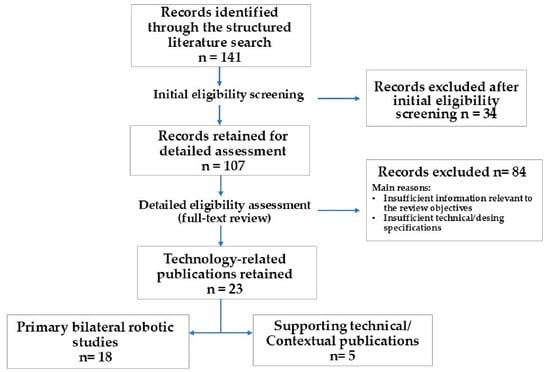
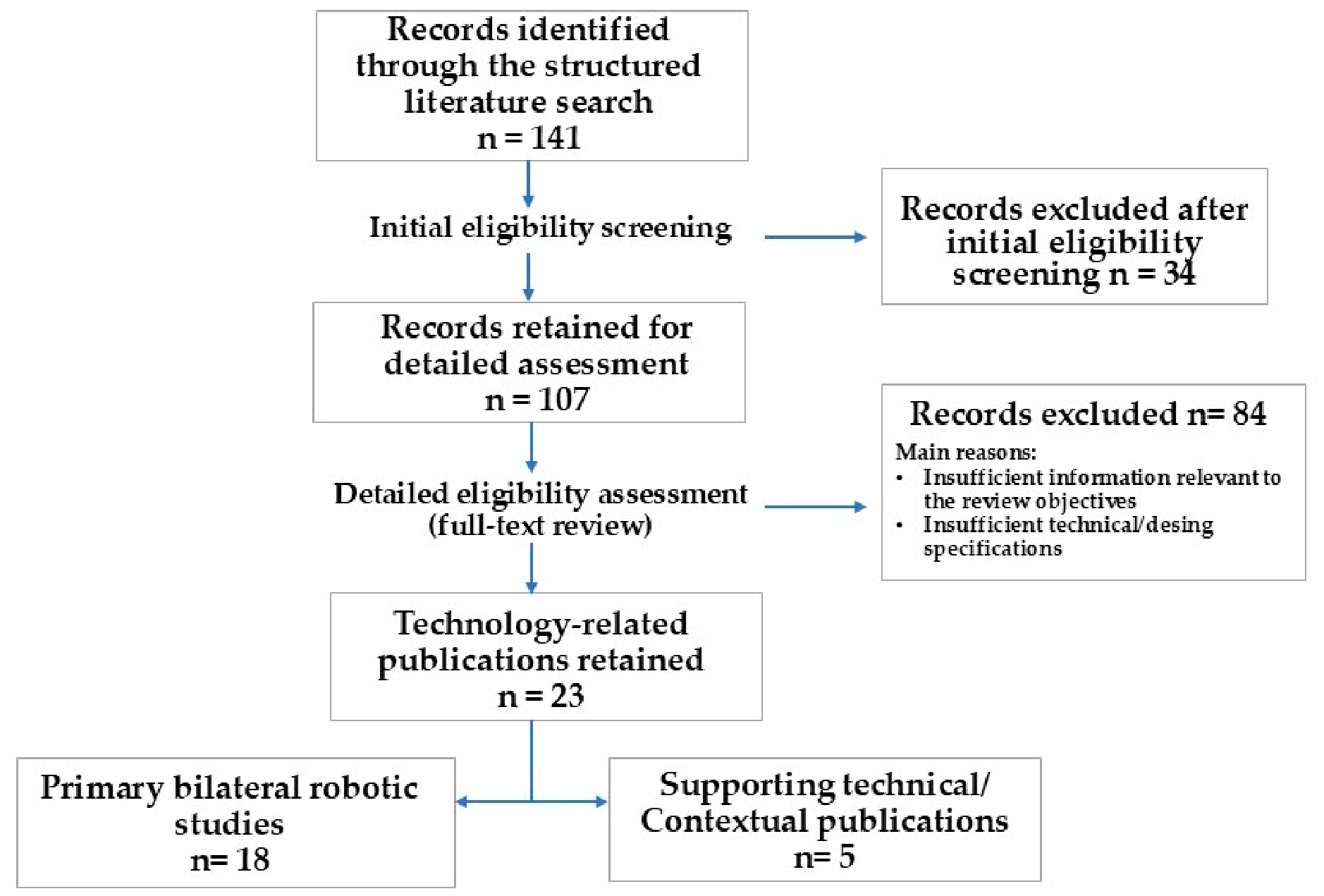
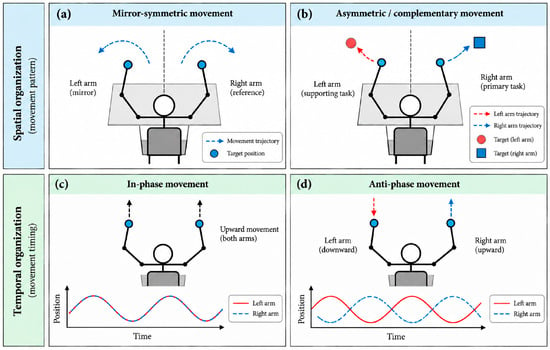
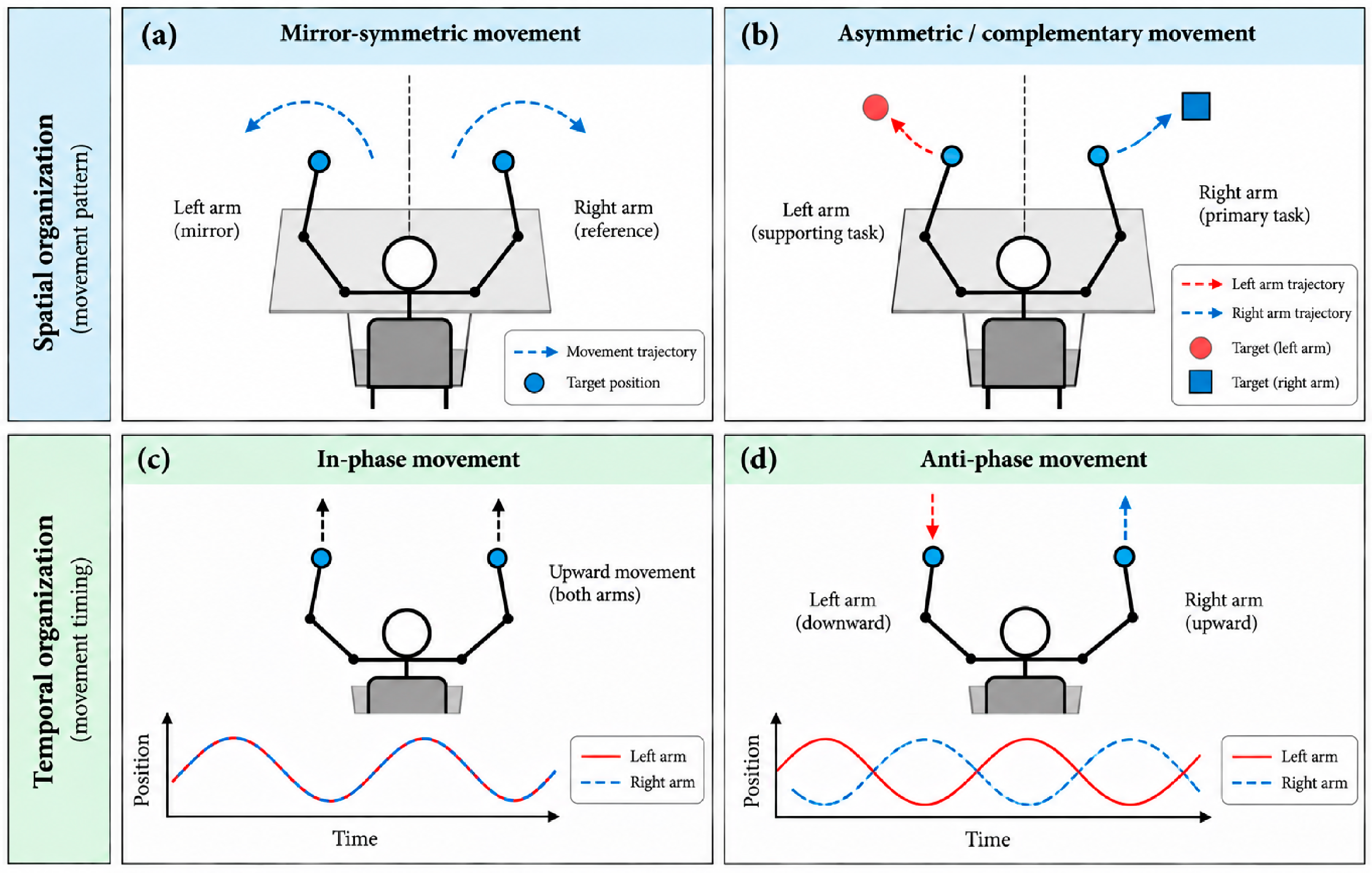
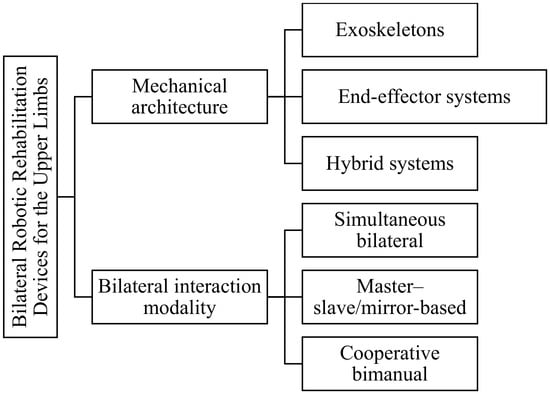
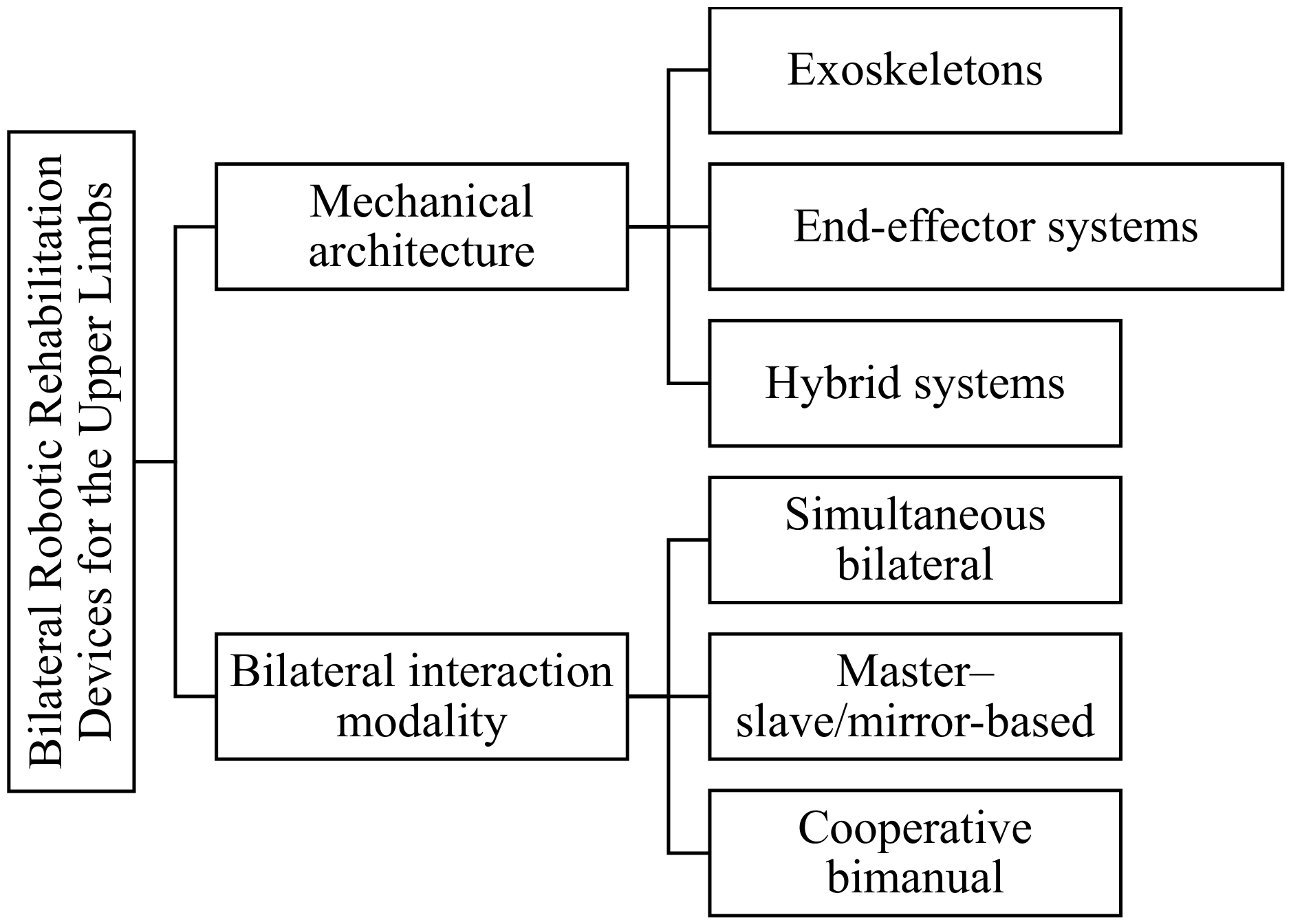

Disclaimer/Publisher’s Note: The statements, opinions and data contained in all publications are solely those of the individual author(s) and contributor(s) and not of MDPI and/or the editor(s). MDPI and/or the editor(s) disclaim responsibility for any injury to people or property resulting from any ideas, methods, instructions or products referred to in the content. |
© 2026 by the authors. Licensee MDPI, Basel, Switzerland. This article is an open access article distributed under the terms and conditions of the Creative Commons Attribution (CC BY) license.