


Abstract
Geochronological investigation and geochemical tracing of xenocrystic zircons entrained in magmatic rocks serve as effective approaches for directly unraveling the material composition and architectural framework of the deep-seated ancient continental crust. Here, we present an integrated petrological, zircon petrographic, U-Pb geochronological, and trace elemental study of a microdiorite dike from the Jiangshan area within the Gan–Hang tectonic belt, which is a key suture zone between the Yangtze and Cathaysia Blocks. Four distinct zircon types are recognized. Type I (2528 ± 21 Ma) is a metamorphic zircon that is derived from eclogite-facies metamorphism of a Neoarchean basement, revealing the existence of a Neoarchean continental crust in the deep South China Block. Types II (848 ± 53 Ma) and III (481 ± 93 Ma) are magmatic zircons representing captured Neoproterozoic and Early Paleozoic magmatic rocks, respectively. Type IV (137 ± 8.4 Ma) occurs as an overgrowth on its inherited cores and records the emplacement age of the microdiorite dike. Trace element compositions of Early Cretaceous zircons (type IV) show low Nb/Hf and elevated Th/Nb ratios, consistent with a magmatic arc setting. Combined with petrographic evidence of quartz xenocrysts and the diversity of captured zircons, we propose that the parental magma originated from partial melting of the subcontinental lithospheric mantle induced by slab-derived fluid flux, with the subsequent assimilation of diverse crustal materials during its ascent. This study not only constrains the Early Cretaceous arc magmatism in response to Paleo-Pacific Plate subduction but also provides evidence for Neoarchean crustal relics in the deep subsurface of the South China Block, with important implications for the deep compositional architecture and tectono-magmatic evolution of South China.
1. Introduction
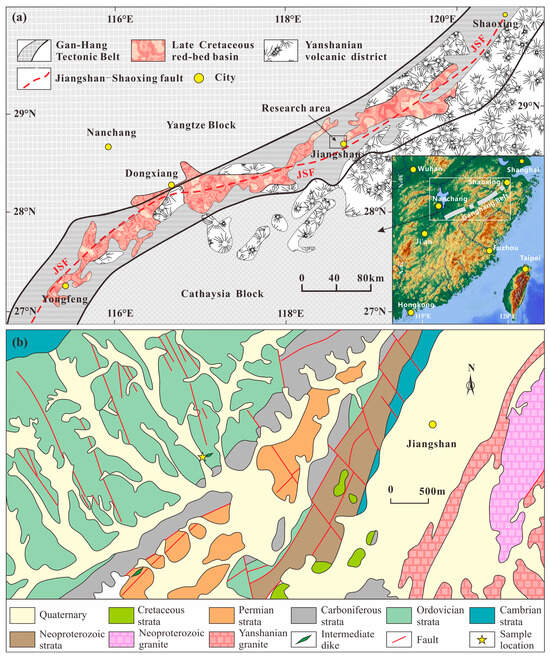
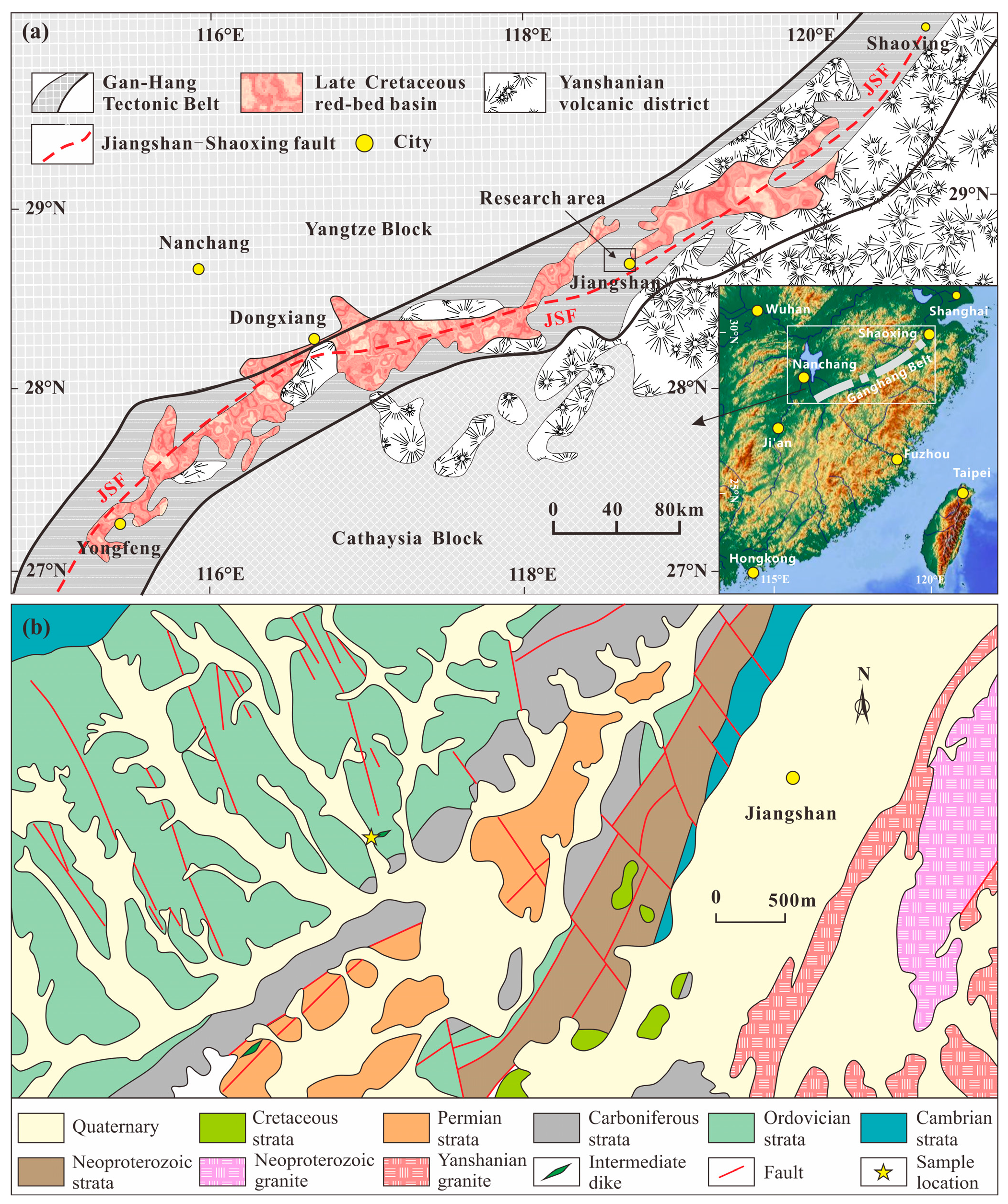
Zircon (ZrSiO4) is a common accessory mineral in igneous, metamorphic, and sedimentary rocks, as well as hydrothermal deposits. Its stable physical and chemical properties enable zircon to preserve petrogenetic information and record the geological history of its host rocks [1,2]. The development and application of high-resolution micro-imaging techniques and in situ micro-analysis, together with detailed zircon internal structure analysis, have made zircon geochronology, trace element, and Hf–O isotope analyses effective approaches for studying geochronology, hydrothermal ore genesis, petrogenesis, crust–mantle interactions, regional tectonic evolution, and early Earth history [3,4,5,6,7]. For example, Gaschnig et al. revealed a broader Archean crust than previously thought and refined the western boundary of the North American Craton by using inherited zircons from the Idaho batholith [8]. Zhang et al. discovered significant deep crustal compositional differences between the North and South Alxa Blocks by using inherited zircons from Phanerozoic granitoids [9]. Xu et al. revealed the nature of the hidden Precambrian basement in the Dabieshan Orogen by using inherited zircons from Cretaceous dikes at the southern margin [10]. The Yangtze and Cathaysia Blocks in South China were formed during the Archean to Early Paleoproterozoic era, a key period of continental crust formation. Investigating the crustal formation and reworking during this time interval is important to understanding the onset of plate tectonics and continental crustal growth on the early Earth [11,12,13,14]. The Gan–Hang tectonic belt is a volcanic–sedimentary belt that developed after the Neoproterozoic collision and the suturing of the Yangtze and Cathaysia Blocks. It is controlled by the NE-trending Jiangshan–Shaoxing deep fault and has experienced multiple phases of tectono-magmatic–metallogenic events since the Phanerozoic period, making it an ideal natural laboratory for the study of ancient crystalline basement properties and regional tectonic evolution of the South China Block (Figure 1a) [15,16,17,18]. Here we present an integrated study of petrology, zircon petrography, geochronology, and trace element geochemistry of a microdiorite dike from the Jiangshan area of the Gan–Hang belt (Figure 1a,b), aiming to determine its emplacement age, magma source, petrogenetic processes, and geodynamic setting and provide new constraints on the deep material composition and tectono-magmatic evolution of the South China Block.
Figure 1.
(a) Geological sketch map of the Gan–Hang belt (modified from [16]); (b) geological sketch map of the Jiangshan area (modified from [19]).
2. Regional Geological Background
The South China Block comprises the Yangtze and Cathaysia Blocks, which were collaged along the Jiangnan Orogen during the Neoproterozoic (ca. 870–810 Ma) in the context of Rodinia amalgamation and formed abundant magmatism [11,20]. It retains scarce Neoarchean crustal relics (ca. 2.5 Ga) in the Kongling Terrane of the Yangtze Block [21]. Subsequent regional extension (ca. 800–690 Ma) generated rift basins and associated magmatism, and also fragmented the Cathaysia Block into several sub-blocks [22]. The Early Paleozoic (ca. 460–390 Ma) witnessed a strong orogeny and widespread magmatism in South China, driven by divergent tectonic movements linked to the northwestward subduction of the East China Sea Block and the southeastward underthrusting of the Pingxiang Sea Block beneath the Cathaysia Block [23]. During the Early Mesozoic, the South China Block experienced extensive tectono-magmatic activity under the combined influence of the collision with the North China Craton to the north, the collision with the Indochina Plate to the southwest, and the flat-slab subduction of the Paleo-Pacific (Izanagi) Plate beneath the Eastern Asian continental margin [24,25]. From the Late Jurassic (ca. 160 Ma) onward, the tectonic regime shifted from compression to extension, driven by slab break-off and rollback of the Paleo-Pacific Plate, ultimately resulting in a basin-and-range style tectonic framework during the Cretaceous [24,26,27].
In South China, a series of northeast (NE)-trending Phanerozoic granitoid belts, characterized by high εNd values and low TDM ages that indicate significant mantle input [28], are spatially associated with several Mesozoic extensional basins. These basins stretch from Hangzhou in Zhejiang, through Central Jiangxi and Southern Hunan, to the Shiwandashan area in Guangxi, and are collectively termed the Shihang Belt [11], which broadly corresponds to the Qinzhou–Hangzhou metallogenic belt [29]. Tectonically, the Shihang Belt is superimposed upon the Jiangshan–Shaoxing suture zone (JSF), which was formed by the Neoproterozoic subduction and subsequent collision between the Yangtze and Cathaysia Blocks [30]. Its northern segment, located in Eastern Jiangxi and Western Zhejiang, is referred to as the Gan–Hang tectonic belt (Figure 1a).
The Gan–Hang belt trends NE for about 450 km and comprises a series of volcanic–sedimentary basins and granitic intrusive complexes distributed along the belt (Figure 1a) [18]. The Jiangshan area, situated in the Western Zhejiang part of the Gan–Hang belt, lies adjacent to the Jiangshan–Shaoxing fault zone (JSF) at its southeast, and is tectonically positioned on the southeastern margin of the Yangtze Plate (Figure 1a). The Precambrian crystalline basement of the Yangtze Block consists predominantly of Meso- to Neoproterozoic rocks, with Archean to Paleoproterozoic metasedimentary rocks sporadically outcropping in the western and northern parts of the block; its cover sequence comprises Phanerozoic igneous and sedimentary rocks [14].
The rocks exposed in the Jiangshan area include the Neoproterozoic volcaniclastic rocks, clastic rocks, tillites, and chemical sedimentary rocks; Cambrian-to-Ordovician shelf facies, carbonate platform facies, and turbidite facies clastic rocks and carbonates; Carboniferous fluvial and paralic clastic sediments; Permian carbonate platform, shallow marine, and tidal flat clastic rocks and carbonates; Cretaceous fluvial clastic rocks; and Quaternary sediments (Figure 1b) [23,31,32,33]. The strata in the study area have been compressed along a SE–NW direction, resulting in a series of parallel folds, with axes trending NE 30–45° and axial planes dipping to the southeast (Figure 1b). Faults in the area mainly comprise NE-trending and NW-trending sets, with the former oriented parallel to bedding strike and fold axes, while the latter is oriented perpendicular to them (Figure 1b). Igneous rocks in the Jiangshan area are predominantly Neoproterozoic and Yanshanian granites exposed in the southeast, along with minor scattered intermediate–mafic dikes, such as lamprophyres and diorites, emplaced along faults or interlayer fractures in the country rocks (Figure 1b).
3. Geology and Petrology of the Microdiorite Dike
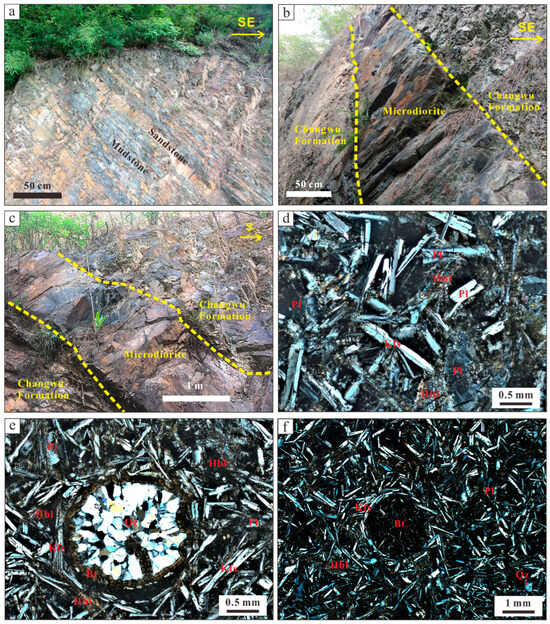
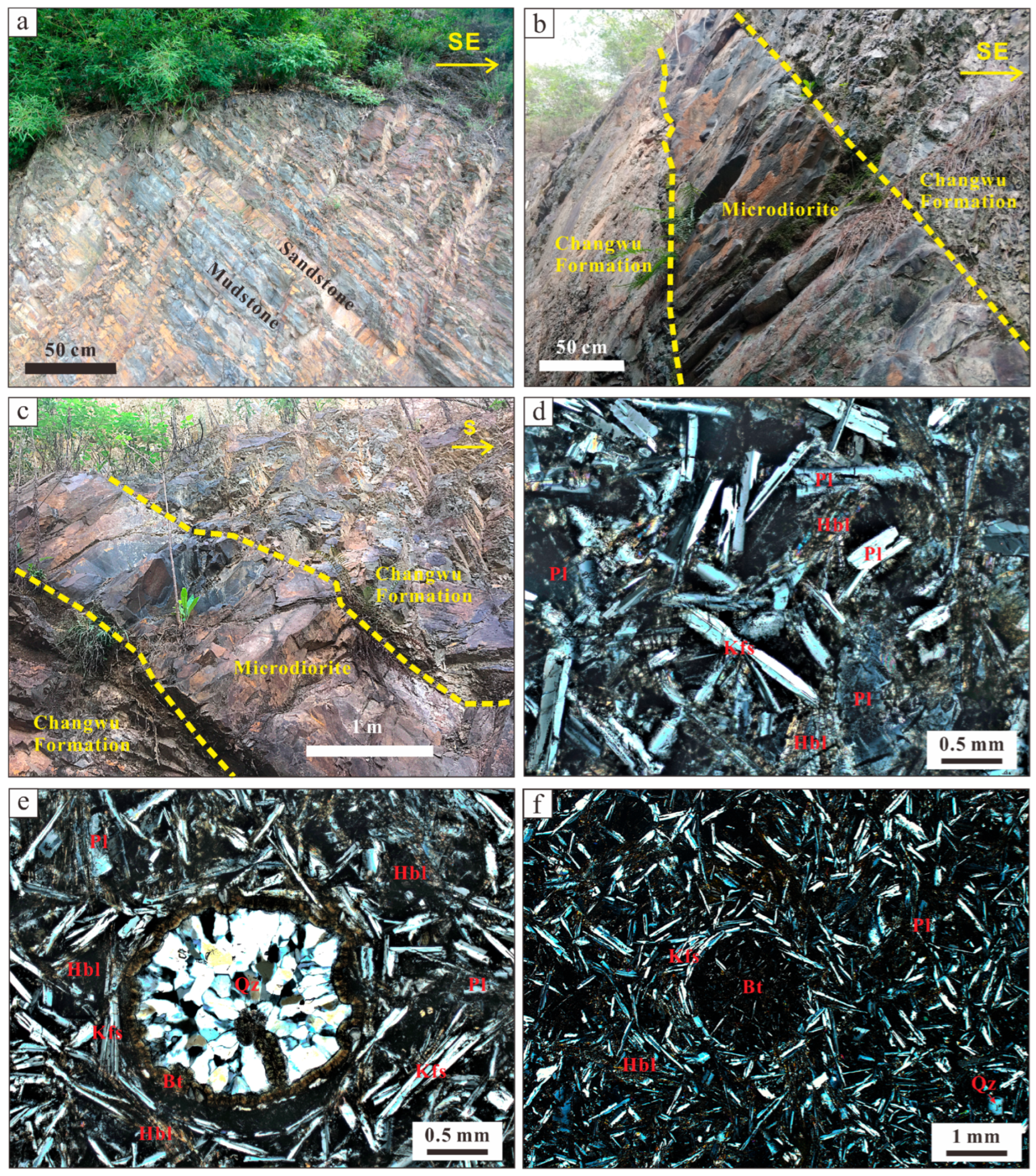
The microdiorite dike investigated in this study intruded along interlayer fractures into the clastic rocks of the Upper Ordovician Changwu Formation (Figure 1b and Figure 2a–c). The dike is 1 m wide, strikes 120°, and dips 45°, with unknown lateral extent at both ends. Chilled margins and baked edges are developed at the intrusive contact, with mudstone interbedded with siltstone (Figure 2b,c). The microdiorite is grayish-green, fine-grained, and exhibits a massive structure. It mainly comprises plagioclase, amphibole, K-feldspar, biotite, quartz, secondary alteration calcite, and minor amounts of other dark minerals. Plagioclase (~60%) occurs as long prismatic and tabular crystals with sericitization along their edges (Figure 2d–f). Amphibole (~25%) occurs as long prismatic and acicular crystals, which are extensively altered to chlorite and talc (Figure 2d–f). K-feldspar (~5%) is acicular, shows carlsbad cross-twinning, and is weakly altered (Figure 2d–f). The dike also contains quartz xenocrysts derived from the country rocks; the quartz grains are rounded by resorption, and their outer margins or fractures are enclosed or filled with dark minerals, such as biotite (Figure 2e,f).
Figure 2.
Field outcrops and microphotographs of the microdiorite dike. (a) Upper Ordovician rhythmic mudstone–siltstone beds; (b,c) microdiorite dike intruding along interlayer fractures of the Changwu Formation; (d) microphotograph of microdiorite (cross-polarized light); (e,f) quartz xenocryst in microdiorite (cross-polarized light). Pl—plagioclase; Hbl—hornblende; Kfs—K-feldspar; Bt—biotite; Qz—quartz.
4. Analytical Methods
Two fresh, unweathered microdiorite samples (JS-1 and JS-2) were collected in the field and crushed to 40–80 mesh in the laboratory in preparation of the selection of zircon single minerals. The zircon grains were separated using heavy liquid separation, magnetic separation, electromagnetic separation, alcohol panning, and hand-picking under a Leica DM4 P binocular microscope, Wetzlar, Germany. The selected zircon grains were mounted in epoxy resin for laser ablation U-Pb isotope and trace element analyses. Transmitted and reflected light photographs and cathodoluminescence (CL) imaging were carried out at Guangzhou Tuoyan Testing Technology Co., Ltd., Guangzhou, China. The CL imaging was performed using a TESCAN MIRA 3 field-emission scanning electron microscope, Brno, Czech Republic, with an accelerating voltage of 10–20 kV, a current of 15 nA, and a working distance of 15–16 mm.
Zircon U-Pb isotopic dating and trace element concentrations were analyzed using Laser Ablation Inductively Coupled Plasma Mass Spectrometer (LA-ICP-MS) at Guangzhou Tuoyan Testing Technology Co., Ltd. The laser ablation system employed a New Wave Research (NWR) system with an ArF 193 nm excimer laser and optical system, coupled to an iCAP RQ ICP-MS, Fremont, CA, USA. Helium was used as the carrier gas and argon as the makeup gas to tune sensitivity. Laser spot size and frequency were 30 µm and 6 Hz, respectively, with an energy density of 5 J/cm2. For U-Pb dating and trace element quantification, zircon standard 91500 [34] and glass standard NIST SRM 610 [35] were used as external standards for isotope and trace element fractionation corrections, respectively. Zircon Plešovice was analyzed as an unknown to check data quality [36]. Each time-resolved analysis consisted of ~30 s of background and ~40 s of sample signal. Offline data reduction was performed using ICPMSDataCal 11.8 software, including the selection of sample and blank signals, correction of instrument sensitivity drift, and calculation of element concentrations and U-Pb isotope ratios and ages [37].
5. Results
5.1. Zircon Texture and Classification
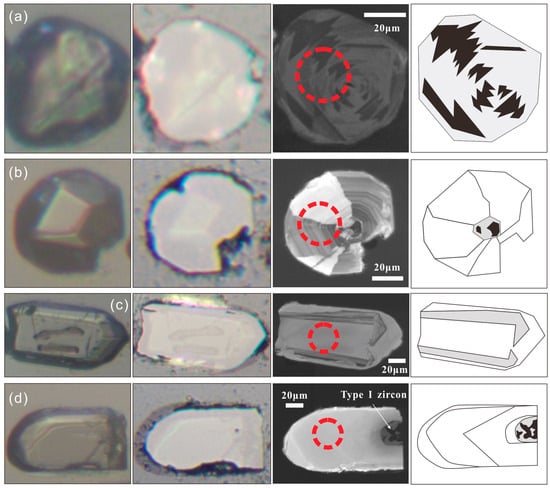
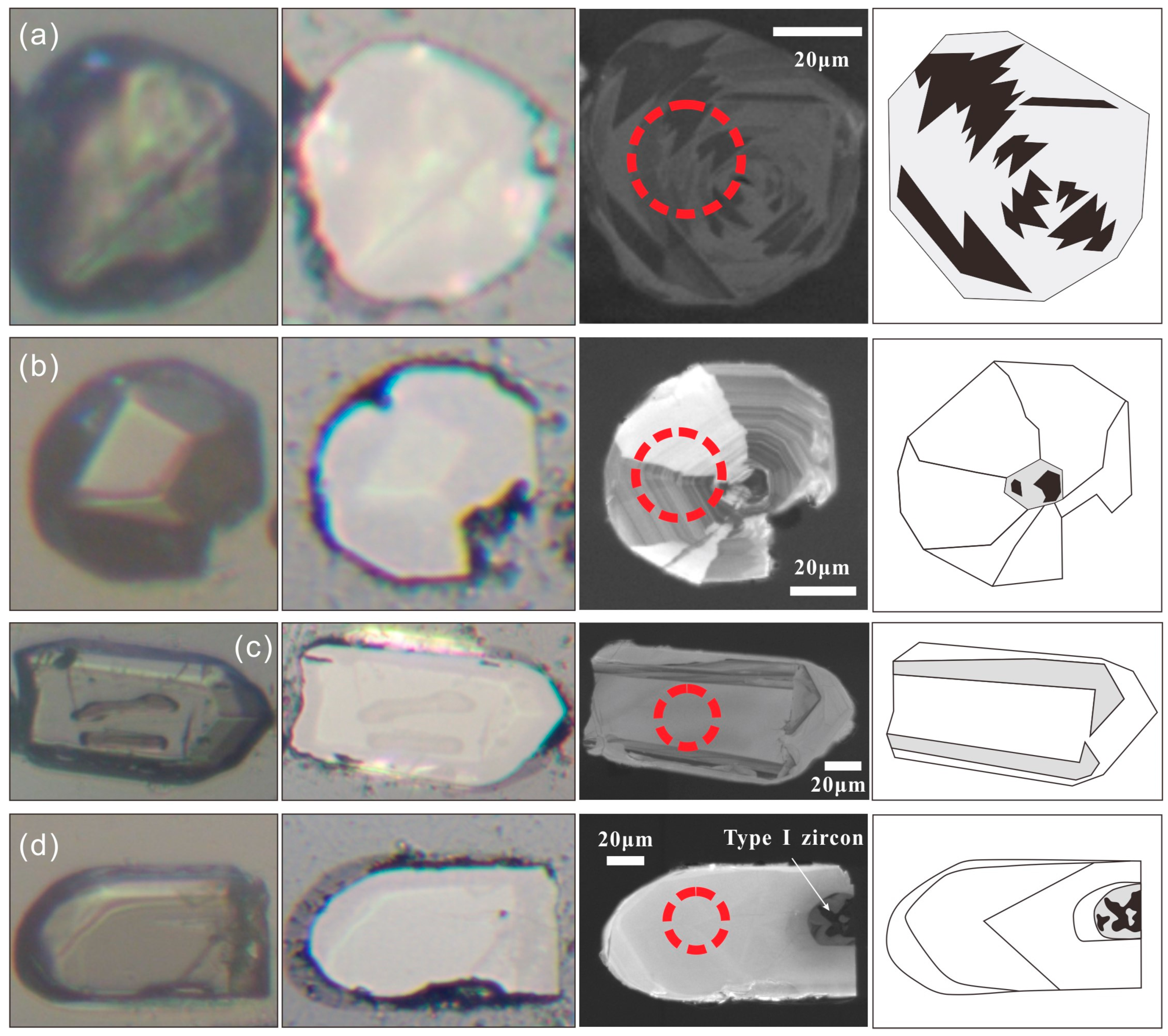
Zircon grains from microdiorite were examined under an optical microscope and SEM, and were classified into four types based on their internal textures (Figure 3). Type I zircons are rounded and granular, with pits or pitted surfaces, are ~80 µm in diameter, show dark CL brightness, and exhibit fir-tree or irregular zoning in CL images (Figure 3a). Type II zircons are irregular and granular, with edges mechanically broken or resorbed into embayed forms, smooth surfaces, are ~100 µm in size, and show oscillatory zoning and sector zoning in CL (Figure 3b). Type III zircons are elongated, with pitted surfaces, are >150 µm in long-axis direction, and display parallel banding along the long axis in CL (Figure 3c). Type IV zircons are elongated and smooth-surfaced, are >150 µm in long axis, and show bright CL, with broad, rounded concentric zoning indicative of multiple growth phases, and commonly contain type I and type II zircon cores (Figure 3d and Figure 4).
Figure 3.
Zircon microstructure characteristics from the microdiorite dike (from left to right: transmitted light, reflected light, CL image, and CL schematic). (a) Type I zircon; (b) type II zircon; (c) type III zircon; (d) type IV zircon. Red dashed circles on the CL images represent the LA-ICP-MS analysis positions.
Figure 4.
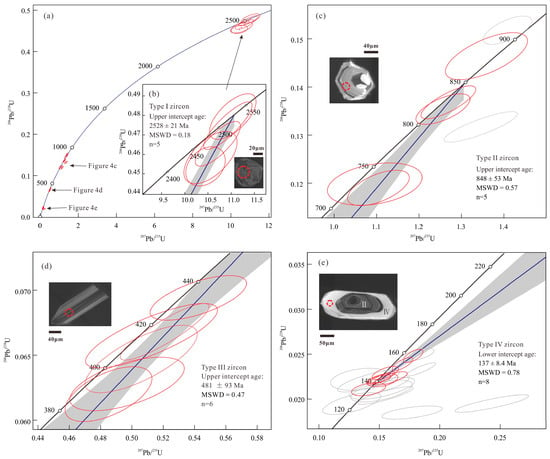
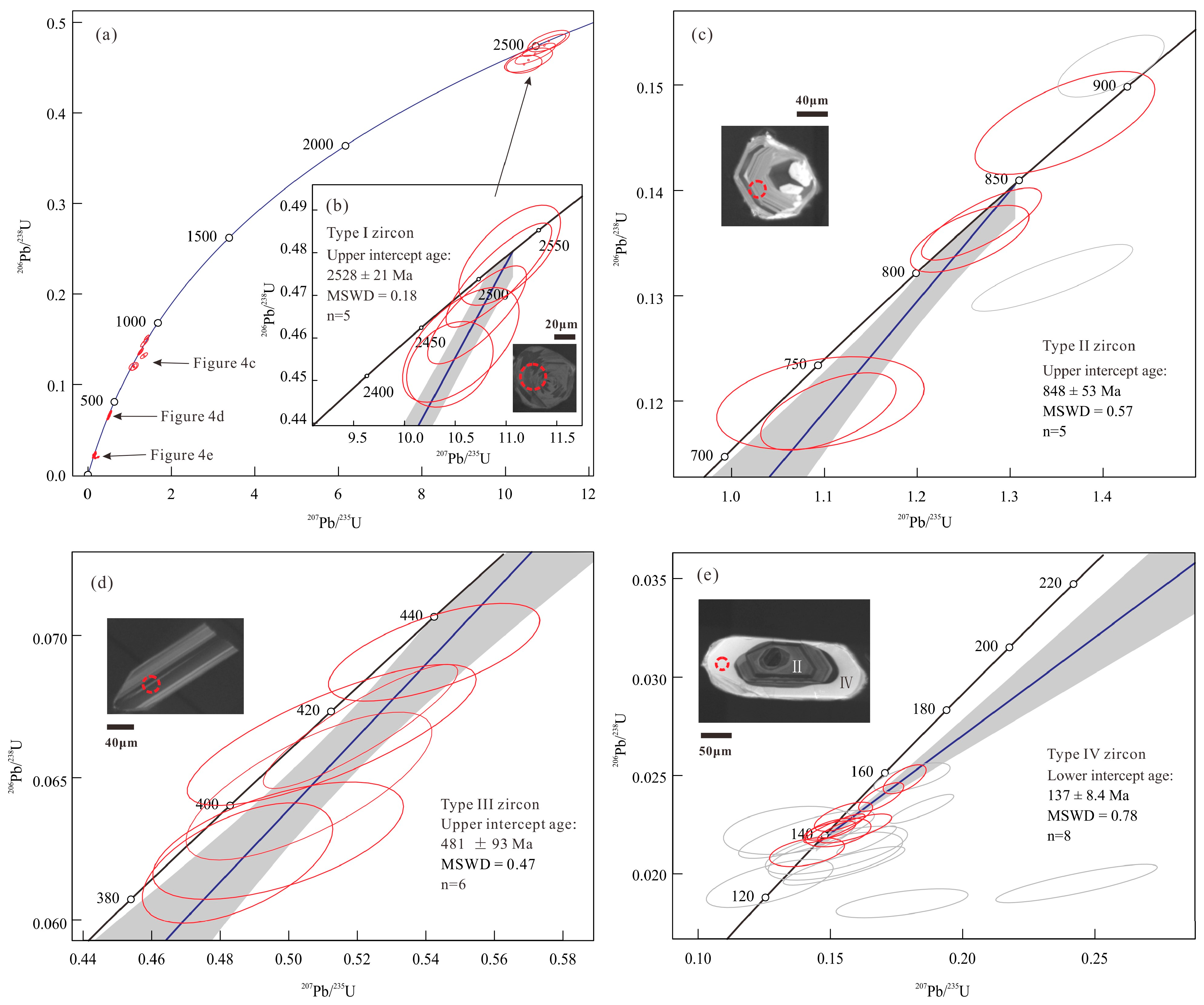
U-Pb ages of zircons from the microdiorite dike. (a) Zircon U-Pb concordia diagram of all zircon grains shows four distinct ages; (b) zircon U-Pb concordia diagram of type I zircon and its upper intercept age; (c) zircon U-Pb concordia diagram of type II zircon and its upper intercept age; (d) zircon U-Pb concordia diagram of type III zircon and its upper intercept age; (e) zircon U-Pb concordia diagram of type IV zircon and its lower intercept age. Red dashed circles on the CL images represent the LA-ICP-MS analysis positions. Oval gray circles represent data excluded from the final age calculations.
5.2. Zircon U-Pb Ages
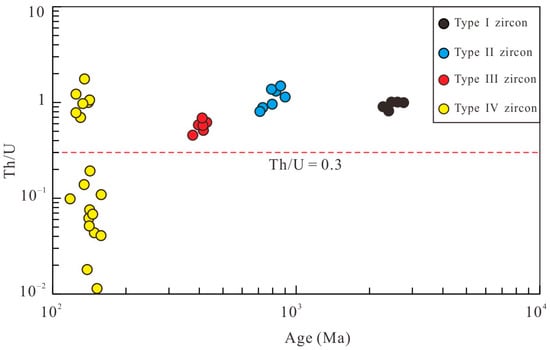
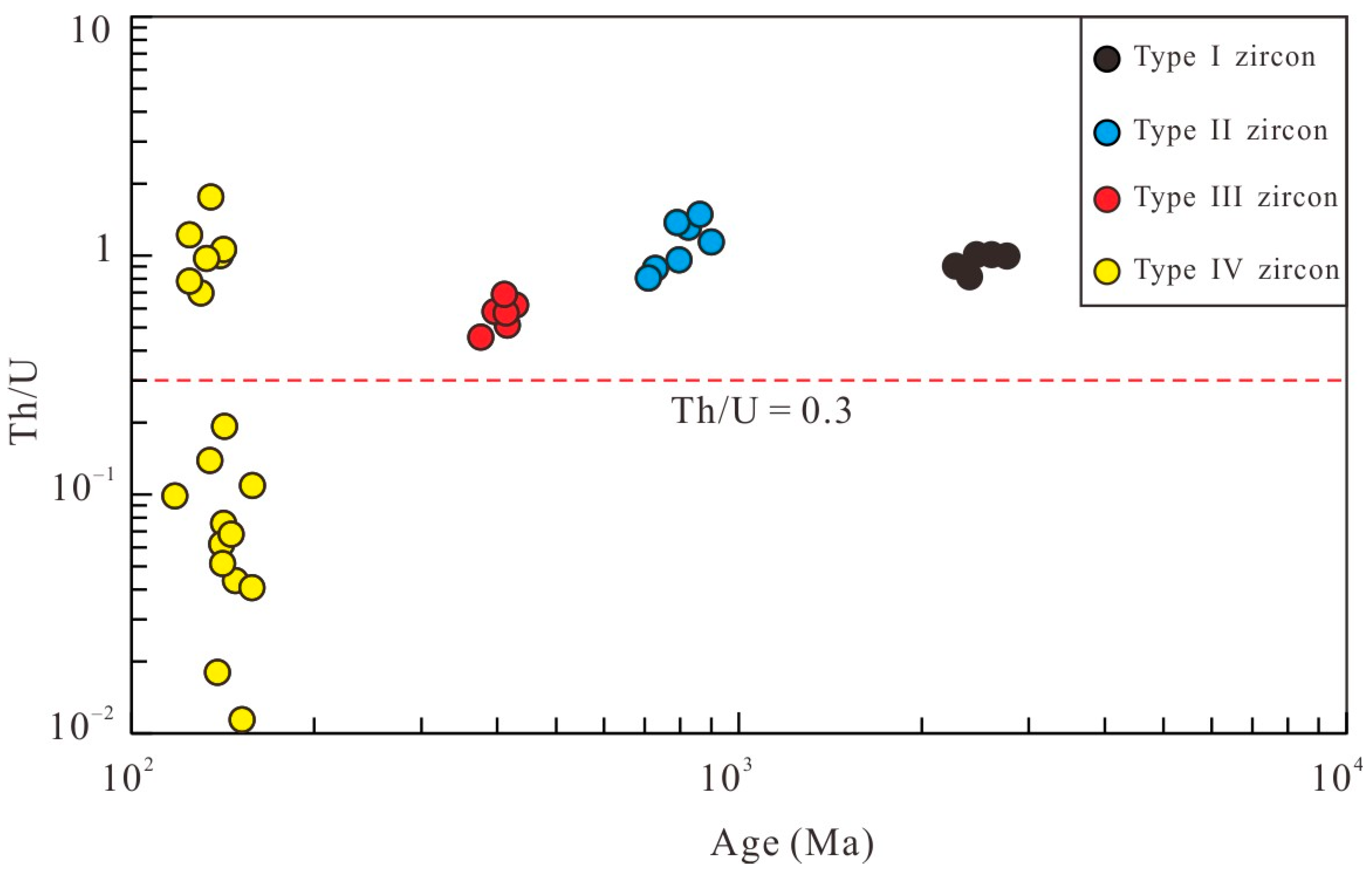
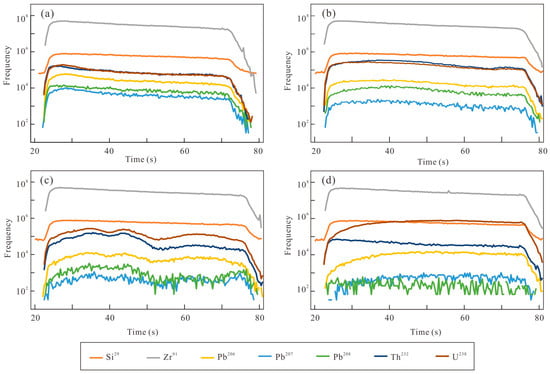
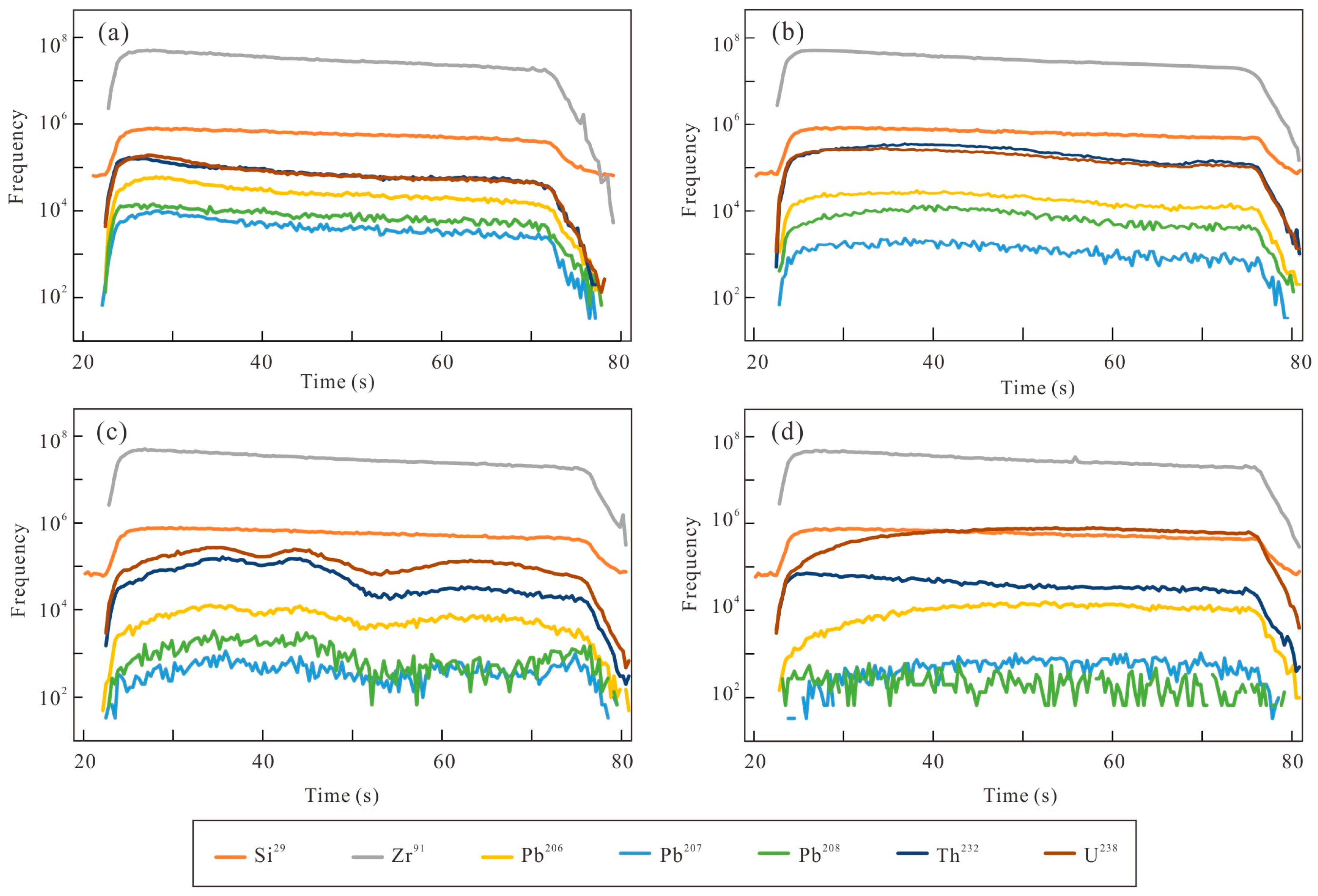
The results of LA-ICP-MS U-Pb isotopic analyses for the four zircon types are summarized in Table S1. All zircon grains show variable Th/U ratios and four distinct ages in the zircon U-Pb concordia diagrams (Figure 4a and Figure 5). Type I zircons have Th/U ratios of 0.79–1.05 (average 0.96) and an upper intercept 206Pb/238U age of 2528 ± 21 Ma (Figure 4b). Type II zircons have Th/U ratios of 0.81–1.89 (average 1.30) and an upper intercept 206Pb/238U age of 848 ± 53 Ma (Figure 4c). Type III zircons have Th/U ratios of 0.42–0.63 (average 0.52) and an upper intercept 206Pb/238U age of 481 ± 93 Ma (Figure 4d). Type IV zircons have Th/U ratios of 0.01–1.76 (average 0.44) and a lower intercept 206Pb/238U age of 137 ± 8.4 Ma (Figure 4e). In the time-resolved U-Th-Pb isotopic analysis spectra diagrams (Figure 6), all zircon types show flat distribution patterns for 206Pb, 238U, and 232Th, indicating that these elements are incorporated in the zircon lattice or as solid solutions/nanoparticles while also demonstrating the reliability of the U-Pb ages.
Figure 5.
Age vs. Th/U diagram of zircons from the microdiorite dike. Red dashed line (Th/U = 0.3) indicates the limit between metamorphic (<0.3) and magmatic (>0.3) zircons [7].
Figure 6.
Time-resolved U-Th-Pb output graphs of zircons from the microdiorite dike. (a) Type I zircon; (b) type II zircon; (c) type III zircon; (d) type IV zircon.
5.3. Zircon Trace Element Characteristics
Trace element data for zircons are given in Table S2. Type I zircons have the lowest Ti content of 1.04–1.11 ppm, (avg. 1.07 ppm), the lowest total REE (∑REE = 44.25–48.40 ppm, avg. 45.98 ppm), LREE/HREE = 0.31–0.35 (avg. 0.32), Ce/Ce* = 40.58–62.95 (avg. 55.68), and Eu/Eu* = 0.17–0.65 (avg. 0.40). Type II zircons have a Ti content of 6.60–10.36 ppm (avg. 7.88 ppm), ∑REE = 1182.95–2268.16 ppm (avg. 1955.35 ppm), LREE/HREE = 0.03–0.06 (avg. 0.05), Ce/Ce* = 5.04–115.34 (avg. 65.66), and Eu/Eu* = 0.16–0.53 (avg. 0.36). Type III zircons have the highest Ti content of 12.83–66.89 ppm (avg. 42.44 ppm), ∑REE = 1320.80–1500.81 ppm (avg. 1411.42 ppm), LREE/HREE = 0.01–0.07 (avg. 0.02), Ce/Ce* = 28.43–97.95 (avg. 61.37), and Eu/Eu* = 0.16–0.89 (avg. 0.52). Type IV zircons have Ti = 3.44–23.11 ppm (avg. 7.58 ppm), ∑REE = 980.6–3593.4 ppm (avg. 1549.8 ppm), LREE/HREE = 0.01–0.05 (avg. 0.02), Ce/Ce* = 16.58–134.86 (avg. 73.74), and Eu/Eu* = 0.07–0.19 (avg. 0.12).
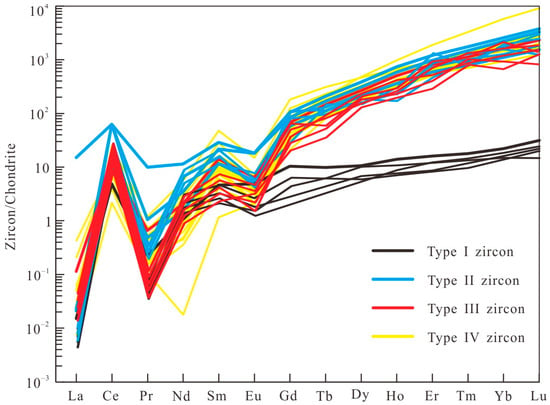
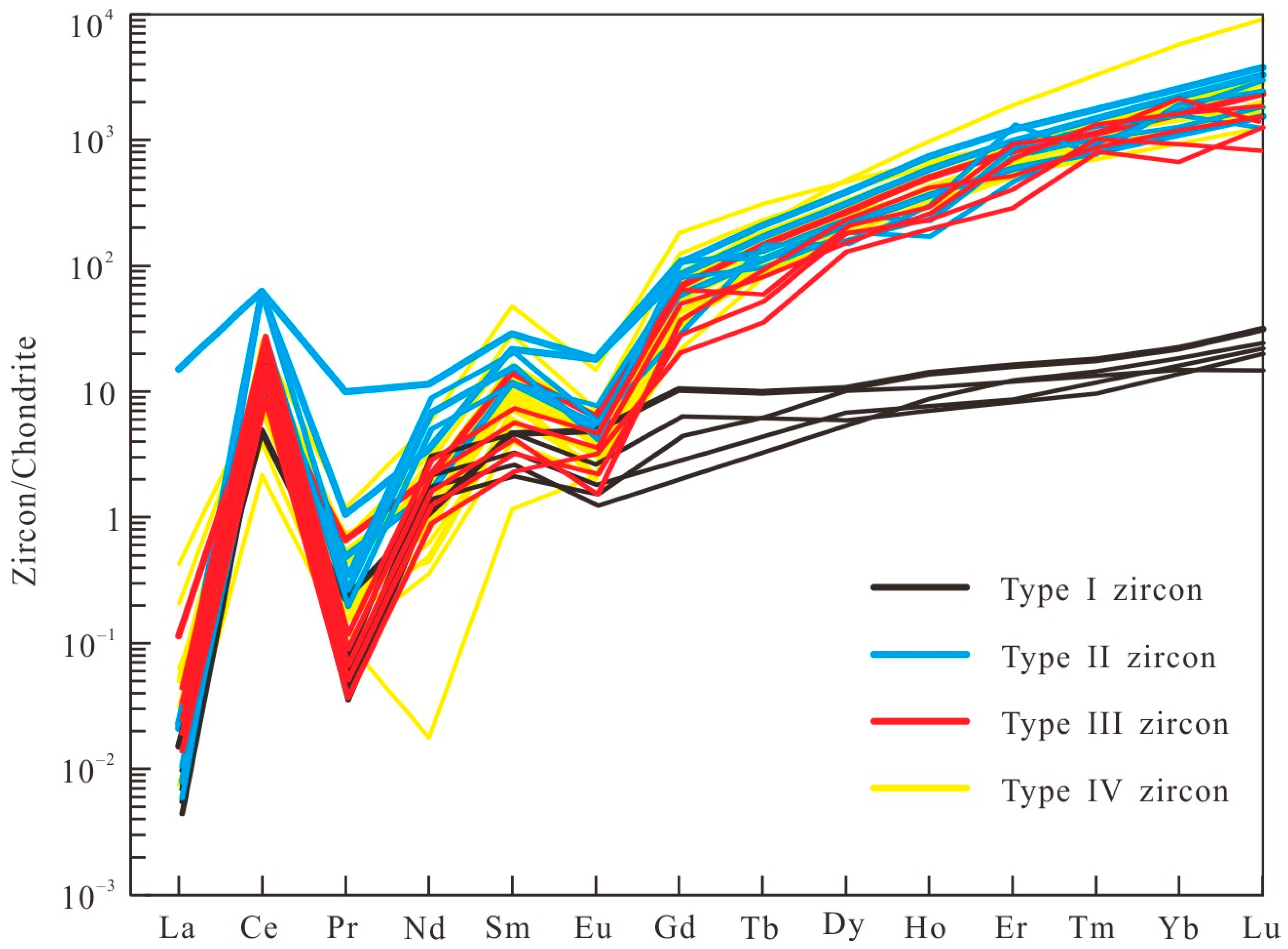
On chondrite-normalized REE patterns (Figure 7), all zircon grains show LREE-depleted and HREE-enriched left-sloping patterns, with positive Ce anomalies and negative Eu anomalies. In addition, type I zircons display relatively flat HREE patterns with weak negative Eu anomalies, whereas types II, III and IV show steep HREE-enriched patterns with pronounced negative Eu anomalies (Figure 7).
Figure 7.
Chondrite-normalized REE distribution patterns of zircons from the microdiorite dike. Chondrite normalization values adapted from [38].
6. Discussion
6.1. Zircon Genesis
Zircons of different origins exhibit distinct textural features [2]. In this study, type I zircons were rounded, had dark CL (indicating low trace element contents), and showed fir-tree or irregular zoning, all of which are characteristic of metamorphic zircons (Figure 3a) [2,39,40]. Type II zircons displayed clear oscillatory and sector zoning in CL, typical of magmatic (granitic) zircons, while their irregular shapes indicated later mechanical breakage or resorption (Figure 3b) [2,40]. Type III zircons were elongated with parallel banding (prism faces), which was consistent with intermediate–mafic magmatic zircon textures (Figure 3c) [40]. Type IV zircons had bright CL with broad rounded zoning and commonly contained type I and II cores, indicating overgrowth or recrystallization of inherited zircons under high-temperature fluids/melts (Figure 3d and Figure 4) [2].
Zircon crystallization temperature is a useful criterion to distinguish magmatic (T > 600 °C) from hydrothermal (T < 500 °C) origins [41]. Using the Ti-in-zircon thermometer from [42] and the expression T(°C) zircon = (5080 ± 30)/[(6.01 ± 0.03)—log(Ti)]—273, the resulting calculated temperatures are: type I = 576.21–594.91 °C (avg. 583.85 °C); type II = 705.67–744.08 °C (avg. 719.72 °C); type III = 763.34–940.96 °C (avg. 876.17 °C); and type IV = 655.18–820.39 °C (avg. 709.82 °C). The Ti-in-zircon temperatures were calculated assuming aTiO2 = 1 and aSiO2 = 1 [42]. Quartz was present in our samples (Figure 2e; supporting aSiO2 ≈ 1), but rutile saturation (aTiO2 = 1) could not be confirmed petrographically. If aTiO2 was as low as 0.5, the calculated temperatures would be underestimated by 60–80 °C (663.85–643.85 °C), which is still below the temperature of amphibolite-to-granulite-facies metamorphism in the Archean Kongling Terrane of the South China Block (660–940 °C) [21]. Thus, except for type I, which is slightly below the magmatic range and is ascribed to metamorphic source, types II, III and IV are magmatic in origin.
Different zircon types also have distinct trace element features that can indicate their formation environment [2]. It is commonly considered that magmatic zircons have high Th and U with Th/U > 0.3, whereas metamorphic zircons typically have Th/U < 0.3 [7,43]. However, an increasing number of studies have questioned the reliability of the Th/U ratio as a genetic indicator, as magmatic zircons may have Th/U < 0.1 while metamorphic zircons can have Th/U > 0.1, especially metamorphic overgrowths or recrystallized grains with Th/U ratios up to 0.7 [44,45,46]. Therefore, although types I, II, and III in this study have Th/U > 0.3 (Figure 5), they cannot all be classified as magmatic, and type IV, with a wide range of Th/U ratios (0.01–1.76), might be attributed to a single magmatic origin. Because HREE (M3+) substituted more readily than LREE (M3+) for Zr4+ in the zircon lattice, magmatic zircons typically showed HREE enrichment and LREE depletion [47], as well as positive Ce anomalies (Ce/Ce* > 1) and negative Eu anomalies (Eu/Eu* < 1) [2,47]. Types II, III, and IV matched these features (Figure 7). Type I zircon showed a weak Eu anomaly, subdued enrichment, and a flat distribution patten of HREE that were consistent with metamorphic zircon REE signatures [48], which may have been caused during eclogite-facies metamorphism where extensive garnet growth depletes HREE in other minerals, such as zircon, and Eu anomalies are absent [49].
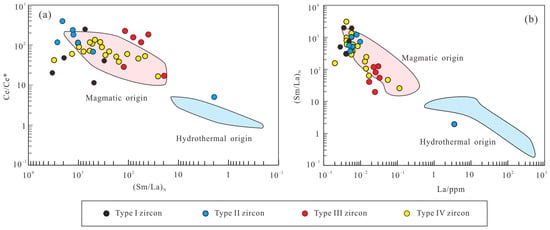
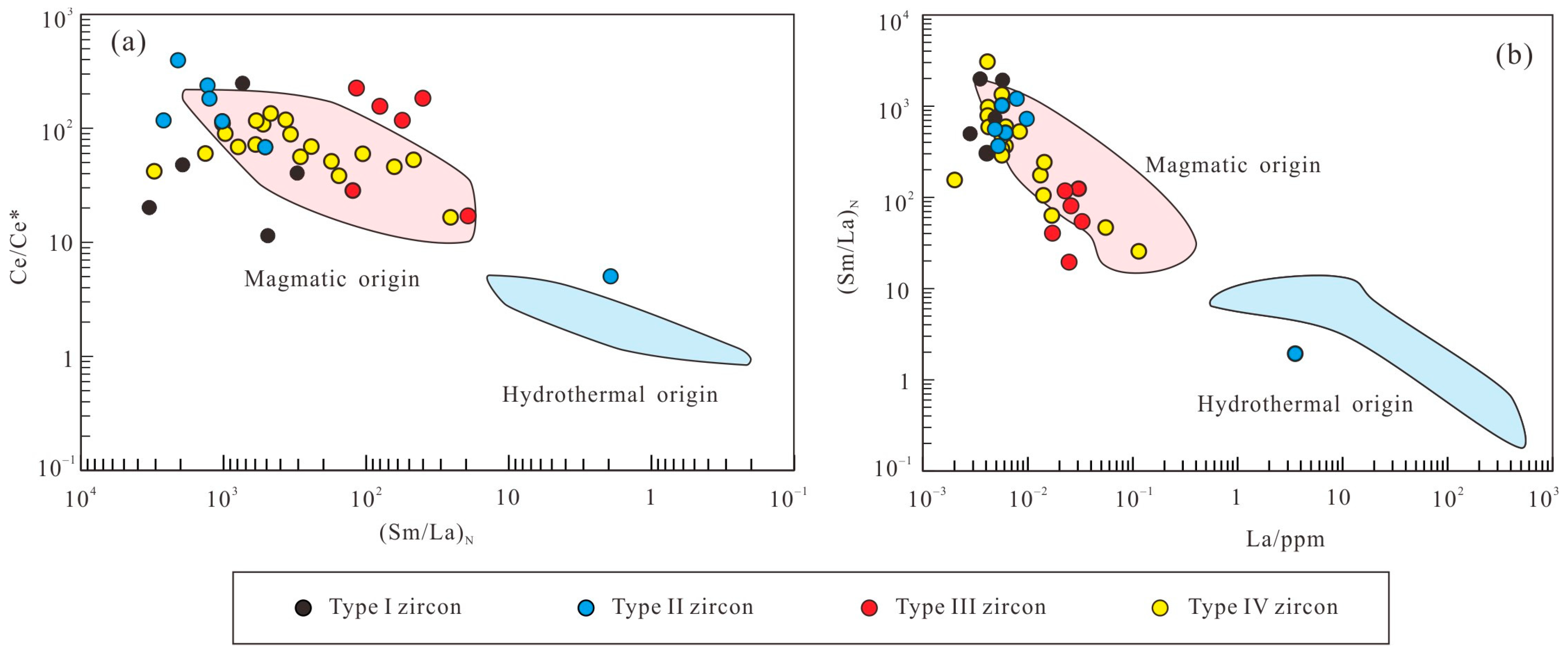
Therefore, although almost all zircons fell within the magmatic field on the (Sm/La)N–Ce/Ce* and La–(Sm/La)N discrimination diagrams (Figure 8a,b), type I zircons were considered as metamorphic origin, which derived from eclogite-facies metamorphism of a Neoarchean igneous protolith, as was suggested by its upper intercept age of 2528 ± 21 Ma (Figure 4b) [50]. Types II and III were magmatic zircons, as the former was from the Neoproterozoic granitic magmatism with an upper intercept age of 848 ± 53 Ma (Figure 4c), while the latter was from the Early Paleozoic intermediate–mafic magmatism with an upper intercept age of 481 ± 93 Ma (Figure 4d). Type IV was an overgrowth/recrystallization product on the above inherited zircons during the Early Cretaceous magmatism, as was suggested by its lower intercept age of 137 ± 8.4 Ma (Figure 4e) [51]. Thus, types I, II, and III are captured zircons entrained by the parent magma during the ascent from its source to the shallow crust (similar to the quartz xenocrysts in Figure 2e), while type IV, with the youngest age, represents the emplacement age of the microdiorite dike (Figure 4) [2,51]. For type IV zircons, the analytical spots were exclusively positioned on the newly formed overgrowth rims, which exhibited bright CL and broad rounded zoning, whereas the inherited cores (types I or II) were avoided (Figure 3d and Figure 4). Therefore, the U-Pb ages and trace element compositions of type IV zircons were considered to represent magmatic zircons crystallized from the host dike melt, and can thus be used to constrain the emplacement age and tectonic setting of the microdiorite.
Figure 8.
Discrimination diagrams for zircon types from the microdiorite dike. (a) (Sm/La)N vs. Ce/Ce (from [52]); (b) La vs. (Sm/La)N (from [53]).
6.2. Petrogenesis and Geological Significance
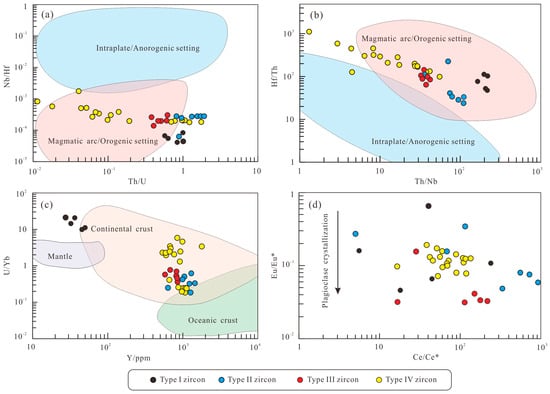
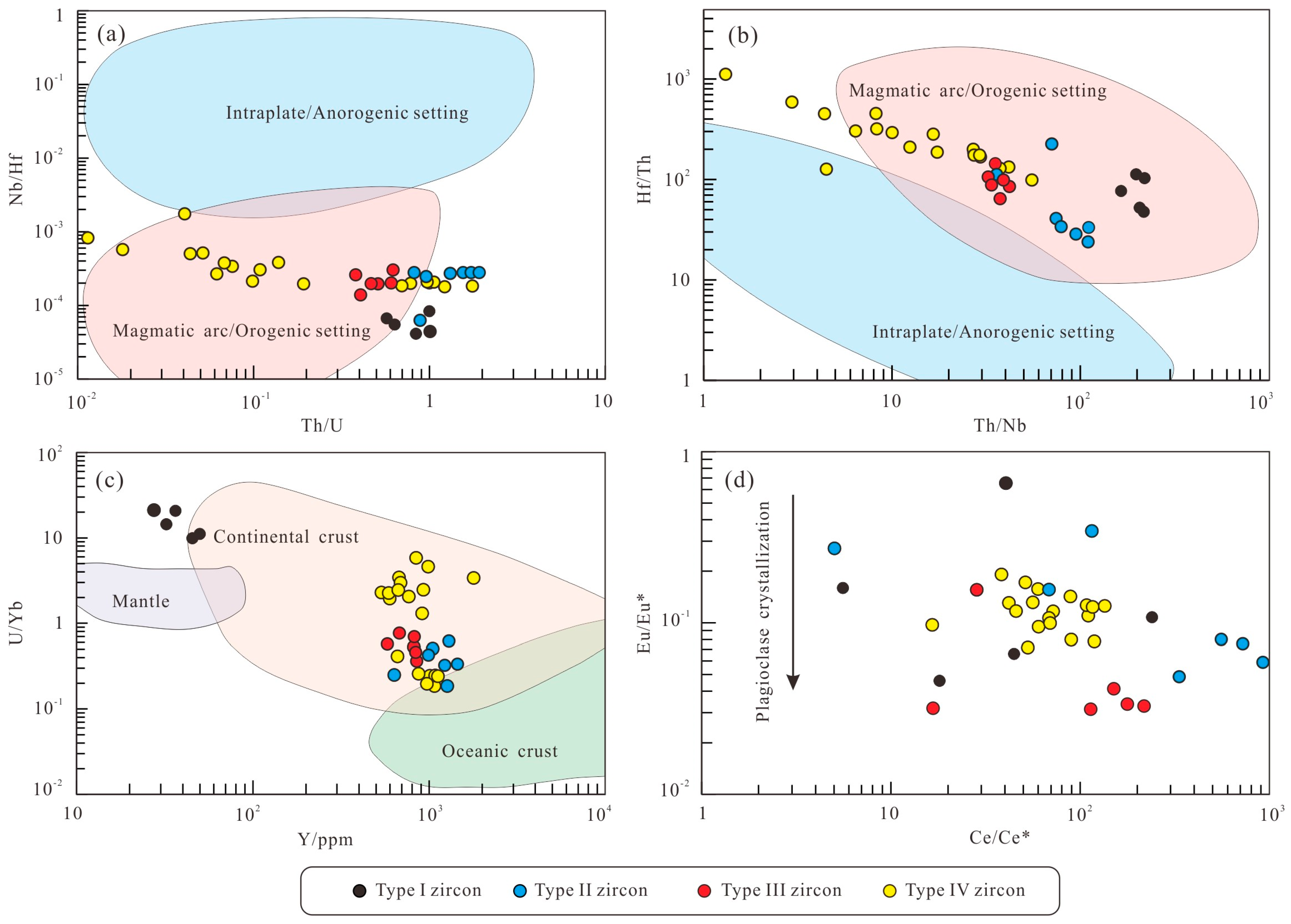
The chemical composition of zircons in igneous rocks carries important information about deep crustal and magmatic sources, and can be used to trace the diagenetic environment and basement composition [54]. Zircon strongly partitions REE, Y, Th, Hf, U, and Nb, which enter the lattice via simple substitution, coupled substitution, or xenotime-type substitution [55]. Because arc magma are more Nb-depleted relative to intraplate magma, zircons from arc settings have lower Nb/Hf and higher Th/Nb ratios than those from intraplate settings [38,56]. On the Th/U–Nb/Hf diagram, all zircons from this study had low Nb/Hf and were plotted in the magmatic arc/orogenic field (Figure 9a) [17]. Considering that crustal contamination could increase Th/Nb and decrease Hf/Th in intraplate zircons, and that arc zircons may have decreased Th/Nb and increased Hf/Th due to fractionation of Th-rich minerals (e.g., xenotime, monazite) [57], the Th/Nb–Hf/Th diagram shows that our zircons had high and variable Hf/Th and Th/Nb, consistent with the arc/orogenic settings (Figure 9b) [17].
Figure 9.
Tectonic setting discrimination diagrams for zircons from the microdiorite dike. (a) Th/U vs. Nb/Hf (from [17]); (b) Th/Nb vs. Hf/Th (from [17]); (c) Y vs. U/Yb (from [47]); (d) Ce/Ce vs. Eu/Eu.
It is critical to distinguish the tectonic significance of different zircon types when employing trace element discrimination diagrams. In this study, only type IV zircons (137 ± 8.4 Ma) represent magmatic crystals that crystalized from the host microdiorite melt upon dike emplacement. Their trace element compositions thus directly record the physicochemical conditions of the Early Cretaceous magmatism and can be used to infer the tectonic setting of the dike. We therefore restrict our application of the Nb/Hf–Th/U, Th/Nb–Hf/Th, and Y–U/Yb diagrams (Figure 9a–c) to type IV data. The results show that type IV zircons had low Nb/Hf ratios and elevated Th/Nb and Th/U ratios, plotting consistently in the fields of magmatic arc or orogenic settings (Figure 9a,b), and they fell within the continental crust domain on the Y–U/Yb diagram (Figure 9c). These features collectively support a continental margin arc environment for the Early Cretaceous dike, which we interpret as a response to subduction of the Paleo-Pacific Plate beneath the South China Block [20,58].
In contrast, types I, II, and III are inherited (xenocrystic) zircons captured from different crustal levels during magma ascent. Their trace element signatures, while also exhibiting certain arc-affinity characteristics, actually recorded the tectonic environments of their respective formation ages rather than that of the Early Cretaceous. Specifically, type I zircons (2487 ± 15 Ma) had the highest U/Yb ratios (19.99–24.49) but very low Y contents (26.67–28.6 ppm; Figure 9c), recording a Neoarchean arc-related setting and reflecting the existence of ancient continental arc components in the deep South China Block [48]. Type II zircons (810 ± 5.8 Ma) recorded a Neoproterozoic arc environment, which may be related to the assembly or incipient breakup of the Rodinia supercontinent, or alternatively to the Grenvillian orogenic cycle [24,59]. Type III zircons (409 ± 4 Ma) recorded an Early Paleozoic (Caledonian) arc setting, corresponding to the tectono-magmatic activity associated with the Caledonian orogeny in South China [60]. The Eu/Eu* values of types I–III zircons (captured grains) varied widely, ranging from positive to negative and reflecting the diversity of their source regions (Archean to Paleozoic crustal materials). In contrast, type IV zircons (those crystallized from the dike magma) showed consistently strong negative Eu anomalies (Eu/Eu* = 0.07–0.19), indicating that the Early Cretaceous magma underwent significant plagioclase fractional crystallization (Figure 9d) [48].
Collectively, these inherited zircons indicate that arc-related components have long existed in the deep crust of the South China Block since the Archean. The diversity of these inherited zircons offers valuable insights into the long-term crustal evolution and the multi-stage reworking history of the region. Type I zircon (2487 ± 15 Ma) provides evidence for Neoarchean crustal relics beneath the Jiangshan area, consistent with the Archean basement of the Kongling Terrane [3]. Type II zircon (810 ± 5.8 Ma) belongs to the magmatic origin associated with Rodinia breakup and Cathaysia fragmentation [22]. Type III (409 ± 4 Ma) coincides with the Early Paleozoic magmatism related to divergent subduction in the South China Block [23]. Type IV (141 ± 5.3 Ma) records the microdiorite dike emplacement age during the Cretaceous extensional regime triggered by Paleo-Pacific slab subduction [24,26,27]. Their arc-like geochemical signatures (low Nb/Hf, high Th/Nb) suggest a subduction-related mantle source metasomatized by slab-derived fluids.
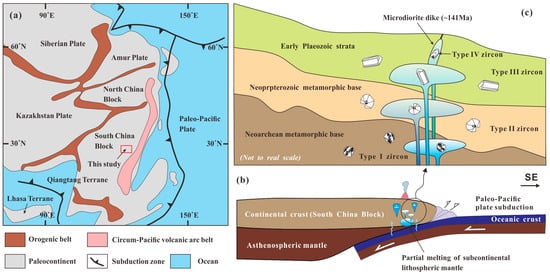
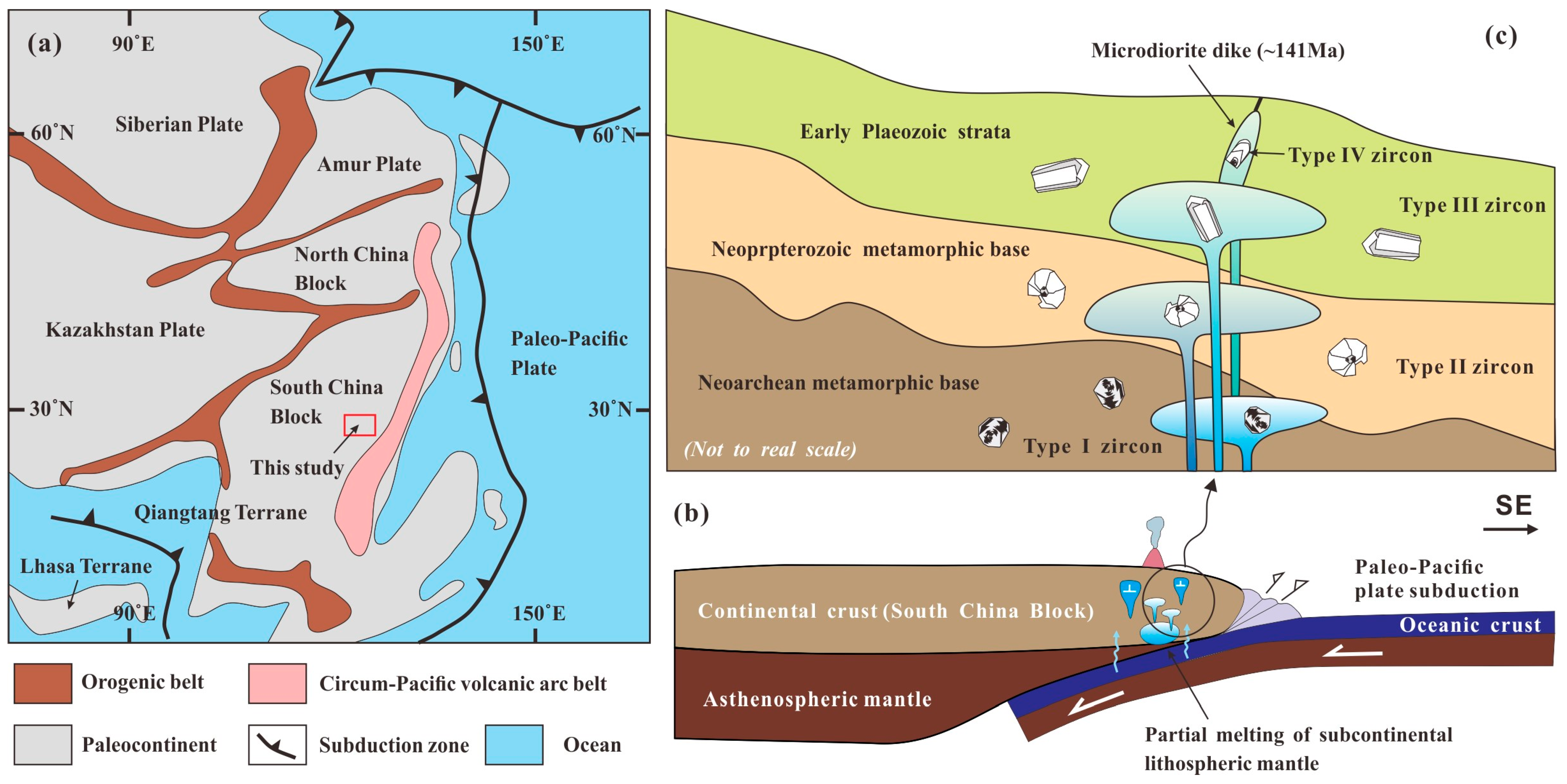
Therefore, the Jiangshan microdiorite dike formed in an Early Cretaceous magmatic arc setting, with a magma source from partial melting of subcontinental lithospheric mantle. Combined with its emplacement age (ca. 137 Ma), we can infer that it is the product of subduction of the Paleo-Pacific Plate beneath the South China Block, forming a continental marginal arc (Figure 10a,b) [61,62]. During subduction, slab-derived fluid flux induced partial melting of the metasomatized subcontinental lithospheric mantle and formed voluminous basaltic magma, as was suggested by the low Nb contents and Th enrichment in type IV zircons [52,53], which rose along faults transecting the lithosphere to shallow crustal levels, forming the microdiorite dike (Figure 10b). During ascent from the magma chamber, the magma underwent fractional crystallization of plagioclase, as was suggested by the strong negative europium anomalies in type IV zircons (Figure 7), and assimilated different crustal materials, including the Neoarchean crystalline basement, Neoproterozoic basement, and Early Paleozoic rocks, thus entrapping zircons from these various sources (types I, II, and III; Figure 10c). Through zircon mineralogy, geochronology, and trace element geochemistry, this study reveals the petrogenesis of the diorite dike in the Jiangshan area of the Gan–Hang belt. The intermediate composition of the microdiorite, together with the strong negative Eu anomalies in type IV zircons, indicates that the primary basaltic melts, derived from partial melting of subcontinental lithospheric mantle, underwent extensive plagioclase-dominated fractional crystallization prior to emplacement. More importantly, it provides evidence for the existence of deep Neoarchean crustal material, and thus, offers new constraints on the compositional architecture and tectono-magmatic evolution of the South China Block.
Figure 10.
Schematic diagram illustrating the petrogenesis of the microdiorite dike in the Jiangshan area. (a) Paleogeographic reconstruction showing the position of the South China Block, the Paleo-Pacific subduction system, and the main surrounding continental blocks during the Cretaceous [63]. (b) Subduction of the Paleo-Pacific Plate beneath the South China Block, forming a continental marginal arc (modified from [27]). (c) Magma assimilated different crustal materials during its ascent from the magma chamber, including the Neoarchean crystalline basement, Neoproterozoic basement, and Early Paleozoic strata, thus entrapping zircons from these various sources (types I, II, and III).
7. Conclusions
- The Jiangshan microdiorite dike contains four zircon types with distinct origins and U-Pb ages: metamorphic type I (2528 ± 21 Ma), derived from Neoarchean metamorphic basement; magmatic type II (848 ± 53 Ma) and type III (481 ± 93 Ma), captured from Neoproterozoic and Early Paleozoic magmatic country rocks, respectively; and overgrowth type IV (137 ± 8.4 Ma) that crystallized from the host magma during the microdiorite dike’s emplacement.
- Trace element compositions of Early Cretaceous zircons (type IV) exhibit arc-affinity signatures (low Nb/Hf, elevated Th/Nb and Th/U ratios), indicating that the parental magma originated from slab-derived fluid flux induced partial melting of the metasomatized subcontinental lithospheric mantle. The wide range of Eu/Eu* (0.07–0.19) in type IV zircons, together with the entrainment of types II and III xenocrysts, points to significant fractional crystallization of plagioclase and assimilation of upper crustal materials during magma ascent.
- The emplacement of the dike at ca. 137 Ma is interpreted as a magmatic response to the Early Cretaceous subduction of the Paleo-Pacific Plate beneath the South China Block. The presence of type I zircons, with high U/Yb ratios (19.99–24.49), extremely low Y (26.67–28.60 ppm) contents, and a distinct flat HREE pattern, provides robust evidence for a Neoarchean continental crust residing in the deep South China Block. This finding offers new constraints on the deep compositional heterogeneity of the South China Block and its long-term crustal reworking history from the Archean to the Mesozoic periods.
Supplementary Materials
The following supporting information can be downloaded at: https://www.mdpi.com/article/10.3390/min16080846/s1, Table S1: Zircon U-Pb isotope analysis results of microcrystalline diorite; Table S2: Zircon trace elements analysis results of microcrystalline diorite (ppm).
Author Contributions
Conceptualization, J.D.; Field investigation, J.D., P.Z. and F.L.; methodology, J.D., P.Z. and F.L.; writing—original draft preparation, J.D.; writing—review and editing, J.D. All authors have read and agreed to the published version of the manuscript.
Funding
This research was funded by the Jiangxi Provincial Natural Science Foundation (20242BAB20133).
Data Availability Statement
Data is contained within the article or Supplementary Materials.
Acknowledgments
We are grateful to the anonymous reviewers for their effort that have fundamentally promoted the quality of this paper.
Conflicts of Interest
The authors declare no conflicts of interest.
Abbreviations
The following abbreviations are used in this manuscript:
| Bt | Biotite |
| CL | Cathodoluminescence |
| Hbl | Hornblende |
| Kfs | K-Feldspar |
| LA-ICP-MS | Laser Ablation Inductively Coupled Plasma Mass Spectrometer |
| NWR | New Wave Research |
| Pl | Plagioclase |
| Qz | Quartz |
References
- Finch, R.J.; Hanchar, J.M. Structure and chemistry of zircon and zircon-group minerals. In Zircon; Hanchar, J.M., Hoskin, P.W.O., Eds.; Reviews in Mineralogy and Geochemistry; Mineralogical Society of America: Washington, DC, USA, 2003; Volume 53, pp. 1–25. [Google Scholar]
- Wu, Y.B.; Zheng, Y.F. Genesis mineralogy of zircon and its constraints on the interpretation of U-Pb ages. Chin. Sci. Bull. 2004, 49, 1589–1604. [Google Scholar] [CrossRef] [Scilit]
- Hopkins, M.; Harrison, T.M.; Manning, C.E. Low heat flow inferred from >4 Gyr zircons suggests Hadean plate boundary interactions. Nature 2008, 456, 493–496. [Google Scholar] [CrossRef] [Scilit]
- Trail, D.; Watson, E.B.; Tailby, N.D. Ce and Eu anomalies in zircon as proxies for the oxidation state of magma. Geochim. Cosmochim. Acta 2012, 97, 70–87. [Google Scholar] [CrossRef] [Scilit]
- Grimes, C.B.; Wooden, J.L.; Cheadle, M.J.; John, B.E. “Fingerprinting” tectono-magmatic provenance using trace elements in igneous zircon. Contrib. Mineral. Petrol. 2015, 170, 46. [Google Scholar] [CrossRef] [Scilit]
- Zhou, Z.K.; Li, H.; Zhu, H.R.; Majid, G.; Ouyang, L.M. Geochronology and geochemistry of ore-hosted zircon reveal the genesis of typical Sb-(Au-W) deposits in South China. Ore Geol. Rev. 2023, 155, 105358. [Google Scholar] [CrossRef] [Scilit]
- Sanità, E.; Rosa, M.D.; Porta, G.D.; Catanzariti, R.; Pandolfi, L.; Marroni, M. Trench sediment heterogeneity controls accretion mechanisms in subduction zone. Sci. Rep. 2025, 15, 34793. [Google Scholar] [CrossRef] [Scilit] [PubMed]
- Gaschnig, R.M.; Vervoort, J.D.; Lewis, R.S.; Tikoff, B. Probing for Proterozoic and Archean crust in the Northern U.S. Cordillera with inherited zircon from the Idaho batholith. Geol. Soc. Am. Bull. 2013, 125, 73–88. [Google Scholar] [CrossRef] [Scilit]
- Zhang, L.; Wang, T.; Zhang, J.J.; Shi, X.J.; Ren, H.D.; Yang, Q.D.; Tong, Y.; Guo, L. Revisiting the boundary between the Central Asian Orogenic Belt and North China Craton in Alxa area, China: Insights from zircon U-Pb ages and Hf isotopes of Phanerozoic granitoids. Gondwana Res. 2023, 119, 119–137. [Google Scholar] [CrossRef] [Scilit]
- Xu, D.L.; Deng, X.; Peng, L.H.; Tian, Y.; Wei, J.; Jin, X.B. The components of the subducted continental basement within the Dabieshan orogenic belt as evidenced by xenocrystic/inherited zircons from Cretaceous dykes. Eart. Sci. Front. 2023, 30, 299–316. [Google Scholar]
- Cawood, P.A.; Hawkesworth, C.J.; Dhuime, B. The Continental Record and the Generation of the Continental Crust. Geol. Soc. Am. Bull. 2013, 125, 14–32. [Google Scholar] [CrossRef] [Scilit]
- Cawood, P.A.; Zhao, G.C.; Yao, J.L.; Wang, W.; Xu, Y.J.; Wang, Y.J. Reconstructing South China in Phanerozoic and Precambrian supercontinents. Earth-Sci. Rev. 2018, 186, 173–194. [Google Scholar] [CrossRef] [Scilit]
- Cawood, P.A.; Chowdhury, P.; Mulder, J.A.; Hawkesworth, C.; Capitanio, F.; Gunawardana, P.; Nebel, O. Secular evolution of continents and the Earth system. Rev. Geophys. 2022, 60, e2022RG000789. [Google Scholar] [CrossRef] [Scilit]
- Yang, Z.; Zi, J.W.; Cawood, P.A.; Zhao, T.Y.; Liu, G.C.; Li, J.; Zhang, H.; Wei, Y.H.; Feng, Q.L. A refined Archean-Paleoproterozoic magmatic framework of the Cuoke Complex, SW China, and its implications for early Precambrian evolution of the Yangtze Block. Precambrian Res. 2023, 384, 106921. [Google Scholar] [CrossRef] [Scilit]
- Gilder, S.A.; Gill, J.; Coe, R.S.; Zhao, X.X.; Liu, Z.W.; Wang, G.X.; Yuan, K.R.; Liu, W.L.; Kuang, G.D.; Wu, H.R. Isotopic and paleomagnetic constraints on the Mesozoic tectonic evolution of south China. J. Geophys. Res. Solid Earth 1996, 101, 137–154. [Google Scholar] [CrossRef] [Scilit]
- Yu, X.Q.; Shu, L.S.; Yan, T.Z.; Zu, F.P. Prototype and sedimentation of red basins in Gan-Hang tectonic belt. Acta Sedimentol. Sin. 2005, 23, 12–20. [Google Scholar]
- Yang, J.H.; Cawood, P.A.; Du, Y.S.; Huang, H.; Huang, H.W.; Tao, P. Large igneous province and magmatic arc sourced Permian-Triassic volcanogenic sediments in China. Sediment. Geol. 2012, 261–262, 120–131. [Google Scholar] [CrossRef] [Scilit]
- Yang, S.Y.; Wen, X.; Zhao, K.D.; Jiang, Y.H.; Ling, H.F.; Chen, P.R. Geochronology, petrogenesis and geological significance of trachyte porphyry from Xinlu volcanic basin, Gan-Hang tectonic belt. Acta Petrol. Sin. 2015, 31, 747–758. [Google Scholar]
- Yang, Q.K.; Liu, Y.; Zhang, X.L.; Li, H.L. Petrological, geochemical and carbon-oxygen isotopic evidence for hydrothermal sedimentary event of the Ningguo Formation in Jiangshan, Zhejiang. Mar. Geol. Front. 2022, 38, 24–32. [Google Scholar]
- Yao, J.L.; Cawood, P.A.; Shu, L.S.; Zhao, G.C. Jiangnan Orogen, South China: A ~970–820 Ma Rodinia margin accretionary belt. Earth-Sci. Rev. 2019, 196, 102872. [Google Scholar] [CrossRef] [Scilit]
- Liu, B.; Zhai, M.G.; Zhao, L.; Cui, X.H. Metamorphism, P-T path and zircon U-Pb dating of Paleoproterozoic mafic and felsic granulites from the Kongling terrane, South China. Precambrian Res. 2019, 333, 105403. [Google Scholar] [CrossRef] [Scilit]
- Li, X.H.; Li, W.X.; Li, Z.X.; Lo, C.H.; Wang, J.; Ye, M.F.; Yang, Y.H. Amalgamation between the Yangtze and Cathaysia Blocks in South China: Constraints from SHRIMP U-Pb zircon ages, geochemistry and Nd–Hf isotopes of the Shuangxiwu volcanic rocks. Precambrian Res. 2009, 174, 117–128. [Google Scholar] [CrossRef] [Scilit]
- Zhang, C.L.; Santosh, M.; Zou, H.B.; Li, H.K.; Huang, W. The Fuchuan ophiolite in Jiangnan Orogen: Geochemistry, zircon U-Pb geochronology, Hf isotope and implications for the Neoproterozoic assembly of South China. Lithos 2013, 179, 263–274. [Google Scholar] [CrossRef] [Scilit]
- Li, Z.X.; Li, X.H. Formation of the 1300-km-wide intracontinental orogen and postorogenic magmatic province in Mesozoic South China: A flat-slab subduction model. Geology 2007, 35, 179–182. [Google Scholar] [CrossRef] [Scilit]
- Shu, L.S.; Wang, B.; Cawood, P.A.; Santosh, M.; Xu, Z.Q. Early Paleozoic and early Mesozoic intraplate tectonic and magmatic events in the Cathaysia Block, South China. Tectonics 2015, 34, 1600–1621. [Google Scholar] [CrossRef] [Scilit]
- Wang, J.Q.; Shu, L.S.; Santosh, M. Petrogenesis and tectonic evolution of Lianyunshan complex, South China: Insights on Neoproterozoic and late Mesozoic tectonic evolution of the central Jiangnan Orogen. Gondwana Res. 2016, 39, 114–130. [Google Scholar] [CrossRef] [Scilit]
- Mao, J.W.; Zheng, W.; Xie, G.Q.; Lehmann, B.; Goldfarb, R. Recognition of a Middle–Late Jurassic arc-related porphyry copper belt along the southeast China coast: Geological characteristics and metallogenic implications. Geology 2021, 49, 592–596. [Google Scholar] [CrossRef] [Scilit]
- Ni, P.; Wang, G.G. Continental reworking and polyphase Cu-Au mineralization in the northeastern segment of the Qin-Hang belt. Acta Petrol. Sin. 2017, 33, 3373–3394. [Google Scholar]
- Yang, M.G.; Mei, Y.W. Characteristics of the Qinzhou-Hangzhou paleoplate junction belt and its metallogenic belt. South China Geol. Miner. Resour. 1997, 3, 52–59. [Google Scholar]
- Zheng, Y.F.; Wu, R.X.; Wu, Y.B.; Zhang, S.B.; Yuan, H.L.; Wu, F.Y. Rift melting of juvenile arc-derived crust: Geochemical evidence from Neoproterozoic volcanic and granitic rocks in the Jiangnan Orogen, South China. Precambrian Res. 2008, 163, 351–383. [Google Scholar] [CrossRef] [Scilit]
- Guo, F.S.; Zhang, Q.X.; Chen, L.Q.; Liu, L.Q. Introduction to Geology of Jiangshan and Field Practice Guide for Regional Geological Survey; Geological Publishing House: Beijing, China, 2014; pp. 1–154. [Google Scholar]
- Liu, X. Detrital Zircon U-Pb Chronology and Paleomagnetism of the Neoproterozoic Zhitang Formation from Jiangshan of Zhejiang Province. Master’s Thesis, East China University of Technology, Nanchang, China, 2019; pp. 1–72. [Google Scholar]
- Qiao, D.; Shi, G.; Ren, Y.; Zhang, Z.Y.; Tao, J. Stromatolite characteristics and sedimentary environment analysis of Sinian Dengying formation in Jiangshan area of Zhejiang, China. J. Earth Sci. Environ. 2019, 41, 734–747. [Google Scholar]
- Wiedenbeck, M.; Allé, P.; Corfu, F.; Griffin, W.L.; Meier, M.; Oberli, F.; Quadt, A.V.; Roddick, J.C.; Spiegel, W. Three natural zircon standards for U-Th-Pb, Lu-Hf, trace element and REE analyses. Geostand. Newsl. 1995, 19, 1–23. [Google Scholar] [CrossRef] [Scilit]
- Reed, W.P. Certificate of Analysis: Standard Reference Materials 610 and 611; National Institute of Standards and Technology: Gaithersburg, MD, USA, 1992.
- Slama, J.; Kosler, J.; Condon, D.J.; Crowley, J.; Gerdes, A.; Hanchar, J.; Horstwood, M.; Morris, G.; Nasdala, L.; Norberg, N.; et al. Plešovice zircon—A new natural reference material for U-Pb and Hf isotopic microanalysis. Chem. Geol. 2008, 249, 1–35. [Google Scholar] [CrossRef] [Scilit]
- Liu, Y.S.; Hu, Z.C.; Gao, S.; Gunther, D.; Xu, J.; Gao, C.G.; Chen, H.H. In situ analysis of major and trace elements of anhydrous minerals by LA-ICP-MS without applying an internal standard. Chem. Geol. 2008, 257, 34–43. [Google Scholar] [CrossRef] [Scilit]
- Sun, S.S.; McDonough, W.F. Chemical and isotopic systematics of oceanic basalts: Implications for mantle composition and processes. In Magmatism in the Ocean Basins; Saunders, A.D., Norry, M.J., Eds.; Geological Society, Special Publications: London, UK, 1989; Volume 42, pp. 313–345. [Google Scholar]
- Jian, P.; Cheng, Y.Q.; Liu, D.Y. Petrographical study of metamorphic zircon: Basic constraints on U-Pb age interpretation of high-grade metamorphic rocks. Earth Sci. Front. 2001, 8, 183–191. [Google Scholar]
- Zhou, J.X.; Chen, Z.Y. Study of Zircon Cathodoluminescence Under Electron Probe; University of Electronic Science and Technology Press: Chengdu, China, 2007; pp. 1–109. [Google Scholar]
- Fu, B.; Mernagh, T.P.; Kita, N.T.; Kemp, A.I.S.; Valley, J.W. Distinguishing magmatic zircon from hydrothermal zircon: A case study from the Gidginbung high-sulphidation Au–Ag–(Cu) deposit, SE Australia. Chem. Geol. 2009, 259, 131–142. [Google Scholar] [CrossRef] [Scilit]
- Watson, E.B.; Wark, D.A.; Thomas, J.B. Crystallization thermometers for zircon and rutile. Contrib. Mineral. Petrol. 2006, 151, 413–433. [Google Scholar] [CrossRef] [Scilit]
- Belousova, E.A.; Griffin, W.L.; O’Reilly, S.Y.; Fisher, N.I. Igneous zircon: Trace element composition as an indicator of source rock type. Contrib. Mineral. Petrol. 2002, 143, 602–622. [Google Scholar] [CrossRef] [Scilit]
- Vavra, G.; Schmid, R.; Gebauer, D. Internal morphology, habit and U-Th-Pb microanalysis of amphibole to granulite facies zircon: Geochronology of the Ivrea Zone (Southern Alps). Contrib. Mineral. Petrol. 1999, 134, 380–404. [Google Scholar] [CrossRef] [Scilit]
- Rudnick, R.; Barth, M.; Horn, I. Rutile-bearing refractory eclogites: Missing link between continents and depleted mantle. Science 2000, 287, 278–281. [Google Scholar] [CrossRef] [Scilit] [PubMed]
- Lei, W.Y.; Shi, G.H.; Liu, Y.X. Research progress on trace element characteristics of zircons of different origins. Earth Sci. Front. 2013, 20, 273–284. [Google Scholar]
- Grimes, C.B.; John, B.E.; Kelemen, P.B.; Mazdab, F.K.; Wooden, J.L.; Cheadle, M.J.; Hanghøj, K.; Schwartz, J.J. The trace element chemistry of zircons from oceanic crust: A method for distinguishing detrital zircon provenance. Geology 2007, 35, 643–646. [Google Scholar] [CrossRef] [Scilit]
- Hoskin, P.W.O.; Schaltegger, U. The composition of zircon and igneous and metamorphic petrogenesis. In Zircon; Hanchar, J.M., Hoskin, P.W.O., Eds.; Reviews in Mineralogy and Geochemistry; Mineralogical Society of America: Washington, DC, USA, 2003; Volume 53, pp. 27–62. [Google Scholar]
- Rubatto, D. Zircon trace element geochemistry: Partitioning with garnet and the link between U-Pb ages and metamorphism. Chem. Geol. 2002, 184, 123–138. [Google Scholar] [CrossRef] [Scilit]
- Anczkiewicz, R.; Oberli, F.; Burg, J.P.; Villa, I.M.; Günther, D.; Meier, M. Timing of normal faulting along the Indus Suture in Pakistan Himalaya and a case of major 231Pa/235U initial disequilibrium in zircon. Earth Planet. Sci. Lett. 2001, 191, 101–114. [Google Scholar] [CrossRef] [Scilit]
- Bickford, M.E.; Chase, R.B.; Nelson, B.K.; Shuster, R.D.; Arruda, E.C. U-Pb studies of zircon cores and overgrowths, and monazite; implications for age and petrogenesis of the northeastern Idaho Batholith. J. Geol. 1981, 89, 433–457. [Google Scholar] [CrossRef] [Scilit] [PubMed]
- Keay, S.; Steele, D.; Compston, W. Identifying granite sources by SHRIMP U-Pb zircon geochronology: An application to the Lachlan Foldbelt. Contrib. Mineral. Petrol. 1999, 137, 323–341. [Google Scholar] [CrossRef] [Scilit]
- Hoskin, P.W.O. Trace-element composition of hydrothermal zircon and the alteration of Hadean zircon from the Jack Hills, Australia. Geochim. Cosmochim. Acta 2005, 69, 637–648. [Google Scholar] [CrossRef] [Scilit]
- Pearce, J.A.; Peat, D.W. Tectonic implications of the composition of volcanic arc magmas. Annu. Rev. Earth Planet. Sci. 1995, 23, 251–285. [Google Scholar] [CrossRef] [Scilit]
- Hoskin, P.W.O.; Kinny, P.D.; Wyborn, D.; Chappell, B.W. Identifying accessory mineral saturation during differentiation in granitoid magmas: An integrated approach. J. Petrol. 2000, 41, 1365–1396. [Google Scholar] [CrossRef] [Scilit]
- Peltonen, P.; Mänttäri, I.; Huhma, H.; Kontinen, A. Archean zircons from the mantle: The Jormua ophiolite revisited. Geology 2003, 31, 645–648. [Google Scholar] [CrossRef] [Scilit]
- Siebel, W.; Schmitt, A.K.; Danišík, M.; Chen, F.K.; Meier, S.; Stefan Weiß, S.; Eroglu, S. Prolonged mantle residence of zircon xenocrysts from the western Eger rift. Nat. Geosci. 2009, 2, 886–890. [Google Scholar] [CrossRef] [Scilit]
- Cawood, P.A.; Wang, Y.J.; Xu, Y.J.; Zhao, G.C. Locating South China in Rodinia and Gondwana: A fragment of Greater Indian Lithosphere. Geology 2013, 41, 903–906. [Google Scholar] [CrossRef] [Scilit]
- Zhao, G.C.; Cawood, P.A. Precambrian Geology of China. Precambrian Res. 2012, 222–223, 13–54. [Google Scholar] [CrossRef] [Scilit]
- Xu, X.B. Late Triassic to Middle Jurassic tectonic evolution of the South China Block: Geodynamic transition from the Paleo-Tethys to the Paleo-Pacific regimes. Earth-Sci. Rev. 2023, 241, 104404. [Google Scholar] [CrossRef] [Scilit]
- Ionov, D.A.; Hofmann, A.W. Nb-Ta-rich mantle amphiboles and micas: Implications for subduction-related metasomatic trace element fractionations. Earth Planet. Sci. Lett. 1995, 131, 341–356. [Google Scholar] [CrossRef] [Scilit]
- Thybo, H.; Artemieva, I.M. Moho and magmatic underplating in continental lithosphere. Tectonophysics 2013, 609, 605–619. [Google Scholar] [CrossRef] [Scilit]
- Li, J.H.; Jiang, H.F. Atlas of Global Paleoplate Reconstruction, Lithofacies Paleogeography and Paleoenvironment; Geological Publishing House: Beijing, China, 2013; pp. 1–127. [Google Scholar]
Disclaimer/Publisher’s Note: The statements, opinions and data contained in all publications are solely those of the individual author(s) and contributor(s) and not of MDPI and/or the editor(s). MDPI and/or the editor(s) disclaim responsibility for any injury to people or property resulting from any ideas, methods, instructions or products referred to in the content. |
© 2026 by the authors. Licensee MDPI, Basel, Switzerland. This article is an open access article distributed under the terms and conditions of the Creative Commons Attribution (CC BY) license.