


Abstract
Ophiolites are fragments of ancient oceanic lithosphere, serving as geological indicators for reconstructing ocean-continent transitions, plate convergence and paleo-ocean evolution in orogenic belts. The Kekedieba ophiolite was recently identified during a 1:50,000 regional geological survey. To constrain its formation age, material source and tectonic setting, this study conducted systematic petrological observations, geochemical testing and zircon U-Pb geochronological analyses on the ophiolite. This ophiolite consists of typical end-members, such as cumulate gabbro and diabase dykes. Trace element analyses and geochemical discrimination diagrams reveal that the basalts exhibit geochemical characteristics typical of mid-ocean ridge basalt (MORB), and the ophiolite suite as a whole belongs to the low-K tholeiite series. Differences in the degree of partial melting in the source region among various end-member rocks further indicate the complexity of its tectonic setting. LA-ICP-MS zircon U-Pb dating shows that the formation age of the gabbro is 321.4 ± 2.7 Ma, indicating that the Kekedieba ophiolite formed in the late Early Carboniferous. Combined with its tectonic slice-association relationship with Early Carboniferous island-arc volcanic rocks, it is identified as fragments of a SSZ-type supra-subduction zone ophiolite, which provides direct evidence for the subduction evolution of regional paleo-plates. Although some extrusive units retain MORB-like geochemical signatures inherited from early seafloor spreading, the island-arc affinities of the full lithological suite and subduction imprints in cumulates confirm a dominant SSZ origin.
1. Introduction
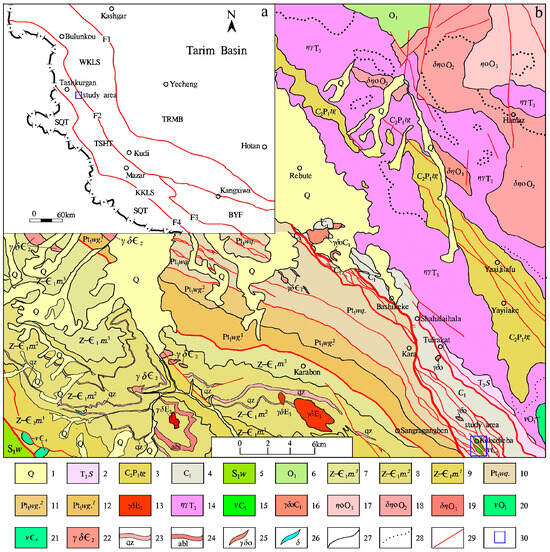
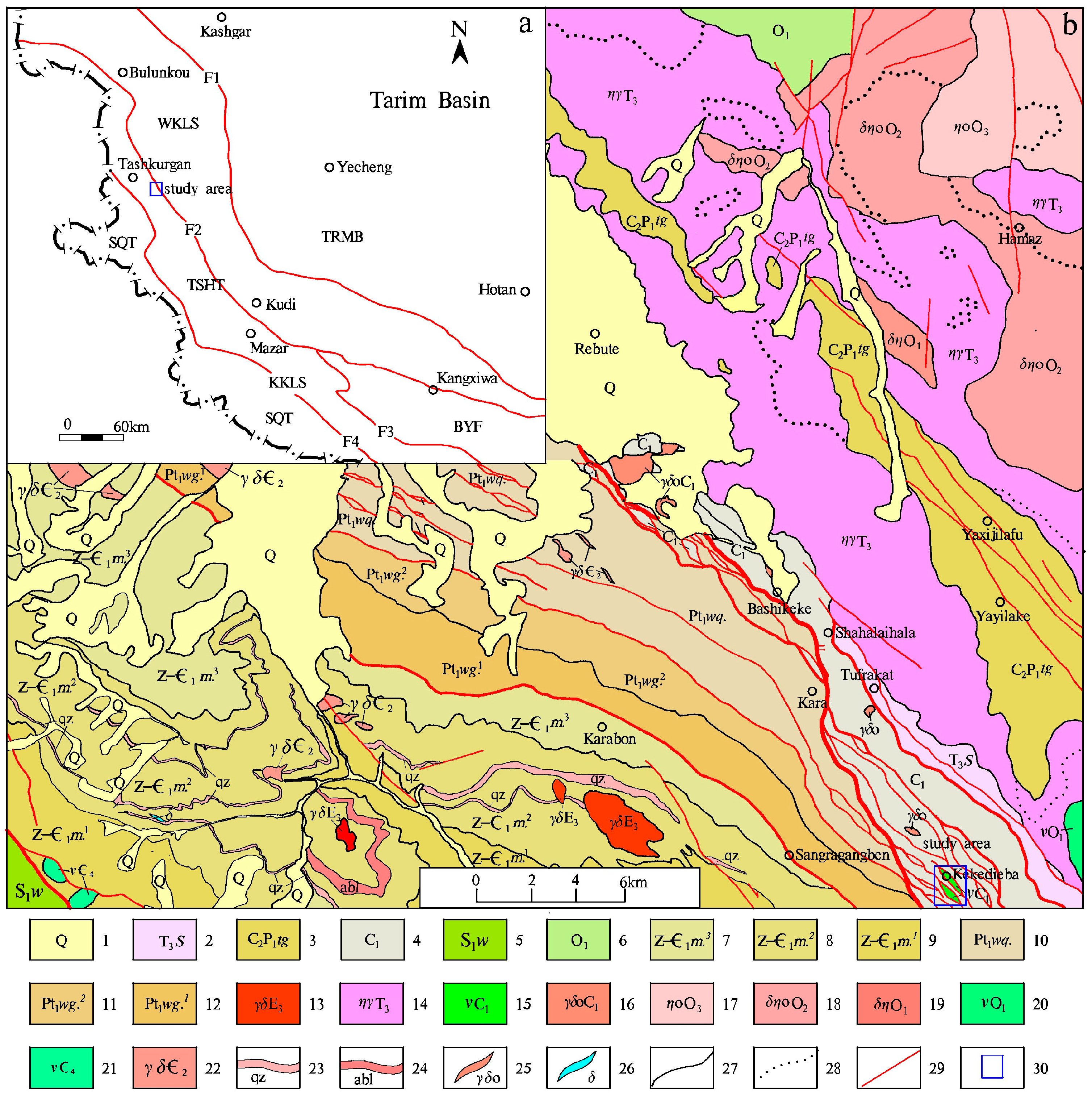
Ophiolitic (melange) rocks constitute typical mafic–ultramafic rock assemblages that are pervasively exposed within orogenic belts. Serving as fundamental geological proxies, they offer irreplaceable constraints for reconstructing the complete evolutionary trajectory of ancient ocean basins, encompassing their rifting, expansion, maturation, closure, and subsequent tectonic demise. Moreover, these rock assemblages act as critical lithological markers for delineating the boundaries of discrete tectonic terranes and pinpointing the spatial extent of paleo-suture zones [1,2,3,4]. For decades, ophiolitic (melange) rocks have remained a research focus in the field of orogenic belt evolution, given their significant implications for deciphering the dynamic processes of continental tectonics [5,6,7,8]. The West Kunlun region hosts multiple ophiolite belts (Figure 1a), which renders this area a pivotal research zone for investigating the tectonic evolution of both the Alpine–Himalayan Tethyan domain and the Paleo-Tethyan domain [9,10]. However, due to intense tectonic fragmentation, rugged topographic conditions, harsh natural environments, and poor accessibility, geological research on this region has remained relatively insufficient to date.
Figure 1.
Tectonic setting and geological map of the Taxkorgan area; (a) Division map of tectonic units in the West Kunlun area; (b) geological map of study area. 1—Quaternary; 2—Upper Triassic Sailiyakedaban Group; 3—Upper Carboniferous-Lower Permian Teginaiqikedaban Formation; 4—Lower Carboniferous; 5—Lower Silurian Wenquangou Formation; 6—Lower Ordovician; 7—Sinian-Cambrian Terreneuvian Mayang Litho-Formation, Member 3; 8—Mayang Litho-Formation, Member 2; 9—Mayang Litho-Formation, Member 1; 10—Paleoproterozoic Waqia Litho-Formation; 11—Paleoproterozoic Wuguliyate Litho-Formation, Upper Member; 12—Wuguliyate Litho-Formation, Lower Member; 13—Oligocene Granodiorite; 14—Late Triassic Monzogranite; 15—Early Carboniferous Gabbro; 16—Early Carboniferous Tonalite; 17—Late Ordovician Quartz Monzonite; 18—Middle Ordovician Quartz Monzodiorite; 19—Early Ordovician Monzodiorite; 20—Early Ordovician Gabbro; 21—Cambrian Furongian Gabbro; 22—Cambrian Series 2 Granodiorite; 23—Magnetite-bearing Feldspar-Quartz Rock; 24—Magnetite-bearing Plagioclase-Amphibole Schist; 25—Tonalite; 26—Diorite; 27—Geological Boundary; 28—Lithofacies Boundary; 29—Fault; 30—Study Area.
Regional surveys conducted in recent years have indicated that the distribution of ophiolites in the West Kunlun orogenic belt is far more extensive and complex than previously delineated [11,12,13]. The Kekediuba ophiolitic melange, discovered during a 1:50,000 regional geological survey completed by Henan Institute of Geological Survey in 2018 [14], is located in the western segment of the West Kunlun orogenic belt, at the junction of the Paleo-Asian tectonic domain and the Tethyan tectonic domain, making it a key area for studying the tectonic evolution of the West Kunlun. Owing to its special tectonic location, the material composition and structural styles in this area are extremely complex, exhibiting multi-level, multi-style, multi-mechanism, and multi-stage tectonic evolution and deformation characteristics. In recent years, significant progress and consensus have been achieved regarding the pre-Mesozoic tectonic evolution of the West Kunlun terranes, such as the accretion process [9,15,16,17]. However, research on the Paleozoic tectonic framework and evolutionary characteristics remains scarce, and the processes and features of its tectonic evolution remain unclear.
In this study, petrological, geochemical, and zircon U-Pb geochronological investigations were carried out on the Kekediuba ophiolitic melange to discuss the type and magmatic source area of the ophiolite, reveal its formation age and tectonic setting, and provide new geological constraints for the tectonic evolution of the West Kunlun orogenic belt and the Qinghai–Tibet Plateau.
2. Geological Setting
The West Kunlun orogenic belt is situated at the northwestern margin of the Qinghai–Tibet Plateau and the westernmost segment of the central orogenic belt (COB). It serves as a crucial component of the continental-margin system on the southern side of the Cathaysian paleocontinental chain within the Paleo-Asian tectonic domain [12,13]. The orogenic belt is bounded by the Subashi–Kangxiwa–Wacha Suture Zone to the south and the Kuerliang–Kegang Fault to the north. Based on the location of the Kudi-Qimanyute Suture Zone, the West Kunlun orogenic belt can be further divided into two micro-blocks, namely the North West Kunlun micro-block and the South West Kunlun micro-block.
The study area is situated at the northwestern margin of the Qinghai–Tibet Plateau, adjacent to the Pamir Syntaxis to the west, and is located at the tectonic junction zone between the Kunlun orogenic belt and the Karakoram orogenic belt. Stratigraphic sequences exposed in this area mainly include those of the Paleoproterozoic, Neoproterozoic, Paleozoic, and Meso-Cenozoic eras. Specifically, the Paleoproterozoic, Neoproterozoic, Carboniferous, Permian, and Quaternary age are relatively well-developed, there are minor outcrops of Ordovician, Silurian, and Triassic age.
The overall structural lines within the study area strike northwest (NW), with superficial fault structures of northeast (NE)-trending and nearly north–south (NS)-trending orientations superimposed in partial sections on the northwestern margin. Under the influence of multi-stage composite orogenesis, the strata pre-dating the Late Paleozoic are characterized by multi-stage superimposed folding and ductile fault reworking, whereas the tectonic deformation since the Late Paleozoic is predominantly manifested as the intermingling of large-scale tectonic slices (blocks).
Magmatic activity was notably intense, and its spatial distribution was significantly constrained by plate tectonic processes, presenting a NW-SE trending zonal distribution pattern. Intrusive rocks dominate the magmatic assemblage, predominantly intermediate-acid rocks with subordinate amounts of basic–ultrabasic rocks. Volcanic rocks are dominated by basic rocks, followed by bimodal volcanic rocks. Magmatic activity can be subdivided into four evolutionary stages, i.e., Sinian–Cambrian, Ordovician, Carboniferous–Triassic, and Paleogene, among which the Ordovician and Carboniferous–Triassic magmatic events were particularly intense and extensively distributed (Figure 1b).
3. Geological Characteristics
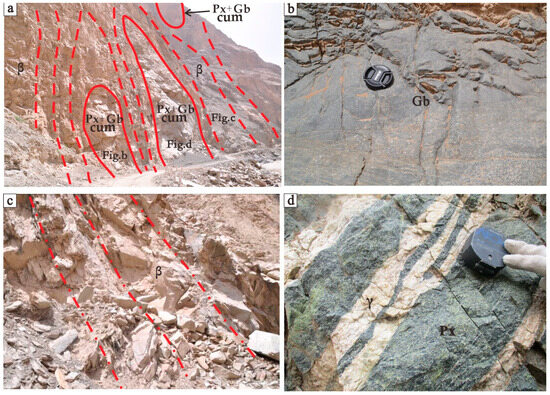
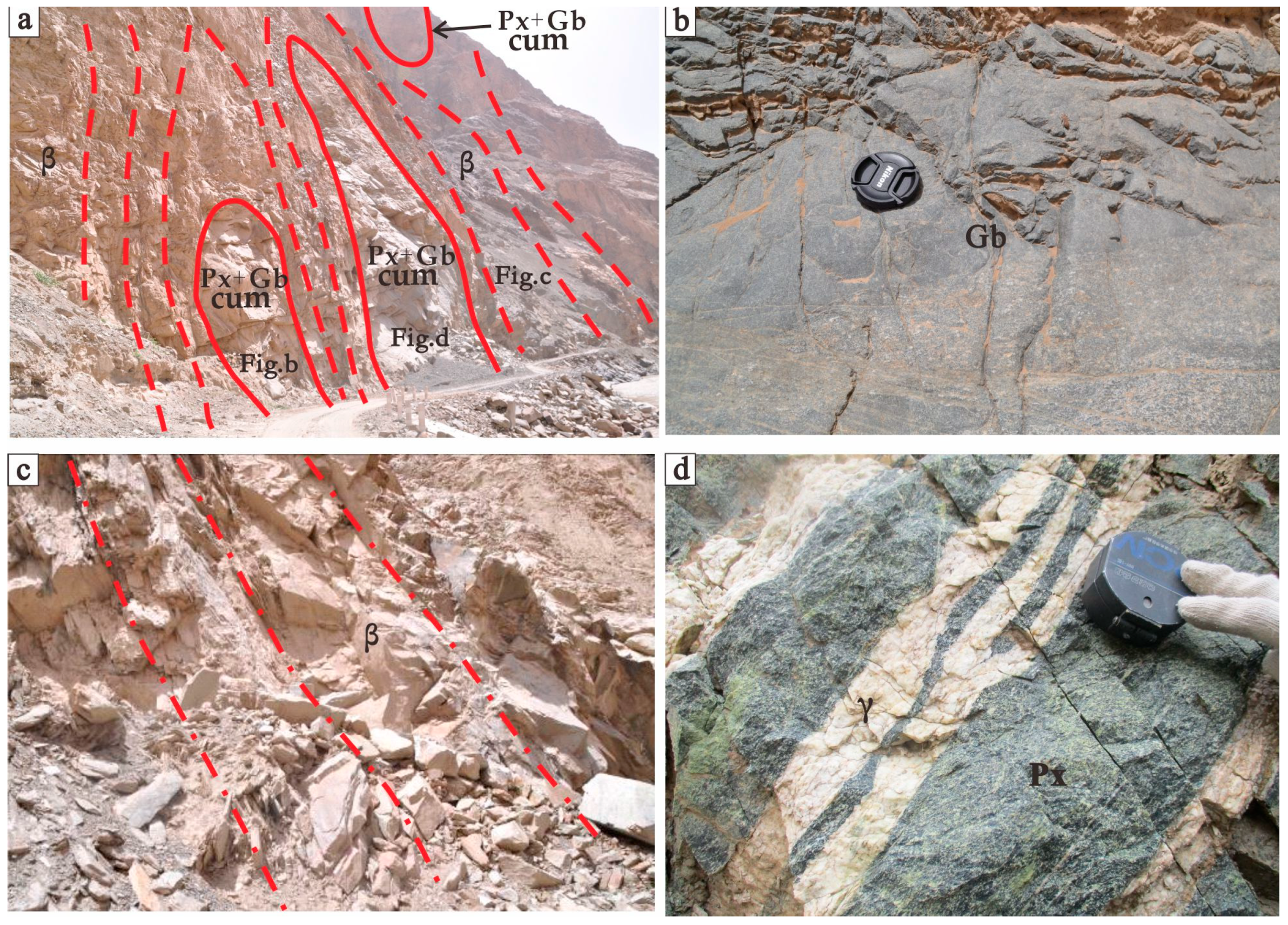
The Kekedieba ophiolitic occurs as tectonic blocks within the Kangxiwa tectonic zone, separated from the Bashikeke Early Carboniferous island-arc basalt slices and the Paleoproterozoic Bulunkuole Group by ductile shear faults. It is predominantly composed of end-members, including cumulate gabbro, diabase dikes, plagiogranite, and oceanic basalt (Figure 2). The cumulate complex is mainly constituted by layered dark gray altered medium-coarse-grained pyroxenite and gabbro, grading upward into light-colored gabbro, generally exhibiting a gradual decrease in pyroxene content and a progressive increase in plagioclase content, with distinct cumulate textures (Figure 2a–d). Diabase intrudes into the overlying basalt as dikes, with a width of 10–15 m, sub-vertical attitude, and northwest–southeast strike. Basalt occurs in two morphologies: one consists of tectonic blocks with distinct rock textures and structures, mostly undergoing cataclasis, with late-stage quartz veins developed along fractures; the other is epidote–chlorite–albite schist, characterized by intense schistosity, microfolds developed on schistosity planes, and the light-colored granite veins within it displaying intense mylonitization. The leucocratic veins hosted within the gabbroic mass correspond to granitic veinlets that were emplaced as irregular vein structures with thicknesses ranging from 3 to 10 cm (Figure 2d). The propagation orientations of these veinlets obliquely truncate the cumulate layering of the cumulate gabbro. Sharp or gradational contact boundaries can be developed between the granitic veins and mafic host rocks, with branching and coalescence structures locally identified. Such field occurrence evidences that the emplacement timing of granitic veins markedly postdates the consolidation stage of gabbroic cumulus magma.
Figure 2.
Field characteristics of the Kekedieba ophiolitic mélange. (a) Overall occurrence of the ophiolitic mélange; (b) cumulate texture of gabbro, showing upward decreasing grain size; (c) mylonitized basaltic matrix; (d) coarse-grained pyroxenite in the lower part, cut by late-stage granite veins. Px—pyroxenite; Gb—gabbro; β—basalt; γ—granite vein.
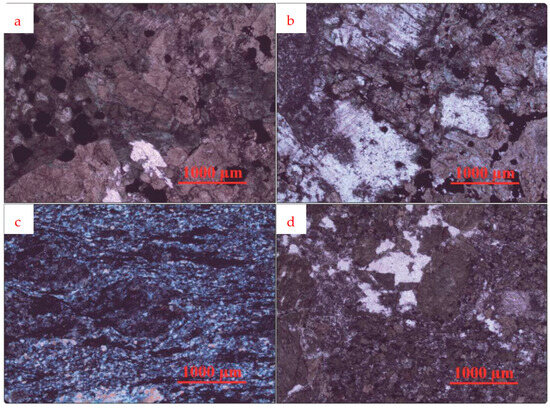
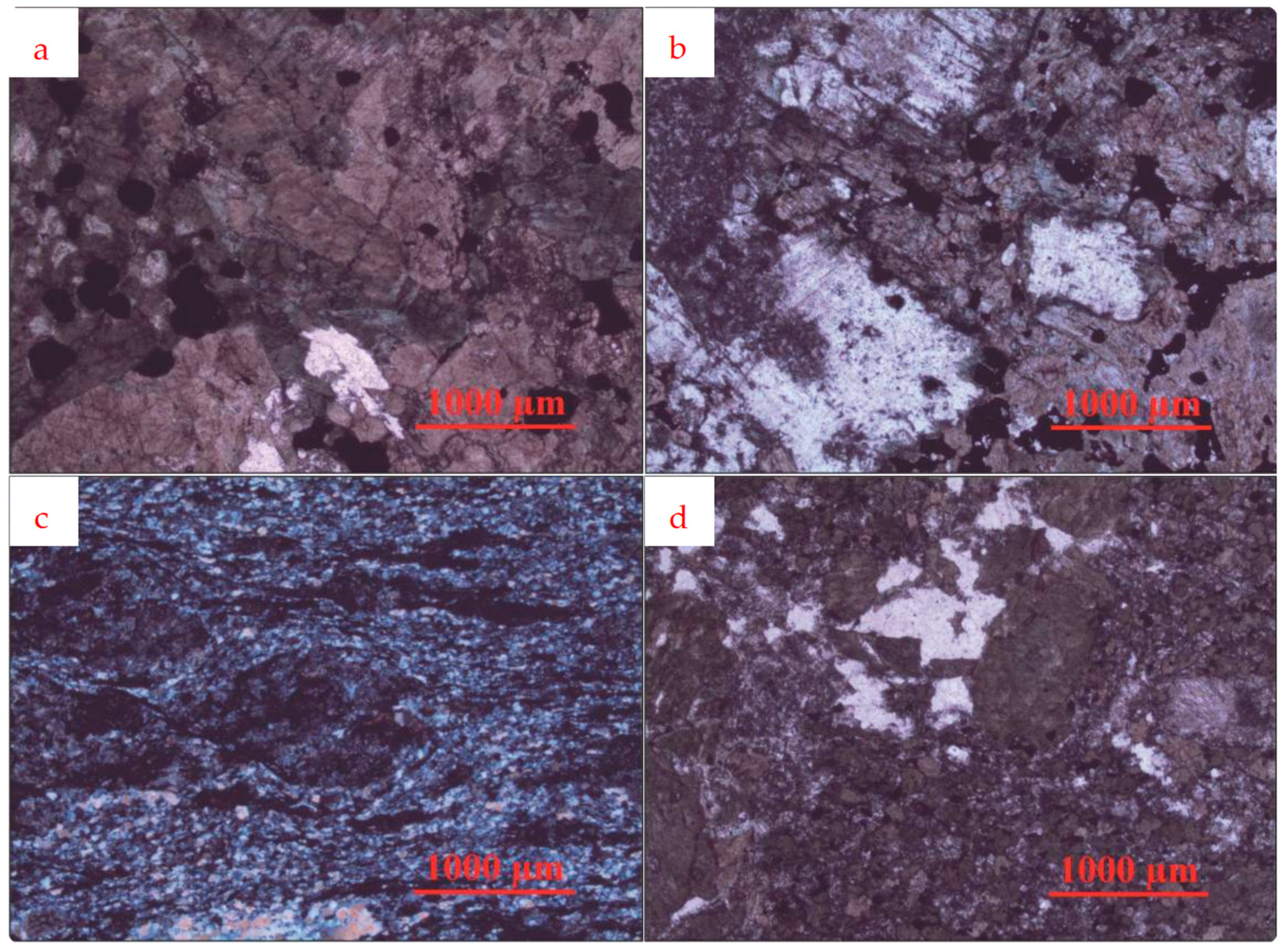
Medium-coarse-grained pyroxenite: Dark green, displaying a residual medium-coarse-grained gabbroic texture (Figure 3a) and a massive structure. Pyroxene constitutes 90%–95% of the rock, occurring as euhedral–subhedral prismatic crystals with grain sizes predominantly ranging from 2 to 4 mm, and most grains have undergone extensive uralitization and actinolite alteration. Plagioclase occurs as euhedral–subhedral tabular crystals with grain sizes of 2–4.5 mm, accompanied by intense epidotization of microcrystalline grains. Magnetite is present as subhedral–xenomorphic granular grains with grain sizes of 0.3–0.5 mm, and its modal content does not exceed 5%.
Figure 3.
Microscopic characteristics of rock fragments from the Kekedieba ophiolite remnant; (a) Residual gabbroic texture in gabbro (plane-polarized light). (b) Residual doleritic texture in diabase (plane-polarized light). (c) Mylonitic texture of plagiogranite (cross-polarized light). (d) Porphyritic texture of basalt (plane-polarized light).
Gabbro: Dark green, with relict gabbroic texture and massive structure. Pyroxene has predominantly undergone uralitization, typically occurring as euhedral–subhedral long prismatic crystals, with local occurrences of short prismatic morphologies. The grain size generally ranges from 1 to 5 mm, and the volume fraction is approximately 45–85 vol%. Plagioclase is present as euhedral–subhedral tabular prismatic crystals, with a grain size of 2–6 mm, and it has undergone intense saussuritization alteration, which is manifested by the transformation of plagioclase into a saussurite assemblage composed of zoisite, albite, and sericite. Magnetite occurs as subhedral–anhedral granular crystals, with a grain size of 0.3–0.5 mm and a volume fraction of about 1–3 vol%, which is a common accessory mineral in gabbroic rocks.
Diabase: Dark green, with relict diabasic texture (Figure 3b), gabbroic texture and massive structure. Pyroxene and plagioclase occur in roughly equal proportions. Pyroxene has undergone uralitization and is dominantly hypidiomorphic long-prismatic, with minor short-prismatic grains locally; grain sizes are mostly 1–5 mm. Plagioclase occurs as euhedral–hypidiomorphic tabular-prismatic crystals with a grain size of 2 to 6 mm, and intense saussuritization is observed. Magnetite is hypidiomorphic–xenomorphic granular, with a grain size of 0.3 to 0.5 mm and an abundance of approximately 1% to 3%.
The plagiogranite is grayish-white in fresh hand specimens and dominated by a well-developed mylonitic microfabric, typical of tectonically deformed rocks in ductile shear zones (Figure 3c). Under regional ductile shear stress, feldspar and quartz grains underwent marginal granulation, forming porphyroclasts and a fine-grained mylonitic matrix. The porphyroclasts, with long axes of 0.4–3.6 mm, are elongated lenticular, have undergone significant ductile plastic deformation, and show a distinct shape-preferred orientation with a banded distribution. Amphibole, a ferromagnesian mineral component, mostly occurs as augen porphyroclasts with grain sizes of 0.6–2.4 mm. These augen porphyroclasts are oriented parallel to the tectonic foliation, consistent with the shape-preferred orientation of feldspar and quartz porphyroclasts, indicating that the rock has undergone a uniform ductile shear deformation event.
The basalt is dark gray, with a porphyritic texture (Figure 3d) and massive structure. The rock is mainly composed of plagioclase (45%–55%), pyroxene (45%–50%), and a small amount of magnetite (<5%). Phenocrysts are dominated by pyroxene, followed by plagioclase, which are euhedral–subhedral tabular with sizes of 0.5 × 1.2 mm. The matrix has a cryptocrystalline texture, where the contents of plagioclase and pyroxene are nearly equal, presenting subhedral–xenomorphic granular shapes with grain sizes of 0.1–0.3 mm. The rock has undergone extensive late-stage alteration, dominated by actinolite alteration, with a small amount of epidotization of fine-grained minerals.
4. Materials and Methods
A total of 9 samples collected from the measured section were subjected to petrogeochemical analysis, including 1 pyroxenite sample, 3 gabbro samples, 2 diabase samples, 2 plagiogranite samples, and 1 basalt sample.
The petrogeochemical analysis and testing were completed by ALS Analysis and Testing (Guangzhou) Co., Ltd., Guangzhou, China. The rock samples were crushed and ground to 200 mesh to prepare analytical samples. The major element analysis was performed by X-ray fluorescence spectroscopy (XRF) with an analytical error of 1%–3%. The trace element (including rare-earth element) analysis was conducted by inductively coupled plasma mass spectrometry (ICP-MS) with an analytical accuracy better than 5%.
A single gabbro sample was collected from the gabbroic cumulate complex to conduct in situ laser ablation inductively coupled plasma mass spectrometry (LA-ICP-MS) zircon U-Pb geochronological analysis. Zircon separation was undertaken by Langfang Yantuo Geological Service Co., Ltd., Langfang, China. Prior to manual picking, the sample underwent sequential crushing, magnetic separation, and heavy-liquid separation treatments. Well-crystallized euhedral-to-subhedral zircon grains, free of visible cracks and inclusions, were carefully selected under a binocular petrographic microscope to ensure the reliability of subsequent geochronological testing. The selected zircon grains, together with the TEM zircon reference standard, were embedded in epoxy resin blocks. Polishing was subsequently performed until the central cross-sections of the zircon grains were fully exposed, thereby fabricating high-quality zircon mounts that meet the requirements of LA-ICP-MS analysis. Zircon mount preparation, cathodoluminescence (CL) imaging, and LA-ICP-MS U-Pb isotopic dating were all implemented at Wuhan Shangpu Analytical Technology Co., Ltd., Wuhan, China, following standardized laboratory protocols. The analytical system was composed of a GeoLasPro laser ablation system (Coherent, Santa Clara, CA, USA) coupled with an Agilent 7900 inductively coupled plasma mass spectrometer (ICP-MS; Agilent Technologies, Santa Clara, CA, USA). During laser ablation, high-purity helium (He) was utilized as the carrier gas for transporting ablated aerosols, while argon (Ar) was introduced as the make-up gas to enhance signal stability and optimize instrumental sensitivity. The laser ablation parameters were precisely set as follows: a spot diameter of 32 μm and a repetition rate of 5 Hz, which were determined based on the grain size and integrity of the selected zircon grains. The 91500 zircon standard was adopted as the external reference material for calibrating U-Pb isotopic ratios and calculating isotopic ages. The construction of zircon U-Pb concordia diagrams and the computation of weighted-mean ages were accomplished using Isoplot 3 software [18]. The detailed analytical procedures and data processing protocols were consistent with the methodologies reported in previous peer-reviewed studies [19,20], ensuring the comparability and reliability of the analytical results.
5. Results
5.1. Major Element Characteristics
The petrochemical compositions and related parameter characteristics of the ophiolite are listed in Table 1. The gabbro exhibits relatively low SiO2 contents (41.74%–47.56%), whereas the diabases have generally high SiO2 contents (51.24%–51.28%). The TiO2 (1.28%–1.50%), total iron as FeO (TFeO, 15.62%–16.48%) and Na2O (1.28%–3.24%) contents of the gabbros are higher than those of the diabases, while their CaO and MgO contents are slightly lower. Both rock types show moderately high overall Al2O3 contents (15.64%–16.54%). They have low total alkali contents (1.15%–3.09%) and are strongly sodium-rich (Na2O/K2O = 9.38–23.07), with Rittmann index values ranging from 0 to 2.99, belonging to the subalkaline rock series.
Table 1.
Petrochemical compositions, CIPW normative minerals and characteristic parameters of the Kekedieba ophiolite.
The basalt is characterized by sodium-rich (Na2O = 3.19%) and potassium-poor (K2O = 0.42%) features, with a Rittmann index of 2.31, also belonging to the subalkaline rock series. Compared with mid-ocean ridge granites [21], the plagiogranites exhibit high CaO (3.27%–3.42%) and low Na2O (3.27%–3.42%) contents, with major element compositions similar to those of volcanic-arc plagiogranites. These rocks are strongly sodium-rich and potassium-poor (Na2O/K2O = 6.90–7.14), with Rittmann indices of 0.76–0.88, belonging to the calcic series.
5.2. Characteristics of Rare-Earth Elements
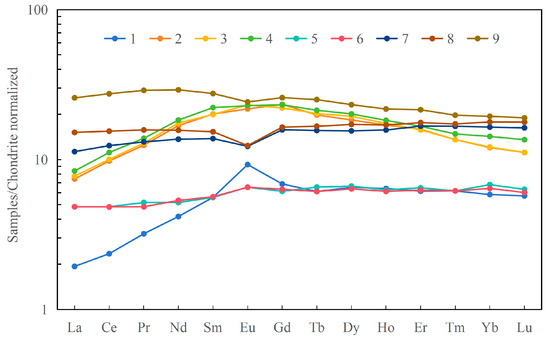
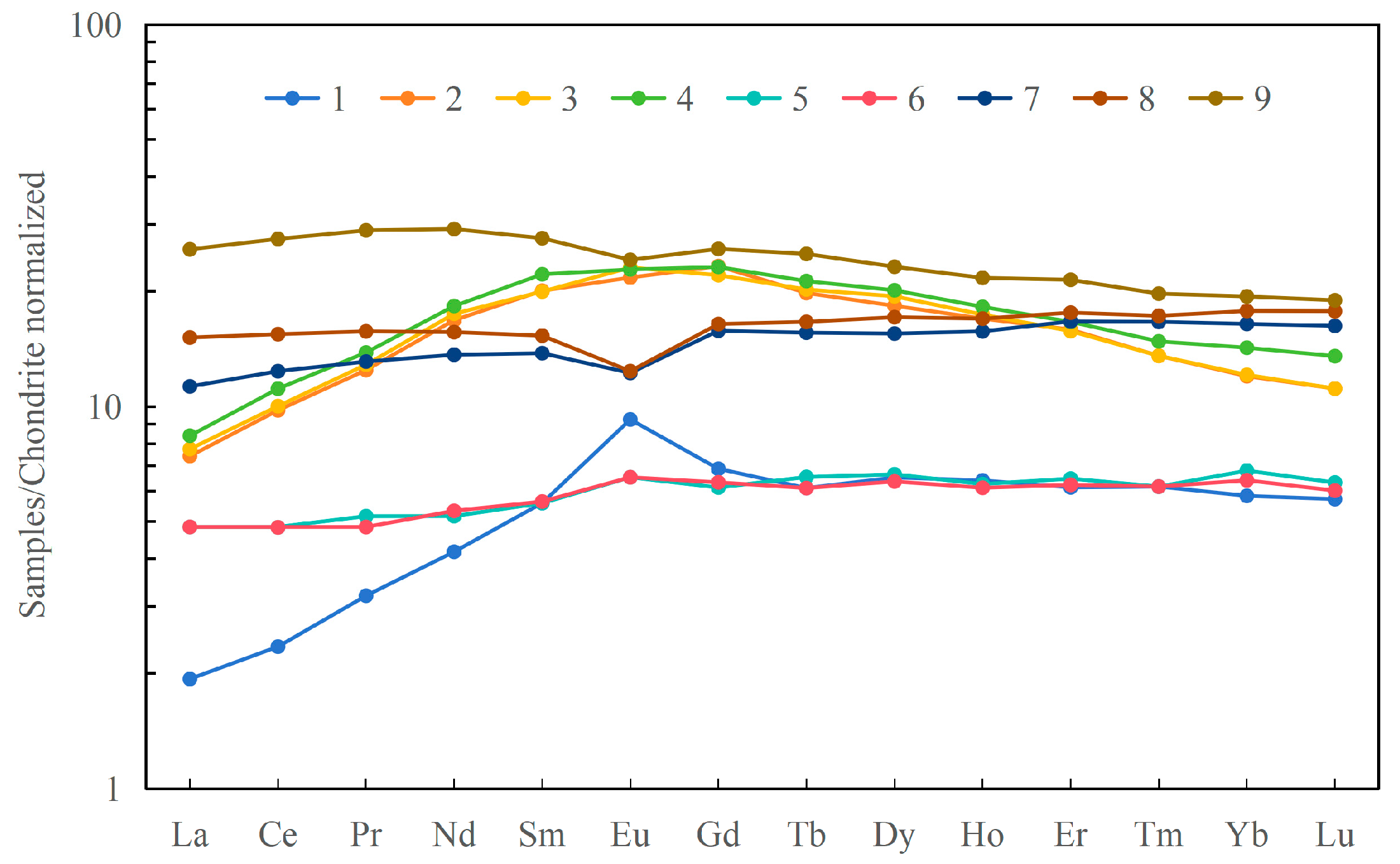
The rare-earth element (REE) contents and related parameters of the ophiolite are listed in Table 2, and the chondrite-normalized REE distribution patterns are shown in Figure 4. The gabbros have relatively low total rare-earth element abundances (ΣREE = 14.69 × 10⁻⁶–52.53 × 10⁻⁶), with ΣLREE = 7.16 × 10⁻⁶–30.30 × 10⁻⁶, ΣHREE = 7.34 × 10⁻⁶–21.78 × 10⁻⁶, ΣLREE/ΣHREE = 0.98–1.39, and (La/Yb)n = 0.33–0.59. The gabbros exhibit significant fractionation between light rare-earth elements (LREEs) and heavy rare-earth elements (HREEs), showing a left-inclined distribution pattern with LREE depletion and no negative Eu anomaly (δEu = 1.011.48). The diabases also display relatively low ΣREE values (18.24 × 10⁻⁶–18.38 × 10⁻⁶), with ΣLREE = 10.70 × 10⁻⁶–10.77 × 10⁻⁶, ΣHREE = 7.27 × 10⁻⁶–7.47 × 10⁻⁶, ΣLREE/ΣHREE = 1.43–1.48, and (La/Yb)n = 0.86–0.87. Moderate LREE-HREE fractionation is observed in the diabases, characterized by a slightly LREE-depleted left-inclined pattern without negative Eu anomaly (δEu = 1.01–1.11).
Table 2.
Trace element contents (×10−6) and characteristic parameters of the Kekedieba ophiolite.
Figure 4.
Chondrite-normalized REE distribution patterns of the Kekedieba ophiolite (chondrite-normalized values after Reference [22]).
The basalt is relatively enriched in total rare-earth elements (ΣREE = 85.16 × 10⁻⁶), with ΣLREE = 58.39 × 10⁻⁶, ΣHREE = 26.14 × 10⁻⁶ and ΣLREE/ΣHREE = 2.23, showing relative enrichment of light rare-earth elements. The basalt has a (La/Yb)n value of 0.94, displaying a nearly flat REE distribution pattern with a weak negative Eu anomaly (δEu = 0.91). The plagiogranites have relatively low total REE abundances (ΣREE = 45.88 × 10⁻⁶–52.78 × 10⁻⁶), with ΣLREE = 26.89 × 10⁻⁶–32.42 × 10⁻⁶, ΣHREE = 18.45 × 10⁻⁶–19.77 × 10⁻⁶ and ΣLREE/ΣHREE = 1.46–1.64. Fractionation between LREE and HREE is indistinct, with (La/Yb)n = 0.82–0.98. The plagiogranites exhibit a nearly flat REE distribution pattern with a weak negative Eu anomaly (δEu = 0.78–0.83).
5.3. Trace Element Characteristics
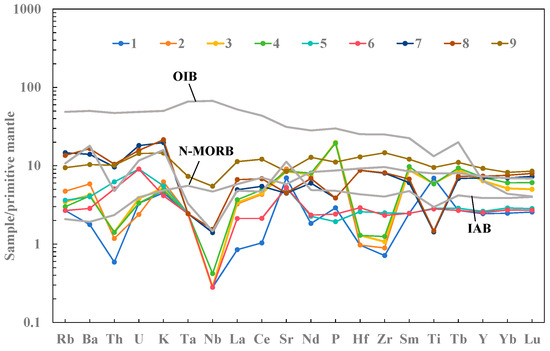
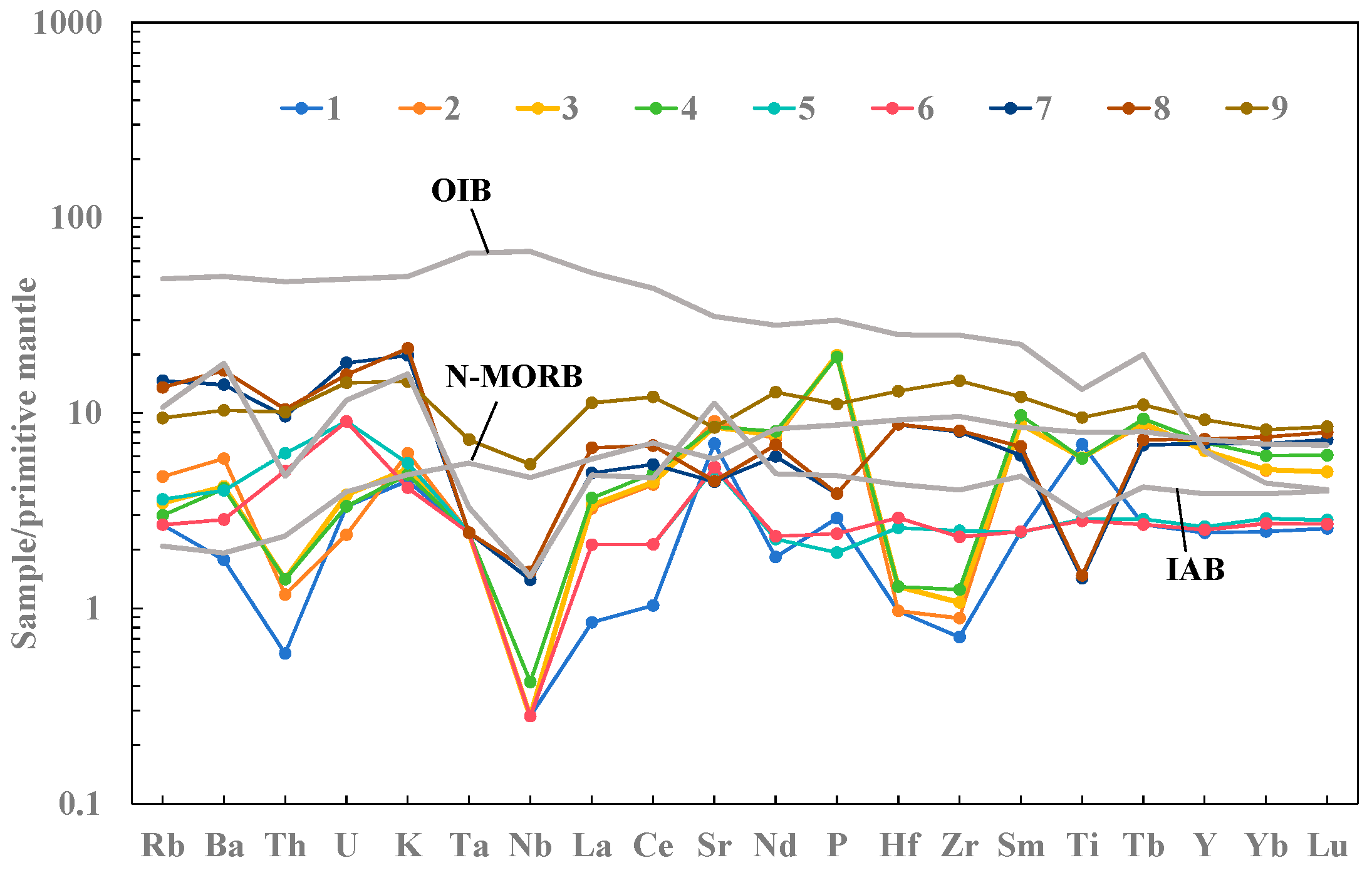
The contents of trace elements are presented in Table 2. As illustrated in the primitive mantle-normalized spider diagram (Figure 5), the gabbro samples exhibit pronounced depletion in high-field-strength elements (HFSEs) such as Nb, Zr, and Hf. Large-ion lithophile elements (LILEs), including K, Rb, Ba, U, and Th, show a nearly flat distribution pattern without any obvious enrichment, while elements such as Sr, P, and Sm undergo selective enrichment. In contrast, the diabase samples are characterized by the depletion of all elements ranging from Ta to Yb, with Nb depletion being particularly intense. Notably, the Zr-Hf elements do not exhibit depletion compared to their adjacent elements, which is consistent with the geochemical characteristics of island-arc tholeiite (IAT). The basalt sample displays a nearly flat chondrite-normalized distribution pattern, which is basically consistent with the geochemical features of average normal mid-ocean ridge basalt (N-MORB). The plagiogranite samples show distinct depletion in Nb, Ta, and Ti, with no significant enrichment of other elements. Their trace element contents and variation trends are basically consistent with those of average island-arc basalt (IAB), exhibiting the geochemical affinity of mantle-derived granites.
Figure 5.
Primitive mantle-normalized trace element spider diagrams of the Kekedieba ophiolite (primitive mantle-normalized values after Reference [23]).
5.4. Zircon U-Pb Ages
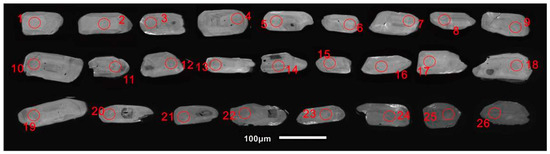
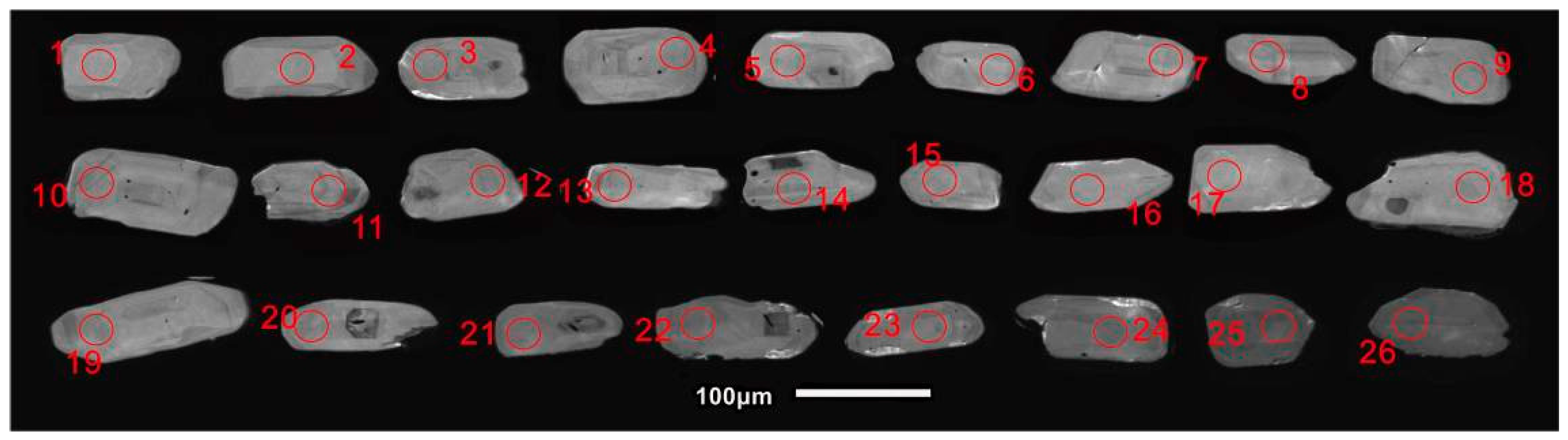
Cumulate gabbros constitute a crucial constituent of ophiolitic sequences, and their formation age serves as an effective constraint on the crystallization timing of ophiolitic bodies, while also providing critical geochronological evidence for reconstructing the tectonic environment in which the ophiolites were emplaced. In the present study, a single gabbro sample was collected from the gabbroic cumulate complex, and LA-ICP-MS zircon U-Pb geochronological analyses were carried out to determine its formation age. Zircon cathodoluminescence (CL) images (Figure 6) reveal that the zircons are predominantly subhedral-to-anhedral prismatic in shape, with relatively well-preserved crystal morphologies. The grain sizes of the zircons are concentrated in the range of 80–120 μm, with length–width ratios varying from 2:1 to 4:1. Internally, the zircons universally develop irregular fan-shaped growth zoning, and corrosion pits are locally observed on their surfaces.
Figure 6.
Cathodoluminescence images of zircons from the cumulate gabbro in the Kekedieba ophiolite.
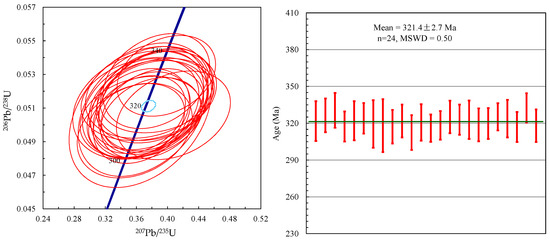
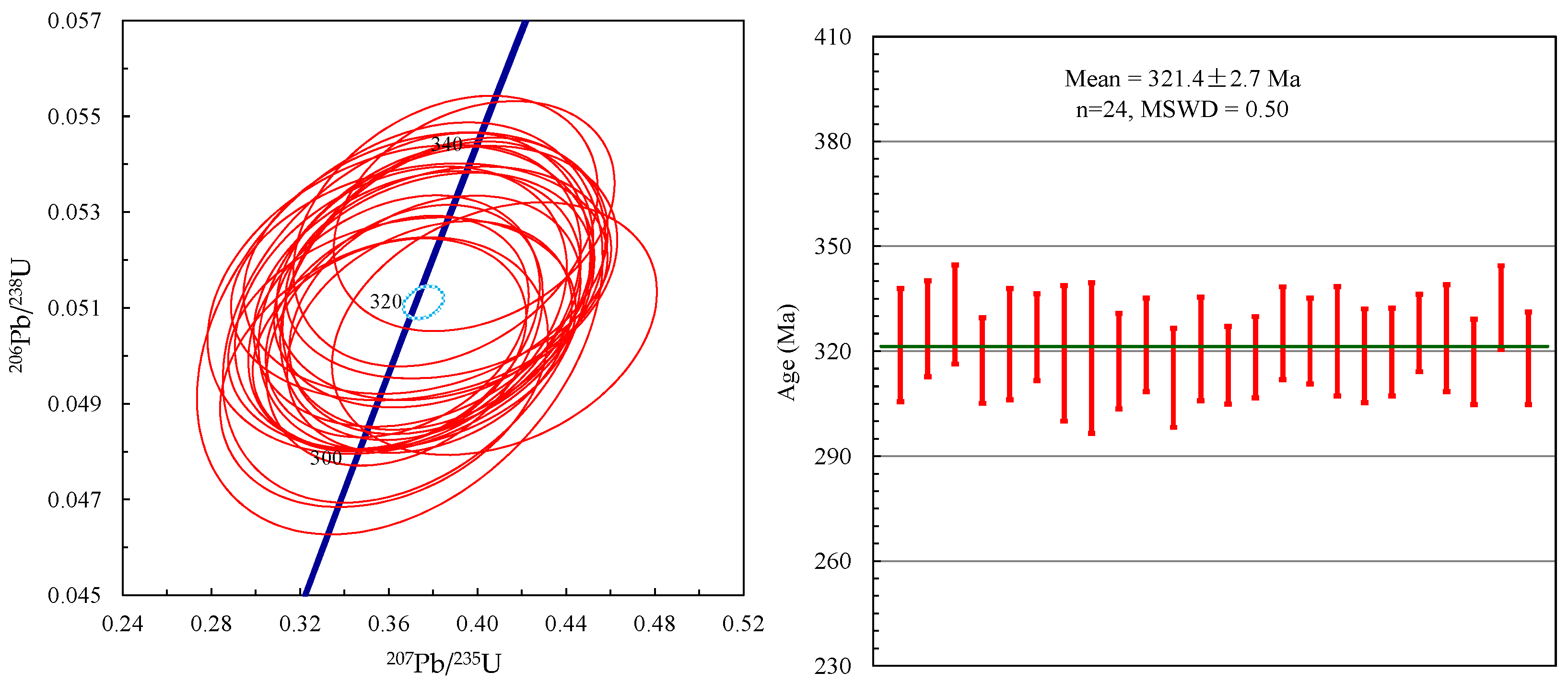
A total of 26 zircon U-Pb analytical runs were performed in this study. After excluding 2 zircons that deviated significantly from the concordia curve, the remaining 24 valid analytical points were corrected for common lead. The sample test results (Table 3, Figure 7) show that the Th/U ratios of the rocks range from 0.3 to 0.5, indicating magmatic zircons. The weighted mean (206Pb/238U) age of the zircons is 321.4 ± 2.7 Ma, which can represent the crystallization age of the gabbro formed in this period.
Table 3.
LA-ICP-MS zircon U-Pb isotopic analytical results of the gabbro from the Kekedieba ophiolite.
Figure 7.
LA-ICP-MS zircon U-Pb concordia diagrams and weighted average age plots of the cumulate gabbro in the Kekedieba ophiolite.
6. Discussion
6.1. Emplacement Age
Accurately constraining the formation age of ophiolitic constitutes an essential foundation for clarifying regional tectonic evolutionary sequences and reconstructing the evolutionary processes of paleo-ocean basins. Isotopic geochronology serves as an effective approach to determine the formation ages of magmatic rocks. Multi-lithological geochronology can deliver stringent chronological constraints on shear zone-bounded ophiolitic mélanges. However, plagiogranites and diabases from the mélange suffer intrinsic petrochronological drawbacks: intense mylonitic overprinting coupled with fluid percolation disturbs primary zircon isotopic signatures in plagiogranites, whereas diabases bear negligible zircon modal abundances and fail to support statistically valid dating results. As primitive cumulates formed during oceanic lithosphere accretion, gabbros retain well-preserved primary zircon isotopic archives and can reliably bracket the formation and obduction ages of ophiolites. Considering the diagnostic limitations of the former two lithologies, gabbro samples are selected for systematic geochronological analyses herein.
LA–ICP–MS zircon U–Pb dating of gabbroic lithologies from the Kekedieba ophiolitic mélange (West Kunlun orogenic belt) yields a weighted mean age of 321.4 ± 2.7 Ma, which tightly constrains the primary emplacement age of the mélange and assigns its genesis to the late Early Carboniferous per the international chronostratigraphic scale. The temporal overlap between this zircon crystallization age and regional Early Carboniferous island-arc magmatic suites further substantiates the tectonic validity of the geochronological constraint proposed in this contribution.
The West Kunlun orogen exposes multiple well-constrained ophiolitic belts and coeval-arc magmatic suites, which provide pivotal chronological constraints on the Late Paleozoic tectonic evolution of the Paleo-Tethys Ocean. Existing geochronological datasets have delineated the temporal framework of regional oceanic accretion and subduction-associated magmatism. Gabbroic rocks from the southern Subashi ophiolite belt yield LA-ICP-MS zircon U-Pb ages of 352.7 ± 3.0 Ma and 261.9 ± 2.2 Ma, bracketing ophiolite formation between the Early Carboniferous and Middle Permian [24]. SHRIMP zircon U-Pb analyses of plagiogranites within the Oytag ophiolite yield ages of 337.5 ± 4.1 Ma and 327.7 ± 4.9 Ma, recording episodic magmatic pulses during the Early Carboniferous [25]. Furthermore, island-arc affinity hornblende quartz diorites from the Maza tectonic mélange yield a SHRIMP U-Pb age of 338 ± 10 Ma [26]. Synthesizing these published data substantiates pervasive oceanic crust generation and synchronous arc magmatism across the West Kunlun region during the Late Paleozoic.
Complementary to the established regional tectono-magmatic framework, newly acquired LA-ICP-MS zircon U-Pb data constrain the crystallization age of cumulate gabbros within the Kekedieba ophiolitic mélange to 321.4 ± 2.7 Ma. This age is temporally consistent with late Early Carboniferous tectono-magmatic events in the West Kunlun orogen, and is further verified by coeval island-arc tonalite (336.5 ± 3.3 Ma) exposed in the Waqia domain. These new results provide a precise temporal calibration for the formation of the Kekedieba ophiolitic mélange. Critically, the robust temporal correspondence between the Kekedieba ophiolite and regional arc magmatic records—encompassing the Maza arc igneous rocks (338 ± 10 Ma) and Oytag plagiogranites (337.5 ± 4.1 Ma, 327.7 ± 4.9 Ma)—highlights a coherent spatio-temporal linkage between oceanic crust accretion and subduction-triggered magmatism. This comprehensive chronological synthesis strongly favors an active subduction regime of the Kangxiwa Ocean, a subordinate branch of the Paleo-Tethys Ocean, throughout the Early Carboniferous.
6.2. Rock Types
Rare-earth elements (REEs), high-field-strength elements (HFSEs) and transition metal elements (e.g., Sc, V, Cr, Ni) are relatively immobile. Accordingly, these elements are widely applicable to discriminate primary rock types [27,28,29].
The gabbros are characterized by pronounced depletion of HFSE including Nb, Zr and Hf, nearly flat distribution without enrichment of large-ion lithophile elements such as K, Rb, Ba, U and Th, and selective enrichment of Sr, P and Sm. The diabases exhibit depletion of all elements from Ta to Yb with notably strong Nb depletion. Zr and Hf show no obvious depletion relative to adjacent elements, consistent with the geochemical signatures of island-arc tholeiite (IAT). The basalts display nearly flat trace element patterns, which are basically identical to those of average normal mid-ocean ridge basalt (N-MORB). The plagiogranites are marked by distinct depletion of Nb, Ta and Ti with no significant enrichment of other elements, showing consistent elemental contents and variation trends with average island-arc basalt (IAB), and exhibit typical features of mantle-derived granite. In general, the gabbros, diabases and plagiogranites all record depleted mantle source signatures, whereas the basalt possesses typical geochemical characteristics analogous to mid-ocean ridge basalt. The total rare-earth element contents vary in a trend of initial decrease followed by increase from gabbro through diabase to basalt, with negligible negative Eu anomalies. Its REE patterns gradually evolve from left-inclined to nearly flat, further indicating a depleted mantle origin. The plagiogranites have low total REE abundances and flat chondrite-normalized REE patterns with weak negative Eu anomalies, which is in good agreement with their trace element geochemical features.
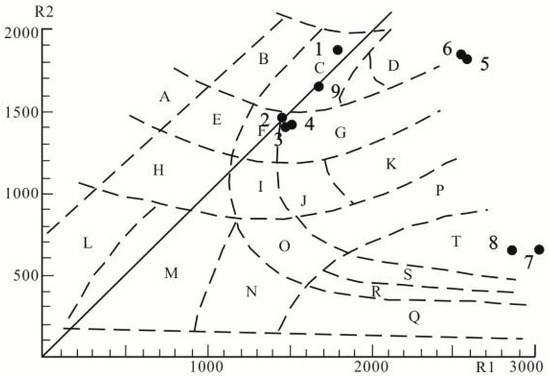
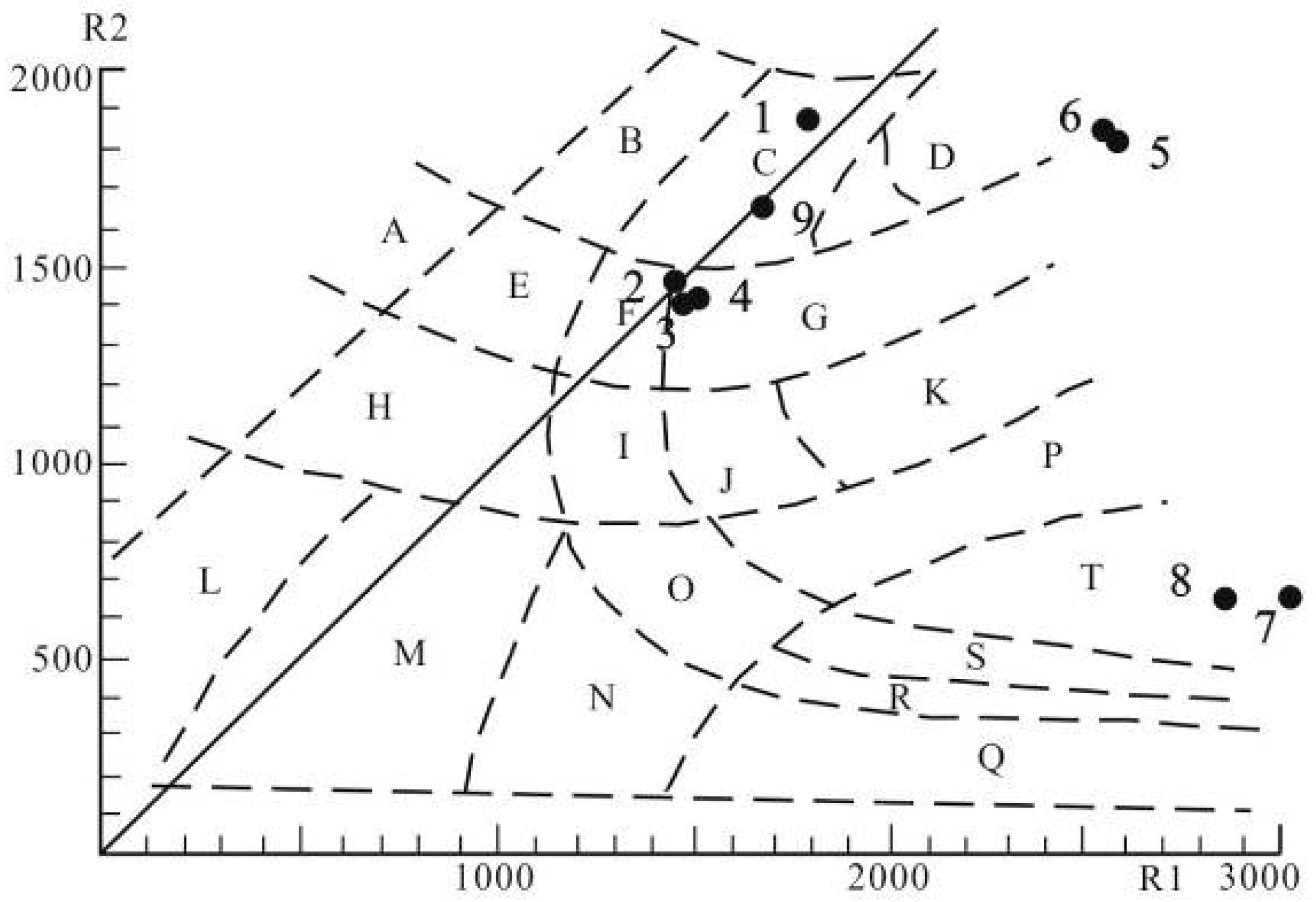
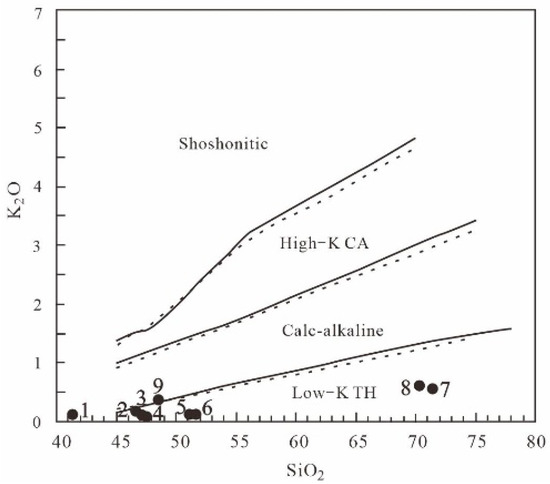
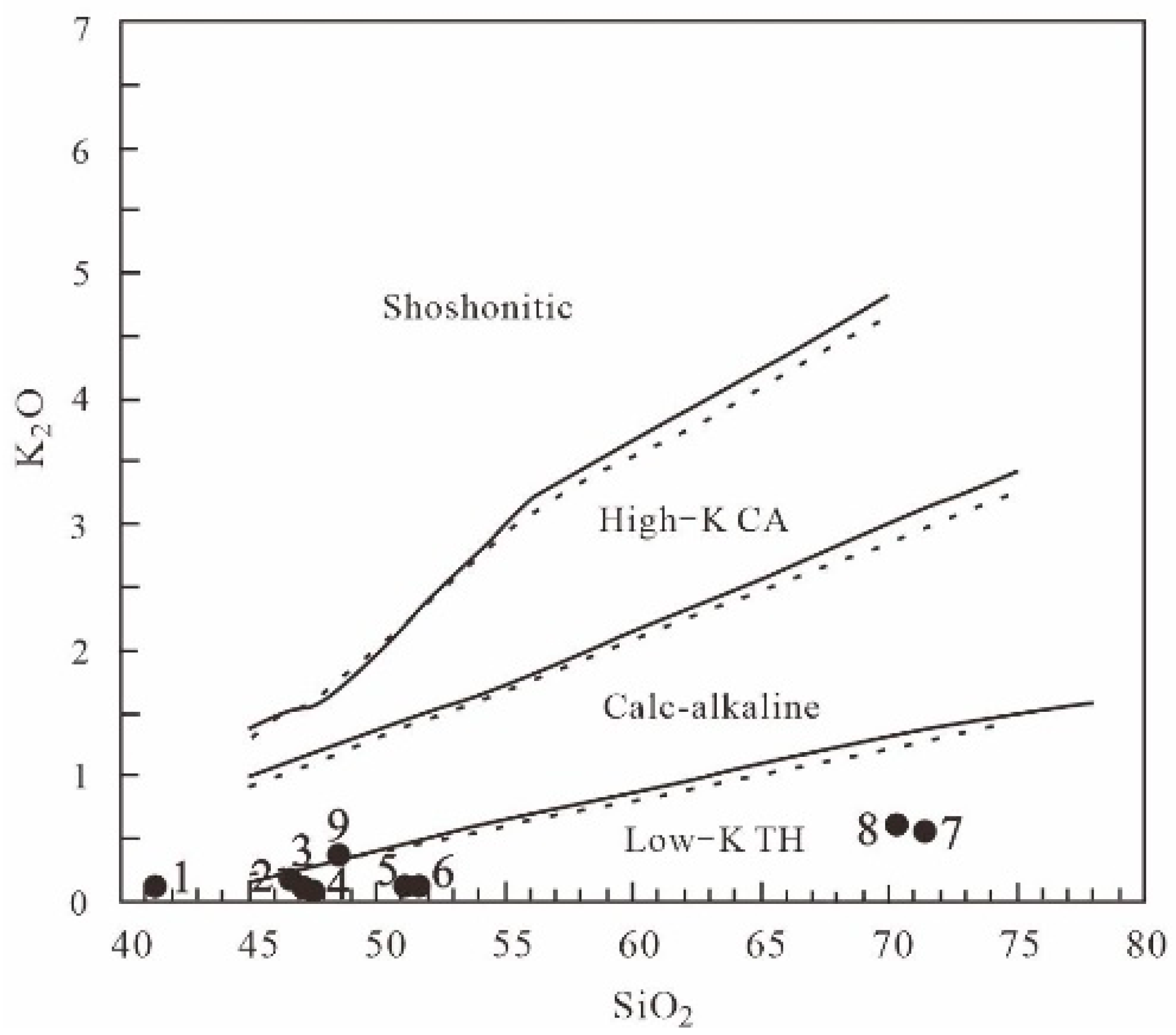
In the R1-R2 petrological classification diagram (Figure 8), all gabbro samples are projected within the gabbro field, with the exception of Sample 1 that falls into the olivine gabbro domain. Diabase samples plot proximal to the boundary between the gabbronorite and gabbro fields, the basalt sample plots in the olivine gabbro field, and the plagiogranite samples are confined to the granodiorite field. The gabbros exhibit relatively low Mg# values, suggesting that their parental magmas have experienced intensive magmatic differentiation and evolutionary processes. By contrast, the diabases yield elevated Mg# values, indicative of a low degree of magmatic differentiation. In the SiO2-K2O discriminant diagram (Figure 9), all rock samples are classified into the low-K tholeiite series field. Moreover, the FeO*/MgO ratios show an increasing trend with rising SiO2 content. Integratively, the studied ophiolite suite belongs to the typical low-K tholeiitic basalt series.
Figure 8.
R1-R2 petrological classification diagram of the Kekedieba ophiolite (base map reproduced from [30]). A—Essexite; B—Alkali gabbro; C—Olivine gabbro; D—Gabbro-norite; E—Syenogabbro; F—Monzogabbro; G—Gabbro; H—Syenodiorite; I—Monzonite; J—Monzodiorite; K—Diorite; L—Nepheline syenite; M—Syenite; N—Quartz syenite; O—Quartz monzonite; P—Tonalite; Q—Alkali granite; R—Syenogranite; S—Monzogranite; T—Granodiorite.
Figure 9.
K2O-SiO2 diagram of the Kekedieba ophiolite (base map reproduced from [31]).
As a predominant felsic end-member of ophiolitic assemblages, plagiogranite petrogenesis carries pivotal implications for constraining the tectonic attribution and evolutionary history of ophiolite sequences. The studied plagiogranites are geochemically defined by elevated Na contents, depleted K abundances, low Rb concentrations, and consistently low Rb/Sr ratios (<0.1), which match the diagnostic geochemical fingerprints of supra-subduction zone (SSZ)-type plagiogranites worldwide, thereby substantiating an intrinsic SSZ tectonic affinity for the investigated rocks. The Sr and Yb elemental compositions of the studied samples are broadly consistent with those of SSZ-type plagiogranites from the Guogan Jianian ophiolite in northern Qiangtang, northern Tibet [32]. Additionally, these samples display low total rare-earth element (ΣREE) abundances, fractionated light REE (LREE)-depleted patterns, and distinct negative Nb, Ta, and Ti anomalies. Such elemental fractionation characteristics are highly analogous to those of SSZ-type plagiogranites from the Gaize ophiolite, Tibet [33], and typical oceanic plagiogranites from the Nagaland–Manipur ophiolite, India [34], collectively verifying a subduction-linked tectonic origin for the studied intrusions.
Regional geochronological datasets provide robust supplementary constraints on the above tectonic inference. An extensive oceanic plagiogranite belt crops out along the northwestern margin of the West Kunlun orogen, as exemplified by the Oytag pluton (322.8 ± 2.2 Ma). This pluton is genetically interpreted as the product of partial melting of mafic oceanic crust triggered by back-arc basin extensional disassociation and lithospheric thinning. The emplacement age of this plagiogranite belt is temporally coupled with the crystallization age of the Kekedieba ophiolite (321.4 ± 2.7 Ma), indicating coeval Late Carboniferous magmatism and tectonism within the study domain. Synthesizing the consistent geochemical affinities and synchronized regional chronological records, the studied plagiogranites are categorized as integral components of SSZ-type ophiolitic suites, with their parental magmas originating from partial melting of subduction-modified mafic oceanic crust. This multi-evidence synthesis conclusively constrains the formation of the Kekedieba ophiolite within an intra-oceanic arc tectonic framework above an active subduction zone.
6.3. Tectonic Setting
Dilek & Furnes [35] classified ophiolites into subduction-related and non-subduction-related types. The subduction-related types encompass supra-subduction zone (SSZ) and volcanic arc ophiolites, while the non-subduction-related types include continental margin, mid-ocean ridge (MOR) and mantle plume ophiolites. Pearce et al. [21] divided ophiolites into the MOR type formed at mid-ocean ridges and the SSZ type generated above subduction zones based on their formation settings.
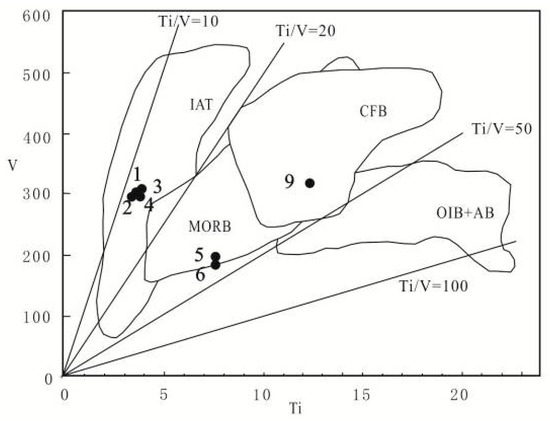
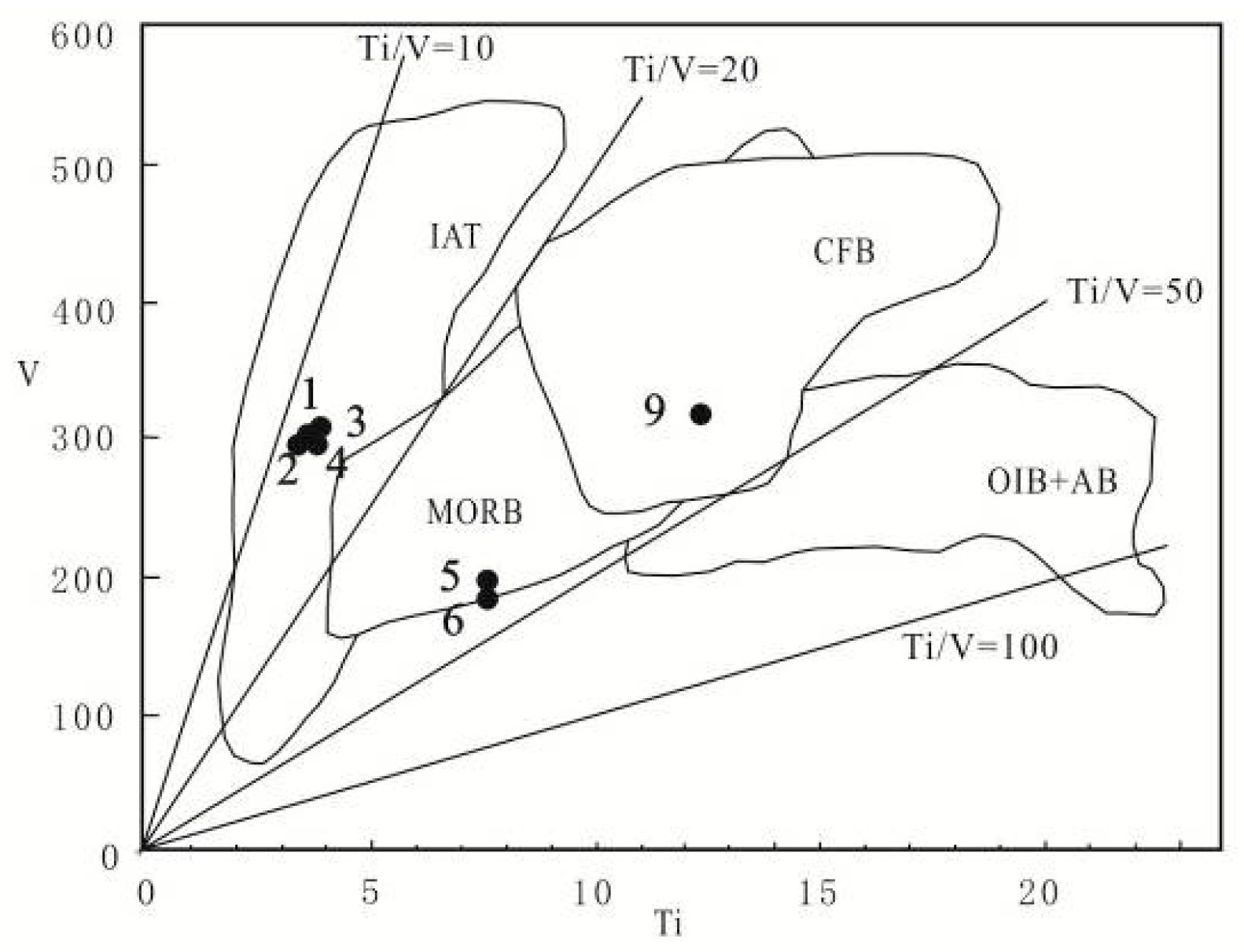
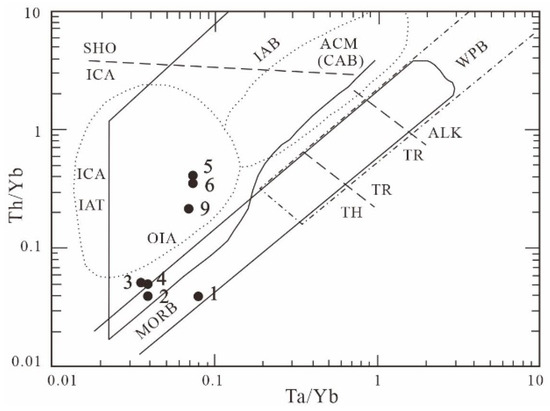
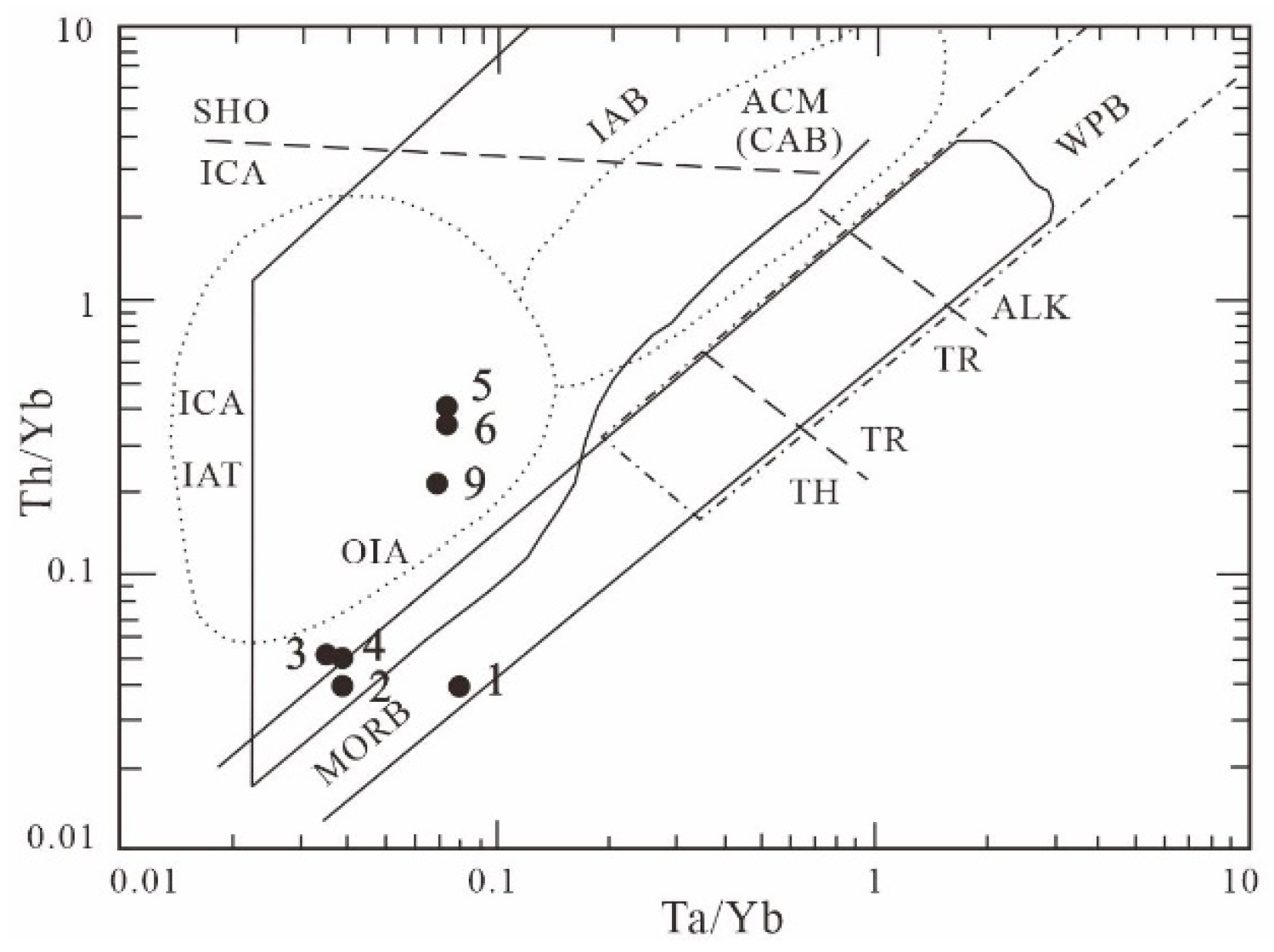
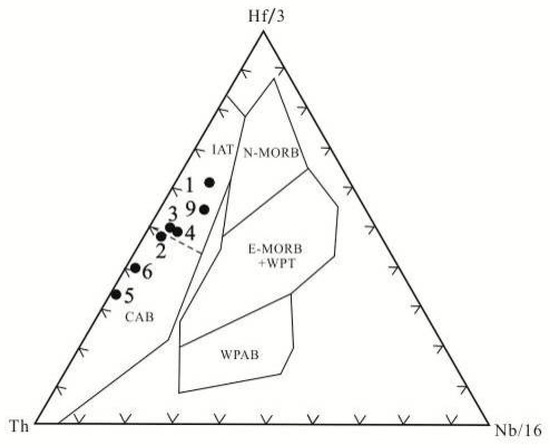
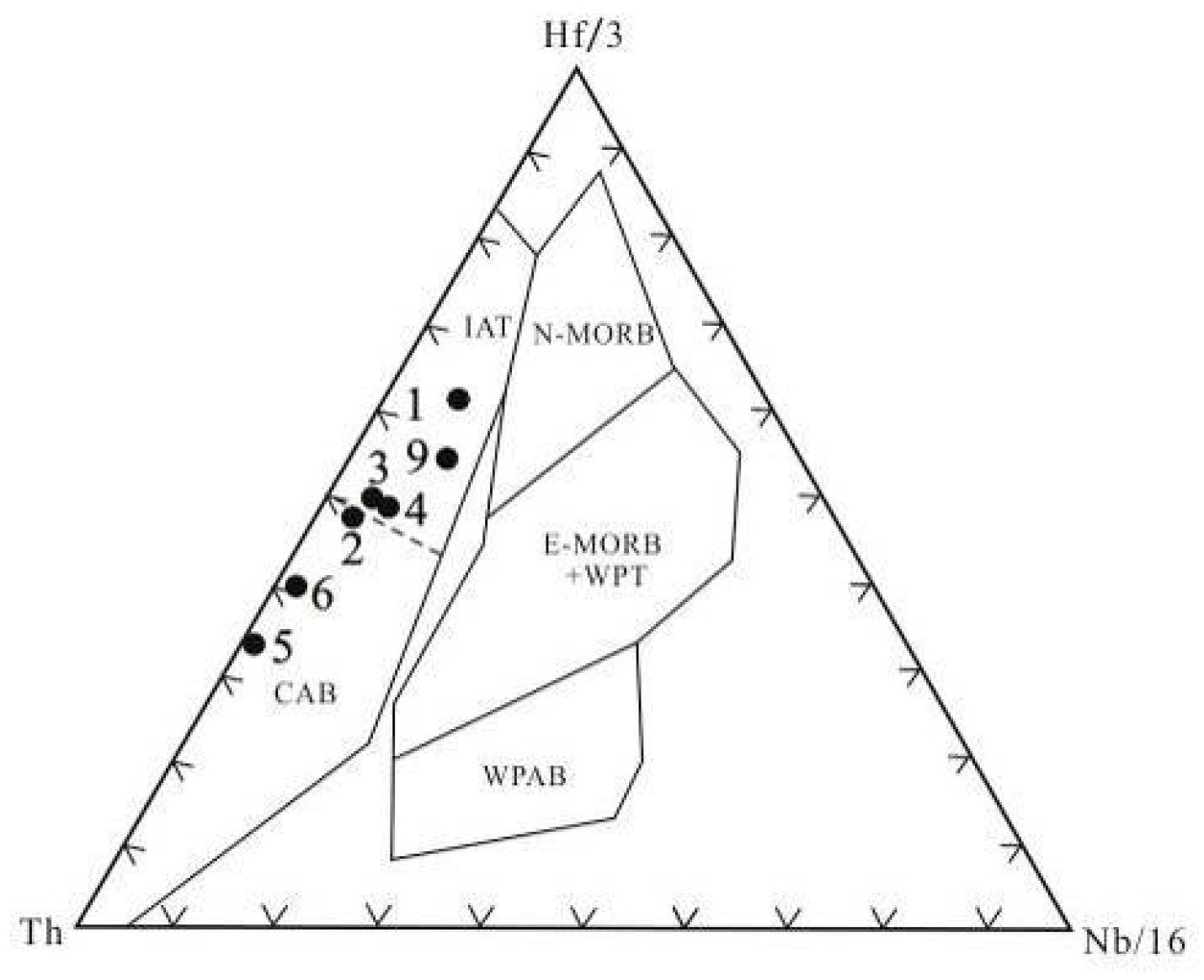
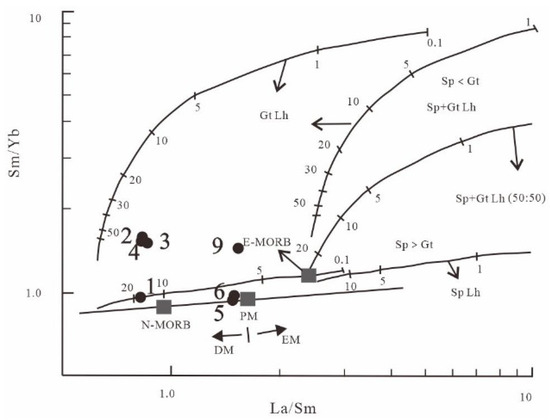
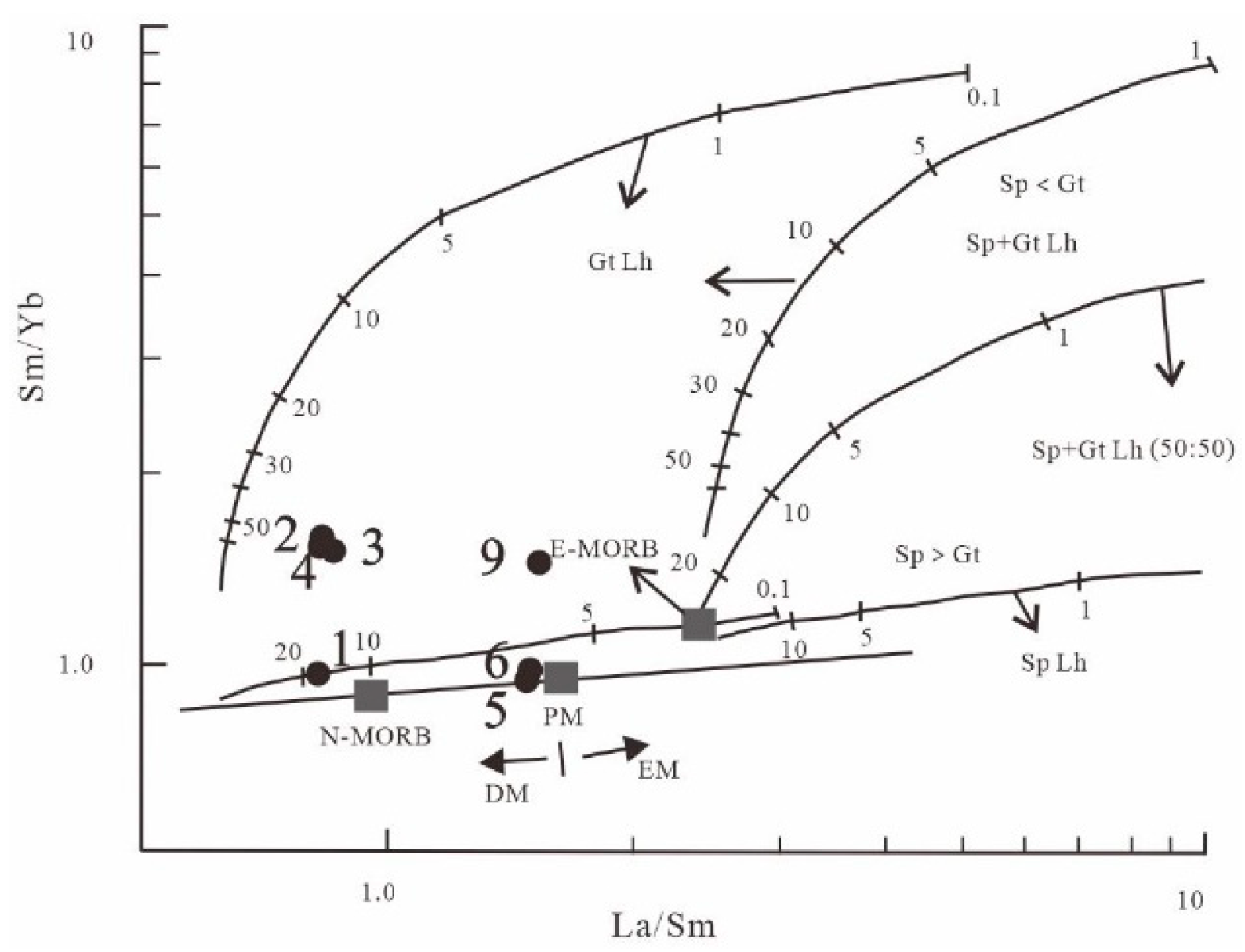
The ophiolites in the study area have generally undergone variable superposition and modification by late-stage metamorphism and hydrothermal alteration. Previous geochemical studies have demonstrated that HFSEs (e.g., Ti, V, Th, Nb, Yb) and REEs exhibit strong geochemical inertness during metamorphism and alteration. These elements possess high compositional stability and are barely affected by secondary overprinting, thereby faithfully preserving primary magmatic signatures. Accordingly, they serve as reliable geochemical tracers for constraining mantle source properties, reconstructing magmatic evolutionary processes, and discriminating tectonic settings. Samples of different lithologies show distinct projection characteristics in various tectonic discrimination diagrams. In the T-V tectonic discrimination diagram (Figure 10), the cumulate gabbro samples predominantly plot in the island-arc tholeiite (IAT) field, whereas the diabase and basalt samples fall within the mid-ocean ridge basalt (MORB) field. In the Th/Yb-Ta/Yb diagram (Figure 11), the cumulate gabbros are projected near the boundary between the MORB and IAT fields, while the diabase and basalt samples are entirely confined to the oceanic island-arc domain. All ophiolite samples in the study area stably plot in the IAT field in the Hf/3-Th-Nb/16 tectonic discrimination diagram (Figure 12). The La/Sm-Sm/Yb source discrimination diagram (Figure 13) further reveals significant discrepancies in mantle source attributes among the different lithologies. The cumulate gabbros are characterized by high-degree partial melting of the depleted mantle (DM), recording intensive magmatic melting of deep depleted mantle material. By contrast, the diabase and basalt samples exhibit signatures of low-degree partial melting of the primitive mantle (PM), indicating their derivation from low-extent melting of primitive mantle sources.
Figure 10.
Ti-V tectonic discrimination diagram of the Kekedieba ophiolite (base map reproduced from [36]).
Figure 11.
Th/Yb-Ta/Yb diagram of the Kekedieba ophiolite (base map reproduced from [37]).
Figure 12.
Hf/3-Th-Nb/16 diagram of the Kekedieba ophiolite (base map reproduced from [38]).
Figure 13.
La/Sm-Sm/Yb diagram of the Kekedieba ophiolite (base map reproduced from [39]).
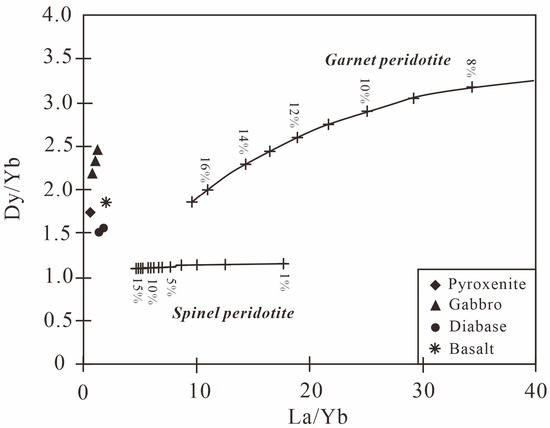
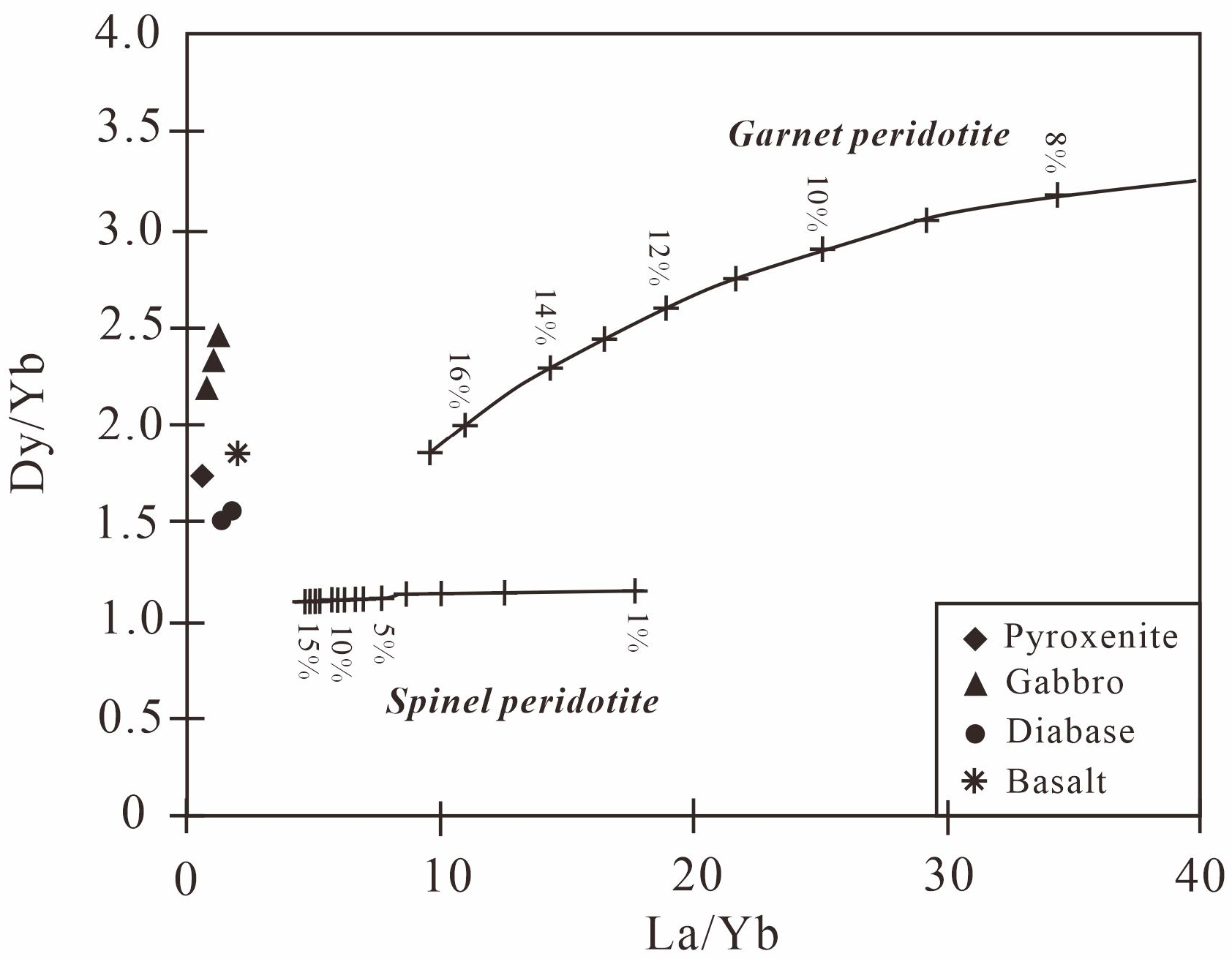
The La/Yb–Dy/Yb diagram [40] is widely used to constrain the partial melting degree and source depth of mantle-derived rocks, based on systematic differences in rare-earth element partitioning. Dy and Yb are compatible in garnet, with Yb exhibiting higher compatibility than Dy, whereas La is strongly incompatible. Partial melting of garnet lherzolite accordingly produces steep compositional trends with elevated Dy/Yb ratios, whereas melting of spinel lherzolite yields flat trends with lower Dy/Yb values. As such, the Dy/Yb ratio serves as a reliable proxy for mantle source mineralogy and melting depth. Mafic rocks from the Kekedieba ophiolite exhibit systematic variations in La/Yb ratios. Pyroxenites and gabbros possess lower La/Yb values (0.49–0.95) than diabases and basalts (1.05–1.97), indicative of high-degree partial melting (>15%) and slightly higher melt fractions for pyroxenites and gabbros. Nevertheless, this interpretation is inconsistent with the melting constraints derived from the La/Sm–Sm/Yb diagram. This discrepancy arises from variable elemental compatibility: Sm displays compatibility behavior similar to La, while Yb is significantly more compatible. Relative to La/Sm, the La/Yb ratio is less sensitive to melting variations and is strongly overprinted by residual garnet, which obscures primary melting signals. Consequently, the La/Sm ratio provides a more robust indicator of partial melting intensity. Variations in Dy/Yb ratios further refine the mantle melting depth constraints. Pyroxenites and gabbros yield higher Dy/Yb ratios (1.72–2.47) than diabases and basalts (1.51–1.84). Consistent with the aforementioned REE partitioning systematics, elevated Dy/Yb values record melting within the deep garnet stability field, whereas lower values reflect shallower melting conditions. Therefore, the parental magmas of pyroxenites and gabbros originated from the garnet–facies mantle, while diabase and basalt magmas were generated within the shallower garnet–spinel transition zone (Figure 14).
Figure 14.
La/Yb vs. Dy/Yb for the basic rocks from Kekedieba ophiolites (base map reproduced from [40]).
Ophiolitic melanges within orogenic belts are characterized by heterogeneous and multi-stage tectonic origins. The cumulate complexes and intruded plagiogranites preserved in ophiolitic fragments display depleted mantle source signatures, with geochemical affinities typical of island-arc igneous suites. In comparison, diabase dykes and oceanic basalts retain primitive mantle geochemical characteristics, consistent with the petrological features of mid-ocean ridge magmatism. The pronounced geochemical heterogeneity observed herein implies a dynamic tectonic evolution history for the investigated ophiolites. The variable petrogenetic attributes are interpreted to result from either progressive tectonic transition from mid-ocean ridge to island-arc environments during magmatic activity, or the post-tectonic superimposition and amalgamation of discrete ophiolitic units generated at distinct tectonic stages and geodynamic settings. Collectively, these observations corroborate that the studied ophiolitic complex experienced multi-phase and multi-environment superimposed evolution, sharing highly consistent evolutionary mechanisms with the classic Oman ophiolite [41,42].
The investigated ophiolite, together with Early Carboniferous island-arc intermediate-mafic volcanic rocks, occurs as tectonic slices embedded within the Kangxiwar tectonic belt. Their temporally consistent formation ages constrain the studied ophiolite as residual fragments of supra-subduction zone (SSZ)-type ophiolites, which formed via subduction-related magmatism in an arc-affiliated geodynamic framework. Although field investigations fail to identify outcrops of the basal mantle peridotite unit in the study area, comprehensive geological observations robustly suggest that the Kangxiwar tectonic belt represents a complete ophiolitic belt.
7. Conclusions
(1) The Kekedieba ophiolite consists predominantly of cumulate gabbros, diabase dykes, plagiogranites and oceanic basalts. LA-ICP-MS zircon U-Pb isotopic dating constrains the gabbro emplacement age at 321.4 ± 2.7 Ma, corresponding to the late Early Carboniferous.
(2) Projection onto the R1-R2 petrogenetic classification diagram places samples within domains of olivine gabbro, gabbro, gabbronorite and granodiorite. All analyzed samples plot in the low-potassium tholeiitic series field on the SiO2-K2O diagram, manifesting intrinsic tholeiitic geochemical affinity.
(3) Tectonic discrimination diagrams demonstrate that cumulate gabbro bears island-arc tholeiitic basalt affinity, whereas diabase and basalt are attributed to mid-ocean ridge basalt. Geochemical evidence suggests that the cumulate gabbros generated by a high-degree partial melting of depleted mantle, and diabase as well as basalt originated from low-degree partial melting of primitive mantle.
(4) The Kangxiwa ophiolite suite shows prominent petrological and geochemical heterogeneity, recording multi-stage oceanic lithosphere evolution. Cumulate gabbro and plagiogranite yield depleted mantle and island-arc signatures, while diabase and basalt display primitive mantle and typical MORB features. This heterogeneity indicates tectonic transition and multi-phase ophiolitic superimposition. The MORB-like signatures represent pre-subduction or incipient back-arc-spreading oceanic crust relics. Combined with island-arc fingerprints and coeval-arc volcanic assemblages, this suite is confirmed as an SSZ-type island-arc ophiolite.
Author Contributions
Fieldwork, C.H.; observation, J.Z.; writing—original draft preparation, J.Z., D.H. and X.Z.; writing—review and editing, J.Z., C.H. and D.H.; project administration, L.B.; funding acquisition, J.Z. All authors have read and agreed to the published version of the manuscript.
Funding
This research was funded by the Excellent Young Scientists Fund of China (No. 52222404).
Data Availability Statement
The raw data supporting the conclusions of this article will be made available by the authors on request.
Acknowledgments
The author thanks laboratory and field workers for their valuable support. The authors also thank the anonymous reviewers and the editors for their constructive suggestions.
Conflicts of Interest
Junsheng Zhong was employed by the Henan Sixth Geological Brigade Co., Ltd., Zhengzhou, 450000, Henan, China. The remaining authors declare that the research was conducted in the absence of any commercial or financial relationships that could be construed as a potential conflict of interest.
References
- Zhang, Q. Ophiolite and Geodynamic Research; Geological Publishing House: Beijing, China, 1996; pp. 68–95. [Google Scholar]
- Shen, J.; Dai, J.G. Constraints of Metamorphic Soles and Their Protolith Ages on the Initiation of Neo-Tethyan Subduction. Bull. Mineral. Petrol. Geochem. 2026, 1–3. Available online: https://link.cnki.net/urlid/52.1102.P.20260417.1722.002 (accessed on 30 May 2026).
- Uysal, I.; Kapsiotis, A.; Akmaz, R.M.; Saka, S.; Seitz, H.M. The Guleman ophiolitic chromitites (SE Turkey) and their link to a compositionally evolving mantle source during subduction initiation. Ore Geol. Rev. 2018, 93, 98–113. [Google Scholar] [CrossRef] [Scilit]
- Zeng, R.; Wang, Q.; Santosh, M.; Allen, M.B.; Su, H.; Ju, P.; Yuan, Z.; Zhang, Y.; Zhang, X.; Liu, G. Early Paleozoic Tethyan evolution and metallogeny in East Asia. Ore Geol. Rev. 2025, 186, 106890. [Google Scholar] [CrossRef] [Scilit]
- Christensen, N.I.; Mooney, W.D. Seismic velocity structure and composition of the continental crust: A global view. J. Geophys. Res. Solid Earth 1995, 100, 976–988. [Google Scholar] [CrossRef] [Scilit]
- Guo, J.W.; Yi, L.; Wei, L.; Wang, D.J. Thermophysical properties of plagioclase amphibolite at high temperatures and pressures and its geophysical implications. Lithos 2024, 470–471, 107529. [Google Scholar] [CrossRef] [Scilit]
- Xiao, L.L.; Wang, G.D. High-pressure amphibolite: A key probe for revealing deep processes in orogenic belts. Acta Petrol. Sin. 2026, 42, 1227–1237. [Google Scholar] [CrossRef] [Scilit]
- Szwillus, W.; Afonso, J.C.; Ebbing, J. Global crustal thickness and velocity structure from geostatistical analysis of seismic data. J. Geophys. Res. Solid Earth 2019, 124, 1626–1652. [Google Scholar] [CrossRef] [Scilit]
- Allen, M.B.; Vincent, S.J.; Wheeler, P.J. Late Cenozoic tectonics of the Kepingtage thrust zone: Interactions of the Tien Shan and Tarim Basin, northwest China. Tectonics 1999, 18, 639–654. [Google Scholar] [CrossRef] [Scilit]
- Zhao, L.B.; Chen, D.X.; Feng, J.W. Characteristics of Cenozoic Rotational Shear Tectonic System and Stress Field Evolution in Tianshan and Its Southern Margin. J. Earth Sci. 2026, 1–22. Available online: https://link.cnki.net/urlid/42.1874.p.20260414.1421.018 (accessed on 30 May 2026).
- Han, F.L.; Cui, J.T.; Ji, W.H.; Li, H.P.; Hao, J.W. Discovery and geological significance of Qimanyute ophiolitic mélange in West Kunlun. Geol. Bull. China 2002, 21, 575–578. [Google Scholar] [CrossRef]
- Qiao, J.R.; Dong, J.; Su, L.; Allen, M.B.; Song, S.G. Long-lived mantle plume trail recorded the onset and spreading of the Proto-Tethys Ocean. Sci. Bull. 2025, 70, 1420–1423. [Google Scholar] [CrossRef] [Scilit] [PubMed]
- Huang, J.S.; Chen, M.; Zheng, J.P. Kudi Ophiolite in West Kunlun Records Multi-Stage Evolution of Mantle Wedge Melts. Bull. Mineral. Petrol. Geochem. 2026, 45, 442–462. Available online: https://link.cnki.net/urlid/52.1102.P.20260320.1135.001 (accessed on 29 April 2026).
- Henan Institute of Geological Survey. Regional Geological Survey Report of 1:50,000 Maeryang Sheet, Taxkorgan, Xinjiang; Henan Institute of Geological Survey: Zhengzhou, China, 2018; pp. 75–95. [Google Scholar]
- Zhang, C.L.; Lu, S.N.; Yu, H.F. Tectonic evolution of the West Kunlun orogenic belt on the northern margin of the Qinghai-Tibet Plateau: Evidence from zircon SHRIMP and LA-ICP-MS dating. Sci. China Earth Sci. 2007, 50, 145–154. [Google Scholar] [CrossRef]
- Ji, W.H.; Li, R.S.; Chen, S.J. Discovery of Paleoproterozoic volcanic rocks in the Tianshuihai Block and its geological significance. Sci. China Earth Sci. 2011, 54, 1268–1280. [Google Scholar] [CrossRef] [Scilit]
- Liu, Z. Petrogenesis of Early Mesozoic Granites in the West Kunlun Orogenic Belt and Paleo-Tethys Tectonic Evolution. Ph.D. Thesis, Nanjing University, Nanjing, China, 2015. [Google Scholar]
- Ludwig, K.R. Mathematical-Statistical Treatment of Data and Errors for 230Th/U Geochronology. Rev. Mineral. Geochem. 2003, 52, 631–656. [Google Scholar] [CrossRef] [Scilit]
- Liu, Y.S.; Gao, S.; Hu, Z.C.; Gao, C.G.; Zong, K.Q.; Wang, D.B. Continental and oceanic crust recycling-induced melt-peridotite interactions in the Trans-North China Orogen: U-Pb dating, Hf isotopes and trace elements in zircons of mantle xenoliths. J. Petrol. 2010, 51, 537–571. [Google Scholar] [CrossRef] [Scilit]
- Ludwig, K.R. ISOPLOT 3.00: A Geochronological Toolkit for Microsoft Excel; Berkeley Geochronology Center: Berkeley, CA, USA, 2003; p. 39. [Google Scholar]
- Pearce, J.A.; Harris, N.B.W.; Tindle, A.G. Trace element discrimination diagrams for the tectonic interpretation of granitic rocks. J. Petrol. 1984, 25, 956–983. [Google Scholar] [CrossRef] [Scilit]
- Thompson, R.N. Magmatism of the British Tertiary Volcanic Province. Scott. J. Geol. 1982, 18, 49–107. [Google Scholar] [CrossRef] [Scilit]
- Sun, S.S.; McDonough, W.F. Chemical and isotopic systematics of oceanic basalts: Implications for mantle composition and process. Geol. Soc. Lond. Spec. Publ. 1989, 42, 313–345. [Google Scholar] [CrossRef] [Scilit]
- Wen, Z.G.; Hu, C.L.; Wang, H.Q.; Li, W.J.; Nie, Z.G.; Wang, J.W.; Du, Y. Formation age and tectonic significance of the Subashi ophiolite in West Kunlun, Xinjiang. Northwest. Geol. 2019, 52, 14–27, (In Chinese with English Abstract). [Google Scholar] [CrossRef]
- Jiang, Y.H.; Liao, S.Y.; Yang, W.Z.; Shen, W.-Z. An island arc origin of plagiogranites at Oytag, western Kunlun orogen, northwest China: SHRIMP zircon U–Pb chronology, elemental and Sr–Nd–Hf isotopic geochemistry and Paleozoic tectonic implications. Lithos 2008, 106, 323–335. [Google Scholar] [CrossRef] [Scilit]
- Li, B.Q.; Yao, J.X.; Ji, W.H.; Zhang, J.-L.; Yin, Z.-Y.; Chen, G.-C.; Lin, X.-W.; Zhang, Q.-S.; Kong, W.-N.; Wang, F.; et al. Characteristics and zircon SHRIMP U-Pb dating of the arc magmatic rocks in the Mazar area, southern Yecheng, West Kunlun. Geol. Bull. China. 2006, 25, 124–132. Available online: http://dzhtb.cgs.cn/article/doi/10.12097/gbc.20060119 (accessed on 29 April 2026).
- Gillespie, J.; Kirkland, C.L.; Kinny, P.D.; Simpson, A.; Glorie, S.; Rankenburg, K. Lu-Hf, Sm-Nd, and U-Pb isotopic coupling and decoupling in apatite. Geochim. Cosmochim. Acta 2022, 338, 121–135. [Google Scholar] [CrossRef] [Scilit]
- Bea, F.; Arzamastsev, A.; Montero, P.; Arzamastseva, L. Anomalous alkaline rocks of Soustov, Kola: Evidence of mantle-derived metasomatic fluids affecting crustal materials. Contrib. Mineral. Petrol. 2001, 140, 554–566. [Google Scholar] [CrossRef] [Scilit]
- Huo, L.S.; Liu, X.L.; Zhang, S.T. Petrogenesis of Late Yanshanian granitic porphyry in the Hongshan-Hongniu area, northwestern Yunnan, and its implications for mineralization. Geotecton. Metallog. 2026, 1–16. Available online: https://link.cnki.net/urlid/44.1595.P.20260428.2108.007 (accessed on 30 May 2026).
- De La Roche, H.; Leterrier, J.; Grandclaude, P. A classification of volcanic and plutonic rocks using R1-R2 diagram and major element analyses—Its relationships with current nomenclature. Chem. Geol. 1980, 29, 183–210. [Google Scholar] [CrossRef] [Scilit]
- Le Maitre, R.W.; Bateman, P.; Dudek, A. A Classification of Igneous Rocks and Glossary of Terms; Blackwell Scientific Publications: Oxford, UK, 1989; pp. 63–102. [Google Scholar]
- Shi, J.R.; Dong, Y.S.; Wang, S.Y. Zircon U Pb dating of plagiogranite from the Guoganjianianshan area in central Qiangtang, northern Tibet, and its tectonic significance. Geol. Bull. China 2009, 28, 1236–1243. [Google Scholar] [CrossRef]
- Fan, S.Q.; Shi, R.D.; Ding, L.; Liu, D.-L.; Huang, Q.-S.; Wang, H. Geochemical characteristics, zircon U Pb age and tectonic significance of plagiogranite in the Gaize ophiolite, Tibet. Acta Petrol. Mineral. 2010, 29, 467–478. [Google Scholar] [CrossRef]
- Singh, A.K.; Chung, S.-L.; Bikramaditya, R.K.; Lee, H.Y. New U–Pb zircon ages of plagiogranites from the Nagaland–Manipur Ophiolites, Indo-Myanmar Orogenic Belt, NE India. J. Geol. Soc. 2016, 174, 170–179. [Google Scholar] [CrossRef] [Scilit]
- Dilek, Y.; Furnes, H. Ophiolite genesis and global tectonics: Geochemical and tectonic fingerprinting of ancient oceanic lithosphere. Geol. Soc. Am. Bull. 2011, 123, 387–411. [Google Scholar] [CrossRef] [Scilit]
- Shervais, J.W. Ti-V plots and the petrogenesis of modern and ophiolitic lavas. Earth Planet. Sci. Lett. 1982, 59, 101–118. [Google Scholar] [CrossRef] [Scilit]
- Pearce, J.A. Trace element characteristics of lavas from destructive plate boundaries. In Andesite; Thorps, R.S., Ed.; John Wiley and Sons: New York, NY, USA, 1982; pp. 525–548. [Google Scholar]
- Wood, D.A. The application of a Th-Hf-Ta diagram to problems of tectonomagmatic classification and to establishing the nature of crustal contamination of basaltic lavas of the British Tertiary Volcanic Province. Earth Planet. Sci. Lett. 1980, 50, 11–30. [Google Scholar] [CrossRef] [Scilit]
- Aldanmaz, E.; Pearce, J.A.; Thirlwall, M.F.; Mitchell, J.G. Petrogenetic evolution of Late Cenozoic, post-collision volcanism in western Anatolia, Turkey. J. Volcanol. Geotherm. Res. 2000, 102, 67–95. [Google Scholar] [CrossRef] [Scilit]
- Pearce, J.A.; Lippard, S.J.; Roberts, S. Characteristics and tectonic significance of supra-subduction zone ophiolites. Geol. Soc. Lond. Spec. Publ. 1984, 16, 77–94. [Google Scholar] [CrossRef] [Scilit]
- Gregory, R.T.; Gray, D. Half a Century of Oman Ophiolite Studies: SSZ or MOR, the Arc Disposal Problem. In Proceedings of the AGU Fall Meeting Abstracts, San Francisco, CA, USA, 15–19 December 2014. V53C-4868. [Google Scholar]
- Whattam, S.A.; Stern, R.J. The ‘subduction initiation rule’: A key for linking ophiolites, intra-oceanic forearcs, and subduction initiation. Contrib. Mineral. Petrol. 2011, 162, 1031–1045. [Google Scholar] [CrossRef] [Scilit]

Disclaimer/Publisher’s Note: The statements, opinions and data contained in all publications are solely those of the individual author(s) and contributor(s) and not of MDPI and/or the editor(s). MDPI and/or the editor(s) disclaim responsibility for any injury to people or property resulting from any ideas, methods, instructions or products referred to in the content. |
© 2026 by the authors. Licensee MDPI, Basel, Switzerland. This article is an open access article distributed under the terms and conditions of the Creative Commons Attribution (CC BY) license.