


Abstract
The upper Permian Dalong Formation in western Hubei Province is a crucial strategic successor for shale gas development in South China. However, the geological controls on reservoir pore development, particularly the influence of organic–inorganic interactions on the pore system, remain poorly understood. This restricts the precise optimization of shale gas exploration targets in this formation. To investigate the pore development characteristics and main controlling factors of the Dalong Formation shale reservoirs, this study takes the DFS from the Shuanghe section in western Hubei as the research object. X-ray diffraction (XRD), argon-ion polishing-scanning electron microscopy (SEM), and N2/CO2 gas adsorption–desorption technologies were integrated to achieve qualitative characterization and quantitative assessment of the pore network, with analyses of pore size distribution. The results show that the pores of the DFSs are dominated by interparticle pores and organic matter pores, and the pore structures of organic-rich and organic-lean shales exhibit significant differentiation characteristics. The quartz in the DFSs are mainly of diagenetic origin, and authigenic quartz cementation blocks primary intergranular pores, exerting a significant negative effect on pore development. In contrast, the smectite-to-illite transformation promotes the development of interlayer micropores, leading to a good positive correlation between clay mineral content and micropore volume, as well as specific surface area. Organic matter abundance is the core controlling factor for the construction of micro–nano pore networks. This study clarifies the dominant mechanisms of pore development driven by organic–inorganic interactions in the DFS. Authigenic diagenetic quartz impedes pore development, while smectite-to-illite transformation promotes micropore formation. Organic matter abundance is the dominant control on the micro-nanopore system. This study lays a critical geological theoretical foundation for the exploration evaluation and target selection of shale gas in the Dalong Formation.
1. Introduction
Shale gas is an important type of clean energy at present, and major breakthroughs have been made regarding the Paleozoic strata in South China [1,2,3]. With further exploration and development, shale gas is facing the pressure of increasing reserves and production, and exploration needs to expand to new strata and fields [1,2,3]. The Dalong Formation of the upper Permian is a set of siliceous deep-water sedimentary strata, which is contemporaneous with the Changxing Formation [4]. Considering its high organic carbon content, moderate thermal evolution, large thickness and abundant nanosized pores, the Dalong Formation has good geological conditions for shale gas formation [5,6]. Many exploration wells drilled by Sinopec, PetroChina, China Geological Survey and other units in Northeast Sichuan and western Hubei have achieved good shale oil and gas discoveries in the Dalong Formation, indicating that the shale in the Dalong Formation has good shale gas potential and is an important succeeding layer for shale gas exploration and development in the Sichuan Basin [1,3,4,5].
Organic-rich shale generally has an extremely complex pore structure that controls the storage capacity of natural gas and hence affects the seepage properties of shale gas [4]. The quantification of pore structure is crucial for estimating the gas storage capacity of shale reservoirs and predicting natural gas production capacity [7,8,9]. It is difficult to conduct experimental pore analysis on shale because of its low porosity and ultralow permeability characteristics [10,11]. However, the methods for quantifying shale pore structure are relatively mature. The FE-SEM imaging technique combined with argon-ion polishing is commonly used for the qualitative characterization of shale pore networks [10]. Low-pressure N2/CO2 gas adsorption–desorption and high-pressure mercury intrusion porosimetry (HMIP) experiments are commonly combined to comprehensively and accurately study the pore structure characteristics of shale [7,12,13,14,15].
Previous studies have shown that shale pore structure is directly controlled by the type, content and spatial distribution of its organic and inorganic components. Inorganic minerals mainly include brittle minerals and clay minerals. Quartz is often the dominant brittle mineral in shale [16,17]. Quartz can be categorized into two major types: terrigenous detrital quartz and authigenic quartz [18]. Authigenic quartz is a key component of organic-rich shales (such as Barnett, Woodford, Muskwa, and Marcellus shales), and its content is significantly higher than that of detrital quartz [16,19]. Given the extremely low porosity, low permeability, and high compactness of mudstones and shale, large-scale migration of substances and fluidshardly occurs within them [20,21]. Most researchers have concluded that the siliceous source of quartz in shale should be internal, and the possibility of an external siliceous source is ruled out [20,21]. There are two primary recognized sources of silica for authigenic quartz in mudstones and shale reservoirs: biogenic silica and clay mineral transformation. Also, hydrothermal silica, pressure dissolution of detrital quartz, dissolution and transformation of feldspar, and transformation of volcanic glass or ash are potential silica sources [22,23,24,25,26]. The authigenic quartz within the shale of the Niutitang Formation exhibits a complex genetic mechanism, including diagenetic quartz, biogenic quartz, and hydrothermal quartz [26,27]. By contrast, biogenic quartz might be the dominant quartz source in the Wufeng Formation and the bottom of the Longmaxi Formation shales [27]. Reports on the genetic mechanisms of quartz in the Dalong Formation shales (DFSs) remain scarce [28]. Gao et al. [28] indicated that the silica composing authigenic quartz in the Dalong Formation of the Sichuan Basin was primarily derived from dissolved siliceous skeletal fragments (predominantly radiolarians), and a portion of the silica appeared to originate from the alteration of volcanic clasts (mainly plagioclase), which contributed to the formation of matrix-dispersed microcrystalline quartz grains. Wu et al. [29] identified three distinct origins for quartz in the organic-rich shales of this formation: detrital quartz, biogenic quartz, and hydrothermal quartz. In organic-poor shales, quartz is largely derived from detrital and hydrothermal sources. Zheng et al. [30] concluded that detrital and biogenic processes are the primary contributors to quartz in the DFS [30].
Given diverse siliceous sources, authigenic quartz exists in shale in varied morphologies and genetic types, each exerting distinct impacts on shale reservoir physical properties (brittleness and pore structure) [24]. For example, authigenic quartz acting as granular cement can enhance the brittleness of shale, whereas authigenic quartz occurring as individual grains within the clay matrix does not induce brittle behavior of rocks [26]. Authigenic quartz precipitated in pores may block primary pores. In contrast, authigenic quartz grains in aggregate form are potentially porous and contain multi-scale pores, which can provide effective reservoir space [31]. However, as a new shale gas exploration play, the understanding of the geological conditions of the Dalong Formation and the reservoir characteristics remain unclear.
Utilizing samples from the Dalong Formation in the Shuanghe section in western Hubei, the objectives of the present study include (1) investigating the pore structure characteristics of Dalong shales, (2) determining the origin of quartz and clarifying the influence of authigenic quartz on the pore structure of the Dalong Formation, and (3) defining the influence of organic matter content and clay minerals on the pore structure of the DFS. The findings of this study contribute to an enhanced understanding of the reservoir properties of the DFS, hence providing valuable insights into shale gas exploration in this interval.
2. Geological Setting
Figure 1 shows the geological setting of the Shuanghe outcrop. During the late Permian, strong tectonic and sedimentary differentiation occurred on the northern margin of the Yangtze plate, which was driven by the large-scale activity of the Emeishan mantle plume. This resulted in the formation of a series of NW–SE failed rift basins, creating a sedimentary structural pattern of alternating shallow carbonate platform facies and deep-water basin facies [31,32,33,34]. The Kaijiang-Liangping trough and the Chengkou–western Hubei trough formed during this period and persisted until the Late Permian under the influence of tectonic extension. The Chengkou–western Hubei trough is distributed mainly in the areas of Fengjie in Chongqing, Enshi in Hubei, and Zhangjiajie in Hunan. In the Late Permian, siliceous and carbonaceous shales representing deep-water basin facies were deposited in the trough and gray thick bioclastic limestone representing carbonate platform facies was deposited on both sides of the trough [30].
The regional extensional tectonics induced by the Emeishan Large Igneous Province (ELIP) transformed the western Hubei area from a shallow marine shelf to a deep-water shelf-basin transition zone, establishing a stable deep-water reducing environment [35]. This provided favorable geological conditions for the deposition of organic-rich shale in the Dalong Formation. Volcanic ash produced by the multi-stage eruptions of ELIP, together with the weathering of basalts and the alteration of acidic volcanic rocks, provided continuous siliceous input to the peripheral basins of the Upper Yangtze Block, resulting in a high SiO2 content of over 60% in the siliceous shales of the Dalong Formation [36]. In addition, nutrients such as phosphorus and iron released by the volcanic eruptions of the Emeishan Large Igneous Province (ELIP), combined with the upwelling system in the deep-water environment, promoted the massive proliferation of siliceous organisms, including radiolarians and sponge spicules [36,37]. The remains of these organisms constituted an important source of biogenic silica, and abundant well-preserved sponge spicules can be observed in the siliceous shales of the Dalong Formation within the Kaijiang-Liangping Trough [36].
Figure 1.
Geological setting of the Shuanghe outcrop. (a) Global paleo-continental distributions in the late Permian and the relative location of South China (modified from Yin and Song [38]). (b) Paleoenvironment map of South China (modified from Wu et al. [29], and He and Luo [32]).
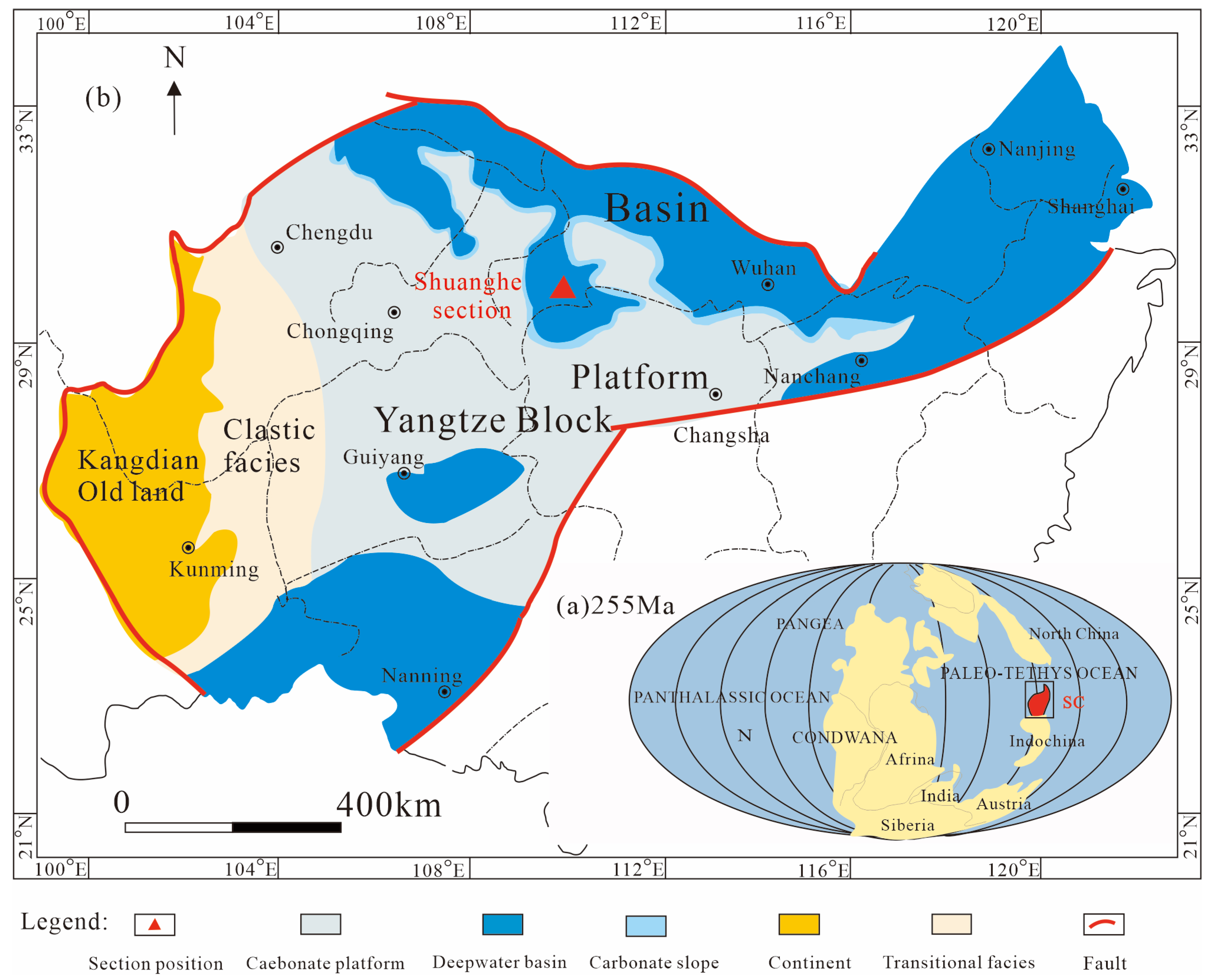
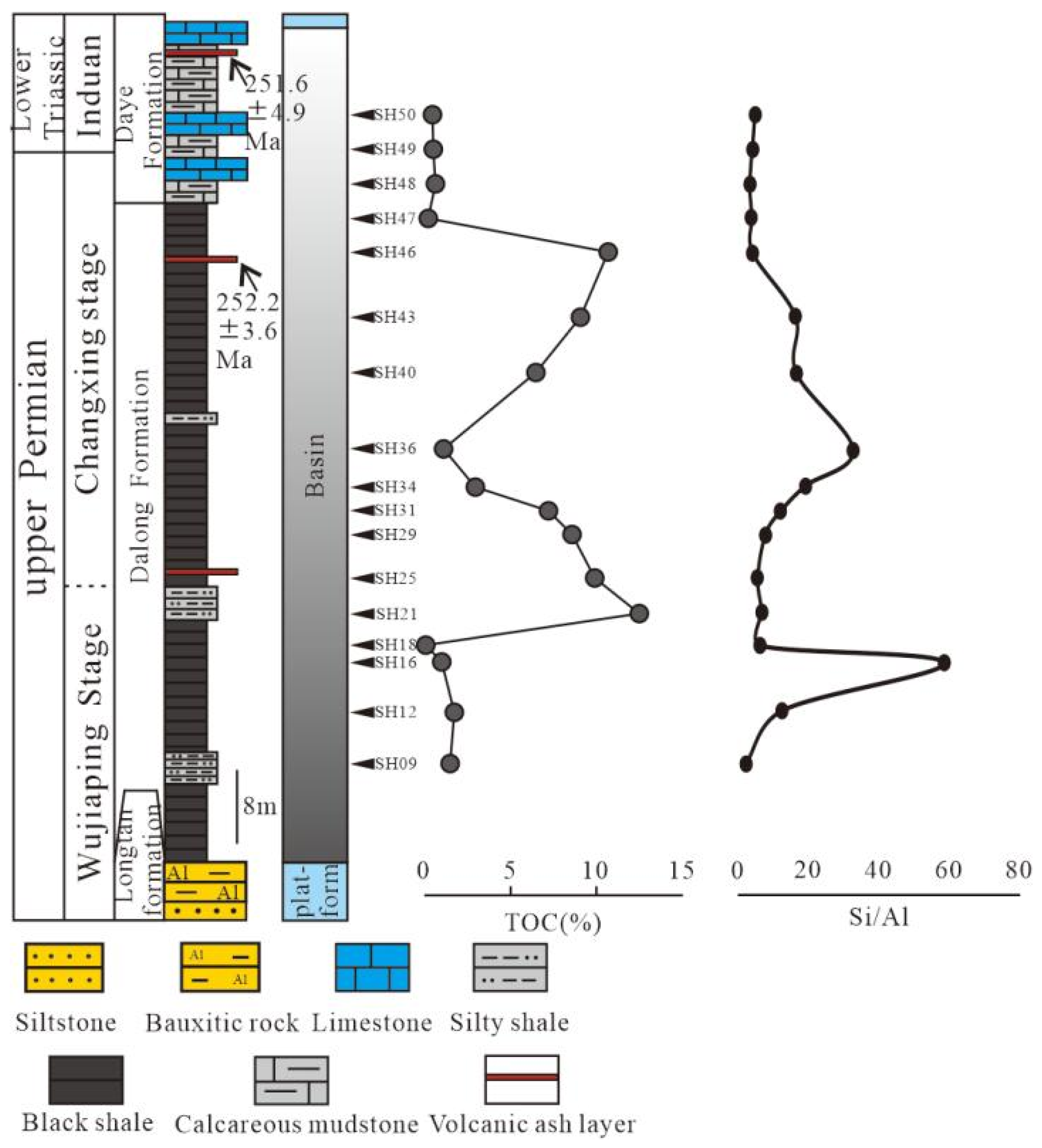
The Shuanghe section (30°9′49.6″ N, 109°48′6.4″ E), located in the Shuanghe village, Enshi city, Hubei Province, South China (Figure 1), comprises the Dalong Formation and the lower portion of the Daye Formation (Figure 2). The Dalong Formation predominantly comprises black to dark gray siliceous shales intercalated with thin beds of silty mudstone, with occasional thin volcanic ash layers. The base of the Daye Formation is primarily composed of dark gray calcareous mudstone and limestone.
Figure 2.
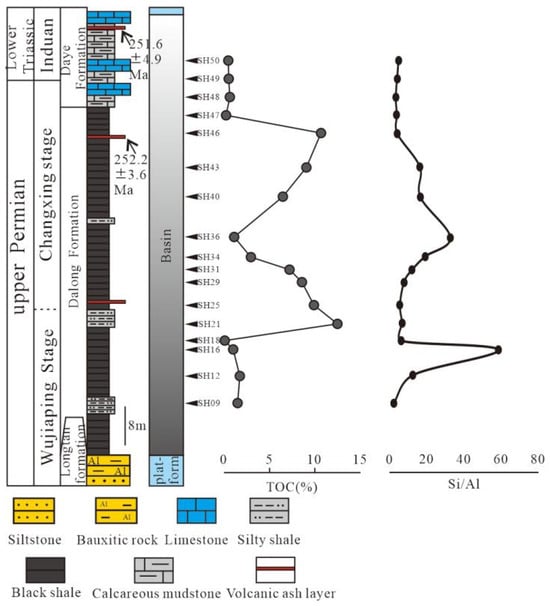
Lithologic columns of the Upper Permian Dalong Formation in Shuanghe section (modified after Zheng et al., 2024 [30]).
3. Samples and Analytical Methods
3.1. Samples
Fifty samples were collected from the Shuanghe Section, of which forty samples were from the Dalong Formation, seven samples from the underlying Longtan Formation, and three samples from the overlying Daye Formation (Figure 2). After direct pretreatment, the samples were immediately sent to the laboratory for analysis and testing. Of the collected samples, 17 were sent to Guangzhou Tuoyan Testing Technology Co., Ltd., Guangzhou, China for thin section fabrication, which were subsequently observed under optical microscope at the Earth Science Laboratory of Yangtze University (Table 1). The analysis of major and trace elements for these 17 samples was completed at Wuhan Shangpu Analytical Technology Co., Ltd., Wuhan, China (Table 1). Thirteen samples were further selected from the aforementioned 17 samples to conduct organic carbon content analysis and mineral composition determination (XRD) (Table 1). These samples were subjected to argon ion polishing at China University of Petroleum (Beijing), after which scanning electron microscopic (SEM) observation was carried out at Wuhan Shangpu Analytical Technology Co., Ltd., Wuhan, China (Table 1). Subsequently, low-pressure gas adsorption (N2 and CO2) experiments were performed on ten of the samples using a surface area analyzer at China University of Geosciences (Wuhan, China) (Table 1). The specific experimental methods can be found in previous research [7,12,39,40].
Table 1.
Test samples from Shuanghe Section.
3.2. Analytical Methods
Thirteen samples with varying TOC and quartz content were selected for the SEM observation, to reflect the differences in pore development (Table 1). FEI Quanta 450 FEG field emission scanning electron microscopy (Hillsboro, OR, USA) was employed under high vacuum to analyze the pore morphology of Dalong shale samples, with the instrument delivering a resolution of 1.2 nm at 30 kV. Before observing selected samples with SEM, the samples were first cut into 1 cm2 block specimens, followed by argonion polishing of the observation surfaces to yield a flat, smooth finish—laying a solid foundation for high-resolution imaging. After polishing, a thin coating (gold or carbon film) of approximately 10 nm was sputtered onto the sample surface to enhance sample conductivity and ensure the clarity and accuracy of imaging.
To characterize the pore structure of Dalong shales, ten samples with varying TOC and quartz contents were selected for low-pressure N2 and CO2 adsorption measurements, by using a Micromeritics ASAP 2020 surface area analyzer (Micromeritics Instrument Corporation, GA, USA) at China University of Geosciences (Wuhan) (Table 1). Before the tests, the shale samples were crushed and sieved to a particle size of 60–80 mesh, followed by a vacuum degassing process at 110 °C for 16 h to eliminate adsorbed moisture and volatile components. For the N2 adsorption–desorption experiments, the relative pressure (P/P0) was controlled within the range of 0.001 to 0.995. Meanwhile, CO2 adsorption tests were performed at 273 K with a relative pressure interval of 0.0004 to 0.032.
3.3. Excess Silicon Calculation
The excess silicon (Siex) concentration is generally regarded as the abundance of authigenic quartz, which can be calculated via the following equation [9,26]:
where Sisample and Alsample represent the concentrations of Si and Al in a sample, respectively. The background value is typically set to an average shale Si/Al ratio of 3.11 [41].
Siex = Sisample − [Alsample × (Si/Al)background]
4. Results
4.1. TOC Contents and Mineral Composition
The total organic carbon (TOC) content and mineral composition of the upper Permian Dalong shales in the Shuanghe section are presented in Table 2 and Figure 2. The TOC content ranges from 0.32 wt% to 13.2 wt% in our sample set. Based on the TOC content threshold of 3%, the DFSs are divided into two categories: organic-lean shale and organic-rich shale (Table 2 and Figure 2). The vitrinite reflectance values (Ro) of the Dalong Formation in western Hubei range from 2.01% to 2.52%, with an average value of 2.16%, indicating that the shale within the Dalong Formation has reached the overmature stage of hydrocarbon generation [41,42].
Table 2.
TOC and mineral composition of Dalong Formation in Shuanghe section.
4.2. Pore Types
Based on the positional relationship between pores and particles, shale pore networks can be classified into three categories: organic matter (OM) pores, interparticle pores (interPs) and intraparticle pores (intraPs) [43,44]. Thirteen ion-milled samples of Dalong shales were examined with SEM to analyze their pore morphology.
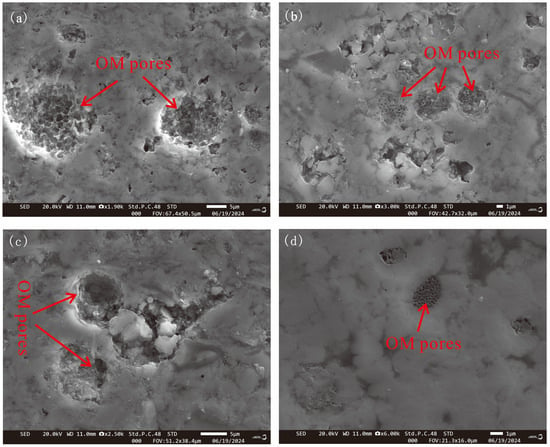
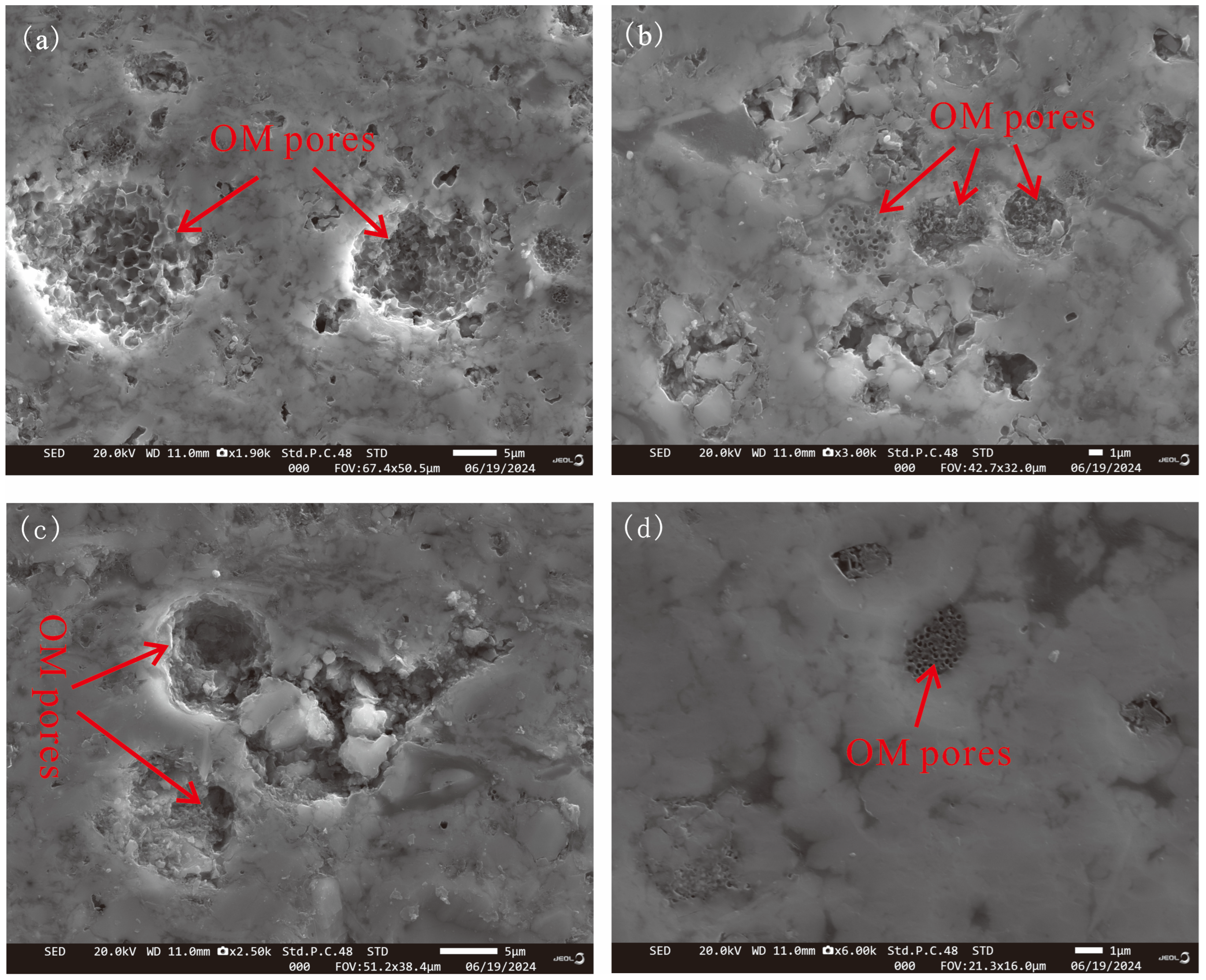
Organic pores typically refer to the pore types formed inside solid kerogen as a result of hydrocarbon generation during its thermal evolution [45]. The TOC content often affects the abundance of organic pores, with higher TOC contents generally providing a greater material source for the formation of organic pores. SEM observations revealed that the organic-rich shales exhibit well-developed organic pores, predominantly characterized by isolated honeycomb-like structures (Figure 3). By contrast, the organic-lean shales display underdeveloped organic pores. These results demonstrate that the development of organic pores is strongly dependent on the TOC content of the shales. During hydrocarbon generation and expulsion, the organic-rich shales in the Dalong Formation generated abundant nano- to micrometer-scale microporosity.
Figure 3.
Honeycomb-shaped OM pores in organic-rich shale samples in Dalong formation. (a,b) OM pores in sample SH-21; (c,d) OM pores in sample SH-29 and SH-40, respectively.
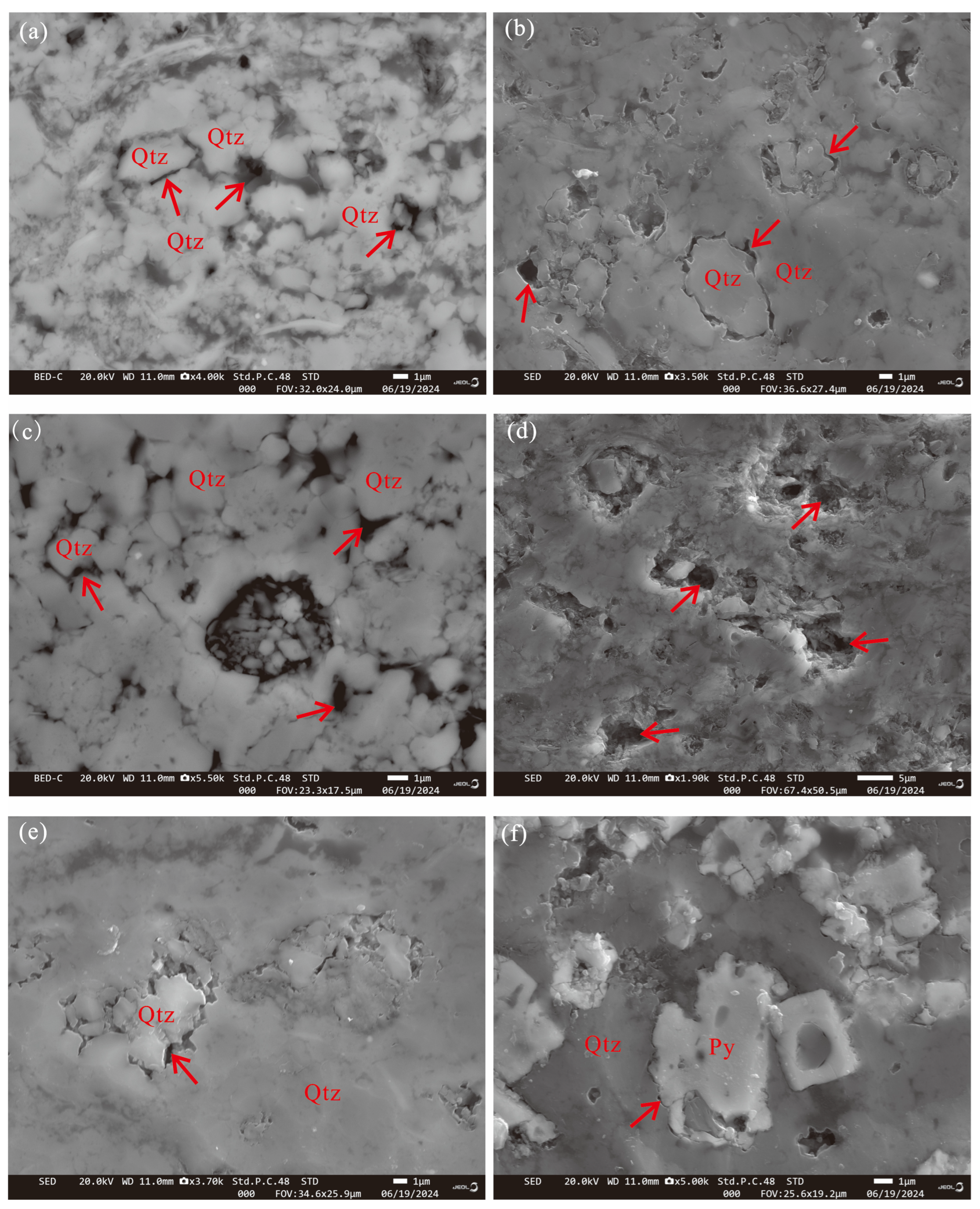
InterPs are typically developed between rigid and plastic grains or between rigid grains. In the DFS, these pores exhibit irregular cavernous or slit-like morphologies, with widths ranging from several nanometers to approximately 10 μm. Specifically, organic-rich shales primarily contain irregular cavernous or slit-shaped interPs (Figure 4a–d), whereas organic-lean shales predominantly display slit-shaped interPs (Figure 4e,f).
Figure 4.
InterPs in shale samples of Dalong formation (The red arrows point to interparticle pores). (a–d) InterPs in organic-rich shale, (a,b) from sample SH-21, (c,d) from sample SH-29; (e,f) InterPs in organic-lean shale, SH-34.
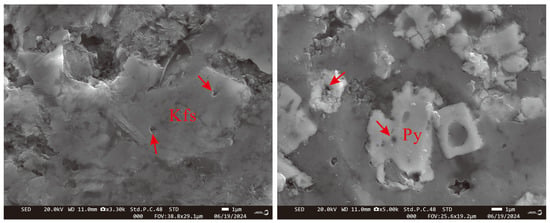
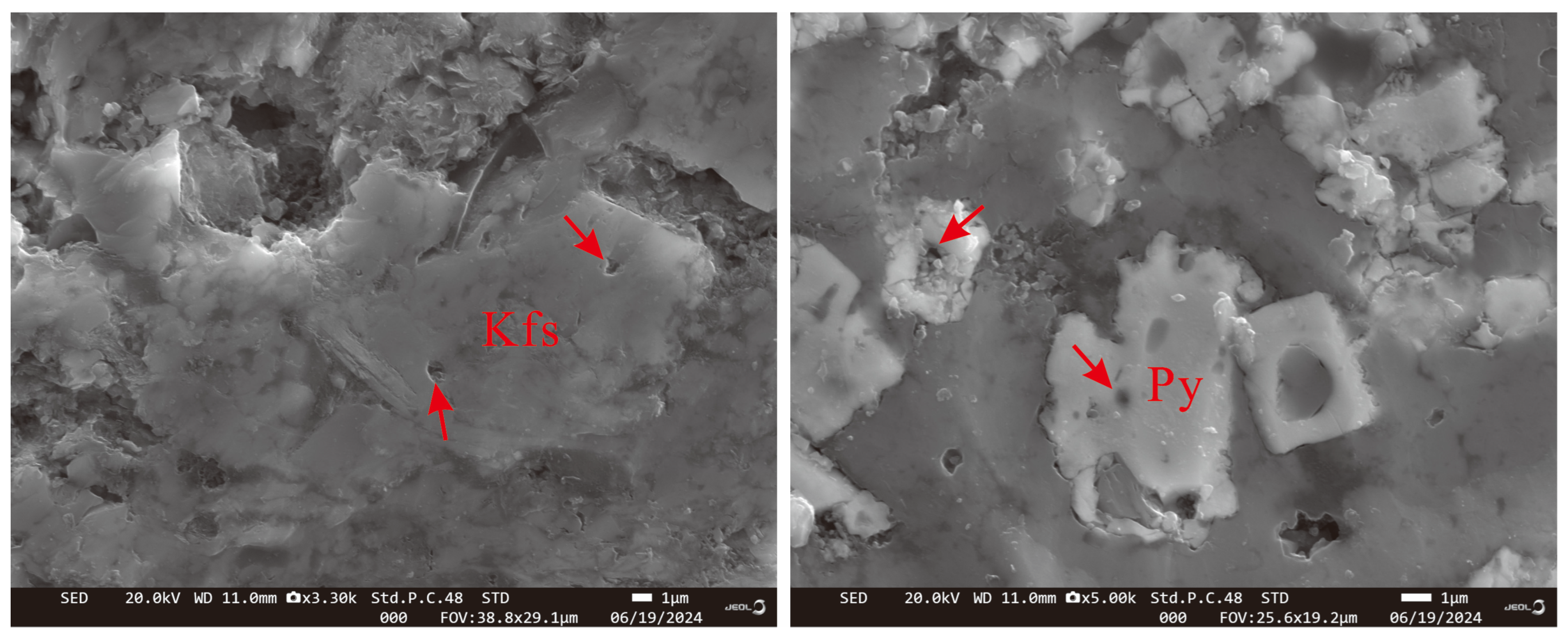
IntraPs, developed within mineral grains, exhibit significant variations in morphology and size. These pores are randomly distributed within crystals or particles, predominantly displaying triangular shapes, with sizes approximately 1 μm or smaller. Compared with interPs, intraPs generally demonstrate poor connectivity because of their sparse distribution and large spacing between individual pores. In the DFS, intraPs are less abundant and are primarily observed within K-feldspar or pyrite grains (Figure 5).
Figure 5.
IntraPs in shale samples of Dalong formation, left from sample SH-29 and right from sample SH-34 (the red arrows point to interparticle pores).
The study shows that the organic-rich shales and organic-lean shales exhibit distinct pore structure characteristics. Organic-rich shales are characterized by well-developed organic pores and interPs: organic pores often present as honeycomb-like structures, while interPs are predominantly irregular cavernous and slit-shaped (micron scale–nanometer scale). In contrast, organic-lean shales exhibit underdeveloped organic pores, and their interPs are mostly slit-shaped (nanometer scale). Intraps are uncommon in the shale of the Dalong Formation.
4.3. Pore Characterization by Low-Pressure Nitrogen Isotherm Analyses
The quantitative characterization of pore structures in the DFS within the study area adopted the pore classification scheme proposed by the International Union of Pure and Applied Chemistry (IUPAC), which categorizes pores into three types: micropores (<2 nm), mesopores (2–50 nm), and macropores (>50 nm) [43]. Low-pressure nitrogen adsorption was utilized to analyze the mesopore structural characteristics quantitatively.
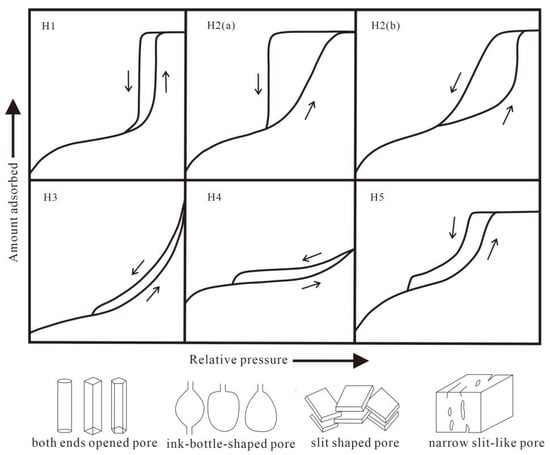
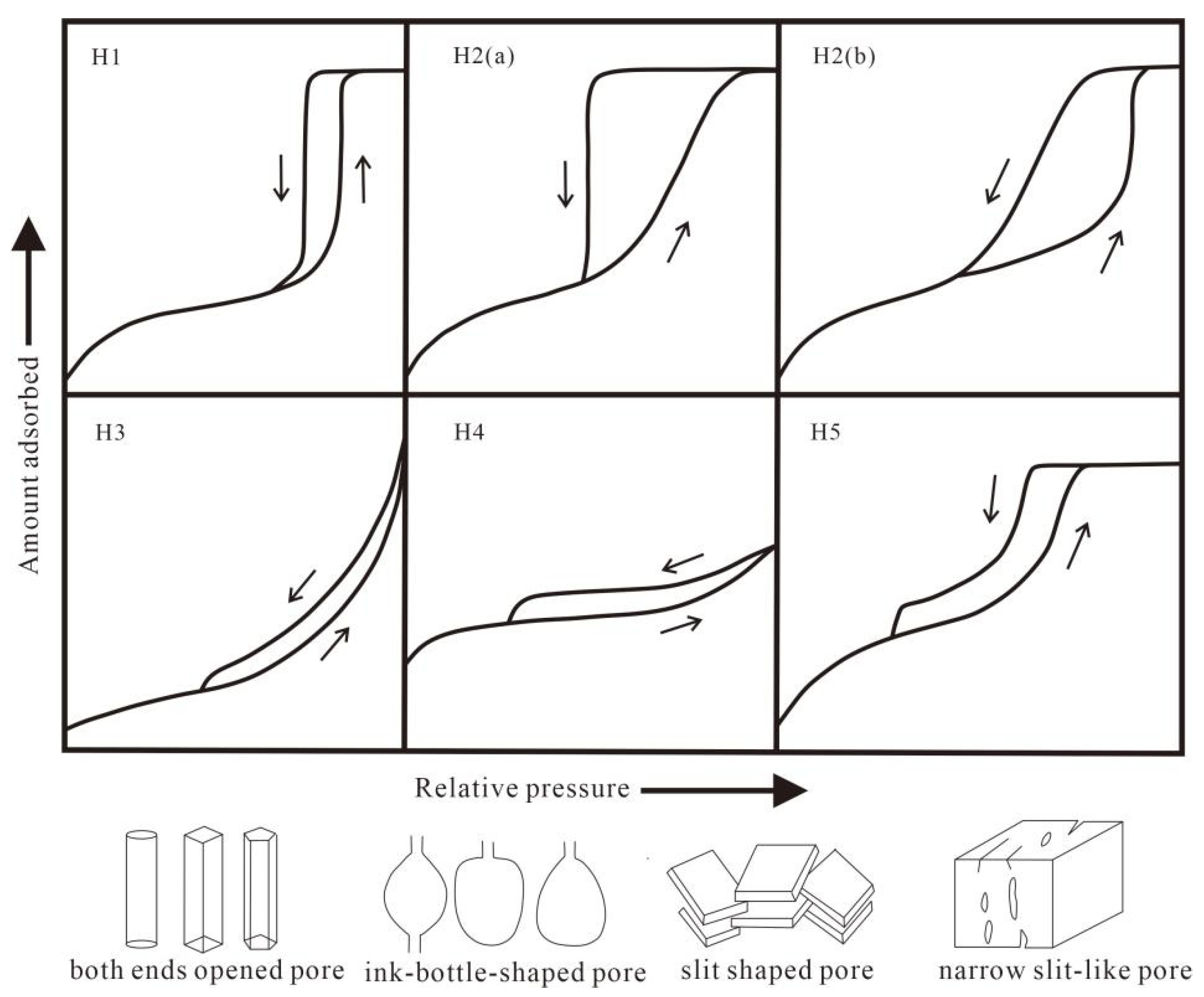
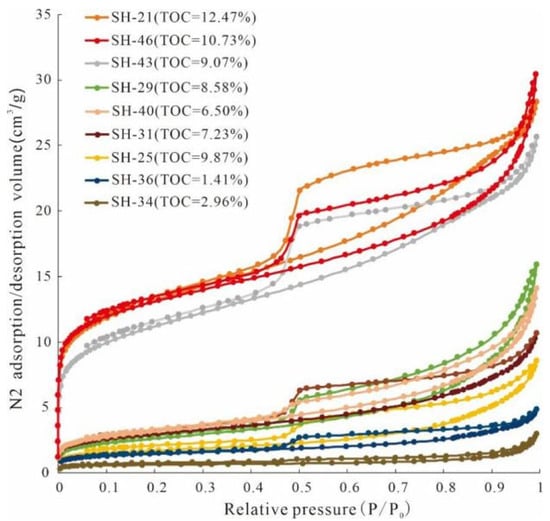
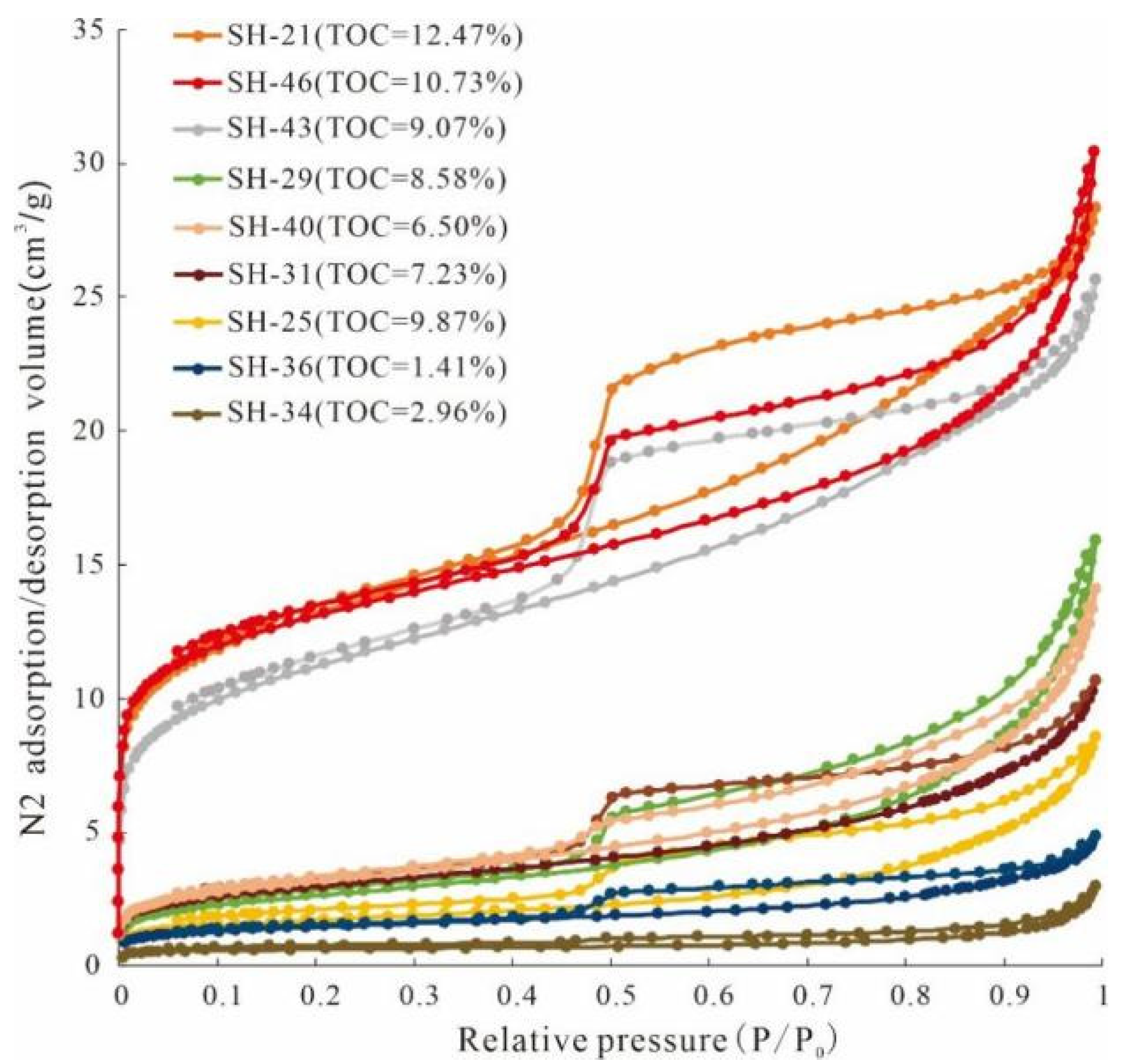
Hysteresis loops of N2 adsorption isotherms can be categorized into four primary types based on the classification proposed by Labani et al. (2013) [46] and IUPAC (2014) (Figure 6), each reflecting distinct pore morphology and connectivity characteristics [12]. The N2 adsorption-desorption isotherms of the Dalong shale samples are presented in Figure 7. The N2 adsorption isotherms reveal significant variations in pore structure among different shale samples. As shown in Figure 7, the hysteresis loops of organic-rich shales in the Dalong Formation are predominantly Type H2(b)-H3, indicating the dominance of ink-bottle pores and parallel plate pores. However, those of organic-lean shales exhibit Type H4 characteristics, corresponding to narrow slit-like pores constrained by microporous networks. Among them, organic-rich shales SH-21, SH-46, and SH-43 exhibit higher adsorption capacities and larger hysteresis loops, which may be attributed to their more developed pore networks containing ink-bottle-shaped pores. In contrast, other organic-rich shales SH-25, SH-29, SH-31, and SH-40 display relatively lower adsorption capacities and smaller hysteresis loops, suggesting less connectivity in their pore systems. Organic-lean shales (SH-34 and SH-36) have the lowest adsorption capacities, indicating minimal pore development. These findings are consistent with the SEM observations.
Figure 6.
Types of hysteresis loop and the corresponding pore morphology (modified after Sing et al., 1985 and Labani et al., 2013 [46,47]). The arrows indicate the trend of the adsorption-desorption curves.
Figure 7.
Nitrogen adsorption–desorption isotherms of the DFS (Samples SH-34 and SH-36 belong to organic-lean shales, while the other samples are organic-rich shales).
The specific surface area of the DFS was calculated with the BET equation, with the pore volume and size distribution derived from the BJH model. The analytical results demonstrate that the DFSs in the study area have an average pore size range of 8.37–24.91 nm, a specific surface area ranging from 2.28 to 47.36 m2/g, a BJH mesopore volume ranging from 0.39 to 2.94 cm3/100 g, and a maximum adsorption capacity ranging from 2.98 to 30.43 cm3/g (Table 3). Notably, organic-rich shales have significantly greater mesopore volumes, specific surface areas, and maximum adsorption capacities than organic-lean shales, demonstrating the critical role of organic matter in pore network development.
Table 3.
Pore structure parameters, TOC content, and mineralogical composition in the DFS.
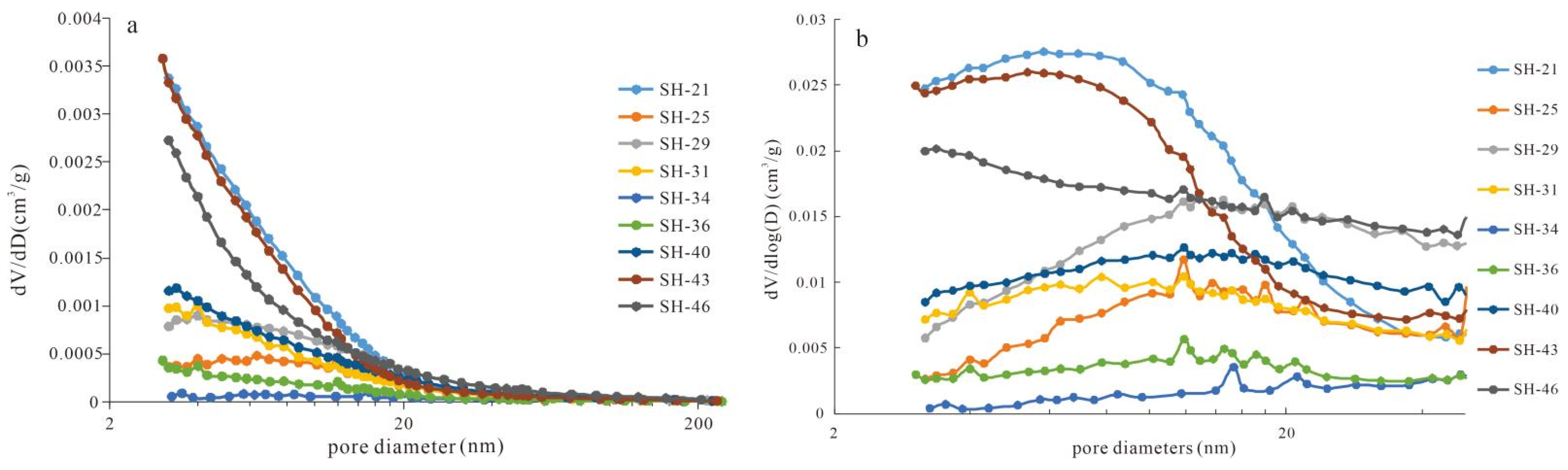
The relationship between dV/dD or dS/dD and pore diameter (D) can characterize the degree of pore size distribution, whereas dV/dlog(D) or dS/dlog(D) versus D is utilized to analyze the contribution rates of pores within specific size ranges to the total pore volume and specific surface area of shales [8,15,48,49]. These two representation methods are commonly adopted in N2 adsorption experiments to quantify pore size distributions. As illustrated in Figure 8, mesopores within the Dalong Formation predominantly range from 2 to 20 nm in size. In organic-rich shales SH-21, SH-43, and SH-46, pores ranging from 2 to 20 nm in size contribute the most to total pore volume. In contrast, Samples SH-25, SH-29, SH-31, and SH-40 display a bimodal trend: their pore volume contributions initially increase and then decrease with increasing pore size. Notably, organic-lean shales (SH-34 and SH-36) exhibit relatively uniform contributions across all pore size ranges, indicating underdeveloped pore networks in low-TOC shales.
Figure 8.
(a) Differential pore volume vs. pore size distribution of mesopores in DFS; (b) logarithmic integral pore volume vs. pore size distribution of mesopores in DFS.
4.4. Pore Characterization by Low-Pressure Carbon Dioxide Isotherm Analyses
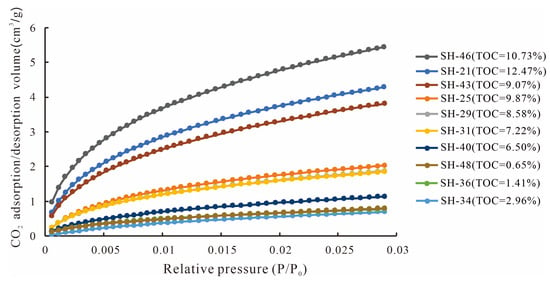
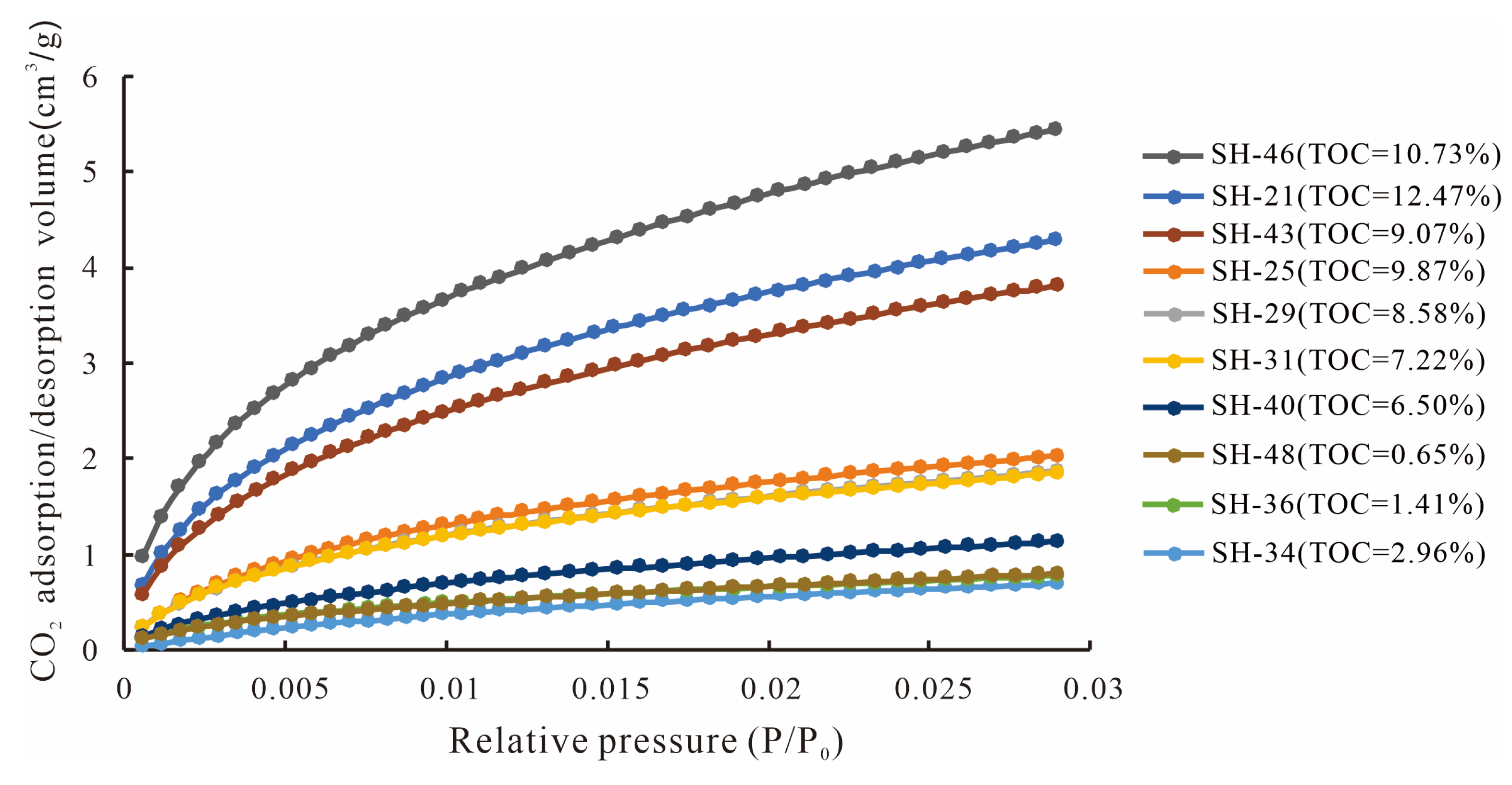
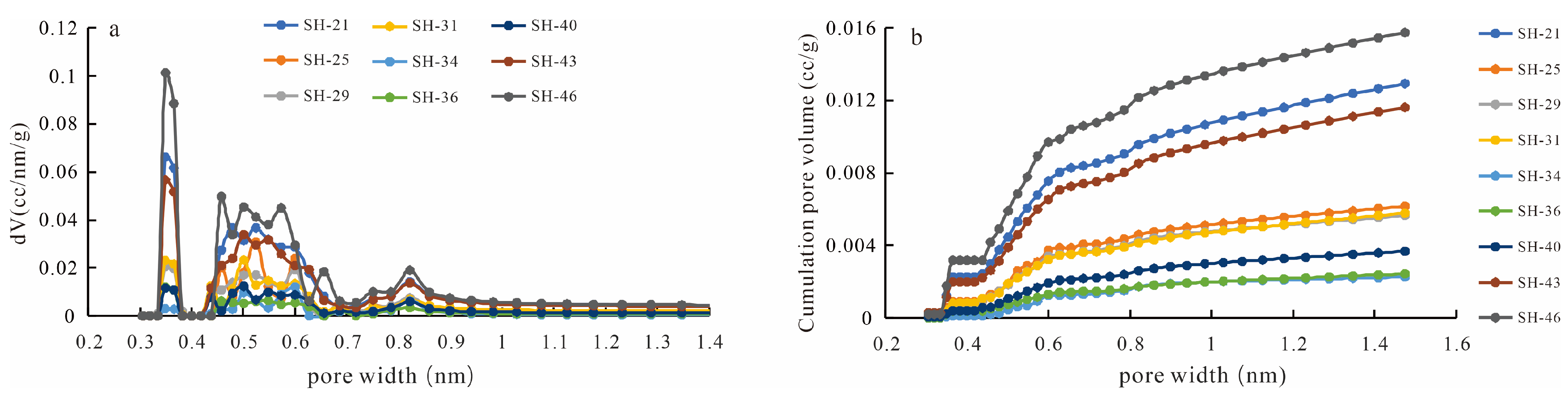
The low-pressure CO2 adsorption technique was employed to determine the specific surface area and pore volume distribution of micropores with diameters less than 2 nm. Based on the IUPAC micropore classification criteria [47], low-pressure CO2 adsorption analysis revealed that Dalong shales exhibit characteristic Type I isotherms (Figure 9), indicative of the presence of microporous solids with monolayer adsorption [10]. The low-pressure CO2 isothermal adsorption data were interpreted via the density functional theory (DFT) model, which enables effective characterization of pore sizes within a measurable range of 0.3–1.5 nm [40]. The DFSs exhibit a maximum CO2 adsorption capacity ranging from 0.70 to 5.45 cm3/g, with micropore volumes ranging from 0.23 to 1.57 cm3/100 g and specific surface areas ranging from 7.18 to 56.25 m2/g. Organic-rich shales demonstrate significantly greater values of maximum adsorption capacity (1.14–5.45 cm3/g), micropore volume (0.39–1.57 cm3/100 g), and specific surface area (12.02–56.25 m2/g) than their organic-lean counterparts (0.70–0.78 cm3/g, 0.23–0.24 cm3/100 g, and 7.18–8.2 m2/g, respectively) (Table 3). The DFSs display a multimodal distribution of micropores, with dominant peaks identified at 0.35 nm, 0.55 nm, and 0.85 nm (Figure 10a). Micropores within a 0.4–0.7 nm range contribute more than 50% of the total micropore volume, whereas those exceeding 0.9 nm make negligible contributions (constituting less than 8% of the total) (Figure 10a). The cumulative micropore volume demonstrates distinct growth patterns with pore width evolution: rapid accumulation occurred as the pore size increased from 0.45 nm to 0.6 nm, followed by markedly reduced growth rates beyond this threshold. Micropores exceeding 1 nm contribute minimally to the total pore system (Figure 10b).
Figure 9.
CO2 adsorption–desorption isotherms of the DFS.
Figure 10.
(a) Incremental micropore volume distribution of DFS. (b) Cumulative pore volume distribution of micropores in DFS.
4.5. Integrated Characterization of Pore Distribution by N2 and CO2 Adsorption
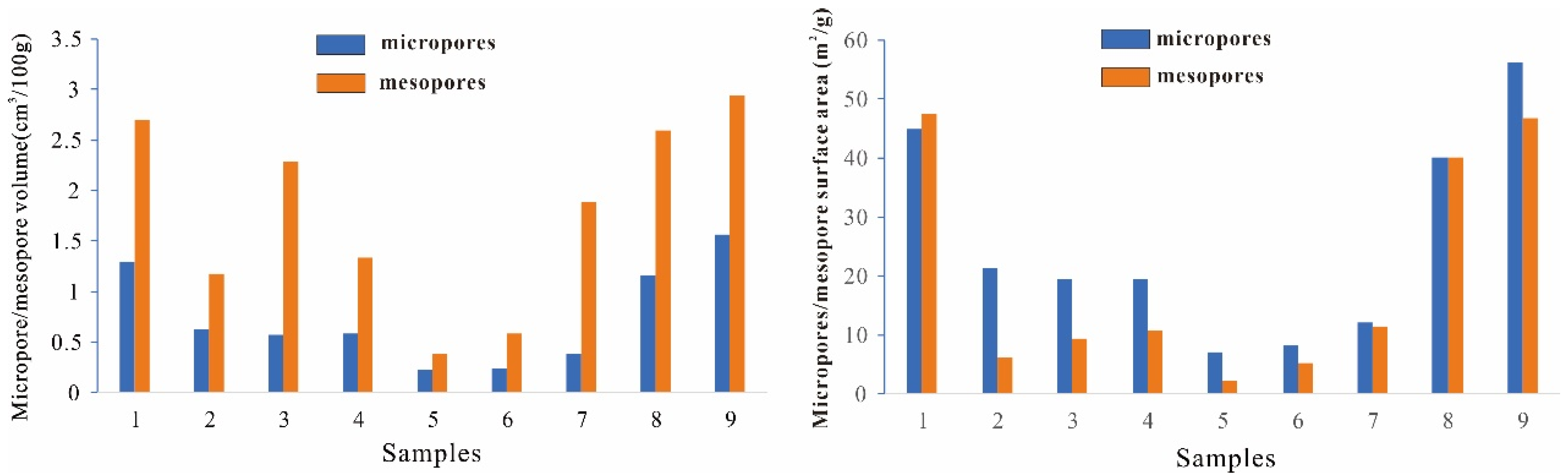
To characterize the pore distribution characteristics of the DFS reservoirs, this study implemented a dual-technique approach that combines low-pressure N2 and CO2 adsorption analyses, which synergistically enables comprehensive quantitative assessment spanning microporous (0.3–2 nm) to mesoporous (2–50 nm) domains. As shown in Figure 11, mesopores present significantly greater pore volume than micropores, whereas their specific surface area is either lower than or comparable to that of micropores. This indicates that, although micropores contribute relatively less to the total pore volume of shales, their extensive specific surface area provides abundant adsorption sites for gas storage.
Figure 11.
Comparative analysis of mesopore–micropore volumes and specific surface area distribution in DFS.
5. Discussion
5.1. Quartz Genesis and Its Control on Pore Structure
Quartz has been identified as the predominant brittle mineral within the Dalong Formation. The present study focused exclusively on its genetic mechanisms and their implications for pore evolution. As a critical brittle mineral in shale, the genetic mechanism and occurrence patterns of quartz exert important control on pore network architecture, reservoir property regulation, and hydraulic fracturing effectiveness [9,13,16,17,26,27,39,50,51,52,53,54].
5.1.1. The Origin of Quartz
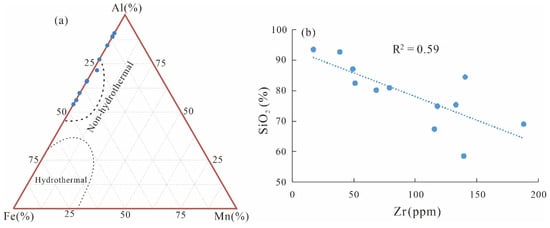
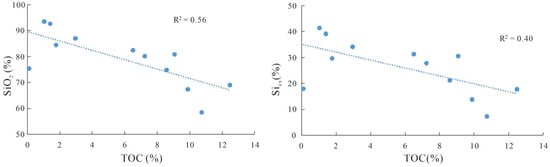
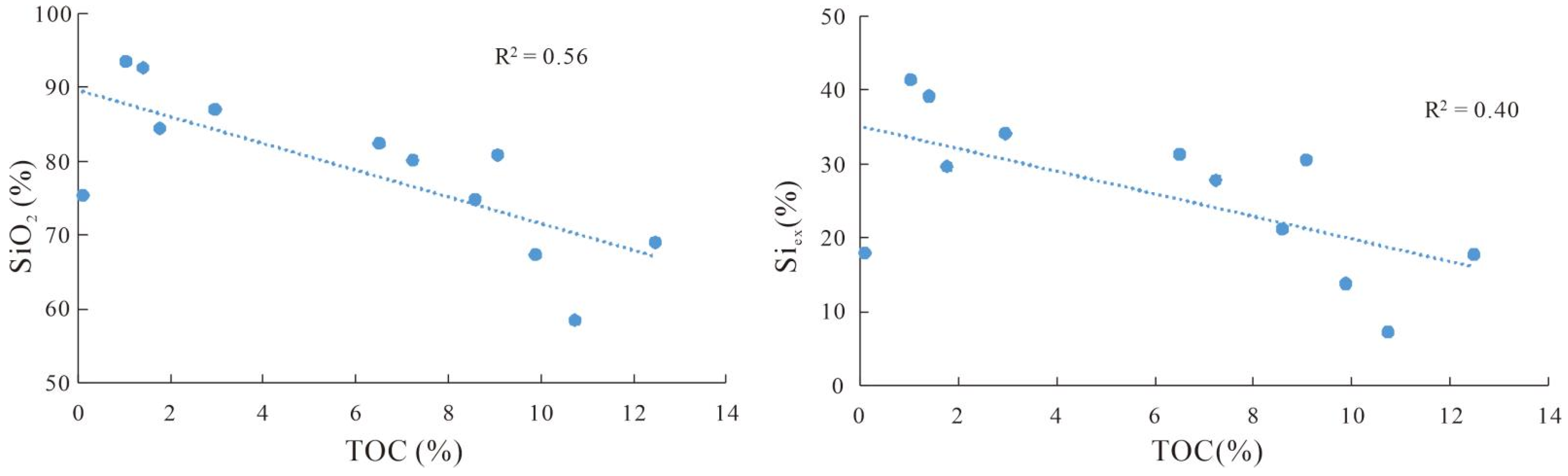
Recent studies have demonstrated that quartz in shale may originate from multiple diagenetic pathways, including biogenic silica precipitation, clay mineral diagenetic transformation, hydrothermally derived silica crystallization, and detrital input [23,24,25,26]. Earlier studies explored the origins of quartz in the DFS of western Hubei. Wu et al. [29] identified three distinct origins for quartz in the organic-rich shales of this formation: detrital quartz, biogenic quartz, and hydrothermal quartz. Conversely, in organic-poor shales, quartz is largely derived from detrital and hydrothermal sources. Zheng et al. [30] concluded that detrital and biogenic processes are the primary contributors to quartz in the DFS. This study also investigated the sources of quartz in the DFS. Figure 12a is a ternary diagram showing the contents of Al, Fe, and Mn. All the data points are confined to the nonhydrothermal region, indicating that the quartz in the DFS is of nonhydrothermal origin. The relationship between SiO2 and Zr in shale can provide insights into whether the silicon is sourced from detrital or biogenic sources. A positive correlation between SiO2 and Zr typically indicates a detrital origin for silicon, whereas a negative correlation suggests the presence of biogenic quartz [26]. Figure 12b shows a weak negative correlation between SiO2 and Zr, implying that biogenic quartz is present in the DFS. This finding is further supported by observations under an optical microscope, in which radiolarians were identified (Figure 13). During burial diagenesis, the dissolution of radiolarian siliceous skeletons can supply the silica necessary for quartz formation. Schieber et al. [55] reported that the quartz in the Devonian shales of the eastern United States almost exclusively formed during diagenesis through the dissolution and reprecipitation of biogenic silica. The pronounced positive correlation between the SiO2 (or Siex) content and TOC content in shale formations serves as a critical indicator for identifying the origin of biogenic quartz [3,4,5,6,25,51,56]. A representative example of this phenomenon was systematically documented within the Silurian Wufeng–Longmaxi Formation shales, where quartz was extensively documented as biogenically derived through radiolarian tests and microbial-mediated silica precipitation processes [3,4,5,6,25,51,56]. Figure 14 shows there was a decoupling phenomenon between the SiO2 and TOC contents in the Dalong Formation, which is consistent with a study by Gao et al. [28] on the types and genesis of quartz in the Dalong Formation of the Sichuan Basin. Gao et al. [28] interpreted this phenomenon, proposing that the organic matter in the DFS was primarily derived from nonsiliceous organisms, or the input of excess silicon may have caused dilution of the organic matter. The authigenic quartz in the DFS may have originated partly from the dissolution and reprecipitation of siliceous skeletons, such as those of radiolarians.
Figure 12.
(a) Al-Fe-Mn ternary diagram; A = non–hydrothermalarea, B = hydrothermal area. (b) Correlation between SiO2 and Zr.
Figure 13.
Optical photomicrograph of radiolarians in sample SH-26, SH-29 and SH-34, Dalong Formation, Shuanghe Section.
Figure 14.
A correlation analysis between SiO2, Siex and TOC contents.
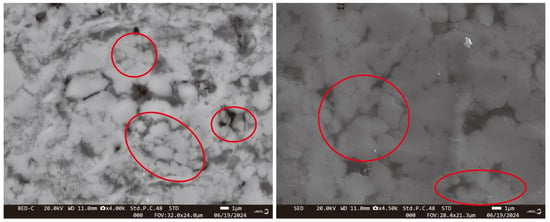
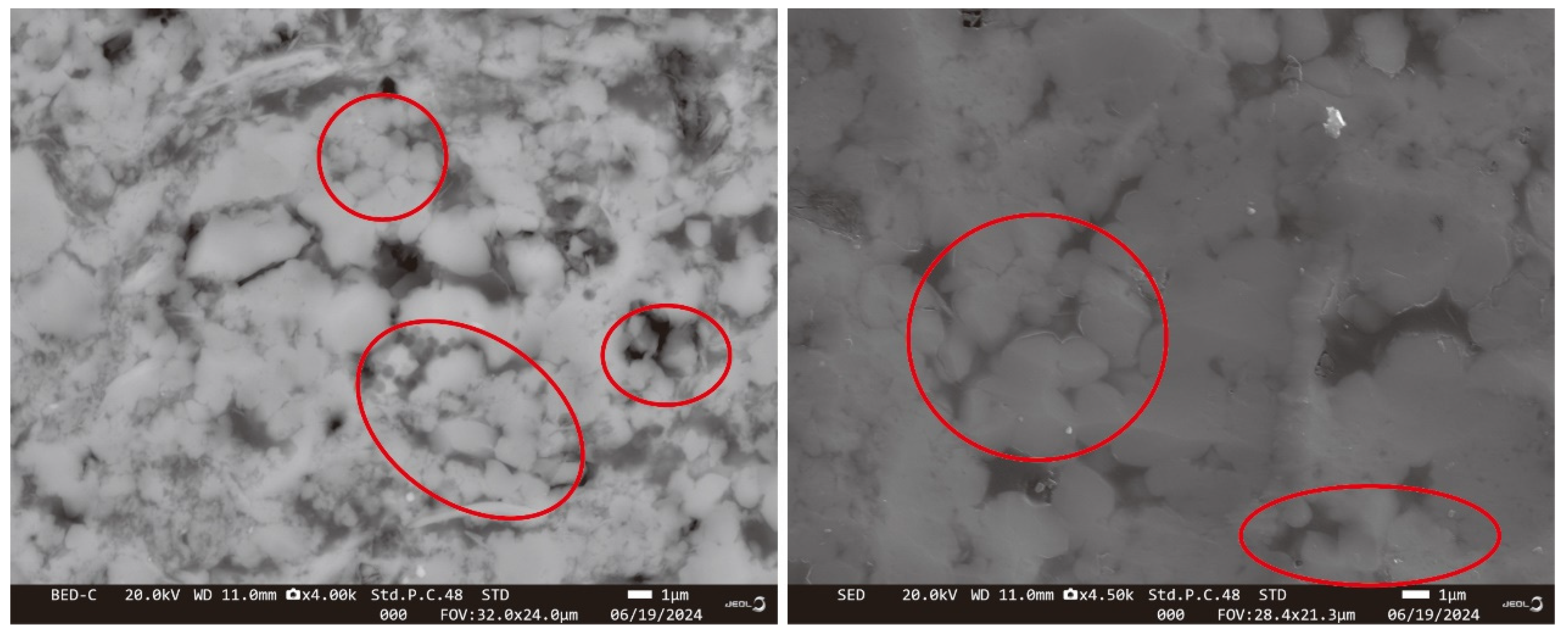
Both the smectite-to-illite transformation and the conversion of albite to kaolinite under acidic conditions liberate substantial amounts of silica ions into pore water. These silica ions may subsequently precipitate in situ as authigenic quartz [26,28,57,58]. The occurrence of microcrystalline authigenic quartz disseminated within the shale matrix is commonly attributed to such diagenetic reactions of the aforementioned minerals (e.g., [20,22,51,57,59,60]). In this study, numerous micron-scale quartz grains were observed in the DFS with SEM (Figure 15). These micron-scale quartz grains are dispersed within the shale matrix and are inferred to be diagenetic quartz formed from the transformation of clay minerals or albite. The quartz in the DFS had a hybrid genesis, comprising detrital quartz, biogenic quartz, and diagenetic quartz, with diagenetic quartz as the dominant type.
Figure 15.
Dispersed microcrystalline quartz within the Dalong shale matrix (as indicated by the red circles, from the samples SH-21 and SH-40.
5.1.2. Influence of Authigenic Quartz on Pore Structure
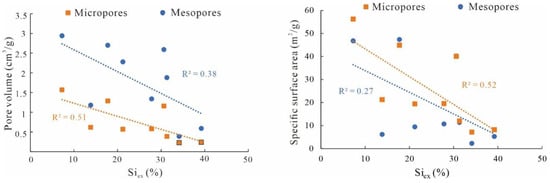
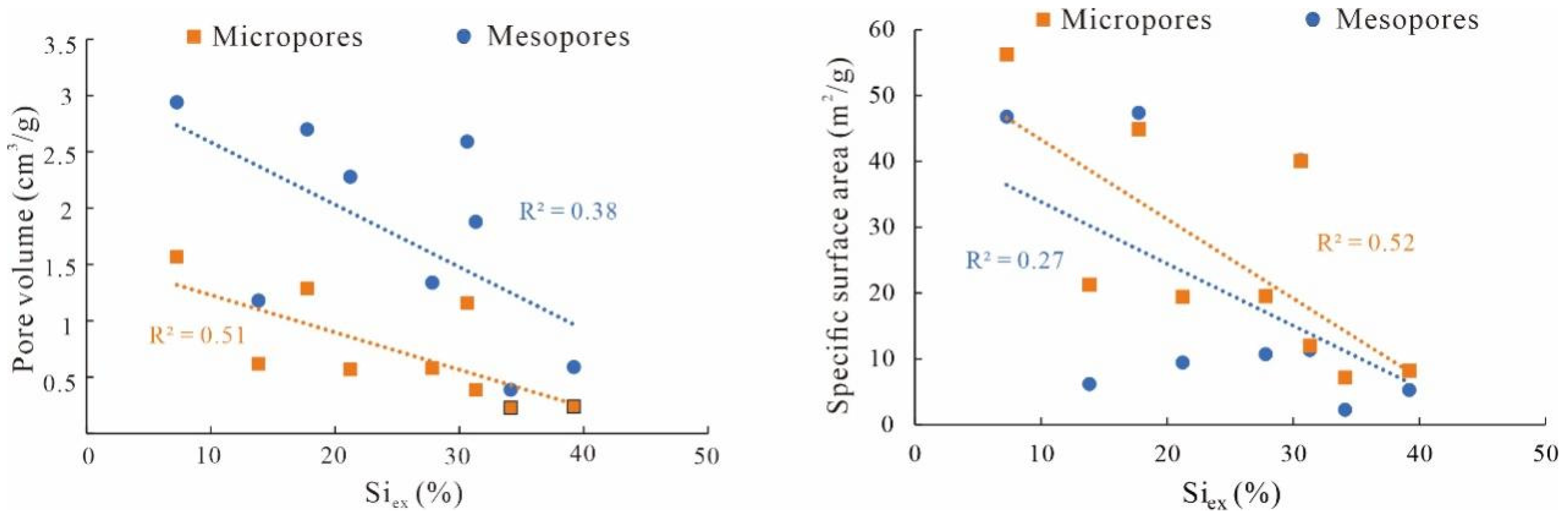
Excess silicon content generally indicates an abundance of authigenic quartz. This paper utilized a correlation analysis of the Siex content in relation to pore volume and specific surface area, for micropores and mesopores. Figure 16 presents the results of the analysis. A weak negative correlation exists between the Siex content and the mesopore volume and mesopore surface area, respectively, while a moderate negative correlation is observed for the micropore volume and micropore surface area. The results indicate that authigenic quartz precipitation inhibited pore development in the DFS, with a significant suppression effect on the micropore formation. The underlying mechanism relates to the widespread authigenic quartz cementation within the reservoir shown in Figure 15, where extensive microcrystalline quartz cementation occluded primary interPs, degrading the original pore network.
Figure 16.
Correlation analysis between mesopore–micropore pore structure parameters and Siex content in the DFS. Left: pore volume vs. Siex. Right: Specific surface area vs. Siex.
5.2. Impact of Clay Minerals on Pore Structure
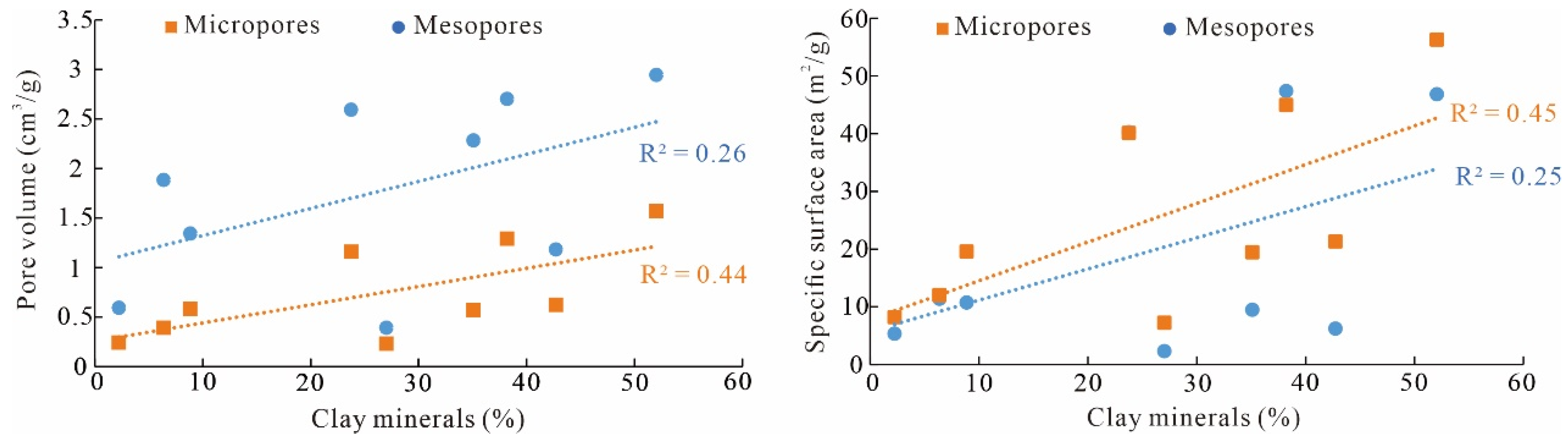
Given that clay minerals constitute another major component within the DFS, this study further assessed their impacts on the pore systems of the DFSs. Figure 17 shows that the clay mineral content is positively correlated with pore volume and the specific surface area for the mesopores and micropores, respectively. Stronger positive correlations are observed for micropore volume and surface area, indicating that clay minerals primarily influenced the development of micropores. This interpretation is further supported by SEM observations, which show that clay minerals predominantly contribute to micropores. Given their high plasticity, clay minerals are readily deformed by compaction [14]. After deposition, during the early diagenetic stage, the shale undergoes pore water expulsion under the influence of overlying load. The “card-house” structure of clay minerals existing in the form of flocs collapses and deforms rapidly, followed by the rearrangement of clay minerals and the gradual orientation of their platy structures. The degree of sediment consolidation increases, while the original porosity and permeability decrease. After the shale undergoes intense mechanical compaction, the montmorillonite-illitization process continues to exert chemical compaction modification on it during the mesodiagenetic stage [61]. As a result, the shale loses nearly all primary intergranular pores except for the intervals with well-developed pyrite cementation, leading to a further reduction in porosity and a much denser shale structure. The transformation of montmorillonite to illite is accompanied by interlayer cation exchange (Al substituting for Si) and dehydration, which causes the collapse of the crystal layers [26]. In this process, many pores associated with clay minerals, such as those developed within clay-organic matter complexes, including mesopores and macropores, tend to close or transform into micropores as diagenesis progresses [62]. In the overmature DFSs, clay minerals predominantly contribute to the amount of micropores. Given that clay minerals have a greater specific surface area than nonclay minerals, the specific surface area of the DFS increases with increasing clay mineral content.
Figure 17.
Correlation analysis between mesopore–micropore pore structure parameters and clay content in the DFS. Left: pore volume vs. clay mineral content. Right: Specific surface area vs. clay mineral content.
5.3. Impact of the TOC Content on the Pore Structure
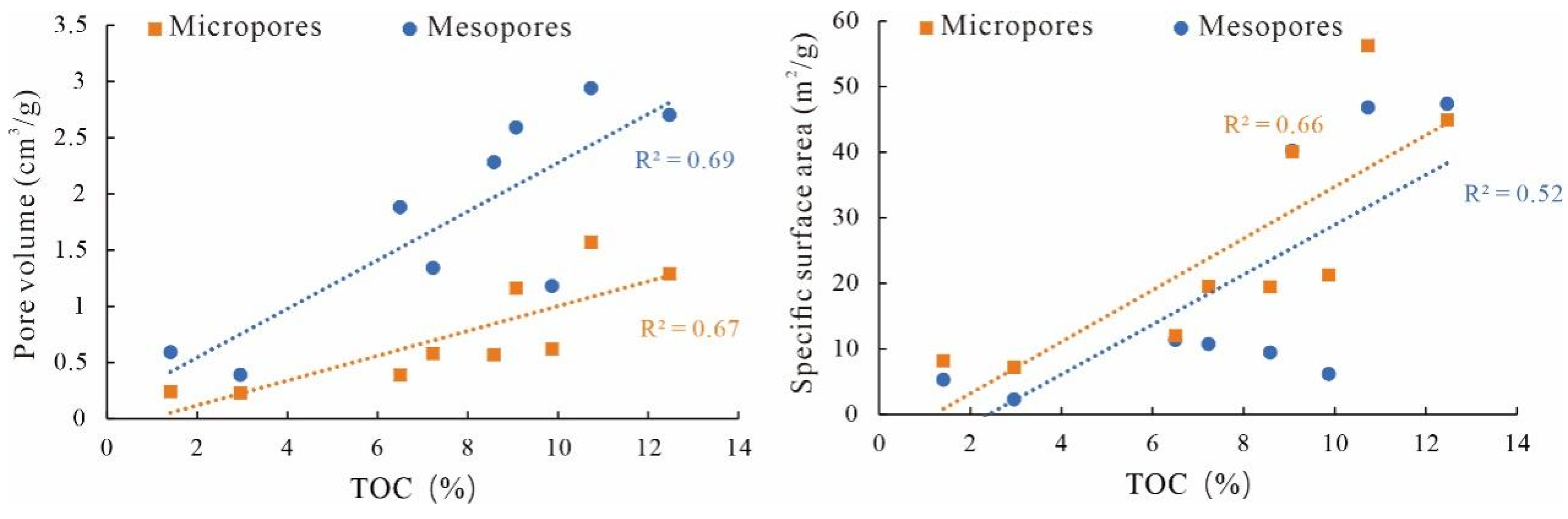
Multiple studies have confirmed that OM-hosted nanopores dominate shale pore Networks. The TOC content serves as a primary control on porosity development [7,24,26,43,50]. Figure 18 shows that the TOC content is strongly positively correlated with pore volume and specific surface area, respectively, for the two pore structures studied. The results indicate that a relatively high TOC content corresponds to increased development of micron- to nanoscale pore networks within the DFS. This is further supported by SEM observations and gas adsorption experimental data. SEM images show that the OM pores in the organic-rich shale of the Dalong Formation are significantly more developed than those in the organic-poor shale shown in Figure 3. From Table 3, gas adsorption experiments also indicate that the organic-rich shales of the Dalong Formation have a greater pore volume, specific surface area, and maximum adsorption capacity than the organic-poor shales. The results demonstrate that during hydrocarbon generation and migration, the organic-rich shale of the Dalong Formation formed many micro- to nanoscale organic matter pores, creating a complex micropore network within the shale. These organic matter pores can provide substantial adsorption sites, significantly increasing the specific surface area of the shale and enhancing its gas adsorption capacity.
Figure 18.
Correlation analysis between pore structure parameters and TOC content in the DFS. (Left) pore volume vs. TOC content. (Right) Specific surface area vs. TOC content.
5.4. Comprehensive Discussion on Main Controlling Factors of Pore Development
The development of shale pores is jointly controlled by the coupling of four factors: kerogen type, organic matter maturity, organic matter abundance, and organic–inorganic interactions. Kerogen type determines the inherent capacity of OM pore development, organic matter abundance (TOC) dictates the quantity of OM pores, organic matter maturity is the main driving force for the formation of OM pores, and organic–inorganic interactions control the type and degree of inorganic pore development as well as the connectivity of the organic–inorganic pore network [61,63].
The kerogen type of the Dalong Formation in western Hubei is Type II, derived from plankton and higher plants. Its hydrocarbon-generating potential is slightly inferior to that of Type I and can generate abundant hydrocarbons and organic pores during the thermal evolution process. The vitrinite reflectance of the Dalong Formation ranges from 2.01% to 2.52%, indicating that it is in the stage of massive dry gas generation. Organic- rich shale can generate more OM pores, and the TOC content shows a good positive correlation with the specific surface area and pore volume of mesopores and micropores (Figure 18).
During the eodiagenetic stage, shale undergoes mechanical compaction, resulting in the loss of a large number of inorganic pores. In the mesodiagenetic stage, substantial amounts of liquid hydrocarbons are generated. The organic acids released during hydrocarbon generation can dissolve inorganic minerals (feldspar and carbonate minerals), which is conducive to the formation of secondary dissolution pores. Meanwhile, the transformation of smectite to illite promotes the development of interlayer micropores, whereas the released silicon, calcium, and magnesium ions respectively form siliceous cementation and calcareous cementation, which block the primary intergranular pores [61]. The diagenetic quartz of the Dalong Formation is formed in the mesodiagenetic stage. The clay mineral content shows a good positive correlation with the specific surface area and volume of micropores (Figure 17), while excessive silicon content exhibits a negative correlation with both the specific surface area and pore volume of mesopores and micropores (Figure 16). In the telodiagenetic stage, the cracking of liquid hydrocarbons into natural gas generates a large number of OM pores. The organic–inorganic interactions form a complex micro–nano pore network in shale, which provides reservoir space for adsorbed gas and free gas. OM pores and clay mineral-related pores can serve as adsorption sites for natural gas, acting as the core reservoir space for adsorbed gas; whereas inorganic pores associated with brittle minerals are the primary storage and migration pathways for free gas [64,65].
6. Conclusions
This study focuses on the shales of the Upper Permian Dalong Formation in the Shuanghe section, western Hubei. By integrating XRD, argon-ion polishing-SEM, and N2/CO2 gas adsorption/desorption techniques, the micropore system of the DFS is systematically characterized, identifying the genetic types of quartz, and showing the effects of authigenic quartz, clay minerals, and organic matters on pore development in the DFS.
- (1)
- The most dominant mineral in the DFS is quartz, followed by clay minerals. The DFS can be divided into two categories based on the TOC content threshold of 3%: organic-lean shale and organic-rich shale.
- (2)
- The DFS primarily features interparticle and organic-matter pores, with intraPs being poorly developed. Organic-rich shale features well-developed organic matter pores and irregularly shaped interPs that are often irregularly vuggy or slit-shaped. In contrast, organic-lean shales feature poorly developed organic-matter pores, whereas interPs are characterized primarily by slit-shaped structures.
- (3)
- The N2 and CO2 adsorption experiments show that organic-rich shales of the Dalong Formation exhibit significantly greater pore volume, specific surface area, and maximum adsorption capacity than organic-lean shales. The hysteresis loops of the organic-rich shale are of Type H3, indicating the dominance of parallel plate-like pores and partly ink-bottle-shaped pores. In contrast, the hysteresis loops of the organic-lean shales are of Type H4, indicating the prevalence of narrow slit-like pores. The results are consistent with the SEM observations.
- (4)
- The quartz in the DFS is predominantly diagenetic quartz. The authigenic diagenetic quartz cementation blocks the primary intergranular pores, which is unfavorable for the pore development of the DFS. By contrast, the transformation of smectite to illite promotes the development of interlayer micropores; hence, the clay mineral content shows a good positive correlation with the specific surface area and volume of micropores. TOC is the dominant factor that influences the development of micro–nano pore networks in shale. TOC content exhibits a strong positive correlation with both the pore volume and specific surface area of micro–mesopores. Abundant organic-matter pores formed during hydrocarbon generation in organic-rich shales provide numerous adsorption sites for shale gas. The organic–inorganic interactions form a complex micro–nano pore network in the Dalong shales, providing reservoir space for adsorbed gas and free gas.
Author Contributions
Writing (original draft): X.N.; Writing (review and editing): X.N. and Y.L.; Supervision: Y.G.; Data curation: X.N.; Formal analysis: X.N. All authors have read and agreed to the published version of the manuscript.
Funding
This study was jointly supported by Natural Science Foundation of China (Grant No. 42002148) and Scientific Research Foundation of Hubei Provincial Education Department (Q20201303).
Institutional Review Board Statement
Not applicable.
Informed Consent Statement
Not applicable.
Data Availability Statement
The data presented in this study are contained within the article.
Acknowledgments
We are grateful for all the funding that supported this research and thank the reviewers for the Journal of Marine Science and Engineering. All authors have read and agreed to the published version of the manuscript.
Conflicts of Interest
The authors declare no conflicts of interest.
References
- Dong, D.Z.; Gao, S.K.; Huang, J.L.; Guan, Q.Z.; Wang, S.F.; Wang, Y.M. Discussion on the exploration & development prospect of shale gas in the Sichuan Basin. Nat. Gas Ind. B 2015, 2, 9–23. [Google Scholar]
- Ma, Y.S.; Cai, Y.Y.; Zhao, P.R. China’s shale gas exploration and development: Understanding and practice. Pet. Explor. Dev. 2018, 45, 561–574. [Google Scholar] [CrossRef] [Scilit]
- Guo, X.S.; Hu, D.F.; Huang, R.C.; Wei, Z.H.; Duan, J.B.; Wei, X.F.; Fan, X.J.; Miao, Z.W. Deep and ultra-deep natural gas exploration in the Sichuan Basin: Progress and prospect. Nat. Gas Ind. 2020, 7, 419–432. [Google Scholar] [CrossRef] [Scilit]
- Wei, H.Y.; Zhang, G.; Zhang, X.; Hu, D.; Gong, J.X. Termination Age of the Chert Deposits in the Late Permian Dalong Formation in Middle and Upper Yangtze Area, China. Acta Sedimentol. Sin. 2024, 42, 2135–2143. [Google Scholar]
- He, C.C.; Zhao, Y.Q.; Yu, L.J.; Lu, L.F.; Liu, W.X.; Pan, A.Y.; Li, C.X. Pore Structure and Fractal Characteristics of Deep Shale Gas Reservoirs in the Permian Dalong Formation, Northeastern Sichuan Basin. Pet. Geol. Exp. 2024, 46, 263–277. [Google Scholar] [CrossRef]
- Jin, Z.J.; Liu, G.X.; Wang, P.W.; Nie, H.K.; Li, M.; Wang, G.P. Exploration potential and targets of the Permian shale gas in the Yangtze region, South China. Oil Gas Geol. 2025, 46, 335–347. [Google Scholar] [CrossRef]
- Cao, T.T.; Liu, H.; Pan, A.Y.; Li, Z.; Wang, Y.; Zhang, X.; Chen, L. Pore evolution in siliceous shales and its influence on shale gas-bearing capacity in eastern Sichuan-western Hubei, China. J. Pet. Sci. Eng. 2022, 208, 109597. [Google Scholar] [CrossRef] [Scilit]
- Clarkson, C.R.; Freeman, M.; He, L.; Jagadisan, G.; Bustin, R.M. Characterization of tight gas reservoir pore structure using USANS/SANS and gas adsorption analysis. Fuel 2012, 95, 371–385. [Google Scholar] [CrossRef] [Scilit]
- Ross, D.J.K.; Bustin, R.M. Investigating the use of sedimentary geochemical proxies for paleoenvironment interpretation of thermally mature organic-rich strata: Examples from the Devonian–Mississippian shales, Western Canadian Sedimentary Basin. Chem. Geol. 2009, 260, 1–19. [Google Scholar] [CrossRef] [Scilit]
- Curtis, M.E.; Cardott, B.J.; Sondergeld, C.H.; Rai, C.S. Development of organic porosity in the Woodford shale with increasing thermal maturity. Int. J. Coal Geol. 2012, 103, 26–31. [Google Scholar] [CrossRef] [Scilit]
- Fishman, N.S.; Hackley, P.C.; Lowers, H.A.; Hill, R.J.; Egenhoff, S.O.; Eberl, D.D.; Blum, A.E. The nature of porosity in organic-rich mudstones of the upper jurassic kimmeridge clay formation, north sea, offshore United Kingdom. Int. J. Coal Geol. 2012, 103, 32–50. [Google Scholar] [CrossRef] [Scilit]
- Zhang, J.Z.; Li, X.Q.; Xie, Z.Y.; Tang, D.H.; Lv, X.Y.; Zeng, L. Characterization of microscopic pore types and structures in marine shale: Examples from the Upper Permian Dalong formation, Northern Sichuan Basin, South China. J. Nat. Gas Sci. Eng. 2018, 59, 326–342. [Google Scholar] [CrossRef] [Scilit]
- Chen, L.; Jiang, Z.X.; Liu, K.Y.; Zhang, Y.C.; Li, Y.D.; Wang, X. Pore structure characterization for organic-rich Lower Silurian shale in the Upper Yangtze Platform, South China: A possible mechanism for pore development. J. Nat. Gas Sci. Eng. 2017, 46, 1–15. [Google Scholar] [CrossRef] [Scilit]
- Chen, L.; Jiang, Z.X.; Liu, Q.; Li, Y.D.; Zhang, Y.C.; Wang, X. Mechanism of shale gas occurrence: Insights from comparative study on pore structures of marine and lacustrine shales. Mar. Pet. Geol. 2019, 104, 200–216. [Google Scholar] [CrossRef] [Scilit]
- Wang, Y.; Zhu, Y.; Liu, S.; Zhang, R. Pore characterization and its impact on methane adsorption capacity for organic-rich marine shales. Fuel 2016, 181, 227–237. [Google Scholar] [CrossRef] [Scilit]
- Loucks, R.G.; Ruppel, S.C. Mississippian Barnett Shale: Lithofacies and depositional setting of a deep-water shale-gas succession in the Fort Worth Basin, Texas. AAPG Bull. 2007, 91, 579–601. [Google Scholar] [CrossRef] [Scilit]
- Liu, S.G.; Ma, W.X.; Luba, J.; Zhao, Y.S.; Hou, D.B.; Wang, H. Characteristics of the shale gas reservoir rocks in the Lower Silurian Longmaxi Formation, East Sichuan basin, China. Acta Petrol. Sin. 2011, 27, 2239–2252. [Google Scholar] [CrossRef] [Scilit]
- Day-Stirrat, R.J.; Milliken, K.L.; Dutton, S.P.; Lowell, C.D.; Rigsby, C.A. Open-system chemical behavior in deep Wilcox Group mudstones, Texas Gulf Coast, USA. Mar. Pet. Geol. 2010, 27, 1804–1818. [Google Scholar] [CrossRef] [Scilit]
- Milliken, K.L.; Esch, W.L.; Reed, R.M.; Grant, T.A.; Houzien, W.M. Grain assemblages and strong diagenetic overprinting in siliceous mudrocks, Barnett Shale (Mississippian), Fort Worth Basin, Texas. AAPG Bull. 2012, 96, 1553–1578. [Google Scholar] [CrossRef] [Scilit]
- Peltonen, C.; Marcussen, Ø.; Bjørlykke, K.; Jahren, J. Clay mineral diagenesis and quartz cementation in mudstones: The effects of smectite to illite reaction on rock properties. Mar. Pet. Geol. 2009, 26, 887–898. [Google Scholar] [CrossRef] [Scilit]
- Bjørlykke, K.; Jahren, J. Open or closed geochemical systems during diagenesis in sedimentary basins: Constraints on mass transfer during diagenesis and the prediction of porosity in sandstone and carbonate reservoirs. AAPG Bull. 2012, 96, 2193–2214. [Google Scholar] [CrossRef] [Scilit]
- Marin-Carbonne, J.; Chaussidon, M.; Robert, F. Micrometer-scale chemical and isotopic criteria (O and Si) on the origin and history of Precambrian cherts: Implications for paleo-temperature reconstructions. Geochim. Cosmochim. Acta 2012, 92, 129–147. [Google Scholar] [CrossRef] [Scilit]
- Liu, Z.H.; Zhuang, X.G.; Teng, G.E.; Jin, L. The Lower Cambrian Niutitang Formation at Yangtiao (Guizhou, SW China): Organic matter enrichment, source rock potential, and hydrothermal influences. J. Pet. Geol. 2015, 38, 411–432. [Google Scholar] [CrossRef] [Scilit]
- Milliken, K.L.; Ergene, S.M.; Ozkan, A. Quartz types, authigenic and detrital, in the Upper Cretaceous Eagle Ford Formation, South Texas, USA. Sediment. Geol. 2016, 339, 273–288. [Google Scholar] [CrossRef] [Scilit]
- Zhao, J.H.; Jin, Z.K.; Jin, Z.J.; Zhang, J.W.; Wu, S.T.; Wang, L.N. Origin of authigenic quartz in organic-rich shales of the Wufeng and Longmaxi formations in the Sichuan Basin, South China: Implications for pore evolution. J. Nat. Gas Sci. Eng. 2017, 38, 21–38. [Google Scholar] [CrossRef] [Scilit]
- Niu, X.; Yan, D.T.; Zhuang, X.G.; Liu, Z.H.; Zhao, X.Y.; Liu, J.M. Origin of quartz in the Lower Cambrian Niutitang Formation in South Hubei Province, Upper Yangtze Platform. Mar. Pet. Geol. 2018, 96, 271–287. [Google Scholar] [CrossRef] [Scilit]
- Nie, H.; Liu, Q.; Li, P.; Ding, J.; Sun, C.; Li, P. Quartz types, formation mechanism, and its effect on shale oil and gas enrichment: A review. Earth-Sci. Rev. 2025, 261, 104902. [Google Scholar] [CrossRef] [Scilit]
- Gao, P.; Xiao, X.; Meng, G.; Wang, Q.; Wu, S.; Shi, Z. Quartz types and origins of the Upper Permian Dalong Formation shale of the Sichuan Basin: Implications for pore preservation in deep shale reservoirs. Mar. Pet. Geol. 2023, 156, 106461. [Google Scholar] [CrossRef] [Scilit]
- Wu, W.; Liu, W.Q.; Mou, C.L.; Wang, Y.C.; Zheng, B.S.; Zhang, L. Organic-rich siliceous rocks in the upper Permian Dalong Formation (NW middle Yangtze): Provenance, paleoclimate and paleoenvironment. Mar. Pet. Geol. 2021, 123, 104728. [Google Scholar] [CrossRef] [Scilit]
- Zheng, B.S.; Mou, C.L.; Wang, Y.C. Organic matter accumulation in response to tectonism: New data from the Upper Permian Dalong Formation black shales in the Western Hubei Basin, South China and its implications for the end-Permian mass extinction. Sediment. Geol. 2024, 464, 106621. [Google Scholar] [CrossRef] [Scilit]
- Liu, D.; Sun, W.; Ren, D.; Li, C. Quartz cement origins and impact on storage performance in Permian Upper Shihezi Formation tight sandstone reservoirs in the northern Ordos Basin, China. J. Pet. Sci. Eng. 2019, 178, 485–496. [Google Scholar] [CrossRef] [Scilit]
- Zhuo, J.W.; Wang, J.; Wang, Z.J.; Xie, Y.; Yang, P.; Liu, J.Q. Sedimentary characteristics of late Permian in western Hubei province and evolution of inter–platform rift. Xinjiang Pet. Geol. 2009, 30, 300–303. [Google Scholar]
- He, Y.B.; Luo, J.X. Lithofacies palaeogeography of the late permian Changxing age in middle and upper Yangtze region. J. Palaeogeogr. 2010, 12, 497–514. [Google Scholar]
- Liu, W.Q.; Zhang, X.X.; Qiao, Y.; Mou, C.L.; Wang, Y.C.; Zheng, B.S. Climate-driven paleoceanography change controls on petrology and organic matter accumulation in the upper Permian Dalong Formation, western Hubei Province, southern China. Sediment. Geol. 2022, 440, 106259. [Google Scholar] [CrossRef] [Scilit]
- Wang, X.T.; Shao, L.Y.; Eriksson, K.A.; Jiang, L.L.; Han, C.; He, D.N. Evolution of a plume-influenced source-to-sink system: An example from the coupled central Emeishan large igneous province and adjacent western Yangtze cratonic basin in the Late Permian, SW China. Earth-Sci. Rev. 2020, 207, 103224. [Google Scholar] [CrossRef] [Scilit]
- Yu, M.X.; Zhao, J.H.; Liu, K.Y.; Chen, L.; Li, Y.D.; Zhang, Y.C. Paleoenvironment and organic matter enrichment in the Kaijiang–Liangping Trough across the Emeishan Large Igneous Province (ELIP). Mar. Pet. Geol. 2025, 181, 107517. [Google Scholar] [CrossRef] [Scilit]
- Feng, Q.Q.; Qiu, N.S.; Fu, X.D.; Li, X.W.; Li, Y. Maturity evolution of Permian source rocks in the Sichuan Basin, southwestern China: The role of the Emeishan mantle plume. J. Asian Earth Sci. 2022, 229, 105180. [Google Scholar] [CrossRef] [Scilit]
- Yin, H.F.; Song, H.J. Mass extinction and pangaea integration during the paleozoic–mesozoic transition. Earth Sci. J. China Univ. Geosci. 2013, 56, 1791–1803. [Google Scholar] [CrossRef] [Scilit]
- Niu, X.; Yan, D.T.; Hu, M.Y.; Zhuang, X.G.; Liu, Z.H.; Zhao, X.Y. Controls of Distinct Mineral Compositions on Pore Structure in Over-Mature Shales: A Case Study of Lower Cambrian Niutitang Shales in South China. Minerals 2021, 11, 51. [Google Scholar] [CrossRef] [Scilit]
- Wu, Z.R.; He, S.; Li, X.C.; Zhang, H.F.; Wang, X.L.; Chen, J. Comparative study on pore structure characteristics of marine and transitional facies shales: A case study of the Upper Permian Longtan Formation and Dalong Formation in the Lower Yangtze area, south China. J. Pet. Sci. Eng. 2022, 215, 110578. [Google Scholar] [CrossRef] [Scilit]
- Wedepohl, K.H. Environmental influences on the chemical composition of shales and clays. In Physics and Chemistry of the Earth; Ahrens, L.H., Press, F., Runcorn, S.K., Urey, H.C., Eds.; Pergamon: Oxford, UK, 1971; Volume 8, pp. 307–331. [Google Scholar] [CrossRef] [Scilit]
- Liu, W.Q. Study of the Organic Matter Shales Lithofacies and Reservoir Characteristics of the Upper Permian Dalong Formation in Western Hubei. Ph.D. Thesis, China University of Geosciences (Wuhan), Wuhan, China, 2019. [Google Scholar]
- Loucks, R.G.; Reed, R.M.; Ruppel, S.C.; Hammes, U. Spectrum of pore types and networks in mudrocks and a descriptive classification for matrix-related mudrock pores. AAPG Bull. 2012, 96, 1071–1098. [Google Scholar] [CrossRef] [Scilit]
- Slatt, R.M.; O’Brien, N.R. Pore types in the Barnett and Woodford gas shales: Contribution to understanding gas storage and migration pathways in fine-grained rocks. AAPG Bull. 2011, 95, 2017–2030. [Google Scholar] [CrossRef] [Scilit]
- Hill, R.J.; Zhang, E.; Katz, B.J.; Tang, Y. Modeling of gas generation from the Barnett shale, Fort Worth Basin, Texas. AAPG Bull. 2007, 91, 501–521. [Google Scholar] [CrossRef] [Scilit]
- Labani, M.M.; Rezaee, R.; Saeedi, A.; Hinai, A.A. Evaluation of pore size spectrum of gas shale reservoirs using low pressure nitrogen adsorption, gas expansion and mercury porosimetry: A case study from the Perth and Canning Basins, Western Australia. J. Pet. Sci. Eng. 2013, 112, 7–16. [Google Scholar] [CrossRef] [Scilit]
- Sing, K.S.W.; Everett, D.H.; Haul, R.A.W.; Moscou, L.; Pierotti, R.A.; Rouquerol, J.; Siemieniewska, T. Reporting physisorption data for gas/solid systems with special reference to the determination of surface area and porosity. Pure Appl. Chem. 1985, 57, 603–619. [Google Scholar] [CrossRef] [Scilit]
- Tian, H.; Pan, L.; Xiao, X.; Zhang, Y.C.; Li, Y.D. A preliminary study on the pore characterization of Lower Silurian black shales in the Chuandong Thrust Fold Belt, southwestern China using low pressure N2 adsorption and FE-SEM methods. Mar. Pet. Geol. 2013, 48, 8–19. [Google Scholar] [CrossRef] [Scilit]
- Wu, C.J.; Tuo, J.C.; Zhang, L.F.; Li, X.Q.; Zeng, L. Pore characteristics differences between clay-rich and clay-poor shales of the Lower Cambrian Niutitang Formation in the Northern Guizhou area, and insights into shale gas storage mechanisms. Int. J. Coal Geol. 2017, 178, 13–25. [Google Scholar] [CrossRef] [Scilit]
- Dong, T.; Harris, N.B.; Ayranci, K.; Bustin, R.M.; Yang, C. The impact of rock composition on geomechanical properties of a shale formation: Middle and Upper Devonian Horn River Group shale, Northeast British Columbia, Canada. AAPG Bull. 2017, 101, 177–204. [Google Scholar] [CrossRef] [Scilit]
- Dong, T.; He, S.; Chen, M.; Zhang, H.F.; Wang, X.L. Quartz types and origins in the paleozoic Wufeng-Longmaxi Formations, Eastern Sichuan Basin, China: Implications for porosity preservation in shale reservoirs. Mar. Pet. Geol. 2019, 106, 62–73. [Google Scholar] [CrossRef] [Scilit]
- Xi, Z.; Tang, S.; Zhang, S.; Li, J.; Wang, Q. Characterization of quartz in the Wufeng Formation in northwest Hunan Province, south China and its implications for reservoir quality. J. Pet. Sci. Eng. 2019, 179, 979–996. [Google Scholar] [CrossRef] [Scilit]
- Xi, Z.D.; Tang, S.H.; Li, J.; Liu, Z.H.; Zhuang, X.G. Pore characterization and the controls of organic matter and quartz on pore structure: Case study of the Niutitang Formation of northern Guizhou Province, South China. J. Nat. Gas Sci. Eng. 2019, 61, 18–31. [Google Scholar] [CrossRef] [Scilit]
- Ye, Y.; Tang, S.; Xi, Z.; Jiang, D.; Duan, Y. Quartz types in the Wufeng-Longmaxi Formations in southern China: Implications for porosity evolution and shale brittleness. Mar. Pet. Geol. 2022, 137, 105479. [Google Scholar] [CrossRef] [Scilit]
- Schieber, J.; Krinsley, D.; Riciputi, L. Diagenetic origin of quartz silt in mudstones and implications for silica cycling. Nature 2000, 406, 981–985. [Google Scholar] [CrossRef] [Scilit] [PubMed]
- Lu, L.F.; Qin, J.Z.; Shen, B.J.; Zhang, Y.C.; Li, Y.D. The origin of biogenic silica in siliceous shale from Wufeng-Longmaxi formation in the Middle and Upper Yangtze region and its relationship with shale gas enrichment. Earth Sci. Front. 2018, 25, 226–236. [Google Scholar]
- Dowey, P.J.; Taylor, K.G. Extensive authigenic quartz overgrowths in the gas-bearing Haynesville-Bossier Shale, USA. Sediment. Geol. 2017, 356, 15–25. [Google Scholar] [CrossRef] [Scilit]
- Metwally, Y.M.; Chesnokov, E.M. Clay mineral alteration as a major source for authigenic quartz in thermo-mature gas shale. Appl. Clay Sci. 2012, 55, 138–150. [Google Scholar] [CrossRef] [Scilit]
- Peng, J.; Milliken, K.L.; Fu, Q. Quartz types in the Upper Pennsylvanian organic-rich Cline Shale (Wolfcamp D), Midland Basin, Texas: Implications for silica diagenesis, porosity evolution and rock mechanical properties. Sedimentology 2020, 67, 2040–2064. [Google Scholar] [CrossRef] [Scilit]
- Thyberg, B.; Jahren, J.; Winje, T.; Bjørlykke, K.; Faleide, J.I.; Marcussen, Ø. Quartz cementation in Late Cretaceous mudstones, northern North Sea: Changes in rock properties due to dissolution of smectite and precipitation of micro-quartz crystals. Mar. Pet. Geol. 2010, 27, 1752–1764. [Google Scholar] [CrossRef] [Scilit]
- Lu, L.F.; Liu, W.X.; Wei, Z.H.; Wang, Q.; Shi, Z. Diagenesis of the Silurian Shale, Sichuan Basin: Focus on pore development and preservation. Acta Sedimentol. Sin. 2022, 40, 73–87. [Google Scholar]
- Yang, R.; He, S.; Yi, J.; Zhang, H.F.; Wang, X.L. Nano-scale pore structure and fractal dimension of organic-rich Wufeng-Longmaxi shale from Jiaoshiba area, Sichuan Basin: Investigations using FE-SEM, gas adsorption and helium pycnometry. Mar. Pet. Geol. 2016, 70, 27–45. [Google Scholar] [CrossRef] [Scilit]
- Jiang, F.J.; Huo, L.; Chen, D.; Li, X.W.; Zhang, Y. The controlling factors and prediction model of pore structure in global shale sediments based on random forest machine learning. Earth-Sci. Rev. 2023, 241, 104442. [Google Scholar] [CrossRef] [Scilit]
- Wang, Q.; Wang, T.; Liu, W.; Zhang, J.; Feng, Q.; Lu, H.; Peng, P.A. Relationships among composition, porosity and permeability of Longmaxi Shale reservoir in the Weiyuan Block, Sichuan Basin, China. Mar. Pet. Geol. 2019, 102, 33–47. [Google Scholar] [CrossRef] [Scilit]
- Xie, W.D.; Fu, X.F.; Wang, H.X. Thermal maturity effect on the microscopic pore structure and gas adsorption capacity of shale gas reservoirs: A review. Pet. Sci. 2025, 22, 3967–3990. [Google Scholar] [CrossRef] [Scilit]



Disclaimer/Publisher’s Note: The statements, opinions and data contained in all publications are solely those of the individual author(s) and contributor(s) and not of MDPI and/or the editor(s). MDPI and/or the editor(s) disclaim responsibility for any injury to people or property resulting from any ideas, methods, instructions or products referred to in the content. |
© 2026 by the authors. Licensee MDPI, Basel, Switzerland. This article is an open access article distributed under the terms and conditions of the Creative Commons Attribution (CC BY) license.