


Abstract
Comminution is the most energy-intensive stage in mineral processing and a major source of indirect greenhouse gas (GHG) emissions in mining. This study evaluates the impact of Ultra-High-Intensity Blasting (UHIB) on downstream comminution energy demand and associated GHG emissions under conditions representative of large-scale Chilean mining. Fragmentation from conventional blasting and UHIB was simulated using JKSimBlast, and the resulting particle size distributions were used as input for four comminution circuit configurations modeled in JKSimMet. Two ore hardness scenarios were analyzed: hard ore (Bond Work Index, BWI = 19 kWh/t) and soft ore (BWI = 11 kWh/t). Power draw of crushers and mills was used to estimate specific energy consumption and GHG emissions based on the Chilean electrical system emission factor. Results show that UHIB enables significant reductions in comminution energy demand, reaching approximately 18% for hard ore and over 30% for soft ore. These reductions are primarily associated with circuit simplification, including the removal of energy-intensive stages such as primary crushing and SAG milling. The results demonstrate that improved fragmentation can reduce downstream energy demand and carbon intensity, highlighting UHIB as an effective mine-to-mill strategy for energy efficiency and emission reduction.
1. Introduction
Anthropogenic greenhouse gas (GHG) emissions are dominated by carbon dioxide (CO2), which accounts for approximately 76% by weight of total emissions, followed by methane (CH4) at 16% by weight, nitrous oxide (N2O) at 6% by weight, and fluorinated gases at approximately 2% by weight [1]. These emissions are primarily associated with energy production, transportation, and industrial processes, including mining and mineral processing.
The mining and metals sector is not the primary contributor to global GHG emissions; however, it accounts for a significant share of total emissions (approximately 11%), making it a key industrial sector for mitigation [2]. Emissions are primarily driven by high energy consumption across extraction, beneficiation, and processing stages.
This contribution arises from multiple operational stages, including drilling, blasting, hauling, crushing, grinding, and mineral beneficiation, all of which involve energy-intensive processes and the use of fossil fuels or electricity generated from carbon-intensive sources.
As mining activities expand to access lower-grade ores and deeper deposits, energy consumption per unit of extracted material tends to increase, potentially amplifying associated emissions if mitigation measures are not implemented [3,4].
Life-cycle assessment studies provide further insight into the distribution of emissions within mining operations. For example, ref. [5] reported that iron ore mining and processing in China generated approximately 270 kg CO2-equivalent per tonne of iron ore produced in years prior to 2018. Their analysis identified agglomeration processes as the dominant emission source, accounting for approximately 60% by weight of total emissions, followed by ore processing stages, which contributed approximately 23% by weight. These findings highlight the significant impact of downstream mineral processing activities on the overall carbon footprint of mining operations and emphasize the importance of targeting these stages for emission reduction strategies.
Emission intensity is closely linked to energy demand and varies according to ore characteristics, processing routes, and operational conditions [6]. Consequently, improving energy efficiency, optimizing processing technologies, and transitioning toward low-carbon energy sources represent key pathways for reducing the environmental impact of mining operations, particularly in energy-intensive processes such as comminution.
Modern mining faces two constraints: maintain productivity and reduce environmental impact. Energy use in comminution, including crushing, grinding, and classification, is a major issue from economic and environmental perspectives. This stage is widely recognized as one of the most energy-intensive processes in mining, with comminution equipment accounting for up to approximately 50% of total energy consumption at mine sites due to inherent inefficiencies in size reduction processes [7]. High energy demand increases operating costs. It also contributes to GHG emissions and increases the sector carbon footprint.
Strategies to reduce energy consumption in comminution without compromising process efficiency have increasingly focused on upstream optimization of blasting. Ultra-High-Intensity Blasting (UHIB) is one such approach, designed to enhance rock mass fragmentation by applying higher explosive energy. This technique promotes finer particle size distribution and induces microcracking within the rock, improving grindability and facilitating downstream comminution processes. As a result, reductions in comminution energy consumption and increases in mill throughput have been reported [8,9,10].
UHIB has potential for application in mining projects. It affects Net Present Value (NPV), Capital Expenditure (CAPEX), and Operating Expenditure (OPEX) in new and operating mines. In new projects, CAPEX reduction and lower energy demand may influence project feasibility. In operating plants, improved fragmentation may increase throughput at the same installed power and comminution capacity. This can reduce specific and total carbon footprint due to lower energy demand [11].
This study aims to evaluate the impact of increasing explosive energy during blasting on downstream comminution energy consumption and associated greenhouse gas (GHG) emissions.
The analysis is based on simulated fragmentation data obtained using JKSimBlast [12], which are subsequently used as input for comminution circuit modeling in JKSimMet [13] under different circuit configurations and ore hardness conditions. Blasting is a key unit operation in mining, as it governs initial rock fragmentation and strongly conditions the performance and energy efficiency of downstream processes, particularly comminution [14].
The outcomes of this study are intended to support the evaluation of blasting strategies within an integrated mine-to-mill framework, enabling assessment of their influence on circuit design, energy demand, and environmental performance.
The analysis shows that circuits processing material from UHIB can reduce total comminution energy consumption and associated GHG emissions by approximately 18%–31%, depending on ore characteristics and circuit configuration.
1.1. Energy Consumption in Mineral Processing
Energy consumption is a key factor in mining. It affects operating costs and environmental performance. Mining operations that include comminution have high energy demand. Particle size reduction is required for mineral liberation. Electricity and fossil fuel use are linked to greenhouse gas (GHG) emissions. This has driven the adoption of efficient technologies and process optimization strategies [15].
Crushing consumes less energy per tonne than grinding. However, its efficiency is relevant for circuit optimization. Crushing may represent 5%–7% of total energy consumption in a mining operation. This depends on ore hardness, crusher type, and circuit design [16].
Grinding has the highest specific energy consumption in comminution. It may represent 40%–50% of total energy use in mineral processing plants. Efficiency depends on ore hardness, feed size distribution, mill configuration, and operating strategy [17].
1.2. Factors Influencing Energy Consumption
- Ore hardness: Mechanical strength, measured by tests such as Bond Work Index or JK Drop Weight, is directly related to energy required for size reduction [16]. Hard ores require more energy [18].
- Feed and product size: Initial particle size and target product size determine energy demand according to comminution laws. These are commonly expressed as the 80% passing sizes of the feed (F80) and product (P80), which are fundamental parameters in energy-based comminution models. A larger size reduction ratio (F80/P80) is associated with increased energy consumption [19].
- Equipment type and circuit design: Comminution technology and equipment design, such as jaw crushers, cone crushers, SAG mills, and ball mills, affect energy efficiency. They determine how energy is applied during fracture [16].
- Operating conditions: Mill speed, load level, ball charge, and water addition affect energy performance. These variables may improve or reduce efficiency [20].
- Ore distribution and blending: Variability in mineralogy and hardness may reduce efficiency. The circuit may operate under non-optimal conditions for part of the feed [20].
1.3. Non-Energy Environmental Impacts of Comminution Circuits
- Waste and By-Products. Energy use in mining generates wastes and by-products from combustion and comminution. These include atmospheric emissions, dust control sludges, used oils, tailings, and slags. Some materials can be reused. Most require management and controlled disposal to prevent soil and water contamination. Quantity and composition depend on energy source, equipment efficiency, and environmental practices [21].
- Dust and Fine Particles. Mining operations generate respirable dust during blasting, crushing, grinding, and haulage. Fine particles can remain suspended and carry toxic elements. Exposure may cause respiratory diseases such as pneumoconiosis and silicosis. Dust deposition increases equipment wear [22].
- Indirect Resource Use. Equipment wear, such as grinding media and liners, produces solid residues. These materials may contain metals and chemicals that require treatment to avoid soil and water pollution [23].
- Use of Natural Resources and Water. Energy production and use in mining are linked to water consumption. Water is used for cooling, concentration processes, and dust control. Hydropower is renewable but requires large water volumes and may affect aquatic ecosystems and water availability [24].
- Water Use in Wet Grinding. Wet grinding uses significant water volumes. This makes grinding a critical stage in the water footprint of mining [25]. Mitigation strategies include high-density thickeners, filtered tailings, and efficient grinding technologies such as high-pressure grinding rolls (HPGRs), which may operate at lower moisture.
- Biodiversity Impact. Energy consumption in mining also affects natural resources and habitats. Fossil fuel extraction for energy production leads to habitat disturbance, waste generation, and soil quality changes [26].
- Noise and Vibrations. Crushers and mills generate noise and vibrations. Grinding plants may exceed 85 dB, which poses risks to workers and nearby communities [27]. Vibrations may affect local structures. Mitigation includes dampers, acoustic enclosures, and monitoring systems [28].
- Climate Change and Sustainability. High energy use increases the carbon footprint of mining. Mitigation measures include: (i) Energy efficiency: advanced technologies such as HPGR may reduce energy consumption by up to 30% [28]. Pre-concentration can remove waste before grinding and reduce processed mass [29], (ii) renewable energy integration: use of solar and wind energy in mining operations has reduced total CO2 emissions by up to 20% in some cases [30].
1.4. Ultra-High-Intensity Blasting (UHIB)
Ultra-High-Intensity Blasting (UHIB) was proposed as an alternative to improve comminution performance by increasing the explosive energy input per tonne of rock in a controlled manner through the application of higher powder factors in selected portions of the blast, rather than by increasing energy at the same powder factor [31]. UHIB may increase mill throughput by 20%–40% under favorable mine-to-mill conditions, particularly where the comminution circuit is power-constrained [8,32]. The method uses a dual-layer blast design within a single blast event, initiated using electronic detonators. The upper layer is blasted first using conventional powder factors, generating fragmented rock that falls and forms a broken-rock buffer. After a controlled delay, the lower layer is initiated with ultra-high powder factors and therefore substantially higher explosive energy. The fragmented material from the upper layer provides confinement for the lower layer, reducing flyrock and allowing the safe application of powder factors several times higher than those used in conventional blasting. In this configuration, the effective blast energy in the lower layer may reach up to five times standard blasting energy, resulting in substantially finer fragmentation [33,34].
Beyond improving coarse fragmentation, UHIB is intended to facilitate downstream comminution within a mine-to-mill framework. Previous studies have shown that increasing blast intensity can improve ore breakage performance downstream, leading to higher throughput, lower specific comminution energy, and, in some cases, simplified circuit requirements [32,33]. For example, a recent comminution-circuit study reported that reducing blast-induced feed size was associated with up to 20% higher throughput, a 29% reduction in total specific energy consumption, and up to 12% lower total operating costs, highlighting the economic relevance of fragmentation improvement beyond blasting alone [33].
From an operational perspective, UHIB increases explosive consumption and may raise drilling-and-blasting costs locally; however, the overall economic outcome should be assessed at the integrated mining-and-processing scale rather than at the blasting stage alone. Enterprise optimization studies have shown that increasing blasting intensity into the UHIB range can increase metal production capacity, maintain approximately constant total unit production costs over a range of powder factors, and improve project value. In one case study, increasing powder factor from 1.2 to 4.3 kg/m3 was associated with a 26% increase in NPV, while total unit production cost remained close to US$12.0 ± 0.2 per tonne over a broad powder-factor range [8]. These results suggest that higher upstream blasting costs may be offset by downstream gains in productivity, energy efficiency, and circuit debottlenecking. However, the net benefit of UHIB is highly site-specific and depends on ore characteristics, blasting design, and comminution circuit configuration.
The first UHIB trial was conducted in 2012 at Codelco Andina mine. The UHIB blast used a 6 m × 6 m pattern. The conventional blast used a 7 m × 9 m pattern. The conventional blast used Fortis Extra-50 explosive with a powder factor of 300 g/t. UHIB used 300 g/t in the upper layer and 870 g/t in the lower layer. The lower layer factor was three times the conventional value. The total UHIB powder factor was 580 g/t, about twice the conventional blast.
The upper UHIB layer was initiated several seconds before the lower layer and the conventional blast. Fragmentation was simulated using the Orica SabFrag model. Results indicated an increase in the fraction passing 20 mm from 42% (baseline) to 72% with UHIB. P80 decreased from 66 mm to 34 mm [31].
Overall, the available literature on UHIB and related mine-to-mill strategies shows consistent trends. Multiple studies have reported that increasing blast energy and improving fragmentation can significantly enhance downstream comminution performance, typically resulting in reductions in specific energy consumption and increases in mill throughput. Although the number of published studies remains limited compared to conventional blasting approaches, the existing evidence consistently supports the role of blasting as a key lever for improving comminution efficiency at the system level.
2. Materials and Methods
Although UHIB increases explosive consumption and may lead to higher emissions at the blasting stage, this increase is relatively small compared to the total energy demand of comminution processes. In mining operations, blasting typically represents only a minor fraction of the overall energy consumption, whereas comminution—particularly grinding—is the dominant energy consumer.
For this reason, the present study focuses on evaluating the impact of UHIB on downstream comminution circuits. The analysis is based on a simulation framework, in which blasting outcomes were modeled using JKSimBlast, and the resulting particle size distributions were used as input for comminution circuit simulations performed in JKSimMet. This integrated approach allows the consistent evaluation of how changes in fragmentation influence circuit configuration, energy consumption, and associated GHG emissions.
The comminution circuits evaluated in this study were not intended to represent a single existing industrial operation, but rather conceptual processing scenarios derived from the feed size distributions obtained through blasting simulations. The application of UHIB significantly reduces the F80 of the material, which in turn enables the simplification of downstream comminution circuits. Therefore, different circuit configurations were defined to reflect the processing requirements associated with each feed condition.
The study began with particle size characterization of the material for four comminution circuits:
- Circuit 1: Material with BWI = 19 kWh/t and conventional blasting.
- Circuit 2: Material with BWI = 19 kWh/t and UHIB.
- Circuit 3: Material with BWI = 11 kWh/t and conventional blasting.
- Circuit 4: Material with BWI = 11 kWh/t and UHIB.
The Bond Work Index (BWI) values of 11 kWh/t and 19 kWh/t were selected as representative values of soft-to-intermediate and hard ore conditions, respectively. These values are consistent with reported data for copper ores, where BWI varies significantly depending on mineralogy. For example, bornite-rich ores may present values around 13.8 kWh/t, while chalcopyrite-rich ores—commonly found in large-scale porphyry copper deposits—can reach values of approximately 21.6 kWh/t, with intermediate values observed for oxide ores [34].
These values are also consistent with standard classifications of ore hardness based on the Bond Work Index, where materials in the range of approximately 10–14 kWh/t are considered medium hardness and those between 15 and 20 kWh/t are classified as hard [35]. In addition, recent studies on comminution of copper-bearing ores confirm that ore hardness and grindability—commonly characterized by the Bond Work Index—are key parameters controlling energy consumption and circuit performance, further supporting the selection of representative BWI values within this range [36].
Therefore, the adopted BWI values are representative of realistic comminution conditions and allow the evaluation of blasting strategies across a relevant range of ore hardness scenarios. A specific value of any mining company in Chile was not used.
The transition from Circuits 1 to 2 and from Circuits 3 to 4 represents the potential for circuit simplification due to improved fragmentation, including the reduction or elimination of crushing stages and, in some cases, SAG milling. This approach is consistent with mine-to-mill principles, where upstream modifications in blasting are evaluated in terms of their impact on downstream processing performance, rather than representing direct modifications to an existing plant configuration.
The study is therefore limited to changes in energy consumption and emissions within crushing and grinding stages, where the most significant reductions are expected. The additional emissions generated during blasting were not explicitly quantified, as they are comparatively small and do not significantly affect the overall emission balance. The results should be interpreted as the net effect of feed size reduction on comminution performance within a mine-to-mill framework.
2.1. Blasting Modelling and Feed Size Distribution
The data of rock mass and explosive properties were obtained from [31]. Using the JKSimBlast software, two blasting scenarios were simulated with different powder factors (0.45 kg/t and 1.58 kg/t). The simulations showed a significant improvement in rock fragmentation, with P50 decreasing from 176 mm to 21 mm for hard rock and from 81 mm to 4 mm for soft rock.
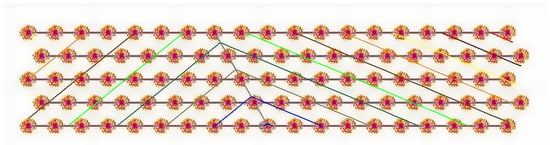
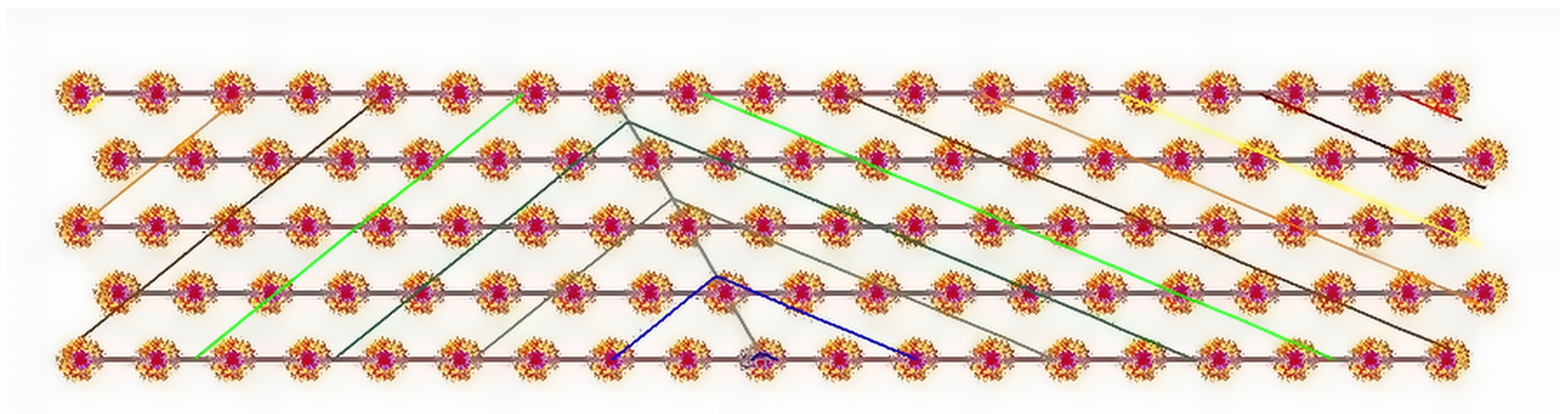
Particle size distribution curves for each blast were generated using JKSimBlast, and the Kuz–Ram model was applied to estimate fragmentation. The blast pattern geometry and design parameters were kept constant across all simulations, as illustrated in Figure 1 and detailed in Table 1.
Figure 1.
Blast pattern layout used in the simulations, consisting of a V-type configuration with 95 blast holes. Emulsion explosive was considered, with initiation starting at hole No. 10 and progressing toward the upper rows.
Table 1.
Geometric and explosive parameters for all Circuit blasting.
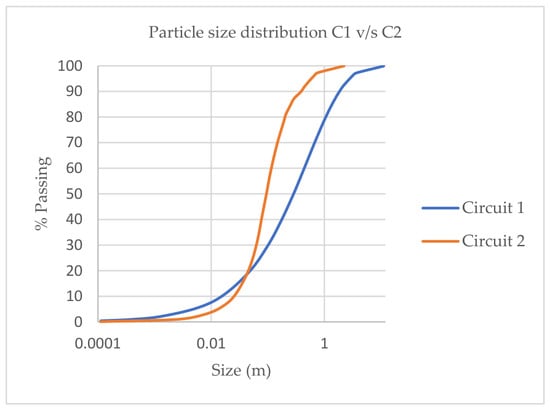
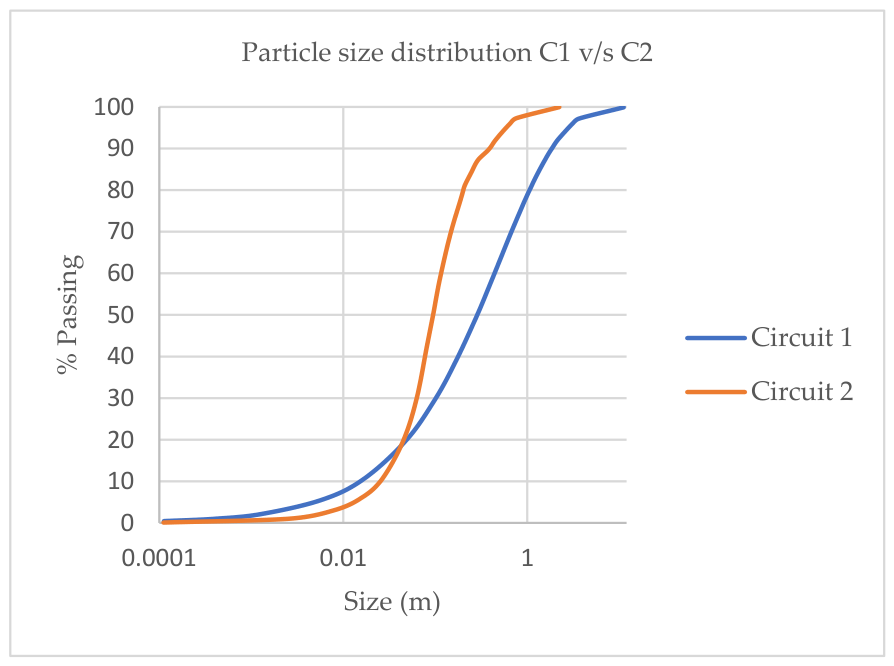
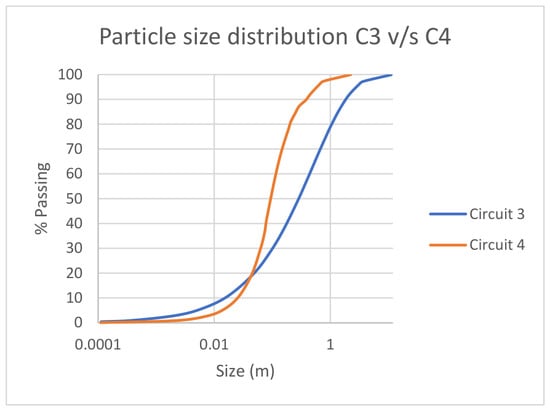
Based on the defined parameters, blasting simulations were conducted to generate particle size distributions, which are presented in Figure 2 and Figure 3.
Figure 2.
Particle size distribution of feed material to Circuit 1 and Circuit 2.
Figure 3.
Particle size distribution of feed material to Circuit 3 and Circuit 4.
2.2. Comminution Circuit Design and Simulation
The comminution circuits were developed and simulated to evaluate the impact of feed size distribution on circuit performance, power draw, specific energy consumption, and associated GHG emissions. Particle size distributions obtained from blasting simulations were used as direct input (F80) for circuit design and analysis. A constant fresh plant feed rate of 300 t/h was assumed for all four scenarios, allowing direct comparison of circuit performance on both absolute and specific bases.
As described previously, the analysis considers two ore hardness conditions and two blasting intensities, resulting in four distinct scenarios. Each scenario is represented by a specific circuit configuration adapted to the corresponding feed characteristics.
Circuit configurations were defined according to the feed characteristics resulting from each blasting condition, reflecting the processing requirements associated with different fragmentation levels. The reduction in particle size achieved through UHIB enabled the progressive simplification of the comminution flowsheets, including the reduction in crushing stages and, in some cases, SAG milling.
A comparative simulation framework was adopted to assess the influence of feed size on circuit performance. This approach enables evaluation of how upstream changes in blasting conditions propagate through the comminution system, affecting power draw and overall process efficiency.
The results are therefore interpreted within a mine-to-mill context, as a function of variations in feed size distribution. Because the fresh feed rate was kept constant at 300 t/h, total circuit power draw was directly converted into specific energy consumption (kWh/t), enabling consistent comparison across scenarios. The corresponding GHG emissions were also normalized per tonne of feed.
All circuits included crushing, grinding, and classification stages. Design conditions were consistent with large-scale Chilean mining operations. The comminution circuits were modeled using consistent equipment models and parameter sets across all scenarios. The main geometric characteristics, operating conditions, and breakage model parameters adopted for crushers, mills, classification, and screening units are summarized in Table 2.
Table 2.
Main geometric, operational, and model parameters used for the comminution equipment in all simulated circuits.
The following key parameters were defined and used to perform the simulation of all circuits in JKSimMet. Grinding operating parameters such as critical speed and mill load were kept constant across all simulations to isolate the effect of feed size distribution on energy consumption. The complete set of geometric and operating parameters adopted for each circuit configuration is summarized in Table 3.
Table 3.
Parameters used for simulation of Circuit 1, Circuit 2, Circuit 3 and Circuit 4.
2.2.1. Circuit 1
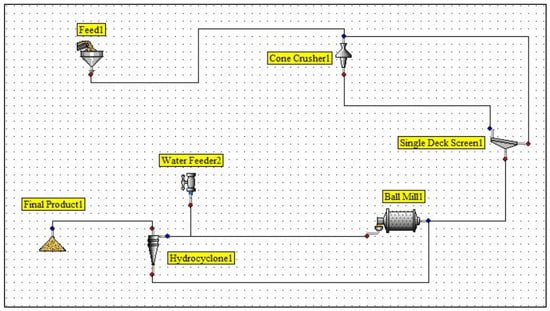
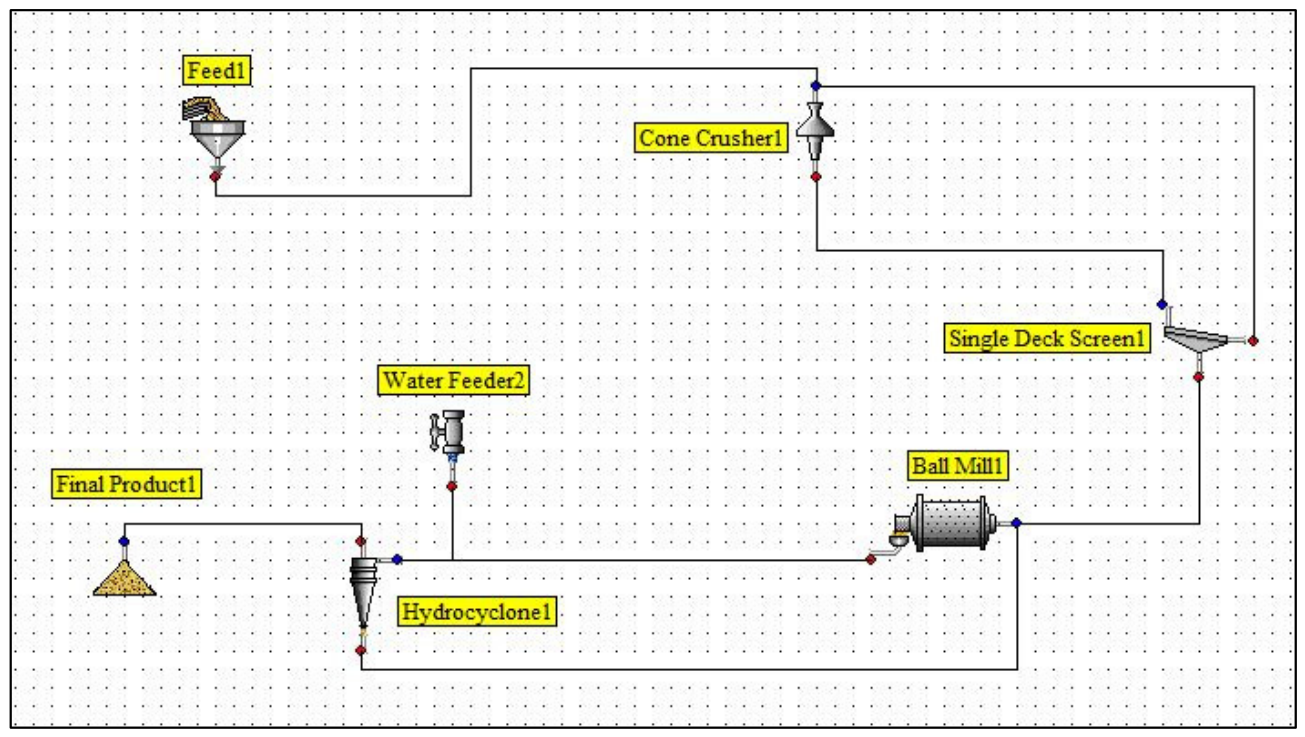
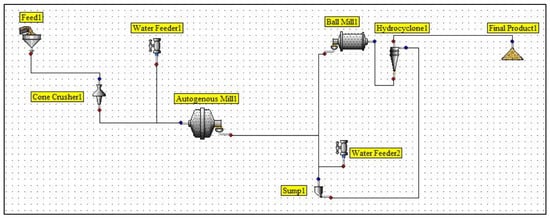
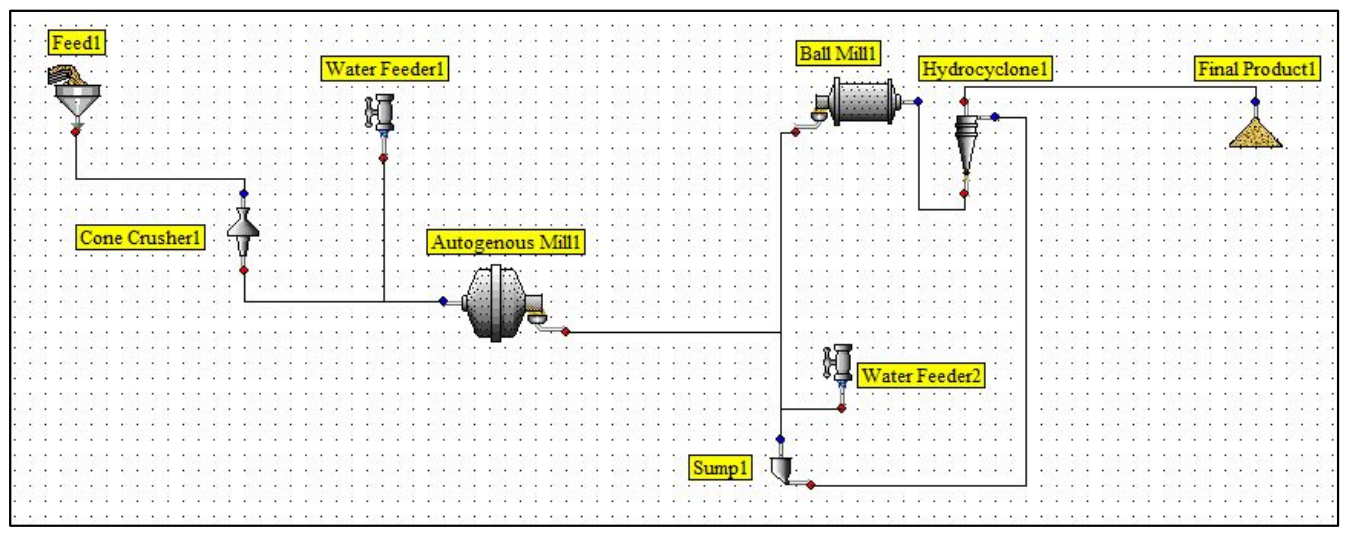
The P80 obtained from blasting was 1.055 m, and this value was adopted as the F80 for the comminution circuit design. As shown in Figure 4, the circuit includes an open crushing stage comprising a primary gyratory crusher followed by a cone crusher for secondary crushing. The grinding section consists of a closed SAG mill circuit with a pebble crushing cone crusher. The SAG mill product feeds an open ball mill circuit with hydrocyclone classification to obtain the final product.
Figure 4.
Circuit 1, this circuit included an open crushing stage with a primary gyratory crusher and a cone crusher for secondary crushing. Grinding included a closed SAG mill circuit with a pebble crushing cone crusher. The SAG product fed an open ball mill circuit with hydrocyclone classification to obtain the final product.
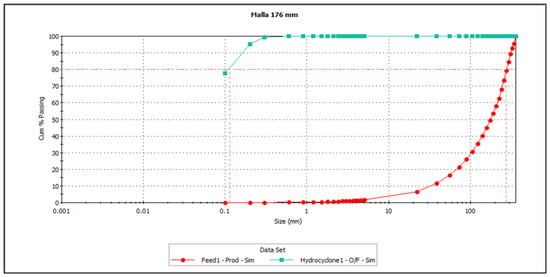
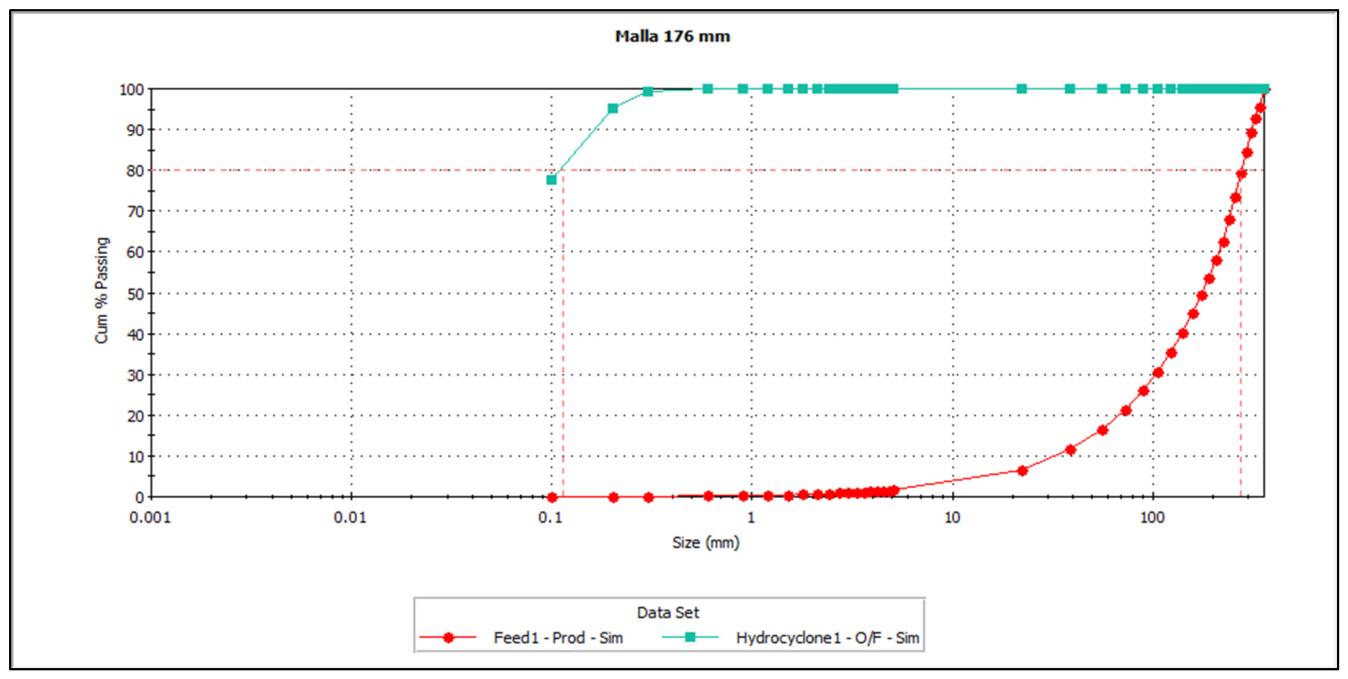
The corresponding feed and product particle size distributions for Circuit 1 are presented in Figure 5.
Figure 5.
Feed and product particle size distributions for Circuit 1, with an F80 of 285.7 mm and a P80 of 0.11 mm, illustrating the overall size reduction achieved.
The simulations were conducted to quantify the energy consumption of crushers and mills within the circuit. Power draw values, obtained from the software JKSimMet v6.3.1 in kilowatts, are presented in Table 4.
Table 4.
Power draw of Circuit 1 equipment.
2.2.2. Circuit 2
The P80 obtained from blasting was 0.203 m, and this value was adopted as the F80 for the comminution circuit design. As shown in Figure 6, the circuit consists of a closed-circuit crushing stage with a cone crusher and a screen, where fine particles bypass the crusher and proceed directly to the grinding stage. The grinding section comprises an open ball mill circuit with hydrocyclone classification to produce the final product.
Figure 6.
Circuit 2, this circuit included closed-circuit crushing with a cone crusher and a screen. Fine particles bypassed crushing and continued to grinding. Grinding consisted of an open ball mill circuit with hydrocyclone classification.
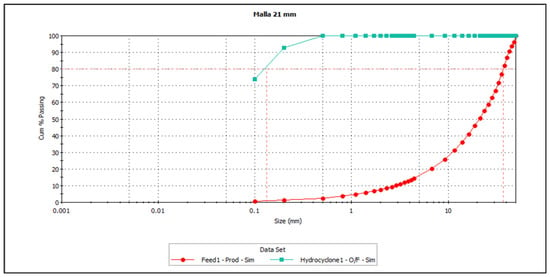
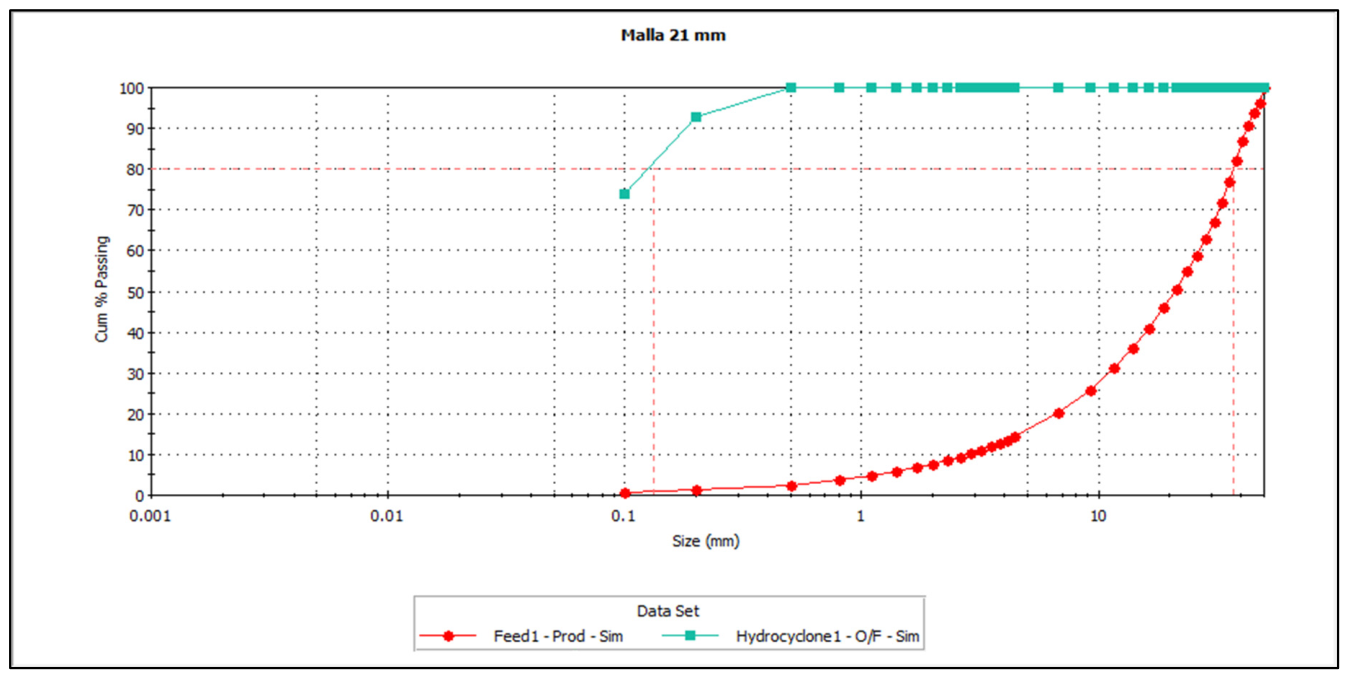
The corresponding feed and product particle size distributions for Circuit 2 are presented in Figure 7, based on results obtained from JKSimMet, showing an F80 of 37.81 mm and a P80 of 0.12 mm.
Figure 7.
Feed and product particle size distributions for Circuit 2, with an F80 of 37.81 mm and a P80 of 0.12 mm, illustrating the overall size reduction achieved.
The simulations were performed to evaluate the power draw of crushers and grinding units in Circuit 2, and the results are summarized in Table 5.
Table 5.
Power draw of crushers and mills in Circuit 2.
2.2.3. Circuit 3
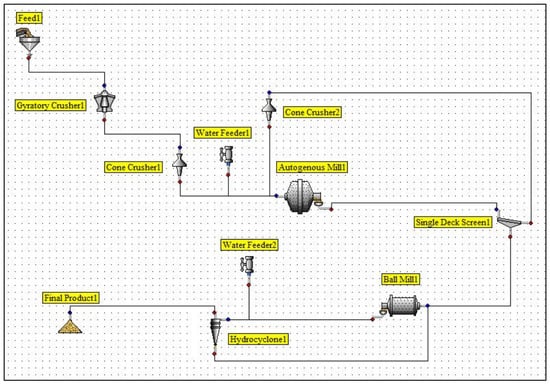
The P80 obtained from blasting was 1.055 m, and this value was adopted as the F80 for the comminution circuit design. As shown in Figure 8, no primary crushing stage was considered, and the circuit starts with a cone crusher operating in the tertiary crushing stage. The crusher product feeds an open SAG mill, followed by a closed circuit between a ball mill and a hydrocyclone for final size classification.
Figure 8.
Circuit 3, this circuit started with a cone crusher in the tertiary crushing stage. The product fed an open SAG mill, followed by a closed circuit between a ball mill and a hydrocyclone.
The corresponding feed and product particle size distributions for Circuit 3 are presented in Figure 9, based on results obtained from JKSimMet, showing an F80 of 133.9 mm and a P80 of 0.13 mm.
Figure 9.
Feed and product particle size distributions for Circuit 3, obtained using JKSimMet, with an F80 of 133.9 mm and a P80 of 0.13 mm, illustrating the overall size reduction achieved.
The power draw of crushers and grinding units in Circuit 3 is summarized in Table 6.
Table 6.
Power draw of crushers and mills in Circuit 3.
2.2.4. Circuit 4
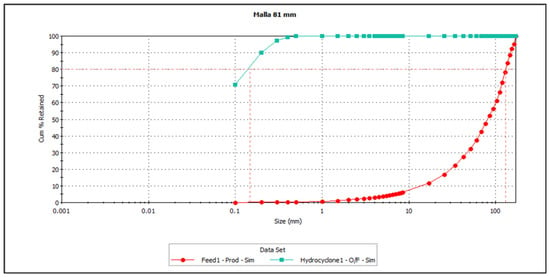
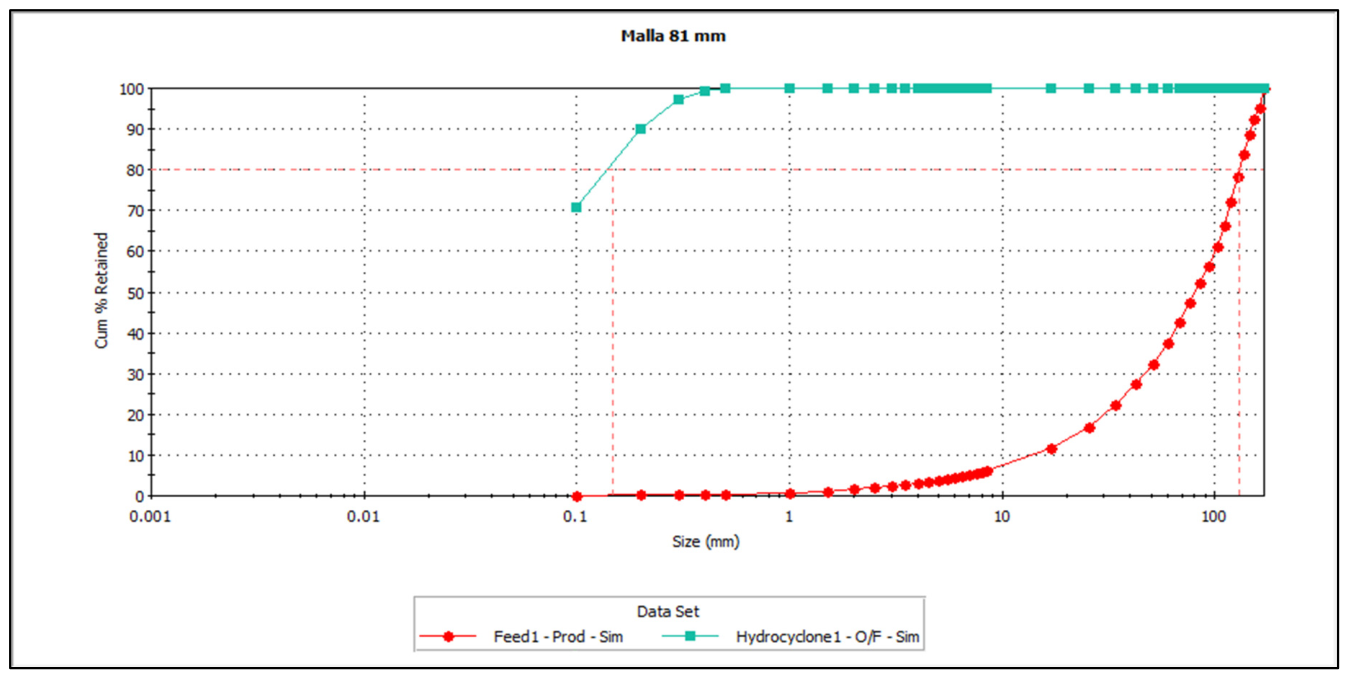
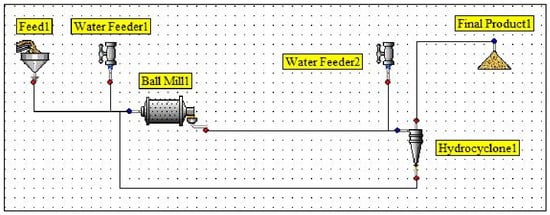
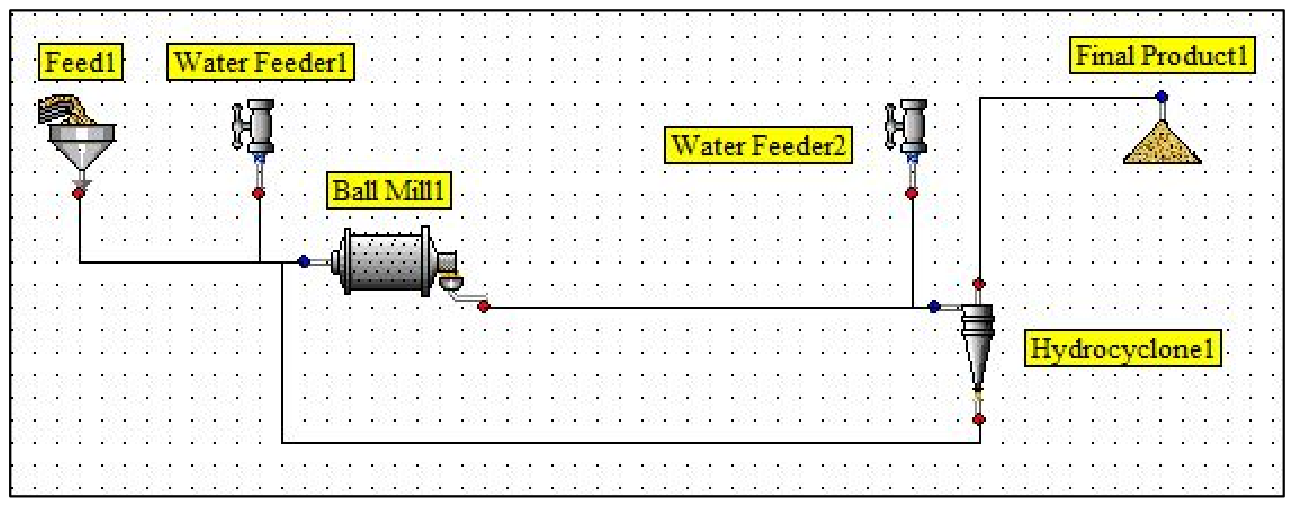
The P80 obtained from blasting was 0.203 m, and this value was adopted as the F80 for the comminution circuit design. As shown in Figure 10, the circuit consists of a simplified configuration including only a closed ball mill–hydrocyclone system to produce the final product.
Figure 10.
Circuit 4, this circuit included only a closed ball mill–hydrocyclone system to produce the final product.
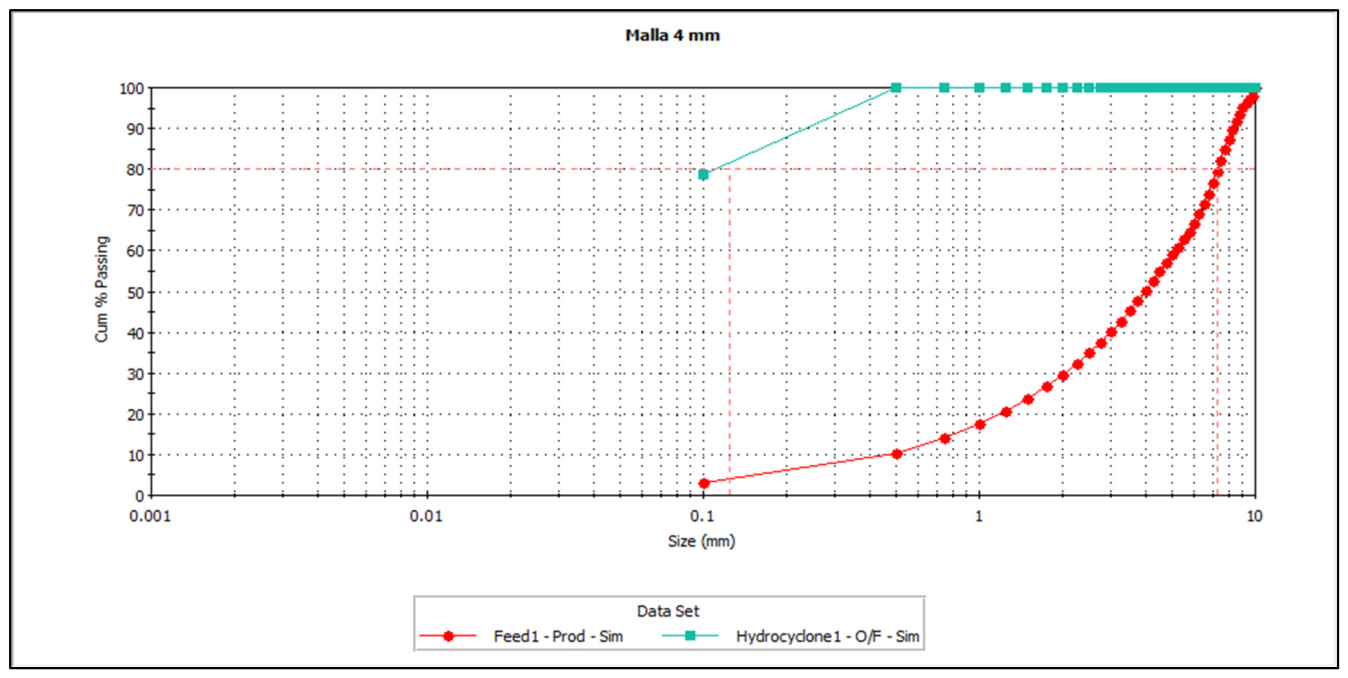
The corresponding feed and product particle size distributions for Circuit 4 are presented in Figure 11, based on results obtained from JKSimMet.
Figure 11.
Particle size distributions of the feed and product for Circuit 4, indicating an F80 of 7.44 mm and a P80 of 0.10 mm.
The simulation was conducted to quantify the energy consumption of crushers and grinding units in Circuit 4, as presented in Table 7.
Table 7.
Power draw of crushers and mills in Circuit 4.
3. Results
Although UHIB increases explosive consumption and may lead to higher emissions at the blasting stage, this increase is relatively small compared to the total energy demand of comminution processes. In mining operations, blasting typically represents only a minor fraction of the overall energy use, whereas comminution—particularly grinding—is the dominant energy consumer.
For this reason, this study focuses on evaluating the impact of UHIB on downstream comminution circuits. The analysis considers changes in power draw, derived energy consumption, and associated GHG emissions within crushing and grinding stages, where the most significant reductions are expected. Emissions associated with blasting were not explicitly quantified, as they are comparatively small and do not significantly affect the overall emission balance.
The results are therefore interpreted as the net effect of feed size reduction on comminution performance, within a mine-to-mill framework in which increased energy input during blasting is offset by reductions in downstream processing energy demand and associated emissions. This approach enables a system-level evaluation of energy and emission trade-offs across the blasting–comminution interface.
3.1. Power Draw and Specific Energy Consumption
Power draw was analyzed by grouping the circuits according to ore hardness conditions, as defined in Section 2. Because a constant fresh feed rate of 300 t/h was assumed, total circuit power draw can be directly expressed as specific energy consumption (kWh/t), enabling consistent comparison across scenarios.
3.1.1. Power Draw Analysis for Hard Ore
This analysis considers Circuit 1 (C1) and Circuit 2 (C2). The corresponding power draw at both circuit and unit levels is presented in Table 8.
Table 8.
Power draw by unit and total circuit for Circuit 1 (C1) and Circuit 2 (C2).
At the unit level, three main observations can be made. First, the gyratory crusher, cone crusher 1, and SAG mill do not contribute to power draw in Circuit 2, as these units are not included in this configuration to achieve the target product size. Second, cone crusher 2 exhibits an increase of 179.75% in power draw. In Circuit 1, this unit processes only screened oversize, whereas in Circuit 2 it operates in a closed-circuit configuration, processing both fresh feed and recirculating material. Third, the ball mill shows a negligible variation of 0.02%, reflecting similar equipment configuration and operating conditions in both circuits.
At the circuit level, total power draw decreased by 17.81%, equivalent to 2343.64 kW. This reduction is primarily attributed to the elimination of several unit operations in Circuit 2. Despite the increased power draw in cone crusher 2, the overall system exhibits lower power demand.
3.1.2. Power Draw Analysis for Soft Ore
This analysis considers Circuit 3 (C3) and Circuit 4 (C4). The corresponding power draw at both circuit and unit levels is presented in Table 9.
Table 9.
Power draw by unit and total circuit for Circuit 3 (C3) and Circuit 4 (C4).
At the unit level, two main observations can be made. First, cone crusher 1 and the SAG mill do not contribute to power draw in Circuit 4, as these units are not included in this configuration. Second, the ball mill shows a negligible variation of 0.03%, reflecting similar configuration and operating conditions in both circuits.
At the circuit level, total power draw decreased by 30.61%, equivalent to 2585.40 kW. This reduction is associated with the simplified circuit configuration in Circuit 4. The larger reduction observed for soft ore is consistent with its lower hardness, which reduces the overall power demand of the comminution process.
3.2. Greenhouse Gas (GHG) Emissions
GHG emissions were estimated based on the power draw of each unit, converted to energy consumption and multiplied by the emission factor. Emissions were calculated in CO2-equivalent (tCO2e), including contributions from CO2, CH4, and N2O.
A representative emission factor of 0.229 tCO2e/MWh was adopted, based on the average value of the Chilean electrical system for 2025 reported by the Coordinador Eléctrico Nacional [37]. As in the power draw analysis, circuits were grouped according to ore hardness conditions.
CO2e = (Power Draw/Feed) × EF
- CO2e = specific greenhouse gas emissions (kg CO2e/t of ore).
- Power Draw = total power draw of the circuit (kW).
- Feed = fresh feed rate (t/h).
- EF = emission factor of the electrical system (kg CO2e/kWh).
Equation GHG emissions were normalized by a constant feed rate of 300 t/h. For hard ore, the comparison between Circuit 1 (C1) and Circuit 2 (C2) is presented in Table 10. The results show a clear reduction in total GHG emissions associated with the simplified configuration of Circuit 2. The elimination of upstream units, particularly the gyratory crusher and SAG mill, significantly reduces emissions, while the increased load on cone crusher 2 has a limited impact on the overall balance. The ball mill remains the dominant contributor to total emissions in both configurations.
Table 10.
GHG emissions intensity by unit and total circuit for hard ore (C1 and C2), expressed as kg CO2e/t of ore.
For soft ore, the comparison between Circuit 3 (C3) and Circuit 4 (C4) is presented in Table 11. A more pronounced reduction in total emissions is observed, reflecting the further simplification of the comminution circuit. As in the hard ore case, the ball mill accounts for the largest share of emissions, while the removal of upstream units drives the overall decrease.
Table 11.
GHG emissions intensity by unit and total circuit for soft ore (C3 and C4), expressed as kg CO2e/t of ore.
Because emissions are directly proportional to electrical energy consumption, the trends observed in GHG emissions are consistent with those obtained for power draw. These results highlight the importance of upstream fragmentation in reducing downstream energy demand and associated emissions within a mine-to-mill framework.
4. Discussion
This study establishes a direct link between blasting intensity, rock fragmentation, comminution circuit design, electrical energy demand, and greenhouse gas (GHG) emissions under conditions representative of large-scale Chilean mining. The results show a consistent system response: increased explosive energy leads to finer feed size, enabling simplified comminution circuits with lower power demand and reduced indirect GHG emissions.
The trends observed are consistent with previous studies on mine-to-mill optimization and comminution modeling. Refs. [33,35] reported that improvements in blast-induced fragmentation can significantly reduce comminution energy requirements while increasing throughput. The magnitude of the reductions observed in this study is within the range reported in the literature, supporting the validity of the simulation-based approach to evaluate relative performance across circuit configurations.
The present analysis is based on macroscopic fragmentation, described through particle size distribution parameters (e.g., P80, P50). Internal particle weakening mechanisms induced by blasting, such as microcrack generation and grain boundary damage, were not explicitly considered. Therefore, the modeled breakage behavior assumes that material strength depends primarily on size reduction rather than internal damage. As a result, the reductions reported here can be interpreted as conservative estimates of the potential benefits of UHIB.
UHIB produced a substantial reduction in feed size, which enabled the removal of major size-reduction stages in both hardness scenarios. For hard ore, the UHIB-based configuration eliminated primary crushing and SAG milling, while for soft ore the circuit was reduced to a ball mill-based system. This indicates that the observed energy benefits are primarily structural rather than incremental. The reduction in energy demand does not arise from improved efficiency of individual units, but from the elimination of entire processing stages. This reinforces the importance of treating blasting as an integral component of the comminution system within a mine-to-mill framework.
The influence of ore hardness is evident in the system response. Softer material exhibits a greater sensitivity to improved fragmentation, allowing further simplification of the circuit and lower overall energy demand. In contrast, final grinding energy remains largely controlled by product size targets and classification performance, which explains the relatively stable energy demand of the ball mill across scenarios. This suggests that upstream fragmentation primarily affects coarse and intermediate breakage stages, particularly crushing and SAG milling.
Local increases in power draw observed in specific units, such as the secondary cone crusher in the hard ore case, are a direct consequence of circuit reconfiguration. In closed-circuit operation, this unit processes both fresh feed and recirculating load, increasing its individual energy demand. However, this localized increase is offset at the system level by the removal of more energy-intensive units, highlighting the importance of evaluating comminution performance at the circuit scale rather than at the equipment level.
Because all units were assumed to operate using electricity from the Chilean grid, GHG emissions are directly linked to electrical energy consumption. As a result, emission trends follow the same behavior as energy demand. Grinding units, particularly SAG mills, represent the largest contribution to both power draw and emissions. Their removal in UHIB-based configurations explains most of the observed reduction, identifying coarse grinding as a key emission hotspot in comminution circuits.
These findings have direct implications for Chilean mining, where large-scale copper operations face increasing pressure to reduce carbon intensity. The results indicate that part of the decarbonization pathway lies upstream in blasting design, complementing strategies such as renewable energy integration and equipment electrification. Improved fragmentation can reduce circuit complexity, with potential benefits in both capital expenditure (CAPEX), through reduced equipment requirements, and operational expenditure (OPEX), through lower energy demand.
The analysis is based on simulation tools (JKSimBlast and JKSimMet), and therefore does not explicitly account for operational variability, geological heterogeneity, or real equipment performance. Emissions associated with explosive production and other blasting-related impacts (e.g., vibration, fumes) were outside the scope of this study. In addition, internal particle weakening due to blasting was not considered. This effect may further reduce grinding energy and emissions and is the subject of ongoing research.
5. Conclusions
This study evaluated the effect of Ultra-High-Intensity Blasting (UHIB) on downstream comminution energy demand and associated greenhouse gas (GHG) emissions under conditions representative of large-scale Chilean mining. By linking blast-induced fragmentation with comminution circuit simulation, the results demonstrate that blasting design directly influences circuit configuration, energy demand, and carbon intensity.
UHIB produced significantly finer feed material, enabling substantial simplification of comminution circuits. In both hardness scenarios, the main reductions in energy demand and emissions were driven by the removal of energy-intensive stages, particularly primary crushing and SAG milling, rather than by incremental efficiency gains in individual units. This highlights the structural nature of the observed improvements.
Final grinding energy remained nearly constant across all scenarios, indicating that ball mill demand is primarily controlled by product size targets and classification efficiency. In contrast, the largest energy and emission reductions occurred in coarse and intermediate breakage stages, confirming that upstream fragmentation has a dominant influence on circuit configuration and overall system performance. SAG milling was identified as a major energy and emission hotspot in the analyzed circuits.
The analysis considered only macroscopic fragmentation and did not include internal particle weakening mechanisms induced by blasting, such as microcrack generation. As a result, the reported reductions can be regarded as conservative estimates of the potential benefits of UHIB. Ongoing research incorporating these effects may reveal additional reductions in downstream energy demand and emissions.
Under the conditions of the Chilean electrical system, reductions in electrical energy demand translated directly into proportional decreases in CO2-equivalent emissions. These findings demonstrate that blasting intensity can be used as a strategic mine-to-mill control variable, contributing not only to improved energy efficiency but also to lower carbon intensity and simplified circuit design.
Overall, the results highlight that upstream optimization through blasting design represents a viable pathway for reducing the environmental footprint of comminution processes in large-scale mining operations.
Author Contributions
Conceptualization, J.S. and A.C.; methodology, J.S. and A.C.; software, A.C.; validation, J.S., A.C. and T.M.; formal analysis A.C.; investigation, A.C.; resources, J.S.; data curation, A.C.; writing—original draft preparation, J.S. and T.M.; writing—review and editing, J.S. and T.M.; visualization, A.C.; supervision, J.S. and T.M.; project administration, J.S.; funding acquisition, J.S. All authors have read and agreed to the published version of the manuscript.
Funding
This research received no external funding.
Data Availability Statement
Data are contained within the article.
Acknowledgments
In preparing this manuscript, artificial intelligence (AI) tools were employed solely to assist in language editing and stylistic refinement. Specifically, GPT-5 (OpenAI) and Microsoft 365 Copilot (GPT-5 chat model) were used to improve clarity, grammar, and readability. No AI tools were used for data analysis, interpretation, or generation of scientific content. All AI-assisted outputs were critically reviewed and edited by the authors to ensure accuracy and consistency with the study’s methodology and findings. The authors accept full responsibility for the content of this publication.
Conflicts of Interest
The authors declare no conflicts of interest.
References
- Liu, L.Y.; Ji, H.G.; Lü, X.F.; Wang, T.; Zhi, S.; Pei, F.; Quan, D.L. Mitigation of greenhouse gases released from mining activities: A review. Int. J. Miner. Metall. Mater. 2021, 28, 513–521. [Google Scholar] [CrossRef] [Scilit]
- International Council on Mining and Metals (ICMM). Global Mining and Metals Greenhouse Gas Emissions Dataset. Available online: https://www.icmm.com/global-mining-metals-ghg-emissions-dataset (accessed on 20 April 2026).
- Magdalena, R.; Valero, A.; Palacios, J.L.; Valero, A. Mining energy consumption as a function of ore grade decline: The case of lead and zinc. J. Sustain. Min. 2021, 20, 109–121. [Google Scholar] [CrossRef] [Scilit]
- Calvo, G.; Palacios, J.L.; Valero, A. The influence of ore grade decline on energy consumption and GHG emissions: The case of gold. Environ. Dev. 2022, 41, 100683. [Google Scholar] [CrossRef] [Scilit]
- Gan, Y.; Griffin, W.M. Analysis of life-cycle GHG emissions for iron ore mining and processing in China—Uncertainty and trends. Resour. Policy 2018, 58, 90–100. [Google Scholar] [CrossRef] [Scilit]
- Igogo, T.; Awuah-Offei, K.; Newman, A.; Lowder, T.; Engel-Cox, J. Integrating renewable energy into mining operations: Opportunities, challenges, and enabling approaches. Appl. Energy 2021, 300, 117375. [Google Scholar] [CrossRef] [Scilit]
- Hosseini, P.; Gharib, N.; Derakhshandeh, J.F.; Radziszewski, P. Exploring an energy-based model in comminution. J. Tribol. 2022, 144, 041201. [Google Scholar] [CrossRef] [Scilit]
- Brent, G.F.; Rothery, M.D.; Dare-Bryan, P.C.; Hawke, S.J.; Gomez, R.; Humeres, I. Ultra-high intensity blasting for improved ore comminution. In Proceedings of the 10th International Symposium on Rock Fragmentation by Blasting (Fragblast 10), New Delhi, India, 24–26 November 2012; Taylor & Francis: London, UK, 2013; pp. 163–169. [Google Scholar]
- Katsabanis, P.D. Analysis of the effects of blasting on comminution using experimental results and numerical modelling. Rock Mech. Rock Eng. 2020, 53, 3093–3109. [Google Scholar] [CrossRef] [Scilit]
- Kinyua, E.M.; Jianhua, Z.; Kasomo, R.M.; Mauti, D.; Mwangangi, J. A review of the influence of blast fragmentation on downstream processing of metal ores. Miner. Eng. 2022, 186, 107743. [Google Scholar] [CrossRef] [Scilit]
- Holloway, M.D.; Nwaoha, C.; Onyewuenyi, O.A. (Eds.) Process Plant Equipment: Operation, Control, and Reliability; John Wiley & Sons: Hoboken, NJ, USA, 2012. [Google Scholar]
- JKTech Pty Ltd. JKSimMet, Version 6.2; JKTech: Brisbane, Australia, 2020.
- JKTech Pty Ltd. JKSimBlast; JKTech: Brisbane, Australia, 2020. [Google Scholar]
- Hartman, H.L.; Mutmansky, J.M. Introductory Mining Engineering, 2nd ed.; John Wiley & Sons: Hoboken, NJ, USA, 2002. [Google Scholar]
- Jeswiet, J.; Szekeres, A. Energy consumption in mining comminution. Procedia CIRP 2016, 48, 140–145. [Google Scholar] [CrossRef] [Scilit]
- Napier-Munn, T.J.; Morrell, S.; Morrison, R.D.; Kojovic, T. Mineral Comminution Circuits: Their Operation and Optimisation; Julius Kruttschnitt Mineral Research Centre (JKMRC); The University of Queensland: Brisbane, Australia, 1996. [Google Scholar]
- Yang, X.; Sun, H.; Fu, G.; Yu, J.; Gu, A. Grinding characteristics and process simulation of iron ore based on JK drop weight and Bond ball milling work index test. Nonferrous Met. (Miner. Process. Sect.) 2024, 5, 24A1984001. [Google Scholar]
- King, R.P. Modeling and Simulation of Mineral Processing Systems; Butterworth-Heinemann: Oxford, UK, 2001. [Google Scholar]
- Wills, B.A.; Napier-Munn, T.J. Wills’ Mineral Processing Technology, 7th ed.; Elsevier: Oxford, UK, 2006. [Google Scholar]
- Austin, L.G.; Klimpel, R.R.; Luckie, P.T. Process Engineering of Size Reduction: Ball Milling; SME/AIME: New York, NY, USA, 1984. [Google Scholar]
- Torres, M.; Casali, A. A novel approach to optimize grinding circuits: Modelling and simulation. Miner. Eng. 2009, 22, 826–840. [Google Scholar] [CrossRef] [Scilit]
- Azapagic, A. Developing a framework for sustainable development indicators for the mining and minerals industry. J. Clean. Prod. 2004, 12, 639–662. [Google Scholar] [CrossRef] [Scilit]
- Wang, X.; Zhou, W.; Wang, Z.; Lu, X.; Zhang, Y. Characteristics of dust pollution and its influencing factors during cold period of open-pit coal mines in northern China. Front. Earth Sci. 2025, 13, 1458847. [Google Scholar] [CrossRef] [Scilit]
- Weiss, N.L. (Ed.) SME Mineral Processing Handbook; Society of Mining Engineers of AIME: New York, NY, USA, 1985; Volume 1–2. [Google Scholar]
- Gleick, P.H. Water and energy. Annu. Rev. Energy Environ. 1994, 19, 267–299. [Google Scholar] [CrossRef]
- Norgate, T.; Haque, N. Energy and greenhouse gas impacts of mining and mineral processing operations. J. Clean. Prod. 2010, 18, 266–274. [Google Scholar] [CrossRef] [Scilit]
- Krausmann, F.; Gingrich, S.; Eisenmenger, N.; Erb, K.-H.; Haberl, H.; Fischer-Kowalski, M. Growth in global materials use, GDP and population during the 20th century. Ecol. Econ. 2009, 68, 2696–2705. [Google Scholar] [CrossRef] [Scilit]
- Ballantyne, G.R.; Powell, M.S. Benchmarking comminution energy consumption for the processing of copper and gold ores. Miner. Eng. 2014, 65, 109–114. [Google Scholar] [CrossRef] [Scilit]
- Norgate, T.; Lovel, R. Water Use in Metal Production: A Life Cycle Perspective; CSIRO Minerals: Melbourne, Australia, 2004. [Google Scholar]
- Tromans, D. Mineral comminution: Energy efficiency considerations. Int. J. Miner. Process. 2008, 88, 101–107. [Google Scholar] [CrossRef] [Scilit]
- de Chile, C.M. Reporte de Sustentabilidad en Minería: Eficiencia Energética y Reducción de Emisiones; Consejo Minero: Santiago, Chile, 2020. [Google Scholar]
- Hawke, S.J.; Dominguez, L.A. Ultra high intensity blasting for improved ore comminution. In Proceedings of the 11th International Symposium on Rock Fragmentation by Blasting (Fragblast 11), Sydney, Australia, 24–26 August 2015. [Google Scholar]
- Howe, S.; Pan, J. Application of Enterprise Optimisation Considering Ultra High Intensity Blasting Strategies; Whittle Consulting: Melbourne, Australia, 2018. [Google Scholar]
- Losaladjome Mboyo, H.; Huo, B.; Mulenga, F.K.; Mabe Fogang, P.; Kalenga Kaunde Kasongo, J. Assessing the impact of surface blast design parameters on the performance of a comminution circuit processing a copper-bearing ore. Minerals 2024, 14, 1226. [Google Scholar] [CrossRef] [Scilit]
- Nghipulile, T.; Moongo, T.E.; Dzinomwa, G.; Maweja, K.; Mapani, B.; Kurasha, J.; Amwaama, M. Effect of mineralogy on grindability-A case study of copper ores. J. S. Afr. Inst. Min. Metall. 2023, 123, 133–144. [Google Scholar] [CrossRef] [Scilit]
- Seccatore, J.E.; Cardu, M.; Marin, T. Influence of blasting charge distribution on the energy required for comminution of rock. J. S. Afr. Inst. Min. Metall. 2024, 124, 407–414. [Google Scholar] [CrossRef] [Scilit]
- Ministry of Energy (Chile). Environmental Indicators: GHG Emission Factor of the National Electric System. Available online: https://energia.gob.cl/indicadores-ambientales-factor-de-emisiones-gei-del-sistema-electrico-nacional (accessed on 20 April 2026).

Disclaimer/Publisher’s Note: The statements, opinions and data contained in all publications are solely those of the individual author(s) and contributor(s) and not of MDPI and/or the editor(s). MDPI and/or the editor(s) disclaim responsibility for any injury to people or property resulting from any ideas, methods, instructions or products referred to in the content. |
© 2026 by the authors. Licensee MDPI, Basel, Switzerland. This article is an open access article distributed under the terms and conditions of the Creative Commons Attribution (CC BY) license.