
A Review on the Resource Utilization of Iron Tailings: Pathways, Challenges, and Prospects

 ,
,  , ,
, ,
Abstract
1. Introduction
2. Physicochemical Properties of Iron Ore Tailings
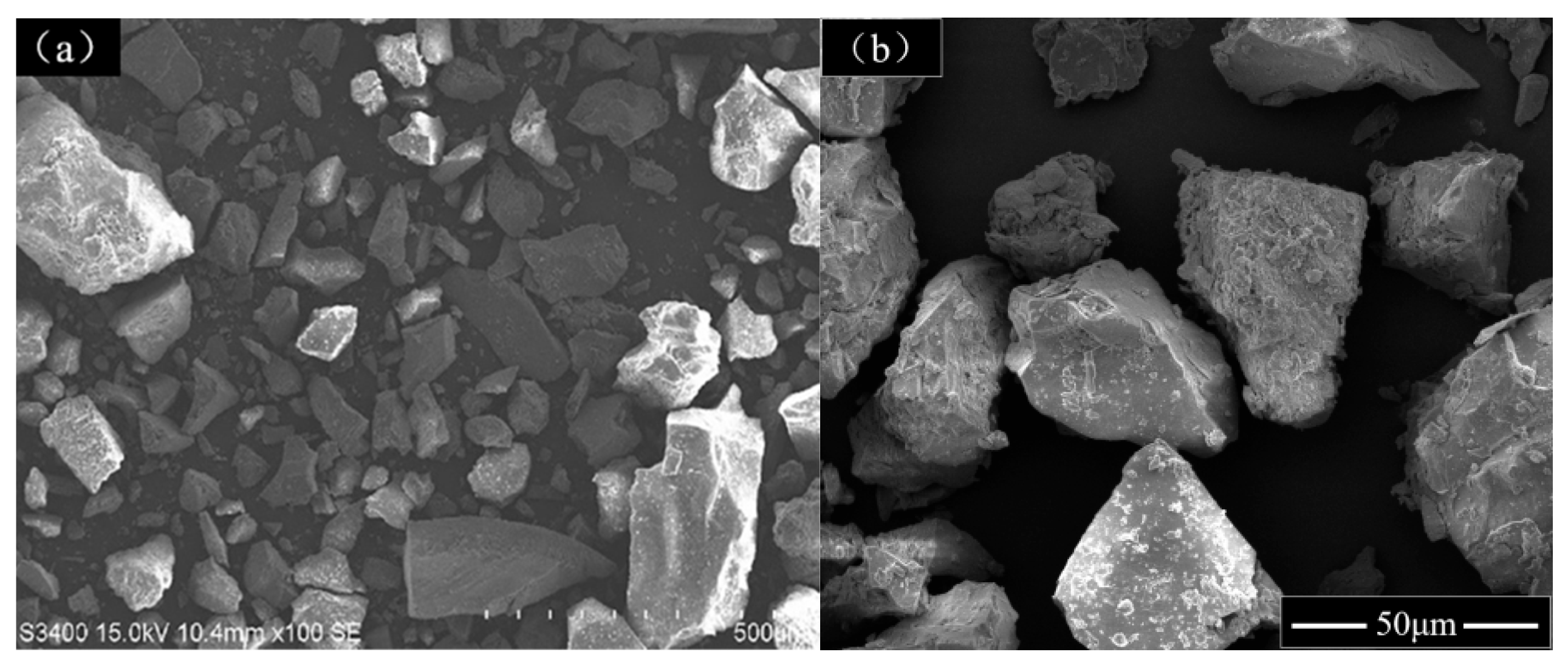
2.1. Physical Properties
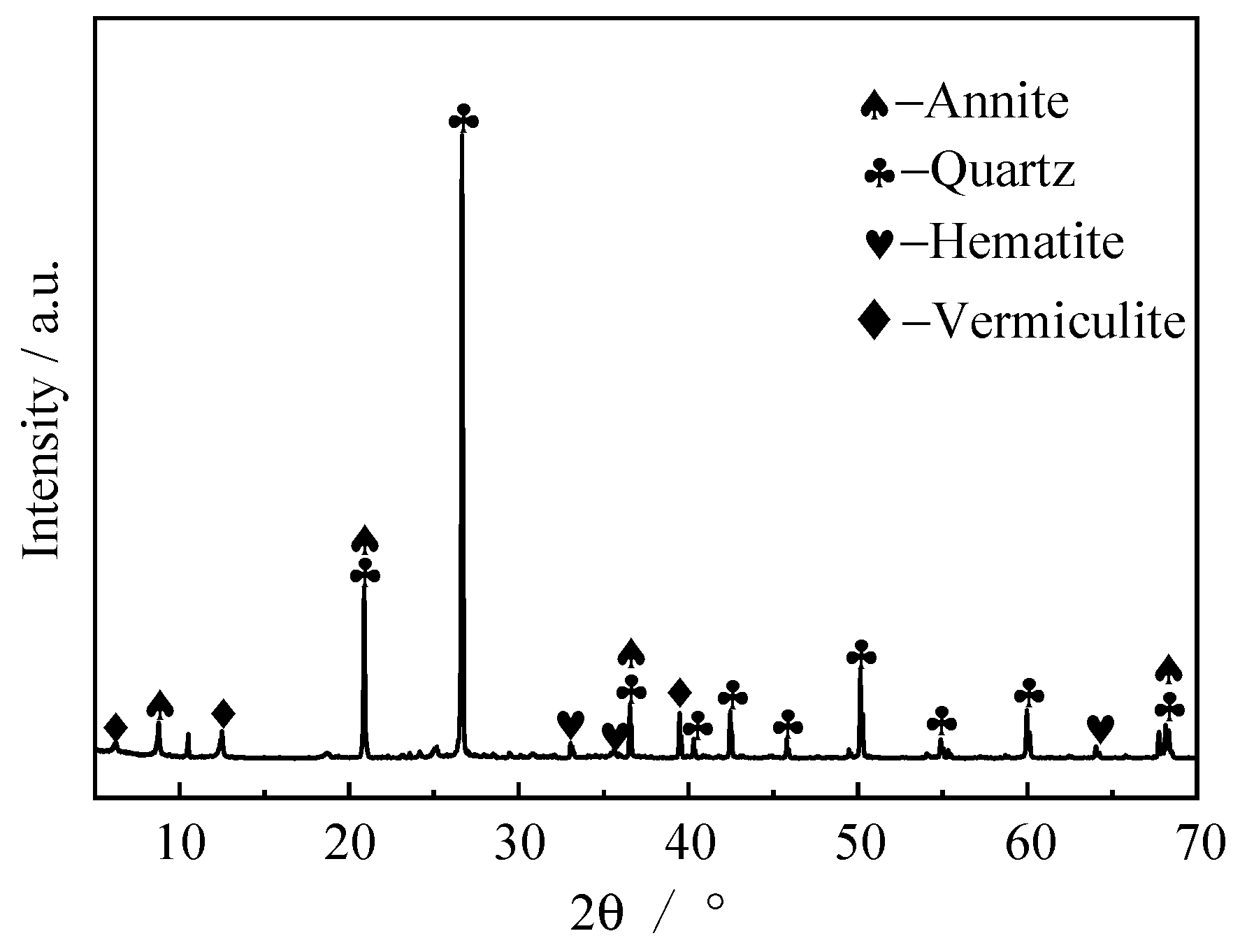
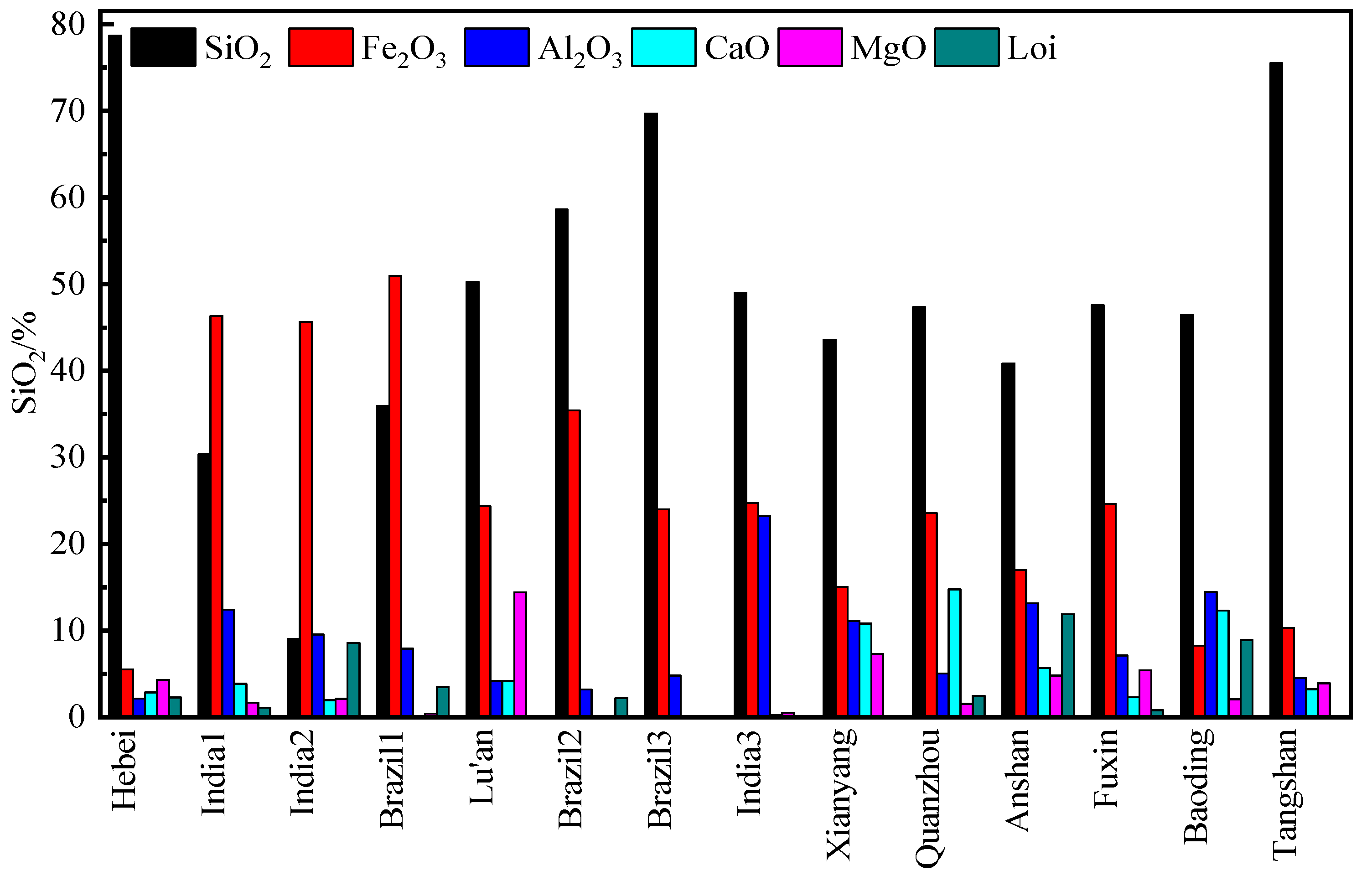
2.2. Chemical Properties
3. Current Status of Comprehensive Utilization of Iron Ore Tailings
3.1. Recovery of Valuable Metals and Minerals
3.1.1. Recovery of Iron Element
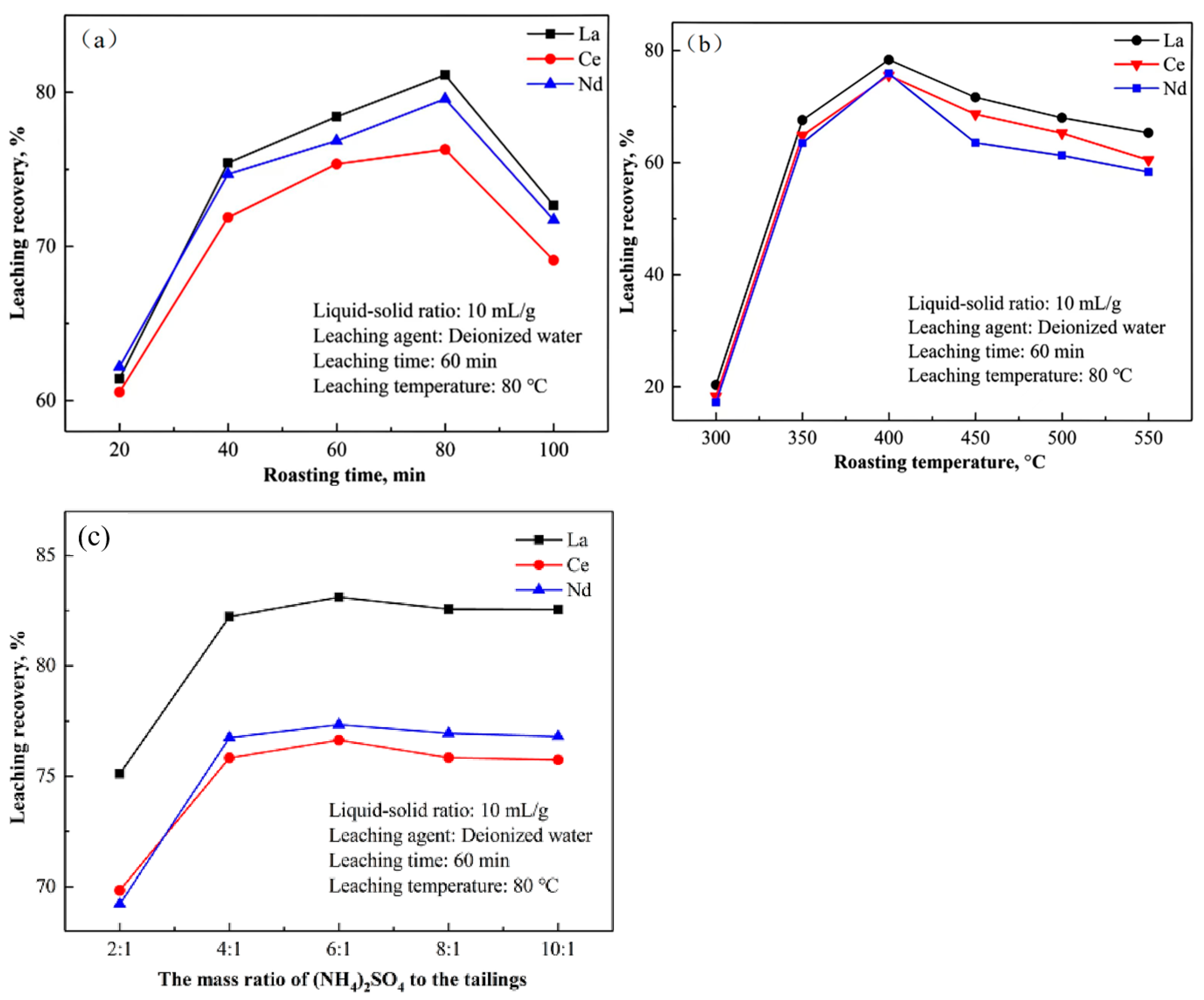
3.1.2. Recovery of Rare Earth Elements
3.1.3. Recovery of Other Metal Elements
3.1.4. Recovery of Non-Metallic Minerals
3.2. Preparation of Soil Amendments and Fertilizers
3.2.1. Preparation of Soil Amendments
3.2.2. Preparation of Trace Element Fertilizers
3.3. Tailings Pond Reclamation
3.4. Preparation of Chemical Products
3.5. Preparation of Mine Filling Materials
3.6. Preparation of Building Materials
3.6.1. Preparation of Cementitious Materials
- (1)
- As raw materials for cement production
- (2)
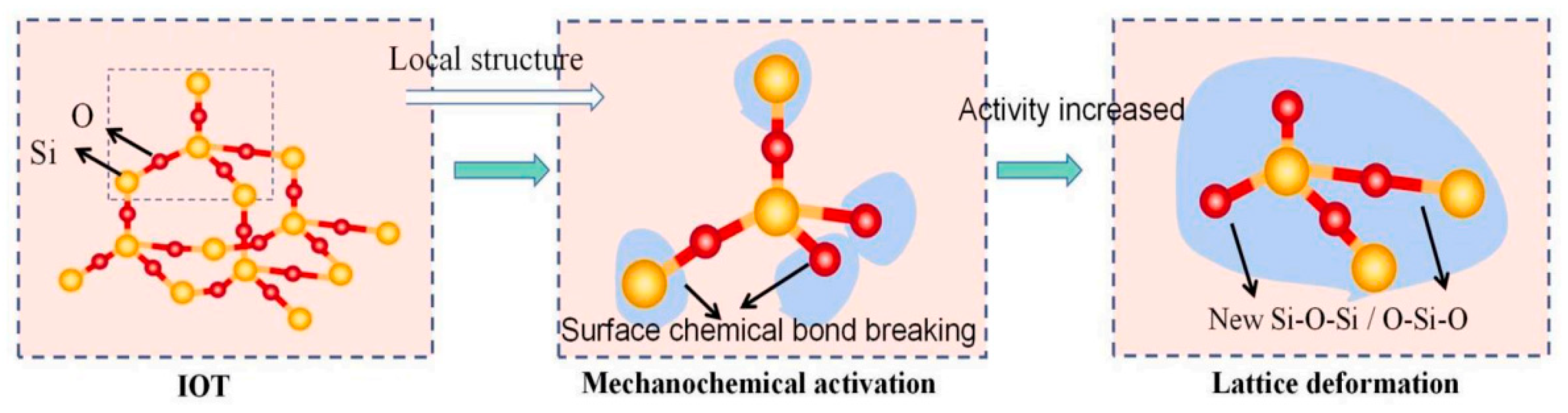
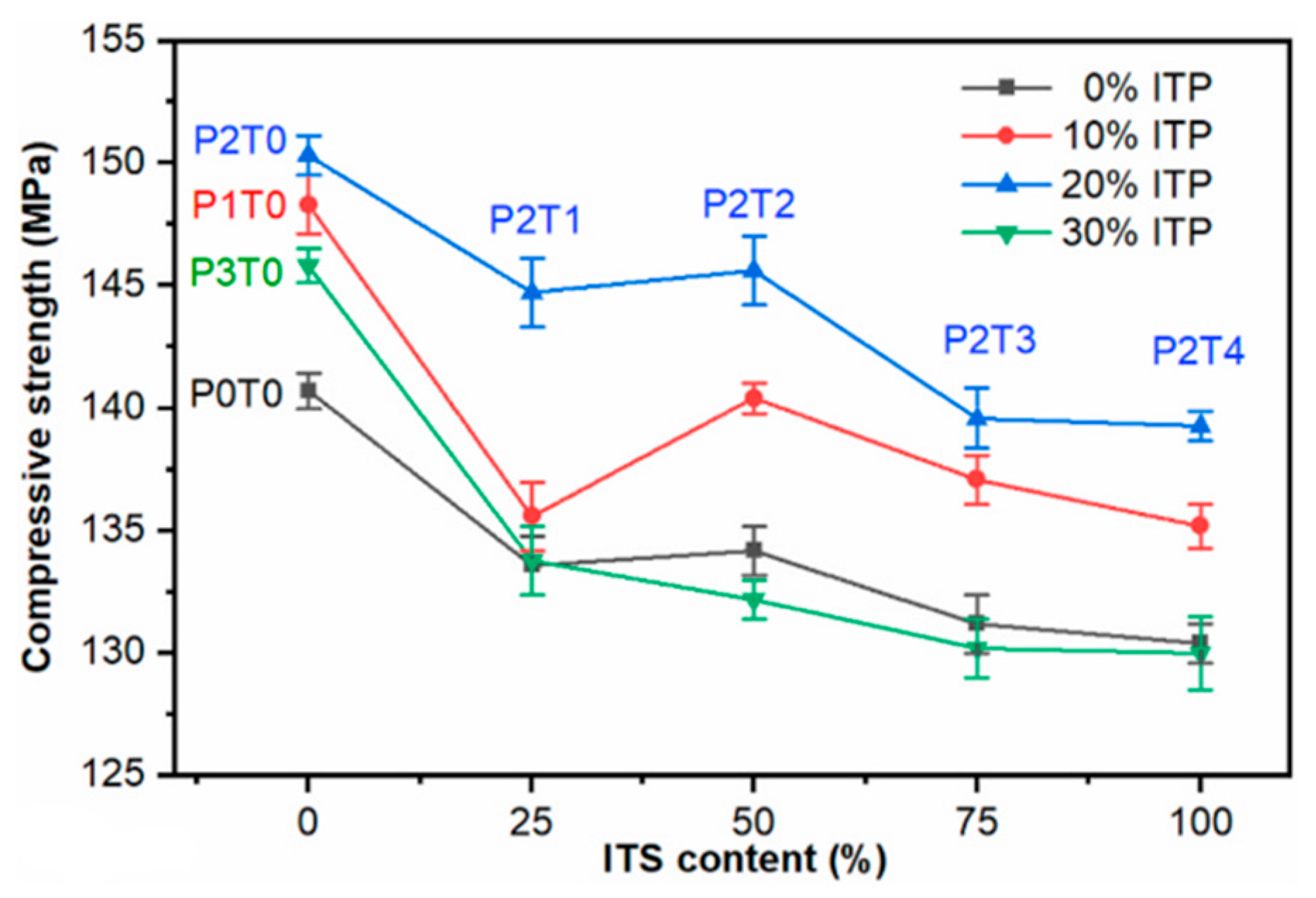
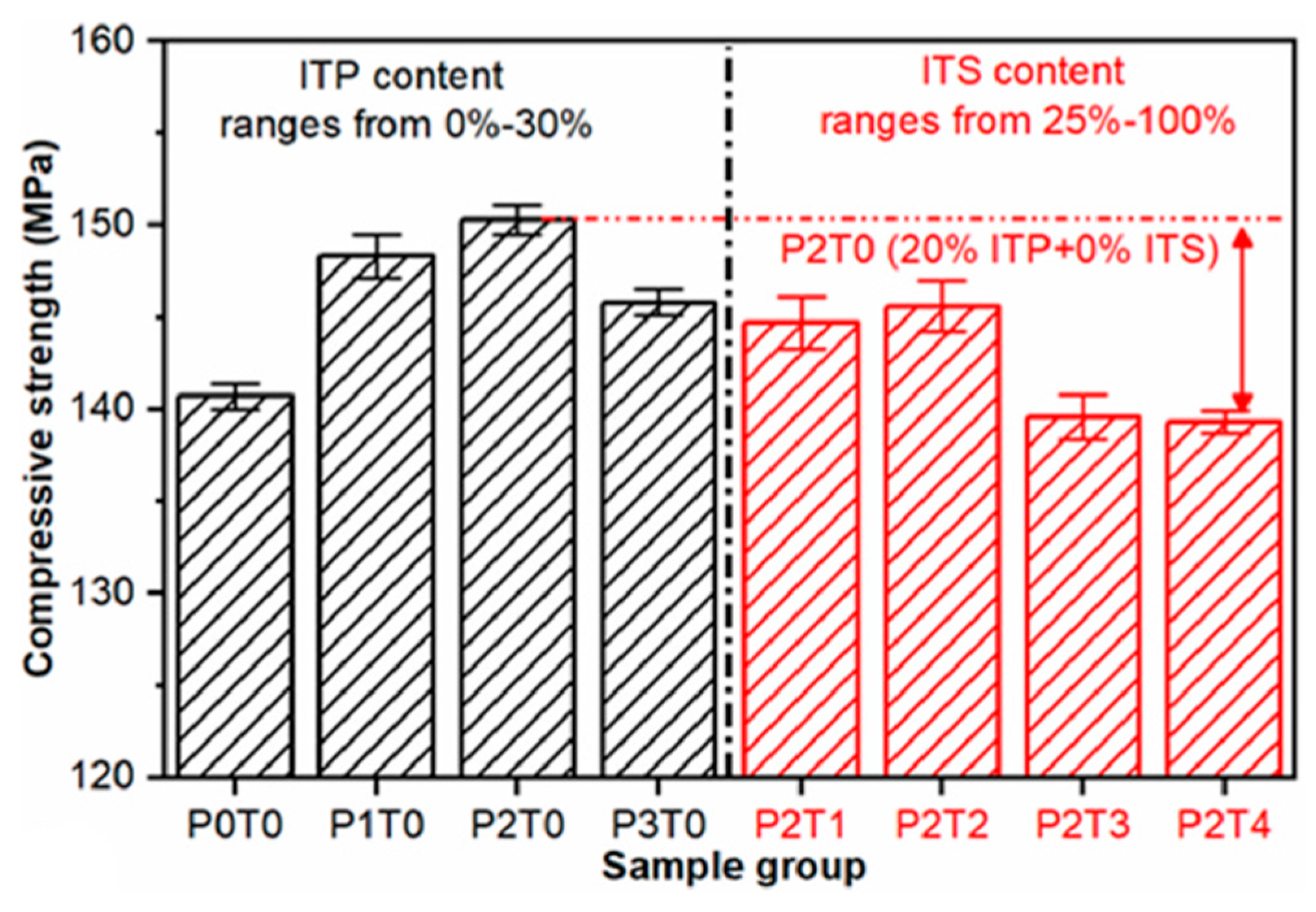
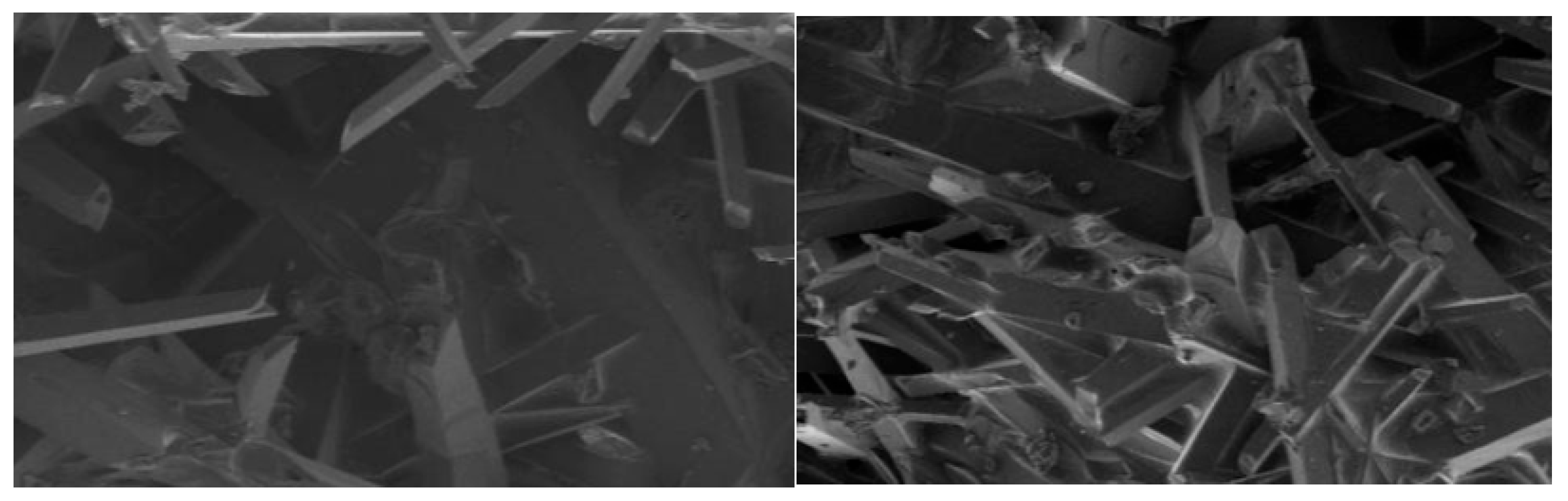
- Preparation of supplementary cementitious materials by mechanical activation of iron ore tailings
- (3)
- Preparation of geopolymers by chemical activation of iron ore tailings
- (4)
- Preparation of geopolymers by composite activation of iron ore tailings
3.6.2. As Concrete Aggregates
3.6.3. Preparation of Ceramics
3.6.4. Preparation of Building Blocks and Bricks
3.6.5. Preparation of Glass-Ceramics
4. Conclusions
- (1)
- The diverse and intricate origins of iron ore tailings result in considerable variations in their chemical makeup, mineral composition, and particle size distribution across different areas. Consequently, numerous efficacious treatment procedures cannot be directly implemented on local iron ore tailings. Consequently, iron ore tailings must be identified with greater precision based on their distinct physico-chemical properties. In the treatment and utilization of iron ore tailings, specific treatment and utilization strategies must be developed for various types of iron ore tailings, and a database for their resource utilization should be created to furnish pertinent data support for this purpose.
- (2)
- The extraction of rich metals and minerals has progressed from a singular beneficiation technique to the integration of numerous processes, transitioning from single-target separation to multi-component cascade recovery and synergistic extraction. The rising global need for key vital minerals has rendered the recovery of rare earth elements a focal point of research in recent years. The extraction of valuable metals and minerals incurs significant expenses and cannot process all tailings. Furthermore, new non-extractable tailings will be produced during the recovery process.
- (3)
- The formulation of soil amendments and fertilizers encounters obstacles including significant technical complexity, inadequate fertility, potential risks of heavy metal contamination, and issues in large-scale dissemination. Reclamation of tailings ponds merely provides a temporary solution to the existing issue of iron ore tailings storage. The utilization of iron ore tailings as backfill materials can significantly reduce tailings volume; nevertheless, the filling procedure is intricate and yields minimal economic advantages.
- (4)
- The utilization of iron ore tailings for the production of construction materials is the most effective method for large-scale consumption of these accumulated resources. Contemporary research primarily concentrates on employing iron ore tailings as aggregates or activated cementitious materials for the formulation of concrete or mortar, in addition to utilizing iron ore tailings as raw materials for the production of ceramics, glass-ceramics, bricks, and similar products. Currently, research predominantly focuses on the workability and mechanical properties of building materials; however, there is a lack of investigation into the constitutive model, durability, environmental safety, and large-scale manufacturing of building materials derived from iron ore tailings. Moreover, problems include restricted dose and elevated activation costs in the domains of cementitious materials and glass-ceramics.
5. Prospects
- (1)
- Given the substantial expenses associated with the recovery of precious metals and minerals, it is advisable to create efficient, cost-effective green mineral processing and metallurgy integrated processes, while enhancing precise separation based on the physicochemical characteristics of minerals, to attain the sustainable development objective of comprehensive resource utilization and high-value extraction of iron ore tailings.
- (2)
- Considering the potential secondary pollution risk posed by heavy metals and residual beneficiation reagents in iron ore tailings during their resource utilization, it is recommended to conduct further research on the safe treatment and environmental assessment of iron ore tailings. This aims to mitigate the detrimental effects of harmful substances produced during the resource utilization of iron ore tailings on the environment, thereby ensuring sustainable resource utilization and harmonious development with the environment.
- (3)
- Due to the inadequate research on the constitutive model and durability of iron ore tailing-based building materials, a systematic investigation into the constitutive model and the multi-factor coupled durability under real working conditions is proposed.
- (4)
- Considering the constraints of existing resource utilization methods for iron ore tailings, it is advisable to advance the resource exploitation of iron ore tailings towards greater value, diverse applications, innovative technologies, and enhanced applicability. For instance, employing the fine particle size properties of iron ore tailings to formulate controlled low-strength materials for trench backfilling, and leveraging iron resources in iron ore tailings to manufacture battery anode materials, which can create novel high-tech application opportunities for the utilization of iron ore tailings.
- (5)
- To facilitate the essential conversion of iron ore tailings from “waste” to “resources,” future research must persistently enhance foundational studies, overcome critical technical barriers to high-value utilization, and proactively advance the industrial demonstration and application of established technologies, ensuring both technical and economic viability as well as environmental safety.
Author Contributions
Funding
Data Availability Statement
Acknowledgments
Conflicts of Interest
References
- Jiang, P.; Chen, Y.; Wang, W.; Yang, J.; Wang, H.; Li, N.; Wang, W. Flexural behavior evaluation and energy dissipation mechanisms of modified iron tailings powder incorporating cement and fibers subjected to freeze-thaw cycles. J. Clean. Prod. 2022, 351, 131527. [Google Scholar] [CrossRef]
- Gu, X.W.; Ai, Y.Y.; Zhao, Y.Q.; Sun, W. Status quo of resource utilization of iron ore tailings. Chin. J. Nonferr. Met. 2022, 1–29. [Google Scholar]
- Yu, H.H. Study on Value-Added Utilization of Anshan Iron Ore Tailings with High Silica. Ph.D. Thesis, Northeastern University, Shenyang, China, 2010. [Google Scholar]
- Yun, H.C.; Si, H.Y.; Jing, Y.Z.; Xiao, H.S. Test research on hydration process of cement-iron tailings powder composite cementitious materials. Powder Technol. 2022, 399, 117215. [Google Scholar] [CrossRef]
- Bezerra, C.G.; Rocha, C.A.A.; de Siqueira, I.S.; Toledo Filho, R.D. Feasibility of iron-rich ore tailing as supplementary cementitious material in cement pastes. Constr. Build. Mater. 2021, 303, 124496. [Google Scholar] [CrossRef]
- Beulah, M.; Sudhir, M.R.; Mohan, M.K.; Gayathri, G.; Jain, D. Mine Waste-Based Next Generation Bricks: A Case Study of Iron Ore Tailings, Red Mudand GGBS Utilization in Bricks. Adv. Mater. Sci. Eng. 2021, 2021, 9499613. [Google Scholar] [CrossRef]
- Consoli, N.C.; Vogt, J.C.; Silva, J.P.S.; Chaves, H.M.; Scheuermann Filho, H.C.; Moreira, E.B.; Lotero, A. Behaviour of compacted filtered iron ore tailings–Portland cement blends: New Brazilian trend for tailings disposal by stacking. Appl. Sci. 2022, 12, 836. [Google Scholar] [CrossRef]
- Yang, Y.; Chen, L.; Sun, X.; Mao, Y. Preparation of micro-iron ore tailings by wet-grinding and its application in sulphoaluminate cement. J. Renew. Mater. 2022, 10, 1007–1016. [Google Scholar] [CrossRef]
- Singh, R.K.; Pal, D.; Singh, S.K.; Tripathi, N.; Singh, R.S. Utilization of iron ore tailings for brick manufacture from donimalai mines of Karnataka, India. J. Sci. Ind. Res. 2021, 80, 210–215. [Google Scholar] [CrossRef]
- Cechin, L.; Mymrine, V.; Avanci, M.A.; Povaluk, A.E. Ceramics composites from iron ore tailings and blast furnace slag. Ceram. Int. 2022, 48, 10506. [Google Scholar] [CrossRef]
- Thejas, H.K.; Hossiney, N. Alkali-activated bricks made with mining waste iron ore tailings. Case Stud. Constr. Mater. 2022, 16, e00973. [Google Scholar] [CrossRef]
- Li, X.; Wang, P.; Guo, Z.; Qin, J.; Liang, K. Effect of Fe2+/Fe3+ on high-strength ceramsite prepared by sintering geopolymers using iron ore tailings. Ceram. Int. 2022, 48, 5681–5688. [Google Scholar] [CrossRef]
- Liu, Y.; Hao, W.; He, W.; Meng, X.; Shen, Y.; Du, T.; Wang, H. Influence of dolomite rock powder and iron tailings powder on the electrical resistivity, strength and microstructure of cement pastes and concrete. Coatings 2022, 12, 95. [Google Scholar] [CrossRef]
- Lu, H.; Sun, Q. Preparation and strength formation mechanism of calcined oyster shell, red mud, slag, and iron tailing composite cemented paste backfill. Materials 2022, 15, 2199. [Google Scholar] [CrossRef] [PubMed]
- Jin, J.; Qin, Z.; Lü, X.; Liu, T.; Zhang, G.; Shi, J.; Zuo, S.; Li, D. Rheology control of self-consolidating cement-tailings grout for the feasible use in coal gangue-filled backfill. Constr. Build. Mater. 2022, 316, 125836. [Google Scholar] [CrossRef]
- Li, C.; Zhang, N.; Zhang, J.; Song, S.; Zhang, Y. C-A-S-H gel and pore structure characteristics of alkali-activated red mud–iron tailings cementitious mortar. Materials 2021, 15, 112. [Google Scholar] [CrossRef]
- Song, S.; Zhang, N.; Yuan, J.; Zhang, Y. New attempt to produce red mud-iron tailing based alkali-activated mortar: Performance and microstructural characteristics. J. Build. Eng. 2021, 43, 103222. [Google Scholar] [CrossRef]
- Pu, A.C. Study on the Activation Process and Mechanism of Iron Tailings Powder and Its Influence on the Performance of Concrete. Ph.D. Thesis, China University of Mining and Technology Beijing, Beijing, China, 2012. [Google Scholar]
- Deng, X.L. Experimental Study on Recovery of Iron Concentrate from an Iron Tailings in Shandong. Ph.D. Thesis, Wuhan University of Science and Technology, Wuhan, China, 2018. [Google Scholar]
- Fan, D.C. Research on Pre-Concentration and Deep Reduction of Qi Da Shan Iron Ore Tailings and the Comprehensive Utilization of Tailin. Ph.D. Thesis, University of Science and Technology Beijing, Beijing, China, 2018. [Google Scholar]
- Kim, C.S.; Rhee, C.S.; Li, K.; Rothfus, R.R. Recovery of metallic iron from flotation tailings by pneumatolytic transport. I. Reduction by carbon monoxide in fluidized bed. Environ. Sci. Technol. 1973, 7, 725–729. [Google Scholar] [CrossRef]
- Su, Z.; Zhang, Y.; Chen, J.; Liu, B.; Li, G.; Jiang, T. Selective separation and recovery of iron and tin from high calcium type tin- and iron-bearing tailings using magnetizing roasting followed by magnetic separation. Sep. Sci. Technol. 2016, 51, 1900–1908. [Google Scholar] [CrossRef]
- Fu, P.; Li, Z.; Feng, J.; Bian, Z. Recovery of gold and iron from cyanide tailings with a combined direct reduction roasting and leaching process. Metals 2018, 8, 561. [Google Scholar] [CrossRef]
- Wang, W.; Li, Z. Recovery and kinetics of gold and iron from cyanide tailings by one-step chlorination–reduction roasting. Miner. Eng. 2020, 155, 106453. [Google Scholar] [CrossRef]
- Peiravi, M.; Dehghani, F.; Ackah, L.; Baharlouei, A.; Godbold, J.; Liu, J.; Mohanty, M.; Ghosh, T. A review of rare-earth elements extraction with emphasis on non-conventional sources: Coal and coal byproducts, iron ore tailings, apatite, and phosphate byproducts. Min. Metall. Explor. 2021, 38, 1–26. [Google Scholar] [CrossRef]
- Wang, X.; Zhao, Z.W.; Jia, Y.; He, Y.L.; Cheng, C.H. Rare earth recovery experiment and adsorption kinetics of a tailings in inner Mongolia. Nonferrous Met. (Miner. Process. Sect.) 2024, 104. [Google Scholar] [CrossRef]
- Wang, J.L.; Sun, H.W.; Zhan, W.S.; Ren, H.D.; Lei, X. Enrichment behavior of weak magnetic rare earth and niobium in Bayan Obo ore through cascade magnetic separation. J. Chin. Soc. Rare Earths 2025, 43, 205. [Google Scholar]
- Ning, J.; Gao, P.; Wang, Y.; Li, Z.; Yuan, S.; Sun, Y.; Sun, Y.; Tang, Z. Mineralogical characterization and flotation properties of rare earths in refractory iron tailings subjected to hydrogen-based mineral phase transformation. Int. J. Miner. Metall. Mater. 2025, 32, 1309–1321. [Google Scholar] [CrossRef]
- Zhou, Y.; Yang, H.; Xue, X.X.; Yuan, S. Separation and recovery of iron and rare earth from Bayan Obo tailings by magnetizing roasting and (NH4)2SO4 activation roasting. Metals 2017, 7, 195. [Google Scholar] [CrossRef]
- Zhang, Y.; Lin, H.; Dong, Y.B.; Xu, X.F.; Wang, X.; Gao, Y.J. Coupling relationship between multicomponent recovery of rare earth tailings. Rare Met. 2017, 36, 220–228. [Google Scholar] [CrossRef]
- Srivastava, A.; Singh, A.K.; Meshram, A. Underlying advances in rare earth elements recovery from waste: A com-prehensive review. J. Environ. Chem. Eng. 2025, 14, 120957. [Google Scholar] [CrossRef]
- Hajdu-Rahkama, R.; Kinnunen, P. Tailings valorisation: Opportunities to secure rare earth supply and make mining environmentally more sustainable. J. Clean. Prod. 2025, 520, 146147. [Google Scholar] [CrossRef]
- Ma, L.C.; Zheng, Q.; Che, X.Q.; Yan, B.; Feng, H.L. On tungsten and tin recovery from iron trailings. Nonferr. Met. (Miner. Process. Sect.) 2016, 52. [Google Scholar] [CrossRef]
- Chui, C.L.; Wang, W.Z.; Zhao, Z.W.; Wu, H.; Wang, S. Experimental research on recovery of titanium by full flotation from Heishan’s iron separation tailings. Multipurp. Util. Miner. Resour. 2018, 6, 102–105. [Google Scholar] [CrossRef]
- Macias-Macias, K.Y.; Ceniceros-Gomez, A.E.; Gutierrez-Ruiz, M.E.; González-Chávez, J.L.; Martínez-Jardines, L.G. Extraction and recovery of the strategic element gallium from an iron mine tailing. J. Environ. Chem. Eng. 2019, 7, 102964. [Google Scholar] [CrossRef]
- Lv, H.Z.; Tong, X.; Xie, X.; Qi, P. Experimental research on flotation low grade mica from lron tailings by mixed cationic/anionic collectors. Bull. Chin. Ceram. Soc. 2016, 35, 2047–2052. [Google Scholar] [CrossRef]
- Valderrama, L.; Oliva, J.; Gomez, O.; Zazzali, B. Recovery of tailings apatite produced in the magnetic concentration of iron. HOLOS 2019, 1, 1–11. [Google Scholar] [CrossRef]
- Araujo, V.A.; Lima, N.; Azevedo, A.; Bicalho, L.; Rubio, J. Column reverse rougher flotation of iron bearing fine tailings assisted by HIC and a new cationic collector. Miner. Eng. 2020, 156, 106531. [Google Scholar] [CrossRef]
- Ding, W.J.; Li, J.; Ma, Y.H.; Fang, F.; Fang, X.L.; Wang, L.X. Research on magnetization process and magnetization stability of magnetized compound fertilizer. Phosphate Compd. Fertil. 2014, 29, 13. [Google Scholar] [CrossRef]
- Li, D. The Development of Slow-Release Magnetized Compound Fertilizer and Fertilizer Efficiency Studies. Master’s Thesis, Anhui Agricultural University, Hefei, China, 2013. [Google Scholar]
- Liu, D.J.; Qiu, L.Y.; Jiang, Z.Z.; Zhang, Y.X.; Lou, X.B.; Du, B.G.; Lan, Y.F.; Fan, C.; Gu, M.X. Research progress of phosphate resource processing: 5. progress on MUSP new process of compound fertilizer production from the tailings of phosphate rock with iron-containing element. Phosphate Compd. Fertil. 2009, 24, 18. [Google Scholar] [CrossRef]
- Hu, P.; Zhang, Y.; Zhou, Y.; Ma, X.; Wang, X.; Tong, W.; Luan, X.; Chu, P.K. Preparation and effectiveness of slow-release silicon fertilizer by sintering with iron ore tailings. Environ. Prog. Sustain. Energy 2018, 37, 1011–1019. [Google Scholar] [CrossRef]
- Tozsin, G.; Arol, A.I. Pyritic tailings as a source of plant micronutrients in calcareous soils. Commun. Soil Sci. Plant Anal. 2015, 46, 1473–1482. [Google Scholar] [CrossRef]
- Zhang, J.Y.; Xu, Y.L.; Li, F.P. Studies on the effects of different reclamation measures on iron mine tailings wasteland. Hebei J. For. Orchard Res. 2016, 39, 143. [Google Scholar]
- Lv, C.J.; Guo, Y.S.; Bi, R.T.; Liang, J.C.; Guo, X.X.; Chen, D.; Wang, Y.; Xu, C.C. Effects of different reclamation patterns on surface runoff, sediment yield and hydraulic characteristics of slopes in iron ore tailings. Trans. Chin. Soc. Agric. Eng. 2020, 36, 156–163. [Google Scholar] [CrossRef]
- Norland, M.R.; Veith, D.L. Revegetation of coarse taconite iron ore tailing using municipal solid waste compost. J. Hazard. Mater. 1995, 41, 123–134. [Google Scholar] [CrossRef]
- Noyd, R.K.; Pfleger, F.L.; Norland, M.R. Field responses to added organic matter, arbuscular mycorrhizal fungi, and fertilizer in reclamation of taconite iron ore tailing. Plant Soil 1996, 179, 89–97. [Google Scholar] [CrossRef]
- Yan, D.; Zhao, F.; Sun, O.J. Assessment of vegetation establishment on tailings dam at an iron ore mining site of suburban Beijing, China, 7 years after reclamation with contrasting site treatment methods. Environ. Manag. 2013, 52, 748–757. [Google Scholar] [CrossRef]
- Liu, H.X. Research on Test of Mycorhiza Ecological Restoration on the Iron Tailings. Master’s Thesis, Hebei Polytechnic University, Tangshan, China, 2008. [Google Scholar]
- Guo, X.X. Study on Runoff and Sediment Yield Mechanism of Different Reclamation Slopes in Dry Iron Tailings. Master’s Thesis, Shanxi Agriculture University, Taiyuan, China, 2019. [Google Scholar]
- Yu, H.B.; Chi, G.Y.; Chen, X.; Ma, J.; Shao, Y.F. Effects of adding hill-skill soil and straw on the properties of ferrous mill tailings substrate and plant growth. Chin. J. Ecol. 2018, 37, 1654–1661. [Google Scholar] [CrossRef]
- Zhang, J.Y.; Xu, Y.L.; Li, F.P. Changes of nutrients and microbial population in rhizosphere of five species grown in iron tailings. Environ. Sci. Technol. 2016, 39, 11. [Google Scholar]
- Liu, Y. Effect of Sludge on the Growth and Heavy Metal Absorption Characters of Pinus sylvestris Seedlings in Mined Land. Master’s Thesis, Liaoning University, Shenyang, China, 2016. [Google Scholar]
- Cele, E.N.; Maboeta, M. A greenhouse trial to investigate the ameliorative properties of biosolids and plants on physicochemical conditions of iron ore tailings: Implications for an iron ore mine site remediation. J. Environ. Manag. 2016, 165, 167–174. [Google Scholar] [CrossRef]
- Wang, A.N.; Liu, G.C.; Xu, X.H.; Li, X.G.; Li, Y.L. Evaluation of soil quality in iron tailing ore wastelands of various reclamation periods. J. Beijing For. Univ. 2020, 42, 104–111. [Google Scholar] [CrossRef]
- de Sousa, S.S.; Freitas, D.A.F.; Latini, A.O.; Silva, B.M.; Viana, J.H.M.; Campos, M.P.; Botula, Y.D. Iron ore mining areas and their reclamation in Minas Gerais State, Brazil: Impacts on soil physical properties. SN Appl. Sci. 2020, 2, 1659. [Google Scholar] [CrossRef]
- Yan, S.; Yang, J.Y.; Shi, C.C.; Zhang, L.Y.; Zhao, T.L. Soil nutrient evaluation of iron tailings in different vegetation restoration modes based on AHP-PCA. Sci. Soil Water Conserv. 2019, 17, 111. [Google Scholar] [CrossRef]
- de Fátima Esteves, G.; de Souza, K.R.D.; Bressanin, L.A.; Andrade, P.C.C.; Júnior, V.V.; Dos Reis, P.E.; de Souza, T.C. Vermicompost improves maize, millet and sorghum growth in iron mine tailings. J. Environ. Manag. 2020, 264, 110468. [Google Scholar] [CrossRef] [PubMed]
- de Freitas, V.A.A.; Breder, S.M.; Silvas, F.P.C.; Rouse, P.R.; de Oliveira, L.C.A. Use of iron ore tailing from tailing dam as catalyst in a fenton-like process for methylene blue oxidation in continuous flow mode. Chemosphere 2019, 219, 328–334. [Google Scholar] [CrossRef]
- Silva, R.C.F.; Ardisson, J.D.; Cotta, A.A.C.; Araujo, M.H.; de Carvalho Teixeira, A.P. Use of iron mining tailings from dams for carbon nanotubes synthesis in fluidized bed for 17α-ethinylestradiol removal. Environ. Pollut. 2020, 260, 114099. [Google Scholar] [CrossRef] [PubMed]
- Prates, C.D.; Ballotin, F.C.; Limborço, H.; Ardisson, J.D.; Lago, R.M.; de Carvalho Teixeira, A.P. Heterogeneous acid catalyst based on sulfated iron ore tailings for oleic acid esterification. Appl. Catal. A Gen. 2020, 600, 117624. [Google Scholar] [CrossRef]
- Almeida, V.O.; Schneider, I.A.H. Production of a ferric chloride coagulant by leaching an iron ore tailing. Miner. Eng. 2020, 156, 106511. [Google Scholar] [CrossRef]
- Ma, G.W.; Li, Z.J.; Yi, X.W.; Guo, L.J. Macro-meso experiment of fiber-reinforced cement paste filling material. J. Beijing Univ. Technol. 2016, 42, 406–412. [Google Scholar] [CrossRef]
- Liu, X.J. Research on Backfilling Filling Technology in Liutangfang Iron Mine. Master’s Thesis, Xi’an University of Architecture and Technology, Xi’an, China, 2014. [Google Scholar]
- Xu, Y.F.; Song, Z.G.; Wen, S.B.; Mai, Z.H.; Dong, L.H. Application and filling strength test of fine-grained tailings cement filling material in dahongshan iron mine. Mod. Min. 2019, 35, 89–93. [Google Scholar] [CrossRef]
- Liu, W.Y.; Lai, W. Experimental study on the application of tailings filling with high mud content. Min. Res. Dev. 2020, 40, 70. [Google Scholar] [CrossRef]
- Liu, E.Y.; Liu, C.F.; Xiong, Y.E. Study on the dynamic mechanical properties of ultrafine tailing backfill. Met. Mine 2020, 40, 81–86. [Google Scholar] [CrossRef]
- Behera, S.K.; Mishra, D.P.; Singh, P.; Mishra, K.; Mandal, S.K.; Ghosh, C.N.; Mandal, P.K. Utilization of mill tailings, fly ash and slag as mine paste backfill material: Review and future perspective. Constr. Build. Mater. 2021, 309, 125120. [Google Scholar] [CrossRef]
- Yuan, G.H.; Yao, Y.S.; Zhang, P.G.; Hao, W.G.; Huang, K.P.; Shang, Q.F. Experimental research on resource utilization of iron tailings powder in backfilling engineering. Sci. Rep. 2025, 15, 3562. [Google Scholar] [CrossRef]
- Li, S.; Guo, Z.; Ma, Y.; Dan, Z.; Yin, T. Preparation and Optimization of Backfill Slurry from Ultrafine Tailings in Tianxing Iron Mine and Its Engineering Application. Processes 2026, 14, 727. [Google Scholar] [CrossRef]
- He, X.; Li, W.; Yang, J.; Su, Y.; Zhang, Y.; Zeng, J.; Tan, H. Multi-solid waste collaborative production of clinker-free cemented iron tailings backfill material with ultra-low binder-tailing ratio. Constr. Build. Mater. 2023, 367, 130271. [Google Scholar] [CrossRef]
- An, S.; Liu, J.; Cheng, L.; Guo, L.; Zhou, D. Rheological and mechanical properties of full-tailings backfill material prepared by ultrafine-iron-tailings-powder-based consolidation agent. Constr. Build. Mater. 2024, 417, 135286. [Google Scholar] [CrossRef]
- Lu, X.D.; Liu, Z.A.; Zhu, Z.G.; Li, B.X. Study of the progress of tailings comprehensive utilization of raw materials in cement and concrete. Mater. Rep. 2018, 32, 452. [Google Scholar]
- Wang, H.X.; Zhang, W.S.; Ye, J.Y.; Zhang, J.B. Study on Portland cement clinker manufacture using iron ore tailing instead of iron powder. Cem. Guide New Epoch 2015, 21, 32–36. [Google Scholar] [CrossRef]
- Young, G.; Yang, M. Preparation and characterization of Portland cement clinker from iron ore tailings. Constr. Build. Mater. 2019, 197, 152–158. [Google Scholar] [CrossRef]
- Wang, Q.; Wang, Z.; Su, Y.; Wu, P.; Hu, S.; Chen, P.; Lyu, X. Application of calcareous iron ore tailings in the production of cement. Energy Sources Part A Recovery Util. Environ. Eff. 2024, 46, 12700–12709. [Google Scholar] [CrossRef]
- Yao, G.; Wang, Q.; Wang, Z.; Wang, J.; Lyu, X. Activation of hydration properties of iron ore tailings and their application as supplementary cementitious materials in cement. Powder Technol. 2020, 360, 863–871. [Google Scholar] [CrossRef]
- Wu, C.R.; Hong, Z.Q.; Yin, Y.H.; Kou, S.C. Mechanical activated waste magnetite tailing as pozzolanic material substitute for cement in the preparation of cement products. Constr. Build. Mater. 2020, 252, 119129. [Google Scholar] [CrossRef]
- Gu, X.; Zhang, W.; Zhang, X.; Li, X.; Qiu, J. Hydration characteristics investigation of iron tailings blended ultra high performance concrete: The effects of mechanical activation and iron tailings content. J. Build. Eng. 2022, 45, 103459. [Google Scholar] [CrossRef]
- Li, H.T. Research and Development of Iron Tailing Based Filling Material and Its Properties. Master’s Thesis, Shandong University, Jinan, China, 2020. [Google Scholar]
- Chen, Y.L.; Wu, S.Y.; Qi, C.H.; Xiao, H.F.; Xie, Y.B.; Wang, M.C. Formula optimization and mechanism of preparing geopolymers based on iron tailings and metakaolin. Met. Mine 2019, 48, 199–203. [Google Scholar] [CrossRef]
- Wang, M.C.; Zhang, H.L.; Chen, Y.L.; Wu, S.Y.; Qi, C.H.; Xiao, H.P.; Cai, J.Y. Utilization of low-silicon iron tailings for the preparation of geopolymers. China Min. Mag. 2019, 28, 170–174. [Google Scholar] [CrossRef]
- Liu, X.; Cui, X.W. Study on the preparation and properties of geopolymer based on material iron tailings and fly ash. J. Shangluo Univ. 2016, 30, 43–47. [Google Scholar]
- Liu, S.J.; Hu, Q.Q.; Zhao, F.Q.; Chu, X.M. Utilization of steel slag, iron tailings and fly ash as aggregates to prepare a polymer-modified waterproof mortar with a core–shell styrene–acrylic copolymer as the modifier. Constr. Build. Mater. 2014, 72, 15–22. [Google Scholar] [CrossRef]
- Duan, P.; Yan, C.; Zhou, W.; Ren, D. Development of fly ash and iron ore tailing based porous geopolymer for removal of Cu(II) from wastewater. Ceram. Int. 2016, 42, 13507–13518. [Google Scholar] [CrossRef]
- Wang, Y.L.; Luo, S.H.; Jiang, M.F.; Liu, C.J.; Deng, M.X.; Zhao, X. Process conditions for geopolymer from iron tailings. Multipurp. Util. Miner. Resour. 2019, 41, 121–125. [Google Scholar] [CrossRef]
- Jiang, Y.F.; Wu, L.; Liu, Y. Utilization of the iron tailings to prepare geopolymer. New Build. Mater. 2019, 46, 57–61. [Google Scholar] [CrossRef]
- Liu, J.; Ge, X.; Liu, P.; Song, G.; Hu, Z. Experimental study on the preparation of cementitious materials from iron ore tailings by activation. Constr. Build. Mater. 2023, 385, 131409. [Google Scholar] [CrossRef]
- Shettima, A.U.; Hussin, M.W.; Ahmad, Y.; Mirza, J. Evaluation of iron ore tailings as replacement for fine aggregate in concrete. Constr. Build. Mater. 2016, 120, 72–79. [Google Scholar] [CrossRef]
- Wang, Y.K.; Hao, Z.H.; Wang, F.Z.; Wu, X.M.; Ma, H. Experimental study on mechanical properties of new concrete with the coarse aggregate replaced by iron tailing powder bonded balls. Concrete 2020, 42, 78–82. [Google Scholar] [CrossRef]
- Zuccheratte, A.C.V.; Freire, C.B.; Lameiras, F.S. Synthetic gravel for concrete obtained from sandy iron ore tailing and recycled polyethyltherephtalate. Constr. Build. Mater. 2017, 151, 859–865. [Google Scholar] [CrossRef]
- Zhang, H.R.; Ji, T.; Liu, F.J.; He, B.J.; Zhang, S.A. Mechanical properties of UHPC prepared with iron tail mineral powder cured under different condition. J. Fuzhou Univ. (Nat. Sci. Ed.) 2020, 48, 90–95. [Google Scholar]
- Shi, J.; Pan, W.; Kang, J.; Yu, Z.; Sun, G.; Li, J.; Zheng, K.K.; Shen, J. Properties of Ultra-High Performance Concrete incorporating iron tailings powder and iron tailings sand. J. Build. Eng. 2024, 83, 108442. [Google Scholar] [CrossRef]
- Pan, D.A.; Lu, H.Y.; Liu, X.M.; Wu, Y.F.; Yang, F.H.; Chen, N. Study on preparation of lightweight closed-pore foaming ceramics with high silicon iron tailings. Chin. Ceram. 2020, 56, 51–55. [Google Scholar] [CrossRef]
- Li, R.F. Preparation and Properties of Porous Iron Tailing Ceramic/Paraffin Composite Phase Change Materials for Thermal Energy Storage. Ph.D. Thesis, Beijing Jiaotong University, Beijing, China, 2019. [Google Scholar]
- Da Silva, F.L.; Araújo, F.G.S.; Teixeira, M.P. Study of the recovery and recycling of tailings from the concentration of iron ore for the production of ceramic. Ceram. Int. 2014, 40, 16085–16089. [Google Scholar] [CrossRef]
- Fontes, W.C.; de Carvalho, J.M.F.; Andrade, L.C.; Segadães, A.M.; Peixoto, R.A. Assessment of the use potential of iron ore tailings in the manufacture of ceramic tiles: From tailings-dams to “brown porcelain”. Constr. Build. Mater. 2019, 206, 111–121. [Google Scholar] [CrossRef]
- Lin, X.R.; Wang, C.L.; Zhang, K.F.; Huo, Z.K.; Chang, N.; Ye, P.F.; Liu, Z.Y.; Meng, X.Q. Preparation of autoclaved sand-lime bricks from iron ore tailings and waste rocks. Min. Res. Dev. 2019, 39, 109–113. [Google Scholar] [CrossRef]
- Wang, G.W. Mechanism of Phase Transformation and Solidification of Heavy Metals in Iron Tailings Sintered Brick. Master’s Thesis, Guangdong University of Technology, Guangzhou, China, 2019. [Google Scholar]
- Mendes, B.C.; Pedroti, L.G.; Fontes, M.P.; Ribeiro, J.C.L.; Vieira, C.M.; Pacheco, A.A.; de Azevedo, A.R. Technical and environmental assessment of the incorporation of iron ore tailings in construction clay bricks. Constr. Build. Mater. 2019, 227, 116669. [Google Scholar] [CrossRef]
- Filho, J.N.S.A.; Da Silva, S.N.; Silva, G.C.; Mendes, J.C.; Peixoto, R.A.F. Technical and environmental feasibility of interlocking concrete pavers with iron ore tailings from tailings dams. J. Mater. Civ. Eng. 2017, 29, 04017104. [Google Scholar] [CrossRef]
- Liu, J.J.; Liang, J.; Zeng, Y.; Jian, S.F.; Bao, S.X. Preparation of non-fired bricks from iron tailings. Multipurp. Util. Miner. Resour. 2020, 41, 136–140. [Google Scholar] [CrossRef]
- Zhao, L.B.; Wang, S.; Liang, Y.T.; Li, G.F.; Wang, P. Experiment study on preparation of permeable brick from roasted iron tailings. Met. Mine 2020, 49, 216. [Google Scholar] [CrossRef]
- de Freitas, S.M.A.C.; Sousa, L.N.; Diniz, P.; Martins, M.E.; Assis, P.S. Steel slag and iron ore tailings to produce solid brick. Clean Technol. Environ. Policy 2018, 20, 1087–1095. [Google Scholar] [CrossRef]
- Kumar, R.; Das, P.; Beulah, M.; Arjun, H.R.; Ignatius, G. Utilization of iron ore tailings for the production of fly ash—GGBS-based geopolymer bricks. J. Adv. Manuf. Syst. 2017, 16, 275–290. [Google Scholar] [CrossRef]
- Sun, Q.Q.; Yang, W.K.; Li, Z.; Nan, N.; Cui, X.W. Research on heat treatment process of foam glass-ceramics from iron tailings. Conserv. Util. Miner. Resour. 2020, 40, 69–73. [Google Scholar] [CrossRef]
- Zhao, J.X. Preparation of Iron Tailings Glass-Ceramics by Sol-Gel Method. Master’s Thesis, Shenyang Jianzhu University, Shenyang, China, 2019. [Google Scholar]
- Li, H.X.; Li, B.W.; Deng, L.B.; Xu, P.F.; Liu, Z.X. Effects of microwave heat treatment temperature on crystallization and properties of tailing-based glass-ceramics. Mater. Rep. 2019, 33, 3401. [Google Scholar] [CrossRef]
- Xu, C.; Zhao, J. Preparation of iron tailings glass-ceramics by sol-gel method. In Conference Series: Materials Science and Engineering; IOP Publishing: Bristol, UK, 2019; Volume 612, p. 032028. [Google Scholar] [CrossRef]


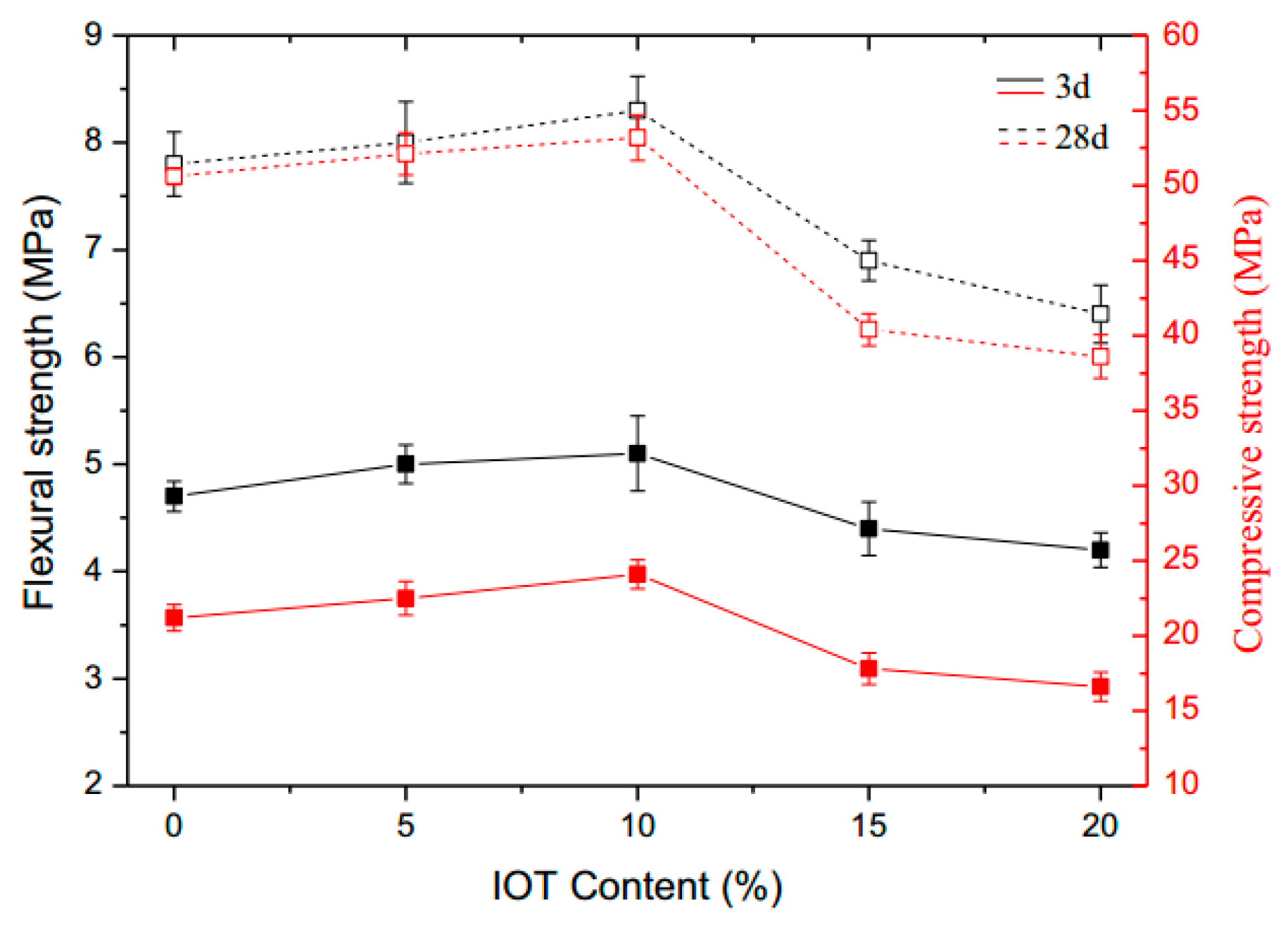
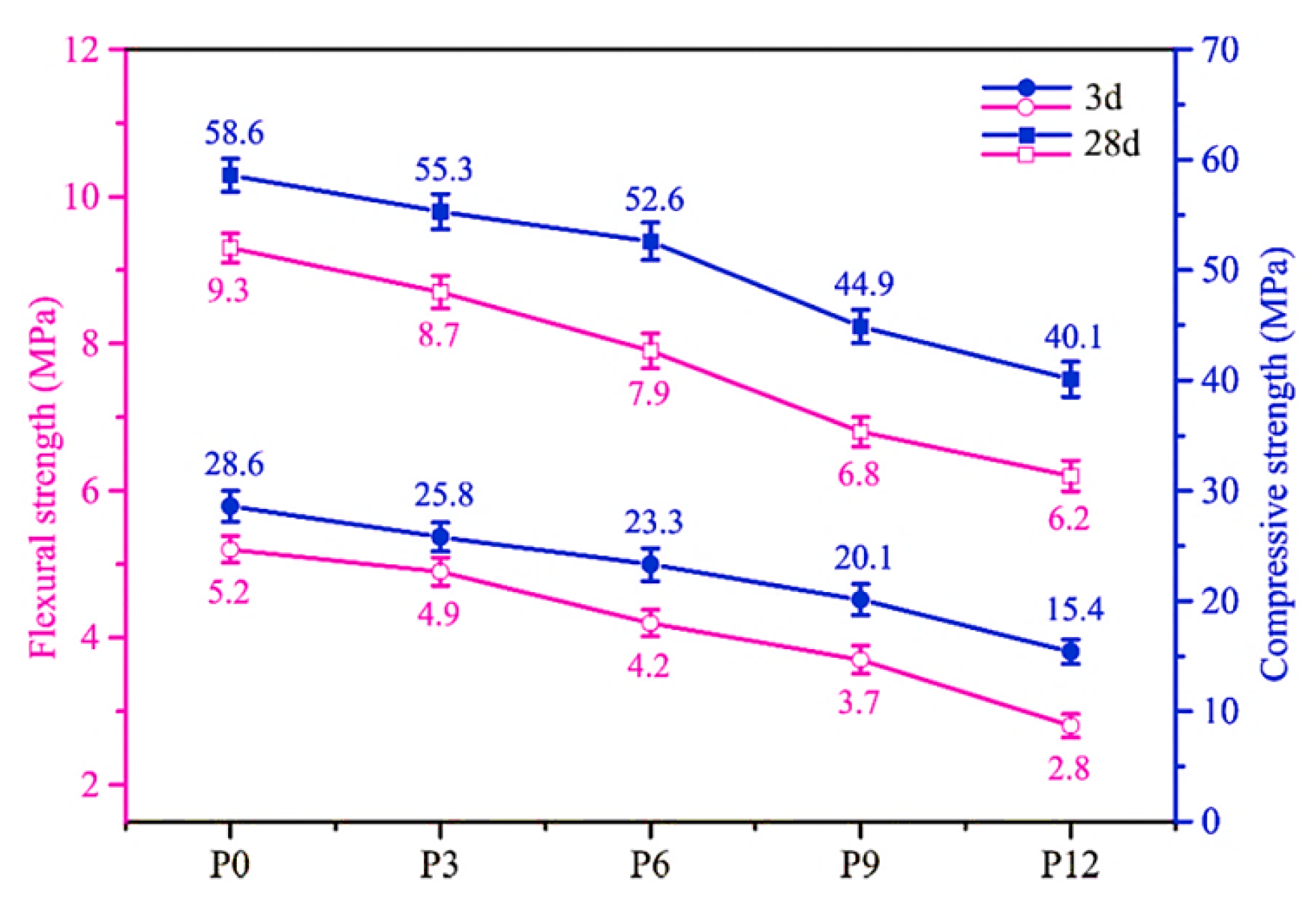



| Sample Origin and Number | Density (kg·m−3) | Specific Surface Area (m2·kg−1) | Median Particle Size (μm) | Source or Reference |
|---|---|---|---|---|
| Sijiaying | 2.815 | 96.85 | 63.82 | Experimental test |
| Hebei | 2.773 | 122 | 132 | [4] |
| India 1 | 3.67 | 735 | 12.84 | [5] |
| India 2 | / | 590 | 17.88 | [6] |
| Brazil 1 | / | / | 85 | [7] |
| Lu’an | / | / | 53.48 | [8] |
| Source of Raw Materials | Method | Feed Fe Grade (%) | Concentrate Fe Grade (%) | Recovery (%) | Key Conclusions | Ref. |
|---|---|---|---|---|---|---|
| High calcium–magnesium-type iron tailings | Pre-concentration–grinding–flocculation desliming–reverse flotation | 19.97 | 65.43 | 53.34 | Multi-stage flotation effectively upgrades low-grade tailings | [19] |
| High-silicon Anshan-type iron tailings | High-intensity magnetic separation–grinding–low-/medium-intensity magnetic separation | / | 36.41 | 69.86 | Pre-concentration followed by deep reduction yields >93% Fe powder. | [20] |
| High-calcium tin-iron tailings | Magnetizing roasting + magnetic separation | 35.53 (Fe) | 66.3 | 92.9 | Simultaneously separates Sn and Fe; suitable for complex tailings | [22] |
| Gold-bearing iron tailings | Direct reduction roasting + leaching | / | / | 94.23 (Au) | Co-recovery of Au and Fe enhances economic value. | [23] |
| Cyanidation tailings | One-step chlorination-reduction roasting | / | 92.0 | 84.9 (Fe) + 83.1 (Au) | Synergistic high-temperature chlorination and reduction achieve excellent indices. | [24] |
| Method | / | IOT (wt.%) | Raw Materials | Strength | Conclusion | Ref. |
|---|---|---|---|---|---|---|
| I. Direct substitution for cement raw materials | High-calcium–magnesium-type iron tailings | 3.1 | Cement raw meal + IOT | Better than iron powder cement | Promotes clinker formation, limited dosage | [74] |
| High-silicon Anshan-type iron tailings | ≤10 | High-Mg low-Si IOT + clay | Increased slightly | 10% upper limit; 1420 °C/1 h | [75] | |
| High-calcium tin–iron tailings | 6 | Calcareous IOT + cement raw meal | Meets 52.5 grade | Hydration: C-S-H, ettringite | [76] | |
| II. Mechanical activation | Mechanical grinding | 10–30 | Activated IOT + cement | Meets 32.5 composite | Improves reactivity, scalable | [77] |
| Mechanical activation (waste magnetite tailings) | 10–30 | MWMT + cement | Plastic viscosity decreased by 19.8%–35.8% | Low SSA improves rheology | [78] | |
| Mechanical activation (UHPC) | 10 | Activated IOT + cement | Strength > control | Secondary hydration, more C-S-H | [79] | |
| III. Chemical activation (alkali) | Alkali (NaOH + water glass) | / | IOT + metakaolin + alkali | 28 d: 72.3 MPa | Composite alkali effective | [82] |
| Alkali (NaOH only) | / | IOT + fly ash + NaOH | 28 d: ≤18.33 MPa | Single alkali low strength | [83] | |
| IV. Composite activation | Mechanical + alkali | / | Ground IOT + metakaolin + alkali | 28 d: 55.97 MPa | Composite > single | [86] |
| Mechanical + alkali + calcination | / | IOT + metakaolin + alkali | 28 d: 40 MPa | Triple activation improves activity | [87] | |
| Mechanical-chemical coupling | / | IOT + chemical activator | Dense microstructure | Mechanism: bond breakage–polymerization | [88] |
Disclaimer/Publisher’s Note: The statements, opinions and data contained in all publications are solely those of the individual author(s) and contributor(s) and not of MDPI and/or the editor(s). MDPI and/or the editor(s) disclaim responsibility for any injury to people or property resulting from any ideas, methods, instructions or products referred to in the content. |
© 2026 by the authors. Licensee MDPI, Basel, Switzerland. This article is an open access article distributed under the terms and conditions of the Creative Commons Attribution (CC BY) license.
Share and Cite
Liu, Y.; Yang, G.; Zhang, S.; Cao, D.; Zhang, G.; Li, Z.; Zhang, C. A Review on the Resource Utilization of Iron Tailings: Pathways, Challenges, and Prospects. Minerals 2026, 16, 455. https://doi.org/10.3390/min16050455
Liu Y, Yang G, Zhang S, Cao D, Zhang G, Li Z, Zhang C. A Review on the Resource Utilization of Iron Tailings: Pathways, Challenges, and Prospects. Minerals. 2026; 16(5):455. https://doi.org/10.3390/min16050455
Chicago/Turabian StyleLiu, Yiliang, Guihua Yang, Shihao Zhang, Dongwei Cao, Guangtian Zhang, Zongjie Li, and Cheng Zhang. 2026. "A Review on the Resource Utilization of Iron Tailings: Pathways, Challenges, and Prospects" Minerals 16, no. 5: 455. https://doi.org/10.3390/min16050455
APA StyleLiu, Y., Yang, G., Zhang, S., Cao, D., Zhang, G., Li, Z., & Zhang, C. (2026). A Review on the Resource Utilization of Iron Tailings: Pathways, Challenges, and Prospects. Minerals, 16(5), 455. https://doi.org/10.3390/min16050455