Article

Petrogenesis and Geological Significance of the Miocene Monzogranite Porphyry in the Chunzhe Area, Middle Gangdese Belt

1
College of Earth and Planetary Sciences, Chengdu University of Technology, Chengdu 610059, China
2
Geomathematics Key Laboratory of Sichuan Province, Chengdu University of Technology, Chengdu 610059, China
3
Chengdu Center of China Geological Survey, Chengdu 610081, China
4
College of Engineering, Xizang University, Lhasa 850000, China
5
Institute of Geological Resources and Energy in Tibetan Plateau, Xizang University, Lhasa 850000, China
*
Author to whom correspondence should be addressed.
Minerals 2026, 16(5), 454; https://doi.org/10.3390/min16050454
Submission received: 2 March 2026 / Revised: 19 April 2026 / Accepted: 20 April 2026 / Published: 27 April 2026

Abstract

The Oligocene–Miocene magmatic rocks extensively developed in the Gangdese magmatic belt are key records of the post-collisional tectono-magmatic evolution of the Tibetan Plateau. In this study, petrological, zircon U-Pb geochronological, zircon Hf isotopic and whole-rock geochemical investigations were carried out on two granitic porphyry stocks exposed in the Chunzhe area of the middle Gangdese belt. LA-ICPMS zircon U-Pb dating, cathodoluminescence (CL) images and trace element characteristics indicate that the granitic porphyries were emplaced at 11.8 ± 0.2 Ma (MSWD = 1.1) and 11.5 ± 0.1 Ma (MSWD = 1.2), with a small number of zircon grains yielding 206Pb/238U ages of 51.1~59.5 Ma, 29.8 Ma and 19.4~12.2 Ma, which are interpreted as inherited or captured zircon components. The analyzed samples are monzogranite porphyries composed mainly of quartz, plagioclase and alkali feldspar, with variable secondary white mica/sericite. In whole-rock composition, they display high-K calc-alkaline and weakly peraluminous characteristics. These rocks are enriched in large-ion lithophile elements (LILEs) such as Ba, Sr and Rb, and relatively depleted in Nb-Ta-Ti as well as Cr and Ni. They show light rare earth element (LREE) enrichment and heavy rare earth element (HREE) depletion, with distinctly high chondrite-normalized La/Yb ratios (31.05~71.25) and Sr/Y ratios (35.90~49.07), and a positive correlation between the LREE/HREE ratio and La content, indicating robust adakite-like trace element characteristics. Zircon εHf(t) values of the Miocene magmatic rocks range from −4.44 to 2.41, corresponding to two-stage Hf model ages of 1380~944 Ma, suggesting that the magmas were mainly derived from juvenile continental crust materials with the addition of a small amount of ancient continental crust materials. Combined with the regional geological setting, the Chunzhe Miocene granitic porphyries were most likely generated by partial melting of the thickened lower crust in the Gangdese belt during the late stage of Oligocene–Miocene post-collisional magmatism; local lower-crustal delamination may also have contributed, although this is not uniquely constrained by the present dataset.

1. Introduction

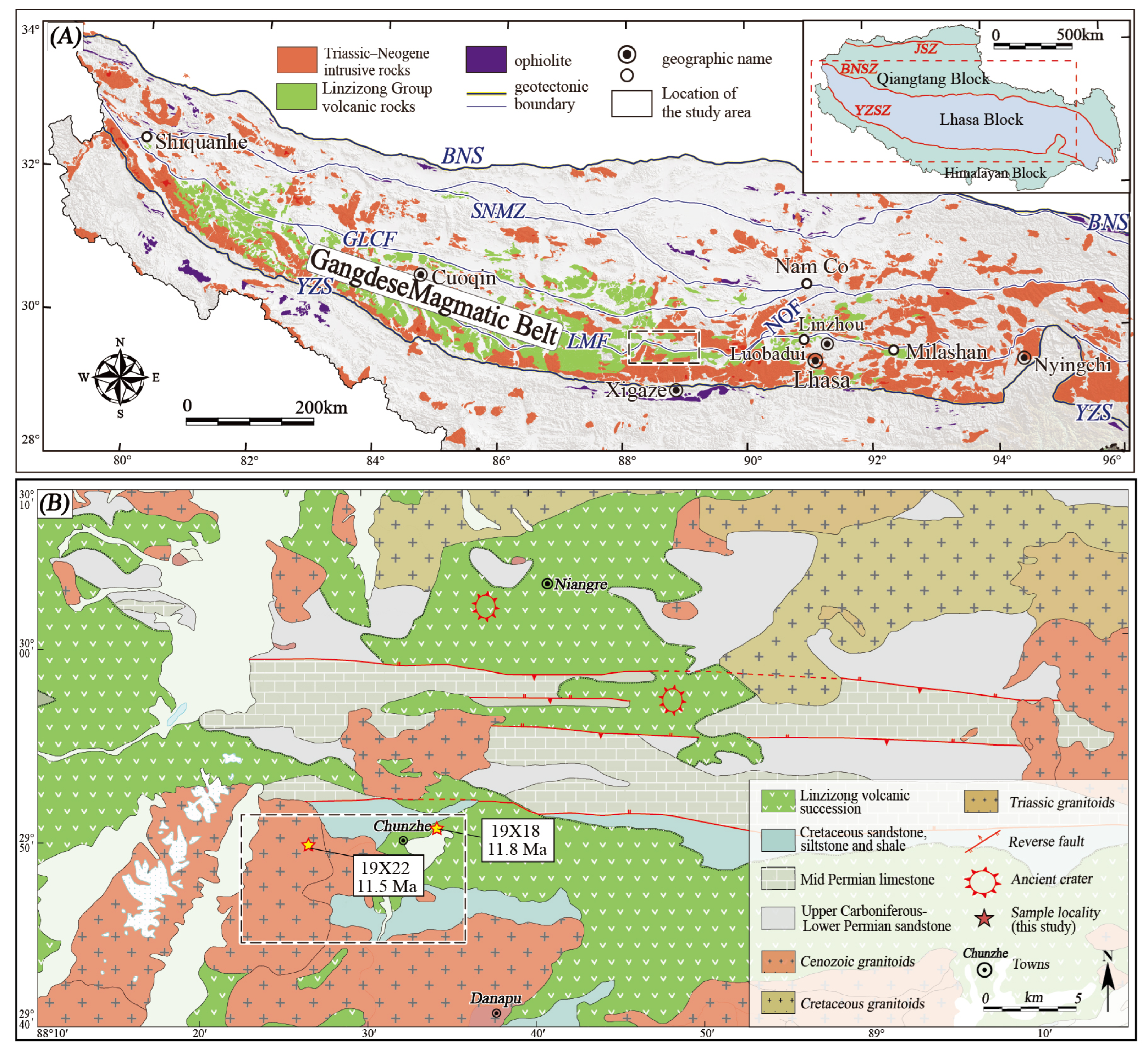
The Tibetan Plateau was formed by the subduction and evolution of multiple ocean basins and the amalgamation of numerous accreted terranes from the Paleozoic to the Cenozoic, and ultimately experienced the closure of the Yarlung Zangbo Tethys Ocean and the India–Asia continent–continent collisional orogeny during the Cenozoic [1,2]. Owing to this distinctive evolutionary history, the Tibetan Plateau is primarily composed of a series of nearly-E-W-trending terranes, separated by ophiolitic mélange belts or regional fault zones [2,3,4]. Among these, the Lhasa Block, located at the southern margin of the Tibetan Plateau and bounded by the Bangong–Nujiang Suture Zone to the north and the Yarlung Zangbo Suture Zone to the south, preserves abundant records of the final formation of the Tibetan Plateau [5]. Generally, the Lhasa Block is further divided into three subunits, namely the Northern, Central and Southern Lhasa Blocks, by the Shiquanhe–Nam Co-Ophiolite Belt and the Luobadui–Milashan Fault Zone [5]. A large number of Mesozoic–Cenozoic intrusions are distributed in the Southern Lhasa Block and the southern part of the Central Lhasa Block; this lithologic unit is commonly referred to as the Gangdese Batholith (Figure 1A), and in some studies, it is also termed the Gangdese magmatic belt (in the narrow sense) together with the contemporaneous volcano-sedimentary sequences [6,7]. The Gangdese magmatic belt is a product of the northward subduction of the Yarlung Zangbo Tethys Ocean and the India–Asia collisional orogeny, serving as an ideal target for studying subduction–collisional orogeny and its magmatic products.
The Gangdese magmatic belt has undergone multiple cycles of tectono-magmatic evolution, and its internal magmatism can be divided into four major episodes: the Late Triassic–Jurassic (ca. 205~152 Ma), Cretaceous (ca. 110~80 Ma), Paleocene–Eocene (ca. 65~40 Ma), and Oligocene–Miocene (33~10 Ma) [3,8,9]. The products of Mesozoic–Eocene magmatism include numerous calc-alkaline intrusions and extrusive rock sequences such as the Sangri Group and Linzizong Group, which form the main body of the Gangdese magmatic belt, whereas the Oligocene–Miocene magmatic rocks are dominated by potassic–ultrapotassic and adakitic series [10,11]. Oligocene–Miocene intrusive rocks, occurring mainly as dikes, sills and stocks, are widely distributed in the central and southern parts of the Lhasa Block and extend over 1500 km in the E-W direction [12,13,14,15]. According to previous statistics, both adakitic and potassic–ultrapotassic rocks have been reported west of 89° E, while records of ultrapotassic magmatic rocks are relatively scarce in the eastern segment of the Gangdese magmatic belt [16]. In the Xietongmen–Namling area north of Xigaze within the middle segment of the Gangdese magmatic belt, a large number of Miocene magmatic rocks are exposed, which intrude into the Mesozoic–Eocene magmatic rocks or pre-existing volcano-sedimentary sequences mostly in the forms of stocks, apophyses or veins, with the main lithologies including monzogranite, monzogranite porphyry and two-mica granite. Previous studies have shown that their emplacement ages are concentrated at 18~13 Ma [14,17,18]. Current research on the Miocene intrusive rocks in the Xietongmen–Namling area has focused on the central and southern parts of the Gangdese magmatic belt, while studies on the northern part of the belt adjacent to the Luobadui–Milashan Fault Zone remain relatively insufficient.
This study focuses on the Miocene felsic porphyry stocks in the Chunzhe area, located approximately 75 km north-northwest of Xigaze in the middle Gangdese belt. We combine field observations, petrography, zircon U-Pb geochronology, zircon trace elements, zircon Hf isotopes, and whole-rock geochemistry to constrain the emplacement age and petrogenesis of the sampled intrusions. Because the present dataset is limited, our conclusions are restricted to the sampled Chunzhe intrusions, and broader regional implications are discussed cautiously.

2. Geological Setting, Sampling and Petrography

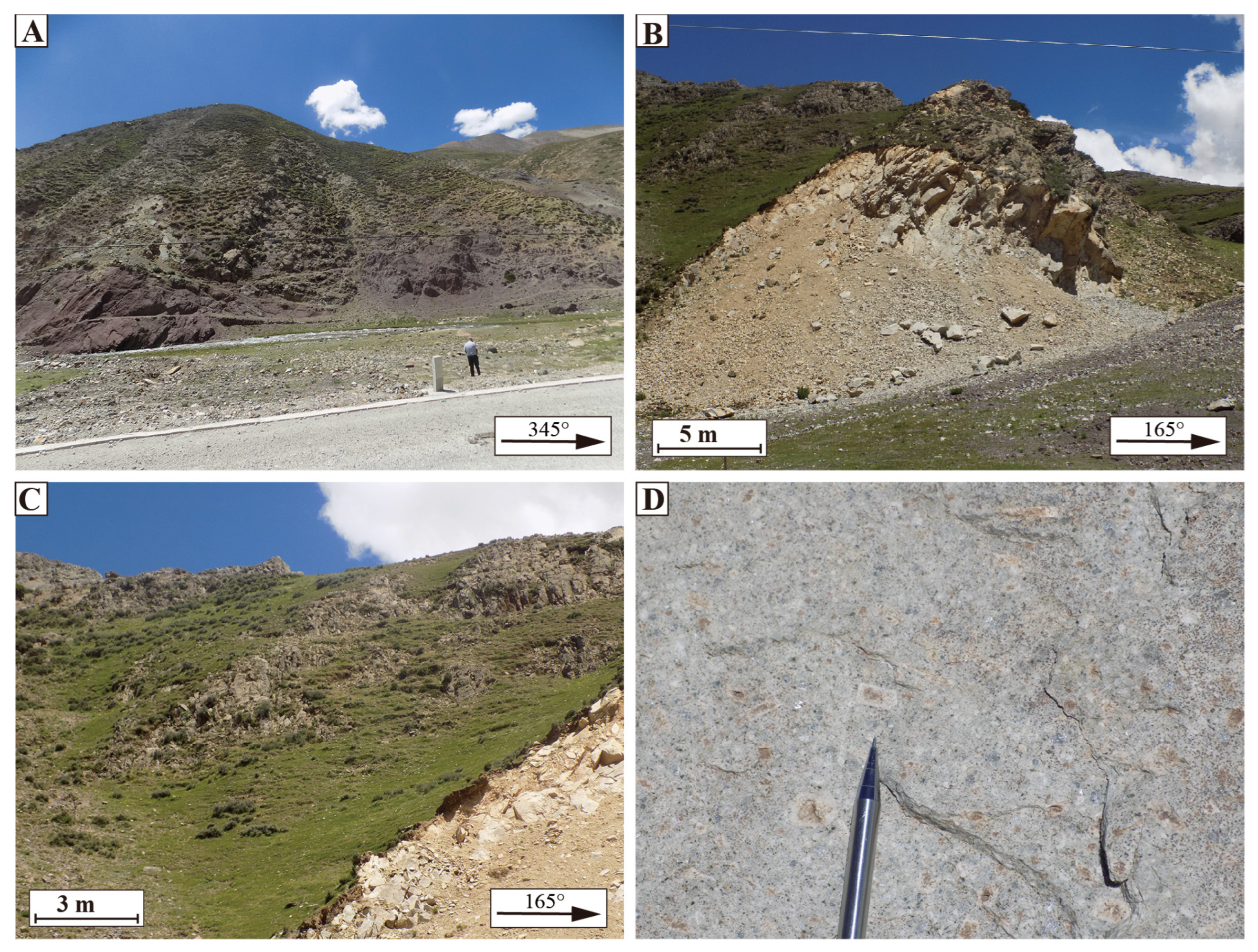
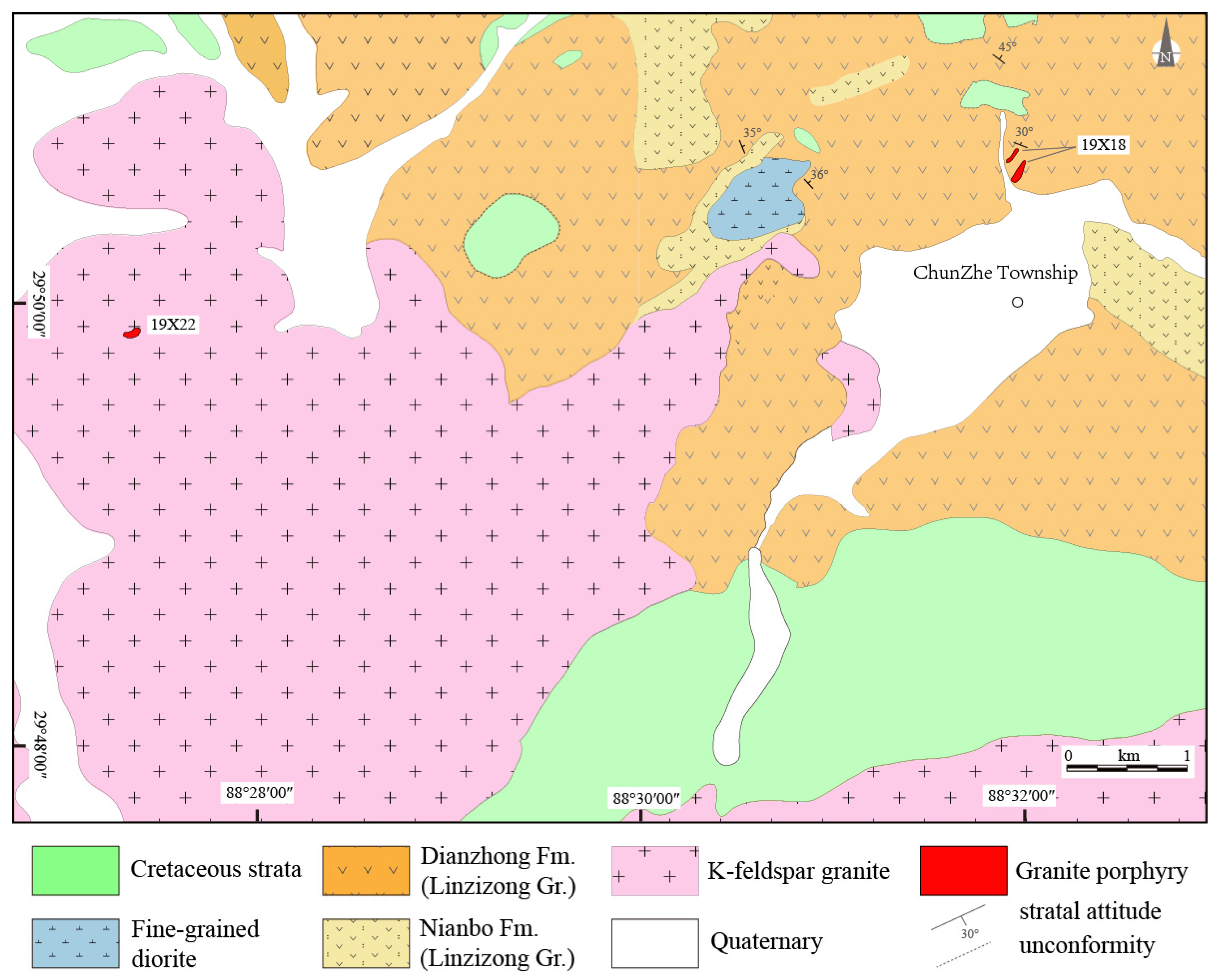
The study area of this paper is located approximately 75 km north-northwest of Xigaze City and 2 km due north of Chunzhe Township. Tectonically, it lies in the northern part of the Gangdese magmatic belt, bordering the Luobadui–Milashan Fault Zone to the north—a key tectonic boundary separating the Southern and Central Lhasa Blocks (Figure 1A). Based on the 1:50,000 regional geological survey and geological mapping data from the author’s research group, the Luobadui–Milashan Fault Zone is characterized as a thrust–fold belt extending over 200 km in the east–west direction with a north–south width of up to 12 km in this area. Intensely folded neritic sedimentary rocks of the Lower Permian Angjie Formation (P1a) and Xiala Formation (P1x) are exposed within the fault zone, whereas the sedimentary strata exposed to the south of the fault zone are mainly littoral sedimentary rocks of the Lower Cretaceous Chumulong Formation (K1ch), Takena Formation (K1t) and Upper Cretaceous Shexing Formation (K1sh) (Figure 1B). The most extensively exposed lithologic unit in the study area is the Cenozoic volcanic rocks of the Linzizong Group, which mostly unconformably overlie the older sedimentary stratigraphic units and some intrusive rocks [19]. Several volcanic cycles and rhythms can also be identified within the Linzizong Group volcanic rocks, with multiple eruptive unconformable contacts present. Regional geological survey data have divided the Linzizong Group into the Dianzhong Formation, Nianbo Formation and Pana Formation in the study area. Among them, the Dianzhong Formation is the most widely distributed and was further divided into three members in the regional geological survey; the Nianbo Formation has a relatively limited distribution and exhibits an eruptive unconformity with the Dianzhong Formation in some localities; and the Pana Formation is also restricted in distribution and is exposed only in the northern part of the study area [19]. The intrusive rocks in the study area are relatively simple in type, including Paleocene–Eocene syenogranite and fine-grained diorite stocks/batholiths, as well as Miocene monzogranitic rocks. West of Chunzhe, large-scale Oligocene–Miocene intrusions are exposed, with the lithology of medium–coarse-grained porphyroid biotite quartz monzonite. In contrast, the Miocene intrusive rocks exposed near Chunzhe Township are dominated by small-scale felsic stocks and veins [19] (Figure 2). The regional geological framework of the study area is shown in Figure 1B, whereas the detailed occurrence, intrusive contacts, and sample locations of the studied Chunzhe intrusion are shown in Figure 3.
Figure 1. (A) Tectonic location of the study region, modified from [4]. Abbreviations for major tectonic boundaries: BNSZ, Bangonghu–Nujiang Suture Zone; GLCF, Gar–Lunggar–Cuomai Fault; LMF, Luobadui–Milashan Fault; NQF, Nyainqentanglha Fault; SNMZ, Shiquanhe–Nam Tso mélange zone; YZSZ, Yarlung Zangbo Suture Zone. (B) Regional geological map of the Chunzhe area, compiled from the 1:50,000 and 1:250,000 geological maps together with our field mapping, showing the regional geological framework.
Minerals 16 00454 g001
Figure 2. Outcrop and hand specimen photographs of the Chunzhe monzogranite porphyry. (A) Contact between Linzizong Group country rocks and the Chunzhe monzogranite porphyry. (B) Monzogranite porphyry intruding Linzizong Group volcanic rocks. (C) Contact zone between the monzogranite porphyry and Linzizong Group volcanic rocks. (D) Hand specimen of the Chunzhe monzogranite porphyry.
Minerals 16 00454 g002
Figure 3. Detailed geological map of the sampling area, showing lithologic boundaries, intrusive contacts, and sample locations of the studied Miocene felsic stocks.
Minerals 16 00454 g003

3. Analytical Methods

3.1. Zircon U-Pb-Lu-Hf Isotopic and Trace Element Analyses

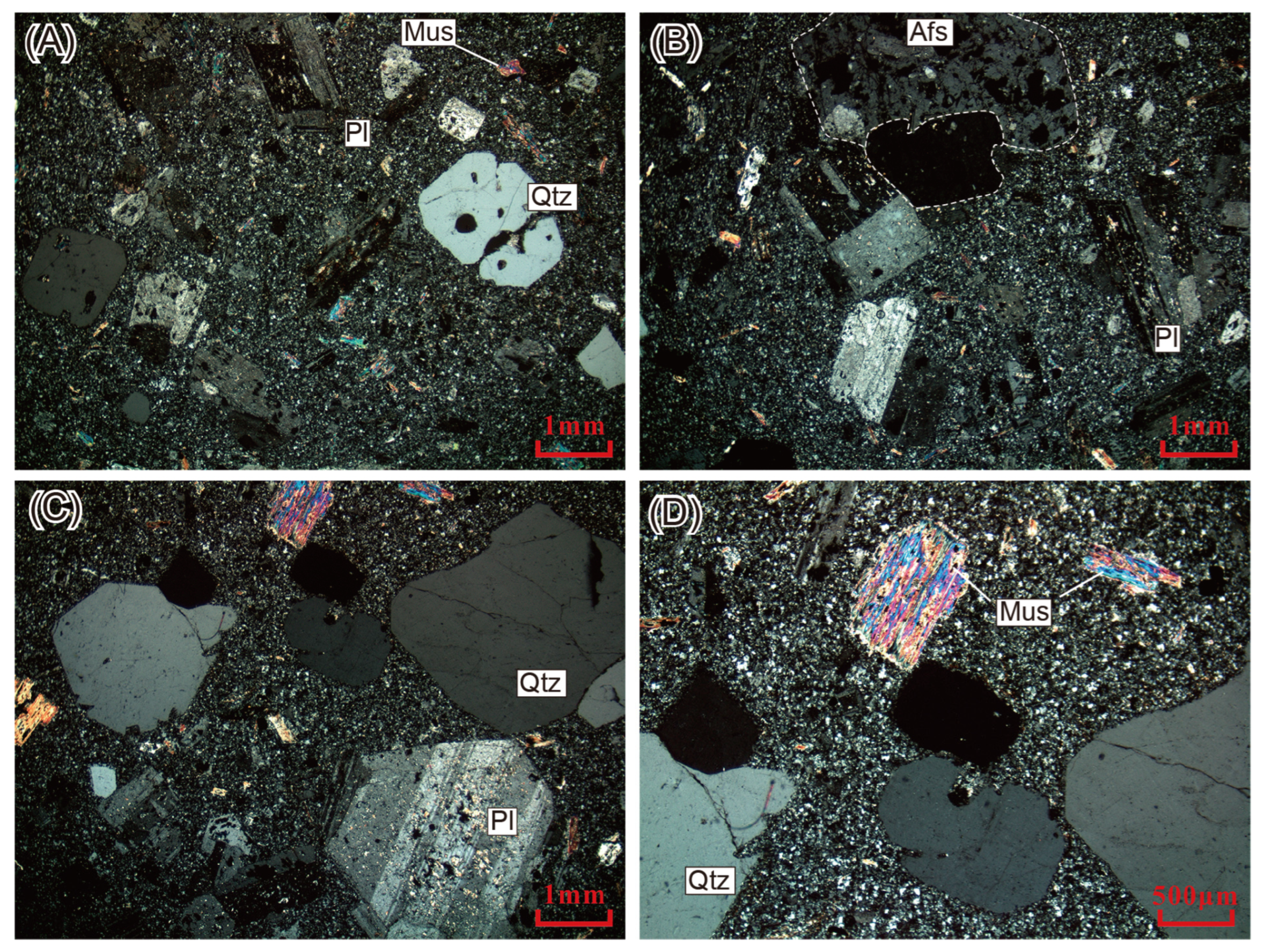
Six hand specimens with limited surface weathering were collected in this study. Petrographic observations reveal variable post-magmatic alteration; therefore, whole-rock geochemical interpretations are made with appropriate caution (Table 1; Figure 4). After preparing thin sections and conducting petrographic analysis, two of these samples were selected for zircon separation, followed by zircon U-Pb-Lu-Hf isotopic and trace element analyses. The surface layers of the samples were first cut off, and the samples were crushed and then subjected to gravity and magnetic separation as the next step. Subsequently, zircon grains with a well-formed crystal morphology, high transparency and few inclusions or fractures were handpicked under a binocular microscope and mounted on sample mounts manually. The mounts were then impregnated with a heated mixture of epoxy resin and triethanolamine and heated to solidify into zircon sample mounts. Thereafter, the zircon mounts were polished to expose the internal domains of the zircon grains, and cathodoluminescence (CL) images were acquired using a high-resolution CL detector attached to a scanning electron microscope (SEM) to characterize the internal structures of the zircons. Finally, analytical domains were selected for subsequent analyses by comprehensively considering transmitted-light, reflected-light, and CL images, so as to avoid cracks, obvious inclusions, and disturbed internal domains as far as possible.
Zircon U-Pb dating and trace element analysis were performed using an Agilent 7900 inductively coupled plasma mass spectrometer (ICP-MS) coupled with a Newwave 193 nm laser ablation (LA) system at the Analysis and Testing Center, Tianjin Center, China Geological Survey. Helium was employed as the carrier gas for the ablated material during the sample analysis. The laser ablation spot diameter was typically set at 32 μm, with a 24 μm spot used for smaller zircon grains, and the ablation frequency was 5 Hz. The zircon standard 91500 [20] was utilized as the external standard for calibration, while the Plešovice [21] and Tanz zircon standards served as internal standards for analytical quality monitoring. The experimental U-Pb data were processed with ICPMSDataCal 11.0 [22], and the data plotting and regression were conducted using the Isoplot 4.11 plug-in.
Zircon Lu-Hf isotopic analyses were carried out using a laser ablation multi-collector inductively coupled plasma mass spectrometry (LA-MC-ICPMS) system, comprising a Neptune multi-collector inductively coupled plasma mass spectrometer (MC-ICPMS) and a Newwave 193 nm laser ablation system, at the Analysis and Testing Center, Tianjin Center, China Geological Survey. The zircon standard 91500 was employed as the reference material during the sample analysis. The adopted analytical methods and the selection of key parameters including decay constants are essentially consistent with those described in [23].

3.2. Whole-Rock Major and Trace Element Analyses

Whole-rock major and trace element analyses were conducted on all six rock samples collected in this study. The surface layers of the samples were first cut off, and the samples were then crushed to a particle size of less than 200 mesh. The crushed sample powders were predried at 105 °C for 2–4 h, subsequently cooled slowly to room temperature in a desiccator, and then ignited in a muffle furnace to determine the loss on ignition (LOI) using the gravimetric method. Both major and trace element analyses were performed at Nanjing Hongchuang Geological Exploration Technology Service Co., Ltd., Nanjing, China. For major element analysis, a weighed amount of the predried sample powder was mixed and fused with anhydrous lithium metaborate as the flux, and the fused mixture was cast into molds to form homogeneous glass beads. The glass beads were then dissolved by heating in 5% aqua regia at 80 °C; after standing, the mass fractions of major element oxides were analyzed using a HORIBA ULTIMA 2C inductively coupled plasma optical emission spectrometer (ICP-OES), with the relative error of the test results being less than 3%. For trace element analysis, a combined approach of acid digestion and lithium borate fusion was adopted. The sample solutions after constant volume metering were analyzed using an Agilent 7900 ICP-MS via a liquid introduction system, with basalt reference materials, BCR-2 and BHVO-2, and andesite reference material, AGV-2, used as quality control standards.

4. Analysis of Results

4.1. Zircon U-Pb Dating, Trace Element and Lu-Hf Isotopic Analytical Results
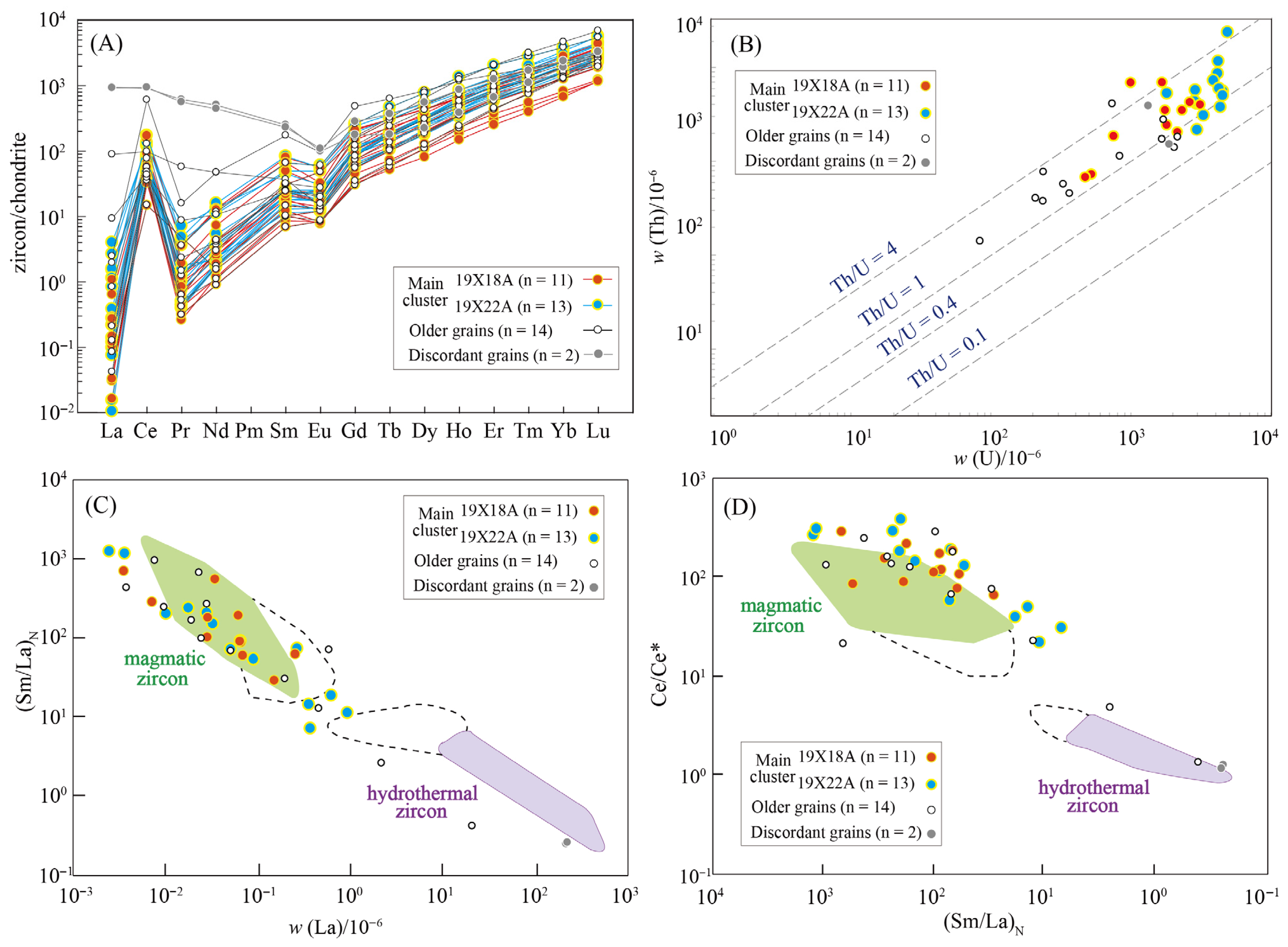
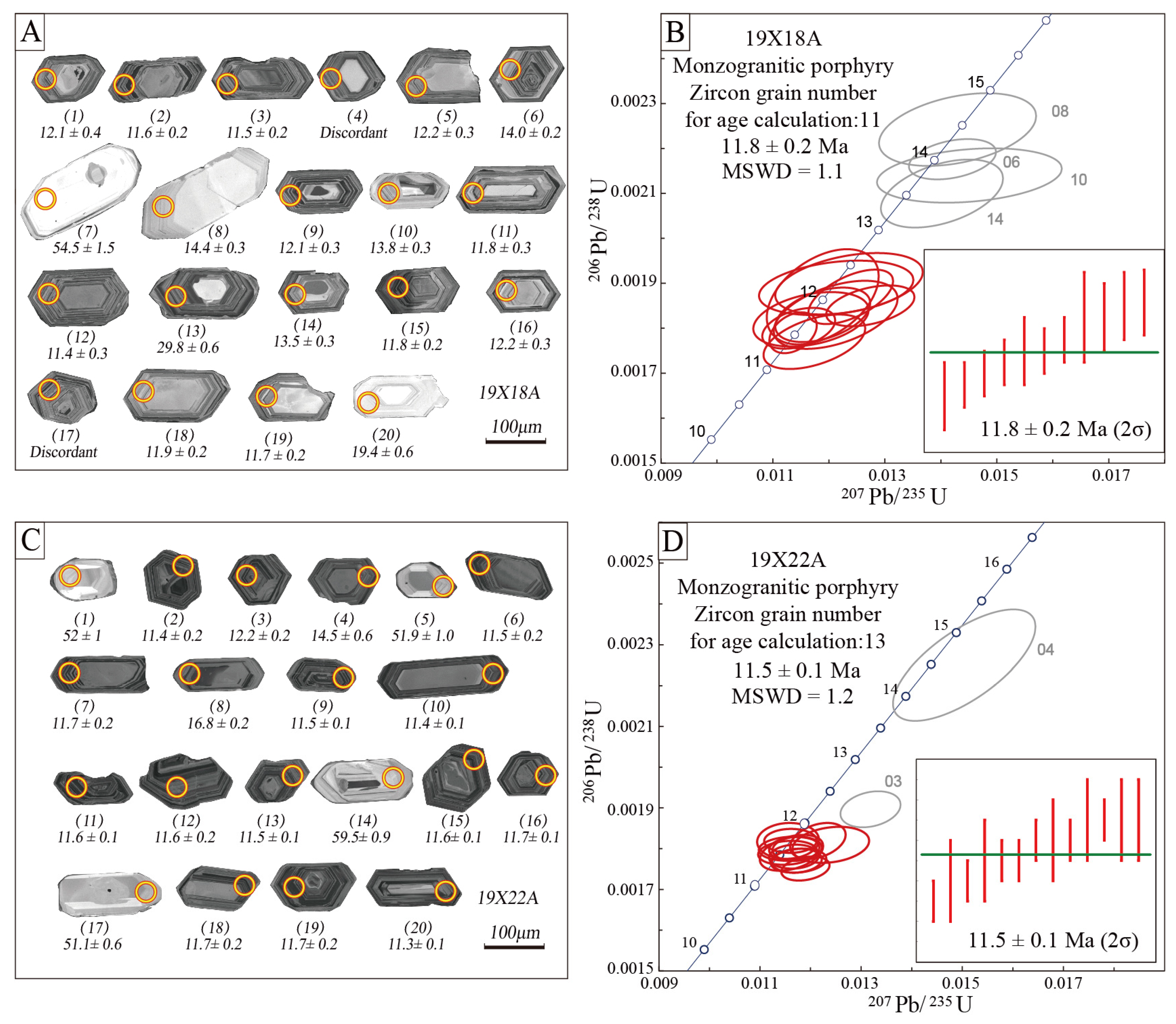
In this study, LA-ICPMS zircon U-Pb dating and trace element analysis were conducted on zircons separated from two samples (19X18A and 19X22A), whereas LA-MC-ICPMS zircon Lu-Hf isotopic analysis was carried out on representative Miocene zircons from sample 19X18A. The results of zircon U-Pb, trace element, and Lu-Hf isotopic analyses are presented in Supplementary Tables S1, S2, and S3, respectively. The zircon U-Pb concordia diagrams and weighted mean age results are shown in Figure 5B,D, and the zircon cathodoluminescence (CL) images are displayed in Figure 5A,C. The chondrite-normalized trace element diagrams and genetic discrimination plots of zircons are presented in Figure 6, while the zircon Ti-in-zircon thermometry results and Hf isotopic data are shown in Figure 7.
Twenty zircon grains separated from sample 19X18A exhibit intact crystal morphologies, most of which are short prismatic with length–width ratios ranging from 1.1 to 2.6; the majority appear transparent and colorless to pale pink under transmitted light. Most zircon grains show dark-gray CL images with distinct centripetal oscillatory zoning, and some grains (Nos. 9, 10, 13) display a core–mantle texture. A few other grains (Nos. 7, 8, 20) are pale in CL images but still exhibit faint oscillatory zoning. Among the 20 sets of zircon U-Pb analytical data, grains No. 4 and No. 17 yield extremely low concordance values; their trace element analyses reveal significantly elevated contents of rare earth elements (REEs), particularly light rare earth elements (LREEs) (La: 215.5 × 10⁻⁶~222.5 × 10⁻⁶), as well as markedly low (Sm/La)CN and Ce/Ce* ratios. These grains are comprehensively judged to have undergone post-magmatic alteration, with their isotopic systems no longer remaining closed, and thus their analytical results are geologically insignificant. The remaining 18 zircon grains yield concordance values higher than 90%, and their trace element data show high Th/U ratios (0.24~2.19, with an average of 0.63), high (Sm/La)CN ratios (12.88~946.84), high Ce/Ce* ratios (22.52~285.26), and low La contents (0.004 × 10⁻⁶~0.457 × 10⁻⁶), which are characteristic of magmatic zircons. Combined with their CL textural features, these zircon grains are interpreted as being magmatic in origin, and their isotopic systems have remained closed since crystallization [24,25]. The apparent ages of these magmatic zircons with closed isotopic systems can be divided into two categories. The older grains include seven zircon grains (Nos. 6, 7, 8, 10, 13, 14, and 20), with 206Pb/238U ages ranging from 54.4 Ma to 13.5 Ma. Among them, grain No. 7 yields an age of 54.4 ± 1.5 Ma, grain No. 13 yields an age of 29.8 ± 0.6 Ma, and grain No. 20 yields an age of 19.4 ± 0.6 Ma, whereas grains Nos. 6, 8, 10, and 14 yield relatively older Miocene ages of 14.4~13.5 Ma. The main age cluster consists of eleven zircon grains (Nos. 1, 2, 3, 5, 9, 11, 12, 15, 16, 18, and 19), with 206Pb/238U ages clustered at 12.2~11.4 Ma, yielding a weighted mean age of 11.8 ± 0.2 Ma (MSWD = 1.1).
Twenty zircon grains separated from sample 19X22A are mostly granular or prismatic, with long axes of approximately 100~220 μm and length–width ratios of 1~2.2. The CL images of most zircon grains show dark gray hues with centripetal oscillatory zoning, while a few grains (Nos. 1, 5, 14, 17) exhibit pale CL colors but still have discernible faint oscillatory zoning. All 20 sets of zircon U-Pb analytical data yield concordance values higher than 90%. Trace element analyses reveal high Th/U ratios (0.26~3.96, with an average of 1.8), high chondrite-normalized (Sm/La) ratios (0.4~1232.6), high Ce/Ce* ratios (1.34~381.17) and low La contents (0.002 × 10⁻⁶~20 × 10−6) for these zircons, which are typical characteristics of magmatic zircons. Combined with their CL textural features, these zircon grains are interpreted as being magmatic in origin, and their isotopic systems have remained closed since crystallization [24,25]. The apparent ages of these magmatic zircons can be divided into two categories. The older grains include seven zircon grains (Nos. 1, 3, 4, 5, 8, 14, and 17), with 206Pb/238U ages ranging from 59.5 Ma to 12.2 Ma. Among them, grains Nos. 1, 5, 14, and 17 yield Paleocene–Eocene ages of 59.5~51.1 Ma, grain No. 8 yields an age of 16.8 ± 0.2 Ma, and grains Nos. 3 and 4 yield relatively older Miocene ages of 12.2 ± 0.2 Ma and 14.5 ± 0.6 Ma, respectively. The main age cluster consists of thirteen zircon grains (Nos. 2, 6, 7, 9, 10, 11, 12, 13, 15, 16, 18, 19, and 20), with 206Pb/238U ages clustered at 11.3~11.7 Ma, yielding a weighted mean age of 11.5 ± 0.1 Ma (MSWD = 1.2).
Considering the zircon U-Pb ages, CL textures, and zircon trace element characteristics of samples 19X18A and 19X22A together, we interpret only zircon grains showing clear oscillatory zoning and magmatic geochemical signatures as suitable for constraining the emplacement ages of the intrusion. Zircon grains showing anomalous trace element compositions, probable internal heterogeneity, or disturbed isotopic behavior are regarded as alteration-affected and are excluded from age interpretation (Supplementary Table S1). On this basis, the weighted mean ages of 11.8 ± 0.2 Ma and 11.5 ± 0.1 Ma are interpreted as the emplacement ages of the Chunzhe monzogranite porphyry [24,25]. In this study, the analyzed zircon grains are therefore treated as three categories: (1) the main magmatic zircon population that defines the Miocene emplacement age, including 11 grains from sample 19X18A and 13 grains from sample 19X22A; (2) older zircon grains interpreted as inherited or captured components; (3) two discordant, alteration-affected grains recognized by their disturbed isotopic behavior and anomalous trace element signatures.
Figure 6. Zircon trace element diagrams of the Chunzhe monzogranite porphyry. (A) Chondrite-normalized zircon REE patterns; chondrite normalization values are from [26]. (B) Zircon Th/U ratios. (C) Zircon (Sm/La)_N versus La diagram. (D) Zircon Ce/Ce* versus (Sm/La)_N diagram. The symbols distinguish the main age clusters of samples 19X18A and 19X22A, older zircon grains, and discordant grains. In sample 19X18A, the two discordant grains discussed in the text correspond to Nos. 4 and 17. The discrimination diagrams are after [25].
Minerals 16 00454 g006
The rare earth element (REE) and trace element characteristics of zircons from sample 19X18A are clearly divided into two groups. Group 1 comprises two zircon grains (Nos. 4 and 17) that yielded discordant U-Pb analytical results. Zircons in this group exhibit remarkably high total REE contents (1759 × 10−6~2063 × 10−6) and significant light rare earth element (LREE) enrichment (La: 215.5 × 10⁻⁶~222.5 × 10⁻⁶; (Sm/La)CN: 0.25~0.26), with almost no relative Ce enrichment (Ce/Ce*: 1.16~1.27) and moderate negative Eu anomalies (δEu: 0.43~0.47). Their chondrite-normalized REE distribution patterns are close to the “seagull-type”. Group 2 includes the remaining zircons that yielded concordant U-Pb analytical results, with lower total REE contents than Group 1 (264 × 10−6~1058 × 10−6) and distinctly low LREE contents (La: 0.004 × 10⁻⁶~0.457 × 10⁻⁶; (Sm/La)CN: 12.88~945.84). These zircons show obvious relative Ce enrichment (Ce/Ce*: 22.52~285.26) and moderate to strong negative Eu anomalies (δEu: 0.26~0.70). The Th/U ratios of zircons in Group 2 vary widely (0.24~2.19) but have a relatively high average value (0.63). The Ti contents of Group 2 zircons are moderate (2.16 × 10⁻⁶~8.25 × 10⁻⁶, with an average of 4.20 × 10⁻⁶), corresponding to calculated zircon Ti-in-zircon temperatures of 622~724 °C (average 665 °C), which is slightly higher than the average Ti-in-zircon temperature of zircons from intermediate–felsic rocks reported in previous statistical data (653 °C). In general, the characteristics of Group 1 zircons are similar to those of fluid-altered zircons, while Group 2 zircons are analogous to magmatic zircons [24,25].
The rare earth element (REE) and trace element characteristics of zircons from sample 19X22A are highly similar to those of Group 2 zircons from sample 19X18A, with relatively low total REE contents (537 × 10−6~1732 × 10−6) and low light rare earth element (LREE) contents (La: 0.002 × 10⁻⁶~20 × 10−6; (Sm/La)CN: 0.4~1232). These zircons display significant relative Ce enrichment (Ce/Ce*: 1.34~381.17) and moderate negative Eu anomalies (δEu: 0.27~0.56). The Th/U ratios of the zircons show a wide variation (0.25~3.85) but a relatively high average value (0.86). Their Ti contents are moderate (1.30 × 10⁻⁶~10.62 × 10⁻⁶, with an average of 4.04 × 10⁻⁶), with the corresponding calculated zircon Ti-in-zircon temperatures ranging from 588 to 746 °C (average 656 °C), which is slightly higher than the statistically average Ti-in-zircon temperature of zircons from intermediate–felsic rocks reported in previous studies (653 °C). It can be concluded that the zircons from sample 19X22A exhibit geochemical characteristics typical of magmatic zircons [24,25].
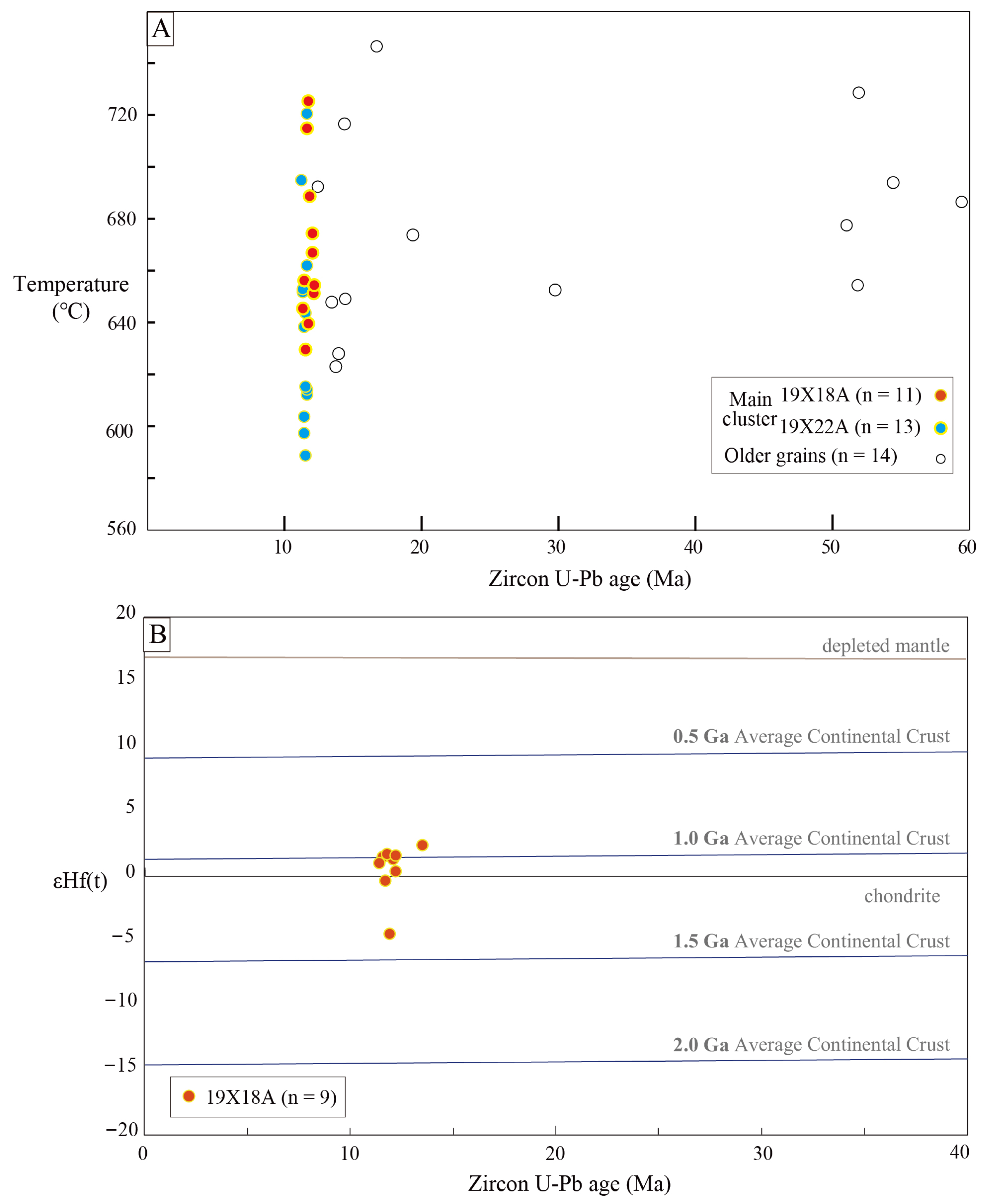
Figure 7. Ti-in-zircon temperatures and zircon εHf(t) values of the Chunzhe Miocene monzogranite porphyry. (A) Ti-in-zircon temperature versus U-Pb age plot for all concordant zircon grains, including the main age clusters and older grains; discordant grains are excluded. (B) Zircon εHf(t) versus U-Pb age plot for the zircons from sample 19X18A analyzed for Lu-Hf isotopes.
Minerals 16 00454 g007
Nine zircon grains (Nos. 2, 5, 9, 12, 14, 15, 16, 18, and 19) from sample 19X18A with 206Pb/238U ages ranging from 13.5 to 11.4 Ma were selected for zircon Lu-Hf isotopic analysis in this study. The zircon Hf isotopic data are presented in Supplementary Table S3, and the plot of εHf(t) vs. U-Pb age for zircons is displayed in Figure 7B. Among the analyzed zircon grains, eight yield εHf(t) values concentrated in the range of −0.34 to 2.41, corresponding to two-stage model ages (TDM2) of 1118 to 944 Ma. The remaining one zircon grain (No. 18) yields a significantly lower εHf(t) value of −4.44, with a corresponding two-stage model age of 1380 Ma.
Notably, the zircon grains showing fluid-affected geochemical characteristics are confined to a very small subset of grains and are excluded from the emplacement age calculation, whereas the age-defining zircon population is characterized by clear oscillatory zoning and magmatic trace element signatures. The older apparent ages in both samples further indicate the presence of inherited or captured zircon components, rather than a wholesale failure of the Miocene magmatic zircon record.

4.2. Whole-Rock Major and Trace Element Analytical Results

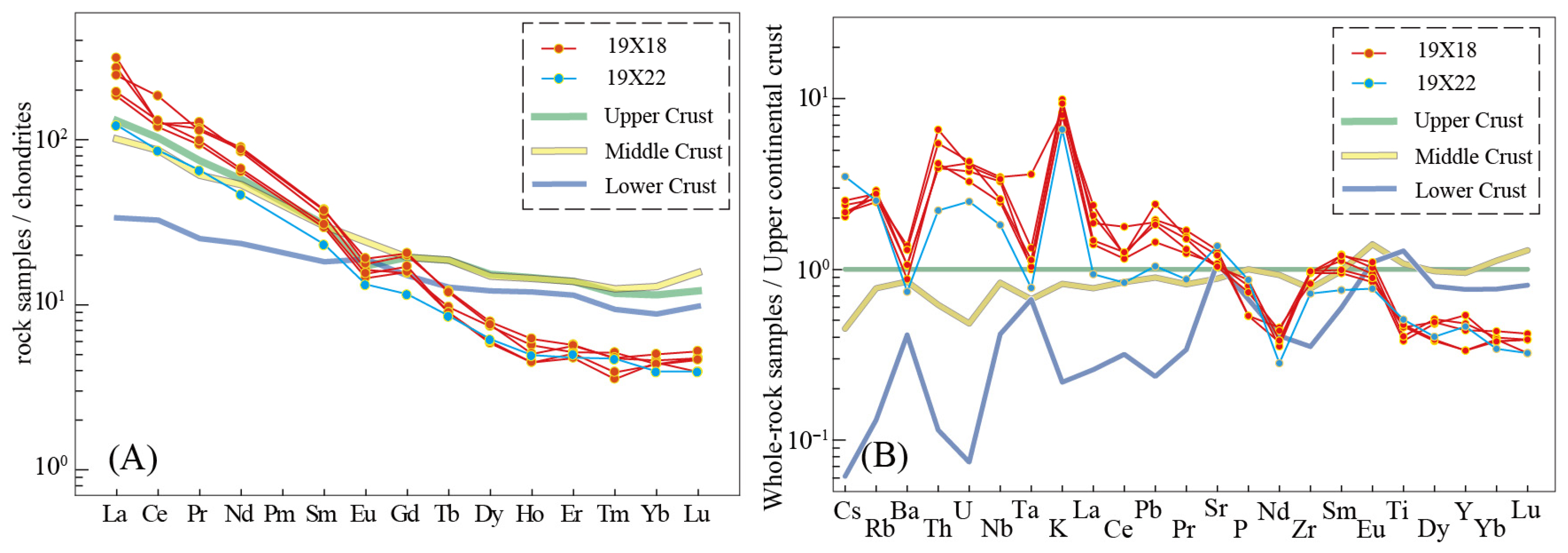
The results of the whole-rock major and trace element analyses in this study are presented in Supplementary Table S4, the lithologic and genetic discrimination diagrams are shown in Figure 8, and the chondrite-normalized rare earth element and upper continental crust-normalized trace element spider diagrams are displayed in Figure 9.
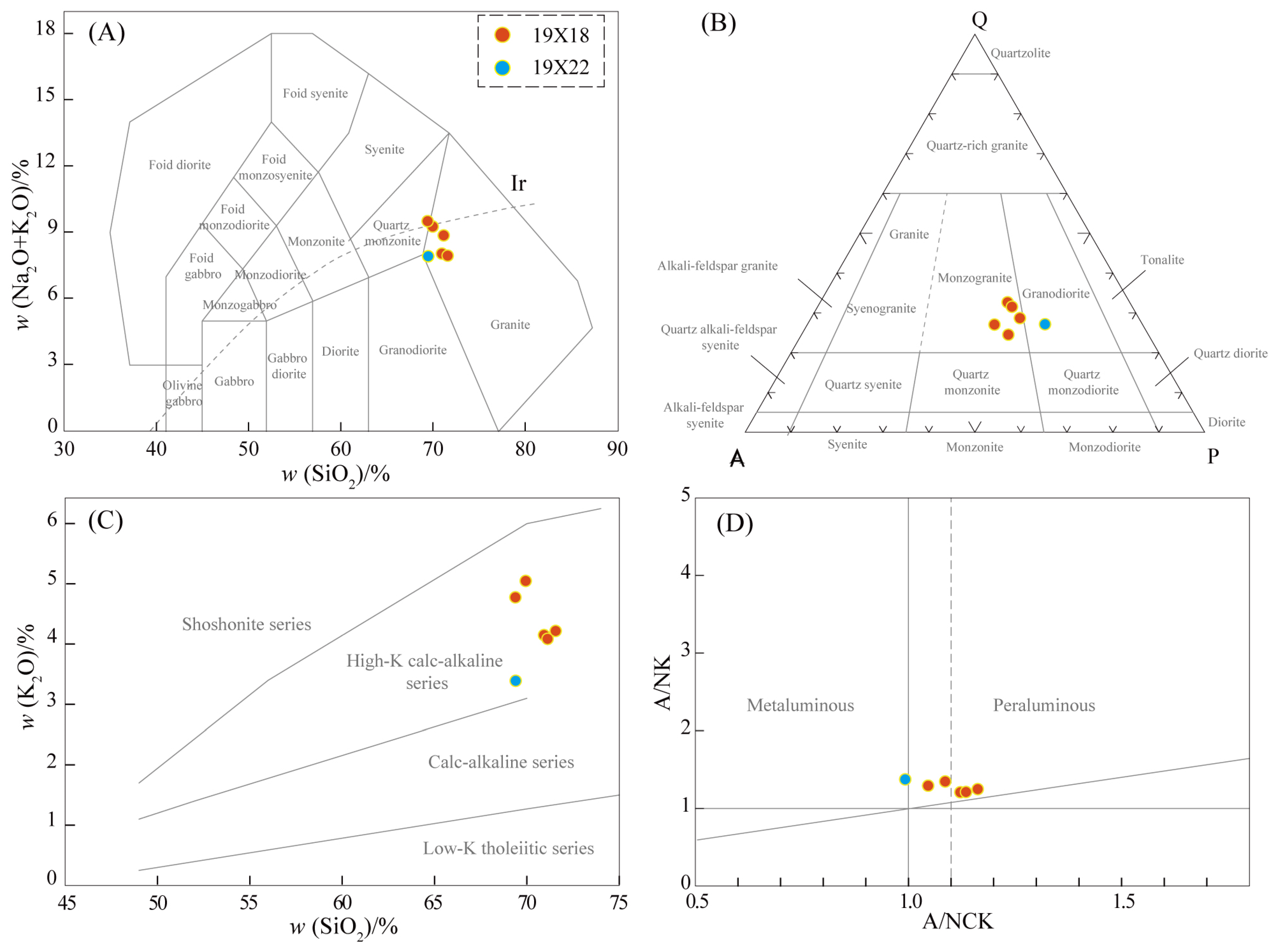
The analyzed samples have high SiO2 contents (69.41 wt%~71.59 wt%), with elevated total alkali (Na2O + K2O: 7.85 wt%~9.48 wt%) and K2O contents (3.36 wt%~5.04 wt%), classifying them into the high-K calc-alkaline series. All samples except 19X22A plot in the field from quartz monzonite to granite on the total alkali–silica (TAS) diagram, which is consistent with the nomenclature of monzogranite determined by petrographic identification and the QAP (quartz–alkali feldspar–plagioclase) diagram. The samples exhibit high Al2O3 contents (13.94 wt%~15.54 wt%), with molar A/NK [Al2O3/(Na2O + K2O)] ratios of 1.20~1.34 and molar A/NCK [Al2O3/(Na2O + K2O + CaO)] ratios of 0.99~1.16, falling into the peraluminous category. They plot at the boundary zone between the I-type and S-type granite series on the A/NK vs. A/NCK diagram. The samples have low contents of total iron oxide (FeOT: 1.58 wt%~1.83 wt%) and MgO (0.50 wt%~0.74 wt%), accompanied by low Mg numbers (Mg#: 35.62~41.93). The LOI values of the samples are relatively low (1.65–3.04 wt%), suggesting limited overall bulk-rock modification. Nevertheless, because alteration minerals are present in thin sections, major-element- and LILE-based interpretations are treated with caution. In the following discussion, greater emphasis is placed on the relatively more robust REE and HFSE systematics.
The monzogranite porphyries analyzed in this study have relatively high total rare earth element (REE) contents, ranging from 120.2 × 10⁻⁶ to 236.3 × 10⁻⁶. One of their most prominent geochemical characteristics is the pronounced fractionation between light and heavy rare earth elements (LREEs and HREEs), with chondrite-normalized La/Yb ratios ((La/Yb)CN) of 31.05 to 71.25. Coupled with their weak negative Eu anomalies (δEu: 0.65~0.81), their chondrite-normalized REE distribution patterns exhibit a typical right-dipping trend. The samples are generally enriched in large-ion lithophile elements (LILEs) such as Ba, Sr, and Rb, and show relative negative Nb-Ta-Ti anomalies on the upper continental crust-normalized trace element diagram, together with low Y and Yb contents. Although feldspar and biotite record variable post-magmatic alteration in thin section, the present study does not assume that alteration is negligible; rather, it evaluates whether that alteration is sufficiently pervasive to compromise the specific whole-rock proxies used here. On this basis, major-element- and LILE-based interpretations are treated cautiously, whereas the relatively coherent REE-HFSE framework is taken to retain greater petrogenetic significance.
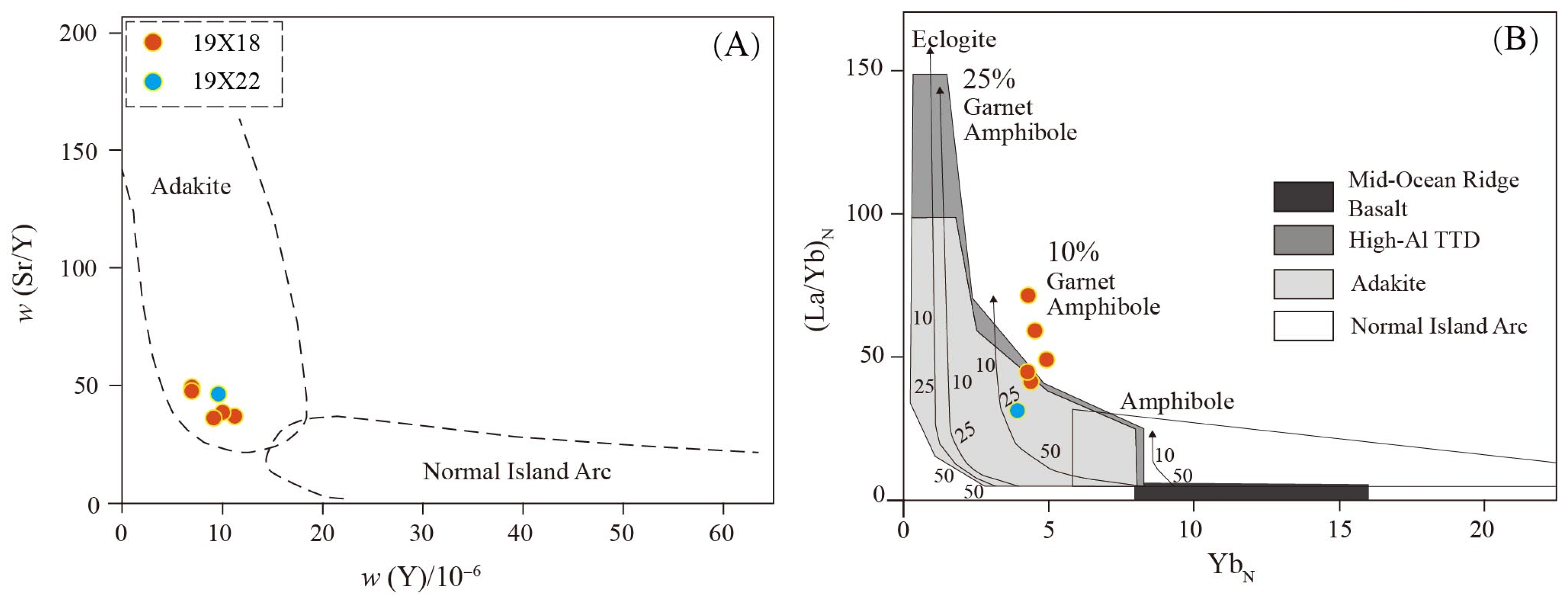
The Sr/Y ratios of the samples range from 35.90 to 49.07, with an average of 42.07. On the Sr/Y vs. Y and (La/Yb)cN vs. YbN diagrams (Figure 10), all samples plot within or close to the adakite field. Together with their low Y and Yb contents and pronounced LREE/HREE fractionation, these features indicate robust adakite-like trace element characteristics. The contents of Cr (4.00 × 10⁻⁶~19.30 × 10⁻⁶) and Ni (2.00 × 10⁻⁶~4.30 × 10⁻⁶) in the samples are generally low, though the Cr content of one sample reaches 19.30 × 10⁻⁶. The Zr contents of the samples are relatively higher than those of other adakitic rocks (159.0 × 10⁻⁶~187.8 × 10⁻⁶), corresponding to relatively high calculated zircon saturation temperatures of 789~807 °C [32].
Figure 9. Chondrite-normalized REE patterns and upper continental crust-normalized trace element diagrams of the Chunzhe monzogranitic porphyry samples. Chondrite normalization values are from [26], and continental crust reference values are from [33]. (A) Chondrite-normalized REE patterns. (B) Upper continental crust-normalized trace element diagram, with middle and lower continental crust shown for comparison.
Minerals 16 00454 g009

5. Discussion

5.1. Formation Age and Petrogenetic Mechanism of the Monzogranite Porphyry

Most zircon grains separated from the Chunzhe monzogranite porphyry show centripetal oscillatory zoning in CL images, a characteristic typical of magmatic zircons [24]. Among these, the concordant zircon grains used for age calculation also display trace element characteristics analogous to those of magmatic zircons [25]. Two discordant grains from sample 19X18A, namely Nos. 4 and 17, show alteration-affected geochemical features and are excluded from emplacement age interpretation. Therefore, the weighted mean ages of 11.8 ± 0.2 Ma (MSWD = 1.1) and 11.5 ± 0.1 Ma (MSWD = 1.2), obtained from the youngest coherent magmatic zircon populations, are interpreted as the emplacement ages of the Chunzhe intrusion.
In this study, the analyzed zircon grains are treated as three categories: (1) the main magmatic zircon population that defines the Miocene emplacement age; (2) older zircon grains interpreted as inherited or captured components; (3) a very small subset of alteration-affected grains recognized by discordant isotopic behavior and anomalous trace element signatures.
In the Xietongmen–Namling area south of the study area, numerous Miocene magmatic rocks have been reported in previous studies, with lithologies including monzogranite (porphyry), granodiorite (porphyry), quartz monzonite and others, and their emplacement ages are concentrated around 22.0~14.0 Ma [14,17,18]. Thus, the monzogranite porphyry investigated in this study formed during the late stage of Miocene magmatism in this region. The occurrence of older zircon grains with apparent 206Pb/238U ages of 59.5–51.1 Ma, 29.8 Ma, and 19.4–12.2 Ma indicates that inherited or captured zircon components related to earlier magmatic events were incorporated into the Chunzhe magma system. These grains are therefore interpreted as evidence of earlier regional magmatic activity rather than as part of the Miocene age-defining zircon population.
The Chunzhe intrusion is a high-K calc-alkaline, weakly peraluminous felsic porphyry characterized by low Mg#, low Cr and Ni contents, low Y and Yb contents, elevated Sr/Y and (La/Yb)_CN ratios, and coherent zircon Hf isotopic characteristics. Together, these features indicate a felsic crust-derived magma with robust adakite-like geochemical affinity. These geochemical features, especially the consistently low Y and Yb contents, weak Eu anomalies, and coherent trace element patterns, indicate that the REE-HFSE framework remains sufficiently coherent for cautious petrogenetic interpretation and provide the basis for the following discussion.
Among the conventional felsic granite types, the Chunzhe intrusion plots near the I-type/S-type boundary on the A/NK vs. A/NCK diagram (Figure 8D), with the exception of sample 19X22A. The samples are weakly peraluminous (A/NCK = 0.99–1.16), but they do not show the strongly peraluminous features typical of many S-type granites. In addition, they have relatively high Na2O and CaO contents, high Na/K ratios (1.26–2.03), low Rb/Ba (0.25–0.46) and Rb/Sr (0.48–0.70) ratios, and a negative correlation between SiO2 and P2O5 contents. These features are more comparable to high-silica I-type granitoids than to typical S-type granites [31]. However, because the rocks record variable post-magmatic alteration and contain secondary white mica/sericite, chlorite, and carbonate minerals, the I-type affinity is regarded as indicative rather than definitive. We therefore describe the Chunzhe intrusion more conservatively as a felsic, crust-derived monzogranitic porphyry showing geochemical similarities closer to high-silica I-type granitoids than to typical S-type granites.
M-type and A-type affinities are less consistent with the available evidence. The low Mg#, Cr, and Ni contents are inconsistent with direct derivation from mantle-derived mafic magmas, and no coeval mafic intrusive rocks have been documented in the immediate distribution area of the Chunzhe intrusion. Likewise, the absence of A-type indicator minerals and the relatively low Zr + Nb + Ce + Y and 104 × Ga/Al values do not support typical A-type affinity [34,35]. Accordingly, the following discussion focuses on the source and petrogenetic implications of this crust-derived felsic intrusion.
Another prominent characteristic of the Chunzhe monzogranite porphyry is its adakite-like geochemical affinity. The samples have high SiO2 contents (69.41–71.59 wt%), low Y (7.01 × 10⁻⁶–11.30 × 10⁻⁶) and Yb (0.67 × 10⁻⁶–0.85 × 10⁻⁶) contents, elevated Sr/Y (35.90–49.07) and (La/Yb)_CN (31.05–71.25) ratios, and plot within or close to the adakite field on the Sr/Y vs. Y and (La/Yb)_CN vs. Yb_CN diagrams (Figure 10). Together, these features indicate robust adakite-like trace element characteristics [36,37]. Accordingly, the term “adakite-like” is used here in a geochemical sense, rather than to imply strict classification as adakite sensu stricto.
Several models have been proposed for Oligocene–Miocene adakite-like rocks in the Gangdese belt, including melting of a subducted Neo-Tethyan oceanic slab [38,39], melting of the subducted Indian continental lower crust [17], high-pressure fractional crystallization of mantle-derived magmas [40,41], and partial melting of a thickened lower crust [10,42,43,44]. The following discussion evaluates these possibilities in the context of the Chunzhe intrusion.
Figure 10. Sr/Y vs. Y (A) and (La/Yb)N vs. YbN (B) discriminant diagrams of the Chunzhe Miocene monzogranite porphyry, after [36,37].
Minerals 16 00454 g010
In the genetic model of adakites, subducted young (with a protolith formation age of approximately ≤25 Ma) mafic oceanic crust undergoes partial melting under the eclogite facies, generating intermediate–felsic magmas characterized by high Sr/Y and La/Yb ratios [36]. Nevertheless, adakites formed by the melting of subducted slabs typically exhibit low K2O contents (with an average of 1.72 wt%) and relatively high MgO, Cr and Ni contents [36], which are obviously inconsistent with the geochemical features of the Chunzhe monzogranite porphyry. In addition, existing research results from sedimentary tectonics, paleomagnetism and magmatic petrology have indicated that the India–Asia continental collision most likely occurred at 60–50 Ma [3,45], and the subducted slab breakoff probably took place during the Eocene [9,46,47,48,49]. If this understanding is valid, the subduction of the Neo-Tethyan oceanic crust had already ceased by the Miocene, which thus does not support the genetic model of adakites that are derived from the melting of subducted oceanic crust.
The decoupling and subduction of the Indian continental lower crust have been corroborated by geophysical, petrological and other studies [50]. Combining the geochemical and isotopic characteristics of adakitic magmatic rocks, some scholars have proposed that the Oligocene–Miocene adakitic rocks in the Gangdese belt formed from the melting of the subducted mafic lower crust of the Indian Continent [17]. According to this model, the partial melts of the subducted continental lower crust would react with the overlying mantle wedge during their ascent, leading to an increase in the contents of compatible elements [17,51]. However, the samples analyzed in this study show significantly low contents of compatible elements such as Cr and Ni, as well as low Mg# values. Furthermore, the Indian continental crust contains a high proportion of ancient crustal-derived materials, and the melts generated therefrom are typically characterized by enriched isotopic signatures [17]. In contrast, the zircon εHf(t) values of the Chunzhe monzogranite porphyry obtained in this study are mostly positive, and the isotopic characteristics of the adakitic rocks previously reported in the Gangdese region are also distinctly different from those of the melts formed by the melting of the Indian continental lower crust. In summary, the Chunzhe monzogranite porphyry is unlikely to have formed from partial melting of the subducted Indian continental lower crust.
Petrological studies have demonstrated that fractional crystallization of mafic magmas in the garnet stability field under relatively high pressure can also generate adakitic rocks with high Sr/Y and La/Yb ratios [40]. Such adakitic rocks are usually found to form rock assemblages with genetically related coeval mafic or intermediate–mafic intrusions and exhibit distinct fractional crystallization signatures in the patterns of their major and trace element characteristics [40]. However, no reports of coeval mafic magmatism have been documented in the distribution area of the Chunzhe monzogranite porphyry. Furthermore, fractional crystallization, in contrast to partial melting, typically leads to a decrease in rare earth element contents and enhanced negative Eu anomalies, and the light to heavy rare earth element (LREE/HREE) ratios of samples with different REE contents exhibit no significant variations [32]. In contrast, the samples analyzed in this study have relatively high total REE contents (∑REE: 120.2 × 10⁻⁶~236.3 × 10⁻⁶) and weak negative Eu anomalies (δEu: 0.65~0.81); additionally, the La/Yb and La/Sm ratios exhibit positive correlations with La contents. All these geochemical features indicate that the formation of the studied rocks was dominated by partial melting. In summary, the existing evidence does not support the genetic model of high-degree fractional crystallization of mafic magmas for the formation of the Chunzhe monzogranite porphyry.
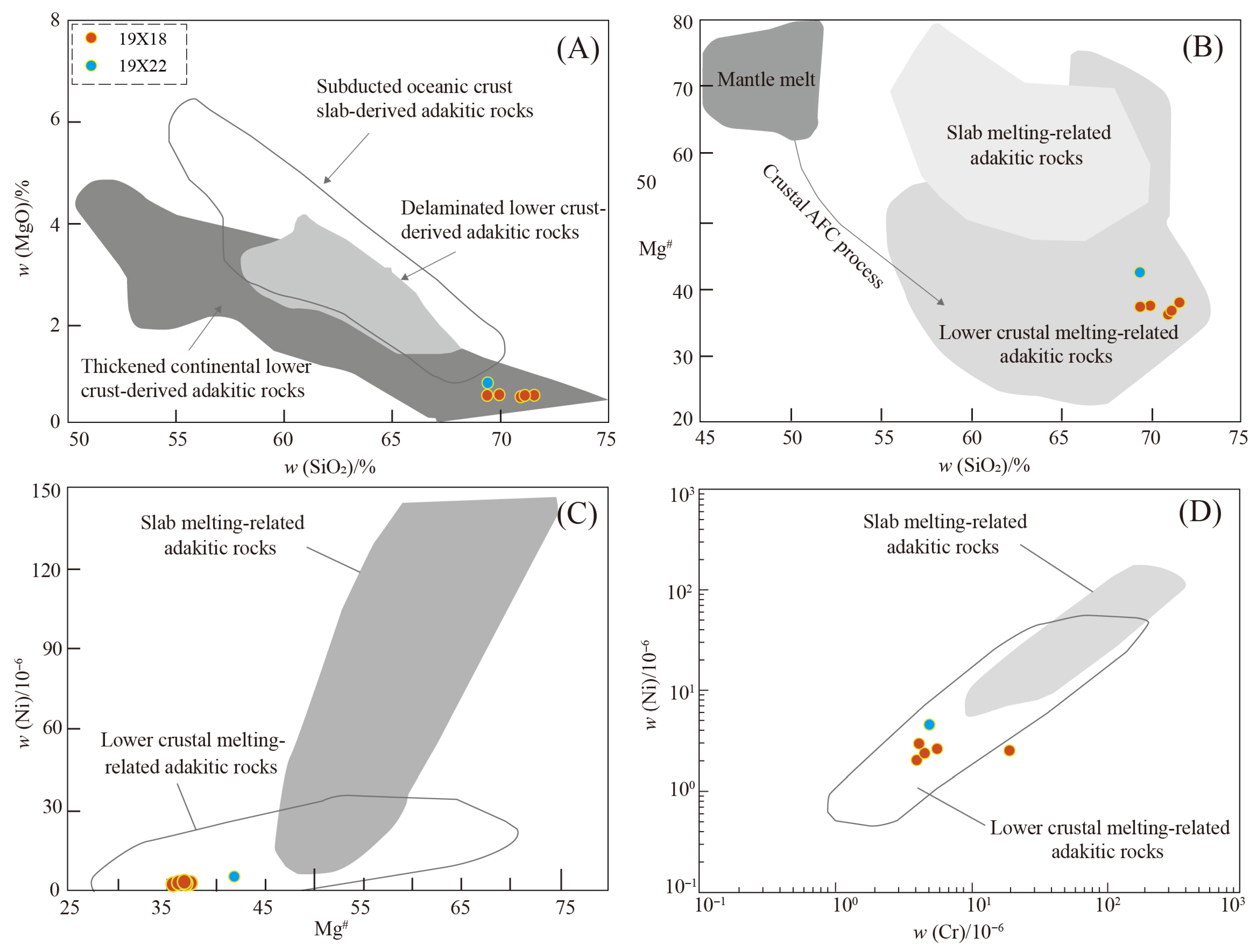
Partial melting of mafic rocks in the thickened lower crust also represents an important genetic hypothesis for adakites. Studies have suggested that partial melting of the thickened mafic lower crust can generate adakitic rocks with a low Mg# and compatible element contents, and the presence of residual rutile in the source region can further induce Nb-Ta-Ti depletion in adakitic magmas [37]. The monzogranite porphyry investigated in this study exhibits a distinctly low Mg# and compatible element contents, along with significant Nb-Ta-Ti depletion, which is largely consistent with the aforementioned characteristics. The samples also plot within the field of the lower crust melting series on the comprehensive major trace element discrimination diagrams (Figure 11). The heavy rare earth elements (HREEs) of the samples display a relatively flat distribution pattern, with Y/Yb ratios of approximately 10, indicating the probable presence of residual amphibole in the source region. The geochemical characteristics of the samples suggest that the magma source region contains residual garnet, rutile and amphibole, with a relatively low abundance of plagioclase. The zircon εHf(t) values and two-stage Hf model ages (TDM2) of the samples generally fall within the range of the juvenile lower crust of the Lhasa Block, though a small number of them exhibit geochemical signatures of ancient crustal materials. In general, the Chunzhe monzogranite porphyry is best interpreted as having formed by partial melting of a thickened lower-crustal source in the Gangdese belt. Zircon εHf(t) values and two-stage Hf model ages suggest that the magma source was dominated by juvenile crustal components with a minor contribution from ancient crustal materials (Figure 7B). The relatively high zircon saturation temperatures and the upward trend in Ti-in-zircon temperatures from ca. 20 Ma to 11 Ma may be compatible with an increased geothermal gradient. Nevertheless, a direct link to lower-crustal delamination and asthenospheric upwelling remains inferential and is not uniquely constrained by the present dataset [9,10,42,43,44].

5.2. Implications for the Regional Tectonic Evolution

Since the collision between the Indian and Eurasian continents in the early Cenozoic, continuous convergence has induced intense tectonic compression, shortening and crustal thickening in the Gangdese magmatic belt and even the entire Lhasa Block [3]. This collisional orogenic event has exerted a profound impact on the tectonic, magmatic and sedimentary evolution of the Tibetan Plateau [9,45]. Existing studies have indicated that the Gangdese magmatic belt has exhibited distinct lithospheric thickening features since the Eocene, which resulted in a significant elevation of La/Yb and Sr/Y ratios in some magmatic rocks formed at 65~34 Ma. From the Eocene to the Early Miocene, the Sr/Y ratios of adakitic magmatic rocks rose markedly. Experimental petrological studies have shown that variations in the crustal thickness of orogenic belts can affect the pressure conditions of deep magma reservoirs and further induce changes in the petrogeochemical characteristics of rocks. Among these, indices such as the Sr/Y ratio and chondrite-normalized La/Yb ((La/Yb)CN) ratio of intermediate–felsic rocks are correlated with crustal thickness. Some scholars have pointed out that the calculation of crustal thickness based on a single index may be affected by accidental factors; thus, they integrated and revised the previous databases and formulas to derive an empirical formula that comprehensively incorporates the Sr/Y and (La/Yb)CN ratios [56]. Substituting the geochemical data of the Chunzhe monzogranite porphyry into the above formula yields a calculated crustal thickness of 60.5~64.0 km. A series of Late Oligocene–Miocene adakite-like magmatic rocks are exposed in the Xietongmen–Namling area where the study region is situated, with their emplacement ages concentrated around 22.0~14.0 Ma [14,17]. These magmatic rocks are generally characterized by high Sr/Y and high (La/Yb)CN ratios, and the crustal thickness calculated from their geochemical data is approximately 58~71 km. This is also consistent with the interpretation that the Miocene magmatic rocks in the study region were primarily generated by melting of a thickened continental crust. This calculated thickness is higher than the crustal thickness (approximately 50 km) estimated by some scholars based on the geochemical data of Paleocene–Eocene magmatic rocks, which may suggest that the Gangdese magmatic belt underwent continued crustal thickening from the Eocene to the Miocene [9,14,57]. The presence of zircon grains with U-Pb ages of 59.5~51.1 Ma, 29.8 Ma, and 19.4~12.2 Ma in the Chunzhe monzogranitic porphyry indicates that inherited or captured zircon components derived from earlier magmatic events were present in the source region or entrained during magma evolution. At present, these older grains are best interpreted conservatively as evidence of earlier regional magmatic activity rather than as proof of a uniquely identified molten protolith.
Combined with previous regional studies documenting widespread Miocene felsic intrusions, high Sr/Y and (La/Yb)_CN geochemical signatures, and independently inferred crustal thickening in the Xietongmen–Namling and adjacent Gangdese segments [14,17,18,56,57], we infer that the Chunzhe monzogranite porphyry was likely generated during the long-term tectono-magmatic evolution from the syn-collisional to post-collisional stages of the India–Eurasia collision. First, during the syn-collisional evolutionary stage in the Paleocene–Eocene, the subduction, rollback and slab breakoff of the residual oceanic crust triggered partial melting of the mantle wedge in the hanging wall of the subduction zone, which subsequently led to magma underplating. This process not only formed part of the juvenile lower crust of the Gangdese belt but also caused mixing between the juvenile crustal materials and pre-existing ancient crustal components. Thereafter, with the progression of the India–Eurasia continental collision and further crustal thickening, the thickened lower crust of the Gangdese belt underwent partial melting under high-pressure conditions, generating widespread adakite-like magmatic rocks in the Oligocene–Miocene. In the Middle Miocene (ca. 12 Ma), driven by the continued thickening of the continental crust, the lower crustal rocks in this region were metamorphosed into the granulite–eclogite facies, and localized lower crustal delamination may have occurred in some areas. It was in this tectonic–magmatic stage that adakite-like melts were generated by partial melting under relatively high-temperature conditions, which ascended and emplaced in the shallow crust, eventually giving rise to the Chunzhe monzogranite porphyry studied in this paper.

6. Conclusions

1. The Miocene granitic porphyry in the Chunzhe area occurs as stocks and dykes, intruding the Linzizong Group volcanic rocks. Petrographically, it is dominated by quartz, K-feldspar, and plagioclase and records variable secondary white mica/sericite alteration. The studied intrusion is therefore described here as a monzogranitic porphyry with secondary white mica/sericite alteration.
2. LA-ICPMS zircon U-Pb dating indicates emplacement ages of 11.8 ± 0.2 Ma (MSWD = 1.1) and 11.5 ± 0.1 Ma (MSWD = 1.2). In situ zircon Lu-Hf isotopic analysis of representative Miocene zircons from sample 19X18A shows εHf(t) values ranging from −4.44 to 2.41, with corresponding two-stage model ages (TDM2) of 1380–944 Ma, indicating a source dominated by juvenile crustal components with a minor contribution from ancient crustal materials. A small number of older zircon grains, with apparent ages of 59.5–51.1 Ma, 29.8 Ma, and 19.4–12.2 Ma, are interpreted as inherited or captured components related to earlier magmatic activity in the Gangdese belt.
3. The Chunzhe monzogranite porphyry displays adakite-like trace element characteristics. Combined zircon and whole-rock evidence suggests that it was most likely generated by partial melting of a thickened lower crust in the Gangdese belt during post-collisional magmatism. A contribution from localized lower-crustal delamination and related asthenospheric heating remains possible but is not uniquely constrained by the present dataset.

Supplementary Materials

The following supporting information can be downloaded at: https://www.mdpi.com/article/10.3390/min16050454/s1. Table S1: LA-ICP-MS zircon U-Pb isotopic results for the monzogranitic porphyries in the Chunzhe area; Table S2: LA-ICP-MS zircon trace element data for the monzogranitic porphyries in the Chunzhe area; Table S3: Zircon Lu-Hf isotopic data for representative Miocene zircons from sample 19X18A; Table S4: Whole-rock major and trace elemental data for the monzogranitic porphyries from the Chunzhe area.

Author Contributions

Conceptualization, L.Z.; methodology, L.Z.; validation, L.Z., S.D. and Y.L.; investigation, L.Z., S.D. and Y.L.; writing—original draft preparation, L.Z. and W.L.; writing—review and editing, L.Z., S.D., Y.L., W.L., X.Y., J.W., K.E.T. and X.S. All authors have read and agreed to the published version of the manuscript.

Funding

This study was funded by the Xizang Autonomous Region Key Research and Development Pro-gram Project (Grant No. XZ202501ZY0140) and the Xizang University High-level Talent Project (Grant No. xzdxdd202401).

Data Availability Statement

Data are contained within the article and Supplementary Materials.

Acknowledgments

We sincerely thank Hongying Zhou and Jiarun Tu from the Tianjin Center, China Geological Survey, for their valuable guidance on the zircon U–Pb geochronological work. We are grateful to Zhiyuan He and Wenbo Su for their participation in the field investigations. We also thank the drivers Dawa and Jinmei for their kind assistance and logistical support during the fieldwork.

Conflicts of Interest

The authors declare no conflict of interest.

References

  1. Pan, G.T. Spatial temporal framework of the Gangdese Orogenic Belt and its evolution. Acta Petrol. Sin. 2006, 22, 521–533. [Google Scholar]
  2. Pan, G.; Wang, L.; Li, R.; Yuan, S.; Ji, W.; Yin, F.; Zhang, W.; Wang, B. Tectonic evolution of the Qinghai-Tibet plateau. J. Asian Earth Sci. 2012, 53, 3–14. [Google Scholar] [CrossRef]
  3. Kapp, P.; DeCelles, P.G. Mesozoic–Cenozoic geological evolution of the Himalayan-Tibetan orogen and working tectonic hypotheses. Am. J. Sci. 2019, 319, 159–254. [Google Scholar] [CrossRef]
  4. Liu, Z.C.; Zhong, K.H.; Zeng, Q. GInstructions to the Geological Map of Xizang (1:1,000,000); Geological Publishing House: Beijing, China, 2019. [Google Scholar]
  5. Zhu, D.-C.; Zhao, Z.-D.; Niu, Y.; Mo, X.-X.; Chung, S.-L.; Hou, Z.-Q.; Wang, L.-Q.; Wu, F.-Y. The Lhasa Terrane: Record of a microcontinent and its histories of drift and growth. Earth Planet. Sci. Lett. 2011, 301, 241–255. [Google Scholar] [CrossRef]
  6. Zhang, Z.M.; Ding, H.X.; Dong, X.; Tian, Z.L. Formation and evolution of the Gangdese magmatic arc, southern Tibet. Acta Petrol. Sin. 2019, 35, 275–294. [Google Scholar] [CrossRef]
  7. Zhu, D.-C.; Wang, Q.; Chung, S.-L.; Cawood, P.A.; Zhao, Z.-D. Gangdese magmatism in southern Tibet and India–Asia convergence since 120 Ma. Geol. Soc. Lond. Spec. Publ. 2019, 483, 583–604. [Google Scholar] [CrossRef]
  8. Ji, W.; Wu, F.; Liu, C.; Chung, S. Geochronology and petrogenesis of granitic rocks in Gangdese batholith, southern Tibet. Sci. China Ser. D Earth Sci. 2009, 52, 1240–1261. [Google Scholar] [CrossRef]
  9. Zhu, D.-C.; Wang, Q.; Weinberg, R.F.; Cawood, P.A.; Zhao, Z.; Hou, Z.-Q.; Mo, X.-X. Continental crustal growth processes recorded in the Gangdese Batholith, southern Tibet. Annu. Rev. Earth Planet. Sci. 2023, 51, 155–188. [Google Scholar] [CrossRef]
  10. Chung, S.-L.; Chu, M.-F.; Zhang, Y.; Xie, Y.; Lo, C.-H.; Lee, T.-Y.; Lan, C.-Y.; Li, X.; Zhang, Q.; Wang, Y. Tibetan tectonic evolution inferred from spatial and temporal variations in post-collisional magmatism. Earth-Sci. Rev. 2005, 68, 173–196. [Google Scholar] [CrossRef]
  11. Chung, S.-L.; Chu, M.-F.; Ji, J.; O’Reilly, S.Y.; Pearson, N.; Liu, D.; Lee, T.-Y.; Lo, C.-H. The nature and timing of crustal thickening in Southern Tibet: Geochemical and zircon Hf isotopic constraints from postcollisional adakites. Tectonophysics 2009, 477, 36–48. [Google Scholar] [CrossRef]
  12. Xu, Q.; Zeng, L.; Gao, L.-E. Early Miocene (21–23 Ma) high Sr/Y volcanic field in the Gangdese batholith, southern Tibet. Lithos 2022, 428, 106807. [Google Scholar] [CrossRef]
  13. Sun, H.Z.; Zhao, Z.D.; Zhu, D.C.; Liu, D.; Wang, Q.; Tang, Y.; Qi, N.Y.; Dong, G.C. Geochronology, geochemistry and petrogenesis of Miocene adakitic rocks in Milashan, Southern Tibet. Acta Petrol. Sin. 2021, 37, 3479–3500. [Google Scholar]
  14. Cui, J.Y.; Meng, Y.K.; Xiong, F.H. Petrogenesis of the Miocene granitic porphyry in the middle Gangdese belt: Constraints from zircon U-Pb geochronology, whole-rock geochemistry and Sr-Nd-Hf-O isotopes. Acta Petrol. Sin. 2024, 40, 3734–3752. [Google Scholar] [CrossRef]
  15. Qin, S.K.; Zhang, Z.M.; Zhang, R.H. Petrogenesis and tectonic significance of the Early Miocene adakitic granites from the Quxu area, Gangdese magmatic arc. Acta Petrol. Mineral. 2023, 42, 329–349. [Google Scholar]
  16. Zhang, B.C.; Fan, J.J.; Luo, A.; Yu, Y.; Hao, Y. Characteristics and tectonic significance of the Miocene strata in the Milashan area, Eastern Lhasa Terrane. Earth Sci. 2019, 44, 2392–2407. [Google Scholar]
  17. Xu, W.-C.; Zhang, H.-F.; Guo, L.; Yuan, H.-L. Miocene high Sr/Y magmatism, south Tibet: Product of partial melting of subducted Indian continental crust and its tectonic implication. Lithos 2010, 114, 293–306. [Google Scholar] [CrossRef]
  18. Zheng, Y.; Sun, X.; Gao, S.; Zhao, Z.; Zhang, G.; Wu, S.; You, Z.; Li, J. Multiple mineralization events at the Jiru porphyry copper deposit, southern Tibet: Implications for Eocene and Miocene magma sources and resource potential. J. Asian Earth Sci. 2014, 79, 842–857. [Google Scholar] [CrossRef]
  19. Development Research Center of China Geological Survey. 1:50,000 Geological Formational and Tectonic Map of the People’s Republic of China: Langdui Sheet (H45E013019); Development Research Center of China Geological Survey: Beijing, China, 2019. [Google Scholar]
  20. Wiedenbeck, M.; Allé, P.; Corfu, F.; Griffin, W.L.; Meier, M.; Oberli, F.; von Quadt, A.; Roddick, J.C.; Spiegel, W. Three natural zircon standards for U-Th-Pb, Lu-Hf, trace element and REE analyses. Geostand. Newsl. 1995, 19, 1–23. [Google Scholar] [CrossRef]
  21. Sláma, J.; Košler, J.; Condon, D.J.; Crowley, J.L.; Gerdes, A.; Hanchar, J.M.; Horstwood, M.S.; Morris, G.A.; Nasdala, L.; Norberg, N. Plešovice zircon—A new natural reference material for U–Pb and Hf isotopic microanalysis. Chem. Geol. 2008, 249, 1–35. [Google Scholar] [CrossRef]
  22. Liu, Y.; Hu, Z.; Zong, K.; Gao, C.; Gao, S.; Xu, J.; Chen, H. Reappraisement and refinement of zircon U-Pb isotope and trace element analyses by LA-ICP-MS. Chin. Sci. Bull. 2010, 55, 1535–1546. [Google Scholar] [CrossRef]
  23. Wu, F.-Y.; Li, X.-H.; Zheng, Y.-F.; Gao, S. Lu-Hf isotopic systematics and their applications in petrology. Acta Petrol. Sin. 2007, 23, 185–220. [Google Scholar]
  24. Corfu, F.; Hanchar, J.M.; Hoskin, P.W.O.; Kinny, P. Atlas of zircon textures. Rev. Mineral. Geochem. 2003, 53, 469–500. [Google Scholar] [CrossRef]
  25. Hoskin, P.W.O. Trace-element composition of hydrothermal zircon and the alteration of Hadean zircon from the Jack Hills, Australia. Geochim. Cosmochim. Acta 2005, 69, 637–648. [Google Scholar] [CrossRef]
  26. Sun, S.-S.; McDonough, W.F. Chemical and isotopic systematics of oceanic basalts: Implications for mantle composition and processes. In Magmatism in the Ocean Basins; Saunders, A.D., Norry, M.J., Eds.; Geological Society Special Publication: London, UK, 1989; Volume 42, pp. 313–345. [Google Scholar]
  27. Irvine, T.N.; Baragar, W.R.A. A guide to the chemical classification of the common volcanic rocks. Can. J. Earth Sci. 1971, 8, 523–548. [Google Scholar] [CrossRef]
  28. Streckeisen, A. To each plutonic rock its proper name. Earth-Sci. Rev. 1976, 12, 1–33. [Google Scholar] [CrossRef]
  29. Peccerillo, A.; Taylor, S.R. Geochemistry of Eocene calc-alkaline volcanic rocks from the Kastamonu area, northern Turkey. Contrib. Mineral. Petrol. 1976, 58, 63–81. [Google Scholar] [CrossRef]
  30. Maniar, P.D.; Piccoli, P.M. Tectonic discrimination of granitoids. Geol. Soc. Am. Bull. 1989, 101, 635–643. [Google Scholar] [CrossRef]
  31. Chappell, B.W.; White, A.J.R. I- and S-type granites in the Lachlan Fold Belt. Earth Environ. Sci. Trans. R. Soc. Edinb. 1992, 83, 1–26. [Google Scholar] [CrossRef]
  32. Watson, E.B.; Harrison, T.M. Zircon saturation revisited: Temperature and composition effects in a variety of crustal magma types. Earth Planet. Sci. Lett. 1983, 64, 295–304. [Google Scholar] [CrossRef]
  33. Rudnick, R.L.; Gao, S. Composition of the continental crust. In Treatise on Geochemistry, 2nd ed.; Holland, H.D., Turekian, K.K., Eds.; Elsevier: Oxford, UK, 2014; Volume 4, pp. 1–51. [Google Scholar]
  34. Whalen, J.B.; Currie, K.L.; Chappell, B.W. A-type granites: Geochemical characteristics, discrimination and petrogenesis. Contrib. Mineral. Petrol. 1987, 95, 407–419. [Google Scholar] [CrossRef]
  35. Wu, F.Y.; Liu, X.C.; Ji, W.Q.; Wang, J.M.; Yang, L. Highly fractionated granites: Recognition and research. Sci. China Earth Sci. 2017, 60, 1201–1219. [Google Scholar] [CrossRef]
  36. Defant, M.J.; Drummond, M.S. Derivation of some modern arc magmas by melting of young subducted lithosphere. Nature 1990, 347, 662–665. [Google Scholar] [CrossRef]
  37. Martin, H. Adakitic magmas: Modern analogues of Archaean granitoids. Lithos 1999, 46, 411–429. [Google Scholar] [CrossRef]
  38. Qu, X.; Hou, Z.; Li, Y. Melt components derived from a subducted slab in late orogenic ore-bearing porphyries in the Gangdese copper belt, southern Tibetan plateau. Lithos 2004, 74, 131–148. [Google Scholar] [CrossRef]
  39. Zhao, M.; Hou, Z.Q.; Yang, Z.S.; Xia, W.J.; Guan, W.Q.; Zhao, X.Y.; Zhang, L.Y.; Liu, C. Mineralization age and magmatic origin of the Pujue Cu-polymetallic deposit in the western Gangdese belt: Implication for regional exploration. Acta Petrol. Sin. 2025, 41, 600–620. [Google Scholar] [CrossRef]
  40. Lu, Y.J.; Loucks, R.R.; Fiorentini, M.L.; Yang, Z.M.; Hou, Z.Q. Fluid flux melting generated postcollisional high Sr/Y copper ore-forming water-rich magmas in Tibet. Geology 2015, 43, 583–586. [Google Scholar] [CrossRef]
  41. Xu, Z.B.; Li, W.C.; Yang, F.C.; Jiang, H.; Wang, X.Y.; Li, S. Origin and geodynamic setting of adakitic intrusions in the Bairong porphyry Cu-Mo deposit, central Gangdese Belt, Tibet. Ore Geol. Rev. 2025, 186, 106867. [Google Scholar] [CrossRef]
  42. Zheng, Y.-C.; Hou, Z.-Q.; Li, Q.-Y.; Sun, Q.-Z.; Liang, W.; Fu, Q.; Li, W.; Huang, K.-X. Origin of Late Oligocene adakitic intrusives in the southeastern Lhasa terrane: Evidence from in situ zircon U–Pb dating, Hf–O isotopes, and whole-rock geochemistry. Lithos 2012, 148, 296–311. [Google Scholar] [CrossRef]
  43. Hou, Z.; Duan, L.; Lu, Y.; Zheng, Y.; Zhu, D.; Yang, Z.; Yang, Z.; Wang, B.; Pei, Y.; Zhao, Z. Lithospheric architecture of the Lhasa terrane and its control on ore deposits in the Himalayan-Tibetan orogen. Econ. Geol. 2015, 110, 1541–1575. [Google Scholar] [CrossRef]
  44. Gao, K.; Zhang, Z.; Zhang, L.; Xu, P.; Yang, Y.; Wu, J.; Li, Y.; Sun, M.; Su, W. Significance of Adakitic Plutons for Mineralization in Wubaduolai Copper Deposit, Xizang: Evidence from Zircon U-Pb Age, Hf Isotope, and Geochemistry. Minerals 2025, 15, 500. [Google Scholar] [CrossRef]
  45. Hu, X.; Garzanti, E.; Wang, J.; Huang, W.; An, W.; Webb, A. The timing of India-Asia collision onset–Facts, theories, controversies. Earth-Sci. Rev. 2016, 160, 264–299. [Google Scholar] [CrossRef]
  46. Ma, X.X.; Meert, J.G.; Cao, W.R.; Tian, Z.L.; Liu, D.L.; Xiong, F.H.; Li, H.B. Mantle driven Early Eocene magmatic flare-up of the Gangdese Arc, Tibet: A case study on the Nymo intrusive complex. Acta Geol. Sin. 2024, 98, 878–903. [Google Scholar] [CrossRef]
  47. Meng, Y.K.; Xu, Z.Q.; Gao, C.S.; Xu, Y.; Li, R.H. The identification of the Eocene magmatism and tectonic significance in the middle Gangdese magmatic belt, southern Tibet. Acta Petrol. Sin. 2018, 34, 513–546. [Google Scholar]
  48. Zhao, Y.S.; Meng, Y.K.; Sun, J.B.; Gao, Q.Z. Unraveling of the Gangdese batholith exhumation since the Miocene: Evidence from (U-Th)/He thermochronology. Sci. China-Earth Sci. 2025, 68, 3306–3324. [Google Scholar] [CrossRef]
  49. Kang, X.; Zhong, L.L.; Zhong, K.H.; Ding, S.; He, L.; He, Z.Y.; Hou, W.; Qin, Q.; Thu, K.E.; Liu, Y.L. Petrogenesis and tectonic setting of the Eocene quartz monzonite in the Chunzhe region, Gangdese magmatic belt. J. Chengdu Univ. Technol. (Sci. Technol. Ed.) 2026, 53, 169–187. [Google Scholar]
  50. Replumaz, A.; Negredo, A.M.; Villasenor, A.; Guillot, S. Indian continental subduction and slab break-off during Tertiary collision. Terra Nova 2010, 22, 290–296. [Google Scholar] [CrossRef]
  51. Rapp, R.P.; Shimizu, N.; Norman, M.D.; Applegate, G.S.; Applegate, G. Reaction between slab-derived melts and peridotite in the mantle wedge: Experimental constraints at 3.8 GPa. Chem. Geol. 1999, 160, 335–356. [Google Scholar] [CrossRef]
  52. Stern, C.R.; Kilian, R. Role of the subducted slab, mantle wedge and continental crust in the generation of adakites from the Andean Austral Volcanic Zone. Contrib. Mineral. Petrol. 1996, 123, 263–281. [Google Scholar] [CrossRef]
  53. Condie, K.C. High field strength element ratios in Archean basalts: A window to evolving sources of mantle plumes? Lithos 2005, 79, 491–504. [Google Scholar] [CrossRef]
  54. Zhu, D.-C.; Pan, G.-T.; Zhao, Z.-D.; Lee, H.-Y.; Kang, Z.-Q.; Liao, Z.-L.; Wang, L.-Q.; Li, G.-M.; Dong, G.-C.; Liu, B. Early Cretaceous subduction-related adakite-like rocks of the Gangdese Belt, southern Tibet: Products of slab melting and subsequent melt-peridotite interaction? J. Asian Earth Sci. 2009, 34, 298–309. [Google Scholar]
  55. Karsli, O.; Dokuz, A.; Uysal, I.; Aydin, F.; Kandemir, R.; Wijbrans, J. Generation of the Early Cenozoic adakitic volcanism by partial melting of mafic lower crust, Eastern Turkey: Implications for crustal thickening to delamination. Lithos 2010, 114, 109–120. [Google Scholar] [CrossRef]
  56. Sundell, K.E.; Laskowski, A.K.; Kapp, P.; Ducea, M.N.; Chapman, J.B. Jurassic to Neogene quantitative crustal thickness estimates in southern Tibet. GSA Today 2021, 31, 4–10. [Google Scholar] [CrossRef]
  57. Tang, M.; Ji, W.-Q.; Chu, X.; Wu, A.; Chen, C. Reconstructing crustal thickness evolution from europium anomalies in detrital zircons. Geology 2021, 49, 76–80. [Google Scholar] [CrossRef]
Figure 4. Photomicrographs of the Chunzhe monzogranitic porphyry. Abbreviations: Afs, alkali feldspar; Pl, plagioclase; Qtz, quartz; Mus, secondary white mica/sericite. (AD) Chunzhe monzogranitic porphyry (XPL).
Minerals 16 00454 g004
Figure 5. Zircon U-Pb concordia diagrams, weighted mean age plots, and CL images of the Chunzhe monzogranite porphyry. (A) Zircon CL images of sample 19X18A; the older grains are Nos. 6, 7, 8, 10, 13, 14, and 20, whereas the discordant grains are Nos. 4 and 17. (B) Zircon U-Pb concordia and weighted mean age plots of sample 19X18A. (C) Zircon CL images of sample 19X22A; the older grains are Nos. 1, 3, 4, 5, 8, 14, and 17. (D) Zircon U-Pb concordia and weighted mean age plots of sample 19X22A.
Minerals 16 00454 g005
Figure 8. Geochemical classification and nomenclature diagrams of the Chunzhe monzogranitic porphyry samples. (A) The Ir classification line is after [27]. The zoning numbers are as follows: 1—Olivine Gabbro, 2—Gabbro, 3—Gabbro Diorite, 4—Monzogabbro, 5—Monzodiorite, 6—Foid Monzodiorite, 7—Foid Monzosyenite, 8—Quartz Monzonite. (B) Q (Quartz)–A (Alkali Feldspar)–P (Plagioclase) diagram, after [28]. (C) K2O vs. SiO2 diagram, after [29]. (D) A/NK vs. A/NCK diagram, after [30], with the dashed line representing the boundary between I-type and S-type granitoids after [31].
Minerals 16 00454 g008
Figure 11. Discrimination diagrams for the source region of the Chunzhe Miocene monzogranite porphyry. (A) MgO versus SiO2. (B) Mg# versus SiO2. (C) Ni versus Mg#. (D) Ni versus Cr. After [52,53,54,55].
Minerals 16 00454 g011
Table 1. Mineral proportions and alteration features of the sampled Chunzhe Miocene porphyries.
SampleProportion of Major Minerals (%)Other Minerals/Alteration Features
QuartzAlkali FeldsparPlagioclase
19X18A292439White mica/sericite, opaque minerals, scheelite (8%)
19X18A-2302538White mica/sericite, opaque minerals (7%)
19X18B262442White mica, biotite, zircon, apatite (8%)
19X18B-2253036White mica, chlorite, carbonate minerals (9%)
19X18C222741White mica, zircon, opaque minerals (10%)
19X22A202745White mica, zircon, opaque minerals (8%)
Disclaimer/Publisher’s Note: The statements, opinions and data contained in all publications are solely those of the individual author(s) and contributor(s) and not of MDPI and/or the editor(s). MDPI and/or the editor(s) disclaim responsibility for any injury to people or property resulting from any ideas, methods, instructions or products referred to in the content.