


Abstract
A climatic transition from arid to humid conditions occurred during the deposition of the Permian Pingdiquan Formation in the Shishugou Sag, Junggar Basin, Northwest China. This study reconstructs the paleoenvironmental evolution and organic matter (OM) enrichment mechanisms recorded in six stratigraphic intervals, with emphasis on the two oil shale units formed during the transgressive system tracts (TST1 and TST2). Geochemical, elemental, and biomarker data reveal that climate, salinity, and redox conditions fluctuated significantly and jointly governed OM enrichment, with paleoclimate acting as the primary background control by regulating lake hydrology, salinity, and preservation. During the early stage (SQ1), an arid climate prevailed, the TST1 oil shale formed during a transient freshening event in a deep stratified lake. Dominant algal productivity and minimal terrigenous input favored excellent preservation, yielding the highest TOC and superior hydrocarbon potential. In contrast, during the humid stage (SQ2), the TST2 oil shale was deposited in a moderately deep, weakly reducing, and slightly saline lake. Although preservation was less efficient, enhanced primary productivity under humid conditions compensated for OM loss, producing abundant but slightly lower quality OM. These results establish two depositional models, an arid freshening model (TST1) and a humid salinization model (TST2). Both transient freshening under arid conditions and salinization during humid periods facilitated the accumulation of organic-rich source rocks through different balances between productivity and preservation. This highlights the complex response of lacustrine source rock development to climatic variability. The occurrence of similar organic-rich source rocks can be anticipated under comparable paleoenvironmental transitions, particularly in saline lakes characterized by frequent fluctuations in water salinity and paleoclimate.
1. Introduction
With the continuous rise in global energy demand and the gradual depletion of conventional oil and gas resources, shale oil has become an increasingly significant component of the global energy structure [1,2,3]. Oil shale, a fine-grained sedimentary rock rich in kerogen (approximately 3%~15%), together with organic rich mudstone, constitutes one of the most important alternative hydrocarbon resources worldwide [4,5,6]. Unlike relatively stable marine depositional systems, continental lacustrine basins are more complex, as their hydrological and sedimentary conditions are strongly influenced by climatic fluctuations [7,8]. Although lacustrine sediments commonly exhibit high hydrocarbon generation potential, their pronounced heterogeneity complicates the enrichment mechanisms of organic matter (OM) and underscores the need for detailed geochemical investigations [9,10].
Previous studies have demonstrated that the enrichment of OM in source rocks is collectively controlled by paleoclimate, salinity, redox state, and primary productivity [11,12,13,14,15,16,17,18]. Fluctuations in these factors can significantly modify the geochemical characteristics and OM composition of source rocks, as evidenced in classic successions such as the Bone Spring, Second White Specks, and Bakken Formations [19,20,21,22,23,24]. However, compared with these marine influenced systems, continental lacustrine basins are more sensitive to frequent climatic changes, which makes the mechanisms of organic enrichment more complex and less predictable [25,26,27,28]. Therefore, investigating the influence of paleoenvironmental evolution on OM accumulation is essential for revealing the formation mechanisms and hydrocarbon potential of lacustrine source rocks [29,30,31].
The Shishugou Sag in the eastern Junggar Basin preserves a well-developed Permian lacustrine succession that provides an ideal geological record for examining the response of organic-rich source rocks to environmental changes [15,32,33]. Alternations of mudstone and oil shale within the Pingdiquan Formation, together with variations in elemental and biomarker data, indicate pronounced climatic fluctuations during deposition [34,35,36]. Although recent studies have primarily focused on the quality and lithological differentiation of source rocks, the mechanisms by which climatic variations regulate OM accumulation through changes in hydrology, primary productivity, and preservation remain insufficiently constrained [15,37,38,39]. Moreover, periodic development of source rocks within transgressive and regressive sequences during alternating arid–humid transition has received limited attention [15,40,41]. In particular, the contrasting impacts of freshening and salinization events under different climatic backgrounds on oil shale formation have rarely been systematically compared.
This study focuses on the Pingdiquan Formation (P2p), which records two complete transgressive and regressive cycles (SQ1 and SQ2) and contains two organic-rich oil shales intervals developed in TST1 and TST2 [42,43,44]. By integrating organic geochemistry, petrography, trace element, and biomarker analyses, this study aims to reconstruct the paleoenvironmental evolution of P2p and to clarify how paleoclimate driven changes in lake hydrology, salinity, redox conditions, and OM input controlled OM enrichment in different intervals. The results are expected to improve the understanding of organic-rich source rock formation in continental saline lacustrine systems during paleoclimatic transition.
2. Geological Setting
The Junggar Basin, situated in the eastern part of the Kazakhstan-Junggar Plate, is a typical Late Paleozoic to Meso-Cenozoic superimposed basin developed on a composite terrane [45,46,47,48] (Figure 1a). During the Late Devonian, northward subduction of the Kelameili Ocean culminated in a continental–continental collision in the Late Carboniferous, leading to oceanic closure and the establishment of a foreland basin [49,50,51,52]. Subsequent fault reactivation modified the structural configuration of the Carboniferous top boundary, partitioning the basin into six first-order tectonic units [3]. The eastern Junggar Basin, one of these tectonic units, constitutes the study area of this work.
Figure 1.
(a) Simplified tectonic framework showing the location of the Junggar Basin within the Central Asian Orogenic Belt; (b) Structural framework map of the eastern Junggar Basin, showing the tectonic units, the location of the Shishugou Sag, wells ST1 and SS1-1, and the position of cross section A–A′; (c) Seismic profile and interpreted geological cross section along A–A′ across the Shishugou Sag, showing the structural framework and burial characteristics of the Pingdiquan Formation.
The Indosinian, Yanshanian, and Himalayan tectonic phases exerted a profound influence on basin evolution [53]. Rapid northward uplift of the Bogda Mountain was accompanied by the development of strike-slip faulting along the Kelameili Mountain front [54]. Under strong NE-SW compressional stress, a suite of sub-first-order tectonic elements characterized by alternating convex and concave morphologies formed in the eastern uplift of the basin [55,56]. These include the Wucaiwan Sag, Shazhang Fault Belt, Jimusar Sag, and Shishugou Sag (Figure 1b).
The Shishugou Sag, located in the northeastern sector of the basin, is bounded by the Kelameili Mountain to the north, the Shaqi Uplift to the south, and the Shazhang Fault Belt to the west and passes eastwards into the Huangcaohu Uplift via a gentle slope [48]. The sag is elongate and NE-trending, with an areal extent of approximately 1200 km2 (Figure 1b).
Strata within the Shishugou Sag range from the Carboniferous to the Quaternary (Figure 1c). The Permian succession is primarily composed of the Middle Permian Jingjingzigou Formation (P2jj), the Pingdiquan Formation (P2p), and the Upper Permian Wutonggou Formation (P3wt). Among these units, the P2p represents the principal interval of lacustrine deposition and organic-rich sediment accumulation.
Based on core observations, wireline log responses, and seismic reflection characteristics, the P2p can be subdivided into two third-order depositional sequences, SQ1 and SQ2 [25]. Each sequence comprises a transgressive systems tract (TST) and a highstand systems tract (HST), namely, TST1~HST1 for SQ1 and TST2~HST2 for SQ2. The transition from TST to HST corresponds to the maximum flooding surface (MFS), which is identified by characteristic gamma-ray peaks, lithofacies transitions, and systematic stacking pattern changes [15,57,58].
Within this framework, the TST intervals are dominated by mudstone deposited in shallow to semi-deep lacustrine environments and are characterized by thick, laterally extensive units displaying fining-upward and retrogradational stacking patterns associated with rising lake level. In contrast, the HST intervals mainly consist of siltstone, argillaceous siltstone, and dolomitic mudstone deposited under relatively stable or slowly falling lake-level conditions, showing typical aggradational stacking patterns.
The studied wells ST1 and SS1-1 are located near the sedimentary center of the Shishugou Sag (Figure 1b). In these wells, organic-rich mudstone and oil shale intervals are preferentially developed within the transgressive systems tracts TST1 and TST2 (Figure 2a,b), whereas the highstand systems tracts are dominated by mudstone and siltstone. Notably, well ST1 is a newly drilled exploration well completed in 2024, providing high-quality core and logging data that support the refined sequence stratigraphic framework adopted in this study.
Figure 2.
Comprehensive stratigraphic columns of the Pingdiquan Formation (P2p) in wells ST1 (a) and SS1-1 (b), Shishugou Sag, showing lithology, conventional well logs, coring intervals, sampling locations, source rock and reservoir intervals, porosity-related parameters, and sequence stratigraphic framework. Two third-order sequences (SQ1 and SQ2) are recognized, including TST1-HST1 and TST2-HST2, respectively, with the maximum flooding surfaces (MFS) marked. Yellow shading beside the LLS curve indicates the correlative marker beds between the two wells.
3. Samples and Methods
In this study, a total of 60 samples were collected from the P2p, including 53 samples from Well ST1 (10 oil shales and 43 mudstones) and 7 samples from Well SS1-1 (1 oil shale and 6 mudstones; Figure 2a,b).
All selected samples are representative core samples from the P2p, each sample comprises an interval of about 0.3~2.0 m. All experiments were carried out on the fresh surface of the sample to avoid drilling-fluid contamination. All samples were analyzed for Rock-Eval pyrolysis and total organic carbon (TOC) analysis. whereas a subset was selected for X-ray diffraction (XRD), vitrinite reflectance (Ro) measurements, organic petrographic analysis, gas chromatography-mass spectrometry (GC-MS) of saturated hydrocarbon, and elemental analysis.
3.1. TOC Analysis
Samples were crushed to <0.2 mm, approximately 100 mg of each sample was then weighed into a crucible, and the inorganic carbon compounds were completely removed with 5% dilute hydrochloric acid. The residues were rinsed subsequently with distilled water for two days, at least 30 times, until neutral pH. The residues were put into the oven together with the crucible and dried at 60 °C for 12 h. The TOC content was measured by the LECO CS-230 carbon and sulfur analyzer (LECO, St. Joseph, MI, USA) under standard temperature and humidity conditions. The treated samples were burned in the presence of iron chips and a flux. During the analysis, the samples were heated according to a programmed temperature ramp in a helium stream. The determination principle is that OM is oxidized to carbon dioxide at a high temperature (>800 °C), and then the generated CO2 is quantified by an infrared detector to calculate the organic carbon content.
3.2. Rock-Eval Pyrolysis Analysis
Samples were crushed to <0.2 mm. The pyrolysis parameters were determined using an OGE-II workstation (China Petroleum Exploration and Development Research Institute Laboratory Center, Beijing, China) under standard temperature and humidity conditions. The initial temperature was 300 °C, and under anaerobic conditions, the samples were heated to 600 °C at a rate of 25 °C/min with nitrogen as the carrier gas. The adsorbed hydrocarbon content (S1), pyrolytic hydrocarbon content (S2), and maximum pyrolysis temperature (Tmax) of the samples were measured, and the hydrogen index (HI) and other parameters were calculated. Similar to the TOC analysis, Rock-Eval pyrolysis was conducted on all 60 samples.
3.3. XRD Analysis
Samples were pulverized to <0.2 mm. The analyses were performed using a Bruker D8 Focus X-ray diffractometer (Bruker, Karlsruhe, Germany). Experimental conditions were maintained at 24 °C and 35% relative humidity. Each scan was conducted from 5° to 65°(2θ) at 0.02° steps and 2°/min. The X-ray source is Cu-Kα radiation (40 kV, 40 mA). The quantitative analysis of the mineral composition of each powdered sample was carried out by using MDI Jade 9.0 software.
3.4. Ro Measurements
Ro was determined for 19 polished blocks using an MSP400 microspectrophotometer (Zeiss, Jena, Germany) under oil immersion. The intensity of the reflected light from the vitrinite surface was recorded with a photoelectric converter and compared with a standard material with known reflectance under identical conditions. Before analysis, the instrument was calibrated using a standard sample (Ro = 0.904%). All measurements were conducted under standard temperature and humidity conditions, and at least 50 points were measured for each sample to ensure accuracy.
3.5. Organic Petrography
Seventeen samples of fluorescent thin sections (0.05 mm thick, without cover slips) were prepared following standard organic petrology procedures. Each sample was cut perpendicular to the bedding plane and polished to obtain a flat surface. Observations were performed using a Leica DM4500P/DFC450C (Leica, Wetzlar, Germany) high-precision optical microscope under reflected white and fluorescent light; the maximum magnification of the objective lens was 50×. OM components were quantified using an area-counting method based on microphotographs, with at least 30 observations made for each sample. This approach allows the relative contributions of algal and terrigenous OM to be assessed based on organic maceral compositions [59,60,61].
3.6. GC-MS Analysis
The samples were Soxhlet-extracted with a chloroform/methanol mixture (97:3) for 72 h, and the isolated extractable OM was separated into saturated hydrocarbons, aromatic hydrocarbons, nonhydrocarbon, and asphaltene. The saturated hydrocarbon samples were analyzed using an Agilent 6890 Gas Chromatograph (GC; Agilent Technologies, Santa Clara, CA, USA) equipped with the HP-5MS capillary column (30 m × 0.25 mm i.d., with 0.25 μm film thickness) and linked with an Agilent 5975i Mass Spectrometer (MS; Agilent Technologies, Santa Clara, CA, USA). Helium was used as the carrier gas. The temperature range of the gradient heating mode was 50 °C to 310 °C at a heating rate of 4 °C/min, and the test time was about 70 min per sample. The ion source was electron ionization (EI), the detector scanning range was 50–550 m/z, and both scanning and simulation modes were used.
3.7. Elemental Analysis
Thirty-five representative samples were selected based on lithology and TOC. Bulk major element contents were measured using an X-ray fluorescence spectrometer (XRF; Malvern Panalytical Axios mAX Advanced, Almelo, The Netherlands). The powdered samples were mixed with Li2B4O7 (1:10) and fused at 1200 °C to make glass discs, and the duplicate analyses error was less than 2%. The trace element contents were analyzed by inductively coupled plasma mass spectrometer (ICP-MS; PerkinElmer NexION 300D, Waltham, MA, USA). Approximately 50 mg of dried sample powder was weighed and dissolved in a mixture of 30% HF and 68% HNO3 in sealed Teflon bombs at 150 °C for 48 h. Then, the residual material was treated with 2 mL of concentrated nitric acid (HNO3), followed by dissolution in a 50 mL solution using 5% HNO3. Analytical precision and accuracy were evaluated using international standard reference materials (BCR-2, BHVO-2, and AGV-2), and the analytical error was within 5%. Redox sensitive indices (e.g., MoEF, UEF) were calculated relative to average shale compositions [62,63].
4. Results
4.1. Bulk Geochemical Parameters
In the study area, TOC and S1 + S2 values of most samples are greater than 1.0 wt% and 2.0 mg/g, (Figure 3a and Figure 4), indicating that the P2p sediments contain abundant OM. As shown in the TOC versus S1 + S2 cross plot, the source rock potential of these samples is mainly good to excellent (Figure 3a), and there are significant differences in OM abundance between oil shale and mudstone.
Figure 3.
(a) Plot of potential of generating hydrocarbon (S1 + S2) versus TOC of source rock samples from different systems tracts; (b) Plot of hydrogen index (HI) versus temperature maximum (Tmax) of source rock samples from different systems tracts.
Figure 4.
Vertical variations in lithology, well logs, systems tracts, and bulk geochemical parameters (TOC, S2, S1 + S2, HI, Tmax, and Ro) of well ST1 in the Pingdiquan Formation (P2p). Grey shaded intervals indicate the organic-rich oil shale intervals. The orange arrows indicate the trends of paleoclimatic evolution. Gray shading highlights the intervals of organic-rich sample distribution. The dashed lines indicate the boundaries between different systems tracts.
TOC values show systematic variations across systems tracts. In SQ2, oil shale TOC ranges from 5.62 to 10.30 wt% (avg. 7.88 wt%), whereas TST2 mudstone averages 2.46 wt% and HST2 mudstone averages 1.26 wt%. A comparable pattern occurs in SQ1, where TOC in TST1 oil shale ranges from 6.61 to 20.10 wt% (avg. 13.36 wt%), while TST1 and HST1 mudstones show lower averages of 3.52 wt% and 3.01 wt%, respectively (Figure 3a and Figure 4). Hydrocarbon generation potential (S1 + S2) shows a similar distribution. In SQ2, S1 + S2 values average 57.67 mg/g in TST2 oil shale, decreasing to 11.79 mg/g in TST2 mudstone and 1.93 mg/g in HST2 mudstone. In SQ1, TST1 oil shale averages 113.62 mg/g, followed by 23.08 mg/g in TST1 mudstone and 14.70 mg/g in HST1 mudstone (Figure 3a and Figure 4). In both sequences, oil shales consistently exhibit the highest hydrocarbon potential.
The hydrogen index (HI) values further highlight lithological and stratigraphic contrasts. Type I kerogen dominates both TST1 and TST2 oil shale, with high HI averages of 879.65 mg/g TOC and 589.49 mg/g TOC, respectively (Figure 3b). Mudstones show progressively lower HI values upward within each sequence: TST1 mudstone averages 532.81 mg/g TOC, HST1 mudstone averages 335.68 mg/g TOC, TST2 mudstone averages 324.03 mg/g TOC, and HST2 mudstone averages 92.31 mg/g TOC (Figure 3b and Figure 4). Kerogen typing reflects these differences, shifting from type I in oil shales to type I-II2 assemblages in mudstone (Figure 3b).
Across the two sequences, oil shale units consistently represent the most OM-rich and hydrogen-rich intervals within the vertical successions. Both SQ1 and SQ2 display a recurring stratigraphic pattern in which oil shale deposits of the TST consistently record the highest TOC, S1 + S2, and HI values, followed by notable reductions in overlying mudstone. This vertical trend reveals preferential development of high-quality source rocks during transgressive stages in both sequences (Figure 4).
4.2. Organic Petrology
The P2p source rocks contain abundant OM (Figure 5). Organic petrography indicates that the maceral assemblage is dominated by alginite with subordinate terrigenous macerals. The alginite mainly consists of telalginite and lamalginite, whereas terrigenous macerals are mainly represented by vitrinite and inertinite [64,65,66] (Figure 5).
Figure 5.
Representative hand specimens and organic petrographic features of oil shale and mudstone from different systems tracts. (a,b) 2422.27 m, oil shale, core; (c,d) 2414.00 m, mudstone, core; (e,f) 2414.00 m, lamalginite, telalginite; (g,h) 1887.84 m, lamalginite; (i,j) 1891.74 m, telalginite; (k,l) 2405.24 m, telalginite; (m–p) 2422.27 m, clastic vitrinite, inertinite, lamalginite. The instrument shown in (a,d) is an electronic balance (YHC-A5, YINGHENG, Wuxi, China). The white dashed line in (f) represents the lithological boundary.
In the TST2 oil shale, alginite is the dominant component, accounting for 77~86 vol% (avg. 81 vol%), while terrigenous macerals (mainly vitrinite and inertinite) are relatively low, ranging from 14~24 vol% (avg. 19 vol%; Figure 5). The TST1 oil shale contains up to 93 vol% alginite and 7 vol% terrigenous OM (Figure 5). In contrast, the TST2 and TST1 mudstones contain 56~87 vol% (avg. 70 vol%) and 64~84 vol% (avg. 77 vol%) alginite, 13~44 vol% (avg. 30 vol%) and 16~36 vol% (avg. 24 vol%) terrigenous OM, respectively. The HST1 mudstone contains 37~74 vol% (avg. 56 vol%) alginite and 26~63 vol% (avg. 44 vol%) terrigenous OM, indicating significant differences in maceral composition among different systems tracts (Figure 5).
In the TST2 and TST1 oil shales, alginite is mainly composed of lamalginite, which appears as elongated strips with strong yellow to yellow-green fluorescence (Figure 5h,n). The lamalginite is densely stacked and parallel to the laminae, widely distributed, sometimes enclosing mineral grains within layers (Figure 5n,p). The alginite in the mudstones is a mixture of lamalginite and telalginite. The telalginite is well-structured, uneven in size, occurs as isolated particles, and displays bright orange-yellow fluorescence (Figure 5l).
Terrigenous OM mainly consists of vitrinite and inertinite. They are relatively low in content but commonly present. The inertinite occurs as bright, irregular fragments with a clastic or fibrous texture (Figure 5m,o), whereas vitrinite appears gray to dark gray reflectance (Figure 5m), slightly darker than the light gray to whitish inertinite. The measured Ro values range from 0.69% to 0.94% (avg. 0.79%), indicating that most source rocks are within the low-mature to mature stage of thermal evolution.
In addition, density observations support the maceral-based interpretation of OM richness. Two cores with the same diameter and similar length were collected for density assessment: one complete cylindrical oil shale core and one half-cylinder mudstone core. Both samples show no visible fractures or dissolution pores. The oil shale core weighs 658.7 g (Figure 5a,b), whereas the half-cylinder mudstone core weighs 653.6 g (Figure 5c,d). Despite the difference in geometry, the comparable weights demonstrate markedly lower bulk density in the oil shale relative to the mudstone, reflecting its higher OM content, as OM possesses much lower density than the mineral matrix [4,6]. This contrast is consistent with the dominance of algal-derived OM in the oil shale.
Overall, the variations in maceral composition among oil shales and mudstones across different systems tracts reflect differences in their OM sources and depositional environments.
4.3. Biomarkers
4.3.1. Straight Chain Alkanes and Isoprenoids
Straight chain n-alkanes show systematic variations across the different systems tracts. The average carbon preference index (CPI) values of the TST2 and TST1 oil shales are 1.68 and 1.24, respectively, while their (nC21 + nC22)/(nC28 + nC29) ratios are 1.19 and 2.63. In contrast, the mudstones in TST2 and TST1 exhibit CPI values of 1.21 and 1.28 and (nC21 + nC22)/(nC28 + nC29) ratios of 0.72 and 1.57, respectively. The HST2 and HST1 mudstones show CPI values of 1.32 and 1.47 and (nC21 + nC22)/(nC28 + nC29) ratios of 0.77 and 1.50. These parameters indicate that the oil shales generally contain better-preserved algal lipids and a higher contribution of short-chain hydrocarbons relative to mudstones.
The oil shales from both TST2 and TST1 are dominated by short-chain (<nC20) and intermediate-chain (nC21–25) n-alkanes, with the TST1 oil shale showing the strongest short-chain dominance (Figure 6). In contrast, mudstones from HST2, TST2, HST1, and TST1 contain higher proportions of intermediate chain n-alkanes. These differences in chain-length distribution reflect variations in OM sources and preservation conditions across systems tracts (Figure 6).
Figure 6.
Comparison of saturated hydrocarbon chromatograms of representative samples from different systems tracts of the Pingdiquan Formation. (a) Total ion chromatography (TIC); (b) Mass chromatograms (m/z = 85) of the saturated hydrocarbon fractions; (c) Mass chromatograms (m/z = 191) of the terpanes and hopanes; (d) Mass chromatograms (m/z = 217) of the steranes. Sample information is shown on the left, and the labelled peaks in the fragmentograms are provided in Table 1. The dotted lines in (c,d) are used to highlight the characteristics of tricyclic terpanes and regular steranes, respectively.
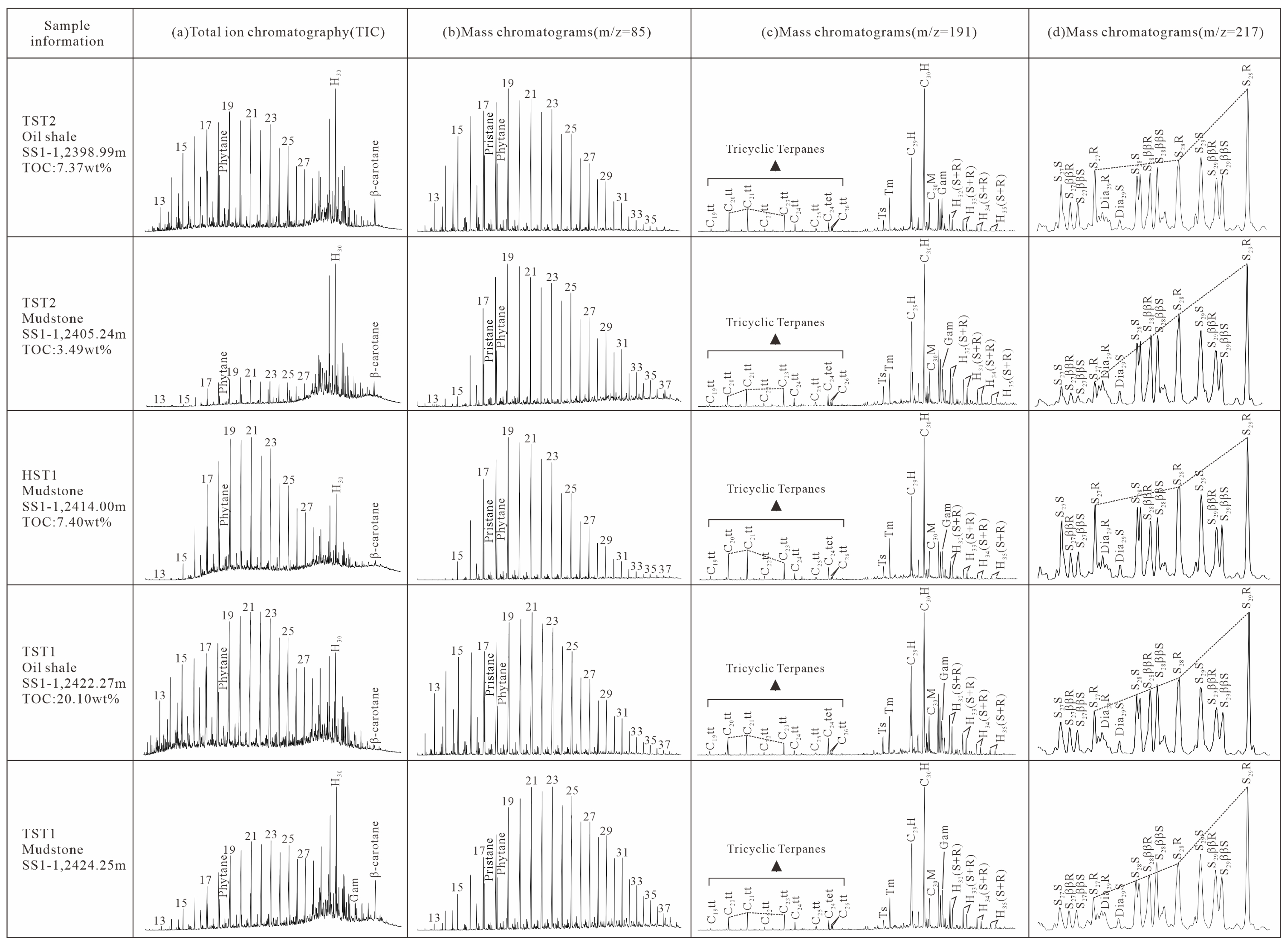
Table 1.
Abbreviations for labelled biomarker in Figure 6.
For isoprenoids, variations in Pr/Ph ratios are widely used to characterize depositional redox conditions [67,68,69]. In the P2p samples, Pr/Ph ratios mainly fall within the range of 0.7~1.8 (Figure 7), indicating dominantly dysoxic to anoxic depositional conditions across the studied interval. The average Pr/Ph values of the TST2 and TST1 oil shales are 1.38 and 1.23, respectively (Figure 7). In comparison, mudstone samples exhibit slightly greater variability, with average values of 1.48 and 1.10 in TST2 and TST1 and 1.03 and 1.24 in HST2 and HST1, respectively (Figure 7). Overall, SQ2 samples contain moderately higher Pr/Ph ratios than SQ1, suggesting subtle differences in redox conditions between the two sequences.
Figure 7.
Vertical variations in lithology, systems tracts, mineral composition, TOC, and selected biomarker parameters of well ST1 in the Pingdiquan Formation. The biomarker parameters include CPI, (C21 + C22)/(C28 + C29), Pr/n-C17, Ph/n-C18, Pr/Ph, gammacerane index (GI), C19TT/C23TT, and (C27 + C28)/C29 steranes, reflecting variations in terrigenous OM input, redox conditions, salinity, and algal contribution among different systems tracts. The orange arrows indicate the trends of paleoclimatic evolution. Gray shading highlights the intervals of organic-rich sample distribution. The dashed lines indicate the boundaries between different systems tracts.
Redox interpretations are further supported by Pr/n-C17 versus Ph/n-C18 cross-plot relationships [70]. In TST2 oil shale, Pr/n-C17 ranges from 2.51 to 3.00 (avg. 2.81) and Ph/n-C18 from 2.18 to 2.58 (avg. 2.38), whereas much lower values in the TST1 oil shale (0.42 and 0.40) are consistent with more strongly reducing conditions. Mudstones exhibit broader variability, with Pr/n-C17 and Ph/n-C18 averaging 0.78 and 0.48 in TST2, 5.71 and 3.46 in TST1, 0.96 and 0.81 in HST2, and 1.32 and 1.23 in HST1 (Figure 7).
4.3.2. Terpanes and Their Analogues
The terpanes distributions of the P2p source rocks show systematic variations among different systems tracts. The average gammacerane index (GI, gammacerane/17α21βC30 hopane) [71,72,73] shows a clear decreasing trend from the lower to upper intervals of the P2p Formation (Figure 7). GI averages 1.50 in the TST1 mudstone, 0.22 in the TST1 oil shale, and 0.11 in the HST1 mudstone and remains relatively low and uniform in the TST2 mudstone, TST2 oil shale, and HST2 mudstone, with average values of 0.13, 0.15, and 0.13, respectively (Figure 7).
The C19/C23 tricyclic terpane ratios (C19/C23TT) also vary vertically. The TST1 mudstone, TST1 oil shale, and HST1 mudstone show ratios of 0.02~0.16 (avg. 0.10), 0.31, and 0.04~0.32 (avg. 0.12), respectively. The ratios for the TST2 mudstone, TST2 oil shale, and HST2 mudstone are 0.03~0.52 (avg. 0.25), 0.05~0.09 (avg. 0.06), and 0.20~0.74 (avg. 0.48), respectively (Figure 7).
Overall, both GI and C19/C23TT display distinct stratigraphic variability within the P2p, reflecting differences in terpane distributions between oil shales and mudstones and among the systems tracts.
4.3.3. Sterane and Their Analogues
Biomarker chromatograms for the P2p samples generally display similar characteristics: the C29 sterane content is the highest and the C27 sterane content the lowest, with variations observed among source rocks with different systems tracts (Figure 6).
In the TST2 oil shale, the proportions of C27, C28, and C29 regular steranes range from 17.78%~23.21% (avg. 20.07%), 35.55%~45.59% (avg. 39.61%), and 35.20%~44.52% (avg. 40.32%), respectively. In the TST1 oil shale, the corresponding proportions are 15.23%, 43.47%, and 41.30%.
The mudstone samples exhibit broader compositional ranges. The TST2 mudstone contains 17.41%~34.72% (avg. 21.99%) C27, 8.52%~41.82% (avg. 30.82%) C28, and 39.18%~56.76% (avg. 47.19%) C29 regular steranes, whereas the TST1 mudstone contains 13.57%~31.39% (avg. 17.63%) C27, 18.54%~37.66% (avg. 28.68%) C28, and 48.50%~57.96% (avg. 53.69%) C29 regular steranes. In the HST2 mudstone, the C27, C28, and C29 sterane components range from 15.29%~36.22% (avg. 24.98%), 5.26%~45.04% (avg. 30.95%), and 37.31%~58.52% (avg. 44.07%), respectively, while the HST1 mudstone contains 14.86%~27.26% (avg. 20.04%) C27, 23.47~42.30% (avg. 35.19%) C28, and 38.89%~57.52% (avg. 44.77%) C29 regular steranes. Comparatively, the oil shale intervals are characterized by a higher proportion of C28 regular steranes.
The (C27 + C28)/C29 sterane ratios also vary across systems tracts. The ratios of the TST2 and TST1 oil shale samples range from 1.41 to 1.84 (avg. 1.50) and 1.42, respectively. In contrast, the ratios for the TST2 and TST1 mudstone are lower, ranging from 0.76 to 1.55 (avg. 1.16) and 0.73 to 1.06 (avg. 0.87), respectively. The HST2 and HST1 mudstone samples exhibit broader ranges of 0.71~1.68 (avg. 1.34) and 0.74~1.57 (avg. 1.28), respectively (Figure 7). Overall, oil shale samples are characterized by consistently higher (C27 + C28)/C29 sterane ratios than mudstones, indicating systematic differences in sterane composition across systems tracts.
4.4. Major and Trace Elements
In the studied samples, several major elements exhibit systematic relationships that provide a basis for evaluating proxy applicability. Al2O3 shows a significant negative correlation with CaO (r = −0.79, P(a) < 0.01, n = 35), whereas SiO2 displays a positive correlation with Al2O3 (r = +0.62, P(a) < 0.01, n = 35). In contrast, CaO shows no significant correlations with Ba (r = −0.06), Mo (r = +0.09), V (r = +0.16), Ni (r = −0.06), or Co (r = −0.28) (P(a) > 0.10; n = 35). These relationships indicate that CaO enrichment varies independently of most trace elements, whereas Al2O3 covaries closely with silicate components. It is necessary for the subsequent application of elemental proxies in paleoenvironmental reconstruction.
To interpret element variations in terms of paleoclimate and chemical weathering, several established geochemical proxies were applied. C-values [74,75,76], Sr/Cu ratios [17,77,78], and carbonate contents [79] were used to reflect relative climatic aridity, whereas Al2O3 contents [80,81,82,83], CIA values [84], and Rb/Sr ratios [85] provide constraints on chemical weathering intensity and terrigenous input [86]. Together, these proxies allow assessment of paleoenvironmental variations during source rock deposition.
The proportion of Al2O3 and CIA in the samples varies significantly among different systems tracts. The average Al2O3 contents and CIA of the TST2 oil shale, TST1 oil shale, TST2 mudstone, TST1 mudstone, HST2 mudstone, and HST1 mudstone are 13.58% and 58.41, 8.46% and 48.60, 14.49% and 61.63, 11.72% and 57.09, 15.86% and 71.09, 13.72% and 59.57, respectively, showing distinct variations in chemical weathering intensity among different systems tracts (Figure 8).
Figure 8.
Vertical variations in lithology, systems tracts, and elemental geochemical parameters of well ST1 in the Pingdiquan Formation, including CIA, Sr/Cu, Rb/Sr, C-value, Al2O3, Sr/Ba, V/(V + Ni), MoEF, UEF, H, P/Ti, Cu/Ti, and Cu/Al. These element proxies reflect variations in paleoclimate, salinity, redox conditions, water depth, and productivity among different systems tracts. The orange arrows indicate the trends of paleoclimatic evolution. Gray shading highlights the intervals of organic-rich sample distribution. The green-to-red color gradient in the climate column represents the transition from relatively warm and humid to arid conditions. The dashed lines indicate the boundaries between different systems tracts.
In addition, the trace element ratios (C-value, Sr/Cu, Rb/Sr, V/(V + Ni), and Cu/Ti) exhibit systematic variations among mudstone and oil shale from different systems tracts. The average C-value of the TST2 oil shale, TST1 oil shale, TST2 mudstone, TST1 mudstone, HST2 mudstone, and HST1 mudstone are 0.19, 0.03, 0.28, 0.18, 0.23, and 0.27, respectively (Figure 8). The C-value shows a variation trend similar to that of Al2O3 content. Compared with the mudstone of the HST, the oil shale of the TST interval is characterized by notably lower Sr/Cu and Rb/Sr ratios but higher V/(V + Ni), MoEF, UEF, and paleowater depth (H) values (Figure 8). However, no obvious trend is seen in the Sr/Ba ratio (Figure 8).
Redox-sensitive trace element enrichment factors show systematic variation across systems tracts. MoEF and UEF values are highest in the SQ1 interval, particularly within TST1, and notably lower in SQ2 (Figure 8 and Figure 9b). The TST1 oil shale displays the strongest enrichment (MoEF: 16.24; UEF: 2.09), followed by the TST1 mudstone and HST1 mudstone (MoEF: 12.87 and 8.44; UEF: 2.16 and 1.17, respectively). In contrast, lower values characterize the TST2 oil shale, TST2 mudstone, and HST2 mudstone (MoEF: 5.64, 3.65, and 1.73; UEF: 1.02, 1.14, and 0.77). In contrast, V/(V + Ni) values show minimal stratigraphic variation, averaging 0.76 in SQ1 and 0.78 in SQ2 (Figure 8).
Figure 9.
Cross plots of paleoenvironmental proxies for samples from different systems tracts of the Pingdiquan Formation. (a) Paleowater depth (H) versus Sr/Ba; the arrow indicates the trend of increasing water depth and decreasing salinity. (b) MoEF versus UEF; the gray shaded fields define the suboxic, anoxic, and euxinic redox zones; arrows indicate the evolutionary trends of SQ1 (blue) and SQ2 (orange) samples. (c) Phytane/n-C18 versus pristane/n-C17; diagonal lines define fields of different OM sources and depositional conditions. (d) Pristane/phytane versus gammacerane index (GI); the wavy lines on the vertical axis indicate a break in scale, with different intervals plotted at different scales to better display the data distribution; the blue shaded field illustrates the overall trend of salinity evolution from high-salinity conditions during TST1 mudstone deposition to progressively decreasing salinity in subsequent intervals.
Cu/Ti ratio also varies considerably among different systems tracts and lithologies. The average Cu/Ti ratios of the TST2 and TST1 oil shale are 131.94 and 149.81, respectively, which are significantly higher than those of the TST2 (avg. 106.81), HST2 (avg. 49.91), and HST1 (avg. 113.78) mudstones, although a high value (150.64) also occurs in some TST1 mudstone layers (Figure 8).
To further characterize lake hydrological conditions, paleowater depth was quantitatively estimated using the Co-La elemental method [69,87]. The calculated paleowater depths of the TST1 mudstone, TST1 oil shale, and HST1 mudstone are 37.14 m, 39.50 m, and 25.48 m, respectively. In comparison, the paleowater depths of the TST2 mudstone, TST2 oil shale, and HST2 mudstone are 30.73 m, 30.17 m, and 22.64 m, respectively. These data define a fluctuating pattern of paleowater depth, which is interpreted mainly in terms of relative changes rather than absolute values because of uncertainties inherent in the Co-La method. The Sr/Ba ratios [88,89,90] display pronounced differences among systems tracts. The average Sr/Ba ratios of the HST2 mudstone, TST2 oil shale, TST2 mudstone, HST1 mudstone, TST1 oil shale, and TST1 mudstone are 0.51, 1.72, 0.94, 1.05, 0.41, and 2.42, respectively (Figure 9a).
5. Discussion
5.1. Climatic Transition and Lake Hydrological Evolution
Paleoclimate acted as an upstream boundary condition that regulated terrigenous input and chemical weathering intensity, primarily through its influence on runoff-evaporation balance and basin-scale hydrological processes [17,91,92,93]. These hydrologically mediated responses subsequently influenced lake-water properties, including paleosalinity and water-column stratification [10,94,95]. Integrated mineralogical, elemental, and geochemical proxies indicate that the P2p records a clear climatic transition from arid conditions during SQ1 to more humid conditions during SQ2, accompanied by systematic changes in lake hydrology.
Multiple paleoclimatic indicators (e.g., CIA, C-values) consistently suggest weaker chemical weathering and stronger aridity in SQ1 than in SQ2 (Figure 8 and Figure 10). The lowest CIA, C-value, and Al2O3 contents occur in the TST1 oil shale, representing the driest interval of the P2p Formation, whereas higher values in SQ2 reflect enhanced weathering and increased humidity (Figure 10). These results demonstrate that SQ1 developed under persistently arid conditions, while SQ2 marks a climatic transition toward semi-arid to semi-humid environments (Figure 10).
Figure 10.
Cross plots of paleoclimate proxies for samples from different systems tracts of the Pingdiquan Formation. (a) Sr/Cu versus Rb/Sr; (b) Al2O3 versus CIA. In both plots, the orange and blue shaded fields represent the sample distributions of SQ2 and SQ1, respectively; the overlapping zone indicates samples with transitional climatic characteristics. Arrows indicate the trend toward more arid climatic conditions, characterized by higher Sr/Cu, lower Rb/Sr, lower Al2O3, and lower CIA values. SQ1 samples generally plot in the more arid field, whereas SQ2 samples are shifted toward more humid conditions.
Lake hydrology responded differently to this climatic shift in the two sequences (Figure 8 and Figure 9a). During SQ1, Sr/Ba ratios and GI indices indicate an overall saline lake setting, interrupted by a pronounced freshening event in TST1. This interval is characterized by increased lake level and reduced salinity, reflecting short-term humidification superimposed on an arid climatic background.
Following this maximum lake stage, the transition from TST1 to HST1 was accompanied by a gradual fall in lake level and enhanced terrigenous dilution under continued arid conditions, indicating a progressive attenuation of hydrological stratification rather than an abrupt environmental shift. The subsequent transition from HST1 to TST2 marks the initiation of the SQ1 to SQ2 climatic shift, when renewed transgression occurred under increasingly humid conditions and was accompanied by a reorganization of basin hydrology.
In contrast, SQ2 shows an opposite trend, although the regional climate became more humid and average salinity decreased relative to SQ1, salinity increased during TST2 despite relatively stable and deepened paleowater depths. This pattern suggests that transgression enhanced the inundation of marginal areas and reduced outflow efficiency, transforming the lake into a more hydrologically restricted system. Combined with evaporation over an expanded lake surface, these processes promoted salt accumulation even under relatively humid climatic conditions.
The contrasting hydrological behaviors of SQ1 and SQ2 indicate that similar transgressive settings can produce fundamentally different hydrological states, depending on the balance between climate-modulated water input and basin restriction. This climate modulated hydrological coupling provided the environmental framework for subsequent variations in redox conditions and OM accumulation discussed below.
5.2. Controls on OM Enrichment: Source, Productivity, and Preservation
OM accumulation in lacustrine basins reflects the combined influence of OM source, supply intensity, and preservation efficiency, all operating within a climate and hydrology modulated depositional framework [96,97]. In saline lacustrine systems, endogenous OM is predominantly derived from aquatic primary producers, whereas terrigenous input provides a secondary contribution that may dilute or modify OM quality [98]. Clarifying the hierarchy and interaction of these controls is therefore essential for understanding oil shale enrichment in the P2p Formation.
The low thermal maturity of source rocks (average Ro = 0.79%) indicates that biomarker distributions have undergone minimal thermal overprinting, allowing reliable reconstruction of OM sources using n-alkane compositions [99,100]. Multiple independent proxies consistently demonstrate that OM in both oil shales and associated mudstones is dominated by aquatic algal input, with only minor contributions from terrestrial higher plants. This interpretation is supported by abundant alginite observed in thin sections (Figure 5), short-chain-dominated n-alkane distributions (Figure 6), and high (n-C21+22)/(n-C28+29) ratios (Figure 7), all of which indicate a predominantly lacustrine algal origin.
Regular sterane distributions provide further constraints on the nature of aquatic OM sources [101,102,103,104,105,106]. Enrichment of C28 regular steranes in oil shales, together with their strong positive correlation with short-chain n-alkanes and inverse relationship with C27 steranes (Figure 11a,b), indicates enhanced contributions from specific planktonic algal communities during oil shale deposition. Although C28 steranes are commonly associated with cyanobacteria-related lipid inputs [107], contributions from other algal or microbial sources cannot be excluded. Petrographic observations of finely laminated fabrics and EPS-related textures (Figure 5n,p), combined with the Permian depositional age and regional comparisons [108,109,110,111,112,113], suggest that cyanobacteria-dominated planktonic communities were an important, but not exclusive, component of the algal OM pool.
Figure 11.
(a) Cross plot of n-C21+22/n-C28+29 versus C27 regular sterane content. (b) Cross plot of n-C21+22/n-C28+29 versus C28 regular sterane content. In (a,b), orange and blue shaded fields represent the sample distributions of SQ2 and SQ1, respectively; the overlapping zone indicates samples with similar TOM input characteristics; curves illustrate the overall variation trends. (c) Cross plot of Cu/Ti versus Cu/Al; the dashed line represents the linear regression (y = 0.0473x + 0.1169, R2 = 0.8122). All plots are for samples from different systems tracts.
Accordingly, C28 regular steranes are regarded here as an effective proxy for aquatic algal input. Their systematic enrichment in both TST1 and TST2 oil shales, compared with mudstones, indicates recurring phases of enhanced algal contribution during transgressive stages, reflecting hydrologically mediated increases in nutrient recycling efficiency, which favored the accumulation of hydrogen-rich organic precursors for shale oil generation. Mudstones, though still dominated by aquatic OM, record a relatively greater terrestrial influence, consistent with weaker algal input and lower preservation efficiency. Overall, the predominance of algal-derived OM with the relatively deep, stratified, and poorly oxygenated lacustrine conditions reconstructed for SQ1 and SQ2 reflects a coupled depositional system that favored algal proliferation and selective OM preservation.
Variations in OM supply were reflected by elemental ratios involving biologically active elements such as phosphorus (P) and copper (Cu), normalized to lithogenic elements (Ti, Al) to reduce detrital dilution effects [114,115,116,117]. Elevated P/Ti and Cu/Ti ratios in oil shales relative to mudstones (Figure 11c) indicate increased OM accumulation during these intervals. In addition, volcanic ash inputs and potential hydrothermal activity, which have been documented in the adjacent Santanghu Basin during the Permian [10,28], may have episodically supplied additional nutrients to the lake, contributing to pulses of enhanced algal productivity during oil shale deposition. However, given nutrient limitation in cyanobacteria-dominated systems and the sensitivity of Cu enrichment to redox-controlled preservation and sulfide fixation [118,119], these ratios are interpreted as reflecting relative variations in OM supply and accumulation under coupled productivity-preservation control, rather than direct measures of primary productivity alone.
Redox-sensitive trace element proxies (e.g., MoEF and UEF) indicate anoxic bottom-water conditions during oil shale deposition, which would have limited aerobic degradation of OM [100,115,120,121,122,123] (Figure 9b,c). Oil shales also formed during relatively deeper lake stages (Figure 9a), favoring water-column stratification and reduced vertical mixing. Elevated salinity further strengthened density stratification, restricting bottom-water ventilation and enhancing OM retention (Figure 9d).
In summary, preferential oil shale development in the P2p resulted from the convergence of three favorable conditions: (1) dominance of algal-derived OM, particularly from simple planktonic communities; (2) enhanced OM supply and accumulation during transgressive phases; (3) effective preservation promoted by stratified and reducing bottom-water conditions.
5.3. Dominant Controls on OM Enrichment
Although multiple environmental factors influenced OM accumulation in the P2p Formation, their relative contributions differ markedly (Figure 12 and Figure 13). Correlation analysis shows generally weak to moderate relationships between TOC and individual paleoenvironmental proxies, indicating that these variables acted mainly as boundary conditions rather than as direct quantitative controls on OM enrichment. Among them, paleoclimate proxies (e.g., Al2O3, Rb/Sr, and C-value) exhibit stronger correlations with TOC than paleosalinity (GI, Sr/Ba), paleowater depth (H), or redox indicators (MoEF, UEF, Pr/Ph), suggesting that climatic signals are efficiently transmitted to OM accumulation through their modulation of basin hydrology, sediment supply, and redox framework (Figure 12).
Figure 12.
Cross plots showing the correlations between TOC and paleoenvironmental parameters for samples from different systems tracts of the Pingdiquan Formation, including paleoclimate indicators ((a–c): Al2O3, Rb/Sr, C-value), paleosalinity indicators ((d,e): Gammacerane index, Sr/Ba), paleowater depth ((f): H), and redox indicators ((g–i): MoEF, UEF, Pr/Ph). Dashed curves or lines represent regression trends for each parameter; the corresponding equations and R2 values are shown in each panel. The right-hand vertical panels display the average values of each parameter for different systems tracts (OS: oil shale; MS: mudstone), illustrating the systematic differences in paleoenvironmental conditions among systems tracts. Arrows indicate the trends toward more arid climatic conditions (a–c), higher salinity (d,e), greater water depth (f), and more anoxic conditions (g–i).
Figure 13.
Cross plots showing the correlations between TOC and geochemical parameters reflecting organic matter source ((a–d): n-C21+22/n-C28+29, C27+28/C29 regular sterane, C28 regular sterane, C27 regular sterane) and paleoproductivity ((e,f): P/Ti, Cu/Ti) for the source rocks of different systems tracts. Dashed lines represent regression trends with equations and R2 values shown in each panel. The right-hand vertical panels display the average values of each parameter for different systems tracts (OS: oil shale; MS: mudstone).
Periods of arid climate were characterized by weak chemical weathering and minimal detrital influx, resulting in reduced dilution and the development of high-quality oil shales (e.g., TST1). It should be noted that under arid conditions, reduced chemical weathering primarily acted to minimize terrigenous dilution of aquatic OM rather than to suppress algal productivity. Algal enrichment during TST1 was sustained by deep water, low sedimentation rates, and intense density stratification, with productivity supported by limited internal nutrient recycling within the stratified water column. Therefore, preservation efficiency rather than productivity was the dominant control on the exceptionally high TOC values recorded in TST1, and reduced chemical weathering indirectly promoted OM enrichment by minimizing the dilution effect. In contrast, more humid conditions promoted increased terrigenous input and stronger dilution, producing relatively OM-poor mudstones (e.g., HST2). The potential dilution effect associated with evaporite formation under extreme aridity appears to have been minor in the P2p Formation [124,125], as indicated by the scarcity of dolomite and the generally high TOC contents.
At a more proximal level, biological factors exerted the most direct influence on TOC variability. Strong positive correlations between TOC and short-chain n-alkane ratios, C27+28/C29 steranes, and particularly C28 regular steranes (Figure 13a–c) indicate that algal-derived OM input dominated TOC variations, whereas the negative relationship between C27 steranes and TOC reflects the relative dilution of terrestrial signatures during intervals of intensified algal contribution (Figure 13d). These results demonstrate that OM source strength, especially algal input, was the primary proximal control on OM enrichment.
Productivity- and accumulation-related elemental ratios (P/Ti and Cu/Ti) are also positively correlated with TOC (Figure 13e,f), indicating that OM accumulation increased during intervals of enhanced OM supply. The stronger TOC and Cu/Ti relationship relative to TOC and P/Ti is consistent with cyanobacteria-dominated production under low-phosphorus conditions [3,66], implying that Cu/Ti reflects combined effects of OM supply and preservation rather than primary productivity alone.
Physical and chemical depositional factors acted as secondary controls. Paleowater depth and redox conditions influenced OM preservation by regulating water-column stratification and bottom-water oxygenation [126] (Figure 12f), whereas salinity shows no simple linear relationship with TOC (Figure 12d,e). Instead, variations in salinity, whether increasing or decreasing, played an important role in establishing stable, density-stratified water columns that favored reducing bottom-water conditions and promoted OM enrichment.
Overall, OM enrichment in the P2p Formation was governed by a hierarchical control framework: algal-derived OM input was the most important proximal control on TOC variation, productivity and accumulation intensity exerted a secondary influence, and paleoclimate, paleowater depth, redox conditions, and salinity acted as distal or boundary controls that shaped preservation efficiency rather than directly determining TOC levels.
Specifically, paleoclimate operated through two hydrologically mediated pathways: by regulating terrigenous dilution and nutrient recycling efficiency, which influenced algal productivity; and by controlling lake-water stratification and bottom-water redox conditions through its modulation of salinity and water depth, which determined preservation efficiency.
5.4. Depositional Mechanism of Oil Shales
Integrated sedimentological, geochemical, and biomarker evidence indicates that the two oil shale intervals (TST1 and TST2) in the P2p Formation formed through distinct but convergent depositional mechanisms, reflecting different combinations of OM source, productivity, preservation efficiency, and hydrological behavior (Figure 14).
Figure 14.
Conceptual model illustrating the contrasting formation mechanisms of TST1 and TST2 oil shales in the Pingdiquan Formation. (a) TST2 oil shale formed under a humid climate, moderate paleowater depth (~30 m), and a salinization stage associated with hydrological restriction, with mixed algal-terrigenous OM input and high productivity under moderate water-column stratification. (b) TST1 oil shale formed under an arid climate coinciding with a freshening event and maximum lake level, with cyanobacteria-dominated algal production, minimal terrigenous input, and persistent bottom-water anoxia enabling strong preservation efficiency. The right-hand panels compare the main similarities and differences between TST1 and TST2 in terms of algal input, paleoproductivity, paleosalinity, and paleoclimate. The green solid lines represent the deposits of SQ2, the orange dashed lines represent the deposits of SQ1, and the dark gray shading in the background indicates the oil shale depositional intervals. In the conceptual diagrams, the blue arrows indicate terrestrial organic matter input (directed toward the lake) and primary productivity (directed downward into the water column).
During SQ2 (TST2; Figure 14a), oil shale deposition occurred under relatively humid climatic conditions but was associated with a salinization stage and intermediate lake depth. Hydrological restriction and enhanced water-column stratification promoted moderately reducing bottom-water conditions, while increased terrigenous input and mixed OM sources contributed to OM accumulation under comparatively weaker redox conditions, where moderate stratification and elevated OM flux enhanced burial efficiency despite less persistent anoxia. The relatively shallow paleowater depth (~30 m) during TST2 may have also facilitated water circulation to some extent, which could have further influenced bottom-water oxygenation and OM preservation efficiency. As a result, TST2 oil shales are characterized by relatively high TOC but lower OM quality compared with those formed during SQ1.
In contrast, during SQ1 (TST1; Figure 14b), oil shale formation took place under an overall arid climatic background but coincided with a pronounced freshening event and maximum lake level. These conditions favored intense cyanobacteria-dominated algal production and strengthened stratification, leading to persistent bottom-water anoxia and highly efficient OM preservation. In addition, weak chemical weathering and limited detrital influx reduced dilution, enabling the accumulation of high-quality, hydrogen-rich OM.
Mudstones represent intervals when one or more key conditions for oil shale accumulation were not simultaneously satisfied. In SQ1, mudstones were deposited both within TST1 and throughout HST1, reflecting periods when algal contribution and preservation efficiency weakened and dilution increased relative to the oil shale interval. In SQ2, mudstones dominate outside the TST2 oil shale interval and become especially common in HST2, where enhanced terrigenous influx and less stable stratification reduced OM preservation, yielding lower TOC and poorer source-rock quality.
These two enrichment modes demonstrate that transgression alone did not determine oil shale development. Instead, OM accumulation occurred where algal dominance, stratification strength, redox stability, and dilution balance intersected under sequence-specific climatic and hydrological regimes.
Beyond the basin scale, the depositional record of the P2P Formation provides a useful reference for understanding how lacustrine oil shales respond to different climatic backgrounds at a broader temporal and spatial scale. Comparable climate-modulated OM enrichment pathways have been documented in other continental basins. For instance, oil shales of the Eocene Green River Formation are commonly linked to salinity increase and chemocline shoaling under relatively drier climatic conditions [127]. In contrast, oil shales of the Eedemt Formation in the Khootiin Khotgor area are interpreted to have formed predominantly in freshwater lacustrine systems [128], where OM enrichment under more humid conditions. These comparisons suggest that lacustrine oil shale formation does not require a single climatic regime but instead reflects different climate-hydrology configurations that can generate favorable conditions for OM accumulation.
In this context, the P2p Formation provides a well-constrained Permian example illustrating how contrasting climatic settings can lead to the development of organic-rich lacustrine shales through different depositional pathways. These results can be generalized into two end-member models, humid salinization (oil shale development during TST2) and arid freshening (oil shale development during TST1). Together, these models emphasize the role of climate as a boundary condition that operates through basin hydrology, rather than as a direct control on OM enrichment. Such insights offer a useful framework for improving the prediction and exploration of lacustrine oil shale systems across regions characterized by diverse paleoclimatic and hydrological regimes.
6. Conclusions
- Two organic-rich intervals were identified in the Pingdiquan Formation (P2p) of the Shishugou Sag, corresponding to SQ1 and SQ2, respectively. Both intervals show relatively high TOC and good hydrocarbon generation potential. From SQ1 to SQ2, the depositional environment evolved from an overall arid to more humid climatic background, accompanied by a general decrease in salinity from saline to semi-fresh lacustrine conditions.
- Organic matter enrichment was jointly controlled by paleoclimate, lake hydrology, salinity, redox conditions, OM source, and preservation efficiency. Paleoclimate acted mainly as a background control by regulating hydrological conditions and terrigenous input. In TST1, OM enrichment was mainly associated with algal dominance, strong stratification, and efficient preservation under deep and anoxic lake conditions. In TST2, relatively high OM accumulation was achieved under more humid conditions through enhanced productivity and moderate preservation in a slightly saline and weakly reducing lake.
- Two end-member models of oil shale formation are recognized in the P2p: an arid freshening model for TST1 and a humid salinization model for TST2. These results indicate that organic-rich source rocks in continental saline lakes may develop under different climatic backgrounds, provided that favorable productivity and preservation conditions are established through climate-driven hydrological fluctuations.
Author Contributions
K.F.: investigation, data curation, software, writing—original draft. G.G.: conceptualization, project administration, supervision, writing—review and editing. X.J.: data curation, software. X.W.: conceptualization, methodology, supervision. M.Y.: validation, writing—review and editing. Z.J.: validation, supervision. J.K.: data curation, writing—review and editing. Y.Z.: software, validation. X.X.: writing—review and editing. Q.M.: data curation, validation. All authors have read and agreed to the published version of the manuscript.
Funding
This study was financially supported by the National Key Science and Technology Project of China: Hydrocarbon System and Accumulation Mechanisms of Conventional and Unconventional Petroleum in the Junggar Basin (Grant No. 2025ZD1400303).
Data Availability Statement
Data will be made available on request.
Acknowledgments
The authors sincerely thank the Tuha Oilfield Company of PetroChina for providing core and cuttings samples used in this study.
Conflicts of Interest
Authors Jilun Kang, Xiongfei Xu, and Qiang Ma are employees of PetroChina Tuha Oilfield Company, Hami 839009, China. The remaining authors declare that the research was conducted in the absence of any commercial or financial relationships that could be construed as a potential conflict of interest.
References
- Liu, B.; Song, Y.; Zhu, K.; Su, P.; Ye, X.; Zhao, W. Mineralogy and element geochemistry of salinized lacustrine organic-rich shale in the Middle Permian Santanghu Basin: Implications for paleoenvironment, provenance, tectonic setting and shale oil potential. Mar. Pet. Geol. 2020, 120, 104569. [Google Scholar] [CrossRef] [Scilit]
- Mcmahon, T.P.; Larson, T.E.; Zhang, T.; Shuster, M. Geologic characteristics, exploration and production progress of shale oil and gas in the United States: An overview. Pet. Explor. Dev. 2024, 51, 925–948. [Google Scholar] [CrossRef] [Scilit]
- Yu, M.; Gao, G.; Ma, W.-Y.; Liu, M.; Zhou, N.; Zhang, Y.-J.; He, D.; Fan, K.-T.; Guo, L.-L.-B.; Li, J. Hydrocarbon generation differences of shales composed of green algal and cyanobacteria: A case study of Mesozoic and Cenozoic saline lacustrine shales in Junggar Basin, NW China. Pet. Sci. 2023, 20, 3348–3362. [Google Scholar] [CrossRef] [Scilit]
- Han, X.; Kulaots, I.; Jiang, X.; Suuberg, E.M. Review of oil shale semicoke and its combustion utilization. Fuel 2014, 126, 143–161. [Google Scholar] [CrossRef] [Scilit]
- Wang, Y.; Wu, J.; Luo, Q.; Zhang, J.; Chen, Z.; Yang, J. Maceral-specific evolution of molecular structure and porosity from the early oil to dry gas window in black shales. Mar. Pet. Geol. 2025, 182, 107609. [Google Scholar] [CrossRef] [Scilit]
- Wood, D.A. Improved approach for modelling reaction kinetics for organic-rich shales, particularly oil shales. Geoenergy Sci. Eng. 2026, 256, 214177. [Google Scholar] [CrossRef] [Scilit]
- Hackley, P.C.; Cardott, B.J. Application of organic petrography in North American shale petroleum systems: A review. Int. J. Coal Geol. 2016, 163, 8–51. [Google Scholar] [CrossRef] [Scilit]
- Liu, B.; Bechtel, A.; Gross, D.; Fu, X.; Li, X.; Sachsenhofer, R.F. Middle Permian environmental changes and shale oil potential evidenced by high-resolution organic petrology, geochemistry and mineral composition of the sediments in the Santanghu Basin, Northwest China. Int. J. Coal Geol. 2018, 185, 119–137. [Google Scholar] [CrossRef] [Scilit]
- Meyers, P.A.; Ishiwatari, R. Lacustrine organic geochemistry—An overview of indicators of organic matter sources and diagenesis in lake sediments. Org. Geochem. 1993, 20, 867–900. [Google Scholar] [CrossRef] [Scilit]
- Pan, Y.; Huang, Z.; Li, T.; Guo, X.; Xu, X.; Chen, X. Environmental response to volcanic activity and its effect on organic matter enrichment in the Permian Lucaogou Formation of the Malang Sag, Santanghu Basin, Northwest China. Palaeogeogr. Palaeoclimatol. Palaeoecol. 2020, 560, 110024. [Google Scholar] [CrossRef] [Scilit]
- Algeo, T.J.; Li, C. Redox classification and calibration of redox thresholds in sedimentary systems. Geochim. Cosmochim. Acta 2020, 287, 8–26. [Google Scholar] [CrossRef] [Scilit]
- Castañeda, I.S.; Schouten, S. A review of molecular organic proxies for examining modern and ancient lacustrine environments. Quat. Sci. Rev. 2011, 30, 2851–2891. [Google Scholar] [CrossRef] [Scilit]
- Qian, L.; Ding, X.; Liu, H.; Jiang, W.; Yiming, A.; Jiang, Z.; Zha, M. Reconstructing salinity and redox variation of permian Lucaogou Formation in the Jimsar Sag, the Junggar Basin, China: Combining trace elements and biomarkers as proxies. Mar. Pet. Geol. 2024, 162, 106737. [Google Scholar] [CrossRef] [Scilit]
- Xie, W.; Tan, J.; Wang, W.; Schulz, H.M.; Liu, Z.; Kang, X.; Wang, Y.; Shahzad, A.; Jan, I.U. Middle Jurassic lacustrine source rocks controlled by an aridification event: A case study in the northern Qaidam Basin (NW China). Int. J. Coal Geol. 2021, 242, 103779. [Google Scholar] [CrossRef] [Scilit]
- Zeng, W.; Wang, B.; Chen, X.; Fu, G.; Zhang, Z.; Huang, Z. Geochemical characteristics and formation mechanism of organic-rich source rocks of mixed sedimentary strata in continental saline lacustrine basin: A case study of Permian Pingdiquan formation in the Shishugou Sag, Junggar Basin, Northwest China. Int. J. Coal Geol. 2024, 287, 104508. [Google Scholar] [CrossRef] [Scilit]
- Liu, G.; Wang, G.Z.; Li, N.; He, H.L.; Lu, N.N.; Lei, Q.; Wang, Z.A. Characteristics and geological significance of carbon and oxygen isotopes of the Permian Lucaogou Formation dolomite in the southern Junggar Basin, northwestern China. J. Palaeogeogr. 2024, 13, 862–882. [Google Scholar] [CrossRef] [Scilit]
- Mansour, A.; Wagreich, M. Earth system changes during the cooling greenhouse phase of the Late Cretaceous: Coniacian-Santonian OAE3 subevents and fundamental variations in organic carbon deposition. Earth-Sci. Rev. 2022, 229, 104022. [Google Scholar] [CrossRef] [Scilit]
- Mansour, A.; Wagreich, M.; Tahoun, S.S.; Ahmed, M.S.; Gentzis, T. Paleoredox Conditions, Paleoproductivity, and Terrigenous Sediment Influx of the Lower-Middle Cenomanian Strata in the Abu Gharadig Basin, Northern Egypt. Minerals 2024, 14, 632. [Google Scholar] [CrossRef] [Scilit]
- Donohue, C.M.; Barrie, C.D. A review of the Bakken petroleum systems in the United States and Canada: Recognizing the importance of the Middle Member play. AAPG Bull. 2021, 105, 1847–1866. [Google Scholar] [CrossRef] [Scilit]
- Katz, B.; Lin, F. Lacustrine basin unconventional resource plays: Key differences. Mar. Pet. Geol. 2014, 56, 255–265. [Google Scholar] [CrossRef] [Scilit]
- Lin, D.; Xi, Z.; Tang, S.; Lash, G.G.; Chen, Y.; Zhang, Q.; Yang, X.; Jia, T. New insights into controlling factors of organic matter enrichment in Carboniferous–Permian shales based on machine learning. GSA Bull. 2025, 137, 2846–2866. [Google Scholar] [CrossRef] [Scilit]
- Loucks, R.G. Multiscale reservoir characterization and analysis of gravity-flow slope deposits in the early Permian Leonardian Third Bone Spring Sandstone and Guadalupian Upper Avalon Shale of the eastern Delaware Basin, U.S.A.: Insights into unconventional resource reservoirs. Mar. Pet. Geol. 2025, 179, 107432. [Google Scholar] [CrossRef] [Scilit]
- Soeder, D.J. The successful development of gas and oil resources from shales in North America. J. Pet. Sci. Eng. 2018, 163, 399–420. [Google Scholar] [CrossRef] [Scilit]
- Synnott, D.P.; Dewing, K.; Sanei, H.; Pedersen, P.K.; Ardakani, O.H. Influence of refractory organic matter on source rock hydrocarbon potential: A case study from the Second White Specks and Belle Fourche formations, Alberta, Canada. Mar. Pet. Geol. 2017, 85, 220–232. [Google Scholar] [CrossRef] [Scilit]
- Liu, D.; Fan, Q.; Zhang, C.; Gao, Y.; Du, W.; Song, Y.; Zhang, Z.; Luo, Q.; Jiang, Z.; Huang, Z. Paleoenvironment evolution of the Permian Lucaogou Formation in the southern Junggar Basin, NW China. Palaeogeogr. Palaeoclimatol. Palaeoecol. 2022, 603, 111198. [Google Scholar] [CrossRef] [Scilit]
- Ning, Y.; Liu, H.; Zavala, C.; Chen, H.; Shi, W.; Lan, X.; Zhou, L. The impact of extensional and strike-slip composite tectonic activity on the development of fine-grained sedimentary rocks and the enrichment of organic matter in lacustrine rift basin: Insights from the Paleogene of the Shanan Sag, Bohai Offshore Basin. Mar. Pet. Geol. 2025, 182, 107574. [Google Scholar] [CrossRef] [Scilit]
- Wu, Z.; Grohmann, S.; Littke, R.; Guo, T.; He, S.; Baniasad, A. Organic petrologic and geochemical characterization of petroleum source rocks in the Middle Jurassic Dameigou Formation, Qaidam Basin, northwestern China: Insights into paleo-depositional environment and organic matter accumulation. Int. J. Coal Geol. 2022, 259, 104038. [Google Scholar] [CrossRef] [Scilit]
- Yu, M.; Gao, G.; Liu, M.; Liang, H.; Kang, J.-L.; Xu, X.-F.; Zhao, X.-Y. Sedimentary environment shift and organic matter enrichment mechanism in response to volcanic ash influence: A case study of the Permian Lucaogou Formation, Santanghu Basin, NW China. J. Palaeogeogr. 2024, 13, 793–822. [Google Scholar] [CrossRef] [Scilit]
- Liu, S.; Gao, G.; Shi, X.; Gang, W.; Xiang, B.; Wang, M.; Zhao, W. Geochemical constraints on the hydrocarbon generation and expulsion in source rocks with different primary organic matter compositions: A case study on the Lucaogou Formation in the Jimusaer Sag, Junggar Basin, Northwest China. Org. Geochem. 2025, 202, 104952. [Google Scholar] [CrossRef] [Scilit]
- Lu, M.; Duan, G.; Zhang, T.; Liu, N.; Song, Y.; Zhang, Z.; Qiao, J.; Wang, Z.; Fang, Z.; Luo, Q. Influences of paleoclimatic changes on organic matter enrichment mechanisms in freshwater and saline lacustrine oil shales in China: A machine learning approach. Earth-Sci. Rev. 2025, 262, 105061. [Google Scholar] [CrossRef] [Scilit]
- Zhang, S.; Liu, C.; Liang, H.; Jia, L.; Bai, J.; Zhang, L.; Wang, J. Mineralogical composition and organic matter characteristics of lacustrine fine-grained volcanic-hydrothermal sedimentary rocks: A data-driven analytics for the second member of Permian Lucaogou Formation, Santanghu Basin, NW China. Mar. Pet. Geol. 2021, 126, 104920. [Google Scholar] [CrossRef] [Scilit]
- Gao, Y.; Huang, H.; Tao, H.; Carroll, A.R.; Qin, J.; Chen, J.; Yuan, X.; Wang, C. Paleoenvironmental setting, mechanism and consequence of massive organic carbon burial in the Permian Junggar Basin, NW China. J. Asian Earth Sci. 2020, 194, 104222. [Google Scholar] [CrossRef] [Scilit]
- Wu, A.; Cao, J.; Zhang, J.; Hu, W.; Wang, Y.; Zhang, C.; Tang, Y. Linkage of paleolake to climate change during the Early Permian Artinskian warming. Gondwana Res. 2025, 148, 125–138. [Google Scholar] [CrossRef] [Scilit]
- Gong, D.; Miao, Y.; Chen, X.; Gou, H.; Lin, T.; Li, D.; Yang, R.; Han, Y. Hydrocarbon-generating potential of the Middle Permian Lucaogou source rock in the eastern Junggar Basin, China. J. Nat. Gas Geosci. 2024, 9, 265–279. [Google Scholar] [CrossRef] [Scilit]
- Liu, Y.; Zhang, W.; Yang, X.; Lin, H. Geochemical characterization and evaluation of shale oil bearing characteristics of Permian Pingdiquan Formation in eastern Junggar Basin. Unconv. Resour. 2025, 7, 100205. [Google Scholar] [CrossRef] [Scilit]
- Yu, S.; Wang, X.; Xiang, B.; Liao, J.; Wang, J.; Li, E.; Yan, Y.; Cai, Y.; Zou, Y.; Pan, C. Organic geochemistry of Carboniferous source rocks and their generated oils from the Eastern Junggar Basin, NW China. Org. Geochem. 2014, 77, 72–88. [Google Scholar] [CrossRef] [Scilit]
- Liu, S.; Liu, B.; Tang, S.; Zhao, C.; Tan, F.; Xi, Z.; Du, F. Palaeoenvironmental and tectonic controls on organic matter enrichment in the Middle Jurassic Dameigou Formation (Qaidam Basin, North China). Palaeogeogr. Palaeoclimatol. Palaeoecol. 2022, 585, 110747. [Google Scholar] [CrossRef] [Scilit]
- Meng, Z.; Liu, Y.; Jiao, X.; Ma, L.; Zhou, D.; Li, H.; Cao, Q.; Zhao, M.; Yang, Y. Petrological and organic geochemical characteristics of the Permian Lucaogou Formation in the Jimsar Sag, Junggar Basin, NW China: Implications on the relationship between hydrocarbon accumulation and volcanic-hydrothermal activities. J. Pet. Sci. Eng. 2022, 210, 110078. [Google Scholar] [CrossRef] [Scilit]
- Xu, S.; Wang, Y.; Bai, N.; Wu, S.; Liu, B. Organic matter enrichment mechanism in saline lacustrine basins: A review. Geol. J. 2024, 59, 155–168. [Google Scholar] [CrossRef] [Scilit]
- Chen, Y.; Zhu, Z.; Zhang, L. Control actions of sedimentary environments and sedimentation rates on lacustrine oil shale distribution, an example of the oil shale in the Upper Triassic Yanchang Formation, southeastern Ordos Basin (NW China). Mar. Pet. Geol. 2019, 102, 508–520. [Google Scholar] [CrossRef] [Scilit]
- Li, P.; Liu, Z.-B.; Bi, H.; Jiang, T.; Bian, R.-K.; Wang, P.-W.; Shang, X.-Y. Differences in and factors controlling organic matter enrichment in the Ziliujing Formation shale in the Sichuan Basin. Pet. Sci. 2024, 21, 77–86. [Google Scholar] [CrossRef] [Scilit]
- Cao, Z.; Liu, G.; Kong, Y.; Wang, C.; Niu, Z.; Zhang, J.; Geng, C.; Shan, X.; Wei, Z. Lacustrine tight oil accumulation characteristics: Permian Lucaogou Formation in Jimusaer Sag, Junggar Basin. Int. J. Coal Geol. 2016, 153, 37–51. [Google Scholar] [CrossRef] [Scilit]
- Kuang, L.; Tang, Y.; Lei, D.; Chang, Q.; Ouyang, M.; Hou, L.; Liu, D. Formation conditions and exploration potential of tight oil in the Permian saline lacustrine dolomitic rock, Junggar Basin, NW China. Pet. Explor. Dev. 2012, 39, 700–711. [Google Scholar] [CrossRef] [Scilit]
- Wang, E.; Li, M.; Ma, X.; Qian, M.; Cao, T.; Li, Z.; Jin, Z. Inter-strata oil migration and its implications of hydrocarbon accumulation in the lacustrine shale system of the Lucaogou Formation, Jimusaer Sag, Junggar Basin. Mar. Pet. Geol. 2025, 181, 107533. [Google Scholar] [CrossRef] [Scilit]
- Carroll, A.R.; Yunhai, L.; Graham, S.A.; Xuchang, X.; Hendrix, M.S.; Jinchi, C.; McKnight, C.L. Junggar basin, northwest China: Trapped Late Paleozoic ocean. Tectonophysics 1990, 181, 1–14. [Google Scholar] [CrossRef] [Scilit]
- Carroll, A.R.; Graham, S.A.; Hendrix, M.S.; Ying, D.; Zhou, D. Late Paleozoic tectonic amalgamation of northwestern China: Sedimentary record of the northern Tarim, northwestern Turpan, and southern Junggar Basins. GSA Bull. 1995, 107, 571–594. [Google Scholar] [CrossRef] [Scilit]
- Gong, D.; Song, Y.; Wei, Y.; Liu, C.; Wu, Y.; Zhang, L.; Cui, H. Geochemical characteristics of Carboniferous coaly source rocks and natural gases in the Southeastern Junggar Basin, NW China: Implications for new hydrocarbon explorations. Int. J. Coal Geol. 2019, 202, 171–189. [Google Scholar] [CrossRef] [Scilit]
- Zhang, C.; Liu, D.-D.; Jiang, Z.-X.; Song, Y.; Luo, Q.; Wang, X. Mechanism for the formation of natural fractures and their effects on shale oil accumulation in Junggar Basin, NW China. Int. J. Coal Geol. 2022, 254, 103973. [Google Scholar] [CrossRef] [Scilit]
- Huang, L.; Su, J.; Pan, S.; Li, C.; Wang, Z. Tectonic evolution of the early permian Junggar basin: Insights into a foreland basin shaped by lithospheric folding. Mar. Pet. Geol. 2025, 171, 107178. [Google Scholar] [CrossRef] [Scilit]
- Imin, A.; Zha, M.; Ding, X.; Bian, B.; Liu, Y.; Zheng, M.; Han, C. Identification of a Permian foreland basin in the western Junggar Basin (NW China) and its impact on hydrocarbon accumulation. J. Pet. Sci. Eng. 2020, 187, 106810. [Google Scholar] [CrossRef] [Scilit]
- Li, D.; He, D.; Santosh, M.; Ma, D.; Tang, J. Tectonic framework of the northern Junggar Basin part I: The eastern Luliang Uplift and its link with the East Junggar terrane. Gondwana Res. 2015, 27, 1089–1109. [Google Scholar] [CrossRef] [Scilit]
- Tang, W.; Zhang, Y.; Pe-Piper, G.; Piper, D.J.W.; Guo, Z.; Li, W. Permian rifting processes in the NW Junggar Basin, China: Implications for the post-accretionary successor basins. Gondwana Res. 2021, 98, 107–124. [Google Scholar] [CrossRef] [Scilit]
- Gao, G.; Zhang, W.; Xiang, B.; Liu, G.; Ren, J. Geochemistry characteristics and hydrocarbon-generating potential of lacustrine source rock in Lucaogou Formation of the Jimusaer Sag, Junggar Basin. J. Pet. Sci. Eng. 2016, 145, 168–182. [Google Scholar] [CrossRef] [Scilit]
- Duan, M.; Neubauer, F.; Robl, J.; Zhou, X.; Argentin, A.-L.; Liebl, M.; Dong, Y.; Shi, X.; Zhang, S.; Peng, H. The northward expansion of the Tibetan Plateau: Topographic evidence from the Bogda Mts.—Southern Junggar Basin coupling system, northwest China. Quat. Sci. Rev. 2025, 362, 109402. [Google Scholar] [CrossRef] [Scilit]
- Luo, X.; Wang, Z.; Zhang, L.; Yang, W.; Liu, L. Overpressure generation and evolution in a compressional tectonic setting, the southern margin of Junggar Basin, northwestern China. AAPG Bull. 2007, 91, 1123–1139. [Google Scholar] [CrossRef] [Scilit]
- Yang, W.; Jolivet, M.; Dupont-Nivet, G.; Guo, Z.; Zhang, Z.; Wu, C. Source to sink relations between the Tian Shan and Junggar Basin (northwest China) from Late Palaeozoic to Quaternary: Evidence from detrital U-Pb zircon geochronology. Basin Res. 2013, 25, 219–240. [Google Scholar] [CrossRef] [Scilit]
- Wagoner, J.C.V.; Posamentier, H.W.; Mitchum, R.M.; Vail, P.R.; Sarg, J.F.; Loutit, T.S.; Hardenbol, J. An Overview of the Fundamentals of Sequence Stratigraphy and Key Definitions. In Sea-Level Changes: An Integrated Approach; Wilgus, C.K., Hastings, B.S., Posamentier, H., Wagoner, J.V., Ross, C.A., Kendall, C.G.S.C., Eds.; Society of Economic Paleontologists and Mineralogists: Tulsa, OK, USA, 1988; Volume 42, pp. 39–45. [Google Scholar] [CrossRef] [Scilit]
- Zecchin, M.; Caffau, M.; Catuneanu, O. Identification of maximum flooding surfaces at different scales: The case of the Piacenzian to Gelasian Cutro Clay and Strongoli Sandstone (Crotone Basin, southern Italy). Mar. Pet. Geol. 2022, 146, 105971. [Google Scholar] [CrossRef] [Scilit]
- Philp, R.P.; Gilbert, T.D. Biomarker distributions in Australian oils predominantly derived from terrigenous source material. Org. Geochem. 1986, 10, 73–84. [Google Scholar] [CrossRef] [Scilit]
- Frimmel, A.; Oschmann, W.; Schwark, L. Chemostratigraphy of the Posidonia Black Shale, SW Germany: I. Influence of sea-level variation on organic facies evolution. Chem. Geol. 2004, 206, 199–230. [Google Scholar] [CrossRef] [Scilit]
- Strobl, S.A.I.; Sachsenhofer, R.F.; Bechtel, A.; Gratzer, R.; Gross, D.; Bokhari, S.N.H.; Liu, R.; Liu, Z.; Meng, Q.; Sun, P. Depositional environment of oil shale within the Eocene Jijuntun Formation in the Fushun Basin (NE China). Mar. Pet. Geol. 2014, 56, 166–183. [Google Scholar] [CrossRef] [Scilit]
- Algeo, T.J.; Liu, J. A re-assessment of elemental proxies for paleoredox analysis. Chem. Geol. 2020, 540, 119549. [Google Scholar] [CrossRef] [Scilit]
- Tribovillard, N.; Algeo, T.J.; Baudin, F.; Riboulleau, A. Analysis of marine environmental conditions based onmolybdenum–uranium covariation—Applications to Mesozoic paleoceanography. Chem. Geol. 2012, 324–325, 46–58. [Google Scholar] [CrossRef] [Scilit]
- Bechtel, A.; Jia, J.; Strobl, S.A.I.; Sachsenhofer, R.F.; Liu, Z.; Gratzer, R.; Püttmann, W. Palaeoenvironmental conditions during deposition of the Upper Cretaceous oil shale sequences in the Songliao Basin (NE China): Implications from geochemical analysis. Org. Geochem. 2012, 46, 76–95. [Google Scholar] [CrossRef] [Scilit]
- Pickel, W.; Kus, J.; Flores, D.; Kalaitzidis, S.; Christanis, K.; Cardott, B.J.; Misz-Kennan, M.; Rodrigues, S.; Hentschel, A.; Hamor-Vido, M.; et al. Classification of liptinite—ICCP System 1994. Int. J. Coal Geol. 2017, 169, 40–61. [Google Scholar] [CrossRef] [Scilit]
- Yu, M.; Gao, G.; Liang, H.; Liu, M.; Kang, J.; Xu, X.; Zhang, W. Differential hydrocarbon generation characteristics of organic matter with green algae and cyanobateria origins in the Permain Lucaogou Formation of the Santanghu Basin. J. Anal. Appl. Pyrolysis 2024, 183, 106821. [Google Scholar] [CrossRef] [Scilit]
- Peters, K.E.; Walters, C.C.; Moldowan, J.M. The Biomarker Guide; Cambridge University Press: Cambridge, UK, 2005. [Google Scholar]
- Peters, K.E.; Cassa, M.R. Applied Source Rock Geochemistry. In The Petroleum System—From Source to Trap; Magoon, L.B., Dow, W.G., Eds.; American Association of Petroleum Geologists: Tulsa, OK, USA, 1994; Volume 60. [Google Scholar] [CrossRef] [Scilit]
- Jones, B.; Manning, D.A.C. Comparison of geochemical indices used for the interpretation of palaeoredox conditions in ancient mudstones. Chem. Geol. 1994, 111, 111–129. [Google Scholar] [CrossRef] [Scilit]
- Jia, J.; Bechtel, A.; Liu, Z.; Strobl, S.A.I.; Sun, P.; Sachsenhofer, R.F. Oil shale formation in the Upper Cretaceous Nenjiang Formation of the Songliao Basin (NE China): Implications from organic and inorganic geochemical analyses. Int. J. Coal Geol. 2013, 113, 11–26. [Google Scholar] [CrossRef] [Scilit]
- Martins, L.L.; Schulz, H.-M.; Severiano Ribeiro, H.J.P.; do Nascimento, C.A.; de Souza, E.S.; da Cruz, G.F. Organic geochemical signals of freshwater dynamics controlling salinity stratification in organic-rich shales in the Lower Permian Irati Formation (Paraná Basin, Brazil). Org. Geochem. 2020, 140, 103958. [Google Scholar] [CrossRef] [Scilit]
- Sinninghe Damsté, J.S.; Kenig, F.; Koopmans, M.P.; Köster, J.; Schouten, S.; Hayes, J.M.; de Leeuw, J.W. Evidence for gammacerane as an indicator of water column stratification. Geochim. Cosmochim. Acta 1995, 59, 1895–1900. [Google Scholar] [CrossRef] [Scilit]
- Xia, L.; Cao, J.; Hu, W.; Zhi, D.; Tang, Y.; Li, E.; He, W. Coupling of paleoenvironment and biogeochemistry of deep-time alkaline lakes: A lipid biomarker perspective. Earth-Sci. Rev. 2021, 213, 103499. [Google Scholar] [CrossRef] [Scilit]
- Goldberg, K.; Humayun, M. The applicability of the Chemical Index of Alteration as a paleoclimatic indicator: An example from the Permian of the Paraná Basin, Brazil. Palaeogeogr. Palaeoclimatol. Palaeoecol. 2010, 293, 175–183. [Google Scholar] [CrossRef] [Scilit]
- Li, Q.; Wu, S.; Xia, D.; You, X.; Zhang, H.; Lu, H. Major and trace element geochemistry of the lacustrine organic-rich shales from the Upper Triassic Chang 7 Member in the southwestern Ordos Basin, China: Implications for paleoenvironment and organic matter accumulation. Mar. Pet. Geol. 2020, 111, 852–867. [Google Scholar] [CrossRef] [Scilit]
- Zhao, Z.Y.; Zhao, J.H.; Wang, H.J.; Liao, J.D.; Liu, C.M. Distribution characteristics of trace elements in the Junggar Basin and their applications. Nat. Gas Explor. Dev. 2007, 30, 30–32. [Google Scholar]
- Cao, H.; Guo, W.; Shan, X.; Ma, L.; Sun, P. Paleolimnological environments and organic accumulation of the Nenjiang formation in the southeastern Songliao basin, China. Oil Shale 2015, 32, 5–24. [Google Scholar] [CrossRef] [Scilit]
- Lerman, A.; Imboden, D.M.; Gat, J.R. Physics and Chemistry of Lakes; Springer: Berlin/Heidelberg, Germany, 1995. [Google Scholar] [CrossRef] [Scilit]
- Gierlowski-Kordesch, E.H. Chapter 1 Lacustrine Carbonates. In Developments in Sedimentology; Elsevier: Amsterdam, The Netherlands, 2010; Volume 61, pp. 1–101. [Google Scholar] [CrossRef] [Scilit]
- Taylor, S.R.; McLennan, S.M. The Continental Crust: Its Composition and Evolution; Blackwell Scientific Publications: Oxford, UK, 1985. [Google Scholar]
- Hayashi, M.; Susa, M.; Nagata, K. Magnetic interaction between magnetite particles dispersed in calciumsilicate glasses. J. Magn. Magn. Mater. 1997, 171, 170–178. [Google Scholar] [CrossRef] [Scilit]
- Basu, H.; Dandele, P.S.; Kumar, K.R.; Achar, K.K.; Umamaheswar, K. Geochemistry of black shales from the Mesoproterozoic Srisailam Formation, Cuddapah basin, India: Implications for provenance, palaeoweathering, tectonics, and timing of Columbia breakup. Geochemistry 2017, 77, 596–613. [Google Scholar] [CrossRef] [Scilit]
- Hu, S.; Wang, K.; Wang, T.; Yang, T.; Luo, P.; Shi, S.; Wang, S.; Su, J. Sedimentary environment and organic matter accumulation of Neoproterozoic black shale in the North China Craton: A case study of the Tonian Baishugou Formation in the Luonan area. Palaeogeogr. Palaeoclimatol. Palaeoecol. 2020, 547, 109694. [Google Scholar] [CrossRef] [Scilit]
- Vosoughi Moradi, A.; Sarı, A.; Akkaya, P. Geochemistry of the Miocene oil shale (Hançili Formation) in the Çankırı-Çorum Basin, Central Turkey: Implications for Paleoclimate conditions, source–area weathering, provenance and tectonic setting. Sediment. Geol. 2016, 341, 289–303. [Google Scholar] [CrossRef] [Scilit]
- Lerman, A. Lakes: Chemistry, Geology, Physics; Springer: New York, NY, USA, 1978. [Google Scholar] [CrossRef] [Scilit]
- Sawyer, E.W. The influence of source rock type, chemical weathering and sorting on the geochemistry of clastic sediments from the Quetico Metasedimentary Belt, Superior Province, Canada. Chem. Geol. 1986, 55, 77–95. [Google Scholar] [CrossRef] [Scilit]
- Wang, T.; Zhu, X.; Dong, Y.; Chen, H.; Su, B.; Liu, Y.; Wu, W.; Wang, T.; Zhu, X.; Dong, Y.; et al. Trace elements as paleo sedimentary environment indicators: A case study of the Paleogene Anjihaihe Formation in the northwestern Junggar basin. Dizhi Xuebao/Acta Geol. Sin. 2020, 94, 3830–3851. [Google Scholar]
- Dehairs, F.; Baeyens, W.; Goeyens, L. Accumulation of Suspended Barite at Mesopelagic Depths and Export Production in the Southern Ocean. Science 1992, 258, 1332–1335. [Google Scholar] [CrossRef] [Scilit]
- Wei, W.; Algeo, T.J. Elemental proxies for paleosalinity analysis of ancient shales and mudrocks. Geochim. Cosmochim. Acta 2020, 287, 341–366. [Google Scholar] [CrossRef] [Scilit]
- Qiu, Z.; He, J. Depositional environment changes and organic matter accumulation of Pliensbachian-Toarcian lacustrine shales in the Sichuan basin, SW China. J. Asian Earth Sci. 2022, 232, 105035. [Google Scholar] [CrossRef] [Scilit]
- Goodarzi, F. A climate change event, detected in Viséan oil shales from Devon Island, Arctic Canada. Int. J. Coal Geol. 2020, 226, 103503. [Google Scholar] [CrossRef] [Scilit]
- Warren, J.K. Evaporites: A Geological Compendium; Springer International Publishing: Cham, Switzerland, 2016. [Google Scholar] [CrossRef] [Scilit]
- Zhang, S.; Cai, J.; Zeng, X.; Yan, J.; Lai, F.; Zhu, X.; Zhang, K.; Li, J. Orbital forcing of lacustrine cycles in the Eocene Shahejie Formation of China, and its paleoclimate significance. Palaeogeogr. Palaeoclimatol. Palaeoecol. 2025, 677, 113188. [Google Scholar] [CrossRef] [Scilit]
- Nesbitt, H.W.; Young, G.M. Early Proterozoic climates and plate motions inferred from major element chemistry of lutites. Nature 1982, 299, 715–717. [Google Scholar] [CrossRef] [Scilit]
- Wu, Z.; Zhao, X.; Wang, E.; Pu, X.; Lash, G.; Han, W.; Zhang, W.; Feng, Y. Sedimentary environment and organic enrichment mechanisms of lacustrine shale: A case study of the Paleogene Shahejie Formation, Qikou Sag, Bohai Bay Basin. Palaeogeogr. Palaeoclimatol. Palaeoecol. 2021, 573, 110404. [Google Scholar] [CrossRef] [Scilit]
- Volkman, J.K. A review of sterol markers for marine and terrigenous organic matter. Org. Geochem. 1986, 9, 83–99. [Google Scholar] [CrossRef] [Scilit]
- Peters, K.E.; Moldowan, J.M. The Biomarker Guide: Interpreting Molecular Fossils in Petroleum and Ancient Sediments; Prentice Hall: Englewood Cliffs, NJ, USA, 1993. [Google Scholar]
- Song, Y.; Li, S.; Hu, S. Warm-humid paleoclimate control of salinized lacustrine organic-rich shale deposition in the Oligocene Hetaoyuan Formation of the Biyang Depression, East China. Int. J. Coal Geol. 2019, 202, 69–84. [Google Scholar] [CrossRef] [Scilit]
- Cranwell, P.A. Organic geochemistry of Cam Loch (Sutherland) sediments. Chem. Geol. 1977, 20, 205–221. [Google Scholar] [CrossRef] [Scilit]
- Didyk, B.M.; Simoneit, B.R.T.; Brassell, S.C.; Eglinton, G. Organic geochemical indicators of palaeoenvironmental conditions of sedimentation. Nature 1978, 272, 216–222. [Google Scholar] [CrossRef] [Scilit]
- Mackenzie, A.S.; Brassell, S.C.; Eglinton, G.; Maxwell, J.R. Chemical Fossils: The Geological Fate of Steroids. Science 1982, 217, 491–504. [Google Scholar] [CrossRef] [Scilit] [PubMed]
- Seifert, W.K.; Michael Moldowan, J. Applications of steranes, terpanes and monoaromatics to the maturation, migration and source of crude oils. Geochim. Cosmochim. Acta 1978, 42, 77–95. [Google Scholar] [CrossRef] [Scilit]
- Huang, W.-Y.; Meinschein, W.G. Sterols as ecological indicators. Geochim. Cosmochim. Acta 1979, 43, 739–745. [Google Scholar] [CrossRef] [Scilit]
- Volkman, J.K.; Barrett, S.M.; Blackburn, S.I.; Mansour, M.P.; Sikes, E.L.; Gelin, F. Microalgal biomarkers: A review of recent research developments. Org. Geochem. 1998, 29, 1163–1179. [Google Scholar] [CrossRef] [Scilit]
- Volkman, J.K.; Barrett, S.M.; Blackburn, S.I. Eustigmatophyte microalgae are potential sources of C29 sterols, C22–C28 n-alcohols and C28–C32 n-alkyl diols in freshwater environments. Org. Geochem. 1999, 30, 307–318. [Google Scholar] [CrossRef] [Scilit]
- Peters, K.E.; Snedden, J.W.; Sulaeman, A.; Sarg, J.F.; Enrico, R.J. A New Geochemical-Sequence Stratigraphic Model for the Mahakam Delta and Makassar Slope, Kalimantan, Indonesia. AAPG Bull. 2000, 84, 12–44. [Google Scholar] [CrossRef] [Scilit]
- Fagundes, M.B.; Falk, R.B.; Facchi, M.M.X.; Vendruscolo, R.G.; Maroneze, M.M.; Zepka, L.Q.; Jacob-Lopes, E.; Wagner, R. Insights in cyanobacteria lipidomics: A sterols characterization from Phormidium autumnale biomass in heterotrophic cultivation. Food Res. Int. 2019, 119, 777–784. [Google Scholar] [CrossRef] [Scilit]
- Wingender, J.; Neu, T.R.; Flemming, H.-C. What are Bacterial Extracellular Polymeric Substances? In Microbial Extracellular Polymeric Substances: Characterization, Structure and Function; Wingender, J., Neu, T.R., Flemming, H.-C., Eds.; Springer: Berlin/Heidelberg, Germany, 1999; pp. 1–19. [Google Scholar] [CrossRef] [Scilit]
- Cameron, B.; Cameron, D.; Jones, J.R. Modern Algal Mats in Intertidal and Supratidal Quartz Sands, Northeastern Massachusetts, U.S.A. In Biogenic Structures: Their Use in Interpreting Depositional Environments; Curran, H.A., Ed.; SEPM Society for Sedimentary Geology: Claremore, OK, USA, 1985; Volume 35. [Google Scholar] [CrossRef] [Scilit]
- Stal, L.J.; Gemerden, H.V.; Krumbein, W.E. Structure and development of a benthic marine microbial mat. FEMS Microbiol. Ecol. 1985, 1, 111–125. [Google Scholar] [CrossRef]
- Grantham, P.J.; Wakefield, L.L. Variations in the sterane carbon number distributions of marine source rock derived crude oils through geological time. Org. Geochem. 1988, 12, 61–73. [Google Scholar] [CrossRef] [Scilit]
- Bryant, D.A. The Molecular Biology of Cyanobacteria; Springer: Dordrecht, The Netherlands, 1994. [Google Scholar] [CrossRef] [Scilit]
- Liu, L.; Misch, D.; Gao, G.; Jin, J.; Gang, W.; Yanjuan, D.; Wu, X.; Xiang, B.; Wang, M.; Luo, Q. Physical properties of lacustrine shale oil: A case study on the lower member of the Lucaogou Formation (Jimusaer Sag, Junggar Basin, NW China). Mar. Pet. Geol. 2022, 145, 105888. [Google Scholar] [CrossRef] [Scilit]
- Tribovillard, N.; Algeo, T.J.; Lyons, T.; Riboulleau, A. Trace metals as paleoredox and paleoproductivity proxies: An update. Chem. Geol. 2006, 232, 12–32. [Google Scholar] [CrossRef] [Scilit]
- Algeo, T.J.; Maynard, J.B. Trace-element behavior and redox facies in core shales of Upper Pennsylvanian Kansas-type cyclothems. Chem. Geol. 2004, 206, 289–318. [Google Scholar] [CrossRef] [Scilit]
- Chen, C.; Mu, C.L.; Zhou, K.K.; Liang, W.; Ge, X.Y.; Wang, X.P.; Wang, Q.Y.; Zheng, B.S. The geochemical characteristics and factors controlling the organic matter accumulation of the Late Ordovician-Early Silurian black shale in the Upper Yangtze Basin, South China. Mar. Pet. Geol. 2016, 76, 159–175. [Google Scholar] [CrossRef] [Scilit]
- Gambacorta, G.; Cavalheiro, L.; Brumsack, H.-J.; Dickson, A.J.; Jenkyns, H.C.; Schnetger, B.; Wagner, T.; Erba, E. Suboxic conditions prevailed during the Toarcian Oceanic Anoxic Event in the Alpine-Mediterranean Tethys: The Sogno Core pelagic record (Lombardy Basin, northern Italy). Glob. Planet. Change 2023, 223, 104089. [Google Scholar] [CrossRef] [Scilit]
- Schoepfer, S.D.; Shen, J.; Wei, H.; Tyson, R.V.; Ingall, E.; Algeo, T.J. Total organic carbon, organic phosphorus, and biogenic barium fluxes as proxies for paleomarine productivity. Earth-Sci. Rev. 2015, 149, 23–52. [Google Scholar] [CrossRef] [Scilit]
- Vink, S.; Chambers, R.M.; Smith, S.V. Distribution of phosphorus in sediments from Tomales Bay, California. Mar. Geol. 1997, 139, 157–179. [Google Scholar] [CrossRef] [Scilit]
- Demaison, G.J.; Moore, G.T. Anoxic environments and oil source bed genesis. Org. Geochem. 1980, 2, 9–31. [Google Scholar] [CrossRef] [Scilit]
- Hedges, J.I.; Keil, R.G. Sedimentary organic matter preservation: An assessment and speculative synthesis. Mar. Chem. 1995, 49, 81–115. [Google Scholar] [CrossRef] [Scilit]
- Bentum, E.C.V.; Reichart, G.J.; Sinninghe Damsté, J.S. Organic matter provenance, palaeoproductivity and bottom water anoxia during the Cenomanian/Turonian oceanic anoxic event in the Newfoundland Basin (northern proto North Atlantic Ocean). Org. Geochem. 2012, 50, 11–18. [Google Scholar] [CrossRef] [Scilit]
- Algeo, T.J.; Tribovillard, N. Environmental analysis of paleoceanographic systems based on molybdenum–uranium covariation. Chem. Geol. 2009, 268, 211–225. [Google Scholar] [CrossRef] [Scilit]
- Hofmann, P.; Leythaeuser, D.; Carpentier, B. Palaeoclimate controlled accumulation of organic matter in Oligocene evaporite sediments of the Mulhouse basin. Org. Geochem. 1993, 20, 1125–1138. [Google Scholar] [CrossRef] [Scilit]
- Liu, B.; Bechtel, A.; Sachsenhofer, R.F.; Gross, D.; Gratzer, R.; Chen, X. Depositional environment of oil shale within the second member of Permian Lucaogou Formation in the Santanghu Basin, Northwest China. Int. J. Coal Geol. 2017, 175, 10–25. [Google Scholar] [CrossRef] [Scilit]
- Wang, E.; Feng, Y.; Guo, T.; Li, M.; Xiong, L.; Lash, G.G.; Dong, X.; Wang, T.; Ouyang, J. Sedimentary differentiation triggered by the Toarcian Oceanic Anoxic Event and formation of lacustrine shale oil reservoirs: Organic matter accumulation and pore system evolution of the Early Jurassic sedimentary succession, Sichuan Basin, China. J. Asian Earth Sci. 2023, 256, 105825. [Google Scholar] [CrossRef] [Scilit]
- Birgenheier, L.P.; Berg, M.D.V.; Plink-Björklund, P.; Gall, R.D.; Rosencrans, E.; Rosenberg, M.J.; Toms, L.C.; Morris, J. Climate impact on fluvial-lake system evolution, Eocene Green River Formation, Uinta Basin, Utah, USA. GSA Bull. 2019, 132, 562–587. [Google Scholar] [CrossRef] [Scilit]
- Erdenetsogt, B.O.; Hong, S.K.; Choi, J.; Lee, I. Depositional environment and petroleum source rock potential of Mesozoic lacustrine sedimentary rocks in central Mongolia. Mar. Pet. Geol. 2022, 140, 105646. [Google Scholar] [CrossRef] [Scilit]
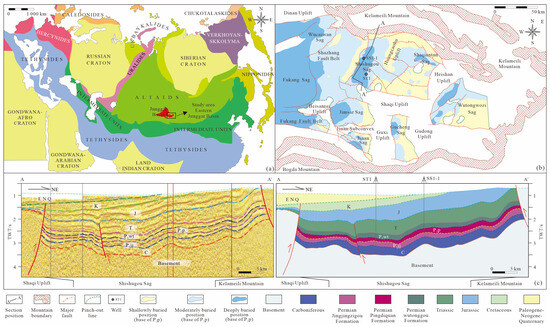
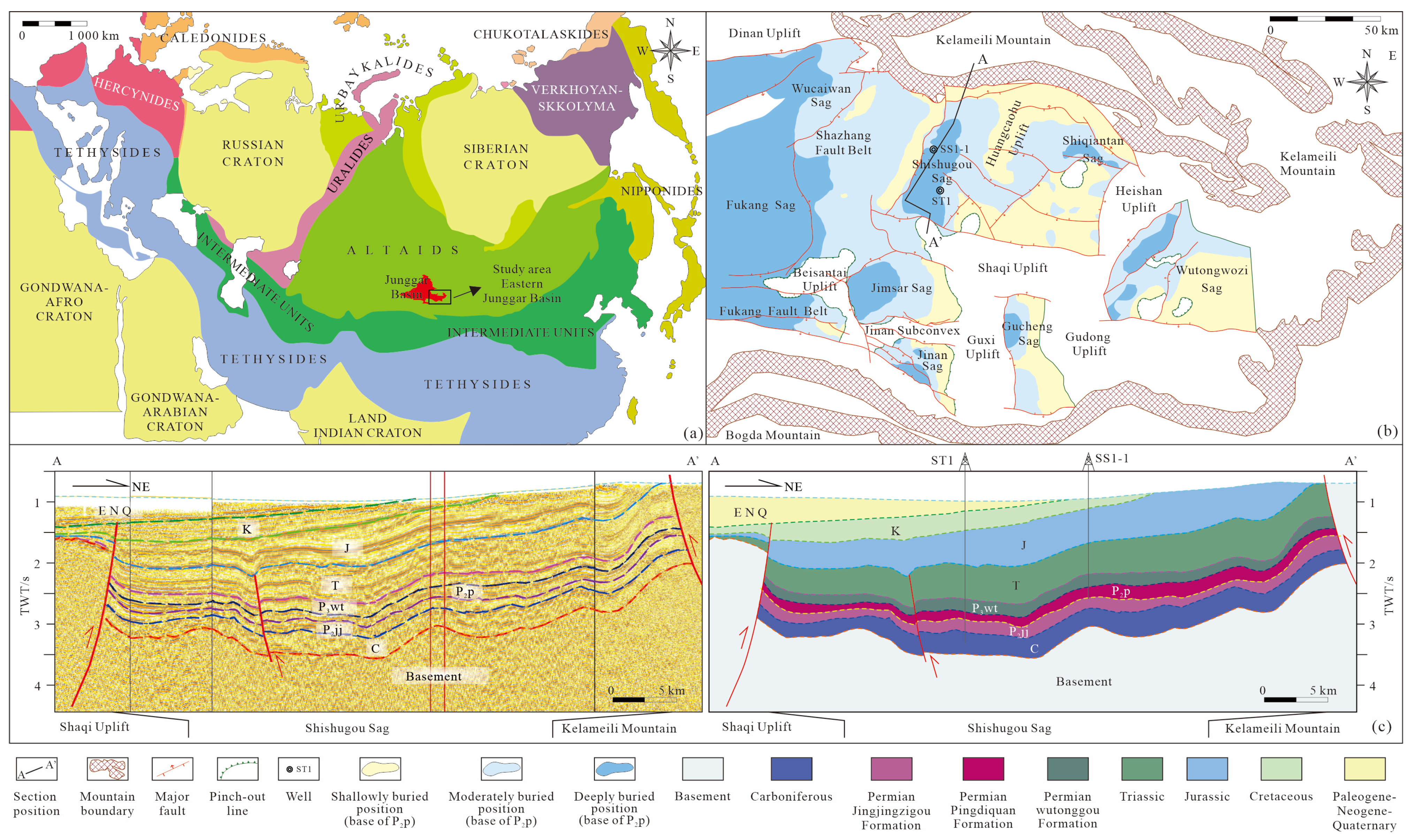
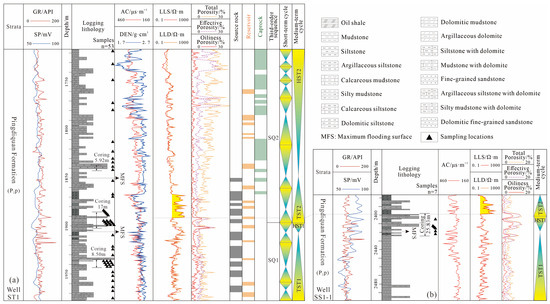
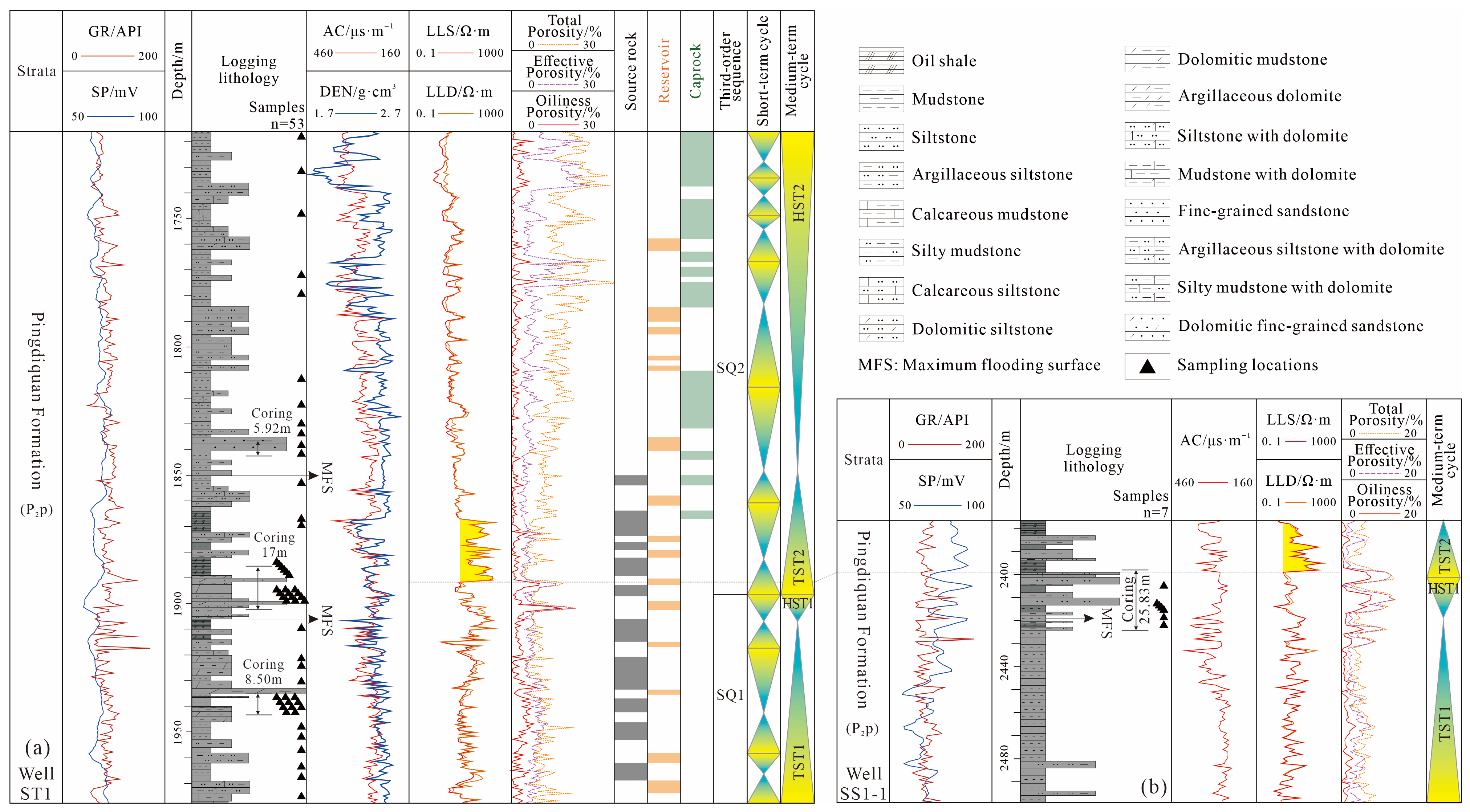
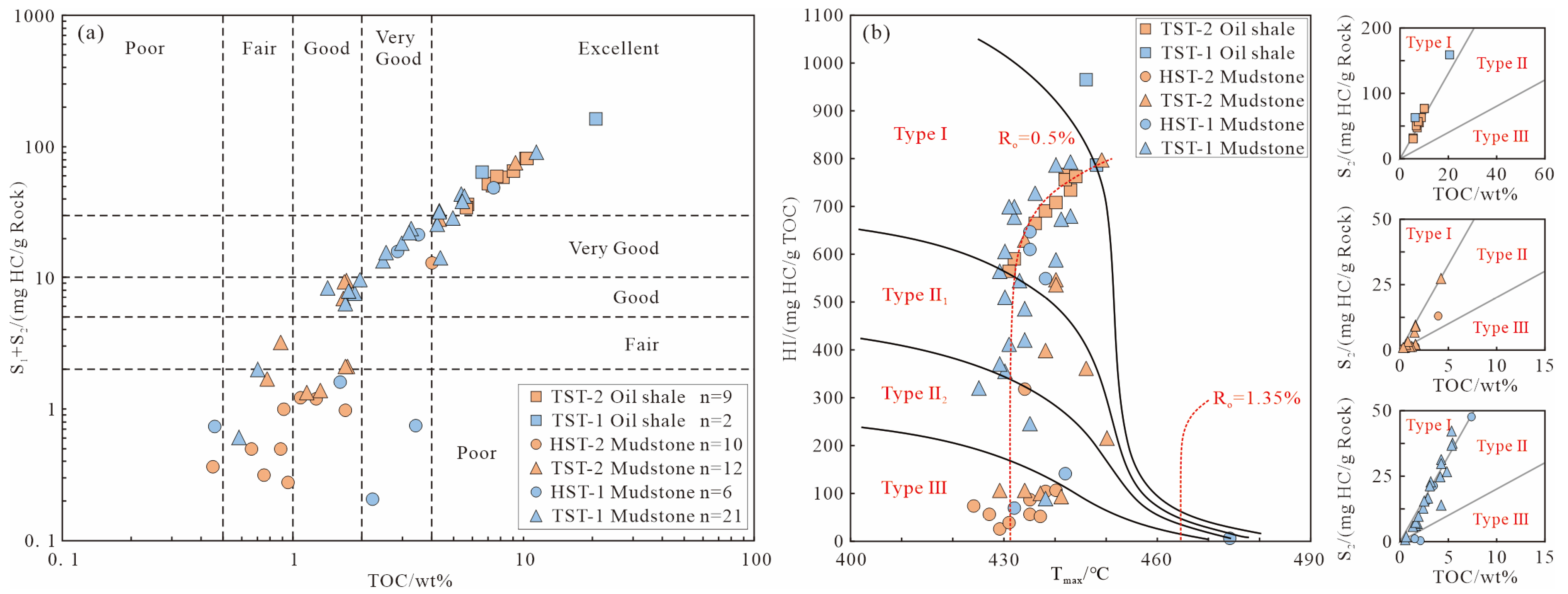
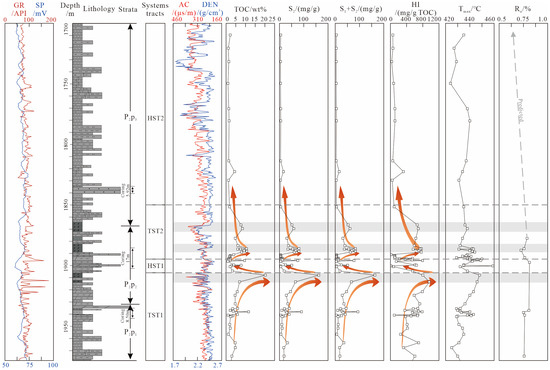
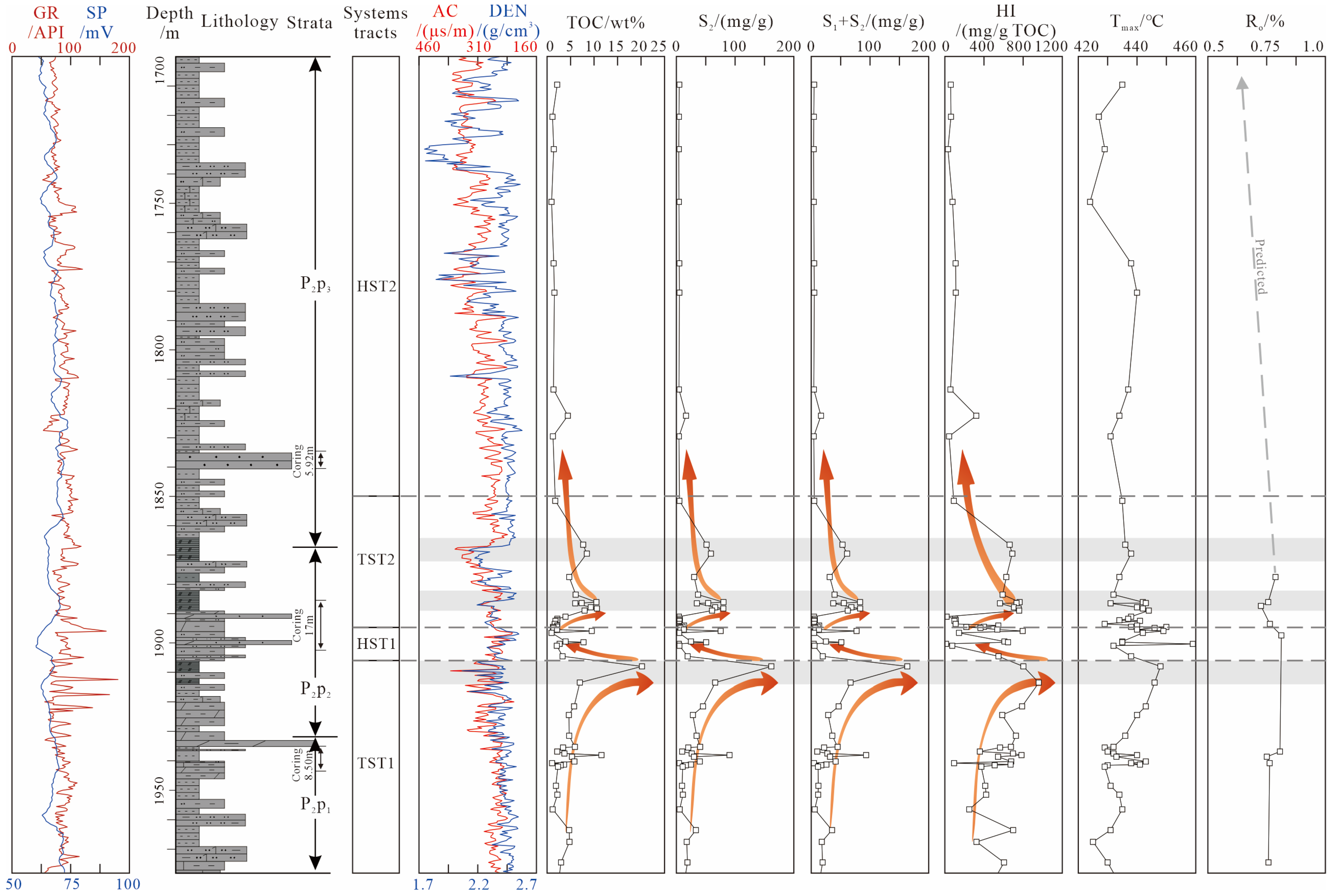
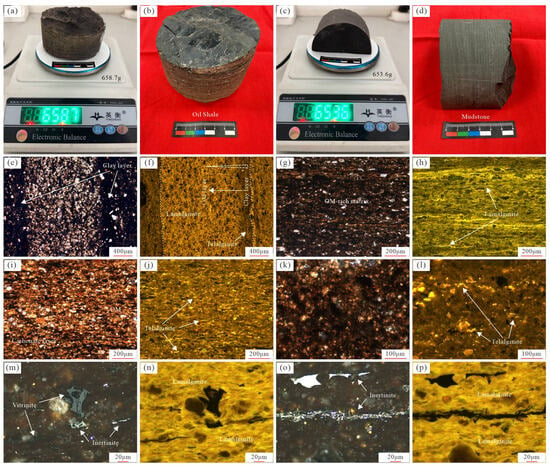
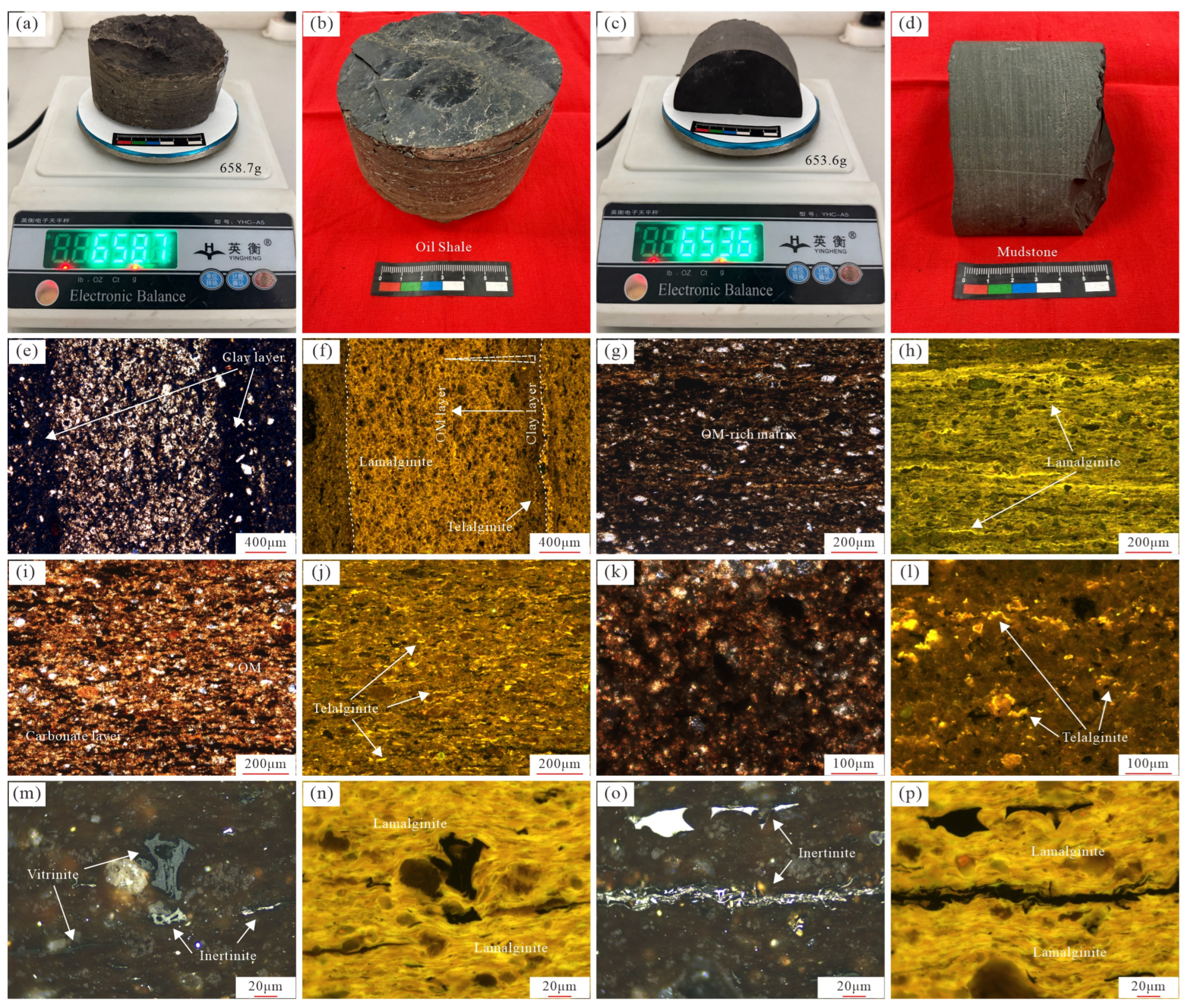
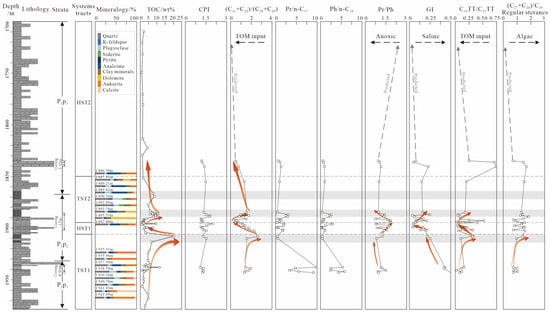
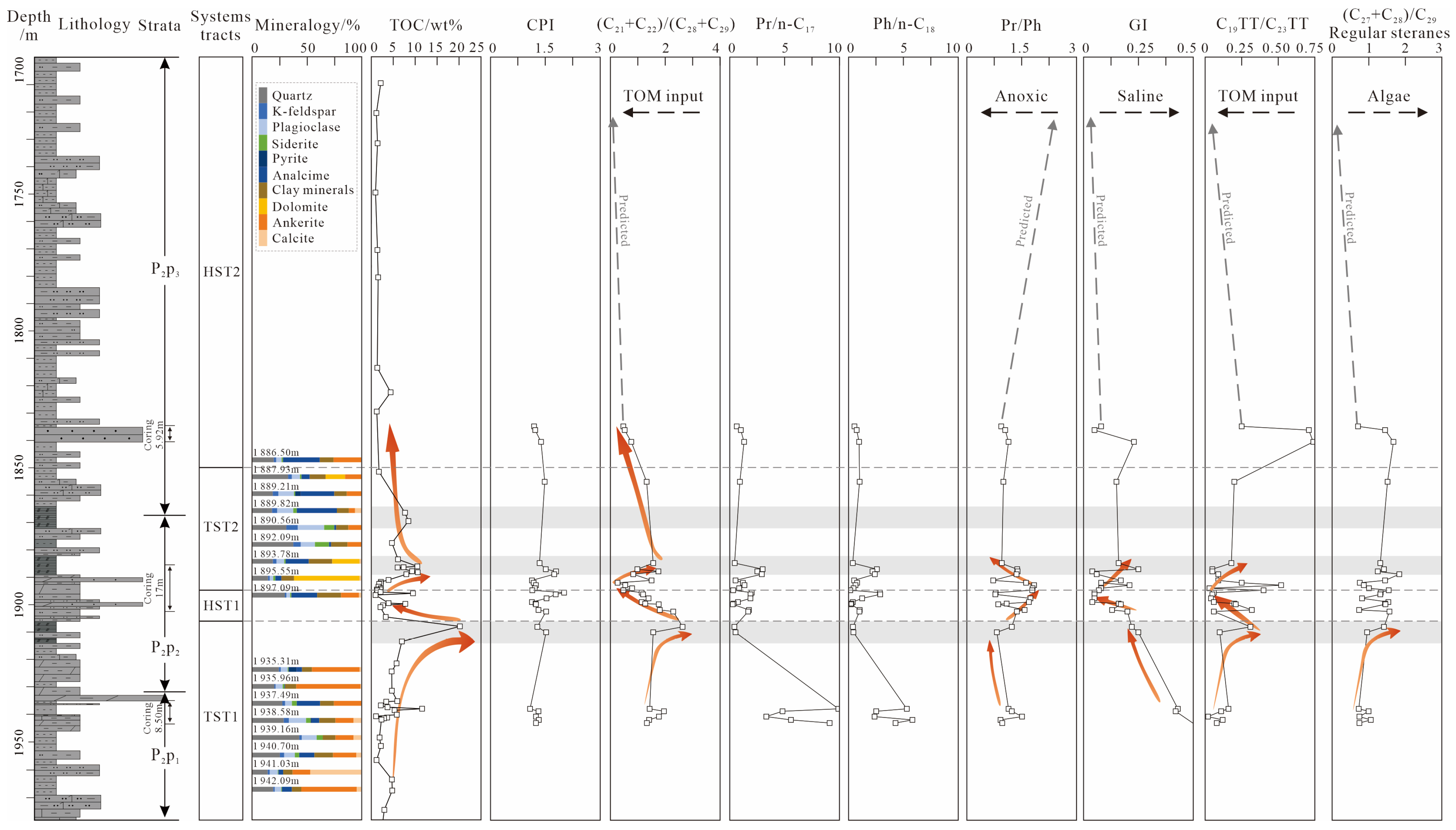
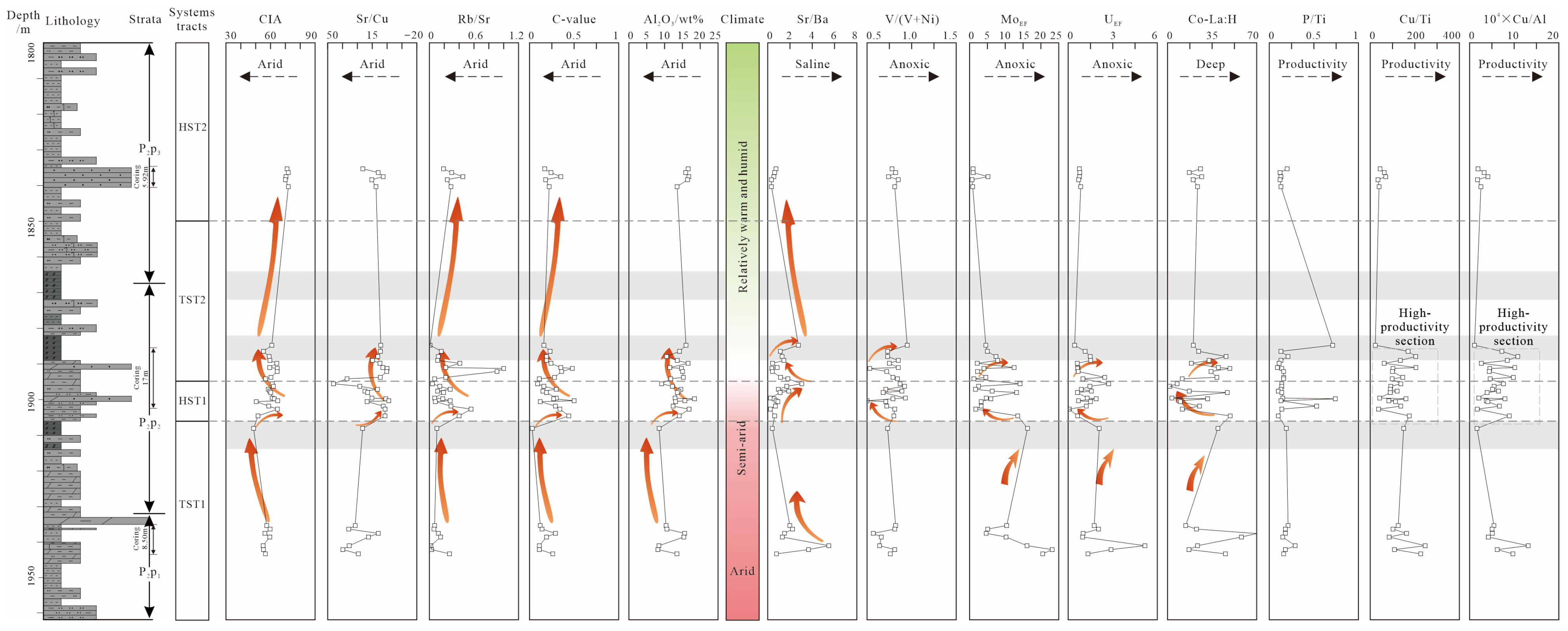
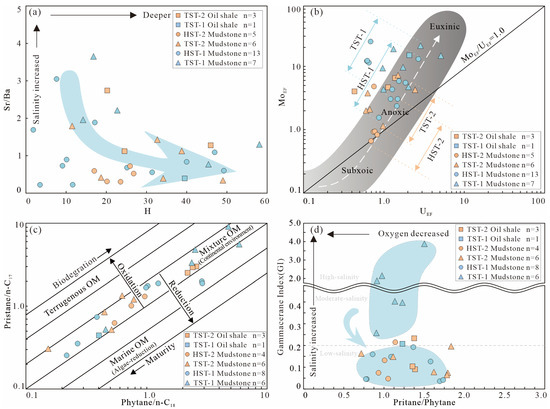
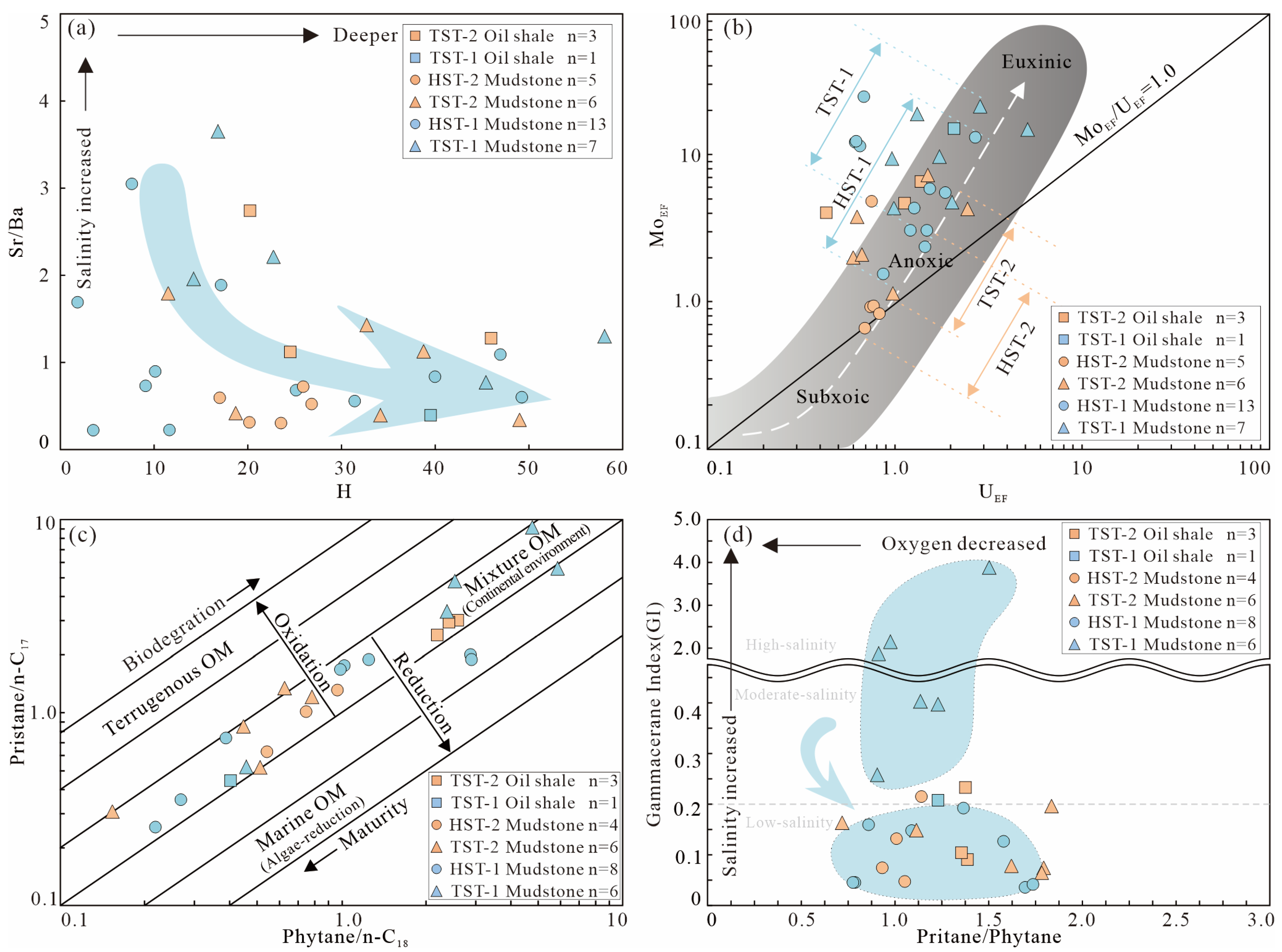
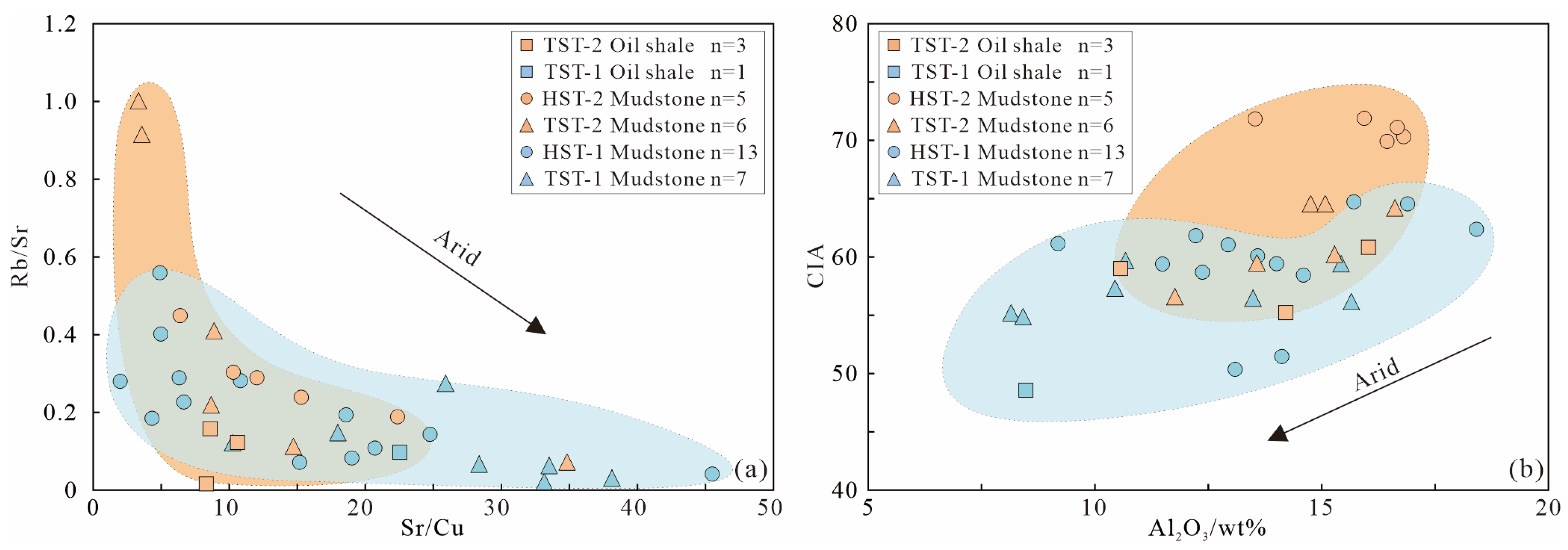
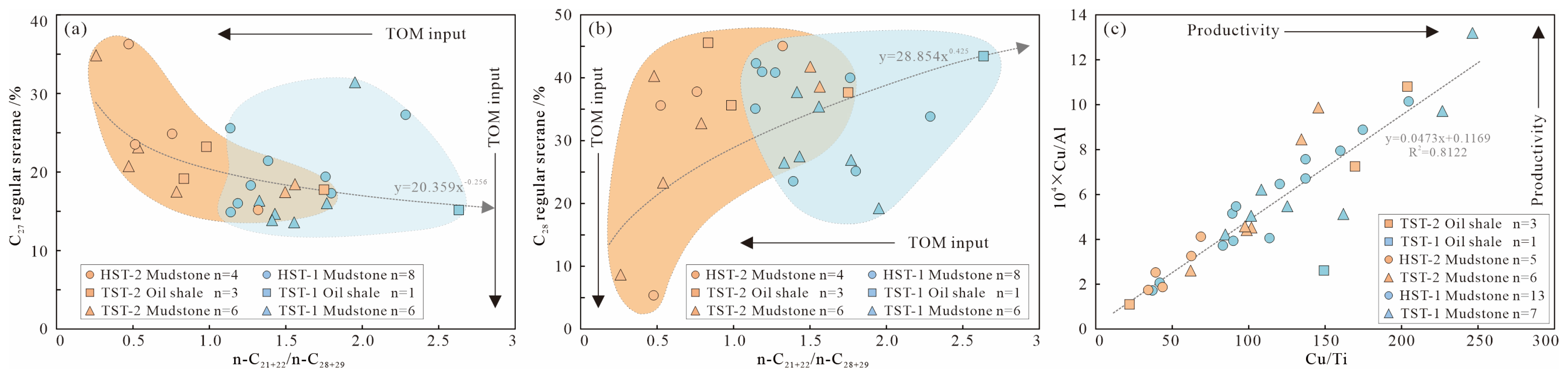
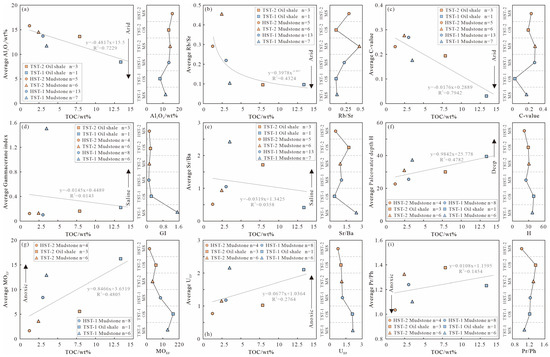
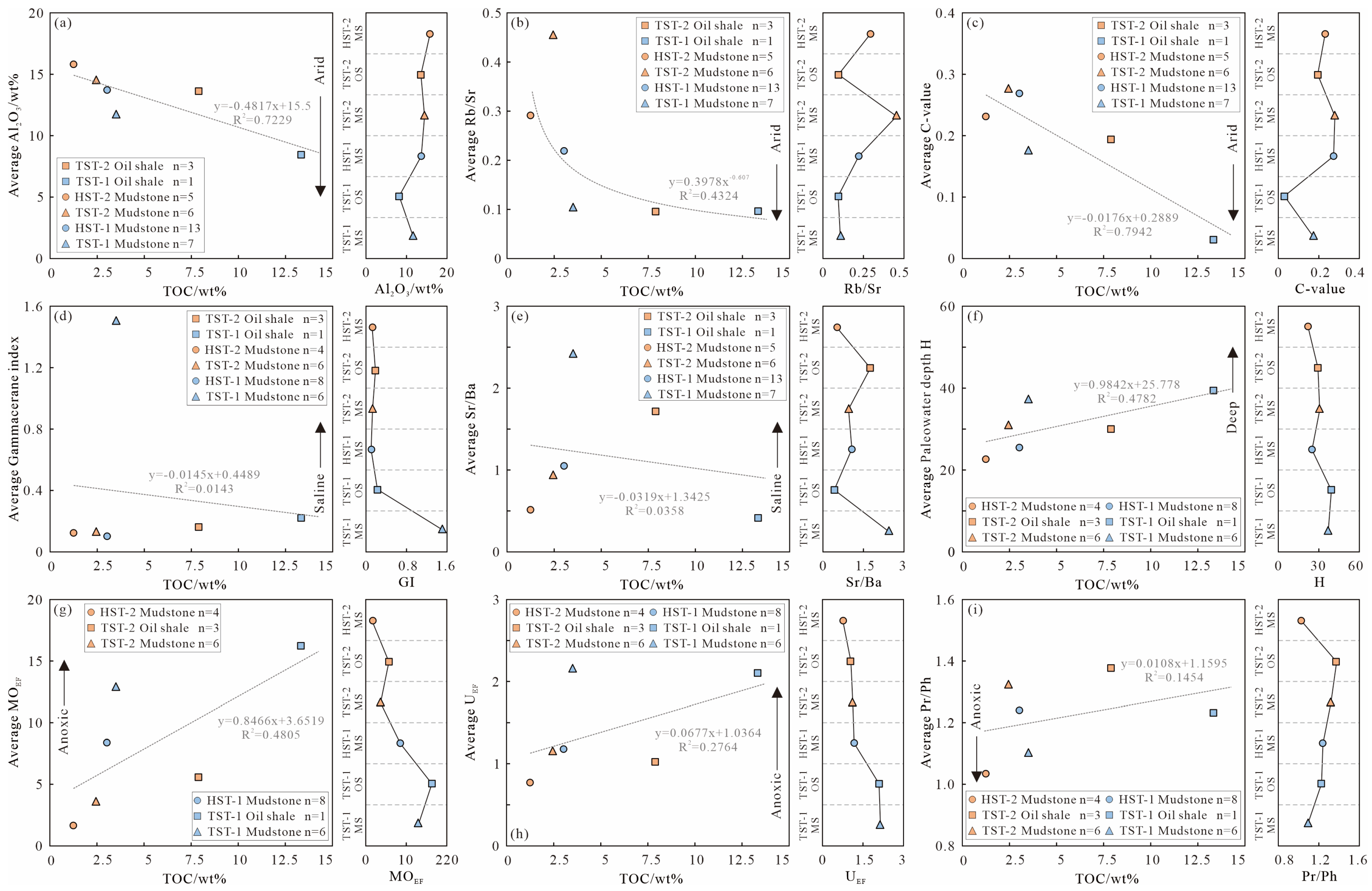
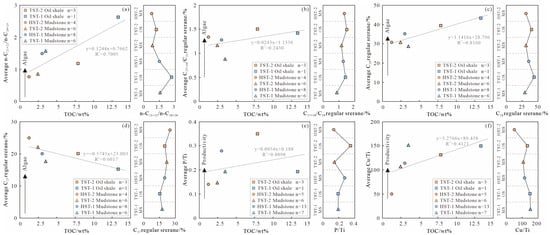
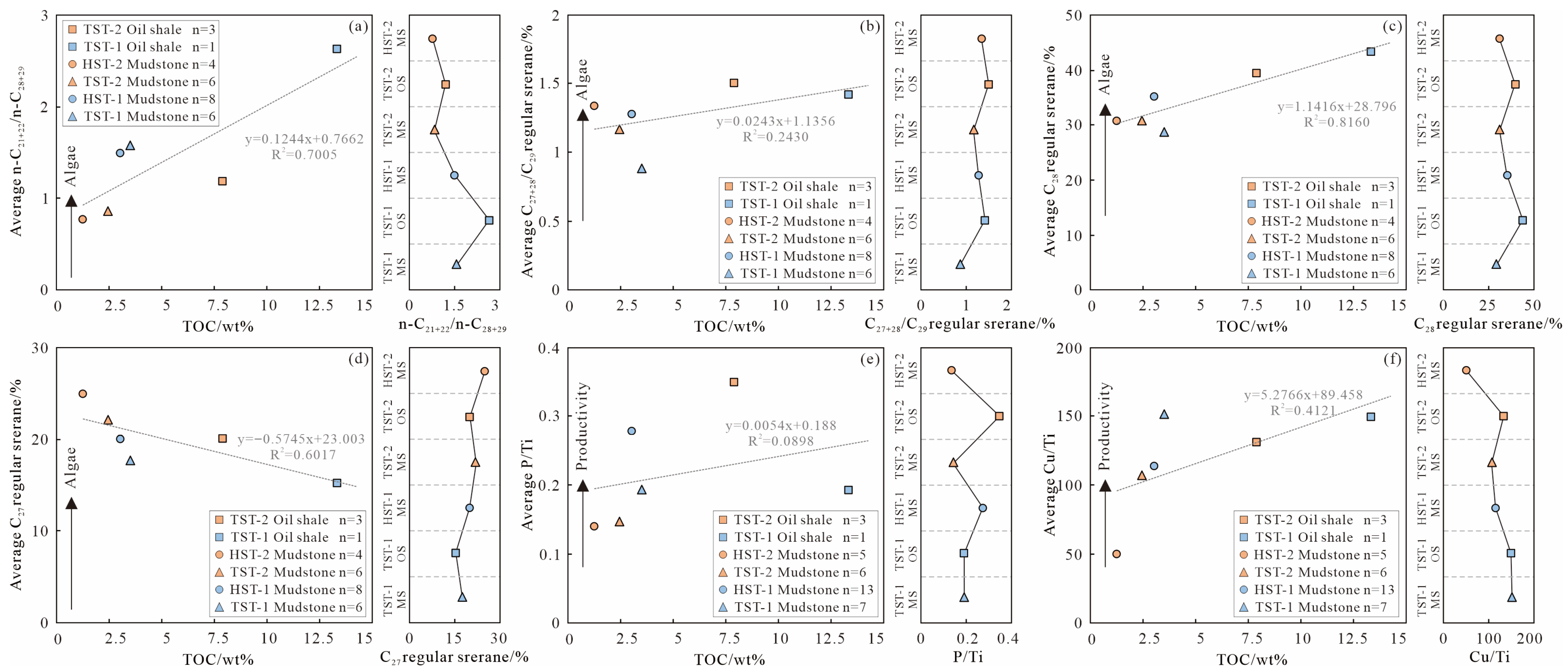
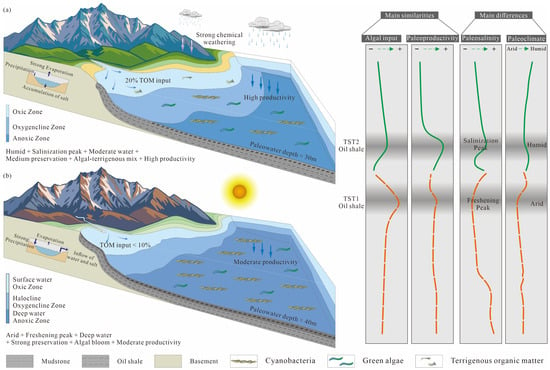
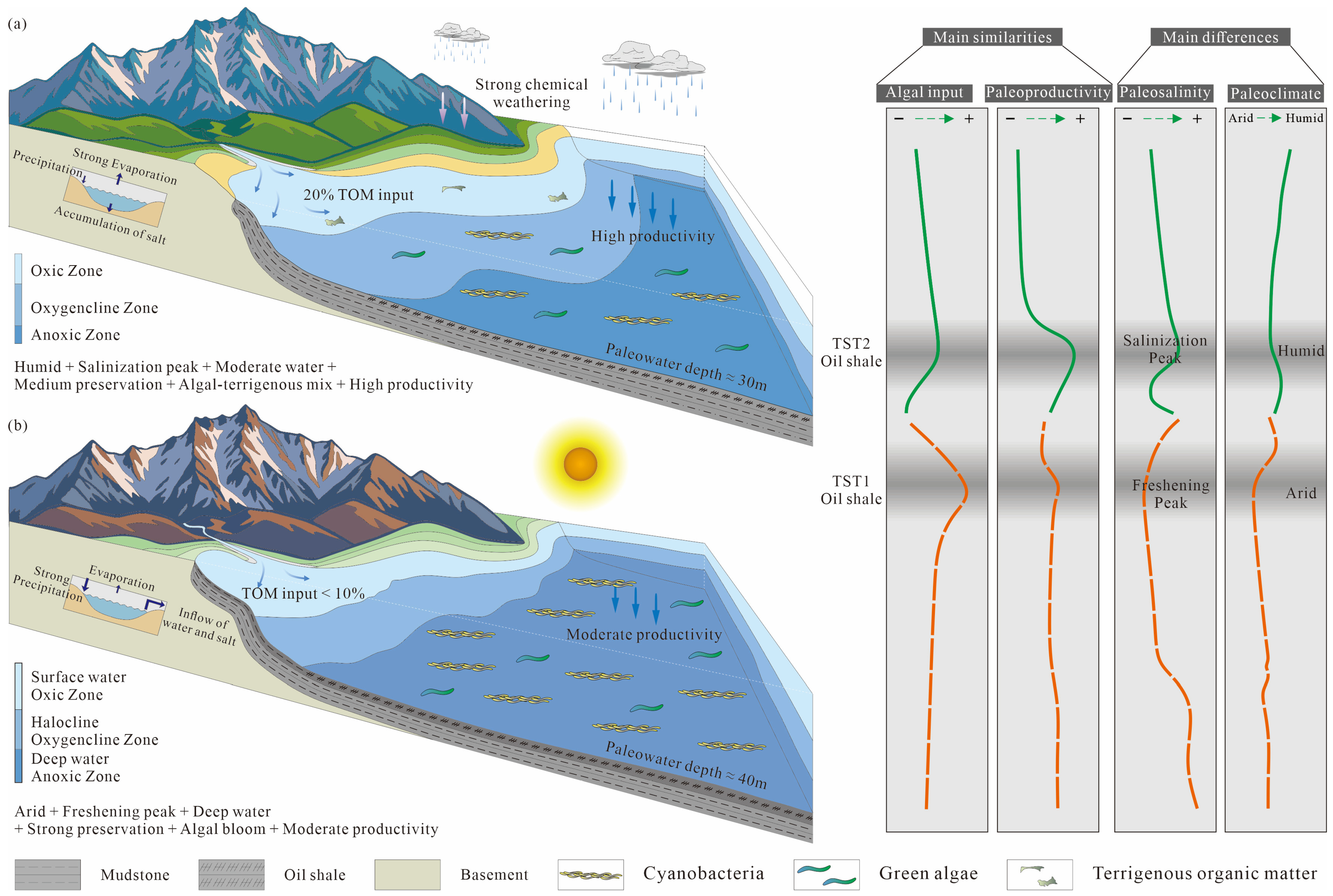
Disclaimer/Publisher’s Note: The statements, opinions and data contained in all publications are solely those of the individual author(s) and contributor(s) and not of MDPI and/or the editor(s). MDPI and/or the editor(s) disclaim responsibility for any injury to people or property resulting from any ideas, methods, instructions or products referred to in the content. |
© 2026 by the authors. Licensee MDPI, Basel, Switzerland. This article is an open access article distributed under the terms and conditions of the Creative Commons Attribution (CC BY) license.