Article

In Situ LA-ICP-MS Trace-Element and Sulfur Isotope Characteristics of Sulfides from Pb-Zn Ore Bodies in the Gariatong W-Mo Polymetallic Metallogenic System, Xizang, and Their Geological Implications


College of Earth and Planetary Sciences, Chengdu University of Technology, Chengdu 610059, China
*
Author to whom correspondence should be addressed.
Minerals 2026, 16(4), 424; https://doi.org/10.3390/min16040424
Submission received: 13 March 2026 / Revised: 14 April 2026 / Accepted: 17 April 2026 / Published: 20 April 2026

Abstract

The peripheries of rare-metal metallogenic systems frequently host skarn-type or hydrothermal vein-type Pb-Zn deposits, though their genetic connections with parental systems remain debated. The newly identified Gariatong W-Mo polymetallic metallogenic system in the Lhasa Terrane displays well-defined Nb-Ta-Rb, Mo-W, W-Mo, W-Bi, and Pb-Zn-Ag metallogenic zoning, establishing it as an exemplary site for investigating genetic relationships between Pb-Zn and rare-metal mineralization. This investigation targets skarn-type Pb-Zn deposits spatially associated with rare-metal orebodies at Gariatong, utilizing integrated analytical approaches, including in situ LA-ICP-MS trace-element analysis of sulfides, sulfur isotope geochemistry, and LA-ICP-MS elemental mapping of sphalerite, to constrain metal sources, characterize fluid evolution, and establish genetic correlations with the rare-metal system. Key findings include the following: (1) sphalerite shows enrichment in Fe, Mn, Co, and Cd, while pyrite contains elevated As, Pb, Co, Cu, and Mn. Fe, Cd, and Mn primarily occur as solid solutions or nanoparticles, whereas As and Pb exist as micro-inclusions. (2) Sphalerite Zn/Cd ratios (73.6–184) and Co-Ni-As ternary diagrams confirm a magmatic–hydrothermal skarn origin. (3) Mineralization occurred under moderate-temperature, mildly oxidized conditions, as constrained by sphalerite Fe contents and mineral assemblages. Sulfur isotope compositions (δ34S = −1.0‰ to 3.2‰; mean: 1.9‰) indicate a magmatic sulfur source. This study reveals that the Nb-Ta-Rb mineralization, quartz-vein- and greisen-type W-Mo deposits, and skarn-type Pb-Zn orebodies—all genetically associated with highly fractionated granites—constitute an integrated magmatic–hydrothermal system with vertical (depth-related) zoning relative to the granitic intrusion. These results provide critical constraints for understanding rare-metal–Pb-Zn genetic associations and suggest that Pb-Zn mineralization may serve as a key exploration indicator for rare metals in the Lhasa Terrane.

1. Introduction

Rare-metal deposits typically exhibit distinct elemental zoning patterns. For instance, the peripheral deposits of the Shizhuyuan ore field include the Dongpo Pb-Zn-Ag deposit and Nanfeng’ao Pb-Zn-Ag deposit [1]. The Yankee Lode tin-polymetallic deposit in Australia exhibits a zoning pattern centered on the Mole Granite, with successive W-Sn, Cu-Sn-As, and Pb-Zn-Ag mineralization zones extending outward from the pluton [2]. The Mount Pleasant W-Sn polymetallic deposit in Canada exhibits a distinct metallogenic zoning pattern, with W-Mo-Bi mineralization developed proximal to the intrusion and Sn-Zn-In mineralization distributed progressively outward [3]. The peripheries of rare-metal metallogenic systems commonly develop hydrothermal vein-type or skarn-type Pb-Zn deposits, as exemplified by the Jiangligou W deposit in Nannihu–Sandaozhuang Mo-W deposit in Henan Province, the Piaotang W-Sn polymetallic deposit, and the Yaogangxian W deposit in Hunan Province [4,5]. The genetic relationship between rare-metal mineralization and Pb-Zn mineralization remains controversial. The Dachang Sn polymetallic deposit underwent hydrothermal overprinting related to Late Yanshanian granitic magmatism. Its Sn mineralization is closely related to magmatic processes, whereas Pb-Zn-Ag mineralization has been variously interpreted as either magmatic–hydrothermal or synsedimentary exhalative in origin [6,7]. Integrated H-O-C-S-Pb multi-isotope systematics of the Shizhuyuan ore field demonstrate that both the proximal skarn–greisen-type W-Sn-Mo-Bi mineralization along the contact zone and the distal vein-type Pb-Zn-Ag mineralization share predominantly magmatic-derived ore-forming fluids. The formation of metallogenic zoning is attributed to combined processes, including infiltration metasomatism of magmatic–hydrothermal fluids, water–rock interaction, and mixing between magmatic fluids and meteoric water [8]. Similar debates persist regarding the genesis of peripheral Pb-Zn-Ag vein mineralization in the Cornwall W-Sn polymetallic district, UK, with proposed models ranging from sedimentary-hydrothermal reworking to magmatic–hydrothermal origin [9,10]. Analogous controversies are documented in the Uchucchacua deposit of central Peru [11].
The Gariatong deposit is a newly discovered large W–Mo polymetallic ore field in the Gangdese belt, Xizang. It contains multiple mineralization styles, including granite-type Nb–Ta–Rb, quartz-vein- and greisen-type W–Mo, and skarn-type Pb–Zn–Ag mineralization. The deposit displays a complete zoning sequence from the intrusion outward: Nb–Ta–Rb → Mo–W → W–Mo → W–Bi → Pb–Zn–Ag. Such a complete zoning makes Gariatong an ideal site to study the genetic relationship between rare-metal and Pb–Zn mineralization. Previous studies have not provided systematic data on in situ trace-elements, sulfur isotopes, and ore-forming conditions of the skarn-type Pb–Zn orebodies. These data are essential to determine the deposit type, fluid evolution, and material source. In this study, we use in situ LA-ICP-MS trace-element analysis, elemental mapping, and in situ sulfur isotope analysis of sphalerite and pyrite. We aim to clarify the occurrence of trace elements, physicochemical conditions, sulfur source, and genetic type of the Pb–Zn mineralization. We also discuss the genetic connection between the Pb–Zn orebodies and the rare-metal system. Our results provide direct geochemical evidence for the magmatic–hydrothermal origin of the Gariatong Pb–Zn deposit. They also show that peripheral Pb–Zn mineralization can be used as a practical exploration indicator for deep rare-metal deposits in the Lhasa Terrane.

2. Geologic Setting

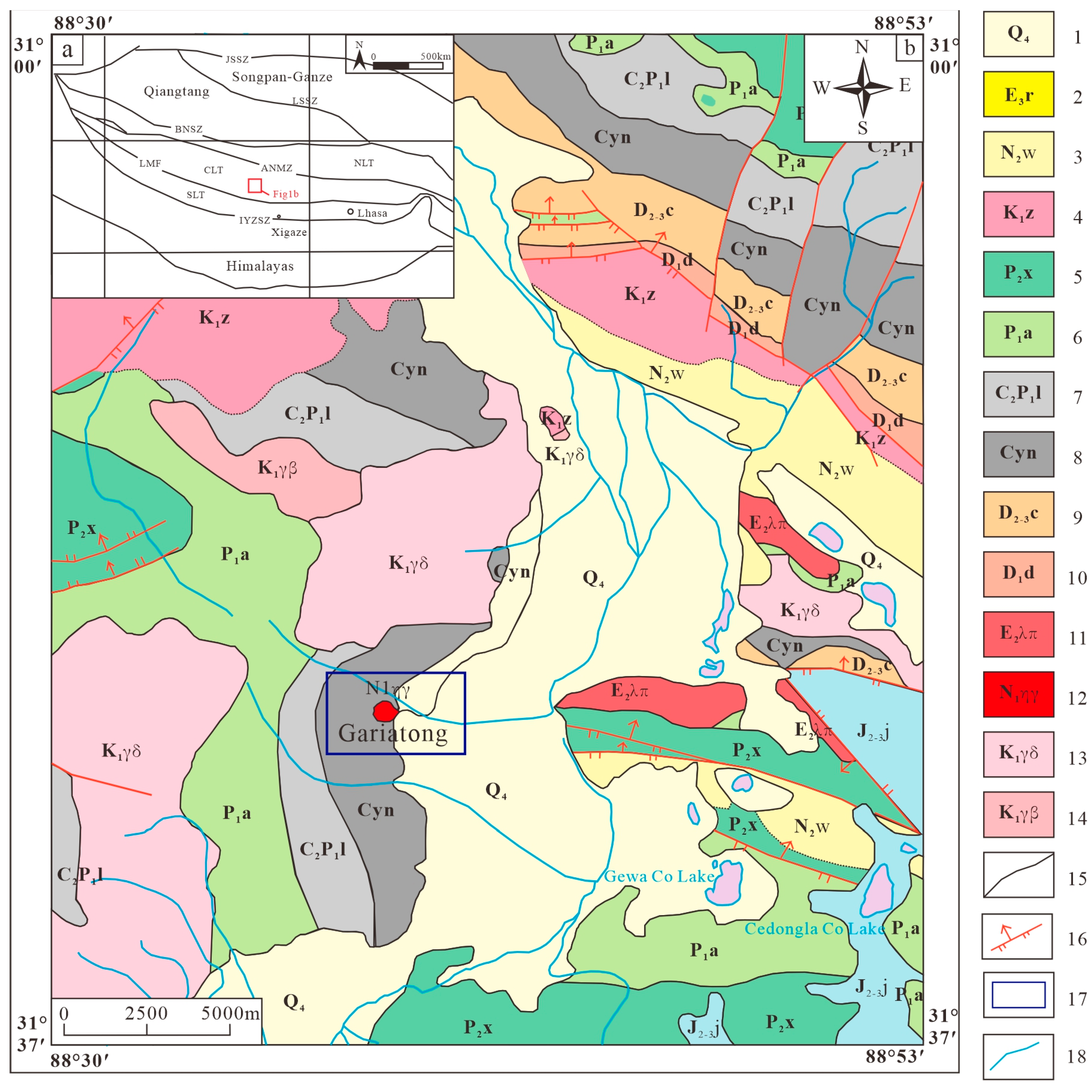
The Tibetan Plateau is divided into three tectonic units from north to south by the Bangong–Nujiang Suture Zone (BNSZ) and Indus–Yarlung Zangbo Suture Zone (IYZSZ): the Qiangtang Terrane, Lhasa Terrane, and Himalayan Terrane [12]. These three terranes exhibit distinct lithostratigraphic compositions. The Qiangtang Terrane is mainly composed of Carboniferous–Permian marine clastic rocks, carbonates, and volcanic rocks. Locally, it contains Triassic flysch. The Lhasa Terrane is characterized by a Precambrian metamorphic basement, namely the Nyainqêntanglha Group. This group includes orthogneiss, schist, amphibolite, and marble. The basement is overlain by Carboniferous–Permian metasedimentary rocks and Upper Jurassic–Lower Cretaceous volcano-sedimentary sequences. The Himalayan Terrane consists of two parts: the Precambrian–Paleozoic High Himalayan Crystalline Series and the Tethyan Himalayan sedimentary sequence. The former comprises gneiss, migmatite, and marble, while the latter includes Paleozoic–Mesozoic clastic rocks and carbonates [13,14]. The Lhasa Terrane is further subdivided into northern (NLT), central (CLT), and southern (SLT) domains by the Shiquanhe–Namco Ophiolitic Mélange Zone (SNMZ) and Luobadui–Milashan Fault Zone (LMF) [13,14] (Figure 1a).
The Lhasa Terrane is located in the central-southern Tibetan Plateau. It is bounded by the Bangong–Nujiang Suture Zone to the north and the Indus–Yarlung Zangbo Suture Zone to the south. Tectonically, it represents a Gondwana-derived microcontinent. This microcontinent rifted from Gondwana in the Late Paleozoic, drifted northward, and accreted to the Qiangtang Terrane in the Early Cretaceous. It finally collided with the Indian Plate in the Early Cenozoic [13,14].
The Nyainqêntanglha Group, consisting of amphibolite-facies (locally granulite-facies) metamorphic rocks, including orthogneiss, schist, amphibolite, and marble, represents the Precambrian basement exposure in the central Lhasa Terrane. This Precambrian metamorphic basement is overlain by extensively distributed Carboniferous–Permian metasedimentary rocks and Upper Jurassic–Lower Cretaceous volcanic–sedimentary sequences, with limited exposures of well-preserved Ordovician, Silurian, Devonian, and Triassic strata in northeastern Shenzha [13,14].
The mining area is situated in the central segment of the Gangdise-Nyainqêntanglha Block, south of the Yarlung Zangbo Suture Zone and Bangong–Nujiang Suture Zone. It belongs to the Cuole-Shenzha Mesozoic–Cenozoic back-arc basin, extending in an E-W direction. This region has experienced multistage evolution of the Paleo-Tethyan and Tethyan oceans involving rifting, closure, and development of trench-arc-basin systems. The lithological framework comprises Devonian and younger strata, Meso–Cenozoic granitoids, and volcanic rocks. The structural framework features a series of E-W trending folds, thrust fault systems, and N-S trending extensional faults. The Dingjie–Shenzha graben, a prominent N-S trending neotectonic structure, passes through the eastern margin of the mining area.
Strata in the region are generally distributed in an E–W direction, consistent with the main structural lines. Strata from the pre-Sinian to the Cenozoic Quaternary are exposed, except for the Cambrian and Triassic, which are absent. Among them, marine strata of the Carboniferous and Permian are widely distributed (Figure 1b).
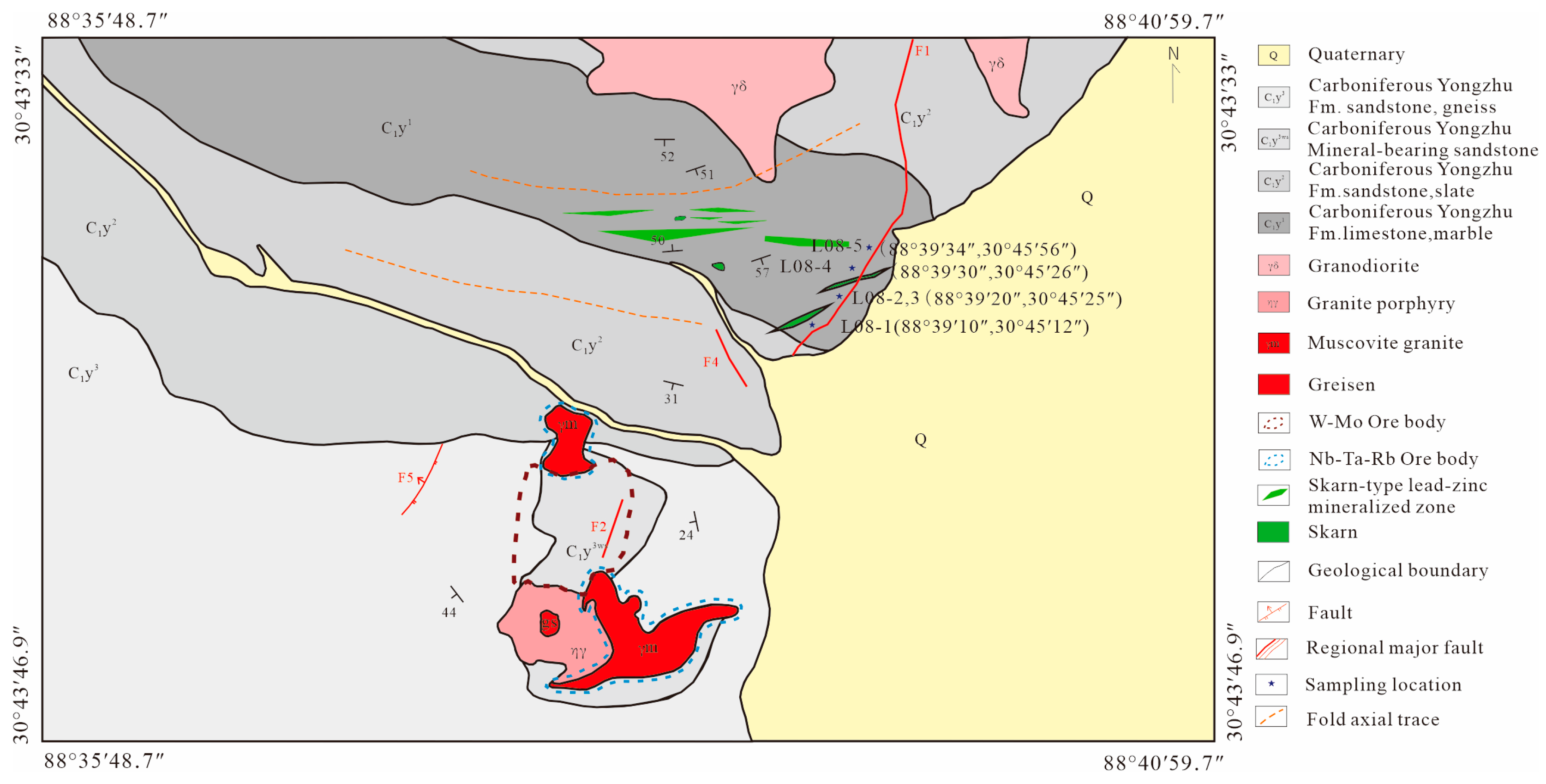
Stratigraphically, the mining area exposes Upper Carboniferous Yongzhu Formation comprising sandstone, sandy slate, and sandy conglomerate, with Quaternary sediments covering its southeastern portion (Figure 2). The predominant structure is an NE-SW trending reverse fault. Magmatic rocks are well developed, including porphyritic monzogranite and muscovite granite in the southern sector, granodiorite in the northern sector, and concealed two-mica granite and fine-grained granite at depth.
Quartz-vein W-Mo polymetallic orebodies occur within sandy slates of the Yongzhu Formation. The upper W-Mo orebody forms the principal mineralization, exhibiting lenticular–tabular morphology with continuous distribution. The vein system displays a characteristic “five-story” vertical zonation pattern. Granite-type Nb-Ta-Rb mineralization occurs in muscovite granites at deeper levels and southern sectors below the quartz-vein orebodies. Greisen-type W-Mo polymetallic mineralization manifests as stratiform and vein-type occurrences superimposed on muscovite granite, porphyritic monzogranite, and two-mica granite. Skarn-type Pb-Zn-Ag mineralization is distributed along the northern margin of the rare-metal mineralizing system.
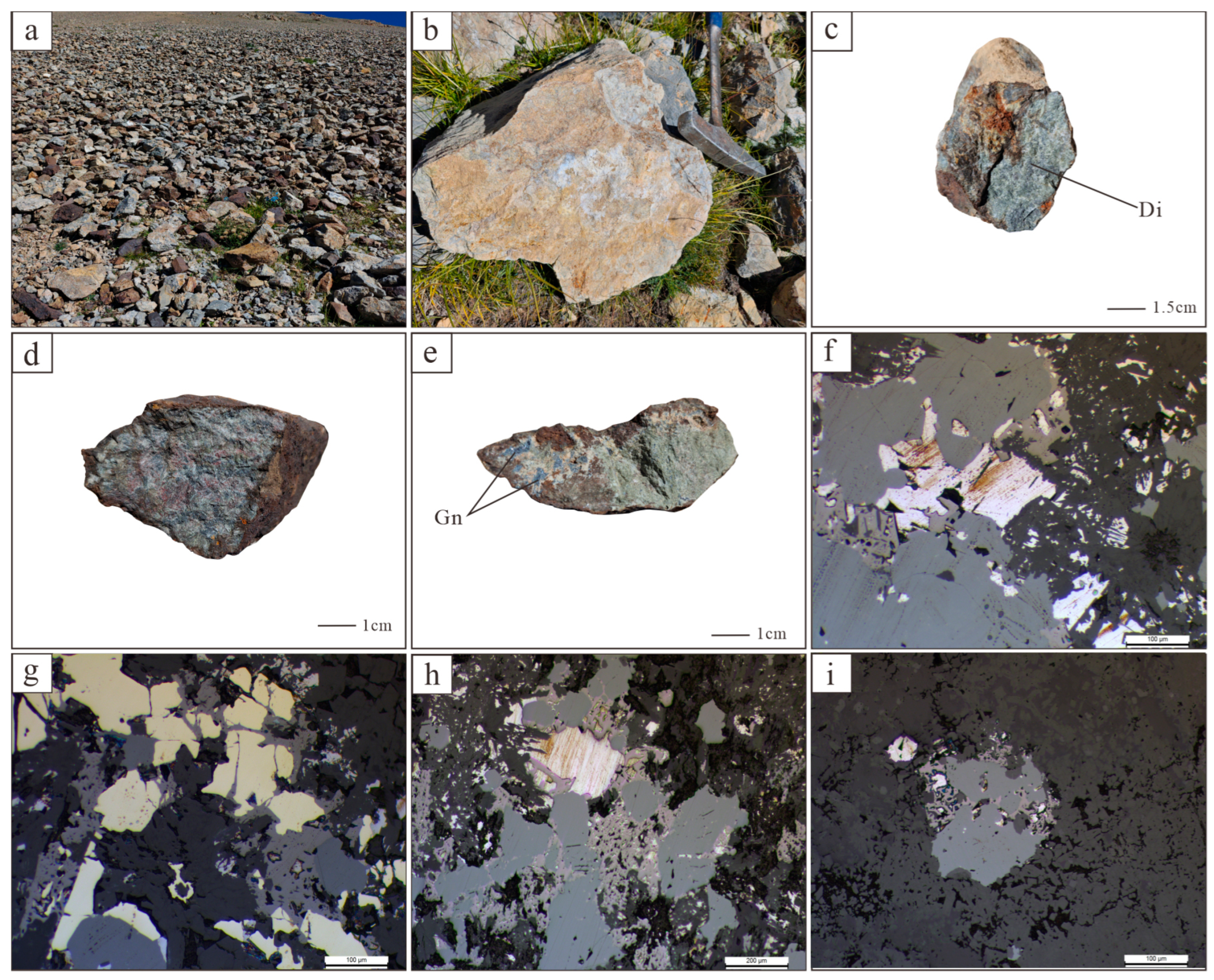
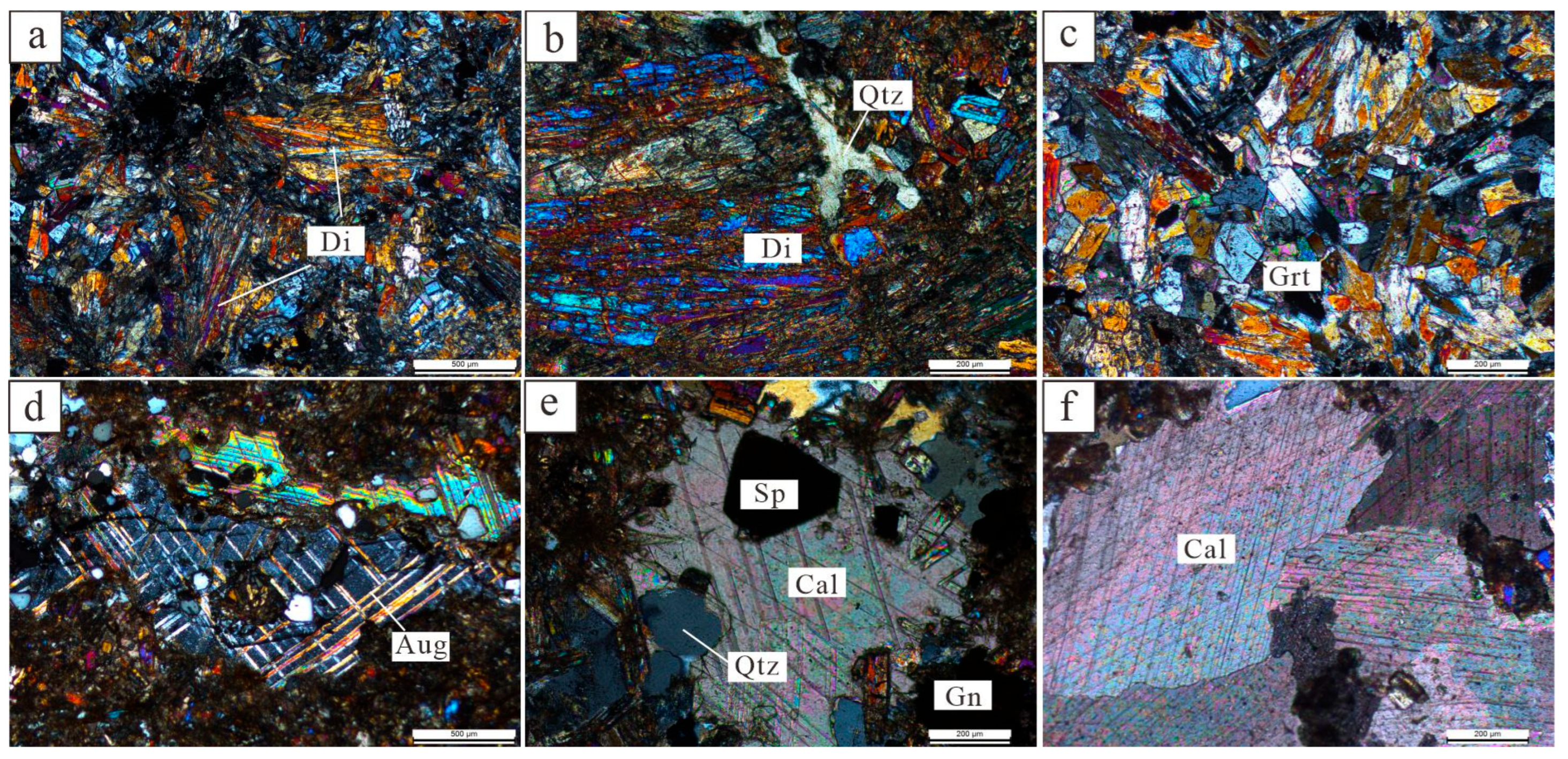
The skarn-type Pb-Zn deposit is characterized by ore minerals predominantly consisting of sphalerite and galena, with minor jamesonite, chalcopyrite, and pyrite (Figure 3). Gangue minerals are primarily garnet, calcite, and diopside (Figure 4), followed by epidote and chlorite. The ore textures are dominated by crystalloblastic and replacement textures, while ore structures include massive, disseminated, stockwork-disseminated, vein-type, and brecciated types. Alteration assemblages mainly comprise skarnization, marbleization (Figure 3a), and sericitization, with subordinate chloritization.
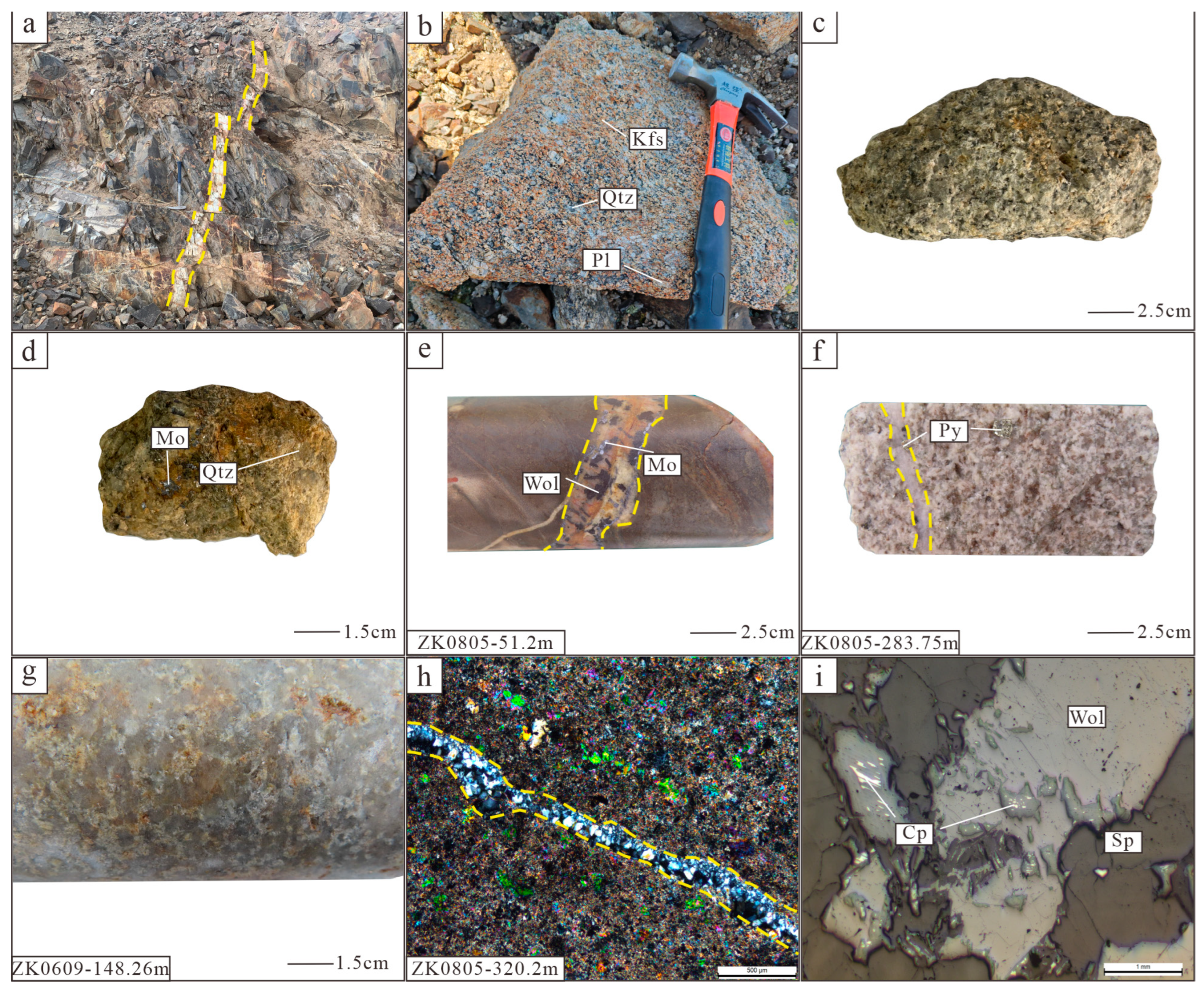
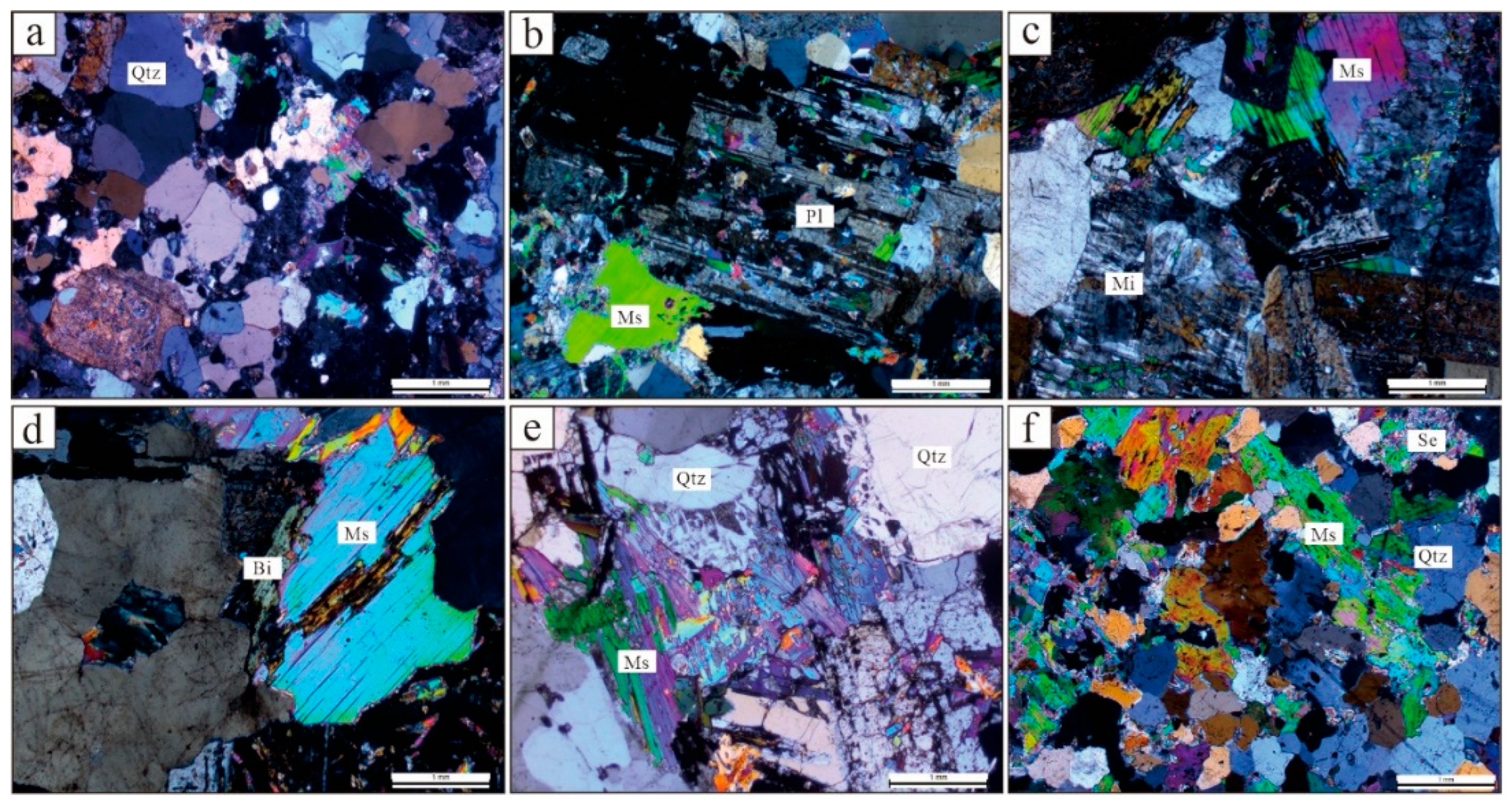
The ore minerals in the quartz-vein-type, greisen-type W-Mo orebodies and granite-type Nb-Ta-Rb mineralization located in the central Gariatong mining area are predominantly composed of wolframite (Figure 5e,i) and molybdenite (Figure 5d,e), with minor amounts of pyrite (Figure 5f) and chalcopyrite (Figure 5i). The gangue minerals mainly consist of quartz (Figure 6a,e,f), muscovite (Figure 6b,d), plagioclase (Figure 6b), and microcline (Figure 6c).

3. Sampling and Analytical Methods

The studied samples were collected from the Gariatong skarn-type Pb-Zn ore body (Sample Nos. L08-1~L08-5; the prepared thin-section sample had a width of 2 cm and a thickness of 30–40 μm). Thin-section preparation was conducted at Guangzhou Tuoyan Testing Technology Co., Ltd. Following detailed hand specimen observation and petrographic identification, four representative samples were selected for trace-element analysis and in situ sulfur isotope testing.
Element analyses of sulfide in thin sections were conducted by LA-ICP-MS at Nanjing FocuMS Technology Co., Ltd. (Nanjing, China). Teledyne Cetac Technologies Analyte Excite laser-ablation system (Bozeman, MT, USA) and Agilent Technologies 7700x quadrupole ICP-MS (Hachioji, Tokyo, Japan) were combined for the experiments. The 193 nm ArF excimer laser, homogenized by a set of beam delivery systems, was focused on sulfide surface with fluence of 3.0 J/cm2. Each acquisition incorporated 20 s background (gas blank), followed by spot diameter of 40 μm at 6 Hz repetition rate for 40 s. Helium (370 mL/min) was applied as carrier gas to efficiently transport aerosol out of the ablation cell and was mixed with argon (~1.15 L/min) via T-connector before entering ICP torch. USGS polymetal sulfide pressed pellet MASS-1 and synthetic basaltic glasses GSE-1G were combined for external calibration. The LA-ICP-MS trace-element analytical results of sphalerite and pyrite are presented in Tables S1 and S2.
The LA-ICP-MS elemental mapping analysis was conducted at Nanjing Jupu Testing Co., Ltd. (Nanjing, China). The laser ablation system employed a 193 nm ArF excimer laser (Analyte Excite, Teledyne Cetac Technologies) coupled with an Agilent 7700x ICP-MS. During ablation, helium was used as the carrier gas (0.5 L/min) and was mixed with argon (1.0 L/min) as the makeup gas through a T-connector before entering the ICP. Prior to analysis, the ICP-MS was optimized to achieve maximum sensitivity while maintaining low oxide yields (ThO/Th < 0.2%). Line-scan mapping was performed with laser beam diameters ranging from 15 to 40 μm and stage speeds of 15–40 μm/s. Parallel scan lines were spaced consistently with the beam diameter. The laser operated at 10 Hz repetition rate with energy density of 2–3 J/cm2. Background signals were collected for 20 s before and after each analysis. External standard materials (NIST 610 or GSE-1G) were analyzed for 40 s using identical laser parameters at the beginning and end of each session. Data processing and elemental mapping were performed using the in-house-developed LIMS software (MATLAB-based) [15,16], which automatically corrected for instrumental drift and background signals throughout the analytical session.
In situ sulfur isotope analyses of sulfides were performed in Nanjing FOCUMS Technology Co., Ltd. via LA-MC-ICP-MS. Australian Scientific Instruments RESOlution LR laser-ablation system (Canberra, Australia) and Nu Instruments Nu Plasma II MC-ICP-MS (Wrexham, Wales, UK) were combined for the experiments. Nu Plasma II was operated in medium-resolution mode (5–95% resolving power better than 8000) to resolve O-O polyatomic interference from sulfur. The 193 nm ArF excimer laser, homogenized by a set of beam delivery systems, was focused on the surface with fluence of 2.5 J/cm2. Each acquisition incorporated 30 s background (gas blank), followed by spot diameter of 33 μm spot size on pyrite and a 40 μm spot size on sphalerite, at 4 Hz repetition rate for 35 s. Integration time was set to 0.3 s, equating to 115 cycles during the 35 s. Helium (400 mL/min) was applied as carrier gas to efficiently transport aerosol out of the ablation cell and was mixed with argon (~0.9 L/min) via T-connector before entering ICP torch.
Natural pyrite Wenshan (δ34/32S = +1.2‰ V-CDT) and sphalerite Sph-LD (δ34/32S = +17.0‰) were used as external bracketing standard for every subsequent analysis. In-house pyrite 66,030 (δ34/32S = −3.5‰) and sphalerite GBW07270 (δ34/32S = −5.4‰) were treated as quality control. The long-term reproducibility of δ34/32S is better than 0.4‰ (1 standard deviation).

4. Results

4.1. Trace-Element Analysis Results of Sulfide Minerals by LA-ICP-MS

4.1.1. Sphalerite

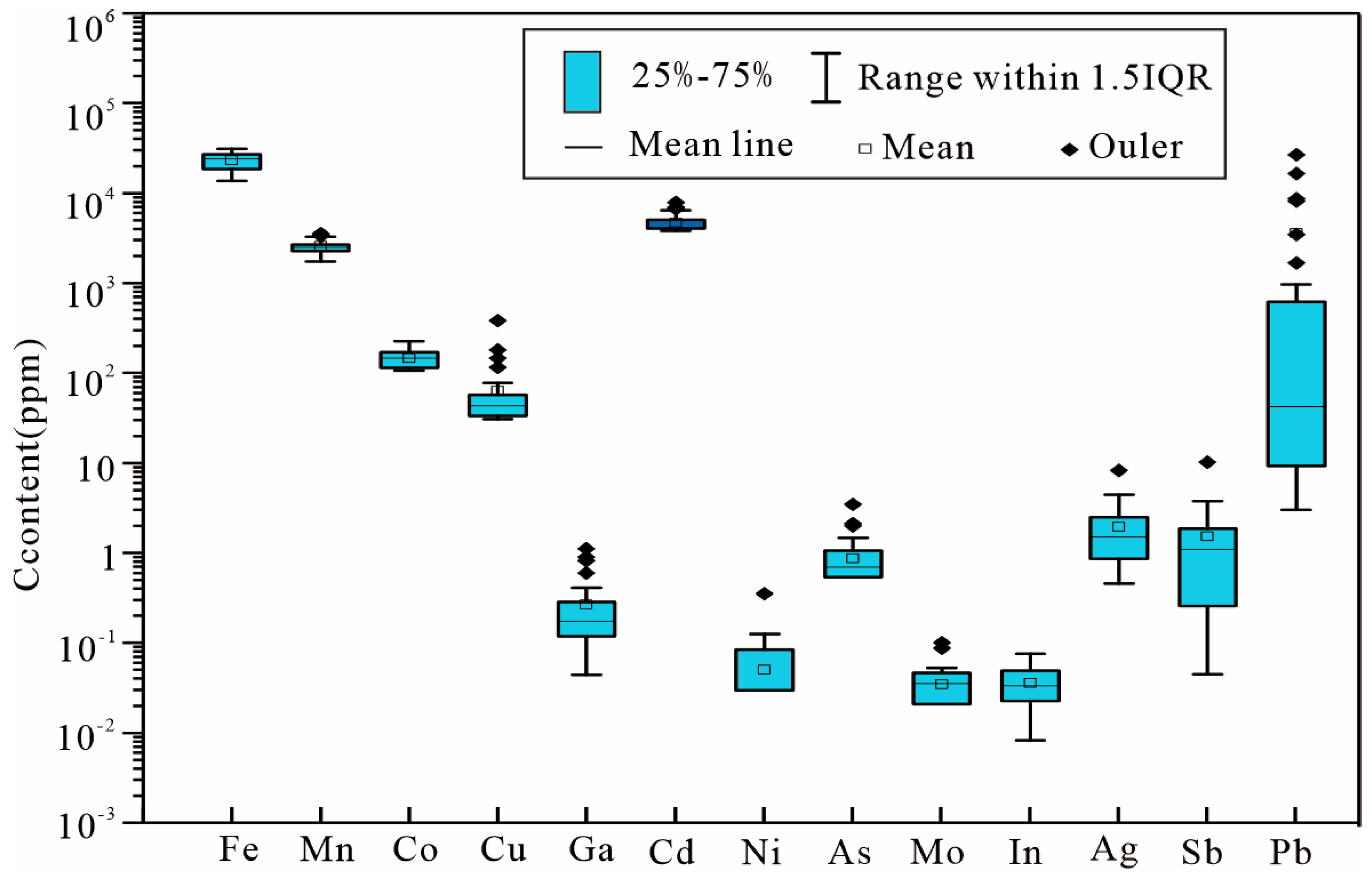
A total of 33 analytical spots were conducted on sphalerite from the skarn-type Pb-Zn deposit in the Gariatong mining district. The analyzed elements include 34S, 57Fe, 65Cu, 66Zn, 111Cd, 55Mn, 59Co, 23Na, 25Mg, 27Al, 29Si, 31P, 39K, 42Ca, 45Sc,49 Ti, 51V, 53Cr, 60Ni, 71Ga, 75As, 77Se, 85Rb, 88Sr, 89Y, 95Mo, 109Ag, 115In, 118Sn, 121Sb, 125Te, 133Cs, 137Ba, 183W, 197Au, 205Tl, 209Bi, and Pb (sum of 206Pb, 207Pb, 208Pb). Boxplots of selected trace-element analytical results are presented in Figure 7.
The sphalerite exhibits the highest Fe concentrations, with a relatively narrow range of 13,700–31,200 ppm (mean: 23,300 ± 1900 ppm; n = 33). Significant enrichment is observed for Mn (1730–3560 ppm; mean: 2570 ± 570 ppm; n = 33), Co (106–224 ppm; mean: 147 ± 33 ppm; n = 33), Cu (31–380 ppm; mean: 63 ± 79 ppm; n = 33), and Cd (3800–7840 ppm; mean: 4690 ± 890 ppm; n = 33). Pb shows moderate enrichment, with concentrations spanning from 3.00 to 51,000 ppm (mean: 3610 ppm; n = 33), displaying significant variability.
Depletion is evident for Ga (0.040–1.11 ppm; mean: 0.26 ± 0.18 ppm; n = 33), Mo (BDL–0.10 ppm; mean: 0.03 ± 0.02 ppm; n = 33), In (0.01–0.08 ppm; mean: 0.04 ± 0.02 ppm; n = 33), and Ni (BDL–0.35 ppm; mean: 0.05 ± 0.08 ppm; n = 33). Rare-earth elements (REEs) predominantly fall below detection limits and are not presented in this study.

4.1.2. Pyrite

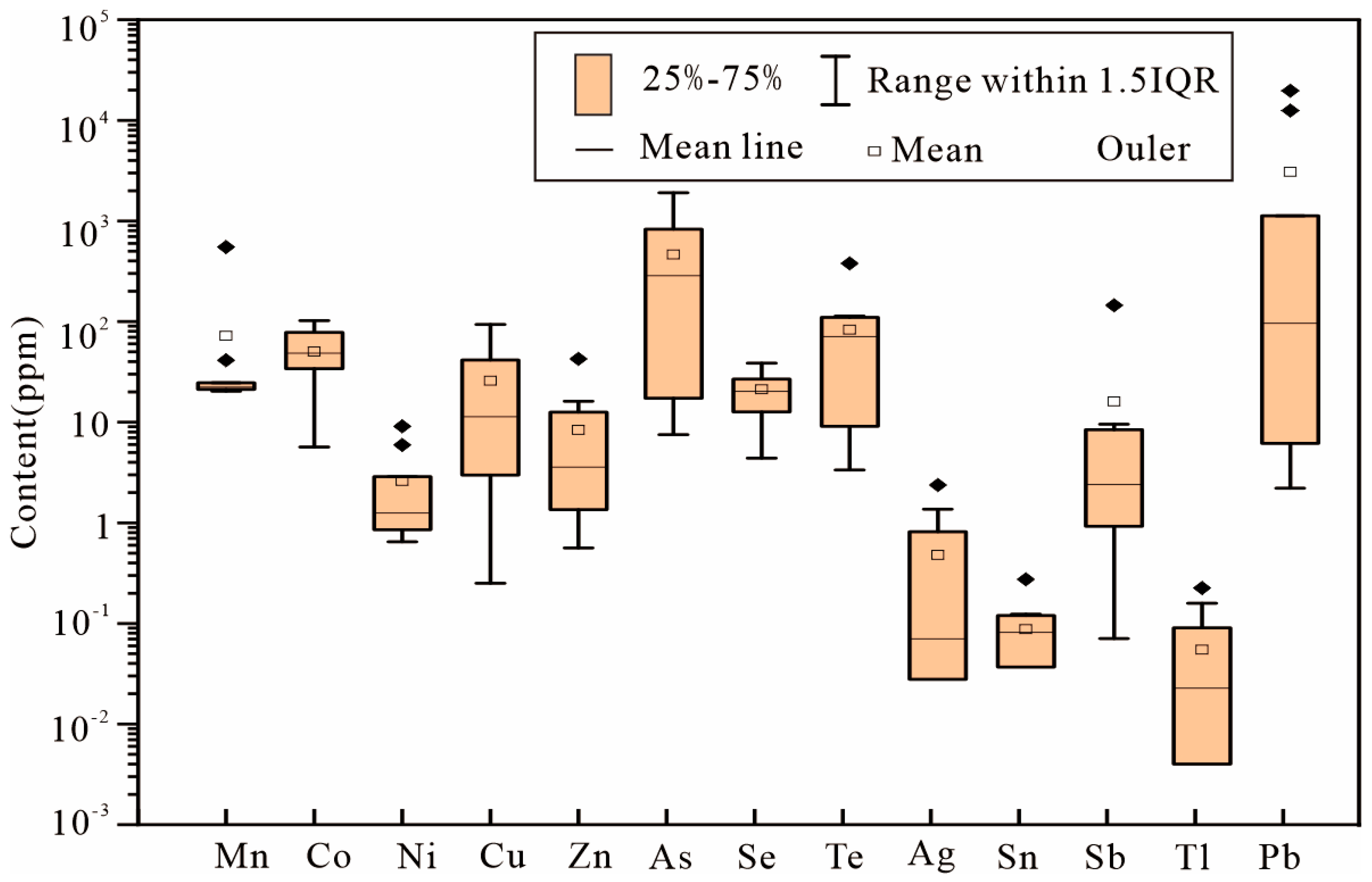
In the skarn-type lead–zinc deposit of the Gariatong mining area, pyrite samples from eleven spots were analyzed for the following elements: 34S, 57Fe, 65Cu, 66Zn, 111Cd, 55Mn, 59Co, 23Na, 25Mg, 27Al, 29Si, 31P, 39K, 42Ca, 45Sc,49 Ti, 51V, 53Cr, 60Ni, 71Ga, 75As, 77Se, 85Rb, 88Sr, 89Y, 95Mo, 109Ag, 115In, 118Sn, 121Sb, 125Te, 133Cs, 137Ba, 183W, 197Au, 205Tl, 209Bi, and Pb (sum of 206Pb, 207Pb, 208Pb). Box-and-whisker plots of selected trace-element analytical results are presented in Figure 8.
Pyrite shows enrichment of As, Pb, Co, Cu, and Mn. The arsenic (As) content ranges from 6.94 to 1760 ppm (mean: 429 ± 512 ppm; n = 11), lead (Pb) from 2.04 to 18,200 ppm (mean: 2840 ± 6590 ppm; n = 11), cobalt (Co) from 5.66 to 102 ppm (mean: 50 ± 33 ppm; n = 11), copper (Cu) from 0.25 to 94 ppm (mean: 26 ± 32 ppm; n = 11), and manganese (Mn) from 20 to 550 ppm (mean: 72 ± 140 ppm; n = 11). Relative enrichment is observed for nickel (Ni: 0.65–9.13 ppm; mean: 2.61 ± 2.65 ppm; n = 11), zinc (Zn: 0.56–42.6 ppm; mean: 8.38 ± 12.5 ppm; n = 11), selenium (Se: 4.06–35.6 ppm; mean: 19.6 ± 10.8 ppm; n = 11), and tellurium (Te: 3.10–349 ppm; mean: 76.8 ± 109 ppm; n = 11). Depletion is evident for silver (Ag: 0–1.09 ppm; mean: 0.44 ± 0.36 ppm; n = 11) and tin (Sn: 0–0.25 ppm; mean: 0.08 ± 0.09 ppm; n = 11).

4.2. Sulfur Isotope Analytical Results

In situ sulfur isotope analyses were conducted on 44 analytical points (33 in sphalerite and 11 in pyrite). The sulfur isotopic composition of the Gariatong skarn-type Pb-Zn deposit is presented in Table S3. The measured δ34S values of sulfides show an overall variation range from −1.0‰ to 3.2‰ (mean: 1.9 ± 1.1‰; n = 44). Specifically, sphalerite exhibits δ34S values ranging from 0‰ to 3.1‰ (mean: 1.9 ± 0.9‰; n = 33), while pyrite displays δ34S values varying between −1.0‰ and 3.2‰ (mean: 2.1 ± 1.4‰; n = 11).

5. Discussion

5.1. Trace-Element Characteristics of Sulfides and Their Implications for Deposit Type

5.1.1. Trace-Element Characteristics of Sulfides

Sphalerite, as one of the primary metallic minerals in Pb-Zn deposits, is predominantly composed of ZnS and contains various isomorphic substitution elements, including Fe, Mn, Cd, Ga, In, Se, and Te. Among these, Cd2+, Ga3+, In3+, and Zn2+ are classified as chalcophile ions. Although Fe2+ and Mn2+ are transition-type ions, their geochemical behavior closely resembles that of chalcophile ions. Certain elements (e.g., Sn, Cu, Pb, Bi) occur as discrete mineral phases within sphalerite, while others (e.g., Fe, Mn, Cd, Ga, In) are incorporated into the crystal lattice through isomorphic substitution.
The isomorphic substitution mechanisms in sphalerite are generally considered to be primarily controlled by the ionic radii of Zn2+ and trace elements. According to Goldschmidt’s first rule, when the difference in ionic radii between two ions is less than 15%, they can undergo extensive mutual substitution. Due to their identical or similar ionic types and comparable ionic radii, these elements can replace Zn through isomorphic substitution. Se, Te, and S belong to the same main group elements with similar electronegativity and covalent radii, enabling Se and Te to substitute for S isomorphically. Ref. [17] proposed that the substitution mechanisms for trivalent and tetravalent elements in sphalerite can generally be expressed by the formula: (x + 2y)M+ + yM2+ + xM3+ + yM4+ ↔ (4 − 4y − 2x)Zn2+ where: (M+ = Ag, Cu; M2+ = Cu, Fe, Cd, Hg, Zn; M3+ = In, Ga, Tl, Fe; M4+ = Sn, Mo, W).
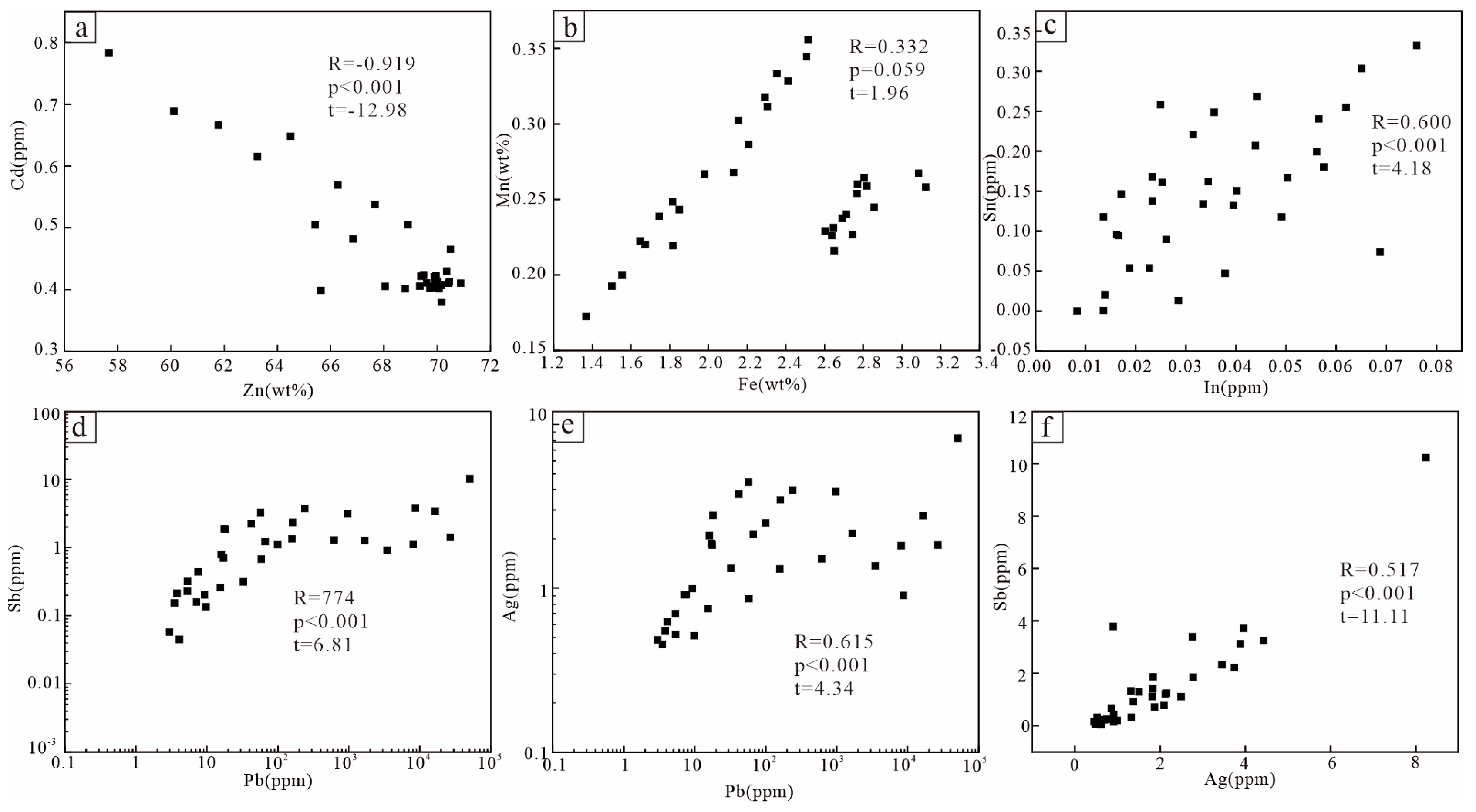
Substantial research has been conducted on simple direct substitution mechanisms. For instance, Zn2+ can be directly replaced by Fe2+, Cd2+, Mn2+, Ni2+, and Co2+ [18] (Figure 9a). Sphalerite also exhibits complex coupled substitution mechanisms (involving multiple elements) [19]. A positive correlation between Fe and Mn (Figure 9b) suggests that Fe2+, Cd2+, and Mn2+ primarily enter the sphalerite lattice via direct substitution of Zn2+. The two positive correlation trends reflect differences in sphalerite formation temperature: high Fe and Mn correspond to the early high-temperature stage (>320 °C), whereas low Fe and Mn correspond to the late moderate- to low-temperature stage [20,21]. Additionally, a substitution relationship exists between In and Sn in Pb-Zn deposits (Figure 9c), which can be expressed through three mechanisms: Zn2+ ↔ In3+ + Sn3+ + □; 3Zn2+ ↔ In3+ + Sn2+ + (Cu, Ag)+; 4Zn2+ ↔ In3+ + Sn4+ + (Cu, Ag) + + □ (□ denotes a vacancy).
In the Gariatong mining area, sphalerite exhibits low Pb and Sb concentrations, yet these elements show a broadly positive correlation (Figure 9d). This implies a coupled substitution mechanism of 4Zn2+ ↔ Pb2+ + 2Sb3+ + □, indicating potential genetic association between Pb and Sb. The positive correlation disappears at Pb > 70 ppm because these high-Pb spots are all located very close to galena (<50 μm). The 40 μm laser beam samples a mixture including galena, which has extremely high Pb (~86.6 wt%) but low Sb, thus breaking the coupled substitution (4Zn2+ ↔ Pb2+ + 2Sb3+) observed in the low-Pb population [22].
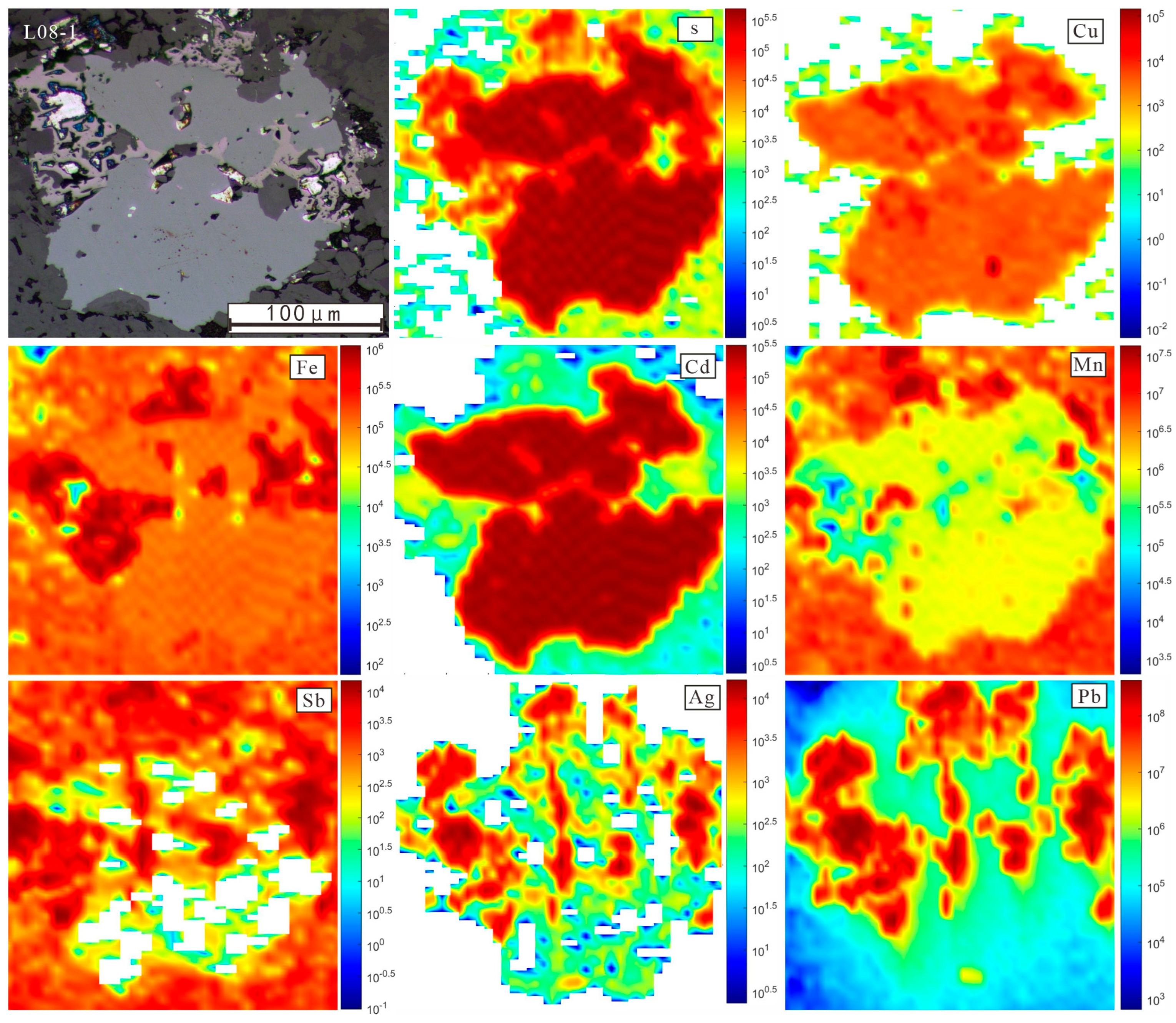
A significant correlation is also observed between Ag and Sb (Figure 9f), with Pb and Ag displaying similar geochemical trends (Figure 9e and Figure 10). Under specific pH and Eh conditions, Pb2+ and Ag+ tend to form stable coprecipitation assemblages, such as Ag-Pb sulfosalt minerals (e.g., freibergite, diaphorite), which are typical indicators of late-stage hydrothermal activity in rare-metal deposits [23]. The loss of positive correlation at Pb > 10 ppm is attributed to the same cause as in Figure 9d: high-Pb spots are adjacent to galena, and galena contamination artificially elevates Pb without a corresponding increase in Ag, thereby disrupting the original Pb–Ag coupled substitution (e.g., 2Zn2+ ↔ Ag+ + Sb3+) in sphalerite.
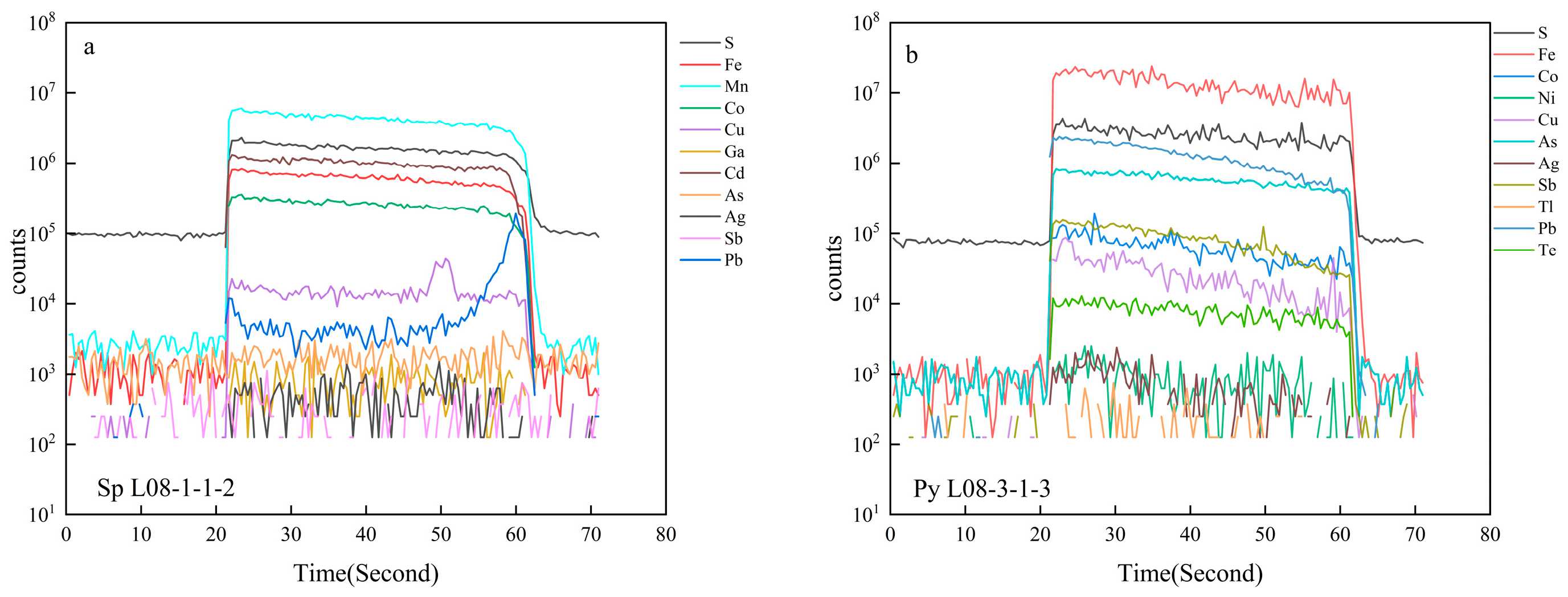
LA-ICP-MS time-resolved depth profiles provide critical insights into element occurrence states. When elements exist as micro-inclusions within minerals, their ablation profiles exhibit irregular spike-shaped patterns, whereas elements occurring as homogeneously distributed nanoparticles or solid solutions display smooth flat-topped profiles [24]. As shown in Figure 11a, the depth profiles of Fe, Cd, Mn, Cu, Co, Ni, Ga, and In in sphalerite are mostly parallel or subparallel to those of Zn and S, indicating that these elements primarily exist as uniformly distributed nanoparticles or solid solutions. In contrast, As, Ag, Hg, Sb, and Pb show irregular profiles, suggesting their predominant occurrence as micro-inclusions.
The sphalerite in the skarn-type Pb-Zn deposit shows considerable variation in Pb content (3.00–51,000 ppm), with distinct chemical heterogeneity that is closely related to its mineral paragenesis and textural position. Sphalerite formed during the main mineralization stage generally has low Pb concentrations in grain interiors. During the late stage, the precipitation of galena, jamesonite, and other Pb-rich minerals along sphalerite grain boundaries caused significant Pb enrichment at the margins and contact zones of sphalerite. The relatively high Pb concentrations in a small number of analytical spots result from their locations close to the sphalerite–galena contact, which may reflect minor trace-element diffusion between minerals or slight overlap of laser ablation areas. Such chemical heterogeneity records the multistage mineralization overprinting characteristics of the deposit and provides important geochemical evidence for understanding the ore-forming process.
Pyrite, the most ubiquitous sulfide in Earth’s crust, incorporates diverse trace elements under various geological conditions. Trace-element occurrence states in pyrite are categorized into four principal modes: (1) solid solutions within the pyrite lattice, (2) nanoscale particles hosted in pyrite, (3) microscale inclusions encapsulated in pyrite, and (4) microscale inclusions observable within oxide or silicate minerals [25]. LA-ICP-MS analysis provides direct visualization of these trace-element occurrence states, offering critical constraints for deciphering metal sources and precipitation mechanisms in ore-forming processes [26].
As a multivalent element, arsenic can exist in pyrite either as As substituting for S or as As 2+/3+ replacing Fe [27]. However, the leaching profiles of As show closer correlation with Fe than with S in the depth-dependent patterns, suggesting two potential occurrence modes for As: ① substitution for S under reducing conditions and ② replacement of Fe as As3+ in more oxidized shallow systems [28].
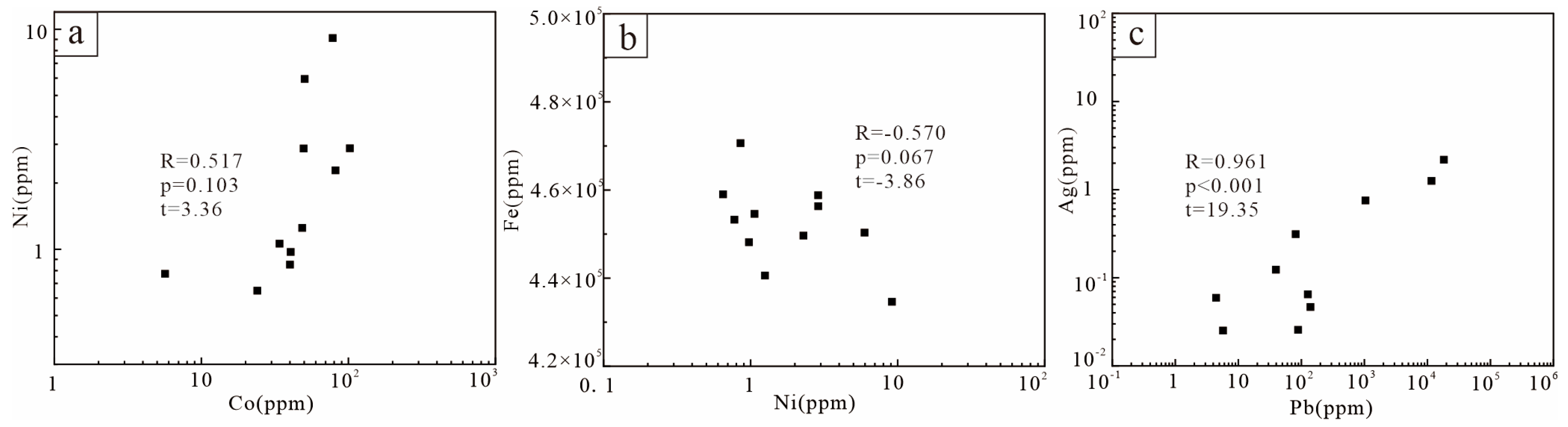
The ionic radii of Co2+, Ni2+, and Fe2+ are similar, measuring 0.65 Å, 0.69 Å, and 0.61 Å, respectively [29]. In pyrite from the Gariatong skarn-type Pb-Zn deposit, Co exhibits a strong positive correlation with Ni (Figure 12a), while Ni shows a pronounced negative correlation with Fe (Figure 12b). This suggests a substitution mechanism of Co2+ + Ni2+ ↔ 2Fe2+ in pyrite. Previous studies [30] have demonstrated that the larger ionic radius of Pb2+ compared to Fe2+ leads to the preferential occurrence of Pb as micro-inclusions of galena within pyrite. Silver, which displays a strong positive correlation with Pb (Figure 12c), typically exists in galena lattices through solid solution or isomorphic substitution. The smooth depth profile of Ag in LA-ICP-MS time-resolved signals (Figure 11b), lacking distinct dissolution peaks, further indicates that Ag was primarily incorporated into galena lattices via isomorphic substitution during the early mineralization stage.

5.1.2. Trace Elements in Sulfides as Indicators for Deposit Types

Deposits of different genetic types exhibit distinct trace-element compositions in their minerals due to variations in physicochemical conditions (e.g., ore-forming temperature, pressure, pH) and sources of ore-forming materials. Consequently, trace-element signatures provide critical indicators for discriminating genetic types of mineralization. Studies demonstrate that sphalerite (ZnS) typically contains multiple trace elements such as Fe, Cd, Ag, Ga, In, Se, and Te, while significant compositional differences are observed in sphalerite from different deposit types. Sphalerite in magma-related deposits is characterized by enrichment in Fe, Mn, Co, and In coupled with depletion in Cd [31]. In contrast, sphalerite from other deposit types (e.g., MVT-type deposits) shows enrichment in Cd, and Ga, alongside depletion in Fe, Mn, Co, and In [32].
The sphalerite from the Gariatong Pb-Zn deposit is notably enriched in trace elements such as Fe, Mn, Co, and Cu. The Fe content ranges from 1.37% to 3.12% (mean: 2.33 wt%), closely comparable to those observed in magmatic–hydrothermal and skarn-type deposits. Mn concentrations vary between 1725 ppm and 3557 ppm (mean: 2572 ppm; n = 33), while Ga exhibit lower abundances of 0.04–1.11 ppm (mean: 0.26 ppm; n = 33), respectively. These elemental signatures align with skarn deposits in Xizang, such as the Naru Songduo and Banggubo deposits [33,34].
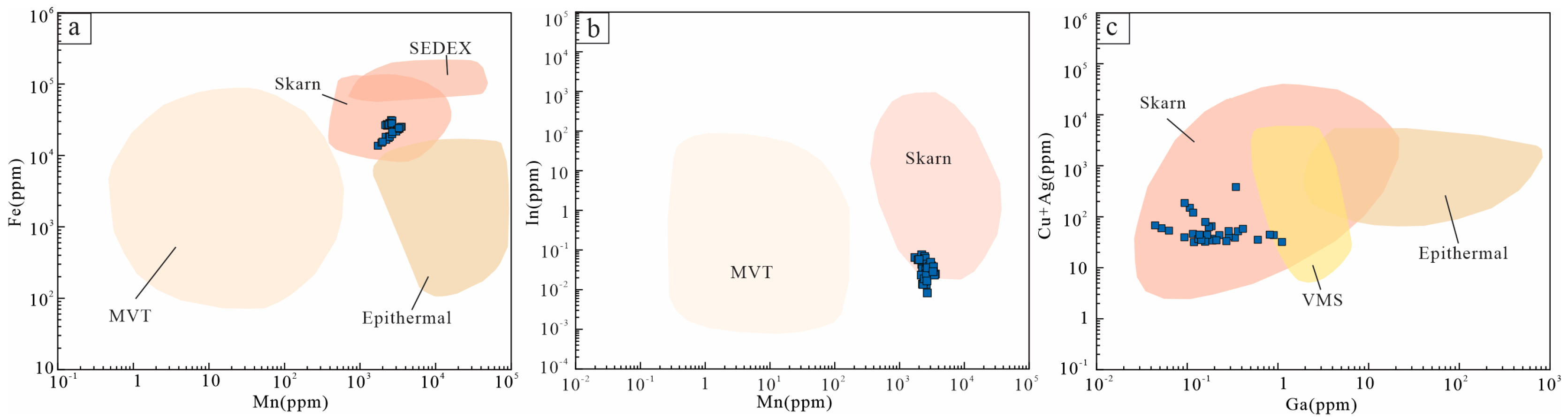
The Zn/Cd ratio in sphalerite can serve as an indicator for discriminating deposit types [35]. In the Gariatong Pb-Zn deposit, Zn/Cd ratios range from 73.6 to 184.7, broadly overlapping with those of magmatic–hydrothermal deposits. In geochemical discrimination diagrams of sphalerite—including Mn vs. Fe (Figure 13a), Mn vs. In (Figure 13b), and Ga vs. Cu + Ag (Figure 13c)—most data points from Gariatong sphalerite plot within or adjacent to the fields of skarn-type deposits. Combined with S isotope data, these results suggest that the Gariatong Pb-Zn deposit is a skarn-type Pb-Zn mineralization genetically linked to magmatic–hydrothermal activity.
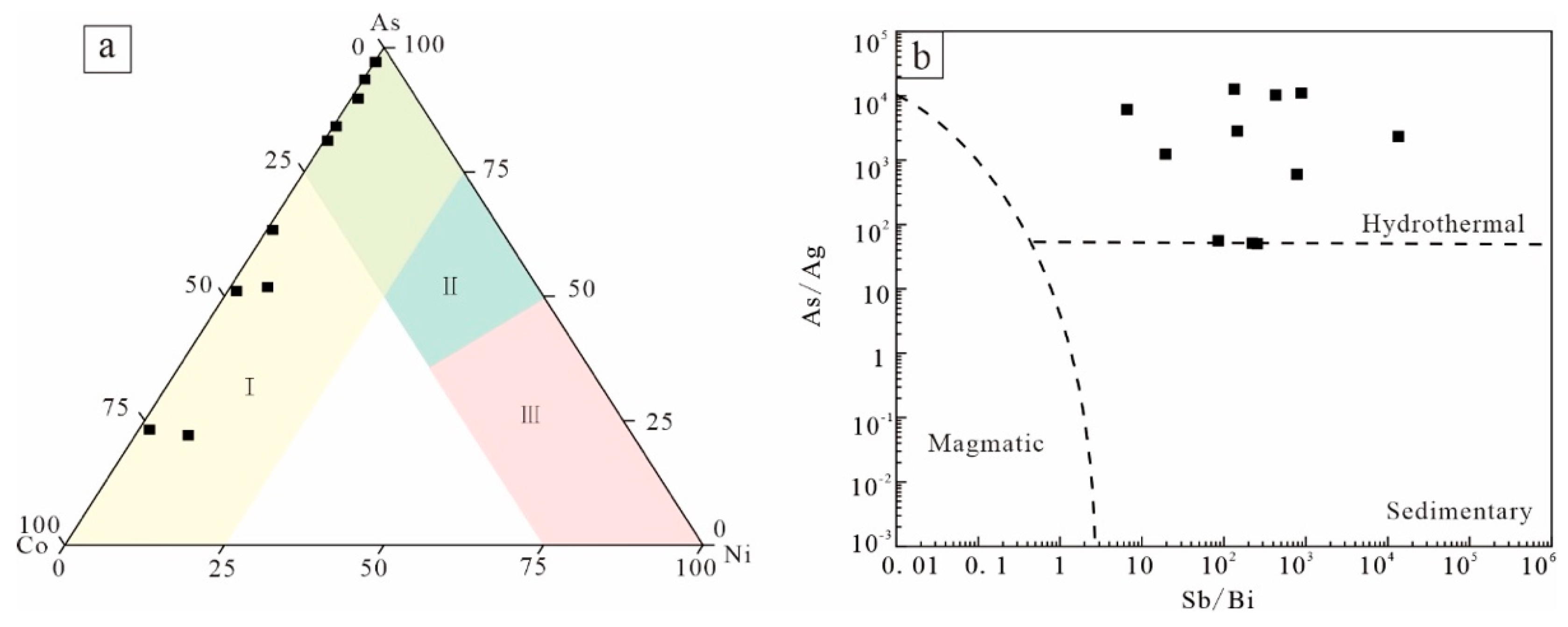
Yan et al. [36] established a Co-Ni-As ternary diagram for pyrite composition typomorphism based on statistical analysis of different genetic types (Figure 14a), where Zone I represents volcanic hydrothermal and/or magmatic–hydrothermal types, Zone II indicates Carlin-type, and Zone III corresponds to the metamorphic–hydrothermal type. Pyrites from the Gariatong deposit consistently plot within Zone I, characteristic of volcanic hydrothermal and/or magmatic–hydrothermal origins. Furthermore, trace-element ratios in pyrites can effectively indicate deposit genesis. Ref. [37] demonstrated that sedimentary pyrites exhibit low As/Ag ratios with moderate Sb/Bi ratios, magmatic pyrites show both low As/Ag and Sb/Bi ratios, and hydrothermal pyrites display high As/Ag ratios with moderate Sb/Bi ratios. They subsequently developed an As/Ag-Sb/Bi binary correlation diagram (Figure 14b) that effectively discriminates pyrite genetic types. Pyrites from lead–zinc orebodies in the Gariatong mining area predominantly fall within the hydrothermal field. Therefore, the Gariatong lead–zinc deposit is identified as a skarn-type deposit genetically associated with magmatic–hydrothermal processes.

5.2. Characteristics of Ore-Forming Fluids and Source of Metallogenic Materials

5.2.1. Characteristic of Ore-Forming Fluids

The Fe content in sphalerite exhibits a positive correlation with its formation temperature. When Fe content ranges from 3% to 10%, the formation temperature of sphalerite falls within 200–300 °C. Conversely, when Fe content decreases to 1–3%, the corresponding formation temperature ranges between 100 and 200 °C [20]. The Zn/Fe ratio, Zn/Cd ratio, and Ga/In ratio in sphalerite can serve as effective indicators for determining ore-forming temperatures. Ratios of Zn/Fe greater than 100, Zn/Cd less than 500, and Ga/In from 0.001 to 0.05 collectively indicate a high-temperature formation environment for sphalerite. In contrast, ratios of Zn/Fe, Zn/Cd, and Ga/In falling within the ranges of 10–100, 100–500, and 0.01–5, respectively, point to moderate-temperature conditions for sphalerite precipitation [21].
In the Gariatong mining area, sphalerite exhibits Fe contents ranging from 1.37% to 3.12% (mean: 2.33%), with all samples exceeding 1% Fe. This indicates that sphalerite formation predominantly occurred under moderate-temperature conditions. Experimental data reveal Zn/Fe ratios of 20.9–51.5, Zn/Cd ratios of 73.6–184.7, and Ga/In ratios of 0.91–38.8. Combined analysis of Fe content and trace-element ratios suggests sphalerite formation at moderate-low temperatures in this mining area.
The oxygen fugacity of ore-forming fluids can be estimated using the Mn content in sphalerite. Manganese enters the sphalerite lattice as MnS, and its concentration is strongly influenced by redox conditions [8]. Under reducing conditions, Mn remains soluble and MnO is less likely to precipitate, facilitating the incorporation of Mn into the sphalerite lattice. Consequently, high Mn content typically reflects a reducing environment [38,39]. In the Gariatong skarn-type Pb-Zn deposit, the Mn content ranges from 1725 ppm to 3557 ppm, with an average value of 2572 ppm. Furthermore, microscopic observations reveal that sulfide minerals in the Gariatong deposit are dominated by sphalerite, galena, pyrite, and chalcopyrite, while sulfate minerals are absent. This mineral assemblage indicates that the ore-forming fluids in the Gariatong Pb-Zn deposit were characterized by relatively low oxygen fugacity.
The enrichment of elements such as As, Zn, Sb, and Pb primarily occurs in low-temperature pyrite [40], while elements including Co, Ni, Bi, Se, Cu, and Te are typically concentrated in sulfides precipitated under high-temperature conditions (~400 °C) [41]. At the Gariatong skarn-type Pb-Zn deposit, pyrite demonstrates significant enrichment of As and Pb, along with moderate Sb enrichment. This geochemical signature collectively indicates formation under medium- to high-temperature conditions.
In conclusion, the ore-forming fluids of the Gariatong skarn-type Pb-Zn deposit are characterized by moderate temperatures and relatively low oxygen fugacity.

5.2.2. Source of Ore-Forming Materials

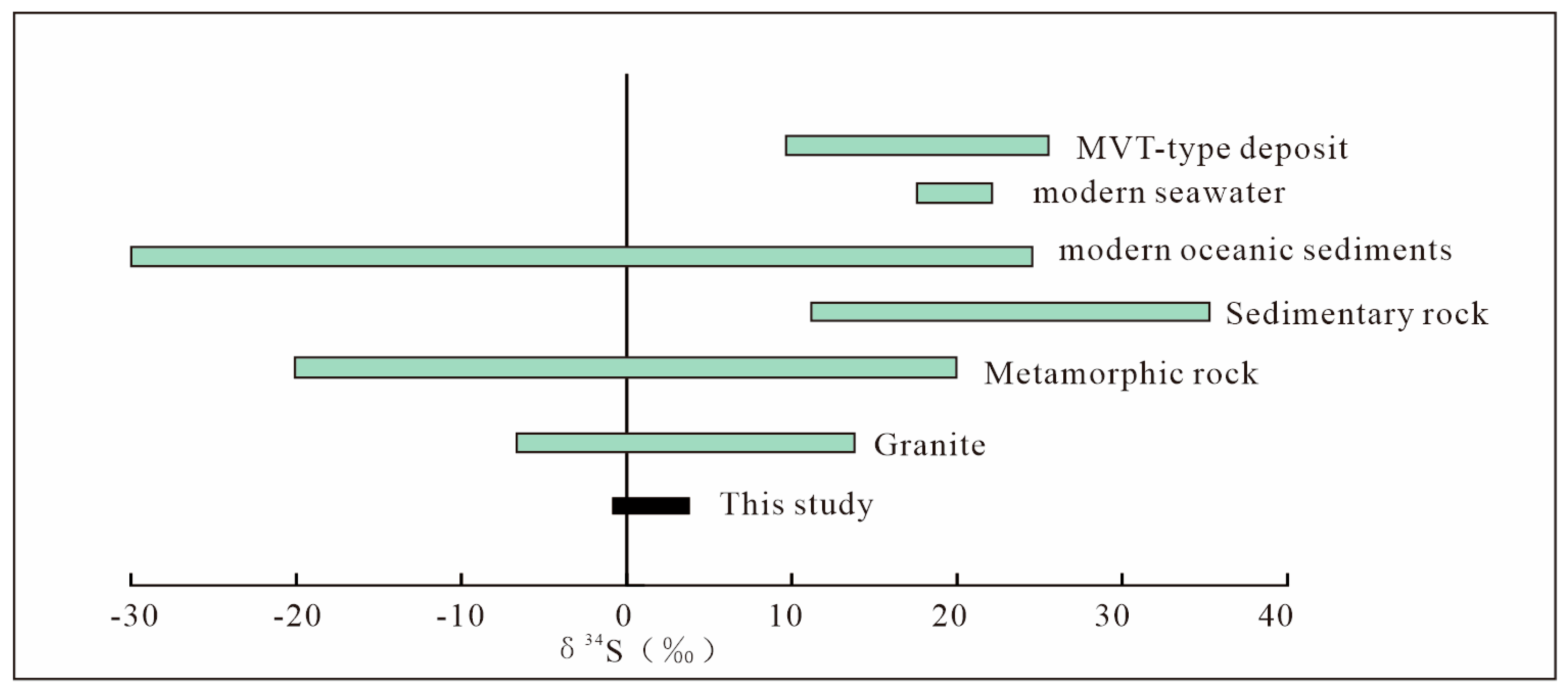
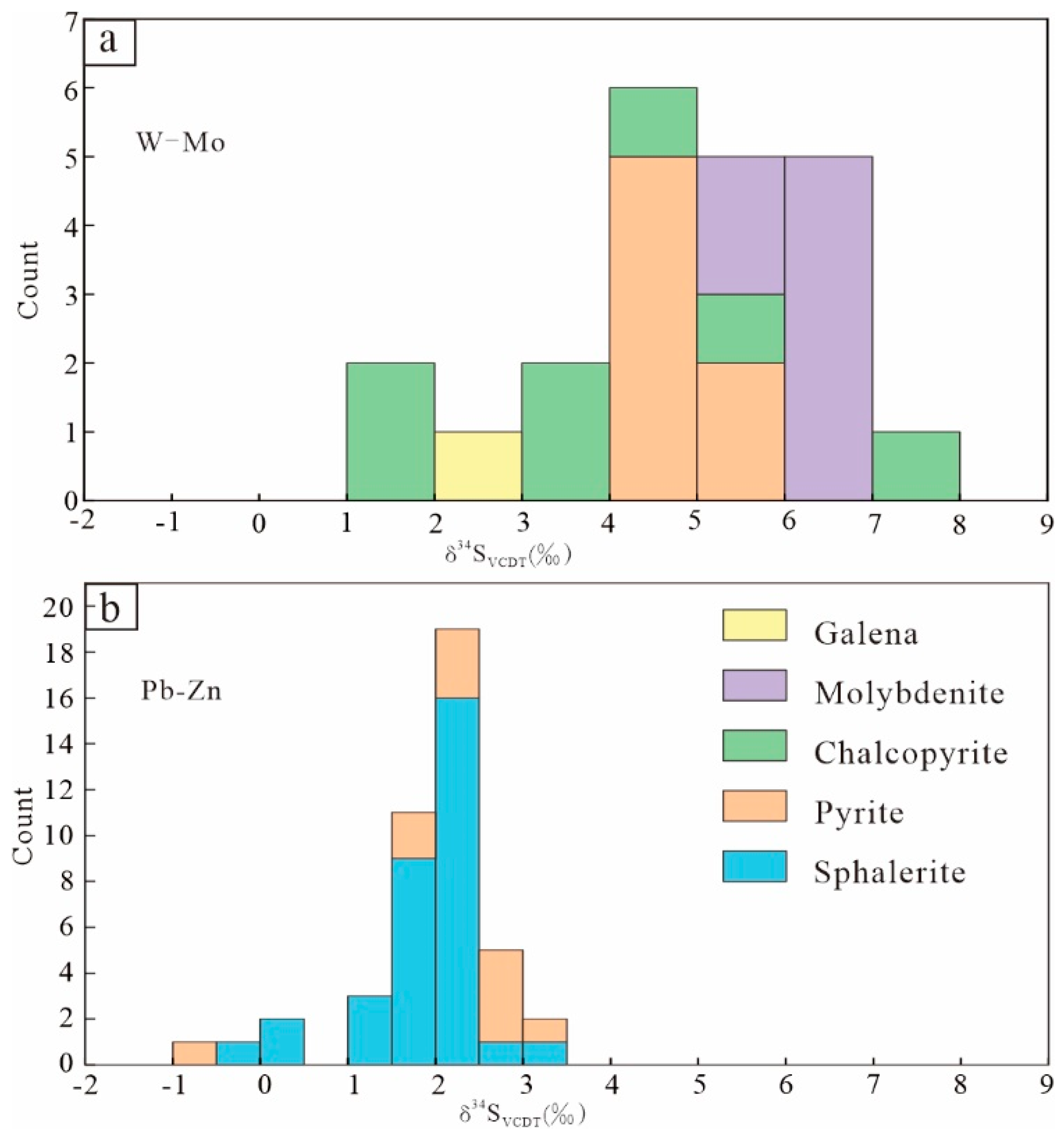
The sphalerite and pyrite from the Gariatong skarn-type Pb-Zn deposit exhibit a narrow δ34S variation range (2.1‰ to 5.8‰), indicating homogeneous sulfur isotopic composition. The consistently positive δ34S values (+3.5‰ ± 1.2‰) suggest a single sulfur source, with the tower-shaped distribution pattern of sulfur isotopes in the histogram aligning with typical magmatic-derived sulfur signatures (Figure 16b). These isotopic characteristics demonstrate that the sulfur required for sulfide mineralization was predominantly sourced from magmatic processes. The positive δ34S values in ore sulfides likely resulted from magmatic degassing, where preferential partitioning of 34S-depleted H2S into the vapor phase would enrich the residual melt in 34S, consequently producing sulfides with elevated δ34S values (Figure 15).

5.3. Association with Rare-Metal Mineralization

The Gariatong mining district exhibits systematic zoning of mineralization and alteration from the intrusion to wall rocks, characterized by sequential geochemical evolution: Nb-Ta-Rb → Mo-W → W-Mo → W-Bi → Pb-Zn-Ag. Corresponding metallic mineral assemblages progress as follows: columbite–tantalite–microlite, molybdenite–wolframite–pyrite–chalcopyrite–bismuthinite, and sphalerite–galena–pyrite–jamesonite.
The sulfur isotope histogram (Figure 16) reveals that sulfide δ34S values in both W-Mo and Pb-Zn orebodies exhibit tower-shaped distribution patterns [42,43]. Sulfur isotope data confirm that the skarn-type Pb-Zn mineralization and quartz-vein-type W-Mo mineralization in Gariatong belong to the same magmatic–hydrothermal system, sharing a common magmatic sulfur source. Differences in temperature–pressure conditions, fluid evolution stages, and redox states during mineralization resulted in isotopic fractionation between these two mineralization types, providing key isotopic constraints for deciphering their genetic relationship. Furthermore, the vertical zoning pattern of the Gariatong rare-metal system—featuring deep-seated rare-metal mineralization, intermediate W-Mo mineralization, and shallow peripheral Pb-Zn-Ag mineralization—establishes crucial exploration criteria for targeting rare-metal deposits based on peripheral Pb-Zn occurrences.
The integrated spatial, mineralogical, and geochemical evidence confirms that the skarn-type Pb–Zn–Ag mineralization and rare-metal (Nb–Ta–Rb, W–Mo) mineralization belong to a single, vertically zoned magmatic–hydrothermal system related to highly fractionated granites. The deposit shows continuous and complete spatial zoning from the intrusion outward (Nb–Ta–Rb → W–Mo → W–Bi → Pb–Zn–Ag), which is a typical feature of magmatic–hydrothermal systems evolving outward from a granite source. Sulfur isotopes (δ34S = −1.0‰ to 3.2‰) yield a narrow magmatic signature and are consistent with those of W–Mo orebodies, indicating a common magmatic sulfur source. Trace-element compositions of sphalerite (enrichment in Fe, Mn, Co; depletion in Ga; Zn/Cd = 73.6–184) and pyrite (Co–Ni–As assemblage) consistently indicate a magmatic–hydrothermal skarn origin rather than an early sedimentary Pb–Zn system reworked by later magmatic activity. Moderate-temperature conditions constrained by sphalerite Fe contents and skarn-type alteration assemblages further support a magmatic–hydrothermal origin. These lines of evidence collectively rule out the possibility of pre-existing sediment-hosted Pb–Zn mineralization overprinted by granite-related fluids and demonstrate that Pb–Zn–Ag mineralization represents the shallow, peripheral part of the same rare-metal magmatic–hydrothermal system.
The Tibetan Plateau is the youngest and largest continental collisional orogenic belt on Earth, and its metallogenic systems are representative of collisional orogenic metallogeny worldwide. This study confirms that the Gariatong skarn-type Pb-Zn deposit formed from magmatic–hydrothermal mineralization related to highly fractionated granites during the post-collisional stage, providing a reference model for global mineral exploration in collisional orogenic belts (e.g., the Himalayas, the Alps, the Zagros). Peripheral skarn-type Pb-Zn mineralization can serve as a practical prospecting guide for both base metals and deep rare metals, which is significant for expanding exploration targets and resource potential in collisional orogenic belts globally.

6. Conclusions

(1)
In situ LA-ICP-MS analyses indicate that sphalerite from the Gariatong skarn-type Pb-Zn deposit is enriched in Fe, Mn, Co, and Cd. These elements mainly occur as solid solutions or nanoparticles. Pyrite is enriched in As, Pb, Co, Cu, and Mn. As and Pb mostly exist as micro-inclusions in sulfides. The heterogeneous Pb distribution in sphalerite records a two-stage evolution. Early Zn-dominated mineralization was overprinted by late Pb-Sb-rich hydrothermal fluids. This feature provides direct micro-geochemical evidence for multistage fluid activities in the deposit.
(2)
Several geochemical indicators jointly constrain the origin of the Gariatong Pb-Zn deposit, including sphalerite Zn/Cd ratios, pyrite Co–Ni–As ternary diagrams, and elemental discrimination diagrams. All results support a magmatic–hydrothermal skarn origin. Sphalerite Fe contents (1.37–3.12 wt.%) and mineral assemblages indicate mineralization under moderate-temperature, weakly oxidized conditions. These data provide key constraints on the physicochemical conditions of the ore-forming fluids.
(3)
In situ sulfur isotope analyses show that δ34S values of sulfides range from −1.0‰ to 3.2‰, with a mean of 1.9‰. The narrow range suggests a single magmatic sulfur source. The sulfur isotope pattern is consistent with that of coexisting W-Mo mineralization. This consistency confirms that Pb-Zn and W-Mo mineralization share the same magmatic–hydrothermal fluid system. Isotopic data thus establish a direct genetic link between Pb-Zn mineralization and deep magmatism.
(4)
The Pb-Zn-Ag mineralization represents the outermost zone of the vertical magmatic–hydrothermal system at Gariatong. The system shows a complete zoning sequence: Nb-Ta-Rb → Mo-W → W-Bi → Pb-Zn-Ag. Trace-element and sulfur isotope data confirm a genetic link between skarn-type Pb-Zn mineralization and highly fractionated granite-related rare-metal mineralization. Peripheral Pb-Zn mineralization can be used as a direct exploration indicator for deep rare-metal deposits in the Lhasa Terrane. This study provides a new genetic and exploration model for polymetallic systems in collisional orogenic belts.

Supplementary Materials

The following supporting information can be downloaded at: https://www.mdpi.com/article/10.3390/min16040424/s1, Table S1: The LA-ICP-MS trace element analytical results (ppm) of sphalerite from the Gariatong skarn-type lead-zinc deposit; Table S2: The LA-ICP-MS trace element analytical results (ppm) of pyrite from the Gariatong skarn-type lead-zinc deposit; Table S3: Sulfide Sulfur Isotope Composition of the Garitong Skarn-Type Lead-Zinc Deposit.

Author Contributions

R.C.: investigation, formal analysis, writing—original draft, writing—review and editing. M.J., Y.C. and L.G.: investigation, formal analysis. F.X.: investigation, project administration, supervision. All authors have read and agreed to the published version of the manuscript.

Funding

This work was supported by the National Key Research and Development Program of China under grant number 2022YFC2905002, the Sichuan Provincial Natural Science Foundation Project under grant number 2025ZNSFSC1197, and the Chengdu University of Technology Summit Scientific Research Program Project under grant number 2024ZF11426.

Data Availability Statement

Data are contained within the article.

Acknowledgments

Special thanks are given to the anonymous reviewers for their critical and constructive reviews.

Conflicts of Interest

We declare that we have no conflicts of interest.

References

  1. Mao, J.W.; Zhang, Z.H.; Pei, R.F. Introduction to Mineral Deposit Models of China; Geological Publishing House: Beijing, China, 2012; pp. 81–92. (In Chinese) [Google Scholar]
  2. Audétat, A.; Günther, D.; Heinrich, C.A. Causes for large-scale metal zonation around mineralized plutons: Fluid inclusion LA ICP-MS evidence from the Mole Granite, Australia. Econ. Geol. 2000, 95, 1563–1581. [Google Scholar] [CrossRef]
  3. Dostal, J.; Jutras, P. Upper Paleozoic mafic and intermediate volcanic rocks of the Mount Pleasant caldera associated with the Sn-W deposit in southwestern New Brunswick (Canada): Petrogenesis and metallogenic implications. Lithos 2016, 262, 428–441. [Google Scholar] [CrossRef]
  4. Dong, X.P.; Chen, H.F.; Wen, X.F.; Shi, G.H.; Guan, B. Metallogenic controlling factors and mineralization enrichment regularity of the Jiangligou W-polymetallic deposit in Qinghai Province. Geol. Prospect. 2017, 53, 657–666. (In Chinese) [Google Scholar] [CrossRef]
  5. Luo, Y.T.; Lü, G.X. Characteristics of structural altered lithofacies zoning in the Sandiaozhuang Mo(W) deposit, Luanchuan, Henan Province. Geol. Bull. China 2020, 39, 1773–1782. (In Chinese) [Google Scholar] [CrossRef]
  6. Cai, H.Y.; Zhang, G.L. A discussion on the submarine volcanic hydrothermal (exhalative) mineralization of the Dachang Sn-polymetallic deposit in Guangxi. Miner. Resour. Geol. 1983, 1, 13–21. (In Chinese) [Google Scholar]
  7. Fan, D.L.; Zhang, T.; Ye, J.; Pasava, J.; Kribek, B.; Dobes, P.; Varrin, I.; Zak, K. Geochemistry and origin of tin-polymetallic sulfide deposits hosted by the Devonian black shale series near Dachang, Guangxi, China. Ore Geol. Rev. 2004, 24, 103–120. [Google Scholar] [CrossRef]
  8. Wu, S.H.; Dai, P.; Wang, X.D. Isotopic Geochemical Study of C, H, O, and Pb in Tungsten-Polymetallic Skarn-Sphalerite and Lead-Zinc-Silver Veins at Shizhuyuan, China. Miner. Depos. Geol. 2016, 35, 633–647. (In Chinese) [Google Scholar] [CrossRef]
  9. Gleeson, S.A.; Wilkinson, J.J.; Shaw, H.F.; Herrington, R.J. Post magmatic hydrothermal circulation and the origin of base metal mineralization, Cornwall, UK. J. Geol. Soc. 2000, 157, 589–600. [Google Scholar] [CrossRef]
  10. Müller, A.; Seltmann, R.; Halls, C.; Siebel, W.; Dulski, P.; Jeffries, T.; Spratt, J.; Kronz, A. The magmatic evolution of the Land’s End pluton, Cornwall, and associated pre-enrichment of metals. Ore Geol. Rev. 2006, 28, 329–367. [Google Scholar] [CrossRef]
  11. Bussell, M.A.; Alpers, C.N.; Petersen, U.; Shepherd, T.J.; Bermudez, C.; Baxter, A.N. The Ag-Mn-Pb-Zn vein, replacement, and skarn deposits of Uchucchacua, Peru: Studies of structure, mine ralogy, metal zoning, Sr isotopes and fluid inclusions. Econ. Geol. 1990, 85, 1348–1383. [Google Scholar] [CrossRef]
  12. Yin, A.; Harrison, T.M. Geologic evolution of the Himalayan Tibetan Orogen. Annu. Rev. Earth Planet. Sci. 2000, 28, 211–280. [Google Scholar] [CrossRef]
  13. Zhu, D.C.; Zhao, Z.D.; Niu, Y.L.; Mo, X.X.; Chung, S.L.; Hou, Z.Q.; Wang, L.Q.; Wu, F.Y. The Lhasa Terrane: Record of a microcontinent and its histories of drift and growth. Earth Planet. Sci. Lett. 2011, 301, 241–255. [Google Scholar] [CrossRef]
  14. Zhu, D.C.; Zhao, Z.D.; Niu, Y.L.; Dilek, Y.; Hou, Z.Q.; Mo, X.X. The origin and pre-Cenozoic evolution of the Tibetan Plateau. Gondwana Res. 2013, 23, 1429–1454. [Google Scholar] [CrossRef]
  15. Wang, F.Y.; Ge, C.; Ning, S.Y.; Nie, L.Q.; Zhong, G.X.; White, N. Development of a new mineral area scanning analysis method and its geological application. Acta Petrol. Sin. 2017, 33, 3422–3436. Available online: http://www.ysxb.ac.cn/article/id/5ff2d8edbfedb51e1a6ae3ad?viewType=HTML (accessed on 12 March 2026). (In Chinese with English Abstract).
  16. Xiao, X.; Zhou, T.F.; White, N.C.; Zhang, L.J.; Fan, Y.; Wang, F.Y.; Chen, X.F. The formation and trace elements of garnet in the skarn zone from the Xinqiao Cu-S-Fe-Au deposit, Tongling ore district, Anhui Province, Eastern China. Lithos 2018, 302–303, 467–479. [Google Scholar] [CrossRef]
  17. Johan, Z. Indium and germanium in the structure of sphalerite: An example of coupled substitution with copper. Mineral. Petrol. 1988, 39, 211–229. [Google Scholar] [CrossRef]
  18. Murakami, H.; Ishihara, S. Trace elements of Indium-bearing sphalerite from tin-polymetallic deposits in Bolivia, China and Japan: A femto-second LA-ICPMS study. Ore Geol. Rev. 2013, 53, 223–243. [Google Scholar] [CrossRef]
  19. Yuan, B.; Zhang, C.; Yu, H.; Yang, Y.; Zhao, Y.; Zhu, C.; Ding, Q.; Zhou, Y.; Yang, J.; Xu, Y. Element enrichment characteristics: Insights from element geochemistry of sphalerite in Daliangzi Pb-Zn deposit, Sichuan, southwest China. J. Geochem. Explor. 2018, 32, 339–348. [Google Scholar] [CrossRef]
  20. Han, Z.X. Typomorphic characteristics of sphalerite in the Devonian Pb-Zn metallogenic belt of the Qinling Mountains. J. Earth Sci. Environ. 1994, 16, 12–17. (In Chinese) [Google Scholar]
  21. Frenzel, M.; Hirsch, T.; Gutzmer, J. Gallium, germanium, indium, and other trace and minor elements in sphalerite as a function of deposit type-A meta-analysis. Ore Geol. Rev. 2016, 76, 52–78. [Google Scholar] [CrossRef]
  22. Schlöglova, K.; Wälle, M.; Heinrich, C.A. LA-ICP-MS analysis of fluid inclusions: Contamination effects challenging micro-analysis of elements close to their detection limit. J. Anal. At. Spectrom. 2017, 32, 1052–1063. [Google Scholar] [CrossRef]
  23. Huang, D.H. Characteristics and significance of tetrahedrite group and Ag-sulfosalt minerals in Ag-polymetallic deposits. Acta Petrol. Mineral. 2000, 19, 78–87. (In Chinese) [Google Scholar]
  24. Li, R.; Xia, X.; Chen, H.; Wu, N.; Zhao, T.; Lai, C.; Yang, Q.; Zhang, Y. A Potential New Chalcopyrite Reference Material for Secondary Ion Mass Spectrometry Sulfur Isotope Ratio Analysis. Geostand. Geoanalytical Res. 2020, 44, 485–500. [Google Scholar] [CrossRef]
  25. Zamruddin, N.N.S.A.; Abidin, N.S.Z.; Endut, Z.; Makoundi, C.; Lok, L.K.; Ismail, M.S. Trace Element Analysis of Pyrite and Arsenopyrite Using the LA-ICPMS Technique in Pulai, Central Belt of Peninsular Malaysia. Minerals 2023, 13, 1026. [Google Scholar] [CrossRef]
  26. Zhang, H.Y.; Zhao, Q.Q.; Zhao, G.; Hong, J.X.; Liu, J.J.; Zhai, D.G. In-situ microanalysis method of pyrite trace elements by LA-ICP-MS and its application in gold deposit research. Miner. Depos. 2022, 41, 1182–1199. (In Chinese) [Google Scholar] [CrossRef]
  27. Reich, M.; Deditius, A.; Chryssoulis, S.; Li, J.-W.; Ma, C.-Q.; Parada, M.A.; Barra, F.; Mittermayr, F. Pyrite as a record of hydrothermal fluid evolution in a porphyry copper system: A SIMS/EMPA trace element study. Geochim. Cosmochim. Acta 2013, 104, 42–62. [Google Scholar] [CrossRef]
  28. Deditius, A.P.; Utsunomiya, S.; Renock, D.; Ewing, R.C.; Ramana, C.V.; Becker, U.; Kesler, S.E. A proposed new type of arsenian pyrite: Composition, nanostructure and geological significance. Geochim. Cosmochim. Acta 2008, 72, 2919–2933. [Google Scholar] [CrossRef]
  29. George, L.L.; Biagioni, C.; D’ORazio, M.; Cook, N.J. Textural and trace element evolution of pyrite during greenschist facies metamorphic recrystallization in the southern Apuan Alps (Tuscany, Italy): Influence on the formation of Tl-rich sulfosalt melt. Ore Geol. Rev. 2018, 102, 59–105. [Google Scholar] [CrossRef]
  30. Román, N.; Reich, M.; Leisen, M.; Morata, D.; Barra, F.; Deditius, A.P. Geochemical and micro-textural fingerprints of boiling in pyrite. Geochim. Cosmochim. Acta 2019, 246, 60–85. [Google Scholar] [CrossRef]
  31. Wen, H.; Zhu, C.; Zhang, Y.; Cloquet, C.; Fan, H.; Fu, S. Zn/Cd ratios and cadmium isotope evidence for the classification of lead–zinc deposits. Sci. Rep. 2016, 6, 25273. [Google Scholar] [CrossRef]
  32. Gong, X.J.; Yang, Z.S.; Zhuang, L.L.; Ma, W. Constraints of LA-ICP-MS trace element composition of sphalerite on the metallogenesis of the Narusongduo Pb-Zn deposit, Tibet. Miner. Depos. 2019, 38, 1365–1378. (In Chinese) [Google Scholar] [CrossRef]
  33. Wang, Y.Q. Mineralogical Characteristics and Geological Significance of Sphalerite in the Bangbule Skarn-Type Pb-Zn Deposit, Tibet. Master’s Thesis, Chengdu University of Technology, Chengdu, China, 2023. (In Chinese) [Google Scholar]
  34. Jonasson, I.R.; Sangster, D.F. Zn-Cd ratios for sphalerites separated from some Canadian sulphide ore samples. Pap.-Geol. Surv. Can. 1978, 78, 195–201. [Google Scholar]
  35. Yan, Y.T.; Li, S.R.; Jia, B.J.; Zhang, N.; Yan, L.N. Typomorphic characteristics and statistical analysis of pyrite composition in different genetic types of gold deposits in China. Earth Sci. Front. 2012, 19, 214–226. (In Chinese) [Google Scholar]
  36. Augustin, J.; Gaboury, D. Multi-stage and multi-sourced fluid and gold in the formation of orogenic gold deposits in the world-class Mana district of Burkina Faso-Revealed by LA-ICP-MS analysis of pyrites and arsenopyrites. Ore Geol. Rev. 2019, 104, 495–521. [Google Scholar] [CrossRef]
  37. Yin, X.Z.; Hu, A.Z. A brief discussion on the genesis of several Pb-Zn deposits in western Henan based on the typomorphic characteristics of sphalerite. Geophys. Geochem. Explor. 2004, 5, 413–417. (In Chinese) [Google Scholar]
  38. Zhuang, L.L.; Song, Y.C.; Liu, Y.C.; Fard, M.H.; Hou, Z.Q. Major and trace elements and sulfur isotopes in two stages of sphalerite from the world-class Angouran Zn-Pb deposit, Iran: Implications for mineralization conditions and type. Ore Geol. Rev. 2019, 109, 184–200. [Google Scholar] [CrossRef]
  39. Kelley, K.D.; Leach, D.L.; Johnson, C.A.; Clark, J.L.; Fayek, M.; Slack, J.F.; Anderson, V.M.; Ayuso, R.A.; Ridley, W.I. Textural, compositional, and sulfurisotope variations of sulfide minerals in the Red Dog Zn-Pb-Ag deposits, Brooks Range, Alaska: Implications for ore formation. Econ. Geol. 2004, 99, 1509–1532. [Google Scholar] [CrossRef]
  40. Maslennikov, V.V.; Maslennikova, S.P.; Large, R.R.; Danyushevsky, L.V. Study of Trace Element Zonation in Vent Chimneys from the Silurian Yaman-Kasy Volcanic-Hosted Massive Sulfide Deposit (Southern Urals, Russia) Using Laser Ablation-Inductively Coupled Plasma Mass Spectrometry (LA-ICPMS). Econ. Geol. 2009, 104, 1111–1141. [Google Scholar] [CrossRef]
  41. Wohlgemuth-Ueberwasser, C.C.; Viljoen, F.; Petersen, S.; Vorster, C. Distribution and solubility limits of trace elements in hydrothermal black smoker sulfides: An in-situ LA-ICP-MS study. Geochim. Cosmochim. Acta 2015, 159, 16–41. [Google Scholar] [CrossRef]
  42. Qiu, Z.H.; Xie, F.W.; Xu, Y.X.; Yang, C.; Cao, R.; Zhou, A.R.G.L.; Qiao, F.; Zhang, J.X.; Liu, S.Y. Fluid inclusions and in-situ S isotope of sulfides in quartz vein-type W-Mo orebodies in the Garia Tong mining area, Tibet. Mineral. Petrol. 2025, 45, 36–48. (In Chinese) [Google Scholar] [CrossRef]
  43. Xu, P.Y. Geological Characteristics and Genesis of the Jiagang Snow Mountain W-Mo Deposit, Tibet. Master’s Thesis, China University of Geosciences, Beijing, China, 2017. (In Chinese) [Google Scholar]
Figure 1. (a) Tectonic framework of the Tibetan Plateau Figure; (b) regional geological map of the Gariatong area, southern Tibet (modified from 1:250,000 regional geological survey data). 1. Loose deposits; 2. Rigongla Formation (E3r); 3. Wuyu Formation (N2w); 4. Zhanzhong Formation (K1z); 5. Xiala Formation (P2x); 6. Angjie Formation (P1a); 7. Laga Formation (C2P1l); 8. Yongzhu Formation (Cyn); 9. Chala Formation (D2–3c); 10. Dardong Formation (D1d); 11. Tertiary granite porphyry (Eλπ); 12. Tertiary porphyraceous granite porphyry (N1γγ); 13. Early Cretaceous granodiorite (K1γδ); 14. Early Cretaceous biotite granite (K1γβ); 15. geological boundary; 16. fault; 17. Gariatong ore district; 18. Rivers.
Minerals 16 00424 g001
Figure 2. Geological map of the Gariatong.
Minerals 16 00424 g002
Figure 3. Hand specimens and microphotographs of ore minerals from the Gariatong skarn-type Pb-Zn deposit; (a) skarn float; (b) marbleization; (c) diopside-bearing skarnization; (d) hematitization; (e) galena; (f) sphalerite + galena; (g) euhedral pyrite; (h) sphalerite + sphalerite + jamesonite; (i) zoned jamesonite surrounding sphalerite; Di: diopside; Gn: galena.
Minerals 16 00424 g003
Figure 4. Microphotographs of gangue minerals from the Gariatong skarn-type Pb-Zn deposit; (a) diopside; (b) diopside + quartz; (c) garnet; (d) augite; (e) sphalerite embedded within calcite; (f) calcite exhibiting high-order white interference colors; Di: diopside; Qtz: quartz; Grt: garnet; Aug: augite; Cal: calcite; Sp: sphalerite; Gn: galena.
Minerals 16 00424 g004
Figure 5. Gariatong W-Mo deposit hand specimens and photomicrographs: (a) quartz vein; (b) monzogranite porphyry; (c) muscovite granite; (d) greisen-type wolframite; (e) quartz vein containing wolframite and molybdenite; (f) muscovite granite; (g) greisen; (h) photomicrograph of quartz vein; (i) wolframite + sphalerite + chalcopyrite; Wol: wolframite; Mo: molybdenite; Py: pyrite; Sp: sphalerite; Mo: molybdenite; Cp: chalcopyrite.
Minerals 16 00424 g005
Figure 6. Photomicrographs of gangue minerals from the granite-related Nb-Ta-Rb orebodies in the Gariatong mining area; (a) monzogranite porphyry; (b) plagioclase with polysynthetic twinning; (c) microcline; (d) biotite gradually transforming into muscovite; (e) muscovite granite; (f) greisen; Qtz: quartz; Ms: muscovite; Mi: microcline; Pl: plagioclase; Bt: biotite; Sc: sericite.
Minerals 16 00424 g006
Figure 7. LA-ICP-MS trace-element boxplots of sphalerite from the Gariatong skarn-type Pb-Zn deposit.
Minerals 16 00424 g007
Figure 8. Box-and-whisker plots of LA-ICP-MS analyses for trace elements in pyrite from the mean skarn-type Pb-Zn deposit.
Minerals 16 00424 g008
Figure 9. Trace-element substitution mechanisms in sphalerite from the Gariatong skarn-type Pb-Zn deposit. (a) Cd vs. Zn; (b) Mn vs. Fe; (c) Sn vs. In; (d) Sb vs. Pb; (e) Ag vs. Pb; (f) Sb vs. Ag.
Minerals 16 00424 g009
Figure 10. Color zoning in sphalerite and LA-ICP-MS elemental mapping images from the Gariatong deposit. ((Upper-left) panel: transmitted-light photomicrograph of the sample. The color scale bar represents the relative concentration levels of individual elements, with different colors corresponding to varying elemental abundances.).
Minerals 16 00424 g010
Figure 11. LA-ICP-MS time-resolved depth profiles of sphalerite and pyrite from the Gariatong skarn-type Pb-Zn deposit: (a) Sp; (b) Py.
Minerals 16 00424 g011
Figure 12. Trace-element substitution mechanisms of pyrite in the Gariatong skarn-type Pb-Zn deposit (a) Ni vs. Co; (b) Fe vs. Ni; (c) Ag vs. Pb.
Minerals 16 00424 g012
Figure 13. Sphalerite from the Gariatong skarn-type Pb-Zn deposit: (a) binary diagrams of Mn vs. Fe; (b) Mn vs. In; (c) Ga vs. (Cu + Ag); Blue squares: LA-ICP-MS spots on sphalerite.
Minerals 16 00424 g013
Figure 14. Co-Ni-As ternary diagram and As/Ag-Sb/Bi binary discrimination diagram for pyrite from the Gariatong skarn-type Pb-Zn deposit. (a) Co-Ni-As ternary diagram; (b) As/Ag vs. Sb/Bi diagram.
Minerals 16 00424 g014
Figure 15. Sulfur isotope composition distribution of the Gariatong skarn-type Pb-Zn deposit.
Minerals 16 00424 g015
Figure 16. Sulfur isotope histograms of sulfides from the Gariatong deposits. (a) Quartz-vein-type W-Mo mineralization; (b) Skarn-type Pb-Zn mineralization. (data for molybdenite, chalcopyrite, and partial pyrite from [41]; galena data from [42]).
Minerals 16 00424 g016
Disclaimer/Publisher’s Note: The statements, opinions and data contained in all publications are solely those of the individual author(s) and contributor(s) and not of MDPI and/or the editor(s). MDPI and/or the editor(s) disclaim responsibility for any injury to people or property resulting from any ideas, methods, instructions or products referred to in the content.