


Abstract
Copper (Cu) and zinc (Zn) are critical for global high-tech industries and national economic security. With high-grade mineral depletion, recycling valuable metals from iron ore tailings has become a sustainable solution. A Peruvian mining company’s iron ore tailing reprocessing faces a severe challenge: surging lead (Pb) content due to increased excavation depth has rendered the original Cu-Zn bulk flotation flowsheet ineffective, causing excessive impurities in concentrates. This study first characterized the occurrence states of Cu, Pb, and Zn via multi-analytical techniques. A novel Cu-Pb-Zn iso-flotation process with step-by-step depression, coupled with optimized reagents, was proposed. It abandons initial CuSO4 activation to reduce separation difficulty and uses targeted depressants for efficient impurity removal. Closed-circuit tests yielded a Cu concentrate (26.57% grade, 56.08% recovery) with Pb/Zn contents reduced to 2.97%/9.80%, and a Zn concentrate (44.95% grade, 75.56% recovery) with Cu/Pb controlled at 1.15%/8.31%. Experimental results demonstrate that this new flowsheet effectively mitigates the impact of high Pb content, restoring production efficiencies and offering a valuable precedent for industrial process modification.
1. Introduction
The efficient recovery of copper and zinc is paramount, as these metals are fundamental to modern industry [1,2,3]. The flotation separation of these valuable minerals, particularly from complex sources, is a key step in meeting growing demand from sectors like electronics and transportation [4]. This challenge is exacerbated by the depletion of high-grade primary deposits, turning attention to difficult-to-process resources such as low-grade tailings [5]. A prominent example is complex sulfide ores, where fine intergrowths of minerals like chalcopyrite, galena, and sphalerite create significant processing challenges [6,7]. Developing effective separation strategies for such complex assemblages is therefore of critical importance. The Cu-Pb-Zn complex polymetallic sulfide ores contain mainly chalcopyrite, sphalerite, and galena, which are important sources of copper, zinc, and lead. While thedeposits butf complex sulphide ores remains extremely challenging, there is growing interest in recovering valuable minerals, particularly through selective flotation [8,9,10], from these ores, which are not only abundant in continental and seafloor deposits, but also contain large quantities of key metals required by many industries [9].
A mining company is reprocessing iron ore tailings in Peru to recover Cu and Zn from the tailings. The main valuable minerals recovered were chalcopyrite and sphalerite. The flotation flowsheet is Cu-Zn bulk flotation followed by Cu-Zn separation. Since commissioning, the concentrator has been required to make only minor process flowsheet changes to cope with slight fluctuations in ore characteristics. However, the ore properties of the tailings have recently changed significantly as the depth of excavation of the tailings has increased. The grade of Cu in the tailings has declined from 0.3%~0.4% to about 0.15%, and the grade of Zn has increased from 1.0% to about 1.9%. More importantly, the Pb content (mainly in galena) has risen dramatically. As a result, the production process is unsuitable for the ore characteristics and seriously affects the separation of Cu and Zn. This leads to excessive Pb and Zn contents (≥18%) in the Cu concentrate and excessive Cu and Pb contents (≥4.5%) in the Zn concentrate. Therefore, it is necessary to investigate the changes in ore properties. Laboratory flotation experiments are then carried out to determine whether minor modifications to the existing flowsheet can be adapted to the changes in ore properties. It is also necessary to determine the optimum operating parameters of the flotation flowsheet to accommodate the latest ore properties.
Currently, froth flotation is the most commonly used method for separating these sulfide minerals [11,12]. Commonly used collectors include xanthate, thiocarbamates, sulfur nitrogen compounds, ethylenediamine tetramethylenephosphonic acid, and many more [13,14]. However, the presence of ions such as Cu2+ and Pb2+ in the slurry solution can dramatically alter the floatability of minerals during the flotation process, resulting in unintentional lifting of poorly floatable minerals [15,16,17]. Therefore, it is virtually impossible to achieve effective separation of these sulfide ores by using only collectors without depressants [18,19,20]. ZnSO4 is the most common depressant in the separation of chalcopyrite and sphalerite and reduces the floatability of sphalerite. It can be hydrolyzed to form colloidal substances, such as Zn(OH)2 and Zn(OH)+, which adsorb and further impede the uptake of collectors by sphalerite [18,21]. However, the separation of chalcopyrite and galena was the key to the experiments because of the large increase in Pb content in the iron ore tailings and the close floatability of chalcopyrite and galena. Therefore, it remains a challenge to separate chalcopyrite and galena efficiently and cleanly [22]. The depressants to reduce the surface hydrophobicity of galena are widely used in the flotation separation of chalcopyrite and galena. The depression is usually achieved by selective interactions between the galena surface and the functional groups in the depressants [23]. Typical depressants used to separate these individual minerals fall into two broad categories: inorganic depressants and organic depressants. As shown in Table 1, Potassium dichromate, cyanide, and sodium sulfite are the most widely used inorganic depressants for galena depression [24,25]. Organic depressants such as starch, dextrin, sodium humate, and sodium alginate have emerged as a potential source of galena depressants [26,27,28].
Table 1.
Classification of typical depressants for galena separation.
In addition, during the bulk flotation process of sulfide ores, the mineral surfaces of mixed concentrates adsorb collectors, resulting in similar floatability and difficult flotation separations [29,30,31,32]. Therefore, prior to the separation of mixed concentrates with associated sulfide ores, collectors need to be removed from the mineral surface [33]. By adding activated carbon or sodium sulfide, collectors adsorbed on mineral surfaces can be effectively removed [34].
As a part of resource development and decision making, mineralogists and process metallurgists are required to perform adequate mineralogical analyses focusing on the structural composition and phase distribution of the assemblage. This demand has driven the evolution and development of a wide range of analytical techniques to enable mining operations to accurately characterize a wider range of minerals. These techniques include the use of different microscopes (stereo, optical, and scanning electron), infrared spectroscopy, and other methods (e.g., X-ray photoelectron spectroscopy, X-ray analysis methods (fluorescence and diffraction), synchrotron X-ray diffraction, and UV-Vis spectrophotometry), which make it possible to interpret data related to mineral processing, tailings treatment and hydrometallurgy [35,36].
In this paper, the properties of the new tailings are first studied. The occurrence states and distribution characteristics of the main metal elements Cu, Pb, and Zn are interpreted. According to the initial production flowsheet, a new process flowsheet adapted to the new tailings properties is proposed on the basis of trying not to change the existing process flowsheet. Within the framework of the new process flowsheet, process parameter experiments are carried out to determine the optimal flotation conditions. This provides a reference and basis for process modification at the production site.
2. Occurrence States of Minerals
The run-of-mine ore undergoes iron beneficiation first, with the resulting tailings being fed to the copper–zinc circuit. The sample used in the tests was a representative tailings material manually collected (1000 kg) from the iron ore plant’s tailings dam. Chemical titration, optical microscopy, and scanning electron microscopy were used to analyze the chemical properties of the iron ore tailings and thus investigate the occurrence state of the main elements.
2.1. Chemical Composition
Multi-element analysis of the iron ore tailings was carried out by chemical titration. The results are listed in Table 2.
Table 2.
Results of chemical multi-element analysis of iron ore tailings/wt%.
The chemical multi-element analysis results showed that the contents of Cu, Pb, Zn, and S in the iron ore tailings were 0.12%, 0.65%, 1.96%, and 4.81%, respectively.
2.2. Occurrence States of Major Sulfides
2.2.1. Chemical Phase Analysis
Phase compositions were analyzed by a combination of XRD (X’Pert3 POWder, PANalytical B.V, Almelo, The Netherlands) and chemical titration to confirm the content and occurrence state of Cu, Pb, Zn, and S in the total tailings after iron beneficiation. The results are listed in Table 3.
Table 3.
Results of phase composition analysis of Cu, Zn, S, and Pb in the iron tailing/wt%.
The results showed that the Cu mainly exists in the form of primary copper sulfide, accounting for 61.67%. The secondary copper sulfide accounts for 33.33%. The total distribution of these two Cu compounds reaches 95.00%. The Zn mainly exists in the sulfides with 86.15%. The Pb exists in dispersed form with 60% in the sulfide. S is present in a relatively simple form with a 95.84% distribution in sulfides.
2.2.2. Embedded Features of Major Metallic Sulfide Minerals
The embedded features of the major metallic sulfide minerals in the iron tailing were investigated by polarizing microscope (Axio Imager, ZEISS, Oberkochen, Germany) and scanning electron microscope (MIRA3 LMH, TESCAN, Brno, Czech Republic).
Combined results of microscopic identification and scanning electron microscopy analysis reveals a wide variety of minerals in the tailings. The Cu-bearing minerals in the tailings are dominated by chalcopyrite, with occasional sporadic distribution of covellite. The Pb-bearing minerals are mainly galena, followed by anglesite and cerussite. The Zn-bearing minerals are mainly sphalerite, with occasional distribution of smithsonite. The other metallic sulfide minerals are mainly pyrite.
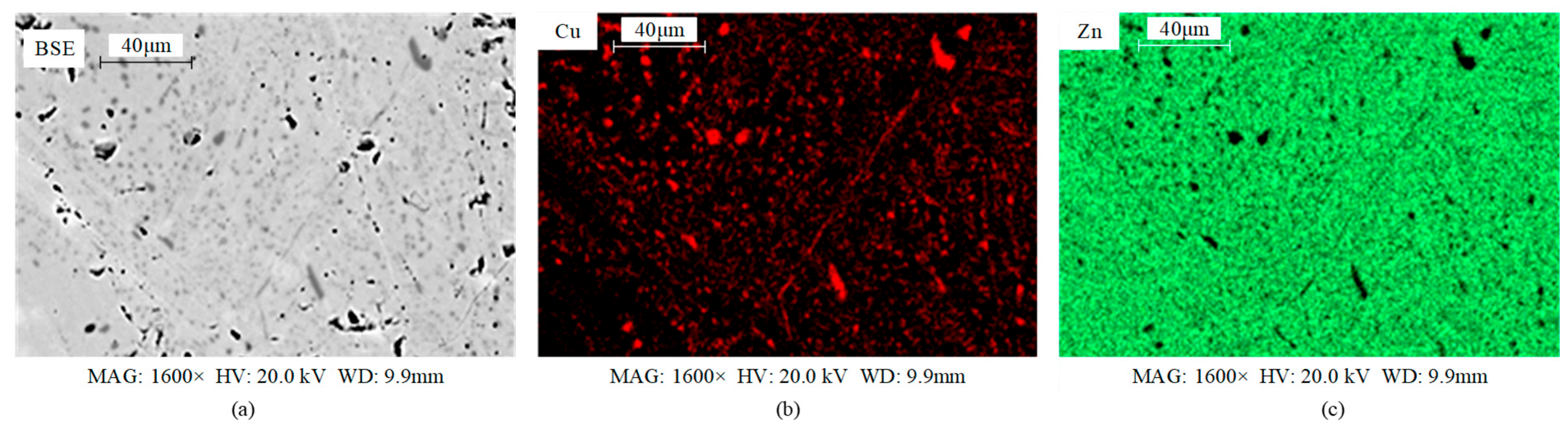
The chalcopyrite has two main types of embedded features. In one type of the embedded features, the chalcopyrite occurs as fine inclusions wrapped within sphalerite, with a disseminated grain size of less than 0.015 mm. This part of the chalcopyrite will inevitably report with sphalerite in the Zn concentrate during the beneficiation process because of its small grain size.
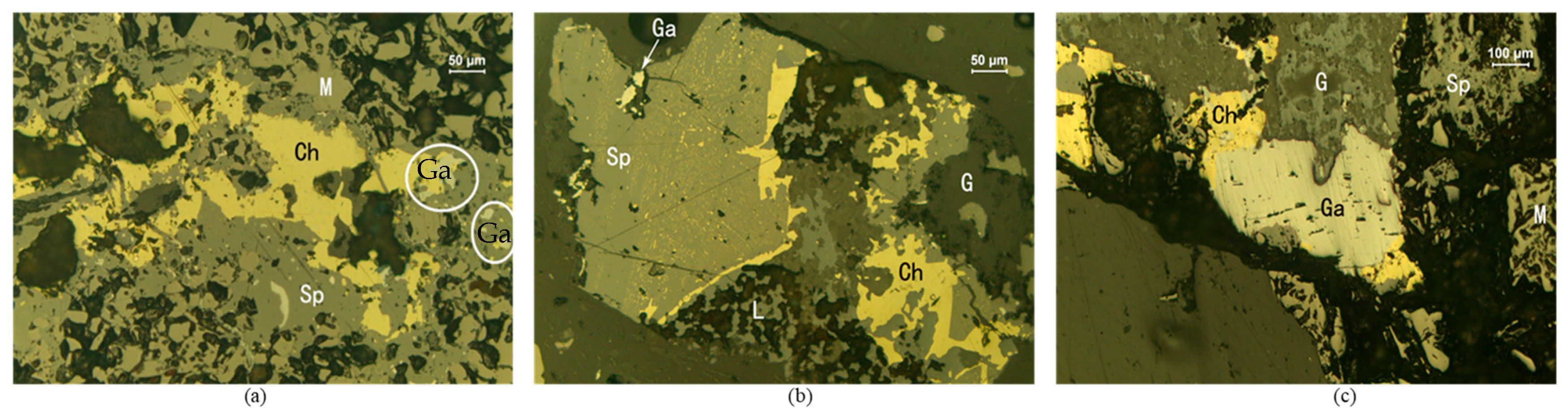
In the other type of the embedded features, the chalcopyrite is irregular or reticulated. This kind of chalcopyrite with a disseminated grain size between 0.005 and 0.1 mm fills along the edges, intergranular, and the fissure of sphalerite, galena, and pyrite.
Sphalerite is generally filled with fine irregular chalcopyrite and galena at the edges, between grains, and in the pores. The interior of sphalerite is embedded with a large number of fine foliated, acicular, or fibrous gangue.
Galena is intergrown with sphalerite and chalcopyrite. The main manifestation is that galena is encapsulated by sphalerite in the form of fine accounted residues, a few of which may even constitute a complex dust mosaic.
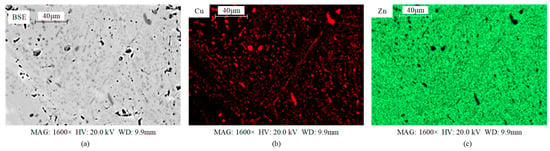
Pyrite is embedded with sphalerite, chalcopyrite and gangue in a relatively simple embedding relationship. The embedded features of the major metallic sulfide minerals are shown in Figure 1, Figure 2 and Figure 3.
Figure 1.
Chalcopyrite (Cu-rich zone) encapsulated by sphalerite (Zn-rich zone) in microemulsions: (a) BSE backscattered electron image; (b) surface scan of Cu; (c) surface scan of Zn.
Figure 2.
Chalcopyrite (Cu-rich zone), fissure-filled sphalerite (Zn-rich zone), and galena (Pb-rich zone): (a) BSE backscattered electron image; (b) surface scan of Cu; (c) surface scan of Zn; (d) surface scan of Pb; (e) surface scan of S.
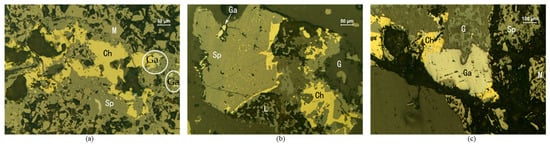
Figure 3.
(a) Irregular chalcopyrite (Ch) and particulate galena (Ga) metasomatism along the margin of sphalerite (Sp) (M—magnetite); (b) chalcopyrite (Ch), limonite (L), galena (Ga) and gangue (G) distributed along the edges of sphalerite (Sp), and some sphalerite is encapsulated with microemulsions of chalcopyrite; (c) galena (Ga) embedded in gangue (G) and chalcopyrite (Ch) is distributed along the margin (M—magnetite); sphalerite (Sp).
2.2.3. Particle Size Distribution Characteristics of the Main Target Minerals
As shown in Table 4, the particle size distribution reveals distinct characteristics of the valuable minerals. Chalcopyrite is concentrated in fine fractions, with about 62.32% of particles below 0.052 mm, requiring fine grinding for liberation due to its interstitial or enclosed texture. Galena is even finer, over 90% below 0.105 mm, and its micro-inclusion intergrowth with sphalerite complicates separation, often causing Pb enrichment in Zn concentrate. Sphalerite shows the widest size range but is mainly finer than 0.21 mm (over 70%), and its encapsulation of fine chalcopyrite or complex intergrowth with galena hinders complete liberation, contributing to Cu–Zn concentrate entrainment.
Table 4.
Particle size distribution of the main target minerals/%.
3. Principle Flotation Flowsheet and Reagents
According to the iron ore tailings properties, the development of a suitable principle flotation flowsheet and the selection of suitable flotation reagents is the key to reducing the fluctuations in production indices.
3.1. Determination of Principle Flotation Flowsheet
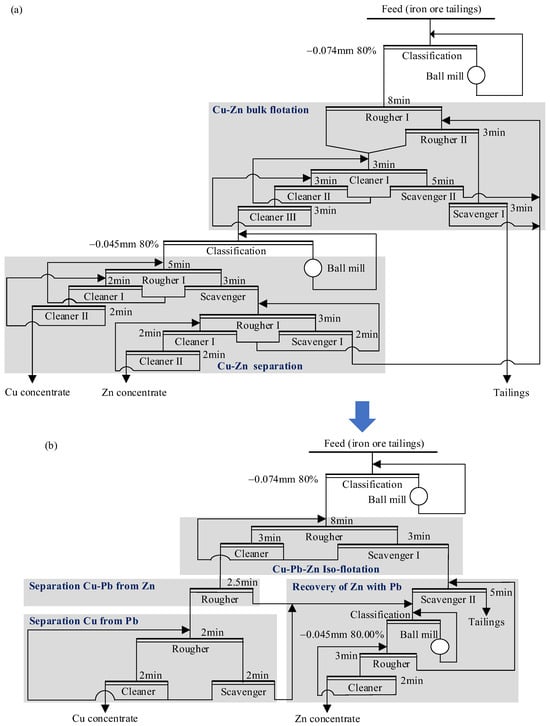
The flotation flowsheet at the production site depicted in Figure 4a is Cu-Zn bulk flotation followed by Cu-Zn separation. First, the feed ores are ground to 80%—0.074 mm. Then, the ground ores are subjected to Cu-Zn bulk flotation which consists of two roughers, three cleaners, and two scavengers. The first rougher tailings are passed to the second rougher. The second rougher tailings are passed to the first scavenger. The concentrates of the two roughers merge to feed the first cleaner. The first cleaner tailings are passed to the second scavenger. The second cleaner tailings together with the second scavenger froth product are recycled back to the first cleaner. The froth products of the two scavengers are recycled to the second rougher. The third cleaner tailings are recycled to the second cleaner, while its froth product is a Cu-Zn mixed concentrate which is reground to 80%—0.045 mm for Cu-Zn separation. The Cu-Zn separation process uses a one-rougher, two-cleaner, one-scavenger flotation circuit: copper is floated while zinc is depressed. The froth from the rougher is fed to the two cleaners, and the rougher tailings are directed to the scavenger. The Cu-Zn separation cleaner tailings are recycled back in order and the second-cleaner froth product is the final Cu concentrate. The Cu-Zn separation scavenger froth product of Cu-Zn separation is recycled back to the rougher, while its tailings are feeding the Zn concentration circuit. The flowsheet for recovering Zn also consists of one rougher, two cleaners, and one scavenger. The second-cleaner froth product is the final Zn concentrate and the scavenger tailings are recycled back to the second rougher of Cu-Zn bulk flotation.
Figure 4.
(a) Production flowsheet on site (Cu-Zn bulk flotation followed by Cu-Zn separation); (b) retrofitted flowsheet for experiments (Cu-Pb-Zn iso-flotation followed by Cu-Pb-Zn separation).
Bulk flotation was used in the original design flowsheet because of the low Pb content in the run-of-mine. CuSO4 is added to activate sphalerite in the Cu-Zn bulk flotation in production. However, with the significant increase in Pb content in the run-of-mine, it is difficult to separate Cu from Pb and Zn in the presence of CuSO4. This is one of the reasons for the high Pb and Zn content in the Cu concentrate. Another reality is that Pb cannot be produced as a product on its own with the current flowsheet and equipment configuration. Therefore, how to improve the adaptability of the flowsheet to a significant increase in Pb content is key point of this study. On one hand, the question of which product is enriched in Pb needs to be addressed, and on the other hand, how to make it easier to separate Cu-Pb-Zn.
Since galena and sphalerite have a very close symbiotic relationship, galena will inevitably enter the Zn concentrate in the beneficiation process. This experiment intends to enrich the Pb into the Zn concentrate without substantially changing the production conditions and production process, so as to obtain a high-grade Cu concentrate with lower Pn-Zn content and maximize the production efficiency as much as possible. According to the occurrence states of minerals, the recovery of Cu is mainly focused on coarse-grained Cu-bearing minerals. Therefore, Cu can be considered as the preferred flotation object. Parts of the lead-bearing minerals and Zn minerals with similar floatability to Cu-bearing minerals can be preferentially floated together. They are then separated to produce Cu concentrate. In this way, it is not necessary to add CuSO4 at the beginning to activate sphalerite, thus reducing the difficulty of subsequent Cu-Pb-Zn separation.
In view of the above analysis, it is proposed to change the original design flowsheet of the bulk flotation to an iso-flotation flowsheet, as shown in Figure 4b. The feed is also firstly ground to 80%—0.074 mm, then subjected to Cu-Pb-Zn iso-flotation which consists of a rougher, a cleaner, and a scavenger. The Cu-bearing minerals and part of the easily floatable Pb-bearing minerals and Zn-bearing minerals are first floated together without the activation of CuSO4. The iso-flotation cleaner froth product is a Cu-Pb-Zn rough concentrate. Since the floatability of sphalerite is poorer than chalcopyrite and galena, it is easier to separate the Zn from the Cu-Pb-Zn rough concentrate, which can be achieved by a rough flotation. Then, this rougher froth product is passed to the Cu-Pb separation which is achieved by a rougher, a cleaner, and a scavenger. The froth products of cleaner and scavenger are recycled back to the rougher in the Cu-Pb separation. The cleaner froth product of Cu-Pb separation is the Cu concentrate.
The tailings of iso-flotation are activated by CuSO4 to recover the remaining Zn through a scavenger. This scavenger tailings are the final tailings and its froth product is combined with all the tailings of Cu-Pb-Zn separation to be reground to a particle size of 80%—0.045 mm for further liberation of the sphalerite. After that, the Zn concentrate is achieved by a rougher and a cleaner. These cleaner tailings are recycled back to the rougher and the rougher tailings are recycled back to the scavenger after iso-flotation.
As shown in Figure 4, the improved flowsheet structure is simpler than before. It is not necessary to add new equipment at the production site, but only to change some of the pipeline layout. In order to demonstrate the effectiveness of the improved flowsheet, the reagent-optimization experiments were carried out for verification.
3.2. Flotation Reagents
In the current production process, lime (CaO) (AR grade, Macklin, Shanghai, China) is used as the depressant of pyrite. CuSO4 (Macklin, AR grade) is used as the activator of sphalerite, and isobutyl xanthate (C5H9NaOS2) (AR grade, Macklin, Shanghai, China) is used as the collector in the bulk flotation stage. In the separation stage of Cu-Zn, sodium sulfide (Na2S) (AR grade, Macklin, Shanghai, China) and activated carbon (C) (AR grade, Macklin, Shanghai, China) are used to remove the reagents adsorbed on the surfaces of minerals. Then, ZnSO4 (AR grade, Macklin, Shanghai, China) and sodium metabisulfite (Na2S2O5) (AR grade, Macklin, Shanghai, China) are used as the depressant to sphalerite, and ester-112 (main component: cyanoethyl diethyl dithiocarbamate, C7H14S2CN) (Tech. grade, >85%, Changsha Research Institute of Mining & Metallurgy Co., Ltd., Changsha, China) is used as the collector for Cu-bearing minerals. CuSO4 is used as the activator and isobutyl xanthate is used as the collector to recover Zn. BK (main component: terpineol, C10H17OH) (Tech. grade, >85%, BGRIMM, Beijing, China) is used as the frother.
The previous production practice has proved that the existing reagent regime is effective. To make full use of the existing dosing system and minimize variety of reagents, the collector is replaced by another ester (CYS) (Tech. grade, >85%, Changsha Research Institute of Mining & Metallurgy Co., Ltd, Changsha, China) in the iso-flotation stage, which is easier to remove from the surfaces of minerals. In this way, Na2S does not need to be added in the reagent removal stage before Cu-Pb-Zn separation, which greatly reduces the unpleasant smell caused by the addition of Na2S in the production workshop and improves the flotation production environment. In addition, a depressant of galena, CYC (main component: carboxymethyl cellulose), is added during Cu-Pb separation. Z-200 (Tech. grade, >85%, Changsha Research Institute of Mining & Metallurgy Co., Ltd, Changsha, China) is used as the collector in the separation of Cu-Pb to increase the selectivity for Cu-bearing minerals. The optimized reagent regime is shown in Table 5.
Table 5.
Reagent regime for experiments.
4. Results and Discussion
Based on the above principle flowsheet and reagent species, dosage tests of different reagents were carried out to study their effect on flotation indices. For each test, a 3 kg dry sample was used, which was added to the flotation feed after grinding. The optimal reagent regime was determined based on the following results. The flotation tests were conducted sequentially in self-aspirated flotation cells with volumes of 8 L, 3 L, 1 L, 0.5 L, 0.25 L, and 0.1 L. The pulp density was maintained at approximately 25% throughout the tests.
4.1. Iso-Flotation Tests
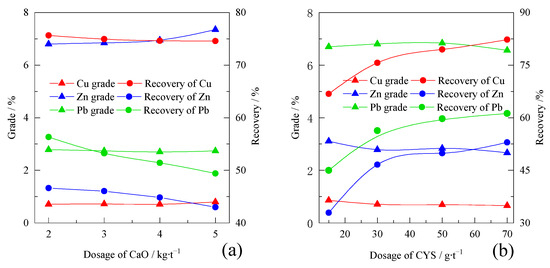
The effects of CaO and CYS on the iso-flotation of Cu-Pb-Zn were investigated by a rougher and a cleaner. At 30 g/t of CYS, 10 g/t of frother, the results (Figure 5a) showed that increasing the dosage of CaO from 2.0 kg/t to 5.0 kg/t has little effect on the recovery of Cu but has a slightly stronger effect on the depression of Pb and Zn. It is beneficial to reduce the content of Pb and Zn in the Cu concentrate. At 2.0 kg/t of CaO, 10 g/t of frother, the recovery of Cu, Pb, and Zn was enhanced with the increase of CYS dosage from 15 g/t to 70 g/t (Figure 5b).
Figure 5.
Effects of CaO (a) and CYS (b) dosage on recovery and concentrate grade of iso-flotation of Cu-Pb-Zn: (a) 30 g/t CYS, 10 g/t frother; (b) 2.0 kg/t CaO, 10 g/t frother.
According to the distribution characteristics of the minerals in the iron ore tailings, the finely grained chalcopyrite cannot be recovered in Cu concentrate even if it is finely ground. Therefore, in order to ensure the Cu recovery and minimize the Pb and Zn content, it is more appropriate to control dosage of CaO at 2 kg/t and the dosage of the collector at 30 g/t.
4.2. Cu-Pb-Zn Separation
The Cu-Pb-Zn separation for the rough concentrate of iso-flotation was performed using a step-by-step depression scheme. First, sphalerite was depressed to achieve the separation of Cu-Pb from Zn. Then, the galena is depressed to achieve the separation of Cu and Pb.
4.2.1. Separation Cu-Pb and Zn
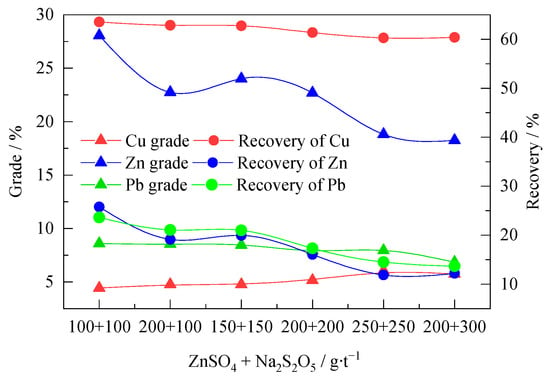
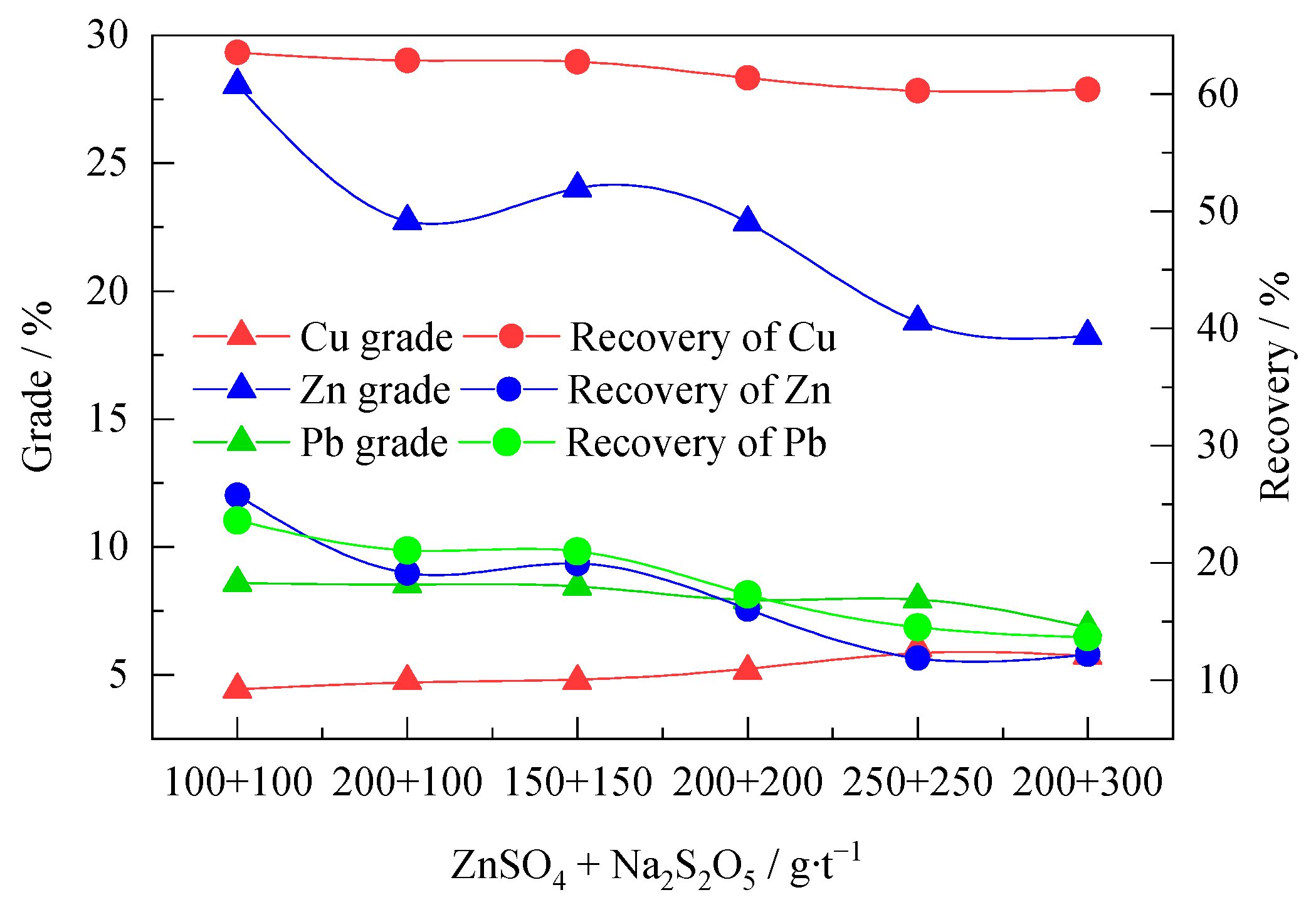
ZnSO4 and Na2S2O5 were used as combined depressants to separate Cu-Pb from Zn and their effects on the depression of sphalerite are shown in Figure 6.
Figure 6.
Depression effects of ZnSO4 and Na2S2O5 on separation of Cu-Pb and Zn.
The results show that when the total dosage of depressants increased from 200 g/t to 500 g/t, the Cu recovery decreased from 63.52% to 60.26%. The Pb grade decreased from 8.59% to 6.85%, and the Zn grade decreased from 28.05% to 18.25%.
When the dosage ratio of ZnSO4 to Na2S2O5 was 1:1 (250 g/t:250 g/t), a rough concentrate with a grade of 6.05% Cu, 7.94% Pb, 18.81% Zn, and 60.26% Cu recovery could be obtained. By changing the ratio of ZnSO4 to Na2S2O5 to 200 g/t:300 g/t, the rough concentrate contained 5.75% Cu, 6.85% Pb, 18.25% Zn, with a Cu recovery of 60.38%. The test results showed the Cu grade was higher when the ratio of ZnSO4 to Na2S2O5 was 1:1 and the total dosage was 500 g/t.
The efficacy of the ZnSO4 and Na2S2O5 combination in depressing sphalerite is intrinsically linked to the mineral’s liberation state and surface characteristics. As detailed in Section 2.2.2, sphalerite hosts fine inclusions of chalcopyrite and gangue, resulting in complex and heterogeneous surfaces after grinding. These surfaces, rich in defects and impurities (e.g., Fe), are highly receptive to the chemisorption of Zn2+ and SO32−/HSO3− species from the depressants. This adsorption renders the sphalerite surface hydrophilic and blocks collector attachment. The optimal 1:1 ratio likely represents the most effective synergistic coverage for these heterogeneous sites, maximizing sphalerite depression while minimizing unnecessary consumption that could affect copper minerals.
4.2.2. Cu-Pb Separation
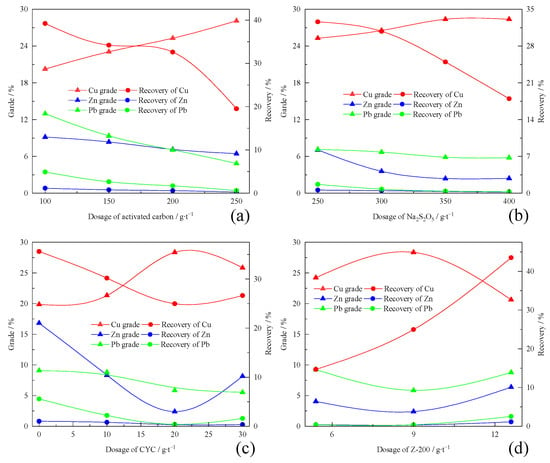
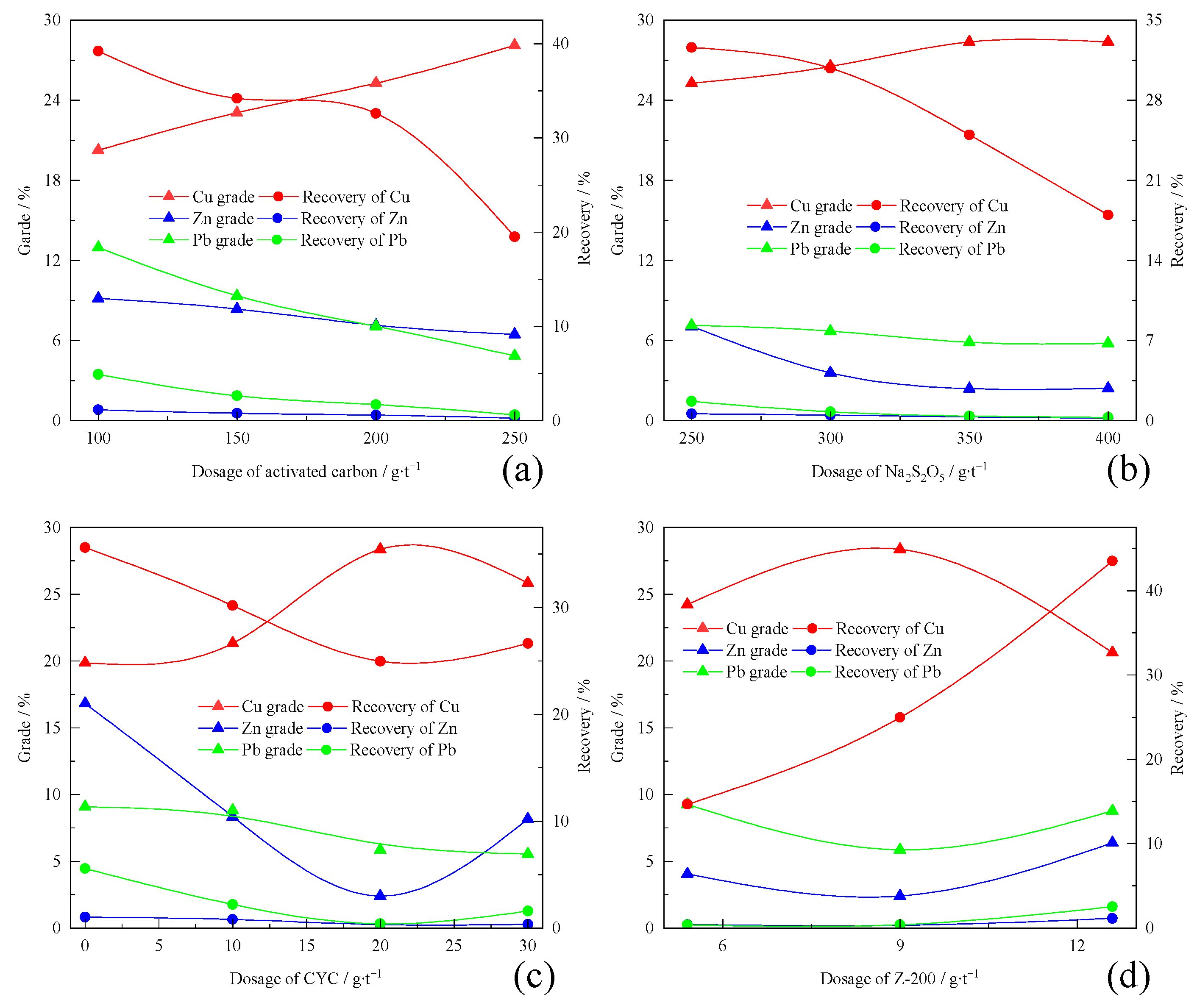
Cu-Pb separation begins with the removal of the reagent adsorbed on the surface of minerals, followed by the use of depressant to inhibit the Pb-bearing minerals, and finally the use of collectors to float the Cu-bearing minerals. Figure 7 shows the effect of activated carbon, Na2S2O5, CYC, and Z-200 in Cu-Pb separation, respectively.
Figure 7.
Effects of activated carbon (a), Na2S2O5 (b), CYC (c), and Z-200 (d) on Cu-Pb separation: (a) 250 g/t of Na2S2O5, 20 g/t of CYC, 9 g/t of Z-200; (b) 200 g/t of activated carbon, 20 g/t of CYC, 9 g/t of Z-200; (c) 200 g/t of activated carbon, 350 g/t of Na2S2O5, 9 g/t of Z-200; (d) 200 g/t of activated carbon, 350 g/t of Na2S2O5, 20 g/t of CYC.
At 250 g/t of Na2S2O5, 20 g/t of CYC, 9 g/t of Z-200, with the increase in activated carbon dosage from 100 g/t to 250 g/t, the grade of Cu in the concentrate increased from 20.25% to 28.11% and the Cu recovery decreased from 39.21% to 19.51%. At the same time, the total grade of Pb-Zn decreased from 22.15% to 11.31%. This demonstrated that the increase in the dosage of activated carbon was more favorable for the separation of Cu-Pb-Zn. It should be noted that the Cu recovery will be reduced if the dosage of activated carbon is too high.
At 200 g/t of activated carbon, 20 g/t of CYC, 9 g/t of Z-200, with the increase of Na2S2O5 dosage from 250 g/t to 400 g/t, the grade of Cu in the concentrate increased from 25.27% to 28.37%, and the Cu recovery decreased from 32.61% to 17.97%. At the same time, the total grade of Pb-Zn decreased from 14.22% to 8.22%. When the dosage of Na2S2O5 increased from 350 g/t to 400 g/t, the grade of Cu and total Pb-Zn in the concentrate remained almost unchanged, and the Cu recovery rate decreased drastically by 7 percentage points from 24.97% to 17.97%, indicating that when the dosage of Na2S2O5 was too high, it would inhibit the flotation of part of the Cu-bearing minerals, resulting in the low Cu recovery.
At 200 g/t of activated carbon, 350 g/t of Na2S2O5, 9 g/t of Z-200, with the increase of CYC dosage from 0 g/t to 30 g/t, the grade of Cu in the concentrate showed a trend of first increasing and then decreasing. When CYC dosage increased from 0 g/t to 20 g/t, the grade of Cu in the concentrate increased from 19.86% to 28.37%, and the total grade of Pb-Zn gradually decreased from 25.91% to 8.27%, among which the decrease of Pb content was especially obvious, from 16.82% to 2.40%, indicating that CYC was effective in depressing the galena. This excellent selective depression can be attributed to the specific chemisorption of carboxylate groups (-COO−) in CMC (the main component of CYC) onto the Pb2+ sites on the galena surface, forming stable complexes and rendering it hydrophilic. This selectivity is crucial for addressing the core challenge identified in Section 2.2.2: the fine encapsulation of galena within sphalerite. The strong and specific adsorption of CYC on galena surfaces not only depresses liberated galena particles but may also facilitate the dispersion of these fine composite aggregates during regrinding. This action helps to unlock the micro-inclusions, allowing for a cleaner separation. Consequently, the Pb content in the Cu concentrate was drastically reduced from 16.82% to 2.40%, directly translating the mineralogical constraint into a process solution. In contrast, its interaction with the chalcopyrite surface is weaker, allowing for an effective separation [37,38]. When the CYC dosage reached 30 g/t, the grade of Cu in the concentrate decreased to 25.85%, and the total grade of Pb-Zn increased to 13.72%, indicating that CYC inhibits the Cu-bearing minerals and the separation effect became poor, which was related to the fact that CYC is a kind of sodium salt of cellulose with a certain flocculation effect.
At 200 g/t of activated carbon, 350 g/t of Na2S2O5, 20 g/t of CYC, with the increase of Z-200 dosage from 5.4 g/t to 12.6 g/t, the Cu recovery in concentrate increased. When the dosage of Z-200 was 9.0 g/t, the yield of Cu concentrate was 0.11% with a Cu grade of 28.37%, Cu recovery of 24.97%, and total Pb-Zn grade of 8.27%. When the dosage of Z-200 was 12.6 g/t, the yield of Cu concentrate was 0.26% with a Cu grade of 20.62%, Cu recovery of 43.51%, and total Pb-Zn grade of 15.17%. When the dosage of Z-200 was 6 g/t, the yield of Cu concentrate was 0.26% with a Cu grade of 20.62%, Cu recovery of 43.51%, and total Pb-Zn grade of 15.17%. The results demonstrated that too low dosage of Z-200 affected the Cu recovery, while too high dosage of Z-200 led to too high content of Pb-Zn, which reduced the grade of Cu concentrate.
4.3. Recovery of Zn
According to the test principle flowsheet identified in Figure 4, recovery of Zn consisted of two main steps. First, Zn-bearing minerals were recovered from the tailings of iso-flotation. Then, all the Zn-bearing minerals were reground and floated to obtain a Zn concentrate.
4.3.1. Recovery of Zn from Iso-Flotation Tailings
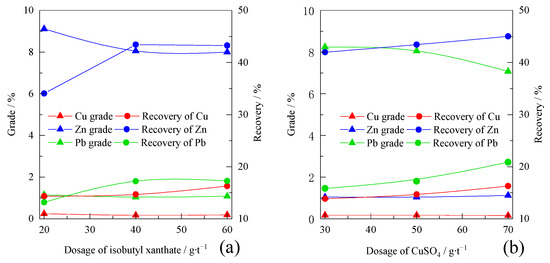
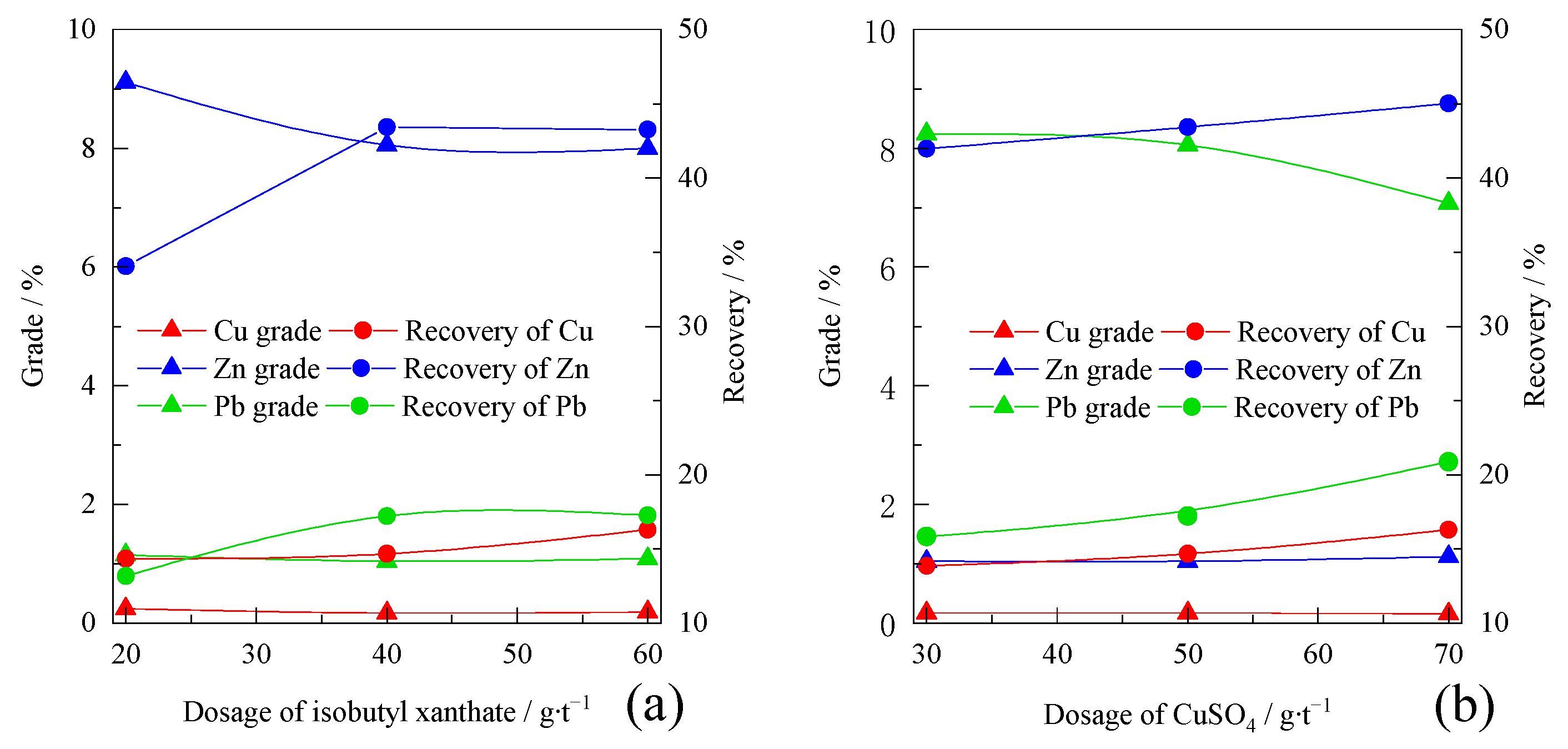
The effects of different dosages of reagents on the Zn flotation were investigated by using isobutyl xanthate as a collector and CuSO4 as an activator. The results are shown in Figure 8.
Figure 8.
Effects of isobutyl xanthate (a) and CuSO4 (b) on Zn flotation from iso-flotation tailings: (a) 50 g/t of CuSO4; (b) 40 g/t of isobutyl xanthate.
At 50 g/t of CuSO4, with the increase of isobutyl xanthate dosage from 20 g/t to 60 g/t, the grade of Zn in the concentrate decreased, and after the dosage of the collector was more than 40 g/t, the Zn recovery no longer increased (Figure 8a). At 40 g/t of isobutyl xanthate, with the increase of CuSO4 dosage from 30 g/t to 70 g/t, the grade of Zn in the concentrate decreased and the Zn recovery increased (Figure 8b).
4.3.2. Recovery of Zn After Regrind
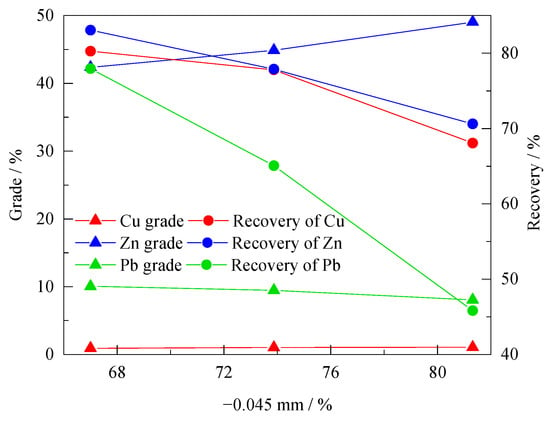
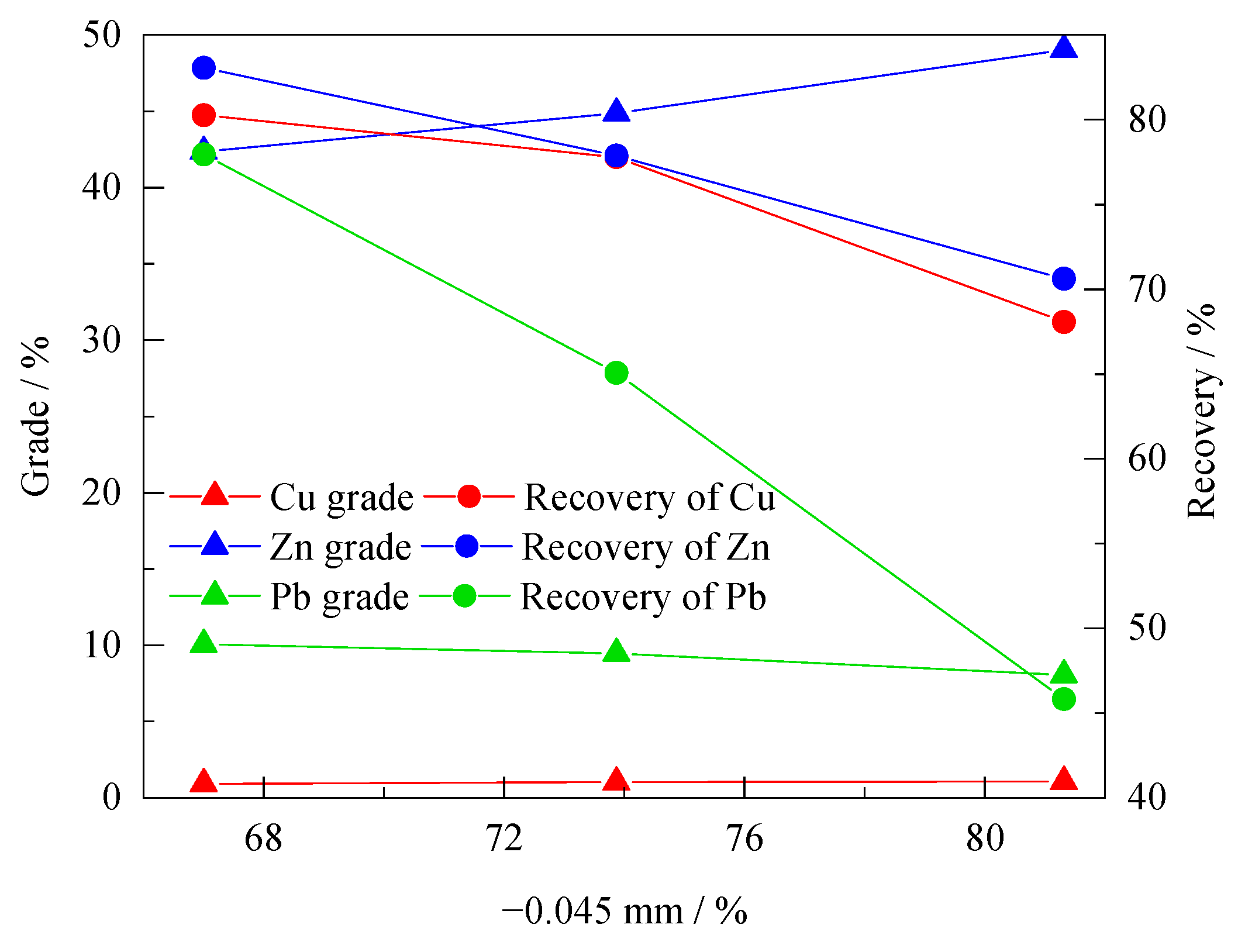
The rough Zn concentrate recovered from the iso-flotation tailings was combined with the tailings of the Cu-Pb-Zn separation to obtain a mixed rough Zn concentrate with 67.00% of particles smaller than 0.045 mm. Considering the liberation of Zn-bearing minerals was not enough, the tests of grinding particles were carried out on the rough Zn concentrate, and the results are shown in Figure 9.
Figure 9.
Effect of regrinding particle size on zinc flotation from mixed zinc coarse concentrate.
At 2.0 kg/t of CaO, 20 g/t of CuSO4, 10 g/t of isobutyl xanthate, with the increase in the particle size from 67.00%—0.045 mm to 81.32%—0.045 mm, the yield of Zn concentrate decreased with an increase in grade of Zn and a decrease in Zn recovery. When the particle reached 81.32%—0.045 mm, a Zn concentrate with a Zn grade of 49.04%, Zn recovery of 70.61% can be obtained. At the same time, the Cu grade in the Zn concentrate is 1.07% and the Pb grade is 8.06%. At this particle size, the experiments were carried out to investigate the effect of CaO and CuSO4 dosages on the reground mixed rough Zn concentrate and the results are shown in Figure 10.
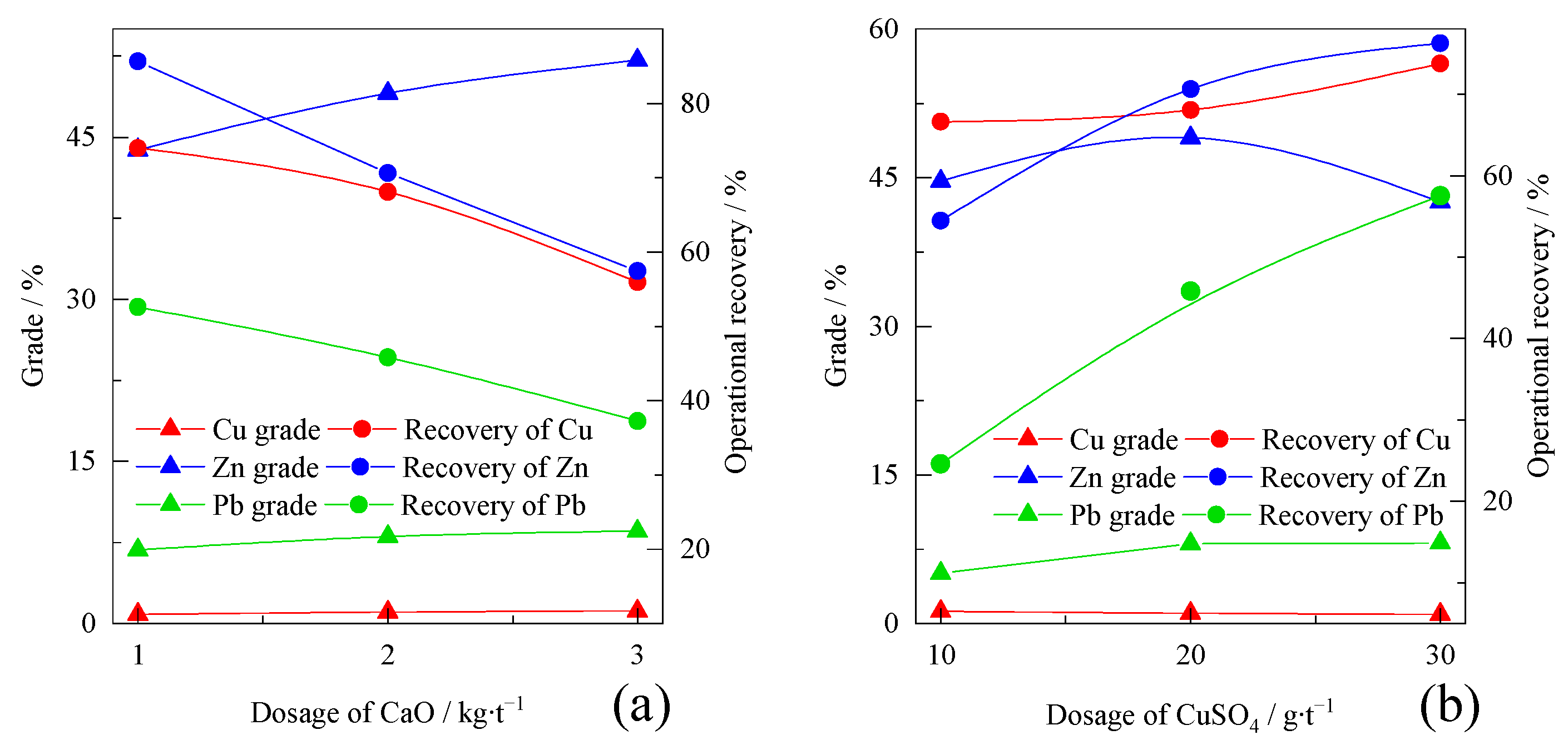
Figure 10.
Effect of CaO (a) and CuSO4 (b) on zinc flotation from mixed rough Zn concentrate: (a) 20 g/t of CuSO4, 10 g/t of isobutyl xanthate; (b) 2.0 kg/t of CaO, 10 g/t of isobutyl xanthate.
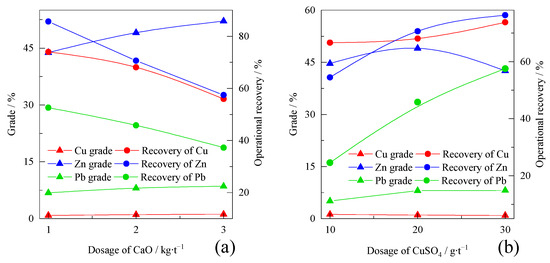
At 20 g/t of CuSO4, 10 g/t of isobutyl xanthate, with the increase of CaO dosage from 1.0 kg/t to 3.0 kg/t, the grade of Zn in the concentrate increased from 43.81% to 52.11%, and the operational recovery decreased from 85.63% to 57.41%. At the same time, in the Zn concentrate, the Cu content increased from 0.86% to 1.15% and the Pb content from 6.83% to 8.56% (Figure 10a).
At 2.0 kg/t of CaO, 10 g/t of isobutyl xanthate, with the increase of CuSO4 dosage from 10 g/t to 20 g/t, the grade of Zn in the concentrate increased from 44.65% to 49.04%, and the operational recovery increased from 54.48% to 70.61%. At the same time, in the Zn concentrate, the Cu content decreased from 1.23% to 1.07%, and the Pb content increased from 5.09% to 8.06%. When the CuSO4 dosage increased from 20 g/t to 30 g/t, the grade of Zn in the concentrate decreased from 49.04% to 42.53%, and the operational recovery increased from 70.61% to 76.23%. At the same time, in the Zn concentrate, the Cu content decreased from 1.07% to 0.93%, and the Pb content remained essentially unchanged at 8.14% (Figure 10b).
The above results showed that the increase in CaO dosage can enhance the grade of Zn in the Zn concentrate. As an activator of sphalerite, an increase in the dosage of CuSO4 will enhance the recovery of Zn, but an excessive dosage of CuSO4 will reduce the grade of Zn in the Zn concentrate.
The success of the proposed Cu-Pb-Zn iso-flotation process is not empirical but is fundamentally rooted in the targeted resolution of the mineralogical constraints. The decision to abandon initial CuSO4 activation stems from the need to avoid non-selective activation of the now-abundant galena and residual sphalerite, which would exacerbate the cross-activation problem in subsequent separation stages. This is the key reason for the original flowsheet’s failure.
The iso-flotation and sequential depression strategy is a direct response to the particle size distribution and complex intergrowth documented in Section 2.2.2 and Section 2.2.3. Iso-flotation first efficiently collects the naturally floatable minerals (chalcopyrite and galena) along with some sphalerite, capitalizing on their collective hydrophobicity. The subsequent step-by-step depression then exploits their differential surface chemistry. Sphalerite is first suppressed using inorganic ions, followed by selective galena depression via organic polymers like CYC. This approach is particularly adept at handling finely disseminated and interlocked minerals, as it avoids the need for perfect initial liberation.
Therefore, the modified flowsheet represents a mineralogy-guided process redesign. It transforms the problem of high Pb content from an insurmountable impurity issue into a manageable separation sequence by aligning the unit operations with the inherent physical and chemical properties of the mineral assemblage.
4.4. Closed-Circuit Experiment
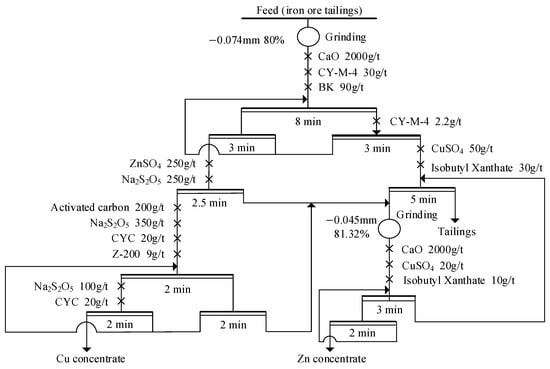
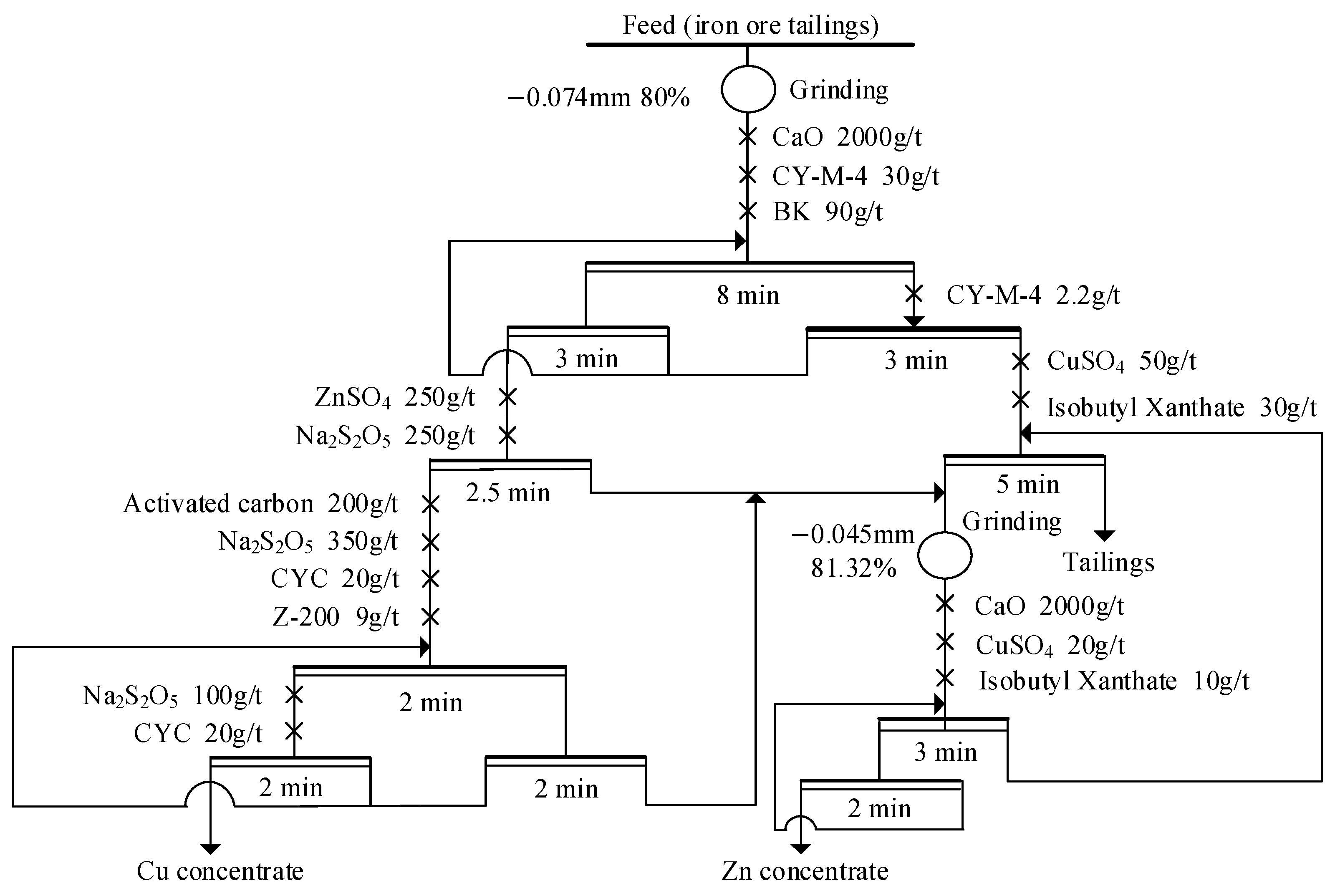
Based on the results of the different reagents mentioned above, the optimum dosage of reagents for the closed-circuit experiment was selected and the flowsheet is shown in Figure 11. The results of the closed-circuit experiment are shown in Table 6.
Figure 11.
Flowsheet of closed-circuit experiment.
Table 6.
Results of the closed-circuit experiment/wt%.
As shown in Table 6, the closed-circuit experiment yielded a 0.233% Cu concentrate with a grade of 26.57% Cu, a Cu recovery of 56.08%, and grades of 2.97% Pb and 9.80% Zn. In addition, the closed-circuit experiment yielded a 3.148% Zn concentrate with a grade of 44.95% Zn, 75.56% Zn recovery, and grades of 1.15% Cu and 8.31% Pb.
5. Conclusions
This study successfully resolved the challenge of reprocessing iron ore tailings with elevated lead content (0.65%), which had impaired the original Cu-Zn bulk flotation process. The solution emerged from a fundamental reinterpretation of the problem through detailed mineralogical analysis and strategic process redesign.
- (1)
- Mineralogical characterization identified the core issue: complex, fine-grained intergrowth where chalcopyrite occurred as inclusions within sphalerite, and galena formed micro-inclusions. With over 90% of galena and 62% of chalcopyrite finer than 0.105 mm and 0.052 mm, respectively, selective liberation was inherently difficult, explaining the high impurity cross-contamination.
- (2)
- In response, a novel Cu-Pb-Zn iso-flotation flowsheet with sequential depression was developed. The critical innovation was abandoning initial sphalerite activation with CuSO4, preventing non-selective activation of galena. The process first floats a mixed concentrate based on natural floatability, then employs step-by-step depression: sphalerite is depressed to separate a Cu-Pb bulk concentrate, followed by selective depression of galena to yield a clean copper concentrate.
- (3)
- This was complemented by an optimized reagent regime. Collector CYS replaced isobutyl xanthate, facilitating easier desorption. The synergistic use of ZnSO4 and Na2S2O5 depressed sphalerite, while the organic depressant CYC was pivotal for Cu-Pb separation, with its selective chemisorption onto galena surfaces drastically reducing Pb entrainment.
- (4)
- Closed-circuit tests on feed with 0.122% Cu, 0.636% Pb, and 1.87% Zn yield excellent results: Cu concentrate with 26.57% grade, 56.08% recovery (Pb/Zn contents 2.97%/9.80%), and Zn concentrate with 44.95% grade, 75.56% recovery (Cu/Pb contents 1.15%/8.31%). These indices effectively mitigate high Pb interference, meeting industrial requirements.
This study clarifies mineralogical constraints and develops a cost-effective process-reagent solution, providing a valuable reference for similar tailings reprocessing. Future work will focus on industrial-scale validation to confirm long-term stability.
Author Contributions
Methodology, Z.L., W.J. and W.C.; Software, J.L.; Validation, W.C.; Investigation, Z.L. and X.W.; Writing—original draft, Z.L. and J.L.; Writing—review & editing, W.J., X.W. and W.C.; Visualization, W.C.; Funding acquisition, X.W. and W.C. All authors have read and agreed to the published version of the manuscript.
Funding
This research received no external funding.
Data Availability Statement
The original contributions presented in this study are included in the article. Further inquiries can be directed to the corresponding author.
Conflicts of Interest
All authors were employed by the Changsha Research Institute of Mining & Metallurgy Co., Ltd. The authors declare that the research was conducted in the absence of any commercial or financial relationships that could be construed as a potential conflict of interest.
References
- Wang, L.; Hu, G.; Sun, W.; Khoso, S.A.; Liu, R.; Zhang, X. Selective flotation of smithsonite from dolomite by using novel mixed collector system. Trans. Nonferrous Met. Soc. China 2019, 29, 1082–1089. [Google Scholar] [CrossRef] [Scilit]
- Zhang, Q.; Wen, S.; Feng, Q.; Wang, H. Enhanced sulfidization of azurite surfaces by ammonium phosphate and its effect on flotation. Int. J. Miner. Metall. Mater. 2022, 29, 1150–1160. [Google Scholar] [CrossRef] [Scilit]
- Zhang, Q.; Zhang, L.; Jiang, F.; Tang, H.; Wang, L.; Sun, W. Ferric ion-triggered surface oxidation of galena for efficient chalcopyrite–galena separation. Int. J. Miner. Metall. Mater. 2024, 31, 261–267. [Google Scholar] [CrossRef] [Scilit]
- Nansai, K.; Nakajima, K.; Kagawa, S.; Kondo, Y.; Suh, S.; Shigetomi, Y.; Oshita, Y. Global flows of critical metals necessary for low-carbon technologies: The case of neodymium, cobalt, and platinum. Environ. Sci. Technol. 2014, 48, 1391–1400. [Google Scholar] [CrossRef] [Scilit]
- Xu, X.; Zhang, X.; Zhang, Y.; Liu, X.; He, H.; Fang, J.; Shen, P.; Peng, R.; Yu, J.; Chen, X.; et al. A study on the mechanism of flotation separation between chalcopyrite and sphalerite using a novel environmental depressant derived from grape peel extract gpe. Colloids Surf. A Physicochem. Eng. Asp. 2024, 681, 132772. [Google Scholar] [CrossRef] [Scilit]
- Herzig, P.M.; Hannington, M.D. Polymetallic massive sulfides at the modern seafloor a review. Ore Geol. Rev. 1995, 10, 95–115. [Google Scholar] [CrossRef] [Scilit]
- Ikumapayi, F.; Rao, K.H. Recycling process water in complex sulfide ore flotation: Effect of calcium and sulfate on sulfide minerals recovery. Miner. Process Extr. Metall. Rev. 2015, 36, 45–64. [Google Scholar] [CrossRef] [Scilit]
- Gül, A.; Yüce, A.E.; Sirkeci, A.A.; Özer, M. Use of non-toxic depressants in the selective flotation of copper-lead-zinc ores. Can. Metall. Q. 2008, 47, 111–118. [Google Scholar] [CrossRef]
- Aikawa, K.; Ito, M.; Segawa, T.; Jeon, S.; Park, I.; Tabelin, C.B.; Hiroyoshi, N. Depression of lead-activated sphalerite by pyrite via galvanic interactions: Implications to the selective flotation of complex sulfide ores. Miner. Eng. 2020, 152, 106367. [Google Scholar] [CrossRef] [Scilit]
- Zhang, J.; Zhang, X.; Wei, X.; Cheng, S.; Hu, X.; Luo, Y.; Xu, P. Selective depression of galena by sodium polyaspartate in chalcopyrite flotation. Miner. Eng. 2022, 180, 107464. [Google Scholar] [CrossRef] [Scilit]
- Liu, J.; Wen, S.; Xian, Y.; Bai, S.; Chen, X. First-principle study on the surface atomic relaxation properties of sphalerite. Int. J. Miner. Metall. Mater. 2012, 19, 775–781. [Google Scholar] [CrossRef] [Scilit]
- Liu, D.; Zhang, G.; Chen, Y. Investigations on the selective depression of fenugreek gum towards galena and its role in chalcopyrite-galena flotation separation. Miner. Eng. 2021, 166, 106886. [Google Scholar] [CrossRef] [Scilit]
- Houot, R.; Duhamet, D. The use of sodium sulphite to improve the flotation selectivity between chalcopyrite and galena in a complex sulphide ore. Miner. Eng. 1992, 5, 343–355. [Google Scholar] [CrossRef] [Scilit]
- Wang, J.; Jing, G.; Zheng, R.; Huang, Z.; Sun, W.; Gao, Z. Ethylenediamine tetramethylenephosphonic acid as a selective collector for the improved separation of chalcopyrite against pyrite at low alkalinity. Int. J. Min. Sci. Technol. 2023, 33, 873–882. [Google Scholar] [CrossRef] [Scilit]
- Chandra, A.P.; Gerson, A.R. A review of the fundamental studies of the copper activation mechanisms for selective flotation of the sulfide minerals, sphalerite and pyrite. Adv. Colloid Interface Sci. 2009, 145, 97–110. [Google Scholar] [CrossRef] [Scilit]
- Liu, J.; Ejtemaei, M.; Nguyen, A.V.; Wen, S.; Zeng, Y. Surface chemistry of pb-activated sphalerite. Miner. Eng. 2020, 145, 106058. [Google Scholar] [CrossRef] [Scilit]
- Xu, B.; Wu, J.; Dong, Z.; Jiang, T.; Li, Q.; Yang, Y. Flotation performance, structure–activity relationship and adsorption mechanism of a newly-synthesized collector for copper sulfide minerals in gacun polymetallic ore. Appl. Surf. Sci. 2021, 551, 149420. [Google Scholar] [CrossRef] [Scilit]
- El-Shall, H.E.; Elgillani, D.A.; Abdel-Khalek, N.A. Role of zinc sulfate in depression of lead-activated sphalerite. Int. J. Miner. Process. 2000, 58, 67–75. [Google Scholar] [CrossRef] [Scilit]
- Huang, P.; Wang, L.; Liu, Q. Depressant function of high molecular weight polyacrylamide in the xanthate flotation of chalcopyrite and galena. Int. J. Miner. Process. 2014, 128, 6–15. [Google Scholar] [CrossRef] [Scilit]
- Cao, Z.; Wang, P.; Zhang, W.; Zeng, X.; Cao, Y. Mechanism of sodium sulfide on flotation of cyanide-depressed pyrite. Trans. Nonferrous Met. Soc. China 2020, 30, 484–491. [Google Scholar] [CrossRef] [Scilit]
- Nooshabadi, A.J.; Rao, K.H. Formation of hydrogen peroxide by sulphide minerals. Hydrometallurgy 2014, 141, 82–88. [Google Scholar] [CrossRef] [Scilit]
- Chen, W.; Chen, T.; Bu, X.; Chen, F.; Ding, Y.; Zhang, C.; Deng, S.; Song, Y. The selective flotation of chalcopyrite against galena using alginate as a depressant. Miner. Eng. 2019, 141, 105848. [Google Scholar] [CrossRef] [Scilit]
- Bulatovic, S.; Wyslouzil, D.M. Selection and evaluation of different depressants systems for flotation of complex sulphide ores. Miner. Eng. 1995, 8, 63–76. [Google Scholar] [CrossRef] [Scilit]
- Kocabağ, D.; Güler, T. Two-liquid flotation of sulphides: An electrochemical approach. Miner. Eng. 2007, 20, 1246–1254. [Google Scholar] [CrossRef] [Scilit]
- Piao, Z.; Wei, D.; Liu, Z.; Liu, W.; Gao, S.; Li, M. Selective depression of galena and chalcopyrite by o,o-bis(2,3-dihydroxypropyl) dithiophosphate. Trans. Nonferrous Met. Soc. China 2013, 23, 3063–3067. [Google Scholar] [CrossRef] [Scilit]
- Qin, W.; Wei, Q.; Jiao, F.; Yang, C.; Liu, R.; Wang, P.; Ke, L. Utilization of polysaccharides as depressants for the flotation separation of copper/lead concentrate. Int. J. Min. Sci. Technol. 2013, 23, 179–186. [Google Scholar] [CrossRef] [Scilit]
- Liu, R.; Qin, W.; Jiao, F.; Wang, X.; Pei, B.; Yang, Y.; Lai, C. Flotation separation of chalcopyrite from galena by sodium humate and ammonium persulfate. Trans. Nonferrous Met. Soc. China 2016, 26, 265–271. [Google Scholar] [CrossRef] [Scilit]
- Wang, X.; Qin, W.; Jiao, F.; Liu, R.; Wang, D. Inhibition of galena flotation by humic acid: Identification of the adsorption site for humic acid on moderately oxidized galena surface. Miner. Eng. 2019, 137, 102–107. [Google Scholar] [CrossRef] [Scilit]
- Tolley, W.; Kotlyar, D.; Van Wagoner, R. Fundamental electrochemical studies of sulfide mineral flotation. Miner. Eng. 1996, 9, 603–637. [Google Scholar] [CrossRef] [Scilit]
- Fairthorne, G.; Fornasiero, D.; Ralston, J. Interaction of thionocarbamate and thiourea collectors with sulphide minerals: A flotation and adsorption study. Int. J. Miner. Process. 1997, 50, 227–242. [Google Scholar] [CrossRef] [Scilit]
- Lee, K.; Archibald, D.; Mclean, J.; Reuter, M.A. Flotation of mixed copper oxide and sulphide minerals with xanthate and hydroxamate collectors. Miner. Eng. 2009, 22, 395–401. [Google Scholar] [CrossRef] [Scilit]
- Aghazadeh, S.; Mousavinezhad, S.K.; Gharabaghi, M. Chemical and colloidal aspects of collectorless flotation behavior of sulfide and non-sulfide minerals. Adv. Colloid Interface Sci. 2015, 225, 203–217. [Google Scholar] [CrossRef] [Scilit] [PubMed]
- Liu, J.; Feng, B.; Guo, W.; Chen, Y. Utilizing H2O2 for the selective flotation separation of chalcopyrite and galena with their surface pre-adsorbed with isopropyl ethyl thiocarbamate. Sep. Purif. Technol. 2024, 330, 125477. [Google Scholar] [CrossRef] [Scilit]
- Buckley, A.N.; Goh, S.W.; Lamb, R.N.; Woods, R. Interaction of thiol collectors with pre-oxidised sulfide minerals. Int. J. Miner. Process. 2003, 72, 163–174. [Google Scholar] [CrossRef] [Scilit]
- Petruk, W. Chapter 1—General principles of applied mineralogy. In Applied Mineralogy in the Mining Industry; Petruk, W., Ed.; Elsevier: Amsterdam, The Netherlands, 2000; pp. 1–26. [Google Scholar] [CrossRef] [Scilit]
- Nyembwe, K.J.; Fosso-Kankeu, E.; Waanders, F.; Nyembwe, K.D. Structural, compositional and mineralogical characterization of carbonatitic copper sulfide: Run of mine, concentrate and tailings. Int. J. Miner. Metall. Mater. 2019, 26, 143–151. [Google Scholar] [CrossRef] [Scilit]
- Qiu, X.; Yang, H.; Chen, G.; Zhong, S.; Cai, C.; Lan, B. Inhibited mechanism of carboxymethyl cellulose as a galena depressant in chalcopyrite and galena separation flotation. Miner. Eng. 2020, 150, 106273. [Google Scholar] [CrossRef] [Scilit]
- Dong, L.; Jiao, F.; Qin, W.; Zhu, H.; Jia, W. New insights into the carboxymethyl cellulose adsorption on scheelite and calcite: Adsorption mechanism, AFM imaging and adsorption model. Appl. Surf. Sci. 2019, 463, 105–114. [Google Scholar] [CrossRef] [Scilit]



Disclaimer/Publisher’s Note: The statements, opinions and data contained in all publications are solely those of the individual author(s) and contributor(s) and not of MDPI and/or the editor(s). MDPI and/or the editor(s) disclaim responsibility for any injury to people or property resulting from any ideas, methods, instructions or products referred to in the content. |
© 2026 by the authors. Licensee MDPI, Basel, Switzerland. This article is an open access article distributed under the terms and conditions of the Creative Commons Attribution (CC BY) license.