


Abstract
To address the marked differences in the host phases of phosphorus and vanadium, severe ore sliming, and the difficulty of synergistic recovery from the low-grade phosphorus–vanadium-associated ore in Mazharweina, Xinjiang, process mineralogical analysis, phosphorus flotation condition tests, and acid leaching-solvent extraction tests were conducted to investigate phosphorus and vanadium recovery from this ore. The results showed that the P2O5 and V2O5 grades of the raw ore were 16.71% and 0.798%, respectively. Phosphorus occurred mainly in collophane, whereas vanadium did not form independent minerals and was mainly dispersed in carriers such as mica, argillaceous silicates, and colloidal limonite. P2O5 and V2O5 showed no obvious natural enrichment in any particle-size fraction, and effective separation of P and V could not be achieved by particle-size classification. Therefore, a pre-desliming-direct phosphorus flotation process was adopted. Under the conditions of a grinding fineness of 80% passing −74 μm and an EM-C2 dosage of 1400 g/t, closed-circuit flotation comprising one roughing, one scavenging, and three cleaning stages produced a phosphate concentrate with a P2O5 grade of 28.32% and a recovery of 59.50%, while the P2O5 grade of the tailings decreased to 1.52%. Vanadium was mainly enriched in the slime and dephosphorization tailings. At a liquid-to-solid ratio of 8:1, an H2SO4 mass concentration of 250 g/L, and a leaching time of 8 h, the V2O5 leaching rate from the slime was 77.83%. After N235 extraction, Na2CO3 stripping, vanadium precipitation, and calcination of the leachate, a vanadium product with a V2O5 purity of 98.42% was obtained, with an overall recovery from the raw ore of 63.83%. The results demonstrate the feasibility of combining phosphorus flotation with hydrometallurgical treatment of the slime and dephosphorization tailings for the comprehensive recovery of phosphorus and vanadium from this complex phosphorus–vanadium ore.
1. Introduction
Phosphorus–vanadium-associated ore is a type of complex sedimentary mineral resource with important comprehensive utilization value. The useful components in this type of ore occur in distinctly different host phases. Phosphorus generally occurs mainly in collophane [1,2,3], whereas vanadium usually does not form independent minerals and commonly occurs by isomorphous substitution or in a dispersed state in mica, argillaceous minerals, iron- and aluminum-bearing components, and fine-grained clastic carriers [4]. These differences in occurrence result in distinctly different responses of phosphorus and vanadium during mineral processing and hydrometallurgical extraction.
Flotation is the principal technical method for enriching sedimentary phosphate ore, and commonly used flowsheets include direct flotation, reverse flotation, combined direct-reverse flotation, and double-reverse flotation [3,5,6,7]. Previous studies have shown that mineral composition, dissemination size, grinding fineness, and collector regime are all key factors affecting phosphate ore flotation [8,9,10,11]. For phosphate ores containing abundant argillaceous minerals and carbonate gangue, the fine slime generated during grinding consumes flotation reagents and reduces the separability of phosphate minerals from gangue minerals through surface coating, mechanical entrainment, and heteroaggregation, thereby affecting the grade and recovery of the phosphate concentrate [1,2,8,12]. In phosphorus–vanadium-associated ores, the slime problem is more complex because fine slime not only interferes with phosphorus flotation but may also be an important host of vanadium [4]. Therefore, the dual effect of slime on phosphorus flotation and vanadium enrichment must be given particular consideration in the comprehensive utilization of this type of ore.
Vanadium recovery is governed mainly by its mode of occurrence and the properties of its host minerals. Processes such as roasting-leaching, direct acid leaching, and alkaline leaching have been extensively studied for typical vanadium-bearing resources, including vanadium-titanium magnetite, vanadium-bearing stone coal, and vanadium shale [13,14,15,16]. The applicability of these processes generally depends on the bonding strength of vanadium in the mineral lattice, the structural stability of the host minerals, and the dissolution behavior of impurity components. For ores in which vanadium occurs as independent minerals or in readily liberated carriers, mineral-processing preconcentration can improve the efficiency of subsequent extraction [17]. In contrast, for ores in which vanadium is highly dispersed in fine-grained silicates, mica, or argillaceous minerals, conventional physical separation cannot readily produce an independent vanadium concentrate, and hydrometallurgical leaching is a more feasible recovery route because it can directly disrupt or dissolve the structures of the host minerals [13,14,15,16,18]. However, leaching phosphorus–vanadium-associated ore is not simply a vanadium dissolution process. Components such as phosphorus, calcium, magnesium, iron, and aluminum may enter the solution simultaneously, increasing reagent consumption and the difficulty of leachate purification and affecting the subsequent separation and enrichment of vanadium [14,15,18]. Therefore, a key requirement in treating this type of ore is to clarify the relationships among phosphorus enrichment, vanadium distribution, and impurity control.
Although the flotation of sedimentary phosphate ores and the leaching of vanadium ores have been extensively investigated [1,2,3,4,5,6,7,8,9,10,11,12,13,14,15,16,17,18], systematic research on phosphorus–vanadium-associated ores remains relatively limited. In particular, for low-grade phosphorus–vanadium ore in which vanadium forms no independent minerals and is mainly dispersed in mica and argillaceous carriers, insufficient attention has been paid to the following issues: first, the constraints imposed by the host phases and dissemination relationships of phosphorus and vanadium on process selection; second, the dual role of fine slime in phosphorus flotation and vanadium enrichment; and third, the distribution patterns of phosphorus and vanadium among flotation products, slime, and tailings and their effects on subsequent recovery. These issues limit the efficient comprehensive utilization of this type of resource.
Accordingly, a low-grade phosphorus–vanadium-associated ore from Xinjiang, China, was investigated. Systematic process mineralogical studies were conducted to determine the chemical and mineralogical compositions, mineral dissemination characteristics, and modes of occurrence. On this basis, the effects of key process conditions on phosphorus enrichment were examined, followed by evaluation of vanadium leaching and recovery from the slime and dephosphorization tailings. This study aims to reveal the separation and enrichment behavior of phosphorus and vanadium in this type of associated ore and to provide a theoretical basis and technical reference for developing a rational comprehensive recovery process.
2. Materials and Methods
2.1. Phosphorus Vanadium Ore Samples
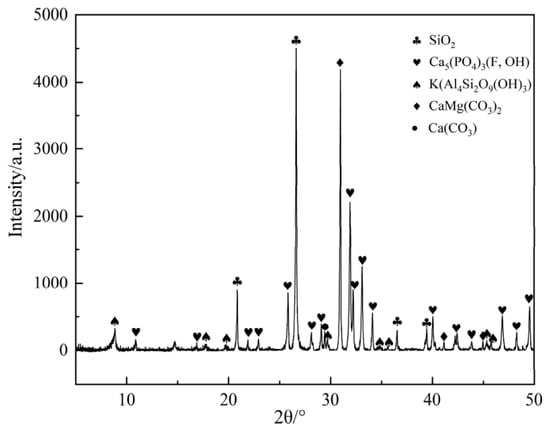
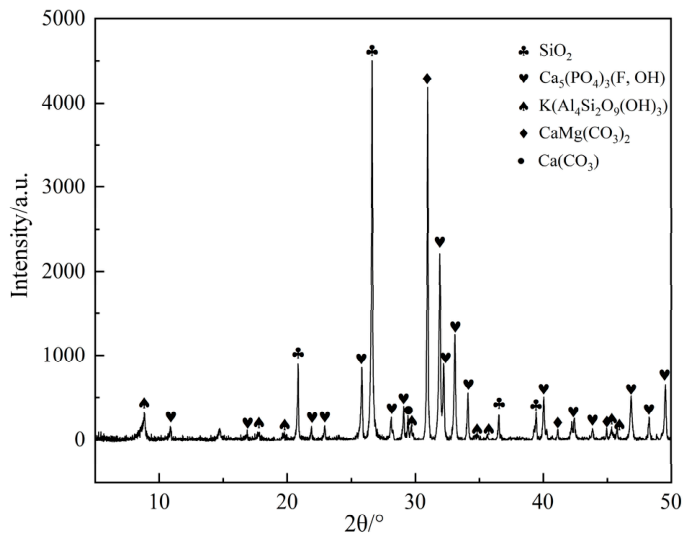
The test sample was collected from the Mazharweina phosphorus–vanadium mining area in Xinjiang. It was successively crushed to below 3 mm using a jaw crusher and a roll crusher, then homogenized and divided to obtain the reserve sample for process mineralogical analysis and flotation tests. The chemical composition and contents of the raw ore sample were determined using X-ray fluorescence spectrometry (XRF, SX Primus II, Rigaku Corporation, Tokyo, Japan) and inductively coupled plasma atomic emission spectrometry (ICP, DV8300, PerkinElmer, Shelton, CT, USA) (Table 1). The CO2 content was determined separately by the gasometric method according to GB/T 1876—1995, based on measurement of the CO2 released during acid decomposition of the sample. The X-ray diffraction analysis (XRD, D8 Advance, Bruker AXS, Karlsruhe, Germany) results are shown in Figure 1. Table 1 shows that the sample is a vanadium-bearing low-magnesium phosphate ore associated with certain amounts of SiO2 and CaO. Figure 1 shows that the main minerals in the raw ore are hydroxyapatite and fluorapatite, and the principal gangue minerals are quartz, dolomite, illite, and calcite.
Table 1.
Major chemical composition of the phosphorus–vanadium ore (wt.%).
Figure 1.
X-ray diffraction pattern of phosphorus vanadium ore.
2.2. Experiment Methods
2.2.1. Process Mineralogy
A separate ore aliquot obtained as described in Section 2.1 was ground to 100% passing 74 μm using an XMB-Φ200 × 240 (Wuhan Prospecting Machinery Factory, Wuhan, China) laboratory rod mill with a rotating cylindrical grinding chamber and steel rods as the grinding media. The ground sample was subsequently mounted in resin, sectioned, and polished for process mineralogical characterization. After carbon coating, a mineral liberation analyzer (MLA, EVO1, Zeiss, Jena, Germany) was used to determine the mineral composition and content. In addition, scanning electron microscopy combined with energy-dispersive spectroscopy (SEM-EDS, Ultraplus, Carl Zeiss AG, Oberkochen, Germany) and optical microscopy were used to observe the structural characteristics and modes of occurrence of the phosphorus and vanadium minerals and associated minerals.
2.2.2. Mineral Processing Tests
For flotation, a separate 1 kg ore aliquot prepared as described in Section 2.1 was ground to 80% passing 74 μm unless otherwise stated, using the rod mill and grinding media described in Section 2.2.1. The ground pulp was allowed to settle for 10 min, after which the suspended fines were removed and collected for vanadium leaching. The settled fraction was subjected to phosphorus flotation using an XFD (Jilin Province Prospecting Machinery Factory, Changchun, China) laboratory single-cell flotation machine with cell volumes of 1.5 L. The pulp solids concentration was approximately 30%, the pulp pH was approximately 8.0, and the impeller speed was maintained at 1992 rpm.
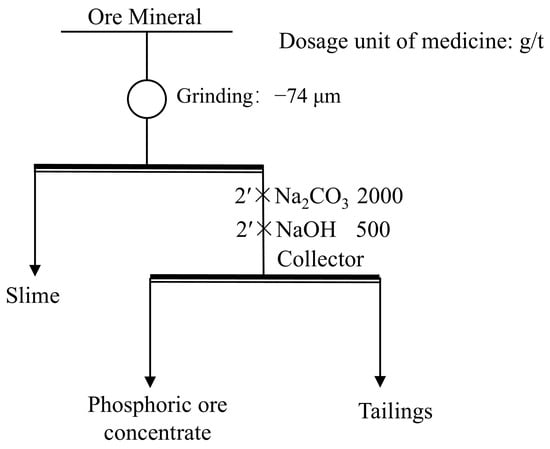
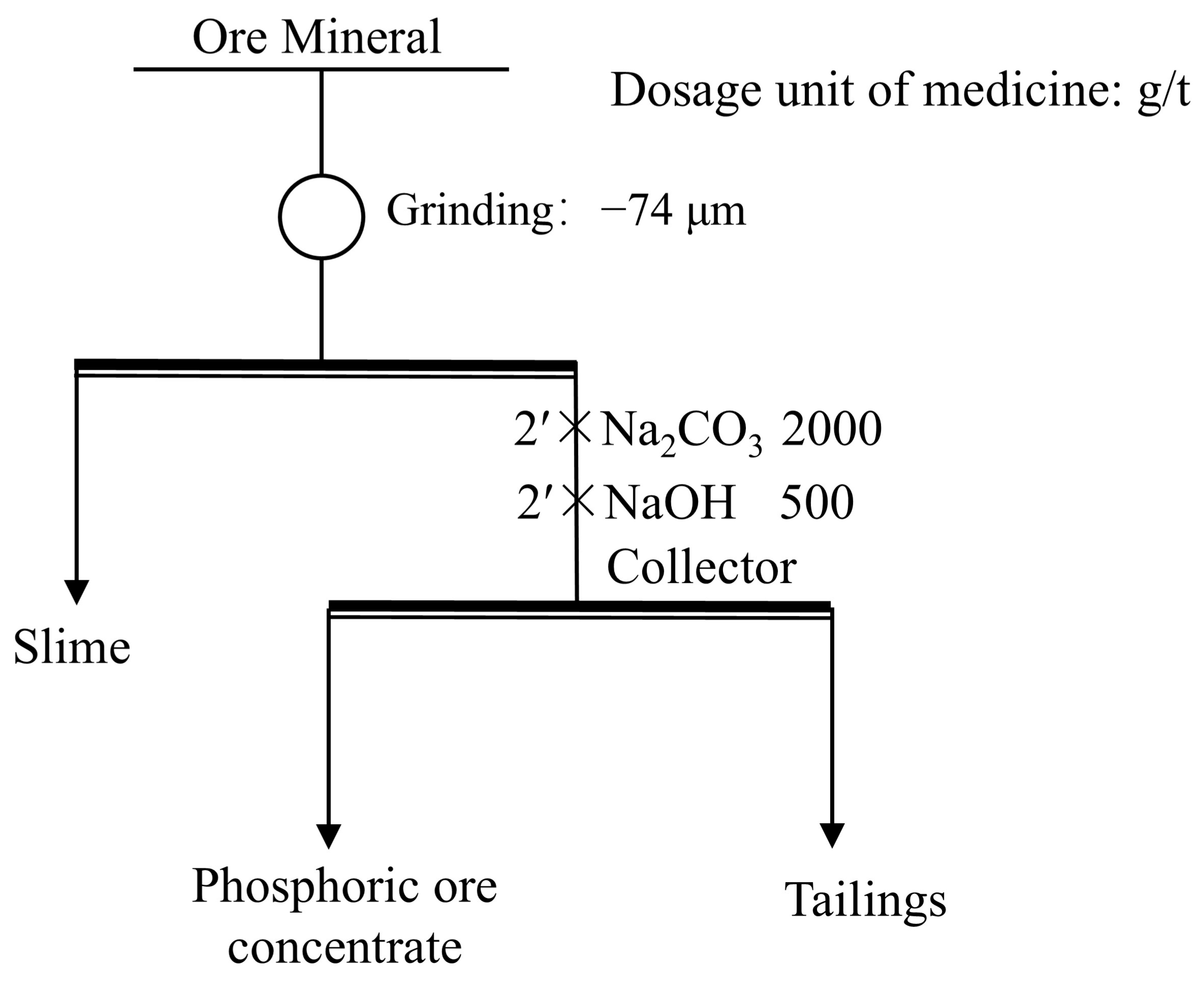
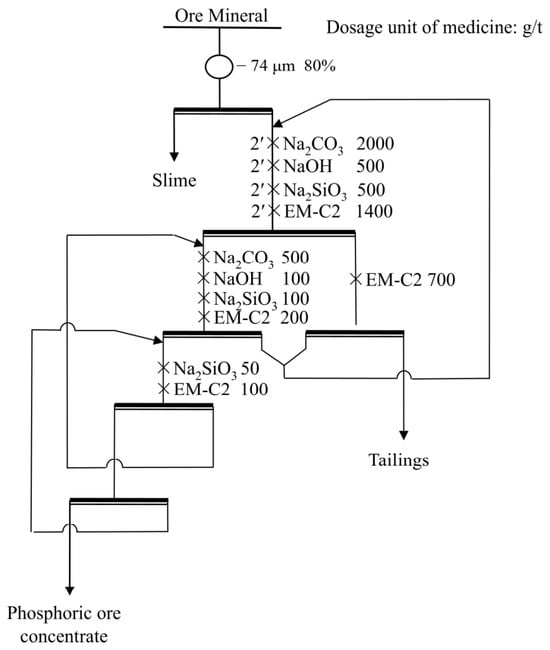
The flotation reagents comprised solid sodium carbonate, 20% sodium hydroxide solution, 5% sodium silicate solution, 5% EM-C2 collector solution, and 98% sulfuric acid. Before reagent addition, the deslimed pulp was conditioned for 2 min. The pH regulators, depressant, and collector were then added sequentially, with 2 min of conditioning after each addition. Flotation products were collected, filtered, dried, weighed, and assayed for P2O5 to determine product yields and phosphorus recoveries. Each test was performed in triplicate, and the mean results are reported. Phosphorus flotation recovery was calculated as the mass of P2O5 in the phosphate concentrate divided by that in the original ore feed before desliming (Equation (1)). The grinding, desliming, and flotation procedure for the raw ore is illustrated in Figure 2.
where m0 and m1 are the dry masses of the concentrate and original feed, respectively, and f0 and f1 are their respective P2O5 grades expressed on the same basis.
R = [(m0 × f0)/(m1 × f1)] × 100%
Figure 2.
Schematic flowsheet of the ore mineral flotation tests.
2.2.3. Leaching Tests
A 20 g portion of dried slime from mineral processing was placed in a 200 mL beaker with a magnetic stir bar. Leaching was conducted at 60 °C using a thermostatic magnetic stirrer (RCT basic, IKA-Werke GmbH & Co. KG, Staufen, Germany). The liquid-to-solid ratio, H2SO4 concentration, and leaching time were varied independently over ranges of 4:1–10:1, 150–300 g/L, and 4–10 h, respectively. After the leaching reaction, solid–liquid separation was carried out. The filter cake was washed three times with deionized water to remove retained leachate and soluble species, then dried and analyzed for vanadium by chemical titration. Vanadium was recovered by solvent extraction using an organic phase containing 7.5% N235, 5% sec-octyl alcohol as the phase modifier, and 87.5% sulfonated kerosene as the diluent. Extraction was performed at an aqueous-phase pH of 1.25 and an organic-to-aqueous phase ratio of 1.5:1, with a contact time of 1.5 min at 25 °C. The stripping liquor was purified with CaCl2 before vanadium precipitation with NH4Cl. The filter cake was washed three times with deionized water, dried, and weighed. Its vanadium content was determined by chemical titration following acid dissolution. Vanadium leaching recovery was calculated from the initial vanadium mass in the feed and the residual vanadium mass in the washed, dried residue, as expressed in Equation (2).
where λ(%) is the vanadium leaching recovery (%); M1 (g) and M0 (g) are the dry masses of the leaching feed and the washed, dried leach residue, respectively; and R1 and R0 are their corresponding V2O5 mass fractions, expressed on the same basis.
λ = [1 − (M0 × R0)/(M1 × R1)] × 100%
3. Results and Discussion
3.1. Process Mineralogical Analysis of the Raw Phosphorus–Vanadium Ore
The mineral composition and corresponding mass fractions of the phosphorus–vanadium ore were determined using a mineral liberation analyzer (MLA), and the results are presented in Table 2. Apatite had the highest content in the raw ore, at 39.6%, and was the principal valuable mineral. The main gangue minerals were quartz, dolomite, illite, and calcite, with contents of 27.8%, 8.1%, 6.9%, and 4.0%, respectively. Table 3 presents the results of phosphorus phase analysis performed by selective dissolution based on the multi-element chemical analysis of the sample. The results showed that phosphorus in the ore occurred mainly in apatite, with a relative content of 7.20% and a distribution rate of 98.68%. The phosphorus contents in iron oxides, monazite, and phosphorite were low. Therefore, phosphorus in this ore is relatively concentrated in its host phase, and emphasis should be placed on its effective separation from gangue minerals such as quartz, dolomite, calcite, and illite.
Table 2.
Analysis results of mineral composition.
Table 3.
Analysis results of physical phase.
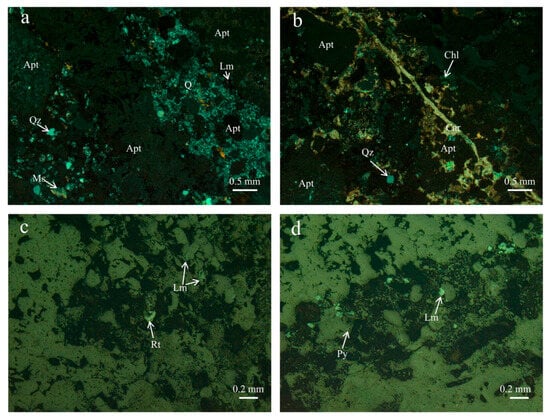
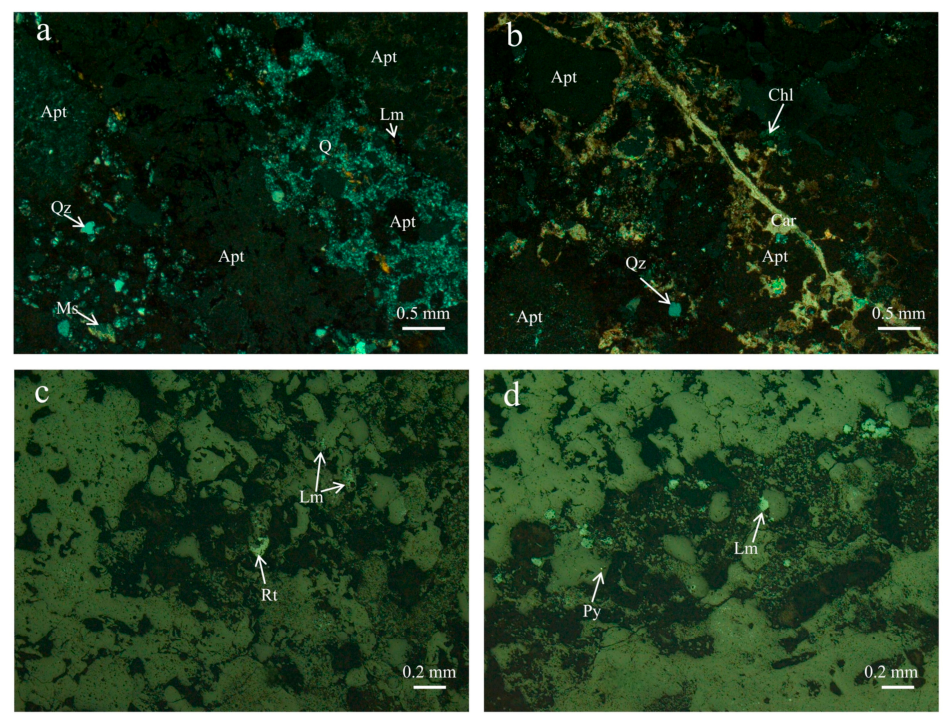
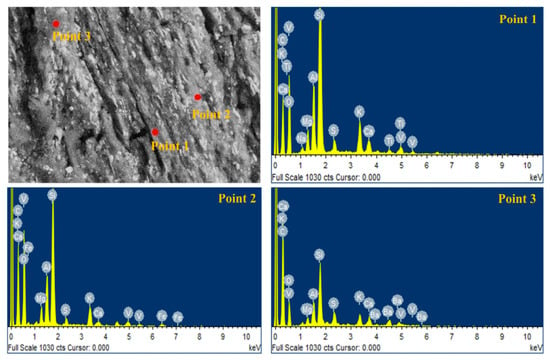
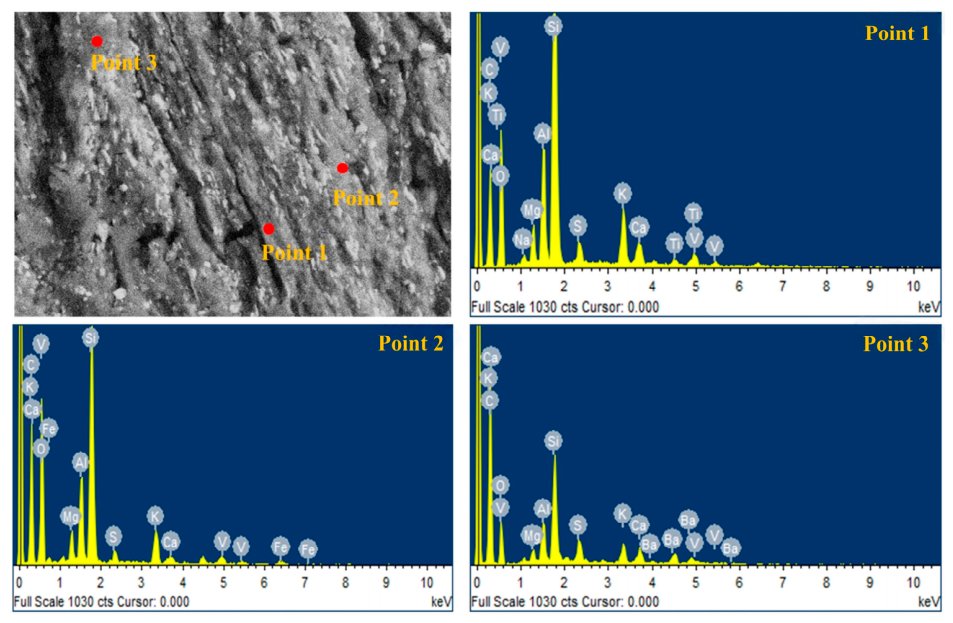
Microscopy, SEM-EDS, and particle-size analysis were used to further analyze the dissemination characteristics of the phosphorus and vanadium minerals and associated minerals in the raw ore; the results are shown in Figure 3 and Figure 4 and Table 4. As shown in Figure 3, phosphorus occurred mainly in collophane, a microcrystalline form of apatite (Apt), with a colloidal texture. It occurred as sandy fragments, gravel-sized fragments, and fine disseminations. Some local grain boundaries were distinct, whereas other portions were closely intergrown with micritic interstitial material, quartz (Qz), chlorite (Chl), carbonate minerals (Car), and limonite (Lm). Quartz was mostly distributed as fine or irregular grains between collophane particles. Chlorite and carbonate minerals mainly filled intergranular spaces or occurred along fractures, while limonite was locally disseminated along collophane margins or between grains. Associated minerals such as pyrite (Py) and rutile (Rt) were present in small amounts and mostly occurred as finely dispersed grains in the gangue matrix or between mineral grains. Notably, no independent vanadium mineral was observed under the microscope. The SEM–EDS results in Figure 4 show that vanadium was detected in regions containing mica and argillaceous silicates, indicating its association with these fine-grained components.
Figure 3.
Disseminated characteristics of phosphorus vanadium ore. Mineral associations in the phosphorus–vanadium ore: (a) collophane associated with quartz and limonite; (b) chlorite and carbonate minerals occurring between collophane aggregates; (c) disseminated limonite and minor rutile; (d) limonite and minor pyrite distributed within the gangue matrix.
Figure 4.
SEM-EDS analysis of phosphorus vanadium ore.
Table 4.
Distribution characteristics of phosphorus and vanadium ore at different particle size fractions.
As shown in Table 4, P2O5 and V2O5 exhibited consistent distribution changes among the particle-size fractions, with no obvious enrichment or depletion by particle size. The four fractions coarser than 0.198 mm (+0.88, −0.88~+0.70, −0.70~+0.325, and −0.325~+0.198 mm) had a combined yield of 79.46% and accounted for 79.83% of the P2O5 and 83.68% of the V2O5 in the sample. The P2O5 grade of each fraction was close to the average grade of the raw ore, indicating that the phosphorus minerals were relatively uniformly distributed among the particle-size fractions.
3.2. Flotation Recovery Tests of Phosphorus
3.2.1. Desliming Flotation Tests
The desliming tests were mainly directed at phosphate ore containing abundant clay minerals and exhibiting severe sliming. Removing the argillaceous minerals from the raw ore reduced the adverse effects of slime on flotation and enriched the phosphorus minerals [1,2,6,8,9,10,11,12]. The results of the raw-ore desliming flotation tests are shown in Table 5.
Table 5.
Results of desliming and flotation of the raw ore.
As shown in Table 5, after desliming flotation, the P2O5 grade of the phosphate concentrate increased to 27.36%, with a recovery of 29.88%, indicating that preliminary desliming could reduce the interference of slime with flotation to some extent and promote phosphorus enrichment. The P2O5 grade of the middlings was 26.15%, close to that of the concentrate, and the P2O5 distribution rate was 8.49%; phosphorus recovery could subsequently be improved by returning or retreating the middlings. The P2O5 grade of the tailings remained 14.74%, with a distribution rate of 21.97%, indicating that separation between the phosphate and gangue minerals was still insufficient under the current conditions and that some phosphorus minerals were still lost to the tailings. The flotation flowsheet and reagent regime therefore require further optimization.
3.2.2. Collector Type and Dosage
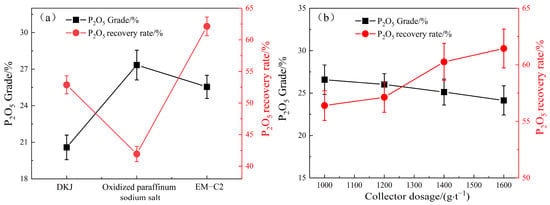
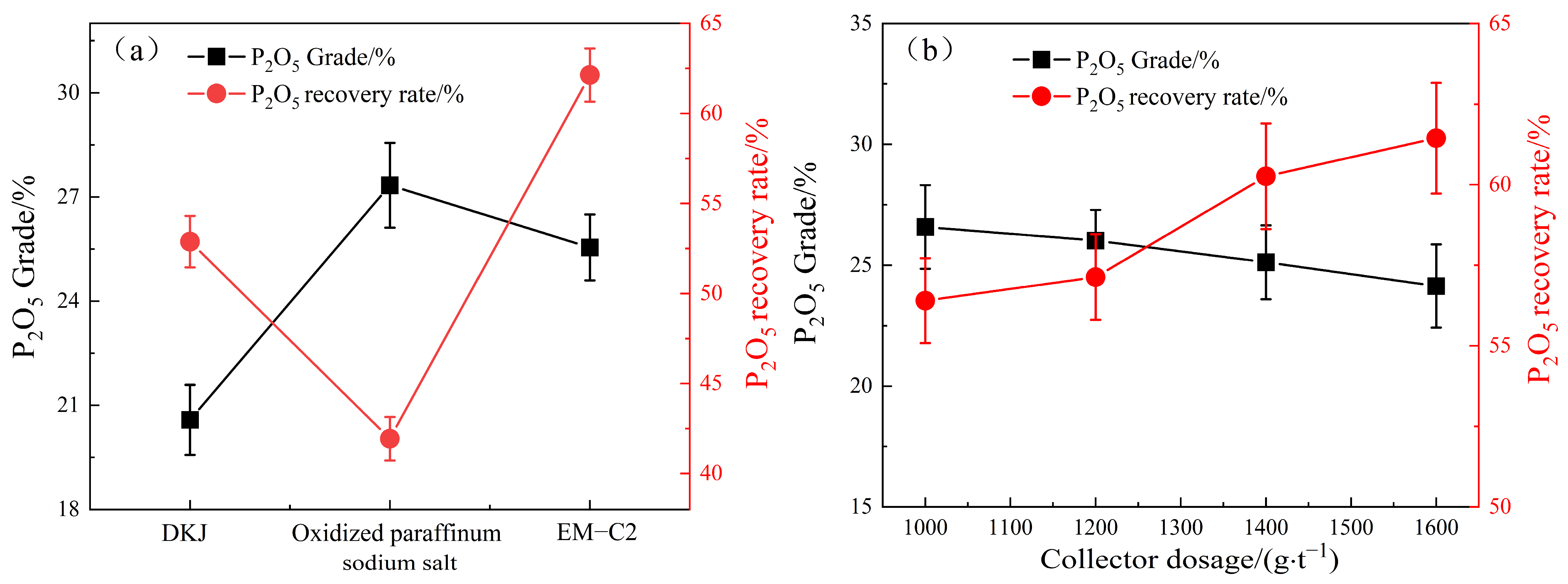
The collector type directly affects the hydrophobization of the phosphate mineral surface and its flotation separation from gangue minerals [3,5,6,7,8,19,20,21,22,23,24,25,26]. As shown in Figure 5a, the grade and recovery of the phosphate concentrate differed markedly among the collectors. With DKJ as the collector, the P2O5 grade of the phosphate concentrate was only 20.58%, and the recovery was 52.88%. With oxidized paraffin soap, the P2O5 grade increased to 27.34%, but the recovery decreased to 41.93%, indicating good selectivity but insufficient collecting ability. With EM-C2 as the collector, the phosphate concentrate had a P2O5 grade of 25.55% and a recovery of 62.13%, markedly improving phosphorus recovery while maintaining a relatively high concentrate grade. Considering both phosphate concentrate grade and recovery, EM-C2 exhibited better suitability for collecting phosphorus from this phosphorus–vanadium ore and was selected as the appropriate collector for subsequent flotation tests.
Figure 5.
Effect of (a) collector type and (b) dosage on the grade and recovery rate of phosphate concentrate in phosphorus vanadium ore.
After EM-C2 was selected as the collector, the effect of its dosage on the flotation indices was further investigated. As shown in Figure 5b, when the EM-C2 dosage increased from 1000 g/t to 1600 g/t, the P2O5 recovery gradually increased from 56.40% to 61.44%, whereas the P2O5 grade decreased from 26.58% to 24.14%. This trend indicates that increasing the collector dosage enhances the hydrophobicity of phosphate particles and reduces phosphorus mineral losses, but excess collector may weaken flotation selectivity and promote the entry of fine gangue or locked particles into the froth product, thereby reducing the concentrate grade. At an EM-C2 dosage of 1400 g/t, the P2O5 grade was 25.12%, and the recovery was 60.26%. Accordingly, an EM-C2 dosage of 1400 g/t was selected for the condition tests based on concentrate grade and phosphorus recovery. Ruan et al. [27] reported improved separation selectivity and a reduction in reagent consumption of approximately 0.8 kg/t when cottonseed fatty acid salt was combined with NP-4 for siliceous–calcareous phosphate flotation. Their results highlight the importance of collector formulation and dosage, providing supporting context for the grade–recovery balance used here to select EM-C2 and its dosage. Industrial reagent requirements should also account for additions in subsequent flotation stages and the effects of circulating middlings and recycled process water.
3.2.3. Grinding Fineness
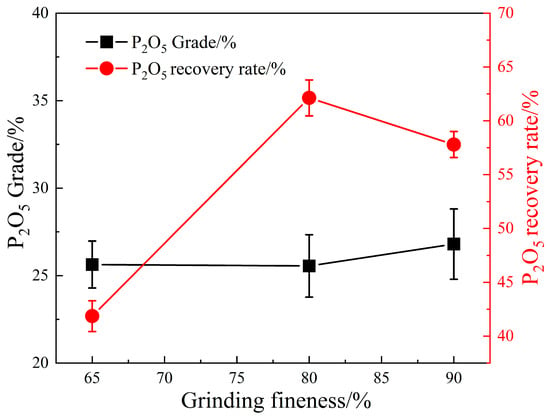
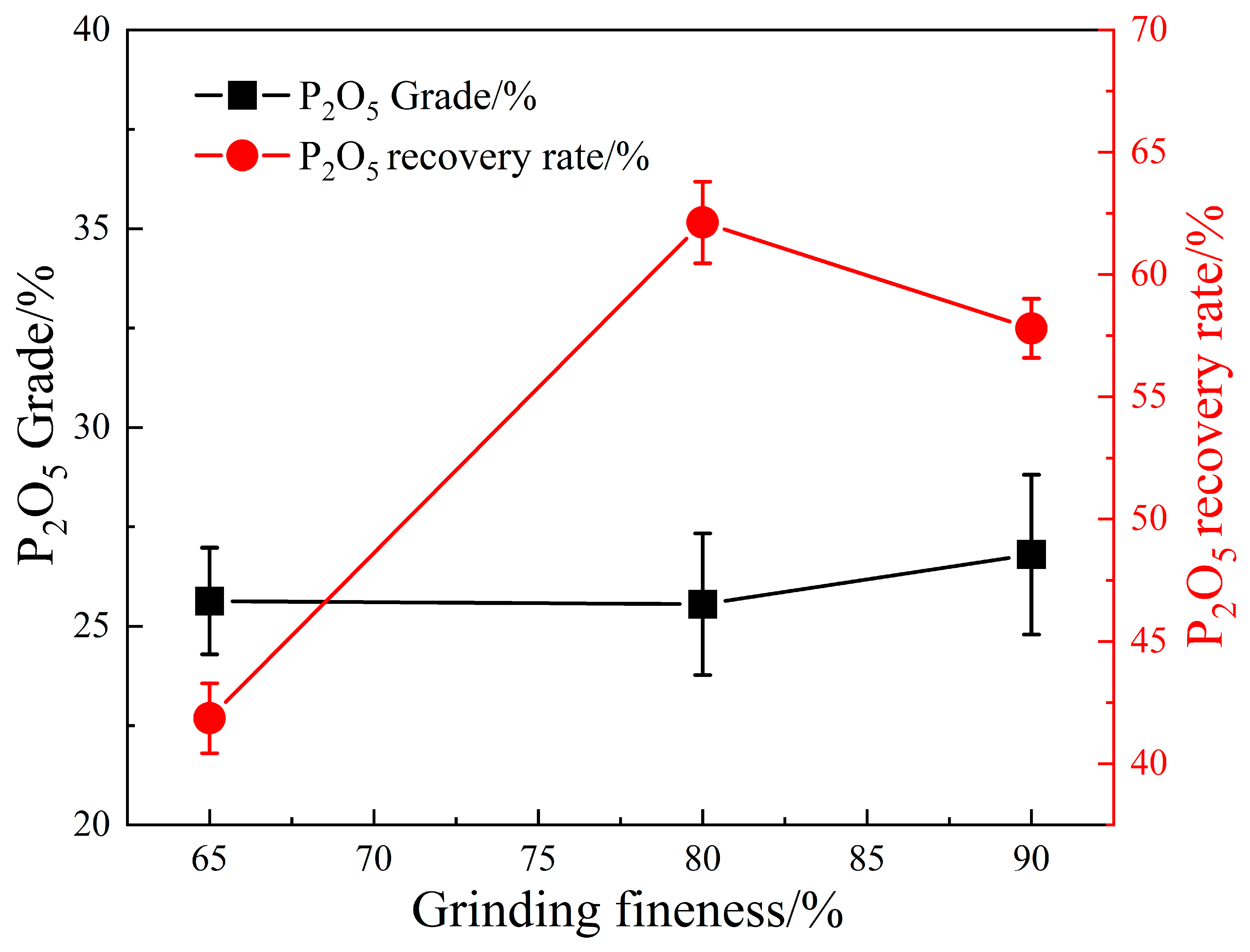
Grinding fineness affects phosphate flotation through the competing effects of mineral liberation and fines generation [1,2,6,8,9,10,11]. As shown in Figure 6, increasing the proportion passing 74 μm from 65% to 80% increased phosphorus recovery from 41.86% to 62.13%, whereas the concentrate P2O5 grade remained nearly unchanged at 25.63% and 25.55%, respectively. Further grinding to 90% passing 74 μm yielded a modest grade increase to 26.80% but reduced recovery to 57.80%, suggesting that additional grinding did not provide a corresponding improvement in phosphorus recovery. This decline may be associated with increased losses of fine phosphate particles during desliming or flotation. Thus, the variation in recovery was more consequential to the selection than the relatively limited change in concentrate grade, and 80% passing 74 μm was selected within the investigated range.
Figure 6.
Effect of grinding fineness on the grade and recovery rate of phosphate concentrate in phosphorus vanadium ore flotation.
3.2.4. Closed-Circuit Flotation Tests
Based on the appropriate parameters determined in the condition tests, closed-circuit flotation tests were conducted to further verify the stability and feasibility of the desliming-direct flotation flowsheet. The tests used a grinding fineness of 80% passing −74 μm and preliminary desliming, with EM-C2 as the collector and sodium silicate as the gangue depressant. The flowsheet comprised one roughing, one scavenging, and three cleaning stages, with the middlings returned sequentially. As shown in Figure 7 and Table 6, the closed-circuit tests produced a phosphate concentrate with a P2O5 grade of 28.32% and a recovery of 59.50%; the P2O5 grade of the final tailings decreased to 1.52%. The overall phosphorus recovery of 59.50% was primarily constrained by losses during desliming. The slime accounted for 36.98% of the feed mass and carried 37.66% of the feed phosphorus, whereas the final flotation tailings contained only 1.52% P2O5 and accounted for 2.84% of the phosphorus. These results indicate that phosphorus partitioning to the slime is the principal limitation to overall recovery and highlight the need to reduce phosphate losses during desliming.
Figure 7.
Closed-circuit test flow of flotation.
Table 6.
Closed-circuit test results of flotation.
The results highlight a trade-off between alleviating slime interference and retaining phosphate particles for flotation. Fine slime generated during grinding can impair flotation through reagent consumption, surface coating, entrainment, and heteroaggregation while also constituting a major vanadium-bearing stream. The process therefore directs the deslimed fraction to phosphorus flotation and the separated slime to vanadium recovery. Further optimization should focus on grinding and desliming conditions that retain more recoverable phosphate particles without compromising gangue rejection while evaluating the resulting changes in vanadium distribution and leaching performance.
3.3. Vanadium Leaching
No independent vanadium mineral was identified during the mineralogical examination. SEM–EDS detected vanadium in mica- and argillaceous silicate-bearing regions, consistent with its association with fine-grained components of the ore. After phosphorus flotation, vanadium was mainly enriched in the preliminarily removed slime. Therefore, slime was used as the leaching feed in this section, and the effects of the liquid-to-solid ratio, sulfuric acid mass concentration, and leaching time on V2O5 leaching behavior were investigated. During acid leaching, H+ can disrupt the structures of vanadium-bearing carriers such as argillaceous minerals and colloidal limonite, promoting the release of vanadium into solution and thereby enabling hydrometallurgical recovery from the vanadium-bearing material [4,13,14,15,16,18].
3.3.1. Liquid-to-Solid Ratio Tests for Leaching
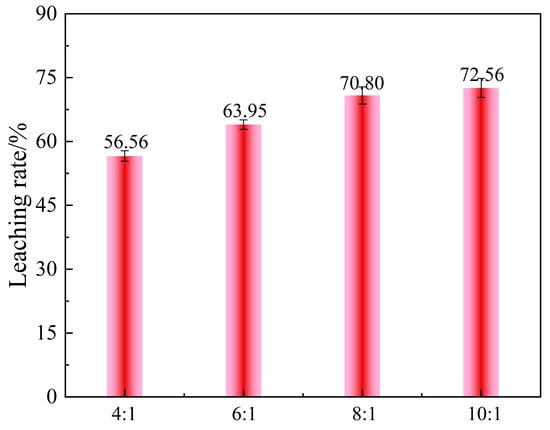
As shown in Figure 8, the liquid-to-solid ratio had a marked effect on V2O5 leaching from the slime. As the liquid-to-solid ratio increased from 4:1 to 8:1, the V2O5 leaching rate increased markedly from 56.56% to 70.80%, mainly because the higher liquid-to-solid ratio improved pulp fluidity and acid-solution mass transfer, facilitating full contact between the acid and vanadium-bearing host minerals and promoting vanadium dissolution. When the liquid-to-solid ratio was further increased to 10:1, the V2O5 leaching rate increased only to 72.56%, a distinctly smaller improvement, indicating that further increases in the liquid-to-solid ratio had a limited intensifying effect on leaching. Meanwhile, an excessively high liquid-to-solid ratio reduces the vanadium concentration in the leachate and increases the load of subsequent solid–liquid separation, purification, and enrichment. Therefore, considering the leaching rate, solution concentration, and subsequent treatment cost, the appropriate liquid-to-solid ratio was determined to be 8:1.
Figure 8.
Effect of liquid-to-solid ratio on V2O5 leaching rate from slime.
3.3.2. Sulfuric Acid Concentration Tests
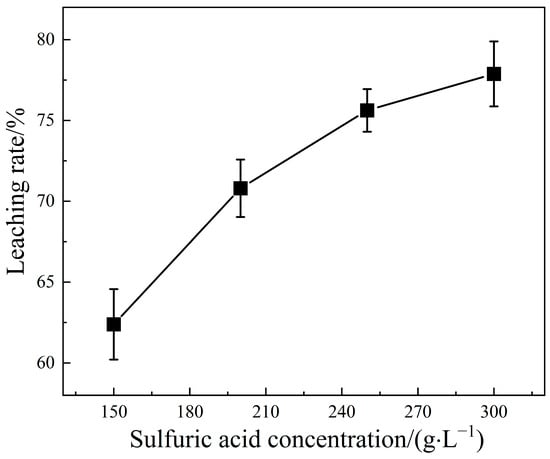
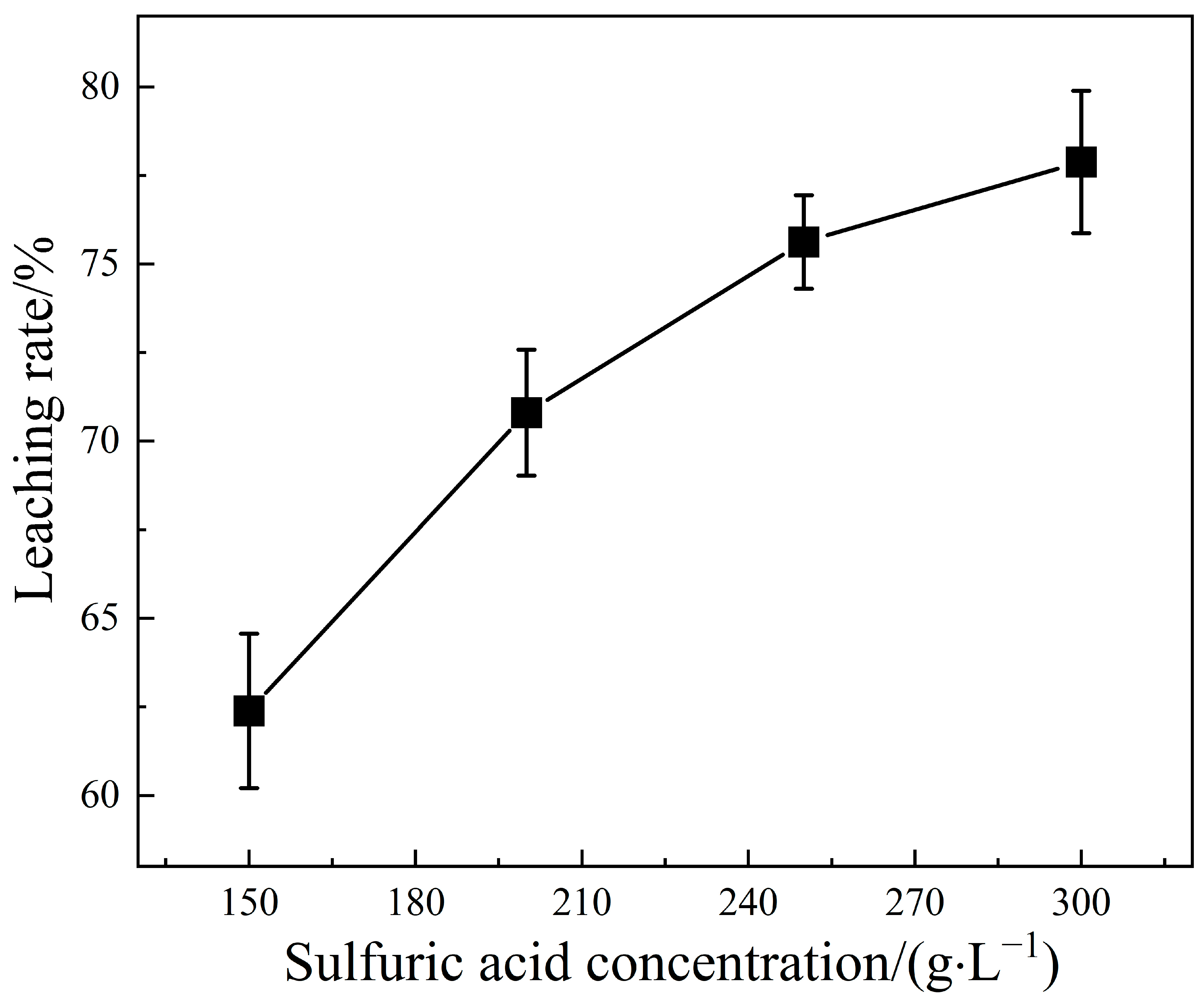
As shown in Figure 9, increasing the sulfuric acid concentration from 150 to 250 g/L increased vanadium leaching recovery from 62.39% to 75.62%. This was mainly because the higher acidity enhanced the destructive action of H+ on vanadium-bearing carriers such as argillaceous minerals, mica minerals, and colloidal limonite, promoting the release of vanadium from the mineral structures into solution. When the sulfuric acid mass concentration was further increased to 300 g/L, the V2O5 leaching rate increased only slightly to 77.88%, and the improvement became markedly smaller. Excessive acidity not only increases acid consumption but may also intensify the simultaneous dissolution of impurities such as Fe, Al, Ca, Mg, and P, increasing the difficulty of subsequent leachate purification and extraction separation [14,15,18]. Therefore, considering the vanadium leaching rate, acid consumption, and adaptability of subsequent treatment, the appropriate sulfuric acid mass concentration was determined to be 250 g/L.
Figure 9.
Effect of sulfuric acid concentration on V2O5 leaching rate from slime.
3.3.3. Leaching Time Tests
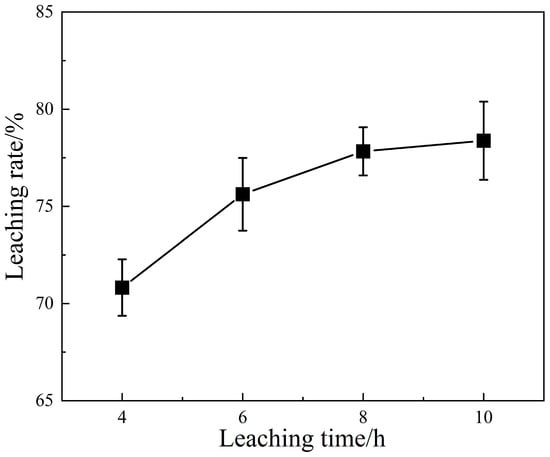
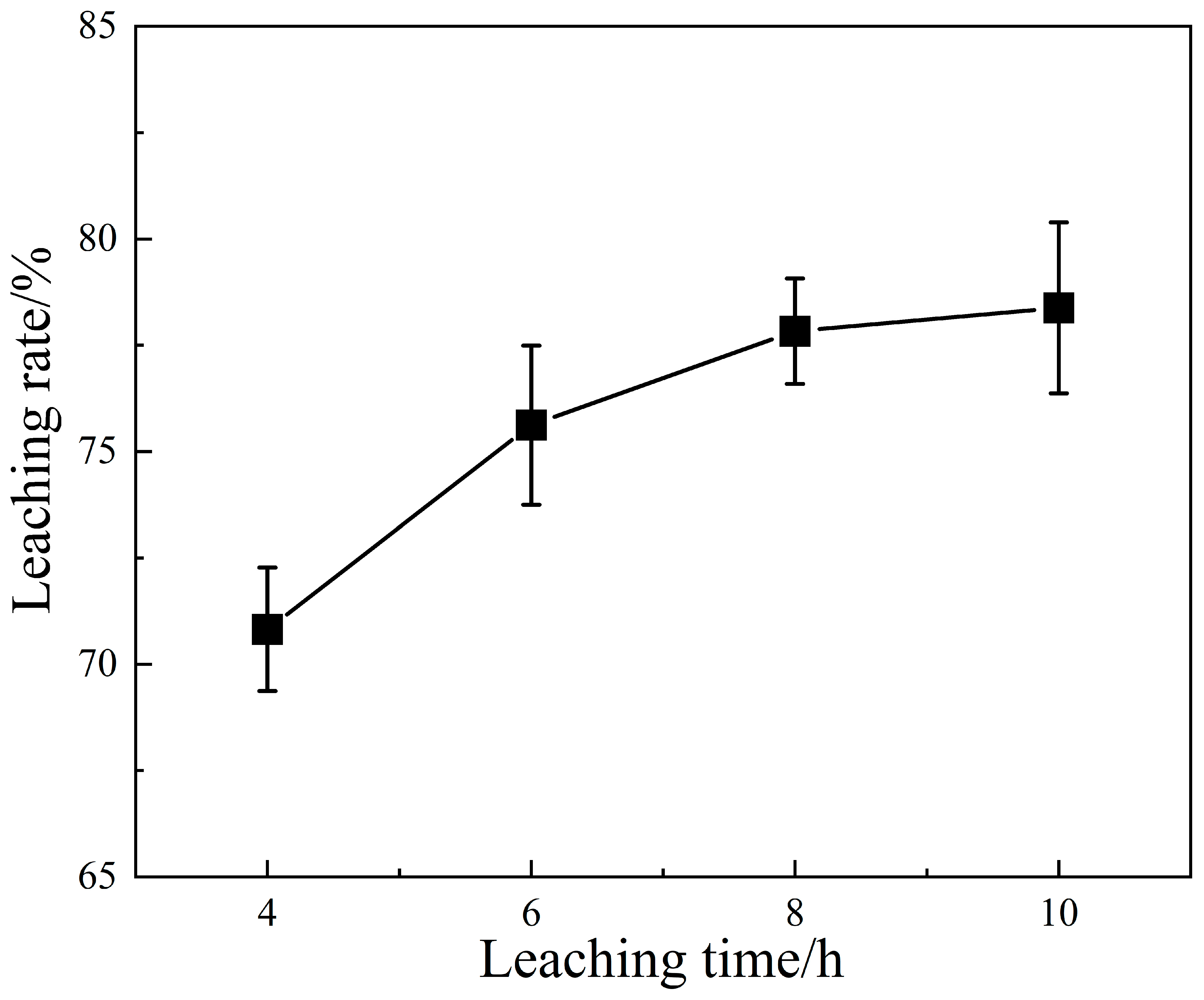
As shown in Figure 10, extending the leaching time promoted V2O5 dissolution from the slime. Over 4–8 h, the V2O5 leaching rate increased from 70.82% to 77.83%, indicating that the vanadium-bearing host minerals were gradually disrupted in the acidic system and that vanadium was continuously released into solution. When the leaching time was further extended to 10 h, the V2O5 leaching rate increased only slightly to 78.38%, and the increment decreased markedly, indicating that the system had approached leaching equilibrium. Further extension of the leaching time had a limited effect on the V2O5 leaching rate and instead increased energy consumption and equipment occupancy time. Therefore, considering leaching efficiency and process economics, the appropriate leaching time was determined to be 8 h.
Figure 10.
Effect of leaching time on V2O5 leaching rate from slime.
It is worth noting that using 250 g/L H2SO4 and an 8 h leaching time may partly reflect acid demand from carbonate gangue and the limited accessibility of vanadium within fine-grained host phases, although their individual contributions were not quantified. While these conditions achieved satisfactory laboratory recovery, their economic and environmental implications depend on net acid consumption, energy requirements, and effluent treatment, with acid recovery and solution recycling warranting further evaluation.
3.3.4. Vanadium Recovery from the Leachate
The acid leachate contained vanadium, together with Fe, Al, P, Mg, and Ca, making purification necessary before vanadium precipitation. N235 was selected because tertiary-amine extraction has been successfully applied to vanadium recovery from acidic sulfate solutions. Protonation of the amine generates extraction-active species capable of associating with anionic V(V) species, providing a chemical basis for vanadium enrichment. This behavior depends on solution acidity and vanadium speciation, which govern the availability of extractable species and competition from other anions [15]. The reaction principles are shown in Equations (3) and (4):
2[R3N]org + H2SO4 = [(R3NH)2SO4]org
3[(R3NH)2SO4]org + (V10O28)6− = [(R3NH)6(V10O28)]org + 3SO42−
The loaded organic phase was stripped with a Na2CO3 solution. During stripping, CO32− exchanged with the polyvanadate ions in the organic phase while disrupting the amine-salt association structure, causing vanadium to re-enter the aqueous phase and regenerating the N235 extractant. The reaction principle is shown in Equation (5):
[(R3NH)6(V10O28)]org + 3CO32− = 6[R3N]org + (V10O28)6− + 3H2O + CO2
The chemical composition of the final vanadium product is presented in Table 7. The extraction and stripping recoveries were 98.12% and 99.40%, respectively (Table 8), indicating effective vanadium transfer under the investigated conditions. The final product purity reflects impurity removal across the combined extraction, stripping, purification, and precipitation sequence and therefore cannot be attributed to N235 selectivity alone. The product contained 98.42% V2O5, meeting the minimum V2O5 content requirement of 98.0% for the corresponding commercial grade specified in YB/T 5304—2017; full conformity also depends on the applicable impurity limits and other product specifications. However, this performance does not capture the effects of prolonged organic-phase reuse and impurity accumulation in recycled solutions. Fine-solids carryover from slime leaching may further impair phase disengagement and promote organic losses, linking the practical performance of solvent extraction to upstream settling and filtration. The washing efficiency of 98.5%, extraction rate of 98.12%, stripping rate of 99.40%, vanadium precipitation rate of 98.24%, and calcination conversion rate (Table 8) indicate that the process achieved favorable vanadium separation and enrichment. The combined vanadium leaching recovery was calculated from the stream distributions and leaching recoveries reported in the original laboratory study. For a preliminary assessment of the integrated process, an estimated combined vanadium leaching recovery of 68.61% was used as the input to Equation (6). Combining this value with the subsequent stage efficiencies yielded an estimated overall vanadium recovery of 63.83% relative to the original ore. The final refined vanadium product had a recovery from the raw ore of 63.83% (Equation (6)), indicating that vanadium in the slime and dephosphorization tailings can be effectively recovered through acid leaching and vanadium recovery from the leachate.
RV = 0.6861 × 0.9850 × 0.9812 × 0.9940 × 0.9824 × 0.9857 × 100% = 63.83%
Table 7.
Chemical composition of the vanadium product/%.
Table 8.
Recovery efficiency of each step in vanadium extraction from leachate/%.
4. Conclusions
- (1)
- In the Mazharweina phosphorus–vanadium ore from Xinjiang, phosphorus occurred mainly as hydroxyapatite and fluorapatite, whereas no independent vanadium mineral was identified, and SEM–EDS indicated an association of vanadium with mica and argillaceous silicates. The phosphate minerals had complex intergrowth relationships with quartz, dolomite, illite, and argillaceous minerals, and P2O5 and V2O5 showed no obvious natural enrichment in any particle-size fraction. Effective separation could not be achieved solely by particle-size classification.
- (2)
- Based on the process mineralogical study, a pre-desliming-direct phosphorus flotation flowsheet effectively enriched the collophane. The appropriate conditions were a grinding fineness of 80% passing −74 μm and an EM-C2 dosage of 1400 g/t. Closed-circuit flotation produced a phosphate concentrate with a yield of 33.34%, a P2O5 grade of 28.32%, and a P2O5 recovery of 59.50%, while the P2O5 grade of the tailings decreased to 1.52%.
- (3)
- Vanadium was mainly enriched in the slime and dephosphorization tailings and could be recovered by acid leaching, extraction, stripping, vanadium precipitation, and calcination. At a liquid-to-solid ratio of 8:1, an H2SO4 concentration of 250 g/L, and a leaching time of 8 h, the vanadium leaching recovery from the slime reached 77.83%. A vanadium product with a V2O5 purity of 98.42% was ultimately obtained, with an overall recovery from the raw ore of 63.83%, achieving comprehensive recovery of phosphorus and vanadium.
Author Contributions
Conceptualization, Z.Z. and Q.Z.; Methodology, Z.Z.; Formal analysis, Q.Z. and W.X.; Investigation, Q.Z. and W.X.; Resources, W.X.; Data curation, Q.Z.; Writing – original draft, R.S., Q.Z. and W.X.; Writing – review & editing, R.S., Q.Z. and W.X.; Supervision, Z.Z. and Q.Z.; Project administration, Z.Z. and W.X.; Funding acquisition, Z.Z. and Q.Z. All authors have read and agreed to the published version of the manuscript.
Funding
Supported by Sichuan Science and Technology Program (2025ZDZX0019) and Deep Earth Probe and Mineral Resources Exploration—National Science and Technology Major Project (2024ZD10040002).
Data Availability Statement
The original contributions presented in this study are included in the article. Further inquiries can be directed to the corresponding author.
Conflicts of Interest
The authors declare no conflict of interest.
References
- Cai, Z.; Luo, H.; Yang, W.; Zhang, H. Study on Process Mineralogy and Separation Technology of a Fine-Grained Carbonate-Type Collophane from Yunnan. Conserv. Util. Miner. Resour. 2026, S1, 65–73. [Google Scholar]
- Ruan, Y.; Zhou, J.; Zhou, F.; Luo, H.; Wang, X.; Chi, R.; Deng, B. Study on Process Mineralogy Characteristics and Mixed Reverse Flotation Test of Houping Phosphate Rock in Hubei. Ind. Miner. Process. 2026, 2, 1–7. [Google Scholar]
- Ruan, Y.; Zhang, Z.; Luo, H.; Xiao, C.; Zhou, F.; Chi, R. Effects of Metal Ions on the Flotation of Apatite, Dolomite and Quartz. Minerals 2018, 8, 141. [Google Scholar] [CrossRef] [Scilit]
- Guo, S.; Niu, F.; Kang, M.; Guo, M.; Ning, X.; Xing, X. Study on Blank Roasting Process and Kinetics of Power-Generation Ash from Vanadium Phosphate Ore. Rare Met. Cem. Carbides 2024, 52, 6–10. [Google Scholar]
- Yu, L.; Yu, P.; Bai, S. A Critical Review on the Flotation Reagents for Phosphate Ore Beneficiation. Minerals 2024, 14, 828. [Google Scholar] [CrossRef] [Scilit]
- Ruan, Y.; He, D.; Chi, R. Review on Beneficiation Techniques and Reagents Used for Phosphate Ores. Minerals 2019, 9, 253. [Google Scholar] [CrossRef] [Scilit]
- Derhy, M.; Taha, Y.; Hakkou, R.; Benzaazoua, M. Review of the Main Factors Affecting the Flotation of Phosphate Ores. Minerals 2020, 10, 1109. [Google Scholar] [CrossRef] [Scilit]
- Liu, Z.; Li, L.; Li, Z.; Wang, M.; Liu, F.; Mi, H. Review of Interfacial Regulation of Apatite Flotation. Minerals 2025, 15, 558. [Google Scholar] [CrossRef] [Scilit]
- Xu, W.; Shi, B.; Tian, Y.; Chen, Y.; Li, S.; Cheng, Q.; Mei, G. Process Mineralogy Characteristics and Flotation Application of a Refractory Phosphate Ore from Guizhou, China. Minerals 2021, 11, 1249. [Google Scholar] [CrossRef] [Scilit]
- Valderrama, L.; Gómez, O.; Pavez, O.; Santander, M. Recovery of Apatite from Magnetic Concentration Tailings by Flotation. Minerals 2024, 14, 441. [Google Scholar] [CrossRef] [Scilit]
- Li, H.; Lambiv Dzemua, G.; Liu, Q. Beneficiation Studies of the Low-Grade Skarn Phosphate from Mactung Tungsten Deposit, Yukon, Canada. Minerals 2021, 11, 421. [Google Scholar] [CrossRef] [Scilit]
- Wang, Z.; Yang, W.; Liu, H.; Wang, J.; Yang, B.; Liao, R.; Liu, H. Regulation of Muscovite Interference in Moraine-Hosted Cu–Mo Ores by Polyaspartic Acid. Minerals 2026, 16, 566. [Google Scholar] [CrossRef] [Scilit]
- Zhou, Z.; Gao, L.; Rao, B.; Qiao, S.; Tu, S. Research Progress and Prospect on Vanadium Extraction Process from Typical Vanadium-Containing Raw Materials. Hydrometall. China 2026, 45, 467–475. [Google Scholar]
- Ma, Y.; Luo, H.; Wang, Y.; Wang, L. Vanadium Extraction from Stone Coal by Blank Roasting and Leaching Process. Min. Metall. Eng. 2025, 45, 157–161. [Google Scholar]
- Guo, M.; Niu, F.; Kang, M.; Guo, S.; Ning, X. Study on Roasting–Acid Leaching Process for Vanadium Extraction from Low-Grade Stone Coal. Rare Met. Cem. Carbides 2025, 53, 22–28. [Google Scholar]
- Zhang, G.; Zhang, Y.; Bao, S.; Yuan, Y.; Jian, X.; Li, R. Selective Vanadium Extraction from Vanadium-Bearing Ferro-Phosphorus via Roasting and Pressure Hydrogen Reduction. Sep. Purif. Technol. 2019, 220, 293–299. [Google Scholar] [CrossRef] [Scilit]
- Wang, W.-Z.; Chen, L.-P.; Yang, C.-G. Experimental Research on Comprehensive Recovery of Iron and Phosphorus from Low-Grade Vanadium–Titanium Magnetite Ore. Adv. Mater. Res. 2012, 549, 478–481. [Google Scholar] [CrossRef] [Scilit]
- Guo, T.; Zhu, X.; Li, W.; Yuan, C.; Lyu, Y. Enhanced Leaching of Vanadium and Gallium from Red Mud with a Mixture of Acids. Min. Metall. Eng. 2025, 45, 119–123, 129. [Google Scholar]
- Abdel-Halim, M.M.; Fan, R.; Khalek, M.A.A.; Zheng, R.; Xu, S.; Gao, Z. Apatite–Calcite Flotation Separation Using Sodium N-Lauroylsarcosinate as a Selective Collector. Minerals 2023, 13, 970. [Google Scholar] [CrossRef] [Scilit]
- de Lima, F.V.; Budemberg, G.; Cruz, S.H.; Braga, A.S. A Collector Promoter for Apatite Flotation in the Serra do Salitre Complex. Minerals 2023, 13, 599. [Google Scholar] [CrossRef] [Scilit]
- Lai, X.; Cheng, W.; Pan, X.; Huang, W. Flotation Behavior and Interface Characteristics of Apatite with Co-Depression by Sulfuric Acid and Phosphoric Acid. Minerals 2023, 13, 1275. [Google Scholar] [CrossRef] [Scilit]
- Liao, S.; Wu, Y.; Xiong, W.; Zhao, K.; Gu, G.; Wang, Y. Effect of Acidified Sodium Silicate on the Flotation Separation of Microfine Apatite from Chlorite in Seawater. Minerals 2023, 13, 1061. [Google Scholar] [CrossRef] [Scilit]
- Chen, Y.; Feng, Q.; Zhang, G.; Liu, D.; Liu, R. Effect of Sodium Pyrophosphate on the Reverse Flotation of Dolomite from Apatite. Minerals 2018, 8, 278. [Google Scholar] [CrossRef] [Scilit]
- Zheng, H.; Chen, Y.; Weng, X.; Jin, Y.; Kasomo, R.M.; Ao, S. Flotation Separation of Dolomite from Fluorapatite Using Sodium Dodecyl Benzene Sulfonate as the Efficient Collector under Low Temperature. Minerals 2022, 12, 228. [Google Scholar] [CrossRef] [Scilit]
- Zhang, J.; Xiao, Z.; Zhang, H. Selective Flotation Behavior of Dolomite from Fluorapatite Using Hydroxy Ethylene Diphosphonic Acid as High-Efficiency Depressant. Minerals 2022, 12, 1633. [Google Scholar] [CrossRef] [Scilit]
- Dong, L.; Wei, Q.; Qin, W.; Jiao, F. Selective Adsorption of Sodium Polyacrylate on Calcite Surface: Implications for Flotation Separation of Apatite from Calcite. Sep. Purif. Technol. 2020, 241, 116415. [Google Scholar] [CrossRef] [Scilit]
- Ruan, Y.; Zhang, Z.; Luo, H.; Xiao, C.; Zhou, F.; Chi, R. Ambient Temperature Flotation of Sedimentary Phosphate Ore Using Cottonseed Oil as a Collector. Minerals 2017, 7, 65. [Google Scholar] [CrossRef] [Scilit]

Disclaimer/Publisher’s Note: The statements, opinions and data contained in all publications are solely those of the individual author(s) and contributor(s) and not of MDPI and/or the editor(s). MDPI and/or the editor(s) disclaim responsibility for any injury to people or property resulting from any ideas, methods, instructions or products referred to in the content. |
© 2026 by the authors. Licensee MDPI, Basel, Switzerland. This article is an open access article distributed under the terms and conditions of the Creative Commons Attribution (CC BY) license.