


Abstract
The Yangshikeng mercury deposit in southeastern Chongqing is a carbonate-hosted Hg deposit within the South China low-temperature metallogenic domain, but its metallogenic age and genetic mechanism remain unclear. In this study, we present integrated in situ U-Pb dating of calcite from the main mineralization stage, together with trace element and C-O-Sr isotopic analyses of calcite from different mineralization stages to constrain the ore-forming process. Calcite U-Pb dating yields two age populations: a main mineralization age of 217 ± 12 Ma and a younger age of 114 ± 56 Ma. The Triassic event corresponds to the collision between the Indochina Block and the South China Craton, which induced intense regional compression and generated large-scale fault systems that facilitated deep fluid circulation and basinal brine formation. The Cretaceous age may record later hydrothermal disturbance or overprinting. Calcites from the main mineralization stage (Cal-I) have elevated 87Sr/86Sr ratios (0.7135–0.7187), which are higher than those of marine carbonates (0.7080–0.7110) and comparable to the Neoproterozoic Banxi Group basement (0.7131–0.7281), indicating contribution from the basement source. Late-stage calcites (Cal-II) show a wider range of 87Sr/86Sr ratios (0.7091–0.7198), overlapping the host dolostone. They display increased total REE contents and weakened LREE/HREE fractionation, indicating a contribution from the host rock. These integrated geochemical constraints suggest that the ore-forming materials of the main mineralization stage are derived from a radiogenic basement source, whereas the late stage involved mixed contributions from the Qingxudong Formation wall rock and early-stage calcites through recrystallization or fluid–rock interaction. The main mineralization stage is related to a relatively closed basinal brine system, while the late stage records fluid mixing and progressive opening of the system.
1. Introduction
As a critical strategic metal, mercury is widely utilized in metallurgy, catalysis, lighting, electronics and medical instruments [1]. Global mercury deposits are predominantly concentrated in the Circum-Pacific metallogenic belt and the Mediterranean-Central Asian metallogenic belt [2]. Specifically, mercury deposits in China are distributed at the South China low-temperature metallogenic domain (LTMD), with important mercury deposits exposed in Guizhou, Chongqing, Shaanxi, and Hunan provinces [3]. Within the South China LTMD, carbonate-hosted mercury deposits account for over 90% of the proven reserves, including super-large deposits such as Wanshan and Yangshikeng [4].
The South China LTMD is a globally unique large-scale low-temperature metallogenic region, where mineralization mainly occurred during the Triassic (230–200 Ma) and Late Jurassic to Early Cretaceous (160–130 Ma), and is characterized by complex geodynamic settings and diverse sources of ore-forming materials [4,5]. Specifically, the precise timing of hydrothermal mercury mineralization has long been difficult to constrain due to the paucity of suitable minerals for geochronology, and the differences in fluid sources and metallogenic mechanisms among various deposit types remain unresolved.
The Yangshikeng mercury deposit is a carbonate-hosted mercury deposit within the South China LTMD. The Yangshikeng deposit is hosted in the carbonate rocks of the Lower Cambrian Qingxudong Formation and is jointly controlled by the Tongmaling anticline and its subsidiary faults, featuring veinlet-disseminated mineralization that distinguishes it from other large mercury deposits in China. Previous studies have conducted geological exploration and preliminary genetic investigations of this deposit based on C-O-H isotope analyses of the host rocks (the Qingxudong Formation) and mineralized calcite, S-Pb isotope analyses of cinnabar, and microthermometric measurements of fluid inclusions in calcite from different mineralization stages [1,6,7], suggesting that mercury and ore-forming fluids were largely derived from the Cambrian carbonate succession with meteoric water infiltration during mineralization. Nevertheless, due to limitations in analytical techniques, significant gaps remain in the precise determination of the mineralization age, quantitative tracing of ore-forming material sources, and the multi-stage evolution of ore-forming fluids. Therefore, this study conducts systematic field investigations, petrographic observations, in situ LA-ICP-MS U-Pb dating, trace element geochemistry, and C-O-Sr isotopic analyses of calcite from different mineralization stages. The results provide robust evidence for the mineralization age, ore-forming material sources and multi-stage evolution of the Yangshikeng mercury deposit, with implications for the genetic mechanisms of the analogous low-temperature hydrothermal mercury deposits.
2. Geological Background
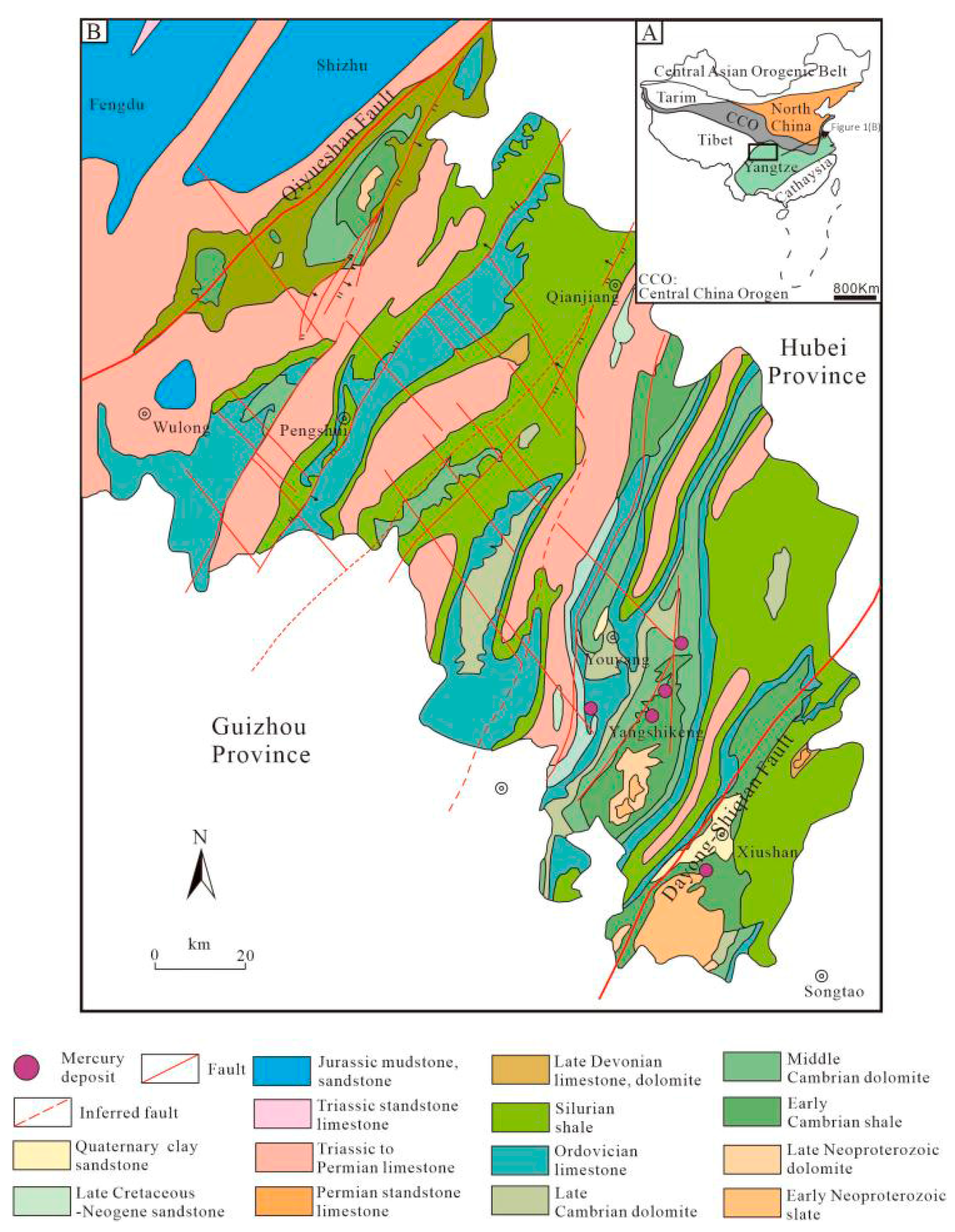
The Yangtze Block is bounded by the Qinling-Dabie Orogenic Belt to the north, the Longmenshan Fault and the Ailaoshan-Songma Suture to the west, the Jiangshan-Shaoxing Fault to the south, and the Tan-Lu Fault to the east (Figure 1A) [8,9]. The southeastern Chongqing region is situated at the junction of the southwestern margin of the Upper Yangtze Block and the southeastern margin of the Sichuan Basin.
The exposed strata are dominated by Paleozoic units, followed by the Proterozoic Nanhuan and Sinian Systems, Triassic and minor Jurassic sedimentary sequences from bottom to top. The Cretaceous and Paleogene-Neogene systems are absent (Figure 1B) [10]. The Nanhua System is subdivided into the Qianzimen, Datangpo, and Nantuo Formations, among which the Qianzimen and Nantuo Formations consist of tillites, and the Datangpo Formation represents interglacial bay-lagoon facies deposits [11]. The Sinian System is dominated by the Doushantuo and Dengying Formations, which are mainly composed of carbonate rocks. The Cambrian System comprises the Niutitang Formation (black shale), Mingxinsi Formation (dominantly clastic rocks with carbonate interbeds), Jindingshan Formation (dominantly clastic rocks), Qingxudong Formation (dominated by limestone and dolostone), Gaotai Formation (dominantly dolostone), Shilengshui Formation (dominantly dolostone), Pingjing Formation (quartz sandstone and dolostone), Gengjiadian Formation (dominantly dolostone), and Maotian Formation (limestone and dolostone) [1]. The Ordovician System includes the Tongzi (dolostone, dolomitic limestone, and shale), Honghuayuan (limestone and mudstone), Dawan (limestone and shale), Shizipu (dominantly clastic), Baota (micritic limestone), Linxiang (limestone), and Wufeng Formations (black shale). The Silurian System consists of the Longmaxi Formation (black shale), Xiaoheba Formation (siltstone and shale), Shiniulan Formation (a mixed sedimentary succession of argillaceous limestone, mudstone, micritic limestone, and mudstone), Hanjiadian Formation (silty shale), and Huixingshao Formation [12,13]. The Devonian System is represented only by the Upper Devonian Huangjiadeng Formation (silty shale), and the Carboniferous System is preserved only as the Upper Carboniferous Huanglong Formation (dolostone and limestone) [13]. The Permian System includes the Liangshan Formation (aluminous rock series), Qixia Formation (bituminous limestone), Maokou Formation (massive limestone), Wujiaping Formation, and Changxing Formation. The Lower Triassic Feixianguan Formation is dominated by marl, limestone, and oolitic limestone, whereas the Middle-Upper Triassic is represented by the Jialingjiang and Badong Formations. The Jurassic System comprises continental clastic rocks of the Ziliujing, Xintiangou, and Shaximiao Formations [10,13]. The regional structure is dominated by the Tongmaling Anticline, which comprises a series of NE-trending anticlinoria and synclinoria dissected by faults. The study area also develops subordinate tectonic units including the Qiyaoshan and Fangdoushan anticlinoria, and the Lichuan, Shizhu, and Wanzhou synclinoria [14].
Figure 1.
Geotectonic location map of China (A); regional geological map of the southeastern Chongqing area (B), modified from [15].
Since basement formation by the Middle to Late Neoproterozoic Sibao Ocean subduction and accretion, the Yangtze Block has experienced five episodes of tectonic events from the Neoproterozoic to Cenozoic, including: (1) The transition from the Rodinia breakup to a passive continental margin setting during the Ediacaran–Cambrian [15,16,17] resulted in the deposition of the widespread Lower Cambrian Qingxudong Formation carbonate rocks, which serve as the host strata for the Yangshikeng mercury orebodies. (2) The Triassic orogeny, as part of the Devonian–Triassic tectonic cycle associated with the closure of the Mianlue Ocean and the amalgamation of the Yangtze Block with the North China Block [18,19], generated regional compressive structures and large-scale fault systems in southeastern Chongqing. (3) The Jurassic–Cretaceous intracontinental tectonism, characterized by folding, strike-slip faulting and fault reactivation [20,21,22]. These polyphase tectonic events have shaped the present-day Yangtze Block as a polycyclic composite craton [23,24,25].
3. Deposit Geology
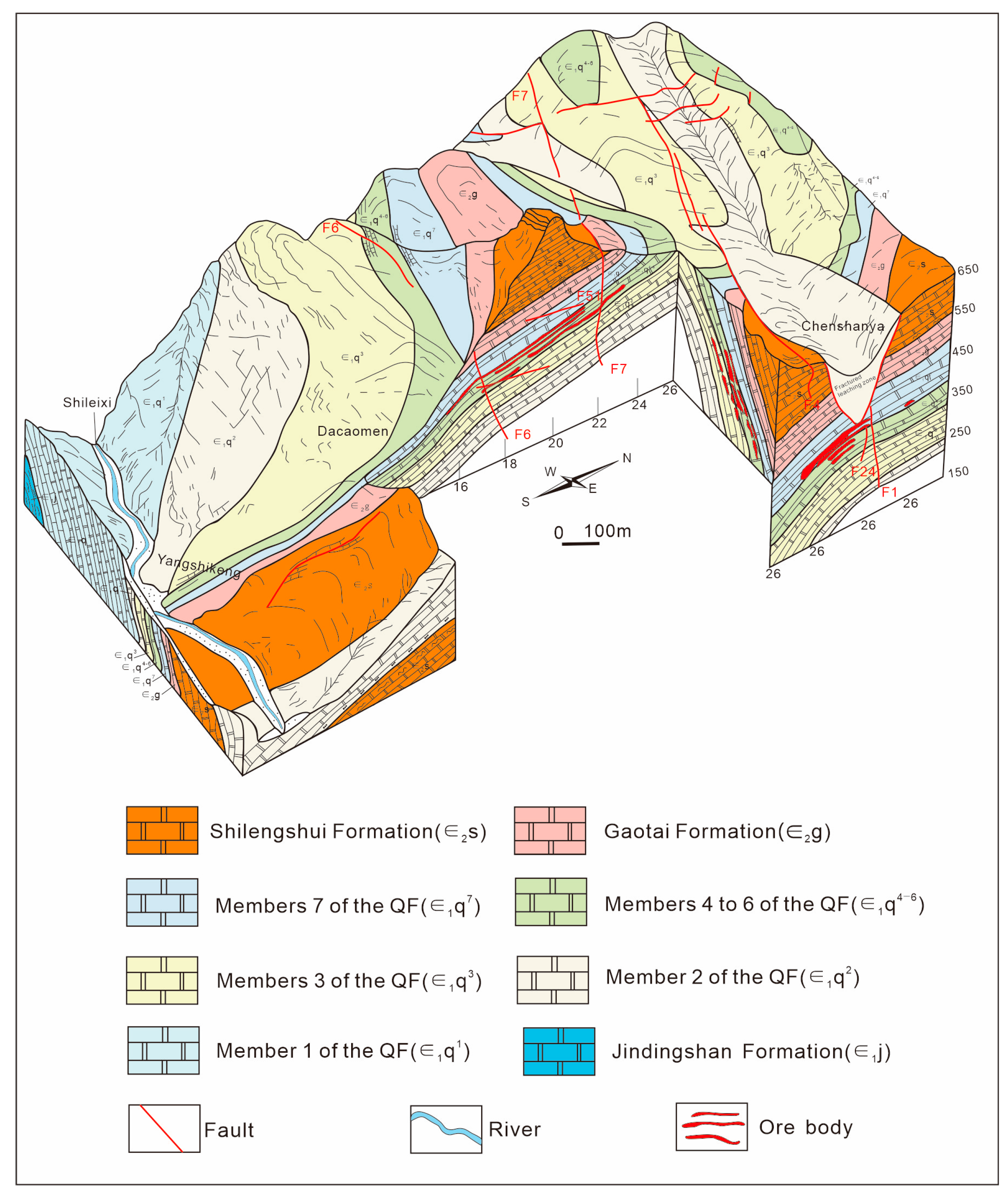
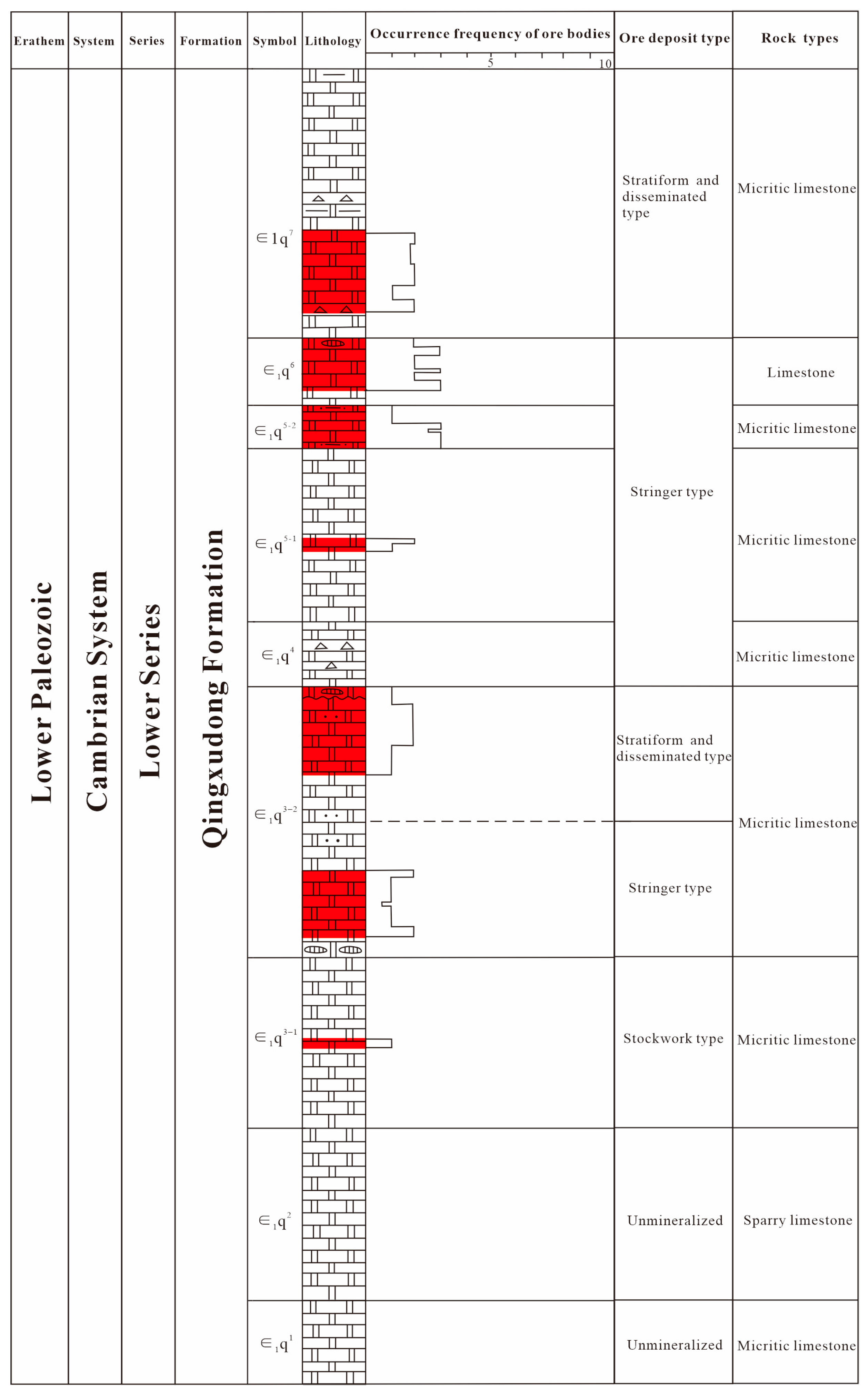
The Yangshikeng mercury deposit in southeastern Chongqing is located in the northwestern section of the Yangtze Block. The exposed strata in the study area are mainly the Middle-Lower Cambrian marine carbonates, striking NNE-SSW and dipping toward SEE as a monocline with dip angles of 25–60° [7]. Orebodies are mainly hosted in the Lower Cambrian carbonates (Figure 2). Influenced by inherited paleostructures and paleogeography, the sedimentary facies evolved from carbonate platform shoal-subtidal environments to restricted platform intertidal facies, and subsequently developed into an alternating succession of restricted platform intertidal and evaporative platform supratidal environments, forming a distinct transgressive–regressive cycle [26]. The alternation of sedimentary environments resulted in the formation of thin interbedded sequences of brittle microcrystalline dolostone (aquifer) and plastic argillaceous micritic dolostone (aquitard or aquiclude) [1], which provided favorable prerequisites for Hg mineralization in terms of fluid conduits, ore-hosting space, and hydraulic sealing.
Figure 2.
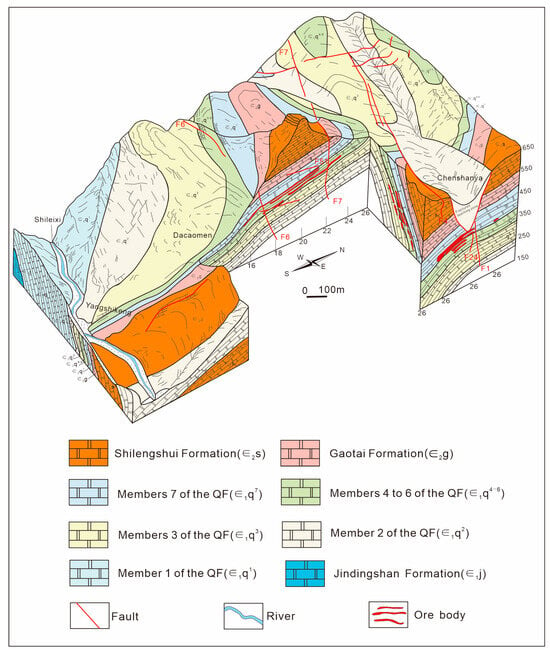
Geological map of the Yangshikeng mercury mining district, southeastern Chongqing (modified from [1]).
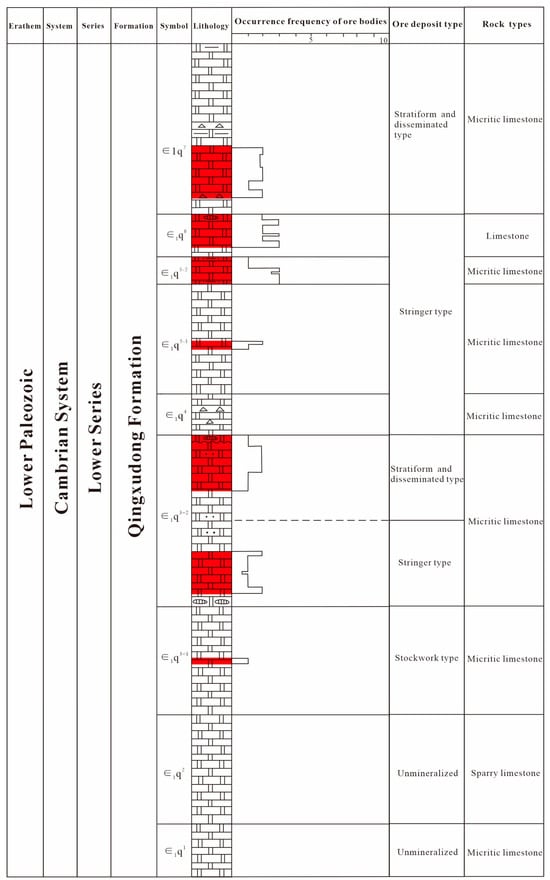
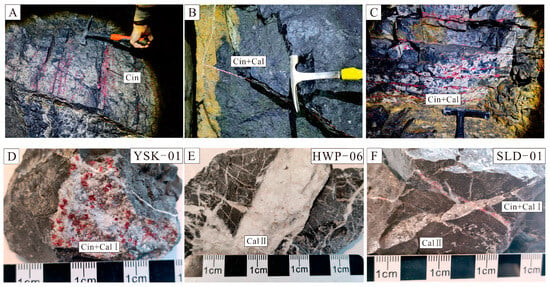
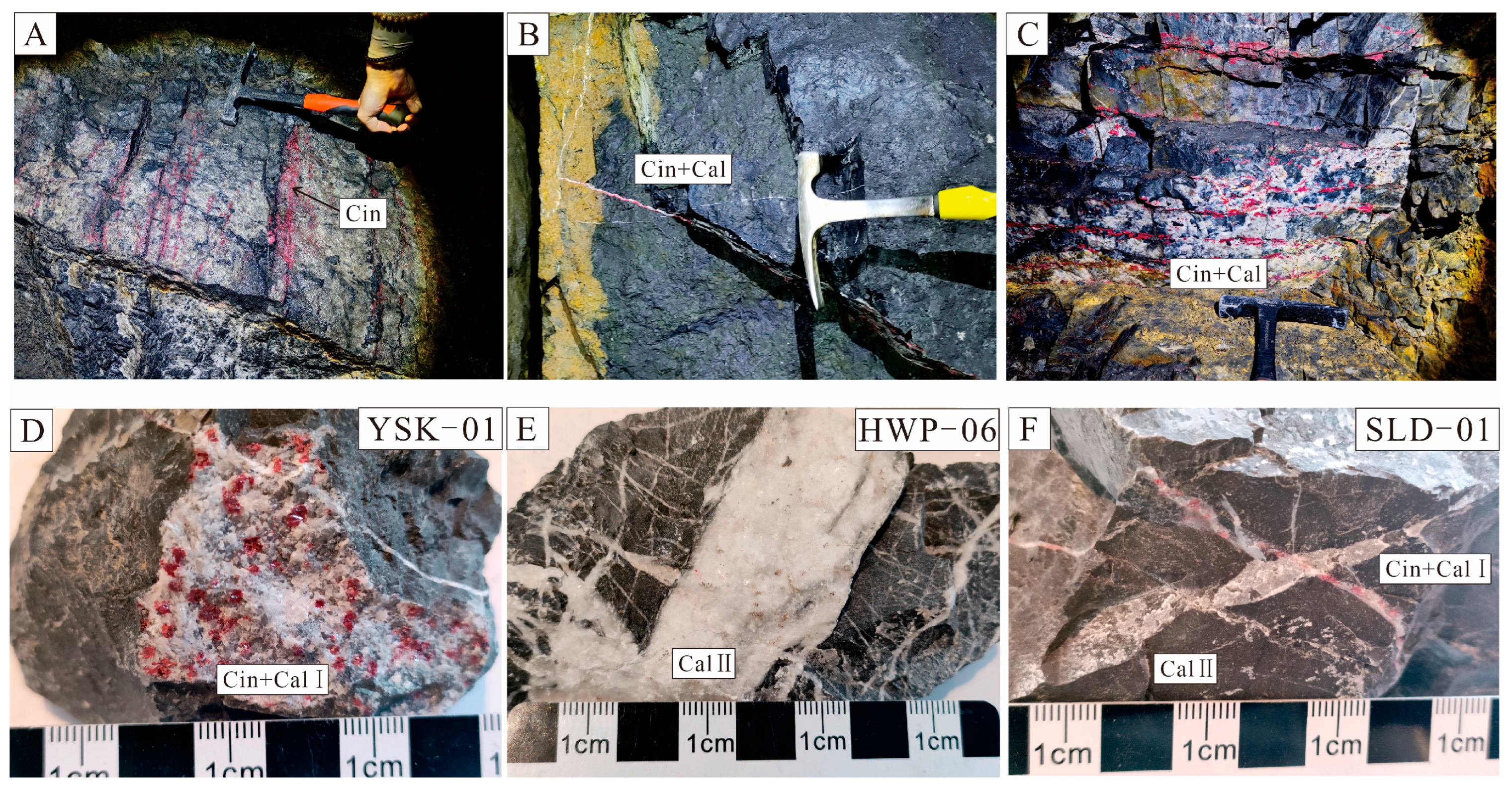
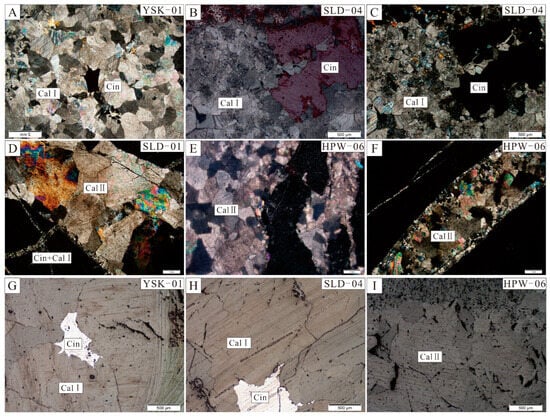
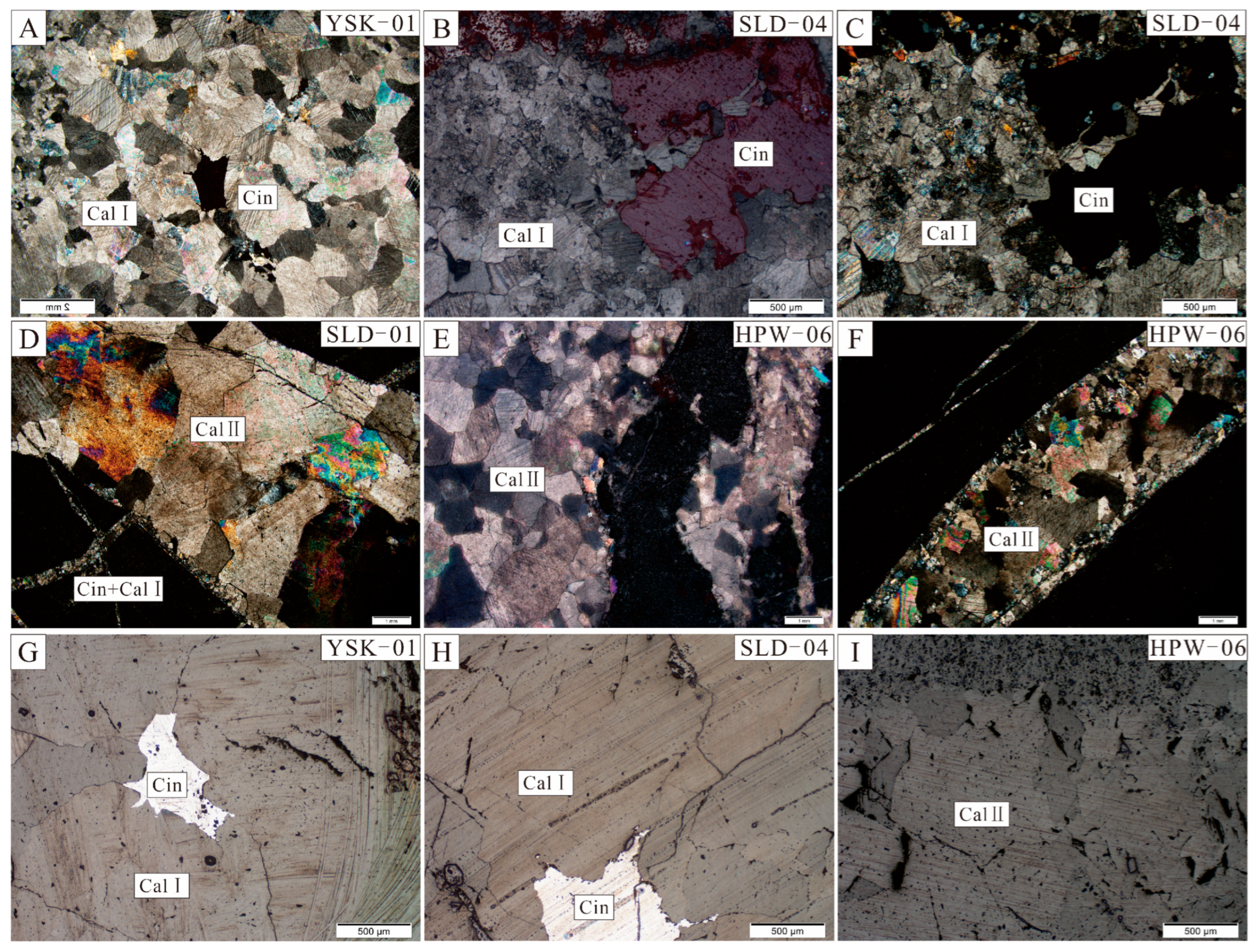
The deposit is controlled by the Tongmaling anticline, which extends over 150 km with a NNE-trending axis and a spindle-shaped geometry that is broad in the middle and narrow at both ends. Faults are well developed within this anticline and commonly cut across the fold axis [7]. The deposit is mainly controlled by NWW-trending faults, which exert significant control on the spatial distribution of the oorebodies (Figure 3). The ore bodies are generally concordant with the attitude of the host strata and mainly occur as disseminated intraformational veinlets. These orebodies are characterized by cinnabar-bearing calcite veins filling joints and fractures, forming veinlet and stockwork networks. Cinnabar occurs mainly at intersections of joints or fractures and at sites where vein attitudes and geometries change, displaying spotted, patchy, and lumpy distributions (Figure 4A,C). Based on mineral assemblages and vein crosscutting relationships, the calcite veins can be divided into the main mineralization stage (Cal-I) (Figure 4A,C,D) and the late non-mineralized stage (Cal-II) (Figure 4B,D,F). The main mineralization stage is characterized by medium- to coarse-grained calcite veins with spotted cinnabar mineralization, and medium- to fine-grained calcite veins with disseminated enrichment, with mineralization mainly occurring at the contact zones between wall rocks and calcite veins and within alteration halos (Figure 4D and Figure 5A–D). The late non-mineralized stage is characterized by barren calcite veins that crosscut earlier cinnabar-bearing calcite veinlets, marking the termination of mineralization (Figure 5E,F).
Figure 3.
Stratigraphic column of the ore-bearing strata in the Yangshikeng mercury mining area (modified from [1]). red-shaded areas represent Hg mineralization.
Figure 4.
Photographs taken in the field (A–C) and photographs of hand specimens (D–F) from the Yangshikeng mercury deposit. Abbreviations: Cal: calcite; Cin: cinnabar.
Figure 5.
Petrographic photographs of the Yangshikeng mercury deposit: mineralized (A–C), non-mineralized (D–F) specimens, and reflected-light photomicrographs (G–I). Abbreviations: Cal–calcite; Cin–cinnabar.
4. Samples and Analytical Methods
Fifteen fresh samples covering the two mineralization stages of the Yangshikeng mercury deposit in southeastern Chongqing were collected, including the main mineralization stage calcite veins and the late non-mineralized stage calcite veins. Polished thin sections from fresh samples were used for in situ calcite U-Pb dating, trace element and Sr isotope analyses at the Kehui Testing (Tianjin) Technology Co., Ltd. (Tianjin, China).
Calcite U-Pb dating was conducted using the RESOLution 193 nm excimer laser ablation system, coupled to a Thermo TQ-ICP-MS (Thermo Fisher Scientific, Bremen, Germany). The method follows the protocols described by [27]. The laser parameters include a 120 μm spot, fired at 12 Hz. Each analysis consisted of 2~3 s pre-ablation, 15 s of background acquisition, followed by 20 s of sample ablation and 25 s of washout. Calcite and NIST614 reference materials were interspersed every 6 analyses, and a two-stage reduction scheme was employed. Stage 1 was conducted in Iolite 4 [28]: raw signal intensities were converted to isotopic ratios, and the instrumental mass bias for Pb isotopes was corrected against the NIST SRM 614 standard. Stage 2 applied a matrix-matched linear normalization correction to the 238U/206Pb ratios in Microsoft Excel, using the certified age of the AS-3 calcite standard to eliminate elemental fractionation caused by matrix differences between glass standards and calcite samples. The initial 207Pb/206Pb ratio was anchored at 0.85 during regression. Error correlation between 207Pb/206Pb and 238U/206Pb ratios was fully incorporated into the regression calculation, and all reported age uncertainties are quoted at the 2σ (95% confidence) level. At last, the ages were determined by linear regression between common and radiogenic lead compositions and as lower intercepts on Tera-Wasserburg concordia diagrams using the Microsoft Excel and Isoplot 4.15 [29]. To ensure precision and reproducibility, standard Duff was performed as unknown samples during the course. The measured isotopic ratios match well with the published values within uncertainty and yield a lower intercept 238U/206Pb age of 64.14 ± 0.33 Ma, consistent with the reference age of 64.0 ± 1.2 Ma [30].
In situ Sr isotopic compositions of calcite were analyzed by LA-MC-ICP-MS, comprising a RESOlution SE 193 nm laser ablation system and a Neoma mass spectrometer. The laser was operated at an energy density of ~4 J/cm2, a repetition rate of 10 Hz, and a spot size of 100 μm in single-spot ablation mode. The ablated material was transported by high-purity He carrier gas (~400 mL/min) from the sample cell, mixed with Ar and N2 (~5.5 mL/min), and then introduced into the mass spectrometer for isotope measurement. Background signals were collected for ~10 s prior to laser ablation, and the integration time was ~20 s [31]. The 87Sr/86Sr ratios were corrected for 87Rb interference using 85Rb/87Rb ratio of 2.593, and mass fractionation was corrected by the exponential law using 88Sr/86Sr ratio of 8.3752 as the internal standard [32,33].
In situ trace element analyses of calcite were performed using an AnalytikJena PQMS ICP-MS coupled with a RESOLution 193 nm excimer laser ablation system (Analytik Jena GmbH+Co. KG, Jena, Germany). The laser was operated at a spot size of 40 μm, a repetition rate of 5 Hz, and an energy density of ~5 J/cm2, with high-purity helium as the carrier gas. Prior to analysis, the instrument was optimized using NIST 610 glass reference material to achieve optimal performance. LA-ICP-MS analyses were conducted in single-spot ablation mode. During each analysis, the laser beam was blocked for 15 s for background acquisition, followed by 45 s of continuous sample ablation, and then 25 s of post-ablation washout to clean the sample introduction system, resulting in a total acquisition time of 85 s per spot. A suite of reference materials, including NIST 610, NIST 612, BHVO-2G, BCR-2G, BIR-1G, CGSA, and CGSD, was analyzed every 10 sample spots for quantitative calibration. Off-line data processing, including selection of sample and blank signals, instrumental sensitivity drift correction, and element concentration calculation, was carried out using the ICPMSDataCal software (12.2) [34].
Eight calcite separates were selected for C-O isotope analysis using the phosphoric acid method. This method requires the dried and ground samples (200 mesh) to be placed into glass reaction vials in the autosampler and reacted with anhydrous phosphoric acid at a constant temperature of 25 °C under a helium (He) atmosphere. The CO2 generated from the reaction was carried by He gas, purified, and then directly introduced into an isotope ratio mass spectrometer (IRMS, Thermo Scientific Delta V Advantage, (Thermo Fisher Scientific (Bremen) GmbH, Bremen, Germany)) for online measurement. To ensure analytical precision, the optimal reaction time for calcite at 25 °C is 24 h. All isotopic results are reported relative to the VPDB (Vienna Pee Dee Belemnite) standard. Two national reference materials, GBW04416 (δ13CV-PDB = 1.61‰, δ18OV-PDB = −11.59‰) and GBW04417 (δ13CV-PDB = −6.06‰, δ18OV-PDB = −24.12‰), were used as working standards for two-point calibration. The analytical precision (1σ), monitored by replicate measurements of the working standards, is better than ±0.1‰ for δ13C and ±0.2‰ for δ18O. The δ18O values were converted from the V-PDB scale to the V-SMOW scale using the formula: δ18OV-SMOW = 1.03091 × δ18OV-PDB + 30.91. To monitor the accuracy and reproducibility of the analytical procedure, one in-house calcite standard (GBW04405) and one sample duplicate were analyzed for every batch of samples. The reproducibility of duplicate analyses (1σ) is better than 0.1‰ for δ13C and 0.2‰ for δ18O. The detailed analytical data are available in Supplementary Tables S1–S4.
5. Results
5.1. Calcite U-Pb Ages
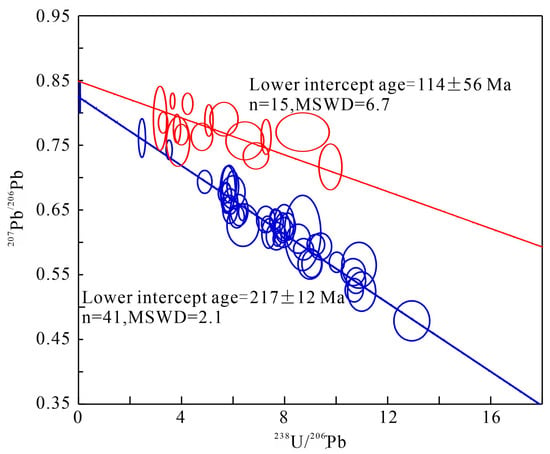
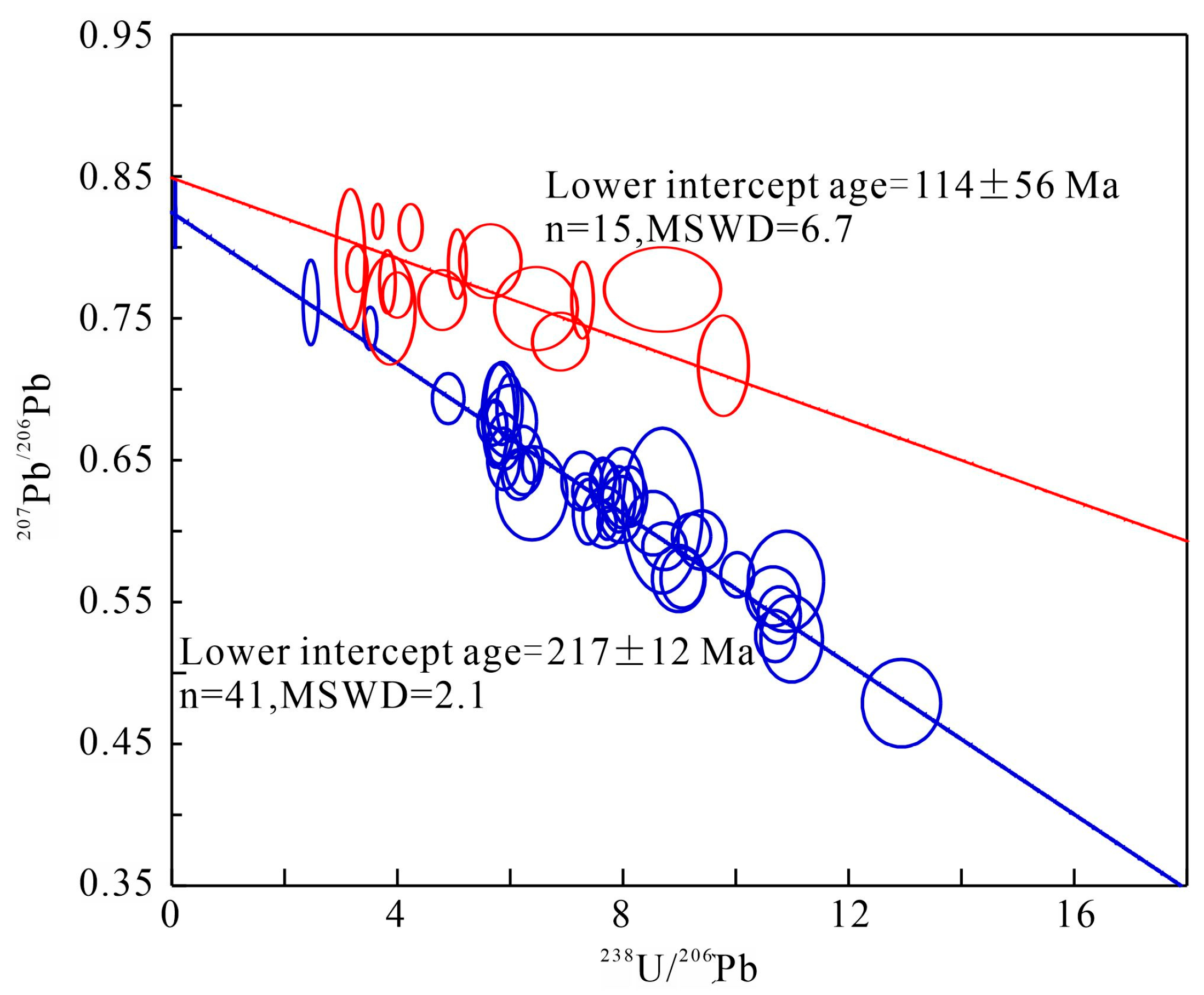
In this study, U-Pb dating was performed on calcites from the main mineralization stage, with a total of 56 analytical spots (Supplementary Table S1). The Cal-I have 238U/206Pb ratios ranging from 0.06 to 12.94. Forty-one analytical spots yield a lower intercept age of 217 ± 12 Ma (MSWD = 2.1; Figure 6). Fifteen analytical spots form another group yield a lower intercept age of 114 ± 56 Ma (MSWD = 6.7), which has a relatively large uncertainty due to the low U/Pb ratios. Therefore, we interpret the calcite U-Pb age of 217 ± 12 Ma to represent the main mineralization stage of the Yangshikeng mercury deposit, and the age of 114 ± 56 Ma as representing a later stage of hydrothermal overprinting.
Figure 6.
Tera-Wasserburg inverse concordia plot for in situ U-Pb dating of calcite from the main mineralization stage of the Yangshikeng mercury deposit.
5.2. Calcite Trace Elements
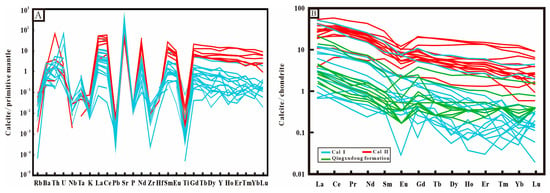
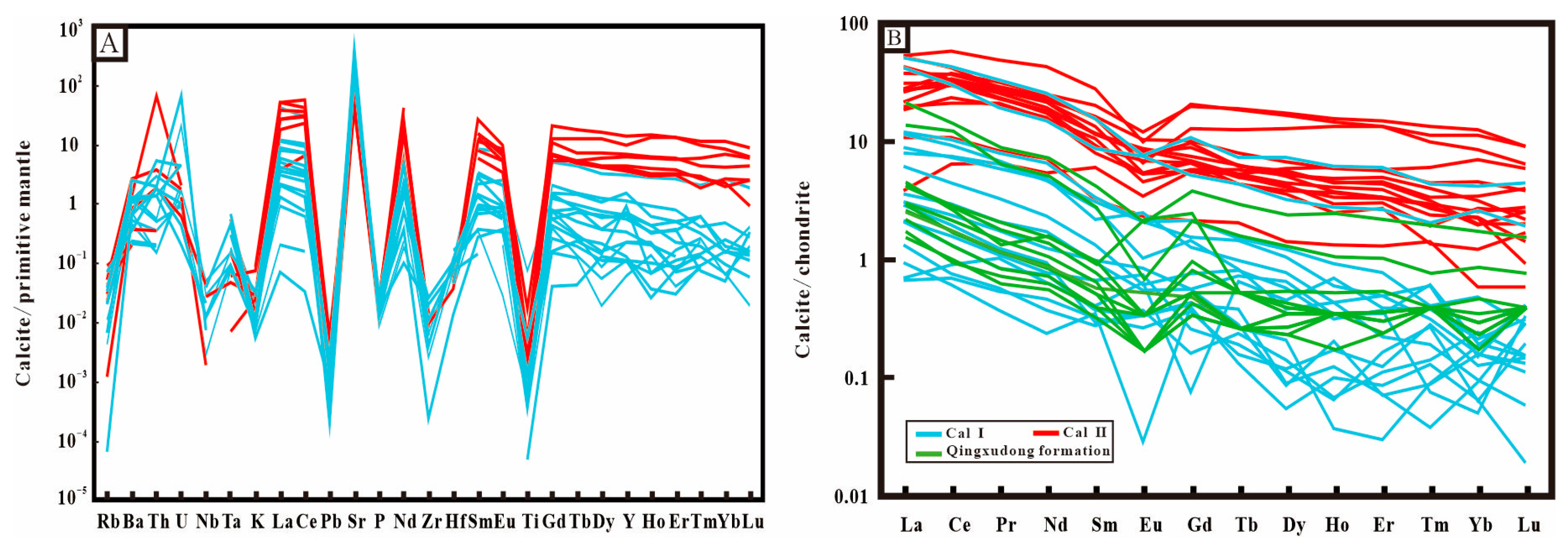
The LA-ICP-MS trace element data and their detection limits for calcites from the Yangshikeng mercury deposit are listed in Supplementary Table S2. In the primitive mantle-normalized trace element distribution patterns, both types of calcites exhibit similar features characterized by relative enrichment in large ion lithophile elements (LILE, e.g., Rb, Ba, Sr) and pronounced depletion in high-field-strength elements (HFSE, e.g., Nb, Ta, Ti) (Figure 7A). It is noted that HFSE concentrations in calcite are commonly low, such as some Nb, Ta and Ti data which are close to or below the detection limits. Therefore, the observed HFSE depletion may partly reflect analytical limitations and mineral–fluid partitioning effects, and cannot be exclusively interpreted as a source feature of the ore-forming fluids. Calcites from the main mineralization stage show more pronounced LILE enrichment with local Sr peaks and significant HFSE depletion, whereas calcites from the late non-mineralized stage display relatively constant LILE and Sr enrichment, and HFSE depletion.
Figure 7.
Primitive mantle-normalized trace-element patterns (A) and rare earth element (REE) patterns (B) for calcites from the Yangshikeng Hg deposit. Data of the Qingxudong Formation are from [35].
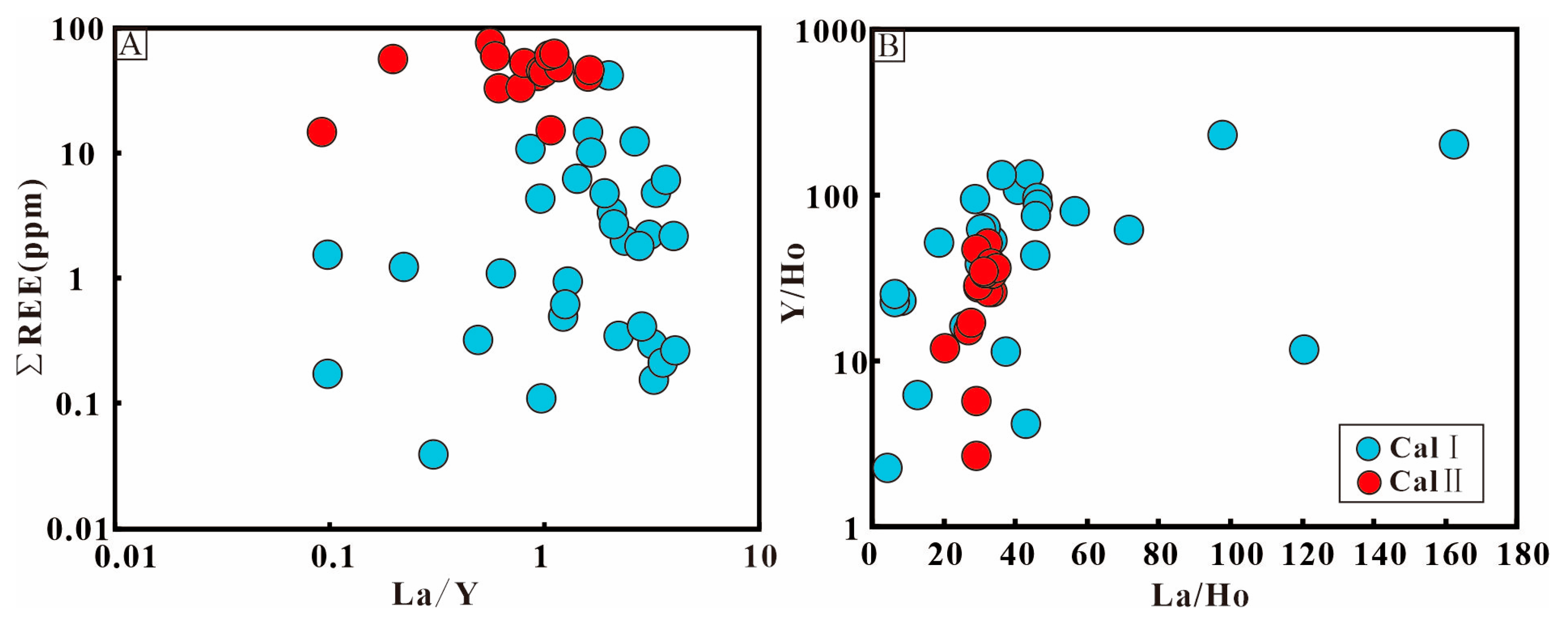
The chondrite-normalized REE distribution patterns of calcites from both stages display right-inclined patterns (Figure 7B) with relatively high La/Y ratios, indicating significant LREE/HREE fractionation (Figure 8A). Calcites from the main mineralization stage (Cal-I) exhibit relatively lower total REE contents, a higher degree of fractionation, negative Eu anomalies, and lower HREE contents with a slightly decreasing trend (Figure 7B). Compared to Cal-I, calcites from the late non-mineralized stage (Cal-II) show elevated total REE contents, weaker LREE/HREE fractionation, relative flat distribution patterns, weaker Eu anomalies, and elevated HREE contents (Figure 7B). The La/Y ratios of calcites from the main mineralization stage mainly range from 0.8 to 5.0, with La/Ho ratios showing wide variations of 10 to 170 (mainly between 30 and 60). Calcites from the late stage exhibit relatively lower La/Y ratios (0.2–2.0) and La/Ho ratios (Figure 8B).
Figure 8.
La/Y diagram (A) and Y/Ho versus La/Ho diagram (B) of calcites from the Yangshikeng mercury deposit.
5.3. Calcite Sr Isotopes
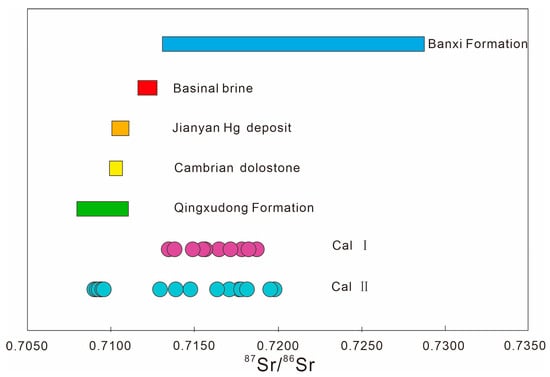
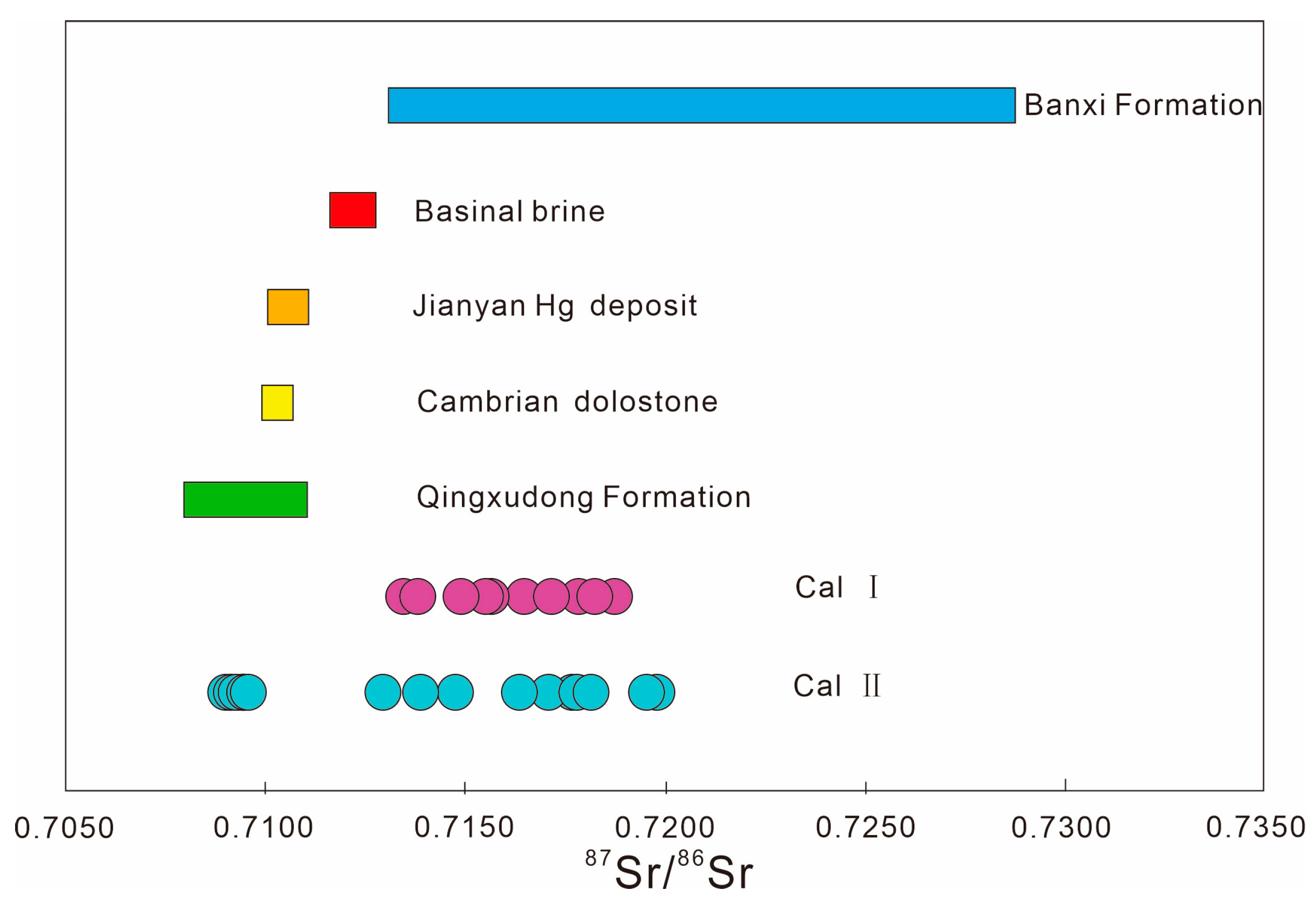
Calcites from the Yangshikeng mercury deposit have 87Sr/86Sr ratios ranging from 0.7135 to 0.7187 (Supplementary Table S3). The 87Sr/86Sr ratios of Cal-I lay in the range of 0.7135–0.7187, while those of Cal-II have a relatively wide range of 0.7090–0.7198 (Figure 9).
Figure 9.
Strontium isotopic compositions of calcites from the Yangshikeng mercury deposit. The 87Sr/86Sr data of the Banxi Formation are from [36], basinal brine from [37], Jianyan Hg deposit from [4], Cambrian dolostone from [38], and Qingxudong Formation from [39].
5.4. Calcite C-O Isotopes
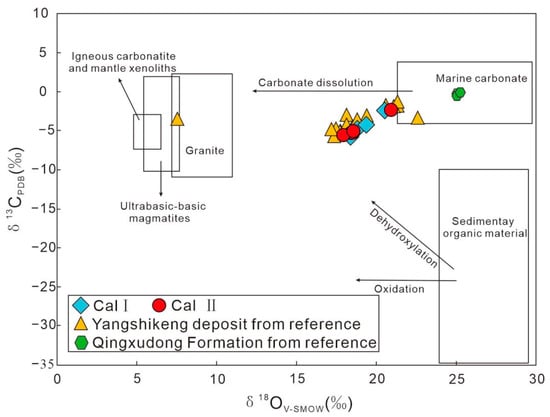
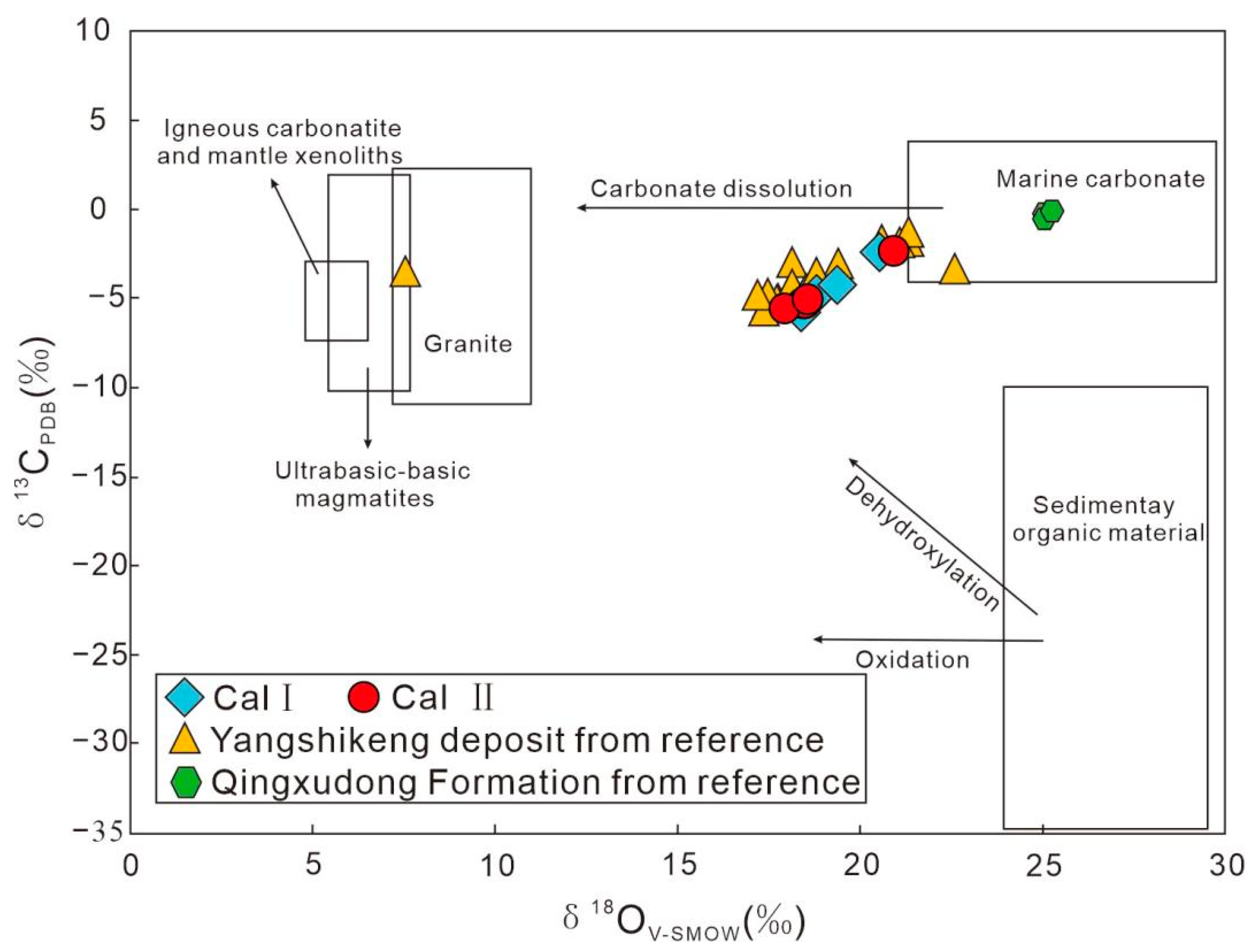
The calcite samples from the Yangshikeng mercury deposit have δ13CV-PDB values ranging from −5.63‰ to −2.17‰, δ18OV-PDB values from −12.63‰ to −9.75‰, and δ18OV-SMOW values from 17.89‰ to 20.86‰ (Supplementary Table S4). The isotopic compositions of Cal I are comparable to those of Cal II. Cal I exhibits δ13CV-PDB, δ18OV-PDB, andδ18OV-SMOW values of −5.63‰ to −2.23‰, −12.21‰ to −10.12‰, and 18.32‰ to 20.47‰, respectively, whereas Cal II displays δ13CV-PDB, δ18OV-PDB, and δ18OV-SMOW values of −5.42‰ to −2.17‰, −12.63‰ to −9.75‰, and 17.89‰ to 20.86‰, respectively (Figure 10).
Figure 10.
C-O isotopic compositions of calcites from the Yangshikeng (YSK) mercury deposit. The cited data of the Yangshikeng deposit are from [1], and data of the Qingxudong Formation are from [7].
6. Discussion
6.1. Age of Multi-Stage Hydrothermal Events
Calcite is a ubiquitous gangue mineral in hydrothermal systems, and its ability to incorporate U during crystallization makes it an ideal target for in situ U-Pb dating to directly constrain the timing of hydrothermal activity [40,41,42,43,44]. In the Yangshikeng mercury deposit, calcite is intimately intergrown with cinnabar throughout the mineralization stages (Figure 4 and Figure 5). Therefore, its U-Pb age can constrain the precipitation timing of the main stage calcite (Cal-I) and Hg mineralization. In situ calcite U-Pb dating of the Yangshikeng deposit yields two distinct age populations of 217 ± 12 Ma and 114 ± 56 Ma, indicating that the main ore-forming event occurred at Triassic and was subsequently influenced by possible hydrothermal disturbance or overprinting, although the latter age has relatively large uncertainty and cannot be simply dismissed or ignored. The results demonstrate that calcite U-Pb dating is a powerful tool for resolving multi-stage ore-forming processes in carbonate-hosted hydrothermal systems.
The main mineralization age of 217 ± 12 Ma is highly consistent with the regional metallogenic peak of 230–200 Ma for low-temperature mercury deposits across the Yangtze Block [4,24,45], indicating that the Yangshikeng mercury deposit was formed under a unified Triassic tectono–hydrothermal event. The Triassic orogeny established the regional uplift framework in southeastern Chongqing and terminated marine sedimentation, followed by a NW-SE compressional regime that generated widely developed thrust and strike-slip fault systems [46,47,48]. These structures provided migration pathways for deep-seated fluids, and basinal pore fluids migrated on a large scale under temperature and pressure gradients, forming a basinal brine system.
The Late Jurassic to Early Cretaceous hydrothermal events are widely recognized in the southeastern Chongqing area. For example, the Dongyan Pb-Zn deposit in the Youyang area, hosted in Ordovician carbonate rocks, yields a sphalerite Rb-Sr isochron age of 157.7 ± 3.3 Ma, indicating that the main mineralization stage occurred during the Late Jurassic [5,49,50]. In the Youyang-Pengshui region, fluorite and barite deposits are widespread and show mineralization ages mainly during the Yanshanian period [51,52]. Zou et al. (2016) reported a fluorite Sm-Nd isochron age of 104 ± 11 Ma from the Fengjia and Langxi barite-fluorite deposits in the Pengshui area of southeastern Chongqing, indicating that the fluorite mineralization in this region mainly occurred during the Cretaceous [10]. The Late Jurassic to Early Cretaceous period in the region is characterized by intensive NNE-trending faulting and progressive trough-type to ridge-type folds related to the far-field effect of Paleo-Pacific plate subduction [24,46,48,53]. Therefore, the age of 114 ± 56 Ma from the Yangshikeng deposit has a large uncertainty and a high MSWD. It is therefore better treated as evidence for possible later hydrothermal disturbance or overprinting, corresponding to the Early Cretaceous crustal thinning and progressive opening of the fault system [46,47,48], which facilitated the incursion of meteoric water and induced post-ore overprinting.
6.2. Source of Ore-Forming Materials
The 87Sr/86Sr ratio is commonly used to trace the source, migration, and evolution of hydrothermal fluids [54,55]. The strata exposed in the mining area are Cambrian carbonates, with the Qingxudong Formation dolostone showing 87Sr/86Sr ratios of 0.7080–0.7110, and the Cambrian carbonates yielding ratios of 0.7101–0.7105, both of which are comparable to the Sr isotopic composition of coeval seawater [38,39]. The 87Sr/86Sr ratios of ore-stage calcites (Cal-I) from the Yangshikeng deposit are significantly higher than those of the Cambrian carbonates and basin brines (Figure 9), implying that the ore-forming materials were derived from a source region enriched in radiogenic Sr, or that the ore-forming fluids once passed through geological bodies with elevated radiogenic Sr contents. In addition, the C-O isotopic compositions plot outside the field of marine carbonates (Figure 10), also indicating that the host carbonate rocks may not be the predominant source of ore-forming materials. Potential sources of radiogenic 87Sr include clastic rocks and igneous silicate minerals with high Rb/Sr ratios. Given the relatively weak magmatic activity in southeastern Chongqing and the absence of igneous rocks within or around the Yangshikeng mining area, the contribution of radiogenic Sr from magmatic silicate minerals is excluded. Instead, the radiogenic Sr was probably derived from clastic rocks of ancient strata. The Neoproterozoic Banxi Group, predominantly composed of clastic and volcaniclastic rocks, is exposed near the mining area and exhibits initial 87Sr/86Sr ratios ranging from 0.7131 to 0.7281 [36], which overlap with the Cal I from the Yangshikeng deposit (Figure 9). Therefore, the ore-forming materials in this region are most likely derived from the ancient crystalline formations, or the ore-forming fluids once flowed through basement rocks and were enriched in radiogenic Sr. Notably, a portion of the 87Sr/86Sr ratios from the late non-mineralized stage (Cal-II) overlap with those of the Qingxudong Formation dolostone, indicating that the ore-forming materials during this stage show the contribution from the wall rock, and a mixed source from the Banxi Group or early calcite.
The REE characteristics of ore-forming fluids are associated with the source and physicochemical conditions [56]. Minerals formed during the evolution and fractional crystallization of a co-genetic ore-forming fluid tend to exhibit similar REE characteristics [57,58]. Therefore, trace element compositions of carbonate minerals can effectively trace the sources of ore-forming fluids and materials [59,60]. Previous studies have demonstrated that carbonate minerals precipitated from hydrothermal ore-forming fluids commonly display LREE-enriched distribution patterns [61]. Calcites from different stages of the Yangshikeng mercury deposit exhibit LREE enrichment and negative Eu anomalies, indicating a hydrothermal origin. The REE distribution patterns of Cal-II show an overall right-inclined pattern similar to that of the host rocks. Combined with the Sr isotope ratios (87Sr/86Sr = 0.7091–0.7198) that overlap with the host dolostone and the C-O isotopic compositions, this suggests that the calcites from the late stage were partly inherited from the dissolution of the host rocks. In contrast, the Cal-I is characterized by higher La/Y and La/Ho ratios (10–170), negative Eu anomalies, and Sr isotope ratios (87Sr/86Sr = 0.7135–0.7187) that are higher than those of the host rocks and comparable to the Banxi Group basement (0.7131–0.7281). The C-O isotopic compositions also plot outside the field of marine carbonates (Figure 10). Integrating these geochemical features (Sr, C-O, and REE), it is inferred that the ore-forming fluids were probably derived from the Banxi Group basement rocks. In summary, the Banxi Group is considered as the major source of ore-forming materials for the Yangshikeng mercury deposit, while the Qingxudong Formation shows involvement at the late stage.
6.3. Metallogenic Mechanism for the Low-Temperature Hg Mineralization
The Yangshikeng Hg deposit records two episodes of hydrothermal activities. The early-stage mineralization occurred during the Triassic (217 ± 12 Ma). This age is consistent with the regional Late Triassic low-temperature hydrothermal mineralization event in the western Yangtze Block [62]. This region records widespread Late Triassic metallogenic events, such as the Jinshachang fluorite Sm–Nd age of 201 ± 6 Ma, the Huize calcite Sm–Nd ages of 222 ± 14 Ma and 220 ± 14 Ma and sphalerite Rb–Sr age of 226 ± 6 Ma [63]. This regional tectono–hydrothermal event has been interpreted as a response to the Indosinian Orogeny, which was related to the closure of the Paleo-Tethys Ocean and the collision between the Indochina and South China blocks. Regional studies suggest that this collision caused strong regional compression, produced large-scale fault systems that provided pathways for deep fluids, and drove basin pore fluids to migrate and form basin brines. Fluid inclusion data show that the ore-forming fluids in the main mineralization stage have homogenization temperatures between 120 and 250 °C and salinities around 10.6 wt% NaCleqv [63,64]. These fluids belong to moderate- to low-temperature and high-salinity hydrothermal systems. In comparison, the fluid inclusions in the late-stage calcite have lower homogenization temperatures (70–120 °C) and salinities. The Sr isotope ratios (87Sr/86Sr = 0.7135–0.7187) of calcites from the main mineralization stage are much higher than those of the wall rock of Qingxudong Formation dolostone. Instead, they are close to the Sr isotopic composition of the Banxi Group basement (0.7131–0.7281) (Figure 9). Therefore, Sr isotope data suggest that these brines likely leached significant ore-forming materials from the Neoproterozoic Banxi Group basement during circulation. In addition, C-O isotopes and REE patterns also indicate that the fluids came from a relatively closed basinal brine system (Figure 7, Figure 8 and Figure 10). Afterwards, the Hg-rich brines moved upward along the NWW-trending fault system and entered the shallow carbonate strata of the Qingxudong Formation. During the change in physicochemical conditions, mercury complexes decompose and cinnabar precipitates rapidly to form mercury orebodies [1].
The second event is recorded by the younger calcite age of 114 ± 56 Ma. During this period, the regional tectonic setting was marked by crustal thinning and the reopening of fault systems [28]. This provided pathways for the infiltration of meteoric water which then mixed with residual thermal brines, causing the fluid system to shift from relatively closed to open [65,66]. Late-stage calcites show a wider range of Sr isotope ratios (87Sr/86Sr = 0.7091–0.7198) (Figure 9), with some values approaching those of the host rocks, indicating the result of mixture from different end members. The Cretaceous fluid activity in the region displays typically moderate- to low-temperature (Dongyan Pb-Zn: 102–265 °C; fluorite-barite: 89–121 °C) and low- to moderate-salinity (Dongyan Pb-Zn: 4.01%–17.74% NaCl equiv.; fluorite-barite: 3.83%–20.84% NaCl equiv.) [67], indicating the origin of basin brines. During their migration, they extracted materials from the Qingxudong Formation and from earlier calcites, producing mixed Sr isotope signatures. Previous studies have also noted post-ore hydrothermal events in this region, such as the 147.6–138.5 Ma magmatic–hydrothermal activity at the eastern Sichuan basin [68]. Therefore, the younger calcite age of 114 ± 56 Ma at Yangshikeng may record later hydrothermal overprinting that is widely recorded in the Yangtze Block.
7. Conclusions
(1) The Yangshikeng mercury deposit records two episodes of hydrothermal activities. The Triassic event (ca. 217 Ma) occurred in response to the collision between the Indochina Block and the Yangtze Block, presenting as the main mineralization stage formed by deep fluid circulation of basinal brines. The second episode is possible later due to hydrothermal disturbance or overprinting (ca. 114 Ma) governed by the far-field effect of Paleo-Pacific plate subduction, leading to crustal thinning, fault reactivation, and progressive opening of the fluid system.
(2) The ore-forming materials of the main mineralization stage at Triassic were predominantly derived from the deep Neoproterozoic Banxi Group basement. In contrast, the late hydrothermal stage displayed a mixed source from both the Qingxudong Formation and the early-stage calcites, likely through recrystallization or fluid–rock interaction.
(3) During the Triassic, a relatively closed, low-temperature, high-salinity basinal brine system extracted ore-forming materials from the Banxi Group basement. The ore-forming fluids migrated upward along NWW-trending faults and precipitated cinnabar during the change in physicochemical conditions. In contrast, the later hydrothermal activity is related to open-system fluids mixed with infiltrating meteoric water, which has no contribution to Hg mineralization.
Supplementary Materials
The following supporting information can be downloaded at: https://www.mdpi.com/article/10.3390/min16101002/s1, Table S1: U-Pb ages of calcite from the Yangshikeng Hg deposit; Table S2: Elemental data of calcite from the Yangshikeng Hg deposit; Table S3: Sr isotope results of calcite from the Yangshikeng mercury deposit; Table S4: C-O isotope results of calcite from the Yangshikeng mercury deposit.
Author Contributions
Conceptualization, Q.Z. and L.T.; Methodology, Y.-P.C., Q.Z. and M.-Y.X.; Investigation, Y.-P.C., Q.Z., Z.-W.Y. and J.G.; Resources, Q.Z. and L.T.; Data curation, Y.-P.C., M.-Y.X. and L.-L.C.; Visualization, Y.-P.C. and M.-Y.X.; Writing—original draft, Y.-P.C. and M.-Y.X.; Writing—review and editing, Q.Z. and L.T.; Supervision, Q.Z., Z.-W.Y., J.G. and L.T. All authors have read and agreed to the published version of the manuscript.
Funding
This study was jointly funded by the Major Scientific Research Project of Chongqing Bureau of Geological and Minerals Exploration (DKJ-2024-107/607-B-001) and Deep-time Digital Earth Science and Technology Leading Talents Team Funds for the Central Universities (2652023001).
Data Availability Statement
The data set is presented directly in the Supplementary Materials.
Acknowledgments
We are grateful to Hao-Cheng Yu for their field guidance and constructive discussions. We are grateful to Han-Dong Cao for the assistance with the figures. We also deeply thank the anonymous reviewers and editors for their helpful comments and suggestions.
Conflicts of Interest
Ming-Yu Xin is employee of Changchun Gold Research Institute Co., Ltd. The paper reflects the views of the scientists and not the company. The authors declare no conflicts of interest.
References
- Gu, L.P. Geological Characteristics and Genesis of the Yangshikeng Mercury Deposit in Xiushan County Chongqing. Master’s Thesis, Chengdu University of Technology, Chengdu, China, 2017. [Google Scholar]
- Obolenskiy, A.A.; Naumov, E.A. Global mercury belts and geodynamic position of ore-forming systems of mercury deposits. In Mineral Exploration and Sustainable Development; Millpress: Rotterdam, The Netherlands, 2003; pp. 511–514. [Google Scholar]
- Hu, R.Z.; Zhou, M.F. The giant South China Mesozoic low-temperature metallogenic domain: Reviews and a new geodynamic model. J. Asian Earth Sci. 2017, 137, 9–34. [Google Scholar] [CrossRef] [Scilit]
- Luo, K.; Zhou, J.X.; Cugerone, A.; Zhou, M.F.; Feng, Y.X.; Jin, Z.G.; Zhao, J.X. A Paleozoic mercury mineralisation event in South China: In situ U-Pb dating and chemical compositions of calcite from the Jianyan Hg deposit. Sci. China Earth Sci. 2023, 66, 1877–1891. [Google Scholar] [CrossRef] [Scilit]
- Hu, R.Z.; Fu, S.L.; Xiao, J.F. Major scientific problems on low-temperature metallogenesis in South China. Acta Petrol. Sin. 2016, 32, 3239–3251. [Google Scholar]
- Xia, Y. Stable isotopic geochemistry of the Yangshikeng mercury deposit in Sichuan Province. J. Guizhou Inst. Technol. 1989, 18, 87–97. [Google Scholar]
- Xia, Y. Tectonic reworking metallogenic mechanism: A discussion on the mineralization of the Yangshikeng mercury deposit, Sichuan. Geol. Explor. 1996, 32, 4–11. [Google Scholar]
- Charvet, J. The Neoproterozoic-Early Paleozoic tectonic evolution of the South China Block: An overview. J. Asian Earth Sci. 2013, 74, 198–209. [Google Scholar] [CrossRef] [Scilit]
- Yin, C.Q.; Lin, S.F.; Davis, D.W.; Xing, G.F.; Davis, W.J.; Cheng, G.H.; Xiao, W.J.; Li, L.M. Tectonic evolution of the southeastern margin of the Yangtze Block: Constraints from SHRIMP U-Pb and LA-ICP-MS Hf isotopic studies of zircon from the eastern Jiangnan Orogenic Belt and implications for the tectonic interpretation of South China. Precambrian Res. 2013, 236, 145–156. [Google Scholar] [CrossRef] [Scilit]
- Zou, H.; Zhang, S.T.; Chen, A.Q.; Fang, Y.; Zeng, Z.F. Hydrothermal fluid sources of the Fengjia barite-fluorite deposit in Southeast Sichuan, China: Evidence from fluid inclusions and hydrogen and oxygen isotopes. Resour. Geol. 2016, 66, 24–36. [Google Scholar] [CrossRef] [Scilit]
- Wang, D.; Ling, Y.; Liu, W.; Ma, Z.X.; Sun, Z.M.; Lin, F.C. Depositional Age and Tectonic Settings of Neoproterozoic Qianzimen Formation in Southeast Chongqing: U-Pb Dating and Geochemistry Constraint. Northwest. Geol. 2015, 48, 95–103. [Google Scholar]
- Li, Y.F.; Fan, T.L.; Gao, Z.Q.; Zhang, J.C.; Wang, X.M.; Zeng, W.T. Sequence stratigraphy of Silurian black shale and its distribution in the southeast area of Chongqing. Nat. Gas. Geosci. 2012, 23, 299–306. [Google Scholar]
- Liang, M.; Tan, X.F.; Chen, X.J.; Wang, J.; Ran, T.; Wang, P.; Tan, D.P.; Xue, W.W.; Zeng, C.L. Sequence stratigraphy of Wufeng-Longmaxi Formation in the southeastern Chongqing area and its geological significance. Coal Geol. Explor. 2018, 46, 40–51. [Google Scholar]
- Xia, Y. Tectono-geochemical features of the Yangshikeng mercury deposit and a high T-P tectono-geochemical model experiment. Geochimica 1990, 19, 187–196. [Google Scholar]
- Zou, H.; Fang, Y.; Zhang, S.T.; Zhang, Q. The source of Fengjia and Langxi barite-fluorite deposits in southeastern Sichuan, China: Evidence from rare earth elements and S, Sr, and Sm-Nd isotopic data. Geol. J. 2017, 52, 470–488. [Google Scholar] [CrossRef] [Scilit]
- Wang, Q.Y.; Wang, Z.J.; Liu, J.H.; Deng, Q.; Liu, H.; Li, Z.W.; Zhou, G.; Li, S.J.; Xiong, G.Q.; Xia, Y.; et al. Depositional sequence and detrital zircon age spectra from Ediacaran to Early Cambrian at the northwestern Yangtze craton: Implication for the basin dynamics. Precambrian Res. 2025, 417, 107667. [Google Scholar] [CrossRef] [Scilit]
- Su, W.B.; Huff, W.D.; Ettensohn, F.R.; Liu, X.M.; Zhang, J.E.; Li, Z.M. K-bentonite, black-shale and flysch successions at the Ordovician-Silurian transition, South China: Possible sedimentary responses to the accretion of Cathaysia to the Yangtze Block and its implications for the evolution of Gondwana. Gondwana Res. 2009, 15, 111–130. [Google Scholar] [CrossRef] [Scilit]
- Dong, Y.P.; Santosh, M. Tectonic architecture and multiple orogeny of the Qinling Orogenic Belt, Central China. Gondwana Res. 2016, 29, 1–40. [Google Scholar] [CrossRef] [Scilit]
- Tang, L.; Zeng, T.; Wagner, T.; Fusswinkel, T.; Chen, L.-L.; Li, J.; Wang, R. Calcium and molybdenum isotopes trace eclogitic crust recycling in formation of unique carbonatite-hosted Mo-REE-U-Nb deposits in orogenic belt. Earth Planet. Sci. Lett. 2025, 668, 119568. [Google Scholar] [CrossRef] [Scilit]
- Qian, Q.; Wang, Y.L. Episodic tectonism, metamorphism, magmatism, mineralization and mass mortality in eastern China (and adjacent regions) during the Yanshanian movement: Consequences of major global plate reorganizations during the main episodes of Pangea breakup? Earth-Sci. Rev. 2025, 265, 105107. [Google Scholar] [CrossRef] [Scilit]
- Tapponnier, P.; Peltzer, G.; Le Dain, A.Y.; Armijo, R.; Cobbold, P. Propagating extrusion tectonics in Asia: New insights from simple experiments with plasticine. Geology 1982, 10, 611–616. [Google Scholar] [CrossRef] [Scilit]
- Tang, L.; Wang, R.; Santosh, M.; Xie, G.Q.; Shu, Q.H.; Cao, H.W.; Chen, L.L.; Zhao, F.Y.; Zhang, S.T. Key factors controlling the late Mesozoic diverse porphyry Mo, Cu, and Au mineralization in the Qinling Orogenic Belt, Central China. Geol. Soc. Am. Bull. 2025, 137, 3682–3698. [Google Scholar] [CrossRef] [Scilit]
- Zhao, G.C.; Cawood, P.A. Precambrian geology of China. Precambrian Res. 2012, 222–223, 13–54. [Google Scholar] [CrossRef] [Scilit]
- Wang, Y.J.; Fan, W.M.; Zhang, G.W.; Zhang, Y.H. Phanerozoic tectonics of the South China Block: Key observations and controversies. Gondwana Res. 2013, 23, 1273–1305. [Google Scholar] [CrossRef] [Scilit]
- Yao, J.L.; Shu, L.S.; Santosh, M.; Li, J.Y. Neoproterozoic arc-related andesite and orogeny-related unconformity in the eastern Jiangnan orogenic belt: Constraints on the assembly of the Yangtze and Cathaysia blocks in South China. Precambrian Res. 2015, 262, 84–100. [Google Scholar] [CrossRef] [Scilit]
- Tang, Z.Y.; Deng, F.; Li, K.; Zhao, W.Q.; Jin, S.C. Lithofacies Palaeogeography of the Qingxudong Epoch, Duyun Stage, Cambrian Period and its Relationship to Lead-Zinc Deposits in Western Hunan and Eastern Guizhou Province. Geol. Explor. 2013, 49, 19–27. [Google Scholar]
- Wu, S.T.; Yang, Y.H.; Roberts, N.M.W.; Yang, M.; Wang, H.; Lan, Z.W.; Xie, B.H.; Li, T.Y.; Xu, L.; Huang, C.; et al. In situ calcite U-Pb geochronology by high-sensitivity single-collector LA-SF-ICP-MS. Sci. China Earth Sci. 2022, 65, 1146–1160. [Google Scholar] [CrossRef] [Scilit]
- Feng, Z.; Chu, Y.; Wei, W.; Lin, W.; Xin, G.; Wang, Y.; Zhang, B. Impact of Slab Rollback on the Surface of Overriding Plate: Late Cretaceous Extension and Topographic Evolution to the West of the Xuefeng Orogen in the South China Block. Tectonics 2025, 44, e2024TC008354. [Google Scholar] [CrossRef] [Scilit]
- Rembe, J.; Zhou, R.; Sobel, E.R.; Kley, J.; Chen, J.; Zhao, J.X.; Feng, Y.X.; Howard, D.L. Calcite U-Pb dating of altered ancient oceanic crust in the North Pamir, Central Asia. Geochronology 2022, 4, 227–250. [Google Scholar] [CrossRef] [Scilit]
- Hill, C.A.; Polyak, V.J.; Asmerom, Y.; Provencio, P.P. Constraints on a Late Cretaceous uplift, denudation, and incision of the Grand Canyon region, southwestern Colorado Plateau, USA, from U-Pb dating of lacustrine limestone. Tectonics 2016, 35, 896–906. [Google Scholar] [CrossRef] [Scilit]
- Zhao, L.-B.; Tang, L.; Wang, B.; Chen, L.-L.; Chen, Y.-P. From Melt to Fluid: Tracking REE Enrichment in the Huangshui’an Carbonatite-Hosted Deposit via Calcite Trace Element and Sr Isotope. Geol. J. 2026. Epub ahead of printing. [Google Scholar] [CrossRef] [Scilit]
- Yang, Y.H.; Wu, F.Y.; Xie, L.W.; Yang, J.H.; Zhang, Y.B. In-situ Sr isotopic measurement of natural geological samples by LA-MC-ICP-MS. Acta Petrol. Sin. 2009, 25, 3431–3441. [Google Scholar]
- Hou, K.J.; Qin, Y.; Li, Y.H.; Fan, C.F. In situ Sr-Nd isotopic measurement of apatite using laser ablation multi-collector inductively coupled plasma-mass spectrometry. Rock Mineral. Anal. 2013, 32, 547–554. [Google Scholar]
- Liu, Y.S.; Hu, Z.C.; Gao, S.; Günther, D.; Xu, J.; Gao, C.G.; Chen, H.H. In situ analysis of major and trace elements of anhydrous minerals by LA-ICP-MS without applying an internal standard. Chem. Geol. 2008, 257, 34–43. [Google Scholar] [CrossRef] [Scilit]
- Tan, R.C.; Shao, Y.J.; Xiong, Y.Q.; Di, H.F.; Fan, Z.W.; Xu, K.Q. Sedimentary and diagenetic characteristics of the Qingxudong Formation and its whole-rock REY features in relation to Pb-Zn mineralization in the Huayuan area, western Hunan. J. Mineral. Petrol. 2025, 45, 65–80. [Google Scholar]
- Peng, J.T.; Hu, R.Z.; Zhao, J.H.; Fu, Y.Z. The ore-forming fluid with a marked radiogenic 87Sr signature from the Woxi Au-Sb-W deposit and its significant implications. Bull. Mineral. Petrol. Geochem. 2003, 22, 193–196. [Google Scholar]
- Zhou, J.X.; Huang, Z.L.; Zhou, M.F.; Li, X.B.; Jin, Z.G. Constraints of C-O-S-Pb isotope compositions and Rb-Sr isotopic age on the origin of the Tianqiao carbonate-hosted Pb-Zn deposit, SW China. J. Asian Earth Sci. 2013, 74, 77–92. [Google Scholar] [CrossRef] [Scilit]
- Huang, S.J.; Qing, H.R.; Huang, P.P.; Hu, Z.W.; Wang, Q.D.; Zou, M.L.; Liu, H.N. Evolution of strontium isotopic composition of seawater from Late Permian to Early Triassic based on study of marine carbonates, Zhongliang Mountain, Chongqing, China. Sci. China Ser. D Earth Sci. 2008, 51, 528–539. [Google Scholar] [CrossRef] [Scilit]
- Ma, Z.X.; Li, B.; Liu, X.T.; Luo, L. Geochemical characteristics and implications for the evolution of sedimentary environments of Early Cambrian Qingxudong Formation in Eastern Guizhou, Southwestern China. Geol. Sci. Technol. Inf. 2015, 34, 71–77. [Google Scholar]
- Hansman, R.J.; Albert, R.; Gerdes, A.; Ring, U. Absolute ages of multiple generations of brittle structures by U-Pb dating of calcite. Geology 2018, 46, 207–210. [Google Scholar] [CrossRef] [Scilit]
- Salih, N.; Mansurbeg, H.; Kolo, K.; Gerdes, A.; Préat, A. In situ U-Pb dating of hydrothermal diagenesis in tectonically controlled fracturing in the Upper Cretaceous Bekhme Formation, Kurdistan Region-Iraq. Int. Geol. Rev. 2020, 62, 2261–2279. [Google Scholar] [CrossRef] [Scilit]
- Luo, K.; Zhou, J.X.; Feng, Y.X.; Uysal, I.T.; Nguyen, A.; Zhao, J.X.; Zhang, J. In situ U-Pb dating of calcite from the South China antimony metallogenic belt. iScience 2020, 23, 101575. [Google Scholar] [CrossRef] [Scilit] [PubMed]
- Liu, E.T.; Zhao, J.X.; Wang, H.; Pan, S.Q.; Feng, Y.X.; Chen, Q.L.; Liu, F.; Xu, J.S. LA-ICPMS in-situ U-Pb geochronology of low-uranium carbonate minerals and its application to reservoir diagenetic evolution studies. J. Earth Sci. 2021, 32, 872–879. [Google Scholar] [CrossRef] [Scilit]
- Xu, S.H.; Hu, Y.Z.; Cheng, Y.; Zhu, J.Z.; Ping, Y.; Zhang, Q.M.; Pei, Z.X. Genetic relationship between the Maoping Pb-Zn deposit and paleo-oil reservoir in the northern Yunnan-Guizhou depression: Evidence from bitumen trace elements and the in-situ sulfur isotope of pyrite associated with bitumen. Front. Earth Sci. 2023, 10, 1109112. [Google Scholar] [CrossRef] [Scilit]
- Zhang, Z.Z.; Gong, Y.J.; Jin, S.C.; Qi, S.L.; Gan, J.M.; Zhang, L.G. Sm-Nd isochron age of the Dazhuyuan fluorite deposit in northeastern Guizhou and its geological significance. Acta Petrol. Mineral. 2018, 37, 949–958. [Google Scholar]
- Yang, W.X.; Yan, D.P.; Qiu, L.; Wells, M.L.; Dong, J.M.; Gao, T.; Zhang, Z.; Mu, H.X.; Wang, X.W.; Wang, F.Y. Formation and Forward Propagation of the Indosinian Foreland Fold-Thrust Belt and Nanpanjiang Foreland Basin in SW China. Tectonics 2021, 40, e2020TC006552. [Google Scholar] [CrossRef] [Scilit]
- Hu, J.X.; Xiao, C.H.; Wei, C.S.; Shen, Y.K.; Chen, Z.L.; Zhang, Y.; Zhang, D. Polyphase deformation of the Youjiang fold-and-thrust belt during the Mesozoic: Implications for the tectonic transition of the South China block. Front. Earth Sci. 2023, 10, 1033541. [Google Scholar] [CrossRef] [Scilit]
- Zhang, B.H.; Zhang, J.; Zhao, H.; Hui, J.; Yang, Y.Q.; Zhang, Y.P.; Adina, A.; Jiang, H. Intracontinental deformation and paleo-stress fields of the Lower Yangtze Region during the late Mesozoic: Implications for the tectonic evolution of South China. J. Struct. Geol. 2025, 200, 105532. [Google Scholar] [CrossRef] [Scilit]
- Xue, Z.X.; Shi, W.X.; Wei, C.; Wu, T.; Huang, Z.L. Geochronology and geodynamic setting of the carbonate-hosted Pb-Zn deposits in world-class Sichuan-Yunnan-Guizhou triangle, South China. Acta Geochim. 2025, 44, 217–230. [Google Scholar] [CrossRef] [Scilit]
- Yang, H.M.; Liu, C.P.; Duan, R.C.; Gu, X.M.; Lu, S.S.; Tan, J.J.; Cai, Y.X.; Zhang, L.G.; Qiu, X.F.; Duan, G.L. Rb-Sr and Sm-Nd isochron ages of Bokouchang Pb-Zn deposit in Tongren, Guizhou Province and their geological implications. Geotecton. Metallog. 2015, 39, 855–865. [Google Scholar]
- Zou, H.; Li, M.; Santosh, M.; Zheng, D.; Cao, H.W.; Jiang, X.W.; Chen, H.F.; Li, Z.Q. Fault-controlled carbonate-hosted barite-fluorite mineral systems: The Shuanghe deposit, Yangtze Block, South China. Gondwana Res. 2022, 101, 26–43. [Google Scholar] [CrossRef] [Scilit]
- Cao, H.W.; Zhang, X.Q.; Lu, Y.H.; Min, G.; Wang, Q.; Pei, Q.M.; Ren, T.C.; Zhao, D.H.; Luo, B.; Liang, S.H.; et al. Ore-forming controls and integrated prospecting for shallow-covered hydrothermal vein-type barite-fluorite deposits in southeastern Chongqing, China. Ore Geol. Rev. 2026, 196, 107465. [Google Scholar] [CrossRef] [Scilit]
- Shu, L.S.; Faure, M.; Yu, J.H.; Jahn, B.M. Geochronological and geochemical features of the Cathaysia block (South China): New evidence for the Neoproterozoic breakup of Rodinia. Precambrian Res. 2011, 187, 263–276. [Google Scholar] [CrossRef] [Scilit]
- Deng, X.H.; Chen, Y.J.; Bagas, L.; Zhou, H.Y.; Yao, J.M.; Zheng, Z.; Wang, P. Isotope (S-Sr-Nd-Pb) constraints on the genesis of the ca. 850 Ma Tumen Mo-F deposit in the Qinling Orogen, China. Precambrian Res. 2015, 266, 108–118. [Google Scholar] [CrossRef] [Scilit]
- Beaudoin, G.; Chiaradia, M. Fluid mixing in orogenic gold deposits: Evidence from the H-O-Sr isotope composition of the Val-d’Or vein field (Abitibi, Canada). Chem. Geol. 2016, 437, 7–18. [Google Scholar] [CrossRef] [Scilit]
- Perry, E.P.; Gysi, A.P. Rare Earth Elements in Mineral Deposits: Speciation in Hydrothermal Fluids and Partitioning in Calcite. Geofluids 2018, 2018, 5382480. [Google Scholar] [CrossRef] [Scilit]
- Ge, X.; Shen, C.B.; Zhou, L.; Zhang, J.Q.; Wang, Z.Z. Tracing fluid evolution in sedimentary basins with calcite geochemical, isotopic and U-Pb geochronological data: Implications for petroleum and mineral resource accumulation in the Nanpanjiang Basin, South China. Geol. Soc. Am. Bull. 2022, 134, 2097–2114. [Google Scholar] [CrossRef] [Scilit]
- Zeng, T.; Tang, L.; Santosh, M.; Wang, H.H. Neoarchean-Paleoproterozoic metallogenesis associated with plate tectonics in early Earth: Insights from the North China Craton. Geosci. Front. 2025, 16, 101990. [Google Scholar] [CrossRef] [Scilit]
- Zhou, J.X.; Xiang, Z.Z.; Zhou, M.F.; Feng, Y.X.; Luo, K.; Huang, Z.L.; Wu, T. The giant Upper Yangtze Pb-Zn province in SW China: Reviews, new advances and a new genetic model. J. Asian Earth Sci. 2018, 154, 280–315. [Google Scholar] [CrossRef] [Scilit]
- Luo, K.; Zhou, J.X.; Huang, Z.L.; Wang, X.C.; Feng, Y.X.; Zhao, J.X.; Zhang, J.W. New insights into the origin of Early Cambrian carbonate-hosted Pb-Zn deposits in South China: A case study of the Maliping Pb-Zn deposit. Gondwana Res. 2019, 70, 88–103. [Google Scholar] [CrossRef] [Scilit]
- Zhao, Y.Y.; Li, S.Z.; Li, D.; Guo, L.L.; Dai, L.M.; Tao, J.L. Rare Earth Element Geochemistry of Carbonate and its Paleoenvironmental Implications. Geotecton. Metallog. 2019, 43, 141–167. [Google Scholar]
- Zhang, C.Q.; Wu, Y.; Hou, L.; Mao, J.W. Geodynamic setting of mineralization of Mississippi Valley-type deposits in world-class Sichuan-Yunnan-Guizhou Zn-Pb triangle, southwest China: Implications from age-dating studies in the past decade and the Sm-Nd age of Jinshachang deposit. J. Asian Earth Sci. 2015, 103, 103–114. [Google Scholar] [CrossRef] [Scilit]
- Xia, Y. Study on inclusion geochemical characteristics of the Yangshikeng mercury deposit. Miner. Resour. Geol. 1992, 6, 313–317. [Google Scholar]
- Li, J.W.; Zhuo, Y.Z.; Guo, Y.T.; Lu, X.Y.; Hu, X.L. In Situ Carbonate U-Pb Dating of Gold and Mercury Deposits in the Youjiang Metallogenic Province, SW China, and Implications for Multistage Mineralization. Minerals 2024, 14, 669. [Google Scholar] [CrossRef] [Scilit]
- Cao, L.; Liang, Y.M.; Duan, Q.F.; Liu, C.P.; Zhou, Y. Geological Characteristics and Rb-Sr Dating of Sphalerites from the Shengtianping Zinc Deposit in Southeastern Yangtze Block and Its Geological Significance. Geol. J. China Univ. 2018, 24, 504–515. [Google Scholar]
- Sun, G.T.; Shen, N.P.; Su, W.C.; Feng, Y.X.; Zhao, J.X.; Peng, J.T.; Dong, W.D.; Zhao, H. Characteristics and Implication of Trace Elements and Sr-Nd Isotope Geochemistry of Calcites from the Miaolong Au-Sb Deposit, Guizhou Province, China. Acta Mineral. Sin. 2016, 36, 404–412. [Google Scholar]
- Li, M.; Zou, H.; Chen, H.F.; Jiang, X.W.; Liu, C.M. Fluid Inclusion Assemblage Study and Genesis of the Shuanghe Barite-Fluorite Deposit in Northeastern Guizhou. Bull. Miner. Petrol. Geochem. 2021, 40, 858–870. [Google Scholar]
- Liu, Y.; Zhang, C.Q.; Chen, H.; Zhou, J.X. Mineralization of MVT Pb-Zn Deposits in the Process of Hydrocarbon Accumulation and Destruction in the Strong Structural Deformation Area of Eastern Sichuan, South China. Minerals 2022, 12, 1281. [Google Scholar] [CrossRef] [Scilit]
Disclaimer/Publisher’s Note: The statements, opinions and data contained in all publications are solely those of the individual author(s) and contributor(s) and not of MDPI and/or the editor(s). MDPI and/or the editor(s) disclaim responsibility for any injury to people or property resulting from any ideas, methods, instructions or products referred to in the content. |
© 2026 by the authors. Licensee MDPI, Basel, Switzerland. This article is an open access article distributed under the terms and conditions of the Creative Commons Attribution (CC BY) license.