
Article

Genesis of the Giant Huoshaoyun Non-Sulfide Zinc–Lead Deposit in Karakoram, Xinjiang: Constraints from Mineralogy and Trace Element Geochemistry

1
Hubei Key Laboratory of Petroleum Geochemistry and Environment, College of Resources and Environment, Yangtze University, Wuhan 430100, China
2
Geology Team No. 272 of Guangxi Zhuang Autonomous Region, Nanning 530031, China
*
Author to whom correspondence should be addressed.
Minerals 2023, 13(7), 842; https://doi.org/10.3390/min13070842
Submission received: 6 May 2023 / Revised: 19 June 2023 / Accepted: 21 June 2023 / Published: 22 June 2023
(This article belongs to the Special Issue Pb-Zn Deposits and Associated Critical Metals)

Abstract

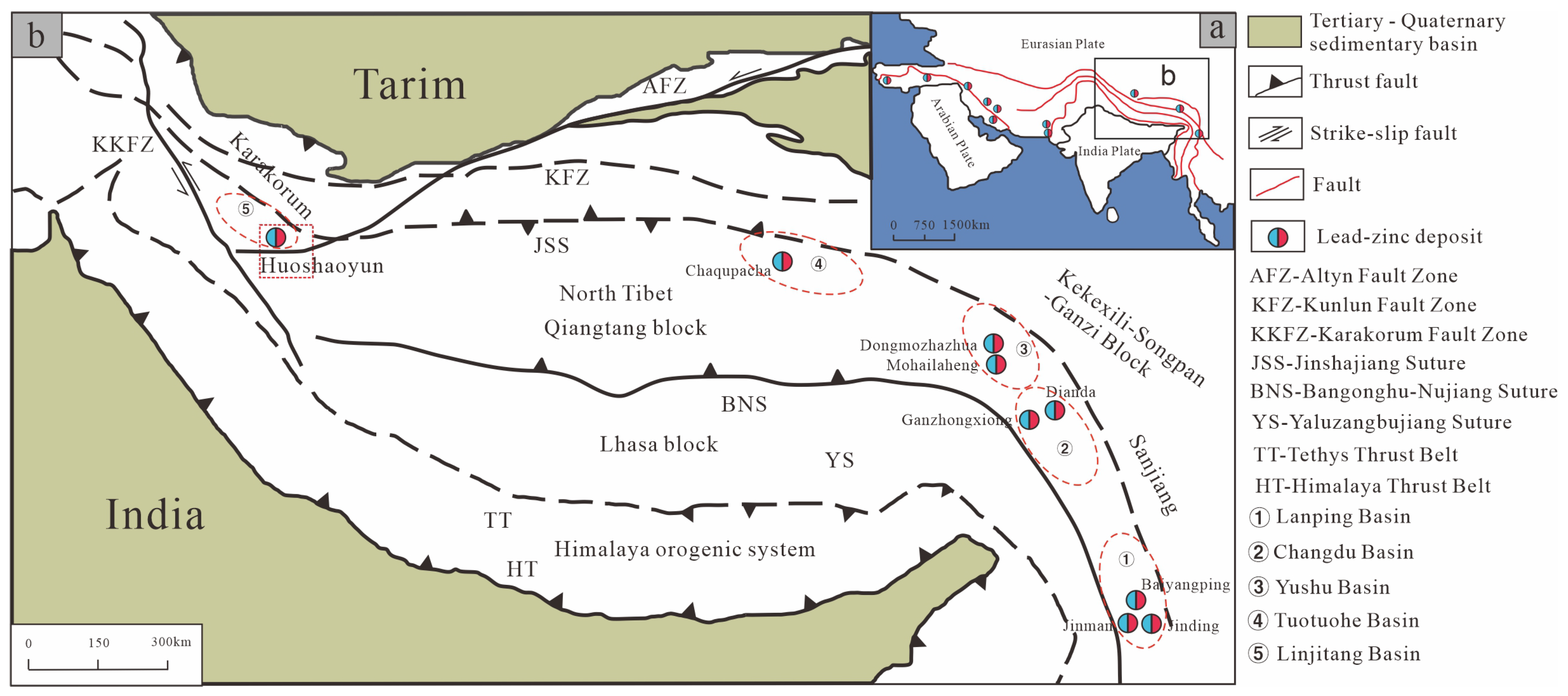
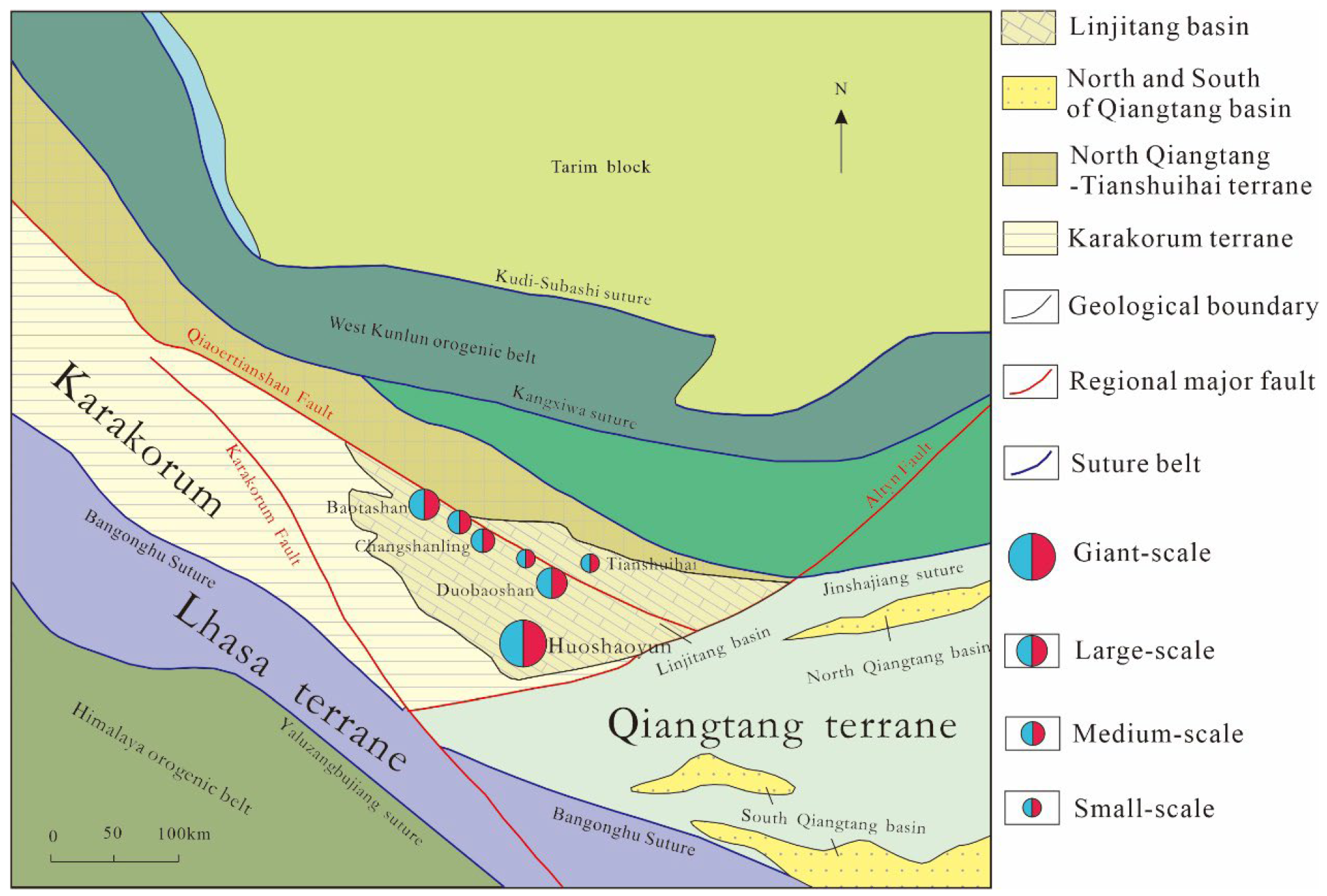
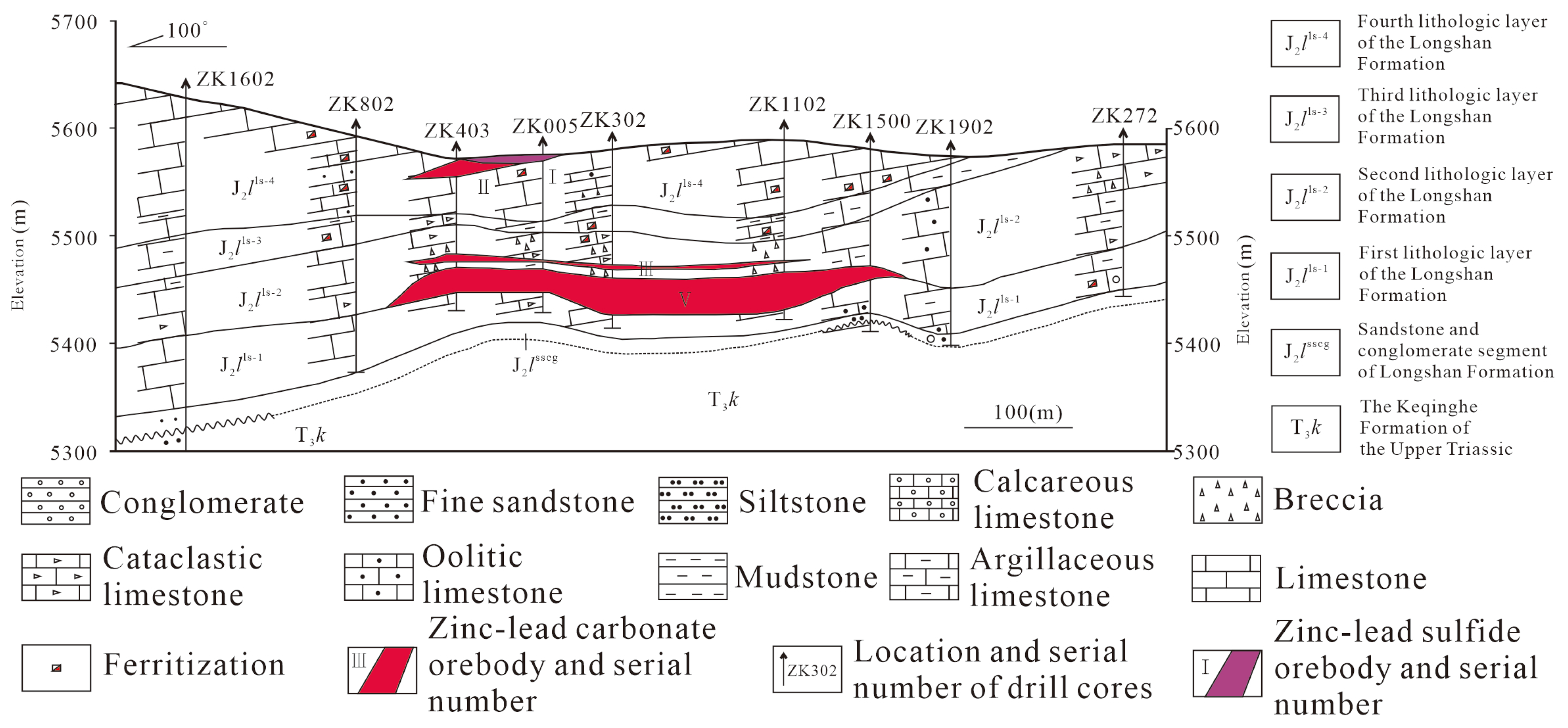
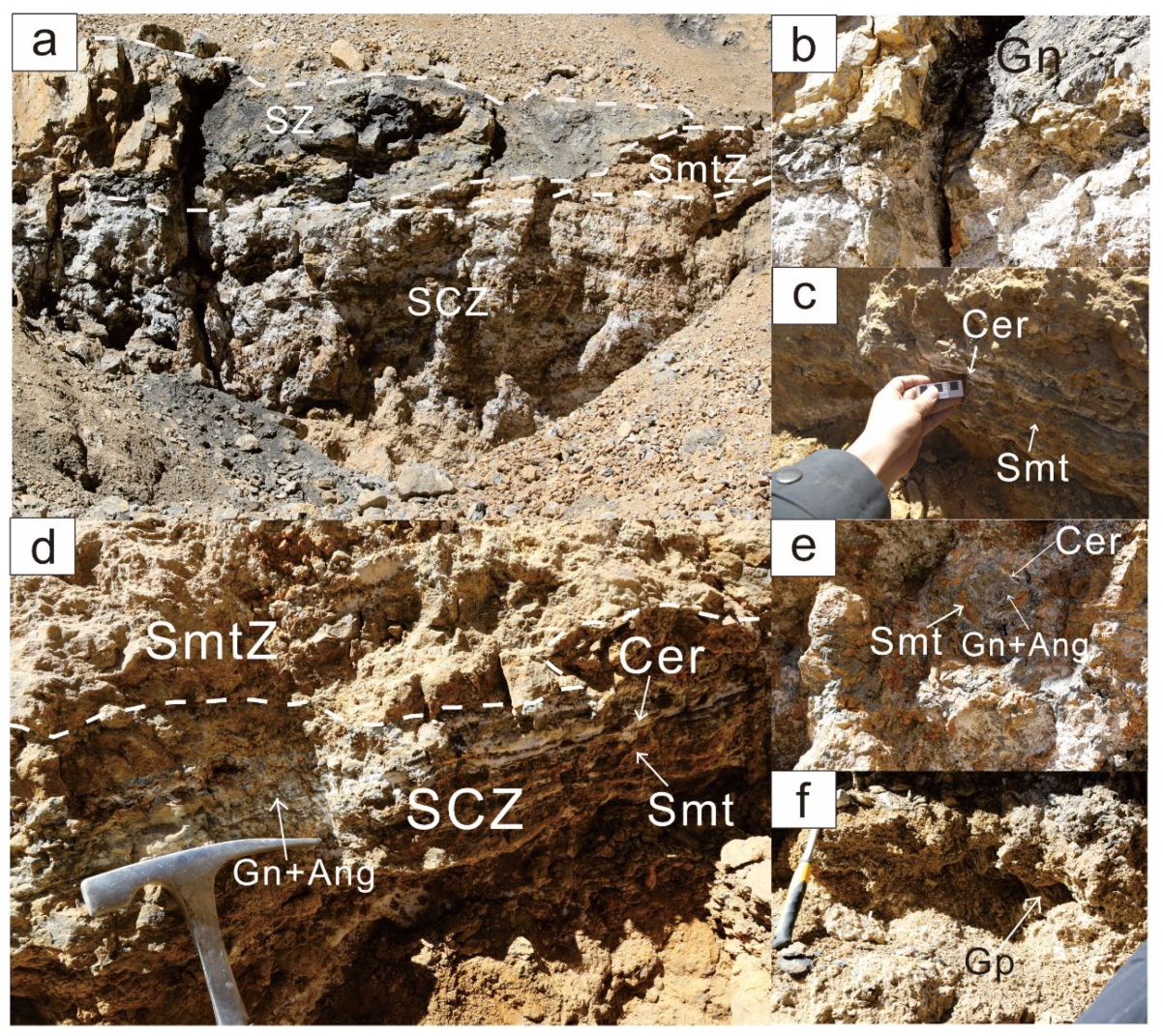
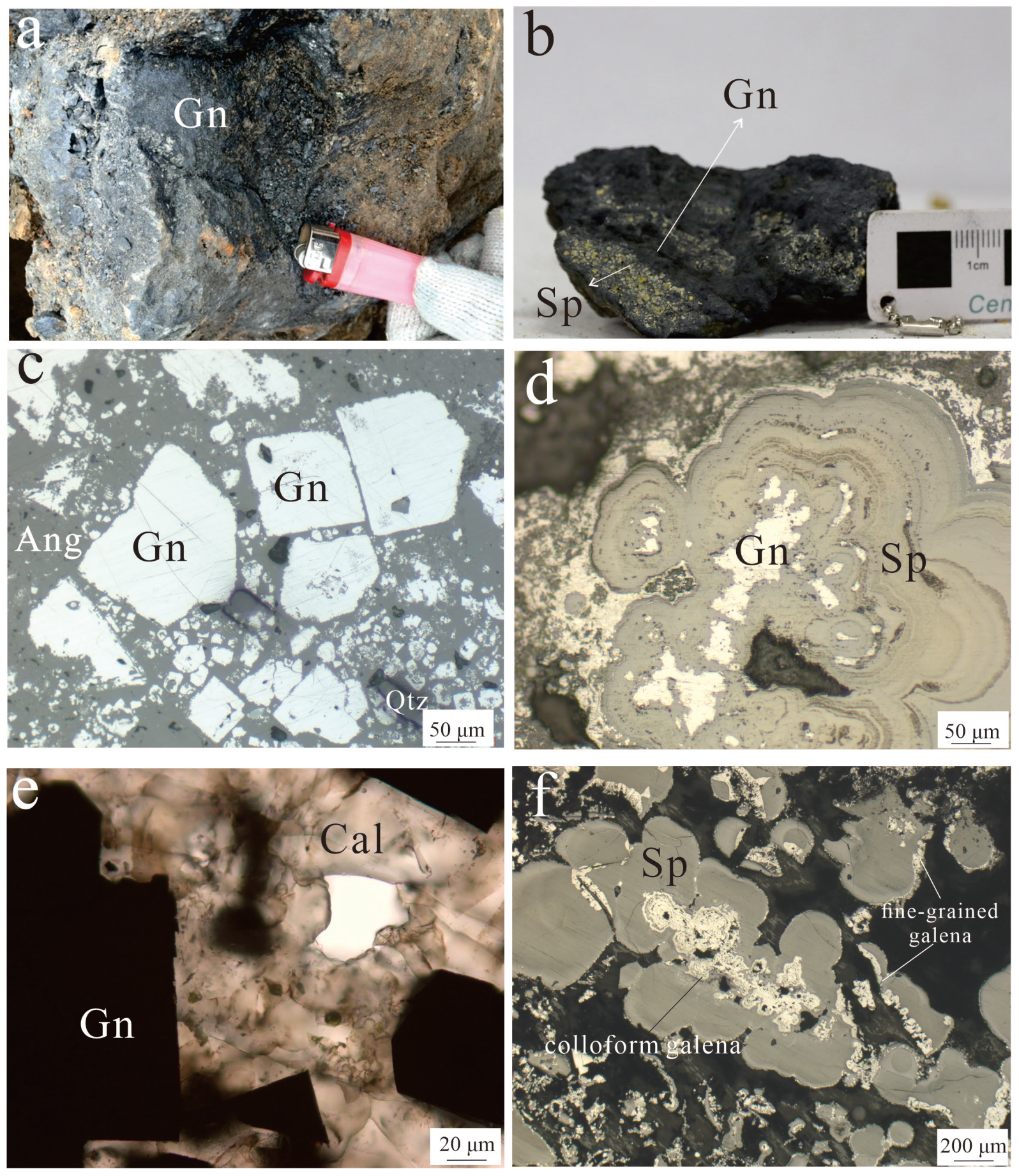
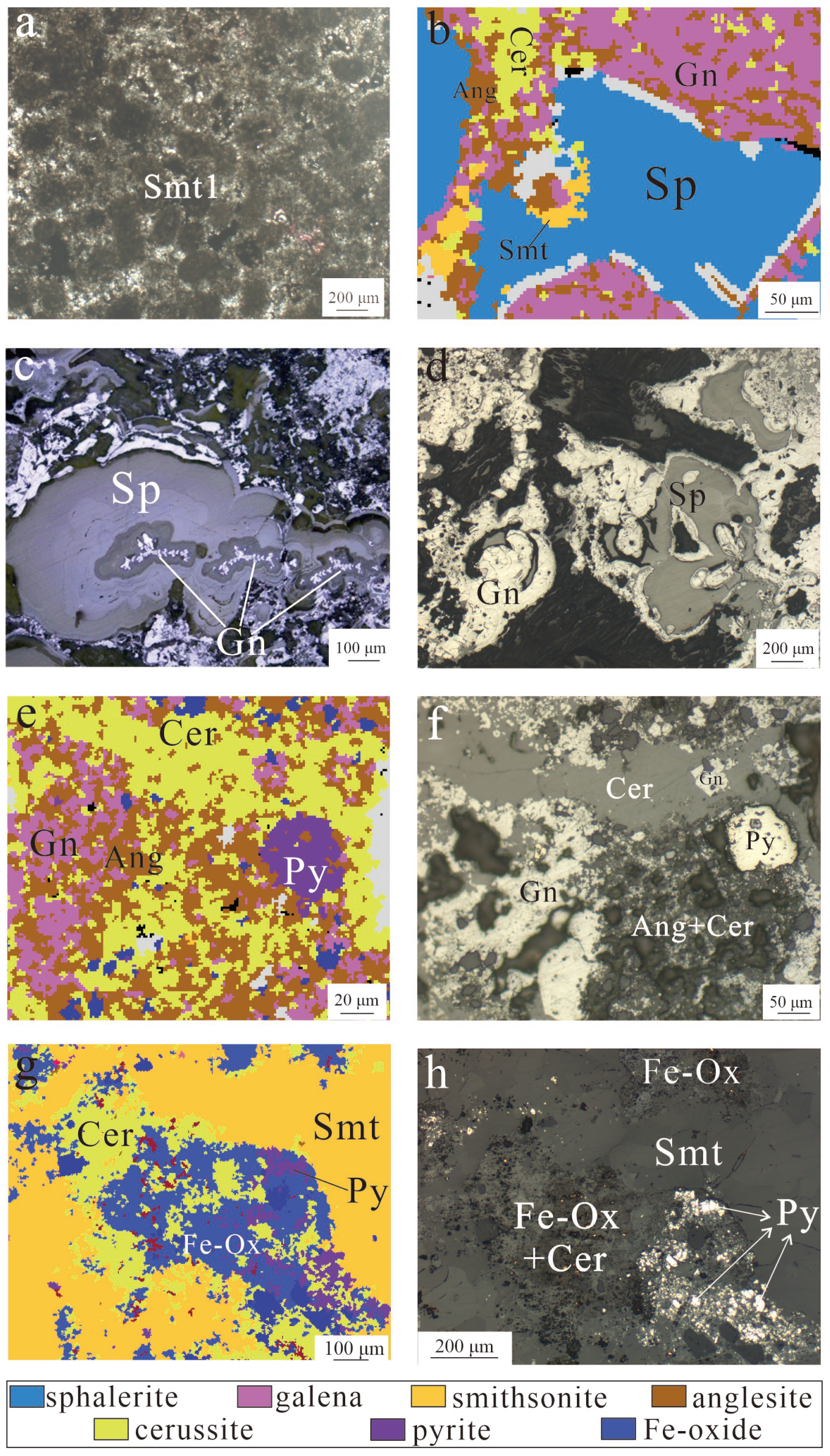
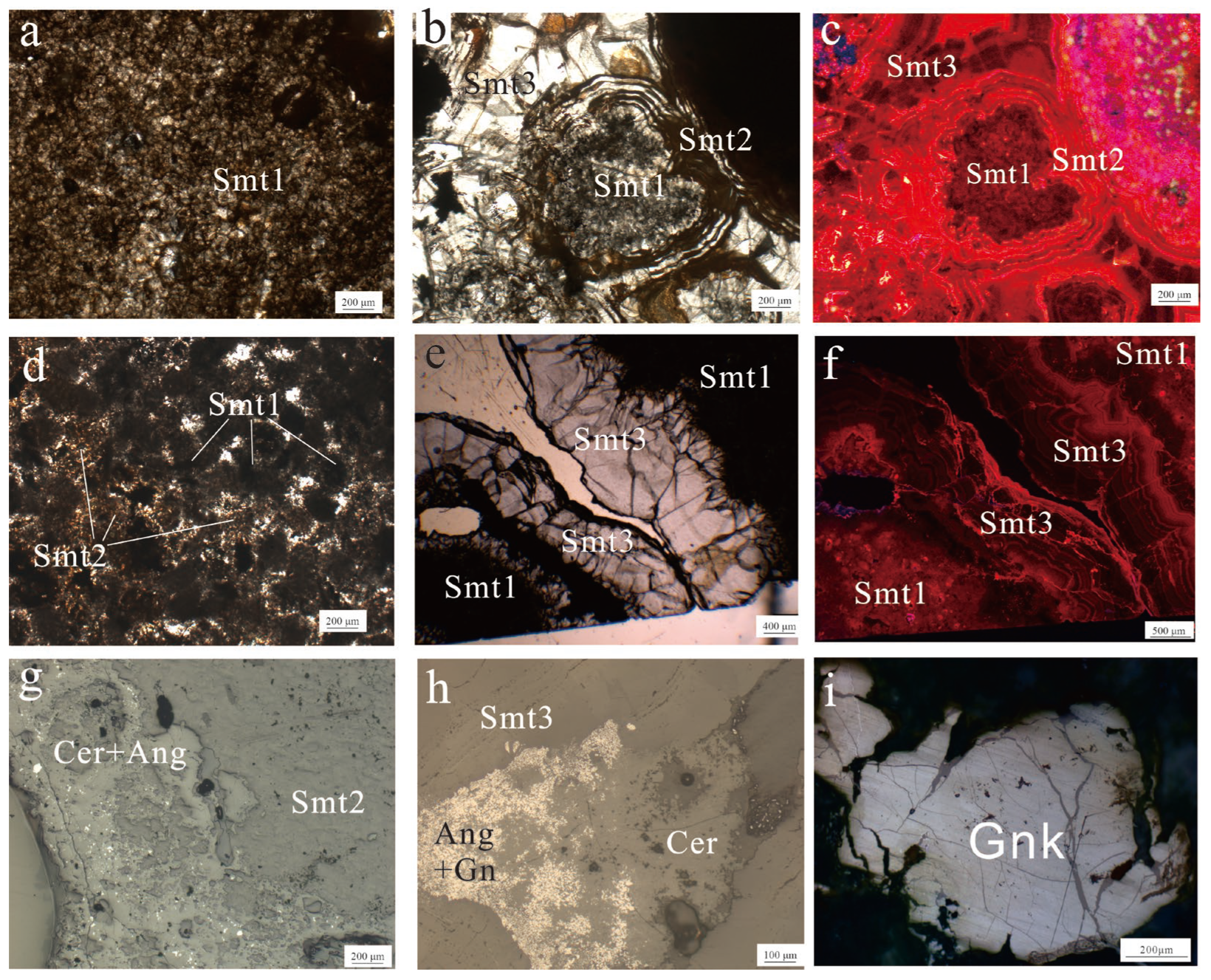
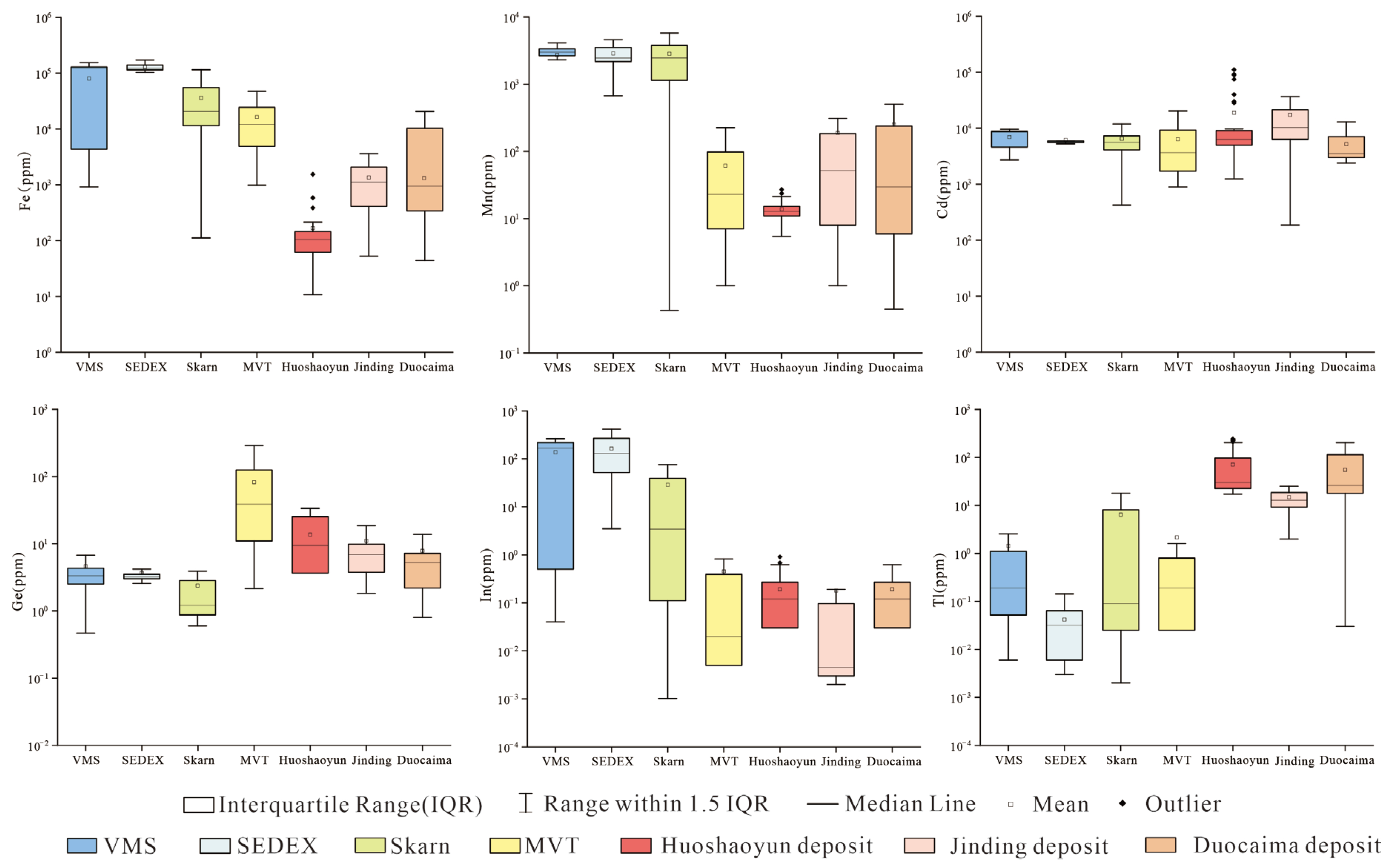
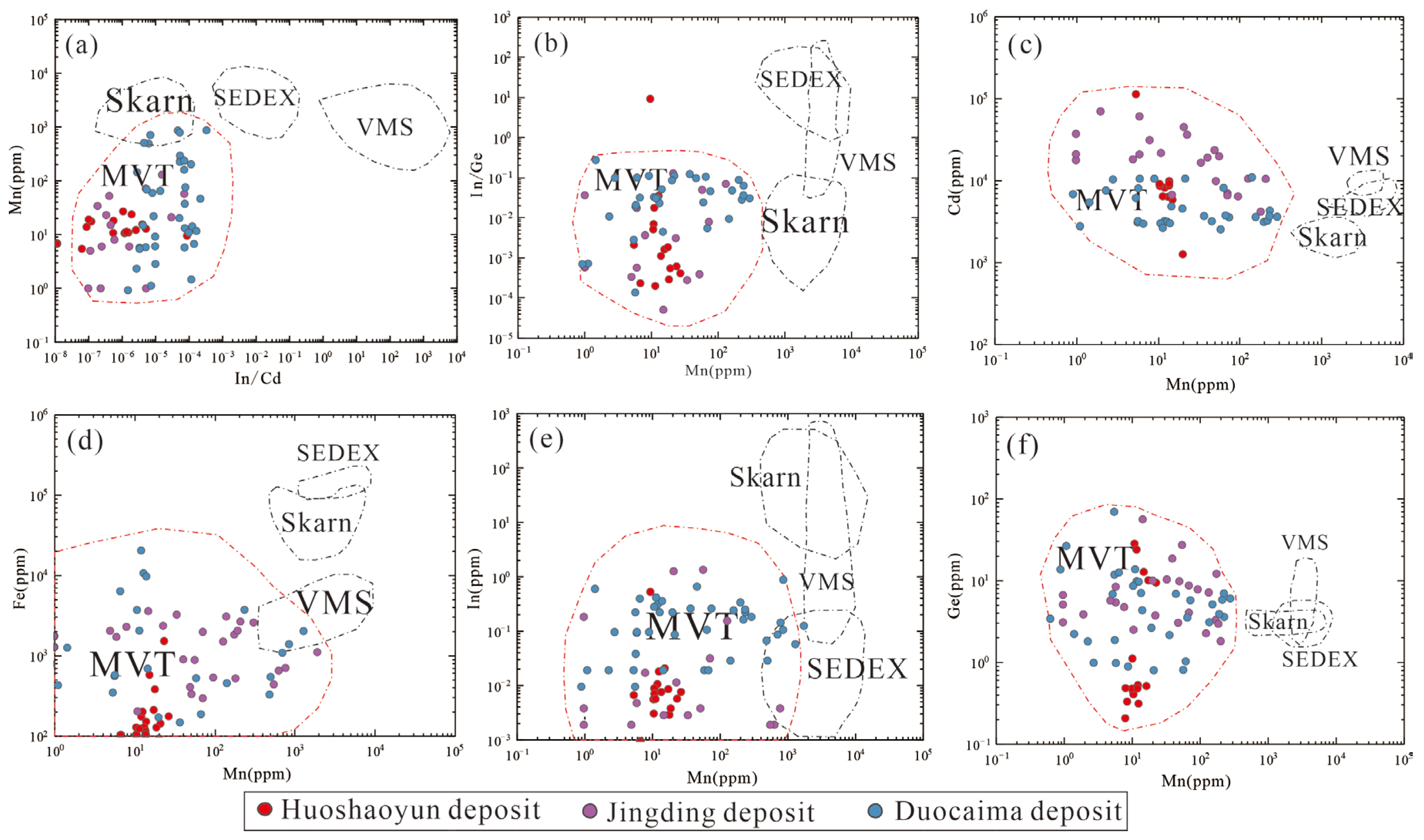
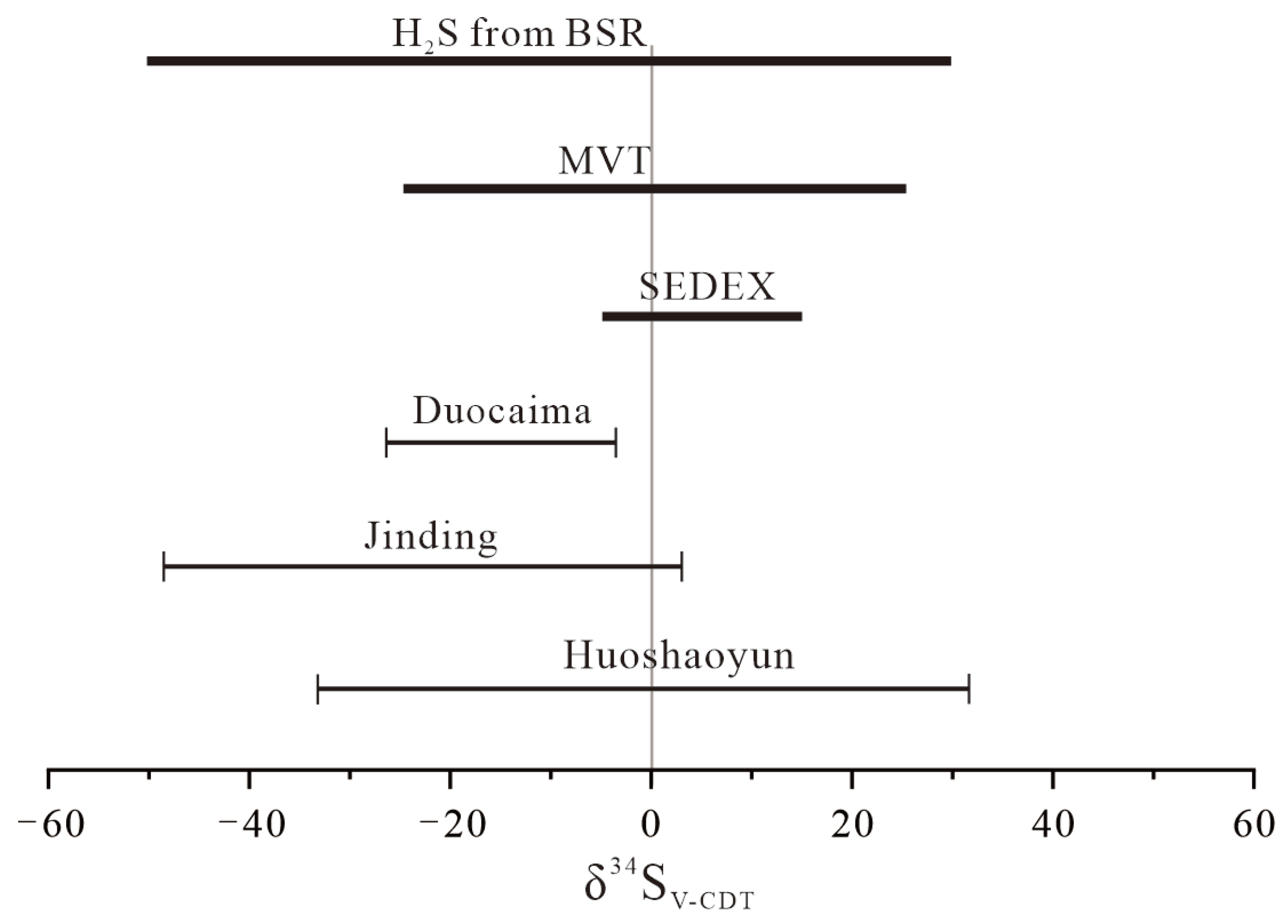
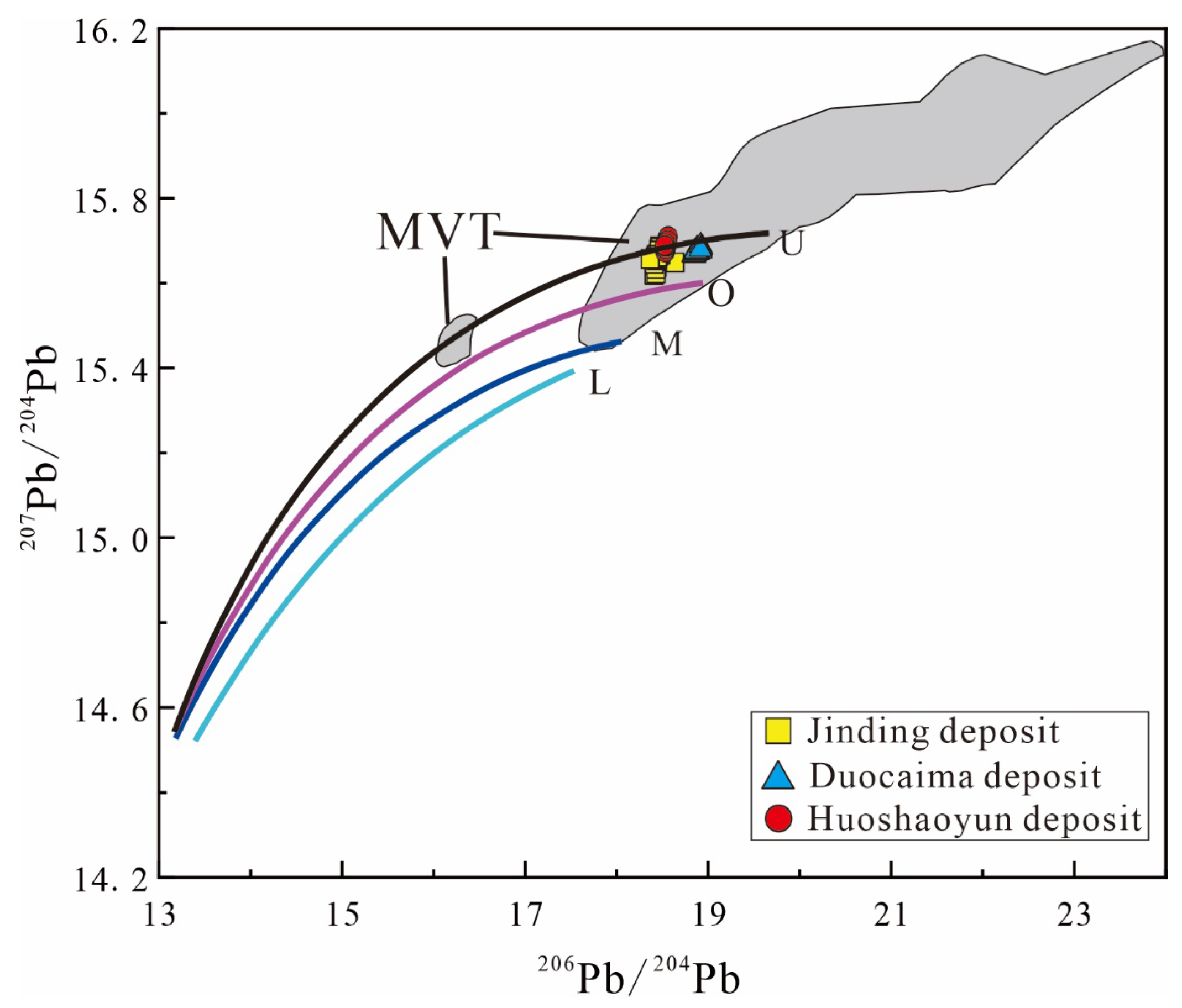
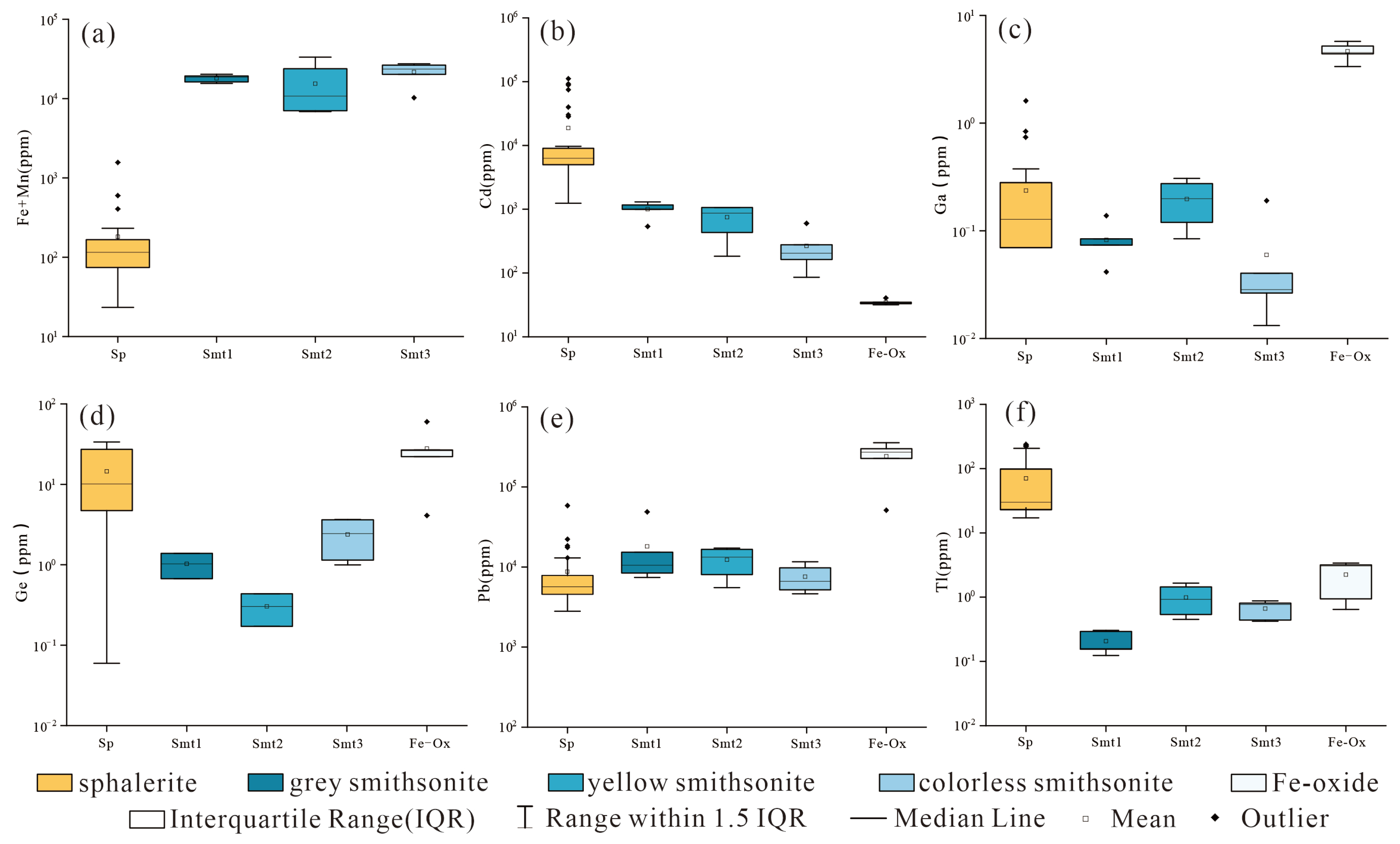
The Huoshaoyun zinc–lead deposit, a giant non-sulfide deposit in Xinjiang, is one of the most significant discoveries of zinc–lead deposit in China and globally in recent years. The deposit is dominated by zinc–lead non-sulfides, with minor occurrences of sulfides such as sphalerite, galena, and pyrite. The non-sulfide minerals include smithsonite, cerussite, anglesite, and Fe-oxide. This study focuses on the mineralogical characteristics of sulfide and non-sulfide ores, as well as the trace element characteristics of sphalerite, smithsonite, and Fe-oxide. Mineralogical analysis reveals that smithsonite is derived from the oxidation of primary sulfide minerals and can be classified into three types that are generated during different stages of supergene oxidation. The three types of smithsonite are formed through replacing the sphalerite and host limestone, as well as directly precipitating in the fissures and vugs. Trace element analysis of sphalerite indicates that it is rich in Cd, Tl, and Ge, but poor in Fe and Mn. The ore-forming temperature, calculated using the GGIMFis geothermometer, is mostly within the range of 100~150 °C. Moreover, the trace element characteristics, ore-forming temperature, and S and Pb isotope compositions of the sulfide ores of the Huoshaoyun deposit are similar to those of the Jinding and Duocaima MVT lead–zinc deposits, which are also located in the Eastern Tethyan zinc–lead belt. This suggests that the sulfide orebody in the Huoshaoyun Zn-Pb deposit could also be the MVT deposit. Study of the trace element of the non-sulfide minerals shows that the Mn and Cd are relatively enriched in smithsonite, while Ga, Ge, and Pb are enriched in Fe-oxide. This can be attributed to distinct geochemical properties of the trace elements in the non-sulfide minerals of the Huoshaoyun deposit and is consistent with those of the other oxidized MVT deposits, thus indicating the supergene oxidation process of this deposit.
Keywords: sphalerite; smithsonite; trace elements; ore deposit genesis; supergene oxidation; Huoshaoyun deposit sphalerite; smithsonite; trace elements; ore deposit genesis; supergene oxidation; Huoshaoyun deposit