3.1. Finite-Element Model Setup
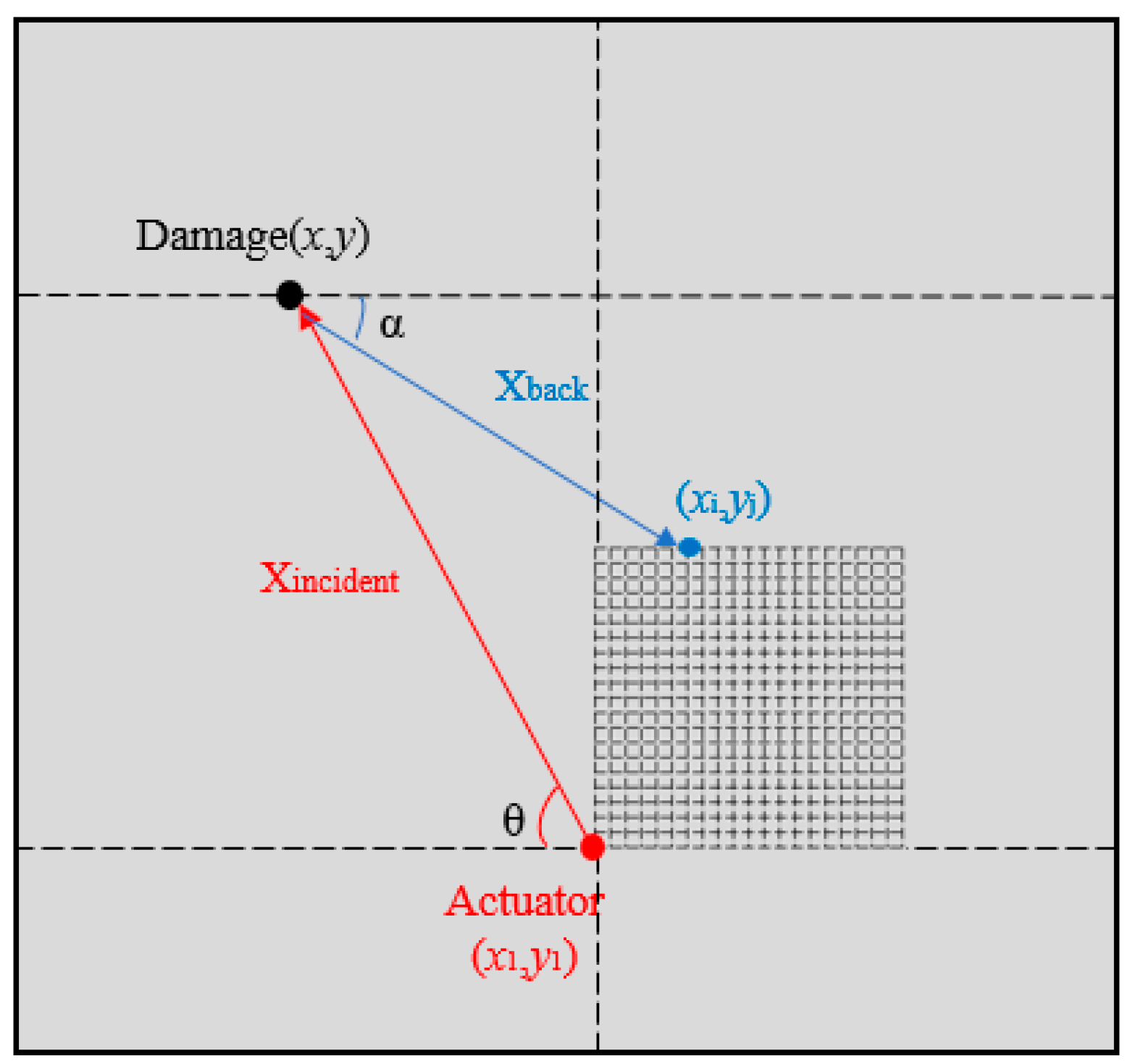
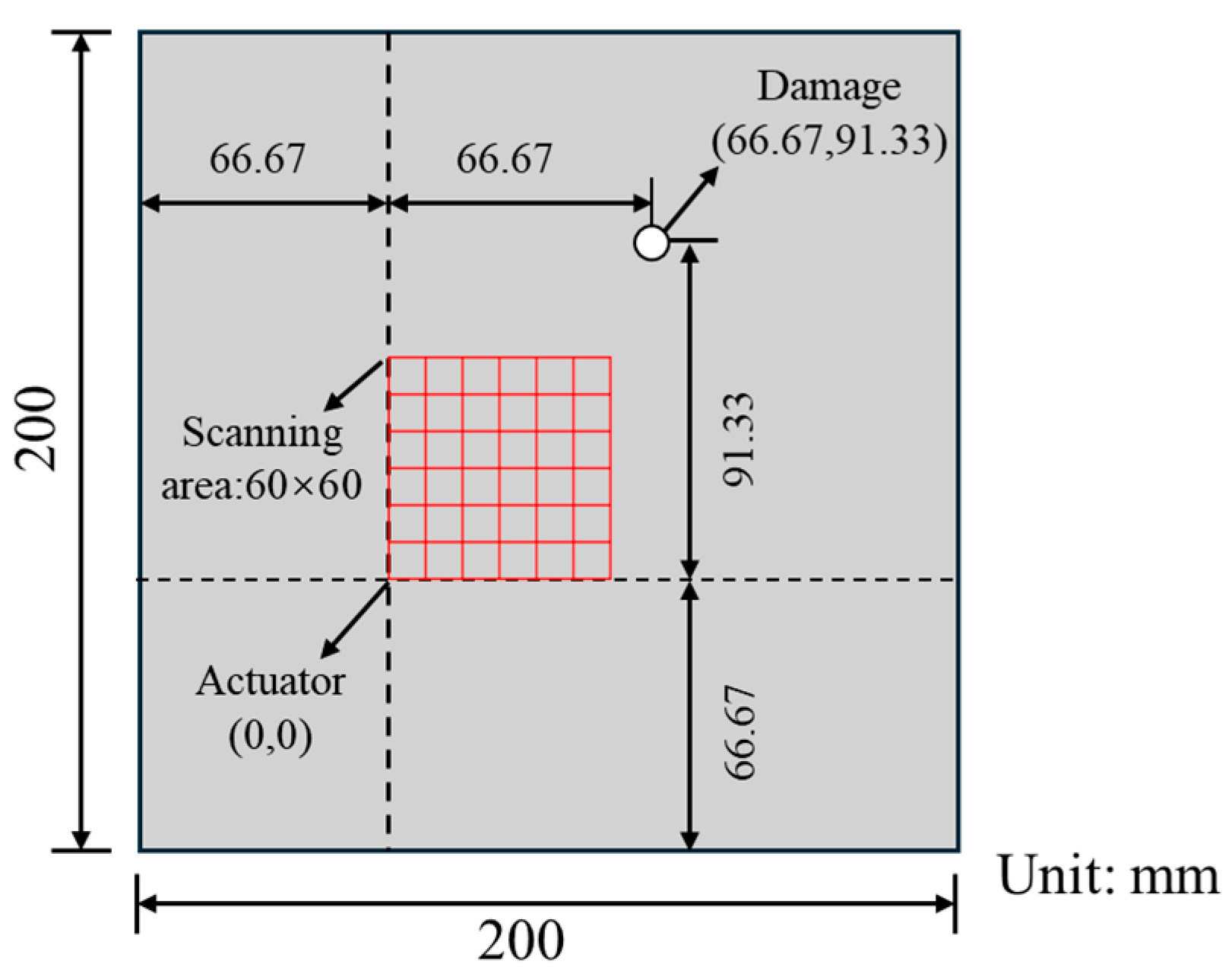
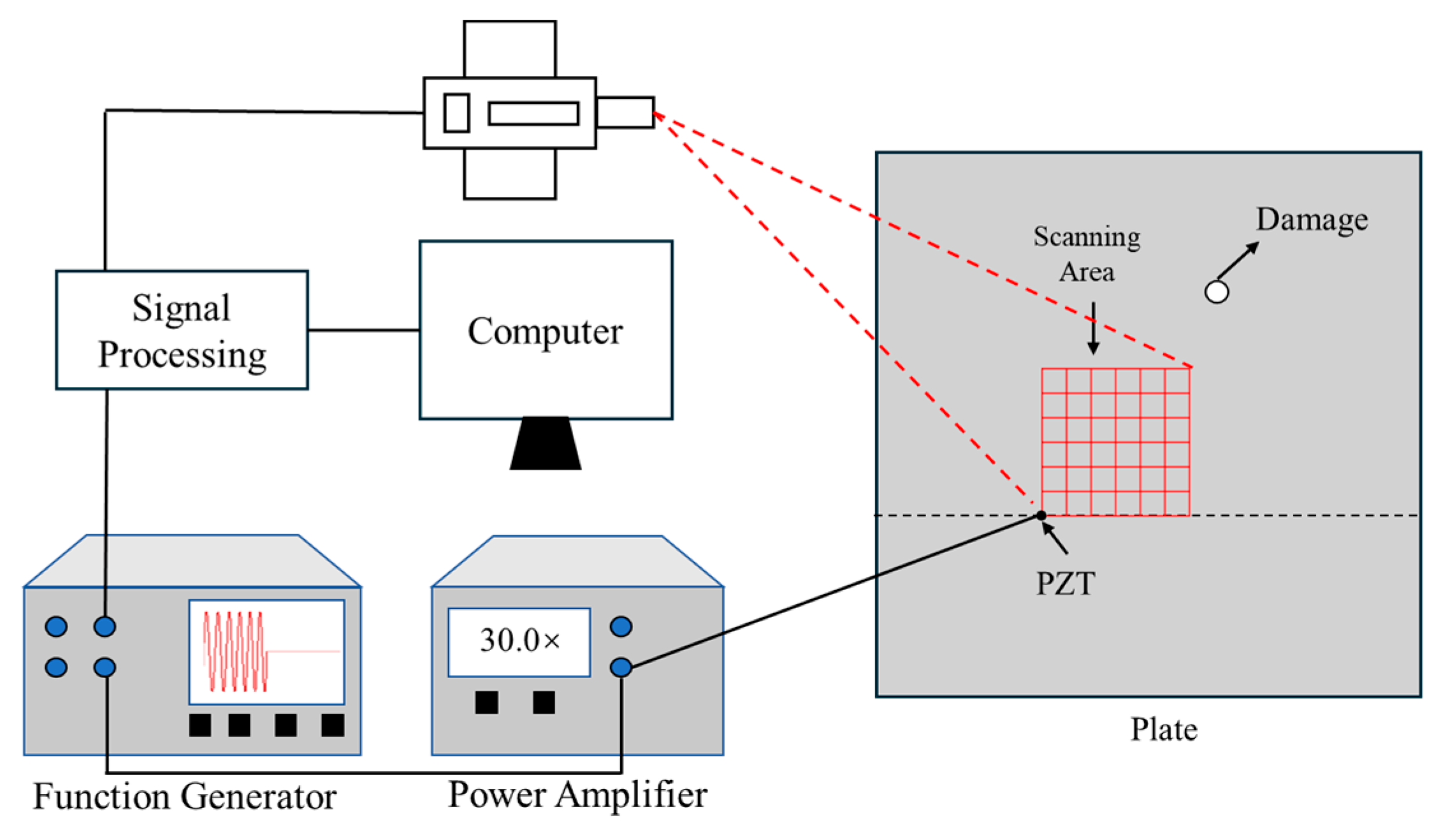
The finite-element model of the damaged aluminum plate established in this study is shown in
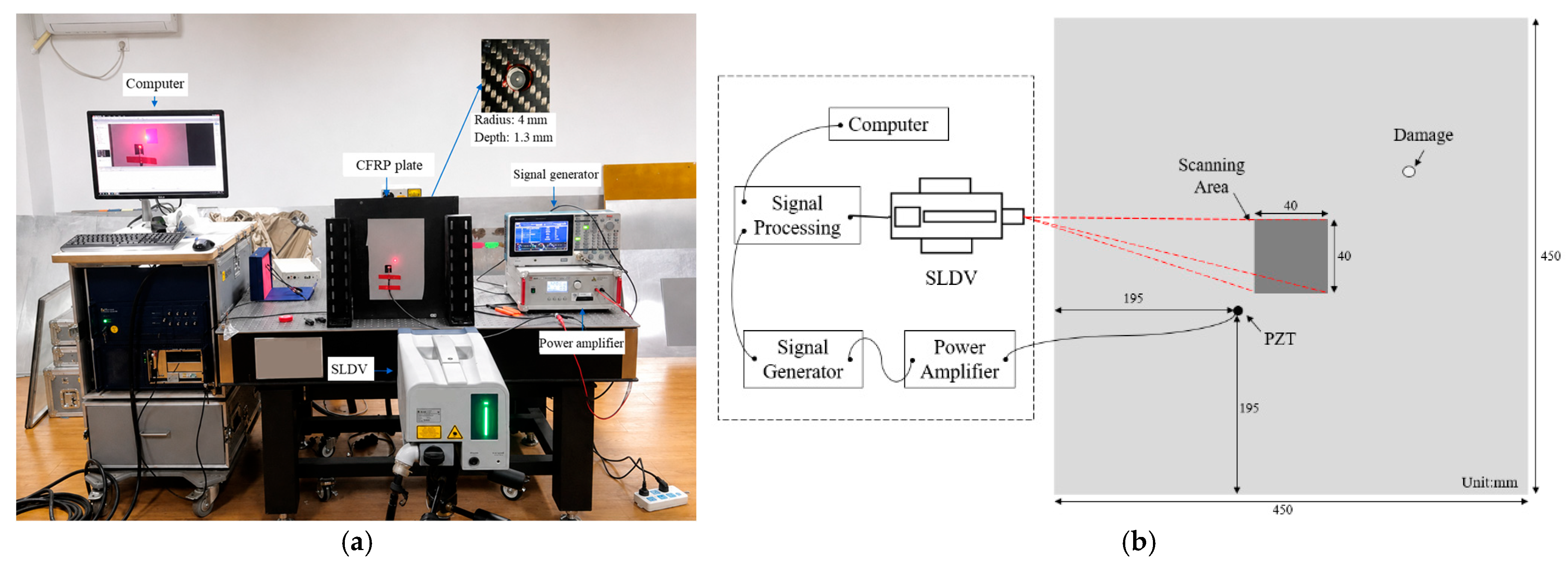
Figure 2. The red line in the figure denotes the scanning path used to extract spatiotemporal information. The scanning length is 60 mm, the interval between adjacent scanning points is 0.5 mm, and the scanning direction is 45°. The dimensions of the aluminum-plate model are 200 mm × 200 mm × 1 mm. The excitation point is located at one-third of the distance from both the lower boundary and the left boundary. The diameter of the excitation region is 6 mm, and the diameter of the through-hole damage is 8 mm, with its center located at (68.67 mm, 91.33 mm). The material parameters of the aluminum plate are as follows: elastic modulus, 70 GPa; Poisson’s ratio, 0.33; density, 2700 kg/m
3.
In the numerical simulation, a linear chirp signal is used to excite ultrasonic guided waves. When guided waves propagate in the plate and encounter damage or boundaries, both damage-reflected waves and boundary-reflected waves are generated. For a numerical model of relatively small size, the energy of the boundary reflections may even exceed that of the damage reflections, thereby severely affecting the final imaging results. In experiments, however, the actual plate structure is larger, and the boundary reflections are therefore usually weaker than those in the numerical model. To reduce this discrepancy, low-reflection boundaries are adopted in the numerical model, and a Rayleigh damping layer with a width of 20 mm is arranged along the model edges. The Rayleigh mass-damping coefficient is taken as 2 × 10
5, and the Rayleigh stiffness-damping coefficient is taken as 5 × 10
−7. Meanwhile, in order to ensure simulation accuracy, the element size should satisfy
where
L denotes the finite-element mesh size and
λmin denotes the shortest wavelength of the Lamb wave.
In this study, considering the distinguishability of the A0 and S0 modes under broadband excitation as well as the requirements of imaging analysis, and given that the S0 modal response is relatively weak in the lower frequency range and is therefore unfavorable for stable separation and comparative analysis of the two modes, a linear chirp signal with a bandwidth of 250–550 kHz was selected as the excitation; thus, the highest frequency was 550 kHz. Correspondingly, the wavelength of the S0 mode is 9.6 mm, whereas that of the A0 mode is 3.56 mm. By comprehensively considering computational cost and solution accuracy, a refined mesh is adopted in the damage region and the excitation region, while the mesh size in the remaining regions is 0.35 mm, and two swept elements are arranged through the thickness direction.
In addition to solution accuracy, transient dynamic analysis must also satisfy the requirements of numerical stability and convergence. According to the Newmark time-integration scheme, at least 20 time steps are required within one Lamb-wave period. Its expression is
where ∆
t denotes the time step and
fmax denotes the highest frequency within the selected frequency band. By comprehensively considering overall computational efficiency, the time step is set to 0.05 μs.
3.2. Simulation Results of Modal Superposition Imaging Under Chirp Excitation
In damage imaging, a 12 × 12 array is selected. The position of the first array element is (5 mm, 5 mm), and that of the last array element is (60 mm, 60 mm), with an element spacing of 5 mm.
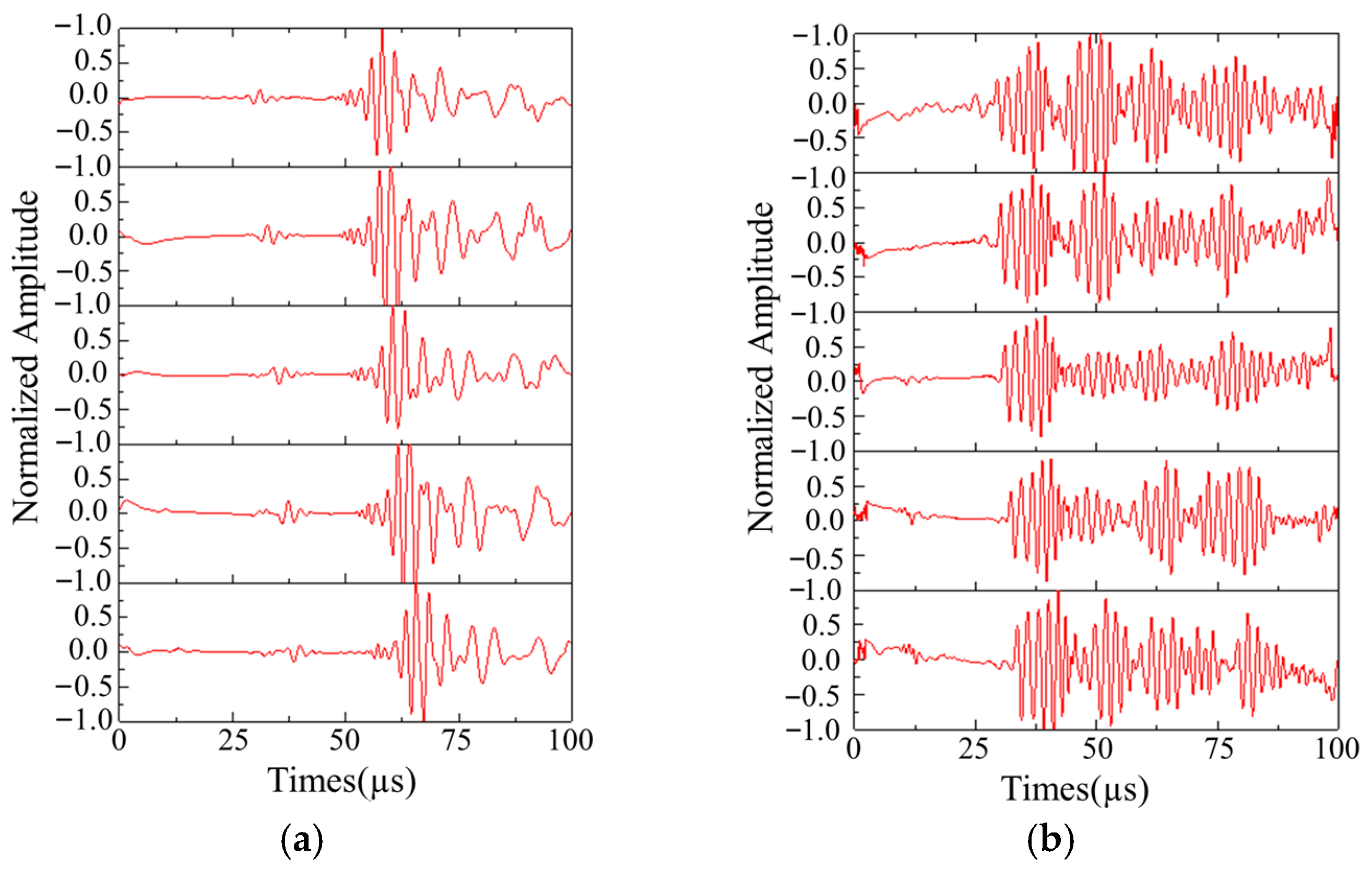
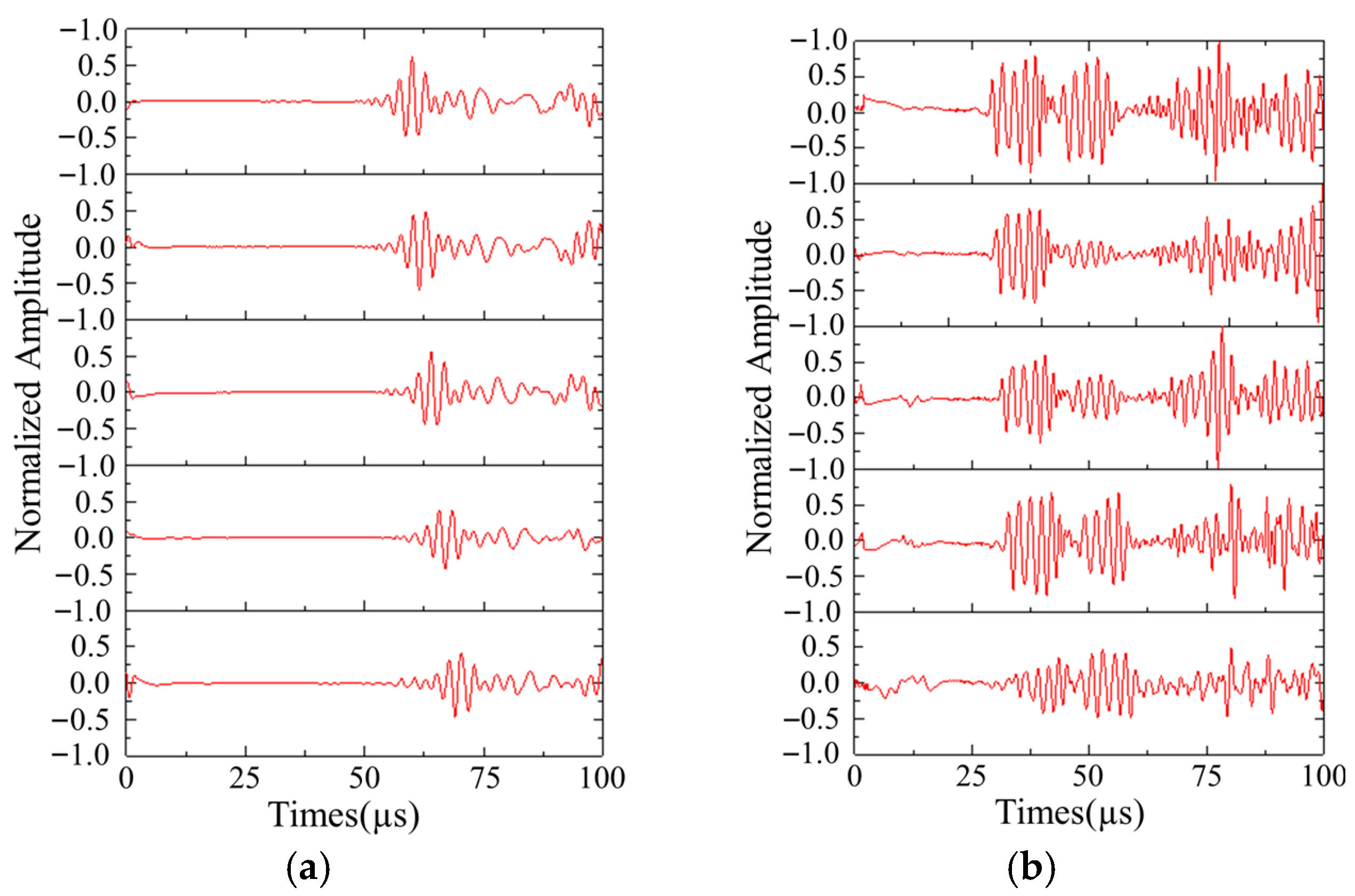
Figure 3a shows the reflected responses acquired by different array elements after extraction of the A
0 mode, where the wave packet with the largest amplitude corresponds to the damage-reflected wave of the A
0 mode.
Figure 3b shows the S
0 mode response, in which the earliest arriving wave packet is the S
0 mode damage-reflected wave, whereas the subsequent wave packets are mainly redundant information such as boundary reflections.
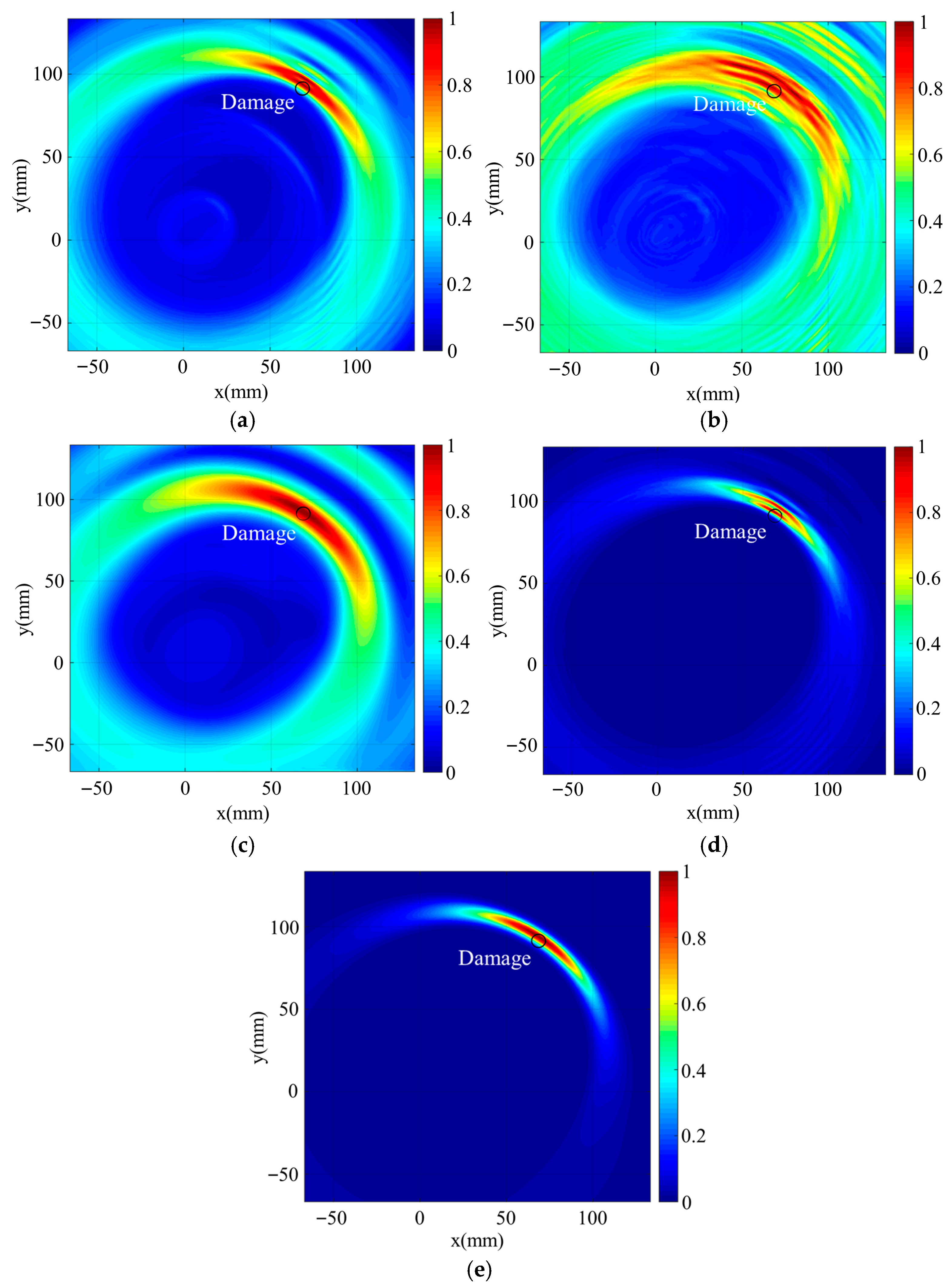
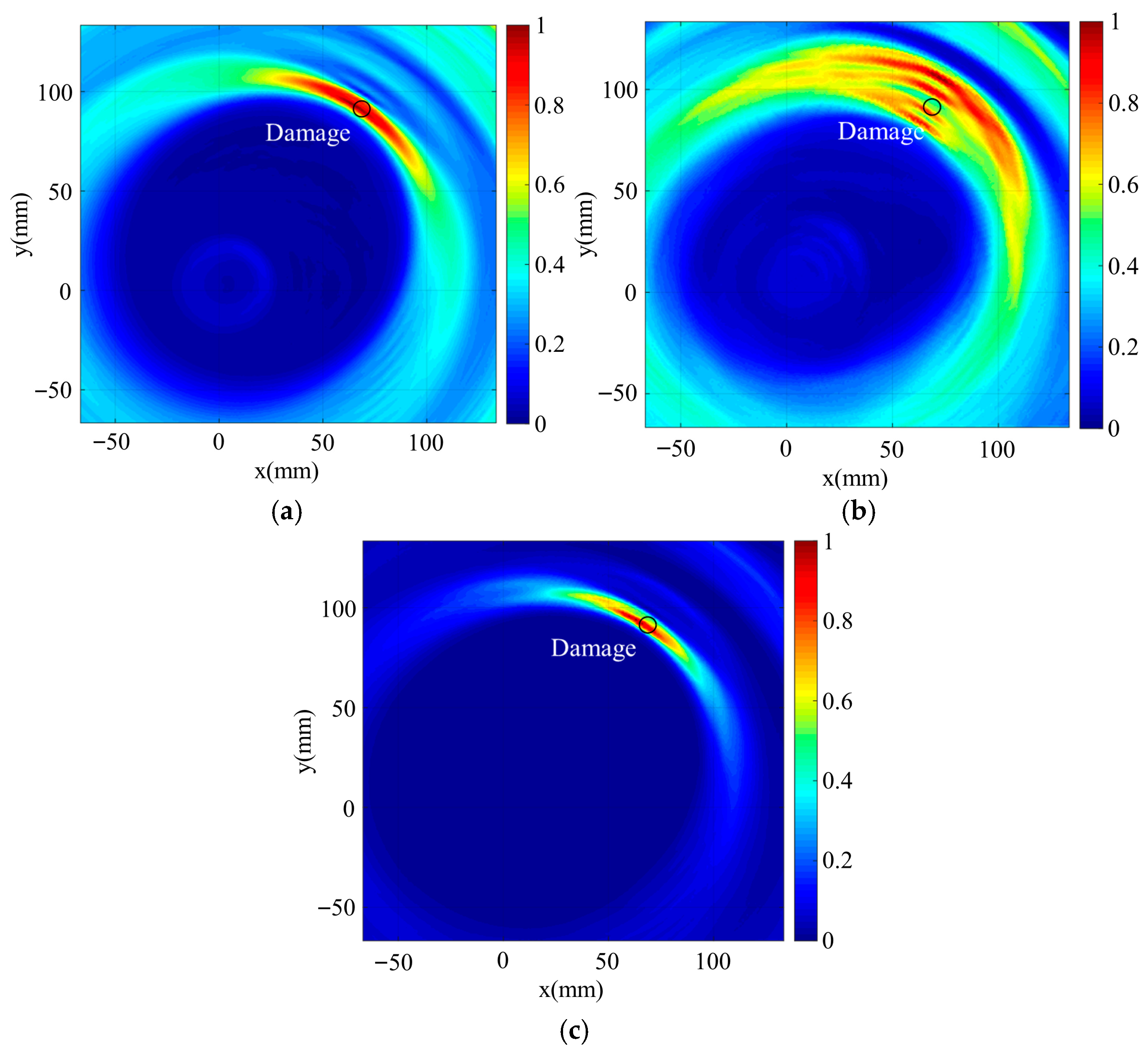
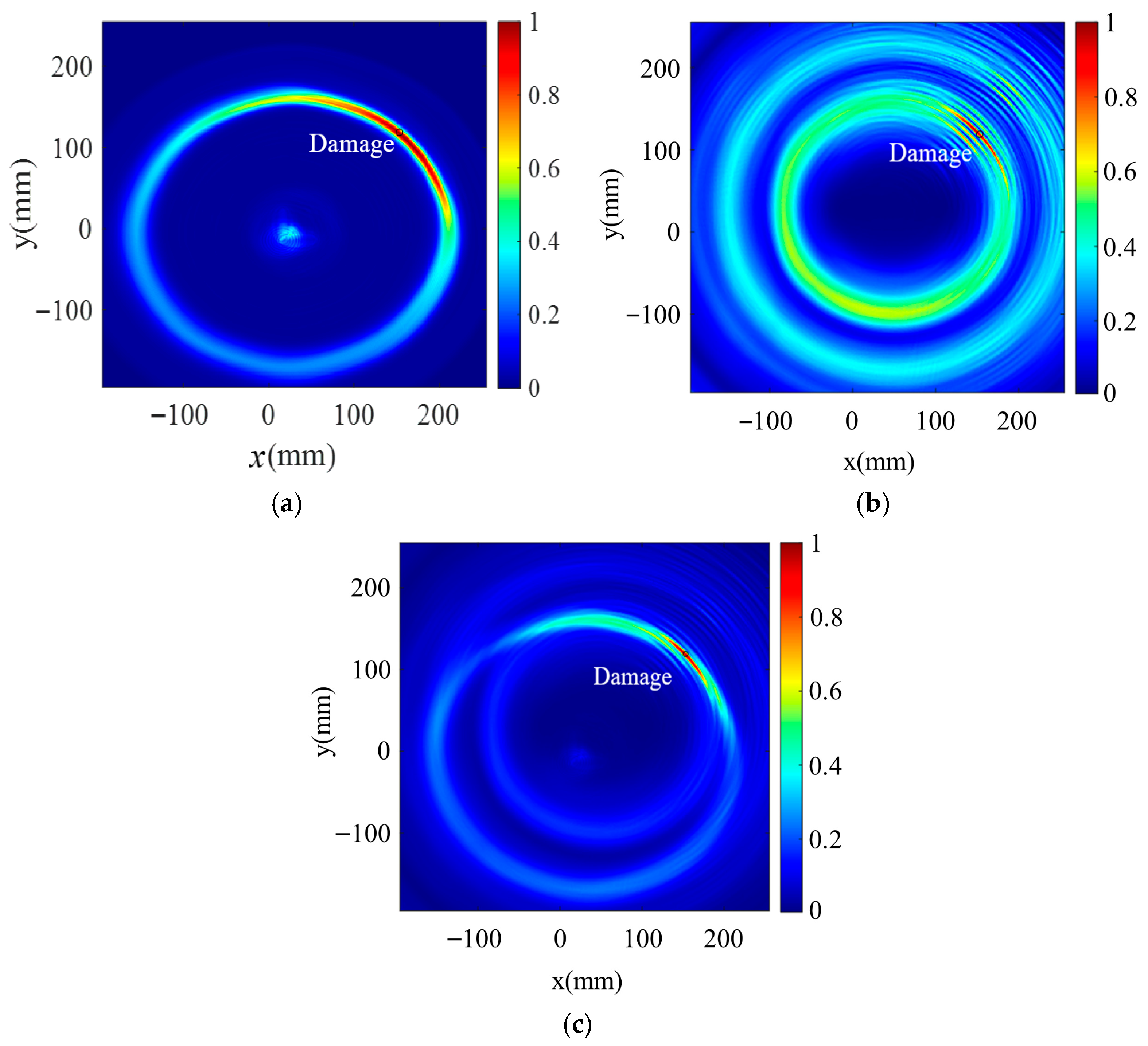
The selected array-element signals were imaged by the time-domain CSM algorithm through separated-modal superposition. The time-domain imaging results are shown in
Figure 4, where
Figure 4a,b present the time-domain CSM imaging results of the A
0 and S
0 modes, respectively;
Figure 4c,d present the imaging results obtained by amplitude addition and amplitude multiplication of the S
0 and A
0 modes, respectively; and
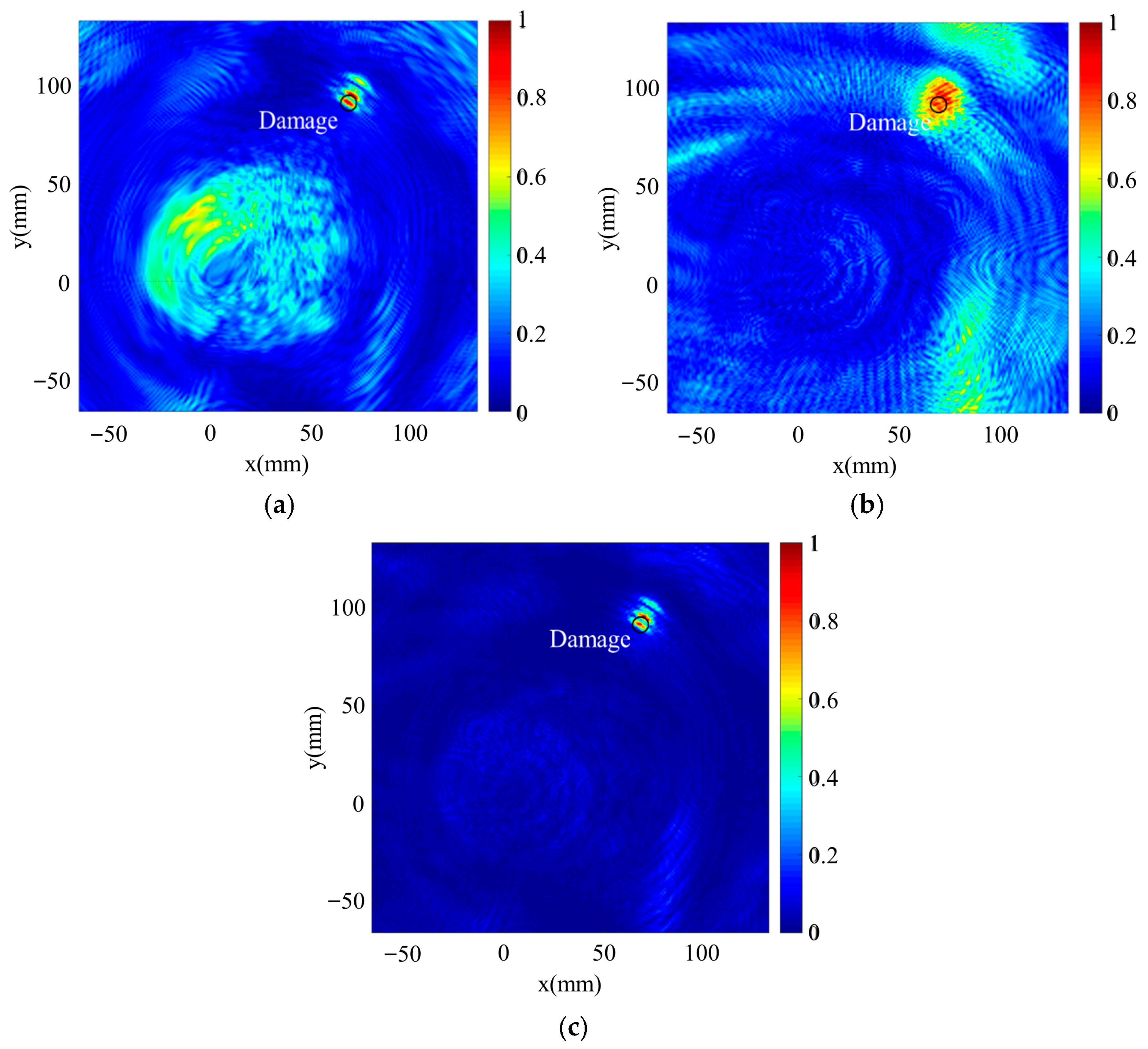
Figure 4e presents the imaging result obtained after additive–multiplicative modal fusion. The black circle in the figure denotes the true damage location. By comparing the two single-modal results, it can be seen that the damage-imaging region of the S
0 mode is wider than that of the A
0 mode, and the image purity is relatively lower. Neither of the two single-modal images is ideal when used alone. After image-data fusion, information from the two modes is combined. Compared with single-modal imaging, the damage-imaging region after modal superposition is significantly reduced, and the localization capability is improved. Through comparison, it can be seen that amplitude multiplication and additive–multiplicative modal fusion perform better than amplitude addition. Compared with the damage-imaging results obtained from a single mode, more accurate damage-imaging results can be achieved by using the image-data-fusion method to combine the sensitivities of different modes to damage. It can further be observed that the damage-imaging area can be reduced by means of data-fusion, and that both amplitude multiplication and additive–multiplicative modal fusion produce smaller damage-imaging regions and higher localization accuracy than amplitude addition.
In order to further quantitatively compare the localization performance of different imaging methods, the damage-imaging results were evaluated from three aspects, namely the coordinate error of the peak-amplitude point, RMSE, and UIQI, as shown in
Table 1. It can be seen from the table that the coordinate errors of the damage-imaging results for the single A
0 mode, single S
0 mode, modal addition, modal multiplication, and additive–multiplicative modal fusion are 2.98 mm, 3.07 mm, 0.23 mm, 0.23 mm, and 0.23 mm, respectively. The localization results for the single A
0 mode, single S
0 mode, modal addition, modal multiplication, and additive–multiplicative modal fusion are all located within the damage range (≤4 mm), but the localization errors are significantly reduced after multimodal fusion. The corresponding RMSE values are 0.3936, 0.5621, 0.4398, 0.2427, and 0.2163, respectively, and the UIQI values are 0.0014, 0.0009, 0.0018, 0.0087, and 0.0103, respectively. Although the coordinate errors of the damage-localization results for modal addition, modal multiplication, and additive–multiplicative modal fusion are identical, additive–multiplicative modal fusion yields the smallest RMSE and the largest UIQI. This indicates that, compared with the damage-imaging results of the single A
0 mode, single S
0 mode, modal addition, and modal multiplication, the additive–multiplicative modal fusion result shows the smallest discrepancy from the actual damage and better overall performance.
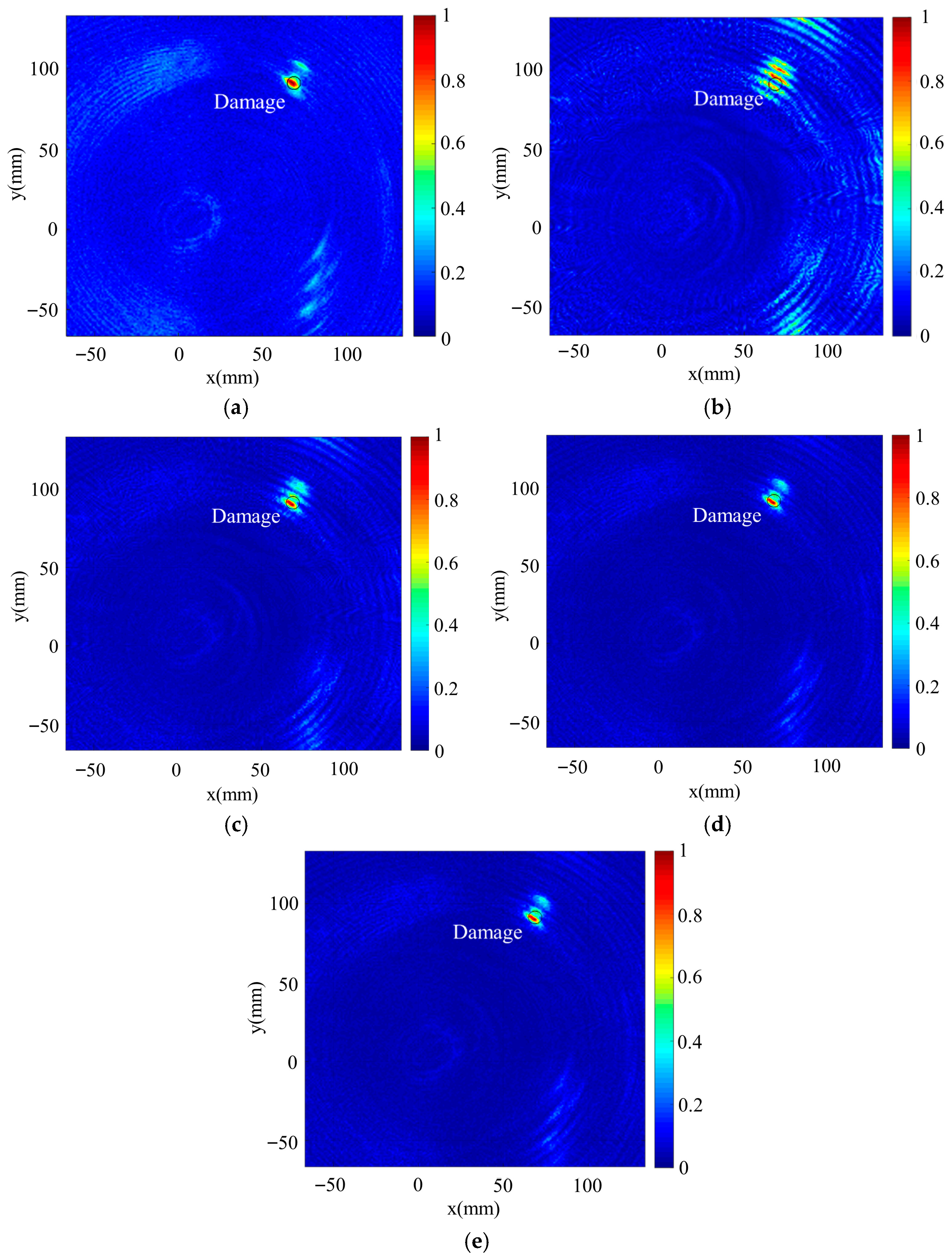
On the basis of time-domain CSM imaging, the selected array signals were further subjected to modal superposition imaging by using the
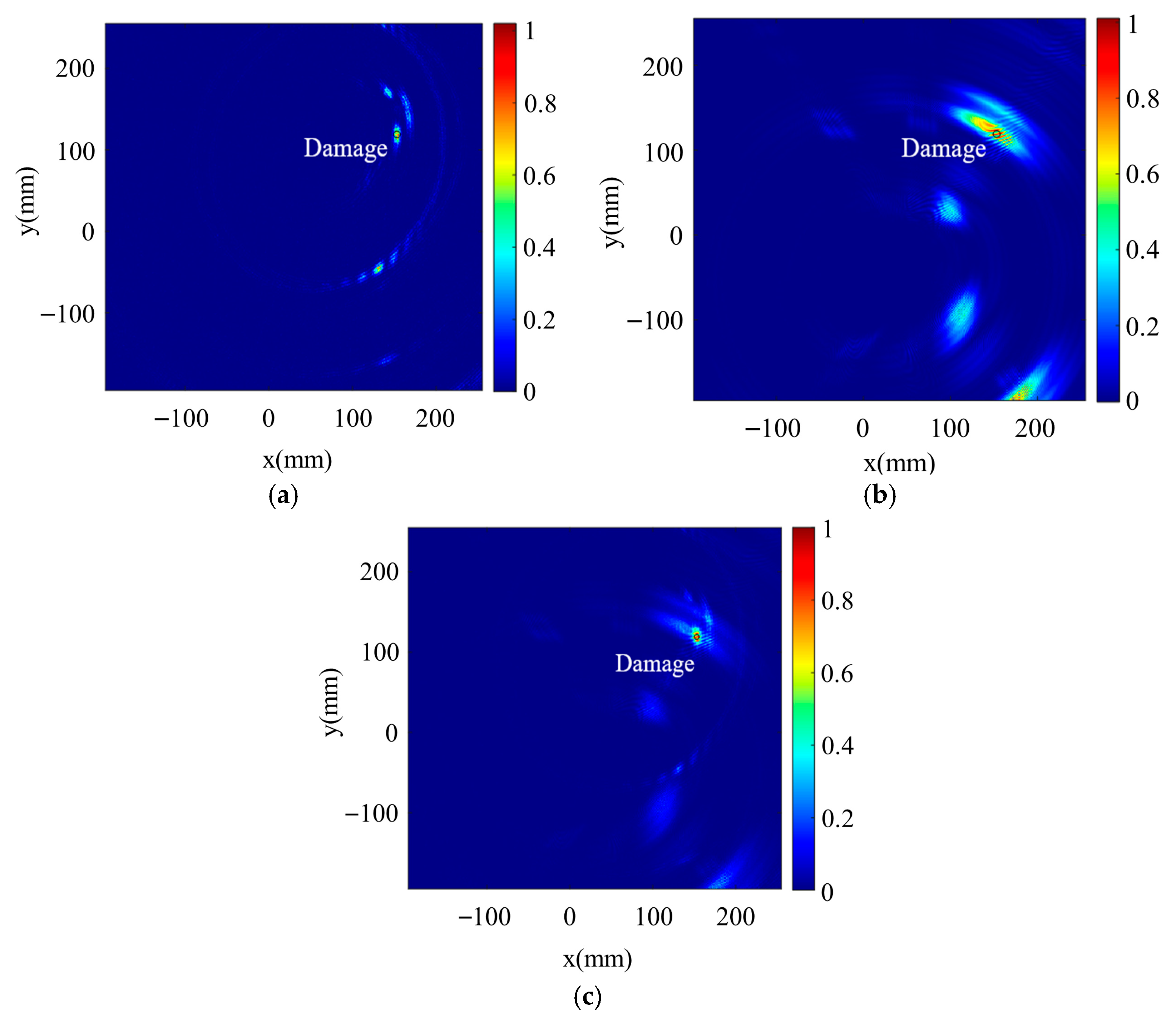
f-k domain CSM algorithm, as shown in
Figure 5.
Figure 5a,b show the
f-k domain CSM imaging results of the A
0 and S
0 modes, respectively;
Figure 5c,d show the imaging results obtained by amplitude addition and amplitude multiplication of the S
0 and A
0 modes, respectively; and
Figure 5e shows the imaging result obtained after additive–multiplicative modal fusion. The brightest pixel represents the center of the simulated damage image, and the black circle represents the actual damage location. By comparing the two single-modal results, it can be seen that, consistent with the conclusion obtained for time-domain CSM, the damage-imaging region of the S
0 mode is wider than that of the A
0 mode, and the image purity is also relatively lower. Neither of the two single-modal images is ideal when used alone. After image-data fusion, the information from the two modes is combined. Compared with single-modal imaging, the damage-imaging region after modal superposition is significantly reduced, and the localization capability is improved. It can further be observed that, for
f-k domain CSM imaging, the damage-imaging area can also be reduced by using the data-fusion method, and that both amplitude multiplication and additive–multiplicative modal fusion produce smaller damage-imaging regions and higher localization accuracy than amplitude addition.
As shown in
Table 2, the damage-imaging results of the five imaging methods in the
f-k domain were evaluated from three aspects, namely the coordinate error of the peak-amplitude point, RMSE, and UIQI. It can be seen that the coordinate errors of the damage-imaging results for the single A
0 mode, single S
0 mode, modal addition, modal multiplication, and additive–multiplicative modal fusion are 1.87 mm, 4.58 mm, 0.81 mm, 0.81 mm, and 0.81 mm, respectively. The localization results for the A
0 mode, modal addition, modal multiplication, and additive–multiplicative modal fusion are all located within the damage range (≤4 mm), whereas the error of the single S
0 mode exceeds the damage range. The corresponding RMSE values are 0.1473, 0.2156, 0.1253, 0.0926, and 0.0718, respectively, and the corresponding UIQI values are 0.0315, 0.0143, 0.0434, 0.0629, and 0.0783, respectively. Although the coordinate errors of the damage-localization results for modal addition, modal multiplication, and additive–multiplicative modal fusion are identical, additive–multiplicative modal fusion yields the smallest coordinate error, the smallest RMSE, and the largest UIQI. This indicates that, compared with the damage-imaging results of the single A
0 mode, single S
0 mode, modal addition, and modal multiplication, the additive–multiplicative modal fusion result exhibits the smallest discrepancy from the actual damage and superior performance.
It should be noted that boundary reflections remain one of the major factors affecting the current simulation-imaging quality, especially for the S0 mode. Although low-reflection boundaries and Rayleigh damping layers were adopted in the numerical model to reduce the interference of boundary reflections with damage imaging, the residual boundary-reflection components were not completely eliminated. Compared with the A0 mode, the S0 mode propagates at a higher velocity and therefore travels a longer path within the same sampling time window, making it more likely to overlap in space and time with residual boundary-reflection components. As a result, the imaging region is expanded, the background response is enhanced, and the localization error is increased. This is also one of the main reasons why the single-modal result of the S0 mode is inferior to that of the A0 mode in the simulations. Meanwhile, additive–multiplicative modal fusion can suppress inconsistent background spurious responses among different modes to a certain extent; therefore, the fused result still shows a more compact damage region and higher localization accuracy.
Overall, because the contributions of all frequency components within the selected frequency band and the dispersion effect are comprehensively taken into account, f-k domain CSM performs better than time-domain CSM in terms of single-modal imaging and image compactness. At the same time, the proposed additive–multiplicative modal-fusion method also shows certain advantages over conventional modal addition and modal multiplication in terms of imaging quality and damage-localization performance. Therefore, the feasibility of the proposed f-k domain CSM imaging algorithm under broadband chirp excitation is verified through numerical simulations.