


Abstract
While electrophilic substitution is used to attack positions 1(3) and possibly 2 of azulenes, nucleophilic substitution is often used to obtain azulenes with substituents at positions 6 or 4(8). The electrical charge at positions 2, 5, or 7 makes them unsuitable for electrophilic or nucleophilic substitution. Azulenes bearing substituents at these positions have been synthesized mainly by the building of the azulene skeleton or especially resorting to reactions catalyzed by metallic compounds. In this context, the proposed mini review will focus on some of the cases in which compounds with substituents in these positions are obtained by substitution without the intervention of a catalyst and are therefore advantageous from both an ecological and economic point of view.
1. Introduction
Azulene can be considered an interesting exception of an aromatic π-electron system [1]. Azulene follows Huckel’s rule, namely it contains 4n + 2 = 10 π electrons, the same electron number as that of their isomer naphthalene, with both systems being coplanar. However, unlike naphthalene, azulene possesses a non-alternating π electronic conjugation. This particularity should confer a significant degree of instability to the azulene system. Even if it has a lower stability than naphthalene, azulene resists remarkably over time and against a large number of reagents. The peculiarity of its physico-chemical properties, as well as its large number of technical uses in the most varied fields of activity, increases continued interest in the azulene system. Thus, the presence of the azulene system can be taken into account or incorporated into a number of organic materials such as: charge-transfer salts [2], molecular switching [3,4], chromophores with nonlinear optical (NLO) properties or components of various optoelectronic devices [5,6,7,8,9,10,11,12,13,14,15], sensors [16,17], solar cells [18,19,20], and compounds with electrochromic applications [21], as well as electrically conducting polymers [22,23,24]. Azulene compounds can also be found in research dealing with their use in medicine and one example refers to antineoplastic agents [25].
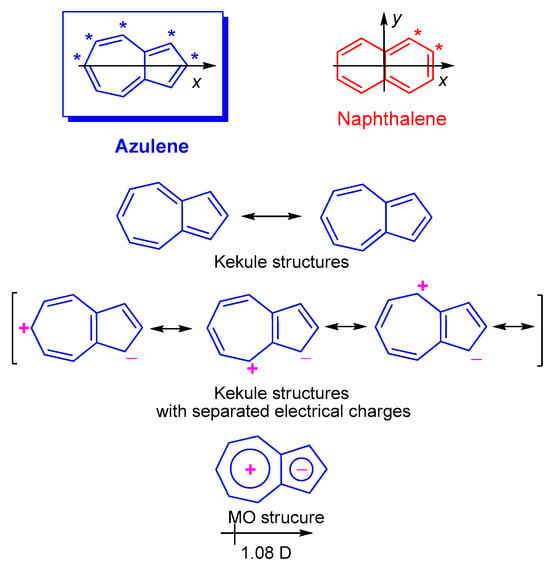
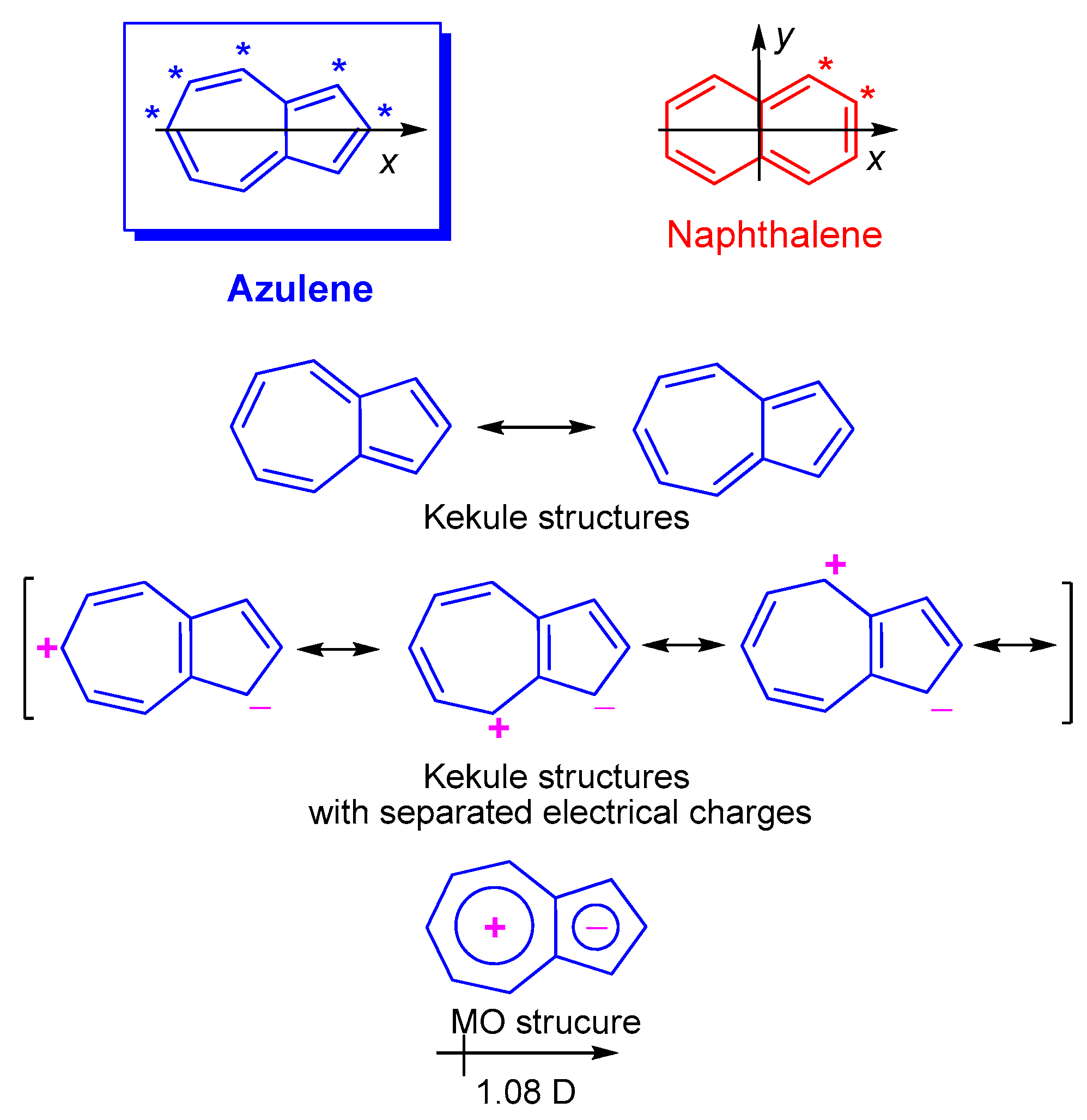
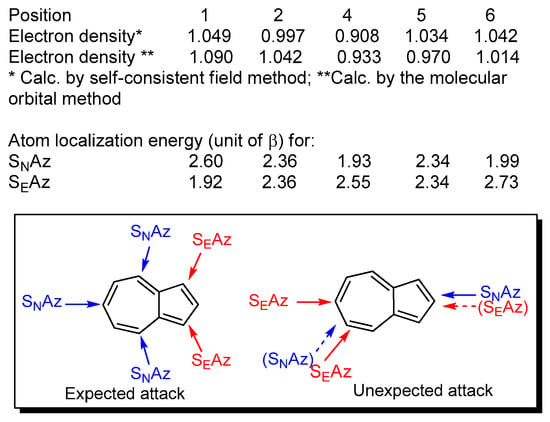
As can be seen from Figure 1, the π electrons are distributed over the five- and seven-atom rings, forming a cyclopentadienic and cycloheptatrienic system. However, with one electron transfer from the 7-atom ring to the 5-atom ring, azulene can be regarded as the fusion of a 6 π-electron cyclopentadienyl anion and a 6 π-electron tropylium cation [26,27]. A consequence of this electric charge distribution is the remarkable dipole moment for azulene (μ ≈ 1 Debye), one of the few hydrocarbons with a dipole moment. As can be seen from Figure 1, unlike naphthalene with two axes of symmetry, azulene is left with only one. As a result, naphthalene presents only two different reactive positions (1 and 2), while in azulene no less than five positions can be distinguished (1, 2, 4, 5 and 6). Another feature of the azulene system is the calculated π-electron density and atom localization energies for different positions [28,29,30,31]. As shown in Figure 2, these factors indicate the place where the electrophilic or nucleophilic attack of a reagent can take place on azulene. Some factors related to the structure of the reactant and/or reaction conditions can modify the positions where azulene substitutions occur (Figure 2).
Figure 1.
Azulene structure.
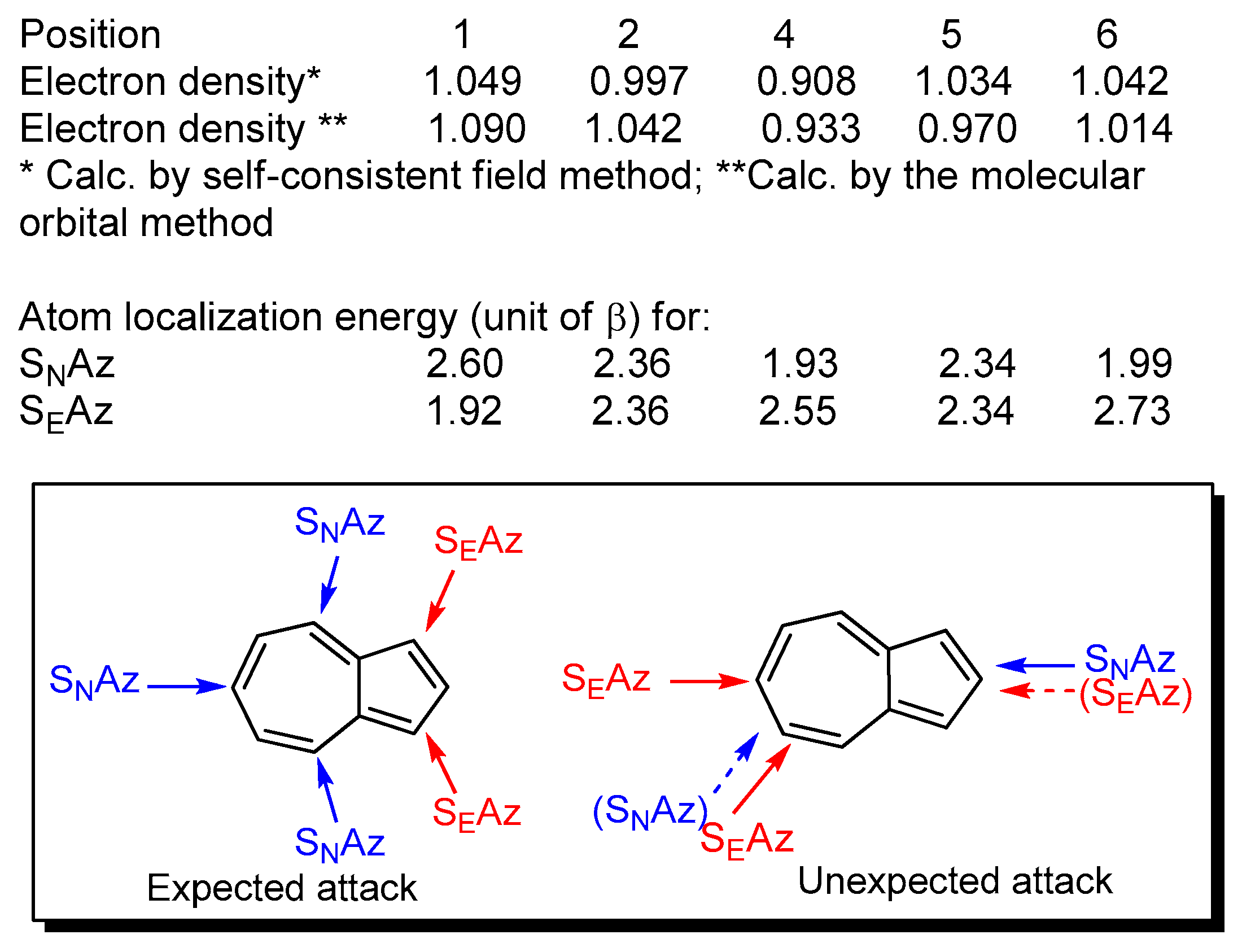
Figure 2.
Calculated π-electron density for azulene positions by self consistent field (*) and by molecular orbital (**) methods and atom localization energies, with predictable attack positions [26,27,28,29,30,31].
A brief examination of the data in Figure 2 suggests that electrophilic attack is highly favored in the small azulene ring at position 1(3) and rarely at position 2 [32]. Positions 4(8) and 6 with reduced electron density are suitable for nucleophilic attack [33]. At the same time, the electrical charge at positions 2, 5, or 7 makes them unsuitable for electrophilic or nucleophilic substitution. Azulenes bearing substituents at these positions have been synthesized mainly by the building of the azulene skeleton or especially resorting to reactions catalyzed by metallic compounds. However, it should be noted that there is some discrepancy between the calculated values and the experimental reactivity positions [26,31]. In this context, the proposed review will focus on some of the cases in which compounds with substituents in these positions are obtained by substitutions without the intervention of a catalyst; these compounds are therefore advantageous from both an ecological and economic point of view.
2. Less Frequent Substitution at Azulene Rings
2.1. Nucleophilic and Electrophilic Substitutions at Seven Ring Azulenes, SNAz and SEAz
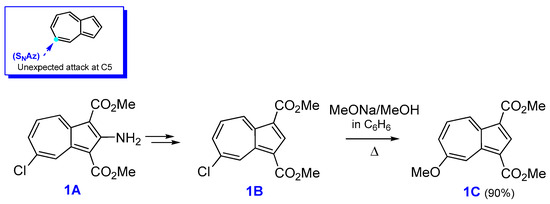
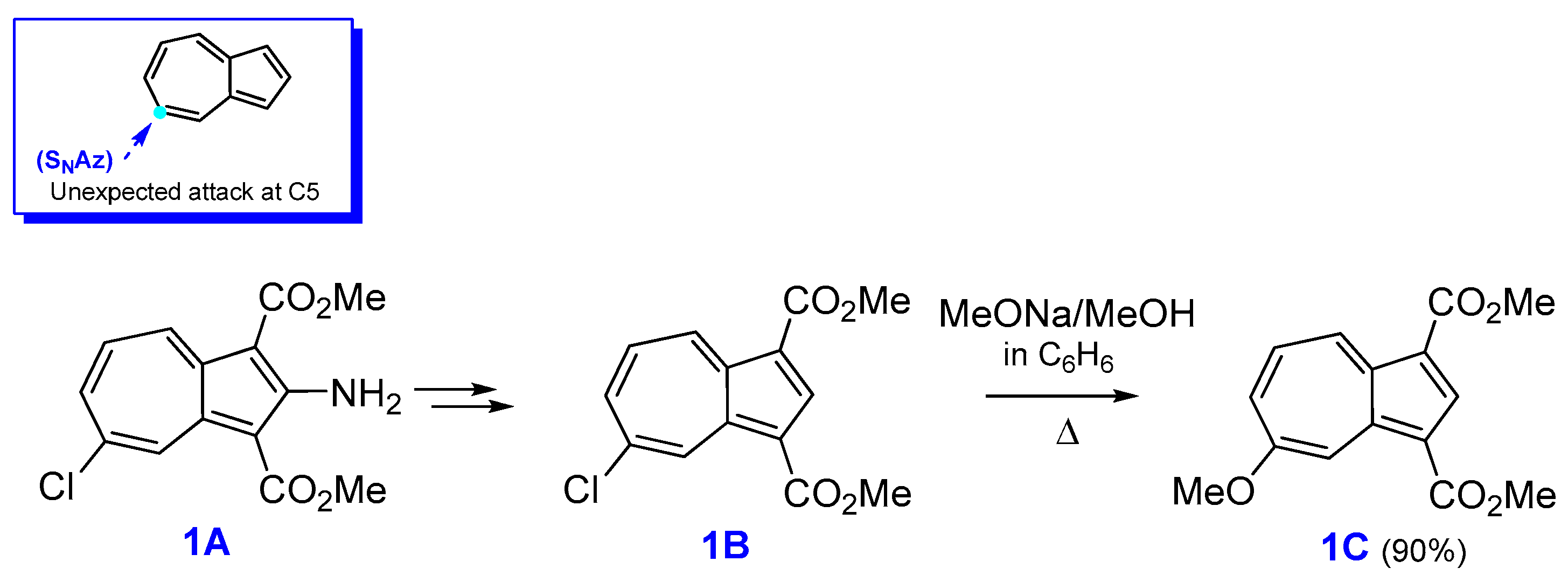
Based on calculation predictions, as outlined in Section 1, the nucleophilic substitution of azulene occurs in the seven-atom ring at positions 4 or 8 and mainly at position 6, which is confirmed by countless experimental results. As such, the good yield reported by Morita et al. for the SNAz of Cl at position 5 with an OMe group (Scheme 1) seems to be interesting and unexpected [34]. The explanation of this behavior was based on the well-known EWG influence of the CO2Me groups, but especially the nucleophilic strength of MeO−.
Scheme 1.
SNAz at position 5 of azulene [34].
While the previously presented nucleophilic substitution of position 5(7) is contrary to the results of the calculations, the electron density at these positions or even at position 2 creates the possibility of an electrophilic attack on these positions, especially if positions 1 and 3, the most electron-rich, are occupied. Of course, the electrophilic agent must be sufficiently strong to promote the reaction. Some examples of electrophilic substitution at the seven-membered ring will be discussed in the following.
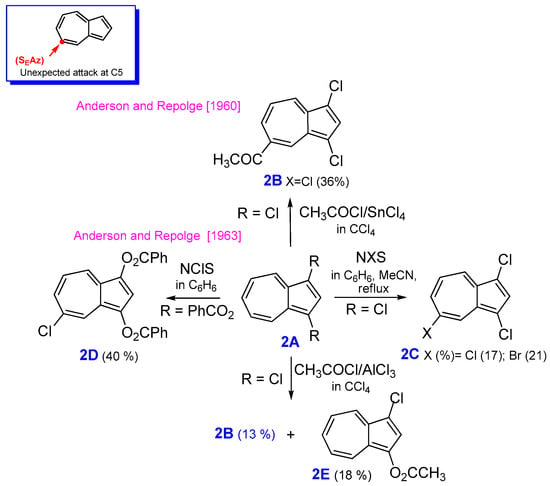
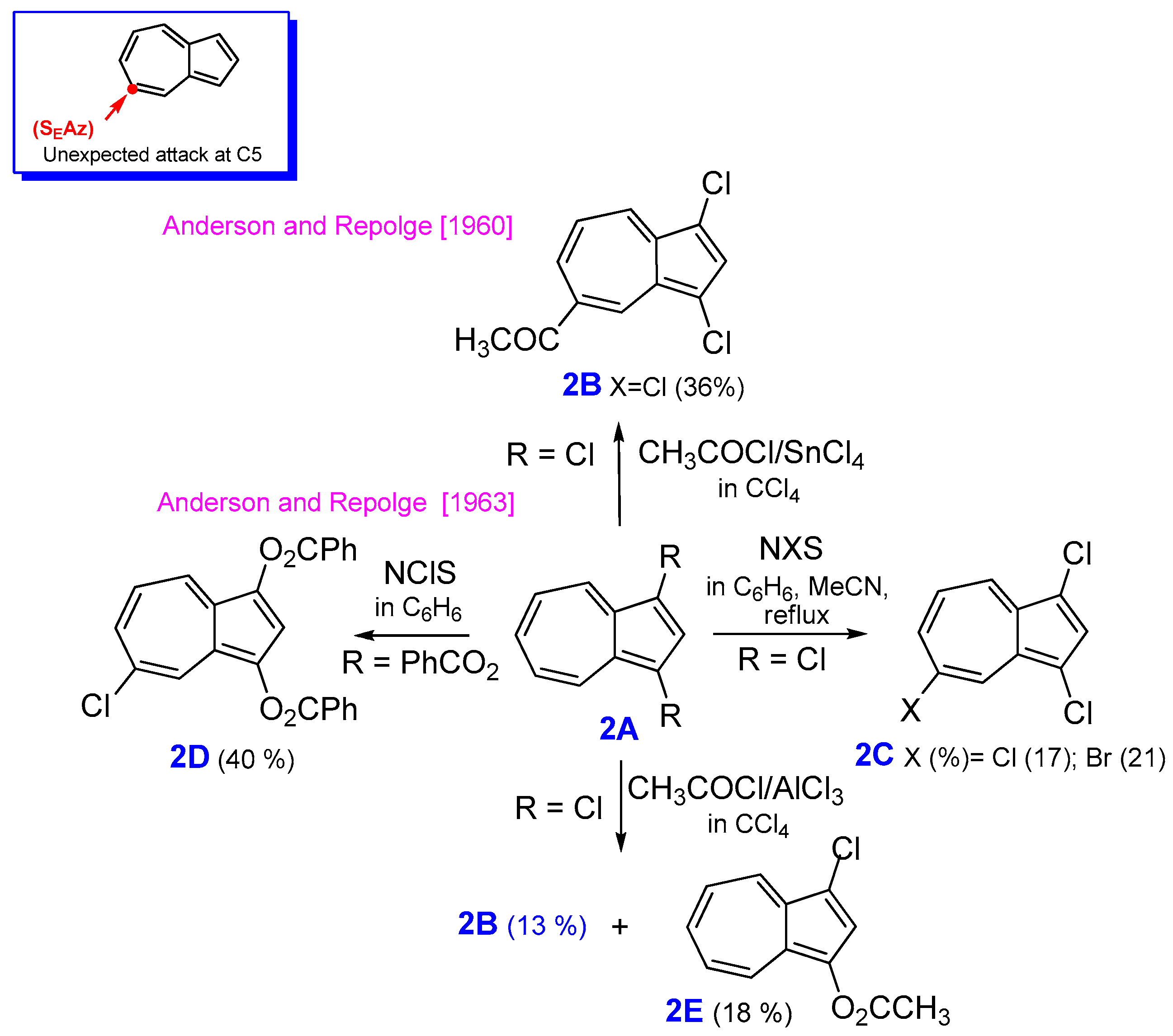
Anderson and Replolge achieved the acylation and halogenation of position 5 starting from azulene 2A with substituents Cl or PhCO2 at positions 1 and 3 to increase the electrophilicity of the azulene system [35,36]. For halogenation, they followed the classical electrophilic Friedel–Crafts procedure (Scheme 2). Acylation in the presence of SnCl4 affords the halogenated azulene 2B; however, the strong AlCl3 also promotes the substitution of Cl in the electron-rich position 1, providing the compound 2E. Halogenation at position 5 (Scheme 2) was also carried out with N-halogenosuccinimide and the starting azulene 2A was substituted by Cl or PhCO2.
Scheme 2.
Electrophilic acylation and halogenation at position 5 of the azulene [35,36].
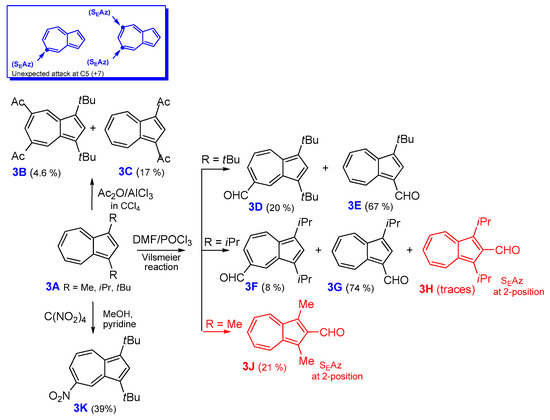
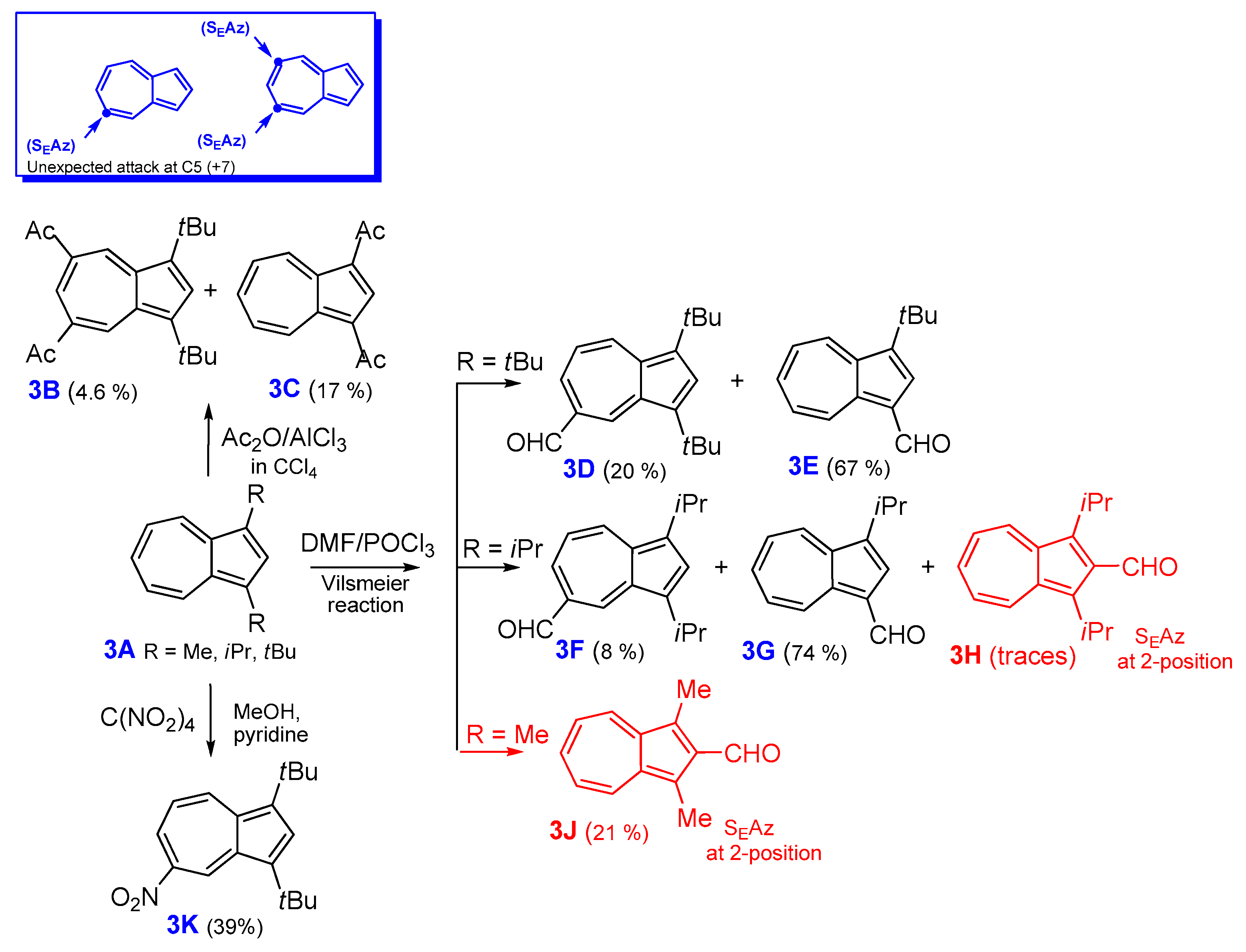
At the same time, the research team of Hafner was also interested in the possibility of SEAz reactions in the seven-membered ring. During the Friedel–Crafts acylation of 1,3-di-t-butylazulene, 3A (tBu), the authors found that along with the electrophilic substitution of the tBu groups belonging to the five-membered ring, producing compound 3C, a small amount of acylation also occurs at positions 5 and 7 to produce compound 3B (Scheme 3) [37]. Something more productive was the nitration of position 5 which gave nitroazulene 3K (yield 39%) (Scheme 3). The reaction uses C(NO2)4 in the presence of pyridine in methanol. The Vilsmeier reaction of 1,3-dialkylated azulene was another target of this team. Together with the SEAz at position 5, toward compounds 3D and 3F, the substitution of an alkyl in the five-membered ring takes place, as in compounds 3E and 3G. Although the electron density at position 2 significantly discourages electrophilic attack at this position compared to nucleophilic attack, the authors found the formation of the 2-substituted compounds 3H and 3J in the Vilsmeier SEAz pathway. This happens when the substituent at the five ring is difficult or impossible to replace as iPr or Me. More information on SEAz at position 2 will be developed in the next section.
Scheme 3.
SEAz at seven-membered azulene ring by Friedel–Crafts or Vilsmeier reactions and by nitration [37].
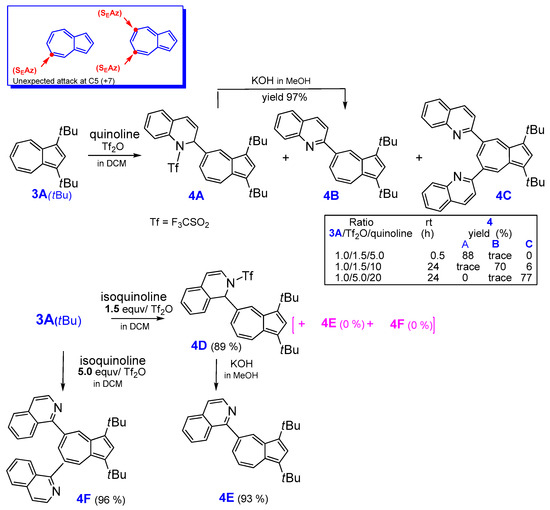
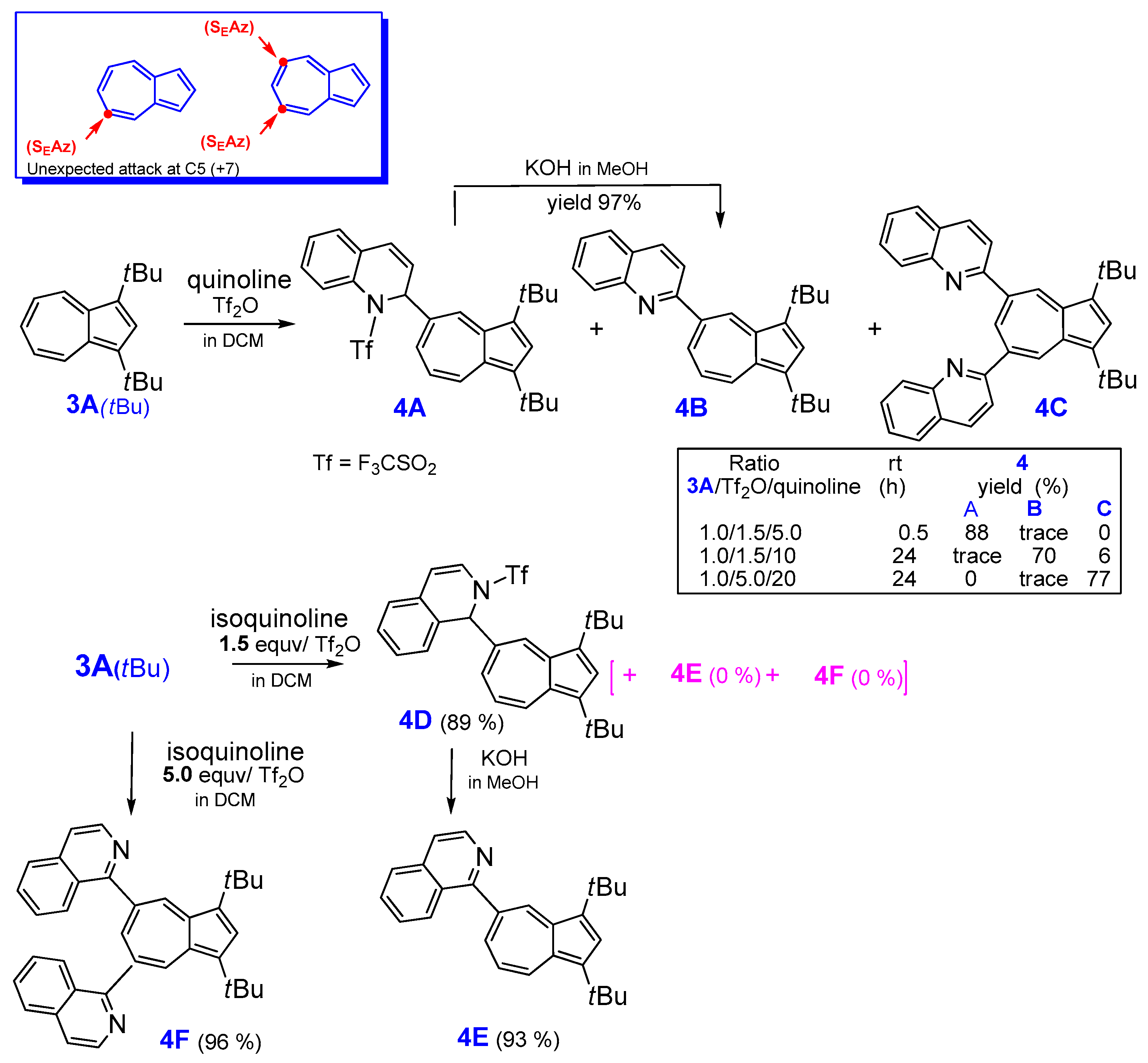
A series of interesting azulenes substituted by N-containing heteroaryl in the seven-membered ring were obtained by Shoji et al. following the electrophilic hydrogen substitution of 1,3-di-t-butylazulene [38], thus avoiding the frequently used metal catalysts for C-H bond activation [39]. The azulene 3A (tBu) was chosen as the starting compound and the first research studies used quinoline and isoquinoline triflate as electrophiles. Scheme 4 details the behavior of the two triflates under various reaction conditions. The heteroaryl triflate was acquired in situ after the reaction between trifluoromethanesulfonic anhydride (Tf2O) and heteroaryl in DCM. The resulting products were the dihydroheteroarylazulenes 4A and 4D, together with their subsequent aromatized derivatives 4B and 4E. The excess of the heterocyclic compound with its basic effect eliminates the trifluoromethanesulfonic acid from dihydro derivatives, giving the aromatic compounds. Therefore, the amount of the products depends on the ratio between the starting materials. The reaction mixture may also contain the compounds 4C and 4F which are di-substituted at positions 5 and 7. The unsaturated compounds 4A and 4D were separated and subsequently aromatized to the products 4B and 4E in the presence of KOH in ethanol (Scheme 4).
Scheme 4.
SEAz of 1,3-di-tert-butylazulene with quinoline and isoquinoline triflate [38].
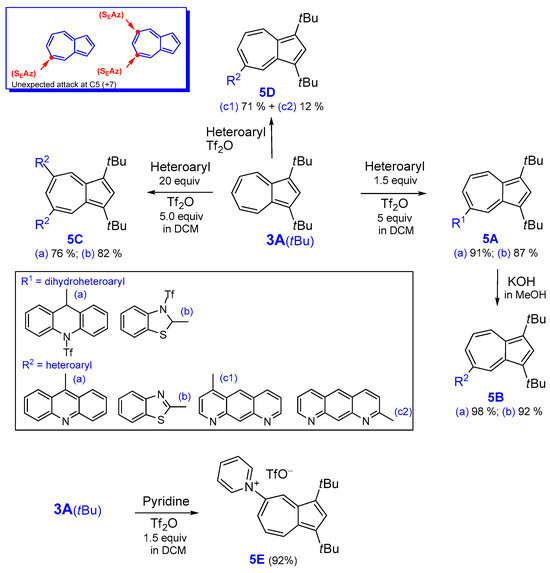
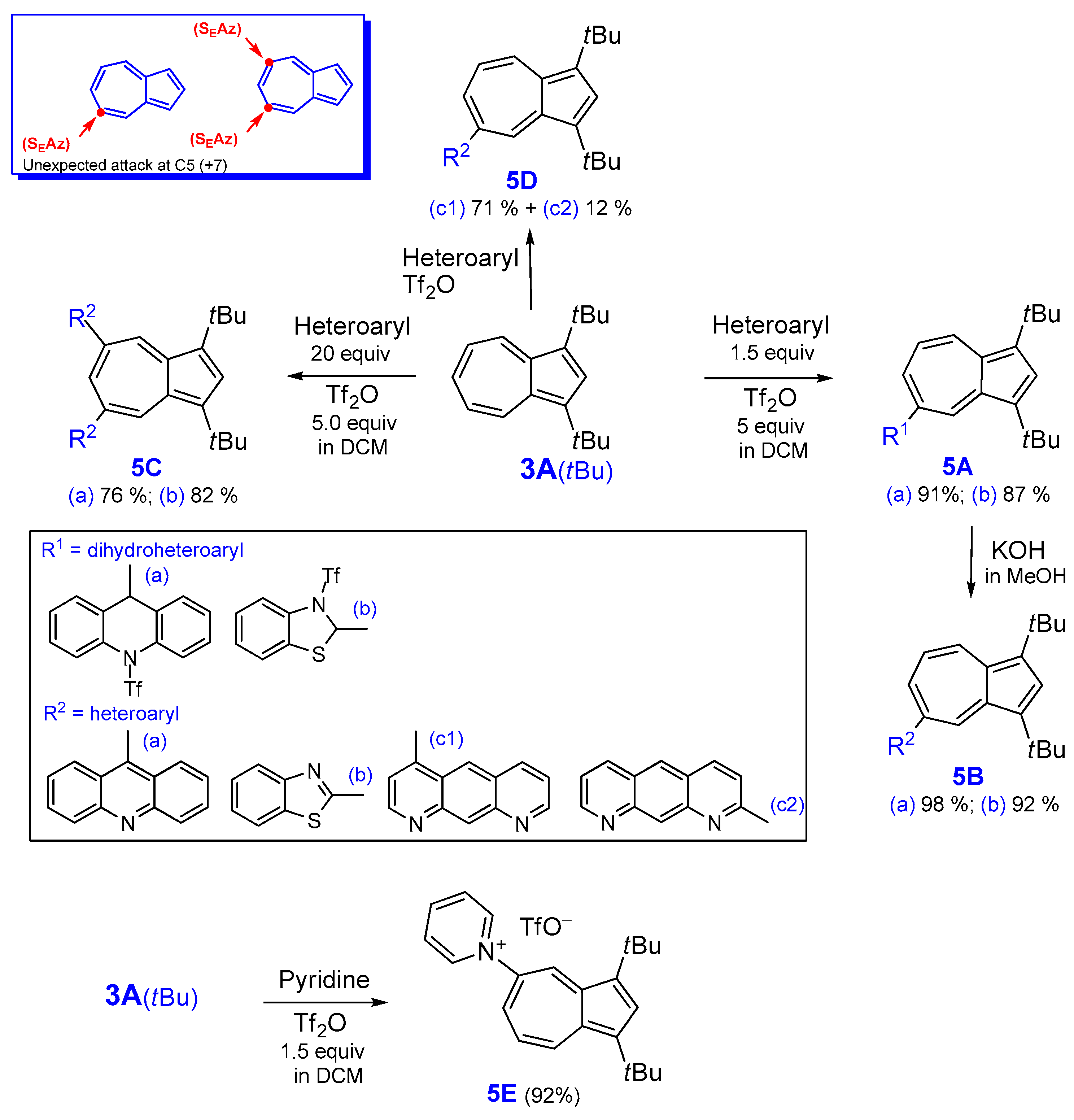
The authors broadened the range of heterocycles involved in the substitution of 3A (tBu) using acridine (a), benzothiazole (b) and 1,10-phenanthroline (c), and the results are shown in Scheme 5 [38]. As can be seen from the data included in this scheme, the nature of the starting heterocycles and the reaction conditions are decisive for the resulting products. The behavior of the first two compounds resembles that discussed above for quinoline and isoquinoline; the formed reaction mixture contains both the hydrogenated product and the aromatic ones. However, the reaction with the triflate of 1,10-phenanthroline gave only the aromatized products 5D (c1 + c2) regardless of the reaction conditions. A specification must be made if the reaction starts with pyridine. Instead of the expected 5-(dihydropyridyl)azulene derivative, the reaction unexpectedly stops with the pyridinium compound 5F.
Scheme 5.
Synthesis of N-containing heteroarylazulenes by SEAz at the seven-membered ring [38].
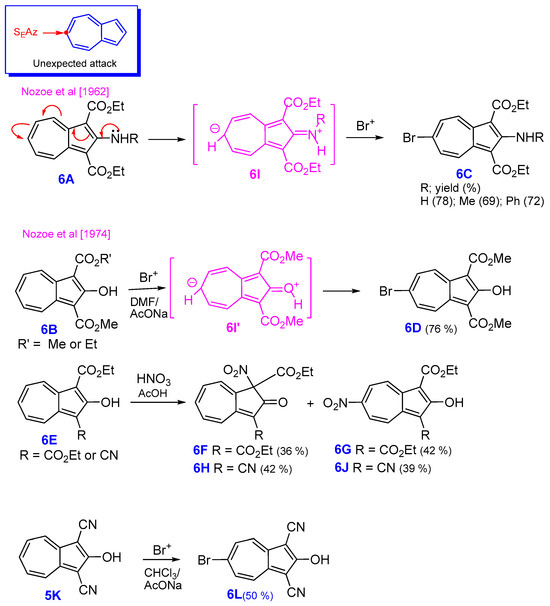
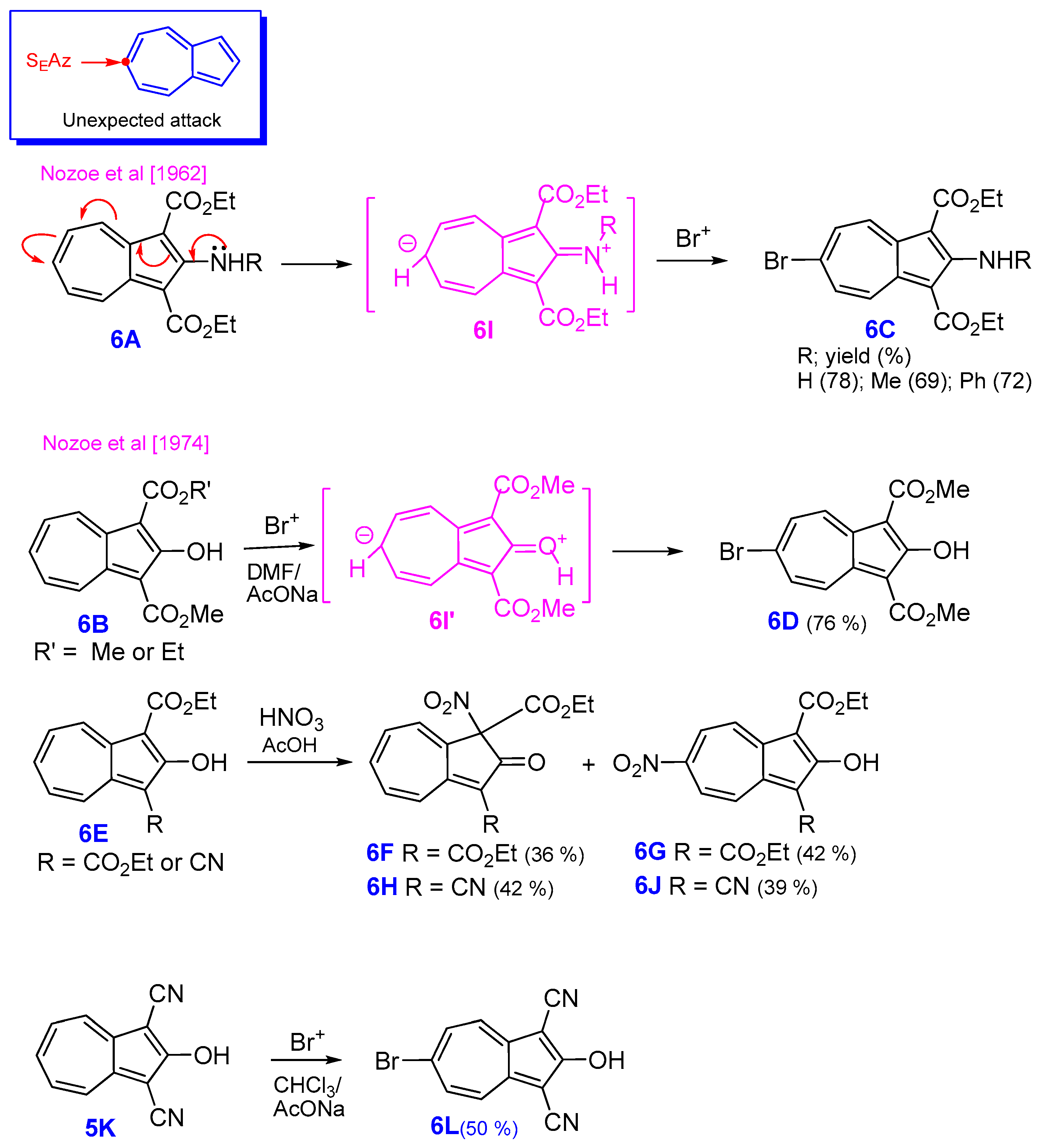
A paradoxical behavior can be considered in the attack of position 6 on the compound 6A by the cation Br+ due to the reduced electron density at this position known for SNAz attack. The product 6C results according to the mechanism proposed by Nozoe et al. and as described in Scheme 6 [40]. The electron-donating property of the amino group and its position in the electronic system of azulene allows the transfer of an electron pair from the nitrogen to position 6 and, taking into account that positions 1 and 3 are occupied, SEAz occurs at this position. The non-participating electron pair of oxygen ensures the activation of position 6 in the SEAz bromination of compound 6B, as shown in Scheme 6 [41]. The nitration of compound 6E produces the azulenones 6F and 6H as a result of substitution at position 2 of the compound 6E, along with the compounds substituted at position 6: 6G and 8J. The authors also brominated the dinitrile 6G at position 6 with moderate yield.
Scheme 6.
Several SEAz at position 6 starting from azulene with NHR or OH at position 2 [40,41].
2.2. Nucleophilic and Electrophilic Substitutions at Position 2 of Azulene, SEAz
According to the results of electron density calculation, it has been shown that the density at position 2 has lower values compared to positions 1 and 3. Therefore, the reactivity of this position towards nucleophilic and even electrophilic substitutions is expected to be reduced. As already written, azulenes bearing substituents at positions 2 have been obtained, especially by the building of the azulene skeleton. Recently, several transition-metal-mediated reactions utilizing azulene halides have been reported in the literature (references on this subject in [42]). The several examples presented below avoid the use of the catalyst being focused on SEAz or SNAz reactions at position 2. Some peculiarities of the azulene system and/or reactant, as well as the reaction conditions that allow avoidance of the predictions from calculations, will be described.
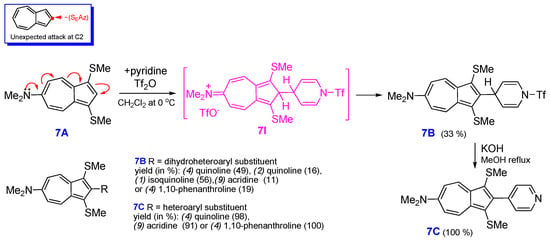
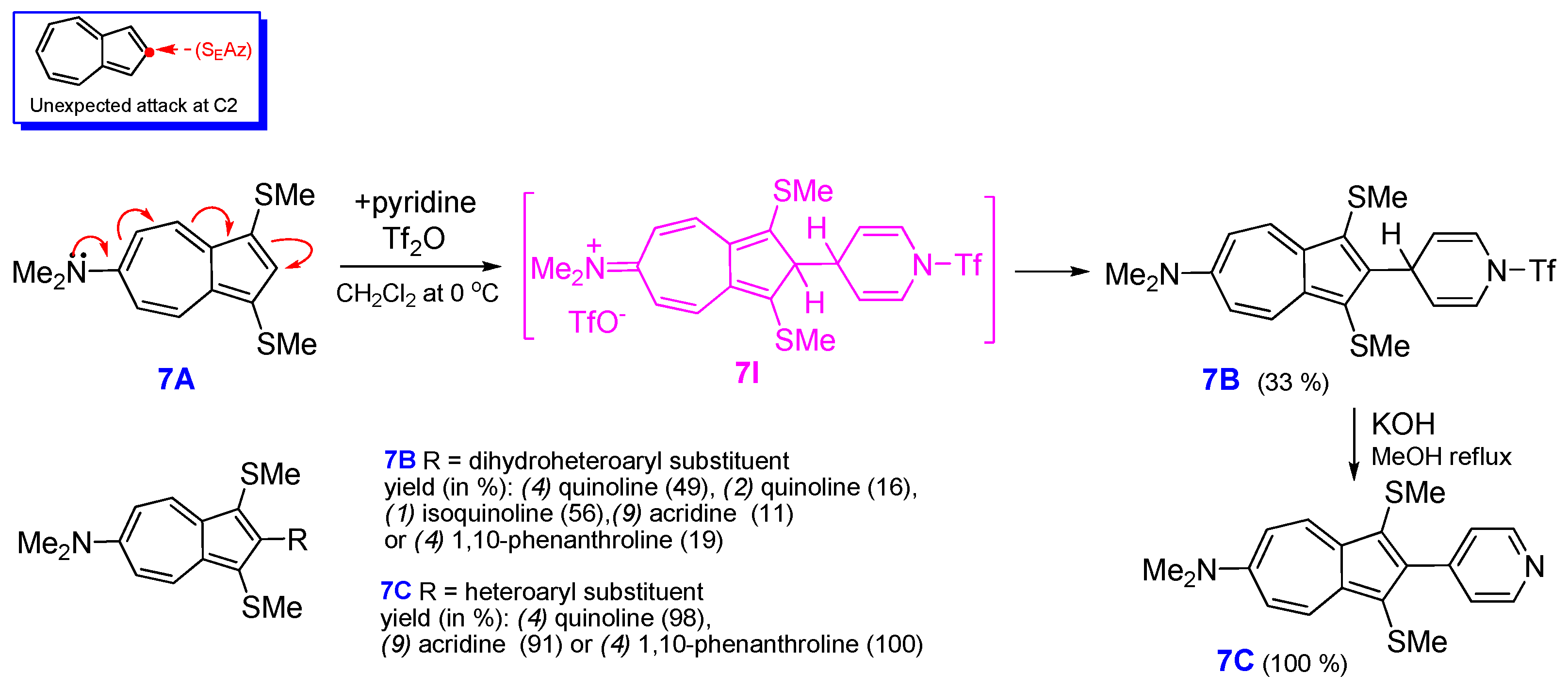
The behavior of compound 7A, which undergoes a SEAz reaction at position 2, studied by Shoji et al., is described in Scheme 7 [42]. The suitable structure of this compound with two protecting groups at positions 1 and 3 and with a strong electron donor, dimethylamino, at azulene position 6 allows electrophilic attack at position 2. Similarity to the behavior of 2-aminoazulene 6A in SEAz is obvious. The substitution is performed by the efficient electrophile pyridine triflate which also appears as a reactant in Scheme 4 and Scheme 5. The dihydroheteroaryl compound 7B was formed as a stable intermediate and subsequently aromatized to the product 7C in the presence of a base, KOH.
Scheme 7.
SEAz at position 2 activated by 6-NMe2 group [42].
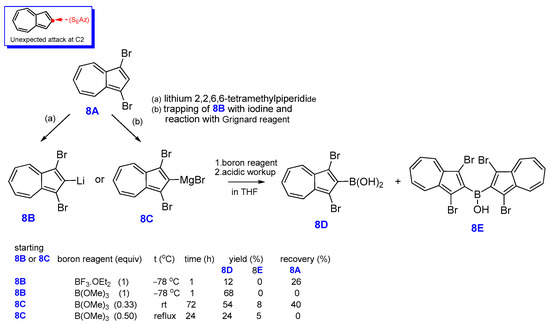
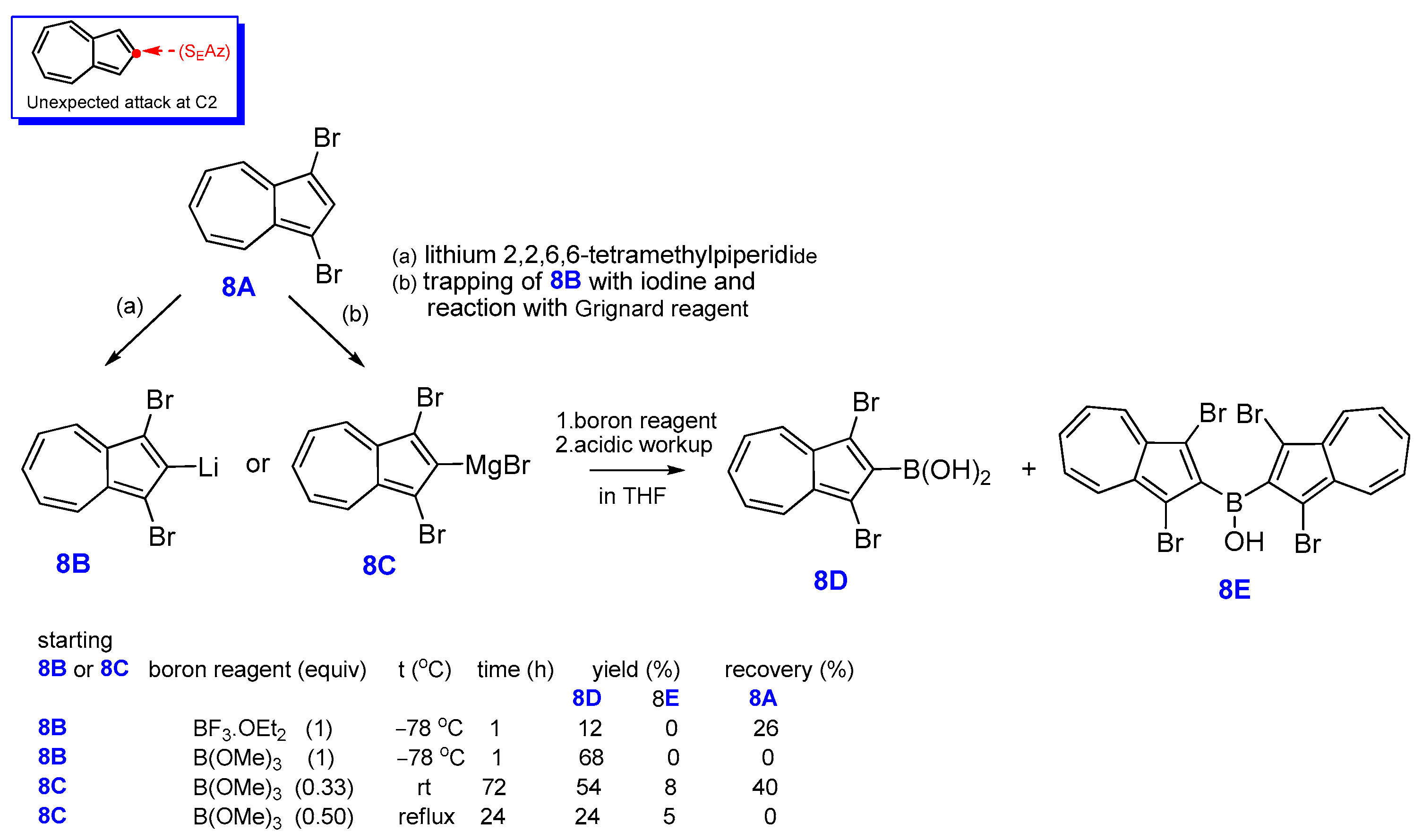
A somewhat more special example of SEAz at position 2 of azulene can be found in articles that are dedicated to the synthesis of diarylborinic acids. Thus, a number of diarylborinic acids were reported by Donghi et al. who, in addition to their synthesis, were concerned with their reactivity and uses depending on the aryl groups [43]. Kurotobi et al. realized the introduction of a boryl substituent into position 2 of azulene by application of the Miyaura and Smith methods with C-H activation in the presence of an iridium catalyst [44]. Later, in order to obtain such products, Murafuji et al. started from organolithiums or Grignard reagents with the metal at position 2 of azulene, as in compounds 8B and 8C (Scheme 8) [45]. Metalated azulenes were subjected to reaction with different boronic electrophilic agents and the formed reaction mixture contained (1,3-dibromoazulen-2-yl)borinic acid, 8D, bis(1,3-dibromoazulen-2-yl)borinic acid 8E, and an amount of 1,3-dibromoazulene, 8A (Scheme 8). The ratio between the products is determined by the nature of the organometallic compound, the ratio between reactants, and the boronic electrophile.
Scheme 8.
Azulenyl and diazulenylborinic acid synthesis using SEAz reaction [44,45].
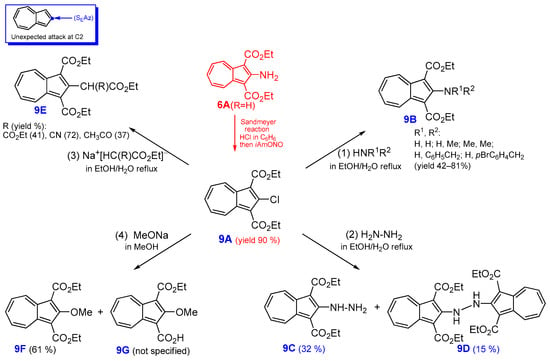
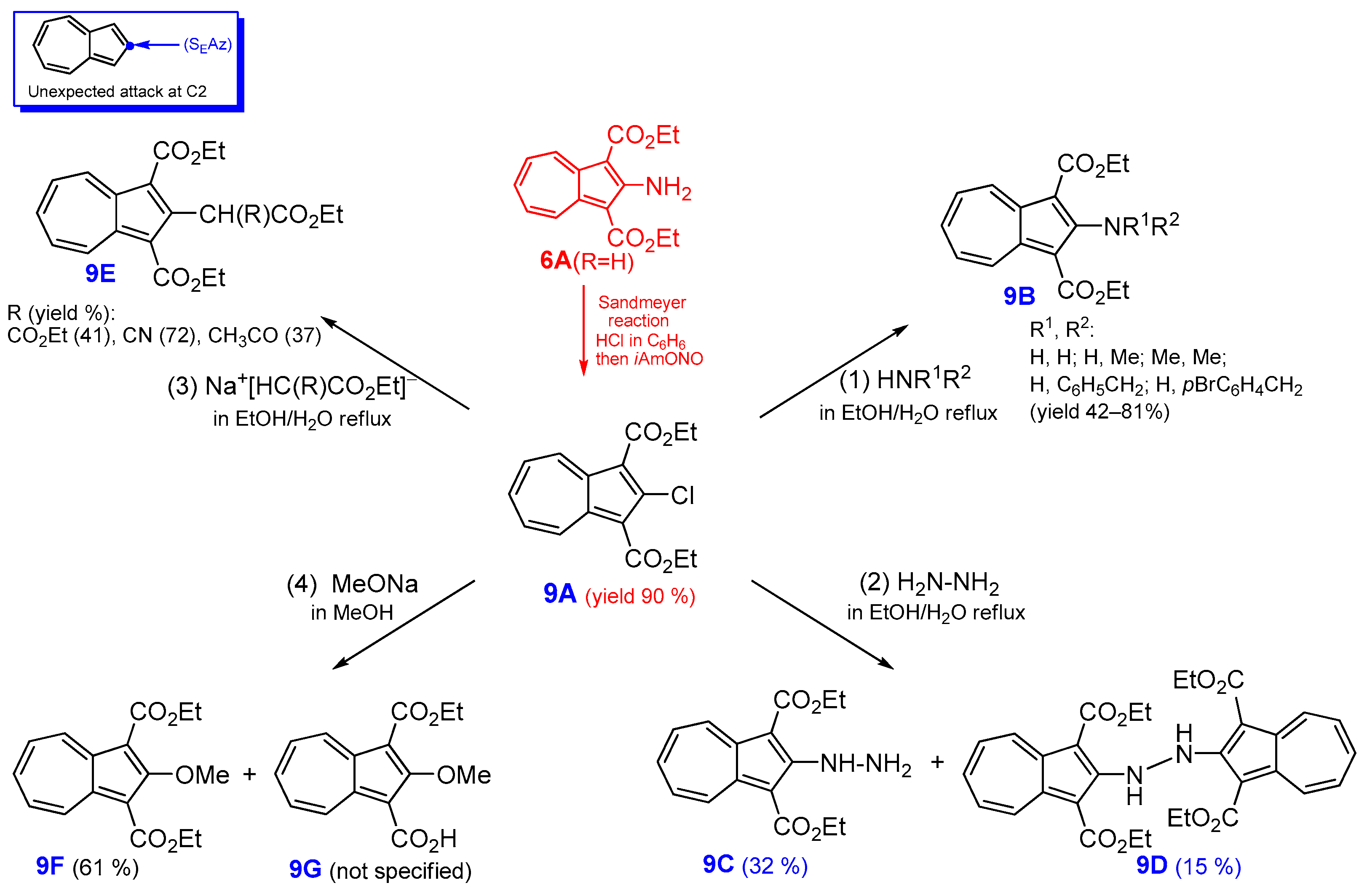
Nozoe’s et al. paper, which deals with the “normal” SNAz at position 6 [40], also describes the “unusual” nucleophile substitution of chlorine at position 2 of azulene. For this purpose, azulene received the electron-withdrawing groups at positions 1 and 3 of azulene (as in compound 9A) and strong nucleophilic reagents were used (for example, carbanions, MeO−); the results are described in Scheme 9. The starting chlorinated azulene 9A results by a Sandmeyer pathway from amine 6A. The substitution at the azulene occurs in EtOH/H2O and the yields are moderate to good. Two remarks should be made. The use of hydrazine as a nucleophile with two free reactive positions gives, along with the monosubstituted compound 9C, the bis derivative 9D. Then, the presence of methoxide has as an effect the partial hydrolysis of one carbethoxy group as in compound 9G.
Scheme 9.
SNAz at position 2 starting from 2-halogenated azulene; Nozoe et al. [40].
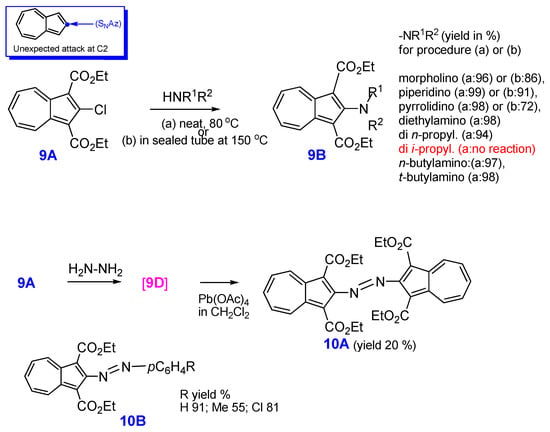
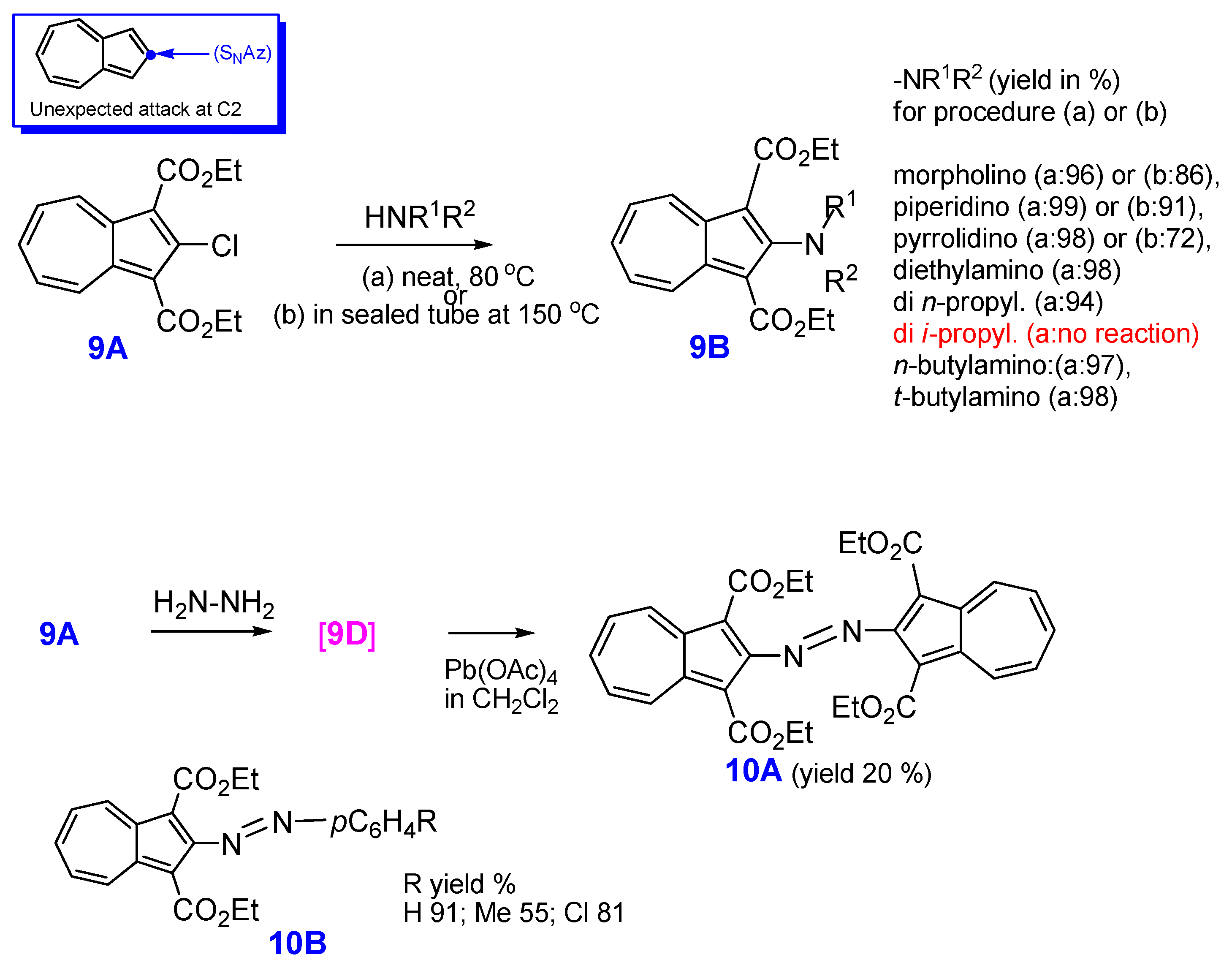
After 15 years, Shoji et al. repeated several reactions of 2-haloazulene 9A described by Nozoe by changing the reaction conditions; the results are described in Scheme 10 [46]. As can be seen, the authors worked in neat amine at 80 °C or in closed tubes at 150 °C, with the first procedure bringing higher yields. Highly nucleophilic amines such as morpholine, piperidine or pyrimidine ensure an almost quantitative yield for the reactions. Interestingly, di-i-propylamine does not react, possibly for steric reasons. The instability of the hydrazoderivative 9D, reported by Nozoe, was removed by Shoji by oxidizing it to the interesting azoderivative 10A with two azulenes linked at position 2. Further, using a similar route, Shoji et al. synthesized several azoderivatives as described in Scheme 10.
Scheme 10.
SNAz at position 2 starting from 2-halogenated azulene; Shoji et al. [46].
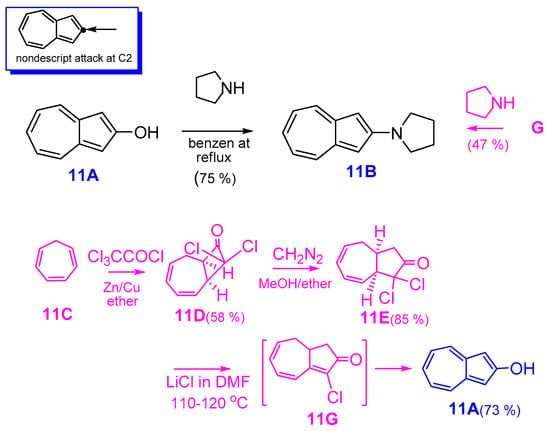
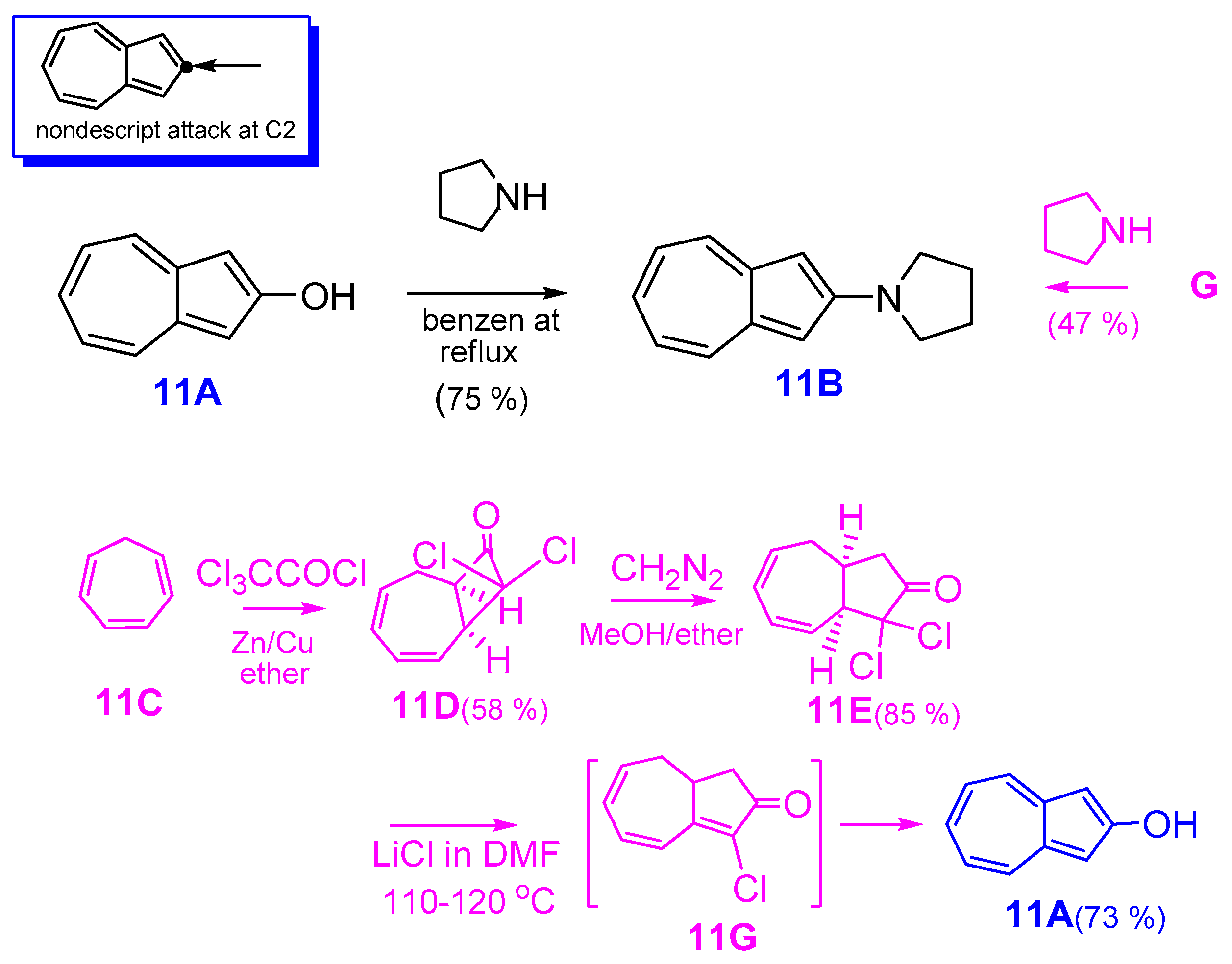
Finally, a substitution is presented for which the authors did not propose any mechanism. The reaction replaces the OH group in position 2 of azulene with pyrrolidinyl as described in Scheme 11 [47]. Although amine is a good nucleophile, a direct SNAz seems to be ruled out because the hydroxide ion is a poor leaving group. On this occasion, a synthesis route for azulene with a substituent at position 2 is presented in Scheme 11, which is based on the building of the azulene system, also widely used for the purpose of obtaining other azulenes substituted in various positions.
Scheme 11.
Replacement of the OH group in position 2 of azulene with pyrrolidinyl and the building of 2-hydroxiazulene [47].
3. Instead of Conclusions
At the end of a review that analyzes exceptions to a rule, the presence of conclusions seems inappropriate. Instead, the observations that can be made after regarding the information presented on less frequent substitutions in azulene rings may be useful to those who want a brief documentation on this topic. In the article published by Huang et al. [39], an exhaustive review presents the obtainment of simple azulene-based molecules whose subsequent use allows the synthesis of polymers and frameworks for different technical applications. Therefore, the concern for these simple molecules remains a desire for researchers in the field and, from this point of view, the syntheses proposed above represent an example. The proposed review aims to draw attention to special azulene substitutions used with a low frequency compared to the very large number of processes developed for this purpose that proceed as predicted taking into account the specificity of the raw materials used.
The presence of different substituents at position 5(7) often appears as a result of the azulene system building, starting from the reagents containing them. At the same time, the electric charge at these positions moderately promotes both substitutions, SNAz and SEAz. Thus, an unexpected SNAz reaction takes place at this position supported by the EWG influence of the CO2Me groups at positions 1 and 3 and the nucleophilic strength of the reagent used (MeO−). Then, blocking the most favorable positions 1 and 3 for SEAz creates the premise for such an attack of azulene positions less suitable for this process, namely position 5(7). The literature contains a number of examples in this regard, for example the Friedel–Crafts and Vilsmaier reactions or the electrophilic substitution of azulene with heteroaryl triflates. In complete contradiction to the results of the calculations, there appears to be SEAz at position 6. This unexpected behavior is due to the electron donor effect of the amino group in a favorable position of the azulene skeleton.
It is known that most of the procedures for obtaining 2-substituted azulenes are based on the formation of the azulene system or on metal-complex catalyzed substitutions. Therefore, the concern for direct electrophilic or nucleophilic reactivity of this position under certain conditions may seem somewhat surprising. However, the construction of the azulene system involves a significant number of steps and the use of catalysts increases the price of products obtained in this way. The ecological component affected by the use of metal complexes should not be overlooked either. Therefore, the achievement of 2-substituted azulenes by SEAt at this position is surprising. In order to carry out the substitution, it is necessary to block reactive positions 1 and 3 and to use strong nucleophilic reagents such as carbanions or tertiary amines. We should also remember the contribution of a pair of electrons of the amino group when it is placed in the favorable azulene position, increasing the electron density of position 2, a phenomenon similar to that previously mentioned for SEAz at position 6. Of course, along with the relatively limited number of compounds produced through the analyzed processes, a multitude of substances can result from these syntheses with properties that are difficult to imagine at present.
Funding
This research received no external funding.
Data Availability Statement
No new data were created or analyzed in this study.
Conflicts of Interest
The author declares no conflicts of interest.
References
- Zeller, K.-P. Houben Weyl, Methoden der Organischen Chemie; G. Thieme Verlag: Stuttgart, Germany; New York, NY, USA, 1985; Volume V/2c, pp. 258–263. [Google Scholar]
- Schmitt, S.; Baumgarten, M.; Simon, J.; Hafner, K. 2,4,6,8-Tetracyanoazulene: A New Building Block for “Organic Metals”. Angew. Chem. Int. Ed. 1998, 37, 1033–1077. [Google Scholar] [CrossRef]
- Mrozek, T.; Görner, H.; Daub, J. Multimode-Photochromism Based on Strongly Coupled Dihydroazulene and Diarylethene. Chem. Eur. J. 2001, 7, 1028–1940. [Google Scholar] [CrossRef]
- Achatz, J.; Fischer, C.; Salbeck, J.; Daub, J. Functionalized photochromics for molecular switching: The multistabilities of a dihydroazulene–anthraquinone system. J. Chem. Soc. Chem. Commun. 1991, 504–507. [Google Scholar] [CrossRef] [Scilit]
- Asato, A.E.; Liu, R.S.H.; Rao, V.P.Y.; Cai, M. Azulene-containing donor-acceptor compounds as second-order nonlinear chromophores. Tetrahedron Lett. 1996, 37, 419–422. [Google Scholar] [CrossRef] [Scilit]
- Iftime, G.; Lacroix, P.G.; Nakatani, K.; Razus, A.C. Push-pull azulene-based chromophores with nonlinear optical properties. Tetrahedron Lett. 1998, 39, 6853–6856. [Google Scholar] [CrossRef] [Scilit]
- Wang, P.; Zhu, P.; Ye, C.; Asato, A.E.; Liu, R.S.H. Theoretical Investigation and Molecular Design of Some Azulene Derivatives with Large Hyperpolarizabilities. J. Phys. Chem. A 1999, 103, 7076–7082. [Google Scholar] [CrossRef] [Scilit]
- Woodford, J.N.; Wang, C.H.; Asato, A.E.; Liu, R.S.H. Hyper-Rayleigh scattering of azulenic donor–acceptor molecules at 1064 and 1907 nm. J. Chem. Phys. 1999, 111, 4621–4628. [Google Scholar] [CrossRef] [Scilit]
- Lacroix, P.G.; Malfant, I.; Iftime, G.; Razus, A.C.; Nakatani, K.; Delaire, J.A. Azo-Azulene Derivatives as Second-Order Nonlinear Optical Chromophores. Chem. Eur. J. 2000, 6, 2599–2608. [Google Scholar] [CrossRef]
- Lambert, C.; Nöll, G.; Zabel, M.; Hampel, F.; Schmälzlin, E.; Bräuchle, C.; Meerholz, K. Highly Substituted Azulene Dyes as Multifunctional NLO and Electron-Transfer Compounds. Chem. Eur. J. 2003, 9, 4232–4239. [Google Scholar] [CrossRef] [Scilit]
- Lambert, C.; Gaschler, W.; Schmälzlin, E.; Meerholz, K.; Bräuchle, C. Subchromophore interactions in tricyanovinyl-substituted triarylamines—A combined experimental and computational study. J. Chem. Soc. Perkin Trans. 1999, 2, 577–588. [Google Scholar] [CrossRef] [Scilit]
- Dong, J.-X.; Zhang, H.-L. Azulene-based organic functional molecules for optoelectronics. Chin. Chem. Lett. 2016, 27, 1097–1104. [Google Scholar] [CrossRef] [Scilit]
- Murai, M.; Iba, S.; Ota, H.; Takai, K. Azulene-Fused Linear Polycyclic Aromatic Hydrocarbons with Small Bandgap, High Stability, and Reversible Stimuli Responsiveness. Org. Lett. 2017, 19, 5585–5588. [Google Scholar] [CrossRef] [Scilit]
- Murai, M.; Abe, M.; Ogi, S.; Yamaguchi, S. Diazulenylmethyl Cations with a Silicon Bridge: A π-Extended Cationic Motif to Form J-Aggregates with Near-Infrared Absorption and Emission. J. Am. Chem. Soc. 2022, 144, 20385–20393. [Google Scholar] [CrossRef] [Scilit] [PubMed]
- Murai, M.; Iba, S.; Hamao, S.; Kubozono, Y.; Ota, H.; Takai, K. Azulene-Fused Linearly π-Extended Polycyclic Aromatic Compounds: Synthesis, Photophysical Properties, and OFETs Applications. Bull. Chem. Soc. Jpn. 2023, 96, 1077–1081. [Google Scholar] [CrossRef] [Scilit]
- Buica, G.-O.; Lazar, I.-G.; Birzan, L.; Lete, C.; Prodana, M.; Enachescu, M.; Tecuceanu, V.; Stoian, A.; Ungureanu, E.-M. Azulene-ethylenediaminetetraacetic acid: A versatile molecule for colorimetric and electrochemical sensors for metal ions. Electrochim. Acta 2018, 263, 382–390. [Google Scholar] [CrossRef] [Scilit]
- Zieliński, T.; Kędziorek, M.; Jurczak, J. The azulene moiety as a chromogenic building block for anion receptors. Tetrahedron Lett. 2005, 46, 6231–6234. [Google Scholar] [CrossRef] [Scilit]
- Cowper, P.; Pockett, A.; Kociok-Köhn, G.; Cameron, P.J.; Lewis, S.E. Azulene-thiophene-cyanoacrylic acid dyes with donor-π-acceptor structures. Synthesis, characterisation and evaluation in dye-sensitized solar cells. Tetrahedron 2018, 74, 2775–2786. [Google Scholar] [CrossRef] [Scilit]
- Nishimura, H.; Ishida, N.; Shimazaki, A.; Wakamiya, A.; Saeki, A.; Scott, L.T.; Murata, Y. Hole-transporting materials with a two-dimensionally expanded π-system around an azulene core for efficient perovskite solar cells. J. Am. Chem. Soc. 2015, 137, 15656–15659. [Google Scholar] [CrossRef] [Scilit]
- Noll, G.; Lambert, C.; Lynch, M.; Porsch, M.; Daub, J. Electronic Structure and Properties of Poly- and Oligoazulenes. J. Phys. Chem. C 2008, 112, 2156–2164. [Google Scholar] [CrossRef] [Scilit]
- Ito, S.; Shoji, T.; Morita, N. Recent Advances in the Development of Methods for the Preparation of Functionalized Azulenes for Electrochromic Applications. Synlett 2011, 16, 2279–2298. [Google Scholar] [CrossRef] [Scilit]
- Redl, F.X.; Köthe, O.; Röckl, K.; Bauer, W.; Daub, J. Azulene-Based Donor–Acceptor Systems: Synthesis, Optical, and Electrochemical Properties. Macromol. Chem. Phys. 2000, 201, 2091–2100. [Google Scholar] [CrossRef] [Scilit]
- Wang, F.; Lai, Y.-H.; Han, M.-Y. Stimuli-Responsive Conjugated Copolymers Having Electro-Active Azulene and Bithiophene Units in the Polymer Skeleton: Effect of Protonation and p-Doping on Conducting Properties. Macromolecules 2004, 37, 3222–3230. [Google Scholar] [CrossRef] [Scilit]
- Porsch, M.; Sigl-Seifert, G.; Daub, J. Polyazulenes and Polybiazulenes: Chiroptical Switching and Electron Transfer Properties of Structurally Segmented Systems. Adv. Mater. 1997, 9, 635–639. [Google Scholar] [CrossRef] [Scilit]
- Hong, B.-C.; Jiang, Y.-F.; Kumar, E.S. Microwave-assisted [6+4]-cycloaddition of fulvenes and α-pyrones to azulene–indoles: Facile syntheses of novel antineoplastic agents. Bioorg. Med. Chem. Lett. 2001, 11, 1981–1984. [Google Scholar] [CrossRef] [Scilit]
- Solà, M. Forty years of Clar’s aromatic π-sextet rule. Front. Chem. 2013, 1, 22–30. [Google Scholar] [CrossRef] [Scilit] [PubMed]
- Fischer, L.J.; Dutton, A.S.; Winter, A.H. Anomalous effect of non-alternant hydrocarbons on carbocation and carbanion electronic configurations. Chem. Sci. 2017, 8, 4231–4241. [Google Scholar] [CrossRef] [Scilit] [PubMed]
- Murfin, L.C.; Lewis, S.E. Azulene-A Bright Core for Sensing and Imaging. Molecules 2021, 26, 353. [Google Scholar] [CrossRef] [Scilit] [PubMed]
- Bloor, J.E. Semiempirical scf calculations on azulene and its singly charged ions. Can. J. Chem. 1965, 43, 3026–3038. [Google Scholar] [CrossRef] [Scilit]
- Tilney-Bassett, J.F.; Waters, W.A. The substitution of azulene by benzyl radicals. J. Chem. Soc. 1959, 633, 3123–3139. [Google Scholar] [CrossRef] [Scilit]
- Pariser, R. Electronic Spectrum and Structure of Azulene. J. Chem. Phys. 1956, 25, 1112–1116. [Google Scholar] [CrossRef] [Scilit]
- Razus, A.C. Azulene, reactivity and scientific interest inversely proportionate to ring size. Part 1. Five-membered ring. Symmetry 2023, 15, 310. [Google Scholar] [CrossRef] [Scilit]
- Razus, A.C. Azulene, reactivity and scientific interest inversely proportionate to ring size. Part 2. The seven-membered ring. Symmetry 2023, 15, 1391. [Google Scholar] [CrossRef] [Scilit]
- Morita, T.; Ise, F.; Takase, K. Synthesis of methyl 1,5- and 1,7-azulenequinone-3-carboxylates. Chem. Lett. 1982, 11, 1303–1306. [Google Scholar] [CrossRef] [Scilit]
- Anderson, A., Jr.; Replogle, L. Electrophilic Substitution of 1,3-Dichloroazulene. J. Org. Chem. 1960, 25, 1275. [Google Scholar] [CrossRef] [Scilit]
- Anderson, A.G.; Replogle, L.L. Electrophilic Substitution of Some 1,3-Disubstituted Azulenes. J. Org. Chem. 1963, 28, 2578–2581. [Google Scholar] [CrossRef] [Scilit]
- Hafner, K.; Moritz, K.L. Zur Kenntnis der Azulene, XIII. Elektrophile Substitutionen des Azulens in 2-und 5-bzw. 7-Stellung. Justus Liebigs Ann. Chem. 1962, 656, 40–53. [Google Scholar] [CrossRef] [Scilit]
- Shoji, T.; Ito, S.; Toyota, K.; Morita, N. Synthesis of 5-heteroaryl- and 5,7-bis(heteroaryl)azulenes by electrophilic substitution of 1,3-di-tert-butylazulene with triflates of N-containing heterocycles. Eur. J. Org. Chem. 2010, 80, 1059–1069. [Google Scholar] [CrossRef] [Scilit]
- Huang, J.; Huang, S.; Zhao, Y.; Feng, B.; Jiang, K.; Sun, S.; Ke, C.; Kymakis, E.; Zhuang, X. Azulene-Based Molecules, Polymers, and Frameworks for Optoelectronic and Energy Applications. Small Methods 2020, 4, 2000628. [Google Scholar] [CrossRef] [Scilit]
- Nozoe, T.; Seto, S.; Matsumura, S. Synthesis of 2-Substituted Azulenes by Nucleophilic Substitution Reactions of 2-Haloazulene Derivatives. Bull. Chem. Soc. Jpn. 1962, 35, 1990–1998. [Google Scholar] [CrossRef] [Scilit]
- Nozoe, T.; Asao, T.; Oda, M. Some Electrophilic Substitution Reactions of 2-Hydroxyazulene Derivatives. Bull. Chem. Soc. Jpn. 1974, 47, 681–686. [Google Scholar] [CrossRef] [Scilit]
- Shoji, T.; Inoue, Y.; Ito, S.; Okujima, T.; Morita, N. First synthesis of 2-heteroarylazulenes by the electrophilic substitution of azulene with triflate of N-containing heterocycles. Heterocycles 2012, 53, 35–41. [Google Scholar] [CrossRef] [Scilit]
- Dongi, D.; Maggioni, D.; Beringhelli, T.; D’Alfonso, G.; Mercandelli, P.; Sironi, A. Hydrogen Bonding and Lewis Acid–Base Interactions in the System Bis(pentafluorophenyl)borinic Acid / Methanol. Eur. J. Inorg. Chem. 2008, 10, 1645–1653. [Google Scholar] [CrossRef] [Scilit]
- Kurotobi, K.; Miyauchi, M.; Takakura, K.; Murafuji, T.; Sugihara, Y. Direct Introduction of a Boryl Substituent into the 2-Position of Azulene: Application of the Miyaura and Smith Methods to Azulene. Eur. J. Org. Chem. 2003, 18, 3663–3665. [Google Scholar] [CrossRef] [Scilit]
- Murafuji, T.; Shintaku, K.; Nagao, K.; Mikata, Y.; Ishiguro, K.; Kamij, S. Synthesis and structural characterization of diazulenylborinic acid. Heterocycles 2017, 94, 676–690. [Google Scholar] [CrossRef] [Scilit]
- Shoji, T.; Sugiyama, S.; Araki, T.; Ohta, A.; Sekiguchi, R.; Ito, S.; Mori, S.; Okujima, T.; Yasunami, M. Synthesis of 2-amino- and 2-arylazoazulenes via nucleophilic aromatic substitution of 2-chloroazulenes with amines and arylhydrazines. Org. Biomol. Chem. 2017, 15, 3917–3923. [Google Scholar] [CrossRef] [Scilit] [PubMed]
- Yokoyama, R.; Ito, S.; Watanabe, M.; Harada, N.; Kabuto, C.; Morita, N. [2 + 2] Cycloaddition reaction of cycloheptatriene with dichloroketene. A novel and efficient synthetic strategy for the synthesis of 2-hydroxyazulene. J. Chem. Soc. Perkin Trans. 2001, 1, 2257–2261. [Google Scholar] [CrossRef] [Scilit]
Disclaimer/Publisher’s Note: The statements, opinions and data contained in all publications are solely those of the individual author(s) and contributor(s) and not of MDPI and/or the editor(s). MDPI and/or the editor(s) disclaim responsibility for any injury to people or property resulting from any ideas, methods, instructions or products referred to in the content. |
© 2026 by the author. Licensee MDPI, Basel, Switzerland. This article is an open access article distributed under the terms and conditions of the Creative Commons Attribution (CC BY) license.