


Abstract
Existing studies indicate that preventive conservation (PC) has become a key strategy in heritage risk management. For traditional villages with limited resources, community participation is necessary for the implementation of risk management. However, current research mostly focuses on case-based analyses and lacks a systematic synthesis of community participation in PC. To address this gap, this study conducts a systematic review of community participation in PC from historic rural areas and relevant heritage types. Following the PRISMA guidelines, 39 eligible studies were included in the final analysis. The findings show that effective participation depends on well-defined organizational and coordination networks. Internal organizational structures support coordinated efforts among community members, while external collaborative frameworks provide ongoing resources and support. Within this structure, capacity-building translates participatory arrangements into concrete risk-governance actions, thereby influencing how roles are assigned and adapted within the community across different risk scenarios. Based on these insights, this study presents an Organization–Capacity–Role framework that offers a way for risk governance of historical rural areas. Notably, the detailed arrangements in this framework are shaped by local institutional settings, specific risk types, and case contexts, demonstrating a strong contextual dependency.
1. Introduction
Many traditional villages still preserve their original spatial patterns and regionally distinctive architectural heritage [1]. These historical elements are important carriers of past civilizations, preserving memories from different periods and forming an indispensable part of heritage systems [2]. However, historic villages are increasingly exposed to multiple threats, which include physical deterioration (e.g., structural deformation, cracking, collapse, and biological damage) [3,4], and natural disasters (e.g., floods, landslides, and earthquakes) [5,6]. Under long-term exposure, these risks gradually undermine the stability of rural heritage. This vulnerability has been further compounded in recent years by the growing frequency of extreme weather events [7,8]. Moreover, the current conservation approach, which is mostly based on curative interventions, shows clear limitations in addressing potential risks [9,10]. In this context, strengthening the ability to identify risks and to prepare for disasters in traditional villages has become an urgent practical concern.
Preventive conservation (PC) provides a framework for managing deterioration and risks to heritage, and it has been applied in several key heritage sites and historic rural areas [10,11]. In 2008, the ICOM-CC defined preventive conservation at the New Delhi conference as “all measures and actions aimed at avoiding and minimizing future deterioration or loss” [12]. Unlike traditional curative approaches, this strategy adopts a continuous, cyclical process. This workflow consists of identification (anamnesis and diagnosis), management (intervention), and recovery (control), all of which operate according to pre-established plans [13,14]. PC focuses on multiple types of risk for heritage, including progressive material deterioration and many disaster threats [9]. In practice, it relies on proactive efforts through continuous inspection and monitoring to identify and manage potential risks before significant damage occurs [15]. The aim is to extend the lifespan of heritage sites and help to preserve their authenticity and integrity [16].
PC practices for significant heritage sites often rely on specialized equipment and professionals to continuously identify and manage risks [17]. However, this approach may be difficult to implement at scale in historic rural areas, where conservation resources are limited [18]. Under such constraints, community participation is increasingly regarded as a key solution to supplement the lack of professional resources and support for the sustained implementation of PC [10,14]. In practice, local communities are familiar with both their heritage and their surroundings, and are sensitive to ongoing changes. This expertise allows them to effectively participate in PC activities, especially in the risk identification stage [14,19]. For instance, Yang et al. (2021) [10] indicated that local villagers can contribute to data collection and report potential risks to the architectural heritage of Shifeng Village. In addition, many key international documents, such as the Nara Declaration on Authenticity and the Burra Charter, emphasize that community engagement deepens their understanding of the cultural significance of the sites and supports the long-term implementation of preservation measures [20,21]. The WHC also included communities in its strategic objectives (5Cs), highlighting their importance in heritage conservation [22,23].
Current research on community participation in traditional villages mainly focuses on conservation and utilization, intangible cultural heritage, and tourism [9,24]. For example, Tu (2024) [25] suggested establishing a long-term mechanism to give residents a greater voice in decision-making, drawing on a field investigation of Xidi Village and Hongcun Village. Luo et al. (2022) [26] argued that the attitudes and actions of community residents significantly influence the protection of Yongjiang Women’s Script in China. However, limited attention has been paid to the topic of PC, with only about 1.5% of the studies identified following the screening of 2527 initial records across the Web of Science (WoS), Scopus, and China National Knowledge Infrastructure (CNKI) databases. Moreover, most of them explore community participation practices based on case studies, which provide only limited insight into how this process is structured and how community empowerment operates within PC practices. Based on these gaps, the purpose of this study is to clarify the key elements of community participation in PC. Also, it explores pathways for integrating local communities into risk governance in historic rural areas.
To achieve this, this study employs a systematic review to synthesize evidence on PC in historic rural areas and related heritage types. This approach is adopted because most of the studies are case-based and lack a clear explanation of how community participation is organized in practice. A systematic review provides a standardized approach to identifying and synthesizing practices across different contexts [27]. Subsequently, it helps identify the key elements of community participation and examine how they operate within PC processes. To complete this systematic review, the following research questions were proposed:
RQ1: What are the key elements of community participation in PC for heritage and historic rural areas?
RQ2: How can communities be embedded into risk governance in historic rural areas through these elements?
2. Materials and Methods
This study was guided by the PRISMA 2020 guidelines, following the stages of identification, screening, and eligibility assessment [28,29]. The literature search was conducted on 18 and 24 May 2025, in the WoS, Scopus, and CNKI databases, focusing on titles, abstracts, and keywords.
2.1. Keyword Identification
Keywords for this study were derived from previous studies and categorized into three thematic groups.
The keywords for traditional villages include historical villages, vernacular heritage, and historical settlements, which are commonly used in rural heritage studies [9,30]. In these studies, village spaces are often characterized as comprising both natural elements (e.g., ecological and production spaces) and cultural elements (e.g., living and production spaces) [31,32]. Among these, living spaces (e.g., public spaces, traditional courtyards, street networks, and historical environmental features) can also be classified as architectural and immovable cultural heritage [9,33].
In addition, to broaden the search scope, terms related to PC, such as “risk prevention”, “disaster preparedness”, “risk management”, and “disaster mitigation”, are included [13,15,16]. For community participation, relevant terms and their synonyms were included in the search strategy [34].
The final retrieval strategy was constructed using Boolean operators as follows: (TS1) AND (TS2) AND (TS3).
Traditional villages: TS1 = (Immovable cultural heritage OR Immovable cultural relic* OR Tangible cultural heritage OR Natural heritage OR Architecture heritage OR Vernacular heritage OR Historical village* OR Traditional village* OR Historic settlement* OR Rural heritage OR Rural area*).
Preventive conservation: TS2 = (Risk prevention OR Disaster preparedness OR Preventive conservation OR Risk management OR Disaster mitigation).
Community participation: TS3 = (Community participat* OR Community involve* OR community engage* OR Stakeholder involve* OR Public participat* OR Participatory governance).
2.2. Screening and Eligibility
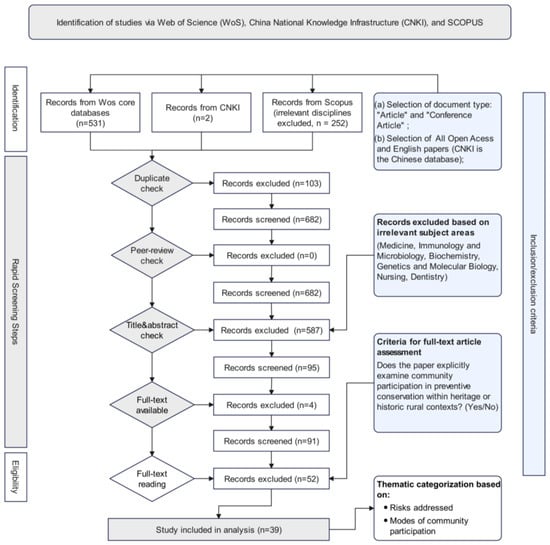
The screening process of this study consisted of three stages, which included searching, title and abstract screening, and full-text eligibility assessment (Figure 1). After importing the search strings into the three databases, document types were limited to “Article” and “Conference Article” while “Review” papers were excluded to prioritize primary research. English-language (CNKI search included articles in Chinese) and open-access articles were included to ensure full-text accessibility and reduce research costs. In addition, we manually excluded publications from clearly irrelevant subject categories (e.g., Medicine, Immunology and Microbiology, Biochemistry, Genetics, Molecular Biology, Nursing, Dentistry) in Scopus to streamline the screening process. After removing duplicate records, 682 articles remained for further screening.
Figure 1.
PRISMA workflow of literature search and review.
During the screening process, we excluded studies unrelated to this research through title and abstract screening, leaving 95 articles. Full text was obtained for further assessment of full-text eligibility. Still, four articles could not be accessed, leaving 91 articles for full-text review.
To address the research questions, studies needed to explicitly examine community participation in PC within heritage or historic rural contexts (the inclusion criterion for full-text eligibility). Any study that did not meet this criterion was excluded. Eventually, a total of 39 studies were included in the systematic review.
Following the inclusion criteria, we categorized the 39 included articles based on their focus on different risk contexts and forms of community participation (Table 1). These categories helped us to identify the key elements of community involvement.
Table 1.
Publications screened with PRISMA.
3. Results
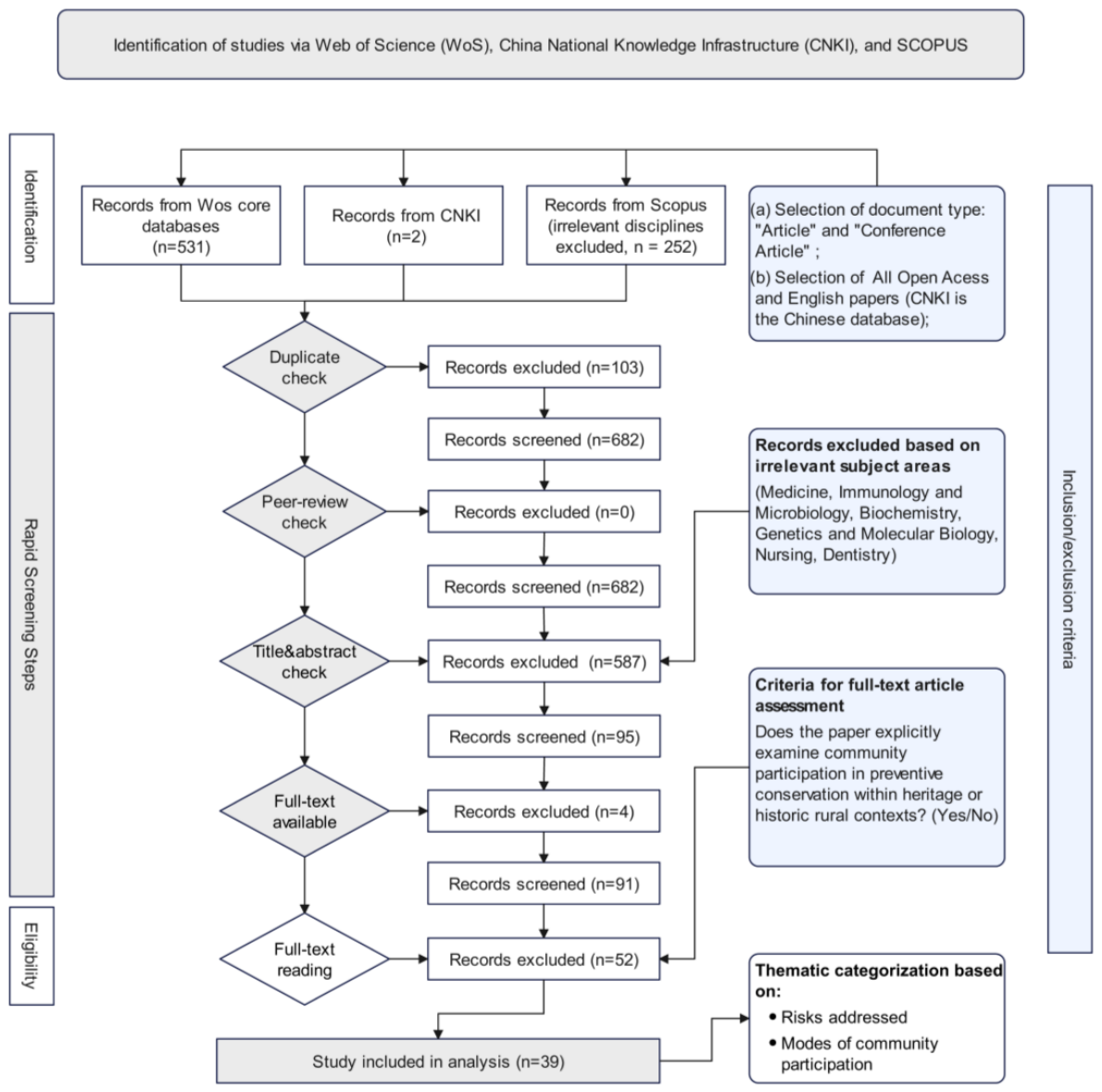
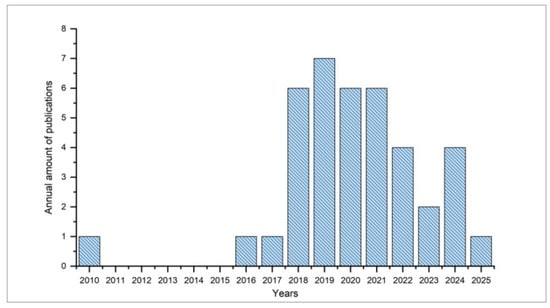
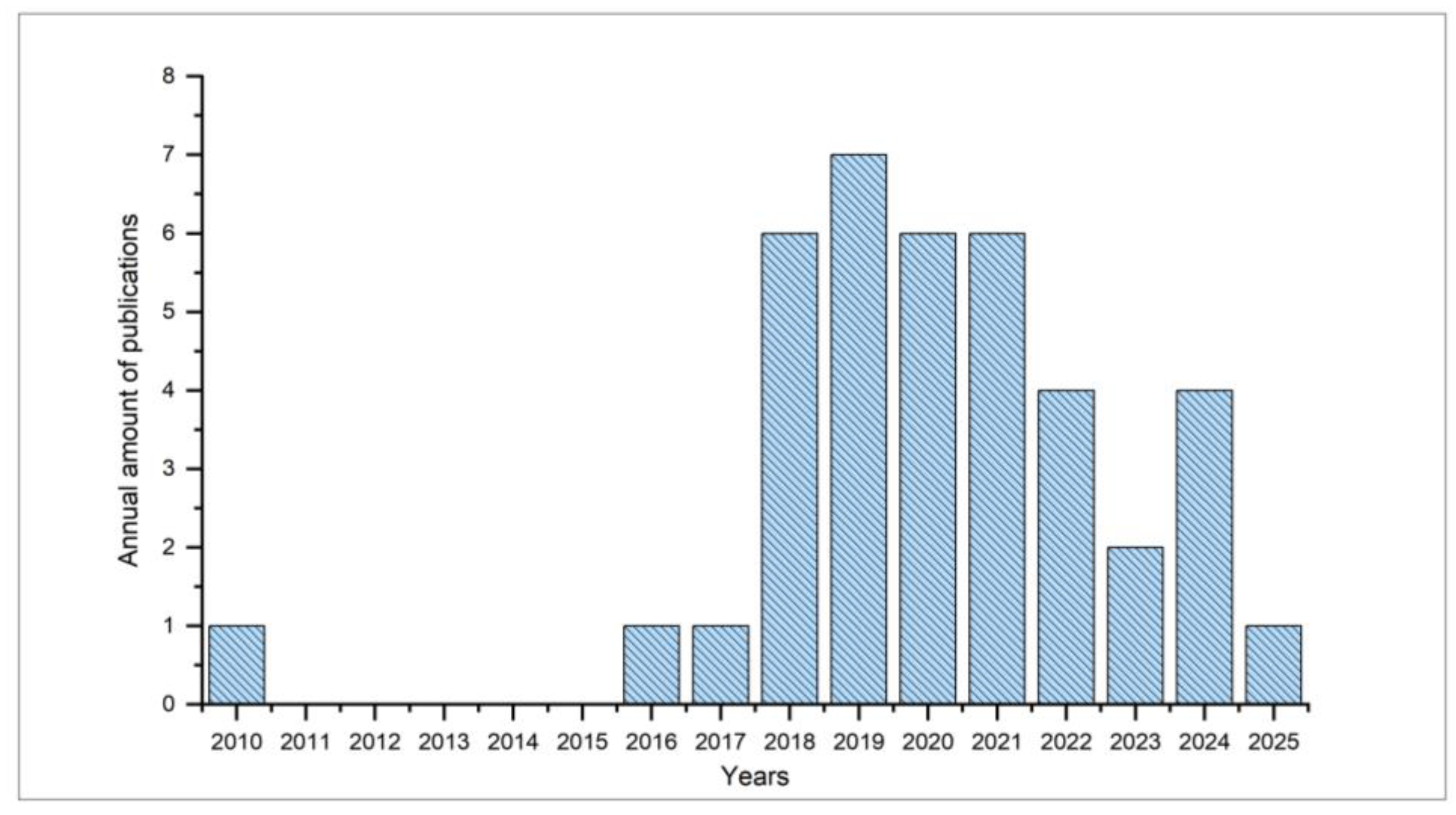
An analysis of the annual distribution of the included studies was conducted (Figure 2). Although the WHC introduced “Communities” as a strategic objective within the 5Cs framework in 2007, only 3 relevant studies were identified between 2010 and 2017. Publications began to increase after 2018, indicating a gradual rise in academic attention to this topic. Nevertheless, research in this area is still in its early stages, with both theoretical approaches and practical applications requiring further development.
Figure 2.
Annual number of publications.
CiteSpace was employed to visually analyze research hotspots and trends in PC and community participation. The analysis spanned the period from 2010 to 2024, segmented into 15 annual time slices (excluding one article with incomplete bibliographic data). With “Keywords” selected as the node type, the top 90% of items from each slice were selected to balance the clarity of the network map with the depth of the research topic. All other parameters remained at their default settings.
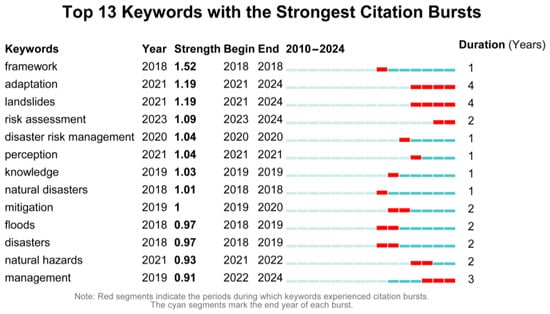
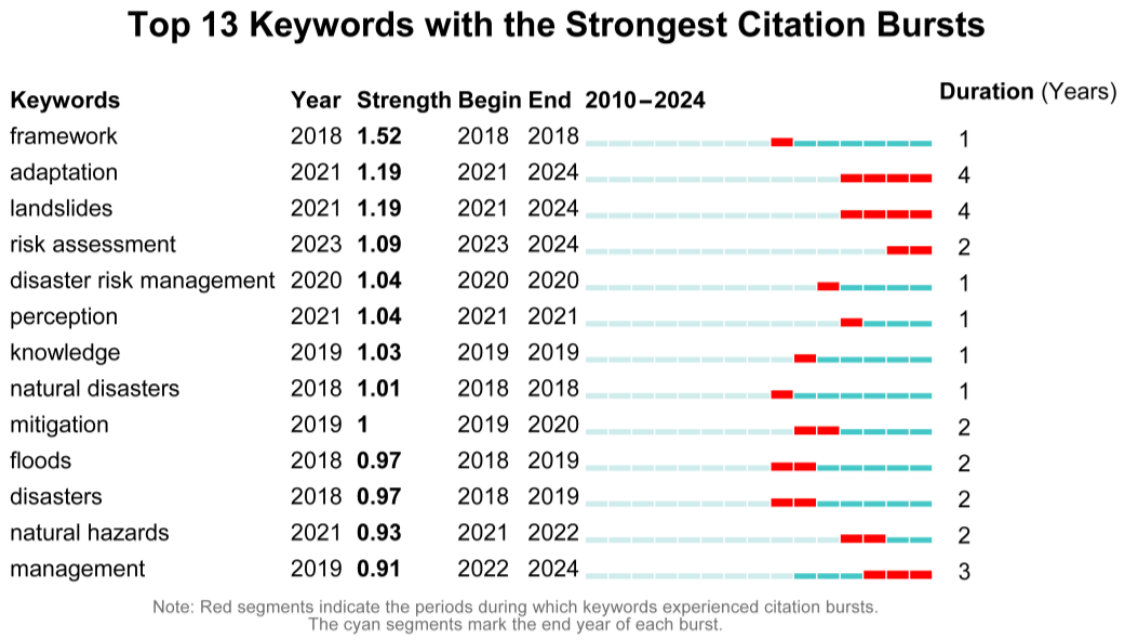
Shifts and changes in research hotspots can be reflected in keyword bursts [72]. As shown in Figure 3, CiteSpace identified the top 13 burst keywords. While the burst periods vary in duration, all of these keywords emerged between 2018 and 2024. Of these, the keyword “framework” shows the strongest burst strength (1.52), indicating that it was the most significant burst keyword and a major focal point in 2018. Keywords such as “adaptation,” “landslides,” and “management” demonstrate sustained bursts and continue to be active trends through to 2024. Notably, keywords related to risk management represent a major share of the burst keywords, reflecting a predominant academic focus on governance frameworks and procedural mechanisms. Although keywords such as “floods,” “natural disasters,” and “disaster risk management” have shorter burst durations (1–2 years), they reflect continued attention to diverse types of disaster risks. In addition, burst keywords such as “perception” and “knowledge” suggest a growing emphasis on community capacity-building in the context of disaster risk reduction.
Figure 3.
Top 13 Keywords with the strongest citation bursts.
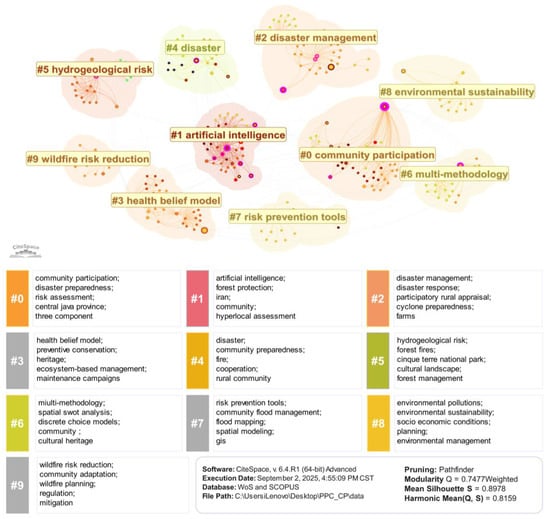
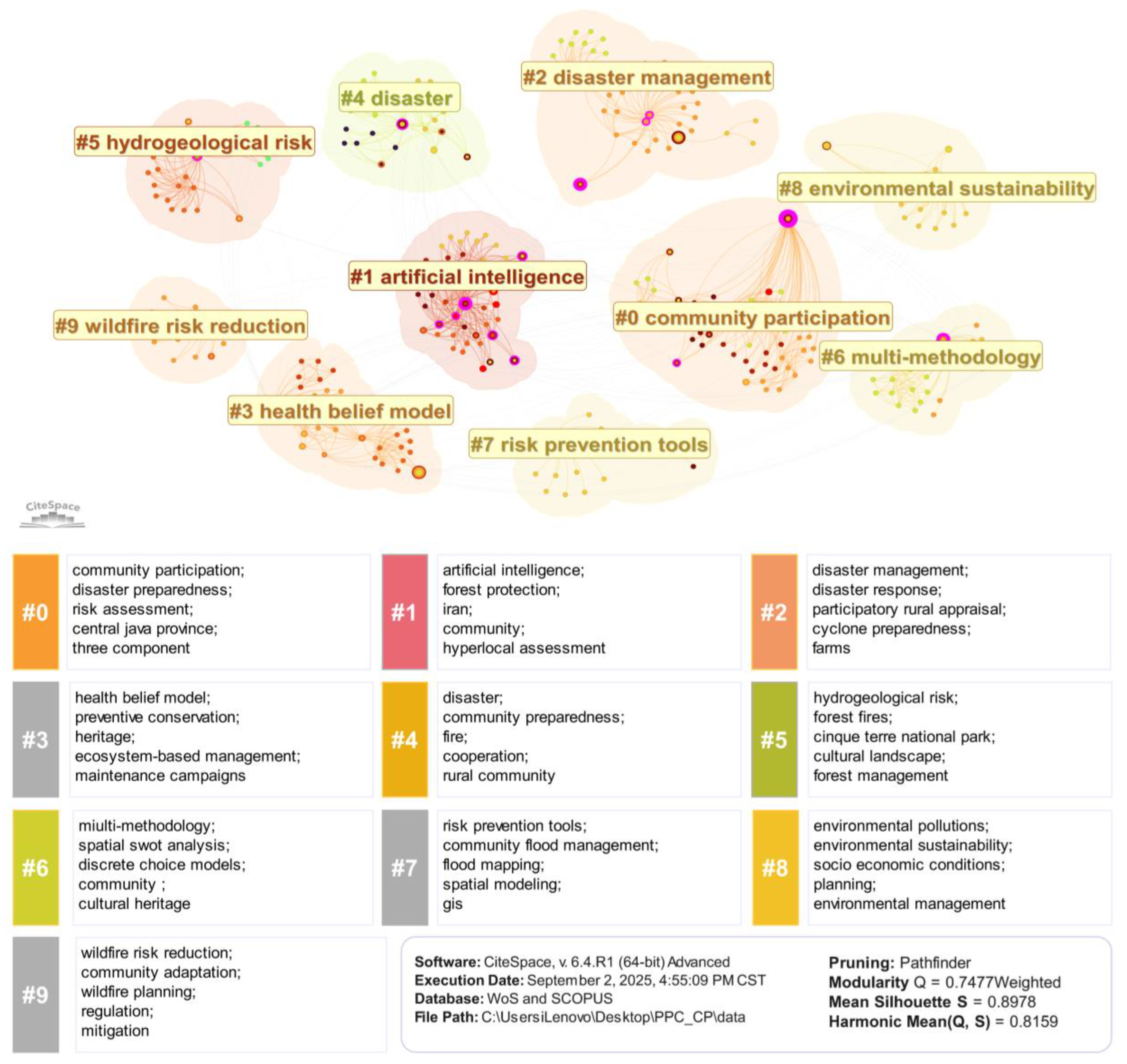
CiteSpace was further utilized to analyze keyword clustering and identify the topic distribution across these publications. The results show a Modularity Q of 0.7477 and a Weighted Mean Silhouette S of 0.8978, indicating a significant cluster structure and a high degree of clustering homogeneity. According to the LLR (Log-likelihood rate) algorithm, CiteSpace extracted 10 thematic clusters (Figure 4). Specifically, one primary group (Clusters #0, #2, #5, #8, and #9) reflects research focusing on community participation across different risks and management stages. Another set (Clusters #1, #3, #6, and #7) suggests that community-based practices require the use of technological tools or methods to enhance the effectiveness of disaster risk reduction. Additionally, keywords within Clusters #0, #2, #4, #5, #6, and #8 (e.g., disaster management, community participation, cooperation, response, community preparedness, etc.) show that organization and coordination among multiple stakeholders have also become a key element in risk processes. Synthesizing these findings, the literature reveals three main trends: risk governance continues to position community participation as a central organizing theme with strong linkages to other thematic clusters. Also, technological approaches, such as AI and multiple methods, are being increasingly integrated, thereby diversifying response strategies. Furthermore, the research focus is shifting from generalized disaster discussions to the specialized governance of specific risk types.
Figure 4.
Keyword clustering analysis of publications.
Building on the CiteSpace findings, this review identifies the key elements of community participation in PC by reviewing and synthesizing selected studies. The results suggest that community participation in PC can be understood through three core dimensions: process-based community roles, capacity building, and organization and coordination. Communities can perform diverse roles and take on different functions across various stages of risk management, such as risk monitoring, information communication, and participation in decision-making [35,36]. In addition, implementing PC requires the use of different approaches and tools. In this context, building community capacity becomes critical for supporting PC implementation [37]. Furthermore, the effective practice of PC depends on the division of responsibilities and collaboration among communities, governments, and other stakeholders, demonstrating that organization and coordination are key to ensuring its continued operation [38,46]. Based on these insights, this study further examines the mechanisms of community participation in PC from the three dimensions of community roles, capacity building, and organization and coordination.
3.1. Community Roles Within the Preventive Conservation Process
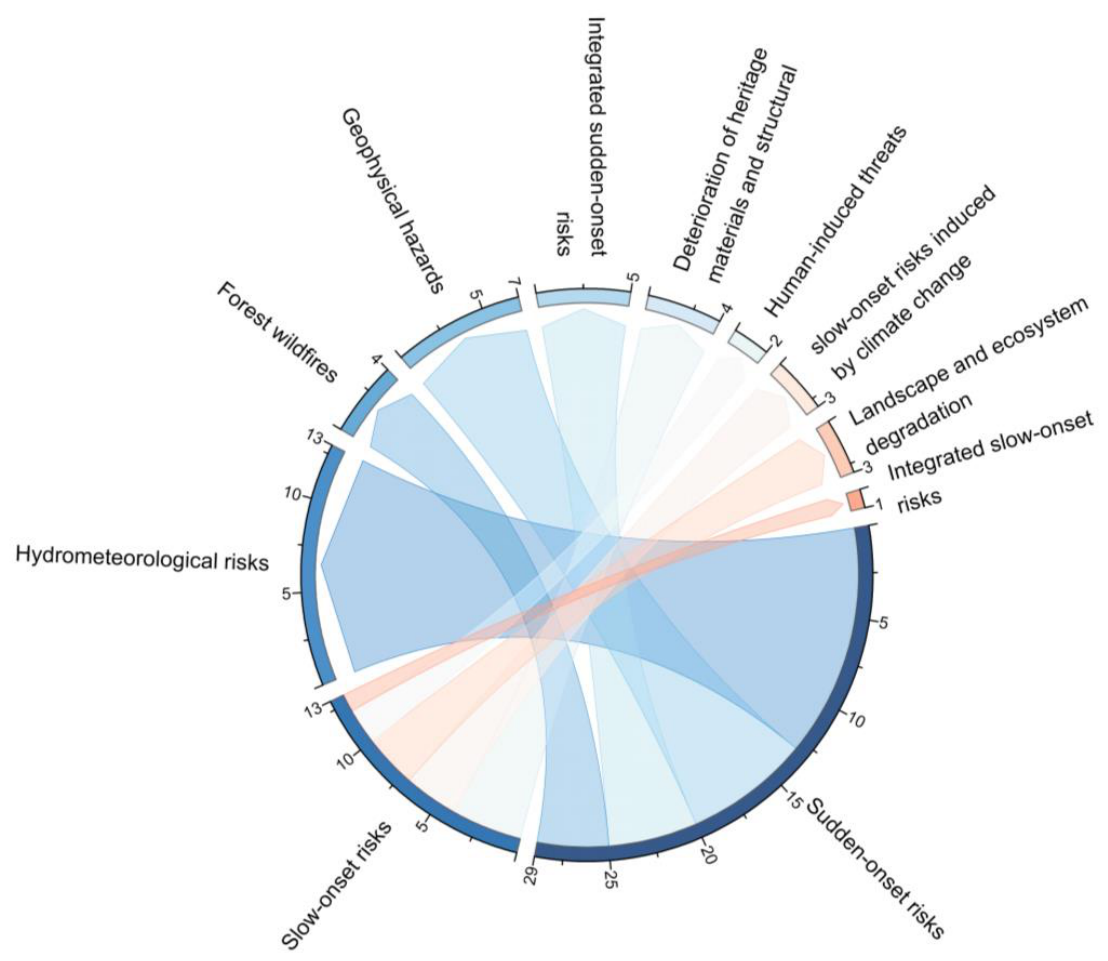
The risks addressed in the 39 included studies cover both slow- and sudden-onset types (Figure 5). Of these, 10 studies focused exclusively on slow-onset risks, 26 studies addressed only sudden-onset risks; additionally, 3 studies considered both types of risks from an integrated perspective.
Figure 5.
Publications on slow-onset and sudden-onset risks.
This section examines how community roles change across the different types and risk stages of PC.
Studies generally define PC for slow-onset risks as a continuous process that includes data collection, diagnosis, intervention, and control [73]. In the early stages, the communities mostly act as monitoring and maintenance providers, performing regular inspections, risk reporting, and routine maintenance. For instance, Yang et al. (2021) [10] presented how the community in Shifeng Village, Guangdong, China, regularly conducted building inspections and uploaded real-time photos of structural damage. Barsallo and Achig (2020) [14] described how local communities regularly inspect the structure, materials, and decorations of the Chapel of Susudel in Azuay Province, Ecuador, and develop corresponding maintenance actions. In subsequent stages of detailed diagnosis, intervention, and control, the roles of the community typically shift to information provider or facilitator to assist professional-led diagnosis and intervention. For example, Basel et al. (2020) [38] noted that local communities provide information for assessments of coastal erosion and coral bleaching, drawing on their familiarity with the environment and traditional ecological knowledge. Across the reviewed studies, community involvement is more diverse in the early stages but tends to be limited in later stages. This may be due to later stages generally requiring advanced analysis and intervention, which relies on the involvement of professionals [16,17,52]. By comparison, the early stage focuses on identifying risks and relies more on local knowledge and lived experience [10].
According to UNESCO and UNDRR, the disaster risk management process consists of three phases, namely, prevention, emergency response, and recovery [74,75]. For sudden-onset risks, all 29 reviewed articles focused on community participation in the prevention phase. Among these, several studies extended their scope to multiple disaster management stages. However, community engagement in the emergency response (8 articles) and recovery (5 articles) phases was less frequently reported. During the preventive phase of sudden-onset risks, this review finds that communities can serve as data collectors, decision-makers, and maintenance actors [48,55]. They are involved in most activities at this stage, including data collection, risk mapping, participation in risk simulation and assessment, development of disaster risk management plans, and intervention targeting potential risks [14,40]. Certain studies further suggest that communities may take on a managerial role, leading the organization and implementation of actions at this stage [71]. For instance, Hermawan et al. (2024) [62] describe how communities near Mount Merapi in Indonesia establish risk management groups (e.g., the Tagana Youth Team and the Linmas Team) to conduct risk mapping, collect data, and report anomalies. In later phases, the community’s role tends to shift toward a supportive function, assisting governments and professional agencies in performing tasks [37,45,56]. For example, Shirvani Dastgerdi and Kheyroddin (2022) [42] report that communities participated in the restoration of terrace walls in Cinque Terre, Italy, under professional guidance. However, the role of communities in the early response phase is not merely supportive. Rather, it depends on when external responders arrive. Before they are in place, communities may temporarily assume a leading role and act as first responders [44]. For instance, Abid et al. (2024) [51] mentioned that several rural communities in Malaysia spontaneously and organically performed rescue, evacuation, and relocation, setting up temporary shelters and sharing information to mitigate the flood’s impact on the community.
The evidence indicates that community roles shift from leading and multifunctional roles in the early stages to more supportive roles in later phases of sudden-onset risks. This transition can be attributed to the high demand for quick decision-making, professional expertise, and cross-sector coordination in emergency response and subsequent actions [74,75]. Key actions in these processes, such as sharing information, emergency rescue, and providing logistical support, are usually led by governmental authorities and professional agencies [42,70]. Nevertheless, communities continue to contribute through flexible, adaptive actions, thereby enhancing the effectiveness of risk management practices [71]. As evidenced in wildfire response cases in New Zealand [39], communities help maintain firefighting equipment, set up perimeter lines at fire scenes, and provide logistical support, such as meals and lodging for firefighters.
3.2. Community Capacity-Building Through Tools and Methods
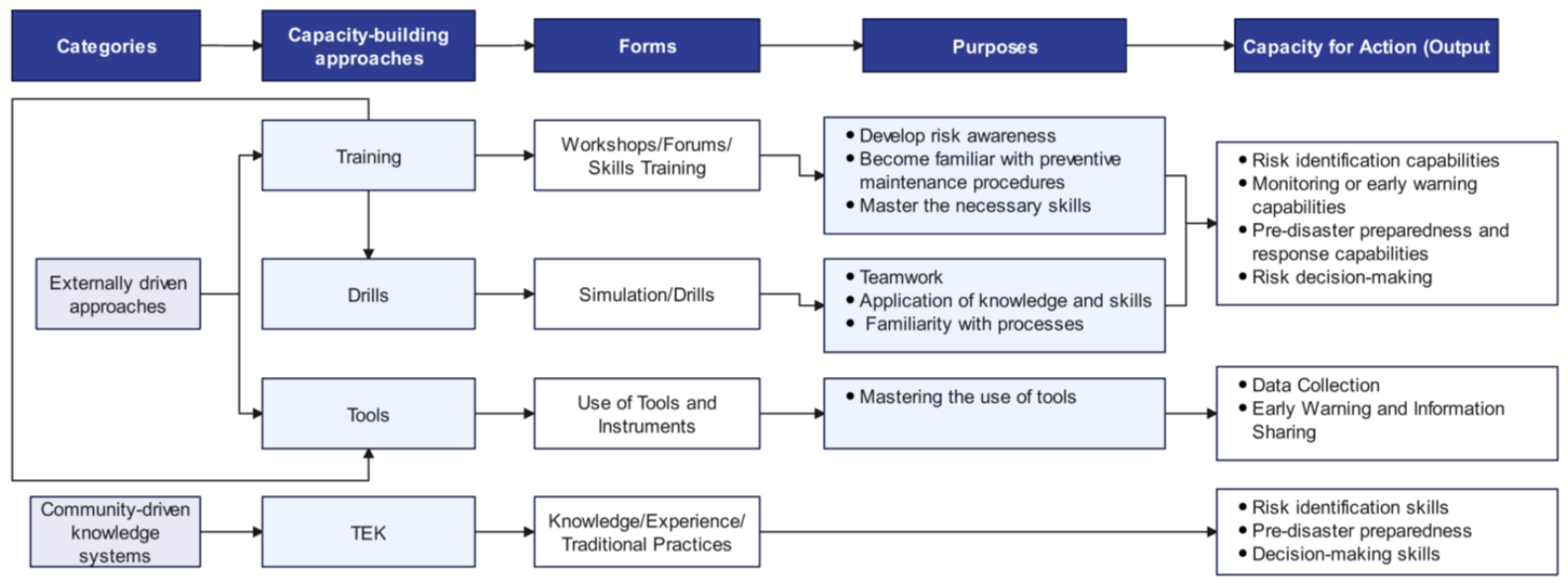
A total of 36 studies in this review have explored ways to strengthen community capacity through the application of tools and approaches to enhance community participation in PC. Among these articles, 15 focused on training and drills, 19 examined the application of specific tools, and 6 documented the contributions of traditional ecological knowledge (TEK). Notably, 4 papers in the reviewed studies employed two capacity-building approaches. Based on their functional characteristics, these approaches can be categorized into two primary pathways: externally driven capacity building (e.g., training and drills, tools) and community-based knowledge systems (e.g., TEK).
A stepwise process of capacity building is formed by training, drills, and tools (Figure 6), which support communities in improving both risk recognition and preparedness [10,63]. Training focuses on transferring knowledge and skills to empower community members to understand risk types, PC procedures, and relevant practices [48,53]. Drills are an important way to activate these capacities, providing a practical application of acquired knowledge and skills through simulated risk scenarios [44,46,52]. It is recommended that community-based training and drills include evacuation planning, risk-based decision-making, and emergency interventions to strengthen judgment and response in crises [61]. Studies further emphasized that using locally appropriate training and drill formats is critical for improving knowledge retention and operational capacity. For instance, Yang et al. (2021) [10] proposed a community capacity-building training approach by developing an interactive game on rural architectural heritage risk awareness to encourage community engagement. In addition, the introduction of tools provided the community with the ability to collect risk data and disseminate information once the foundation of cognitive and operational capabilities had been established. In this review, some studies use traditional approaches (e.g., observation, questionnaires, and interviews) to involve communities in risk data collection, feedback, and assessment. For instance, Karzen and Demonja (2020) [53] explored the development of a community-based Disaster Imagination Game in Kyoto (questionnaire), which uses questionnaires as a participatory tool for data collection. Studies also discussed the use of digital tools for collecting, disseminating, updating risk information, and providing early warnings [52,54]. And their design generally emphasizes ease of use, thereby supporting sustained community involvement in PC [10]. For example, Dhonju et al. (2018) [55] suggested that community members use a user-friendly software to upload data, including location, structural features, and damage conditions, to a digital cloud platform (SOCH).
Figure 6.
Approaches to Community Capacity Building.
In contrast, community-based TEK offers an alternative approach for capacity building. This form of capacity development is rooted in long-term lived experience and provides support across multiple stages of PC. At early stages, TEK contributes to risk identification and can assist in risk assessment. For instance, Thapa et al. (2019) [57] noted that villagers participated in model validation using TEK to improve flood modeling. During the emergency response (intervention) phase, communities rely on their experience to implement practical measures, such as temporarily reinforcing buildings or organizing orderly evacuations before disasters [65]. In the recovery (control) phases, communities implement traditional practices, such as planting protective vegetation, to reduce lasting environmental risks [56]. Compared with externally driven approaches, TEK does not rely on complex tools or formal training, but rather provides a practical, experience-based foundation for community participation [35,38,42].
This review also found that capacity-building initiatives differ in their focus on specific risk types and risk phases [45,48]. Capacity-building efforts in this review focused on sudden-onset risk types, mostly using training, drills, and tool-based monitoring to enhance capabilities for risk identification and pre-disaster preparedness [41,44]. Addressing slow-onset risk types primarily requires educational training and tools for risk collection and feedback [10]. In comparison, TEK can be embedded into practices for managing different risks and management stages as part of community capacity [48,56]. These findings suggest that capacity-building strategies are differentiated according to risk context rather than applied uniformly across contexts.
3.3. Organizational Collaboration
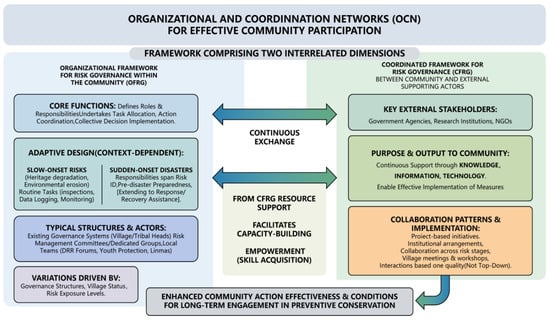
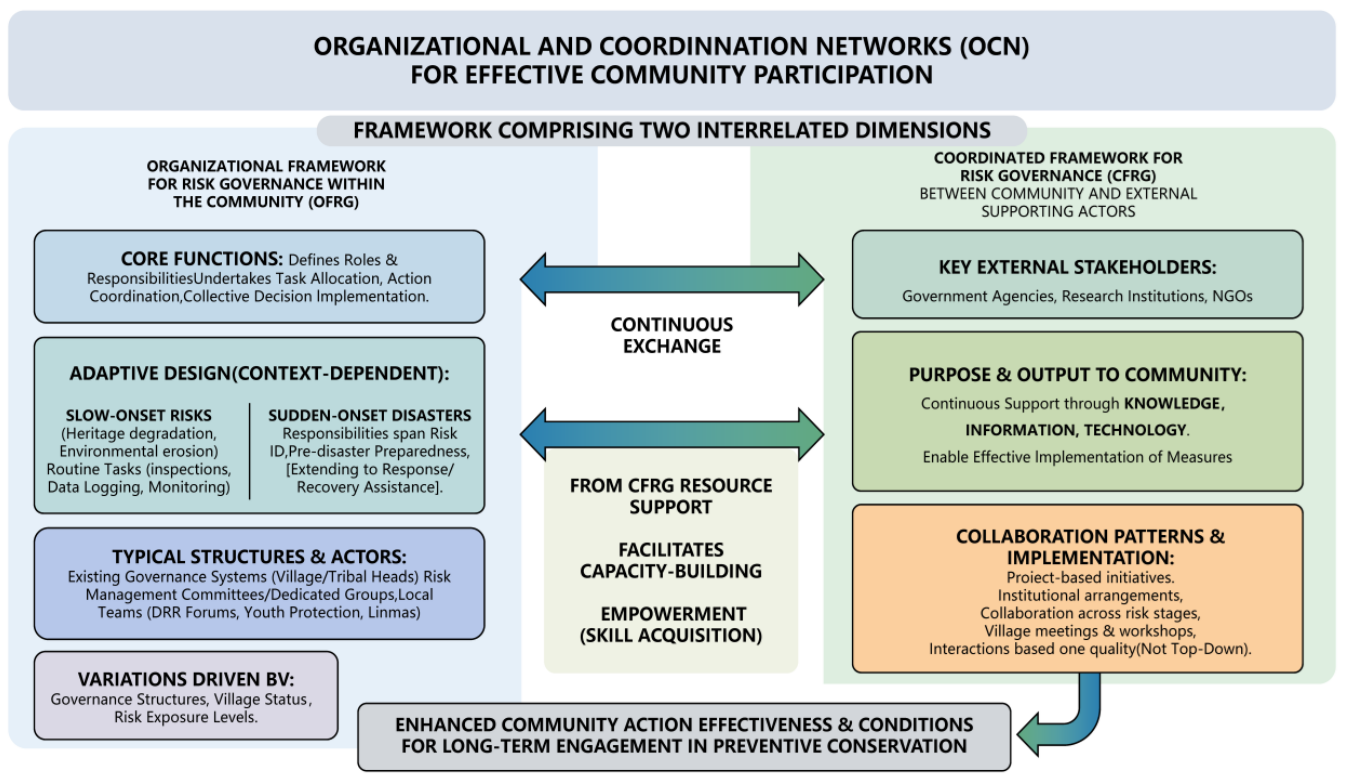
In this review, 23 studies indicate that effective community participation depends on well-defined organizational and coordination networks (OCN). These networks can be understood as comprising two interrelated dimensions, which are an organizational framework for risk governance within the community (OFRG) and a coordinated framework for risk governance between the community and external supporting actors (CFRG).
The OFRG defines the roles and responsibilities within the community for PC, and also undertakes key functions such as task allocation, action coordination, and implementation of collective decisions [58]. For example, Dewa et al. (2024) [63] show that Panusupan Village developed Disaster Risk Reduction forums and disaster preparedness teams to systematically organize local participation in monitoring, early warning, response, and recovery activities. The specifics of the OFRG design vary according to risk type. For slow-onset risks like heritage degradation or environmental erosion, the OFRG primarily focuses on routine tasks such as inspections, data logging, and monitoring [10,56]. When facing sudden-onset disasters, its responsibilities span from ongoing risk identification to pre-disaster preparedness [37,39,71]. In certain studies, these duties extend to assisting disaster response and recovery efforts. Despite being exposed to similar risks, the studied cases reveal distinct differences in the organizational structures and task allocations of community participation [36,37]. These variations may depend on factors like governance structures, village status, and risk exposure levels [51,54,57]. Evidence also suggests that OFRG is often organized through existing governance systems. Typically, it involves village leaders or tribal heads taking on coordinating roles across different stages of PC and overseeing related actions [66,71]. Additionally, establishing risk management committees or dedicated groups is a common approach to organizing community actions [58]. Such mechanisms help clarify organizational structures and responsibilities while staying within existing governance systems [63]. In the Merapi Volcano area of Indonesia, community groups, such as the Tagana Youth and Linmas Protection Teams, contribute to monitoring efforts and risk mapping by reporting any irregularities [62].
The effective operation of community participation also depends on the collaboration of external stakeholders, including government agencies, research institutions, and NGOs. These external actors are generally engaged in risk governance efforts through project-based initiatives or institutional arrangements [76]. Such collaboration patterns of these multiple actors across the stages of risk governance constitute a core feature of CFRG. For example, El-Bastawissi et al. (2022) [68] demonstrated that experts from academia and the field of practice transfer their expertise to community members by organizing workshops. The purpose of CFRG is to provide communities with continuous support through knowledge, information, and technology [14]. It also engages communities in relevant actions to ensure the effective implementation of PC measures [71]. In practice, these collaborative frameworks are often established through village meetings or workshops, with village leaders responsible for communicating and coordinating with external groups [65]. To further support sustained community engagement, Lupp et al. (2021) [48] emphasized that such processes of interaction and collaboration should be based on equality among all participants, rather than on one-way, top-down communication.
Based on the reviewed literature, the implementation of PC depends on a clearly defined OCN (Figure 7). The evidence suggests that effective coordination does not rely on a single actor, but emerges through complementary roles and continuous exchange between OFRG and CFRG. In this process, CFRG provides resource support and facilitates capacity-building to empower communities to acquire the necessary skills. This form of collaboration enhances the effectiveness of community actions and creates conditions that encourage long-term engagement in PC.
Figure 7.
The Structure of an Organizational Collaboration Network.
4. Discussion
This review shows that community participation can be included in multiple phases of PC. Despite variations in participation modes, case study contexts, and risk scenarios, these studies demonstrate that communities can embed themselves in risk governance processes through adaptive actions [52,55,56,63]. To address RQ1, this study identified three key elements through the systematic review and CiteSpace analysis: community roles across the PC workflow, capacity-building, and the organization and collaboration among communities and external stakeholders. The findings also partially address RQ2, suggesting that effective integration of communities into preventive conservation depends on appropriate role positioning, structured capacity-building pathways, and the arrangement of OCN.
4.1. Relationships Between Capacity Building and the Variation in Community Roles
This review shows that variations in community participation are visible across PC stages. A consistent pattern is a role shift in which communities tend to transition from leading or deeply engaged roles in earlier stages to more supportive roles in later stages. A key reason for this variation may be the distinct capacity requirements at each stage [64,65,70]. In the early phases of both slow-onset and sudden risks, actions largely rely on experiential judgment and local knowledge. This allows communities, drawing on their place-based advantages, to engage in multiple tasks [55,56]. As later stages demand rapid response and specialized expertise, capacity increasingly influences community role transition [39,60]. This pattern is also supported by the study of Górriz-Mifsud et al. (2019) [43]. In their study, members with advanced training (Yellow Card) could assist with firefighting operations, while those with limited training (Green Card) primarily provided logistical support. Although the review identifies two main capacity-building pathways (externally driven approaches and TEK), both tend to focus on experiential and operational aspects [48,61,64]. As a result, they may fail to meet the higher technical requirements of later stages. This also indicates an insufficient alignment between existing community capacities and the requirements of different stages of PC. In addition, governments or professional institutions typically take a leading role to ensure specialized decision-making and resource allocation in the emergency management systems of many countries [74,75]. These factors help to explain the shift from leading roles to supportive participation.
4.2. Impact of OCN on Capacity-Building and Community Roles
This study further explains that shifts in community roles and the capacity-building arrangements are driven by organization and coordination. In this review, OCN for risk governance is conceptualized as two interrelated components [51,63,69]. OFRG manages the internal division of labor, task coordination, and execution of collective actions within the community. In contrast, CFRG connects external actors (e.g., government agencies, research institutions, and non-governmental organizations) and provides them with knowledge, technical support, and training resources. CFRG supplies OFRG with capacity-building inputs and resources in the early stages, which empowers communities to participate deeply or take on leading roles in some context [62]. For later stages, OFRG operates with flexible arrangements to assist external actors in responding to risk, thereby improving the efficiency of overall risk governance [65,71]. Through this process, communities receive the necessary resources and translate them into practical capabilities through actions [10,37,56]. With a well-defined OCN, communities are empowered to engage in predictable and sustained collective actions. This creates an institutional basis for subsequent efforts in capacity development and role-specific adaptation. In this sense, OCN can be seen as a prerequisite for embedding communities within PC processes.
4.3. Development of an Organization–Capacity–Role Conceptual Framework
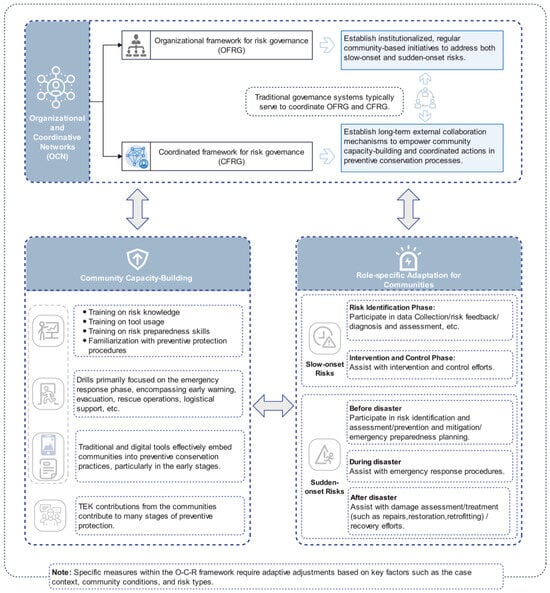
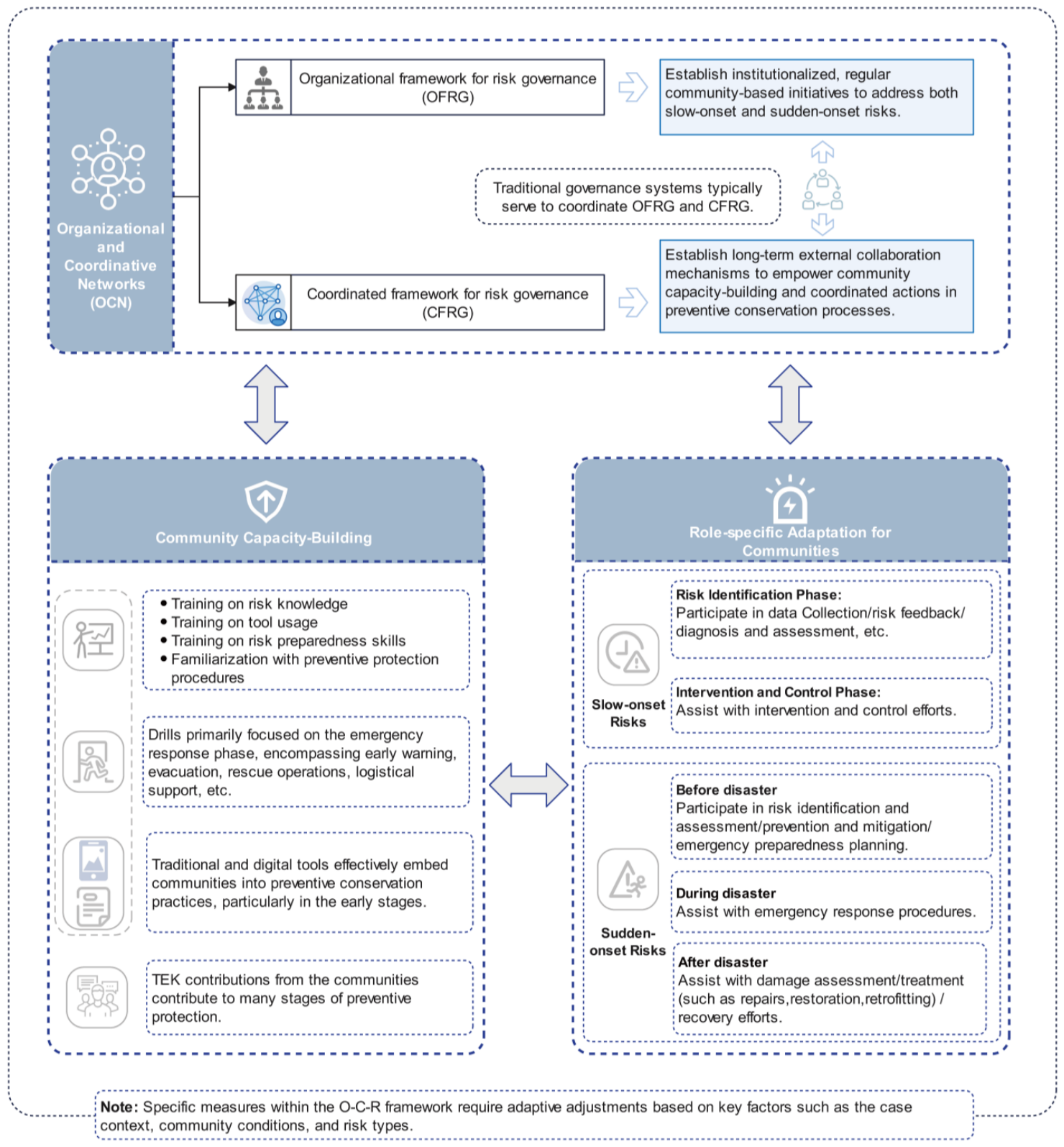
Based on the above discussion, this study develops the Organization–Capacity–Role conceptual framework (O-C-R framework) to explain how community participation is embedded in preventive conservation processes (Figure 8).
Figure 8.
O-C-R framework.
The O-C-R framework was inductively developed from the reviewed literature to provide an explanatory structure. Specifically, the organization and coordination define the scope of community action across different stages by functioning as a precondition. Capacity building acts as a mediating element that translates the organizational framework into practical capabilities for participation. Then, roles are adaptively allocated according to risk stages and types, shaped by the combined influence of organizational arrangements and capacity. The structure of this framework is not fixed and requires adaptive adjustments to fit different institutional contexts, risk types, and application settings. The O-C-R framework helps clarify these processes and can guide the design of community participation strategies under different risk governance contexts. Theoretically, the O-C-R framework specifies the concept of community empowerment in PC practices. Previous studies have often equated community empowerment with increased participation opportunities in areas such as heritage tourism development and the preservation of intangible cultural heritage. In contrast, this study argues that community participation should be based on OCN, as well as the state of community capacity building, thereby dynamically adjusting roles in risk governance to mitigate potential threats to heritage and historical villages. This suggests that policymakers may need to assess whether communities possess the necessary conditions for effective participation before designing relevant measures, rather than adopting a uniform governance model. At the same time, this study explains how collaborative co-creation can be applied in the PC of historical rural areas, which requires the joint efforts of multiple stakeholders to increase community resilience against disaster risks. In summary, the O-C-R framework offers an actionable pathway for community participation in PC. The framework may prove helpful for other rural heritage sites that face diverse risks and possess basic local organizational structures.
4.4. Limitations and Future Research
Nevertheless, the study still has several limitations. For example, this study is based on a review of 39 publications, and the limited quantity of sources may affect the generalizability of the findings. In addition, the literature search was restricted to English and Chinese sources, which could have introduced language bias, potentially affecting both the review process and the resulting conclusions.
Furthermore, existing evidence suggests that the O-C-R framework is applicable primarily to historical rural areas characterized by a foundation of community engagement with sustained external support. In contexts with weak internal organizational capacity, the prerequisites for establishing the OCN may not be satisfied, thereby constraining the applicability of the framework. Also, the three key elements identified in this study function as important structural conditions for effective community participation. However, it needs to be tested whether these elements are sufficient across different contexts. Additional factors, such as policy support, funding, and community willingness, may also influence the implementation of the framework. Yet these factors are sparse across the included literature, which makes it difficult to conduct a systematic analysis.
Future research could use cross-case comparisons to explore how these three elements work in different settings, thereby clarifying the applicability boundaries of the O-C-R framework and its operational pathways in practice.
5. Conclusions
This study utilizes a systematic review to explore how community participation is incorporated into the PC of traditional villages. Through a CiteSpace keyword analysis, the study identifies three key dimensions: community roles, capacity building, and organization and coordination. The findings show that effective community participation depends on a clear OCN to support collective action and resource provision. And then, local communities draw on both external empowerment and endogenous knowledge to build capabilities across different risk scenarios. Under this setting, communities can deploy adaptive actions that enhance the efficiency of formal emergency response systems. Further analysis reveals that community roles evolve as risk management stages progress. While communities may play a significant role in the initial phases, they commonly transition to more supportive roles in subsequent stages. Rather than signaling marginalization, this shift represents situational adaptations shaped by existing organizational frameworks and capacity constraints. Furthermore, variations in community roles stem from both OCN structures and capability levels, as well as from contextual influences such as risk scenarios, case features, and exposure levels. Synthesizing these insights, the study proposes an O-C-R framework, which explains how community participation operates through organizational embedding, capacity development, and role adaptation.
This study deepens understanding of community empowerment from a PC perspective. It reflects how communities, shaped by their organizational arrangements and capacity levels, engage in risk governance by taking on roles suited to specific contexts. In practice, such processes require continuous communication and coordination among multiple stakeholders, with conservation actions adjusted as risk conditions change. This framework offers guidance for PC in traditional villages. It also provides lessons for other rural areas facing similar challenges. The O-C-R framework is primarily based on evidence from the reviewed literature, but its practical validity has yet to be tested. To strengthen the explanatory and practical value of this framework for PC in traditional villages, future research should further examine its applicability across diverse institutional contexts and risk types, while accounting for specific situations.
Supplementary Materials
The following supporting information can be downloaded at: https://www.mdpi.com/article/10.3390/land15050691/s1. The PRIMA 2020 checklist can be found in the Supplementary Materials. Reference [77] is cited in the Supplementary Materials.
Author Contributions
Conceptualization, L.G.; methodology, L.G.; software, L.G. and S.L.; validation, N.F.M.A. and M.K.H.; formal analysis, L.G.; investigation, L.G. and S.L.; data curation, L.G. and S.L.; writing—original draft preparation, L.G.; writing—review and editing, L.G.; supervision, N.F.M.A. and M.K.H. All authors have read and agreed to the published version of the manuscript.
Funding
This research received no external funding.
Data Availability Statement
The original contributions presented in this study are included in the article/Supplementary Materials. Further inquiries can be directed to the corresponding author.
Acknowledgments
We sincerely appreciate the guidance of the supervisory committee (N. Fazamimah M. A., M. Kher H.) and support for this study by Liu. S.
Conflicts of Interest
The authors declare no conflict of interest.
Abbreviations
| ICOMOS | International Council on Monuments and Sites |
| WHC | World Heritage Committee |
| 5Cs | Credibility, Conservation, capacity-building, communication, and communities |
| UNESCO | The United Nations Educational, Scientific, and Cultural Organization |
| UNDRR | United Nations Office for Disaster Risk Reduction |
| NGOs | Non-Governmental Organizations |
References
- Wu, C.; Chen, M.; Zhou, L.; Liang, X.; Wang, W. Identifying the Spatiotemporal Patterns of Traditional Villages in China: A Multiscale Perspective. Land 2020, 9, 449. [Google Scholar] [CrossRef] [Scilit]
- Lyu, L. Spatial morphological traits, influencing factors and implications of typical traditional villages situated along the Jiangsu section of the Grand Canal. J. Nat. Resour. 2024, 39, 1993–2007. [Google Scholar] [CrossRef] [Scilit]
- Qiu, H.; Zhang, X.; Chen, Y.; Lin, M. Research on intelligent monitoring technology for roof damage of traditional Chinese residential buildings based on improved YOLOv8: Taking ancient villages in southern Fujian as an example. Herit. Sci. 2024, 12, 231. [Google Scholar] [CrossRef] [Scilit]
- Wang, Z.; Zhu, J.; Wu, Z. Study on the spatial distribution characteristics of traditional villages and their response to the water network system in the lower Yangtze River basin. Sci. Rep. 2024, 14, 22586. [Google Scholar] [CrossRef] [Scilit]
- Du, F.; Kobayashi, H.; Okazaki, K.; Ochiai, C. Research on the disaster coping capability of a historical village in a mountainous area of China: Case study in Shangli, Sichuan. Procedia Soc. Behav. Sci. 2016, 218, 118–130. [Google Scholar] [CrossRef] [Scilit]
- Huang, C.; Qiu, J.; Huang, T. Mode selection of post-earthquake recovery and reconstruction of traditional villages using dependency analytic process: Taking Xiluo-Buzi village in the 2022 M6.8 Luding earthquake as an example. Front. Public Health 2023, 11, 1240573. [Google Scholar] [CrossRef] [Scilit]
- Lan, Q.; Dong, J.; Lai, S.; Wang, N.; Zhang, L.; Liao, M. Flood inundation extraction and its impact on ground subsidence using Sentinel-1 data: A case study of the “7.20” rainstorm event in Henan Province, China. IEEE J. Sel. Top. Appl. Earth Obs. Remote Sens. 2024, 17, 2927–2938. [Google Scholar] [CrossRef] [Scilit]
- Li, X.D.; Wu, C.K. Investigation and Assessment of the Damage Condition to Cultural Heritage under Heavy Rainfall Environment and Protection Measures: A Case Study of the “720” Rainstorm Disaster in Henan Province. Zhongguo Wenhua Yichan 2023, 1, 91–98. Available online: https://www.qikan.com.cn/article/zgyc20230110.html (accessed on 11 December 2025). (In Chinese)
- Gao, L.; Ariffin, N.F.M.; Hussein, M.K.; Liu, S.; Wang, B. An integrated approach towards conservation of traditional patterns in Chinese traditional villages: A systematic literature review. Environ. Behav. Proc. J. 2024, 9, 157–163. [Google Scholar] [CrossRef] [Scilit]
- Yang, Y.; Xu, Y.; He, S.; Tang, Z. Exploring the implementation of the planned preventive conservation in rural area: The practice of Shifeng Village. Int. Arch. Photogramm. Remote Sens. Spat. Inf. Sci. 2021, 8, 201–207. [Google Scholar] [CrossRef] [Scilit]
- Randazzo, L.; Collina, M.; Ricca, M.; Barbieri, L.; Bruno, F.; Arcudi, A.; La Russa, M.F. Damage indices and photogrammetry for decay assessment of stone-built cultural heritage: The case study of the San Domenico Church main entrance portal (South Calabria, Italy). Sustainability 2020, 12, 5198. [Google Scholar] [CrossRef] [Scilit]
- Balen, K.V. Preventive Conservation of Historic Buildings. Restor. Build. Monum. 2015, 21, 99–104. [Google Scholar] [CrossRef] [Scilit]
- Eken, E.; Taşcı, B.; Gustafsson, C. An evaluation of decision-making process on maintenance of built cultural heritage: The case of Visby, Sweden. Cities 2019, 94, 24–32. [Google Scholar] [CrossRef] [Scilit]
- Barsallo, G.; Achig, M.C. Preventive conservation plan for the chapel of Susudel, Ecuador. Int. Arch. Photogramm. Remote Sens. Spat. Inf. Sci. 2020, 44, 811–816. [Google Scholar] [CrossRef] [Scilit]
- Della Torre, S. Italian Perspective on the Planned Preventive Conservation of Architectural Heritage. Front. Archit. Res. 2021, 10, 108–116. [Google Scholar] [CrossRef] [Scilit]
- Wu, M.; van Laar, B. The Monumentenwacht Model for Preventive Conservation of Built Heritage: A Case Study of Monumentenwacht Vlaanderen in Belgium. Front. Archit. Res. 2021, 10, 92–107. [Google Scholar] [CrossRef] [Scilit]
- Baudoin, M.-A.; Henly-Shepard, S.; Fernando, N.; Sitati, A.; Zommers, Z. From top-down to “community-centric” approaches to early warning systems: Exploring pathways to improve disaster risk reduction through community participation. Int. J. Disaster Risk Sci. 2016, 7, 163–174. [Google Scholar] [CrossRef] [Scilit]
- Kai, Y.; Zhu, H. Listing Villages for Conservation: Practices and Impacts of the Village Conservation Project in China. Hist. Environ. Policy Pract. 2024, 15, 344–359. [Google Scholar] [CrossRef] [Scilit]
- Zhou, X.; Zhang, Z. Linear cultural heritage conservation and tourism development: Influencing factors for the community involvement. Chin. Cult. Herit. 2022, 5, 90–100. [Google Scholar]
- ICOMOS. The NARA Document on Authenticity (1994)—International Council on Monuments and Sites; ICOMOS: Charenton-le-Pont, France, 1994; Available online: https://whc.unesco.org/archive/nara94.htm (accessed on 12 December 2025).
- Australia ICOMOS. The Burra Charter: The Australia ICOMOS Charter for Places of Cultural Significance; Australia ICOMOS: Burwood, Australia, 2013; Available online: http://australia.icomos.org/ (accessed on 12 December 2025).
- Xu, T. Inspiration from the tendency of admitting community participation in world heritage conservation. Des. Community 2016, 3, 27–30. [Google Scholar] [CrossRef] [Scilit]
- Zhu, C.; Ren, X.; Zhang, J.; Yang, G. Conservation and Communication Strategy for the Grand Canal Cultural Heritage with the Theoretical Framework of 5Cs. Int. J. Educ. Cult. Soc. 2022, 7, 110–118. [Google Scholar] [CrossRef] [Scilit]
- Tian, B.; Stoffelen, A.; Vanclay, F. Ethnic tourism in China: Tourism-related (dis)empowerment of Miao villages in Hunan province. Tour. Geogr. 2023, 25, 552–571. [Google Scholar] [CrossRef] [Scilit]
- Tu, L. Optimization of heritage management mechanisms through the prism of historic urban landscape: A case study of the Xidi and Hongcun World Heritage Sites. Sustainability 2024, 16, 5136. [Google Scholar] [CrossRef] [Scilit]
- Luo, W.; Lu, Y.; Timothy, D.J.; Zang, X. Tourism and conserving intangible cultural heritage: Residents’ perspectives on protecting the nüshu female script. J. China Tour. Res. 2022, 18, 1305–1329. [Google Scholar] [CrossRef] [Scilit]
- Liu, Q.; Abidin, N.A.Z.; Maliki, N.Z.; Zhang, K.; Li, Z.; Liu, S.; Liu, Q.; Abidin, N.A.Z.; Maliki, N.Z.; Zhang, K.; et al. Landscape Character Assessment (LCA) in Historic Coal Mining Settings for Landscape Conservation: A Systematic Review. Land 2024, 13, 1396. [Google Scholar] [CrossRef] [Scilit]
- Moher, D.; Liberati, A.; Tetzlaff, J.; Altman, D.G.; PRISMA Group. Preferred reporting items for systematic reviews and meta-analyses: The PRISMA statement. Int. J. Surg. 2009, 8, 336–341. [Google Scholar] [CrossRef] [Scilit]
- Agrawal, S.; Oza, P.; Kakkar, R.; Tanwar, S.; Jetani, V.; Undhad, J.; Singh, A. Analysis and Recommendation System-Based on PRISMA Checklist to Write Systematic Review. Assess. Writ. 2024, 61, 100866. [Google Scholar] [CrossRef] [Scilit]
- Wan, Z.; Liu, H.; Yu, Y.; Wu, Y.; Melchior, M.; Martens, P.; Krafft, T.; Shaw, D. How Does Outdoor Spatial Design Shape the Microclimate, Comfort, and Behavior in Traditional Chinese Villages? A Systematic Review Across Scales, Contexts, and Users. Sustainability 2025, 17, 6960. [Google Scholar] [CrossRef] [Scilit]
- Kong, L.; Xu, X.; Wang, W.; Wu, J.; Zhang, M. Comprehensive evaluation and quantitative research on the living protection of traditional villages from the perspective of “production–living–ecology. Land 2021, 10, 570. [Google Scholar] [CrossRef] [Scilit]
- Sun, Y.; Ou, Q. Research on the traditional zoning, evolution, and integrated conservation of village cultural landscapes based on “production-living-ecology spaces”—A case study of villages in Meicheng, Guangdong, China. Open Geosci. 2021, 13, 1303–1317. [Google Scholar] [CrossRef] [Scilit]
- Chen, X.; Xie, W.; Li, H. The Spatial Evolution Process, Characteristics and Driving Factors of Traditional Villages from the Perspective of the Cultural Ecosystem: A Case Study of Chengkan Village. Habitat Int. 2020, 104, 102250. [Google Scholar] [CrossRef] [Scilit]
- Liang, X.; Lu, Y.; Martin, J. A Review of the Role of Social Media for the Cultural Heritage Sustainability. Sustainability 2021, 13, 1055. [Google Scholar] [CrossRef] [Scilit]
- Kesavan, H.; Choudhary, S.; Khan, S.; Samhita, R.; Sharma, A. AI based urban resilience planning: Opportunities and challenges. J. Earth Environ. Sci. 2024, 6, 200–214. [Google Scholar] [CrossRef] [Scilit]
- Muryani, C.; Koesuma, S.; Yusup, Y.; Wijayanti, P.; Hidayat, A. Risk analysis of landslide disaster in Pati Regency, Central Java Province. J. Phys. Conf. Ser. 2023, 2498, 012001. [Google Scholar] [CrossRef] [Scilit]
- Mahendra, S.T.; Pratomo, A.H.; Paripurno, E.T. ICT application in CBDRM in Karangtengah village Bantul Regency. IOP Conf. Ser. Earth Environ. Sci. 2022, 989, 012015. [Google Scholar] [CrossRef] [Scilit]
- Basel, B.; Goby, G.; Johnson, J. Community-based adaptation to climate change in villages of Western Province, Solomon Islands. Mar. Pollut. Bull. 2020, 156, 111266. [Google Scholar] [CrossRef] [Scilit] [PubMed]
- Grant, A.; Langer, E.R. Wildfire volunteering and community disaster resilience in New Zealand: Institutional change in a dynamic rural social-ecological setting. Ecol. Soc. 2021, 26, 18. [Google Scholar] [CrossRef] [Scilit]
- Ounanian, K.; van Tatenhove, J.P.M.; Hansen, C.J.; Delaney, A.E.; Bohnstedt, H.; Azzopardi, E.; Flannery, W.; Toonen, H.; Kenter, J.O.; Ferguson, L.; et al. Conceptualizing coastal and maritime cultural heritage through communities of meaning and participation. Ocean Coast. Manag. 2021, 212, 105806. [Google Scholar] [CrossRef] [Scilit]
- Ahmed, B. The root causes of landslide vulnerability in Bangladesh. Landslides 2021, 18, 1707–1720. [Google Scholar] [CrossRef] [Scilit]
- Shirvani Dastgerdi, A.; Kheyroddin, R. Policy recommendations for integrating resilience into the management of cultural landscapes. Sustainability 2022, 14, 8500. [Google Scholar] [CrossRef] [Scilit]
- Górriz-Mifsud, E.; Burns, M.; Marini Govigli, V. Civil society engaged in wildfires: Mediterranean forest fire volunteer groupings. For. Policy Econ. 2019, 102, 119–129. [Google Scholar] [CrossRef] [Scilit]
- Cui, K.; Han, Z.; Wang, D. Resilience of an earthquake-stricken rural community in Southwest China: Correlation with disaster risk reduction efforts. Int. J. Environ. Res. Public Health 2018, 15, 407. [Google Scholar] [CrossRef] [Scilit]
- Hendra, W.Z.; Kismartini. Community participation in flood disaster management in Sumbawa Regency (case study in Songkar Village). E3S Web Conf. 2018, 73, 08004. [Google Scholar] [CrossRef] [Scilit]
- Bizarro, A.F.; Alexandre, L.V. STORM policies and recommendations—A new vision for authorities, first responders and civil protection towards an effective protection of cultural heritage. IOP Conf. Ser. Mater. Sci. Eng. 2020, 949, 012108. [Google Scholar] [CrossRef] [Scilit]
- Santoro, A.; Venturi, M.; Piras, F.; Fiore, B.; Corrieri, F.; Agnoletti, M. Forest area changes in Cinque Terre National Park in the last 80 years: Consequences on landslides and forest fire risks. Land 2021, 10, 293. [Google Scholar] [CrossRef] [Scilit]
- Lupp, G.; Huang, J.J.; Zingraff-Hamed, A.; Oen, A.; Del Sepia, N.; Martinelli, A.; Lucchesi, M.; Wulff Knutsen, T.; Olsen, M.; Fjøsne, T.F.; et al. Stakeholder perceptions of nature-based solutions and their collaborative co-design and implementation processes in rural mountain areas—A case study from PHUSICOS. Front. Environ. Sci. 2021, 9, 678446. [Google Scholar] [CrossRef] [Scilit]
- Nasruddin, R.K.; Syaharuddin, Y.; Yuliarti, A.; Rajiani, I. Community participation in the village climate program to anticipate future climate change in wetlands. IOP Conf. Ser. Earth Environ. Sci. 2020, 499, 012024. [Google Scholar] [CrossRef] [Scilit]
- Ferretti, V.; Gandino, E. Co-designing the solution space for rural regeneration in a new World Heritage site: A Choice Experiments approach. Eur. J. Oper. Res. 2018, 268, 1077–1091. [Google Scholar] [CrossRef] [Scilit]
- Abid, S.K.; Sulaiman, N.; Al-Wathinani, A.M.; Goniewicz, K. Community-based flood mitigation in Malaysia: Enhancing public participation and policy effectiveness for sustainable resilience. J. Glob. Health 2024, 14, 04290. [Google Scholar] [CrossRef] [Scilit]
- Achig-Balarezo, M.C.; Tenze, A. The “Minga” community participation for the maintenance of vernacular heritage buildings in the historical center of Cuenca, Ecuador. ISPRS Ann. Photogramm. Remote Sens. Spat. Inf. Sci. 2019, 4, 9–16. [Google Scholar] [CrossRef] [Scilit]
- Karzen, M.; Demonja, D. Importance of storytelling: How to create more resilient cultural heritage? Nova Prisut. 2020, 18, 653–667. [Google Scholar] [CrossRef] [Scilit]
- Sinthumule, N.I.; Mudau, N.V. Participatory approach to flood disaster management in Thohoyandou. Jàmbá J. Disaster Risk Stud. 2019, 11, 7. [Google Scholar] [CrossRef] [Scilit]
- Dhonju, H.K.; Xiao, W.; Mills, J.P.; Sarhosis, V. Share Our Cultural Heritage (SOCH): Worldwide 3D heritage reconstruction and visualization via web and mobile GIS. ISPRS Int. J. Geo-Inf. 2018, 7, 360. [Google Scholar] [CrossRef] [Scilit]
- Tashiro, A. Assessing green management in health belief model: An analysis of a post-disaster rural context. J. Environ. Manag. 2022, 302, 114025. [Google Scholar] [CrossRef] [Scilit]
- Thapa, A.; Bradford, L.; Strickert, G.; Yu, X.; Johnston, A.; Watson-Daniels, K. “Garbage in, garbage out” does not hold true for Indigenous community flood extent modeling in the Prairie Pothole Region. Water 2019, 11, 2486. [Google Scholar] [CrossRef] [Scilit]
- Wulandari, Y.; Sagala, S.A.H.; Sullivan, G.B. The role of community-based organization in disaster response at Mt. Sinabung. IOP Conf. Ser. Earth Environ. Sci. 2018, 158, 012035. [Google Scholar] [CrossRef] [Scilit]
- Savari, M.; Khaleghi, B. Application of the extended theory of planned behavior in predicting the behavioral intentions of Iranian local communities toward forest conservation. Front. Psychol. 2023, 14, 1121396. [Google Scholar] [CrossRef] [Scilit]
- Gordon, J.S.; Matarrita-Cascante, D.; Stedman, R.C.; Luloff, A.E. Wildfire perception and community change. Rural Sociol. 2010, 75, 455–477. [Google Scholar] [CrossRef] [Scilit]
- Edgeley, C.M.; Paveglio, T.B.; Williams, D.R. Support for regulatory and voluntary approaches to wildfire adaptation among unincorporated wildland-urban interface communities. Land Use Policy 2020, 91, 104394. [Google Scholar] [CrossRef] [Scilit]
- Hermawan, A.; Guntoro, B.; Sulhan, M. Community engagement for disaster preparedness in rural areas of Mount Merapi, Indonesia. Int. J. Sustain. Dev. Plan. 2024, 19, 1505–1518. [Google Scholar] [CrossRef] [Scilit]
- Dewa, H.P.N.; Muthi’, I.; Suwarno, S.; Nirwansyah, A.W. Engaging rural communities for disaster resilience: Overview of DESTANA initiation in Panusupan, Central Java. E3S Web Conf. 2024, 600, 02005. [Google Scholar] [CrossRef] [Scilit]
- Moga, C.I.; Samoilă, C.; Öllerer, K.; Băncilă, R.I.; Réti, K.-O.; Craioveanu, C.; Poszet, S.; Rákosy, L.; Hartel, T. Environmental determinants of the old oaks in wood-pastures from a changing traditional social–ecological system of Romania. Ambio 2016, 45, 480–489. [Google Scholar] [CrossRef] [Scilit]
- Senimoli, A.N.; Tabe, T.; des Combes, H.J. Influence of socio-cultural factors on community disaster response during TC Winston: A case study of Burenitu Village, Fiji. Int. J. Saf. Secur. Eng. 2020, 10, 343–350. [Google Scholar] [CrossRef] [Scilit]
- Rosmaladewi, O.; Danuwikarsa, I.; Robana, R.; Pranadikusumah, P. Forest village community empowerment through multi-stakeholder partnership program to form sustainable green forests and disaster preparedness in Garut. IOP Conf. Ser. Earth Environ. Sci. 2019, 298, 012036. [Google Scholar] [CrossRef] [Scilit]
- Cesaro, G.; Delmonaco, G.; Khrisat, B.; Salis, S. Geological conservation through risk mitigation and public awareness at the Siq of Petra, Jordan. In Advancing Culture of Living with Landslides; Sassa, K., Mikoš, M., Yin, Y., Eds.; Springer International Publishing: Cham, Switzerland, 2017; pp. 511–517. [Google Scholar] [CrossRef] [Scilit]
- El-Bastawissi, I.Y.; Raslan, R.; Mohsen, H.; Zeayter, H. Conservation of Beirut’s urban heritage values through the historic urban landscape approach. Urban Plan. 2022, 7, 101–115. [Google Scholar] [CrossRef] [Scilit]
- Rindrasih, E. Under the volcano: Responses of a community-based tourism village to the 2010 eruption of Mount Merapi, Indonesia. Sustainability 2018, 10, 1620. [Google Scholar] [CrossRef] [Scilit]
- Jiang, Y.; Yibin, A.O.; Qiang, X.U. Investigation and analysis of earthquake prevention and disaster reduction ability of people affected by earthquake in Dingri County. J. Chengdu Univ. Technol. Soc. Sci. Ed. 2025, 33, 111–120. Available online: https://xbshkx.cdut.edu.cn/en/article/doi/10.3969/j.issn.1672-0539.2025.02.010 (accessed on 11 December 2025). (In Chinese)
- Shaamhula, L.; van Rooy, G. Here comes the water: Risk assessments, observation and knowledge of Ompundja village. Jàmbá J. Disaster Risk Stud. 2019, 11, 9. [Google Scholar] [CrossRef] [Scilit]
- Wang, Y. Research status and trends of rural tourism policy in China. Chin. J. Agric. Resour. Reg. Plan 2024, 45, 184–193. [Google Scholar]
- Collado, A.; Heras, V.; Rodas, P.; Delgado, A.; Carrión, C.; Mora-Navarro, G.; Lerma, J.L. Geomatics documentation techniques as monitoring tools for rural built heritage in Nabón (Ecuador). ISPRS Ann. Photogramm. Remote Sens. Spat. Inf. Sci. 2021, 8, 65–72. [Google Scholar] [CrossRef] [Scilit]
- UNESCO World Heritage Centre. Managing Disaster Risks for World Heritage; UNESCO World Heritage Centre: Paris, France; Available online: https://whc.unesco.org/en/managing-disaster-risks (accessed on 1 October 2025).
- United Nations Office for Disaster Risk Reduction (UNDRR). Sendai Framework for Disaster Risk Reduction 2015–2030; United Nations Office for Disaster Risk Reduction (UNDRR): Geneva, Switzerland; Available online: https://www.preventionweb.net/files/43291_sendaiframeworkfordrren.pdf (accessed on 13 October 2025).
- Weber, K.; Wernhart, S.; Stickler, T.; Fuchs, B.; Balas, M.; Hübl, J.; Damyanovic, D. Risk communication on floodings: Insights into the risk awareness of migrants in rural communities in Austria. Mt. Res. Dev. 2019, 39, D14–D26. [Google Scholar] [CrossRef] [Scilit]
- Page, M.J.; McKenzie, J.E.; Bossuyt, P.M.; Boutron, I.; Hoffmann, T.C.; Mulrow, C.D.; Shamseer, L.; Tetzlaff, J.M.; Akl, E.A.; Brennan, S.E.; et al. The PRISMA 2020 statement: An updated guideline for reporting systematic reviews. BMJ 2021, 372, n71. [Google Scholar] [CrossRef] [Scilit] [PubMed]

Disclaimer/Publisher’s Note: The statements, opinions and data contained in all publications are solely those of the individual author(s) and contributor(s) and not of MDPI and/or the editor(s). MDPI and/or the editor(s) disclaim responsibility for any injury to people or property resulting from any ideas, methods, instructions or products referred to in the content. |
© 2026 by the authors. Licensee MDPI, Basel, Switzerland. This article is an open access article distributed under the terms and conditions of the Creative Commons Attribution (CC BY) license.