


Abstract
Amid the accelerating agenda of Chinese-style modernization, China’s territorial spatial planning is undergoing a major transition and facing mounting challenges, while the theoretical foundations that support this transition remain at an early stage and require further integration. Drawing on holism, this paper operationalizes a cognition–relation–testing governance chain and develops an analytical framework to explain the institutional evolution and governance performance of China’s territorial spatial planning. Using clause- and paragraph-level evidence units from policy and planning texts, the study reviews and compares five historical stages of China’s territorial spatial planning, emphasizing simultaneous consistency across the three levels and a replicable diagnostic procedure. Building on this analysis, the paper proposes a holistic coordination pathway oriented toward modernization governance: it anchors implementation in auditable trade-off rules and executable boundary instruments, strengthens collaboration and conflict-adjudication procedures, and embeds a closed loop of “evaluation–adjustment–accountability” across the full planning life cycle, thereby providing an analytical approach and indicator toolkit for assessing the degree of governance closure in planning practice.
1. Introduction
For a long time, China’s territorial spatial planning practice has been constrained by the recurring coexistence of multiple plans, goal conflicts across administrative levels and sectoral departments, and a persistent disconnect between plan-making and implementation. These problems have impeded the high-quality advancement of Chinese modernization. After nearly six years of institutional integration and practical experimentation, territorial spatial planning has preliminarily established an integrated system of multi-plan integration and a planning architecture characterized by “five levels and three categories,” consolidating the institutional foundations of multi-plan integration and promoting a shift in planning practice from fragmented pluralism toward overall integration [1].
However, a review of planning scholarship and the institutional arrangements for plan preparation suggests a persistent mismatch: the development of China’s urban planning theory has not been fully aligned with the practical needs of territorial spatial planning. Transitional pressures therefore persist, including legacy conflicts from multi-plan coexistence, inconsistencies in the transmission of authority and responsibilities, and insufficient implementation feedback [2]. In response, it is necessary to clarify the governance-oriented meaning and boundaries of “territorial spatial planning” and, on this basis, adopt a more explanatory framework to address the new contradictions and tasks that continue to emerge during the reform process [3].
Territorial spatial planning, as a policy instrument, is used to allocate land, resources, and space in a rational manner, and establishing a territorial spatial planning system constitutes a systemic, holistic, and reconstructive reform. A unified territorial spatial planning system embodies the national will and provides an institutional foundation for promoting high-quality development, building a better quality of life, improving governance capacity, and advancing ecological civilization [1]. However, in practice, organic linkages among urban–rural planning, land-use planning, and various sectoral plans have long been weak. The coexistence of multiple objectives, multiple levels, and multiple actors raises coordination costs and blurs responsibility boundaries, making it difficult to break the recurrent cycle of “planning conflict–implementation failure–piecemeal repair” [4]. At this stage, it is necessary to seize the ongoing reform of territorial spatial planning as a window of transformation, and to clarify the connotations and system logic of territorial spatial planning from a holistic perspective, thereby proposing pathways for planning transformation under Chinese-style modernization.
Against this backdrop, this study focuses on how, under the broader agenda of Chinese modernization, the planning conflicts and implementation disjunctions produced by multi-plan coexistence can be interpreted in terms of their evolutionary logic and translated into guidance for governance transformation. To address this question, we further examine how planning conflicts emerge and evolve across different development stages, what mechanisms underpin these dynamics through the three-level process, cognition–relation–testing, and how to formulate governance responses that are commensurate with these mechanisms.
Although the empirical focus is China’s territorial spatial planning reform, we seek to reveal mechanism-based challenges of broader relevance in spatial governance: multi-objective tensions between development and protection, overlaps in authority and responsibilities across levels, and implementation feedback deficits arising from multi-actor interactions. In the absence of a verifiable institutional closed loop, these contradictions can accumulate into the erosion of ecological baselines, declining efficiency of public investment, the diffusion of cross-jurisdictional externalities, and damage to planning legitimacy.
2. Research Design and Methods
This study aims to explain the historical evolutionary logic of China’s territorial spatial planning reform under the broader agenda of Chinese modernization and, on this basis, identify the key governance bottlenecks confronting the reform and propose operational governance pathways. We employ a framework-guided qualitative institutional–policy text analysis to conduct a structured cross-stage comparison.
2.1. Research Design and Research Questions
Rather than merely describing the evolution of China’s territorial spatial planning reform, this study focuses on how planning governance can integrate institutions, coordinate authority and responsibilities, and build a closed-loop implementation mechanism under multiple objectives, administrative levels, and sectoral departments, while identifying the major contradictions and conflicts that emerge in the process and the governance measures needed to address them. Accordingly, we operationalize holism as a governance chain, the three-level governance chain: cognition–relation–testing, and use it to trace cross-stage changes in goal articulation, the organization of authority and responsibilities, and testing and feedback mechanisms. This design allows us to identify and assess the logical linkages and consistency requirements across the sequence of “institutional evolution–governance bottlenecks–governance responses.”
When multi-objective tensions, cross-level authority–responsibility inconsistencies, and feedback deficits occur, the three-level process of cognition–relation–testing functions as a diagnostic tool for locating governance failures and identifying gaps in the institutional closed loop.
2.2. Data Sources and Scope of Materials
We compile two complementary corpora: a national-level policy-text corpus and an academic-literature corpus. The policy-text corpus focuses on national-level laws, regulations, and major institutional documents; local materials are used only to supplement the implementation characteristics and local responses of particular stages.
(1) Policy-text corpus
The policy-text corpus includes (i) national-level laws/regulations and institutional reform documents relevant to planning governance (e.g., CPC Central Committee/State Council and planning-system reform documents) and (ii) statutory plans at the national, provincial, and municipal levels (master, special, and implementation plans). Documents are included when they shape the planning-system architecture, authority–responsibility allocation, land-use control, or evaluation/accountability, and when their clause-level provisions can be coded against the indicators in Table 1 (e.g., use-control rules, monitoring–feedback, and accountability mechanisms). The full inventory of policy and institutional documents is provided in Appendix A.1 (Table A1).
Table 1.
Operational indicators for the three-level process: cognition–relation–testing.
(2) Academic literature corpus
The academic literature serves two purposes. First, it supports the theoretical positioning and conceptual specification of holism and enables comparisons with related frameworks such as systems theory and complex adaptive systems, thereby clarifying the rationale for the methodological choice adopted in this study. Second, it is used to cross-check the mechanism-based inferences derived from the policy-text analysis, strengthening the internal consistency of interpretation.
2.3. Operationalization of the Analytical Framework and Coding Scheme
We operationalize holism as a three-level governance chain (cognition–relation–testing) and define indicators for each level (Table 1). The cognitive level examines whether policy texts institutionalize (i) goal articulation, (ii) value orientations, and (iii) baseline boundaries, together with explicit trade-off rules. The relational level assesses whether the allocation of authority and responsibilities across central–local hierarchies, departments, and actors is translated into organizational arrangements, including coordination mechanisms and linkage procedures. The testing level evaluates whether land-use control, constraint mechanisms, monitoring and evaluation, feedback adjustment, and accountability incentives constitute an auditable institutional closed loop for correction and recalibration (Table 1).
To ensure reproducibility, we adopt framework-guided qualitative coding. Clauses and paragraphs from policy and planning documents are treated as the coding units. We first label each unit by its institutional function to identify the evidence type, and then map it to the corresponding indicators in Table 1 to conduct within-stage synthesis and cross-stage comparison. For provisions that simultaneously cover multiple levels, the primary code is assigned according to the dominant institutional function, while cross-cutting elements are recorded as secondary tags in the coding log. This strategy avoids double counting while preserving information on coupling across governance elements. The full codebook and coding decision rules are provided in Appendix A.3 (Table A3).
2.4. Research Workflow and Analytical Steps
The research workflow consists of five steps:
Step 1. Corpus construction. We collect and organize policy texts and academic literature and compile a traceable inventory of sources.
Step 2. Stage delineation. We divide the evolution of spatial planning since the founding of the People’s Republic of China into five stages. Stage boundaries are determined primarily by major policy shifts, changes in the hierarchical relations among planning types, and transformations in the testing system, so as to capture stage-specific changes in planning cognition, governance priorities, and spatial strategies. Stage boundaries and landmark documents are listed in Appendix A.2 (Table A2). Alternative partition schemes may yield different boundaries, as discussed in Section 2.5.
Step 3. Framework-guided coding. Using the three-level process of cognition–relation–testing, we code the policy texts in each stage to extract dominant characteristics and key institutional instruments.
Step 4. Cross-stage comparison. We compare the three-level profiles across the five stages to identify continuities in governance elements, detect mechanism shifts at critical junctures, and synthesize a mechanism-based explanation of the reform’s evolutionary trajectory.
Step 5. Deriving governance bottlenecks and responses. We consolidate the conflicts and misalignments identified through cross-stage comparison into a typology of governance bottlenecks. Guided by holism’s consistency standard—evaluation–adjustment–accountability—we then derive an integrated governance pathway oriented toward system-level consolidation. A clause-level evidence chain log is provided in Appendix A.4 (Table A4).
2.5. Credibility Controls and Study Limitations
To reduce the risk of subjective inference, this study adopts the following strategies to enhance credibility:
(1) Traceable evidence. All key claims are anchored in specific clauses or institutional provisions from policy texts, with an indexed source list and location information provided in the Appendix A.
(2) Cross-validation. Mechanism-based inferences derived from the policy-text analysis are compared against relevant findings in the academic literature to avoid isolated or self-contained reasoning.
(3) Decision-rule consistency and negative-case checks. Comparable policies across different periods are coded using the same decision cues. Within each stage, we also retain countervailing or potentially contradictory texts that could support an opposite interpretation, thereby reducing selection bias from one-sided evidence.
Future research can strengthen robustness and external transferability while maintaining the same framework by conducting sensitivity checks with alternative stage-partition schemes, expanding local-level policy materials, and/or incorporating more fine-grained implementation and evaluation data.
2.6. Empirical Illustration: Shenzhen Coding Example on “Transport Construction–Ecological Baselines”
To enhance transparency and replicability, we provide a concise empirical illustration (Shenzhen) showing the clause–code–inference pipeline used in the framework-guided coding (Table A4). For baseline specification, the coastal-zone plan delineates zones such as “core management areas” and “coordination areas” to make regulatory orientations for construction activities explicit. Core areas impose strict development limits, while coordination areas require mitigation measures for ecological/environmental impacts. This operationalizes the ecological baseline boundary as an identifiable access threshold.
For conflict handling, the plan sets procedural requirements for cases in which “new construction, upgrading, or expansion of trunk through-roads and expressways” would traverse sensitive areas. It adopts a “withdrawal in principle, demonstration if unavoidable” rule and requires a documented justification (e.g., route necessity and impact assessment), thereby linking transport construction to baseline constraints through auditable procedural conditions.
For alignment and feedback, the master plan requires sectoral plans to be aligned with the territorial spatial master plan and verified through “One Map” cross-checks. It also specifies periodic reviews (including a five-year evaluation) and establishes an implementation supervision information system, creating institutional interfaces for monitoring, evaluation, and adaptive adjustment.
Table A4 reports the clause-indexed evidence, assigned codes, and inferred mechanisms; the same procedure is applied to all stages in the cross-stage comparison.
3. Territorial Spatial Planning System-Building from a Holistic Theoretical Perspective
3.1. Connotations of Holism
Holism originated from philosophical debates on intersubjectivity. Its core premise is that subjects do not exist in isolation; they form a unified whole through their relations with one another [5]. In the literature, the term holism was formally introduced by Jan Smuts in Holism and Evolution (1926), treating phenomena as integrated wholes rather than isolated parts [6]. Holism explains the structure of a whole and individual behavioral characteristics by examining relationships among individual elements, thereby forming a holistic, systemic, and organic view of science [2].
Holism conceptualizes analysis as a three-level process: a cognitive level concerned with understanding objective objects, a relational level concerned with relationships among elements, and a testing level concerned with examining the coherence of the entire relational system among objects. In this study, we summarize holism as a three-level process—the three-level process of cognition–relation–testing—and its iterative cycle. The cognitive level establishes an initial judgment about the object of analysis; the relational level maps the complex interconnections among elements on the basis of that initial cognition; and the testing level examines the consistency of the judgments and relational structure produced by the first two levels and, where necessary, feeds back to revise them [7,8] (Figure 1). Importantly, the “whole” is not the simple sum of its parts; it is generated by the configuration of relational structures. Likewise, the three levels do not end in a linear sequence. Instead, they are continuously recalibrated through an iterative loop of “testing–feedback–re-cognition/re-organization.”
Figure 1.
A holist three-level analytical framework (cognition–relation–testing) and the limitations of linear aggregation under the criterion of simultaneous consistency.
To prevent holism from remaining at an abstract conceptual level, we further operationalize it as a three-level governance chain—the three-level process of cognition–relation–testing—for territorial spatial planning analysis. The cognitive level concerns how spatial values and governance goals are articulated and bounded; the relational level concerns the allocation of authority and responsibilities, coordination mechanisms, and conflict-adjudication procedures across multiple levels, departments, and actors; and the testing level examines whether land-use control, indicator-based constraints, monitoring and evaluation, feedback adjustment, and accountability incentives together constitute an institutional closed loop. The three levels should not be understood as linear steps, but as an iterative “testing–feedback–re-cognition/re-organization” cycle, designed to avoid replacing holistic consistency checks with piecemeal, linear aggregation (Figure 1).
3.2. Feasibility and Necessity of Introducing a Holistic Analytical Perspective
This section explains why a holism-oriented perspective is necessary by situating the discussion in three contexts: the trajectory of domestic scholarship, international trends in spatial governance, and comparisons with related theoretical frameworks. The goal is not to restate the generic claim that “wholeness matters,” but to clarify how holism offers an operational structure, the three-level process of cognition–relation–testing, that can explain institutional evolution and diagnose contradictions that prevent an institutional closed loop, while also specifying what is transferable and where boundary conditions apply.
3.2.1. Domestic Research Trajectory and the Need for Holistic Spatial Governance
In recent years, the transformation of territorial spatial planning in China has prompted extensive scholarly efforts to examine its theories and methods. Much of the literature has focused on technical aspects of plan preparation, including methods for “multi-plan integration,” spatial use regulation, and sectoral planning techniques [9,10,11]. A smaller but growing body of work has explored the key relationships and governing logics that must be clarified during this transformation from a macro-strategic perspective [12], and has reflected on practice-based cases and framework-building for territorial spatial planning reform [13]. These studies provide important theoretical reference points for China’s territorial spatial planning reform; however, the systematic application of holist methodology from philosophy to territorial spatial planning remains underdeveloped.
Moreover, as the planning system evolves, tensions between planning implementation and the approval process for plan revisions have become increasingly salient. These tensions may weaken the authoritative character of planning as a policy instrument and, in turn, reduce the enforceability and driving force of planning proposals. Some scholars have begun to analyze such issues through a holistic lens. For example, Ma Guoqiang and Wang Hongyang draw on theories of urban–rural coordination to construct a scientific paradigm for territorial spatial planning [5,7,8], and further discuss pathways for reform under new-type urbanization [7]. They also reflect on limitations of traditional planning, arguing that existing approaches often fail to exhaust conjectures and exhaust tests [7]. As a result, unresolved issues tend to recur across planning history, contributing to procedural redundancy and increasingly cumbersome workflows.
In the face of complex development challenges, a single planning mindset is insufficient. What is needed is macro-level, reflective thinking that can clarify the mechanisms of the territorial spatial planning system and address the many complex problems arising in urban development. The holistic methodology—through its emphasis on the cognitive, relational, and testing levels—critiques a priori cognition and linear reasoning, and highlights the simultaneity of interdependent local relations, thereby offering a new pathway for tackling complex urban systems.
Building on this gap, the present study contributes a novel analytical framework grounded in philosophical holism, which offers a structured and multi-level perspective (cognition–relation–testing) for understanding the challenges and pathways of territorial spatial planning reform. Unlike prior studies that focus on institutional arrangements or technical methods, this research systematically applies a holistic methodology to trace the evolution of planning practices and propose integrated governance responses aligned with the demands of Chinese-style modernization.
3.2.2. International References, Transferability, and Boundary Conditions
A long-term trend in international research on spatial planning and territorial governance is the shift from technical planning centered on land-use control toward more strategic forms of spatial planning and spatial governance. These approaches place greater emphasis on cross-sector integration, cross-scale coordination, and strategic orientation. To clarify the transferability and boundary conditions of our framework, we draw on typical institutional pathways in Europe, Japan, and the United States as comparative references and extract governance-mechanism problems that recur across different contexts.
In Europe, strategic spatial planning typically relies on multi-level coordination and institutionalized negotiation platforms. A common practice is to link overarching development frameworks with project-based implementation so that cross-jurisdictional goals can be translated into a shared and actionable agenda, strengthening resource integration and joint decision-making capacity [14,15]. In Japan, governance arrangements more explicitly institutionalize development–protection boundaries and procedural requirements in advance. Consultative instruments such as land readjustment, together with supporting procedural rules, help absorb conflicts within a rule-based and negotiated setting and reduce implementation blockage [16,17]. In the United States, land-use governance is highly localized. Under conditions of jurisdictional fragmentation and policy spillovers, cross-boundary coordination often depends on comprehensive plans, regional agreements, or issue-specific cooperation mechanisms. Practice also includes using comprehensive plans to constrain zoning adjustments and adopting checklist-based audits and evaluations to identify gaps between planning texts and implementation instruments, thereby strengthening consistency and accountability [18,19,20].
These differences indicate that institutional trajectories vary, yet spatial governance confronts structurally similar challenges. Multi-objective trade-offs, multi-actor bargaining, and cross-scale coordination frequently generate contradictions among goal boundaries, the organization of authority and responsibilities, and implementation feedback, which can accumulate into implementation drift and weak correction capacity. The transferable component of our framework lies in its diagnostic logic. It uses the three-level process of cognition–relation–testing to locate contradictions among goal boundary-setting, authority–responsibility organization, and closed-loop testing. What requires contextual calibration is primarily the institutional form of the relational level and the testing level, including the strength of local autonomy, statutory procedures and consultative arrangements, fiscal incentives, and accountability mechanisms. On this basis, we distinguish the generalizable components of the framework from those that are specific to China’s institutional context, thereby addressing concerns about external validity and comparative applicability (Table 2).
Table 2.
Transferable components, boundary conditions, and context-specific calibration.
3.2.3. Comparison with Related Theoretical Frameworks: Systems Theory, Complex Adaptive Systems, and Holism
To clarify the theoretical positioning of this study, it is necessary to compare holism with two frameworks frequently used in territorial spatial planning research, namely systems theory (the systems-holistic view) and complex adaptive systems (CAS). The central concern here is practical and governance-oriented: under conditions where multiple administrative levels, multiple departments, and multiple policy instruments coexist, how can planning governance achieve institutional integration, alignment between authority and responsibilities, and a closed implementation loop? The selected theoretical lens therefore needs to offer an operational analytical structure that speaks directly to governance processes. It should also be emphasized that holism, as discussed in this paper, is not opposed to systems theory. Rather, while recognizing systemic wholeness, holism further introduces a testable standard of consistency.
The systems-holistic view takes as its core proposition that a system is an indivisible whole. It highlights interactions among elements, flows of energy and material, and feedback regulation. This perspective provides a solid foundation for understanding the coupled relations among production, living, and ecological spaces, and it cautions planners against managing elements in a fully fragmented manner. Accordingly, the present study does not treat the mere existence of feedback as a sufficient criterion. Instead, we assess whether feedback is institutionalized as a closed-loop mechanism of evaluation–adjustment–accountability, which serves as the operational standard at the testing level.
CAS theory emphasizes multi-actor interaction, nonlinearity, and path dependence. It is well suited to explaining evolutionary processes under uncertainty. However, without explicit consistency testing and institutional carryover, CAS-based accounts can remain at the level of complexity narratives rather than yielding actionable governance implications. By introducing the testing level of holism, this study seeks to translate complexity analysis into an implementable governance closed loop. This translation requires specifying goal boundaries, clarifying authority–responsibility chains, and establishing auditable mechanisms for evaluation and feedback so that governance arrangements can be continuously corrected and improved (Table 3).
Table 3.
Comparison of systems theory, CAS, and holism.
Therefore, the choice of holism in this study does not reject systems theory or CAS. Rather, it highlights the value of “institutional integration and self-consistent testing” when wholeness is translated into a planning-governance context. We operationalize holism as the three-level process of cognition–relation–testing to compare, across stages, changes in goal articulation, authority–responsibility structures, and testing mechanisms, and to identify the contradictions and conflicts that accompany institutional evolution as well as the corresponding pathway for governance integration.
3.3. Spatial Planning and Theory Construction Under the Perspective of Holism
3.3.1. Spatial Planning from a Holistic Perspective
Urban spatial governance is characterized by multi-objective constraints, multi-actor interactions, and cross-scale interdependencies. Under conditions of resource scarcity and externalities, planning and policies oriented toward a single sector or a single element often trigger goal conflicts and implementation misalignments. A holism-oriented perspective treats the city as an integrated whole shaped jointly by element relations and institutional arrangements. From this view, the critical issue in spatial planning is not whether the plan contains more comprehensive lists of items, but whether it can achieve internal coherence and a closed loop across goal-setting, the organization of authority and responsibilities, instrument configuration, and evaluation and feedback.
In the context of governance modernization, spatial planning is both a key vehicle for institutionalizing governmental intent and a comprehensive governance instrument that coordinates public participation, market behavior, and cross-departmental action. Holism requires that, at the cognitive level, planning explicitly specifies spatial values and the development–protection boundary; at the relational level, it clarifies central–local and inter-departmental authority and responsibilities and establishes coordination and conflict-adjudication mechanisms; and at the testing level, it operationalizes an implementable feedback pathway through land-use control, indicator-based constraints, monitoring and evaluation, and accountability-based correction. In this way, “wholeness” is translated into governance mechanisms that are empirically testable.
3.3.2. Theory Construction for Territorial Spatial Planning Under Holism
Introducing holistic methodology reveals that Holism can be applied throughout the full life cycle of territorial spatial planning [2].
At the cognitive level, the objects of cognition include key planning objects such as land functions, resource and environmental carrying capacity, and the spatial carrier (i.e., spatial substrates and infrastructures) through which planning objectives are realized. Cognition of spatial objects matters because understanding relationships among these objects is essential for grasping the properties of the system as a whole: different configurations of elements can generate different system-level outcomes and emergent properties.
At the relational level, relationships in territorial spatial planning can be viewed as a complex network involving multiple levels (e.g., central–local), scales (macro–micro), and types (urban–rural) of planning relations. These relations—and the ideas and techniques used to manage them—should be tested against the functioning of the broader urban system rather than being assessed in isolation [2].
At the testing level, planners should employ a logic of simultaneous consistency to examine the full set of planning relations. Feedback across planning levels should be institutionalized through implementation evaluation, so that central–local and cross-scale relations can be continuously tested for simultaneous consistency. The goal is to iteratively approach a territorial spatial planning system that is “optimal” in a holistic sense.
However, fully operationalizing holistic methodology in China faces challenges due to the country’s vast territory, complex regional conditions, and hierarchical institutional arrangements. Over the historical evolution of planning, planners’ cognitive capacity to understand the composition of spatial objects has varied. As cognition changes, so does the way actors interpret and manage relationships among spatial elements. This makes it necessary to apply holistic methodology to repeatedly test and recalibrate the relational structure of spatial objects in an integrated manner (Figure 2).
Figure 2.
Theoretical construction of territorial spatial planning under the perspective of holism.
4. Evolutionary Pathway of Planning Innovation Under Chinese-Style Modernization
Across historical stages, China’s territorial spatial planning has followed divergent reform trajectories. Rather than a linear progression, these trajectories reflect long-term processes in which institutional arrangements, the object domain of spatial planning, and the behavior of multiple actors interact, become coupled and reconfigured, and continue to evolve. Accordingly, to unpack the substance and challenges of planning reform under the broader agenda of Chinese modernization, it is insufficient to simply enumerate policy provisions. Instead, socio-economic development dynamics and shifts in the spatial planning system need to be examined within a shared analytical lens, so that changes in the three-level process of cognition–relation–testing and the governance logic underpinning each stage can be systematically identified.
This study also has several limitations. First, we divide the evolution of China’s territorial spatial planning since 1949 into five stages. This stage partition is an analytical choice made to support mechanism-based explanation rather than a single “true” periodization. It is anchored primarily in major national institutional turning points and structural shifts in the toolkit of spatial governance. As a result, alternative periodization schemes, whether coarser or more fine-grained, may lead to different narrative structures, section organization, and stage labels. Second, while the number of stages may alter the narrative architecture, the core focus of this study is not the stages per se, but the structural turning points in the planning logic chain during stage transitions, namely shifts in cognition, relational organization, and testing and feedback. Therefore, as long as structural breaks occur in institutions and authority–responsibility arrangements, governance goals, or the instrument and testing system, the framework developed here retains transferable explanatory power. The five-stage delineation and its institutional turning points are summarized in Appendix A.2 (Table A2).
4.1. A Retrospective Review of the Evolution of Territorial Spatial Planning Innovation
By introducing a holism-oriented perspective, this study adopts the three-level process of cognition–relation–testing as a logic chain that runs through the full cycle of China’s territorial spatial planning, and conducts a staged review of planning evolution since 1949. Specifically, stage boundaries are identified using three criteria:
(1) Institutions and authority–responsibility arrangements. Whether key institutional changes occur that reshape the authority–responsibility structure of spatial governance and the composition of the planning system, such as major reorganizations of the national governance system, the establishment of reform objectives, or significant institutional restructurings.
(2) Governance goals. Whether there is a clear shift in the national development focus and spatial governance goals that redefines the principal contradictions planning is expected to address.
(3) Instruments and testing. Whether testing-level instruments, including land-use control, functional zoning, ecological constraints, monitoring and evaluation, and implementation oversight, undergo systematic upgrading that alters the closed-loop capacity from plan-making to implementation.
4.1.1. “Top-Down Transmission”: Territorial Planning in the Planned-Economy Era (1949–1978)
In the early years of the People’s Republic of China, planning functioned as a component of national economic planning and served to translate national economic plans into spatial arrangements [21]. Under conditions of scarce resources, planning acted as an implementation instrument: it coordinated the allocation of resources and the scheduling of construction projects, and promoted rapid economic development through top-down administrative mobilization and dispatching [22]. Constrained by the broader historical and institutional context, territorial spatial planning had not yet developed into a comprehensive system with rich substantive content. Moreover, the state had not yet recognized the full range of values embodied in land resources. Land was largely treated as a free input and supplied through planned allocation. Overall, planning in this period was characterized by strong top-down transmission and rigid, high-intensity constraints.
4.1.2. Reform Experimentation: System-Building During the Reform and Opening-Up Period (1978–1992)
After the 1978 Reform and Opening-up, the national priority shifted toward economic development. Under the early “dual-track” economic system, commodity production and exchange began to expand. The role of mandatory state planning directives gradually diminished, while market-based adjustment mechanisms expanded [21]. The production and operational autonomy of collective and other actors was gradually activated, stimulating the growth of township and village enterprises and foreign-invested enterprises, and generating demand for the emergence and supply of various development-oriented spatial plans [23]. As planning practice diversified, China’s spatial planning system entered a phase of experimentation and consolidation. Urban planning was further restored, and a pattern of “multi-plan coexistence” gradually took shape, including national land planning, urban–rural planning, and land-use planning.
During this period, spatial planning had not yet formed a unified preparation framework. Nevertheless, clearer functional divisions among government departments and a predominantly top-down planning arrangement enabled relatively effective macro-level steering of national development and construction. Building on the inherited top-down transmission model, spatial planning also expanded its substantive scope, moving beyond the rigid “upload–download” style of the planned-economy era and improving coordination of regional development and resource allocation.
4.1.3. Coexistence of Multiple Plans: The Urban “Growth Machine” Under the Market System (1992–2010)
Following the establishment of the socialist market economy in 1992 and the 1994 tax-sharing reform, local governments increasingly treated spatial planning as an instrument for economic growth, ushering in an era of entrepreneurial urban development]. Changes in land-use arrangements reshaped central–local relations and were accompanied by a broader decentralization of authority from the central government to local governments [24].
Planners’ understanding of the planning system shifted accordingly—from serving centralized macro-level transmission to prioritizing local, growth-oriented agendas. This contributed to a landscape of “multiple plans in parallel,” including urban master plans, urban–rural plans, and district/zoning plans. These plans became key implementation tools for meeting local governments’ demands for rapid development [25].
Market- and land-system reforms also encouraged patterns of extensive and, at times, disorderly urban expansion, with substantial occupation of land resources and cultivated land. In response, the state established land administration institutions (e.g., the State Land Administration) to curb such trends and to emphasize the rational use of land resources. This institutional response also highlights an enduring bargaining dynamic between local governments’ demand for spatial expansion and the central government’s macro-level regulation.
4.1.4. Overlapping Mandates: Contradictions and Conflicts During the Development Transition (2010–2018)
Following the Third Plenary Session of the 18th CPC Central Committee, which called for advancing the “modernization of the national governance system and governance capacity,” China’s development strategy gradually shifted toward ecological civilization. Guided by this strategic turn, the spatial planning system underwent multiple lines of experimentation. For example, the National Development and Reform Commission (NDRC) categorized territorial space into four functional zones—optimized development, key development, restricted development, and prohibited development—thereby strengthening land-use regulation [26]. Urban planning also evolved from a primarily physical/spatial tool toward a more comprehensive form of planning that guides urban development, emphasizing its role as a form of public policy. To further strengthen constraints related to land resources and the ecological environment, relevant departments, building on the existing natural-resource and environmental management system, promoted exploratory and institutional arrangements for more comprehensive planning oriented toward land-resource regulation and ecological protection.
However, as urbanization deepened and both elements and actors multiplied, cross-cutting and overlapping administrative mandates intensified. Conflicts became more pronounced not only between different plans, but also between planning and implementation. These tensions reflect frictions in action among central and local governments as well as among sectoral agencies, and reveal the deeper contradictions and conflicts among multiple actors during China’s transitional development period.
4.1.5. Multi-Plan Integration: Territorial Spatial Planning Under the Modernization of National Governance (2018–Present)
In the new era, China must not only address problems carried over from the transitional period but also respond to a higher-order development agenda—particularly the major social contradiction between “people’s growing needs for a better life” and “unbalanced and inadequate development”. Against this backdrop, the functional positioning of planning, as well as its cognitive foundations, relational structure, and testing approaches, have been reshaped.
To better realize spatial planning as public policy in support of Chinese-style modernization; to clarify central–local and inter-local relationships so that spatial interventions can be implemented more effectively at local and micro scales; to delineate responsibilities among government, market, and society and enable stronger market and societal adjustment within planning practice; and to advance the modernization of development and governance capacity, the state advanced institutional restructuring after pilot reforms [26,27]. In particular, urban–rural planning functions were incorporated into the newly established Ministry of Natural Resources, and a unified territorial spatial planning system was created to implement unified land-use control across urban and rural areas, with a focus on resolving overlaps and fragmentation among plans [28].
4.2. Innovation Pathways in the Evolution of Spatial Planning from a Holistic Perspective
4.2.1. Attribute Cognition: From Partial Understanding Toward More Comprehensive and Continuous Development
The cognitive level of China’s urban planning has undergone continuous development and transformation, shaped by—and often contested against—changing historical contexts [29]. Constrained by the institutional environment of each era as well as the limits of individual cognition, understanding of spatial attributes has often fallen short of a fully holistic grasp. Space is inherently composite and multi-dimensional, and its meanings and functions evolve dynamically over time, making comprehensive understanding difficult.
In China, planning practice has shifted from serving as a passive instrument for implementing national plans to acting as a proactive program for guiding development, and more recently to functioning as public policy aimed at mediating tensions between economic growth and environmental protection. Accordingly, the evolution of spatial-planning cognition in the People’s Republic of China has co-evolved with national political–economic development and with the interaction between domestic and international planning ideas. Cognition has shifted from viewing space primarily as a carrier for economic production toward treating planning as a policy framework for regulation and constraint, reflecting strong historical contingency. Importantly, cognitive change across periods has been largely cumulative rather than purely discontinuous: new understandings have selectively rejected, revised, and layered upon earlier conceptions.
As development stages and governance priorities shift, space is gradually redefined. It moves from being treated primarily as a medium for economic production and construction to a governance object that simultaneously carries development, protection, and the coordination of public interests [30]. Correspondingly, its value dimensions evolve from singular to composite. This cognitive evolution does not fully replace earlier understandings. Instead, it proceeds through additive correction, typically by introducing new goals, institutionalizing boundary constraints, and unifying conceptual terms and policy language. In this way, it provides a shared cognitive basis for subsequent arrangements of authority and responsibilities and for implementation testing.
4.2.2. Relational Structuring: From Single-Objective Service to a Pluralistic Governance System
A retrospective review of China’s spatial planning evolution suggests a gradual shift from serving a single objective within relatively simple relationships to operating as a pluralistic governance mode embedded in complex relational logics. Given the inherent complexity of cities, local elements and their interconnections are continually recombined, and societal understandings of these relations evolve accordingly.
In its early phase, spatial planning primarily served to translate the national will into spatial arrangements. Later, with the establishment of the socialist market economy, the objectives of spatial planning shifted toward supporting local governments’ growth-oriented development agendas. In the more recent period, the objectives of spatial planning have become increasingly diversified. This diversification is reflected in the emergence of multiple planning instruments designed to address new issues, such as urban-system plans oriented toward urban–rural integration, ecological and environmental protection plans focused on environmental governance, and land-use plans emphasizing land-use regulation and control.
The deeper logic behind this proliferation is that, when national development encounters bottlenecks and enters periods of transition, governance actors attempt to address complex problems by reconfiguring and innovating at the relational level, by redefining how objectives, actors, and instruments are connected and coordinated.
4.2.3. Feedback and Testing: From Fragmented Management to Centralized Governance
After establishing cognition of planning objects and structuring planning relations, governance construction must further test these relations against the criterion of simultaneous consistency through feedback mechanisms. The recent reform of territorial spatial planning—centered on “multi-plan integration”—can be understood as an evolutionary shift from fragmented, sector-based management toward more centralized and coordinated governance.
Before multi-plan integration, planning-related agencies in China were organized around distinct sectoral mandates. Administrative responsibilities were fragmented, and agencies tended to prioritize their own departmental interests, resulting in siloed governance and “each acting on its own.” The dispersion of subsystems made the overall planning system increasingly cumbersome and complex, which in turn severely weakened implementation effectiveness [31].
By contrast, today’s multi-plan integration and the renewed emphasis on urban–rural coordination reflects a long-term trajectory of institutional learning: from early administrative land allocation to decentralization and two-level (central–local) management, and toward a planning regime that seeks to balance development and protection through systematic testing and adjustment. In this sense, the move toward integrated territorial spatial planning marks a transition from dispersed arrangements toward centralized governance, and can be interpreted as an ongoing process of testing and strengthening simultaneous consistency across planning objectives, actors, and scales.
Without institutionalized testing and feedback-based correction, planning is prone to implementation drift under multi-objective pressure. This can produce, on the one hand, a gap between extensive plan-making and weakened implementation and, on the other hand, an accumulation of externalities and rising conflict costs as multiple departments pursue project-based initiatives in parallel.
5. Challenges and Governance Responses in Spatial Planning Reform Under Chinese-Style Modernization
5.1. Real-World Challenges of Planning Reform
Several governance problems identified in China’s territorial spatial planning reform are not unique to China. Internationally, spatial planning has long grappled with tensions between development and protection, unclear cross-level allocations and transmission of authority and responsibilities, and implementation failures driven by multi-actor conflicts. The holism-oriented analytical framework proposed in this study is therefore valuable not only for explaining China’s reform, but also for clarifying which components of the framework are transferable across institutional settings and which institutional forms require contextual calibration. In doing so, it offers international readers a reference point for comparison and application.
5.1.1. The Development–Protection Tension
The tension between development and protection is deeply embedded in the evolution of spatial planning. As different historical understandings of spatial attributes have accumulated and overlapped over time [2], the development–protection contradiction has become increasingly salient. Since 2018, China’s territorial spatial planning has advanced multi-plan integration and has placed greater emphasis on ecological civilization and sustainability. Yet the system still struggles to resolve the paradox between development and protection.
A key manifestation of this paradox lies in the prevailing “dual-evaluation” approach—resource and environmental carrying capacity and territorial spatial development suitability. In practice, areas assessed as having the best carrying capacity and highest suitability are often also the areas subject to the strongest development pressure. This indicates an internal tension between the protection and development logics embedded in the dual-evaluation framework [32].
Without a unified specification of goal boundaries and auditable trade-off rules, the development–protection tension readily translates into institutional conflict at the implementation level. Typical manifestations include inconsistent approval standards, context-dependent project selection, and fragmented boundary adjustments, which in turn undermine planning authority and accumulate ecological and development risks. The key issue in planning is thus not to “cover more content,” but to embed trade-off rules in auditable institutional instruments so that the development–protection relationship can be implemented and corrected in a testable manner [7].
5.1.2. The Challenge of Governance Coherence Under Chinese-Style Modernization
At present, horizontal competition among sectoral departments and vertical conflicts over administrative authority across levels of government make territorial spatial planning difficult to implement effectively. China’s territorial spatial planning reform has been launched in part to address these complex coordination problems. However, in terms of implementation outcomes, reform efforts have tended to focus more on mitigating horizontal competition and redundancies among departments, while adjustments to vertical authority and responsibilities across governmental levels have largely remained at the level of defining the hierarchical structure of plan preparation. Governance responses that would secure vertical coherence in authority and responsibility remain insufficient [33].
Within this reform context, the “One Map” strategy aims to strengthen land-use control capacity and to institutionalize ecological-civilization values. Yet “One Map” is designed to integrate the full set of planning outputs across the “five levels and three categories” system, which implies an extensive and resource-intensive effort to achieve comprehensive territorial spatial coverage [26]. Accordingly, vertical coherence depends on placing goal decomposition, mandate allocation, resource matching, and accountability and feedback within a single institutional chain.
5.1.3. Conflicts Among Complex Relations
Because cognition of planning practice and urban development is inherently incremental and evolves over time, a plan that has been implemented for some period may no longer match the changing needs of urban development. This can generate contradictions between planning and development that often manifest as conflicts among urban spatial elements. At a deeper level, these are conflicts among complex relations within the territorial spatial planning system.
First, across the historical process of plan preparation, spatial planning inevitably accumulates unresolved legacy issues from earlier plans. As the system evolves, these issues overlap and interact, producing increasingly complex conflicts. Multi-plan integration aggregates multiple plans into one framework; however, such aggregation can also constrain the specificity and problem-solving capacity of individual sub-plans. As the number of plans and the density of inter-plan relations increase, contradictions may multiply—implying that additional conflicts could emerge in the future.
Second, territorial spatial planning reform has established a more comprehensive regulatory system and has emphasized linking “areas” and “elements.” Yet because localities differ in their practical understanding and implementation capacity under multi-plan integration, it is often difficult to translate and connect area-based territorial spatial planning (typically at higher levels) with element-based territorial spatial planning (typically at lower levels) [34]. This may lead to overlaps and mismatches between area-based and element-based spatial controls. For example, the delineation of ecological space may include both contiguous protected areas and “scattered” spaces associated with human activities; it can therefore simultaneously contain area-based spatial controls and element-based controls that emphasize natural attributes [35].
Third, divergences in cognition and relational structuring regarding key concepts can produce inconsistent approaches to delineating the “Three Zones and Three Control Lines”. In China’s territorial spatial planning, the “Three Zones and Three Control Lines” refers in particular to the ecological protection redline, permanent basic farmland, and the urban development boundary. Such inconsistency can, in turn, create difficulties for subsequent implementation, coordination, and approval processes.
5.1.4. Grasping the Whole and the Parts
As cities enter a phase characterized by stock-based transformation and overlapping risk constraints, the central challenge of planning governance is no longer incremental technical improvement within a single domain. Rather, it is how to prevent partial policies and project-based actions from generating cumulative externalities at the system level. For example, point-based renewal or the achievement of indicators within isolated projects may produce, at the regional scale, functional mismatches, fragmented ecological connectivity, or uneven public service provision, thereby offsetting governance gains at larger scales [36]. Although recent territorial spatial planning reform has sought to remove problems embedded in earlier cognition and practice—by unifying plan preparation and establishing a more coherent top-level institutional architecture [26]—implementation still faces a fundamental challenge: in practice, it is difficult to fully understand the systemic mechanisms through which urban systems evolve. This limitation can lead to an overemphasis on local, piecemeal planning adjustments.
For example, government-funded programs intended to improve urban–rural living environments may alter local social and cultural structures, but such changes are often driven by external inputs rather than endogenous dynamics. Therefore, identifying, clarifying, and constructing the mechanisms of territorial spatial planning that can support Chinese-style modernization is necessarily a large-scale, complex, and long-term process. As urban systems become increasingly complex, there is an urgent need to explore planning intervention strategies that can maximize overall benefits at the system level.
5.2. Solutions for Modernization-Oriented Governance from a Holistic Perspective
5.2.1. Governance Responses for Balancing Development and Protection
The governance key to the development–protection tension lies in institutionalizing trade-off rules in a way that is testable, rather than leaving them at the level of principle-based advocacy. At the cognitive level, the relative weighting and boundary constraints embedded in the “ecological civilization–high-quality development” agenda need to be translated into an actionable pathway. This requires specifying the applicable objects of baselines and red lines, the conditions under which adjustments are permitted, and the procedures for exceptions, so as to avoid divergent interpretations of concepts and boundaries across departments and regions [7]. At the relational level, boundary instruments such as the “Three Zones and Three Control Lines” should serve as the core organizing device for establishing differentiated control rules inside and outside boundaries, together with checklist-based implementation pathways.
In addition, institutional arrangements for regulating the development–protection relationship should be strengthened. For example, the regulatory rules for the “Three Lines” should be fully aligned with the existing territorial spatial planning system. Priority should be given to identifying and strictly protecting key elements in critical protection areas, while other areas should allow orderly development tailored to local conditions. Within the urban development boundary, regulatory enforcement for instruments such as the Green Line (green-space control line) and Blue Line (water-body protection/control line) should be strengthened. Outside the development boundary, protection boundaries for basic forestland, basic grassland, wetlands, and other ecological assets should be clearly delineated; at the same time, development boundaries for settlements, key infrastructure, construction activities, and resource extraction should be specified [37]. Finally, efforts should be made to establish a coherent development–protection control system—such as the “three basics + one water + two lines” and the “two boundaries + one zone + five networks” frameworks—to support healthy and sustainable spatial governance [38].
At the testing level, the “Two Evaluations” and boundary control should be embedded within a unified closed loop of evaluation–adjustment–accountability. This entails regularly releasing monitoring and evaluation results, defining procedural triggers for boundary optimization or indicator recalibration, and clearly specifying responsible actors and correction timelines. In this way, development–protection coordination no longer depends on ad hoc bargaining, but becomes an institutional arrangement with sustained corrective capacity. In terms of transferability, the core of this pathway lies in “auditable trade-off rules, executable boundary instruments, and coordinated feedback mechanisms,” while the specific institutional forms can be calibrated to different legal and fiscal systems across countries. An operational toolkit mapping is provided in Appendix A.5 (Table A5). An operational toolkit mapping is provided in Appendix A.5 (Table A5). As illustrated by the Shenzhen coding example (Section 2.6; Table A4), baseline boundary specification, procedural conflict handling, and monitoring/evaluation interfaces can be coded as cognition–relation–testing signals, showing how the pathway is operationalized at the clause level.
5.2.2. Coherence and Complex Relations
The governance priority for achieving internal coherence in spatial planning is to repair vertical authority–responsibility chains and horizontal coordination mechanisms simultaneously, and to anchor both in a stable feedback regime. At the relational level, this requires establishing tiered rules for the allocation and transmission of authority and responsibilities. Central and provincial levels should concentrate on baseline constraints, resource protection, and the standardized specification of key indicators, while municipal and county levels should translate higher-level constraints into project lists and implementation sequencing and, based on local endowments, submit traceable adjustment proposals [39]. Institutionalized consultation platforms and conflict-adjudication procedures are also needed to clarify how inter-departmental disputes are processed and to avoid reliance on ad hoc meetings as the default coordination device.
To support Chinese-style modernization, it is necessary to establish a rational top-down transmission mechanism and to allocate administrative authority and responsibilities across governmental levels in a coherent manner. This implies building a differentiated territorial spatial planning system that is functionally specialized and tiered by levels, so that each level can perform its appropriate role. It is also essential to construct interactive feedback mechanisms among actors [40]. At upper levels (central and provincial), planning should emphasize macro-level arrangements such as territorial control, resource protection, and indicator setting. At lower levels (municipal and county), planning should focus on implementing upper-level guidance while designing spatial structures that fit local endowments and conditions. Such arrangements can improve coordination among plans and across levels, enabling territorial spatial planning to shift from “local adjustments” toward “overall optimization,” and thereby strengthen effective policy transmission (Figure 3).
Figure 3.
Shift in the analytical thinking of territorial spatial planning from a holistic perspective.
At the testing level, planning implementation should be embedded in a full life-cycle closed loop of evaluation–adjustment–accountability. Auditable evaluation indicators and procedural triggers should be specified for major stages including plan preparation, approval, implementation, and review. The procedures, timelines, and responsible actors for feedback-based correction should be clearly defined. In addition, public participation, information disclosure, and third-party evaluation should be treated as procedural safeguards that enhance acceptability and reduce implementation risks.
In urban renewal, establishing a routine mechanism that organizes relevant stakeholders to participate throughout the planning process can help test the consistency of complex relations among actors in practice. This can support holistically optimal outcomes under multiple objectives and, ultimately, contribute to Chinese-style modernization (Figure 4).
Figure 4.
Holistic perspective on the territorial spatial planning system.
5.3. Comparative Implications and Boundary Conditions
The proposed framework, the three-level process of cognition–relation–testing, is not intended to export a China-specific institutional blueprint that others can replicate. Its purpose is to provide a comparative diagnostic approach to spatial governance. Under conditions of multiple objectives, particularly the development–protection tension, and multiple actors across levels and departments, governance problems often arise from inconsistencies among goal boundaries, the organization of authority and responsibilities, and implementation testing. Such inconsistencies allow implementation deviations to accumulate and can weaken corrective capacity.
In terms of transferability, the most portable component is the diagnostic lens itself. At the cognitive level, the framework emphasizes clarifying spatial values, governance goals, and the boundary constraints that structure them, including the scope of objects, core concept specification, baseline boundaries, and trade-off rules. At the relational level, it asks whether authority–responsibility chains are clear, whether stable coordination and conflict-adjudication mechanisms exist, and whether higher-level constraints can be translated into executable lower-level rules and checklist-based instruments. At the testing level, it focuses on whether land-use control, monitoring and evaluation, feedback adjustment, and accountability incentives jointly form a triggerable institutional closed loop. Wherever structurally similar conflicts exist, the framework can be used as a diagnostic tool to locate contradictions and organize reform priorities.
What requires contextual calibration is primarily institutional form rather than diagnostic logic. Central–local relations and the degree of local autonomy, legal and procedural traditions, fiscal incentives and performance assessment practices, and baseline data and technical capacity all shape how consultation platforms are designed, how binding control rules can be, and how evaluation results trigger adjustment and accountability. A more appropriate use of the framework is therefore to identify “chain gaps” and then assemble a locally compatible package of instruments.
The China case suggests a two-sided lesson. Strong capacity for institutional integration facilitates unified goal articulation and the establishment of coherent control systems. At the same time, pronounced regional heterogeneity and long vertical transmission chains can amplify the difficulty of achieving internal coherence in governance. This implies that comparative research should attend simultaneously to institutional arrangements that enable unified rules and to mechanisms that allow differentiated adaptation.
6. Conclusions and Discussion
This study identifies three recurrent bottlenecks in China’s territorial spatial planning reform at the cognitive, relational, and testing levels, which together explain why conflicts and implementation slippage persist even as institutional integration advances. It then conducts a comparative analysis across five historical stages since 1949, drawing on evidence from changes in policy institutions and planning governance mechanisms [26,29,41,42].
6.1. Key Governance Bottlenecks: Three Types of Chain Misalignment
Based on the five-stage comparison since 1949, the reform’s key bottlenecks concentrate in three recurrent types of governance-chain misalignment. At the cognitive level, goal articulation, boundary specification, and core concept specification are not to fully standardized across administrative levels and sectoral departments, repeatedly generating implementation tensions around development–protection trade-offs [1,4,38]. At the relational level, mandates, responsibilities, and incentives are misaligned across levels, while cross-departmental coordination mechanisms remain unstable. Policy intent dissipates through vertical transmission and horizontal bargaining, coordination costs rise, and implementation outcomes become increasingly contingent on situational pressures [12]. At the testing level, the evaluation–adjustment–accountability mechanism is not institutionalized as a stable procedure. Evaluation therefore remains at problem identification and does not reliably activate formal adjustment processes or produce clear accountability consequences, allowing deviations to accumulate over time and eroding planning authority [1,43]. These three misalignments explain the persistence of conflicts and implementation slippage even as institutional integration advances.
Relative to existing research, this paper makes three contributions. First, whereas studies structured around multi-plan integration often focus on the sources of conflict, principles of institutional integration, and “One Map” practice [44,45,46], this paper provides a verifiable chain-based consistency-testing approach. It examines goal boundaries, authority and coordination arrangements, and evaluation, feedback, and accountability within one governance chain. This approach diagnoses why conflicts re-emerge at the implementation stage and specifies where corrective action must be institutionally triggered. Second, compared with research that emphasizes system construction, operational strategies, and the mapping of relations among planning, land-use control, and natural-resource regulation [47,48], this paper shifts the analytical focus from system design to implementation operability. It treats triggerable evaluation–adjustment–accountability procedures as a criterion for implementation predictability and corrective capacity, and it shows that the absence of such procedures underlies recurrent implementation slippage [49]. Third, in contrast to work that depicts governance complexity through abstract “relationship inventories” [12], this study uses framework-guided coding to translate relational complexity into a diagnostic typology of misalignment, including unclear authority and responsibilities, missing coordination, and incentive misfit. Linking these diagnoses to testing-level mechanisms moves the analysis from describing complexity to identifying actionable correction points for reform prioritization.
6.2. International Applicability and Boundary Conditions
The framework developed here supports comparative diagnosis in spatial planning and territorial governance beyond China, and it is designed for mechanism-based assessment rather than institutional replication [50]. The three-level criteria have general relevance for evaluating governance-chain coherence. The cognitive level specifies whether goals and boundaries are institutionally defined, including the scope of planning objects, core concept specification, baseline constraints, and trade-off rules. The relational level assesses cross-level and cross-departmental authority–responsibility chains, coordination platforms, and conflict-adjudication mechanisms [12]. The testing level assesses whether land-use control and implementation instruments are integrated with monitoring and evaluation, feedback adjustment, and accountability and incentive mechanisms to form a closed loop [26]. Under conditions of development–protection tensions, authority–responsibility conflicts, and weak implementation feedback, these criteria locate contradictions along the governance chain and structure reform priorities.
Contextual calibration concerns institutional form rather than the diagnostic logic itself. Central–local relations and local autonomy, legal and procedural traditions, fiscal incentives and performance assessment practices, and baseline data and technical capacity condition institutional design choices [26]. These factors shape consultation platforms, the binding force of control rules, the procedural conditions for using evaluation results to trigger adjustment, and the feasible combinations of accountability instruments. The China case illustrates this distinction. Strong integration capacity supports unified basemaps and standardized policy language, while pronounced regional heterogeneity and long vertical transmission chains can amplify the difficulty of maintaining internal coherence. The comparative implication is that reforms aimed at reducing fragmentation and implementation drift prioritize three shared conditions, namely clarifying goal boundaries, institutionalizing authority–responsibility coordination, and proceduralizing closed-loop testing [51]. Within these common conditions, jurisdictions can select instrument packages that fit local institutional constraints and remain executable, auditable, and correctable, rather than replicating institutional arrangements in form.
6.3. Study Limitations
This study also has limitations. Stage delineation and text interpretation inevitably involve researcher judgment, and the analysis relies primarily on national-level institutional and policy texts, leaving limited quantitative testing of local variation and implementation performance. A feasible next step is to “ground” the comparative agenda while maintaining the same framework. On the one hand, future work can extend local-level institutional materials and bring in data on project approval and land-use control, monitoring and evaluation outputs, and accountability records to test how the three-level chain operates in practice. On the other hand, comparative studies across institutional settings can apply a shared diagnostic lens while varying instrument packages, assessing which institutional arrangements most effectively strengthen chain performance, reduce conflict costs, and curb implementation deviations. In this way, external validity can move from being plausible and interpretable to being empirically testable, while building a more operational comparative evidence base for institutional reform in urban planning.
Author Contributions
Conceptualization, C.H. and Z.Z.; methodology, C.H.; software, Z.Z.; validation, C.H., Z.Z., P.Z. and X.Z.; formal analysis, Z.Z.; investigation, C.H.; resources, Z.Z.; writing—original draft preparation, C.H.; writing—review and editing, Z.Z.; visualization, Z.Z.; supervision, X.Z.; project administration, P.Z.; funding acquisition, P.Z. All authors have read and agreed to the published version of the manuscript.
Funding
This research was funded by the National Natural Science Foundation of China (Grant No. 52578086).
Institutional Review Board Statement
Not applicable.
Informed Consent Statement
Not applicable.
Data Availability Statement
Data are contained within the article.
Conflicts of Interest
The authors declare no conflicts of interest.
Appendix A. Traceable Evidence Base and Coding Materials
Appendix A.1. Policy and Institutional Corpus Inventory (1949–Present)
This appendix lists the full set of policy and institutional documents used to construct the textual corpus for analysis, organized by historical stage and uniquely indexed for traceability and replication.
Table A1.
Policy and Institutional Document Inventory by Stage (1949–Present).
Appendix A.2. Stage Delineation and Turning-Point Rationale
This appendix summarizes the criteria and key institutional turning points used to delineate the five historical stages, providing a transparent basis for cross-stage comparison in the main text.
Table A2.
Five-Stage Periodization and Rationale.
Appendix A.3. Codebook and Coding Decision Rules
This appendix provides the operational definitions, inclusion/exclusion criteria, and decision rules for coding policy clauses into the “Cognition–Relation–Testing” framework, ensuring consistency and reproducibility.
Table A3.
Codebook for the Cognition–Relation–Testing Framework.
Appendix A.4. Clause-Level Evidence Chain Log
This appendix reports the clause-level evidence chain that links policy text locations to coded categories and analytic inferences, enabling auditability of the qualitative analysis.
Table A4.
Evidence Chain Log: Clause Location–Excerpt–Code–Strength.
Appendix A.5. Operational Governance Toolkit Mapping
This appendix translates diagnostic indicators into actionable governance tools by specifying responsible actors, triggering conditions, and expected deliverables, supporting the operationalization of proposed policy responses.
Table A5.
From Diagnosis to Policy Tools: Indicator–Tool–Lead Actor–Trigger–Deliverable.
References
- Lin, J. Theory and Practice of National Spatial Planning. West. Hum. Settl. J. 2020, 35, 4. [Google Scholar]
- Wang, Y.; Zhang, J.; Wang, Z. Evolutionary Path and Governance Response of my country’s Spatial Planning from a Holistic Perspective. Planner 2021, 37, 11–16. [Google Scholar]
- Fan, J. The New Trend of Modernization of my country’s Spatial Governance System after the 19th National Congress of the Communist Party of China. Bull. Chin. Acad. Sci. 2017, 32, 396–404. [Google Scholar]
- Meng, P.; Wang, Q.; Lang, H.; Jiang, R. Challenges and Reform Directions of China’s National Spatial Planning under the Modernization of Spatial Governance—Reflections Based on a Series of Seminars on Key Issues of National Spatial Governance. China Land Sci. 2019, 33, 8–14. [Google Scholar]
- Ma, G. Research on Urban-Rural Integrated Planning Based on Holism. Doctoral Dissertation, Nanjing University, Nanjing, China, 2015. [Google Scholar]
- Jörgenfelt, C.; Partington, H. A critical analysis of J.C. smuts’ theory of holism. Eur. J. Integr. Med. 2019, 31, 100980. [Google Scholar] [CrossRef] [Scilit]
- Wang, H. The Scientific Construction of the Theory of Integrated Urban-Rural Planning and the Chinese Model of Urbanization. Int. Urban Plan. 2012, 27, 77–88. [Google Scholar]
- Wang, H. Habitat III, the Nature of the Middle-Income Trap and Planning Reforms in my country’s Post-Middle Development Period: A Reconsideration of Holism. Int. Urban Plan. 2017, 32, 1–25. [Google Scholar] [CrossRef] [Scilit]
- Lin, J.; Qiao, G.; Wu, Y. An Exploration of the “One Blueprint” Approach in City and County-Level Integrated Planning: A Case Study of the Integrated Planning Pilot Project in Huantai County, Shandong Province. Urban Dev. Stud. 2017, 24, 47–52. [Google Scholar]
- Zhu, X.; Cui, G.; Huang, Q. From urban-rural coordination to multi-plan integration: The origin and practice of territorial spatial planning in Zhejiang. Urban Plan. 2019, 43, 27–36. [Google Scholar]
- Yao, K.; Yang, Y. Exploration of the Coordination and Implementation Practices of Municipal-Level Territorial Spatial Planning. South. Archit. 2021, 2, 34–38. [Google Scholar]
- Zuo, W.; Tang, Y.; Chen, B. A Critical Analysis of the Fundamental Logical Relationships in Land Spatial Planning in the New Era. Planner 2019, 35, 5–13. [Google Scholar]
- Zhao, M. A Discussion on the Logic and Operational Strategies of Constructing a National Spatial Planning System. Urban Plan. Forum 2019, 4, 8–15. [Google Scholar]
- Medeiros, E. From smart growth to European spatial planning: A new paradigm for EU cohesion policy post-2020. Eur. Plan. Stud. 2017, 25, 1856–1875. [Google Scholar] [CrossRef] [Scilit]
- Albrechts, L.; Healey, P.; Kunzmann, K.R. Strategic Spatial Planning and Regional Governance in Europe. J. Am. Plan. Assoc. 2003, 69, 113–129. [Google Scholar] [CrossRef] [Scilit]
- Saizen, I.; Mizuno, K.; Kobayashi, S. Effects of land-use master plans in the metropolitan fringe of Japan. Landsc. Urban Plan. 2006, 78, 411–421. [Google Scholar] [CrossRef] [Scilit]
- Sorensen, A. Conflict, consensus or consent: Implications of Japanese land readjustment practice for developing countries. Habitat Int. 2000, 24, 51–73. [Google Scholar] [CrossRef] [Scilit]
- Brenner, N. Decoding the Newest “Metropolitan Regionalism” in the USA: A Critical Overview. Cities 2002, 19, 3–21. [Google Scholar] [CrossRef] [Scilit]
- Maantay, J. Zoning law, health, and environmental justice: What’s the connection? J. Law Med. Ethics 2002, 30, 572–593. [Google Scholar] [CrossRef] [Scilit]
- Cabanillas, F.J.J.; Aliseda, J.M.; Gallego, J.A.G.; Jeong, J.S. Comparison of regional planning strategies: Countywide general plans in USA and territorial plans in Spain. Land Use Policy 2013, 30, 758–773. [Google Scholar] [CrossRef] [Scilit]
- Zhu, Y.; Song, J.; Bai, Y. China’s Urban Regeneration Evolution from 1949 to 2022: From the Perspective of Governance Mode. Land 2024, 13, 1806. [Google Scholar] [CrossRef] [Scilit]
- Owlett, T.E.; Liu, L.; Underhill, A.P. Emerging approaches to the development of urbanization in early China. Archaeol. Res. Asia 2018, 14, 1–6. [Google Scholar] [CrossRef] [Scilit]
- Kung, J.K.S.; Lin, Y.M. The decline of township-and-village enterprises in China’s economic transition. World Dev. 2007, 35, 569–584. [Google Scholar] [CrossRef] [Scilit]
- Zhang, Z. The Establishment of the Theory of Socialist Market Economy in 1992 and Its Rise as the Theoretical Pillar for China to Deepen Reform and Opening Up; Springer: Singapore, 2020; pp. 181–197. [Google Scholar]
- Yu, Y.; Hamnett, C.; Ye, Y.; Guo, W. Top-down intergovernmental relations and power-building from below in China’s urban redevelopment: An urban political order perspective. Land Use Policy 2021, 109, 105633. [Google Scholar] [CrossRef] [Scilit]
- Liu, Y.; Zhou, Y. Territory spatial planning and national governance system in China. Land Use Policy 2021, 102, 105288. [Google Scholar] [CrossRef] [Scilit]
- Xiong, J.; Yue, W.; Xia, H.; Wang, T.; Liu, Y.; Pijanowski, B.C. Will China’s territorial spatial planning policies enhance land use sustainability? An integrated assessment under global environmental change. Resour. Environ. Sustain. 2025, 21, 100228. [Google Scholar] [CrossRef] [Scilit]
- Xiang, B.; Chen, Y.; Zhang, Y. Effects of the pilot policy on integrated urban-rural development in China: A quasi-natural experiment analysis. Cities 2026, 168, 106420. [Google Scholar] [CrossRef] [Scilit]
- Xin, S.; Qian, H. From Urban Planning to Territorial Spatial Planning: The Evolution of China’s Planning System and the Persistent Barriers to Urban–Rural Integration. Land 2025, 14, 1520. [Google Scholar] [CrossRef] [Scilit]
- He, J.; Tan, Y. Evolution logic of urban spatial growth governance and its enlightenment in China: From a perspective of spatial governance. J. Urban Manag. 2025, 14, 590–606. [Google Scholar] [CrossRef] [Scilit]
- Yu, P.; Yung, E.H.K.; Chan, E.H.W.; Wong, M.S.; Wang, S.; Chen, Y. An integrated approach for examining urban fragmentation in metropolitan areas: Implications for sustainable urban planning. J. Clean. Prod. 2023, 419, 138151. [Google Scholar] [CrossRef] [Scilit]
- Luan, C.; Liu, R.; Peng, S. Land-use suitability assessment for urban development using a GIS-based soft computing approach: A case study of Ili Valley, China. Ecol. Indic. 2021, 123, 107333. [Google Scholar] [CrossRef] [Scilit]
- Tang, S.Y. Rethinking local and regional governance in China: An institutional design and development perspective. Urban Gov. 2021, 1, 51–58. [Google Scholar] [CrossRef] [Scilit]
- Lee, C.C.; Qian, A. Regional differences, dynamic evolution, and obstacle factors of cultivated land ecological security in China. Socio-Econ. Plan. Sci. 2024, 94, 101970. [Google Scholar] [CrossRef] [Scilit]
- Lv, T.; Zeng, C.; Lin, C.; Liu, W.; Cheng, Y.; Li, Y. Towards an integrated approach for land spatial ecological restoration zoning based on ecosystem health assessment. Ecol. Indic. 2023, 147, 110016. [Google Scholar] [CrossRef] [Scilit]
- Zhang, Q.; Tang, F.; Chen, H.; Li, F.; Chen, Z.; Jiao, Y. Assessing landscape fragmentation and ecological connectivity to support regional spatial planning: A case study of Jiangsu province, China. Ecol. Indic. 2024, 162, 112063. [Google Scholar] [CrossRef] [Scilit]
- Wang, S.; Yao, W.; Ma, Y.; Shang, E.; Zhang, S.; Chen, F.; Zeng, Y. Optimizing natural boundary definition and functional zoning in protected areas: An integrated framework encompassing species, landscapes and ecosystems. Glob. Ecol. Conserv. 2024, 49, e02781. [Google Scholar] [CrossRef] [Scilit]
- Lin, J.; Wu, T.; Zhang, Y.; Zhao, Y. Reflections on a unified land spatial use control system. J. Nat. Resour. 2019, 34, 2200–2208. [Google Scholar]
- Ye, Z.; Gao, H.; Wu, W. Local government capacity and response strategies to central policy piloting goals: A case study of China’s new-type urbanization plan. Humanit. Soc. Sci. Commun. 2024, 11, 1648. [Google Scholar] [CrossRef] [Scilit]
- Wiegant, D.; Dewulf, A.; Van Zeben, J. Alignment mechanisms to effectively govern the sustainable development goals. World Dev. 2024, 182, 106721. [Google Scholar] [CrossRef] [Scilit]
- Wei, Y.H.D. Restructuring for growth in urban China: Transitional institutions, urban development, and spatial transformation. Habitat Int. 2012, 36, 396–405. [Google Scholar] [CrossRef] [Scilit]
- Wang, J.; Lin, Y.; Glendinning, A.; Xu, Y. Land-use changes and land policies evolution in China’s urbanization processes. Land Use Policy 2018, 75, 375–387. [Google Scholar] [CrossRef] [Scilit]
- Yu, L.; Chen, C.; Jiang, T. Dilemmas, Transformations, and Reflections on Spatial Planning. Urban Plan. 2020, 44, 15–21. [Google Scholar]
- Wu, J.; Song, Y.; Lin, J.; He, Q. Tackling the uncertainty of spatial regulations in China: An institutional analysis of the “multi-plan combination”. Habitat Int. 2018, 78, 1–12. [Google Scholar] [CrossRef] [Scilit]
- Wu, J.; Guo, Q.; Hewings, G.J.D. Land regulating economy as a policy instrument in urban China. Cities 2019, 94, 225–234. [Google Scholar] [CrossRef] [Scilit]
- Xu, F.; Wang, Z.; Chi, G.; Zhang, Z. The impacts of population and agglomeration development on land use intensity: New evidence behind urbanization in China. Land Use Policy 2020, 95, 104639. [Google Scholar] [CrossRef] [Scilit]
- Du, L.; Wei, M.; Zhang, S.; Pan, J. Unveiling the policy intervention effects of natural resource regulation on firm-level pollution emissions: Evidence from China’s restrained land supply. Resour. Policy 2023, 86, 104081. [Google Scholar] [CrossRef] [Scilit]
- Ma, J.; Tian, L.; Zhang, Y.; Yang, X.; Li, Y.; Liu, Z.; Zhou, L.; Wang, Z.; Ouyang, W. Global property rights and land use efficiency. Nat. Commun. 2024, 15, 8525. [Google Scholar] [CrossRef] [Scilit]
- Qu, Y.; Wang, S.; Tian, Y.; Jiang, G.; Zhou, T.; Meng, L. Territorial spatial planning for regional high-quality development—An analytical framework for the identification, mediation and transmission of potential land utilization conflicts in the Yellow River Delta. Land Use Policy 2023, 125, 106462. [Google Scholar]
- Cheng, P.; Fan, Y.; Tang, H.; Liu, K.; Wu, S.; Zhu, G.; Jiang, P.; Guo, W. Research review on land development rights and its implications for China’s national territory spatial planning. Heliyon 2024, 10, e35227. [Google Scholar] [CrossRef] [Scilit]
- Chen, F.; Liu, Y. An integrated analysis framework for territorial space governance: Combining land use classification and functional evaluation toward spatial zoning. Habitat Int. 2025, 166, 103572. [Google Scholar] [CrossRef] [Scilit]
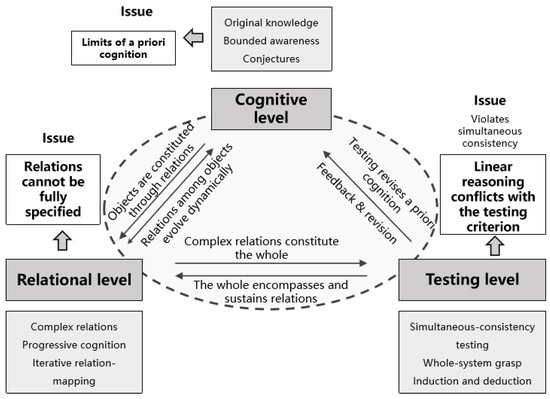
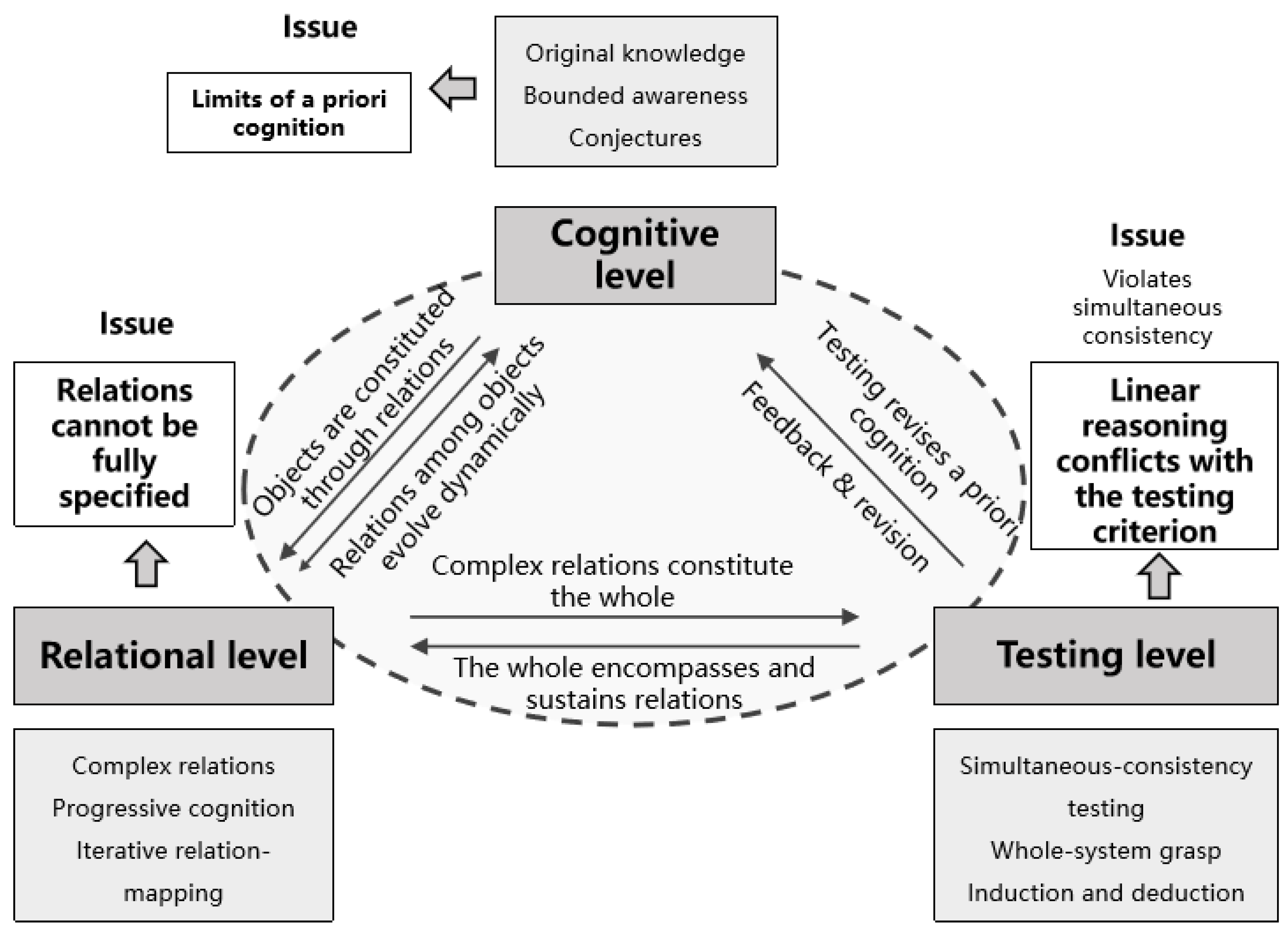
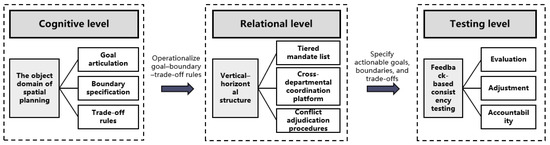
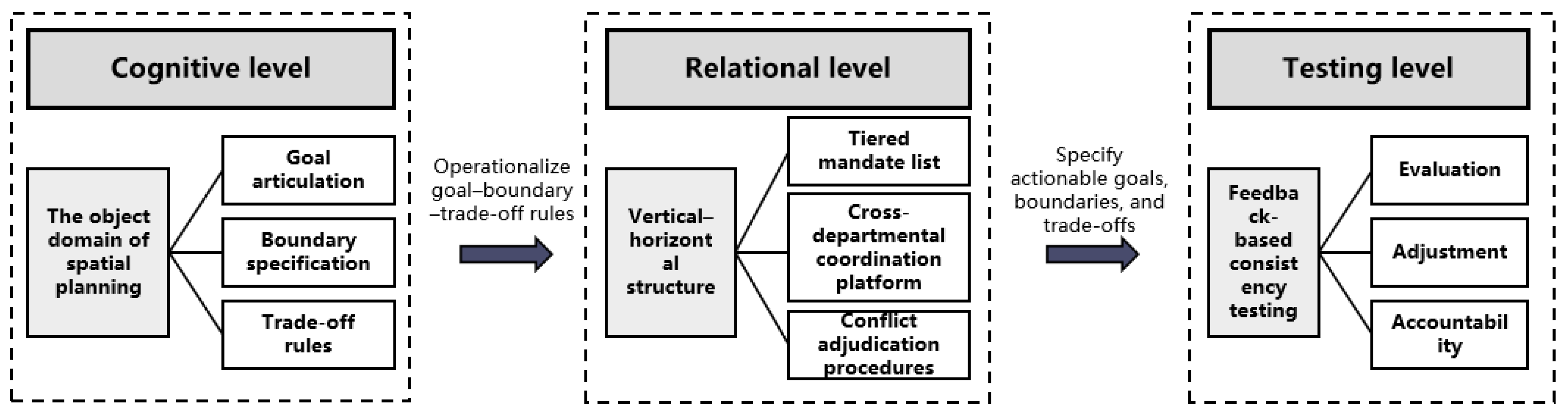
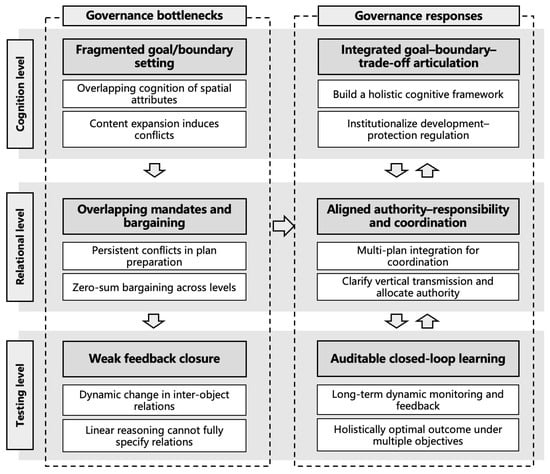
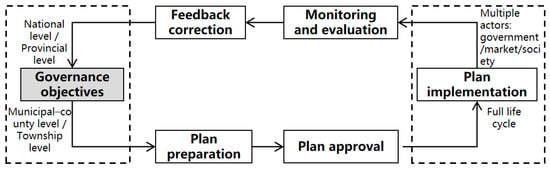

Disclaimer/Publisher’s Note: The statements, opinions and data contained in all publications are solely those of the individual author(s) and contributor(s) and not of MDPI and/or the editor(s). MDPI and/or the editor(s) disclaim responsibility for any injury to people or property resulting from any ideas, methods, instructions or products referred to in the content. |
© 2026 by the authors. Licensee MDPI, Basel, Switzerland. This article is an open access article distributed under the terms and conditions of the Creative Commons Attribution (CC BY) license.