


Abstract
Black soil regions are among the world’s major grain-producing areas and are also key regions for the implementation of conservation tillage. However, whether and how conservation tillage is related to farmers’ production resilience remains insufficiently understood. To address this research gap, this study develops a multidimensional evaluation framework and quantifies farmers’ production resilience using an entropy-weighted composite index constructed from multiple indicators of absorptive, adaptive, and transformative capacities. Based on survey data from 492 farm households in the black soil region of Northeast China, we examine the relationship between conservation tillage adoption and farmers’ production resilience and explore the associated pathways. The baseline model estimates that conservation tillage adoption is associated with a 0.036-unit higher composite production resilience index on a 0–1 scale, with the estimated association statistically significant at the 1% level. This relationship is consistent with pathways involving improved soil production condition, higher farming income, and optimized labor allocation. The estimated association also varies significantly across age groups, technical-training status, and levels of land fragmentation. The results also reveal complementarity between no-tillage or minimum tillage and straw mulching: their combined adoption is associated with higher resilience than adopting either practice alone, particularly at partial or high residue-retention levels. These findings suggest that conservation tillage may contribute not only to soil conservation but also to farmers’ capacity to cope with external shocks in the black soil region of Northeast China. They also highlight the potential importance of promoting integrated conservation tillage technology packages and improving the intensity and quality of conservation tillage adoption in this region.
1. Introduction
Black soils are among the world’s most valuable land resources. Although farmland in black soil regions accounts for only 17% of the world’s total cropland area, it produces approximately half of global millet output, 30% of wheat output, and 25% of potato output [1]. In China, the Northeast Black Soil Region is a major grain-producing area, accounting for approximately 36% of the country’s total maize production [2]. However, prolonged and intensive cultivation has led to increasingly severe black soil degradation, manifested primarily in the thinning of the cultivated soil layer, the thickening and compaction of the plow pan, the continuous decline in soil organic matter, and intensified soil erosion. These problems pose persistent challenges to maintaining and increasing grain production. Meanwhile, the impacts of climate change have further heightened uncertainty in agricultural production, making it increasingly urgent to strengthen farmers’ capacity to cope with risks [3,4]. Against this background, adopting sustainable agricultural production practices in black soil regions is essential for promoting the conservation and sustainable use of land resources and enhancing farmers’ production resilience.
Conservation tillage is a sustainable agricultural production practice centered on no-tillage or minimum tillage, crop residue retention, and appropriate crop rotation. Its origins can be traced back to the ecological crisis of the Dust Bowl in the United States in the 1940s, which was triggered by excessive tillage [5]. In 1997, the Latin American Agricultural Conference formally established minimum soil disturbance, permanent soil cover, and diversified crop rotation as the three fundamental principles of conservation tillage [6]. Since then, conservation tillage has attracted widespread attention worldwide and has been increasingly promoted and adopted in major agricultural countries, such as China, Australia, and Brazil [7]. China began systematic experiments and demonstrations of conservation tillage in the 1990s and gradually entered a stage of large-scale adoption in the early twenty-first century. Existing evidence indicates that conservation tillage plays an important role in stabilizing crop yields and promoting ecological conservation.
Conservation tillage has attracted extensive scholarly attention, with existing studies focusing primarily on its ecological processes, technology adoption, and overall benefits. Regarding ecological processes, conservation tillage can improve soil structure, water movement, and nutrient cycling efficiency by reducing soil disturbance, maintaining surface cover, and diversifying crop rotations. These improvements promote the accumulation of soil organic matter and the restoration of biological functions, thereby enhancing soil water- and nutrient-retention capacity, buffering the adverse effects of extreme climatic events, and strengthening the self-regulating capacity of agroecosystems. With respect to technology adoption, farmers’ decisions to adopt conservation tillage are shaped by the interactions among human capital, institutional accessibility, and biophysical conditions. Abdulai found that farmers’ years of education, social networks, access to credit, agricultural extension services, availability of agricultural machinery, and soil quality all positively influence the adoption of conservation tillage technologies [8]. Osman and Bergtold further demonstrated that climate variability and policy incentives play important moderating roles in determining the intensity of adoption [9]. Kassie et al. extended the analytical perspective from the adoption of individual technologies to that of technology bundles and found that extension services, social capital, credit constraints, and resource endowments jointly shape farmers’ decisions to adopt combinations of agricultural technologies [10]. A substantial body of empirical research has also examined the benefits of conservation tillage, mainly from economic and ecological perspectives. In terms of economic benefits, Munjam et al. used data from farmers engaged in rice–maize rotations and applied a difference-in-differences approach [11]. Their results showed that, compared with conventional tillage, no-tillage significantly reduces production costs and increases farm income. Bowman et al. further confirmed these findings and attributed the cost advantage primarily to reduced fuel use and labor inputs [12]. Regarding ecological benefits, many studies have reported that no-tillage can significantly improve soil water retention, regulate soil thermal conditions, and enhance water-use efficiency, thereby increasing crop tolerance to extreme climatic events such as heat and drought. Moreover, the improved soil habitat resulting from reduced disturbance helps enhance soil biodiversity, which in turn strengthens the multifunctionality and long-term stability of agroecosystems [13]. However, these benefits are context dependent. No-tillage may reduce yields under some conditions, whereas combining it with residue retention and crop rotation can improve rainfed yields in dry climates. Its effects on soil organic carbon also vary, with benefits potentially weakened in cooler and wetter environments [14].
Agricultural production resilience refers to farmers’ overall capacity to withstand losses, adapt to change, restore production functions through appropriate adjustments, and sustain long-term development when confronted with external shocks. Recent international studies increasingly conceptualize agricultural resilience as a multidimensional and context-specific construct. Reidsma et al. assessed resilience across European farming systems by distinguishing adaptation and transformation pathways [15], while Prat-Benhamou et al. showed that the farm and farmer attributes associated with perceived resilience vary across production challenges and farming contexts [16]. Pret et al. found that existing measurements still emphasize agricultural and economic performance, with social, environmental, and institutional dimensions less consistently incorporated [17]. Meyer et al. further demonstrated the value of combining biophysical, economic, and social evidence when assessing the resilience of Swiss summer farms [18]. These studies support multidimensional assessment but also indicate that resilience indicators need to be adapted to specific production systems and local conditions.
Existing studies have also examined the determinants of agricultural production resilience from multiple perspectives. Cissé and Barrett identified productive assets, such as livestock and agricultural equipment, together with social transfers, as key resources for strengthening the resilience of poor households [19]. Tanner et al. emphasized that resilience depends not only on households’ own asset endowments but also on the broader institutional environment and governance structure, including disaster early-warning systems, social protection coverage, and government response capacity [20]. Zhuang and Cheng further found that land transfer also has a significant effect on farmers’ resilience [21]. However, little attention has been paid to the relationship between conservation tillage and agricultural production resilience, and empirical evidence remains particularly limited regarding the potential mechanisms and pathways linking conservation tillage adoption to resilience at the individual smallholder level.
In summary, this study uses field survey data from 492 farm households in Lishu and Nong’an Counties, Jilin Province, to examine the relationship between conservation tillage adoption and farmers’ production resilience. It offers three potential contributions. First, it extends conservation tillage research beyond ecological and economic outcomes by operationalizing the IDS absorptive, adaptive, and transformative capacities (AAT) framework with indicators tailored to production conditions in Northeast China’s black soil region. Second, it examines soil production condition, farming income, and labor allocation as potential pathways linking adoption to resilience. Third, it distinguishes technology packages and adoption intensity to assess the complementarity between no-tillage or minimum tillage and straw mulching. Together, these analyses provide micro-level evidence and policy-relevant insights for sustainable land management in black soil regions.
2. Theoretical Analysis
2.1. Connotation of Farmers’ Production Resilience
The concept of resilience was first introduced into academic research in the field of ecology, where Holling [22] defined it as “the ability of an ecological system to absorb changes in state variables, driving variables, and parameters and still persist.” The concept then entered economics. In economic research, resilience refers to the ability of an economic system to resist, recover, reconstruct, and innovate under uncertain shocks [23,24]. In development economics, the focus shifted to micro-level individuals and households [25]. Hodbod and Eakin then integrated resilience into agricultural systems [26]. Building on this, researchers increasingly studied resilience at the farm level, treating climate change as a key external shock [27,28].
Drawing on the household resilience framework developed by the Institute of Development Studies (IDS), this study measures farmers’ production resilience along three dimensions: absorptive capacity, adaptive capacity, and transformative capacity (AAT) (Figure 1) [29]. Following the established AAT framework, we adapted indicators supported by previous studies and supplemented them with context-specific indicators selected according to maize production in Northeast China’s black soil region and the design of our household survey.
Figure 1.
Connotation of farmers’ climate-related production resilience.
First, absorptive capacity refers to farmers’ ability to passively absorb climate shocks and maintain basic farm operations, drawing on their production conditions, material reserves, labor, and financial resources. This capacity is the first line of defense in production resilience. Accordingly, absorptive capacity is operationalized through productive resource endowments, disaster-resistant material reserves, human capital, and financial risk buffers, which respectively capture the natural, material, labor, and financial resources that farmers can mobilize to withstand climate shocks and maintain basic production. First, farmers’ productive resource endowments form the fundamental basis for withstanding climate shocks, which are captured by maize planting scale, crop diversity, and black soil type. Given the central role of land in maize production [30], planting scale reflects the quantity of productive resources available to farmers, while crop diversity captures their capacity to diversify production risks. Black soil type is included as a context-specific indicator because differences in soil fertility and erosion resistance directly affect farmers’ ability to withstand climate shocks. Second, farmers’ disaster-resistant assets provide direct protection against extreme weather events, which are represented by agricultural machinery, grain storage facilities, and housing conditions. Agricultural machinery supports timely disaster prevention and post-disaster production recovery while grain storage facilities and housing conditions reflect the material protection available for preserving harvests and maintaining basic livelihoods [31]. Third, human capital is a key component of absorptive capacity. The number of household farm workers and their health status represent the quantity and quality of this capital. Together, they determine the scale and efficiency of farmers’ disaster prevention and relief actions during climate shocks [19]. Fourth, financial support helps farmers absorb economic losses from disasters. Agricultural production loans provide working capital for purchasing seeds and fertilizers after a disaster, enabling farmers to resume production. Agricultural insurance transfers climate risk through risk-sharing mechanisms and reduces the impact of disasters on household finances [32]. Taken together, these indicators reflect the resource base that enables farmers to absorb immediate losses and maintain basic production under climate shocks.
Second, adaptive capacity refers to farmers’ ability to actively adapt to climate shocks and sustain agricultural production by adjusting their farming and management practices, integrating internal and external social resources, and accessing timely technical advice and information support. Accordingly, adaptive capacity is operationalized through proactive climate adaptation, collective action and mutual aid, service-system integration, and access to technology and information, which capture both farmers’ own production adjustments and the external support available for sustaining production under changing climatic conditions. These indicators are included not merely as signs of agricultural modernization, but because they reflect farmers’ capacity to learn and reconfigure production practices in response to recurrent shocks, although some conceptual overlap remains. First, proactive climate adaptation is represented by adjustments to cropping structure and improvements in irrigation and drainage systems, both of which reflect farmers’ active responses to climate-related production risks [33]. Second, collective action and mutual aid networks provide crucial social support for farmers facing climate shocks [34] Individual farmers often lack the capacity to cope with disasters independently. By participating in village-level collective decision-making and engaging in reciprocal assistance among neighbors and relatives, they can share labor and resources in the aftermath of a disaster [35]. Third, integration into service systems is a key measure for farmers to enhance their adaptive capacity in modern agriculture. By participating in agricultural trusteeship services, farmers can access professional, full-chain production support and supervise the process to ensure service quality. These context-specific indicators reflect the growing role of agricultural socialized services in maize production in Northeast China’s black soil region. Fourth, access to agricultural technology and production information is essential for farmers to manage climate risks scientifically, which is represented by farmers’ channels for obtaining agricultural extension information and the information devices available to them. Well-functioning extension services help farmers rapidly adopt disaster-resistant and yield-stabilizing technologies. The expansion of agricultural information devices also enables farmers to access timely weather warnings and green technology information [36]. Taken together, these indicators capture farmers’ capacity to adjust production practices and mobilize collective, service, technological, and informational support in response to climate shocks.
Third, transformative capacity refers to farmers’ ability to transform their production systems and achieve sustainable development under future climate shocks by actively adjusting their livelihood strategies, upgrading their skills and knowledge, and shifting toward green farming and digitalized production. Accordingly, transformative capacity is operationalized through livelihood-strategy adjustment, knowledge and skill upgrading, green-technology transition, and learning and digital transformation, which capture farmers’ capacity to restructure their livelihoods, capabilities, and production modes for longer-term development. First, farmers can diversify their income by adjusting their livelihood strategies [36]. Relying on crop farming alone makes them highly vulnerable to extreme weather events. They can shift some labor to non-farm activities, helping them spread climate risks and strengthen household economic resilience [34]. Second, farmers need new knowledge and skills to transform their production systems. They can acquire them through training and technical exchanges, which helps update their management thinking and paves the way for technological change [37]. Third, the green-technology transition is represented by farmers’ attention to green production technologies and their awareness of black soil conservation. These context-specific indicators capture their willingness and capacity to shift toward environmentally sustainable production. Fourth, education and digital learning are key to accelerating farmers’ transition. Education determines their ability to acquire new knowledge and technologies and is a prerequisite for change. Digital learning reflects how effectively they apply this knowledge in actual production and drives the digitalization of agriculture [38]. Taken together, these indicators reflect farmers’ capacity to achieve longer-term livelihood, technological, environmental, and digital transformation. Although some of these indicators may also capture broader processes of agricultural modernization, they are included here insofar as they reflect farmers’ capacity to reconfigure production practices and acquire new capabilities in response to recurrent shocks.
2.2. Mechanism Analysis
2.2.1. The Soil Production Condition Mechanism
As climate risks intensify, conservation tillage is expected to strengthen farmers’ production resilience by improving soil production conditions. Extreme weather events, such as droughts, heavy rainfall, and abnormal temperatures, can accelerate soil erosion, soil organic carbon loss, and nutrient imbalance, thereby undermining farmland productivity [39]. Frequent plowing and rotary tillage may further aggravate these problems by disrupting soil aggregates and exposing the soil surface to wind and water erosion [40]. By contrast, no-tillage or minimum tillage reduces mechanical disturbance, helps preserve soil structure, promotes aggregate formation, and restores pore space, thereby lowering erosion risks [41]. Residue retention further protects the soil surface, reduces moisture evaporation, and contributes organic matter and carbon resources as residues decompose.
Improved soil production conditions provide farmers with a more stable productive resource base for coping with climate shocks. Greater water- and nutrient-retention capacity can help reduce yield fluctuations and maintain basic agricultural production, thereby supporting farmers’ capacity to absorb production losses. More favorable soil conditions also provide greater flexibility for adjusting cropping practices, improving irrigation infrastructure, and maintaining production after adverse climatic events. Continued conservation tillage may be further supported by village-level collective decision-making and participation in agricultural socialized services [42]. Over time, improvements in soil fertility may reinforce farmers’ awareness of land conservation, increase their attention to green production technologies, and encourage the acquisition of new knowledge and innovative practices [43]. Through these interrelated channels, improved soil production conditions can contribute to farmers’ absorptive, adaptive, and transformative capacities.
2.2.2. The Farming Income Mechanism
Conservation tillage adoption is also expected to strengthen farmers’ production resilience by improving farming income. Climate shocks can reduce crop yields and grain quality while increasing expenditures on replanting, supplementary fertilizer application, and other remedial measures. Conservation tillage can alleviate these pressures by reducing yield fluctuations associated with extreme weather and lowering production costs [44]. In particular, no-tillage or minimum tillage reduces machinery and fuel expenditures associated with conventional plowing, while straw mulching can reduce irrigation requirements and dependence on chemical fertilizers [45].
More stable farming income provides sustained financial support for farmers facing production risks. It can help households maintain productive resources and disaster-response investments and avoid reducing production because of short-term losses. Improved income expectations may also alleviate credit constraints [46], and reduce household economic pressures that affect the maintenance of human capital [47]. At the same time, greater financial capacity enables farmers to adjust cropping structures, improve production infrastructure, access agricultural services, and obtain technical information more readily. In the longer term, improved agricultural returns may facilitate labor reallocation and livelihood diversification while providing resources for knowledge upgrading, green technology adoption, and digital learning [48]. Farming income therefore links conservation tillage with resilience not only through short-term financial buffering but also through farmers’ capacity to adjust and transform their production and livelihood strategies.
2.2.3. The Labor Allocation Mechanism
Conservation tillage adoption may further strengthen farmers’ production resilience by reducing agricultural labor requirements and improving labor allocation. Under conventional farming, households devote substantial labor to plowing, land preparation, and residue removal, while climate-related shocks may create additional emergency labor demands. By relying more heavily on specialized machinery, no-tillage or minimum tillage and straw mulching reduce labor-intensive field operations [49] and can lower the labor required for activities such as land preparation, weeding, irrigation, and topdressing [50].
Reduced routine labor requirements can ease labor constraints during periods of climatic stress and allow households to allocate labor and time more flexibly. The labor released from routine fieldwork can support timely production adjustments and other climate-adaptation measures [34], while also enabling greater participation in collective action, mutual-aid networks, and agricultural socialized services [42]. These changes can broaden farmers’ access to technical information and production support. Over a longer horizon, reduced agricultural labor demand may facilitate non-farm employment and livelihood diversification. Experience with conservation tillage may also reshape farmers’ perceptions of modern agricultural technology [51], encouraging participation in knowledge and skills training and greater use of digital tools for learning and production [48]. Improved labor allocation thus strengthens farmers’ ability to maintain production under shocks, adjust resource use when conditions change, and pursue longer-term transformations in production and livelihood strategies.
2.3. Research Hypotheses
Based on the above analysis, Figure 2 presents the theoretical framework linking conservation tillage adoption to farmers’ production resilience. Accordingly, the following hypotheses are proposed:
Figure 2.
Mechanism linking conservation tillage adoption to farmers’ production resilience.
H1.
Conservation tillage adoption can enhance farmers’ production resilience.
H2.
Conservation tillage adoption is expected to enhance farmers’ production resilience by improving soil production condition.
H3.
Conservation tillage adoption is expected to enhance farmers’ production resilience by increasing farming income.
H4.
Conservation tillage adoption is expected to enhance farmers’ production resilience by optimizing labor allocation.
3. Materials and Methods
3.1. Data Source
The data used in this study were obtained from a household survey conducted between September and October 2025 in Lishu County and Nong’an County, Jilin Province (Figure 3). The respondents were local maize-growing households. Both counties are major maize-producing areas and important commodity grain production bases in Jilin Province and China, with maize-planted areas of approximately 226,500 ha in Lishu County and 349,100 ha in Nong’an County. In recent years, conservation tillage has been widely promoted in both counties under the Conservation Tillage Action Plan for the Northeast Black Soil Region, providing a suitable empirical setting for examining conservation tillage adoption and its relationship with farmers’ production resilience.
Figure 3.
Map of study area.
Before the formal survey, the research team conducted a pilot survey in a core conservation tillage demonstration area in Lishu County and collected feedback from 45 maize-growing households. Based on this feedback, the questionnaire content and wording of the survey items were revised to better reflect maize production and conservation tillage practices in the Northeast Black Soil Region. The formal survey employed a multistage stratified random sampling procedure. First, four to five townships were randomly selected from each county. Second, three to five administrative villages were selected from each township. Finally, rather than allocating samples in proportion to village size, we applied broadly comparable prespecified sampling ranges across villages and randomly selected approximately ten to twenty small-scale farming households and three to five large-scale farming households from each village for face-to-face interviews. After questionnaires with missing information, logical inconsistencies, or internally conflicting responses were excluded, 492 valid questionnaires remained for analysis. Before each interview, the enumerators informed respondents of the purpose and content of the study, the intended use of the data, and the voluntary nature of participation. Interviews were conducted only after informed consent had been obtained. No personally identifiable information was collected, and all survey data were anonymized and used solely for academic research.
3.2. Variable Selection
3.2.1. Dependent Variable
As noted above, this study adopts the absorptive, adaptive, and transformative capacity (AAT) framework proposed by the Institute of Development Studies (IDS) (Table 1). Specifically, the evaluation system comprises three primary indicators, 12 secondary indicators, and 26 tertiary indicators. The selected indicators were evaluated based on the preceding theoretical analysis and literature, the production realities of Northeast China’s black soil region, and expert consultation. The questionnaire content and wording were further refined based on feedback from a pilot survey of 45 maize-growing households. After normalizing the indicators, we apply the entropy-weighting method to determine their respective weights and construct a composite index of farmers’ production resilience. The resulting index is used to capture the overall level of farmers’ production resilience.
where RES denotes farmers’ production resilience, is the normalized value of the ith indicator, and represents the weight assigned to that indicator.
Table 1.
Evaluation Index of Farmers’ Production Resilience.
3.2.2. Core Explanatory Variable
The core explanatory variable is conservation tillage adoption, measured by a binary variable indicating whether the farmer adopted conservation tillage. Considering the practical application of the technologies and drawing on existing research findings on conservation tillage [52], farmers’ conservation tillage adoption is measured by the survey question of whether they adopted conservation tillage in maize production in 2025. Conservation tillage mainly includes straw mulching and no-tillage or minimum tillage. This study codes adoption as a binary variable: farmers who adopted either practice or both are classified as adopters and assigned a value of 1; otherwise, they are classified as non-adopters and assigned a value of 0.
3.2.3. Mechanism Variables
To explore the potential pathways through which conservation tillage adoption is associated with farmers’ production resilience, this study constructs mechanism variables from three perspectives: soil production condition, farming income, and labor allocation. These variables are operationally measured as follows: soil production condition is measured by soil fertility; farming income is measured by maize farming income per mu; and labor allocation is measured by agricultural labor input per mu.
3.2.4. Control Variables
Based on the previous literature, the control variables selected in this study include the household head’s gender, age, marital status, whether the household head is a village official, household size, household dependency ratio, and farmland fragmentation. According to the National Bureau of Statistics, the household dependency ratio is defined as the ratio of non-working-age members to working-age members in the household. Farmland fragmentation was measured by referring to the research of Li Wei et al. [53], and the number of farmland plots is used to represent the degree of farmland fragmentation. In addition, to control for differences in geography, resources, and economic development across counties, regional dummy variables are added to eliminate the impact of region on farmers’ resilience. The specific variable definitions are shown in Table 2.
Table 2.
Variable selection and descriptive statistics.
3.3. Research Methods
3.3.1. The Entropy Method
Drawing on the approach used by Brück et al. [54], this study employs the entropy method. This approach determines indicator weights based on the principle of information entropy, representing an objective weighting method that avoids the subjectivity inherent in human judgment. Indicator weights are reported in Table 1. The calculation steps are as follows:
① Standardization. Because the indicators differ substantially in units and scales, each indicator is standardized as follows:
In Formula (2), denotes the original value of indicator j for household i. At the same time, and represent the minimum and maximum values of the j indicator, respectively. is the standardized value of the indicator. Here, i = 1, 2, 3, …, n, where n is the total number of samples; and, j = 1, 2, 3, …, m, where m is the total number of evaluation indicators.
② Calculating the proportion pij of the i sample under the j evaluation index:
③ Calculating the entropy value ej of the j evaluation index:
④ Calculating the weight wj of the j evaluation indicator:
⑤ Calculating the comprehensive index of farmers’ production resilience:
3.3.2. Regression Model
To examine the relationship between conservation tillage adoption and farmers’ production resilience, the following basic model (Model 1) is constructed according to Hypothesis 1:
where i indexes farm households; indicates the farmers’ production resilience, quantified by a comprehensive index combining absorptive capacity, adaptive capacity and transformative capacity; indicates whether household i adopted conservation tillage; represents a vector of control variables capturing the characteristics of farmers, households, and land production and management; indicates county fixed effects; is the constant term; , and are the estimated coefficients; denotes the random error term.
Based on the preceding theoretical analysis and hypotheses, soil fertility, maize farming income, and agricultural labor input are specified as potential mediators through which conservation tillage adoption may be associated with farmers’ production resilience. Following the mediation framework of Baron [55] and Preacher [56], we employ a three-step mediation procedure. Equation (7) represents the total-effect model, where the coefficient of conservation tillage adoption is denoted by α1.
In the second step, each mediator is regressed on conservation tillage adoption:
where represents the mediating variable (i.e., soil fertility, maize farming income and agricultural labor input). All other variables remain consistent with Equation (7).
In the third step, the mediator is added to the resilience equation:
where captures the association between the mediator and production resilience conditional on conservation tillage adoption, represents the direct effect of conservation tillage adoption. All other variables remain consistent with Equation (8). The indirect effect is calculated as *, while and represent the total and direct effects, respectively. We further assess the indirect effects using the Sobel test and percentile bootstrap confidence intervals based on 1000 replications.
3.4. Descriptive Statistics
Table 2 presents the definitions of relevant variables and descriptive statistics.
A survey of 492 maize farmers in Northeast China revealed that 348 households (70.7%) had adopted conservation tillage (Figure 4). Adoption rates differed substantially across technology types. Farmers were more likely to adopt combinations of practices than single practices. Among the combined practices, “no-till or minimum tillage with partial mulching” achieved the highest adoption rate (37.2%), and the three integrated practices collectively accounted for 61.2% of sampled households. These results indicate that such integrated approaches better meet the production needs of maize farming, contributing to their broader acceptance by farmers. In contrast, fewer than 10% of sampled farmers adopted any single conservation tillage practice. Meanwhile, 29.3% of them continued using traditional tillage. These figures suggest that conservation tillage has achieved relatively broad adoption, although traditional tillage remains prevalent among a substantial proportion of farmers. The continued use of traditional tillage may reflect transition costs, limited access to extension services, or incomplete awareness of the benefits of conservation tillage.
Figure 4.
Distribution of tillage practices among maize farmers (N = 492).
4. Results
4.1. Baseline Regression Analysis
Before estimating baseline models, multicollinearity among all control variables was examined using variance inflation factors (VIFs). The mean VIF was 1.07, and the maximum VIF was 1.13, both well below the conservative threshold of 5, indicating that multicollinearity does not pose a serious concern for the regression estimates. The results in Table 3 show that conservation tillage adoption is positively and significantly associated with farmers’ production resilience at the 1% significance level. After introducing control variables, the results in columns (1) and (2) consistently show that conservation tillage adoption is positively and significantly associated with farmers’ production resilience. Overall, the empirical results support Hypothesis 1.
Table 3.
Baseline Regression Results.
Using separate regression models, we further examine the association between conservation tillage adoption and the three core dimensions of production resilience—absorptive capacity, adaptive capacity, and transformative capacity. The results in columns (3)–(5) show that adoption is positively and significantly associated with all three capacities. The estimated coefficients correspond to 7.23%, 15.10%, and 21.72% of the respective sample means, or 0.164, 0.233, and 0.416 standard deviations, for absorptive, adaptive, and transformative capacities, respectively. Both comparisons indicate that the estimated association is largest for transformative capacity.
4.2. Robustness Tests
To assess the robustness of the baseline regression results, this study employs three alternative approaches, including replacing the measurement of the core explanatory variable, changing the measurement of the dependent variable, and adjusting the fixed-effect level.
First, we replaced the original measure of the core explanatory variable with two alternative indicators, namely whether farmers adopted no-tillage or minimum tillage and whether they adopted straw mulching. Second, to assess whether the baseline results depend on the entropy-weighting aggregation rule, we re-measured farmers’ production resilience using principal component analysis (PCA) [57,58]. The KMO test (0.630) and Bartlett’s test (p < 0.01) confirmed that the data were suitable for PCA. PCA was conducted using the standardized 26 tertiary indicators reported in Table 1. The first 18 principal components were retained, jointly explaining 85.89% of the total variance (Table 4). The alternative resilience index was constructed as the weighted sum of these component scores, with each component weighted by its normalized eigenvalue. The index was then oriented consistently with the entropy-weighted measure and normalized to [0, 1]. The coefficient of conservation tillage adoption remains positive and statistically significant at the 1% level, indicating that the main finding is robust to the alternative PCA-based measurement of resilience. Third, we replaced county fixed effects with township fixed effects [59]. Township fixed effects consume more degrees of freedom and may lower estimation efficiency. We therefore retained county fixed effects in the baseline specification. The robustness check results are presented in Table 5. Across all specifications, the estimated coefficient of conservation tillage adoption remains positive and statistically significant at the 1% level. These results indicate that the positive association is robust across alternative specifications and variable definitions.
Table 4.
PCA component retention and weights.
Table 5.
Robustness Test Results.
4.3. Endogeneity Discussion
To address selection on observable characteristics, we employ Propensity Score Matching (PSM) to improve the comparability between adopters and non-adopters. This procedure can reduce selection bias associated with observed covariates, but it cannot eliminate bias arising from unobserved factors [11,60,61]. We first estimate a logit model to predict adoption. The matching covariates include all control variables from the baseline model. We then apply three matching methods: nearest-neighbor matching, caliper matching, and kernel matching. We examine the common support condition. Insufficient overlap between the treated and control groups can cause sample loss and bias. Across all three matching methods, most observations fell within the common support range (487 out of 492 in each method), and only a few were lost. This confirms that the common support condition is satisfied. Additionally, we conducted post-matching balance tests. The results, summarized in Table 6, confirm the comparability of covariates between the treatment and control groups. After matching, the Pseudo R2 and LR statistics decreased significantly, and the post-matching LR statistics became insignificant (p > 0.1). Furthermore, all standardized biases were below the 10% threshold, with a maximum of 5.3%. These results satisfy the criteria established by Rosenbaum and Rubin [62], providing additional evidence that the matching process effectively reduced selection bias.
Table 6.
Balance Test Results.
As shown in Table 7, the estimated average treatment effects on the treated (ATTs) are positive and statistically significant across all three matching methods. These results provide additional evidence that the positive relationship between conservation tillage adoption and farmers’ production resilience is not driven solely by observable selection bias.
Table 7.
PSM Estimation Results.
To further assess the sensitivity of the baseline association to potential unobserved confounding, we complement the PSM analysis with a Two-Stage Least Squares (2SLS) estimation based on an instrumental variable. The interpretation of the 2SLS estimates depends on the relevance and exclusion assumptions of the instrumental variable. We introduce an instrumental variable, selecting the mean adoption rate of conservation tillage among other farmers in the same village, excluding the household itself, as the instrumental variable for farmers’ conservation tillage adoption [63,64]. On the one hand, technology adoption exhibits significant peer effects and neighborhood imitation, and the use of a specific technology by other farmers in the same village directly affects individual adoption decisions, thereby supporting the relevance condition of the instrumental variable. On the other hand, the average adoption rate of other farmers in the village affects individual technology adoption mainly through social learning and neighborhood demonstrations, which provides a theoretical basis for the plausibility of the exclusion restriction, although this assumption cannot be verified directly.
To further assess the plausibility of the exclusion restriction, we conduct a predetermined-covariate balance test. Following the logic that a credible instrumental variable should not systematically predict characteristics determined before the treatment decision [65,66], we separately regress gender, household size, land fragmentation, and years of schooling on the leave-one-out village adoption rate, controlling for county fixed effects and clustering standard errors at the village level. As shown in Table 8, the instrument is not significantly associated with any of these characteristics (p > 0.10).
Table 8.
Predetermined-Covariate Balance Test for the Instrumental Variable.
These results indicate that the instrument is not systematically associated with the examined observable household and farm characteristics, reducing concerns that it primarily captures household sorting. Together with the social-learning rationale above, the balance evidence strengthens the plausibility of the exclusion restriction. Nevertheless, neighboring adoption may also affect household resilience through shared machinery services, village-level extension activities, collective land management, labor exchange, or local environmental spillovers. Because these channels cannot be separately measured in our survey, they cannot be completely ruled out, and the 2SLS estimates should therefore be interpreted as supportive rather than definitive causal evidence.
We employ a two-stage least squares (2SLS) model, with the results reported in Table 9. The first-stage F-statistic is 17.05, exceeding the conventional threshold of 10 and indicating a reasonably strong first-stage relationship between the instrument and the endogenous regressor. The Kleibergen-Paap rk LM statistic from the underidentification test is 4.610, with a p-value of 0.032, allowing us to reject the null hypothesis of underidentification at the 5% significance level. The Kleibergen-Paap rk Wald F statistic for weak-identification testing is 17.052. Taken together with the first-stage results, these diagnostics support the relevance of the instrumental variable and suggest that weak-instrument concerns are unlikely to be severe, although they cannot directly verify the exclusion restriction. The results obtained from both approaches to addressing endogeneity, PSM and 2SLS, are consistent, providing additional evidence consistent with a positive association between conservation tillage adoption and farmers’ production resilience, subject to the assumptions underlying the PSM and 2SLS approaches.
Table 9.
Estimation Results Using the Instrumental Variables Method.
4.4. Mechanism Test
Building upon the baseline regression, this section further examines the mechanisms through which conservation tillage adoption is associated with farmers’ production resilience. As presented in Table 10, the analysis considers soil fertility, farming income, and labor input as potential mediators. It reports the mediator and outcome equations, decomposes the total effect into direct and indirect effects, and evaluates the indirect effects using the Sobel and bootstrap tests.
Table 10.
Mechanism Test Results.
4.4.1. The Mechanism of Soil Production Condition Improvement
We use improved soil fertility as a proxy for enhanced soil production condition. Following the mediating effects framework of Baron [55] and Preacher [56], we examine whether soil fertility mediates the association between conservation tillage adoption and production resilience. This pathway is theoretically grounded: extensive evidence links soil production condition to production resilience [42,43]. Columns (1) and (2) of Table 10 show that conservation tillage adoption is positively associated with soil fertility and that soil fertility is positively associated with production resilience after accounting for adoption. Both the Sobel test and the bootstrap confidence interval support a significant positive indirect effect through soil production conditions. These results provide evidence consistent with the proposed pathway linking conservation tillage adoption to improved soil production conditions and, in turn, to higher production resilience.
This may be due to the following reasons. On the one hand, straw mulching retains crop residues on the soil surface, which can reduce runoff and erosion, conserve soil moisture, and contribute organic matter as the residues decompose, thereby helping slow the degradation of black soil. On the other hand, no-tillage or minimum tillage practices protect soil aggregates from plowing damage, reduce compaction, preserve microbial communities and pore structure, and improve water and nutrient retention. Over time, these practices may help restore the productive function of degraded black soil and support farmers’ resilience to climate change. The findings support Hypothesis 2.
4.4.2. The Mechanism of Farming Income Improvement
We use maize farming income as an indicator of improved farming returns. Following the mediating effects framework, we examine whether farming income mediates the association between conservation tillage adoption and production resilience. This pathway is theoretically grounded: extensive evidence links farm income to production resilience [46,47,48]. Columns (3) and (4) of Table 10 show that conservation tillage adoption is positively associated with farming income and that farming income is positively associated with production resilience after accounting for adoption. The Sobel and bootstrap results further support a significant positive indirect effect through farming income. These results provide evidence consistent with the proposed pathway linking conservation tillage adoption to higher farming returns and, in turn, to higher production resilience.
We offer the following explanation. First, conservation tillage may stabilize or increase crop yields and quality, thereby supporting market competitiveness and sales revenue. Second, this practice lowers input costs for conventional operations such as plowing and straw management. Third, conservation tillage may mitigate drought and heat stress, thereby reducing yield losses and stabilizing expected income. These findings support Hypothesis 3.
4.4.3. The Mechanism of Labor Allocation Optimization
We use reduced agricultural labor input as an indicator of improved labor allocation. Following the mediating effects framework, we examine whether agricultural labor input mediates the association between conservation tillage adoption and production resilience. This pathway is theoretically grounded: extensive evidence links labor allocation to production resilience [34,42,48,51]. Columns (5) and (6) of Table 10 show that conservation tillage adoption is negatively associated with agricultural labor input and that labor input is negatively associated with production resilience after accounting for adoption. The product of these two negative paths yields a positive indirect effect, which is supported by both the Sobel test and the bootstrap confidence interval. These results provide evidence consistent with the proposed pathway linking conservation tillage adoption to lower agricultural labor input, more efficient labor allocation, and higher production resilience.
We propose three reasons. First, conservation tillage uses specialized machinery—no-tillage seeders and straw incorporation equipment—to replace labor-intensive tasks like land preparation, seeding, and straw management, cutting field labor demand. Second, it streamlines production by reducing tillage passes and field interventions, lowering labor intensity and time per cycle. Third, labor savings allow farmers to take off-farm jobs or expand on-farm enterprises, improving labor allocation efficiency. These findings support Hypothesis 4.
To complement the mediation analysis in Table 10, we further examine whether the two main components of conservation tillage—no-tillage or minimum tillage and straw mulching—are associated with the three mechanism-related outcomes. Separate regressions are estimated for each component, with soil fertility, maize farming income, and agricultural labor input as the dependent variables. As shown in Table 11, the directions of these associations are broadly consistent with the mechanism-related patterns reported in Table 10, providing a component-level consistency check.
Table 11.
Associations between Conservation Tillage Components and Mechanism Variables.
4.5. Heterogeneity Analysis
4.5.1. Heterogeneity in Farmers’ Age
First, we test whether farmers’ age moderates the association between conservation tillage adoption and production resilience. Following established literature, we stratify the sample into an elderly group (aged 60 or older) and a non-elderly group (aged under 60), then re-estimate the baseline model separately for each subgroup. Columns (1) and (2) of Table 12 show that the coefficient for the non-elderly group is significantly larger than that for the elderly group—this difference is statistically significant at the 1% level. These results indicate significant heterogeneity in the association between conservation tillage adoption and production resilience across age groups, with a larger estimated coefficient among farmers under 60. A plausible explanation is that farmers under 60 possess greater human capital and learning capacity, which may facilitate the implementation of conservation tillage practices and the realization of their potential resilience benefits.
Table 12.
Results of Heterogeneity Analysis.
4.5.2. Heterogeneity in Training Participation
Additionally, we examine whether the association between conservation tillage adoption and production resilience varies with participation in agricultural technical training. Following the literature, we stratify the sample into a trained group and an untrained group based on whether household members have received relevant training and re-estimate the model. Columns (3) and (4) of Table 12 report the results. The estimated coefficients are 0.0356 for untrained farmers and 0.0363 for trained farmers, and both are statistically significant at the 1% level. Although the point estimates are numerically close, formal cross-group tests indicate a statistically significant difference between the two groups. This finding suggests that technical training may be associated with differences in how farmers implement conservation tillage and realize its potential resilience benefits.
4.5.3. Heterogeneity in Land Fragmentation
Finally, we test whether the association between conservation tillage adoption and production resilience varies with land fragmentation. Following established literature, we stratify the sample into a high-fragmentation group (parcel number above the median) and a low-fragmentation group (parcel number below the median), then re-estimate the baseline model separately for each subgroup. Columns (5) and (6) of Table 12 show that the estimated association is larger among farmers with lower land fragmentation, with the cross-group difference significant at the 5% level. A plausible explanation is that fragmented plots impede the mechanized operations required for conservation tillage, limiting its scale advantages and potentially constraining the effective implementation of conservation tillage.
4.6. Further Analysis: Association Between Conservation Tillage Adoption Intensity and Production Resilience
The preceding empirical results show that conservation tillage adoption is positively and significantly associated with farmers’ production resilience. A further question is whether greater adoption intensity is associated with additional differences in production resilience. To examine this issue, drawing on Willy and Holm-Müller [42], this study constructs an ordered adoption-intensity index based on the combination of tillage practices and the level of straw mulching. The index ranges from 0 to 4, with higher values indicating greater adoption intensity. Specifically, non-adoption is coded as 0; adoption of a single conservation tillage practice as 1; low-level straw mulching combined with no-tillage or minimum tillage as 2; partial straw mulching combined with no-tillage or minimum tillage as 3; and high-level straw mulching combined with no-tillage or minimum tillage as 4. This coding represents an ordered increase in technology-package completeness rather than strictly equal biological intervals between adjacent categories.
To avoid imposing a linear equal-spacing assumption, we further recode intensity levels 1–4 as categorical dummy variables and estimate four pairwise models. Each model retains only the non-adoption group (intensity = 0) and one corresponding intensity group, while excluding the other intensity categories. The estimated coefficient therefore measures the difference in production resilience between each adoption-intensity group and complete non-adoption.
Table 13 reports the categorical regression results. The coefficients for intensity levels 1 and 2 are positive but statistically insignificant, whereas the coefficients for levels 3 and 4 are positive and statistically significant at the 1% level. The results therefore do not indicate a strictly progressive increase across every adjacent category. Instead, they suggest a pattern consistent with a possible threshold: the positive association with production resilience becomes substantially stronger when no-tillage or minimum tillage is combined with partial or high levels of straw mulching. This finding supports the complementarity between reducing soil disturbance and increasing soil cover, while avoiding the assumption that the resilience gain from each successive intensity level is identical.
Table 13.
Further Analysis Results.
5. Discussion
The empirical results provide evidence consistent with the hypotheses proposed in this study. Conservation tillage adoption is significantly associated with higher levels of farmers’ production resilience, and the estimates suggest that improved soil production condition, higher farming income, and optimized labor allocation may represent relevant pathways. It is also worth noting that these mechanisms may interact in practice. For example, improved soil conditions may increase farming income, while higher income may support further investment in conservation tillage. Such interactions reflect the complexity of farmers’ decision-making and warrant further attention in future research. The soil-production-condition pathway should be interpreted cautiously because soil fertility improvement is based on farmers’ assessments. Their long-term cultivation experience provides informed observations of plot-level changes, but adopters’ expectations may introduce reporting bias. Because the survey did not include standardized soil tests or consistent multi-year records, future research should triangulate these assessments with direct soil measurements, yield stability, and fertilizer-use data.
Traditionally, conservation tillage has been viewed primarily as a set of practices aimed at reducing soil erosion, improving soil quality, and protecting the agricultural environment, and its policy value has therefore been assessed mainly in terms of resource conservation and ecological benefits [67,68]. The findings of this study suggest, however, that the role of conservation tillage may extend beyond ecological protection. Its adoption also appears to contribute to farmers’ capacity to cope with external shocks and reduce the adverse effects of external risks on agricultural production [69,70]. Conservation tillage may therefore be understood not only as a soil conservation practice but also as a potentially important component of broader climate adaptation strategies. This finding broadens the understanding of the policy functions of conservation tillage and suggests that future policy evaluations could consider not only its ecological benefits, such as soil improvement, emission reduction, and carbon sequestration, but also its potential contribution to production stability and farmers’ long-term resilience.
More importantly, the association between conservation tillage adoption and production resilience depends not only on whether farmers adopt the relevant practices, but also on the combination and intensity of adoption. The results show that combining no-tillage or minimum tillage with straw mulching is associated with higher resilience than adopting either practice alone. Moreover, under combined adoption, the estimated associations are larger at partial and high straw mulching levels. This suggests that different conservation tillage practices are not independent but may be complementary [71]. No-tillage or minimum tillage mainly protects soil structure by reducing mechanical disturbance, whereas straw mulching increases surface cover, reduces soil-water evaporation, and replenishes soil organic matter [72,73]. When combined, the two practices may reinforce each other by simultaneously reducing soil disturbance and increasing soil cover [7]. This complementarity may also help explain why the positive association with production resilience is stronger at higher adoption-intensity categories [74]. A more complete technology package may strengthen the biophysical capacity of farmland to withstand climatic shocks and may also support farmers’ ability to absorb short-term shocks, adjust production decisions, and pursue longer-term livelihood transformation by stabilizing yields, reducing costs, and saving labor [75]. The observed resilience associations may therefore reflect not only the contributions of individual practice, but also their complementarity.
The concept of resilience also requires careful interpretation. As noted by Béné et al. [29], resilience is a broad and context-dependent concept, and its operationalization necessarily involves choices about which capacities and dimensions are emphasized. In this study, the AAT framework is used as an analytical structure rather than as a comprehensive measure of all dimensions of household resilience. Our index specifically captures farmers’ production-related absorptive, adaptive, and transformative capacities in the context of maize production in Northeast China’s black soil region. The findings should therefore be interpreted within this operational scope rather than as representing farmers’ overall social, economic, or livelihood resilience.
Although the results are robust across alternative specifications, their causal interpretation should remain cautious. The cross-sectional design cannot fully eliminate unobserved heterogeneity, and the validity of the 2SLS estimates depends on the exclusion restriction of the village-level adoption instrument. Several potentially relevant confounders could not be measured consistently in the survey, including local extension-service quality, market accessibility, agricultural subsidy support, and interannual climatic variability. Better extension services, market access, and subsidy support may be associated with both greater conservation-tillage adoption and higher production resilience, potentially biasing the estimated positive association upward, whereas the direction of bias associated with climatic variability is less certain. Although the instrument excludes the focal household from the village-level adoption rate and is supported by first-stage diagnostics and predetermined-covariate balance tests, the exclusion restriction cannot be directly verified. Similarly, the mediation analysis provides evidence consistent with the proposed transmission pathways, although potential endogeneity of the mediators should be kept in mind when interpreting the results. In particular, the soil-production-condition measure relies partly on farmers’ self-reported assessments, which may introduce some perception or recall bias. Moreover, the current adoption-intensity analysis does not allow us to establish the precise relationship between residue-retention intensity and resilience or to identify specific threshold effects. These considerations define the evidentiary scope of the present analysis while leaving the consistency of the main empirical relationships across alternative specifications unchanged.
Based on these findings and in light of the two-county sampling frame, conservation tillage policies in comparable contexts could consider not only whether farmers adopt relevant practices but also the completeness, combination, and intensity of adoption. Compared with promoting a single practice in isolation, encouraging the joint adoption of no-tillage or minimum tillage and greater levels of straw mulching may help realize the potential resilience benefits of conservation tillage [76,77]. A differentiated subsidy scheme linked to straw-mulching levels could therefore be explored through carefully evaluated local pilots as a possible policy direction [78]. However, given the ordinal nature of the current intensity measure and the lack of identified threshold effects, the appropriate subsidy levels and effectiveness of such a scheme require further empirical evaluation. In addition, the heterogeneity results suggest that implementation conditions differ across age and training groups. These differences suggest that a differentiated policy approach may be appropriate: younger and trained farmers could support technology demonstration and diffusion, while targeted extension support for older and untrained farmers could focus on reducing knowledge and operational barriers and promoting more inclusive adoption. Targeted training and demonstration could be explored through farmer field schools, demonstration plots, household visits by extension agents, and farmer-to-farmer mentoring, thereby reducing cognitive and operational barriers and improving the standardized implementation of conservation tillage practices [79,80]. The effectiveness of these approaches should be evaluated locally before broader implementation.
This further analysis suggests that the relationship between conservation tillage adoption and farmers’ production resilience varies across adoption-intensity categories, but the available evidence is insufficient to establish the precise relationship between the level of straw mulching and resilience or to identify specific threshold effects. Future research could combine household survey data with long-term field experiments, direct soil measurements, and remote-sensing observations to examine more rigorously the causal pathways linking technology combinations and adoption intensity, soil ecological functions, and farmers’ production resilience.
6. Conclusions
Based on micro-level survey data collected in 2025 from 492 farming households across 35 villages and nine townships in Lishu and Nong’an counties in Northeast China’s black soil region, this study constructs an index of farmers’ production resilience using the entropy method within the framework of absorptive, adaptive, and transformative capacities. It then systematically examines the relationship between conservation tillage adoption and farmers’ production resilience, explores the associated potential pathways and heterogeneity, and further investigates the complementarity among different conservation tillage practices. The main conclusions are presented below. First, conservation tillage adoption is positively and significantly associated with farmers’ overall production resilience and all three of its dimensions: absorptive, adaptive, and transformative capacities. Separate analyses further show that both straw mulching and no-tillage or minimum tillage are positively associated with overall production resilience. Second, the positive association between conservation tillage adoption and farmers’ production resilience is consistent with three potential pathways: improved soil production condition, higher farming income, and optimized labor allocation through reduced agricultural labor input. Third, the association between conservation tillage adoption and production resilience shows significant heterogeneity across farmers differing in age, technical training, and land fragmentation. The estimated association is larger among farmers under the age of 60, those who have received relevant technical training, and those with lower land fragmentation. These results suggest that farmers’ implementation capacity and land operating conditions may shape the realization of the potential resilience benefits of conservation tillage. Fourth, the results suggest complementarity between different conservation tillage practices. Compared with adopting a single practice, combining no-tillage or minimum tillage with straw mulching is associated with higher resilience than adopting either practice alone. Under combined adoption, the estimated associations are larger at partial and high straw-mulching levels, while the lower-intensity categories are associated with larger improvements in farmers’ production resiliencenot statistically significant.
Overall, this study extends research on conservation tillage beyond its conventional ecological and economic outcomes by linking agricultural production practices to farmers’ capacities to absorb, adapt to, and respond to external shocks. The findings suggest that the contribution of conservation tillage to sustainable agricultural transformation lies not simply in the adoption of individual technologies, but in the way technological practices, household resource allocation, and implementation conditions jointly shape farmers’ production resilience. In this sense, conservation tillage may be understood not only as a soil-conservation practice, but also as part of a broader production strategy that may support the adaptive capacity and long-term sustainability of farming systems. The study provides context-specific evidence from two counties in Jilin Province that may inform conservation tillage policies in Northeast China’s black soil region. For contexts comparable to the sampled counties, the findings suggest two practical priorities. First, conservation tillage promotion should place greater emphasis on integrated technology packages that combine no-tillage or minimum tillage with straw mulching, rather than promoting individual practices in isolation. Second, extension and implementation support should be strengthened where farmers face greater knowledge or operational constraints, including limited technical training and fragmented landholdings, to facilitate more effective and consistent adoption of conservation tillage.
Several limitations remain. First, the analysis is based on cross-sectional survey data from two counties in Jilin Province and focuses primarily on maize-producing households, which may limit the broader generalizability of the findings and does not allow dynamic or long-term effects to be fully captured. Second, some measures are derived from household survey responses and could be complemented by more objective biophysical indicators in future research. Future research could draw on broader longitudinal datasets and combine household surveys with direct soil measurements, field experiments, and remote-sensing observations to further examine the long-term effects of conservation tillage and the role of technology combinations and adoption intensity.
Author Contributions
Conceptualization, Z.H. and D.L.; methodology, Z.H. and D.L.; validation, J.L. and D.L.; formal analysis, Z.H., J.L. and D.L.; investigation, Z.H., J.L. and D.L.; resources, Z.H.; data curation, J.L.; writing original draft preparation, Z.H. and J.L.; writing review and editing, J.L. and D.L.; visualization, Z.H.; supervision, Z.H. and D.L.; project administration, D.L.; funding acquisition, Z.H. and D.L. All authors have read and agreed to the published version of the manuscript.
Funding
This research was funded by the National Social Science Foundation of China, grant No. 24CJY086.
Data Availability Statement
The data presented in this study are available from the corresponding author upon reasonable request. The data are not publicly available because they contain detailed household-level information and are subject to privacy and confidentiality restrictions.
Conflicts of Interest
The authors declare no conflicts of interest.
References
- Liao, X.; Li, Y.; Wang, J.; Dong, J.; Yao, Q.; Li, J.; Hou, R.; Li, Z.; Zhang, Y.; Jia, X. Governing black soils for food and climate security. Nat. Commun. 2026, 17, 1488. [Google Scholar] [CrossRef] [Scilit] [PubMed]
- Luo, N.; Meng, Q.; Feng, P.; Qu, Z.; Yu, Y.; Liu, D.L.; Müller, C.; Wang, P. China can be self-sufficient in maize production by 2030 with optimal crop management. Nat. Commun. 2023, 14, 2637. [Google Scholar] [CrossRef] [Scilit] [PubMed]
- Lesk, C.; Rowhani, P.; Ramankutty, N. Influence of extreme weather disasters on global crop production. Nature 2016, 529, 84. [Google Scholar] [CrossRef] [Scilit] [PubMed]
- Liu, Z.; Hubbard, K.G.; Lin, X.; Yang, X. Negative effects of climate warming on maize yield are reversed by the changing of sowing date and cultivar selection in northeast China. Glob. Change Biol. 2013, 19, 3481–3492. [Google Scholar] [CrossRef] [Scilit] [PubMed]
- Bagnold, R.A. The Physics of Blown Sand and Desert Dunes; Springer: Dordrecht, The Netherlands, 1942. [Google Scholar]
- Brinkman, R. Advances in conservation agriculture. Int. J. Environ. Stud. 2020, 77, 1061–1063. [Google Scholar] [CrossRef] [Scilit]
- Pittelkow, C.M.; Liang, X.; Linquist, B.A.; Groenigen, K.J.V.; Kessel, C.V. Productivity limits and potentials of the principles of conservation agriculture. Nature 2015, 517, 365. [Google Scholar] [CrossRef] [Scilit] [PubMed]
- Abdulai, A.N. Impact of conservation agriculture technology on household welfare in Zambia. Agric. Econ. 2016, 47, 729–741. [Google Scholar] [CrossRef] [Scilit]
- Osman, E.Y.; Bergtold, J. Variation in intensity of adoption of alternative tillage practices by farmers: Influence of crop rotation, site-specific and risk factors. J. Environ. Manag. 2025, 385, 125546. [Google Scholar] [CrossRef] [Scilit] [PubMed]
- Kassie, M.; Teklewold, H.; Jaleta, M.; Marenya, P.; Erenstein, O. Understanding the adoption of a portfolio of sustainable intensification practices in eastern and southern Africa. Land Use Policy 2015, 42, 400–411. [Google Scholar] [CrossRef] [Scilit]
- Nkhoma, S.; Kalinda, T.; Kuntashula, E. Adoption and impact of conservation agriculture on smallholder farmers’ crop productivity and income in Luapula province, Zambia. J. Agric. Sci. 2017, 9, 168. [Google Scholar] [CrossRef] [Scilit]
- Bowman, M.; Ferraro, P.J.; Fuller, K.B.; Gramig, B.; Mosheim, R.; Njuki, E.; Pratt, B.; Rejesus, R.; Rosenberg, A. Economic Outcomes of Soil Health and Conservation Practices on US Cropland; United States Department of Agriculture: Washington, DC, USA, 2025. [Google Scholar]
- Zhang, S.X.; Sun, X.M.; Jia, X.P.; Liang, W.J. Conservation tillage positively influences the microflora and microfauna in the black soil of northeast China. Soil Tillage Res. 2015, 149, 46–52. [Google Scholar] [CrossRef] [Scilit]
- Ogle, S.M.; Alsaker, C.; Baldock, J.; Bernoux, M.; Breidt, F.J.; McConkey, B.; Regina, K.; Vazquez-Amabile, G.G. Climate and soil characteristics determine where no-till management can store carbon in soils and mitigate greenhouse gas emissions. Sci. Rep. 2019, 9, 11665. [Google Scholar] [CrossRef] [Scilit] [PubMed]
- Reidsma, P.; Accatino, F.; Appel, F.; Gavrilescu, C.; Krupin, V.; Tasevska, G.M.; Meuwissen, M.P.M.; Severini, S.; Urquhart, J.; Zinnanti, C. Alternative systems and strategies to improve future sustainability and resilience of farming systems across europe: From adaptation to transformation. Land Use Policy 2023, 134, 106881. [Google Scholar] [CrossRef] [Scilit]
- Prat-Benhamou, A.; Bernués, A.; Gaspar, P.; Lizarralde, J.; Mancilla-Leytón, J.M.; Mandaluniz, N.; Mena, Y.; Soriano, B.; Ondé, D.; Martín-Collado, D. How do farm and farmer attributes explain perceived resilience? Agric. Syst. 2024, 219, 104016. [Google Scholar] [CrossRef] [Scilit]
- Pret, V.; Falconnier, G.N.; Affholder, F.; Corbeels, M.; Chikowo, R.; Descheemaeker, K. Farm resilience to climatic risk: A review. Agron. Sustain. Dev. 2025, 45, 10. [Google Scholar] [CrossRef] [Scilit] [PubMed]
- Meyer, M.; Contzen, S.; Feller, M.; Pauler, C.M.; Probo, M.; Rsli, A.; Schmidt, R.S.; Schneider, M.K. Resilience of Swiss summer farms: An interdisciplinary analysis of key challenges and adaptations. Agric. Syst. 2025, 227, 104365. [Google Scholar] [CrossRef] [Scilit]
- Cissé, J.D.; Barrett, C.B. Estimating development resilience: A conditional moments-based approach. J. Dev. Econ. 2018, 135, S808931305. [Google Scholar] [CrossRef] [Scilit]
- Tanner, T.; Lewis, D.; Wrathall, D.; Bronen, R.; Cradock-Henry, N.; Huq, S.; Lawless, C.; Nawrotzki, R.; Prasad, V.; Rahman, M.A. Livelihood resilience in the face of climate change. Nat. Clim. Change 2014, 5, 23–26. [Google Scholar] [CrossRef] [Scilit]
- Zhuang, Z.; Cheng, L. How do land transfers affect rural households’ resilience? Evidence from China. SAGE Open 2025, 15, 21582440251364611. [Google Scholar] [CrossRef] [Scilit]
- Holling, C.S. Resilience and stability of ecological systems. Annu. Rev. Ecol. Evol. Syst. 1973, 4, 1–23. [Google Scholar] [CrossRef] [Scilit]
- Reggiani, A.; Graaff, T.D.; Nijkamp, P. Resilience: An evolutionary approach to spatial economic systems. Netw. Spat. Econ. 2002, 2, 211–229. [Google Scholar] [CrossRef] [Scilit]
- Sunley, P.; Martin, R. On the notion of regional economic resilience: Conceptualization and explanation. J. Econ. Geogr. 2015, 15, 1–42. [Google Scholar] [CrossRef] [Scilit]
- Barrett, C.B.; Constas, M.A. Toward a theory of resilience for international development applications. Proc. Natl. Acad. Sci. USA 2014, 111, 14625–14630. [Google Scholar] [CrossRef] [Scilit] [PubMed]
- Hodbod, J.; Eakin, H. Adapting a social-ecological resilience framework for food systems. J. Environ. Stud. Sci. 2015, 5, 474–484. [Google Scholar] [CrossRef] [Scilit]
- Wünscher, T.; Tambo, J.A. Enhancing resilience to climate shocks through farmer innovation: Evidence from northern Ghana. Reg. Environ. Change 2017, 17, 1505–1514. [Google Scholar] [CrossRef] [Scilit]
- Adzawla, W.; Kudadze, S.; Mohammed, A.R.; Ibrahim, I.I. Climate perceptions, farmers’ willingness-to-insure farms and resilience to climate change in northern region, Ghana. Environ. Dev. 2019, 32, 100466. [Google Scholar] [CrossRef] [Scilit]
- Béné, C.; Wood, R.G.; Newsham, A.; Davies, M. Resilience: New utopia or new tyranny? Reflection about the potentials and limits of the concept of resilience in relation to vulnerability reduction programmes. IDS Work. Pap. 2012, 2012, 1–61. [Google Scholar] [CrossRef] [Scilit]
- Myeni, L.; Moeletsi, M.E. Factors determining the adoption of strategies used by smallholder farmers to cope with climate variability in the eastern free state, South Africa. Agriculture 2020, 10, 410. [Google Scholar] [CrossRef] [Scilit]
- Takeshima, H.; Hatzenbuehler, P.L.; Edeh, H. Effects of agricultural mechanization on economies of scope in crop production in Nigeria. NSSP Work. Pap. 2018, 177, 102691. [Google Scholar]
- Janzen, S.A.; Carter, M.R. After the drought: The Impact of Microinsurance on Consumption Smoothing and Asset Protection; National Bureau of Economic Research, NBER Working Paper No. 19702; National Bureau of Economic Research: Cambridge, MA, USA, 2013. [Google Scholar]
- Bradshaw, B.; Dolan, H.; Smit, B. Farm-level adaptation to climatic variability and change: Crop diversification in the Canadian prairies. Clim. Change 2004, 67, 119–141. [Google Scholar] [CrossRef] [Scilit]
- Deressa, T.T.; Hassan, R.M.; Ringler, C.; Alemu, T.; Yesuf, M. Determinants of farmers’ choice of adaptation methods to climate change in the Nile basin of Ethiopia. Glob. Environ. Change-Guildf. 2009, 19, 248–255. [Google Scholar] [CrossRef] [Scilit]
- Nahapiet, J.; Ghoshal, S. Social capital, intellectual capital, and the organizational advantage. Acad. Manag. Rev. 1998, 23, 242–266. [Google Scholar] [CrossRef] [Scilit] [PubMed]
- Barrett, C.B.; Ghezzi-Kopel, K.; Hoddinott, J.; Homami, N.; Wu, T. A scoping review of the development resilience literature: Theory, methods and evidence. World Dev. 2021, 146, 105612. [Google Scholar] [CrossRef] [Scilit]
- Conley, T.G.; Udry, C.R. Learning about a new technology: Pineapple in Ghana. Am. Econ. Rev. 2010, 100, 35–69. [Google Scholar] [CrossRef] [Scilit]
- Walker, B.; Hollin, C.S.; Carpenter, S.R.; Kinzig, A. Resilience, adaptability and transformability in social-ecological systems. Ecol. Soc. 2004, 9, 5. [Google Scholar] [CrossRef] [Scilit]
- Liu, L.; Xu, H.; Liu, S.; Liu, X. China’s response to extreme weather events must be long term. Nat. Food 2023, 4, 2. [Google Scholar] [CrossRef] [Scilit] [PubMed]
- Hamza, M.A.; Anderson, W.K. Soil compaction in cropping systems: A review of the nature, causes and possible solutions. Soil Tillage Res. 2005, 82, 121–145. [Google Scholar]
- Liang, X.; Rehman, S.U.; Zhiqi, W.; Raza, M.A.; Haider, I.; Khalid, M.H.B.; Saeed, A.; Iqbal, Z.; Fatima, S.; Siddiqa, A.; et al. Impacts of conservation tillage on agricultural land development: A review. J. Soil Sci. Plant Nutr. 2025, 25, 428–449. [Google Scholar] [CrossRef] [Scilit]
- Willy, D.K.; Holm-Mueler, K. Social influence and collective action effects on farm level soil conservation effort in rural Kenya. Ecol. Econ. 2013, 90, 93–104. [Google Scholar] [CrossRef] [Scilit]
- Meijer, S.S.; Catacutan, D.; Ajayi, O.C.; Sileshi, G.W.; Nieuwenhuis, M. The role of knowledge, attitudes and perceptions in the uptake of agricultural and agroforestry innovations among smallholder farmers in sub-Saharan Africa. Int. J. Agric. Sustain. 2015, 13, 40–54. [Google Scholar] [CrossRef] [Scilit]
- Lal, R.; He, J.; Li, H.; Pretty, J.; Bharucha, Z. Improving China’s food and environmental security with conservation agriculture. Int. J. Agric. Sustain. 2016, 14, 377–391. [Google Scholar] [CrossRef] [Scilit]
- Chaghazardi, H.R.; Gorji, M.; Jahansouz, M.R.; Ahmadi, A. Effects of tillage management on productivity of wheat and chickpea under cold, rainfed conditions in western Iran. Soil Tillage Res. 2016, 162, 26–33. [Google Scholar] [CrossRef] [Scilit]
- Elias, H. Multiple credit constraints and borrowing behavior of farm households: Panel data evidence from rural Ethiopia. Ethiop. J. Econ. 2019, 27, 57–90. [Google Scholar]
- Dercon, S.; Krishnan, P. In sickness and in health: Risk sharing within households in rural Ethiopia. J. Polit. Econ. 2000, 108, 688–727. [Google Scholar] [CrossRef] [Scilit]
- Nakasone, E.; Torero, M.; Minten, B. The power of information: The ict revolution in agricultural development. Annu. Rev. Resour. Econ. 2014, 6, 533–550. [Google Scholar] [CrossRef] [Scilit]
- Bishop-Sambrook, C.; Kienzle, J.; Mariki, W.; Owenya, M.; Ribeiro, F. Conservation Agriculture as a Labour Saving Practice for Vulnerable Households: A Study of the Suitability of Reduced Tillage and Cover Crops for Households under Labour Stress in Babati and Karatu Districts, Northern Tanzani; IFAD and FAO: Rome, Italy, 2004. [Google Scholar]
- Adam, B.; Abdulai, A. Minimum tillage as climate-smart agriculture practice and its impact on food and nutrition security. PLoS ONE 2023, 18, e0287441. [Google Scholar] [CrossRef] [Scilit] [PubMed]
- Foster, A.D.; Rosenzweig, M.R. Technical change and human-capital returns and investments: Evidence from the green revolution. Am. Econ. Rev. 1996, 86, 931–953. [Google Scholar]
- Aravindakshan, S.; Rossi, F.; Amjath-Babu, T.S.; Veettil, P.C.; Krupnik, T.J. Application of a bias-corrected meta-frontier approach and an endogenous switching regression to analyze the technical efficiency of conservation tillage for wheat in South Asia. J. Prod. Anal. 2018, 49, 153–171. [Google Scholar] [CrossRef] [Scilit] [PubMed]
- Li, W.; Xue, C.X.; Yao, S.B.; Zhu, R.X. The adoption behavior of households’ conservation tillage technology: An empirical analysis based on data collected from 476 households on the loess plateau. Chin. Rural Econ. 2017, 1, 44–57. [Google Scholar]
- Brück, T.; D’Errico, M.; Pietrelli, R. The effects of violent conflict on household resilience and food security: Evidence from the 2014 Gaza conflict. World Dev. 2019, 119, 203–223. [Google Scholar] [CrossRef] [Scilit]
- Baron, R.M.; Kenny, D.A. The moderator-mediator variable distinction in social psychological research: Conceptual, strategic, and statistical considerations. J. Pers. Soc. Psychol. 1986, 51, 1173–1182. [Google Scholar] [CrossRef] [Scilit] [PubMed]
- Preacher, K.J.; Hayes, A.F. Asymptotic and resampling strategies for assessing and comparing indirect effects in multiple mediator models. Behav. Res. Methods 2008, 40, 879–891. [Google Scholar] [CrossRef] [Scilit] [PubMed]
- Zhang, B.; Zheng, Y.; Xie, D.; Zheng, Y. Study on an enterprise resilience evaluation model for listed real estate companies based on the entropy-weighted topsis method. Mathematics 2026, 14, 987. [Google Scholar] [CrossRef] [Scilit]
- Chen, S.; Wu, J.; Zhou, K.; Li, R. Livelihood resilience and livelihood construction path of China’s rural reservoir resettled households in the energy transition. Front. Sustain. Food Syst. 2023, 6, 1046761. [Google Scholar] [CrossRef] [Scilit]
- Aggarwal, S.; Giera, B.; Jeong, D.; Robinson, J.; Spearot, A. Market access, trade costs, and technology adoption: Evidence from northern Tanzania. Rev. Econ. Stat. 2024, 106, 1511–1528. [Google Scholar] [CrossRef] [Scilit]
- Daihawe, D.L.; Lambert, D.M.; Mulungu, K.E.N.S. Conservation agriculture’s effect on smallholder farmer wellbeing in Mozambique. Renew. Agric. Food Syst. 2022, 37, 155–165. [Google Scholar] [CrossRef] [Scilit]
- Yang, Y.; Guo, H.; Wang, D.; Ke, X.; Huang, S. Flood vulnerability and resilience assessment in China based on super-efficiency dea and sbm-dea methods. J. Hydrol. 2021, 600, 126470. [Google Scholar] [CrossRef] [Scilit]
- Rosenbaum, P.R.; Rubin, D.B. Constructing a control group using multivariate matched sampling methods that incorporate the propensity score. Am. Stat. 1985, 39, 33–38. [Google Scholar] [CrossRef] [Scilit]
- Kolady, D.; Zhang, W.; Wang, T.; Ulrichschad, J. Spatially mediated peer effects in the adoption of conservation agriculture practices. J. Agric. Appl. Econ. 2021, 53, 1–20. [Google Scholar] [CrossRef] [Scilit]
- Massfeller, A.; Storm, H. Field observation and verbal exchange as different peer effects in farmers’ technology adoption decisions. Agric. Econ. 2024, 55, 739–757. [Google Scholar] [CrossRef] [Scilit]
- Imbens, G.W. Instrumental variables: An econometrician’s perspective. Stat. Sci. Rev. J. Inst. Math. Stat. 2014, 29, 323–358. [Google Scholar] [CrossRef] [Scilit]
- Branson, Z.; Keele, L. Evaluating a key instrumental variable assumption using randomization tests. Am. J. Epidemiol. 2020, 189, 1412–1420. [Google Scholar] [CrossRef] [Scilit] [PubMed]
- Kassam, A.; Friedrich, T.; Derpsch, R.; Kienzle, J. Overview of the worldwide spread of conservation agriculture. Field Actions Sci. Rep. 2015, 8, 3966. [Google Scholar]
- Yan, Q.; Wu, L.; Dong, F.; Yan, S.; Li, F.; Jia, Y.; Zhang, J.; Zhang, R.; Huang, X. Subsoil tillage enhances wheat productivity, soil organic carbon and available nutrient status in dryland fields. J. Integr. Agric. 2024, 23, 251–266. [Google Scholar] [CrossRef] [Scilit]
- Williams, A.; Jordan, N.; Smith, R.G.; Hunter, M.C.; Kammerer, M.; Kane, D.A.; Koide, R.; Davis, A. A regionally-adapted implementation of conservation agriculture delivers rapid improvements to soil properties associated with crop yield stability. Sci. Rep. 2018, 8, 8467. [Google Scholar] [CrossRef] [Scilit] [PubMed]
- Samuel, K.; Van Der Heijden, M.G. A global meta-analysis of yield stability in organic and conservation agriculture. Nat. Commun. 2018, 9, 3632. [Google Scholar] [CrossRef] [Scilit] [PubMed]
- Blanco-Canqui, H.; Ruis, S.J. No-tillage and soil physical environment. Geoderma 2018, 326, 164–200. [Google Scholar] [CrossRef] [Scilit]
- Skaalsveen, K.; Ingram, J.; Clarke, L.E. The effect of no-till farming on the soil functions of water purification and retention in north-western Europe: A literature review. Soil Tillage Res. 2019, 189, 98–109. [Google Scholar] [CrossRef] [Scilit]
- Wacker, T.S.; Jensen, L.S.; Thorup-Kristensen, K. Conservation agriculture affects soil organic matter distribution, microbial metabolic capacity and nitrogen turnover under Danish field conditions. Soil Tillage Res. 2022, 224, 105508. [Google Scholar] [CrossRef] [Scilit]
- Liang, X.; Gestel, V.N.; Pittelkow, C.M.; Venterea, R.T.; Groenigen, V.J.K.; Linquist, B.A.; Lundy, M.E.; Lee, J.; Six, J.; van Kessel, C. When does no-till yield more? A global meta-analysis. Field Crops Res. 2015, 183, 156–168. [Google Scholar] [CrossRef] [Scilit]
- Chivenge, P.P.; Murwira, H.K.; Giller, K.E.; Mapfumo, P.; Six, J. Long-term impact of reduced tillage and residue management on soil carbon stabilization: Implications for conservation agriculture on contrasting soils. Soil Tillage Res. 2007, 94, 328–337. [Google Scholar] [CrossRef] [Scilit]
- Ward, P.; Bell, A.; Parkhurst, G.; Droppelmann, K.; Mapemba, L. Heterogeneous preferences and the effects of incentives in promoting conservation agriculture in Malawi. Soc. Sci. Electron. Publ. 2016, 222, 67–79. [Google Scholar] [CrossRef] [Scilit]
- Yigezu, Y.A.; El-Shater, T.; Boughlala, M.; Devkota, M.; Moussadek, R. Can an incremental approach be a better option in the dissemination of conservation agriculture? Some socioeconomic justifications from the drylands of Morocco. Soil Tillage Res. 2021, 212, 105067. [Google Scholar] [CrossRef] [Scilit]
- Xie, H.; Huang, Y. Influencing factors of farmers’ adoption of pro-environmental agricultural technologies in China: Meta-analysis. Land Use Policy 2021, 109, 105622. [Google Scholar] [CrossRef] [Scilit]
- Henk, V.D.B.; Phillips, S.; Dicke, M.; Fredrix, M. Impacts of farmer field schools in the human, social, natural and financial domain: A qualitative review. Food Secur. 2020, 12, 1443–1459. [Google Scholar] [CrossRef] [Scilit]
- Kuang, Z. The impact of farmers’ cognition and attitudes on the adoption of conservation tillage: An empirical study based on the lishu model. Sustainability 2025, 17, 5649. [Google Scholar] [CrossRef] [Scilit]
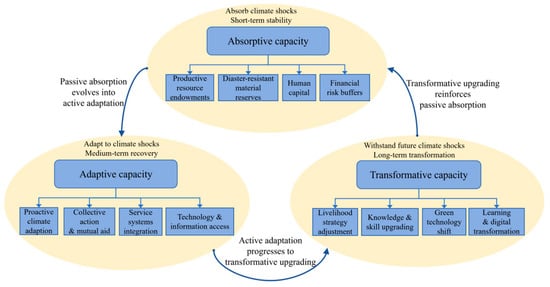
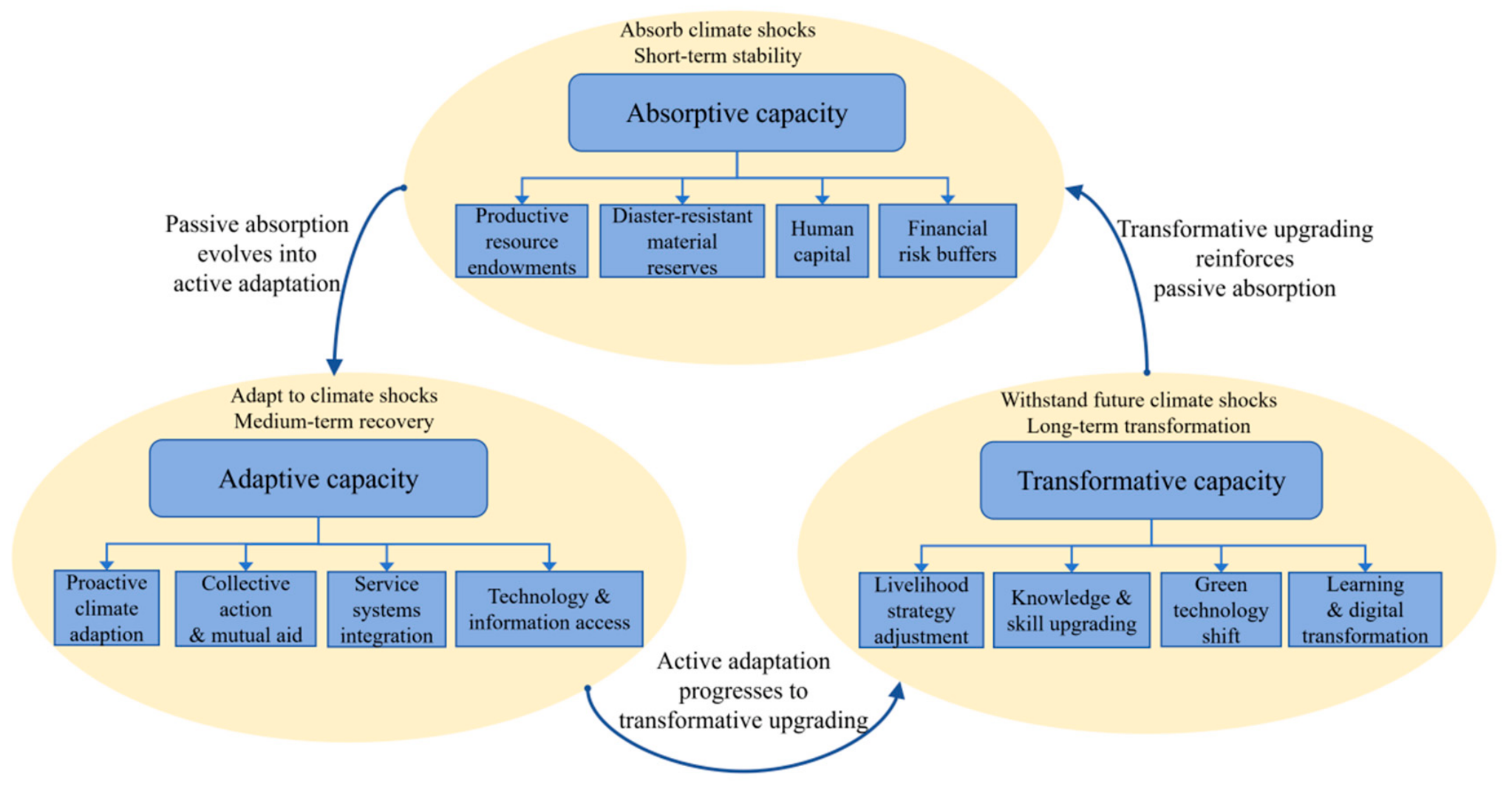
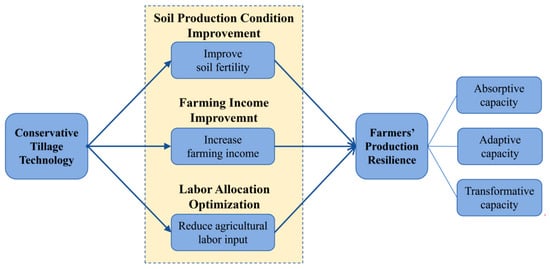
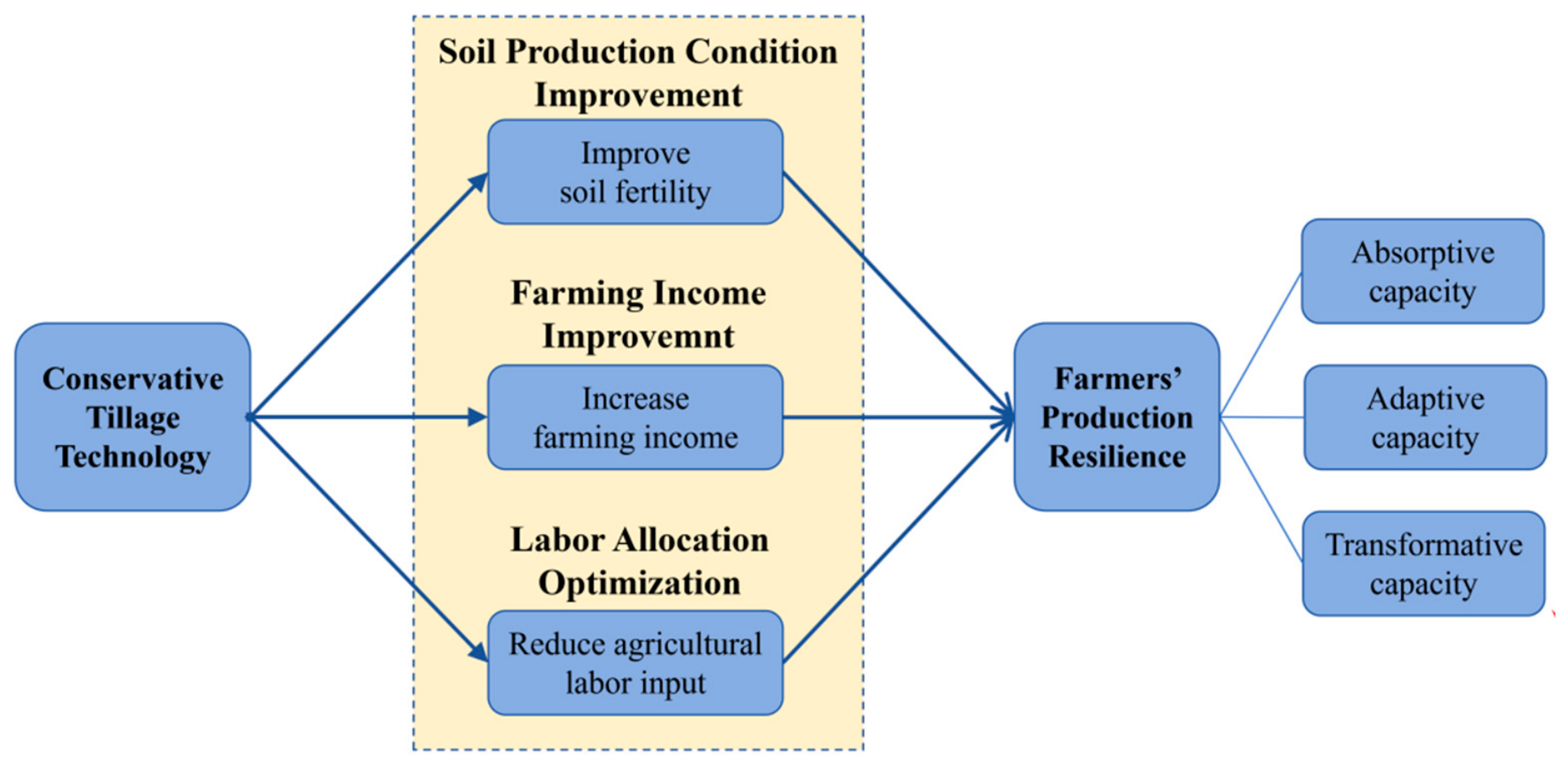
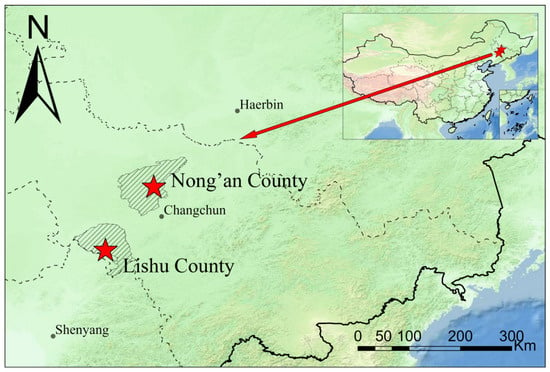
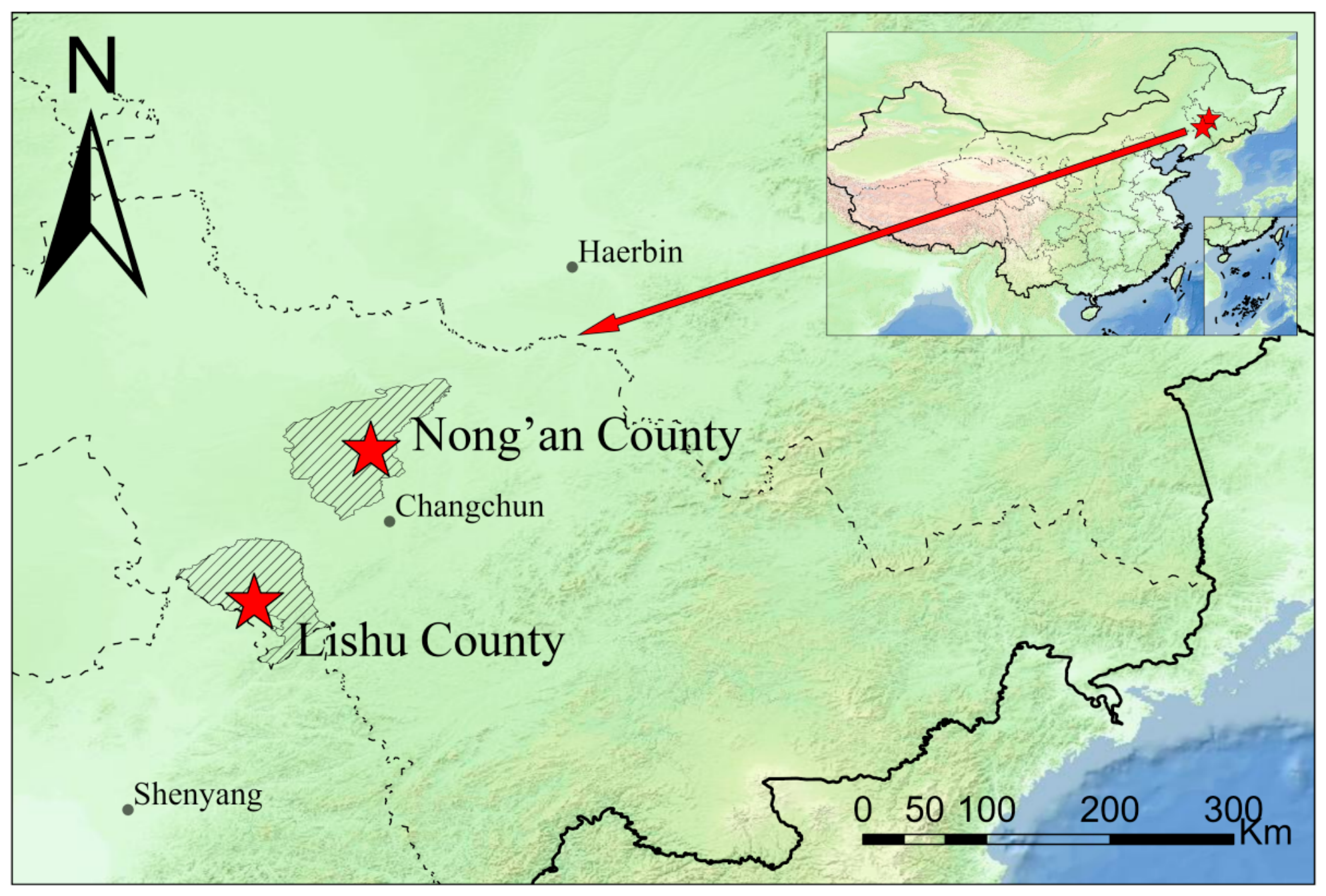
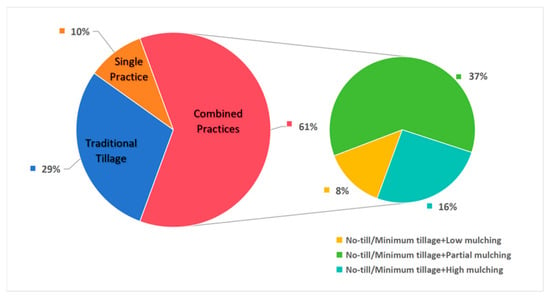
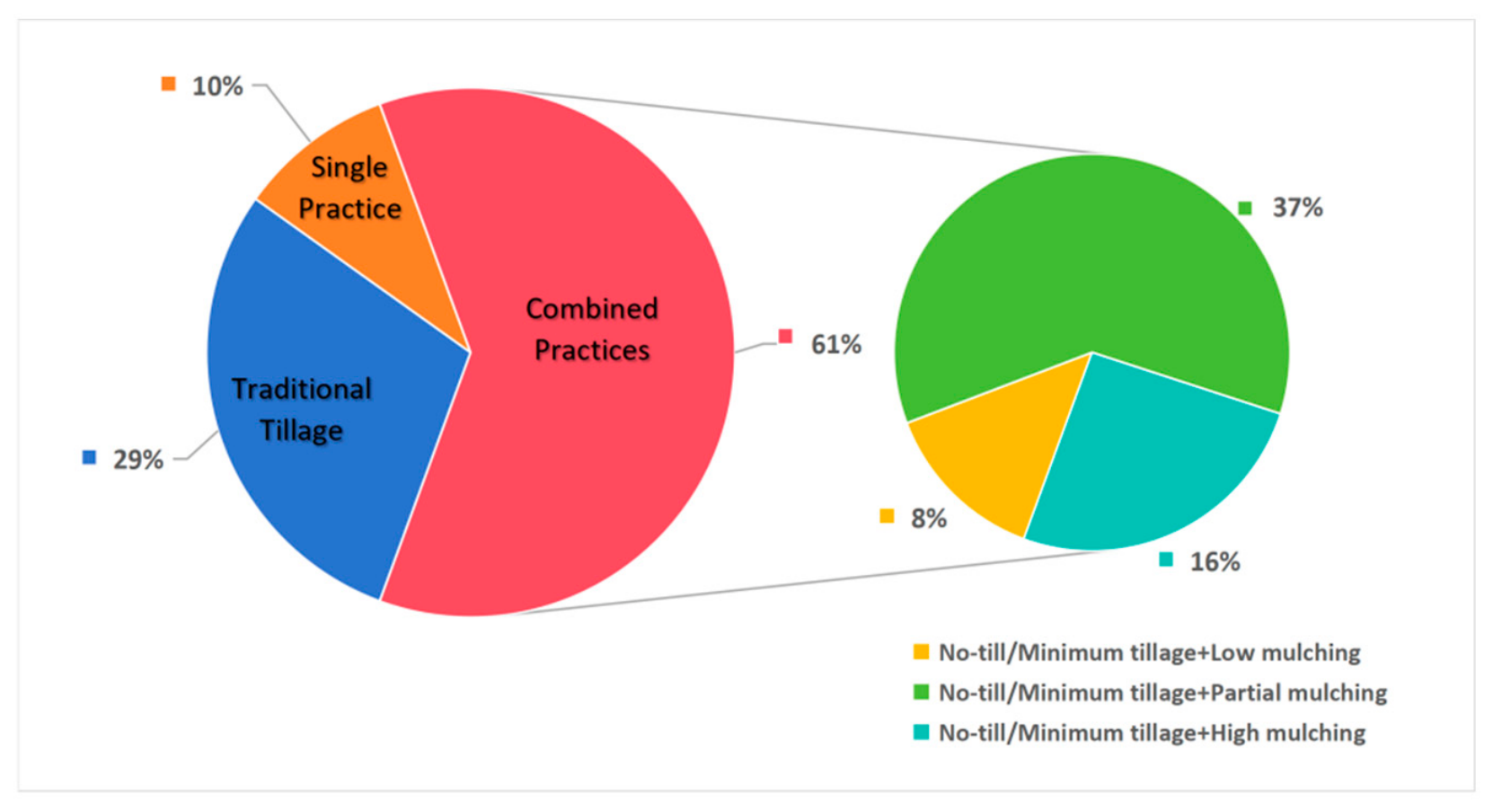

Disclaimer/Publisher’s Note: The statements, opinions and data contained in all publications are solely those of the individual author(s) and contributor(s) and not of MDPI and/or the editor(s). MDPI and/or the editor(s) disclaim responsibility for any injury to people or property resulting from any ideas, methods, instructions or products referred to in the content. |
© 2026 by the authors. Licensee MDPI, Basel, Switzerland. This article is an open access article distributed under the terms and conditions of the Creative Commons Attribution (CC BY) license.