1. Introduction
Against the historical backdrop of comprehensively promoting the rural revitalization strategy and fully launching the initiative to build a leading nation in education, urban and rural planning, as an applied discipline possessing both spatially related governance and public service attributes [
1], has shifted its core cultivation goal toward developing well-rounded talents who are locally rooted, practice the unity of knowing and doing, and serve society. Consequently, place-based practical teaching has become a core link in the discipline’s educational system. Acting as a critical stage that connects theoretical teaching and social needs, planning practical education not only propels professional momentum toward urban development and rural revitalization but has additionally become a focal point of teaching reform within urban and rural planning domains across Chinese universities, yielding multi-dimensional practical explorations.
Rural revitalization in China is a comprehensive national strategy, formally introduced in the report of the 19th National Congress of the Communist Party of China in 2017. This strategy aims to promote the prosperity of agriculture, rural areas, and villagers across five key dimensions, i.e., industrial development, ecological livability, rural civility, competent governance, and prosperous living [
2,
3]. The people-oriented philosophy in planning practice emphasizes prioritizing residents’ needs, participation, and well-being in planning decisions. This principle has acquired considerable momentum in Chinese planning discourse since the 2010s, serving as a corrective to earlier top-down, growth-oriented approaches [
3,
4]. Multi-dimensional practical explorations encompass the diverse ways in which Chinese planning schools engage with real-world practice, including university–enterprise collaboration, university–local government partnerships, and participatory planning workshops [
5]. Collectively, these three concepts frame the distinctive institutional and pedagogical context in which Chinese planning education reform is taking place.
Currently, Chinese practical teaching in urban and rural planning has developed along multi-dimensional pathways. The first is a technology-driven pedagogical model centered on university–enterprise collaboration, in which various universities leverage industry–education integration to enable students to simultaneously perform teaching and design tasks on real projects [
2,
3]. Concurrently, university–locality partnerships serve as the primary vehicle for establishing practice bases. At the same time, universities nationwide use summer “Three Rural Outreach Program” social practice activities to closely align rural planning education with local development needs, thereby achieving the dual advancement of talent cultivation and social service [
4]. Furthermore, participatory planning practices guided by a people-oriented philosophy have emerged, as exemplified by Sun Yat-sen University’s rural small-vegetable-garden program, which facilitates the co-production of knowledge among different stakeholders and provides a classic paradigm for participatory planning education [
5].
Despite these advancements, current practices still have three core practical dilemmas [
6,
7]. First, a structural mismatch persists between the teaching system and practical demands. The traditional model, centered on classroom lectures and prioritizing theory over practice, leaves students without a deep understanding of the practical logic of planning implementation and the institutional constraints of local governance, resulting in a severe disconnect between talent cultivation and social needs [
8]. Second, the long-term mechanism for integrating industry and education remains inadequate, as collaborative education is largely confined to short-term projects and temporary practices, lacking a standardized institutional design and failing to establish a symbiotic framework of co-construction and sharing among multiple stakeholders. Third, a gap exists between educational goals and disciplinary missions. Existing practices focus excessively on improving technical skills while insufficiently cultivating students’ practical literacy and professional ethics, making it difficult to meet the core requirements for cultivating planning talent in the new era [
9].
The key lever for resolving these dilemmas lies in deepening the integration of industry and education. Originating from the factory–school combination model in vocational education, the integration of industry and education in China has now permeated all fields of higher education, becoming a pivotal focal point in building a leading nation in education. In 2025, the Outline of the Planning for Building a Leading Nation in Education (2024–2035) positioned the integration of industry and education as a core component of higher education reform, defining its national strategic status. In the new era, this integration has transcended the traditional scope of university–enterprise cooperation. Its essence is a systemic ecology characterized by the deep participation and collaborative governance of multiple subjects, including government, universities, industry, and local communities. Through long-term mechanisms that clearly define rights, responsibilities, and symbiotic interests, it breaks down the barriers between education and practice, fostering an integrated model of talent cultivation, industrial development, and social service. For the discipline of urban and rural planning, deepening the integration of industry and education is an inevitable choice to align with the discipline’s applied nature, address the talent supply–demand mismatch, respond to national strategies, and achieve mutual empowerment between universities and local areas.
Based on this, this paper takes the
Fengqing Rural Planning Social Practice Teaching Base for College Students of Sun Yat-sen University as the research object to systematically explore the internal mechanisms and implementation pathways by which industry–education integration can be operationalized in rural planning practical education. Tackling the core pain points of traditional teaching, namely the disconnection between theory and practice, the mismatch between talent cultivation and local needs, and the fragmentation of social services from the pedagogical system and grounded in the base’s long-term localized practice, this study constructs three interconnected core systems, that is an integrated management mechanism that aligns place-based action with professional teaching, an undergraduate–postgraduate continuous curriculum system that transforms local resources into pedagogical assets, and a collaborative education community involving government, university, enterprise, and village [
10]. Together, these three systems constitute a comprehensive institutional architecture that not only operationalizes the educational philosophy of unity of knowing and doing, tempering students’ professional competencies and ethical sensibilities, but also fundamentally reshapes the university–local relationship, transitioning it from a logic of unidirectional assistance to one of bidirectional empowerment.
Building upon this empirical foundation, this paper focuses on the following questions: (1) How can a university-led social practice teaching base effectively transition from providing short-term project-based assistance to establishing sustained bidirectional empowerment between the university and the local community? (2) What curriculum reconstruction strategies can systematically transform locally embedded rural resources, including spatial assets, governance experiences, indigenous knowledge, and authentic construction demand, into transferable pedagogical resources for planning education? (3) What institutional mechanisms are necessary to sustain and scale up the integration of industry and education within a rural planning practice base, particularly in terms of governance structures, incentive designs, and multi-stakeholder coordination? In addressing these questions, this paper contributes to the existing literature on planning education reform in two significant respects. First, it provides an empirically grounded, systematically documented, and replicable working framework for industry–education integration in the context of rural revitalization. This area remains theoretically underexplored despite its growing policy salience. Second, it broadens the theoretical discourse on service-learning and community-based learning by demonstrating how these predominantly Western-originated pedagogical philosophies can be critically adapted to the specific institutional, socio-economic, and cultural contexts of rural China, thereby enriching the global conversation on planning pedagogy with insights from the Global South.
The structure of this paper is as follows.
Section 2 reviews the literature on industry–education integration, service-learning, community-based learning, and the development of social practice teaching bases, situating the study within the broader scholarly context.
Section 3 details the research design and methodology, including the research paradigm, case selection rationale, data collection methods, and analytical approach.
Section 4 presents an empirical account of industry–education integration practices at the
Fengqing Social Practice Teaching Base, organized around three themes, including university–locality collaboration, place-based curriculum delivery, and curriculum reconstruction.
Section 5 examines the driving forces and institutional mechanisms sustaining this model, focusing on management integration, curriculum system reform, and the co-construction of a collaborative education ecosystem.
Section 6 concludes by summarizing key findings, discussing limitations, and outlining directions for future research and practice.
3. Research Design and Methodology
3.1. Research Paradigm and Empirical Case
A qualitative research approach was used, grounded in the research team’s empirical practices. This methodology is especially appropriate for investigating procedural and context-specific phenomena, such as university–local collaboration in planning education. The Fengqing Rural Planning Social Practice Teaching Base was selected as the research site for three primary reasons, it represents a sustained exploration by the research team since 2021, rather than a short-term university–local partnership; it involves multiple stakeholders, including the university, government, and villagers, which enables an extensive examination of collaborative interactions; and it works as a representative case of westward assistance, also referred to as paired-up assistance or early-stage poverty alleviation in China’s higher education system, therewith enhancing the potential transferability of its findings to comparable contexts.
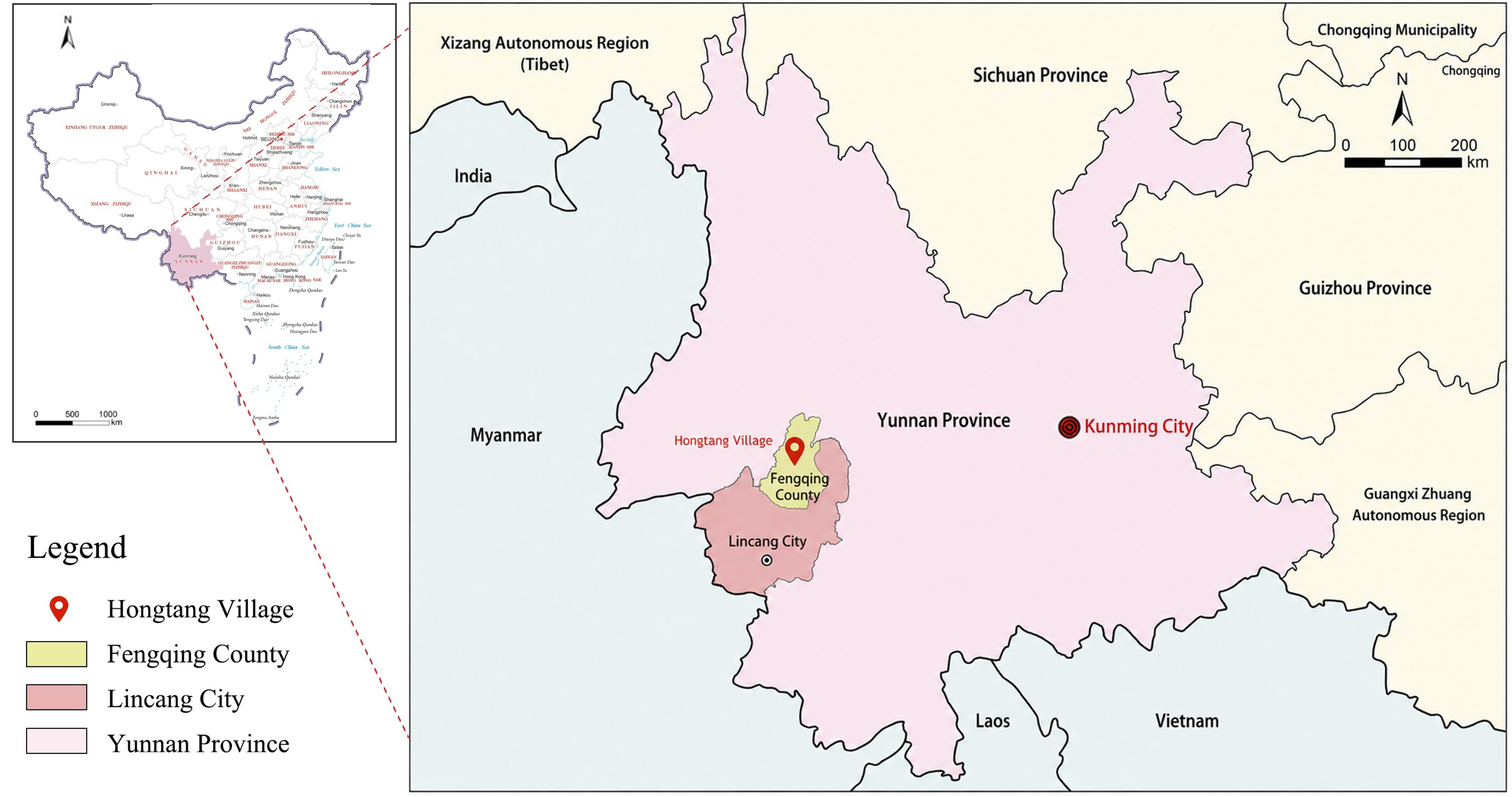
Fengqing County is in the southwestern region of Yunnan Province, northwest of
Lincang City, and covers a total area of 3335 square kilometers. The county is recognized as the Home of
Dianhong Black Tea and the Capital of Chinese Black Tea. By the end of 2026,
Fengqing County had a permanent resident population of 375,000 and a GDP of approximately 20.5 billion RMB.
Hongtang Village, an administrative unit under
Fengshan Town, is situated in the northern suburbs of the
Fengqing County seat, approximately 7 km from the town government and 7 to 9 km from the county center. The village covers 20 square kilometers, with elevations ranging from 1600 to 2200 m above sea level (
Figure 2).
Administratively,
Hongtang Village consists of four natural villages, namely
Hongmu,
Taoshupo,
Maocaoba,
and Daweilong, and 17 villager groups. According to the most recent data, the village comprises 662 households with a total population of 2649 residents. The population is predominantly Han Chinese, with a small number of Yi and Bai ethnic minority households. The village reflects the demographic structure typical of rural southwestern China, with a significant proportion of working-age adults migrating to urban centers for employment. As a result, elderly residents, women, and children constitute the primary daytime population. This demographic pattern greatly affects the village’s social dynamics and presents definite challenges for participatory planning. These challenges include lower literacy rates among elderly residents, time constraints for women balancing agricultural and domestic responsibilities, and the need for communication methods that deal with these circumstances [
15,
16,
17,
18]. The village’s social structure is organized around extended family networks and clan affiliations, which shape decision-making procedures and patterns of community coordination.
Hongtang Village has actively explored an integrated development model that combines pastoral landscapes, base construction, and enterprise partnerships to promote the combination of primary, secondary, and tertiary industries. The primary sector focuses on agriculture, with an emphasis on tea cultivation, walnut production, and the recent introduction of passion fruit farming. The secondary sector is exemplified by the village collective tea factory, which was established with support from Sun Yat-sen University and the Shanghai-Chongming counterpart assistance program. This facility processes fresh tea leaves and has an annual capacity of 300 tons. The tertiary sector includes emerging service activities such as agro-tourism, rural hospitality, and the marketing of locally produced agricultural products via e-commerce platforms. This integrated development model has generated employment opportunities throughout the value chain. For example, the tea factory alone employs over 100 villagers in peak seasons and contributes an average annual increase of 250,000 yuan to the collective economy.
Since 2013, Sun Yat-sen University has served as the designated partner institution for Fengqing County. Over the past 13 years, the university has invested and mobilized more than 100 million yuan in funding, assigned 14 cadre officials, dispatched 60 graduate student volunteers to provide teaching support, and sent 70 medical experts to the county. Since 2018, four consecutive first secretaries have been appointed to Hongtang Village. In 2021, the research team established a presence in Hongtang Village and initiated the Co-creation for Beautiful Hongtang rural planning and construction project. The team collaborated with villagers to implement five co-creation models, i.e., co-planning, co-building, co-managing, co-evaluating, and co-sharing, to develop distinctive industries and improve the living environment. This program advanced the small gardens human settlement environment demonstration project by using micro-regeneration of small vegetable gardens to encourage villagers’ participation and enhance the rural living environment. In June 2026, Sun Yat-sen University Party Secretary Liu led a delegation to Fengqing County to review the university’s partnership activities, including a visit to the co-creation small garden settlement environment demonstration project in Hongtang Village. Secretary Liu emphasized that 2026 marks the beginning of the “15th Five-Year Plan” period and the first year of normalized partnership assistance. The university will continue to focus on educational support, improvements to the rural living environment, and grassroots governance, bringing about a new phase of high-quality development in Fengqing.
3.2. Data Collection
Multiple data sources were utilized to ensure triangulation. The research team conducted on-site fieldwork in Hongtang Village through participant observation, visiting 2 to 3 times per year from 2021 to 2026, with each visit lasting seven days. Detailed field notes were maintained throughout the study period. Over 60 semi-structured interviews were conducted with key stakeholders, including 35 villagers involved in co-constructing small vegetable gardens, 5 local government officials, 6 undergraduate students, 10 postgraduate students, and 3 faculty members. Interviews lasted between 30 and 90 min and were audio-recorded with participant consent. Documentary analysis encompassed project reports, meeting minutes, design documents, and student reflective journals. The physical transformation of 36 small vegetable gardens was documented through photographs taken at multiple time points.
Before the project, semi-structured household surveys and participant observation were carried out to document these socio-cultural conditions. Semi-structured interviews were carried out using thematic protocols tailored to each stakeholder group. The protocol for villagers addressed household demographics and livelihood strategies, perceptions of the current living environment and its challenges, motivations for and barriers to participation in the small garden project, experiences collaborating with university students and faculty, perceived changes in the village environment and community dynamics since the project’s inception, and suggestions for future improvements. The student protocol focused on expectations and initial impressions of fieldwork; specific skills and knowledge gained through practice; difficulties encountered and strategies for addressing them; reflections on the relationship between academic knowledge and hands-on application; and changes in occupational objectives or professional identity. The protocol for faculty and government officials examined motivations for initiating and sustaining the partnership; institutional supports and barriers; observations of student and villager learning and development; assessments of project outcomes and unintended consequences; and visions for the future of the practice base. Each protocol was piloted with two participants from each group and subsequently improved based on their feedback before full implementation. These methods provided the empirical foundation for developing culturally appropriate participation strategies.
3.3. Data Analysis
Given the exploratory focus of this study and its aim to understand the ongoing processes of co-creation, pedagogical engagement, and institutional progression within a real-world practice setting, a predominantly qualitative approach to data analysis was adopted. The analytical strategy is based on the interpretive paradigm, which emphasizes a contextual insight into social phenomena using participants’ meanings and perspectives. The assessment identifies the mechanisms, interactions, and progressive dynamics that have influenced the development of the Fengqing Social Practice Teaching Base and its pedagogical practices. Qualitative data, including semi-structured interview transcripts, field observation notes, student reflective journals, project meeting minutes, and photographic documentation, were systematically organized. The analysis points out the participation of undergraduate and postgraduate students in practice-based learning. Recognizing the roles and competencies of students at different educational levels, the analysis separately examines the experiences, contributions, and learning outcomes of undergraduates, who primarily engage in frontline implementation, community participation, and hands-on design tasks, and postgraduates, who assume coordinating roles, manage the co-creation workshop, and integrate research with practice.
This disaggregated approach allows the study to identify both the general educational benefits of practice-based learning and the specific mechanisms by which students at different levels achieve professional and personal advancement. These conclusions inform the design of tiered and continuous curriculum pathways. This orientation is consistent with the traditions of action research [
22], participatory action research [
23], and practice-based education research [
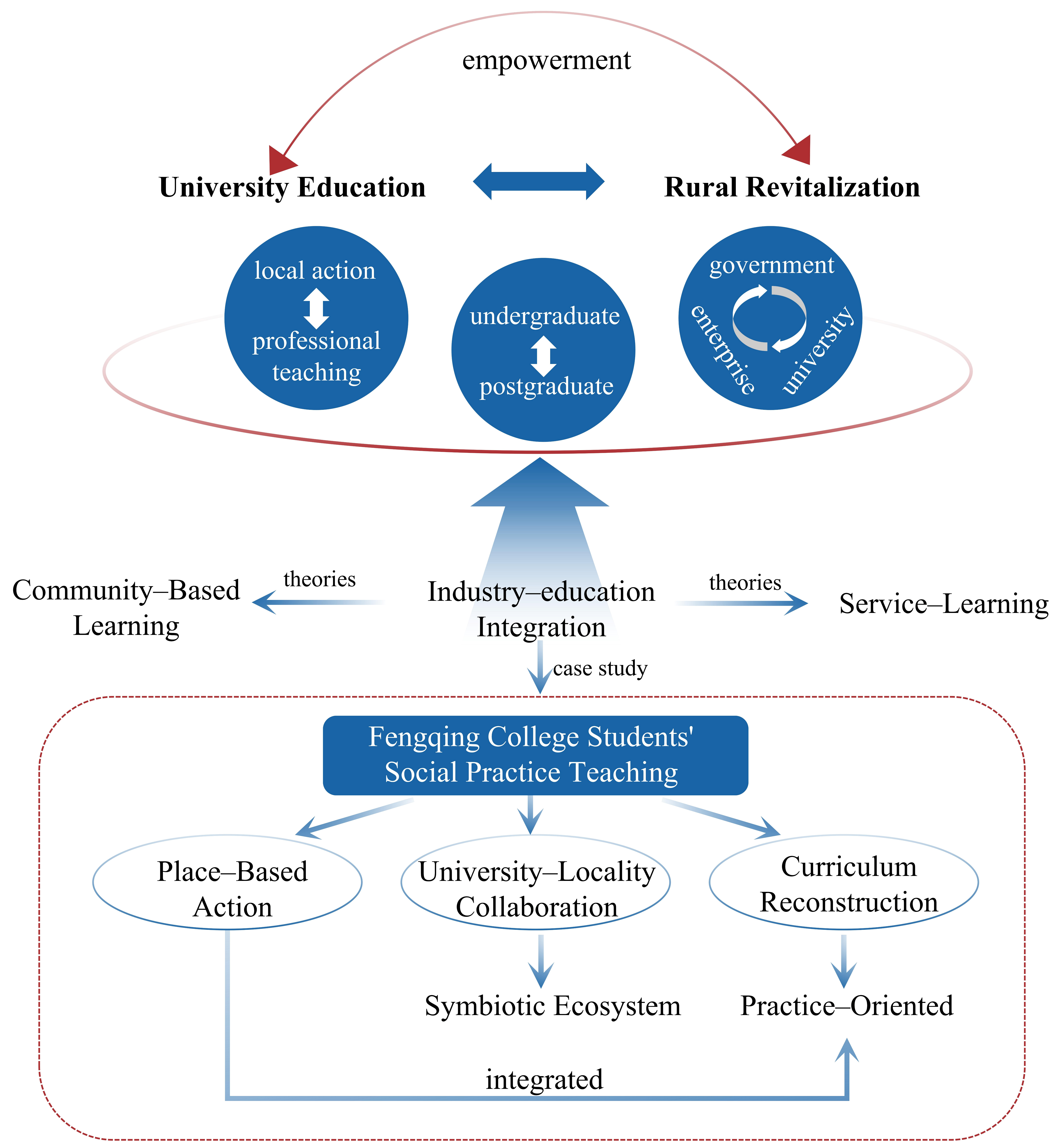
24], all of which emphasize the inseparability of knowing and doing and the importance of social interaction in facilitating learning and change. The analytical approach is therefore well-suited to representing the context-specific realities of industry–education integration in rural planning education, which are often overlooked by more detached or quantitatively oriented methodologies (see
Figure 3).
From the local villagers’ perspective, tangible, visible outcomes were the main factor, as the demonstration garden provided proof of concept and transformed early skepticism into active participation. Villagers consistently indicated that being treated as co-builders, rather than inactive recipients of assistance, was important for sustained engagement. For students, the most transformational learning occurred not through technical application of planning skills but through negotiating actual constraints such as budget limitations, conflicting stakeholder viewpoints, and the disparity between idealized design solutions and practical feasibility. Students frequently identified the importance of listening to villagers’ unspoken concerns and adapting plans in real time as the most valuable aspects of their learning. From the faculty perspective, project success depended on a deliberate shift from expert to facilitator roles. This transition required resisting the impulse to provide ready-made solutions and instead building an environment where students and residents could co-produce knowledge through trial and error. These diverse perspectives converged in a shared recognition that meaningful learning and meaningful community outcomes are mutually reinforcing objectives.
4. Industry–Education Integration in Actions at Fengqing Social Practice Teaching Base
4.1. University–Locality Collaboration: Transitioning from Unidirectional Assistance to Bidirectional Empowerment
Before the project’s initiation in 2021, Hongtang Village faced major challenges in its human settlement environment. Most village roads remained unpaved, resulting in muddy and impassable conditions during the rainy season. Domestic wastewater was discharged directly into open drains, resulting in sanitation hazards and bad odors. Solid waste collection was inconsistent, leading to garbage accumulating in vacant lots and along watercourses. Additionally, many household courtyards were either underutilized or used for miscellaneous storage, lacking green spaces or functional gardens. These conditions adversely affected the daily quality of life for residents and limited the potential for agro-tourism and rural hospitality development. Consequently, the living environment improvement project was conceived not only as an aesthetic intervention but also as a basic investment in enhancing quality of life and promoting economic diversification. In October 2021, the research team stationed themselves in Hongtang Village. Guided by the core philosophy of Co-creation for Beautiful Hongtang, the team launched a rural construction experimental project. The project principles interconnect (1) co-creation over top-down provision, which replaces the conventional model where foreign actors design and implement solutions for unengaged recipients via a collaborative process involving villagers, students, and faculty who jointly identify problems, generate solutions, and share responsibilities; (2) process over product, which stresses the value of learning, relationship-building, and capacity development achieved through participatory engagement as much as the concrete results; and (3) sustainability through institutionalization, which frames interventions not as isolated projects but as catalysts for enduring institutional mechanisms that last beyond the university team’s direct involvement. It was operationalized through five co-creation models, i.e., co-planning, co-building, co-managing, co-evaluating, and co-sharing, that frame the engagement process throughout all project phases.
During the initial phase, this project followed a unidirectional assistance model. Field surveys and household interviews were conducted to identify specific locations for the development of the first demonstration vegetable garden. Within seven days, a model garden that balanced both functionality and landscape aesthetics was completed, establishing a criterion for village-wide promotion. Taking this demonstration point as a catalyst, the construction of small vegetable gardens progressively generated a significant spillover effect. By July 2026, a cumulative total of 36 small vegetable gardens had been successfully constructed and put into operation across the village. The primary value of university involvement does not lie in constructing vegetable gardens, a task that residents could undertake independently in certain circumstances. Instead, it lies in introducing planning methodologies, facilitating multi-stakeholder deliberation processes, and institutionalizing knowledge transfer procedures that would otherwise be inaccessible to villagers. The university research and teaching team contributed spatial analysis techniques to find optimal garden locations based on landscape and social accessibility criteria, participatory design tools for mapping exercises, and preference-ranking methods to organize villagers’ fragmented preferences into logical design solutions. Additionally, the research team developed appraisal frameworks, including the award-in-lieu-of-subsidy mechanism, which established sustained incentives for maintenance and iterative improvement. This governance innovation surpassed what individual villagers can achieve independently.
As the project deepened, the team broke through the path dependency of unidirectional assistance, constructing a multi-stakeholder collaborative framework encompassing “university faculty and students + government departments + village residents”, thereby achieving bidirectional empowerment through university–locality synergy. Within this framework, the residents underwent a considerable role transformation from inactive recipients to active co-builders, advancing a benign development pattern characterized by autonomous planning and self-iteration. The gradual withdrawal strategy entailed the university team systematically reducing its direct involvement over time. This process included an initial phase of leading design workshops, followed by co-facilitation with trained villagers, and ultimately providing remote advisory support. The establishment of village-level planning committees, composed of elected villager representatives trained in participatory planning methods, resulted in increased local responsibility for project prioritization, resource allocation, and conflict resolution. Regular evaluation was institutionalized as a self-assessment process, in which villagers conducted peer evaluations of garden maintenance and collectively determined award allocations.
Concurrently, the university leveraged its professional capabilities to improve the rural human settlement environment while cultivating local talent and grassroots governance forces. Capacity was developed through multiple channels. First, on-the-job training enabled villagers involved in garden construction to acquire basic construction, planting, and maintenance skills through practical experience. Second, leadership development initiatives provided selected villagers with training in facilitation, meeting management, and project administration, equipping them to lead community meetings and coordinate with external partners. Third, intergenerational knowledge transfer was facilitated by inviting elderly villagers with traditional agricultural expertise to mentor younger participants, thereby helping preserve and adapt local ecological knowledge. Fourth, linkages with formal education were established by connecting village youth interested in planning-related careers with mentoring support, fostering pathways for upward mobility while maintaining connections to their home community. Meanwhile, the government facilitated project implementation through policy coordination and resource guarantees, thereby enhancing the efficacy of grassroots governance. Furthermore, the project established a long-term operational mechanism by introducing implementation measures of replacing subsidies with awards and conducting regular evaluation competitions. This approach allowed the philosophy of co-creation to take deep root, successfully leveraging the micro-renovation of the living environment to mobilize villager co-construction, empower rural social autonomy, and ultimately forge a replicable and generalizable paradigm for university–locality collaborative rural construction.
The construction of small family gardens, initially conceived as a tangible and accessible entry point for community engagement, has had impacts that extend beyond the immediate aesthetic enhancement of the village environment. First, it has operated as a mechanism for social mobilization, fostering trust and demonstrating concrete benefits that have reduced villagers’ resistance to subsequent, more complex planning interventions. Second, it has functioned as a pedagogical laboratory, enabling students to acquire essential planning skills such as community negotiation, participatory design, and project implementation within a controlled yet authentic context before advancing to more challenging tasks. Third, and most significantly, it has established an institutional precedent for sustained university–local collaboration. The regular evaluation competitions, the award-in-lieu-of-subsidy system, and the multi-stakeholder coordination mechanisms developed through the garden project have been adapted and applied to later initiatives in industrial development, including the passion fruit demonstration base and rural governance. Thus, the small garden project served not as an end but as a catalyst for broader and more enduring transformation in both pedagogical practice and local governance capacity. Crucially, the university team’s role evolved from direct implementers in Phase 1 of building the demonstration garden to process facilitators in Phase 2 of training villagers to build their own gardens and to institutional designers in Phase 3 of establishing long-term governance mechanisms. This phased role transition is itself a major finding of this study, as it demonstrates a replicable pathway for universities to withdraw while leaving behind lasting institutional capacity, which is an important aspect of sustainable development that is often overlooked in short-term assistance models (
Figure 4).
4.2. Place-Based Action: Driving Curriculum Teaching Through Real-World Projects
The practical teaching at the Fengqing base is structured around three thematic areas that form the foundation of the rural planning curriculum. The first theme, participatory rural planning, involves students learning and applying methods for community engagement, such as participatory mapping, household surveys, focus group discussions, and design charrettes. The second theme, rural human settlement improvement, requires students to engage with the entire cycle of small-scale environmental interventions, including site analysis, design, implementation, and post-occupancy evaluation. The third theme, rural industrial development, examines the connections between spatial planning and economic diversification, with students collaborating with villagers to identify opportunities for value-added agriculture, agro-tourism, and local branding. Rather than being delivered as separate modules, these themes are integrated through a project-based learning approach, in which each real-world project requires applying all three thematic areas.
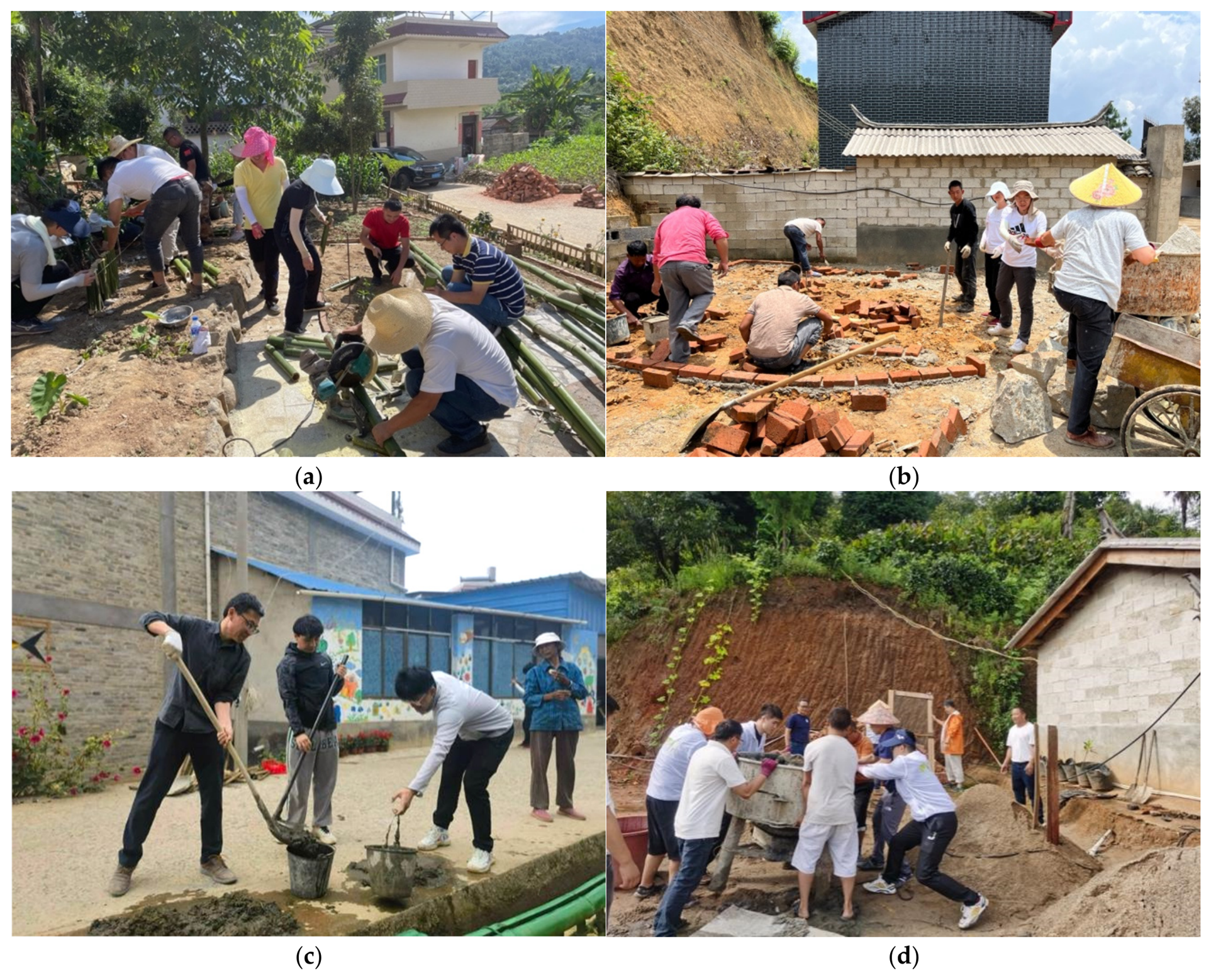
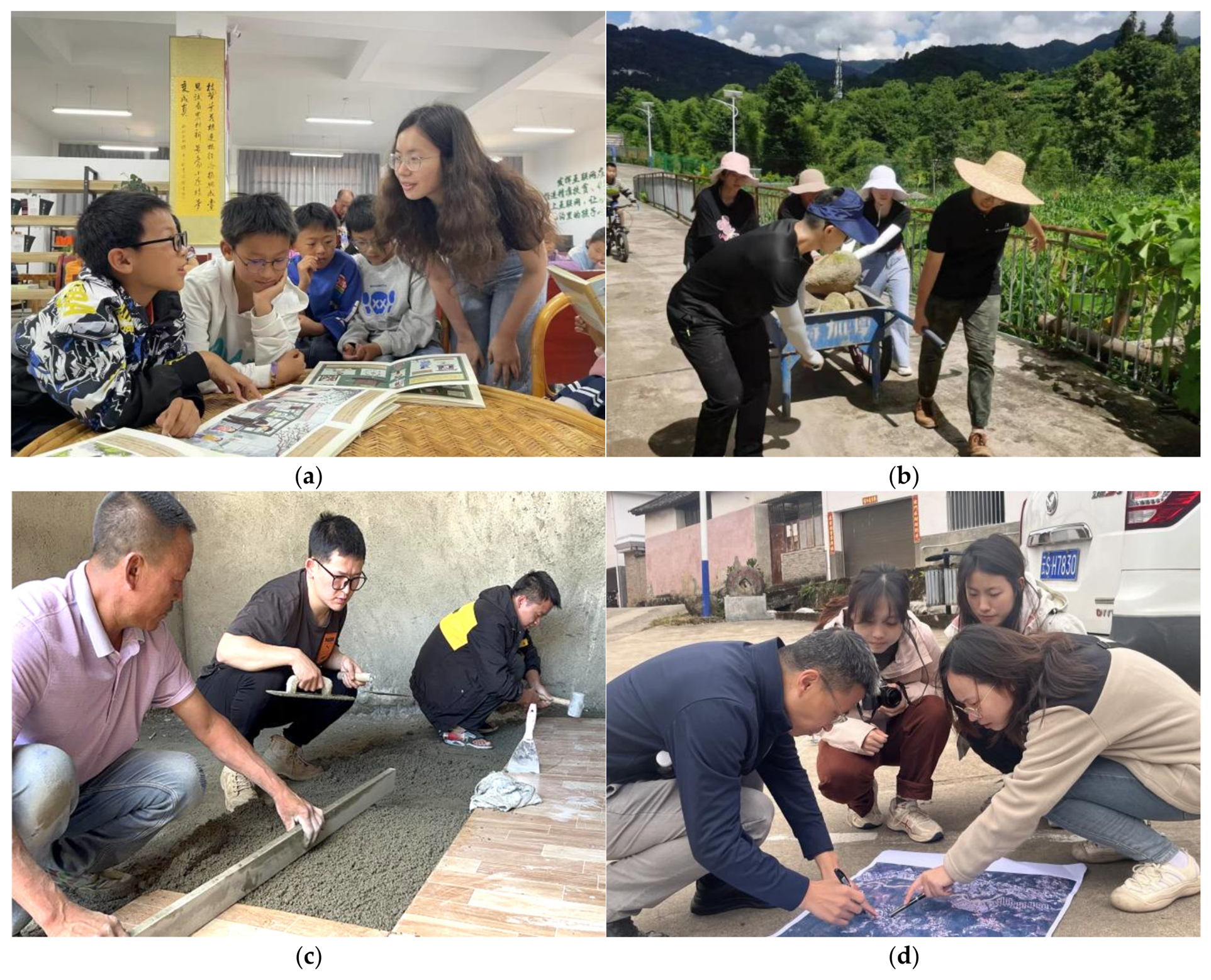
By leveraging the real-world rural construction project in Hongtang Village, Fengqing County, Yunnan Province, the curriculum teaching has thoroughly dismantled the traditional passive classroom indoctrination model. It has fully transitioned to an action research paradigm centered on place-based practice, successfully achieving the educational goal of the unity of knowing and doing in planning education while fulfilling the role of reconstruction and the all-dimensional tempering of professional capabilities for both faculty and students. Within this place-based practice, a cultivation system characterized by the tiered participation and collaborative growth of undergraduate and postgraduate students has been established. The configuration of roles within the practice base is characterized by differentiation and complementarity. Undergraduate students root themselves at the front lines to engage throughout the entire project lifecycle; through the micro-regeneration practice of small vegetable gardens, they consolidate their foundations in planning and design while honing their grassroots, empathetic communication and hands-on operational skills.
Meanwhile, postgraduate students spearhead and coordinate the Co-creation Workshop, managing the complete project workflow and coordinating diverse stakeholders. This systematically enhances their capabilities in overarching coordination, complex problem assessment, and action research, thereby forging a research mindset that seamlessly integrates learning with application. By stepping out of the idealized framework of textbooks, students directly confront the authentic scenarios of rural construction. This shift not only accomplishes the contextualized transformation of professional knowledge but also fosters a professional ethic of being locally rooted and serving the community. Concurrently, faculty members have transitioned from traditional knowledge lecturers to practice facilitators and multi-party coordinators. By empowering student growth through heuristic guidance, they simultaneously achieve the iteration of the pedagogical system and the deepening of academic research, thereby constructing a long-term bridge for university–locality industry–education integration. Villagers and residents serve as co-creators and knowledge holders, contributing local ecological expertise, expressing needs and preferences, participating in design and implementation decisions, and assuming greater responsibility for project maintenance and governance as the university team gradually withdraws. Ultimately, this model not only injects professional momentum among the youth into the development of
Hongtang Village but also provides a replicable, practical paradigm for continuous undergraduate–postgraduate talent cultivation within the urban and rural planning discipline (
Figure 5).
4.3. Curriculum Reconstruction: Transforming Local Resources into Pedagogical Resources
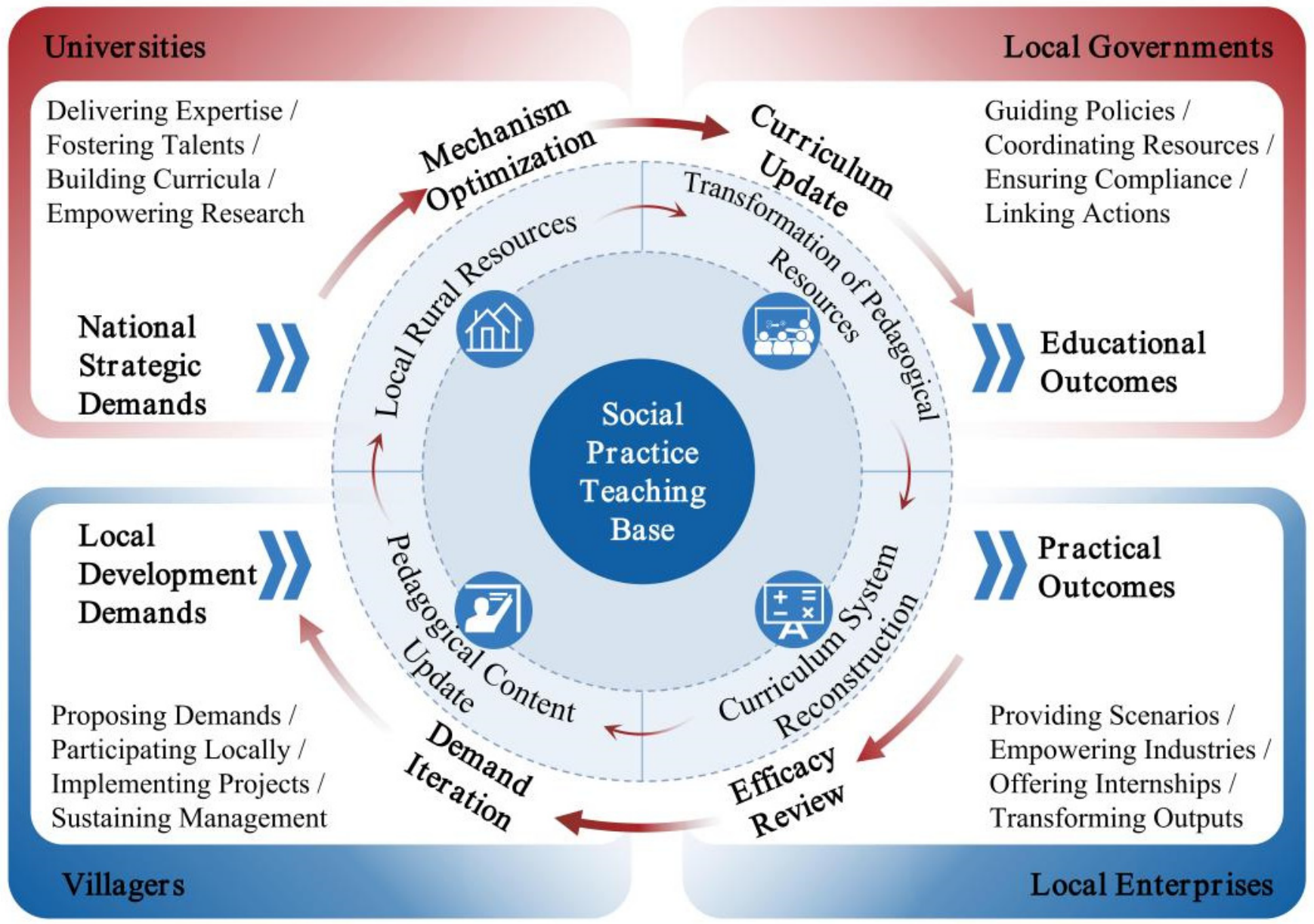
This project systematically converts spatial and industrial assets, grassroots governance experiences, indigenous local wisdom, and authentic construction demands generated during the rural revitalization process into applicable, iterable, and generalizable pedagogical resources for the urban and rural planning discipline. It addresses rural revitalization through industrial, ecological, social, and cultural revitalization. This approach thoroughly dismantles the traditional barriers that decouple classroom teaching from local practice, achieving a systematic reconstruction of the professional curriculum system. Students are immersed in the village context, engaging in participatory observation through action research, which consists of identifying problems, designing and implementing interventions, and evaluating outcomes; reflective practice, which requires maintaining journals and participating in structured debriefing sessions; and peer learning, which is facilitated through partnership between undergraduate and postgraduate students in mixed teams. First, utilizing practical teaching as a key lever, the project integrates courses such as Community Development and Community Planning, Rural Planning, and Practical Methods and Skills in Territorial Spatial Planning. It deconstructs real-world rural construction projects into specialized teaching units designed for different courses and training stages.
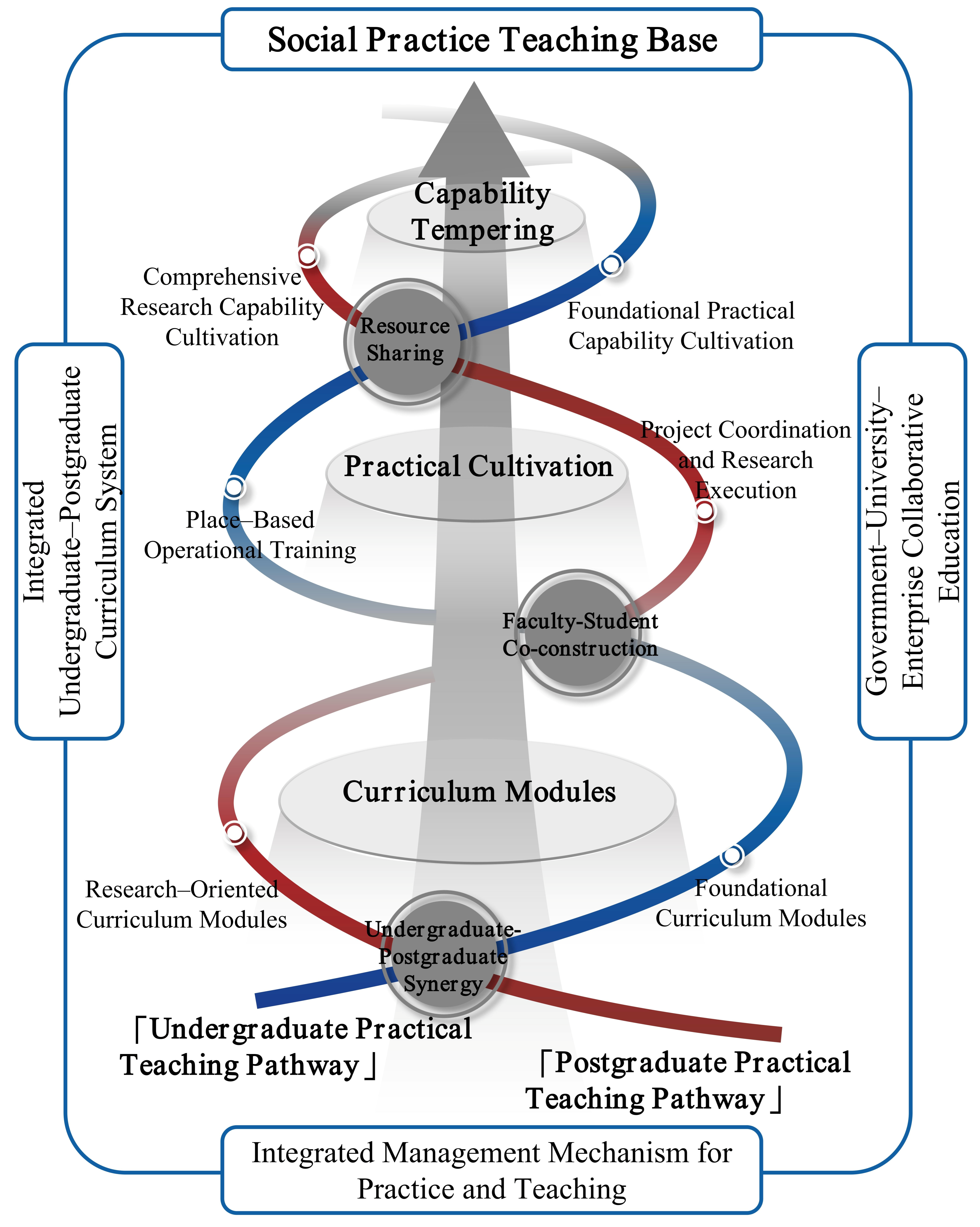
This integration operationalizes the trinity of teaching, learning, and doing while simultaneously building a tiered, continuous undergraduate-to-postgraduate cultivation system, therewith optimizing the overall talent cultivation scheme. Second, relying on the normalized practical teaching base, the project implements immersive, intensive summer practice modules. It connects relevant universities within the Guangdong-Hong Kong-Macao Greater Bay Area and overseas to establish a cooperative educational platform that enables the co-construction and sharing of high-quality, place-based pedagogical resources through multi-party cooperation. Third, through leveraging place-based scientific research for reverse empowerment, faculty members conduct research projects focused on authentic problems identified in practice. The resulting academic outputs and practical paradigms are fed back into the curriculum, thereby creating a virtuous cycle in which teaching and scientific research mutually reinforce and advance one another.
The practices examined in this study are closely aligned with the core competencies required in rural planning. In China, rural planning addresses special challenges, including the spatial organization of agricultural production, the provision of rural facilities and community services, the conservation of rural landscapes and cultural heritage, and the governance of rural settlements experiencing demographic and economic transitions. The
Fengqing practice base immerses students in each of these areas. For example, students acquire skills in micro-scale spatial design through the small garden project, explore spatial-economic aspects of rural development via tea industry and passion fruit initiatives, and address governance challenges through facilitating collective action in communities with diverse and sometimes conflicting interests through participatory planning processes. This direct engagement with real-world rural planning issues differentiates the
Fengqing model from conventional studio-based planning education, which often relies on hypothetical or decontextualized design briefs (
Figure 6).
4.4. Pedagogical Framework: Objectives, Methods, Tools, Diversity, and Evaluation
The pedagogical framework at the Fengqing practice base is structured around five interrelated dimensions. The curriculum defines explicit learning objectives that correspond with both planning and programmatic aims. For undergraduate students, these objectives include field investigation, participatory mapping techniques, the development of compassionate communication skills with diverse stakeholders, and the application of design principles in rural contexts. For postgraduate students, objectives also include managing complex multi-stakeholder projects, integrating research and practice, and cultivating reflexive professional judgment. The project-based learning method immerses students in actual projects rather than simulated exercises. This method is further supported by experiential learning cycles, which consist of concrete experience, reflective observation, abstract conceptualization, and active experimentation.
Students are provided with planning tools such as participatory rural appraisal, spatial analysis, sketch design and visualization software, and structured facilitation for community meetings. The village context introduces authentic challenges, diverse stakeholders, and actual constraints. The pedagogical approach deals with diversity across several dimensions. For students, differentiated learning pathways address different levels of prior knowledge and diverse occupational objectives. For villagers, outreach techniques are adapted to different literacy levels, time constraints, and cultural choices. Women’s perspectives are intentionally included in community meetings. Student learning is assessed through a combination of process evaluation, including participation, reflective journals, and peer assessment; product evaluation, which assesses the quality of design outputs and project reports; and outcome evaluation, which measures evidence of community impact and villager satisfaction. This detailed assessment captures the learning process and provides a more integrated understanding of student development than conventional examination-based methods.
5. Driving Forces and System Building for Industry–Education Integration
5.1. Establishing an Integrated Management Mechanism for Place-Based Action and Professional Teaching
Anchored in the professional advantages of the urban and rural planning discipline and the social service functions of higher education institutions, this approach deeply aligns professional practical teaching and talent cultivation systems with localized social services. Consequently, it constructs a closed-loop integrated management mechanism characterized by university–locality collaboration, university-school linkage, and mutual advancement between faculty and students. By establishing strategic university–locality cooperation, bridging institutional gaps between the university and its colleges, and implementing all-lifecycle management for faculty and students, a three-tiered, bidirectional feedback collaborative management system is established, successfully resolving the fragmentation issue caused by the decoupling of teaching from social services. The system functions at three levels. At the university level, faculty coordinate with the administration on curriculum accreditation, credit recognition, and resource allocation. At the local government level, officials provide policy support, coordinate across departments, and guarantee consistency with county-level development plans. At the village level, the village committee and villager representatives oversee daily implementation and community coordination. Feedback circulates bidirectionally among all three levels. Villagers’ feedback and ideas are communicated upward through the village committee to government and university partners. Policy changes and information about resource conditions are communicated downward. Horizontal feedback among villages within Hongtang further enables peer learning and the dissemination of best practices.
Concurrently, an incentive and output-recognition mechanism, mutually recognized by the university and the local community, has been established. This mechanism clearly defines the criteria for validating faculty practical workloads and student practical credits, embeds practical success as a core index into title promotions and performance-based evaluations, and implements output recognition and implementation guarantees at the local level, ultimately giving rise to a closed-loop management paradigm characterized by clear responsibilities, effective incentives, and multi-party win–win outcomes. Quarterly evaluation competitions assess villagers’ small gardens using criteria jointly developed by the university team and village representatives. These criteria include plant health and diversity, spatial organization and aesthetics, maintenance effort, and contribution towards the broader village landscape. Gardens with the highest scores receive awards such as cash prizes, planting materials, or public recognition. This competitive yet collaborative approach has led to measurable improvements, including a consistent rise in garden quality across evaluation rounds. Villagers increasingly share techniques and assist neighbors with lower scores, which fosters peer learning. Additionally, the public aspect of the evaluations has established social accountability, sustaining engagement beyond the initial phase of the project.
Stakeholder partnership is organized through a multi-layered governance framework consisting of three interconnected mechanisms. The first mechanism is a routine consultation process, which includes monthly coordination meetings among university faculty, local government officials, and village representatives. During these meetings, participants review project progress, identify developing challenges, and negotiate adaptive adjustments. The second mechanism is a feedback and iteration process that uses several channels, including student reflective logs documenting daily observations and challenges, semi-structured feedback meetings with villagers after each project phase, and formal evaluation meetings at the end of each year. These feedback loops support ongoing improvement of both pedagogical methods and project implementation strategies. The third mechanism is a conflict-resolution process in which disagreements, including disputes over garden locations or resource assignment, are addressed through facilitated dialogue sessions led by postgraduate students trained in participatory mediation techniques. The effectiveness of the mechanisms is assessed through process documentation, including meeting minutes and field notes, as well as outcome indicators such as villager satisfaction surveys and student learning assessments. Findings are methodically incorporated into subsequent project cycles.
This integrated management mechanism operationalizes the core principles of community-based learning [
14] by embedding students’ learning experiences within the authentic problem contexts of rural revitalization. Unlike conventional internship models, where students are passive observers, this mechanism positions them as active co-producers of practical course learning, interactive knowledge, and community value. This distinction is consistent with the knowledge co-production framework advanced by Lang [
5]. Rather, this mechanism goes beyond co-creating a beautiful village through family gardens by significantly enhancing educational outcomes throughout the practical teaching and training process. Furthermore, the bidirectional feedback between teaching and social service addresses what Rooij & Frank identified as the central challenge of planning education with respect to bridging the gap between academic knowledge and professional practice [
17]. These mechanisms have produced substantial impacts. The village’s collective income has increased, the living environment has visibly improved, and villagers report greater satisfaction with community governance. The influence on planning education is also significant. Students participating in this well-structured feedback environment develop competencies in stakeholder negotiation, adaptive management, and reflexive practice. These skills are seldom cultivated in conventional classroom settings but are key for effective planning in complex, resource-constrained contexts.
5.2. Reconstructing a Practice-Oriented Integrated Undergraduate-to-Postgraduate Curriculum System
Centering on place-based practices that integrate industry and education, this system dismantles rigid, fragmented models that separate undergraduate and postgraduate education and decouple classroom teaching from practical application. It reconstructs a practical teaching curriculum system featuring tiered progression, undergraduate–postgraduate integration, and dynamic optimization. Designed for the distinct cultivation goals of undergraduate and postgraduate programs, step-by-step practical teaching modules are implemented. The undergraduate stage focuses on primary professional abilities and grassroots practical literacy, thoroughly embedding the entire lifecycle of place-based practice into core curricula to consolidate students’ hands-on operational skills. Conversely, the postgraduate stage underlines comprehensive coordination capabilities and academic innovation capacity, integrating full-process project management and research project execution into the cultivation phases, therefore shaping a vertically articulated and continuous undergraduate–postgraduate training system. Concurrently, traditional pedagogical management barriers are broken down to implement innovative modes such as the dual-advisor system and project-based learning. A diversified evaluation system centered on implementation efficacy and application value has been established, officially incorporating practical base teaching into the talent cultivation schemes for both undergraduates and postgraduates, thereby achieving a synchronous iteration of the curriculum system in line with the demands of industry–education integration.
A systematic investigation of community participation in curriculum development is necessary. The curriculum reconstruction process described in this study was primarily directed by the university, with villagers engaged as consulted informants rather than as co-designers of pedagogical content. This limitation is not unique to this case but reflects a structural constraint within China’s higher education management system. Curriculum accreditation, credit allocation, and learning outcome assessment are governed by university-level regulations that require formal qualification standards, thereby institutionally excluding community members without academic credentials from co-determining these processes. This study shows a tension between the ideal of community co-creation in planning education and the institutional realities of Chinese higher education. Rather than being overlooked, this tension is treated as a generative finding that indicates the need for institutional innovation at the policy level. Those innovations could include the accreditation of community-validated credits or the formation of joint curriculum committees with community representation. This issue constitutes a key area for future research and reform, and the present study clarifies the gap between aspiration and reality. Therefore, the limited community participation in curriculum development should be viewed not as a failure of this study but as an important insight that informs the next phase of industry–education integration reform.
5.3. Co-Constructing a Symbiotic Ecosystem for Industry–Education Collaborative Education
By dismantling institutional barriers and information asymmetries among universities, governments, and enterprises, this program builds an industry–education collaborative community characterized by clear rights and responsibilities, mutual benefit, and long-term linkages. This generates a benign ecosystem backed by top-level policy support, stakeholder linkage mechanisms, and win–win development patterns. Closely aligned with national top-level designs on industry–education integration and regional development, a four-tiered policy support system linking the national, provincial, university, and local levels has been established. The university has promulgated specialized management and incentive policies to remove internal institutional barriers, while local governments have provided matching support policies and multi-department collaborative coordination mechanisms, consequently consolidating institutional guarantees.
Furthermore, the core rights, responsibilities, and coordinated pathways of the three parties are clearly delineated. Universities leverage their advantages in disciplines, talents, and scientific research to provide technical and intellectual support for local development. Governments assume the functions of overarching coordination and policy guarantees, constructing a platform for tripartite cooperation. Enterprises provide industrial practice scenarios and actual development demands, driving industrial upgrading by leveraging university resources. Through long-term strategic cooperation, a stable, symbiotic, and interactive relationship is established. Ultimately, this achieves multi-party win–win outcomes, including improvements in the quality of university talent cultivation, enhanced government governance effectiveness, enterprise industrial upgrading, and regional development empowerment, thereby forging a replicable and generalizable practical paradigm for the combination of industry and education.
5.4. Implications and Reflections
This study furthers the literature on planning education by expanding the service-learning framework and demonstrating its adaptability to the institutional constraints of Chinese higher education, where curriculum accreditation is centralized and community participation in formal education remains limited [
25,
26]. We refine the concept of community-based learning by showing that it can be effective without direct community participation in curriculum design, if community knowledge, needs, and viewpoints are systematically integrated through alternative channels. Additionally, it offers empirical support for the knowledge co-production framework in a developing-country context, indicating that collaboration between universities and communities is both feasible and productive, even in settings with significant resource disparities.
For planning educators and administrators, this study points to the importance of a phased withdrawal strategy to build local capacity, the value of tangible and accessible entry points to encourage trust and momentum, the necessity of institutional mechanisms that correspond individual motivations with programmatic objectives, and the key role of structured feedback and evaluation toward maintaining quality over time. Unlike planner-focused analyses of social capital improvement, this study emphasizes pedagogical outcomes and pedagogical innovations enabled by the practice base, therefore providing a complementary perspective on the same empirical context.
6. Conclusions
Against the historical backdrop of comprehensively promoting the rural revitalization strategy and the transitional development of the urban and rural planning discipline, traditional rigid pedagogical models centered on classroom lectures and hypothetical design briefs can no longer adapt to the core cultivation positioning of urban and rural planning talents in the new era, which demands being locally rooted, practicing the unity of knowing and doing, and serving society. Building on the pioneering exploration of the Fengqing Social Practice Teaching Base for College Students, Sun Yat-sen University has used this base as a primary platform for place-based practice and pedagogical reform. Grounded in the disciplinary attributes of urban and rural planning and the social service functions of higher education institutions, and with the integration of industry and education as the primary thread, the base has rigorously explored pathways for professional practical teaching reform.
By establishing a management mechanism featuring the deep integration of teaching and practice, constructing a tiered and continuous undergraduate-to-postgraduate practical curriculum system, and forging a cooperative educational community ecosystem involving government, university, and enterprise, this approach productively resolves prominent difficulties such as the decoupling of university talent cultivation from social services and the fragmentation of practical teaching. This study not only operationalizes the educational philosophy of the unity of knowing and doing within the urban and rural planning discipline, comprehensively tempering students’ professional comprehensive capabilities, grassroots practical literacy, and professional ethics, but also drives university–locality cooperation to upgrade from unidirectional assistance to a new collaborative model of bidirectional empowerment. Consequently, it provides a replicable, generalizable, practical paradigm and a theoretical reference for professional teaching reform in urban and rural planning, as well as for the utilization of industry–education integration to serve the national rural revitalization strategy.
In the future, this research will continue to deepen the optimization and expansion of the industry–education-integrated practical teaching system. On the one hand, efforts will be directed toward improving the standardized structure of the continuous undergraduate–postgraduate curriculum system and promoting the cross-disciplinary integration of urban and rural planning with sociology, digital technologies, and public administration. Concurrently, the quality control and diversified evaluation systems for practical teaching will be improved, while the sustained symbiotic cooperation among government, universities, and enterprises will be deepened to expand cross-regional and cross-institutional cooperative educational networks, thereby continuously broadening the practical situations and boundaries of talent cultivation. On the other hand, the existing practical model will be adapted to core application scenarios of urban and rural planning, such as urban renewal, community governance, territorial spatial planning, and historical and cultural protection. The aim of this is to develop a more universal and standardized reform paradigm for promotion across similar colleges and universities nationwide. Concurrently, long-cycle, long-term tracking and evaluation of educational efficacy will be conducted, and relevant theoretical research will be deepened, guided by authentic problems identified in practice, to continuously improve the urban and rural planning practical teaching system and better serve the major national strategies of urban–rural integrated development and rural revitalization.
Several limitations of this study must be acknowledged. First, as a single-case study, the generalizability of the findings is limited by the specific institutional and socio-economic context of Fengqing County, Yunnan Province, in China. Future comparative studies across multiple practice bases would enhance the external validity of the proposed framework. Second, although qualitative evidence of student learning outcomes is presented, systematic pre- and post-assessment instruments, such as validated scales for measuring professional competence or social responsibility, were not employed. This limits the ability to quantify the educational impact. Third, the study period captures only medium-term outcomes of the practice base. Longer-term tracking of both student career trajectories and village development indicators is necessary to assess the sustainability of the partnership model. In spite of these limitations, this study supplies a robust conceptual framework and a detailed operational model that can inform both practice and policy in similar university–local partnership contexts.