


Abstract
Clarifying how cross-boundary linkages between the core areas and buffer zones of World Natural Heritage Sites (WNHSs) are transformed into conservation–development synergy is a key scientific question for reconciling heritage conservation and community development beyond static zoning governance. Taking the Libo Karst World Natural Heritage Site (KWNHS) as a case study, this study develops a spatial linkage–social transformation–conservation–development synergy framework based on survey data from 253 residents across seven villages and integrates PLS-SEM, NCA, and fsQCA to identify net effects, necessary conditions, and configurational pathways. The results show that tourism–economic linkage promotes synergy through both direct effects and value transformation, whereas organizational linkage operates mainly through governance transformation via community participation. Ecological linkage contributes primarily through heritage identity. Cross-method analysis further reveals that benefit feedback represents a relatively weak but significant necessary constraint and a core condition across high-synergy configurations, while heritage identity represents a stable value foundation. These findings demonstrate that spatial linkages generate conservation–development synergy only when they are effectively transformed into benefit sharing, participatory governance, and shared heritage values.
Keywords:
WNHSs; buffer zones; spatial linkages; conservation–development synergy; PLS-SEM; NCA; fsQCA 1. Introduction
World Natural Heritage Sites (WNHSs) bear a global responsibility for safeguarding Outstanding Universal Value (OUV), while also being deeply embedded in local community livelihoods, tourism economies, and regional development processes. As heritage conservation has gradually shifted from relatively isolated value protection toward the coordination of conservation and sustainable use, the functions of buffer zones have likewise expanded from peripheral disturbance control to encompass ecological conservation, tourism accommodation, community development, and regional governance [1,2,3,4]. Recent studies further indicate that World Natural Heritage conservation is closely intertwined with tourism development in buffer zones, production–living–ecological spaces, and community livelihoods. Consequently, the relationship between conservation and development can no longer be adequately explained through a single spatial unit or policy objective [2,5,6]. Therefore, the question requiring further investigation is no longer simply how to “balance conservation and development,” but rather a more mechanism-oriented scientific question: How can the existing ecological, economic, and organizational linkages between core areas and buffer zones be transformed, through local social processes, into a high level of conservation–development synergy?
Addressing this question first requires moving beyond the static zoning logic that treats core areas and buffer zones as independent management units. Social–ecological systems theory emphasizes that sustainability emerges from continuous coupling and feedback among resource systems, actors, and governance systems, rather than from the independent effects of any single factor [7]. Such cross-boundary interdependence is particularly pronounced in Karst WNHSs: ecological processes do not stop at administrative or conservation boundaries; heritage attractiveness extends into surrounding communities through tourist flows, employment, business activities, and product markets; and the circulation of management information, coordination of interests, and implementation of conservation actions likewise depend on organizational relationships among multiple actors. Previous research on Libo–Huanjiang has demonstrated that OUV conservation and tourism development in buffer zones are jointly shaped by ecological resources, economic conditions, policies, and social factors, but has focused primarily on the coordination status of the two systems and their macro-level drivers [5]. Recent studies of buffer zones have also tended to examine conservation–development coordination from the perspectives of land multifunctionality, tourism landscapes, or production modes [2,3]. By contrast, how cross-boundary linkages become embedded in local social processes and are subsequently transformed into residents’ perceptions of and support for conservation–development relationships remains insufficiently understood. This suggests that research on core area–buffer zone relations needs to move beyond asking “whether spatial units are coordinated” toward explaining “how cross-boundary relationships are socially transformed” [8].
Such transformation does not occur automatically. Spatial linkages are likely to generate stable synergistic outcomes only when they are further translated into benefits that residents can perceive, governance processes in which they can participate, and heritage values that they can internalize. Social exchange theory emphasizes the importance of residents’ evaluations of benefits and costs in shaping their attitudes [9], while collaborative governance theory highlights cross-actor communication, participation, and institutionalized collaboration as important foundations for achieving cooperative outcomes in complex public affairs [10]. Recent heritage research further shows that place identity and cultural identity can strengthen residents’ sense of responsibility toward heritage, indicating that support for conservation depends not only on tangible benefits but also on processes of value internalization [11]. However, existing studies often treat benefits, participation, and identity as parallel determinants, paying limited attention to the distinction between “spatial linkages themselves” and “the mechanisms through which such linkages are transformed within local society.” They also rarely examine the threshold and configurational effects of these factors simultaneously. In fact, a factor with a significant average net effect does not necessarily constitute an indispensable condition for achieving high synergy; conversely, a factor with a weak average effect may still impose a necessary constraint on the attainment of high-level outcomes. Moreover, different communities may achieve the same outcome through the complementarity, substitution, or compensation of different conditions. Configurational theory emphasizes conjunctural causation and equifinality [12], whereas NCA identifies, through a “necessary but not sufficient” logic, the minimum condition levels that must be satisfied for a given outcome to occur [13]. Although the integration of SEM and fsQCA has increasingly been applied in heritage research to reveal multiple causal pathways [14], studies of core area–buffer zone relations in WNHSs still rarely distinguish simultaneously among average net effects, necessary thresholds, and configurational sufficiency, thereby limiting a fuller understanding of the multiple causal roles that the same condition may assume.
Accordingly, this study takes the Libo Karst World Natural Heritage Site as its empirical case and develops a “spatial linkage–social transformation–conservation–development synergy” analytical framework. Perceived ecological linkage (EL), perceived tourism–economic linkage (TL), and perceived organizational linkage (SL) are conceptualized as the foundations of spatial linkage, whereas benefit feedback (BF), community participation (CP), and heritage identity (HI) represent three social transformation mechanisms corresponding to the economic, governance, and value dimensions, respectively. Conservation–development synergy (SY) is specified as the outcome variable. Based on 253 resident questionnaires, the study integrates PLS-SEM, NCA, and fsQCA to address three interconnected scientific questions: First, how do different types of core area–buffer zone spatial linkages differentially influence conservation–development synergy, and through which social transformation mechanisms are these effects transmitted? Second, which conditions constitute minimum necessary thresholds for achieving higher levels of conservation–development synergy, and how do these constraints change as the target level of synergy increases? Third, how do different spatial linkage foundations and social transformation mechanisms combine through complementarity, substitution, or compensation to generate multiple sufficient pathways to high synergy? By sequentially identifying net effects, necessary constraints, and configurational sufficiency, this study advances the understanding of core area–buffer zone relations from a static spatial-zoning perspective toward an explanation centered on the social transformation of cross-boundary linkages. It further reveals the differentiated causal roles that the same condition may assume under different causal logics, thereby providing a more comprehensive complex-causality framework for explaining threshold constraints, condition substitution, and multiple pathways to conservation–development synergy in WNHSs.
2. Theoretical Foundations and Research Hypotheses
2.1. Theoretical Framework
This study conceptualizes core area–buffer zone spatial linkages along three dimensions: ecological linkage, tourism–economic linkage, and organizational linkage, representing ecological process interdependence, the diffusion of economic opportunities, and cross-actor governance relationships, respectively. Social–ecological systems theory emphasizes that continuous interactions among ecosystems, resource users, and governance systems jointly shape social–ecological outcomes [7,15]. Recent research on WNHSs further demonstrates pronounced cross-boundary interdependence between core areas and buffer zones in terms of ecosystem services, tourism development, land use, and community livelihoods. Buffer zones therefore not only perform important ecological conservation functions, but also serve as critical spatial interfaces through which heritage values are transmitted to and embedded within local society [2,5,16,17]. Within this framework, benefit feedback (BF), community participation (CP), and heritage identity (HI) represent three social transformation mechanisms corresponding to the economic, governance, and value dimensions, respectively, through which spatial linkages become embedded in local society. Benefit feedback reflects whether the values generated through conservation and development are translated into tangible benefits perceived by residents; community participation captures whether cross-actor linkages create effective opportunities for expression, negotiation, and decision-making; and heritage identity reflects whether heritage values are internalized into place-based identity and shared values. Together, these three transformation mechanisms connect the foundations of spatial linkage with conservation–development synergy (SY), constituting the core theoretical logic of the model developed in this study.
2.2. Perceived Ecological Linkage and Social Transformation
Perceived ecological linkage (EL) reflects residents’ recognition of the interconnections between the core area and surrounding communities through water resources, vegetation, ecological conditions, and reciprocal ecological impacts. Ecosystem services in WNHSs are not confined to designated conservation boundaries. Functions such as water conservation, soil retention, carbon storage, and habitat quality can directly influence the production activities, livelihoods, and long-term well-being of surrounding communities. Chen et al., in their study of World Heritage Sites in Southwest China, found that multiple ecosystem services in karst heritage areas exhibit significant spatial interrelationships and are jointly shaped by interacting drivers [16]. Xu et al. further showed that ecological carrying capacity in South China Karst heritage sites is jointly influenced by land use, development disturbances, and socioeconomic factors, with buffer zones and transitional areas exposed to more intensive human activities often exhibiting greater ecological sensitivity [17].
When residents recognize the connections between ecological conservation in the core area and water resources, environmental quality, livelihood security, and shared ecological benefits, the public value of ecological conservation is more likely to be translated into tangible benefits that residents can perceive. Recent studies of buffer zones likewise indicate that a stable conservation–development relationship depends partly on whether ecological values can simultaneously support community livelihoods and income generation, rather than merely maintain the ecological integrity of the core area [2,18]. Accordingly, we propose:
H1.
Perceived ecological linkage positively influences benefit feedback.
Ecological linkage may also strengthen residents’ recognition of heritage uniqueness and its connection to local life. Heritage identity does not arise solely from World Heritage designation; rather, it develops through residents’ continuous engagement with the local ecological environment, heritage values, and their relevance to everyday life. Yi et al. found that residents’ perceptions of heritage authenticity can strengthen heritage responsibility through localized identity and cultural self-enhancement [11]. Recent research on sustainable destinations has likewise shown that perceptions of environmental and place-based values can further shape residents’ sustainable attitudes and behaviors through identity-related mechanisms [19]. Accordingly, we propose:
H2.
Perceived ecological linkage positively influences heritage identity.
2.3. Perceived Tourism–Economic Linkage and Social Transformation
Perceived tourism–economic linkage (TL) reflects the extent to which the attractiveness of core scenic areas extends into surrounding communities through tourist flows, employment opportunities, business activities, local product sales, and tourism consumption. Social exchange theory posits that residents generally form attitudes toward tourism development by weighing perceived benefits against perceived costs [9,20,21]. Recent empirical studies further show that residents’ perceptions of the economic, social, and environmental benefits of tourism can improve their quality of life and strengthen support for sustainable tourism development [22]. Similarly, communities surrounding protected areas may adjust their support for tourism and willingness to participate according to their perceptions of benefit sharing [23].
This mechanism is particularly salient in the buffer zones of WNHSs. Zhang et al., in their study of Libo–Huanjiang, showed that tourism development in buffer zones can strengthen the linkage between heritage conservation and community development through employment creation, industrial extension, and local economic growth [5]. Recent research on World Heritage communities has likewise emphasized that heritage tourism is more likely to secure sustained community support when it generates tangible benefits that are perceptible to local residents [24]. Accordingly, we propose:
H3.
Perceived tourism–economic linkage positively influences benefit feedback.
Tourism–economic linkage may also perform an important value-transmission function. Heritage tourism continuously exposes local residents to tourists’ evaluations, the World Heritage brand, and external recognition of local heritage values, potentially strengthening local pride and identity affirmation. Yi et al. demonstrated that perceptions of heritage authenticity can enhance residents’ heritage responsibility through localized identity [11]. White et al. further found that residents’ perceived tourism benefits can shape community identity [25], while Šerić et al. showed that perceptions of sustainable destinations can influence residents’ sustainability-related responses through identity-related and place-based evaluations [19]. Accordingly, we propose:
H4.
Perceived tourism–economic linkage positively influences heritage identity.
2.4. Perceived Organizational Linkage and Social Transformation
Perceived organizational linkage (SL) reflects the information exchange, communication and consultation, and cooperative networks connecting villages with heritage management agencies, tourism enterprises, village collectives, cooperative organizations, and surrounding communities. Collaborative governance theory holds that cooperative outcomes in complex public affairs depend on cross-actor communication, trust, joint decision-making, and institutionalized collaboration [10,26,27]. In heritage sites, the allocation of conservation compensation, tourism opportunities, community projects, and public services generally requires sustained coordination among management authorities, village collectives, enterprises, and residents. Organizational linkages therefore constitute an important institutional channel through which the benefits generated by conservation and development are distributed and transmitted to local communities.
Recent studies have further emphasized the importance of this institutional foundation. Wei et al. found that perceptions of benefit sharing among communities surrounding national parks are closely associated with tourism participation, and that the equitable distribution of benefits within communities depends substantially on institutional arrangements and community participation [23]. Abdelazim et al. likewise pointed out that sustainable conservation in World Heritage Sites requires not only residents’ recognition of the benefits generated by heritage, but also genuine opportunities and institutional channels for participation [24]. Accordingly, we propose:
H5.
Perceived organizational linkage positively influences benefit feedback.
Community participation is not merely a function of residents’ individual willingness; it also depends on access to information, organizational platforms, opportunities for consultation, and substantive decision-making power. Guan et al. in a study of rural tourism communities, found that residents’ psychological ownership of the community can significantly promote tourism participation, indicating that participation is more likely to translate into action when residents perceive a genuine connection to, and influence over, local affairs [28]. Abdelazim et al. in their study of World Heritage communities, further emphasized that opportunities, capacity, and motivation for participation jointly determine the extent to which residents engage in heritage conservation [24]. Accordingly, we propose:
H6.
Perceived organizational linkage positively influences community participation.
2.5. Social Transformation Mechanisms and Conservation–Development Synergy
Benefit feedback, community participation, and heritage identity represent three pathways of social transformation—economic exchange, governance embeddedness, and value internalization, respectively. Their shared function is to transform heritage conservation from an externally imposed institutional requirement into a governance outcome that can be accepted, internalized, and continuously supported by local society. Benefit feedback first shapes residents’ judgments of whether the relationship between conservation and development is fair and sustainable. Social exchange theory suggests that when residents perceive the benefits generated by tourism and conservation as sufficient to compensate for the restrictions and costs they bear, they are more likely to support related development and governance arrangements. Recent studies of nature-based tourism and protected areas further confirm that both material and non-material benefits can strengthen residents’ support for sustainable tourism development by improving their quality of life [22], while the extent of benefit sharing significantly influences tourism support and willingness to participate among communities surrounding protected areas [23]. Research on the buffer zones of WNHSs likewise emphasizes that the extent to which local livelihoods derive sustained benefits from heritage conservation and related industries constitutes a key foundation for coordinating conservation and development [2]. Accordingly, we propose:
H7.
Benefit feedback positively influences conservation–development synergy.
Community participation, by contrast, primarily enhances governance legitimacy through procedural fairness, information sharing, and joint decision-making. Providing residents with opportunities for expression and substantive influence can help reduce conflicts of interest, improve policy responsiveness to local conditions, and strengthen local acceptance of conservation measures. Guan et al. found that stronger psychological and institutional connections between residents and their communities can promote tourism participation [28]. Abdelazim et al. showed that participation in World Heritage conservation should extend beyond the provision of information to include genuine opportunities for engagement and adequate capacity support [24]. Recent research on resident empowerment further emphasizes that participation and empowerment are integral components of sustainable tourism governance rather than merely supplementary policy instruments [29]. Accordingly, we propose:
H8.
Community participation positively influences conservation–development synergy.
Heritage identity (HI) further transforms conservation from an external norm into an internalized value. The more strongly residents regard World Natural Heritage as an integral part of local identity, shared values, and intergenerational assets, the more likely they are to interpret conservation restrictions as measures for safeguarding long-term local interests rather than merely as constraints on development. Yi et al. demonstrated that localized identity can strengthen heritage responsibility [11]; Šerić et al. showed that identity and perceptions of sustainable destinations can further shape residents’ sustainable behaviors [19]; and recent heritage research has likewise indicated that identity can reinforce conservation responsibility and pro-environmental behavioral tendencies [30]. Accordingly, we propose:
H9.
Heritage identity positively influences conservation–development synergy.
2.6. Direct Effects of Spatial Linkages
In addition to operating through social transformation mechanisms, the three types of spatial linkage may also directly influence residents’ overall evaluations of the relationship between conservation and development. Ecological linkage enables residents to directly perceive how conservation in the core area affects ecological security, environmental quality, and living conditions; tourism–economic linkage can directly generate employment, business, and market opportunities; and organizational linkage may directly improve residents’ overall evaluations of conservation and development by enhancing communication efficiency and reducing governance frictions.
Recent studies provide empirical support for these direct effects. Research on ecosystem services and ecological carrying capacity in WNHSs has shown that ecological environmental quality is closely associated with residents’ well-being and local development [16,17]. Studies of nature-based tourism destinations have found that tourism benefits can directly improve residents’ quality of life and strengthen their support for sustainable tourism development [22]. Research on World Heritage communities has further emphasized the direct importance of governance linkages and community participation for the sustainability of heritage conservation and tourism development [24]. Accordingly, we propose:
H10.
Perceived ecological linkage positively influences conservation–development synergy.
H11.
Perceived tourism–economic linkage positively influences conservation–development synergy.
H12.
Perceived organizational linkage positively influences conservation–development synergy.
In summary, this study develops a theoretical model of “spatial linkage foundations–social transformation mechanisms–conservation–development synergy” (Figure 1). Ecological linkage primarily reflects ecological interdependence and value connection; tourism–economic linkage represents the diffusion of opportunities and value transmission; and organizational linkage captures interest coordination and governance empowerment. Benefit feedback, community participation, and heritage identity, in turn, represent the economic, governance, and value dimensions of the social transformation process, respectively.
Figure 1.
Conceptual model of spatial linkage, social transformation, and conservation–development synergy.
3. Materials and Methods
3.1. Study Area and Survey Design
The study area is the Libo component of the South China Karst World Natural Heritage Site (Figure 2). The area combines a typical karst ecosystem, stringent heritage conservation constraints, tourism-driven development, and a dense distribution of local communities. The core conservation area and surrounding villages are closely interconnected through ecological processes, tourist flows, employment and business activities, and organizational governance. At the same time, substantial differences exist among villages in their capacity to accommodate tourism, patterns of resource use, and foundations for community development. Consequently, multiple objectives, including ecological conservation, tourism development, and community livelihoods, overlap spatially within a relatively limited area. Libo therefore provides a representative setting in which cross-boundary interactions and conservation–development tensions between the core area and buffer zone of a World Natural Heritage Site are particularly pronounced. This makes it well suited for examining the mechanisms through which spatial linkages between the core area and buffer zone are socially transformed into conservation–development synergy.
Figure 2.
Location of the study area. Administrative boundary data were obtained from the National Platform for Common Geospatial Information Services (https://www.tianditu.gov.cn, accessed on 2 August 2026), and the map was produced using ArcGIS 10.2.
The research team conducted a pilot survey from 10 to 14 May 2026, primarily to assess the comprehensibility and logical coherence of the questionnaire items and their suitability for the local context. Based on residents’ feedback, several item descriptions and survey procedures were revised. The selection of survey villages took into account their spatial relationships with the core conservation area, levels of tourism participation, patterns of ecological resource use, and differences in community development, with the aim of covering diverse types of core area–buffer zone interactions. Based on the pilot survey, the formal household survey was conducted from 24 to 30 July 2026, covering seven villages. Respondents were primarily adult residents with stable local residency who were familiar with heritage conservation, tourism development, and local production and livelihood conditions. Before the survey, the researchers explained the purpose of the study, the anonymity of the questionnaire, and the principle of voluntary participation. Questionnaires were administered only after informed consent had been obtained. Following data collection, all returned questionnaires were screened for completeness and response quality. Five questionnaires were excluded because they contained incomplete responses due to interrupted completion or exhibited low-quality response patterns characterized by extremely limited response variation. After this quality-control procedure, a final sample of 253 valid questionnaires was retained for subsequent analyses. The sample provided broad coverage in terms of gender, age, and educational attainment. Among the respondents, 53.0% had lived in their villages for more than 30 years, and 59.7% were directly involved in tourism-related activities (Table 1). The sample therefore provides a solid basis for capturing local residents’ long-term perceptions and lived experiences of heritage conservation, tourism development, and core area–buffer zone relationships.
Table 1.
Demographic, socioeconomic, and survey characteristics of the sample (n = 253).
3.2. Variable Measurement and Scale Design
The questionnaire employed a 5-point Likert scale (1 = strongly disagree, 5 = strongly agree) and comprised seven latent variables and 29 measurement items. The scales were primarily developed on the basis of established theories and previous studies and were adapted to the specific context of the core area–buffer zone relationship in the Libo World Natural Heritage Site. The wording of individual items was further refined based on expert comments and the results of the pilot survey. Spatial linkage comprises perceived ecological linkage (EL), perceived tourism–economic linkage (TL), and perceived organizational linkage (SL). EL was mainly developed with reference to social–ecological systems theory and previous research on ecological linkages in WNHSs [5,7] and measures ecosystem services, ecological connectivity, and reciprocal environmental impacts. TL was informed by social exchange theory and studies of residents’ perceptions of tourism impacts [5,9,31] and measures linkages related to tourists, markets, employment and business activities, and consumption. SL was developed on the basis of collaborative governance theory [10,26] and measures information communication, inter-village cooperation, and organizational coordination.
The social transformation mechanisms comprise benefit feedback (BF), community participation (CP), and heritage identity (HI). BF draws on studies of tourism benefits and benefit sharing [2,9], focusing on residents’ benefits, public benefit feedback, compensation opportunities, and the sustainability of benefits. CP was adapted from research on community participation and collaborative governance [10,32], and measures participation in discussion, opportunities for expression, involvement in decision-making, and substantive influence. HI was developed with reference to studies of place identity and heritage identity [11,33], and measures local pride, sense of identity and belonging, and identification with heritage values. Conservation–development synergy (SY) was measured with reference to studies on the coordination of heritage conservation and tourism development in WNHSs [1,5], covering five dimensions: coordination between conservation requirements and local production and livelihoods, adaptability of development, simultaneous improvement in ecological conditions and development, coordination of interests, and overall conservation–development synergy. The complete measurement items and their principal literature sources are presented in Table A1 in the Appendix A.
3.3. Multi-Method Analytical Strategy
Conservation–development synergy exhibits clear characteristics of complex causality. A condition with a significant net effect on the outcome does not necessarily constitute an indispensable necessary condition for achieving high synergy; conversely, a factor with a relatively weak net effect may still represent a critical threshold constraining the attainability of high-level outcomes. At the same time, different villages may achieve similarly high levels of synergy through different combinations of conditions. Therefore, reliance on a single net-effect model makes it difficult to identify average effects, necessary constraints, and multiple sufficient pathways simultaneously and may also lead to the conflation of significant effects, necessary conditions, and sufficient configurations as equivalent forms of causality.
Accordingly, this study integrates PLS-SEM, NCA, and fsQCA within a unified analytical framework rather than treating them as overlapping robustness checks. PLS-SEM is first used to identify the average net effects and transmission pathways of spatial linkages and social transformation mechanisms, thereby addressing “which factors are effective on average.” NCA then examines “which conditions cannot fall below a certain level” if higher levels of synergy are to be achieved. fsQCA subsequently identifies how different conditions combine through complementarity, substitution, or compensation to form sufficient configurations for high synergy. Together, the three methods establish a progressive evidence chain of “net effects–necessity–configurational sufficiency,” enabling the role of the same condition to be distinguished across different causal logics and providing a basis for subsequent cross-method comparison. The detailed analytical framework and implementation process are presented in Figure 3.
Figure 3.
Analytical framework and implementation process.
3.4. PLS-SEM
PLS-SEM is primarily used to examine whether different types of spatial linkage, on average, influence conservation–development synergy and through which social transformation mechanisms these effects are transmitted. Its main advantage lies in its ability to estimate direct and indirect relationships among multiple latent variables simultaneously, thereby enabling comparison of the differentiated roles of ecological linkage, tourism–economic linkage, and organizational linkage through the three transformation mechanisms of benefit feedback, community participation, and heritage identity.
The analysis was conducted using SmartPLS 4.1.1.4 First, the measurement model was assessed according to established PLS-SEM criteria by examining outer loadings, Cronbach’s α, composite reliability (CR), and average variance extracted (AVE) [34], while the heterotrait–monotrait ratio (HTMT) was used to assess discriminant validity among constructs [35]. Structural paths and their statistical significance were then evaluated using bootstrapping, together with R2 and f2 to assess explanatory power and effect sizes [36]. PLS predict was also employed to evaluate the model’s out-of-sample predictive performance [37]. In addition, the indirect effects of the three types of spatial linkage on SY through BF, CP, and HI were examined. To test whether the three types of spatial linkage operate through alternative social transformation channels beyond those specified in the theoretical hypotheses, the structural model also included three supplementary paths: EL→CP, TL→CP, and SL→HI. Because these paths do not constitute the core relationships specified in the theoretical hypotheses, they are reported only as exploratory results and are not included in the assessment of hypothesis support.
3.5. NCA
NCA further addresses which conditions cannot fall below a certain level if relatively high conservation–development synergy is to be achieved. Unlike PLS-SEM, which focuses on average changes in the outcome associated with changes in explanatory variables, NCA focuses on the attainability boundary of the outcome. It can therefore identify conditions whose net effects may be weak or statistically limited but that may nevertheless constitute minimum requirements for high synergy, and determine whether these constraints become stronger as the target level of synergy increases.
The NCA used the latent variable scores for EL, TL, SL, BF, CP, HI, and SY exported from SmartPLS, with the first six variables specified as conditions and SY as the outcome. The R package NCA (version 5.0.2) in R (version 4.6.1) was used to estimate the CE-FDH and CR-FDH ceiling lines. Necessity effect size (d) was used to assess the strength of necessary relationships, and statistical significance was evaluated using 10,000 permutation tests [13,38,39]. A percentage range bottleneck table was further used to identify the minimum levels that each condition must reach at different target levels of SY.
3.6. fsQCA
fsQCA (version 3.0) was primarily used to examine whether, in the absence of any single necessary condition, different conditions can jointly generate high conservation–development synergy through complementarity, substitution, or compensation. Rather than focusing on the independent net effect of a single variable, fsQCA identifies multiple equifinal sufficient pathways, thereby explaining why different villages may achieve similarly high levels of synergy through different combinations of ecological, tourism–economic, organizational, and social transformation conditions.
In the fsQCA analysis, EL, TL, SL, BF, CP, and HI were specified as antecedent conditions, with SY as the outcome. The original mean scores of the items for each construct were directly calibrated. The mean minus one standard deviation, the mean, and the mean plus one standard deviation were used as the anchors for full non-membership, the crossover point, and full membership, respectively. For the sufficiency analysis, the case-frequency threshold was set at 4, the raw consistency threshold at 0.85, and the PRI consistency threshold at 0.70. Core and peripheral conditions were identified by comparing the parsimonious and intermediate solutions, while configurational performance was evaluated using coverage and consistency. Robustness was further assessed by increasing the frequency, consistency, and PRI thresholds to determine whether the main configurational structures remained stable.
4. Results
4.1. PLS-SEM Measurement Model
All measurement items exhibited significant standardized outer loadings (p < 0.001), ranging from 0.705 to 0.920. With the exception of EL3 (0.705), which was slightly below the recommended threshold of 0.708, all items showed satisfactory loading levels. Indicators with loadings close to the recommended threshold should not be removed mechanically on the basis of their loading values alone; rather, decisions should also consider the internal consistency and convergent validity of the construct, together with the content validity of the item [34].
For the seven constructs, Cronbach’s α ranged from 0.820 to 0.907, while CR ranged from 0.875 to 0.935, with all values exceeding 0.70. The AVE ranged from 0.638 to 0.782, with all values above 0.50. EL3 was therefore retained. Overall, all constructs demonstrated good internal consistency and convergent validity (Table 2).
Table 2.
Measurement model quality.
The HTMT results further confirmed discriminant validity (Table 3). The HTMT values among the constructs ranged from 0.305 to 0.800, with the highest value of 0.800 observed between SL and BF. This value remained below the more conservative threshold of 0.85 [35], indicating good discriminant validity among all constructs.
Table 3.
HTMT Discriminant Validity Matrix.
4.2. Explanatory and Predictive Power of the Structural Model
The structural model demonstrated good explanatory power for both the social transformation mechanisms and the final outcome. The R2 values for BF, CP, and HI were 0.518, 0.452, and 0.451, respectively, with corresponding adjusted R2 values of 0.512, 0.445, and 0.445. For SY, the R2 value was 0.613 and the adjusted R2 was 0.604, indicating that the model explained approximately 61.3% of the variance in SY (Figure 4). According to commonly used effect-size criteria in PLS-SEM, f2 values of approximately 0.02, 0.15, and 0.35 indicate small, medium, and large effects, respectively [34]. Accordingly, SL→CP (f2 = 0.571) exhibited a large effect, SL→BF (f2 = 0.307) and TL→HI (f2 = 0.200) exhibited medium effects, whereas EL→HI (f2 = 0.044) and TL→BF (f2 = 0.042) exhibited small effects.
Figure 4.
PLS-SEM structural model and standardized path coefficients.
The PLSpredict results showed that the Q2 predicted values for all observed indicators were greater than 0, and that the prediction errors of the PLS-SEM model were lower than those of the linear model (LM) benchmark for most indicators. These results support the acceptable out-of-sample predictive performance of the model [37].
4.3. Structural Path Testing: Differentiated Transformation of Spatial Linkages
Figure 4 and Panel A of Table 4 show that the three types of spatial linkage exhibit clearly differentiated patterns in terms of social transformation and their direct effects on SY. The path coefficient from EL to BF was positive (β = 0.141, p = 0.045), but the 95% bootstrap confidence interval included zero (95% CI = [−0.001, 0.273]); therefore, H1 was not supported. By contrast, EL had a significant positive effect on HI (β = 0.197, p = 0.009), supporting H2. Supplementary tests showed that EL→CP was not significant (β = −0.003, p = 0.963), and the direct effect of EL on SY was also insignificant (β = 0.086, p = 0.178), indicating that H10 was not supported. These results indicate that ecological linkage does not exert a stable direct effect on conservation–development synergy; rather, its influence is concentrated primarily in the value-transformation pathway represented by heritage identity.
Table 4.
PLS-SEM structural paths and specific indirect effects.
TL significantly promoted both BF (β = 0.201, p = 0.002) and HI (β = 0.469, p < 0.001), supporting H3 and H4, respectively. Among these relationships, TL→HI constituted one of the strongest value-transformation paths in the model. By contrast, the supplementary TL→CP path was not significant (β = −0.069, p = 0.305). Notably, TL also had a significant direct positive effect on SY (β = 0.213, p = 0.019), supporting H11 and making it the only one of the three spatial linkage variables to exhibit a significant direct effect. This finding suggests that tourism–economic linkage not only becomes embedded in local society through perceived benefits and heritage identity, but also independently promotes conservation–development synergy, displaying a dual role characterized by the coexistence of direct effects and social transformation.
SL, in contrast, exhibited a distinct governance-transformation pattern. It had significant positive effects on both BF (β = 0.490, p < 0.001) and CP (β = 0.713, p < 0.001), supporting H5 and H6, respectively. Among these relationships, SL→CP represented the strongest path in the entire model. By comparison, the supplementary SL→HI path was not significant (β = 0.097, p = 0.206), and the direct effect of SL on SY was also not statistically supported (β = 0.065, p = 0.475), indicating that H12 was not supported. These results indicate that the primary role of organizational linkage is not to directly alter residents’ overall evaluations of conservation–development synergy, but rather to provide institutional and governance foundations for synergy by strengthening benefit feedback and community participation.
Regarding the social transformation mechanisms, BF showed a positive but statistically unsupported effect on SY (β = 0.182, p = 0.058), indicating that H7 was not supported. In contrast, CP had a significant positive effect on SY (β = 0.169, p = 0.018), supporting H8, while HI exhibited the strongest positive effect among the three transformation mechanisms (β = 0.270, p < 0.001), supporting H9. These results suggest that different social transformation mechanisms play differentiated roles in generating conservation–development synergy: benefit feedback may not operate as a simple linear driver, whereas community participation and heritage identity provide more direct pathways through governance and value internalization.
4.4. Total Indirect Effects and Specific Transmission Pathways
All three types of spatial linkage exerted significant total indirect effects on SY, with SL showing the strongest indirect effect (β = 0.236, p = 0.001), followed by TL (β = 0.152, p = 0.011) and EL (β = 0.078, p = 0.017). The specific indirect effects further revealed differentiated transformation mechanisms across the three linkage types (Table 4, Panel B). Both EL and TL influenced SY primarily through HI. Specifically, the indirect pathways EL→HI→SY (β = 0.053, p = 0.018, 95% CI = [0.012, 0.100]) and TL→HI→SY (β = 0.127, p = 0.006, 95% CI = [0.047, 0.226]) were statistically significant, whereas the indirect pathways through BF and CP were not supported. By contrast, the significant indirect effect of SL operated primarily through CP (β = 0.120, p = 0.020, 95% CI = [0.020, 0.226]), while the pathways through BF and HI were not statistically significant.
These findings reveal clear differentiation in the mechanisms through which spatial linkages are transformed into conservation–development synergy. Ecological linkage and tourism–economic linkage primarily operate through heritage identity, reflecting a process of value transformation, whereas organizational linkage operates mainly through community participation, reflecting a process of governance transformation.
4.5. NCA Results
PLS-SEM and NCA address distinct dimensions of causality. PLS-SEM identifies whether a factor, on average, contributes to changes in SY, whereas NCA examines whether a high level of SY remains attainable when a given condition falls below a minimum threshold. A statistically significant PLS-SEM path therefore does not necessarily imply that the corresponding condition is necessary.
For SY, the PLS-SEM results showed that HI (β = 0.270, p < 0.001), CP (β = 0.169, p = 0.018), and TL (β = 0.213, p = 0.019) exhibited significant positive net effects, whereas the positive effect of BF on SY did not reach statistical significance (β = 0.182, p = 0.058). On this basis, NCA was further employed to determine whether any of the six antecedent conditions imposed non-compensatory minimum constraints on the attainment of high levels of SY.
4.5.1. Necessary Condition Effects
Among the six antecedent conditions, only BF and HI exhibited statistically significant necessity effects and identifiable ceiling zones (Table 5). According to commonly used NCA effect-size benchmarks, 0 < d < 0.10 indicates a small effect, 0.10 ≤ d < 0.30 a medium effect, 0.30 ≤ d < 0.50 a large effect, and d ≥ 0.50 a very large effect [13,38].
Table 5.
NCA Necessary Condition Effects and Ceiling-Line Diagnostic Results.
BF exhibited a relatively weak but statistically significant necessity effect. Both CE-FDH (d = 0.098, p < 0.001) and CR-FDH (d = 0.085, p = 0.001) indicated small effects, with the CE-FDH estimate lying close to the conventional 0.10 boundary for a medium effect. The corresponding ceiling lines revealed relatively small but identifiable ceiling zones (Figure 5a). By contrast, HI imposed a more pronounced necessary constraint. Under both CE-FDH (d = 0.155, p < 0.001) and CR-FDH (d = 0.145, p < 0.001), HI exhibited medium necessity effects, with the corresponding ceiling lines forming clearer ceiling zones (Figure 5b). EL, TL, SL, and CP showed no evidence of necessity (d = 0). Overall, HI constitutes a relatively stable and stronger necessary constraint on high conservation–development synergy, whereas BF functions as a weaker but statistically significant necessary condition.
Figure 5.
NCA Ceiling Lines for BF and HI in Relation to SY. Note. (a) BF→SY; (b) HI→SY. The blue dashed line represents the CE-FDH ceiling line, and the blue solid line represents the CR-FDH ceiling line. The grey dashed lines are auxiliary reference lines for visualization and do not represent estimated ceiling lines.. The scatter points represent the SmartPLS construct scores of the 253 observations. The horizontal and vertical axes show construct scores rather than the original 1–5 Likert-scale values.
4.5.2. Bottleneck Levels
The bottleneck analysis further reveals that the necessary constraints imposed by BF and HI on high levels of SY are clearly stage-dependent and graded, rather than remaining constant across different target levels (Table 6). The constraint associated with HI emerges earlier: under CE-FDH, a minimum requirement appears when the target level of SY reaches 30%, whereas under CR-FDH, the bottleneck begins at 40%. By comparison, the necessary threshold for BF does not emerge until the SY target reaches 60% under CE-FDH and 50% under CR-FDH.
Table 6.
CE-FDH and CR-FDH Bottleneck Analysis Results (percentage range).
As the target level of SY continues to increase, the minimum requirements for both conditions generally rise, with HI exhibiting a more persistent and stronger constraint. Taking CR-FDH as an example, when the SY target increases from 80% to 100%, the minimum requirement for BF rises from 19.8% to 31.8%, whereas that for HI increases from 30.8% to 44.4%. This gradient difference indicates that HI constitutes a value-related constraint that emerges earlier and becomes progressively stronger as the target level of synergy increases, whereas BF displays a more pronounced delayed-threshold pattern, with its necessity becoming evident mainly after the level of synergy enters the medium-to-high range.
Overall, the NCA results further demonstrate that net effects and necessity are not equivalent. HI exhibits a relatively stable medium necessary constraint. Although the direct effect of BF was not statistically supported in the PLS-SEM analysis, NCA identifies BF as a significant, albeit relatively weak, necessary constraint. By contrast, although TL and CP exhibit significant net effects, neither constitutes a necessary condition on its own. These differentiated causal roles suggest that high conservation–development synergy may further depend on substitution, complementarity, and configurational relationships among conditions, thereby providing the rationale for the subsequent fsQCA analysis.
4.6. fsQCA Results
4.6.1. Calibration and Set Construction
The original mean scores of the seven constructs were transformed into fuzzy-set membership scores ranging from 0 to 1 using the direct calibration method. Following previous studies, the mean minus one standard deviation (Mean − SD), the mean (Mean), and the mean plus one standard deviation (Mean + SD) were used as the anchors for full non-membership, the crossover point, and full membership, respectively [40,41]. The specific calibration values are presented in Table 7.
Table 7.
Direct Calibration Anchors for fsQCA.
4.6.2. Single-Condition Necessity Analysis
Before conducting the sufficiency analysis, we first examined whether any single condition constituted a set-theoretic necessary condition for high SY. According to the commonly adopted criterion for set-theoretic necessity analysis, a consistency value of 0.90 or above is generally required to indicate a strong single-condition necessary relationship [42,43,44]. The results (Table 8) show that the necessity consistency values of EL, TL, SL, BF, CP, and HI for high SY ranged from 0.713 to 0.768, all below the 0.90 threshold. BF exhibited the highest consistency (0.768), followed by TL (0.752), but neither was sufficient to establish a single-condition necessary relationship.
Table 8.
fsQCA necessity analysis of individual conditions.
A further necessity analysis was conducted for low SY (~SY) using the absence of each condition. The corresponding consistency values ranged from 0.701 to 0.814, again all below 0.90. Therefore, for both high SY and low SY, neither any single antecedent condition nor its absence was identified as a necessary condition in the set-theoretic sense.
This finding does not contradict the preceding NCA results. NCA identifies degree-based necessary constraints within the variable space: when BF and HI fall below certain levels, the maximum attainable level of SY is constrained. By contrast, fsQCA necessity analysis examines whether the outcome set is almost entirely contained within a given condition set. The current results therefore indicate that, although BF and HI exhibit bottleneck effects in the NCA sense, neither constitutes a single prerequisite that must be present at a high level across all high-SY cases in the set-theoretic sense. This distinction provides theoretical space for substitution and compensation among conditions in the subsequent sufficiency configurations.
4.6.3. Truth Table Construction and Threshold Setting
After confirming that no single condition constituted a set-theoretic necessary condition, a truth table was constructed based on the six antecedent conditions, yielding 64 potential condition combinations. Threshold selection jointly considered the sample size, number of conditions, and the empirical distribution of cases across the truth table. For the 253 valid cases, the case-frequency threshold was set at 4 to reduce the influence of low-frequency combinations and incidental cases on the logical minimization results, while retaining configurations with sufficient empirical support.
For the assessment of sufficiency, previous studies commonly regard a raw consistency of 0.80 as a basic reference threshold for identifying sufficient relationships and recommend combining it with PRI consistency to exclude contradictory configurations that simultaneously point to both the outcome and its absence [42,44]. To improve the rigor of configuration identification, this study set the raw consistency threshold at 0.85 and the PRI consistency threshold at 0.70. Considering the empirical distribution of cases in the truth table, among configurations satisfying both the case-frequency and PRI thresholds, the minimum raw consistency of those entering the subsequent logical minimization analysis was 0.921788. This indicates that all empirical configurations ultimately included in the analysis exhibited a high level of sufficiency consistency.
4.6.4. Sufficient Configurations and Core–Peripheral Conditions
The logical minimization results reveal both a common causal backbone and multiple pathways leading to high SY. The parsimonious solution was TL*BF + BF*HI → SY. The two pathways had raw coverage values of 0.655 and 0.634 and consistency values of 0.889 and 0.887, respectively. The overall solution coverage and solution consistency were 0.713 and 0.858, indicating that the most parsimonious structure of high SY was concentrated in two core combinations: “tourism–economic linkage–benefit feedback” and “benefit feedback–heritage identity.” By further combining the parsimonious and intermediate solutions, four sufficient configurations for high SY were identified. The consistency of individual pathways ranged from 0.938 to 0.972, while the overall solution consistency was 0.922 and the solution coverage was 0.619 (Table 9). Based on the nested relationship between the parsimonious and intermediate solutions, core and peripheral conditions were identified. The results show that BF constitutes a shared core foundation across all high-SY pathways, whereas TL and HI are embedded in different configurations in differentiated ways. EL, SL, and CP mainly function as contextual conditions within specific pathways. Further comparison with the NCA results shows that BF and HI simultaneously exhibit degree-based necessary constraints and configurational core roles, whereas TL enters three high-SY pathways as a core condition but does not constitute a necessary condition on its own. These findings demonstrate that a configurational core condition is not equivalent to a necessary condition. Rather, high SY reflects a complex causal structure in which key minimum constraints are combined with multiple alternative configurations of conditions.
Table 9.
fsQCA configurations for high conservation–development synergy and NCA necessity profiles.
4.6.5. Mechanistic Interpretation of the Four High-Synergy Pathways
P1 (TL*SL*BF*CP, tourism–benefit–governance pathway) has TL and BF as core conditions and SL and CP as peripheral conditions, with a raw coverage of 0.510, unique coverage of 0.047, and consistency of 0.938. This pathway indicates that when strong tourism–economic linkages are established between the core scenic area and surrounding communities, and the value generated by tourism and conservation is translated into tangible benefit feedback perceived by residents, organizational communication and community participation can further transform market linkages into governance synergy. Notably, HI is not included in the minimal sufficient expression of this pathway, indicating that its explicit configurational presence is not required for P1 to generate high SY. Thus, high synergy does not necessarily depend on a single “value–identity” route; under the joint support of substantial tourism benefits and governance embeddedness, high SY may also emerge through a tourism–benefit–governance pathway.
P2 (TL*BF*CP*HI, tourism–benefit–identity pathway) has TL, BF, and HI as core conditions and CP as a peripheral condition, with a raw coverage of 0.501 and consistency of 0.949. This pathway is highly consistent with the PLS-SEM finding that TL both directly promotes SY and significantly strengthens HI. Tourism–economic linkage not only creates employment, business, and market opportunities, but may also reinforce local identity through the World Heritage brand and the transmission of heritage values. When these market- and value-related effects are accompanied by tangible benefit feedback, community participation further strengthens their institutional embeddedness, thereby generating high SY.
P3 (EL*~SL*BF*CP*HI, ecological linkage–benefit–identity pathway) has BF and HI as core conditions, with EL, ~SL, and CP as peripheral conditions. Its raw coverage is 0.225 and its consistency is 0.972, making it the configuration with the highest consistency but relatively limited coverage among the four pathways. Unlike the other pathways, this configuration can generate high SY despite the peripheral absence of SL, indicating that strong organizational linkage is not a universal component of all sufficient pathways. When ecological linkage coexists with sufficient benefit feedback, community participation, and heritage identity, these conditions may jointly compensate, to some extent, for weaker organizational linkage. P3 therefore illustrates a clear configurational compensation effect: weakness in one governance-related condition does not necessarily preclude high synergy, provided that it is offset by an appropriate combination of ecological linkage, benefits, participation, and identity.
P4 (EL*TL*SL*BF*HI, multidimensional linkage synergy pathway) has TL, BF, and HI as core conditions and EL and SL as peripheral conditions, with a raw coverage of 0.455, unique coverage of 0.050, and consistency of 0.964. This pathway represents the most comprehensive “spatial linkage–social transformation–synergistic outcome” chain: ecological, tourism–economic, and organizational cross-boundary linkages coexist and are ultimately translated, through benefit feedback and heritage identity, into economic and value-based transformation. Compared with the other reported pathways, P4 has the highest unique coverage, indicating a relatively stronger unique empirical contribution to explaining high SY.
Overall, the four pathways further demonstrate that the necessary constraints identified by NCA do not prescribe a single sufficient route to high SY. Although BF constitutes a relatively weak necessary constraint, it consistently appears as a core condition across all high-SY configurations. HI imposes a stronger necessary constraint, yet it is not explicitly included in every minimal sufficient configuration. This does not contradict the NCA result: NCA identifies a minimum level below which high SY becomes unattainable, whereas fsQCA identifies which conditions must explicitly form part of a sufficient configuration. The results therefore further illustrate the conceptual distinction between necessary constraints and sufficient configurations.
4.6.6. Robustness Tests
To assess the robustness of the configurational results, and following common practices in QCA robustness testing, the case-frequency, consistency, and PRI thresholds were increased separately while the calibration scheme was held constant [44]. When the frequency threshold was increased from 4 to 5, the two major pathways, TL × SL × BF × CP and EL × TL × SL × BF × HI, were retained. Solution consistency increased from 0.922 to 0.934, whereas solution coverage decreased from 0.619 to 0.560. BF remained present in all retained pathways, although its status as a core condition showed some sensitivity to the threshold adjustment. When the consistency threshold was further increased to 0.90 or the PRI threshold to 0.75, the configurational results remained unchanged. Overall, the principal pathways and their underlying causal structures demonstrate satisfactory robustness.
4.7. Cross-Method Integration of Results
PLS-SEM, NCA, and fsQCA reveal distinct causal roles for the same conditions (Table 10). Overall, TL and CP exhibit significant positive net effects on SY, but neither constitutes a necessary condition in the NCA sense. The direct effect of BF on SY is not statistically supported, yet BF imposes a significant, albeit relatively weak, necessary constraint and serves as a core condition across all high-SY configurations. HI, by contrast, combines a significant positive net effect, the strongest necessary constraint among the six conditions, and a core role in most high-SY configurations. Although EL and SL show no significant direct effects on SY and do not constitute necessary conditions individually, they remain embedded in different sufficient configurations through their peripheral presence or absence, demonstrating pronounced context dependence.
Table 10.
Integrated evidence matrix of PLS-SEM, NCA, and fsQCA.
These findings indicate that the causal status of a given condition is not necessarily consistent across net-effect, necessity, and configurational-sufficiency logics. The three analytical approaches therefore provide complementary rather than interchangeable causal information, and their combined interpretation offers a more complete understanding of how spatial linkages are transformed into conservation–development synergy. The theoretical implications of these cross-method differences are discussed in the following section.
5. Discussion
5.1. From “Conservation–Development Coordination” to “How Spatial Linkages Are Socially Transformed”
In recent years, research on WNHSs has gradually shifted from emphasizing conflicts between conservation and tourism toward examining the potential for conservation–development synergy. Zhang et al. noted that research on World Natural Heritage conservation and tourism has moved beyond a singular emphasis on heritage value protection toward the pursuit of conservation–development synergy, with community participation, ecological compensation, and coordinated conservation across the “heritage site–buffer zone–peripheral area” increasingly regarded as important governance approaches [1]. Building on our earlier work on the Libo–Huanjiang Karst, previous research showed that tourism development in buffer zones is jointly shaped by ecological resources, economic conditions, policies, and social factors, and that community participation, residents’ identification with conservation, and livelihood improvement are important components of conservation–tourism coordination [5]. More recent studies, drawing respectively on production–living–ecological space evaluation and agroforestry-system perspectives, have further emphasized that buffer zones should simultaneously maintain ecological integrity, support community livelihoods, and facilitate local development [2,3].
Building on this literature, the present study addresses a question that has rarely been directly examined: How are cross-boundary ecological, economic, and organizational linkages translated into conservation–development synergy at the resident level? The results show that spatial linkages do not themselves constitute synergistic outcomes; rather, they are better understood as relational resources whose effects depend on their absorption and transformation within local society [45]. Ecological linkage operates primarily through heritage identity, reflecting a process of value transformation. Tourism–economic linkage not only directly promotes conservation–development synergy, but also contributes to the transmission and internalization of heritage values through heritage identity. Organizational linkage significantly strengthens benefit feedback and community participation, yet its significant indirect contribution to conservation–development synergy operates primarily through community participation. These differentiated pathways indicate that spatial proximity or cross-boundary interaction alone is insufficient to generate synergy; what matters is whether ecological, economic, and organizational linkages can be converted into locally meaningful benefits, participatory governance processes, and shared heritage values.
Accordingly, the key function of the buffer zone is not merely to reduce external disturbances to the core area, nor simply to accommodate tourism development, but to serve as a social interface through which ecological values, tourism opportunities, and institutional relationships are transformed into local benefits, governance capacity, and heritage identity [46]. In this sense, the present study advances existing research from asking “whether conservation and development are coordinated” to explaining “through which social mechanisms spatial linkages generate conservation–development synergy,” thereby providing a more explicit process-oriented interpretation of core area–buffer zone relationships.
5.2. Benefit Feedback Is Not Simply a Linear Driver, but a “Minimum Condition and Configurational Core” for High Synergy
Benefit feedback is one of the most distinctive findings emerging from the integration of the three analytical methods. Traditional social exchange theory suggests that residents form their attitudes on the basis of the perceived benefits and costs associated with tourism or conservation [9]. Accordingly, tourism research has generally expected that greater economic and public benefits will translate into stronger resident support and higher satisfaction. However, the present study shows that the role of benefit feedback does not necessarily follow a stable linear pattern. Its direct effect on conservation–development synergy was not statistically supported in the PLS-SEM results; nevertheless, NCA identified BF as a statistically significant necessary constraint, while fsQCA showed that it appeared as a core condition in all four high-synergy configurations. Taken together, these results suggest that the role of benefit sharing in collaborative heritage governance is better understood in terms of minimum-threshold constraints and configurational dependence than as a simple linear gain.
Recent research on the buffer zones of natural heritage sites has increasingly emphasized that community livelihoods constitute a fundamental basis for sustainable conservation. Fang et al. argued that conservation measures in buffer zones can generate genuine socio-environmental synergy only when they simultaneously support ecological functions and local livelihoods, further emphasizing that, as key conservation stakeholders, local residents’ livelihood conditions are closely linked to the long-term conservation of heritage [2]. This is broadly consistent with the present findings, but our results further indicate that what matters is not necessarily the continuous increase in benefits. Rather, a more fundamental requirement is to prevent benefit feedback from falling below a minimum level compatible with high synergy [47]. When residents continuously bear conservation-related restrictions but have limited access to tourism opportunities, compensation, or public services, the attainable level of conservation–development synergy may be constrained. Once this basic benefit threshold is secured, however, benefit feedback alone remains insufficient; it must combine with conditions such as tourism–economic linkage, heritage identity, and community participation to generate stable high-synergy outcomes.
Accordingly, this study extends the conventional social exchange logic by showing that benefit feedback is not simply a matter of “the more, the better”; rather, it simultaneously performs a minimum-guarantee function and a configurationally embedded function. This distinction also helps explain why reliance on linear net-effect models alone may underestimate the causal importance of benefit sharing in conservation–development synergy.
5.3. Heritage Identity as the Most Stable Value Foundation, Yet Still Contextually Embedded
Heritage identity exhibits a causal pattern distinct from that of benefit feedback: its importance remains relatively stable across net-effect, necessity, and configurational analyses. This finding is consistent with the increasingly emphasized “identity–responsibility” logic in recent heritage tourism research. From the perspective of local residents, Yi et al. found that perceptions of heritage authenticity can strengthen heritage responsibility through localized identity and cultural self-enhancement, indicating that heritage values are more likely to generate conservation responsibility when they are internalized as part of residents’ self-concept and place-based identity [11]. Combining SEM and fsQCA in the context of agricultural heritage, Song et al. likewise found that self-identity and cultural identity not only perform mediating roles but also participate in multiple value co-creation configurations [14]. This further suggests that identity mechanisms do not operate through a single linear pathway, but are embedded within complex combinations of conditions.
The present study further reveals two distinct forms of necessity associated with heritage identity. NCA indicates that when HI falls below a certain level, the upper bound of attainable conservation–development synergy becomes increasingly constrained. By contrast, the fsQCA necessity analysis does not identify HI as a set-theoretic necessary condition across all high-synergy cases, and one sufficient configuration does not include HI in its minimal sufficient expression. These findings are not contradictory. Rather, they indicate that heritage identity constitutes one of the most stable value foundations for high synergy, while its explicit configurational presence is not required in every sufficient pathway. Under conditions of strong tourism benefits and governance embeddedness, high synergy may therefore emerge through an alternative sufficient configuration, provided that the minimum constraint identified by NCA is still satisfied.
This finding cautions against treating heritage identity simply as a universally applicable attitudinal variable [48]. For WNHSs, what matters is not merely increasing residents’ awareness of the heritage brand, but enabling conservation values to become embedded in local identity, shared interests, and everyday governance practices. Heritage identity therefore possesses substantial independent value, while its contribution to conservation–development synergy remains intertwined with benefit acquisition and governance institutions.
5.4. Equifinal Pathways to High Synergy: Shifting Governance Priorities from “Identifying the Most Important Factor” to “Constructing Context-Appropriate Configurations”
A final important finding of this study is that there is no single optimal pathway to high conservation–development synergy. The four sufficient configurations represent distinct causal logics, including tourism–benefit–governance, tourism–benefit–identity, ecological linkage–benefit–identity, and multidimensional linkage synergy, while several conditions exhibit clear patterns of substitution and compensation across pathways. In particular, high synergy can still be achieved under relatively weak organizational linkage when ecological linkage, benefit feedback, community participation, and heritage identity form an appropriate configuration. This indicates that not all conditions need to be simultaneously strong for high synergy to emerge; rather, weaknesses in some conditions may be compensated for by appropriate combinations of others, provided that critical minimum constraints are satisfied.
This finding is consistent with the emerging trend in heritage research toward multi-method and configurational perspectives. By integrating SEM and fsQCA, Song et al. found that heritage value co-creation does not depend on a single antecedent pathway; rather, identity and other conditions can generate similar outcomes through different combinations [14]. Classical configurational theory likewise emphasizes equifinality, conjunctural causation, and causal asymmetry [12]. The contribution of the present study is to extend this complex-causality logic to the conservation–development relationship between core areas and buffer zones, while establishing a progressive causal interpretation through the integration of PLS-SEM, NCA, and fsQCA.
When the three methods are considered jointly, the same condition can assume distinct causal roles. Tourism–economic linkage and community participation function as contributory conditions with significant average net effects but no necessity in the NCA sense. Benefit feedback exhibits no statistically supported direct net effect, yet functions as a relatively weak necessary constraint and a stable configurational core across all high-synergy pathways. Heritage identity combines a significant positive net effect, the strongest necessary constraint among the six conditions, and a core role in most high-synergy configurations. Ecological and organizational linkages, by contrast, operate primarily as context-dependent conditions whose contributions emerge through specific indirect or configurational pathways.
Accordingly, the value of integrating PLS-SEM, NCA, and fsQCA does not lie in repeatedly validating the same conclusion, but in sequentially addressing three distinct causal questions: Which factors are effective on average? Which conditions, when falling below a certain level, constrain the attainability of high synergy? And which combinations of conditions are sufficient to generate high synergy? This complex-causality perspective indicates that heritage governance should not directly translate rankings of statistical significance into a uniform hierarchy of policy priorities. Instead, governance should first secure critical minimum conditions and then construct context-appropriate synergistic pathways according to differences among villages in tourism resources, organizational foundations, ecological linkages, and social identity. Buffer-zone governance can therefore move away from seeking the simultaneous maximization of all factors toward constructing diversified and locally adapted conservation–development configurations.
6. Heritage Management Implications
6.1. Strengthening “Minimum Safeguards” to Stabilize Benefit and Value Gains
For villages subject to relatively stringent conservation constraints but with limited access to tourism benefits, priority should be given to establishing more stable channels of benefit feedback, including ecological compensation, public-interest employment, tourism revenue sharing, and improved public services. At the same time, residents should be encouraged to participate in heritage interpretation, the presentation of local knowledge, and the communication of conservation outcomes, thereby strengthening the connections among heritage values, local identity, and community development. Together, these measures can gradually establish a synergistic foundation that combines tangible benefits with value identification.
6.2. Emphasizing “Pathway Adaptation” and Implementing Differentiated Governance According to Village-Specific Linkage Foundations
Villages differ in their capacity to accommodate tourism, organizational foundations, and dependence on ecological resources. Governance strategies should therefore be adapted to local conditions by selecting transformation pathways that are feasible within specific village contexts. For villages with strong tourism–economic linkages, priority can be given to converting tourist flows, employment opportunities, and tourism consumption into community benefits and stronger local identity. Villages with stronger organizational foundations can place greater emphasis on deliberation and consultation, benefit coordination, and resident participation. For villages with relatively limited tourism and organizational conditions, context-appropriate pathways can be developed by combining ecological values, basic benefit safeguards, and local identity.
6.3. Promoting “Mechanism Transformation” to Enhance the Conversion of Spatial Linkages into Local Social Benefits
Governance of core areas and buffer zones should move beyond focusing on whether cross-boundary linkages are strengthened toward examining whether these linkages can be effectively transformed into locally meaningful social benefits. In buffer-zone planning, tourism project development, and community governance, stronger connections should be established among ecological value realization, local retention of tourism benefits, resident participation, and the transmission of heritage values. Once minimum benefit and value safeguards are secured, context-specific combinations of transformation mechanisms can be developed for different villages, enabling buffer zones to function increasingly as adaptive interfaces that connect the conservation values of core areas with the sustainable development of local communities.
7. Conclusions
7.1. Main Findings
Conservation–development synergy between the core areas and buffer zones of WNHSs is not an automatic consequence of stronger spatial linkages; rather, it depends on whether cross-boundary ecological, economic, and organizational relationships can be effectively absorbed and transformed within local society. Accordingly, buffer zones should not be understood merely as spatial control zones surrounding core areas, but also as important transformation interfaces connecting heritage conservation values with the sustainable development of local communities. Overall, spatial linkages provide an essential foundation for synergy, but whether they ultimately generate high levels of conservation–development synergy depends more fundamentally on the capacity of local society to internalize heritage values, capture and share benefits, and translate spatial relationships into effective governance processes.
High-level synergy is simultaneously characterized by minimum constraints and multiple pathways to achievement. Some conditions constrain the attainability of high synergy, whereas others can contribute to alternative pathways through substitution, complementarity, and configurational combination. This implies that heritage governance should not simply pursue the simultaneous improvement of all linkage-related factors or seek a single optimal model. Instead, greater attention should be given to securing critical minimum conditions, adapting governance pathways to local contexts, and strengthening social transformation mechanisms. By distinguishing among net effects, necessity, and configurational sufficiency, this study advances the explanation of conservation–development relationships from asking “which factors matter” to examining “which conditions cannot fall below certain levels and which combinations are sufficient to generate high synergy.” In doing so, it provides a complex-causality perspective for understanding how core area–buffer zone relationships are transformed into conservation–development synergy in WNHSs.
7.2. Research Limitations and Future Directions
This study is subject to several limitations and boundary conditions. First, it is based on residents’ perceptual data collected at a single point in time and is therefore more suitable for revealing structural associations, necessary constraints, and configurational relationships among spatial linkages, social transformation mechanisms, and conservation–development synergy than for identifying their long-term evolutionary dynamics. Future research could incorporate longitudinal surveys or multi-wave data to examine the temporal stability of different linkage mechanisms and their synergistic effects.
Second, this study focuses on the Libo Karst World Natural Heritage Site. Its relatively strong tourism-development foundation, community structure, and heritage-governance context may shape the specific pathways identified. Future studies could conduct cross-case comparisons among WNHSs at different stages of tourism development and under different governance arrangements to assess the contextual applicability and transferability of these mechanisms.
Third, this study primarily characterizes core area–buffer zone spatial linkages from the perspective of residents’ perceptions. Future research could integrate objective spatial data on ecological connectivity, tourist flows, industrial linkages, and organizational networks and cross-validate these data against residents’ perceptions, thereby providing a more comprehensive understanding of the causal chain linking “objective spatial linkages–social perceptions–governance outcomes.” In addition, both NCA bottleneck values and fsQCA configurations are, to some extent, sample- and context-dependent. Their stability should therefore be further examined using independent samples, alternative calibration schemes, and replication across different heritage sites. These extensions do not alter the central conclusion of this study concerning the social transformation of spatial linkages, but they would help clarify its boundary conditions and strengthen its external explanatory power.
Author Contributions
Conceptualization, J.Z.; formal analysis, L.H.; investigation, Y.W., S.P. and L.N.; data curation, Y.W., S.P. and L.N.; writing—original draft preparation, J.Z.; writing—review and editing, L.H.; visualization, Y.W. All authors have read and agreed to the published version of the manuscript.
Funding
This work was supported by the Guizhou Province Philosophy and Social Science Planning Youth Subject (No. 22GZQN21).
Institutional Review Board Statement
This study was approved by the authors’ institutional ethics committee on 20 April 2026. All procedures involving human participants were conducted in strict accordance with the relevant guidelines and regulations, including the ethical principles outlined in the Declaration of Helsinki.
Informed Consent Statement
Written informed consent was obtained from all participants prior to their involvement in the study. The informed consent procedure included providing participants with a detailed information letter outlining the study’s purpose, procedures, potential benefits, data usage, and publication plans. Participants were given sufficient time to review the information and ask questions before providing consent. Initially, a pilot study involving 70 participants was conducted. After refining the research instrument based on the pilot study results, 258 questionnaires were collected during the main survey. Following data-quality screening, 253 valid responses were retained for subsequent analyses. The informed consent process was conducted from 10 May 2026 to 30 July 2026, concurrently with the distribution of the questionnaires.
Data Availability Statement
The datasets generated and analyzed during this study, including raw data, survey questionnaires, and computational procedures, are available upon reasonable request from the corresponding author. The data are not publicly available due to privacy and ethical restrictions related to the protection of participants’ personal information and confidentiality.
Conflicts of Interest
The authors declare no conflicts of interest.
Abbreviations
The following abbreviations are used in this manuscript:
| WNHSs | World Natural Heritage Sites |
| OUV | Outstanding Universal Value |
| KWNHS | Karst World Natural Heritage Site |
| EL | Ecological Linkage |
| TL | Tourism–Economic Linkage |
| SL | Social–Organizational Linkage |
| BF | Benefit Feedback |
| CP | Community Participation |
| HI | Heritage Identity |
| SY | Conservation–Development Synergy |
| PLS-SEM | Partial Least Squares Structural Equation Modeling |
| NCA | Necessary Condition Analysis |
| fsQCA | Fuzzy-Set Qualitative Comparative Analysis |
| SEM | Structural Equation Modeling |
| CR | Composite Reliability |
| AVE | Average Variance Extracted |
| HTMT | Heterotrait–Monotrait Ratio |
| LM | Linear Model |
| CE-FDH | Ceiling Envelopment–Free Disposal Hull |
| CR-FDH | Ceiling Regression–Free Disposal Hull |
| PRI | Proportional Reduction in Inconsistency |
| SD | Standard Deviation |
| CI | Confidence Interval |
| NN | Not Necessary Condition |
| RMB | Renminbi |
Appendix A
Table A1.
Constructs, measurement items, and primary literature sources.
References
- Zhang, Z.; Xiong, K.; Huang, D. Natural world heritage conservation and tourism: A review. Herit. Sci. 2023, 11, 55. [Google Scholar] [CrossRef] [Scilit]
- Fang, R.; Xiao, J.; Xiong, K. Agroforestry bridges conservation and development in the buffer zone of Natural World Heritage Sites. npj Herit. Sci. 2025, 13, 344. [Google Scholar] [CrossRef] [Scilit]
- Wu, Z.; Mu, D.; Sun, M.; Xiong, Q.; Xiao, S. Evaluating rural tourism landscapes in world heritage buffer zones using PLES (Production–Living–Ecological Space) theory. npj Herit. Sci. 2025, 13, 464. [Google Scholar] [CrossRef] [Scilit]
- Zhang, Y.; West, P.; Thakholi, L.; Suryawanshi, K.; Supuma, M.; Straub, D.; Sithole, S.S.; Sharma, R.; Schleicher, J.; Ruli, B.; et al. Governance and conservation effectiveness in protected areas and Indigenous and locally managed areas. Annu. Rev. Environ. Resour. 2023, 48, 559–588. [Google Scholar] [CrossRef] [Scilit]
- Zhang, J.; Xiong, K.; Liu, Z.; He, L.; Zhang, N.; Gu, X.; Chen, D. Exploring the synergy between Karst World Heritage site’s OUV conservation and buffer zone’s tourism industry development: A case study of the Libo-Huanjiang Karst. Herit. Sci. 2023, 11, 202. [Google Scholar] [CrossRef] [Scilit]
- Oldekop, J.A.; Holmes, G.; Harris, W.E.; Evans, K.L. A global assessment of the social and conservation outcomes of protected areas. Conserv. Biol. 2016, 30, 133–141. [Google Scholar] [CrossRef] [Scilit] [PubMed]
- Ostrom, E. A general framework for analyzing sustainability of social-ecological systems. Science 2009, 325, 419–422. [Google Scholar] [CrossRef] [Scilit] [PubMed]
- Bennett, N.J.; Roth, R.; Klain, S.C.; Chan, K.; Christie, P.; Clark, D.A.; Cullman, G.; Curran, D.; Durbin, T.J.; Epstein, G.; et al. Conservation social science: Understanding and integrating human dimensions to improve conservation. Biol. Conserv. 2017, 205, 93–108. [Google Scholar] [CrossRef] [Scilit]
- Ap, J. Residents’ perceptions on tourism impacts. Ann. Tour. Res. 1992, 19, 665–690. [Google Scholar] [CrossRef] [Scilit]
- Ansell, C.; Gash, A. Collaborative governance in theory and practice. J. Public Adm. Res. Theory 2008, 18, 543–571. [Google Scholar] [CrossRef] [Scilit]
- Yi, X.; Fu, X.; Lin, B.; Sun, J. Authenticity, identity, self-improvement, and responsibility at heritage sites: The local residents’ perspective. Tour. Manag. 2024, 102, 104875. [Google Scholar] [CrossRef] [Scilit]
- Fiss, P.C. Building better causal theories: A fuzzy set approach to typologies in organization research. Acad. Manag. J. 2011, 54, 393–420. [Google Scholar] [CrossRef] [Scilit]
- Dul, J.; Hauff, S.; Bouncken, R.B. Necessary condition analysis (NCA): Review of research topics and guidelines for good practice. Rev. Manag. Sci. 2023, 17, 683–714. [Google Scholar] [CrossRef] [Scilit]
- Song, H.; Sheng, J.; Chen, P.; Chen, Y.; Wang, S. Exploring the value creation mechanism of agricultural heritage creative tourism based on SEM and fsQCA. npj Herit. Sci. 2025, 13, 147. [Google Scholar] [CrossRef] [Scilit]
- Folke, C.; Biggs, R.; Norström, A.V.; Reyers, B.; Rockström, J. Social-ecological resilience and biosphere-based sustainability science. Ecol. Soc. 2016, 21, 41. [Google Scholar] [CrossRef] [Scilit]
- Chen, Y.; Rong, L.; Xiong, K.; Feng, M.; Cheng, C. Spatiotemporal changes and driving factors of ecosystem services between karst and non-karst World Heritage sites in Southwest China. Herit. Sci. 2024, 12, 278. [Google Scholar] [CrossRef] [Scilit]
- Xu, M.; Xiong, K.; Chen, Y.; Feng, M. Evaluation of ecosystem carrying capacity and diagnosis of obstacle factors in the World Heritage Karst sites. npj Herit. Sci. 2025, 13, 25. [Google Scholar] [CrossRef] [Scilit]
- Fang, R.; Xiong, K.; Ding, Y.; Wang, D. Integration of the Natural World Heritage conservation and development of buffer zone agroforestry: From scientometrics insights and implications for the Karst World Heritage. Herit. Sci. 2024, 12, 338. [Google Scholar] [CrossRef] [Scilit]
- Šerić, M.; Patrizi, M.; Ceccotti, F.; Vernuccio, M. Resident perspectives unveiled: The role of a sustainable destination image in shaping pro-sustainable responses. J. Retail. Consum. Serv. 2024, 81, 103985. [Google Scholar] [CrossRef] [Scilit]
- Cropanzano, R.; Mitchell, M.S. Social exchange theory: An interdisciplinary review. J. Manag. 2005, 31, 874–900. [Google Scholar] [CrossRef] [Scilit]
- Nunkoo, R.; Ramkissoon, H. Residents’ satisfaction with community attributes and support for tourism. J. Hosp. Tour. Res. 2011, 35, 171–190. [Google Scholar] [CrossRef] [Scilit]
- Han, S.; Ramkissoon, H.; You, E.; Kim, M.J. Support of residents for sustainable tourism development in nature-based destinations: Applying theories of social exchange and bottom-up spillover. J. Outdoor Recreat. Tour. 2023, 43, 100643. [Google Scholar] [CrossRef] [Scilit]
- Wei, X.; Pu, P.; Cheng, L.; Jiang, H.; Liu, Y. Ethnic community’s perception of benefit-sharing and participation intentions in national park tourism in China: An asymmetric modeling approach. Ecol. Indic. 2024, 166, 112257. [Google Scholar] [CrossRef] [Scilit]
- Abdelazim, T.; Alfraidi, Y.; Tueaiman, A.; Alhamli, F.; Elhassan, A.; Nassr, A. Local people’s participation in Jubbah Heritage Site conservation: Extending the motivation, opportunity, and ability (MOA) theory. npj Herit. Sci. 2025, 13, 7. [Google Scholar] [CrossRef] [Scilit]
- White, E.; van Melik, R.; Bendle, J. Perceived impacts of tourism on community identity: Perspectives of two Scottish Highland communities. Tour. Plan. Dev. 2024, 21, 917–939. [Google Scholar] [CrossRef] [Scilit]
- Emerson, K.; Nabatchi, T.; Balogh, S. An integrative framework for collaborative governance. J. Public Adm. Res. Theory 2012, 22, 1–29. [Google Scholar] [CrossRef] [Scilit]
- Newig, J.; Challies, E.; Jager, N.W.; Kochskaemper, E.; Adzersen, A. The environmental performance of participatory and collaborative governance: A framework of causal mechanisms. Policy Stud. J. 2018, 46, 269–297. [Google Scholar] [CrossRef] [Scilit] [PubMed]
- Guan, J.; Zhu, D.; Cheng, S.; Li, Q. “It is my place”: Residents’ community-based psychological ownership and its impact on rural tourism participation. J. Sustain. Tour. 2025, 33, 1303–1329. [Google Scholar] [CrossRef] [Scilit]
- Boley, B.B.; Perren, C.; White, E.M.; Green, G.T. Do residents really care to be empowered? Prioritizing empowerment through importance performance analysis. J. Destin. Mark. Manag. 2025, 37, 101017. [Google Scholar] [CrossRef] [Scilit]
- Gursoy, D.; Zhang, C.; Chi, O.H. Determinants of locals’ heritage resource protection and conservation responsibility behaviors. Int. J. Contemp. Hosp. Manag. 2019, 31, 2339–2357. [Google Scholar] [CrossRef] [Scilit]
- Gursoy, D.; Chi, C.G.; Dyer, P. Locals’ attitudes toward mass and alternative tourism: The case of Sunshine Coast, Australia. J. Travel Res. 2010, 49, 381–394. [Google Scholar] [CrossRef] [Scilit]
- Tosun, C. Limits to community participation in the tourism development process in developing countries. Tour. Manag. 2000, 21, 613–633. [Google Scholar] [CrossRef] [Scilit]
- Williams, D.R.; Vaske, J.J. The measurement of place attachment: Validity and generalizability of a psychometric approach. For. Sci. 2003, 49, 830–840. [Google Scholar] [CrossRef] [Scilit]
- Hair, J.F.; Hult, G.T.M.; Ringle, C.M.; Sarstedt, M. A Primer on Partial Least Squares Structural Equation Modeling (PLS-SEM), 3rd ed.; SAGE: Thousand Oaks, CA, USA, 2022. [Google Scholar]
- Henseler, J.; Ringle, C.M.; Sarstedt, M. A new criterion for assessing discriminant validity in variance-based structural equation modeling. J. Acad. Mark. Sci. 2015, 43, 115–135. [Google Scholar] [CrossRef] [Scilit]
- Hair, J.F.; Risher, J.J.; Sarstedt, M.; Ringle, C.M. When to use and how to report the results of PLS-SEM. Eur. Bus. Rev. 2019, 31, 2–24. [Google Scholar] [CrossRef] [Scilit]
- Shmueli, G.; Sarstedt, M.; Hair, J.F.; Cheah, J.-H.; Ting, H.; Vaithilingam, S.; Ringle, C.M. Predictive model assessment in PLS-SEM: Guidelines for using PLSpredict. Eur. J. Mark. 2019, 53, 2322–2347. [Google Scholar] [CrossRef] [Scilit]
- Dul, J. Necessary Condition Analysis (NCA): Logic and methodology of “necessary but not sufficient” causality. Organ. Res. Methods 2016, 19, 10–52. [Google Scholar]
- Dul, J.; van der Laan, E.; Kuik, R. A statistical significance test for Necessary Condition Analysis. Organ. Res. Methods 2020, 23, 385–395. [Google Scholar] [CrossRef] [Scilit]
- Yu, D.; Fan, H.; Zhang, N. Factors influencing fans’ spectating experience and configuration effects in CBA league. PLoS ONE 2025, 20, e0316706. [Google Scholar] [CrossRef]
- Yin, Y.; Fu, X.; Zhang, Y.; Lee, T.; Li, Z.; Tao, J.-F.; Liang, L. Young consumers’ cool gaze on luxury hotels: Comparative analysis using SEM and fsQCA. Tour. Hosp. Res. 2026. Advance online publication. [Google Scholar]
- Ragin, C.C. Redesigning Social Inquiry: Fuzzy Sets and Beyond; University of Chicago Press: Chicago, IL, USA, 2008. [Google Scholar]
- Schneider, C.Q.; Wagemann, C. Set-Theoretic Methods for the Social Sciences: A Guide to Qualitative Comparative Analysis; Cambridge University Press: Cambridge, UK, 2012. [Google Scholar]
- Greckhamer, T.; Furnari, S.; Fiss, P.C.; Aguilera, R.V. Studying configurations with qualitative comparative analysis: Best practices in strategy and organization research. Strateg. Organ. 2018, 16, 482–495. [Google Scholar] [CrossRef] [Scilit]
- Zhang, Y.; Zhang, Y.; Vanclay, F. The playing out of distributional, procedural and recognitional equity and the acceptance of protected areas by local people: Evidence from the Giant Panda National Park, China. Biol. Conserv. 2024, 292, 110561. [Google Scholar] [CrossRef] [Scilit]
- Zhuang, A.; Stoffelen, A.; Meijles, E.; Groote, P. The complex governance of protected areas: Insights from geoheritage and geopark management in China. Environ. Policy Gov. 2024, 34, 679–690. [Google Scholar] [CrossRef] [Scilit]
- Zhang, Y.; Hanna, P.; Vanclay, F. Social impacts from tourism development in protected areas: Comparing communities in different conservation zones of Wulingyuan World Heritage Site, China. Land Use Policy 2025, 158, 107753. [Google Scholar] [CrossRef] [Scilit]
- Xie, J.; Li, H.; Furuya, K.; Chen, J.; Luo, S. Participatory intention and behavior in green cultural heritage conservation: An application of the extended theory of planned behavior. Herit. Sci. 2024, 12, 299. [Google Scholar] [CrossRef] [Scilit]
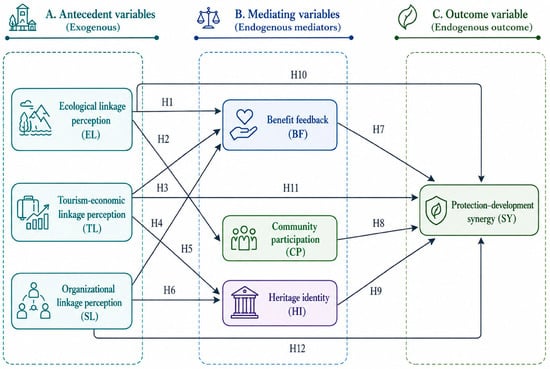
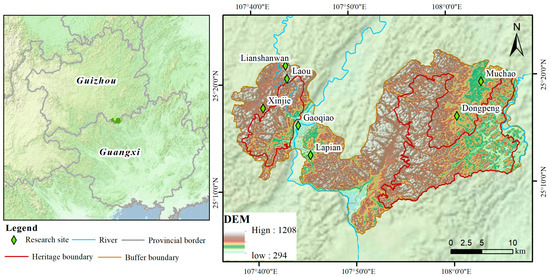
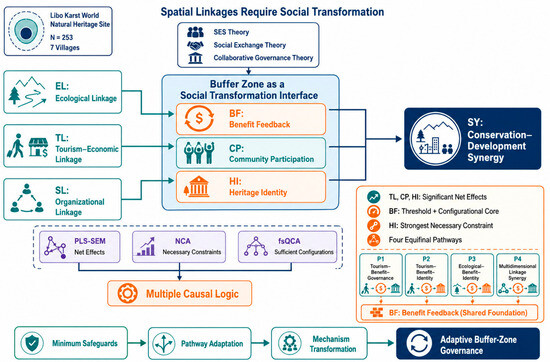
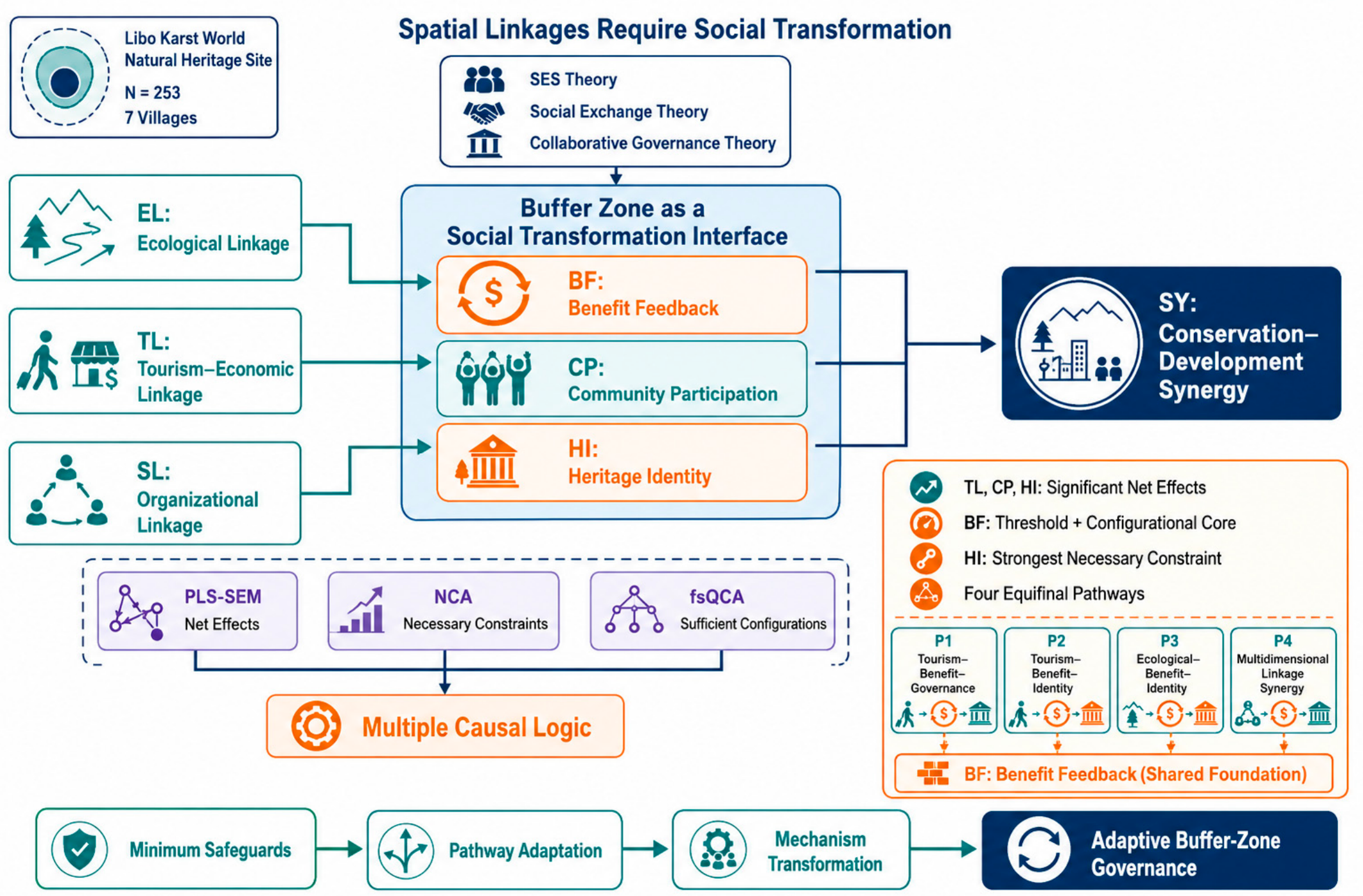
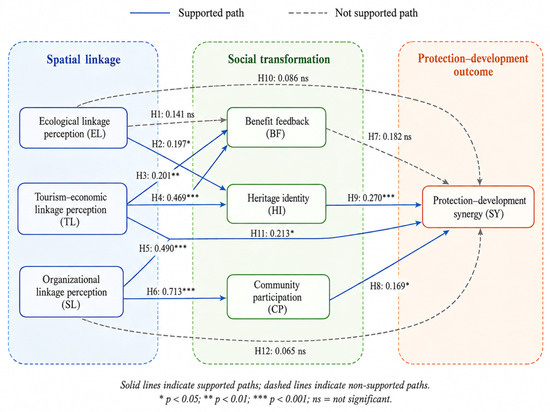
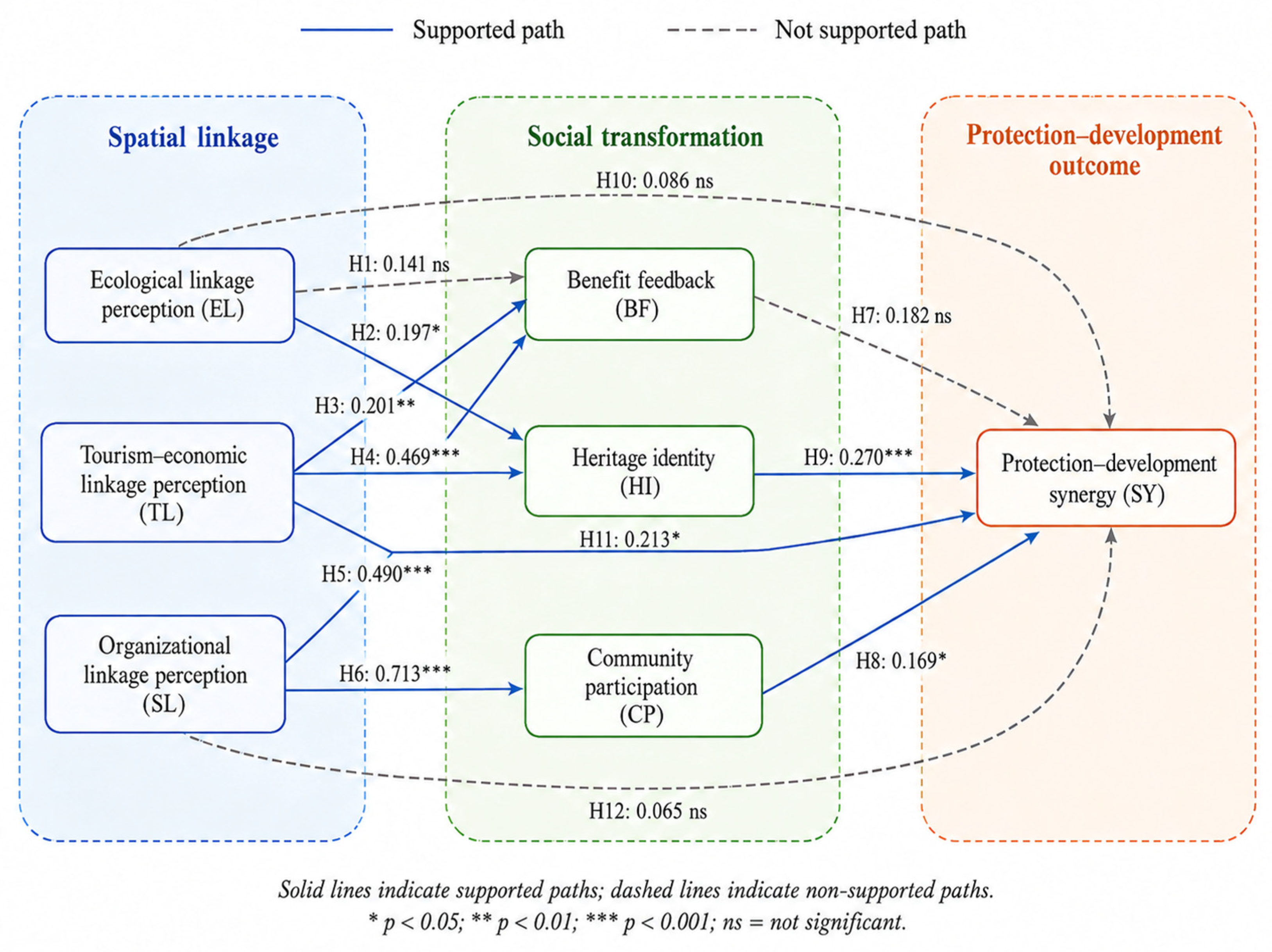
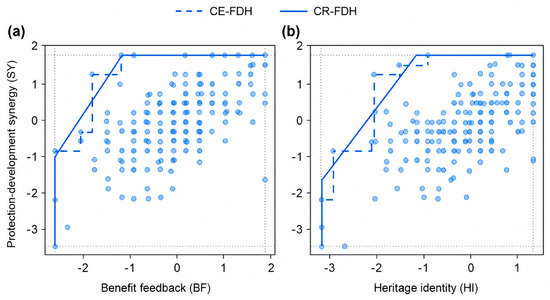
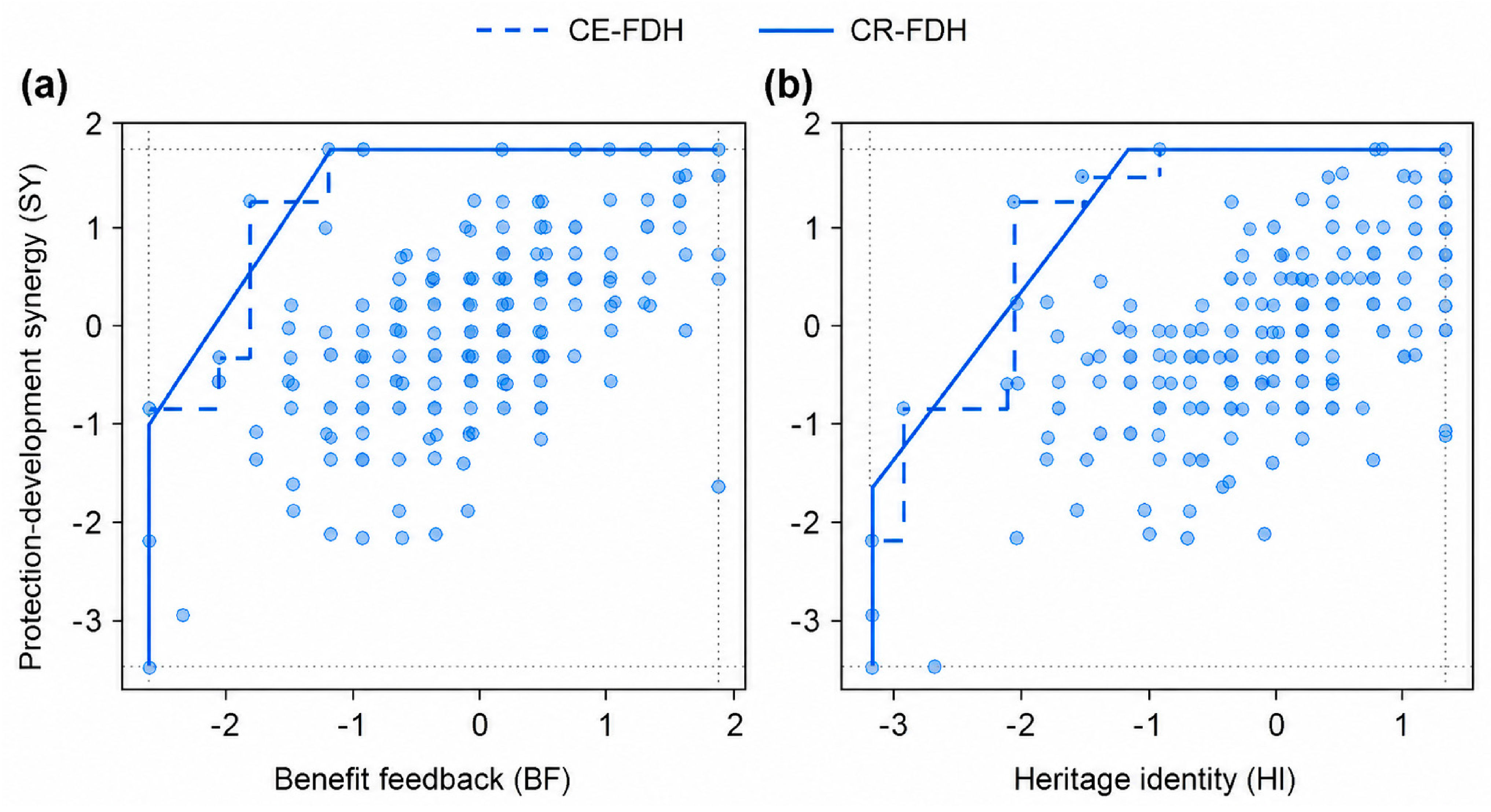

Disclaimer/Publisher’s Note: The statements, opinions and data contained in all publications are solely those of the individual author(s) and contributor(s) and not of MDPI and/or the editor(s). MDPI and/or the editor(s) disclaim responsibility for any injury to people or property resulting from any ideas, methods, instructions or products referred to in the content. |
© 2026 by the authors. Licensee MDPI, Basel, Switzerland. This article is an open access article distributed under the terms and conditions of the Creative Commons Attribution (CC BY) license.