


Abstract
The pedological component of geodiversity represents a fundamental—yet often overlooked—aspect of the abiotic environment with profound implications for ecosystem functioning and the provision of essential ecosystem services. It is shaped by the complex interplay of lithology, hydrological regimes, relief and its ruggedness, climate, human activity, and time; soil systems mediate crucial ecological processes across spatial and temporal scales. Understanding these interdependencies is critical for sustainable natural resource management and biodiversity conservation. Even more so, soils and the processes related to them become vital when measuring, evaluating, and protecting geodiversity since they can promote groundwater recharge, nutrient cycling, organic matter decomposition, carbon storage, biomass, and food production and habitat provision. Soils provide opportunities for recreation and geotourism, and can contribute to landscape aesthetics. Hence, they are a direct link between abiotic and biotic nature. Given increasing threats from erosion, degradation, pollution, and other changes, this review synthesizes and reviews current research on the pedological component of geodiversity and its connections to hydrological, relief, and other processes. From this perspective, it highlights the need for integrative strategies that safeguard soil functionality and ensure the long-term provision of ecosystem services. By performing that, it provides directions for further discussion and inclusion of soils and their diversity within geodiversity evaluations.
1. Introduction
Earth, our planet, is an extremely dynamic system whose diversity and complexity we often take for granted. Essentially, this diversity is expressed through geodiversity, which represents the total natural diversity of geological, geomorphological, and soil elements [1], as well as hydrological features and morphometric characteristics of the relief [2]. However, geodiversity is not just a collection of inanimate elements; it is the fundamental basis on which biodiversity develops and is maintained, as it provides diverse habitats and resources for all forms of life [3,4,5]. Many of its components have already been extensively discussed both theoretically and methodologically (e.g., the relief component and geomorphodiversity [6,7,8], geological diversity [9,10,11,12,13], hydrodiversity [14,15,16], and the terrain ruggedness [17]), whereas there remain research gaps concerning pedological aspects of geodiversity [18]. Within the broader category of geodiversity, the pedological component (i.e., soils and soil-related processes and interactions) also deserves equal additional attention [19]. Soils are not merely an inert medium for plant growth but are extremely complex systems that are crucial to the functioning of the entire planet. They perform numerous critical functions, from providing food and filtering water to circulating nutrients [20] and regulating the climate [21]. Hence, this manuscript is a review article that synthesizes existing scientific knowledge on the pedological component of geodiversity and its links to ecosystem functioning and ecosystem services.
Soil genesis or pedogenesis, terminologically and contextually, differs from pedodiversity and other related terms. While pedogenesis is an interdependent process of the interactions mainly between parent material, relief, climate, and vegetation [22], pedodiversity belongs to the notion of diversity, whose importance has been extensively discussed in ecological [23,24,25,26,27] and geodiversity studies [28,29]. Pedodiversity or soil diversity denotes the variability of soil types, properties, and patterns within an area [30,31,32,33]. As such, it is a subset and a component of geodiversity, which can be further divided into geofeature classes (i.e., mineral or organic, geofeature groups (e.g., strong human influence, profile differentiation, etc.), geodeature subgroups or soil types (e.g., cryosols, gleysols, durisols, cambisols, chernozems), or even specific geofeatures (e.g., hortic, glacic, petric, fragic) [33].
However, it is imperative to clearly distinguish between pedodiversity as a pedologic component of geodiversity [34] and pedodiversity when evaluated Shannon’s, Simpson’s, or other indices on its own [18,35]. On its own, it quantifies the variation in soil types, horizons, their properties, etc., within a defined unit [30,31] and, as such, often correlates with land use intensity and biodiversity. As a component of geodiversity [1] it encompasses elements and processes within an area or region as part of the abiotic nature, having a special role in geosystem diversity and evolution. In time, as soil properties change, the process of pedodiversification takes place [36], which is again a component of the evolution of geodiversity in time (i.e., geodiversification).
In order to make biodiversity, geodiversity, and pedodiversity comparable and linked, uniform mathematical methods are necessary, universal and consensual taxonomies need to be established, and integrative indices need to be developed [32]. While there have been studies conducted to map and value pedodiversity [37,38], pedodiversity as a geodiversity component has not been evaluated in relation to other geodiversity components (i.e., relief, lithology, hydrology, and climate) since the divergence in standardizing the methods persists [18]. Therefore, the initial research gap is to establish and describe the relations and dependencies of pedodiversity elements and processes to other geodiversity elements [32] at the same taxonomic level [33] on real-life examples. Concerning geodiversity evaluations, the scales of the studies differ extensively from continental to national and regional ones. Since country-scale or macro-scale evaluations show some regional differences in the settings, and can provide a basis for further conservational or geotourism uses [39,40,41] it is sensible to illustrate the dependencies of the components on such a scale.
Despite its relatively small size, Slovenia is an exceptional area for studying soils, their diversity [42] and role within geo- and landscape diversity [43]. It is often referred to as “miniature Europe” due to the exceptional diversity of geological, relief, and climatic conditions that intertwine and have synergetic effects in a limited space. From the high limestone Alps, through karst plateaus and flysch hills, to the Pannonian Plain and the Adriatic coast, each Slovenian region has its own specific geological and hydrological conditions [44] which vary in short distances. This unique geographical location is the main reason for the exceptional geodiversity [17] and pedodiversity within it, which is reflected in the variety of soil types, their physical and chemical properties [45], as well as pedogenesis processes. Slovenia is employed as an illustrative case study due to its exceptional concentration of geological, climatic, hydrological, and relief contrasts within a small area. This allows for the examination of soil–water–rock interactions that are representative of broader global patterns, making the findings relevant beyond the regional context. The rationale of this research is therefore not to present Slovenia as an isolated example, but to use it as a demonstrative laboratory for advancing conceptual and applied understanding of pedological components within geodiversity assessments worldwide.
The purpose of this article is to explore the pedological component of geodiversity and analyze it in detail in the case of Slovenia, and to distinguish the key links to natural processes and ecosystem services the pedodiversity provides. The objectives of the research are:
- (i)
- to review and identify the main factors influencing the pedologic component of geodiversity in Slovenia, with a special emphasis on bedrock, hydrological regimes, climatic characteristics, relief forms, the influence of the biosphere, and time;
- (ii)
- to analyze the specific links between the dominant soil types in Slovenia, their geological bedrock and local hydrological regimes, and to explain how these factors interact to influence soil development and properties;
- (iii)
- to assess the impact of pedodiversity on the structure, functionality, and biodiversity of various ecosystems present in Slovenia;
- (iv)
- to discuss the importance of pedodiversity for providing key ecosystem services, including water cycle regulation, nutrient cycling, food production, and biodiversity conservation;
- (v)
- to emphasize the need for a comprehensive understanding, protection, and sustainable management of soil as an indispensable natural resource for future generations.
Hence, the novelty of this review lies in its explicit positioning of pedodiversity as a functional and spatially structured component of geodiversity, rather than as a standalone diversity metric. By synthesizing pedological, hydrological, geological, and ecological perspectives, this paper addresses a recognized gap in international geodiversity research concerning the role of soils in geosystem functioning and ecosystem service provision.
2. Materials and Methods
This review article is based on a synthesis of the existing scientific literature and relevant databases addressing the pedologic component of geodiversity, hydrological regimes, and ecosystem services in Slovenia. As a conceptual review, no new fieldwork or laboratory analyses were conducted. Only a specific local-scale case study was selected to illustrate the theoretical descriptions. Instead, the focus was placed on the systematic collection, synthesis, and critical evaluation of available data sources and the scientific literature in order to provide a comprehensive overview and in-depth understanding of the topic.
2.1. Data Sources
Information was gathered from a range of national and international sources:
- Geological data [46] were obtained from geological maps and databases provided by the Geological Survey of Slovenia (GeoZS), including the 1:250,000 geological map and the digital geological structure model, which were essential for characterizing bedrock composition and structure.
- Soil data [47] were sourced from national soil databases maintained by specialized institutions (e.g., the Ministry of Agriculture, Forestry and Food, Biotechnical Faculty at the University of Ljubljana and the Agricultural Institute of Slovenia). Soil maps at various scales (e.g., the 1:250,000 soil map of Slovenia) and case studies on specific soil types were reviewed.
- Hydrological data [48]: Included records on surface and groundwater, precipitation, river discharge, groundwater levels, and hydrogeological characteristics, were primarily provided by the Slovenian Environment Agency (ARSO) and supplemented by relevant hydrological studies.
- Biodiversity and ecosystem service data were derived from reports and datasets issued by the Institute of the Republic of Slovenia for Nature Conservation, along with scientific studies on biodiversity and ecosystem services in Slovenia.
- Scientific literature was systematically reviewed across peer-reviewed journals, monographs, conference proceedings, and doctoral dissertations in the fields of soil science, geology, hydrology and ecology. Searches were conducted using databases such as Web of Science, Scopus and Google Scholar, employing keywords such as “pedodiversity,” “geodiversity,” pedodiversity Slovenia,” “soil and water Slovenia,” “soil ecosystem services,” and “geodiversity and soils Slovenia.”
2.2. Analytical Approach
Geographic Information System (GIS) software—primarily QGIS 3.40.5—was employed to synthesize and visualize spatial data, including geological and soil maps. This enabled spatial overlay of thematic layers (e.g., bedrock, soil types, hydrological features) and the identification of areas exhibiting specific interactions among components.
The analysis was primarily qualitative and synthetic, aimed at elucidating interrelationships and functional linkages. The methodological approach included the following:
2.2.1. A Literature Review and Knowledge Synthesis
A critical analysis of key findings from existing research to identify the main drivers, processes, and interconnections between the pedologic component of geodiversity, hydrological regimes and ecosystem services in Slovenia.
2.2.2. Spatial Correlation and Interpretation
Spatial analysis was carried out to examine how topographic, geological, hydrological, and pedological factors are organized across the landscape and how they jointly influence the distribution of soil diversity. First, to ensure accuracy, all spatial datasets were georeferenced in EPSG:3794 (D96/TM). After standardization, QGIS overlay operations and zonal statistics were applied to identify locations where specific relief, lithologies, hydrological features and soil units spatially coincide.
To allow consistent comparison across the study area, we generated a hexagonal grid with a 1 km resolution, resulting in 1320 hexagons. Each hexagon served as an analytical unit and contained a complete set of extracted variables. For every hexagon, we calculated soil diversity, defined as the number of distinct soil types intersecting the cell. The same grid was used to derive environmental predictors representing relief (elevation, slope, aspect, topographic wetness index), lithological heterogeneity (number of lithological units), climatic conditions (mean annual temperature and total annual precipitation) and hydrological characteristics (total stream length). All predictors were obtained from nationally standardized datasets and processed in QGIS using the procedures summarized in Table 1.
Table 1.
Data sources and procedures for variables and predictors.
The influence of environmental and landscape predictors on soil diversity was evaluated using a Random Forest regression model implemented in R 4.5.1 (randomForest package). This method was chosen for its ability to capture non-linear relationships and complex interactions among predictors without relying on parametric assumptions. The model was fitted using 500 trees with default splitting parameters. Model performance was assessed using 5-fold cross-validation, providing independent estimates of the coefficient of determination (R2) and root mean square error (RMSE). The relative importance of individual predictors was quantified using the percentage increase in mean squared error (%IncMSE), which measures the decrease in model accuracy resulting from random permutation of each predictor.
2.2.3. Conceptual Modelling
Based on data synthesis and interpretative analysis, we developed conceptual models to illustrate how the pedologic component of geodiversity contributes to ecosystem functioning and service provision, with emphasis on the role of bedrock and water dynamics [51].
2.2.4. Comparative Analysis
The properties and functions of different soil types were compared across various geographic regions of Slovenia to highlight the spatial extent and functional significance of the pedologic component of geodiversity [52].
3. Results
3.1. Slovenia’s Soil Diversity and the Interaction Between Bedrock, Water and Soil
Section 3 and Section 4 primarily synthesize and interpret previously published geological, pedological, and hydrological studies. Descriptions of soil types, pedogenetic processes, and soil–water–rock interactions are based on established the literature and national datasets [45,52,53,54]. Original contributions of this manuscript are limited to the integrative interpretation of these sources, the conceptual linking of pedological with other geodiversity components, and the mesoregional spatial analysis presented in Section 4.1.
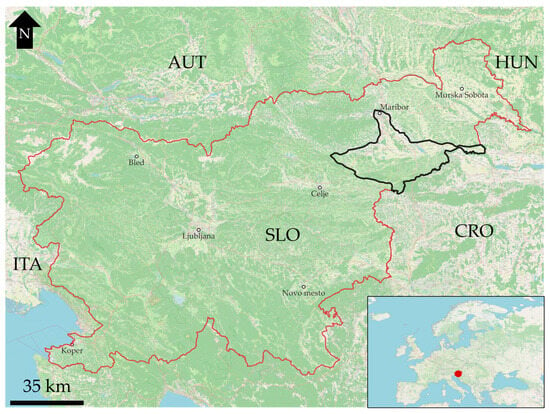
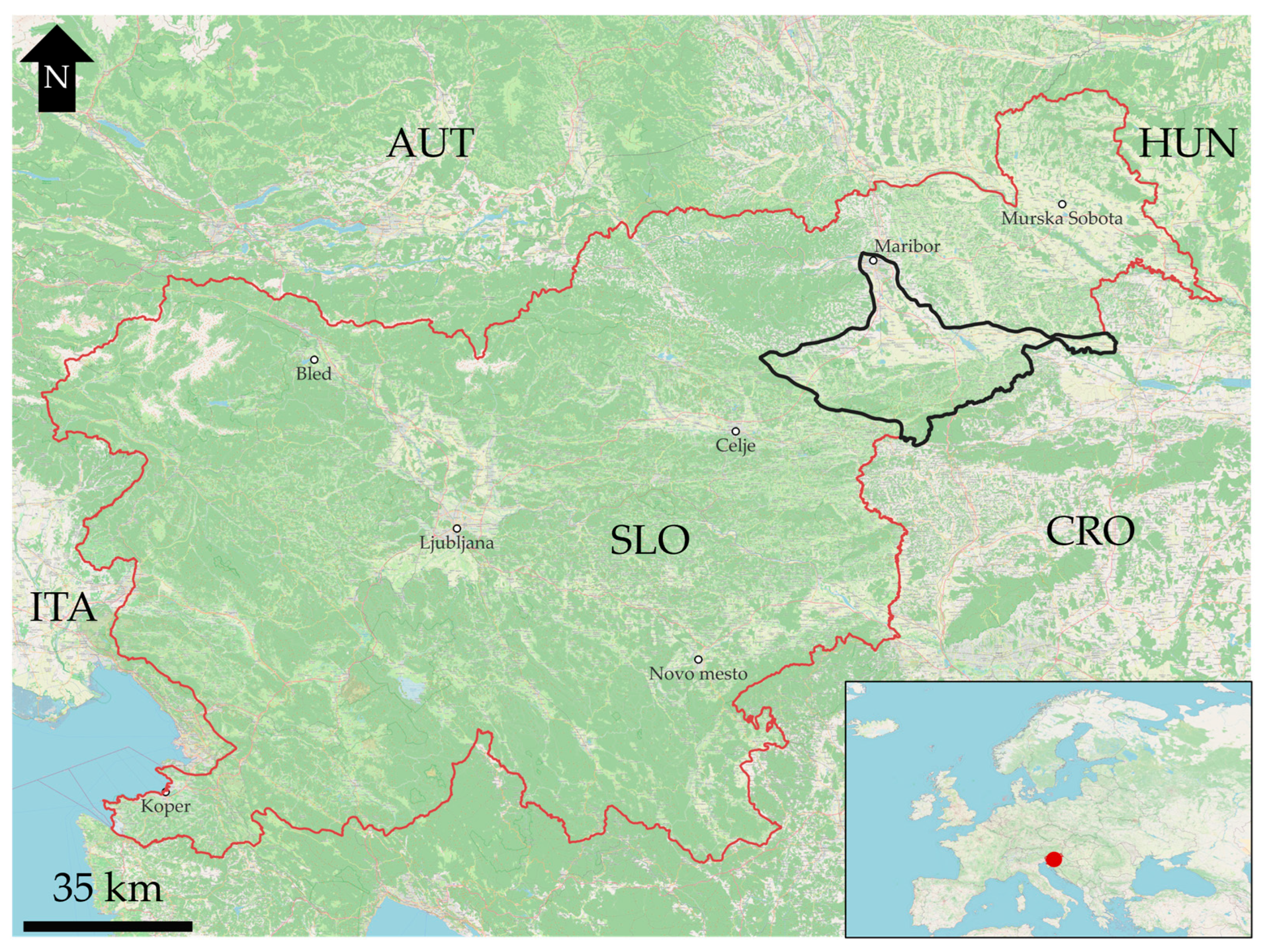
In order to discuss possible evaluation of the pedologic component of geodiversity, it is necessary to distinguish and list the most frequent soil types in a studied area (Figure 1), and secondly, to differentiate the factors that have affected their development [54].
Figure 1.
Location of the study area in Slovenia. Black outlines delineate the boundaries of the analyzed study area (Source: Authors; Data: Perko, 1998 [55]; GURS, 2025 [56]; OSM, 2025 [57]).
3.1.1. Soil Types in Slovenia
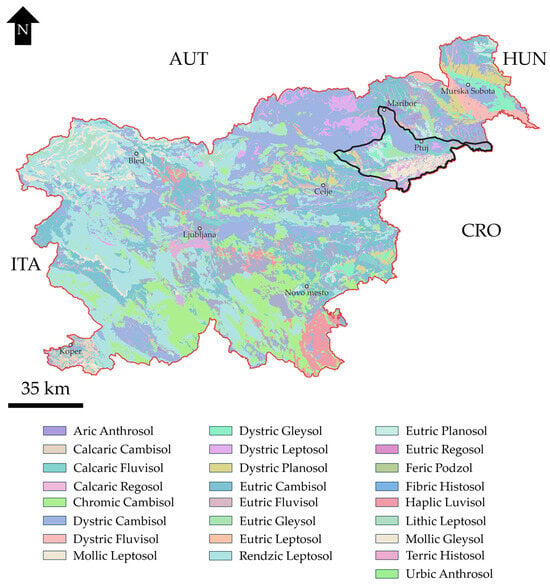
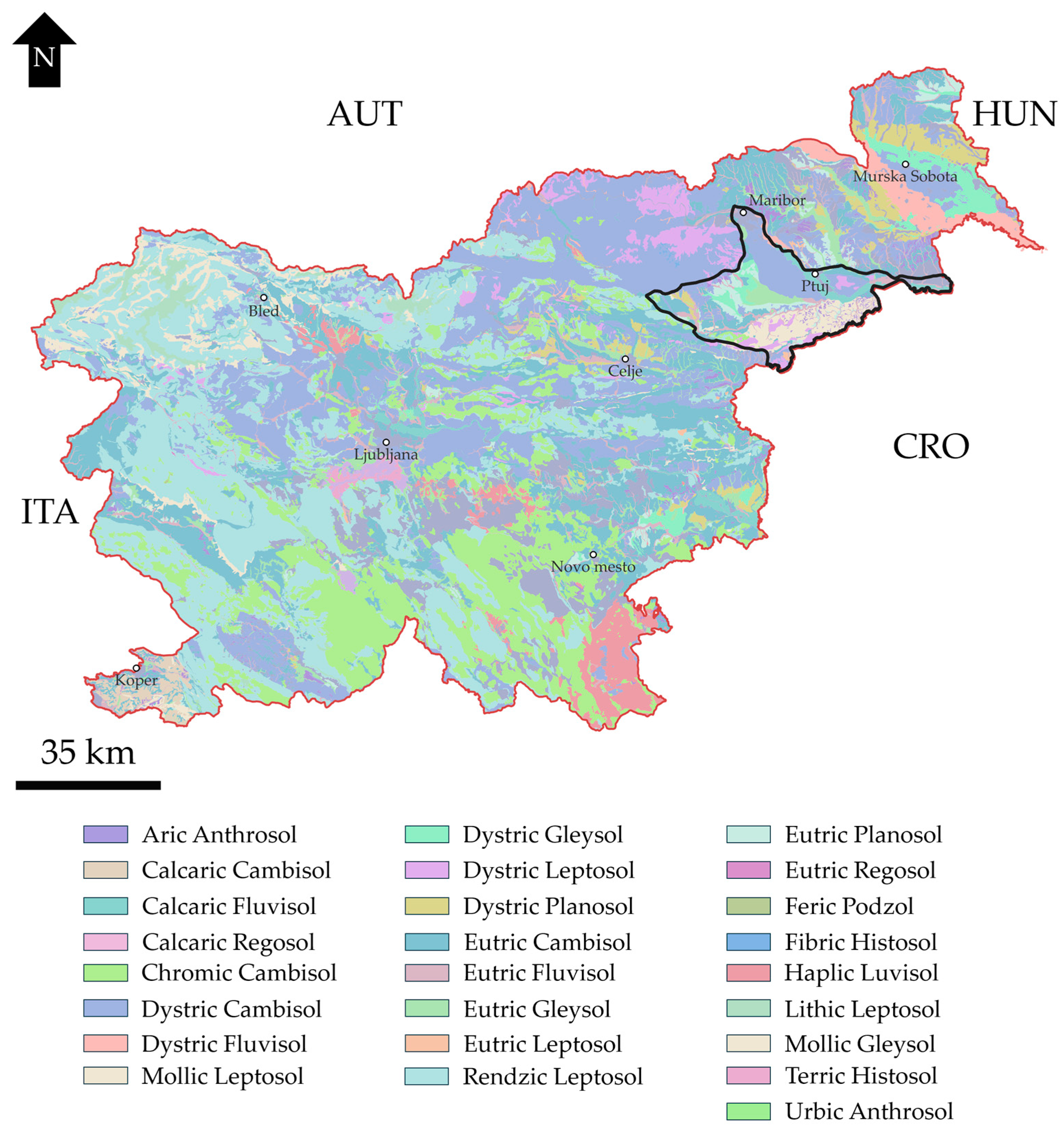
Slovenia is exceptionally rich in different soil types (Figure 2) [45]. For classification, Slovenia frequently uses the Slovenian Soil Classification or the international WRB (World Reference Base for Soil Resources, namely its 4th edition) [58], which allows for international comparability. Below is an overview of some of the key soil types found throughout Slovenia, the descriptions being entirely based on existing national and the international literature and soil classification systems [45,52,53,54,58].
Figure 2.
Spatial distribution of the main soil types in Slovenia according to the WRB classification. Black outlines delineate the boundaries of the analyzed study area (Source: Authors; Data: Perko, 1998 [55]; MKGP, 2007 [47]; GURS, 2025 [56]).
- Rendzina (Leptosol/Rendzic Leptosol WRB): Shallow, humus-rich, carbonate soils formed on limestone and dolomite. Typical of karstic and hilly areas. Rich in organic matter and calcium, but often shallow and prone to drought.
- Terra rossa (Chromic Cambisol/Calcaric Cambisol WRB): Reddish-brown to red soils rich in iron oxides, formed on limestone with strong leaching of carbonates. Common on the Karst Plateau and in Slovenian Istria. Deep but often clayey.
- Cambisol (Cambisol WRB): The most common soil type in Slovenia, brown in colour, moderately deep, developed on various rocks (silicate, carbonate). Typical of forested areas across the country. Well-drained and suitable for agriculture.
- Fluvisol (Fluvisol WRB): Soils developed on recent river alluvium. Characteristic of floodplains along major rivers (Sava, Drava, Mura). Young, deep, and often fertile, but exposed to flooding.
- Gleysol (Gleysol WRB): Soils permanently or periodically influenced by high groundwater. Characterized by bluish-grey mottling. Found in lowlands, wetlands, and near rivers. Important for water retention and biodiversity.
- Histosol (Histosol WRB): Organic-rich soils (peat), formed under wet conditions with persistently high groundwater. Examples include the Ljubljana Marshes and the Jelovica Plateau. Crucial for carbon storage and water retention.
- Ranker (Umbric Leptosol WRB): Shallow, acidic, humus-rich soils on silicate rocks (e.g., granite, schist). Typical of alpine and hilly areas with steep slopes and intensive surface erosion.
- Rigosol/deeply ploughed anthropogenic soils (not a separate WRB group; generally classified as Anthrosols): Soils developed on flysch. Often shallow with high clay and marl content, making them hard to cultivate and prone to erosion. Found in Slovenian Istria, the Goriška Brda hills, and the Vipava Valley.
3.1.2. Interaction Between Rocks, Water, and Soil
The interconnection and interaction between bedrock, water and soil are key elements determining the unique pedodiversity of the landscape [31,59]. This complex dynamic influences the formation of soil properties, hydrological processes, and, ultimately, the development and functioning of ecosystems [60].
Bedrock is not only the source of parent material for soils but also serves as a matrix for water movement within the landscape [61]. Its porosity (proportion of voids) and fracturing (presence of cracks and fissures) determine how water infiltrates deeper layers, flows through the subsurface, and how groundwater develops.
For example, limestone is a rock with high fracturing and solubility. Water rapidly percolates through cracks and cavities, leading to fast drainage and the development of karstic underground features such as caves and sinkholes [62]. Consequently, soils on limestone are often shallow and dry quickly, which affects the development of pedogenetic processes and soil types such as rendzinas [63]. In contrast, flysch, composed of alternating layers of sandstone and marl, is relatively impermeable. Marl layers hinder vertical water movement, often leading to water stagnation at shallow depths and increased surface runoff [64]. This promotes the formation of heavy, clayey soils prone to erosion and landslides. Understanding this interaction is crucial for predicting catchment hydrological responses and for soil management planning.
Soils themselves act as natural water reservoirs, with an invaluable role in regulating the water regime [65]. Their water retention capacity—the amount of water they can absorb and store—depends on texture (proportions of sand, silt, and clay), structure (aggregation of soil particles), and organic matter content [66]. Soils rich in organic matter and with good structure have greater water retention capacity, which helps mitigate floods (by reducing surface runoff) and droughts (by gradually releasing stored water).
Besides retaining water, soils also play a crucial role in water purification. They act as natural filters that physically trap solid particles and biologically break down organic pollutants. Chemical processes in soils, such as adsorption and precipitation, can also remove dissolved pollutants such as heavy metals or pesticides [67]. Soils are thus essential in groundwater recharge, as they enable the infiltration of purified water into aquifers, which is vital for the drinking water supply [66].
The interactions between bedrock, water and soil are also reflected in soil chemistry. The mineral composition of rocks determines the initial chemical makeup of soils [68]. For example, limestone and dolomite release calcium and magnesium, leading to higher soil pH and greater availability of certain nutrients. Silicate rocks, on the other hand, tend to produce more acidic soils as they weather. Water percolating through rocks and soils dissolves and transports minerals, thereby modifying soil chemistry [69].
Chemical soil properties (e.g., pH, nutrient content, trace elements) are extremely important for the development of pedofauna and pedoflora, all living organisms in soils (microorganisms, fungi, invertebrates). Each species has specific environmental requirements, so soil chemical diversity supports high biodiversity in soils, which is essential for nutrient cycling and organic matter decomposition [70].
3.1.3. Ecosystem Examples of Soil–Water–Rock Interactions in Slovenia
Several examples can be presented on how water, rocks and soils interact and form ecosystem results in Slovenia. Based on the presentation in Section 3.2, they can be grouped into four illustrative categories:
- Karst Areas: In karst regions, characterized by limestone and dolomite bedrock, unique soils such as rendzina (shallow, humus-rich, carbonate) and terra rossa (reddish, iron-rich) develop. The specific hydrological regime, where water rapidly infiltrates through sinkholes and flows through caves and subterranean rivers, strongly influences these soils. Despite surface aridity, karst soils and subterranean systems are crucial for water filtration and provide habitats for unique surface and subterranean species. Biodiversity in karst areas is often adapted to a lack of surface water and specific soil conditions [71].
- Flysch Areas: Regions with flysch bedrock (e.g., Slovenian Istria, the Goriška Brda Hills, Vipava Valley) are characterized by the development of shallow, heavy, and erosion-sensitive soils [52]. Poorly permeable marl layers cause rapid surface runoff, increasing the risk of soil erosion and flash floods [72]. These soils, despite their vulnerability, support intensive agricultural use, especially viticulture and fruit growing, but require careful management to prevent degradation [73].
- Alpine Areas: In high mountain Alpine zones, various soil types evolve, from shallow soil types on steep slopes and skeletal soils to peat soils in depressions and podzols on more acidic rocks (e.g., Pohorje). The presence and stability of these soils are essential for water retention (snow and ice storage, water storage in soils) and for preventing landslides and debris flows. Alpine ecosystems are adapted to extreme climate conditions and specific soil constraints, with soils playing an important role in slope stability and hydrological regulation [74].
- River Valleys and Floodplains: In river valleys and floodplains (e.g., along the Sava, Drava and Mura), dynamic and often highly fertile soils develop, such as fluvisols (river alluvium) and gleysols (groundwater-influenced soils). These soils are under constant influence of water regimes, including regular floods and high groundwater levels. They are highly important for biodiversity (habitats for wetland ecosystems), floodwater retention (absorbing excess water during floods), and water purification (filtering and degrading pollutants before water reaches deeper aquifers). These areas are also vital for agricultural production and are often densely populated.
3.2. From Soil Formation to Pedodiversity and Its Role in Geodiversity
Slovenia’s pedodiversity is exceptionally rich and reflects its diverse geological history, rugged relief, and varied climate influences. Soil types are not randomly distributed but result from complex interactions among the five main factors of pedogenesis: parent material (bedrock), hydrological regime, relief, climate, organisms (including plants, animals, and humans) and time [60]. To illustrate this diversity, we chose a mesoregion to showcase the pedodiversity in relation to other environmental variables, and calculated the basic statistical operations to numerically highlight the correlations.
3.2.1. The Case from Slovenia on the Mesoregion Level
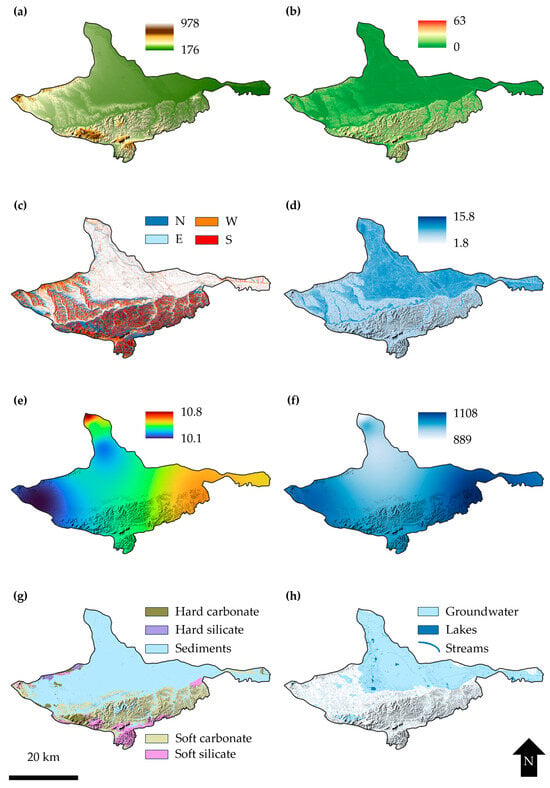
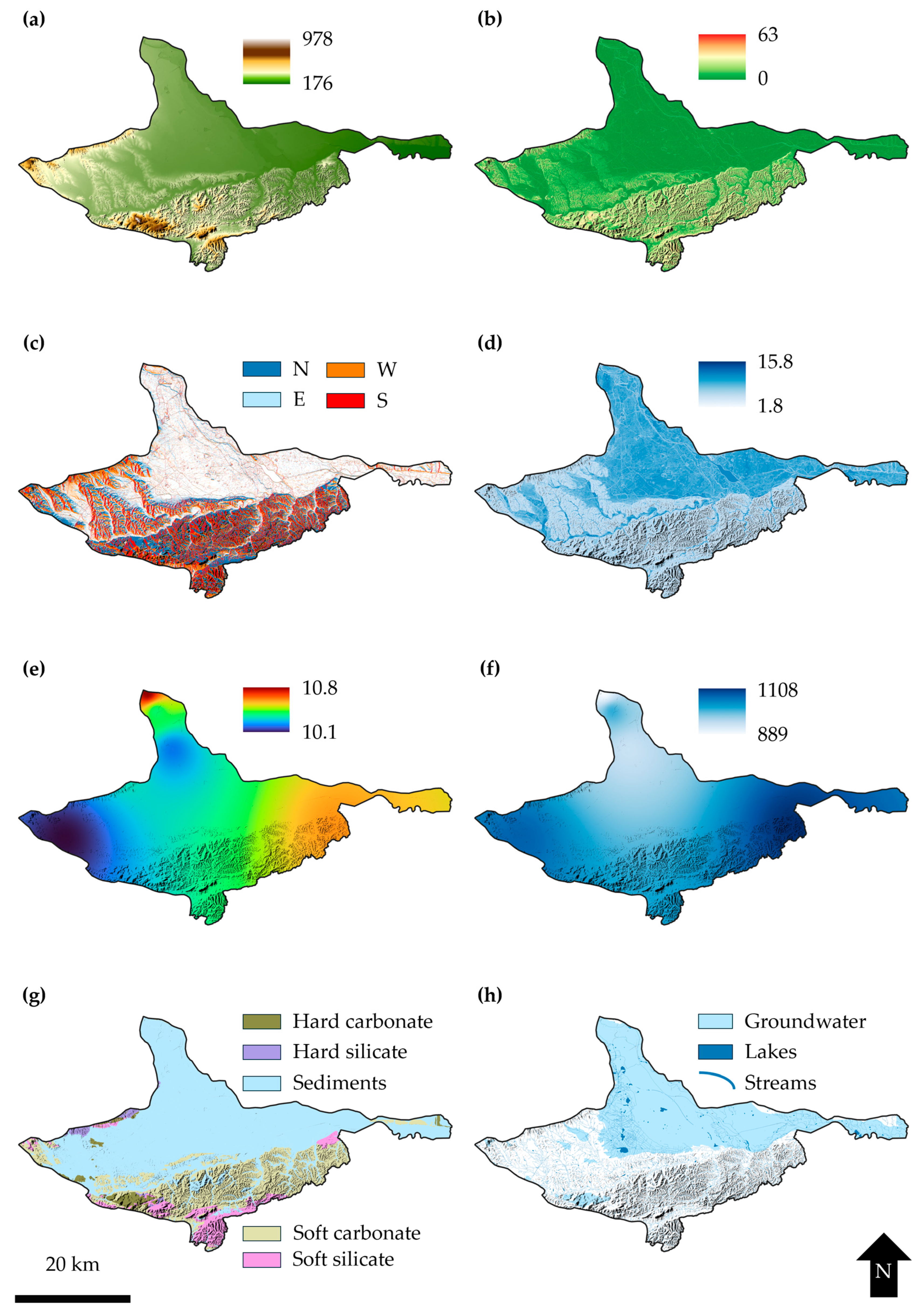
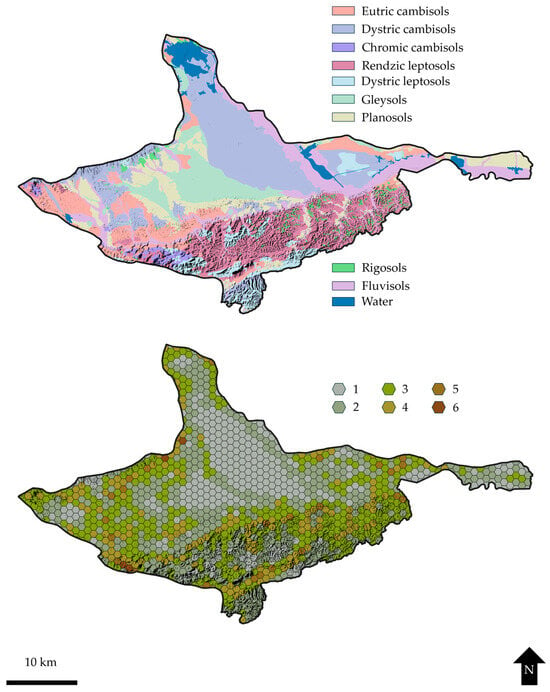
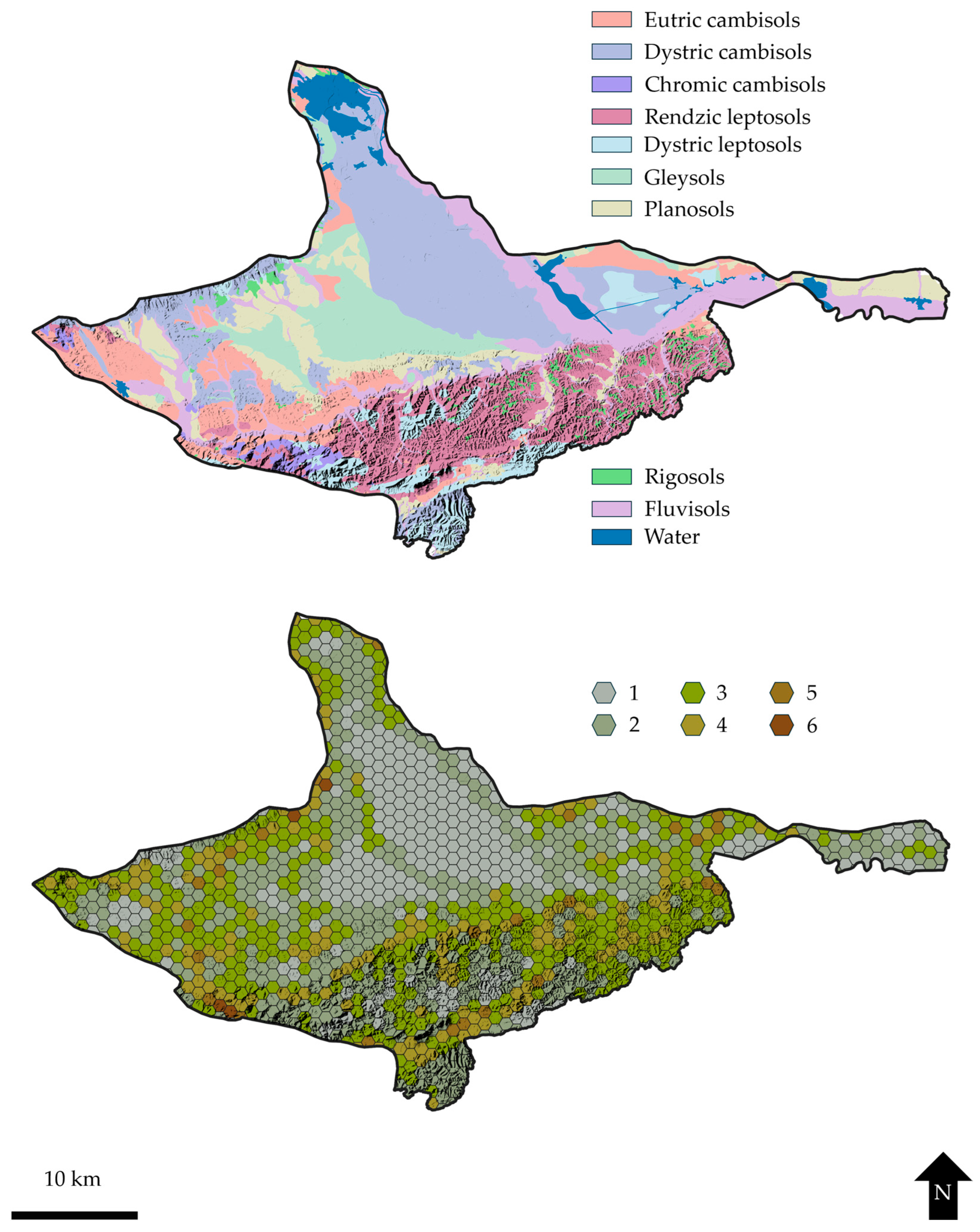
Although this article provides a general overview, we include an illustrative case study highlighting the influence of various factors on the formation, characteristics, spatial distribution, and diversity of soils within a smaller area marked by pronounced interactions and differentiation among individual soil types. The spatial distribution of the selected environmental and landscape predictors is shown in Figure 3, while the resulting soil diversity pattern is presented in Figure 4. The features of this differentiation—driven by parent material, hydrological regimes, and other environmental factors—are explained more broadly and comprehensively in the subsequent sections. For illustrative purposes, we selected the mesoregional level, encompassing the regions of the Haloze Hills, the Boč and the Macelj Hills, the Drava Plain and the Dravinja Hills with their surroundings in eastern Slovenia, due to their pronounced heterogeneity. The study area is located in the eastern part of Slovenia, as seen in Figure 1.
Figure 3.
Spatial distribution of environmental and landscape variables used as predictors in the random forest model: (a) elevation (m); (b) slope (°); (c) aspect; (d) TWI; (e) mean annual air temperature (°C); (f) mean annual precipitation (mm); (g) lithology; (h) hydrology (Source: Authors; Data: Perko, 1998 [55]; GURS, 2025 [56]; GeoZS, 2016 [75]; ARSO, 2024 [76]).
Figure 4.
Spatial distribution of soil types according to the WRB classification (top) and soil diversity expressed as the number of distinct soil types per 1 km hexagonal spatial unit (bottom), used as the response variable in the random forest model (Source: Authors; Data: Perko, 1998 [55]; MKGP, 2007 [47]).
The model explains approximately 36.3% of the variance in pedodiversity across the study area (R2 = 0.364). This indicates that the selected environmental predictors exert a significant influence, although additional factors not included in the model also contribute to its spatial distribution. Furthermore, pedodiversity and pedogenesis are outcomes of long-term processes that often span centuries or millennia. The selected predictors reflect present-day conditions, not paleogeographic characteristics, and therefore capture only weak or indirect influences on soil development.
Nevertheless, the modelling enabled the identification of several key environmental predictors (Table 2) that contribute to the spatial pattern of pedodiversity in the study area. The most influential predictor was stream length (%IncMSE = 36.35%), highlighting the role of hydrological features in pedogenesis. Areas closer to streams are more likely to experience flooding and water saturation, while fluvial accumulation or erosion may be more intense in riparian zones.
Table 2.
Predictor importance based on percentage increase in mean squared error (%IncMSE).
Elevation (%IncMSE = 34.29%) emerged as the second most important predictor, underscoring the role of altitudinal gradients in pedogenesis. This predictor likely reflects the combined effects of temperature changes, moisture conditions, and vegetation zones associated with increasing altitude, all of which influence physical, chemical, and biological soil processes.
Temperature (%IncMSE = 33.96%) and precipitation (%IncMSE = 27.89%) were also influential predictors, reinforcing the role of climate in soil formation. Temperature affects weathering, microbial activity, and organic matter decomposition, while precipitation influences leaching, erosion, the air–water regime, and water availability for vegetation.
Among topographic characteristics, both the topographic wetness index (%IncMSE = 25.71%) and slope (%IncMSE = 23.25%) had a moderate influence. Steeper slopes may promote erosion and inhibit the development of deeper soils, whereas higher TWI values indicate areas of increased moisture that may affect the air–water balance, nutrient availability, and other pedogenetic processes.
The diversity of lithological units (%IncMSE = 24.85%) also proved to be an important predictor. Although parent material is a fundamental factor in soil genesis due to its mineral composition, in this context, its influence appears secondary to hydrological and topographic factors.
The least influential predictor was aspect (%IncMSE = 6.66%), suggesting that solar exposure and related microclimatic differences exert minimal effect on pedodiversity in the study area.
In general, the results indicate that macro-environmental factors, particularly stream length and elevation, are the primary drivers of pedodiversity in the study area. Climate, slope and geology complement this pattern, whereas aspect contributes the least.
3.2.2. The Influence of Bedrock (Petrogenic Factors) on Soil Development
Bedrock plays a fundamental role in determining the initial chemical and physical composition of soils, as it provides the parent material for soil formation. Slovenia boasts exceptional geological diversity, which is rare in Europe for such a small area [77]. Carbonate rocks, such as limestone and dolomite, predominate, especially in the Alpine, Dinaric and Karst regions. Additionally, flysch (in the Goriška Brda Hills, the Slovenian Istria, the Vipava Valley), various magmatic rocks (e.g., Pohorje, Smrekovec), metamorphic rocks (e.g., the Pohorje Hills, the Kočevsko Region), and extensive Quaternary sediments (river and glacial deposits in valleys and plains) are also present.
Different rock types determine the base chemical composition of soils (e.g., calcium, silica, iron content), their permeability to water and air, and their texture (sand, clay, silt proportions) [78]. For example, limestone and dolomite, rich in calcium, commonly support basic soils, while silicate rocks (granite, schist) form more acidic soils [79]. Flysch, composed of alternating layers of sandstone and marl, creates a heterogeneous substrate with variable permeability.
Typical soil types that develop on particular geological units include:
- Rendzina and terra rossa: Characteristic of limestone and dolomite, especially in karst areas. Rendzina is shallow, humus-rich, and calcium-rich, whereas terra rossa is rich in iron oxides and forms through long-term weathering and carbonate removal.
- Cambisols (brown soils): Develop on various silicate and carbonate rocks less susceptible to leaching. They are the most common soil type in Slovenia and are typical of forested areas.
- Fluvisols and colluvial soils: Form on river sediments in floodplains and riparian zones, where rivers regularly deposit new layers. Colluvial soils develop through the accumulation of eroded material at the slope bases.
- Rigosols: Typical of flysch regions, where they develop on weathered flysch. Often shallow, heavy, and prone to erosion.
3.2.3. Influence of Hydrological Regimes on Soils
Water is a crucial pedogenetic factor as it influences rock weathering, material transport and accumulation, and chemical processes in soils. Its presence, movement, and chemical composition affect leaching (removal of substances from soil), accumulation (material build-up in certain horizons), and redox processes (affecting soil colour and element availability) [66].
Different hydrological regimes create specific conditions for soil formation:
- Groundwater: Where groundwater levels are high or where water accumulates due to low-permeability substrates, gleysols and eutro-oxidic soils develop. These are marked by altered colour (greyish, bluish, yellow-brown mottles) due to alternating redox conditions. In persistently waterlogged areas, histosols (organic-rich soils) form.
- Precipitation: The amount and intensity of rainfall greatly influence leaching. In areas with high rainfall and permeable soils (e.g., on silicate rocks), rankers (shallow, acidic soils on rock) or even podzols may develop, where iron, aluminum, and humus are strongly leached into lower horizons.
- Surface water (rivers, lakes): Along rivers and lakes, where new sediments are regularly deposited, and water regimes are dynamic, fluvisols (river alluvium) and colluvial soils (gravity-moved material) develop.
A particularly interesting case is the karst hydrological regime, which is extremely complex and affects soil development on carbonate bedrock [80]. Water in karst rapidly percolates into the subsurface through cracks and voids, resulting in minimal surface runoff. This leads to specific soil conditions, such as shallow and often dry rendzinas or terra rossa retained in dolines and collapse features, where water persists longer [62]. Rapid water infiltration and rock dissolution hinder deep soil development and influence nutrient cycling.
3.2.4. Influence of Relief and Climate on Soils
Although rocks and water are in focus, one must not overlook the fact that relief and climate act as important modifiers of pedogenetic processes. Relief (slope, exposure, altitude) influences erosion, material accumulation, solar radiation intensity, and the water regime (e.g., faster water runoff on steep slopes). Climate (temperature, amount of precipitation, type of vegetation) determines the rate of weathering, intensity of leaching, decomposition of organic matter, and overall biological activity in the soil [81]. For example, an alpine climate with low temperatures and strong winds limits the development of deep soils.
4. Discussion: The Impact of Pedodiversity on Ecosystems and Their Services
Soil geodiversity is not merely an academic concept; its practical significance is evident in its direct influence on ecosystems and the provision of vital ecosystem services, which are indispensable for human well-being and the persistence of life on Earth. Soil diversity creates conditions for biodiversity and supports complex processes that sustain planetary life [82].
Soils represent an extremely heterogeneous environment, where physical, chemical, and biological properties interact. This variability creates habitats for a wide range of life forms. Different soil types—with specific pH levels, texture, nutrient availability, and hydrological regimes—support distinct plant communities (e.g., forests, grasslands and wetlands), which in turn affect animal species that depend on those plants. Furthermore, soils are home to an astonishing diversity of microorganisms, including bacteria, fungi, algae, and protozoa, as well as invertebrates such as earthworms, insects, and mites. These soil communities are essential for the decomposition of organic matter, nutrient cycling, and overall ecosystem health [83]. Soil types such as rendzinas on karst or histosols in wetlands provide unique habitats for rare and endangered species, thereby contributing significantly to the overall biodiversity of Slovenia.
4.1. Ecosystem Services
Pedodiversity underpins a broad range of ecosystem services—biotic [84] or abiotic ones [85,86,87,88]—which can be categorized into several groups:
4.1.1. Regulating Services
Soils are crucial for the regulation of natural processes that affect the environment and human societies.
- Water cycle regulation: Soils act as a natural sponge that infiltrates precipitation, retains water in various capacities, and gradually regulates its release into rivers and aquifers. This reduces flood risk by lowering surface runoff and mitigates droughts by supplying water to vegetation during dry periods [89]. Different soil types vary in their water retention capacity; thus, enhancing landscape resilience to extreme hydrological events.
- Water purification and filtration: Soils function as effective natural filters. As water percolates through the soil profile, particles, suspended substances, and many pollutants (e.g., heavy metals, pesticides, organic contaminants) are physically trapped, adsorbed, or biologically degraded. This ensures cleaner groundwater and reduces pollution in surface watercourses.
- Nutrient and carbon cycling: Soils are central to global nutrient cycles, including nitrogen, phosphorus, and potassium. Soil microorganisms mineralize organic matter and convert nutrients into plant-available forms. In addition, soils are the second-largest carbon sink on Earth, storing vast amounts of organic carbon in soil organic matter [90], thereby contributing to climate regulation by reducing atmospheric CO2 concentrations.
4.1.2. Supporting Services
These services are essential for the functioning of all other ecosystem services.
- Habitat for organisms: Soils are among the most biodiverse habitats on Earth, hosting countless microorganisms (bacteria, fungi), animals (from nematodes and mites to earthworms and rodents), and plant root systems. These biological communities are vital for soil health, matter decomposition, and overall ecosystem functioning [70].
- Soil formation: The process of pedogenesis (soil formation) is continuous and ongoing. Geodiversity—through variations in bedrock, landforms, and hydrological regimes [1]—provides the necessary conditions for the transformation of parent material into soil.
4.1.3. Provisioning Services
Provisioning services refer to tangible products obtained from ecosystems.
- Food and fodder production: The most important provisioning service of soils is their support for agricultural food and fodder production. Fertile soils, a result of rich soil geodiversity, form the basis of sustainable agriculture and food security.
- Raw materials: Soils and the underlying geology provide various raw materials, such as sand and gravel for construction, clay for ceramics and bricks, and peat from wetland soils.
- Water: Soils play a key role in filtering and storing drinking water by facilitating the infiltration of surface water into aquifers while also cleaning it in the process.
4.1.4. Cultural Services
In addition to material and regulatory benefits, soils and soil geodiversity hold important intangible values.
- Esthetic value: Soil diversity contributes to landscape beauty and creates unique visual impressions [91]. Differences in soil colour and texture affect vegetation patterns and thereby the overall visual character of an environment.
- Recreation and geotourism: Areas with pronounced geological and soil diversity are attractive for recreation and geotourism [41,92]. Geoparks and natural monuments showcasing geological and pedological features (e.g., karst formations, gorges, fossil sites) draw visitors and raise awareness of abiotic nature.
- Scientific and educational potential: Soils are a source of knowledge about Earth’s history, climate change and the evolution of life. They are critical for research in geology, pedology, hydrology and ecology and offer rich educational opportunities for all age groups [1,93].
4.2. Challenges and Sustainable Management of Soil Geodiversity
Despite the invaluable role that pedodiversity plays in ecosystems and human well-being, soils both globally and in Slovenia face increasing threats. These threats, often exacerbated by human activities and climate change, jeopardize soils’ ability to provide essential ecosystem services. Sustainable soil management and geodiversity conservation [94,95,96] are; thus, crucial to preserve this fundamental natural resource.
4.3. Main Threats to Soil Geodiversity
Soil degradation is a global problem that affects fertility, water regulation, and biodiversity. The main threats include the following:
- Soil erosion: The most widespread form of soil degradation in Slovenia, caused mainly by water and wind. Water erosion is particularly severe on steep, bare, and cultivated slopes, while wind erosion affects lighter soils during dry periods. Loss of topsoil reduces productivity, increases sediment and nutrient pollution in watercourses, and alters landscape hydrology.
- Other forms of soil degradation:
- ○
- Compaction: Excessive use of heavy machinery and inappropriate agricultural practices leads to soil compaction, reducing porosity, root penetration, and water infiltration capacity.
- ○
- Acidification: Over-fertilization, acid rain, and certain forest types can acidify soils, affecting nutrient availability and microbial activity.
- ○
- Pollution: Industry, traffic, intensive agriculture, and improper waste disposal introduce pollutants (heavy metals, pesticides, organic contaminants), threatening both ecosystems and human health.
- ○
- Loss of organic matter: Insufficient application of organic fertilizers, monocultures, and lack of crop rotation reduce organic matter in soils, diminishing fertility, water retention and biological activity.
- Sealing and loss of agricultural land: Urbanization, infrastructure development, and industrial expansion cause permanent loss of valuable agricultural and natural land. Once sealed, soils are irreversibly destroyed and lose their ability to provide ecosystem services.
- Climate change: Increasingly extreme weather events, such as prolonged droughts and intense storms, affect pedogenesis and hydrology. Increased precipitation intensifies erosion, while longer droughts reduce soil moisture and increase fire risk. Temperature changes also influence organic matter decomposition rates and soil biota activity.
4.4. Strategies for the Protection and Sustainable Management of Soils
To effectively address these threats, it is essential to develop and implement comprehensive, interdisciplinary soil protection strategies:
- Importance of soil mapping and monitoring: Effective management starts with knowledge of resources. Regular soil mapping at various scales and the establishment of soil monitoring systems are crucial for tracking changes, identifying vulnerable areas, and assessing the effectiveness of implemented measures.
- Adoption of best agricultural practices (conservation agriculture): Promoting and supporting conservation agriculture is vital. This includes minimum tillage, maintaining ground cover (stubble, cover crops), crop rotation, precise fertilization, and use of organic fertilizers. These practices reduce erosion, improve soil structure, increase organic matter, and reduce chemical input dependency.
- Rehabilitation of degraded areas: It is essential to plan and implement rehabilitation measures for already degraded areas, such as afforestation, construction of anti-erosion terraces, organic matter addition, or phytoremediation of polluted soils.
- Spatial planning that considers soil sensitivity: Planning should actively incorporate soil vulnerability. This entails directing construction to areas with less productive or ecologically valuable soils and protecting prime agricultural land and areas of high soil geodiversity.
- Public education and awareness: Long-term success in soil protection depends on education and public awareness. The importance of soils and the threats they face must be understood at all levels, from farmers and policymakers to the general public. An informed society is essential for responsible decision-making regarding land use and soil protection.
Through the implementation of these strategies, Slovenia can ensure the sustainable use of its soils, preserve its exceptional soil geodiversity, and continue to benefit from the ecosystem services that depend on healthy and diverse soils.
5. Conclusions
This review demonstrates that the pedological component of geodiversity represents a fundamental yet frequently underestimated element of abiotic nature, with a decisive influence on ecosystem structure, functioning, and service provision. In Slovenia, pedodiversity emerges from the complex interaction of geological substrate, hydrological regimes, relief, climate, biological activity, and long-term landscape evolution. These interactions give rise to a high diversity of soil types that regulate water flow, nutrient cycling, carbon storage, habitat provision, and agricultural productivity.
The synthesis confirms that soils should not be treated merely as passive outcomes of geological and climatic processes, but as active regulators linking abiotic and biotic systems. The results of the mesoregional case study further indicate that hydrological factors and topographic context are primary drivers of pedodiversity patterns, while lithology and climate act as complementary controls.
Importantly, although Slovenia serves as the empirical case study, the conceptual framework and interactions presented in this work are not region-specific. They provide a transferable basis for analyzing the pedological component of geodiversity and its ecosystem-service relevance in other geographical settings worldwide, particularly in regions characterized by strong environmental gradients.
Future research should, therefore, focus on the following: (i) the development of standardized methods for integrating pedodiversity into quantitative geodiversity indices, (ii) multi-scale comparative studies across different climatic and geological regions, and (iii) further incorporation of the pedological component of geodiversity into spatial planning, conservation strategies, and ecosystem service assessments. Recognizing soils as one of the core elements of geodiversity is essential for sustainable land management and for safeguarding ecosystem resilience under increasing anthropogenic and climatic pressures.
Effective geodiversity conservation and especially soil protection require interdisciplinary collaboration among pedologists, environmental scientists, spatial planners, and policymakers. At the same time, raising public awareness of soil value and its contribution to societal well-being is essential. Only a holistic approach can ensure a long-term balance between land use and the conservation of soils’ multidimensional functions in both natural and human environments.
Author Contributions
Conceptualization, A.V. and B.S.; methodology, A.V. and D.D.; software, D.D.; validation, A.V., B.S. and D.D.; formal analysis, A.V., B.S. and D.D.; investigation, A.V., B.S. and D.D.; resources, A.V., B.S. and D.D.; data curation, A.V., B.S. and D.D.; writing—original draft preparation, A.V.; writing—review and editing, B.S. and D.D.; visualization, D.D.; supervision, A.V. and B.S.; project administration, B.S.; funding acquisition, B.S. All authors have read and agreed to the published version of the manuscript.
Funding
This research received no external funding.
Data Availability Statement
The original contributions presented in this study are included in the article. Further inquiries can be directed to the corresponding author.
Conflicts of Interest
The authors declare no conflicts of interest.
References
- Gray, M. Geodiversity: Valuing and Conserving Abiotic Nature; John Wiley & Sons Ltd.: Chichester, UK, 2004; ISBN 1118525094. [Google Scholar]
- Serrano, E.; Ruiz-Flaño, P. Geodiversity. A theoretical and applied concept. Geogr. Helv. 2007, 62, 140–147. [Google Scholar] [CrossRef] [Scilit]
- Jačková, K.; Romportl, D. The Relationship Between Geodiversity and Habitat Richness in Šumava National Park and Křivoklátsko PLA (Czech Republic): A Quantitative Analysis Approach. J. Landsc. Ecol. 2008, 1, 23–38. [Google Scholar] [CrossRef] [Scilit]
- Ren, Y.; Lü, Y.; Hu, J.; Yin, L. Geodiversity underpins biodiversity but the relations can be complex: Implications from two biodiversity proxies. Glob. Ecol. Conserv. 2021, 31, e01830. [Google Scholar] [CrossRef] [Scilit]
- Stojilković, B.; Stepišnik, U.; Ferk, M.; Breg Valjavec, M.; Čonč, Š. Geodiverziteta—Temelj vsega živega. Geogr. V Šoli 2023, 2023, 22–37. [Google Scholar] [CrossRef] [Scilit]
- Melelli, L.; Vergari, F.; Liucci, L.; Del Monte, M. Geomorphodiversity index: Quantifying the diversity of landforms and physical landscape. Sci. Total Environ. 2017, 584–585, 701–714. [Google Scholar] [CrossRef] [Scilit] [PubMed]
- Burnelli, M.; Melelli, L.; Alvioli, M. Geomorphodiversity and anthropization indices for Italian urban areas. Geomorphology 2025, 471, 109532. [Google Scholar] [CrossRef] [Scilit]
- Burnelli, M.; Pica, A.; Del Monte, M.; Delchiaro, M.; Melelli, L.; Reame, F.; Vergari, F.; Alvioli, M. Does anthropogenic morphogenesis contribute to geomorphodiversity in urban environments? Geomorphology 2025, 471, 109582. [Google Scholar] [CrossRef] [Scilit]
- Brocx, M.; Semeniuk, V. The ‘8Gs’—A blueprint for Geoheritage, Geoconservation, Geo-education and Geotourism. Aust. J. Earth Sci. 2019, 66, 803–821. [Google Scholar] [CrossRef] [Scilit]
- Albani, R.A.; Mansur, K.L.; Carvalho, I.d.S.; Santos, W.F.S.d. Quantitative evaluation of the geosites and geodiversity sites of João Dourado Municipality (Bahia—Brazil). Geoheritage 2020, 12, 46. [Google Scholar] [CrossRef] [Scilit]
- Lahmidi, S.; Lagnaoui, A.; Bahaj, T.; El Adnani, A.; Fadli, D. First inventory and assessment of the Geoheritage of Zagora province from the project Bani Geopark (South-Eastern Morocco). Proc. Geol. Assoc. 2020, 131, 511–527. [Google Scholar] [CrossRef] [Scilit]
- Crisp, J.R.A.; Ellison, J.C.; Fischer, A. Current trends and future directions in quantitative geodiversity assessment. Prog. Phys. Geogr. 2021, 45, 514–540. [Google Scholar] [CrossRef] [Scilit]
- Zakharovskyi, V.; Németh, K. Quantitative-qualitative method for quick assessment of geodiversity. Land 2021, 10, 946. [Google Scholar] [CrossRef] [Scilit]
- Bétard, F.; Peulvast, J.P.; Magalhães, A.d.O.; Carvalho Neta, M.d.L.; de Freitas, F.I. Araripe Basin: A Major Geodiversity Hotspot in Brazil. Geoheritage 2018, 10, 543–558. [Google Scholar] [CrossRef] [Scilit]
- Gil-Márquez, J.M.; Andreo, B.; Mudarra, M. Studying hydrogeochemical processes to understand hydrodiversity and the related natural and cultural heritage. The case of Los Hoyos area (South Spain). CATENA 2022, 216, 106422. [Google Scholar] [CrossRef] [Scilit]
- Alho, P.; Marttila, H.; Kankare, V. Hydrodiversity: A Concept to Understanding and Preserving River System Resilience. In Proceedings of the European Geosciences Union General Assembly 2025 (EGU25), Vienna, Austria, 27 April–2 May 2025; p. 12814. [Google Scholar]
- Stojilković, B. Towards Transferable Use of Terrain Ruggedness Component in the Geodiversity Index. Resources 2022, 11, 22. [Google Scholar] [CrossRef] [Scilit]
- Ibáñez, J.-J.; Brevik, E.C. Divergence in natural diversity studies: The need to standardize methods and goals. CATENA 2019, 182, 104110. [Google Scholar] [CrossRef] [Scilit]
- Ibáñez, J.J.; Brevik, E.C.; Cerdà, A. Geodiversity and geoheritage: Detecting scientific and geographic biases and gaps through a bibliometric study. Sci. Total Environ. 2019, 659, 1032–1044. [Google Scholar] [CrossRef] [Scilit]
- Mazur, A.; Kowalczyk-Juśko, A. The Assessment of the Usefulness of Miscanthus x giganteus to Water and Soil Protection against Erosive Degradation. Resources 2021, 10, 66. [Google Scholar] [CrossRef] [Scilit]
- Lal, R.; Monger, C.; Nave, L.; Smith, P. The role of soil in regulation of climate. Philos. Trans. R. Soc. B Biol. Sci. 2021, 376, 20210084. [Google Scholar] [CrossRef] [Scilit]
- Baize, D. Six Factors of Pedogenesis. Available online: https://www.encyclopedie-environnement.org/en/soil/six-factors-of-pedogenesis/ (accessed on 4 February 2026).
- Simpson, E.H. Measurement of diversity. Nature 1949, 163, 688. [Google Scholar] [CrossRef] [Scilit]
- Hubálek, Z. Measures of species diversity in ecology: An evaluation. Folia Zool. 2000, 49, 241–260. [Google Scholar]
- Nagendra, H. Opposite trends in response for the Shannon and Simpson indices of landscape diversity. Appl. Geogr. 2002, 22, 175–186. [Google Scholar] [CrossRef] [Scilit]
- Bennie, J.; Anderson, K.; Wetherelt, A. Measuring biodiversity across spatial scales in a raised bog using a novel paired-sample diversity index. J. Ecol. 2011, 99, 482–490. [Google Scholar] [CrossRef] [Scilit]
- Santini, L.; Belmaker, J.; Costello, M.J.; Pereira, H.M.; Rossberg, A.G.; Schipper, A.M.; Ceaușu, S.; Dornelas, M.; Hilbers, J.P.; Hortal, J.; et al. Assessing the suitability of diversity metrics to detect biodiversity change. Biol. Conserv. 2017, 213, 341–350. [Google Scholar] [CrossRef] [Scilit]
- Manosso, F.C.; Zwoliński, Z.; Najwer, A.; Basso, B.T.; Santos, D.S.; Pagliarini, M.V. Spatial pattern of geodiversity assessment in the Marrecas River drainage basin, Paraná, Brazil. Ecol. Indic. 2021, 126, 107703. [Google Scholar] [CrossRef] [Scilit]
- Stojilković, B. Applying Evenness Measures to Geodiversity and Geomorphodiversity Evaluation. In Building Connections for Global Geoconservation. 10th International ProGEO Online Symposium; Lozano, G., Luengo, J., Cabrera, A., Juana, V., Eds.; Instituto Geológico y Minero de España: Madrid, Spain, 2021. [Google Scholar]
- Ibáñez, J.J.; De-Alba, S.; Boixadera, J. The pedodiversity concept and its measurement: Application to soil information systems. In European Land Information Systems for Agro-Environmental Monitoring; European Commission JRC: Brussels, Belgium, 1995. [Google Scholar]
- Ibáǹez, J.J.; De-Albs, S.; Bermúdez, F.F.; García-Álvarez, A. Pedodiversity: Concepts and measures. CATENA 1995, 24, 215–232. [Google Scholar] [CrossRef] [Scilit]
- Ibáñez, J.J.; Brevik, E.C. Geodiversity Research at the Crossroads: Two Sides of the Same Coin. Span. J. Soil Sci. 2022, 12, 10456. [Google Scholar] [CrossRef] [Scilit]
- Hjort, J.; Seijmonsbergen, A.C.; Kemppinen, J.; Tukiainen, H.; Maliniemi, T.; Gordon, J.E.; Alahuhta, J.; Gray, M. Towards a taxonomy of geodiversity. Philos. Trans. R. Soc. A Math. Phys. Eng. Sci. 2024, 382, 20230060. [Google Scholar] [CrossRef] [Scilit]
- Gray, M. Geodiversity: Valuing and Conserving Abiotic Nature, 2nd ed.; Wiley-Blackwell: Chichester, UK, 2013; ISBN 978-0-470-74215-0. [Google Scholar]
- Toomanian, N.; Esfandiarpoor, I. Challenges of pedodiversity in soil science. Eurasian Soil Sci. 2010, 43, 1486–1502. [Google Scholar] [CrossRef] [Scilit]
- Stojilković, B.; Gray, M. Geodiversification: The Evolution of Geodiversity Through Time. Geoheritage 2024, 16, 91. [Google Scholar] [CrossRef] [Scilit]
- Ibáñez, J.J.; Pérez-Gómez, R.; Oyonarte, C.; Zinck, A. Biogeodiversity and pedodiversity islands in arid lands of Europe (Almería Province, Spain). Span. J. Soil Sci. 2019, 9, 148–168. [Google Scholar] [CrossRef] [Scilit]
- Pindral, S.; Kot, R.; Hulisz, P. The influence of city development on urban pedodiversity. Sci. Rep. 2022, 12, 6009. [Google Scholar] [CrossRef] [Scilit] [PubMed]
- Hjort, J.; Luoto, M. Geodiversity of high-latitude landscapes in northern Finland. Geomorphology 2010, 115, 109–116. [Google Scholar] [CrossRef] [Scilit]
- Tukiainen, H.; Alahuhta, J.; Field, R.; Ala-Hulkko, T.; Lampinen, R.; Hjort, J. Spatial relationship between biodiversity and geodiversity across a gradient of land-use intensity in high-latitude landscapes. Landsc. Ecol. 2017, 32, 1049–1063. [Google Scholar] [CrossRef] [Scilit]
- Chrobak, A.; Novotný, J.; Struś, P. Geodiversity Assessment as a First Step in Designating Areas of Geotourism Potential. Case Study: Western Carpathians. Front. Earth Sci. 2021, 9, 752669. [Google Scholar] [CrossRef] [Scilit]
- Naglič, V.; Šibanc, N.; Grebenc, T.; Bertoncelj, I. Soil mesofauna diversity in agricultural systems of Slovenia using the QBS index and its modifications. Acta Biol. Slov. 2025, 68, 104–117. [Google Scholar] [CrossRef] [Scilit]
- Hlad, B.; Skoberne, P. Biological and Landscape Diversity in Slovenia: An Overview; Ministry of the Environmental and Spatial Planning: Ljubljana, Slovenia, 2001; ISBN 9616324179. [Google Scholar]
- Ciglič, R.; Perko, D. Europe’s landscape hotspots. Acta Geogr. Slov. 2013, 53, 117–139. [Google Scholar] [CrossRef] [Scilit]
- Grčman, H. Soil types. In Geological Atlas of Slovenia; Novak, M., Rman, N., Eds.; Geological Survey of Slovenia and Slovenian Research Agency: Ljubljana, Slovenia, 2018; p. 128. ISBN 978-961-6498-55-5. [Google Scholar]
- Geološki Zavod Slovenije Pregledovalnik Osnovne Geološke Karte Slovenije 1:100.000. Available online: https://egeologija.si/geonetwork/srv/slv/catalog.search#/metadata/e9363b4b-4803-449f-bf0f-df76c322cc81 (accessed on 4 February 2026).
- Pedologija: Grafični in Pisni Podatki Pedološke Karte in Pedoloških Profilov [Geospatial Dataset]; Ministry of Agriculture, Forestry and Food of the Republic of Slovenia (MKGP): Ljubljana, Slovenia, 2025. Available online: https://podatki.gov.si/dataset/pedoloska-karta/resource/9004d94e-8f16-435b-bbc1-16eda119c19b (accessed on 4 February 2026).
- Direkcija Republike Slovenije za Vode Zbirka—Vode. Available online: http://www.evode.gov.si/index.php?id=108 (accessed on 4 February 2026).
- Geodetska Uprava Republike Slovenije Digitalni Modeli Višin. Available online: https://www.e-prostor.gov.si/podrocja/drzavni-topografski-sistem/digitalni-modeli-visin/?acitem=1220-2 (accessed on 4 February 2026).
- Agencija RS za Okolje ARSO Meteo. Available online: https://meteo.arso.gov.si/met/sl/app/webmet/#webmet==8Sdwx2bhR2cv0WZ0V2bvEGcw9ydlJWblR3LwVnaz9SYtVmYh9iclFGbt9SaulGdugXbsx3cs9mdl5WahxXYyNGapZXZ8tHZv1WYp5mOnMHbvZXZulWYnwCchJXYtVGdlJnOn0UQQdSf (accessed on 4 February 2026).
- Agriculture Department. Keys to Soil Taxonomy, 12th ed.; United States Department of Agriculture, Natural Resources Conservation Service: Washington, DC, USA, 2014.
- Vrščaj, B.; Repe, B.; Simončič, P. The Soils of Slovenia; World Soils Book Series; Springer: Dordrecht, The Netherlands, 2017; ISBN 978-94-017-8584-6. [Google Scholar] [CrossRef] [Scilit]
- Vovk Korže, A.; Lovrenčak, F. Priročnik za Spoznavanje Prsti Na Terenu; Filozofska Fakulteta Univerze v Ljubljani: Ljubljana, Slovenia, 2004; ISBN 961-237-105-9. [Google Scholar]
- Vidic, J.N.; Prus, T.; Grčman, H.; Zupan, M.; Lisec, A.; Kralj, T.; Vrščaj, B.; Rupreht, J.; Šporar, M.; Suhadolc, M.; et al. Soils of Slovenia with Soil Map 1:250000; European Commission Joint Reaearch Centre: Luxembourg, 2015. [Google Scholar]
- Perko, D. The regionalization of Slovenia. Geografski Zbornik 1998, 38, 11–57. Available online: https://www.dlib.si/details/URN:NBN:SI:DOC-P9DFWF5E (accessed on 4 February 2026).
- Javni Geoprostorski Podatki (JGP) Portal; Register of Spatial Units [Geospatial Dataset]; Surveying and Mapping Authority of the Republic of Slovenia (GURS): Ljubljana, Slovenia, 2025. Available online: https://ipi.eprostor.gov.si/jgp/data (accessed on 4 February 2026).
- OpenStreetMap (OSM). Available online: https://www.openstreetmap.org (accessed on 4 February 2026).
- IUSS Working Group; WRB World Reference Base for Soil Resources. International Soil Classification System for Naming Soils and Creating Legends for Soil Maps, 4th ed.; International Union of Soil Sciences (IUSS): Vienna, Austria, 2022; ISBN 979-8-9862451-1-9. [Google Scholar]
- Brevik, E.C.; Hartemink, A.E. Early soil knowledge and the birth and development of soil science. CATENA 2010, 83, 23–33. [Google Scholar] [CrossRef] [Scilit]
- Jenny, H. Factors of Soil Formation: A System of Quantitative Pedology; Dover Publications, Inc.: New York, NY, USA, 1994; ISBN 0-486-68128-9. [Google Scholar]
- Prelovšek, M. The Dynamics of Present-Day Speleogenetic Processes in the Stream Caves of Slovenia; Gabrovšek, F., Ed.; Carsologica; ZRC Publishing: Ljubljana, Slovenia, 2012; Volume 15, ISBN 9789610503392. [Google Scholar] [CrossRef] [Scilit]
- Gams, I. Kras v Sloveniji v Prostoru in Času, 2nd ed.; Knez, M., Ed.; Inštitut za Raziskovanje Krasa ZRC SAZU: Ljubljana, Slovenia, 2004; ISBN 978-961-6500-46-3. [Google Scholar]
- Freeze, R.A.; Cherry, A.J. Groundwater; Prentice-Hall Inc.: Saddle River, NJ, USA, 1979. [Google Scholar]
- Richter, D.D.J.; Markewitz, D. Understanding Soil Change: Soil Sustainability over Millennia, Centuries, and Decades; Cambridge University Press: Cambridge, UK, 2007; ISBN 0521039436. [Google Scholar]
- Štekauerová, V.; Nagy, V.; Kotorová, D. Soil water regime of agricultural field and forest ecosystems. Biologia 2006, 61, 300–304. [Google Scholar] [CrossRef] [Scilit]
- Weil, R.R.; Brady, C.N. The Nature and Properties of Soils, 15th ed.; Pearson: New York, NY, USA, 2016; ISBN 978-0133254488. [Google Scholar]
- Hillel, D. Introduction to Environmental Soil Physics; Elsevier: Amsterdam, The Netherlands, 2003; ISBN 9780123486554. [Google Scholar] [CrossRef] [Scilit]
- Essington, M.E. Soil and Water Chemistry: An Integrative Approach; CRC Press: London, UK, 2015; ISBN 0-8493-1258-2. [Google Scholar]
- Sparks, D.L. Environmental Soil Chemistry: An Overview. In Environmental Soil Chemistry; Elsevier: Amsterdam, The Netherlands, 2003; pp. 1–42. [Google Scholar] [CrossRef] [Scilit]
- Wall, D.H.; Nielsen, U.N.; Six, J. Soil biodiversity and human health. Nature 2015, 528, 69–76. [Google Scholar] [CrossRef] [Scilit]
- Bardgett, R. The Biology of Soil; Oxford University Press: Oxford, UK, 2005; ISBN 9780198525035. [Google Scholar] [CrossRef] [Scilit]
- Kirchhoff, M.; Rodrigo-Comino, J.; Seeger, M.; Ries, J.B. Soil erosion in sloping vineyards under conventional and organic land use managements (Saar-Mosel Valley, Germany). Cuad. Investig. Geográfica 2017, 43, 119–140. [Google Scholar] [CrossRef] [Scilit]
- Komac, M. A landslide susceptibility model using the Analytical Hierarchy Process method and multivariate statistics in perialpine Slovenia. Geomorphology 2006, 74, 17–28. [Google Scholar] [CrossRef] [Scilit]
- Blume, H.-P.; Brümmer, G.W.; Fleige, H.; Horn, R.; Kandeler, E.; Kögel-Knabner, I.; Kretzschmar, R.; Stahr, K.; Wilke, B.-M. Scheffer/Schachtschabel Soil Science; Springer: Berlin/Heidelberg, Germany, 2016; ISBN 978-3-642-30941-0. [Google Scholar] [CrossRef] [Scilit]
- Basic Geological Map of Slovenia 1:100,000 [Geospatial Dataset]; Geological Survey of Slovenia (GeoZS): Ljubljana, Slovenia, 2025. Available online: https://egeologija.si/geonetwork/srv/slv/catalog.search (accessed on 4 February 2026).
- Arhiv Meritev [Dataset]; Slovenian Environment Agency (ARSO): Ljubljana, Slovenia, 2024. Available online: https://meteo.arso.gov.si/met/sl/archive/ (accessed on 4 February 2026).
- Schaetzl, R.J.; Anderson, S. Soils: Genesis and Geomorphology; Cambridge University Press: Cambridge, UK, 2005; ISBN 9780521812016. [Google Scholar] [CrossRef] [Scilit]
- White, A.F. Chemical Weathering Rates of Silicate Minerals in Soils. In Chemical Weathering Rates of Silicate Minerals; Mineralogical Society of America: Chantilly, VA, USA, 1995; pp. 407–462. [Google Scholar] [CrossRef] [Scilit]
- Goudie, A. Encyclopedia of Geomorphology; Routledge: London, UK, 2013; ISBN 9780415863001. [Google Scholar]
- Fanning, D.S.; Fanning Balluff, M.C. Soil: Morphology, Genesis, and Classification; Wiley-Blackwell: Hoboken, NJ, USA, 1991; ISBN 978-0-471-89248-9. [Google Scholar]
- Duchaufour, P. Pedology. Pedogenesis and Classification; George Allen and Unwin: London, UK, 1982. [Google Scholar]
- Dominati, E.; Patterson, M.; Mackay, A. A framework for classifying and quantifying the natural capital and ecosystem services of soils. Ecol. Econ. 2010, 69, 1858–1868. [Google Scholar] [CrossRef] [Scilit]
- Bardgett, R.D.; van der Putten, W.H. Belowground biodiversity and ecosystem functioning. Nature 2014, 515, 505–511. [Google Scholar] [CrossRef] [Scilit] [PubMed]
- Mikhailova, E.A.; Zurqani, H.A.; Post, C.J.; Schlautman, M.A.; Post, G.C. Soil diversity (Pedodiversity) and ecosystem services. Land 2021, 10, 288. [Google Scholar] [CrossRef] [Scilit]
- Gray, M. Other nature: Geodiversity and geosystem services. Environ. Conserv. 2011, 38, 271–274. [Google Scholar] [CrossRef] [Scilit]
- Van Ree, C.C.D.F.; van Beukering, P.J.H. Geosystem services: A concept in support of sustainable development of the subsurface. Ecosyst. Serv. 2016, 20, 30–36. [Google Scholar] [CrossRef] [Scilit]
- van Ree, C.C.D.F.; van Beukering, P.J.H.; Boekestijn, J. Geosystem services: A hidden link in ecosystem management. Ecosyst. Serv. 2017, 26, 58–69. [Google Scholar] [CrossRef] [Scilit]
- Volchko, Y.; Norrman, J.; Ericsson, L.O.; Nilsson, K.L.; Markstedt, A.; Öberg, M.; Mossmark, F.; Bobylev, N.; Tengborg, P. Subsurface planning: Towards a common understanding of the subsurface as a multifunctional resource. Land Use Policy 2020, 90, 104316. [Google Scholar] [CrossRef] [Scilit]
- Brauman, K.A.; Daily, G.C.; Duarte, T.K.; Mooney, H.A. The Nature and Value of Ecosystem Services: An Overview Highlighting Hydrologic Services. Annu. Rev. Environ. Resour. 2007, 32, 67–98. [Google Scholar] [CrossRef] [Scilit]
- Lal, R. Soil Carbon Sequestration Impacts on Global Climate Change and Food Security. Science 2004, 304, 1623–1627. [Google Scholar] [CrossRef] [Scilit] [PubMed]
- Reynard, E.; Fontana, G.; Kozlik, L.; Scapozza, C. A method for assessing “scientific” and “aditional values” of geomorphosites. Geogr. Helv. 2007, 62, 148–158. [Google Scholar] [CrossRef] [Scilit]
- Ozis, L.; Trpin, J.; Šmuc, A. Rock shelters in Slovenian Istria as a potential for the development of geotourism in the region. Geologija 2014, 57, 203–216. [Google Scholar] [CrossRef] [Scilit]
- Boothroyd, A.; McHenry, M. Old Processes, New Movements: The Inclusion of Geodiversity in Biological and Ecological Discourse. Diversity 2019, 11, 216. [Google Scholar] [CrossRef] [Scilit]
- Sharples, C. Concepts and Principles of Geoconservation. Tasman. Parks Wildl. Serv. Website 2002, 2002, 81. [Google Scholar]
- Bradbury, J. A keyed classification of natural geodiversity for land management and nature conservation purposes. Proc. Geol. Assoc. 2014, 125, 329–349. [Google Scholar] [CrossRef] [Scilit]
- Stepišnik, U.; Repe, B. Identifikacija vročih točk geodiverzitete na primeru krajinskega parka Rakov Škocjan. Dela 2015, 2015, 45–62. [Google Scholar] [CrossRef]

Disclaimer/Publisher’s Note: The statements, opinions and data contained in all publications are solely those of the individual author(s) and contributor(s) and not of MDPI and/or the editor(s). MDPI and/or the editor(s) disclaim responsibility for any injury to people or property resulting from any ideas, methods, instructions or products referred to in the content. |
© 2026 by the authors. Licensee MDPI, Basel, Switzerland. This article is an open access article distributed under the terms and conditions of the Creative Commons Attribution (CC BY) license.