Leveraging Explainable Machine Learning to Decipher Ecosystem Health and Nonlinear Dynamics in the Henan Yellow River Basin

 ,
,
Abstract
1. Introduction
2. Study Area and Materials
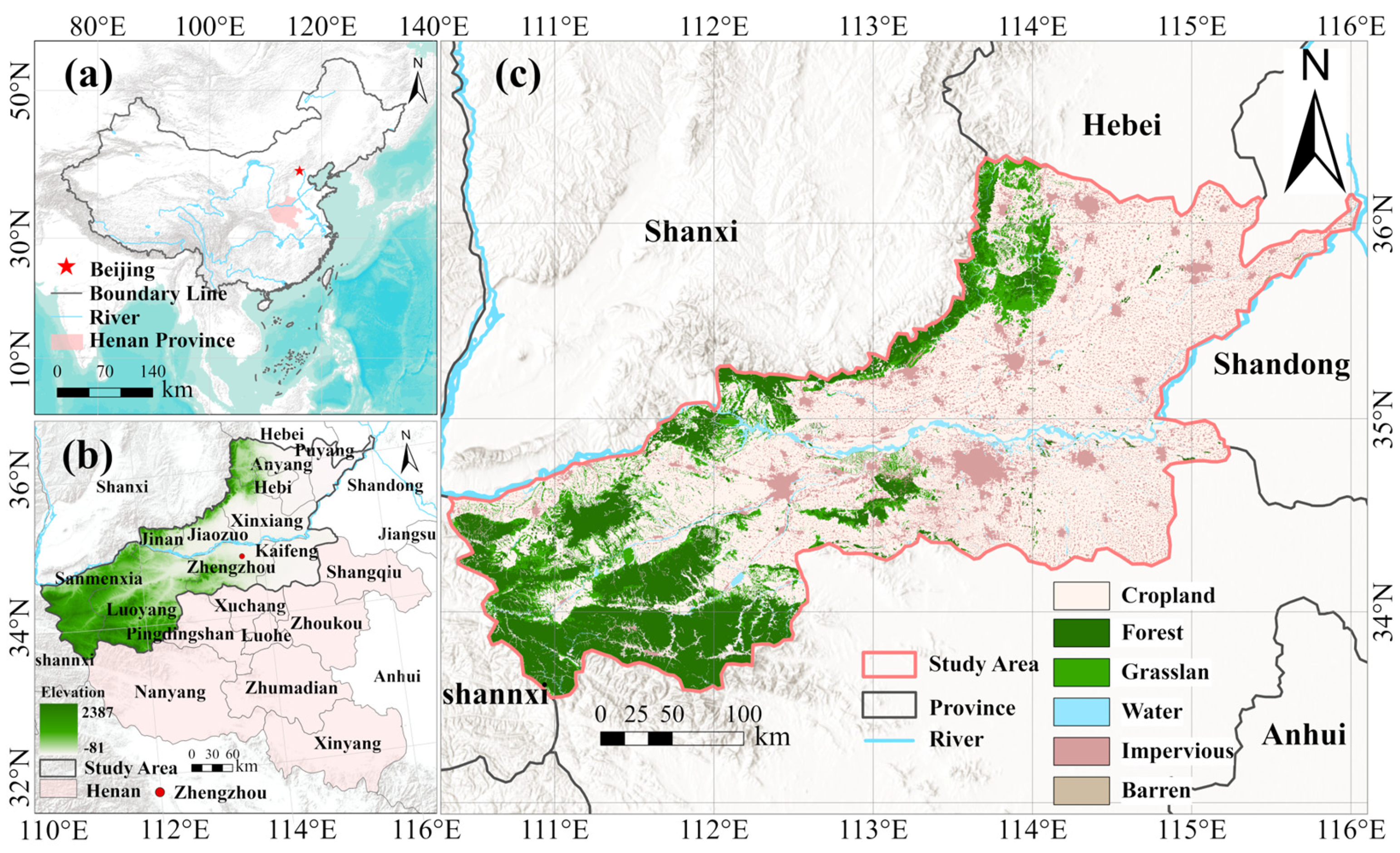
2.1. Study Area
2.2. Datasets
3. Methods
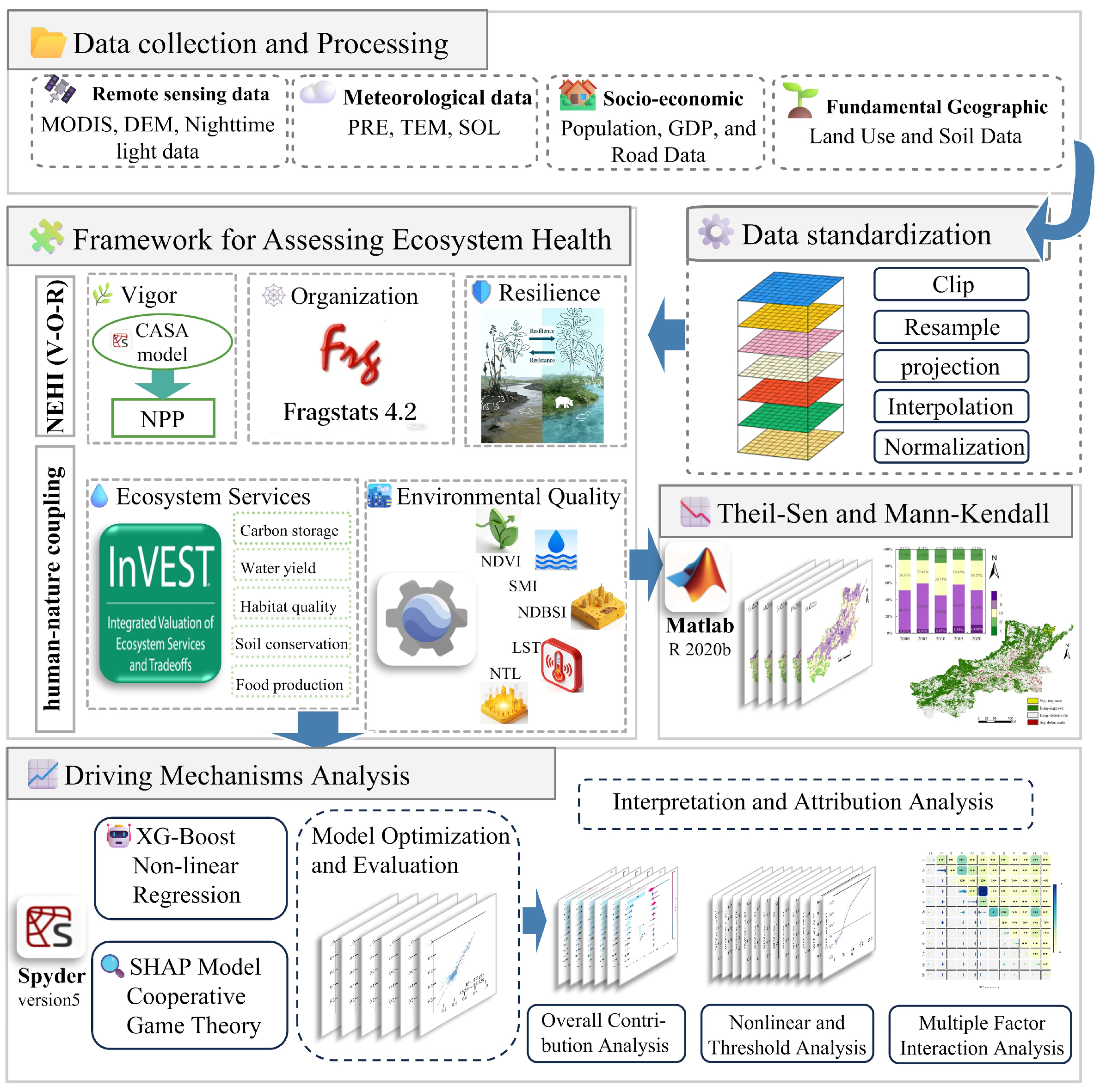
3.1. Ecosystem Health Assessment Indicators
3.1.1. Ecosystem Vitality (EV)
3.1.2. Ecosystem Organization (EO)
3.1.3. Ecosystem Resilience (ER)
3.1.4. Comprehensive Ecosystem Services Index (ES)
3.1.5. Ecosystem Environmental Quality (EQ)
3.2. Theil–Sen Median Trend Analysis and Mann–Kendall Test
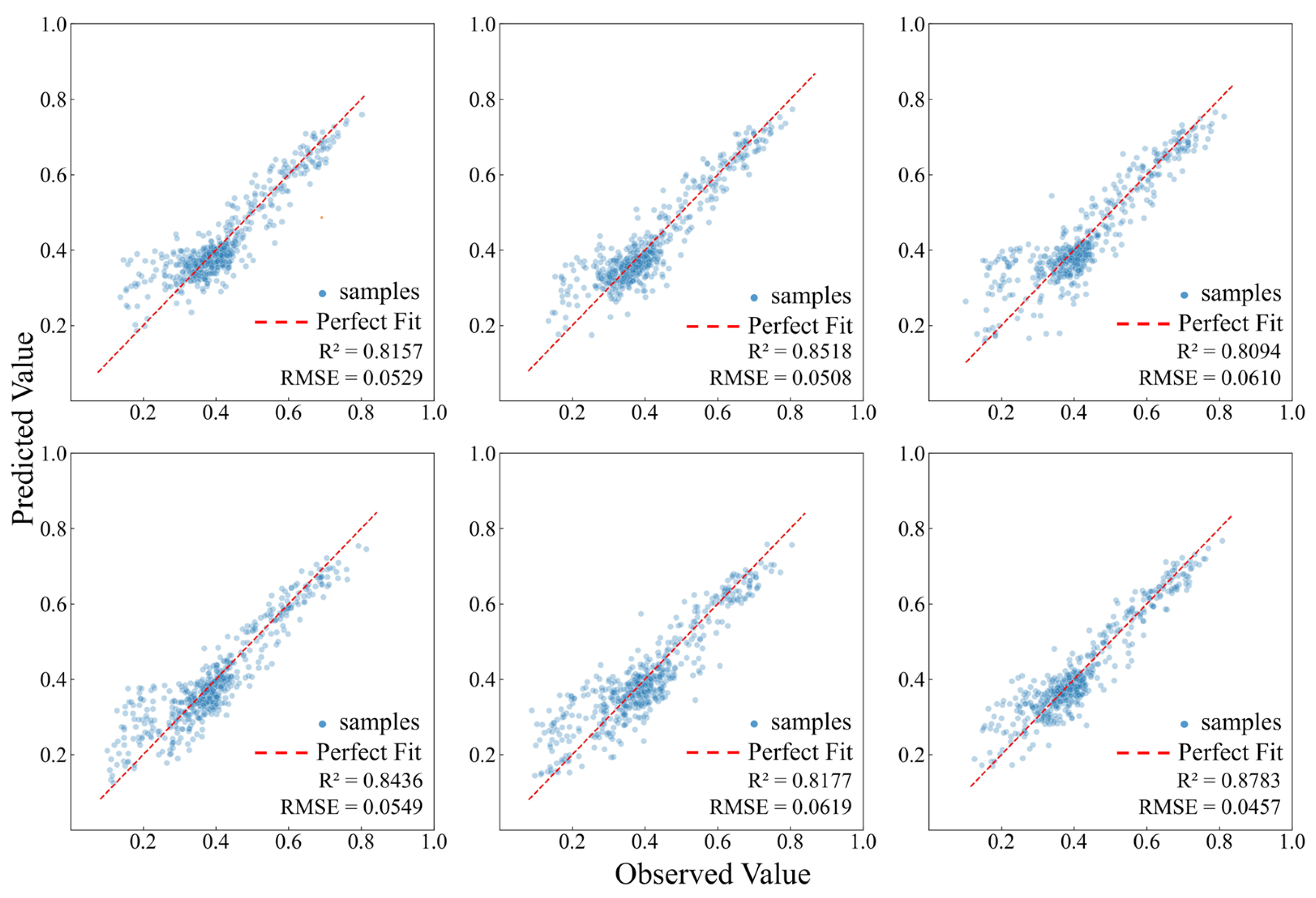
3.3. Extreme Gradient Boosting (XGBoost)
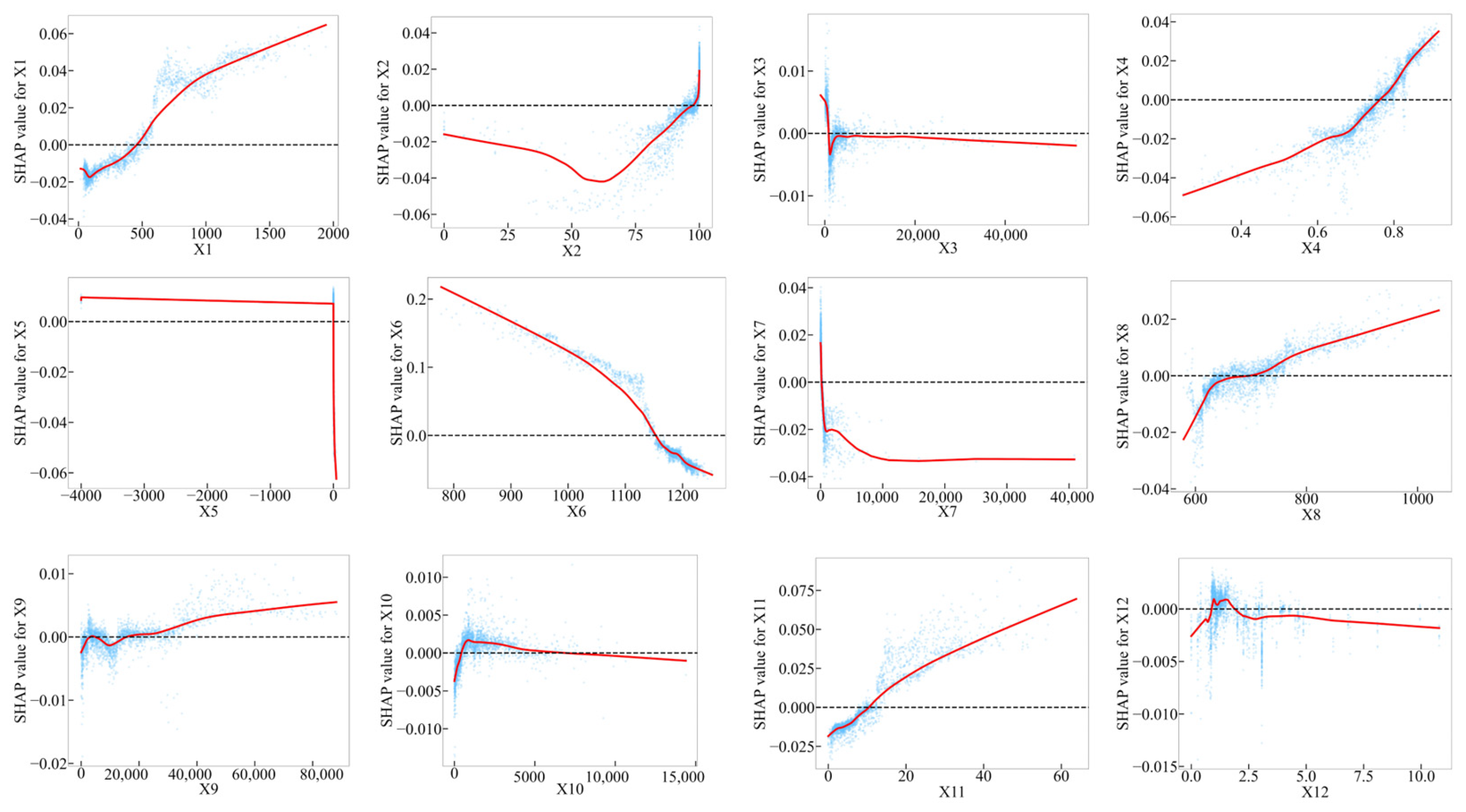
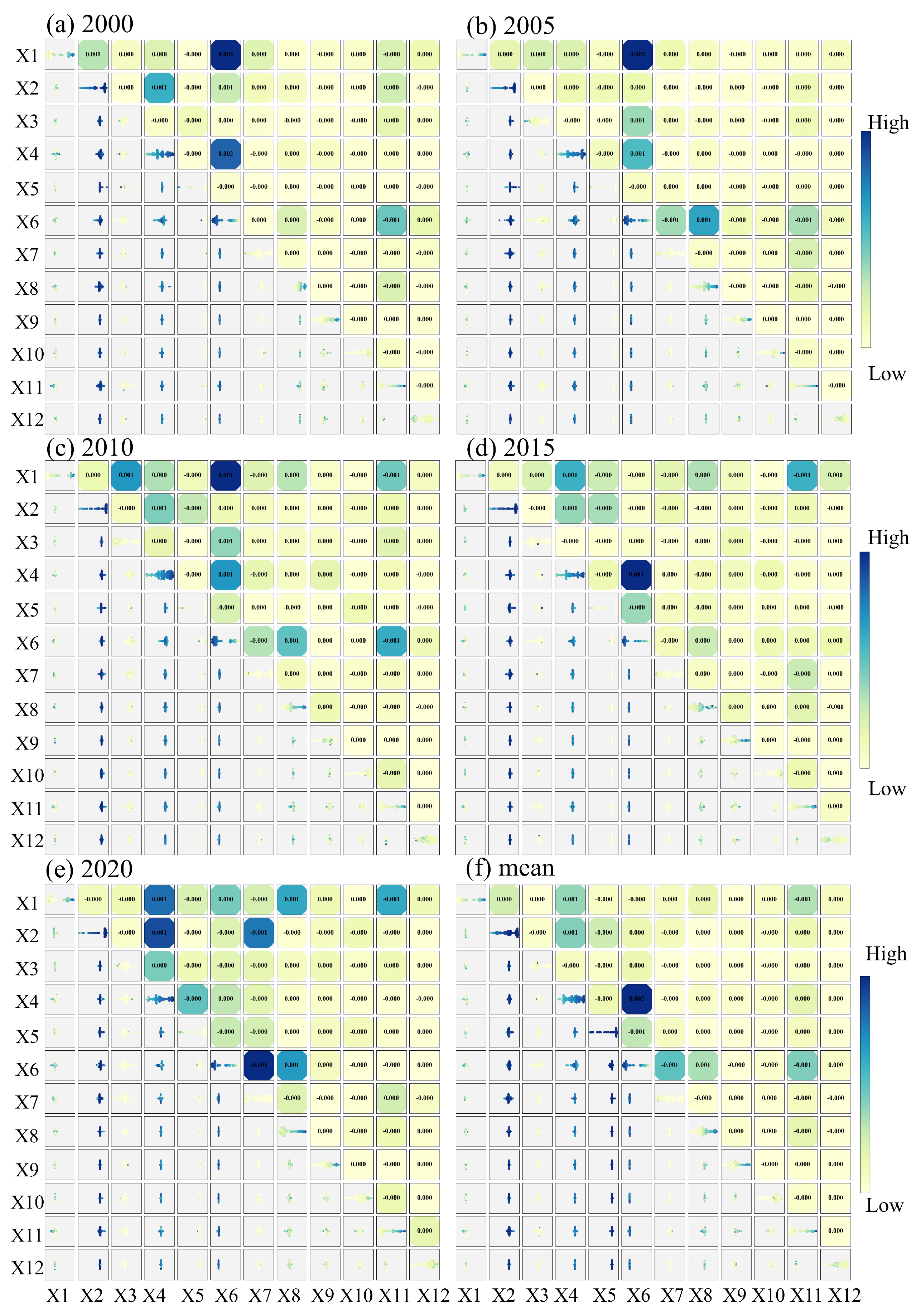
3.4. Shapley Additive Explanation Model (SHAP)
4. Results
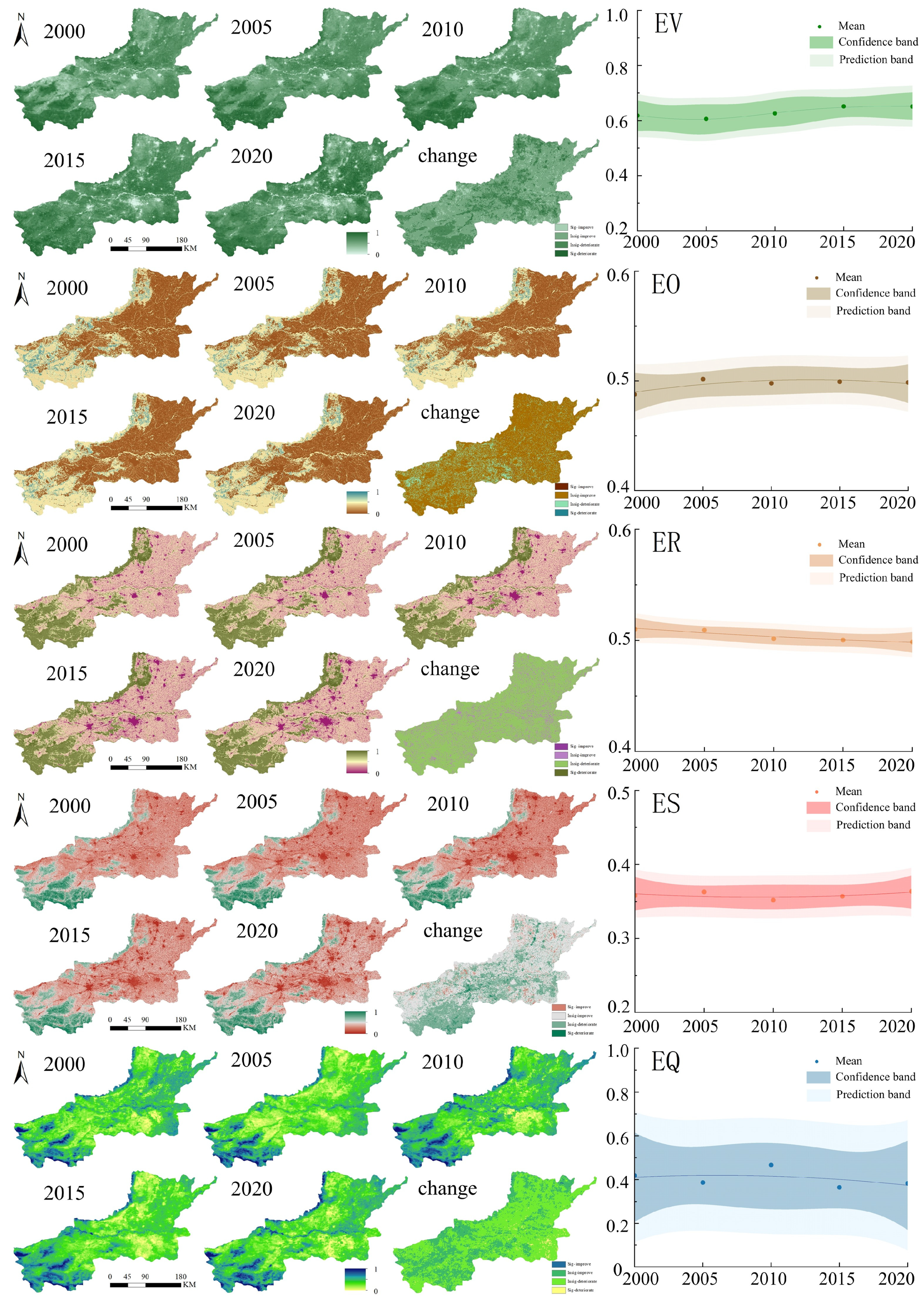
4.1. Spatiotemporal Variations of EV, EO, ER, ES, and EQ
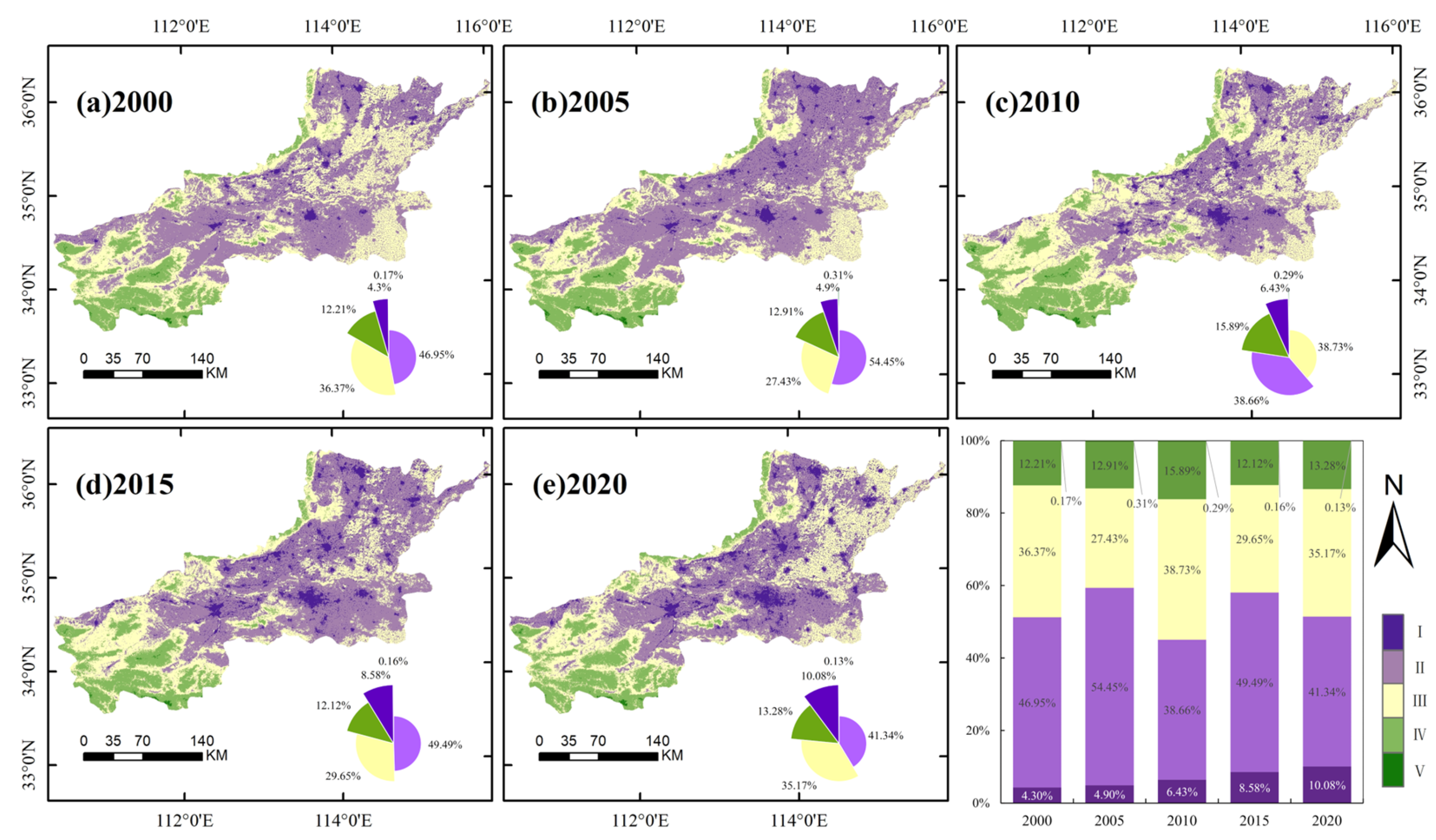
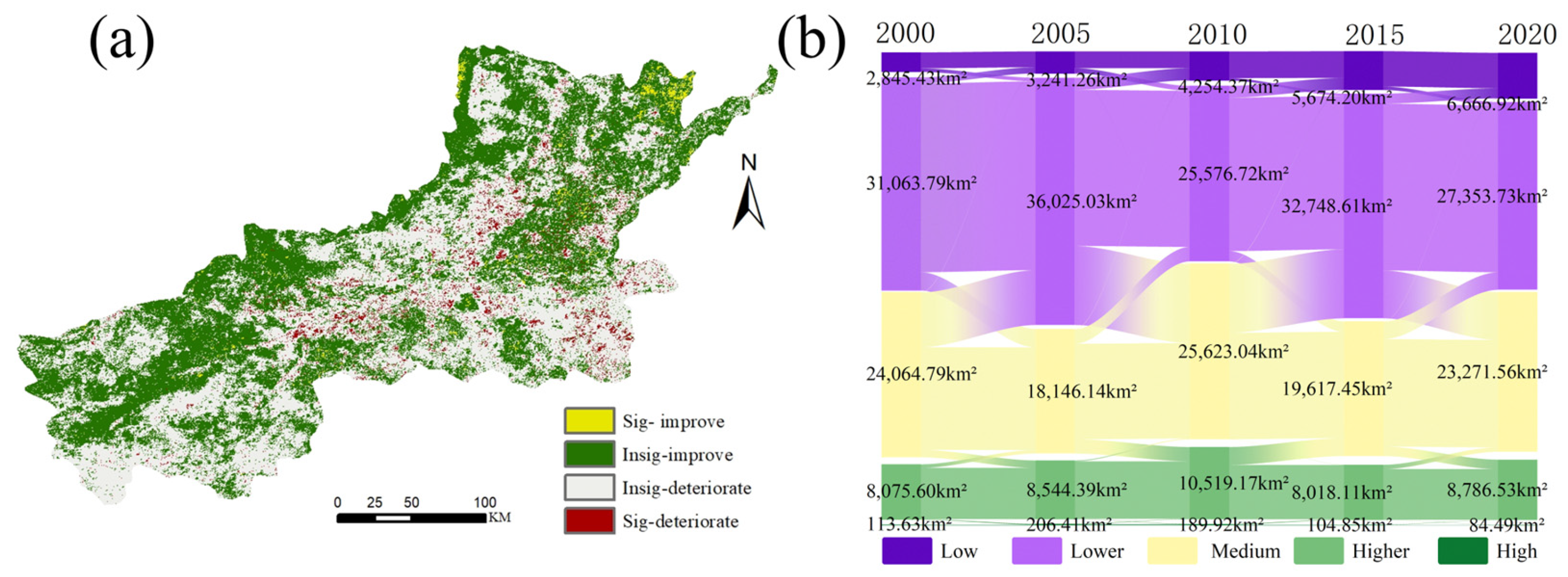
4.2. Spatiotemporal Evolution of EH in the HYRB Region
4.3. Analysis of Driving Factors
5. Discussion
5.1. Spatial Heterogeneity and Drivers of Ecosystem Health
5.2. Interaction with Ecological Theoretical Frameworks
5.3. Limitations and Future Perspectives
6. Conclusions
Author Contributions
Funding
Data Availability Statement
Acknowledgments
Conflicts of Interest
References
- Costanza, R.; Norton, B.G.; Haskell, B.D. Ecosystem Health: New Goals for Environmental Management; Island Press: Washington, DC, USA, 1992. [Google Scholar]
- Bennett, E.M.; Peterson, G.D.; Gordon, L.J. Understanding relationships among multiple ecosystem services. Ecol. Lett. 2009, 12, 1394–1404. [Google Scholar] [CrossRef]
- Xiao, Z.; Liu, R.; Gao, Y.; Yang, Q.; Chen, J. Spatiotemporal variation characteristics of ecosystem health and its driving mechanism in the mountains of southwest China. J. Clean. Prod. 2022, 345, 131138. [Google Scholar] [CrossRef]
- Daily, G.C. Introduction: What are ecosystem services. In Nature’s Services: Societal Dependence on Natural Ecosystems; Island Press: Washington, DC, USA, 1997; Volume 1. [Google Scholar]
- Liu, Y.; Fu, B.; Wang, S.; Rhodes, J.R.; Li, Y.; Zhao, W.; Li, C.; Zhou, S.; Wang, C. Global assessment of nature’s contributions to people. Sci. Bull. 2023, 68, 424–435. [Google Scholar] [CrossRef]
- Zhang, R.; Wang, C.; Xiong, Y. Ecological security assessment of China based on the Pressure-State-Response framework. Ecol. Indic. 2023, 154, 110647. [Google Scholar] [CrossRef]
- Li, W.; Wang, Y.; Xie, S.; Cheng, X. Coupling coordination analysis and spatiotemporal heterogeneity between urbanization and ecosystem health in Chongqing municipality, China. Sci. Total Environ. 2021, 791, 148311. [Google Scholar] [CrossRef] [PubMed]
- Ostberg, S.; Lucht, W.; Schaphoff, S.; Gerten, D. Critical impacts of global warming on land ecosystems. Earth Syst. Dyn. 2013, 4, 347–357. [Google Scholar] [CrossRef]
- Yang, Q.; Liu, G.; Gonella, F.; Chen, Y.; Liu, C.; Zhao, H.; Yang, Z. Assessing the temporal-spatial dynamic reduction in ecosystem services caused by air pollution: A near-real-time data perspective. Resour. Conserv. Recycl. 2022, 180, 106205. [Google Scholar] [CrossRef]
- Adhikari, K.; Hartemink, A.E. Linking soils to ecosystem services—A global review. Geoderma 2016, 262, 101–111. [Google Scholar] [CrossRef]
- Liu, J.; Yang, H.; Gosling, S.N.; Kummu, M.; Flörke, M.; Pfister, S.; Hanasaki, N.; Wada, Y.; Zhang, X.; Zheng, C. Water scarcity assessments in the past, present, and future. Earth’s Future 2017, 5, 545–559. [Google Scholar] [CrossRef] [PubMed]
- Jones, K.R.; Venter, O.; Fuller, R.A.; Allan, J.R.; Maxwell, S.L.; Negret, P.J.; Watson, J.E. One-third of global protected land is under intense human pressure. Science 2018, 360, 788–791. [Google Scholar] [CrossRef]
- Gao, Y.; Shen, Z.; Zhang, Z.; Xiong, J. Advance in simulation of social-ecological system coupling under the perspective of ecosystem services. Acta Geogr. Sin. 2024, 79, 134–146. [Google Scholar]
- Smith, P.; Ashmore, M.R.; Black, H.I.; Burgess, P.J.; Evans, C.D.; Quine, T.A.; Thomson, A.M.; Hicks, K.; Orr, H.G. The role of ecosystems and their management in regulating climate, and soil, water and air quality. J. Appl. Ecol. 2013, 50, 812–829. [Google Scholar] [CrossRef]
- Raymond, C.M.; Singh, G.G.; Benessaiah, K.; Bernhardt, J.R.; Levine, J.; Nelson, H.; Turner, N.J.; Norton, B.; Tam, J.; Chan, K.M.A. Ecosystem Services and Beyond: Using Multiple Metaphors to Understand Human–Environment Relationships. BioScience 2013, 63, 536–546. [Google Scholar] [CrossRef]
- Wood, S.L.; Jones, S.K.; Johnson, J.A.; Brauman, K.A.; Chaplin-Kramer, R.; Fremier, A.; Girvetz, E.; Gordon, L.J.; Kappel, C.V.; Mandle, L. Distilling the role of ecosystem services in the Sustainable Development Goals. Ecosyst. Serv. 2018, 29, 70–82. [Google Scholar] [CrossRef]
- Costanza, R. Ecosystem health and ecological engineering. Ecol. Eng. 2012, 45, 24–29. [Google Scholar] [CrossRef]
- Rapport, D.J. What constitutes ecosystem health? Perspect. Biol. Med. 1989, 33, 120–132. [Google Scholar] [CrossRef]
- Peng, J.; Liu, Y.; Wu, J.; Lv, H.; Hu, X. Linking ecosystem services and landscape patterns to assess urban ecosystem health: A case study in Shenzhen City, China. Landsc. Urban Plan. 2015, 143, 56–68. [Google Scholar] [CrossRef]
- Kang, P.; Chen, W.; Hou, Y.; Li, Y. Linking ecosystem services and ecosystem health to ecological risk assessment: A case study of the Beijing-Tianjin-Hebei urban agglomeration. Sci. Total Environ. 2018, 636, 1442–1454. [Google Scholar] [CrossRef]
- Burger, J.; Gochfeld, M. On developing bioindicators for human and ecological health. Environ. Monit. Assess. 2001, 66, 23–46. [Google Scholar] [CrossRef]
- Xiao, R.; Liu, Y.; Fei, X.; Yu, W.; Zhang, Z.; Meng, Q. Ecosystem health assessment: A comprehensive and detailed analysis of the case study in coastal metropolitan region, eastern China. Ecol. Indic. 2019, 98, 363–376. [Google Scholar] [CrossRef]
- Hilty, J.; Merenlender, A. Faunal indicator taxa selection for monitoring ecosystem health. Biol. Conserv. 2000, 92, 185–197. [Google Scholar] [CrossRef]
- Noble, I.R.; Dirzo, R. Forests as human-dominated ecosystems. Science 1997, 277, 522–525. [Google Scholar] [CrossRef]
- Fu, S.; Zhao, L.; Qiao, Z.; Sun, T.; Sun, M.; Hao, Y.; Hu, S.; Zhang, Y. Development of ecosystem health assessment (EHA) and application method: A review. Sustainability 2021, 13, 11838. [Google Scholar] [CrossRef]
- Sun, B.; Tang, J.; Yu, D.; Song, Z.; Wang, P. Ecosystem health assessment: A PSR analysis combining AHP and FCE methods for Jiaozhou Bay, China1. Ocean Coast. Manag. 2019, 168, 41–50. [Google Scholar] [CrossRef]
- Chen, M.-H.; Chen, F.; Tang, C.-J.; Lu, Y.; Feng, Y.-X. Integration of DPSIR framework and TOPSIS model reveals insight into the coastal zone ecosystem health. Ocean Coast. Manag. 2022, 226, 106285. [Google Scholar] [CrossRef]
- Khatun, R.; Das, S. Assessment of wetland ecosystem health in Rarh Region, India through PSR (pressure-state-response) model. Sci. Total Environ. 2024, 951, 175700. [Google Scholar] [CrossRef]
- Hazbavi, Z.; Sadeghi, S.H.; Gholamalifard, M.; Davudirad, A.A. Watershed health assessment using the pressure–state–response (PSR) framework. Land Degrad. Dev. 2020, 31, 3–19. [Google Scholar] [CrossRef]
- Yang, Y.; Song, G.; Lu, S. Assessment of land ecosystem health with Monte Carlo simulation: A case study in Qiqihaer, China. J. Clean. Prod. 2020, 250, 119522. [Google Scholar] [CrossRef]
- Zhou, Y.; Yue, D.; Li, S.; Liang, G.; Chao, Z.; Zhao, Y.; Meng, X. Ecosystem health assessment in debris flow-prone areas: A case study of Bailong River Basin in China. J. Clean. Prod. 2022, 357, 131887. [Google Scholar] [CrossRef]
- Rapport, D.J.; Costanza, R.; McMichael, A.J. Assessing ecosystem health. Trends Ecol. Evol. 1998, 13, 397–402. [Google Scholar] [CrossRef]
- Hernández-Blanco, M.; Costanza, R.; Chen, H.; DeGroot, D.; Jarvis, D.; Kubiszewski, I.; Montoya, J.; Sangha, K.; Stoeckl, N.; Turner, K. Ecosystem health, ecosystem services, and the well-being of humans and the rest of nature. Glob. Change Biol. 2022, 28, 5027–5040. [Google Scholar] [CrossRef]
- Lv, T.; Zeng, C.; Lin, C.; Liu, W.; Cheng, Y.; Li, Y. Towards an integrated approach for land spatial ecological restoration zoning based on ecosystem health assessment. Ecol. Indic. 2023, 147, 110016. [Google Scholar] [CrossRef]
- Chen, Y.; Ma, Y.; Pan, J.; Zhang, S.; Zhang, X.; Wu, R.; Li, X. Integrating ecosystem health diagnosis into the construction of ecological security network—A case study in Qujing City, China. Ecol. Indic. 2023, 146, 109780. [Google Scholar] [CrossRef]
- Xu, W.; He, M.; Meng, W.; Zhang, Y.; Yun, H.; Lu, Y.; Huang, Z.; Mo, X.; Hu, B.; Liu, B. Temporal-spatial change of China’s coastal ecosystems health and driving factors analysis. Sci. Total Environ. 2022, 845, 157319. [Google Scholar] [CrossRef] [PubMed]
- He, R.; Huang, X.; Ye, X.; Pan, Z.; Wang, H.; Luo, B.; Liu, D.; Hu, X. County ecosystem health assessment based on the VORS model: A case study of 183 counties in Sichuan Province, China. Sustainability 2022, 14, 11565. [Google Scholar] [CrossRef]
- Ran, C.; Wang, S.; Bai, X.; Tan, Q.; Wu, L.; Luo, X.; Chen, H.; Xi, H.; Lu, Q. Evaluation of temporal and spatial changes of global ecosystem health. Land Degrad. Dev. 2021, 32, 1500–1512. [Google Scholar] [CrossRef]
- Zhao, X.; Huang, G. Urban watershed ecosystem health assessment and ecological management zoning based on landscape pattern and SWMM simulation: A case study of Yangmei River Basin. Environ. Impact Assess. Rev. 2022, 95, 106794. [Google Scholar] [CrossRef]
- Hai, W.; Zheng, J.; Li, W.; Han, C.; Yan, Y.; Zhang, F. Exploration of multi-scale ecological regulation pathways in the arid northwest region of China from the perspective of ecosystem health. Ecol. Indic. 2025, 177, 113778. [Google Scholar] [CrossRef]
- Zhang, X.; Wu, T.; Du, Q.; Ouyang, N.; Nie, W.; Liu, Y.; Gou, P.; Li, G. Spatiotemporal changes of ecosystem health and the impact of its driving factors on the Loess Plateau in China. Ecol. Indic. 2025, 170, 113020. [Google Scholar] [CrossRef]
- Jin, W.; Bian, Z.; Dong, Z.; Chen, D.; Zhang, X.; Wei, Z. Diagnosis of ecological security and the spatial heterogeneity of its driving factors in the mining-impacted watershed, based on ecosystem health-risk-services framework. Ecol. Indic. 2024, 167, 112683. [Google Scholar] [CrossRef]
- Qi, L.; Najam, H.; Oskenbayev, Y.; Alisher, S.; Hairis, K. Impact of rapid urban construction land expansion on spatial inequalities of ecosystem health in China: Evidence from national, economic regional, and urban agglomeration perspectives. Ecol. Indic. 2025, 172, 113196. [Google Scholar] [CrossRef]
- Shao, Y.; Liu, Y.; Wang, X.; Li, S. Exploring the evolution of ecosystem health and sustainable zoning: A perspective based on the contributions of climate change and human activities. Sci. Total Environ. 2024, 951, 175674. [Google Scholar] [CrossRef]
- He, J.; Pan, Z.; Liu, D.; Guo, X. Exploring the regional differences of ecosystem health and its driving factors in China. Sci. Total Environ. 2019, 673, 553–564. [Google Scholar] [CrossRef] [PubMed]
- Liu, R.; Dong, X.; Wang, X.; Zhang, P.; Liu, M.; Zhang, Y. Relationship and driving factors between urbanization and natural ecosystem health in China. Ecol. Indic. 2023, 147, 109972. [Google Scholar] [CrossRef]
- Schaeffer, D.J.; Herricks, E.E.; Kerster, H.W. Ecosystem health: I. Measuring ecosystem health. Environ. Manag. 1988, 12, 445–455. [Google Scholar] [CrossRef]
- Chang, G.J. Biodiversity estimation by environment drivers using machine/deep learning for ecological management. Ecol. Inform. 2023, 78, 102319. [Google Scholar] [CrossRef]
- Ma, X.; Zhang, J.; Wang, P.; Zhou, L.; Sun, Y. Estimating the nonlinear response of landscape patterns to ecological resilience using a random forest algorithm: Evidence from the Yangtze River Delta. Ecol. Indic. 2023, 153, 110409. [Google Scholar] [CrossRef]
- Mallick, J.; AlQadhi, S.; Talukdar, S.; Pradhan, B.; Bindajam, A.A.; Islam, A.R.M.T.; Dajam, A.S. A novel technique for modeling ecosystem health condition: A case study in Saudi Arabia. Remote Sens. 2021, 13, 2632. [Google Scholar] [CrossRef]
- Cai, J.; Xu, K.; Zhu, Y.; Hu, F.; Li, L. Prediction and analysis of net ecosystem carbon exchange based on gradient boosting regression and random forest. Appl. Energy 2020, 262, 114566. [Google Scholar] [CrossRef]
- Yang, R.-M.; Zhang, G.-L.; Liu, F.; Lu, Y.-Y.; Yang, F.; Yang, F.; Yang, M.; Zhao, Y.-G.; Li, D.-C. Comparison of boosted regression tree and random forest models for mapping topsoil organic carbon concentration in an alpine ecosystem. Ecol. Indic. 2016, 60, 870–878. [Google Scholar] [CrossRef]
- Li, C.; Zhao, J.; Hou, W. Nonlinear effects of landscape patterns on ecosystem services at multiple scales based on gradient boosting decision tree models. Remote Sens. 2023, 15, 1919. [Google Scholar] [CrossRef]
- Yu, D.; Zhou, Z.; Chen, M.; Liu, J.; Wang, N.; Zhu, B.; Cao, Y. Identifying the driving mechanisms of ecosystem health in a typical ecologically fragile region: A study based on the XGBoost–SHAP model. Ecol. Indic. 2025, 181, 114472. [Google Scholar] [CrossRef]
- Guo, Y.; Lai, X.; Gan, M. A data-driven framework for assessing the impact of environmental factors on phytoplankton biomass in a eutrophic lake. Ecol. Indic. 2025, 178, 113888. [Google Scholar] [CrossRef]
- Xiao, W.; Fan, W.; Wei, Y.-N.; Kelleher, L.; Yuan, W.; Zheng, S.; Shi, Z. Dynamics of ecosystem health in the Guanzhong-Tianshui Economic Zone: A Catboost and SHAP− based analysis from 1990 to 2020. Ecol. Indic. 2025, 181, 114431. [Google Scholar] [CrossRef]
- Meng, X.; Wu, J.; Xie, Y.; Bai, Y.; Zhou, C.; Li, Y. Assessing relative contributions of climate and socio-environmental factors to ecosystem health through space–time interpretable machine learning. Ecol. Indic. 2025, 178, 114087. [Google Scholar] [CrossRef]
- Lu, Y.; Li, J.; Song, Z.; Lu, M. Evaluating sustainable development in the middle and lower reaches of the Yellow River basin using multiple data sources. IEEE Trans. Geosci. Remote Sens. 2024, 63, 4400518. [Google Scholar] [CrossRef]
- Chen, Y.-P.; Fu, B.-J.; Zhao, Y.; Wang, K.-B.; Zhao, M.M.; Ma, J.-F.; Wu, J.-H.; Xu, C.; Liu, W.-G.; Wang, H. Sustainable development in the Yellow River Basin: Issues and strategies. J. Clean. Prod. 2020, 263, 121223. [Google Scholar] [CrossRef]
- Gao, Z.; Ju, X.; Ding, J.; Wang, Y.; Shen, N.; Zhang, X.; Li, M. Understanding water yield dynamics and drivers in the yellow river basin past trends, mechanisms, and future projections. J. Clean. Prod. 2025, 505, 145441. [Google Scholar] [CrossRef]
- Feng, Y.; Liu, W.; Zhang, H.; Li, Q.; Zhu, A. Synergistic assessment of environmental pollutants and carbon emissions in the Yellow River Basin, China: An integrated study based on scenario simulation and process decomposition. Ecol. Indic. 2024, 166, 112334. [Google Scholar] [CrossRef]
- Wei, H.; Wang, Y.; Liu, J.; Zhang, J.; Cao, Y. Coordinated development of cultivated land use and ecological protection in cities along the main stream of the Yellow River in Henan Province, China. Ecol. Indic. 2023, 156, 111143. [Google Scholar] [CrossRef]
- Ren, H.; Liu, B.; Zhang, Z.; Li, F.; Pan, K.; Zhou, Z.; Xu, X. A water-energy-food-carbon nexus optimization model for sustainable agricultural development in the Yellow River Basin under uncertainty. Appl. Energy 2022, 326, 120008. [Google Scholar] [CrossRef]
- Jiang, L.; Zuo, Q.; Ma, J.; Zhang, Z. Evaluation and prediction of the level of high-quality development: A case study of the Yellow River Basin, China. Ecol. Indic. 2021, 129, 107994. [Google Scholar] [CrossRef]
- Xiong, P.; Zhu, J.; He, R.; Li, H. Synergy assessment of river health values from a symbiotic perspective: A case study of the Yellow River Basin in China. Water 2024, 16, 91. [Google Scholar] [CrossRef]
- Yong, X.; Chuansheng, W. Ecological protection and high-quality development in the Yellow River Basin: Framework, path, and countermeasure. Bull. Chin. Acad. Sci. (Chin. Version) 2020, 35, 875–883. [Google Scholar]
- Xin, Y.; Liu, X. Coupling driving factors of eco-environmental protection and high-quality development in the yellow river basin. Front. Environ. Sci. 2022, 10, 951218. [Google Scholar] [CrossRef]
- He, J.; Tang, Y.; Guo, X.; Chen, H.; Guo, W.; Sun, Y. Assessment of coupling coordination and spatial distribution characteristics between urbanization and ecosystem health in the Yellow River Basin. Land Use Policy 2025, 154, 107572. [Google Scholar] [CrossRef]
- Das, M.; Das, A.; Mandal, A. Research note: Ecosystem Health (EH) assessment of a rapidly urbanizing metropolitan city region of eastern India—A study on Kolkata Metropolitan Area. Landsc. Urban Plan. 2020, 204, 103938. [Google Scholar] [CrossRef]
- Norton, B. Sustainability, human welfare, and ecosystem health. Environ. Values 1992, 1, 97–111. [Google Scholar] [CrossRef]
- Potter, C.S.; Randerson, J.T.; Field, C.B.; Matson, P.A.; Vitousek, P.M.; Mooney, H.A.; Klooster, S.A. Terrestrial ecosystem production: A process model based on global satellite and surface data. Glob. Biogeochem. Cycles 1993, 7, 811–841. [Google Scholar] [CrossRef]
- Xie, X.; Fang, B.; Xu, H.; He, S.; Li, X. Study on the coordinated relationship between Urban Land use efficiency and ecosystem health in China. Land Use Policy 2021, 102, 105235. [Google Scholar] [CrossRef]
- Patil, G.P.; Brooks, R.P.; Myers, W.L.; Rapport, D.J.; Taillie, C. Ecosystem health and its measurement at landscape scale: Toward the next generation of quantitative assessments. Ecosyst. Health 2001, 7, 307–316. [Google Scholar] [CrossRef]
- Styers, D.M.; Chappelka, A.H.; Marzen, L.J.; Somers, G.L. Developing a land-cover classification to select indicators of forest ecosystem health in a rapidly urbanizing landscape. Landsc. Urban Plan. 2010, 94, 158–165. [Google Scholar] [CrossRef]
- Yu, G.; Yu, Q.; Hu, L.; Zhang, S.; Fu, T.; Zhou, X.; He, X.; Liu, Y.A.; Wang, S.; Jia, H. Ecosystem health assessment based on analysis of a land use database. Appl. Geogr. 2013, 44, 154–164. [Google Scholar] [CrossRef]
- Dai, X.; Ma, J.; Zhang, H.; Xu, W. Evaluation of ecosystem health for the coastal wetlands at the Yangtze Estuary, Shanghai. Wetl. Ecol. Manag. 2013, 21, 433–445. [Google Scholar] [CrossRef]
- Huang, Q.-S.; Zhao, Y.; Xu, X.-Y.; Wang, G.-Q.; Wang, H.-R.; Gu, Q.-W. Evaluation of resources and environmental carrying capacity based on spring model—Taking Chen Barag Banner in Inner Mongolia as an example. J. Nat. Resour. 2018, 33, 173–184. [Google Scholar]
- Zhu, H.; Xu, Q.; Zheng, Y.; Cui, J.; Meng, Q. Ecological health assessment of the middle route of the South-to-North Water Diversion Project using an enhanced VORS model. Ecol. Indic. 2025, 172, 113281. [Google Scholar] [CrossRef]
- Yang, J.; Xin, Z.; Li, X.; Liang, X. Vigor–Organization–Resilience Framework for Assessing Ecosystem Health in the Qinghai–Xizang Plateau. Ecosyst. Health Sustain. 2024, 10, 0260. [Google Scholar] [CrossRef]
- Bao, Z.; Shifaw, E.; Deng, C.; Sha, J.; Li, X.; Hanchiso, T.; Yang, W. Remote sensing-based assessment of ecosystem health by optimizing vigor-organization-resilience model: A case study in Fuzhou City, China. Ecol. Inform. 2022, 72, 101889. [Google Scholar] [CrossRef]
- Babbar, D.; Areendran, G.; Sahana, M.; Sarma, K.; Raj, K.; Sivadas, A. Assessment and prediction of carbon sequestration using Markov chain and InVEST model in Sariska Tiger Reserve, India. J. Clean. Prod. 2021, 278, 123333. [Google Scholar] [CrossRef]
- Redhead, J.; Stratford, C.; Sharps, K.; Jones, L.; Ziv, G.; Clarke, D.; Oliver, T.; Bullock, J. Empirical validation of the InVEST water yield ecosystem service model at a national scale. Sci. Total Environ. 2016, 569, 1418–1426. [Google Scholar] [CrossRef]
- Lin, Y.-P.; Lin, W.-C.; Wang, Y.-C.; Lien, W.-Y.; Huang, T.; Hsu, C.-C.; Schmeller, D.S.; Crossman, N.D. Systematically designating conservation areas for protecting habitat quality and multiple ecosystem services. Environ. Model. Softw. 2017, 90, 126–146. [Google Scholar] [CrossRef]
- Hamel, P.; Falinski, K.; Sharp, R.; Auerbach, D.A.; Sánchez-Canales, M.; Dennedy-Frank, P.J. Sediment delivery modeling in practice: Comparing the effects of watershed characteristics and data resolution across hydroclimatic regions. Sci. Total Environ. 2017, 580, 1381–1388. [Google Scholar] [CrossRef]
- Chen, T.; Feng, Z.; Zhao, H.; Wu, K. Identification of ecosystem service bundles and driving factors in Beijing and its surrounding areas. Sci. Total Environ. 2020, 711, 134687. [Google Scholar] [CrossRef]
- An, M.; Xie, P.; He, W.; Wang, B.; Huang, J.; Khanal, R. Spatiotemporal change of ecologic environment quality and human interaction factors in three gorges ecologic economic corridor, based on RSEI. Ecol. Indic. 2022, 141, 109090. [Google Scholar] [CrossRef]
- Fu, Z.; Ciais, P.; Feldman, A.F.; Gentine, P.; Makowski, D.; Prentice, I.C.; Stoy, P.C.; Bastos, A.; Wigneron, J.-P. Critical soil moisture thresholds of plant water stress in terrestrial ecosystems. Sci. Adv. 2022, 8, eabq7827. [Google Scholar] [CrossRef] [PubMed]
- Huang, C.; Sun, C.; Nguyen, M.; Wu, Q.; He, C.; Yang, H.; Tu, P.; Hong, S. Spatio-temporal dynamics of terrestrial Net ecosystem productivity in the ASEAN from 2001 to 2020 based on remote sensing and improved CASA model. Ecol. Indic. 2023, 154, 110920. [Google Scholar] [CrossRef]
- Guo, M.; Li, J.; He, H.; Xu, J.; Jin, Y. Detecting global vegetation changes using Mann-Kendal (MK) trend test for 1982–2015 time period. Chin. Geogr. Sci. 2018, 28, 907–919. [Google Scholar] [CrossRef]
- Agbo, E.P.; Nkajoe, U.; Edet, C.O. Comparison of Mann–Kendall and Şen’s innovative trend method for climatic parameters over Nigeria’s climatic zones. Clim. Dyn. 2023, 60, 3385–3401. [Google Scholar] [CrossRef]
- Ma, M.; Zhao, G.; He, B.; Li, Q.; Dong, H.; Wang, S.; Wang, Z. XGBoost-based method for flash flood risk assessment. J. Hydrol. 2021, 598, 126382. [Google Scholar] [CrossRef]
- Ren, H.; Pang, B.; Bai, P.; Zhao, G.; Liu, S.; Liu, Y.; Li, M. Flood susceptibility assessment with random sampling strategy in ensemble learning (RF and XGBoost). Remote Sens. 2024, 16, 320. [Google Scholar] [CrossRef]
- Li, J.; An, X.; Li, Q.; Wang, C.; Yu, H.; Zhou, X.; Geng, Y.-A. Application of XGBoost algorithm in the optimization of pollutant concentration. Atmos. Res. 2022, 276, 106238. [Google Scholar] [CrossRef]
- Li, Z. Extracting spatial effects from machine learning model using local interpretation method: An example of SHAP and XGBoost. Comput. Environ. Urban Syst. 2022, 96, 101845. [Google Scholar] [CrossRef]
- Mengjuan, Q.; Luo, G.; Wenshu, L.; Weiyin, W.; Chunqian, J.; Yanfeng, B. Climate drivers of forest ecosystem services supply in the hilly mountainus regions of southern China based on SHAP-enhanced machine learning. Ecol. Indic. 2025, 178, 114085. [Google Scholar] [CrossRef]
- Maes, J.; Egoh, B.; Willemen, L.; Liquete, C.; Vihervaara, P.; Schägner, J.P.; Grizzetti, B.; Drakou, E.G.; La Notte, A.; Zulian, G. Mapping ecosystem services for policy support and decision making in the European Union. Ecosyst. Serv. 2012, 1, 31–39. [Google Scholar] [CrossRef]
- Scheffer, M.; Carpenter, S.; Foley, J.A.; Folke, C.; Walker, B. Catastrophic shifts in ecosystems. Nature 2001, 413, 591–596. [Google Scholar] [CrossRef] [PubMed]
- Folke, C.; Carpenter, S.R.; Walker, B.; Scheffer, M.; Chapin, T.; Rockström, J. Resilience thinking: Integrating resilience, adaptability and transformability. Ecol. Soc. 2010, 15, 20. [Google Scholar] [CrossRef]
- Wu, J. Landscape sustainability science: Ecosystem services and human well-being in changing landscapes. Landsc. Ecol. 2013, 28, 999–1023. [Google Scholar] [CrossRef]
- Lundberg, S.M.; Lee, S.-I. A unified approach to interpreting model predictions. In Proceedings of the 31st International Conference on Neural Information Processing Systems, Long Beach, CA, USA, 4–9 December 2017; Curran Associates Inc.: Red Hook, NY, USA; Volume 30.
- Knapp, A.K.; Beier, C.; Briske, D.D.; Classen, A.T.; Luo, Y.; Reichstein, M.; Smith, M.D.; Smith, S.D.; Bell, J.E.; Fay, P.A. Consequences of more extreme precipitation regimes for terrestrial ecosystems. Bioscience 2008, 58, 811–821. [Google Scholar] [CrossRef]
- Huang, J.; Yu, H.; Guan, X.; Wang, G.; Guo, R. Accelerated dryland expansion under climate change. Nat. Clim. Change 2016, 6, 166–171. [Google Scholar] [CrossRef]
- Teskey, R.; Wertin, T.; Bauweraerts, I.; Ameye, M.; McGuire, M.A.; Steppe, K. Responses of tree species to heat waves and extreme heat events. Plant Cell Environ. 2015, 38, 1699–1712. [Google Scholar] [CrossRef]
- Piao, S.; Liu, Q.; Chen, A.; Janssens, I.A.; Fu, Y.; Dai, J.; Liu, L.; Lian, X.; Shen, M.; Zhu, X. Plant phenology and global climate change: Current progresses and challenges. Glob. Change Biol. 2019, 25, 1922–1940. [Google Scholar] [CrossRef]
- Rudin, C. Stop explaining black box machine learning models for high stakes decisions and use interpretable models instead. Nat. Mach. Intell. 2019, 1, 206–215. [Google Scholar] [CrossRef]





| Dataset | Description | Spatiotemporal Resolution | Data Type | Source/Reference |
|---|---|---|---|---|
| Land Use/Land Cover (LULC) | Land cover classification maps | 30 m (Annual, 2000–2020) | Raster | https://www.resdc.cn/ |
| MODIS Products | Includes NDVI, ET, and other biophysical parameters | 500 m | Raster | https://earthengine.google.com/ |
| Climate Data | Solar radiation, temperature, precipitation, potential evapotranspiration | 1 km (Monthly, 2000–2020) | Raster | https://www.geodata.cn/ |
| Digital Elevation Model (DEM) | Elevation, slope, and derived topographic indices | 30 m | Raster | http://www.gscloud.cn |
| Soil Properties | Soil type, organic carbon, depth to bedrock, etc. | 1 km | Raster | https://www.fao.org/ |
| Socioeconomic and Nighttime Light | Population density, GDP density, nighttime light (NTL) intensity | 1 km (Annual, 2000–2020) | Raster | https://www.resdc.cn/ |
| Agricultural Statistics | Henan Statistical Yearbooks | Provincial/Prefectural level (Annual) | Statistical Table | https://tjj.henan.gov.cn/ |
| EHI Value | Ecological System Health Range | Health Level |
|---|---|---|
| 0~0.2 | Low | I |
| 0.2~0.4 | Lower | II |
| 0.4~0.6 | Medium | III |
| 0.6~0.8 | Higher | IV |
| 0.8~1 | High | V |
| Land Use/Cover Type | Cropland | Forest | Grassland | Water | Construction | Unutilized Land |
|---|---|---|---|---|---|---|
| Resistance Coefficient (RTC) | 0.4 | 0.5 | 0.8 | 0.7 | 0.2 | 1 |
| Resilience Coefficient (RLC) | 0.5 | 1 | 0.7 | 0.8 | 0.3 | 0.2 |
| Type | Quantification Methods | Equation | Explanation |
|---|---|---|---|
| CS | The InVEST model (3.17.1)’s carbon storage module was employed to estimate stored carbon, based on computations of mean carbon densities from four distinct pools for each land use category [81]. | Among these, denotes total carbon stock (t· hm−2; denotes aboveground biogenic carbon stock in vegetation (t·hm−2); denotes belowground biogenic carbon stock in vegetation (t·hm−2); denotes organic carbon stock in soil (t·hm−2); denotes carbon stock in organic matter within litter (t·hm−2). | |
| WY | In InVEST (3.17.1), water yield is estimated as the residual of mean annual precipitation minus actual evapotranspiration [82]. | Where is the annual runoff (mm) for grid ; is the annual actual evaporation (mm) for grid ; is the annual precipitation (mm) for grid . | |
| HQ | The InVEST (3.17.1) habitat quality module calculates habitat quality by considering existing land use patterns and associated threats to biodiversity [83]. | Here, represents the habitat quality of grid cell within land use type ; denotes the total threat level of grid cells within land use type i; and are scaling factors; indicates the habitat suitability of the land use type. | |
| SC | Using the InVEST model (3.17.1)’s modules to analyze the discrepancy between potential erosion losses and observed erosion processes as a measure of soil conservation [84]. | Among these, , , and represent the soil conservation amount (t·hm−2) in region , the potential soil erosion amount (t·hm−2) without vegetation cover and soil conservation measures, and the actual soil erosion amount (t·hm−2), respectively. | |
| FP | The evaluation of existing research findings on FP is based on two indicators: yield and NPP [85]. | Where denotes the crop yield (t·hm−2) of the -th spot within the -h region; represents the total yield (t·hm−2) of the -th region; indicates the NPP value of the -th grid cell within the -th region, while signifies the total NPP value of the -th region. |
Disclaimer/Publisher’s Note: The statements, opinions and data contained in all publications are solely those of the individual author(s) and contributor(s) and not of MDPI and/or the editor(s). MDPI and/or the editor(s) disclaim responsibility for any injury to people or property resulting from any ideas, methods, instructions or products referred to in the content. |
© 2026 by the authors. Licensee MDPI, Basel, Switzerland. This article is an open access article distributed under the terms and conditions of the Creative Commons Attribution (CC BY) license.
Share and Cite
Cheng, Y.; Zhang, X.; Yu, S.; Liu, Y.; Hu, J.; Jiang, Y.; Zhang, C.; Wu, X. Leveraging Explainable Machine Learning to Decipher Ecosystem Health and Nonlinear Dynamics in the Henan Yellow River Basin. Land 2026, 15, 429. https://doi.org/10.3390/land15030429
Cheng Y, Zhang X, Yu S, Liu Y, Hu J, Jiang Y, Zhang C, Wu X. Leveraging Explainable Machine Learning to Decipher Ecosystem Health and Nonlinear Dynamics in the Henan Yellow River Basin. Land. 2026; 15(3):429. https://doi.org/10.3390/land15030429
Chicago/Turabian StyleCheng, Yuhui, Xiwang Zhang, Shiqi Yu, Yang Liu, Jinli Hu, Yuanyuan Jiang, Chengqiang Zhang, and Xinran Wu. 2026. "Leveraging Explainable Machine Learning to Decipher Ecosystem Health and Nonlinear Dynamics in the Henan Yellow River Basin" Land 15, no. 3: 429. https://doi.org/10.3390/land15030429
APA StyleCheng, Y., Zhang, X., Yu, S., Liu, Y., Hu, J., Jiang, Y., Zhang, C., & Wu, X. (2026). Leveraging Explainable Machine Learning to Decipher Ecosystem Health and Nonlinear Dynamics in the Henan Yellow River Basin. Land, 15(3), 429. https://doi.org/10.3390/land15030429