Article

Generative AI in Participatory Urban Planning: Synthetic Inhabitants and Experts

by
Jussi S. Jauhiainen
1,2,*,
Sanni Hakanpää
1,
Heikki-Pekka Honkasaari
1,
Niilas Kivilompolo
1,
Matias Kurri
1,
Luukas Lehtiranta
1 and
Mirva Nurminen
1
1
Department of Geography and Geology, University of Turku, 20014 Turku, Finland
2
Institute of Ecology and the Earth Sciences, University of Tartu, 50409 Tartu, Estonia
*
Author to whom correspondence should be addressed.
Land 2026, 15(3), 407; https://doi.org/10.3390/land15030407
Submission received: 31 January 2026 / Revised: 27 February 2026 / Accepted: 27 February 2026 / Published: 2 March 2026

Abstract

Generative AI (GenAI) is increasingly applied in urban planning for text production, visualization, analytics, stakeholder communication, and participatory engagement. Large language models (LLMs) enable the creation of synthetic participants to support the early-stage design, analysis, and testing of participatory tools. This article demonstrates an innovative use of GenAI through synthetic inhabitants and experts in an immersive digital urban planning environment. DigitalTurku serves as a proof-of-concept for an immersive planning tool within an urban digital twin. The case relies on synthetic personas—residents and expert stakeholders—to evaluate how a GenAI-assisted urban platform may shape participation experiences and trust in local urban planning. The findings indicate that synthetic experts expressed a reduced bureaucratic distance, enhanced transparency, and more meaningful participation. However, assessments of tools and digital environment usability varied according to digital skills and demographic characteristics embedded in the personas. The use of synthetic personas helps identify opportunities and challenges in immersive urban planning environments and supports the design of digital tools in smart cities to strengthen human residents’ spatial understanding and experiential engagement in planning processes. The creation of synthetic data and participants is convenient with LLMs. Despite these tools’ limitations, they can play a valuable role in piloting participatory planning processes to support and complement human-based participation.

1. Introduction

Sustainable urban planning requires meaningful participation by residents and stakeholders throughout the planning process [1], yet participation remains difficult in practice. Planning is complex, future-oriented, and communicated through technical, legalistic texts, models, and limited visualizations, making proposals abstract and hard for residents to relate to everyday experiences. As a result, participation often remains narrow, and local place-based knowledge weakly informs planning outcomes.
This gap between participatory ideals and practice has long been identified as a central challenge in urban planning [2,3]. Public involvement is frequently consultative, with the decision-making power retained by planners and political actors [4]. Technical planning processes tend to attract small, self-selecting groups, reinforcing institutional distance and weakening the legitimacy, accessibility, and sustainability of planning [4,5].
Digital technologies have emerged as potential remedies. While digital visualization tools have long supported accessibility, recent developments, such as immersive virtual environments, urban digital twins, metaverse-adjacent platforms, and generative AI (GenAI), enable more experiential, first-person engagement with planning scenarios. Research suggests that immersive representations can improve the spatial understanding, support the embodied evaluation of trade-offs, and reduce cognitive asymmetries between professionals and lay participants [6,7]. Digital twins, in particular, facilitate the data-rich, interactive exploration of urban futures within increasingly complex socio-technical urban systems.
Despite rapid technological advances, research on immersive and GenAI-supported participatory planning remains limited. Empirical evidence on residents’ perceptions of usability is scarce [6,7,8,9,10], and the effects on participation are uncertain, particularly given that digital tools may reproduce earlier consultative patterns. Trust remains underexplored, despite its central role in democratic legitimacy [2,4,5,11], particularly as GenAI and large language models (LLMs) increasingly mediate participatory planning processes [7].
This article introduces DigitalTurku, an immersive and interactive GenAI-assisted participatory planning tool developed in Turku, a medium-sized city of approximately 200,000 inhabitants on Finland’s southwestern coast. DigitalTurku enables residents to explore planning scenarios from a first-person perspective within a metaverse-adjacent urban digital twin, observe spatial consequences of proposed changes, and articulate planning-related ideas through natural-language interaction with LLMs that are immediately visualized in the realistic digital environment. GenAI-supported evaluation links residents’ inputs to regulatory planning frameworks, social and environmental impacts, indicative costs, and visual outcomes, reframing planning as an experiential and interactive process grounded in everyday spatial practices.
Conceptually, the article frames GenAI-supported participatory planning as a socio-technical power configuration rather than a neutral technological enhancement. It integrates critical planning theory with emerging research on GenAI in participatory urban planning, addressing both democratic potential and structural risks. Empirically, it contributes by examining participation, usability, and trust in an immersive GenAI-assisted environment that extends beyond visualization to real-time natural-language interaction and automated, GenAI-supported design that is an increasingly central feature of contemporary planning processes.
Methodologically, the study adopts an experimental, forward-looking approach by using synthetic residents and synthetic expert stakeholders generated with LLMs. As DigitalTurku remains at a proof-of-concept stage and a full city-scale digital twin is not yet available, synthetic users provided the only viable means to test the tool, complete surveys, conduct interviews, and anticipate the impacts of suggested planning. GenAI additionally supported data organization, analysis, and visualization. The study critically reflects on the methodological and epistemological implications of synthetic data while demonstrating its value for the early-stage exploration of participatory planning innovations prior to large-scale deployment.
Surveys and interviews with synthetic user personas enable the rapid testing of design assumptions, usage scenarios, and potential impacts of proof-of-concept-stage virtual technologies, while reducing ethical risks associated with involving real human participants. Repeatedly involving human participants in surveys and interviews at early planning stages, when they cannot yet meaningfully influence outcomes, may reduce their motivation to engage in later phases where their participation is both essential and legally required. The usability of LLM-generated synthetic survey data depends on its resemblance to real data and its utility, typically assessed statistically, but it can also be evaluated qualitatively through expert review [12]. However, synthetic user personas cannot directly capture the embodied or emotional experience of humans, and synthetic personas may reproduce model biases, limiting the findings’ validity. Ethical use therefore requires transparency and recognition that synthetic data is exploratory and complementary, not a substitute for human-centered research despite LLMs and related technologies maturing.
The study addresses four research questions: (1) Can LLMs be used to create synthetic personas for participatory urban planning processes? (2) How do synthetic user personas’ expressions regard the functionality, clarity, and usability of DigitalTurku? (3) How does DigitalTurku influence participation in urban planning processes? (4) How do synthetic personas articulate trust in planning processes?
The article proceeds by outlining the theoretical framework on participation and trust in the era of GenAI, followed by a methods section detailing the analysis of LLM-generated synthetic datasets. The results illustrate the construction of LLM-generated synthetic personas and assess conditions under which immersive, GenAI-assisted tools may support meaningful, inclusive, and credible participatory planning. The conclusion discusses the implications of GenAI- and LLM-supported urban planning practice and future research, highlighting how GenAI reshapes participation, trust, and democratic legitimacy as algorithmic systems become embedded in planning governance.

2. Participatory Urban Planning Within Digital Twins in the GenAI Era

Critical research demonstrates how traditional participatory practices in urban planning often remain superficial and filtered through institutional structures [4,11]. Against this backdrop, urban digital twins and metaverse-adjacent environments are designed to enhance residents’ real opportunities to understand urban planning processes, participate in these, and influence outcomes. The technological foundation, such as digital twins, extended reality (XR), speech-based interaction with LLMs, and GenAI-supported evaluative capabilities, is linked to interaction, experiential engagement, and trust.

2.1. Conceptual Background of Participatory Urban Planning in the GenAI Era

Participatory urban planning is firmly institutionalized as a democratic ideal, yet persistent structural limitations continue to undermine its effectiveness. Observations by [2], presented more than five decades ago, remain highly relevant: many planning processes still operate at the levels of information provision or consultation rather than granting to residents meaningful influence. Participation thus often functions symbolically, producing an appearance of inclusivity, while decision-making power remains concentrated within political institutions and professional elites. The language and terminology of planning are rarely fully understood by many stakeholders and inhabitants.
Research demonstrates how many limitations are reproduced within planning organizations. Residents’ contributions are filtered through institutional “black boxes” consisting of professional norms, organizational routines, and legal constraints [13]. In this process, public input is reinterpreted, selectively used, or diluted in ways largely invisible to those invited to participate in planning. Such complex institutional mediation weakens trust and challenges the democratic legitimacy that participatory planning claims to uphold. These dynamics align with critical scholarship on the dark side of planning, which foregrounds power, strategic rationality, and systematic bias. Planning processes often privilege elite interests through selective knowledge use, strategic misrepresentation, and optimism bias [11]. Participatory mechanisms may serve less as instruments of empowerment and more as tools of legitimation.
Advanced digital and GenAI-supported tools do not automatically resolve long-standing challenges in participatory planning and may instead reproduce or amplify them if opacity, power asymmetries, bias, and strategic control remain unaddressed. While digitalization offers new opportunities, it often complicates participation, as digital tools are embedded in social and technological inequalities. Digital divides, uneven digital literacy, usability barriers, varying trust in technology, and algorithmic aversion continue to shape who can and will participate meaningfully, potentially privileging already-resourced and technologically fluent groups and reinforcing socio-spatial inequalities [14]. Participatory planning thus remains marked by a central tension between aspirations for inclusivity and constraining institutional and technological arrangements.
Urban digital twins have emerged as a prominent response to these challenges. They are commonly defined as dynamic digital representations of urban environments that integrate multi-source data, three-dimensional city models, and computational analytics to monitor and simulate urban systems [6,7]. Typically combining GIS-based spatial data with sensor inputs and building information modeling in some cases, digital twins enable scenario testing and evaluations of urban form, mobility, and impacts. Immersive visualization technologies, particularly virtual and augmented reality, function as interfaces that enable first-person navigation and the embodied perception of spatial scale and everyday planning impacts [6]. They simulate urban contexts that have not yet materialized.
AI has become central to these systems beyond data integration, supporting large-scale data analysis, scenario generation, and automated evaluation [15]. When combined with modeling, AI can improve projections of energy use, emissions, and land-use change under alternative scenarios [16]. To address concerns regarding transparency, bias, and accountability, AI is increasingly framed as a decision-support tool rather than a substitute for normative judgment [7,17].
Recent research suggests that digital twins and metaverse-adjacent environments can enable more experiential and continuous engagement than document-centered participation. Immersive environments allow users to explore and test planning scenarios with immediate visual feedback, supporting an intuitive understanding of spatial relationships and trade-offs [6,18,19]. Empirical studies show that such environments can elicit embodied and situated feedback, such as perceptions of safety or comfort, that conventional methods struggle to capture [20]. However, these benefits remain contingent on addressing access, usability, and institutional integration to avoid reproducing exclusion.
Trust is a critical issue at the intersection of planning participation, technology, and governance. In GenAI-supported planning, trust depends on transparency, interpretability, and perceived fairness. Opaque models, unclear assumptions, and unexplainable outputs undermine confidence, particularly when AI shapes decisions with long-term social and spatial consequences [7,17]. While experiential interaction in digitally mediated environments may strengthen trust by enabling users to assess AI outputs against their lived perceptions of the material world, such trust remains fragile. If immersive participation does not translate into real influence on planning outcomes, it risks becoming a technologically enhanced form of symbolic participation [11].

2.2. Empirical Evidence of Participatory Urban Planning with GenAI

Chatbot-based GenAI use has expanded rapidly after OpenAI released ChatGPT in late 2022, making it one of the fastest-adopted digital technologies to date. By the mid-2020s, ChatGPT and other LLMs were used by billions worldwide. As a result, such tools are expected to become integral to urban planning processes. Recent research shows that GenAI and LLMs have rapidly moved from the margins to the core of urban planning and design. Bibliometric and review studies document a clear acceleration of AI uses since 2017, with an explosive expansion after 2023 and growing attention to GenAI, explainable AI (XAI), and AI agents [21,22,23,24,25]. AI applications now span urban design, transport planning, smart governance, and decision support, yet most studies highlight persistent gaps in theory integration, multi-scale reasoning, and meaningful human interaction.
Against this background, several scholars conceptualize urban planning itself as a generative task. Planning is the synthesis of land-use configurations under geospatial, social, and human-centered constraints [23], arguing that generative models—variational autoencoders (VAEs), generative adversarial networks (GANs), transformers, and diffusion models—can reshape urban design when guided by urban theory, digital twins, and human–machine co-design. Similarly, LLMs as intelligent assistants help planners generate concepts, simulate alternatives, and evaluate outcomes in increasingly complex urban systems [24].
A growing body of empirical work focuses on participatory urban planning in which LLMs and generative tools are used to lower engagement barriers. LLM-based agent frameworks combining role-play, collaborative generation, and iterative feedback can handle large-scale participatory tasks involving thousands of interests, outperforming human experts [25]. Smaller-scale participatory experiments show similar effects: text-to-image tools and prompt-based co-creation formats help level differences in technical skills, enhance visualization, and stimulate dialogue among diverse participants [10,26,27]. Residents can use LLMs to strengthen the evidence base of their arguments and petitions in specific planning processes, while planners can employ similar tools to respond in a more systematic manner to community feedback on urban plans and to communicate plans more effectively to the wider public [18]. At the same time, these studies consistently note limitations related to representing marginalized needs, language diversity, accessibility for older users, and the need for structured facilitation.
Beyond participation, GenAI is increasingly discussed in relation to planning support systems and governance. LLMs in chat-based format may help address long-standing implementation gaps in Planning Support Systems by improving communication, creative generation, and decision support, potentially increasing practitioner uptake [28]. However, critical scholarship warns that GenAI can also reinforce technocratic power. “City brains” use LLMs for anticipatory governance, which risks reducing transparency, accountability, and the role of human stakeholders, echoing broader concerns about posthuman governance and algorithmic authority [29]. Related architectural research highlights GenAI’s potential for sustainable urban form, energy efficiency, and climate resilience, while noting cost and capacity barriers, especially in smaller organizations and developing contexts [30].
Parallel research explores design-focused and street-level applications, where GenAI enables real-time visualization and the co-creation of streetscapes and public spaces. Tools such as UrbanistAI and PlacemakingAI enable real-time street layout visualization and modification by residents. They promise efficiency and engagement, but their impacts on creativity, equity, regulation, and real-world decision-making remain insufficiently studied [19,31]. Furthermore, these tools are not embedded in a full digital twin or metaverse environments and require technical skills. They also offer limited 3D visualization and lack immersive interactivity. Their impacts on planning practice and governance also remain largely unexplored. Systematic reviews of urban digital twin projects point to a persistent gap between their socio-technical ambitions and currently implemented tools [32].
Finally, methodological advances such as generated stakeholder simulations point to new ways of studying and testing GenAI-supported planning systems. By using intelligent agents to emulate human stakeholders, researchers can generate synthetic data, model participation dynamics, and evaluate interactive systems in controlled settings. Such an approach can be increasingly relevant for early-stage planning tools and large-scale participatory scenarios [33]. Both single and multi-agent systems can be integrated across different stages of planning, including participatory phases. Planners can use specialized AI agents to simulate the perspectives of various stakeholders, such as residents, interest groups, experts, local politicians, legal authorities, and fellow planners, to test proposals in advance. Researchers have proposed LLM-powered multi-agent participatory systems that simulate negotiation among virtual stakeholders in design and planning contexts. This helps to address key pedagogical challenges in stakeholder understanding and supports significant learning gains in role recognition and critical reflection of the planning process [34]. Applying multi-agent generative systems to an urban planning scenario provides insights into complex stakeholder interactions. In urban planning processes, AI agents can simulate planners and residents to collaboratively generate context-sensitive planning proposals [25]. Research shows that while GenAI can enhance the analysis and communication of participatory data, it also raises ethical concerns related to equity, transparency, accountability, and governance [18].
Empirical evidence on how residents experience immersive, GenAI-assisted digital twins—particularly regarding usability, participation, and trust—remains scarce. However, in Finland was demonstrated how a district-scale digital twin combined with co-creation workshops can support data sharing, collaboration in planning, and multi-stakeholder decision-making in Espoo, a medium-sized city in the capital region of Finland. Their findings underline the importance of early stakeholder involvement, locally tailored interfaces, and cross-institutional data sharing [35].
A significant LLM-supported opportunity regards artificially generated synthetic data that reproduces the statistical characteristics of real-world data without containing actual observations about individuals. It has become a powerful research tool, particularly where privacy, scale, time, or access constraints limit the use of real data. Unlike earlier approaches that relied primarily on imputation based on known statistical distributions, LLM-based methods can generate large-scale and diverse synthetic datasets that approximate population characteristics without direct data collection, offering a potentially privacy-preserving alternative to using human data [36]. However, reliance on synthetic personas raises concerns: their ease and speed of use may create incentives to substitute them for real consultations, surveys, and interviews with human residents in planning processes.
Systematic empirical studies on using synthetic data in urban planning are still missing. Pilot studies on synthetic respondent data creation have been conducted, but published reports concern much less advanced LLMs than those in use at the early of 2026. LLMs tend to capture inhabitants’ overall response patterns but exhibit lower variability than humans [24]. Synthetic sampling shows promise for modeling aggregate opinion trends, but it falls short in replicating the variability and complexity of real human opinions. Diversity improves with the incorporation of interview data, careful prompt design, and low-temperature parameter settings, and models such as GPT can distinguish between different viewpoints and generate fine-grained representations [37]. However, when synthetic data concerns human populations, LLMs may reproduce global stereotypes, dominant external views of specific groups, and group-internal perspectives [36]. At the same time, the outputs remain sensitive to prompting and modeling choices, raising concerns about data truthfulness and representativeness, also due to biased data that the models contain.
The use of LLM-generated synthetic data does not guarantee data quality. Robust validation, such as plausibility checks and benchmarking against empirical data, is essential. Other limitations include the limited transparency of training data, uncertainty in its completeness and precision, probabilistic inconsistency, potential bias, difficulties in verification, and the risk of over-reliance on automated outputs without sufficient critical assessment [36].
Taken together, recent research indicates a shift from viewing AI as a purely analytical tool toward understanding LLMs and generative systems as interactive, participatory, and socio-technical actors in urban planning and design and in participation in these. While empirical evidence highlights significant potential for inclusivity, creativity, and scalability, the literature also indicates unresolved challenges related to power, trust, equity, and governance. The central task ahead is therefore not only technological innovation, but the careful integration of LLMs into democratic planning processes that remain transparent, accountable, and genuinely participatory.

3. Materials and Methods

DigitalTurku is a metaverse-based urban planning proof of concept that integrates speech-based interaction as a core interface. Users engage with the digital twin of the city in which they live or visit from a first-person perspective and communicate their planning ideas, observations, and concerns verbally, without requiring technical expertise. Spoken input is automatically transcribed into structured text and design elements within the digital environment, enabling analysis, documentation, and linkage to spatial planning scenarios. Combined with natural-language processing, speech interaction supports the identification of recurring themes, spatially anchored issues, and qualitative preferences that are often difficult to capture through conventional participatory formats. The design aims to lower participation thresholds and broaden engagement across demographic and linguistic groups.
As DigitalTurku is not yet embedded in formal planning processes, the study adopts a methodologically novel synthetic-data approach. Rather than collecting data from real participants, all survey responses and expert interviews were generated using LLMs. As mentioned, involving real human participants in surveys and interviews during early planning stages, when they cannot yet meaningfully participate or influence outcomes, is unethical and may reduce their willingness to engage in later phases where their participation is essential. The use of synthetic personas enables the systematic exploration of usability, participation, and trust in an early-stage GenAI-assisted planning tool while avoiding ethical, privacy, and feasibility constraints. The creation process is described in detail in Section 4.1.

3.1. Synthetic Survey Data and Synthetic Interviews

As DigitalTurku remains a proof of concept, evaluation with human inhabitants and experts was not feasible. Instead, synthetic inhabitant and stakeholder personas were developed (see Section 4.1). The survey included synthetic inhabitants’ demographic attributes (e.g., age, gender), expressed attitudes toward technology, and their evaluations of DigitalTurku’s usability, realism, and trust in GenAI-supported planning (Appendix A). Responses consisted of five-point Likert-scale items and one open-ended question.
Interviews were conducted with three synthetic stakeholder personas: a municipal urban planner, a local political decision-maker, and an academic urban planning researcher. Each responded to three questions addressing participation, bureaucratic distance, and trust in AI-supported planning within the DigitalTurku environment (Appendix A). Besides interpretations, direct quotations from synthetic experts are also presented.

3.2. Methods of Analysis

GenAI tools were systematically used to support exploratory analysis and visualization, demonstrating that their role extends beyond generating synthetic data to analyzing and interpreting it. ChatGPT-5.1 was used to suggest relevant variable comparisons, while NanoBanana Pro was used to produce charts, diagrams, and visualizations related to the DigitalTurku context. All outputs were manually reviewed to ensure accuracy and interpretability to support an exploratory analysis and visualization.
Survey data were analyzed using descriptive and exploratory quantitative methods. Frequencies, percentages, and cross-tabulations were used to identify patterns across demographic groups. Spearman’s rank correlation was applied to explore associations, acknowledging the small sample size of 50 synthetic respondents.
Interview data were analyzed using qualitative inductive content analysis. Themes emerged through iterative reading, open coding, and abstraction. GenAI tools supported data organization, while interpretation remained grounded in qualitative analysis.
The mixed-methods approach combines synthetic user-level perspectives with institutional viewpoints. Surveys capture patterns in synthetic inhabitant personas’ expressions of usability, motivation, and transparency, while synthetic stakeholder interviews addressed democratic, institutional, and technical considerations relevant to the adoption of DigitalTurku. Using synthetic personas enables the examination of simulated multi-actor dynamics typical of planning processes, including discursively constructed expressions of trust and engagement, thereby combining synthetic user-level expressions with institutional viewpoints.
From an ethical perspective, synthetic data allow early-stage exploration of a proof-of-concept participatory planning tool without collecting personal or sensitive data, thereby reducing privacy risks, burdensome consent procedures, and related ethical concerns. However, synthetic data cannot capture the full complexity of human behavior or institutional practice, nor was this the aim of the article, so no comparison with real human inhabitants or experts was conducted.
The article’s findings may reflect assumptions embedded in prompts and model outputs. These identify plausible mechanisms and concerns such as transparency, bias, and potentially inflated trust in digitally-supported participatory urban planning processes, but these are not directly generalizable to human populations. Future research should validate these results with real human participants and situate GenAI-assisted planning within robust ethical and governance frameworks.

4. Results

Empirical findings are presented in relation to the research questions, combining a synthetic survey of inhabitant personas with interviews conducted with synthetic expert personas regarding the DigitalTurku environment. Section 4.1 describes the creation of synthetic data, including inhabitant personas who tested the DigitalTurku tool and completed the survey, as well as expert personas who reflected on the tool and residents’ participation in the planning process.
Section 4.2 examines textual expressions of synthetic users of DigitalTurku, focusing on expressed functionality and usability of the tool and the realism of the virtual environment. Section 4.3 analyzes how interaction with DigitalTurku is reflected in the personas’ expressed willingness to participate in urban planning and their expressed perceptions of bureaucratic distance. Section 4.4 addresses expressions of trust, including views on transparency and confidence in AI-assisted planning processes. Through all sections, synthetic expert personas provide comments on the digital tool and participation in the digitally-assisted urban planning process.
The findings are interpreted within a real participatory urban planning context of Turku, a medium-sized Finnish city that has long invested in resident involvement through formal participation channels, including resident panels, area forums, participatory budgeting, and an online platform for opinions and suggestions [38,39]. However, as of 2025, Turku did not yet have an immersive, metaverse-based digital twin environment for exploring planning proposals and testing alternative development scenarios. A technological and methodological gap exists in the current participation ecosystem, providing a relevant empirical setting for examining how new GenAI tools could complement established practices.
In Turku, project-level participation in urban planning is routinely implemented through public display periods, documented responses to feedback, and interaction reports, as stipulated by law and illustrated in key recent urban development projects [40,41]. Research and pilot initiatives further demonstrate Turku’s commitment to targeted participation, particularly among under-represented groups [42]. At the same time, prior research indicated, already long ago, that while digital participation tools broaden access, they do not automatically resolve representativeness or issues of deliberative quality [43].

4.1. Creation of Synthetic Personas for the Participatory Urban Planning Process

The first research question examines how synthetic personas were constructed to explore participatory planning in the DigitalTurku digital twin context. The setting was first defined to guide ChatGPT-5.1 in generating the personas. Synthetic user personas were prompted to act as residents of the city of Turku in Finland with at least basic English proficiency, willing to explore DigitalTurku and complete a survey. To enhance impartiality, the model was not informed of the article’s aims and did not rely on project-specific memory when generating responses, thereby reducing alignment with expected outcomes. At the same time, the model’s outputs inevitably reflect patterns learned during training and algorithmic prediction processes. Twelve synthetic inhabitant personas were generated and responded to the semi-structured survey. While the responses were treated as providing consent for data processing, such consent is inherently artificial, as synthetic respondent personas comply with prompts by design and cannot meaningfully restrict the use of their generated responses.
Similarly, three synthetic expert personas from Turku—a municipal urban planner, a local political decision-maker, and an academic urban planning researcher—were generated using ChatGPT-5.1 to simulate stakeholder perspectives. In the prompt, each was provided with a neutral 173-word background description of DigitalTurku and its functions. The model was not instructed to adopt any particular viewpoint. As synthetic personas, these experts did not impose restrictions on the use of their interview responses. Engaging real human experts at this proof-of-concept stage was considered ethically problematic, as it would have required them to speculate about a tool not yet implemented and to comment on hypothetical resident reactions or on synthetic respondent personas’ views. Such a human-based evaluation of synthetic respondent personas could form the basis of future research.
Second, the synthetic dataset was generated. An initial anonymous baseline dataset of 12 survey respondents was created to reflect variation among Turku inhabitants in terms of gender, age, satisfaction with the city, attitudes toward technology, trust in AI, and evaluations of DigitalTurku’s usability and realism (Appendix A). A simple augmentation prompt was then used to expand this dataset to 50 respondents with varied demographic profiles and opinions. The result was a plausible synthetic dataset capturing variation in planning familiarity, technological confidence, and experiences with DigitalTurku. As this study simulates a pilot, the sample was limited to 50 synthetic inhabitant personas, although scaling to 500 or 5000 responses would have been technically straightforward and easy to execute through additional prompting.
The number of synthetic expert personas remained three. Each responded independently to three interview questions addressing participation, bureaucratic distance, and trust in GenAI-supported planning (Appendix A), without knowledge of the others’ answers. Initial responses were generated without detailed guidance; when answers were overly concise, minimal follow-up prompts were used to encourage slightly fuller elaboration without directing content.
Third, to make the exploratory study more contextually tangible, GenAI was used to visualize the test environment in two scenarios where synthetic personas interacted with the DigitalTurku tool. A contextual prompt was provided to the NanoBanana Pro application. The initial output was slightly modified through follow-up prompting to increase demographic and ethnic diversity among depicted users. The resulting image includes a recognizable Turku landmark—the cathedral—making the setting identifiable, particularly to Finnish audiences, and the people depicted use VR tools and tablets to access DigitalTurku. However, some details do not accurately reflect the city. These inaccuracies were intentionally retained to highlight the importance of critically examining GenAI-generated visualizations (Figure 1).

4.2. Synthetic Inhabitant Personas’ Expressions on DigitalTurku: Functionality, Use, and Immersion

The second research question examines how synthetic user personas express their experience of DigitalTurku. Synthetic inhabitant personas and their expressions on the digitally supported participatory planning process were assessed through three interrelated dimensions: usability, ease of use, and realism of the simulated planning scenarios. Together, these capture how effectively the DigitalTurku tool supports orientation, understanding, and navigation within the virtual digital twin smart city. These are key conditions repeatedly identified in recent GenAI-supported participatory planning research [26,27].
Baseline attitudes toward technology suggest a generally cautious synthetic persona group (Table 1). On a five-point scale (1 = very negative … 5 = very positive), respondent personas reported a mean score of 2.5 and a median of 2.0 (from negative to neutral), indicating limited prior enthusiasm for digital tools. This is consistent with earlier participatory GenAI studies that show how many human participants approach GenAI-assisted planning tools pragmatically rather than optimistically, evaluating them primarily in terms of practical usefulness rather than novelty [25,28].
Expressed realism of the digital environment varied across synthetic persona age groups (Table 2) across values from 1 to 5 (1–2 = low realism, 3 = moderate realism, 4–5 = high realism). The 55–64 age group reported the highest levels of expressed realism, with 71.4% assigning ratings of 4 or 5, followed by the 25–44 age group (50.0%). Younger respondent personas, particularly those under 18 but being old enough to participate in planning processes, clustered more strongly around moderate realism ratings. The pattern suggests that older user personas may experience immersive 3D environments as a substantial improvement over traditional planning materials, whereas the youngest user personas, who are often accustomed to high-fidelity digital media and games, apply more demanding standards of visual realism to the digital twin and tools used within it. Similar generational differences have been reported in GenAI-enabled visualization workshops, where younger human participants valued interaction flexibility more than graphical novelty [26,27].
Age alone does not explain synthetic user persona expressions about technological tools, and Spearman’s rank correlation showed no statistically significant relationship between persona age and expressed realism (ρ = 0.04, p = 0.80). This supports earlier studies’ findings with human respondents who perceived usefulness and interpretability rather than demographic characteristics per se shaping engagement with GenAI-assisted planning tools [25,28].
Open-ended survey responses highlight how immersive visualization and interactive features supported synthetic personas’ expressions about planning impacts. They emphasized improved comprehension of planning’s impacts, in particular spatial effects such as building height, accessibility, and flood risk, reinforcing findings from prior GenAI-supported participation studies that emphasize the visualization of a plan as a key mechanism for lowering cognitive barriers for human participants [19,27]. Many personas expressed the DigitalTurku tool as helpful for their understanding regarding planning impacts through clear graphics and comparisons, for example “3D visualisations helped me see how tall buildings would affect my view.” User personas appreciated features that revealed consequences they had not previously considered, such as “accessibility highlights made me notice mobility barrier issues I hadn’t seen before” and “flood-risk maps changed my perspective on development.” Immersive visualization and scenario comparison supported more informed and reflective engagement with planning proposals.
At the same time, respondent personas expressed the identification of usability challenges, including difficulties navigating the interface and interpreting planning terminology despite the help provided by GenAI: “I wish there were simpler explanations for technical planning terms.” Several comments suggested that visuals and simulations sometimes appeared unrealistic or overly polished: “it felt like being inside a computer, not real life.” This echoes concerns raised in earlier work about the risk of aestheticized or overly abstract GenAI-generated representations among human participants [19].
These tensions reflect a broader pattern in GenAI-enabled participatory planning: while immersive tools can enhance human participants’ spatial understanding and motivation, they do not automatically ensure inclusivity or ease of use. As prior research shows, digital skills and familiarity continue to shape human participation opportunities in urban planning, even when access is formally open [13,14]. Consequently, participation remains uneven, and immersive environments may complement rather than replace established participatory formats [8].
Insights from the synthetic expert persona interviews further contextualize these findings. All three interviewee personas emphasized the importance of intuitive interfaces and careful onboarding that are issues repeatedly highlighted in recent GenAI and planning support system research [28]. While they expressed immersive 3D visualization as reducing reliance on technical language and supporting experiential learning, these expert personas provided cautious expressions that excessive complexity can increase cognitive load for first-time digital tool users. Expressions of realism were again linked to prior digital experience: their statements revealed that older users value clarity and spatial insight, whereas younger digital planning tool users compare the environment to gaming standards, an observation consistent with earlier empirical studies [26].
Overall, the findings from both synthetic persona groups, namely inhabitant personas and expert personas indicate that DigitalTurku aligns with emerging evidence on GenAI-supported urban planning: immersive visualization and scenario comparison enhance spatial understanding and reflective engagement, but usability challenges and uneven digital competencies persist [9,44,45]. Importantly, the results confirm that GenAI-enabled environments can support participation without automatically fulfilling the stronger promises of immersion, realism, and inclusivity often associated with metaverse-based planning tools.

4.3. Synthetic Inhabitant Personas’ Expressions of Participation: Motivation and Reduction of Bureaucratic Distance

The third research question examines whether DigitalTurku motivates resident personas to participate in planning and reduces the bureaucratic distance between them and planning institutions. Survey responses indicate that interaction within the digital twin reshaped user personas’ expressions about their ability to engage with planning processes. Many respondent personas’ expressions described urban planning as becoming more approachable through direct interaction with plans and scenarios, noting that prior exploration supported more confident participation in conventional settings, such as meetings or consultations. For example, one synthetic participant stated the following: “planning meetings became easier because I understood maps beforehand”. The possibility to compare alternatives also encouraged creative reflection, suggesting that scenario-based interaction supported active engagement rather than passive reception, indicating that expressed familiarity with the tool supported more confident engagement in traditional participation settings: “what-if scenarios helped me think creatively about the city.”
The expert persona interview material reinforces these findings by framing DigitalTurku as a mechanism that may broaden participation among groups typically underrepresented in planning. The local politician persona emphasized that conventional formats—written consultations, hearings, and technical documents—are often perceived as inaccessible. By contrast, DigitalTurku enables participation independent of time and place and reduces reliance on specialist terminology. This was expressed as particularly relevant for younger residents, people with demanding schedules, and those with mobility constraints. From the planner persona’s perspective, the key contribution lies not only in increased participation in urban planning but in its quality. Immersive visualization allows residents to grasp concrete spatial consequences, such as impacts on traffic, shadows, accessibility, or noise, and to iteratively refine proposals. As a result, feedback shifts from general opinions toward spatially grounded precise observations and suggestions that better align with planning constraints.
The researcher persona highlighted the epistemic value of immersion, arguing that it supports situated cognition by enabling participants to base judgments on experiential “more meaningful and evidence-informed” interaction rather than abstract representations. Participation becomes potentially continuous, as residents can revisit scenarios repeatedly and on their own initiative. This interpretation aligns with earlier research on digital twins and immersive participation with human participants, which emphasizes their capacity to embed planning engagement into everyday practices [20,35].
A central theme across both data sources is the perceived reduction in bureaucratic distance. Survey respondent personas expressed that the DigitalTurku tool clarified planning rationales in real time, particularly through spatialized explanations of constraints such as flood risk, accessibility requirements, or parking regulations: “the tool explained why some parking had to be removed, which made sense”. The persona interviews similarly suggest that opacity is a major source of perceived bureaucracy. By visualizing constraints and trade-offs directly within the digital twin environment, DigitalTurku renders planning logic more transparent and less arbitrary. The planner persona described this as a shift from a gatekeeping role toward a more collaborative and co-creative relationship, in which residents can better understand why certain proposals are feasible or not. This finding resonates with participatory planning theory, which stresses that legitimacy depends on making institutional rationales visible rather than merely soliciting input [2,5,11,13].
At the same time, important limitations emerged. Some respondent personas expressed preferring face-to-face participation (sic!) or finding aspects of the digital environment confusing or unrealistic: “it was complicated. I prefer human interaction and workshops.” Stakeholder personas cautioned that digital environments are not neutral: interface design, scenario framing, and information presentation may subtly guide interpretation. If users perceive that exploration is constrained or steered toward predefined outcomes, the tool risks reproducing or even intensifying the bureaucratic distance it seeks to reduce. Maintaining a balance between guidance and user autonomy is therefore critical. These concerns echo earlier research on digital participation, which highlights socio-technical barriers and unequal digital skills as persistent sources of selective participation of human inhabitants [8,14].
Overall, the findings suggest that DigitalTurku has the potential to both motivate participation and reconfigure relationships between residents and planning institutions by increasing transparency and experiential understanding. However, the results also confirm that immersive GenAI-assisted tools do not automatically overcome structural inequalities or power asymmetries embedded in planning processes.

4.4. Synthetic Inhabitant Personas’ Expressions of Trust: Transparency and Understanding of Decision-Making in Planning

The fourth and final research question examines how DigitalTurku influences residents’ trust in planning processes and in GenAI-supported evaluation. Among survey respondent personas, responses indicate expressions of generally high levels of trust in the tool. On a five-point scale ranging from not at all (1) to very much (5), a clear majority of respondents expressed values at the positive end (not at all 22%, very little 14%, neither little nor much 12%, much 48%, very much 4%), suggesting that the system was credible and supportive of planning-related assessment, even among inhabitant personas who expressed cautious attitudes toward technology AI more broadly.
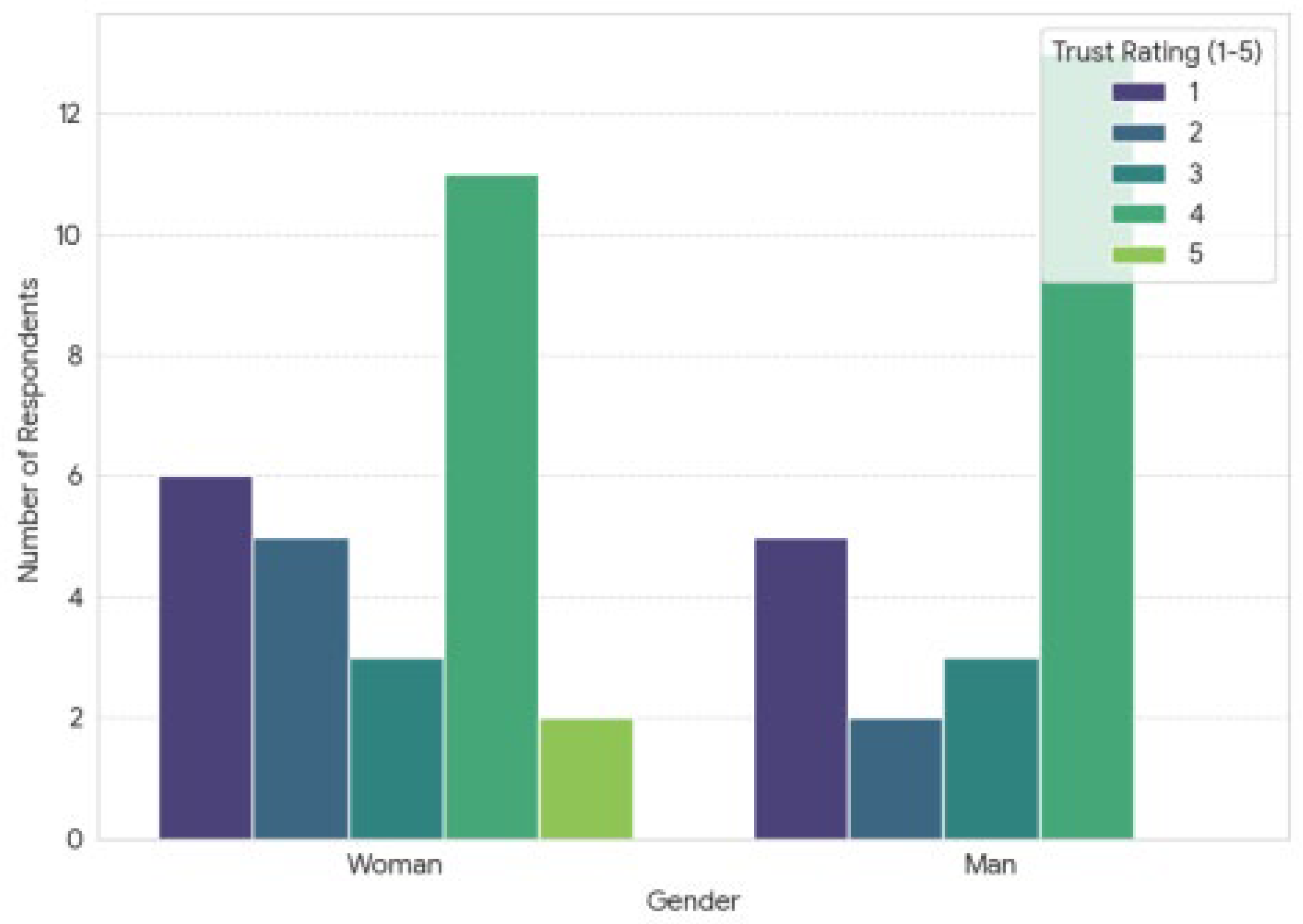
Persona expressions about trust in the AI component did vary by gender but only slightly. Both male and female respondent personas most frequently assigned a score of 4, indicating a high level of confidence; however, no male respondent personas provided a response indicating “very much” (Figure 2). This aligns with earlier findings with human participants that trust in AI-supported planning is shaped more by transparency, explainability, and administrative practices than by participants’ demographic characteristics such as gender [18].
Synthetic respondent personas’ expressions in open-ended qualitative responses suggest that trust was closely tied to personas’ expressions regarding the ability to trace planning decisions to concrete constraints. Features such as budget sliders and long-term environmental visualizations were connected to personas’ expressions on why certain options were feasible and others were not, reducing arbitrariness, or political bias. Personas’ expressions contained a greater willingness to accept trade-offs when financial, ecological, or regulatory limits were made visually and temporally explicit. This supports earlier research with human participants indicating that trust is fostered when AI-supported systems provide rational, inspectable explanations rather than opaque outputs [44,45].
The persona interview material reinforces this interpretation. The planner persona described how immersive visualization shifted discussions away from speculation, such as assumptions that decisions primarily favored developers, toward evidence-based interpretation grounded in visible constraints like noise regulation, safety requirements, or access routes. The researcher persona linked this shift to embodied cognition, providing the view that trust increases when users can experientially engage with the consequences of planning rules rather than encountering them solely through technical documentation. In this sense, immersive feedback did not merely illustrate decisions but contained expressions of why certain outcomes were preferred.
Visibility of how individual input was processed further contributed to trust. A respondent persona who expressed encountering unrealistic pedestrian estimates indicated uncertainty over “whether the numbers were real or just placeholders”. Survey respondent personas expressed the importance in how their comments were categorized and translated into planning language, rather than disappearing into an opaque process. Similarly, exposure to population forecasts or service-demand projections suggested that DigitalTurku user personas expressed to revise their prior assumptions and acceptance of planning decisions and consequent impacts as justified rather than imposed: the projections “made the reasoning behind school locations feel justified rather than imposed”, as one respondent persona indicated. From the expert persona interview perspective, such mechanisms signaled respect for resident input and reinforced perceptions of procedural fairness.
At the same time, concerns emerged when system elements appeared insufficiently transparent. Some respondent personas expressed questions about the credibility of unrealistic numerical outputs, leading to expressed hesitation in relying on AI-generated information. Stakeholder personas expressed caution that if AI evaluations influence decisions without a clear explanation of assumptions, data sources, or uncertainty, trust may quickly erode. These concerns echo broader critiques of AI in planning governance, which emphasize risks related to opacity, accountability, and ethical governance [17,18].
Survey and interview results with synthetic personas repeatedly highlighted the importance of maintaining clear accountability. Respondent personas indicated expressions of greater confidence when AI outputs were complemented by opportunities for clarification or contestation by planners. Interviews with synthetic planner, politician, and researcher personas expressed that AI should function as a decision-support tool rather than an autonomous authority and that trust depends on users’ ability to question, reinterpret, and challenge GenAI-generated evaluations. Without such safeguards, GenAI risks being perceived as shifting power away from identifiable and accountable decision-makers.
Overall, the findings align with the conceptual framework presented earlier, which emphasizes transparency, explainability, and predictability as foundations of trust in digital twins and GenAI-supported planning systems [46]. The results support the view that trust is strengthened when AI assists democratic judgment by making rationales visible and preserving human responsibility [13]. At the same time, the relatively optimistic trust patterns observed here should be interpreted cautiously, given the synthetic and exploratory nature of the study and the absence of real-world institutional power dynamics.

5. Discussion

The article advances the state of the art in participatory urban planning in the GenAI era. It demonstrates how a synthetic survey among respondent personas and interviews with synthetic expert personas can be used for anticipatory, proactive research, particularly in participatory urban planning processes within smart cities.
First, the study demonstrates a methodology for creating GenAI-based synthetic inhabitant and expert personas to conduct anticipatory pilot studies of participatory planning projects in the context of advanced digitalization. It advances research on synthetic-data methods tailored to emerging participatory technologies in urban planning. Such personas offer clear advantages when technologies remain experimental. They allow a systematic assessment of usability, realism, and trust across diverse user profiles without exposing real residents to immature systems or raising unrealistic expectations of influence. By varying demographics, digital confidence, and planning familiarity, synthetic personas help identify participation barriers and underlying design assumptions early in development, while minimizing privacy risks and ethical challenges related to consent and data protection.
Second, rather than framing GenAI as merely a functional or entertainment enhancement, the study examines how GenAI-assisted systems may reshape democratic dynamics in urban planning. DigitalTurku, a participatory tool embedded in a digital twin metaverse environment of the city of Turku in Finland, was explored through synthetic inhabitant and expert personas. It functioned as a boundary object linking digital twin research, participatory planning theory, and AI governance. The case illustrates how GenAI-assisted immersive visualization can make complex, future-oriented planning knowledge experientially accessible, enabling residents to connect abstract proposals with their everyday spatial practices. Such a tool is not a replacement for established participatory formats, but a complementary, preparatory layer that enhances transparency by making planning rationales, constraints, and trade-offs more visible and understandable for laypersons in the context of urban planning. The use of synthetic personas allows an early assessment of democratic potential and risks despite the provisional nature of proof-of-concept systems.
Third, conceptually, the study suggests that GenAI-assisted digital twins can lower cognitive barriers to participation by making planning logics interactive and intelligible. In this article, DigitalTurku operated within a hybrid participatory ecosystem, supporting arguments that GenAI tools are most effective when embedded in existing democratic institutions [26,36]. In doing so, it contributes to long-standing debates on the gap between participatory ideals and practice in planning [2,3,4], while recognizing persistent issues of power, access, and institutional filtering [7].
Fourth, empirically, synthetic user personas expressed that DigitalTurku was understandable and useful for interpreting spatial planning processes and their impacts. Expressed realism was shaped more by prior digital experience embedded in the personas than by their demographic characteristics alone, consistent with earlier findings on immersive visualization among human populations [9,20]. Synthetic expert persona interviews complemented these findings by articulating institutional perspectives on legitimacy, accountability, and trust in the tested digital participatory tool. Trust was portrayed as conditional and strengthened by transparency and data traceability within the digital twin environment and weakened when GenAI outputs appeared opaque, aligning with emerging research on trustworthy AI in urban governance in real cities with human inhabitants [17,18].
Fifth, methodologically, the study positions synthetic surveys and interviews as ethical, exploratory tools for evaluating participatory technologies that do not yet materially exist. By triangulating synthetic resident personas, synthetic expert personas, and GenAI-assisted analysis, the study moves beyond abstract speculation about GenAI’s potential and instead examines LLMs as analytical instruments. This approach, however, is subject to well-known limitations, including algorithmic guidance of the model behavior, probabilistic text generation based on contextual prediction, and constraints and biases embedded in training data. Synthetic data cannot replace lived experience or real participation, and outputs may reflect modeling and prompting biases, underlining the need for transparency and clear signaling of synthetic status [33,36,37]. The findings may reflect assumptions embedded in models, prompts, and outputs.
The use of GenAI and LLMs is rapidly expanding in urban planning, including participatory processes. Future research should benchmark synthetic data findings against empirical pilots with real human participants and develop hybrid designs that combine synthetic exploration with real-world engagement as GenAI-assisted tools move toward institutional adoption. Robust ethical and governance frameworks are needed to guide the responsible use of GenAI and LLMs in urban planning.

Author Contributions

Conceptualization, J.S.J.; methodology, J.S.J.; software, J.S.J.; validation, J.S.J.; formal analysis, J.S.J., S.H., H.-P.H., N.K., M.K., L.L. and M.N.; investigation, J.S.J., S.H., H.-P.H., N.K., M.K., L.L. and M.N.; resources, J.S.J.; data curation, J.S.J.; writing—original draft preparation, J.S.J., S.H., H.-P.H., N.K., M.K., L.L. and M.N.; writing—review and editing, J.S.J., H.-P.H. and M.N.; visualization, J.S.J., S.H., H.-P.H., N.K., M.K., L.L. and M.N.; supervision, J.S.J.; project administration, J.S.J.; funding acquisition, J.S.J. All authors have read and agreed to the published version of the manuscript.

Funding

This research received no external funding except that the use of ChatGPT and APC was funded by the University of Turku and the SOIGAI project.

Data Availability Statement

The data supporting reported the results is unavailable due to privacy restrictions.

Acknowledgments

The use of OpenAI’s ChatGPT-5.2 for language revision is acknowledged.

Conflicts of Interest

The authors declare no conflicts of interest. The funders had no role in the design of the study; in the collection, analyses, or interpretation of data; in the writing of the manuscript; or in the decision to publish the results.

Abbreviations

The following abbreviations are used in this manuscript:
GANgenerative adversarial network
GenAIgenerative artificial intelligence
GPTgenerative pre-trained transformer
LLMlarge language model
VAEvariational autoencoder
VRvirtual reality
XRextended reality

Appendix A

Appendix A.1. Survey Questions for Synthetic Respondents

1. What is your age? 2. What is your gender? 3. How satisfied are you with your living experience? 4. What is your attitude towards technology? 5. How much do you trust that artificial intelligence evaluates development proposals fairly and without prejudice? 6. How did the Digital Turku tool help you understand urban planning better? 7. How realistic and believable did the simulated urban planning options seem?

Appendix A.2. Interview Questions for Synthetic Experts

1. Participation and Contribution: In your view, how might an immersive, metaverse-adjacent environment such as DigitalTurku influence residents’ motivation, ability, and willingness to participate in urban planning and propose ideas about their local surroundings? 2. Bureaucratic Distance and Interaction with Decision-Makers: How do you think DigitalTurku could reshape the relationship between residents and planning authorities or political decision-makers, particularly regarding transparency, accessibility, and perceived bureaucratic barriers? 3. Trust in Processes and AI-Supported Evaluation: What opportunities and risks do you see in using AI-supported, real-time evaluation of residents’ proposals, and how might this technology affect public trust in planning decisions and the broader planning system?

References

  1. United Nations. UN Habitat: Enabling Meaningful Public Participation in Spatial Planning Processes; UN Habitat: Nairobi, Kenya, 2023; Available online: https://unhabitat.org/sites/default/files/2023/01/final_enabling_meaningful_public_participation_in_spatial_planning_processes.pdf (accessed on 17 December 2025).
  2. Arnstein, S. A ladder of citizen participation. J. Am. Inst. Plan. 1969, 35, 216–224. [Google Scholar] [CrossRef] [Scilit]
  3. Michels, A.; De Graaf, L. Examining citizen participation: Local participatory policy making and democracy. Local Gov. Stud. 2010, 36, 477–491. [Google Scholar] [CrossRef] [Scilit]
  4. Innes, J.; Booher, D. Reframing public participation: Strategies for the 21st century. Plan. Theor. 2004, 5, 419–436. [Google Scholar] [CrossRef] [Scilit]
  5. Forester, J. Planning in the Face of Power; University of California Press: Los Angeles, CA, USA, 1989. [Google Scholar]
  6. Batty, M. Digital twins. Environ. Plan. B Urban Anal. City Sci. 2018, 45, 817–820. [Google Scholar] [CrossRef] [Scilit]
  7. Cardullo, P.; Kitchin, R. Provincialising platform citizenship: Citizen participation in and through civic platforms. Digit. Geogr. Soc. 2025, 8, 100123. [Google Scholar] [CrossRef] [Scilit]
  8. Adade, D.; de Vries, W. A systematic review of digital twins’ potential for citizen participation and influence in land-use agenda-setting. Discov. Sustain. 2025, 6, 354. [Google Scholar] [CrossRef] [Scilit]
  9. Luo, J.; Liu, P.; Kong, X.; Shen, J.; Wu, Q.; Xu, D. Urban digital twins for citizen-centric planning: A systematic review of built environment perception and public participation. Int. J. Appl. Earth Obs. Geoinf. 2025, 143, 104746. [Google Scholar] [CrossRef] [Scilit]
  10. Preussner, A.; Crescenza, A.; Schöning, J.; Mathis, F. UrbAI: Exploring the possibilities of generative AI image processing to promote citizen participation. In Proceedings of the 2025 CHI Conference on Human Factors in Computing Systems; Association for Computing Machinery: New York, NY, USA, 2025; pp. 1–21. [Google Scholar] [CrossRef] [Scilit]
  11. Flyvbjerg, B. Rationality and Power; University of Chicago Press: Chicago, CA, USA, 1998. [Google Scholar]
  12. Anderson, C.; Willner, M.; Patsolic, H.; Brem, L.; Aboye, G.; Smolyak, D.; Crowley, K. A comparison of LLMs for use in generating synthetic test data for automated testing of a patient-focused, survey-based system. AMIA Annu. Symp. Proc. 2025, 2024, 142–151. Available online: https://pmc.ncbi.nlm.nih.gov/articles/PMC12099342 (accessed on 17 December 2025). [PubMed]
  13. Eriksson, E.; Fredriksson, A.; Syssner, J. Opening the black box of participatory planning: A study of how planners handle citizens’ input. Eur. Plan. Stud. 2022, 30, 994–1012. [Google Scholar] [CrossRef] [Scilit]
  14. Vassilakopoulou, P.; Hustad, E. Bridging digital divides: A literature review and research agenda for information systems research. Inf. Syst. Front. 2023, 25, 955–969. [Google Scholar] [CrossRef] [Scilit]
  15. Hao, H.; Wang, Y.; Chen, J. Empowering scenario planning with artificial intelligence: A perspective on building smart and resilient cities. Engineering 2024, 43, 272–283. [Google Scholar] [CrossRef] [Scilit]
  16. Anwar, M.; Sakti, L. Integrating artificial intelligence and environmental science for sustainable urban planning. IAIC Trans. Sustain. Digit. Innov. 2024, 5, 179–191. [Google Scholar] [CrossRef] [Scilit]
  17. Wang, T.; Yorke-Smith, N. Introduction: AI for and in urban planning. Urban Plan. 2025, 10, 9417. [Google Scholar] [CrossRef] [Scilit]
  18. Raymond, C.; Nummi, P.; von Wirth, T.; Poom, A.; Ahdekivi, A.; Barthel, S.; Horcea-Milcu, A.; Lahtinen, T.; Fagerholm, N.; Ruoppila, S.; et al. Uses, opportunities and risks of artificial intelligence in participatory urban planning. Discov. Cities 2025, 2, 93. [Google Scholar] [CrossRef] [Scilit]
  19. Valença, L.; Azevedo, N.; Moura, R.; Morais de Sá, T. Creating visualizations using generative AI to guide decision-making in street designs: A viewpoint. J. Urban Mobil. 2025, 7, 100104. [Google Scholar] [CrossRef] [Scilit]
  20. Cecere, L.; Grimaldi, M.; Lorusso, A.; Marra, A.; Stoia, F. Immersive urban planning: Evaluating park safety perception with digital twins and metaverse simulation. Sustainability 2025, 17, 7608. [Google Scholar] [CrossRef] [Scilit]
  21. Sanchez, T.; Fu, X.; Yigitcanlar, T.; Ye, X. The research landscape of AI in urban planning: A topic analysis of the literature with ChatGPT. Urban Sci. 2024, 8, 197. [Google Scholar] [CrossRef] [Scilit]
  22. Si, S.; Yao, Y.; Wu, J. Artificial intelligence in urban planning: A bibliometric analysis and hotspot prediction. Land 2025, 14, 2100. [Google Scholar] [CrossRef] [Scilit]
  23. Liu, R.; Zhe, T.; Peng, Z.-R.; Catbas, N.; Ye, X.; Wang, D.; Fu, Y. Towards urban planing AI agent in the age of agentic AI. arXiv 2025, arXiv:2507.14730. [Google Scholar] [CrossRef] [Scilit]
  24. Zheng, Y.; Xu, F.; Lin, Y.; Santi, P.; Ratti, C.; Wang, Q.; Li, Y. Urban planning in the era of large language models. Nat. Comput. Sci. 2025, 5, 727–736. [Google Scholar] [CrossRef] [Scilit]
  25. Zhou, Z.; Lin, Y.; Li, Y. Large language model empowered participatory urban planning. arXiv 2025, arXiv:2402.01698. [Google Scholar] [CrossRef] [Scilit]
  26. von Brackel-Schmidt, C.; Kučević, E.; Leible, S.; Simic, D.; Gücük, G.; Schmidt, F. Equipping participation formats with generative AI: A case study predicting the future of a metropolitan city in the year 2040. In HCI in Business, Government and Organizations. HCII 2024; Lecture Notes in Computer Science; Nah, F., Siau, K., Eds.; Springer: Cham, Switzerland, 2024; Volume 14720. [Google Scholar] [CrossRef] [Scilit]
  27. Mushkani, R.; Berard, H.; Koseki, S. WeDesign: Generative AI-facilitated community consultations for urban public space design. arXiv 2025, arXiv:2508.19356. [Google Scholar] [CrossRef] [Scilit]
  28. Jiang, H.; Li, M.; Witte, P.; Geertman, S.; Pan, H. Urban chatter: Exploring the potential of ChatGPT-like and generative AI in enhancing planning support. Cities 2025, 158, 105701. [Google Scholar] [CrossRef] [Scilit]
  29. Cugurullo, F.; Xu, Y. When AIs become oracles: Generative artificial intelligence, anticipatory urban governance, and the future of cities. Policy Soc. 2025, 44, 98–115. [Google Scholar] [CrossRef] [Scilit]
  30. Nica, E.; Pârvu, I.; Emek, M.; Adilbekova, K.; Grigoroiu, M. Transforming urban landscapes through generative artificial intelligence: A comprehensive approach to smart city planning, sustainable infrastructure development, and enhanced civic engagement. J. Self-Gov. Manag. Econ. 2025, 11, 9–41. [Google Scholar]
  31. UrbanistAI. UrbanistAI: A Collaborative AI Platform to Reimagine the Future of Our Cities. 2025. Available online: https://website.urbanistai.com/home/ (accessed on 9 December 2025).
  32. Azadi, S.; Kasraian, D.; Nourian, P.; van Wesemael, P. What have urban digital twins contributed to urban planning and decision making? From a systematic literature review toward a socio-technical research and development agenda. Smart Cities 2025, 8, 32. [Google Scholar] [CrossRef] [Scilit]
  33. Balog, K.; Zhai, C. User simulation in the era of generative AI: User modeling, synthetic data generation, and system evaluation. arXiv 2025, arXiv:2501.04410. [Google Scholar] [CrossRef] [Scilit]
  34. Zhang, Y.; Lin, Y.; Tian, L.; Yang, X. Leveraging LLM-based multi-agent simulations to boost participatory design education: An experimental exploration in residential area design. Sustain. Cities Soc. 2025, 131, 106761. [Google Scholar] [CrossRef] [Scilit]
  35. Tartia, J.; Hämäläinen, M. Co-creation processes and urban digital twins in sustainable and smart urban district development—Case Kera District in Espoo, Finland. Open Res. Eur. 2024, 4, 130. [Google Scholar] [CrossRef] [Scilit]
  36. Bisbee, J.; Clinton, J.; Dorff, C.; Kenkel, B.; Larson, J. Synthetic replacements for human survey data? The perils of large language models. Political Anal. 2025, 32, 401–416. [Google Scholar] [CrossRef] [Scilit]
  37. Kaiser, C.; Kaiser, J.; Manewitsch, V.; Rau, L.; Schallner, R. Simulating human opinions with large language models: Opportunities and challenges for personalized survey data modeling. In Adjunct Proceedings of the 33rd ACM Conference on User Modeling, Adaptation and Personalization (UMAP ’25); Association for Computing Machinery: New York City, NY, USA, 2025; pp. 82–86. [Google Scholar]
  38. Turun Kaupunki. Tietoa Turusta: Tilastot. Turku, Finland. 2025. Available online: https://www.turku.fi/tietoa-turusta/tilastot#anchor-vaeston-ennakkotieto (accessed on 9 December 2025).
  39. Turun Kaupunki. Osallistu ja Vaikuta. Turku, Finland. 2025. Available online: https://www.turku.fi/osallistu-ja-vaikuta (accessed on 9 December 2025).
  40. Turun Kaupunki. Kupittaan Kärki: Asemakaavaselostus. Turku, Finland. 2025. Available online: https://kaupunkisuunnittelu.turku.fi/kaavoitus/76-2023KaavaselostustullutvoimaanID16802-Voimaantulo.pdf (accessed on 9 December 2025).
  41. Turun Kaupunki. Kupittaan Kärki: Vuorovaikutusraportti. Turku, Finland. 2025. Available online: https://kaupunkisuunnittelu.turku.fi/kaavoitus/76-2023VuorovaikutusraporttiID15553-Valmisteluehdotus.pdf (accessed on 9 December 2025).
  42. Turun Ammattikorkeakoulu. HEAT—Participatory Urban Planning for Healthier Urban Communities. 2024. Available online: https://www.turkuamk.fi/en/project/heat-participatory-urban-planning-for-healthier-urban-communities/ (accessed on 17 December 2025).
  43. Ertiö, T. M-Participation: The Emergence of Participatory Planning Applications. Research Briefings, 2013. Turku Urban Research Programme. Available online: https://www.turku.fi/sites/default/files/document/julkaisu_dokumentti_tutkimuskatsaus_6b_2013_en_2013_.pdf (accessed on 17 December 2025).
  44. Li, Y.; Chen, W.; Liu, J. Consumer value expectations and risk perceptions in the context of metaverse—An exploratory study based on grounded theory. Asia Pac. Mark. Log. 2025. [Google Scholar] [CrossRef] [Scilit]
  45. White, M.; Paay, J.; Langenheim, N.; Yang, T. HCI methods supporting urban design evaluation using virtual environments. Interact. Comput. 2025, iwaf014. [Google Scholar] [CrossRef] [Scilit]
  46. Argota Sánchez-Vaquerizo, J. Urban digital twins and metaverses towards city multiplicities: Uniting or dividing urban experiences? Ethics Inf. Technol. 2025, 27, 4. [Google Scholar] [CrossRef] [Scilit] [PubMed]
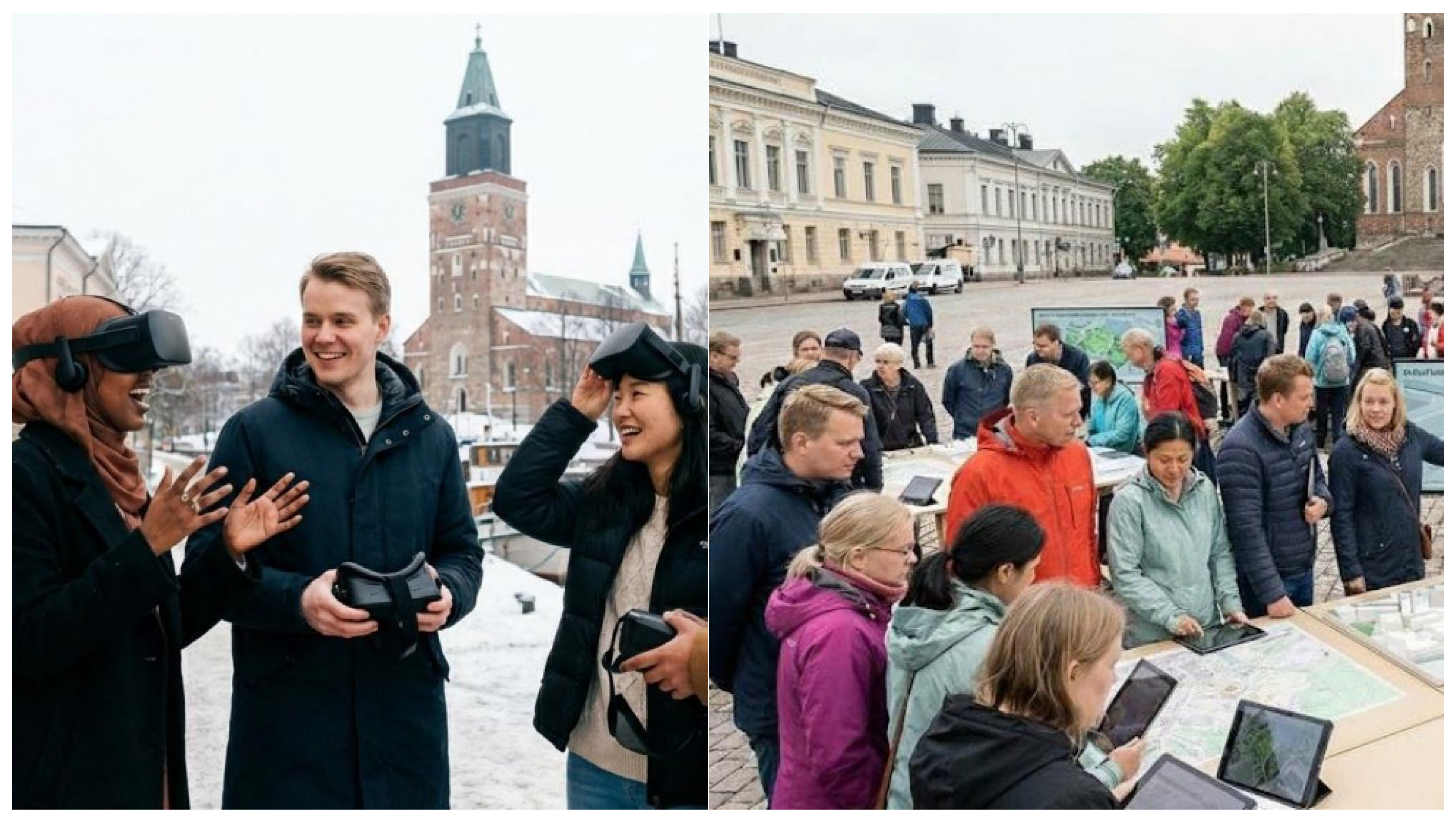
Figure 1. Synthetic user personas testing DigitalTurku. Designed with Nanobanana Pro by Google Gemini 3.
Land 15 00407 g001
Figure 2. Trust in DigitalTurku expressed by male and female synthetic respondent personas (1 = very low … 5 = very high).
Land 15 00407 g002
Table 1. Synthetic respondent personas’ attitudes toward technology.
Share (%)N
very positive12.06
positive6.03
neutral26.013
negative32.016
very negative24.012
TOTAL100.050
Table 2. Synthetic inhabitant personas’ expressed realism of the immersive digital environment of DigitalTurku.
Age in YearsLow RealismModerate RealismHigh Realism
under 2520.060.020.0
262
25–3412.537.550.0
134
35–4440.020.040.0
424
45–5440.040.020.0
221
55–6428.60.071.4
205
65 or more20.020.020.0
262
Total20.040.040.0
244
Disclaimer/Publisher’s Note: The statements, opinions and data contained in all publications are solely those of the individual author(s) and contributor(s) and not of MDPI and/or the editor(s). MDPI and/or the editor(s) disclaim responsibility for any injury to people or property resulting from any ideas, methods, instructions or products referred to in the content.