A Seasonal Study of the Spatial Quality of Cold Streets Based on Activity Portrait Indexes (APIs): The Example of Harbin City Streets
 ,
,
Abstract
1. Introduction
2. Literature Review
2.1. Literature Review on Street Space and Behavioural Activities
2.2. Methods for Measuring and Evaluating the Spatial Environment of Streets
3. Data and Methods
3.1. Research Framework and Technical Approach
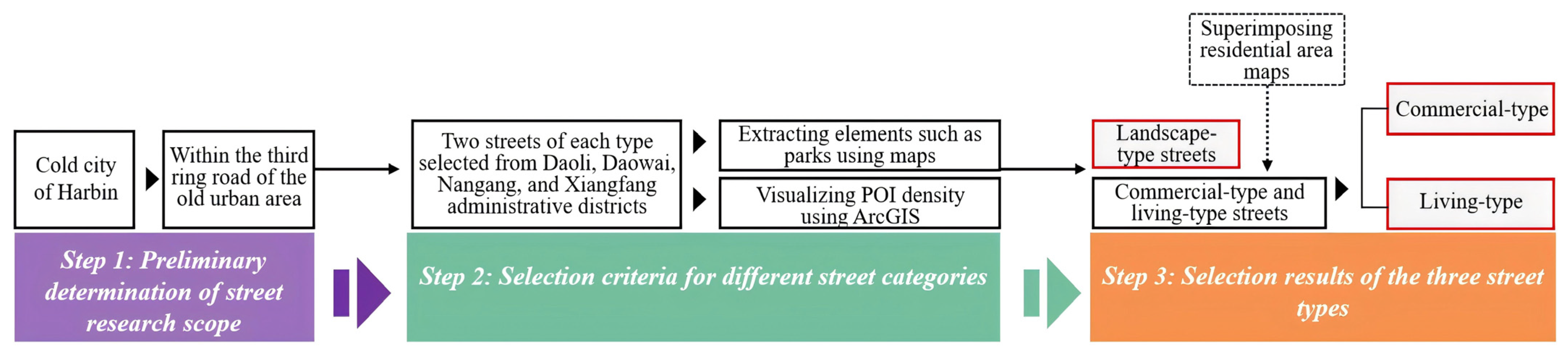
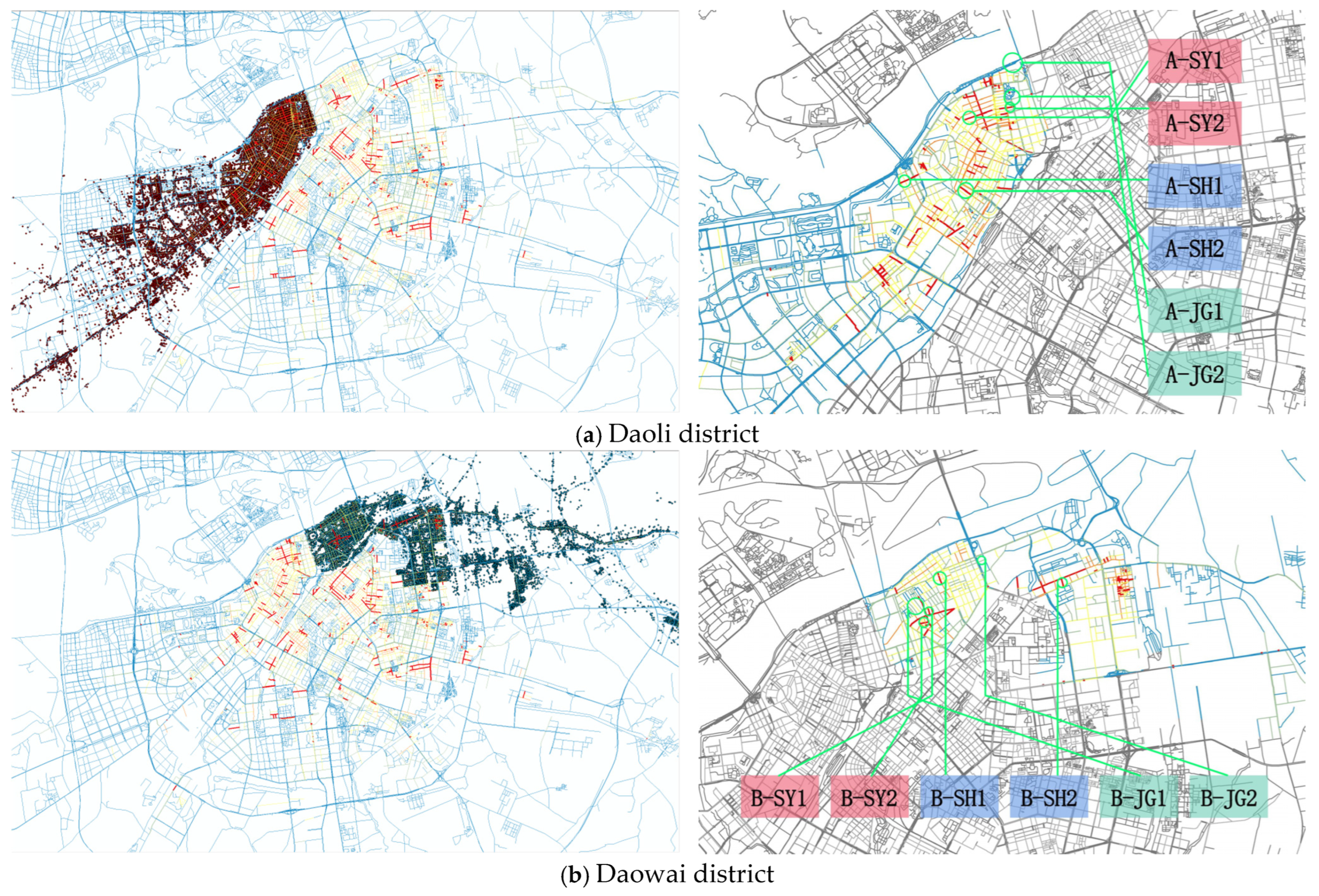
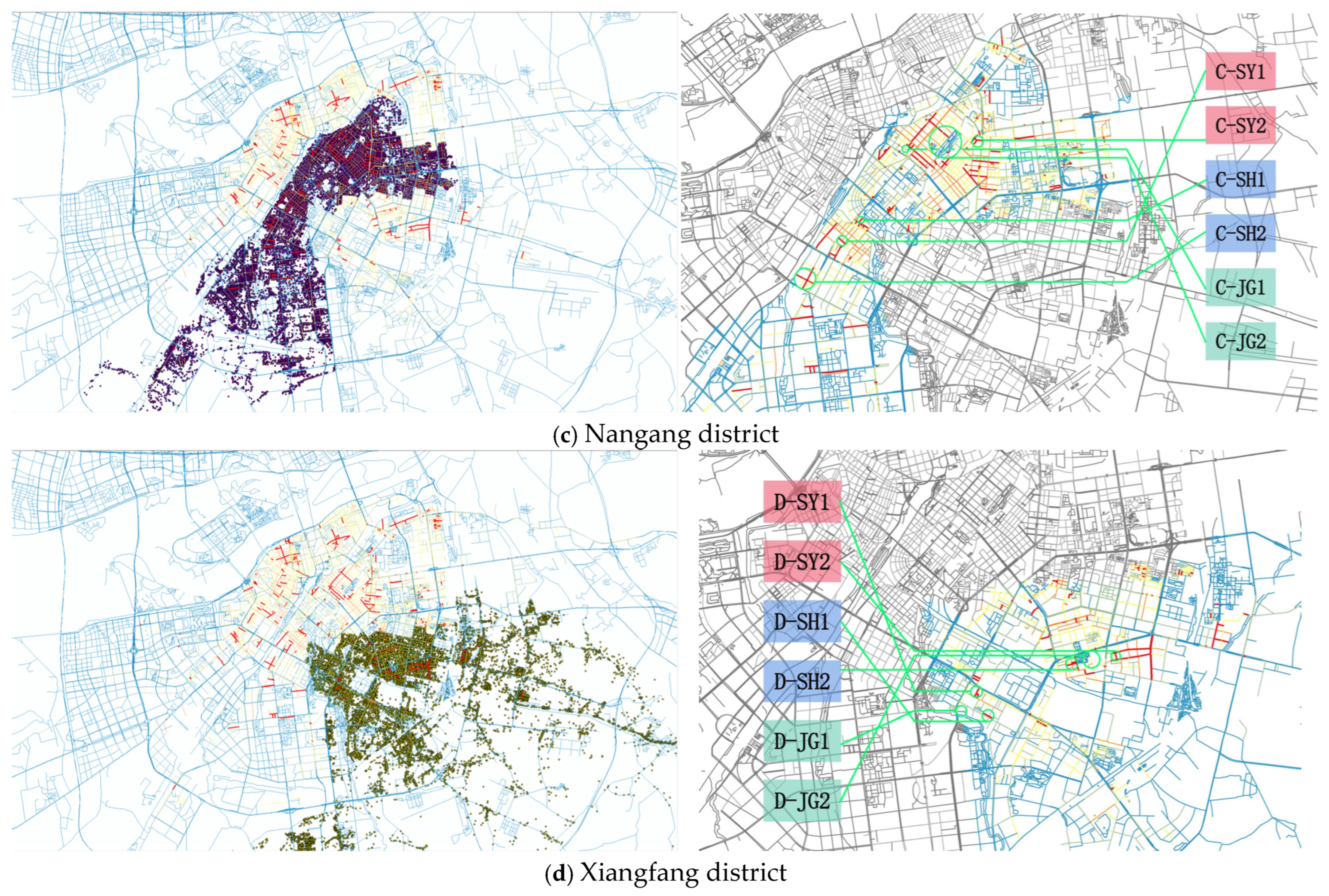
3.2. Selection of Research Subjects
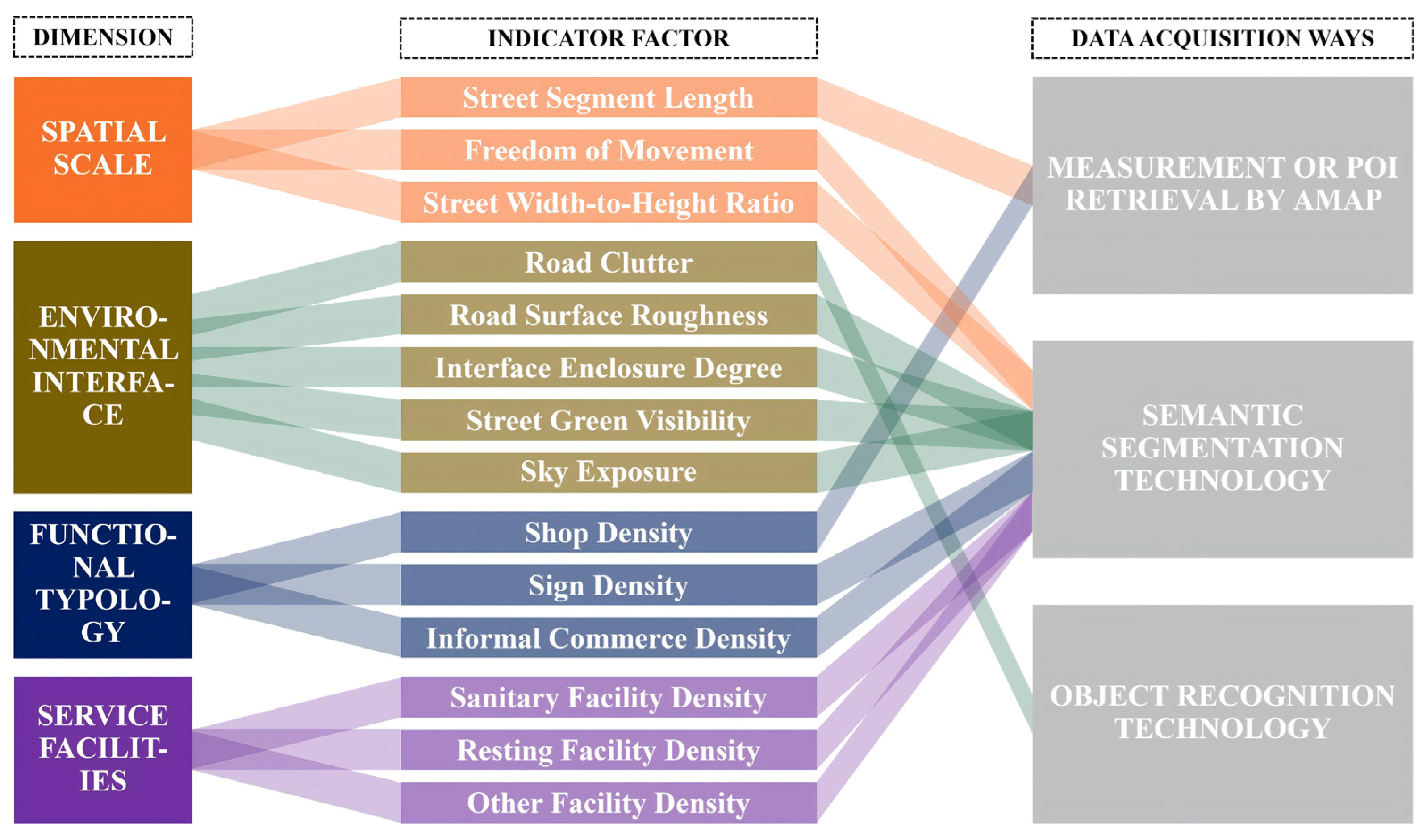
3.3. Statistics and Calculation of Research Indicators
4. Results
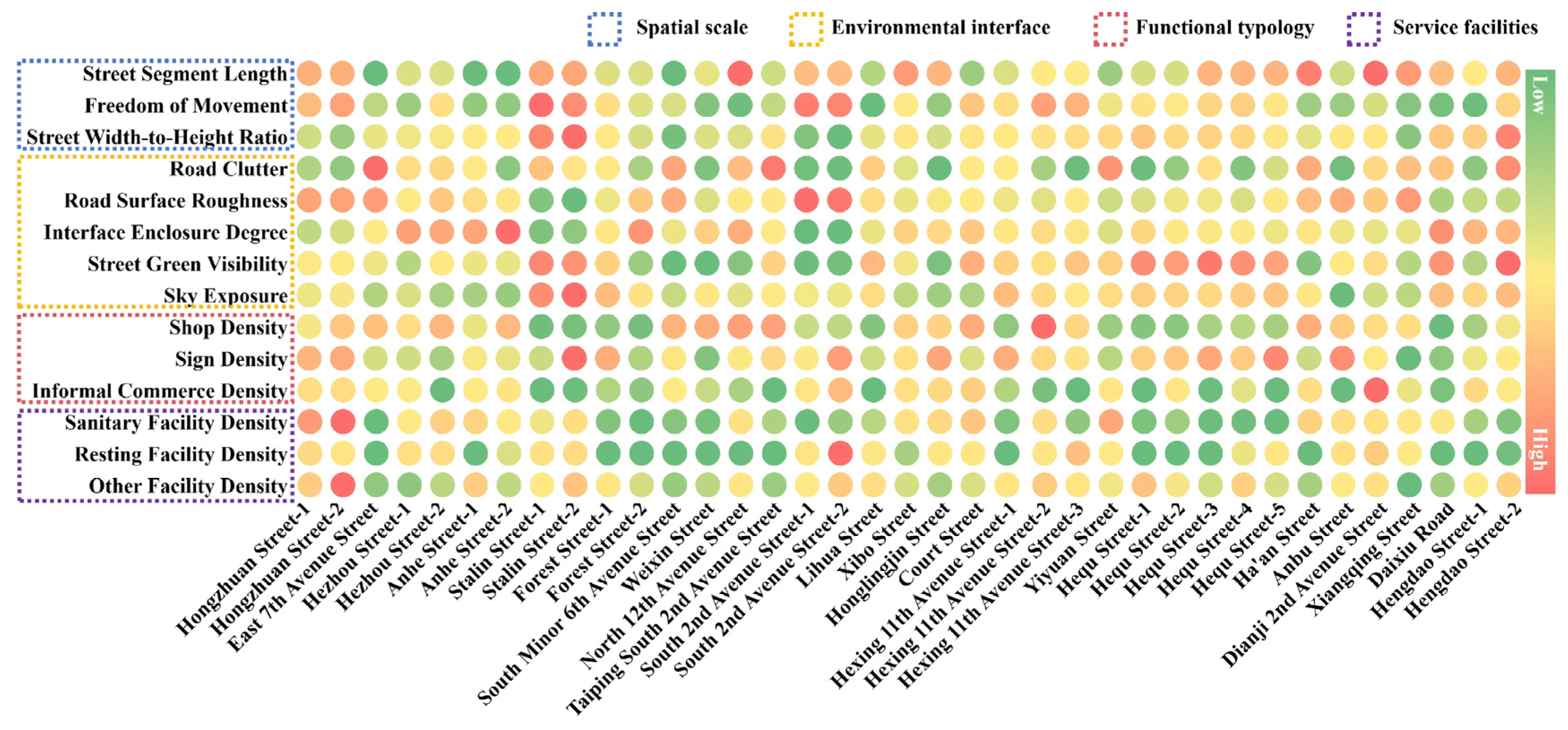
4.1. Characterisation of Street Spatial Environmental Elements
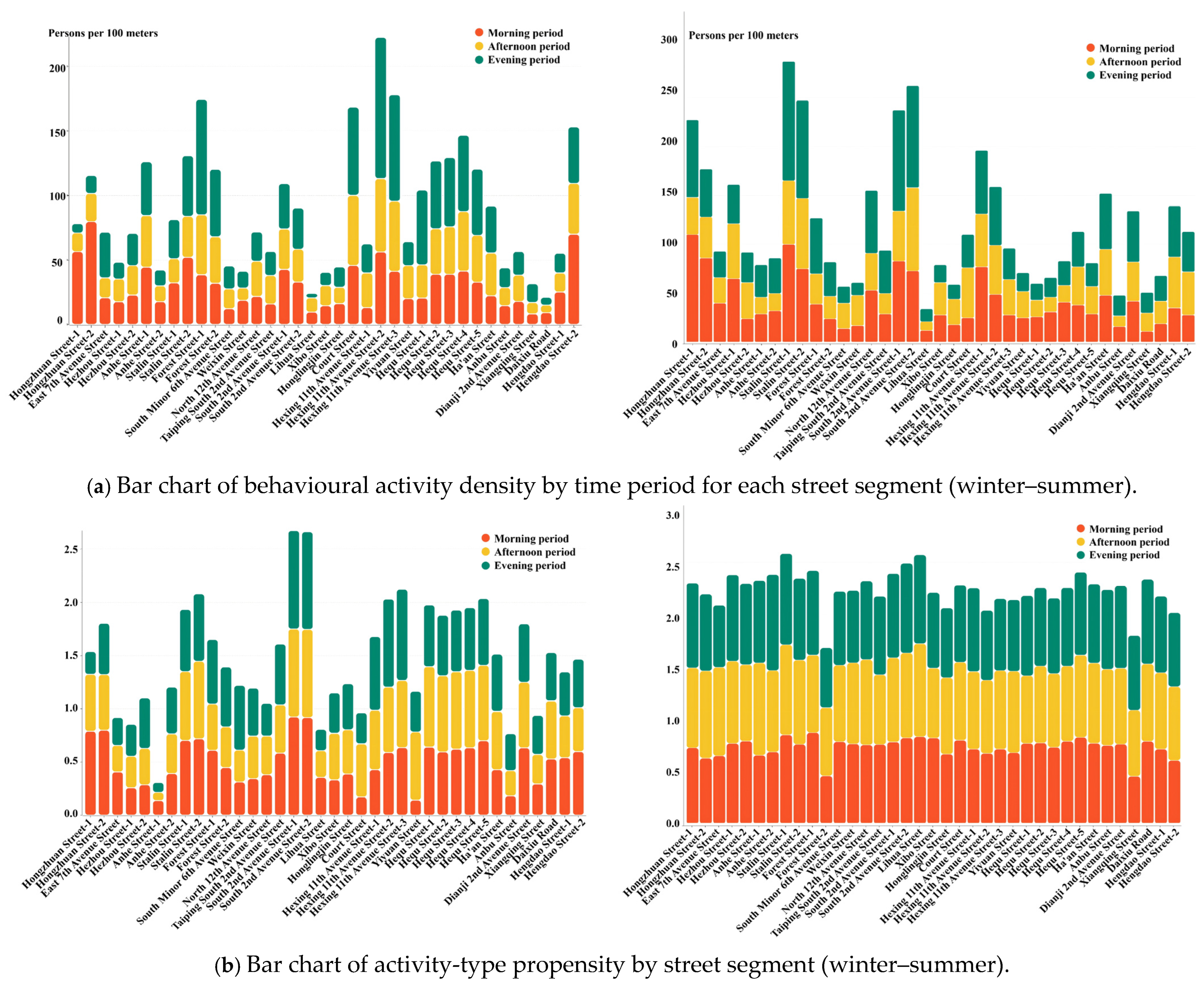
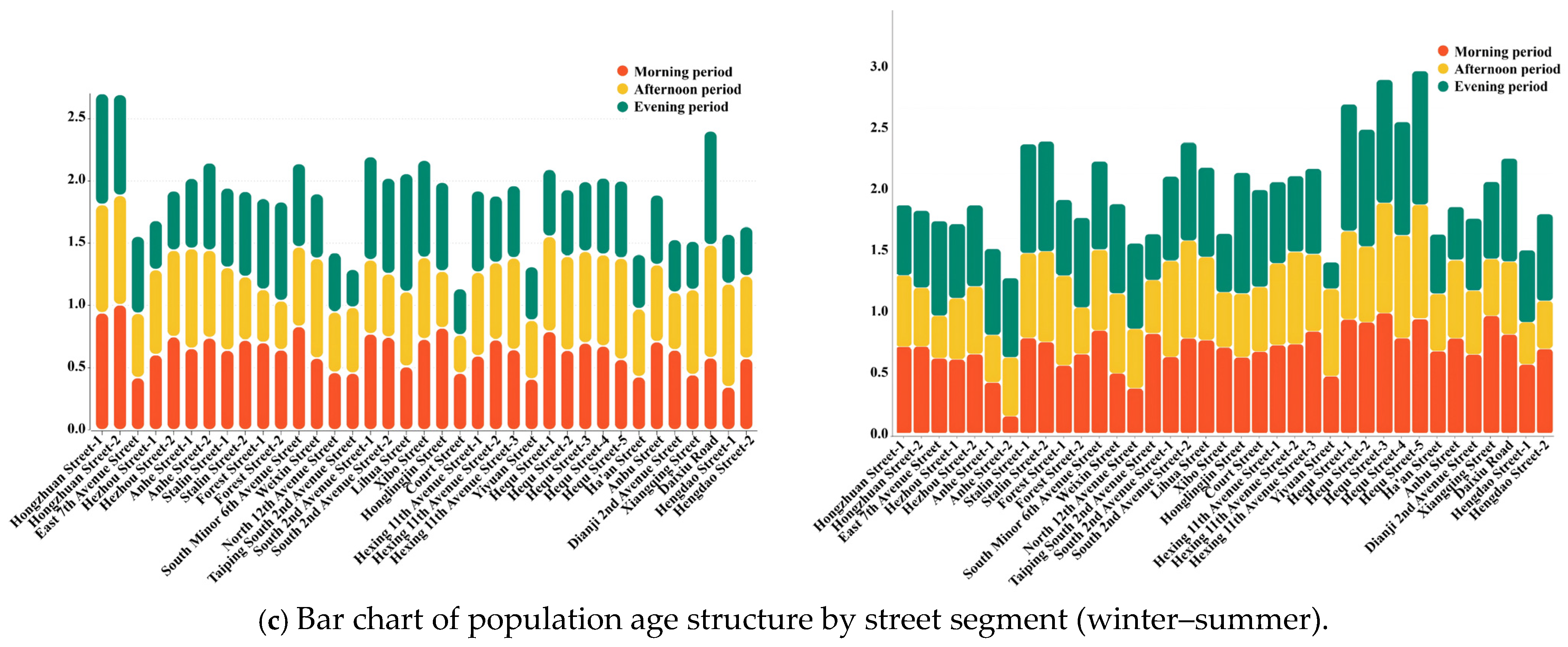
4.2. Characterisation of Street Space Activity Portraits
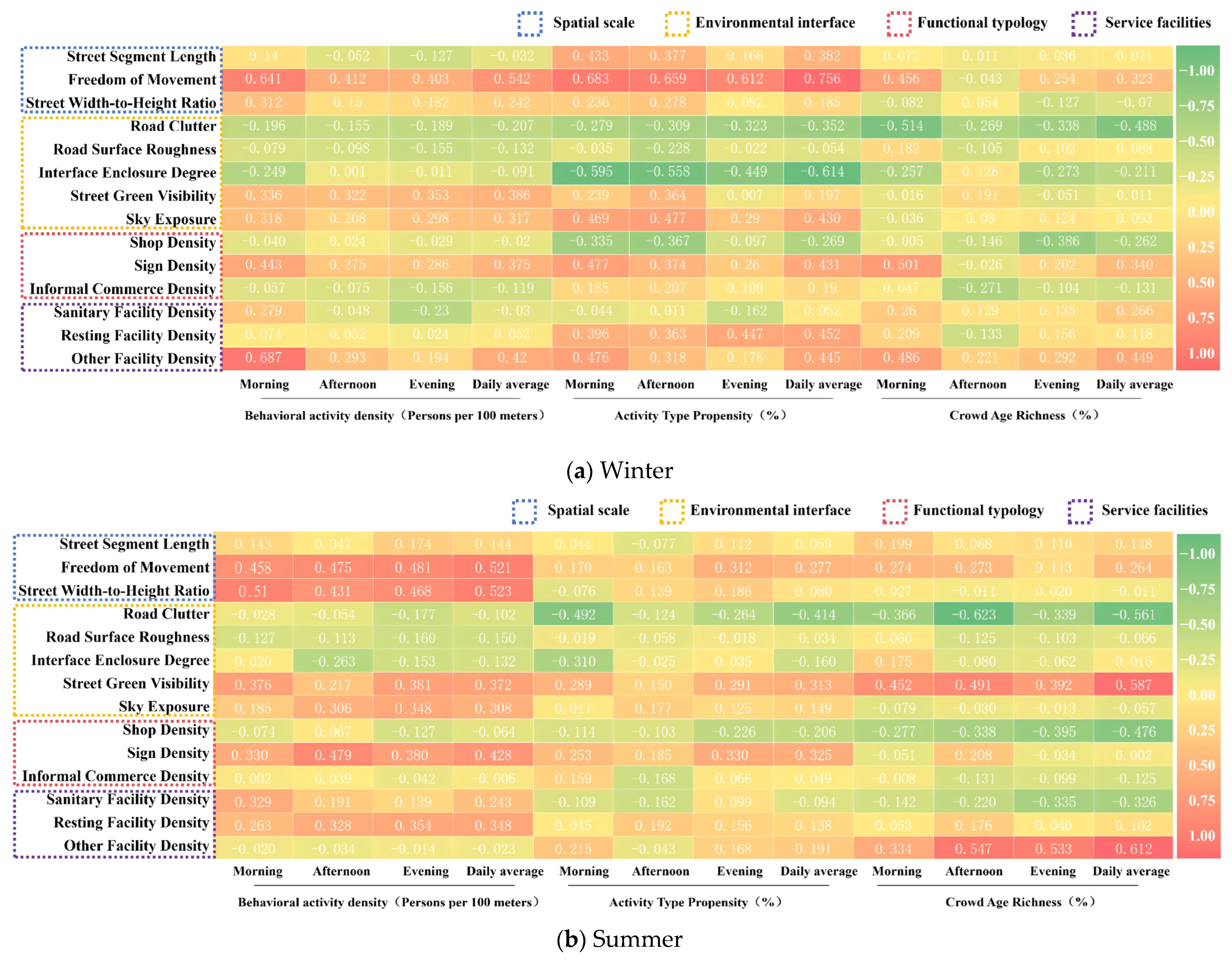
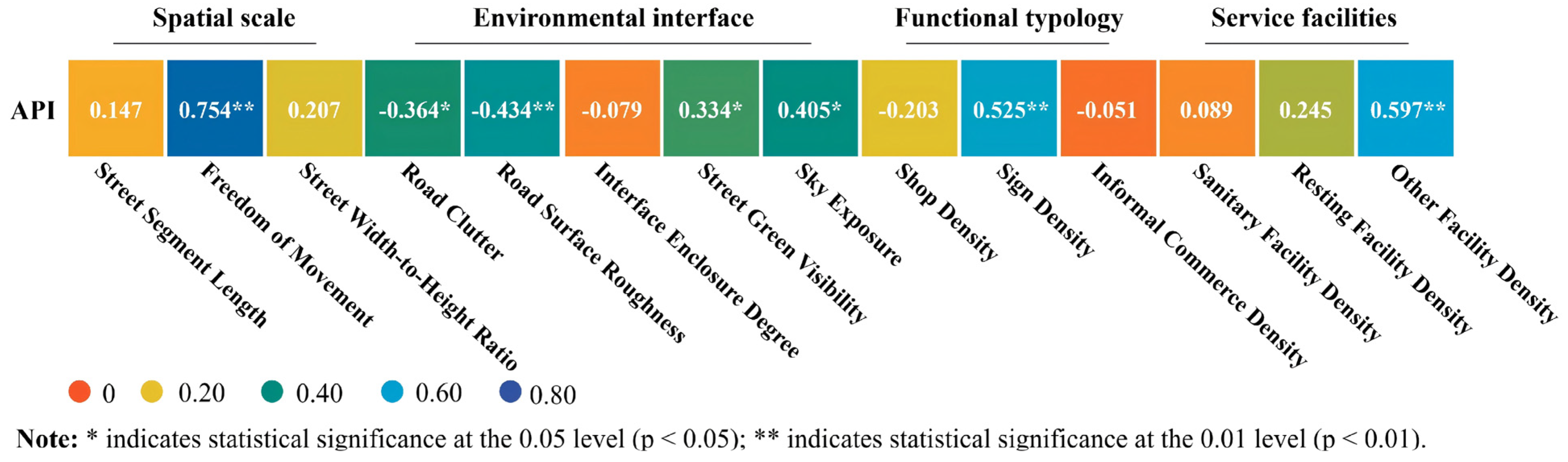
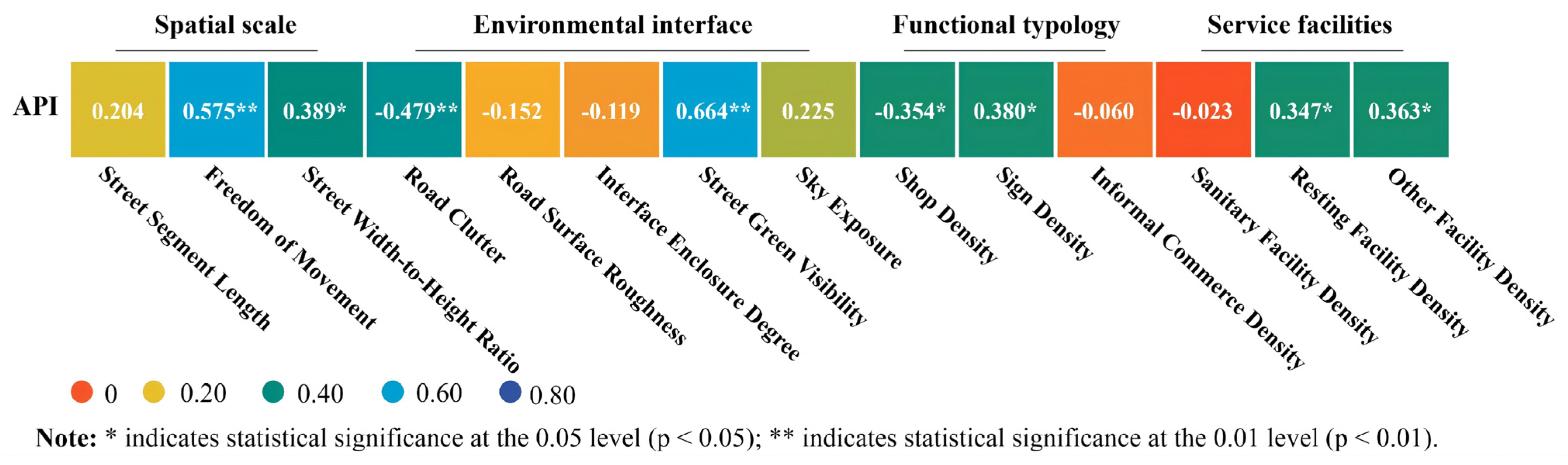
4.3. Characterisation of Correlations Between Street Environmental Elements and Activity Portraits
4.4. Mathematical Model: Activity Portrait Index and Street Spatial Characteristics
4.4.1. Quantification of the Activity Portrait Index
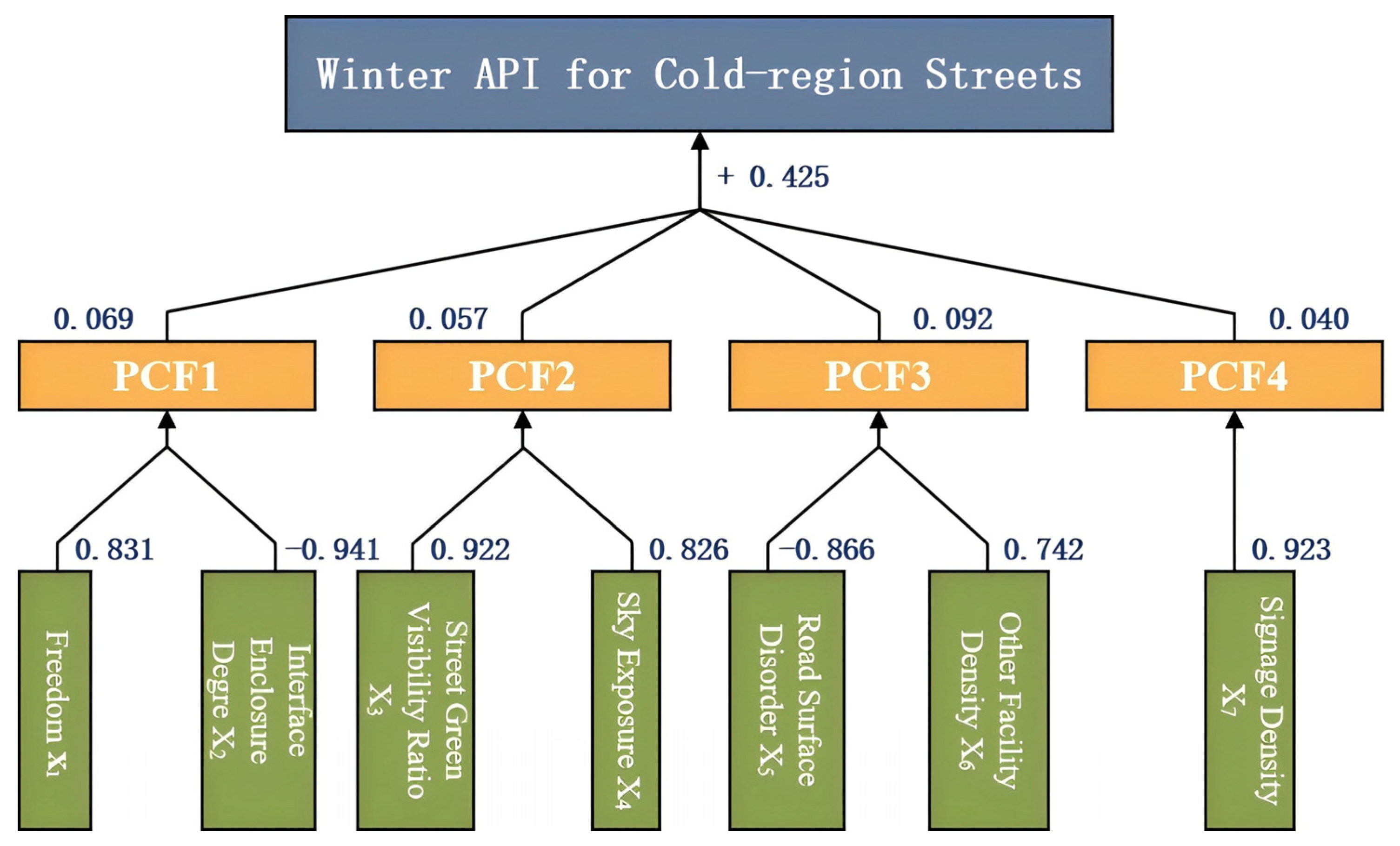
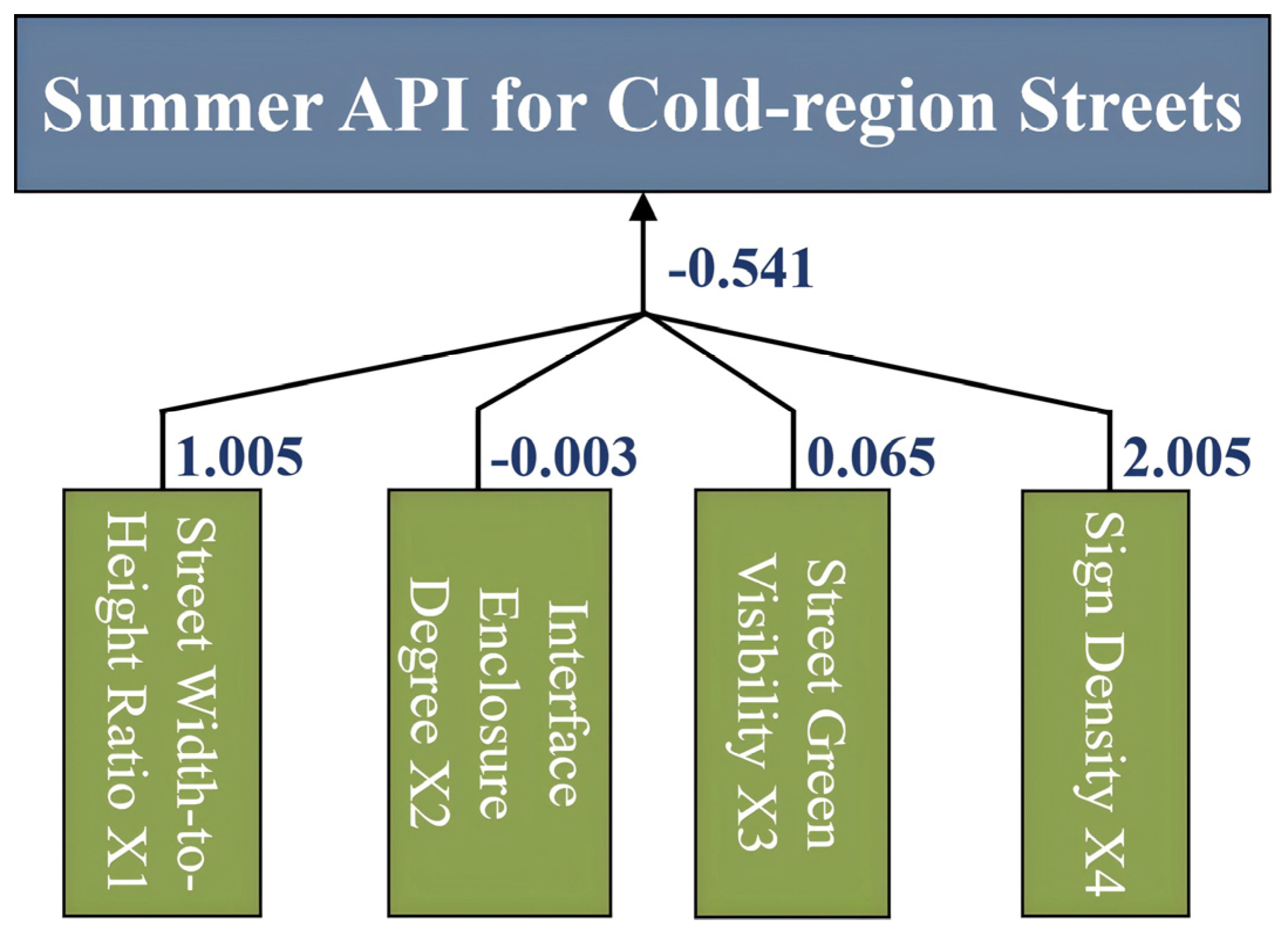
4.4.2. Mathematical Model of the Winter–Summer Relationship Between API and Street Spatial Characteristics
- (1)
- Winter model
- (2)
- Summer model
5. Discussion
5.1. Differences in Behavioural Activity Characteristics of Street Users in Winter and Summer
5.2. Differences in Influenceability of Street and Activity Portraits in Winter and Summer
5.3. Differences in Impact of Different Types of Street and Activity Portraits
5.4. Seasonal Differences in the Mathematical Model “Activity Profile Index–Spatial Characteristics of Streets”
6. Conclusions
- (1)
- The API can assess the spatial quality of urban streets in cold-climate cities.
- (2)
- A refined “Activity Portrait–Spatial Characteristics” framework helps explain interactions between users and the street environment.
- (3)
- Associations between activity portraits and street environmental elements differ between winter and summer.
- (4)
- Relationships between street types and users’ behavioural activities differ.
Supplementary Materials
Author Contributions
Funding
Data Availability Statement
Conflicts of Interest
References
- Jiang, J.; Cao, G. Multidimensional analysis of modern urban street space functions. In Public Transit Priority and Congestion Mitigation Strategies, Proceedings of the 2012 Annual Conference and 26th Academic Symposium of China Urban Transport Planning, Fuzhou, China, 7–9 November 2012; Jiangsu Institute of Urban Planning and Design: Nanjing, China, 2012. [Google Scholar]
- Zhao, B. Brief probe of humanized streets design. Shanghai Urban Plan. Rev. 2016, 2016, 59–63. [Google Scholar]
- Mei, H.Y.; Dai, Y. Climate-responsive green design for cold-region urban streets. Archit. J. 2012, 12, 104–107. [Google Scholar]
- Paquet, C.; Orschulok, T.P.; Coffee, N.T.; Howard, N.J.; Hugo, G.; Taylor, A.W.; Adams, R.J.; Daniel, M. Are accessibility and characteristics of public open spaces associated with a better cardiometabolic health? Landsc. Urban Plan. 2013, 118, 70–78. [Google Scholar] [CrossRef] [Scilit]
- Uzgoeren, G.; Erdoenmez, E. A comparative study on the relationship between quality of space and urban space activities in the public open spaces. MEGARON/Yıldız Tech. Univ. Fac. Archit. E-J. 2016, 11, 373–386. [Google Scholar] [CrossRef] [Scilit]
- Xuan, W.; Peng, K.; Zang, C. The correlation between street space and behaviours in the new data environment. South Archit. 2023, 2023, 49–60. [Google Scholar]
- Huang, J.; Hu, G. Comparison and thinking of the walkability measure methods on urban built environment. J. Hum. Settl. West China 2016, 31, 67–74. [Google Scholar]
- Southworth, M.; Ben-Joseph, E. Streets and the Shaping of Towns and Cities; China Architecture & Building Press: Beijing, China, 2006. [Google Scholar]
- Zarin, S.Z.; Niroomand, M.; Heidari, A.A. Physical and social aspects of vitality case study: Traditional street and modern street in Tehran. Procedia-Soc. Behav. Sci. 2015, 170, 659–668. [Google Scholar] [CrossRef] [Scilit]
- Jacobs, A.B. Great Streets; China Architecture & Building Press: Beijing, China, 2009. [Google Scholar]
- Long, Y.; Tang, J. Large-scale quantitative measurement of the quality of urban street space: The research progress. City Plan. Rev. 2019, 43, 107–114. [Google Scholar]
- Barker, R.G.; Getzels, J.W. Ecological Psychology: Concepts and Methods for Studying the Environment of Human Behavior; Stanford University Press: Redwood City, CA, USA, 1968; p. 14. [Google Scholar]
- Gibson, J.J. The ecological approach to visual perception. Ecol. Psychol. 1982, 42, 98–99. [Google Scholar]
- Samvati, S.; Nikookhooy, M.; Saiedizadi, M. The role of vitality and viability of urban streets in enhancement the quality of pedestrian-oriented urban venues (Case study: Buali Sina Street, Hamedan, Iran). J. Urban Plan. Dev. 2013, 139, 325–333. [Google Scholar]
- Ashihara, Y. The Aesthetics of the Street; Baihua Literature and Art Publishing House: Tianjin, China, 2006. [Google Scholar]
- Wicker, A.W. An Introduction to Ecological Psychology; Cambridge University Press: Cambridge, UK, 1984. [Google Scholar]
- Gehl, J. Life Between Buildings: Using Public Space; Van Nostrand Reinhold: New York, NY, USA, 1987. [Google Scholar]
- Aziz, A.A.; Ahmad, A.S.; Nordin, T.E. Vitality of flats outdoor space. Procedia-Soc. Behav. Sci. 2012, 36, 402–413. [Google Scholar] [CrossRef] [Scilit]
- Curl, A.; Ward Thompson, C.; Aspinall, P. The effectiveness of ‘shared space’ residential street interventions on self-reported activity levels and quality of life for older people. Landsc. Urban Plan. 2015, 139, 117–125. [Google Scholar] [CrossRef] [Scilit]
- Whyte, W.H. The Social Life of Small Urban Spaces; Conservation Foundation: New York, NY, USA, 1980. [Google Scholar]
- Architects, G. Towards a Fine City for People: Public Spaces and Public Life—London 2004; Transport for London: London, UK, 2004.
- Burton, E.; Mitchell, L.; Fei, T. Inclusive Urban Design; China Architecture & Building Press: Beijing, China, 2009. [Google Scholar]
- Biddulph, M. Radical streets? The impact of innovative street designs on liveability and activity in residential areas. Urban Des. Int. 2012, 17, 178–205. [Google Scholar] [CrossRef] [Scilit]
- Ewing, R.; Clemente, O. Measuring Urban Design: Metrics for Livable Places; Island Press: Washington, DC, USA, 2015; Volume 20, pp. 1–2. [Google Scholar]
- Harvey, C.W. Measuring Streetscape Design for Livability Using Spatial Data and Methods. Master’s Thesis, University of Vermont, Burlington, NJ, USA, 2014. [Google Scholar]
- Sarkar, C.; Webster, C.; Pryor, M.; Gallacher, J. Exploring associations between urban green, street design and walking: Results from the Greater London boroughs. Landsc. Urban Plan. 2015, 143, 112–125. [Google Scholar] [CrossRef] [Scilit]
- Long, Y.; Gao, B. Street space challenges and opportunities in “Internet+” age. Planners 2016, 32, 8. [Google Scholar]
- Hao, X.; Long, Y.; Shi, M.; Wang, P. Street vibrancy of Beijing: Measurement, impact factors and design implication. Shanghai Urban Plan. Rev. 2016, 2016, 37–45. [Google Scholar]
- Zhang, L.Y.; Pei, T.; Chen, Y.J.; Song, C.; Liu, X.Q. A review of urban environmental assessment based on street view images. J. Geo-Inf. Sci. 2019, 21, 46–58. [Google Scholar]
- Wang, Q. Research on the Vitality Creation of Typical Street Marginal Space Based on Interaction Theory. Ph.D. Thesis, Harbin Institute of Technology, Harbin, China, 2019. [Google Scholar]
- Ma, S.H.; Han, Y.H.; Yao, Z.G. Students’ travel mode choice based on parent’s travel mode. J. Transp. Syst. Eng. Inf. Technol. 2016, 16, 225–231. [Google Scholar]
- Yang, L.C.; Cui, X.; Yu, B.J.; Wei, Z.C.; Gao, Y.B. The effect of walking and wait time on the transit travel of residents in affordable housing. Planners 2020, 36, 50–57. [Google Scholar]
- Cao, J.Z. Big data-driven research on the interaction of human mobility pattern and urban spatial structure. Acta Geod. Cartogr. Sin. 2021, 50, 849. [Google Scholar]
- Mehta, V. Streets: A Model of Social Public Space; Electronic Industry Press: Beijing, China, 2016. [Google Scholar]
- Yao, G. Evaluation method of current capacity of urban bus stops based on POI data and ArcGIS spatial analysis technology: A case study of central urban area of Luoyang. Beauty Times 2018, 2018, 2. [Google Scholar]
- Yu, Y.; Meng, F.Y.; Guo, Q. Towards whitescape: A Study on Residents’ Winter Environmental Characteristics Preferences of Outdoor Activities in Waterfront Spaces of Small and Medium-sized Rivers in Cold Regions. Chin. Landsc. Archit. 2024, 40, 64–70. [Google Scholar]
- Xi, T.X.; Kuang, X.M.; Zhu, Y.Y.; Fu, X. An Exploration of the Street Renewal Design Based on Human Perception: A Case Study of the Beautiful District Renovation Program in Pengpu Town, Jing’an District, Shanghai. Urban Plan. Forum 2019, S1, 168–176. [Google Scholar]
- Huang, D.; Dai, D. Effect of living street’s elements on vitality: Taking typical streets in Shenzhen as an example. Chin. Landsc. Archit. 2019, 35, 89–94. [Google Scholar]
- Guo, R.; Wang, H.C. Influence of Landscape Composition Characteristics on Walking Activities in Life Service Streets and Its Optimization: A Case Study of Streets in Downtown Tianjin. Landsc. Archit. 2020, 27, 99–105. [Google Scholar]
- Lu, W.; Wang, S.Y.; Gu, Z.C. Research on Living Street in Residential Areas Based on Demand and Behavior. New Archit. 2019, 4, 18–22. [Google Scholar]
- Guo, R.; Yu, Z.L. Research on the Impact of Urban Street Environment on Pedestrians’ Walking Behavior: A Case Study of Harbin. In Proceedings of the 2020 Annual Conference of China Urban Planning Association (07 Urban Design): Spatial Governance for High-Quality Development; China Urban Planning Association: Harbin, China, 2021; pp. 645–662. [Google Scholar]
- Zhu, X.; Zhang, R.; Zhao, X.L. Blue Space Characteristics Recognition Affecting Public Emotional Preferences: A Case Study of the Songhua River Basin. Chin. Landsc. Archit. 2021, 37, 50–55. [Google Scholar]
- He, N.; Xu, L.Q.; Wu, X.A.; Li, N. Theoretical Model of Healing Environments in Communities: A Review of Healing Mechanisms, Types of Settings, and Environmental Characteristics. J. Hum. Settl. West China 2025, 40, 66–75. [Google Scholar]
- Yan, T.; Jin, J.X.; Zhu, Q.S.; Liu, Y. A dataset of land cover and Shannon’s diversity index based on plant functional types in China and its adjacent areas (1992–2018). China Sci. Data 2022, 2022, 7. [Google Scholar]
- Wang, R.T.; Shen, Y.; Cao, J.R.; Lin, M.W.; Wu, G.J. Comprehensive evaluation of phased carbon emissions in residential buildings based on AHP and multiple regression. Energy Conserv. 2024, 43, 91–93. [Google Scholar]
- Miao, Y.K.; Hu, L.L.; Yuan, P.G.; Wang, Y.; Huang, H.Y. The integrated application of principal component analysis and correlation analysis in data mining of heat pump system operation. Vac. Cryog. 2025, 31, 587–595. [Google Scholar]
- Lei, K.; Zhao, L.; Zhang, X.R. Research on value perception of Qingdao historical streets based on multiple regression model: A case of Tapautau cultural leisure block. Urban. Archit. 2025, 22, 58–61. [Google Scholar]
- Miao, J.L.; Wang, C.; Yang, M.H. Winter and summer microclimate field measurements of urban street tree canopy spaces in Shihezi City. Anhui Agric. Sci. Bull. 2019, 25, 109–113+119. [Google Scholar]
- Zhao, T.; Liang, X.; Biljecki, F.; Tu, W.; Cao, J.; Li, X.; Yi, S. Quantifying seasonal bias in street view imagery for urban form assessment: A global analysis of 40 cities. Comput. Environ. Urban Syst. 2025, 120, 102302. [Google Scholar] [CrossRef] [Scilit]
- Wang, L.; Li, R.; Jia, J.; Zhai, Y.; Tian, Y.; Xu, D.; Chen, Y.; Zhang, X.; Ren, Z.; Ye, Z.; et al. Integrating morphology and vitality to quantify seasonal contributions of urban functional zones to thermal environment. Sustain. Cities Soc. 2025, 120, 106136. [Google Scholar] [CrossRef] [Scilit]
- Sun, C.; Lian, W.; Liu, L.; Dong, Q.; Han, Y. The impact of street geometry on outdoor thermal comfort within three different urban forms in severe cold region of China. Build. Environ. 2022, 222, 109342. [Google Scholar] [CrossRef] [Scilit]
- Li, Y.; Yabuki, N.; Fukuda, T. Exploring the association between street built environment and street vitality using deep learning methods. Sustain. Cities Soc. 2022, 79, 103656. [Google Scholar] [CrossRef] [Scilit]
- Li, S.C.; Zhang, J.S. Exploration on the differences in quality evaluation and vitality driving factors of various types of streets. Urban. Archit. 2024, 21, 71–76. [Google Scholar]



| Year | Author | Title | Factors Affecting Behavioural Activities |
|---|---|---|---|
| 1968 | Gibson, J.J. [13] | The ecological approach to visual perception | Behavioural place theory: environmental quality is positively related to behavioural activities |
| 1979 | Ashihara, Y. [15] | The Aesthetics of Streets | Physical components of streets |
| 1984 | Wicker, A. [16] | An introduction to ecological psychology | “Matching staff” at event venues |
| 1987 | Gehl, J. [17] | Life Between Buildings: Using Public Space | Quality of the urban spatial environment |
| 2012 | Aziz, A. [18] | Vitality of Flats Outdoor Space | Low-cost use of outdoor space |
| 2013 | Samavati, S. [14] | The role of vitality and viability of urban streets in enhancing the quality of pedestrian-oriented urban venues | Factors such as safety and diversity of user profiles |
| 2015 | Curl, A. [19] | The effectiveness of ‘shared space’ residential street interventions on self-reported activity levels and quality of life | Forms of transportation and shared spaces |
| Year | Author | Title | Street Space Environment Measurement Methodology |
|---|---|---|---|
| 1980 | Whyte, W. [20] | The social life of small urban spaces | Behavioural observation method; crowd behaviour |
| 2004 | Gehl Architects [21] | Towards a Fine City for People: Public Spaces and Public Life—London 2004 | PSPL research method: quality of façade along the street, pedestrian flow, and dwell time |
| 2006 | Burton, E. [22] | Inclusive urban design | Questionnaire + interview: perception evaluation |
| 2012 | Biddulph, M. [23] | Radical streets? The impact of innovative street designs on liveability and activity in residential areas | All-weather time-lapse photography: types and durations of social activity |
| 2013 | Ewing, R. [24] | Measuring urban design: Metrics for liveable places | Street image shooting + expert observation scoring: evaluation of street quality products |
| 2014 | Harvey, C.W. [25] | Measuring streetscape design for liveability using spatial data and methods | GIS identification of 3D street scene + regression modelling: impact of buildings and trees on street environment |
| 2015 | Sarkar, C. [26] | Exploring associations between urban green, street design and walking: results from the Greater London boroughs | Normalised Vegetation Index (NDVI) + interview: effect of green density and street trees on walking distance |
| Day of Observation Record | Tuesday, Thursday | Saturday, Sunday | |
|---|---|---|---|
| Observation Recording Period | Morning | Afternoon | Evening |
| Season/Month (4, 5, 6, 9, 10) | 8:00–10:00 | 12:00–14:00 | 16:00–18:00 |
| Cold season/Month (1, 2, 3, 11, 12) | 8:00–10:00 | 12:00–14:00 | 16:00–18:00 |
| Observation Record Content | Number of subjects of behavioural activities, age structure, types of behavioural activities, and spatial location distribution | ||
| Scholar | Classification of Street Spatial Environmental Elements |
|---|---|
| Yu, Y. [36] | Transportation, Building Interface, Space, Greenery, Facilities |
| Xi, T.X. [37] | Façade, Facilities, Greenery, Ground Surface, Lighting |
| Huang, D. [38] | Street Space, Street Facilities, Street Greenery, Frontage Functions |
| Guo, R. [39] | Streetscape Spatial Form, Streetscape Spatial Function, Streetscape Elements |
| Wang, S.Y. [40] | Natural Environment, Spatial Pattern, Service Facilities, Cultural Environment |
| Yu, Z.L. [41] | Pedestrian Activity Space, Street Facilities, Street Frontage Interface |
| Zhao, X.L. [42] | Spatial Form, Spatial Organisation, Functional Facilities |
| Xu, L.Q. [43] | Spatial Scale, Street Building Interface, Street Furniture |
| Indicator Factors | Coefficient of Variation | Coefficient of Variation Weighting | ||
|---|---|---|---|---|
| Winter | Summer | Winter | Summer | |
| Behavioural activity density | 0.711238264 | 0.732593024 | 0.447 | 0.445 |
| Activity-type propensity | 0.44114103 | 0.314157596 | 0.277 | 0.191 |
| Age-group diversity | 0.43831755 | 0.599641202 | 0.276 | 0.364 |
Disclaimer/Publisher’s Note: The statements, opinions and data contained in all publications are solely those of the individual author(s) and contributor(s) and not of MDPI and/or the editor(s). MDPI and/or the editor(s) disclaim responsibility for any injury to people or property resulting from any ideas, methods, instructions or products referred to in the content. |
© 2026 by the authors. Licensee MDPI, Basel, Switzerland. This article is an open access article distributed under the terms and conditions of the Creative Commons Attribution (CC BY) license.
Share and Cite
Ye, Y.; Huang, Y.; Yang, S.; Lou, W.; Li, T.; Tang, X.; Yu, H. A Seasonal Study of the Spatial Quality of Cold Streets Based on Activity Portrait Indexes (APIs): The Example of Harbin City Streets. Land 2026, 15, 295. https://doi.org/10.3390/land15020295
Ye Y, Huang Y, Yang S, Lou W, Li T, Tang X, Yu H. A Seasonal Study of the Spatial Quality of Cold Streets Based on Activity Portrait Indexes (APIs): The Example of Harbin City Streets. Land. 2026; 15(2):295. https://doi.org/10.3390/land15020295
Chicago/Turabian StyleYe, Yang, Yi Huang, Sitong Yang, Wenshu Lou, Tong Li, Xin Tang, and Hangjian Yu. 2026. "A Seasonal Study of the Spatial Quality of Cold Streets Based on Activity Portrait Indexes (APIs): The Example of Harbin City Streets" Land 15, no. 2: 295. https://doi.org/10.3390/land15020295
APA StyleYe, Y., Huang, Y., Yang, S., Lou, W., Li, T., Tang, X., & Yu, H. (2026). A Seasonal Study of the Spatial Quality of Cold Streets Based on Activity Portrait Indexes (APIs): The Example of Harbin City Streets. Land, 15(2), 295. https://doi.org/10.3390/land15020295