


Abstract
Rapid urbanization and surface sealing have exposed the limits of conventional grey stormwater infrastructure, prompting a shift toward multifunctional blue–green infrastructure (BGI). This integrative review evaluates six nature-based solution typologies—rain gardens, blue–green roofs, bioswales, constructed wetlands, retention ponds and permeable paving systems—as instruments of urban spatial planning, through a bioeconomic lens. Searches of Scopus and the Web of Science Core Collection, supplemented by Google Scholar, yielded 272 publications classified by publication period, research method and thematic domain. The evidence is uneven: 43.4% of records address hydrological function, and 17.3% bioeconomic valuation; 49.3% are reviews or conceptual contributions, and only 8.8% apply a formal economic valuation technique. The reviewed literature indicates that the six typologies are complementary rather than substitutable, occupying distinct treatment-train positions—source control, conveyance and sub-catchment attenuation—and that hybrid green–grey configurations are more robust under extreme events. Applied economic valuation was identified for rain gardens and permeable paving, partially for blue–green roofs and bioswales, and not for constructed wetlands or retention ponds. Lifecycle cost analysis, disservice-adjusted valuation and performance-based planning instruments, rather than further hydraulic documentation, are likely to be decisive for adopting BGI as a standard municipal utility.
1. Introduction
The rapid expansion of urban landscapes and the extensive sealing of natural surfaces have fundamentally altered local hydrological cycles, impacting not only runoff volume but also the timing and water quality of flood peaks [1,2]. For decades, urban spatial planning has relied heavily on linear, grey infrastructure such as concrete drainage networks and piped sewer systems—designed to expel stormwater from city centers as quickly as possible [3,4]. However, the physical and economic limitations of these conventional systems have been exposed by the increasing volume of surface runoff in densely built environments [5]. As a result, modern urbanism is experiencing a critical paradigm shift: moving away from viewing stormwater as a nuisance to be discarded and toward recognizing it as a vital resource to be captured, treated, and utilized on-site through innovative nature-based solutions (NbSs) [6,7]. Crucially, this shift does not call for the wholesale replacement of grey infrastructure, but for its hybridization with green elements [8,9]. This combined approach acknowledges that purely traditional engineering often severs the necessary biophilic connection between citizens and natural hydrological rhythms [10]. Furthermore, centralized grey infrastructure often neglects the multifunctional capacity of NbSs to mitigate the urban heat island (UHI) effect while simultaneously enhancing biodiversity and water quality [11,12]. However, because the efficacy of these natural enhancements varies significantly based on the local urban context, this review will subsequently examine both the anticipated co-benefits and the potential ecosystem disservices (EDSs) of NbS implementation [13,14].
This transition emphasizes the implementation of multifunctional systems, such as permeable pavements, green roofs, rain gardens, bioswales, blue–green roofs, retention ponds, and constructed wetlands, which aim to restore natural hydrological processes while alleviating pressure on overwhelmed conventional infrastructure [3,11]. Consequently, the integration of such systems underscores the significance of urban planning and landscape design in the process of creating great places for citizens, where utility structures also function as restorative public amenities [15,16]. These solutions are increasingly recognized as cost-effective strategies for climate adaptation, as they mitigate the UHI effect and provide multifunctional services that traditional drainage enhancements rarely offer to the same extent [17,18]. By adopting a bioeconomic framework, planners can leverage the spatial distribution of urban biological resources and green infrastructure to optimize ecosystem service (ES) delivery, thereby transitioning from fragmented, single-purpose interventions to integrated circular urban economies [19]. This strategic integration of ecosystem-based management addresses the dual challenge of mitigating flood risk while enhancing public well-being and thermal regulation in complex urban environments [20].
However, evidence suggests that while exclusively green systems are insufficient for managing severe flooding in dense urban environments, integrated blue–green NbSs provide an effective and feasible solution [21,22]. Rather than an operational failure, blue–green infrastructure (BGI) systems are specifically designed to reach saturation thresholds during extreme, high-intensity precipitation; as infiltration capacities are rapidly exceeded, they utilize intentional surface ponding to provide temporary storage [23]. True vulnerability emerges only when this temporary storage capacity is ultimately overwhelmed, highlighting the need for supplementary grey infrastructure [4]. Consequently, BGI cannot function as a standalone replacement for grey infrastructure in megacities [4]. Recent quantitative assessments confirm this limitation, demonstrating that the mitigation efficacy of standalone green measures diminishes rapidly for storm return periods exceeding 5 years [24]. Furthermore, volumetric capacity is not the only constraint; coupled drainage networks are highly susceptible to the backwater effect, where overwhelmed downstream grey systems can force water back up into green assets, neutralizing their performance [25]. Instead, resilient urban spatial planning is increasingly understood to require a hybridized model. In this framework, combining BGI with centralized grey infrastructure is more effective at managing stormwater than relying on either approach alone [4,26]. Beyond flood mitigation, these hybrid assets generate significant socioeconomic co-benefits, including enhanced urban livability, carbon sequestration, and local employment opportunities [3,27].
The widespread adoption of such hybrid frameworks, however, remains constrained by persistent barriers related to financing, regulatory pathways, and the integration of design standards within existing built environments [17]. Research identifies these obstacles as multifaceted, often rooted in political, institutional, and knowledge-related barriers [28,29,30]. Expanding and upgrading the capacity of legacy drainage systems have also proven to be costly and often insufficient within densely built-up environments [31]. Consequently, the integration of ecological infrastructure—such as distributed nature-based measures—into existing grey networks is increasingly viewed as a more flexible and cost-effective strategy for enhancing urban resilience [32].
While the need for localized climate resilience frequently drove the initial integration of BGI into municipal planning, contemporary urban strategies are increasingly expected to adopt a broader mandate [33]. These spatial models need not be viewed exclusively through this perspective; rather, they are proactive spatial interventions that help create a healthy environment, support public health, and ensure comprehensive human well-being [34,35]. By integrating living systems such as plants, soils, and natural hydrology back into the urban fabric, cities can mitigate the UHI effect, improve air quality, and provide restorative green spaces that directly enhance the livability of dense municipalities [36]. Moreover, these NbSs offer significant bioeconomic value by reducing the financial burden on traditional sewer networks and minimizing the environmental degradation associated with untreated stormwater discharge [37]. By harnessing these ESs, municipalities can transition from legacy path dependence toward integrative frameworks that address social, ecological, and infrastructure needs simultaneously [38], provided that potential EDSs and trade-offs—such as balancing aesthetic benefits against increased maintenance intensity—are proactively managed [39,40].
To realize these benefits, NbSs need to be evaluated through a bioeconomic lens [41]. Technologies such as rain gardens, blue–green roofs, bioswales, constructed wetlands, retention ponds, and permeable paving systems represent significant ecological innovations [11,42]. Beyond their environmental durability, these systems function as productive economic assets within a circular urban economy [43]. By facilitating rainwater harvesting and localized infiltration, they generate measurable resource savings—offsetting the demand for costly potable water for municipal irrigation, reducing the energy burden on centralized wastewater treatment facilities, and lowering long-term infrastructure maintenance costs, provided that proactive, specialized horticultural maintenance regimes replace reactive civil engineering repairs [44,45]. Integrating these nature-based measures allows cities to internalize the value of ESs [46], providing a robust, multifunctional complement to traditional grey infrastructure rather than a standalone alternative [47].
Therefore, this review synthesizes the literature on these six blue–green technologies and evaluates their integration into urban spatial planning. By examining both their ecological mechanisms and bioeconomic valuation [41], this paper seeks to demonstrate that sustainable stormwater management is not only a technical necessity but a foundational strategy for optimizing green spaces, conserving municipal resources [12], and sustaining healthy, resilient urban communities [48]—provided these systems are integrated within a hybridized green–grey framework to manage extreme events [26]. Indeed, integrating these solutions into urban environments addresses the limitations inherent in traditional grey infrastructure, which frequently fails to provide the diverse benefits associated with natural processes [22]. By shifting from rigid engineering toward these multifaceted frameworks, cities can better address the heightened frequency of pluvial flooding under a changing climate, particularly in densely populated areas where traditional drainage modifications are increasingly untenable [8]. Furthermore, this bioeconomic synthesis highlights how decentralized NbSs can alleviate hydrological stress on aging municipal assets, providing a resilient, adaptive response to the mounting challenges posed by rapid urbanization and climate-induced runoff [49]. Crucially, this economic lens is increasingly expanding beyond broad municipal savings to encompass the spatial heterogeneity of stated preferences, allowing planners to capture the localized economic value of cooling benefits at the block level [50,51].
Accordingly, the review addresses three research questions (RQs):
- RQ1: How is the evidence on blue–green infrastructure, and on the six typologies in particular, distributed across publication periods, research methods and thematic domains, and where are the main gaps?
- RQ2: How do the six typologies compare in hydrological function, ecosystem co-benefits and disservices, spatial applicability and resilience limits?
- RQ3: To what extent is the economic case for each typology supported by applied valuation evidence, and what does this imply for its integration into urban spatial planning?
The remainder of the paper is organized around these questions: Section 2 describes the review methods; RQ1 is addressed in Section 3.1, RQ2 in Section 3.2, Section 3.3 and Section 4.1, and RQ3 in Section 4.2 and Section 4.3; Section 4.4 sets out the limitations of the review; and Section 5 summarizes the answers to all three questions.
2. Methodology
2.1. Literature Search Strategy and Databases
This study is an integrative review, a review method that allows the empirical, theoretical and review literature to be combined in order to develop a fuller understanding of a phenomenon [52]. It examines the integration of NbSs—recognizing them not merely as green, but inherently as BGI—within urban spatial planning by mapping and synthesizing the evidence on six NbS typologies. Consistent with this design, the review did not involve a registered protocol, a formal risk-of-bias assessment or a meta-analysis.
The bibliographic databases searched were Scopus and the Web of Science Core Collection, selected for their coverage of environmental engineering and urban planning. These searches were supplemented by searches in Google Scholar using the same Boolean strings (Section 2.2). Google Scholar was included because it indexes the full text of publications as well as books, book chapters and reports not covered by Scopus or the Web of Science [53]. Because it matches search terms in the full text rather than only in titles, abstracts and keywords, and because it does not support truncation and limits query length, its results are not directly comparable with those of the bibliographic databases. Publication year was not used as an eligibility criterion; the included records were published from 2001 onwards, and the older studies among them provide context on historical engineering standards and baseline hydrology. All searches were completed on 20 August 2026.
2.2. Boolean Search Strings
The study identified the relevant literature using targeted Boolean strings designed to intersect core hydrological mechanisms with spatial planning and economic valuation. The search strategy was executed in three phases, with strings applied to article titles, abstracts, and keywords in Scopus and the Web of Science Core Collection (Topic field), and to the full text in Google Scholar:
- Phase 1: General Thematic Strings (Foundational Paradigms)
These strings established the baseline literature regarding the integration of NbSs, BGI, and hybridized green–grey infrastructure within the urban environment:
- (“nature-based solutions” OR “NbS” OR “blue-green infrastructure” OR “BGI” OR “ecological infrastructure”) AND (“stormwater management” OR “SWM” OR “pluvial flooding” OR “urban hydrology”)
- (“rain gardens” OR “bioswales” OR “constructed wetlands” OR “constructed wet roofs” OR “retention ponds” OR “permeable paving”) AND (“urban spatial planning” OR “micro-locations”)
- (“nature-based solutions” OR “NbS” OR “blue-green infrastructure” OR “BGI”) AND (“climate adaptation” OR “urban resilience” OR “hybrid green-grey infrastructure”)
- Phase 2: Typology-Specific Strings
For each of the six investigated NbS typologies, specific combinations were formulated to evaluate their isolated hydrological performance, spatial applicability, and localized economic impact:
- Rain Gardens:
- ○
- (“rain garden*” OR “bioretention”) AND (“stormwater management” OR “SWM” OR “pluvial flooding” OR “hydrological regulation”)
- ○
- (“rain garden*” OR “bioretention cell*”) AND (“urban spatial planning” OR “micro-locations” OR “landscape design”)
- ○
- (“rain garden*”) AND (“bioeconomic valuation” OR “ecosystem services” OR “ES” OR “lifecycle cost” OR “LCCA” OR “human wellbeing”)
- Blue–Green Roofs:
- ○
- (“blue-green roof*” OR “detention roof*”) AND (“stormwater management” OR “SWM” OR “runoff retention” OR “peak flow attenuation”)
- ○
- (“constructed wet roof*” OR “blue-green roof*” OR “wetland roof*”) AND (“urban spatial planning” OR “building scale” OR “retrofitting”)
- ○
- (“blue-green roof*” OR “constructed wet roof*”) AND (“bioeconomic valuation” OR “thermal regulation” OR “energy efficiency”)
- Bioswales:
- ○
- (“bioswale*” OR “grassed swale*”) AND (“stormwater management” OR “SWM” OR “hydraulic resistance” OR “runoff reduction”)
- ○
- (“bioswale*” OR “vegetated swale*” OR “biofiltration swale*”) AND (“urban spatial planning” OR “streetscape” OR “micro-locations”)
- ○
- (“bioswale*”) AND (“circular urban economy” OR “lifecycle cost analysis” OR “LCCA” OR “bioremediation” OR “biodiversity”)
- Constructed Wetlands:
- ○
- (“constructed wetland*” OR “stormwater wetland*”) AND (“pluvial flooding” OR “backwater effect” OR “peak-flow attenuation”)
- ○
- (“constructed wetland*” OR “treatment wetland*”) AND (“urban spatial planning” OR “catchment scale” OR “sub-catchment”)
- ○
- (“constructed wetland*”) AND (“ecosystem services” OR “ES” OR “phytoremediation” OR “urban park systems”)
- Retention Ponds:
- ○
- (“retention pond*” OR “balancing pond*”) AND (“stormwater management” OR “SWM” OR “flood resilience” OR “sedimentation”)
- ○
- (“retention pond*” OR “wet detention basin*” OR “attenuation pond*”) AND (“urban spatial planning” OR “green space optimization”)
- ○
- (“retention pond*”) AND (“bioeconomic valuation” OR “aesthetic value” OR “biophilia” OR “property value”)
- Permeable Paving Systems:
- ○
- (“permeable paving” OR “porous asphalt” OR “grass-grid”) AND (“stormwater management” OR “SWM” OR “surface runoff” OR “infiltration”)
- ○
- (“permeable paving” OR “porous pavement*” OR “permeable interlocking concrete”) AND (“urban spatial planning” OR “micro-locations”)
- ○
- (“permeable paving”) AND (“lifecycle cost analysis” OR “LCCA” OR “urban heat island” OR “UHI” OR “evaporative cooling” OR “albedo effect”)
- Phase 3: Thematic Strings for Ecology, Bioeconomics, and Implementation
To support the synthesis of the subsequent chapters, targeted strings were formulated to retrieve literature concerning broader socio-ecological impacts, circular economies, and urban policy frameworks based directly on the review’s sub-themes:
- Ecological Durability and Human Well-Being:
- (“nature-based solutions” OR “NbS” OR “blue-green infrastructure” OR “BGI”) AND (“ecological durability” OR “human well-being” OR “socio-hydrological modeling”)
- Biodiversity and Bioremediation:
- (“nature-based solutions” OR “NbS” OR “blue-green infrastructure” OR “BGI”) AND (“biodiversity” OR “bioremediation” OR “urban dendroflora” OR “pollutant sequestration”)
- Public Health and the Urban Environment:
- (“nature-based solutions” OR “NbS” OR “biophilic design”) AND (“public health” OR “urban environment” OR “urban heat island” OR “UHI” OR “chronic urban stress”)
- Bioeconomic Valuation and Resource Savings:
- ○
- (“bioeconomic valuation” OR “resource savings” OR “circular urban economy”) AND (“nature-based solutions” OR “NbS” OR “blue-green infrastructure” OR “BGI”)
- ○
- (“blue-green infrastructure” OR “BGI”) AND (“water conservation” OR “rainwater harvesting” OR “municipal burden” OR “circular urban water”)
- ○
- (“nature-based solutions” OR “NbS”) AND (“energy efficiency” OR “water-energy nexus” OR “cooling loads” OR “grey infrastructure relief”)
- ○
- (“blue-green infrastructure” OR “BGI” OR “green infrastructure”) AND (“long-term sustainability” OR “lifecycle cost analysis” OR “LCCA” OR “horticultural maintenance” OR “operational expenditure”)
- ○
- (“nature-based solutions” OR “NbS” OR “urban green infrastructure” OR “UGI”) AND (“ecosystem disservices” OR “EDS” OR “green gentrification” OR “disease vectors” OR “allergenic pollen”)
- Spatial Planning Implementation:
- ○
- (“nature-based solutions” OR “NbS” OR “blue-green infrastructure” OR “BGI”) AND (“micro-locations” OR “pocket spaces” OR “scaling dynamics” OR “catchment scale”)
- ○
- (“nature-based solutions” OR “NbS” OR “green infrastructure” OR “GI”) AND (“policy barriers” OR “urban governance” OR “vegetation coefficients” OR “mainstreaming”)
2.3. Eligibility Criteria and Data Extraction
The Boolean strings were applied in Scopus, the Web of Science Core Collection and Google Scholar (Section 2.1). Following export to EndNote reference management software, duplicate records were removed.
The remaining records underwent a two-stage screening process. First, titles and abstracts were screened independently by the authors to remove clearly irrelevant studies, with discrepancies resolved through consensus. Second, full texts were assessed against the inclusion and exclusion criteria set out below.
Eligible publications (peer-reviewed journal articles, scholarly books, and book chapters) were required to provide empirical data or theoretical frameworks on blue–green infrastructure in urban settings relating to at least one of the four thematic domains of the review: stormwater management and hydrological performance; ecological durability and human well-being, including the role of biophilic design and natural ecosystems in promoting public health; bioeconomic assessment (e.g., water conservation, energy efficiency, lifecycle assessment); or spatial planning integration. At the full-text stage, records were excluded for the following reasons: (1) a focus solely on rural or agricultural water management; (2) a focus on conventional grey infrastructure without a green or hybrid comparative component; (3) no clear connection to urban blue–green infrastructure or to any of the four thematic domains; (4) a publication type outside the eligibility criteria (non-peer-reviewed opinion pieces, theses or institutional reports); or (5) publication in a language other than English. Record-level screening decisions were not retained; the number of duplicates removed, the number of records excluded at each stage and for each reason, and agreement at the screening stage therefore cannot be reported.
The identification and inclusion process is summarized in Figure 1, whose layout follows the PRISMA 2020 flow diagram [54] and is used as a reporting device only. To document the contribution of each source, the stored Boolean strings were re-executed on 16 October 2026 in Scopus (8413 records) and the Web of Science Core Collection (6691 records), limited to records indexed by 20 August 2026, and the included records were matched to the results by DOI. Of the 272 included records, 105 are retrieved by the database searches (Scopus, n = 91; Web of Science Core Collection only, n = 14); the remaining 167 entered the corpus through the Google Scholar searches. Because Google Scholar searches cannot be reproduced exactly, this part of the selection is less reproducible than the database searches, which is acknowledged among the limitations of this review (Section 4.4). The three methodological sources cited in Section 2.1 and Section 2.3, on integrative review methodology [52], on Google Scholar [53] and on the PRISMA 2020 flow diagram [54], are not part of the reviewed corpus; they are therefore not included in Figure 1 or in any of the counts and classifications reported in this article.
Figure 1.
Flow diagram of literature identification and inclusion (n = 272). The layout follows the PRISMA 2020 flow diagram [54]. Database counts were obtained on 16 October 2026 by re-executing the stored search strings, limited to records indexed by 20 August 2026, the date of the original search; details of the searches and of the selection process are given in Section 2.3.
The extracted data from the final curated corpus were then categorized into four primary themes for narrative synthesis: innovative nature-based solutions for stormwater management, ecological durability and human well-being, bioeconomic valuation and resource-saving potential, and spatial planning integration.
2.4. Data Categorization and Integrative Synthesis
All record-level classifications reported in this section and in Section 2.5—the assignment of records to publication periods, to methodological categories, to thematic domains, and to the six typologies—were produced in two phases, with defined and verified use of generative AI tools. In the first phase, an AI language model (Gemini 2.5 Pro, Google) was used to rate the relevance of record titles on a three-level scale—high, medium or low. This rating served only to order and prioritize records for examination and carried no classificatory weight: no record was assigned to a period, a methodological category, a thematic domain or a typology on that basis. In the second phase, two authors (V.B.S. and K.S.), working together, determined the assignment of every record from its abstract, supplemented by the journal or book in which it was published and, where the abstract was insufficient, the full text. All 272 records were examined at this stage irrespective of the tier assigned to their title, and any disagreements between them were resolved through discussion. An AI assistant (Claude Opus 5, Anthropic) was subsequently used to extract publication years from the reference list, to compile the descriptive bibliometric counts and cross-tabulations reported in Section 3.1 and in Table 1 and Table 2, and to render the chart presented in Figure 2 from those data. All AI-assisted outputs were checked by the authors against the primary sources, and every count, classification and figure value was independently verified. The classifications reported in Figure 2, Table 1, Table 2, Table A1 and Tables S1–S4 are those of the authors.
Table 1.
Methodological typology of the analyzed literature (n = 272).
Table 2.
Thematic distribution of the analyzed literature across the four synthesis domains (n = 272).
Figure 2.
Publication years of the literature retrieved by the search strings and of the included corpus. (a) Records retrieved in Scopus (n = 8413) and the Web of Science Core Collection (n = 6691) per publication year, shown from 2001; 2026 includes records indexed by 20 August 2026. (b) Share of records published in each period in the search results of each database and in the included corpus (n = 272); the column on the right gives the share published in 2019–2026. Details are given in Section 2.4.
To facilitate the comprehensive conceptual synthesis presented in the results, the final curated corpus underwent a structured categorization process. To describe the temporal composition of the corpus, the 272 publications composing the final corpus were grouped into four chronological periods: pre-2015, 2015–2018, 2019–2022, and 2023–2026. Fixed four-year bands were applied to the three most recent periods in order to balance temporal resolution against the number of records available per band, while the pre-2015 category was deliberately left open-ended so as to aggregate foundational studies published from 2001 onwards without fragmenting a sparse historical subset across successive, near-empty intervals.
The resulting distribution is reported in Figure 2b, where it is compared with the distribution of the database search results described below; because the corpus and the search results differ greatly in size, the comparison is based on the share of records published in each period, and the corresponding counts for the corpus are given in Section 3.1. The assignment of each of the 272 records to its publication period is reported in Supplementary Table S1.
To distinguish the growth of the research field from the effect of selection, the records retrieved by the search strings were also counted by publication year. The counts were obtained on 16 October 2026 from the database searches reported in Figure 1, limited to records indexed by 20 August 2026: all 8413 Scopus records were exported and counted by publication year, and the 6691 Web of Science Core Collection records were counted with the Analyze Results function of the database (field: Publication Years). Figure 2a shows the records published from 2001 to 2026, the period covered by the included corpus; the 72 Scopus records (1972–2000) and 10 Web of Science Core Collection records (2000) published earlier are not shown there. For Figure 2b, all records were grouped into the same four periods as the corpus, with those published before 2001 included in the first period (before 2015). These counts include all records retrieved by the search strings, before screening, and are reported separately for each database without removing records indexed in both; they therefore describe the volume of literature matching the search terms, not the number of eligible studies.
Additionally, each record was classified according to the primary method by which its principal finding was generated, using seven categories. Field monitoring and experimental studies comprise in situ instrumented monitoring, field experiments, and laboratory, column or mesocosm trials. Numerical and computational modeling comprises hydrological and hydraulic simulation, scenario analysis, optimization, and statistical or machine-learning models. Spatial analysis and planning-support assessment comprises geographic information system analysis, remote sensing, multi-criteria spatial assessment, and suitability or siting tools. Economic and bioeconomic valuation comprises cost–benefit and benefit–cost analysis, lifecycle cost analysis, net present value estimation, stated-preference and willingness-to-pay surveys, and monetary valuation of ecosystem services. Survey, perception and health-outcome studies comprise questionnaire and interview research, perception and behavioral studies, qualitative policy and governance analysis, expert elicitation, and epidemiological or psycho-physiological outcome studies. Review and evidence synthesis comprises systematic, scoping, narrative and critical reviews, bibliometric and scientometric analyses, and meta-analyses. Conceptual and theoretical contributions comprise frameworks, typologies, design principles, and position papers presenting no new primary data. The resulting distribution is reported in Table 1; the classification of each record is provided in Supplementary Table S2.
Two features of this classification require statement. First, publication format was deliberately excluded as a classification criterion. Books and book chapters were assigned to the category corresponding to the method they report rather than being grouped as a class of their own, since format is a bibliographic attribute of a source and not a property of the research it describes. Second, allocation was mutually exclusive and exhaustive, so the seven categories sum to the full corpus of 272. For studies employing mixed methods, assignment followed the method generating the study’s headline result: a record reporting both field monitoring and calibrated simulation was assigned according to which of the two produced its principal reported finding. A publication describing itself in its title as a review was assigned to review and evidence synthesis irrespective of its subject matter; where a title carried no such marker, the assignment rested on the journal or book in which it was published and on the study’s own description of its design, so reviews appearing in dedicated review series were classified by what they report rather than by whether the word appears in the title.
A parallel classification allocated each included study to one of the four thematic domains around which the narrative synthesis is organized: innovative nature-based solutions for stormwater management; ecological durability and human well-being; bioeconomic valuation and resource-saving potential; and spatial planning integration. These domains were defined a priori from the review’s guiding questions (RQ2 and RQ3; Section 1) rather than derived inductively from the retrieved records, and each corresponds to one section of the synthesis (Section 3.3, Section 4.1, Section 4.2 and Section 4.3), so the resulting distribution reports how the reviewed literature is apportioned across the questions this review sets out to answer. Specifically, the domains of stormwater management and of ecological durability and human well-being address RQ2, and those of bioeconomic valuation and spatial planning integration address RQ3.
As with the classification by research method, allocation to thematic domains was mutually exclusive and exhaustive: each record was assigned to the single domain most closely matching its principal stated research outcome, so the four domains sum to the full corpus of 272. Where a study contributed materially to more than one domain—a lifecycle cost analysis of a bioswale that also reported infiltration performance, for instance—the domain corresponding to its primary objective governed the assignment. This single-assignment rule differs deliberately from the multiple-assignment approach applied to the typology matrix described in Section 2.5, because the two classifications answer different questions: the thematic distribution measures how the literature is apportioned and therefore requires a partition, whereas the typology matrix seeks to identify all evidence bearing on each system and therefore does not. The resulting distribution is reported in Table 2 as absolute counts together with the corresponding share of the corpus; the allocation of individual records to each domain is provided in Supplementary Table S3.
Throughout this review, the number of records addressing a domain, method or typology is reported as a measure of the volume of the literature, that is, of the research attention a topic has received, and not of the strength of the evidence. No formal quality appraisal of the included studies was undertaken (Section 4.4), and a large number of records may draw on a smaller number of primary data sets. Where the text refers to the strength of evidence, this is indicated by the design of the underlying studies (for example, field measurement, modeling or review), not by their number.
2.5. Qualitative Synthesis Framework for the Conceptual Matrix
Following this initial quantitative classification, the corpus of included studies was cross-referenced against the six identified NbS typologies—rain gardens, blue–green roofs, bioswales, constructed wetlands, retention ponds, and permeable paving systems—using the typology-specific term families applied during the literature search (Section 2.2), in order to identify the subset of studies relevant to each typology for the construction of the conceptual synthesis matrix presented as Table A1 in Appendix A at the end of this article. Because several studies address more than one typology concurrently, these were considered under each relevant typology rather than being assigned exclusively to a single category, reflecting the overlapping and complementary nature of these systems in practice. A study was coded to a typology where its title contained a term from that typology’s term family or where it was cited as evidence for that typology in the corresponding subsection of Section 3.3. The number of studies coded to each typology is reported in Table A1, and the record-level coding is provided in Supplementary Table S4. Because 14 studies address more than one typology, the six counts sum to 140, exceeding the 124 distinct records coded to at least one typology; the remaining 148 records address blue–green infrastructure, its co-benefits or its governance without reference to a specific typology and are therefore not coded in the matrix.
Data extraction then transitioned to a targeted thematic evaluation of the six typologies. Rather than generating unstructured narrative summaries, the review employed a predefined analytical framework: information from the selected literature was systematically extracted and coded across six specific operational dimensions.
The two-phase procedure described in Section 2.4 applies to this typology coding: the title-level confidence rating produced in the first phase served only to prioritize records for examination, and each typology assignment was made by the authors from the record’s abstract.
- Primary Hydrological Function: The core mechanical mechanisms for stormwater capture, retention, filtration and peak-flow attenuation, together with any quantitative performance range reported.
- Bioeconomic and Ecosystem Co-benefits: The localized value generated for circular urban economies, including thermal regulation, public health improvement and biodiversity enhancement.
- Valuation Evidence: Whether any study coded to the typology applies a formal economic valuation method—lifecycle cost analysis, net present value, benefit–cost ratio, cost–benefit analysis, stated-preference or willingness-to-pay estimation, or monetary valuation of ecosystem services—using the same category definition applied in the methodological classification reported in Table 1 (Section 2.4). Recorded as present, partial (a related quantitative metric such as energy performance, or an argued framework without monetized figures), or not identified.
- Spatial Applicability and Position in the Treatment Train: The optimal urban scales, spatial footprint requirements and micro-locations for effective deployment, together with the typology’s position within a stormwater treatment train—source control, conveyance, or sub-catchment attenuation.
- Resilience Limits: The performance thresholds under extreme meteorological stress and the resulting dependency on hybridized grey infrastructure.
- Ecosystem Disservices (EDSs): Potential negative ecological, operational and socioeconomic trade-offs attributable to the typology, coded against the EDS categories applied in Section 4.2.4.
The six dimensions were defined a priori (ex-ante), before data extraction, rather than derived inductively from the retrieved records, and were selected on two grounds. First, they operationalize the review questions at the level of the individual typology: hydrological function, co-benefits, ecosystem disservices, spatial applicability and resilience limits correspond to the comparison addressed by RQ2, and valuation evidence to RQ3 (Section 1). Second, they correspond to the criteria most commonly used to evaluate blue–green infrastructure in the literature on which the review builds: hydrological performance [1,3,8], multifunctionality and ecosystem-service co-benefits [20,38,39], economic valuation [12,19,44], siting within the urban fabric and the drainage network [4,13] and performance under extreme rainfall [24,25,26]. Ecosystem disservices were included so that the matrix records trade-offs as well as benefits (Section 4.2.4). The dimensions were kept fixed throughout extraction, so the same template was applied to every typology. They were not validated externally, for example by an expert panel, and this is acknowledged among the limitations of the review (Section 4.4).
Extraction was performed independently by the authors using this framework, with discrepancies resolved through consensus in accordance with the screening procedure described in Section 2.3. Each cell of the resulting matrix reports the converging finding of the studies coded to that typology–dimension pair; quantitative performance ranges were extracted as reported, and the studies supporting each typology are listed in Supplementary Table S4. Where no study coded to a typology reported a quantitative range for a given dimension, this is stated explicitly rather than omitted, so that the matrix distinguishes an absence of evidence from an absence of effect. Through this structured synthesis the extracted data were distilled into a standardized comparative grid, providing an evidence-based, cross-sectoral evaluation of each NbS typology that bridges landscape architecture design principles with environmental engineering performance metrics.
3. Results: Characteristics of the Included Corpus and Typology Synthesis
3.1. Characteristics of the Included Corpus
This section describes the composition of the included corpus (n = 272) by publication period, research method and thematic domain (RQ1). To separate the growth of the research field from the effect of selection, the temporal distribution of the corpus is compared with that of all records retrieved by the database searches (Section 2.4).
The literature retrieved by the search strings has grown rapidly (Figure 2a). In Scopus, the number of records per publication year rose from 138 in 2015 to 1578 in 2025, an elevenfold increase corresponding to an average growth of about 28% per year; in the Web of Science Core Collection, it rose from 136 to 1128 over the same period, an eightfold increase (about 24% per year). The records published in 2026 and indexed by 20 August 2026 already amount to 88% (Scopus) and 81% (Web of Science Core Collection) of the 2025 totals. This growth is consistent with a dedicated bibliometric analysis of urban blue–green infrastructure research [21].
The corpus is concentrated in the recent literature (Figure 2b). Of the 272 records, 257 (94.5%) were published between 2015 and 2026: 35 (12.9%) in 2015–2018, 104 (38.2%) in 2019–2022 and 118 (43.4%) in 2023–2026, a period truncated at the final search on 20 August 2026. In total, 222 records (81.6%) were published in or after 2019, and 211 (77.6%) in or after 2020. The share published in or after 2019 is close to that of all records retrieved by the database searches: 80.7% of the Scopus records and 79.2% of the Web of Science Core Collection records were published in or after 2019 (Figure 2b). The concentration of the corpus in recent years is therefore consistent with the growth of the research field and does not indicate a selection weighted toward recent publications. Within these years, the corpus is weighted toward 2019–2022 (38.2%, compared with 23.1% in Scopus and 27.6% in the Web of Science Core Collection) rather than 2023–2026 (43.4%, compared with 57.7% and 51.5%), so the most recent publications are, if anything, slightly under-represented.
The 15 records (5.5%) published before 2015 provide context on historical engineering standards, baseline hydrology and foundational biophilic theory; only three of these predate 2010.
Within this corpus, the methods by which these systems have been evaluated are markedly uneven. The methodological composition of the corpus is reported in Table 1.
Three features of this distribution bear on the interpretation of the synthesis that follows. First, review and evidence synthesis constitutes the single largest category at 92 references (33.8%), and together with conceptual and theoretical contributions (42 references, 15.4%) accounts for 134 records, or 49.3% of the corpus; slightly fewer than half of the reviewed sources therefore report primary research of any kind. Second, direct field measurement—the category corresponding most closely to observed operational performance—accounts for 35 references (12.9%), a smaller share than either modeling or review work. Third, and most consequential for the present review, economic and bioeconomic valuation is applied in only 24 references (8.8%): fewer than one study in eleven quantifies the economic value of the systems it evaluates.
This final figure provides a more direct measure of the evidentiary gap than the thematic allocation reported below. Whereas Table 2 records how many studies address bioeconomic questions, Table 1 records how many apply a valuation method. The two quantities differ, and it is the smaller of them that determines whether municipal investment and procurement decisions can presently be supported by the published evidence.
The thematic allocation of the corpus, reported in Table 2, indicates a literature that is neither evenly distributed nor narrowly concentrated. Studies addressing the hydrological function of nature-based solutions constitute the largest single group at 118 references (43.4%), a share approximately twice that of any other domain and consistent with the origins of the field in drainage engineering. The remaining 154 references (56.6%) are distributed almost evenly across the three non-hydrological domains: ecological durability and human well-being accounts for 59 references (21.7%), spatial planning integration for 48 (17.6%), and bioeconomic valuation and resource-saving potential for 47 (17.3%)—a spread of only 4.4 percentage points across the three.
Two features of this distribution are notable. First, the socio-ecological, spatial, and economic dimensions of blue–green infrastructure are no longer peripheral to a literature that began as an engineering concern: taken together they constitute a clear majority of the corpus. Second, their near-parity indicates that the broadening of the field has proceeded along several fronts concurrently rather than sequentially, with no single non-hydrological perspective having yet consolidated a dominant position. Bioeconomic valuation, which supplies the analytical lens adopted throughout this review, is the least represented of the four domains. These shares describe where research attention has been directed; they do not indicate how robust the findings within each domain are.
3.2. Conceptual Synthesis of Urban Blue–Green Typologies
Drawing from this multidisciplinary literature, Table A1—presented in Appendix A at the end of this article—sets out a foundational conceptual synthesis of the six primary NbSs evaluated in this review. Rather than viewing these typologies strictly as isolated drainage tools, this matrix evaluates them across six operational dimensions, reporting for each typology the number of studies coded to it, the quantitative performance range recovered from those studies where one exists, and whether any formal economic valuation has been applied.
Of the 272 records in the corpus, 124 (45.6%) are coded to at least one typology; because 14 studies address more than one, the six counts sum to 140. The remaining 148 records address blue–green infrastructure, its co-benefits or its governance without reference to a specific typology. The number of studies coded to each typology is reported in the second column of Table A1, and the record-level coding is given in Supplementary Table S4. Figure 3 summarizes, for each typology, its position in the stormwater treatment train, the number of studies coded to it and the status of applied valuation evidence.
Figure 3.
Position of the six nature-based solution typologies in the stormwater treatment train, with the number of studies (n) and the status of applied economic valuation evidence, synthesized from Table A1. n is the number of studies coded to each typology (Section 2.5). “Range” indicates the outcome to which the quantitative performance range reported for each typology refers; these ranges are not comparable across typologies (see Table A1 and Section 4.4).
3.3. Innovative Nature-Based Solutions for Stormwater Management
This section reports, for each of the six typologies, the evidence summarized in Table A1 and Figure 3; its interpretation follows in the Discussion (Section 4).
The transition from conventional grey infrastructure to blue–green NbSs requires a fundamental re-evaluation of how urban hydrology is managed, moving from rigid, singular-purpose engineering toward integrated, adaptive frameworks [55]. Legacy drainage systems were traditionally engineered with a primary objective: the rapid conveyance of surface runoff away from urban areas to prevent localized flooding [3]. This paradigm often overlooks the broader ecological impacts of altered hydrology [56]. However, this approach inherently wastes a vital resource—stormwater—and frequently fails to protect stream ecosystems against degradation associated with untreated discharge adequately [57]. In contrast, the innovative NbSs detailed in this section operate on principles of localized capture, retention, bioremediation, and resource recovery, transforming stormwater from a liability into a valuable asset [56], although the realization of this value—such as community preference for localized cooling—is highly context-dependent and varies significantly based on city-level socioeconomic factors [6,58]. By strategically embedding these functioning ecosystems into the urban fabric, municipalities can mitigate hydrological stress while simultaneously fostering a new culture of living—one rooted in biophilia—that actively promotes a healthy environment, enhances public health, and improves overall human well-being [56,59]. The following subsections delineate the operational mechanics of six primary NbS typologies, highlighting their multifunctional adaptability and comparative advantages over traditional paradigms during standard rainfall, while recognizing that their performance limitations during extreme events can necessitate a hybridized green–grey approach for comprehensive resilience [3,26].
3.3.1. Rain Gardens
Rain gardens—frequently referred to in the engineering and municipal literature as bioretention cells or bio-infiltration cells [60]—represent a highly efficient, localized NbSs [61] designed to capture, treat, and infiltrate surface runoff from impervious urban surfaces such as rooftops, driveways, and sidewalks [22,61,62]. They are often identified in municipal planning as critical tools for managing and controlling rainwater within urban settlements [61], serving as key components in strategies to increase water retention capacity and mitigate pluvial flood risk [62]. While their technical performance in hydrological regulation diminishes significantly during short-duration extreme precipitation events [8], these systems also function as “designed ecosystems” [63] intentionally integrated into built environments to meet both functional and experiential goals [21]. Viewed as multifunctional urban infrastructure, they reshape public space while facilitating social interactions [21,61,64]. Structurally, these systems comprise a temporary surface ponding zone to accommodate runoff during storm events, an engineered soil filter medium, and, in many applications, a perforated underdrain system located below the soil layer to manage excess overflow [65,66]. To ensure long-term functionality, they should ideally be located at least 3 m away from building foundations [65]. Pretreatment, such as vegetated buffer strips, is highly recommended to remove suspended solids, thereby reducing the maintenance burden and preventing the soil bed from clogging over time [65]. Mechanistically, these systems rely on this specialized engineered soil profile—typically composed of a high-permeability matrix of sand, organic compost, and topsoil—overlaid with a planted layer of herbaceous and woody species [61]. The strategic selection of this vegetation—prioritizing species that are both climate-resilient and low-maintenance—is crucial for ensuring long-term functional success [67]. Furthermore, the composition of the engineered soil is a critical design variable; it affects both hydraulic conductivity and the water available to plants during dry periods [23]. As stormwater enters the shallow basin, it is temporarily detained, allowing for a gradual percolation process through the engineered medium [23]. During this filtration, contaminants—including suspended solids, heavy metals, hydrocarbons, and excess nutrients—are effectively removed through a synergistic combination of mechanical filtration, chemical adsorption, cation exchange, and biological uptake by the plant root system [68]. Moreover, the performance of these systems is enhanced by complex biotic interactions within the soil, including the influence of soil macrofauna on infiltration and pollutant sequestration [61,63].
It is important to note that rain garden performance can exhibit seasonal variability, with infiltration rates often reduced during colder winter months due to lower temperatures, which may necessitate design considerations for year-round functionality [61,69]. While particulate pollutants and hydrocarbons are generally removed with high success, the retention of complex nutrients such as nitrogen and phosphorus necessitates careful consideration of media composition and environmental conditions [70].
Ultimately, compared to traditional grey infrastructure, rain gardens provide superior performance in mitigating runoff while simultaneously contributing to urban ecological health [61]—though this effectiveness can be limited during extreme events, highlighting the necessity of coupled green–grey strategies for catastrophic floods [22,71].
Beyond their capacity for bioremediation, rain gardens serve as crucial micro-reservoirs within the urban landscape, enhancing hydrological regulation by reducing peak flow rates and total runoff volumes, with simulation studies indicating their ability to effectively reduce runoff in urbanized watersheds [62,72]. Additionally, they provide a range of multifaceted ESs, including the promotion of urban biodiversity through habitat creation, the mitigation of urban heat through evapotranspiration, and the provision of aesthetic, restorative green spaces that directly enhance the livability of dense municipalities [32]. Integrating these systems offers significant bioeconomic value, often proving to be more cost-effective over their lifecycle than expanding conventional grey infrastructure—a conclusion increasingly supported by standardized lifecycle assessment metrics such as net present value (NPV) and benefit–cost ratio (BCR) [17,73,74].
When planned and designed properly, a rain garden is likely to retain its hydrological volume control effectiveness for over 20 years, although its capacity for pollutant removal may diminish sooner as the filtration media naturally reaches saturation [75]. Furthermore, leveraging evidence-based design to incorporate biophilic patterns—such as visual connections with nature and the presence of water—can enhance the restorative value of these spaces, directly supporting human well-being and stress recovery [59]. Ongoing research underscores that the long-term effectiveness of these systems depends on optimized design, particularly regarding the selection of planting media and appropriate vegetation that can endure fluctuating hydrological conditions while maintaining robust pollutant removal performance [61]. The recent literature emphasizes that this field has experienced significant growth since 2015, with hydrological modeling—the Stormwater Management Model (SWMM) in particular—identified as an increasingly prominent means of optimizing rain garden performance across varied and complex urban scenarios [61].
Moreover, by leveraging the complex synergistic effects of soil media, microbial communities, and diverse plant species, these systems provide a nature-based framework for managing urban runoff and restoring natural hydrological cycles [70]. These bioretention systems effectively restore urban hydrologic function by facilitating temporary storage, infiltration, and evapotranspiration, which collectively reduce both total runoff volumes and peak discharge rates [76]. By modifying post-development hydrology to more closely mimic pre-development conditions, these facilities effectively alleviate pressure on conventional sewer networks [77]. Evaluated through the framework of socio-hydrological modeling, these systems act as cost-effective alternatives to large-scale, centralized detention tunnels, achieving significant reductions in total runoff volume and peak discharge [48,78].
Also, the integration of these systems within the urban matrix facilitates the transition toward a circular urban economy, where stormwater is repurposed as a vital resource for landscape irrigation and aquifer recharge [79]. The proficiency of these systems in attenuating discharge is evidenced by documented peak flow reductions ranging from 24% to 96% across earlier studies summarized by Kelly and Kalaichelvam [23]. Despite their proven benefits, community awareness of rain gardens as a form of green infrastructure remains mixed; research indicates that residents may sometimes fail to recognize these projects, underscoring the necessity of public education to foster broader acceptance and appreciation of their role in climate change adaptation [61,80,81].
3.3.2. Blue–Green Roofs
Blue–green roofs—also referred to in the contemporary literature as detention roofs or water-retention roofs, depending on their specific hydraulic design—are an innovative blue–green architectural approach for capturing and retaining water directly on building structures as a first line of defense [82,83,84,85]. However, the significant load-bearing requirements necessary to temporarily store this water present a critical structural challenge, particularly when attempting to retrofit these systems onto legacy buildings. Blue–green roofs advance the traditional “green roof” concept by serving as a multifunctional architectural intervention [86]. Positioned at the source of precipitation, these systems are engineered with a dedicated subsurface water retention layer capable of temporarily storing significant volumes of rainwater directly on the building structure, beneath the growing medium [86,87]. A related but distinct technology, the wetland roof, maintains a permanent or semi-permanent saturated layer planted with wetland macrophytes and is designed primarily for on-site water treatment and evaporative cooling rather than for controlled detention [82]. In blue–green roof systems, the retained water is gradually released through an active discharge control mechanism or drawn up via capillary action to support the overlying vegetation, providing a consistent moisture source even during dry periods, which significantly enhances cooling through sustained evapotranspiration [82,85]. Long-term building-scale monitoring of four blue–green roof variants in Hamburg, Germany, showed that these systems retained 64–74% of total precipitation between 2017 and 2023, strongly reduced peak discharges (mean peak discharge coefficients of 0.02–0.04) and performed best during small rainfall events [84]—while also effectively reducing broader flood risks through significant detention performance during extreme precipitation events [88]. Furthermore, their performance is heavily dependent on specific design variables—including substrate composition and drainage layer configuration—which need to be optimized to balance stormwater retention with microclimate benefits [89]. As an example, evaluations of green roof systems in Malaysia demonstrate their feasibility and positive impact on green building projects, highlighting their potential for thermal performance improvement and stormwater management in tropical environments [90].
However, as with other NbSs, this effectiveness drops significantly during extreme precipitation events, requiring a coupled green–grey approach for catastrophic flooding [91]. By optimizing the water–energy nexus at the building scale, these systems transform rooftops into active, resilient nodes within the urban water management framework [92]. They are particularly advantageous in high-density urban areas where ground-level space is limited, allowing for decentralized water management and even greywater treatment without competing for valuable plots [93]. Furthermore, these decentralized configurations support the shift toward a circular urban economy by facilitating on-site rainwater harvesting for non-potable applications, such as the irrigation of urban gardens and local flora [94]. Despite their clear benefits for urban resilience, biodiversity, and cooling, design considerations need to account for increased structural loads, specialized maintenance protocols to prevent clogging, and the technical requirements for managing stored water—challenges that are increasingly being institutionalized in urban planning frameworks through regulatory baselines such as mandatory “vegetation coefficients” [89,95].
3.3.3. Bioswales
Bioswales—also referred to in municipal guidelines and the academic literature as vegetated swales, biofiltration swales, linear bioretention systems, water quality swales, or grassed swales—are engineered, linear, vegetated channels designed primarily for integration along urban streetscapes, roadways, and parking lots [96,97,98,99]. As NbSs, bioswales are increasingly recognized for their critical role in enhancing urban resilience and sustainable stormwater management [97,100].
Unlike traditional concrete gutters that accelerate water velocity, bioswales are explicitly profiled to slow down, detain, and convey surface runoff through controlled hydraulic resistance [99]. As water flows longitudinally through the system, the integrated dendroflora and herbaceous groundcovers facilitate the effective settling of particulate pollutants [96,98]. The ecological success of these linear systems depends heavily on rigorous vegetation mapping and selection [101]. Recent research underscores the significance of media and design optimization: incorporating engineered materials like expanded shale as a filtration medium can significantly enhance the removal of total suspended solids and turbidity compared to traditional gravel, offering a versatile solution for long-term pollutant management [96].
Furthermore, in tropical environments or difficult-to-access terrains, the application of “rolled erosion control products” provides robust structural stabilization and fosters the successful initial establishment of vegetation [102]. Simultaneously, the biologically active soil matrix purifies the conveyed water before it infiltrates the native subsoil or is safely discharged into the municipal network [103]. Earlier monitoring of biofiltration swales documented total suspended solid (TSS) removal of 60–99%, as summarized by Mazer, Booth and Ewing [98]; a review of grass swale studies reports reductions of 34–90% [97], and removal varies with influent concentration, storm intensity and system maturity.
Performance is highly dependent on design; however, while high runoff reduction efficiencies can be achieved under optimal conditions [104], effectiveness decreases during extreme, high-volume storm events. This limitation demonstrates the necessity of integrating hybrid green–grey infrastructure to manage catastrophic flooding [22]. Additionally, high-intensity storm events can trigger particle resuspension and the mobilization of associated metal loads within the bioswale, particularly at the upstream end where scouring may occur [105].
Performance in flood mitigation necessitates careful consideration; while bioswales are effective for conveyance and treatment, studies indicate they may be less effective at peak flow reduction than centralized bioretention systems, emphasizing the need for strategic, integrated design [106]. Modeling these systems also remains complex, as designs can be over-discretized or under-constrained, necessitating refined approaches—such as accounting for the specific cross-sectional geometry rather than assuming simple rectangular shapes—to better capture hydraulic performance and pollutant removal [107].
Practical design guidelines—such as setting longitudinal slopes between 0.5% and 2%, minimizing excessive shade, and avoiding prolonged inundation—are essential to address persistent limitations to vegetation survival and functionality [98,108]. Overall, optimizing bioretention and bioswale design remains a pivotal area of sustainable stormwater research, highlighting the need for advanced plant species selection and improved simulation methodologies [65].
Furthermore, the routine horticultural maintenance of these linear corridors is essential for sustaining hydraulic functionality and preventing media clogging; explicitly linking this requirement to LCCA ensures these systems are treated not as passive landscaping, but as active bioeconomic assets requiring planned, long-term management [109].
By intercepting runoff from impervious surfaces such as parking lots and roadways, these systems effectively attenuate peak flow rates while potentially contributing to local microclimate regulation [110,111]. These linear systems function as vital corridors for urban biodiversity, linking fragmented green spaces and providing essential habitat connectivity in otherwise impermeable environments [112]. From a landscape architecture perspective, bioswales operate as much more than drainage utilities; they are structural design elements that can delineate pedestrian zones, naturally calm vehicular traffic, and reintroduce critical biophilic elements directly into the daily urban commute [113]. Collectively, these BGI strategies facilitate a transition from centralized, pipe-based drainage to a decentralized management framework that restores site-specific hydrologic balance [114].
3.3.4. Constructed Wetlands
Constructed wetlands—also referred to in the academic and municipal literature as treatment wetlands or stormwater wetlands—are highly engineered blue–green systems that, framed within a socio-hydrological context, replicate the biological, physical, and chemical processes of natural wetlands for comprehensive stormwater treatment [22,115]. Typically deployed at the sub-catchment scale, these systems utilize varied topographical zones—including deep pools, shallow marsh terraces, and extended detention areas—to manage substantial volumes of runoff [115].
The operational mechanics rely on synergistic processes, including sedimentation, filtration, chemical sorption, and biological uptake [116,117]. Phytoremediation and microbial degradation are critical; complex colonies of microorganisms thriving in the root zones of aquatic and semi-aquatic vegetation actively digest organic pollutants, while substrates facilitate the sequestration of nitrogen, phosphorus, and heavy metals [115]. By transforming heavily polluted urban runoff into improved-quality water, constructed wetlands offer significant stormwater management benefits, such as peak-flow attenuation and flood protection during moderate events—with the caveat that their effectiveness drops for extreme storms, necessitating hybrid grey infrastructure for catastrophic flooding [118]. Furthermore, they function as vital ecological nodes that support urban biodiversity, although careful design and maintenance are essential—not only to balance pollutant treatment requirements with habitat quality but also to prevent common operational challenges such as media clogging and potential mosquito breeding [115,119]. Notwithstanding this documented treatment capacity, the studies synthesized here characterize constructed wetland performance in process rather than volumetric terms; no quantitative retention or removal range comparable to those available for bioretention and roof systems was recovered from the corpus.
Beyond their primary hydrological function, these artificial ecosystems simultaneously mitigate local microclimate extremes and provide critical urban amenities, thereby enhancing the overall resilience of the built environment against non-catastrophic events [116]. Their deployment is increasingly recognized as a key NbS that contributes to sustainability, social perception, and recreation in dense urban environments [116]. However, successful implementation requires acknowledging that these multifunctional systems necessitate larger land footprints than conventional grey infrastructure, and their pollutant removal efficiency may fluctuate seasonally in temperate regions [120,121]. To mitigate such variability, the integration of diverse dendroflora and herbaceous species is vital, as these selections enhance biological uptake rates during periods of reduced microbial activity [122]. Moreover, interactions between wetland plants, biofilms, and micro-organisms facilitate the removal and accumulation of persistent pollutants [123,124].
In arid and semiarid regions, constructed wetlands provide cost-effective treatment of urban runoff and wastewater, though they require careful consideration of evaporation rates and local plant selection [125]. Integrating these systems with grey torrent protection infrastructure can further enhance urban resilience, transforming potential flood hazards into opportunities for development [126]. This depends on coupled hydraulic modeling: where the backwater effect is not represented, system resilience can be overestimated by more than 100% [24]. As multifunctional landscape interventions, constructed wetlands are most effective when thoughtfully integrated into broader urban park systems, combining environmental and social benefits [119].
Research has further highlighted the importance of landscape structure and design for maintaining connectivity, enabling these artificial systems to serve as vital ecological corridors within fragmented urban landscapes [127]. Long-term performance also requires careful monitoring of vegetation patterns [128]. At the same time, the dynamic configuration of these systems—such as their spatiotemporal characteristics—offers insights into optimizing their design and resilience during rapid urbanization [129].
3.3.5. Retention Ponds
Retention ponds—frequently referred to in the engineering and municipal literature as wet detention basins, stormwater ponds, retention basins, balancing ponds, or attenuation ponds—are permanent or semi-permanent engineered water bodies designed to manage substantial peak runoff volumes during moderate storm cycles—with hybrid green–grey infrastructure potentially needed for resilience under severe or uncertain storm events [26,115]—while providing high aesthetic and ecological value [130]. Management of these systems is an interdisciplinary challenge, balancing stormwater control with ecological, technical, and social objectives [64]. It is important to distinguish these from dry detention basins, which are utilitarian structures designed to temporarily hold runoff and drain completely shortly after a storm, offering less sediment retention and water-quality improvement than retention ponds [131].
Conversely, retention ponds maintain a permanent pool of water, which facilitates the settling of sediments and the biological degradation of pollutants through complex interactions between aquatic flora, fauna, and microorganisms [132]. However, the long-term efficiency of these structures remains highly dependent on consistent maintenance regimes, as excessive sediment accumulation can significantly reduce hydraulic residence time and storage capacity [2]. Consequently, regular dredging and sediment management protocols are essential to sustain their performance as effective best management practices [133]. They also reserve additional volumetric capacity above the permanent pool, capturing and slowly releasing surge waters from severe precipitation events [131]. The settling of suspended solids occurs naturally within the permanent pool, improving downstream water quality [134], with evidence suggesting that performance—particularly for pollutant removal—is dependent on design factors such as volume and influent concentration, with surface-area effects varying among studies [135]. Optimizing these ponds for both flood resilience and pollution control requires evidence-based design, necessitating longitudinal monitoring [131]. As with constructed wetlands, the reviewed literature reports retention pond performance qualitatively; no quantitative attenuation range was recovered, which constrains the extent to which these systems can be compared against source-control typologies on hydraulic grounds.
Their operational efficacy, which relies on gravitational sedimentation and biological uptake, can be enhanced through trait-based plant selection—carefully balancing aesthetics, function (e.g., nutrient uptake, bank stabilization), and habitat provision [101]—or by integrating floating treatment wetlands to further improve nutrient reduction [119]. Beyond their hydraulic function, well-designed retention ponds serve as vital biophilic anchors within urban parks, offering tranquil, restorative landscapes [136], and their success as multifunctional infrastructure depends on regular maintenance and capacity management to ensure long-term functionality, though the efficacy of these biological mechanisms drops significantly under extreme hydrological stress, necessitating integration with hybridized grey infrastructure [4]. Furthermore, these systems facilitate the remediation of urban pollutants such as nitrogen and phosphorus through complex microbial transformations and vegetative assimilation [101].
These biogeochemical processes effectively transform these basins into active hotspots of nutrient cycling [131], where persistent organic pollutants are sequestered through a combination of sedimentation and filtration [137]; however, these highly complex environments can sometimes act as net exporters of nutrients rather than permanent sinks, as optimizing the system to remove one specific nutrient often impedes the removal of another [131]. Indeed, the metabolic uptake rates of the colonizing vegetation influence the capacity of these basins to mitigate nitrogen and phosphorus loading [138]. Specifically, recent research indicates that species-specific root architecture serves as a critical biological trait influencing hydrological retention, thereby affecting the efficiency of nutrient removal from the water column [139].
From a landscape architecture perspective, these meticulously planted blue–green spaces transcend their drainage utility to become premium recreational amenities, directly enhancing community well-being and biodiversity [136]. Furthermore, the deliberate incorporation of diverse macrophyte assemblages within these basins provides essential habitat structure, which significantly bolsters urban biodiversity and fosters ecological resilience in rapidly expanding suburban environments [140], though contemporary resilient design standards require acknowledging that the performance of this infrastructure drops significantly during extreme, high-stress storm conditions [141]. Moreover, the strategic placement of these reservoirs contributes to the continuity of ecological corridors, thereby mitigating the fragmenting effects of urbanization while enabling environmental education and recreational engagement across diverse demographic groups [140]. By integrating these basins into the urban fabric, municipalities can foster community identity and increase the valuation of surrounding real estate, thereby transforming stormwater management into a significant catalyst for sustainable urban investment [136].
3.3.6. Permeable Paving Systems
Permeable paving systems strategically integrate porous materials into the urban fabric, facilitating direct on-site water infiltration and mitigating the root cause of urban hydrological disruption: surface sealing [142,143]. These systems control various environmental stressors in urban areas, including traffic-related contaminants, heat resulting from solar radiation on paved surfaces, and flow variations exacerbated by impervious areas [144]. These systems are often classified as either porous or permeable pavements [145].
Permeable paving systems replace conventional, impervious ground covers with specialized materials, generally categorized into distinct typologies: monolithic, modular, or grid-based systems [146,147]. Continuous surfaces, such as pervious concrete and porous asphalt, are typically deployed across parking lots and low-speed roadways [145,148]. Conversely, modular systems—including permeable interlocking concrete pavers and grass-reinforced concrete or plastic grids—are highly favored in landscape architecture for their aesthetic flexibility and biophilic potential [148]. Grass-grid systems, in particular, integrate living vegetation directly into the pavement matrix, providing localized pollutant removal—driven primarily by a combination of biofiltration, phytoremediation, and sedimentation, with efficiency varying significantly based on the selected plant species, substrate composition, and hydrological loading [149]—while softening the visual hardness of the urban streetscape [68].
The base construction of these systems, typically involving clean aggregate, serves a dual purpose: it provides substantial infiltrability for temporary stormwater storage—a theoretical capacity that is heavily contingent upon regular maintenance to prevent clogging and is strictly bounded by saturation limits during extreme storm events—and acts as a filter to trap pollutants, thereby facilitating natural percolation for groundwater recharge [143,150]. Recent advancements in the field emphasize that slight modifications within these structural layers or the incorporation of innovative filters can further enhance contaminant removal efficiency [151].
Despite these advantages, the long-term hydrological efficacy of these systems is inherently constrained by the gradual accumulation of fine particles and organic debris, a process known as clogging, which most frequently occurs within the upper 1.5–2.5 cm of the pavement structure [151]. Surface sealing, often caused by the entrapment of finer materials such as silt and clay, remains a primary factor reducing infiltration capacity [147]. To preserve their infiltration capacity, consistent maintenance protocols—including regular inspection and cleaning, though the precise frequency of these interventions remains highly variable and dependent on site-specific factors such as traffic volume and localized sediment loads—are essential [152]. Research indicates that pressure washing can be an effective method to restore infiltration, often recovering at least 90% of a pavement’s original permeability [145]. Furthermore, practical field investigations have shown that many permeable installations maintain satisfactory surface infiltration rates years after initial deployment, provided appropriate maintenance is performed [152]; however, it is critical to distinguish between restoring operational permeability and overcoming structural capacity limits, as systems relying solely on permeable surfaces may struggle to manage extreme meteorological events compared to hybridized grey infrastructure [4].
According to Pochodyła et al. [153], aside from their material composition, permeable pavements are categorized into three main structural types based on their permeability rate: permeable pavement surfaces, semi-permeable pavements, and fully permeable pavements. Permeable pavement surfaces are designed to keep water within the pavement structure itself, preventing it from infiltrating the substrate; semi-permeable pavements utilize highly porous top layers paired with impermeable lower layers, allowing partial infiltration into the substrate while storing the majority of the water within the pavement structure; in contrast, fully permeable pavements enable the complete infiltration of rainwater through the structure directly into the substrate, subsequently supporting groundwater recharge [153]. These systems are reported to perform four key hydrological functions: rainwater storage, surface runoff reduction, outflow delay, and peak flow reduction [153]. Studies have documented substantial reductions in peak discharges and runoff volumes compared to conventional asphalt surfaces, though such high performance is typically recorded under optimal, controlled conditions and can decline during severe, high-magnitude storm events due to factors like clogging [143]. These systems also limit flood risks in diverse applications, such as the “Chinese sponge city” initiatives, where they have been shown to reduce total runoff and peak flows [154]. Furthermore, permeable pavement retention during rainfall events can substantially reduce total surface runoff, though actual field attenuation is highly variable and sensitive to initial soil moisture, design saturation, and maintenance regimes rather than representing a guaranteed standard [150,155], thereby significantly mitigating flood potential, while also contributing to UHI mitigation by lowering surface and ambient temperatures through two distinct mechanisms: the albedo effect, governed by material reflectance and age, and evaporative cooling, which is dependent on the system’s structural permeability and moisture retention [146,156].
These systems are highly versatile and can be readily retrofitted into existing urban infrastructure—such as parking lots, walkways, and plazas—to restore site-specific hydrologic balance without requiring significant site redevelopment [157]. Beyond stormwater management, they enhance urban safety by efficiently removing water from driving surfaces, thereby reducing hydroplaning and offering safer alternatives to impervious pavements in areas where underground explosive gases pose a risk [44]. During precipitation events, these surfaces allow water to infiltrate directly into an engineered crushed-stone reservoir sub-base, where it can be stored, filtered, and gradually released through exfiltration into native soil or carried out of the pavement system by a drain tile [158]. In cold climates, well-designed permeable pavements can maintain effective infiltration capacity and frost-heave resistance throughout the winter, as air within the aggregate layer provides insulation that keeps the structure warm, minimizing frost-related damage [158]. Effective maintenance in these regions includes regular snow removal and the avoidance of sanding, which can lead to rapid clogging [159].
By transforming traditionally impervious surfaces into active infiltration zones, permeable paving not only decreases the total volume of runoff but also significantly reduces the hydraulic load on centralized grey drainage networks [143,151,154]. Furthermore, its implementation contributes to broader sustainability goals, providing a localized solution for stormwater management that mimics natural hydrological processes [77]. Moreover, emerging areas of research, such as integrating stormwater harvesting into permeable pavement systems, offer significant potential for potable water conservation, particularly in drought-prone regions [151]. However, the long-term hydrological performance of these systems is heavily dependent on regular maintenance to prevent clogging, which can otherwise diminish infiltration capacity over time, alongside the inescapable reality that even impeccably maintained systems will experience a significant drop in efficacy during extreme, high-magnitude rainfall events [150,160]. Effective mitigation of this risk requires a paradigm shift toward collaborative stakeholder engagement that prioritizes both long-term monitoring and adaptive maintenance protocols [161]. Future development in this field increasingly focuses on holistic approaches that incorporate hydrological, mechanical, and water quality investigations to better understand and standardize the performance of these systems [151]. Beyond their primary hydrological function of reducing surface runoff and facilitating groundwater recharge [162], these surfaces provide essential microclimatic cooling by lowering both ambient and surface temperatures through enhanced evaporation and, in the case of vegetated grids, active plant transpiration [163].
4. Discussion
This section interprets the evidence reported in Section 3. The distribution reported in Table 2 supplies both the structure of the synthesis that follows and its principal argument. That 43.4% of the corpus addresses hydrological function reflects the disciplinary origins of blue–green infrastructure in drainage engineering, a tradition in which performance has conventionally been assessed in volumetric and hydraulic terms. That the remaining 56.6% is spread almost evenly across ecological, spatial, and economic concerns indicates that this framing has broadened considerably. Because each of the four domains draws predominantly on a different scholarly literature—environmental engineering, public health and biophilic design, planning and landscape architecture, and ecological economics respectively—the thematic distribution also serves as an indicator of the disciplinary breadth now converging on this field.
The breadth, however, appears to be additive rather than integrative. Each non-hydrological domain has accumulated a substantial independent literature, yet the comparatively limited representation of bioeconomic valuation (47 references, 17.3%) suggests that the domain best positioned to translate ecological performance into the terms in which municipal investment decisions are actually made remains the least developed of the four. This asymmetry—a large literature on what these systems do and a considerably smaller one on what they are worth—is the central motivation for the bioeconomic framing adopted in the sections that follow.
This reading requires one qualification arising from the classification procedure itself. Because each record was allocated to a single dominant domain (Section 2.4), studies that genuinely integrate two or more perspectives are counted once, under their stated principal objective. Table 2 therefore locates the center of gravity of each study rather than the full extent of its disciplinary reach, and the distribution should be read as a conservative estimate of the cross-sectoral integration now present within the field.
A second qualification concerns the composition of the evidence base itself. As reported in Table 1, 134 of the 272 synthesized records (49.3%) are review articles or conceptual contributions rather than primary studies. Two consequences follow, and they point in opposite directions. The first is evidentiary: where this review reports convergent findings across multiple sources, a portion of that convergence reflects shared reliance on a common body of underlying primary work rather than independent replication, and the apparent weight of agreement between sources should be discounted accordingly. The second is interpretive: a literature in which syntheses outnumber field studies is characteristically one that has accumulated sufficient primary material to warrant synthesis and has begun to consolidate it, a pattern consistent with the growth in publication output documented by a dedicated bibliometric analysis [21]. The high proportion of secondary literature is therefore at once a limitation of the present synthesis and an indicator of the developmental stage of the field it examines.
The imbalance within the primary literature is more consequential than its overall proportion. Direct field measurement accounts for 35 references (12.9%) and focuses overwhelmingly on hydrological performance, whereas only 24 references (8.8%) apply economic valuation. Consequently, substantially more measurement studies establish that blue–green infrastructure performs its drainage function than demonstrate that it is a sound municipal investment. This review builds on the stronger evidence for the former while arguing that planning and procurement require the latter; the gap between them is the principal constraint on the conclusions currently possible.
A third qualification concerns the basis of the classification itself. Category assignments were derived from each record’s abstract, together with the journal or book in which it was published and the context in which it is cited in the synthesis, rather than from a full-text coding of every study. Because the corpus is coextensive with the numbered reference list (with the exception of the three methodological references cited in Section 2.1 and Section 2.3), and the record-level assignments underlying Figure 2, Table 1 and Table 2 and Table A1 are reported in Supplementary Tables S1–S4, these classifications remain open to inspection against the bibliography; records whose method is not evident from those fields nevertheless carry a correspondingly lower certainty. The distribution reported in Table 1 should therefore be read as a dependable account of the balance of the corpus rather than as a record-level determination of method in every individual case.
Table A1 (Appendix A) locates that constraint more precisely. Disaggregated by typology, the valuation evidence proves to be concentrated in two source-control systems, rain gardens and permeable paving, while blue–green roofs and bioswales are supported only partially and the economic claims made for constructed wetlands and retention ponds rest on no applied valuation method. The 8.8% reported in Table 1 is therefore not a thin but even distribution of economic evidence across the field; it is a near-absence relieved at two points. The study counts in Table A1 also qualify the absence of quantitative performance ranges for constructed wetlands and retention ponds: with 18 and 20 studies coded to them respectively, these typologies are not under-researched in terms of the number of studies, and the gap therefore reflects the process-oriented character of their literature rather than a paucity of research.
4.1. Ecological Durability and Human Well-Being
While the necessity of localized climate resilience and stormwater management frequently drove the initial integration of BGI into municipal planning, contemporary urban spatial planning is increasingly expected to adopt a significantly broader mandate [164]. Recognizing that urban BGI provides essential, interconnected ESs—ranging from climate regulation and biodiversity enhancement to water resource management [21]—is critical for urban resilience. To fully actualize the potential of NbSs, the urban narrative would need to shift from viewing these typologies merely as defensive mechanisms against extreme weather to recognizing them as proactive spatial interventions [144] that, when evaluated through the framework of socio-hydrological modeling, bolster climate resilience in stormwater management [27]. The strategic deployment of living systems is essential for cultivating a healthy environment, supporting public health amid the compounding risks of rapid urbanization and climate change [165], and ensuring comprehensive human well-being [166].
The long-term success of these systems lies in their ecological durability—their capacity to sustain complex biological processes over time, though this capacity remains vulnerable to significant performance drop-offs during catastrophic meteorological stress [42], reinforcing the need for hybridized infrastructure [58]—which intrinsically dictates their ability to deliver restorative social and health benefits to dense urban populations [167]. Critically, equitable implementation is essential; where green infrastructure is both productive and accessible, it significantly benefits vulnerable populations by improving social connectivity and health equity [168], provided these strategies are carefully adapted for the Global South, where informal settlements necessitate highly contextualized implementation models [169]. Specifically, the integration of diverse dendroflora and herbaceous species within urban corridors transforms these areas into vital therapeutic landscapes that enhance cognitive and emotional resilience [170].
Furthermore, these vegetated elements provide cooling and mitigate the UHI effect, directly contributing to the environmental quality required to foster sustainable urban resilience [171]. Crucially, the assessment and long-term monitoring of this ecological durability often require professional expertise, which can help address the data quality challenges inherent in citizen-science-based monitoring [172].
Instead, empirical evaluation would need to integrate longitudinal geospatial analysis and standardized ecological metrics to quantify the reciprocal ESs provided by BGI [21]. This synthesis of high-resolution spatial data and biological assessment is vital for optimizing the placement of blue–green systems, ensuring that decentralized interventions provide measurable cooling and hydrological benefits at both neighborhood and city-wide scales [173]. Consequently, this transition necessitates an interdisciplinary approach grounded in socio-hydrological modeling that aligns engineering performance with ecological integrity, ensuring that infrastructure serves as a functional nexus for biodiversity, thermal regulation, and public health [64].
Furthermore, in expanding urban environments like Nairobi, the implementation of such interventions should be context-specific and participatory—moving beyond predominantly theoretical or scenario-based frameworks to demand urgent, on-the-ground empirical validation—to effectively mitigate the compounding impacts of rapid urbanization, land-use changes, and infrastructure deficits [174]. This requires shifting toward a circular urban economy that prioritizes the systematic integration of multifunctional NbSs [175].
By framing NbSs as multifunctional assets rather than singular technical fixes, urban planners can effectively harness the synergy between ecological health and socioeconomic stability [176]. When urban spatial planning successfully implements this framework, municipalities can improve urban resilience and socio-environmental conditions, prioritizing environmental health and comprehensive community well-being [177]. Achieving this holistic integration requires adoption of integrated planning and policy frameworks that facilitate NbS implementation at the city scale, while moving beyond the singular provisioning of ESs to prioritize the stability and resilience of the underlying biological foundations. This transition requires a move toward intentional multifunctionality, where the design, construction, and long-term establishment phases are aligned through a unified management vision [178].
4.1.1. Biodiversity and Bioremediation
BGI can perform multiple environmental functions by integrating engineered systems with vegetation [118]. Mechanistically, these integrated biological systems excel at bioremediation; as surface runoff percolates through rain gardens, bioswales, or constructed wetlands, native vegetation filters suspended solids, absorbs excess nutrients, and contributes to the sequestration of pollutants, including heavy metals and hydrocarbons [115]. By trapping these contaminants at the micro-location level, NbSs actively prevent the degradation of downstream municipal waterways [68] and improve localized soil quality [179] during typical precipitation cycles, though this bioremediation capacity can be overwhelmed by extreme hydrologic stress, reinforcing the need for hybridized support [180]. Beyond this purification capacity, the strategic selection of biodiverse vegetation enhances the structural complexity of these systems, fostering micro-habitats that support local fauna and contribute to the broader bioremediation of contaminated urban substrates [181]. To maximize the ecological potential of BGI, planning would benefit from integrated frameworks that balance varied ESs [182].
Critically, supporting insect diversity requires specific design strategies, such as promoting plant richness and reducing management intensity by limiting frequent mowing, which are essential for maintaining stable, biodiverse urban corridors [181]. While these strategies are ecologically beneficial, planners need to balance this reduced maintenance against the emergence of EDSs, recognizing that overgrown landscapes can foster negative public perception and create habitats for urban pests [183]. Planners also need to address hierarchical trade-offs—such as balancing flood mitigation needs with aesthetic or biodiversity goals—to optimize service delivery across both network and individual asset levels [183]. To move beyond purely technical optimization, socio-hydrological modeling frameworks now best assess these complex trade-offs, explicitly integrating social dynamics and human preferences with water systems [184].
Crucially, the successful establishment of these complex plant communities—ranging from resilient canopy trees to highly functional herbaceous ground flora—requires the scientific expertise of landscape architecture and urban forestry professionals [185]. Relying on rigorous phytosociological planning—which integrates ecological knowledge with engineering considerations—ensures that selected species can withstand severe urban ecological pressures, such as heavy metal toxicity or aggressive invasive competition [186]. Furthermore, the incorporation of varied species assemblages and their associated microbial communities facilitates deeper ecological feedbacks, transforming passive green spaces into active biofiltration units that demonstrate long-term functional stability under typical hydrological conditions, recognizing that this biological efficacy inevitably diminishes during catastrophic meteorological extremes [4,40]. Such intentional, multifunctional design moves beyond the restrictive, single-purpose limitations often found in conventional green infrastructure [187].
Indeed, the transition toward such complex, biodiverse configurations represents a critical shift in urban planning, moving from purely aesthetic interventions toward robust, multifunctional systems. Beyond water purification, these distributed green networks act as vital ecological corridors that combat urban habitat fragmentation [188]. The strategic selection of diverse, site-adapted flora in systems like constructed wetlands and retention ponds creates multifaceted micro-habitats that support local fauna, including pollinators, avifauna, and beneficial insects [123]. However, safeguarding the long-term vitality of these living corridors necessitates ongoing expert oversight in urban plant pathology to monitor for ecological vulnerabilities [186], such as infestations by wood-boring insects or invasive foliar pests that can rapidly destabilize stressed urban canopies [189].
By replacing sterile, impermeable surfaces with complex, biologically active ecosystems, municipalities can simultaneously achieve robust stormwater bioremediation [4] under baseline conditions—acknowledging that this effectiveness decreases significantly during extreme precipitation events, which reinforces the necessity for hybridized infrastructure [26]—and foster resilient urban biodiversity [4]. The goal requires long-term planning and adaptive management if these spatial interventions are to remain ecologically durable over their life cycle [167]. Furthermore, the strategic design of these biodiverse NbSs ensures that they provide a wider array of ESs, such as enhanced thermal regulation and aesthetic value, whose actual economic value and community perception demonstrate profound spatial heterogeneity based on block-level environmental conditions and heat exposure [51], which directly contribute to the overall quality of life for urban residents [190].
4.1.2. Public Health and the Urban Environment
The strategic deployment of BGI represents a critical paradigm shift in public health, redefining urban green spaces from passive recreational areas to active determinants of human well-being within a contemporary socio-hydrological framework [21]. At the core of this transition is the concept of biophilia—the inherent human affinity for natural systems [191]. By seamlessly embedding functioning ecosystems, such as retention ponds, bioswales, and rain gardens, into the daily urban experience, spatial planners foster biophilic cities that provide close and daily contact with nature [59]. This approach prioritizes the siting of vegetated NbSs to foster regular interaction with diverse herbaceous plants, water features, and maturing dendroflora, aiming to make such experiences an accessible, localized reality rather than a distant amenity [166]. Empirical evidence increasingly underscores that regular exposure to these restorative micro-locations significantly mitigates chronic urban stress, lowers cortisol levels, and alleviates the psychological fatigue endemic to densely built environments [192]. Moreover, the strategic integration of these natural assets serves to mitigate the UHI effect, directly reducing the physiological stress associated with extreme thermal exposure and enhancing overall population resilience [193]. By mitigating these thermal extremes and improving local air quality, these multifunctional green assets directly contribute to public health outcomes, effectively transforming urban zones into more habitable and resilient environments [194].
Beyond psychological restoration, these nature-based interventions provide highly localized physical health benefits [193]. By mitigating the UHI effect through active evapotranspiration and the shading provided by robust urban dendroflora, these spaces actively reduce the risk of heat-related morbidity during extreme thermal events [195]. Furthermore, the localized filtration of airborne particulate matter by complex vegetative networks directly improves urban air quality, thereby potentially lowering the incidence of respiratory ailments [196]. Ultimately, repurposing neglected urban spaces into functional, biophilic green infrastructure is not merely an aesthetic enhancement; it is a vital spatial intervention that fosters a healthy environment, supports resilient public health, and actively promotes comprehensive human well-being [34]. However, achieving these outcomes equitably requires a shift from purely aesthetic or market-driven greening toward inclusive design strategies that address the specific needs of vulnerable communities [197]. By centering on equitable distribution and participatory planning, municipalities can ensure that the biopsychosocial benefits of nature are not restricted to affluent districts, thereby mitigating rather than reinforcing existing urban health disparities—a process that can be rigorously optimized by incorporating stated preference methods to quantify the heterogeneous demand for cooling across these vulnerable communities [51]. This evolution underscores the potential for green infrastructure to transcend traditional boundaries, functioning simultaneously as a critical public health strategy and a cornerstone of sustainable urban governance, a duality that perfectly aligns with the emerging framework of socio-hydrological modeling [64].
4.2. Bioeconomic Valuation and Resource-Saving Potential
To fully actualize the integration of NbSs within urban spatial planning, these typologies need to be evaluated beyond their immediate ecological and public health contributions [46]. They need to be subjected to a bioeconomic valuation that accounts for the full spectrum of ESs they provide [198]. While conventional urban water management often treats stormwater as a threat to be managed through costly drainage solutions [4], a bioeconomic framework recognizes captured precipitation as a potentially valuable economic resource [199]. By facilitating localized retention, resource recovery, and the proactive mitigation of infrastructure-related risks, BGI can generate quantifiable, long-term economic benefits, although these outcomes are highly sensitive to the specific infrastructure typology and the economic assumptions applied [200]. These investments directly offset municipal utility expenditures—for instance, through reduced burdens on centralized wastewater treatment facilities and reduced environmental impacts—and can achieve lifecycle costs lower than those characteristic of traditional, static grey infrastructure [32]. However, this bioeconomic appraisal assumes consistent maintenance and recognizes that performance may decay over its service life [201]. Furthermore, this economic perspective encourages the mainstreaming of NbSs, reframing them as essential components of urban planning rather than afterthoughts [202]. This reframing is strengthened by accounting for the spatial heterogeneity of public preference, capturing the high economic value of co-benefits like localized cooling in heat-vulnerable areas, which extends the justification far beyond mere utility savings [203]. By internalizing the environmental externalities of urban development, this bioeconomic approach provides a compelling justification for the transition toward circular urban economies that prioritize resource efficiency and stormwater management [43,204]. By shifting from linear disposal models to integrated blue–green systems, cities can effectively transition toward a circular paradigm that recognizes water as a valuable input for biodiversity and urban resource productivity [55].
4.2.1. Water Conservation and Harvesting
The Municipal Burden
The financial mechanics of sustaining urban greenery heavily rely on the availability of water [205]. Currently, the irrigation of urban parks, street trees, and public green spaces using highly treated water imposes a significant municipal burden [206]. Inefficient irrigation scheduling and reliance on conventional infrastructure can exacerbate the costs of treating and distributing this water [207]. Furthermore, this approach—where potable water is used for non-potable requirements—represents a substantial missed opportunity to modernize urban resource management [208]. Transitioning toward water-wise management can help transform urban greenery from a persistent financial liability into a productive asset by optimizing baseline operational performance, though maintaining this economic and ecological value under severe meteorological overloads requires complementary traditional infrastructure [58]. Addressing the “wicked problem” in dense urban centers requires innovative strategies to offset these expenditures [175].
The Bioeconomic Solution
As a bioeconomic solution, decentralized NbSs—specifically rain gardens, retention ponds, and bioswales—function as localized micro-reservoirs that effectively manage urban runoff [209]. By capturing, storing, and infiltrating rainwater on-site, these systems can help reduce municipal demand for potable water [55]. This localized harvesting ensures that urban dendroflora and herbaceous groundcovers receive the necessary hydration to survive extended dry periods [210]. Consequently, these vegetative networks continue to provide essential ESs—such as vital shading, air purification, and biophilic mental well-being benefits—without imposing an unsustainable financial load on municipal utility networks during standard weather patterns, recognizing that extreme flood mitigation still heavily relies on complementary hard engineering [22]. This decentralized infrastructure facilitates the transition toward circular resource management, where reclaimed stormwater serves as a primary input for nutrient recovery and on-site irrigation, effectively closing urban metabolism loops [92]. In this context, NbSs function as strategic building blocks that complement linear, high-maintenance grey infrastructure with resilient, resource-efficient systems [22].
Creating Value
Beyond direct water savings, the integration of these decentralized systems treats precipitation as a valuable, regenerative resource rather than a waste product [211]. Through this paradigm shift, cities can realize long-term economic resilience, with optimized siting of distributed interventions reducing project costs by up to 34% through targeted allocation [212]. The deployment of multifunctional BGI mitigates the UHI effect and enhances biodiversity [213], internalizing positive externalities that extend well beyond direct hydrological savings, an integration of social and physical processes optimally framed by socio-hydrological modeling [27]. This multifunctional capacity enables cities to lower the operational lifecycle costs associated with traditional, energy-intensive drainage systems [200]. Ultimately, by integrating NbSs that enable localized rainwater harvesting and water-efficient design, municipalities can maximize overall economic returns, particularly when evaluations capture the spatial heterogeneity of individual demand for cooling co-benefits [73].
4.2.2. Energy Efficiency
The economic valuation of stormwater management is intrinsically linked to energy consumption [214], a relationship recognized as the “water–energy nexus” [215]. This nexus describes the interdependence between the energy required for water services and the water required for energy systems [215]. In urban environments, this relationship is particularly salient when considering the substantial energy demands of conventional, centralized sewage systems that must mechanically manage, pump, and treat surface runoff [216]. Evaluated through the lens of socio-hydrological modeling, which integrates physical infrastructure metrics with social dimensions [64], this nexus can be analyzed by assessing energy savings through two distinct perspectives: relieving the operational loads on grey infrastructure and achieving direct, building-level energy savings [44].
Relieving Grey Infrastructure
In conventional grey infrastructure, every liter of surface runoff that enters the municipal sewage system is typically mechanically pumped, conveyed, and chemically treated at centralized wastewater facilities [217]. This linear process necessitates massive electricity consumption to handle peak hydraulic loads [218]. By deploying localized retention strategies—such as permeable paving and constructed wetlands—spatial planners can actively divert significant volumes of surface runoff away from these centralized plants [219]. Relieving the hydraulic load on legacy grey infrastructure directly translates into reduced municipal energy consumption and substantial financial savings within this water–energy nexus [213]. However, accurately projecting these energy savings requires treating NbSs as a performance-dependent complement rather than a standalone replacement, as their retention capacity drops significantly during extreme events that exceed standard design return periods [71]. Ultimately, the systematic implementation of these decentralized solutions mitigates the energy-intensive processing requirements typically associated with urban flood management, effectively lowering the overall carbon footprint of municipal water utilities [213].
Building-Level Energy Savings
Shifting the focus to the architectural scale, energy efficiency is further realized through micro-location interventions such as blue–green roofs and dense urban greenery. Beyond mere aesthetics, green infrastructure facilitates passive cooling through active evapotranspiration, thereby reducing the building-level cooling loads necessitated by the UHI effect [220]. By acting as decentralized thermal regulators, these blue–green interventions significantly reduce the mechanical cooling loads of adjacent buildings, with studies indicating cooling load reductions of up to 70% depending on climate and design specifics [221]. The cooling effect provided by strategically placed dendroflora mitigates urban heat accumulation, directly lowering the aggregate electricity demand for air conditioning [195,222]. This provides a quantifiable economic return on investment that contrasts with the limitations of conventional, non-mitigative surfaces [223]—although the true bioeconomic valuation remains complex, as strict physical yield calculations often diverge from the stated preferences of local populations in heat-vulnerable areas [224]. In hot and humid climates, integrated greening systems have been demonstrated to reduce total building energy consumption and district cooling demand by over 10% [225]. Such measures deliver measurable, localized energy savings, thereby optimizing the broader water–energy balance of the city [221].
4.2.3. Long-Term Sustainability and Maintenance
The true bioeconomic superiority of NbSs becomes most apparent when comparing the lifecycle economics of conventional “grey” with resilient “green” and BGI over extended temporal scales [200]. Moving beyond isolated initial construction budgets, a comprehensive evaluation needs to quantify long-term ecological performance, operational resilience, and the escalating maintenance liabilities inherent to legacy infrastructure [226]. By adopting a holistic economic framework [213,227], municipalities can capture broader benefits—ranging from deferred capital investment to long-term ES provision, disaster risk mitigation, and the appreciation of local property values. Collectively, these advantages offer a more robust fiscal path than the perpetual cycle of retrofitting aging mechanical systems [228,229]. Furthermore, the integration of such multifunctional NbSs ensures lower long-term maintenance costs and greater operational flexibility compared to rigid, grey-dependent configurations [230].
Depreciation versus Appreciation
To articulate a crucial bioeconomic argument, it is necessary to contrast the fundamental lifecycle trajectories of these systems. Conventional grey infrastructure inherently depreciates—suffering material fatigue, cracking, and structural degradation that necessitates costly, ongoing civil repairs [231]. In stark contrast, biological systems appreciate [232]. As the dendroflora in bioswales and rain gardens matures, its complex root networks actively increase soil porosity and hydraulic conductivity, thereby enhancing the system’s long-term ecological and hydrological performance [233]. Consequently, their functional capacity for water filtration and peak flow attenuation progressively increases over time [232]. However, for accurate long-term urban resilience modeling, it is critical to recognize that this biological maturation primarily optimizes everyday hydrology; it does not offset the severe performance drop-offs inherent to catastrophic, extreme-magnitude storm events [22]. This biological maturation process indicates that maintenance requirements for such systems often diminish after the initial establishment period, allowing for a more cost-effective lifecycle than the perpetual repair cycles required for static grey elements [45].
The Establishment Phase and the Myth of Self-Maintenance
The assertion that biological systems function as appreciating assets over their lifecycle is scientifically sound, but it is frequently undermined by the municipal “myth of self-maintenance” [45]. Planners often conflate the autonomous growth of mature ecosystems with the highly vulnerable 1–3-year establishment phase of newly planted infrastructure. During this critical window, NbSs do not self-regulate; they demand intensive, specialized governance [45]. To prevent systemic failure, municipalities should fund adequate horticultural oversight [234]. This includes managing early-stage soil compaction, mitigating acute drought stress before root systems establish, and actively suppressing invasive weed colonization that can outcompete engineered flora [235,236]. From a governance perspective, funding mechanisms need to account for higher maintenance requirements during the establishment phase [45]. Only by successfully navigating this intensive early management period can the infrastructure achieve the biological maturity required to transition into an appreciating, low-maintenance capital asset [201].
Lifecycle Cost Analysis (LCCA)
To substantiate this, empirical LCCA studies modeling the long-term lifespans of these spatial interventions illustrate the distinct financial advantages of green infrastructure [200]. While the initial capital expenditure for designing and planting features like an urban wetland or bioswale may be substantial, the long-term operational and maintenance costs are fundamentally different [230]. Green infrastructure operational expenditure (OPEX) typically relies on routine horticultural care, which is significantly more cost-effective than conventional grey infrastructure [45]. Realizing these savings in practice, however, is often complicated by unclear management responsibilities and complex institutional governance structures [30]. Furthermore, comprehensive LCCA models demonstrate that when avoided flood damages, ancillary ESs, and the deferred expansion of centralized grey infrastructure are internalized—an integration heavily reliant on the advanced parameters of socio-hydrological modeling—NbSs yield a substantially higher return on investment [228]. Ultimately, established nature-based interventions offer a more stable and predictable long-term financial profile, with maintenance expenditures remaining modest relative to initial investment costs [230].
Circular Economy
The bioeconomic analysis concludes with an examination of the paradigm of resource recovery. As highlighted by Pearlmutter et al. [110], achieving this circularity requires a holistic perspective that integrates nature-based solutions across three distinct yet interconnected scales: green building materials, building systems, and urban sites. The routine horticultural maintenance of these green spaces—such as seasonal pruning and the management of herbaceous layers—generates harvestable biomass [237]. Framed within socio-hydrological modeling, the economic feasibility of this recovery is highly dependent on the adopted labor model [238]; integrating community-based stewardship alongside traditional municipal staff can contribute to the sustainability of the intervention [17]. Rather than being treated as municipal waste requiring costly transport and disposal, this organic material can be composted and reintegrated directly into the soil matrix [239]. This supports the creation of a circular resource flow system within the local municipality [43], treating “zero-waste” as an aspirational goal rather than an absolute metric, given that contamination and non-compostable fractions typically prevent the complete elimination of waste streams [240]. By shifting away from linear “take–make–waste” models [241] and prioritizing the on-site recovery of organic matter, municipalities can significantly reduce waste management expenditures [242] while simultaneously enhancing urban soil quality [179]. Crucially, this reintegrated compost acts as a natural soil amendment, improving the substrate’s water-retention capacity [243] and supporting robust microbial communities, thereby driving a positive feedback loop that strengthens the overall bioremediation potential of the site without reliance on synthetic inputs [179].
4.2.4. Accounting for Ecosystem Disservices (EDSs) in Bioeconomic Valuation
A robust bioeconomic valuation should not rely exclusively on an optimistic inventory of ESs; it should quantitatively net out EDSs to provide an accurate return on investment (ROI) [244]. Biological systems introduce complex urban challenges, including the exacerbation of allergenic pollen by specific dendroflora, the attraction of nuisance wildlife or disease vectors in standing water (e.g., mosquitoes in constructed wetlands), and the socioeconomic risk of “green gentrification”, where localized infrastructure improvements disproportionately inflate surrounding property values, displacing vulnerable populations [245,246,247]. Furthermore, the LCCA should give due weight to the financial burden of specialized maintenance labor [209]. By integrating these EDSs into spatial planning frameworks, municipalities can select specific plant assemblages (e.g., low-allergen, high-uptake species) and implement equitable housing policies alongside BGI deployment, ensuring the projected bioeconomic ROI is both scientifically balanced and socially just [247]. These categories are applied to each typology in the final column of Table A1 (Appendix A). Their incidence is not uniform: vector and clogging risks attach principally to systems holding standing water, maintenance-intensive disservices to permeable surfaces, and the risk of green gentrification specifically to those interventions whose amenity value drives surrounding property appreciation—most directly retention ponds, whose real-estate effect is recorded as a co-benefit in the same row.
4.3. Spatial Planning Integration
The transition from theoretical NbSs to tangible municipal resilience requires actionable strategies that navigate the physical, socioeconomic, and regulatory constraints of existing cities [248]. While the ecological and bioeconomic value of BGI is widely discussed in the literature [249], integrating these systems into deeply entrenched urban fabrics demands a fundamental realignment of spatial planning methodologies to prioritize land-use multifunctionality [27,39,46,250].
Effective implementation further relies on advanced spatial diagnostics, including high-resolution thermal mapping and geographic information system (GIS)-based analysis, to identify heat-vulnerable micro-locations and prioritize areas where targeted green interventions can optimally reduce exposure [251]. Combining these quantitative tools with the professional expertise of landscape architects and urban forestry specialists ensures that interventions address hydrological, thermal, ecological, and social objectives rather than functioning as isolated landscape elements [38,252].
Such a transformation requires systematic mainstreaming and the adoption of context-specific frameworks that synchronize ecological engineering with robust urban policy [29]. Central to this integration is the adoption of NbSs as a multidisciplinary approach capable of fostering regenerative urban systems while addressing complex water management challenges [42,253]. By moving beyond fragmented administrative silos toward integrated urban governance, municipalities can better align fiscal resources and technical goals to ensure these systems function as long-term, resilient public assets [254]—a transition that would need to account for diverse regulatory contexts, including the unique systemic challenges of the Global South [255].
4.3.1. Transforming Micro-Locations and Scaling Dynamics
In densely built environments where the development of large-scale, centralized green spaces is no longer spatially feasible, the efficient repurposing of neglected or unused urban “pocket spaces” presents a critical opportunity to revitalize areas that detract from a city’s overall quality of life [17]. Transforming fragmented micro-locations—such as abandoned lots, excessive concrete plazas, and underutilized street corners—into highly functional blue–green nodes allows municipalities to decentralize their stormwater management and improve local microclimates [55]. By inserting nature-based interventions like rain gardens, bioswales, and permeable paving into these localized pockets, spatial planners can intercept surface runoff directly at the source while simultaneously creating biophilic community anchors that support biodiversity, improve public health, and enhance human well-being [17], an alignment of community and ecological benefits evaluated through the lens of socio-hydrological modeling [27]. These interventions mitigate the UHI effect and restore critical hydrological functions within otherwise impervious landscapes [256]. Furthermore, the strategic implementation of these decentralized blue–green interventions serves to mimic natural hydrological cycles, reducing the velocity and volume of peak stormwater flows that typically overwhelm traditional subterranean drainage systems [257]. However, these decentralized NbSs are often insufficient for flood control during heavy rainfall events, necessitating a hybridized green–grey approach rather than relying on them in isolation [4,258].
When scaling these interventions to a megacity or catchment level, spatial planners should adopt a gradient approach. Decentralized, high-density BGI is optimal within urban cores where land acquisition costs make centralized systems financially prohibitive [259], explicitly acknowledging that these micro-systems have a negligible impact on catastrophic, greater than 100-year floods without concurrent grey infrastructure expansion [71]. Conversely, larger, centralized constructed wetlands should be positioned at suburban or catchment peripheries where land availability permits economies of scale for efficient bulk water treatment [58,212]. This gradient corresponds to the treatment-train positions recorded in Table A1 (Appendix A): source-control typologies—rain gardens, blue–green roofs and permeable paving—operate at the point of precipitation within the urban core, bioswales provide the conveyance function linking them, and constructed wetlands and retention ponds supply sub-catchment attenuation at the periphery. The three functions are complementary rather than substitutable, and no single typology performs all of them [138].
The identification and regeneration of these sites should be grounded in detailed mapping to address technical capacity gaps [29]. This spatial targeting necessitates specialized knowledge in landscape architecture, urban forestry, and hydrology—a multidisciplinary synergy that bridges design and socio-hydrological modeling [260]. Leveraging GIS and remote sensing data ensures that chosen micro-locations possess the appropriate subsoil and topographic characteristics [261], and that the selected dendroflora and herbaceous assemblages are optimally positioned to thrive [262], thereby maximizing long-term resilience [263,264].
4.3.2. Overcoming Policy Barriers
Although the reviewed literature documents multiple benefits of blue–green typologies, their widespread municipal implementation is frequently constrained by outdated regulatory frameworks and rigid planning standards that inherently favor legacy “grey” infrastructure [265]. Several studies argue that mainstreaming these solutions in future municipal development would require local governments to revise their zoning laws and building codes, moving from prescriptive mandates to performance-based, multifunctional approaches [46]. Importantly, these conventional legal overhauls require significant adaptation for diverse governance contexts—particularly in the Global South, where informal settlements and a lack of formal zoning complicate implementation [174,229].
Some authors propose addressing these policy barriers by moving from voluntary adoption to binding municipal-level regulations [266]. Instruments discussed in this context include green–blue surface area requirements for new developments, such as green area factors [267] and the increasingly adopted “vegetation coefficients” that serve as a contemporary regulatory baseline [95]. Other proposals concern the inclusion of permeable paving in public procurement specifications and the clarification, in legal frameworks, of the ownership and use rights of harvested stormwater for municipal irrigation [268]. Overcoming these institutional hurdles is also reported to depend on interdisciplinary collaboration [250]. Fragmented municipal departments—where urban planners, water utility managers, and parks departments operate in silos—are identified as a further barrier, and their integration is proposed as a way to reduce the path dependencies that can stifle innovation [30]. By establishing comprehensive planning standards that prioritize monetized evidence of benefits and the broader bioeconomic valuation of green infrastructure over simple initial capital expenditure [269], policymakers could create a regulatory environment in which NbSs are supported as standard urban utilities [164,248]. The economic case for such instruments, however, rests on a limited evidence base: only 8.8% of the reviewed records apply a formal valuation method (Table 1), and the transferability of these proposals across governance contexts remains to be tested.
4.4. Limitations of the Review
This review has several limitations that should be considered when interpreting its findings. First, the corpus was assembled through database searches supplemented by Google Scholar, and 167 of the 272 included records entered through this search engine (Figure 1). Because Google Scholar searches cannot be reproduced exactly, and because record-level screening decisions were not retained, the selection is less reproducible than that of a systematic review, and intermediate screening counts cannot be reported (Section 2.3). The yearly counts of the database search results (Figure 2a) include all records retrieved by the search strings before screening; they describe the growth of the literature matching the search terms rather than that of eligible studies, and the counts for 2026 are incomplete.
Second, the review was restricted to publications in English and excluded grey literature other than scholarly books and book chapters, so municipal reports, design guidelines and project evaluations, as well as studies published in other languages, are not represented. The geographic and socioeconomic origin of the included studies was not among the data extracted (Section 2.4), so the review cannot assess whether the evidence is geographically balanced, and the transferability of its findings across climatic and socioeconomic contexts remains to be established.
Third, the evidence base is dominated by secondary literature: 134 of the 272 records (49.3%) are reviews or conceptual contributions (Table 1), so convergent findings may partly reflect shared reliance on the same primary studies. The number of studies addressing a topic indicates the volume of the literature, not the strength of the evidence. No formal quality appraisal or risk-of-bias assessment was undertaken, consistent with the integrative design of the review, and the counts in Table 1 and Table 2 and in Table A1 should be read accordingly. In addition, the quantitative performance ranges reported for the six typologies refer to different outcomes (for example, peak-flow reduction, rainfall retention and suspended-solid removal) and were obtained under different climatic conditions, rainfall magnitudes, designs and monitoring periods. They are therefore not directly comparable across typologies and should not be read as performance benchmarks.
Fourth, records were classified from their abstracts, supplemented by the journal or book in which they were published and, where necessary, the full text, and each record was assigned to a single research method and a single thematic domain; studies spanning several methods or domains are therefore counted once (Section 2.4). Records were classified by two authors working together rather than independently, so inter-rater agreement could not be quantified; the record-level assignments are provided in Supplementary Tables S1–S4 so that they can be checked. In addition, the six dimensions of the comparative matrix (Table A1) were defined a priori and were not validated by external experts or practitioners; additional dimensions, such as social acceptance or governance requirements, could alter the comparison, and validating the framework with planning practitioners is a task for future research.
5. Conclusions
The integration of nature-based solutions into urban spatial planning represents a paradigm shift from rigid, single-purpose grey infrastructure toward adaptive, multifunctional blue–green networks [6,7], and the literature indicates that this shift is well advanced [270]. With regard to RQ1, of the 272 records reviewed, 94.5% were published between 2015 and 2026 and 81.6% in or after 2019 (Figure 2b). This share is close to that of all records retrieved by the database searches (80.7% in Scopus and 79.2% in the Web of Science Core Collection), the annual number of which increased eight- to elevenfold between 2015 and 2025 (Figure 2a); the recency of the corpus is thus consistent with the growth of the field. The literature synthesized here spans a broad range of disciplines: environmental engineering, public health, landscape architecture and urban forestry, spatial planning and ecological economics now converge on these systems in near-equal measure (Table 2). Half of the records (49.3%) are reviews or conceptual contributions (Table 1), so much of this literature rests on a smaller body of primary studies. The audience for the evidence has widened correspondingly—from the drainage engineers with whom the field began to the planning authorities, water utilities, design practitioners, public-health services and municipal finance functions that jointly determine whether such systems are built.
With regard to RQ2, the synthesis supports three propositions. The first is that the six typologies are complementary rather than substitutable: source-control systems—rain gardens, blue–green roofs and permeable paving—intercept precipitation where it falls and suit the fragmented micro-locations and building envelopes that remain available within dense urban cores; bioswales supply the conveyance function linking them; and constructed wetlands and retention ponds provide sub-catchment attenuation at peripheries where land availability permits economies of scale (Table A1). No typology performs all three functions. The second is that quantitative performance ranges have been reported for three of the six typologies—peak-flow reductions of 24–96% for rain gardens, retention of 64–74% of total precipitation on blue–green roofs over almost six years of monitoring, and suspended-solid removal of 60–99% in bioswales—but these values refer to different outcomes and were obtained under different climates, designs and monitoring periods (Table A1). They indicate the range of performance documented in the literature rather than benchmarks for design or regulation, and their transfer to a given site requires local monitoring or modeling. The third is that the limits of these systems are as consistently reported as their benefits: the efficacy of standalone green measures declines rapidly beyond moderate return periods, and coupled modeling that neglects backwater effects can overestimate resilience by more than 100% [24]. The reviewed evidence therefore supports hybridized green–grey configurations as the more robust design option where extreme events need to be managed [271].
With regard to RQ3, the literature on what these systems are worth remains considerably smaller than the literature on what they do. Across the four synthesis domains, 43.4% of the corpus addresses hydrological function while 17.3% addresses bioeconomic valuation (Table 2), and the methodological composition is more restrictive still: a formal valuation method is applied in only 24 of 272 records (8.8%), against 35 records (12.9%) reporting direct field measurement (Table 1). Disaggregated by typology, the deficit is sharper. Formal economic valuation has been applied to two of the six systems examined here—rain gardens, for which lifecycle metrics report costs below those of grey expansion, and permeable paving, evaluated through benefit–cost analysis—while blue–green roofs are supported by energy-performance figures alone, the case for bioswales is argued but not monetized, and the economic claims made for constructed wetlands and retention ponds rest on no applied valuation method (Table A1). A municipality selecting among these typologies today can draw on published evidence of their hydraulic behavior, although not on directly comparable performance figures, but has little applied evidence on which to compare their value.
For urban spatial planning, this asymmetry falls differently on each of the constituencies the field now addresses, and its consequences are practical rather than academic. Planning authorities and regulators can specify performance-based standards, green-area factors and vegetation coefficients on hydrological grounds today, but the cost case that would justify mandating them has still to be assembled locally. For water utilities, the relief these systems afford to hydraulic load and to centralized treatment energy demand is documented yet rarely costed [272], so the saving cannot be entered against capital programs. Landscape architects and urban forestry practitioners are well served on siting, species selection and treatment-train position [273], and poorly served on the monetized amenity argument by which such proposals are commonly defended. In public procurement, the standardization of permeable paving is the only typology-level specification for which the reviewed literature provides applied valuation evidence. Thermal regulation [274], air filtration [275] and restorative value are established as public-health outcomes but remain outside the accounting that governs investment. And for practitioners working beyond the high-income contexts in which much of this corpus originates—in arid and semiarid regions, in rapidly urbanizing cities, and where informal settlement and the absence of formal zoning complicate implementation—fewer studies are available.
Four directions for future research follow from these findings: (i) applied lifecycle cost analysis and benefit–cost estimation for constructed wetlands, retention ponds, bioswales and blue–green roofs; (ii) valuation frameworks that net ecosystem disservices—vector and clogging risks in systems holding standing water, maintenance intensity in permeable surfaces, and the green-gentrification risk attending interventions whose amenity value drives surrounding property appreciation—against the co-benefits claimed, so that projected returns are at once scientifically balanced and socially just [247]; (iii) long-term field measurement for those typologies from which no quantitative attenuation range could be recovered, with outcomes, climate, design and monitoring period reported consistently so that results can be compared across typologies; and (iv) valuation designs transferable to governance contexts in which formal zoning and secure tenure cannot be assumed.
Integrating these blue–green typologies into the urban matrix is not only an ecological objective but also a potential bioeconomic strategy for conserving municipal resources and sustaining resilient, healthy and livable cities. Closing the distance between demonstrated function and demonstrated value, rather than further documenting hydraulic performance, is likely to be decisive for whether that strategy is adopted.
Supplementary Materials
The following supporting information can be downloaded at: https://www.mdpi.com/article/10.3390/land15112096/s1, Table S1: Temporal distribution of the analyzed literature (n = 272): record-level assignment of each included study to its publication period, supporting Figure 2 of the main text; Table S2: Methodological typology of the analyzed literature (n = 272): record-level classification of each included study by the primary method generating its principal finding, supporting Table 1 of the main text; Table S3: Thematic distribution of the analyzed literature across the four synthesis domains (n = 272): record-level allocation of each included study, supporting Table 2 of the main text; Table S4: Typology coding of the analyzed literature: record-level assignment of included studies to the six nature-based solution typologies, supporting the number of studies (n) column of Table A1 (Appendix A) of the main text.; Table S5: Conceptual synthesis of urban blue-green typologies across six operational dimensions: full, unabridged version of Table A1 (Appendix A of the article), with the number of supporting studies and the valuation status for each typology (124 of 272 records coded to at least one typology).
Author Contributions
Conceptualization, V.B.S. and K.S.; methodology, V.B.S. and K.S.; validation, V.B.S., K.S. and I.J.S.; formal analysis, V.B.S. and K.S.; investigation, V.B.S. and K.S.; data curation, V.B.S.; writing—original draft preparation, V.B.S. and K.S.; writing—review and editing, V.B.S., K.S., and I.J.S.; visualization, K.S.; supervision, K.S. and V.B.S. All authors have read and agreed to the published version of the manuscript.
Funding
Publication costs for this article were covered by the European Union’s Horizon Europe programme Widening participation and spreading excellence, under grant agreement number 101137131 (project BEAMING—Bioeconomy Excellence Alliance for Stimulating Innovative and Inclusive Green Transition). The APC was funded by grant number 101137131. The views and opinions expressed are those of the authors only and do not necessarily reflect those of the European Union or the European Research Executive Agency (REA). Neither the European Union nor the granting authority can be held responsible for them.
Data Availability Statement
All data analyzed in this review are drawn from the published sources listed in the reference list; the record-level classifications are provided in Supplementary Tables S1–S4. No new data were created.
Acknowledgments
During the preparation of this manuscript, the authors used generative AI tools for the following purposes. An AI language model (Gemini 2.5 Pro, Google) was used to rate the relevance of record titles in the initial phase of the classification procedure. An AI assistant (Claude Opus 5, Anthropic) was used to extract publication years from the reference list, to compile the descriptive bibliometric counts and cross-tabulations (Section 3.1 and Table 1 and Table 2), and to render a chart from those data (Figure 2). Both tools were also used for language editing. All AI-assisted outputs were checked by the authors against the primary sources; every count, classification and figure value was independently verified, and the authors take full responsibility for the content of this publication.
Conflicts of Interest
The authors declare no conflicts of interest. The funders had no role in the design of the study; in the collection, analyses, or interpretation of data; in the writing of the manuscript; or in the decision to publish the results.
Abbreviations
The following abbreviations are used in this manuscript:
| Abbreviation | Full Term |
| BCR | benefit–cost ratio |
| BGI | blue–green infrastructure |
| EDSs | ecosystem disservices |
| ES(s) | ecosystem service(s) |
| GIS | geographic information system |
| LCCA | lifecycle cost analysis |
| NbSs | nature-based solutions |
| NPV | net present value |
| OPEX | operational expenditure |
| ROI | return on investment |
| SWMM | Stormwater Management Model |
| TSSs | total suspended solids |
| UHI | urban heat island |
Appendix A
Table A1.
Conceptual synthesis of urban blue–green typologies across six operational dimensions, with the number of supporting studies and the valuation status for each typology (124 of 272 records coded to at least one typology).
References
- Lisenbee, W.A.; Hathaway, J.M.; Burns, M.J.; Fletcher, T.D. Modeling bioretention stormwater systems: Current models and future research needs. Environ. Model. Softw. 2021, 144, 105146. [Google Scholar] [CrossRef] [Scilit]
- McGrane, S.J. Impacts of urbanisation on hydrological and water quality dynamics, and urban water management: A review. Hydrol. Sci. J. 2015, 61, 2295–2311. [Google Scholar] [CrossRef] [Scilit]
- Wang, W.; Emamjomehzadeh, O.; Leitão, J.P.; Juma, B.; Wang, Z.; Guan, M.; Saksena, S.; Zarei, S.; Wani, O. Next-generation stormwater infrastructures: A typology of paradigms for design and operation. WIREs Water 2026, 13, e70058. [Google Scholar] [CrossRef] [Scilit]
- Li, S.; Leitão, J.P.; Wang, Z.; Bach, P.M. A drainage network-based impact matrix to support targeted blue-green-grey stormwater management solutions. Sci. Total Environ. 2023, 912, 168623. [Google Scholar] [CrossRef] [Scilit] [PubMed]
- Monachese, A.P.; Gómez-Villarino, M.T.; López-Santiago, J.; Sanz, E.; Almeida-Ñauñay, A.F.; Zubelzu, S. Challenges and innovations in urban drainage systems: Sustainable drainage systems focus. Water 2025, 17, 76. [Google Scholar] [CrossRef] [Scilit]
- Cousins, J.J. Remaking stormwater as a resource: Technology, law, and citizenship. WIREs Water 2018, 5, e1300. [Google Scholar] [CrossRef] [Scilit]
- Bertrand-Krajewski, J.L. Integrated urban stormwater management: Evolution and multidisciplinary perspective. J. Hydro-Environ. Res. 2020, 38, 72–83. [Google Scholar] [CrossRef] [Scilit]
- Huang, Y.; Tian, Z.; Ke, Q.; Liu, J.; Irannezhad, M.; Fan, D.; Hou, M.; Sun, L. Nature-based solutions for urban pluvial flood risk management. WIREs Water 2020, 7, e1421. [Google Scholar] [CrossRef] [Scilit]
- Hartkopf, E.R.E.; Formetta, G.; Albert, C.; Esmail, B.A. Investigating nature-based solutions potential to mitigate urban pluvial flooding: A case study in Bochum, Germany. J. Water Manag. Model. 2025, 33, C548. [Google Scholar] [CrossRef] [Scilit]
- Zhou, K.; Kong, F.; Yin, H.; Destouni, G.; Meadows, M.E.; Andersson, E.; Chen, L.; Chen, B.; Li, Z.Y.; Su, J. Urban flood risk management needs nature-based solutions: A coupled social-ecological system perspective. npj Urban Sustain. 2024, 4, 25. [Google Scholar] [CrossRef] [Scilit]
- Zarei, M.; Shahab, S. Nature-based solutions in urban green infrastructure: A systematic review of success factors and implementation challenges. Land 2025, 14, 818. [Google Scholar] [CrossRef] [Scilit]
- Costadone, L.; Zhang, S. Integrated valuation of the ecological, social and economic benefits provided by a multifunctional nature-based solution. Nat.-Based Solut. 2025, 8, 100256. [Google Scholar] [CrossRef] [Scilit]
- Cortinovis, C.; Olsson, P.; Boke-Olén, N.; Hedlund, K. Scaling up nature-based solutions for climate-change adaptation: Potential and benefits in three European cities. Urban For. Urban Green. 2021, 67, 127450. [Google Scholar] [CrossRef] [Scilit]
- Corgo, J.; Cruz, S.S.; Conceição, P. Nature-based solutions in spatial planning and policies for climate change adaptation: A literature review. Ambio 2024, 53, 1599–1617. [Google Scholar] [CrossRef] [Scilit] [PubMed]
- Amoo, M.A.; Ibitoye, O.A. Integration of green infrastructure for wellness: Urban renewal through biophilic design. Int. J. Spectr. Res. Environ. Energy Stud. 2026, 2, 60–69. [Google Scholar] [CrossRef]
- Brndevska Stipanović, V.; Čukanović, J.; Andonovski, V.; Minchev, I.; Orlović, S. The importance of urban planning and landscape design in the process of creating ‘great places’ for citizens. South-East Eur. For. 2025, 16, 215–226. [Google Scholar] [CrossRef] [Scilit]
- Hegazy, B.; Khodeir, L.; Fathy, F. Achieving socio-economic resilience in neighborhood through nature-based solutions: A systematic review. Results Eng. 2025, 25, 104266. [Google Scholar] [CrossRef] [Scilit]
- Chiu, Y.Y.; Raina, N.; Chen, H.E. Evolution of flood defense strategies: Toward nature-based solutions. Environments 2021, 9, 2. [Google Scholar] [CrossRef] [Scilit]
- D’Amato, D.; Bartkowski, B.; Droste, N. Reviewing the interface of bioeconomy and ecosystem service research. Ambio 2020, 49, 1878–1896. [Google Scholar] [CrossRef] [Scilit] [PubMed]
- Kõiv, K.; Annus, I.; Kändler, N.; Kaur, K.; Suits, K.; Truu, M. Methodology for multi-benefit analysis of nature-based solutions. Blue-Green Syst. 2025, 7, 287–304. [Google Scholar] [CrossRef] [Scilit]
- Wang, X.; Hu, Q.; Zhang, R.; Sun, C.; Wang, M. Ecosystem services in urban blue-green infrastructure: A bibliometric review. Water 2025, 17, 2273. [Google Scholar] [CrossRef] [Scilit]
- Esraz-Ul-Zannat, M.; Dedekorkut-Howes, A.; Morgan, E. A review of nature-based infrastructures and their effectiveness for urban flood risk mitigation. WIREs Clim. Change 2024, 15, e889. [Google Scholar] [CrossRef] [Scilit]
- Kelly, D.; Kalaichelvam, A. Evaluation of the hydrological performance of a raingarden designed for stormwater management in Edinburgh, Scotland. Front. Environ. Sci. 2026, 14, 1703556. [Google Scholar] [CrossRef] [Scilit]
- Liu, Y.; Zhang, X.; Liu, J.; Yao, W.; Jia, H.; Tao, S. A flood resilience assessment method of green-grey-blue coupled urban drainage system considering backwater effects. Ecol. Indic. 2024, 170, 113032. [Google Scholar] [CrossRef] [Scilit]
- Zhang, C.; Wang, J.; Liu, J.; Lv, Y.; Jian, C.; Yang, Z.; Zhang, N. Performance assessment for the integrated green-gray-blue infrastructure under extreme rainfall scenarios. Front. Ecol. Evol. 2023, 11, 1242492. [Google Scholar] [CrossRef] [Scilit]
- Hendricks, M.D.; Dowtin, A.L. Come hybrid or high water: Making the case for a Green–Gray approach toward resilient urban stormwater management. JAWRA J. Am. Water Resour. Assoc. 2023, 59, 885–893. [Google Scholar] [CrossRef] [Scilit]
- Coletta, V.R.; Pagano, A.; Zimmermann, N.; Davies, M.; Butler, A.P.; Fratino, U.; Giordano, R.; Pluchinotta, I. Socio-hydrological modelling using participatory system dynamics modelling for enhancing urban flood resilience through blue-green infrastructure. J. Hydrol. 2024, 636, 131248. [Google Scholar] [CrossRef] [Scilit] [PubMed]
- Sarabi, S.; Han, Q.; Romme, A.G.L.; de Vries, B.; Valkenburg, R.; den Ouden, E. Uptake and implementation of nature-based solutions: An analysis of barriers using interpretive structural modeling. J. Environ. Manag. 2020, 270, 110749. [Google Scholar] [CrossRef] [Scilit] [PubMed]
- Martin, J.; Scolobig, A.; Linnerooth-Bayer, J.; Irshaid, J.; Rodriguez, J.J.A.; Fresolone-Caparrós, A.; Oen, A. The nature-based solution implementation gap: A review of nature-based solution governance barriers and enablers. J. Environ. Manag. 2025, 388, 126007. [Google Scholar] [CrossRef] [Scilit] [PubMed]
- Heidari, B.; Randle, S.; Minchillo, D.; Jaber, F. Green stormwater infrastructure: A critical review of the barriers and solutions to widespread implementation. WIREs Water 2022, 10, e1625. [Google Scholar] [CrossRef] [Scilit]
- Ferreira, C.; Potočki, K.; Kapović-Solomun, M.; Kalantari, Z. Nature-based solutions for flood mitigation and resilience in urban areas. In Nature-Based Solutions for Flood Mitigation; Ferreira, C.S.S., Kalantari, Z., Hartmann, T., Pereira, P., Eds.; The Handbook of Environmental Chemistry; Springer: Cham, Switzerland, 2021; Volume 107, pp. 59–78. [Google Scholar] [CrossRef] [Scilit]
- Staddon, C.; Ward, S.; Vito, L.D.; Zúñiga-Terán, A.A.; Gerlak, A.K.; Schoeman, Y.; Hart, A.; Booth, G. Contributions of green infrastructure to enhancing urban resilience. Environ. Syst. Decis. 2018, 38, 330–338. [Google Scholar] [CrossRef] [Scilit]
- Willems, J.; Kenyon, A.; Sharp, L.; Molenveld, A. How actors are (dis)integrating policy agendas for multi-functional blue and green infrastructure projects on the ground. J. Environ. Policy Plan. 2020, 23, 84–96. [Google Scholar] [CrossRef] [Scilit]
- Remme, R.P.; Frumkin, H.; Guerry, A.D.; King, A.C.; Mandle, L.; Sarabu, C.; Bratman, G.N.; Giles-Corti, B.; Hamel, P.; Han, B.; et al. An ecosystem service perspective on urban nature, physical activity, and health. Proc. Natl. Acad. Sci. USA 2021, 118, e2018472118. [Google Scholar] [CrossRef] [Scilit] [PubMed]
- Labib, S.M.; Lindley, S.; Huck, J. Spatial dimensions of the influence of urban green-blue spaces on human health: A systematic review. Environ. Res. 2020, 180, 108869. [Google Scholar] [CrossRef] [Scilit] [PubMed]
- Ametorgoh, D.K.; Takyi, S.A.; Asibey, M.O.; Amponsah, O.; Kpeebi, Y. Blue-green infrastructure and urban land use planning for climate resilient and inclusive cities in Kumasi, Ghana. Discov. Cities 2026, 3, 65. [Google Scholar] [CrossRef] [Scilit]
- Quaranta, E.; Fuchs, S.; Liefting, E.; Schellart, A.; Pistocchi, A. Costs and benefits of combined sewer overflow management strategies at the European scale. J. Environ. Manag. 2022, 318, 115629. [Google Scholar] [CrossRef] [Scilit] [PubMed]
- Cook, L.M.; Good, K.D.; Moretti, M.; Kremer, P.; Wadzuk, B.; Traver, R.G.; Smith, V. Towards the intentional multifunctionality of urban green infrastructure: A paradox of choice? npj Urban Sustain. 2024, 4, 12. [Google Scholar] [CrossRef] [Scilit]
- Hansen, R.; Pauleit, S. From multifunctionality to multiple ecosystem services? A conceptual framework for multifunctionality in green infrastructure planning for urban areas. Ambio 2014, 43, 516–529. [Google Scholar] [CrossRef] [Scilit] [PubMed]
- Perrelet, K.; Moretti, M.; Dietzel, A.; Altermatt, F.; Cook, L.M. Engineering blue-green infrastructure for and with biodiversity in cities. npj Urban Sustain. 2024, 4, 27. [Google Scholar] [CrossRef] [Scilit]
- Quagliolo, C.; Roebeling, P.; Matos, F.S.; Pezzoli, A.; Comino, E. Pluvial flood adaptation using nature-based solutions: An integrated biophysical-economic assessment. Sci. Total Environ. 2023, 902, 166202. [Google Scholar] [CrossRef] [Scilit] [PubMed]
- Rey, F.; Bertrand-Krajewski, J.-L.; Fernandez, S.; Guerrin, J.; Hérivaux, C.; Lafforgue, M.; Coent, P.L.; Pons, M.-N.; Rulleau, B. Nature-based solutions for water management: Pluridisciplinary state-of-the-art and research needs. Ecol. Eng. 2026, 225, 107887. [Google Scholar] [CrossRef] [Scilit]
- Langergraber, G.; Pucher, B.; Simperler, L.; Kisser, J.; Katsou, E.; Buehler, D.; Mateo, M.C.G.; Atanasova, N. Implementing nature-based solutions for creating a resourceful circular city. Blue-Green Syst. 2020, 2, 173–185. [Google Scholar] [CrossRef] [Scilit]
- Khan, A.; Park, Y.; Park, J.; Kim, R. A benefit-cost analysis of multifunctional performance: Comparative assessment of low-impact development facilities in Seoul, South Korea. Sustainability 2026, 18, 2313. [Google Scholar] [CrossRef] [Scilit]
- Knapik, E.; Brandimarte, L.; Usher, M.D. Maintenance in sustainable stormwater management: Issues, barriers and challenges. J. Environ. Plan. Manag. 2024, 68, 2769–2795. [Google Scholar] [CrossRef] [Scilit]
- Dorst, H.; van der Jagt, A.; Raven, R.; Runhaar, H. Urban greening through nature-based solutions—Key characteristics of an emerging concept. Sustain. Cities Soc. 2019, 49, 101620. [Google Scholar] [CrossRef] [Scilit]
- Wishart, M.J.; Wong, T.; Furmage, B.; Liao, X.; Pannell, D.J.; Wang, J. Valuing the Benefits of Nature-Based Solutions: A Manual for Integrated Urban Flood Management in China; World Bank: Washington, DC, USA, 2021; p. 250. [Google Scholar] [CrossRef] [Scilit]
- Khromova, S.; Busse, S.; Benati, G.; Herreros-Cantis, P.; Segura-Barrero, R.; Ventura, S.; Matthew, J.E.; Méndez, G.V.; Langemeyer, J. From runoff to resilience: Exploring multifunctional nature-based solutions for sustainable urban stormwater management. Urban For. Urban Green. 2026, 120, 129431. [Google Scholar] [CrossRef] [Scilit]
- Lu, L.; Johnson, M.; Zhu, F.; Xu, Y.; Ruan, T.; Chan, F.K.S. Harnessing the runoff reduction potential of urban bioswales as an adaptation response to climate change. Sci. Rep. 2024, 14, 12207. [Google Scholar] [CrossRef] [Scilit] [PubMed]
- Elliott, H.; Eon, C.; Breadsell, J.K. Improving city vitality through urban heat reduction with green infrastructure and design solutions: A systematic literature review. Buildings 2020, 10, 219. [Google Scholar] [CrossRef] [Scilit]
- Farina, G.; Coënt, P.L.; Hérivaux, C. Do urban environmental inequalities influence demand for nature based solutions? Ecol. Econ. 2024, 224, 108298. [Google Scholar] [CrossRef] [Scilit]
- Whittemore, R.; Knafl, K. The integrative review: Updated methodology. J. Adv. Nurs. 2005, 52, 546–553. [Google Scholar] [CrossRef] [Scilit] [PubMed]
- Haddaway, N.R.; Collins, A.M.; Coughlin, D.; Kirk, S. The role of Google Scholar in evidence reviews and its applicability to grey literature searching. PLoS ONE 2015, 10, e0138237. [Google Scholar] [CrossRef] [Scilit] [PubMed]
- Page, M.J.; McKenzie, J.E.; Bossuyt, P.M.; Boutron, I.; Hoffmann, T.C.; Mulrow, C.D.; Shamseer, L.; Tetzlaff, J.M.; Akl, E.A.; Brennan, S.E. The PRISMA 2020 statement: An updated guideline for reporting systematic reviews. BMJ 2021, 372, n71. [Google Scholar] [CrossRef] [Scilit] [PubMed]
- Oral, H.V.; Carvalho, P.N.; Gajewska, M.; Ursino, N.; Masi, F.; Hullebusch, E.D.; Kazak, J.K.; Expósito, A.; Cipolletta, G.; Andersen, T.R.; et al. A review of nature-based solutions for urban water management in European circular cities: A critical assessment based on case studies and literature. Blue-Green Syst. 2020, 2, 112–136. [Google Scholar] [CrossRef] [Scilit]
- Perales-Momparler, S.; Andrés-Doménech, I.; Hernández-Crespo, C.; Vallés-Morán, F.J.; Martín, M.; Escuder-Bueno, I.; Andreu, J. The role of monitoring sustainable drainage systems for promoting transition towards regenerative urban built environments: A case study in the Valencian region, Spain. J. Clean. Prod. 2016, 163, S113–S124. [Google Scholar] [CrossRef] [Scilit]
- Walsh, C.J.; Booth, D.B.; Burns, M.J.; Fletcher, T.D.; Hale, R.L.; Hoang, L.; Livingston, G.; Rippy, M.A.; Roy, A.H.; Scoggins, M.; et al. Principles for urban stormwater management to protect stream ecosystems. Freshw. Sci. 2016, 35, 398–411. [Google Scholar] [CrossRef] [Scilit]
- Kabisch, N.; Korn, H.; Stadler, J.; Bonn, A. (Eds.) Nature-based solutions to climate change adaptation in urban areas–Linkages between science, policy and practice. In Nature-Based Solutions to Climate Change Adaptation in Urban Areas; Springer: Cham, Switzerland, 2017; Volume 34, pp. 1–15. [Google Scholar] [CrossRef] [Scilit]
- Beatley, T.; Newman, P. Biophilic cities are sustainable, resilient cities. Sustainability 2013, 5, 3328–3345. [Google Scholar] [CrossRef] [Scilit]
- Flanagan, K.; Branchu, P.; Boudahmane, L.; Caupos, É.; Demare, D.; Deshayes, S.; Dúbois, P.; Meffray, L.; Partibane, C.; Saad, M.; et al. Field performance of two biofiltration systems treating micropollutants from road runoff. Water Res. 2018, 145, 562–578. [Google Scholar] [CrossRef] [Scilit] [PubMed]
- Wang, M.; Zhuang, J.; Sun, C.; Wang, L.; Zhang, M.; Fan, C.; Li, J. The application of rain gardens in urban environments: A bibliometric review. Land 2024, 13, 1702. [Google Scholar] [CrossRef] [Scilit]
- Muszyński, K. Bioretention as an effective strategy to mitigate urban catchment loss of retention capacity attributed to land use and precipitation patterns. Water 2026, 18, 287. [Google Scholar] [CrossRef] [Scilit]
- Mehring, A.S.; Levin, L.A.; Li, J.T. Potential roles of soil fauna in improving the efficiency of rain gardens used as natural stormwater treatment systems. J. Appl. Ecol. 2015, 52, 1445–1454. [Google Scholar] [CrossRef] [Scilit]
- Schifman, L.A.; Herrmann, D.L.; Shuster, W.D.; Ossola, A.; Garmestani, A.S.; Hopton, M.E. Situating green infrastructure in context: A framework for adaptive socio-hydrology in cities. Water Resour. Res. 2017, 53, 10139–10154. [Google Scholar] [CrossRef] [Scilit] [PubMed]
- Bonciarelli, L.; Orlandi, F.; Muscas, D.; Fornaciari, M. Sustainable stormwater management and bioretention: An overview of reviews of the last 10 years. Land 2025, 14, 736. [Google Scholar] [CrossRef] [Scilit]
- Hunt, W.F.; Davis, A.P.; Traver, R.G. Meeting hydrologic and water quality goals through targeted bioretention design. J. Environ. Eng. 2012, 138, 698–707. [Google Scholar] [CrossRef] [Scilit]
- Bagiouk, S.; Sotiriadis, D.; Katsifarakis, K.L. Combining pocket parks with ecological rainwater management techniques in high-density urban environments. Environ. Process. 2024, 11, 7. [Google Scholar] [CrossRef] [Scilit]
- Godyń, I.; Grela, A.; Muszyński, K.; Pamuła, J. The impact of green infrastructure on the quality of stormwater and environmental risk. Sustainability 2024, 16, 8530. [Google Scholar] [CrossRef] [Scilit]
- Paus, K.H.; Muthanna, T.M.; Braskerud, B.C. The hydrological performance of bioretention cells in regions with cold climates: Seasonal variation and implications for design. Hydrol. Res. 2015, 47, 291–304. [Google Scholar] [CrossRef] [Scilit]
- Zhang, Z.; Zhang, Y.; Li, J.; Sun, Y.; Liu, Z. Pollutant accumulation and microbial community evolution in rain gardens with different drainage types at field scale. Sci. Rep. 2024, 14, 2. [Google Scholar] [CrossRef] [Scilit] [PubMed]
- Lähde, E.; Dahlberg, N.; Piirainen, P.; Rehunen, A. Ensuring ecosystem service provision of urban water nature-based solutions in infill areas: Comparing green factor for districts and SWMM modeling in scenario assessment. Environ. Process. 2023, 10, 61. [Google Scholar] [CrossRef] [Scilit]
- Daniels, B.J.; Yeakley, J.A. Catchment-scale hydrologic effectiveness of residential rain gardens: A case study in Columbia, Maryland, USA. Water 2024, 16, 1304. [Google Scholar] [CrossRef] [Scilit]
- Chen, H.; Li, J.; Wang, Y.; Ni, Z.; Xia, B. Evaluating trade-offs in ecosystem services for blue–green–grey infrastructure planning. Sustainability 2023, 16, 203. [Google Scholar] [CrossRef] [Scilit]
- Yu, Z.; Montalto, F.; Behr, C. Probabilistic green infrastructure cost calculations using a phased life cycle algorithm integrated with uncertainties. J. Hydroinform. 2018, 20, 1201–1214. [Google Scholar] [CrossRef] [Scilit]
- Greksa, A.; Blagojević, B.; Grabić, J. Nature-based solutions in Serbia: Implementation of rain gardens in the suburban community Kać. Environ. Process. 2023, 10, 41. [Google Scholar] [CrossRef] [Scilit]
- Shrestha, P.; Hurley, S.E.; Wemple, B. Effects of different soil media, vegetation, and hydrologic treatments on nutrient and sediment removal in roadside bioretention systems. Ecol. Eng. 2018, 112, 116–131. [Google Scholar] [CrossRef] [Scilit]
- Jean, M.È.; Morin, C.; Duchesne, S.; Pelletier, G.; Pleau, M. Optimization of real-time control with green and gray infrastructure design for a cost-effective mitigation of combined sewer overflows. Water Resour. Res. 2021, 57, e2021WR030282. [Google Scholar] [CrossRef] [Scilit]
- Sojobi, A.O.; Zayed, T. Impact of sewer overflow on public health: A comprehensive scientometric analysis and systematic review. Environ. Res. 2021, 203, 111609. [Google Scholar] [CrossRef] [Scilit] [PubMed]
- Novaes, C.; Marques, R.C. Are rainwater and stormwater part of the urban CE efficiency? Sustainability 2023, 15, 11168. [Google Scholar] [CrossRef] [Scilit]
- Craig-Scheckman, M.; Ishiwatari, M.; Aldrich, D.P. What you don’t know can’t help you: Public awareness about social and green infrastructure. Int. J. Disaster Risk Reduct. 2024, 114, 104891. [Google Scholar] [CrossRef] [Scilit]
- Everett, G.; Lamond, J.; Morzillo, A.T.; Matsler, A.M.; Chan, F.K.S. Delivering green streets: An exploration of changing perceptions and behaviours over time around bioswales in Portland, Oregon. J. Flood Risk Manag. 2015, 11, S973–S985. [Google Scholar] [CrossRef] [Scilit]
- Vargova, A.; Vertal, M.; Varga, J. Wetland roofs as an innovative solution for sustainable urban development. Sel. Sci. Pap.-J. Civ. Eng. 2025, 20, 1–12. [Google Scholar] [CrossRef] [Scilit]
- Smith, R.; Sajjadian, S.M. A technical review on blue and blue-green roofs. In Sustainability in Energy and Buildings 2023; Springer: Singapore, 2024; pp. 47–56. [Google Scholar] [CrossRef] [Scilit]
- Richter, M.; Dickhaut, W. Long-term performance of blue-green roof systems—Results of a building-scale monitoring study in Hamburg, Germany. Water 2023, 15, 2806. [Google Scholar] [CrossRef] [Scilit]
- Busker, T.; de Moel, H.; Haer, T.; Schmeits, M.; van den Hurk, B.; Myers, K.; Cirkel, D.G.; Aerts, J. Blue-green roofs with forecast-based operation to reduce the impact of weather extremes. J. Environ. Manag. 2021, 301, 113750. [Google Scholar] [CrossRef] [Scilit] [PubMed]
- Cristiano, E.; Carucci, A.; Piredda, M.; Dessì, E.; Urru, S.; Deidda, R.; Viola, F. The effects of multilayer blue-green roof on the runoff water quality. Heliyon 2023, 9, e21966. [Google Scholar] [CrossRef] [Scilit] [PubMed]
- Cristiano, E.; Annis, A.; Apollonio, C.; Pumo, D.; Urru, S.; Viola, F.; Deidda, R.; Pelorosso, R.; Petroselli, A.; Tauro, F.; et al. Multilayer blue-green roofs as nature-based solutions for water and thermal insulation management. Hydrol. Res. 2022, 53, 1129–1149. [Google Scholar] [CrossRef] [Scilit]
- Hamouz, V.; Pons, V.; Sivertsen, E.; Raspati, G.S.; Bertrand-Krajewski, J.-L.; Muthanna, T.M. Detention-based green roofs for stormwater management under extreme precipitation due to climate change. Blue-Green Syst. 2020, 2, 250–266. [Google Scholar] [CrossRef] [Scilit]
- Almaaitah, T.; Drake, J.; Joksimovic, D. Impact of design variables on hydrologic and thermal performance of green, blue-green and blue roofs. Blue-Green Syst. 2022, 4, 135–155. [Google Scholar] [CrossRef] [Scilit]
- Kasmin, H.; Yusoff, N.A.; Samsudin, M.H.; Atan, N.; Kassim, R.; Ahmad, H.; Sayuti, Z.; Abdullah, F. Preliminary overview on thermal performance of green roof. Appl. Mech. Mater. 2015, 773–774, 1047–1052. [Google Scholar] [CrossRef] [Scilit]
- Versini, P.A.; Ramier, D.; Berthier, E.; de Gouvello, B. Assessment of the hydrological impacts of green roof: From building scale to basin scale. J. Hydrol. 2015, 524, 562–575. [Google Scholar] [CrossRef] [Scilit]
- Carvalho, P.N.; Finger, D.C.; Masi, F.; Cipolletta, G.; Oral, H.V.; Tóth, A.; Regelsberger, M.; Expósito, A. Nature-based solutions addressing the water-energy-food nexus: Review of theoretical concepts and urban case studies. J. Clean. Prod. 2022, 338, 130652. [Google Scholar] [CrossRef] [Scilit]
- Zehnsdorf, A.; Willebrand, K.C.U.; Trabitzsch, R.; Knechtel, S.; Blumberg, M.; Müller, R. Wetland roofs as an attractive option for decentralized water management and air conditioning enhancement in growing cities—A review. Water 2019, 11, 1845. [Google Scholar] [CrossRef] [Scilit]
- Cristiano, E.; Deidda, R.; Viola, F. The role of green roofs in urban Water-Energy-Food-Ecosystem nexus: A review. Sci. Total Environ. 2020, 756, 143876. [Google Scholar] [CrossRef] [Scilit] [PubMed]
- Boutreux, T.; Bourgeois, M.; Bellec, A.; Commeaux, F.; Kaufmann, B. Addressing the sustainable urbanism paradox: Tipping points for the operational reconciliation of dense and green morphologies. npj Urban Sustain. 2024, 4, 38. [Google Scholar] [CrossRef] [Scilit]
- Bhurtyal, A.; Ahmari, H. Application of expanded shale as filtration media in bioswales for stormwater treatment. Sustainability 2025, 17, 2051. [Google Scholar] [CrossRef] [Scilit]
- Wang, X.; Zhang, R.; Hu, Q.; Sun, C.; Ikram, R.M.A.; Wang, M.; Cheng, G. Assessment of the hydrological performance of grass swales for urban stormwater management: A bibliometric review from 2000 to 2023. Water 2025, 17, 1425. [Google Scholar] [CrossRef] [Scilit]
- Mazer, G.; Booth, D.B.; Ewing, K. Limitations to vegetation establishment and growth in biofiltration swales. Ecol. Eng. 2001, 17, 429–443. [Google Scholar] [CrossRef] [Scilit]
- Langergraber, G.; Castellar, J.; Pucher, B.; Baganz, G.F.M.; Milošević, D.; Andreucci, M.B.; Kearney, K.; Pineda--Martos, R.; Atanasova, N. A framework for addressing circularity challenges in cities with nature-based solutions. Water 2021, 13, 2355. [Google Scholar] [CrossRef] [Scilit]
- Şen, E.; Şat, B. Bioswales as engineering functions of nature-based solutions to increase urban resilience: A review. Forestist 2024, 74, 253–258. [Google Scholar] [CrossRef] [Scilit]
- Rahmi, R.; Lintern, A.; Winfrey, B.K. From native status to functional traits: Rethinking plant selections in global bioretention guidelines. Ecol. Eng. 2025, 212, 107545. [Google Scholar] [CrossRef] [Scilit]
- Coelho, A.T.; Menezes, G.; de Brito Galvão, T.C.; Coelho, J.F.T. Performance of rolled erosion control products (RECPs) as bioswale revetments. Sustainability 2021, 13, 7731. [Google Scholar] [CrossRef] [Scilit]
- Stinshoff, P.; Busse, L.; Kick, D.R.; Helmreich, B. Stormwater treatment in infiltration swales with an engineered and planted soil media—Results of a pilot-scale approach. J. Environ. Manag. 2025, 385, 125693. [Google Scholar] [CrossRef] [Scilit] [PubMed]
- Xiao, Q.; McPherson, E.G.; Zhang, Q.; Ge, X.; Dahlgren, R.A. Performance of two bioswales on urban runoff management. Infrastructures 2017, 2, 12. [Google Scholar] [CrossRef] [Scilit]
- Behbahani, A.; McKenzie, E.R.; Ryan, R.J. Impacts of size distribution and storm intensity on the behavior of suspended particles and their associated metals in a bioswale stormwater control measure. J. Sustain. Water Built Environ. 2022, 8, 04022006. [Google Scholar] [CrossRef] [Scilit]
- Kuok, K.K.; Chiu, P.C.; Chin, M.Y.; Rahman, M.R.; Bakri, M.K.B. Effectiveness of bioretention system and vegetated swale for reducing urban flood risk in equatorial region: A case study in Kuching, Malaysia. Sustain. Water Resour. Manag. 2024, 10, 76. [Google Scholar] [CrossRef] [Scilit]
- Bond, J.; Batchabani, E.; Fuamba, M.; Courchesne, D.; Trudel, G. Modeling a bioretention basin and vegetated swale with a trapezoidal cross section using SWMM LID controls. J. Water Manag. Model. 2021, 29, C474. [Google Scholar] [CrossRef] [Scilit]
- Chin, D.A. Design of infiltration swales. PLoS Water 2024, 3, e0000228. [Google Scholar] [CrossRef] [Scilit]
- Folorunso, O.C. Bioswales in urban stormwater management: A literature review on design principles and performance assessment. Int. J. Sci. Res. Arch. 2020, 1, 201–208. [Google Scholar] [CrossRef] [Scilit]
- Pearlmutter, D.; Theochari, D.; Nehls, T.; Pinho, P.; Piro, P.; Koroļova, A.; Papaefthimiou, S.; Mateo, M.C.G.; Calheiros, C.S.C.; Zluwa, I.; et al. Enhancing the circular economy with nature-based solutions in the built urban environment: Green building materials, systems and sites. Blue-Green Syst. 2019, 2, 46–72. [Google Scholar] [CrossRef] [Scilit]
- Probst, N.; Bach, P.M.; Cook, L.M.; Maurer, M.; Leitão, J.P. Blue green systems for urban heat mitigation: Mechanisms, effectiveness and research directions. Blue-Green Syst. 2022, 4, 348–376. [Google Scholar] [CrossRef] [Scilit]
- Donati, G.; Bolliger, J.; Psomas, A.; Maurer, M.; Bach, P.M. Reconciling cities with nature: Identifying local blue-green infrastructure interventions for regional biodiversity enhancement. J. Environ. Manag. 2022, 316, 115254. [Google Scholar] [CrossRef] [Scilit] [PubMed]
- Cabanek, A.; Zingoni de Baro, M.E.; Newman, P. Biophilic streets: A design framework for creating multiple urban benefits. Sustain. Earth Rev. 2020, 3, 7. [Google Scholar] [CrossRef] [Scilit]
- Perales-Momparler, S.; Andrés-Doménech, I.; Andreu, J.; Escuder-Bueno, I. A regenerative urban stormwater management methodology: The journey of a Mediterranean city. J. Clean. Prod. 2015, 109, 174–189. [Google Scholar] [CrossRef] [Scilit]
- Malaviya, P.; Singh, A. Constructed wetlands for management of urban stormwater runoff. Crit. Rev. Environ. Sci. Technol. 2012, 42, 2153–2214. [Google Scholar] [CrossRef] [Scilit]
- Alikhani, S.; Nummi, P.; Ojala, A. Urban wetlands: A review on ecological and cultural values. Water 2021, 13, 3301. [Google Scholar] [CrossRef] [Scilit]
- Biswal, B.K.; Balasubramanian, R. Constructed wetlands for reclamation and reuse of wastewater and urban stormwater: A review. Front. Environ. Sci. 2022, 10, 836289. [Google Scholar] [CrossRef] [Scilit]
- Hamel, P.; Tan, L.Q. Blue–green infrastructure for flood and water quality management in southeast Asia: Evidence and knowledge gaps. Environ. Manag. 2021, 69, 699–718. [Google Scholar] [CrossRef] [Scilit] [PubMed]
- Sowińska-Świerkosz, B.; Stefanakis, A. Constructed wetlands as a multifunction landscape. Curr. Opin. Environ. Sci. Health 2026, 49, 100704. [Google Scholar] [CrossRef] [Scilit]
- García, J.; García-Galán, M.J.; Day, J.W.; Boopathy, R.; White, J.R.; Wallace, S.; Hunter, R.G. A review of emerging organic contaminants (EOCs), antibiotic resistant bacteria (ARB), and antibiotic resistance genes (ARGs) in the environment: Increasing removal with wetlands and reducing environmental impacts. Bioresour. Technol. 2020, 307, 123228. [Google Scholar] [CrossRef] [Scilit] [PubMed]
- Kumwimba, M.N.; Zhu, B.; Stefanakis, A.; Ajibade, F.O.; Dzakpasu, M.; Soana, E.; Wang, T.; Arif, M.; Muyembe, D.K.; Agboola, T.D. Advances in ecotechnological methods for diffuse nutrient pollution control: Wicked issues in agricultural and urban watersheds. Front. Environ. Sci. 2023, 11, 1199923. [Google Scholar] [CrossRef] [Scilit]
- Ji, M.; Hu, Z.; Hou, C.L.; Liu, H.; Ngo, H.H.; Guo, W.; Lu, S.; Zhang, J. New insights for enhancing the performance of constructed wetlands at low temperatures. Bioresour. Technol. 2020, 301, 122722. [Google Scholar] [CrossRef] [Scilit] [PubMed]
- Zhang, C.; Wen, L.; Wang, Y.; Liu, C.; Zhou, Y.; Lei, G. Can constructed wetlands be wildlife refuges? A review of their potential biodiversity conservation value. Sustainability 2020, 12, 1442. [Google Scholar] [CrossRef] [Scilit]
- Martínez-Megías, C.; Arenas-Sánchez, A.; Manjarrés-López, D.P.; Pérez, S.; Soriano, Y.J.; Picó, Y.; Rico, A. Pharmaceutical and pesticide mixtures in a Mediterranean coastal wetland: Comparison of sampling methods, ecological risks, and removal by a constructed wetland. Environ. Sci. Pollut. Res. 2024, 31, 14593–14609. [Google Scholar] [CrossRef] [Scilit] [PubMed]
- Kordesofla, M.L.; Abna, P. Urban constructed wetlands in arid and semiarid zones. Civ. Environ. Eng. 2023, 19, 364–379. [Google Scholar] [CrossRef] [Scilit]
- Haron, A. Integration between Torrent Protection Gray Infrastructures with Constructed Wetland to Achieve Resilience in Ras Gharib. J. Urban Res. 2020, 36, 149–168. [Google Scholar] [CrossRef] [Scilit]
- Sütünç, H.S. Unravelling wetland connectivity: A comparative analysis of landscape structure and connectivity between natural and unnatural (artificial) wetlands in Van Sub-basin. J. Freshw. Ecol. 2024, 39, 2391332. [Google Scholar] [CrossRef] [Scilit]
- Nan, X.; Lavrnić, S.; Mancuso, G.; Toscano, A. Effects of design and operational conditions on the performance of constructed wetlands for agricultural pollution control—Critical review. Water Air Soil Pollut. 2023, 234, 434. [Google Scholar] [CrossRef] [Scilit]
- Toumasis, N.; Simms, D.M.; Rust, W.D.; Harris, J.A.; White, J.R.; Zawadzka, J.; Corstanje, R. Emerging resilience metrics in an intensely managed ecological system. Ecol. Eng. 2024, 200, 107151. [Google Scholar] [CrossRef] [Scilit]
- Skovira, L.M.; Bohlen, P.J. Water quality, vegetation, and management of stormwater ponds draining three distinct urban land uses in central Florida. Urban Ecosyst. 2023, 26, 867–879. [Google Scholar] [CrossRef] [Scilit]
- Lusk, M.G.; Bean, E.Z.; Iannone, B.V.; Reisinger, A.J. Stormwater ponds: Unaccounted environmental challenges of a widely-adopted best management practice in urban landscapes. J. Environ. Manag. 2025, 374, 124170. [Google Scholar] [CrossRef] [Scilit] [PubMed]
- de Silva, A.M. Multidimensional evaluation of three rainwater retention basins in Brazilian Southeastern region. Smart Constr. Sustain. Cities 2025, 3, 17. [Google Scholar] [CrossRef] [Scilit]
- Drake, J.; Guo, Y. Maintenance of wet stormwater ponds in Ontario. Can. Water Resour. J. 2008, 33, 351–368. [Google Scholar] [CrossRef] [Scilit]
- Beckingham, B.; Callahan, T.J.; Vulava, V.M. Stormwater ponds in the southeastern US coastal plain: Hydrogeology, contaminant fate, and the need for a social-ecological framework. Front. Environ. Sci. 2019, 7, 117. [Google Scholar] [CrossRef] [Scilit]
- Jeon, S.; Kim, S.; Lee, M.Y.; An, H.; Jung, K.; Um, M.J.; An, K.; Park, D. Insights into the pollutant removal performance of stormwater green infrastructures: A case study of detention basins and retention ponds. Int. J. Environ. Res. Public Health 2021, 18, 10104. [Google Scholar] [CrossRef] [Scilit] [PubMed]
- Fitch, E.R.; Tyrna, A.; Lusk, M.G. A comparative study of the secondary benefits of stormwater ponds in economically distinct neighborhoods of Tampa, Florida USA. Discov. Water 2024, 4, 83. [Google Scholar] [CrossRef] [Scilit]
- Gómez-Ávila, C.; Rao, B.; Hussain, T.; Zhou, H.; Pitt, R.; Colvin, M.; Hayman, N.T.; DeMyers, M.; Reible, D.D. Particle size-based evaluation of stormwater control measures in reducing solids, polycyclic aromatic hydrocarbons (PAHs) and polychlorinated biphenyls (PCBs). Water Res. 2025, 277, 123299. [Google Scholar] [CrossRef] [Scilit] [PubMed]
- Brodeur-Doucet, C.; Pineau, B.; Corrivault-Gascon, J.; Arjoon, D.; Lessard, P.; Pelletier, G.; Duchesne, S. Seasonal hydrological and water quality performance of individual and in-series stormwater infrastructures as treatment trains in cold climate. Water Qual. Res. J. 2021, 56, 205–217. [Google Scholar] [CrossRef] [Scilit]
- Nikolakopoulou, M.; Argerich, A.; Bernal, S.; Gacia, E.; Ribot, M.; Martí, E.; Sorolla, A.; Sabater, F. Effect of three emergent macrophyte species on nutrient retention in aquatic environments under excess nutrient loading. Environ. Sci. Technol. 2020, 54, 15376–15384. [Google Scholar] [CrossRef] [Scilit] [PubMed]
- Widelska, E.; Sowińska-Świerkosz, B.; Walczak, W. Natural water reservoirs as an example of effective nature-based solutions (NBS). In Limnology: The Importance of Monitoring and Correlations of Lentic and Lotic Waters; Massarelli, C., Campanale, C., Eds.; IntechOpen: London, UK, 2022; pp. 75–124. [Google Scholar] [CrossRef] [Scilit]
- Ahilan, S.; Guan, M.; Wright, N.; Sleigh, A.; Allen, D.; Arthur, S.; Haynes, H.; Krivtsov, V. Modelling the long-term suspended sedimentological effects on stormwater pond performance in an urban catchment. J. Hydrol. 2019, 571, 805–818. [Google Scholar] [CrossRef] [Scilit]
- Sun, C.; Rao, Q.; Chen, B.; Liu, X.; Ikram, R.M.A.; Li, J.; Wang, M.; Zhang, D. Mechanisms and applications of nature-based solutions for stormwater control in the context of climate change: A review. Atmosphere 2024, 15, 403. [Google Scholar] [CrossRef] [Scilit]
- Sambito, M.; Severino, A.; Freni, G.; Neduzha, L. A systematic review of the hydrological, environmental and durability performance of permeable pavement systems. Sustainability 2021, 13, 4509. [Google Scholar] [CrossRef] [Scilit]
- Rodríguez-Rojas, M.I.; Moreno, B.; Montes, G.M.; Antín, M.G. Planning resilient cities: A methodological framework for the integration of nature-based solutions. Appl. Sci. 2025, 15, 12378. [Google Scholar] [CrossRef] [Scilit]
- Perez, O.; Chen, L.-M.; Chen, J.-W.; Lecher, T.J.; Simpson, L.A.; Chen, T.-H.; Davidson, P. Monitoring the permeability and evaluating the impact of cleaning on two permeable pavement systems. Water 2025, 17, 2140. [Google Scholar] [CrossRef] [Scilit]
- Li, H.; Harvey, J.; Holland, T.J.; Kayhanian, M. The use of reflective and permeable pavements as a potential practice for heat island mitigation and stormwater management. Environ. Res. Lett. 2013, 8, 15023. [Google Scholar] [CrossRef] [Scilit]
- Monrose, J.; Tota-Maharaj, K. Technological review of permeable pavement systems for applications in small island developing states. CLEAN Soil Air Water 2018, 46, 1700168. [Google Scholar] [CrossRef] [Scilit]
- Moretti, L.; Mascio, P.D.; Fusco, C. Porous concrete for pedestrian pavements. Water 2019, 11, 2105. [Google Scholar] [CrossRef] [Scilit]
- Flanagan, K.; Branchu, P.; Boudahmane, L.; Caupos, É.; Demare, D.; Deshayes, S.; Dúbois, P.; Meffray, L.; Partibane, C.; Saad, M.; et al. Retention and transport processes of particulate and dissolved micropollutants in stormwater biofilters treating road runoff. Sci. Total Environ. 2018, 656, 1178–1190. [Google Scholar] [CrossRef] [Scilit] [PubMed]
- Razzaghmanesh, M.; Beecham, S. A review of permeable pavement clogging investigations and recommended maintenance regimes. Water 2018, 10, 337. [Google Scholar] [CrossRef] [Scilit]
- Singer, M.N.; Hamouda, M.A.; El-Hassan, H.; Hinge, G. Permeable pavement systems for effective management of stormwater quantity and quality: A bibliometric analysis and highlights of recent advancements. Sustainability 2022, 14, 13061. [Google Scholar] [CrossRef] [Scilit]
- Danz, M.E.; Selbig, W.R.; Buer, N.H. Assessment of restorative maintenance practices on the infiltration capacity of permeable pavement. Water 2020, 12, 1563. [Google Scholar] [CrossRef] [Scilit]
- Pochodyła, E.; Glińska-Lewczuk, K.; Jaszczak, A. Blue-green infrastructure as a new trend and an effective tool for water management in urban areas. Landsc. Online 2021, 92, 1–20. [Google Scholar] [CrossRef] [Scilit]
- Hu, M.; Zhang, X.; Siu, Y.L.; Li, Y.; Tanaka, K.; Yang, H.; Xu, Y. Flood mitigation by permeable pavements in Chinese sponge city construction. Water 2018, 10, 172. [Google Scholar] [CrossRef] [Scilit]
- Zhang, P.; Ariaratnam, S.T. Meta-analysis of storm water impacts in urbanized cities including runoff control and mitigation strategies. J. Sustain. Dev. 2018, 11, 27. [Google Scholar] [CrossRef] [Scilit][Green Version]
- Stavropoulos, T.; Feloni, E.; Hloupis, G. Mitigation and adaptation strategies for flooding and urban heat island in Mediterranean cities: A systematic review. Euro-Mediterr. J. Environ. Integr. 2026, 11, 187. [Google Scholar] [CrossRef] [Scilit]
- Han, J.; Wang, C.; Deng, S.; Lichtfouse, É. China’s sponge cities alleviate urban flooding and water shortage: A review. Environ. Chem. Lett. 2023, 21, 1297–1314. [Google Scholar] [CrossRef] [Scilit]
- Weiss, P.T.; Kayhanian, M.; Gulliver, J.S.; Khazanovich, L. Permeable pavement in northern North American urban areas: Research review and knowledge gaps. Int. J. Pavement Eng. 2017, 20, 143–162. [Google Scholar] [CrossRef] [Scilit]
- Chen, J.-S.; Yang, C.H. Porous asphalt concrete: A review of design, construction, performance and maintenance. Int. J. Pavement Res. Technol. 2020, 13, 601–612. [Google Scholar] [CrossRef] [Scilit]
- Chen, S.; Li, D.; Bu, S.; Li, Y. Modelling the effect of rainfall patterns on the runoff control performance of permeable pavements. Water Sci. Technol. 2021, 84, 1566–1578. [Google Scholar] [CrossRef] [Scilit] [PubMed]
- Rieck, L.O.; Carson, C.C.; Hawley, R.J.; Heller, M.; Paul, M.; Scoggins, M.; Zimmerman, M.; Smith, R.F. Phase II MS4 challenges: Moving toward effective stormwater management for small municipalities. Urban Ecosyst. 2021, 25, 657–672. [Google Scholar] [CrossRef] [Scilit]
- Ashinze, U.K.; Edeigba, B.A.; Umoh, A.A.; Biu, P.W.; Daraojimba, A.I. Urban green infrastructure and its role in sustainable cities: A comprehensive review. World J. Adv. Res. Rev. 2024, 21, 928–936. [Google Scholar] [CrossRef] [Scilit]
- Ibrahim, S.H.; Ibrahim, N.I.A.; Wahid, J.; Goh, N.A.; Koesmeri, D.R.A.; Nawi, M.N.M. The impact of road pavement on urban heat island (UHI) phenomenon. Int. J. Technol. 2018, 9, 1597–1608. [Google Scholar] [CrossRef] [Scilit]
- Longato, D.; Cortinovis, C.; Balzan, M.V.; Geneletti, D. Identifying suitable policy instruments to promote nature-based solutions in urban plans. Cities 2024, 154, 105348. [Google Scholar] [CrossRef] [Scilit]
- Almulhim, A.I.; Leal Filho, W.; Sharifi, A. Urbanization, Climate Change, and Health. Integrating Strategies for Sustainable and Resilient Cities; Springer: Cham, Switzerland, 2025; p. 311. [Google Scholar] [CrossRef] [Scilit]
- Jessup, K.; Parker, S.S.; Randall, J.M.; Cohen, B.S.; Roderick-Jones, R.; Ganguly, S.; Sourial, J. Planting stormwater solutions: A methodology for siting nature-based solutions for pollution capture, habitat enhancement, and multiple health benefits. Urban For. Urban Green. 2021, 64, 127300. [Google Scholar] [CrossRef] [Scilit]
- Lehmann, I.; Grosinger, J.; Bauer, S.; de Francisco, J.C.R.; Negacz, K.; Hein, J. Time in and for nature-based solutions. No quick fix solutions for complex ecological and social processes. Nat.-Based Solut. 2025, 7, 100219. [Google Scholar] [CrossRef] [Scilit]
- Anderson, V.; Gough, W.A.; Agic, B. Nature-based equity: An assessment of the public health impacts of green infrastructure in Ontario, Canada. Int. J. Environ. Res. Public Health 2021, 18, 5763. [Google Scholar] [CrossRef] [Scilit] [PubMed]
- Wolff, E.; Rauf, H.A.; Diep, L.; Natakun, B.; Kelly, K.; Hamel, P. Implementing participatory nature-based solutions in the Global South. Front. Sustain. Cities 2022, 4, 956534. [Google Scholar] [CrossRef] [Scilit]
- Wood, E.; Harsant, A.; Dallimer, M.; Cronin de Chavez, A.; McEachan, R.R.C.; Hassall, C. Not all green space is created equal: Biodiversity predicts psychological restorative benefits from urban green space. Front. Psychol. 2018, 9, 2320. [Google Scholar] [CrossRef] [Scilit] [PubMed]
- Aluvihara, S.; Soren, S.; Pestano-Gupta, F.; Merzazadah, A. Role of green spaces and blue infrastructure in infrastructure development and urban resilience: A review. Am. J. Environ. Prot. 2025, 14, 237–246. [Google Scholar] [CrossRef] [Scilit]
- Ma, Q.; Lin, J.; Ju, Y.; Li, W.; Liang, L.; Guo, Q. Individual structure mapping over six million trees for New York City, USA. Sci. Data 2023, 10, 102. [Google Scholar] [CrossRef] [Scilit] [PubMed]
- Budzik, G.; Sylla, M.; Kowalczyk, T. Understanding urban cooling of blue–green infrastructure: A review of spatial data and sustainable planning optimization methods for mitigating urban heat islands. Sustainability 2024, 17, 142. [Google Scholar] [CrossRef] [Scilit]
- Nyamumbo, J.; Kasuku, S. Green infrastructure for urban resilience: Integrating nature-based solutions into stormwater management in Nairobi. Afr. Habitat Rev. 2025, 20, 3482–3499. [Google Scholar] [CrossRef] [Scilit]
- Langergraber, G.; Castellar, J.; Andersen, T.R.; Andreucci, M.B.; Baganz, G.F.M.; Buttiglieri, G.; Canet-Martí, A.; Carvalho, P.N.; Finger, D.C.; Bulc, T.G.; et al. Towards a cross-sectoral view of nature-based solutions for enabling circular cities. Water 2021, 13, 2352. [Google Scholar] [CrossRef] [Scilit]
- O’Donnell, E.; Thorne, C.R.; Ahilan, S.; Arthur, S.; Birkinshaw, S.; Butler, D.; Dawson, D.; Everett, G.; Fenner, R.; Glenis, V.; et al. The blue-green path to urban flood resilience. Blue-Green Syst. 2019, 2, 28–45. [Google Scholar] [CrossRef] [Scilit]
- Camerín, F.; Longato, D. Designing healthier cities to improve life quality: Unveiling challenges and outcomes in two Spanish cases. J. Urban Des. 2024, 30, 1–30. [Google Scholar] [CrossRef] [Scilit]
- Randrup, T.B.; Buijs, A.; Konijnendijk, C.C.; Wild, T. Moving beyond the nature-based solutions discourse: Introducing nature-based thinking. Urban Ecosyst. 2020, 23, 919–926. [Google Scholar] [CrossRef] [Scilit]
- Celletti, S.; Poręba, L.; Wawer, R.; Padoan, E.; Comis, S.; Bartosiewicz, B.; Schiavon, M. The potential of nature-based solutions for urban soils: Focus on green infrastructure and bioremediation. Front. Environ. Sci. 2025, 13, 1634662. [Google Scholar] [CrossRef] [Scilit]
- Vojinović, Z.; Alves, A.; Gómez, J.P.; Weesakul, S.; Keerakamolchai, W.; Meesuk, V.; Sánchez, A. Effectiveness of small- and large-scale nature-based solutions for flood mitigation: The case of Ayutthaya, Thailand. Sci. Total Environ. 2021, 789, 147725. [Google Scholar] [CrossRef] [Scilit] [PubMed]
- Bowler, D.E.; Callaghan, C.T.; Felappi, J.F.; Mason, B.M.; Hutchinson, R.A.; Kumar, P.; Jones, L. Evidence-base for urban green-blue infrastructure to support insect diversity. Urban Ecosyst. 2024, 28, 54. [Google Scholar] [CrossRef] [Scilit] [PubMed]
- Albert, C.; Brillinger, M.; Guerrero, P.; Gottwald, S.; Henze, J.; Schmidt, S.; Ott, E.; Schröter, B. Planning nature-based solutions: Principles, steps, and insights. Ambio 2020, 50, 1446–1461. [Google Scholar] [CrossRef] [Scilit] [PubMed]
- Krivtsov, V. Green and blue-green infrastructure—Benefits, trade-offs, and optimisation of ecosystem services: An overview with perspectives for research and management. Plant Ecol. Divers. 2025, 18, 267–285. [Google Scholar] [CrossRef] [Scilit]
- Blair, P.H.; Buytaert, W. Socio-hydrological modelling: A review asking “why, what and how?”. Hydrol. Earth Syst. Sci. 2016, 20, 443–478. [Google Scholar] [CrossRef] [Scilit]
- Bassett, C.G.; Day, S.D.; Konijnendijk, C.C.; Roman, L.A.; Hemming, V. Aligning urban forest management actions with urban sustainability goals: A multi-city expert elicitation. Ecosphere 2024, 15, e70120. [Google Scholar] [CrossRef] [Scilit]
- Raum, S.; Collins, C.M.; Urquhart, J.; Egerer, M.; Pauleit, S. Recommendations for improving risk awareness, managing impacts, and delivering effective action in managing tree pests and pathogens in urban environments. Urban For. Urban Green. 2025, 114, 129140. [Google Scholar] [CrossRef] [Scilit]
- Eggermont, H.; Balian, E.; Azevedo, J.M.N.; Beumer, V.; Brodin, T.; Claudet, J.; Fady, B.; Grube, M.; Keune, H.; Lamarque, P.; et al. Nature-based solutions: New influence for environmental management and research in Europe. GAIA Ecol. Perspect. Sci. Soc. 2015, 24, 243–248. [Google Scholar] [CrossRef] [Scilit]
- Massarelli, C. Developing a calculation workflow for designing and monitoring urban ecological corridors: A case study. Urban Sci. 2024, 8, 169. [Google Scholar] [CrossRef] [Scilit]
- Williamson, Z.; Blaauw, B.R.; Joseph, S.V. Exploring risk factors for insect borer attack in Georgia’s (USA) urban landscapes. PLoS ONE 2024, 19, e0299368. [Google Scholar] [CrossRef] [Scilit] [PubMed]
- Mosca, F.; Sani, G.M.D.; Giachetta, A.; Perini, K. Nature-based solutions: Thermal comfort improvement and psychological wellbeing, a case study in Genoa, Italy. Sustainability 2021, 13, 11638. [Google Scholar] [CrossRef] [Scilit]
- McDonald, R.I.; Beatley, T.; Elmqvist, T. The green soul of the concrete jungle: The urban century, the urban psychological penalty, and the role of nature. Sustain. Earth Rev. 2018, 1, 3. [Google Scholar] [CrossRef] [Scilit]
- Thompson, C.W.; Roe, J.; Aspinall, P.; Mitchell, R.; Clow, A.; Miller, D. More green space is linked to less stress in deprived communities: Evidence from salivary cortisol patterns. Landsc. Urban Plan. 2012, 105, 221–229. [Google Scholar] [CrossRef] [Scilit]
- Iungman, T.; Cirach, M.; Marando, F.; Barboza, E.P.; Khomenko, S.; Masselot, P.; Quijal-Zamorano, M.; Mueller, N.; Gasparrini, A.; Urquiza, J.; et al. Cooling cities through urban green infrastructure: A health impact assessment of European cities. Lancet 2023, 401, 577–589. [Google Scholar] [CrossRef] [Scilit] [PubMed]
- Lopes, H.S.; Vidal, D.G.; Cherif, N.; Silva, L.T.; Remoaldo, P.C.A. Green infrastructure and its influence on urban heat island, heat risk, and air pollution: A case study of Porto (Portugal). J. Environ. Manag. 2025, 376, 124446. [Google Scholar] [CrossRef] [Scilit] [PubMed]
- Anderson, V.; Gough, W.A. Nature-based cooling potential: A multi-type green infrastructure evaluation in Toronto, Ontario, Canada. Int. J. Biometeorol. 2021, 66, 397–410. [Google Scholar] [CrossRef] [Scilit] [PubMed]
- Pugh, T.A.M.; MacKenzie, A.R.; Whyatt, D.; Hewitt, C.N. Effectiveness of green infrastructure for improvement of air quality in urban street canyons. Environ. Sci. Technol. 2012, 46, 7692–7699. [Google Scholar] [CrossRef] [Scilit] [PubMed]
- Grabowski, Z.R.; McPhearson, T.; Pickett, S.T.A. Transforming US urban green infrastructure planning to address equity. Landsc. Urban Plan. 2022, 229, 104591. [Google Scholar] [CrossRef] [Scilit]
- Barker, A.; Feliu, E.; García-Blanco, G.; Kwiecińska, K.; Pedrola, B. Sustainability Assessment of Urban Infrastructures. In Nature-Based Solutions for More Sustainable Cities—A Framework Approach for Planning and Evaluation; Croci, E., Lucchitta, B., Eds.; Emerald Publishing Limited: Bingley, UK, 2021; pp. 97–110. [Google Scholar] [CrossRef] [Scilit]
- Novaes, C.; Marques, R.C. Public policy: Urban stormwater in a paradigm shift, is it the end or just the beginning? Water Sci. Technol. 2022, 85, 2652–2662. [Google Scholar] [CrossRef] [Scilit] [PubMed]
- Abera, L.E.; Surbeck, C.Q.; McKay, S.K. Lifecycle cost and benefit analysis for parcel-scale implementation of green stormwater infrastructure. Green Technol. Sustain. 2024, 3, 100139. [Google Scholar] [CrossRef] [Scilit]
- Wang, M.; Zhang, Y.; Zhang, D.; Zheng, Y.; Zhou, S.; Tan, S.K. A Bayesian decision model for optimum investment and design of low-impact development in urban stormwater infrastructure and management. Front. Environ. Sci. 2021, 9, 713831. [Google Scholar] [CrossRef] [Scilit]
- Adams, C.; Moglia, M.; Frantzeskaki, N. Design principles for mainstreaming of nature-based solutions in cities: A proposal for future pathways. Nat.-Based Solut. 2024, 6, 100155. [Google Scholar] [CrossRef] [Scilit]
- Borzino, N.; Chng, S.; Schubert, R. Public support for urban heat resilience: Preferences and willingness to pay for mitigation strategies in Singapore. Sustain. Cities Soc. 2026, 136, 107110. [Google Scholar] [CrossRef] [Scilit]
- Loiseau, E.; Saikku, L.; Antikainen, R.; Droste, N.; Hansjürgens, B.; Pitkänen, K.; Leskinen, P.; Kuikman, P.J.; Thomsen, M. Green economy and related concepts: An overview. J. Clean. Prod. 2016, 139, 361–371. [Google Scholar] [CrossRef] [Scilit]
- Salvador, R.; Bautista-Capetillo, C.; Jubillar, E.P. Irrigation performance in private urban landscapes: A study case in Zaragoza (Spain). Landsc. Urban Plan. 2011, 100, 302–311. [Google Scholar] [CrossRef] [Scilit]
- Del Villar, A. The reuse of reclaimed water in urban areas: A cost–benefit analysis. In WIT Transactions on the Built Environment. Urban Growth and the Circular Economy; Syngellakis, S., Melgarejo, J., Eds.; WIT Press: Southampton, UK, 2018; Volume 179, pp. 323–332. [Google Scholar] [CrossRef] [Scilit]
- Lunstad, N.T.; Sowby, R.B. Potential of smart irrigation controllers for demand-side management of water distribution systems. Energy Nexus 2025, 18, 100458. [Google Scholar] [CrossRef] [Scilit]
- Colella, M.P.; Ripa, M.; Cocozza, A.; Panfilo, C.; Ulgiati, S. Challenges and opportunities for more efficient water use and circular wastewater management. The case of Campania Region, Italy. J. Environ. Manag. 2021, 297, 113171. [Google Scholar] [CrossRef] [Scilit] [PubMed]
- Pour, S.H.; Wahab, A.K.A.; Shahid, S.; Asaduzzaman, M.; Dewan, A. Low impact development techniques to mitigate the impacts of climate-change-induced urban floods: Current trends, issues and challenges. Sustain. Cities Soc. 2020, 62, 102373. [Google Scholar] [CrossRef] [Scilit]
- Symes, P.; Connellan, G. Water management strategies for urban trees in dry environments: Lessons for the future. Arboric. Urban For. 2013, 39, 116–124. [Google Scholar] [CrossRef] [Scilit]
- Haq, A.; Pennathur, S.V.; Haig, S.J.; Khanna, V. From runoff to circular resource: An integrated optimization framework for cost, energy, and GHG performance in urban stormwater systems. npj Clean Water 2026, 9, 56. [Google Scholar] [CrossRef] [Scilit]
- Lippera, M.C.; Khurelbaatar, G.; Despot, D.; Kouyi, G.L.; Rizzo, A.; Friesen, J. Spatial-economic scenarios to increase resilience to urban flooding. Water Res. X 2024, 26, 100284. [Google Scholar] [CrossRef] [Scilit] [PubMed]
- Ruangpan, L.; Vojinović, Z.; Sabatino, S.D.; Leo, L.S.; Capobianco, V.; Oen, A.; McClain, M.E.; López-Gunn, E. Nature-based solutions for hydro-meteorological risk reduction: A state-of-the-art review of the research area. Nat. Hazards Earth Syst. Sci. 2020, 20, 243–270. [Google Scholar] [CrossRef] [Scilit]
- Diringer, S.E.; Shimabuku, M.; Cooley, H. Economic evaluation of stormwater capture and its multiple benefits in California. PLoS ONE 2020, 15, e0230549. [Google Scholar] [CrossRef] [Scilit] [PubMed]
- Perrone, D.; Murphy, J.C.; Hornberger, G.M. Gaining perspective on the water-energy nexus at the community scale. Environ. Sci. Technol. 2011, 45, 4228–4234. [Google Scholar] [CrossRef] [Scilit] [PubMed]
- Oral, H.V.; Radinja, M.; Rizzo, A.; Kearney, K.; Andersen, T.R.; Krzemiński, P.; Buttiglieri, G.; Ayral, D.; Comas, J.; Gajewska, M.; et al. Management of urban waters with nature-based solutions in circular cities—Exemplified through seven urban circularity challenges. Water 2021, 13, 3334. [Google Scholar] [CrossRef] [Scilit]
- Stefanakis, A. The role of constructed wetlands as green infrastructure for sustainable urban water management. Sustainability 2019, 11, 6981. [Google Scholar] [CrossRef] [Scilit]
- Kirchem, D.; Dereli, R.K.; Lynch, M.Á.; Casey, E. Demand response within the Irish wastewater treatment sector: Analysing flexibility potentials of the aeration process and wastewater pumping within an integrated energy–water system model. Appl. Energy 2024, 381, 125128. [Google Scholar] [CrossRef] [Scilit]
- Nwokediegwu, Z.Q.S.; Ugwuanyi, E.D.; Dada, M.A.; Majemite, M.T.; Obaigbena, A. Urban water management: A review of sustainable practices in the USA. Eng. Sci. Technol. J. 2024, 5, 517–530. [Google Scholar] [CrossRef] [Scilit]
- Cascone, S.; Coma, J.; Gagliano, A.; Pérez, G. The evapotranspiration process in green roofs: A review. Build. Environ. 2018, 147, 337–355. [Google Scholar] [CrossRef] [Scilit]
- Mihalakakou, G.; Souliotis, M.; Papadaki, M.; Menounou, P.; Dimopoulos, P.; Kolokotsa, D.; Paravantis, J.A.; Tsangrassoulis, A.; Panaras, G.; Giannakopoulos, E.; et al. Green roofs as a nature-based solution for improving urban sustainability: Progress and perspectives. Renew. Sustain. Energy Rev. 2023, 180, 113306. [Google Scholar] [CrossRef] [Scilit]
- Akbari, H.; Konopacki, S. Energy effects of heat-island reduction strategies in Toronto, Canada. Energy 2003, 29, 191–210. [Google Scholar] [CrossRef] [Scilit]
- Quaranta, E.; Dorati, C.; Pistocchi, A. Water, energy and climate benefits of urban greening throughout Europe under different climatic scenarios. Sci. Rep. 2021, 11, 12163. [Google Scholar] [CrossRef] [Scilit] [PubMed]
- Wild, T.; Henneberry, J.; Gill, L. Comprehending the multiple ‘values’ of green infrastructure—Valuing nature-based solutions for urban water management from multiple perspectives. Environ. Res. 2017, 158, 179–187. [Google Scholar] [CrossRef] [Scilit] [PubMed]
- Pragati, S.; Priya, R.S.; Pradeepa, C.; Senthil, R. Simulation of the energy performance of a building with green roofs and green walls in a tropical climate. Sustainability 2023, 15, 2006. [Google Scholar] [CrossRef] [Scilit]
- Tanyimboh, T.T.; Nyawo, N.R. Drainage infrastructure under scrutiny: Economic and operational evaluation of sustainable and grey systems based on rainfall time series. AQUA Water Infrastruct. Ecosyst. Soc. 2026, 75, 143–158. [Google Scholar] [CrossRef] [Scilit]
- Altobelli, M.; Cipolla, S.S.; Maglionico, M. Combined application of real-time control and green technologies to urban drainage systems. Water 2020, 12, 3432. [Google Scholar] [CrossRef] [Scilit]
- Ruangpan, L.; Vojinović, Z.; Plavšić, J.; Curran, A.; Rosic, N.; Pudar, R.; Savić, D.; Brdjanović, D. Economic assessment of nature-based solutions to reduce flood risk and enhance co-benefits. J. Environ. Manag. 2024, 352, 119985. [Google Scholar] [CrossRef] [Scilit] [PubMed]
- Sarpong, C.K.; Yeboah, J.A.; Suzetta, A.; Gbewonyo, P.E. Assessing the economic and environmental benefits of nature-based solutions for sustainable infrastructure. A case of Kumasi, Ghana. Asian J. Educ. Soc. Stud. 2025, 51, 120–139. [Google Scholar] [CrossRef] [Scilit]
- Mabrouk, A.; Inam, I.; Qureshi, M.Z.; Ali, T.; Murtaza, N.; Ouda, M.; Al-Naghi, A.A.A.; Cruz, D.M.T. Artificial intelligence evaluation of nature based flood resilience in hilly terrain. Sci. Rep. 2025, 15, 35492. [Google Scholar] [CrossRef] [Scilit] [PubMed]
- González, A.; Schorr, M.; Valdez, B.; Mungaray, A. Bridges: Structures and materials, ancient and modern. In Infrastructure Management and Construction; Sepasgozar, S.M.E., Tahmasebinia, F., Shirowzhan, S., Eds.; IntechOpen: London, UK, 2020; pp. 91–117. [Google Scholar] [CrossRef] [Scilit]
- Spraakman, S.; Drake, J. Hydrologic and soil properties of mature bioretention cells in Ontario, Canada. Water Sci. Technol. 2021, 84, 3541–3560. [Google Scholar] [CrossRef] [Scilit] [PubMed]
- Liu, R.; Zhou, J.; Chui, T.F.M.; Liu, D.; Liu, Y. Preferential flow in common low impact development technologies: A review. Water Resour. Manag. 2025, 39, 7863–7884. [Google Scholar] [CrossRef] [Scilit]
- Taguchi, V.J.; Weiss, P.T.; Gulliver, J.S.; Klein, M.; Hozalski, R.M.; Baker, L.A.; Finlay, J.C.; Keeler, B.; Nieber, J.L. It is not easy being green: Recognizing unintended consequences of green stormwater infrastructure. Water 2020, 12, 522. [Google Scholar] [CrossRef] [Scilit]
- Sexton, A.N.; Lawhorn, K.A. Best practices for designing resilient urban ecosystems through native species restoration. Urban For. Urban Green. 2024, 104, 128657. [Google Scholar] [CrossRef] [Scilit]
- Barwise, Y.; Kumar, P. Designing vegetation barriers for urban air pollution abatement: A practical review for appropriate plant species selection. npj Clim. Atmos. Sci. 2020, 3, 12. [Google Scholar] [CrossRef] [Scilit]
- Liu, X.; Xie, Y.; Sheng, H. Green waste characteristics and sustainable recycling options. Resour. Environ. Sustain. 2022, 11, 100098. [Google Scholar] [CrossRef] [Scilit]
- Weidner, T.; Graça, J.; Machado, T.; Yang, A. Comparison of local and centralized biowaste management strategies—A spatially-sensitive approach for the region of Porto. Waste Manag. 2020, 118, 552–562. [Google Scholar] [CrossRef] [Scilit] [PubMed]
- Kisser, J.; Wirth, M.; De Gusseme, B.; Van Eekert, M.; Zeeman, G.; Schoenborn, A.; Vinnerås, B.; Finger, D.C.; Repinc, S.K.; Bulc, T.G.; et al. A review of nature-based solutions for resource recovery in cities. Blue-Green Syst. 2020, 2, 138–172. [Google Scholar] [CrossRef] [Scilit]
- Makan, A.; Salama, Y.; Mamouni, F.Z.; Makan, M. Towards zero-waste cities: An integrated and circular approach to sustainable solid waste management. Sustainability 2025, 17, 7884. [Google Scholar] [CrossRef] [Scilit]
- Mihai, F.C.; Plana, R.; Arizmendiarrieta, J.S.; Irigoyen, I. Business models of composting for a circular economy. In Current Developments in Biotechnology and Bioengineering. Advances in Composting and Vermicomposting Technology; Pandey, A., Awasthi, M., Zhang, Z., Eds.; Elsevier BV: Amsterdam, The Netherlands, 2022; pp. 319–345. [Google Scholar] [CrossRef] [Scilit]
- Hettiarachchi, H.; Caucci, S.; Schwärzel, K. Organic Waste Composting Through Nexus Thinking. Practices, Policies and Trends; Springer: Cham, Switzerland, 2020; p. 232. [Google Scholar] [CrossRef] [Scilit]
- Kranz, C.N.; McLaughlin, R.A.; Johnson, A.J.; Miller, G.L.; Heitman, J.L. The effects of compost incorporation on soil physical properties in urban soils—A concise review. J. Environ. Manag. 2020, 261, 110209. [Google Scholar] [CrossRef] [Scilit] [PubMed]
- Wu, S.; Li, B.V.; Li, S. Classifying ecosystem disservices and valuating their effects—A case study of Beijing, China. Ecol. Indic. 2021, 129, 107977. [Google Scholar] [CrossRef] [Scilit]
- Anguelovski, I.; Connolly, J.J.; Cole, H.; García-Lamarca, M.; Triguero-Mas, M.; Baró, F.; Martin, N.; Conesa, D.; Shokry, G.; del Pulgar, C.P.; et al. Green gentrification in European and North American cities. Nat. Commun. 2022, 13, 3816. [Google Scholar] [CrossRef] [Scilit] [PubMed]
- Friess, D.A.; Yando, E.S.; Alemu, J.B.; Wong, L.-W.; Soto, S.D.; Bhatia, N. Ecosystem services and disservices of mangrove forests and salt marshes. In Oceanography and Marine Biology: An Annual Review; Hawkins, S.J., Allcock, A.L., Bates, A.E., Evans, A.J., Firth, L.B., McQuaid, C.D., Russell, B.D., Smith, I.P., Swearer, S.E., Todd, P.A., Eds.; CRC Press, Taylor & Francis: Boca Raton, FL, USA, 2020; Volume 58, pp. 107–142. [Google Scholar] [CrossRef] [Scilit]
- Hashemi, R.; Darabi, H.; Albert, C. Ecological network planning must address ecosystem disservices in urban environments. npj Urban Sustain. 2026, 6, 75. [Google Scholar] [CrossRef] [Scilit]
- Koohestani, S.S.; Mukheibir, P.; Wakefield-Rann, R.; Santamouris, M. Adopting a socio-technical perspective on the challenges and barriers in transitioning to Blue-Green Infrastructure (BGI). Blue-Green Syst. 2025, 7, 79–94. [Google Scholar] [CrossRef] [Scilit]
- Veerkamp, C.J.; Schipper, A.M.; Hedlund, K.; Lazarova, T.; Nordin, A.; Hanson, H.I. A review of studies assessing ecosystem services provided by urban green and blue infrastructure. Ecosyst. Serv. 2021, 52, 101367. [Google Scholar] [CrossRef] [Scilit]
- Kauark-Fontes, B.; Marchetti, L.; Salbitano, F. Integration of nature-based solutions (NBS) in local policy and planning toward transformative change. Evidence from Barcelona, Lisbon, and Turin. Ecol. Soc. 2023, 28, 25. [Google Scholar] [CrossRef] [Scilit]
- Todeschi, V.; Pappalardo, S.E.; Zanetti, C.; Peroni, F.; Marchi, M.D. Climate justice in the city: Mapping heat-related risk for climate change mitigation of the urban and peri-urban area of Padua (Italy). ISPRS Int. J. Geo-Inf. 2022, 11, 490. [Google Scholar] [CrossRef] [Scilit]
- Seok, Y.; Song, K.; Chon, J.; Choi, Y.E. From landscape architecture to nature-based solutions: A strategic approach to fine dust mitigation in urban school forests. Land 2025, 14, 281. [Google Scholar] [CrossRef] [Scilit]
- Massaro, E.; Schifanella, R.; Piccardo, M.; Caporaso, L.; Taubenböck, H.; Cescatti, A.; Duveiller, G. Spatially-optimized urban greening for reduction of population exposure to land surface temperature extremes. Nat. Commun. 2023, 14, 2903. [Google Scholar] [CrossRef] [Scilit] [PubMed]
- Hölscher, K.; Frantzeskaki, N.; Collier, M.; Connop, S.; Kooijman, E.D.; Lodder, M.; McQuaid, S.; Vandergert, P.; Xidous, D.; Bešlagić, L.; et al. Strategies for mainstreaming nature-based solutions in urban governance capacities in ten European cities. npj Urban Sustain. 2023, 3, 54. [Google Scholar] [CrossRef] [Scilit]
- Castaldo, A.G.; Nocentini, M.; de Oliveira, F.L.; Mahmoud, I. Nature-based solutions and urban planning in the global south: Challenge orientations, typologies, and viability for cities. Land Use Policy 2025, 150, 107439. [Google Scholar] [CrossRef] [Scilit]
- Sunita, S.; Kumar, D.; Shahnawaz, S.; Shekhar, S. Evaluating urban green and blue spaces with space-based multi-sensor datasets for sustainable development. Comput. Urban Sci. 2023, 3, 12. [Google Scholar] [CrossRef] [Scilit]
- Dodman, D.; Hayward, B.; Pelling, M.; Castan Broto, V.; Chow, W.; Chu, E.; Dawson, R.; Khirfan, L.; McPhearson, T.; Prakash, A.; et al. Cities, Settlements and Key Infrastructure. In Climate Change 2022: Impacts, Adaptation and Vulnerability. Contribution of Working Group II to the Sixth Assessment Report of the Intergovernmental Panel on Climate Change; Pörtner, H.-O., Roberts, D.C., Tignor, M., Poloczanska, E.S., Mintenbeck, K., Alegría, A., Craig, M., Langsdorf, S., Löschke, S., Möller, V., et al., Eds.; Cambridge University Press: Cambridge, UK; New York, NY, USA, 2022; pp. 907–1040. [Google Scholar] [CrossRef] [Scilit]
- Wamsler, C.; Brink, E.; Rivera, C. Planning for climate change in urban areas: From theory to practice. J. Clean. Prod. 2013, 50, 68–81. [Google Scholar] [CrossRef] [Scilit]
- Luthy, R.G.; Sharvelle, S.; Dillon, P. Urban stormwater to enhance water supply. Environ. Sci. Technol. 2019, 53, 5534–5542. [Google Scholar] [CrossRef] [Scilit] [PubMed]
- Kwak, Y.; Deal, B.; Mosey, G. Landscape design toward urban resilience: Bridging science and physical design coupling sociohydrological modeling and design process. Sustainability 2021, 13, 4666. [Google Scholar] [CrossRef] [Scilit]
- Muthanna, T.M.; Sivertsen, E.; Kliewer, D.; Jotta, L. Coupling field observations and geographical information system (GIS)-based analysis for improved sustainable urban drainage systems (SUDS) performance. Sustainability 2018, 10, 4683. [Google Scholar] [CrossRef] [Scilit]
- Doğan, T.G.; Eroğlu, E. Using GIS and the diversity indices: A combined approach to woody plant diversity in the urban landscape. In Vegetation Index and Dynamics; Carmona, E.C., Canas, R.Q., Ortiz, A.C., Musarella, C.M., Eds.; IntechOpen: London, UK, 2021; pp. 1–26. [Google Scholar] [CrossRef] [Scilit]
- Aragonez, R.A.G.; Durán, A.M.; Tost, X.M. Green infrastructure for reintegrating fragmented urban fabrics: Multiscale methodology using space syntax and hydrologic modeling. Urban Sci. 2025, 9, 208. [Google Scholar] [CrossRef] [Scilit]
- Czyża, S.; Kowalczyk, A. Applying GIS in blue-green infrastructure design in urban areas for better life quality and climate resilience. Sustainability 2024, 16, 5187. [Google Scholar] [CrossRef] [Scilit]
- Seidu, S.; Chan, D.W.M.; Taiwo, R. Integrating green and grey infrastructure systems in dense urban regions: A synthesis of critical barriers and effective implementation guidelines. Clean Technol. Environ. Policy 2025, 27, 7555–7576. [Google Scholar] [CrossRef] [Scilit]
- Saarinen, A.; Leskinen, P.; Reini, A.; Fagerholm, N.; Kasvi, E. Policy and regulatory measures supporting the implementation of nature-based solutions in urban stormwater management of private properties: Insights from Finland. Ambio 2025, 55, 903–920. [Google Scholar] [CrossRef] [Scilit] [PubMed]
- Stange, E.; Barton, D.N.; Andersson, E.; Haase, D. Comparing the implicit valuation of ecosystem services from nature-based solutions in performance-based green area indicators across three European cities. Landsc. Urban Plan. 2021, 219, 104310. [Google Scholar] [CrossRef] [Scilit]
- Brindal, M.; Stringer, R. Water scarcity and urban forests: Science and public policy lessons from a decade of drought in Adelaide, Australia. Arboric. Urban For. 2013, 39, 102–108. [Google Scholar] [CrossRef] [Scilit]
- O’Donnell, E.; Lamond, J.; Thorne, C.R. Recognising barriers to implementation of blue-green infrastructure: A Newcastle case study. Urban Water J. 2017, 14, 964–971. [Google Scholar] [CrossRef] [Scilit]
- Almaaitah, T.; Appleby, M.; Rosenblat, H.; Drake, J.; Joksimovic, D. The potential of blue-green infrastructure as a climate change adaptation strategy: A systematic literature review. Blue-Green Syst. 2021, 3, 223–248. [Google Scholar] [CrossRef] [Scilit]
- Casal-Campos, A.; Sadr, S.M.K.; Fu, G.; Butler, D. Reliable, resilient and sustainable urban drainage systems: An analysis of robustness under deep uncertainty. Environ. Sci. Technol. 2018, 52, 9008–9021. [Google Scholar] [CrossRef] [Scilit] [PubMed]
- Nguyen, T.T.; Bach, P.M.; Pahlow, M. Multi-scale stormwater harvesting to enhance urban resilience to climate change impacts and natural disasters. Blue-Green Syst. 2022, 4, 58–74. [Google Scholar] [CrossRef] [Scilit]
- Kuller, M.; Bach, P.M.; Roberts, S.; Browne, D.; Deletić, A. A planning-support tool for spatial suitability assessment of green urban stormwater infrastructure. Sci. Total Environ. 2019, 686, 856–868. [Google Scholar] [CrossRef] [Scilit] [PubMed]
- Marando, F.; Heris, M.P.; Zulian, G.; Udías, Á.; Mentaschi, L.; Chrysoulakis, N.; Parastatidis, D.; Maes, J. Urban heat island mitigation by green infrastructure in European functional urban areas. Sustain. Cities Soc. 2021, 77, 103564. [Google Scholar] [CrossRef] [Scilit]
- Diener, A.; Mudu, P. How can vegetation protect us from air pollution? A critical review on green spaces’ mitigation abilities for air-borne particles from a public health perspective—With implications for urban planning. Sci. Total Environ. 2021, 796, 148605. [Google Scholar] [CrossRef] [Scilit] [PubMed]
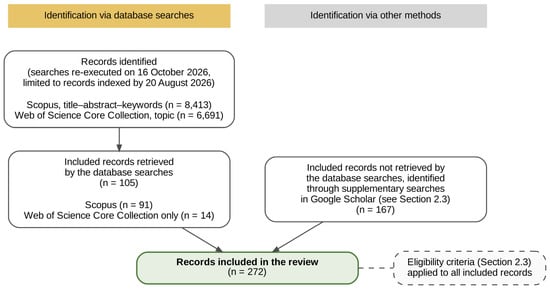
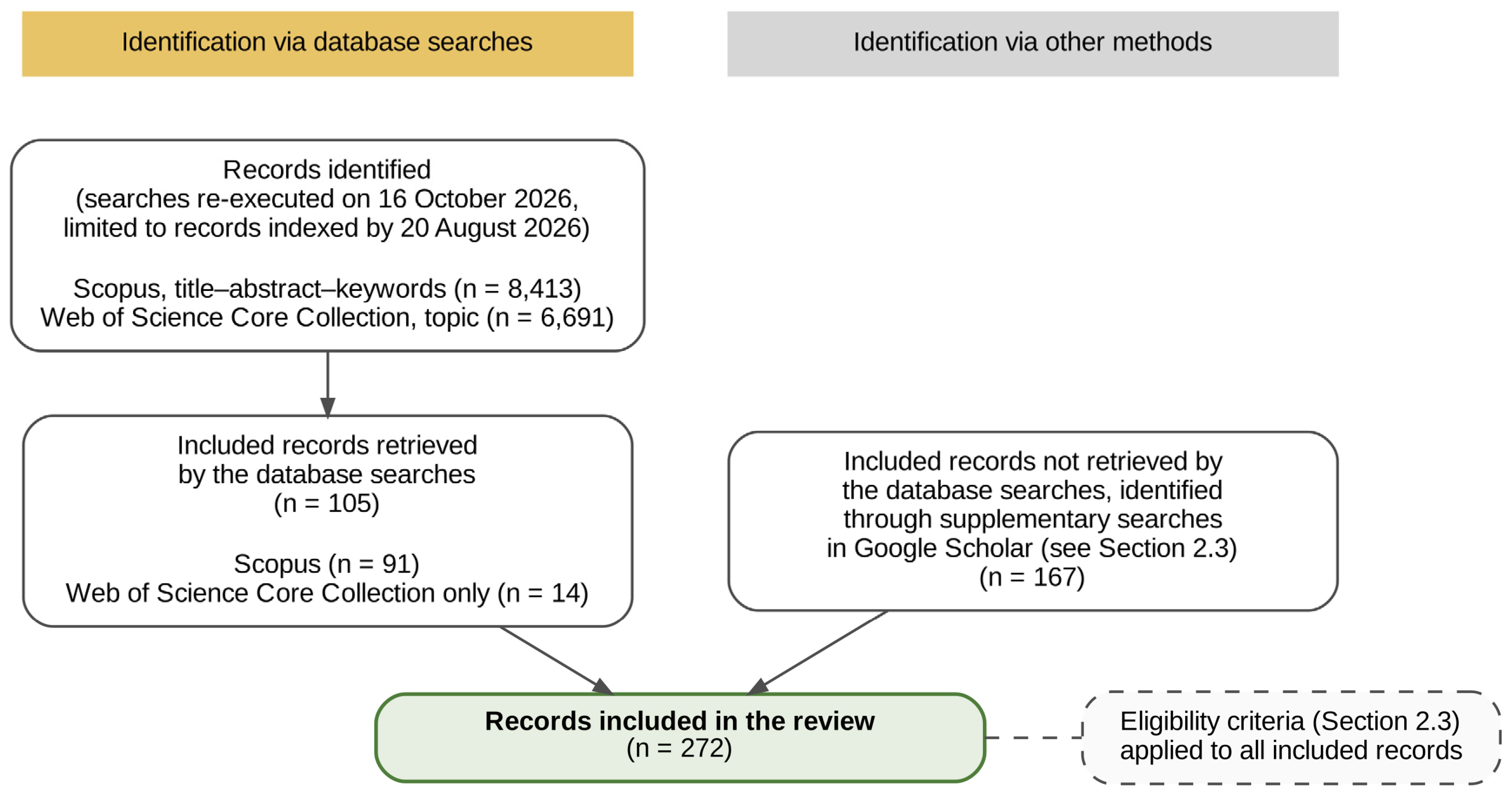
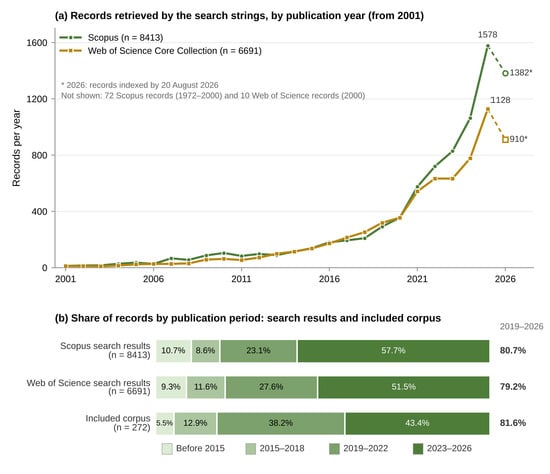
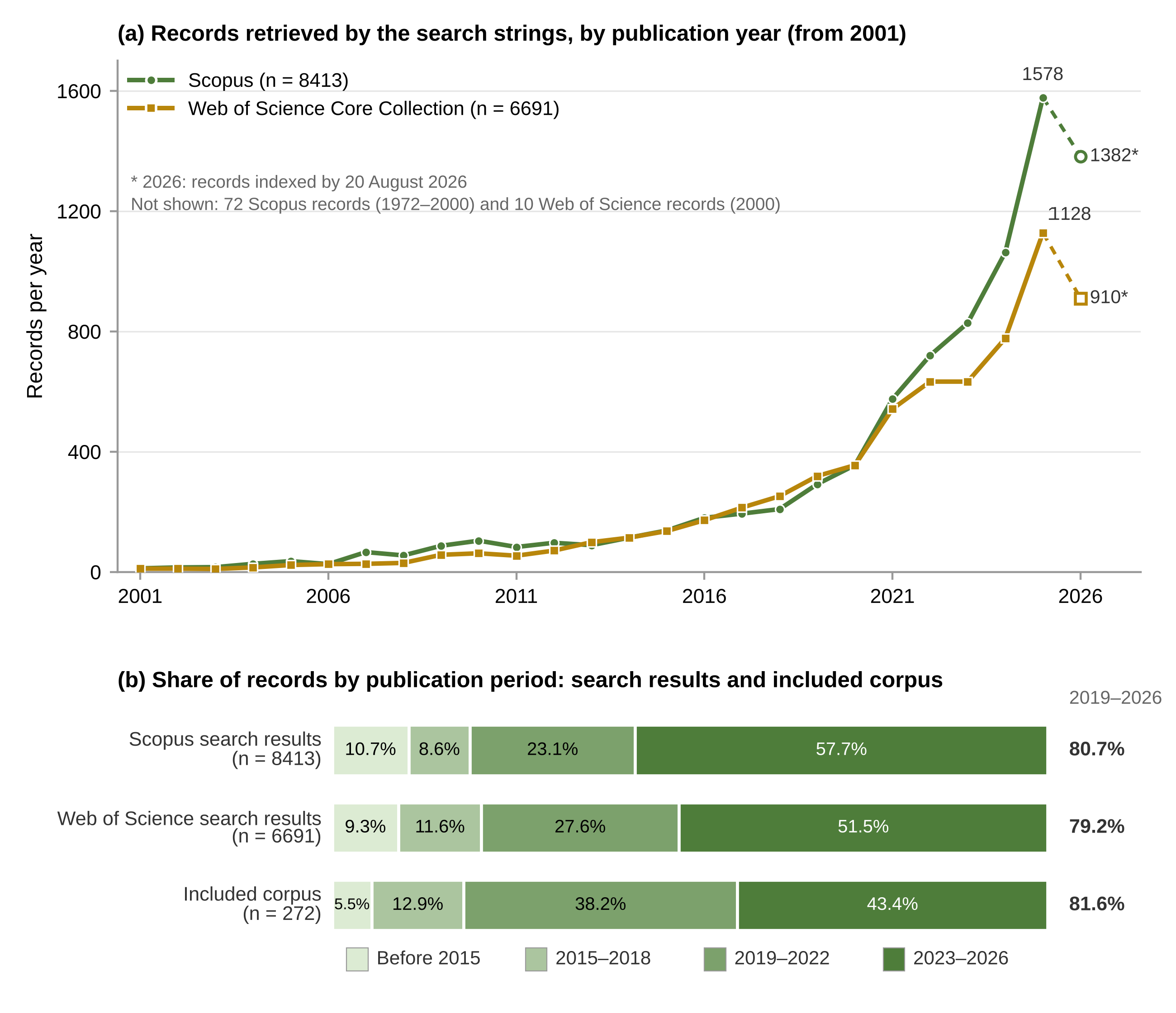
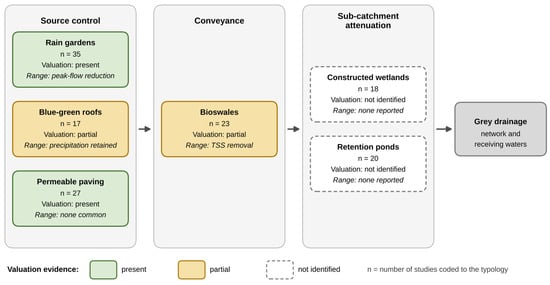
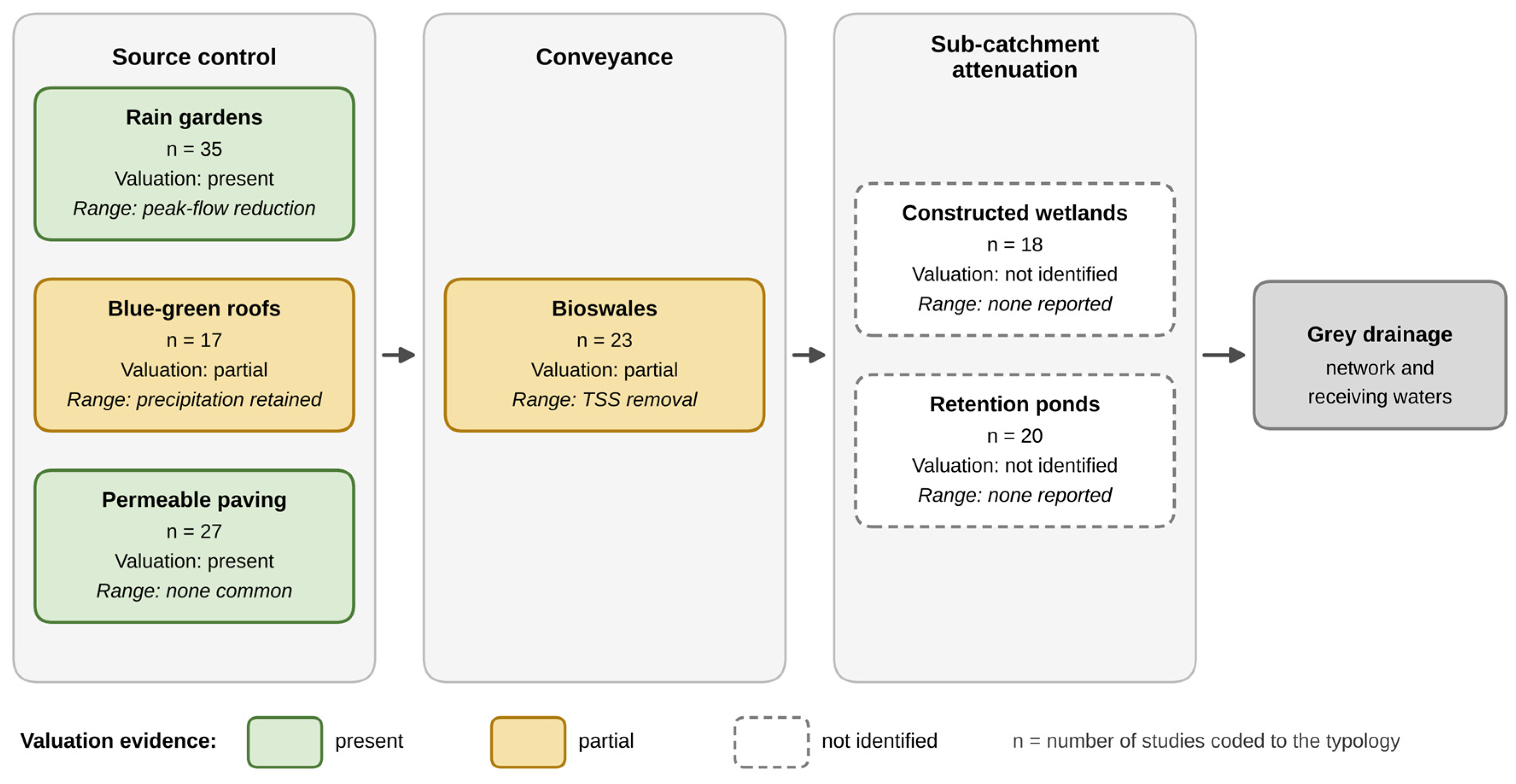

Disclaimer/Publisher’s Note: The statements, opinions and data contained in all publications are solely those of the individual author(s) and contributor(s) and not of MDPI and/or the editor(s). MDPI and/or the editor(s) disclaim responsibility for any injury to people or property resulting from any ideas, methods, instructions or products referred to in the content. |
© 2026 by the authors. Licensee MDPI, Basel, Switzerland. This article is an open access article distributed under the terms and conditions of the Creative Commons Attribution (CC BY) license.