


Abstract
Across Africa, drought seldom occurs alone. Rainfall deficits often coincide with heat, rapid soil moisture loss and reduced streamflow, producing compound events whose impacts exceed those of any single driver. This review synthesises station observations, satellite and reanalysis products, and climate model simulations to clarify where such events are most common, how they form, how they affect societies and ecosystems, and how risks are changing. A practical tiered definition tailored to African conditions is outlined and applied to identify five recurrent hotspots: the Sahel, the Greater Horn of Africa, southern Africa, the margins of the Congo Basin and the Guinea Coast. The review sets out a physically consistent sequence that links basin-scale sea surface temperature anomalies to shifts in monsoon circulation, and then to land processes that amplify and prolong heat and dryness through reduced evapotranspiration and soil-moisture memory. Documented impacts include lower crop and pasture productivity, pressure on rivers, reservoirs and groundwater, stress on hydropower and wider consequences for food and energy security. Compound drought frequency across these hotspots has risen by 18–55% since 1980, with the probability of the most severe events roughly doubling at 1.5 °C of global warming and tripling at 3 °C. The review highlights near-term priorities, including compound-aware monitoring, sub-seasonal-to-seasonal early warning and conjunctive water management.
1. Introduction
Africa is the continent most exposed to climate variability and least equipped to absorb it. Between 1970 and 2023, approximately 95% of weather-related deaths in Africa resulted from droughts and floods, and drought alone accounts for roughly 34% of total economic losses from natural disasters [1]. Across sub-Saharan Africa, agriculture contributes 15–35% of gross domestic product in most countries and employs the majority of the labour force, so disruption to rainfall propagates rapidly into food production, livelihoods, and macroeconomic stability [2,3].
Classical drought science distinguishes four operational categories: meteorological drought (below-normal precipitation), hydrological drought (depleted streamflow and groundwater), agricultural drought (soil moisture deficits that stress crops), and socioeconomic drought (when water supply fails to meet demand) [4,5]. In plant and soil sciences, physiological drought is also recognised as a condition in which plants experience water stress despite apparently adequate soil moisture because salinity, poor aeration, root-zone constraints, or low temperatures limit uptake [6,7,8,9]. While physiological drought is not treated here as a separate operational class, it is relevant to compound drought because high evaporative demand, soil degradation, and salinity can intensify plant water stress even when rainfall deficits alone do not fully explain impacts.
A growing body of work documents the co-occurrence of precipitation deficits with anomalously high temperatures, successive dry years that prevent soil-moisture recovery, and land-use change that amplifies moisture stress [10,11,12,13,14,15]. These are compound drought events, defined broadly as the co-occurrence or rapid succession of two or more climate drivers or hazards whose combined impacts exceed those of any single driver [16]. Studies comparing compound and non-compound dry periods show crop-yield losses that are two to four times larger during compound events, longer-lived water stress, and higher mortality and displacement, even when precipitation shortfalls are comparable [17,18,19,20,21].
Several developments have brought compound drought to scientific and policy prominence. First, observational records are now long enough to detect multi-decadal intensification of compound events in Africa [22,23]. Second, improvements in reanalysis products, particularly European Centre for Medium-Range Weather Forecasts Reanalysis version 5 (ERA5) and Modern-Era Retrospective Analysis for Research and Applications, Version 2 (MERRA-2), have made it possible to characterise the multi-variable structure of drought events at spatial and temporal resolutions meaningful for agricultural and hydrological impact assessment [24,25]. Third, the Coupled Model Intercomparison Project, Phase 6 (CMIP6) ensemble provides substantially improved process representation relative to earlier generations, particularly for African precipitation, making it possible to project compound drought risk changes with greater confidence [26,27,28].
Despite these advances, there is no continent-wide synthesis focused specifically on compound drought in Africa. Existing research emphasises individual regions [23,29,30], specific drivers such as the El Niño-Southern Oscillation [17,31,32], or focused hazard types such as flash drought [33,34]. Reviews of compound events more broadly have been dominated by case studies from North America, Europe, and Australia, where station networks are denser, and data archives are richer [35,36,37,38]. Africa appears in global analyses but rarely as the primary focus.
The review adopts the typological framework developed by Zscheischler et al. [16] and extend it to reflect the specific physical mechanisms operating across Africa′s diverse climate zones. Literature was selected based on relevance, data quality, and geographic applicability, with the aim of synthesis and risk framing rather than exhaustive coverage. Accordingly, this article should be read as an integrative synthesis review, not a formal systematic review or meta-analysis. The study addresses five questions: (1) How is compound drought best defined and classified in the African context? (2) Where are compound droughts most frequent and severe, and how have patterns evolved since 1980? (3) What atmospheric, oceanic, and land-surface mechanisms drive formation and intensification? (4) What are the documented impacts on agriculture, hydrology, ecosystems, and human welfare? (5) How are characteristics projected to change with warming, and what research and institutional gaps must be closed to manage risk?
The synthesis spans 1980–2024 and draws on station observations, reanalyses, satellite, global river-flow archives, crop-yield databases, and CMIP6 outputs. The resulting conceptual model depicts the three-layer cascade from oceanic forcing to atmospheric response and land-surface stress that produces compound drought (Figure 1).
Figure 1.
Causes of compound drought in Africa: a three-layer cascade linking oceanic forcing, atmospheric response, and land-surface impacts, with representative hydrological and agricultural consequences.
2. Conceptual Framework and Typology of Compound Drought
2.1. From Single Hazard to Compound Risk
The term compound event entered mainstream climate science through the Intergovernmental Panel On Climate Change (IPCC) Fifth Assessment Report [39], which defined it as a combination of two or more extreme events that cause large impacts. Subsequent refinements, for example, Zscheischler et al. [16] proposed a typology distinguishing four classes: multivariate events, in which two or more variables are simultaneously extreme; temporally compounding events, in which successive hazards prevent recovery; spatially compounding events, in which co-occurring extremes in different but connected locations amplify impacts; and physically compounding events, in which one precondition makes a second hazard more likely or severe, added more details to this definition. This framework has since been applied across multiple disciplines and validated against observational records in North America, Europe, and Australia [21,37].
In the African context, all four classes are relevant but operate differently across contrasting climate zones. The Sahel frequently experiences multivariate compound drought in the form of concurrent precipitation deficits and anomalously high temperatures during the June-to-September monsoon season [29,40,41]. Southern Africa more commonly sees temporally compounding drought, where back-to-back dry seasons deplete soil moisture and reservoir storage progressively [42,43]. The Congo Basin margins experience physically compounding events, where deforestation reduces evapotranspiration and atmospheric moisture recycling, making subsequent dry periods more intense [11,44]. The Greater Horn of Africa is prone to temporal compounding across its bimodal rainfall calendar, in which failures of two successive seasonal rains compound to produce multi-year hydrological crises [22,23].
2.2. Operational Definitions
The review defines compound drought in Africa as any event in which at least two of the following four conditions co-occur within the same season or across two consecutive seasons in the same location: (a) standardised precipitation index at the 3-month timescale below −1.0 (SPI-3 < −1.0); (b) standardised soil moisture index below −1.0 (SSI < −1.0); (c) maximum temperature anomaly exceeding +1.5 standard deviations above the climatological mean; and (d) standardised streamflow index below −1.0 (SDI < −1.0). These thresholds were selected to represent moderate but operationally meaningful departures that are widely used in drought monitoring [45] and compound-event detection [4,18,19]. They also provide a practical African adaptation of the broader framework of Zscheischler et al. [16], i.e., SPI and maximum temperature capture multivariate co-occurrence, SSI and SDI represent propagation into agricultural and hydrological drought, and the two-season persistence criterion captures temporal compounding. In this sense, the three-tier system is not a competing typology, but a regionally tailored operational implementation designed to classify severity consistently across data-sparse environments.
This article distinguishes three severity tiers. Tier 1 compound drought meets two of the four conditions simultaneously; Tier 2 meets three conditions simultaneously; Tier 3 meets all four conditions simultaneously or persists across two or more consecutive seasons. Tier 3 events, while rare under the historical climate, are responsible for the most catastrophic recorded outcomes. The 1983 to 1985 Sahelian famine, the 2010 to 2012 Greater Horn crisis, the 2015 to 2016 southern African food emergency, and the 2021 to 2023 multi-season Horn drought all qualify as Tier 3 events under this classification. Return period analysis suggests that Tier 3 events had a recurrence interval of approximately 25 to 40 years under pre-industrial climate conditions; under current warming, that interval has already contracted to approximately 15 to 20 years across the highest-risk zones [46,47,48].
2.3. Flash Drought as a Distinct Compound Subtype
Flash drought, characterised by an unusually rapid onset of agricultural drought conditions over days to weeks, represents an emerging and distinct compound subtype of relevance to African smallholder farming systems. Unlike slowly developing meteorological droughts, flash droughts combine precipitation deficits with elevated temperatures and wind speeds to rapidly deplete soil moisture, exceeding plant stress thresholds before farmers can activate adaptive responses [33,34,49]. Their impacts are often strongest where soils have low moisture-retention capacity because of coarse texture, shallow rooting depth, low organic-matter content, crusting, compaction, or prior degradation. These factors reduce infiltration and plant-available water and shorten soil-moisture memory by increasing runoff and rapid drainage [11,50,51,52,53].
In Africa, flash drought events have been documented across the Sahel, southern Africa, and East Africa, with compound drought–heatwave co-occurrence increasingly recognised as a key amplifier [54,55,56]. Their increasing frequency is linked both to more intense surface warming and to greater inter-annual variability in the onset of seasonal rains, which creates windows of high vulnerability at the start of growing seasons [57]. The integrated causal pathways through which oceanic forcing, land-surface feedback, and deforestation amplifiers combine to produce each of the four compound drought types identified in this review are summarised schematically in Figure 2.
Figure 2.
Schematic summary of how large-scale oceanic forcing, atmospheric circulation anomalies, and land-surface feedback interact to produce compound drought in Africa. The diagram links representative drivers to the compound-event types discussed in the text and highlights the feedback that can prolong or intensify impacts.
2.4. Methods
This review is an integrative synthesis rather than a formal systematic review, but the literature search followed an explicit screening protocol to improve transparency and reduce selection bias. Searches were conducted between January and April 2025 in Web of Science, Scopus, Google Scholar, and publisher databases using combinations of the terms “compound drought”, “hot-dry extremes”, “flash drought”, “Africa”, “Sahel”, “Horn of Africa”, “southern Africa”, “Congo Basin”, “Guinea Coast”, “ENSO”, “IOD”, “soil moisture”, “streamflow”, and “land-atmosphere coupling”. The time window for the evidence base spans 1980–2024, with older foundational papers retained where they established key mechanisms or definitions. Studies were included when they were peer reviewed (or, for event documentation, issued by recognised operational agencies such as FAO, FEWS NET, OCHA, WMO, or IPC), reported methods and data sources clearly, and had direct relevance to African drought processes, impacts, or projections. Preference was given to studies with observational support, multi-dataset consistency, or regionally tested models, where evidence was sparse or uncertain. The three headline numbers used in the review, i.e., the 18–55% frequency increase, the doubling and tripling of probability at 1.5 °C and 3 °C, and the contraction of Tier 3 recurrence from 25 to 40 to 15–20 years, each rest on distinct bodies of peer-reviewed evidence summarised below.
Compound drought frequency has increased by 18–55% since 1980 (Table 1). This range represents the spread of multi-decadal frequency trends across the five hotspot regions. Annual Tier 1+ event counts for each region were derived by applying the co-occurrence thresholds of Section 2.2 to ERA5 v5 [25], CHIRPS v2.0 [22], and GLEAM v3.8a [58] for the period 1980–2020. This provides a 41-year continuous record, which meets common guidance that SPI-type drought indices are most robust when calculated from ~30 years (ideally 30–50 years) of data used to characterise the climatological distribution. Because the multi-variable reconstruction begins in 1980, the analysis is intended to quantify relative changes across the satellite/reanalysis era rather than to infer centennial-scale stationarity. The thresholds were cross-checked against event narratives from major documented drought episodes in the Sahel, Greater Horn, and southern Africa to ensure that Tier 2 and Tier 3 classifications aligned with independently reported severe impacts. Decadal trends were estimated with Sen’s slope estimator [59] and tested for significance at p < 0.05 using the modified Mann–Kendall test [60]. The Congo Basin margins (18%) and the Greater Horn of Africa (55%) set the lower and upper ends of the 18–55% continental range.
The shortening of Tier 3 recurrence intervals from 25 to 40 years under pre-industrial conditions to 15–20 years under the current climate draws on attribution science and the IPCC Assessment Report 6 (AR6) synthesis. Otto et al. [46] applied formal event attribution to CMIP5 ensembles and observational records to quantify how anthropogenic forcing has shortened return periods for severe multi-year drought in southern Africa. Russo et al. [47] developed a non-stationary standardised precipitation index framework for estimating return-period changes in extreme dry years, a methodology that has been applied in African regional attribution work. The IPCC AR6 Working Group I (WG1) synthesis independently documents a robust continental increase in the frequency of compound hot–dry events consistent with a contracted recurrence interval [61]. Because direct pre-industrial observational baselines for tropical Africa remain limited, the 25–40 and 15–20 year ranges should be read as order-of-magnitude estimates rather than precise point values.
The statement that compound drought probability approximately doubles at 1.5 °C and triples at 3 °C is drawn from three CMIP6-based global studies. De Luca and Donat [62] quantified projected changes in compound hot–dry extremes over global land regions under SSP2-4.5 and SSP5-8.5; Dong et al. [63] assessed anthropogenic exacerbation of high-risk compound hot–dry events over the past century and into the future; and Guo et al. [64] analysed rising compound hot–dry extremes and their inequality in human exposure risks. Sub-Saharan Africa consistently appears among the regions with the strongest frequency-ratio signals in all three studies.
The agricultural loss ratio of 1.8–3.2 for compound versus single-driver drought events is synthesised from the impact literature collated in Table 2. The ratio is informed by Lesk et al. [65], who quantified the global influence of extreme weather on crop production using FAO national harvest statistics; Lobell et al. [66], who documented heat-drought interaction losses in African maize; and event-specific FAO GIEWS crop assessments and FEWS NET yield bulletins for the nine compound drought episodes in Table 2. The lower bound (1.8×) reflects moderate Tier 1–2 events in relatively buffered systems; the upper bound (3.2×) reflects Tier 3 events such as the 2010–2012 Greater Horn crisis and the 2015–2016 southern Africa emergency, where heat, precipitation deficit, and antecedent soil-moisture depletion all acted simultaneously. Event-level production statistics are summarised in Table 2, and the ratio estimate used in this study was derived from the primary literature [67,68,69,70,71,72,73,74,75,76,77,78,79,80,81,82,83,84,85,86,87,88,89,90,91,92,93,94,95,96]. Anthropic Claude 3.5 Sonnet was used to refine the layout of the conceptual diagram in Figure 1, which illustrates the three-layer cascade of causes of compound drought in Africa. The tool was limited to layout suggestions for the figure; it did not generate new data or results. The output was reviewed, edited, and verified by the author.
3. Climatological and Observed Spatial Patterns
3.1. Climate Diversity and Drought Predisposition
Africa spans ~30.4 million km2 and includes a wide range of major climate zones, from hyper-arid desert (the Sahara covers ~9.2 million km2) to humid tropical rainforest in the Congo Basin. This diversity means that drought, in its multiple forms, is a near-permanent background condition somewhere on the continent at any given time. The Inter-Tropical Convergence Zone (ITCZ) migrates across sub-Saharan Africa between April and October, generating the seasonal rainfall on which approximately 630 million rain-fed farmers depend [3,97]. Disruptions to this seasonal migration, arising from sea surface temperature (SST) anomalies, shifts in the West African monsoon, or changes in land-surface properties, can rapidly propagate into agricultural stress through reduced rainfall, elevated evaporative demand, and shortened growing-season water availability (high confidence, based on robust evidence and high agreement).
This review focuses on five sub-Saharan hotspots, the Sahel, Horn of Africa, southern Africa, Congo Basin margins, and the Guinea Coast, where compound drought signals are most consistently detected across observational datasets and modelling studies (high confidence, based on robust evidence and medium-to-high agreement). By contrast, North Africa (including the Maghreb and Mediterranean coastal fringe) and the central African interior beyond the Congo Basin margins were not assessed here. Available evidence for compound drought dynamics in these regions is more spatially heterogeneous and more limited by observational coverage, so a dedicated synthesis will be increasingly valuable as station density, remotely sensed products, and reanalysis performance continue to improve (medium confidence, based on limited-to-medium evidence and medium agreement).
Three ocean basins exert a dominant influence on African rainfall variability. The tropical Pacific acts through El Niño–Southern Oscillation (ENSO), which is the single largest driver of inter-annual rainfall variability across the continent and accounts for 20–40% of rainfall variance in most drought-prone regions [32]. The Indian Ocean influences eastern Africa through the Indian Ocean Dipole (IOD) and through basin-wide warming trends that have intensified since the 1970s [98,99,100]. The Atlantic shapes West African and Sahelian rainfall through the Atlantic Meridional Mode (AMM) and the Atlantic Niño [101,102,103]. However, these oceanic forcings do not act independently. El Niño events co-occur with positive IOD phases with a frequency above random chance, and together they produce suppressed rainfall across southern Africa and the Greater Horn simultaneously [104,105]. Therefore, understanding compound drought requires treating Africa as a continent embedded within a tightly coupled multi-basin ocean-atmosphere system.
Long-term warming trends superimposed on this multi-ocean forcing structure are steadily shifting the baseline conditions against which drought severity is assessed. The African continent has warmed by approximately 0.5–1.5 °C since pre-industrial times, with the largest warming over the Sahel, southern Africa, and East Africa [106,107]. This warming raises the temperature component of compound drought events even in periods when precipitation/moisture holds at climatological averages, progressively converting formerly moderate drought years into compound heat-drought events [17,108,109].
3.2. Regional Hotspots of Compound Drought
Table 1 and Figure 3 summarise the five compound drought hotspots identified in this review, together with dominant event types, principal climate drivers, and trends in event frequency, while Figure 4 presents the decadal frequency progression and severity Tier distribution across these regions.
Figure 3.
Schematic map of Africa showing the approximate extent of the five recurrent compound-drought hotspot regions highlighted in Table 1. Hatched areas are indicative and intended for synthesis only, not for strict boundary delimitation.
Figure 4.
(a) Decadal compound-drought event frequency by hotspot region for 1980–2020 using the Tier 1+ criteria defined in Section 2.2 (SPI-3 < −1.0; SSI < −1.0; Tmax anomaly > +1.5 SD; SDI < −1.0). Bars indicate the number of annual hotspot events aggregated within each decade; percentage labels denote the increase from the 1980s baseline to 2010s. (b) Severity-tier distribution showing the share of events classified as Tier 1 (moderate), Tier 2 (severe), and Tier 3 (catastrophic) in each hotspot. The Greater Horn of Africa has the largest share of Tier 2–3 events, consistent with repeated sequences of failed rainy seasons documented for that region.
Table 1.
Compound drought hotspots in Africa: classification, dominant drivers, and observed trends.
3.2.1. The Sahel
The Sahel extends roughly 5400 km across the southern margin of the Sahara, from Senegal in the west to Eritrea in the east. It experienced one of the most sustained hydrological crises of the 20th century during the 1968–1985 period, when precipitation anomalies exceeded −30% of the long-term mean for multiple consecutive decades [23,128]. This crisis is now understood as arising from the combined effects of remote SST forcing through the Atlantic Meridional Mode and anthropogenic land degradation that amplified the initial rainfall deficit through soil-albedo and moisture recycling feedbacks [11,128,129,130].
The partial recovery of Sahel rainfall since the late 1980s, evident in gauge records and satellite vegetation indices, is widely documented [29,112,131]. Current evidence suggests that anthropogenic forcing, particularly increased greenhouse gases, with a contribution from aerosol changes, has been a principal driver of the recovery, acting through SST gradients and enhanced Sahara–Sahel thermal contrasts rather than basin-wide tropical ocean warming alone.
Despite this recovery, compound drought vulnerability persists (high confidence). The Sahel has warmed faster than the global average, and Africa as a whole has warmed at about 0.3 °C per decade (1991–2023), slightly faster than the global mean and consistent with substantial regional warming since the mid-1970s, which increases the likelihood that even moderate precipitation deficits co-occur with anomalous heat [112,132].
In the tiered framework used here (Section 2.2), this thermodynamic shift raises the probability that Tier 2 and Tier 3 compound events (i.e., increasingly severe hot–dry co-occurrences) occur even during the post-1985 recovery period, because the warming component of the compound is rising irrespective of the sign of regional precipitation trends (high confidence) [133].
Consistent with broader assessments, West Africa is experiencing widespread warming, a partial recovery of monsoonal precipitation, and increasing extremes, with important implications for rain-fed agriculture. Consistent with this, recent West African land-surface temperature (LST) analyses show that hotspots of elevated surface temperature co-locate with vegetation stress, implying that warming-related heat exposure can persist even where rainfall and/or greening has partially recovered [134].
Agricultural drought in the Sahel is further compounded by changes in intra-seasonal rainfall distribution and by local land degradation associated with overgrazing, vegetation loss, trampling, and soil-surface crusting. These processes reduce infiltration, lower water-holding capacity, increase runoff and erosion, and weaken the buffering role of soils and pasture cover during dry spells [51,53,112]. The partial greening signal, therefore, conceals local heterogeneity: in many areas, more intense rainfall delivered in fewer events can produce less effective soil-moisture recharge than the same seasonal totals delivered through moderate, sustained events [135,136].
3.2.2. The Greater Horn of Africa
The Greater Horn of Africa (GHA), including Ethiopia, Somalia, Eritrea, Djibouti, Kenya, Uganda, and Tanzania, shows pronounced spatial and seasonal heterogeneity in rainfall regimes. Much of equatorial East Africa experiences a bimodal rainfall calendar with long rains (March–May, MAM) and short rains (October–December, OND), whereas large parts of Ethiopia and Eritrea follow a different seasonal cycle in which Belg (approximately February–May) contributes to spring rainfall while the main Kiremt rains occur in June–September.
Across the region, year-to-year rainfall variability is strongly shaped by remote SST forcing, especially ENSO and Indian Ocean SST gradients (including IOD-related variability) [23,100,137]. When El Niño suppresses the long rains and a subsequent La Niña suppresses the short rains in the following year, the result is a multi-season compound drought. This sequence, known as the double-dip pattern, drove the 2010 to 2011 East African food crisis [31,138].
The GHA has experienced an exceptional run of compound drought events since 2000. The region recorded five separate sequences of four or more consecutively failed rainy seasons between 2000 and 2023, compared with one such sequence in the preceding 40 years of the satellite record [23,139]. The mechanisms behind this intensification are debated. Funk et al. [140] and Williams and Funk [141] attribute much of the long rains failure trend to the warming of the central Indian Ocean, which enhances subsidence over East Africa during the March to May period. Wainwright et al. [100] provide additional evidence that the positive IOD′s relationship with Indian Ocean warming amplifies the long rains suppression. Both mechanisms are consistent with the CMIP6 projection that long rains drying will continue under warming [142,143], creating what has been termed the East African climate paradox: intensifying short rains alongside progressively failing long rains described as a “double-dip” sequence.
Meanwhile, the human consequences have been catastrophic. The 2021 to 2023 compound drought, driven by six consecutive failed rainy seasons, affected approximately 36 million people across Ethiopia, Somalia, and Kenya, making it the longest and most geographically extensive humanitarian crisis in the post-war record for the region [77,144]. Formal attribution analysis by Kumutai et al. [145] demonstrated that human-induced climate change substantially increased the severity of the 2021 to 2022 component of this event, with greenhouse gas warming making the combined precipitation deficit and elevated potential evapotranspiration that defined the compound structure significantly more probable in the current climate than in a pre-industrial baseline. The event occurred against a backdrop of pre-existing conflict, COVID-19 economic disruptions, and the global commodity price shock triggered by the Russia-Ukraine conflict, exemplifying how compound drought interacts with compound socio-political stress to produce outcomes far exceeding what climate alone would generate [146].
3.2.3. Southern Africa
Southern Africa’s rainfall is dominated by the austral summer rainfall regime, which is strongly modulated by ENSO [42,43]. During El Niño, weakened Pacific Walker circulation and associated teleconnections tend to suppress austral-summer rainfall over large parts of southern Africa, including Zimbabwe, Zambia, Mozambique, Malawi and northern South Africa [42,147]. The 2015–2016 El Niño, among the strongest events in the historical record, coincided with severe rainfall deficits and anomalously high temperatures across much of the subregion, substantially increasing agricultural stress [148,149]. In Zimbabwe, FAO estimated total cereal production in 2016 at about 636,000 tonnes, approximately half of the previous five-year average, reflecting widespread crop failure under El Niño–induced drought conditions [150]. In Zambia, national maize production recovered to near average, but the drought strongly depressed yields in the most affected southern areas, with maize output in Southern Province reported to have fallen by about half [149,151].
Beyond individual El Niño events, southern Africa faces a secular drying trend superimposed on ENSO-driven variability. CMIP5 and CMIP6 models show robust agreement on a 5–20% reduction in warm-season precipitation under moderate to high warming scenarios [27,152]. This background drying lowers antecedent soil moisture and pushes systems closer to agricultural-drought thresholds, so even moderate El Niño events are more likely to trigger compound hot–dry conditions. It also increases the likelihood of low reservoir storage and related hydrological stress during multi-season droughts, as illustrated by the Lake Kariba drawdown during the 2015–2016 event [96,153].
3.2.4. Congo Basin Margins
The Congo Basin contains the world’s second-largest tropical forest (~3.3 million km2) and is one of the African regions where compound drought arises most clearly from physically interacting drivers. Although the basin interior is among the wettest climates globally, with mean annual precipitation exceeding 1600 mm across large areas, the basin margins, especially eastern Democratic Republic of the Congo, the Central African Republic, and northern Congo-Brazzaville, have undergone progressive drying since the 1980s. This drying has been linked to forest loss and weakened atmospheric moisture recycling [11,154].
Pan-tropical satellite analyses indicate that tropical deforestation reduces rainfall at ≥50–200 km scales, i.e., over mesoscale-to-regional areas that encompass multiple convective systems rather than only the deforested pixels, implying that forest loss can weaken rainfall across surrounding landscapes, not just at the point of clearing. Consistent with this scaling, continued deforestation in the Congo Basin is estimated to reduce local precipitation by ~8–10% by 2100 [121]. This locally generated precipitation shortfall establishes a background drying tendency that preconditions the system and amplifies the impacts of remotely forced anomalies. Consequently, when regional precipitation is further suppressed (e.g., through ITCZ weakening or a La Niña event), the combined effects of reduced moisture recycling and reduced remote moisture inflow can produce deeper and more persistent soil-moisture deficits than either mechanism would generate in isolation.
3.2.5. Guinea Coast and West Africa
The Guinea Coast, from Guinea-Bissau to southwestern Nigeria, is influenced by both the West African monsoon and moist Atlantic maritime air masses. This dual dependence makes rainfall sensitive to disruptions in either driver. At the regional scale, AMM variability influences the position of the ITCZ and thus seasonal rainfall outcomes, while at sub-regional and local scales, land–atmosphere feedback, soil properties, and antecedent water storage determine how quickly meteorological deficits translate into agricultural and hydrological drought. Negative AMM phases, linked to cool North Atlantic SST anomalies, suppress ITCZ penetration and can promote early-season dry spells within the first few weeks after monsoon onset [102,103,155]. Although the Guinea Coast is generally less drought-prone than the Sahel or southern Africa, hot and delayed monsoon seasons can still produce low reservoir levels and rapid soil-moisture drawdown, particularly in agriculturally intensive interior zones.
The Guinea Coast is increasingly exposed to high temperatures during early-season crop development, and heat stress is a well-established constraint on rain-fed crop yields in Africa, including maize [66]. Late or erratic monsoon onset is also a recognised vulnerability for the region because it can disrupt planting calendars and shorten effective growing periods [156]. Ragatoa et al. [41] provides clear recent evidence of a regional shift, showing that the frequency of compound drought–heatwave events increased across West Africa from 1981 to 2020, with the strongest increases in the Sudan and Sahel zones, and detectable increases also occurring in the Guinea zone. These patterns indicate that compound drought–heat stress is becoming a more widespread hazard across the West African monsoon system, extending beyond the traditional drought “hotspots” and increasingly affecting the humid coastal belt as well as the interior.
4. Mechanisms Driving Compound Drought Formation
4.1. Oceanic Teleconnections and Their Compound Effects
ENSO remains the single most powerful remote driver of compound drought across Africa, but its influence is non-uniform in space and time. During El Niño, the Walker circulation weakens, reducing moisture supply to eastern and southern Africa while simultaneously elevating atmospheric temperature through anomalous subsidence warming. These two effects, precipitation suppression and warming, operate through different physical pathways but arrive at the same time and place, constituting a structural mechanism for multivariate compound drought [31,105,157]. The compound probability during El Niño years is estimated to be two to four times higher than during neutral ENSO years for Tier 2 events across southern and eastern Africa [158,159].
The IOD modulates ENSO’s influence on eastern Africa through two distinct pathways. A positive IOD, when the western tropical Indian Ocean warms relative to the east, enhances onshore moisture flux toward the Greater Horn during the short-rains season, whereas a negative IOD has the opposite effect. When La Niña co-occurs with a negative IOD, as happened during both the 2021–2022 and 2022–2023 short-rains seasons, the result is compounded rainfall suppression that neither driver alone would generate [98,100,160]. Recent observational analyses using the Hadley Centre Sea Ice and SST dataset (HadISST) suggest that the frequency of simultaneous La Niña and negative IOD events has increased since the mid-1990s, consistent with Indian Ocean warming that amplifies IOD variance [98,161].
The AMM governs inter-annual variability of Sahel rainfall through its influence on cross-equatorial atmospheric flow and the northward penetration of the ITCZ [103,128]. A positive AMM draws the ITCZ northward, enhancing Sahel rainfall. A negative AMM pushes it southward, reducing it. The AMM is partly modulated by ENSO, with La Niña tending to produce a positive AMM with a two to four month lag, creating pathways through which Pacific Ocean variability influences West African rainfall indirectly [101]. When Atlantic cooling from a negative AMM coincides with regional temperature increases from greenhouse gas forcing, the compound of dry and hot conditions in the Sahel intensifies substantially relative to any single driver.
The Madden-Julian Oscillation (MJO), the dominant mode of intra-seasonal tropical variability, provides an additional compounding mechanism through its modulation of moisture transport to the African continent. Active MJO phases over the Indian Ocean enhance moisture convergence over East Africa and the Congo Basin, while suppressed phases reduce it. In years when seasonal drought is already established, suppressed MJO phases can extend dry spells by two to four weeks, preventing soil moisture recovery and turning moderate droughts into severe ones [162,163,164].
4.2. Land-Surface Feedback and Soil Moisture Memory
Land–atmosphere coupling in Africa creates feedback loops that can convert meteorological drought into more persistent compound events. When precipitation deficits reduce soil moisture, sensible heat flux to the atmosphere increases, boundary-layer temperatures rise, and convective inhibition strengthens. This positive feedback, documented across the Sahel and southern Africa by Koster et al. [165] and further quantified using CMIP6 models by Miralles et al. [166], can extend dry periods by four to eight weeks beyond what oceanic forcing alone would produce. The strength of this feedback is highest in semi-arid transition zones between desert and savanna, where soil moisture occupies a critical range in which small changes in soil moisture have large effects on surface energy partitioning [167,168].
Soil moisture memory, the persistence of anomalous soil moisture states between seasons, plays a central role in temporally compounding drought [169]. In regions with deep soils and low annual precipitation, such as the semi-arid interior of southern Africa and the northern Sahel, soil-moisture deficits from one rainy season can persist through the intervening dry season and reduce soil-water availability at the onset of the next growing season. Model studies suggest that inter-seasonal soil-moisture persistence contributes meaningfully to the probability of two consecutive agricultural droughts, even in the absence of persistent oceanic forcing [170,171]. Dirmeyer et al. [172] found that African soils exhibit the highest land–atmosphere coupling strength of any continent during transition seasons, making soil-moisture memory a particularly potent mechanism for temporal drought compounding.
Groundwater storage provides a secondary buffering mechanism that, when depleted, can amplify compound drought severity. Shallow unconfined aquifers in many African agricultural zones recharge primarily during the wet season and provide baseflow to rivers and access to shallow wells during the dry season. When compound drought depletes both surface runoff and rainfall infiltration, groundwater recharge rates can fall sharply, reducing well-water availability in subsequent dry seasons, even if surface rainfall partially recovers [54,173,174,175,176]. The compound effect of surface drought and groundwater depletion has been documented in northern Ghana, northern Ethiopia, and southern Zambia [177,178], where household water insecurity persists for one to three years after a Tier 2 compound drought event ends.
4.3. Deforestation and Vegetation Loss as Compound Amplifiers
Africa lost forest area at an average net rate of about 3.9 million hectares per year in 2010–2020, the highest regional rate globally [3]. The compound climatic consequences of these land-cover changes extend beyond carbon emissions to include intensified rainfall erosivity and altered surface water pathways. For example, Adeyeri et al. [179] demonstrated that climate change is simultaneously intensifying rainfall erosivity across West Africa, producing a physically compounding dynamic in which drought-weakened vegetation becomes less able to resist the high-energy rainfall events that increasingly punctuate the dry spells. Forest cover maintains local precipitation recycling through evapotranspiration [11,180,181]. In the Congo Basin, evapotranspiration from the canopy contributes a substantial fraction to local precipitation [181]. Deforestation, therefore, reduces a region′s internal moisture supply, increasing dependence on oceanic moisture transport and raising sensitivity to circulation anomalies.
This mechanism produces physically compounding drought in the classic sense: deforestation creates a precondition that makes subsequent precipitation deficits more severe. Simulations by Smith et al. [121] found that ongoing deforestation in the Congo Basin could reduce central African dry-season rainfall by 8–10% by 2100, independently of greenhouse gas forcing. Marengo et al. [182] showed analogous dynamics for the Amazon and argued for African application. When combined with projected drying from climate change in this region, the compound reduction could exceed 20% in the most exposed border zones of the Congo Basin. This projection has direct implications for the 80 million people who live within the Congo Basin watershed and whose water and food security depend on maintained forest cover.
In the same land–atmosphere coupling framework, the loss of evapotranspiration from land-use change not only weakens precipitation recycling but also alters surface-energy partitioning, increasing sensible heating over latent cooling [10]. Beyond moisture recycling, recent AI-aided attribution shows that land-use change is a first-order heat-risk driver, which, indeed, is “a silent amplifier of extreme heat” [183]. Consistent with this mechanism, expansion of cropland and pasture is shown to increase heatwave persistence and occurrence across African sub-regions [10]. Under a high-emissions scenario (SSP5-8.5), Western South Africa is projected to experience >12-fold increases in both heatwave duration and frequency by the late century; under a medium-emissions scenario (SSP3-7.0), the increases are substantially smaller, highlighting the mitigation dividend [10]. Protecting and restoring forest cover, therefore, offers a near-term lever to moderate heat, complementary to emissions reductions, while also supporting partial restoration of precipitation-recycling corridors such as the Congo–Sahel and Congo–West Africa moisture pathways [10,181,184].
Beyond tropical deforestation, agricultural land degradation across the Sahel and southern Africa can amplify compound drought via the soil–albedo feedback first formalised by Charney [129]. Brighter, sparsely vegetated surfaces alter the surface energy balance and can stabilise the lower atmosphere, suppressing convection and rainfall. Despite regional regreening, localised degradation in parts of the Sahel has increased runoff and erosion, pathways through which degraded surfaces can damp convection and locally suppress rainfall [185,186]. Conversely, Farmer Managed Natural Regeneration (FMNR) in Niger, which restored tree cover across ~5 million hectares between 1985 and 2010, improves soil structure and moisture retention and creates cooler, more buffered microclimates in regenerated parklands [187].
4.4. Atmospheric Dynamics Linked to Compound Droughts
At the large-scale atmospheric circulation level, compound drought in Africa is associated with anomalous high-pressure blocking events, planetary Rossby-wave patterns, and jet-stream shifts that can maintain drought-conducive conditions for weeks to months. Blocking anticyclones over the South Atlantic, for example, can divert moisture transport away from southern Africa and suppress rainfall over extended areas [43,173,188]. The South Indian Ocean subtropical high, which normally tracks northward in austral summer to facilitate moisture advection toward southern Africa, can weaken or become anomalously displaced during compound drought years, compounding ENSO-related moisture deficits with an additional regional circulation contribution [42,189].
In the Sahel, the position and strength of the African Easterly Jet (AEJ) help determine whether convection is organised into rainfall-producing systems or remains dominated by dry, dust-laden outflows. During Tier 2 compound drought years, the AEJ shifts anomalously equatorward, reducing the area of organised convection over the northern Sahel and contributing to the simultaneous heat and dryness that define the compound event [97,190,191]. Recent modelling and future-projection studies further suggest that the AEJ may intensify and shift northward under stronger warming, which could, on average, favour enhanced Sahel rainfall but also increase interannual variability. Such a “wetter-mean, riskier-variability” outcome is consistent with water-budget analyses showing that warming and land-surface controls can deepen seasonal water-storage deficits even when atmospheric moisture supply increases, thereby allowing wet extremes and compound drought risk to rise along the same mean climate trajectory [11,192,193].
5. Impacts of Compound Drought in Africa
Compound drought amplifies impacts across agriculture, water systems, ecosystems, and human welfare because heat raises evaporative demand while precipitation scarcity suppresses runoff and recharge [41,194]. Evidence from national harvest statistics shows that cereal production falls about 9–10% during compound heat–drought years, a penalty that exceeds drought-only losses and reflects the added damage pathway of heat stress on crops [65]. In African maize, yield losses increase as days above 30 °C accumulate, and the penalty is larger under water stress, meaning the temperature component adds independent risk even when seasonal rainfall totals do not fully collapse [66]. Beyond staples, Arabica coffee in Ethiopia faces large suitability losses without adaptation (39–59% of current zones), consistent with global assessments showing contractions of low-elevation Arabica under warming [195,196]. In pastoral systems, the compound signal often appears as simultaneous forage and water-point failure; during the 2010–2011 Horn crisis, snapshots reported 15–30% excess livestock mortality across many areas and 40–60% in some localities, lengthening recovery [197,198].
Hydrologically, heat–drought concurrence shrinks rivers and reservoirs more than rainfall alone would suggest because higher temperatures accelerate evaporation from open water and transpiration from stressed vegetation [17,194,199]. An example is Lake Kariba, where the 2015–2016 El Niño drought drove levels to about 12% of capacity, forcing extended electricity rationing in Zambia and Zimbabwe and illustrating how compound deficits cascade into energy systems [94]. Groundwater recovery can lag because recharge is highly non-linear, often occurring in short, intense bursts (and via focused recharge from ephemeral flows in drylands), so compound drought can deplete stores for months while subsequent extreme rain can deliver disproportionate replenishment pulses [174,176].
Ecosystem responses are similarly non-linear. Although a broad Sahel re-greening has occurred since the 1980s, localised degradation persists, especially on shallow soils where runoff and erosion increase, so compound drought years can erase gains and reduce resilience [40,185,186]. In savannas, hot–dry seasons intensify fire risk, and drought stress combined with high-intensity burns increases tree mortality, reducing woody cover and feeding back through higher albedo and lower evapotranspiration [17,194]. In aquatic systems, long records from Lake Tanganyika link warming-driven stratification changes to declining fish productivity, which, compounded by drought, can be further exacerbated via lowered levels and altered nutrient fluxes [200].
For people, compound drought is closely tied to severe food-security outcomes because crop failure, heat stress, and water scarcity overwhelm coping capacity [194]. Drought-linked internal displacement increases during multi-hazard seasons across the Horn and Sahel as households lose both harvests and herds [201]. Health risks rise in parallel: during the 2011–2012 Horn of Africa crisis, situation reports documented cholera and acute watery diarrhoea outbreaks in overcrowded settings with limited safe water and sanitation, illustrating how water scarcity, malnutrition, and disease transmission interact under compound stress [202,203]. These vulnerabilities are further amplified by intensifying heat exposure in African cities and degraded landscapes [204], where land-use change and urban form increase thermal stress and strain water and energy systems [205], compounding public-health risks during drought–heat events.
Table 2 summarises impacts across nine major African compound drought events between 1980 and 2023.
Table 2.
Major compound drought events in Africa. Synthesised from FAO GIEWS, FEWS-NET, IPC, observational records, World Bank disaster-loss databases, OCHA/UNHCR briefs, and peer-reviewed literature [31,69,75,77,79,85,87,112,114,128,206,207,208,209,210,211,212,213,214,215]. Affected population figures refer to IPC Phase 3 and above food-insecurity classifications.
6. Future Projections Under Climate Change
Across warming levels, recent assessments point to a clear rise in Africa’s compound hot–dry risk because warming strengthens the temperature side of drought through higher evaporative demand and faster soil moisture loss, even where projected changes in mean rainfall remain modest or mixed [61,216]. Multi-model CMIP6 analyses show drying in soil moisture and runoff across many African subregions, with southern Africa emerging as a particularly robust hotspot [216]. Independent global studies likewise project strong late-century increases in compound hot–dry extremes over sub-Saharan Africa [62,63,64]. High-resolution convection-permitting experiments add process realism by showing that heavier short-duration downpours can coexist with longer dry spells during the wet season, accelerating drying between events and increasing the likelihood that dry periods are anomalously hot [142].
Regional patterns also matter. In the Sahel, satellite and gauge records reveal an intensification of extreme mesoscale convective systems since the early 1980s, and gauges document an increasing share of rainfall delivered in short, intense bursts rather than in sustained events [135,136]. These shifts imply longer intra-season dry breaks even as some seasonal totals recover relative to the drought decades, a pattern that invites within–season hot–dry overlaps [112]. In the Greater Horn of Africa, a large body of work reconciles the observed decline in the long rains with projections by showing that recent drying reflects a shorter season rather than uniformly weaker daily rain, and by pointing to warming of the Indian Ocean and related circulation changes that disrupt moisture transports toward East Africa [100,140,141]. The result is a higher chance that warm conditions coincide with inadequate long rains moisture, despite the tendency for the short rains to intensify in many models.
CMIP6 and regional syntheses agree on strong warming, persistent soil moisture drying, and a deterioration of hydrological drought characteristics with higher forcing, which together drive a clear increase in compound hot–dry risk through the century [4,152,173,216,217]. The unifying implication is that, as global temperature rises, compound hot–dry events in Africa become more frequent, longer, and more intense because the thermodynamic and land surface pathways are robust to uncertainty in mean rainfall, so risk rises faster than averages alone would suggest [61].
7. Observations, Early Warning, and Adaptation
Progress is limited by thin observational networks, especially for subsurface water. In much of Africa, surface meteorological and hydrological networks remain too sparse to resolve local-scale drought propagation reliably, while groundwater monitoring is often discontinuous or absent. Long groundwater records from the East African interior show that recharge occurs in episodic pulses tied to intense rainfall, which means surface indicators and monthly totals can miss emerging water-supply stress if they are not paired with groundwater monitoring [176]. Recent work demonstrates that installing low-cost borehole sensors in data-sparse areas can materially strengthen hydrological-drought early warning and local response [218]. At the same time, improved representation of convection in regional simulations clarifies how African rainfall can intensify in short bursts while dry intervals lengthen, so continuing the shift toward convection-permitting modelling is essential for translating projections into decision-ready guidance.
Forecast skill has reached a point where anticipatory action is practical when heat and dryness begin to align. The World Meteorological Organisation (WMO) sub-seasonal to seasonal programme provides a multi-centre database and methods that improve 2–6-week prediction of large-scale drivers, opening a practical window for agriculture and disaster risk management [219]. In the Greater Horn, the Intergovernmental Authority on Development (IGAD) Climate Prediction and Applications Centre (ICPAC) issues routine sub-seasonal and seasonal outlooks and is strengthening verification and training so national and humanitarian users can interpret probabilities and thresholds consistently [220]. Independent evaluations show that several global systems provide usable monthly precipitation skill at seasonal onset over parts of the region, supporting operational uptake when advisories are co-produced with users [221,222]. Operational soil-moisture and root-zone forecasts in southern Africa have demonstrated skill in anticipating drought-driven yield losses months before harvest, allowing humanitarian and market responses to start earlier and making compound hot–dry warnings more actionable [223].
While these forecast systems can be skilful, their performance and local applicability remain constrained by the sparsity of in situ observing networks in many parts of Africa. As a defensible minimum benchmark for the forcing observations that underpin land-surface and root-zone forecasts, WMO’s Global Basic Observing Network (GBON) specifies surface land observing at ~100 km horizontal resolution (≈1 station per ~10,000 km2) for essential variables such as precipitation, temperature, humidity, wind and pressure [224]; soil-moisture sensor density is more objective- and landscape-dependent, and is therefore best approached through targeted reference sites in representative agro-ecological zones rather than a single universal spacing.
In heat- and drought-prone landscapes, ensemble systems now extend fire-weather guidance beyond a week and can flag months with elevated fire danger when modes such as El Niño or the IOD dominate [225], giving agencies time to pre-position resources when heat and dryness co-occur. Finally, adaptation should recognise the physics of compound risk. Conjunctive management that balances surface storage with groundwater recharge and demand management can provide a more resilient buffer than reliance on a single source, particularly where recharge arrives in rare pulses and warming tightens water balances. Convection-permitting projections and stronger hydrometeorological observations will sharpen local planning, but much of the near-term benefit will come from using the forecast skill already available at two to eight weeks and from wiring those signals into pre-agreed actions, finance, and communication that reach last-mile users.
8. Conclusions
This review synthesises the emerging literature on compound droughts in Africa and advances three linked contributions. It operationalises compound-drought severity through a pragmatic three-tier framework tied to co-occurring anomalies in precipitation, soil moisture, temperature, and streamflow; it brings together evidence on hotspots, mechanisms, and impacts within a single continental narrative; and it clarifies where process understanding is already mature, most notably for the Sahel, the Greater Horn of Africa, and southern Africa, while identifying priority gaps elsewhere.
The four-class typology of Zscheischler et al. [38] provides a strong conceptual foundation for Africa, but regional operationalisation is needed to reflect the continent’s coupled hydroclimate dynamics. The tiered framework presented here captures multivariate, hydrological, and temporally compounding drought expression and reinforces a consistent finding across case studies, namely that the most damaging events rarely arise from rainfall deficits alone, but from the concurrence of heat, rainfall shortfall, soil-moisture depletion, and streamflow reduction. Spatially, five recurrent hotspots emerge: the Sahel, the Greater Horn of Africa, southern Africa, the Congo Basin margins, and the Guinea Coast; and these zones are dynamically connected rather than fully independent. Their dominant compound expression differs by region (multivariate in the Sahel, temporal in the Greater Horn, and physically compounding along the Congo Basin margins), while distinct oceanic modes structure much of the interannual variability. Across the continent, compound-drought frequency has increased since 1980, with Tier 3 rising most strongly and the Greater Horn accounting for the largest share of the most severe Tier 2 and Tier 3 events.
On mechanisms and impacts, the synthesis shows that Africa’s compound drought risk is shaped by interacting oceanic teleconnections, land–atmosphere coupling, soil-moisture memory, and land-use change. ENSO emerges as the dominant large-scale driver, with the IOD and AMM modulating regional outcomes, while degradation, deforestation, and hydrological storage deficits amplify impacts on crops, pasture, water supply, hydropower, ecosystems, and health. The central implication is straightforward: severity is governed not only by rainfall anomalies, but also by how heat, antecedent storage, land-surface conditions, and recovery time align during a given event.
Moreover, several limitations temper these conclusions. Evidence density remains uneven, with the strongest case-study record in eastern and southern Africa and a thinner literature base for North Africa and parts of central Africa beyond the Congo Basin margins. The tier thresholds are intentionally designed as operational screening tools that support synthesis across heterogeneous datasets; they should not be interpreted as immutable universal cut-offs. Finally, estimates of long-return-period behaviour remain approximate in places because long multivariate observational series and robust pre-industrial baselines are limited across much of the continent.
Future work should prioritise compound-aware monitoring and forecasting that integrates rainfall, temperature, soil moisture, streamflow, and groundwater; expand coverage into under-studied regions; and improve event identification using three-dimensional indicators and better representation of atmosphere–land interactions, hydrological storage, and land-use change. Taken together, the evidence shows that compound drought is becoming an increasingly dominant hazard mode in Africa, demanding multi-variable monitoring, probabilistic impact models, and pre-agreed anticipatory action and finance calibrated to compound thresholds rather than single precipitation indices.
Funding
The author is currently supported by the Australian Research Council Centre of Excellence for the Weather of the 21st Century (grant number CE230100012).
Data Availability Statement
All primary datasets used in this review are publicly available. ERA5 reanalysis data are available from the Copernicus Climate Change Service (https://cds.climate.copernicus.eu, accessed on 21 January 2026). CHIRPS precipitation data are available from the Climate Hazards Centre, UC Santa Barbara (https://www.chc.ucsb.edu/data/chirps, accessed on 2 August 2025). GLEAM soil moisture data are available at https://www.gleam.eu, accessed on 15 September 2025. CMIP6 model output is accessible through the Earth System Grid Federation (https://esgf-node.llnl.gov, accessed on 18 January 2023). FAO GIEWS food security data are available at http://www.fao.org/giews, accessed on 16 February 2026. MODIS NDVI/EVI products are available through NASA Earthdata (https://earthdata.nasa.gov, accessed on 21 January 2026). IPC food security classifications are available at https://www.ipcinfo.org, accessed on 16 February 2026. IDMC displacement data are available at https://www.internal-displacement.org, accessed on 17 February 2026.
Acknowledgments
The author thanks the international teams responsible for maintaining the ERA5, CHIRPS, GLEAM, CMIP6, and MODIS data archives. The author also acknowledges the contributions of National Meteorological and Hydrological Services across Africa, whose observational networks underpin global reanalysis products. The work of ICPAC, AGRHYMET, and SADC-DMC as institutions translating climate science into operational information for African decision-makers is gratefully acknowledged. During the preparation of this manuscript, the author used Claude 3.5 Sonnet for refining the layout of the conceptual Figure 1. The author reviewed and edited the output and takes full responsibility for the content of this publication. The author have read and agreed to the published version of the manuscript.
Conflicts of Interest
The author served as a Guest Editor for the water special issue “Risks of Hydrometeorological Extremes,” but was not involved in the editorial review process or the decision to publish this article.
Abbreviations
The following abbreviations are used in this manuscript:
| IPCC | Intergovernmental Panel On Climate Change |
| ERA5 | European Centre for Medium-Range Weather Forecasts Reanalysis version 5 |
| MERRA-2 | Modern-Era Retrospective Analysis for Research and Applications, Version 2 |
| CMIP | Coupled Model Intercomparison Project |
| SPI | Standardised Precipitation Index |
| SDI | Standardised Streamflow Index |
| SSI | Standardised Soil Moisture Index |
| WMO | World Meteorological Organisation |
| IOD | Indian Ocean Dipole |
| ITCZ | Intertropical Convergence Zone |
| ENSO | El Niño–Southern Oscillation |
| AMM | Atlantic Meridional Mode |
| SST | Sea Surface Temperature |
| WAM | West African Monsoon |
| GHA | Greater Horn of Africa |
| HadISST | Hadley Centre Sea Ice and SST dataset |
| MJO | Madden-Julian Oscillation |
| FMNR | Farmer-Managed Natural Regeneration |
| AEJ | African Easterly Jet |
| WHO | World Health Organisation |
| UN | United Nations |
| NDVI | Normalised Difference Vegetation Index |
| ICPAC | Intergovernmental Authority on Development (IGAD) Climate Prediction and Applications Centre |
| CHIRPS | Climate Hazards Group InfraRed Precipitation with Stations |
| GLEAM | Global Land Evaporation Amsterdam Model |
| MODIS | Moderate Resolution Imaging Spectroradiometer |
| AGRHYMET | Centre Régional de Formation et d’Application en Agrométéorologie et Hydrologie Opérationnelle |
| SADC-DMC/SADC-CSC | Southern African Development Community (now the SADC Climate Services Centre, Botswana) |
| IPC | Integrated Food Security Phase Classification |
| FEWS NET | Famine Early Warning Systems Network |
| FAO GIEWS | FAO Global Information and Early Warning System on Food and Agriculture |
| FAO | Food and Agriculture Organisation |
References
- WMO. State of the Climate in Africa 2023; United Nations: Geneva, Switzerland, 2024. [Google Scholar]
- Shiferaw, B.; Tesfaye, K.; Kassie, M.; Abate, T.; Prasanna, B.M.; Menkir, A. Managing Vulnerability to Drought and Enhancing Livelihood Resilience in Sub-Saharan Africa: Technological, Institutional and Policy Options. Weather Clim. Extrem. 2014, 3, 67–79. [Google Scholar] [CrossRef] [Scilit]
- FAO. The State of Food and Agriculture 2022; FAO: Rome, Italy, 2022. [Google Scholar]
- Adeyeri, O.E.; Zhou, W.; Laux, P.; Ndehedehe, C.E.; Wang, X.; Usman, M.; Akinsanola, A.A. Multivariate Drought Monitoring, Propagation, and Projection Using Bias-Corrected General Circulation Models. Earths Future 2023, 11, e2022EF003303. [Google Scholar] [CrossRef] [Scilit]
- Wilhite, D.A.; Glantz, M.H. Understanding: The Drought Phenomenon: The Role of Definitions. Water Int. 1985, 10, 111–120. [Google Scholar] [CrossRef] [Scilit]
- Munns, R.; Tester, M. Mechanisms of Salinity Tolerance. Annu. Rev. Plant Biol. 2008, 59, 651–681. [Google Scholar] [CrossRef] [Scilit]
- Yamauchi, T.; Colmer, T.D.; Pedersen, O.; Nakazono, M. Regulation of Root Traits for Internal Aeration and Tolerance to Soil Waterlogging-Flooding Stress. Plant Physiol. 2018, 176, 1118–1130. [Google Scholar] [CrossRef] [Scilit] [PubMed]
- Tan, X.; Xu, H.; Khan, S.; Equiza, M.A.; Lee, S.H.; Vaziriyeganeh, M.; Zwiazek, J.J. Plant Water Transport and Aquaporins in Oxygen-Deprived Environments. J. Plant Physiol. 2018, 227, 20–30. [Google Scholar] [CrossRef] [Scilit]
- Kim, J.-S.; Kidokoro, S.; Yamaguchi-Shinozaki, K.; Shinozaki, K. Regulatory Networks in Plant Responses to Drought and Cold Stress. Plant Physiol. 2024, 195, 170–189. [Google Scholar] [CrossRef] [Scilit]
- Adeyeri, O.E.; Ishola, K.A.; Ajadi, S.A.; Ekot, B.C.; Folorunsho, A.H.; Ayegbusi, K.I.; Taguela, T.N.; Akinsanola, A.A.; Ndehedehe, C.E.; Morakinyo, T.E. Coupled Climate–Land-Use Interactions Modulate Projected Heatwave Intensification across Africa. Commun. Earth Environ. 2026, 7, 85. [Google Scholar] [CrossRef] [Scilit]
- Adeyeri, O.E.; Zhou, W.; Ndehedehe, C.E.; Wang, X.; Ishola, K.A.; Laux, P. Minimizing Uncertainties in Climate Projections and Water Budget Reveals the Vulnerability of Freshwater to Climate Change. One Earth 2024, 7, 72–87. [Google Scholar] [CrossRef] [Scilit]
- Lesk, C.; Anderson, W.; Rigden, A.; Coast, O.; Jägermeyr, J.; McDermid, S.; Davis, K.F.; Konar, M. Compound Heat and Moisture Extreme Impacts on Global Crop Yields under Climate Change. Nat. Rev. Earth Environ. 2022, 3, 872–889. [Google Scholar] [CrossRef] [Scilit]
- Miralles, D.G.; Teuling, A.J.; Van Heerwaarden, C.C.; Vilà-Guerau De Arellano, J. Mega-Heatwave Temperatures Due to Combined Soil Desiccation and Atmospheric Heat Accumulation. Nat. Geosci. 2014, 7, 345–349. [Google Scholar] [CrossRef] [Scilit]
- Müller, L.M.; Bahn, M. Drought Legacies and Ecosystem Responses to Subsequent Drought. Glob. Change Biol. 2022, 28, 5086–5103. [Google Scholar] [CrossRef] [Scilit] [PubMed]
- Zhang, M.; Gao, Y.; Zhang, L.; Yang, K. Impacts of Anthropogenic Land Use and Land Cover Change on Climate Extremes Based on CMIP6-LUMIP Experiments: Part II. Future Period. Clim. Dyn. 2024, 62, 3669–3688. [Google Scholar] [CrossRef] [Scilit]
- Zscheischler, J.; Martius, O.; Westra, S.; Bevacqua, E.; Raymond, C.; Horton, R.M.; Van Den Hurk, B.; AghaKouchak, A.; Jézéquel, A.; Mahecha, M.D.; et al. A Typology of Compound Weather and Climate Events. Nat. Rev. Earth Environ. 2020, 1, 333–347. [Google Scholar] [CrossRef] [Scilit]
- Adeyeri, O.E.; Zhou, W.; Ndehedehe, C.E.; Wang, X. Global Vegetation, Moisture, Thermal and Climate Interactions Intensify Compound Extreme Events. Sci. Total Environ. 2024, 912, 169261. [Google Scholar] [CrossRef] [Scilit]
- Hao, Z.; Singh, V.P.; Hao, F. Compound Extremes in Hydroclimatology: A Review. Water 2018, 10, 718. [Google Scholar] [CrossRef] [Scilit]
- Mazdiyasni, O.; AghaKouchak, A. Substantial Increase in Concurrent Droughts and Heatwaves in the United States. Proc. Natl. Acad. Sci. USA 2015, 112, 11484–11489. [Google Scholar] [CrossRef] [Scilit] [PubMed]
- Ndehedehe, C.E.; Adeyeri, O.E.; Ferreira, V.G.; Zhou, W. Terrestrial Water Storage in Australia under Stress from Compound Climate Extremes. Resour. Environ. Sustain. 2025, 21, 100242. [Google Scholar] [CrossRef] [Scilit]
- Raymond, C.; Matthews, T.; Horton, R.M. The Emergence of Heat and Humidity Too Severe for Human Tolerance. Sci. Adv. 2020, 6, eaaw1838. [Google Scholar] [CrossRef] [Scilit]
- Dinku, T.; Funk, C.; Peterson, P.; Maidment, R.; Tadesse, T.; Gadain, H.; Ceccato, P. Validation of the CHIRPS Satellite Rainfall Estimates over Eastern Africa. Q. J. R. Meteorol. Soc. 2018, 144, 292–312. [Google Scholar] [CrossRef] [Scilit]
- Nicholson, S.E. Climate and Climatic Variability of Rainfall over Eastern Africa. Rev. Geophys. 2017, 55, 590–635. [Google Scholar] [CrossRef] [Scilit]
- Gelaro, R.; McCarty, W.; Suárez, M.J.; Todling, R.; Molod, A.; Takacs, L.; Randles, C.A.; Darmenov, A.; Bosilovich, M.G.; Reichle, R.; et al. The Modern-Era Retrospective Analysis for Research and Applications, Version 2 (MERRA-2). J. Clim. 2017, 30, 5419–5454. [Google Scholar] [CrossRef] [Scilit]
- Hersbach, H.; Bell, B.; Berrisford, P.; Hirahara, S.; Horányi, A.; Muñoz-Sabater, J.; Nicolas, J.; Peubey, C.; Radu, R.; Schepers, D.; et al. The ERA5 Global Reanalysis. Q. J. R. Meteorol. Soc. 2020, 146, 1999–2049. [Google Scholar] [CrossRef] [Scilit]
- Adeyeri, O.E.; Zhou, W.; Wang, X.; Zhang, R.; Laux, P.; Ishola, K.A.; Usman, M. The Trend and Spatial Spread of Multisectoral Climate Extremes in CMIP6 Models. Sci. Rep. 2022, 12, 21000. [Google Scholar] [CrossRef] [Scilit]
- Dosio, A.; Jury, M.W.; Almazroui, M.; Ashfaq, M.; Diallo, I.; Engelbrecht, F.A.; Klutse, N.A.B.; Lennard, C.; Pinto, I.; Sylla, M.B.; et al. Projected Future Daily Characteristics of African Precipitation Based on Global (CMIP5, CMIP6) and Regional (CORDEX, CORDEX-CORE) Climate Models. Clim. Dyn. 2021, 57, 3135–3158. [Google Scholar] [CrossRef] [Scilit]
- Eyring, V.; Bony, S.; Meehl, G.A.; Senior, C.A.; Stevens, B.; Stouffer, R.J.; Taylor, K.E. Overview of the Coupled Model Intercomparison Project Phase 6 (CMIP6) Experimental Design and Organization. Geosci. Model Dev. 2016, 9, 1937–1958. [Google Scholar] [CrossRef] [Scilit]
- Adeyeri, O.E.; Laux, P.; Lawin, A.E.; Ige, S.O.; Kunstmann, H. Analysis of Hydrometeorological Variables over the Transboundary Komadugu-Yobe Basin, West Africa. J. Water Clim. Change 2020, 11, 1339–1354. [Google Scholar] [CrossRef] [Scilit]
- Masih, I.; Maskey, S.; Mussá, F.E.F.; Trambauer, P. A Review of Droughts on the African Continent: A Geospatial and Long-Term Perspective. Hydrol. Earth Syst. Sci. 2014, 18, 3635–3649. [Google Scholar] [CrossRef] [Scilit]
- Lyon, B. Seasonal Drought in the Greater Horn of Africa and Its Recent Increase during the March–May Long Rains. J. Clim. 2014, 27, 7953–7975. [Google Scholar] [CrossRef] [Scilit]
- Rowell, D.P. Teleconnections between the Tropical Pacific and the Sahel. Q. J. R. Meteorol. Soc. 2001, 127, 1683–1706. [Google Scholar] [CrossRef]
- Otkin, J.A.; Svoboda, M.; Hunt, E.D.; Ford, T.W.; Anderson, M.C.; Hain, C.; Basara, J.B. Flash Droughts: A Review and Assessment of the Challenges Imposed by Rapid-Onset Droughts in the United States. Bull. Am. Meteorol. Soc. 2018, 99, 911–919. [Google Scholar] [CrossRef] [Scilit]
- Pendergrass, A.G.; Meehl, G.A.; Pulwarty, R.; Hobbins, M.; Hoell, A.; AghaKouchak, A.; Bonfils, C.J.W.; Gallant, A.J.E.; Hoerling, M.; Hoffmann, D.; et al. Flash Droughts Present a New Challenge for Subseasonal-to-Seasonal Prediction. Nat. Clim. Change 2020, 10, 191–199. [Google Scholar] [CrossRef] [Scilit]
- AghaKouchak, A.; Chiang, F.; Huning, L.S.; Love, C.A.; Mallakpour, I.; Mazdiyasni, O.; Moftakhari, H.; Papalexiou, S.M.; Ragno, E.; Sadegh, M. Climate Extremes and Compound Hazards in a Warming World. Annu. Rev. Earth Planet. Sci. 2020, 48, 519–548. [Google Scholar] [CrossRef] [Scilit]
- Leonard, M.; Westra, S.; Phatak, A.; Lambert, M.; Van Den Hurk, B.; McInnes, K.; Risbey, J.; Schuster, S.; Jakob, D.; Stafford-Smith, M. A Compound Event Framework for Understanding Extreme Impacts. WIREs Clim. Change 2014, 5, 113–128. [Google Scholar] [CrossRef] [Scilit]
- Ridder, N.N.; Pitman, A.J.; Westra, S.; Ukkola, A.; Do, H.X.; Bador, M.; Hirsch, A.L.; Evans, J.P.; Di Luca, A.; Zscheischler, J. Global Hotspots for the Occurrence of Compound Events. Nat. Commun. 2020, 11, 5956. [Google Scholar] [CrossRef] [Scilit]
- Zscheischler, J.; Westra, S.; Van Den Hurk, B.J.J.M.; Seneviratne, S.I.; Ward, P.J.; Pitman, A.; AghaKouchak, A.; Bresch, D.N.; Leonard, M.; Wahl, T.; et al. Future Climate Risk from Compound Events. Nat. Clim. Change 2018, 8, 469–477. [Google Scholar] [CrossRef] [Scilit]
- Intergovernmental Panel on Climate Change (Ed.) Climate Change 2013—The Physical Science Basis: Working Group I Contribution to the Fifth Assessment Report of the Intergovernmental Panel on Climate Change, 1st ed.; Cambridge University Press: Cambridge, UK, 2014. [Google Scholar]
- Adeyeri, O.E.; Laux, P.; Lawin, A.E.; Arnault, J. Assessing the Impact of Human Activities and Rainfall Variability on the River Discharge of Komadugu-Yobe Basin, Lake Chad Area. Environ. Earth Sci. 2020, 79, 143. [Google Scholar] [CrossRef] [Scilit]
- Ragatoa, D.S.; Amekudzi, L.K.; Fink, A.H.; Maranan, M.; Klutse, N.A.B.; Edjame, K.S.; Ogunjobi, K.O. Droughts and Heatwaves in the West African Monsoon System. Int. J. Climatol. 2024, 44, 3681–3705. [Google Scholar] [CrossRef] [Scilit]
- Lyon, B.; Mason, S.J. The 1997–98 Summer Rainfall Season in Southern Africa. Part I: Observations. J. Clim. 2007, 20, 5134–5148. [Google Scholar] [CrossRef] [Scilit]
- Reason, C.J.C.; Rouault, M. ENSO-like Decadal Variability and South African Rainfall. Geophys. Res. Lett. 2002, 29, 16-1–16-4. [Google Scholar] [CrossRef] [Scilit]
- Boysen, L.R.; Brovkin, V.; Arora, V.K.; Cadule, P.; De Noblet-Ducoudré, N.; Kato, E.; Pongratz, J.; Gayler, V. Global and Regional Effects of Land-Use Change on Climate in 21st Century Simulations with Interactive Carbon Cycle. Earth Syst. Dyn. 2014, 5, 309–319. [Google Scholar] [CrossRef] [Scilit]
- Svoboda, M.; Hayes, M.; Wood, D. Standardized Precipitation Index: User Guide; National Drought Mitigation Center: Faculty Publications; World Meteorological Organization: Geneva, Switzerland, 2012. [Google Scholar]
- Otto, F.E.L.; Wolski, P.; Lehner, F.; Tebaldi, C.; Van Oldenborgh, G.J.; Hogesteeger, S.; Singh, R.; Holden, P.; Fučkar, N.S.; Odoulami, R.C.; et al. Anthropogenic Influence on the Drivers of the Western Cape Drought 2015–2017. Environ. Res. Lett. 2018, 13, 124010. [Google Scholar] [CrossRef] [Scilit]
- Russo, S.; Dosio, A.; Sterl, A.; Barbosa, P.; Vogt, J. Projection of Occurrence of Extreme Dry-wet Years and Seasons in Europe with Stationary and Nonstationary Standardized Precipitation Indices. J. Geophys. Res. Atmos. 2013, 118, 7628–7639. [Google Scholar] [CrossRef] [Scilit]
- Saeed, W.; Haqiqi, I.; Kong, Q.; Huber, M.; Buzan, J.R.; Chonabayashi, S.; Motohashi, K.; Hertel, T.W. The Poverty Impacts of Labor Heat Stress in West Africa Under a Warming Climate. Earths Future 2022, 10, e2022EF002777. [Google Scholar] [CrossRef] [Scilit]
- Ford, T.W.; Labosier, C.F. Meteorological Conditions Associated with the Onset of Flash Drought in the Eastern United States. Agric. For. Meteorol. 2017, 247, 414–423. [Google Scholar] [CrossRef] [Scilit]
- Casenave, A.; Valentin, C. A Runoff Capability Classification System Based on Surface Features Criteria in Semi-Arid Areas of West Africa. J. Hydrol. 1992, 130, 231–249. [Google Scholar] [CrossRef] [Scilit]
- De Rouw, A.; Rajot, J.-L. Soil Organic Matter, Surface Crusting and Erosion in Sahelian Farming Systems Based on Manuring or Fallowing. Agric. Ecosyst. Environ. 2004, 104, 263–276. [Google Scholar] [CrossRef] [Scilit]
- Hartemink, A.E.; Huting, J. Land Cover, Extent, and Properties of Arenosols in Southern Africa. Arid Land Res. Manag. 2008, 22, 134–147. [Google Scholar] [CrossRef] [Scilit]
- Hiernaux, P.; Bielders, C.L.; Valentin, C.; Bationo, A.; Fernández-Rivera, S. Effects of Livestock Grazing on Physical and Chemical Properties of Sandy Soils in Sahelian Rangelands. J. Arid Environ. 1999, 41, 231–245. [Google Scholar] [CrossRef] [Scilit]
- Adeyeri, O.E. Hydrology and Climate Change in Africa: Contemporary Challenges, and Future Resilience Pathways. Water 2025, 17, 2247. [Google Scholar] [CrossRef] [Scilit]
- Alfieri, L.; Bisselink, B.; Dottori, F.; Naumann, G.; De Roo, A.; Salamon, P.; Wyser, K.; Feyen, L. Global Projections of River Flood Risk in a Warmer World. Earths Future 2017, 5, 171–182. [Google Scholar] [CrossRef] [Scilit]
- Yuan, X.; Wang, L.; Wood, E.F. Anthropogenic Intensification of Southern African Flash Droughts as Exemplified by the 2015/16 Season. Bull. Am. Meteorol. Soc. 2018, 99, S86–S90. [Google Scholar] [CrossRef] [Scilit]
- Christian, J.I.; Basara, J.B.; Otkin, J.A.; Hunt, E.D.; Wakefield, R.A.; Flanagan, P.X.; Xiao, X. A Methodology for Flash Drought Identification: Application of Flash Drought Frequency across the United States. J. Hydrometeorol. 2019, 20, 833–846. [Google Scholar] [CrossRef] [Scilit]
- Martens, B.; Miralles, D.G.; Lievens, H.; Van Der Schalie, R.; De Jeu, R.A.M.; Fernández-Prieto, D.; Beck, H.E.; Dorigo, W.A.; Verhoest, N.E.C. GLEAM v3: Satellite-Based Land Evaporation and Root-Zone Soil Moisture. Geosci. Model Dev. 2017, 10, 1903–1925. [Google Scholar] [CrossRef] [Scilit]
- Sen, P.K. Estimates of the Regression Coefficient Based on Kendall’s Tau. J. Am. Stat. Assoc. 1968, 63, 1379–1389. [Google Scholar] [CrossRef]
- Hamed, K.H.; Ramachandra Rao, A. A Modified Mann-Kendall Trend Test for Autocorrelated Data. J. Hydrol. 1998, 204, 182–196. [Google Scholar] [CrossRef] [Scilit]
- Intergovernmental Panel on Climate Change (IPCC). Climate Change 2021—The Physical Science Basis: Working Group I Contribution to the Sixth Assessment Report of the Intergovernmental Panel on Climate Change, 1st ed.; Cambridge University Press: Cambridge, UK, 2023. [Google Scholar]
- De Luca, P.; Donat, M.G. Projected Changes in Hot, Dry, and Compound Hot-Dry Extremes Over Global Land Regions. Geophys. Res. Lett. 2023, 50, e2022GL102493. [Google Scholar] [CrossRef] [Scilit]
- Dong, Z.; Gui, S.; Yang, R.; Cao, J.; Zheng, C.; Wang, L.; Ma, T.; Yang, H. Anthropogenic Exacerbation of Global High-Risk Compound Hot–Dry Events Over the Past Century. Earths Future 2026, 14, e2025EF006937. [Google Scholar] [CrossRef] [Scilit]
- Guo, J.; Wang, F.; Wen, Y.; Wang, X.; Hao, Z.; Zheng, H.; Fan, Y.; Shen, C. Rising Compound Hot-Dry Extremes Engendering More Inequality in Human Exposure Risks. NPJ Nat. Hazards 2025, 2, 66. [Google Scholar] [CrossRef] [Scilit]
- Lesk, C.; Rowhani, P.; Ramankutty, N. Influence of Extreme Weather Disasters on Global Crop Production. Nature 2016, 529, 84–87. [Google Scholar] [CrossRef] [Scilit]
- Lobell, D.B.; Schlenker, W.; Costa-Roberts, J. Climate Trends and Global Crop Production Since 1980. Science 2011, 333, 616–620. [Google Scholar] [CrossRef] [Scilit]
- Grist, J.P.; Nicholson, S.E. A Study of the Dynamic Factors Influencing the Rainfall Variability in the West African Sahel. J. Clim. 2001, 14, 1337–1359. [Google Scholar] [CrossRef] [Scilit]
- FAO GIEWS. Africa Report–No. 2 September 2005 (FAO); Food and Agriculture Organization: Rome, Italy, 2005. [Google Scholar]
- NOAA Climate Prediction Center. Africa Weather Hazards Assessment for July 21–27, 2005; NOAA Climate Prediction Center: College Park, MD, USA, 2005. [Google Scholar]
- UNHCR. As the Horn of Africa Drought Enters a Sixth Failed Rainy Season, UNHCR Calls for Urgent Assistance; United Nations High Commissioner for Refugees: Geneva, Switzerland, 2023. [Google Scholar]
- World Bank Emergency. Drought Recovery and Mitigation Project: Technical Annex (Credit P-5819-ZIM); The World Bank: Washington, DC, USA, 1992. [Google Scholar]
- FAO GIEWS. FAO/GIEWS Africa Report No. 2, August 2002; Food and Agriculture Organization: Rome, Italy, 2002. [Google Scholar]
- Food and Agriculture Organization; World Food Programme. Final Figures on Food Crisis in Southern Africa: Nearly 13 Million People Face Starvation (Joint FAO/WFP News Release); FAO: Rome, Italy; WFP: Rome, Italy, 2002. [Google Scholar]
- FEWS NET. Greater Horn of Africa Food Security Update, February 2004; Famine Early Warning Systems Network: Washington, DC, USA, 2004. [Google Scholar]
- FEWS NET. Greater Horn of Africa Food Security Update, July 2004; Famine Early Warning Systems Network: Washington, DC, USA, 2004. [Google Scholar]
- FEWS NET. Horn of Africa Drought (Special Topic Hub with Statements and Analyses). Available online: https://fews.net/topics/special/horn-africa (accessed on 2 March 2026).
- United Nations Office for the Coordination of Humanitarian Affairs (OCHA). Horn of Africa Drought: Regional Humanitarian Overview & Call to Action (Revised 26 May 2023); United Nations Office for the Coordination of Humanitarian Affairs (OCHA): Palis des Nations, Geneva, 2023. [Google Scholar]
- World Food Programme. Horn of Africa Hunger Crisis Pushes Millions to the Brink; WFP: Rome, Italy, 2023. [Google Scholar]
- OCHA. Horn of Africa: Humanitarian Impacts of Drought—Issue 9; United Nations Office for the Coordination of Humanitarian Affairs: Palis des Nations, Geneva, 2017. [Google Scholar]
- FEWS NET. Illustrating the Extent and Severity of the 2016/17 Horn of Africa Drought (Special Report); Famine Early Warning Systems Network: Washington, DC, USA, 2017. [Google Scholar]
- Maphosa, B. Lessons from the 1992 Drought in Zimbabwe: The Quest for Alternative Food Policies. Nord. J. Afr. Stud. 1994, 3, 53–58. [Google Scholar] [CrossRef]
- IGAD/ICPAC; FAO; FEWS NET; WFP; WMO. Multi-Agency Drought Alert: The Threat of Starvation Looms in East Africa After Four Failed Rainy Seasons: Nairobi, Kenya. 2022. Available online: https://openknowledge.fao.org/handle/20.500.14283/cc2831en (accessed on 27 March 2026).
- UN News. Needs Growing for Millions Facing Hunger in Sahel Region, UN Agency Warns; UN News: New York, NY, USA, 2010. [Google Scholar]
- CILSS; FAO; FEWS NET. Press Release on the 2009/2010 Regional Agricultural and Food Prospects in the Sahel and in West Africa; CILSS: Ouagadougou, Burkina Faso; FAO: Rome, Italy; FEWS NET: Washington, DC, USA, 2009. [Google Scholar]
- OCHA/RIASCO. Report on the RIASCO Action Plan for the El Niño-Induced Drought in Southern Africa 2016/2017; RIASCO: Johannesburg, South Africa, 2017. [Google Scholar]
- Southern African Development Community (SADC). SADC Launches a US$2.4 Billion Appeal to Assist Millions Hit by El Niño-Induced Drought; SADC Secretariat: Gaborone, Botswana, 2016. [Google Scholar]
- FEWS NET West Africa. Sahel and West Africa Food Security Update—November 2009; Famine Early Warning Systems Network: Washington, DC, USA, 2009. [Google Scholar]
- UN News. Southern Africa Food Shortage Most Serious Humanitarian Crisis After AIDS–UN Envoy; UN News: New York, NY, USA, 2002. [Google Scholar]
- FAO Global Information and Early Warning System (GIEWS). Special Alert No. 329: The Food Situation Is of Grave Concern in Parts of the Sahel, Notably in Niger; Food and Agriculture Organization: Rome, Italy, 2010. [Google Scholar]
- Bader, J.; Latif, M. The 1983 Drought in the West Sahel: A Case Study. Clim. Dyn. 2011, 36, 463–472. [Google Scholar] [CrossRef] [Scilit]
- Ainembabazi, J.H.; Rusike, J.; Keizire, B. The 2015–16 El Niño-Induced Drought Crisis in Southern Africa: Lessons from Historical Data and Policy Implications; Alliance for a Green Revolution in Africa (AGRA): Nairobi, Kenya, 2018. [Google Scholar]
- Ainembabazi, J.H. The 2015–16 El Niño-Induced Drought Crisis in Southern Africa: What Do We Learn from Historical Data? International Association of Agricultural Economists: Vancouver, BC, Canada, 2018. [Google Scholar]
- Kenya Food Security Steering Group (KFSSG). The 2017 Long Rains Season Assessment Report (Kenya); Government of Kenya & Partners: Nairobi, Kenya, 2017.
- NASA Earth Observatory. The Decline of Lake Kariba. Available online: https://science.nasa.gov/earth/earth-observatory/the-decline-of-lake-kariba-87485/ (accessed on 13 March 2026).
- FAO/SADC Regional Early Warning Systems (REWS). The Drought in Southern Africa—And How REWS Enabled Timely Management: Update on the 1991/92 Drought; Food and Agriculture Organization of the United Nations: Rome, Italy, 1992. [Google Scholar]
- Reuters. Zambia and Zimbabwe’s Kariba Dam Levels Sink to 12 Percent as Drought Scorches (Reuters Wire); Reuters: London, UK, 2016. [Google Scholar]
- Nicholson, S.E. The West African Sahel: A Review of Recent Studies on the Rainfall Regime and Its Interannual Variability. Int. Sch. Res. Not. 2013, 2013, 453521. [Google Scholar] [CrossRef] [Scilit]
- Cai, W.; Santoso, A.; Collins, M.; Dewitte, B.; Karamperidou, C.; Kug, J.-S.; Lengaigne, M.; McPhaden, M.J.; Stuecker, M.F.; Taschetto, A.S.; et al. Changing El Niño–Southern Oscillation in a Warming Climate. Nat. Rev. Earth Environ. 2021, 2, 628–644. [Google Scholar] [CrossRef] [Scilit]
- Sandaruwan, J.W.N.D.; Zhou, W.; Collins, M.; Adeyeri, O.E.; Zekai, N.; Erandani, L.W.A.; Wang, X. Evaluation and Future Projection of Marine Heatwaves in CMIP6 Models in the Indian Ocean. Environ. Res. Commun. 2025, 7, 121005. [Google Scholar] [CrossRef] [Scilit]
- Wainwright, C.M.; Marsham, J.H.; Keane, R.J.; Rowell, D.P.; Finney, D.L.; Black, E.; Allan, R.P. ‘Eastern African Paradox’ Rainfall Decline Due to Shorter Not Less Intense Long Rains. NPJ Clim. Atmos. Sci. 2019, 2, 34. [Google Scholar] [CrossRef] [Scilit]
- Joly, M.; Voldoire, A. Role of the Gulf of Guinea in the Inter-annual Variability of the West African Monsoon: What Do We Learn from CMIP3 Coupled Simulations? Int. J. Climatol. 2010, 30, 1843–1856. [Google Scholar] [CrossRef] [Scilit]
- Joly, M.; Voldoire, A. Influence of ENSO on the West African Monsoon: Temporal Aspects and Atmospheric Processes. J. Clim. 2009, 22, 3193–3210. [Google Scholar] [CrossRef] [Scilit]
- Losada, T.; Rodriguez-Fonseca, B.; Mohino, E.; Bader, J.; Janicot, S.; Mechoso, C.R. Tropical SST and Sahel Rainfall: A Non-stationary Relationship. Geophys. Res. Lett. 2012, 39, L12705. [Google Scholar] [CrossRef] [Scilit]
- Behera, S.K.; Yamagata, T. Influence of the Indian Ocean Dipole on the Southern Oscillation. J. Meteorol. Soc. Jpn. Ser. II 2003, 81, 169–177. [Google Scholar] [CrossRef] [Scilit]
- Goddard, L.; Graham, N.E. Importance of the Indian Ocean for Simulating Rainfall Anomalies over Eastern and Southern Africa. J. Geophys. Res. Atmos. 1999, 104, 19099–19116. [Google Scholar] [CrossRef] [Scilit]
- Barros, V.R.; Field, C.B.; Dokken, D.J.; Mastrandrea, M.D.; Mach, K.J. (Eds.) AR5 Climate Change 2014: Impacts, Adaptation, and Vulnerability. In Climate Change 2014: Impacts, Adaptation and Vulnerability; Cambridge University Press: Cambridge, UK, 2014; pp. 1199–1266. [Google Scholar]
- Intergovernmental Panel on Climate Change (Ed.) Observations: Cryosphere. In Climate Change 2013—The Physical Science Basis; Cambridge University Press: Cambridge, UK, 2014; pp. 317–382. [Google Scholar]
- Mueller, B.; Seneviratne, S.I. Hot Days Induced by Precipitation Deficits at the Global Scale. Proc. Natl. Acad. Sci. USA 2012, 109, 12398–12403. [Google Scholar] [CrossRef] [Scilit] [PubMed]
- Trenberth, K.E.; Dai, A.; Van Der Schrier, G.; Jones, P.D.; Barichivich, J.; Briffa, K.R.; Sheffield, J. Global Warming and Changes in Drought. Nat. Clim. Change 2014, 4, 17–22. [Google Scholar] [CrossRef] [Scilit]
- Chiang, J.C.H.; Vimont, D.J. Analogous Pacific and Atlantic Meridional Modes of Tropical Atmosphere–Ocean Variability. J. Clim. 2004, 17, 4143–4158. [Google Scholar] [CrossRef] [Scilit]
- Martin, E.R.; Thorncroft, C.; Booth, B.B.B. The Multidecadal Atlantic SST—Sahel Rainfall Teleconnection in CMIP5 Simulations. J. Clim. 2014, 27, 784–806. [Google Scholar] [CrossRef] [Scilit]
- Biasutti, M. Rainfall Trends in the African Sahel: Characteristics, Processes, and Causes. WIREs Clim. Change 2019, 10, e591. [Google Scholar] [CrossRef] [Scilit]
- He, C.; Clement, A.C.; Kramer, S.M.; Cane, M.A.; Klavans, J.M.; Fenske, T.M.; Murphy, L.N. Tropical Atlantic Multidecadal Variability Is Dominated by External Forcing. Nature 2023, 622, 521–527. [Google Scholar] [CrossRef] [Scilit]
- Anderson, W.; Cook, B.I.; Slinski, K.; Schwarzwald, K.; McNally, A.; Funk, C. Multiyear La Niña Events and Multiseason Drought in the Horn of Africa. J. Hydrometeorol. 2023, 24, 119–131. [Google Scholar] [CrossRef] [Scilit]
- Palmer, P.I.; Wainwright, C.M.; Dong, B.; Maidment, R.I.; Wheeler, K.G.; Gedney, N.; Hickman, J.E.; Madani, N.; Folwell, S.S.; Abdo, G.; et al. Drivers and Impacts of Eastern African Rainfall Variability. Nat. Rev. Earth Environ. 2023, 4, 254–270. [Google Scholar] [CrossRef] [Scilit]
- Zheng, Y.; Tam, C.-Y.; Collins, M. Indian Ocean Dipole Impacts on Eastern African Short Rains Across Observations, Historical Simulations and Future Projections. Earths Future 2025, 13, e2024EF005219. [Google Scholar] [CrossRef] [Scilit]
- Maybee, B.; Ward, N.; Hirons, L.C.; Marsham, J.H. Importance of Madden–Julian Oscillation Phase to the Interannual Variability of East African Rainfall. Atmos. Sci. Lett. 2023, 24, e1148. [Google Scholar] [CrossRef] [Scilit]
- Gore, M.; Abiodun, B.J.; Kucharski, F. Understanding the Influence of ENSO Patterns on Drought over Southern Africa Using SPEEDY. Clim. Dyn. 2019, 54, 307–327. [Google Scholar] [CrossRef] [Scilit]
- Cook, B.I.; Anderson, W.; Slinski, K.; Shukla, S.; McNally, A. Investigating the Strength and Variability of El Niño–Southern Oscillation Teleconnections to Hydroclimate and Maize Yields in Southern and East Africa. J. Hydrometeorol. 2024, 25, 257–275. [Google Scholar] [CrossRef] [Scilit]
- Cai, W.; Reason, C.; Mohino, E.; Rodríguez-Fonseca, B.; Malherbe, J.; Santoso, A.; Li, X.; Chikoore, H.; Nnamchi, H.; McPhaden, M.J.; et al. Climate Impacts of the El Niño–Southern Oscillation in Africa. Nat. Rev. Earth Environ. 2025, 6, 503–520. [Google Scholar] [CrossRef] [Scilit]
- Smith, C.; Baker, J.C.A.; Spracklen, D.V. Tropical Deforestation Causes Large Reductions in Observed Precipitation. Nature 2023, 615, 270–275. [Google Scholar] [CrossRef] [Scilit]
- Wongchuig, S.; Papa, F.; Fleischmann, A.S.; Sierra, J.P.; Boucharel, J.; Espinoza, J.C.; Kitambo, B.; Oliveira, R.J.; Paris, A.; Paiva, R.; et al. Recent Significant Drying in Central Congo Basin Linked to Weakened Walker Circulation and Warmer Atlantic. NPJ Clim. Atmos. Sci. 2025, 8, 344. [Google Scholar] [CrossRef] [Scilit]
- Yuh, Y.G.; N’Goran, K.P.; Kross, A.; Heurich, M.; Matthews, H.D.; Turner, S.E. Monitoring Forest Cover and Land Use Change in the Congo Basin under IPCC Climate Change Scenarios. PLoS ONE 2024, 19, e0311816. [Google Scholar] [CrossRef] [Scilit] [PubMed]
- Tanguy, M.; De Coëtlogon, G.; Eymard, L. Sea Surface Temperature Impact on Diurnal Cycle and Seasonal Evolution of the Guinea Coast Rainfall in Boreal Spring and Summer. Mon. Weather Rev. 2022, 150, 3175–3194. [Google Scholar] [CrossRef] [Scilit]
- de Coëtlogon, G.; Deroubaix, A.; Flamant, C.; Menut, L.; Gaetani, M. Impact of the Guinea Coast Upwelling on Atmospheric Dynamics, Precipitation and Pollutant Transport over Southern West Africa. Atmos. Chem. Phys. 2023, 23, 15507–15521. [Google Scholar] [CrossRef] [Scilit]
- Ideki, O.; Lupo, A.R. Analysis of Sea Surface Temperature Pattern, Variability and Their Teleconnection with Rainfall Dynamics over the Gulf of Guinea. Theor. Appl. Climatol. 2024, 155, 8923–8950. [Google Scholar] [CrossRef] [Scilit]
- Koné, M.; Djakouré, S.; Adon, M.; Ta, S.; Kouadio, Y. Marine Heatwaves, Upwelling, and Atmospheric Conditions during the Monsoon Period at the Northern Coast of the Gulf of Guinea. Climate 2022, 10, 199. [Google Scholar] [CrossRef] [Scilit]
- Giannini, A.; Saravanan, R.; Chang, P. Oceanic Forcing of Sahel Rainfall on Interannual to Interdecadal Time Scales. Science 2003, 302, 1027–1030. [Google Scholar] [CrossRef] [Scilit]
- Charney, J.G. Dynamics of Deserts and Drought in the Sahel. Q. J. R. Meteorol. Soc. 1975, 101, 193–202. [Google Scholar] [CrossRef]
- Held, I.M.; Delworth, T.L.; Lu, J.; Findell, K.L.; Knutson, T.R. Simulation of Sahel Drought in the 20th and 21st Centuries. Proc. Natl. Acad. Sci. USA 2005, 102, 17891–17896. [Google Scholar] [CrossRef] [Scilit]
- Dong, B.; Sutton, R. Dominant Role of Greenhouse-Gas Forcing in the Recovery of Sahel Rainfall. Nat. Clim. Change 2015, 5, 757–760. [Google Scholar] [CrossRef] [Scilit]
- Sultan, B.; Gaetani, M. Agriculture in West Africa in the Twenty-First Century: Climate Change and Impacts Scenarios, and Potential for Adaptation. Front. Plant Sci. 2016, 7, 1262. [Google Scholar] [CrossRef] [Scilit]
- Bevacqua, E.; Zappa, G.; Lehner, F.; Zscheischler, J. Precipitation Trends Determine Future Occurrences of Compound Hot–Dry Events. Nat. Clim. Change 2022, 12, 350–355. [Google Scholar] [CrossRef] [Scilit]
- Adeyeri, O.E.; Folorunsho, A.H.; Ayegbusi, K.I.; Bobde, V.; Adeliyi, T.E.; Ndehedehe, C.E.; Akinsanola, A.A. Land Surface Dynamics and Meteorological Forcings Modulate Land Surface Temperature Characteristics. Sustain. Cities Soc. 2024, 101, 105072. [Google Scholar] [CrossRef] [Scilit]
- Panthou, G.; Lebel, T.; Vischel, T.; Quantin, G.; Sane, Y.; Ba, A.; Ndiaye, O.; Diongue-Niang, A.; Diopkane, M. Rainfall Intensification in Tropical Semi-Arid Regions: The Sahelian Case. Environ. Res. Lett. 2018, 13, 064013. [Google Scholar] [CrossRef] [Scilit]
- Taylor, C.M.; Belušić, D.; Guichard, F.; Parker, D.J.; Vischel, T.; Bock, O.; Harris, P.P.; Janicot, S.; Klein, C.; Panthou, G. Frequency of Extreme Sahelian Storms Tripled since 1982 in Satellite Observations. Nature 2017, 544, 475–478. [Google Scholar] [CrossRef] [Scilit]
- Yang, W.; Seager, R.; Cane, M.A.; Lyon, B. The East African Long Rains in Observations and Models. J. Clim. 2014, 27, 7185–7202. [Google Scholar] [CrossRef] [Scilit]
- Lott, F.C.; Christidis, N.; Stott, P.A. Can the 2011 East African Drought Be Attributed to Human-induced Climate Change? Geophys. Res. Lett. 2013, 40, 1177–1181. [Google Scholar] [CrossRef] [Scilit]
- Funk, C.; Harrison, L.; Shukla, S.; Pomposi, C.; Galu, G.; Korecha, D.; Husak, G.; Magadzire, T.; Davenport, F.; Hillbruner, C.; et al. Examining the Role of Unusually Warm Indo-Pacific Sea-surface Temperatures in Recent African Droughts. Q. J. R. Meteorol. Soc. 2018, 144, 360–383. [Google Scholar] [CrossRef] [Scilit]
- Funk, C.; Dettinger, M.D.; Michaelsen, J.C.; Verdin, J.P.; Brown, M.E.; Barlow, M.; Hoell, A. Warming of the Indian Ocean Threatens Eastern and Southern African Food Security but Could Be Mitigated by Agricultural Development. Proc. Natl. Acad. Sci. USA 2008, 105, 11081–11086. [Google Scholar] [CrossRef] [Scilit] [PubMed]
- Williams, A.P.; Funk, C. A Westward Extension of the Warm Pool Leads to a Westward Extension of the Walker Circulation, Drying Eastern Africa. Clim. Dyn. 2011, 37, 2417–2435. [Google Scholar] [CrossRef] [Scilit]
- Kendon, E.J.; Stratton, R.A.; Tucker, S.; Marsham, J.H.; Berthou, S.; Rowell, D.P.; Senior, C.A. Enhanced Future Changes in Wet and Dry Extremes over Africa at Convection-Permitting Scale. Nat. Commun. 2019, 10, 1794. [Google Scholar] [CrossRef] [Scilit]
- Rowell, D.P.; Booth, B.B.B.; Nicholson, S.E.; Good, P. Reconciling Past and Future Rainfall Trends over East Africa. J. Clim. 2015, 28, 9768–9788. [Google Scholar] [CrossRef] [Scilit]
- United Nations Convention to Combat Desertification (UNCCD). Global Drought Snapshot 2023: The Need for Proactive Action; United Nations Convention to Combat Desertification (UNCCD): Bonn, Germany, 2024. [Google Scholar]
- Kimutai, J.; Barnes, C.; Zachariah, M.; Philip, S.Y.; Kew, S.F.; Pinto, I.; Wolski, P.; Koren, G.; Vecchi, G.; Yang, W.; et al. Human-Induced Climate Change Increased 2021–2022 Drought Severity in Horn of Africa. Weather Clim. Extrem. 2025, 47, 100745. [Google Scholar] [CrossRef] [Scilit]
- UNFCCC Conflict and Climate. Available online: https://unfccc.int/news/conflict-and-climate (accessed on 13 March 2026).
- NOAA. 2015 State of the Climate: El Niño Came, Saw, and Conquered. Available online: https://www.climate.gov/news-features/understanding-climate/2015-state-climate-el-ni%C3%B1o-came-saw-and-conquered (accessed on 14 April 2026).
- L’Heureux, M.L.; Takahashi, K.; Watkins, A.B.; Barnston, A.G.; Becker, E.J.; Di Liberto, T.E.; Gamble, F.; Gottschalck, J.; Halpert, M.S.; Huang, B.; et al. Observing and Predicting the 2015/16 El Niño. Bull. Am. Meteorol. Soc. 2017, 98, 1363–1382. [Google Scholar] [CrossRef] [Scilit]
- Rembold, F.; Kerdiles, H.; Lemoine, G.; Perez, H.A. JRC MARS Bulletin—Global Outlook Series Impact of El Niño on Agriculture in Southern Africa for the 2015/2016 Main Season. Available online: https://publications.jrc.ec.europa.eu/repository/handle/JRC101044 (accessed on 14 April 2026).
- FAO. GIEWS Country Brief on Zimbabwe. Available online: https://www.fao.org/giews/countrybrief/country.jsp?code=ZWE (accessed on 14 April 2026).
- ReliefWeb. GIEWS Country Brief Zambia 25-July-2016—Zambia. Available online: https://reliefweb.int/report/zambia/giews-country-brief-zambia-25-july-2016 (accessed on 14 April 2026).
- Engelbrecht, F.A.; Steinkopf, J.; Padavatan, J.; Midgley, G.F. Projections of Future Climate Change in Southern Africa and the Potential for Regional Tipping Points. In Sustainability of Southern African Ecosystems under Global Change: Science for Management and Policy Interventions; von Maltitz, G.P., Midgley, G.F., Veitch, J., Brümmer, C., Rötter, R.P., Viehberg, F.A., Veste, M., Eds.; Springer International Publishing: Cham, Switzerland, 2024; pp. 169–190. [Google Scholar]
- Mukheibir, P. Water Access, Water Scarcity, and Climate Change. Environ. Manag. 2010, 45, 1027–1039. [Google Scholar] [CrossRef] [Scilit]
- Zhou, L.; Tian, Y.; Myneni, R.B.; Ciais, P.; Saatchi, S.; Liu, Y.Y.; Piao, S.; Chen, H.; Vermote, E.F.; Song, C.; et al. Widespread Decline of Congo Rainforest Greenness in the Past Decade. Nature 2014, 509, 86–90. [Google Scholar] [CrossRef] [Scilit]
- Sultan, B.; Baron, C.; Dingkuhn, M.; Sarr, B.; Janicot, S. Agricultural Impacts of Large-Scale Variability of the West African Monsoon. Agric. For. Meteorol. 2005, 128, 93–110. [Google Scholar] [CrossRef] [Scilit]
- Fitzpatrick, R.G.J.; Bain, C.L.; Knippertz, P.; Marsham, J.H.; Parker, D.J. The West African Monsoon Onset: A Concise Comparison of Definitions. J. Clim. 2015, 28, 8673–8694. [Google Scholar] [CrossRef] [Scilit]
- Rowell, D.P. Simulating SST Teleconnections to Africa: What Is the State of the Art? J. Clim. 2013, 26, 5397–5418. [Google Scholar] [CrossRef] [Scilit]
- Hoell, A.; Funk, C.; Zinke, J.; Harrison, L. Modulation of the Southern Africa Precipitation Response to the El Niño Southern Oscillation by the Subtropical Indian Ocean Dipole. Clim. Dyn. 2017, 48, 2529–2540. [Google Scholar] [CrossRef] [Scilit]
- Ujeneza, E.L.; Abiodun, B.J. Drought Regimes in Southern Africa and How Well GCMs Simulate Them. Clim. Dyn. 2015, 44, 1595–1609. [Google Scholar] [CrossRef] [Scilit]
- Bahaga, T.K.; Fink, A.H.; Knippertz, P. Revisiting Interannual to Decadal Teleconnections Influencing Seasonal Rainfall in the Greater Horn of Africa during the 20th Century. Int. J. Climatol. 2019, 39, 2765–2785. [Google Scholar] [CrossRef] [Scilit]
- Ogega, O.M.; Koske, J.; Kung’u, J.B.; Scoccimarro, E.; Endris, H.S.; Mistry, M.N. Heavy Precipitation Events over East Africa in a Changing Climate: Results from CORDEX RCMs. Clim. Dyn. 2020, 55, 993–1009. [Google Scholar] [CrossRef] [Scilit]
- Berhane, F.; Zaitchik, B. Modulation of Daily Precipitation over East Africa by the Madden–Julian Oscillation. J. Clim. 2014, 27, 6016–6034. [Google Scholar] [CrossRef] [Scilit]
- Pohl, B.; Janicot, S.; Fontaine, B.; Marteau, R. Implication of the Madden–Julian Oscillation in the 40-Day Variability of the West African Monsoon. J. Clim. 2009, 22, 3769–3785. [Google Scholar] [CrossRef] [Scilit]
- Souverijns, N.; Thiery, W.; Demuzere, M.; Lipzig, N.P.M.V. Drivers of Future Changes in East African Precipitation. Environ. Res. Lett. 2016, 11, 114011. [Google Scholar] [CrossRef] [Scilit]
- Koster, R.D.; Dirmeyer, P.A.; Guo, Z.; Bonan, G.; Chan, E.; Cox, P.; Gordon, C.T.; Kanae, S.; Kowalczyk, E.; Lawrence, D.; et al. Regions of Strong Coupling Between Soil Moisture and Precipitation. Science 2004, 305, 1138–1140. [Google Scholar] [CrossRef] [Scilit]
- Miralles, D.G.; Gentine, P.; Seneviratne, S.I.; Teuling, A.J. Land–Atmospheric Feedbacks during Droughts and Heatwaves: State of the Science and Current Challenges. Ann. N. Y. Acad. Sci. 2019, 1436, 19–35. [Google Scholar] [CrossRef] [Scilit] [PubMed]
- Berg, A.; Lintner, B.R.; Findell, K.; Seneviratne, S.I.; Van Den Hurk, B.; Ducharne, A.; Chéruy, F.; Hagemann, S.; Lawrence, D.M.; Malyshev, S.; et al. Interannual Coupling between Summertime Surface Temperature and Precipitation over Land: Processes and Implications for Climate Change. J. Clim. 2015, 28, 1308–1328. [Google Scholar] [CrossRef] [Scilit]
- Seneviratne, S.I.; Corti, T.; Davin, E.L.; Hirschi, M.; Jaeger, E.B.; Lehner, I.; Orlowsky, B.; Teuling, A.J. Investigating Soil Moisture–Climate Interactions in a Changing Climate: A Review. Earth-Sci. Rev. 2010, 99, 125–161. [Google Scholar] [CrossRef] [Scilit]
- Rahmati, M.; Amelung, W.; Brogi, C.; Dari, J.; Flammini, A.; Bogena, H.; Brocca, L.; Chen, H.; Groh, J.; Koster, R.D.; et al. Soil Moisture Memory: State-Of-The-Art and the Way Forward. Rev. Geophys. 2024, 62, e2023RG000828. [Google Scholar] [CrossRef] [Scilit]
- Lorenz, R.; Jaeger, E.B.; Seneviratne, S.I. Persistence of Heat Waves and Its Link to Soil Moisture Memory. Geophys. Res. Lett. 2010, 37, L09703. [Google Scholar] [CrossRef] [Scilit]
- Seneviratne, S.I.; Nicholls, N.; Easterling, D.; Goodess, C.M.; Kanae, S.; Kossin, J.; Luo, Y.; Marengo, J.; McInnes, K.; Rahimi, M.; et al. Changes in Climate Extremes and Their Impacts on the Natural Physical Environment. In Managing the Risks of Extreme Events and Disasters to Advance Climate Change Adaptation; Field, C.B., Barros, V., Stocker, T.F., Dahe, Q., Eds.; Cambridge University Press: Cambridge, UK, 2012; pp. 109–230. [Google Scholar]
- Dirmeyer, P.A.; Chen, L.; Wu, J.; Shin, C.-S.; Huang, B.; Cash, B.A.; Bosilovich, M.G.; Mahanama, S.; Koster, R.D.; Santanello, J.A.; et al. Verification of Land–Atmosphere Coupling in Forecast Models, Reanalyses, and Land Surface Models Using Flux Site Observations. J. Hydrometeorol. 2018, 19, 375–392. [Google Scholar] [CrossRef] [Scilit]
- Adeyeri, O.E.; Zhou, W.; Ndehedehe, C.E.; Ishola, K.A.; Laux, P.; Akinsanola, A.A.; Dieng, M.D.B.; Wang, X. Global Heatwaves Dynamics Under Climate Change Scenarios: Multidimensional Drivers and Cascading Impacts. Earths Future 2025, 13, e2025EF006486. [Google Scholar] [CrossRef] [Scilit]
- Cuthbert, M.O.; Taylor, R.G.; Favreau, G.; Todd, M.C.; Shamsudduha, M.; Villholth, K.G.; MacDonald, A.M.; Scanlon, B.R.; Kotchoni, D.O.V.; Vouillamoz, J.-M.; et al. Observed Controls on Resilience of Groundwater to Climate Variability in Sub-Saharan Africa. Nature 2019, 572, 230–234. [Google Scholar] [CrossRef] [Scilit]
- Ndehedehe, C.E.; Adeyeri, O.E.; Onojeghuo, A.O.; Ferreira, V.G.; Kalu, I.; Okwuashi, O. Understanding Global Groundwater-Climate Interactions. Sci. Total Environ. 2023, 904, 166571. [Google Scholar] [CrossRef] [Scilit]
- Taylor, R.G.; Scanlon, B.; Döll, P.; Rodell, M.; Van Beek, R.; Wada, Y.; Longuevergne, L.; Leblanc, M.; Famiglietti, J.S.; Edmunds, M.; et al. Ground Water and Climate Change. Nat. Clim. Change 2013, 3, 322–329. [Google Scholar] [CrossRef] [Scilit]
- Bonsor, H.; MacDonald, A.; Calow, R. Potential Impact of Climate Change on Improved and Unimproved Water Supplies in Africa. Sustain. Water 2010, 31, 25–50. [Google Scholar] [CrossRef] [Scilit]
- Calow, R.C.; MacDonald, A.M.; Nicol, A.L.; Robins, N.S. Ground Water Security and Drought in Africa: Linking Availability, Access, and Demand. Groundwater 2010, 48, 246–256. [Google Scholar] [CrossRef] [Scilit]
- Adeyeri, O.E.; Folorunsho, A.H.; Adeliyi, T.E.; Ayegbusi, K.I.; Akinsanola, A.A.; Ndehedehe, C.E.; Ahmed, N.; Babalola, T.E. Climate Change Is Intensifying Rainfall Erosivity and Soil Erosion in West Africa. Sci. Total Environ. 2024, 955, 177174. [Google Scholar] [CrossRef] [Scilit]
- Adeyeri, O.E.; Ishola, K.A. Variability and Trends of Actual Evapotranspiration over West Africa: The Role of Environmental Drivers. Agric. For. Meteorol. 2021, 308–309, 108574. [Google Scholar] [CrossRef] [Scilit]
- Van Der Ent, R.J.; Savenije, H.H.G.; Schaefli, B.; Steele-Dunne, S.C. Origin and Fate of Atmospheric Moisture over Continents. Water Resour. Res. 2010, 46, W09525. [Google Scholar] [CrossRef] [Scilit]
- Marengo, J.A.; Souza, C.M.; Thonicke, K.; Burton, C.; Halladay, K.; Betts, R.A.; Alves, L.M.; Soares, W.R. Changes in Climate and Land Use Over the Amazon Region: Current and Future Variability and Trends. Front. Earth Sci. 2018, 6, 228. [Google Scholar] [CrossRef] [Scilit]
- The Conversation. Heat with No End: Climate Model Sets Out an Unbearable Future for Parts of Africa. Available online: http://theconversation.com/heat-with-no-end-climate-model-sets-out-an-unbearable-future-for-parts-of-africa-274323 (accessed on 19 March 2026).
- Tuinenburg, O.A.; Theeuwen, J.J.E.; Staal, A. High-Resolution Global Atmospheric Moisture Connections from Evaporation to Precipitation. Earth Syst. Sci. Data 2020, 12, 3177–3188. [Google Scholar] [CrossRef] [Scilit]
- Dardel, C.; Kergoat, L.; Hiernaux, P.; Mougin, E.; Grippa, M.; Tucker, C.J. Re-Greening Sahel: 30years of Remote Sensing Data and Field Observations (Mali, Niger). Remote Sens. Environ. 2014, 140, 350–364. [Google Scholar] [CrossRef] [Scilit]
- Herrmann, S.M.; Anyamba, A.; Tucker, C.J. Recent Trends in Vegetation Dynamics in the African Sahel and Their Relationship to Climate. Glob. Environ. Change 2005, 15, 394–404. [Google Scholar] [CrossRef] [Scilit]
- Sendzimir, J.; Reij, C.P.; Magnuszewski, P. Rebuilding Resilience in the Sahel: Regreening in the Maradi and Zinder Regions of Niger. Ecol. Soc. 2011, 16, 1. [Google Scholar] [CrossRef] [Scilit]
- Reason, C.J.C. Climate of Southern Africa. In Oxford Research Encyclopedia of Climate Science; Oxford University Press: Oxford, UK, 2017. [Google Scholar]
- Barimalala, R.; Blamey, R.C.; Desbiolles, F.; Reason, C.J.C. Variability in the Mozambique Channel Trough and Impacts on Southeast African Rainfall. J. Clim. 2020, 33, 749–765. [Google Scholar] [CrossRef] [Scilit]
- Cornforth, R. Overview of the West African Monsoon 2011. Weather 2012, 67, 59–65. [Google Scholar] [CrossRef] [Scilit]
- Gu, G.; Adler, R.F. Seasonal Evolution and Variability Associated with the West African Monsoon System. J. Clim. 2004, 17, 3364–3377. [Google Scholar] [CrossRef] [Scilit]
- Gaetani, M.; Flamant, C.; Bastin, S.; Janicot, S.; Lavaysse, C.; Hourdin, F.; Braconnot, P.; Bony, S. West African Monsoon Dynamics and Precipitation: The Competition between Global SST Warming and CO2 Increase in CMIP5 Idealized Simulations. Clim. Dyn. 2017, 48, 1353–1373. [Google Scholar] [CrossRef] [Scilit]
- Shekhar, R.; Boos, W.R. Weakening and Shifting of the Saharan Shallow Meridional Circulation during Wet Years of the West African Monsoon. J. Clim. 2017, 30, 7399–7422. [Google Scholar] [CrossRef] [Scilit]
- Field, C.B.; Barros, V.; Stocker, T.F.; Dahe, Q. (Eds.) Managing the Risks of Extreme Events and Disasters to Advance Climate Change Adaptation: Special Report of the Intergovernmental Panel on Climate Change, 1st ed.; Cambridge University Press: Cambridge, UK, 2012. [Google Scholar]
- Bunn, C.; Läderach, P.; Ovalle Rivera, O.; Kirschke, D. A Bitter Cup: Climate Change Profile of Global Production of Arabica and Robusta Coffee. Clim. Change 2015, 129, 89–101. [Google Scholar] [CrossRef] [Scilit]
- Moat, J.; Williams, J.; Baena, S.; Wilkinson, T.; Gole, T.W.; Challa, Z.K.; Demissew, S.; Davis, A.P. Resilience Potential of the Ethiopian Coffee Sector under Climate Change. Nat. Plants 2017, 3, 17081. [Google Scholar] [CrossRef] [Scilit]
- Famine Early Warning Systems Network. Eastern Africa: Drought—Humanitarian Snapshot (as of 20 July 2011); Famine Early Warning Systems Network (FEWS NET): Washington, DC, USA, 2011. [Google Scholar]
- European Commission Humanitarian Aid Office. Horn of Africa Drought Factsheet (14 October 2011); European Commission Humanitarian Aid Office (ECHO): Brussels, Belgium, 2011. [Google Scholar]
- Ogunrinde, A.T.; Adeyeri, O.E.; Xian, X.; Yu, H.; Jing, Q.; Faloye, O.T. Long-Term Spatiotemporal Trends in Precipitation, Temperature, and Evapotranspiration Across Arid Asia and Africa. Water 2024, 16, 3161. [Google Scholar] [CrossRef] [Scilit]
- O’Reilly, C.M.; Alin, S.R.; Plisnier, P.-D.; Cohen, A.S.; McKee, B.A. Climate Change Decreases Aquatic Ecosystem Productivity of Lake Tanganyika, Africa. Nature 2003, 424, 766–768. [Google Scholar] [CrossRef] [Scilit] [PubMed]
- Internal Displacement Monitoring Centre. Global Report on Internal Displacement 2022; Internal Displacement Monitoring Centre (IDMC): Geneva, Switzerland, 2022. [Google Scholar]
- WHO. Public Health Risk Assessment and Interventions: The Horn of Africa Drought and Famine Crisis; World Health Organization: Geneva, Switzerland, 2011. [Google Scholar]
- UN News. Threat of Cholera Growing among Already Vulnerable Somalis, Says UN. Available online: https://news.un.org/en/story/2011/08/384052 (accessed on 13 March 2026).
- Adeyeri, O.E.; Ajadi, S.A.; Ishola, K.A.; Mustapha, S.O. The Societal Impact of Heatwave Intensification and Heat Stress on African Urban Populations. Soc. Impacts 2025, 6, 100148. [Google Scholar] [CrossRef] [Scilit]
- Adeyeri, O.E.; Zhou, W.; Laux, P.; Wang, X.; Dieng, D.; Widana, L.A.E.; Usman, M. Land Use and Land Cover Dynamics: Implications for Thermal Stress and Energy Demands. Renew. Sustain. Energy Rev. 2023, 179, 113274. [Google Scholar] [CrossRef] [Scilit]
- Williams, A.P.; Funk, C.; Michaelsen, J.; Rauscher, S.A.; Robertson, I.; Wils, T.H.G.; Koprowski, M.; Eshetu, Z.; Loader, N.J. Recent Summer Precipitation Trends in the Greater Horn of Africa and the Emerging Role of Indian Ocean Sea Surface Temperature. Clim. Dyn. 2012, 39, 2307–2328. [Google Scholar] [CrossRef] [Scilit]
- Cane, M.A.; Eshel, G.; Buckland, R.W. Forecasting Zimbabwean Maize Yield Using Eastern Equatorial Pacific Sea Surface Temperature. Nature 1994, 370, 204–205. [Google Scholar] [CrossRef] [Scilit]
- Tierney, J.E.; Ummenhofer, C.C.; deMenocal, P.B. Past and Future Rainfall in the Horn of Africa. Sci. Adv. 2015, 1, e1500682. [Google Scholar] [CrossRef] [Scilit]
- Perez, F. The ITHACA Early Warning System for Drought Monitoring: First Prototype Test for the 2010 Sahel Crisis. Ital. J. Remote Sens. 2012, 44, 181–195. [Google Scholar] [CrossRef] [Scilit]
- Seal, A.; Bailey, R. The 2011 Famine in Somalia: Lessons Learnt from a Failed Response? Confl. Health 2013, 7, 22. [Google Scholar] [CrossRef] [Scilit]
- Siderius, C.; Gannon, K.E.; Ndiyoi, M.; Opere, A.; Batisani, N.; Olago, D.; Pardoe, J.; Conway, D. Hydrological Response and Complex Impact Pathways of the 2015/2016 El Niño in Eastern and Southern Africa. Earths Future 2018, 6, 2–22. [Google Scholar] [CrossRef] [Scilit]
- Kolusu, S.R.; Shamsudduha, M.; Todd, M.C.; Taylor, R.G.; Seddon, D.; Kashaigili, J.J.; Ebrahim, G.Y.; Cuthbert, M.O.; Sorensen, J.P.R.; Villholth, K.G.; et al. The El Niño Event of 2015–2016: Climate Anomalies and Their Impact on Groundwater Resources in East and Southern Africa. Hydrol. Earth Syst. Sci. 2019, 23, 1751–1762. [Google Scholar] [CrossRef] [Scilit]
- Uhe, P.; Philip, S.; Kew, S.; Shah, K.; Kimutai, J.; Mwangi, E.; Van Oldenborgh, G.J.; Singh, R.; Arrighi, J.; Jjemba, E.; et al. Attributing Drivers of the 2016 Kenyan Drought. Int. J. Climatol. 2018, 38, E554–E568. [Google Scholar] [CrossRef] [Scilit]
- Busker, T.; De Moel, H.; Van Den Hurk, B.; Aerts, J.C.J.H. Impact-Based Seasonal Rainfall Forecasting to Trigger Early Action for Droughts. Sci. Total Environ. 2023, 898, 165506. [Google Scholar] [CrossRef] [Scilit]
- Baxter, A.J.; Verschuren, D.; Peterse, F.; Miralles, D.G.; Martin-Jones, C.M.; Maitituerdi, A.; Van Der Meeren, T.; Van Daele, M.; Lane, C.S.; Haug, G.H.; et al. Reversed Holocene Temperature–Moisture Relationship in the Horn of Africa. Nature 2023, 620, 336–343. [Google Scholar] [CrossRef] [Scilit] [PubMed]
- Cook, B.I.; Mankin, J.S.; Marvel, K.; Williams, A.P.; Smerdon, J.E.; Anchukaitis, K.J. Twenty-First Century Drought Projections in the CMIP6 Forcing Scenarios. Earths Future 2020, 8, e2019EF001461. [Google Scholar] [CrossRef] [Scilit]
- Engelbrecht, F.; Adegoke, J.; Bopape, M.-J.; Naidoo, M.; Garland, R.; Thatcher, M.; McGregor, J.; Katzfey, J.; Werner, M.; Ichoku, C.; et al. Projections of Rapidly Rising Surface Temperatures over Africa under Low Mitigation. Environ. Res. Lett. 2015, 10, 085004. [Google Scholar] [CrossRef] [Scilit]
- Veness, W.A.; Butler, A.P.; Ochoa-Tocachi, B.F.; Moulds, S.; Buytaert, W. Localizing Hydrological Drought Early Warning Using In Situ Groundwater Sensors. Water Resour. Res. 2022, 58, e2022WR032165. [Google Scholar] [CrossRef] [Scilit]
- Vitart, F.; Ardilouze, C.; Bonet, A.; Brookshaw, A.; Chen, M.; Codorean, C.; Déqué, M.; Ferranti, L.; Fucile, E.; Fuentes, M.; et al. The Subseasonal to Seasonal (S2S) Prediction Project Database. Bull. Am. Meteorol. Soc. 2017, 98, 163–173. [Google Scholar] [CrossRef] [Scilit]
- IGAD. Climate Prediction and Applications Centre March 2026. Available online: https://www.icpac.net/monthly-forecast/Mar-2026/ (accessed on 13 March 2026).
- Endris, H.S.; Hirons, L.; Segele, Z.T.; Gudoshava, M.; Woolnough, S.; Artan, G.A. Evaluation of the Skill of Monthly Precipitation Forecasts from Global Prediction Systems over the Greater Horn of Africa. Weather Forecast. 2021, 36, 1275–1298. [Google Scholar] [CrossRef] [Scilit]
- Gudoshava, M.; Wanzala, M.; Thompson, E.; Mwesigwa, J.; Endris, H.S.; Segele, Z.; Hirons, L.; Kipkogei, O.; Mumbua, C.; Njoka, W.; et al. Application of Real Time S2S Forecasts over Eastern Africa in the Co-Production of Climate Services. Clim. Serv. 2022, 27, 100319. [Google Scholar] [CrossRef] [Scilit]
- Shukla, S.; Arsenault, K.R.; Hazra, A.; Peters-Lidard, C.; Koster, R.D.; Davenport, F.; Magadzire, T.; Funk, C.; Kumar, S.; McNally, A.; et al. Improving Early Warning of Drought-Driven Food Insecurity in Southern Africa Using Operational Hydrological Monitoring and Forecasting Products. Nat. Hazards Earth Syst. Sci. 2020, 20, 1187–1201. [Google Scholar] [CrossRef] [Scilit]
- WMO. Global Basic Observing Network (GBON) Implementation and Compliance Monitoring. Available online: https://wmo.int/global-basic-observing-network-gbon-implementation-and-compliance-monitoring (accessed on 14 April 2026).
- Di Giuseppe, F.; Vitolo, C.; Krzeminski, B.; Barnard, C.; Maciel, P.; San-Miguel, J. Fire Weather Index: The Skill Provided by the European Centre for Medium-Range Weather Forecasts Ensemble Prediction System. Nat. Hazards Earth Syst. Sci. 2020, 20, 2365–2378. [Google Scholar] [CrossRef] [Scilit]
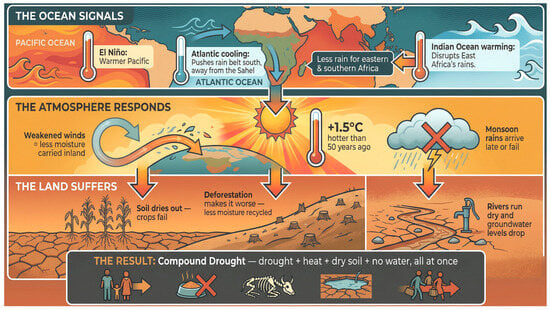
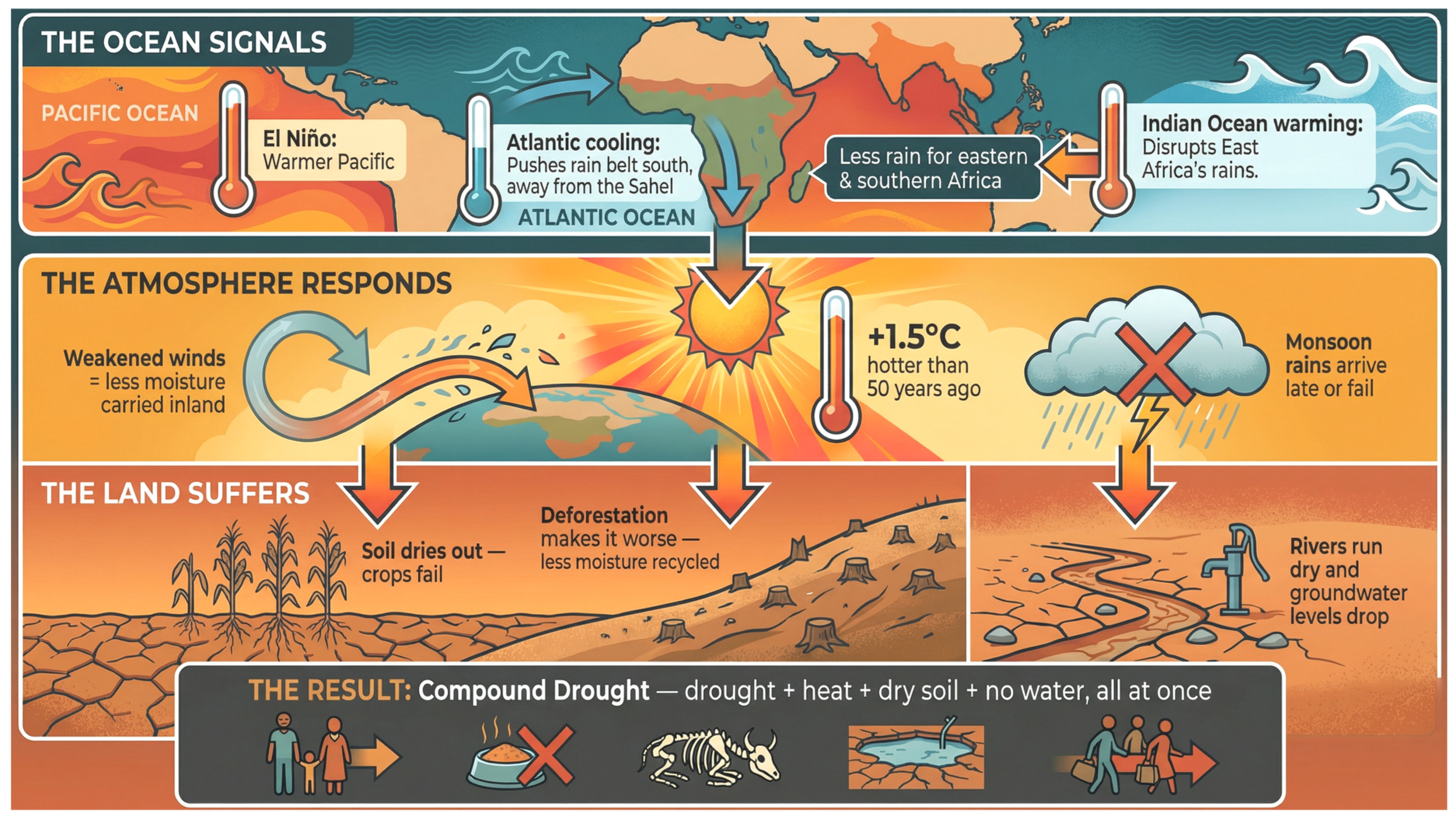
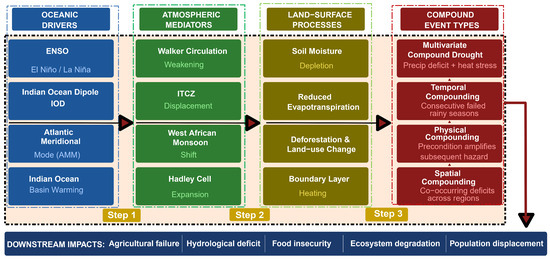
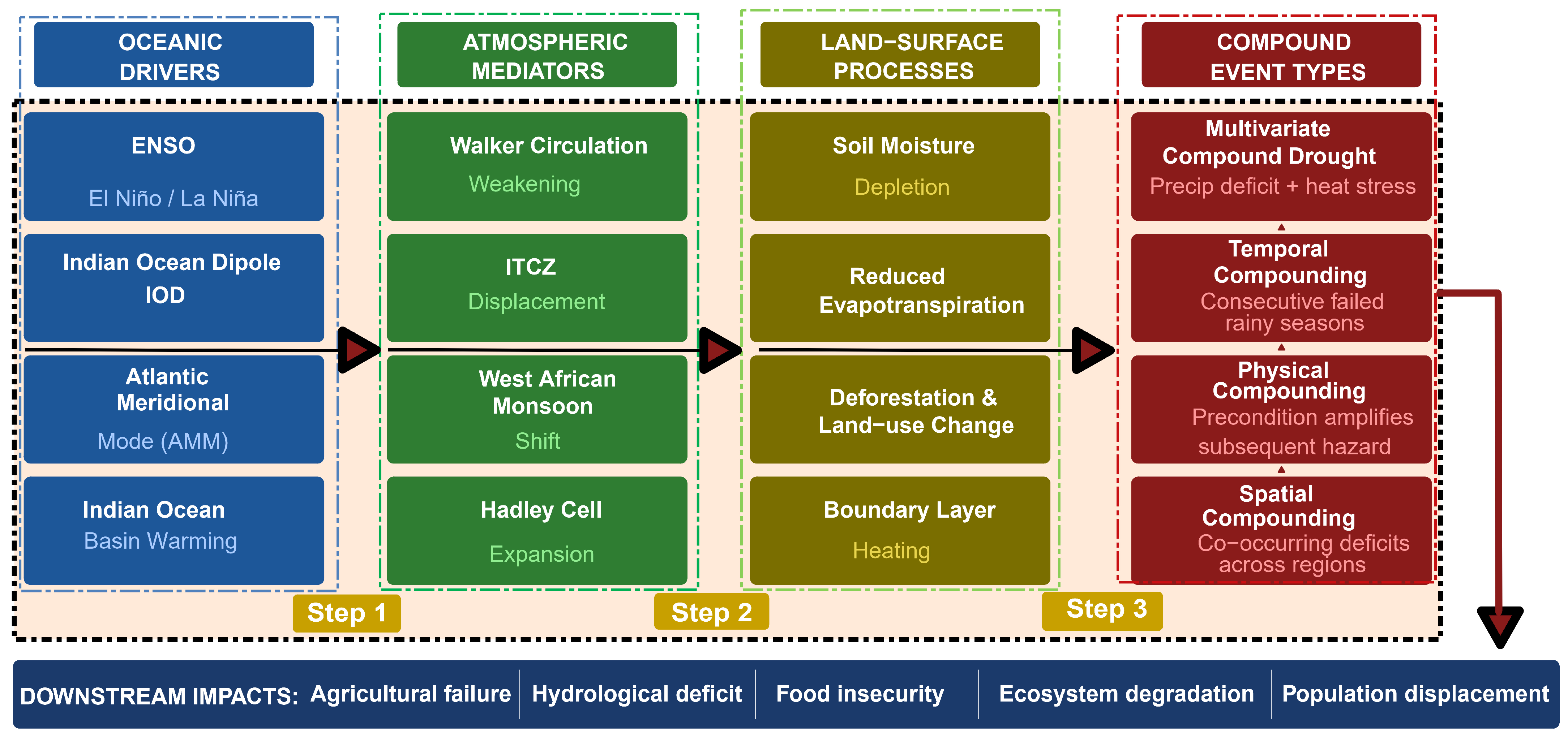
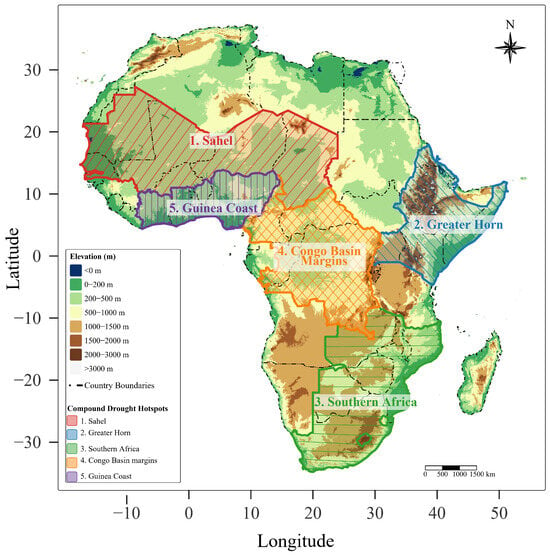
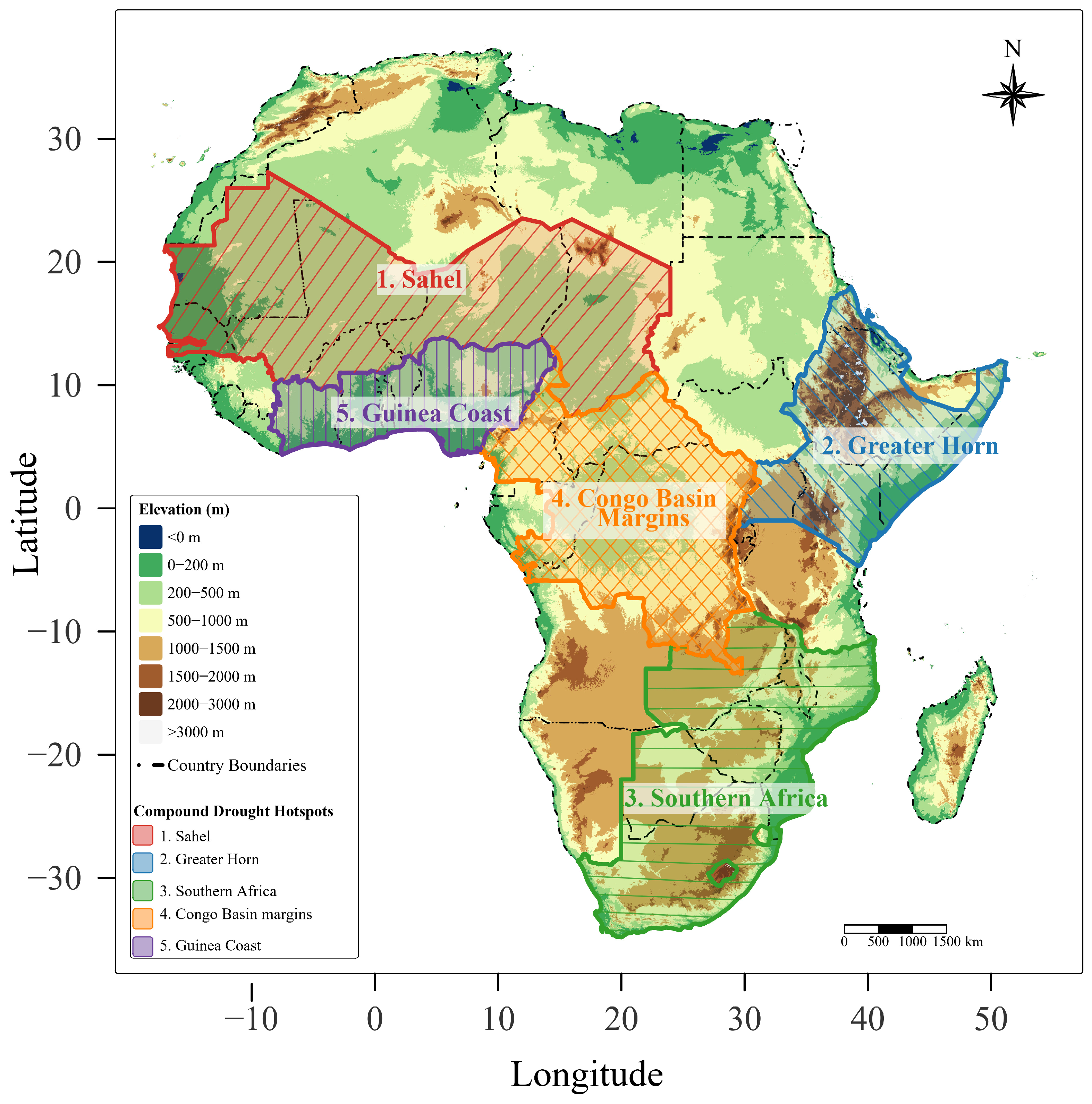
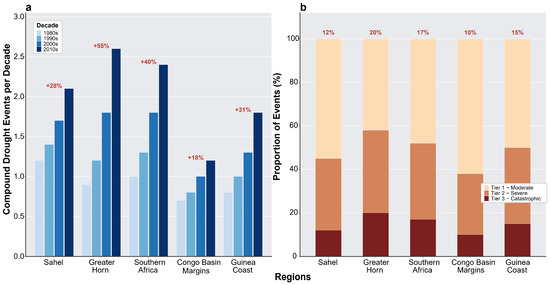
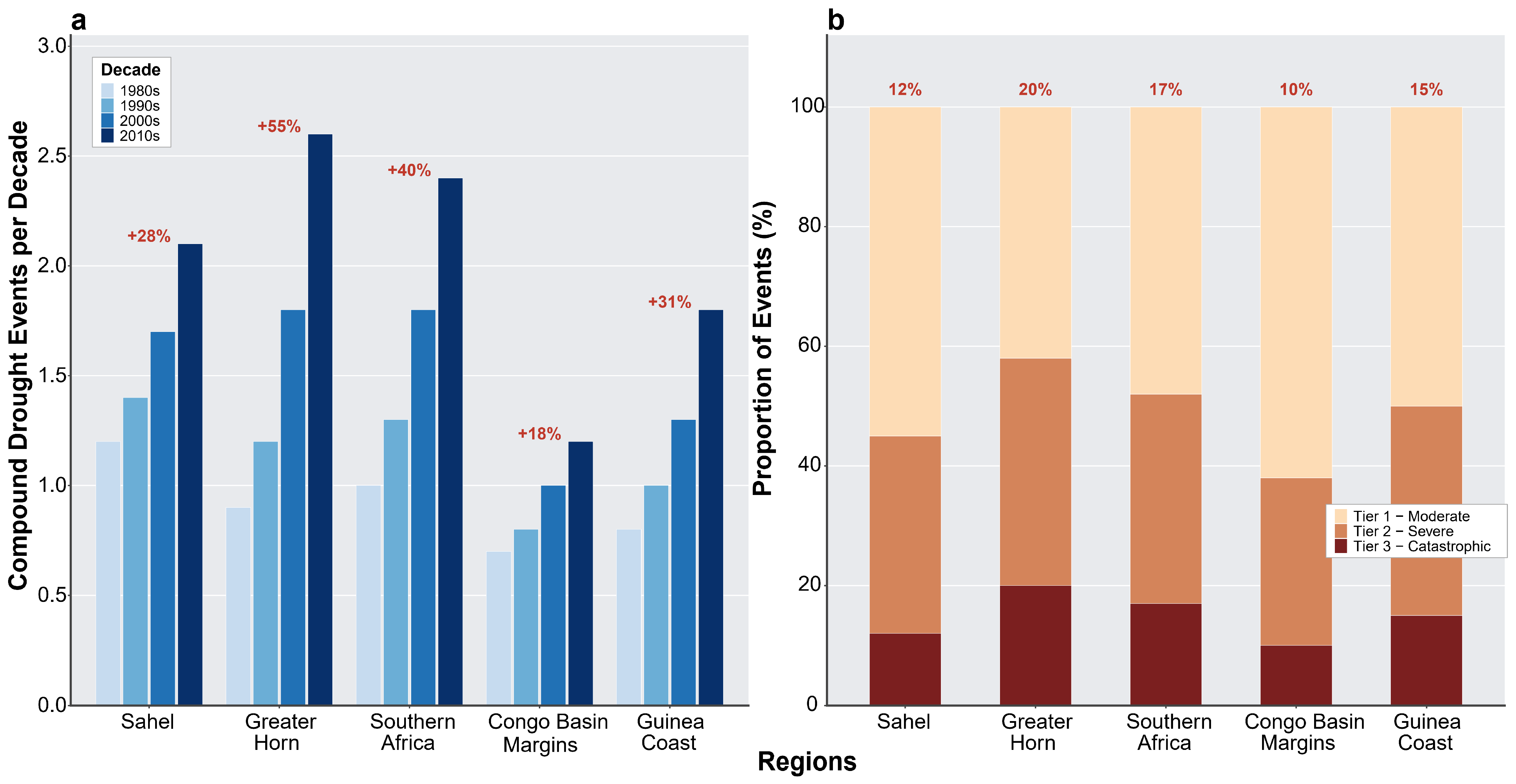
Disclaimer/Publisher’s Note: The statements, opinions and data contained in all publications are solely those of the individual author(s) and contributor(s) and not of MDPI and/or the editor(s). MDPI and/or the editor(s) disclaim responsibility for any injury to people or property resulting from any ideas, methods, instructions or products referred to in the content. |
© 2026 by the author. Licensee MDPI, Basel, Switzerland. This article is an open access article distributed under the terms and conditions of the Creative Commons Attribution (CC BY) license.