


Abstract
Oil-contaminated wastewater generated in oil-producing regions requires effective treatment methods capable of degrading persistent petroleum hydrocarbons and reducing the overall organic load. This study investigated plasma–ozone treatment of model oil-contaminated water representative of Kumkol-associated wastewater, with emphasis on reactive oxygen species formation and pollutant degradation. Experiments were carried out in a dielectric barrier discharge plasma reactor operating at 8–15 kV, 10–30 kHz, and 100–300 W. The plasma process generated ozone in the range of 3–18 mg/L and hydrogen peroxide in the range of 4–25 mg/L. For model wastewater containing 100–500 mg/L petroleum hydrocarbons, plasma–ozone treatment for 30 min achieved 70–90% hydrocarbon degradation. At the same time, COD decreased from 180–600 to 60–180 mg O2/L, while TOC decreased from 60–250 to 20–90 mg/L. These results indicate that plasma–ozone treatment provides effective oxidation of petroleum hydrocarbons together with simultaneous reduction in key water quality indicators, demonstrating its potential for the treatment of oil-contaminated wastewater.
1. Introduction
Water pollution is currently one of the most significant environmental problems at the global level. According to data from the United Nations, approximately 80% of industrial and domestic wastewater generated worldwide is discharged into natural water systems without adequate treatment [1]. In particular, in regions with developed oil extraction and oil refining industries, the contamination of water sources by petroleum products has become a widespread environmental issue. The volume of industrial wastewater generated in the oil industry reaches approximately 700–900 million m3 per year, while the concentration of petroleum hydrocarbons in such wastewater can, in some cases, reach 100–1000 mg/L [2,3]. Such pollutants pose a significant threat to the stability of aquatic ecosystems and to living organisms.
Oil-contaminated water often contains persistent organic compounds such as aliphatic and aromatic hydrocarbons, phenols, and polycyclic aromatic hydrocarbons (PAHs). The degradation time of these substances in the natural environment may range from several months to several years [4,5]. Therefore, there is a need to apply new highly efficient technologies to effectively remove such pollutants.
Currently, mechanical, physicochemical, and biological methods are widely used for the treatment of oil-contaminated wastewater. However, most conventional technologies are unable to ensure the complete removal of dissolved organic compounds. For example, flotation and adsorption methods can reduce the concentration of petroleum products by 70–85%, but complex hydrocarbons are not completely decomposed [6,7,8]. In this regard, advanced oxidation processes (AOPs) that generate highly reactive oxidizing species have been widely studied in recent years in the field of water treatment.
One of the most promising approaches is plasma–ozone technology. Under the influence of high-voltage electrical discharge, reactive species such as ozone (O3), hydroxyl radicals (•OH), and hydrogen peroxide (H2O2) are generated in the plasma region. These reactive particles are capable of rapidly decomposing organic pollutants through oxidation reactions. Scientific studies have shown that the application of plasma technologies can reduce the concentration of organic pollutants by up to 80–95% [9,10,11,12]. In addition, this technology is characterized by low reagent consumption and high reaction rates.
However, the physicochemical mechanisms involved in the purification of oil-contaminated water using plasma–ozone technology, the formation patterns of reactive species, and their interaction processes with petroleum hydrocarbons have not yet been fully investigated. Therefore, studying the mechanisms of action of plasma–ozone technology in the treatment of oil-contaminated water remains an important area of current scientific research.
Thus, investigating the mechanisms of purification of oil-contaminated water using plasma–ozone technology represents a relevant and significant scientific problem.
Recent studies have confirmed that plasma–liquid systems represent a promising class of advanced treatment technologies due to their ability to generate a broad spectrum of highly reactive oxidizing species directly in the reaction zone. These species include ozone (O3), hydroxyl radicals (•OH), hydrogen peroxide (H2O2), and other short-lived intermediates that are capable of initiating and sustaining the degradation of dissolved organic pollutants in water [13,14,15]. In contrast to conventional oxidation methods, non-thermal plasma enables the simultaneous formation of several reactive species without the need for large amounts of added chemical reagents, which makes plasma-assisted treatment attractive for the purification of complex wastewaters. At the same time, previous studies have shown that the efficiency of pollutant degradation in plasma systems is strongly influenced by the operational conditions, including discharge voltage, frequency, reactor configuration, gas–liquid interaction, and the rate of reactive species generation [14,15]. These parameters determine both the oxidative capacity of the system and the selectivity of the transformation pathways occurring during treatment. A concise comparison of the main operating conditions and treatment outcomes reported in the most relevant previous studies is provided in Appendix A (Table A1 and Table A2).
In parallel, ozone-based and plasma-assisted advanced oxidation processes have been widely recognized as effective methods for the degradation of persistent organic compounds because they generate a highly oxidative environment involving ozone, hydroxyl radicals, hydrogen peroxide, and other reactive oxygen and nitrogen species. These processes proceed through both direct ozone oxidation and indirect radical-mediated pathways, leading to the oxidation and partial or complete mineralization of pollutants [16,17,18]. However, despite the growing number of studies, the interactions between reactive species and specific pollutant classes, especially multicomponent hydrocarbon systems, remain insufficiently understood. In many cases, treatment performance is reported mainly in terms of overall removal efficiency, while the relationship between reactive species formation and pollutant degradation is discussed only briefly.
More recent investigations of dielectric barrier discharge plasma and other non-thermal plasma-based advanced oxidation processes have demonstrated substantial removal efficiencies for various classes of organic contaminants, including dyes, pharmaceuticals, and micropollutants, together with considerable reductions in chemical oxygen demand (COD) and total organic carbon (TOC) [19,20]. These results confirm the potential of plasma-assisted oxidation not only for contaminant destruction but also for the overall improvement of water quality indicators. In addition, plasma treatment has shown promising applicability for the oxidation of petroleum-containing materials and hydrocarbon-related pollutants [21]. Nevertheless, the majority of available studies have focused primarily on model organic compounds, pharmaceuticals, or general wastewater matrices rather than on petroleum hydrocarbons in oil-contaminated water [16,20,21]. As a consequence, important aspects such as the oxidation behavior of petroleum components, the apparent degradation kinetics, and the direct relationship between reactive oxygen species generation and the reduction of petroleum hydrocarbons remain insufficiently investigated in plasma–ozone systems [13,17,19,20,21]. Overall, Table 1 presents the key operating parameters of non-thermal plasma-based advanced oxidation processes used for wastewater treatment.
Table 1.
Key operating parameters of non-thermal plasma advanced oxidation processes for micropollutant degradation in wastewater.
Table 1 shows that the operating conditions used in the present study fall within the ranges commonly reported for non-thermal plasma treatment of organic pollutants. In particular, the applied voltage (8–15 kV), frequency (10–30 kHz), and plasma power (100–300 W) are comparable to those reported in previous studies. However, unlike earlier works mainly focused on pharmaceuticals, micropollutants, or general organic contaminants, the present study specifically addresses petroleum hydrocarbons in model oil-contaminated water representative of Kumkol-associated wastewater. In addition, the present work integrates the analysis of reactive oxygen species formation (O3 and H2O2) with petroleum hydrocarbon degradation and changes in COD and TOC, thus providing a more application-oriented interpretation of plasma–ozone treatment performance.
This limitation is particularly important in the context of wastewater associated with oil production, where petroleum-derived contaminants are chemically diverse, relatively resistant to degradation, and often accompanied by a high organic load. Under such conditions, it is not sufficient to demonstrate only a decrease in pollutant concentration at the outlet of the treatment system. A more complete analysis requires linking the physicochemical processes occurring in the discharge zone with the actual treatment results, including hydrocarbon oxidation, changes in COD and TOC, and the role of the major reactive species formed during plasma exposure. Therefore, there remains a clear need for a focused investigation of plasma–ozone treatment specifically applied to water contaminated with petroleum products, with particular attention to the relationship between reactive species generation and contaminant degradation performance.
The novelty of the present study lies in the integrated evaluation of reactive oxygen species formation and treatment efficiency within a single dielectric barrier discharge plasma–ozone system. Unlike studies that consider oxidant generation and pollutant removal separately, the present work examines these aspects within one experimental framework and relates the formation of oxidizing species to petroleum hydrocarbon degradation and to changes in key water quality parameters, namely COD and TOC. In this way, the study aims to provide a more coherent physicochemical interpretation of plasma–ozone treatment performance for model oil-contaminated water representative of wastewater generated in the Kumkol oil field.
Accordingly, the objective of this study was to investigate the physicochemical mechanisms involved in the purification of petroleum-contaminated water using plasma–ozone technology and to determine the role of reactive oxygen species generated during plasma discharge in the oxidation and degradation of petroleum hydrocarbons. In particular, the study (1) quantified the formation of the main oxidizing species in the plasma–liquid system, namely ozone and hydrogen peroxide; (2) evaluated the degradation behavior of petroleum hydrocarbons during treatment; and (3) assessed the associated changes in COD and TOC in order to relate oxidant formation to overall treatment performance.
2. Materials and Methods
The scientific research was conducted within the framework of a joint collaboration between Satbayev University and the Tashkent Institute of Irrigation and Agricultural Mechanization Engineers. The aim of the study was to investigate the physicochemical processes involved in the purification of water contaminated with petroleum products using plasma–ozone technology and to determine the role of reactive oxygen species (O3, •OH, H2O2) generated during plasma discharge in the oxidation of petroleum hydrocarbons.
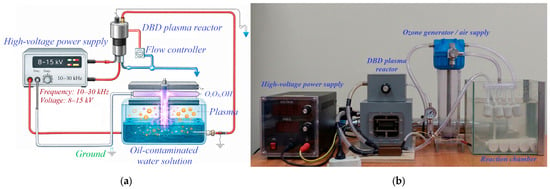
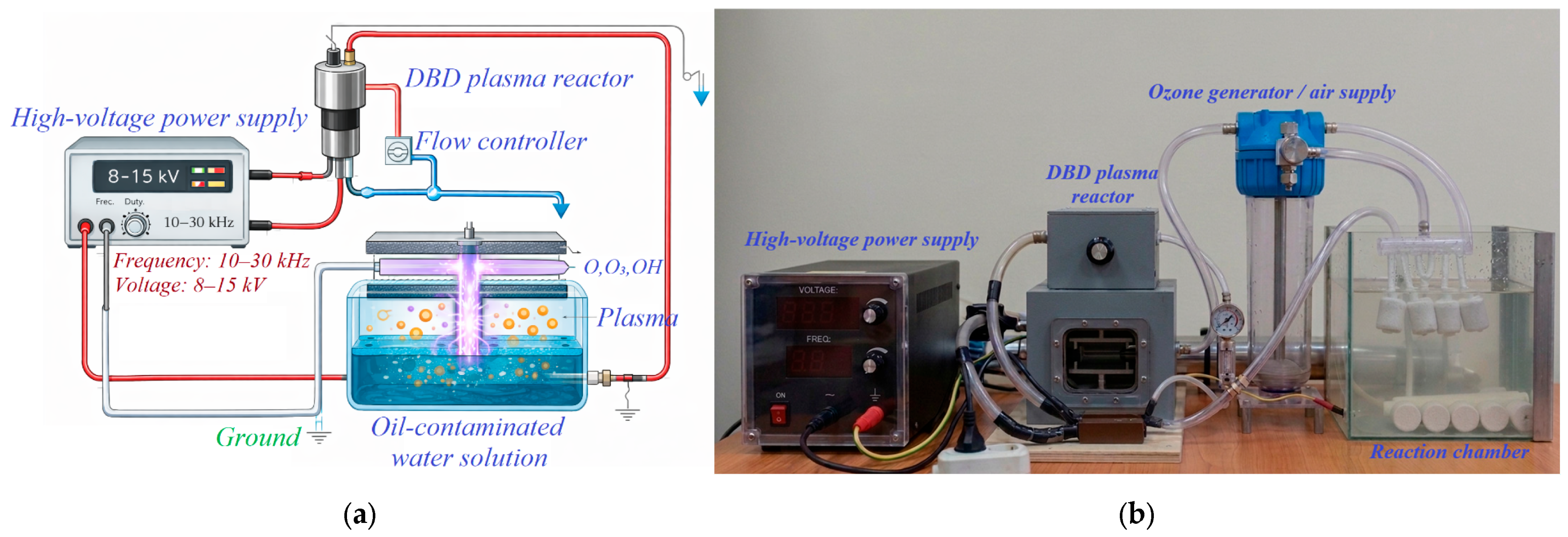
The experimental setup used in this study was designed to investigate the formation of reactive oxygen species in a dielectric barrier discharge (DBD) plasma system under controlled conditions. The plasma reactor was operated under high-voltage electrical discharge, with the applied voltage ranging from 8 to 15 kV, discharge frequency from 10 to 30 kHz, and plasma power between 100 and 300 W. The interelectrode gap was maintained at 3–5 mm, while the gas flow rate was controlled within the range of 0.5–1.0 L/min. A detailed schematic diagram and a photograph of the experimental setup are presented in Figure 1.
Figure 1.
Experimental setup for plasma–ozone treatment of oil-contaminated water: (a) schematic diagram of the dielectric barrier discharge (DBD) plasma system showing the main components and operating parameters; (b) photograph of the laboratory setup with labeled key elements, including the high-voltage power supply, DBD plasma reactor, ozone generator, gas supply line, and reaction chamber.
As shown in Figure 1, the experimental system consists of a high-voltage power supply connected to a dielectric barrier discharge (DBD) reactor, an ozone generator with a gas supply line, and a reaction chamber containing the model oil-contaminated water. The gas flow is directed through the plasma reactor, where reactive oxygen species are generated, and subsequently introduced into the liquid phase for oxidation of petroleum hydrocarbons. The configuration ensures controlled interaction between the plasma-generated oxidants and the aqueous medium, enabling the evaluation of degradation efficiency and changes in key water quality parameters.
In this study, theoretical analysis, plasma–chemical modeling, and laboratory experimental methods were applied to investigate the mechanisms of treating oil-contaminated water using plasma–ozone technology. The research focused on the physicochemical processes occurring in the plasma–liquid system, the formation of reactive oxygen species, and their role in the oxidation reactions of petroleum hydrocarbons.
In the experimental studies, model oil-contaminated water solutions were used to simulate wastewater associated with oil production at the Kumkol oil field. The main physicochemical characteristics of the investigated water matrix are summarized in Table 2.
Table 2.
Initial physicochemical characteristics of the model oil-contaminated water used in the experiments.
As shown in Table 2, the investigated model water matrix covered the concentration ranges relevant to oil-contaminated wastewater with elevated organic load and moderate conductivity, which allowed controlled evaluation of plasma–ozone treatment performance under representative laboratory conditions.
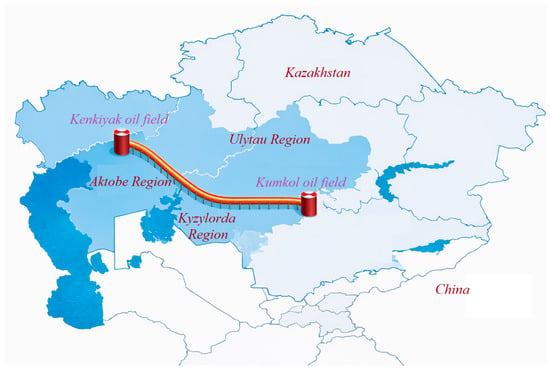
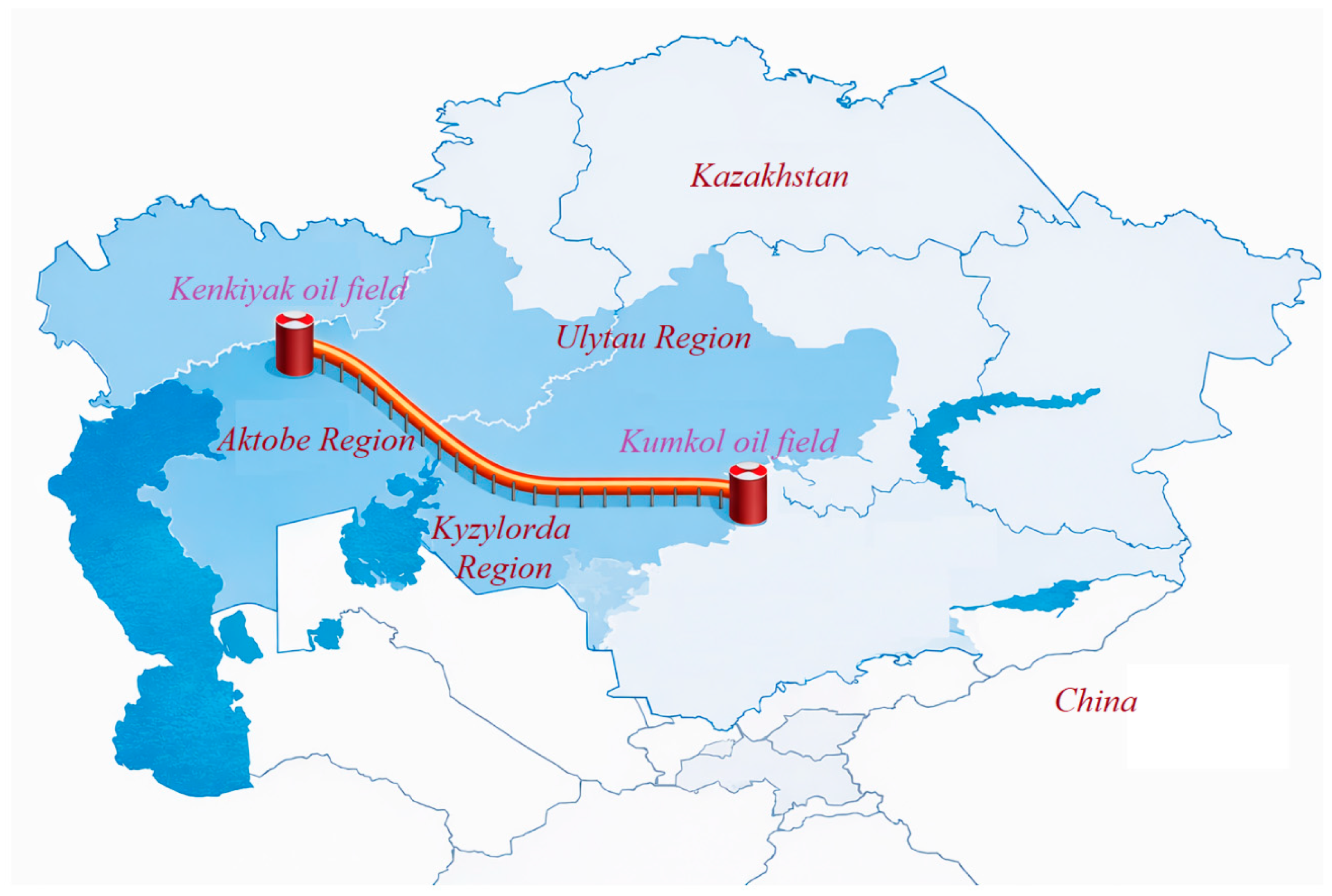
Industrial wastewater associated with oil production at the Kumkol oil field was considered as the practical reference case of the present study (Figure 2). However, the laboratory experiments were performed using model oil-contaminated water prepared to simulate the main physicochemical characteristics of Kumkol-associated wastewater under controlled conditions. Thus, real field wastewater samples were not treated directly in the present work; instead, a representative model water matrix was used for reproducible evaluation of plasma–ozone treatment performance.
Figure 2.
Geographic location of the Kenkiyak and Kumkol oil fields in Kazakhstan.
The practical treatment problem addressed in this study is wastewater associated with oil production at the Kumkol oil field in the Kyzylorda region. However, the experimental investigation was carried out using model oil-contaminated water solutions prepared to represent the main physicochemical characteristics of Kumkol-associated wastewater. The initial petroleum hydrocarbon concentration ranged from 100 to 500 mg/L, while the plasma system operated at 8–15 kV and 10–30 kHz. During plasma discharge, the ozone concentration reached 3–18 mg/L and the hydrogen peroxide concentration ranged from 4 to 25 mg/L.
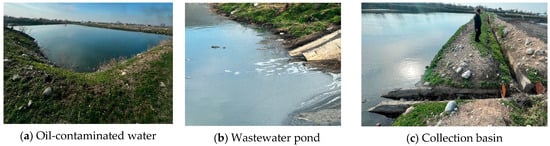
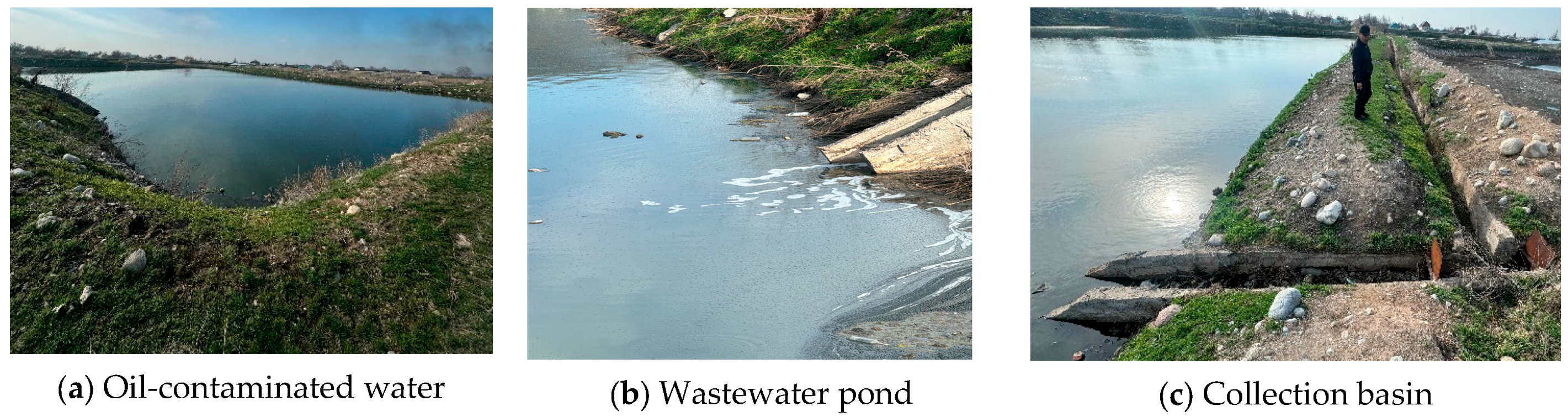
Figure 3 shows the reservoirs where wastewater generated during the oil production process at the Kumkol oil field is accumulated. Traces of petroleum products can be observed on the water surface, indicating contamination with organic pollutants and the necessity for effective water treatment.
Figure 3.
Oil-contaminated wastewater at the Kumkol oil field.
The main physicochemical characteristics of the model oil-contaminated water used in the experiments are summarized in Table 2. These parameters were selected to represent the general composition range of Kumkol-associated oil-contaminated wastewater under controlled laboratory conditions.
Laboratory experiments were carried out using a plasma–ozone-based reactor system. The experimental setup consisted of a high-voltage power supply, a plasma reactor based on dielectric barrier discharge (DBD), an ozone generator, and a reaction chamber. The plasma discharge was generated at a voltage range of 8–15 kV and a frequency range of 10–30 kHz. The electrical power of the system was 100–300 W, while the gap between the electrodes was maintained at 3–5 mm. The gas flow rate was controlled within the range of 0.5–1.0 L/min.
During the plasma discharge process, reactive oxygen species such as ozone (O3), hydroxyl radicals (•OH), and hydrogen peroxide (H2O2) were expected to form in the plasma–liquid system. In the present study, ozone and hydrogen peroxide were quantified experimentally, whereas hydroxyl radicals were considered as short-lived transient species inferred from the plasma–liquid reaction mechanism. In the plasma region, ozone formation occurs through electron-impact dissociation of oxygen molecules followed by three-body recombination reactions, which can be described as:
where M represents a third-body collision partner that stabilizes the reaction. Under the experimental conditions, the ozone concentration in the gas phase was observed in the range of 3–18 mg/L.
At the plasma–liquid interface, water molecules undergo electron-induced dissociation, leading to the formation of hydroxyl radicals. Subsequent recombination of these radicals results in the formation of hydrogen peroxide:
As a result, the concentration of hydrogen peroxide in the liquid phase was measured within the range of 4–25 mg/L. The generated reactive oxygen species interact with petroleum hydrocarbons, promoting their oxidative degradation and mineralization according to the generalized reaction:
CnHm + (O3, ⦁OH, H2O2) → intermediate products → CO2 + H2O
To describe the oxidation kinetics of petroleum hydrocarbons, a pseudo-first-order kinetic model was applied:
The degradation of petroleum hydrocarbons during plasma–ozone treatment was evaluated using an apparent pseudo-first-order kinetic model in its integrated form:
where C0 is the initial petroleum hydrocarbon concentration, Ct is the concentration at treatment time t, and k is the apparent reaction rate constant. The value of k was determined from the slope of the linear dependence of ln(C0/Ct) versus treatment time.
To evaluate the energy efficiency of the plasma–ozone treatment process, the electrical energy per order (EEO) was calculated. The EEO parameter represents the amount of electrical energy required to reduce the pollutant concentration by one order of magnitude (i.e., by 90%) in a unit volume of water. The EEO was calculated using the following equation:
where is the plasma power (kW), is the treatment time (h), is the treated water volume (m3), and are the initial and final concentrations of petroleum hydrocarbons (mg/L), respectively.
During the experiments, the concentration of petroleum hydrocarbons was determined by UV–Vis spectrophotometric analysis at 225 nm using a spectrophotometer (UV-1800, Shimadzu Corporation, Kyoto, Japan). The chemical oxygen demand (COD) and total organic carbon (TOC) were measured according to standard analytical procedures. The ozone concentration in the gas phase was determined using an ozone analyzer (Model 106-L, 2B Technologies, Boulder, CO, USA). The concentration of hydrogen peroxide in the liquid phase was measured as an indicator of reactive oxygen species generation. Hydroxyl radicals (•OH) were not measured directly because of their extremely short lifetime and were considered as transient reactive species formed in the plasma–liquid system according to the established reaction mechanism. The electrical parameters of the plasma discharge were recorded using a digital oscilloscope.
To ensure the reliability and reproducibility of the experimental results, all experiments were performed in triplicate under identical operating conditions. The obtained data were processed as mean values, and the variability of the measurements was expressed as standard deviation (SD). The corresponding error bars are presented in the figures.
The petroleum hydrocarbon concentration (oil content) was used as the main parameter to evaluate treatment efficiency throughout the study. The initial oil content in the model oil-contaminated water ranged from 100 to 500 mg/L. During plasma–ozone treatment, the variation in oil content was monitored as a function of treatment time and operating conditions. The residual petroleum hydrocarbon concentration after treatment was used to calculate degradation efficiency and to assess the performance of the plasma–ozone system.
Use of Artificial Intelligence Tools
During the revision of this manuscript, artificial intelligence (AI)-assisted tools were used for figure refinement and visualization support, specifically for the preparation of the schematic representation of the experimental setup presented in Figure 1a, as well as for the graphical improvement of figure annotations. No AI tools were used for experimental design, data generation, data analysis, or interpretation of the scientific results. All outputs were reviewed, verified, and edited by the authors, who take full responsibility for the accuracy and integrity of the manuscript.
3. Research Results and Discussion
3.1. Results of Reactive Oxygen Species Formation in the Plasma–Liquid System
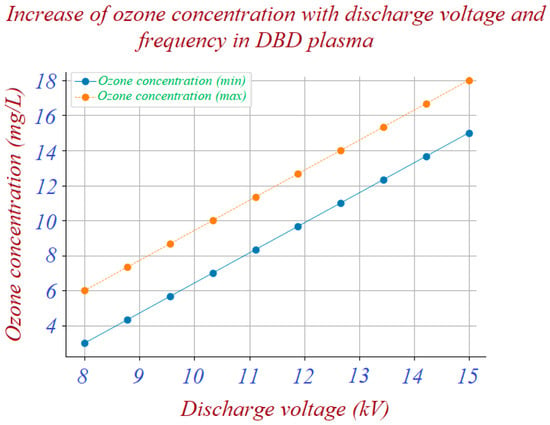
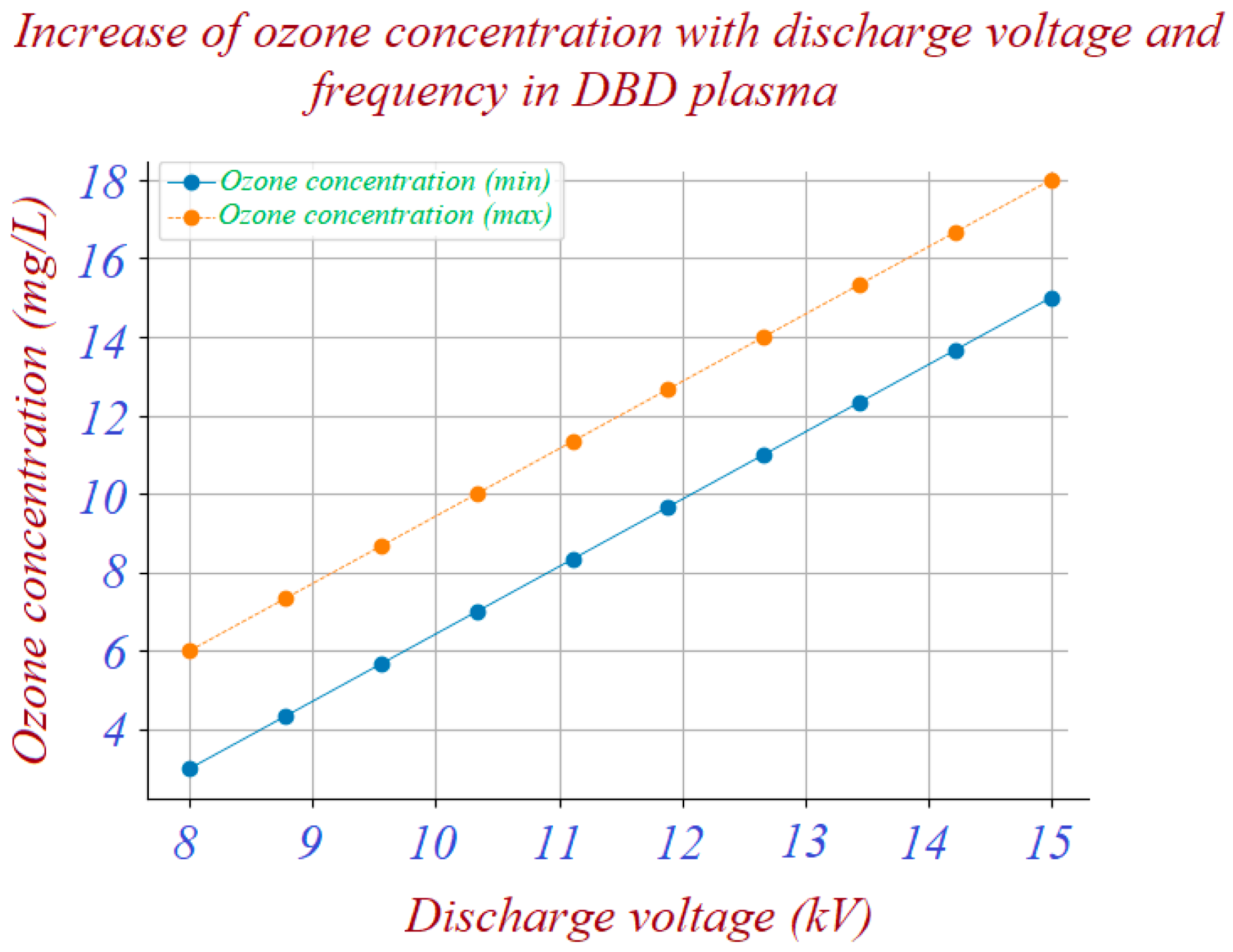
The conducted experiments showed an intensive formation of reactive oxygen species in the plasma discharge region. The concentration of ozone formed in the gas phase was recorded in the range of 3–18 mg/L. It was also determined that the intensity of ozone generation increases with increasing voltage and discharge frequency. For example, under operating conditions of 8 kV and 15 kHz, the ozone concentration was approximately 3–6 mg/L, whereas at 15 kV and 30 kHz it increased to 15–18 mg/L.
All experimental results presented in this section correspond to the mean values obtained from three independent experiments. The observed deviations between replicate runs were small, indicating acceptable reproducibility of the plasma–ozone treatment system under the investigated operating conditions.
The results of the study can be observed in Figure 4 below.
Figure 4.
Effect of discharge voltage and frequency on ozone formation in DBD plasma.
At the plasma–liquid interface, hydroxyl radicals are expected to form as a result of the dissociation of water molecules under plasma discharge conditions. Because of their extremely short lifetime and high oxidation potential, these radicals are generally considered important intermediates in the degradation of organic pollutants. In the present study, their contribution was interpreted indirectly, while hydrogen peroxide accumulation in the liquid phase was measured experimentally as a more stable indicator of reactive oxygen species generation. The experimentally determined concentration of H2O2 ranged from 4 to 25 mg/L (Table 3).
Table 3.
Experimental parameters and concentrations of reactive oxygen species generated in the DBD plasma–liquid system.
According to the experimental results, as the discharge voltage increased from 8 to 15 kV and the frequency from 10 to 30 kHz, the ozone concentration in the gas phase increased from 3.0 ± 0.2 to 18.0 ± 1.0 mg/L, while the H2O2 concentration in the liquid phase increased from 4.0 ± 0.3 to 25.0 ± 1.5 mg/L.
Under low-energy operating conditions (100 W, 8–10 kV), the hydrogen peroxide concentration was recorded at approximately 4–8 mg/L, whereas under high-power conditions (250–300 W, 12–15 kV) its concentration increased to 18–25 mg/L. This phenomenon indicates that as the plasma discharge power increases, the formation rate of reactive species also intensifies. The results of the study can be observed in Table 4 below.
Table 4.
Effect of discharge power and voltage on H2O2 concentration in the plasma–liquid system.
According to the experimental results, as the plasma discharge power increased from 100 W to 300 W and the voltage from 8 kV to 15 kV, the H2O2 concentration in the liquid phase increased from 4 ± 0.3 to 25 ± 1.5 mg/L. Under low-energy operating conditions (100–150 W), the hydrogen peroxide concentration ranged between 4 ± 0.3 and 8 ± 0.5 mg/L, whereas under high-power conditions (250–300 W) it increased to 21 ± 1.3 and 25 ± 1.5 mg/L. These results indicate that increasing the plasma discharge power and voltage significantly enhances the formation intensity of reactive oxygen species in the plasma–liquid system.
The experimental results showed that the plasma–ozone system generated measurable amounts of ozone (3–18 mg/L) and hydrogen peroxide (4–25 mg/L), creating a highly oxidative environment suitable for petroleum hydrocarbon degradation. In addition, hydroxyl radicals are expected to form as transient intermediates in the plasma–liquid system, although they were not quantified directly in the present study.
3.2. Degradation of Petroleum Hydrocarbons and Treatment Efficiency
At the next stage of the study, the degree of petroleum hydrocarbon degradation and the efficiency of water purification during plasma–ozone treatment were determined. In the experimental work, model solutions of oil-contaminated water were used. The initial concentration of petroleum hydrocarbons in the solution ranged from 100 to 500 mg/L, while the chemical oxygen demand (COD) varied between 180 and 600 mg O2/L, and the total organic carbon (TOC) concentration ranged from 60 to 250 mg/L.
In this study, the petroleum hydrocarbon concentration (oil content) was considered as the primary indicator of treatment performance. The evolution of oil content during plasma–ozone processing was analyzed under different operating conditions and treatment times, allowing direct evaluation of degradation efficiency.
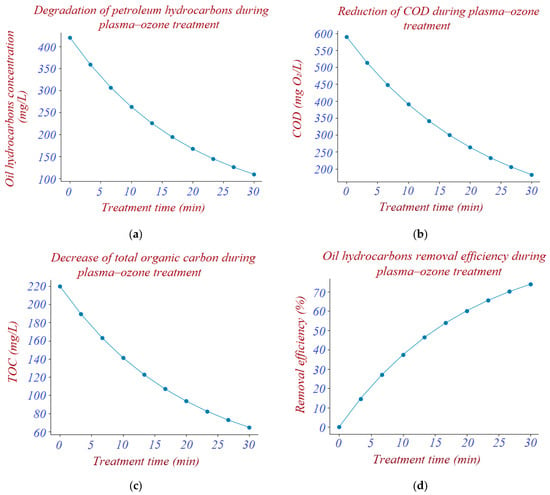
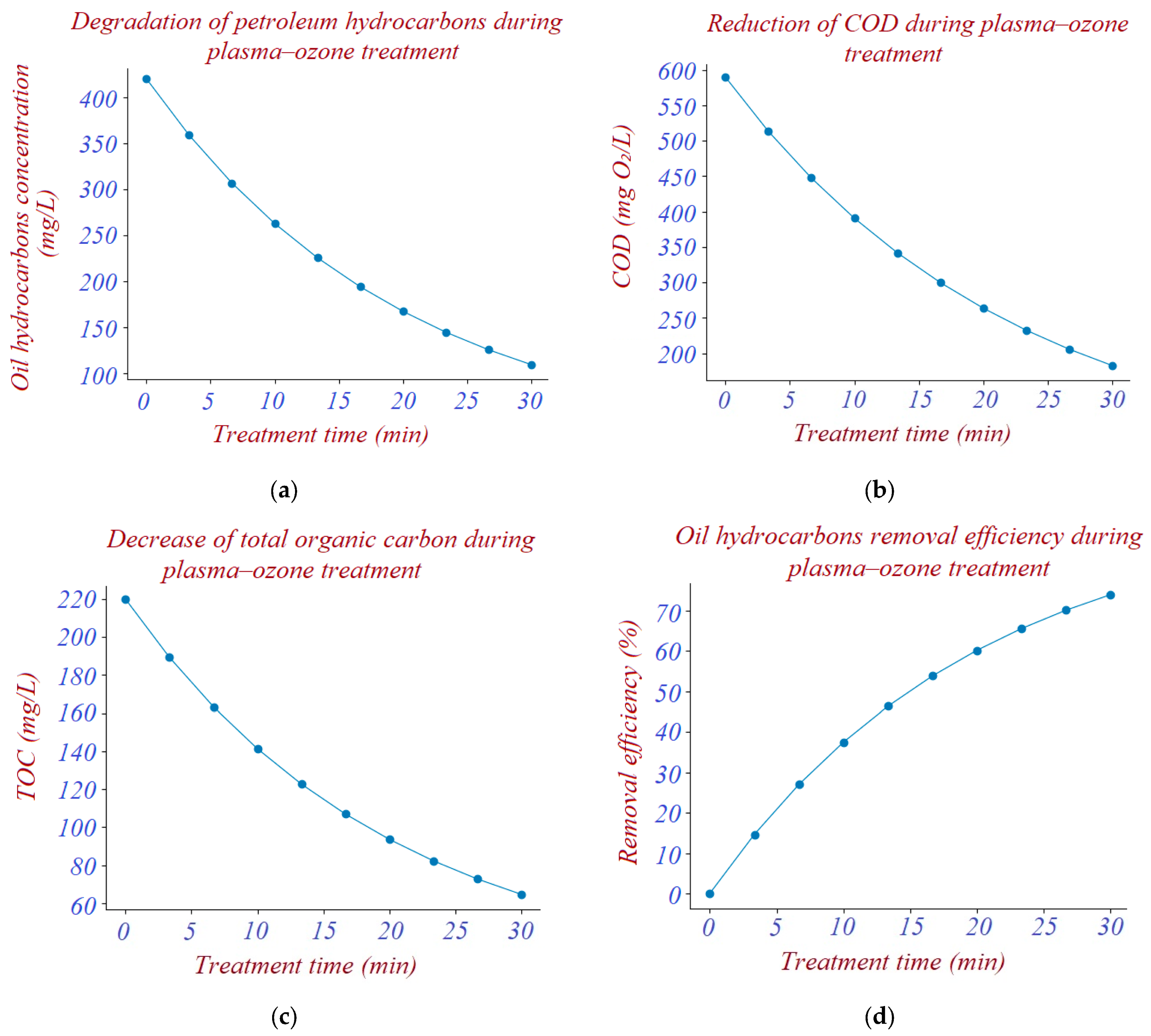
The pH value of the solution was maintained in the range of 6.5–7.5, while the electrical conductivity was kept at 1–2.5 mS/cm. The overall results of the study can be observed in Figure 5, which illustrates the changes in petroleum hydrocarbon concentration, COD, TOC, and overall treatment efficiency during plasma–ozone processing.
Figure 5.
Evolution of treatment performance during plasma–ozone processing: (a) petroleum hydrocarbon concentration, (b) chemical oxygen demand (COD), (c) total organic carbon (TOC), and (d) petroleum hydrocarbon removal efficiency as a function of treatment time.
Figure 5 summarizes the temporal evolution of the main treatment indicators during plasma–ozone processing. The petroleum hydrocarbon concentration decreased progressively with treatment time, while COD and TOC were simultaneously reduced, indicating both oxidation of organic matter and partial mineralization. In parallel, the petroleum hydrocarbon removal efficiency increased continuously and reached its highest value after 30 min of treatment. Taken together, these trends confirm the strong oxidative effect of the plasma–ozone system and demonstrate the combined improvement of contaminant removal and overall water quality. As shown in Figure 5a, the decrease in petroleum hydrocarbon concentration (oil content) represents the direct indicator of pollutant removal. The reduction in oil content from the initial range of 100–500 mg/L to significantly lower values confirms the effectiveness of plasma–ozone oxidation.
During plasma treatment, it was observed that the concentration of petroleum hydrocarbons gradually decreased over time. When the treatment duration ranged from 10 to 30 min, the degradation degree of the pollutants increased significantly. In particular, the highest degradation rate of hydrocarbons was achieved at a voltage of 12–15 kV and a frequency of 20–30 kHz.
Experimental results showed that during plasma treatment the concentration of petroleum hydrocarbons significantly decreased compared to the initial value. When the treatment time reached 30 min, the degradation degree of petroleum hydrocarbons ranged between 70–90%. These results indicate that the plasma–ozone technology is capable of effectively oxidizing organic pollutants.
During plasma treatment, a decrease in chemical oxygen demand (COD), one of the main indicators of water pollution, was observed. The initial COD level of 180–600 mg O2/L significantly decreased after treatment, indicating the oxidation of organic substances into simpler compounds. In addition, a reduction in total organic carbon (TOC) was also recorded, suggesting that complex petroleum hydrocarbons were partially mineralized and gradually decomposed into carbon dioxide and water. The overall results of the study can be observed in Table 5 below.
Table 5.
Variation in petroleum hydrocarbon concentration (oil content), COD, and TOC during plasma treatment of oil-contaminated water.
The obtained results showed that the combined action of reactive oxygen species generated in the plasma system significantly accelerates the oxidation of petroleum hydrocarbons. Ozone, hydroxyl radicals, and hydrogen peroxide interact synergistically, breaking the structure of complex organic molecules and leading to their gradual and complete degradation.
Based on the experimental conditions (plasma power 0.1–0.3 kW, treatment time up to 30 min, and a working volume of 0.5 L), the calculated EEO values ranged from 1.8 to 4.5 kWh/m3/order depending on the operating parameters. Lower EEO values were obtained at higher discharge voltage and frequency, indicating improved energy efficiency under intensified plasma conditions (Table 6).
Table 6.
Electrical energy per order (EEO) for petroleum hydrocarbon degradation under different operating conditions.
The obtained EEO values are consistent with those reported for non-thermal plasma-based advanced oxidation processes. Previous studies have reported EEO values in the range of 2–6 kWh/m3/order for the degradation of organic pollutants in water. For example, He et al. [14] and Magureanu et al. [15] reported comparable energy consumption ranges for plasma-based treatment systems. The relatively low EEO values obtained in the present study (1.8–4.5 kWh/m3/order) indicate competitive energy efficiency, particularly under optimized operating conditions, and confirm the potential of plasma–ozone technology for practical wastewater treatment applications.
In addition to petroleum hydrocarbon degradation and the reduction in COD and TOC, the pH of the treated solution was monitored during plasma–ozone processing. The pH decreased gradually from 7.3 at the beginning of treatment to 7.1 after 10 min, 6.9 after 20 min, and 6.8 after 30 min. This slight decrease indicates that the oxidation process affected the acid–base balance of the solution, likely due to the formation of oxygen-containing intermediate products during petroleum hydrocarbon degradation. At the same time, the pH remained within the near-neutral range, which is favorable for stable plasma–ozone treatment conditions.
Preliminary Economic Evaluation of the Plasma–Ozone Process
A preliminary economic evaluation of the plasma–ozone process was performed based on electrical energy consumption. The calculated electrical energy per order (EEO) values ranged from 1.8 to 4.5 kWh/m3/order, depending on the operating conditions. Lower EEO values were obtained at higher discharge voltage and frequency, indicating improved energy efficiency. These values are comparable to those reported for non-thermal plasma and ozone-based advanced oxidation processes in the literature. Compared with conventional methods, the plasma–ozone process may involve higher electrical energy consumption but provides effective degradation of petroleum hydrocarbons without the use of additional chemical reagents. A summary of the economic performance under different operating conditions is presented in Table 7. It should be noted that this evaluation is preliminary and based on laboratory-scale experiments, and a full techno-economic assessment requires further investigation.
Table 7.
Preliminary economic evaluation of the plasma–ozone treatment process under different operating conditions.
3.3. Discussion of the Results of the Study
The obtained results confirm that plasma–ozone treatment provides effective degradation of petroleum hydrocarbons in model oil-contaminated water through the synergistic action of reactive oxygen species generated in the plasma–liquid system. The increase in ozone concentration from 3 to 18 mg/L and hydrogen peroxide concentration from 4 to 25 mg/L indicates that higher discharge voltage, frequency, and plasma power intensify oxidant generation and improve treatment performance. This explains the higher oxidation efficiency observed at 12–15 kV and 20–30 kHz.
The reduction in petroleum hydrocarbon concentration represents the most direct evidence of treatment efficiency. As treatment progressed, hydrocarbon removal increased to 70–90% after 30 min, while COD decreased from 180–600 to 60–180 mg O2/L and TOC from 60–250 to 20–90 mg/L. These trends indicate that the process involved not only degradation of petroleum hydrocarbons but also partial mineralization of oxidation products. The gradual increase in removal efficiency further confirms the continuous advancement of oxidation during plasma–ozone treatment.
From a mechanistic point of view, the observed behavior is consistent with the combined contribution of direct ozonation and indirect radical-mediated oxidation. Ozone can react directly with susceptible hydrocarbon structures, whereas hydroxyl radicals and hydrogen peroxide promote less selective oxidation pathways, leading to fragmentation of complex hydrocarbons and formation of more oxidized intermediates. The simultaneous decrease in petroleum hydrocarbons, COD, and TOC supports this interpretation. In this context, the pseudo-first-order kinetic model should be regarded as an empirical description of the overall oxidation behavior rather than a representation of a single elementary mechanism.
The gradual pH decrease from 7.3 to 6.8 provides additional evidence of oxidation reactions and formation of oxygen-containing intermediates. However, because the pH remained within the near-neutral range, the plasma–ozone process can be considered chemically stable under the studied operating conditions.
In comparison with earlier studies, the obtained treatment performance is within the ranges reported for non-thermal plasma systems, where degradation efficiencies of 65–95%, COD removal of 55–85%, and TOC removal of 35–70% have been observed. However, unlike many previous studies focused on pharmaceuticals, dyes, or general organic micropollutants, the present work specifically addresses petroleum hydrocarbons in oil-contaminated water. In addition, the study integrates oxidant formation, hydrocarbon degradation, and COD/TOC reduction within one plasma–ozone system, providing a more complete interpretation of treatment performance.
Another practical advantage of the proposed method is the in situ generation of the main oxidizing species without the need for large amounts of external chemical oxidants. The preliminary energy and economic evaluation also suggests that the process becomes more favorable under intensified operating conditions, where higher hydrocarbon removal is achieved at lower EEO values. Although this assessment remains preliminary, it indicates that plasma–ozone treatment may be competitive with other advanced oxidation systems.
At the same time, the study has several limitations. The experiments were performed using model oil-contaminated water rather than real industrial wastewater, so the effects of salts, suspended solids, surfactants, and other interfering components were not fully represented. In addition, intermediate oxidation products were not identified analytically, and the kinetic model remains a simplified description of a complex plasma–liquid reaction system. A full techno-economic analysis and direct comparison with alternative treatment methods under identical conditions were also beyond the scope of the present work. Therefore, the present results should be interpreted as laboratory-scale evidence for a representative model water matrix.
In a broader wastewater-treatment context, the plasma–ozone process investigated in this study can also be considered as a pre-oxidation or intensification stage within an integrated treatment system rather than as a standalone method. For complex oil-contaminated wastewater, plasma oxidation may enhance biodegradability by partially breaking down recalcitrant petroleum-derived compounds into more accessible intermediates. This creates favorable conditions for subsequent biological treatment processes. In particular, recent studies have demonstrated the effectiveness of Yarrowia lipolytica-based systems for the treatment and valorization of high-organic-load oily wastewater, highlighting the potential of combining physicochemical oxidation with biological degradation pathways [22].
In addition, adsorption-based polishing technologies may further improve overall treatment efficiency. For example, biochar materials have shown high removal performance for phenolic compounds and other petroleum-related contaminants in refinery wastewater, indicating their suitability as a final treatment stage following plasma oxidation [23]. From this perspective, the integration of plasma–ozone treatment with biological and adsorptive processes may represent a promising strategy for improving removal efficiency, reducing residual organic load, and enhancing process sustainability. Therefore, future research should focus on the development and optimization of hybrid plasma–biological and plasma–adsorptive treatment systems for real oilfield wastewater applications.
Overall, the discussion shows that the high treatment efficiency observed in this study can be explained by the synergistic generation of reactive oxygen species and their strong oxidative action toward petroleum hydrocarbons. The results confirm the scientific relevance and practical promise of plasma–ozone technology as a treatment option for oil-contaminated industrial wastewater.
4. Conclusions
This study demonstrated that plasma–ozone technology is an effective method for the treatment of oil-contaminated water through the generation of reactive oxygen species in a dielectric barrier discharge system. Under operating conditions of 8–15 kV, 10–30 kHz, and 100–300 W, the plasma process produced ozone (3–18 mg/L) and hydrogen peroxide (4–25 mg/L), creating a highly oxidative environment for pollutant degradation.
The results showed that petroleum hydrocarbon concentration (oil content) decreased by 70–90% after 30 min of treatment, while COD and TOC were simultaneously reduced from 180–600 to 60–180 mg O2/L and from 60–250 to 20–90 mg/L, respectively. These findings confirm that plasma–ozone treatment enables both degradation of petroleum hydrocarbons and partial mineralization of organic matter.
Energy efficiency analysis indicated that the electrical energy per order (EEO) ranged from 1.8 to 4.5 kWh/m3/order, with improved performance at higher discharge voltage and frequency. The preliminary economic evaluation suggests that the process is competitive with other advanced oxidation technologies, particularly due to in situ generation of oxidizing species without the need for additional chemical reagents.
Overall, the obtained results confirm the potential of plasma–ozone technology as an effective method for the treatment of petroleum-contaminated water under controlled laboratory conditions. However, it should be emphasized that the present study was performed using model oil-contaminated water representative of Kumkol-associated wastewater rather than real field wastewater. Therefore, the reported degradation efficiency, COD and TOC reduction, and energy consumption values should be interpreted as laboratory-scale results.
In real conditions, wastewater generated at the Kumkol oil field may contain a more complex mixture of contaminants, including dissolved salts, suspended solids, surfactants, emulsified oil fractions, and other interfering components that can influence plasma–liquid interactions and overall treatment performance. In addition, variations in composition and flow conditions may affect process stability and energy efficiency.
Accordingly, future research should focus on validation of the proposed plasma–ozone process using real industrial wastewater from the Kumkol field, identification of intermediate oxidation products, and comprehensive techno-economic evaluation of integrated treatment systems under practical operating conditions.
Funding
This research received no external funding.
Data Availability Statement
The data presented in this study are available on request from the author due to intellectual property protection and unpublished project materials.
Acknowledgments
The authors would like to thank the Institute of Mechanics and Machine Science named after Academician U.A. Zholdasbekov and Department of Electronics, Telecommunications and Space Technologies, Satbayev University for providing technical support and access to modeling facilities during this research. During the preparation and revision of this manuscript, the authors used AI-assisted tools for figure refinement and visualization support. The authors reviewed and edited all outputs and take full responsibility for the content of this publication.
Conflicts of Interest
The authors declare no conflicts of interest.
Appendix A
The study also indicated that the efficiency of plasma oxidation strongly depends on operating parameters such as discharge power, reactor configuration, and the rate of generation of reactive species. The results of the authors’ studies can be observed in Table A1 and Table A2 below.
Table A1.
Operating parameters of non-thermal plasma systems for degradation of organic pollutants.
Table A1 presents the main operating parameters of non-thermal plasma systems used for the degradation of organic pollutants. The data show that the plasma treatment is typically carried out at voltages of 5–15 kV, frequencies of 5–30 kHz, and treatment times of 10–40 min, which create favorable conditions for the effective degradation of organic contaminants.
Table A2.
Degradation efficiency and kinetic parameters of non-thermal plasma treatment processes.
Table A2 presents the degradation efficiency and kinetic parameters of non-thermal plasma treatment for organic pollutant removal. The results indicate that the degradation efficiency ranges from 65–95%, while COD removal reaches 55–85%, demonstrating the high effectiveness of plasma oxidation processes in decomposing complex organic contaminants.
References
- Bijekar, S.; Padariya, H.D.; Yadav, V.K.; Gacem, A.; Hasan, M.A.; Awwad, N.S.; Yadav, K.K.; Islam, S.; Park, S.; Jeon, B.-H. The state of the art and emerging trends in the wastewater treatment in developing nations. Water 2022, 14, 2537. [Google Scholar] [CrossRef] [Scilit]
- Abdelhamid, C.; Latrach, A.; Rabiei, M.; Venugopal, K. Produced water treatment technologies: A review. Energies 2024, 18, 63. [Google Scholar] [CrossRef] [Scilit]
- Choi, Y.; Kim, Y.; Woo, Y.C.; Hwang, I. Water management and produced water treatment in oil sand plant: A review. Desalination 2023, 567, 116991. [Google Scholar] [CrossRef] [Scilit]
- Mohammadi, L.; Rahdar, A.; Bazrafshan, E.; Dahmardeh, H.; Susan, M.A.B.H.; Kyzas, G.Z. Petroleum hydrocarbon removal from wastewaters: A review. Processes 2020, 8, 447. [Google Scholar] [CrossRef] [Scilit]
- Samanta, M.; Mitra, D. Treatment of Petroleum Hydrocarbon Pollutants in Water. In Water Pollution and Remediation: Organic Pollutants; Springer International Publishing: Cham, Switzerland, 2021; pp. 229–275. [Google Scholar] [CrossRef] [Scilit]
- Mansour, M.S.; Abdel-Shafy, H.I.; Ibrahim, A.M. Petroleum wastewater: Environmental protection, treatment, and safe reuse: An overview. J. Environ. Manag. 2024, 351, 119827. [Google Scholar] [CrossRef] [Scilit]
- Zarghi, M.H.; Javid, A.; Sadighara, P. A global systematic review of factors affecting the biological treatment of wastewater containing petroleum substances. J. Environ. Health Sustain. Dev. 2024, 9, 2416–2432. [Google Scholar] [CrossRef] [Scilit]
- Bora, J.; Saha, I.; Vaibhav, V.; Singh, M.; Malik, S. Combined applications of physico-chemical treatments in treatment of industrial wastewater. In Advanced and Innovative Approaches of Environmental Biotechnology in Industrial Wastewater Treatment; Springer Nature: Singapore, 2023; pp. 399–418. [Google Scholar] [CrossRef] [Scilit]
- Kozhaspaev, N.K.; Makanov, U.; Bokanova, A.A.; Abdykadyrov, A.A.; Dagarbek, R.; Kodzhavergenova, A.K. Experience in application of ozonic technology for sewage treatment in the Kumkul region of Kazakhstan. J. Ind. Pollut. Control 2016, 32, 486–489. [Google Scholar]
- Almuratova, N.; Dyussenbiyeva, A.; Zharkymbekova, M.; Nurmadiyeva, E.; Kystaubayev, N.; Abdykadyrov, A. Evaluation of the Biological Efficiency of Water Disinfection Using High-Frequency Electrical Discharge. Water 2025, 17, 3482. [Google Scholar] [CrossRef] [Scilit]
- Abdykadyrov, A.; Abdullayev, S.; Kuttybayeva, A.; Marxuly, S.; Izbairova, A.; Altayeva, Z.; Ermanova, D. Wastewater treatment technologies using electrical discharge after processing of mineral raw materials. Min. Miner. Depos. 2025, 19, 121–131. [Google Scholar] [CrossRef] [Scilit]
- Abdykadyrov, A.; Abdullayev, S.; Tashtay, Y.; Zhunussov, K.; Marxuly, S. Purification of surface water by using the corona discharge method. Min. Miner. Depos. 2024, 18, 125–137. [Google Scholar] [CrossRef] [Scilit]
- Bruggeman, P.J.; Bogaerts, A.; Pouvesle, J.M.; Robert, E.; Szili, E.J. Plasma–liquid interactions. J. Appl. Phys. 2021, 130, 200401. [Google Scholar] [CrossRef] [Scilit]
- He, Y.; Sang, W.; Lu, W.; Zhang, W.; Zhan, C.; Jia, D. Recent advances of emerging organic pollutants degradation in environment by non-thermal plasma technology: A Review. Water 2022, 14, 1351. [Google Scholar] [CrossRef] [Scilit]
- Magureanu, M.; Mandache, N.B.; Parvulescu, V.I. Degradation of pharmaceutical compounds in water by non-thermal plasma treatment. Water Res. 2015, 81, 124–136. [Google Scholar] [CrossRef] [Scilit] [PubMed]
- Mahmoodi, M.; Pishbin, E. Ozone-based advanced oxidation processes in water treatment: Recent advances, challenges, and perspective. Environ. Sci. Pollut. Res. 2025, 32, 3531–3570. [Google Scholar] [CrossRef] [Scilit]
- Tarabová, B.; Lukeš, P.; Hammer, M.U.; Jablonowski, H.; von Woedtke, T.; Reuter, S.; Machala, Z. Fluorescence measurements of peroxynitrite/peroxynitrous acid in cold air plasma treated aqueous solutions. Phys. Chem. Chem. Phys. 2019, 21, 8883–8896. [Google Scholar] [CrossRef] [Scilit]
- Bakhtiyari-Ramezani, M.; Ziveh, N.; Ghaemi, N. Elucidating the synergistic effects of aeration and non-thermal plasma on the degradation pathways of specific pollutants in wastewater. Heliyon 2025, 11, e42190. [Google Scholar] [CrossRef] [Scilit]
- Guo, H.; Su, Y.; Yang, X.; Wang, Y.; Li, Z.; Wu, Y.; Ren, J. Dielectric barrier discharge plasma coupled with catalysis for organic wastewater treatment: A review. Catalysts 2022, 13, 10. [Google Scholar] [CrossRef] [Scilit]
- Chen, C.; Ma, C.; Yang, Y.; Yang, X.; Demeestere, K.; Nikiforov, A.; Van Hulle, S. Degradation of micropollutants in secondary wastewater effluent using nonthermal plasma-based AOPs: The roles of free radicals and molecular oxidants. Water Res. 2023, 235, 119881. [Google Scholar] [CrossRef] [Scilit]
- Lin, C.Y. Evaluation of adequate type of non-thermal plasma for treating oily sludge to produce refined fuel. Processes 2025, 13, 1822. [Google Scholar] [CrossRef] [Scilit]
- Hamimed, S.; Ammar, N.E.B.; Slimi, H.; Asses, N.; Hamzaoui, A.H.; Chatti, A. Innovative entrapped Yarrowia lipolytica within polyvinylpyrrolidone (PVP)/polyethylene glycol (PEG)/agar for improving olive mill wastewater bioremediation. J. Clean. Prod. 2024, 449, 141828. [Google Scholar] [CrossRef] [Scilit]
- Singh, R.; Dutta, R.K.; Naik, D.V.; Ray, A.; Kanaujia, P.K. High surface area Eucalyptus wood biochar for the removal of phenol from petroleum refinery wastewater. Environ. Chall. 2021, 5, 100353. [Google Scholar] [CrossRef] [Scilit]

Disclaimer/Publisher’s Note: The statements, opinions and data contained in all publications are solely those of the individual author(s) and contributor(s) and not of MDPI and/or the editor(s). MDPI and/or the editor(s) disclaim responsibility for any injury to people or property resulting from any ideas, methods, instructions or products referred to in the content. |
© 2026 by the author. Licensee MDPI, Basel, Switzerland. This article is an open access article distributed under the terms and conditions of the Creative Commons Attribution (CC BY) license.