


Abstract
The river ecosystems of the Qinghai–Tibet Plateau, recognized as a vital component of the “Asian Water Tower,” possess unique hydrological conditions and extreme environments that have shaped key indicator groups, most notably zooplankton. The community dynamics and structural characteristics of these zooplankton exhibit regular spatio-temporal distribution patterns across elevational gradients and seasonal successions. However, the intrinsic mechanisms underlying community succession and their correlations with environmental factors remain poorly understood, and the primary environmental drivers influencing community structure require further elucidation. Based on systematic zooplankton surveys and environmental data collection conducted across the Lhasa River basin from 2019 to 2021, this study established a comprehensive species inventory comprising 113 taxa across four major groups, alongside a multi-dimensional environmental dataset. We analyzed the spatio-temporal heterogeneities of zooplankton community structures—including abundance, biomass, and diversity indices—across different seasons and river reaches. The results revealed the composition and seasonal turnover of dominant taxa, with rotifers accounting for 39.82% of the total taxonomic richness. Mean zooplankton abundance and biomass across the basin were 1.18 ind./L and 343.60 × 10⁻⁵ mg/L, respectively, with peak values observed during autumn and within the Chabalang Wetland. The zooplankton community structure in the upstream, midstream, and downstream reaches, as well as associated wetlands, was significantly correlated with specific environmental factors (p < 0.05), including ammoniacal nitrogen (NH4+-N), magnesium (Mg2+), total hardness (TH), potassium (K+), iron (Fe2+), sodium (Na+), sulfite (SO32−), nitrate ion (NO3−), chloride ion (Cl−), total phosphorus (TP), and sulfide (S2−). Cl−, TH, Mg2+, SO32−, and elevation (Ele) were the key environmental drivers significantly influencing zooplankton abundance across seasons (p < 0.05). Furthermore, zooplankton abundance decreased significantly with increasing elevation during the winter. This research deepens our understanding of community assembly mechanisms in plateau river ecosystems and provides a scientific foundation for aquatic biodiversity conservation and ecological management in the Lhasa River basin.
1. Introduction
As primary consumers in aquatic ecosystems, zooplankton play a pivotal role in key ecological processes, including nutrient cycling, energy flux, and information transfer [1,2,3], thus serving as a critical functional group within aquatic food webs [4]. By grazing on bacteria, phytoplankton, and organic detritus, zooplankton bridge the gap between primary producers and higher trophic levels, providing essential natural forage for fish and other economically significant aquatic species [5]. Consequently, fluctuations in zooplankton community composition and abundance exert direct or indirect cascading effects on the distribution and density of other aquatic biota. Characterized by their microscopic size, short life cycles, rapid growth rates, and high sensitivity to environmental perturbations [6,7], zooplankton respond rapidly to shifts in physicochemical parameters such as temperature, transparency, and pH. This responsiveness makes them excellent bioindicators of aquatic ecological health [8]. Therefore, investigating the relationship between zooplankton community structure and environmental variables is fundamental not only to understanding the ecological evolution of riverine systems but also to providing a scientific framework for water quality management, pollution control, and habitat restoration [7].
Nestled within the hinterland of the Qinghai–Tibet Plateau, the Lhasa River stands as the primary tributary of the Yarlung Tsangpo and ranks among the most elevated fluvial systems worldwide. Comprising the mainstem, numerous tributaries, lakes, and wetlands, the Lhasa River basin functions as a vital ecological corridor connecting the Himalayas with the southern Tibetan valleys [9]. This basin is also recognized as the regional center for governance, commerce, and cultural heritage within the Tibet Autonomous Region [10,11]. In recent decades, however, the basin has faced mounting challenges, including ecological degradation and biodiversity loss, driven by the synergistic impacts of global climate warming and intensified anthropogenic activities [12,13,14]. Given their role as a pivotal intermediate link in aquatic energy flow within these extreme habitats, zooplankton communities are inevitably impacted by intensifying environmental stress [15]. This disruption potentially cascades to higher trophic levels, profoundly affecting fish and other biological resources via bottom-up effects. While existing biodiversity research in the Lhasa River has largely focused on fish [16,17], phytoplankton [18,19,20], periphyton [21,22], and macroinvertebrates [23,24], studies dedicated to zooplankton remain fragmented. For instance, Zhang et al. [25] characterized the spring zooplankton community, noting the dominance of stenothermal cold-water species and a decline in biomass with increasing elevation. Other studies have explored protozoan dynamics and their environmental drivers [26,27,28]. Owing to the specificity of spatial environments and the complexity of biotic interactions, the dominant factors driving zooplankton community succession exhibit significant variations across different water bodies [29]. Environmental factors shape community composition, abundance, and functional diversity by filtering specific species through mechanisms that alter resource availability (e.g., nutrients) and habitat conditions (e.g., temperature and dissolved oxygen, DO) [30]. Studies have indicated that cladocerans tend to exhibit smaller body sizes in warmer aquatic environments [31]. Conversely, reduced DO levels can trigger community restructuring due to interspecific differences in tolerance; for instance, the increased dominance of small-sized groups such as rotifers promotes a shift toward community miniaturization [32]. In high-altitude river habitats, zooplankton responses to the environment vary due to high environmental heterogeneity, where communities are often jointly driven by seasonal hydrological fluctuations (such as snowmelt runoff and rainy season pulses) and physicochemical gradients. This complex environmental coupling not only defines the spatio-temporal distribution patterns of zooplankton in plateau rivers but also provides a critical responsive basis for evaluating ecosystem stability. Existing localized or short-term surveys remain insufficient to reveal the evolutionary patterns of zooplankton community structure and their complex responses to key environmental factors at a basin-wide scale under fluctuating environmental conditions. Therefore, it is essential to conduct comprehensive, multi-period studies on zooplankton community characteristics across the entire basin. Exploring these spatio-temporal patterns and further elucidating the relationship between community features and environmental drivers is of great significance for revealing the stability of high-altitude aquatic ecosystems and informing biodiversity conservation.
To address these gaps, this study presents a comprehensive assessment of zooplankton community dynamics based on field surveys conducted across spring, summer, autumn, and winter from 2019 to 2021. Sampling spanned the upper, middle, and lower reaches of the Lhasa River, including its major tributaries and associated wetlands. By integrating taxonomic identification with physicochemical water quality analysis, we examine species composition, abundance, biomass, dominant species, and diversity indices to elucidate spatio-temporal patterns and their environmental drivers. This study provides essential data support for the ecological conservation and management of the Lhasa River Basin.
2. Materials and Methods
2.1. Regional Setting and Sampling Strategy
The Lhasa River constitutes a vital hydrological artery traversing the south-central portion of the Tibet Autonomous Region. Originating in the Nyainqentanglha Mountains, it flows from northeast to southwest through Mozhugongka, Dazi, and Dui Longdeqing before ultimately joining the main stem of the Yarlung Tsangpo River east of Qushui County, with a total length of approximately 568 km [33]. The Lhasa River basin exhibits a typical plateau temperate semi-arid climate. Influenced by the southwest monsoon, it experiences distinct wet and dry seasons, resulting in highly uneven temporal and spatial distribution of precipitation and runoff. The basin is densely crisscrossed by rivers. Aside from perennial rivers like the main Lhasa River and its tributaries Duilongqu, Pengboqu, and Dangxiongqu, most others are seasonal rivers [34]. Studies indicate that the Lhasa River and its associated wetlands predominantly exhibit HCO3−-Ca water chemistry, with weakly alkaline water (pH 8.0–9.0) characterized by high total dissolved solids (TDSs) and high total hardness (TH) [35]. Due to dilution effects from precipitation and glacial meltwater, the concentrations of major ions in river water show a significant negative correlation with runoff volume.
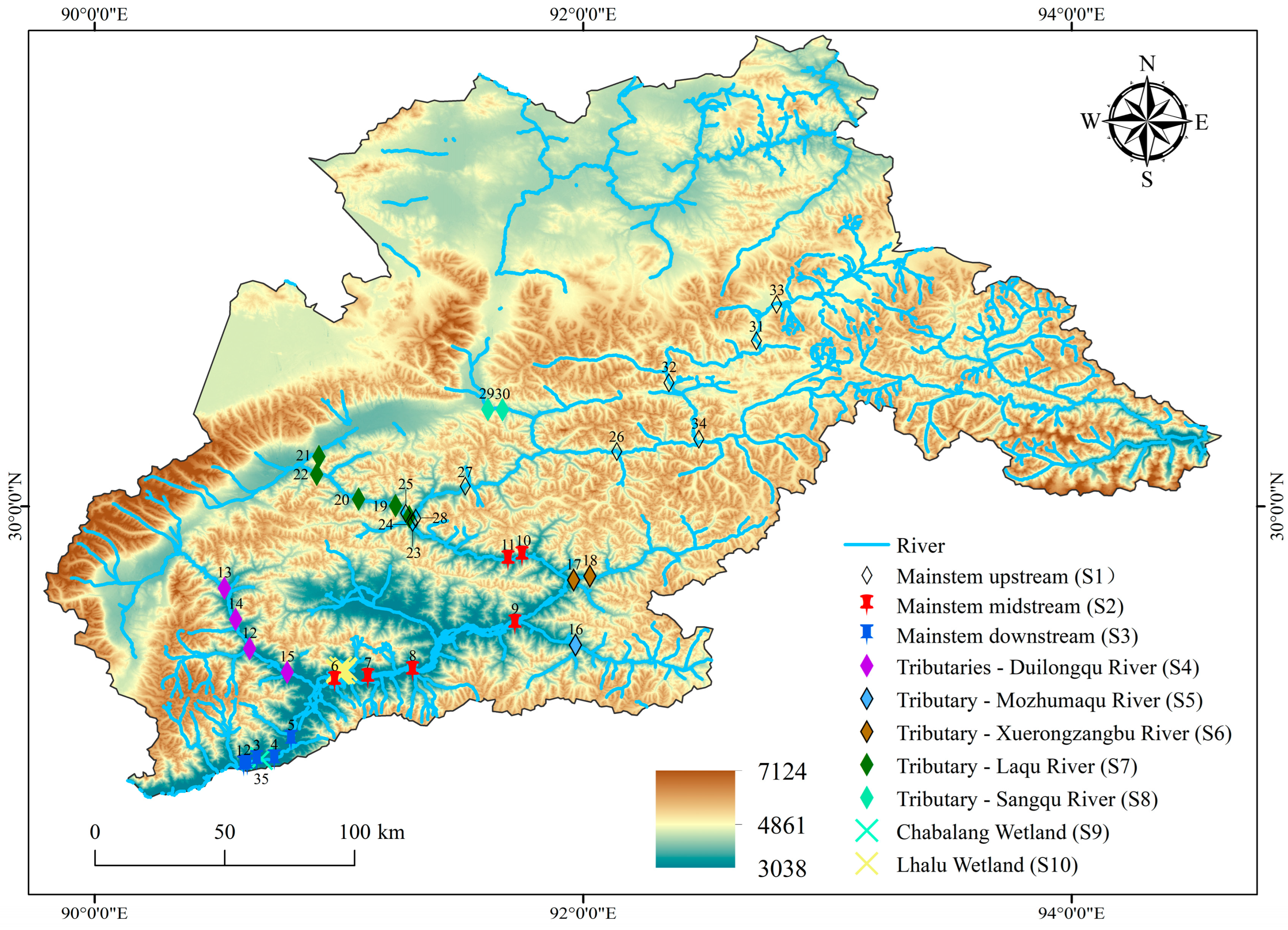
The present investigation encompasses the entire Lhasa River basin, stretching from its headwaters in Jiali County to the junction at Qushui County. To capture the hydrological and geographical diversity of the system, 42 sampling sections (Figure 1) were distributed across the principal channel, five major tributaries, and two associated wetlands. Field surveys were executed quarterly between 2019 and 2021, specifically in March (spring), June (summer), September (autumn), and November (winter). For comparative analysis, the river was partitioned into upper, middle, and lower reaches, with the Pangduo Reservoir and the Duilongqu River confluence serving as the primary geographical demarcations. This segmentation enabled analysis of the relationships between zooplankton community structure and environmental factors across different spatio-temporal scales. Detailed information on the latitude, longitude, elevation, and survey dates for each sampling site is provided in Table 1.
Figure 1.
Spatial arrangement of the sampling stations within the Lhasa River catchment. Note: The numbers on the icons in the figure represent the Site NO. in Table 1.
Table 1.
Detailed characteristics and coordinates of the study sites within the study area.
2.2. Collection and Analysis of Zooplankton
Zooplankton sampling and subsequent laboratory analysis adhered to the standard procedures defined in Methods of Freshwater Plankton Research [36]. A No. 25 plankton net (PTN-25, 64 μm mesh size, 20 cm mouth diameter; Beijing Prid Instrument Co., Ltd., Beijing, China) was employed for qualitative sampling, performing an “∞” pattern drag at a depth of 0.5 m. The filtered sample was placed into a sampling bottle and preserved with 4% formalin solution. Species identification was conducted in the laboratory using a LEICA DM500 research-grade light microscope (Leica Microsystems (Shanghai) Trading Co., Ltd., Shanghai, China). For quantification, 1 L aliquots of integrated surface water were retrieved from the 0–0.5 m depth interval. Upon collection, specimens were immediately stabilized using Lugol’s iodine and transported to the laboratory. A 48 h sedimentation period was observed, after which the samples were carefully concentrated to a final volume of 50 mL. One milliliter of the concentrated solution was transferred to a 1 mL counting chamber. Microscopic examinations were conducted using a 10 × 10 magnification, with each specimen analyzed in 2–3 replicates to ensure data reliability.
This study employed indices including the Shannon–Wiener index (H′) [37], Pielou’s evenness index (J′) [38], Simpson’s diversity index (Ds) [39], Margalef’s richness index (Dm) [40], and McNaughton’s dominance coefficient (Y) [41] was further applied to characterize the attributes of the zooplankton community structure. The dominance turnover rate (R) was used to indicate dominant species changes between adjacent seasons, calculated as follows:
- (1)
- Shannon–Wiener index: ;
- (2)
- Pielou’s evenness index: ;
- (3)
- Simpson’s diversity index: ;
- (4)
- Margalef’s richness index: ;
- (5)
- McNaughton’s dominance coefficient: ;
- (6)
- Dominant species turnover rate: .
where S is the number of species; Pi is the relative abundance of the i-th zooplankton species at the sampling site; N is the total number of individuals across all species; Ni is the number of individuals of the i-th species; fi is the frequency of occurrence of the i-th species; a and b represent the number of dominant species in two adjacent seasons, respectively; and c is the number of dominant species common to both adjacent seasons.
2.3. Collection and Determination of Water Quality Physicochemical Parameters
A total of 21 physicochemical water parameters were measured in this study. Among these, four parameters—flow velocity (FV), pH, water temperature (WT), and electrical conductivity (EC)—were measured in situ using an LS45A flow meter and a multi-parameter water quality analyzer. The remaining parameters were analyzed in the laboratory after collecting water samples. Sample collection, preservation, and analytical methods strictly followed the guidelines of MEPPRC [42] (Table 2).
Table 2.
Environmental conditions, units, and preservation and analytical methods.
2.4. Data Processing
This study utilized ArcGIS 10.8 to map the distribution of sampling points. Excel 2021 and IBM SPSS Statistics 26 were employed for basic statistical analysis and organization of zooplankton community parameters and water quality physicochemical indicators. Correlation heatmaps were constructed via Origin Pro 2022 to visualize the correlation between zooplankton community structure and environmental factors. Using Canoco5 software (version 5.02), we first selected zooplankton taxa with an abundance proportion exceeding 1% at least one sampling site and an occurrence frequency exceeding 30% across all seasonal sampling sites. These taxa were then subjected to DCA analysis. Results indicated maximum gradient lengths ranging from 1.6 to 2.7 across seasons, all below 3. Consequently, Redundancy Analysis (RDA) was performed using zooplankton abundance and environmental variables to elucidate the relationships between community structure and environmental factors.
3. Results and Analysis
3.1. Zooplankton Community Structure
3.1.1. Species Composition
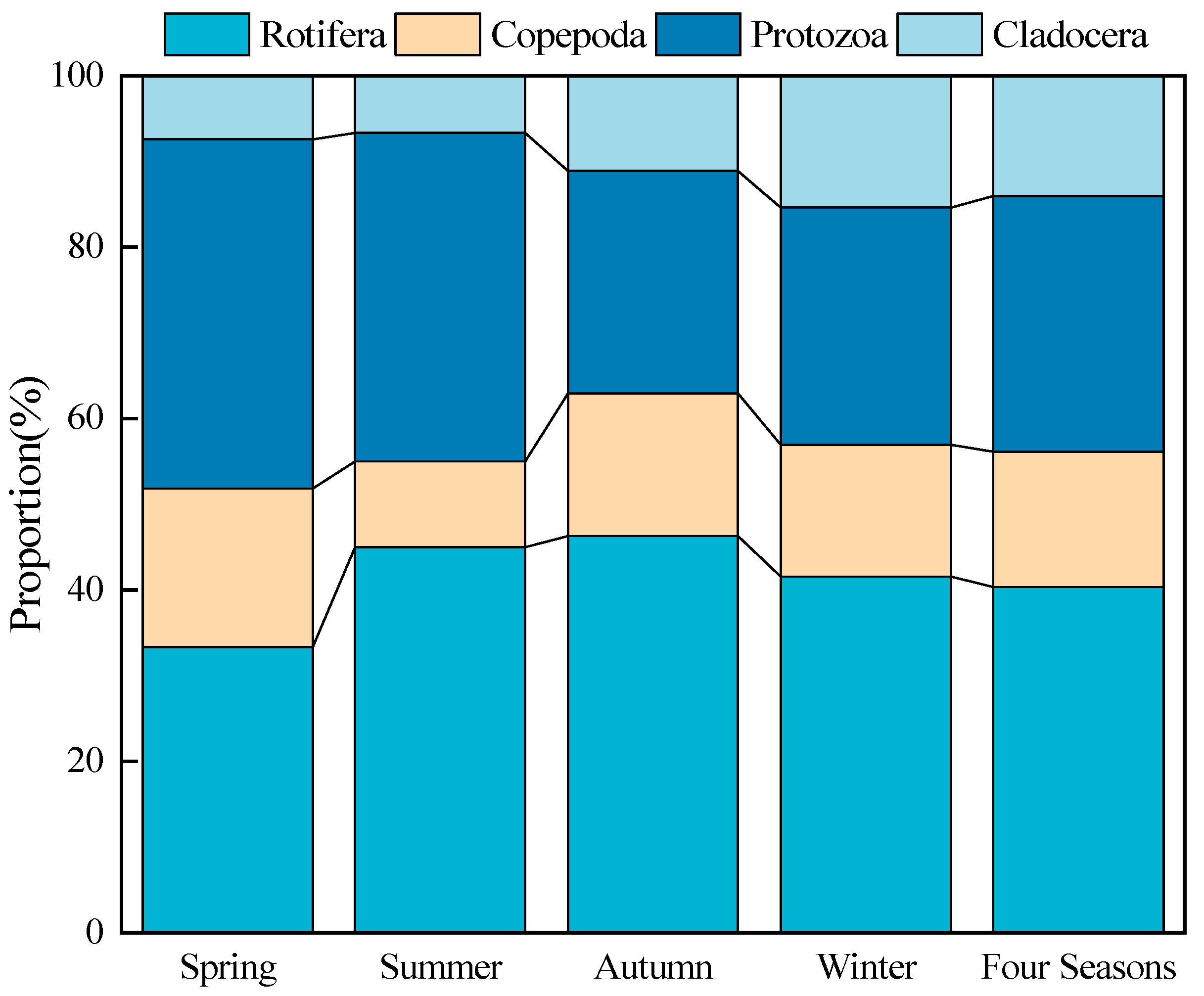
A total of 113 zooplankton taxa, comprising 85 species and 28 genera, across four taxonomic groups were identified during the four field surveys conducted from 2019 to 2021. Among these, Rotifera exhibited the highest diversity with 45 species, representing 39.82% of the overall taxonomic richness. This was followed by Protozoa with 34 species (30.09%), Copepoda with 18 species (15.93%), and Cladocera with 16 species (14.16%). Seasonally, species richness exhibited a fluctuating trend, with 27 taxa recorded during the spring, followed by 60 in the summer months, 54 throughout autumn, and peaking at 65 in the winter season. In terms of taxonomic composition, the community was consistently dominated by Rotifera and Protozoa across all seasons (Figure 2): in March (spring), they accounted for 33.33% and 40.74% of the total taxa, respectively; in June (summer), 45.00% and 38.33%; in September (autumn), 46.30% and 25.93%; and in November (winter), Rotifera and Protozoa represented 41.54% and 27.69% of the total zooplankton species, respectively.
Figure 2.
Taxonomic composition and percentage of zooplankton species richness in the Lhasa River basin.
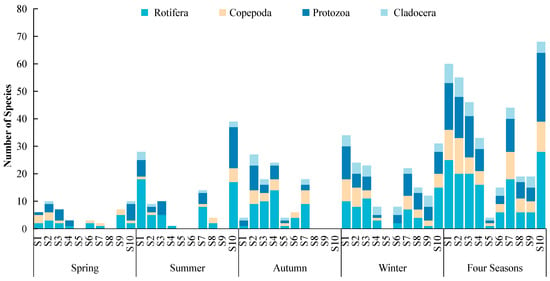
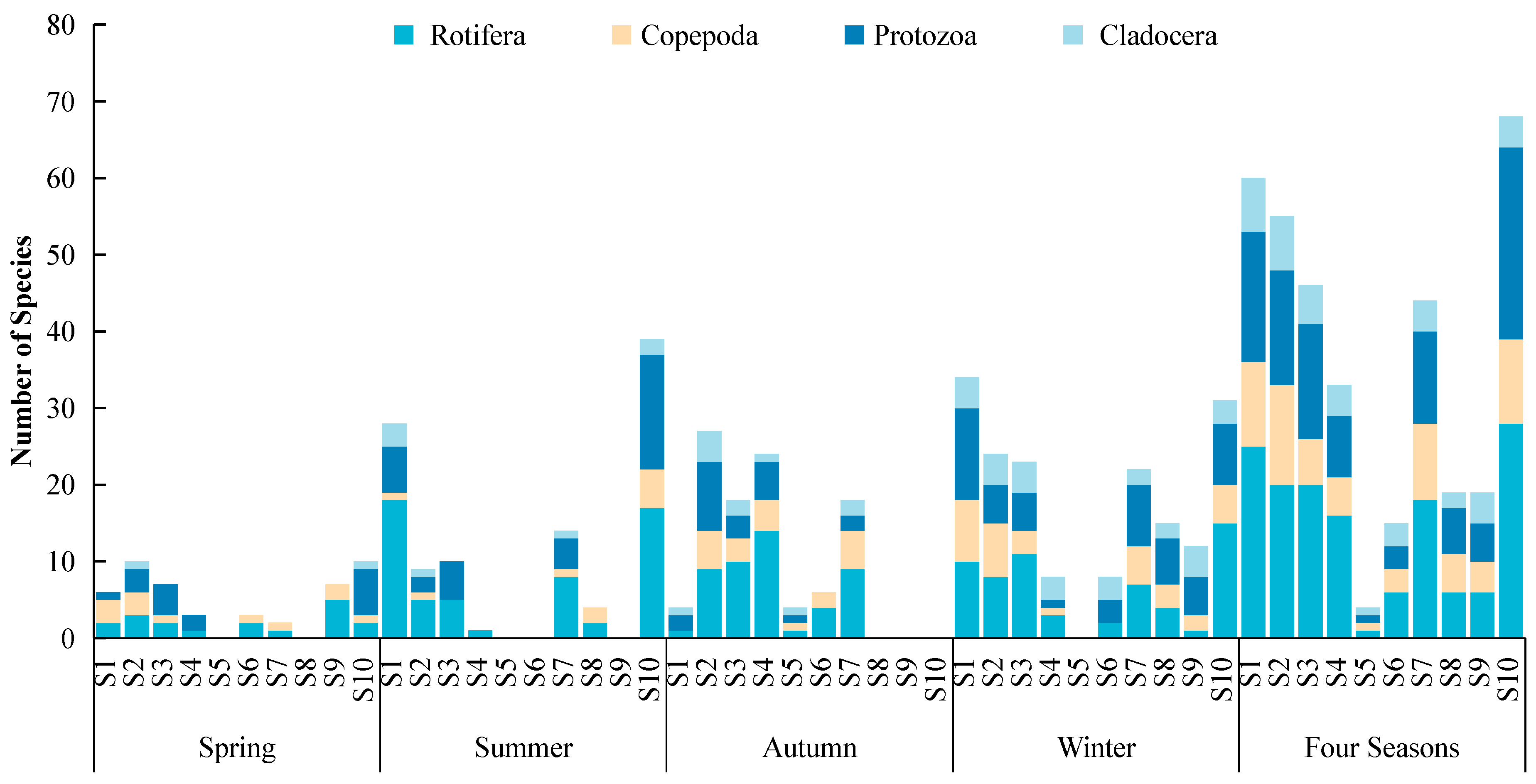
From a temporal perspective, the species richness and community structure of zooplankton in the main stem exhibited significant seasonal variations. In spring, the number of species was relatively low (ranging from 6 to 10) (Figure 3). Copepoda (50.00%) and Protozoa (57.14%) accounted for the highest proportions in the upstream (S1) and downstream (S3) sections, respectively, while Cladocera showed the lowest proportions across all areas. In summer, the number of species at S1 increased significantly to 28, while S2 and S3 recorded 9 and 10 species. Rotifera showed the highest proportions in the upstream (64.29%) and middle (55.56%) reaches, with both Copepoda and Cladocera accounting for minimal percentages in all sections. In autumn, species richness at S1 reached its annual minimum (4 species), while S2 and S3 recorded 27 and 18 species. During this period, Protozoa (50.00%) and Rotifera (55.56%) showed the highest proportions in the upstream and downstream sections, respectively. In winter, species richness across the main stem reached its peak (34, 24, and 23 species), with Protozoa (35.29%) showing the highest proportion in the upstream and Rotifera accounting for the highest in the middle (33.33%) and downstream (47.83%) sections. Overall, except for the high proportion of Copepoda in the upstream during spring, Protozoa and Rotifera accounted for the highest proportions across all other seasons and regions. Spatially, the Lhalu Wetland (S10) exhibited the highest diversity with 67 species. This was followed by the mainstem reaches, which displayed a longitudinal decline from upstream to downstream, with 59, 54, and 46 species, respectively. The tributary Mozhumaqu (S5) recorded the lowest species richness, with only four species identified.
Figure 3.
Spatio-temporal distribution of zooplankton species richness in the Lhasa River basin. Note: Missing bars indicate that no samples were collected at specific stations during the respective seasons.
3.1.2. Spatio-Temporal Variations in Zooplankton Abundance and Biomass
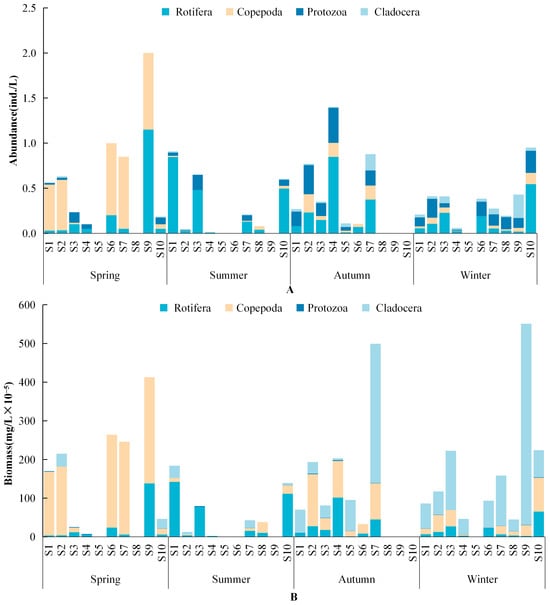
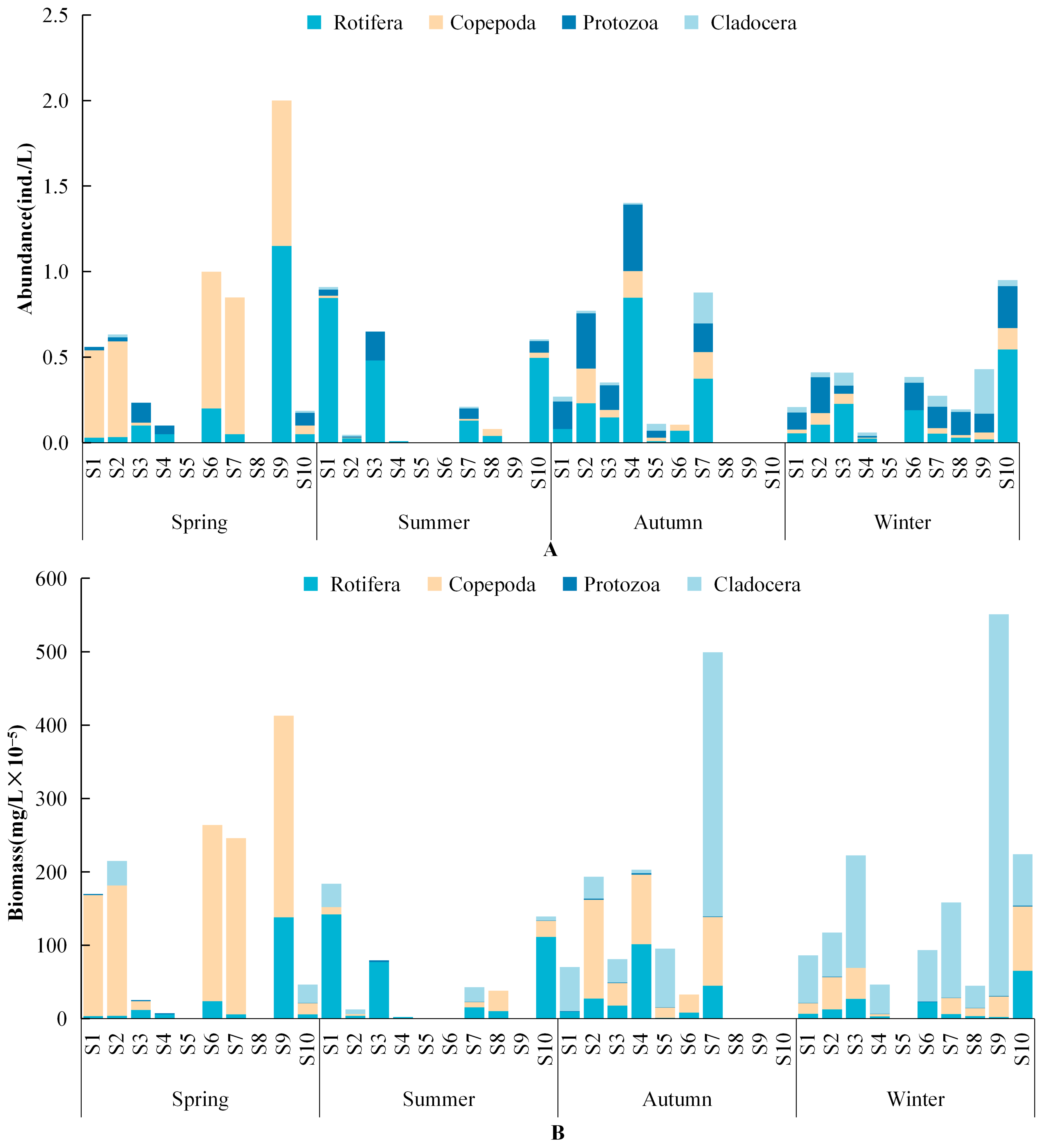
From 2019 to 2021, zooplankton abundance across the sampled reaches fluctuated between 0.01 and 2.00 ind./L, averaging 1.18 ind./L. The biomass varied from (1.20 to 550.95) × 10−5 mg/L, with a mean of 343.60 × 10⁻⁵ mg/L. Seasonal abundance and biomass peaked in autumn at 0.70 ind./L and 200.40 × 10⁻⁵ mg/L, respectively (Figure 4A,B). This was followed by spring, with an abundance of 0.53 ind./L and a biomass of 144.65 × 10⁻⁵ mg/L. The lowest abundance was recorded in winter (0.37 ind./L), while the minimum biomass occurred in summer (110.33 × 10⁻⁵ mg/L).
Figure 4.
Spatio-temporal patterns of zooplankton abundance and biomass within the Lhasa River catchment: (A) zooplankton abundance, (B) zooplankton biomass. Note: Missing bars indicate no samples collected at specific stations during the respective seasons.
Rotifera accounted for 45.58% of the total zooplankton abundance, followed by Copepoda at 26.48% and Protozoa at 22.53%, while Cladocera represented a minimal proportion of only 5.41%. In terms of biomass, Copepoda and Cladocera constituted the bulk of the community, contributing 39.58% and 37.14% to the total zooplanktonic biomass, respectively, ahead of Rotifera at 22.89%. Protozoa contributed a negligible fraction to the total biomass, at only 0.39%. Seasonally, Rotifera was the most abundant group across all seasons, with the exception of spring, when Copepoda dominated the total abundance. Regarding biomass, Copepoda and Rotifera were the dominant groups during spring and summer, respectively, whereas Cladocera dominated the biomass during both autumn and winter.
Spatially, during spring and autumn, zooplankton abundance and biomass in the Lhasa River’s middle sections surpassed those recorded in the headwaters and lower reaches. In summer, zooplankton abundance and biomass peaked in the upper reaches, significantly exceeding mid- and downstream levels. During the winter survey, abundance and biomass exhibited an increasing trend from the upper to the lower reaches (Figure 4A,B). Across the four seasonal surveys, the highest zooplankton abundance in the tributaries was recorded at the Xuerongzangbu River (S6, 1.00 ind./L) in spring, the Laqu River (S7, 0.21 ind./L) in summer, the Duilongqu River (S4, 1.40 ind./L) in autumn, and the Xuerongzangbu River (S6, 0.39 ind./L) in winter. The corresponding peak biomass values in the tributaries were recorded at the Xuerongzangbu River (S6, 264.00 × 10⁻⁵ mg/L) in spring, the Laqu River (S7, 42.90 × 10⁻⁵ mg/L) in summer, the Laqu River (S7, 499.34 × 10⁻⁵ mg/L) in autumn, and the Laqu River (S7, 158.68 × 10⁻⁵ mg/L) in winter. In the wetlands, zooplankton abundance and biomass in Chabalang surpassed those of Lhalu during the spring survey, whereas this spatial pattern was reversed in winter (Figure 4A,B).
From a basin-wide perspective of the Lhasa River, the Chabalang Wetland exhibited the highest mean zooplankton abundance and biomass, recorded at 0.61 ind./L and 240.99 × 10⁻⁵ mg/L, respectively. In contrast, the Mozhumaqu tributary harbored the minimum mean abundance (0.03 ind./L), while the lowest average biomass was recorded in the Sangqu tributary (20.74 × 10⁻⁵ mg/L). Overall, the Chabalang Wetland and Laqu tributary outperformed the Lhasa River mainstem and its other tributaries in terms of zooplankton abundance and biomass.
3.1.3. Dominant Zooplankton Species Composition
Utilizing the zooplankton abundance data from the Lhasa River catchment, McNaughton’s dominance index (Y) was determined to identify and compare the predominant species within each taxonomic group. According to the established criteria, a species is classified as dominant when McNaughton’s dominance coefficient Y ≥ 0.02. Eight dominant species were identified across the four surveys (Table 3), including four rotifer taxa: Brachionus urceus, Notholca squamula, Rotifera sp. and Bdelloidea sp. Copepoda was represented by two dominant taxa, namely, Nauplius and Calanoida copepodid, while Protozoa and Cladocera each had one dominant species: Arcella megastoma and Graptoleberis testudinaria, respectively. Temporally, the highest number of dominant species occurred in June 2020 (summer), with four species belonging to Rotifera, Cladocera, and Copepoda, exhibiting McNaughton’s dominance coefficient values ranging from 0.02 to 0.21. In November 2020 (winter), three dominant species from Protozoa, Rotifera, and Cladocera were identified. During both the spring and autumn surveys, the dominant community was consistently composed of two taxa belonging to Rotifera and Copepoda.
Table 3.
Dominant zooplankton species in the Lhasa River catchment.
The seasonal dominant species turnover rate (R) was highest during the winter–spring and autumn–winter transitions, both reaching 100%. This was followed by the summer–autumn transition (80%), while the lowest turnover rate was recorded between spring and summer (50%), indicating relatively higher community stability during this period. Overall, the community exhibited a distinct successional pattern, as the dominance of Copepoda during the spring-summer period gave way to Rotifera and Protozoa throughout the autumn and winter months.
3.1.4. Spatio-Temporal Variations in Zooplankton Community Biodiversity
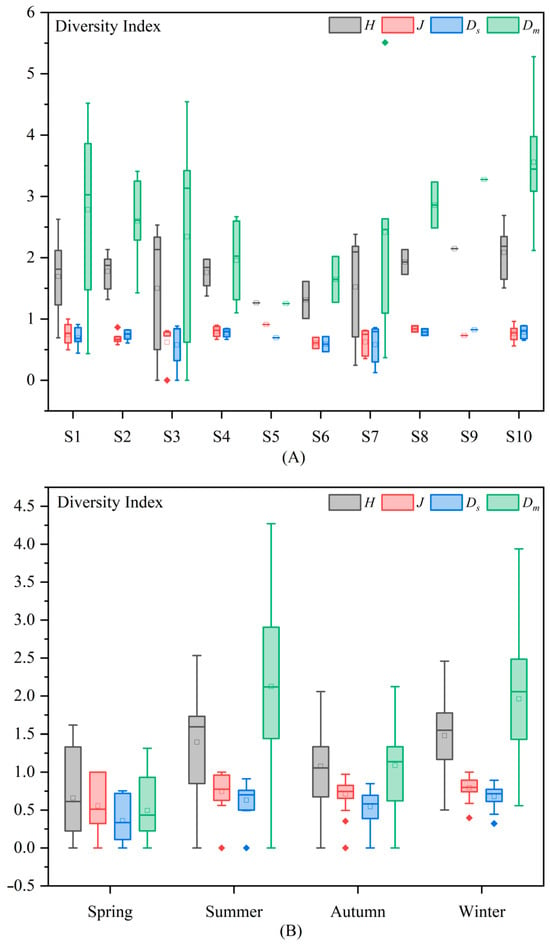
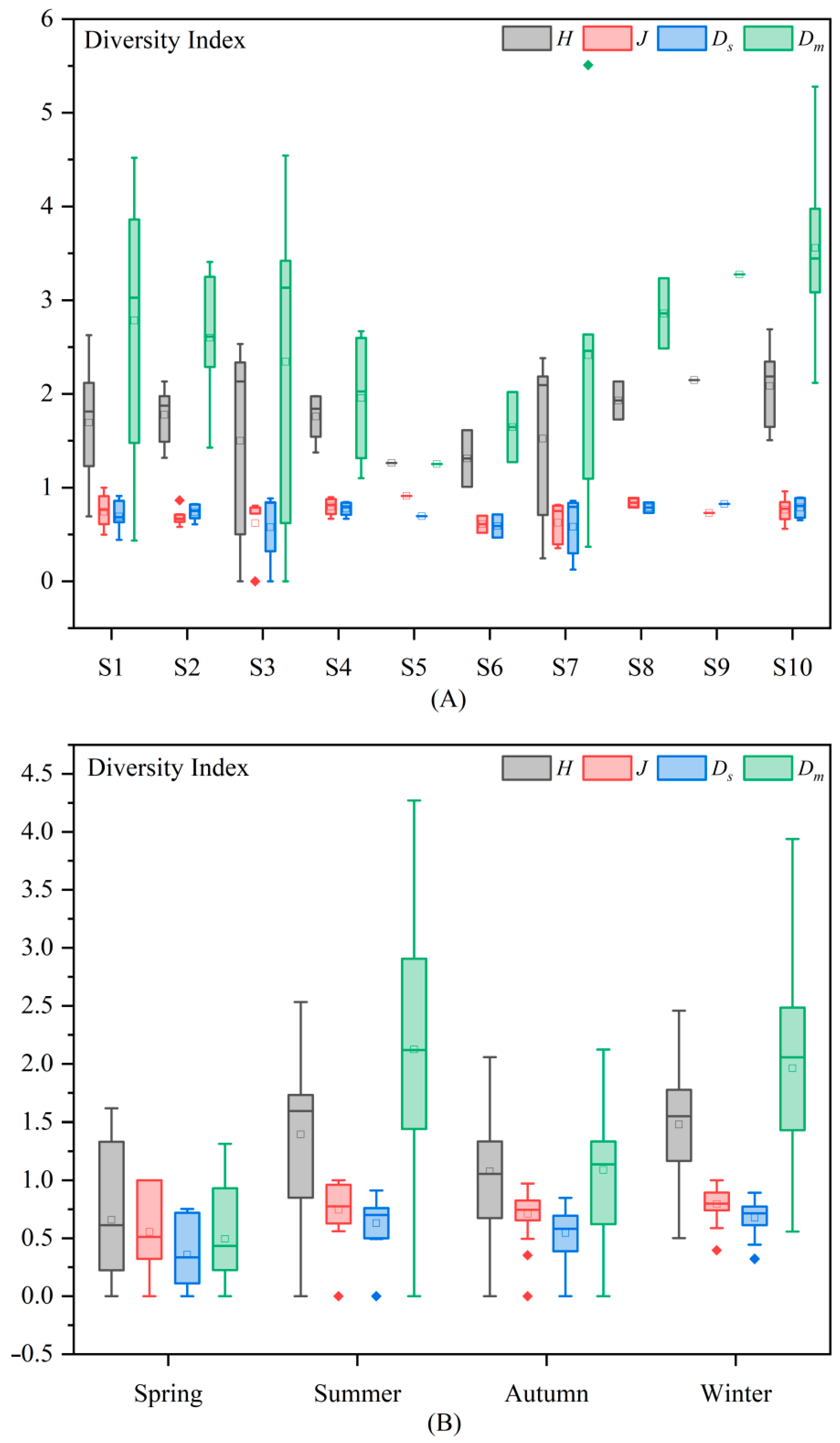
In the Lhasa River basin, the Shannon–Wiener index (H′), Pielou evenness index (J′), Simpson’s diversity index (Ds), and Margalef’s richness index (Dm) ranged from 1.26 to 2.15, 0.61 to 0.91, 0.58 to 0.83, and 1.25 to 3.56, respectively, with mean values of 1.73, 0.72, 0.70, and 2.64 (Figure 5A). From a temporal perspective (Figure 5B), the seasonal mean values across spring, summer, autumn, and winter were as follows: H′ (0.66, 1.40, 1.08, and 1.48), J′ (0.55, 0.75, 0.71, and 0.79), Ds (0.36, 0.63, 0.55, and 0.58), and Dm (0.49, 2.12, 1.09, and 1.96). The Dm reached its maximum in summer, suggesting that zooplankton species richness in the Lhasa River basin was highest during this season. Conversely, H′, J′, and Ds all reached their maximums in winter, suggesting a higher level of organizational complexity and more balanced species distribution within the winter community. Spatially, the Lhalu Wetland exhibited the highest mean values for both H′ and Dm (2.09 and 3.56, respectively). The Mozhumaqu tributary attained the maximum J′ value (0.91), whereas Ds bottomed out within the downstream sections of the Lhasa River main channel (0.58). These results indicate that, among all studied sections, the Lhalu Wetland possessed the highest zooplankton community diversity and species richness. The Mozhumaqu tributary demonstrated high taxonomic diversity and maximum evenness, whereas the community structure in the Chabalang Wetland remained relatively stable.
Figure 5.
Spatio-temporal dynamics of zooplankton biodiversity within the Lhasa River catchment: (A) spatial patterns, (B) temporal patterns. Note: Rhombuses represent outliers (values exceeding 1.5 times the interquartile range), and open squares represent mean values.
3.2. Physicochemical Water Quality Indicators
The seasonal variations in the primary physicochemical water quality indicators within the Lhasa River catchment are summarized in Table 4. Except for pH, all physicochemical parameters exhibited significant seasonal differences. The flow velocity (FV) in the basin during summer was significantly higher than in winter (p < 0.05). Water temperature (WT) reached its minimum during the winter season. Significant differences across the four seasons were observed for electrical conductivity (EC), chloride (Cl−), ferrous iron (Fe2+), and total phosphorus (TP). Notably, the concentrations of Cl− and Fe2+ in spring were significantly higher than those in the other three seasons (p < 0.05). Other physicochemical indicators exhibited varying degrees of similarity and difference across the different seasons.
Table 4.
Seasonal dynamics of hydro-environmental variables within the Lhasa River catchment (mean ± SD).
3.3. Relationship Between Zooplankton Community and Environmental Factors
3.3.1. Correlation of Zooplankton Communities and Environmental Factors
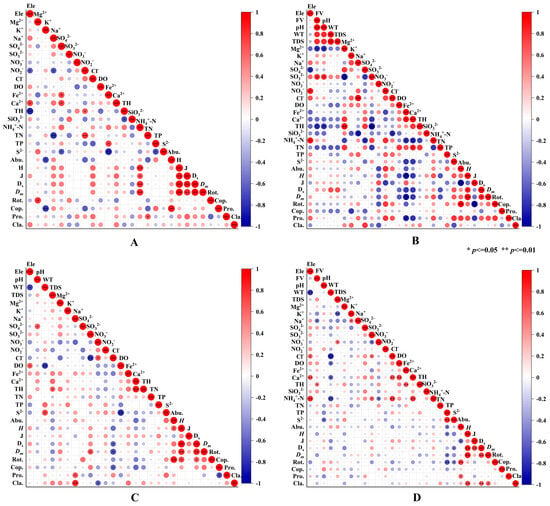
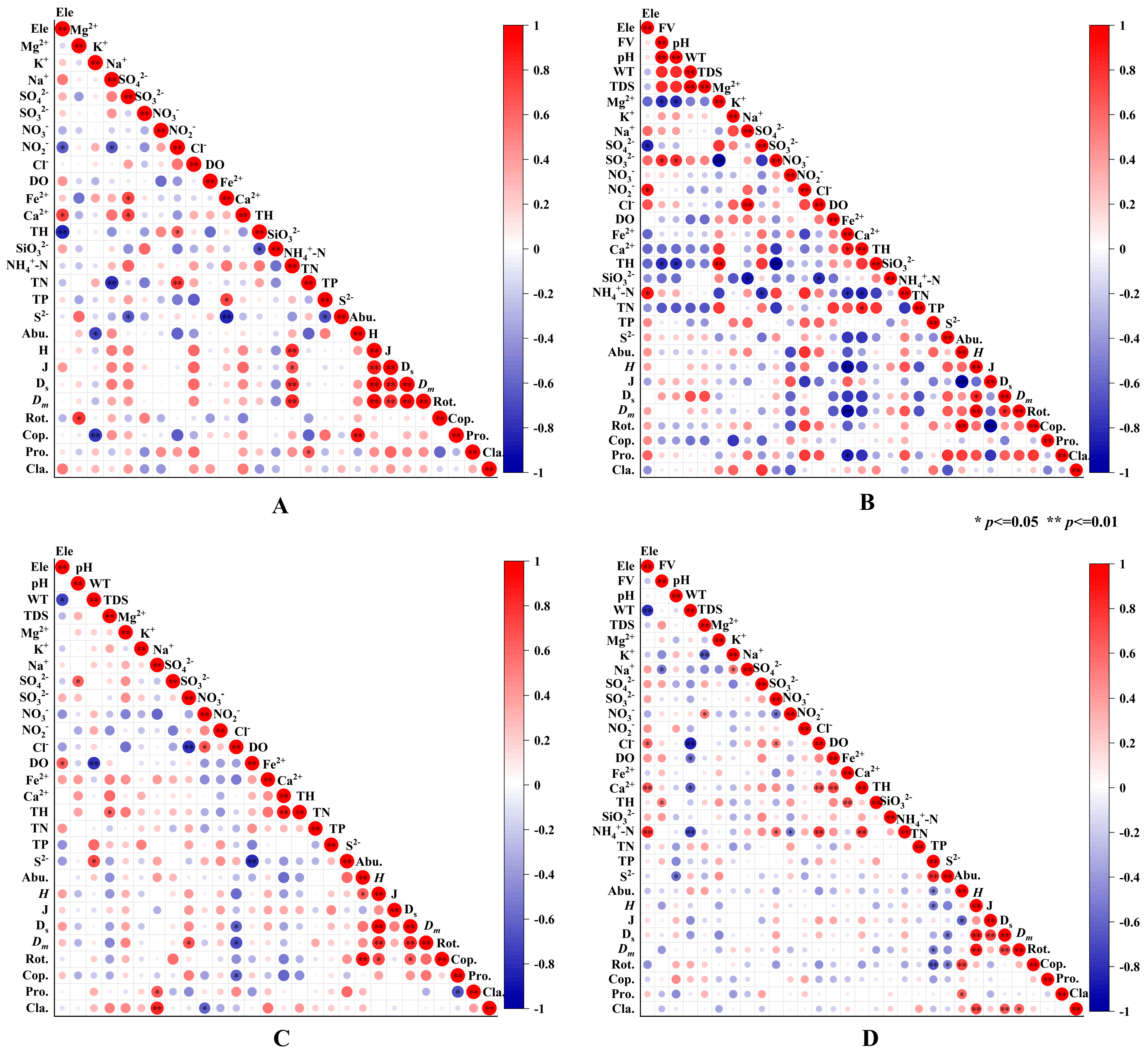
To assess the statistical associations between zooplankton assemblage configurations and environmental variables amidst anthropogenic stressors in the Lhasa River, the entire basin was divided into four ecological units: the upstream reaches (including the Laqu and Sangqu tributaries), the midstream reaches (including the Xuerongzangbu and Mozhumaqu tributaries), the downstream reaches (including the Duilongqu tributary), and wetland habitats (Chabalang and Lhalu wetlands). Based on Spearman rank correlation analysis, the relationships between zooplankton community characteristics and environmental factors for each unit were analyzed, with the results shown in Figure 6. The results indicated that, in the upstream reaches and their tributaries (Figure 6A), environmental parameters such as NH4+-N, Mg2+, and TN were significantly positively correlated with zooplankton abundance (Abu) and diversity indices (p < 0.05). Conversely, K+ exhibited a significant negative correlation with both abundance and diversity indices (p < 0.05), suggesting that these parameters play a crucial regulatory role in the population size and species composition of zooplankton in the upper reaches of the Lhasa River. In the midstream reaches and their tributaries (Figure 6B), Fe2+ showed a significant negative correlation with zooplankton abundance and diversity indices (p < 0.05). This suggests that Fe2+ exerts a restrictive effect on the quantity and diversity of zooplankton in the midstream sections. In the downstream reaches and their tributaries (Figure 6C), Na+ and SO32− were significantly positively correlated with zooplankton abundance and diversity indices (p < 0.05), while NO3− and Cl− exhibited significant negative correlations (p < 0.05). These findings indicate that the zooplankton communities in the downstream reaches are primarily influenced by the combined effects of Na+, SO32−, NO3−, and Cl−. In the Chabalang and Lhalu wetlands (Figure 6D), TP and S2− were significantly negatively correlated with zooplankton abundance and diversity indices (p < 0.05). This demonstrates that, in the wetland ecosystems of the Lhasa River basin, phosphorus nutrient loading and reductive sulfide levels are the primary environmental stressors inhibiting zooplankton community diversity. In summary, the dominant environmental drivers of zooplankton community structure exhibit clear spatial variation across the basin: the upstream is mainly regulated by NH4+-N, TN, and Mg2+; the midstream is primarily restricted by Fe2+; and the downstream is driven by the interaction of Na+, SO32−, NO3−, and Cl−, while the wetland habitats are most sensitive to TP and S2− loading.
Figure 6.
Correlations between zooplankton community structure and environmental factors within the Lhasa River catchment: (A) upstream, (B) midstream, (C) downstream, (D) attached wetland. Note: ‘*’ represents p < 0.05 and has a significant correlation, ‘**’ represents p < 0.01 and has a highly significant correlation. Abu.—zooplankton abundance; Rot.—Rotifer; Cop.—Copepod; Pro.—Protozoa; and Cla.—Cladocera.
3.3.2. Redundancy Analysis (RDA) of Zooplankton Communities and Environmental Indicators
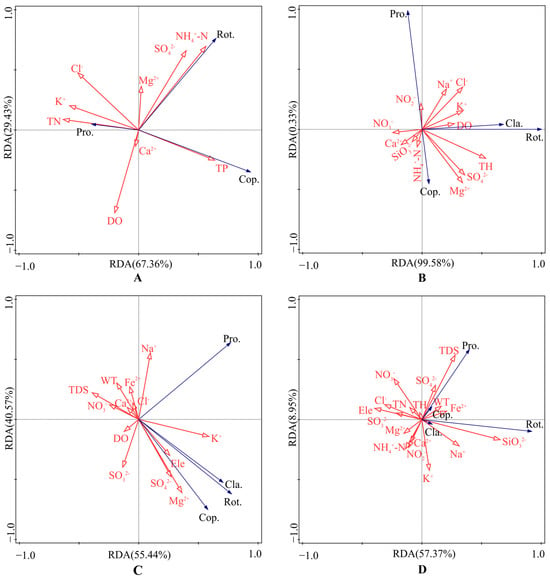
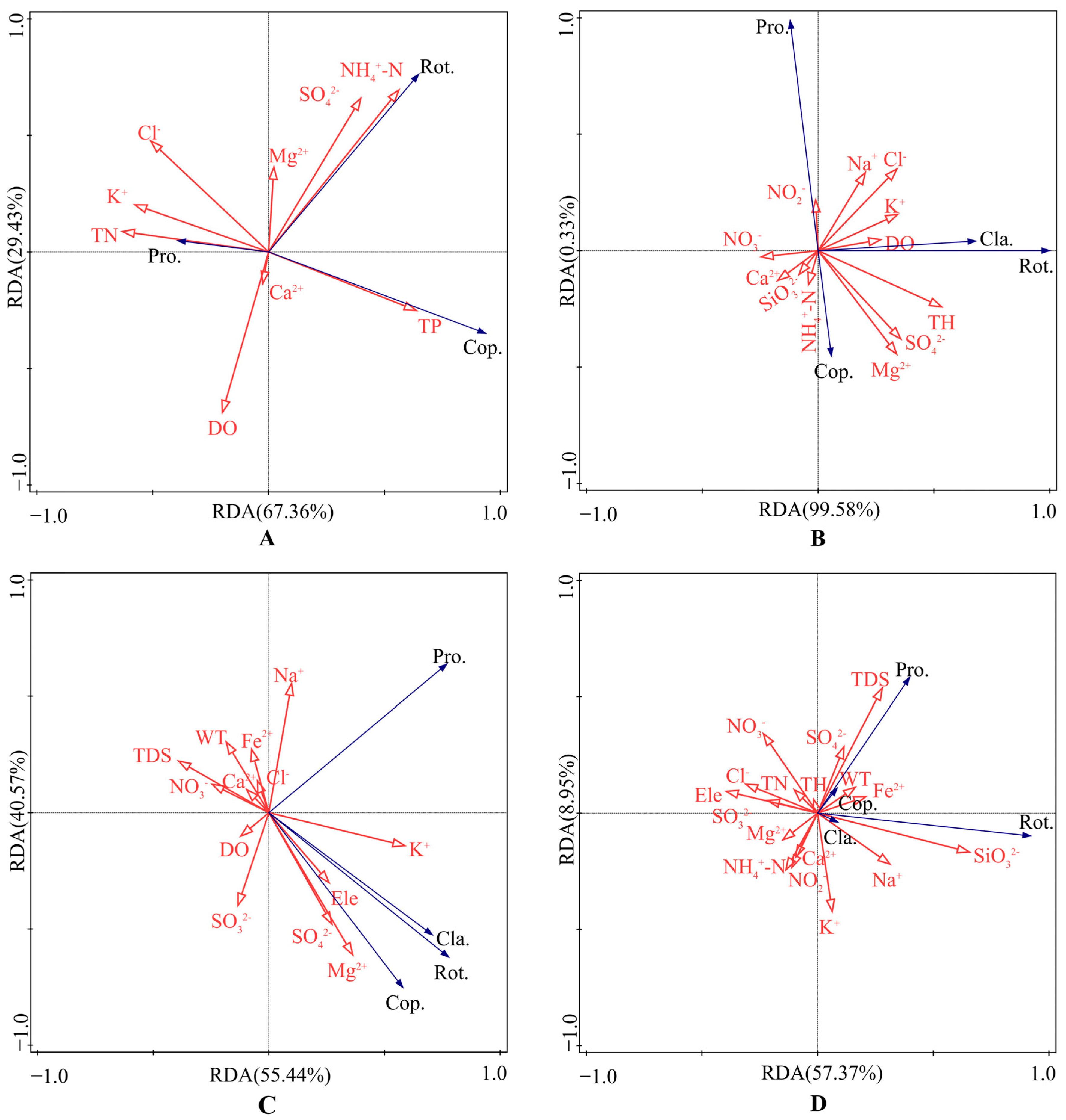
The initial two axes of the Redundancy Analysis (RDA) for the spring season yielded eigenvalues of 0.6736 and 0.2943 (Figure 7A), which collectively captured 96.79% of the species–environment relationship. Cl−, NH4+-N, and K+ emerged as the predominant explanatory variables, contributing 36.5%, 35.9%, and 10.3% to the total variance, respectively. Notably, Cl− was the significant environmental factor influencing the zooplankton community (p = 0.01 < 0.05). Regarding the relationship between taxonomic groups and the aquatic environment, Protozoa and Rotifera exhibited a positive correlation with Cl−, whereas Copepoda showed a negative correlation.
Figure 7.
Redundancy Analysis (RDA) ordination plots of zooplankton community and environmental factors: (A) spring, (B) summer, (C) autumn, (D) winter. Note: Rot.—Rotifer; Cop.—Copepod; Pro.—Protozoa; and Cla.—Cladocera; red arrows indicate environmental factors, and blue arrows indicate zooplankton groups.
In the Lhasa River basin during summer, the first two principal component axes had eigenvalues of 0.9958 and 0.0033 (Figure 7B), explaining 99.91% of species-environment variation; Total hardness (TH) and SO32− were the primary influencing factors, explaining 28.3% and 14.4% of the variance, respectively. Among these, TH was a significantly influential environmental factor on the zooplankton community (p = 0.04 < 0.05). Correlation analysis revealed that Rotifera, Cladocera, and Copepoda were positively correlated with TH, while Protozoa showed a negative correlation.
The first two principal component axes in the Lhasa River basin during autumn yielded eigenvalues of 0.5544 and 0.4057 (Figure 7C), collectively explaining 96.01% of species-environment variation. Mg2+, Na+, and K+ were the primary influencing factors, explaining 22.5%, 14.9%, and 14.7% of the variation, respectively. Among these, Mg2+ was a significantly influential environmental factor on the zooplankton community (p = 0.04 < 0.05). Regarding the relationship between zooplankton groups and the aquatic environment, Rotifera, Cladocera, and Copepoda showed positive correlations with Mg2+, while protozoa exhibited negative correlations with Mg2+.
For the winter season, the first two RDA axes (eigenvalues = 0.5737 and 0.0895; Figure 7D) collectively captured 66.32% of the species–environment variability. Among the variables, SO32− and Ele emerged as the most influential determinants, contributing 25.7% and 13.1% to the total variance, respectively. Both factors demonstrated significant structuring effects on the zooplankton community (p < 0.01 and p < 0.05, respectively). Regarding species–environment relationships, Protozoa, Rotifera, Cladocera, and Copepoda all positively correlated with SO32−, while all four groups exhibited negative correlations with Ele.
Research indicates that five environmental variables—Cl−, TH, Mg2+, SO32−, and Ele—possess significant explanatory power regarding zooplankton abundance and serve as primary determinants shaping community assembly in the Lhasa River Basin.
4. Discussion
4.1. Spatio-Temporal Variations in Zooplankton Resources of the Lhasa River Basin
Historical records indicate that the spring zooplankton community in the Lhasa River Basin comprised 51 taxa, predominantly Protozoa (47.06% of the total), while Copepoda exhibited the lowest richness [25]. In contrast, our spring survey identified only 27 taxa; despite Protozoa remaining the most prevalent group (40.74%), Cladocera emerged as the least represented taxon. This localized successional shift and the overall decline in species richness may stem from the long-term interval between surveys and the environmental heterogeneity across sampling periods. Such fluctuations in physicochemical parameters likely imposed a selective filtering effect, thereby reshaping the zooplankton community composition. Such a discrepancy is primarily attributed to the extended temporal scale and the inclusion of a complete seasonal cycle in the present study. Regarding taxonomic composition, Rotifera and Protozoa exhibited an absolute dominance in terms of species number, collectively accounting for 69.91% of the total taxa. Similar findings have been corroborated in studies of the Tibet section of the Lancang River [43], the Niyang River [44,45], and the Jinsha River [46]. These results reflect a common characteristic of zooplankton communities in high-altitude cold-water rivers, where small-bodied rotifers and protozoans typically constitute the primary groups. Spatially, the species richness in the Lhalu Wetland reached the highest level within the Lhasa River basin. This peak is likely due to the lentic conditions (slower flow velocity), abundant nutrients, and higher microhabitat complexity characteristic of wetland environments, which provide optimal niches for zooplankton colonization. In contrast, the mainstem reaches are characterized by higher flow velocities, which impede the settlement and aggregation of zooplankton, resulting in relatively lower species richness. This study observed a longitudinal trend in species number along the mainstem following the order of “upstream > midstream > downstream.” This further reinforces the notion that, in plateau rivers, the quality of local habitats may exert a more profound influence on zooplankton distribution than macro-scale elevational gradients [44].
In high-altitude aquatic ecosystems, seasonal transitions drive variations in environmental factors, such as glacial meltwater inputs [34,35], which can potentially lead to significant differences in zooplankton biomass [26,27]. This study demonstrates that the abundance and biomass of zooplankton in the Lhasa River basin exhibit distinct seasonal heterogeneity, with peaks occurring in autumn and lower values recorded in winter and summer. The high abundance in autumn may be attributed to favorable water temperatures and stabilized hydrological conditions following the rainy season; during this period, nutrient enrichment and the subsequent growth of phytoplankton provide a sufficient food base for zooplankton [47]. Conversely, low temperatures in winter limit biological metabolism and reproduction, while the summer season is characterized by significant “dilution” and “scouring” effects caused by snowmelt runoff, which restricts the expansion of zooplankton populations [48]. These patterns of seasonal heterogeneity and succession differ from those observed in the Niyang River [45] (where peaks occur in spring and autumn) and the Lancang River [43] (where spring values exceed autumn values). Such discrepancies reflect the specific responses of zooplankton communities to the unique hydrological rhythms and meteorological conditions across different plateau basins. Spatially, the Chabalang Wetland, located at the lowermost reaches of the basin, exhibited the highest zooplankton density and biomass, while the basin as a whole showed a decreasing trend from upstream to downstream. This is consistent with previous findings in the Lhasa and Niyang Rivers [25,45], confirming that zooplankton richness and biomass generally decrease with increasing elevation. In this study, Protozoa and Rotifera dominated in terms of species richness, whereas Copepoda and Cladocera contributed significantly to the total biomass (collectively accounting for approximately 76.72%). This phenomenon, also noted in studies of the Niyang River [44], suggests that, although the survival of large zooplankton is limited in plateau lotic habitats, their individual biomass far exceeds that of smaller taxa, making them vital components of energy flow within the ecosystem.
The compositional differences in dominant zooplankton species across seasons, coupled with the significant turnover rates between adjacent seasons, collectively reflect the community’s response to abrupt habitat alterations. This dynamic succession in species composition is, in essence, an adaptive adjustment of the zooplankton community to environmental stressors, such as water temperature fluctuations and nutrient shifts [45]. The Lhasa River’s zooplankton community was characterized by a high prevalence of rotifer and protozoan species, with Brachionus urceus, Notholca squamula, and Arcella megastoma being the dominant species. In this study, the seasonal dominant species turnover rate (R) reached 100% during the winter–spring and autumn–winter transitions, indicating that the zooplankton community in the Lhasa River is highly sensitive to seasonal environmental stressors. This drastic community succession is closely linked to the significant seasonal variations in physicochemical water quality indicators (Table 4). In spring, the concentrations of Cl− and Fe2+ were significantly higher than in other seasons (p < 0.05), during which the dominant group was primarily represented by Copepoda. During summer, driven by rising temperatures and snowmelt recharge, the flow velocity (FV) reached its annual peak. Intense physical scouring and habitat fluctuations served as key drivers for the peak in dominant taxa richness during summer, illustrating the remarkable resilience and adaptive modulation of the aquatic assemblage toward extreme environmental conditions. In autumn and winter, the dominant taxa gradually transitioned to Rotifera and Protozoa, which may be associated with the water temperature (WT) dropping to its minimum and the subsequent slowing of biological metabolism. Furthermore, the occurrence of dominant species such as Brachionus urceus typically indicates a certain level of nutrient loading in the water body [49,50]. Combined with the physicochemical monitoring results, significant differences were observed in EC, Cl−, Fe2+ and TP across the four seasons; such fluctuations in hydrochemical characteristics serve as the key driving force shaping community succession. In summary, the seasonal variations in environmental factors—driven by water temperature, flow velocity, and nutrients (e.g., TP)—collectively determine the successional pattern of zooplankton in the Lhasa River basin, transitioning from Copepoda in spring to Rotifera and Protozoa in autumn and winter.
4.2. Spatio-Temporal Variations in Zooplankton Community and Their Relationship with Environmental Factors
Four species diversity indices serve as critical benchmarks for evaluating biodiversity [37,38,39,40]. Analyzing their spatio-temporal shifts offers a comprehensive understanding of community-level responses to fluctuating environmental parameters. The results of this study indicate that significant spatio-temporal variations exist in zooplankton diversity within the Lhasa River basin. Temporally, Margalef’s diversity index (Dm) peaked during summer, consistent with findings from Hulun Lake [51] and Shuiyang River [52]. This is primarily attributed to summer’s favorable water temperatures and abundant sunlight, which likely promote phytoplankton growth in the habitat. This, in turn, provides ample food resources for zooplankton, enhancing species richness. However, the Shannon–Wiener index (H′), Pielou’s index (J′) and Simpson’s index (Ds) all reached their highest levels in winter. This indicates that, although low temperatures limit the overall number of species during winter, stable hydrological processes reduce seasonal flood disturbances to the habitat. Consequently, the community structure becomes more complex, and species distribution tends toward greater equilibrium. In contrast, spring diversity indices were relatively low, potentially constrained by physical stressors such as intense runoff erosion and increased suspended solids caused by snowmelt runoff [53], which limited the settlement of sensitive species. Spatially, Lhalu Wetland exhibited the highest mean H’ and Dm values, highlighting how its complex microhabitats, slower flow velocities, and abundant organic matter provide ideal habitats for zooplankton [54], underscoring wetlands’ vital role in maintaining biodiversity. The lower mainstem recorded the minimum Ds values relative to the upstream and midstream segments of the Lhasa River. This indicates that downstream habitats experienced reduced heterogeneity and a trend toward species composition homogenization due to human disturbances such as dam construction and urbanization processes.
The key environmental drivers of zooplankton community structure diverge among aquatic systems, largely owing to the distinct physicochemical profiles and the nature of the primary limiting factors characteristic of each environment [29,55]. Correlation analysis further reveals that the distinct spatial distribution of zooplankton community characteristics in the Lhasa River is also controlled by the differentiated hydrochemical features of each river section. The environmental factors limiting the zooplankton community structure vary across the upstream, midstream, and downstream reaches, as well as the associated wetlands. This variation may be related to the distinct aquatic environments formed following the construction of different dams, and is also closely associated with regional geological backgrounds and mining activities. Within the upstream sections and tributaries of the Lhasa River, moderate nutrient enrichment facilitates higher carrying capacities for planktonic assemblages. This process, characterized by augmented phytoplankton standing crops, provides a more robust foraging base for zooplankton, which in turn fosters greater taxonomic diversity within the community [45]. In the middle reaches of the Lhasa River, increased Fe2+ levels may result from metal ion release triggered by specific geological backgrounds or industrial and mining activities [56]. The subsequent precipitation formed by the oxidation of Fe2+ can directly or indirectly affect the survival of zooplankton [57], thereby exerting a significant restrictive effect on their community structure. In the downstream area, the combined effects of Na+, SO32−, NO3−, and Cl− influence the structure of the zooplankton community. Among these, the negative correlation between NO3−, Cl−, and the zooplankton community indicates that high concentrations of inorganic salts may impose a certain level of physiological stress. As relatively lentic water bodies, wetlands are prone to the accumulation of pollutants; high TP is often associated with organic pollution or eutrophication risks [58], while the presence of S2− typically indicates that the water is in an hypoxic or reductive state. Both high TP and S2− exert negative impacts on the zooplankton community structure, leading to a decline in community diversity.
Abiotic factors modulate zooplankton abundance via direct and indirect mechanisms [30,31]. The indirect impact is largely mediated by the environmental shaping of phytoplankton communities. Spatio-temporal oscillations of environmental drivers in the Lhasa River Basin primarily dictate phytoplankton succession [19,20,21]; these shifts then propagate through the food web, profoundly impacting zooplankton resource availability and their successional trajectories [8,30]. The RDA results indicated that Cl−, TH, Mg2+, SO32−, and elevation (Ele) were the key drivers influencing zooplankton abundance in the Lhasa River basin. Firstly, chloride (Cl−) emerged as a significant factor during spring, showing a positive correlation with Protozoa and Rotifera. This phenomenon is likely linked to the geothermal activity surrounding specific tributaries, such as the Duilongqu River; the discharge of geothermal wastewater combined with intense evaporation leads to elevated concentrations of Cl− and Na+ in the water [28,59]. Secondly, total hardness (TH) and magnesium ions (Mg2+) played a dominant role during the summer and autumn seasons. In plateau rivers, hardness is closely associated with geological weathering and the erosion of sedimentary rocks. In water bodies with higher hardness, the dominance of rotifers and cladocerans tends to increase [44]. In this study, the positive correlation of Rotifera and Cladocera with TH and Mg2+ supports this pattern, suggesting that Mg2+, within a certain concentration range, mediates the dynamics of phytoplankton [60] and thereby exerts a positive bottom-up effect on filter-feeding zooplankton. Ele was identified as a critical abiotic factor shaping the zooplankton community during winter. In the Lhasa River and its tributaries during the winter survey, increasing elevation was typically accompanied by a decrease in water temperature, leading to reduced primary productivity. This subsequently inhibited the survival of certain zooplankton, resulting in a declining trend in both species richness and abundance at higher altitudes [61]. In the present study, the abundance of all zooplankton groups in winter was negatively correlated with elevation, further confirming that temperature differences induced by elevation are the primary limiting factors for zooplankton community assembly on the plateau during winter.
5. Conclusions
From 2019 to 2021, seasonal surveys of the zooplankton community in the Lhasa River basin identified 113 taxa across four major groups. Among these, Rotifera was the most diverse group, accounting for 39.82% of the total taxa, followed by Protozoa (30.09%), Copepoda (15.93%), and Cladocera (14.16%). Spatially, the species richness followed the order of Lhalu Wetland > upstream reaches > midstream reaches > downstream reaches, highlighting the critical role of wetland habitats in maintaining the biodiversity of plateau aquatic ecosystems. The mean abundance of zooplankton in the basin was 1.18 ind./L, exhibiting a temporal trend of autumn > spring > summer > winter, and a spatial pattern of Chabalang Wetland > Laqu tributary > Lhasa River mainstem > other tributaries and wetlands. Eight dominant species were identified across the four seasons, with the core dominant groups exhibiting a successional transition from Copepoda in spring and summer to Rotifera and Protozoa in autumn and winter. The results indicate that the zooplankton biodiversity in the Lhasa River basin is at a moderate level, with significant variations in diversity indices across seasons. Correlation analysis revealed that NH4+-N, Mg2+, TN, K+, Fe2+, Na+, SO32−, NO3−, Cl−, TP, and S2− were significantly correlated with the zooplankton community structure. Furthermore, RDA results identified five key environmental factors—Cl−, TH, Mg2+, SO32−, and elevation (Ele)—as the primary drivers significantly influencing zooplankton abundance. Considering the potential impacts of large-scale hydropower projects on aquatic biota, future research should closely monitor the long-term ecological effects of hydraulic engineering and reservoir regulation on the zooplankton community within the basin. Given the driving role of nutrients (e.g., NH4+-N, TP) in shaping community structure, strict measures must be implemented to manage point-source discharges in urban areas and non-point source pollution from agriculture to prevent community simplification caused by eutrophication. Finally, in response to the distinct environmental pressures observed across the upper, middle, and lower reaches, as well as the wetlands, a differentiated monitoring and management strategy should be adopted to construct a comprehensive biodiversity conservation network for the entire basin.
Author Contributions
Conceptualization and methodology, D.N., S.F. and T.W.; validation, H.L. and D.N.; formal analysis, D.N., S.F. and H.L.; investigation, F.L., J.L., Y.Z. (Yang Zhou), H.G., Y.D., Y.Z. (Yinhua Zhou) and L.L.; resources, C.Z. and H.L.; data curation, D.N., S.F. and J.S.; writing—original draft preparation, D.N., T.W. and S.F.; writing—review and editing, H.L., S.F. and D.N.; supervision, H.L.; project administration, C.Z. and H.L.; funding acquisition, H.L. All authors have read and agreed to the published version of the manuscript.
Funding
This research was supported by the National Natural Science Foundation of China (NSFC) Joint Fund Priority Support Program (U23A20249); the “Special fund for youth team of the Southwest University” (SWU-XJPY202302); and the National Talent Research Grant for 2023 (No. 5330500953).
Data Availability Statement
The data presented in this study are available on request from the corresponding author due to privacy restrictions.
Acknowledgments
The authors would like to gratefully thank the agency (Agriculture and Rural Department of Tibet Autonomous Region, Lhasa) for supporting the sampling.
Conflicts of Interest
The authors declare no conflicts of interest.
References
- Ismail, A.H.; Lim, C.C.; Wan Omar, W.M. Evaluation of spatial and temporal variations in zooplankton community structure with reference to water quality in Teluk Bahang Reservoir, Malaysia. Trop. Ecol. 2019, 60, 186–198. [Google Scholar] [CrossRef] [Scilit]
- Lepistö, L.; Holopainen, A.L.; Vuoristo, H. Type-specific and indicator taxa of phytoplankton as a quality criterion for assessing the ecological status of Finnish boreal lakes. Limnologica 2004, 34, 236–248. [Google Scholar] [CrossRef] [Scilit]
- Guo, X.; Wang, Y.; Zeng, Y.; Zhang, J.; Cen, M.; Yin, C.; Chen, J. Plankton Community Structure Characteristics and Relationship with Environmental Factors in the Nanjing Section of the Mainstream Yangtze River. Res. Environ. Sci. 2025, 38, 1418–1429. [Google Scholar] [CrossRef]
- Liu, Q.; Li, C.; Lu, S.; Zhou, Z.; Yuan, H.; Zhang, J.; Gao, Y.; Dong, J.; Song, D.; Gao, X.; et al. A dataset of Zooplankton in the Henan section of the Yellow River. China Sci. Data. 2025, 10, 47–55. [Google Scholar] [CrossRef] [Scilit]
- Shen, W.; Liu, B.; Liu, T. Zooplankton species composition and distributional characteristics in the high seas of the Northwest Pacific Ocean in 2021–2022. J. Shanghai Ocean Univ. 2024, 33, 927–937. [Google Scholar] [CrossRef]
- Gannon, J.E.; Stemberger, R.S. Zooplankton (especially crustaceans and rotifers) as indicators of water quality. Trans. Am. Microsc. Soc. 1978, 97, 16–35. [Google Scholar] [CrossRef] [Scilit]
- Ren, Y.; Fan, F.; Xi, Y.; Chen, A.; Li, Y.; Ding, J.; Gao, J.; Gu, Y.; Li, H. Comparative study on the biodiversity of zooplankton in Lake Fuxian based on environmental DNA technology and morphological identification. J. Lake Sci. 2025, 37, 1140–1156. [Google Scholar] [CrossRef] [Scilit]
- Jeppesen, E.; Nõges, P.; Davidson, T.A.; Haberman, J.; Nõges, T.; Blank, K.; Lauridsen, T.L.; Søndergaard, M.; Sayer, C.; Laugaste, R.; et al. Zooplankton as indicators in lakes: A scientific-based plea for including zooplankton in the ecological quality assessment of lakes according to the European Water Framework Directive (WFD). Hydrobiologia 2011, 676, 279–297. [Google Scholar] [CrossRef] [Scilit]
- Han, W.Y.; Zhang, C.; Zeng, Y.; Liu, G.H. Spatio-temporal changes and driving factors in the net primary productivity of Lhasa River Basin from 2000 to 2015. Acta Ecol. Sin. 2018, 38, 8787–8798. [Google Scholar] [CrossRef] [Scilit]
- Liu, W.; Xu, Z.; Li, F.; Zhang, L.; Zhao, J.; Yang, H. Impacts of climate change on hydrological processes in the Tibetan Plateau: A case study in the Lhasa River basin. Stoch. Environ. Res. Risk Assess. 2015, 29, 1809–1822. [Google Scholar] [CrossRef] [Scilit]
- Zhang, W.; Zhao, D.; Zhang, B.; Xiong, D.; Liu, L.; Qin, X.; Rai, D.K.; Laraib, S.; Wang, X.; Deng, W. Quantifying the impacts of climate change and human activities on runoff and suspended sediment load in the Lhasa River Basin, Tibetan Plateau. Earth Surf. Process. Landf. 2024, 49, 3471–3488. [Google Scholar] [CrossRef] [Scilit]
- Alamu; Yin, Z.H.; Li, S.; Danzeng, J.M.; Lei, M.; Zhao, Z.Q.; Bian, M.; Gongbu, K.Z.; Wen, X.M. Analysis of Niche and Interspecific Association of Dominant Plant Species of marsh wetlands of Lhasa River Basin. Acta Agrestia Sin. 2025, 33, 2666–2676. [Google Scholar] [CrossRef]
- Lu, H.; Yan, Y.; Zhu, J.; Jin, T.; Liu, G.; Wu, G.; Stringer, L.C.; Dallimer, M. Spatiotemporal Water Yield Variations and Influencing Factors in the Lhasa River Basin, Tibetan Plateau. Water 2020, 12, 1498. [Google Scholar] [CrossRef] [Scilit]
- Gong, D.; Wang, Z.; Zhang, Y.; Hu, X.; Wei, B.; Gu, C. Effects of Natural Factors and Production Management on the Soil Quality of Agricultural Greenhouses in the Lhasa River Valley, Tibetan Plateau. Agronomy 2024, 14, 2708. [Google Scholar] [CrossRef] [Scilit]
- Hylander, S.; Jephson, T.; Lebret, K.; Von Einem, J.; Fagerberg, T.; Balseiro, E.; Modenutti, B.; Souza, M.S.; Laspoumaderes, C.; Jönsson, M.; et al. Climate-induced input of turbid glacial meltwater affects vertical distribution and community composition of phyto- and zooplankton. J. Plankton Res. 2012, 33, 1239–1248. [Google Scholar] [CrossRef] [Scilit]
- Zhu, R.; Sui, X.Y.; Sun, H.H.; Jia, Y.T.; Feng, X.; Chen, Y.F. Community Structure and Its Changes of Non-native Fish from Lhalu Wetland and Chabalang Wetland in Tibet Autonomous Region. Acta Hydrobiol. Sin. 2022, 46, 1761–1769. [Google Scholar] [CrossRef]
- Fan, L.Q.; Liu, H.P.; Lin, J.; Pu, Q. Non-native fishes: Distribution and assemblage structure in the Lhasa River Basin, Tibet, China. Acta Hydrobiol. Sin. 2016, 40, 958–967. [Google Scholar] [CrossRef]
- Liu, A.; Wang, C.; Han, M.J.; Pang, Q.; Wei, P.P.; An, R.Z.; Ba, S.; Liu, Y. Health evaluation of alpine urban wetland ecosystems based on phytoplankton biointegrity index: A case study of Lhalu Wetland in Lhasa. J. Lake Sci. 2025, 37, 2173–2188. [Google Scholar] [CrossRef] [Scilit]
- Li, X.D.; Pan, C.M.; An, R.Z.; Ba, S. Niche and interspecific association of dominant phytoplankton species in different hydrological periods in the middle and lower reaches of Lhasa River, Tibet, China. J. Lake Sci. 2023, 35, 118–130. [Google Scholar] [CrossRef]
- Jun, S.; Wang, D.B.; Zhou, J.H.; Bai, X.Y.; Bai, K. Community structures of phytoplankton and its relationship with environmental factors in the Lhasa River. Acta Ecol. Sin. 2019, 39, 787–798. [Google Scholar] [CrossRef] [Scilit]
- Zashi, L.; Zashi, L.; Chen, M.Q. Evaluation of Health Status in the Lower Reaches of Lhasa River based on the Biointegrity Index of Periphytic Algae Assemblages. Plateau Sci. Res. 2023, 7, 21–31. [Google Scholar] [CrossRef]
- Wang, D.B.; Jun, S.; Jin, T.T.; Shi, S.L. Community structures of periphyton and its relationship with environmental factors in the Lhasa River. J. Water Resour. Water Eng. 2023, 54, 226–233. [Google Scholar] [CrossRef]
- Li, J.T.; Tian, Z.; Cai, Q.H. Watershed Driving Factors and Differentiation of Benthic Macroinvertebrate Diversity in the Yarlung Tsangpo River: A Case Study of the Niyang River and the Lhasa River. Wetland Sci. 2023, 21, 918–926. [Google Scholar] [CrossRef]
- Wang, Y.X.; Wu, Z.G.; Wang, H.T.; Wang, Z. Preliminary study on benthic invertebrate and phytoplankton resources in Dafodao section of Lhasa River. Tibet Sci. Technol. 2023, 45, 53–59. [Google Scholar]
- Zhang, J.Y.; Gao, Z.; Shen, H.B.; Li, R.J.; Yu, B. Community structure characteristics of plankton in Lhasa River in spring. Freshw. Fish. 2017, 47, 23–28. [Google Scholar] [CrossRef]
- Wu, C.; Liu, H.P.; Xie, J.Y.; Wang, X.X. Community Structure of Protozoan and Its Relation to Environmental Factors in the Yarlung Zangbo River Basin. J. Wuhan Univ. (Nat. Sci. Ed.) 2022, 68, 621–634. [Google Scholar] [CrossRef]
- Da, Z.; Zhang, P.; An, R.Z.; Pan, C.M.; Qiao, N.Q.; Ba, S. Species Distribution and Factors Driving the Protozoan Community in the Middle and Lower Lhasa River. J. Hydroecol. 2023, 44, 10–17. [Google Scholar] [CrossRef]
- Qiao, N.Q.; Zhang, P.; Da, Z.; An, R.Z.; Ba, S. Distribution of Functional Groups of Protozoa and Assessment of Water Environment Quality in the Middle and Lower Reaches of the Lhasa River. Wetland Sci. 2021, 19, 726–742. [Google Scholar] [CrossRef]
- Alcaraz, M.; Calbet, A.; Estrada, M.; Marrasé, C.; Saiz, E.; Trepat, I. Physical control of zooplankton communities in the Catalan Sea. Prog. Oceanogr. 2007, 74, 294–312. [Google Scholar] [CrossRef] [Scilit]
- Kraft, N.J.B.; Adler, P.B.; Godoy, O.; Harding, E.C.; Harrison, S.; Levine, J.M. Community assembly, coexistence and the environmental filtering metaphor. Funct. Ecol. 2015, 29, 591–599. [Google Scholar] [CrossRef] [Scilit]
- Korponai, J.L.; Kövér, C.; López-Blanco, C.; Gyulai, I.; Forró, L.; Katalinic, A.; Ketola, M.; Nevalainen, L.; Luoto, T.P.; Sarmaja-Korjonen, K.; et al. Effect of Temperature on the Size of Sedimentary Remains of Littoral Chydorids. Water 2020, 12, 1309. [Google Scholar] [CrossRef] [Scilit]
- Karpowicz, M.; Ejsmont-Karabin, J.; Kozłowska, J.; Feniova, I.; Dzialowski, A.R. Zooplankton Community Responses to Oxygen Stress. Water 2020, 12, 706. [Google Scholar] [CrossRef] [Scilit]
- Wang, P.; Qin, S.T.; Hu, H.R. Spatial-temporal evolution characteristics of land use change and habitat quality in the Lhasa River Basin over the past three decades. Arid Zone Res. 2023, 40, 492–503. [Google Scholar] [CrossRef]
- Zhang, H.F.; Liu, H.; Su, H.D.; Jin, T.T.; Lin, B.B.; Lin, J.Q. Analysis on trend and driving force for water environmental change of the Lhasa River basin (1995–2014). Acta Ecol. Sin. 2019, 39, 770–778. [Google Scholar] [CrossRef] [Scilit]
- Zhang, Q.H.; Sun, P.A.; He, S.Y.; Wen, H.; Liu, M.L.; Yu, S. Fate and Origin of Major Ions in River Water in the Lhasa River Basin, Tibet. Environ. Sci. 2018, 39, 1065–1075. [Google Scholar] [CrossRef]
- Zhang, Z.S.; Huang, X.F. Freshwater Plankton Research Methods; Science Press: Beijing, China, 1991. [Google Scholar]
- Shannon, C.E.; Wiener, W. The Mathematical Theory of Communication; University of Illinois Press: Urbana, IL, USA, 1971. [Google Scholar]
- Pielou, E.C. Species-diversity and pattern-diversity in the study of ecological succession. J. Theor. Biol. 1966, 10, 370–383. [Google Scholar] [CrossRef] [Scilit]
- Simpson, E.H. Measurement of diversity. Nature 1949, 163, 688. [Google Scholar] [CrossRef] [Scilit]
- Margalef, D.R. Information theory in ecology. Int. J. Gen. Syst. 1958, 3, 36–71. [Google Scholar]
- Mcnaughton, S.J. Relationships among functional properties of Californian grassland. Nature 1967, 216, 168–169. [Google Scholar] [CrossRef] [Scilit]
- The State Envonmental Protection Administration; Water and Wastewater Monitoring and Analysis Committee. Water and Wastewater Monitoring and Analysis Method, 4th ed.; China Environment Publishing Group: Beijing, China, 2002. [Google Scholar]
- Du, H.C.; Zhu, T.B.; Gong, J.L.; Hu, F.F.; Chen, K.; Yang, D.G. Zooplankton community structure and relationship to environmental factors in the Tibetan reach of the Lancang River. Freshw. Fish. 2022, 52, 56–64. [Google Scholar] [CrossRef]
- Gong, Y.C.; Feng, W.S.; Yu, Y.H.; Dai, L.L. Characteristics of zooplankton community structure in Niyang River basin of Tibet. J. Hydroecol. 2012, 33, 35–43. [Google Scholar] [CrossRef]
- Liu, H.P.; Ye, S.W.; Yang, X.F.; Zhang, L.S.; Zhang, H.J.; Fan, L.Q.; Li, Z.J. Spatio-temporal characteristics of aquatic organism community and their relationship to environment in Niyang River, the branch of Yarlung Zangbo River, Tibet: 4. Zooplankton. J. Lake Sci. 2016, 28, 370–378. [Google Scholar] [CrossRef] [Scilit]
- Zhou, X.Y.; Zhou, X.D.; Zhang, J.H.; Xu, M.Z. Mechanisms of the impact of hydropower development on phytoplankton diversity and community assembly in the lower Jinsha River. Sci. Sin. Technol. 2025, 55, 540–552. [Google Scholar] [CrossRef] [Scilit]
- Liang, Y.D.; Kuang, Z.; Sun, N.Z.; Gu, J.L.; Xu, D.P. Effects of different ecological floating bed plant assemblages on water purification and zooplankton community structure in shallow eutrophic lakes. J. Dalian Fish. Univ. 2023, 38, 302–310. [Google Scholar] [CrossRef]
- Szeligowska, M.; Trudnowska, E.; Boehnke, R.; Błachowiak-Samołyk, K. Dark plumes of glacial meltwater affect vertical distribution of zooplankton in the Arctic. Sci. Rep. 2022, 12, 17953. [Google Scholar] [CrossRef] [Scilit]
- Wang, L.J.; Du, Y.Y.; Zhang, S.H.; Zhang, Y.P.; Wang, T. Plankton community structure and its relationship with environmental factors in the Qingtu Lake wetland. Wetland Sci. 2025, 23, 341–351. [Google Scholar] [CrossRef]
- Zheng, J.X.; Chi, S.Y.; Li, D.; Wang, H.J.; Hu, J.X. Impact of Eutrophication on Rotifer Community Structure in Shallow Lakes. Ecol. Environ. Sci. 2014, 23, 1964–1971. [Google Scholar] [CrossRef]
- Zhang, Y.; Bai, K.; Shi, L.P.; Li, L.; Bai, Y.Q.; Bai, H.F.; Yin, X.W. Spatial-temporal Distribution Characteristics and Its Driving Factors of Zooplankton Community in the Hulun Lake, North China. Chin. J. Fish. 2025, 38, 71–78. [Google Scholar]
- Zheng, Z.X.; Zhu, X.G.; Ye, B.B.; Yuan, Z.; Yang, W.T.; Liu, Y.N. Structural characteristics and influencing factors of zooplankton community in the Xuancheng section of the Shuiyang River. J. Biol. 2025, 42, 75–83. [Google Scholar] [CrossRef]
- Liu, Y.W.; Tian, Y.L.; Zhang, Z.X. Research progress on the effect of retreating glaciers and snow lines on river hydrobiology. Ecol. Sci. 2019, 38, 199–207. [Google Scholar] [CrossRef]
- Shi, J.X.; Liu, J.P.; Zhang, Z.S.; Lu, K.L.; Wu, H.T. Characterization of the Community Structure of Metazooplankton in a Typical Marshy Wetland in Momoge and Its Influencing Factors. Wetland Sci. 2024, 22, 834–844. [Google Scholar] [CrossRef]
- Zhao, K.; Chen, A.; Pang, W.-T.; You, Q.-M.; Wang, Q.-X. Characteristics of zooplankton community in different types of landscape waters and their influencing factors. Acta Ecol. Sin. 2020, 40, 2149–2157. [Google Scholar] [CrossRef] [Scilit]
- Liu, F.; Li, M.; Zhang, R.F.; Cui, Y.B. Pollution analysis and health risk assessment of heavy metals in Lhasa River. Environ. Chem. 2012, 31, 580–585. [Google Scholar]
- Bakker, E.S.; Van Donk, E.; Immers, A.K. Lake restoration by in-lake iron addition: A synopsis of iron impact on aquatic organisms and shallow lake ecosystems. Aquat. Ecol. 2016, 50, 121–135. [Google Scholar] [CrossRef] [Scilit]
- Song, Z.H.; Zou, W.; Gui, Z.F.; Xu, H.; Cai, Y.J. Common-used trophic level index in Chinese lakes: Progress and prospects. J. Lake Sci. 2024, 36, 987–1000. [Google Scholar] [CrossRef] [Scilit]
- Xu, J.P. Risk Analysis of “Source-Sink” Water Chemistry Changes in Lhasa River Basin. Master’s Thesis, Tianjin University, Tianjin, China, 2019. [Google Scholar]
- Boyd, C.E.; Tucker, C.S.; Somridhivej, B. Alkalinity and hardness: Critical but elusive concepts in aquaculture. J. World Aquacult. Soc. 2016, 47, 6–41. [Google Scholar] [CrossRef] [Scilit]
- Yang, F.Q.; Qu, X.L.; Suona, Z.G.; Ge, M.J.; Zhang, J.F. A Preliminary Study of the Benthic Animal Community Structure in Nimu Maqu, Xizang. J. Plateau Agric. 2025, 9, 767–776. [Google Scholar] [CrossRef]

Disclaimer/Publisher’s Note: The statements, opinions and data contained in all publications are solely those of the individual author(s) and contributor(s) and not of MDPI and/or the editor(s). MDPI and/or the editor(s) disclaim responsibility for any injury to people or property resulting from any ideas, methods, instructions or products referred to in the content. |
© 2026 by the authors. Licensee MDPI, Basel, Switzerland. This article is an open access article distributed under the terms and conditions of the Creative Commons Attribution (CC BY) license.