


Abstract
This study investigated the ecological selection and enrichment of anaerobic ammonium-oxidizing bacteria (AnAOB) driven by endogenous carbon cycling in a low-oxygen SBR biofilm system without external carbon addition. The system was operated using dried biofilm inoculation, continuous low oxygen (DO < 0.1 mg/L), and complete drainage. After 117 days, AnAOB were enriched to 8.14% relative abundance and became the dominant functional group. At an influent total nitrogen (TN) of 25 mg/L, the average effluent TN and NH4+-N were 6.37 and 3.75 mg/L, respectively, corresponding to a TN removal efficiency of 75% and meeting the Class A discharge standard. Metagenomic and metatranscriptomic analyses revealed that anammox was the primary nitrogen removal pathway, with nitrite supplied through partial nitrification and endogenous partial denitrification. Higher expression of nitrate reductase genes than of nitrite reductase genes favored nitrite accumulation through endogenous partial denitrification, thereby creating a self-sustaining internal cycle between nitrate reduction and anammox. Extracellular polymeric substances (EPS) served as the key internal carbon source driving this process. This ecological regulation strategy provides an energy-efficient and stable strategy for mainstream low C/N municipal wastewater treatment without external carbon addition.
1. Introduction
Amidst the dual challenges of current water resource scarcity and the pursuit of carbon neutrality, wastewater treatment plants face an urgent imperative to reduce energy consumption while recovering resources [1]. A persistent core issue is achieving efficient and stable nitrogen pollutant removal when the influent lacks sufficient organic matter. Traditional biological nitrogen removal technologies often necessitate the addition of external carbon sources, such as methanol and sodium acetate, to facilitate denitrification. This practice not only significantly raises operating costs but also results in the wastage of carbon resources and indirect carbon emissions [2]. Consequently, developing nitrogen removal technologies that do not rely on external organic matter has become a pivotal research focus in this field.
Anaerobic ammonium oxidation (Anammox) technology is considered one of the most promising solutions to this challenge, owing to its unique metabolic pathway in which anaerobic ammonium-oxidizing bacteria (AnAOB) utilize nitrite nitrogen (NO2−-N) as the electron acceptor and ammonium nitrogen (NH4+-N) as the electron donor, converting these substrates directly into nitrogen gas (N2) without the need for organic carbon sources [2,3,4]. However, the engineering application of this technology has been slow to advance, primarily because AnAOB exhibit very slow growth and are highly sensitive to environmental factors, such as dissolved oxygen (DO) and nitrite concentration [5]. To address these challenges, current research typically employs a strategy of strong intervention and precise regulation. For instance, precise control of DO in systems such as sequencing batch reactors (SBR) and membrane bioreactors (MBR), complex sludge granulation strategies, and the use of specialized carriers or chemical inhibitors are often employed to artificially create and maintain a narrow ecological niche conducive to AnAOB survival [6,7]. While these methods have yielded some success in laboratory settings or pilot tests, their implementation in conventional sewage treatment scenarios is significantly constrained by lengthy start-up periods, complex control mechanisms, and limited operational stability against external disturbances. Fundamentally, existing strategies continue to domesticate the system through intricate external controls, rather than guiding it towards forming an internal, self-sustaining, and stable structure.
This contradiction urges us to revisit the fundamental principles of microbial ecology and metabolism. From a microbiological standpoint, efficient and stable nitrogen removal derives from the formation of a mutually beneficial symbiotic network among functional microbial communities, including ammonia-oxidizing bacteria (AOB), AnAOB, and denitrifying bacteria. Based on the ecological principle of selective pressure, under the dual constraints of low oxygen and absence of external carbon sources, heterotrophic microorganisms inevitably undergo decay and lysis, triggering an obligatory endogenous carbon cycle involving microbial residues and extracellular polymeric substance (EPS) hydrolysis. This endogenous metabolism theoretically drives a slow denitrification process that generates nitrite, thereby creating a self-sustaining foundation for AnAOB proliferation. Consequently, an effective technical solution should not rely on complex external intervention, but rather provide a distinct selection pressure through simple operational conditions, guiding the microbial community to spontaneously evolve towards a stable, self-sustaining state with internal carbon cycling and anammox functionality.
This study introduces a novel and simplified technical strategy: efficient nitrogen removal from organic-free wastewater can be achieved by combining rapid inoculation with dried and dehydrated immobilized biofilm, operating under continuous low-oxygen conditions, and employing the full drainage mode. The proposed strategy may operate through three interconnected mechanisms: (1) Dehydration-immobilized inoculation facilitates initial colonization. By physically retaining functional biomass on porous carriers, this approach can provide attachment sites for microorganisms and help reduce biomass loss during start-up [8]; (2) Low-oxygen and carbon-free conditions create selective pressure that promotes endogenous carbon cycling. Under these conditions, biomass decay and lysis may release intracellular organic matter, which can support endogenous partial denitrification and provide nitrite for subsequent AnAOB activity. (3) Complete drainage favors the enrichment of attached functional communities. By discharging suspended biomass in each cycle while retaining attached biomass, this operation can help wash out planktonic heterotrophs and competitors, thereby promoting the gradual establishment of a stable biofilm community dominated by functional nitrogen-converting microorganisms. The core aim of combining these three straightforward operations is to transform the complex system control issue into an ecological screening challenge, guiding the microbial community to construct a synergistic nitrogen removal network. This network focuses on partial nitrification, endogenous partial denitrification, Anammox, and endogenous denitrification through self-organization.
Although the feasibility of anammox has been demonstrated in various engineered systems [9], its application to mainstream low-C/N wastewater remains challenging. In particular, it is still unclear whether a simplified operational strategy, relying on ecological selection rather than complex process interventions or external carbon addition, can reliably establish stable mainstream autotrophic nitrogen removal. To address this research gap, long-term experiments were conducted in a SBR. Its cyclic operation was compatible with the complete drainage mode, allowed flexible control of aerobic and anoxic phases, and facilitated time-resolved sampling during each cycle. The study aimed to answer the following key questions: Is it possible to successfully enrich AnAOB using this highly simplified operational strategy? Can the system maintain stable and efficient nitrogen removal performance? What are the microbial community structure and metabolic pathways underpinning its functional achievement? Ultimately, the study seeks to offer a new theoretical and practical model grounded in microbial ecology for developing next-generation low-carbon nitrogen removal technologies that are straightforward to operate, quick to initiate, and stable in performance.
2. Materials and Methods
2.1. Reactor Device and Operation
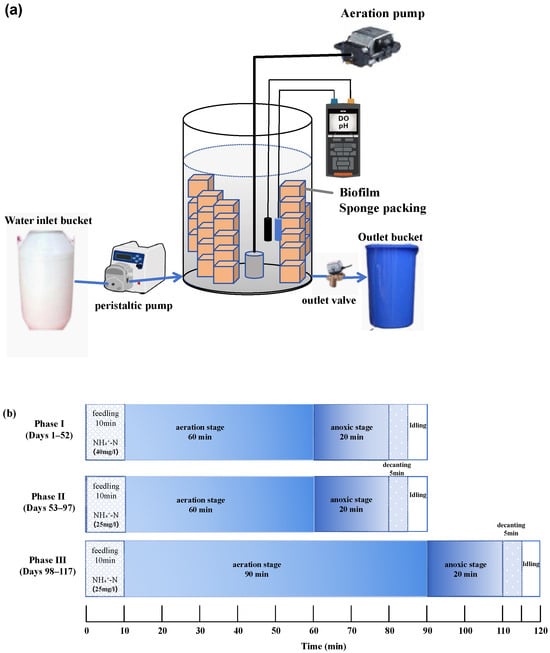
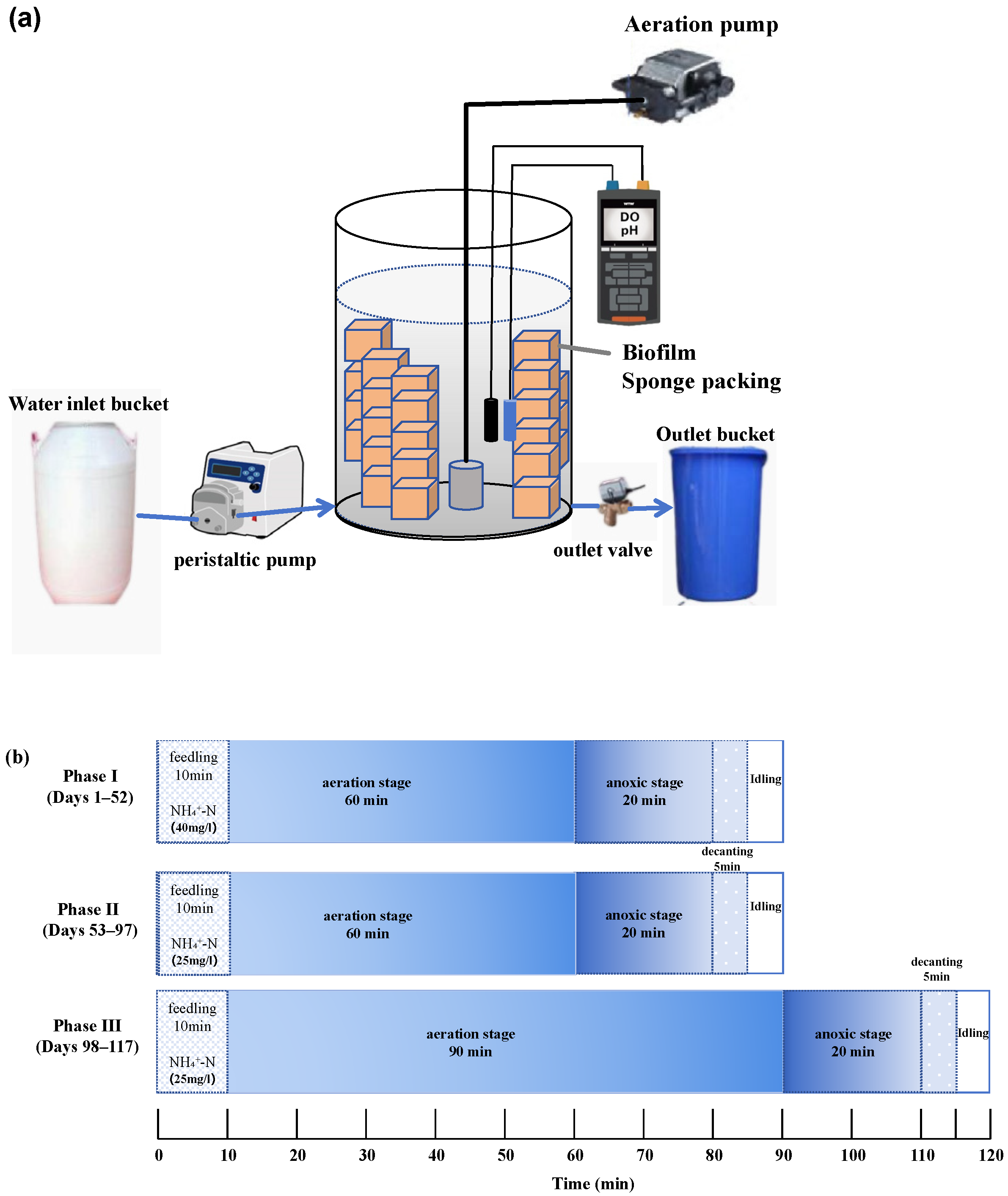
The SBR system device, depicted in Figure 1, primarily consists of a cylinder measuring 29.5 cm in height and 15 cm in diameter. It has a total volume of 5 L, with a reaction volume of 4 L. A peristaltic pump transfers simulated sewage from the water inlet bucket to the base of the reactor. Simultaneously, an aeration pump, regulated by a gas flowmeter, introduces oxygen into the reactor. DO was monitored in real time using a dissolved oxygen meter (WTW Multi3420, Weilheim, Germany). During reactor operation, the aeration rate was controlled at 3 mL/min, which maintained the DO below 0.1 mg/L throughout the aerobic stage. The pH was maintained below 8, and the temperature was controlled at 26 ± 1 °C. Upon completion of the system reaction, the outlet valve opens, allowing all the treated sewage to be fully drained from the reactor into the outlet bucket. This complete drainage mode results in an extremely short solids retention time (SRT) for suspended microorganisms, such that the SRT of suspended biomass is effectively equal to the hydraulic retention time (HRT).
Figure 1.
SBR system schematic and operation timeline. (a) Schematic diagram of the SBR system device. (b) operational strategies of the SBR system.
Activated sludge from Baishamen Wastewater Treatment Plant served as the inoculum. The collected activated sludge was washed and, following centrifugation, affixed to a sponge carrier (polyurethane foam, 1 × 1 × 1 cm cubes). A total of 121 carrier cubes were added to the reactor. The carriers were then placed in the SBR reactor after being dried for 12 h at room temperature (26 ± 1 °C) to reduce moisture. At this point, the inoculated sludge had an MLSS concentration of 8288 mg/L.
The system operated in SBR mode, with the SBR cycle comprising 10 min for influent, 60 to 90 min for simultaneous influent and aeration, 20 min under anoxic conditions, and 5 min for effluent discharge. In order to maintain DO below 0.1 mg/L throughout the aerobic stage, the gas flow rate was controlled by a gas flow meter and DO was continuously monitored using online sensors.
To systematically achieve system start-up, simulation of mainstream municipal wastewater conditions, and performance optimization, the experiment was divided into three sequential phases with clear and specific objectives:
Phase I (Days 1–52) was used for reactor start-up and preliminary enrichment of functional microorganisms. During this phase, the influent NH4+-N concentration was set at 40 mg/L, with a cycle time of 90 min including 60 min of aeration.
Phase II (Days 53–97) was designed to approximate mainstream municipal wastewater conditions by lowering the influent NH4+-N concentration to 25 mg/L, while maintaining the same cycle time and aeration duration. This phase was used to evaluate system performance under lower ammonium loading.
Phase III (Days 98–117) was introduced to optimize nitrogen removal based on the results of Phase II. Because total nitrogen removal mainly occurred during the aerobic period in Phase II, the aeration duration was extended from 60 to 90 min and the total cycle time was increased from 90 to 120 min to improve ammonia oxidation and overall nitrogen removal performance.
2.2. Water Quality of the Test Water
In this experiment, synthetic simulated sewage served as the influent, with NH4Cl acting as the nitrogen source, and no organic carbon source was included. The simulated urban sewage was prepared using tap water, NaHCO3, NH4Cl, CaCl2·2H2O, MgSO4·7H2O, KH2PO4, and trace elements I and II. Trace element solutions I and II were prepared according to the compositions listed in Table 1 and were each added to the synthetic wastewater at a dosage of 1.25 mL per liter of influent. NH4Cl was added at 118.9 mg/L in Phase I and 74.3 mg/L in Phases II and III. Detailed components of the experimental influent are presented in Table 1 and Table 2. NaHCO3 was added to provide alkalinity and inorganic carbon for autotrophic microbial growth. Because no external organic carbon source was added, the influent COD remained below the detection limit, resulting in an influent COD/N ratio of approximately 0. The initial pH of the synthetic wastewater was controlled at 7.0–8.0, and no further adjustment was applied during reactor operation because the buffering capacity of NaHCO3 generally maintained the pH within this range.
Table 1.
Composition of trace elements.
Table 2.
Inlet water quality of the experiment.
2.3. Batch Laboratory Tests on Microbial Activity
- (1)
- Anammox activity tests
The activity of AnAOB at each reactor stage was assessed using ex situ activity tests. Sponge biological carriers were extracted from the reactor, cleansed to eliminate sludge, and then placed in a 0.5 L beaker. During testing, nitrogen was introduced to maintain an anoxic environment with DO levels below 0.1 mg/L. The beaker was covered with a thin film to prevent air contact with the liquid surface, and a magnetic stirrer ensured adequate interaction between the sludge and the substrate. For the anammox activity batch tests, an initial NO2−-N concentration of 2 mg/L was first tested, corresponding to the maximum nitrite concentration observed in the reactor at that time. However, as AnAOB inhibition was still observed at this concentration, the initial NO2−-N concentration was subsequently reduced to 1 mg/L to avoid substrate inhibition while maintaining non-limiting conditions for activity assessment. The NO2−-N concentration was thereafter maintained at approximately 1 mg/L by hourly supplementation. 10 mg/L of NH4+-N and 1 mg/L of NO2−-N were added at the start of the reaction. The total duration of the bench-scale anaerobic ammonia oxidation activity test was phase-dependent, ranging from 2 to 10 h. Specifically, Phase I tests were conducted for 10 h due to lower anammox activity, while Phase II and Phase III tests lasted 6 h and 2 h, respectively. Samples were collected every 10 min to determine nitrogen concentrations, and the specific anammox activity was calculated. Batch activity tests were performed in duplicate (n = 2). The specific ammonium oxidation rate (SAOR) was calculated as
where C0 and Ct are the initial and final NH4+-N concentrations (mg/L), respectively, t is the reaction time (h), and MLSS is the mixed liquor suspended solids concentration (g/L). The SAOR is expressed as mg-NH4+-N/(g-MLSS·h).
- (2)
- Extraction of EPS
The EPS from each layer was extracted using a thermal method. The activated sludge on the sponge carrier was rinsed and kneaded into a mortar. After grinding, it was centrifuged at 4000 rpm for 5 min, and the supernatant, filtered through a 0.45 μm membrane, constituted the soluble EPS (S-EPS). A preheated 0.05% sodium chloride solution at 70 °C was added to the remaining precipitate to reach a volume of 30 mL. This mixture was manually shaken for 1 min and then centrifuged at 4000 rpm for 10 min. The supernatant, filtered through a 0.45 μm membrane, was identified as the loosely bound EPS (LB-EPS). Finally, a 0.05% sodium chloride solution was added to the precipitate to reach a volume of 30 mL, heated in a water bath at 60 °C for 30 min with manual shaking every 5 min, and then centrifuged at 4000 rpm for 15 min. The supernatant, filtered through a 0.45-μm membrane, was the tightly bound EPS (TB-EPS) [8]. Polysaccharides and proteins are the main components of EPS. The polysaccharides were determined by the anthrone-H2SO4 method using glucose as the standard, while the proteins were analyzed by the Lowry method using bovine serum albumin as the standard [10]. EPS was extracted and operationally fractionated into S-EPS, LB-EPS, and TB-EPS. Protein (PN) and polysaccharide (PS) contents were determined in the total combined EPS extract rather than individual fractions. EPS extraction and the corresponding PN and PS measurements were performed in duplicate (n = 2). Results are presented as mean ± standard deviation (SD), and error bars in the figures represent SD.
- (3)
- Determination of typicalmin cycles
Samples were collected every 30 min throughout both the aerobic and anoxic cycles and were tested immediately. The operation mode of the SBR during the typical cycle test was consistent with its daily operation mode.
2.4. Microbial Analysis
For 16S rRNA gene sequencing, samples were collected at multiple time points (days 1, 25, 28, 31, 34, 37, 41, 50, 55, 61, and 69) to characterize temporal changes in the microbial community during reactor operation. These time-series samples were used to reveal community succession rather than as biological replicates under the same condition. Metagenomic (days 117) and metatranscriptomic (days 69) analyses were conducted on single samples collected at key operational stages and the lack of biological replicates is acknowledged as a limitation of this study.
2.4.1. 16S rRNA Analysis
The activated sludge samples were extracted from the sponge, and DNA was isolated following centrifugation. Subsequently, PCR amplification of the V3-V4 variable region of the 16S rRNA gene was conducted using the upstream primer 338F (5′-ACTCCTACGGGAGGCAGCAG-3′) and the downstream primer 806R (5′-GGACTACHVGGGTWTCTAAT-3′) [11], which carried barcode sequences. Following sample purification and library construction, the raw data were sequenced on the Illumina NextSeq 2000 platform using a paired-end 300 bp (PE300) strategy. After quality filtering and assembly, 749,034 high-quality sequences were retained, with a total of 313,226,691 bases and an average sequence length of 418 bp. The high-quality reads achieved >99% coverage based on Good’s coverage estimator, indicating sufficient sequencing depth for reliable community analysis.
2.4.2. Metagenomic Analysis
Initially, genomic DNA was extracted from sludge samples, fragmented to ~350 bp via Covaris M220 (Covaris, Woburn, MA, USA), and used for paired-end library construction. After amplification by bridge PCR, metagenomic sequencing generated 40,415,594 raw reads (6.10 Gb). Quality control with fastp yielded 40,203,636 clean reads (6.05 Gb, 99.48% of raw reads, 99.22% of raw bases) with high base quality.
Clean reads were de novo assembled into 278,670 contigs (total length: 312,939,645 bp; N50: 1181 bp), followed by gene prediction to identify 477,880 open reading frames (ORFs). A non-redundant gene set was constructed, and gene abundance was quantified. Finally, taxonomic and KEGG functional annotations were performed to reveal microbial community composition and functional characteristics. Detailed procedures are described in reference [12]. For metagenomic analysis, the relative abundance of each nitrogen metabolism gene family was calculated as the abundance of that gene family normalized to the total abundance of all genes assigned to the nitrogen metabolism pathway.
2.4.3. Transcriptome Analysis
To explore the transcriptional regulation of functional microorganisms, sludge samples were collected on day 69, frozen in liquid nitrogen, and subjected to RNA extraction and Illumina NovaSeq paired-end 150 bp (PE150) sequencing. Raw reads (44,809,484, 6.77 Gb) were filtered using Fastp v0.23.4 (Q20 threshold), yielding 44,487,330 clean reads (99.28% retention, 6.65 Gb). Ribosomal RNA was removed via SortMeRNA v4.3.6, resulting in 38,301,286 non-rRNA reads (85.48% of raw reads). Non-rRNA reads were de novo assembled into transcripts with Megahit v1.2.9 (93,168 transcripts, N50 = 855 bp). Open reading frames (ORFs) were predicted using Prodigal v2.6.3 (124,643–124,644 ORFs), then clustered by CD-HIT (95% similarity, 90% coverage) to form a non-redundant gene set. For metatranscriptomic analysis, gene expression levels were quantified using FPKM. For the relative expression percentage of each nitrogen metabolism gene family (e.g., amo, hao, nxr, nar, nap, nir, nor, nos, hzs, and hdh) was calculated as the FPKM value of that gene family divided by the summed FPKM of all genes assigned to KEGG pathway ko00910, and expressed as a percentage.
The raw sequencing data generated in this study have been deposited in the NCBI Sequence Read Archive (SRA) database under BioProject accession number PRJNA1427215, including the 16S rRNA gene sequencing, metagenomic, and metatranscriptomic datasets.
2.5. Analytical Methods
Wastewater samples were collected with a syringe and promptly filtered through a 0.45-μm disposable sterile Millipore filter. Nitrogen compounds (NH4+-N, NO2−-N, and NO3−-N) were measured using a fully automated discrete chemical analyzer (CleverChem Anna, Hamburg, Germany). The detection limits for NH4+-N, NO2−-N, and NO3−-N were all 0.01 mg/L. Quantification was based on calibration curves established using certified standard solutions before each measurement, with correlation coefficients (R2) greater than 0.999. DO, pH, and temperature were measured using dedicated sensors, and MLSS was determined according to standard methods. Measurements were performed in duplicate (n = 2), and the results are expressed as mean ± standard deviation (SD).
3. Results and Discussion
3.1. Efficient Enrichment of AnAOB and System Construction
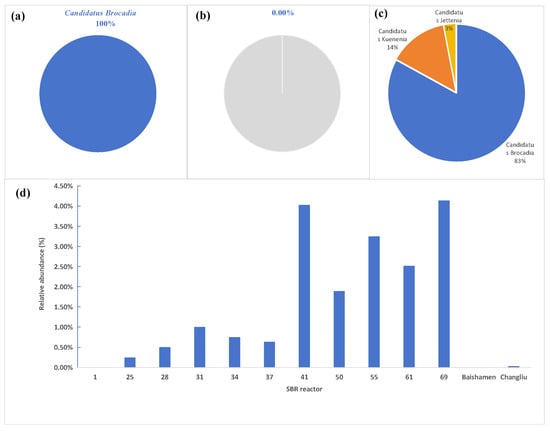
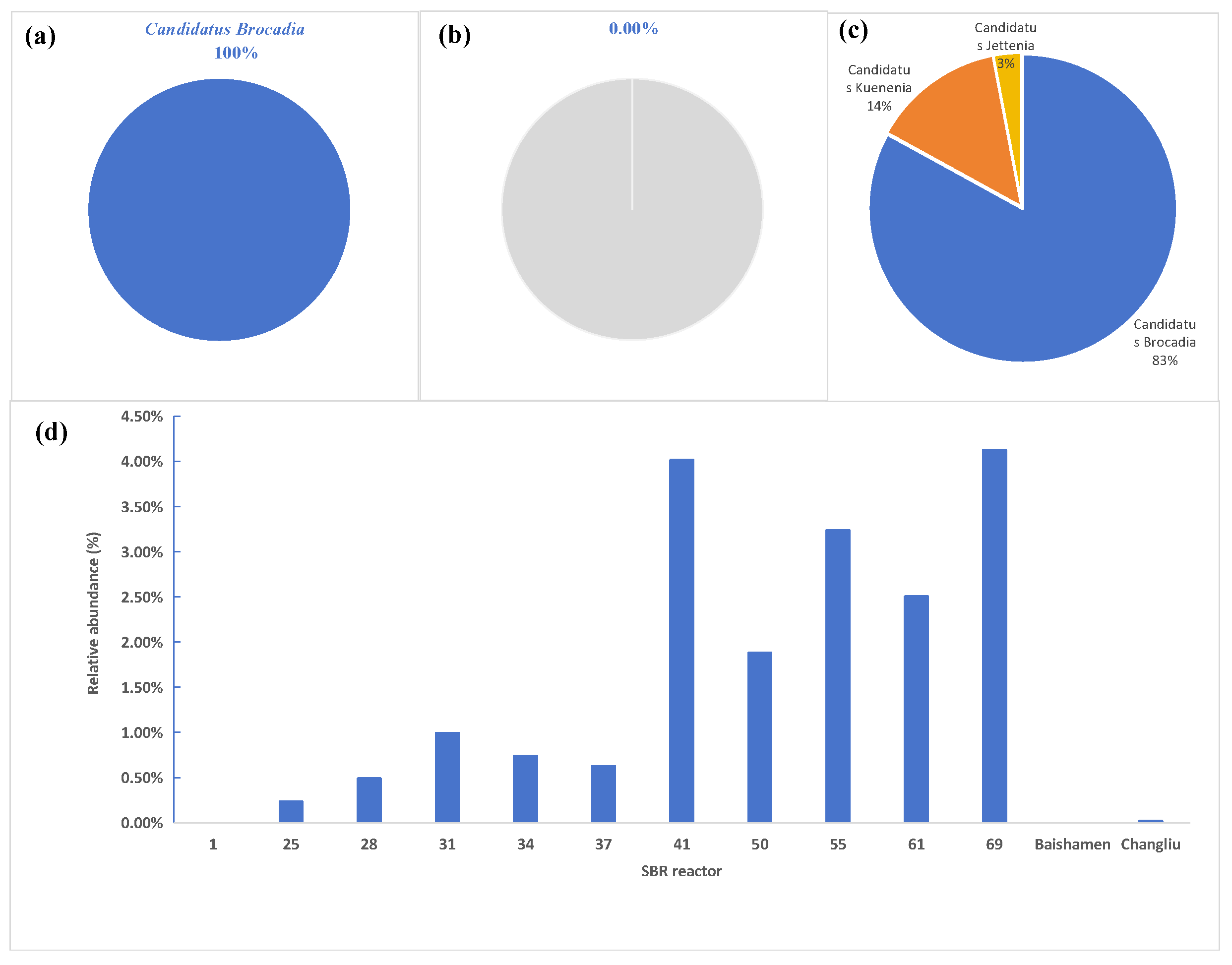
The dry dehydration immobilization inoculation-low-oxygen operation-full drainage strategy adopted in this study successfully achieved the rapid enrichment and stable retention of AnAOB and constructed a biofilm system with AnAOB as the core functional flora. 16S rRNA sequencing data (Figure 2d) showed that the relative abundance of AnAOB increased markedly during reactor operation, rising from a trace level in the initial stage to 4.2% by day 69. This indicates substantial enrichment of AnAOB under the applied operational strategy. Although formal statistical testing was not applicable because sequencing was conducted on single samples at each time point, the enrichment trend was consistently observed across the 11 sampling points. By day 117, the relative abundance reached 8.14% (Figure 4b), which was considerably higher than that in the initial inoculum, where AnAOB levels remained below the detection limit (enrichment factor > 80-fold based on detection limit of 0.1%). It also far exceeded the levels typically found in conventional nitrogen removal systems (usually 0–2%) [13] and in activated sludge from two local wastewater treatment plants (Changliu and Baishamen, both below 0.5%). Specifically, the AnAOB abundance in the reactor at day 117 (8.14%) was approximately 16-fold higher than the average abundance (0.5%) observed in the local WWTPs. These results demonstrate that this strategy enables highly selective enrichment of AnAOB, increasing their abundance by more than an order of magnitude and transforming them from a trace background population into the dominant functional group within the system.
Figure 2.
Composition and structure of AnAOB (a) the laboratory SBR reactor, (b) Baishamen Wastewater Treatment Plant, and (c) Changliu Wastewater Treatment Plant; (d) relative abundance of AnAOB across the laboratory SBR reactor, Baishamen Wastewater Treatment Plant, and Changliu Wastewater Treatment Plant.
Furthermore, dynamic monitoring of the microbial community at different time points during reactor operation (Figure 2d) revealed that the relative abundance of AnAOB exhibited a marked increasing trend with operational time and stabilized in the later stage. This dynamic change was highly synchronous with the improvement in the system’s nitrogen removal performance (Section 3.2), which demonstrates from a microbial ecology perspective that the functional enrichment of AnAOB is the fundamental driver of efficient nitrogen removal in the system.
The rapid functional enrichment of AnAOB achieved in this study essentially relied on the unique efficacy of the dried biofilm inoculation strategy, which is not merely a simple means of immobilizing functional microorganisms on carriers. Instead, it laid a solid foundation for AnAOB enrichment through a dual mechanism of passive microbial retention and active ecological selection driven by physical stress. In the experiment, activated sludge was immobilized on polyurethane foam carriers and subjected to a 12 h drying and dehydration treatment. On the one hand, the porous carriers anchored the microbial biomass via physical immobilization, preventing microbial washout loss during the initial start-up phase of the reactor and achieving efficient microbial retention. On the other hand, the 12 h drying process induced severe osmotic and dehydration stress, acting as an early ecological filter for the initial microbial community. This extreme microenvironment eliminated the majority of planktonic flocculent heterotrophic bacteria with low stress tolerance due to irreversible cell membrane damage and metabolic disorders under such stress. In contrast, functional autotrophic microorganisms represented by AnAOB exhibited robust stress adaptability and survived this selection process: they can secrete high levels of EPS, which form a hydrophilic protective barrier on the cell surface to alleviate osmotic stress, or enter a dormant state to downregulate metabolic activity, thereby mitigating dehydration-induced damage and maintaining cellular viability.
This ecological filtering effect rapidly elevated the relative proportion of stress-tolerant functional microorganisms in the inoculum, effectively avoiding competitive exclusion of AnAOB by fast-growing heterotrophic bacteria during the subsequent low-oxygen and carbon-free operation, and significantly shortening the lag phase of AnAOB enrichment. This constitutes the key reason why the system achieved a notable increase in AnAOB abundance—from undetectable in the initial inoculum to 4.2% on day 69—without the use of complex chemical inhibitors or precise operational regulation.
This dried biofilm inoculation strategy, which integrates targeted microbial retention and microbial community pre-selection, synergized with the subsequent low-oxygen operation and complete drainage mode. It created a specific ecological niche for AnAOB that is suitable for their attachment and growth while effectively preventing biomass washout, and eliminated the major competitive barriers to AnAOB enrichment at the microbial community structure level. In this way, the strategy effectively overcame the inherent bottleneck of the slow growth of AnAOB, ultimately enabling its rapid and stable enrichment in the system [5].
3.2. Phased Achievement of the Nitrogen Removal Performance of the System
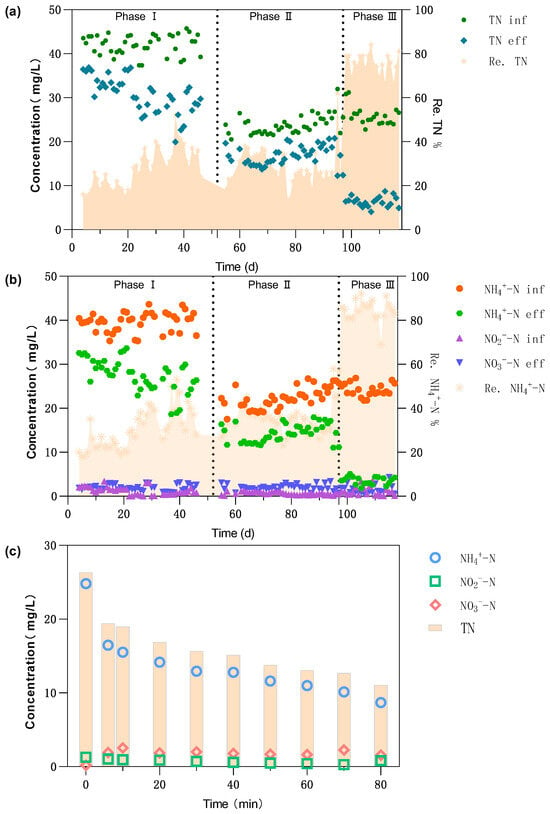
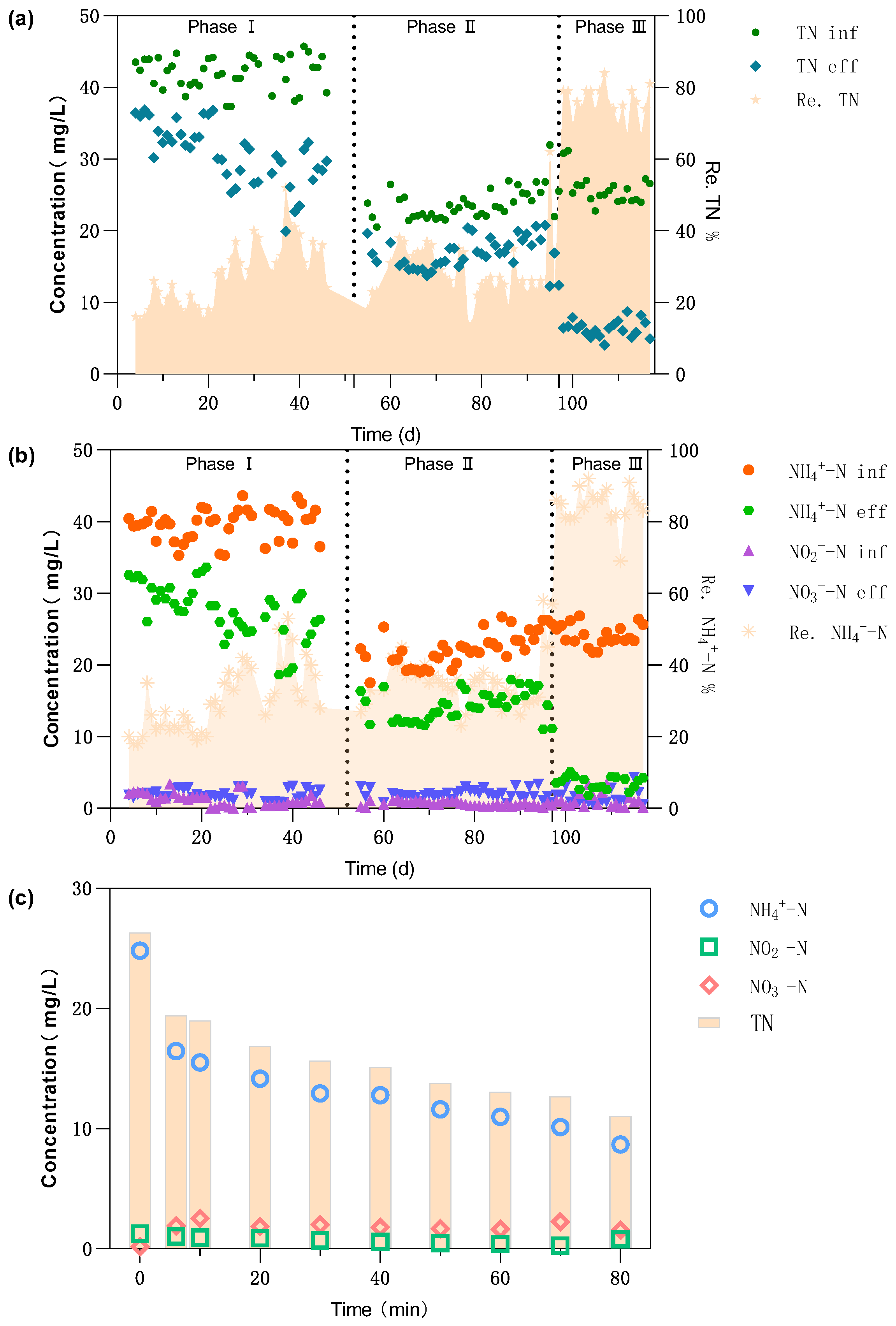
In the absence of exogenous organic carbon addition, the system exhibited efficient and stable nitrogen removal performance after 117 days of continuous operation (Figure 3a). According to the adjustment of operational parameters of the SBR reactor, the entire operational process was divided into three phases, and the operational parameters, nitrogen removal efficiency and characteristic analysis of each phase are presented as follows:
Figure 3.
Nitrogen removal performance of the SBR system under low-oxygen and no-external-carbon conditions. (a) Long-term profiles of influent TN, effluent TN, and TN removal efficiency over 117 days of operation; (b) time courses of influent NH4+-N, effluent NH4+-N, effluent NO2−-N, effluent NO3−-N, and NH4+-N removal efficiency during the entire operational period; and (c) typical concentration variations in NH4+-N, NO2−-N, and NO3−-N within a single representative SBR cycle (including aerobic and anoxic phases).
In Phase I (0~52 d), the influent NH4+-N concentration was set at 40 mg/L. During operation, the effluent total nitrogen (TN) and NH4+-N concentrations showed a continuous decreasing trend with the extension of operational time, with the average effluent TN and NH4+-N reaching 30.69 mg/L and 27.57 mg/L, respectively, in this phase. This variation in water quality indicators indicated that the microbial community in the reactor was gradually adapting to the hypoxic and exogenous carbon-free operational environment, and a microbial active layer with nitrogen removal function was gradually formed on the surface of the immobilized biofilm, realizing the preliminary enrichment of functional microorganisms.
In Phase II (53~97 d), the system was operated under conditions designed to approximate mainstream municipal wastewater conditions by lowering the influent NH4+-N concentration to 25 mg/L, leading to a decrease in the average effluent TN and NH4+-N to 16.84 mg/L and 14.28 mg/L, respectively. Continuous monitoring results of nitrogen speciation transformation during the reaction cycle revealed that TN removal mainly occurred in the aerobic phase (Figure 3c), with distinct dynamic variation characteristics of nitrogen speciation observed throughout the cycle: the nitrite concentration exhibited an overall decreasing trend and remained consistently below 1.5 mg/L without obvious accumulation; the nitrate concentration increased from an initial 0.19 mg/L to 2.69 mg/L at the 8th minute of operation and then showed a fluctuating decreasing trend; the system TN decreased continuously from 26.3 mg/L to 11.05 mg/L over the entire cycle. This speciation variation mechanism indicated that endogenous partial denitrification continuously supplied nitrite substrates for the anaerobic ammonium oxidation (anammox) process, and the absence of obvious nitrite accumulation reflected a dynamic balance between its production rate and utilization rate by anammox. The monitoring result that TN removal was concentrated in the aerobic phase provided a clear experimental basis for the optimization of reactor operational parameters. Based on this, the aerobic time of the reactor was optimally extended from 60 min to 90 min on the 97th day to specifically enhance the ammonia oxidation process and supply sufficient substrates for subsequent coupled nitrogen removal reactions. The significant improvement in effluent indicators also demonstrated the good adaptability of the system to the ammonium nitrogen concentration of actual municipal wastewater.
In Phase III (98–117 d), the reactor was operated with the optimized aerobic time. Under the condition that the influent TN was maintained at 25 mg/L, the average effluent TN and NH4+-N decreased to 6.37 mg/L and 3.75 mg/L, respectively, with the average TN removal efficiency reaching 75% and the maximum up to 84%. The effluent indicators stably met the Class A criteria of the Discharge Standard of Pollutants for Municipal Wastewater Treatment Plants (GB 18918-2002, TN ≤ 15 mg/L, NH4+-N ≤ 5 mg/L) [14]. The significantly improved nitrogen removal performance in this phase confirms that extending aerobic time was an effective optimization. It also demonstrates that the strategy of dried-dehydrated immobilized inoculation, hypoxic operation, and complete drainage enables efficient advanced nitrogen removal from low C/N ratio municipal wastewater.
3.3. Nitrogen Removal Pathways
In this study, a stable nitrogen removal system was effectively established without the use of exogenous organic matter. This was achieved through dry dehydration immobilization inoculation, continuous low-oxygen operation, and complete drainage operation. The nitrogen removal pathway in this system is primarily governed by anammox. The necessary nitrite substrate for Anammox is provided by a combination of partial nitrification and endogenous partial denitrification, with Anammox being coupled with endogenous denitrification.
3.3.1. Anammox Is the Core and Dominant Pathway for Nitrogen Removal
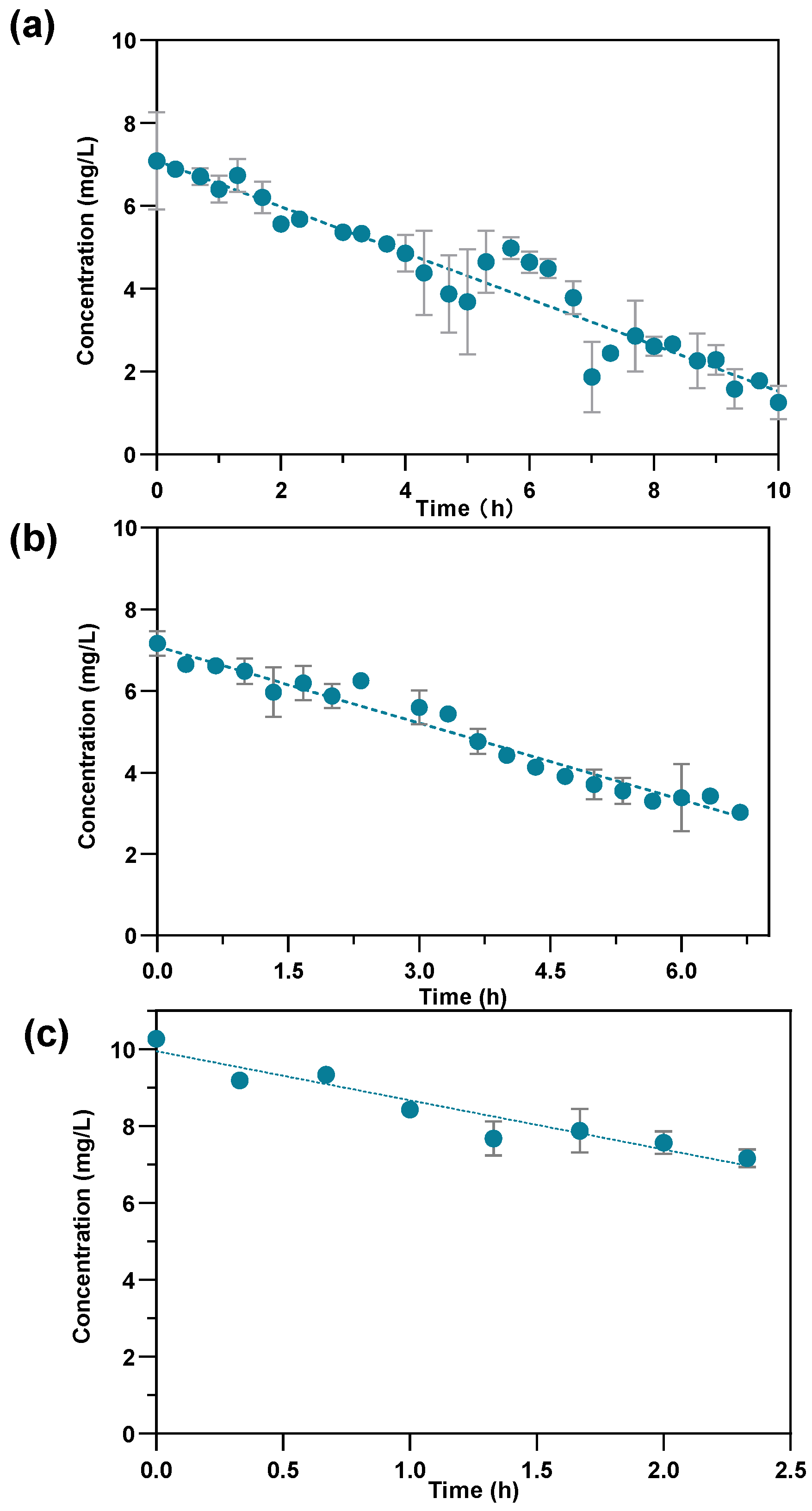
Anammox serves as the primary pathway for efficient nitrogen removal within the system. Metagenomic sequencing revealed that after 117 days of reactor operation, the relative abundance of AnAOB peaked at 8.14% (see Figure 4b). Additionally, metatranscriptomic data indicated that the relative abundances of hydrazine synthase (HZS) and hydrazine dehydrogenase (HDH), key enzymes for anammox, were 3.59%. This was higher than those of denitrifying bacteria (2.03%) and endogenous carbon source denitrification (0.18%) within the nitrogen metabolism pathway (Figure 4c), providing direct genetic evidence of its central function. This high expression of anammox genes correlated with rapid NH4+-N consumption (from 24.82 to 10.99 mg/L) in a single SBR cycle (Figure 3c) and sustained TN removal efficiency of 75% during continuous operation (Figure 3a). Consequently, this pathway primarily accounted for the removal of influent NH4+-N and was therefore inferred to be the dominant nitrogen removal pathway in the system. AnAOB enrichment follows a key logic in that AnAOB in inoculated sludge, rather than being entirely absent, exists in a low-abundance, latent state in natural environments and conventional sewage treatment plants. In the absence of an external carbon source, endogenous denitrifying bacteria in the inoculated sludge, initially at 5.41% abundance, utilize limited endogenous carbon sources, such as bacterial residues and EPS, for incomplete denitrification, producing a small amount of NO2−-N, which serves as the initial substrate for AnAOB. The dried, water-loss immobilized sponge carrier plays a crucial role in intercepting newly generated AnAOB, preventing its loss with effluent water and allowing continuous proliferation, increasing from below detection limits to 4.13% (16S rRNA sequencing, Figure 4a). In off-site anammox activity tests, the specific ammonium oxidation rate rose from 0.343 mg-NH4+-N/(g-MLSS·h) to 0.788 mg-NH4+-N/(g-MLSS·h) (Figure 5), confirming that AnAOB achieved not only numerical enrichment but also functional activation, becoming the core contributor to TN removal.
Figure 4.
Microbial community structure and functional enzyme expression in the SBR system under low-oxygen and no-external-carbon conditions. (a) Relative abundance of key functional groups (AOB, NOB, DNB, and AnAOB) based on 16S rRNA sequencing at days 1, 25, 28, 31, 34, 37, 41, 50, 55, 61, and 69 (b) genus-level microbial community composition based on metagenomic sequencing at day 117; and (c) relative expression abundance of functional enzymes involved in nitrogen metabolism based on metatranscriptomic sequencing. Amo: ammonia monooxygenase; Hao: hydroxylamine oxidoreductase; NXR: nitrite oxidoreductase; Nap: periplasmic nitrate reductase; Nar: cytoplasmic nitrate reductase; Nir: nitrite reductase; Nor: nitric oxide reductase; Nos: nitrous oxide reductase; Hdh: hydrazine dehydrogenase; HZS: hydrazine synthase.
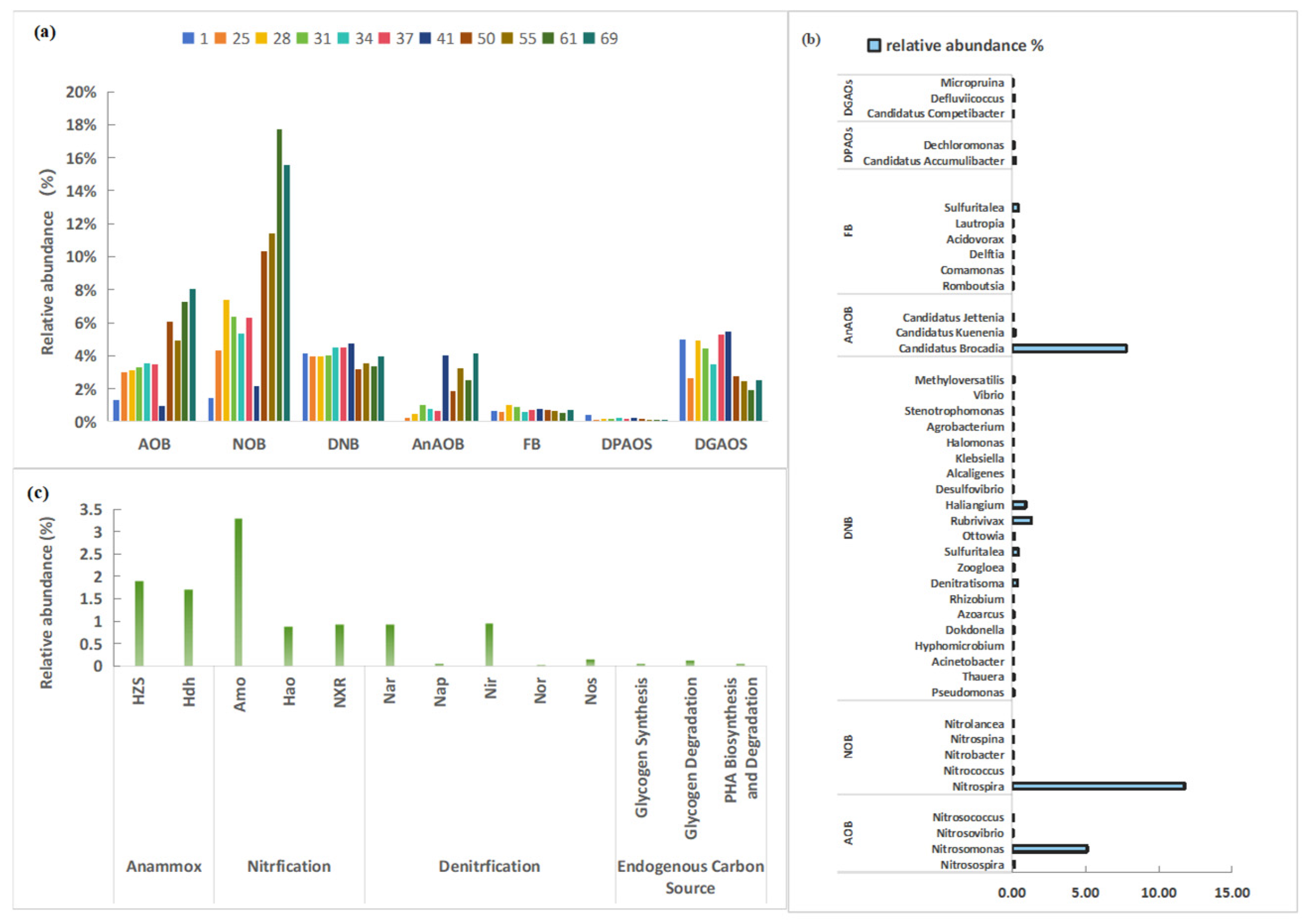
Figure 5.
Anammox activity of the biomass at different operational stages evaluated by ex situ batch tests. (a) Time course of NH4+-N concentration during the batch test in Phase I; (b) Phase II; and (c) Phase III. Data are from duplicate batch tests, and error bars represent standard deviation where shown.
3.3.2. Dual Sources of the Core Substrate, Nitrite
The nitrite required for the anammox reaction is generated via endogenous partial denitrification and partial nitrification.
Endogenously driven partial denitrification supplies NO2−-N to AnAOB. In the absence of any external carbon source, the denitrification process within the system is entirely dependent on endogenous carbon, such as microbial decay products and EPS.
Metatranscriptomic sequencing, as illustrated in Figure 4c, revealed that the gene abundance of nitrate reductase (Nar + Nap, totalling 0.70%), which facilitates the reduction in NO3−-N to NO2−-N, was notably higher than that of nitrite reductase (Nir, 0.52%),which is involved in the subsequent reduction in NO2−-N. This expression pattern implies that the endogenous carbon-driven denitrification process tends to stop at the NO2−-N stage, resulting in nitrite accumulation from the reduction in NO3−-N primarily generated by complete nitrification within the system. Consequently, in this system, nitrite, the essential electron acceptor for anammox, was continuously generated through endogenous partial denitrification, thereby providing a relatively stable and renewable substrate supply for AnAOB.
Partial nitrification is also the supply pathway of NO2−-N required for anammox. Metatranscriptomic sequencing shows that the gene abundances of ammonia monooxygenase (AMO, 3.30%) and hydroxylamine dehydrogenase (HAO, 0.88%) are much higher than that of nitrite oxidoreductase (NXR, 0.91%) (see Figure 4c), which is consistent with the reported functional gene characteristics of partial nitrification systems. Metagenomic analysis (Figure 4b) showed that the relative abundance of ammonia-oxidizing bacteria (AOB) was 5.21%, while that of nitrite-oxidizing bacteria (NOB) reached 11.78%. Further analysis indicated that NOB were dominated by the genus Nitrospira (accounting for 99.74% of total NOB), which exhibits high oxygen affinity and can adapt to low-oxygen environments [15]. The dominant genus of AOB was Nitrosomonas (98.27% of total AOB), which includes multiple hypoxia-adapted strains that preferentially obtain limited dissolved oxygen and ammonia nitrogen by colonizing the outermost aerobic layer of the biofilm.
Mechanism of restricted NOB activity: dual-substrate competition rather than oxygen inhibition. Although Nitrospira shows high oxygen affinity and can persist under long-term hypoxic conditions (DO < 0.1 mg/L) [15], its activity is limited mainly by substrate shortage. Persistent low DO suppresses its respiratory metabolism. More importantly, nitrite produced by AOB is rapidly consumed by highly enriched AnAOB (relative abundance 8.14%), which exhibit strong substrate affinity and occupy favorable spatial niches inside the biofilm to capture nitrite preferentially [16]. Thus, Nitrospira remains abundant but stays in a substrate-starved state with severely restricted metabolic activity [17]. This mechanism accounts for the coexistence of high NOB abundance and limited nitrite oxidation under long-term hypoxia, and reflects niche differentiation for functional synergy.
3.3.3. Deep Guarantee Effect of Endogenous Complete Denitrification
Furthermore, nitrogen removal in the SBR system is facilitated by endogenous denitrification. Without an external carbon source, the electron donors necessary for denitrification are derived from the system’s own endogenous carbon cycle. Functional gene analysis has identified a complete denitrification gene cluster (nar, nap, nir, nor, nos) (Figure 4c), indicating the microorganisms’ genetic capability for denitrification [18,19]. Concurrently, genes linked to internal carbon source metabolism, such as those involved in glycogen degradation and PHA synthesis, were also identified (Figure 4c).
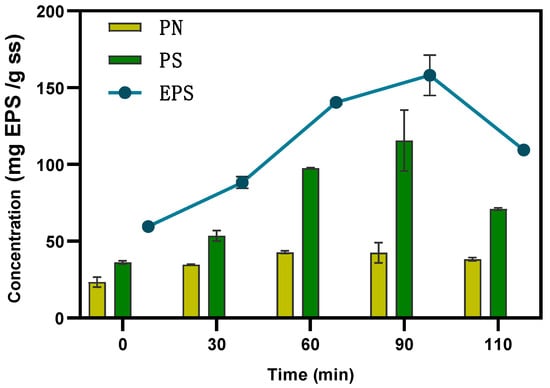
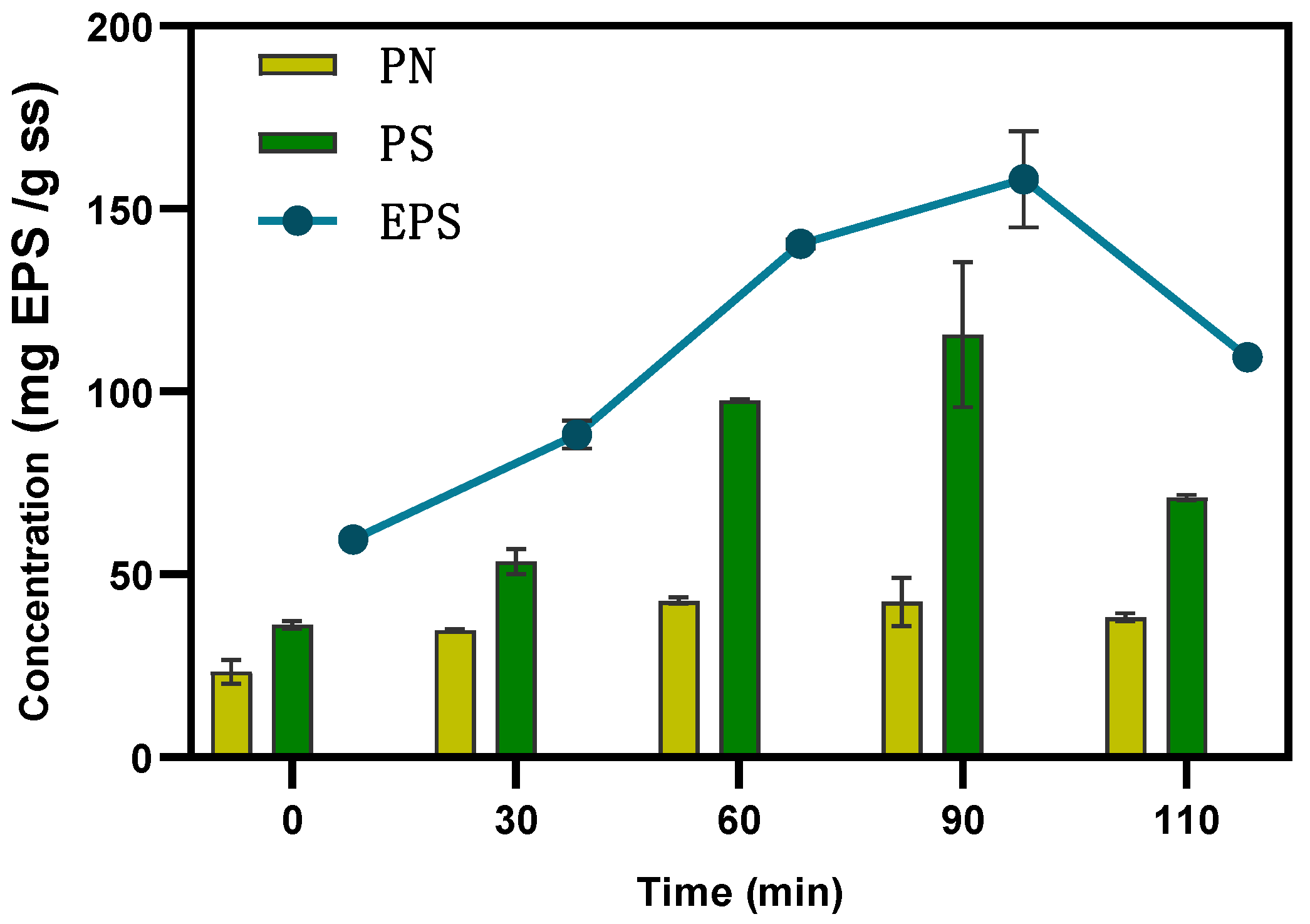
EPS as Slow-Release Electron Donors. Monitoring of EPS dynamics during one SBR cycle (Figure 6) showed that its variation was highly coupled with nitrogen transformations. During the aerobic phase, the content of EPS gradually accumulated with prolonged aeration: PN increased from 23.34 ± 3.175 mg/L to 42.50 ± 6.604 mg/L, PS from 36.21 ± 1.082 mg/L to 115.57 ± 19.827 mg/L, and total EPS from 59.54 ± 2.093 mg/L to 158.07 ± 13.223 mg/L. This accumulation coincided with active ammonia oxidation, during which NH4+-N decreased from 24.82 mg/L to 10.99 mg/L. After transitioning to the anoxic phase, EPS was rapidly degraded and consumed: PN decreased to 38.33 ± 1.11 mg/L, PS to 71.03 ± 0.792 mg/L, and total EPS to 109.35 ± 0.311 mg/L. The degradation of EPS was temporally consistent with the continuous reduction in NO3−-N (from 1.64 mg/L to 1.56 mg/L) and TN (from 13.05 mg/L to 11.05 mg/L), confirming that EPS acts as a key endogenous carbon reservoir, which can be hydrolyzed and utilized in anoxic microenvironments to drive denitrification [20]. Consistent with this observation, Wang et al. demonstrated that activated sludge EPS could serve as electron donors for denitrification, providing quantitative evidence that 65.2% of LB-EPS and 52.2% of TB-EPS could be utilized by denitrifiers as the sole electron donor, with a maximum denitrification rate of 1.34–1.42 mg-NO3−-N/(g-MLSS·h) [20].
Figure 6.
Temporal variations in EPS (S-EPS, LB-EPS, and TB-EPS) and its components (PN; PS) within a typical SBR cycle (Phase III). EPS was extracted by heat method and expressed as mg/g SS. Data are from duplicate measurements, and error bars represent standard deviation.
The slow hydrolysis rate of EPS creates a kinetic bottleneck, which is fundamentally different from the metabolic characteristics of exogenous carbon addition. Exogenous carbon sources trigger explosive proliferation of heterotrophic bacteria and rapidly destabilize the microbial community balance. In contrast, the gradual release of electron donors via EPS hydrolysis naturally restricts the excessive growth of denitrifying bacteria. This kinetic constraint prevents denitrifiers from competing with anaerobic AnAOB for space and substrates in the biofilm microenvironment, thereby preserving the competitive advantage of AnAOB in the deep anoxic layers of the biofilm.
Endogenous denitrification contributed to nitrogen removal through two pathways: (i) direct reduction in NO3−-N generated from anammox side reactions or residual NOB activity using endogenous carbon as electron donors; and (ii) denitrification in deeper anoxic/anaerobic zones of the biofilm utilizing microbial decay products and hydrolyzed EPS. Together, these processes contributed to overall nitrogen removal efficiency.
In summary, the synergistic mechanism of nitrogen removal in this system functions in the following manner. Under low-oxygen conditions and in the absence of an external carbon source, AOB attached to the immobilized carrier oxidize a portion of the influent NH4+-N to NO2−-N, a process known as partial nitrification. Concurrently, NOB adapted to low oxygen levels, such as Nitrospira, maintain some activity, oxidizing part of the NO2−-N to NO3−-N. The NO2−-N produced, along with the remaining NH4+-N, is captured by highly enriched AnAOB in the anaerobic micro-zones within the biofilm and converted into nitrogen gas via the anammox pathway. A small amount of NO3−-N generated during this process, along with any NO3−-N possibly produced by residual NOB, is denitrified by heterotrophic bacteria using endogenous carbon sources (from cell death, EPS hydrolysis, etc.) in the deeper anoxic zones of the biofilm. However, partial denitrification occurs when NO3−-N is reduced to NO2−-N due to the inability to replenish the carbon source promptly. Part of the NO2−-N is captured by AnAOB, while the remainder continues through denitrification, eventually converting into nitrogen gas. The combined effects of dry water-loss immobilization and full-drainage operation significantly enrich AOB and AnAOB, promoting attached growth. Meanwhile, continuous low oxygen conditions shape the biofilm’s layered structure, with an aerobic surface and an anoxic/anaerobic interior, thereby facilitating the spatial and temporal coupling and efficient synergy of these three functions.
The metatranscriptomic results provide supportive evidence for the proposed nitrogen transformation pathways. However, transcript abundance does not necessarily correspond directly to actual metabolic flux. It should be noted that metagenomic and metatranscriptomic analyses were conducted without biological replicates, and therefore these results should be interpreted primarily as descriptive evidence supporting the proposed ecological and functional shifts. Therefore, the inferred pathway activities were interpreted in combination with reactor performance, nitrogen concentration profiles, batch activity tests, and microbial community analyses.
3.4. Applications of the Research Findings
The combination of dehydration-immobilized inoculation, continuous low-oxygen operation, and complete drainage mode demonstrates robust performance for nitrogen removal without external carbon addition. The following sections discuss the applicable scenarios, core advantages, and remaining challenges of this strategy.
3.4.1. Applicable Scenarios
This system employs biofilm-based autotrophic nitrogen removal mediated by anammox bacteria. It is most suitable for wastewater with a low carbon-to-nitrogen ratio (C/N < 1.5). For mainstream municipal wastewater (C/N typically 3–9) [21], direct application may be challenged by heterotrophic competition. However, when coupled with upstream carbon capture processes, this strategy becomes viable. For instance, high-rate activated sludge or anaerobic membrane bioreactors can remove over 87% of influent COD while recovering energy as methane [22]. The resulting low-C/N effluent becomes an ideal feed for this autotrophic nitrogen removal system. This integrated approach—carbon capture followed by mainstream autotrophic nitrogen removal—aligns with the paradigm shift toward energy-efficient and resource-recovering wastewater treatment.
Even when residual COD remains after carbon capture, the system architecture effectively addresses this challenge. The immobilized biofilm provides a protected niche for anammox bacteria, while the complete drainage mode continuously washes out suspended heterotrophs. This dual mechanism selectively retains AOB and anammox bacteria on the carriers, enabling stable community establishment despite moderate organic interference. Further investigation is required to determine the maximum tolerable COD concentration and corresponding operational strategies.
3.4.2. Main Benefits
Compared to conventional nitrogen removal processes, this strategy demonstrates four distinct advantages:
- (1)
- Energy and Carbon Savings. The potential oxygen saving of this strategy arises from the lower theoretical oxygen demand of the partial nitritation/anammox (PN/A) pathway relative to conventional nitrification-denitrification. On a stoichiometric basis, conventional complete nitrification requires 4.57 g O2 per g NH4+-N oxidized, whereas the PN/A pathway requires approximately 1.71 g O2 per g NH4+-N, corresponding to a theoretical reduction of about 62.5% in oxygen demand [23]. In this study, dissolved oxygen was stably controlled below 0.1 mg/L, much lower than that in conventional full nitrification (>2.0 mg/L) [24], which is consistent with low-aeration operation. However, this condition supports low-oxygen nitrogen removal, rather than directly reflecting oxygen or aeration-energy savings. From a stoichiometric perspective, the partial nitritation/anammox pathway has a substantially lower theoretical oxygen demand than conventional nitrification-denitrification, indicating strong potential for reduced aeration energy consumption. Consistent with this, previous studies have reported that PN/A-based systems can reduce aeration energy demand by approximately 40–60% relative to conventional nitrification-denitrification. In addition, complete elimination of external carbon sources (e.g., methanol, acetate) removes a major operational expense. For a 10,000 m3/d wastewater treatment plant, this translates to annual savings of approximately 180,000–250,000 RMB in chemical costs, while also mitigating excessive N2O emissions associated with carbon over-dosing [25]. These estimates highlight the potential economic advantage of the proposed strategy, although site-specific savings would depend on wastewater characteristics, local electricity prices, and reagent costs.
- (2)
- Rapid Start-up and Sustained Stability. Based on reactor performance data (Figure 3a,b), rapid start-up is operationally defined as the period required to achieve stable functional establishment of the nitrogen removal system. Within 2–4 weeks of operation, TN removal efficiency increased progressively from approximately 10% to >25%, NH4+-N removal efficiency reached 25–30%, and effluent NH4+-N exhibited a consistent declining trend. Nitrite remained stable at low concentrations (<1.5 mg/L) without accumulation, indicating successful enrichment of AOB and initial establishment of anammox activity on the immobilized carriers. This timeframe represents the transition from initial acclimation to stable performance development, substantially faster than conventional anammox start-up periods reported in the literature (Table 3).Table 3. Comparison of anammox system start-up times reported in peer-reviewed studies.
As shown in Table 3, the start-up time achieved in this study (14–28 days) was substantially faster than those reported for other mainstream anammox systems, which typically require 70–210 days [24] or 86–100 days [26]. This corresponds to a substantial reduction in start-up time relative to previously reported systems. The shorter start-up observed here may be attributed to two factors: (i) the drying step, which may have acted as an early ecological filter that reduced stress-sensitive heterotrophic biomass; and (ii) dehydration-immobilized inoculation, which enabled direct biomass retention on carriers and may have bypassed the slow natural attachment phase typical of conventional biofilm start-up [27].
- (3)
- Simplified Operational Control. Conventional partial nitritation-anammox (PN/A) processes require sophisticated control systems for real-time regulation of dissolved oxygen and pH to maintain nitrite balance [28]. In contrast, this strategy employs a simple “set-point and maintain” approach with constant low-oxygen conditions. Within the biofilm, natural oxygen gradients establish spatial niche differentiation: AOB occupy the aerobic surface layer where they produce nitrite, while anammox bacteria in deeper anoxic zones immediately consume it. This self-organized stratification achieves “instant production-consumption” of nitrite without accumulation, which eliminates the need for high-cost online sensors or complex control algorithms [17], substantially simplifying operation while enhancing reliability.
- (4)
- Enhanced Temporal Efficiency. In SBR operation, the complete drainage mode eliminates the settling phase required in conventional SBRs. This converts time previously allocated to sedimentation (typically 20–30% of cycle time) into effective biochemical reaction time, substantially increasing volumetric treatment efficiency and reducing required reactor volume for a given treatment target.
3.4.3. Technical Challenges and System Resilience
An important practical advantage of this system is its potential resilience to transient disturbances. Because denitrification relies on internally stored EPS as an endogenous carbon reserve, the biofilm may provide a degree of buffering capacity. When treating real municipal wastewater with short-term fluctuations in C/N ratio or temporary influent interruptions, this endogenous reserve may help sustain denitrifying activity for a limited period without external carbon addition. In this respect, the system may be more robust than conventional processes that depend on continuous real-time external carbon dosing.
Despite this inherent robustness, several challenges remain for full-scale implementation: (1) large-scale production of immobilized carriers with consistent quality and reasonable cost; (2) long-term carrier performance maintenance, including resistance to clogging and biofilm aging; and (3) low-temperature adaptability below 15 °C, where anammox activity significantly decreases, requiring operational strategies for cold-weather performance.
4. Conclusions
This study demonstrated that a simplified operational strategy consisting of dehydration-immobilized biofilm inoculation, continuous low-oxygen operation (<0.1 mg/L), and complete drainage mode could establish a stable autotrophic nitrogen removal system without external organic carbon addition. The main findings are as follows:
- (1)
- Ecological selection via dehydration pretreatment and complete drainage promoted substantial AnAOB enrichment. Driven by osmotic stress during immobilization and continuous washout of suspended biomass through complete drainage, AnAOB abundance increased from an undetectable level to 8.14% within 117 days, with specific anammox activity reaching 0.788 mg NH4+-N/(g SS·h). This indicates that the strategy can facilitate AnAOB enrichment despite the inherently slow growth of AnAOB.
- (2)
- Under sustained low-oxygen conditions and endogenous carbon cycling, the system achieved stable mainstream autotrophic nitrogen removal. At an influent TN of 25 mg/L, effluent TN and NH4+-N averaged 6.37 mg/L and 3.75 mg/L, respectively, with a mean TN removal efficiency of 75% (maximum 84%), meeting the relevant discharge requirements without external carbon addition under the tested conditions.
- (3)
- Metagenomic and metatranscriptomic analyses suggested that nitrogen removal involved coupled partial nitrification, endogenous partial denitrification, anammox and endogenous denitrification. Nitrate reductase genes (nar + nap) showed higher relative expression than nitrite reductase genes (nir), which was consistent with nitrite supply for AnAOB. EPS appeared to serve as an important internal carbon source supporting denitrification and nitrate removal.
- (4)
- This strategy may offer several practical advantages, including lower theoretical oxygen demand than conventional nitrification-denitrification, no requirement for external carbon addition under the tested conditions, start-up within 2–4 weeks, relatively simple low-oxygen operation, and improved temporal efficiency through elimination of the settling phase in SBR operation.
Future research should address pilot-scale validation under real wastewater conditions, adaptation to low temperatures (<15 °C), long-term carrier performance, and integration with upstream carbon capture processes.
Overall, the results suggest that simplified ecological regulation can support the establishment of functional nitrogen-removal communities and inform the development of energy-efficient nitrogen removal strategies.
Author Contributions
Conceptualization, B.M., Y.H., Y.Z. and Y.B.; investigation, Y.H., Y.G. and Q.Z.; supervision and resource provision, B.M., Y.B. and Y.W.; visualization, Y.H.; writing—original draft, Y.H.; writing—review and editing, Y.H., Y.B. and B.M. All authors have read and agreed to the published version of the manuscript.
Funding
This research project was financially supported by National Natural Science Foundation of China (U23A20675) and Hainan Provincial Natural Science Foundation of China (724MS049, 425RC681).
Data Availability Statement
The raw sequencing data generated in this study have been deposited in the NCBI Sequence Read Archive (SRA) database under BioProject accession number PRJNA1427215. Other data supporting the findings of this study are available from the corresponding author upon reasonable request.
Acknowledgments
We thank Yizhen Gao, Jiahui Wang, Xiaofang Huang and Run Su for the help in this study. All individuals included in the acknowledgement section have consented. The authors express their appreciation for the critical review by anonymous reviewers that improved the manuscript.
Conflicts of Interest
The authors declare no conflicts of interest. The funders had no role in the design of the study, in the collection, analyses, or interpretation of data, in the writing of the manuscript, or in the decision to publish the results.
References
- Daverey, A.; Pandey, D.; Verma, P.; Verma, S.; Shah, V.; Dutta, K.; Arunachalam, K. Recent advances in energy efficient biological treatment of municipal wastewater. Bioresour. Technol. Rep. 2019, 7, 100252. [Google Scholar] [CrossRef] [Scilit]
- Du, R.; Li, C.; Liu, Q.; Fan, J.; Peng, Y. A review of enhanced municipal wastewater treatment through energy savings and carbon recovery to reduce discharge and CO2 footprint. Bioresour. Technol. 2022, 364, 128135. [Google Scholar] [CrossRef] [Scilit] [PubMed]
- Ma, B.; Wang, S.; Cao, S.; Miao, Y.; Jia, F.; Du, R.; Peng, Y. Biological nitrogen removal from sewage via anammox: Recent advances. Bioresour. Technol. 2016, 200, 981–990. [Google Scholar] [CrossRef] [Scilit] [PubMed]
- Lackner, S.; Gilbert, E.M.; Vlaeminck, S.E.; Joss, A.; Horn, H.; van Loosdrecht, M.C.M. Full-scale partial nitritation/anammox experiences—An application survey. Water Res. 2014, 55, 292–303. [Google Scholar] [CrossRef] [Scilit] [PubMed]
- Zhang, L.; Okabe, S. Ecological niche differentiation among anammox bacteria. Water Res. 2020, 171, 115468. [Google Scholar] [CrossRef] [Scilit]
- Wang, T.; Zhang, H.; Yang, F.; Liu, S.; Fu, Z.; Chen, H. Start-up of the Anammox process from the conventional activated sludge in a membrane bioreactor. Bioresour. Technol. 2009, 100, 2501–2506. [Google Scholar] [CrossRef] [Scilit]
- Blackburne, R.; Yuan, Z.; Keller, J. Partial nitrification to nitrite using low dissolved oxygen concentration as the main selection factor. Biodegradation 2008, 19, 303–312. [Google Scholar] [CrossRef] [Scilit]
- Zheng, Y.F. Methods for Biomass Retention in Anammox Bacteria-Mediated Nitrogen Removal Systems and Their Microbial Community Structures. Ph.D. Dissertation, Hainan University, Haikou, China, 2023. [Google Scholar]
- Xie, F.; Li, X.; Antwi, P.; Ji, L.; Danish, M.E.; Zhao, B. Synergistic electro-thermal enhancement of nitrogen removal in an iron-based Anammox system at low temperatures. J. Water Process Eng. 2024, 67, 106140. [Google Scholar] [CrossRef] [Scilit]
- Badireddy, A.R.; Chellam, S.; Gassman, P.L.; Engelhard, M.H.; Lea, A.S.; Rosso, K.M. Role of extracellular polymeric substances in bioflocculation of activated sludge microorganisms under glucose-controlled conditions. Water Res. 2010, 44, 4505–4516. [Google Scholar] [CrossRef] [Scilit]
- Liu, C.; Zhao, D.; Ma, W.; Guo, Y.; Wang, A.; Wang, Q.; Lee, D.-J. Denitrifying sulfide removal process on high-salinity wastewaters in the presence of Halomonas sp. Appl. Microbiol. Biotechnol. 2016, 100, 1421–1426. [Google Scholar] [CrossRef] [Scilit]
- Guo, J.; Peng, Y.; Fan, L.; Zhang, L.; Ni, B.-J.; Kartal, B.; Feng, X.; Jetten, M.S.M.; Yuan, Z. Metagenomic analysis of anammox communities in three different microbial aggregates. Environ. Microbiol. 2016, 18, 2979–2993. [Google Scholar] [CrossRef] [Scilit]
- Meng, X.J.; Gong, X.S.; Wang, Q.L. Analysis of anammox bacteria diversity in mainstream municipal wastewater treatment plants. Ind. Water Treat. 2021, 41, 83–88. [Google Scholar] [CrossRef]
- GB 18918-2002; Discharge Standard of Pollutants for Municipal Wastewater Treatment Plant. State Environmental Protection Administration of China, General Administration of Quality Supervision, Inspection and Quarantine of China: Beijing, China, 2002.
- Bao, P.; Wang, S.; Ma, B.; Zhang, Q.; Peng, Y. Achieving partial nitrification by inhibiting the activity of Nitrospira-like bacteria under high-DO conditions in an intermittent aeration reactor. J. Environ. Sci. 2017, 56, 71–78. [Google Scholar] [CrossRef] [Scilit] [PubMed]
- Laureni, M.; Weissbrodt, D.G.; Villez, K.; Robin, O.; de Jonge, N.; Rosenthal, A.; Wells, G.; Nielsen, J.L.; Morgenroth, E.; Joss, A. Biomass segregation between biofilm and flocs improves the control of nitrite-oxidizing bacteria in mainstream partial nitritation and anammox processes. Water Res. 2019, 154, 104–116. [Google Scholar] [CrossRef] [Scilit]
- Sliekers, A.O.; Haaijer, S.C.M.; Stafsnes, M.H.; Kuenen, J.G.; Jetten, M.S.M. Competition and coexistence of aerobic ammonium- and nitrite-oxidizing bacteria at low oxygen concentrations. Appl. Microbiol. Biotechnol. 2005, 68, 808–817. [Google Scholar] [CrossRef] [Scilit] [PubMed]
- Peng, Y.Z.; Qian, W.T.; Wang, Q.; Li, X.Y.; Zhang, Q.; Wu, L.; Ma, B. Metagenome-based analysis of microbial community structure in biological nitrogen removal sludge from municipal wastewater treatment plants. J. Beijing Univ. Technol. 2019, 45, 95–102. [Google Scholar]
- Pold, G.; Saghaï, A.; Jones, C.M.; Hallin, S. Denitrification is a community trait with partial pathways dominating across microbial genomes and biomes. Nat. Commun. 2025, 16, 9495. [Google Scholar] [CrossRef] [Scilit] [PubMed]
- Wang, X.; Zhang, Y.; He, D.; Ran, J.; Zhang, M.; Li, X.; Zhang, J.; Zhang, L.; Zhang, A. Biodegradation of activated sludge extracellular polymeric substances as the electron donors for denitrification. J. Environ. Chem. Eng. 2024, 12, 112077. [Google Scholar] [CrossRef] [Scilit]
- Du, Y.Q.; Yu, D.S.; Zhen, J.Y.; Wang, X.X.; Chen, G.H.; Tang, P.; Wang, J.; Bi, C.X.; Gong, X.Z.; Huang, S.; et al. Effects of influent C/N ratio on nitrogen and phosphorus removal in a SNEDPR system. Environ. Sci. 2019, 40, 816–822. [Google Scholar] [CrossRef]
- Mei, X.; Wang, Z.; Miao, Y.; Wu, Z. A pilot-scale anaerobic membrane bioreactor under short hydraulic retention time for municipal wastewater treatment: Performance and microbial community identification. J. Water Reuse Desalination 2018, 8, 58–67. [Google Scholar] [CrossRef] [Scilit]
- Fan, L.; Jiang, C.; Wang, X.; Yang, Y.; Xie, Y.; Su, J.; Sun, H.; Xu, S.; Zhuang, X. Harnessing the Potential of Extracellular Polymeric Substances in Enhancing ANAMMOX Processes: Mechanisms, Strategies, and Perspectives. Water 2024, 16, 1242. [Google Scholar] [CrossRef] [Scilit]
- Meng, X.J.; Guo, N.N.; Huang, Z.G. Regulatory strategies of limiting factors for the application of Anammox nitrogen removal process. Ind. Water Treat. 2021, 41, 56–63. [Google Scholar] [CrossRef]
- Ahn, J.H.; Kim, S.; Park, H.; Rahm, B.; Pagilla, K.; Chandran, K. N2O Emissions from Activated Sludge Processes, 2008–2009: Results of a National Monitoring Survey in the United States. Environ. Sci. Technol. 2010, 44, 4505. [Google Scholar] [CrossRef] [Scilit]
- Tan, X.; He, S.; Huang, Q. Startup of Anaerobic Ammonium Oxidation Process and Analysis of Microbial Community Structure. Chin. J. Environ. Eng. 2017, 11, 2699–2704. [Google Scholar] [CrossRef]
- Zheng, Y.; Zhao, Y.; Su, R.; An, N.; Zhang, Y.; Wei, Y.; Ma, B. A novel method for immobilizing anammox bacteria in polyurethane foam carriers through dewatering. J. Water Process Eng. 2023, 53, 103738. [Google Scholar] [CrossRef] [Scilit]
- Feng, D.; He, Y.; Lu, W.; Bu, Y.; Wei, Y.; Ma, B. Achieving stable advanced nitrogen removal from mainstream municipal wastewater using integrated strategies in partial nitrification anammox (PNA) granular hybrid system. Chem. Eng. J. 2024, 486, 150311. [Google Scholar] [CrossRef] [Scilit]

Disclaimer/Publisher’s Note: The statements, opinions and data contained in all publications are solely those of the individual author(s) and contributor(s) and not of MDPI and/or the editor(s). MDPI and/or the editor(s) disclaim responsibility for any injury to people or property resulting from any ideas, methods, instructions or products referred to in the content. |
© 2026 by the authors. Licensee MDPI, Basel, Switzerland. This article is an open access article distributed under the terms and conditions of the Creative Commons Attribution (CC BY) license.