


Abstract
Ensuring the rights of involuntary resettlers is fundamental to a law-based state and essential for achieving social equity and sustainable development. However, institutional improvement depends not only on the intent of top-level design but also on the capacity for dynamic adaptation amid evolving social contexts. Moving beyond the predominant research focus on policy design principles, this study investigates the dynamic evolution of China’s reservoir resettlement rights protection policies from 1949 to 2025. We first constructed a corpus of 32 core policy documents. Employing a bibliometric analysis within a multi-dimensional framework, we statically examined the developmental patterns of these policies. Subsequently, we applied the Punctuated Equilibrium Theory (PET) to dynamically analyze their policy changes, identifying a trajectory marked by both long-term stability and significant punctuations. Our findings reveal that over 76 years, the policy process has undergone two major equilibrium periods and two critical punctuation nodes, demonstrating a clear pattern of “protracted stability interspersed with short bursts of rapid transformation.” The policy image has correspondingly evolved through four distinct stages: “Administratively Mobilized Resettlement,” “Development-Oriented Resettlement,” “Harmonious Society for Resettlers,” and “Common Prosperity.” The study argues that this evolution is driven by the interplay of shifting central government attention, the occurrence of focusing events, and the reinforcement of evolving Policy Images, which collectively broadened the policy venue and led to non-linear institutional change. Based on these findings, the paper recommends: first, adopting a dynamic approach to policy formulation; second, maintaining sustained political commitment and robust institutional safeguards; and third, fostering multi-stakeholder consultation and collaborative governance mechanisms. These strategies are essential to more effectively secure the multifaceted rights of reservoir resettlers.
1. Introduction
The protection of the rights and interests of involuntary resettlement is a fundamental requirement for building a country under the rule of law [1,2], as well as a critical cornerstone for achieving social equity and sustainable development [3,4]. Over the past decade, with the continuous advancement of large and medium-sized water conservancy and hydropower projects in China, more than 25 million people have been relocated [5]. As a pivotal contributor to global hydropower installed capacity, China’s hydropower generation accounts for over 60% of the country’s total renewable energy output. However, the rapid and sustainable development of untapped hydropower potential presents both opportunities and challenges. Globally, particularly in the context of dam construction, millions of people are displaced each year, estimates suggest that dam construction has displaced between 40 and 80 million people worldwide [6]. Behind these staggering figures lies the profound transformation and reshaping of the livelihoods, social networks, and cultural fabrics of tens of millions of families [7,8,9]. During forced relocation, they often face multiple pressures such as land loss [10], employment difficulties [11], community disintegration [12], loss of voice and cultural disruption [13]. Consequently, research on policy systems aimed at protecting the rights and interests of involuntary resettlement, such as in cases of this nature, has garnered widespread attention from scholars worldwide [14].
The formation and evolution of policies safeguarding the rights and interests of immigrants follow a systematic political logic and discourse system [15], reflecting the state’s essential institutional arrangements for their human rights [16]. In China, resettlement driven by water infrastructure projects, particularly dams and hydropower plants, forms a specialized area of social policy [17]. From the early emphasis on engineering construction and national economic recovery, to later focusing on economic compensation and livelihood resettlement, and now prioritizing integrated development-oriented resettlement, social security, and ecological civilization, the trajectory of China’s policies for protecting the rights and interests of migrants reflects the complex interplay among state-led development, the maintenance of social stability, and the safeguarding of individual rights and interests. Before the 1980s, the focus of involuntary resettlement policies was on relief and compensation. These policies entirely addressed the living conditions of the displaced population while neglecting production growth [18]. In 1980, the first resettlement policy, “Social Problems Caused by Involuntary Resettlement in World Bank-Funded Projects”, was developed and published by the World Bank. This policy aimed to address shortcomings in national property and expropriation laws to better protect people affected by development projects. However, as Chinese society enters a new era, increasing emphasis on social fairness and justice [19], law-based governance [20], and people’s well-being has highlighted the limitations of the traditional resettlement model [21], which relied heavily on administrative authority and economic compensation. Issues such as the sustainability of migrants’ livelihoods [22], fairness in benefit distribution [23], transparency in decision-making processes [24], and effective protection of cultural rights have now become major challenges in the reform of resettlement policies [25].
As a special group, resettlers not only enjoy the fundamental rights and interests stipulated by the constitution and laws but also possess rights and interests unique to resettlers themselves (categorized as property rights [26], political rights [27], personal rights [28], etc.) With the continuous advancement of large and medium-sized water conservancy and hydropower projects, the policy system for protecting migrants’ rights and interests is gradually transitioning from “ensuring basic subsistence” to “promoting all-around development” [29,30]. In international academic circles, scholarly discussions on the impacts of dam construction have long transcended the scope of engineering and technology, extensively covering issues such as resettlement, water governance transformation, and the resulting social justice and ecological rights. Relevant research mainly focuses on the following aspects.
On one hand, theoretical analysis concerning the resettlement and rights protection of displaced populations continues to deepen. For instance, Michael Cernea’s “Impoverishment Risks and Reconstruction Model” systematically predicts the risks that displaced people may face, including land loss and unemployment [31]. Building on this, scholars have conducted extensive empirical research in Global South countries. Taking the Kaleta Dam in Guinea as an example, studies suggest the need to improve compensation standards [32], enhance resettlement planning, and strengthen legal compliance to effectively safeguard the rights of displaced persons. Other scholars emphasize that successful resettlement must be “people-centered” [33], integrating local cultural contexts while adhering to national laws. They advocate for establishing multi-stakeholder participation mechanisms [34] and grievance channels, as well as formulating sustainable livelihood restoration plans to help displaced populations achieve stable development [35].
On the other hand, research perspectives are increasingly expanding to dimensions such as “water governance transformation” [36] and “fairness and justice.” Some scholars have introduced the concept of “human-water harmony [37,38],” arguing that water governance must respect natural laws. Through technical measures—such as artificial flood peaks for ecological operation [39] and the construction of fish passages [40,41]—it is possible to protect ecosystems while safeguarding the livelihood rights of displaced populations. Furthermore, while hydropower development is often promoted as a key means of advancing clean energy and climate governance, some studies point out that certain large-scale dam projects, in pursuing climate goals, may exacerbate the risk of geological disaster [42], Landslides [43], and threaten the rights of reservoir resettlers, thereby giving rise to new social injustices.
Furthermore, some studies focus on the evaluation and compensation mechanisms for resettlement [44,45]. Many scholars assert that fair, just, and adequate compensation forms the foundation for protecting rights and interests [46]. Research has shifted from simple monetary compensation for property losses to assessing and compensating the comprehensive costs of relocation, the focus is now on establishing compensation standards that better align with market values and exploring diversified compensation methods, such as equity participation [47], long-term livelihood support [48], and shared project benefits [49]. On the other hand, some studies have conducted extensive research on the protection of their rights and interests from the perspective of livelihood restoration and sustainable development for relocated populations. Some scholars argue that helping resettled individuals “relocate smoothly, settle stably, and achieve prosperity” is key to safeguarding their rights and interests [50,51,52]. These studies focus particularly on the vulnerability and adaptive capacity of resettled populations in new environments. They emphasize enhancing endogenous development potential through measures such as strengthened vocational skills training, industrial support, and improved social security integration, thereby safeguarding their rights to subsistence and development [53,54]. scholars have examined the governance of resettlement and its participatory safeguard systems. Research has delved into aspects such as policy formulation, implementation mechanisms, and monitoring and evaluation within resettlement processes. Prevailing scholarly consensus emphasizes that establishing a transparent, equitable, and open governance framework is essential to ensuring migrants’ rights to participation [55], and oversight during decision-making and implementation. This perspective advocates for continuous refinement of grievance mechanisms and enhanced collaborative governance involving multiple stakeholders, including government bodies, enterprises, and social organizations. Therefore, the implementation of energy transition policies [56], must take into account both substantive and procedural rights of local displaced populations [57,58].
However, a comprehensive review of existing literature reveals substantial gaps alongside its accomplishments. While yielding significant insights within specific domains, current research exhibits two notable limitations. First, the predominant focus remains on summarizing policy implementation experiences, with insufficient attention to the underlying mechanisms and evolutionary logic of policy formulation. Second, many studies confine themselves to micro-level analyses of localized cases, lacking systematic theoretical frameworks to explain the dynamic mechanisms of policy transformation in China’s reservoir resettlement rights protection system. The protection of resettlers’ rights constitutes a complex public policy process embedded within unique historical contexts, socio-cultural environments, and multi-level institutional interactions. Its evolution is simultaneously shaped by macro-level national development strategies and profoundly influenced by evolving social structures and governance paradigms. Given these multidimensional dynamics, current research demonstrates limited explanatory power in deciphering policy evolution patterns. There exists a pressing need to transcend unidimensional descriptive approaches and incorporate more robust theoretical frameworks of public policy change capable of capturing these complex dynamics.
Therefore, this paper examines the reform of China’s reservoir resettlement rights protection system from the perspective of policy evolution, employing the Punctuated Equilibrium theoretical framework to analyze the process of institutional reform in resettlement planning and the transformation of rights protection policies in China’s reservoir projects. In the 1950s, American political scientists such as Simon and Lasswell proposed the idea of establishing policy science, and created the “stages heuristic” [59], which is considered an effective policy analysis method. With the rapid transformation of the external policy landscape, the limitations of the “stages heuristic” have grown increasingly pronounced, attracting criticism from both theoretical and empirical scholarly traditions. An increasing number of scholars have attempted to reconstruct policy science theory from diverse theoretical perspectives, analyzing aspects such as path dependence [60], critical junctures [61], and policy feedback effects within institutional change [62]. This has provided a theoretical analytical framework for examining the continuity and incremental transformation of public policies. However, compared to path dependency theory and political dynamics research, the “Punctuated Equilibrium” framework—which combines long-term gradualism with short-term punctuated changes—has emerged as the most influential policy science theory since the 1990s due to its stronger explanatory power across diverse public policies [63,64]. With the dissemination and adoption of the theory, the Punctuated Equilibrium Theory has been increasingly applied to the study of policy change in China, where its explanatory power has been well substantiated [65].
This paper contributes to the literature by offering empirical insights through analyzing the reform of rights protection for reservoir resettlers in China from an evolutionary public policy perspective. Furthermore, considering the distinct political contexts between China and the United States, we adapt the punctuated equilibrium theory to the Chinese setting. Using the evolution of rights protection policies for reservoir resettlers as a case study, we demonstrate the applicability and feasibility of applying this theoretical framework in China.
In the following sections, this paper begins by introducing the connotation, key variables, and operational mechanisms of the Punctuated Equilibrium Framework. It then examines the methodology of policy text analysis and the selection of core policy documents, thereby establishing an integrated analytical framework that combines “static quantitative analysis with dynamic analysis.” Next, a quantitative analysis of policy texts is conducted from four distinct dimensions. Following this, the paper systematically reviews policy documents that have significantly influenced the reform of reservoir resettler rights protection over the more than 70 years since the founding of the People’s Republic of China. Based on changes in key variables, punctuation points in the policy evolution are identified. Using these punctuation points, the entire reform process of China’s reservoir resettler rights protection system is divided into four periods, with each period’s characteristics and policy changes analyzed in detail. On this basis, the paper explains the internal mechanisms driving this policy evolution. Finally, conclusions are drawn and corresponding recommendations are proposed.
2. Analytical Framework and Method
2.1. The Conceptual Framework of Punctuated-Equilibrium Theory and Its Application
Drawing inspiration from evolutionary biology, Baumgartner and Jones developed Punctuated Equilibrium Theory in policy science, proposing that policy change typically exhibits prolonged periods of stability or incremental evolution, punctuated by abrupt ruptures that significantly deviate from prior policy trajectories [66,67]. Within this theoretical framework, the process of public policy change is typically categorized into two distinct policy states: punctuation and equilibrium [68]. “Equilibrium” reflects a state of long-term incremental change or stability in policy, “Punctuation” denotes that policy changes undergo swift and substantial shifts at particular junctures within the policymaking process, where phases of stability are interrupted by sporadic outbursts of mobilization. This phenomenon predominantly occurs in the arena of the macro-political system [69,70,71]. To intuitively and precisely grasp the essence of Punctuated Equilibrium Theory, it is essential to briefly clarify the following sets of core concepts. Doing so will enhance the application of this framework in deciphering the institutional and administrative logic embedded in policy transitions, thereby helping to resolve the “black box” dilemma inherent in the process of policy evolution [72].
- Decision-Maker Attention [73]: Rooted in the concept of bounded rationality, decision-makers engage in disproportionate information processing when focusing on policy issues. Attention functions as a scarce resource [74], giving rise to the critical proposition of “attention-driven policy choices.” Specifically, the “attention bottleneck” inherent in human cognition confines decision-makers to concentrating on one or a limited set of activities at any given time. Moreover, factors such as political elites, media coverage, and influential participants—particularly policy entrepreneurs—significantly shape the direction and allocation of decision-makers’ attention. Consequently, only issues that successfully capture decision-makers’ focus can enter the macro-policy agenda and gain authoritative consideration, while others risk remaining excluded from formal policy discourse.
- Policy Venues [75]: Policy Venues—often termed “arenas of policy deliberation”—refer to institutions or authoritative entities within society that hold decision-making power over which social issues are elevated to the policy agenda [76].
- Policy Images [77]: Policy Images also known as “policy portrayal,” this concept refers to how a specific public policy is presented and understood in public discourse and media coverage. It reflects the ways in which various stakeholders construct, interpret, and evaluate a given policy, thereby shaping its legitimacy and priority on the political agenda. Policy Images are typically categorized into two types: positive and negative [78]. These images are not static but evolve over the course of policy change. Focusing events, sudden crises, or shifts in social values can reshape public attention and drive the transformation between positive and negative Policy Images, ultimately redefining the policy’s meaning and significance. The formation of Policy Images is fundamentally shaped by media framing, policy rhetoric, and social movements, which together constitute the core mechanisms of their construction and reconstruction.
- Policy Monopoly [79]: Policy Monopoly refers to a closed structural system formed by actors within a policy subsystem, such as interest groups, political entrepreneurs, or party coalitions. The interaction between a positive policy image and an enclosed policy venue leads to the emergence of Policy Monopoly [80].
From the perspective of public policy change, large-scale policy evolution is predominantly shaped by the nature of public issues. When a public issue successfully captures decision-makers’ attention, policy formulation shifts to the macro-level system, inducing changes in Policy Venues and Policy Images, which in turn drive policy transformation and trigger a “punctuated” shift. Conversely, if a public issue fails to draw the focus of decision-makers, policy formulation remains confined to the subsystem level, perpetuating existing policy trajectories and logic, thereby entering an “equilibrium” phase marked by stability. This reflects an enduring “dual politics” logic underlying policy change (see Figure 1).
Figure 1.
The “Punctuated-Equilibrium” Process of Policy.
As Punctuated Equilibrium Theory has gained increasing traction in China, scholars have adapted it to the national context and applied it to diverse policy domains such as environmental governance [81], Bureaucratic budget adjustment [82], and Cybersecurity [83]. Although the framework originated in Western academic discourse, its modification in light of China’s specific institutional and social realities has enabled it to exhibit strong “localized vitality.” A review of the existing literature reveals that few, if any, studies have yet utilized Punctuated Equilibrium Theory to examine policies protecting the rights and interests of reservoir resettlers. Consequently, applying this theoretical lens to analyze the evolution of such policies offers a valuable academic contribution, as it helps illuminate the underlying logic and dynamics of policy change in this critical yet underexplored area.
2.2. Materials and Methods
2.2.1. Data Sources and Search Strategy
The data for this study are primarily derived from over 30 policy documents—including administrative regulations, legal norms, and departmental rules—enacted by China’s central authorities (the National People’s Congress, the State Council, and relevant ministries) that directly or indirectly pertain to the protection of the rights and interests of reservoir resettlers. To ensure the systematic nature, authoritativeness, and diachronic coverage of the data, we employed a multi-source complementary search strategy. Retrieval was conducted across official platforms such as the State Council Policy Document Repository, the China Reform Information Database, and the official websites of key ministries including the Ministry of Water Resources and the National Development and Reform Commission. The search timeframe was defined as spanning from 1949, the year of the founding of the People’s Republic of China, to the present. A combined keyword strategy was adopted, with core search terms including “reservoir resettlement,” “water conservancy and hydropower project resettlement,” “resettlement arrangement,” “later-stage support,” “dam construction,” “Three Gorges Project,” and “resettlement rights and interests.” To enhance the comprehensiveness of the results, we iteratively expanded the terminology based on preliminary findings, incorporating related concepts such as “resettlement participation,” “employment skills training,” and “social security.”
2.2.2. Criteria and Process for Policy Document Screening
To ensure the relevance and quality of the policy documents retrieved concerning the protection of reservoir resettlers’ rights and interests, we established the following screening criteria and process.
Inclusion Criteria: The document was primarily promulgated by central-level legislative or administrative bodies, thereby possessing national legal authority. The document’s content directly or indirectly addresses the protection of reservoir resettlers’ rights and interests. This includes, but is not limited to, aspects such as resettlement compensation, follow-up support, skills training, social security, and participation in community governance. The document types include laws, regulations, departmental rules, policy plans, outlines, and other normative documents. The document represents a milestone in the advancement of national policies for protecting resettlers’ rights or signifies a major policy shift.
Exclusion Criteria: Local regulations or rules enacted by sub-national governments. These documents are used only as background reference to illustrate variations in central policy implementation and are not included in the core analytical sample. Purely technical specifications and industry standards that do not contain provisions on rights and interests. Duplicate documents or those with substantially identical content.
Screening Process: The policy document screening was conducted in three steps. First, an initial collection of policy texts (n = 187) was retrieved from relevant databases to establish a preliminary document database. Second, documents that clearly did not meet the inclusion criteria were rapidly identified and excluded by reviewing titles, abstracts, and keywords, resulting in a reduced set of documents (n = 87). Third, the remaining documents were systematically and comprehensively reviewed. A final selection was made based on content relevance, policy hierarchy, and historical significance, thereby determining the core analytical sample for this study (n = 32). Throughout this process, the two authors conducted the screening independently; any disagreements were resolved through discussion and consensus-building.
2.3. Analytical Framework and Operational Steps
This study develops an integrated analytical framework comprising two interconnected phases: “static quantification” followed by “dynamic analysis.” In the first phase, policy bibliometric analysis is applied to quantitatively examine reservoir resettlement rights protection policies. This static approach reveals the content structure and external attributes of these policies across multiple dimensions, thereby mapping their developmental trajectory over time. In the second phase, Punctuated Equilibrium Theory and Hall’s policy paradigm theory are introduced to investigate the dynamic processes of policy change and their underlying driving mechanisms. By following this “static quantification-dynamic analysis” pathway, using Nvivo 14 (Version 14.23.3) for analysis, the study provides a comprehensive and systematic understanding of the evolution and driving forces behind China’s reservoir resettlement rights protection policies over more than seven decades. The specific analytical steps are as follows:
Phase One 1: Static Quantitative Analysis of Policy Texts. Employing bibliometric methods, a quantitative examination will be conducted on the external attribute characteristics of 32 selected core policy documents pertaining to the protection of reservoir resettlement rights and interests. The specific components include: (1) Temporal distribution analysis, constructing a policy issuance timeline to identify periods of policy activity and dormancy; (2) Issuing institution analysis, examining the composition of policy-making entities and their collaborative networks to uncover the power structure and interdepartmental coordination features inherent in the policy formulation process; (3) Policy type analysis, categorizing and quantifying policies based on types such as laws, regulations, measures, and notices to elucidate the legal effectiveness hierarchy of policy instruments; (4) Analysis of policy targets, grounded in policy content, identifying the focal points and distribution of their impacts on the substantive rights and interests of migrants (e.g., personal property rights, production resettlement rights, development rights, etc.) and procedural rights and interests (e.g., the right to know, the right to participate, and the right to supervise, etc.).
Phase Two: Punctuated Equilibrium Analysis of Policy Dynamics. First, Constructing an Integrated Coding Framework. Building upon the quantitative analysis from Phase One, this phase further incorporates Hall’s policy paradigm theory (see Table 1), and Punctuated Equilibrium Theory to construct a coding framework for dynamic analysis. Core dimensions include “policy goals,” “policy instruments,” and “institutional arrangements,” integrated with key concepts from Punctuated Equilibrium Theory such as “problem definition,” “policy venue,” “policy image,” and “attention allocation.” Through a preliminary analysis of 9–10 key policy documents, the initial coding categories will be inductively developed, tested, and refined. This process will result in a comprehensive coding manual containing specific sub-codes (e.g., resettlement models, skills training, land compensation, participatory governance), laying the foundation for subsequent dynamic analysis.
Table 1.
Policy paradigm and policy change.
Second, Dynamic Coding of Policy Content. This involves line-by-line coding of the 32 policy texts, focusing on capturing key elements of policy paradigm shifts: (1) Policy Goals and Problem Definition. Code the framing of migrant rights issues, policy expectations, and the evolution of the policy image, identifying phased policy goals such as “administrative mobilization,” “developmental resettlement,” “harmonious society,” and “common prosperity.” (2) Policy Instruments and Institutional Arrangements. Categorize and code policy instruments (e.g., post-relocation support, agricultural and non-agricultural resettlement, reservoir area economic development, funding guarantees) and systematically map institutional arrangements. Focus will be on mechanisms safeguarding migrants’ substantive and procedural rights (e.g., benefit-sharing, decision-making participation, oversight and remedies, information access), revealing the power structure within the policy venue. Simultaneously, the policy texts will be examined from the perspectives of the right to survival (resettlement planning), the right to development (post-relocation support, skills training, production recovery), and the right to participation (right to information, expression, and oversight) to define the connotation of migrant rights protection and its evolutionary trajectory. (3) Focusing Events and Policy Change. Identify focusing events within policy changes by analyzing preambles, background explanations, and revised content of policy documents to capture key information and drivers of policy alteration. Third, Coding Reliability and Validity Testing. To ensure objectivity and reliability of research findings, rigorous reliability testing will be conducted. Before formal coding, two researchers will independently code a randomly selected sample of policies. Discrepancies will be resolved through in-depth discussion and consultation with domain experts to reach a consensus. Following this, the coding of all policy texts will be completed. Fourth, Identifying Policy Change Stages. Based on the coding results and theoretical framework, a cluster analysis of the intensity of policy changes will be performed. This will divide the evolution of China’s reservoir resettlement rights protection policies since 1949 into equilibrium and punctuation periods, identifying temporal nodes of policy stability and dramatic shifts. Fifth, Systematic Explanation of Policy Change Drivers. The coding results will be analyzed contextually against the backdrop of socio-economic transformation. This involves systematically examining how macro-institutional environments (e.g., rural reforms, fiscal and tax system reforms), governance model transitions (e.g., from social management to social governance), major project practices, and critical focusing events collectively drive the non-linear evolution of policies by influencing central government attention allocation, reshaping Policy Images, and expanding Policy Venues.
3. Bibliometric Quantitative Analysis of Reservoir Resettlement Rights Protection Policies
As a quantitative research method, policy bibliometric analysis examines the structural features of policy documents by drawing on methodologies from bibliometrics, statistics, and sociology. This approach allows for the systematic tracing of how policy themes, goals, and architectures evolve over time. Its analytical process generally involves formulating research questions and sampling policy texts, defining units of analysis, setting analytical dimensions, developing category systems, conducting reliability and validity tests, and interpreting findings. Adopting this approach, the present paper conducts a quantitative analysis of 32 core policies on the protection of reservoir resettlement rights and interests, examining them from four dimensions: “Policy Subjects,” “Policy Document Types,” “Policy Issuing Authorities,” and “Policy Chronology.” This analysis aims to systematically reveal the structural characteristics and evolutionary patterns of the policy system, thereby providing empirical evidence and theoretical references for optimizing the policy framework of reservoir resettlement and safeguarding the rights and interests of the affected population.
3.1. Analysis of the Subjects of Reservoir Resettlement Rights Protection Policies
Generally speaking, a rights protection system typically comprises two interrelated yet distinct dimensions: substantive rights and procedural rights. Substantive rights concern the outcomes of interest distribution, specifying the tangible benefits that reservoir resettlers are entitled to during the relocation and resettlement process—such as material compensation, basic living guarantees, and development opportunities. These rights define what resettlers should receive. Procedural rights, by contrast, emphasize the process of decision-making participation, safeguarding the rights of resettlers to be informed, to voice opinions, to participate, and to exercise oversight. These rights embody the values of procedural justice and democratic governance, determining how resettlers can engage in the decision-making process. Far from being a zero-sum trade-off, the relationship between substantive and procedural rights is mutually reinforcing and structurally complementary. Together, they constitute the comprehensive rights protection system for reservoir resettlers. Based on an inductive analysis of the policy texts, the target groups are categorized into two primary types: those pertaining to the substantive rights of resettled people and those pertaining to their procedural rights. Substantive rights are further classified into the rights to survival, development, and fairness, while procedural rights encompass the rights to information, participation, and supervision. The right to survival refers to policy provisions concerning the basic living security of resettled people, including compensation for resettlement, housing allocation, and social security. The right to development involves policies related to their long-term livelihood and sustainable development, such as vocational training, employment support, and industrial development initiatives. The right to fairness includes policies ensuring equitable treatment and justice, such as grievance redress mechanisms, dispute resolution, and anti-discrimination measures. Regarding procedural rights, the right to information pertains to policies ensuring access to resettlement-related information, including policy publicity, disclosure of compensation standards, and transparency in resettlement procedures. The right to participation involves policies that enable resettled people to engage in decision-making processes, such as public hearings, consultation mechanisms, and community consultations. The right to supervision encompasses policies that allow resettled people to monitor and oversee the implementation of resettlement projects, including complaint channels, oversight committees, and third-party evaluation mechanisms.
As shown in Table 2, during the sample period, the distribution of policy provisions across different rights categories during the sample period reveals important patterns in the prioritization of rights protection for reservoir resettlement. Among substantive rights, the right to subsistence appears most frequently, accounting for 22.2% of all provisions. Related keywords—such as “subsistence issues,” “land acquisition compensation,” “resettlement subsidies,” “preliminary compensation and subsidies,” “follow-up support,” and “livelihood security”—underscore the foundational emphasis on ensuring immediate survival needs. The right to development follows closely, comprising 18.5% of provisions, with terms like “developmental resettlement,” “follow-up support,” “long-term development,” “production skills training,” and “infrastructure and economic development planning.” These terms point to a significant focus on promoting sustainable livelihoods. The right to equity, while appearing in 14.8% of provisions, reflects principles of fairness through keywords such as “fair compensation,” “uniform standards,” “benefit-sharing,” “integrated planning,” and “balancing state/collective/individual interests.” However, its relatively lower frequency suggests potential for further strengthening of equity-related mechanisms. In the category of procedural rights, the right to information and the right to supervision constitute 11.1% and 18.5% of provisions, respectively. Keywords such as “right to know,” “transparency and openness,” “public announcement and posting,” “publicity and explanation,” and “information disclosure”—along with “right to supervise,” “supervision and evaluation,” “monitoring and assessment,” “fund oversight,” “accepting migrant supervision,” and “prohibition of misappropriation”—reflect policy efforts to enhance transparency and accountability. The right to participation, accounting for 14.8% of provisions, includes terms such as “right to participate,” “willingness of migrants,” “democratic procedures,” “migrant representatives,” and “hearings,” underscoring the importance of involving resettled populations in decision-making processes.
Table 2.
Statistics on the Content of Reservoir Resettlement Rights Protection Policies.
Overall, the data suggest a balanced yet nuanced policy approach. Substantive rights—particularly subsistence and development—receive greater emphasis, as indicated by their higher proportion of provisions, while procedural rights, though less frequently addressed, play a vital role in empowering affected communities. This distribution highlights the importance of integrated policies that address both material well-being and participatory governance to ensure comprehensive rights protection for resettled populations.
3.2. Analysis of Policy Document Types on Resettlement Rights Protection
Based on the legal hierarchy, policy document types can be categorized from top to bottom as laws, administrative regulations, departmental rules, and so forth. To ensure systematic coverage and precise targeting, this study further refines the policy documents concerning the protection of reservoir resettlement rights into eight specific types: laws, notices, administrative regulations, departmental rules, departmental regulatory documents, schemes, work plans and programs, historical documents.
As shown in Table 3, the application of these policy documents to reservoir resettlement rights protection varies significantly by type. Departmental regulatory documents are the most prevalent, with 16 documents comprising 50.0% of the total. This predominance indicates that detailed rules and specific provisions issued by departments play a central role in this domain. Notices, with 5 documents (15.6%), are the second most common, reflecting their frequent use for conveying directives or temporary measures. Administrative regulations, accounting for 4 documents (12.5%), underscore their importance as legally binding frameworks. Departmental rules and historical documents each account for 2 documents (6.3%), while laws, schemes, and work plans and programs each contribute 1 document (3.1%). This distribution highlights a reliance on lower-level regulatory instruments for detailed implementation, with foundational legal instruments at the top of the hierarchy being comparatively scarce.
Table 3.
Number of Policy Document Types for Reservoir Resettlement Rights Protection.
Based on the above analysis, it is evident that China’s reservoir resettlement rights protection policies exhibit a pyramid structure, with departmental regulatory documents forming the main body, administrative regulations serving as the skeleton, and laws acting as the top-level design. This configuration ensures flexibility in policy implementation while reflecting an evolutionary path where practice precedes legislation in this field.
3.3. Analysis of Issuing Authorities of Policies on Reservoir Resettlement Rights Protection
Since 1949, China has carried out nine rounds of government institutional reforms, during which some policy-issuing authorities were merged, abolished, renamed, or restructured. To ensure data consistency and alignment with the current administrative framework, all policies originally issued by these former authorities are uniformly attributed to their corresponding current departments and referred to by their latest official names.
As shown in Table 4, the issuance of policies concerning reservoir resettlement rights protection exhibits considerable variation across different authorities. Documents jointly issued by multiple departments are the most prominent, totaling 17 and accounting for 53.1% of all policies. This predominance reflects the cross-sectoral and multifaceted nature of resettlement issues, which requires coordinated efforts across various government bodies. The Ministry of Water Resources follows with eight documents (25%), underscoring its central role in water-related project management and resettlement affairs. The State Council has issued four documents (12.5%), all of which are sole-authority issuances, indicating its critical function in providing top-level guidance. In contrast, institutions such as the National People’s Congress, the Ministry of Finance, and the National Development and Reform Commission have issued relatively few documents, suggesting that their involvement is more foundational or supportive than operational. Furthermore, the proportion of sole-authority documents relative to each institution’s total issuance reveals distinct patterns of policy-making behavior. The National People’s Congress, the State Council, and multi-department collaborative issuers all demonstrate a 100% sole-authority or joint-issuance rate, indicating that their policy outputs are either independently comprehensive or inherently collaborative. The Ministry of Water Resources, by contrast, shows a 50% sole-authority issuance rate, with the remaining half being joint documents—highlighting its dual role as both a lead agency and a collaborative partner in policy formulation. The Ministry of Finance and the NDRC have no sole-authority documents in this dataset, suggesting that their participation is primarily supplementary, providing fiscal or planning support within jointly issued policies. This distribution reflects a policy-making landscape in which leadership, coordination, and specialization are strategically allocated among institutions.
Table 4.
Statistics on Policy Issuance by Different Authorities.
These findings indicate that the issuance structure of China’s reservoir resettlement rights protection policies is characterized by multi-department collaboration, with the Ministry of Water Resources and the State Council playing central and guiding roles, respectively. The diversity of issuing authorities not only ensures the comprehensiveness and authority of the policies but also reflects the complex and interdisciplinary nature of resettlement rights protection. This multi-actor engagement enhances policy adaptability and implementation capacity, while also laying an institutional foundation for the progressive refinement of the legal and regulatory system in this field.
3.4. Analysis of the Timing of Policies on Reservoir Resettlement Rights Protection
We chronologically ordered the policies on reservoir resettlement rights protection spanning 1949–2025, using Excel 2021 (Version-16.0) for analysis, constructing a time series of the policy texts. Figure 2 illustrates the distinct characteristics of the curve across different phases.
Figure 2.
Time-Quantity Distribution of China’s Reservoir Resettlement Rights Protection Policies (1949–2025).
Prior to 1981, the number of policies remained relatively low, with only isolated policy issuances in 1953 and 1958, indicating that the protection of resettlement rights had not yet become a sustained focus of policy attention during the early decades.
From 1981 to 1996, the policy curve remained largely stable, with most years recording one policy per year, reflecting a phase of gradual and consistent institutional attention to resettlement rights. Between 1996 and 2006, the frequency of policy issuance began to increase, with notable peaks in 2002 and 2006, suggesting a growing awareness and responsiveness to resettlement issues during this period.
From 2010 to 2015, the curve shows a clear upward trend, with multiple years (2010, 2012, 2013, and 2015) witnessing two or more policies, marking a phase of intensified policy activity and heightened emphasis on rights protection. In the period 2017–2025, although the number of policies fluctuates slightly, it remains at a relatively high level compared to earlier decades, indicating sustained policy engagement and the continued evolution of resettlement rights protection mechanisms in the contemporary era.
4. Analysis of China’s Rights Protection Policy for Reservoir Resettlers in the Punctuated-Equilibrium Framework
Based on the punctuated equilibrium framework, this study analyzes the evolutionary trajectory of reservoir resettlement policies in China since 1949. The findings reveal a cyclical pattern in policy dynamics, characterized by extended phases of stability punctuated by brief intervals of abrupt and transformative change. This pattern is driven by the interplay of three core variables—policy image, policy venue, and policy instruments—and their interaction with external focusing events, which collectively catalyze shifts in policy paradigms. The analysis identifies two major punctuation points: the first in the late 1970s to early 1990s, and the second in the early 2000s to 2013. These periods represent critical junctures during which the established Policy Monopoly was disrupted and reconfigured. Each punctuation period is initiated by a triggering event or decision that destabilizes the existing policy regime, and it concludes with the consolidation of a new policy paradigm, typically marked by the promulgation of definitive legislative or administrative instruments. Thus, the evolution of reservoir resettlement policy can be delineated into two equilibrium periods and two punctuation periods (see Figure 3). The following sections will examine each period in detail, tracing the processes through which policy monopolies were formed, maintained, challenged, and ultimately transformed.
Figure 3.
The Evolution of Reservoir Resettlement Rights Protection Policies in China (1949–2025). Note: (1) Source—The figure was drawn by the authors according to the division of equilibrium and punctuated periods in the above analysis. (2) EP represents an equilibrium period; PP represents a punctuated period. (3) The meaning of the horizontal axis is the year. There are typical reservoir resettlement policies which were introduced in the year marked on the horizontal axis. (4) The vertical axis represents the stages of policy evolution, with two punctuation periods and two equilibrium periods marked along it. (5) The intersection points of the dashed vertical line with the vertical axis do not correspond to any specific year and hold no significant mathematical meaning. (6) The solid polygonal line merely represents the trajectory of policy evolution over time and does not indicate an upward trend.
4.1. Equilibrium Period I (1949–1977): Institutional Germination Under the “Administra-Tively Mobilized Resettlement” Policy Image
4.1.1. 1949–1956: Formation of Policy Monopoly
In the early years of the People’s Republic of China, various social undertakings were in urgent need of development, and the infrastructure for water conservancy and hydropower remained particularly underdeveloped. Driven by the objectives of enhancing agricultural production, managing recurrent flood risks, and establishing a comprehensive agricultural and industrial framework, the Chinese Communist Party and the central government embarked on a phase of planned economic development. As a strategic policy instrument, water conservancy construction was prioritized. This period witnessed the construction of over 300 large and medium-sized reservoirs (and hydropower stations) nationwide, resulting in approximately 2.83 million involuntary resettlements. Thereby securing the inclusion of water resources and hydropower development within the formal policy agenda. Faced with the reality of such a vast number of displaced persons, and driven by the paramount concern for social stability and the consolidation of the nascent state, the central government began to prioritize the protection of resettlers’ rights and interests. On 5 December 1953, the Government Administration Council promulgated the Measures for the Requisition of Land for National Construction, which established, for the first time, a legal framework for land acquisition management and compensation. The document stipulated that “proper arrangements must be made for the production and livelihood of those whose land is requisitioned.” This landmark policy marked the beginning of the protection of land property rights and the right to subsistence for reservoir resettlers in China’s history. Subsequently, the Ministry of Water Conservancy issued the Four-Year Summary of Water Conservancy Work and Future Work Tasks. This document provided relevant clarifications concerning compensation for affected interests and land acquisition related to resettlement. It stands as an early formal document that addressed and articulated issues pertaining to the rights and interests of displaced persons. During this nascent stage, resettlement practices were predominantly characterized by a combination of administrative directives and mass mobilization campaigns. The policy focus was primarily centered on ensuring basic subsistence needs and facilitating land redistribution. Although compensation standards were relatively rudimentary and implementation methods were rather unsophisticated, these initial explorations laid a foundational institutional framework for subsequent resettlement efforts. They also reflected the nascent regime’s people-oriented approach, consistent with its proclaimed socialist principles.
During this period, the state’s ownership of urban land and its discretionary authority over land utilization were concurrently sanctioned by both legal statutes and policy documents, thereby facilitating the establishment of a Policy Monopoly within the land sector. However, these policies were primarily formulated to accommodate public construction needs and to support the overarching objective of post-war economic recovery. During this phase, policy objectives and the instruments employed to achieve them remained largely congruent and coherent. Consequently, this era can be characterized as a period of conventional policymaking, wherein the evolution of resettlement and land policies exhibited a predominantly gradual and incremental pattern of change.
4.1.2. 1957–1977: Solidification of Positive Feedback
With the basic completion of socialist transformation, China initiated an intensive phase of the Second Five-Year Plan, marked by the construction of over 280 large and medium-sized reservoirs and hydropower stations, including Sanmenxia, Dan jiang kou, and Xin’an jiang. This wave of infrastructure development led to the displacement of more than 2.5 million reservoir residents. During this period, central policymakers were primarily focused on advancing national large-scale construction projects. Influenced by political campaigns such as the Great Leap Forward, the Cultural Revolution, and the “In Agriculture, Learn from Da zhai” movement, the prevailing policy paradigm shifted from its initial emphasis on “stability maintenance and regime consolidation” toward the imperative of “achieving greater, faster, better, and more economical results in socialist construction.” Consequently, social programs and policy implementation during this era assumed a distinctly politicized and mobilization-oriented character. During this period, the attention of central decision-makers was primarily focused on the construction of large-scale national projects. Coupled with the influence of such events as the “Great Leap Forward,” the “Cultural Revolution,” and the “Learn from Dazhai in Agriculture” campaign, the policy landscape underwent a transformation. It shifted from the earlier emphasis on “maintaining stability and consolidating political power” to the goal of “achieving greater, faster, better, and more economical results in building socialism.” Consequently, the implementation of various social undertakings assumed a certain “politicized campaign” character. In terms of resettlement and land compensation, government authorities at various levels predominantly relied on administrative directives, mandatory orders, and assigned quotas to drive implementation. This resulted in a pronounced emphasis on “relocation over resettlement” and “production over livelihood,” severely undermining the legitimate rights and interests of affected populations.
From 1958 to 1977, the Chinese government’s protection of the subsistence, property, and production rights of reservoir resettles was primarily governed by the 1958 State Land Acquisition Measures for National Economic Construction. Concurrently, in an effort to redress the historical grievances and infringements upon the rights of displaced populations, the Communist Party of China (CPC) and the central government promulgated a series of policy documents. These included the “Regulations on Resolutely Correcting the Errors of Arbitrary Transfer and Ensuring Full Compensation” and the “Opinions on Seriously Formulating Resettlement Plans for Reservoir Migrants to Accomplish Resettlement Tasks as Soon as Possible.” Through these legislative instruments, the state sought to advance the protection of migrants’ rights and interests in accordance with the law. Despite some recalibration of policy instruments by the central government concerning the protection of migrants’ rights and interests, the prevailing policy image of “administrative resettlement” continued to dominate. This ensured that the policy subsystem remained stable and that no significant shift occurred in the policy venue. Consequently, the entrenched mindset of “prioritizing engineering over migrants’ welfare” persisted. As a result, a large number of reservoir migrants were not adequately resettled, leaving the overall protection of their legitimate rights and interests in need of comprehensive improvement.
In summary, during this period (1949–1977), the centralized political structure resulted in a closed policy decision-making system. The policy arena was predominantly confined to national administrative bodies such as the Central Committee of the Communist Party and the State Council. The policy paradigm of “administratively mobilized resettlement” significantly constrained the dynamic evolution of policies safeguarding the rights and interests of migrants, exhibiting three notable characteristics: first, the macro policy system and its subsystems were deeply integrated and inseparable; second, the attention of central decision-makers was primarily directed toward major infrastructure projects, fostering a persistent “project-first, resettlement-second” mentality throughout the resettlement management process; third, the prevailing “administratively mobilized resettlement” policy paradigm effectively restricted the entry of opposing voices and civil society groups into the policy subsystem. As a result, the policy subsystem for reservoir resettlement rights protection maintained a high degree of monopoly. Coupled with the Party and state’s vigorous propagation of positive policy narratives, nationwide enthusiasm for supporting national construction was galvanized, with migrants generally prioritizing national development over personal interests. This, in turn, further reinforced the monopoly of the policy subsystem, leading to an overall stable policy evolution with no significant signs of substantial policy shifts during this period.
4.2. Punctuated Period I (1978–1990): Institutional Initiation Under the “Develop-Ment-Oriented Resettlement” Policy Image
4.2.1. Transformation of the Policy Image (1978–1986)
The successful convening of the Third Plenary Session of the 11th Central Committee marked the beginning of a new era of development in China, as the focus of the nation’s work shifted from “class struggle as the central task” to “economic construction as the central task”, thereby shaping an overarching new policy objective [84,85]. Influenced by the reform and opening-up policy and the Household Contract Responsibility System, rural labor productivity in China experienced a substantial increase. This transformation, however, also contributed to the intensification of unresolved issues stemming from reservoir resettlement, as the interests and social structures in rural areas underwent profound changes. The relatively lagging integration of resettled populations into the benefits of these reforms, compounded by inadequate initial compensation and underdeveloped production and living conditions, exacerbated their marginalization in the reallocation of resources such as land. Consequently, this dynamic catalyzed the escalation of long-standing resettlement grievances, precipitating numerous localized conflicts. For instance, the “Back-to-Reservoir Movement” among Sanmenxia Reservoir resettlers during 1984–1985 culminated in protests in Xi’an. The imperative to resolve the protracted issues of reservoir-displaced communities, intensified by rural reforms, has propelled the protection of their rights and interests to the forefront of the policy agenda.
With the initiation of the rectification movement in the political sphere, the principle of “seeking truth from facts” gradually took shape, marking the beginning of a more rational phase in the resettlement work for water conservancy and hydropower projects. To further address the lingering issues of resettlement and ensure the maintenance of reservoir areas, while safeguarding the private property rights and basic subsistence rights of the displaced population, the central government instituted the Reservoir Area Maintenance Fund to help affected communities rebuild their livelihoods. In June 1981, the state promulgated the “Notice on the Withdrawal of the Reservoir Area Maintenance Fund from the Power Generation Costs of Hydropower Stations,” stipulating that one li (0.001 RMB) be withheld per kilowatt-hour of electricity generated from hydropower stations to establish a fund for reservoir area development. Meanwhile, In June 1984, at a resettlement symposium held in Yantai, Shandong Province, the Ministry of Water Resources first introduced the policy concept of “developmental resettlement.” The work concerning the rights and interests of reservoir-displaced populations in China underwent a significant reorientation, thus giving rise to a formal policy framework centered on “developmental resettlement.” Subsequently, a series of regulatory and legal instruments were enacted by the State Council and the Ministry of Water Resources, including the Regulations on Land Acquisition for State Construction, the Land Administration Law of the People’s Republic of China, and the Report on Addressing Reservoir Resettlement Issues. These policy documents established detailed provisions concerning land compensation, compensation for attachments, and resettlement arrangements, thereby laying the groundwork for safeguarding the displaced populations’ private property rights, basic subsistence rights, and rights to subsequent development. During this phase, despite the expansion of compensation coverage and rates for displaced persons under the “developmental resettlement” paradigm, the overarching national focus remained on economic growth—with the central government’s attention shifting from rural to urban areas after 1984. Hampered by a fragile economy and nascent resettlement expertise, authorities at various levels were unable to adequately safeguard the livelihoods of resettlers. This shortfall perpetuated significant resettlement instability, evidenced by widespread hardships in production and daily life and a substantial population mired in poverty.
As a whole, the period 1978–1986 represents the formative era of China’s institutional framework for protecting the rights of reservoir-displaced persons, a time when no punctuated equilibrium shifts occurred in policy. The traditionally closed decision-making structure for these policies experienced a measure of decompression due to the impact of salient social events, reflecting a weakening of singular decision-maker authority. As diverse stakeholders infiltrated the policy subsystem, the antecedent policy field proved inadequate to sustain prevailing policy functions, gradually giving way to an emergent policy field. This constellation of changes undoubtedly propelled a “weak discontinuity” in policy innovation. Meanwhile, the rising tide of legal and rights awareness among resettlers engendered an alternation between positive and negative feedback in the policy image, steering a reorientation of overarching policy objectives and the policy field, which in turn impelled modifications in policy tools. In essence, under the dominant influence of the “developmental resettlement” policy image, the term “weak discontinuity” aptly delineates the characteristic trajectory of policy change in safeguarding the rights and interests of China’s reservoir-displaced populations during this period.
4.2.2. Collapse of the Policy Monopoly (1986–1990)
The mid-to-late 1980s witnessed a critical juncture in the evolution of China’s reservoir resettlement policy, characterized by the gradual erosion of the institutional monopoly previously held by central water conservancy authorities. This period marked a transition from top-down administrative flat toward a more negotiated, multi-stakeholder policy process, fundamentally altering the institutional landscape for protecting displaced persons’ rights. The promulgation of the Land Administration Law of the People’s Republic of China in June 1986 represented a watershed moment in this transformation. For the first time, land acquisition and resettlement compensation were codified in national legislation rather than remaining merely administrative directives. The law established statutory compensation standards—stipulating that land compensation fees should range from three to six times the average annual output value of the preceding three years, while resettlement subsidies ranged from two to four times, with combined payments not exceeding twenty times the annual output value. This legal codification, while imperfect, provided displaced populations with juridical standing to contest inadequate compensation, thereby pluralizing what had been a closed administrative process. The legislation simultaneously empowered local governments and exposed tensions between central policy mandates and local implementation capacities—a friction that would prove consequential for policy stability.
The year 1987 witnessed intensifying pressures on the resettlement policy subsystem. The State Council’s approval and transmission of the Ministry of Water Resources’ Report on Addressing Reservoir Resettlement Issues acknowledged, with unprecedented candor, that approximately 20% of the reservoir-displaced population—numbering nearly 5 million individuals—continued to face severe hardships in production and daily life, with many falling below absolute poverty lines. This official admission of policy shortcomings punctured the prevailing narrative of developmental success, generating negative feedback that destabilized the existing policy equilibrium. The Ministry of Water Resources, confronted with evidence of systemic implementation failures, could no longer maintain its monopolistic authority over resettlement policy definition. Concurrently, provincial governments, bearing the brunt of resettlement-related social unrest, began demanding greater participation in policy formulation and resource allocation.
The Policy Monopoly’s collapse accelerated dramatically in 1988–1989 as institutional fragmentation deepened. The establishment of the Ministry of Land and Resources’ precursor institutions created bureaucratic competition over resettlement jurisdiction, while fiscal decentralization meant that local governments assumed greater financial responsibility for resettlement outcomes without corresponding authority over policy design. This misalignment between responsibility and authority generated implementation deficits that further delegitimized existing policy arrangements. The Ministry of Water Resources’ Yantai developmental resettlement framework, while innovative, proved inadequately funded and institutionally underdeveloped to address the scale of accumulated grievances. Resettlement communities, increasingly aware of their legal rights and emboldened by the broader societal discourse on rule of law, began utilizing petitions, administrative appeals, and occasionally collective actions to press their claims—further pluralizing the policy arena.
By 1990, the configuration of resettlement policy had fundamentally transformed. The State Council’s issuance of Notice on Strengthening Resettlement Work for Reservoir Construction and Addressing Resettlers’ Livelihood Issues reflected this new reality, explicitly acknowledging the necessity of multi-sectoral coordination and local government participation. The policy subsystem had evolved from a centralized, Ministry-dominated structure toward a more diffuse network encompassing multiple central agencies, provincial governments, and, indirectly, resettler representatives. While the “developmental resettlement” policy image remained formally dominant, its substantive meaning had become contested and negotiated among diverse stakeholders rather than dictated by a single authority. The Policy Monopoly had collapsed, replaced by a more complex, contested, and ultimately more responsive institutional arrangement—laying groundwork for the punctuated equilibrium shift that would crystallize in subsequent periods.
4.3. Punctuated Period II (1991–2006): Institutional Transformation Under the “Building a Harmonious Society for Resettlers” Policy Image
4.3.1. Initiation of a Major Punctuation (1991–1997)
Changes in policymakers’ attention, policy image, and policy venue serve as critical drivers for the dynamic evolution of public policy systems. A landmark shift occurred in February 1991 with the State Council’s promulgation of the “Regulations on Land Acquisition Compensation and Resettlement for Large and Medium-sized Water Conservancy and Hydropower Projects” (hereinafter referred to as the 1991 Regulations). For the first time in the history of the People’s Republic of China, reservoir resettlement policies were formally elevated to the level of national administrative regulations, symbolizing a fundamental transition in the governance paradigm from pure “administrative mobilization” toward “law-based resettlement” and “institutionalized resettlement.” Compared with the preceding period, the 1991 Regulations significantly broadened and deepened the scope of rights protection for resettlers. It not only reaffirmed the safeguarding of substantive rights—such as the rights to survival, fairness, and development—but also, for the first time at the regulatory level, introduced provisions protecting procedural rights, including the rights to information, participation, and supervision. For instance, Article 7 explicitly stipulated that survey results of inundated areas must be signed for confirmation by both the surveyors and the surveyed individuals and be publicly disclosed within the affected communities. This marked the initial legal embedding of the “publicity and confirmation” mechanism. Furthermore, Article 9 emphasized that resettlement planning should extensively incorporate feedback from both resettlers and host communities, reflecting a nascent policy concept shift from a unilateral “project-centric” approach toward a more balanced “people-oriented” perspective. These institutional innovations indicated that the policy image was gradually evolving from the narrow “development-oriented resettlement” of the 1980s toward the broader and more humane goal of “building a harmonious society for resettlers.”
Concurrently, the initiation and construction of the Three Gorges Project, the largest water conservancy project in Chinese history, created a pressing demand for specialized resettlement policies. In response, the State Council promulgated the “Regulations on Resettlement for the Three Gorges Project” in 1993. This regulation pioneered the “development-oriented resettlement” model, shifting the focus from simple compensatory relocation to comprehensive development that aims to “relocate, stabilize, and enable prosperity.” It proposed innovative principles such as combining centralized resettlement with decentralized resettlement, integrating resettlement with local resource development and economic construction, and ensuring that resettlement living standards reach or exceed pre-relocation levels. The formulation and implementation of these special policies not only accumulated valuable practical experience for the smooth progress of the Three Gorges Project but also laid a solid institutional foundation for subsequent refinements of national resettlement policies. However, the path of institutional transformation was not smooth. Despite the initial establishment of a legal framework, significant tensions persisted between policy implementation at the local level and the original intentions of central policies. The “administrative resettlement” mindset, entrenched over decades, was not easily dismantled. A typical case is the 1996 “misinformed resettlers’ gathering” incident at the Pubugou Hydropower Station in Hanyuan County, Sichuan Province. The direct cause of this incident was the failure of local implementation departments to fully adhere to the procedural rights provisions stipulated in the 1991 Regulations during the land acquisition and resettlement process. Issues such as opaque compensation standards, insufficient public participation in the resettlement plan, and inadequate post-relocation support for livelihoods accumulated over time, ultimately triggering collective resistance. This incident exposed the profound contradictions in the transition from the old to the new governance models: the central policy subsystem had initiated a paradigm shift, but local policy implementation networks had yet to adapt, resulting in a failure of policy alignment. It signaled that while the policy window had opened, further policy deepening and supporting measures were urgently needed.
In summary, during this phase (1991–1997), the formalization of national regulations and special policies for major projects broke the long-term monopoly of the policy subsystem, causing the policy image to evolve toward “law-based governance” and “procedural justice.” Although implementation challenges persisted—evidenced by conflicts such as the Pubugou incident—these very frictions further focused policymakers’ attention on the inadequacies of existing models, accumulating momentum for the next round of major policy adjustments. This period marked a critical turning point in China’s reservoir resettlement policy, transitioning from pure administrative mobilization toward a more complex and pluralistic path of institutional construction.
4.3.2. Refinement of the Policy System (1998–2006)
Building on the foundational changes initiated in the early 1990s, this period witnessed a systematic refinement of the reservoir resettlement policy framework, driven by the consolidation of the “building a harmonious society for resettlers” policy image. Policymakers, guided by the principles of “people-oriented development” and the Scientific Outlook on Development, increasingly directed their attention to addressing long-standing grievances and institutional gaps. A series of complementary policies were enacted to strengthen resettlers’ rights protection mechanisms. Notably, the 1998 revision of the “Land Administration Law” adjusted land acquisition compensation standards, while the issuance of the “Notice on Establishing a Late-stage Support Fund for Resettlement Areas of Hydropower Stations” in the same year provided critical financial mechanisms for post-relocation support. The 2001 revision of the “Regulations on Resettlement for the Three Gorges Project” further reinforced transparency and accountability, mandating that village and township-level resettlement funds be publicly disclosed to ensure community oversight. The culmination of these efforts came in 2006 with the promulgation of the revised “Regulations on Land Acquisition Compensation and Resettlement for Large and Medium-sized Water Conservancy and Hydropower Projects.” This comprehensive legislation systematically addressed resettlement planning, land compensation standards, late-stage support, participatory mechanisms, and monitoring and evaluation, offering a cohesive institutional framework for rights protection. By integrating procedural safeguards with substantive entitlements, the policy system transitioned decisively from a focus on “sacrificing individual interests for the collective good” to one prioritizing resettlers’ rights and social integration.
As a whole, the period 1998–2006 represents the institutional consolidation phase of China’s framework for protecting the rights of reservoir-displaced persons, a time when a punctuated equilibrium shift in policy distinctly occurred. The policy subsystem, having undergone decompression during the previous phase, now experienced more structured engagement as diverse stakeholders—including local governments, resettler communities, and project proponents—established more formalized channels for interest articulation. The ascendance of the “harmonious society” paradigm created an emergent policy field that fundamentally reconfigured the relationship between development objectives and resettler welfare. This constellation of changes propelled what can be characterized as a “strong punctuation” in policy innovation, wherein the cumulative effect of incremental adjustments gave way to transformative policy realignment. Meanwhile, the maturation of legal consciousness among resettlers, coupled with growing institutional capacity at various levels of government, generated reinforcing positive feedback that amplified the policy image of resettlers as rights-bearing stakeholders rather than mere obstacles to development. This feedback loop accelerated the dismantling of residual elements from the prior “developmental resettlement” paradigm while accelerating the construction of a more comprehensive rights protection architecture. In essence, under the dominant influence of the “building a harmonious society for resettlers” policy image, the term “strong punctuation” aptly delineates the characteristic trajectory of policy change in safeguarding the rights and interests of China’s reservoir-displaced populations during this period, marking a decisive break from past approaches and establishing the institutional foundations that would guide subsequent policy evolution.
4.4. Equilibrium Period II (2007–Present): Institutional Refinement Under the “Common Prosperity for All” Policy Image
4.4.1. Policy Refinement Stage (2007–2012)
Following the major policy punctuation of the previous phase, the reservoir resettlement policy system entered a period of relative stability and “policy equilibrium,” with policy changes characterized by gradual adjustment, learning, and adaptation. During this stage, the focus of policymakers’ attention shifted from establishing new institutional frameworks to addressing implementation deficiencies, resolving practical conflicts, and refining existing mechanisms. Taking the temporal evolution as the main thread, a review of the policy landscape reveals that reservoir resettlement rights protection policies during this stage primarily consisted of “amendments” and “supplements” to earlier regulations. The system no longer exhibited significant trajectories of major discontinuity but instead demonstrated a clear characteristic of change aimed at strengthening equilibrium and enhancing policy effectiveness. This shift reflected a broader governmental effort to consolidate the gains of previous reforms and embed them into routine administrative practice. A landmark political signal that further focused policy attention occurred at the end of 2011, when Premier Wen Jiabao emphasized at the Central Rural Work Conference that while developing the national economy, it was essential to protect farmers’ land property rights, stating unequivocally that no one had the right to deprive farmers of these rights. This high-level affirmation placed farmers’ land property rights—the very foundation of resettlement—once again prominently on the government policy agenda, providing critical political impetus for subsequent regulatory refinements.
Responding directly to this renewed policy focus, in February 2012, the National Development and Reform Commission issued the “Notice on Properly Conducting Work Related to Resettlement First, Construction Later for Hydropower Projects.” This document codified the fundamental principle of “resettlement first, construction later,” representing a significant procedural innovation. It mandated the proper implementation of resettlement plans prior to project commencement, strict supervision and inspection of resettlement execution, and effective dissemination of resettlement policies to ensure affected populations were fully informed. Crucially, it stipulated that all matters involving the immediate interests of resettlers had to be handled fairly, justly, and transparently, with mechanisms for soliciting their opinions. By institutionalizing these requirements, the notice laid a solid foundation for further consolidating and protecting resettlers’ rights to information, supervision, and participation, thereby addressing the procedural gaps exposed by earlier conflicts like the Pubugou incident.
Further strengthening the institutional framework, in March 2012, the Ministry of Water Resources issued the “Interim Measures for the Administration of Resettlement Acceptance for Large and Medium-sized Water Conservancy and Hydropower Projects.” These measures provided detailed specifications regarding the procedures, conditions, and organization of resettlement acceptance—the formal process of verifying that resettlement work has been completed satisfactorily. By establishing clear, enforceable standards for project acceptance, this regulation promoted the development of government management of reservoir resettlement affairs towards greater standardization, normalization, and accountability. It effectively closed the policy loop, ensuring that the progressive principles embedded in earlier regulations were subject to formal verification and could not be easily circumvented during local implementation. Collectively, these policy adjustments during the 2007–2012 period represent a mature phase of institutional consolidation, where the focus shifted from paradigm creation to meticulous implementation and the strengthening of procedural safeguards.
4.4.2. High-Quality Development Stage (2013–2025)
Since the 18th National Congress of the Communist Party of China, the principal contradiction facing Chinese society has undergone a historic transformation, becoming the contradiction between the people’s ever-growing needs for a better life and unbalanced and inadequate development. This macro-level social change has profoundly reshaped the policy environment for reservoir resettlement, driving a fundamental shift in related policy concepts. The goal of resettlement work is no longer limited to “development-oriented resettlement,” but is moving towards the more ambitious direction of “common prosperity.” At the same time, the issue of poverty among reservoir resettlers, a long-standing challenge in China’s economic and social development, also required more targeted policies to resolve. Entering this new era, the focus of policy has increasingly centered on how to use policy tools to help resettlers escape poverty, protect their various legitimate rights and interests, and enable them to share in the fruits of reform and development. During this period, the policy subsystem actively worked to shape a new policy image centered on “common prosperity.”
The advancement of the targeted poverty alleviation strategy provided scientific guidance for this transformation. As policymakers’ attention shifted from general resettlement to targeted poverty reduction and high-quality development, the policy venue expanded significantly. Management bodies such as the Ministry of Water Resources, the National Energy Administration, the Ministry of Finance, and various local resettlement bureaus jointly participated in policy formulation, issuing a series of policy documents, including: the Interim Measures for the Statistics Management of Resettlement in Large and Medium-sized Water Conservancy and Hydropower Projects, the Guiding Opinions on Strengthening the Management of Resettlement Work for Large and Medium-sized Water Conservancy Projects, the *Notice on Initiating the Compilation of the ‘13th Five-Year Plan’ for Late-stage Support for Resettlers from Large and Medium-sized Reservoirs*, the Guiding Opinions on Effectively Implementing Poverty Alleviation Work for Reservoir Resettlers, the Measures for the Management of Funds for Late-stage Support Projects for Resettlers from Large and Medium-sized Reservoirs, the Measures for Inspecting the Implementation of Late-stage Support Policies for Reservoir Resettlers, and the Notice on Further Improving the Late-stage Support Work for Resettlers from Large and Medium-sized Reservoirs. These policies covered areas including resettlement fund audits, increasing resettlers’ income, education for their children, sustainable development, and labor and employment, enriching the connotation of rights protection.
However, the more important change in this stage was the profound adjustment in policy tools, goals, and concepts, all oriented towards the direction of “common prosperity.” This shift can be clearly seen in several key policy innovations: First was the innovation in policy goals and tools, transitioning from relatively passive compensation to more active capital empowerment. The Guiding Opinions on Effectively Implementing Poverty Alleviation Work for Reservoir Resettlers proposed exploring the use of surplus funds from post-relocation support, attempting to invest these funds in income-generating projects or equity in high-quality enterprises, allowing resettlers to receive returns through profit sharing. In this way, one-time compensation was transformed into long-term property income, embedding the concept of common prosperity into the policy design itself.
Second was the expansion of the scope of rights protection, extending from ensuring basic subsistence to creating development opportunities. The same Guiding Opinions clearly stated that special educational assistance funds could be established for children of impoverished resettlers. This measure was not just about providing money or goods, but about investing in human capital to block the intergenerational transmission of poverty. It strengthened resettlers’ rights to information and development, reflecting a deeper understanding of resettlers’ rights within the common prosperity framework—they are not just recipients of compensation, but subjects entitled to participate in social mobility and share in the fruits of development.
Building on this foundation, the Notice on Further Improving the Late-stage Support Work for Resettlers from Large and Medium-sized Reservoirs further clarified the policy direction, promoting the upgrading and development of resettlement industries. More importantly, this document shifted the focus from income growth to wealth accumulation, explicitly proposing to “increase the income and wealth of reservoir resettlers.” This indicated that the policy objective had evolved from poverty alleviation to wealth creation, and the understanding of common prosperity had become clearer—it is not about egalitarianism, but about the continuous increase in resettlers’ property and assets. These policy documents collectively pushed resettlement work from ensuring relocation and subsistence towards promoting development and prosperity, gradually establishing common prosperity as the new policy image. With China’s comprehensive victory in the battle against poverty, the arduous task of eradicating absolute poverty was accomplished. Benefiting from the country’s pro-people policies and the precise implementation of these resettlement-specific measures, the issue of absolute poverty among reservoir resettlers was also thoroughly resolved. This achievement profoundly reflects the principle that “common prosperity is an essential requirement of socialism”, and lays a solid material foundation for safeguarding the various legitimate rights and interests of resettlers. In this stage, the policy image has been successfully reshaped around high-quality development and common prosperity, with the policy venue continuously expanding and multiple parties coordinating effectively. The policy subsystem, through continuous refinement and targeted implementation, has demonstrated stronger governance capabilities, steadily advancing towards the goal of building a better life shared by all resettlers.
In summary, China’s policy for safeguarding the rights and interests of reservoir resettlers has evolved from a phase of “quantitative accumulation”—marked by an increase in the number of policies issued—to one of “qualitative transformation,” characterized by a growing emphasis on protecting the core rights and interests of resettlers. The image of this policy has shifted from the early model of “administratively mobilized resettlement” toward the broader goal of “common prosperity for all.” Correspondingly, the overarching objective has moved away from the earlier “engineering-first, people-second” approach to a more people-centered paradigm that seeks to “enable resettlers to share in the fruits of reform and development.” This fundamental shift in policy orientation has introduced elements of uncertainty and intermittency into the policy change process, which increasingly displays a punctuated-equilibrium pattern of evolution. To strengthen the objectivity and reproducibility of the analysis, this study employs quantitative text analysis methods to examine relevant policy documents, thereby complementing qualitative observations with more empirically grounded and data-driven insights. Drawing on Hall’s three-sequence model of policy change and the concept of “punctuated equilibrium”—particularly his notion of “policy paradigms”—the study traces the trajectory of policy evolution and offers a robust theoretical lens through which to interpret these dynamics. The findings indicate that the evolution of China’s reservoir resettlement policy aligns well with Hall’s framework; shifts in policy paradigms correspond directly to transitions in overarching policy goals. This alignment underscores the analytical utility of Hall’s model and Punctuated Equilibrium Theory in accounting for the complexity of policy change within the Chinese context. While the policy change process exhibits clear punctuated-equilibrium features, its underlying logic remains consistent with the core tenets of Hall’s three-sequence model. The study thus affirms the applicability of Hall’s theoretical framework to the Chinese setting and suggests that future research should continue to integrate qualitative and quantitative approaches to better capture the dynamics of policy evolution.
5. The Inner Mechanism of the Evolution of Rights Protection Policies for Reservoir Resettlers in China
Based on the above, the evolution of China’s reservoir resettlement rights protection policies since the founding of the People’s Republic exhibits a non-linear pattern of change, highly consistent with the characteristics of punctuated equilibrium. As mentioned earlier, the Punctuated Equilibrium Theory originated abroad and was primarily established within the context of Western public policy systems [86,87]. However, certain structural elements of this theory face challenges of “embedded integration” within the localized Chinese context. For instance, Policy Venues such as cabinets, congresses [88], senates, and federal groups [89], as well as agenda-setting mechanisms like policy entrepreneur lobbying and the inclusion of opponents into the policy agenda [90,91], fail to accurately reflect the policy practices under Socialism with Chinese Characteristics. Currently, although many scholars have revised this theoretical model [92,93,94], the core influencing factors of policy change vary due to differences in policy topics. Each revision of the theoretical model can only explain the logic of change for specific policies. Therefore, it is necessary to appropriately modify the theoretical model based on China’s national conditions and the specific policy topic to better understand the internal mechanisms of its policy changes. Examining the four stages of change in reservoir resettlement rights protection policies reveals that shifts in Policy Venues are the prerequisite for driving policy changes, while the central government’s attention allocation, the outbreak of focusing events, and the impetus of Policy Images are key factors inducing changes in Policy Venues (see Figure 4).
Figure 4.
The Revised Punctuated Equilibrium Model.
5.1. Allocation of Attention by Central Government Decision-Makers
When making decisions, governments are often guided by rationality, relying on preferences [95], alternative options, and anticipated outcomes” to shape policy practice [96]. In the early years of the People’s Republic of China, the Chinese Communist Party and the central government, aiming to rapidly establish an independent industrial system and consolidate the newly founded state, directed their overarching policy objectives toward engineering and construction projects, emphasizing the goal of “achieving more, faster, better, and more economical results in building socialism.” The prevailing policy framework of “administratively driven resettlement” fostered a mindset that prioritized engineering over the well-being of those displaced, largely excluding the protection of resettlers’ rights and interests from the policy subsystem.
Following the reform and opening-up in the late 1970s, a shift in overarching policy goals, coupled with a series of frequent protests by displaced individuals, drew significant attention from central decision-makers. Gradually adopting the principle of “seeking truth from facts,” the government intensified efforts to safeguard the legitimate rights and interests of resettlers. This marked a departure from the earlier phase of unregulated resettlement and paved the way for a more “development-oriented resettlement” approach [97].
Entering the 21st century, China’s growing comprehensive national strength, accumulated experience in resettlement work, and the rising awareness of rights among resettlers—combined with heightened attention from central policymakers—have collectively led to substantial improvements in both the quality and scope of policies protecting the rights and interests of reservoir resettlers.
5.2. Outbreak of Focusing Events
The eruption of external focusing events drives changes in the policy image from the bottom up, thereby promoting the nonlinear evolution of the overall policy. Simultaneously, focusing events serve both as constraints on policy change and as incentive mechanisms for policy punctuation, acting as core variables influencing the dynamics of the policy arena. On one hand, the interaction between the policy image and the policy arena generates a series of focusing events that prevent new policy agendas from entering the stage. Reviewing macro-level policy changes in China from 1949 to 1977, typical and politically sensitive focusing events—such as the “Great Leap Forward,” the “Cultural Revolution,” and the “Learn from Dazhai in Agriculture” movement—triggered a high degree of alertness within the macro policy system. This led to a closed state of the policy arena, further reinforcing Policy Monopoly. Consequently, issues related to the protection of reservoir resettlement rights failed to capture sufficient attention from government decision-makers, making it almost inevitable for policy evolution to enter a “period of cold control.”
On the other hand, focusing events propel policy agenda setting and punctuated policy changes, serving as incentive mechanisms that break the previous Policy Monopoly. In the third and fourth stages of policy changes concerning reservoir resettlement rights protection, events such as the Sanmenxia Reservoir resettlers’ “return movement” and the “gatherings of uninformed resettlers” at Pubugou erupted. Amplified by the internet, these events generated significant public pressure, pushing the long-obscured issue of resettlement rights protection onto the public policy agenda. This process followed a clear chain of transmission—problem visualization, negative shift in policy image, and eventual opening of the policy window—which effectively accelerated the pace of policy change. More specifically, the mechanism through which focusing events trigger policy change operates at three levels.
First, focusing events bring long-buried problems to the surface. In the Pubugou case, years of accumulated grievances among Hanyuan resettlers—stemming from low compensation, rigid resettlement models, and inadequate post-relocation support—erupted during the 2004 groundbreaking ceremony for the Pubugou Hydropower Station. The event spread rapidly through the internet, elevating what had been a localized dispute into a matter of national concern and forcing it onto the agenda of central decision-makers. Second, focusing events reshape the prevailing policy image. For decades, reservoir resettlement policy was framed around the imperative of national construction, with resettlers’ rights treated as a secondary concern. The Sanmenxia “return movement,” through sustained collective action and repeated petitions, brought into public view the human costs of that framework—disrupted livelihoods, broken communities, cultural dislocation. This shifted the dominant image of the policy from one centered on development to one associated with rights violations, creating the cognitive conditions necessary for agenda change. Third, focusing events open the policy window. As problems became visible and the policy image shifted, the attention of the policy system began to reallocate. Following the 2004 Pubugou incident, the State Council dispatched a working group for on-the-ground investigation. In 2006, it issued Document No. 17, which raised the annual support standard from 600 yuan per household to 600 yuan per person and established a more comprehensive framework linking pre- and post-relocation support. In short, focusing events—by disrupting entrenched policy monopolies, reframing public understandings of the issue, redirecting elite attention—functioned as a critical driver in moving reservoir resettlement policy from a period of stagnation toward punctuated change.
What requires further clarification is the positive correlation between the intensity of a focusing event and the magnitude of subsequent policy change—a relationship clearly illustrated by the case studies. The Sanmenxia “return movement,” an early sign of loosening in the then-dominant Policy Monopoly, exerted its influence through sustained collective action that challenged the existing petition system. This pressure prompted an initial reflection and adjustment of policy ideas, marking a “preliminary shift in the policy paradigm.” In contrast, the Pubugou incident, amplified by the internet, generated a far more intense wave of public opinion. This pressure directly resulted in a “multiple increase in compensation standards” (shifting from a per-household to a per capita basis) and the institutionalization of procedural rights—clear evidence of “the positive correlation between the impact of a focusing event and the magnitude of policy punctuation.” This progression, from a “preliminary paradigm shift” to a “multiple increase in compensation standards,” confirms the direct link between the intensity of a focusing event and the scale of policy change. In essence, by fracturing entrenched policy monopolies, reshaping public understanding of issues, and capturing elite attention, these events served as the critical catalyst that propelled reservoir resettlement policy from a period of stagnation into punctuated change. The intensity of the event itself, therefore, directly dictates the amplitude of the policy shift.
5.3. Incentive Effect of Policy Images
The policy image [98], as a proxy for “policy reputation,” represents a synthesis of experiences and emotions concerning policy issues, providing value-based support for policy change. Generally, due to the influence of external environmental factors such as the political, economic, and cultural context of a particular period [99,100], positive and negative Policy Images alternate and transform, disrupting the existing Policy Monopoly and propelling the overall policy forward. Since the founding of the People’s Republic of China, the policy image concerning the protection of reservoir resettlement rights has undergone a series of transformations, evolving through phases characterized as “administrative mobilization of resettlement,” “developmental resettlement,” “establishing a harmonious society for resettlement,” and “common prosperity for all.” This evolution has continuously improved and advanced policies safeguarding resettlement rights.
Firstly, concerning the political environment [101]. In the early years of the People’s Republic, the domestic imperative was to accelerate the construction of an industrial system and address the basic needs of the population, while externally, it was necessary to guard against imperialist aggression and the threat posed by residual Kuomintang forces. During this period, political omnipotence highly dominated all spheres of society, the policy decision-making system remained closed, and the policy image of “administrative mobilization of resettlement” was reinforced. Following the Third Plenary Session of the 11th Central Committee, the political system gradually improved, the degree of democracy increased, and governance principles such as “putting people first, governing for the people, and achieving common prosperity” were deeply integrated into the resettlement enterprise. This propelled the policy cycle between “punctuation and equilibrium,” steering it towards a focus on “ensuring the rights and interests of resettlers.”
Secondly, regarding the economic development environment [102]. The transition from a planned economy in the early years of the nation to a market economy enhanced overall economic strength, injecting sustained momentum into strengthening Policy Images centered on “developmental resettlement, establishing a harmonious society for resettlement, and common prosperity for all.” This effectively promoted the stable evolution of the overall policy.
Finally, in the socio-cultural dimension [103]. With the introduction of the “Socialist Core Value System” and the cultivation of a distinctive resettlement culture, cultural forces have become increasingly internalized within the philosophy of protecting resettlement rights, facilitating the transformation of related policies towards a more favorable trajectory. In essence, external environmental factors influence changes in the policy image, and different Policy Images, in turn, incentivize policy change. This encapsulates the intrinsic nature of policy change as understood by the Punctuated Equilibrium Theory.
5.4. Brief Summary
In summary, the evolutionary trajectory of China’s reservoir resettlement rights protection policies represents a typical manifestation of the Punctuated Equilibrium model within the specific context of Chinese governance. Its internal mechanism is not driven by a single factor but is the result of the synergistic interaction of multiple variables. The shift in the policy venue serves as the structural prerequisite and institutional carrier for change, yet its opening or closure is profoundly influenced by the dynamic interplay among three core elements: the allocation of attention by central government decision-makers, the outbreak of focusing events, and the incentive effect of Policy Images. Specifically, the attention of decision-makers determines the initial screening of issues, either locking policy in a state of monopoly equilibrium or providing the political will for punctuation. Focusing events act as catalysts, breaking the routine equilibrium of the policy subsystem by introducing public opinion and pressure, forcing a re-examination of existing policies. Meanwhile, the policy image provides a value-oriented cognitive framework for these changes; shifts between positive and negative images legitimize the dismantling of old monopolies and the establishment of new paradigms.
These three factors are not independent but interact cyclically. A focusing event can rapidly alter the policy image, which in turn captures the attention of decision-makers and leads to the restructuring of the policy venue. Ultimately, under the combined effect of these forces, the policy on reservoir resettlement rights has transitioned from an initial state of neglect during a “period of cold control” to a gradual institutionalization and refinement, reflecting a movement from equilibrium to punctuation and back to a new equilibrium. This confirms that the Punctuated Equilibrium Theory retains strong explanatory power for understanding policy complexity and change within the Chinese context, provided it is appropriately localized.
6. Conclusions and Suggestions
6.1. Conclusions
This paper employs the research paradigm of Punctuated Equilibrium Theory to comprehensively analyze the evolution of China’s reservoir resettlement rights protection policies since the founding of the People’s Republic. By integrating the localized Chinese context and empirical evidence, it revises the institutional structural factors within the Punctuated Equilibrium Theory and introduces key driving forces such as the allocation of attention by central government decision-makers [104], the outbreak of key events [105], and the incentive effects of Policy Images. The study investigates the evolutionary characteristics and internal mechanisms of China’s reservoir resettlement rights protection policies since 1949. The research findings indicate that these policies have undergone two periods of equilibrium and two periods of punctuation, exhibiting a developmental trajectory of “equilibrium-punctuation-punctuation-equilibrium,” which precisely aligns with the punctuated equilibrium characteristics of long-term stability interspersed with sudden changes. The following preliminary conclusions are drawn:
First, the evolution and transformation of the policy image serve as the core driver behind the discontinuous shifts in policy paradigms. The development of China’s reservoir resettlement rights protection policies has progressed through several distinct phases: from “administrative resettlement” in the early years of the People’s Republic, to “development-oriented resettlement” following the reform and opening-up, then to the “establishment of a harmonious society for resettlers” in the new century, and finally to “common prosperity” in the new era. Each transformation in the policy image signifies a transition between old and new policy paradigms, wherein the breakdown of the previous Policy Monopoly paves the way for the emergence of a new paradigm. This demonstrates that the evolution of China’s reservoir resettlement rights protection policies has been fundamentally shaped by the prevailing policy image of each era. Notably, in the shift from “development-oriented resettlement” to the new policy image of “common prosperity,” reservoir resettlers have been redefined as “sharers of development gains” rather than “victims of water conservancy and hydropower projects.” This people-oriented value shift has fundamentally transcended the cognitive constraints of previous policies, providing legitimacy and rationale for substantial policy changes in a relatively short period.
Second, changes in the attention of decision-makers function as a “valve,” shaping both the formation of policy agendas and the direction of policy evolution. The Central Committee of the Communist Party of China’s allocation of attention to the protection of reservoir resettlement rights has evolved from a phase of “marginalization” to one of “gradual attention,” and finally to “high priority.” This shift has enabled the policy system to move fluidly between “closed” and “open” states across different historical periods. During the equilibrium period (1949–1977), for instance, policymakers’ attention was heavily focused on major national construction projects and political movements, reinforcing a mindset of “prioritizing projects over resettlement.” As a result, the policy system remained monopolistic and stable. In contrast, during the punctuation period (2002–2013), as the “people-oriented” approach and the “Scientific Outlook on Development” became dominant governance philosophies, policymakers’ attention shifted markedly toward livelihood issues. Through the enactment of key administrative regulations—such as State Council Decrees No. 74 and No. 471—policy instruments were recalibrated, effectively opening the “valve” for policy change. This facilitated the transition of resettlement policies from basic compensation and relocation toward a more systematic approach to rights protection.
Third, the evolution of Policy Venues and the occurrence of focal events collectively dismantled the prior Policy Monopoly, thereby creating both opportunities and institutional space for reform. Periods of policy punctuation are often initiated by focal events and subsequently intensified through shifts in Policy Venues. For example, during the first punctuation phase (1978–1990), focal incidents such as the Sanmenxia Reservoir resettlers’ “return to the reservoir” movement revealed systemic flaws in administrative resettlement practices. This forced the policy venue—once dominated by central government ministries—to open up to local authorities and even to the resettled communities themselves, ultimately leading to the establishment of the “development-oriented resettlement” framework. In the second punctuation phase (1991–2006), procedural opacity in the resettlement process for the Pubugou Hydropower Station triggered conflicts that prompted policymakers to reassess institutional deficiencies. This resulted in the revision of the “Regulations on Land Acquisition, Compensation, and Resettlement for Large and Medium-sized Water Conservancy and Hydropower Projects.” During this period, the policy venue expanded beyond administrative bodies to include legislatures, local governments, and resettlement communities. Through negotiation and interaction among diverse stakeholders, procedural rights such as the right to information, participation, and oversight became legally institutionalized, marking a fundamental shift from “rule by man” to “rule by law.”
Fourth, the interplay between a policy subsystem’s monopoly and its disruption determines the rhythm of policy equilibrium and punctuation, a process within which institutional inertia acts as a stabilizer. This theoretical lens effectively explains the trajectory of China’s reservoir resettlement rights protection policies. In equilibrium periods, such as 1949–1977 and from 2007 onwards, the policy subsystem remains highly monopolized. Policy Venues are closed, the policy image is defined in a top-down manner, and instruments are heavily influenced by path dependency, creating a “positive feedback” loop that reinforces the status quo. These stable periods are interrupted by punctuation phases, where external shocks and focusing events expose critical issues, prompting new actors to enter the arena and catalyze policy change. Following such shifts, institutional inertia plays a crucial role in solidifying reforms. For instance, after 2007, it facilitated the normalization of later-stage support and fund management, thereby anchoring new policy ideas within established administrative practice.
6.2. Suggestions
Based on the research conclusions, the following three suggestions are proposed for further optimizing the policy system for the protection of reservoir resettlement rights and interests in the new era.
First, adopt a dynamic policy-making approach. In the new era, we should continue advancing the goal of common prosperity by strengthening mechanisms that empower development opportunities, rather than relying solely on material assistance. This means improving education and healthcare resources in resettlement areas, enhancing vocational training for employment and entrepreneurship, and exploring asset-based income streams, so that migrants can share in the long-term benefits of water projects and contribute to sustained policy improvement.
Second, ensure sustained high-level commitment and institutional safeguards. Since 1949, the Party and government have prioritized migrant rights, turning policy attention into concrete institutions. Building on this experience, we should establish a robust monitoring system that tracks migrants’ income, social integration, participation, and satisfaction with follow-up support—making these indicators part of local government performance assessments to prevent migrant issues from being overlooked when policy priorities shift.
Third, promote multi-stakeholder consultation and collaborative governance. Legislation on resettlement planning should be refined to guarantee migrants’ participation throughout the entire process—from relocation and planning to implementation and post-relocation support. This will ensure transparency in policy execution, fund allocation, and project management, thereby safeguarding migrants’ legitimate rights and interests.
Author Contributions
Conceptualization, E.W.; methodology, E.W. and J.X.; software, E.W.; investigation, E.W.; draft writing, E.W.; charting, E.W.; writing—review and editing, E.W.; supervision, J.X.; funding acquisition, E.W. and J.X. All authors have read and agreed to the published version of the manuscript.
Funding
No funding was received for this study.
Data Availability Statement
The original contributions presented in this study are included in the article. Further inquiries can be directed to the corresponding author.
Conflicts of Interest
The authors declare no conflicts of interest.
References
- Owen, J.R.; Kemp, D.; Loginova, J.; Ang, M.L.E. Implications of the UN Declaration on the Rights of Peasants on the Operability of the IFC’s Performance Standard on Involuntary Land Acquisition and Resettlement. Extr. Ind. Soc. 2025, 23, 101669. [Google Scholar] [CrossRef] [Scilit]
- Song, S.; Bloemraad, I. Immigrant Legalization: A Dilemma between Justice and the Rule of Law. Migr. Stud. 2022, 10, 484–509. [Google Scholar] [CrossRef] [Scilit]
- Lee, Y. Government for Leaving No One behind: Social Equity in Public Administration and Trust in Government. Sage Open 2021, 11, 21582440211029227. [Google Scholar] [CrossRef] [Scilit]
- Xiao, W.; Tang, Y.; Obuobi, B.; Qu, S.; Yuan, M.; Tang, D. The Influence of Rule of Law on Government’s Sustainable Economic Management: Evidence from China. Sustainability 2023, 15, 11690. [Google Scholar] [CrossRef] [Scilit]
- Xu, Y.; Shi, G.; Dong, Y. Effects of the Post-Relocation Support Policy on Livelihood Capital of the Reservoir Resettlers and Its Implications—A Study in Wujiang Sub-Stream of Yangtze River of China. Sustainability 2022, 14, 2488. [Google Scholar] [CrossRef] [Scilit]
- Wu, X.; Lu, J.; Chen, S. A Study on the Evolution and Interrelation of China’s Reservoir Resettlement Policies over 75 Years. Water 2025, 17, 1444. [Google Scholar] [CrossRef] [Scilit]
- Ge, X.; Li, Q.; Chen, S.; Shangguan, Z. Resettlement Governance in Large-Scale Urban Water Projects: A Policy Lifecycle Perspective from the Danjiangkou Reservoir Case in China. Water 2025, 17, 3589. [Google Scholar] [CrossRef] [Scilit]
- Zhang, H.; Cao, Z.; Zhou, K.; Ji, Y. Research on the Relationship between Social Capital and Sustainable Livelihood: Evidences from Reservoir Migrants in the G Autonomous Prefecture, China. Front. Environ. Sci. 2024, 11, 1358386. [Google Scholar] [CrossRef] [Scilit]
- Tummala-Narra, P. The Fear of Immigrants. Psychoanal. Psychol. 2020, 37, 50–61. [Google Scholar] [CrossRef] [Scilit]
- He, X.; Wang, M.; Tang, Q.; Bao, Y.; Li, J.; Khurram, D. Decadal Loss of Paddy Fields Driven by Cumulative Human Activities in the Three Gorges Reservoir Area, China. Land Degrad. Dev. 2020, 31, 1990–2002. [Google Scholar] [CrossRef] [Scilit]
- Jim, C.Y.; Yang, F.Y.; Wang, L. Social-Ecological Impacts of Concurrent Reservoir Inundation and Reforestation in the Three Gorges Region of China. Ann. Assoc. Am. Geogr. 2010, 100, 243–268. [Google Scholar] [CrossRef] [Scilit]
- Xu, J.; Takahashi, M. Progressing Vulnerability of the Immigrants in an Urbanizing Village in Coastal China. Environ. Dev. Sustain. 2021, 23, 8012–8026. [Google Scholar] [CrossRef] [Scilit]
- Henry, H.M.; Stiles, W.B.; Biran, M.W.; Mosher, J.K.; Brinegar, M.G.; Banerjee, P. Immigrants’ Continuing Bonds with Their Native Culture: Assimilation Analysis of Three Interviews. Transcult. Psychiatry 2009, 46, 257–284. [Google Scholar] [CrossRef] [Scilit]
- Price, S. Looking Back on Development and Disaster-related Displacement and Resettlement, Anticipating Climate-related Displacement in the Asia Pacific Region. Asia Pac. Viewp. 2019, 60, 191–204. [Google Scholar] [CrossRef] [Scilit]
- Gou, J.; Jiang, T.; Chen, S.; Lu, Y. How Does the Grassroots Drive Just Transition? Evidence from an Alteration of Resettlement Sites in China. Front. Sustain. Food Syst. 2022, 6, 1078207. [Google Scholar] [CrossRef] [Scilit]
- Cingranelli, D.; Filippov, M. Path Dependence and Human Rights Improvement. J. Hum. Rights 2020, 19, 19–32. [Google Scholar] [CrossRef] [Scilit]
- Li, Q.; Shangguan, Z.; Yang, B.; Xu, Y. China’s Hydropower Resettlement Policies: Evolving Strategies for Sustainable Resource Management and Climate Security. Land Degrad. Dev. 2025, 36, 2039–2055. [Google Scholar] [CrossRef] [Scilit]
- Peng, Z.; Xiao, X.; Lv, Y.; Guan, X.; Wang, W. A Large-Scale Investigation of the Status of out-Resettlers from the Three Gorges Area Based on the Production–Living–Social Security–Social Integration–Satisfaction Perspective. Sustainability 2022, 14, 15613. [Google Scholar] [CrossRef] [Scilit]
- Lind, E.A. Focusing on the “Social” in Social Justice Research. Soc. Just Res. 2023, 36, 337–351. [Google Scholar] [CrossRef] [Scilit]
- Trevaskes, S.; Lin, D. Embedding “Society” into the Chinese Communist Party’s Rule of Law. Hague J. Rule Law. 2025, 17, 359–380. [Google Scholar] [CrossRef] [Scilit]
- Pan, Z.; Zhang, Y.; Zhou, C.; Zhou, Z. Effects of Individual and Community-Level Environment Components on the Subjective Well-Being of Poverty Alleviation Migrants: The Case in Guizhou, China. Int. J. Sustain. Dev. World Ecol. 2021, 28, 622–631. [Google Scholar] [CrossRef] [Scilit]
- Wu, J.; Chen, S.; Zhou, K.; Chen, X. Influence of Livelihood Capital of Rural Reservoir Resettled Households on the Choice of Livelihood Strategies in China. Water 2022, 14, 4055. [Google Scholar] [CrossRef] [Scilit]
- Zhao, X.; Wu, L.; Qi, Y. The Energy Injustice of Hydropower: Development, Resettlement, and Social Exclusion at the Hongjiang and Wanmipo Hydropower Stations in China. Energy Res. Soc. Sci. 2020, 62, 101366. [Google Scholar] [CrossRef] [Scilit]
- Brown, P.H.; Xu, K. Hydropower Development and Resettlement Policy on China’s Nu River. J. Contemp. China 2010, 19, 777–797. [Google Scholar] [CrossRef] [Scilit]
- Yu, B.; Xu, L.; Wang, X. Ecological Compensation for Hydropower Resettlement in a Reservoir Wetland Based on Welfare Change in Tibet, China. Ecol. Eng. 2016, 96, 128–136. [Google Scholar] [CrossRef] [Scilit]
- Chari, A.; Liu, E.M.; Wang, S.-Y.; Wang, Y. Property Rights, Land Misallocation, and Agricultural Efficiency in China. Rev. Econ. Stud. 2021, 88, 1831–1862. [Google Scholar] [CrossRef] [Scilit]
- Habich-Sobiegalla, S.; Rousseau, J.-F. Responsibility to Choose: Governmentality in China’s Participatory Dam Resettlement Processes. World Dev. 2020, 135, 105090. [Google Scholar] [CrossRef] [Scilit]
- Fujiwara, L.H. Immigrant Rights Are Human Rights: The Reframing of Immigrant Entitlement and Welfare. Soc. Probl. 2005, 52, 79–101. [Google Scholar] [CrossRef] [Scilit]
- Wilmsen, B.; Webber, M.; Yuefang, D. Development for Whom? Rural to Urban Resettlement at the Three Gorges Dam, China. Asian Stud. Rev. 2011, 35, 21–42. [Google Scholar] [CrossRef] [Scilit]
- Huang, L.; Huang, J.; Wang, W. The Sustainable Development Assessment of Reservoir Resettlement Based on a BP Neural Network. Int. J. Environ. Res. Public Health 2018, 15, 146. [Google Scholar] [CrossRef] [Scilit]
- Xiao, Q.; Liu, H.; Feldman, M. Assessing Livelihood Reconstruction in Resettlement Program for Disaster Prevention at Baihe County of China: Extension of the Impoverishment Risks and Reconstruction (IRR) Model. Sustainability 2018, 10, 2913. [Google Scholar] [CrossRef] [Scilit]
- Camara, N.; Xu, D.; Binyet, E. Understanding Household Energy Use, Decision Making and Behaviour in Guinea-Conakry by Applying Behavioural Economics. Renew. Sustain. Energy Rev. 2017, 79, 1380–1391. [Google Scholar] [CrossRef] [Scilit]
- Esteves, A.M. A People-Centred Approach to Assessing Livelihoods Impacts. Impact Assess. Proj. Apprais. 2021, 39, 478–495. [Google Scholar] [CrossRef] [Scilit]
- Jiang, F.; Zhang, J.; Zhao, X. Research on the Influence Mechanism of Resettlers Participation in Migrant Work in the Context of Relationship Network. Peer-Peer Netw. Appl. 2020, 13, 1215–1224. [Google Scholar] [CrossRef] [Scilit]
- Wang, F.; Yao, K.; Liu, B.; Zhang, D. Risk Analysis of Reservoir Resettlers with Different Livelihood Strategies. Water 2022, 14, 3530. [Google Scholar] [CrossRef] [Scilit]
- Gao, P.; Li, J.; Zhao, X. How to Promote Public Participation in the Recycling of Floating Debris in the Reservoir Area of Hydropower Projects? A Stochastic Quadripartite Evolutionary Game Analysis. Environ. Dev. 2025, 55, 101215. [Google Scholar] [CrossRef] [Scilit]
- Zuo, Q.; Liu, H.; Ma, J.; Jin, R. China Calls for Human–Water Harmony. Water Policy 2016, 18, 255–261. [Google Scholar] [CrossRef] [Scilit]
- Ding, Y.; Tang, D.; Dai, H.; Wei, Y. Human-Water Harmony Index: A New Approach to Assess the Human Water Relationship. Water Resour. Manag. 2014, 28, 1061–1077. [Google Scholar] [CrossRef] [Scilit]
- Wang, X.; Hua, H.; Meng, F.; Wu, B.; Cao, H.; Tang, Z. Flood Peak Prediction of Three Gorges Reservoir in China: Evidence from Artificial Intelligence and Observation Data. J. Hydrol. Eng. 2025, 30, 04025008. [Google Scholar] [CrossRef] [Scilit]
- Yu, Y.; Chang, J. Preliminary Analysis of the Construction and Operation Status of Fish Passage Facility in China. Ecol. Eng. 2025, 212, 107515. [Google Scholar] [CrossRef] [Scilit]
- Sullivan, B.G.; Taylor, M.K.; Carli, C.; Ward, T.D.; Lennox, R.J.; Cooke, S.J. Partial Dam Removal Restores Passage for a Threatened Salmonid. River Res. Appl. 2019, 35, 669–679. [Google Scholar] [CrossRef] [Scilit]
- Zhang, J.; Fan, G.; Li, H.; Zhou, J.; Yang, X. Large-Scale Field Model Tests of Landslide Dam Breaching. Eng. Geol. 2021, 293, 106322. [Google Scholar] [CrossRef] [Scilit]
- Wang, W.; Yin, K.; Chen, G.; Chai, B.; Han, Z.; Zhou, J. Practical Application of the Coupled DDA-SPH Method in Dynamic Modeling for the Formation of Landslide Dam. Landslides 2019, 16, 1021–1032. [Google Scholar] [CrossRef] [Scilit]
- Peng, S.; Shi, G.; Zhang, R. Social Stability Risk Assessment: Status, Trends and Prospects—A Case of Land Acquisition and Resettlement in the Hydropower Sector. Impact Assess. Proj. Apprais. 2021, 39, 379–395. [Google Scholar] [CrossRef] [Scilit]
- Shi, G.; Shang, K. Land Asset Securitization: An Innovative Approach to Distinguish between Benefit-Sharing and Compensation in Hydropower Development. Impact Assess. Proj. Apprais. 2021, 39, 405–416. [Google Scholar] [CrossRef] [Scilit]
- Sun, H.; Li, X.; Duan, Y.; Zhang, N. Realizing Benefit Sharing through Reasonable Land Compensation in the Sustainable Development of Water Resources: Two Case Studies in China. Sustainability 2023, 15, 8366. [Google Scholar] [CrossRef] [Scilit]
- Hong, X.; Chen, S.; Sun, J. Role of Non-Governmental Organizations in Post-Relocation Support of Reservoir Migrations in China: A Just Transition Perspective. Front. Environ. Sci. 2023, 11, 1339953. [Google Scholar] [CrossRef] [Scilit]
- Li, Q.; Xu, Y.; Zhao, X.; Xie, J.; Jiao, T.; Su, Z. Research on the Livelihood Capital and Livelihood Strategies of Resettlement in China’s South-to-North Water Diversion Middle Line Project. Front. Sustain. Food Syst. 2024, 8, 1396705. [Google Scholar] [CrossRef] [Scilit]
- Zhou, C.; Qian, Z.; Han, Z. Evolutionary Game Analysis of Post-Relocation Support Projects for Reservoir Resettlement: Evidence from China. Soc. Indic. Res. 2023, 167, 135–152. [Google Scholar] [CrossRef] [Scilit]
- Wu, W.; Li, D.; Jiao, T.; Wu, W.; Wu, H.; Lu, Y. The Dynamic Interactive Influence of Community Identity, Being Accepted by Others, and Life Satisfaction among Relocated Residents for Poverty Alleviation in China. Cities 2024, 150, 105080. [Google Scholar] [CrossRef] [Scilit]
- Chen, Z.; Cao, Z.; Chen, S.; Tao, S. Has the Poverty Alleviation Resettlement Projects Achieved Just Transition in Nujiang Prefecture of Southwest China? A Way to Achieve SDGs. Phys. Chem. Earth Parts A/B/C 2024, 135, 103610. [Google Scholar] [CrossRef] [Scilit]
- Sun, H.; Li, X.; Duan, Y.; Zhang, N. Benefit Sharing Model of Hydropower Development Based on Input Perspective: A Case Study of Xiluodu Project in China. Front. Sustain. Food Syst. 2023, 7, 1174602. [Google Scholar] [CrossRef] [Scilit]
- Wilmsen, B. Damming China’s Rivers to Expand Its Cities: The Urban Livelihoods of Rural People Displaced by the Three Gorges Dam. Urban Geogr. 2018, 39, 345–366. [Google Scholar] [CrossRef] [Scilit]
- Zhang, W.; Yao, K.; Zhang, D.; Tu, L.; Peng, Y.; Sun, H. Synergistic Development Mechanism between Reservoir Resettlers’ Livelihoods and Host Regions. Water 2025, 18, 73. [Google Scholar] [CrossRef] [Scilit]
- Shen, Y.; Gan, L.; Chen, S. Gender Impact Assessment of Land Acquisition Compensation for Sustainable Environmental Management of Wuxikou Hydropower Projects. J. Geochem. Explor. 2024, 257, 107357. [Google Scholar] [CrossRef] [Scilit]
- Burke, M.J.; Stephens, J.C. Energy Democracy: Goals and Policy Instruments for Sociotechnical Transitions. Energy Res. Soc. Sci. 2017, 33, 35–48. [Google Scholar] [CrossRef] [Scilit]
- Fredman, S. Emerging from the Shadows: Substantive Equality and Article 14 of the European Convention on Human Rights. Hum. Rights Law Rev. 2016, 16, 273–301. [Google Scholar] [CrossRef] [Scilit]
- Brems, E.; Lavrysen, L. Procedural Justice in Human Rights Adjudication: The European Court of Human Rights. Hum. Rights Q. 2013, 35, 176–200. [Google Scholar] [CrossRef] [Scilit]
- Weible, C.M.; Sabatier, P.A.; McQueen, K. Themes and Variations: Taking Stock of the Advocacy Coalition Framework. Policy Stud. J. 2009, 37, 121–140. [Google Scholar] [CrossRef] [Scilit]
- Jakobsen, S.-E.; Byrkjeland, M.; Båtevik, F.O.; Pettersen, I.B.; Skogseid, I.; Yttredal, E.R. Continuity and Change in Path-Dependent Regional Policy Development: The Regional Implementation of the Norwegian VRI Programme. Nor. Geogr. Tidsskr.-Nor. J. Geogr. 2012, 66, 133–143. [Google Scholar] [CrossRef] [Scilit]
- Soifer, H.D. The Causal Logic of Critical Junctures. Comp. Political Stud. 2012, 45, 1572–1597. [Google Scholar] [CrossRef] [Scilit]
- Sewerin, S.; Cashore, B.; Howlett, M. New Pathways to Paradigm Change in Public Policy: Combining Insights from Policy Design, Mix and Feedback. Policy Politics 2022, 50, 442–459. [Google Scholar] [CrossRef] [Scilit]
- Prindle, D.F. Importing Concepts from Biology into Political Science: The Case of Punctuated Equilibrium. Policy Stud. J. 2012, 40, 21–44. [Google Scholar] [CrossRef] [Scilit]
- Xiong, S.; Wang, H. The Logic of Urban Land System Reform in China—A Policy Analysis Framework Based on Punctuated-Equilibrium Theory. Land 2022, 11, 1130. [Google Scholar] [CrossRef] [Scilit]
- Chan, K.N.; Zhao, S. Punctuated Equilibrium and the Information Disadvantage of Authoritarianism: Evidence from the P Eople’s R Epublic of C Hina. Policy Stud. J. 2016, 44, 134–155. [Google Scholar] [CrossRef] [Scilit]
- Fiack, D. Punctuated Shifts or Incremental Change? A Comparative Analysis of U.S. State-Level Renewable Energy Mandates. Energy Res. Soc. Sci. 2023, 104, 103261. [Google Scholar] [CrossRef] [Scilit]
- Baumgartner, F.R.; Jones, B.D. Agenda Dynamics and Policy Subsystems. J. Politics 1991, 53, 1044–1074. [Google Scholar] [CrossRef] [Scilit]
- Yildirim, T.M. Stability and Change in the Public’s Policy Agenda: A Punctuated Equilibrium Approach. Policy Sci. 2022, 55, 337–350. [Google Scholar] [CrossRef] [Scilit]
- Li, T.; Feiock, R.C. Explaining State Budget Punctuations: Policy Transparency, Political Institutions, and Electoral Incentives. Policy Stud. J. 2020, 48, 926–952. [Google Scholar] [CrossRef] [Scilit]
- Flink, C.M. Rethinking Punctuated Equilibrium Theory: A Public Administration Approach to Budgetary Changes. Policy Stud. J. 2017, 45, 101–120. [Google Scholar] [CrossRef] [Scilit]
- Crow, D.A. Policy Punctuations in Colorado Water Law: The Breakdown of a Monopoly. Rev. Policy Res. 2010, 27, 147–166. [Google Scholar] [CrossRef] [Scilit]
- Wuthnow, J. China’s New “Black Box”: Problems and Prospects for the Central National Security Commission. China Q. 2017, 232, 886–903. [Google Scholar] [CrossRef] [Scilit]
- Van Der Voet, J.; Lerusse, A. Performance Information and Issue Prioritization by Political and Managerial Decision-Makers: A Discrete Choice Experiment. J. Public Adm. Res. Theory 2024, 34, 582–597. [Google Scholar] [CrossRef] [Scilit]
- Allain, É.; Tessier, S. Atteindre Les Objectifs Organisationnels Non Priorisés Par Les Individus: Le Rôle Des Systèmes de Contrôle de Gestion Au Sein Du Processus de Régulation de l’attention. Comptab. Contrôle Audit. 2021, Tome 27, 71–100. [Google Scholar] [CrossRef] [Scilit]
- Lemke, N.; Trein, P.; Varone, F. Agenda-Setting in Nascent Policy Subsystems: Issue and Instrument Priorities across Venues. Policy Sci. 2023, 56, 633–655. [Google Scholar] [CrossRef] [Scilit]
- Bryson, J.M.; Crosby, B.C. Policy Planning and the Design and Use of Forums, Arenas, and Courts. Environ. Plann. B Plann. Des. 1993, 20, 175–194. [Google Scholar] [CrossRef] [Scilit]
- Maurer, A.; Parkes, R. The Prospects for Policy-Change in EU Asylum Policy: Venue and Image at the European Level. Eur. J. Migr. Law 2007, 9, 173–205. [Google Scholar] [CrossRef] [Scilit]
- Timmermans, A.; Scholten, P. The Political Flow of Wisdom: Science Institutions as Policy Venues in the Netherlands. J. Eur. Public. Policy 2006, 13, 1104–1118. [Google Scholar] [CrossRef] [Scilit]
- Fowler, L.; Neaves, T.T.; Terman, J.N.; Cosby, A.G. Cultural Penetration and Punctuated Policy Change: Explaining the Evolution of U.S. Energy Policy. Rev. Policy Res. 2017, 34, 559–577. [Google Scholar] [CrossRef] [Scilit]
- Carter, N.; Jacobs, M. Explaining Radical Policy Change: The Case of Climate Change and Energy Policy under the British Labour Government 2006–10. Public Adm. 2014, 92, 125–141. [Google Scholar] [CrossRef] [Scilit]
- Sun, J.; Hu, J.; Wang, H.; Shi, Y.; Wei, Z.; Cao, T. The Government’s Environmental Attention and the Sustainability of Environmental Protection Expenditure: Evidence from China. Sustainability 2023, 15, 11163. [Google Scholar] [CrossRef] [Scilit]
- Li, M. Explaining China’s Budget Punctuations: Empirical Evidence Based on Cadre Management System. J. Chin. Political Sci. 2025, 30, 85–109. [Google Scholar] [CrossRef] [Scilit]
- Li, Z.; Guo, X.; He, Q. A Study of Chinese Policy Attention on Cybersecurity. IEEE Trans. Eng. Manag. 2022, 69, 3739–3756. [Google Scholar] [CrossRef] [Scilit]
- Hui, E.S. Putting the Chinese State in Its Place: A March from Passive Revolution to Hegemony. J. Contemp. Asia 2017, 47, 66–92. [Google Scholar] [CrossRef] [Scilit]
- Enfu, C. Seventy Five Years of Socialist Economic Construction in the New China. Sci. Soc. A J. Marx. Thought Anal. 2025, 89, 445–465. [Google Scholar] [CrossRef] [Scilit]
- Meng, Q.; Fan, Z. Punctuations and Diversity: Exploring Dynamics of Attention Allocation in China’s E-Government Agenda. Policy Stud. 2022, 43, 502–521. [Google Scholar] [CrossRef] [Scilit]
- Meijerink, S. Understanding Policy Stability and Change. the Interplay of Advocacy Coalitions and Epistemic Communities, Windows of Opportunity, and Dutch Coastal Flooding Policy 1945–2003. J. Eur. Public Policy 2005, 12, 1060–1077. [Google Scholar] [CrossRef] [Scilit]
- Robinson, S.E.; Caver, F.R. Punctuated Equilibrium and Congressional Budgeting. Political Res. Q. 2006, 59, 161–166. [Google Scholar] [CrossRef] [Scilit]
- Brasil, F.G.; Capella, A.C.N. Translating Ideas into Action: Brazilian Studies of the Role of the Policy Entrepreneur in the Public Policy Process. Policy Soc. 2017, 36, 504–522. [Google Scholar] [CrossRef] [Scilit]
- Mintrom, M.; Norman, P. Policy Entrepreneurship and Policy Change. Policy Stud. J. 2009, 37, 649–667. [Google Scholar] [CrossRef] [Scilit]
- Fernandes, D. Non-policy Making: The Case of Comprehensive Immigration Reform, 2005–2006. Rev. Policy Res. 2026, 43, e12632. [Google Scholar] [CrossRef] [Scilit]
- Van Den Dool, A.; Li, J. What Do We Know about the Punctuated Equilibrium Theory in China? A Systematic Review and Research Priorities. Policy Stud. J. 2023, 51, 283–305. [Google Scholar] [CrossRef] [Scilit]
- Qin, X.; Huang, J. Policy Punctuations and Agenda Diversity in China: A National Level Analysis from 1980 to 2019. Policy Stud. 2024, 45, 21–41. [Google Scholar] [CrossRef] [Scilit]
- Davison, R.M.; Ou, C.X.J. Subverting Organizational IS Policy with Feral Systems: A Case in China. Ind. Manag. Data Syst. 2018, 118, 570–588. [Google Scholar] [CrossRef] [Scilit]
- Hobolt, S.B.; Klemmemsen, R. Responsive Government? Public Opinion and Government Policy Preferences in Britain and Denmark. Political Stud. 2005, 53, 379–402. [Google Scholar] [CrossRef] [Scilit]
- Gill, N.; Singleton, V.; Waterton, C. The Politics of Policy Practices. Sociol. Rev. 2017, 65, 3–19. [Google Scholar] [CrossRef] [Scilit]
- Tan, Y.; Bryan, B.; Hugo, G. Development, Land-Use Change and Rural Resettlement Capacity: A Case Study of the Three Gorges Project, China. Aust. Geogr. 2005, 36, 201–220. [Google Scholar] [CrossRef] [Scilit]
- Walgrave, S.; Varone, F. Punctuated Equilibrium and Agenda-setting: Bringing Parties Back in: Policy Change after the Dutroux Crisis in Belgium. Governance 2008, 21, 365–395. [Google Scholar] [CrossRef] [Scilit]
- John, P. Is There Life after Policy Streams, Advocacy Coalitions, and Punctuations: Using Evolutionary Theory to Explain Policy Change? Policy Stud. J. 2003, 31, 481–498. [Google Scholar] [CrossRef] [Scilit]
- Capano, G. Understanding Policy Change as an Epistemological and Theoretical Problem. J. Comp. Policy Anal. Res. Pract. 2009, 11, 7–31. [Google Scholar] [CrossRef] [Scilit]
- Cashore, B.; Howlett, M. Punctuating Which Equilibrium? Understanding Thermostatic Policy Dynamics in Pacific Northwest Forestry. Am. J. Political Sci. 2007, 51, 532–551. [Google Scholar] [CrossRef] [Scilit]
- Carstensen, M.B.; Matthijs, M. Of Paradigms and Power: British Economic Policy Making since Thatcher. Governance 2018, 31, 431–447. [Google Scholar] [CrossRef] [Scilit]
- Aronsson, I.-L.; Price, S. Culture, Heritage, Memory: Toward a Resonant Cultural Solution for Resettlement. Hum. Organ. 2024, 83, 216–227. [Google Scholar] [CrossRef] [Scilit]
- Yan, Y.; Yang, Z.; Yuan, C. Political Attention in a Single-Leading-Party State: A Comparative Study of the Policy Agenda in China, 2003–2019. J. Comp. Policy Anal. Res. Pract. 2022, 24, 138–158. [Google Scholar] [CrossRef] [Scilit]
- Ugyel, L.; Givel, M.; Chophel, D. Punctuating “Happiness”: Punctuated Equilibrium Theory and the Agenda-setting of the Gross National Happiness (GNH) Policy in Bhutan. Rev. Policy Res. 2024, 41, 491–507. [Google Scholar] [CrossRef] [Scilit]
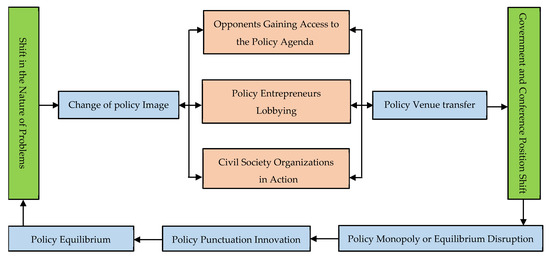
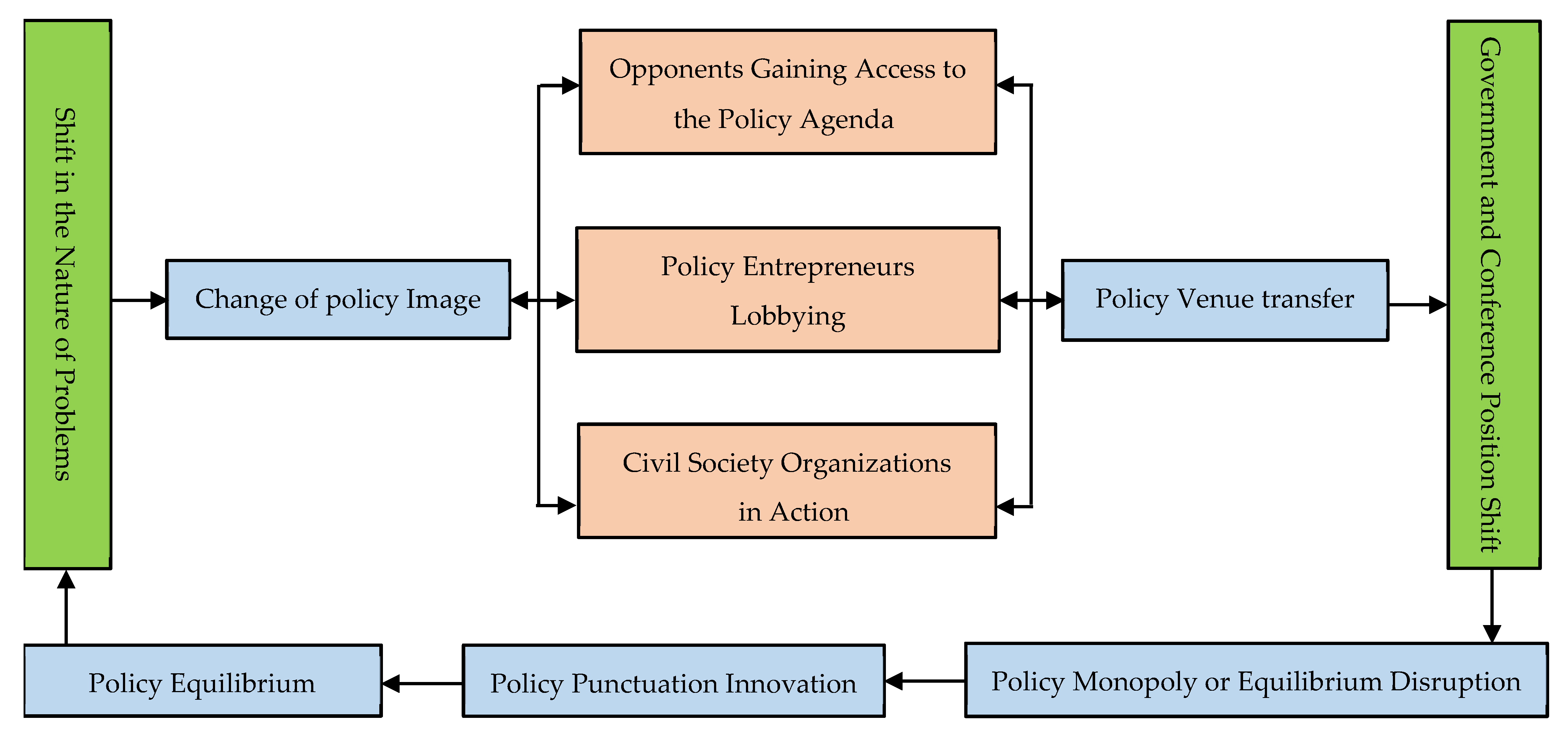
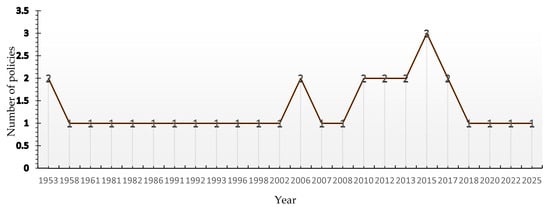
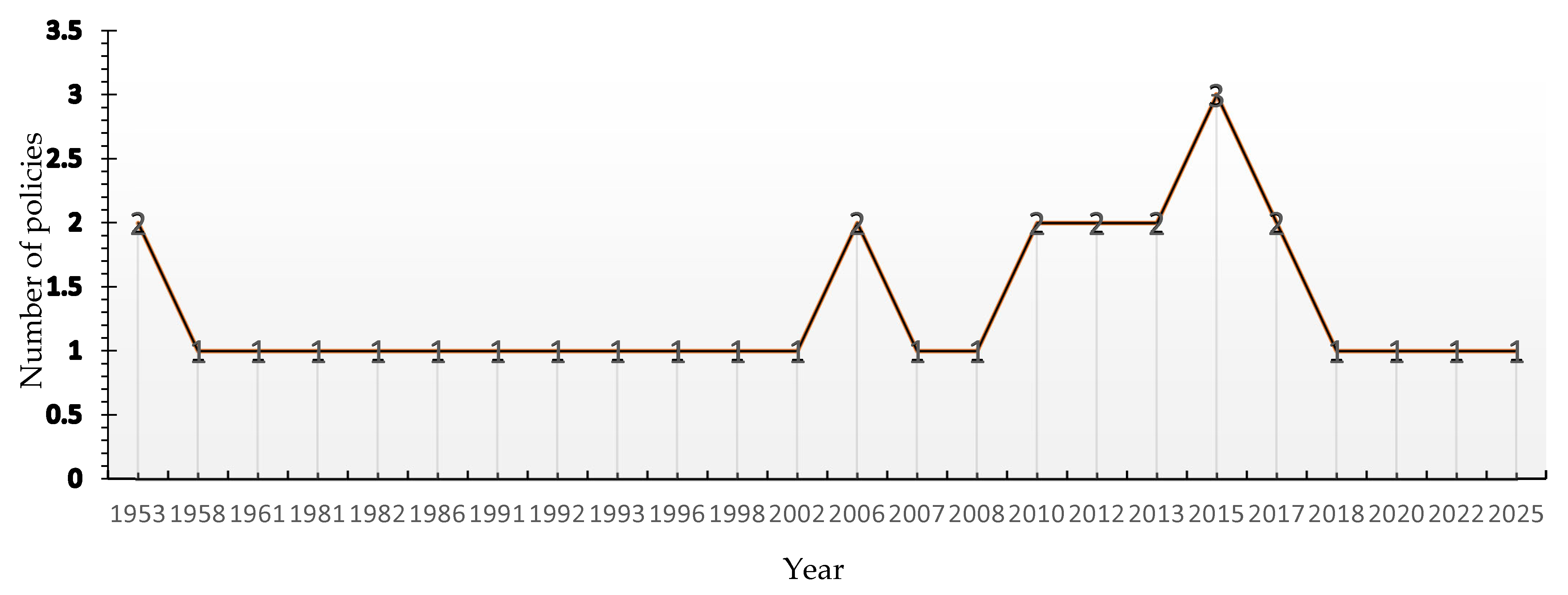
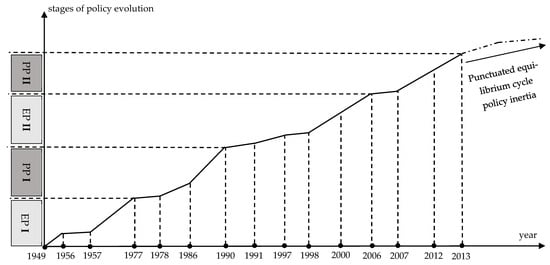
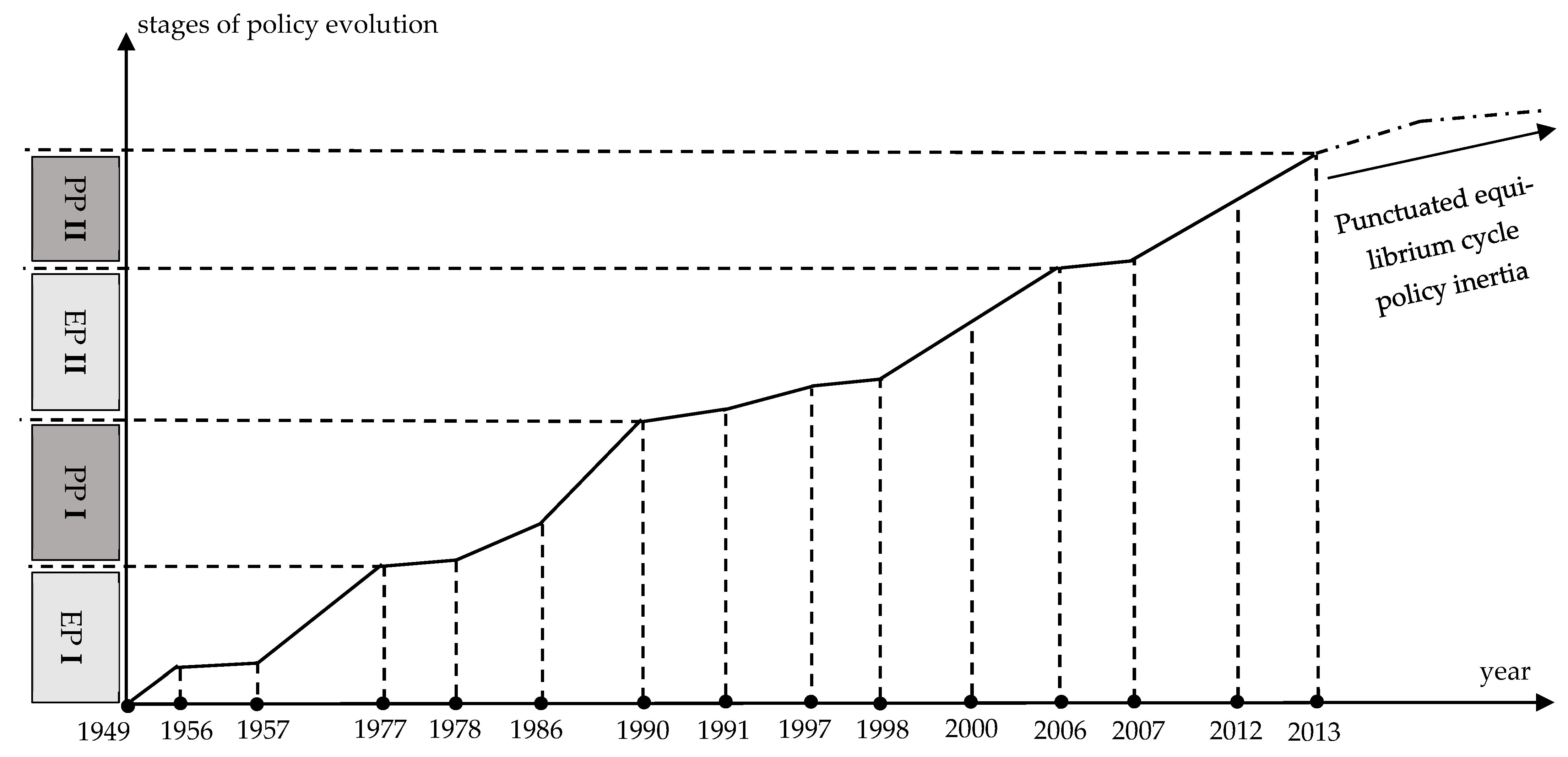
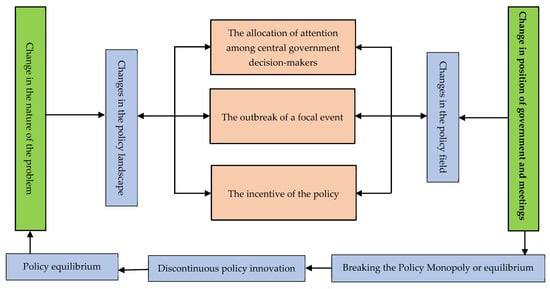
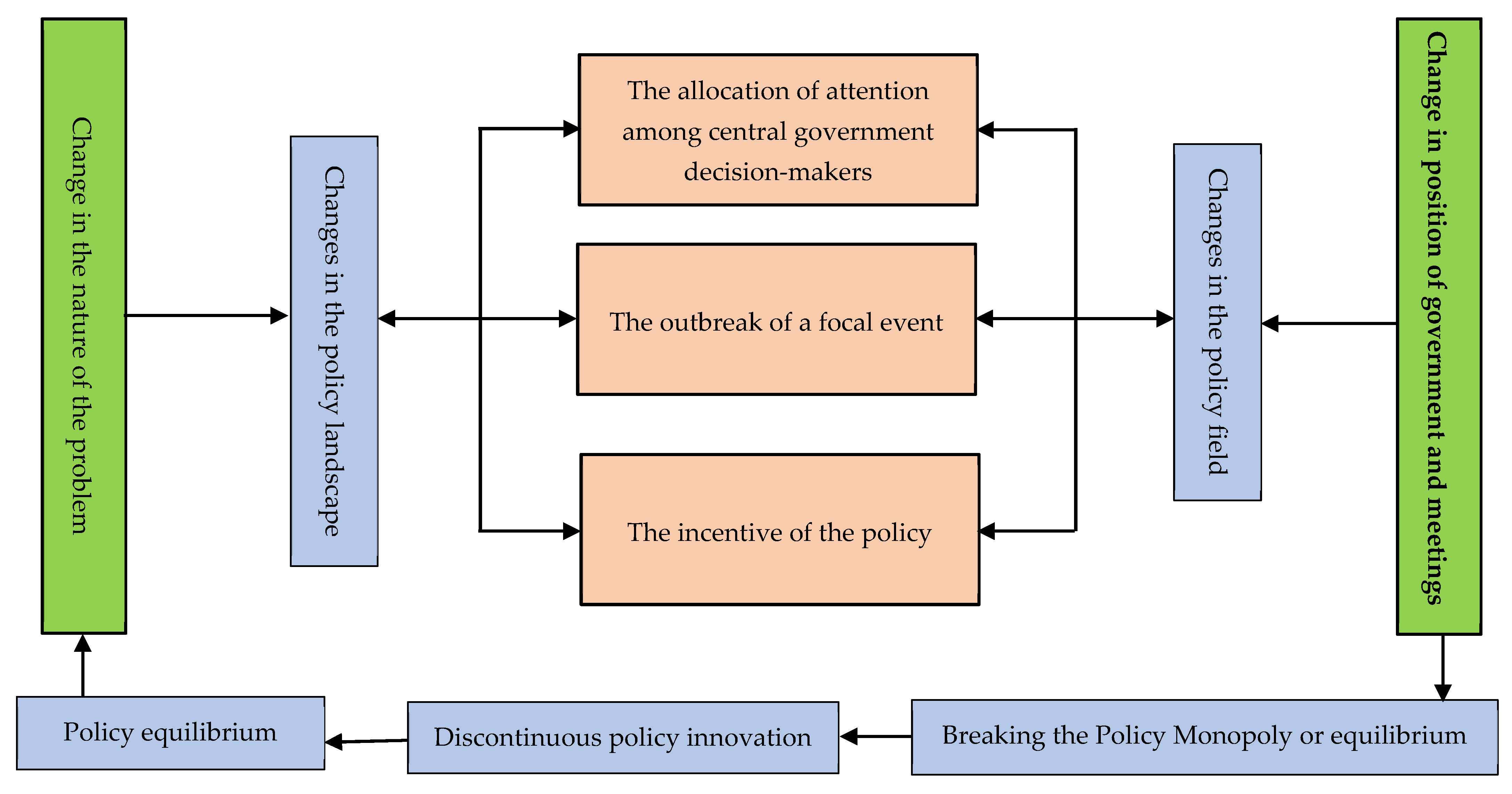

Disclaimer/Publisher’s Note: The statements, opinions and data contained in all publications are solely those of the individual author(s) and contributor(s) and not of MDPI and/or the editor(s). MDPI and/or the editor(s) disclaim responsibility for any injury to people or property resulting from any ideas, methods, instructions or products referred to in the content. |
© 2026 by the authors. Licensee MDPI, Basel, Switzerland. This article is an open access article distributed under the terms and conditions of the Creative Commons Attribution (CC BY) license.