


Highlights
What are the main findings?
- Granular sludge inoculation successfully started up the pilot-scale IFAS-PN/A system.
- Anammox bacteria followed a “seed–carrier–colonizer” migration pathway to the biofilm.
- Spatial niche differentiation coupled floc-based nitritation with biofilm-based anammox.
- Granule disintegration under shear forces served as a natural seeding mechanism.
What is the implication of the main finding?
- Granular sludge can be applied in start-up of IFAS-PN/A system.
- Natural granule decay reduces the need for manual seeding.
- Spatial separation can prevent oxygen from inhibiting anammox during startup.
- Controlled water flow can be used to manage bacterial migration.
Abstract
The Integrated Fixed-film Activated Sludge (IFAS) partial nitritation/anammox (PN/A) process offers robust nitrogen removal, yet startup using pre-colonized carriers incurs high logistical costs. This study investigated the mechanism of inoculating a pilot-scale IFAS system with granular anammox sludge to treat anaerobic digestion supernatant. The treatment train integrated coagulation, pre-aeration, and an IFAS-PN/A unit. The granular-inoculated IFAS-PN/A unit achieved stable biofilm formation and a nitrogen removal rate of 0.36 kg N m−3 d−1, benefiting from the effective interception of excessive organic carbon by the preceding coagulation and pre-aeration steps. Microbial analysis identified Candidatus brocadia as the dominant anammox genus, revealing a distinct migration pathway: bacteria transferred from disintegrating granules to the suspended sludge—acting as a transitional vector—before ultimately colonizing the carriers. While granular biomass diminished, anammox abundance in the biofilm increased to 12.0% by day 166. Furthermore, distinct spatial niches were observed: ammonium-oxidizing bacteria (AOB) dominated the suspended sludge, while nitrite-oxidizing bacteria (NOB) were effectively suppressed. These findings demonstrate the feasibility of granular inoculation for cost-effective IFAS startup and provide critical insights into the bacterial migration dynamics required for stable operation.
1. Introduction
Anaerobic ammonium oxidation (anammox) technology has emerged as a cost-effective and sustainable alternative for biological nitrogen removal, characterized by its low energy consumption, independence from external carbon sources, and reduced excess sludge production [1]. Consequently, it has been widely implemented in the treatment of high-strength ammonium wastewaters, such as anaerobic digestion liquors [2].
Among the various reactor configurations, the Integrated Fixed-film Activated Sludge (IFAS) process has gained significant attention. By incorporating suspended carriers, IFAS systems provide an ideal attachment medium for the slow-growing anammox bacteria, thereby enhancing biomass retention and aggregation within the reactor [3]. Previous studies have demonstrated that IFAS reactors exhibit superior nitrogen removal potential compared to conventional Moving Bed Biofilm Reactors (MBBR) [4]. The biofilm attached to the carrier surface not only significantly increases the total biomass, maximizing the utilization of reactor volume, but also enhances the system’s resilience against shock loads, low temperatures, and toxic substances [5]. Furthermore, compared to granular sludge-based systems—which often require specific hydraulic conditions to maintain granule integrity—IFAS systems impose fewer constraints on reactor configuration, making them highly suitable for the retrofitting and upgrading of existing wastewater treatment infrastructure [6].
Despite these operational advantages, the start-up phase remains a critical bottleneck for the widespread engineering application of IFAS-PN/A systems. Expediting this process typically necessitates a high-quality inoculum. Existing strategies largely rely on either (1) inoculation with suspended sludge or (2) the addition of pre-colonized carriers from established reactors. Li et al. [7] compared these strategies in lab-scale IFAS reactors, demonstrating that using mature anammox biofilms as seed biomass significantly shortened the start-up duration and achieved superior nitrogen removal performance compared to suspended sludge. The superiority of the biofilm-based inoculum is attributed to mass transfer resistance. By providing a diffusion barrier against dissolved oxygen (DO), the biofilm structure preserves anammox activity. This allows the biomass to act as a robust nitrite sink, creating substrate-limiting conditions that competitively exclude NOB. This approach has been validated at larger scales [8,9]. For instance, Yao et al. [10] successfully commissioned a pilot-scale reactor using mature sponge carriers, and Han et al. [11] utilized pre-colonized biocarriers to start up a full-scale system treating thermal hydrolysis dewatering liquor. However, the logistical complexity and prohibitive costs associated with transporting and installing vast quantities of pre-colonized carriers limit the feasibility of this approach for large-scale engineering projects.
To address these limitations, direct inoculation with granular anammox sludge offers a promising alternative. Granules provide a high-density biomass source that is logistically superior to bulky carriers and confers mass transfer resistance, effectively shielding anammox bacteria from DO inhibition during the critical start-up phase. However, the application of this strategy in pilot-scale IFAS systems treating real wastewater remains underexplored. Current research relies heavily on lab-scale data and synthetic substrates, failing to capture the hydrodynamic complexities and fluctuating loads inherent to engineering applications. Consequently, the ecological linkage between the inoculated granular sludge, the transient suspended sludge, and the newly developing biofilm is poorly understood. A comprehensive analysis of microbial succession across these three phases is essential to validate the feasibility of granular inoculation for full-scale implementation.
To bridge this knowledge gap, this study established a pilot-scale system comprising coagulation—sedimentation, pre-aeration, and a denitrification-coupled IFAS-PN/A unit. The system was inoculated with granular anammox sludge and fed with real anaerobic digestion liquor derived from the co-digestion of food waste and municipal sludge. The objectives of this research were to: (1) evaluate the start-up performance and operational stability of the pilot system under real wastewater conditions; and (2) elucidate the successional dynamics of the microbial community structure across granular sludge, suspended sludge, and biofilm phases. This study provides critical practical guidance and theoretical insights for the engineering application of granular sludge inoculation strategies in IFAS anammox systems.
2. Materials and Methods
2.1. Composition of Anaerobic Digestion Liquor
The influent of the pilot-scale system consisted of anaerobic digestion (AD) liquor derived from a co-digestion process of food waste and municipal sludge at the Yixing Concept Sewage Treatment Plant [12]. As summarized in Table 1, the raw liquor exhibits a high organic and nitrogenous load, with a mean chemical oxygen demand (COD) of 4256 g m−3 and total nitrogen (TN) of 2719 g m−3. The nitrogenous content is primarily composed of ammonium nitrogen (NH4−-N), averaging 2222 g m−3, with carbon-to-nitrogen (C/N) ratio of approximately 1.5. Due to the high viscosity of the raw AD liquor, which poses risks for pipeline clogging in the pilot system, the influent was appropriately diluted before treatment to ensure stable hydraulic performance and operational continuity. The influent flow rate and ammonium concentration after dilution were listed in Table 2.
Table 1.
Composition of anerobic digestion liquor.
Table 2.
Influent flow rate and ammonium concentration during each operating phase.
2.2. Pilot-Scale IFAS-PN/A Reactor and Operating Condition
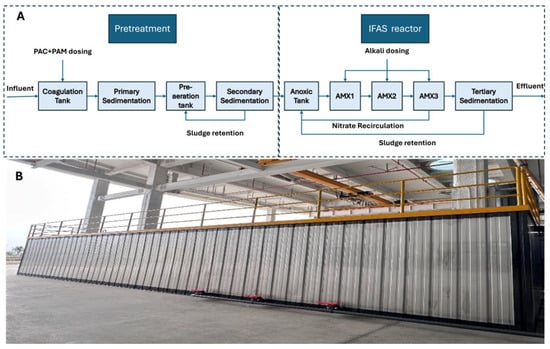
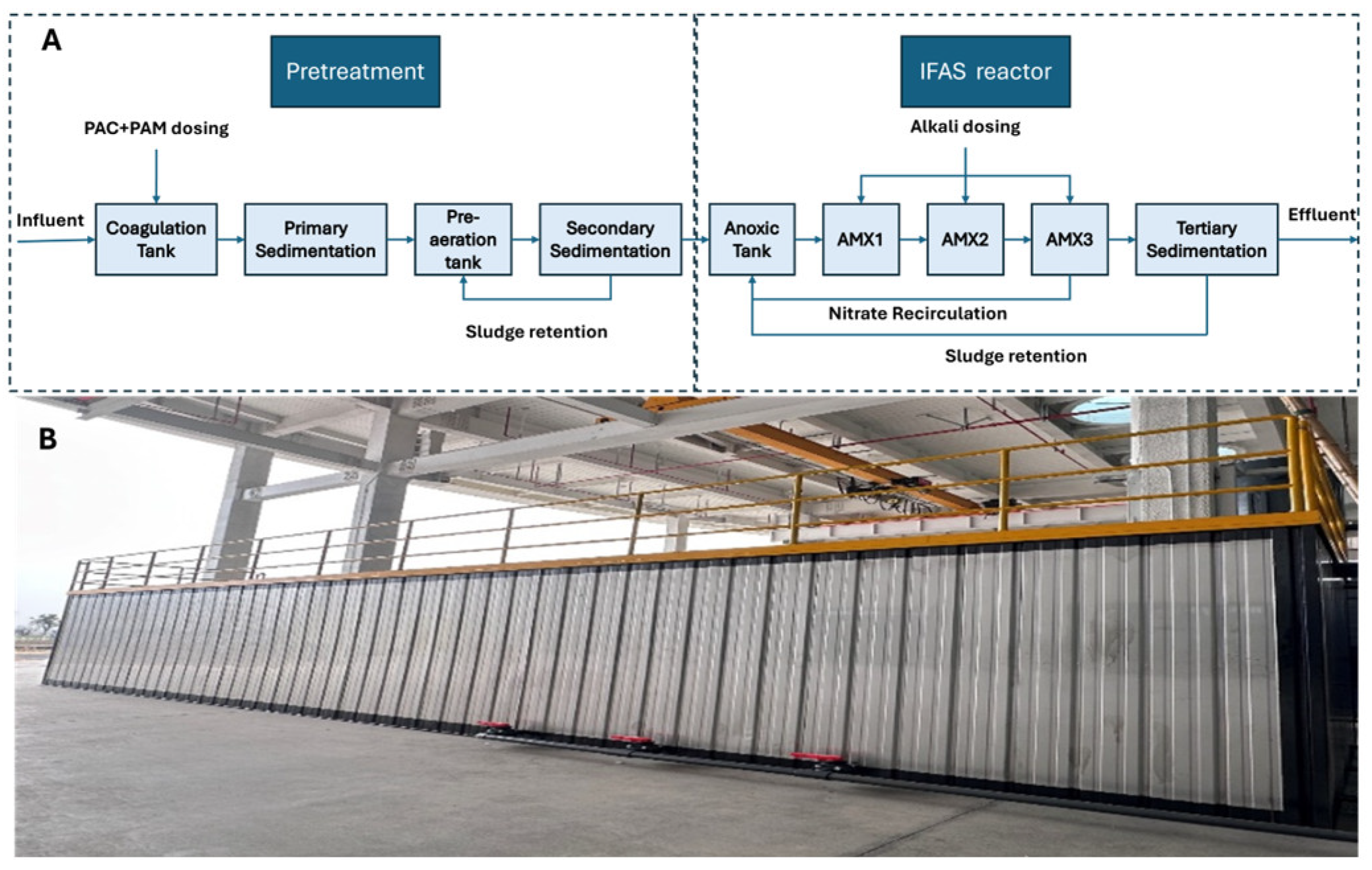
The pilot-scale treatment system contains two functional sections: the pretreatment unit and the IFAS reactor unit (Figure 1). The pretreatment stage is designed to alleviate the high solid and organic load of the raw anaerobic digestion (AD) liquor. The influent first enters a coagulation tank, where polyaluminum chloride (PAC) and polyacrylamide (PAM) are dosed at concentrations of 300 g m−3 and 50 g m−3, respectively. Mixing was performed using a 200 mm flat-blade impeller to destabilize particles via rapid chemical mixing. This is followed by a primary sedimentation tank to remove the resulting flocs and a significant portion of the insoluble phosphorus.
Figure 1.
Setup of the pilot-scale IFAS-PN/A process: (A) Process flow diagram and (B) Physical configuration.
The clarified supernatant then enters a pre-aeration tank and a secondary sedimentation tank. This step further reduces the residual COD to ensure the COD/N ratio is adjusted to below 1.0, thereby minimizing the inhibitory effect of organic matter on subsequent autotrophic nitrogen removal. The pre-aeration tank had an effective volume of 3.5 m3 and was operated under continuous aeration to maintain a dissolved oxygen (DO) concentration of 1.0–2.0 g m−3. The mixed liquor suspended solids (MLSS) concentration was maintained between 5000 and 7000 g m−3. A 100% sludge recirculation loop was established from the secondary sedimentation tank to the pre-aeration unit to sustain sufficient biomass for organic degradation. To prevent the accumulation of inert solids and maintain microbial activity, excess sludge was discharged regularly to control the solids retention time (SRT) at approximately 15 days.
The biological nitrogen removal occurs in the IFAS reactor, which consists of an anoxic tank (2.5 m3) followed by three serial anammox units (AMX1 15 m3, AMX2 11 m3, and AMX3 18 m3). The anammox (AMX) tanks were equipped with fixed sponge carriers to support biofilm growth. The sponges were encapsulated in spherical cages (d = 8 cm) and suspended on a supporting frame, achieving a packing density of 1200 cages per cubic meter (approx. 32% filling ratio). The AMX tanks are inoculated with 5 m3 of granular anammox sludge from a full-scale installation treating anaerobic digestion supernatant, results in a mixed liquor suspended solids (MLSS) concentration of around 1200 g m−3 after inoculation. The specific anammox activity of the inoculation granules was 2.4 mg N g−1 vss h−1.
To achieve efficient total nitrogen removal, a nitrate recirculation line returns 150% of the influent flow from AMX3 to the anoxic tank to facilitate partial denitrification. Within the AMX units, the pH was maintained at 7.5 ± 0.2, via automatic alkali (NaOH) dosing. DO was strictly controlled between 0.5 and 1.0 g m−3 through continuous aeration to support partial nitritation, while the operating temperature was maintained between 26 and 30 °C. Finally, the effluent passes through a tertiary sedimentation tank for solid–liquid separation before discharge. A sludge retention line with a 150% reflux ratio returns biomass from the tertiary settler to the Anoxic Tank to sustain the sludge concentration.
2.3. Analysis and Calculation Methods
All the samples were analyzed after filtering through Millipore filter units with a 0.45 μm pore size. Ammonium nitrogen (NH4+-N), nitrite nitrogen (NO2−-N) and nitrate nitrogen (NO3−-N) were measured using the colorimetric method according to the standard methods [13]. Moreover, DO and pH were monitored at the same spot of the reactor, with oxygen and pH probes (WTW3420; WTW Company, Munich, Germany). The chemical analyses were carried out in duplicate using chemicals of analytical grade.
Theoretical nitrogen conversion rates of nitritation (Rni), nitration (Rna) and anammox (Ran) processes were calculated from influent and effluent substrate concentrations (Equation (1) to Equation (4)), based on the stoichiometric matrix (Table 3) of above-mentioned nitrogen conversion bioprocesses, neglecting the nitrogen conversions through denitrification process [14].
where , NH4+in, NH4+eff, NO2−eff, NO3−eff and HRT refer to total nitrogen removal, influent ammonium concentration, effluent ammonium concentration, effluent nitrite concentration, effluent nitrate concentration and hydraulic retention time.
Table 3.
Stoichiometric matrix of nitritation, nitratation, and anammox.
2.4. Particle Size Fractionation and Analysis
Particle size distribution of the sludge was determined using a wet-sieving method on days 20, 63, 93, and 114. Mixed liquor samples were collected from the reactor and analyzed in triplicate. Prior to sieving, a series of standard sieves (arranged in descending order of aperture size, from 0.2 mm to 5 mm) were cleaned, dried, and tared. To ensure homogeneity, the samples were inverted 3–5 times prior to analysis. A specific volume of the sample was then poured onto the top sieve and gently agitated until no further filtrate was observed. During this process, a small amount of deionized water was applied to facilitate sieving and prevent particle adhesion. Finally, the fractions retained on each sieve and the bottom pan were dried, cooled, and weighed. The mass fraction of each particle size interval was then calculated based on the dry weight of the retained material. The final results were expressed as the means ± standard deviation (SD) of the three parallel measurements to ensure data accuracy.
2.5. 16S rRNA Amplicon Sequencing and Analysis
To investigate the microbial community composition, granule (>0.2 mm), suspension (<0.2 mm) and biofilm samples were collected at distinct days and stored at −80 °C for 16S rRNA sequencing. Total microbial genomic DNA was extracted using the E.Z.N.A.® soil DNA Kit (Omega Biotek, Norcross, GA, USA) according to manufacturer’s instructions. The quality and concentration of DNA were determined by 1.0% agarose gel electrophoresis and a NanoDrop2000 spectrophotometer (Thermo Scientific, Waltham, MA, USA). PCR amplification was conducted with the primers 338F (5′-ACTCCTRCGGGAGGCAGCAG-3′) and 806R (5′-GGACTACCAGGGTATCTAAT-3′) targeting the V3 and V4 region of 16S rRNA gene. The amplicon sequencing was performed on an Illumina Mi-Seq PE300 high-throughput platform (Illumina, Inc., San Diego, CA, USA) at Shanghai Majorbio Biopharm Biotechnology Co., Ltd. (Shanghai, China). Raw data can be accessed from the NCBI Sequence Read Archive (SRA) database under the project number of PRJNA1417985. The trimmed sequences were clustered into operational taxonomic units (OTUs) using UPARSE 7.1 with 97% sequence similarity level [15,16]. The taxonomy of each OTU representative sequence was analyzed by RDP Classifier version 2.2 against Silva database using confidence threshold of 0.7 [17].
3. Results and Discussions
3.1. Performance of the Pretreatment Unit
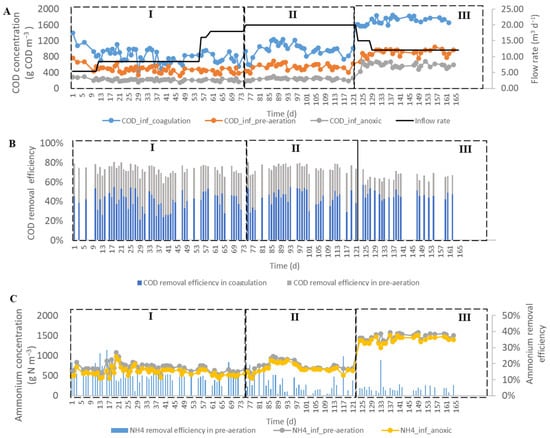
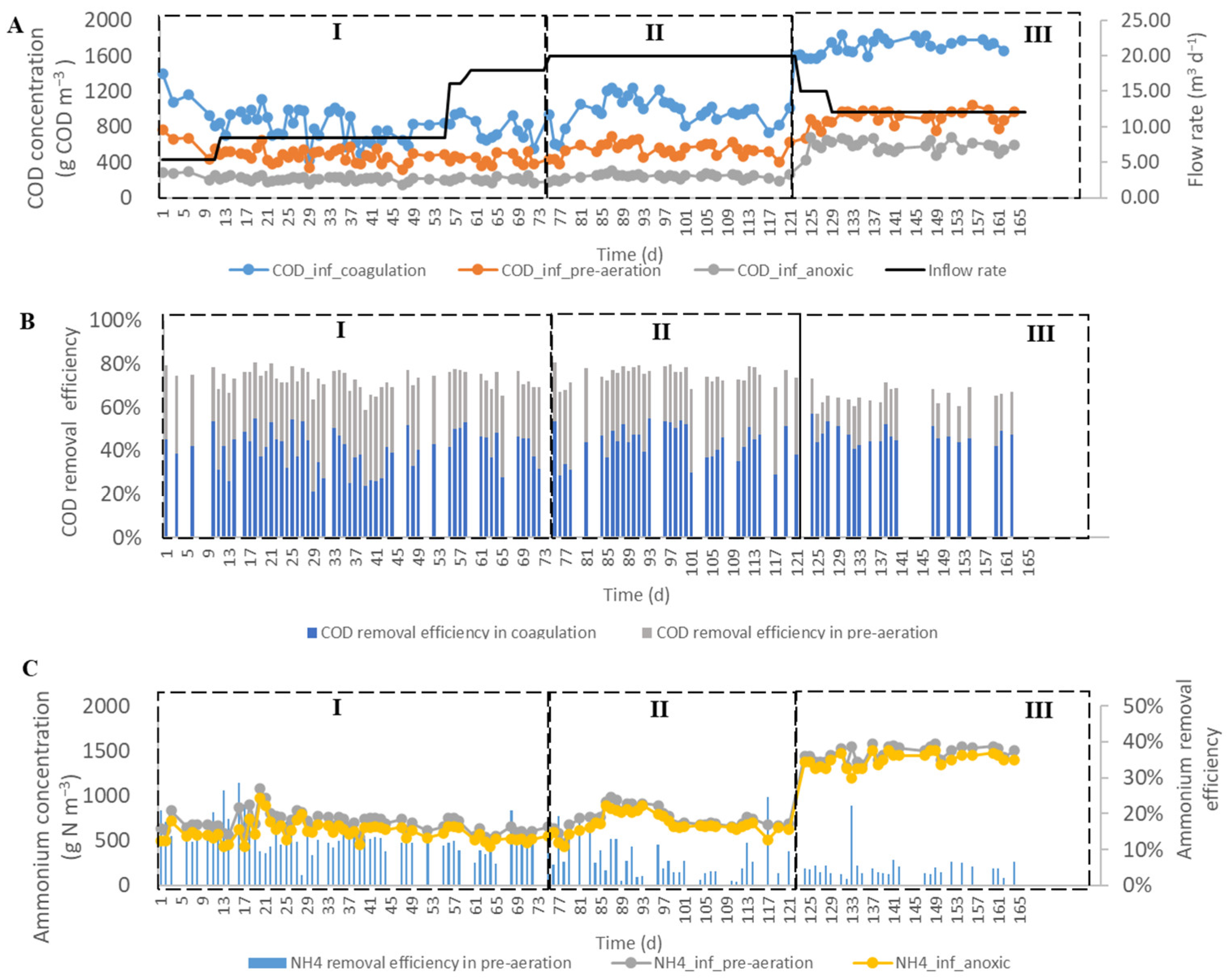
The performance of the pretreatment unit, including the coagulation and pre-aeration processes, was evaluated across three operational phases as shown in Figure 2. In Phase I, as the influent flow rate gradually increased from 5 to 15 m3/d, the pretreatment unit effectively reduced the organic load. The coagulation tank achieved a COD removal efficiency ranging from 30% to 55%, while the subsequent pre-aeration process further polished the effluent, maintaining the COD concentration entering the anoxic tank below 300 g COD m−3. During Phase II, despite the system reaching its maximum hydraulic capacity of 20 m3 d−1, the pretreatment stage demonstrated high stability. The combined COD removal efficiency reached 70–80%, successfully limiting the organic load to the IFAS reactor at approximately 200 mg/L. Meanwhile, ammonium (NH4+-N) removal in the pre-aeration tank remained low (5–15%), ensuring that the majority of the nitrogen load (600–900 g N m−3) was preserved for the downstream autotrophic nitrogen removal process. In Phase III, the system was challenged with a high-strength influent, where COD and NH4+-N concentrations spiked to over 1750 g COD m−3 and 1440 g N m−3, respectively. Although the coagulation efficiency slightly fluctuated under this shock load, the pre-aeration tank provided significant buffering capacity. Consequently, the pretreatment unit prevented excessive organic carbon from entering the AMX unit (with the COD/N ratio remaining below 1), thereby avoiding the inhibition of anammox by elevated COD levels in the subsequent IFAS system [18,19]. Periodic monitoring confirmed that the SS concentration in the pretreatment effluent consistently remained below 100 g m−3, demonstrating robust SS removal performance. Although PAC theoretically aids phosphorus removal, this study prioritized nitrogen removal performance during IFAS-PN/A startup. Thus, continuous phosphorus monitoring was excluded from the experimental design, with detailed removal dynamics remaining a subject for future research.
Figure 2.
Operational performance of the pretreatment unit: (A) Influent flow rate and COD concentrations in the coagulation, pre-aeration, and anoxic tanks; (B) COD removal efficiencies of the coagulation and pre-aeration; (C) NH4+-N concentrations and removal efficiency of pre-aeration.
3.2. Performance of the IFAS Unit
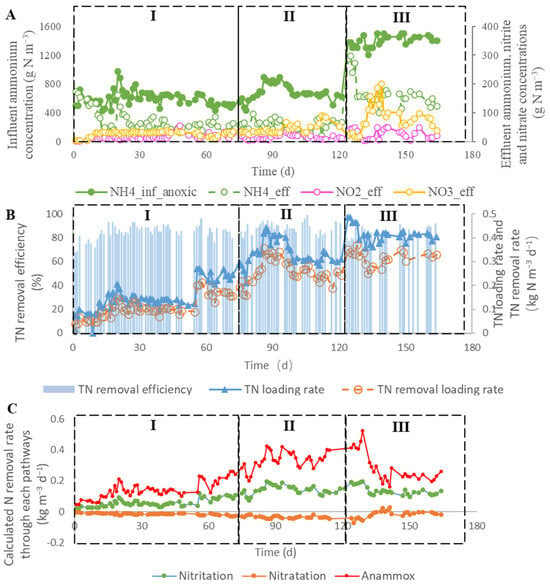
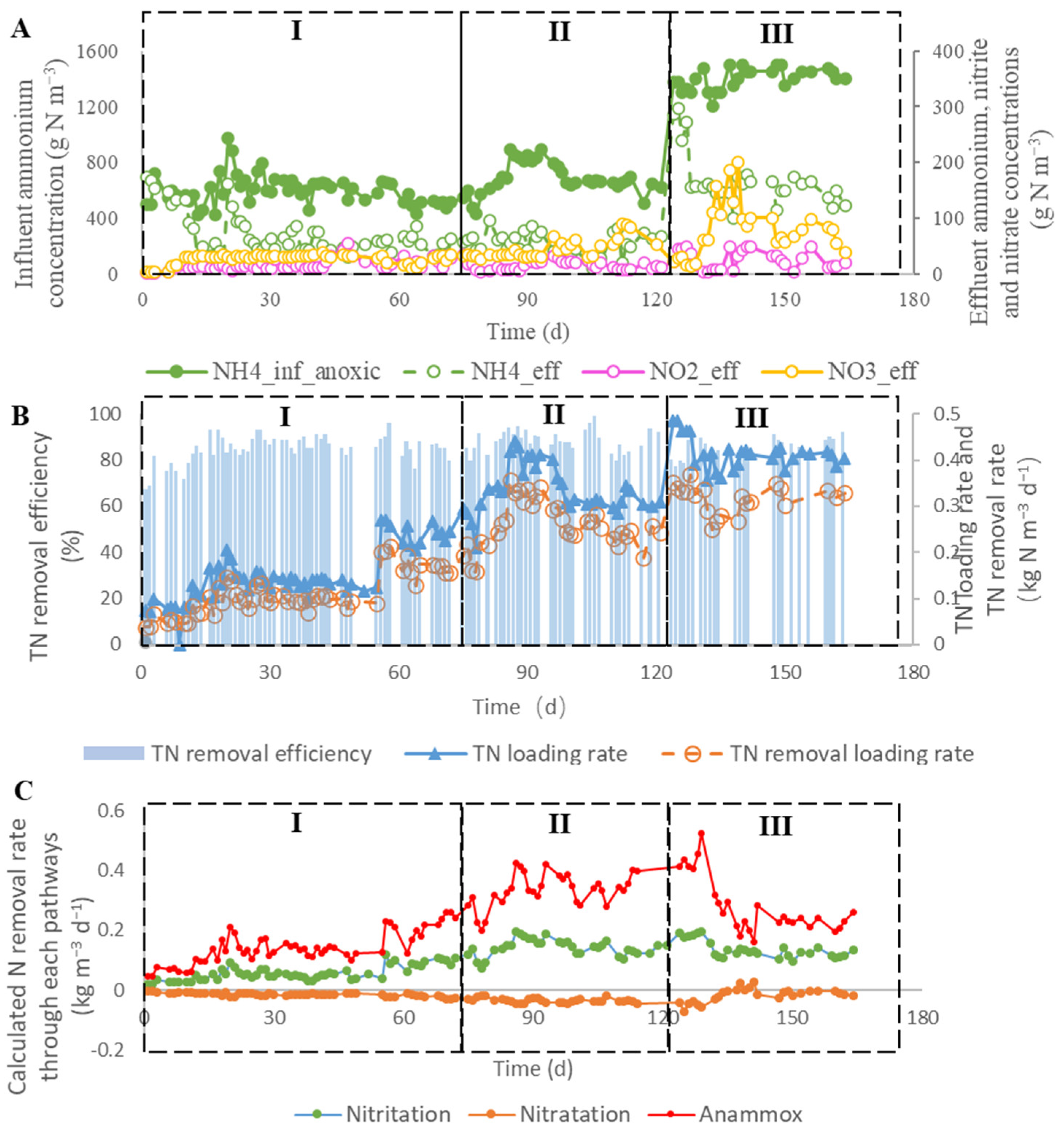
The operational performance of the IFAS system (Anoxic tank and AMX1–AMX3) was systematically evaluated based on nitrogen transformation pathways, as illustrated in Figure 3. During the startup phase (phase I), the influent flow rate increased from 5 to 18 m3 d−1, leading to increase in TN loading rate (NLR), peaking at approximately 0.24 kg N m−3 d−1 on day 73. The TN removal efficiency quickly increased initially and maintained around 80% afterward. Effluent NH4+ concentrations exhibited a sharp decline initially and remained stable at low levels (typically <100 g N m−3), despite fluctuating influent concentrations from the anoxic tank. Effluent NO2−-N and NO3−-N remained relatively low throughout this period (below 20 and 40 g N m−3 at most time). Both nitration rate and anammox rate calculated from influent and effluent data increased gradually, while nitratation rate remained close to zero. In addition, the ration between NO3− to NH4+ consumption remained below 0.05, much lower than the theoretical value of 0.11 for one-stage PNA [20], indicating that the NOB process is successfully suppressed and denitrification consumed the NO3− produced by anammox and formed a nitrite-loop [21].
Figure 3.
Operational performance of the IFAS unit: (A) Influent flow rate and nitrogen concentrations in the influent and effluent; (B) TN loading rate, TN removal loading rate, and TN removal efficiencies; (C) Calculated nitrogen removal rates through nitritation, nitratation, and anammox pathways.
During Phase II (days 76–123), the IFAS system achieved optimal stability while operating at its maximum hydraulic capacity of 20 m3 d−1. The NRR achieved its highest stable value, reaching up to 0.36 kg N m−3 d−1 on day 93, and stabilized at around 0.25 kg N m−3 d−1. The TN removal efficiency was notably stable, exceeding 80% most of the time. Both effluent NH4+ and NO3− concentrations were maintained at low levels, although occasional spikes in effluent NO2− were observed. The anammox rate peaked during this phase (more than 0.4 kg N m−3 d−1). Notably, the calculated nitratation rate remained consistently negative, providing quantitative evidence that the system’s denitrification process effectively neutralized the nitrate produced by anammox, thereby enhancing overall TN removal. The synergy between denitrification and the anammox process has been evidenced by previous one-stage PNA systems operating under limited DO conditions and in the presence of chemical oxygen demand [22,23].
During phase III, influent concentration was challenged with a doubled influent nitrogen concentration (up to 1500 g NH4+-N m−3), while the flow rate was gradually reduced to 12 m3 d−1, to test the system performance under high-strength shock loading (days 124–165, with nitrogen loading rate increased by 57%). Nitrogen shock initially stimulated biological activity within the IFAS system, with the total nitrogen removal rate (NRR) increasing from 0.25 to 0.36 kg N m−3 d−1. However, this surge in loading led to a concomitant decline in Total Nitrogen Removal Efficiency (NRE), which dropped from 85% to 75%. A pronounced spike in effluent ammonium (NH4+-N) concentration, reaching 290 g N m−3, was observed during the initial stage of this phase. This degradation likely stemmed from anammox inhibition by high free ammonia (FA), which, combined with elevated dissolved oxygen (DO), disrupted the partial nitritation-anammox balance [24]. The FA concentration peaked at 15.6 g NH3-N m−3 (calculated via the standard Anthonisen equation [25]), exceeding the reported inhibition threshold of 13 g NH3-N m−3 [26]. Increasing aeration strength and reducing flow rate successfully reduced the effluent ammonium concentration, but triggered transient nitrite accumulation.
3.3. Granule Size Distribution
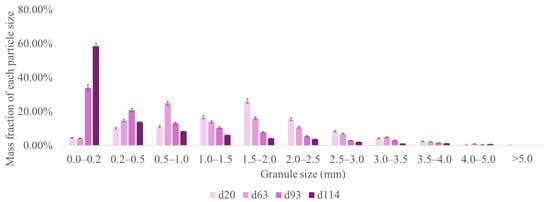
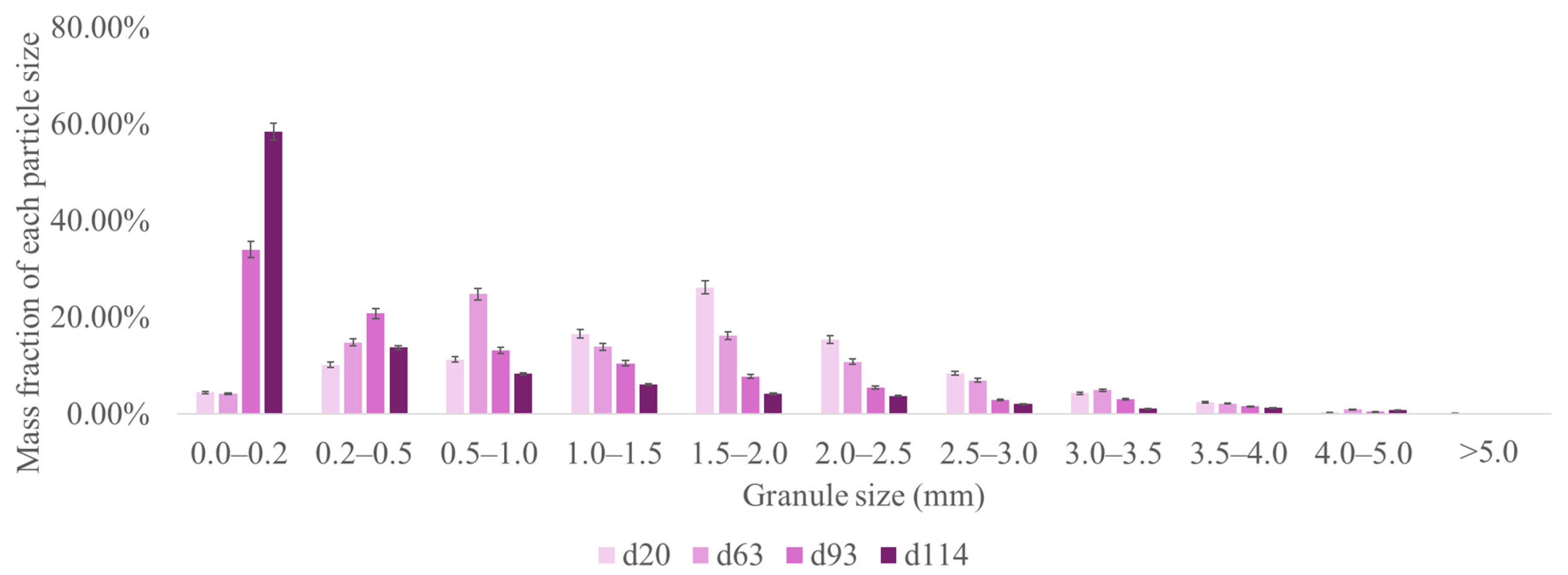
The evolution of sludge particle size distribution throughout the operation (from day 20 to day 114) is presented in Figure 4. A distinct shift in particle size towards smaller fractions was observed, indicating a gradual disintegration of the inoculated granular sludge over time. At the initial stage (day 20), the system was dominated by mature granules, with a significant proportion distributed in the range of 1.0–2.5 mm. However, as the operation progressed, the abundance of larger granules (>1.0 mm) exhibited a continuous decline. Conversely, the fraction of micro-granules and fragments (0.0–0.2 mm) surged dramatically, increasing from approximately 5% on day 20 to nearly 60% by day 114. The intermediate size fractions (0.2–1.0 mm) initially increased (day 63) as larger granules broke down but eventually decreased as they further disintegrated into finer particles. The observed reduction in granule size is primarily attributed to the mechanical attrition and hydraulic shear forces within the IFAS system. To ensure denitrification and biomass retention, the pilot system operated with high recirculation ratios (150% nitrate recirculation and 150% sludge return). During these processes, the inoculated large granules were subjected to intense mechanical shearing forces exerted by the impellers of the recirculation pumps. This continuous physical stress caused the brittle structure of large granules to fracture and disintegrate into smaller fragments or suspended flocs over long-term operation [27].
Figure 4.
Granular size distribution in IFAS system.
3.4. Microbial Community Dynamics and Spatial Niche Differentiation
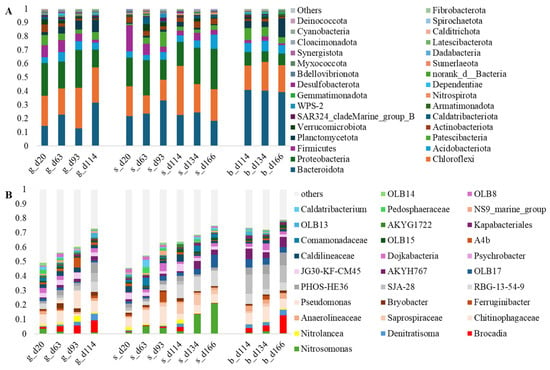
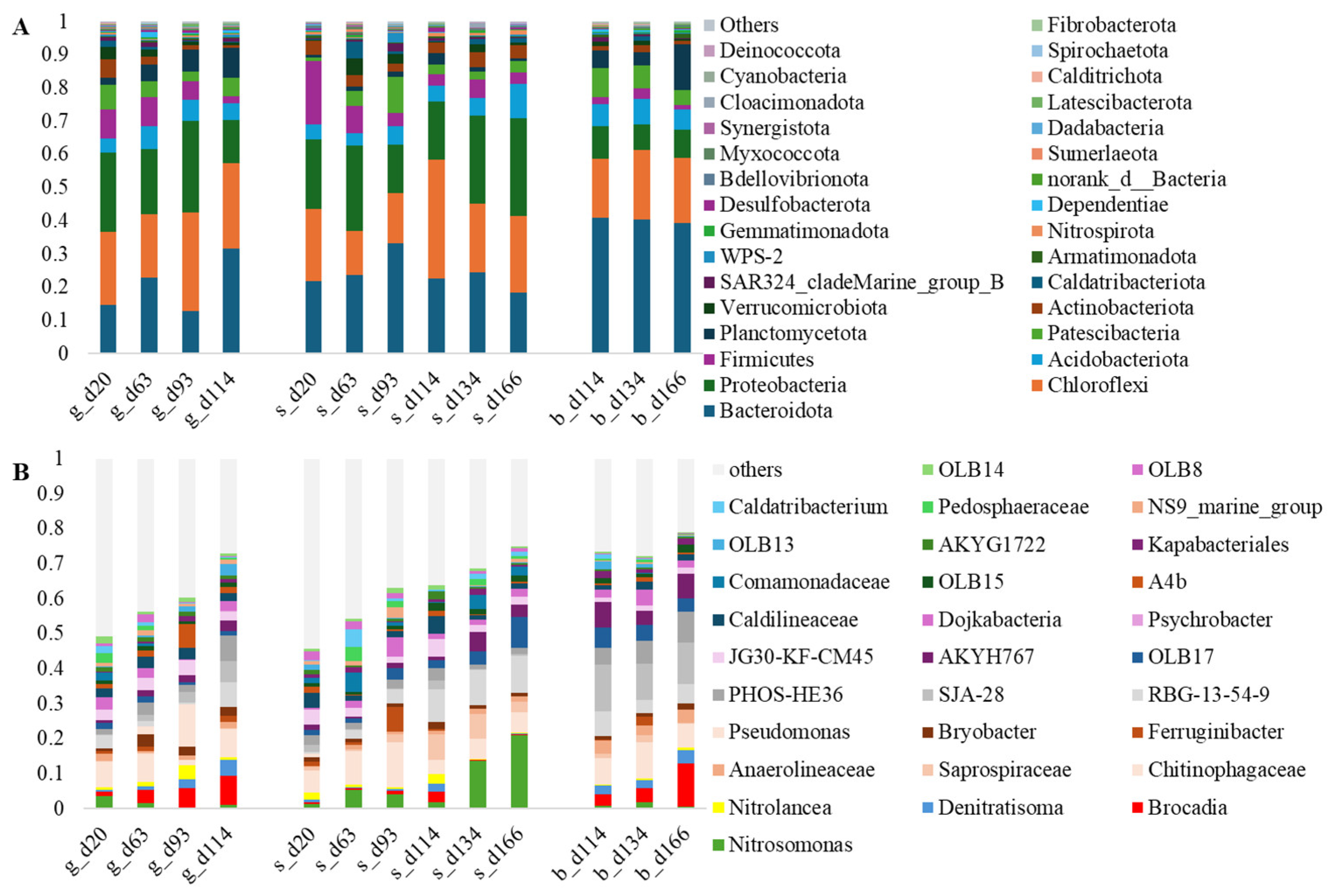
The phylum-level taxonomic profiling reveals distinct niche differentiation and successional trajectories among the granule (g), suspension (s), and biofilm (b) communities (Figure 5A), shaped by the high organic load characteristic of the anaerobic digestate influent. The granule (g) and biofilm (b) samples demonstrated remarkable stability and the highest relative abundance of Chloroflexi (approx. 20–25%), suggesting that these filamentous bacteria provide a robust structural skeleton essential for biomass retention in the carriers [28]. In contrast, the suspension (s) fraction underwent a significant succession towards Proteobacteria dominance (increasing notably by day 166), reflecting a planktonic community driven by the opportunistic degradation of dissolved substrates in the bulk liquid [29]. Notably, the granule (g) group displayed a transitional maturation profile, shifting from an initial Proteobacteria-rich composition (day 20) to a Chloroflexi and Bacteroidota dominated architecture (day 93) that resembled the stable biofilm phenotype, evidencing the successful acclimatization and granulation of the sludge overD time.
Figure 5.
Phylum-level (A) and genus-level (B) microbial community dynamics within the granules (g), suspended sludge (s), and biofilms (b) of the IFAS unit.
Unlike the dominance of Bacteroidota and Chloroflexi, the phylum Planctomycetota, hosting the anammox bacteria [30], maintained a relatively low but persistent abundance, reflecting the competitive pressure from heterotrophs under high-organic digestate conditions, especially in suspensions. A clear niche preference was observed: the granule (g) samples exhibited a gradual enrichment of Planctomycetota from day 20 to day 93, signifying the successful maturation of anammox granules. The biofilm (b) samples supported the most stable population of Planctomycetota, attributed to the enhanced biomass retention of the carriers. In contrast, the suspension (s) fraction showed negligible abundance, indicating the washout of these slow-growing autotrophs.
AnAOB, predominantly represented by the genus Brocadia, were initially localized within granular sludge during the early startup phase (day 20) with a relative abundance of 1.3%, as the biofilm had not yet fully matured (Figure 5B). Throughout the reactor operation, Brocadia abundance in granular sludge steadily accumulated to 8.2% by day 114. Simultaneously, its abundance in suspended sludge rose from 0.6% (day 20) to 3% (day 114). Notably, from day 134 onwards, Brocadia abundance in the suspended sludge dropped below 0.3%, while its presence in the biofilm surged from 3.2% (day 114) to 12% by day 166. This suggests a functional migration where AnAOB shifted from granules to the biofilm, using the suspended sludge as a transient carrier for colonization.
The AOB, specifically Nitrosomonas, exhibited a contrasting distribution. Its abundance in granular sludge declined from 3.5% (day 20) to 0.9% (day 114), while it underwent an explosive growth in the suspended sludge, peaking at over 20% by day 166. The relatively low abundance of Nitrosomonas in the biofilm indicates that nitritation was primarily driven by the suspended sludge flocs, which likely benefited from lower oxygen mass transfer resistance [31]. Regarding NOB, the genus Nitrolancea showed a transient increase in both granular sludge (peaking at 4% on day 93) and suspended sludge (2.7% on day 114) before declining to below 1%. Within the biofilm, NOB abundance remained consistently below 1%, demonstrating effective NOB suppression across the system, particularly within the biofilm matrix. The successful suppression of NOB likely attributed to the high NH4+ concentration, leading to high FA and inhibited the NOB, as confirmed by previous lab-scale IFAS systems [32].
The persistent negative nitratation rate observed in the IFAS unit indicated a robust biological scavenging mechanism for nitrate (Figure 3C). Microbial analysis identified Denitratisoma as the dominant heterotrophic denitrifier genus, exhibiting a distinct spatial distribution pattern that contrasted sharply with the AOB community.
Unlike Nitrosomonas, which proliferated in the oxygen-rich suspended flocs, Denitratisoma maintained a stable presence in the granular sludge (e.g., in g_d114) and successfully colonized the biofilm phase (enriching in b_d166). This distribution suggests that Denitratisoma exists within the anoxic inner layers of the dense aggregates (granules and biofilms), co-existing with anammox bacteria (Brocadia) [33]. This spatial coupling allows Denitratisoma to utilize residual organic carbon to reduce the nitrate produced in situ by anammox bacteria, thereby explaining the low effluent nitrate concentrations despite the lack of external carbon addition in the main aeration phase.
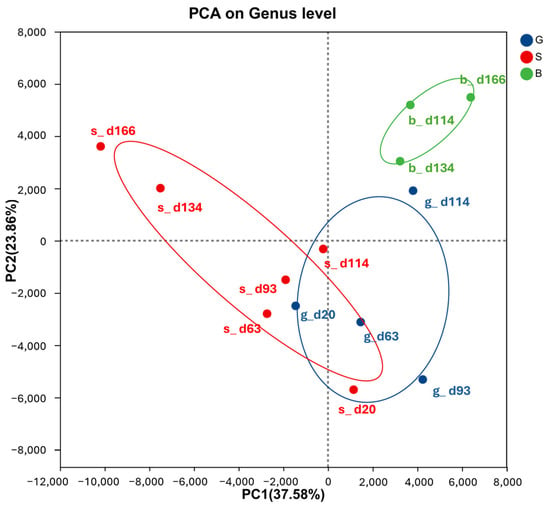
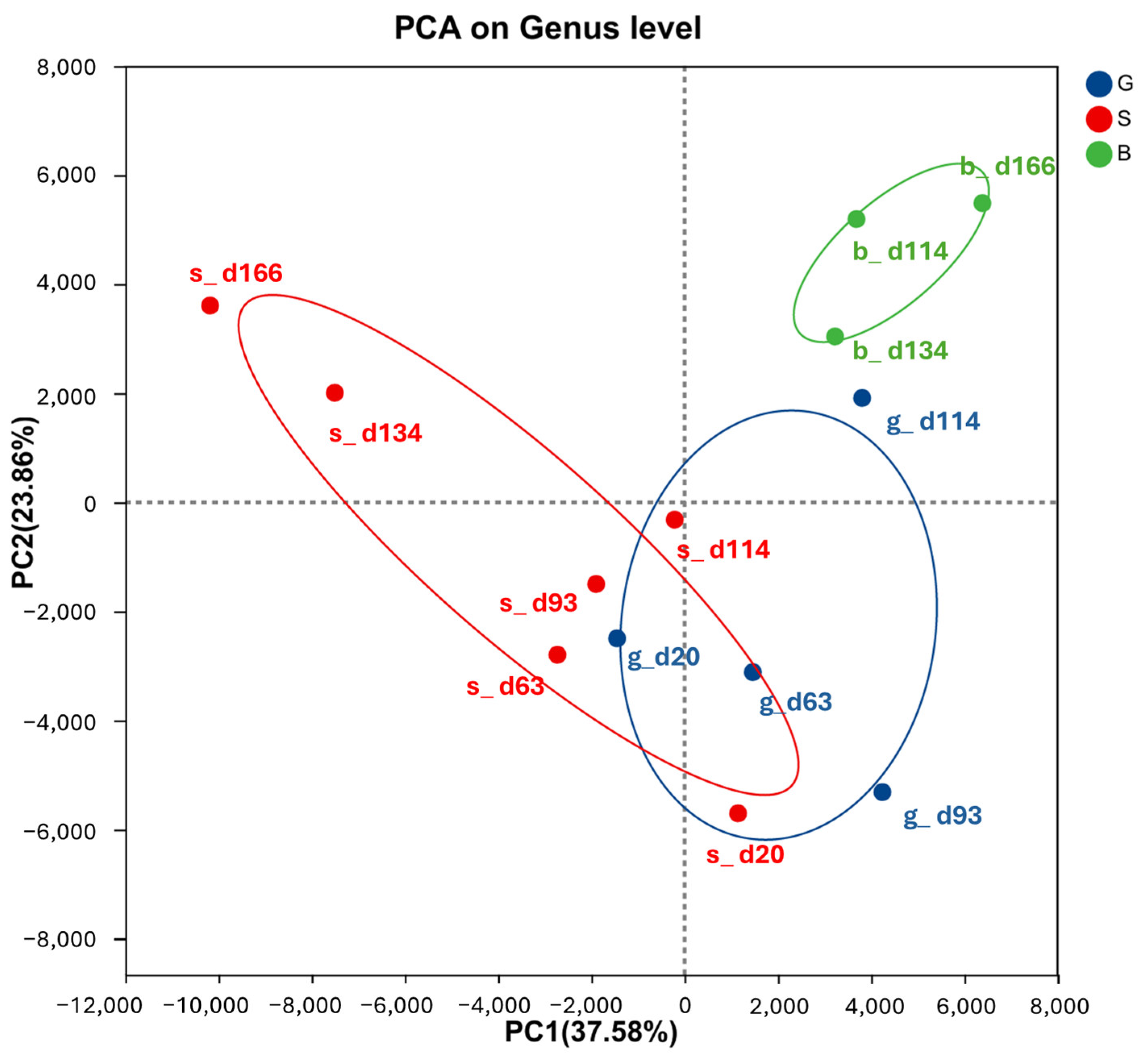
To further evaluate the similarity and divergence of microbial communities during the transition from granular sludge (g) to suspended sludge (s) and biofilm (b), a principal component analysis (PCA) was conducted at the genus level (Figure 6). The PCA results, with PC1 and PC2 accounting for 37.58% and 23.86% of the total variance respectively, reveal a distinct spatial and temporal clustering of the communities. In the early stage (day 20), the granular sludge (g_d20) and suspended sludge (s_d20) clustered closely together, indicating a high degree of similarity in their initial microbial compositions. However, as the reactor operation progressed, the three types of sludge aggregates gradually diverged into three independent clusters. The biofilm samples (b_d114 to b_d166) formed a tight and isolated cluster in the upper-right quadrant, clearly separated from the suspended and granular phases. This distinct separation reflects the specialized enrichment of anammox bacteria (e.g., Brocadia) and the stabilization of the biofilm niche over time. The suspended sludge samples exhibited the most significant migration across the PCA plot, moving from the bottom-right towards the far-left by day 166. This dramatic shift corresponds to the explosive proliferation of Nitrosomonas (AOB) in the flocculent sludge, particularly during the high-load conditions of Phase III.
Figure 6.
Principal component analysis (PCA) of microbial community structures at the genus level, highlighting the similarities and divergences between granules (g), suspended sludge (s), and biofilms (b).
3.5. Mechanisms of Phase Transition and Functional Niche Differentiation
The successful startup of the pilot-scale IFAS system was driven by a distinct “Seed–Carrier–Colonizer” mechanism, transforming the inoculated granular sludge into a stable dual-phase ecosystem. This process was initiated by the physical disintegration of granules under strong hydraulic shear forces (150% internal nitrate recirculation and 150% external sludge return), which acted as a critical seeding mechanism. As particle size analysis confirmed a shift toward smaller fractions (Figure 4), Candidatus brocadia were released from the dense granule matrix into the bulk liquid.
The migration trajectory was elucidated via microbial community analysis (Figure 5). Initially, Candidatus brocadia was identified in the granular sludge (day 20) at a relative abundance of 1.3%. While the local abundance of Brocadia within the remaining granules rose to 8.3% on day 114, this enrichment was offset by a significant reduction in the total granular biomass due to disintegration (Figure 4). Brocadia did not immediately colonize the carriers but first accumulated in the suspended sludge (the “Carrier” phase), peaking at 3.0% on day 114. The suspended flocs effectively acted as a transient vehicle, facilitating transport to the biofilm. By day 166, Brocadia established the biofilm as its primary niche (12.0% abundance), while its presence in the suspended phase diminished (<0.3%), completing the migration. This migration resulted in a profound ecological divergence, as confirmed by PCA and phylum-level analysis. While granular and suspended communities were initially taxonomically similar, they segregated over time (Figure 6). The suspended phase, dominated by Proteobacteria and Nitrosomonas (rising from 1.2% to >20%), evolved to support high-rate aerobic nitritation. Conversely, the biofilm became distinct, enriched in Planctomycetota and Chloroflexi. This structure provided the necessary anoxic depth and longer solids retention time (SRT) required for Brocadia, effectively shielding them from high dissolved oxygen in the bulk liquid.
3.6. Engineering Implications and Scale-Up Strategies
This pilot study confirms that granular sludge inoculation is a viable strategy for IFAS startup. Scaling this process to full-scale engineering applications requires addressing specific challenges related to hydrodynamics and operational control.
In pilot-scale reactors, complete mixing is readily achieved; however, ensuring the uniform distribution of inoculated granular sludge in large-scale systems—particularly in plug-flow reactors—is critical. To prevent sludge stratification and localized biomass deficiencies, a multi-point inoculation strategy is recommended. Furthermore, maintaining a high sludge recirculation ratio is essential not only for hydraulic retention but also to maximize the contact probability between the suspended “seed” sludge and the biofilm carriers.
Unlike this pilot study where carriers were mechanically fixed to ensure uniformity, full-scale applications typically employ free-floating media. A common issue during start-up is the rapid accumulation of virgin carriers at the water surface due to buoyancy, creating “dead zones” and limiting mass transfer. To mitigate this, a step-wise carrier dosing strategy is proposed. Instead of a single bulk addition, carriers should be added in phases. This approach prevents surface clustering and allows sufficient time for initial biofilm attachment, which increases carrier density and improves fluidization, thereby enhancing the inoculation efficiency of the suspended sludge.
Unlike the well-mixed pilot reactor, full-scale tanks often exhibit significant spatial heterogeneity in Dissolved Oxygen (DO). To prevent NOB proliferation in the suspended phase while maintaining AOB activity, Real-Time Control (RTC) strategies based on pH/DO/Ammonium are essential. Intermittent aeration modes should be adopted to create transient anoxic periods, allowing the anammox bacteria in the biofilm to recover from oxygen inhibition and consume the nitrite produced by AOB in the suspended phase.
4. Conclusions
This study successfully demonstrated the feasibility of a pilot-scale IFAS-PN/A system, inoculated with granular sludge, for treating high-strength anaerobic digestion liquor from food waste and municipal sludge. The combined process of coagulation, pre-aeration, and IFAS-PN/A maintained stable nitrogen removal under varying loading conditions, reaching a removal rate of up to 0.36 kg N m−3 d−1.
A distinct “Seed–Carrier–Colonizer” pathway was identified for the transition from granular sludge to biofilm. Physical disintegration of the inoculated granules released anammox bacteria into the bulk liquid. These bacteria utilized the suspended sludge as a transient carrier before successfully colonizing the biofilm, where they enriched to 12% abundance.
Suspended sludge evolved into an aerobic niche dominated by AOB (Nitrosomonas, >20%), facilitated by lower mass transfer resistance. Conversely, the biofilm provided an anoxic sanctuary for anammox bacteria (Brocadia) and effective suppression of NOB (Nitrolancea, <1%). This spatial segregation allowed for simultaneous rapid nitritation in the liquid phase and stable nitrogen removal in the fixed phase.
The study confirms that inoculating IFAS systems with granular sludge is a viable strategy. The natural disintegration of granules under hydraulic shear serves as an effective seeding mechanism for biofilm formation, providing a practical reference for upscaling IFAS-PN/A technology in wastewater treatment plants.
Author Contributions
Data curation, K.L., W.L., F.J. and D.L.; Supervision, W.S. and Y.C.; Writing—original draft, X.W.; Writing—review and editing, X.W., Z.Z. and W.C. All authors have read and agreed to the published version of the manuscript.
Funding
This work was supported by the National Natural Science Foundation of China (grant No. 52192683), Hubei Provincial Natural Science Foundation (grant No. 2024AFB520), Research Project of YANGTZE Eco-Environment Engineering Research Center, China Three Gorges Corporation (grant No. NBWL202300013-1), National Key R&D Program of China (No. 2023YFC3207700 and 2023YFC3207701-02), and National Natural Science Foundation of China (No. 52470024).
Data Availability Statement
The raw data supporting the conclusions of this article will be made available by the authors on request.
Conflicts of Interest
Authors Xinyu Wan, Kun Li, Wanlin Lv, Zhicheng Zhao, Fangyuan Jing and Yasong Chen were employed by the company China Three Gorges Corporation. The remaining authors declare that the research was conducted in the absence of any commercial or financial relationships that could be construed as a potential conflict of interest. The authors declare that this study received funding from China Three Gorges Corporation. The funder was not involved in the study design, collection, analysis, interpretation of data, the writing of this article or the decision to submit it for publication.
References
- Kuenen, J.G. Anammox bacteria: From discovery to application. Nat. Rev. Microbiol. 2008, 6, 320–326. [Google Scholar] [CrossRef] [Scilit] [PubMed]
- Lackner, S.; Gilbert, E.M.; Vlaeminck, S.E.; Joss, A.; Horn, H.; van Loosdrecht, M.C.M. Full-scale Partial Nitritation/Anammox Experiences—An Application Survey. Water Res. 2014, 55, 292–303. [Google Scholar] [CrossRef] [Scilit] [PubMed]
- Li, G.; Yu, Y.; Li, X.; Jia, H.; Ma, X.; Opoku, P.A. Research progress of anaerobic ammonium oxidation Anammox process based on integrated fixed-film activated sludge (IFAS). Environ. Microbiol. Rep. 2024, 16, e13235. [Google Scholar] [CrossRef] [Scilit] [PubMed]
- Veuillet, F.; Lacroix, S.; Bausseron, A.; Gonidec, E.; Ochoa, J.; Christensson, M.; Lemaire, R. Integrated fixed-film activated sludge ANITATMMox process—A new perspective for advanced nitrogen removal. Water Sci. Technol. 2014, 69, 915–922. [Google Scholar] [CrossRef] [Scilit]
- Singh, N.K.; Kazmi, A.A. Environmental performance and microbial investigation of a single stage aerobic integrated fixed-film activated sludge (IFAS) reactor treating municipal wastewater. J. Environ. Chem. Eng. 2016, 4, 2225–2237. [Google Scholar] [CrossRef] [Scilit]
- Bachmann, M.; Lawrence, C.; Wieczorek, N.; Scott, T.; Shelton, E.; Elliott, B.; Parsons, M.; Klaus, S.; Bott, C. Full-scale implementation of partial denitrification-anammox in IFAS processes: Cost savings and operational strategies. Water Environ. Res. 2025, 97, e70093. [Google Scholar] [CrossRef] [Scilit]
- Li, Y.; Huang, X.; Li, X. Using anammox biofilms for rapid start-up of partial nitritation-anammox in integrated fixed-film activated sludge for autotrophic nitrogen removal. Sci. Total Environ. 2021, 791, 148314. [Google Scholar] [CrossRef] [Scilit]
- Lotti, T.; Kleerebezem, R.; Lubello, C.; van Loosdrecht, M.C.M. Physiological and kinetic characterization of a suspended cell anammox culture. Water Res. 2014, 60, 1–14. [Google Scholar] [CrossRef] [Scilit]
- Park, M.-R.; Park, H.; Chandran, K. Molecular and Kinetic Characterization of Planktonic nitrospira spp. Selectively Enriched from Activated Sludge. Environ. Sci. Technol. 2017, 51, 2720–2728. [Google Scholar] [CrossRef] [Scilit]
- Yao, H.; Zhao, X.; Fan, L.; Jia, F.; Chen, Y.; Cai, W.; Guo, J. Pilot-scale demonstration of one-stage partial nitritation/anammox process to treat wastewater from a coal to ethylene glycol (CtEG) plant. Environ. Res. 2022, 208, 112540. [Google Scholar] [CrossRef] [Scilit]
- Han, X.; Zhang, S.; Yang, S.; Zhang, L.; Peng, Y. Full-scale partial nitritation/anammox (PN/A) process for treating sludge dewatering liquor from anaerobic digestion after thermal hydrolysis. Bioresour. Technol. 2020, 297, 122380. [Google Scholar] [CrossRef] [Scilit] [PubMed]
- Qu, J.; Ren, H.; Wang, H.; Wang, K.; Yu, G.; Ke, B.; Yu, H.-Q.; Zheng, X.; Li, J. China launched the first wastewater resource recovery factory in Yixing. Front. Environ. Sci. Eng. 2022, 16, 13. [Google Scholar] [CrossRef] [Scilit]
- APHA. Standard Methods for the Examination of Water and Wastewater, 20th ed.; American Water Works Association and Water Environmental Federation: Washington, DC, USA, 1998. [Google Scholar]
- Guo, Y.; Sugano, T.; Song, Y.; Xie, C.; Chen, Y.; Xue, Y.; Li, Y.-Y. The performance of freshwater one-stage partial nitritation/anammox process with the increase of salinity up to 3.0%. Bioresour. Technol. 2020, 311, 123489. [Google Scholar] [CrossRef] [Scilit] [PubMed]
- Uparse, R.C.E. Highly accurate OTU sequences from microbial amplicon reads. Nat. Methods 2013, 2604, 996–998. [Google Scholar] [CrossRef] [Scilit]
- Stackebrandt, E.; Goebel, B.M. Taxonomic Note: A Place for DNA-DNA Reassociation and 16S rRNA Sequence Analysis in the Present Species Definition in Bacteriology. Int. J. Syst. Evol. Microbiol. 1994, 44, 846–849. [Google Scholar] [CrossRef] [Scilit]
- Wang, Q.; Garrity, G.M.; Tiedje, J.M.; Cole, J.R. Naive Bayesian classifier for rapid assignment of rRNA sequences into the new bacterial taxonomy. Appl. Environ. Microbiol. 2007, 73, 5261–5267. [Google Scholar] [CrossRef] [Scilit]
- Chamchoi, N.; Nitisoravut, S.; Schmidt, J.E. Inactivation of ANAMMOX communities under concurrent operation of anaerobic ammonium oxidation (ANAMMOX) and denitrification. Bioresour. Technol. 2008, 99, 3331–3336. [Google Scholar] [CrossRef] [Scilit]
- Tang, C.; Zheng, P.; Wang, C.; Mahmood, Q. Suppression of anaerobic ammonium oxidizers under high organic content in high-rate Anammox UASB reactor. Bioresour. Technol. 2010, 101, 1762–1768. [Google Scholar] [CrossRef] [Scilit]
- Qian, F.; Gebreyesus, A.T.; Wang, J.; Shen, Y.; Liu, W.; Xie, L. Single-stage autotrophic nitrogen removal process at high loading rate: Granular reactor performance, kinetics, and microbial characterization. Appl. Microbiol. Biotechnol. 2018, 102, 2379–2389. [Google Scholar] [CrossRef] [Scilit]
- Cao, Y.; van Loosdrecht, M.C.M.; Daigger, G.T. Mainstream partial nitritation–anammox in municipal wastewater treatment: Status, bottlenecks, and further studies. Appl. Microbiol. Biotechnol. 2017, 101, 1365–1383. [Google Scholar] [CrossRef] [Scilit]
- Chen, H.; Liu, S.; Yang, F.; Xue, Y.; Wang, T. The development of simultaneous partial nitrification, ANAMMOX and denitrification (SNAD) process in a single reactor for nitrogen removal. Bioresour. Technol. 2009, 100, 1548–1554. [Google Scholar] [CrossRef] [Scilit]
- Mishra, S.; Singh, V.; Cheng, L.; Hussain, A.; Ormeci, B. Nitrogen removal from wastewater: A comprehensive review of biological nitrogen removal processes, critical operation parameters and bioreactor design. J. Environ. Chem. Eng. 2022, 10, 107387. [Google Scholar] [CrossRef] [Scilit]
- Wan, X.; Zhao, Z.; Zhao, Y.; Sun, W.; Liu, S.; Han, X.; Lu, X.; Chen, Y.; Cai, W. Multi-strategy rehabilitation enhances nitrogen removal in a one-stage partial nitritation/anammox reactor. Environ. Res. J. 2026, 294, 123832. [Google Scholar] [CrossRef] [Scilit] [PubMed]
- Suzuki, I.; Kwok, S. Ammonia or Ammonium Ion as Substrate for Oxidation by Nitrosomonas europaea Cells and Extracts. J. Bacteriol. 1974, 120, 556–558. [Google Scholar] [CrossRef] [Scilit] [PubMed]
- Waki, M.; Tokutomi, T.; Yokoyama, H.; Tanaka, Y. Nitrogen removal from animal waste treatment water by anammox enrichment. Bioresour. Technol. 2007, 98, 2775–2780. [Google Scholar] [CrossRef] [Scilit]
- Wu, J.; Bi, L.; Zhang, J.B.; Poncin, S.; Cao, Z.P.; Li, H.Z. Effects of increase modes of shear force on granule disruption in upflow anaerobic reactors. Water Res. 2012, 46, 3189–3196. [Google Scholar] [CrossRef] [Scilit]
- Wang, W.; Wang, J.; Wang, H.; Ma, J.; Wu, M.; Wang, Y. Anammox granule enlargement by heterogenous granule self-assembly. Water Res. 2020, 187, 116454. [Google Scholar] [CrossRef] [Scilit]
- Pereira, A.D.; Cabezas, A.; Etchebehere, C.; Chernicharo, C.A.d.L.; de Araújo, J.C. Microbial communities in anammox reactors: A review. Environ. Technol. Rev. 2017, 6, 74–93. [Google Scholar] [CrossRef] [Scilit]
- Kündgen, M.; Jogler, C.; Kallscheuer, N. Substrate utilization and secondary metabolite biosynthesis in the phylum Planctomycetota. Appl. Microbiol. Biotechnol. 2025, 109, 123. [Google Scholar] [CrossRef] [Scilit]
- Wan, X.; Laureni, M.; Jia, M.; Volcke, E.I.P. Impact of organics, aeration and flocs on N2O emissions during granular-based partial nitritation-anammox. Sci. Total Environ. 2021, 797, 149092. [Google Scholar] [CrossRef] [Scilit]
- Du, Y.; Yu, D.; Wang, X.; Zhen, J.; Bi, C.; Gong, X.; Zhao, J. Achieving simultaneous nitritation, anammox and denitrification (SNAD) in an integrated fixed-biofilm activated sludge (IFAS) reactor: Quickly culturing self-generated anammox bacteria. Sci. Total Environ. 2021, 768, 144446. [Google Scholar] [CrossRef] [Scilit]
- Kang, D.; Wan, X.; Zhang, M.; Ding, S.; Zheng, P.; Peng, Y. Medium-sized anammox granules achieve the optimal synergism between AnAOB and HDB via nitrite cycle. J. Clean. Prod. 2023, 426, 139103. [Google Scholar] [CrossRef] [Scilit]

Disclaimer/Publisher’s Note: The statements, opinions and data contained in all publications are solely those of the individual author(s) and contributor(s) and not of MDPI and/or the editor(s). MDPI and/or the editor(s) disclaim responsibility for any injury to people or property resulting from any ideas, methods, instructions or products referred to in the content. |
© 2026 by the authors. Licensee MDPI, Basel, Switzerland. This article is an open access article distributed under the terms and conditions of the Creative Commons Attribution (CC BY) license.