


Abstract
This paper reports an advanced statistical physics modeling to elucidate the adsorption process of two relevant pharmaceuticals, namely amoxicillin (AMOX) and imipramine (IMP), on aluminum-pillared clay. A double-layer model was used to interpret the adsorption mechanism of these pharmaceuticals at 298–318. This model indicated the presence of molecular aggregation for IMP adsorption via the formation of dimers or trimers, and a monomolecular AMOX separation process. The removal of both compounds was endothermic, showing better adsorption capacity for IMP (82 mg/g) than for AMOX (37 mg/g). Calculated adsorption energies (ΔE1, ΔE2 < 40 kJ/mol) confirmed a physisorption mechanism, which may be governed by hydrogen bonding due to the adsorbent chemistry and adsorbate molecular structure. Configurational entropy and free enthalpy were calculated to analyze the thermodynamics of AMOX and IMP adsorption equilibria. These thermodynamic functions confirmed the molecular disorder during adsorption and system’s spontaneity. This study contributes with new theoretical findings for unraveling complex adsorption mechanisms, at the molecular level, of pharmaceutical molecules, with the aim of intensifying water depollution systems.
1. Introduction
The widespread use of pharmaceuticals represents a major source of environmental pollution mainly for water, which can pose risks to human health even at trace concentrations [1,2,3,4]. Amoxicillin (AMOX) is a common antibiotic with broad-spectrum effects against different types of bacteria [5]. Water pollution by AMX has been documented in the literature, highlighting that it can derive in the generation of more dangerous chemicals than the original molecule because of its natural degradation under environment conditions [6]. Similarly, imipramine (IMP) is a tricyclic antidepressant employed to treat mental disorders, and this compound has also been classified as an emerging contaminant [7]. Removal of both AMOX and IMP is necessary to address the water pollution, particularly in urban wastewater treatment plants. Multiple techniques have been developed for the depollution of water containing organic chemicals such as pharmaceuticals. They include membrane filtration [8], nanofiltration [9], ozonation [10], electro-adsorption [11] and adsorption [12]. The adsorption is a reliable technology for the removal of organic and inorganic pollutants because it is easy to implement and operate [13] and has a competitive separation performance even for purifying fluids with complex composition [14,15]. Various adsorbents can be used to remove water pollutants including organic compounds such as IMP and AMOX from aqueous systems. Literature indicates that activated carbons, composite, MOFs, biomass residues and other functionalized materials can depollute water contaminated by pharmaceuticals [16,17,18]. The results showed that the best materials are those with high specific surface area and with active sites that can promote hydrogen bonding (via oxygenated functionalities) and stronger interactions with polar organic molecules. Particularly, natural and modified clays have been effective to separate pharmaceutical compounds in water treatment since they are characterized by their low cost and favorable textural properties such as high surface area and suitable pore structure that enhance adsorption capacity [19,20]. However, their adsorption equilibria have been poorly understood. The literature indicates that classical models (e.g., Langmuir, Sips or Freundlich) applied to the analysis of adsorption data of different adsorbents and pollutants generally provide limited results useful for interpreting the interactions and adsorption mechanisms at the molecular level. For instance, Allaoui et al. [21] have tested Langmuir, Freundlich and Dubinin–Radushkevich models to study the adsorption isotherms of paracetamol using natural and HDTMA-modified clay. However, these authors did not discuss physicochemical parameters associated with the adsorption mechanism of this system, such as the potential molecular aggregation or adsorption orientation, due to the theoretical limitations of tested models. The better understanding of surface properties of clays to improve their application in water depollution systems demands a deeper analysis of the adsorption equilibria of pharmaceutical molecules applying advanced theoretical models under different operating conditions. Advanced models based on statistical physics theory have been successfully applied to study the adsorption mechanism of various pharmaceuticals at the molecular level. They can calculate different physicochemical parameters that are related directly to the interaction mechanism [22,23,24]. Contrary to the classical models, these models can generate steric and energetic parameters and thermodynamic functions to allow a better explanation of adsorption systems. For instance, these models can estimate the number of formed layers during the adsorption process at different temperatures, the interaction energies between adsorbate–adsorbent surface and adsorbate–adsorbate, the aggregation degree of pharmaceuticals, and the molecules’ orientation on the adsorbent surface. Statistical physics models have been applied to different systems, outperforming classical models in the adsorption data analysis [25,26,27,28].
Therefore, this paper reports an advanced theoretical assessment of the adsorption equilibria of AMOX and IMP on aluminum-pillared clay (AP-Clay) using a double-layer model. This model was applied to analyze experimental data obtained under different temperatures. The objective of this study was to discuss the main steric variables and interaction energies linked to the removal of AMOX and IMP from aqueous solutions, and to calculate and interpret their positional entropy and Gibbs free energy. This paper contributes with theoretical findings to address current gaps in the understanding of adsorption mechanism of organic pollutants using clays.
2. Experimental Description and Isotherm Modeling
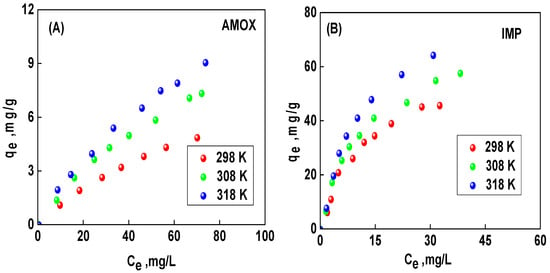
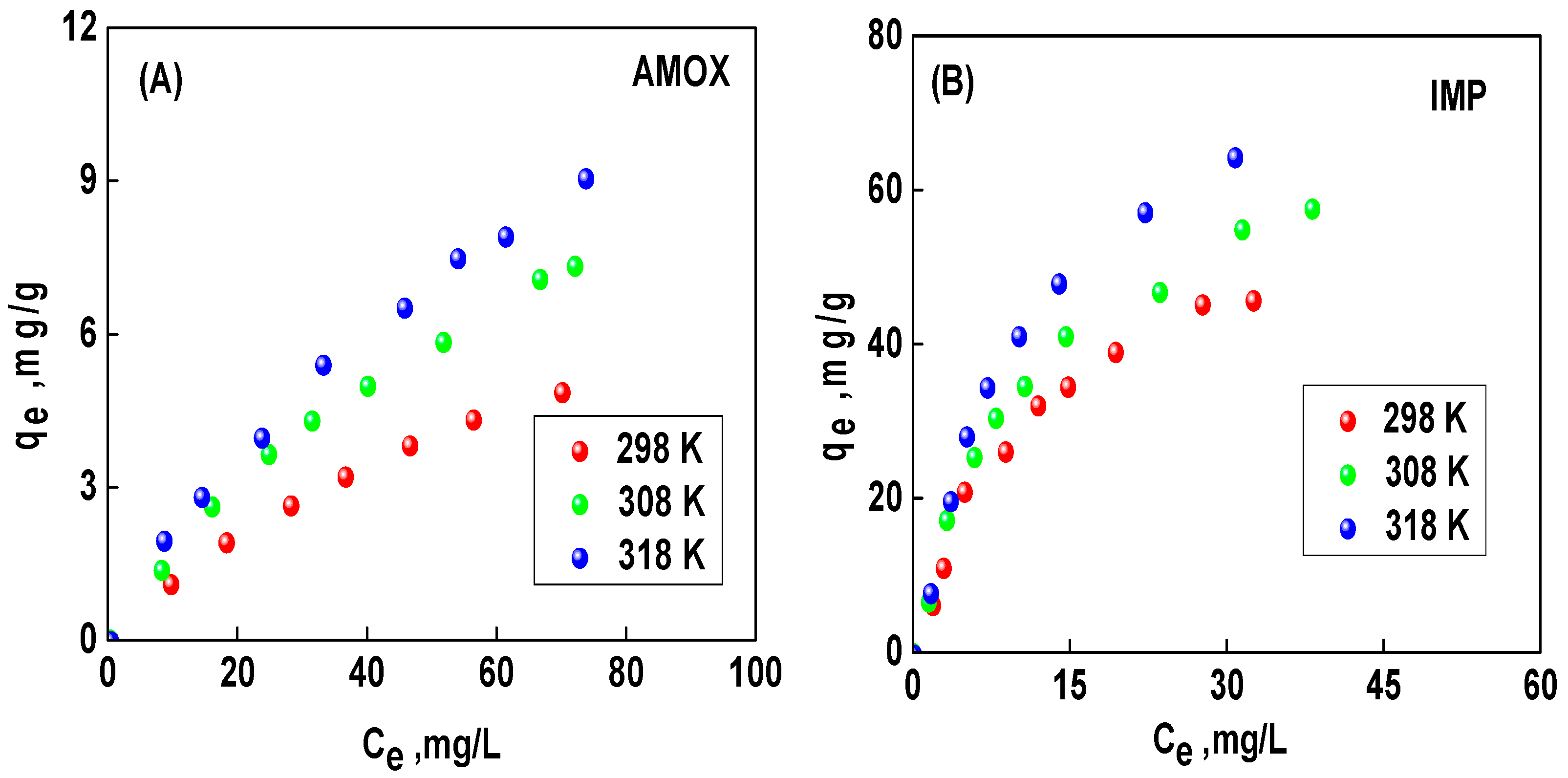
The experimental adsorption data used in this study were reported by [29]. Adsorption isotherms were quantified using batch adsorbers at 298–318 K using 120 min of contact time and HPLC for pharmaceutical quantification. Experimental adsorption equilibria data are reported in Figure 1. They correspond to the classical L-type isotherm commonly found in the adsorption of water pollutants where the adsorbent saturation is achieved at high adsorbate concentrations. The profile of these isotherms indicates that the adsorption sites on the clay surface were progressively occupied by AMOX and IMP molecules. As the adsorbate concentration increased, the availability of free sites decreased, suggesting the formation of one or more layers of pharmaceuticals adsorbed on clay surface. Two adsorption models were selected to fit the experimental isotherms at different temperatures under the assumption that adsorption proceeds via the formation of either one or two layers. It is convenient to recall that both models were derived from grand canonical ensemble in statistical physics. They were developed to explain the adsorption mechanism of water pollutants on various adsorbents [25,26,27,28]. Tested monolayer and double-layer models are described below.
Figure 1.
Experimental isotherms for the adsorption of (A) AMOX and (B) IMP on AP-Clay. Contact time: 120 min.
2.1. Monolayer Model (MM)
This model assumes that AMOX and IMP molecules are adsorbed on energetically equivalent active sites on the clay surface, leading to the formation of a monolayer. The separation process is governed by an interaction energy that reflects the binding between the pharmaceutical molecules and the clay surface. The relationship between the adsorbed quantity (Qe, mg/g) and equilibrium concentration (Ce, mg/L) in this model is expressed as follows [25,26,27,28]:
where n represents the number of pharmaceutical (AMOX or IMP) molecules adsorbed per active site, Nm (mg/g) is the density of adsorption sites, and C1/2 (mg/L) is the concentration at which half of the adsorption sites are occupied.
2.2. Double-Layer Model (DLM)
DLM assumes that the pharmaceutical adsorption implied the formation of two layers on material surface. Consequently, this adsorption mechanism is governed by two interaction energies: the first accounts for the interactions between pharmaceutical molecules (AMOX or IMP) and clay surface, whereas the second reflects the interactions between the pollutant molecules (i.e., the formation of molecular aggregates). This model is defined by [30,31,32]:
where C1 and C2 are the half-saturation concentrations (mg/L) of the first and second adsorption layers, respectively.
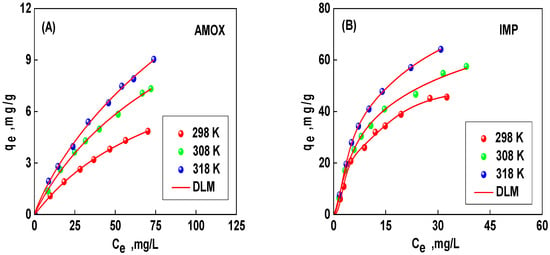
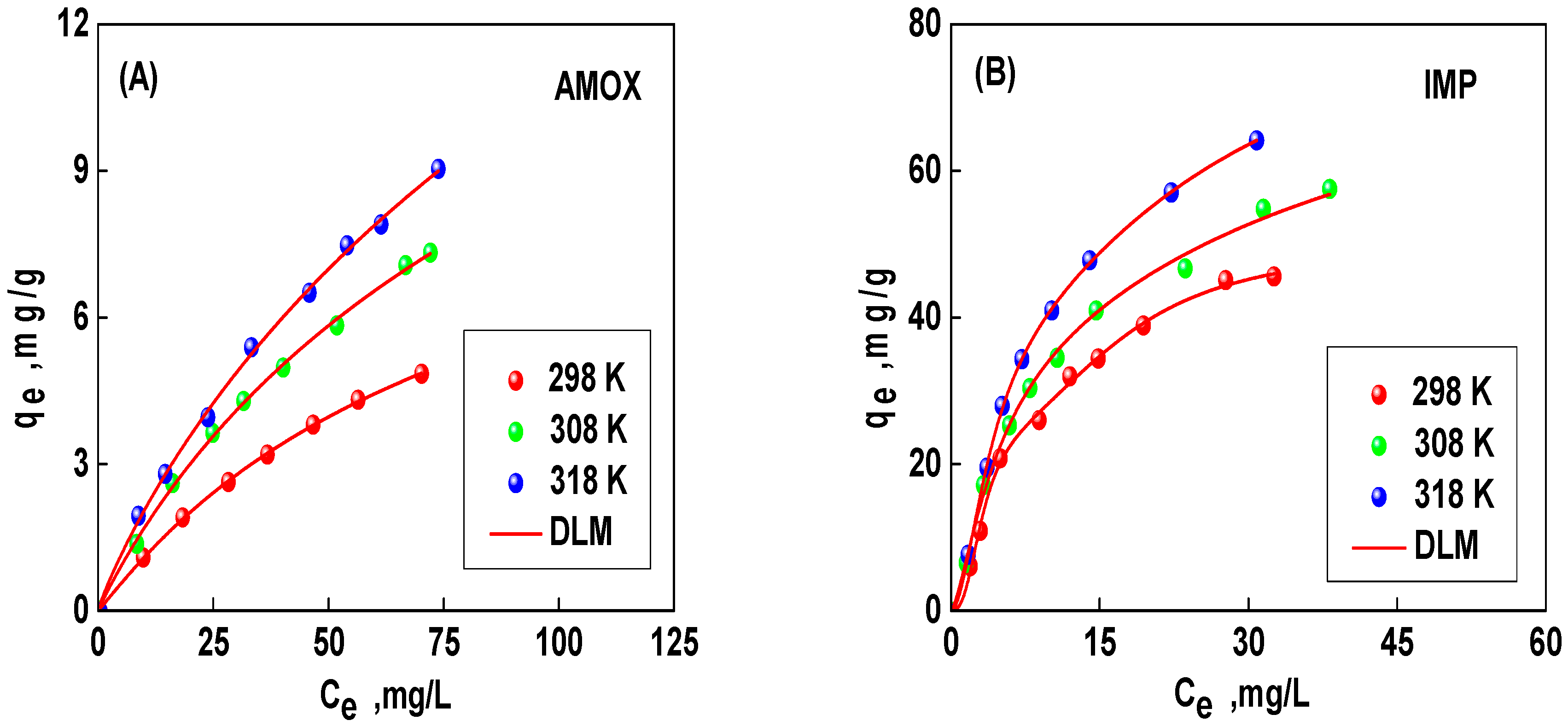
The experimental adsorption isotherms of AMOX and IMP at different temperatures were fitted using MM and DLMs. Nonlinear regression was performed with the Levenberg–Marquardt algorithm and model performance was evaluated based on the coefficient of determination (R2) with the aim of selecting the best model. The modeling results showed that DLM outperformed MM, with R2 values of 0.997–0.999 for both AMOX and IMP isotherms. The analysis of the steric parameters also indicated that their calculated values for different temperatures were consistent, confirming that the double-layer model is reliable for interpreting the adsorption mechanism. DLM parameters are summarized in Table 1, and the calculated isotherms are presented in Figure 2.
Table 1.
DLM parameters for the adsorption of AMOX and IMP on AP-Clay.
Figure 2.
DLM modeling results for the adsorption of (A) AMOX and (B) IMP on AP-Clay.
3. Analysis of Pharmaceutical Adsorption Mechanism Based on DLM Parameters
3.1. Steric Parameters
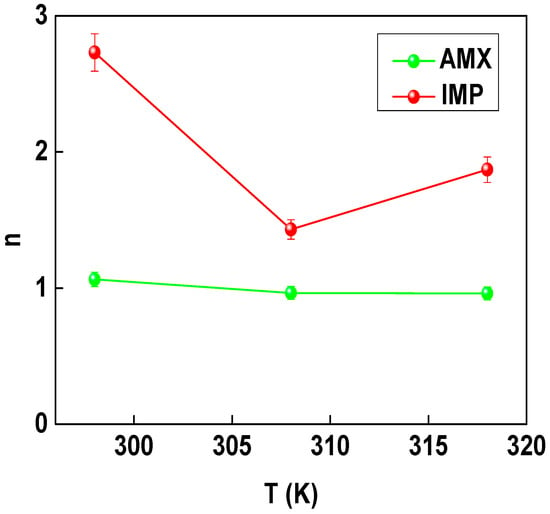
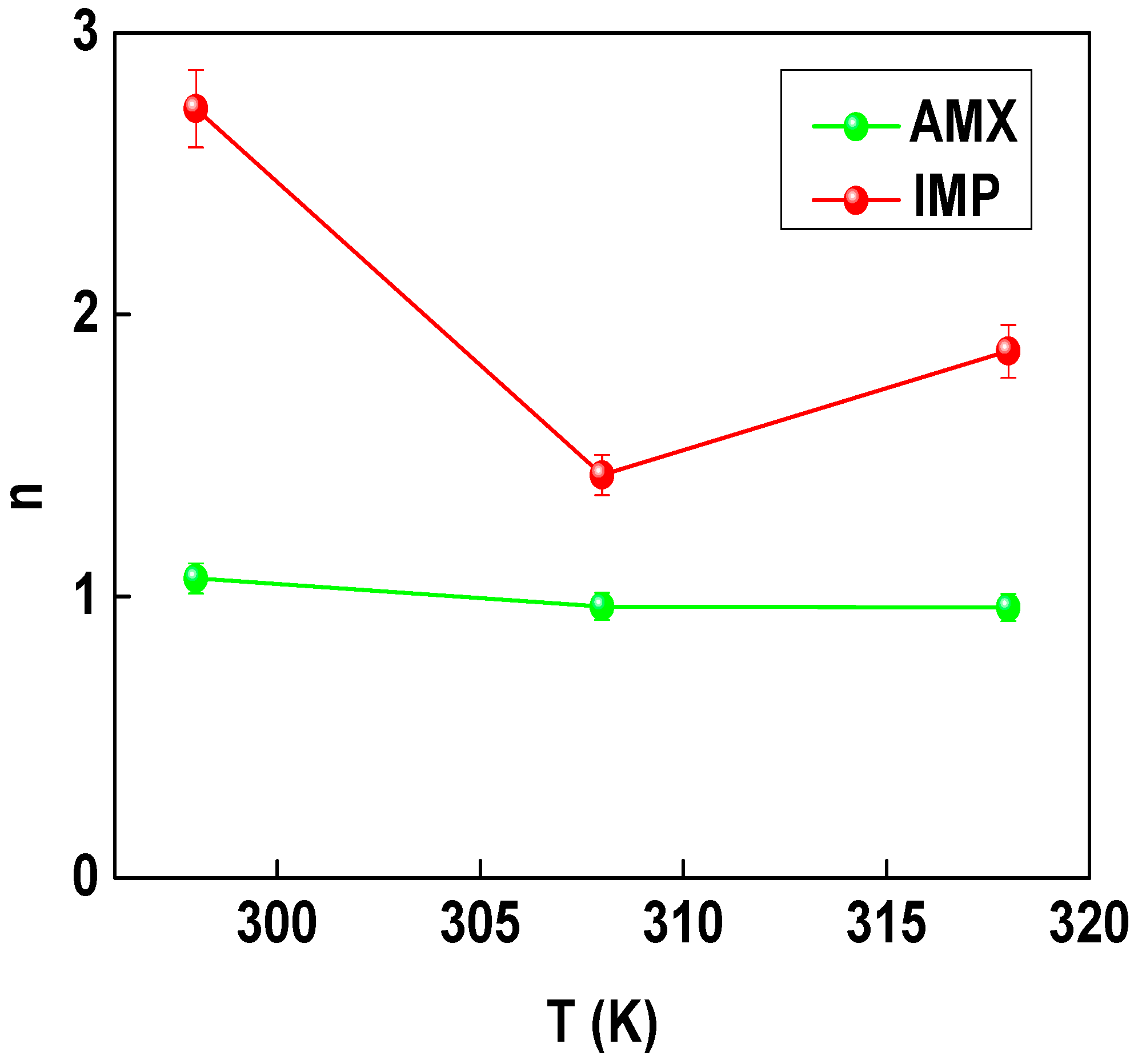
As stated, the parameter n corresponds to a stoichiometric coefficient that estimates the number of AMOX or IMP molecules adsorbed per active site on AP-Clay. The calculated n values were 1.063, 0.963, and 0.960 for AMOX, and 2.731, 1.430, and 1.870 for IMP at 298, 308, and 318 K, respectively; see Figure 3. A comparative analysis highlighted a clear difference in their magnitude with n (IMP–clay) > n (AMOX–clay). This trend suggests that the active sites on the clay surface exhibit different affinities for the two contaminants. In the case of IMP, the calculated n values indicate the occurrence of molecular aggregation during adsorption, leading to the formation of dimers (n ≈ 2) and trimers (n ≈ 3). Therefore, IMP removal from solution involves a multi-molecular adsorption. However, the presence of IMP aggregates is affected by thermal agitation, which alters the intermolecular interactions and destabilizes trimers in the aqueous solution. At high temperatures, a possible redistribution of IMP molecules toward alternative adsorption sites with lower affinity can be expected. This trend may reflect competition between the molecular aggregation in the aqueous solution and site-specific adsorption on the clay surface, with temperature acting as a driving factor that shifts the balance between these two processes. In contrast, n values for AMOX remained close to unity for all tested temperatures indicating that adsorption of this pharmaceutical predominantly took place in the form of monomers (n ≈ 1) without significant structural rearrangements. For the IMP molecule, the non-linear tend is related to a change in the adsorption sites.
Figure 3.
Calculated n values for the pharmaceutical adsorption on AP-Clay at 298, 308 and 318 K.
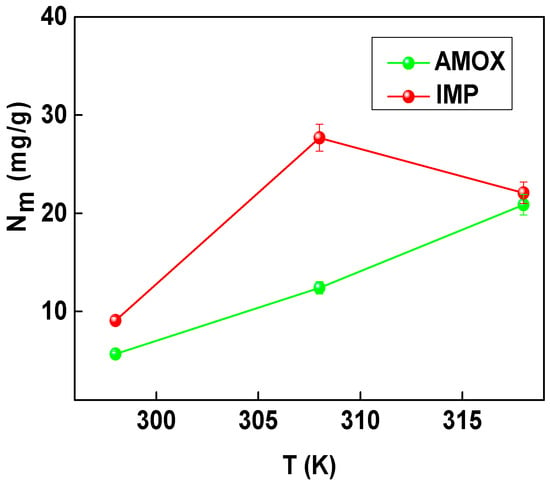
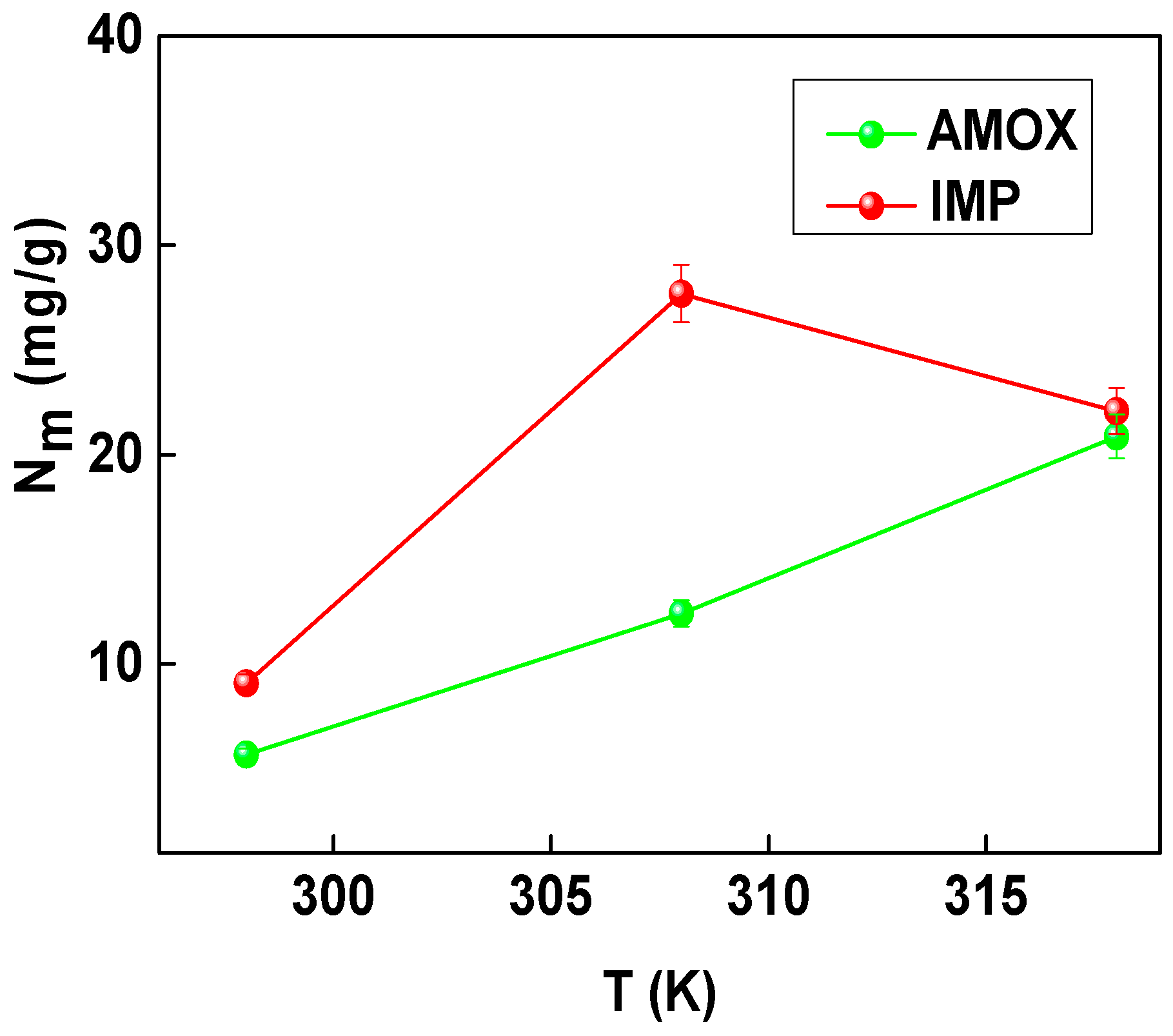
On the other hand, the calculated density of AP-Clay active sites that participated in the adsorption of AMOX and IMP molecules is reported in Figure 4. Note that this parameter reflects the material surface available for pharmaceutical removal. The trend of Nm versus temperature exhibits an inverse relationship with respect to parameter n. Specifically, when n increases, each active site on AP-Clay adsorbs more pharmaceutical molecules, which reduces the overall density of the available active sites. In contrast, a decrease in n reflects a more dispersed molecular occupation, implying that fewer molecules are bound per active site and that a greater number of active sites remain accessible, thereby increasing Nm. This inverse correlation between n and Nm highlights the balance between molecular aggregation at individual sites and global accessibility of adsorption sites across the clay surface. Such interplay provides an understanding of how steric effects influence the adsorption capacity and distribution of pharmaceutical molecules adsorbed on the material surface.
Figure 4.
Calculated Nm values for the pharmaceutical adsorption on AP-Clay at 298, 308 and 318 K.
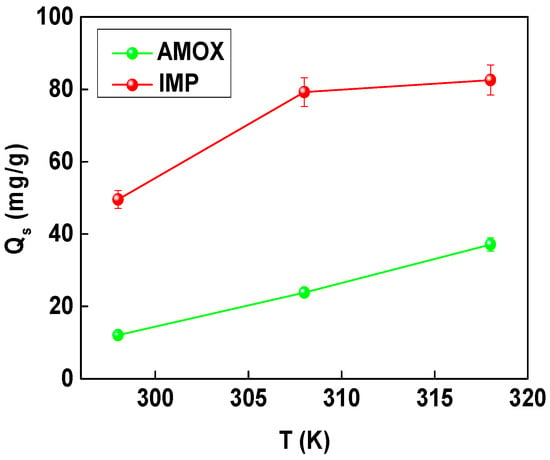
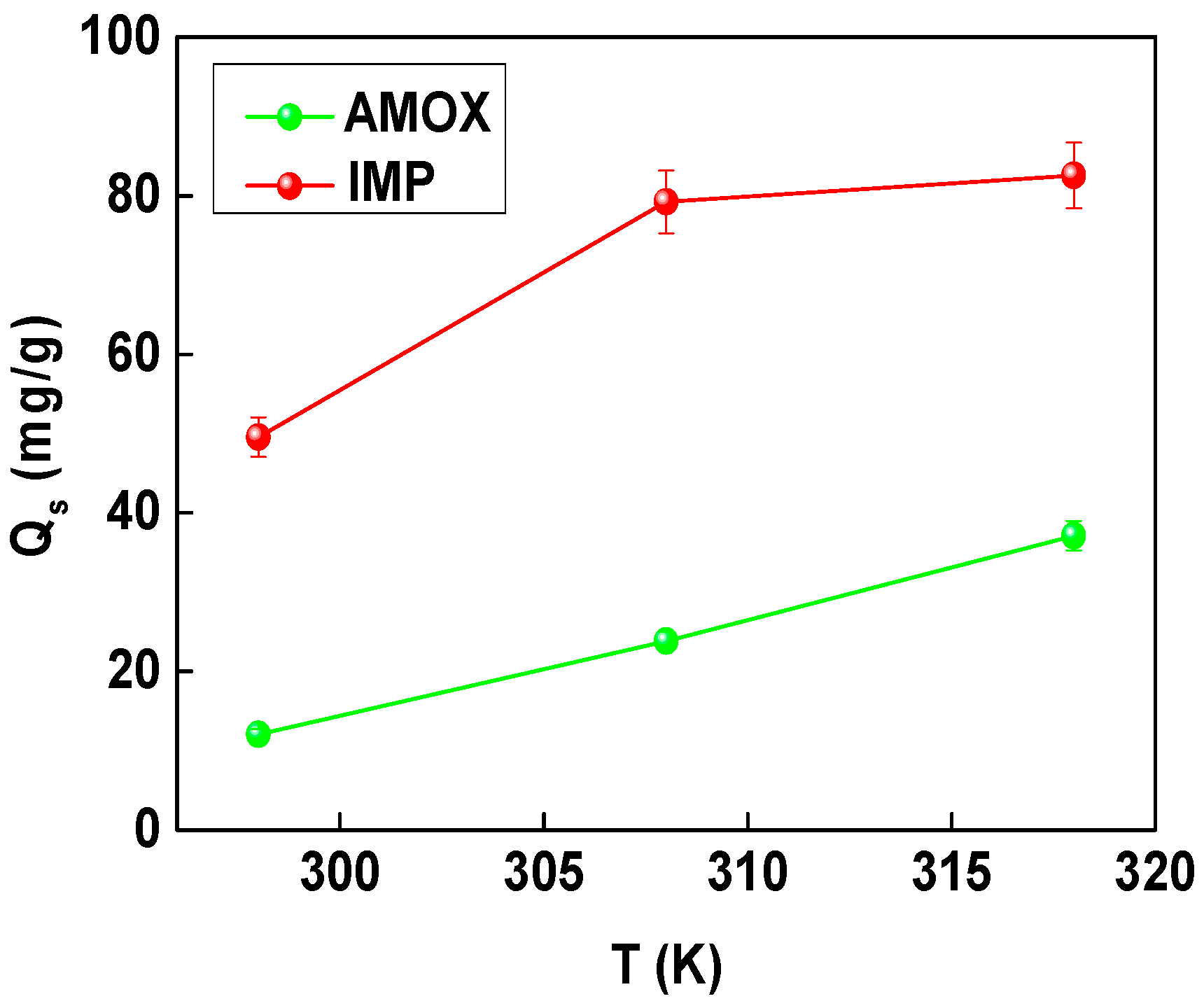
The saturation adsorption capacity (Qs) was calculated using the equation: Qs = 2 × n × Dm, and Figure 5 illustrates the trend of Qs for AMOX and IMP molecules as a function of aqueous solution temperature. Overall, Qs increased with the separation temperature indicating that the adsorption of both pharmaceuticals is endothermic. This result suggests that tested material can be more effective to purify industrial streams from processes that operate at high temperatures. The saturation adsorption capacities for IMP were greater than those for AMOX, demonstrating that the clay is more effective to remove IMP from aqueous solutions. Maximum adsorption capacities of 82 and 37 mg/g for IMP and AMOX, respectively, were estimated. These values outperformed those reported for other adsorbents [33,34,35]. Overall, this analysis suggests that this material is particularly suitable for IMP removal and can be effective in the treatment of urban wastewater.
Figure 5.
Calculated Qs values for the pharmaceutical adsorption on AP-Clay at 298, 308 and 318 K.
3.2. Interaction Energies
DLM allows the estimation of binding energies involved in the pharmaceutical removal mechanisms. The adsorption energy ΔE1 characterizes the interactions between the adsorbate molecules and the active sites of the clay surface (adsorbate–adsorbent interactions), while the interaction energy ΔE2 represents adsorbate–adsorbate interactions associated with the formation of second adsorption layer. The mathematical expressions used to calculate these energies are as follows [30]:
where R is the universal gas constant (8.314 J/mol·K) and Cs is the aqueous solubility (mg/L) of studied pollutants. The calculated ΔE1 and ΔE2 are summarized in Table 2, which indicate the strength and nature of the adsorbate–adsorbent interactions to understand how AMOX and IMP molecules adsorb on AP-Clay surface.
Table 2.
Calculated interaction energies for the pharmaceutical adsorption on AP-Clay at 298, 308 and 318 K.
The adsorption energies reported in Table 3 reveal that both ΔE1 and ΔE2 for AMOX and IMP are <40 kJ/mol, which indicates physisorption forces. These relatively low energy values suggest that the interactions between the pharmaceutical molecules and the clay surface are weak. It is believed that the adsorption mechanism is predominantly governed by van der Waals forces and hydrogen bonding based on adsorbate molecular structure and clay surface chemistry. This type of physical interaction can be advantageous for practical applications because it implies that the adsorbent may be regenerated and reused for subsequent adsorption cycles without affecting its chemical structure and possibly avoiding a significant loss of removal performance. Note that the slight difference between ΔE1 and ΔE2 highlights the strength similarity of adsorbate–adsorbent and adsorbate–adsorbate interactions. This finding suggests that hydrogen bonding may play a relevant role in the molecular aggregation and adsorption mechanism. However, additional experiments are required to confirm these hypotheses.
4. Thermodynamic Study
A thermodynamic investigation based on the interpretation of configurational entropy and free energy was conducted to complete the adsorption mechanism characterization. The expressions for these parameters are given by [36]:
Configurational entropy
Free enthalpy
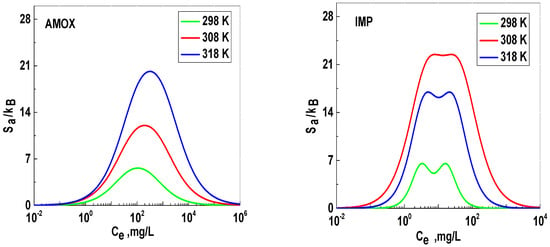
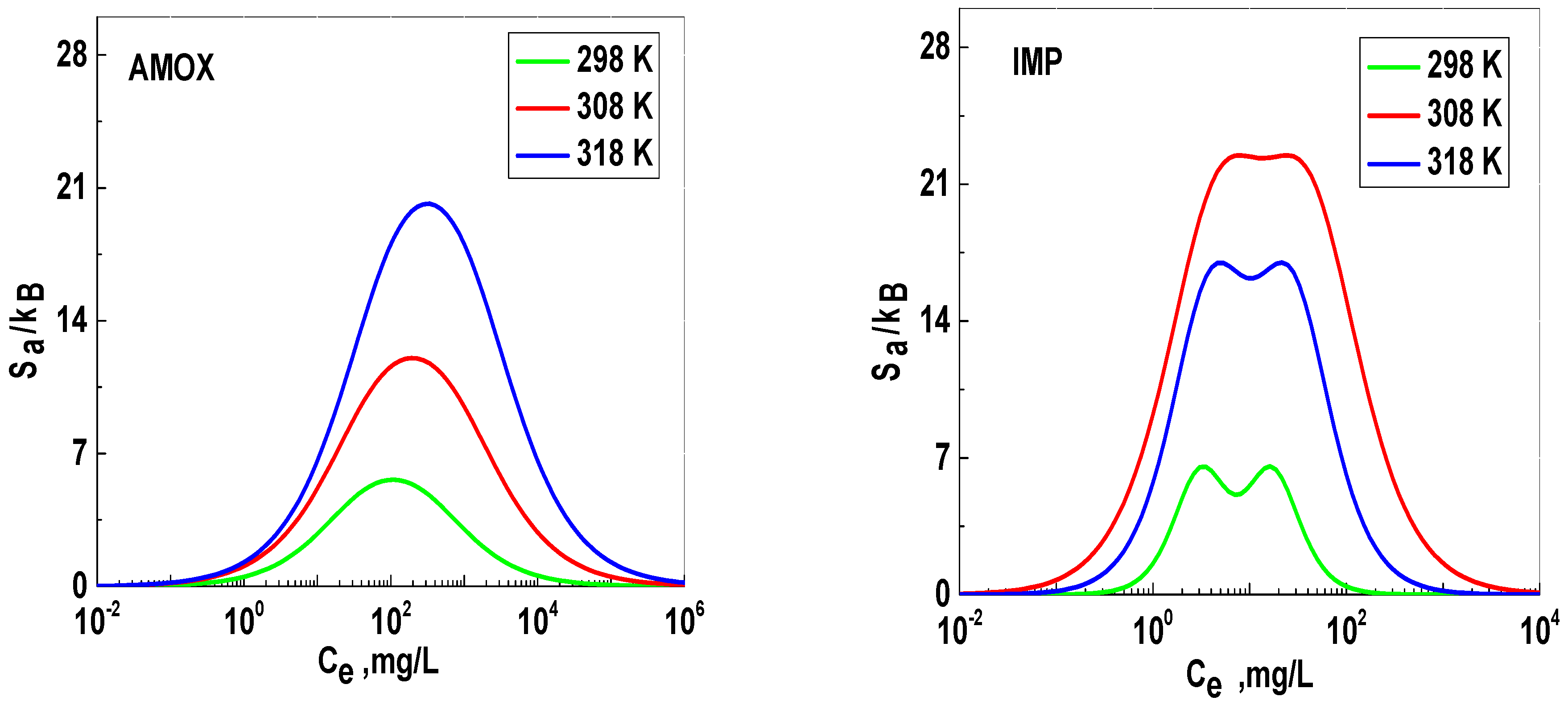
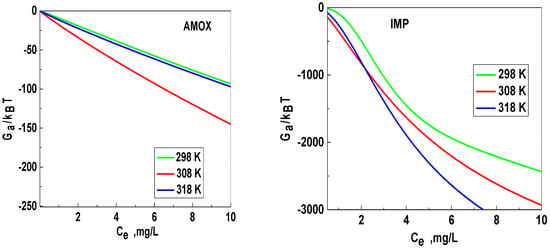
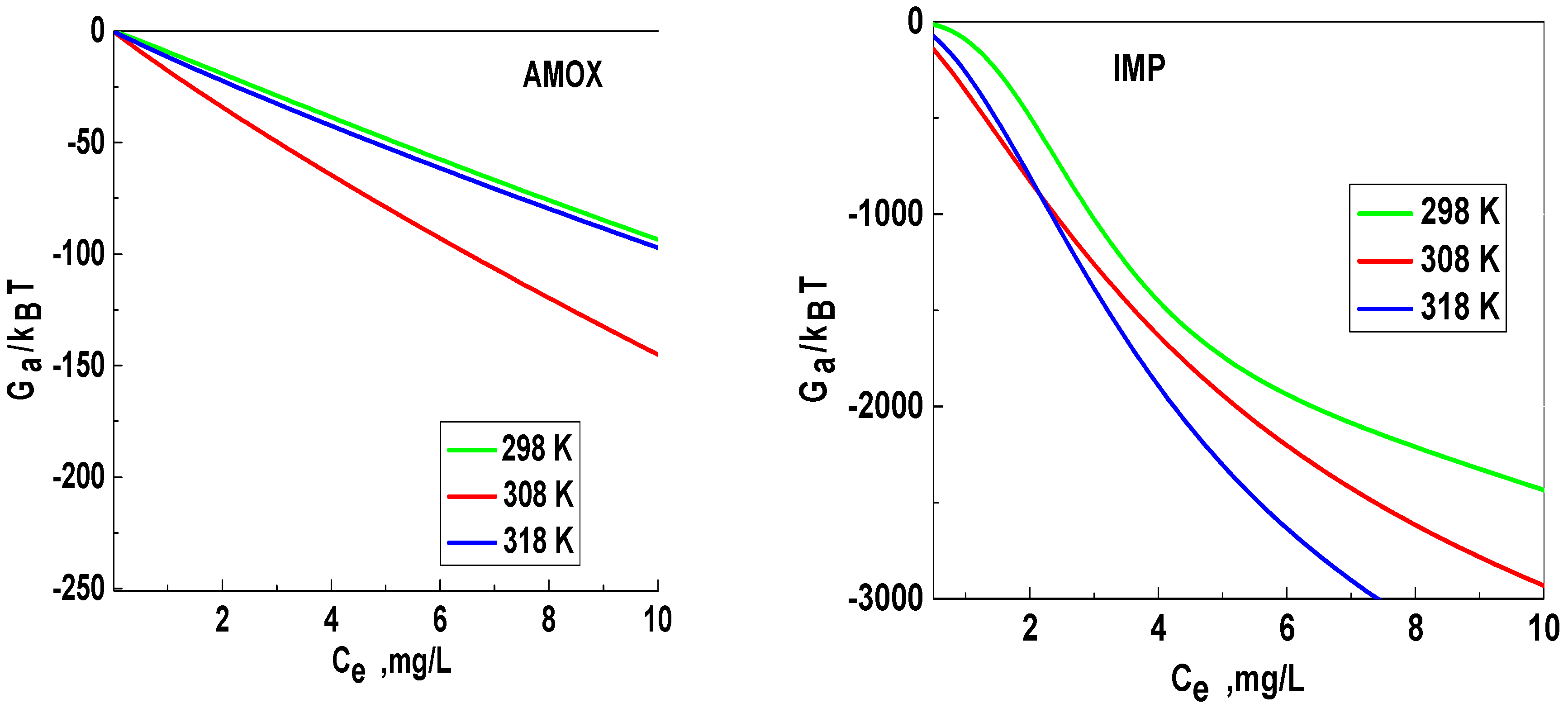
The surfaces of these thermodynamic functions versus the equilibrium concentrations are shown in Figure 6 and Figure 7, respectively. At low AMOX and IMP equilibrium concentrations, the entropy increased indicating that both pollutants have more accessible sites for their adsorption, moving freely on the adsorbent surface to find active sites. At high concentrations, the disorder was reduced indicating the active sites that are available for adsorption become limited. The increment of temperature increased the entropy due to the improvement of adsorption capacities. Figure 7 shows that the adsorption process was spontaneous since the free energy values are negative.
Figure 6.
Calculated configurational entropy for the pharmaceutical adsorption on AP-Clay at 298, 308 and 318 K.
Figure 7.
Calculated free enthalpy for the pharmaceutical adsorption on AP-Clay at 298, 308 and 318 K.
5. Comparison with Other Adsorbents for Pharmaceutical Molecules Removal
Table 3 summarizes selected literature results comparing the adsorption capacities of AMOX and IMP using various adsorbents. These results show that AP-Clay is an adsorbent with adsorption capacities that outperform those of other functionalized materials. However, the cost of tested clay makes it an accessible alternative for purifying water polluted by pharmaceuticals.
Table 3.
Adsorption capacities reported for various adsorbents to remove AMOX and IMP.
6. Conclusions
This study shows that a double layer adsorption is involved during the removal of IMP using an aluminum-pillared clay where molecular aggregates interact with the adsorbent, while the adsorption mechanism of AMOX implies monomolecular interactions. The removal of both pharmaceuticals is endothermic and associated with physisorption forces and, particularly, it is expected that hydrogen bonding played a relevant role in the molecular aggregation and binding on clay surface. This advanced model also allowed us to estimate the number of molecules adsorbed per active site, the molecular aggregation degree and interaction energies associated with the pharmaceutical removal mechanism. The thermodynamic analysis showed that the adsorption of both pharmaceuticals on tested materials is spontaneous. The results contribute to understanding and characterizing the surface properties of clays and their derived materials for their application in water treatment.
Author Contributions
Conceptualization: F.D. and N.M.; methodology: N.B.M.M., N.S., S.A. and L.S.; formal analysis: A.B.-P.; investigation: A.E. and A.B.-P.; writing—original draft: L.S. and F.D. All authors have read and agreed to the published version of the manuscript.
Funding
No external funding was received for this work.
Data Availability Statement
The original contributions presented in this study are included in the article. Further inquiries can be directed to the corresponding author.
Conflicts of Interest
The authors declare no conflicts of interest.
References
- Fu, C.; Zhang, H.; Xia, M.; Lei, W.; Wang, F. The Single/Co-Adsorption Characteristics and Microscopic Adsorption Mechanism of Biochar-Montmorillonite Composite Adsorbent for Pharmaceutical Emerging Organic Contaminant Atenolol and Lead Ions. Ecotoxicol. Environ. Saf. 2020, 187, 109763. [Google Scholar] [CrossRef] [Scilit]
- Pérez-Lucas, G.; Aatik, A.E.; Aliste, M.; Navarro, G.; Fenoll, J.; Navarro, S. Removal of Contaminants of Emerging Concern from a Wastewater Effluent by Solar-Driven Heterogeneous Photocatalysis: A Case Study of Pharmaceuticals. Water Air Soil Pollut. 2023, 234, 55. [Google Scholar] [CrossRef] [Scilit]
- Patel, M.; Kumar, R.; Kishor, K.; Mlsna, T.; Pittman, C.U.; Mohan, D. Pharmaceuticals of Emerging Concern in Aquatic Systems: Chemistry, Occurrence, Effects, and Removal Methods. Chem. Rev. 2019, 119, 3510–3673. [Google Scholar] [CrossRef] [Scilit]
- Cheng, N.; Wang, B.; Wu, P.; Lee, X.; Xing, Y.; Chen, M.; Gao, B. Adsorption of Emerging Contaminants from Water and Wastewater by Modified Biochar: A Review. Environ. Pollut. 2021, 273, 116448. [Google Scholar] [CrossRef] [Scilit]
- Arif, S.A.S. Amoxicillin: A Comprehensive Review of Its Pharmacological Profile, Clinical Uses, Resistance Patterns, and Future Prospects. J. Adv. Future Res. 2025, 3, 562–568. [Google Scholar]
- Elizalde-Velázquez, A.; Gómez-Oliván, L.M.; Galar-Martínez, M.; Islas-Flores, H.; Dublán-García, O.; SanJuan-Reyes, N. Amoxicillin in the Aquatic Environment, Its Fate and Environmental Risk. In Environmental Health Risk-Hazardous Factors to Living Species; IntechOpen: London, UK, 2016. [Google Scholar]
- Tee, W.T.; Yong, J.E.; Chua, J.; Loh, N.Y.L.; Hiew, B.Y.Z.; Gan, S.; Lee, L.Y. A High-Performance 3D Phosphorus-Doped Graphene Oxide Adsorbent for Imipramine Wastewater Treatment. Sep. Purif. Technol. 2024, 330, 125266. [Google Scholar] [CrossRef] [Scilit]
- Homayoonfal, M.; Mehrnia, M.R. Amoxicillin Separation from Pharmaceutical Solution by pH Sensitive Nanofiltration Membranes. Sep. Purif. Technol. 2014, 130, 74–83. [Google Scholar] [CrossRef] [Scilit]
- Karimnezhad, H.; Navarchian, A.H.; Gheinani, T.T.; Zinadini, S. Amoxicillin Removal by Fe-Based Nanoparticles Immobilized on Polyacrylonitrile Membrane: Individual Nanofiltration or Fenton Reaction, vs. Engineered Combined Process. Chem. Eng. Res. Des. 2020, 153, 187–200. [Google Scholar] [CrossRef] [Scilit]
- Andreozzi, R.; Canterino, M.; Marotta, R.; Paxeus, N. Antibiotic Removal from Wastewaters: The Ozonation of Amoxicillin. J. Hazard. Mater. 2005, 122, 243–250. [Google Scholar] [CrossRef] [Scilit] [PubMed]
- Huang, Q.; Sheng, L.; Wu, T.; Huang, L.; Yan, J.; Li, M.; Chen, Z.; Zhang, H. Research Progress on the Application of Carbon-Based Composites in Capacitive Deionization Technology. Desalination 2025, 593, 118197. [Google Scholar] [CrossRef] [Scilit]
- Anastopoulos, I.; Pashalidis, I.; Orfanos, A.G.; Manariotis, I.D.; Tatarchuk, T.; Sellaoui, L.; Bonilla-Petriciolet, A.; Mittal, A.; Núñez-Delgado, A. Removal of Caffeine, Nicotine and Amoxicillin from (Waste) Waters by Various Adsorbents. A Review. J. Environ. Manag. 2020, 261, 110236. [Google Scholar] [CrossRef] [Scilit]
- Gao, J.; Liu, Y.; Li, X.; Yang, M.; Wang, J.; Chen, Y. A Promising and Cost-Effective Biochar Adsorbent Derived from Jujube Pit for the Removal of Pb (II) from Aqueous Solution. Sci. Rep. 2020, 10, 7473. [Google Scholar] [CrossRef] [Scilit] [PubMed]
- Aljeboree, A.M. Low Cost Adsorbents for the Removal of Pharmaceutical Pollutants from Aqueous Solution: Thymine Drug as a Model. In Proceedings of the Journal of Physics: Conference Series; IOP Publishing: Bristol, UK, 2020; Volume 1664, p. 012095. [Google Scholar]
- Alardhi, S.M.; Ali, N.S.; Saady, N.M.C.; Zendehboudi, S.; Salih, I.K.; Alrubaye, J.M.; Albayati, T.M. Separation Techniques in Different Configurations of Hybrid Systems via Synergetic Adsorption and Membrane Processes for Water Treatment: A Review. J. Ind. Eng. Chem. 2024, 130, 91–104. [Google Scholar] [CrossRef] [Scilit]
- Mahdavi, P.; Siol, A.; Thöming, J. Adsorption-Based Removal of Pharmaceutical from Water: A Critical Review on Adsorbent Performance. J. Environ. Chem. Eng. 2025, 13, 117520. [Google Scholar] [CrossRef] [Scilit]
- Aziz, K.H.H.; Mustafa, F.S.; Hama, S. Pharmaceutical Removal from Aquatic Environments Using Multifunctional Metal-Organic Frameworks (MOFs) Materials for Adsorption and Degradation Processes: A Review. Coord. Chem. Rev. 2025, 542, 216875. [Google Scholar] [CrossRef] [Scilit]
- Salahshoori, I.; Mahdavi, S.; Moradi, Z.; Otadi, M.; Zare Kazemabadi, F.; Nobre, M.A.L.; Ali Khonakdar, H.; Baghban, A.; Wang, Q.; Mohammadi, A.H. Advancements in Molecular Simulation for Understanding Pharmaceutical Pollutant Adsorption: A State-of-the-Art Review. J. Mol. Liq. 2024, 410, 125513. [Google Scholar] [CrossRef] [Scilit]
- Khan, S.; Ajmal, S.; Hussain, T.; Rahman, M.U. Clay-Based Materials for Enhanced Water Treatment: Adsorption Mechanisms, Challenges, and Future Directions. J.Umm Al-Qura Univ. Appll. Sci. 2025, 11, 219–234. [Google Scholar] [CrossRef] [Scilit]
- Perelomov, L.; Gertsen, M.; Mandzhieva, S.; Sychev, V.; Dudnikova, T.; Khaidanov, I.; Perelomova, I.; Minkina, T.; Atroshchenko, Y. Adsorption of Antibiotics by Natural Clay Minerals. Minerals 2025, 15, 733. [Google Scholar] [CrossRef] [Scilit]
- Allaoui, I.; El Mourabit, M.; Arfoy, B.; Hadri, M.; Barhoun, A.; Draoui, K. Adsorption Equilibrium, Kinetic, and Thermodynamic Studies on the Removal of Paracetamol from Wastewater Using Natural and HDTMA-Modified Clay. Desalination Water Treat. 2024, 318, 100345. [Google Scholar] [CrossRef] [Scilit]
- Sukor, N.F.; Jusoh, R. Hybrid Activated Carbon/Maltodextrin-Functionalized Fibrous Silica for Acetaminophen and Amoxicillin Adsorption: Advanced Statistical Physics Modelling. Environ. Res. 2025, 278, 121691. [Google Scholar] [CrossRef] [Scilit]
- Nasir, M.; Chishti, S.; Afroz, A.; Kashif, M.; Rahman, N.; Samdani, M.S.; Min, K. Statistical Physics and Fractal like Kinetic Modelling for Adsorption of Acetaminophen on MgO/Aminated β-Cyclodextrin: Variables Optimization Using Box-Behnken Design. J. Ind. Eng. Chem. 2025, 148, 742–757. [Google Scholar] [CrossRef] [Scilit]
- da Silva Bruckmann, F.; Fuhr, A.C.F.P.; Zibetti, L.; Bender, C.R.; Silva, L.F.O.; da Boit Martinello, K.; Ahmad, N.; Mohandoss, S.; Dotto, G.L. Adsorption of Ciprofloxacin from Aqueous Solution and Fresh Synthetic Urine by Graphene Oxide: Conventional and Statistical Physics Modeling Approaches. Chem. Eng. J. 2024, 487, 150484. [Google Scholar] [CrossRef] [Scilit]
- Aouaini, F.; Dhaouadi, F.; Sellaoui, L.; Badawi, M.; Piscitelli, A.; Erto, A.; Lamine, A.B. Adaptation of Advanced Physical Models to Interpret the Adsorption Isotherms of Lead and Cadmium Ions onto Activated Carbon in Single-Compound and Binary Systems. Environ. Sci. Pollut. Res. 2022, 29, 62507–62513. [Google Scholar] [CrossRef] [Scilit]
- Altalhi, T.; Jethave, G.; Fegade, U.; Mersal, G.A.M.; Ibrahim, M.M.; Mahmoud, M.H.H.; Kumeria, T.; Isai, K.A.; Sonawane, M. Adsorption of Magenta Dye on PbO Doped MgZnO: Interpretation of Statistical Physics Parameters Using Double-Layer Models. Int. J. Environ. Res. Public Health 2022, 19, 12199. [Google Scholar] [CrossRef] [Scilit]
- Álvarez-Montero, M.A.; Sanz-Santos, E.; Gómez-Avilés, A.; Belver, C.; Bedia, J. Lignin-Based Activated Carbon as an Effective Adsorbent for the Removal of Polystyrene Nanoplastics: Insights from Adsorption Kinetics and Equilibrium Studies. Sep. Purif. Technol. 2025, 361, 131380. [Google Scholar] [CrossRef] [Scilit]
- Dhaouadi, F.; Sellaoui, L.; Hernández-Hernández, L.E.; Bonilla-Petriciolet, A.; Mendoza-Castillo, D.I.; Reynel-Ávila, H.E.; González-Ponce, H.A.; Taamalli, S.; Louis, F.; Lamine, A.B. Preparation of an Avocado Seed Hydrochar and Its Application as Heavy Metal Adsorbent: Properties and Advanced Statistical Physics Modeling. Chem. Eng. J. 2021, 419, 129472. [Google Scholar] [CrossRef] [Scilit]
- Chauhan, M.; Saini, V.K.; Suthar, S. Removal of Pharmaceuticals and Personal Care Products (PPCPs) from Water by Adsorption on Aluminum Pillared Clay. J. Porous. Mater. 2020, 27, 383–393. [Google Scholar] [CrossRef] [Scilit]
- Dhaouadi, F.; Aouaini, F.; Basha, B.; Bonilla-Petriciolet, A.; Georgin, J.; Ben Lamine, A. Evaluation and Analysis of the Adsorption Mechanism of Three Emerging Pharmaceutical Pollutants on a Phosphorised Carbon-Based Adsorbent: Application of Advanced Analytical Models to Overcome the Limitation of Classical Models. Heliyon 2024, 10, e34788. [Google Scholar] [CrossRef] [Scilit]
- Bouzidi, M.; Dhaouadi, F.; Alkathiri, T.; Bonilla-Petriciolet, A.; Alwadai, N.; Saidani, T.; Lamine, A.B. Adsorption Properties of a Magnetic Nanoparticle Composite for the Removal of Alizarin Red and Congo Red from Aqueous Solutions: Mechanistic and Thermodynamic Analyses Based on Statistical Physics Theory. J. Clean. Prod. 2025, 520, 146084. [Google Scholar] [CrossRef] [Scilit]
- Sellaoui, L.; Dhaouadi, F.; Abdulaziz, F.; Alsehli, A.H.; M.Alsowayigh, M.; Dotto, G.L.; da Boit Martinello, K.; Silva, L.F.O.; Rtimi, S.; Bonilla-Petriciolet, A. Adsorption of Perfluorooctanoic Carboxylic and Heptadecafluorooctane Sulfonic Acids via Magnetic Chitosan: Isotherms and Modeling. Environ. Sci. Pollut. Res. 2023, 30, 118410–118417. [Google Scholar] [CrossRef] [Scilit]
- Chauhan, M.; Saini, V.K.; Suthar, S. Ti-Pillared Montmorillonite Clay for Adsorptive Removal of Amoxicillin, Imipramine, Diclofenac-Sodium, and Paracetamol from Water. J. Hazard. Mater. 2020, 399, 122832. [Google Scholar] [CrossRef] [Scilit]
- Khumalo, S.M.; Bakare, B.F.; Rathilal, S. Single and Multicomponent Adsorption of Amoxicillin, Ciprofloxacin, and Sulfamethoxazole on Chitosan-Carbon Nanotubes Hydrogel Beads from Aqueous Solutions: Kinetics, Isotherms, and Thermodynamic Parameters. J. Hazard. Mater. Adv. 2024, 13, 100404. [Google Scholar] [CrossRef] [Scilit]
- Zhao, S.; Wang, S.; Dang, J.; Wang, W.; Wang, X.; Wu, M.; Hu, J. Study on the Adsorption Performance of Amoxicillin by Hydrothermally Modified Coconut Shell Activated Carbon. J. Chem. Technol. Biotechnol. 2024, 99, 1191–1200. [Google Scholar] [CrossRef] [Scilit]
- Yanan, C.; Ali, J.; Sellaoui, L.; Dhaoudi, F.; Franco, D.S.P.; Georgin, J.; Erto, A.; Vieillard, J.; Badawi, M. Elucidating the Adsorption Mechanism of Herbicide Diuron onto Activated Carbons via Steric, Energetic and Thermodynamic Investigations. J. Water Process Eng. 2023, 53, 103910. [Google Scholar] [CrossRef] [Scilit]
- Pandey, P.; Shankar, A.; Biney, M.; Saini, V.K. Enhancement in Amoxicillin Adsorption and Regeneration Properties of SBA-15 after Surface Modification with Polyaniline. Colloid Interface Sci. Commun. 2021, 43, 100432. [Google Scholar] [CrossRef] [Scilit]
- Li, Y.; Shi, M.; Xia, M.; Wang, F. The Enhanced Adsorption of Ampicillin and Amoxicillin on Modified Montmorillonite with Dodecyl Dimethyl Benzyl Ammonium Chloride: Experimental Study and Density Functional Theory Calculation. Adv. Powder Technol. 2021, 32, 3465–3475. [Google Scholar] [CrossRef] [Scilit]
- El Azzouzi, L.; El Aggadi, S.; Ennouhi, M.; Ennouari, A.; Kabbaj, O.K.; Zrineh, A. Removal of the Amoxicillin Antibiotic from Aqueous Matrices by Means of an Adsorption Process Using Kaolinite Clay. Sci. Afr. 2022, 18, e01390. [Google Scholar] [CrossRef] [Scilit]
- Pezoti, O.; Cazetta, A.L.; Bedin, K.C.; Souza, L.S.; Martins, A.C.; Silva, T.L.; Santos Júnior, O.O.; Visentainer, J.V.; Almeida, V.C. NaOH-Activated Carbon of High Surface Area Produced from Guava Seeds as a High-Efficiency Adsorbent for Amoxicillin Removal: Kinetic, Isotherm and Thermodynamic Studies. Chem. Eng. J. 2016, 288, 778–788. [Google Scholar] [CrossRef] [Scilit]
- Ahmadi, S.; Ghosh, S.; Malloum, A.; Sillanpää, M.; Igwegbe, C.A.; Ovuoraye, P.E.; Ighalo, J.O. Amoxicillin Adsorption from Aqueous Solution by Magnetite Iron Nanoparticles: Molecular Modelling and Simulation. Indian Chem. Eng. 2024, 66, 1–14. [Google Scholar] [CrossRef] [Scilit]
- Verma, R.; Joshi, G. Xanthium Strumarium Based Activated Carbon as Low Cost Bioadsorbent for Efficient Removal of Antidepressant Drug Imipramine. IOP Conf. Ser. Earth Environ. Sci. 2024, 1382, 012009. [Google Scholar] [CrossRef] [Scilit]

Disclaimer/Publisher’s Note: The statements, opinions and data contained in all publications are solely those of the individual author(s) and contributor(s) and not of MDPI and/or the editor(s). MDPI and/or the editor(s) disclaim responsibility for any injury to people or property resulting from any ideas, methods, instructions or products referred to in the content. |
© 2026 by the authors. Licensee MDPI, Basel, Switzerland. This article is an open access article distributed under the terms and conditions of the Creative Commons Attribution (CC BY) license.