


Abstract
The Xinding Basin is located in the high-heat-flow geothermal anomaly zone in the north-central part of China. Revealing the geothermal origin mechanism of the basin is of great significance for filling the measurement gap in heat flow values in China and providing a scientific basis for the evaluation and utilization of regional geothermal resources. Based on the hydrogeochemical characteristics of thermal reservoirs and borehole data in the Xinding Basin, this paper analyzes water–rock interaction process between geothermal water and heat reservoirs and discusses the types of geothermal systems in the basin. The results indicate that the fault structures in the basin are well-developed. The hydrochemical type of typical geothermal fields is dominated by the Cl·SO4-Na type. Geothermal water is mainly immature water and receives recharge from shallow cold water with relatively rapid circulation. The discovered magma intrusion residues in the basin indicate that sections of the upper mantle with a shallow burial depth serve as the dynamic heat sources for regional thermal reservoirs. Intense extensional stretching in the Cenozoic Era resulted in high terrestrial heat flow values and an upward arching phenomenon of the Curie isothermal surface in the basin. Neotectonic movement is active in the basin. The regional geothermal reservoirs in the Xinding Basin occur in the glutenite beds of the Cenozoic Erathem and the rock formations of the New Archaean Erathem. The thick-layered Cenozoic loose sediments serve as the thermal cap rocks in this area. An efficient heat-convergent geothermal system integrating a heat source, heat channel, thermal reservoir, and cap rock (the “four-in-one” system) has promoted the formation of geothermal resources in the Xinding Basin.
1. Introduction
Geothermal energy is one of the five major non-carbon renewable energy sources. It is stored in the rock and soil masses, fluids, and magmatic bodies inside the Earth, and features huge reserves, wide distribution, and a stable and reliable supply [1]. It is of great significance for addressing the global energy transition and reducing greenhouse gas emissions. Globally, the total amount of basic geothermal energy resources buried at a depth of less than 5 km from the Earth’s surface is 1.45 × 1026 J [2], which is equivalent to the resource reserve of 495 million tons of standard coal.
Global reports on heat flow measurements originated from the heat flow research conducted on gold mines in South Africa in 1939 [3]. With the accelerated advancement of the global green and low-carbon transition, geothermal scientists have continuously supplemented and improved the compilation of heat flow data [4,5,6,7,8]. As of 2024, there are a total of 91,182 heat flow measurement sites worldwide [9]. China ranks first globally in the scale of direct geothermal energy utilization. However, due to the late start of research in the field of heat flow and the slow development of the industry, its measurement site data accounts for only 2.56% of the global total [10,11,12].
The distribution pattern of terrestrial heat flow in China is characterized by extremely high values in Southwest China and Taiwan, high values in East China and North–Central China, low values in South–Central China, and the lowest values in Northwest China. The Xinding Basin is located in North–Central China, with a terrestrial heat flow range of 65~75 mW·m−2, belonging to the group of medium–low-temperature geothermal resources formed by mountain fold uplift [10]. In recent years, China has launched several national key research and development (R&D) programs in the geothermal field. While focusing on research in quasi-deep geothermal energy or hot dry rock (HDR), these programs have also carried out national geothermal resource surveys and evaluations. The geothermal resources in the Xinding Basin belong to the class of medium-deep hydrothermal geothermal resources. Utilizing “heat extraction without water consumption” technology, indirect heat transfer is realized through two separate circulation systems—geothermal water at the heat source side and circulating water at the user side. This technology not only has immense value for district heating but also plays a pivotal role in advancing the technical system for exploring and developing medium-deep hydrothermal geothermal resources across China.
However, the latest heat flow compilation data do not include the Xinding Basin area [10]. To fill this gap in heat flow measurement sites, this study takes the basin as its research area, uses drilling files of various geothermal fields to analyze the hydrochemical characteristics of geothermal water and the sources of the water’s ionic components, and combines stratigraphic data and thermal reservoir temperatures of geothermal water to identify the genetic model of geothermal water in the thermal reservoir.
2. Methods and Materials
2.1. Study Region
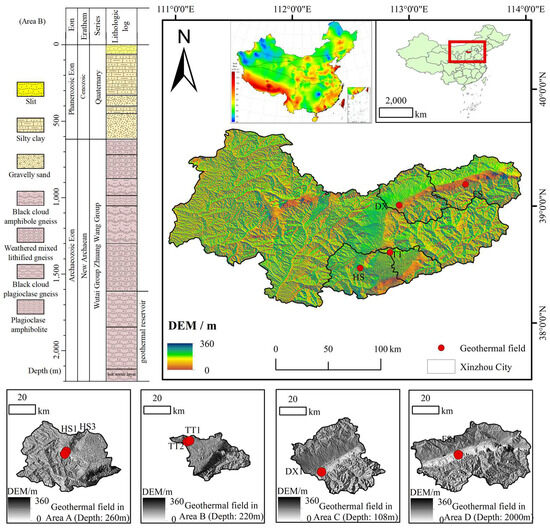
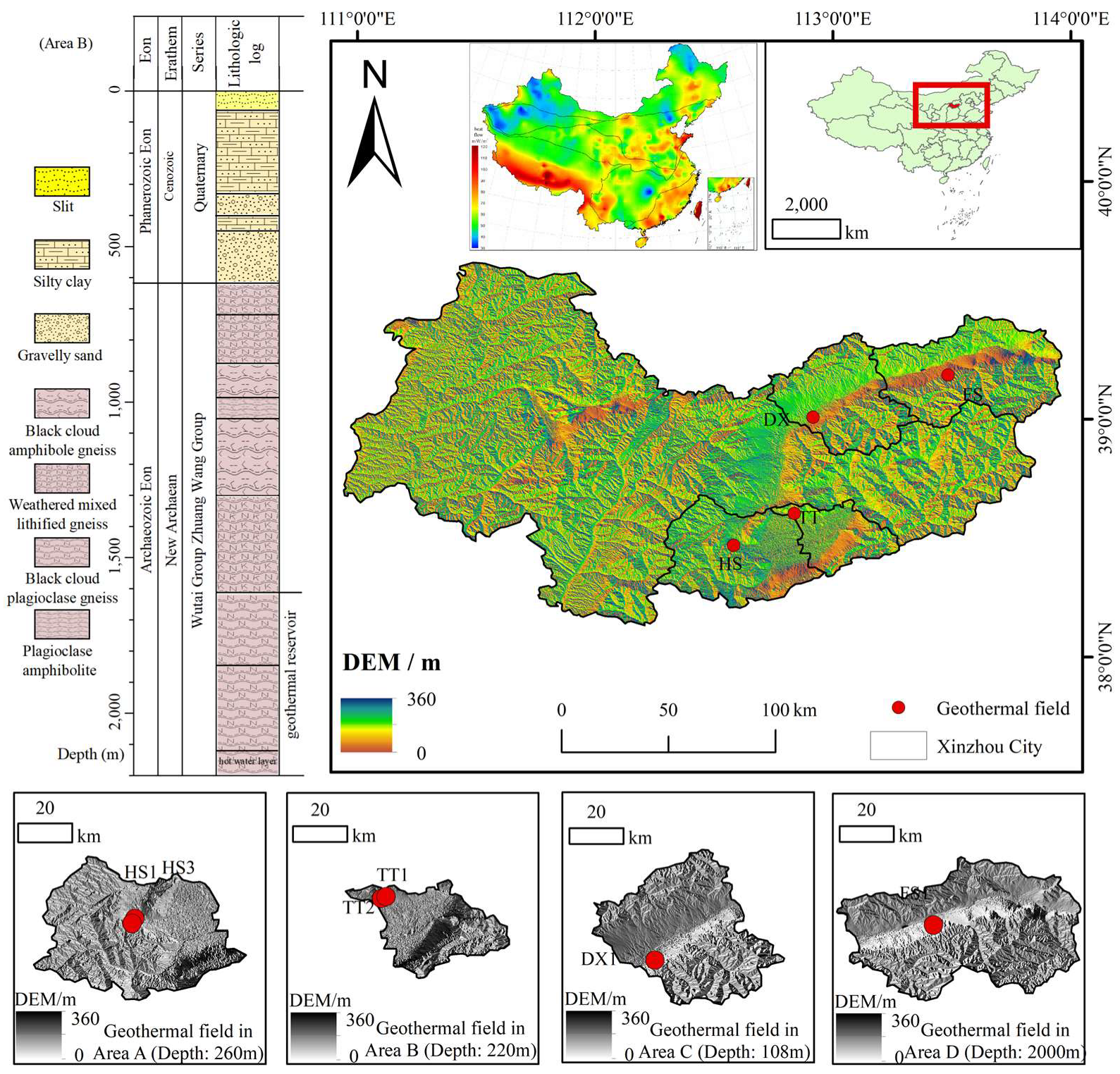
The Xinding Basin is located in North–Central China. As the northernmost Cenozoic faulted basin of the Fenhe Graben, it is surrounded by Yunzhong Mountain, Heng Mountain, Wutai Mountain, and Xizhou Mountain [13]. The Cenozoic faulted basin is rich in geothermal water resources. Currently, its well-known geothermal fields include the Hesuo geothermal field in Xinfu District (Area A), the Tangtou geothermal field in Dingxiang City (Area B), the Yangmingbao geothermal field in Dai County (Area C), and the Fanshi geothermal field in Fanshi City (Area D). The temperature of these geothermal fields is mostly above 40 °C, with a maximum temperature of 74 °C, and they are classified as having low-temperature warm geothermal water to low-temperature hot geothermal water. The geothermal reservoirs consist of Quaternary glutenite layers and Archean metamorphic rocks [14].
As shown in Figure 1, the Xinding Basin has extensive stratigraphic outcrops, ranging from the Neoarchean Wutai Group and Longhuahe Group, Paleoproterozoic Hutuo Group, Paleozoic Cambrian, Ordovician, Carboniferous and Permian Systems, and Mesozoic Triassic and Jurassic Systems, to Cenozoic Paleogene, Neogene, and Quaternary Systems [15]. The geothermal resources in the basin comprise medium–low-temperature geothermal fluid formed by mountain folding and uplift. Deep zonal geothermal water and shallow layered geothermal water together form mushroom-shaped geothermal water sources, constituting the composite occurrence model of geothermal resources in the basin [16].
Figure 1.
Distribution of geothermal fields and strata in the study area.
Taking the Dingxiang City Geothermal Field as an example, the proven strata in the area only consist of the Wutai Group’s Zhuang Wang Group in the New Archaean Erathem and the Quaternary Series of the Cenozoic Erathem. The Quaternary strata are mainly composed of light yellow and yellowish-brown silt, silty clay, and gravelly sand, which are rich in minerals such as feldspar, quartz, and biotite. The Zhuang Wang Formation of the Wutai Group is dominated by biotite amphibole gneiss, weathered migmatized gneiss, biotite plagioclase gneiss, and plagioclase amphibolite, with abundant minerals including quartz, plagioclase, potassium feldspar, amphibole, diopside, and biotite.
2.2. Sample and Methods
Geothermal fields in four administrative regions of the Xinding Basin have mainly been characterized, including Xinfu District (Area A), Dingxiang City (Area B), Dai County (Area C), and Fanshi City (Area D). To explore the regional differences in geothermal resources in the reservoir, geothermal water samples were collected from a total of six geothermal wells across the four typical geothermal fields. The measured water indicators include pH, Na+, Cl−, K+, Mg2+, Ca2+, SO42−, CO32−, and TDS. pH and TDS were measured on-site using an authoritative field water quality testing instrument. The determination of Na+, Cl−, K+, Ca2+, Mg2+, and SO42− was performed in accordance with Standard Examination Methods for Drinking Water—Part 3: Quality Control of Water Analysis (GB/T 5750.3-2023), using an ion chromatograph for detection. CO32− was determined by the methyl/phenolphthalein orange indicator titration method. Ion concentrations in the samples were determined by an ion chromatograph. The reliability of the data was verified by the cation–anion balance method, with a relative error of less than ±5%. All ion determinations were carried out by the Groundwater, Mineral Water and Environmental Monitoring Center of the Ministry of Natural Resources.
3. Results
3.1. Hydrochemical Composition
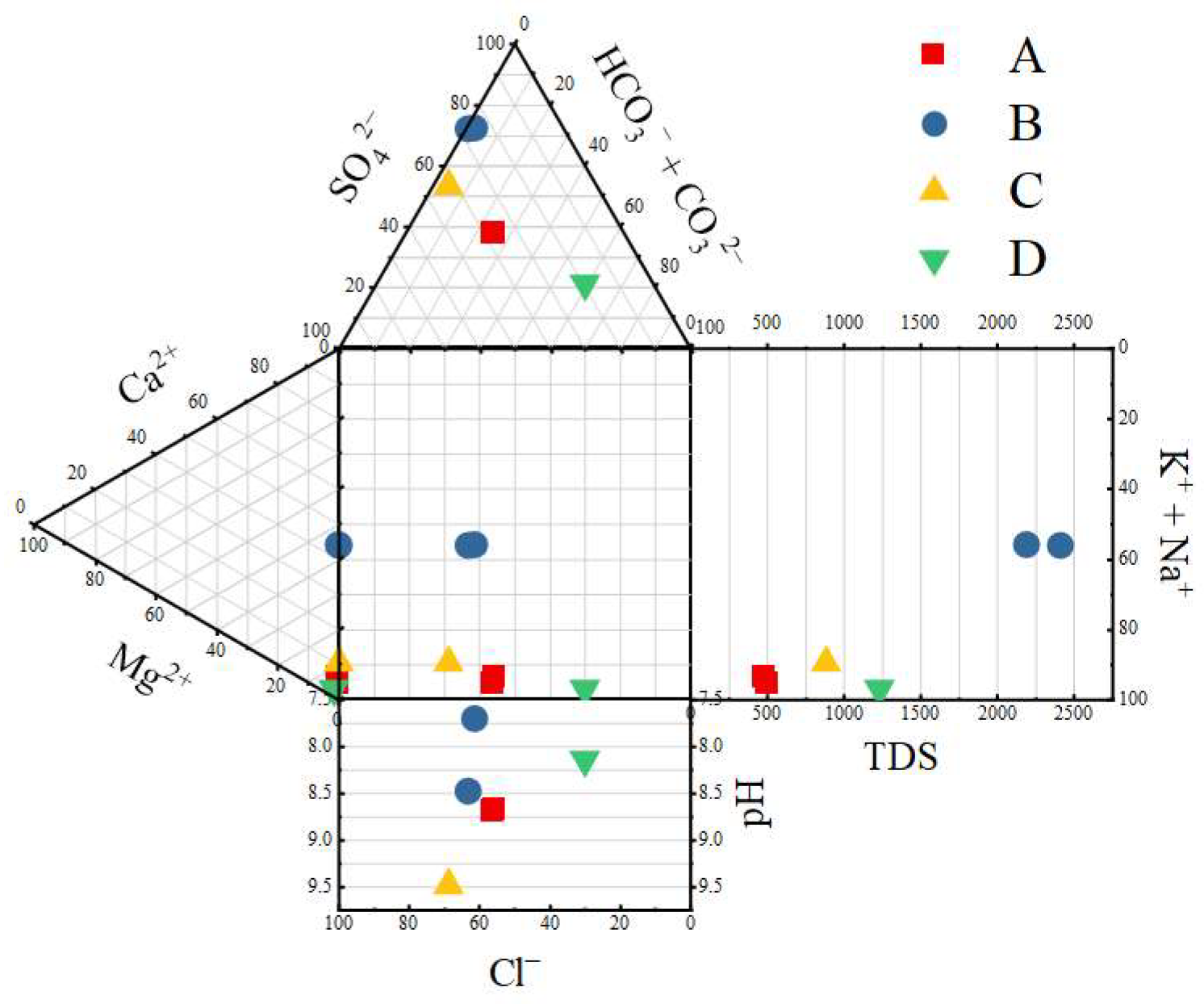
As shown in Figure 2, the main hydrochemical type of the geothermal water in the Xinding Basin is the Cl·SO4-Na type. Durov analysis [17] of the main ions shows that the anions of the geothermal water in the basin are biased towards Cl− endmembers, accounting for 52.31% of the total anions on average. And the cations are biased towards K+ + Na+ endmembers, accounting for 92.62% of the total cations on average.
Figure 2.
Durov diagram for various geothermal field water samples.
Spatially, the ion contents of different geothermal fields in the Xinding Basin vary significantly. The hydrochemical types of Area A and Area C are consistent, both being of the Cl·SO4-Na type. The hydrochemical types of Area B and Area D are the SO4·Cl-Na·Ca type and HCO3·Cl-Na type, respectively. The HCO3− content in Area D is 685.20 mg/L, which is 1499% of that in other areas. The contents of SO42− and Ca2+ in Area B are 1120 mg/L and 347 mg/L, accounting for 558% and 2079% of those in other areas, respectively. Meanwhile, the TDS content of geothermal water in Area B is the highest among all geothermal fields in the Xinding Basin, reaching 2297 mg/L, which is 298% of that in other areas. For geothermal water samples from different geothermal wells within the same geothermal field, due to their consistent geothermal reservoir, the differences in anion and cation contents are small [18], with the maximum variation not exceeding 50 mg/L.
3.2. Mechanism of Formation and Evolution of Hydrochemistry
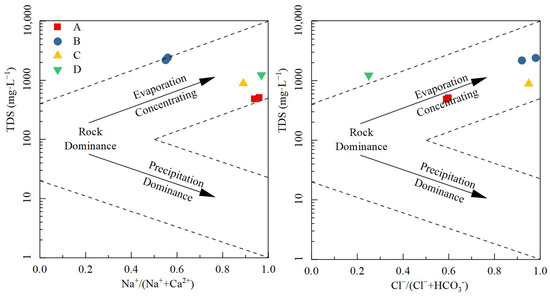
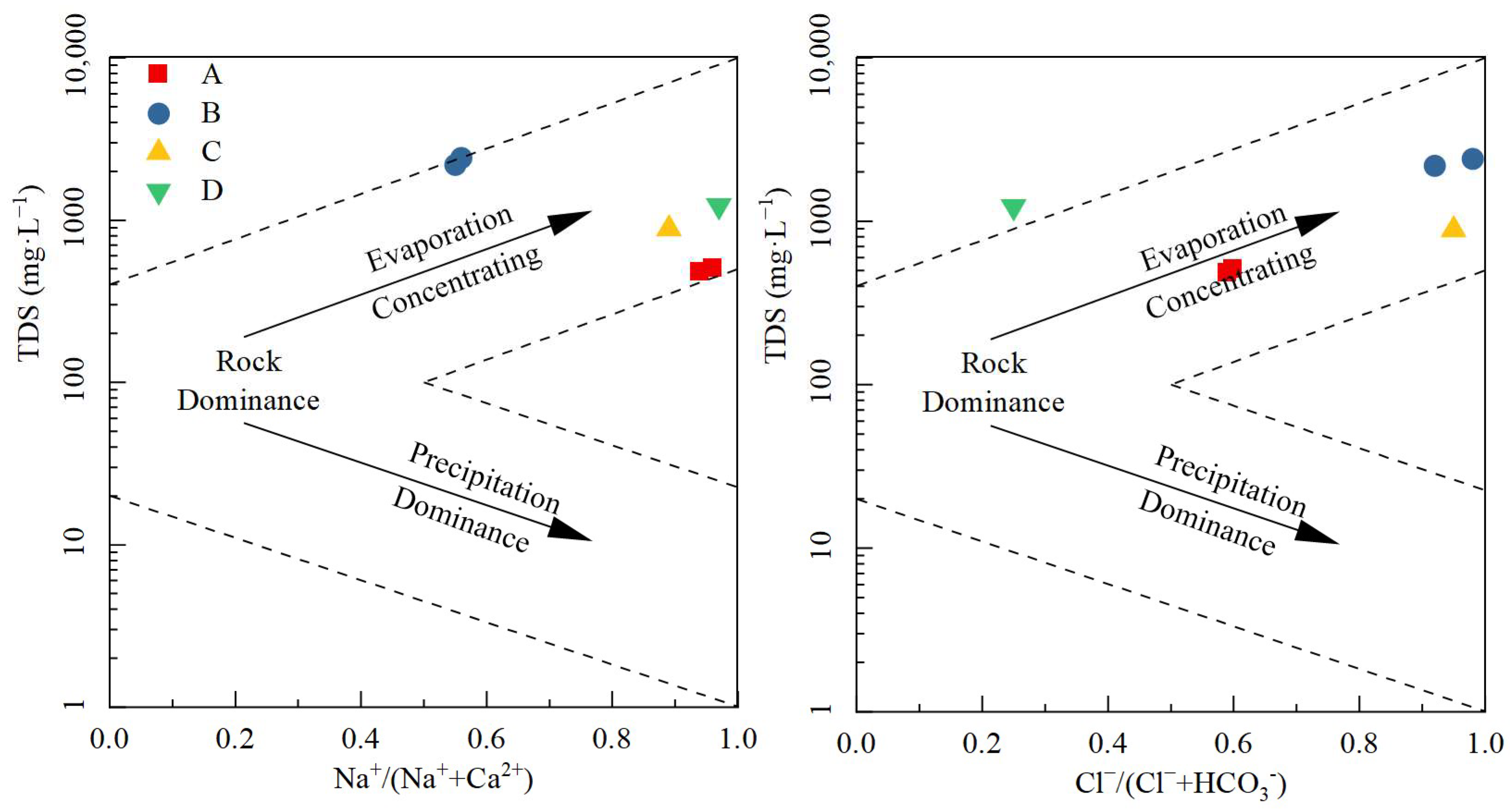
The hydrogeochemical compositions of geothermal water in different thermal reservoirs have different characteristics [19], so it is very important to study the reasons for the differences in hydrogeochemical characteristics of water bodies. As shown in Figure 3, the study uses the water–rock analysis method [20] to explore the hydrochemical evolution of geothermal fields in the Xinding Basin [21]. The data points in the Gibbs diagram of the thermal fields are distributed outside the atmospheric precipitation zone, indicating that the ion composition of the geothermal water is not directly affected by atmospheric precipitation [22].
Figure 3.
Gibbs analysis of main hydrochemistry of thermal fields.
In the process of runoff of atmospheric precipitation continuously infiltrating into the thermal reservoir along the underground rock layer, the water flow is subjected to rock dissolution, and the chemical composition of the groundwater constantly changes [23]. The hydraulic connection between the thermal reservoirs and meteoric water in the hydrothermal geothermal fields of this basin is relatively weak, a feature which is also verified by the results of isotope analysis [24]. The data points of the geothermal water fall within the evaporation–crystallization zone, and the ratios of Na+/(Na+ + Ca2+) and Cl−/(Cl− + HCO3−) are both greater than 0.5, indicating that the water body has undergone a certain degree of rock leaching [25,26]. These rocks react with the water body, increasing the Na+ content in the water while elevating its mineralization degree. Therefore, geothermal water in the basin is mainly controlled by rock leaching, with this process being significantly more intense within the geothermal field of Area B.
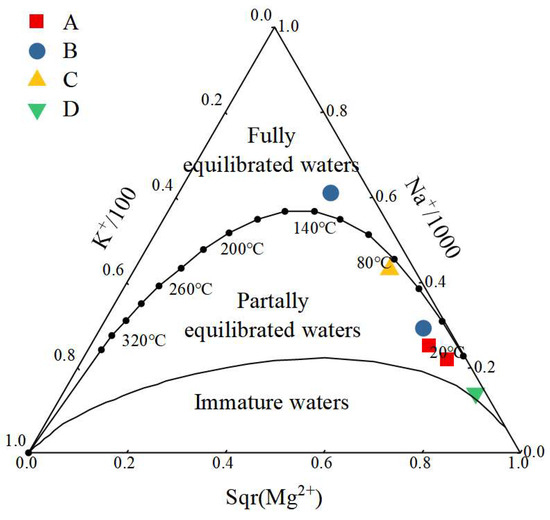
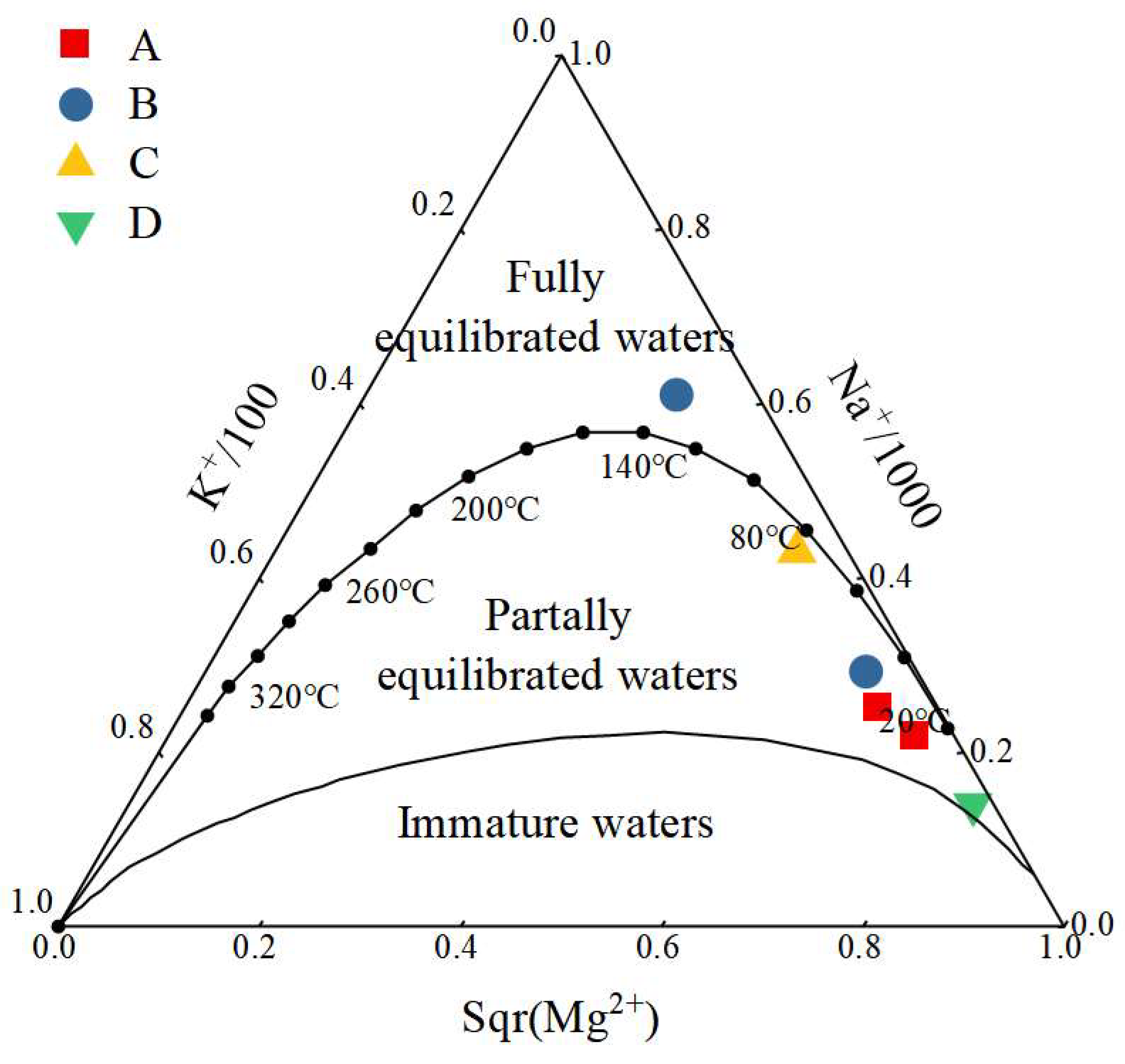
Na-K-Mg ternary diagrams are routinely employed to assess the water–rock equilibrium state between geothermal fluids and minerals, as shown in Figure 4 [27]. They classify geothermal fluids into three types: fully equilibrated water, partially equilibrated water, and immature water. Most data points from geothermal fields in the Xinding Basin are close to the Mg2+ endmember and fall in the partially mature water area, indicating that the water–rock interaction in the groundwater has not yet achieved ionic equilibrium, with recharge from relatively fast-circulating shallow cold water [28]. In contrast, the data points from the geothermal field in Area B are located in the fully mature water area, suggesting that the water–rock interaction in the groundwater in this area has achieved ionic equilibrium [29].
Figure 4.
Three diagrams of water–rock equilibrium discrimination.
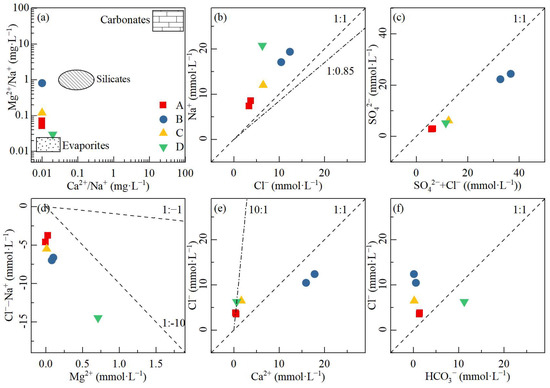
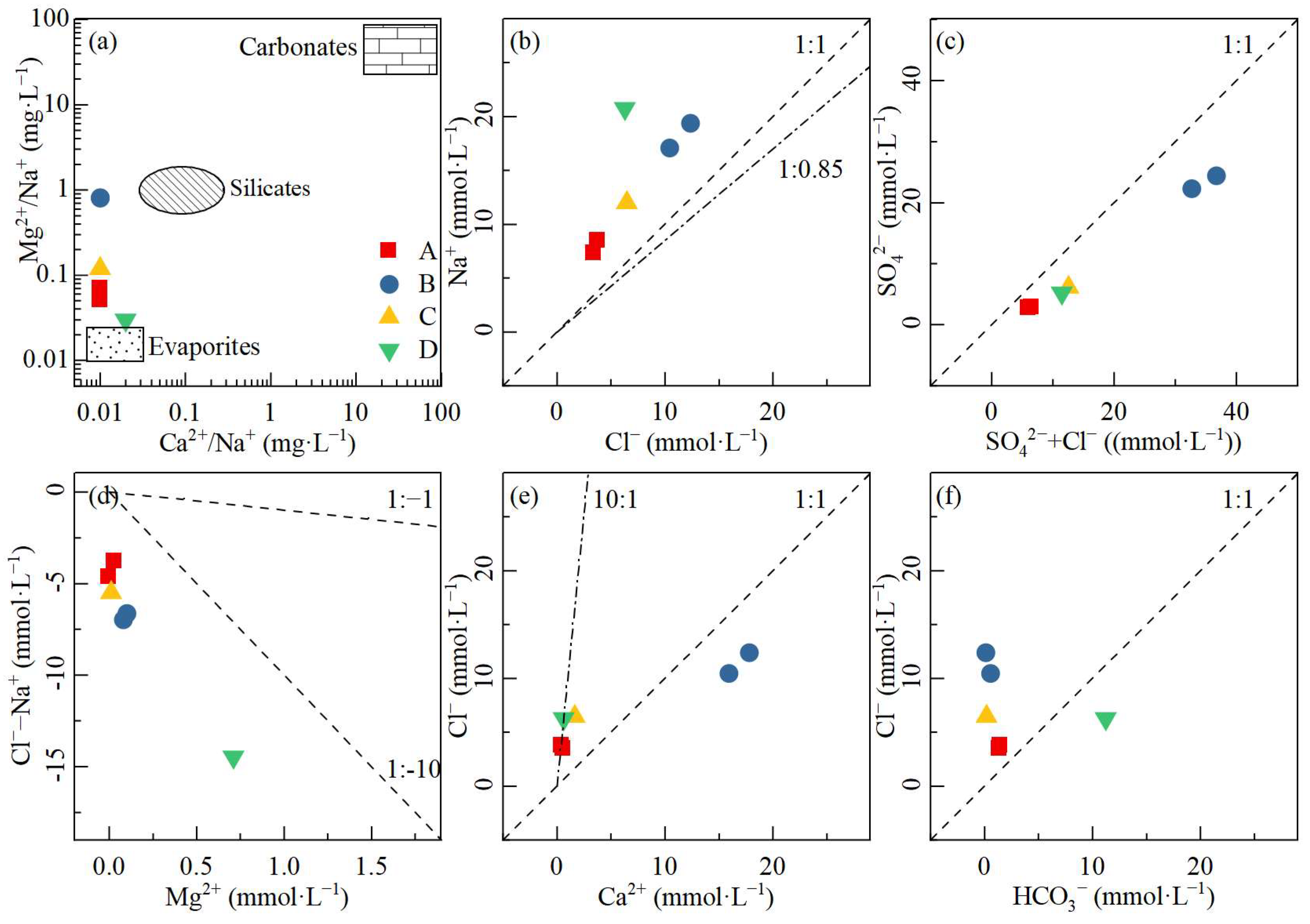
The main influencing factors of the hydrochemical evolution of water bodies were determined through the analysis of ion endmembers and major ion relationships [30], as shown in Figure 5. The Mg2+/Na+ and Ca2+/Na+ ratios are applied to assess the impacts of evaporation and dilution on the hydrochemistry characteristics of the fluids [31]. The sources of major ions in water bodies can be classified into the chemical weathering of evaporite minerals (i.e., gypsum) [32], silicate minerals (i.e., feldspar) [33], and carbonate minerals (i.e., dolomite) [34]. Silicate and evaporite minerals are the dominant controls on the hydrochemical evolution of geothermal water in the Xinding Basin. The geothermal field in Area B has experienced the most intense silicate rock dissolution, as shown in Figure 5a.
Figure 5.
Ratios of major ions: (a) Ca2+/Na+; (b) Cl−; (c) SO42− + Cl−; (d) Mg2+; (e) Ca2+; (f) HCO3−.
The sodium–chloride coefficient (γNa/γCl) is used to characterize the degree of rock leaching between geothermal fluids and thermal reservoirs [35], as well as to indicate the degree of hydrodynamic interaction between the thermal reservoir groundwater system and external water sources [36]. The closer the data point of the geothermal water is to the Cl− endmember, the higher the degree of water–rock leaching between geothermal fluids and the thermal reservoirs, and the weaker the hydrodynamic interaction between the thermal reservoir groundwater system and external water sources [37]; conversely, opposite values demonstrate that geothermal water is strongly affected by infiltrating recharge water [38]. The sodium–chloride coefficient of standard seawater is 0.85 [39]. The sodium–chloride coefficient of formation water subjected to cation exchange adsorption and intense water–rock interaction is less than 0.85, whereas that of groundwater influenced by atmospheric precipitation leaching exceeds 1 [40]. As shown in Figure 5b, the sodium–chloride coefficients of reservoir fluids in various geothermal fields in the research zone range from 1.40 to 3.30, indicating that Na+ is released into the water body during the water–rock leaching process between the geothermal fluid and the thermal reservoir. The thermal reservoir is rich in minerals such as K-feldspar, plagioclase, and amphibole, among which a certain proportion of Na+ is stably hosted within the crystal lattice of K-feldspar. Under high-temperature and high-pressure conditions, the aluminosilicate lattice of K-feldspar is destroyed, thereby releasing Na+ into the geothermal fluid. In addition, the thermal reservoir contains clay minerals formed by the weathering of K-feldspar. In the rock formation, Ca2+ in the geothermal fluid exchanges with Na+ adsorbed by the clay minerals [41], resulting in a higher concentration of Na+ than Cl−. Based on Gibbs diagram analysis, hydraulic interaction to some extent occurs between the groundwater system within the Xinding Basin’s geothermal reservoirs and fresher intruding formation water.
The sulfate reduction coefficient (γSO4/γ(SO4 + Cl)) characterizes the degree of desulfation in geothermal water [42]. When the sulfate reduction coefficient is 0, it indicates intense rock leaching and weak hydraulic interaction between geothermal fluids and external water bodies [43]. As shown in Figure 5c, the sulfate reduction coefficient of geothermal water in the Xinding Basin ranges from 0.28 to 0.75, indicating hydraulic interaction between the geothermal water and external water sources in the basin’s geothermal fields. The metamorphic coefficient (γ(Cl-Na)/γMg) characterizes the degree and type of water–rock interaction [44]. A higher metamorphic coefficient value indicates weak hydraulic interaction between geothermal fluids and external water bodies, coupled with intense water–rock interaction [45]. When the metamorphic coefficient takes a negative value, it indicates that the groundwater environment is affected by external water bodies [46]. All data points from the geothermal water fall below the 1:−1 line, indicating that there is a certain degree of hydraulic connection between the geothermal fluids in the study area and external water sources. This phenomenon is caused by the recharge of thermal reservoirs by atmospheric precipitation through formation fractures.
The chlorine–calcium coefficient (γCl/γCa) [47] and salinization coefficient (γCl/γHCO3) [48] jointly characterize the intensity of hydraulic interaction between geothermal fluids and external water sources [49]. When the data points of the chlorine–calcium coefficient of geothermal water tend to cluster near the 1:1 line, this indicates poor groundwater flow conditions and a slow water movement rate. In contrast, data points leaning toward the 10:1 line imply close hydraulic exchange between the thermal reservoir and external water bodies, accompanied by a high renewal rate [50]. As shown in Figure 5e, the chlorine–calcium coefficient of the geothermal field in Area B is 0.68, indicating relatively weak hydraulic interaction between the geothermal fluids in Area B and external water sources. In the thermal reservoir, a relatively high salinization coefficient of geothermal fluids indicates sufficient high-temperature water–rock interaction between the fluids and the thermal reservoir (e.g., ion release from K-feldspar). In contrast, a relatively low salinization coefficient implies hydraulic exchange between the thermal reservoir and external fresh water via fractures [51]. As shown in Figure 5f, the data points from geothermal fluids in the basin all cluster near the 1:1 line, which demonstrates that geothermal fluids in the Xinding Basin have a certain degree of hydraulic connection with external water sources.
4. Discussion
The special crust–mantle structure of the Xinding Basin has formed a high-quality dynamic heat source for geothermal resources within the basin. The sub-geothermal field of the basin is located in the Hutuo River of the Fenwei Fault Valley Zone [52], with a terrestrial heat flow value of approximately 80 mW/m2, which is higher than the average value of mainland China (50~65 mW/m2) [53], belonging to a high-heat-flow anomaly area. Compared with the Fenwei Graben and its adjacent areas, the Curie isothermal surface in the Xinding Basin has a shallow burial depth of only 18 km [54]. Both the Moho discontinuity and the Curie isothermal surface exhibit an uplift phenomenon in the central part of the basin, which facilitates the heat conduction of semi-molten magmatic heat from the deep part of the basin with a thin crust to the Earth’s surface [55]. According to the Seismic Ground Motion Parameter Zonation Map of China [56], the peak ground acceleration (PGA) in the area is 0.15 g, and the characteristic period of the seismic ground motion response spectrum is 0.35–0.40 s, with the basic seismic intensity being Grade VIII. The far-field effect of the Cenozoic Indo-Eurasian plate collision has led to intense extensional deformation in the Xinding Basin. Frequent volcanic activities, moderate and small earthquakes, and relatively dense hot springs indicate that there are abundant geothermal resources in the basin [57]. The differential uplift and subsidence movements caused by the fault tectonic activities in the basin have resulted in significant subsidence of the river valley terraces, and multiple fault scarps discovered in the piedmont areas of the region indicate that the neotectonic movement in this area is active.
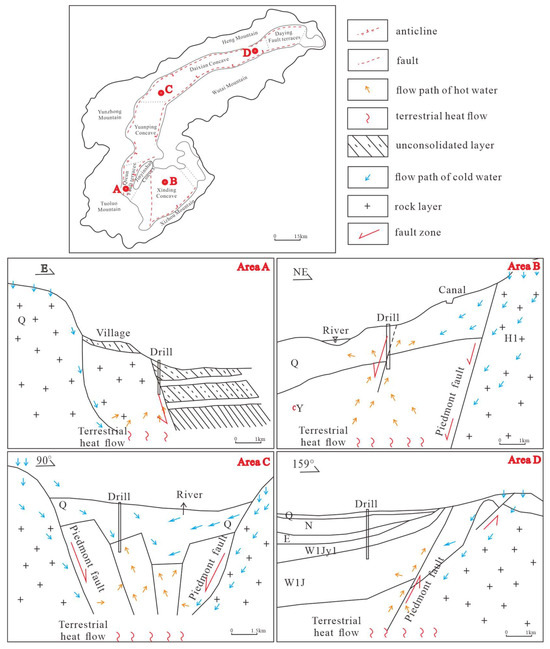
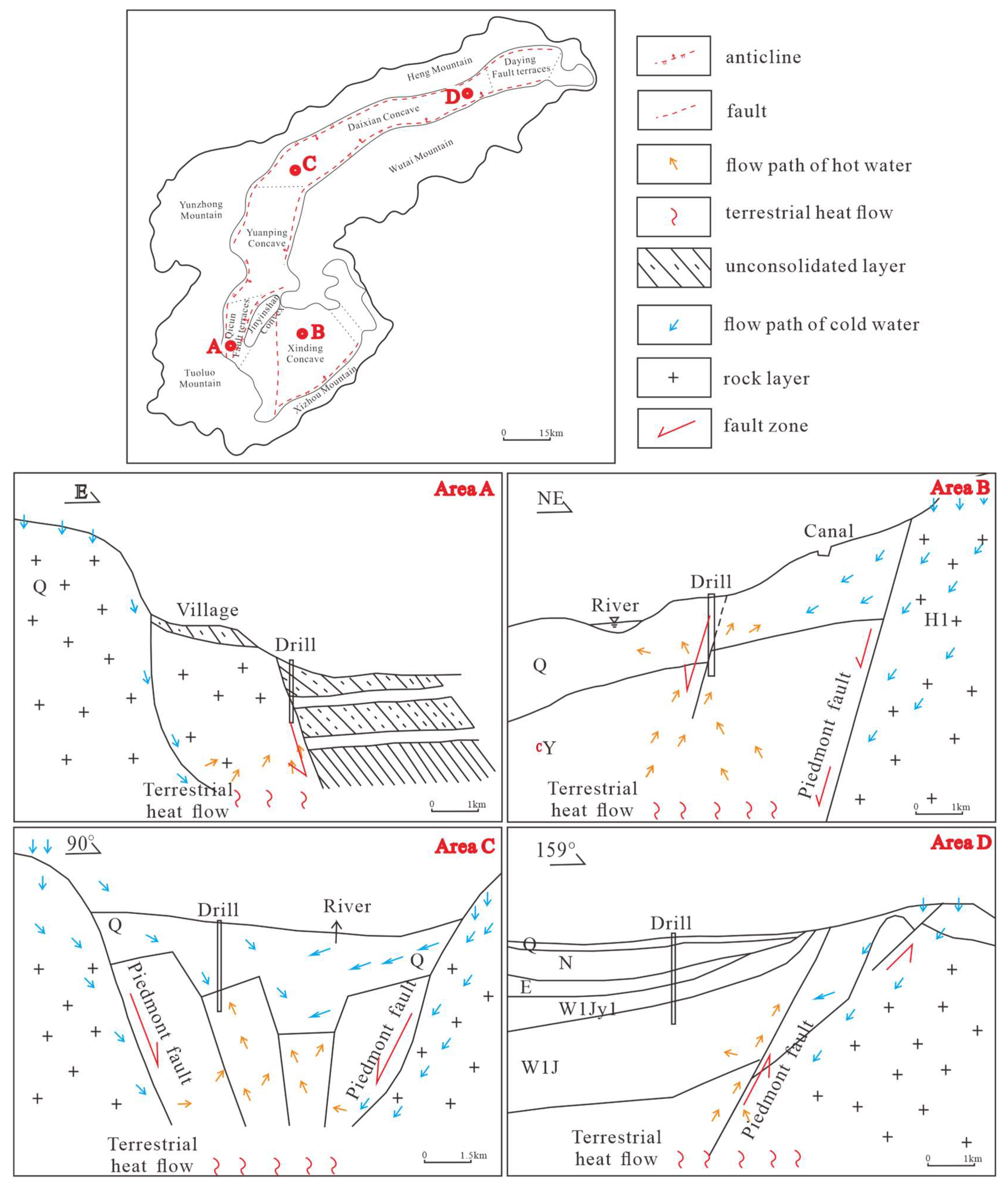
The regional geothermal reservoirs of the Xinding Basin include the glutenite beds of the Cenozoic Erathem and the rock formations of the New Archaean Erathem. Under the combined action of long-term geological deposition and hydraulic head difference potential energy, atmospheric precipitation received in the exposed areas of bedrock mountains around each geothermal field continuously infiltrates downward along fractures. Meanwhile, slope runoff of surface precipitation vertically seeps into the deep subsurface through large deep faults in the piedmont areas, and cold water is thereby transmitted downward to the bedrock for heating [58]. As the water body circulates deeply, thermal heating from the wall rocks in the lower part of the large deep faults and terrestrial heat flow generate a density difference, resulting in natural convection. In all four regional geothermal fields within the Xinding Basin, developed fault zones, concealed faults, and intrusive dykes serve as heat conduction channels [59]. Driven by atmospheric precipitation infiltration in the pressure-differentiated recharge zone, heated thermal mineral water moves from the deep crust to the shallow crust along active basement faults and fracture conduits of the basin, slowly recharging the various thermal reservoirs and forming distinct secondary thermal mineral water bodies.
The thickness of the unconsolidated layers in Xinzhou City exhibits significant spatial variability. According to the basement structure within the basin, it is divided into six structural units, namely the Daying Fault Step, Dai County Sag, Yuanping Sag, Qicun Fault Step, Jinyinshan Uplift, and Xinding Sag, as shown in Figure 6. Among these, the geothermal field in Area B is located in the Xinding Sag structural unit, with thermal reservoirs consisting of the Cenozoic Erathem and the rock formations of the New Archaean Erathem. Correlation analysis between hydrochemical element abundances and characteristic ion ratios indicates that the groundwater circulation depth in Area B is constrained by the spatial distribution of fault fracture zones. The groundwater here undergoes deep circulation, resulting in a high degree of maturity in water–rock interactions. In addition, geothermal fluid temperatures in this region are 12 °C higher than those in the other parts of the Xinding Basin.
Figure 6.
Geothermal origin mechanisms of geothermal water.
5. Conclusions
This study reveals the geothermal origin mechanisms of geothermal reservoirs in the Xinding Basin based on geophysical exploration and drilling-measured data, combined with major ion analysis. The key conclusions are summarized as follows:
- (1)
- Hydrothermal activity in the basin is intense, with the hydrochemical type of the typical geothermal fields dominated by the Cl·SO4-Na type. The geothermal water is mainly composed of immature water.
- (2)
- The discovered magma intrusion residues in the region indicate that sections of the upper mantle with a relatively shallow burial depth serve as the dynamic heat source for the regional thermal reservoir. Intense extensional stretching and the special tectonic framework in the Cenozoic Era resulted in high terrestrial heat flow values and an upward arching phenomenon of the Curie isothermal surface in the region. The neotectonic movement in the basin is active.
- (3)
- The regional geothermal reservoirs in the Xinding Basin occur in the glutenite beds of the Cenozoic Erathem and the rock formations of the New Archaean Erathem. The thick-layered Cenozoic loose sediments serve as the thermal cap rocks in this area. The efficient heat-convergent geothermal system integrating a heat source, heat channel, thermal reservoir, and cap rock (the “four-in-one” system) has promoted the formation of geothermal resources in the Xinding Basin.
Author Contributions
L.B.: Investigation, Methodology, Writing—Original Draft. H.G.: Conceptualization, Methodology, Investigation, Writing—Original Draft, Project Administration, Formal Analysis, Writing—Review and Editing. W.L.: Formal Analysis, Project Administration, Writing—Review and Editing. S.Z.: Formal Analysis, Project Administration, Writing—Review and Editing. Y.W.: Formal Analysis, Writing—Review and Editing. J.B.: Formal Analysis, Writing—Review and Editing. All authors have read and agreed to the published version of the manuscript.
Funding
This work was supported by the 2023 Provincial Public-Welfare Geological Exploration Project under contract No.1499002023CGK01358, the 2024 Provincial Public-Welfare Geological Exploration Project (Non-Metallic Category) under contract No.1499002024CGK02135, and the 2019 Geological Exploration Project of the Department of Natural Resources of Shanxi Province under contract No.14000022210T200000009.
Data Availability Statement
The original contributions presented in this study are included in the article. Further inquiries can be directed to the corresponding author.
Conflicts of Interest
Authors Lin Bai, Hengshuai Gao, Yan Wang, and Jinlei Bai were employed by No.211 Geological Team Co., Ltd., Shanxi Provincial Bureau of Geology and Mineral Exploration and Development. The remaining authors declare that the research was conducted in the absence of any commercial or financial relationships that could be construed as a potential conflict of interest.
References
- Qiu, N.; Tan, B.; Zhu, C. The deep thermal background of hot spring distribution in mainland China. Acta Geol. Sin. 2022, 96, 195–207. [Google Scholar]
- Wang, G.; Liu, Y.; Zhu, X.; Zhang, W. Current status and development trend of geothermal resources in China. Earth Sci. Front. 2020, 27, 1–9. [Google Scholar] [CrossRef]
- Mao, X.; Li, C. Reassessment of the depth of groundwater circulation in geothermal systems. Earth Sci. Front. 2025, 32, 220–229. [Google Scholar]
- Yildirim, L.T.O.; Benesch, J.; Wang, J. Assessment of geothermal energy resources in the Marcellus shale. Geoenergy Sci. Eng. 2026, 257, 214166. [Google Scholar] [CrossRef] [Scilit]
- Dalsania, K.P.; Sircar, A. Advancing enhanced geothermal systems: Novel strategies for sustainable energy extraction and risk mitigation. Unconv. Resour. 2026, 9, 100272. [Google Scholar] [CrossRef] [Scilit]
- Zajacs, A.; Shogenova, A.; Shogenov, K.; Volkova, A.; Sliaupa, S.; Sliaupiene, R.; Jõeleht, A. Corrigendum to “Utilization of geothermal energy: New possibilities for district heating networks in the Baltic states”. Renew. Energy 2025, 243, 122711. [Google Scholar] [CrossRef] [Scilit]
- Yuan, Y.; Zhang, X.; Yu, H.; Zhong, C.; Wang, Y.; Wen, D.; Xu, T.; Gherardi, F. Research progress and technical challenges of geothermal energy development from hot dry rock: A review. Energies 2025, 18, 1742. [Google Scholar] [CrossRef] [Scilit]
- Yan, J.; Ma, D.; Gao, X.; Duan, H.; Li, Q.; Hou, W. Geothermal energy production potential of karst geothermal reservoir considering mining-induced stress. Int. J. Min. Sci. Technol. 2025, 35, 1153–1170. [Google Scholar] [CrossRef] [Scilit]
- Liu, F.; Wang, G.; Jiang, G.; Hu, S.; Zhang, W.; Lin, W.; Liu, J.; Zhang, X.; Qu, Z.; Liao, C. New progress and new understanding of terrestrial heat flow measurement in China. Earth Sci. Front. 2024, 31, 19–30. [Google Scholar] [CrossRef]
- Kang, F.; Xhang, B.; Cui, Y.; Yao, S.; Shi, M.; Qin, P.; Sui, H.; Zheng, T.; Li, J.; Yang, H.; et al. Genesis mechanism of high temperature geothermal energy in central and eastern North China. Earth Sci. Front. 2024, 31, 31–51. [Google Scholar] [CrossRef]
- Zhang, M.; Guo, Q.; Liu, M.; Liu, Q. Geochemical characteristics and formation mechanisms of the geothermal waters in the Xinzhou Basin, Shanxi Province. Earth Sci. 2023, 48, 973–987. [Google Scholar] [CrossRef] [Scilit]
- Wang, X.; Wang, T.; Zhang, X.; Mao, X.; Luo, L.; Wang, D.; Wu, M. Genetic mechanism of Xiwenzhuang geothermal field in Taiyuan Basin. J. Earth Sci. 2019, 44, 1042–1056. [Google Scholar] [CrossRef] [Scilit]
- Liu, D.; Zhang, C.; Lu, W.; Wei, M. Enrichment background and formation mechanism of middle and deep geothermal resources in Fenwei Graben. Earth Sci. Front. 2025, 32, 367–379. [Google Scholar]
- Liu, L.; Lu, R.; Xie, W.; Liu, B.; Wang, Y.; Yao, H.; Lin, W. Distribution and hydrogeochemical characteristics of hot springs in northeastern Qinghai-Tibet Plateau. Earth Sci. Front. 2024, 31, 173–195. [Google Scholar] [CrossRef]
- Zhou, X.; Peng, Y.; Li, Y.; Sang, H. Hydrogeochemical evolution, isotopic Insights, and genetic models of geothermal water in Anhui Province, China. Water 2025, 17, 236. [Google Scholar] [CrossRef] [Scilit]
- Liu, H.; Song, X.; Wang, X.; Bai, B.; Dong, R. Research on the Genesis Model of Geothermal Resources in Thermal Storage. Chem. Tech. Fuels Oils 2024, 60, 1176–1187. [Google Scholar] [CrossRef] [Scilit]
- Gao, H.; Li, W.; Zhang, S.; Tao, Y.; Guo, X. Hydraulic relationship between Hulun Lake and cretaceous confined aquifer using hydrochemistry and isotopic data. Sustainability 2024, 16, 2128. [Google Scholar] [CrossRef] [Scilit]
- Chen, F.; Lin, J.; He, G.; Wang, S.; Huang, X.; Zhao, B.; Wang, S.; Han, Y.; Qi, S. Analysis of geothermal resources in the northeast margin of the Pamir plateau. Geothermics 2025, 127, 103254. [Google Scholar] [CrossRef] [Scilit]
- Caliro, S.; Avino, R.; Capecchiacci, F.; Carandente, A.; Chiodini, G.; Cuoco, E.; Minopoli, C.; Rufino, F.; Santi, A.; Rizzo, A.L.; et al. Chemical and isotopic characterization of groundwater and thermal waters from the Campi Flegrei caldera (southern Italy). J. Volcanol. Geoth. Res. 2025, 460, 108280. [Google Scholar] [CrossRef] [Scilit]
- Wang, S.; Liu, Z.; Zhou, W.; Jiang, Y.; Ding, H.; Dong, F. Evolution of karst geothermal hydrochemical characteristics and genesis mechanism in Northern Jinan, Shandong, Eastern China. ACS Omega 2024, 9, 36299–36313. [Google Scholar] [CrossRef] [Scilit]
- Gao, H.; Zhang, S.; Li, W.; Tao, Y. Analyzing the vertical recharge mechanism of groundwater using ion characteristics and water quality indexes in Lake Hulun. Water 2024, 16, 1756. [Google Scholar] [CrossRef] [Scilit]
- Markó, Á.; Brehme, M.; Pedretti, D.; Zimmermann, G.; Huenges, E. Controls of low injectivity caused by interaction of reservoir and clogging processes in a sedimentary geothermal aquifer (Mezőberény, Hungary). Geotherm. Energy 2024, 12, 40. [Google Scholar] [CrossRef] [Scilit]
- Gao, H.; Li, W.; Zhang, S. Response relationship between Hulun Lake water and different dive replenishment sources. J. China Hydrol. 2024, 44, 101–108. [Google Scholar] [CrossRef]
- Liu, D.; Cai, Y.; Feng, Z.; Zhang, Q.; Hu, L.; Li, S. Feasibility study on geothermal dolomite reservoir reinjection with surface water in Tianjin, China. Water 2024, 16, 3144. [Google Scholar] [CrossRef] [Scilit]
- Kharitonova, N.A.; Sokolovskaya, M.A.; Baranovskaya, E.I.; Chelnokov, G.A.; Karabtsov, A.A.; Chernoshchekov, L.N.; Bragin, I.V. Trace elements in thermal waters of the Northern Tien Shan: Distribution and fate. Mosc. Univ. Geol. Bull. 2024, 79, 632–648. [Google Scholar] [CrossRef] [Scilit]
- Jia, W.; Liu, K.; Yan, J.; Zhang, Y.; Tong, J.; Yu, K.; Zhang, S.; Wang, L.; Yu, C. The difference in hydrochemical characteristics of geothermal water between the eastern and western parts of the Wugongshan area and its genetic mechanism. J. Geochem. Explor. 2024, 266, 107575. [Google Scholar] [CrossRef] [Scilit]
- Du, X.; Jiang, Y.; Yang, F.; Lu, D. Thermo-hydro-mechanical fully coupled model for enhanced geothermal system and numerical solution method based on finite volume method. Renew. Energ. 2024, 237, 121559. [Google Scholar] [CrossRef] [Scilit]
- An, B.; Zeng, Z.; Sun, B.; Bai, Y.; Yan, Z.; Zhao, J.; Yan, J. Study on geothermal genesis mechanism and model in the western margin of Ordos Basin. Energies 2023, 16, 1784. [Google Scholar] [CrossRef] [Scilit]
- Wang, X.; Luo, Z.; Xu, C.; Lv, Y.; Cheng, L.; Zhang, Y. Formation mechanism of a carbonate geothermal system and calculation of the reservoir temperature under complex conditions. Geothermics 2022, 99, 102295. [Google Scholar] [CrossRef] [Scilit]
- Gao, H.; Xue, D.; Li, W.; Zhang, S.; Shi, Y.; Zhang, B.; Tao, Y. A Potential Technology for Improving the Quality of Lake Water Environments in Cold Zones: A Case Study from Lake Hulun, China. Sustainability 2024, 16, 10746. [Google Scholar] [CrossRef] [Scilit]
- Gu, G.; Hu, L.; Pan, X.; Li, Y.; Liu, Z.; Sun, F.; Zhong, G. Hydrogen emission characteristics of Changbaishan Volcano: Spatial and temporal distribution and genesis. Geothermics 2025, 127, 103269. [Google Scholar] [CrossRef] [Scilit]
- Huang, Z.; Chen, Z.; Liu, Y.; Liu, C.; Shi, Z.; Liu, L.; Liu, Z.; He, H.; Li, Y. Notably high salinity of geothermal water in the coastal area in Hainan Island, China, predominantly dominated by tectonic activities. Geothermics 2025, 126, 103202. [Google Scholar] [CrossRef] [Scilit]
- Qi, K.; Ren, Z.; Cui, J.; Yu, Q.; Bai, F.; Liu, X.; Chen, Z.; Xing, G. Present-day deep geothermal field and lithospheric thermal structure in the Ordos Basin. Geothermics 2025, 125, 103198. [Google Scholar] [CrossRef] [Scilit]
- Liu, L.; Wang, G.; Li, Y.; Wei, Z.; Lin, W.; Qin, X.; Zhang, M.; Qi, S.; Long, X. Hydrogeochemistry of geothermal water in Huangshadong and adjacent areas of Guangdong province: Implications for water-rock interaction. Geothermics 2024, 122, 103084. [Google Scholar] [CrossRef] [Scilit]
- Gao, H. Analysis of the Interaction Between Lake Water and Groundwater in Hulun Lake Indicated by Hydrochemical and Isotopic Characteristics. Master’s Thesis, Inner Mongolia Agricultural University, Hohhot, China, 2024. [Google Scholar]
- Zhang, J.; Wang, R.; Jia, A.; Feng, N.; Liu, R.; Wang, M. Formation water genesis mechanism of deep tight sandstone gas reservoirs in the Southern Ordos Basin and its indication for development. ACS Omega 2025, 10, 1809–1828. [Google Scholar] [CrossRef] [Scilit]
- Serianz, L.; Markelj, A.; Rman, N.; Brenčič, M.; Szőnyi, J.M. Hydrogeological analysis of topography-driven groundwater flow in a low temperature geothermal aquifer system in the Julian Alps, Slovenia. Hydrogeol. J. 2025, 33, 237–256. [Google Scholar] [CrossRef] [Scilit]
- Li, J.; Fu, X.; Bai, Y.; Zhang, H.; Liu, Z.; Zhao, R. Dual effect of hydrothermal fluid on shale oil reservoir in Gulong Sag, Songliao Basin: Constrained by C-O isotope and geochemistry. Energies 2024, 17, 4159. [Google Scholar] [CrossRef] [Scilit]
- Akıllı, H.; Kayadibi, Ö.; Mutlu, H.; Gürboğa, Ş.; Karadağlar, M.; Arıkan, S.; Tan, S. Geochemical and isotopic constraints on thermal waters around the Gulf of Edremit, western Türkiye. Geothermics 2025, 127, 103257. [Google Scholar] [CrossRef] [Scilit]
- Liu, J.; Ren, Z.; Yu, Q.; Qi, K.; Wu, H.; Wang, Z.; Zhang, G.; Zhang, Y.; Jia, M.; Jia, P. Hydrochemical processes and fluoride enrichment patterns in high-fluoride geothermal water in the Weihe Basin, China. J. Hazard. Mater. 2024, 480, 136468. [Google Scholar] [CrossRef] [Scilit] [PubMed]
- Zhuang, S.; Wang, G.; Zhou, X.; Shi, Z.; Yuan, D.; Tian, J.; He, M.; Zeng, Z.; Yan, Y.; Yao, B.; et al. Corrigendum to “Deciphering the distribution and enrichment of arsenic in geothermal water in the Red River Fault Zone, southwest China” [J Hazard Mater 485 (2025) 136756]. J. Hazard. Mater. 2024, 481, 136938. [Google Scholar] [CrossRef] [Scilit] [PubMed]
- Pasternáková, B.; Kuchovský, T.; Chroustová, K.; Říčka, A.; Nehyba, S.; Rüde, T.R. The hydrochemistry and geothermometry of thermal waters from a deep Jurassic aquifer in Lower Austria–South Moravia region. Geothermics 2025, 125, 103173. [Google Scholar] [CrossRef] [Scilit]
- Wang, B.; Zhao, Y.; Cai, Y.; Zhang, S.; Yang, B.; Liu, F. Feasibility research on surface water reinjection into the sandstone geothermal reservoir of the guantao formation in Tianjin Based on laboratory experiments. Water 2024, 16, 2475. [Google Scholar] [CrossRef] [Scilit]
- Yin, H.; Zhou, W.; Dong, F.; Liu, Y.; Shi, C.; Meng, M.; Cheng, W. Hydrochemical characteristics and genetic mechanism of porous sandstone geothermal water in northern Jinan, Shandong, China. Environ. Sci. Pollut. Res. Int. 2024, 31, 24180–24196. [Google Scholar] [CrossRef] [Scilit] [PubMed]
- Chen, L.; Zhang, J.; Xu, L.; Chen, S.; Li, Q.; Sun, Y.; Li, J.; Zhao, X. A study on the geothermal circulation system of granite: An example from the Lancang area, Yunnan. Geothermics 2024, 116, 102853. [Google Scholar] [CrossRef] [Scilit]
- Han, C.; Fan, Q.; Xiao, Y.; Li, Q.; Yang, H.; Chen, T.; Zhao, W.; Wang, S. B-Li differential enrichment of geothermal systems in the Da Qaidam and Gonghe-Guide Basin, northeastern Tibetan plateau: Evidence from water chemistry and H-O-B-Li isotopes. Sci. Total Environ. 2024, 955, 176868. [Google Scholar] [CrossRef] [Scilit]
- Mi, O.; Zhang, R.; Wang, X.; Zhang, Z.; Zhang, A. Mechanical properties and damage characteristics of granite surrounding rock in deep tunnel under thermal-hydro-mechanical coupling condition. Tunn. Undergr. Space Technol. 2025, 156, 106262. [Google Scholar] [CrossRef] [Scilit]
- Jiang, S.; Chen, C.; Zhang, S.; Xu, Z.; Liu, X.; Tu, G.; Zhao, S. Thermo-Hydro-Mechanical coupling analysis of spiral wellbores in horizontal wells for heat extraction from hot dry rock: A case study of the Gonghe Basin, Qinghai, China. Energy 2025, 319, 135058. [Google Scholar] [CrossRef] [Scilit]
- Hu, H.; Ye, G.; Li, B.; Jin, S.; Yi, X.; Yin, H.; Hao, Y.; Zhao, Y.; Zhang, Y. The geothermal field genesis mechanism in the central uplift of the Jizhong depression: A study based on magnetotelluric imaging. Geothermics 2025, 127, 103240. [Google Scholar] [CrossRef] [Scilit]
- Jia, W.; Liu, K.; Yan, J.; Zhang, Y.; Kong, Q.; Zhang, S.; Yang, P.; Wang, L. Characteristics of geothermal waters in eastern Wugongshan based on hydrogen, oxygen, and strontium isotopes. Appl. Geochem. 2024, 161, 105874. [Google Scholar] [CrossRef] [Scilit]
- Lv, G.; Zhang, Y.; Liu, J.; Yang, M.; Wang, S. Geochemical characteristics, Li source and genesis mechanism of thermal mineral water in Sichuan Basin, SW China. Geothermics 2024, 122, 103079. [Google Scholar] [CrossRef] [Scilit]
- Wang, Y.; Li, B.; Chen, A. The geochemical characteristics and genesis mechanisms of the Zaozigou Geothermal Field. Sustainability 2024, 16, 6790. [Google Scholar] [CrossRef] [Scilit]
- Cao, R.; Cai, Y.; Dor, J.; Liu, Q.; Poliakova, M.; Chen, D.; Wan, S.; Yan, Y. Distribution and genesis of geothermal waters in the Xianshuihe fault zone, Western Sichuan plateau, China: Constraints on fracture system and regional seismic activities. Geothermics 2025, 125, 103150. [Google Scholar] [CrossRef] [Scilit]
- Poturay, V.A. Organic matter in the thermal waters of the Paratunka Geothermal Field, Kamchatka. Geochem. Int. 2024, 62, 1065–1076. [Google Scholar] [CrossRef] [Scilit]
- Guan, X.; Meng, Q.; Wang, B.; Xie, Z.; Feng, X.; Bao, Y. Description of formations fault activity characteristics and genesis mechanism using of paleogeomorphic restoration techniques. Chem. Tech. Fuels Oils 2023, 59, 647–660. [Google Scholar] [CrossRef] [Scilit]
- Lei, Y.; Zhao, Z.; Zhang, B.; Tang, X.; Luo, Y.; Wang, G.; Gao, J.; Zhang, D. Genesis of significance of carbonated thermal water springs in Xining Basin, China. Water 2022, 14, 4058. [Google Scholar] [CrossRef] [Scilit]
- Xu, L.; Cheng, Y. Deep-sea ‘smoke’: The secrets of seafloor hydrothermal vents. Science 2023, 75, 1–5+69. [Google Scholar]
- Xu, Y.; Liang, L.; Wang, B.; Xiang, J.; Gao, M.; Fu, Z.; Long, P.; Luo, H.; Huang, C. Conversion from double-season rice to ratoon rice paddy fields reduces carbon footprint and enhances net ecosystem economic benefit. Sci. Total Environ. 2022, 813, 152550. [Google Scholar] [CrossRef] [Scilit]
- Liu, W.; Li, Z.; Song, L. The evolution of hydrochemistry at a cold alpine basin in the Qilian Mountains. Arab. J. Geosci. 2016, 9, 301. [Google Scholar] [CrossRef] [Scilit]
Disclaimer/Publisher’s Note: The statements, opinions and data contained in all publications are solely those of the individual author(s) and contributor(s) and not of MDPI and/or the editor(s). MDPI and/or the editor(s) disclaim responsibility for any injury to people or property resulting from any ideas, methods, instructions or products referred to in the content. |
© 2026 by the authors. Licensee MDPI, Basel, Switzerland. This article is an open access article distributed under the terms and conditions of the Creative Commons Attribution (CC BY) license.