


Abstract
Cactus leaves from the Cactaceae family, particularly the Opuntia genus, have attracted increasing attention as natural coagulants for water treatment applications. In this work, Cactus-based extracts were investigated for drinking water treatment through the coagulation–flocculation process. Several extraction routes were examined, including Ca-J, Ca-H2O, Ca-NaOH (0.05 M), Ca-NaCl (0.5 M), and Ca-HCl (0.05 M), and their performance was evaluated using jar test experiments. The removal efficiencies of total coliforms (TC), anaerobic sulfite-reducing bacteria (ASRB), total suspended solids (TSS), and turbidity were assessed, and the most effective extract was subsequently tested in a semi-industrial pilot-scale coagulation–flocculation–settling system. The physicochemical properties of the Cactus material were characterized using FTIR, SEM, XRD, and MALDI-TOF analyses. Results revealed bioactive components, including carbohydrates, proteins, tannins, flavonoids, and glucose, with functional groups (carboxyl, hydroxyl, carbonyl) responsible for coagulation. XRD and SEM analyses showed a semi-crystalline structure and a heterogeneous surface with fiber networks, while MALDI-TOF confirmed the presence of flavonoid and tannin compounds. These features collectively contribute to the effective removal of turbidity, suspended solids, and microbial contaminants. Among the tested extracts, Ca-NaOH (0.05 M) exhibited the highest removal efficiencies, achieving 100% removal of TC and ASRB, 94.15% removal of TSS, and 70.38% turbidity reduction under laboratory conditions. Pilot-scale application of this extract resulted in a turbidity reduction of 66.65%. Additional water quality parameters, including total alkalinity (TA), total dissolved solids (TDS), pH, and electrical conductivity (EC), were monitored to evaluate process performance. Overall, the results highlight the strong potential of Cactus leaves as an effective, cost-efficient, and environmentally friendly alternative to conventional chemical coagulants. However, further research is required to enhance their scalability and commercialization.
1. Introduction
Water contains numerous compounds that can be grouped into three categories: (i) Suspended matter, which can be of mineral origin (e.g., sand, silt, clay) or organic origin, such as decomposition products of plant or animal matter and humic acids. Microorganisms such as bacteria, algae, and viruses must be included among these compounds. These substances are responsible, in particular, for turbidity and color [1,2,3]. (ii) Colloidal matter (less than 1 micron) consists of TSS of the same origin as the previously mentioned particles but is smaller in size and settles extremely slowly. It also contributes to turbidity and color [4]. (iii) Dissolved matter (less than a few nanometers) is generally composed of cations, anions, and some organic matter, which is also in dissolved form. Gases (O2, CO2, H2S, etc.) are also present [1]. Coagulation flocculation is a physico-chemical process that facilitates the elimination of suspended solids and colloids by gathering them in the form of flocs, which are then separated by decantation, flotation, and/or filtration systems [5,6]. Depending on the treatment objective and the type of discharge under consideration, it can be used as a pretreatment, main treatment, or complementary treatment in the treatment chain [7,8]. The double layer theory explains that adsorption phenomena are involved in the destabilization of suspended solids. It explains how colloids are treated by coagulation [5,9]. The settling time of coagulated particles depends on particle type, particle diameter, and specific surface area [5,10,11]. This time ranges from about one second for coagulated gravel with a diameter of 10 mm and a specific surface area of 30–60 m2/m3, to approximately 20 years for a 0.01 μm colloid with a specific surface area of m2/m3, assuming a porosity of ε = 0.4. Table 1 lists certain materials or organisms with their dimensions and the order of magnitude of time required for these particles, under the influence of their weight alone, to travel through one meter of water at 20 °C [12]. The table also shows that the smaller the particle, the greater its specific surface area. In many countries around the world, aluminum sulfate is the most common coagulant used in drinking water treatment plants to remove turbidity (colloidal particles) and TSS, and varying concentrations of this coagulant can be found in treated water. According to certain studies, the presence of aluminum in drinking water has a harmful effect on public health, leading in some cases to Alzheimer’s disease [13]. Moreover, the use of aluminum sulfate has an effect on the pH, alkalinity and hardness of water, with an increase in the volume of sludge produced [8,14,15]. Additionally, conventional water treatment technologies, while effective, can be costly, economically unfeasible, and environmentally unfriendly due to the impacts of secondary effluents. Therefore, developing cost-effective and sustainable treatment approaches is crucial. In this context, the use of renewable biomaterials for pollutant removal offers a promising, environmentally friendly alternative, potentially reducing both health risks and operational drawbacks associated with chemical coagulants [16].
Table 1.
Settling times for different particles according to STOKES’ law.
This work investigates the use of a natural, biodegradable, and non-toxic coagulant in a semi-industrial coagulation–flocculation process. Cactus leaves were selected because they are a readily available and renewable natural resource in Algeria. They are rich in polysaccharides, mainly mucilage and pectin [17,18,19], which exhibit significant coagulating properties and effectively destabilize suspended particles. Importantly, Cactus-based extracts are biodegradable, non-toxic, and environmentally friendly compared to conventional chemical coagulants. Several studies have demonstrated the feasibility and effectiveness of Cactus mucilage in treating turbid and contaminated waters [16,18], supporting the scientific rationale for its selection in the present work.
Several jar tests were carried out on real raw water collected from the drinking water treatment plant located in Mila for the following three main objectives: (1) A study of the effect of different solvents on coagulation-flocculation yield (Ca-J, Ca-H2 O, Ca-NaCl (0.5 M), Ca-NaOH (0.05 M), Ca-HCl (0.05 M)); (2) an evaluation of the effectiveness of the various bio-coagulants used on the physical, chemical, and bacteriological quality of drinking water (turbidity, TSS, total alkalinity, total coliforms, etc.); (3) a comparative analysis between batch mode (jar test) and continuous mode (coagulation–flocculation–settling pilot), and finally, the use of the same raw material (Cactus leaves) to coagulate and disinfect polluted water. The innovative aspects of this project include the establishment of the use of a plant (Cactus leaves) in drinking water treatment. The novelties of this study are the following: (i) the replacement of aluminum sulfate traditionally used in drinking water treatment due to its harmful effects on health and the environment; (ii) the valorization of local natural waste based on Cactus leaves for drinking water treatment; (iii) the comparative study between several solvents on the performance of Cactus in improving drinking water quality; (iv) the application of bio-coagulants on a semi-industrial scale (pilot) before moving on to the industrial scale (treatment plant); (v) the use of Cactus to eliminate bacteriological elements (total coliforms and sulfur-reducing anaerobic bacteria) present in the water, thereby eliminating the disinfection step in the treatment chain that uses chlorine for disinfection.
2. Materials and Methods
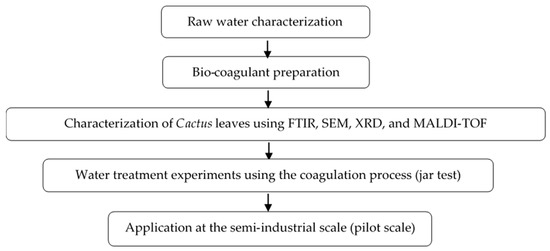
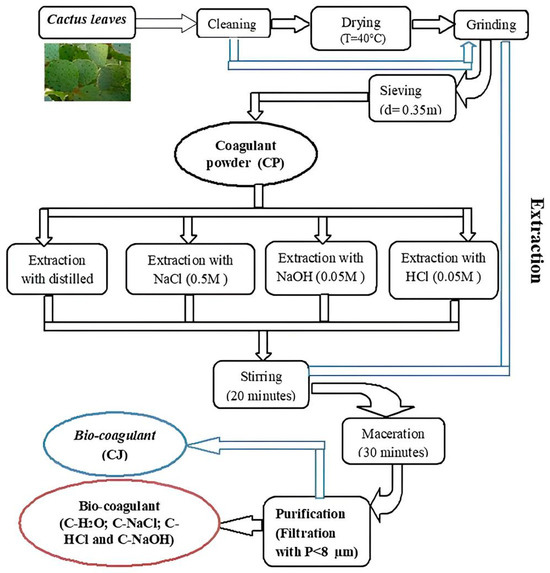
The diagram below (Figure 1) represents the sequences used for the present work:
Figure 1.
Chematic diagram of the experimental workflow.
2.1. Origin and Characterization of Raw Water
Raw water was obtained from the drinking water treatment plant of Oued El Athmania, Mila (36°14′35.40″ N; 6°17′6.00″ E). Table 2 shows the values of the various parameters during this study.
Table 2.
Raw water characterization.
2.2. Analytical Methods
In this study, different physical, chemical, and bacteriological parameters of the water were measured after each coagulation, flocculation, and decantation test was conducted using the jar test.
2.2.1. Physico-Chemical Analyzes
A turbidity meter (HANNA Code: HI 98713, Hanna Instruments, Cluj-Napoca, Romania) was used to measure the turbidity; pH, TDS, salinity, and conductivity were evaluated by a multi-parameters instrument (Jenway model 3540, Camlab, Cambridge, UK). However, the TSS, alkalinity and total alkalinity were determined by standard titrimetric methods [21].
2.2.2. Bacteriological Analyses
The bacteriological quality of water is a very important factor that must be controlled during the study of water treatment intended for human consumption. In this case, the Most Probable Number (MPN) tube technique was used to determine the quantity of several types of germs, such as fecal and total coliforms (CF and CT), and anaerobic sulfate-reducing bacteria (ASRB) [22].
2.3. Extraction and Purification of Coagulants from Cactus Leaves
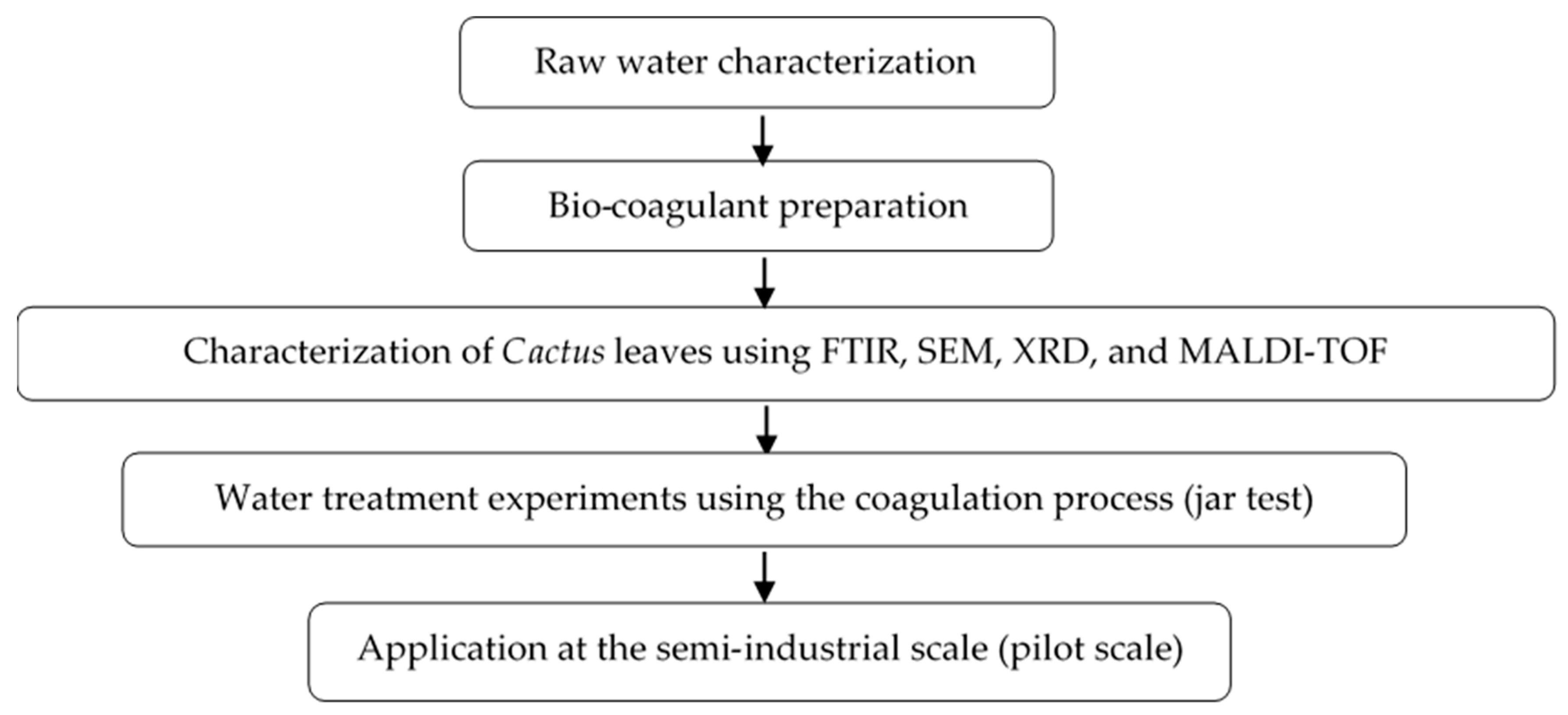
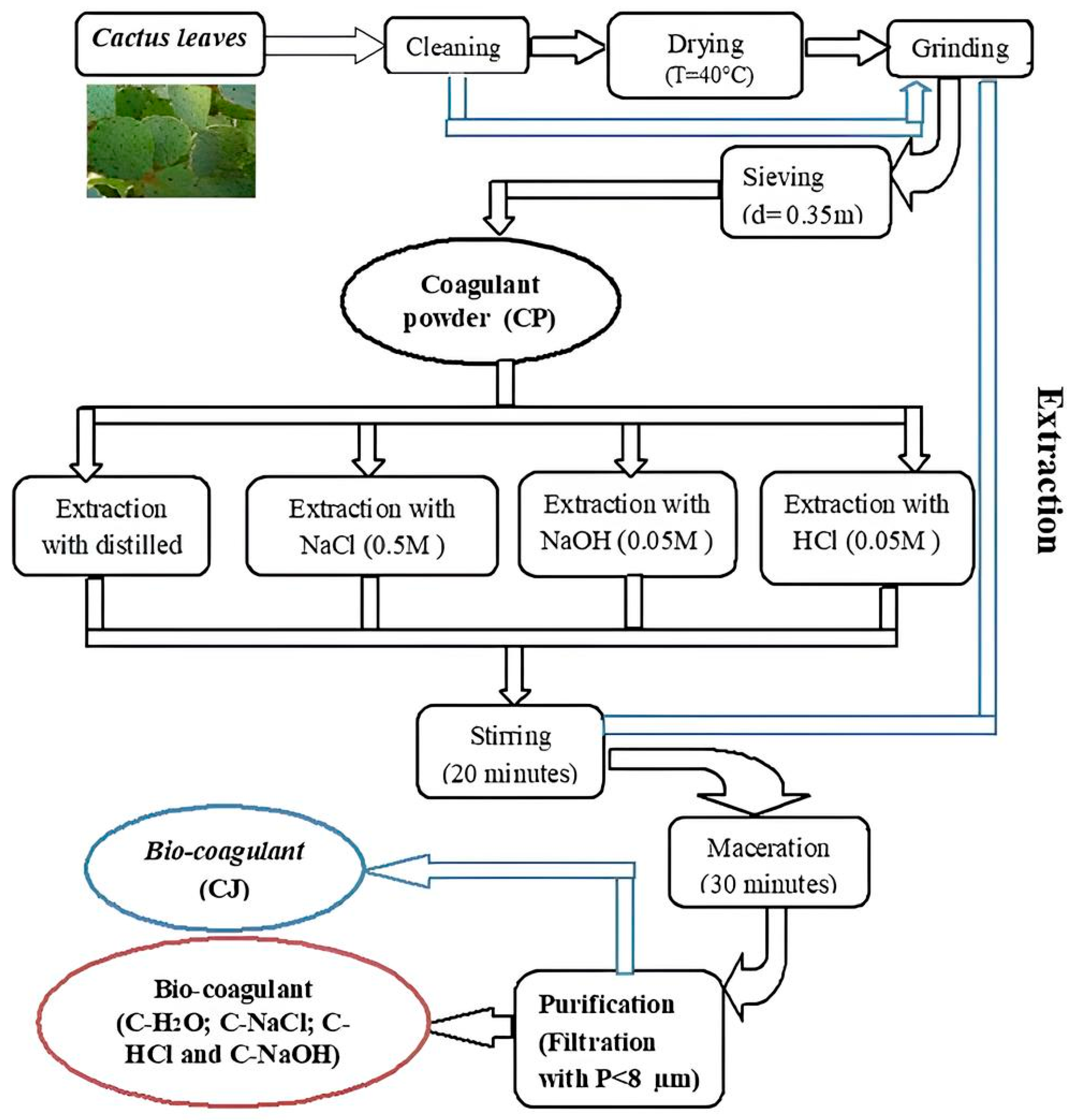
Extraction is an operation that consists of separating certain compounds from an organism using various techniques and methods developed with the rise of modern chemistry. It is used to selectively extract one or more compounds from an initial mixture on the basis of their chemical or physical properties. Different steps were used to prepare the Cactus-based bio-coagulant, as shown in Figure 2. The Cactus leaves were collected from an area in the Algerian city of Mila (36°27′1.01″ N; 6°15′51.98″ E). They were used as a bio-coagulant after undergoing the following treatments: (i) cleaning; (ii) low-temperature drying at 40 °C; (iii) grinding to reduce particle size; and (iv) passing through a 0.35 mm sieve. Then, 25 g of Cactus powder was added to various solutions, such as 1000 mL of distilled water, sodium chloride (0.5 M), sodium hydroxide (0.05 M), and sodium chloride (0.05 M). The suspension was stirred at 700 rpm for 20 min. After a 30 min maceration, the supernatant was filtered through standard filter paper (porosity < 8 μm), and the filtrates were used as bio-coagulants. The filtrates are stored in a cold room at ± 4 °C [2,5,23,24,25,26].
Figure 2.
Extraction and purification of coagulants from Cactus leaves.
2.4. Characterization of Cactus Leaves
2.4.1. X-Ray Diffraction, FTIR, and SEM Analysis
The crystal structure of the powdered coagulant was assessed by X-ray diffraction using copper with a wavelength of K-Alpha (1.54) at 40 kV and 30 mA with a scan analysis. The spectra of Cactus leaves were recorded in the range of 10–90°. The infrared spectrum of Cactus was obtained using a Fourier transform infrared spectrometer (SHIMADZU Code: HI 98713, Cluj Napoca, Romania), Spectra were recorded over the range of 4000–500 cm−1. A scanning electron microscopy (SEM) image of Cactus leaves powder was captured using a scanning electron microscope (Hitachi TM3400, Hitachinaka, Japan).
2.4.2. Matrix-Assisted Laser Desorption Ionization Time of Flight (MALDI ToF) Mass Spectrometry
The samples (4 mg/mL) were dissolved in a 50:50 (v/v) water/acetone mixture and the resulting solutions were then added to the matrix solution of 10 mg/mL in acetone. 2,5-Dihydroxybenzoic acid served as the matrix to facilitate sample deposition onto the sample holder plate. Red phosphorus was employed for instrument calibration (LaserBio Labs, Valbonne, France). A 10 mg/mL concentrated NaCl solution prepared in distilled water was added to the matrix to improve ion generation. improved ion generation. The sample was incorporated into the matrix solutions and subdivided into three portions within the matrix. These sample portions were mixed with NaCl solution, and 0.5–1 µL volumes were spotted onto the MALDI target. After solvent evaporation, the plate was inserted into the spectrometer. In the resulting spectra, peaks may correspond either to the actual molecular weight of the analytes or to a mass increased by 23 Da, representing the addition of a sodium ion (Na+) from the NaCl used to facilitate the detection of larger oligomers. In some cases, both protonated and sodiated forms of the same molecular species may be observed simultaneously. Mass spectra were acquired using an AXIMA Performance MALDI-TOF mass spectrometer (Shimadzu Scientific Instruments, Manchester, UK), equipped with a pulsed nitrogen laser operating at 337 nm and delivering 3 ns pulses. Analyses were performed in positive ion mode, using a linear flight path and high-mass range, with an accelerating voltage of 20 kV. Each spectrum was obtained by accumulating 100 to 150 laser shots. The delayed extraction technique was applied, with delay times ranging from 200 to 800 ns. The ion gate was configured at mass cutoffs of 0, 500, and 1000 Da, and the reported spectra have an accuracy of +1 Da.
2.5. Experiments Procedure
A total of 1000 mL of raw water (input plant) was placed in a beaker. A certain concentration of coagulant between 0.4 and 20 mL/L was added, and the beakers were placed in a jar test apparatus (LI-JTA-125, LABARD, Labard Instruments, Bengal, India) to evaluate the performance of the bio-coagulants used (CJ, C-H2O, C-NaCl, C-HCl, and C-NaOH). The experimental coagulation–flocculation procedure using the test jar involved three phases: (1) rapid agitation at 160 rpm for 3 min; (2) slow agitation at 30 rpm for 20 min; and (3) decantation for 30 min [2,27]. After that, the turbidity and other water parameters were measured. The percentages of turbidity, TSS, TC, and ASRB removal efficiency were calculated using the following Equations (1)–(4).
2.6. Coagulation Flocculation Settling Pilot
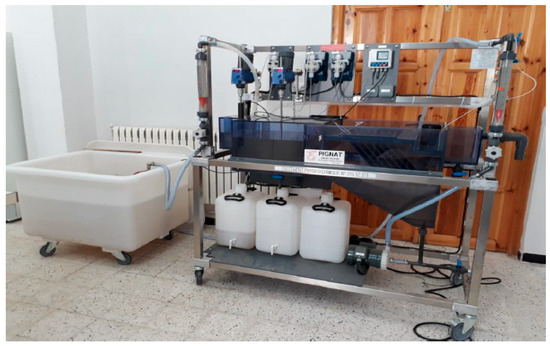
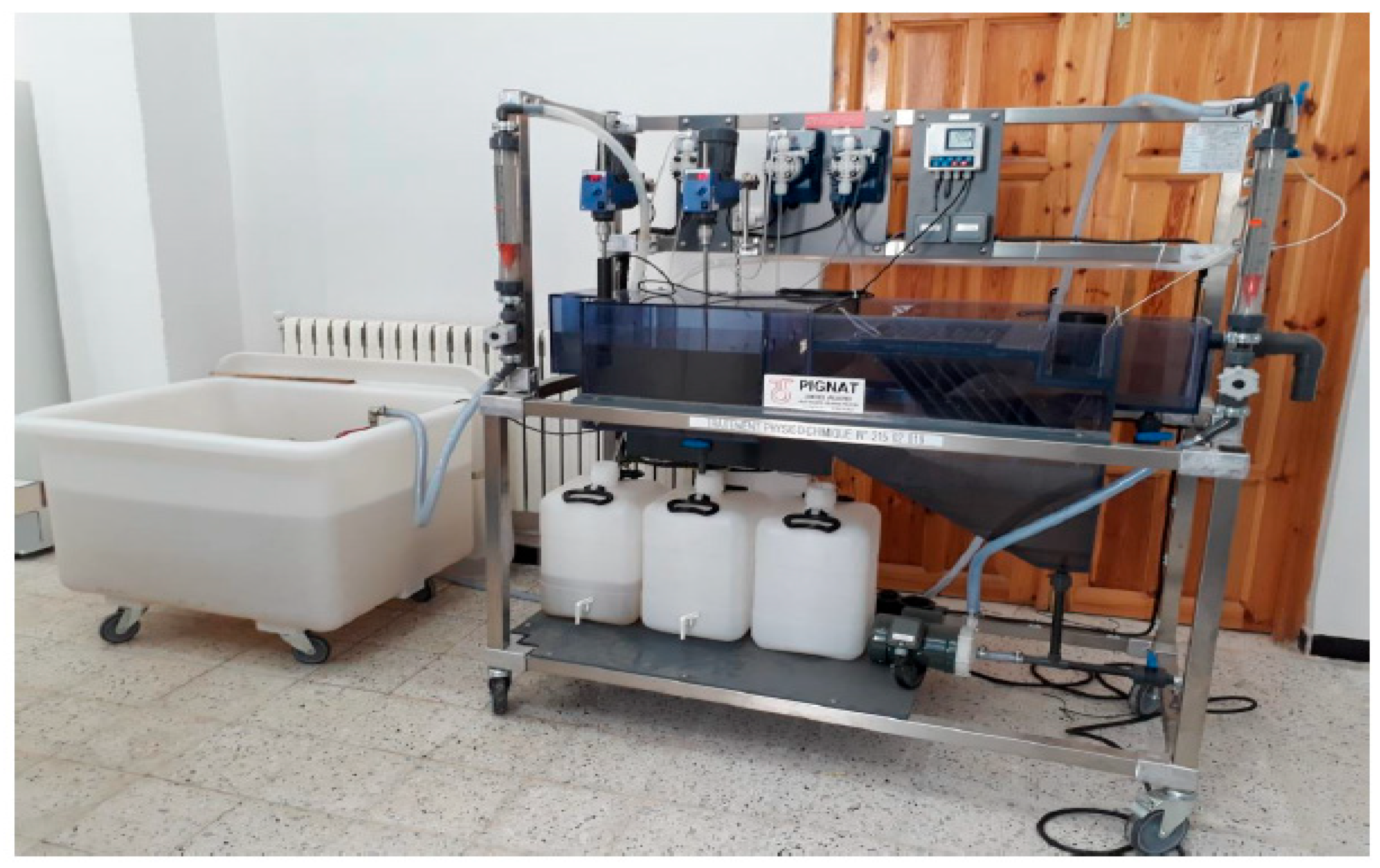
The coagulation–flocculation–settling pilot plant is a simulation of a physical–chemical water treatment process on a semi-industrial scale. It contains equipment similar to that found in treatment plants: a coagulation zone, a flocculation zone, and a settling tank (Figure 3) [24,28].
Figure 3.
Coagulation flocculation sedimentation pilot.
The equipment contains these essential elements [24]:
A 300 L feed tank equipped with a submersible centrifugal pump to keep the tank agitated at all times.
- ❖
- A feed valve with a flow set to regulate the feed rate.
- ❖
- A coagulation reactor with a high-speed agitator, where the coagulant is injected from a metering pump with a metered flow rate.
- ❖
- A flocculation reactor with a low-speed agitator, where the flocculant is added using a metering pump equipped with a flow meter.
- ❖
- A settling tank (100 L).
- ❖
- Tanks with 20 L capacity for storing the various reagents (coagulant, flocculant, and buffer solution).
The experimental pilot study was carried out for the coagulant that gave the best turbidity removal performance (Ca-NaOH). In this case, coagulation, flocculation, and settling were carried out at a raw water feed rate of Q1 = 150 L/h for one hour, whereas the coagulant feed rate is calculated from the optimum coagulant dose and the feed rate (Q1). The optimal coagulant dose was 4 mL/L, meaning that 600 mL of coagulant is required to treat 150 L of water. The total coagulant volume was diluted 10 times to make it easier to calculate and inject the coagulant, giving 6 L of coagulant.
Since the residence time was 1 h, the coagulant flow rate was:
Q2 = 6 L/h
3. Results and Discussions
The experimental results obtained, along with those calculated during this study, are presented and discussed in this section. As previously mentioned, the experimental program included the following:
- ❖
- The characterization of Cactus powder;
- ❖
- The extraction and purification of natural coagulants using various physical (grinding, sieving, etc.) and chemical (NaOH, HCl, etc.) processes and treatments;
- ❖
- The investigation of the effect of Cactus with the various treatments considered on the improvement of physico-chemical water parameters (turbidity, TDS, salinity, conductivity, pH, TSS, total alkalinity) and bacteriological parameters (TC and ASRB);
- ❖
- The application of the bio-coagulant at an industrial scale (coagulation–flocculation–settling pilot plant).
3.1. Characterization of Cactus Powder
3.1.1. XRD and FTIR Analysis
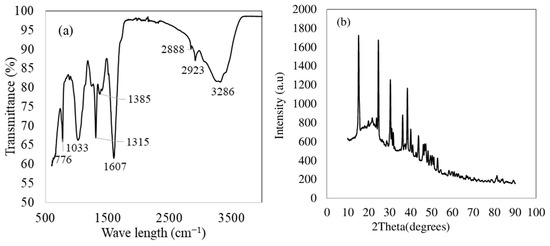
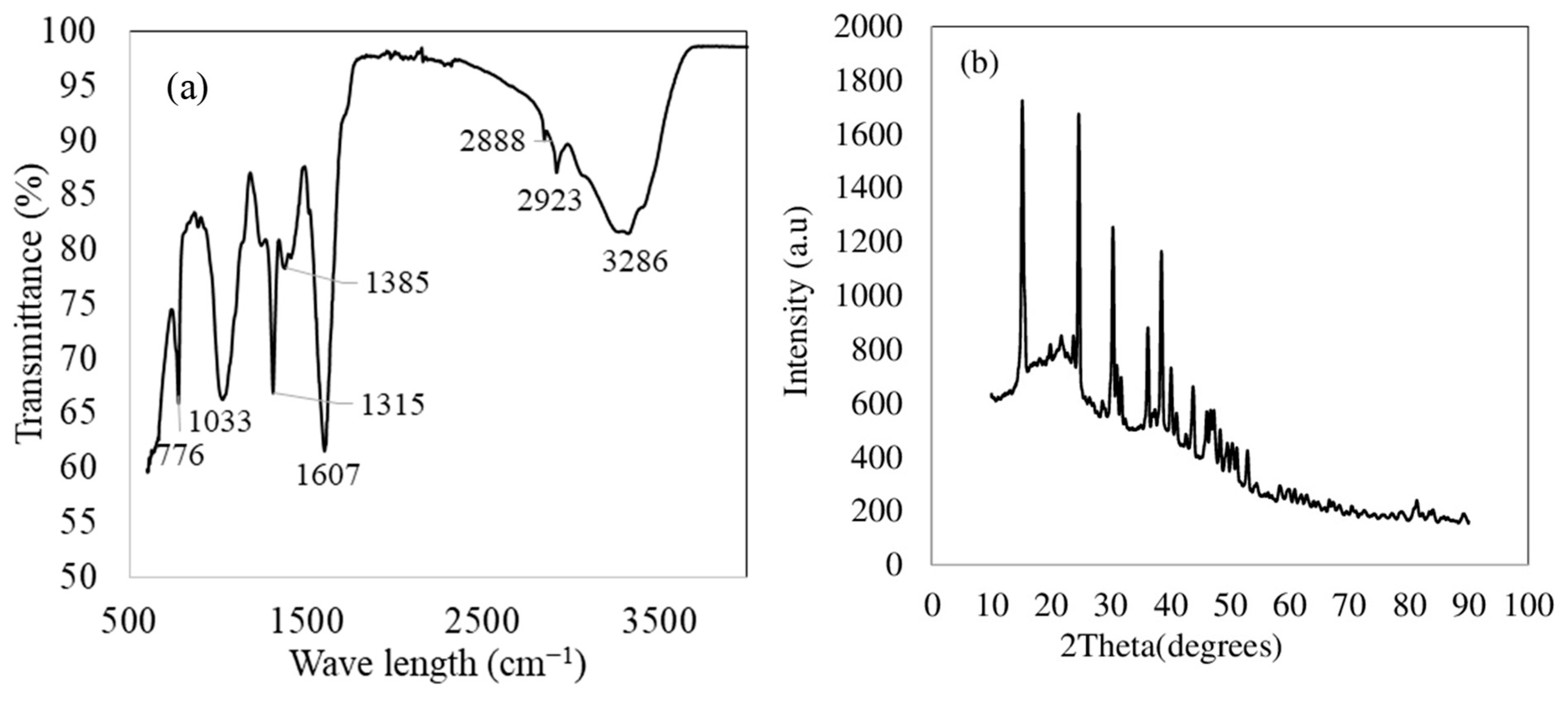
X-ray analysis (XRD) was employed to identify the crystalline phases present in the biomaterials. Theoretically, there are three phases: amorphous, crystalline, or semi-crystalline, depending on the nature of the material [29,30]. Figure 4a shows the XRD pattern of powdered Cactus. Hence, numerous active components, including carbohydrates, proteins, tannin, glucose, and flavonoid were observed in the peaks between 15 and 40 degrees. These substances are able to destabilize the negatively charged colloidal particles and remove turbidity, TSS, total coliform, and anaerobic sulfite-reducing bacteria from the drinking water [31,32,33]. Comparable active compounds were identified in other natural coagulants, including Moringa oleifera and oak leaves, which were used for wood processing and water treatment [33,34].
Figure 4.
Cactus leaves (a) X-ray diffraction pattern and (b) Infrared spectrum.
In Figure 4b, the spectrum of powder Cactus confirms the presence of functional groups corresponding to active agents that are responsible for coagulation: carboxyl group (COOH) at 1607 cm−1 [35,36] and the CO, C, and OH groups at 1033 cm−1 in carbohydrates [37,38]. Their active functional groups act as adsorption sites for colloidal particles and suspended solids [19,23,39].
3.1.2. SEM Analysis
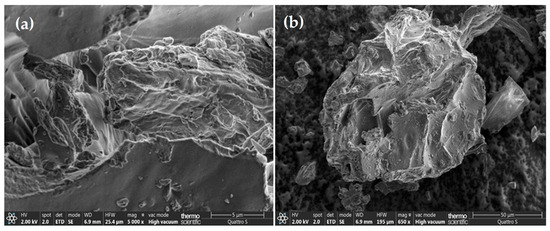
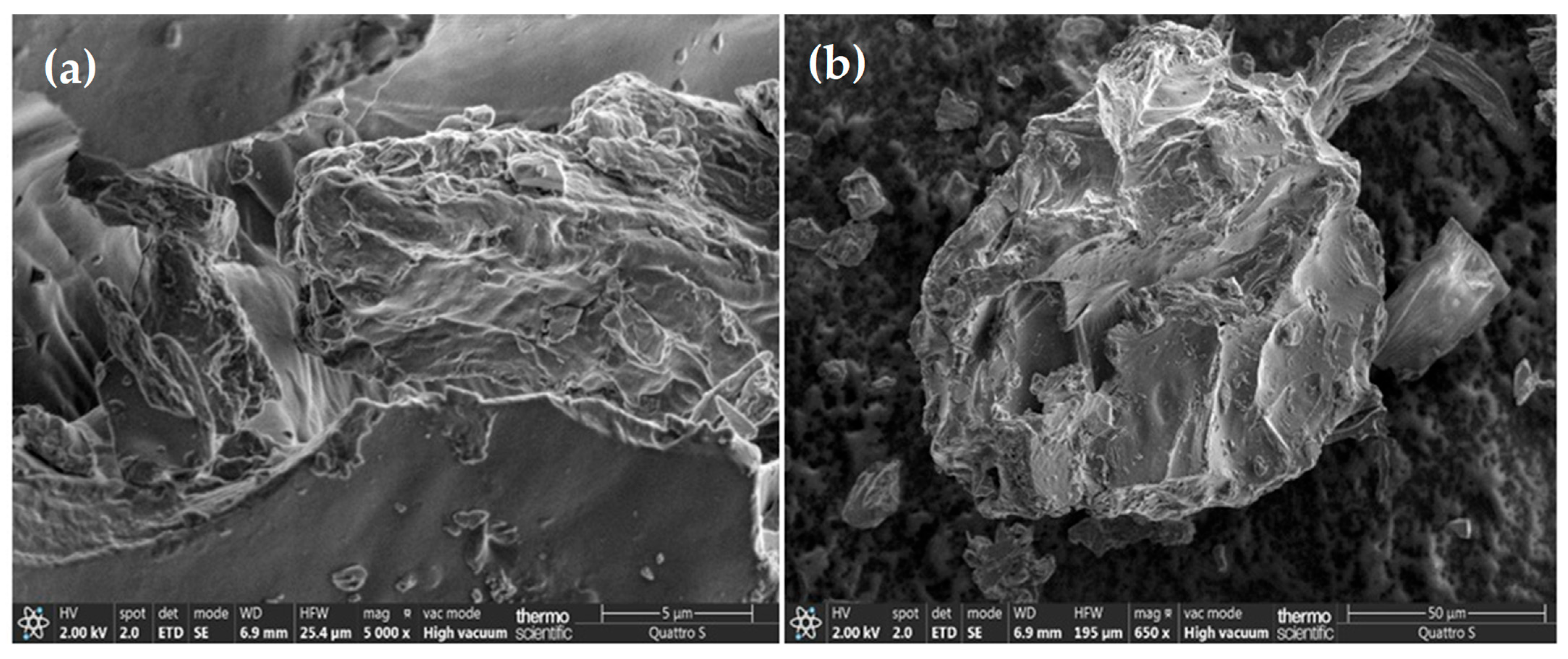
Figure 5a,b represents the surface morphology of the powdered coagulant: 5 µm (a) and 50 µm (b), which confirm the heterogeneous nature of these materials. Due to the presence of functional groups such as carbohydrates, proteins, tannin, glucose, and flavonoid in Cactus, this structure is beneficial to the coagulation and flocculation processes [31]. In addition, the presence of fibrous networks enhances pollutant adsorption and supports bridging mechanisms in aqueous systems [40,41].
Figure 5.
Cactus leaves SEM: (a) 5 µm and (b) 50 µm.
3.1.3. MALDI TOF Mass Spectrometry
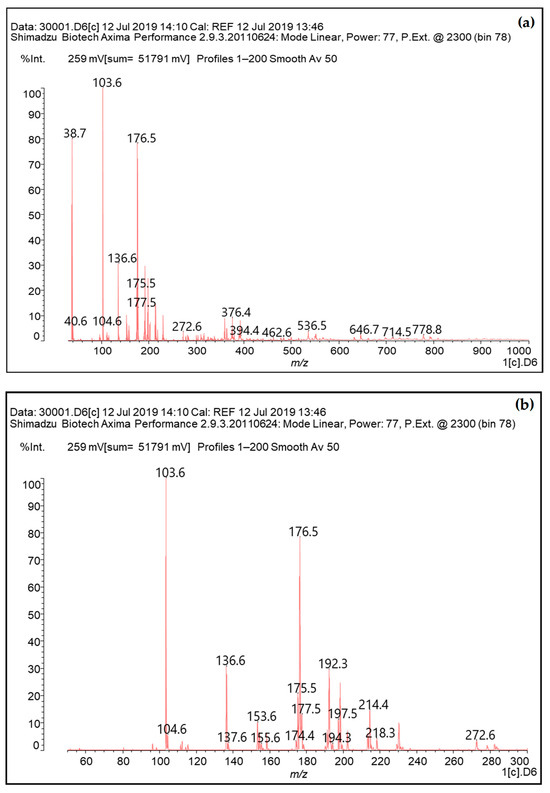
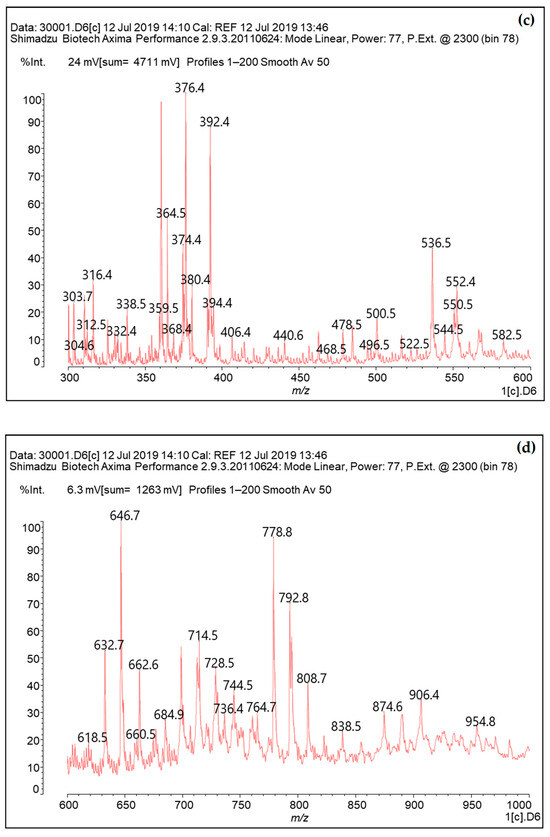
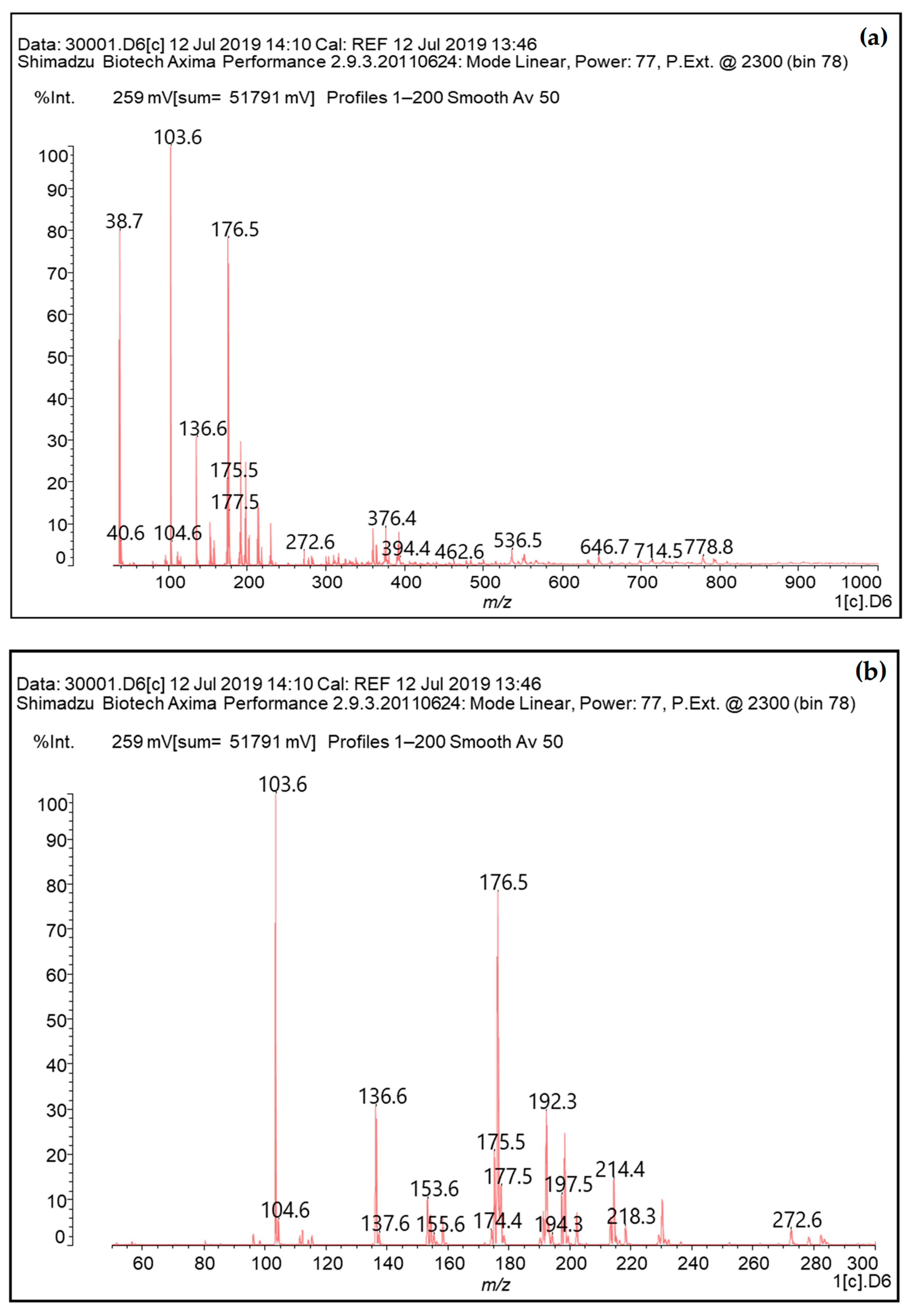
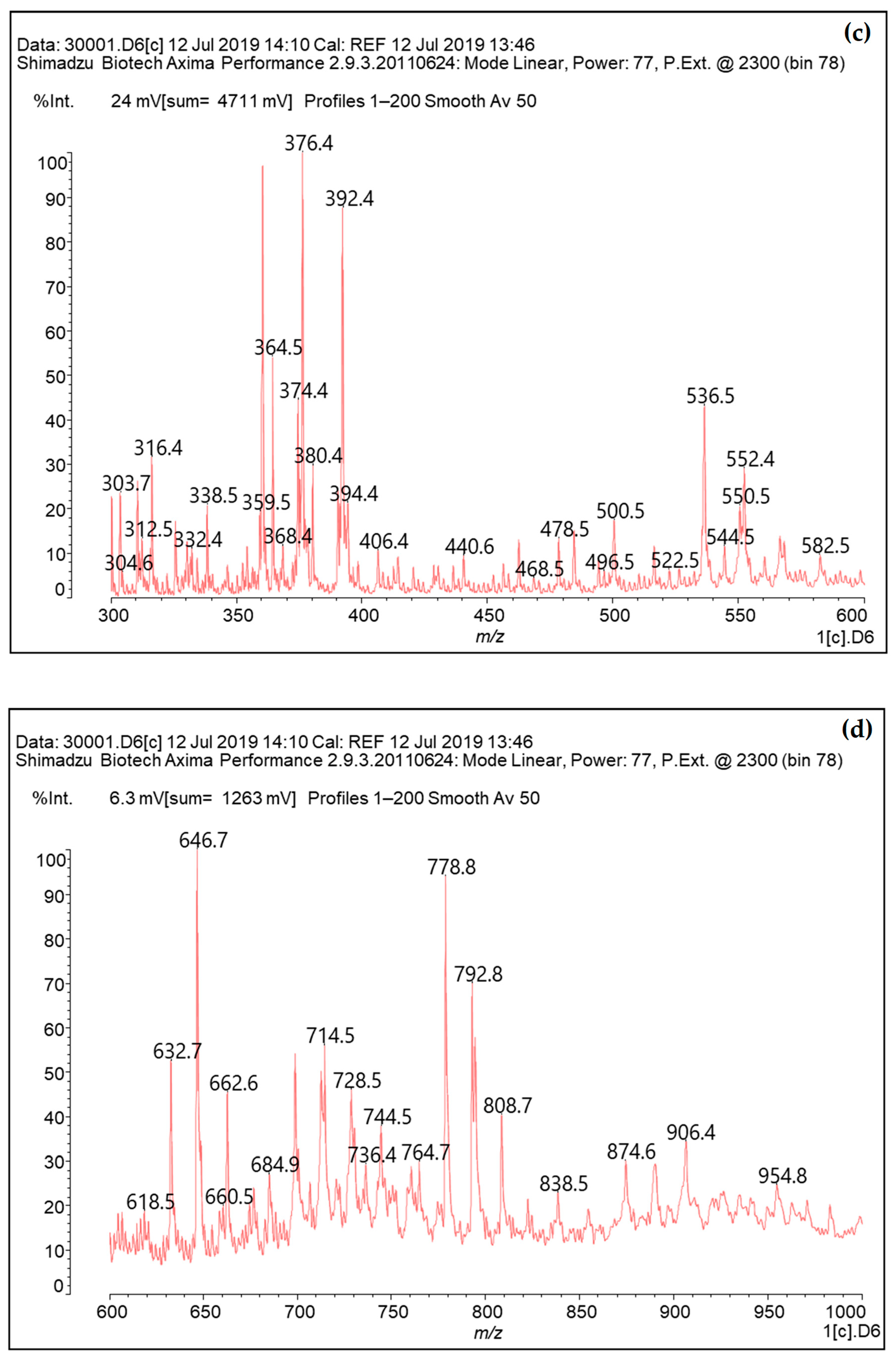
Figure 6 shows the MALDI-TOF characterization of Cactus powder.
Figure 6.
Cactus leaves MALDI-TOF (a–d).
The MALDI interpretation is rather complex, as there are condensed tannin fragments, or better, flavonoids monomers, mixed with compounds from hydrolysable tannins plus other types of compounds known to be present in Cactus.
136.6–137.6 Da = p-hydroxybenzoic acid;
174.4 Da = amino acid arginine (very little);
176.5 Da = either Vitamin C or protocatechuic acid. As Vitamin C is known to exist abundantly in Cactus the opinion is that this peak is mostly due to vitamin C, not Na+;
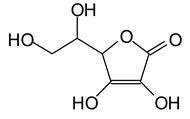
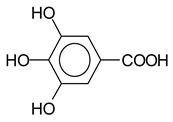
192.3 Da = Gallic acid with Na+;
194.3 Da = galacturonic acud or glucuronic acid fromdegradation of carbohydrates, no Na+;
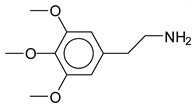
214.4 Da = Mescaline (very small quantity);
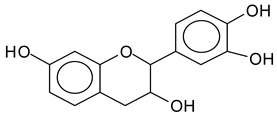
272.6 Da = fisetinidine, no Na+, deprotonated;
302 Da = ellagic acid, no Na+;
303.7 Da = quercetine, no Na+;
304.6 Da = gallocatechin, no Na+, deprotonated;
316.4 Da = Catechin protonated, with Na+;
325 Da = ellagic acid with Na+;
536.5 Da = alpha- and/or beta-carotenes + 544.5 da = Fisetinidin dimer, no Na+;
550.5–552.4 Da = Betalain, no Na+;
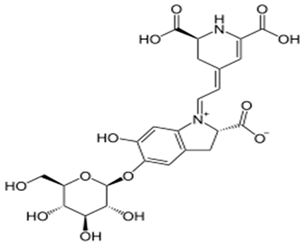
560 Da = fisetinidin-catechin dimer, no Na+; or carotene with Na+;
576 Da = Catechin-Catechin dimer, no Na+;
582.5 Da = same as 560 Da but with Na+;
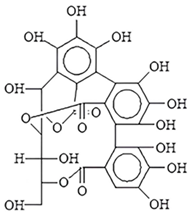
632.7 Da = Vescaline or/and Castaline, obtained by degradation/rearrangement of a hydrolysable tannin. No Na+;
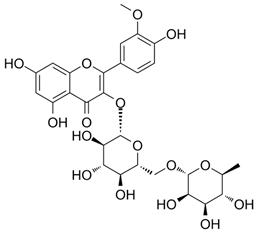
646.7 Da = Narcissin, with Na+;
660.5 Da = trigalloyl glucose, with Na+;
689 Da = probably a glucose tetramer with Na+;
760 Da = Fisetinidin((glcose)3, thus a fisetinidine linked to a 3 glucoses chain, no Na+;
778.8 Da = Catechin-(glucose)3 thus a catechine linked to a 3 glucoses chain, no Na+, protonated;
792.8 Da = tetragalloylglucose, no Na+;
808.7 Da = Narcissin-glucose, with Na+, thus a narcissin, where the glucose chain is longer than one glucose;
838.5 Da = Fisetinidin trimer with Na+;
874.6 Da = Fisetinidin-Catechin-Catechin trimer, with Na+;
886 Da = Catechin trimer, with Na+;
906.4 Da = Gallocatechin-Catechin-Catechin trimer protonated, with Na+;
954.8 Da = Castalagine and/or Vescalagine deprotonated, with Na+, obtained by degradation/rearrangement of a hydrolysable tannin.
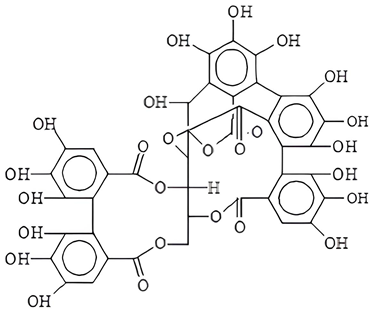
It seems that the principal components of the Cactus leaves extract are composed of a mixture of flavonoid tannins and hydrolysable tannins, with the condensed tannins being in general linked to carbohydrate chains. The normal rearrangement compounds of hydrolysable tannin extraction are present such as Castalagin/Vescalagin and Castalin/Vescalin. Pentagalloyl glucose itself is not detected in the analysis but its hydrolysis byproducts such as tetragalloyl glucose and trigalloylglucose ae present and detected, indicating that pentagalloyl glucose and its oligomers are present before extraction. There are also a glucose or glucose mannose tetramer residues of hydrolysed hemicelluloses and carbohydrate degradation products such as glucuronic and galacturonic acids. Some unusual compounds are also present in very minor amounts, these being mescaline and Betalaine.
This is all that can be gathered from the analysis. There are some major peaks, namely the 359, 376, 392 Da ones, that were not possible to identify. These three peaks, being separated by 16–17 Da intervals, indicate the presence of two –OH groups and suggest that they are likely to be flavonoid compounds attached to something else, possibly a carbohydrate residue. Similarly, it was not possible to identify the smaller cluster between 714 Da and 744 Da.
3.2. Effects of Various Cactus Coagulants on Water Physicochemical Parameters
3.2.1. Effect of Coagulant Dosage on Turbidity Removal
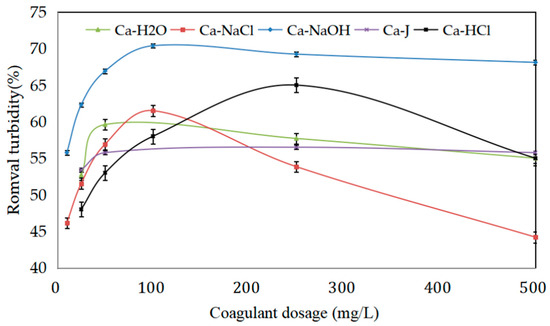
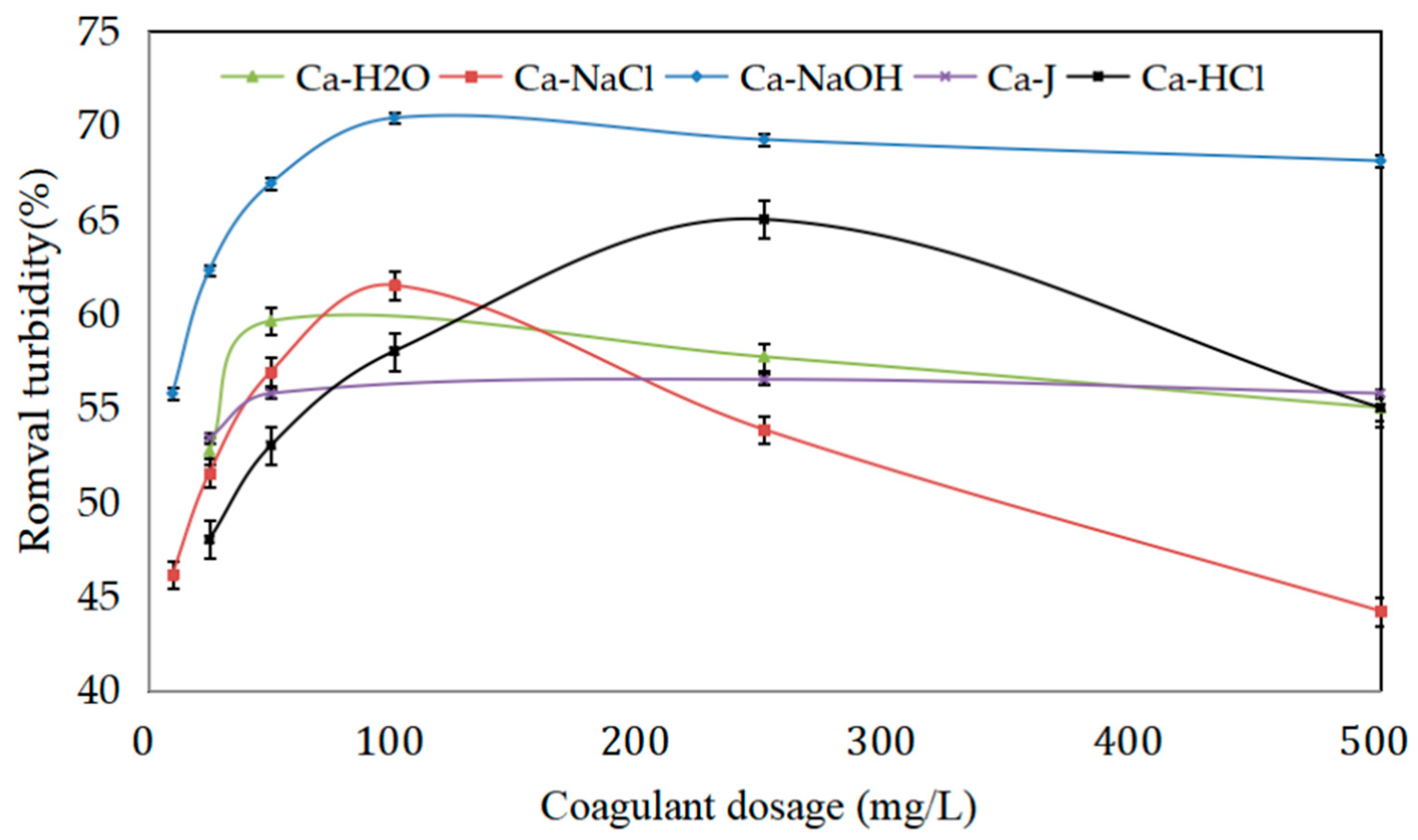
Figure 7 shows the turbidity removal efficiency as a function of the coagulant dosage added with the different treatments used: Ca-J, Ca-H2O, Ca-NaCl (0.5 M), Ca-NaOH (0.05 M), and Ca-HCl (0.05 M). In this study, chemical solvents were used to improve the extraction yield of coagulant agents present in Cactus. According to the literature, the nature of the active substance is a polysaccharide [42,43]. The solvent attacks the extracellular matrix and cuts the interaction between the polysaccharides and the phenolic compounds of the coagulant. This phenomenon, combined with the action of proteolytic enzymes, promotes the release and solubilization of polysaccharides [41].
Figure 7.
Effect of coagulant dosage on turbidity removal using various solvents.
Figure 7 clearly shows that all the treatments and solvents used have a significant and variable impact on the turbidity removal from the water, with a percentage removal of 56.5, 59.6, 61.5, 70.38, and 65% after the Ca-J, Ca-H2O, Ca-NaCl (0.5 M), Ca-NaOH (0.05 M), and Ca-HCl (0.05 M) treatments, respectively, noting that the initial turbidity was 26 NTU.
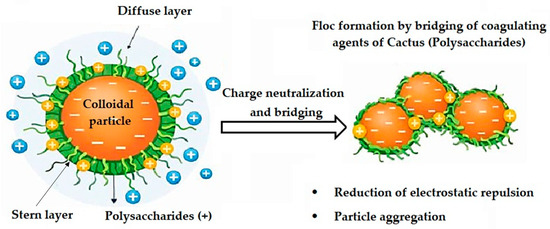
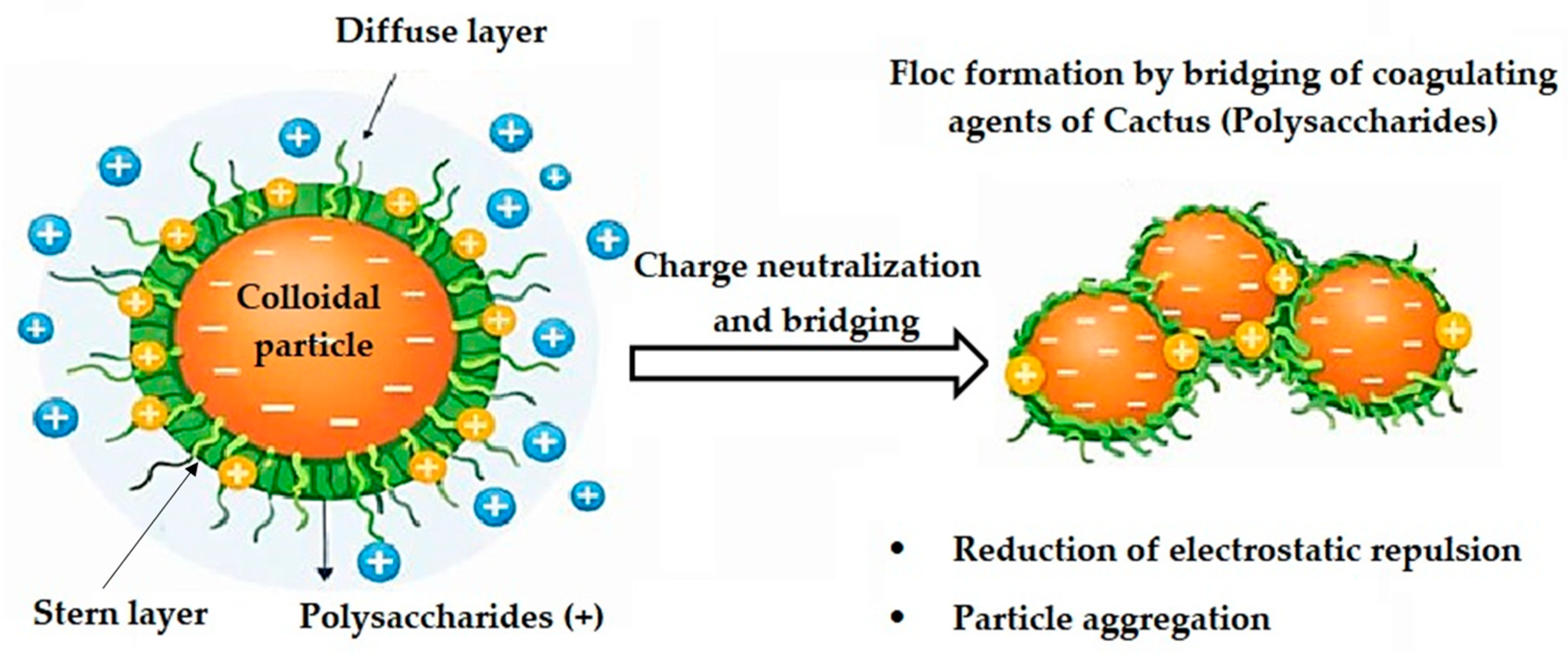
Colloids in raw water are generally negatively charged (as a result of structural defects in the crystal lattice and the ionization of surface chemical groups, among other factors). Positive ions, whether naturally occurring in raw water or externally introduced, form a surrounding layer around the colloid to neutralize its negative surface charge. Various theories have been put forward (Figure 8) [44,45].
Figure 8.
The double layer theory with a bio-coagulant.
- ❖
- Helmholtz theory: a layer of positive ions completely covers the surface of the colloid, ensuring the neutrality of the whole (adhered or fixed layer).
- ❖
- Gouy–Chapman theory: the layer of positive ions is unevenly distributed around the colloid; neutrality is achieved at greater distances (diffuse layer).
- ❖
- Stern’s theory, which combines the two previous theories and considers the formation of a double layer, states that the first layer adheres to the colloid, where the potential decreases rapidly. The second layer is more diffuse, with a slower decrease in potential [46].
The addition of a higher dosage than the optimum dose results in an increase in turbidity, which leads to the re-stabilization of colloidal particles and prevents the formation of inter-particle bridges. As a result, the water will be highly charged with coagulant, leading to higher turbidity [23].
3.2.2. Effect of Coagulant Dosage on pH, Alkalinity, Conductivity, and TDS
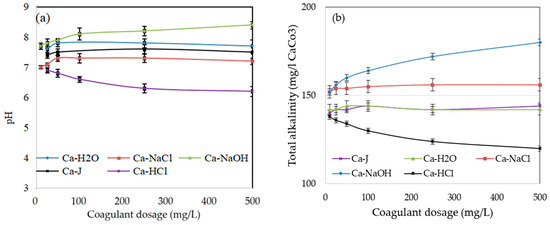
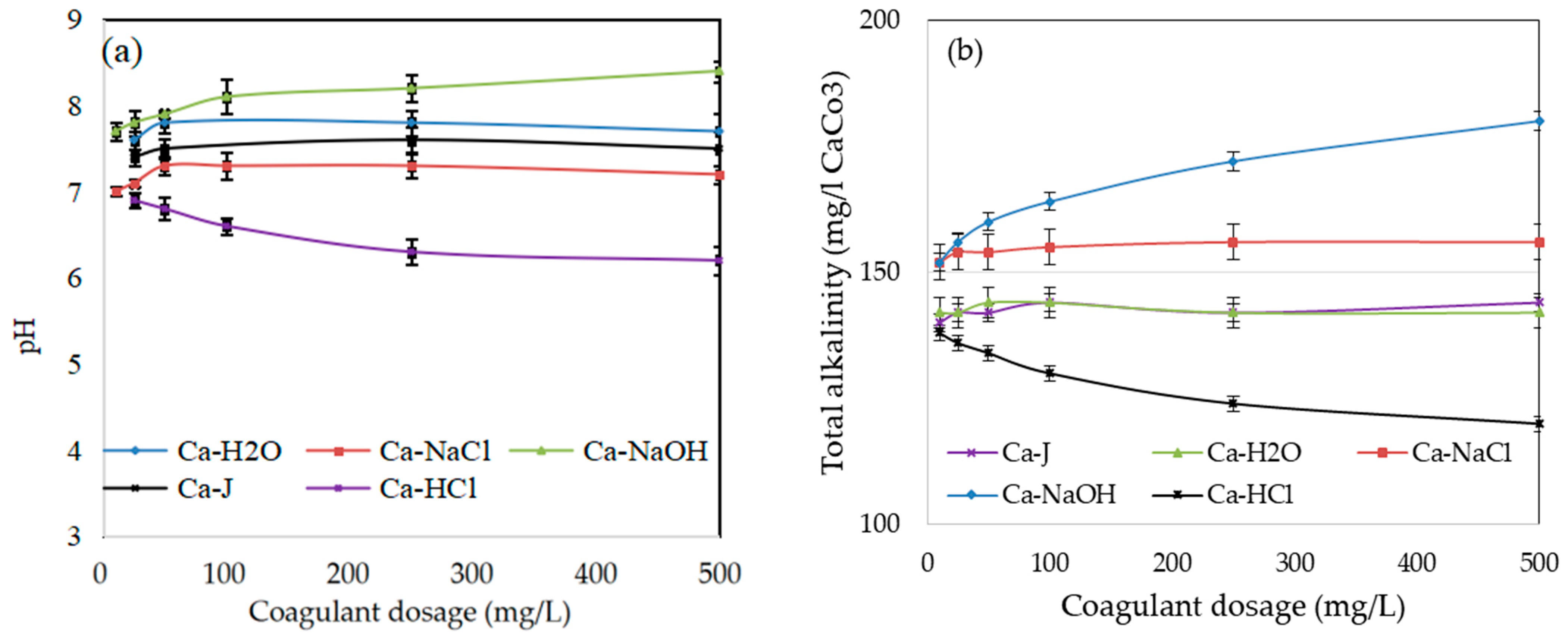
Figure 9a shows that the coagulant for the Ca-J, Ca-H2O, and C-NaCl (0.5 M) tests slightly affects the pH of the raw water, which can be explained by the nature of the solvent used.
Figure 9.
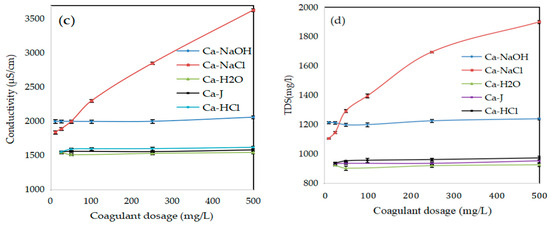
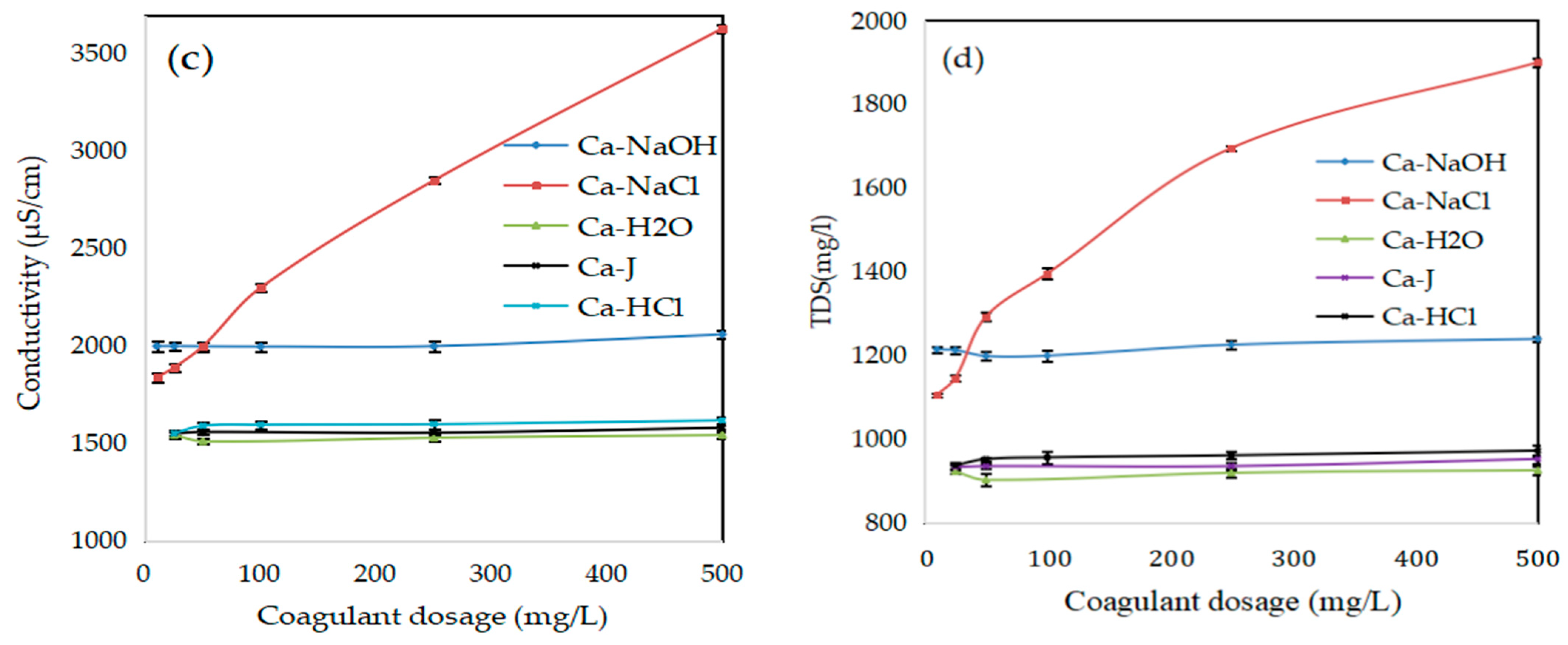
Effect of coagulant dosage on: (a) pH, (b) total alkalinity, (c) conductivity, and (d) TDS.
Figure 9a also confirms that when an HCl solution is used as a solvent, by increasing the dosage of coagulant, the pH of the raw water decreases to a minimum (6.2)—the decrease in pH being linked to the release of H+. On the other hand, the pH increases proportionally to the coagulant dosage obtained from Cactus leaves with NaOH solutions; this increase can be justified by a release of hydroxide (OH) [10]. Consequently, pH evolution in this study should be considered an inherent part of the coagulation mechanism rather than a separately controlled operational parameter.
The alkalinity of water corresponds to the presence of bases and salts of weak acids. In drinking water, alkalinity most generally results from the presence of hydrogen carbonates, carbonates, and hydroxides [22]. Other salts of weak acids can also be measured and interfere with the measurement: humic acids, phosphates, citrates, tartrates, etc. Ionic silica can also interfere, particularly when the pH is greater than 8.5. The total alkalinity corresponds to the sum:
Figure 9b indicates that the various coagulants tested have a negligible effect on TAC, except for NaOH. When using NaOH as a solvent, the increase in total alkalinity is due to the release of OH− [23].
The electrical conductivity of water is influenced by the type, concentration, and mobility of ions present, along with the nature of the medium. It provides a general indication of the quantity of dissolved solids in water, with higher conductivity usually indicating a greater presence of mineral substances [4]. Thus, according to Figure 9c, in the case of the coagulant extracted with the NaCl solution, increasing the extraction dosage clearly results in higher electrical conductivity, which can be justified by the increase in Na+ and Cl− ions in the water due to the high salt concentration in the coagulant (0.5 M).
Figure 9d shows the evolution of TDS in water treated with different coagulants extracted from Cactus as a function of the coagulant dosage. It can be seen that the evolution of TDS is identical with the evolution of conductivity, since TDS represents the total dissolved matter in the water, including salts and, therefore, the presence of ions. If the quantity of dissolved salt increases, the conductivity and TDS increase [23].
3.2.3. Effects of Optimum Dose for Each Coagulant on TSS, TC and ASRB
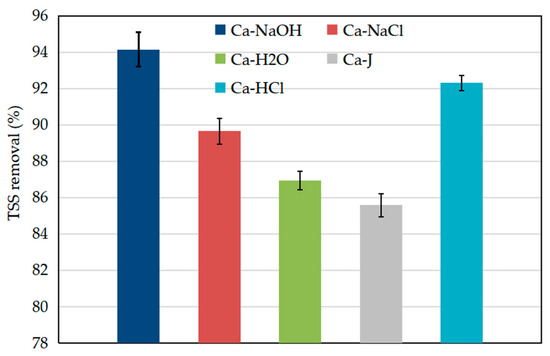
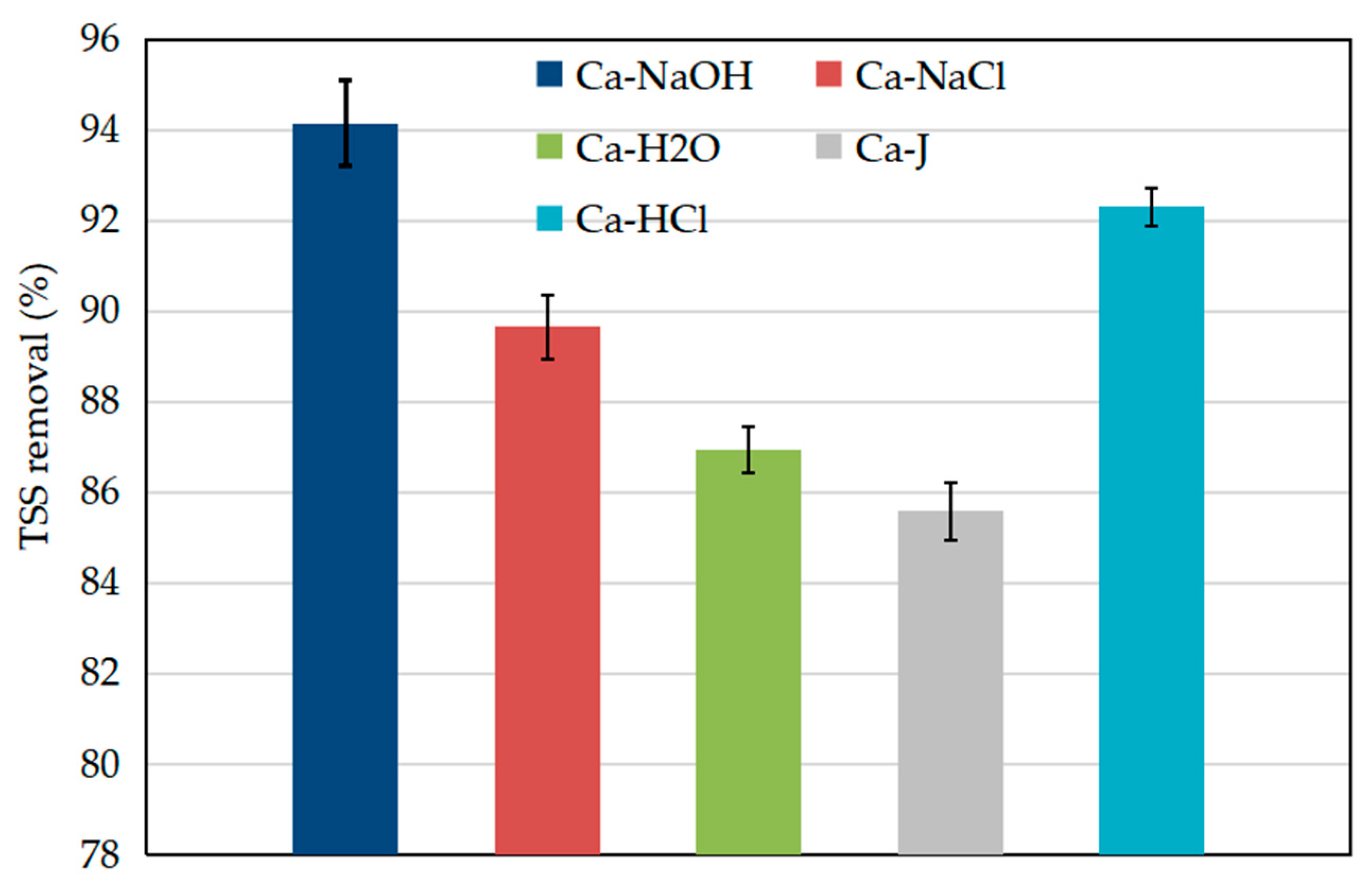
The results of total suspended solids removal using the optimum dose of each coagulant (Ca-J, Ca-H2O, Ca-NaCl, Ca-NaOH, and Ca-HCl) are shown in Figure 10. In this case, TSS removal from the water was 85.58%, 86.94%, 89.64%, 92.29%, and 94.15% after treatment with the following coagulants: Ca-J, Ca-H2O, Ca-NaCl (0.5 M), Ca-HCl (0.05 M), and Ca-NaOH (0.05 M), respectively. This order of TSS removal efficiency by the different coagulants is identical with the order of turbidity removal efficiency, as water turbidity is directly related to TSS. The coagulation mechanism using an organic coagulant is due to the active compounds, which help eliminate turbidity and TSS via the electrostatic mechanism (surface phenomena) [47,48]. The electrostatic mechanism involves the surface contact of charges between the Cactus and the negatively charged colloidal particles, triggering the coagulation process. In this part, we obtained a high solubility of the active components at 0.05 M NaOH [10,23]. This concentration can be considered as the optimum concentration used for extracting the active components of Cactus to improve the performance of the coagulation–flocculation process.
Figure 10.
Effect of optimal coagulant dosage on TSS removal.
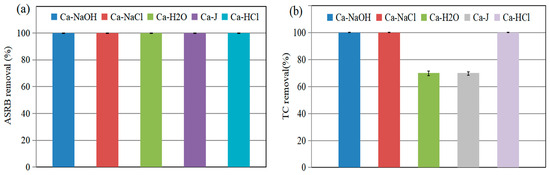
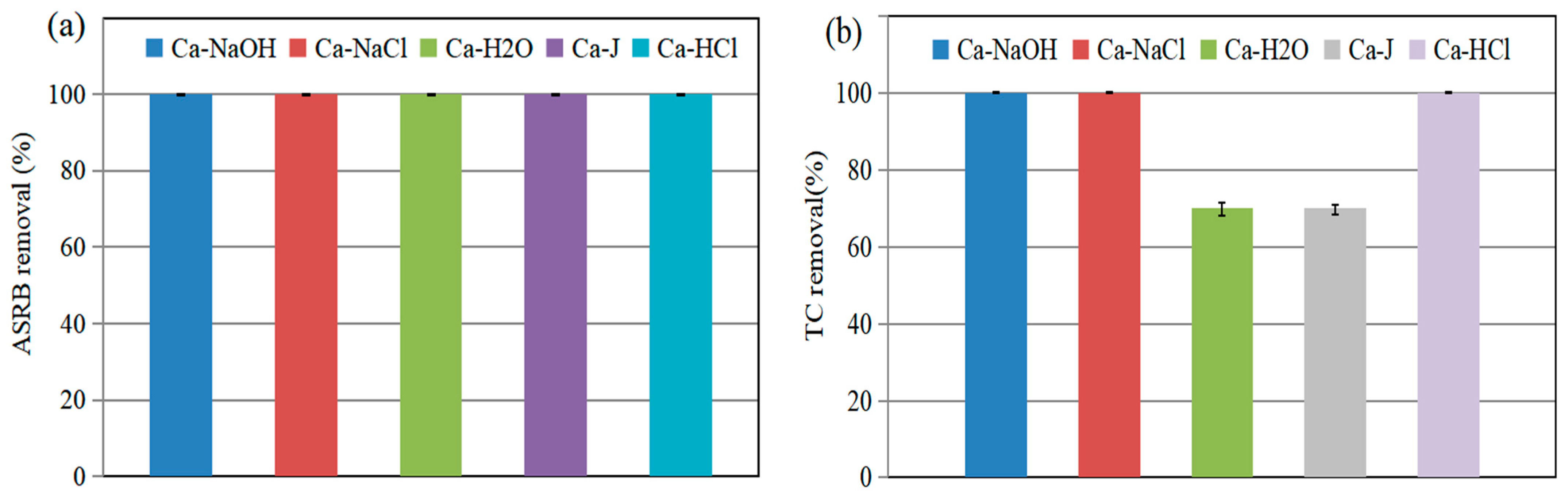
Figure 11a,b show the effect of the optimum coagulant dosage on the percentage removal of anaerobic sulfite-reducers (ASRB) and total coliforms (TC) for the different treatments considered: Ca-J, Ca-H2O, Ca-NaCl (0.5 M), Ca-HCl (0.05 M), and Ca-NaOH (0.05 M).
Figure 11.
Effect of optimal coagulant dosage on: (a) ASRB removal and (b) TC removal.
Bacteriological analysis results show that the various bio-coagulants used are highly effective in removing ASRB and TC from raw water. The ASRB removal efficiency was 100% for all bio-coagulants (Ca-J, Ca-H2O, Ca-NaCl (0.5 M), Ca-HCl (0.05 M), and Ca-NaOH (0.05 M). Similarly, for total coliforms, the maximum reduction was 70, 70, 100, 100, and 100% when using Ca-J, Ca-H2O, Ca-NaCl (0.5 M), Ca-HCl (0.05 M), and Ca-NaOH (0.05 M), respectively.
The antimicrobial activity of Cactus is thought to be due to the ability of the active components responsible for coagulation (carbohydrates, proteins, tannin, glucose and flavonoid) to attract and neutralize charged molecules, resulting in the formation of flocs [33].
Several researchers have reported the antimicrobial activity of organic coagulants [49,50,51]. Natural coagulants derived from various bio-materials have shown promising effects on the microbiological quality of drinking water, contributing to the removal of harmful bacteria and viruses such as coliforms, E. coli, and streptococci. Moringa oleifera seeds have been reported as an environmentally friendly alternative to conventional disinfectants. Suarez et al. identified and characterized a cationic polypeptide within these seeds, which not only reduces water turbidity but also exhibits antibacterial properties, effectively removing various human pathogens present in water [52]. Broin et al. tested the potential of flocculant proteins purified from Moringa oleifera seeds for bacterial aggregation in water treatment [53]. Madsen et al. observed a 90–99.99% bacterial elimination with Moringa oleifera seeds as a natural coagulant in water purification processes traditionally applied in Sudan [54]. Ghebremicha et al. evaluated the antibacterial activity of proteins isolated from Moringa oleifera extracts using ion exchange methods. These proteins were applied as coagulants and flocculants in combination with aluminum sulfate for drinking water treatment. The results showed that approximately 65% of Escherichia coli was removed [55]. According to Poumaye et al. the Moringa oleifera-based coagulant eliminated 95%, 62%, and 47% of Clostridium, Streptococci and Escherichia coli, respectively [56], while the use of Carica papaya as a natural coagulant reduced the number of E. coli present in the treated water by around 88% [57].
3.3. Coagulation Flocculation Settling on a Semi-Industrial Scale
The coagulation–flocculation pilot tests were conducted for applied treatment, which showed remarkable efficiency in the jar tests carried out at the laboratory level. The coagulant with the highest turbidity removal efficiency is Ca-NaOH. Measurements of physico-chemical parameters were taken for 30 min of settling (see Table 3). The table also shows a comparison between the continuous system (pilot) and the discontinuous system (jar test) during treatment with Ca-NaOH. The results obtained show the following:
Table 3.
Characterization of treated water after treatment with bio-coagulant (Ca-NaOH) under optimal conditions (coagulant dosage = 4 mL/L and pH = 7.8).
- ❖
- The bio-coagulant (Ca-NaOH) has a positive effect on drinking water quality during treatment on the jar test and on the pilot coagulation floccualtion decantation.
- ❖
- The application on semi-industrial scales has produced good results.
- ❖
- The results of the jar test and the pilot are almost identical.
- ❖
- The turbidity reduction was 70.38% and 66.65% for the jar test and pilot-scale, respectively.
- ❖
- For the other parameters (pH, total alkalinity, total hardness, electrical conductivity, TSS, and salinity), the small differences between the jar test and pilot-scale results can be justified by the large scale of the pilot compared to the laboratory scale.
4. Conclusions
All experiments conducted in this study utilized natural raw water with an initial turbidity of 26 NTU and in the presence of total coliforms and sulfite-reducing anaerobes obtained from a drinking water treatment plant in Oued El Athmania, Mila. The results obtained in this study show that Cactus is capable of reducing total coliforms and sulfite-reducing anaerobes, as well as turbidity and suspended solids.
The findings of this study allow for the following general conclusions:
- ❖
- The use of Cactus as a bio-coagulant with different treatments gave a 100% total coliform removal rate for all coagulants used. However, the removal rate of sulfite-reducing anaerobic bacteria reached 70% for Ca-J, Ca-H2O and 100% for Ca-NaCl (0.5 M), Ca-HCl (0.05 M), Ca-NaOH (0.05 M).
- ❖
- The turbidity removal efficiency was 56.5, 59.6, 61.5, 70.38 and 65% using Ca-J, Ca-H2O, Ca-NaCl (0.5 M), Ca-NaOH (0.05 M), Ca-HCl (0.05 M), respectively.
- ❖
- The TSS removal was 85.58, 86.94, 89.64, 92.29 and 94.15% when using: Ca-J, Ca-H2O, Ca-NaCl (0.5 M), Ca-HCl (0.05 M), Ca-NaOH (0.05 M), respectively.
- ❖
- The results of the test jar and pilot are almost identical; for example, the maximum turbidity reduction was 70.38% and 66.65% for the jar test and pilot, respectively.
- ❖
- Application on semi-industrial scales has produced good results.
5. Performance Comparison with Reported Bio-Coagulants
The treatment performance obtained in this study is comparable to that reported for other natural and Cactus-based coagulants, confirming the competitiveness and practical potential of the proposed approach (See Table 4).
Table 4.
Comparison of the performance of Cactus-based coagulants and other bio-coagulants.
6. Process and Economic Considerations
From a process and economic standpoint, the pH variation induced by the coagulant addition does not represent an additional treatment step. Since pH modification occurs simultaneously with coagulation, no external pH-adjusting reagents, auxiliary equipment, or additional operational units are required. As a result, the influence of pH is inherently included in coagulant consumption, simplifying the treatment scheme and potentially reducing overall chemical and operational costs compared to conventional coagulation systems.
7. Prospects and Future Research Directions
In light of the findings reported above, the following future research perspectives and directions are recommended:
- ✓
- A study of the removal efficiency of various organic and inorganic pollutants (carbon and nitrogen loads, dyes, etc.) using Cactus in the coagulation–flocculation process;
- ✓
- Optimization and modeling of the coagulation flocculation process for eliminating turbidity, TSS, total coliform, etc., using Cactus as a bio-coagulant;
Finally, a technical, economic, and environmental study on the use of Cactus as an organic coagulant for water treatment is recommended.
Author Contributions
Conceptualization, A.B., O.B., A.K. and K.D.; methodology, A.B., O.B., A.K., K.D. and L.A.; formal analysis, A.B. and K.D.; investigation, A.B. and K.D.; data curation, A.B., A.K., K.D. and A.P. (Antonio Panico); writing—original draft preparation, L.A., A.B., K.D., A.P. (Antonio Pizzi) and G.T.; writing—review and editing, A.B., K.D., A.P. (Antonio Panico) and A.P. (Antonio Pizzi); supervision, K.D., A.B. and A.P. (Antonio Pizzi); project administration, A.B., K.D. and A.P. (Antonio Panico). All authors have read and agreed to the published version of the manuscript.
Funding
This research received no external funding.
Data Availability Statement
The original contributions presented in this study are included in the article. Further inquiries can be directed to the corresponding author.
Acknowledgments
This work was supported by the École Nationale Polytechnique de Constantine (Algeria) and the Ecole Normale Supérieure de Constantine (Algeria).
Conflicts of Interest
The authors declare no conflicts of interest.
Abbreviations
| ASRB | Anaerobic sulfite-reducing bacteria |
| Ca-H2O | Cactus extract using distilled water as a solvent |
| Ca-HCl | Cactus extract using HCl as a solvent |
| Ca-J | Cactus Juice |
| Ca-NaCl | Cactus extract using NaCl as a solvent |
| Ca-NaOH | Cactus extract using NaOH as a solvent |
| Ca-P | Cactus powder |
| FC | Fecal coliforms |
| FTIR | Fourier-Transform Infrared Spectrophotometry |
| Lab | Laboratory |
| MALDI-TOF | Matrix Assisted Laser Desorption Ionization-Time of Flight |
| MPN | Most Probable Number |
| pH | hydrogen potential |
| Rpm | Revolutions per minute |
| SEM | Scanning Electron Microscopy |
| T | Temperature |
| TC | Total Coliform |
| TDS | Total dissolved solids |
| TSS | Total suspended solid |
| XRD | X-ray diffractometer |
References
- WHO. Guidelines for Drinking-Water Quality, 4th ed.; World Health Organization: Geneva, Switzerland, 2011; ISBN 9789241548151.
- Benalia, A.; Derbal, K. Etude Expérimentale et Modélisation Du Processus de La Coagulation Floculation: Application Aux Eaux Destinée a La Consommation. Master’s Thesis, University of Constantine 3, El Khroub, Algeria, 2015. [Google Scholar]
- Benalia, A.; Derbal, K.; Baatache, O.; Lehchili, C.; Khalfaoui, A.; Pizzi, A. Removal of Dyes from Water Using Aluminum-Based Water Treatment Sludge as a Low-Cost Coagulant: Use of Response. Water 2024, 16, 1400. [Google Scholar] [CrossRef] [Scilit]
- Desjardins, R. Traitement Des Eaux; Edition de l’école Polytechnique de Montréal; Presses inter Polytechnique: Montréal, QC, Canada, 1997. [Google Scholar]
- Tony, B.; Barrett, K.M.; Henry, H.; Benjes, J.; Burris, B.; Chang, Y.-J.; Chinn, T.D.; Cronister, H.L., Jr.; Gordon, C.; Dostal, G.; et al. Handbook of Public Water Systems, 2nd ed.; John Wiley & Sons: New York, NY, USA, 2001. [Google Scholar]
- Qu, J.; Liu, J.; Al-dhabi, N.A.; Leng, Y.; Yi, J.; Jiang, K.; Xing, W.; Yin, D.; Tang, W. Ni-EDTA Decomplexation and Ni Removal from Wastewater by Electrooxidation Coupled with Electrocoagulation: Optimization, Mechanism and Biotoxicity Assessment. Sep. Purif. Technol. 2025, 376, 133980. [Google Scholar] [CrossRef] [Scilit]
- Owodunni, A.A.; Ismail, S. Revolutionary Technique for Sustainable Plant-Based Green Coagulants in Industrial Wastewater Treatment—A Review. J. Water Process Eng. 2021, 42, 102096. [Google Scholar] [CrossRef] [Scilit]
- Degrémont SA. Mémento Technique de l’eau, 10th ed.; Degrémont: Paris, France, 2005; Volume 1. [Google Scholar]
- Gautam, S.; Saini, G. Use of Natural Coagulants for Industrial Wastewater Treatment. Glob. J. Environ. Sci. Manag. 2020, 6, 553–578. [Google Scholar] [CrossRef] [Scilit]
- Benalia, A. Extraction et Valorisation des Produits Actifs des Plantes Naturelles en Tant Que Bio Coagulants Utiles dans l’amelioration de Qualite des Eaux. Doctorat Thesis, University of Constantine 3, El Khroub, Algeria, 2023. [Google Scholar]
- Mohammed, T.J.; Shakir, E. Effect of Settling Time, Velocity Gradient, and Camp Number on Turbidity Removal for Oilfield Produced Water. Egypt. J. Pet. 2018, 27, 31–36. [Google Scholar] [CrossRef] [Scilit]
- Koohestanian, A.; Hosseini, M.; Abbasian, Z. The Separation Method for Removing of Colloidal Particles from Raw Water. Euras. J. Agric. Environ. Sci. 2008, 4, 266–273. [Google Scholar]
- Zengjin, W.; Xiaomin, W.; Junlin, Y.; Jinning, S.; Jingyi, C.; Xianchen, L.; Zhao, X. Chronic Exposure to Aluminum and Risk of Alzheimer’s Disease: A Meta-Analysis. Neurosci. Lett. 2016, 610, 200–206. [Google Scholar] [CrossRef] [Scilit]
- Benalia, A.; Derbal, K. Comparative Study between Aluminum Sulfate and Ferric Chloride in Water Treatment: Turbidity Removal. J. Des Dr. 2015, 1, 4–9. [Google Scholar]
- Megersa, M.; Gach, W.; Beyene, A.; Ambelu, A.; Triest, L. Effect of Salt Solutions on Coagulation Performance of Moringa Stenopetala and Maerua Subcordata for Turbid Water Treatment. Sep. Purif. Technol. 2019, 221, 319–324. [Google Scholar] [CrossRef] [Scilit]
- Rebah, F.B.; Siddeeg, S.M. Cactus an Eco-Friendly Material for Wastewater Treatment: A Review. J. Mater. Environ. Sci. 2017, 8, 1770–1782. [Google Scholar]
- Derbe, T.; Dargo, H.; Batu, W. Cactus Potential in Heavy Metal (Pb and Cd) Removal in Water Sample Collected from Rural Area around Adigrat Town. Chem. Mater. Res. 2015, 7, 84–93. [Google Scholar]
- Ndive, J.N.; Obiora-Okafo, I.A.; Onukwuli, O.D. Optimization Studies on the Coagulation–Flocculation Process for PWW Treatment Using Cactus Oputia Extract: Comparative Studies for Performance Evaluation. J. Basic Appl. Res. Int. 2023, 29, 16–31. [Google Scholar] [CrossRef] [Scilit]
- Benalia, A.; Atime, L.; Baatache, O.; Khalfaoui, A.; Ghomrani, A.F.; Derbal, K.; Pizzi, A.; Panico, A.; Bouchareb, E.M.; Bouchareb, R.; et al. Removal of Lead in Water by Coagulation Flocculation Process Using Cactus-Based Natural Coagulant: Optimization and Modeling by Response Surface Methodology (RSM). Environ. Monit. Assess. 2024, 196, 244. [Google Scholar] [CrossRef] [Scilit]
- Bouteflika, A. Valeurs Limites Des Paramètres de Rejets d’effluents Liquides Industriels. J. Off. La République Algérienne 2006, 26, 1–27. [Google Scholar]
- Rice, E.W.; Baird, R.B.; Eaton, A.D. (Eds.) Standard Methods for the Examination of Water and Wastewater, 22nd ed.; American Water Works Association (AWWA) and Water Environment Federation (WEF): Washington, DC, USA, 2012; ISBN 978-087553-0130. [Google Scholar]
- Rodier, J.; Legube, B.; Merlet, N. L’analyse de l’eau, 9th ed.; Dunod: Paris, France, 2009; ISBN 978-2-10-054179-9. [Google Scholar]
- Benalia, A.; Derbal, K.; Panico, A.; Pirozzi, F. Use of Acorn Leaves as a Natural Coagulant in a Drinking Water Treatment Plant. Water 2019, 11, 57. [Google Scholar] [CrossRef] [Scilit]
- Benalia, A.; Baatache, O.; Derbal, K.; Khalfaoui, A. The Use of Central Composite Design (CCD) to Optimize and Model the Coagulation-Flocculation Process Using a Natural Coagulant: Application in Jar Test and Semi-Industrial Scale. J. Water Process Eng. 2024, 57, 104704. [Google Scholar] [CrossRef] [Scilit]
- Baatache, O.; Derbal, K.; Benalia, A.; Khalfaoui, A.; Bouchareb, R.; Panico, A.; Pizzi, A. Use of Pine Cone as Bio-Coagulant for Heavy Metal Removal from Industrial Wastewater: Use of Box–Behnken Design. Ind. Crop. Prod. 2024, 210, 118185. [Google Scholar] [CrossRef] [Scilit]
- Baatache, O.; Derbal, K.; Benalia, A.; Aberkane, I.; Guizah, Q.E.; Khalfaoui, A.; Pizzi, A. Valorization of Pine Cones (Pinus Nigras) for Industrial Wastewater Treatment and Crystal Violet Removal: A Sustainable Approach Based on Bio-Coagulants and a Bio-Adsorbent. Water 2024, 16, 260. [Google Scholar] [CrossRef] [Scilit]
- Benalia, A.; Hamdane, H.; Tabchich, A.; Amirou, S.; Pizzi, A. Use Of Tannin Mimosa Based Natural Coagulants For Wastewater Treatment: Optimization and Modeling Using RSM Methodology. All Sci. Proc. 2023, 1, 2023. [Google Scholar] [CrossRef] [Scilit]
- Ouiem, B.; Kerroum, D.; Benalia, A.; Khalfaoui, A.; Pizzi, A. Optimization and Modeling of Bio-coagulation Using Pine Cone as a Natural Coagulant: Jar Test and Pilot-Scale Applications. Water Air Soil Pollut. 2024, 235, 770. [Google Scholar] [CrossRef] [Scilit]
- Araújo, C.S.T.; Carvalho, D.C.; Rezende, H.C.; Almeida, I.L.S.; Coelho, L.M.; Coelho, N.M.M.; Marques, T.L.; Vanessa, N.A. Bioremediation of Waters Contaminated with Heavy Metals Using Moringa oleifera Seeds as Biosorbent. In Applied Bioremediation-Active and Passive Approache; Rao, Y.B.P.P., Ed.; InTech Open Science: Rijeka, Croácia, 2013; pp. 227–255. [Google Scholar]
- Laggoun, Z.; Khalfaoui, A.; Benalia, A.; Ghomrani, A.F.; Bouchareb, R.; Mahfouf, A.; Pizzi, A.; Panico, A.; Derbal, K. Applied Sciences Application of Response Surface Design for Optimization of Direct Red Dye Biosorption onto Cockleshells. Appl. Sci. 2023, 13, 12333. [Google Scholar] [CrossRef] [Scilit]
- Kebede, T.G.; Dube, S.; Mhuka, V.; Nindi, M.M. Bioremediation of Cd (II), Pb (II) and Cu (II) from Industrial Effluents by Moringa Stenopetala Seed Husk. J. Environ. Sci. Health Part A 2019, 54, 337–351. [Google Scholar] [CrossRef] [Scilit]
- Padhiyar, H.; Thanki, A.; Kumar, N.; Pandey, S.; Yadav, M. Parametric and Kinetic Investigations on Segregated and Mixed Textile Effluent Streams Using Moringa oleifera Seed Powders of Different Sizes. J. Water Process Eng. 2020, 34, 101159. [Google Scholar] [CrossRef] [Scilit]
- Bouchareb, R.; Derbal, K.; Benalia, A. Optimization of Active Coagulant Agent Extraction Method from Moringa oleifera Seeds for Municipal Wastewater Treatment. Water Sci. Technol. 2021, 84, 393–403. [Google Scholar] [CrossRef] [Scilit] [PubMed]
- Benalia, A.; Chaibraa, W.; Djeghar, S.; Derbal, K.; Khalfaoui, A.; Mahfouf, A.; Bouchareb, R.; Panico, A.; Pizzi, A. Use of Extracted Proteins from Oak Leaves as Bio-Coagulant for Water and Wastewater Treatment: Optimization by a Fractional Factorial Design. Water 2023, 15, 1984. [Google Scholar] [CrossRef] [Scilit]
- Subramonian, W.; Wu, T.Y.; Chai, S. A Comprehensive Study on Coagulant Performance and Floc Characterization of Natural Cassia Obtusifolia Seed Gum in Treatment of Raw Pulp and Paper Mill Effluent. Ind. Crop. Prod. 2014, 61, 317–324. [Google Scholar] [CrossRef] [Scilit]
- Yin, C. Emerging Usage of Plant-Based Coagulants for Water and Wastewater Treatment. Process Biochem. 2010, 45, 1437–1444. [Google Scholar] [CrossRef] [Scilit]
- Kakoi, B.; Wambua, J.; Ndiba, P.; Thiong, G. Banana Pith as a Natural Coagulant for Polluted River Water. Ecol. Eng. 2016, 95, 699–705. [Google Scholar] [CrossRef] [Scilit]
- Ibarra, J.V.; Moliner, R. Coal Characterization Using Pyrolysis-FTIR. J. Anal. Appl. Pyrolysis 1991, 20, 171–184. [Google Scholar] [CrossRef] [Scilit]
- Benalia, A.; Derbal, K.; Khalfaoui, A.; Bouchareb, R.; Panico, A.; Gisonni, C.; Crispino, G.; Pirozzi, F.; Pizzi, A. Use of Aloe Vera as an Organic Coagulant for Improving Drinking Water Quality. Water 2021, 13, 2024. [Google Scholar] [CrossRef] [Scilit]
- Dao, M.; Nguyen, V.; Tran, T.; Nguyen, X.; Vo, D.; Nguyen, V.; Hoang, L. Pilot-Scale Study of Real Domestic Textile Wastewater Treatment Using Cassia Fistula Seed-Derived Coagulant. J. Chem. 2021, 2021, 7608856. [Google Scholar] [CrossRef] [Scilit]
- Choudhary, M.; Ray, M.B.; Neogi, S. Evaluation of the Potential Application of Cactus (Opuntia Ficus-Indica) as a Bio-Coagulant for Pre-Treatment of Oil Sands Process-Affected Water. Sep. Purif. Technol. 2019, 209, 714–724. [Google Scholar] [CrossRef] [Scilit]
- Baquerizo-Crespo, R.J.; Nuñez, Y.; Albite, J.; Macías-Alcívar, J.A.; Cedeño-Zambrano, N.; Dueñas-Rivadeneira, A.A.; Gómez-Salcedo, Y.; Rodríguez-Díaz, J.M. Biocoagulants as an Alternative for Water Treatment. In Advances in the Domain of Environmental Biotechnology: Microbiological Developments in Industries, Wastewater Treatment and Agriculture; Advances in the Domain of Environmental Biotechnology, Ed.; Springer: New York, NY, USA, 2021; pp. 313–334. ISBN 9789811589997. [Google Scholar]
- Fox, D.I.; Pichler, T.; Yeh, D.H.; Alcantar, N.A. Removing Heavy Metals in Water: The Interaction of Cactus Mucilage and Arsenate (As (V)). Environ. Sci. Technol. 2012, 46, 4553–4559. [Google Scholar] [CrossRef] [Scilit] [PubMed]
- Park, S.J.; Seo, M.K. Intermolecular Force. In Interface Science and Technology; Elsevier Science Publishing Co, Inc.: Seoul, Republic of Korea, 2011; Volume 18, pp. 1–57. ISBN 9780123750495. [Google Scholar]
- Schmickler, W. Double Layer Theory. J. Solid State Electrochem. 2020, 24, 2175–2176. [Google Scholar] [CrossRef] [Scilit]
- Chang, Q. Colloid and Interface Chemistry for Water Quality Control, Chapter 7-Electrical Properties; Academic Press: Cambridge, MA, USA, 2016; Volume 104, ISBN 9780128093153. [Google Scholar]
- Bhatia, S.; Othman, Z.; Ahmad, A.L. Pretreatment of Palm Oil Mill Effluent (POME) Using Moringa oleifera Seeds as Natural Coagulant. J. Hazard. Mater. 2007, 145, 120–126. [Google Scholar] [CrossRef] [Scilit]
- Gassenschmidt, U.; Jany, K.D.; Bernhard, T.; Niebergall, H. Isolation and Characterization of a Flocculating Protein from Moringa oleifera Lam. Biochim. Biophys. Acta 1995, 1243, 477–481. [Google Scholar] [CrossRef] [Scilit] [PubMed]
- Magaji, U.F.; Sahabi, D.M.; Abubakar, M.K.; Muhammad, A.B. Biocoagulation Activity of Moringa oleifera Seeds for Water Treatment. Int. J. Eng. Sci. 2015, 4, 19–26. [Google Scholar]
- Sarpong, G.; Richardson, C.P. Coagulation Efficiency of Moringa oleifera for Removal of Turbidity and Reduction of Total Coliform as Compared to Aluminum Sulfate. African J. Agric. Res. 2010, 5, 2939–2944. [Google Scholar]
- Unnisa, S.A.; Bi, S.Z. Carica papaya Seeds Effectiveness as Coagulant and Solar Disinfection in Removal of Turbidity and Coliforms. Appl. Water Sci. 2018, 8, 149. [Google Scholar] [CrossRef] [Scilit]
- Suarez, M.; Entenza, J.M.; Doerries, C.; Meyer, E.; Bourquin, L.; Sutherland, J.; Marison, I.; Moreillon, P.; Mermod, N. Expression of a Plant-Derived Peptide Harboring Water-Cleaning and Antimicrobial Activities. Biotechnol. Bioeng. 2002, 81, 13–20. [Google Scholar] [CrossRef] [Scilit]
- Santaella, M.B.C.; Kokou, S.C.K.; Joët, G.P.T. Flocculent Activity of a Recombinant Protein from Moringa oleifera Lam. Seeds. Appl. Microbiol. Biotechnol. 2002, 60, 114–119. [Google Scholar] [CrossRef] [Scilit]
- Madsen, M.; Jørgen, S. Effect of Water Coagulation by Seeds of Moringa oleifera on Bacterial Concentrations. J. Trop. Med. Hyg. 1987, 90, 101–109. [Google Scholar] [CrossRef] [Scilit]
- Ghebremichael, K.; Abaliwano, J.; Amy, G. Combined Natural Organic and Synthetic Inorganic Coagulants for Surface Water Treatment. J. Water Supply 2009, 58, 267–276. [Google Scholar] [CrossRef] [Scilit]
- Poumaye, N.; Mabingui, J.; Lutgen, P.; Bigan, M. Contribution to the Clarification of Surface Water from the Moringa oleifera: Case M’ Poko River to Bangui. Chem. Eng. Res. Des. 2012, 90, 2346–2352. [Google Scholar] [CrossRef] [Scilit]
- Amran, A.H.; Zaidi, N.S.; Muda, K.; Loan, L.W. Effectiveness of Natural Coagulant in Coagulation Process: A Review. Int. J. Eng. Technol. 2018, 7, 34–37. [Google Scholar] [CrossRef] [Scilit]
- Belbahloul, M.; Zouhri, A.; Anouar, A. Journal of Water Process Engineering Bioflocculants Extraction from Cactaceae and Their Application in Treatment of Water and Wastewater. J. Water Process Eng. 2015, 7, 306–313. [Google Scholar] [CrossRef] [Scilit]
- Shan, T.C.; Matar, M.A.; Makky, E.A.; Ali, E.N. The Use of Moringa oleifera Seed as a Natural Coagulant for Wastewater Treatment and Heavy Metals Removal. Appl. Water Sci. 2017, 7, 1369–1376. [Google Scholar] [CrossRef] [Scilit]
- Tomasi, I.T.; Ferreira, R.M.; Boaventura, R.A.R. Natural Coagulants from Chestnut Shells: A Sustainable Approach for Textile Wastewater Treatment. Chemosphere 2025, 376, 144286. [Google Scholar] [CrossRef] [Scilit] [PubMed]
- Getahun, M.; Befekadu, A.; Alemayehu, E. Coagulation Process for the Removal of Color and Turbidity from Wet Coffee Processing Industry Wastewater Using Bio-Coagulant: Optimization through Central Composite Design. Heliyon 2024, 10, e27584. [Google Scholar] [CrossRef] [Scilit]

Disclaimer/Publisher’s Note: The statements, opinions and data contained in all publications are solely those of the individual author(s) and contributor(s) and not of MDPI and/or the editor(s). MDPI and/or the editor(s) disclaim responsibility for any injury to people or property resulting from any ideas, methods, instructions or products referred to in the content. |
© 2026 by the authors. Licensee MDPI, Basel, Switzerland. This article is an open access article distributed under the terms and conditions of the Creative Commons Attribution (CC BY) license.